Tags
Dobgill, Dobgill Wood, foxglove, fungus, heath bedstraw, larch trees, liverwort, moss, Phytophthora ramorum disease, tree-felling, walking, waterfall, wood sorrel
After leaving Elinor in the car to rest (see previous post Thirlmere Reservoir) Richard and I began the steep climb up to see the waterfall.
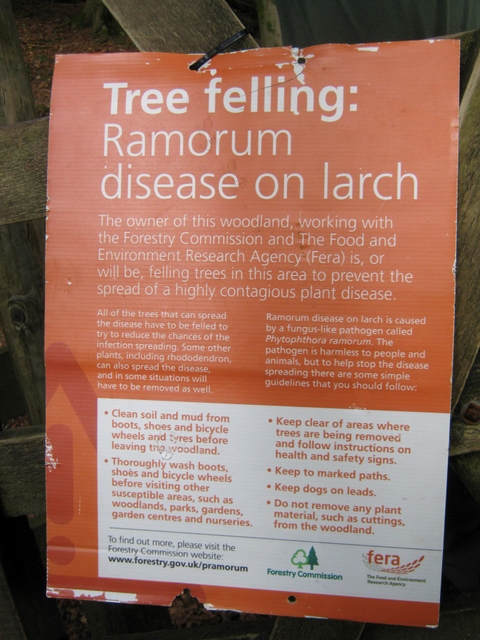
The sign that was attached to the gate leading into the upper wood.
This is yet another disease that is killing our trees. I have found an interesting and informative article on a Forestry Commission site about Ramorum disease and I include it here. It includes a video in which an expert goes over a diseased tree and points out and explains the symptoms.
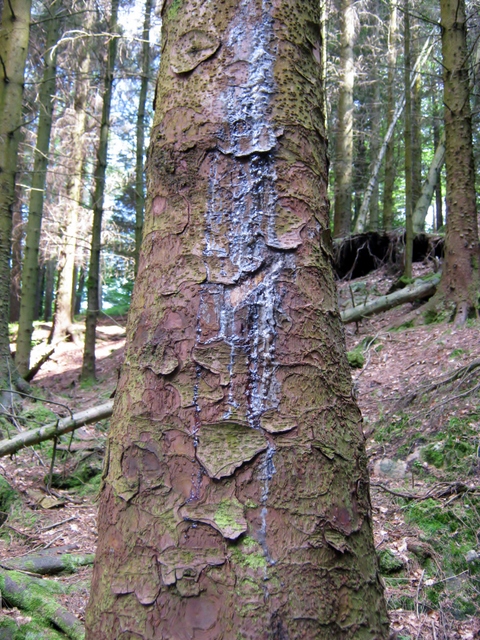
Almost the first tree I saw showed symptoms of a bleed.
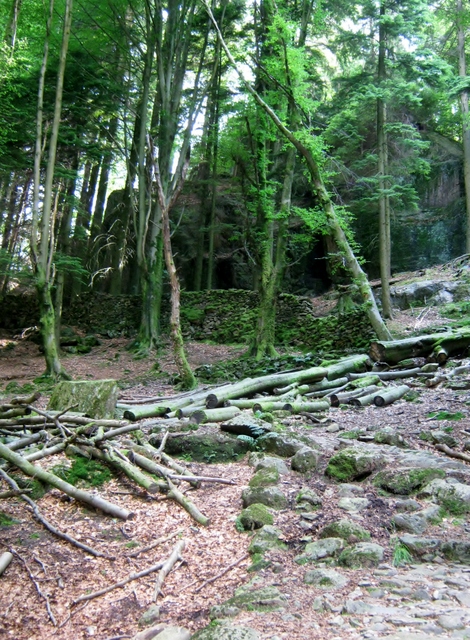
Tree-felling in Dobgill wood.
I don’t know why the stone wall was here. Perhaps it had been constructed before the trees were planted. Just behind the trees in the photo is a sheer rock face.
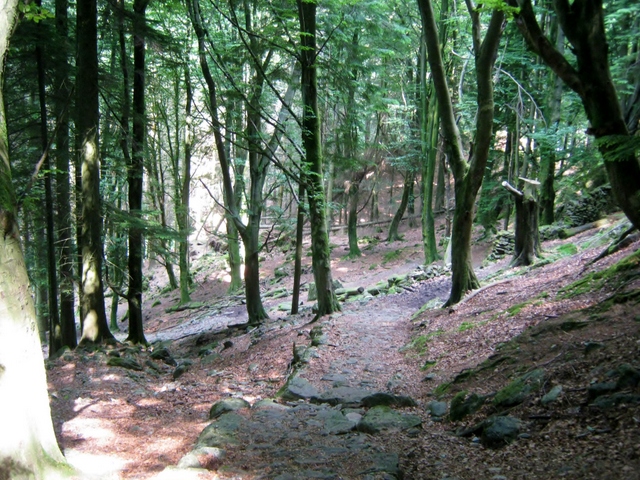
There was a marked difference between the wood below the car-park near the lake and this part of the higher wood.
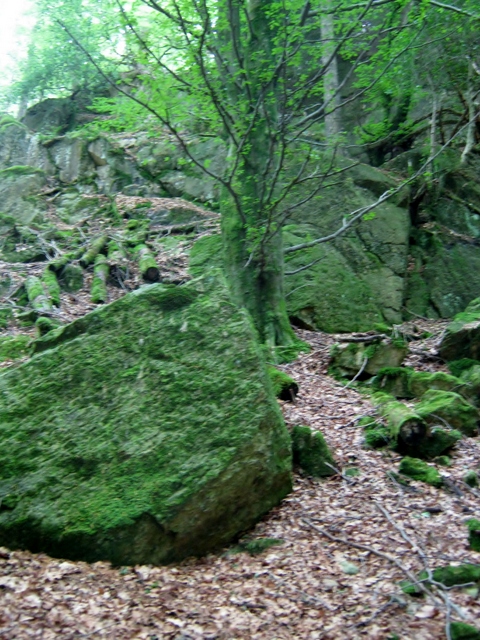
The trees struggle to grow up between boulders. The native deciduous trees have been left standing.
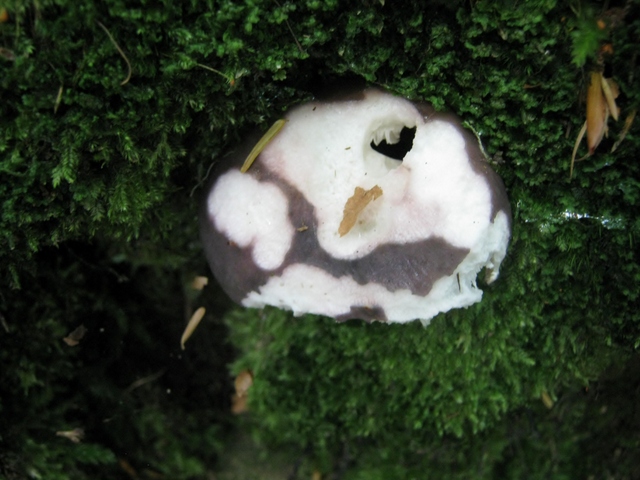
Chewed fungus
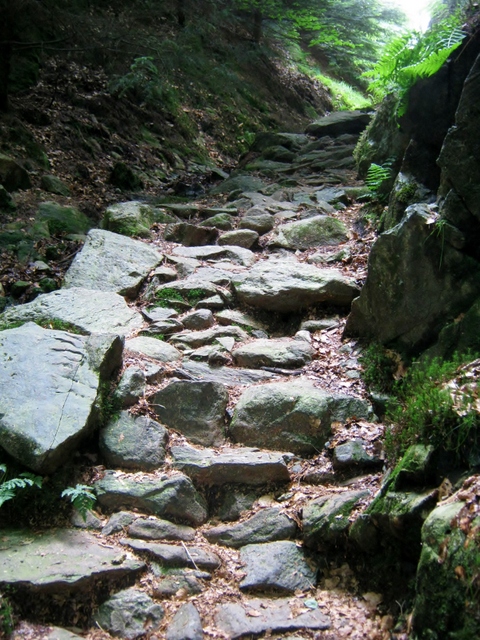
This is the steep stony path we took up through the wood.
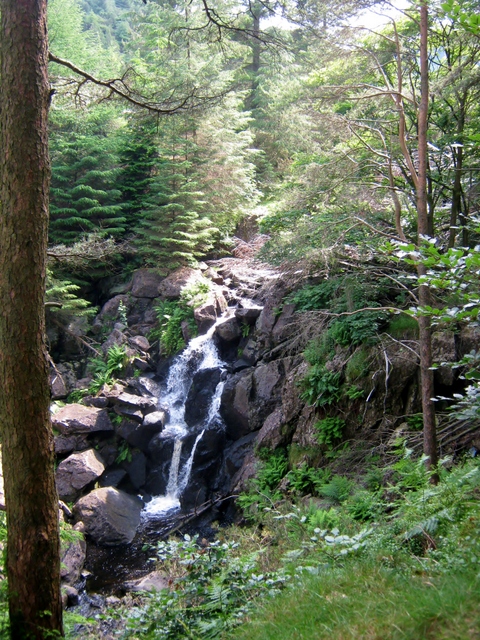
Dobgill Falls
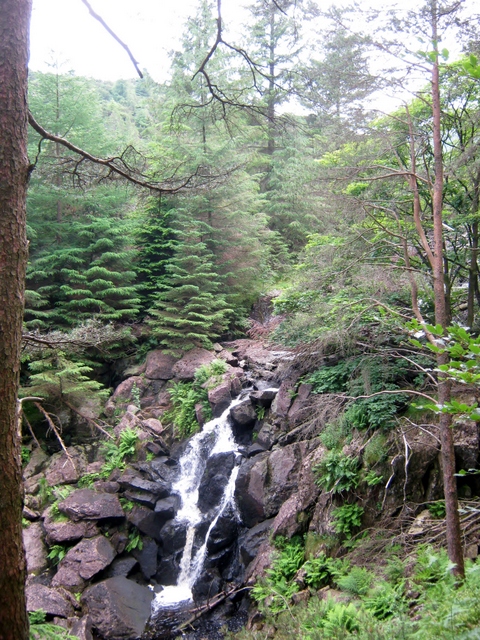
Dobgill Falls
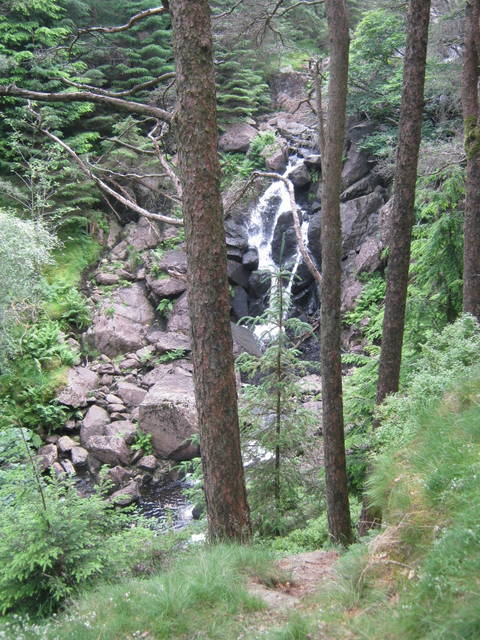
Dobgill Falls
The climb was very tiring because so steep and rough under-foot and I’m not sure that the falls were really worth the struggle to get to see them. However, Richard and I were very pleased with ourselves at having managed to get to the top. After a short rest to get our breath back we began to walk back down the hill.
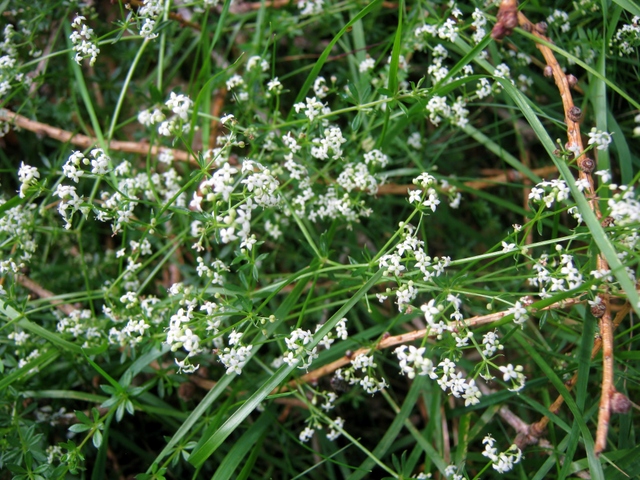
Heath Bedstraw (Galium saxatile)
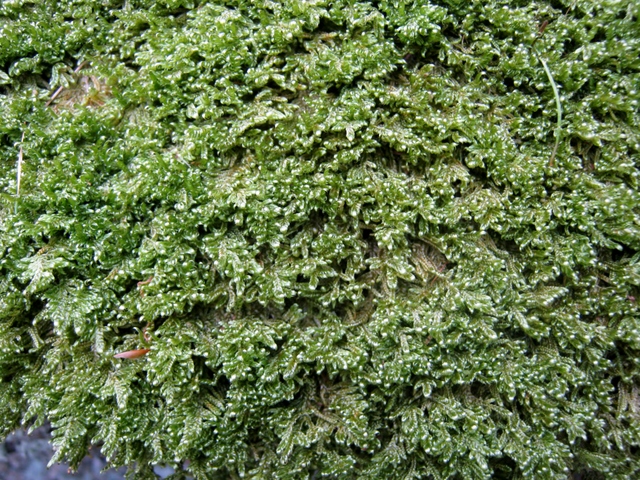
Hypnum cupressiforme moss / Cypress-leaved Plait-moss
I love this moss. It looks as though it is made from plaited silk.

Wood Sorrel leaves (Oxalis acetosella)
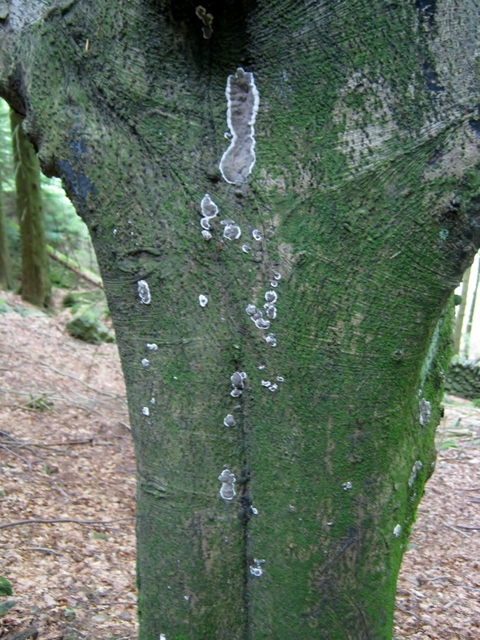
Fungus (I think) on dead tree
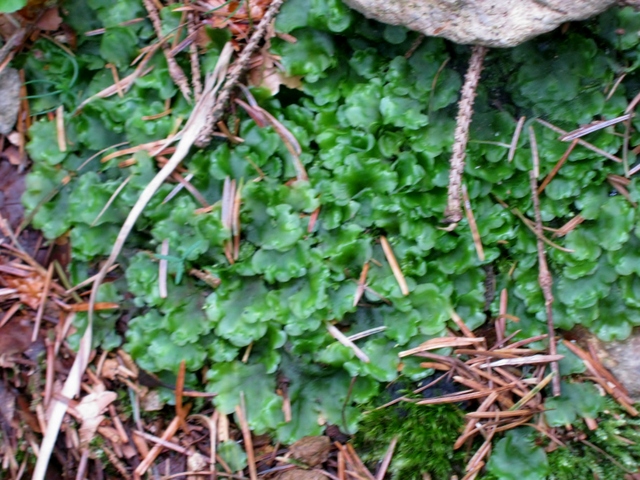
Not a very clear photo of some liverwort
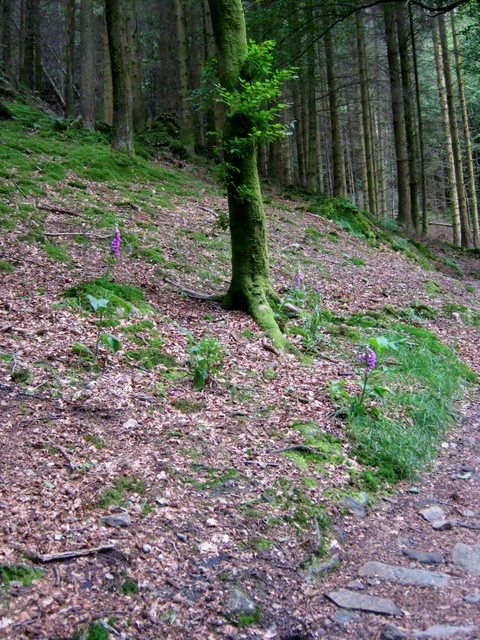
Foxgloves (Digitalis purpurea) in Dobgill Wood
I found walking in this upper wood rather a sad experience with disease and death all around. Because most of the trees in this part of the wood are non-native there are fewer insects, birds, wild flowers and plants than in the lower wood. Those non-native trees are now being killed by an incurable disease (also known as Sudden Oak Death). I hope that by destroying these trees the spread of Ramorum can be slowed down and that one day a cure can be discovered. It would be nice to think that the native trees in the wood that are unaffected might now be able to grow and spread and native wildlife might return.
Thanks for visiting!
 A Suffolk Lane