After a busy day last Friday and a hot, sunny day too, we thought it might be nice to go to the coast for a little while. We knew that it would be extremely crowded for most of the day so we left it until after we had eaten our evening meal and set off just before 8.00 pm.
We decided that we’d visit Walberswick as we hadn’t been there for some time and parked the car in the car-park there at about 8.30 pm.
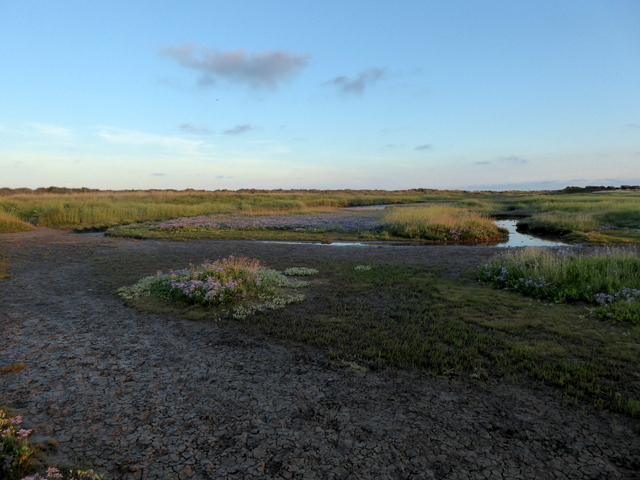
Walberswick. With its creeks, mudflats, sand-dunes and varied flora it is a favourite place of mine to visit.
The mass of mauve flowers you can see in the photo above are Sea Lavender.
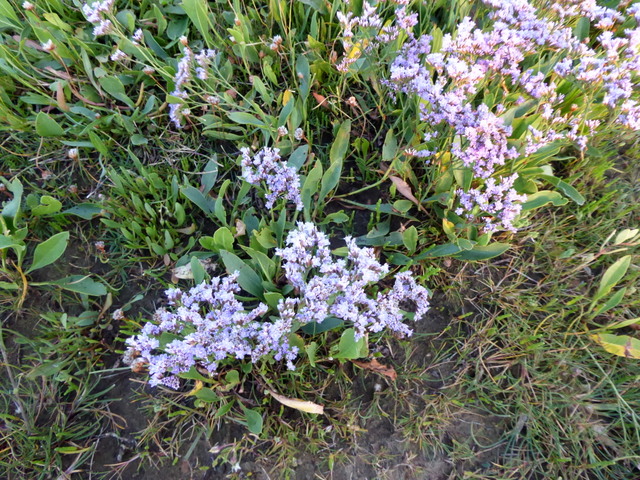
Common Sea-lavender (Limonium vulgare)
I couldn’t get a clear picture of these flowers – mainly because I couldn’t get down low enough! Sea-lavender (no relation of true Lavender) is related to the cultivated Statices – everlasting flowers. Many people pick these flowers illegally to make dried flower arrangements. Strangely, the drier the ground in which it grows, the taller it gets. This plant grows in great masses on the North Norfolk coast and I would love to see it there again.
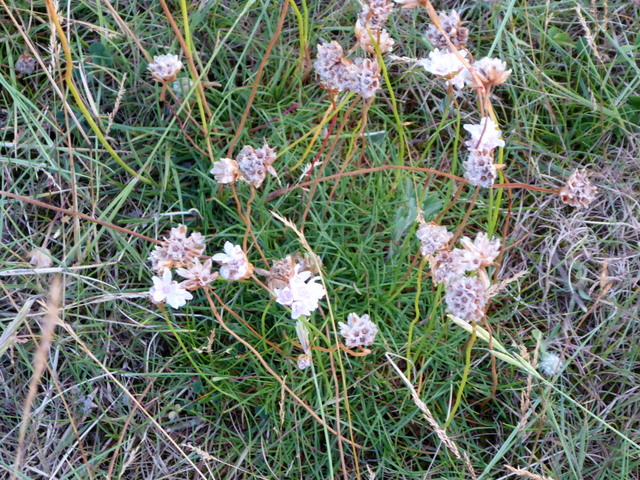
There wasn’t much Thrift or Sea Pink (Armeria maritima) left – mainly seedheads. Thrift is a relative of Common Sea-lavender.
There was a lot of rather scrappy Hare’s-foot Clover (Trifolium arvense)…
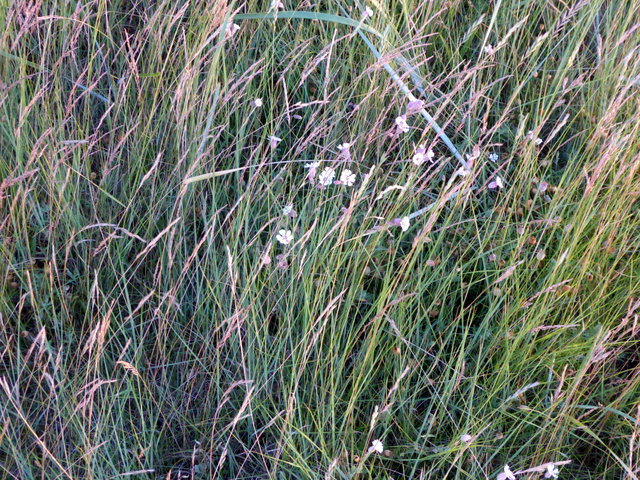
…and a small amount of Sea Campion (Silene uniflora)
I cropped the photo I took.
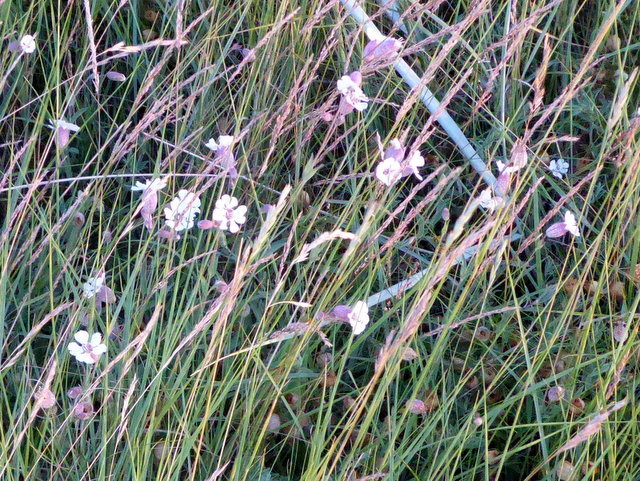
The calyx (the area behind the petals) is swollen, like Bladder Campion is and is similarly patterned with red veins. The petals are larger and thicker than other types of Campion and usually overlap each other.
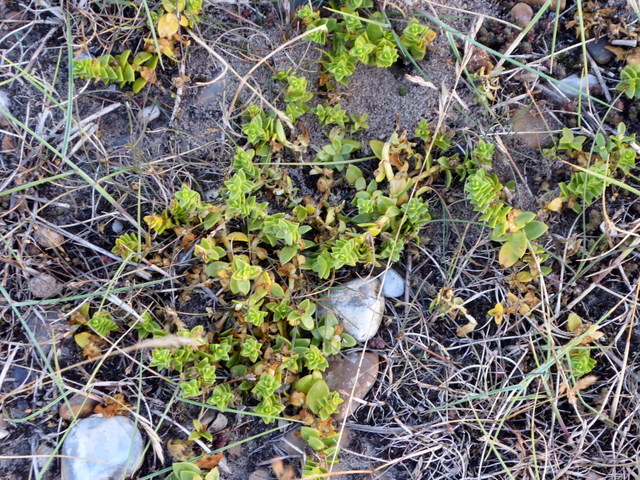
Sea Sandwort (Honckenya peploides). I like the way this plant grows. It reminds me of children’s building toys.
In Richard Mabey’s ‘Flora Britannica’ he says ‘… (Sea Sandwort) is one of the earliest colonisers of sand-dunes and shingle, and remarkable for its sprawling concertinas of geometrically stacked leaves’. It is able to keep growing upwards so if ever it is inundated with sand or mud it can survive. As with many seashore plants it is succulent and edible.
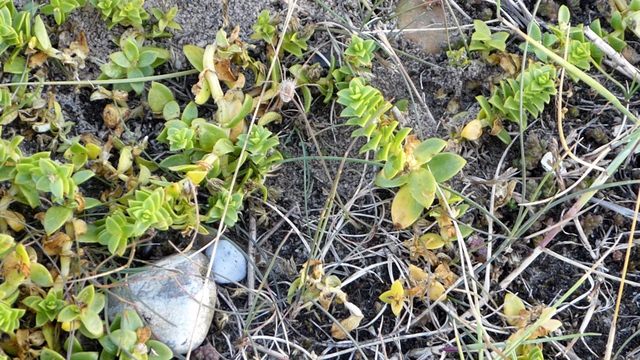
More Sea Sandwort, this time with a Harvestman or Harvest Spider. Can you see it? They are not true spiders but are related to them. They have one-piece bodies and no silk-glands so can’t spin webs.
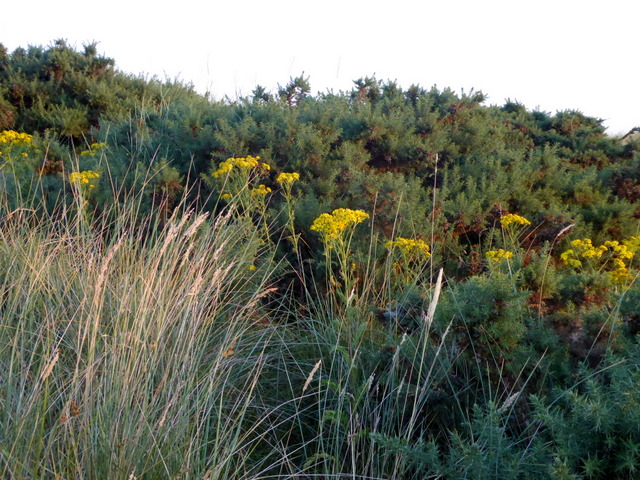
Common Ragwort (Senecio jacobaea) in flower and Gorse bushes (Ulex europaeus)
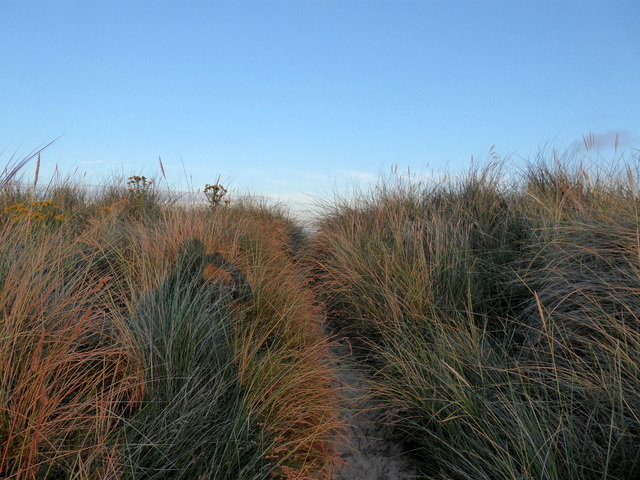
The dunes and my shadow!
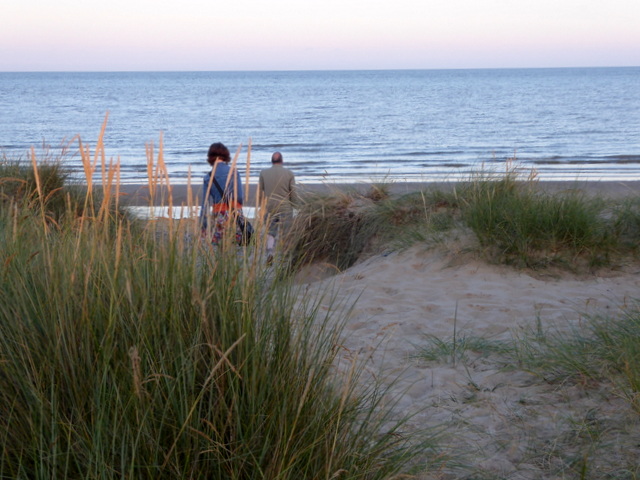
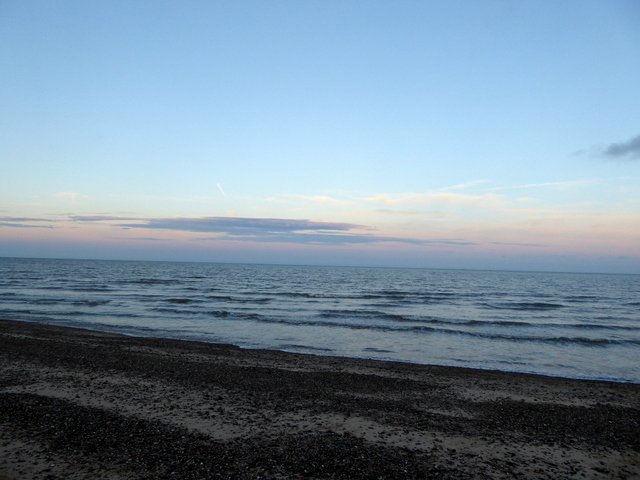
Richard and Elinor beat me to the sea. The cool northerly breeze was so refreshing.

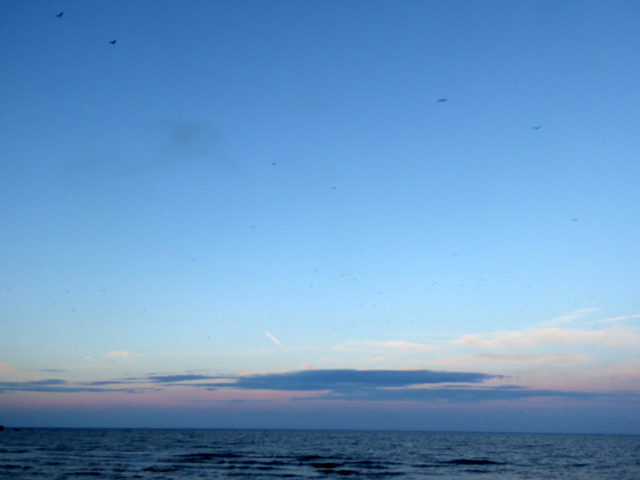
Seagulls were making their way out to wherever it is they go for the night…
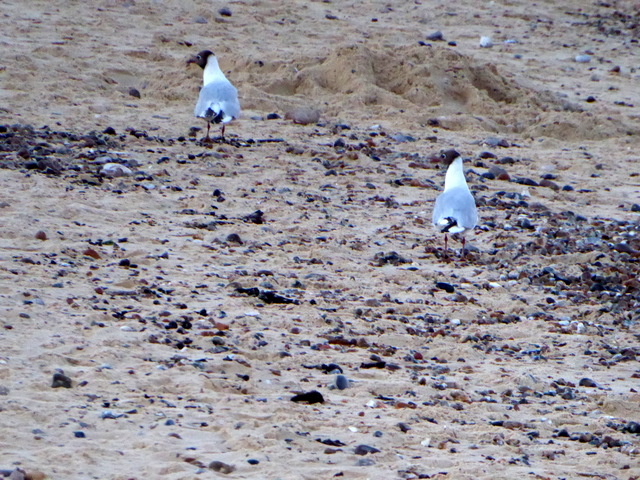
…except these two Black-headed Gulls (Larus ridibundus) who seemed to be doing some synchronised beach-combing.
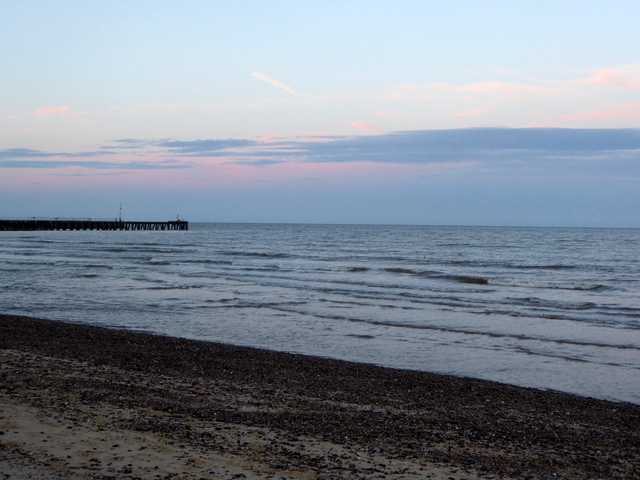
One last look at the sea…
We made our way back to the dunes where I found a couple more plants to photograph.
Sea-holly (Eryngium maritimum)
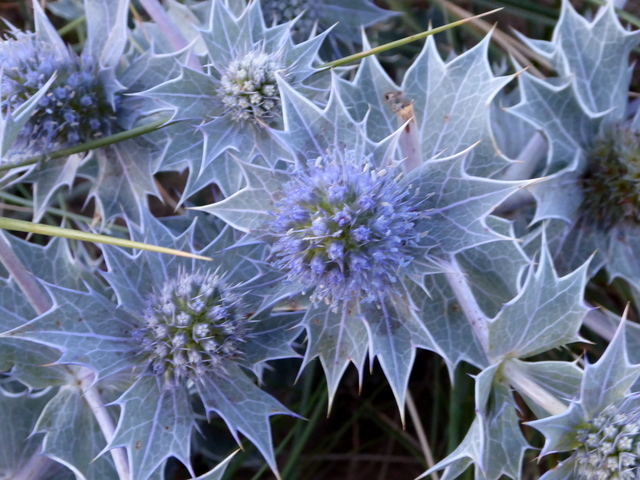
A most beautiful plant!
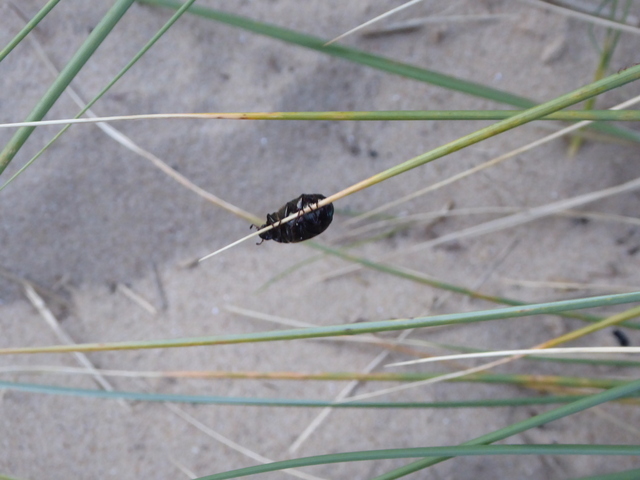
A cute little bug hoping I leave him alone!
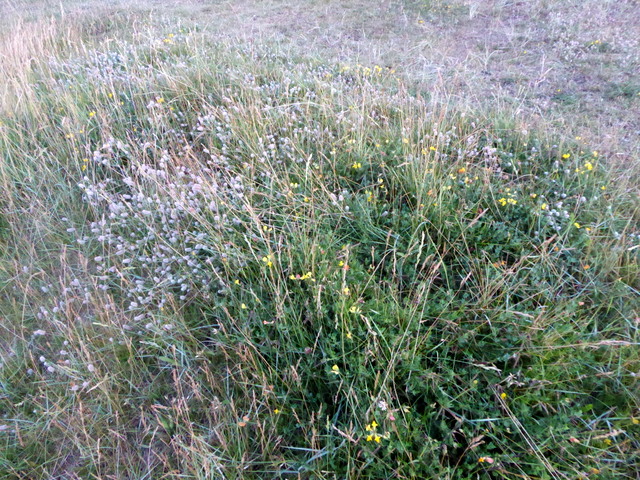
Vetch and Hare’s-foot Clover
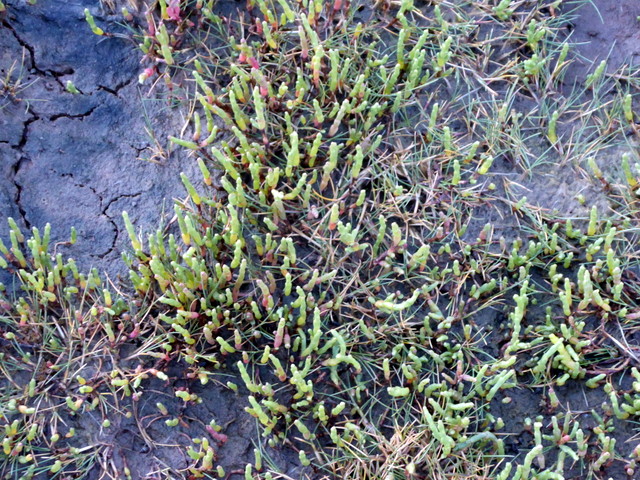
Perennial Glasswort (Sarcocornia perennis)
Another name for Glasswort is Samphire and like Common Glasswort (an annual plant which is also called Samphire) it can be eaten lightly boiled or pickled in spiced vinegar.
For many hundreds of years Glasswort was used in the manufacture of glass. The succulent stems were gathered at low tide, dried and burned in heaps. The crude ash which is high in soda was then fused with sand to make a poor quality glass. Saltworts were also used for this purpose.
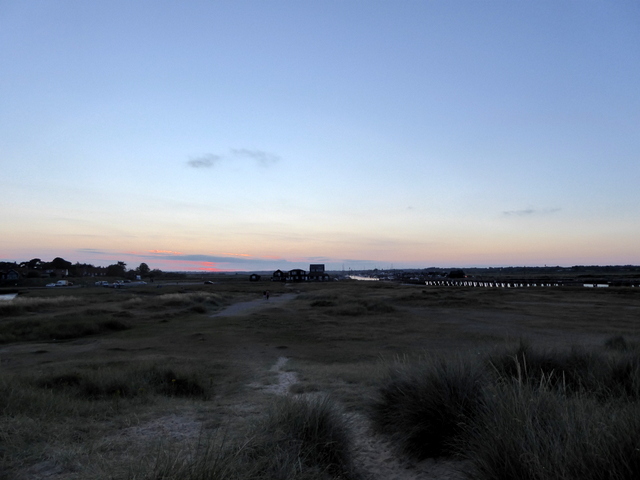
View inland with the R. Blyth on the right
We had enjoyed our hour on the beach and went home cool and relaxed.
We arrived back home last Wednesday after spending eight days in the Schwarzwald (Black Forest). It was probably the hottest day of the year so far and we spent it travelling by train up from Triberg, Germany to Ebbsfleet in Kent (England) where we had left our car. We set off from the hotel at 6.30 am European time and got home just after 7.00 pm British time (one hour behind Europe). The car thermometer said it was 32C (89.5F) when we set off from Kent and it peaked at 34C (93F) near the tunnel at the Dartford Crossing (under the Thames). As we drove home up through Essex and Suffolk we watched large black clouds to the west edging ever nearer and we hoped we’d be able to get home before the storm got to us. We did. It was still 32C as we unpacked the car, opened all the windows and doors in the house and wandered round the garden for a while looking at the long grass and the drooping plants. While I put the kettle on and made a cup of tea Richard telephoned the Chinese restaurant in Halesworth and ordered a take-away meal. He was just about to set off when the storm broke. It was the most violent one I’ve seen for many years with continuous thunder and bolts of lightening coming down vertically and travelling horizontally across the sky. The rain was very heavy indeed. Elinor and I sat on the stairs together as she gets quite frightened during thunderstorms and Richard went off to collect our evening meal. The storm gradually abated and the sky cleared but still Richard hadn’t come back and I began to worry about him. I found his phone which he had left behind so I couldn’t get in touch to find out where he was. I was considering getting in the car and going to look for him when I was relieved to see him driving up to the house. He had had a hair-raising journey and when he had got to Halesworth he found that the Chinese restaurant had a power-cut and couldn’t give us a meal. They had tried to phone him on his mobile to let him know, but of course he had left it at home. The town’s Thoroughfare was flooded with a foot of water and people were out trying to sweep the water away from the shop doors. Water was coming up through the drains and the town river was in full spate. Richard didn’t lose his head and knew he had a mission to accomplish so went to the other Chinese restaurant at the top of the town which hadn’t lost it’s power and ordered our meal from them instead.
When the rain stopped I went outside to enjoy the fresh, cooler air and took some photographs of the strange clouds.
This slideshow requires JavaScript.
The following day I resumed my dutiful-daughter job and took Mum out to do her shopping. We had bought double her usual amount of shopping just before we’d gone away and we had made sure she had enough of her medication to last as well. While we were on our holiday she had been taken to church by my brother on the Sunday and he had cooked lunch for her at his house, so she had plenty to tell me.
When I got home again I got on with the washing and started to tidy the garden. Richard and I called in to see our next-door-neighbours who had been kind enough to water the plants in the greenhouse and to put our rubbish bins out for collection while we were away. We are very fortunate to have such thoughtful and generous neighbours.
The next day I continued with house and garden work.
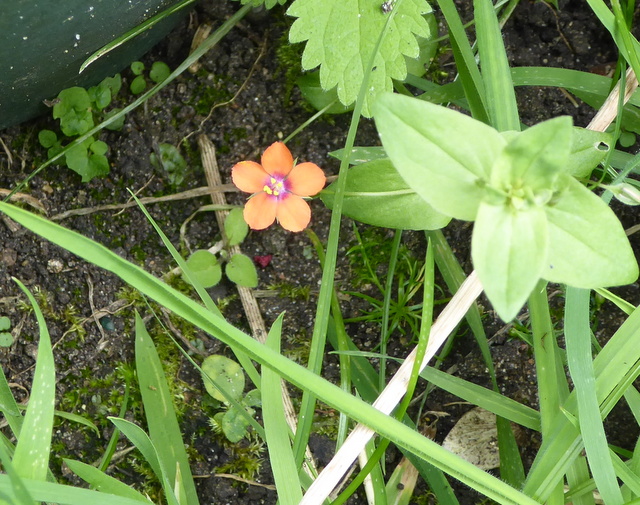
Scarlet Pimpernel (Anagallis arvensis ssp.arvensis) found behind the greenhouse
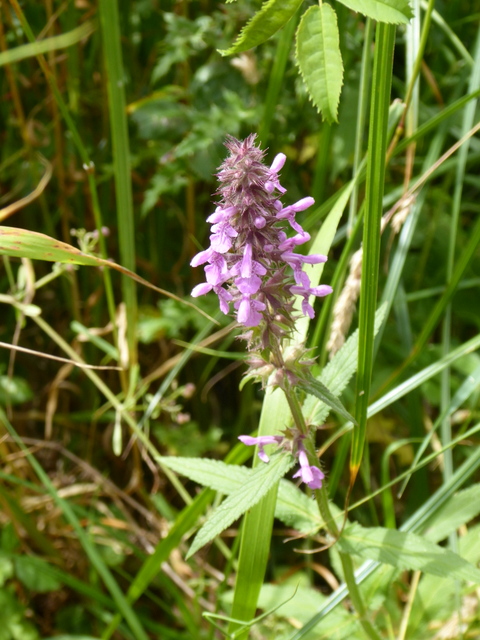
Marsh Woundwort (Stachys palustris) found growing on the bank of the big pond.
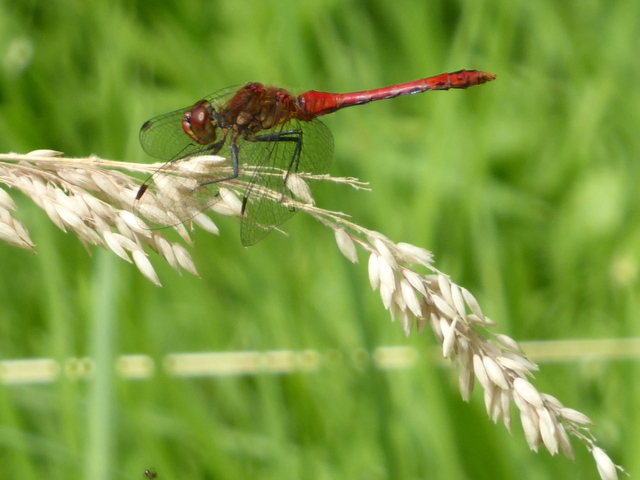
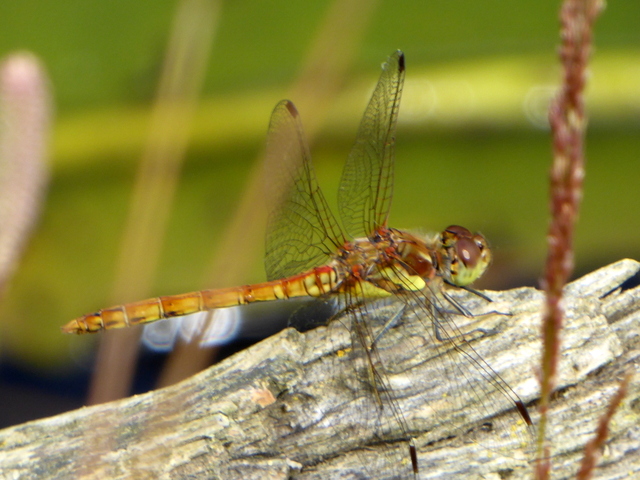
I think this may be a male Common Darter (Sympetrum striolatum) though it could be a male Ruddy Darter (Sympetrum sanguineum)
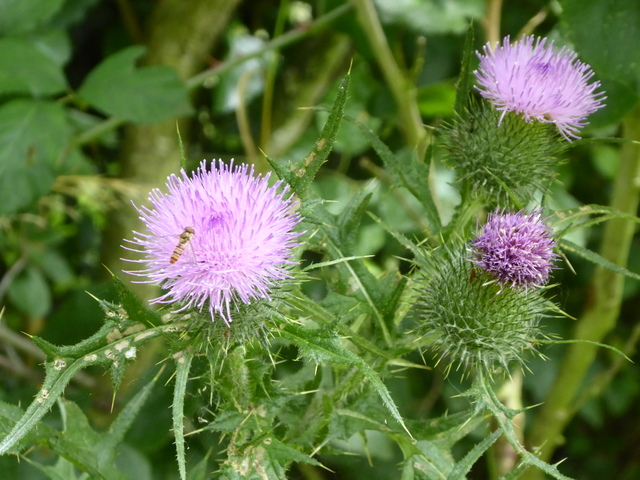
A Spear Thistle (Cirsium vulgare) in flower near the big pond
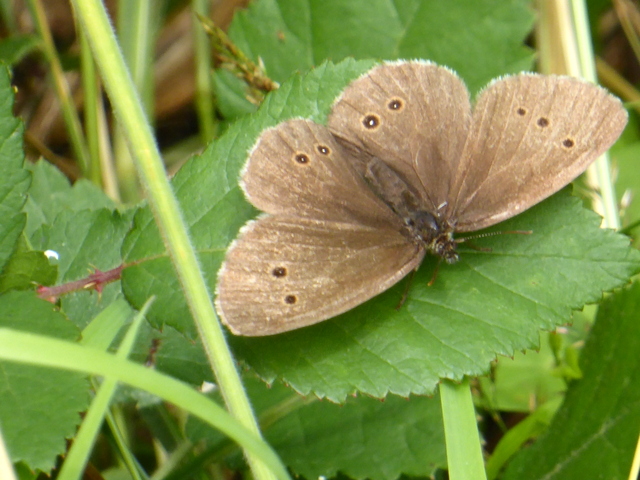
A rather old and tired Ringlet butterfly (Aphantopus hyperantus)
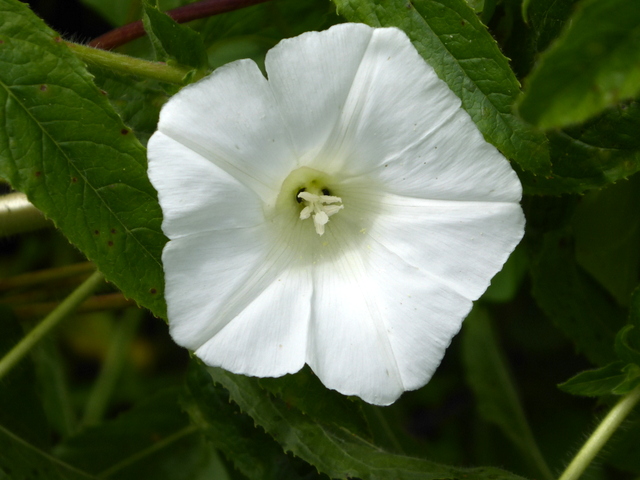
Hedge Bindweed (Calystegia sepium) in flower in the area between our garden and the field at the back of the house.
I believe this may be a female Common Darter (Sympetrum striolatum)
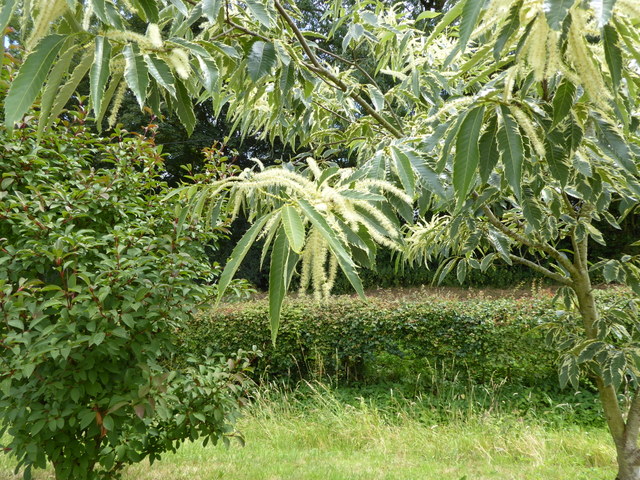
Our Variegated Sweet Chestnut (Castanea sativa variegatum) in flower
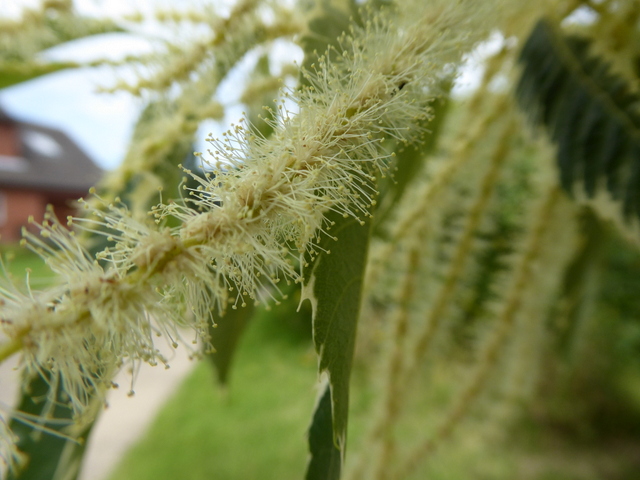
Sweet Chestnut flowers
I walked down the lane with Elinor to post birthday cards to my niece Natalie (my brother’s daughter) who had her 31st birthday on the 23rd of July and cards to Alice my elder daughter who had her 31st birthday on the 24th of July. Natalie is exactly 23 hours older than Alice.
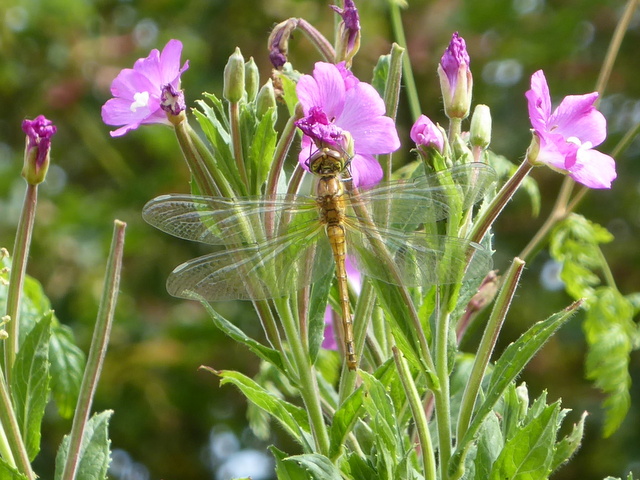
This is a teneral, or newly emerged dragonfly as you can see by the pale colouring and very shiny wings. I don’t know which dragonfly it is, unfortunately. It is perched on a Great Willowherb (Epilobium hirsutum) growing in the ditch at the side of the lane.
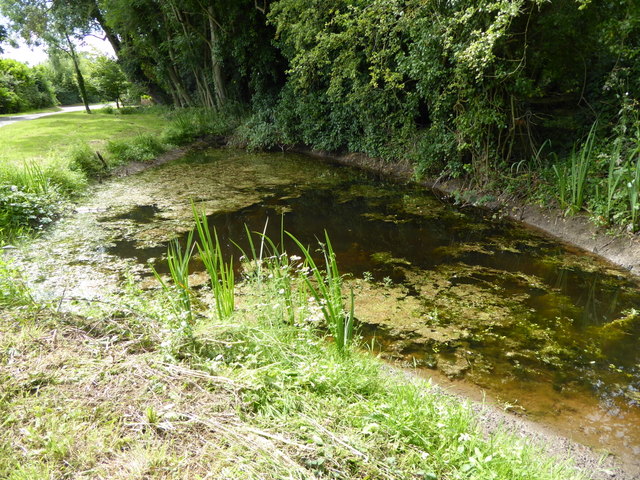
The new pond at the side of the lane which was dug during the winter.
Richard spoke to the man who lives on the opposite side of the lane to the pond and who was responsible for digging it. Apparently, many years ago there was a pond there which was wide enough and deep enough to enable the horses to be led to drink while still attached to their carts. It was filled in when horses were no longer needed on the farm but it has now been re-instated and I am very pleased. The pond is already full of interesting plants and insects which have found their way there on their own.
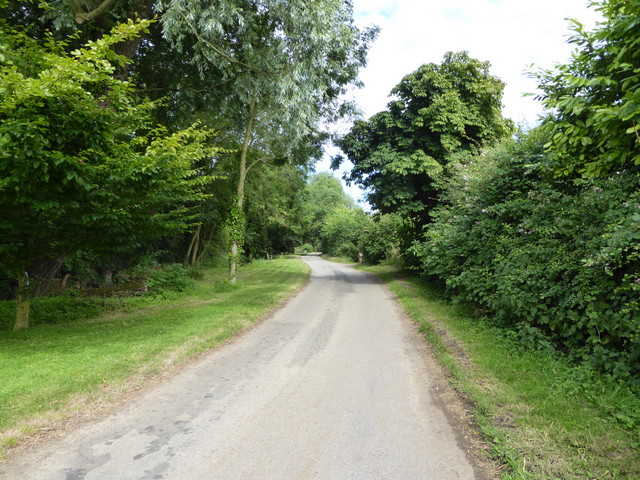
Our lane. I am standing next to the pond (on my left) and looking back in the direction from which we had come.
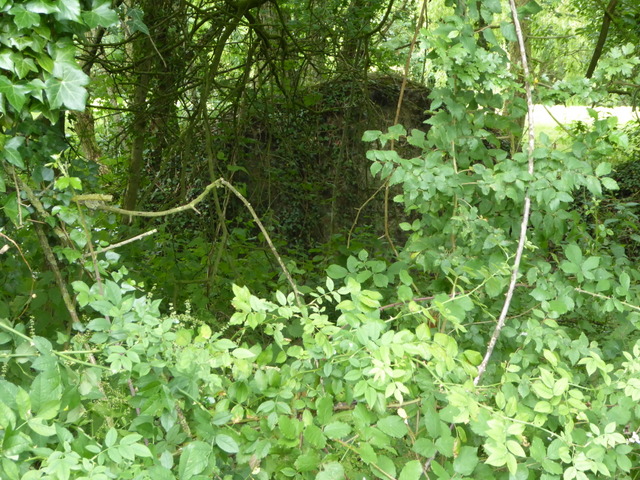
Looking over the hedge into the garden of Church Farm I noticed this piece of wall covered in ivy. I wonder if it is part of the old church of St Nicholas demolished many hundreds of years ago.
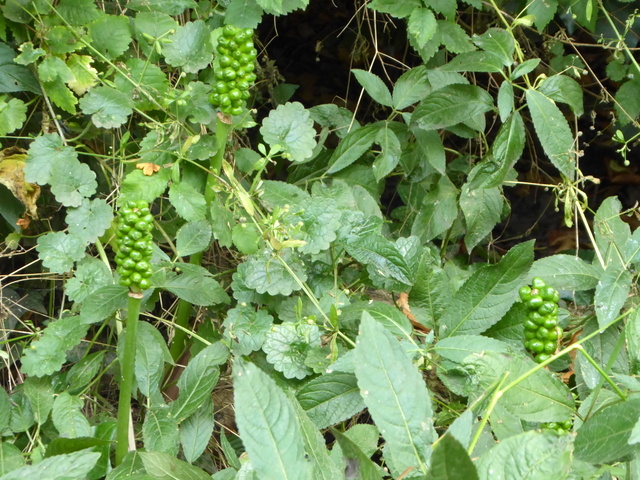
Lots of unripe Lords and Ladies berries (Arum maculatum)
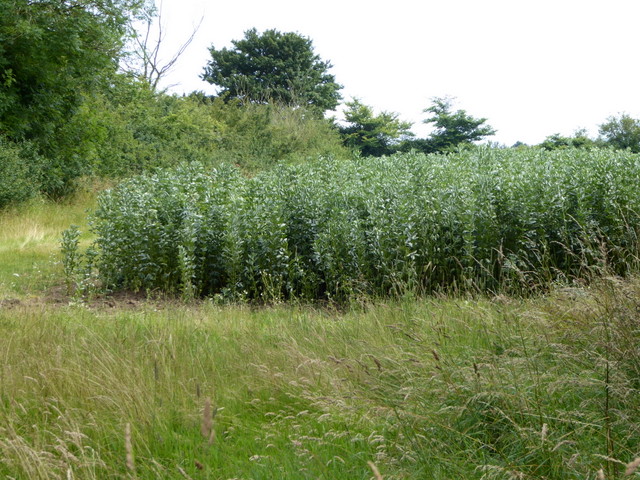
A field full of Field or Broad Beans.
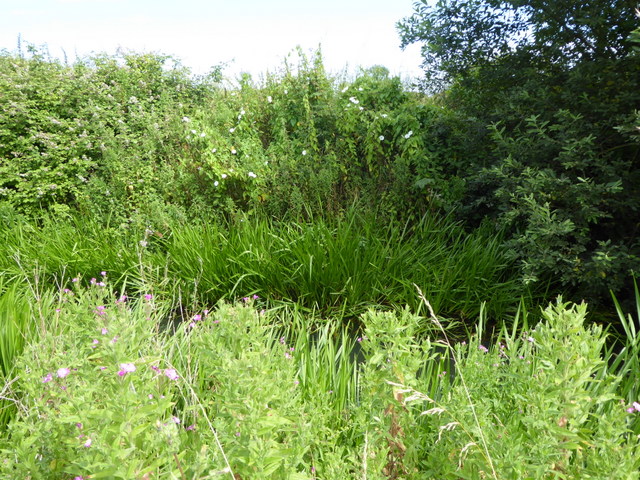
Another pond at the side of the lane. This one has become rather overgrown. It has fish in it and I once saw a couple sitting at the side of the road with rods trying to catch fish.
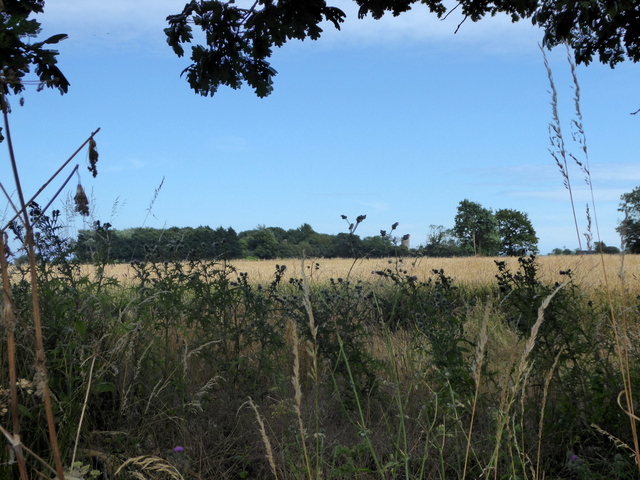
View across the fields towards All Saints church which can just be seen to the right of centre on the horizon. It is slightly obscured by a thistle flower!
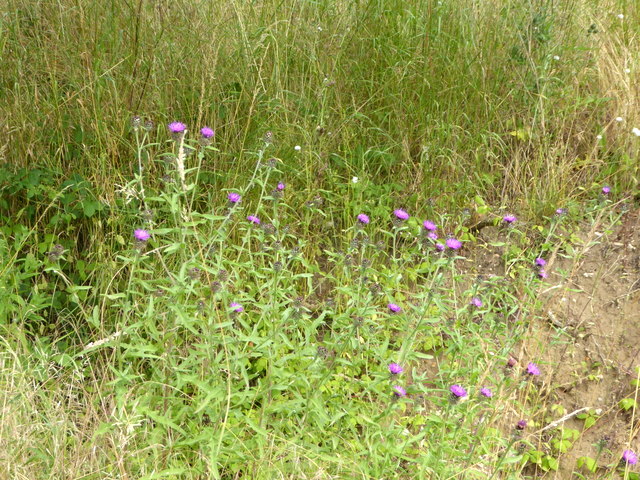
Common Knapweed (Centaurea nigra)
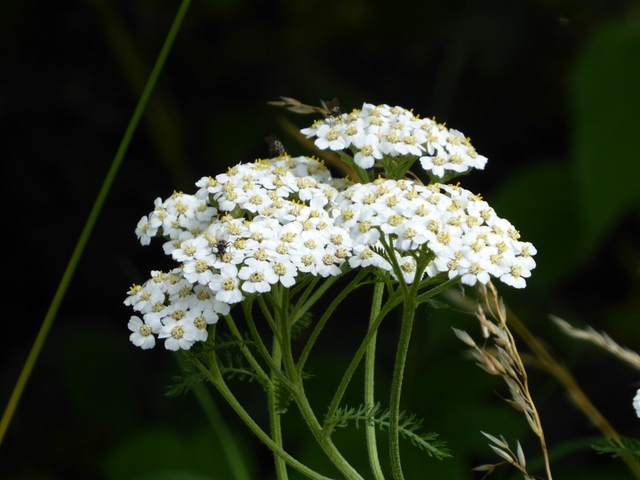
Yarrow (Achillea millefolium)
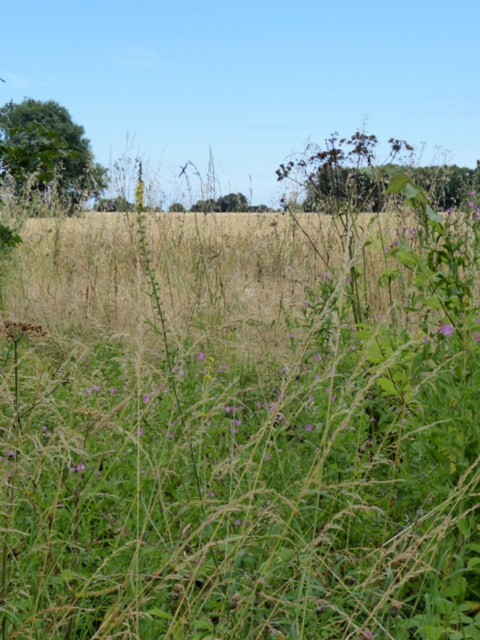
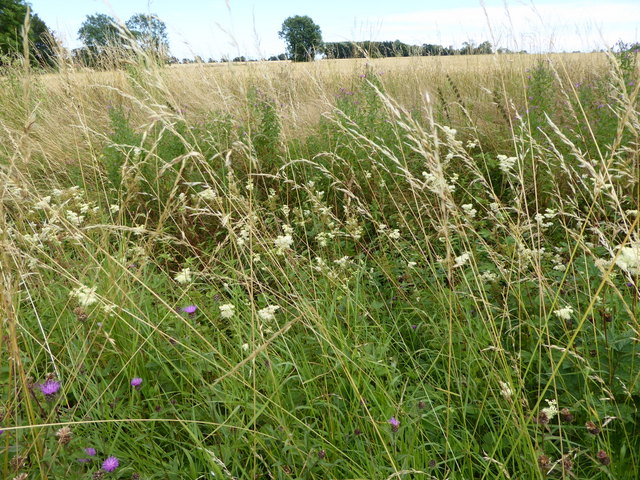
Wild flowers at the side of the lane.
Agrimony (Agrimonia eupatoria)
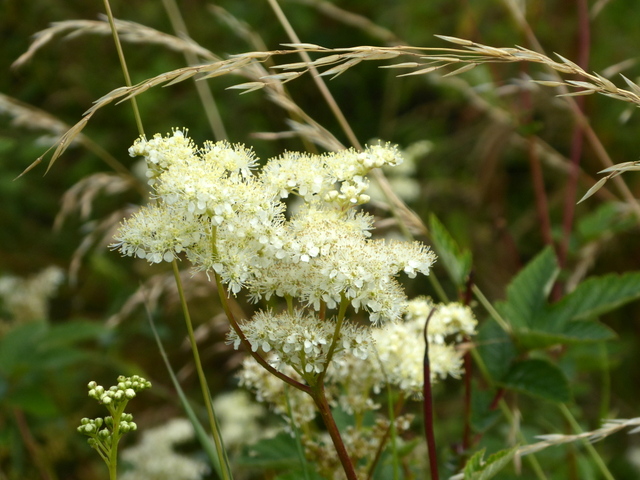
Meadowsweet (Filipendula ulmaria)
Meadowsweet has a beautiful almond-blossom-like fragrance.
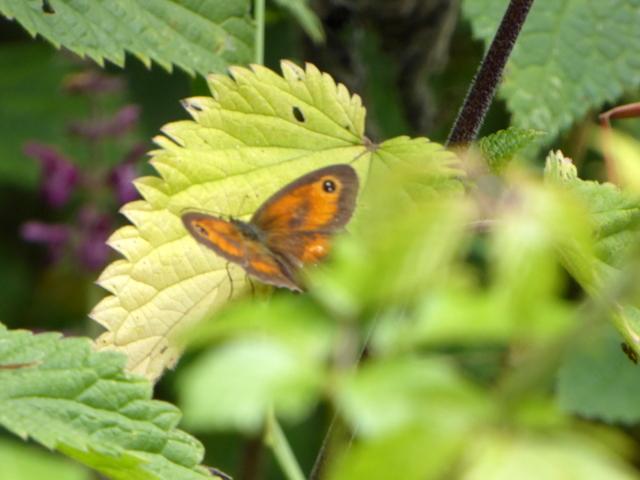
A poor photo of a male Gatekeeper butterfly (Pyronia tithonus)
These were all the things I saw at the side of the lane on a short 20 minute walk to post cards.
Here now is my musical choice – the Petite Symphonie in B flat for nine wind instruments by Charles Gounod, composed in 1888. It lasts about 20 minutes and is of four movements. I love the lyricism of French 19th century music and I like this recording of the piece very much. It is a piece of music I used to play and it brings back such good memories to me when I hear it.
I’ve been lost for words at times since Friday morning, and those who know me well will know that is possibly the best thing that has come out of the referendum if you were a remain voter.
I am shocked by the result, deeply saddened that neither the remain or leave campaign seem to have had a plan for what they would do in the event of a narrow leave vote, upset by the finger pointing and accusations made towards individuals who voted as their heads and hearts led them, and utterly appalled by the racist attacks and abuse that have been reported.
I’m white, British, middle-class, middle-aged and I’m not a racist. Anyone who lives in this country is welcome to live near me, to work with me, to build community with me. I don’t care which football team, which religion or which political party you support. But discriminating…