• About my Blog
  • GDPR (General Data Protection Regulations) and This Site
  • My Life in a Suffolk Lane

A Suffolk Lane

~ A diary of my life in rural north Suffolk.

A Suffolk Lane

Monthly Archives: Sep 2016

In My Garden Again

28 Wed Sep 2016

Posted by Clare Pooley in Gardening, Insects, music, plants, Rural Diary, trees, wild animals, wild flowers

≈ 75 Comments

Tags

bird's nest, Brown Hare, Brown Hawker dragonfly, comma butterfly, Common Fleabane, Common Hawthorn berries, cooking apples, Crabapples, Creeping Thistle, Fish-hook Cactus, garden, hogweed, Hornet, Hoverfly, leveret, mole hill, moonrise, pears, speckled wood butterfly, Suffolk, sunset, Sweet Pepper, Water Mint, Zinnia

This is another collection of things I’ve seen in my garden or near my home during the past month.  The weather until a few days ago has been wonderful!  Warm, sometimes very hot, mainly dry and sunny; it has been a lovely late summer.
p1010238fish-hook-cactus

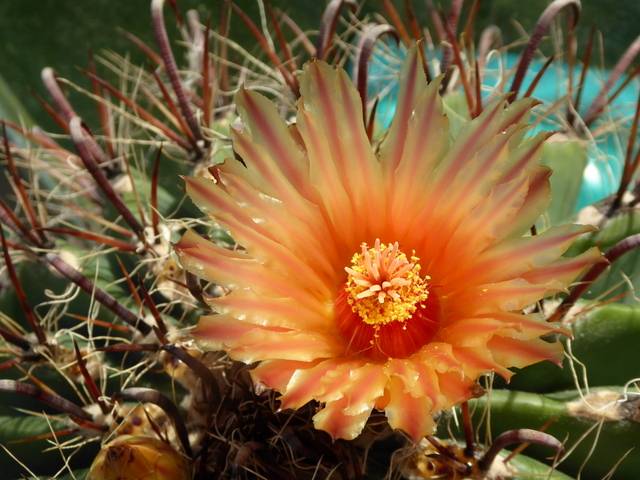
Flower on Richard’s Fish-hook Cactus (Ferocactus wislizeni)

This cactus nearly flowered for the first time two years ago but the warm, sunny weather didn’t last long enough and the buds shrivelled.  Last year was too dull and cool so no buds formed at all.  This year however, one of the three buds opened and stayed open for three days.
p1010239sweet-peppers

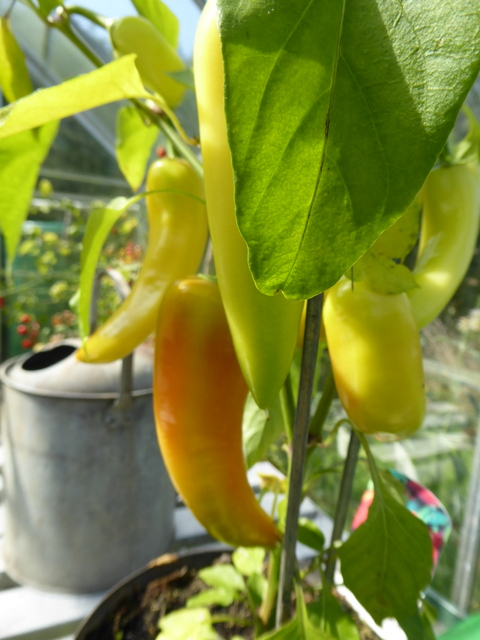
Sweet pepper ‘Sweet Banana’

Richard is growing sweet peppers this year and this is a photo of them when they were just starting to turn red.  Unfortunately, the camera focused on the leaf not the pepper.
p1010240zinnia

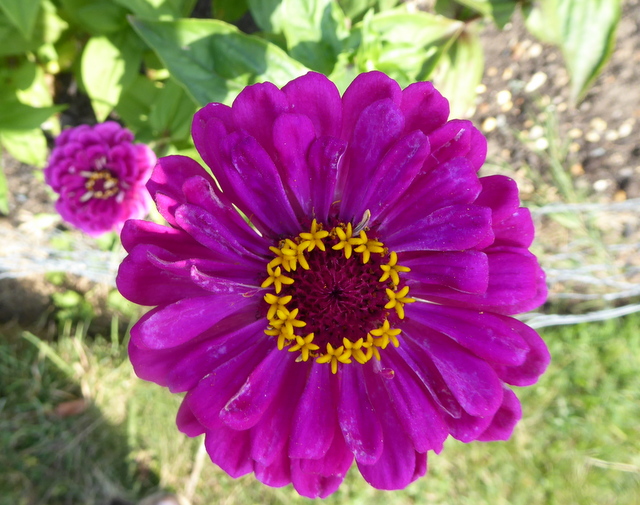
Zinnia flower

p1010241zinnia-001

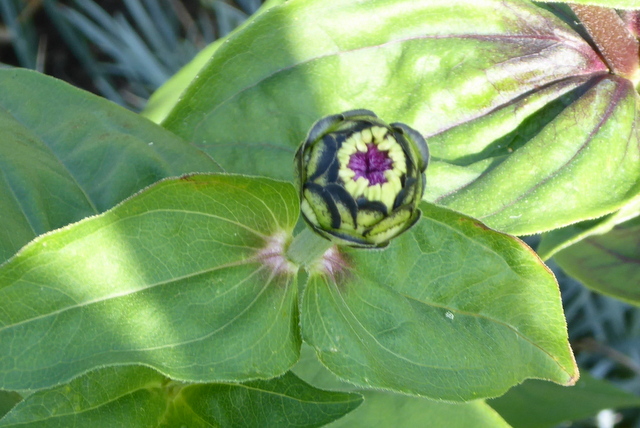
Zinnia flower-bud

Richard bought a tray of Zinnia flowers from the garden centre.  They took their time to get established but eventually they got going and have been so bright and cheerful for the past month.
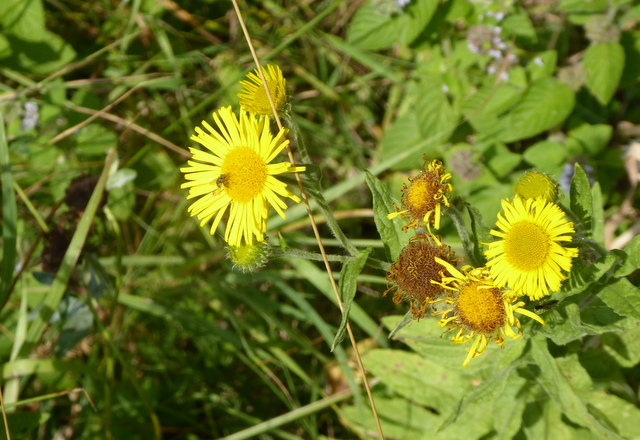
p1010245fleabane

Common Fleabane (Pulicaria dysenteria) has been everywhere I’ve looked this summer but this poor shot is the only photo of it I’ve taken.

For centuries, the leaves of Fleabane were hung in bunches from ceilings or dried and burnt as a fumigant to repel fleas.  Richard Mabey in his ‘Flora Britannica’ says the plant is a relative of the species which supplies the insecticide ‘pyrethrum’.
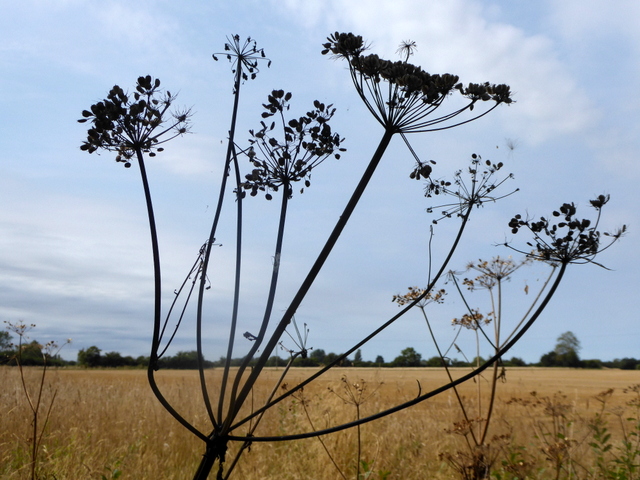
p1010250hogweed

Hogweed (Heracleum sphondylium) seed-heads
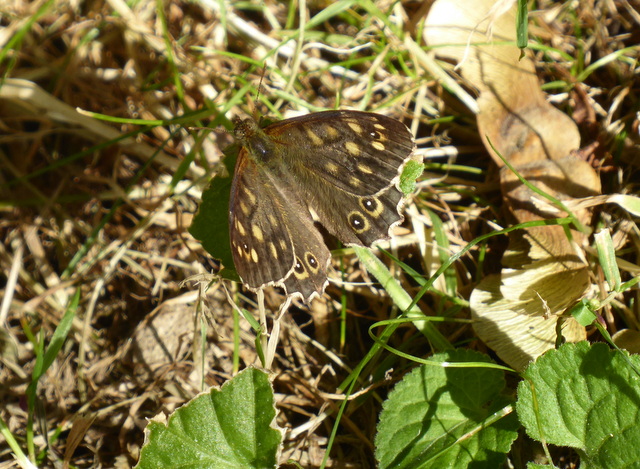
p1010246speckled-wood

Speckled Wood butterfly (Pararge aegeria)

This is a woodland butterfly and its markings make it difficult to spot in dappled shade.
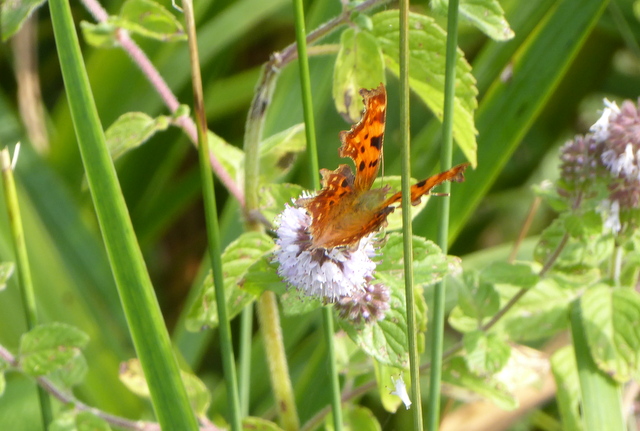
p1010253comma

A Comma butterfly (Polygonia c-album) on Water Mint (Mentha aquatica)
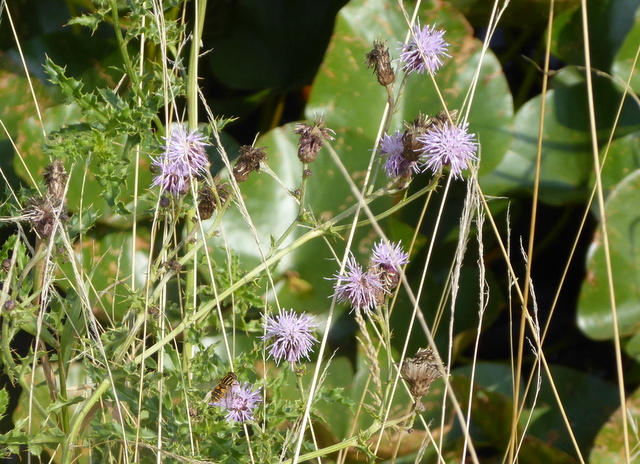
p1010248hoverfly-on-creeping-thistle

Creeping Thistle (Cirsium arvense) with a Hoverfly (Helophilus pendulus) on the lowest flowerhead
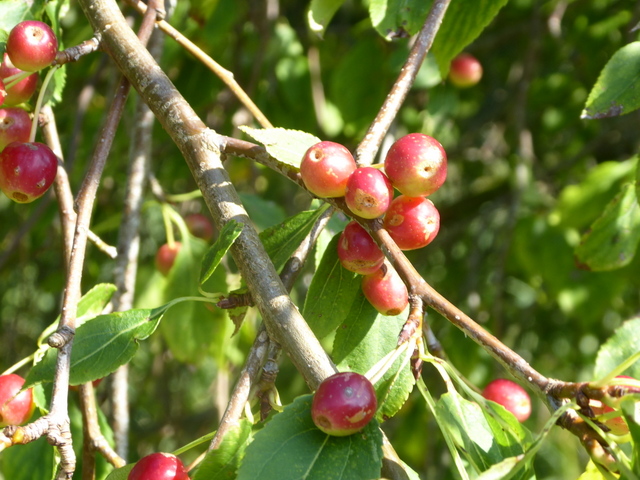
p1010296crabapples

The crabapples on our species crabapple tree look like cherries. Woodpigeons are very fond of them.
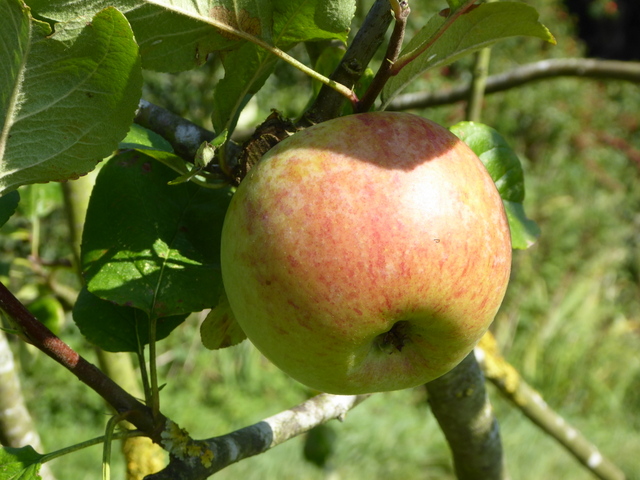
p1010298biffin

We don’t have many apples this year. This one looks very good – a cooking apple.
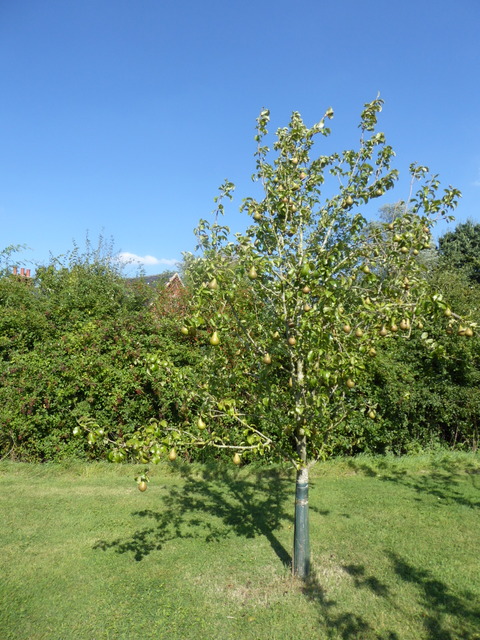
p1010301concord

We have what looks like a good crop of pears but sadly many of the fruits are rotting on the tree.
p1010304haws

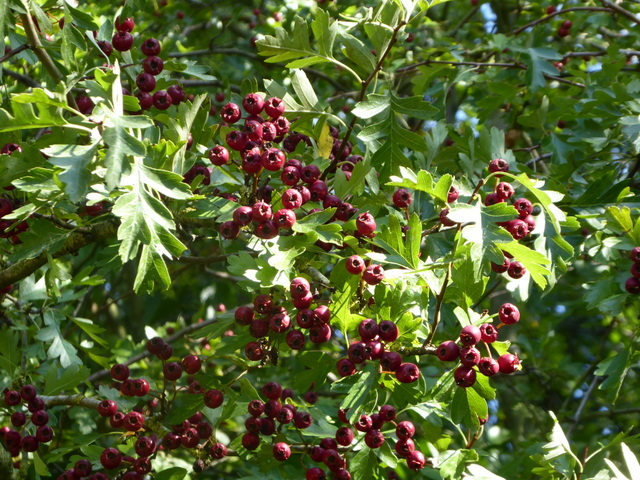
Common Hawthorn berries, known as Haws. (Crataegus monogyna)

The Hawthorns are full of fruit; some people say this means we are to have a hard winter.  I think it means we had good pollination in the spring.
p1010305brown-hawker

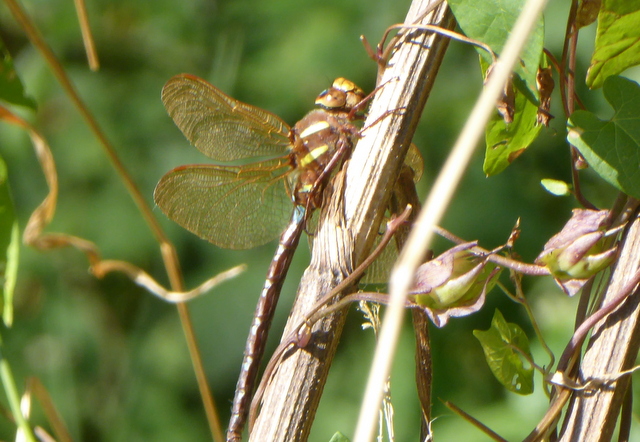
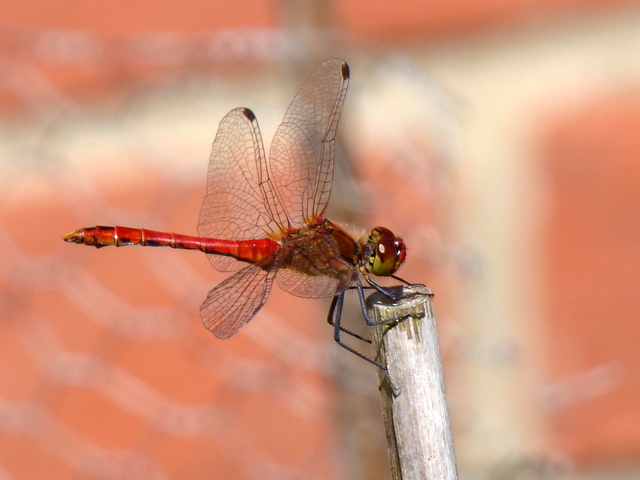
A female Brown Hawker dragonfly (Aeshna grandis)

I took this photo in a hurry as Brown Hawkers are such restless dragonflies and only perch for a few seconds.  I love their amber wings!
p1010324hornet

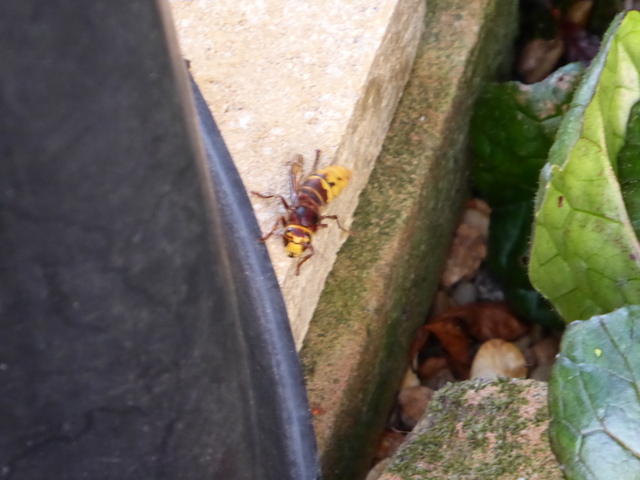
Another poor photo, this time of a Hornet (Vespa crabro)

We have had a Hornets’ nest under the tiles of the garage roof this summer.  They are busy insects and carry on flying until well after sunset, unlike wasps who retire early.  We have also got a wasps’ nest under the house roof tiles near our bedroom window.  I could hear them chewing and munching away through the night when they were first constructing the nest in the early summer.
p1010330mole

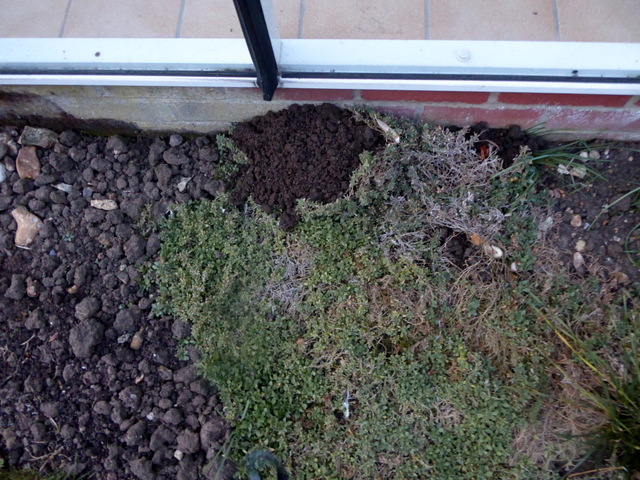
This is a mole hill that appeared in the rather dry border next to the conservatory. The hill got bigger the following day and many spring bulbs were uprooted.

We haven’t had much rain during the past month and the moles are searching for worms.  The worms congregate where there is moisture i.e. in flower-beds (if they are watered) or next to paths or buildings where water runs off into the soil.
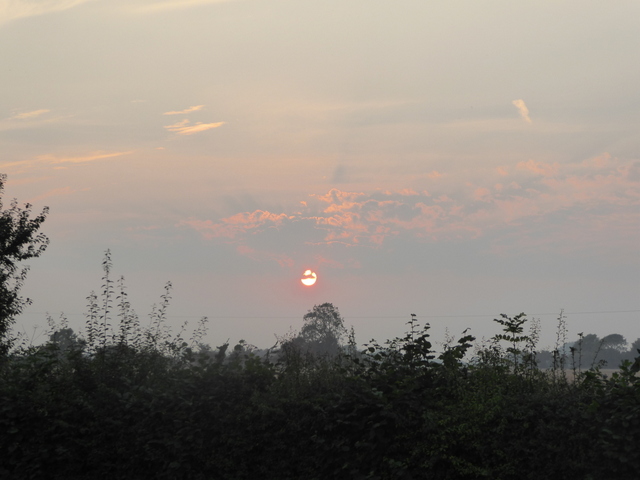
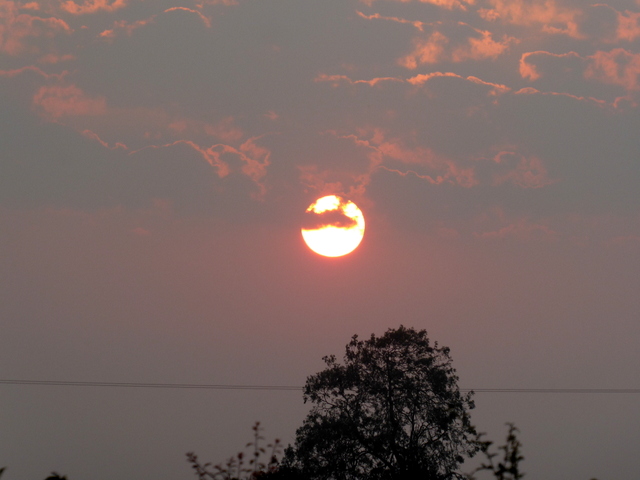
p1010326sunset

Sunset

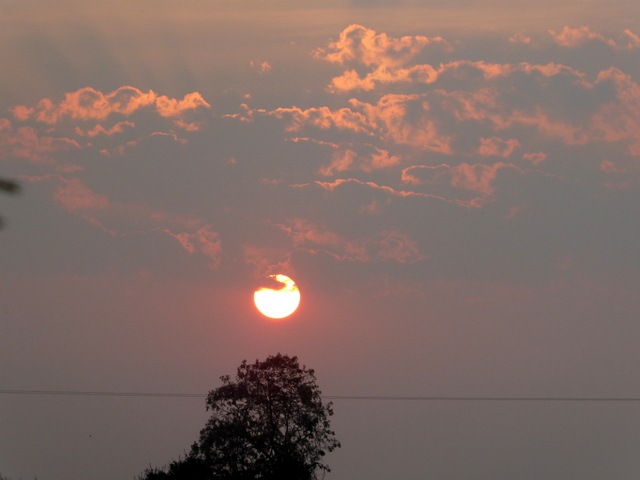
p1010327sunset

Sunset

p1010328sunset

Sunset

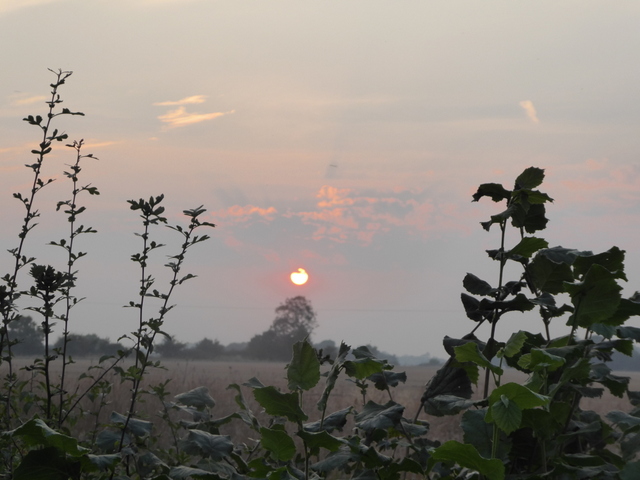
p1010329sunset

Sunset with mist

And shortly afterwards on the same evening…..
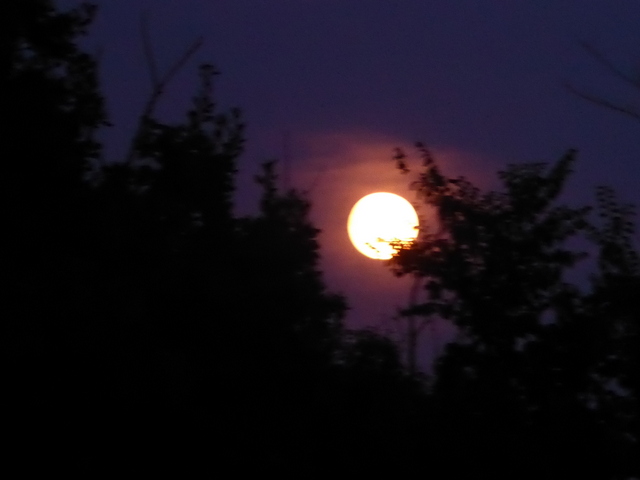
p1010332moon

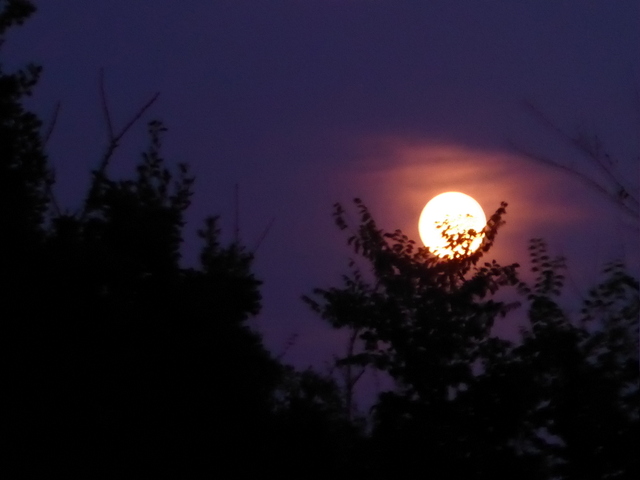
Moonrise

p1010333moon

Moonrise

We were pleased to welcome a new visitor to our garden; a Leveret, a young Brown Hare (Lepus europaeus)

This slideshow requires JavaScript.

We first noticed it when it was very close to our kitchen window so you see part of the window frame in my photos!  It then moved a little further away and was easier to photograph.

The best time of day to see hares is early morning or at dusk, as during the day they rest in grass, scrubland or in a ploughed furrow.  They crouch low against the ground with their ears laid flat and are well camouflaged.  If they are disturbed they are capable of running very fast – 35 mph/56kph – and run with their black-topped tail held downwards.  They have large staring eyes, large black-tipped ears and powerful hind legs; they are shy and alert creatures.  They typically live in open country, preferring not to live in direct contact with grazing animals and they are unlikely to be found in hayfields.  They eat a wide selection of grasses and plants of open country as well as crops of cereal, clover, alfalfa, beets and potatoes.  In winter a hare will dig for green plants under the snow and will eat buds and bark from bushes and trees, including fruit trees.  They have suffered in areas of intensive farming and where herbicides are regularly used.  Pesticides contaminate their food and may kill leverets.

In March and April hares can be seen leaping and chasing about which gives rise to the saying ‘mad, March Hares’.   They often stand up on their hind legs and box each other; this may be two males vying for social dominance or, as is now thought more likely, a female (Jill) rebuffing a male (Jack).   Leverets are born in the open with a full coat of fur and with their eyes open.  They are born in litters of about three and the mother moves them immediately to another safe place which makes it more difficult for predators to find them.  Each leveret is placed in a ‘form’ – a depression made in long grass – on its own where it lies low waiting for visits from its mother.  This behaviour is very like that of deer.

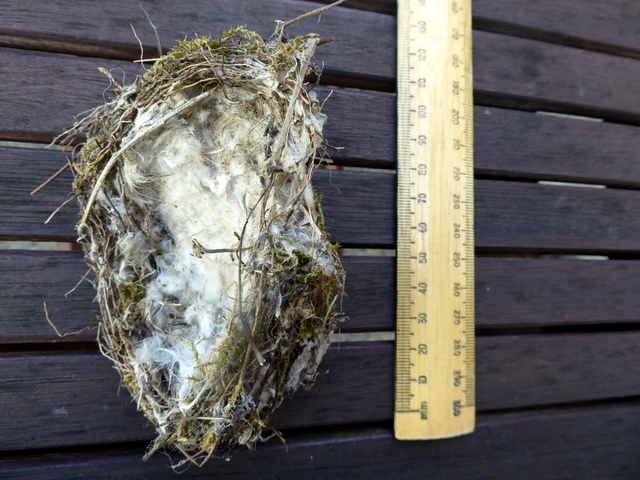
While watering my green beans the other day I noticed some tiny white eggshells lying on the ground and wondered where they could have come from.  Richard looked into the branches of the Laburnum tree above us and saw a tiny nest that I hadn’t been able to see – (I am quite a lot shorter than he is).  It was a windy day and the pieces of shell must have been dislodged by the breeze.  A week later I found the nest on the ground and here is my photograph of it.
p1010346-nest

I do not know what bird built this nest.

As you can see from the photo it is only 11 cm long and about 6 cm wide.  It is made of tiny twigs, grasses, leaves and moss all woven together and is lined with sheep’s wool and white feathers.

And finally, here is my music selection for this post.

Thanks for visiting!
Share this:

  • Share on X (Opens in new window) X
  • Share on Reddit (Opens in new window) Reddit
  • Share on Pinterest (Opens in new window) Pinterest
  • Share on Facebook (Opens in new window) Facebook
  • Email a link to a friend (Opens in new window) Email
  • Share on Tumblr (Opens in new window) Tumblr
  • Print (Opens in new window) Print
  • Share on Pocket (Opens in new window) Pocket
  • Share on LinkedIn (Opens in new window) LinkedIn
Like Loading...

In My Garden

18 Sun Sep 2016

Posted by Clare Pooley in Gardening, Insects, plants, Rural Diary, wild flowers

≈ 62 Comments

Tags

Astrantia, Bittersweet, black bryony, Black Spleenwort, blue-tailed damselfly, butterflies, comma, common blue damselfly, Damselfly, Dragonfly, Essex skipper, Field Bindweed, flowers, fruit tree, garden, gatekeeper, Gladiolus, greengage, hedge bindweed, Hyssop, insects, Jacob's Ladder, Lilium longiflorum, peacock butterfly, perennial sow-thistle, Pheasant Berry, plants, rowan, ruddy darter, runner beans, spleenwort, Stargazer Lily, Suffolk, sunset, Swiss Chard, trees, vegetables, wheat, wild flowers, Woody Nightshade

This post is made up of photos of flowers, insects and other things of interest that I saw in my garden during the last couple of weeks of July and the first fortnight in August.  We spent that time catching up with jobs around the house and doing a lot of gardening as the weather was quite good.

It has not been a good year for insects here; an extremely bad one for butterflies in fact, possibly due to the cool, wet spring and early summer we had.  The flowers and plants had a slow start but once the warm weather arrived in mid July they soon caught up.

P1000970Darter

A male Ruddy Darter (Sympetrum sanguineum)

We still had plenty of these small dragonflies in our garden until recently but in July they had just started flying.  They don’t just fly near water but find perches all over the garden from which they ‘dart’ to catch passing prey.  In this photo the dragonfly is on the top of a cane in my flower-border and was happy to let me get very close to him.  Ruddy Darters are the only red dragonflies with totally black legs – they also have a small patch of yellow at the base of the wings.  There are black lines on the upper side of the second- and third-to last segments of the abdomen.  The upper half of the eyes are red-brown and the lower half are green.  The frons (the front of the ‘face’) is red.

P1000974Hyssop

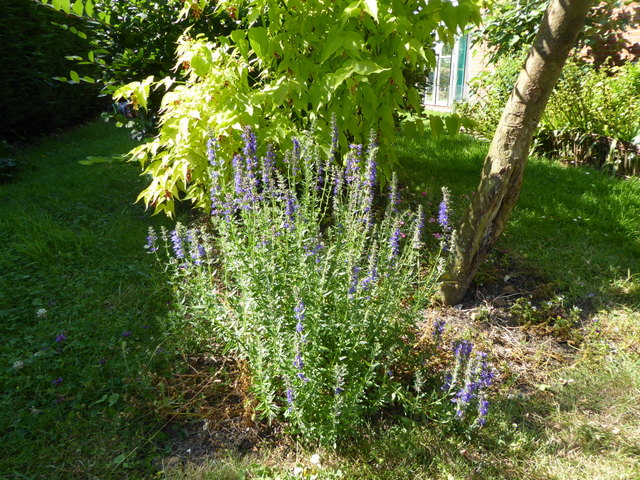
Hyssop (Hyssopus officinalis)

I bought this herb late last summer; it survived the winter very well and has flowered beautifully this year.  It is very popular with the bees and smells good too.

P1000975Swiss Chard

Swiss Chard ‘Bright Lights’ (Beta vulgaris subsp. cicla var. flavescens)

I grew Swiss Chard from seed this year for the first time, mainly because my mother likes it and hasn’t been able to get it for a few of years.  I gave her a few plants and then put some plants into a couple of gaps in my flower-border.  They look beautiful, especially with the sun shining through the colourful stems.  I can’t say the vegetable when eaten has been very popular.  The leaves are like spinach, quickly reducing in size and becoming soft; the stems which I put into the hot water a minute or so before the leaves, have a lovely texture and a very mild taste.  They can be steamed successfully too.  I think it is the mildness that doesn’t appeal – or perhaps the spinach-like leaves.  We love greens in this family and get through large amounts of cabbage, spring-greens, brussels sprouts and broccoli, all of which have fairly powerful flavours.  Perhaps Swiss Chard is too refined for us?

P1000976Skipper

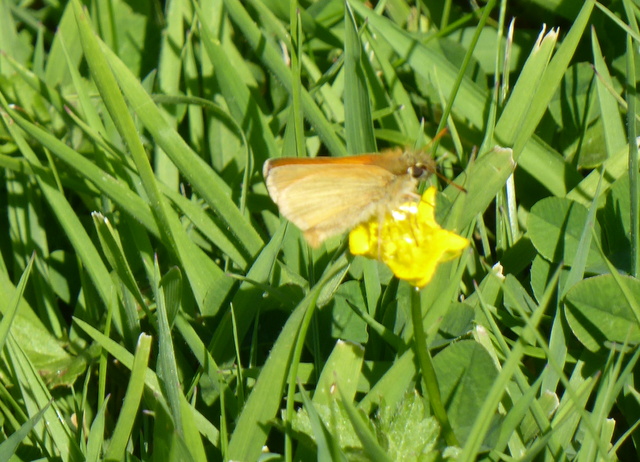
A poor photo of an Essex Skipper butterfly (Thymelicus lineola) sitting on a buttercup flower.

I include this just to prove to myself that we did get a number of skippers in the garden in the summer.  The Essex Skipper is very similar to the Small Skipper but the antennal tip instead of being golden is black underneath, which can just be seen in my photo.

P1000978Greengage

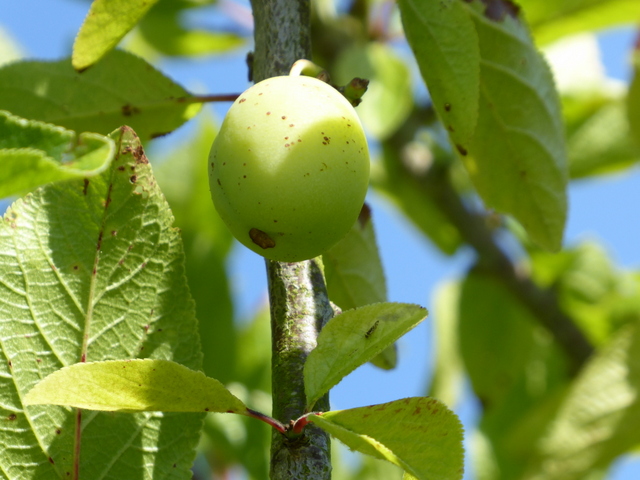
A Greengage (Prunus domestica ssp. italica var. Claudiana)

We bought a young Greengage tree nearly three years ago and this year we got two fruits on it.  We didn’t manage to eat either of them because one or other of our animal, bird or insect visitors got there first.

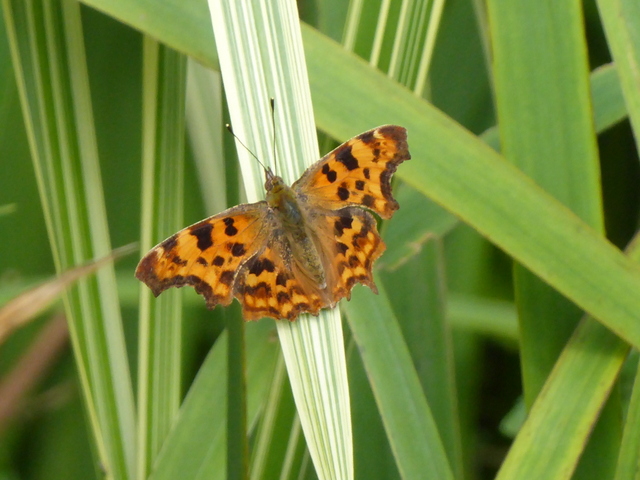
P1000981Comma

A Comma butterfly (Polygonia c-album)

The name ‘Comma’ refers to a white comma mark on the underside of the wings.

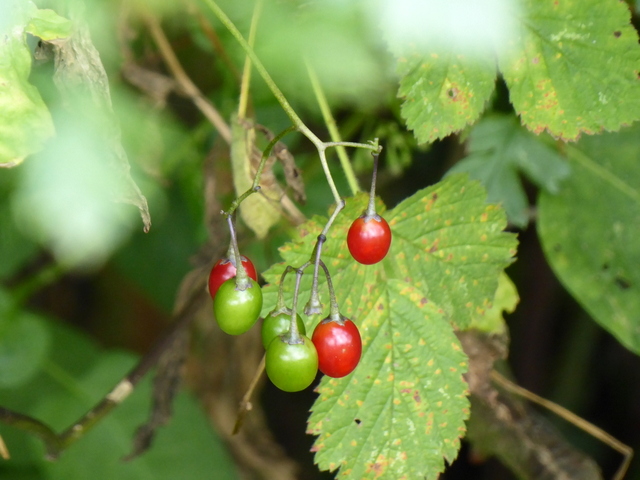
P1000984Woody Nightshade berries

Woody Nightshade/Bittersweet berries (Solanum dulcamara)

This has got everywhere in the garden this year!  I have found it growing in amongst the herbs, up through the Pyracantha and it has taken over the two Cotoneasters that grow next to our gas-tank.  (We are not on mains gas here so have a large butane gas tank near the house).  Bittersweet berries are beautiful and are at their most attractive at this stage when some are still green and they are plump and shiny.

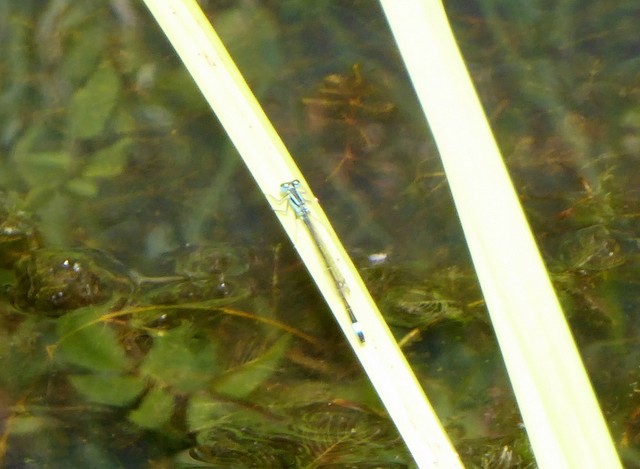
P1000985Blue-tailed Damselfly perhaps

Another poor photograph showing what I believe to be a female Blue-tailed Damselfly (Ischnura elegans)

Another photo that is proof to me that we had these damselflies flying round the pond this summer.

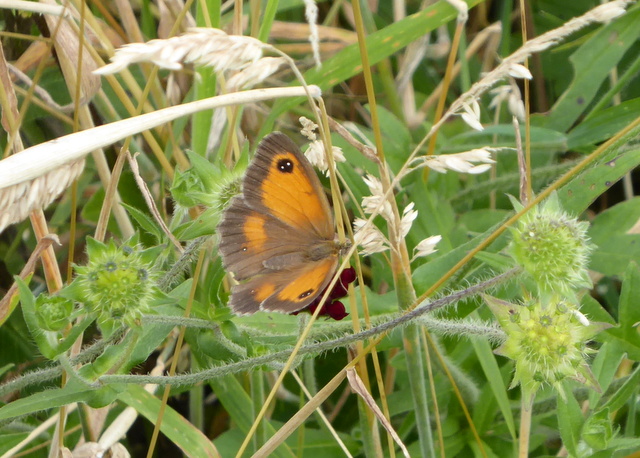
P1000990F Gatekeeper-001

Female Gatekeeper butterfly (Pyronia tithonus)

Male Gatekeepers are territorial and patrol an area of hedgerow often in corners of fields or near gates trying to deter other insects from entering their domains.  The males are smaller and a brighter orange than the females and have a dark patch of scent glands on the fore-wing.

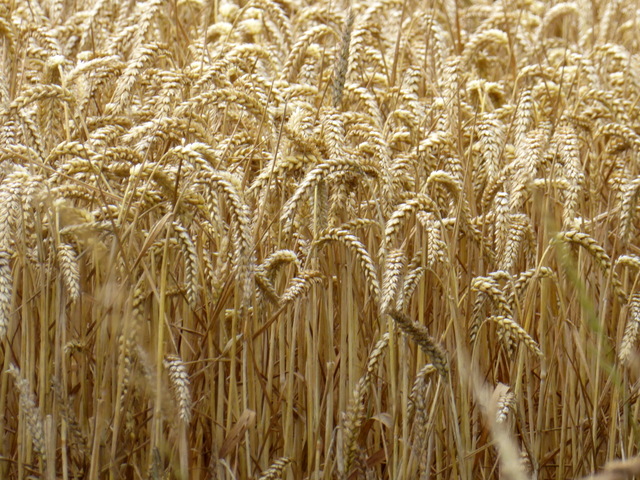
P1000986Ripe wheat

Ripe Wheat (Triticum spp.)

I couldn’t resist taking a photo of the wheat in the field behind our house just before it was harvested this year.

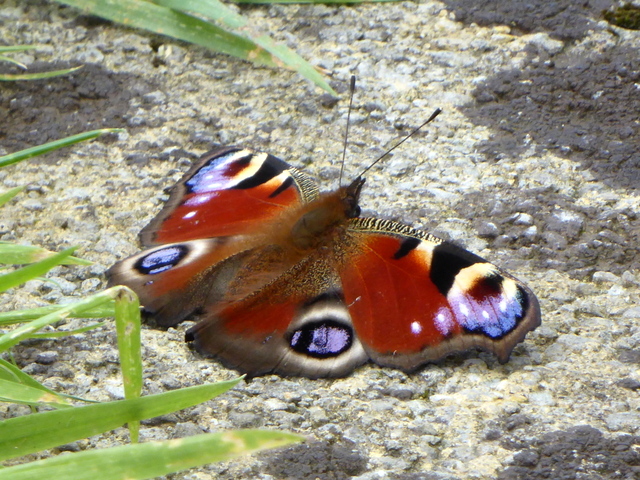
P1000998Peacock butterfly

Peacock butterfly (Inachis io)

This slightly battered Peacock was sunning itself on the path.  They are very hairy-bodied insects and the colours and markings on the wings are beautiful.  I noticed for the first time the lovely tiger-stripe yellow and black ‘shoulders’ on the fore-wing.

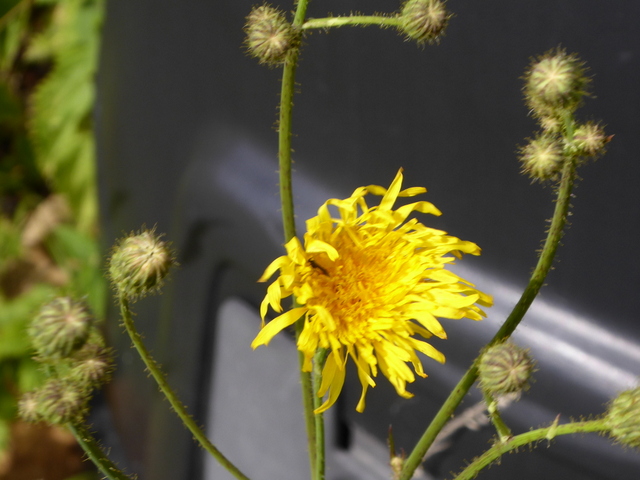
P1010003Perennial Sow-thistle

Perennial Sow-thistle (Sonchus arvensis) This one I discovered growing next to our compost bin.

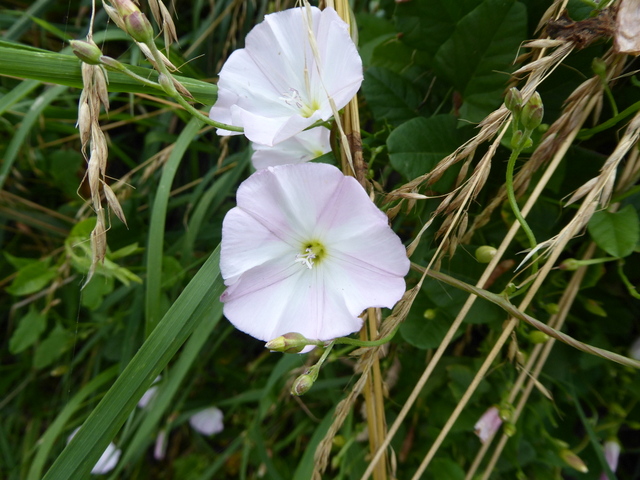
P1010007Field Bindweed

Field Bindweed (Convolvulus arvensis)

The flowers this year are only lightly marked with pink.  They are usually much brighter.

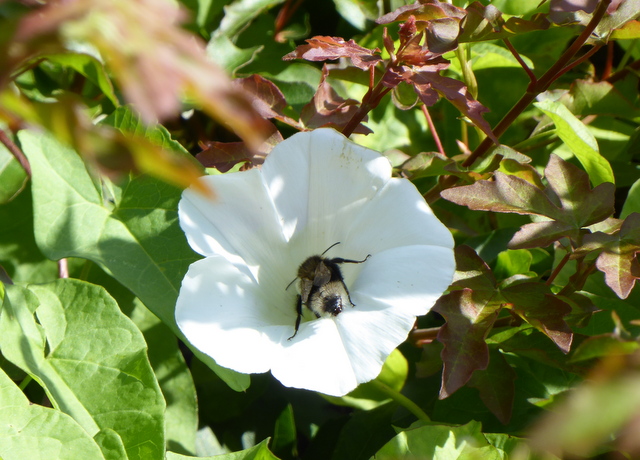
p1010009bumble-bee-hedge-bindweed

We are lucky (?) to have both Field Bindweed, as in the former photo, and Hedge Bindweed (Calystegia sepium) as here, in our garden. This one was being visited by a bumble bee.

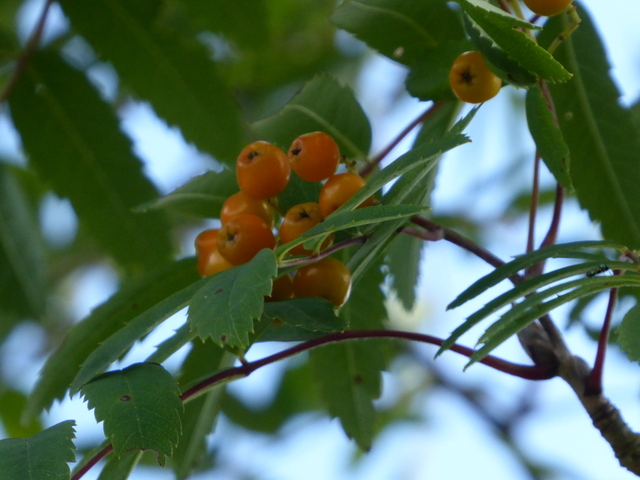
p1010010rowan-berries

Our young Rowan or Mountain Ash tree (Sorbus aucuparia) had many flowers in the early summer and produced some berries this year. The berries in the photo are not quite ripe yet.  They were eaten by something very quickly once they were red and ripe.

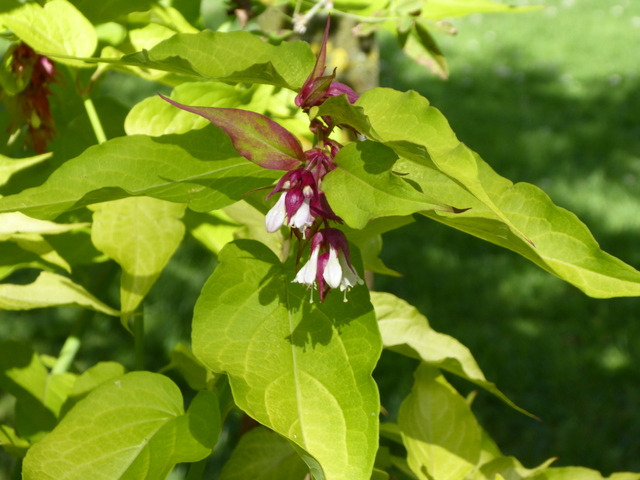
p1010011pheasantberry-flowers

Pheasant Berry (Leycesteria formosa)

I have a pale-leaved Pheasant Berry bush and it has done very well this year, having had enough rain-water at the beginning of the season.  The birds usually enjoy the berries but I’m not sure if the wasps will have left them any!

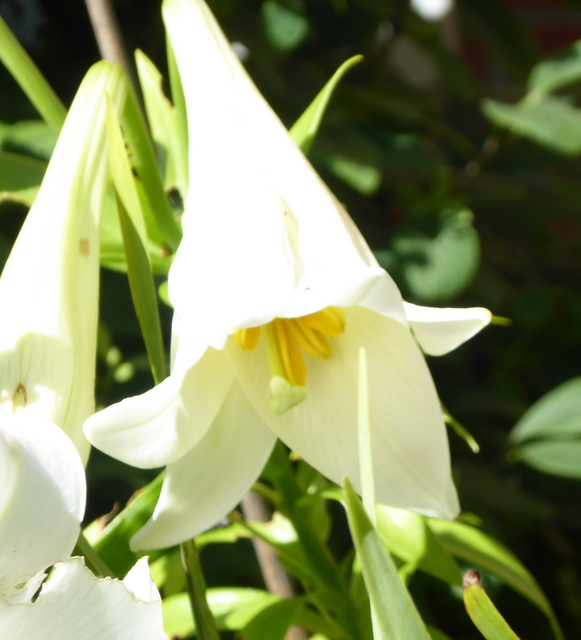
p1010012lily

Lilium longiflorum

The white Longiflorum lilies did a little better this year.  I still had some trouble with non-native Red Lily Beetles but the cool wet June meant the flowers were taller and stronger and the beetles didn’t appear until later in the season when the weather improved.  I was as vigilant as I could be, going out checking for beetles at least twice a day and squashing them when I found them.  Unfortunately, nothing could be done while I was away from home so when I returned I soon discovered the horrible grubs eating the plants.  I removed as many as I could and discovered that spraying them regularly with soap was very effective.

p1010014runner-beans

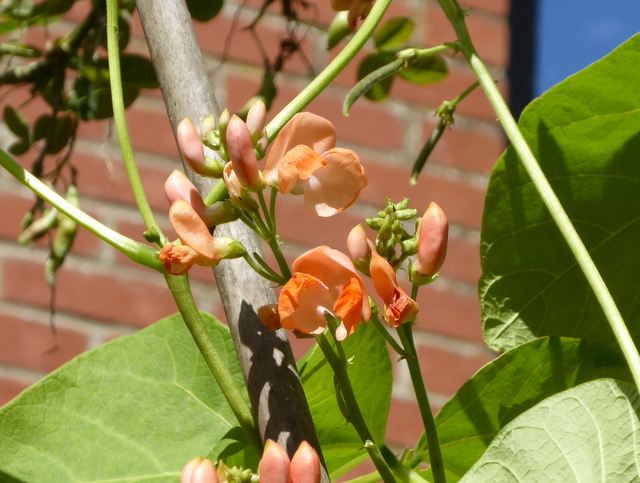
Runner Beans (Phaseolus coccineus) ‘Celebration’

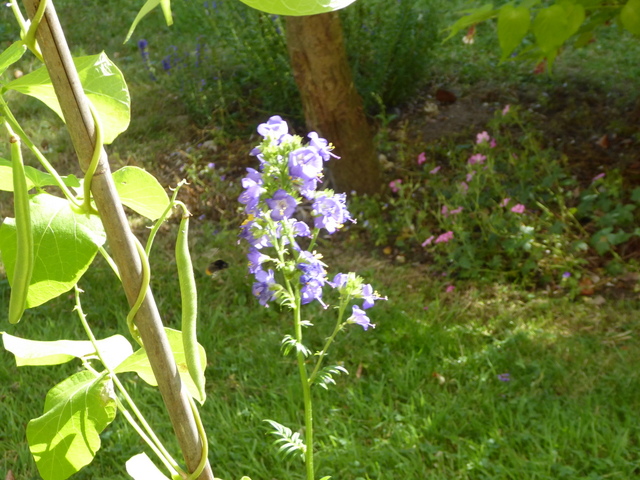
I grew runner beans this year and gave my mother six plants and planted the rest in a gap in my flower border.  They grew up through a laburnum tree and did quite well.  I started them fairly late so they didn’t begin flowering til after mid-summer but the beans develop very quickly and these ones are so sweet and hardly have any ‘strings’.   I love the orange flowers.

p1010015runner-beans-and-jacobs-ladder

The beans with a Jacob’s Ladder (Polemonium caeruleum) flower-spike and a bumble bee flying towards the Jacob’s Ladder.

p1010016

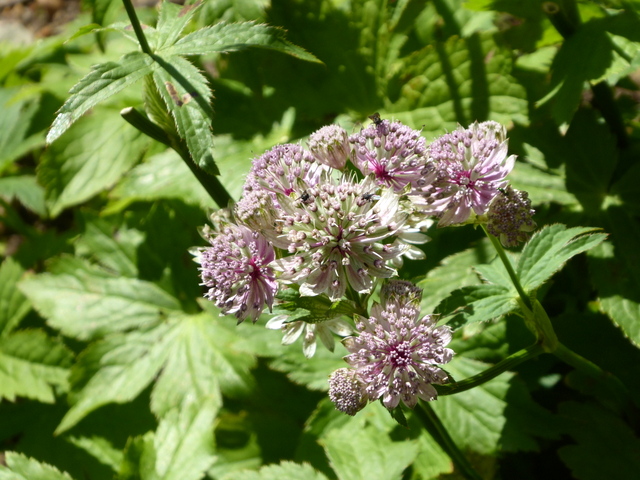
The Astrantia, also known as Masterwort, has done well this year.

p1010018common-blue-damselfly

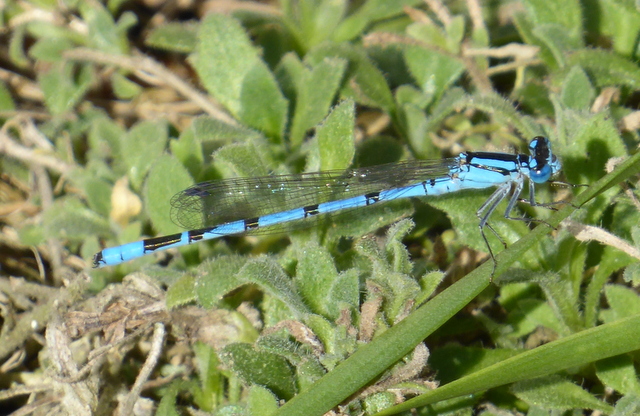
A male Common Blue Damselfly (Enallagma cyathigerum)

p1010028lilies

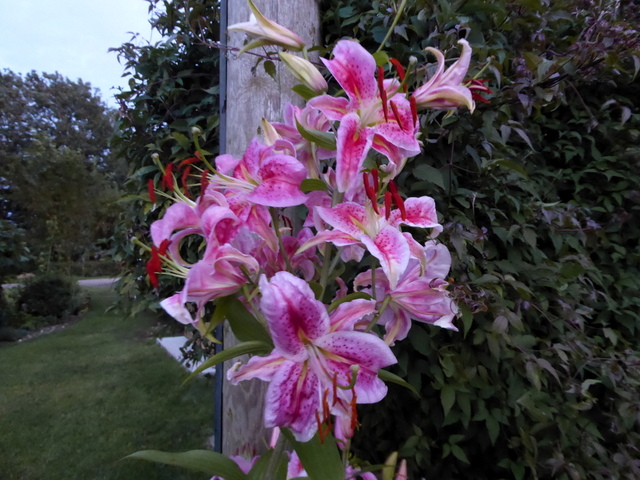
This photo of my lilies (Lilium ‘Stargazer’) was taken well after sunset and without a flash.

I wanted to see if there was enough ambient light to take a successful photo of these luminous lilies.

p1010030gladiolus

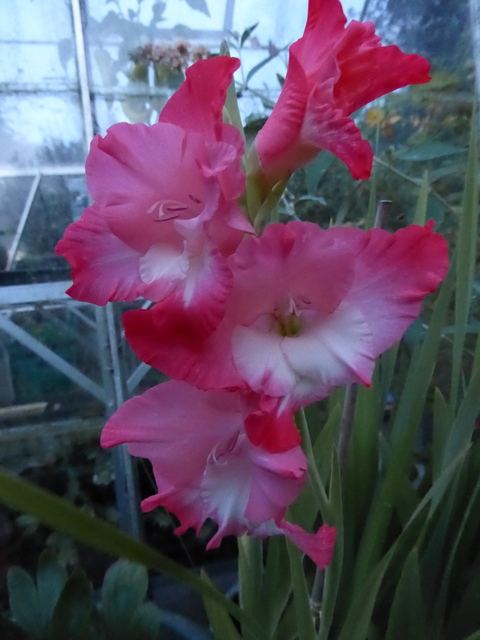
I then took this photo of a Gladiolus next to the greenhouse

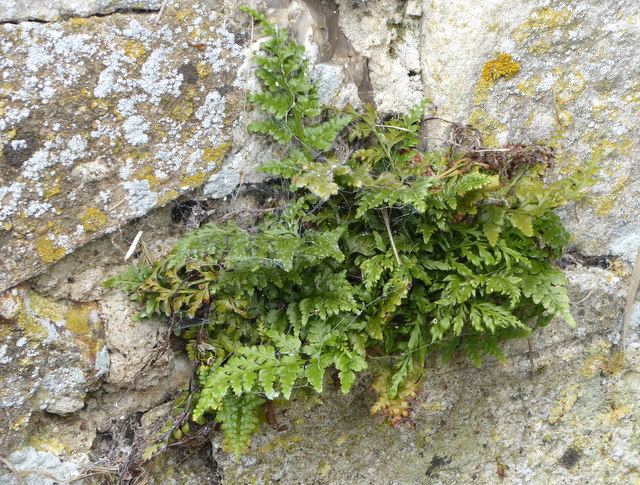
p1010021black-spleenwort

On a church cleaning visit to our church at Rumburgh I noticed this Black Spleenwort (Asplenium adiantum-nigra) growing on the wall.

This plant is mainly found in the west of the country so I was surprised to see it here, almost as far east as one can get.  It loves alkaline soil and here it is growing in the mortar.  A month later and it had gone – removed I presume, in case it caused yet more damage to our poor crumbling church building.

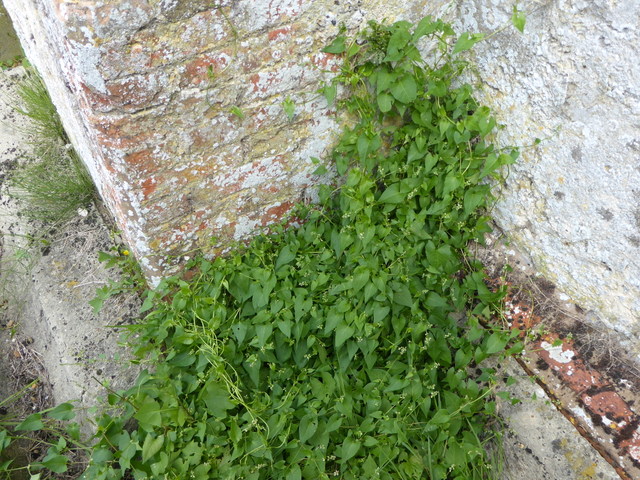
p1010022black-bryony

Just below the spleenwort was this patch of Black Bryony (Tamus communis)

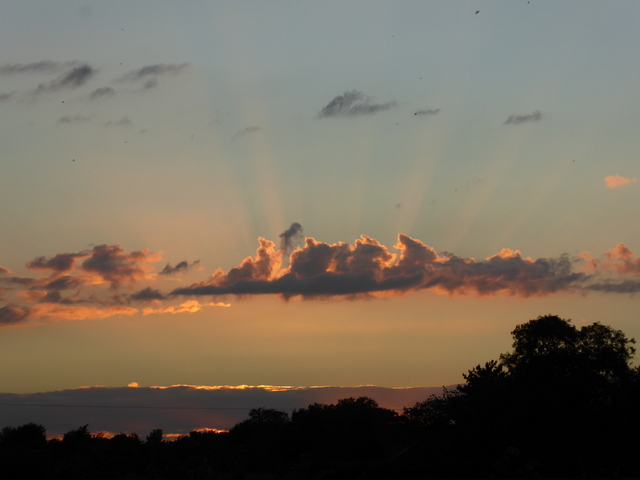
A sunset seen from the back of the house.

p1010020sunset

My music selection today is ‘The Arrival of the Queen of Sheba’ by Handel.

Thanks for visiting!
Share this:

  • Share on X (Opens in new window) X
  • Share on Reddit (Opens in new window) Reddit
  • Share on Pinterest (Opens in new window) Pinterest
  • Share on Facebook (Opens in new window) Facebook
  • Email a link to a friend (Opens in new window) Email
  • Share on Tumblr (Opens in new window) Tumblr
  • Print (Opens in new window) Print
  • Share on Pocket (Opens in new window) Pocket
  • Share on LinkedIn (Opens in new window) LinkedIn
Like Loading...

Art by the Numbers

11 Sun Sep 2016

Posted by Clare Pooley in Uncategorized

≈ 36 Comments

This is a post written by my nephew.


Recently I read about the upcoming nationwide roll out of the Quality Metrics Framework. For those of you who don’t know, The Quality Metrics are a selection of statements presented to audiences to…

Source: Art by the Numbers

Share this:

  • Share on X (Opens in new window) X
  • Share on Reddit (Opens in new window) Reddit
  • Share on Pinterest (Opens in new window) Pinterest
  • Share on Facebook (Opens in new window) Facebook
  • Email a link to a friend (Opens in new window) Email
  • Share on Tumblr (Opens in new window) Tumblr
  • Print (Opens in new window) Print
  • Share on Pocket (Opens in new window) Pocket
  • Share on LinkedIn (Opens in new window) LinkedIn
Like Loading...

A Walk in the Black Forest

02 Fri Sep 2016

Posted by Clare Pooley in holidays, Insects, plants, walking, wild flowers

≈ 46 Comments

Tags

bedstraw, berries, bilberry, Black Forest, brimstone butterfly, butterfly, cat's-ear, Common Bird's-foot Trefoil, Common Cow-wheat, Common Earthball, common knapweed, Dame's-violet, forest, foxglove, holiday, Lesser Stitchwort, Loosestrife, Lysimachia, Male Fern, moth, Polypody, Scarlet Tiger moth, Small Balsam, Speedwell, St John's-wort, trees, Triberg, views, walking

Our week’s holiday was coming to an end and we wanted to take a walk in the beautiful countryside around the town of Triberg.  The hotel thoughtfully provided maps and suggestions for walks so we chose one and adapted it for our use.  Neither Richard nor I are as fit or as young as we used to be and Elinor cannot walk very far because of her scoliosis so we decided on a half-circuit of the town in the woods.  We went in the direction of the railway station and took a steep path up between houses towards the forest.

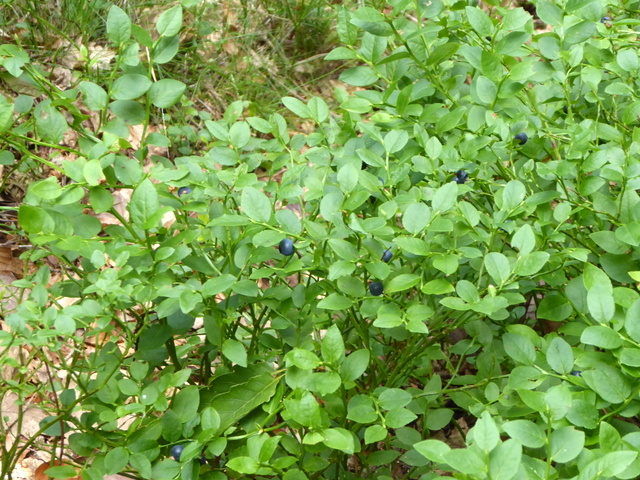
P1000813Bilberries

Bilberries (Vaccinium myrtillus)

We were soon high enough to be able to look down on the town which was very busy with Sunday visitors and many motorbikes.  I think Richard told us this part of the walk was called the Bilberry Wood and there were certainly many bilberries growing at the side of the path.

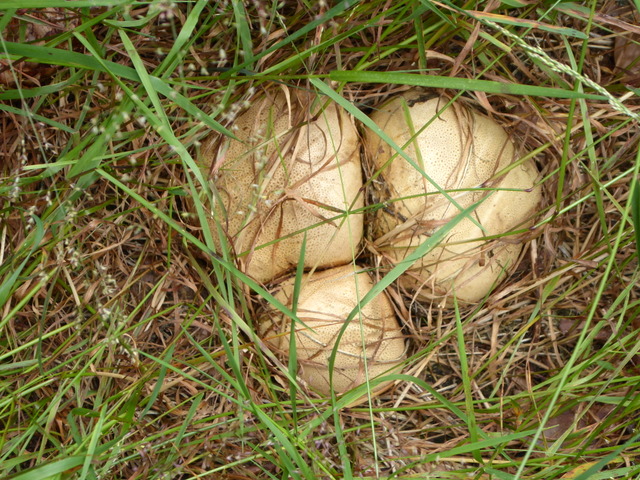
P1000814Common Earthball phps

There was plenty of fungus too. I think this may be Common Earthball (Scleroderma citrinum)

We soon climbed a little further into the forest and left the town behind and no longer heard the traffic.

P1000815woodland
P1000816Woodland

The forest became denser but there was never any difficulty following the path which was beautifully maintained.  I began to see many different plants; some I recognised and some I didn’t.  If anyone can help me with the names of these plants I will be very grateful.

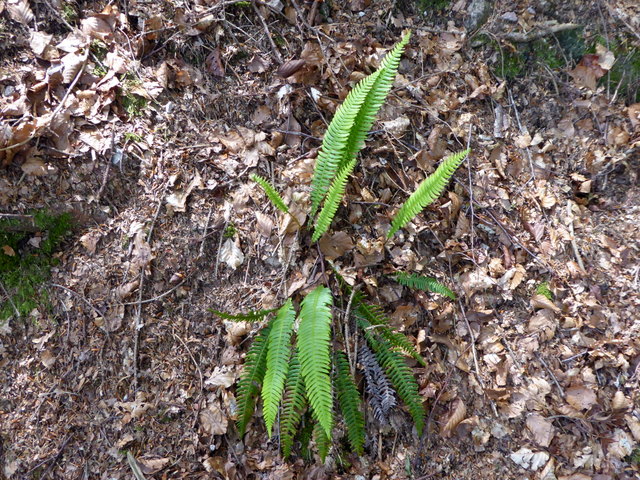
P1000817Polypody

Polypody (Polypodium vulgare) – a true fern. When walking with my family I always get left behind because I like to take photos of plants and fungi. I don’t have the time to take the detailed shots I would like in order to identify my finds in case I am left too far behind!

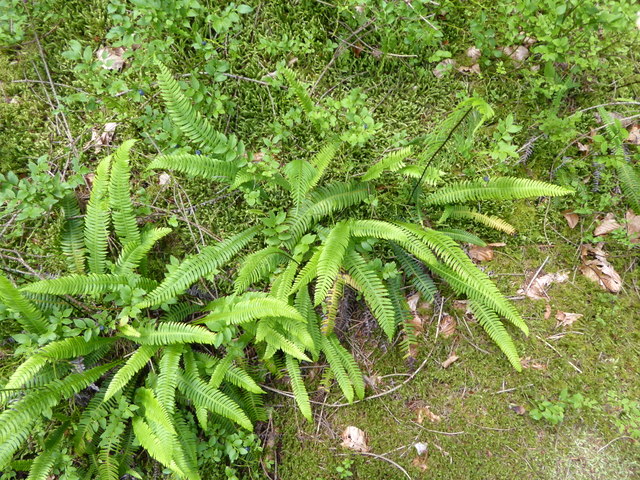
P1000832Polypody

More Polypody

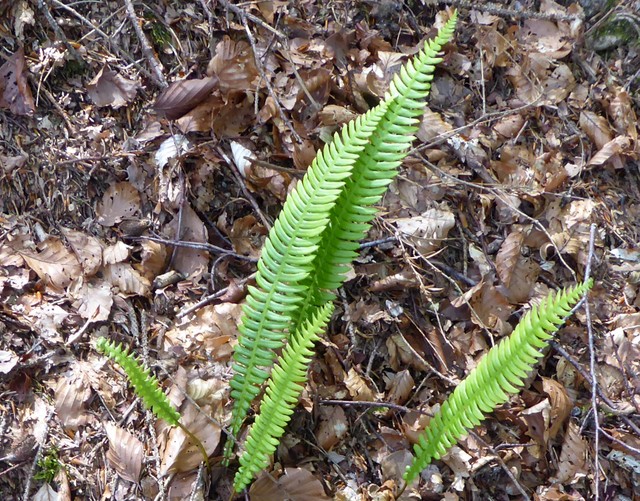
I love the chunkiness of Polypody so I cropped one of the photos above to look at it in more detail.

P1000817Polypody - Copy (2)

Polypody

P1000818Small Balsam phps

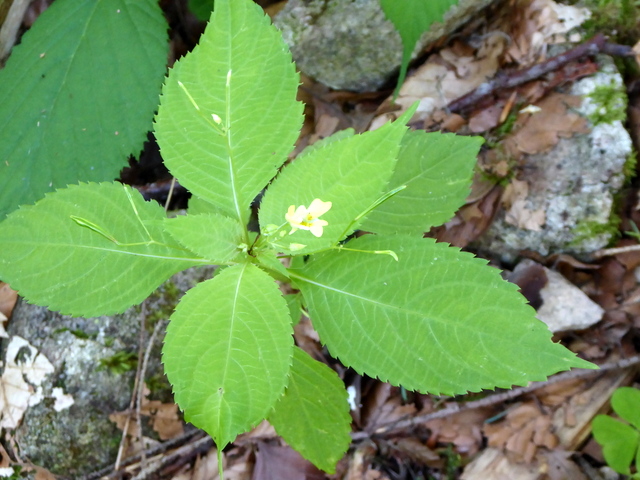
I think this might be Small Balsam (Impatiens parviflora)

P1000823Unknown

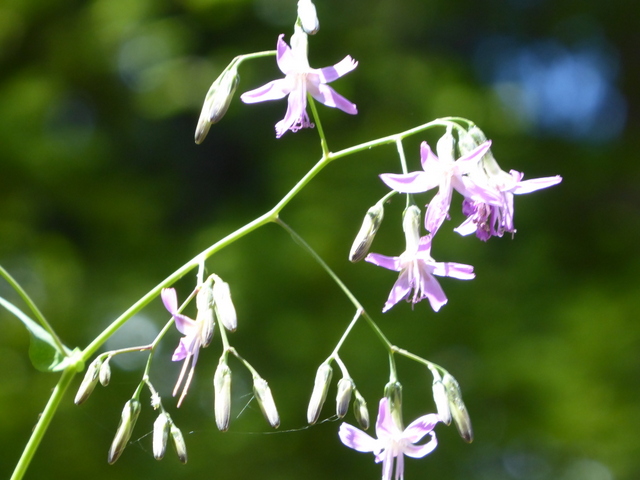
Unknown flower

P1000824Unknown

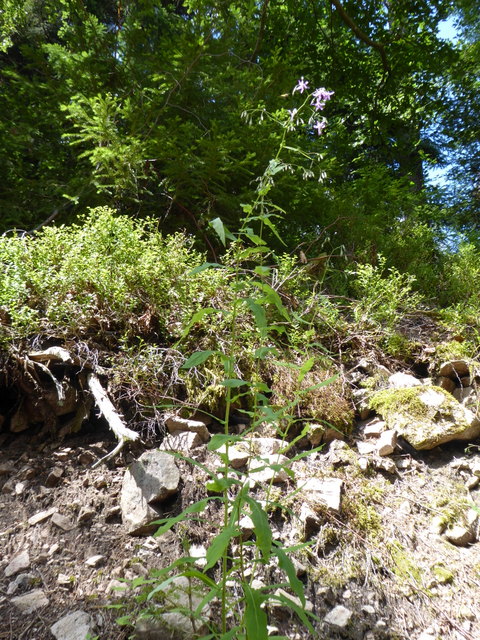
It’s very tall!

P1000820Unknown

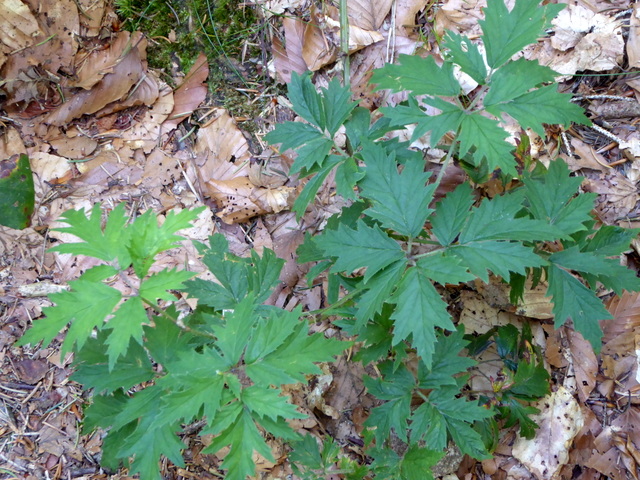
Interesting leaves

P1000827Cow-wheat

Common Cow-wheat (Melampyrum pratense)

P1000850Wild flowers

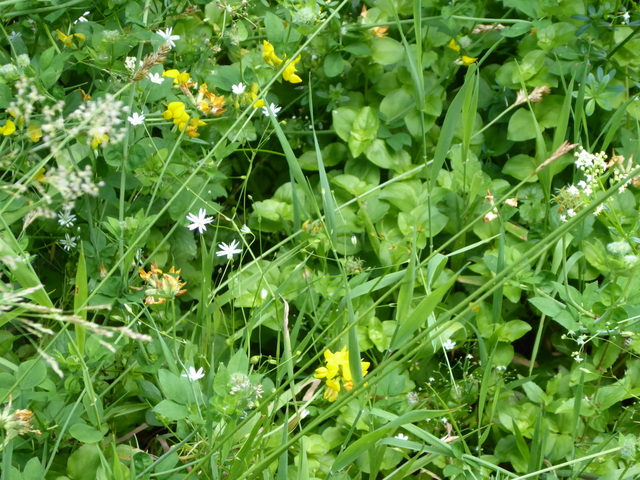
Wild flowers including a Bedstraw, Common Bird’s-foot Trefoil (Lotus corniculatus) and Lesser Stitchwort (Stellaria graminea).

P1000834Foxglove

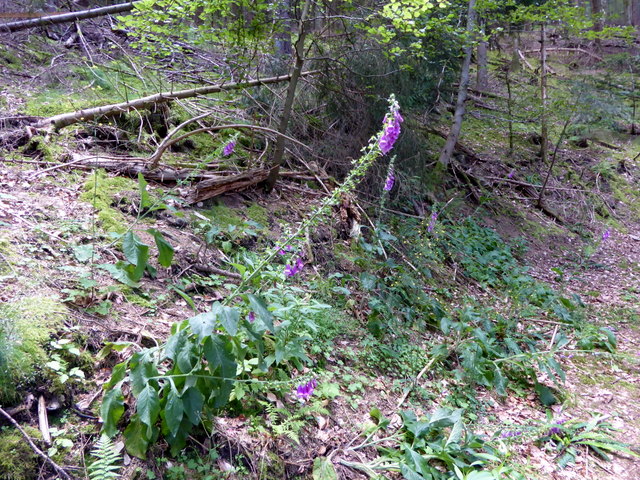
Foxglove (Digitalis purpurea)

Speedwell
Speedwell
Speedwell
Speedwell
P1000837Royal Fern phps

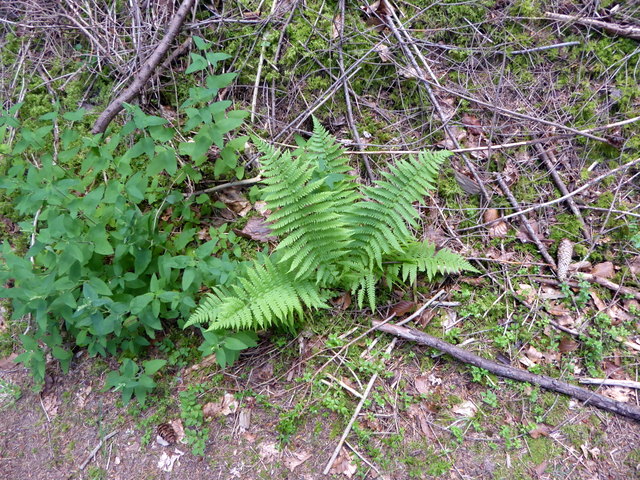
This may be Male Fern (Dryopteris filix-mas)

P1000857

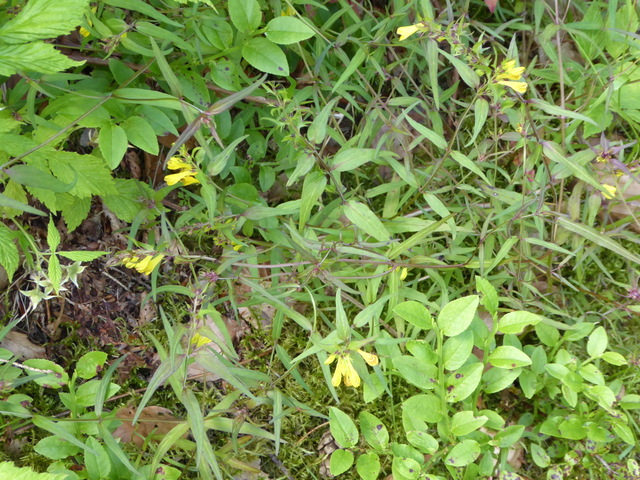
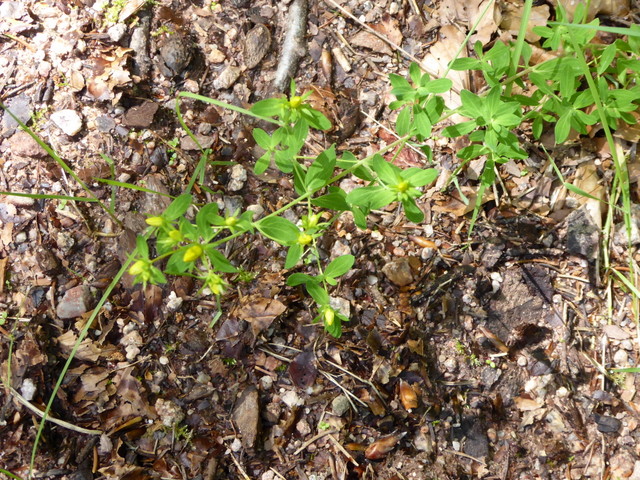
St John’s-wort; I don’t know which of the many St John’s-worts it is.

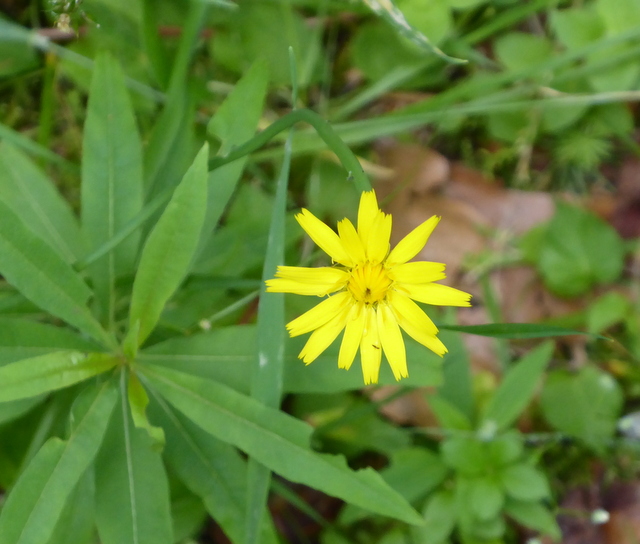
P1000855Cat's-ear

Cat’s-ear (Hypochaeris radicata)

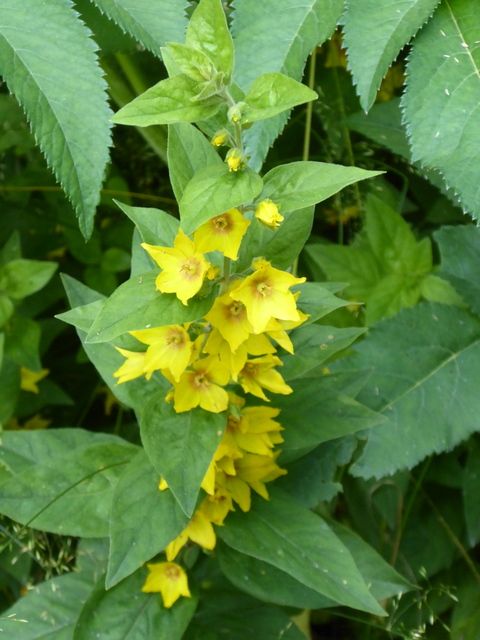
P1000868Lysimachia

Loosestrife (Lysimachia punctata)

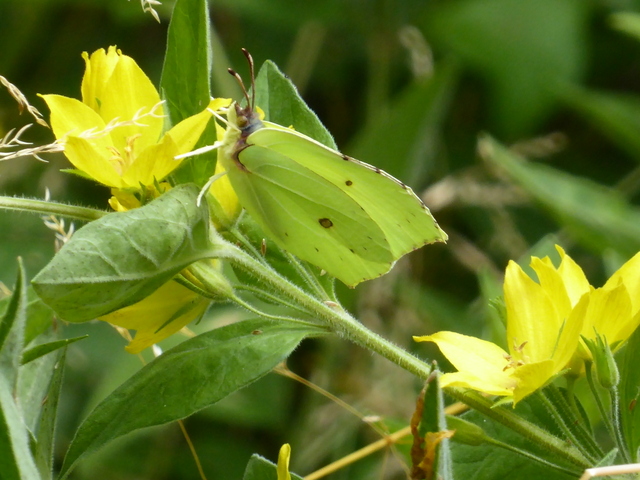
I managed to photograph a butterfly….

P1000866Lysimachia

A Brimstone butterfly (Gonepteryx rhamni) on Lysimachia

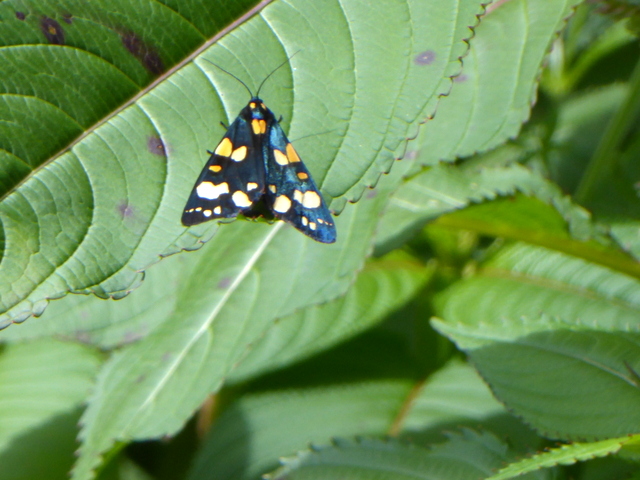
…and a moth.

P1000864ScarletTiger Moth

A Scarlet Tiger Moth (Callimorpha dominula). When flying I could see its underwings which were bright scarlet.

The views as we walked were marvellous.

This slideshow requires JavaScript.

Berries
Berries
Dame's-violet (Hesperis matronalis)
Dame’s-violet (Hesperis matronalis)
Unknown yellow flower
Common Knapweed ( Centaurea nigra)

The path eventually returned us to the town near to the waterfall.

My music selection today is ‘A Walk in the Black Forest’ which was so popular on the radio when I was a little girl.

I am hoping that Elinor will provide the last of my Black Forest posts.

Thanks for visiting!
 

Share this:

  • Share on X (Opens in new window) X
  • Share on Reddit (Opens in new window) Reddit
  • Share on Pinterest (Opens in new window) Pinterest
  • Share on Facebook (Opens in new window) Facebook
  • Email a link to a friend (Opens in new window) Email
  • Share on Tumblr (Opens in new window) Tumblr
  • Print (Opens in new window) Print
  • Share on Pocket (Opens in new window) Pocket
  • Share on LinkedIn (Opens in new window) LinkedIn
Like Loading...
Follow A Suffolk Lane on WordPress.com

Enter your email address to follow this blog and receive notifications of new posts by email.

Join 715 other subscribers.

Unknown's avatar

I talk about what it's like living in a quiet part of Suffolk. I am a wife, mother and daughter, a practising Christian and love the natural world that surrounds me. I enjoy my life - most of the time!
My Posts

Sep 2016
M T W T F S S
 1234
567891011
12131415161718
19202122232425
2627282930  
« Aug   Oct »

Pages

  • About my Blog
  • GDPR (General Data Protection Regulations) and This Site
  • My Life in a Suffolk Lane

Archives

Blogs I Follow

Unknown's avatar
Unknown's avatar
Unknown's avatar
Unknown's avatar
Unknown's avatar
Unknown's avatar
Unknown's avatar
Unknown's avatar
Unknown's avatar
Unknown's avatar
Unknown's avatar
Unknown's avatar
Unknown's avatar
Unknown's avatar
Unknown's avatar
Unknown's avatar
Unknown's avatar
Unknown's avatar
Unknown's avatar

Posts I Like

  • Unknown's avatar
  • Unknown's avatar
  • Unknown's avatar
  • Unknown's avatar
  • Unknown's avatar
  • Unknown's avatar
  • Unknown's avatar
  • trulymebeingme's avatar
  • Unknown's avatar
  • Unknown's avatar
  • Unknown's avatar
  • aho's avatar
  • Talkmore's avatar
  • Unknown's avatar
  • santable's avatar
  • womanseyeview's avatar
  • gederedita's avatar
  • Schnippelboy's avatar
  • Unknown's avatar
  • Ari's avatar
  • Dad's avatar
  • Stephen G. Hipperson's avatar
  • (Kitty) Cat Strawberry - Meow!'s avatar
  • mitchteemley's avatar
  • John’s Postcards's avatar
  • Unknown's avatar
  • Unknown's avatar
  • Limentinus's avatar
  • Jack Ronald Cotner's avatar
  • NEERAJ SINGH's avatar
  • Unknown's avatar
  • Unknown's avatar
  • Julian Summerhayes's avatar
  • Unknown's avatar
  • Luso Loonie — Devin Meireles's avatar
  • Annika Perry's avatar
  • Unknown's avatar
  • Unknown's avatar
  • Unknown's avatar
  • Unknown's avatar
  • Unknown's avatar
  • Maikhel's avatar
  • Unknown's avatar
  • Unknown's avatar
  • Unknown's avatar
  • Unknown's avatar
  • Unknown's avatar
  • thesimlux's avatar
  • Unknown's avatar
  • Unknown's avatar

amphibians architecture art Arts and Crafts churches cooking Days out domestic animals family fish Folk Traditions Gardening Historic Buildings holidays Insects Landscaping literature music Norwich plants Rural Diary seashore theatre trees Uncategorized walking weather wild animals wild birds wild flowers

Tags

architecture autumn birds blackbird blackthorn Bungay butterfly church clouds common knapweed cow parsley crocus daffodils Diary dogwood family field maple flowers fungus garden gardening geese greylags ground-ivy Halesworth Hawthorn heather holiday Holly Holy Week horse chestnut Hoverfly insects ivy Lake District Lent lesser celandine lichen Lords and Ladies Mallard mallards Minsmere moorhen moss music Norwich Peak District pheasant plants pond ponds primrose primroses Rain rooks Rumburgh Rumburgh Church sheep Sheffield snow snowdrops Southwold spring Suffolk Suffolk Wildlife Trust sunset the Beck trees viburnum bodnantense walking weather wild cherry wild flowers winter-flowering honeysuckle witch-hazel

Meta

  • Create account
  • Log in
  • Entries feed
  • Comments feed
  • WordPress.com

Goodreads

Blog at WordPress.com.

Book Jotter

Reviews, news, features and all things books for passionate readers

Country Life Blog -

A blog about life in the country in the past and present

Matthew Paul: Poetry & Stuff

Poetry and what-not

Schnippelboy

Ein Tagebuch unserer Alltagsküche-Leicht zum Nachkochen

TAMARA JARE

TAMARA JARE Tamara Jare: Contemporary Figurative Painting Oil on Canvas Artist Art Studio

A Taste of Freedom

Documenting a Dream

Country Ways

Rambling Journeys in Britain, Countryside Matters and campaigning for the Right to Roam

The Strawberry Post

Here to Entertain, Educate & Inspire!

a north east ohio garden

an ongoing experiment in the dirt, 35 plus years

naturechirp

Celebrating God's creatures, birds and plants...

Sophie Neville

Writer

Going Batty in Wales

Developing a more sustainable lifestyle in SW Wales

Our Lake District Escapades

Exploring the Lake District and beyond

Short Walks Long Paths

Wandering trails around the coast of Wales

The Biking Gardener

An English persons experience of living and gardening in Ireland

Nan's Farm

A Journal Of Everyday Life

Walk the Old Ways

Rambling Journeys in Britain with John Bainbridge. Fighting for the Right to Roam. Campaigning to Protect Our Countryside.

Writer Side UP!

Waking the Writer Side...and keeping it "Up!"

Meggie's Adventures

Travel, thank you notes and other stories

amusicalifeonplanetearth

Music and the Thoughts It Can Inspire

lovefoundation.co.uk

Traveling Tortuga

Simply Living Well

Pakenham Water Mill

Historic watermill in the beautiful Suffolk countryside

Take It Easy

Retired, not expired: words from the after(work)life. And music. Lots of music!

Secret Diary Of A Country Vicar's Wife

By Olive Oyl

thanksfortheadventureorg.wordpress.com/

The Beat Goes On

#TBGO

Frank Pleszak's Blogs

Twitter: @frankpleszak @PolishIICorps

John Bainbridge Writer

Indie Writer and Publisher

roughwighting

Life in a flash - a bi-weekly storytelling blog

Walking the Old Ways

Rambling in the British Countryside

CapKane

thoughts on social realities

SkyeEnt

Jottings from Skye

jodie richelle

embracing my inner homemaker

Skizzenbuch/Blog

Just another WordPress.com weblog

Have Bag, Will Travel

The Call of the Pen

Flash Fiction, Book Reviews, Devotionals and other things.

John's Postcards

Art in Nature

You dream, I photographe it !

Smile! You’re in Barnier World......

theinfill

the things that come to hand

Dr. Mary Ann Niemczura

Author of "A Past Worth Telling"

Provincial Woman

The Pink Wheelbarrow

Luanne Castle: Poetry and Other Words (and cats!)

Poetry, Other Words, and Cats

The Family Kalamazoo

A genealogical site devoted to the history of the DeKorn and Zuidweg families of Kalamazoo and the Mulder family of Caledonia

everythingchild

The Book Owl

Canberra's Green Spaces

Paul Harley Photographer

  • Subscribe Subscribed
    • A Suffolk Lane
    • Join 715 other subscribers.
    • Already have a WordPress.com account? Log in now.
    • A Suffolk Lane
    • Subscribe Subscribed
    • Sign up
    • Log in
    • Report this content
    • View site in Reader
    • Manage subscriptions
    • Collapse this bar
 

Loading Comments...
 

    Privacy & Cookies: This site uses cookies. By continuing to use this website, you agree to their use.
    To find out more, including how to control cookies, see here: Cookie Policy
    %d