Tags
Bigod, Bungay, Bungay Castle, castle ruins, castles, Suffolk
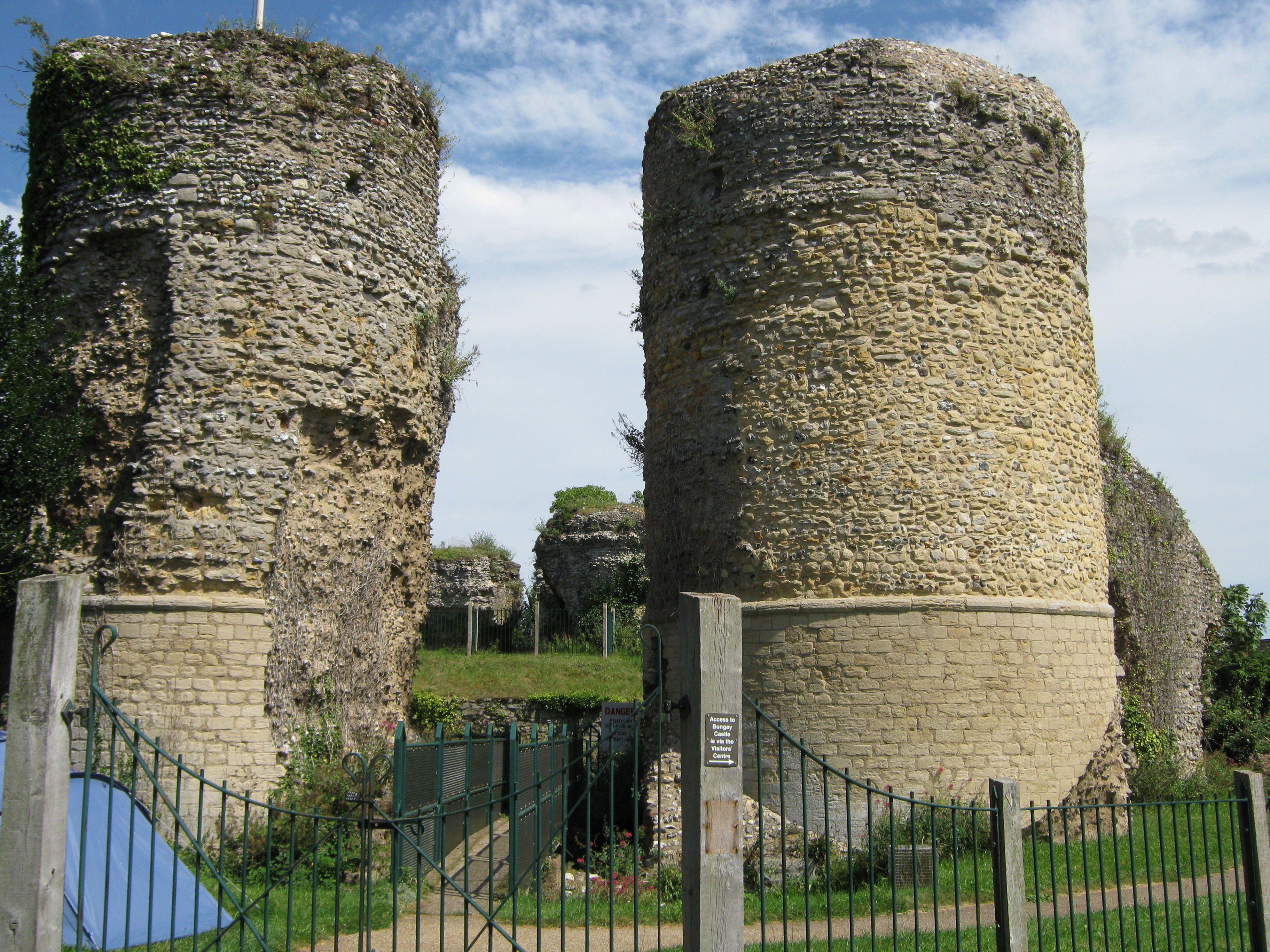
Bungay Castle gate towers
In my post about Mettingham Castle (https://asuffolklane.wordpress.com/2023/05/15/mettingham-castle/) I mentioned that I visited a cafe next to Bungay Castle and had a cup of tea there. For my first post in six months I thought that I would tell you about the ruins of Bungay Castle which are hidden behind the main shopping street in the town. Sadly, it is not possible to walk round them at present as they have become unsafe and the Bungay Castle Trust hasn’t yet made up it’s mind how best to deal with the problem.
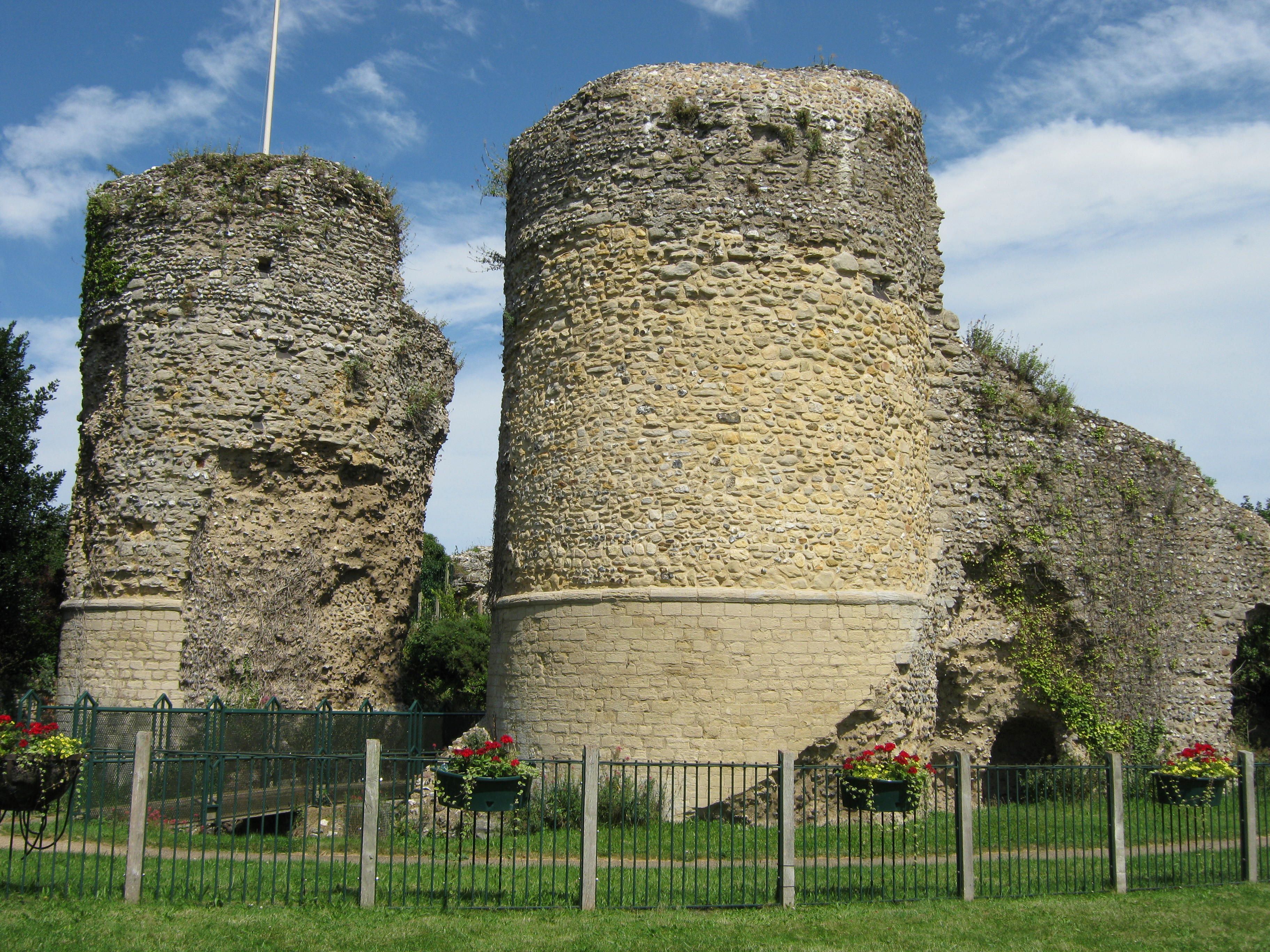
Gate towers
The castle was originally built just after the conquest by a William de Noyers who constructed the motte and bailey and some stone fortifications. Roger Bigod who came over to England with William the Conqueror in 1066 was rewarded with a lot of land in England by King William and Bungay was included in this gift. Shortly after the year 1100 Roger began work on the castle which is almost surrounded by a curve in the River Waveney; a natural defence. Some say the name Bungay derives from the old French for ‘beautiful island’.
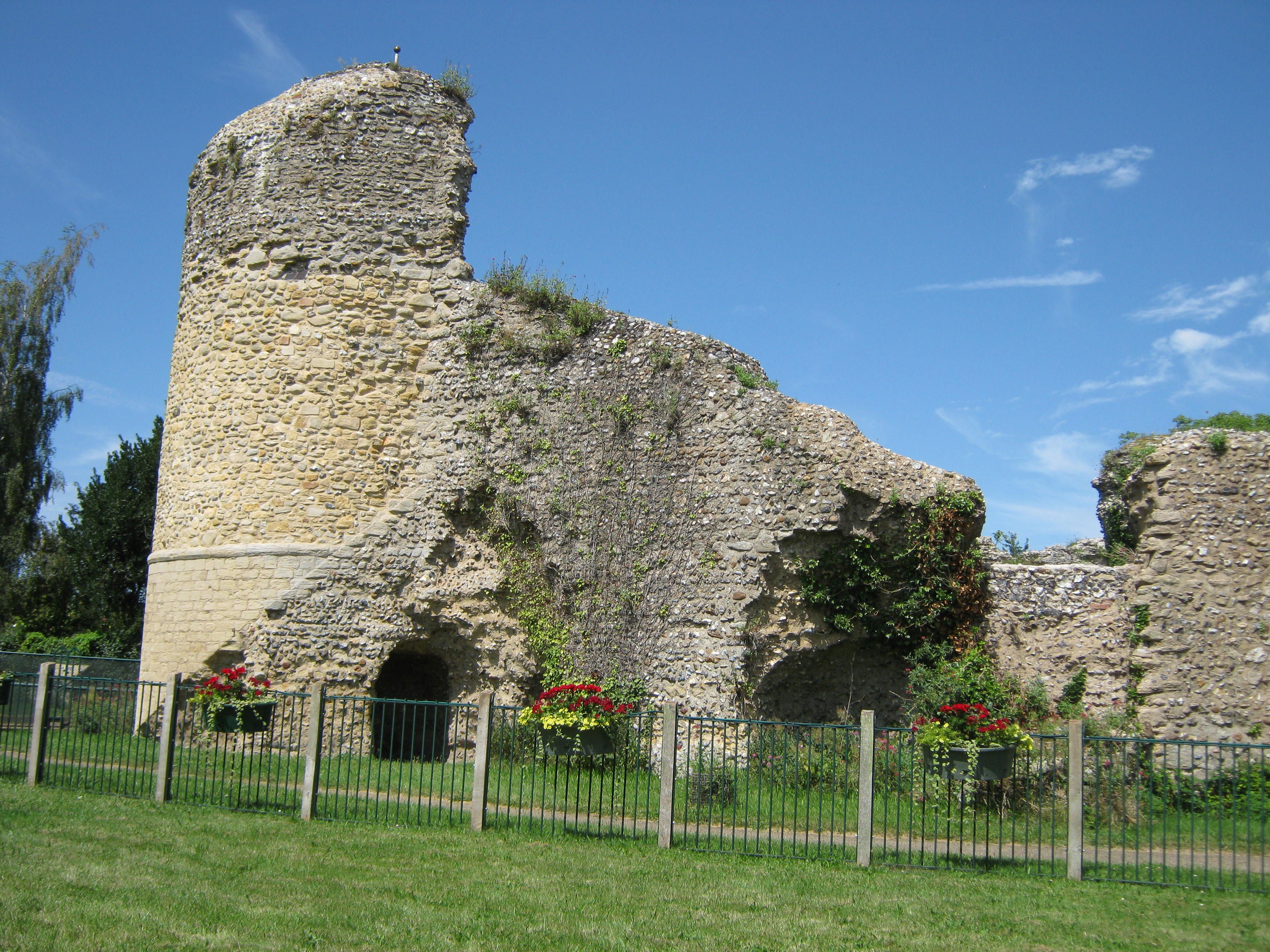
Curtain wall
The Bigods were troublesome barons! Roger’s son Hugh took part in the civil unrest of 1138-1154, a period in history known as the Anarchy when both Stephen and Matilda claimed they were heirs to the throne of England. Hugh’s loyalty to King Henry II (who was Matilda’s son) was called into question during the early years of his reign so Henry confiscated Bungay Castle but gave it back again in 1165. It was always thought best to placate powerful barons!
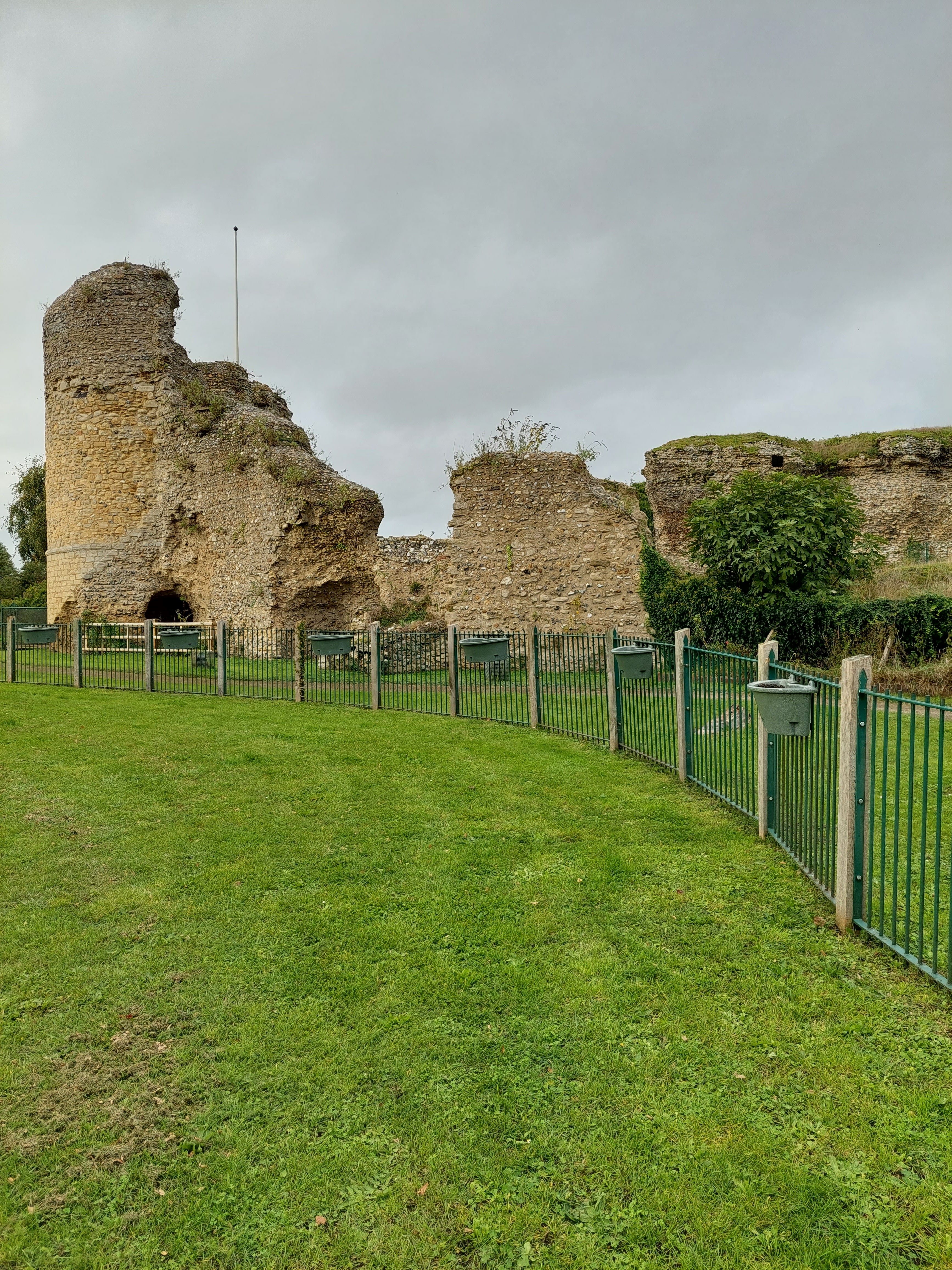
Bungay Castle – more of the curtain wall
Hugh was on the losing side in the revolt of 1173-1174 and his castle at Bungay was besieged, mined and slighted (purposely damaged in such a way as to reduce it’s value) by royal forces. The site was later restored to the Bigod family and Roger Bigod 5th Earl of Norfolk further developed it and probably built the huge gate towers. Roger had a falling out with Edward I and after Roger’s death the castle reverted to the Crown and was allowed to fall into disrepair and ruin. The Dukes of Norfolk re-acquired the castle in 1483 and retained ownership until the 20th century except for a short period in the 18th century. In 1766 the site was sold to Robert Mickleborough who quarried the keep and curtain walls for building materials. In the early 1790’s the castle remains were bought by Daniel Bonhôte, a local solicitor who sold them back to the Dukes of Norfolk in around 1800. A dwelling for the poor had at some time been built on the site and other than it’s removal very few repairs were done for several centuries. You can see the dwelling in the watercolour painting of the castle by the artist James Moore https://collections-test.britishart.yale.edu/catalog/tms:57364
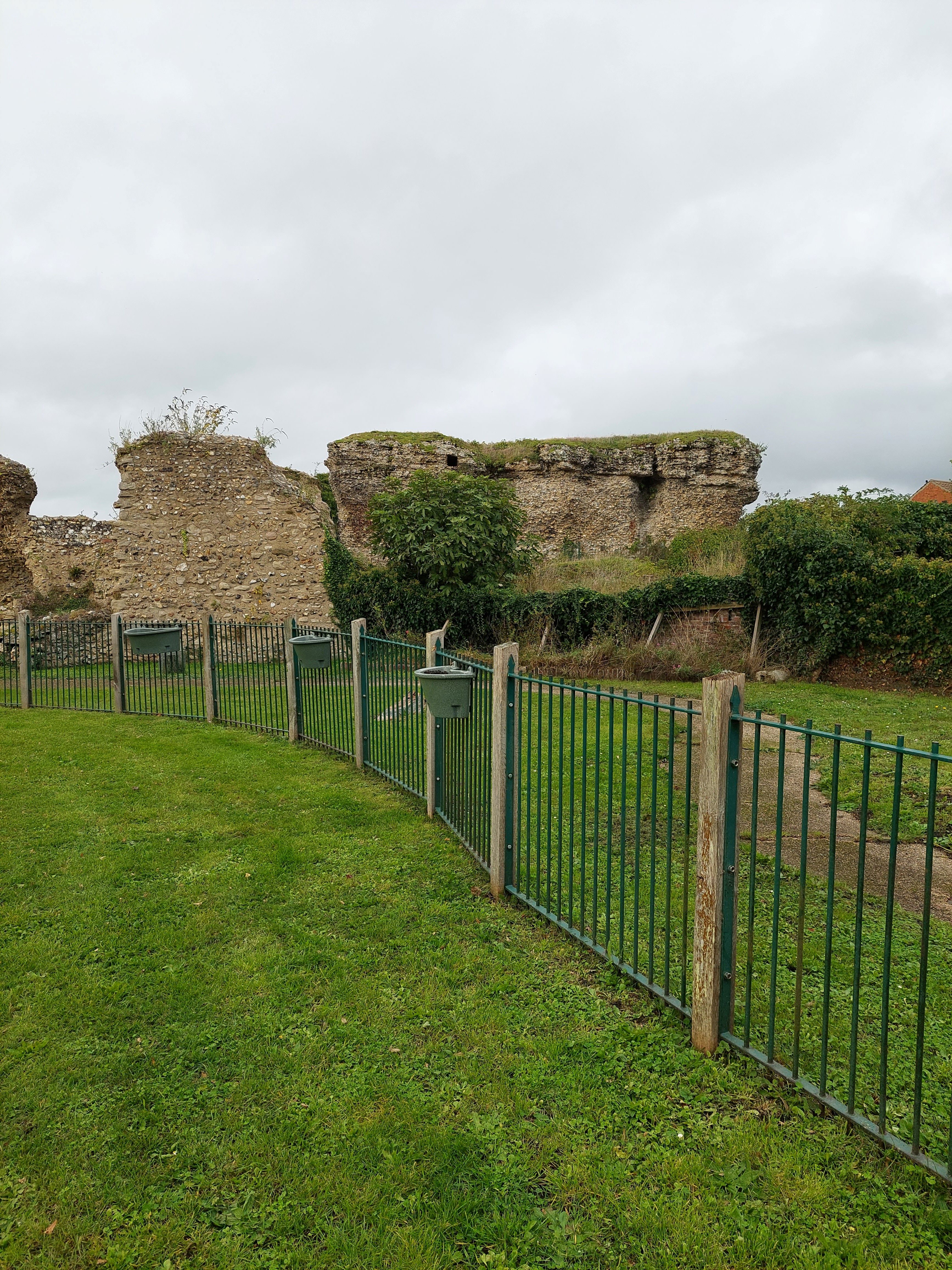
Bungay Castle
Daniel Bonhôte’s wife Elizabeth wrote a Gothic romance called ‘Bungay Castle’ which was published in 1797 a few years after her husband had acquired the site. I believe the reviews weren’t too good but reprints of the book can still be found on EBay and other second-hand book sites.
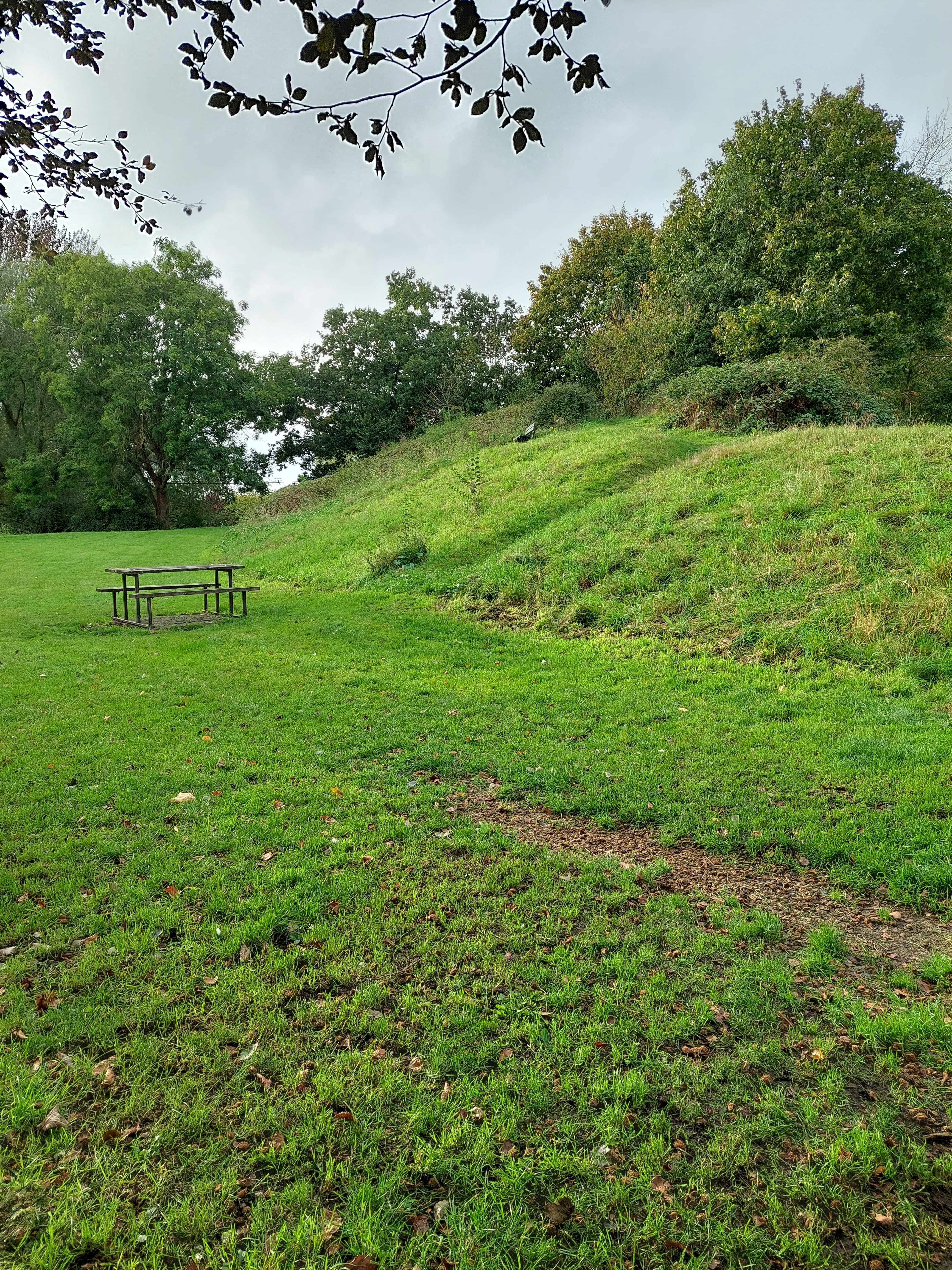
Remains of the earthworks which are in a small park next to the castle
The castle remains include the keep, the gatehouse, parts of the curtain wall and remnants of the inner bailey wall. Parts of the earthworks around the castle are also extant and the whole area was given to the townspeople of Bungay in 1987 by the Duke of Norfolk along with an endowment for its upkeep. The castle was scheduled in 1915 and was one of the first sites to be protected under the Ancient Monuments Consolidation and Amendment Act 1913. It was subsequently listed as a Grade 1 Monument in 1949.
More information about Bungay and its castle can be found here and here
 A Suffolk Lane