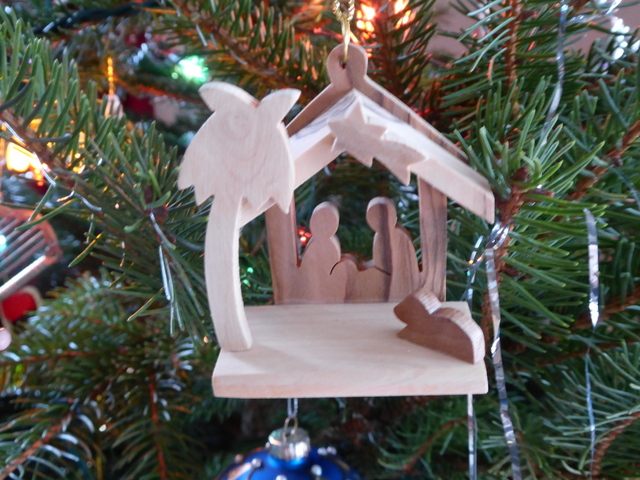
Alice bought me this gorgeous peacock bauble this year!
I wish you all a happy and healthy new year and apologise for not being around for the past few days. We developed a fault on our land phone line just before Christmas and were told it couldn’t be repaired until the 28th December. Our internet gradually got weaker and weaker until it virtually disappeared but, as you can see, all is well again and we can communicate with our friends and relatives and I can find out what everyone else has been up to! I had got behind-hand with my blog and post reading even before we discovered the fault on the line because my daughter’s lap-top had to be repaired and so she borrowed mine. I don’t own a smart-phone and I couldn’t keep up!
I will be visiting all your blogs in the next few days and will be acknowledging all your kind comments too.
The weather in May was changeable; cold, wet and windy for a few days then a couple of days of warmth and sunshine then back to cool and damp. The beginning of June wasn’t much different.
These first photos were taken towards the end of May in our garden or within a short walk of home.
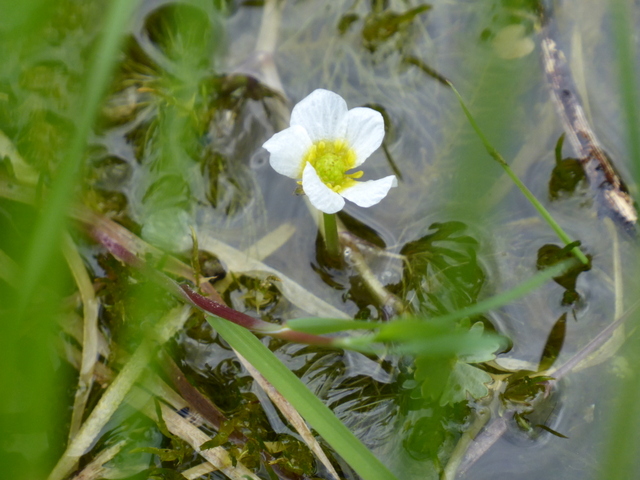
Pond Water-crowfoot (Ranunculus peltatus) has two sorts of leaves; the submerged leaves are thread-like but the floating leaves have rounded lobes. I found this plant in the pond at the front of the house. It is a relative of the buttercup and appeared here for the first time this year.
Alderfly (Sialis lutaria) In this country we have just three species of alderfly and they are virtually indistinguishable from each other. One (this one I believe) favours still or slow-moving water and the other two prefer running water.
Adult alderflies are weak-flying insects and never move far away from water. The two or three weeks they spend as an adult are almost entirely taken up with looking for a mate. Most don’t bother feeding but some may nibble a little pollen or algae if they are in need of sustenance.
Mining bee
Mining bee
I think this Mining bee is a Communal mining bee (Andrena scotica). The females share a tunnel entrance but have separate nests underground. They prefer slightly open ground and so are often found near paths. I discovered this one while I was weeding and I think I had probably disturbed her nest. She was making a lot of noise; I am sure she was very cross!
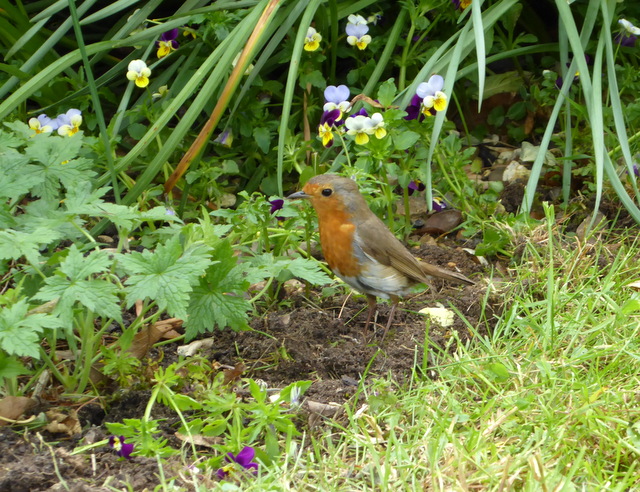
I was being helped in my task by a friendly Robin (Erithacus rubecula)
ooOOoo
Richard had noticed some orchids on the grass verge of a lane near us so we set off to walk to where they were growing. I took a couple of photos on the way.
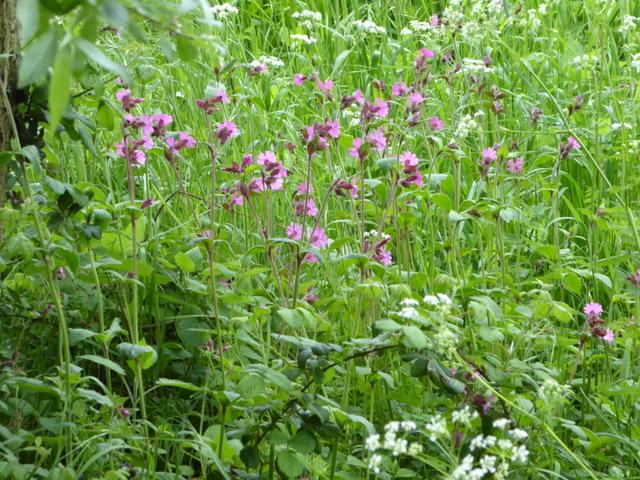
Lots of Red Campion (Silene dioica)
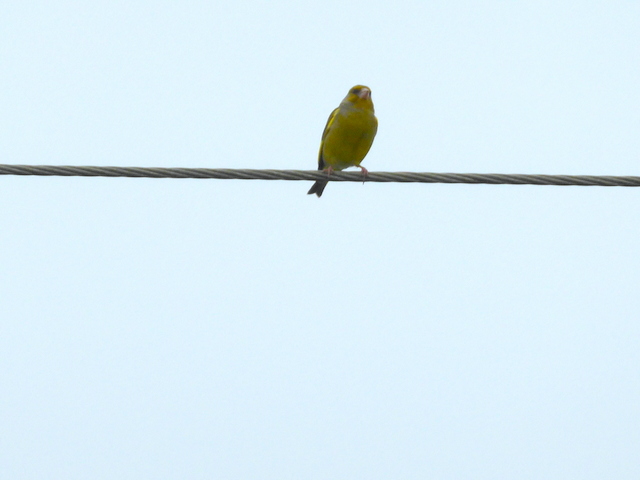
A Greenfinch (Carduelis chloris). I had to zoom as far as my camera was capable to enable me to get this rather grainy shot.
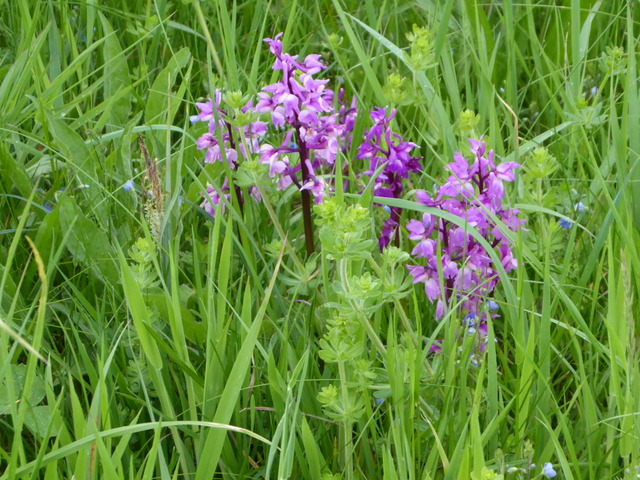
Early Purple Orchid (Orchis mascula)
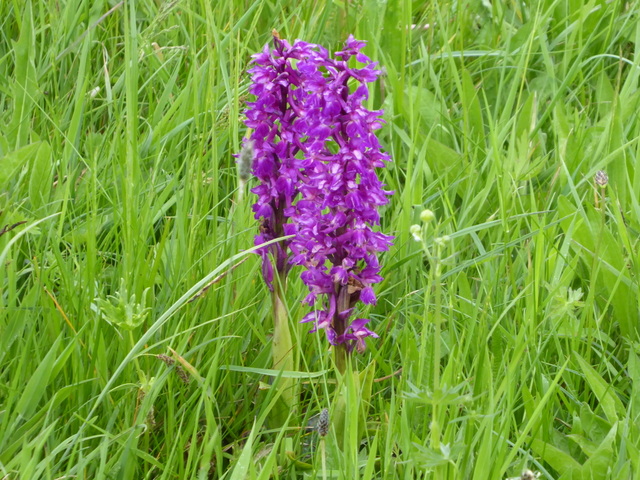
Early Purple Orchid
Early Purple Orchid
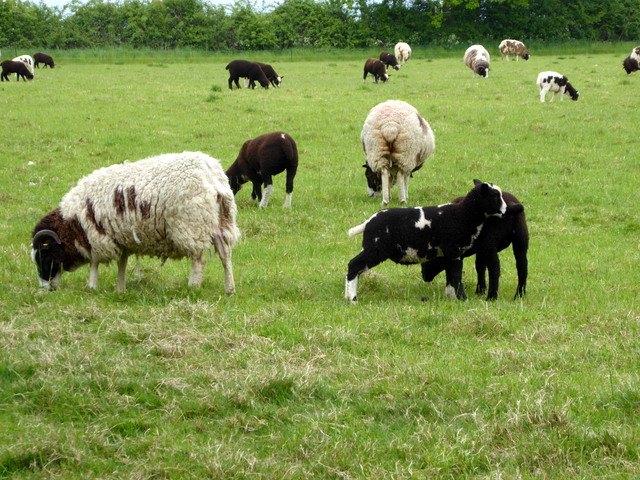
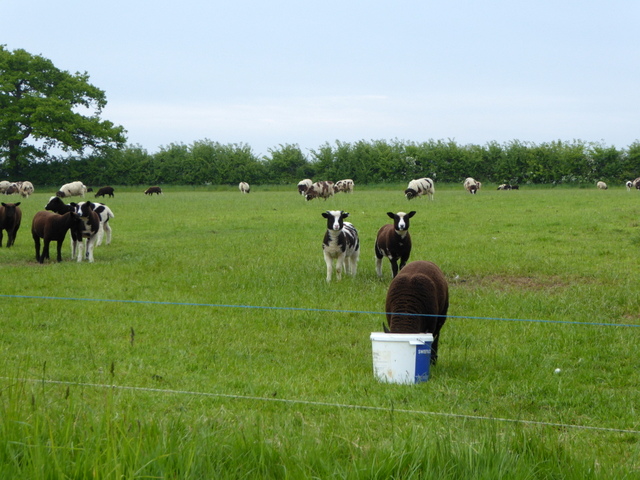
We walked past a field full of Jacob sheep on the way back home
They are more like goats than sheep and the lambs are very endearing and inquisitive.
ooOOoo
At the very end of May we visited one of our local seaside resorts, Southwold, on a very cool and windy day.
Oh we do like to be beside the seaside!
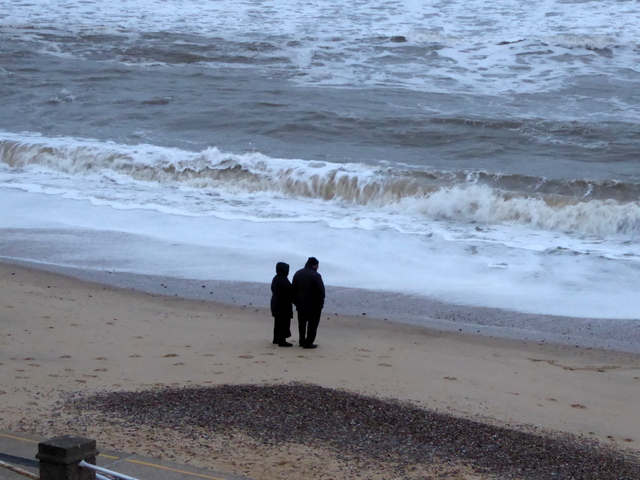
The sea was rough…
…but this couple were happy to be there watching the waves together. Note how well wrapped up they were!
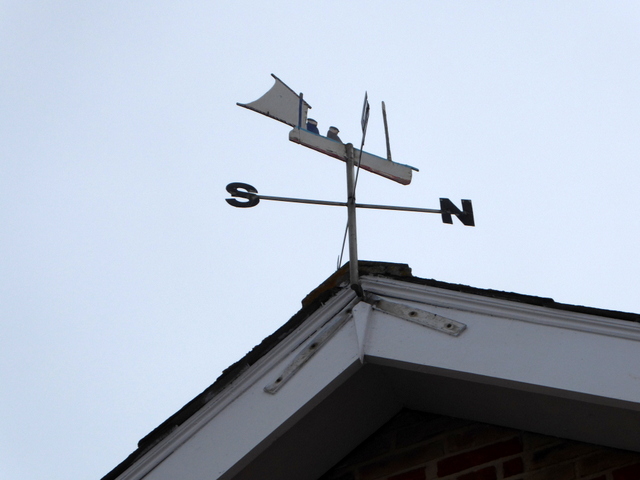
I like this weather vane on top of the Southwold Sailor’s Reading Room
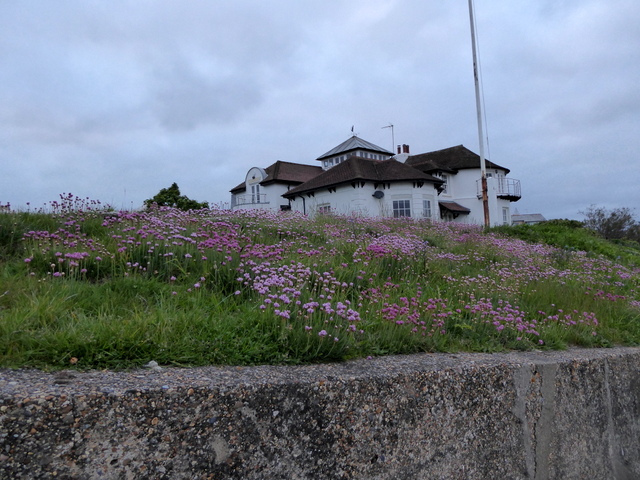
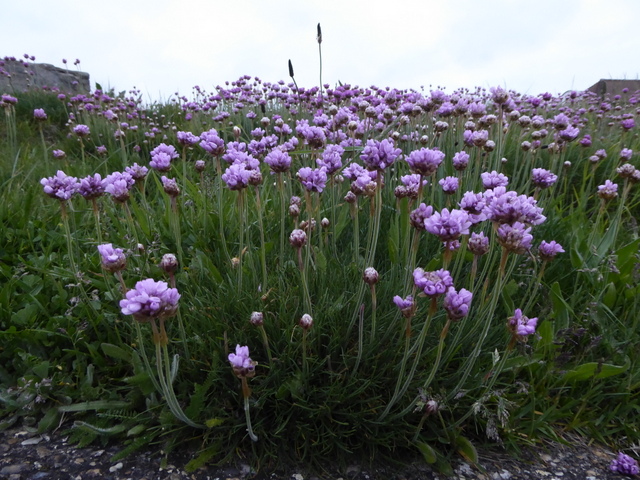
These flowers caught my eye
Thrift (Armeria maritima)
ooOOoo
Within a day or so of our trip to Southwold the sun came out again and I was able to find insects to photograph.
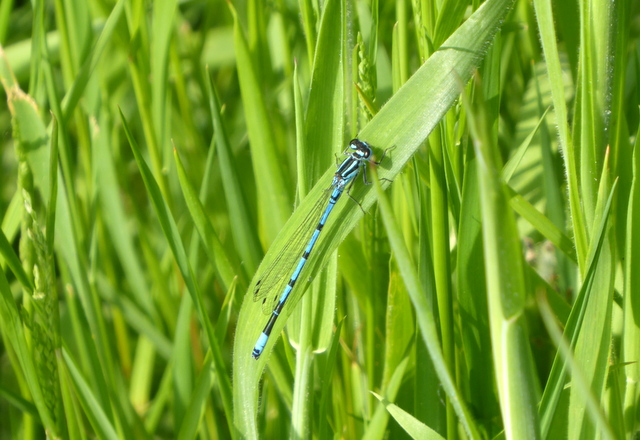
Azure Damselfly (Coenagrion puella)
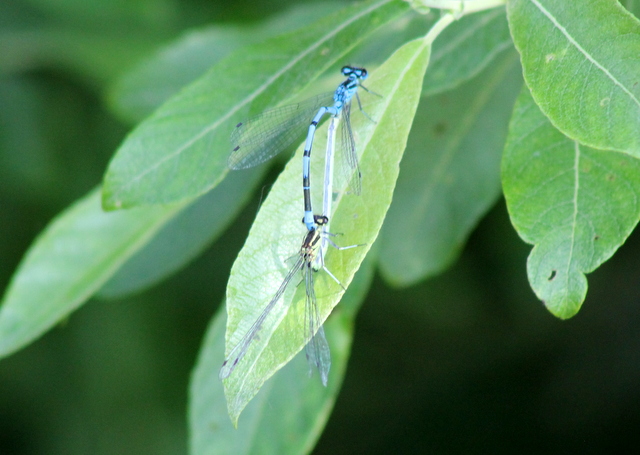
Male and female Azure damselflies
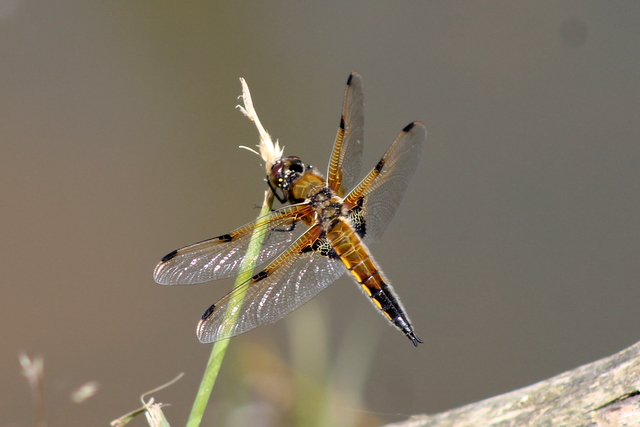
Male Four-spotted Chaser dragonfly (Libellula quadrimaculata)
My field guide says these dragonflies are rather dull but I don’t find them so.
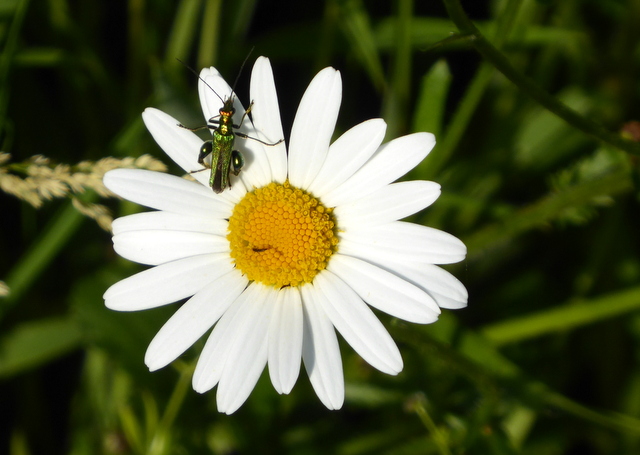
Male Oedemera nobilis. A beetle that feeds on pollen; only the males have the swollen hind-legs.
ooOOoo
Just a few photos I took towards the middle of June.
And finally a slideshow of a field of Common Poppies (Papaver rhoeas) I saw from the road at Ilketshall St. John this summer. I wished I could get closer to it! I think you may also appreciate this link. It is a wonderful description of where I live and also has praise in it for our Rector who will be retiring next August.
This slideshow requires JavaScript.
My music today is from the Beatles. Many of you will know why I have chosen this today (though I am a couple of days late as usual!). I was a student living in Liverpool at the time and heard the news of John’s death as I made my toast for breakfast on the 9th of December. Thirty-six years ago! I was surprised later to hear he had been shot on the 8th of December but I had forgotten the time difference. Listen to the superbly melodic bass playing!
Ok, so please don’t hear this as a Scrooge rant… and please please don’t hear this as anything like a ‘how can you celebrate this early?’ post… So just to make sure this is heard: CHRISTMAS IS AMAZING!! I AM ALREADY BEGINNING TO CELEBRATE!! IN FACT I CELEBRATE CHRISTMAS EVERY DAY OF THE YEAR!!
But at this time we do some more obvious things… Advent calendars are out- check, Advent candle is on the table- check, planning Christmas services has started- check (no, its not finished yet, at last count I am involved in 17 events…), yes yes yes, however…
I’m wondering at how far we’ve gone from the origins of Christmas- whether you go into the Christian origins (celebrating the birth of Jesus as the ultimate expression of God’s love for humanity and the restoration of relationship between God and humanity that it demonstrates and brought about) or the…
This, as promised in my previous post, is the first of my ‘highlight’ posts in which I will let you know some of the things we managed to do this year and will provide photos and links when and where necessary.
Just after Easter we went to the wedding of my dear friend Wendy and her husband John’s daughter Jennifer to her fiancé David. The wedding took place in the lovely church of St David in the village of Groes Faen in south Wales. We were delighted to be included in their family celebration, just as we had been when Jen’s older sister Vicky (my God-daughter) was married a few years ago. The reception was at the Pencoed House Estate, a beautiful manor house in lovely grounds. I was fortunate to be seated next to Wendy’s mother-in-law, Rene; she and her late husband Don had been so kind to me and Alice when my first marriage broke up. I was so sorry to hear that she died just a few weeks ago. I had been unable to take any photos at the wedding so was very pleased to receive a thank-you card from Jen and David which had photos from their wedding on it. I have scanned it and chosen one of the photos but it hasn’t come out very well.
ooOOoo
This next gallery of photos is just a reminder of what we have to look forward to in the spring!
Bluebell wood
Bluebell wood
Bluebell wood
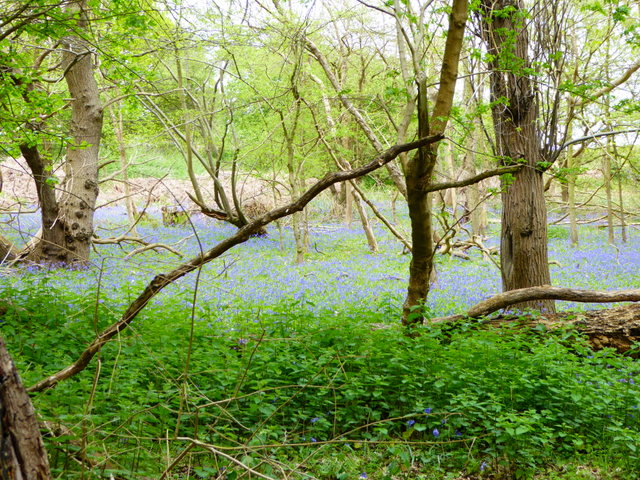
I love bluebells (Hyacinthoides non-scripta) so I took a little detour on my way home from my mother’s house at the beginning of May so that I could see the flowers just outside the village of Withersdale Street.
ooOOoo
I have mentioned Pakenham Watermill before in my blog. It is where we go to buy the best wholemeal flour which I use to make bread.
Pakenham Watermill
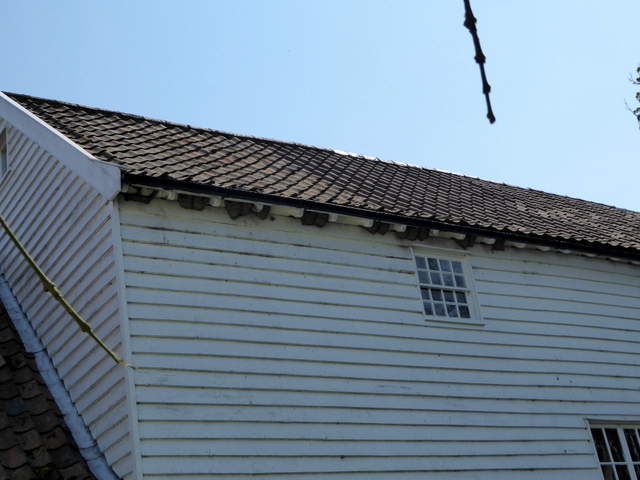
The rear of the building. We visited on a perfect morning in May.
The mill with mill-pond
There are lots of House martin (Delichon urbica) nests under the eaves
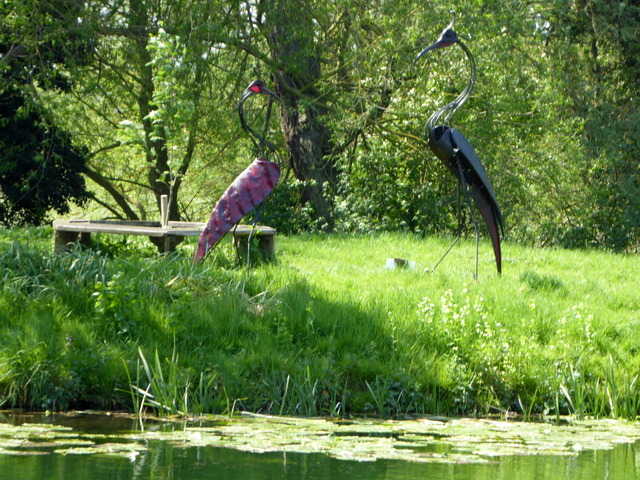
Bird sculpture in the garden
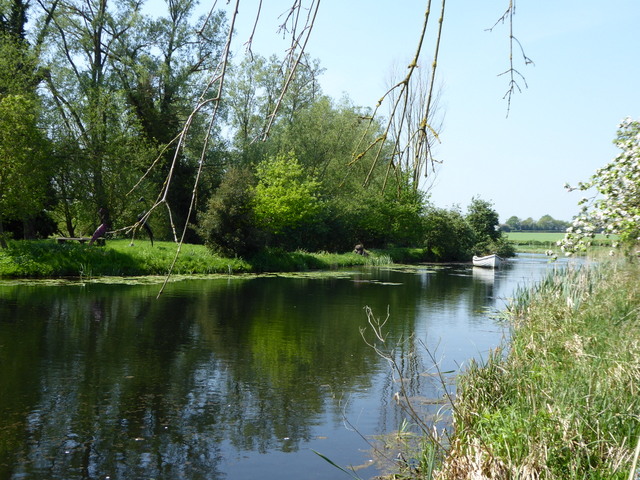
The mill pond
ooOOoo
At about this time I visited Minsmere RSPB Reserve as I wanted to buy something from their shop. While I was there I thought I would quickly walk through the woods to see what I could see.
Bluebells again!
Bluebells
Blue bluebells and white bluebells!
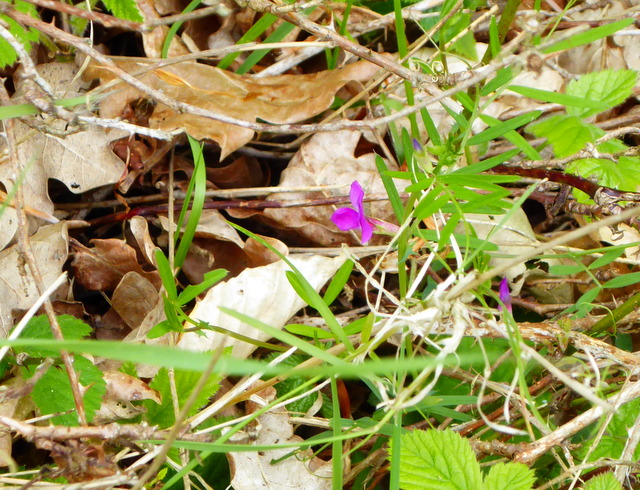
Common vetch (Vicia sativa)
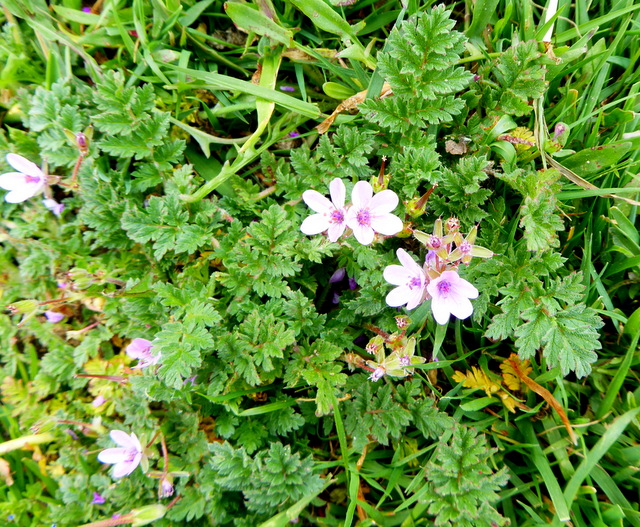
Common stork’s-bill (Erodium cicutarium)
I don’t remember ever having seen this flower before despite it being ‘common’. The seed-heads can be seen next to the flowers and their shape gives the plant it’s name.
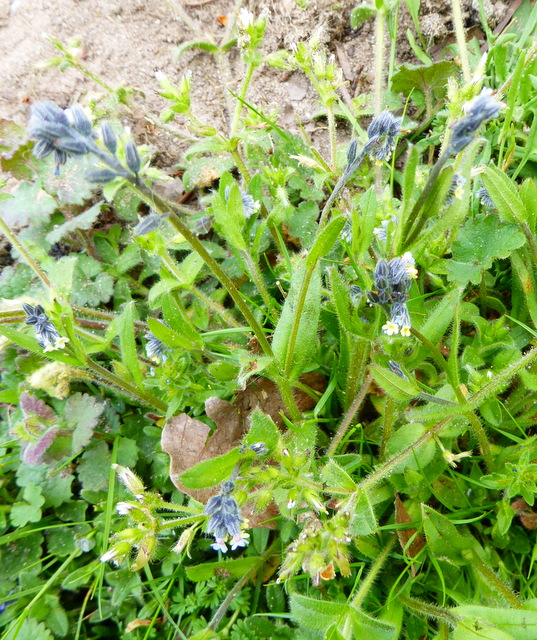
Changing forget-me-not (Myosotis discolor)
The flowers are tiny and very difficult to photograph. When they first open they are yellow but soon change to blue. The plant especially likes to grow on sandy soil.
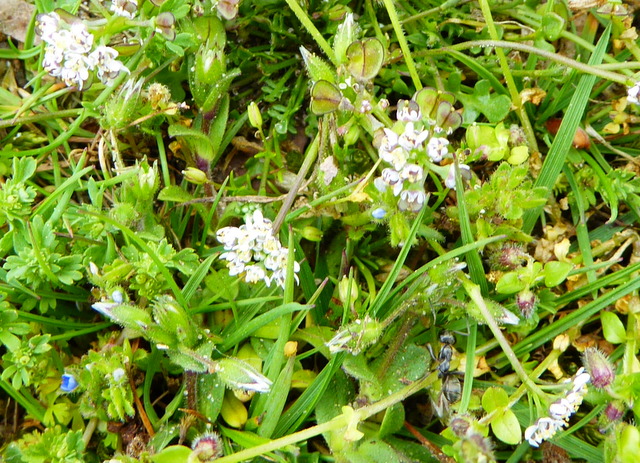
Shepherd’s-cress (Teesdalia nudicaulis)
This is another plant I don’t remember having noticed before, but that is not surprising because it is very low growing and not especially exciting to look at. You can see a wood-ant (10 mm long) towards the bottom right of the photo which gives you some idea of the size of the flowers which are about 2 mm across – two of the four petals of the flower are longer than the other two. The seeds are heart-shaped and a few can be seen at the top of the photo. The leaves in the basal rosette are lobed and can also be seen at the top-centre. Their shape reminds me of pasta servers.
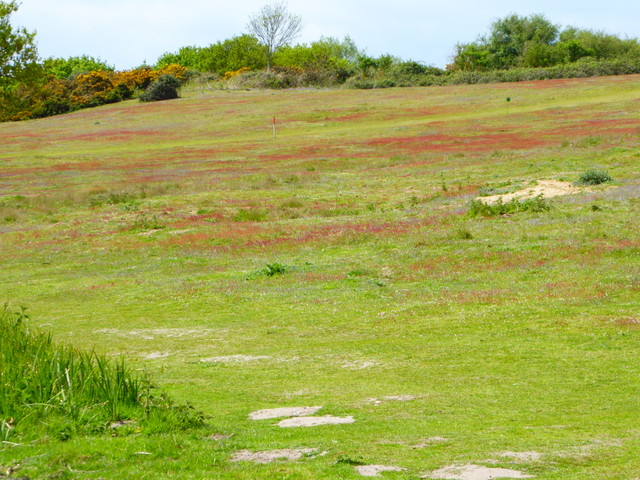
Common sorrel (Rumex acetosa) creating red patches on the rising ground. Gorse (Ulex europaeus) can be seen flowering in the bushes on the sky-line.
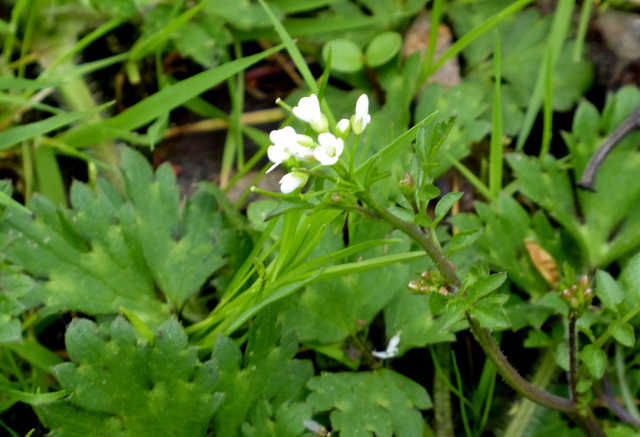
Wavy bitter-cress (Cardamine flexuosa) – so-called because it’s stem is wavy rather than straight!
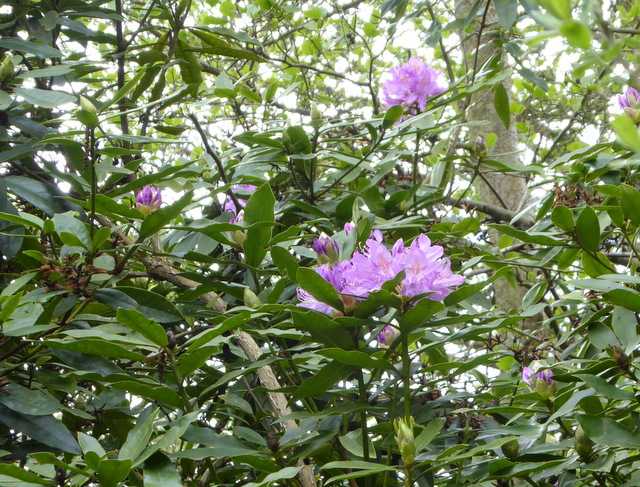
Rhododendron (Rhododendron ponticum)
Rhododendron has naturalised and become invasive in many places. It is unwelcome as it reduces biodiversity and is very difficult to eradicate because it produces new shoots from its roots. This link speaks more about the plant.
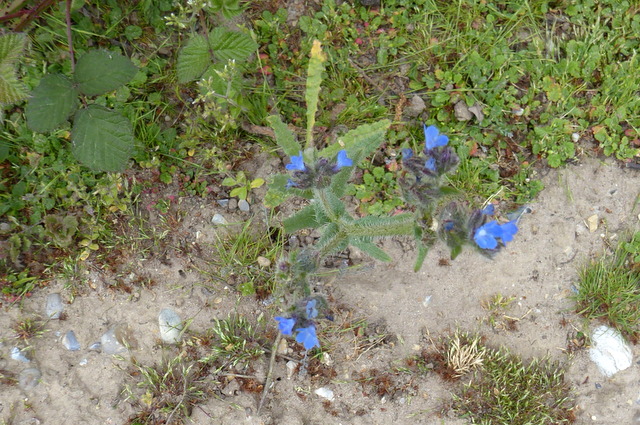
Bugloss (Anchusa arvensis)
This plant is very hairy and has interesting wavy-edged leaves. The flowers are a lovely intense blue colour.
ooOOoo
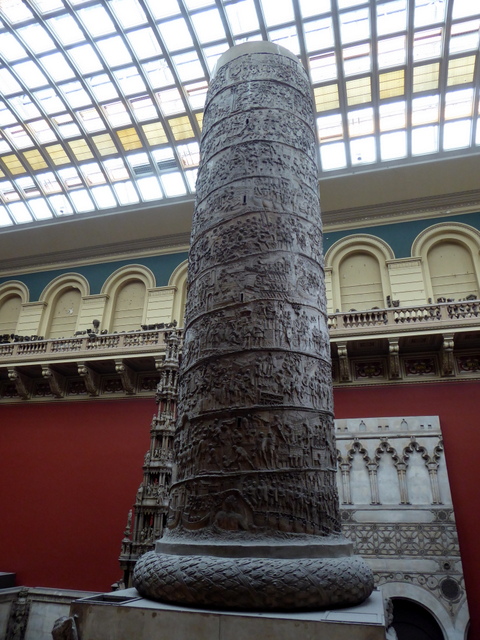
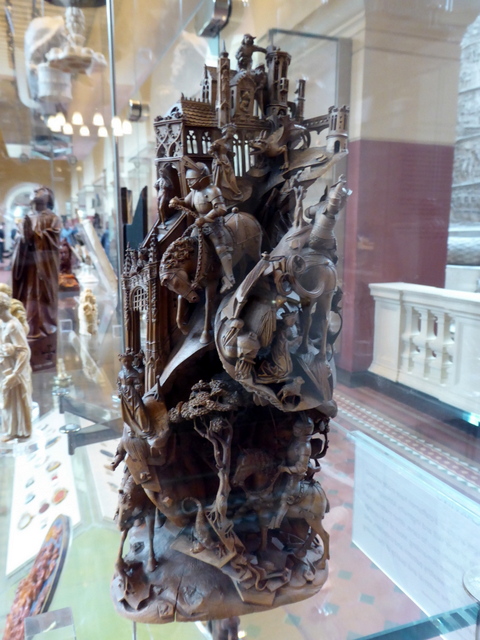
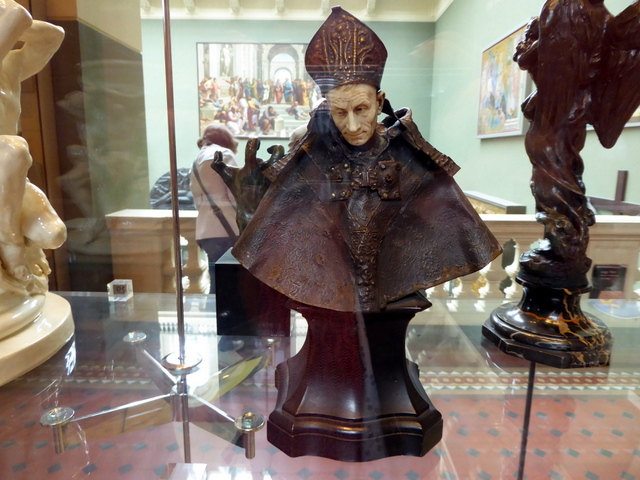
Elinor wasn’t able to join her art and design group on their trip to London in April so a few weeks later Richard and I took her there ourselves. We visited the Victoria and Albert Museum and Elinor chose to study the exhibits in the cast works gallery and the sculpture galleries.
Trajan’s column – lower
Trajan’s column – upper
Someone took a plaster-cast of the whole of Trajan’s column! The column is 30 m / 98 ft tall (with the pedestal it is 35 m / 115 ft tall). Its diameter is 37 m / 12.1 ft. This cast is now invaluable to scholars because the original column has become very weathered and the figures cannot easily be studied.
I love this medieval carving from Germany! The details of the knight’s journey are exquisitely worked. There are trees, people and small creatures, buildings, a dragon and a princess to be rescued! It was difficult to get a decent photo because of the reflections off the glass case. I also forgot to make a note of the artist and couldn’t find the piece when I went on the museum’s website.
‘A Bishop Saint’ by Sir Alfred Gilbert 1899. This bishop’s gentle expression appealed to me very much.
‘The Virgin with the Laughing Child’ probably by Antonio Rossellino ca. 1465. I could look at this statuette for ever! It is so intimate and loving! Look at the way the mother is holding her little boy on her knee with his leg between her forefinger and middle finger, her other hand on his tummy and his hand on hers.
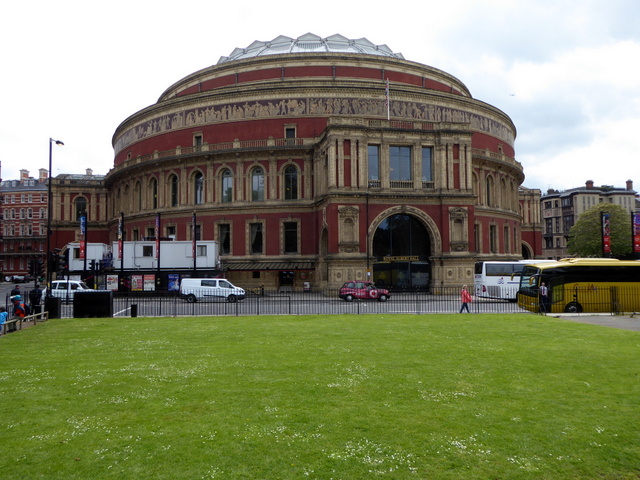
After leaving the museum we decided to walk to Hyde Park and relax there for a short time before catching our train home.
The Royal Albert Hall – a beautiful building and an excellent concert hall
Opposite the Royal Albert Hall is the Albert Memorial
ooOOoo
That’s it for the time being! I will leave you with my music choice, ‘This Is How It Feels’ by Inspiral Carpets, remembering Craig Gill (drums) who died on Tuesday 22 November 2016
This year has been….unsatisfactory. Nothing terrible has happened. We are in fairly good health, we are comfortable and very fortunate. But….almost everything we have tried to do this year has not been straightforward. There have been delays, cancellations and anxieties. I think the last update I wrote on our affairs (this is after all a diary blog) – apart from our holidays, a couple of outings and a few posts of things I’ve seen – was in the spring. I seem to have had less time than ever before for getting things done.
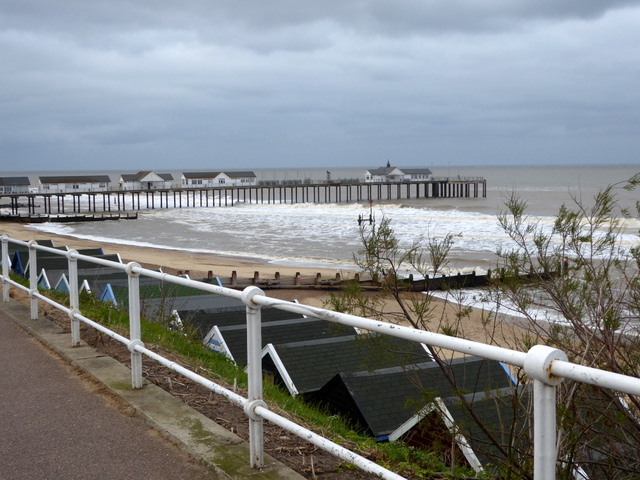
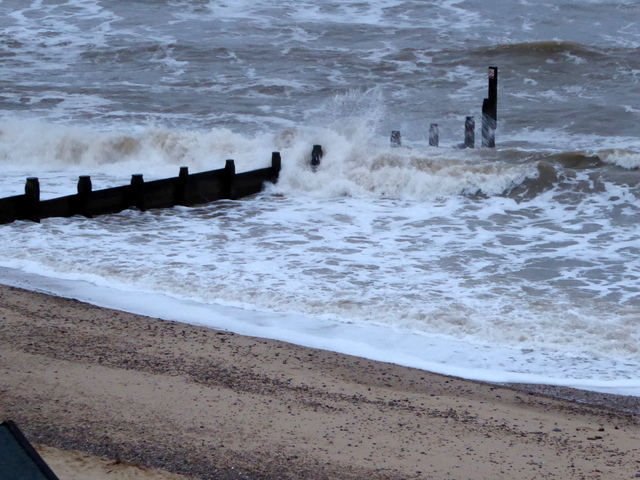
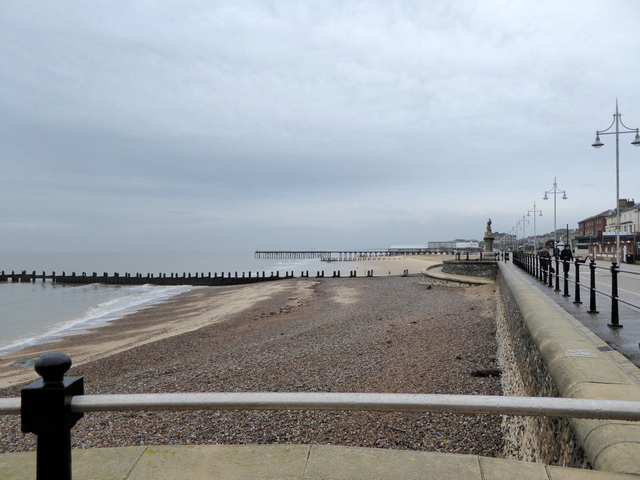
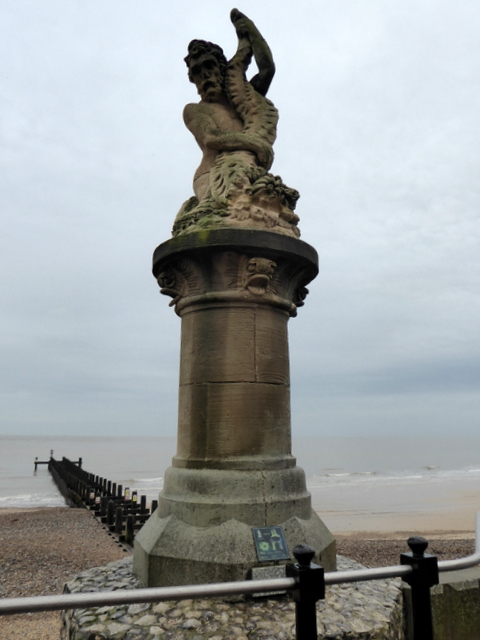
We visited Lowestoft on Tuesday this week so that Elinor could attend a podiatry appointment. The weather was cloudy and damp but fairly warm for the time of year. This is Lowestoft South Beach
Richard’s first year of retirement was meant to be a year in which we improved our lot. Retirement after over 40 years of continuous employment was always going to be a bit of a challenge but he decided he was going to see how the first six months went before making any decisions about what he would do with his time. He has found that he doesn’t miss the work at all though he does miss the social aspect of going out to work. Living in the country, some miles from the nearest town means that we don’t see people very often and we have to work hard to get any kind of social life – or go without. He has come to no decision as to whether he takes up a hobby, does voluntary work or any other activity; he has been too busy with the house and driving Elinor about. He has been a church warden for many years and is a member of our church’s PCC (Parochial Church Council). He has recently joined our local Parish Council too so he has employment enough!
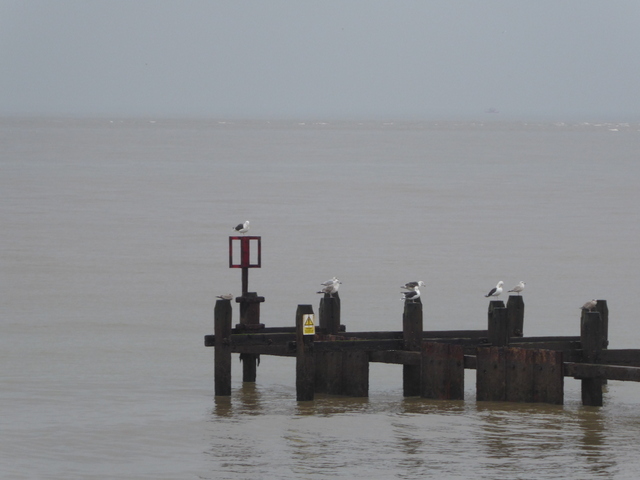
Gulls on the breakwater
His retirement began with the death and funeral of his mother, which was not a good start. He has missed her very much; her support of him, her good sense, her understanding. Our holiday in the Peak District this year was taken at the anniversary of her passing and those of you who have kindly followed this blog for over a year will remember that we heard of her death last year as we arrived in the Peaks all prepared to go and visit her.
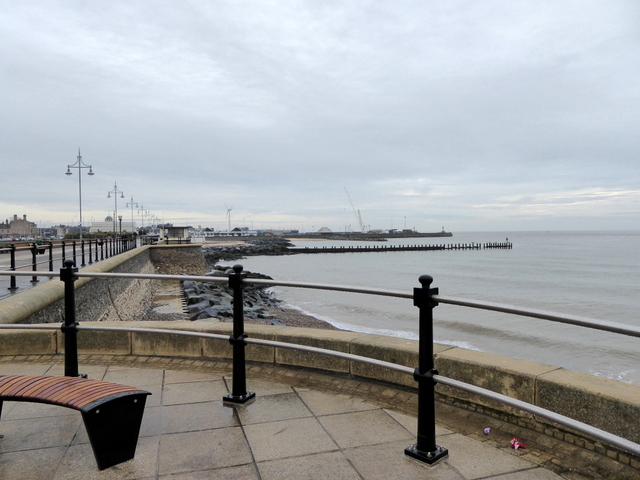
Looking towards Lowestoft docks
Richard has enjoyed working in our large garden and making a few improvements to it and to our house. We started the year by getting all our windows and doors replaced. We have a new summerhouse and a new potting shed. Our next project was to gut the family bathroom upstairs and the downstairs shower room and get new suites for both rooms and then redecorate. We asked around for suitable plumbers and a couple were recommended. We selected one and he came to see us and plans were made. It was decided that we would also have a water-softener fitted which was done as soon as the downstairs shower room was finished. And this is where things really went wrong. We hadn’t been happy with the speed at which the work was done. Days went by when no-one turned up. There were delays and more delays. We said that the upstairs bathroom would have to wait until we returned from Germany as we didn’t want anything left half done while we were away. The plumber failed to return. He has made no contact with us and has not responded to any of our messages. We had already paid him, at his request, for the work done to the shower room and for the water softener (we ought to have smelt a rat here!) but there are still a few things that need to be finished off properly in the shower room, ‘snagging’ it is called, which now will never be done except by us, in our non-professional way. We have a garage full of bathroom fittings and tiles and also some of the plumber’s and his men’s tools and equipment which they haven’t collected. We must find ourselves another plumber but we cannot face the upheaval until some time in the new year. I hope the work is done at a time when it isn’t too cold!
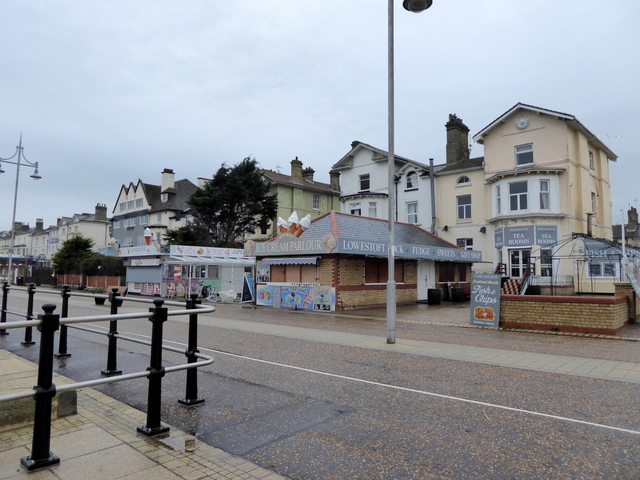
Off-season seaside resorts are a little sad and quiet
We have just had our gas boiler replaced. We use propane gas as we aren’t on mains gas here in the country. It is very expensive but the alternatives, oil or electricity, are not ideal either, both being very expensive too and as we have a gas fire and a gas hob, a gas boiler is the best option for us. We found a gas fitter who was able to get the work done during the second half of October. It was to take three days. In the end it took quite a bit longer as inevitably, problems were found. The fitter wanted it all done by the end of October as he was going to Las Vegas to celebrate his son’s 21st birthday and he did manage to get his part of the work done by then. He arranged for an electrician to come and wire the boiler up but the electrician couldn’t come immediately and when he eventually came he had difficulty with the system. He got it done, so he thought, and we thanked him and sent him on his way but when the boiler switched on the water heated but the pump wouldn’t work. We called the electrician back and he tried again. It still didn’t work. We contacted the fitter when he returned from Las Vegas and he eventually got it going. It took two and a half weeks to fit the boiler and the weather had been quite chilly! Fortunately we have an electric immersion heater which meant we still had hot water, a gas fire in the living room and a portable gas fire which we put in the hall at the foot of the stairs. Elinor got the electric fan heater in her room and the fitter left us another electric fan heater in case of emergency. We wore lots of layers!
At the same time as the gas fitter started work Richard began experiencing severe pain in his leg and back. He saw the doctor who gave him lots of tablets and lots of advice. He was in agony but manfully struggled on until he found that his leg was becoming numb and it was unable to take any of his weight. He fell over a couple of times and hurt himself. We phoned 111 and the medics there passed Richard on to the out-of-hours doctor. I took Richard to Beccles hospital to see the doctor that evening. Richard has a partially slipped disc in his back and a trapped sciatic nerve – not full sciatica as he could still feel his foot! He has still managed to fall over a few times since then – falling down the stairs while I was out with my mother for the day; falling over in the garden while I was out again – but at last the feeling is beginning to return to his leg and the pain has subsided. The hope is he will gradually be able to do more things and the feeling will come back completely. He has been told it will take four to six weeks. At first, he could hardly walk even with a stick and was unable to drive at all. He can now drive very short distances but the damage is in the leg he uses for the clutch pedal and he doesn’t trust himself to be able to do an emergency stop, to drive in heavy traffic, to drive far. I am doing all the driving at present.
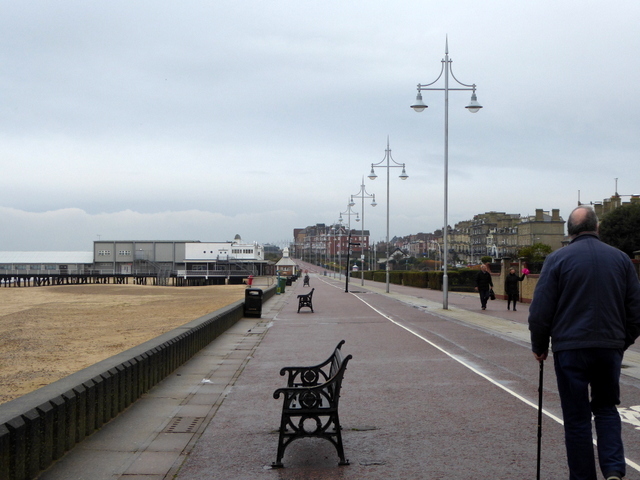
The sea front with Richard and his walking stick
Elinor’s college course since September this year only asks for her to be at college for two and a half days a week. Richard is at home most of the time now he is retired. I must admit I miss my alone time and my routines have had to be changed to accommodate these other domestic changes. One good thing is that Richard and I now (usually) share the duty of driving Elinor to college and I found a little more time to work in the garden this summer! I still visit my mother a lot and take her shopping and to her many hospital, doctor’s and optician’s appointments. She is gradually losing her sight and as each month passes I notice she has less energy and is less interested in doing things. I take her to church once a fortnight; the intervening week I go with Richard to our church. I miss going to church in my benefice every week; I miss the people, the churches, the services and the preaching. But, my mother needs me and I can’t let her down. I like my mother’s church and I am so pleased to be able to help her do what she needs and loves to do. There used to be members of her church who collected her and brought her home but not any more. The people who used to do it have either died or moved away and as her church is some miles from where she lives there is no-one now who could easily collect her.
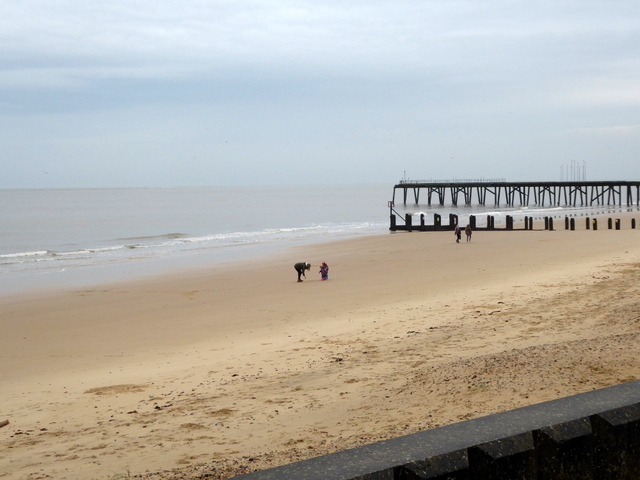
The sandy beach
Elinor did really well at the end of the course she took last academic year. She re-took her GCSE Maths and managed to get a ‘C’ grade which is what she was hoping for. She never has to go to a Maths class ever again! She also got a distinction in her Art and Design course and everyone was very pleased with her. She applied for and got a place on the two year Graphic Art course she had wanted to go on the year before. Despite this achievement she is unhappy that yet again she is the oldest one on her course and cannot find anyone interested in being friends with her. She is lonely. She has been extremely anxious and has struggled to attend college during the past few weeks and has found that working at home has been difficult too. She is frightened of making mistakes and that her work might not be of high enough quality. So she prevaricates and then avoids doing anything and then panics when she realises she is behindhand. It is impossible to convince a chronically anxious person that their fears are unfounded so life at home has been distressing for us all. There is no escape from the constant pressure of it. It is our elephant in the room; except it isn’t an elephant as they are too nice. It is a troll, a gremlin, a monster, a sickness that is almost palpable and it is ever-present.
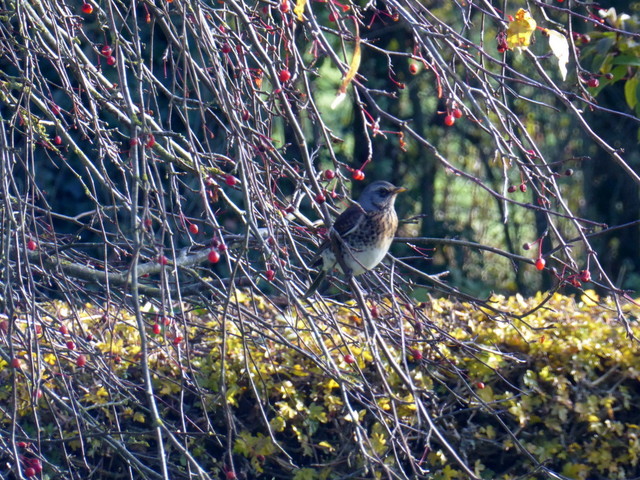
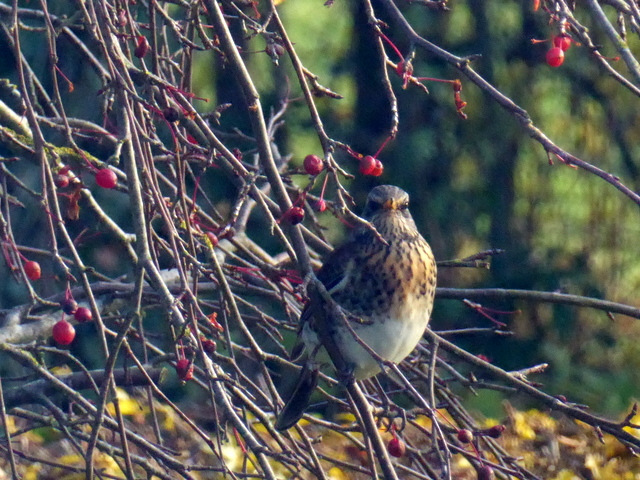
A Fieldfare (Turdus pilaris) eating the tiny crabapples on our species crabapple tree. The Fieldfares have just arrived for the winter from where they spend the summer in Scandinavia
There is however, a glimmer of light at the end of the tunnel. We have tried over the years, many different ways to deal with Elinor’s mental health issue. In our ignorance at first, we attempted the stern attitude. Well, that failed spectacularly. We then saw many different therapists who tried countless different methods of finding out why Elinor is as she is and then attempting to help her by getting her to talk about things, them talking to her about things, giving her Cognitive Behavioural Therapy and oh, all sorts of therapies. Last winter we even resorted to drugs at the insistence of her GP (family doctor). The side effects were awful and it took until the summer for her to stop getting flashbacks and nightmares.
The Fieldfare again. They are beautiful and fairly shy birds.
A couple of months ago my hairdresser told me that she was seeing an acupuncturist because of depression and anxiety. The affect on her health and happiness had been astounding and she was feeling better than she had for years. She had had regular appointments at first but at the time of talking to me about it she was only going back now and again for ‘top-ups’. This got me wondering if it would be something that Elinor could try. I carefully spoke to Elinor about it but she refused to contemplate the thought of someone sticking needles in her. I tried again two weeks ago when Elinor was tearful and desperate for some kind of relief. She said she might be willing to think about it. She thought, and ten days ago she thought we might do some research into it. She then agreed that it was something she would be willing to try… but those needles..! On Thursday last week while Elinor was in college for her half day I went to see my hairdresser to ask for the name of her acupuncturist. By a happy chance this lady was having her hair done at that moment and agreed to talk to me. I have made an appointment for Elinor to see her next week. We will see what happens.
A small Common toad (Bufo bufo) hitching a ride in the wheelbarrow
Alice, my elder daughter who lives in Sheffield, has directed her first play. It was a great success and Alice enjoyed the experience but found it exhausting. We thought she would need a rest from her drama group for a while but she tells us she ‘accidentally’ auditioned for their next play and got cast! Can anyone explain how one can accidentally audition for a play?
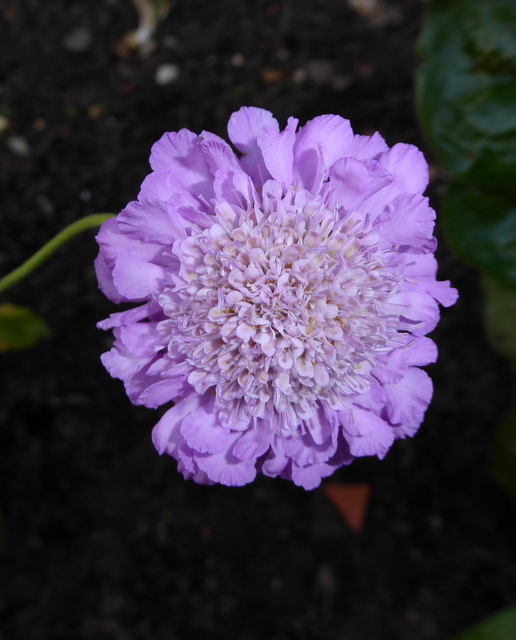
A Scabious flower from the garden photographed in October
She had become unhappy living in the house she shared with a few other young people – they were fine but the landlady was awful – so she gave a month’s notice and found another house with a room to let and moved in at the beginning of this month. She has bi-polar disorder and if she gets over-tired or anxious her health deteriorates. The play and then moving house caused her to be very tired and quite anxious so she did feel under-the-weather for a while. She applied for another six-month temporary job at a higher grade in the university library department where she works, got an interview last week and has been successful! She hopes to start the job at the beginning of next month. Yet again it is only a part-time job and is only for six months but the money is better than what she gets at present and one must never look a gift-horse in the mouth – as they say.
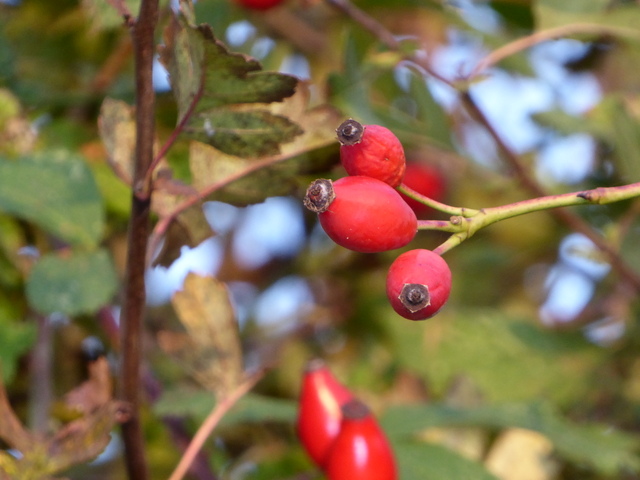
Dog-rose hips (Rosa canina)
There we are. A resumé of most of the events of the past year with many gripes and groans included. What I intend doing is to post a few photographic highlights of the past six months (yes, there were a few highlights!) during the next few weeks. I hope to intersperse these with some current affairs on the approach to Christmas. Whether I manage any of it, who can tell!
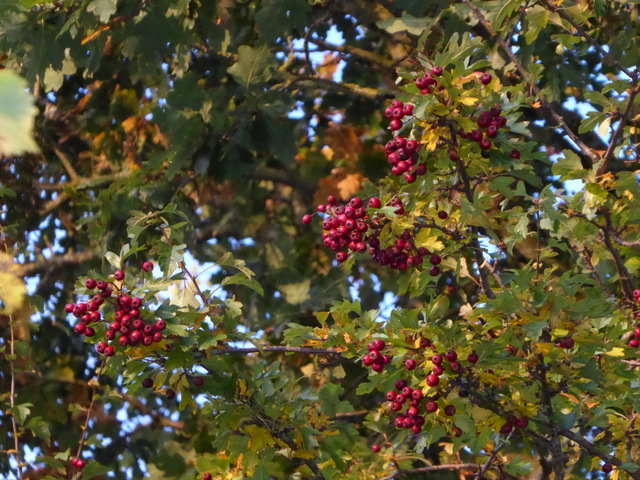
Hawthorn berries (Crataegus monogyna)
I leave you with my music selection which is the Four Sea Interludes from Britten’s opera ‘Peter Grimes’. Benjamin Britten was born in Lowestoft and lived for many years a few miles further south along the coast at Aldeburgh. I love the music from Peter Grimes and these interludes give a taster of the opera as a whole but without the singing! The four interludes are entitled ‘Dawn’, ‘Sunday Morning’, ‘Moonlight’ and ‘Storm’ and the playing time is about 17 minutes.
When we moved to Somerset for 18 months twelve years ago I was very homesick and I listened to this music a lot while we were there to remind me of the coast I love. Looking through the comments on the different recordings on Youtube I find I am not the only person to find this music, especially ‘Dawn’, so evocative of the Suffolk coast and the North Sea.
Amazing; moving; humbling; impressive: words you could choose to describe the annual National Service of Remembrance held in London on Remembrance Sunday, the second Sunday in November. Thousands attend every year; thousands watch it on TV; thousands more attend similar, albeit slightly more modest, services throughout the United Kingdom – and beyond. It is an…
The day following our climb up Hen Cloud was very wet and chilly. We did a little shopping and visited the Book Barn at Brierlow Bar where we both found some interesting books to buy. We spent the rest of the day resting and reading. Richard was feeling unwell as he often does on a Saturday which is when he takes a once-weekly tablet for his osteo-porosis.
The next day was our last full day in the Peak District. It began with rain but by lunchtime the weather was beginning to brighten up. We went into Leek and indulged in some more oatcakes and on our return to the caravan we were pleased to see that the awning was dry and so we emptied it and took it down while we could. We drove to Ramshaw Rocks and took our last walk in the Peaks this year.
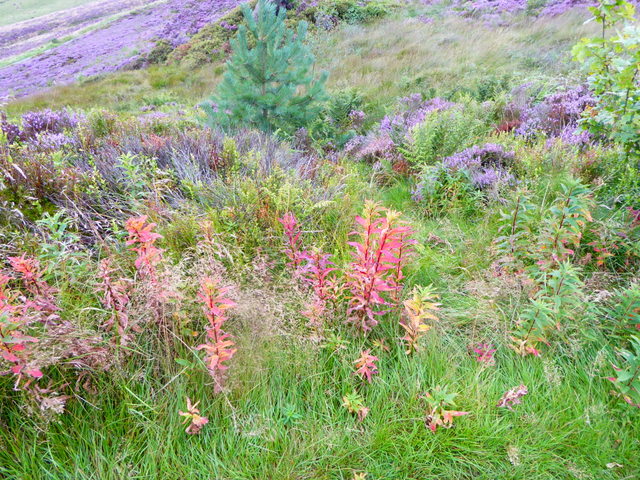
I had to take a photo of the colourful plants we saw at the beginning of our walk
The Rosebay Willowherb (Chamerion angustifolium) had started to change colour because of the cooler temperatures. The bright green grass, the cooler green of the fir tree, the purple heather and the bright pink of the willowherb looked so good together.
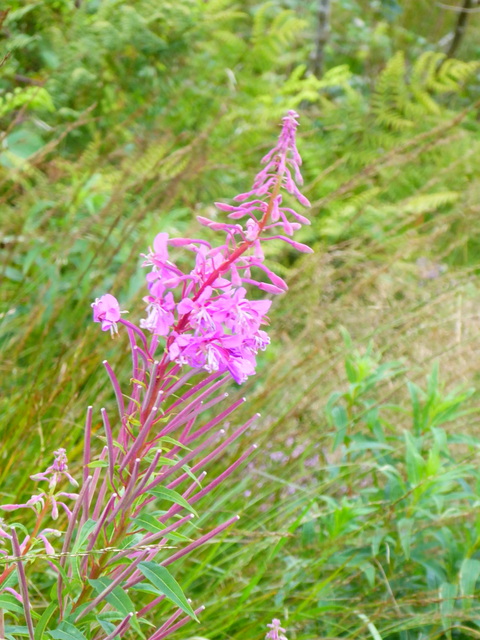
There was still some Rosebay Willowherb in flower
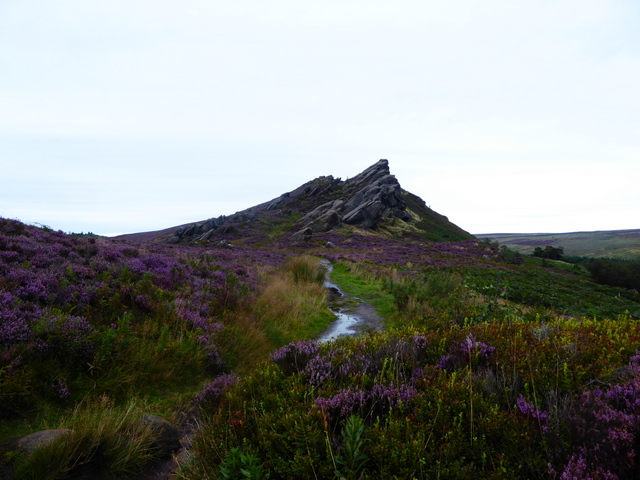
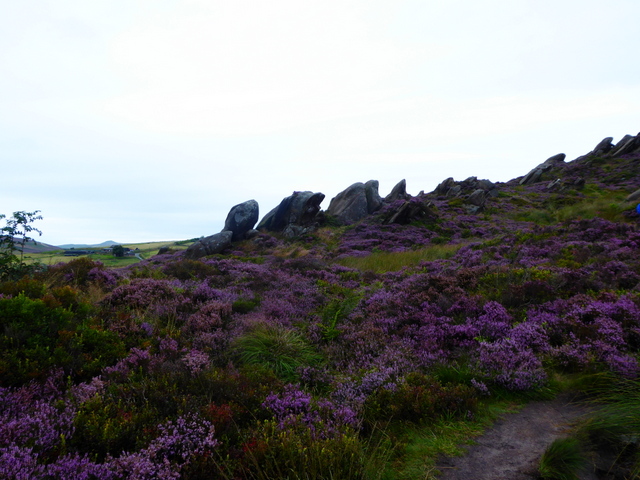
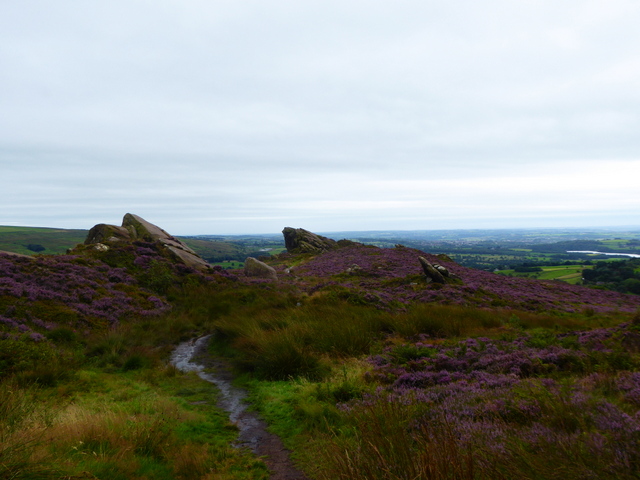
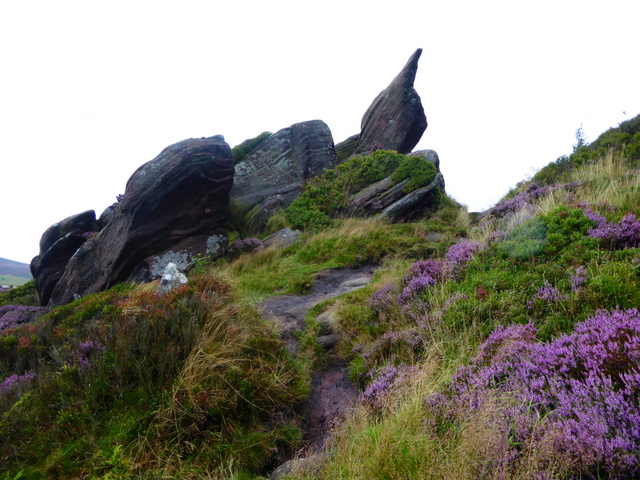
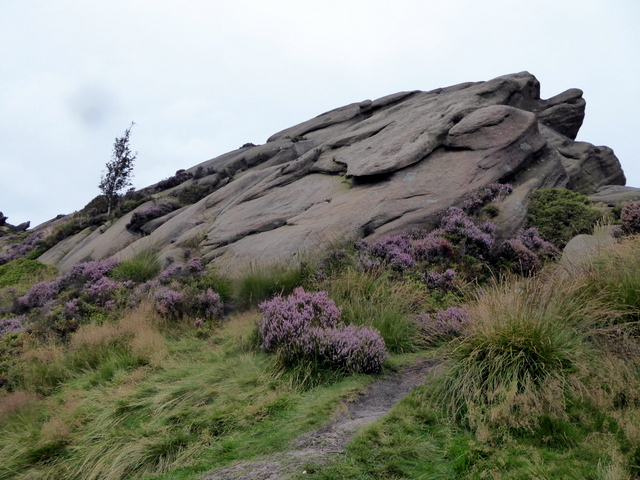
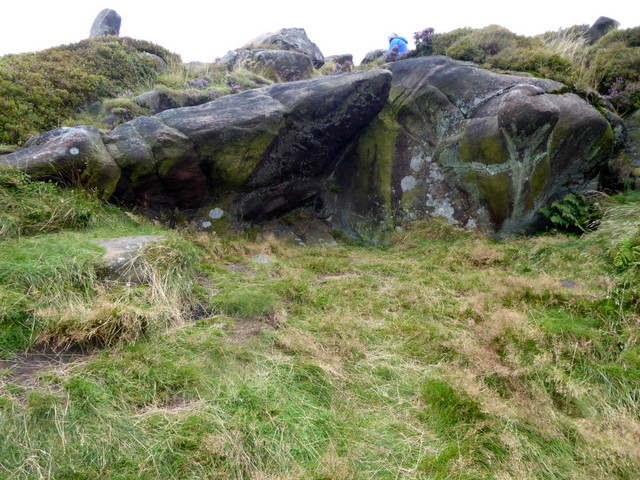
Ramshaw Rocks
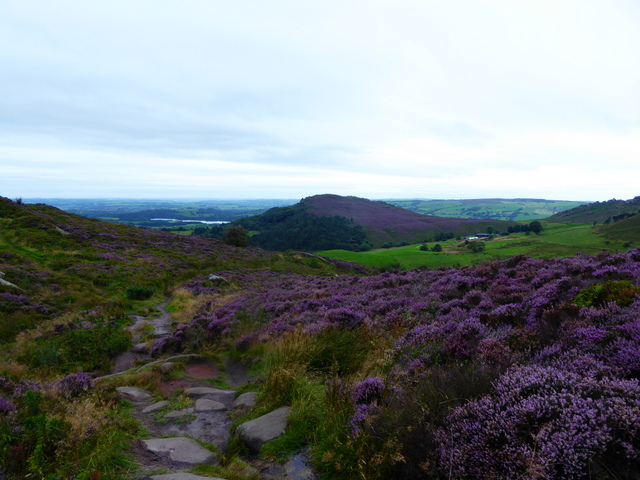
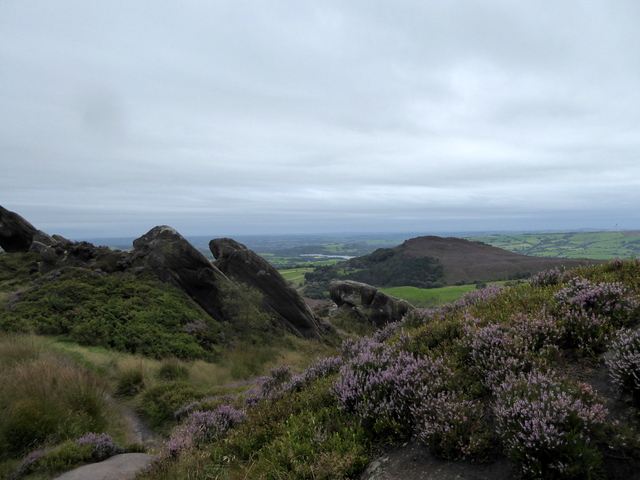
The purple hill in the centre of this photo is Hen Cloud where we had climbed a couple of days before
I love the way these limestone rocks have been eroded by wind and rain
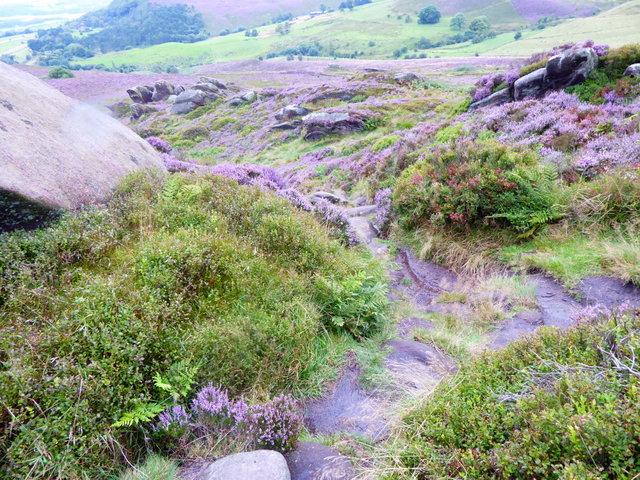
The path was a little wet after all the rain we had had.
Ramshaw Rocks
Very strange!
The path
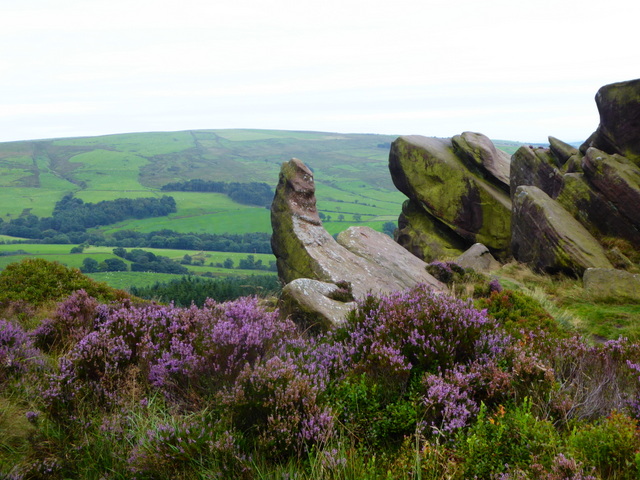
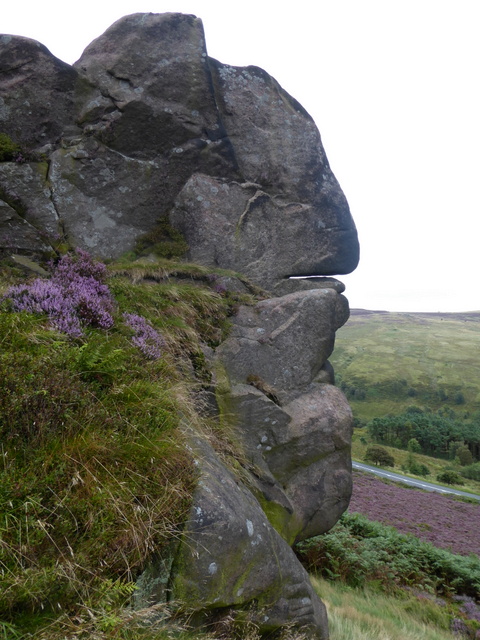
I always think this looks like a pointing finger
Ramshaw Rocks
There was very low light and the rain was never far away during the whole of our walk.
Looking towards Hen Cloud again
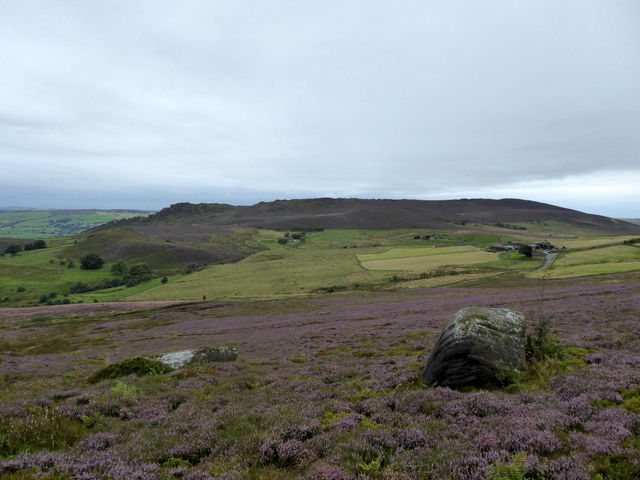
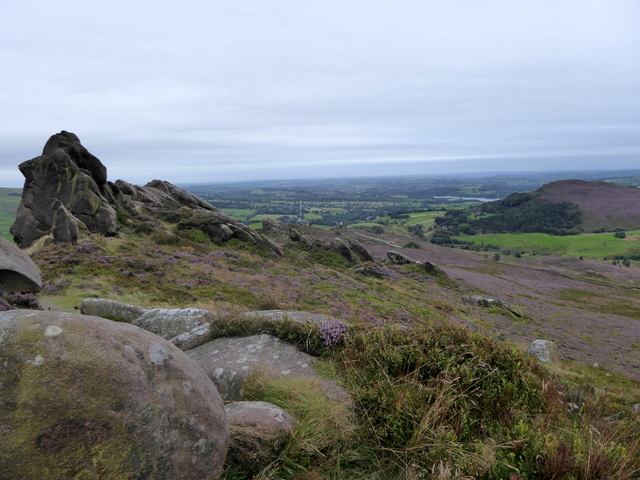
Another view from the rocks
Richard found a pleasant place to sit. Underneath him was a shelter from wind and rain. I can imagine that sheep would like it here in the winter.
Looking down to the road beneath.
Ramshaw Rocks
I call this rock the Top Hat. Those of you who know the 1995 TV adaptation of Pride and Prejudice with Jennifer Ehle and Colin Firth may recognise this rock.
We returned to the car and went back to out caravan to spend our last night away from home. The next morning we set off at 6.00 am to travel to Sheffield to collect Elinor before Alice set off for work at 8.00 am. We took her back to Blackshaw Moor, collected the caravan and went home.
We woke on the fourth full day of our holiday to thick cloud and while we ate our breakfast we heard the first raindrops on the roof of our caravan. We spent a little time tidying and cleaning the caravan and then drove into town to do some shopping in the supermarket. It was very wet by the time we had finished so we were glad to get back and have a hot cup of coffee. We had arranged to have a meal with Richard’s brother Chris and it was booked for 1.30 pm at ‘The Lazy Trout’ in Meerbrook, a village a few minutes drive away. We set off at 1.15.
Photograph borrowed from the internet.
My brother-in-law arrived shortly after we did and we enjoyed an extremely pleasant meal in this very welcoming place. If anyone is in the area I would heartily recommend the food – it is delicious!
We had thought we might have a walk round Tittesworth Water after our meal but the rain was still heavy so we returned to our caravan for hot drinks and a chat. Chris stayed with us until 6.30 pm by which time the rain had stopped. Richard and I decided not to waste a nice evening and so drove to Hen Cloud and did our once yearly clamber up to the top.
Looking towards Tittesworth Water from where we parked the car.
Looking over the wall towards The Roaches
Hen Cloud
Hen Cloud again
Looking East from halfway up the hill. Ramshaw Rocks are on the left of the photo
Looking towards Ramshaw Rocks from even further up Hen Cloud
View down to the road and beyond to Tittesworth Water from the top of Hen Cloud. We noticed more bad weather approaching!
Definitely more rain on the way!
Threatening clouds
It still didn’t look too bad in this direction
We decided to get back to the car before the rain arrived.
One last look at the reservoir…
…and at the views from the top
We would have preferred to have stayed up at the top for much longer but the sensible thing to do was to get to the bottom before the rain caused the rocks to get slippery and the low clouds to lessen visibility. We were surprised to see a group of young boys being taken climbing up the Roaches as we got to the bottom of the hill. By this time it was about 8.00 pm and the thick cloud was making it very dark.
We were back at our caravan before the rain began again.
On the third day of our stay in the Peak District we decided on a slightly longer walk than usual and took a picnic with us. We drove towards Buxton but just before entering the town we took the A54 road off to the right and then a minor road off that road and parked the car in the Derbyshire Bridge car park. This is a pleasant spot and is used as a picnic area.
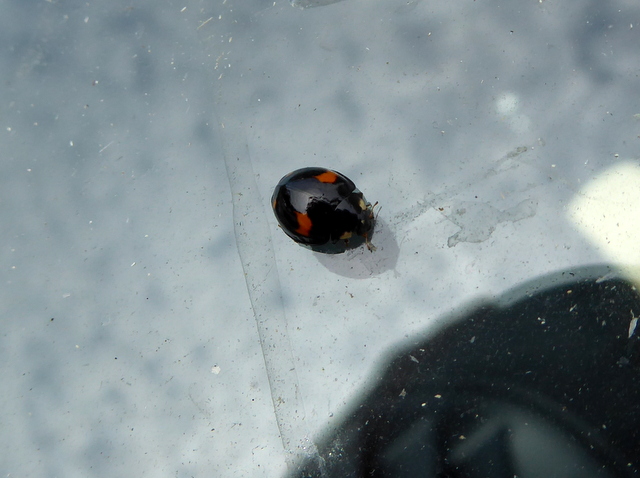
A ladybird on our rather dusty windscreen
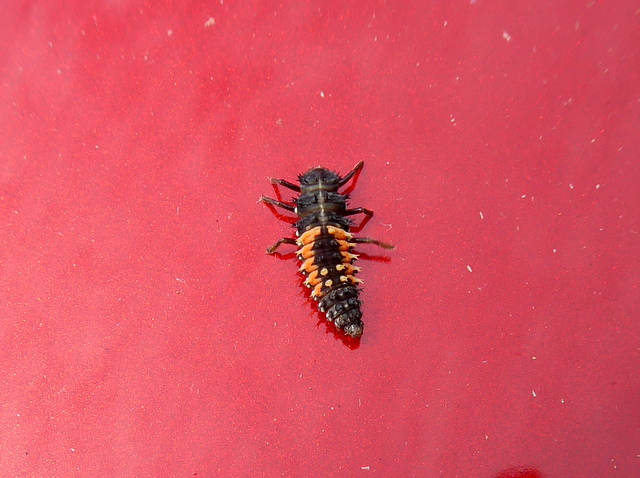
A Ladybird larva on the car.
Unfortunately, both ladybird and larva are Harlequin Ladybirds which have now outstayed their welcome in this country. I wish that those in authority were more wary about using introduced insects to control other insects.
We were delayed at the beginning of our walk by the car beeping an alarm whenever we tried locking the doors. After disturbing a couple who were having a picnic with their little grandson we decided that we ought to look at the car’s manual. We found that the car was telling us that we were locking the spare key inside the car and that it would rather we didn’t. I took the key out of my handbag which I had left in the boot and we were then able to start our walk.
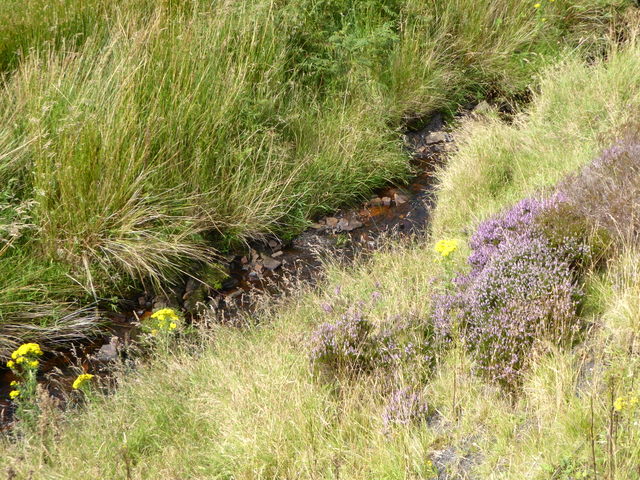
The first part of the walk was along a path beside the infant River Goyt.
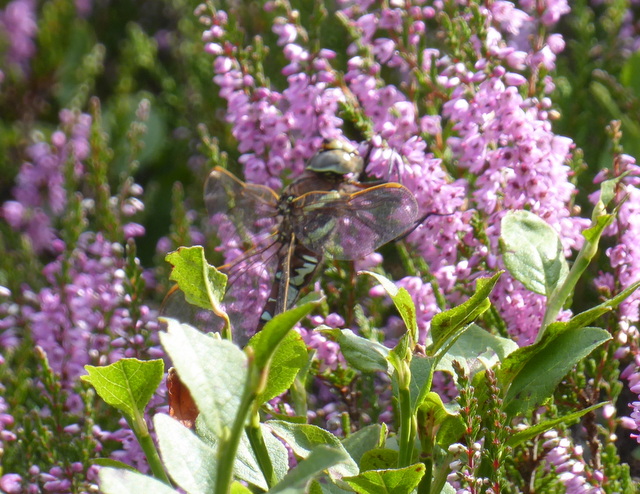
I saw this Common Hawker dragonfly (Aeshna juncea). It was typically wary and didn’t settle where I could get a good photo of it. Only its head and wings and a little part of its thorax/abdomen can be seen here.
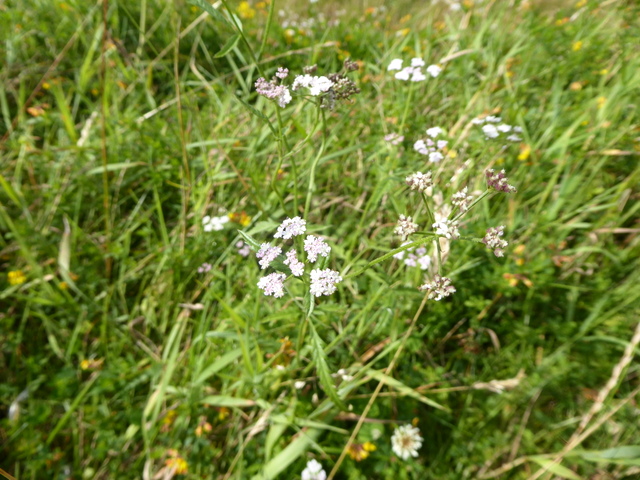
Upright Hedge Parsley (Torilis japonica)
The Goyt was running along merrily
Lesser Stitchwort (Stellaria graminea)
Bird’s-foot Trefoil (Lotus corniculatus) and Upright Hedge Parsley
A bridge across the water
A view of the surrounding moorland
This is a typical sight in moorland where driven grouse shooting takes place. The patches on the hillside show where the heather has been burned to promote new growth shoots for the grouse to feed on. I have recently signed a petition to have this sport banned as I think that instead of conserving wildlife these estates try to eradicate any creatures that may be a threat to their grouse. All raptors, including the scarce Hen Harrier and Golden Eagles are considered a threat and are regularly shot or poisoned illegally by some, not all, gamekeepers employed on some of these estates. In Scotland hundreds of thousands of Mountain Hare are culled every year. I’ve signed another petition about this too! I feel very strongly about this as you no doubt have realised.
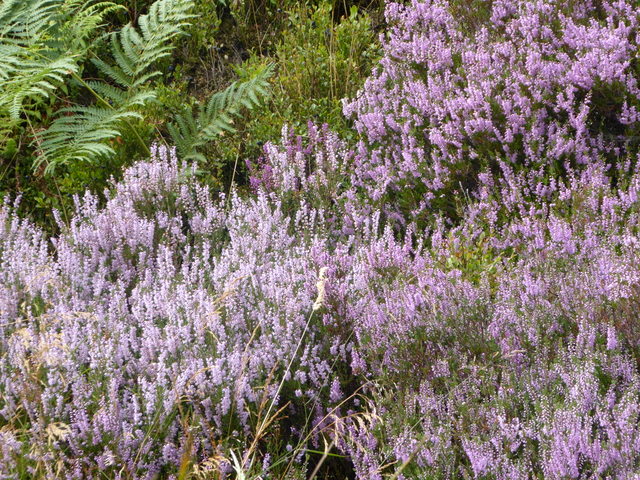
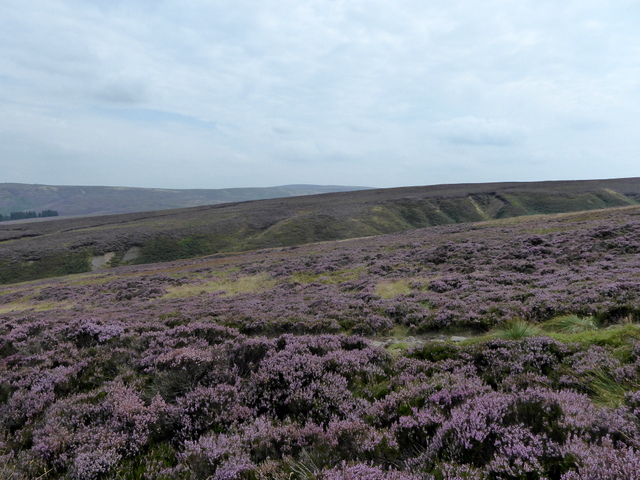
The Heather (Calluna vulgaris) was in full bloom
The path across the moor
At this point we turned onto another path which rose up towards a plantation. We entered the forest through a gate.
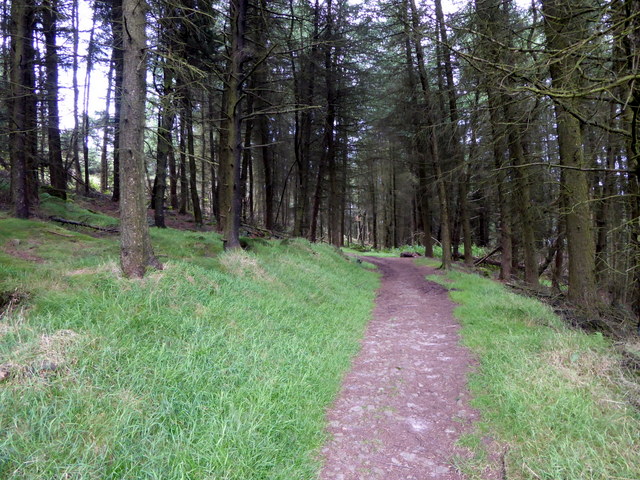
The forest path
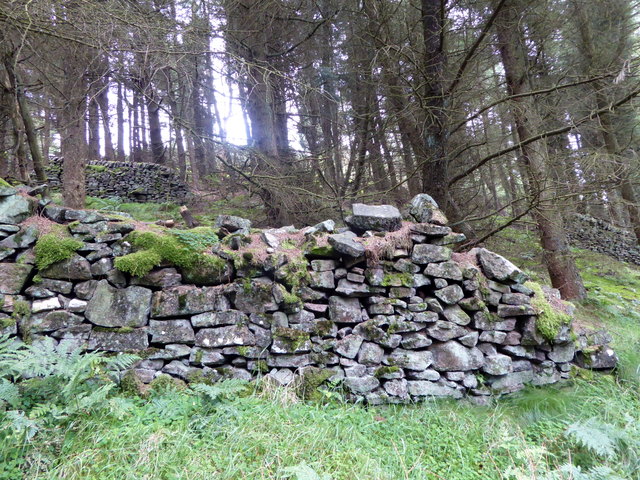
Inside the forest were walls and the remains of buildings
This reminded me of the stone walls that Allen from New Hampshire Garden Solutions finds in his local forest. In this case the land that was originally farmed for sheep was subsequently acquired by a company or organisation that planted conifers but didn’t bother dismantling the walls.
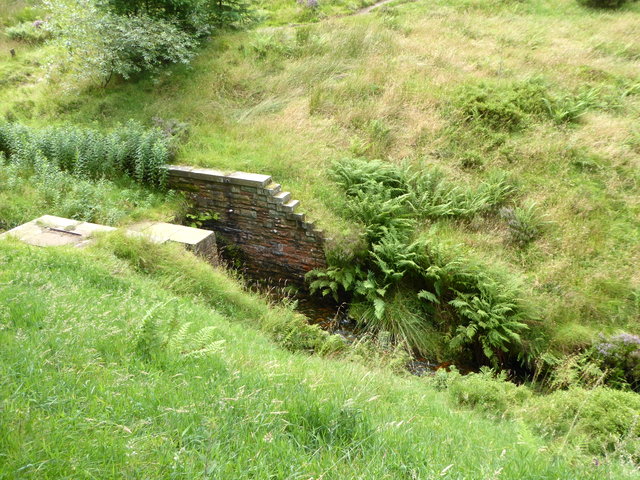
A weir we found halfway through the plantation
Richard on the bridge over the river
The simple bridge
The barrier just up-stream from the bridge and weir
Lousewort (Pedicularis sylvatica)
This was a flower I had never seen before. It is very small and the leaves are tiny! It is semi-parasitic on other plants’ roots.
We could see one of the local reservoirs from the path that went up by the side of the plantation.
Our path….
…. got rougher and steeper
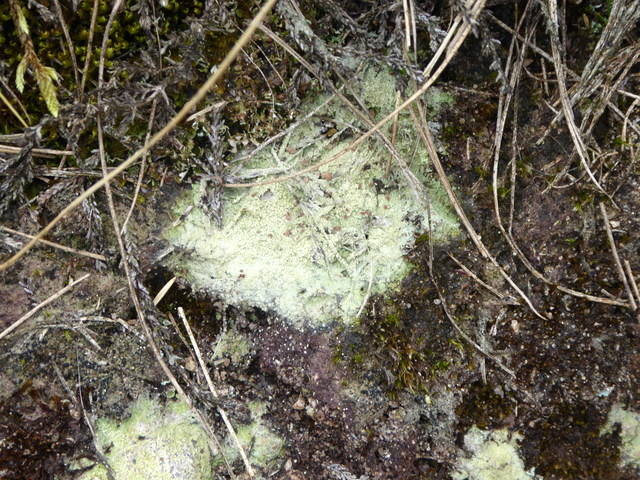
I think this lichen may be Cladonia pleurota
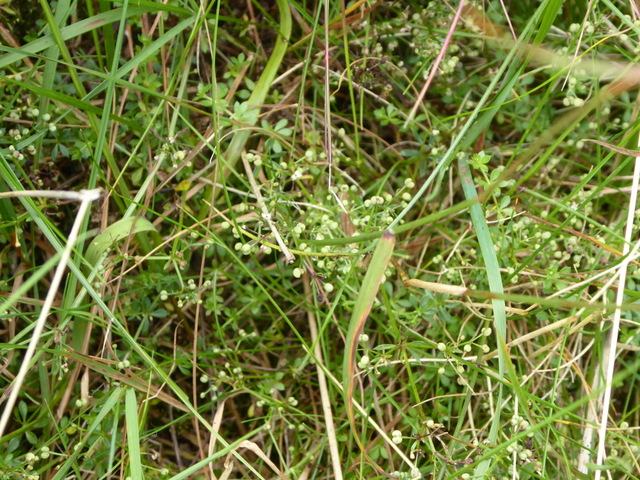
Heath Bedstraw (Galium saxatile)
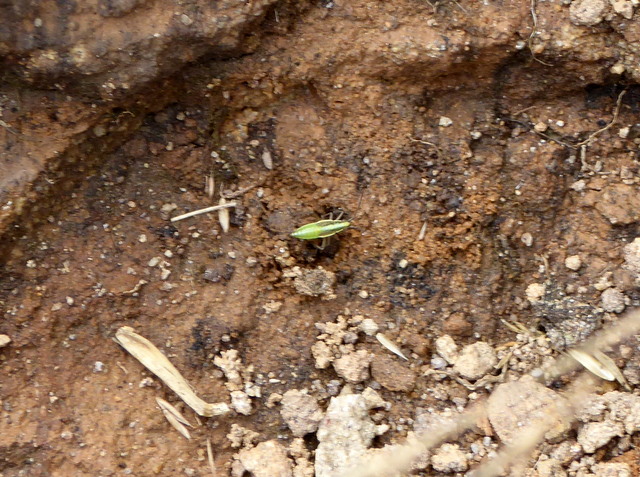
I cannot identify this tiny bug. It marched purposefully across this rather bleak landscape.
The three photos above were taken while we rested and ate our lunch. This last part of the walk I found exhausting as it was a continuous uphill climb and on very uneven and rough paths with large, loose rocks to walk over.
This is the view I saw when I looked up from my seat on a rock
The weather was cloudier and cooler than earlier in the week. We were glad of this!
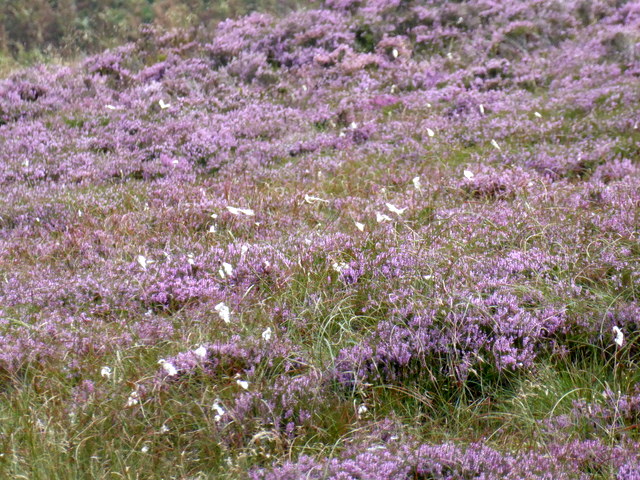
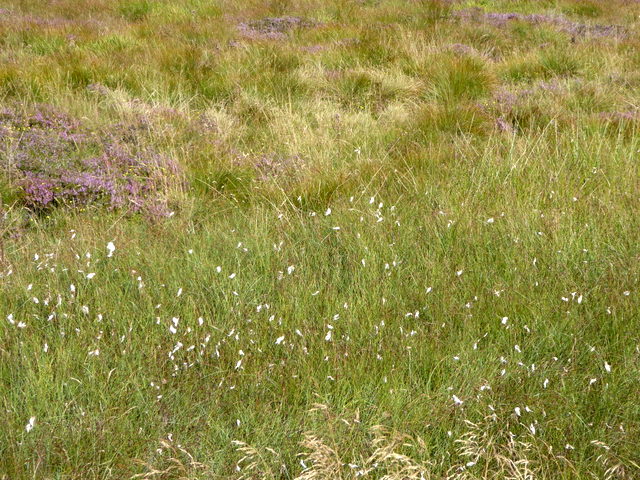
There was still plenty of late Common Cottongrass (Eriophorum angustifolium) in amongst the Heather
This might be a slime mould but I am not sure!
View from the path
View from the path
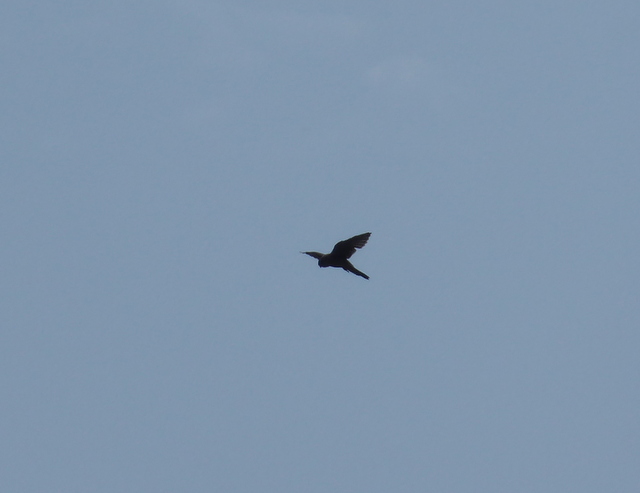
A Kestrel (Falco tinnunculus) hovering high up in the sky
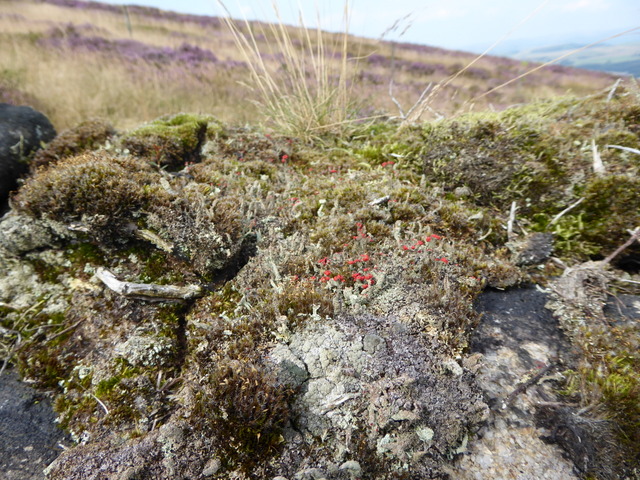
A veritable garden of lichen and moss on top of a stone wall. It’s a pity the photo isn’t any clearer.
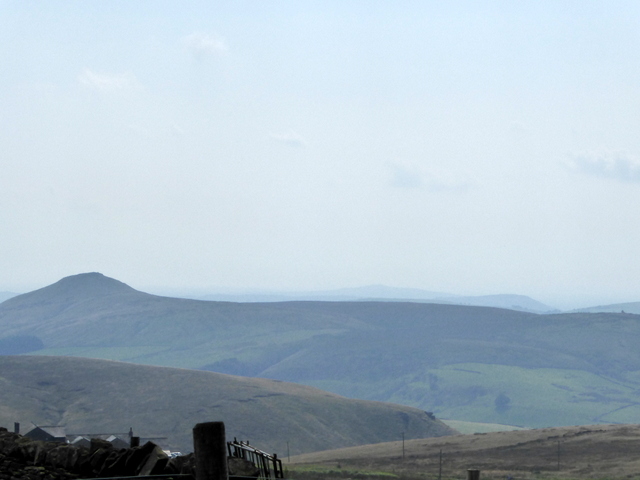
Shining Tor from a distance
Shining Tor close up
We had thought we might go up Shining Tor but we changed our minds when we had got to the top of the stony path. We were too tired. Why is it called ‘Shining Tor’? I don’t know.
This is another view from where we were standing.
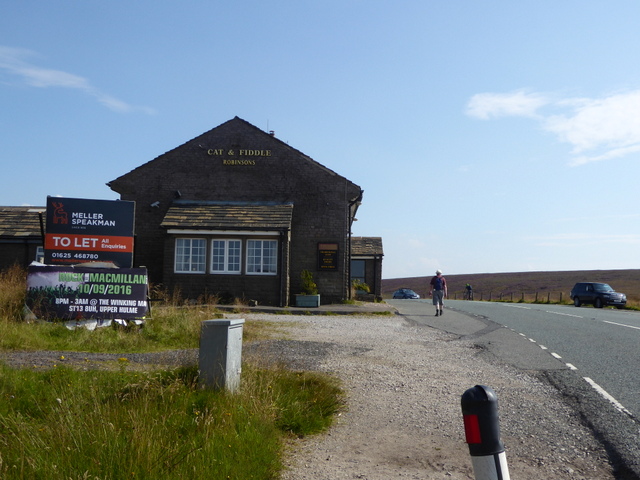
The visibility wasn’t great and the distant hills were lost in haze but the sky above us was clear and blue now. We began to descend towards the Cat and Fiddle pass (I expect you were wondering why this post was called Cat and Fiddle) and the Cat and Fiddle pub.
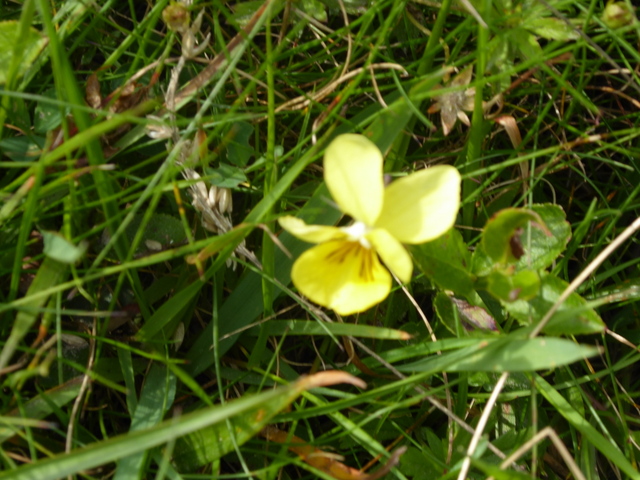
An out of focus photo of a wild pansy growing next to the path. I think it may be a Mountain Pansy (Viola lutea)
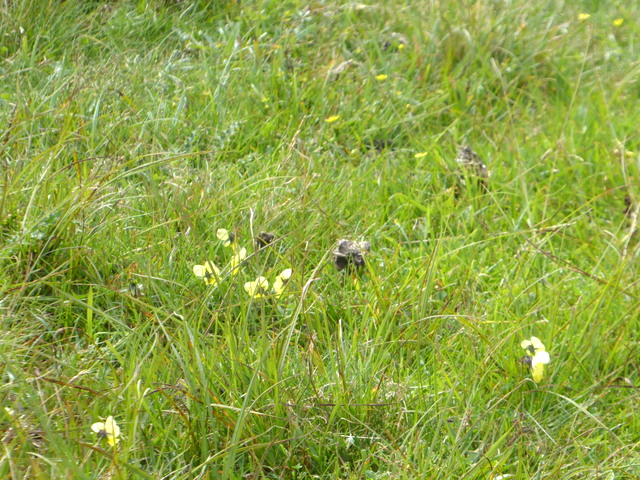
More pansies
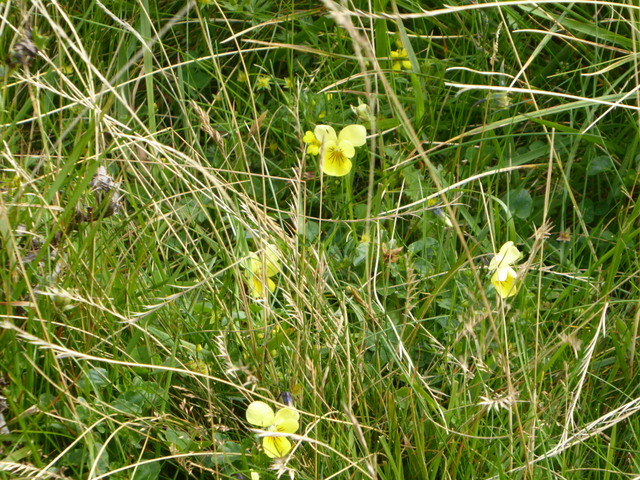
and even more pansies!
Just one more!
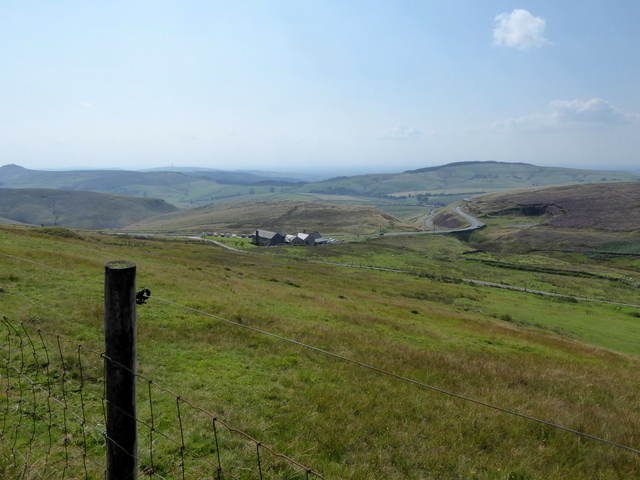
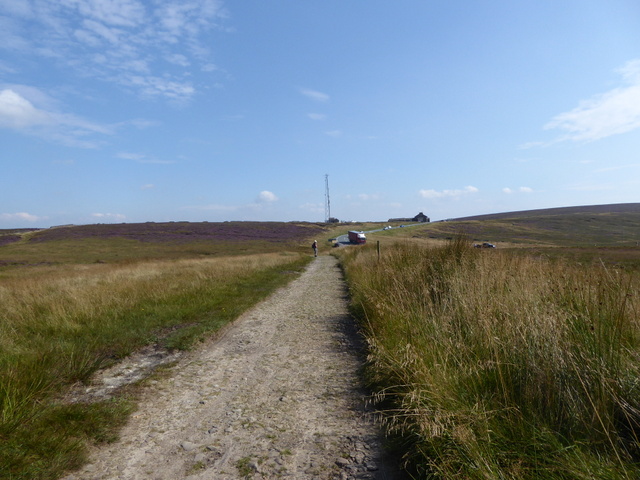
I eventually looked up and noticed the view. The road you see in the middle distance is the Cat and Fiddle Pass.
Harebells ( Campanula rotundifolia)
Tormentil (Potentilla erecta)
The Cat and Fiddle pub (on the right of the photo)
I saw more Cottongrass next to the path but this was definitely past its best!
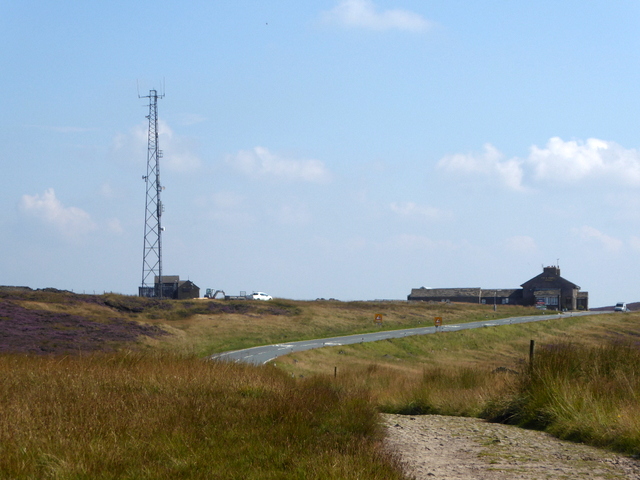
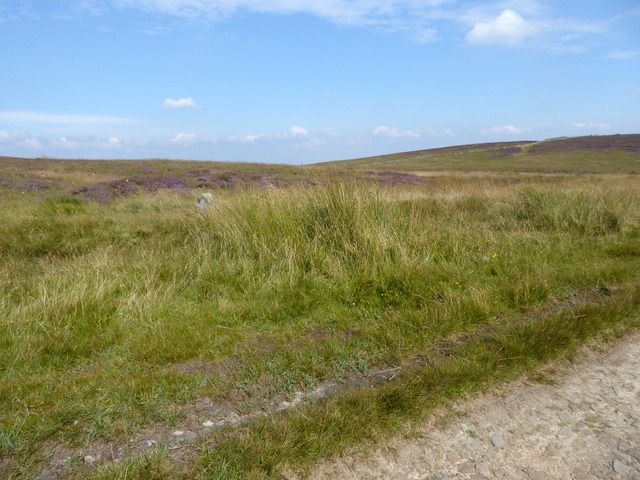
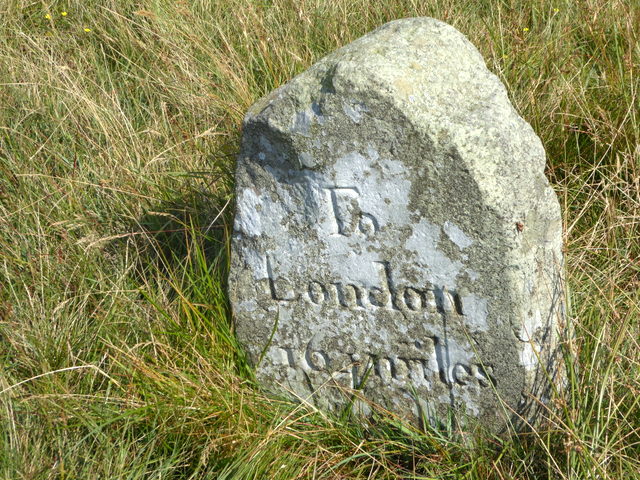
I then saw an interesting-looking stone just to the left of the path
On closer examination I found it was an old mile-stone and realised that the path we had been walking on since Shining Tor was part of the old coach road.
I looked at the path and saw that it looked very much like an old road. Richard is ahead of me here as usual and is near where the path joins the new busy road.
I found a very late orchid in the grass. It was faded and I couldn’t identify it.
We were disappointed to discover that the pub was shut and we weren’t to get a drink after all.
It does seem sad that the place that the pass was named after should be shut and empty. We walked past the pub. Through the windows we could see everything had been left as it was on the day it had shut months before. There was even a menu board extolling the virtues of a meat pie!
We soon turned off the main road onto a narrow road that would eventually bring us back to the carpark. I saw many different plants on the way.
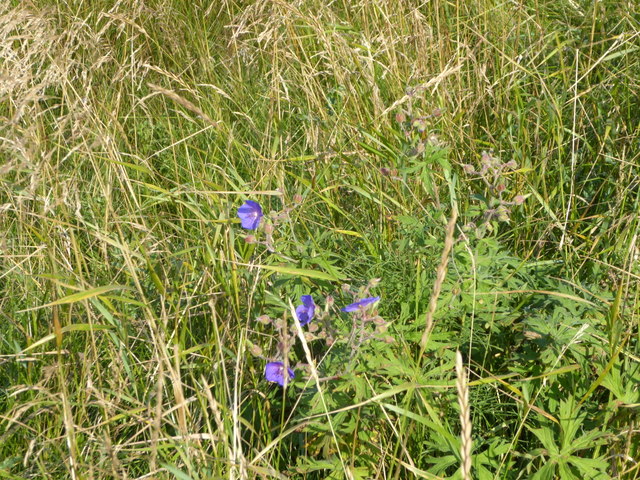
Meadow Crane’s-bill (Geranium pratense)
Lots more Common Cotton Grass
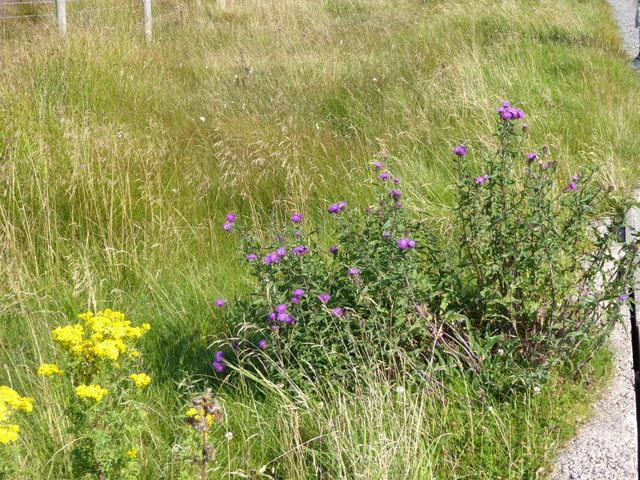
Common Ragwort (Senecio jacobaea) and Common Knapweed (Centaurea nigra)
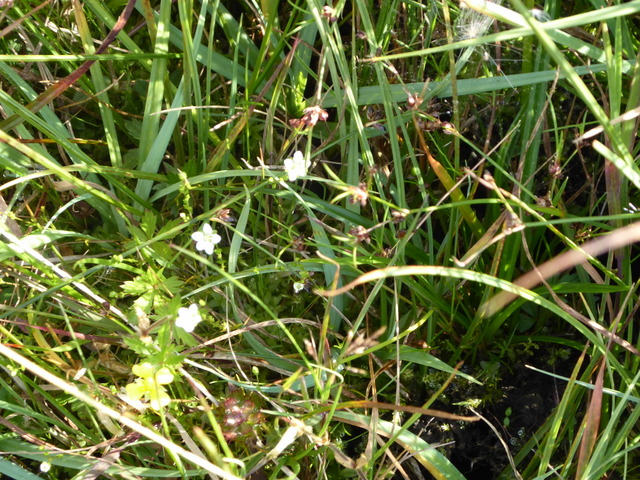
Yet another poor photo I’m afraid! This is another flower I had never seen before – Knotted Pearlwort (Sagina nodosa)
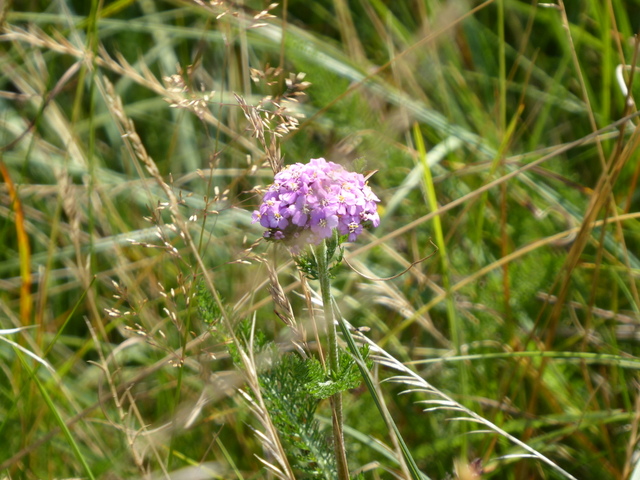
A very pink Yarrow (Achillea millefolium)
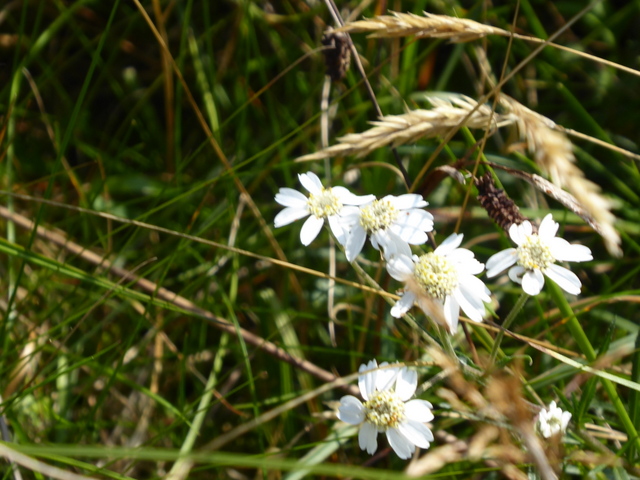
Sneezewort (Achillea ptarmica)
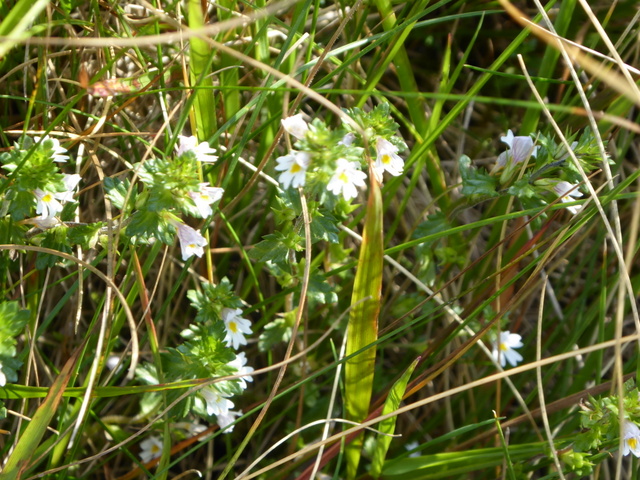
Eyebright (Euphrasia officinalis agg.)
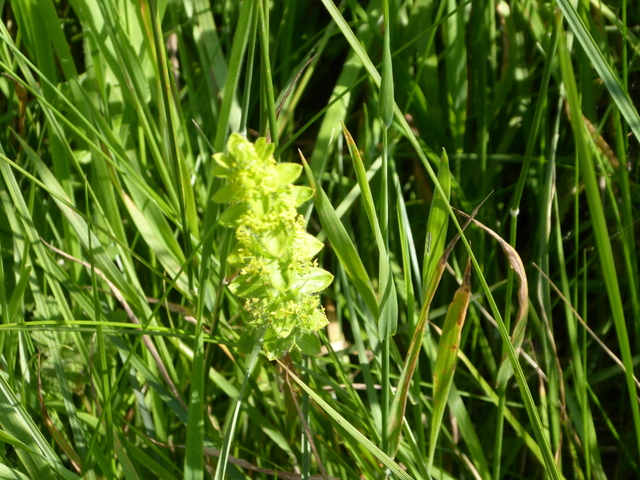
Crosswort (Cruciata laevipes)
We found the car, drove back to our caravan and made ourselves a nice cup of tea. We were quite tired after our long walk and found it difficult to stay awake. We had arranged to have lunch with my brother-in-law the next day so Richard booked a table at a local restaurant and phoned his brother to let him know when and where we were to meet each other.
The day following our walk at Ilam we had arranged to meet Alice and Elinor at Castleton in Derbyshire.
Castleton is a pretty village and a great place to stay if you want to walk in the hills or visit the mines. For some years we stayed at a site just outside the village every Whitsun half-term holiday but gave up eventually because we got tired of the crowds of people everywhere. Looking at the numbers of visitors when we went there this August, it seems that there are fewer visitors in the later summer than earlier in the year.
Alice and Elinor took the bus from Sheffield and arrived ten minutes before us. We had got delayed by having to make a detour round an accident on the Leek to Buxton road. We met them in a pub and decided to stay there and have some lunch.
After lunch we wandered through the village and noted all the changes made since we had last visited. We all agreed that it would be good to climb up to Peveril Castle. I didn’t manage to take any pictures on my ascent to the castle. I found it much more tiring than I remembered and in retrospect maybe I shouldn’t have had quite so much for my lunch! The path zig-zags up the steep climb from Castleton and we got very hot in the bright sunshine. Alice sped up the path before us; she lives in a very hilly city and is used to walking everywhere. Eventually we got to the entrance to the castle which is through the remains of one of the gatehouses built in the 12th century. We then entered the main courtyard of the castle which is now a large lawn. Originally this space had many buildings in it; a great hall, a kitchen, perhaps guest halls, servants and retainers homes, store sheds, stables and the like. It is possible to see the outline of some of these long-demolished buildings.
The keep at Peveril Castle with the steep lawn which is all that is left of the castle.
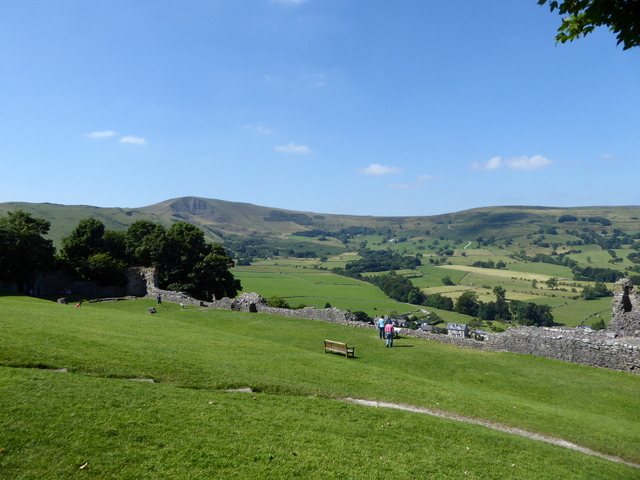
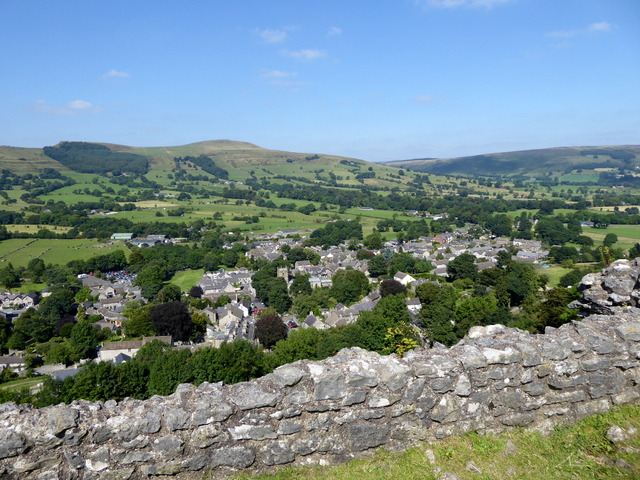
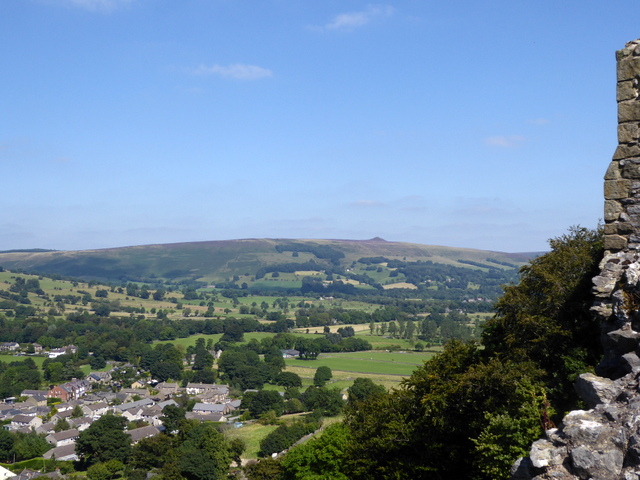
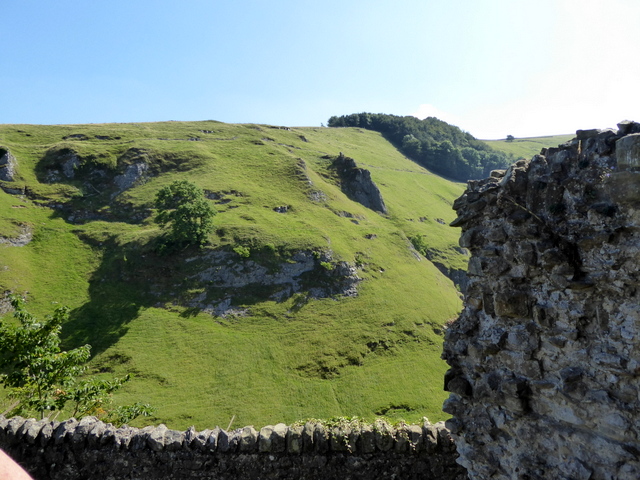
Looking down the courtyard to the remains of the curtain wall and beyond to the surrounding Peak District hills. Mam Tor is the peak to the left of centre.
The curtain wall which surrounded the courtyard was constructed early on in Norman times. It was built by the Peverils and apparently includes Roman tiles probably taken from the ruins of the Roman fort at Navio (Brough).
The curtain wall and gatehouse.
William the Conqueror’s supposedly illegitimate son William Peverel was a great favourite with the Conqueror and after the conquest he was granted the Royal Manors of the Peak. In this way he became the administrator of the Royal Forest of the Peak in Castleton on behalf of the Conqueror. He built a castle in 1080 on this site which is naturally strategically strong; it is quite difficult to get to and also easy to defend. It was originally built of wood but after some years it was thought expedient to replace it with a stone structure and this was done in about 1175 and the remains of this later building is what is seen today.
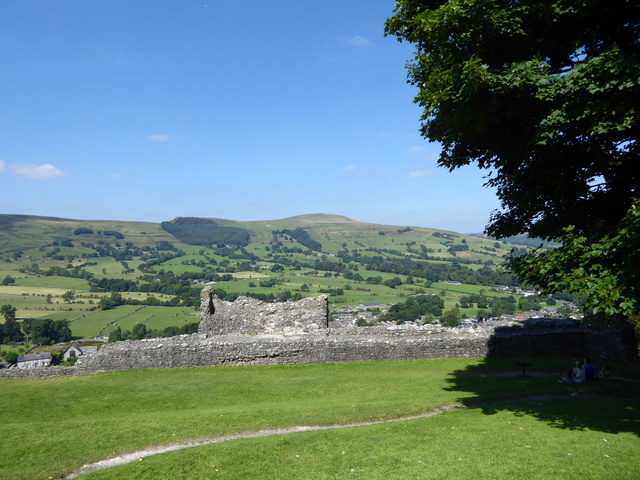
Looking over the curtain wall to Castleton below
One of the views from the courtyard
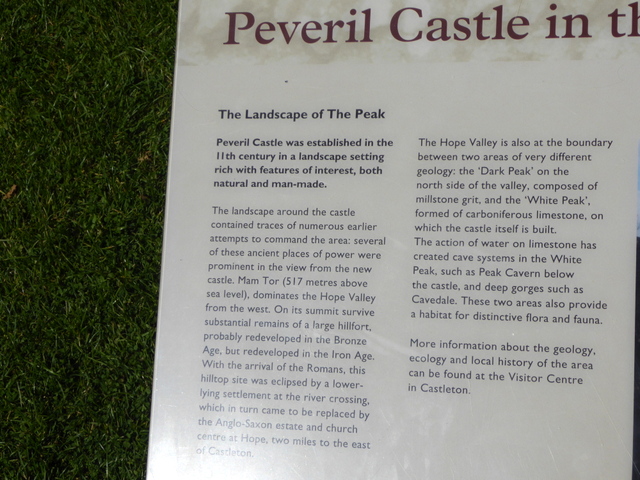
An information board at the castle
Mam Tor
Castleton
Castleton
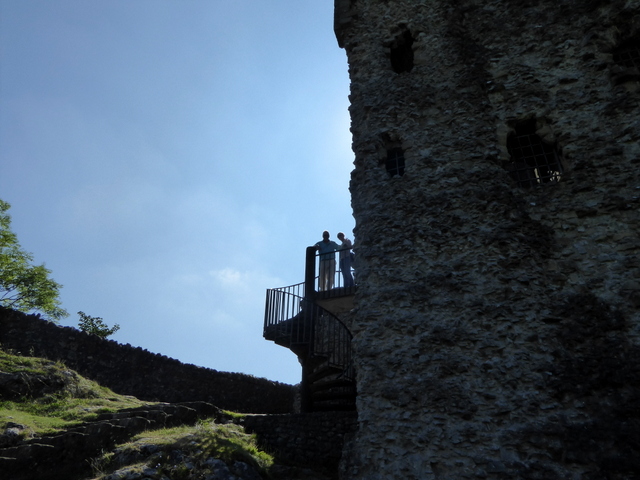
The entrance to the Keep
The Keep
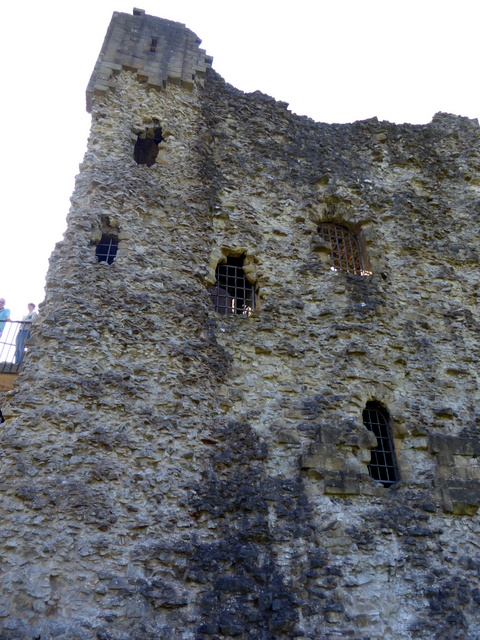
The Keep was originally 60′ high and was faced with fine gritstone blocks. These can still be seen on the south and east sides of the building. You can see them at the top of the Keep and around the lower window in the photo above.
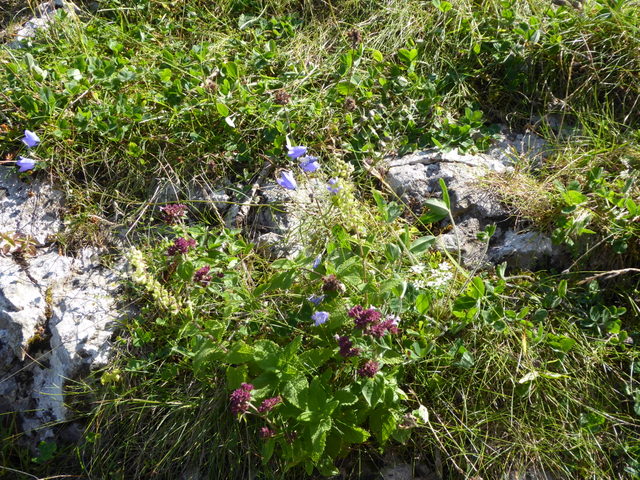
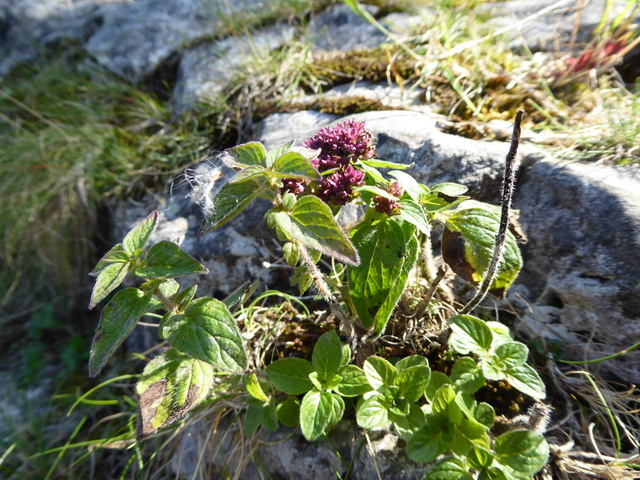
Harebells (Campanua rotundifolia) and what looks like Wild Marjoram (Origanum vulgare) growing in the courtyard. There are a couple of other plants here that I can’t ID. I wish I had looked more carefully at the time!
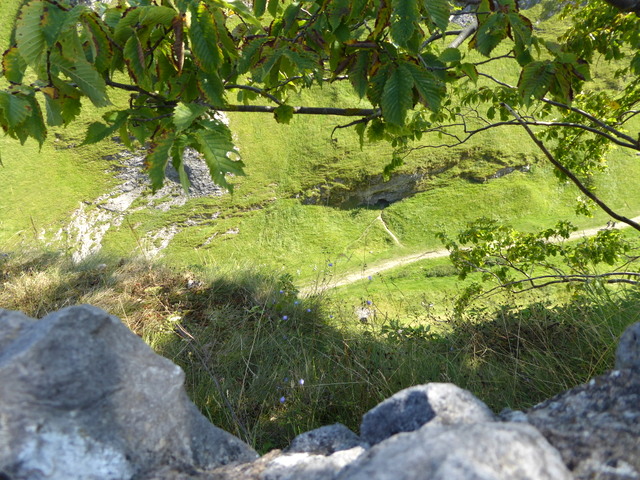
Looking down into Cavedale at the rear of the castle. Originally the approach to the castle was from this side with a bridge across a moat.
Cavedale
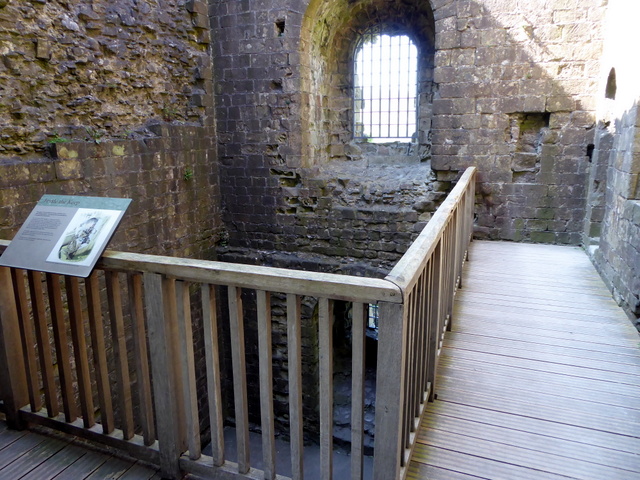
Inside the Keep
Inside the Keep
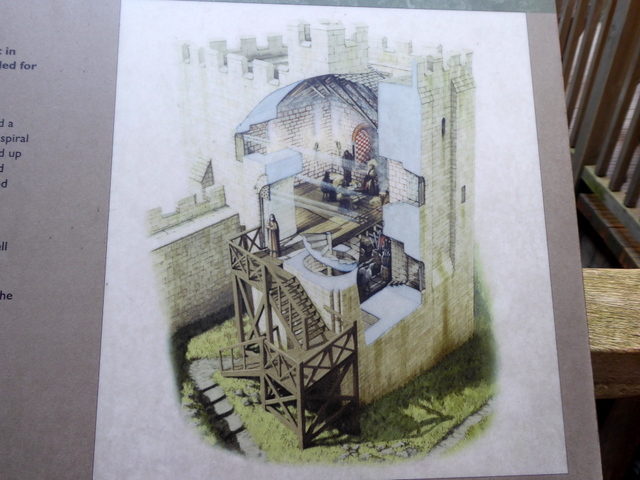
When the castle was rebuilt in stone in 1175/6 this Keep with round-headed windows was added. The Keep was never meant to be lived in but was the administrative centre of the castle and would have been a place of refuge if ever the curtain wall was breached.
A drawing of what the Keep was thought to look like when it was built
In the 17th century the castle was considered too uncomfortable to live in and all the apartments except the Keep were demolished. The Keep was retained to serve as a courthouse. From then on until the early 19th century the place was left unoccupied and it quickly deteriorated. Repairs and reconstruction work was carried out by the Duchy of Lancaster in the early 1800s who retained the castle until it was taken on by English Heritage.
This slideshow requires JavaScript.
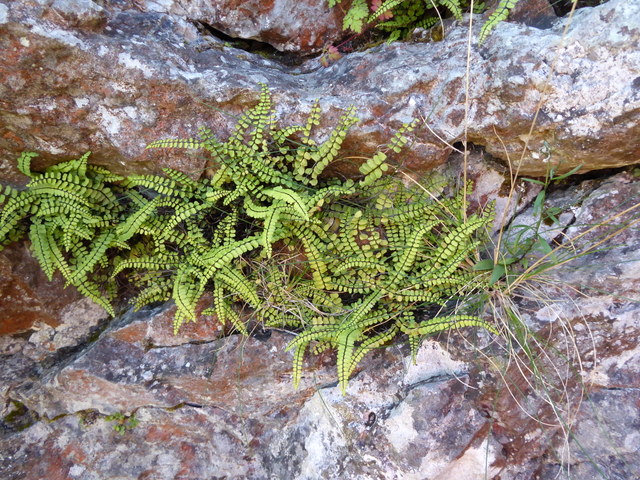
Maidenhair Spleenwort (Asplenium trichomanes)
More Wild Marjoram
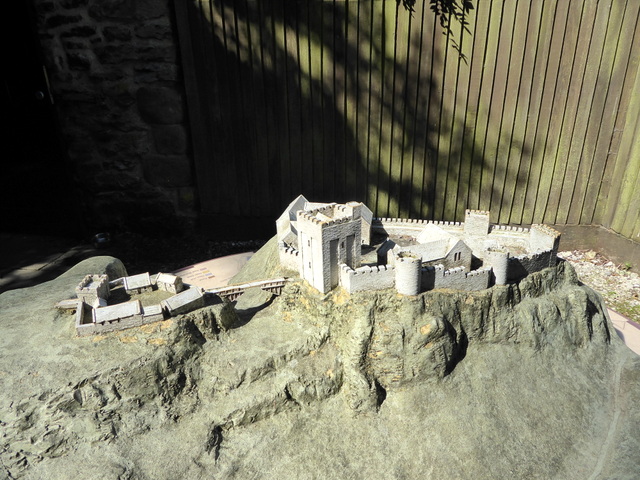
A model showing what the castle was supposed to look like when newly built
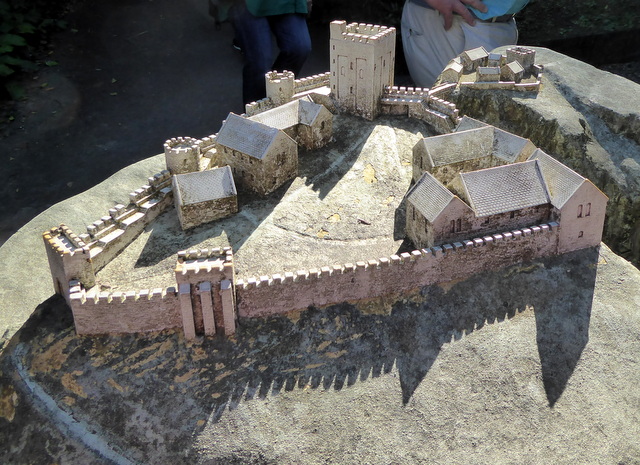
From another angle
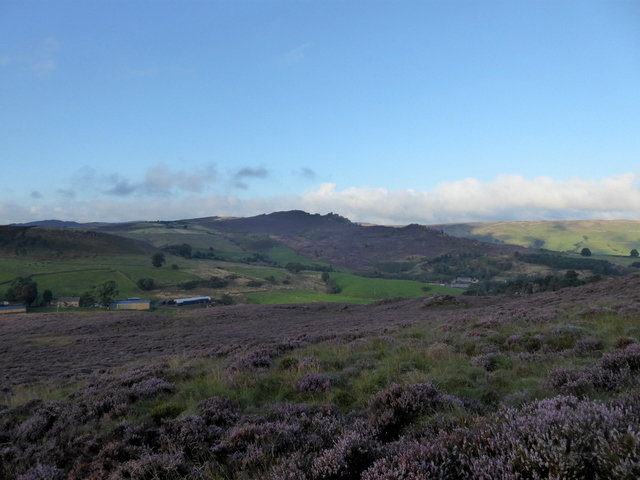
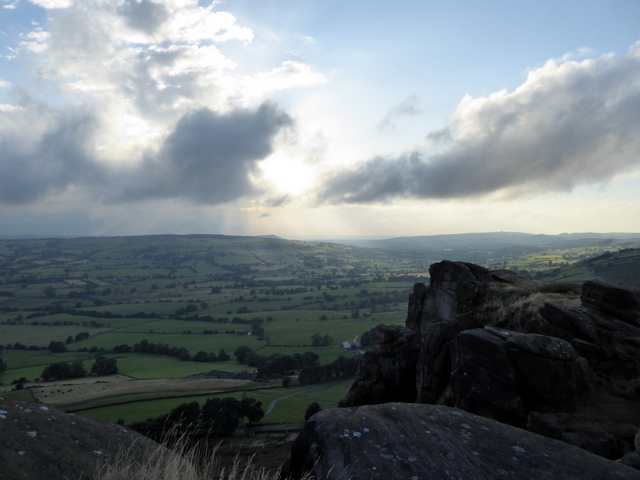
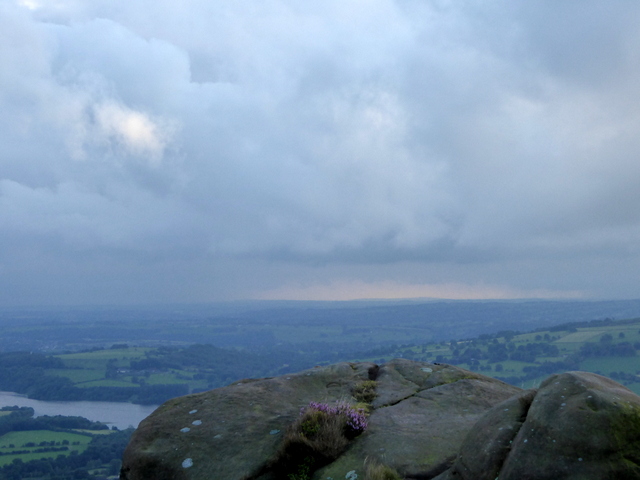
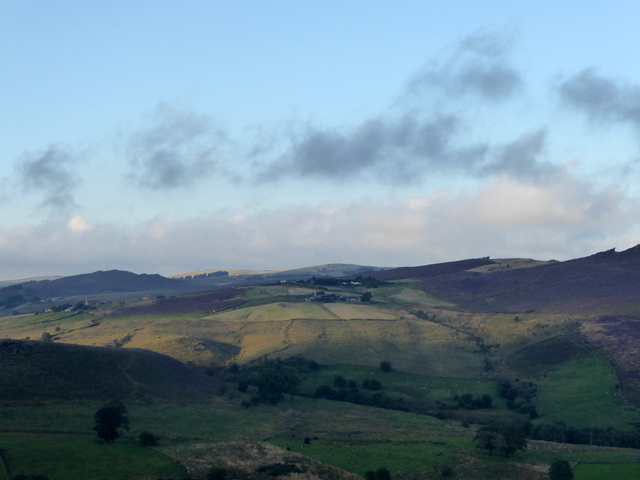
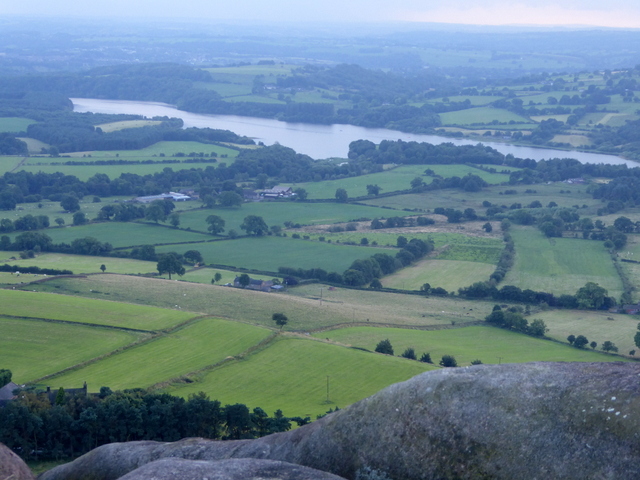
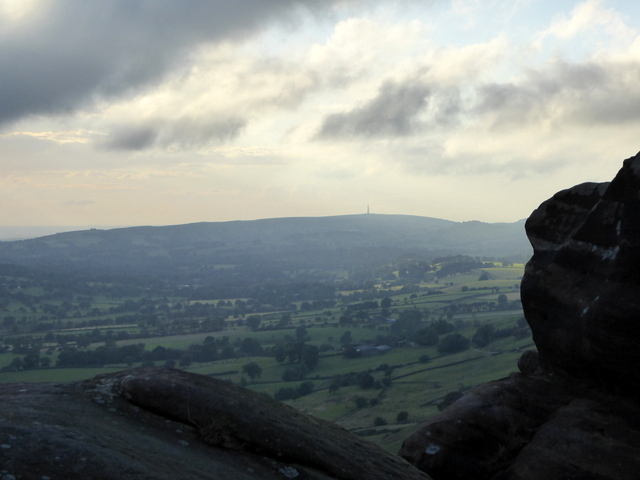
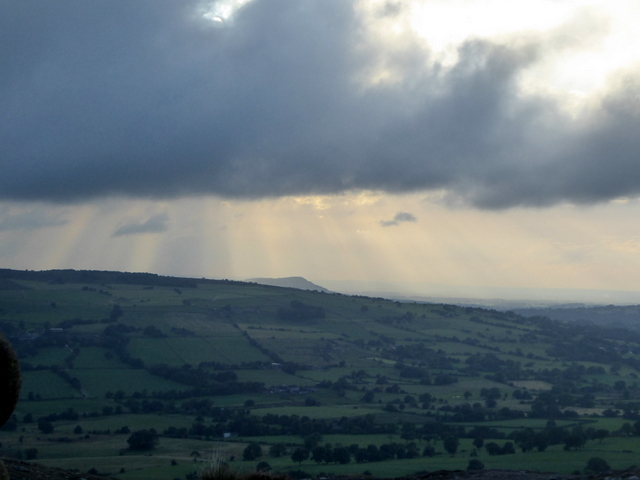
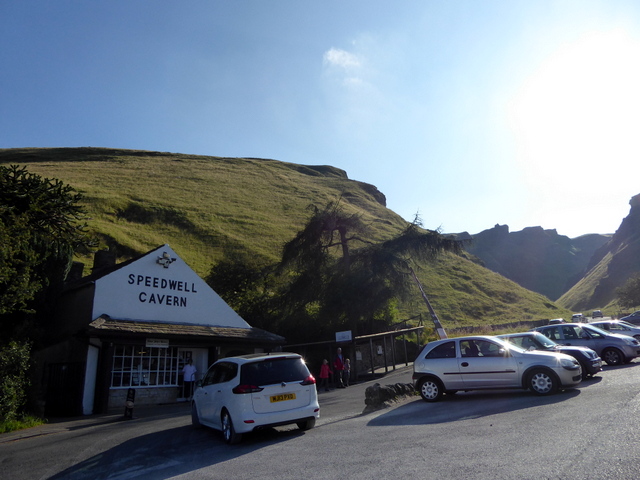
We spent a most enjoyable afternoon together. Eventually it was time for the girls to catch their bus back to Sheffield. Richard and I then drove back to Leek, stopping briefly just outside Castleton at the top of Whinnat’s Pass to take the following photograph.
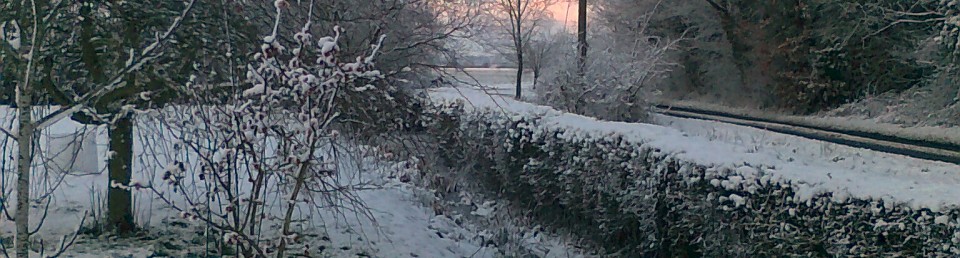










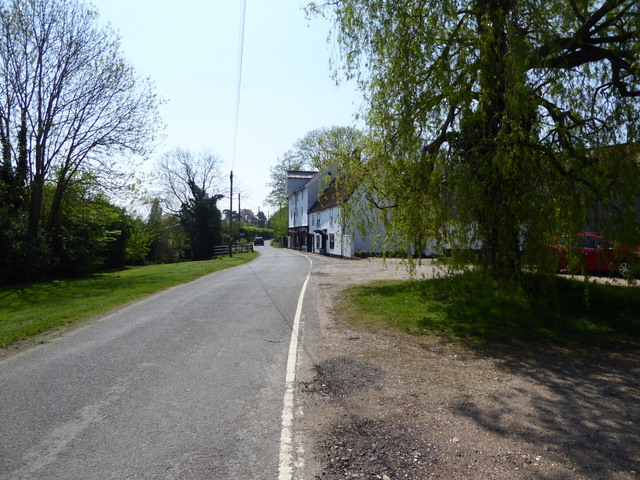










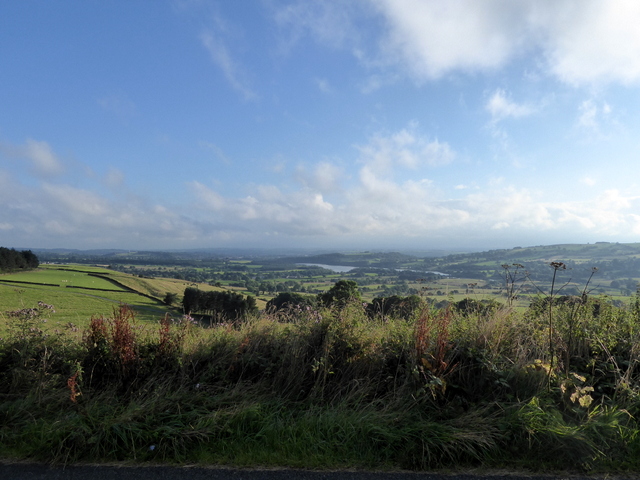
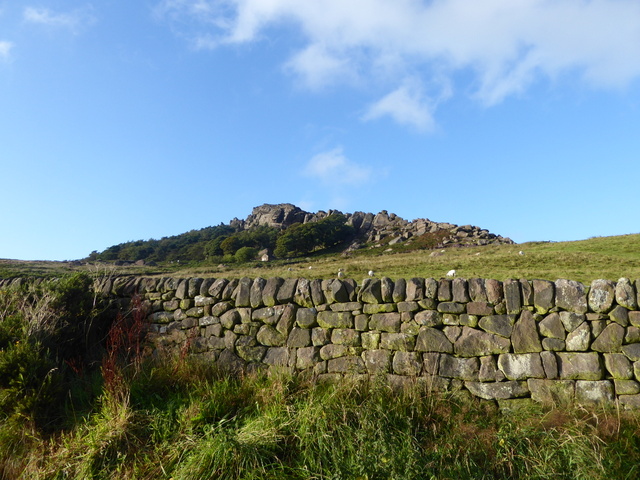
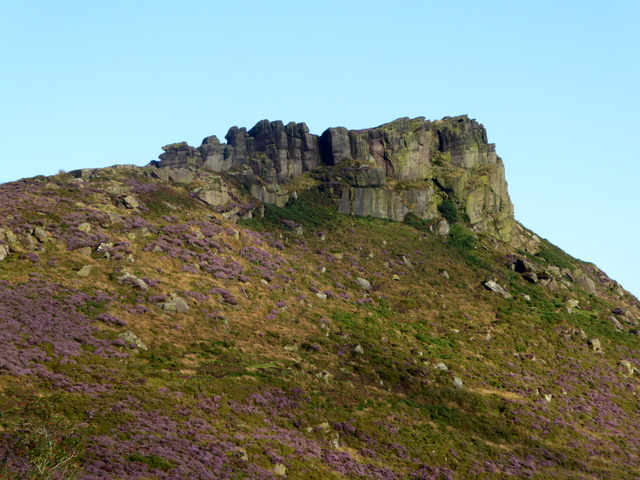
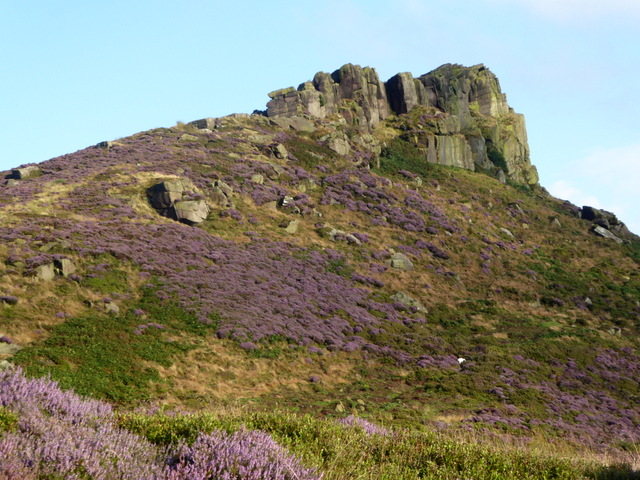
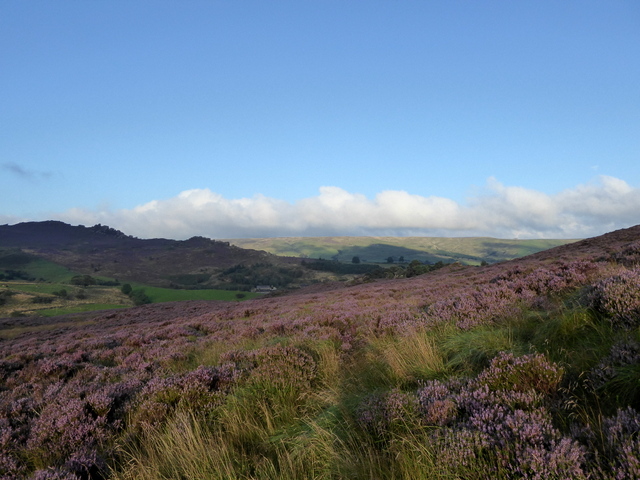

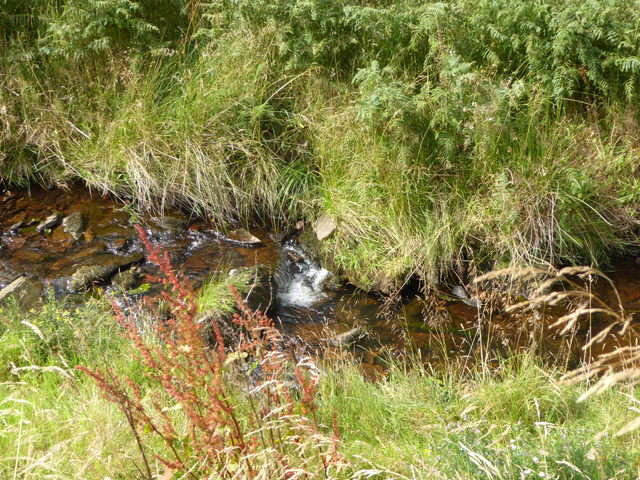

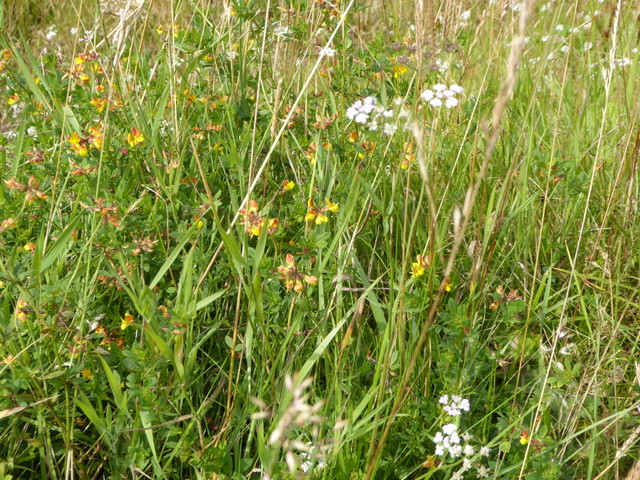
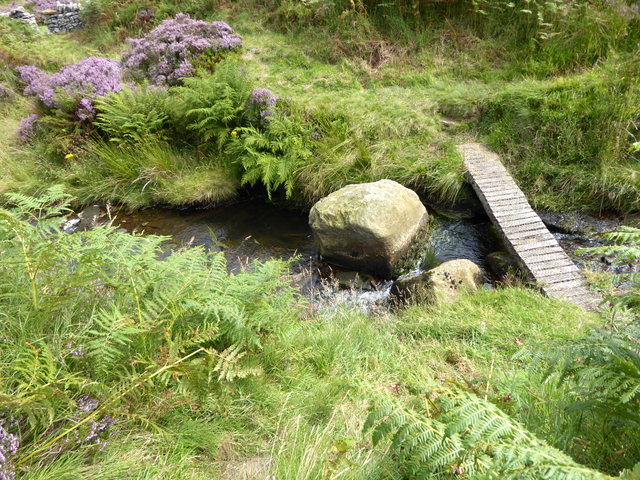
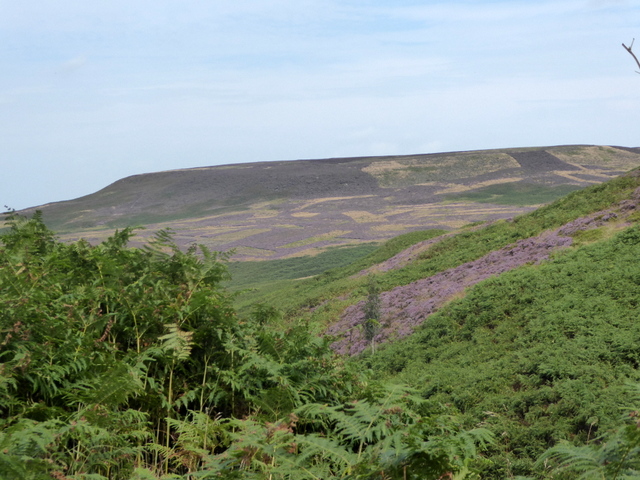

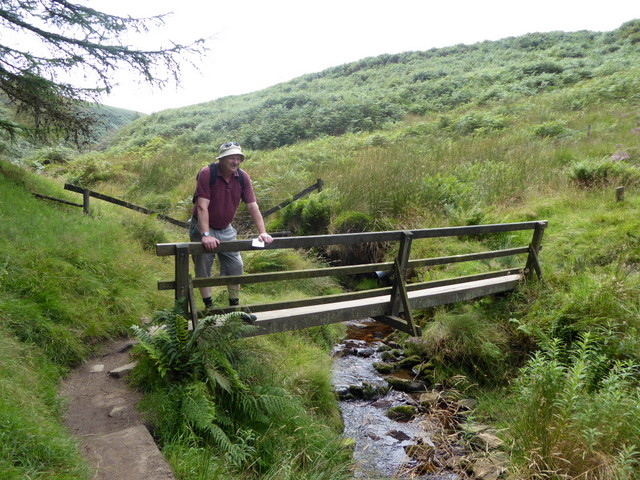
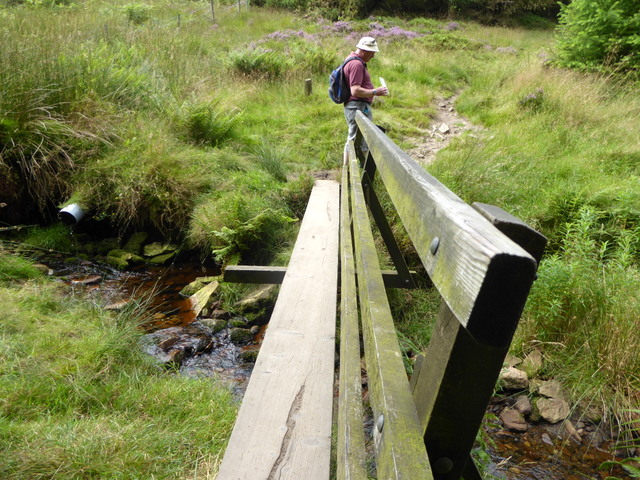
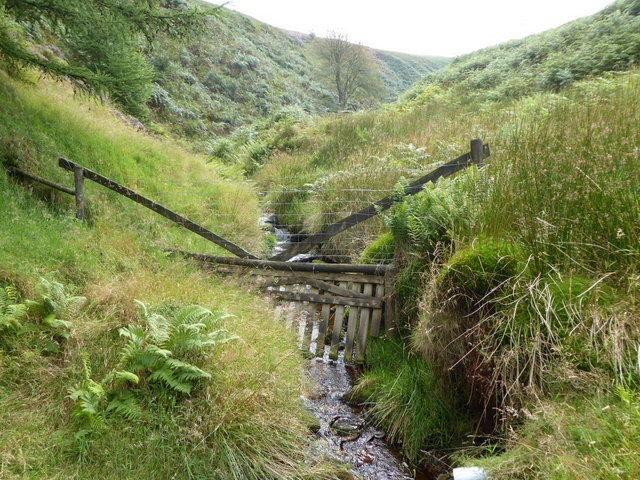
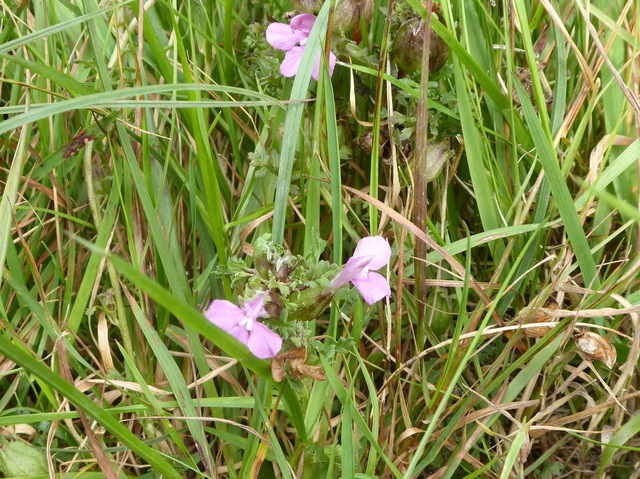
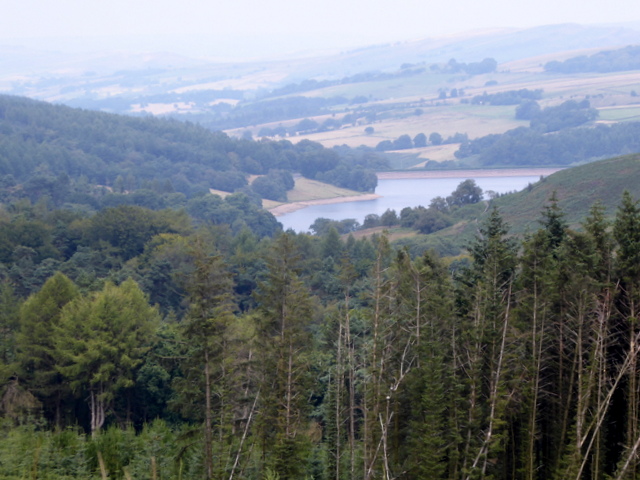
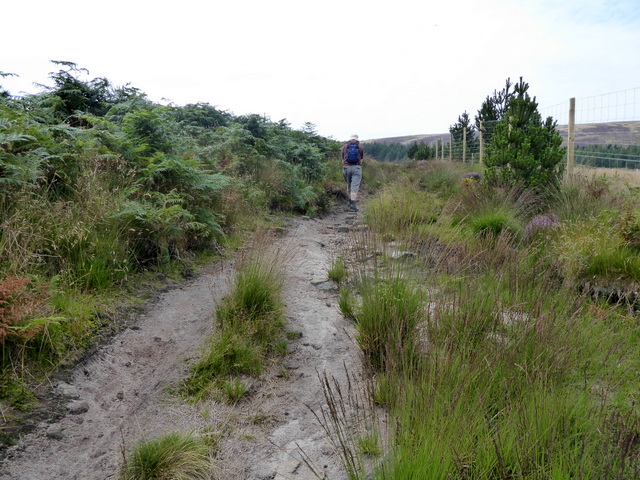
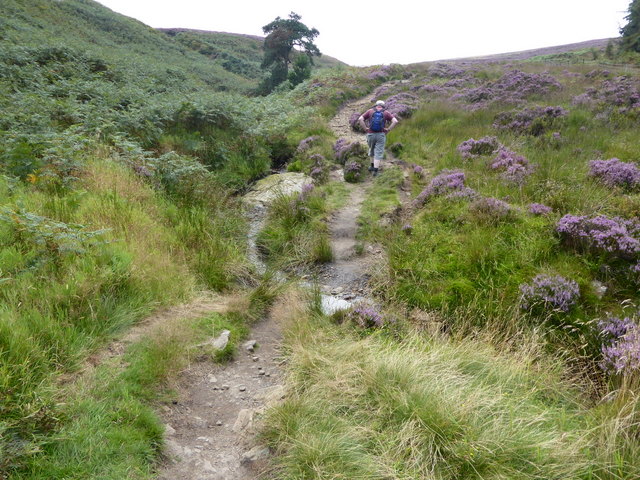
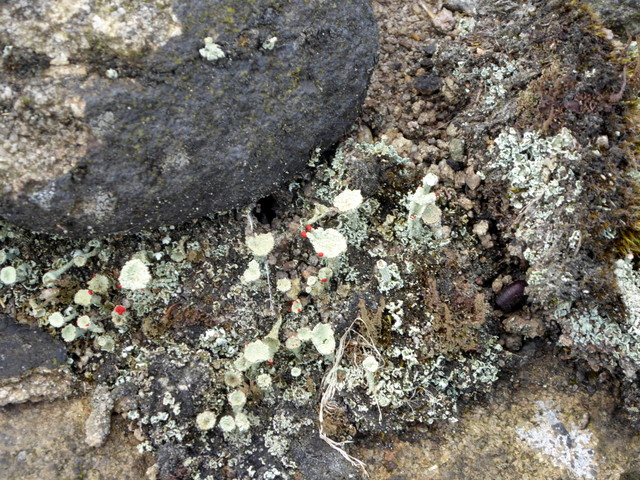












 A Suffolk Lane