• About my Blog
  • GDPR (General Data Protection Regulations) and This Site
  • My Life in a Suffolk Lane

A Suffolk Lane

~ A diary of my life in rural north Suffolk.

A Suffolk Lane

Author Archives: Clare Pooley

Peak District Holiday 2016

07 Fri Oct 2016

Posted by Clare Pooley in Days out, holidays, plants, Rural Diary, trees, walking, wild flowers

≈ 48 Comments

Tags

annual meadow-grass, Betony, bull, calves, cows, Devil's-bit Scabious, enchanter's nightshade, eyebright, flowers, former industrial landscape, garlic mustard, grasses, greater plantain, harebell, hart's-tongue fern, Hawthorn, Ilam Country Park, Ilam Cross, Ilam Hall, Ilam village, industrial landscape, lamb, Lesser Burdock, Maidenhair Pleenwort, Paradise Walk, Peak District, power station, Rabbit, River Manifold, rowan, Sheep's Fescue, Small Teasel, stile, The Battle Stone, tormentil, unimproved grassland, wind farm

Richard and I had a weeks holiday in the Peak District during August and stayed in our caravan as usual and at a favourite site.  We travelled on the 15th taking Elinor with us and once we had set up the caravan and had had a short rest we then drove to Sheffield as Elinor would be staying the week with Alice.  We had a cup of tea, a nice chat with Alice and Richard met Mona, Alice’s cat for the first time.
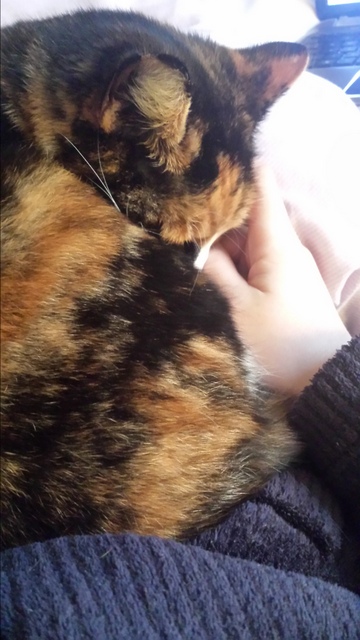
20151212_150009-1

This is Mona

Richard and I then returned to our caravan near Leek in Staffordshire calling in at the supermarket on the way where we bought enough food to keep us going for most of the week.  We couldn’t find anywhere to buy a take-away meal so we heated up a ready-made lasagna in the oven and had a very late but tasty dinner.

The weather forecast was for four days of good weather followed by cooler rainy weather so we thought we’d do as much walking in the dry at the beginning of the week as we could.  Our first full day was also Richard’s birthday and we decided to have lunch at the White Hart in Leek where we know we can get very nice Staffordshire oatcakes filled with cheese and bacon or cheese and sausage.  Before going in to Leek we had to put the awning up on the caravan.  An awning (for those who don’t know) is a tent, shelter or canopy which is attached to the side of a caravan which provides a little extra space to live in.  We find ours very useful, especially in wet weather as we can keep our soggy shoes and coats out there.

After lunch we tried to find a wood I wanted to walk in but we had great difficulty following the directions to it.  In the end we gave up and went to Ilam Park and walked from there.
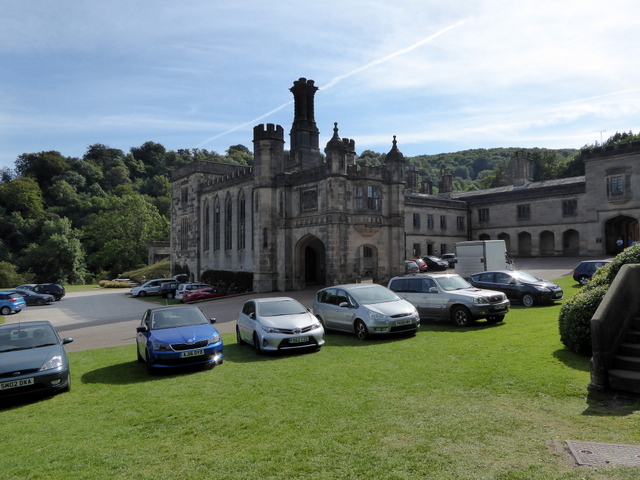
p1010032ilam-hall

Ilam Hall which is now a Youth Hostel

From the carpark we walked towards the remains of the hall and through the archway to the other side of the building.
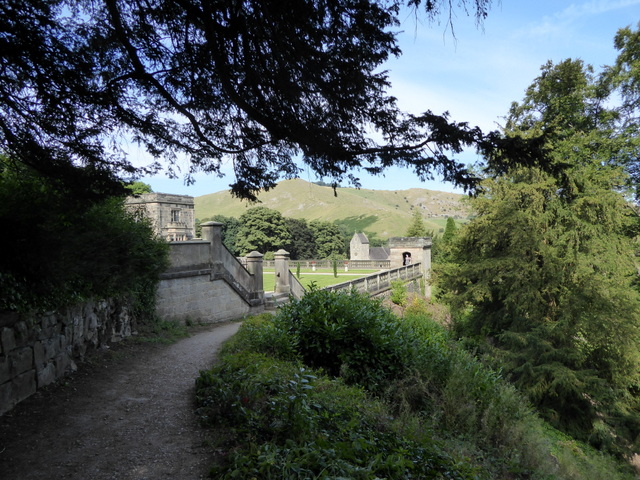
p1010034garden-at-ilam-hall

The gardens at Ilam

The gardens are very attractive and have places to sit and admire the scenery.  We made our way through the pleasure grounds, the path descending towards the River Manifold.
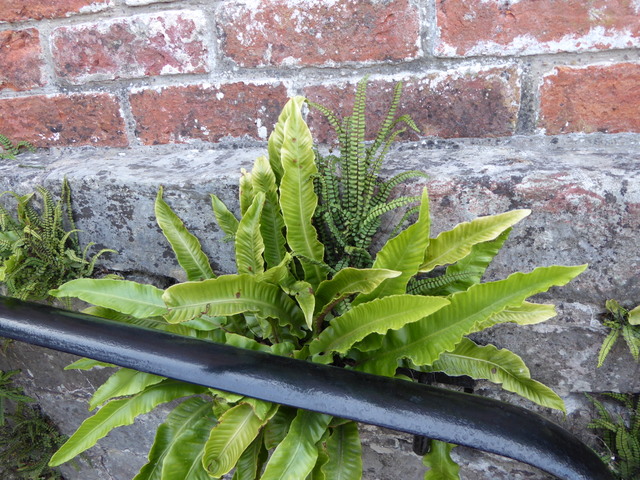
p1010033harts-tongue-fern

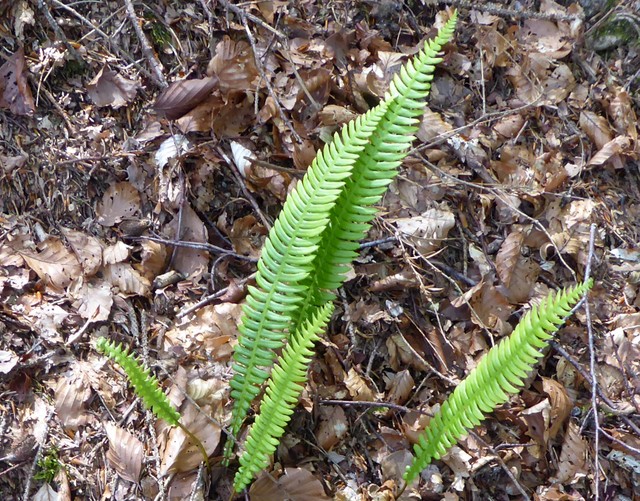
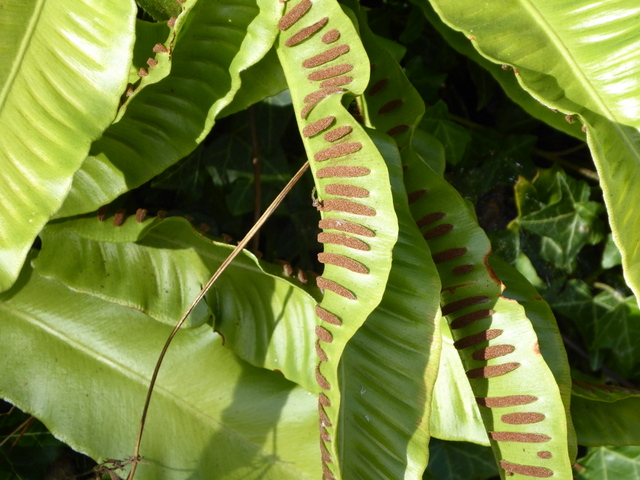
Hart’s-tongue Fern (Phyllitis scolopendrium) and Maidenhair Spleenwort (Asplenium trichomanes) decorate the wall behind the handrail.
p1010036harts-tongue-fern

The underside of the leaves of the Hart’s tongue Fern have stripes of spore sacs.
p1010035r-manifold

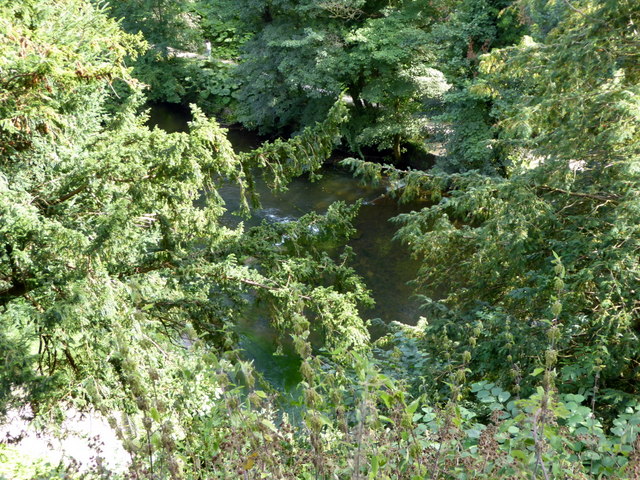
Looking down through the trees to the River Manifold
p1010037steps

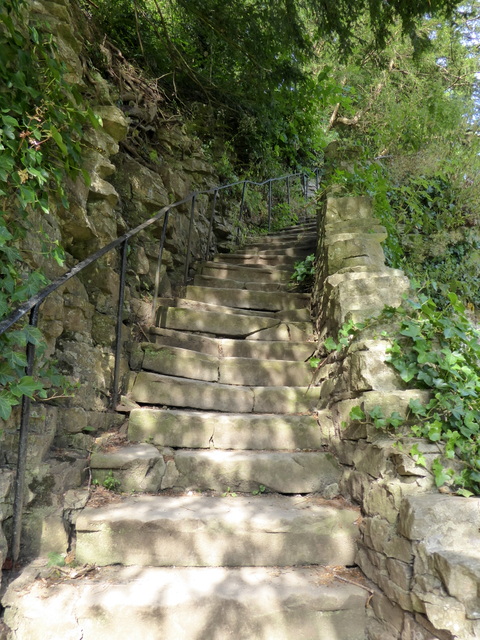
Looking back up the steps we had just come down.
p1010038r-manifold

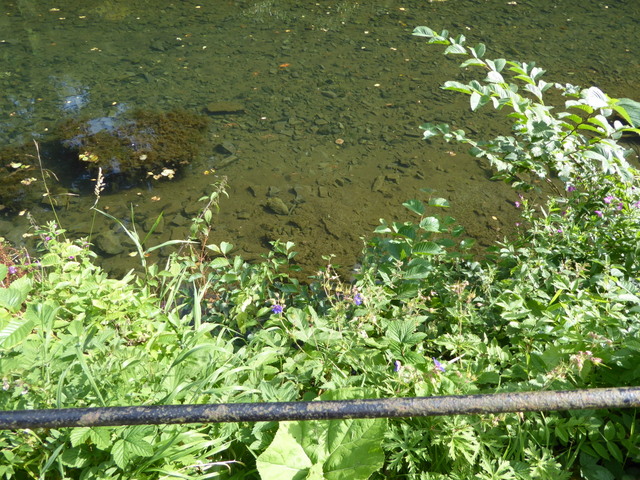
The water in the river is very clear.
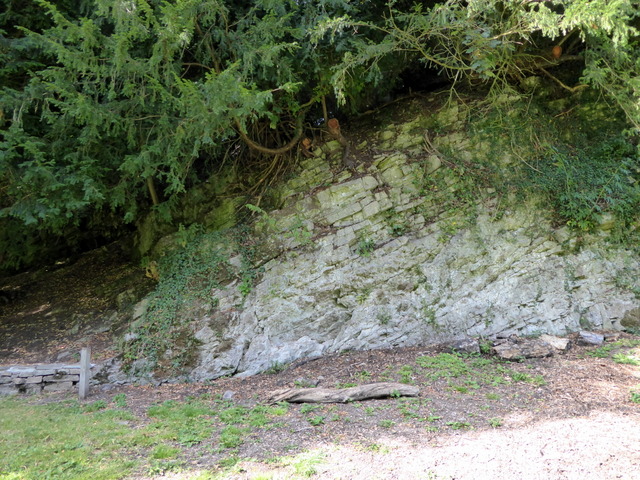
p1010039rock-formation

Interesting rock formations can be seen down by the river.
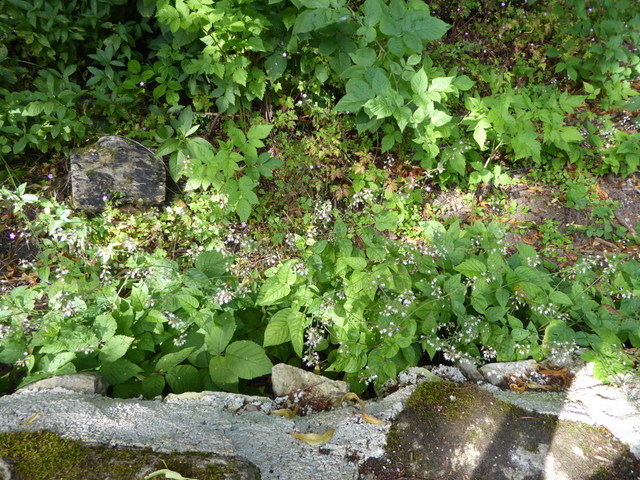
p1010040enchanters-nightshade

A profusion of Enchanter’s-nightshade (Circaea lutetiana)
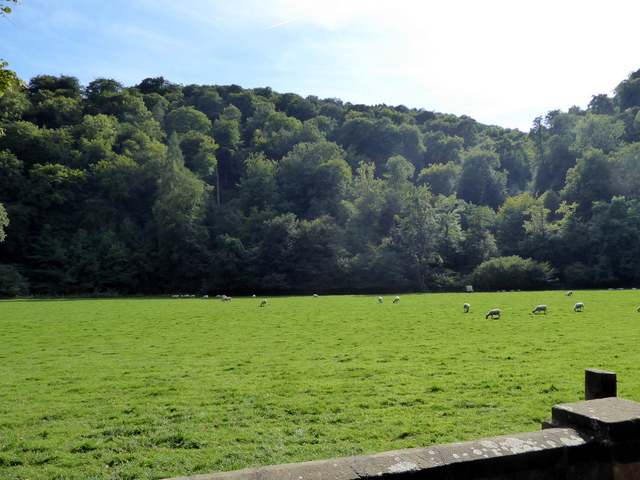
p1010041ilam

The view across water meadows from ‘Paradise Walk’

Paradise Walk is a Lime tree avenue where, in its heyday, the owners of the hall and their guests could walk and talk and admire the parkland.
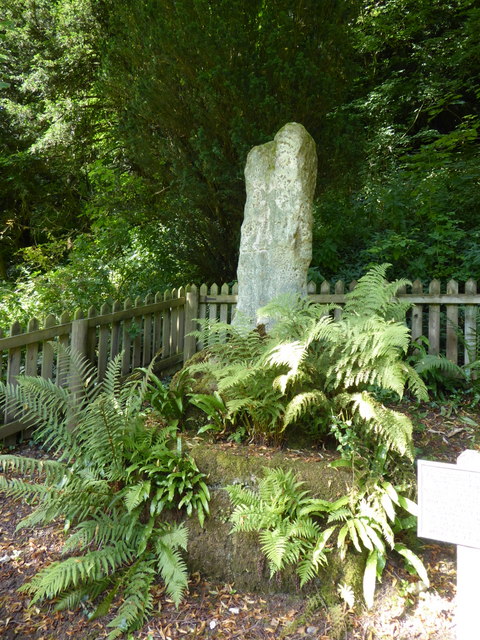
p1010042cross-shaft-ilam

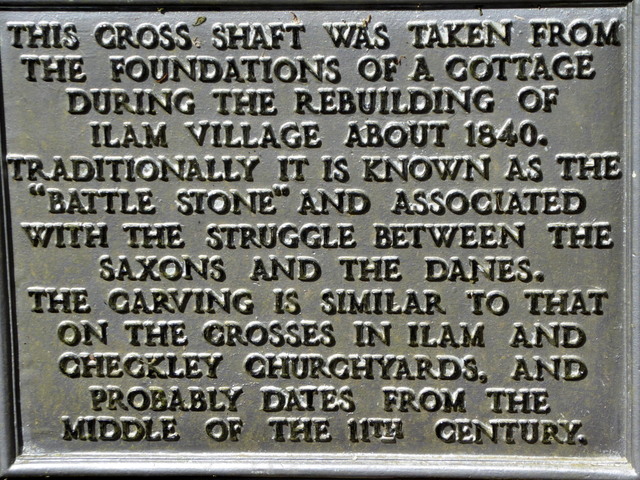
The Battle Stone

p1010043description-of-cross-shaft

The description of the Battle Stone

This cross shaft, known as the ‘Battle Stone’ has been set in a little enclosure at the side of the Paradise Walk.  It is strange to us to find that people in former times were happy to use any material they found to build their houses, even part of a cross!
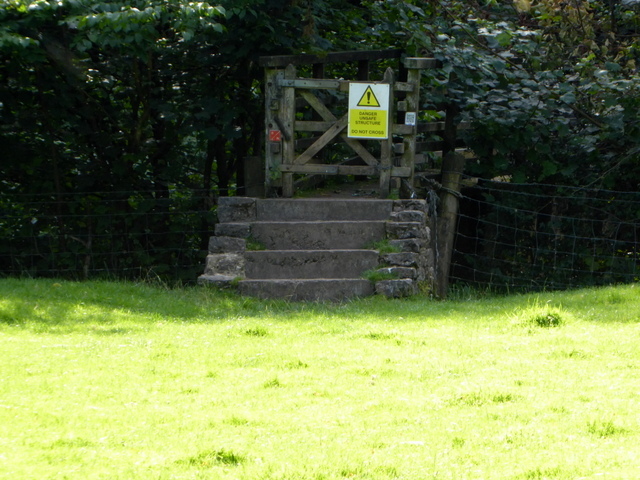
p1010044broken-bridge

We were advised not to use this bridge to cross the river.
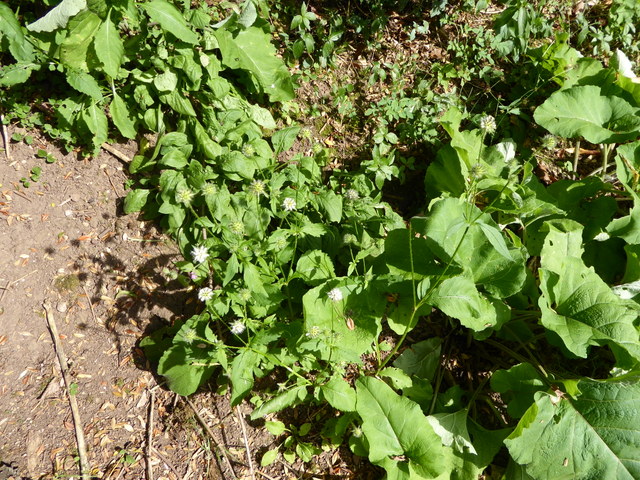
p1010045Small Teasel

Small Teasel (Dipsacus pilosus) growing with Lesser Burdock (Arctium minus)
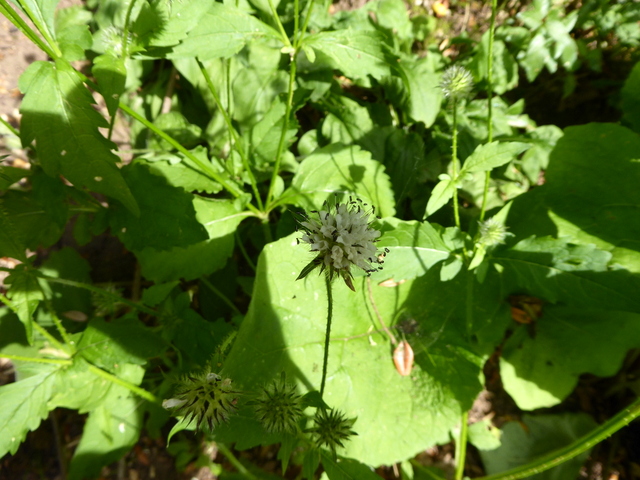
p1010046unknown-plant

Small Teasel

This was the first time I had ever seen this plant and it took me some time to ID it.   My photograph isn’t the best and I wasn’t too sure where to start my search.  The plant is often found on damp, disturbed ground near woodland edges and near streams and rivers.
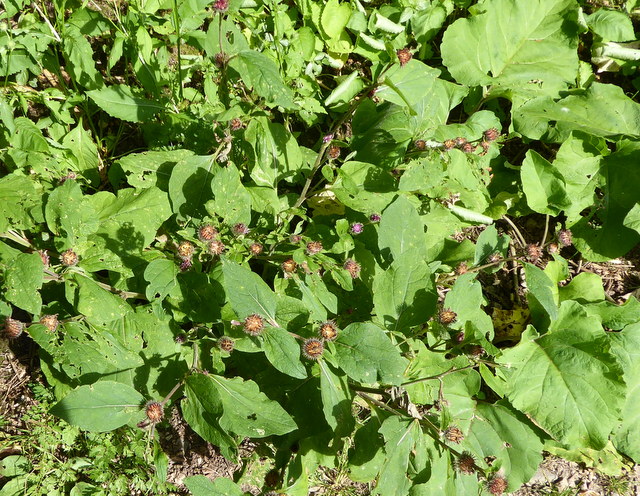
p1010047lesser-burdock

Lesser Burdock

We went over the river at the next bridge and then crossed a meadow the ascent of which gradually got steeper.
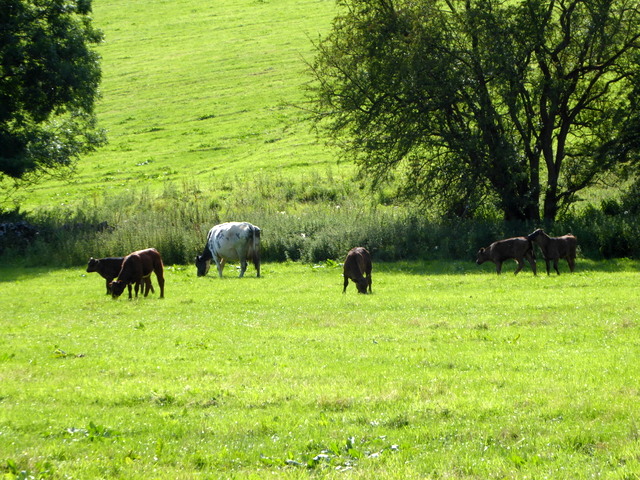
p1010048cows-and-calves

Cow and calves

The calves were a little curious but the cow continued calling to them and they stayed with her.
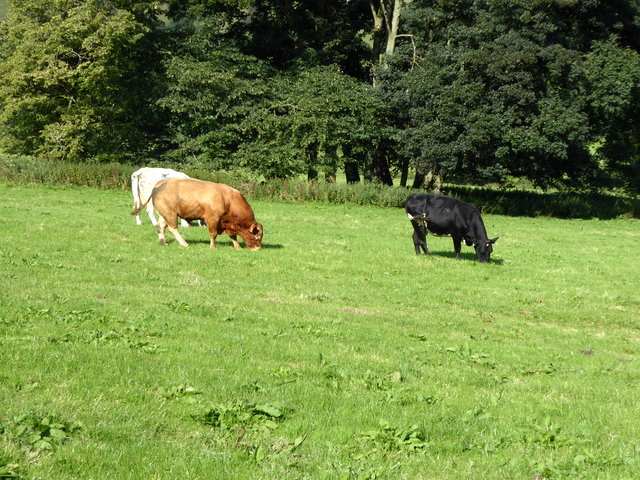
p1010049bull-and-cows

Bull and cows

At the top of the field was a bull and a couple of cows.  Fortunately, they were more interested in eating than in us because we were quite puffed by the time we had got to the top of the field and I don’t think we could have run anywhere!
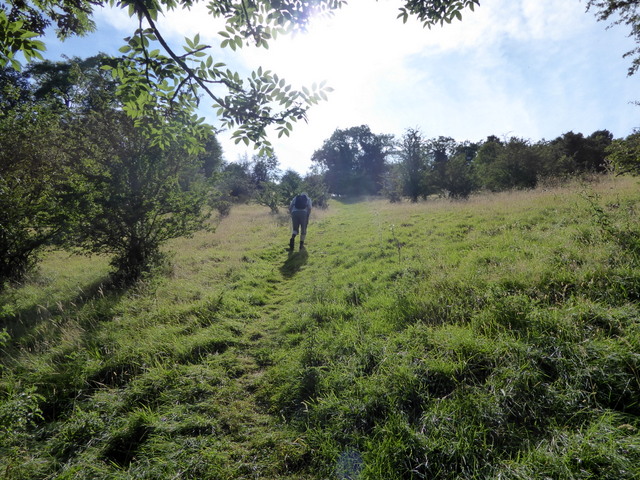
p1010050steep-hill

The next field was even steeper and the grass was dry and shiny.
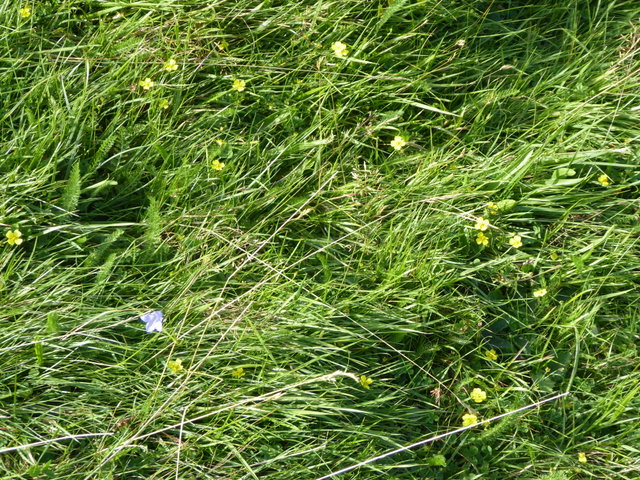
p1010051flowers

There were flowers everywhere! Tormentil (Potentilla erecta) (the yellow flowers) and Harebell (Campanula rotundifolia)
p1010052flowers

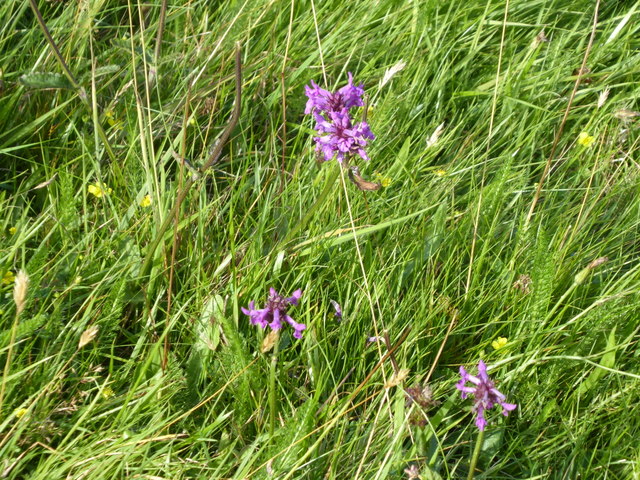
Betony (Stachys officinalis)

p1010053flowers

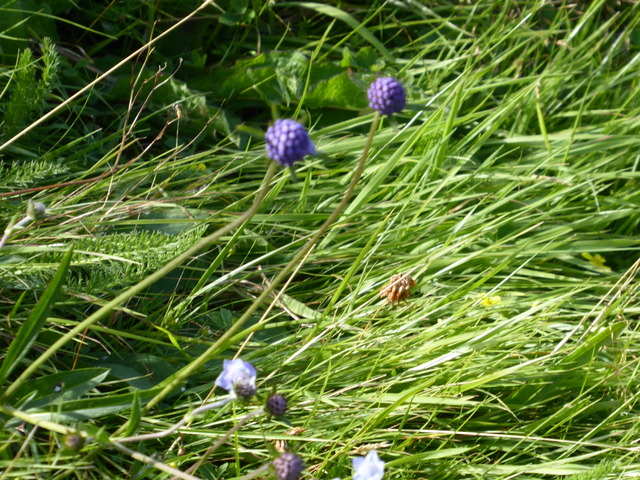
Devil’s-bit Scabious (Succisa pratensis) and Harebells
p1010054flowers

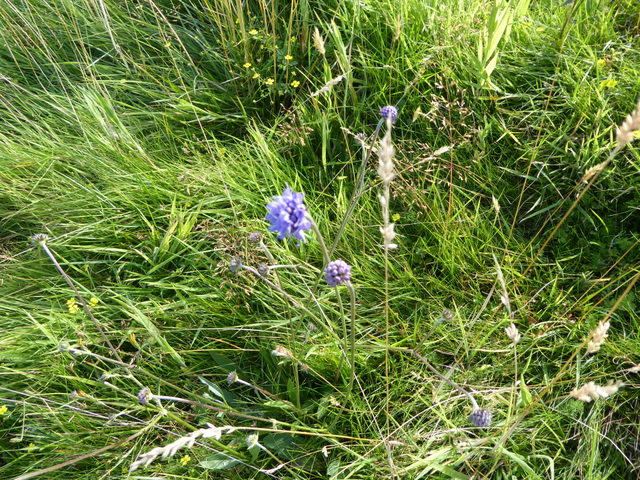
Devil’s-bit Scabious and Tormentil

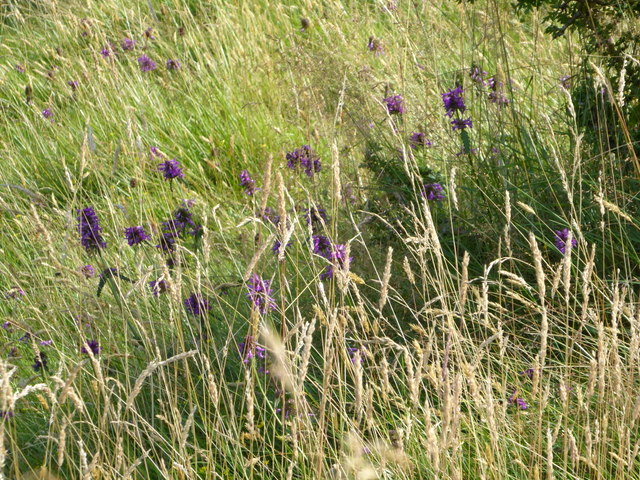
I’m afraid the photos got more out of focus the further up the hill I got.  It was all I could do to keep my footing.
p1010055grasses

Betony and grasses

p1010056grass

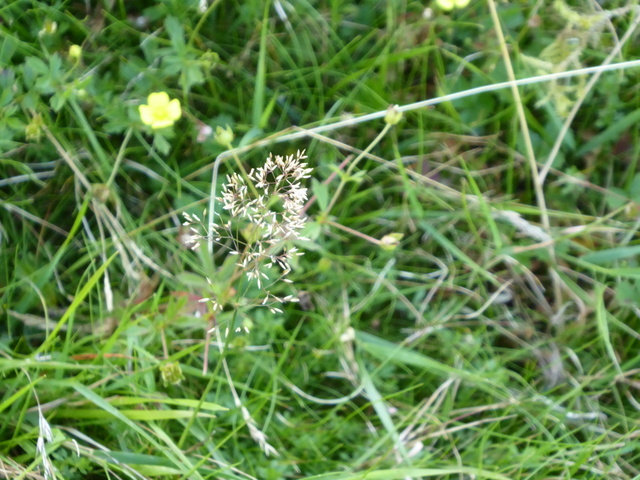
Annual Meadow Grass (Poa annua)

p1010057view

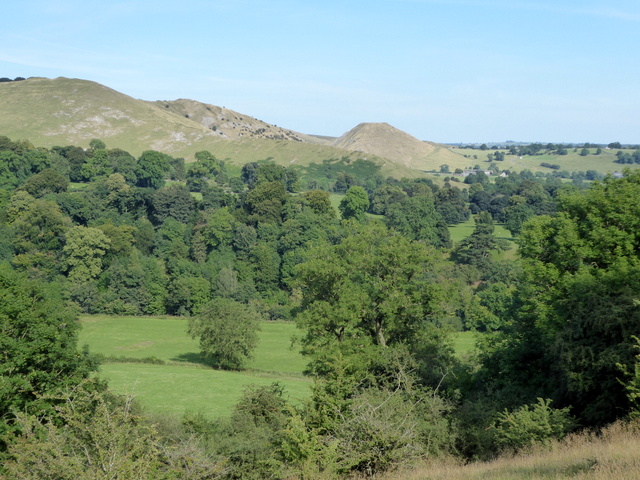
The view from the top of the hill

We were glad to get to the top and catch our breath.  There was still rising ground to cover but the really steep bit was finished with.

p1010058grasses

I think this grass is Sheep’s Fescue (Festuca ovina) It caught my eye because the seedheads were shining in the sunlight.
p1010059eyebright

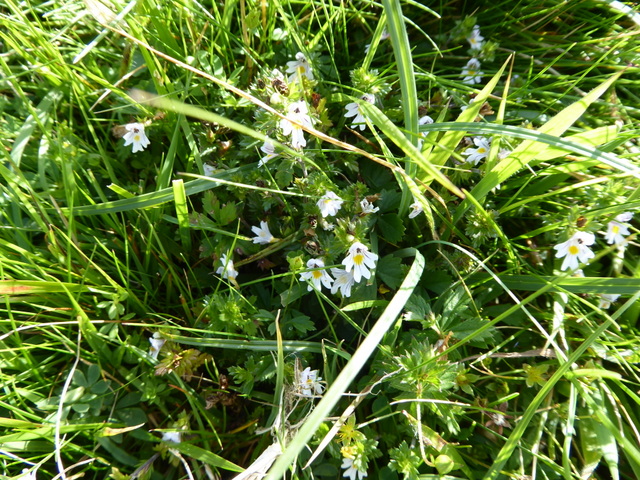
Eyebright (Euphrasia officinalis agg.)

Eyebright is slowly becoming rarer because it is semi-parasitic on the roots of other plants and will only grow in undisturbed grass land.  There is very little undisturbed grassland in this country.
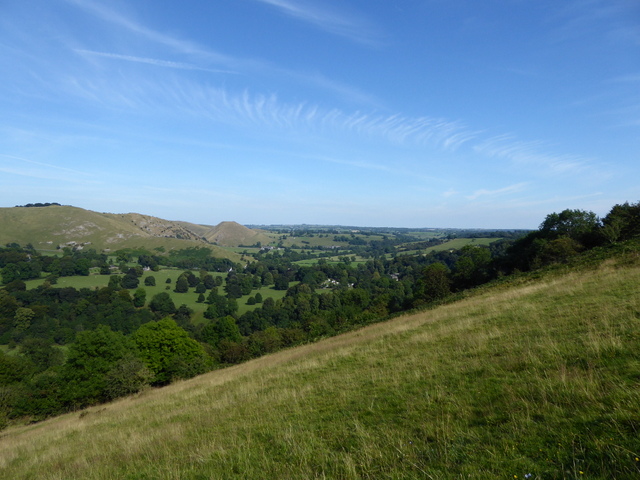
p1010063view

Another shot of the same view but from further up the hill
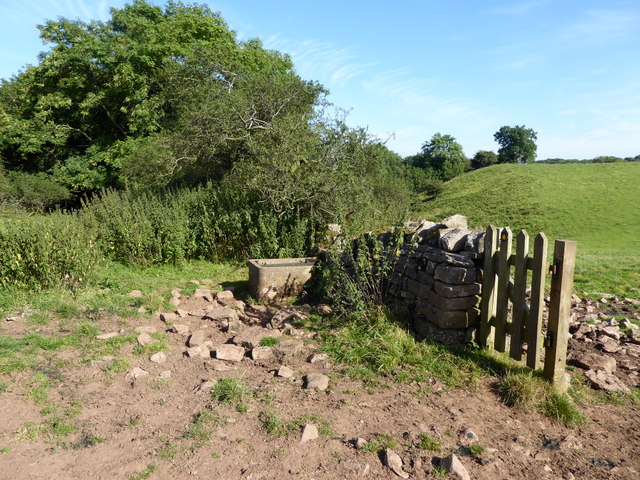
p1010065gate

I love this rather untidy scene

p1010066gate

Through the gateway

Both pictures are typical of cattle-farming country.  The well-trampled area next to the gateway and water-trough which in wet weather is extremely squelchy.  The bank of nettles beyond the trough…
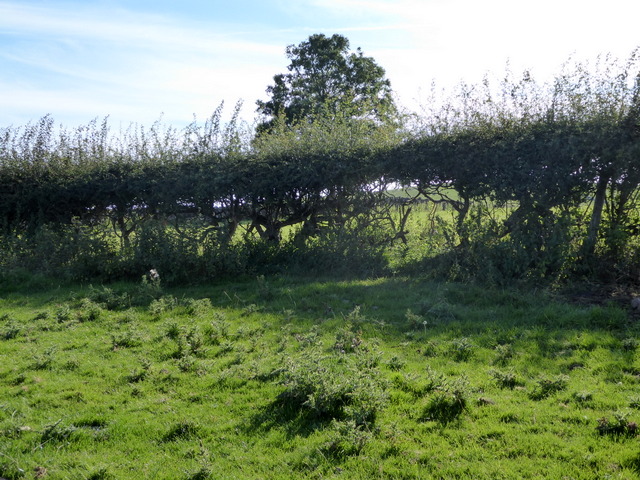
p1010067hedge

A hedge in this part of the world is a rare thing
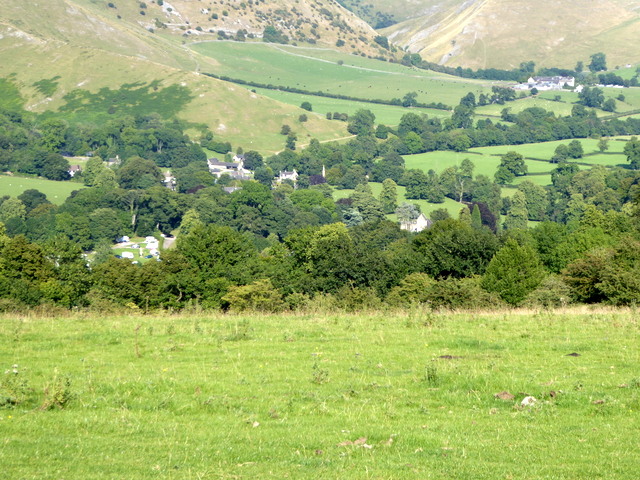
p1010068view

A view of Ilam village below us

p1010069tree

A weathered Hawthorn tree (Crataegus monogyna)
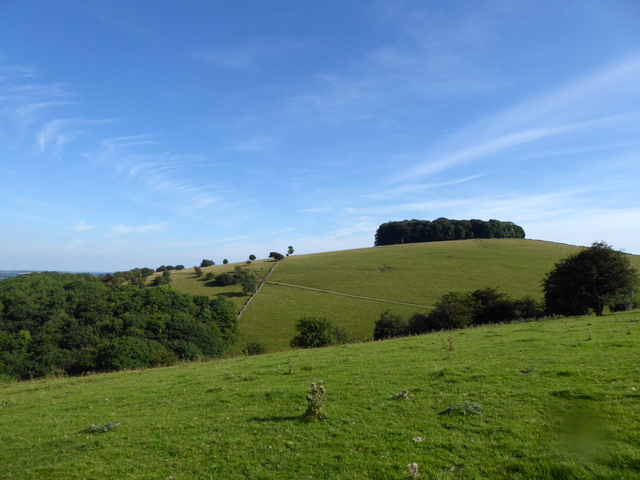
p1010070view

I like the stand of trees on the crest of the next hill
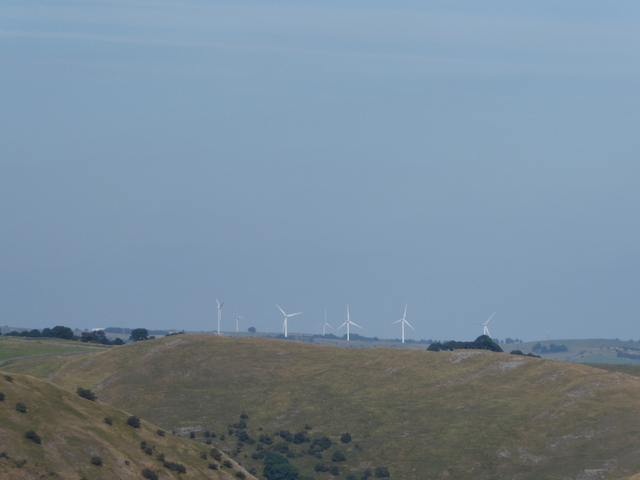
p1010071a-wind-farm

I used the zoom on my camera to photograph a wind farm on the horizon
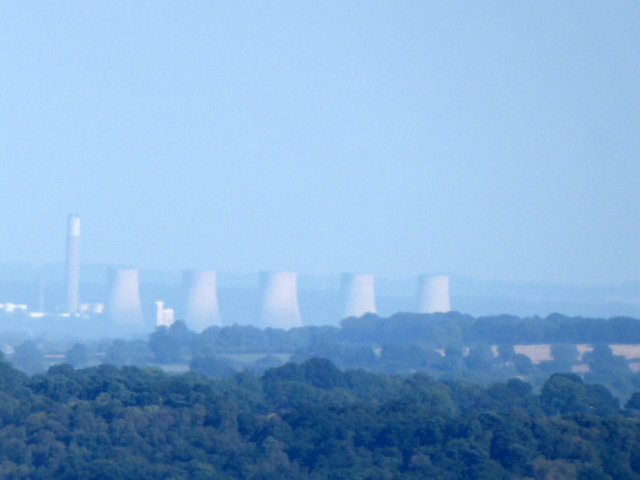
p1010074power-station

A different source of electricity. This may be Willington power station or maybe Rugeley? I know both these places have/had 5 cooling towers and my camera has quite a powerful zoom. I would be interested to know which station this is.

This is the interesting thing about the Peak District.  The whole area has been industrial at some period in its history.  We may be out on the moors and seemingly miles from anywhere but industry or the effects of industry surround us.

We began the descent towards Ilam village.
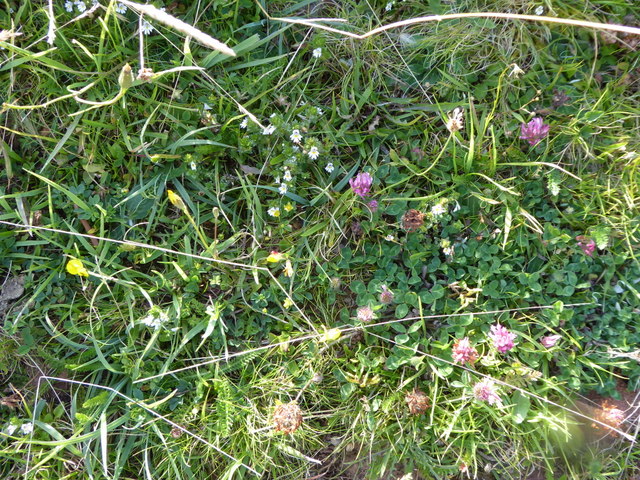
p1010072flowers

Grasses and flowers

This may look like a rather uninteresting patch of grass with a few flowers in it.  However, in this approximately 40cm x 40cm piece of land there are at least three different types of grass and more than six different flowering plants, not all in flower.  True diversity!

p1010075lamb

Having had cows, calves and a bull on this post we had to have a lamb too. Look at those ears! Richard called him/her ‘Wingnut’!
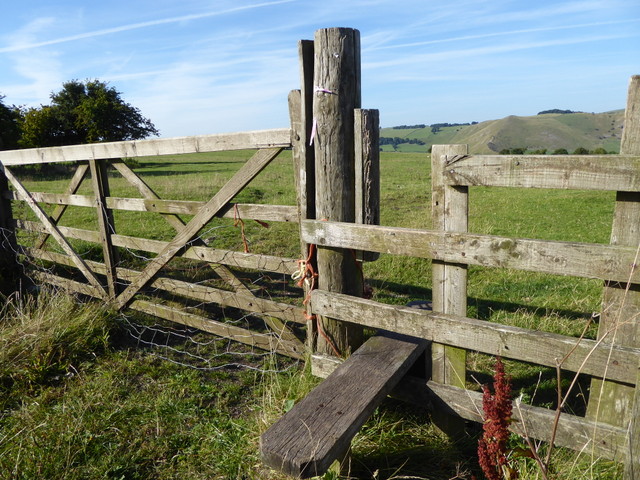
p1010076stile

One of the many stiles we clambered over that afternoon
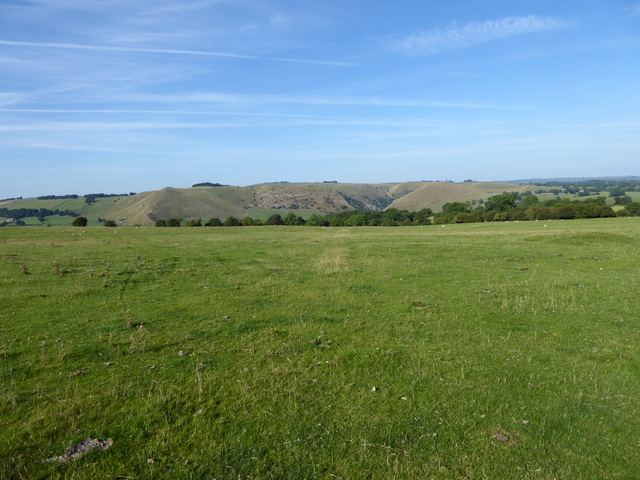
p1010077path

The path across the meadow

The path was much clearer in real life than in my photograph.  An indentation in the soil; the grass growing differently on the path and the light reflecting off it in a different way making it look lighter, sometimes darker than the surrounding grass.  I’m sure it would be more obvious at sunset or sunrise or with a dusting of snow on it.
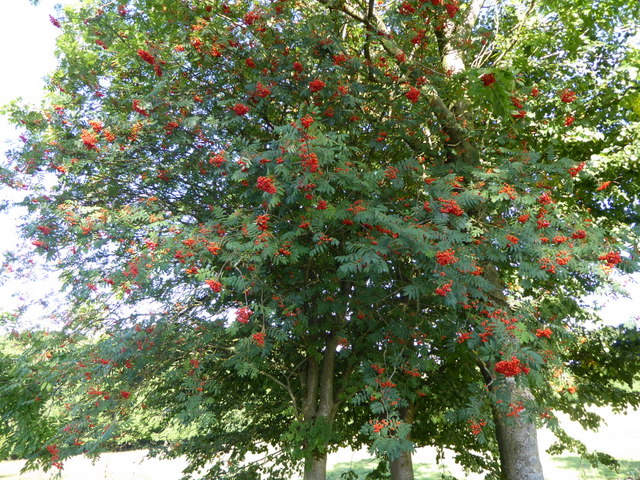
p1010078rowan-tree

A Rowan tree (Sorbus aucuparia)

p1010079stile

Another stile. This time a squash stile’; my favourite (I don’t think!)

We had descended to the valley again and entered Blore Pastures Wood by the stile.
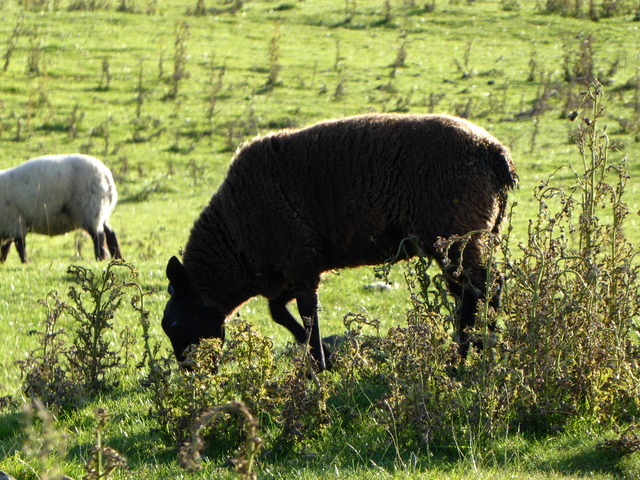
p1010080lamb

A brown lamb in the late afternoon sun
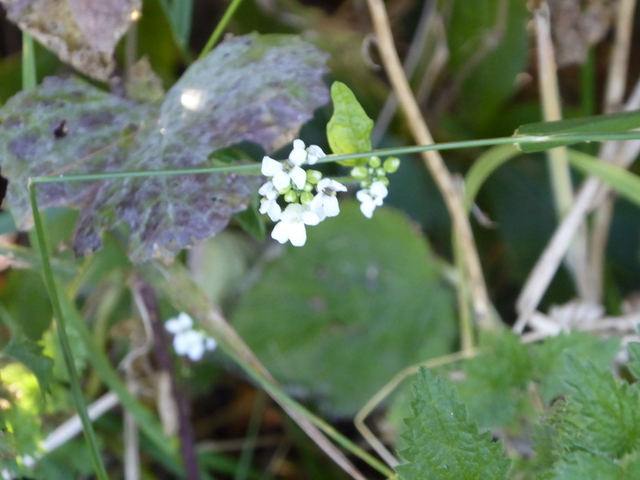
p1010081garlic-mustard

I was surprised to see Jack-by-the-Hedge/Garlic Mustard (Alliaria petiolata) in flower this late in the year
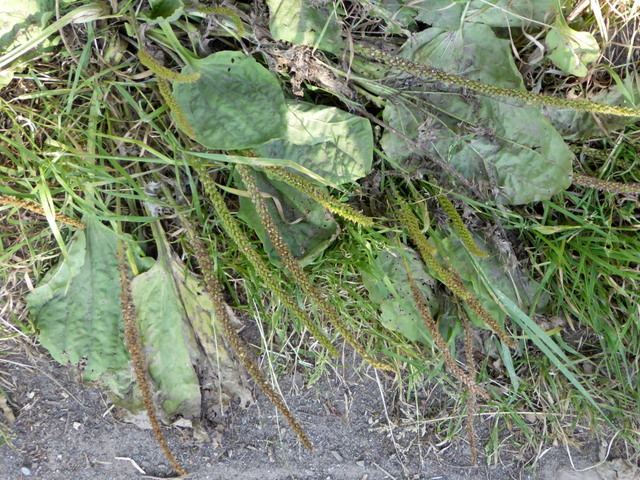
p1010082plantain

Greater Plantain (Plantago major)

We saw this enormous plantain next to the road as we approached Ilam.
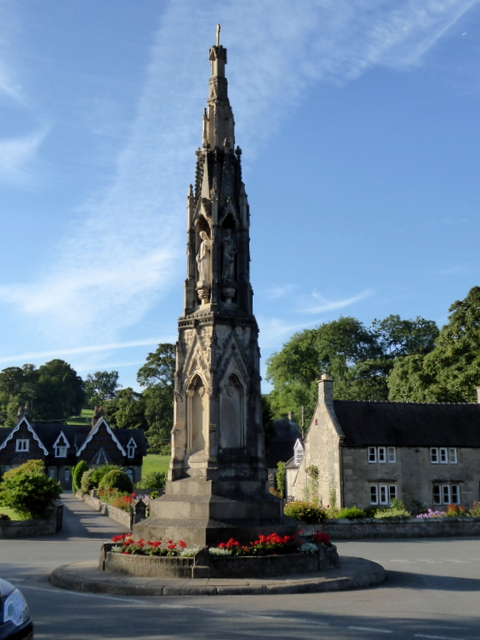
p1010083cross

Ilam Cross, built by Jesse Watts-Russell (who also built Ilam Hall) in memory of his wife.

The cross was badly damaged in a storm some years ago but has recently been completely restored.
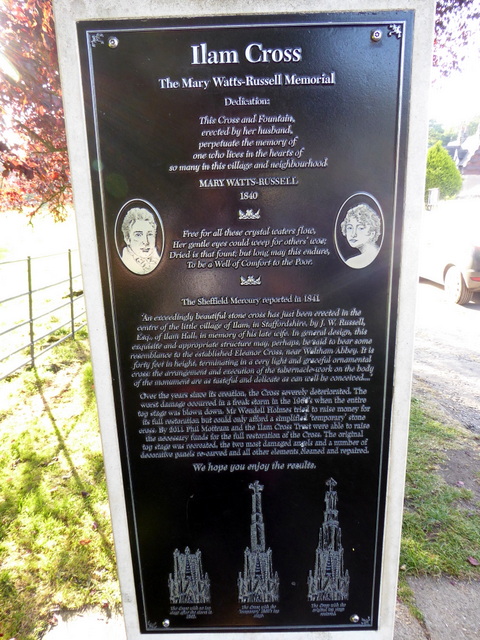
p1010084cross-info

A plaque with all the information about the cross

The village was full of people enjoying the evening sunshine.  I had hoped to photograph the houses and the bridge but there were too many people in the way.
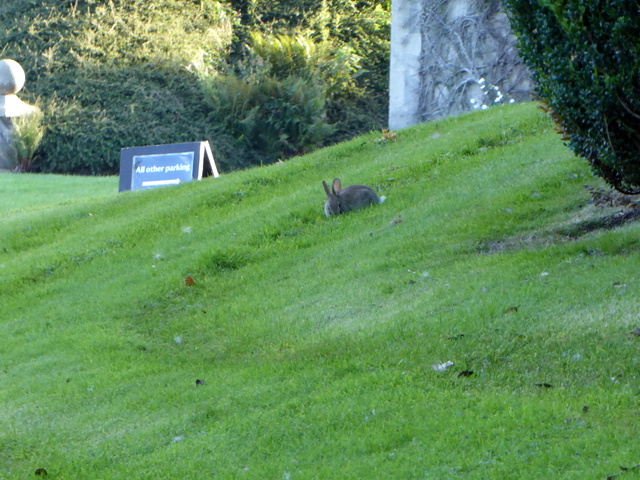
p1010085rabbit

A Rabbit (Oryctolagus cuniculus) seen on our way back to the carpark

A most enjoyable walk in glorious sunshine.

Thanks for visiting!


Share this:

  • Share on X (Opens in new window) X
  • Share on Reddit (Opens in new window) Reddit
  • Share on Pinterest (Opens in new window) Pinterest
  • Share on Facebook (Opens in new window) Facebook
  • Email a link to a friend (Opens in new window) Email
  • Share on Tumblr (Opens in new window) Tumblr
  • Print (Opens in new window) Print
  • Share on Pocket (Opens in new window) Pocket
  • Share on LinkedIn (Opens in new window) LinkedIn
Like Loading...

In My Garden Again

28 Wed Sep 2016

Posted by Clare Pooley in Gardening, Insects, music, plants, Rural Diary, trees, wild animals, wild flowers

≈ 75 Comments

Tags

bird's nest, Brown Hare, Brown Hawker dragonfly, comma butterfly, Common Fleabane, Common Hawthorn berries, cooking apples, Crabapples, Creeping Thistle, Fish-hook Cactus, garden, hogweed, Hornet, Hoverfly, leveret, mole hill, moonrise, pears, speckled wood butterfly, Suffolk, sunset, Sweet Pepper, Water Mint, Zinnia

This is another collection of things I’ve seen in my garden or near my home during the past month.  The weather until a few days ago has been wonderful!  Warm, sometimes very hot, mainly dry and sunny; it has been a lovely late summer.

p1010238fish-hook-cactus

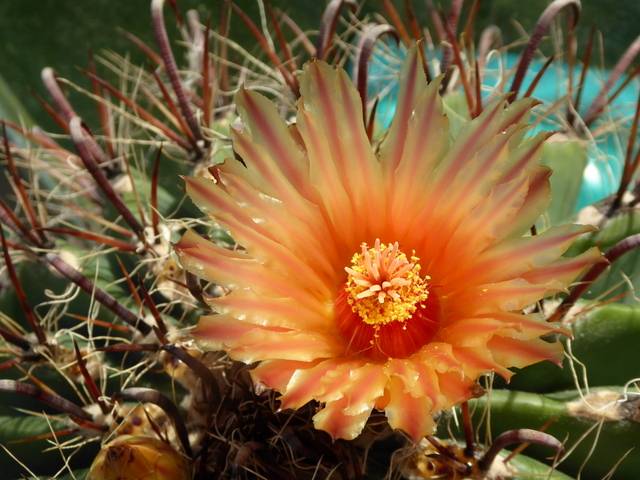
Flower on Richard’s Fish-hook Cactus (Ferocactus wislizeni)

This cactus nearly flowered for the first time two years ago but the warm, sunny weather didn’t last long enough and the buds shrivelled.  Last year was too dull and cool so no buds formed at all.  This year however, one of the three buds opened and stayed open for three days.

p1010239sweet-peppers

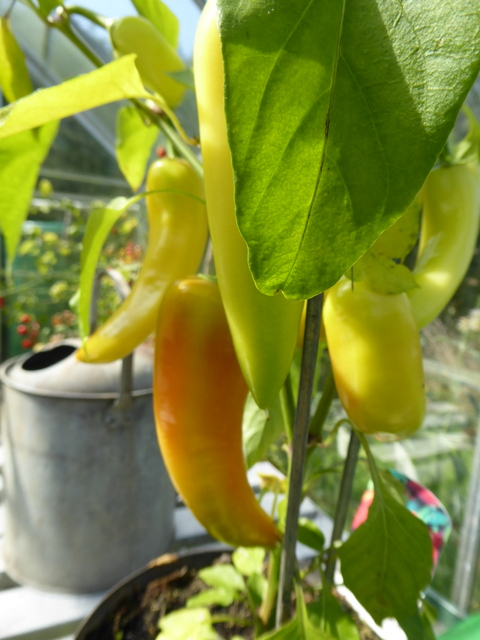
Sweet pepper ‘Sweet Banana’

Richard is growing sweet peppers this year and this is a photo of them when they were just starting to turn red.  Unfortunately, the camera focused on the leaf not the pepper.

p1010240zinnia

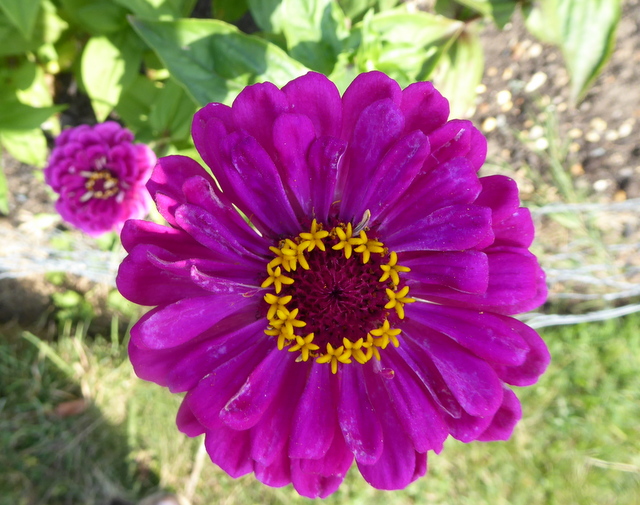
Zinnia flower

p1010241zinnia-001

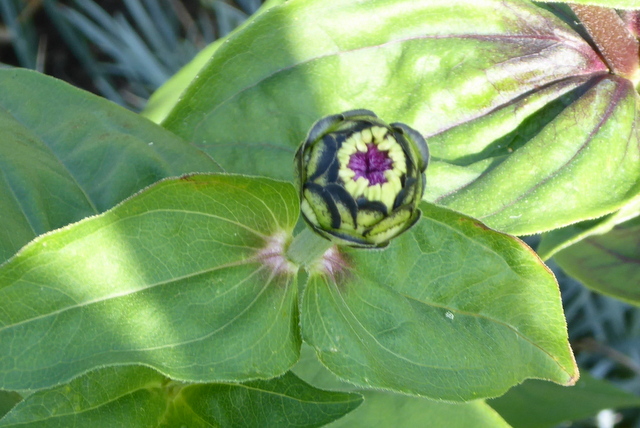
Zinnia flower-bud

Richard bought a tray of Zinnia flowers from the garden centre.  They took their time to get established but eventually they got going and have been so bright and cheerful for the past month.

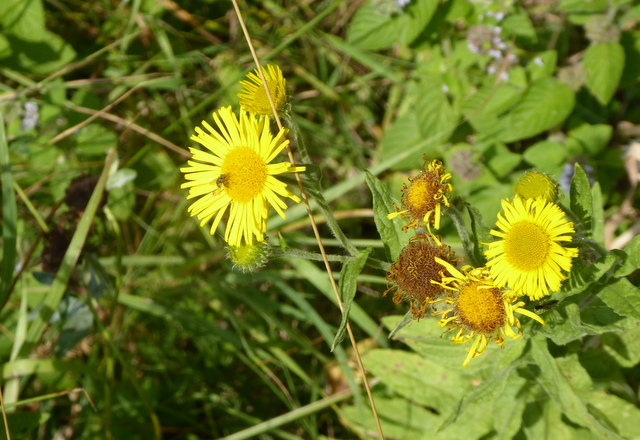
p1010245fleabane

Common Fleabane (Pulicaria dysenteria) has been everywhere I’ve looked this summer but this poor shot is the only photo of it I’ve taken.

For centuries, the leaves of Fleabane were hung in bunches from ceilings or dried and burnt as a fumigant to repel fleas.  Richard Mabey in his ‘Flora Britannica’ says the plant is a relative of the species which supplies the insecticide ‘pyrethrum’.

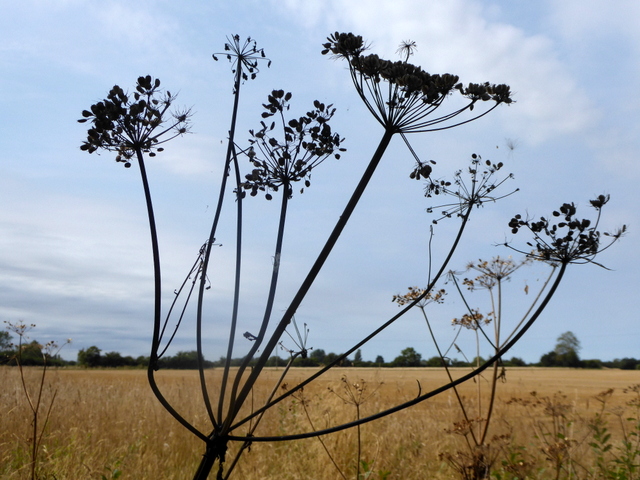
p1010250hogweed

Hogweed (Heracleum sphondylium) seed-heads

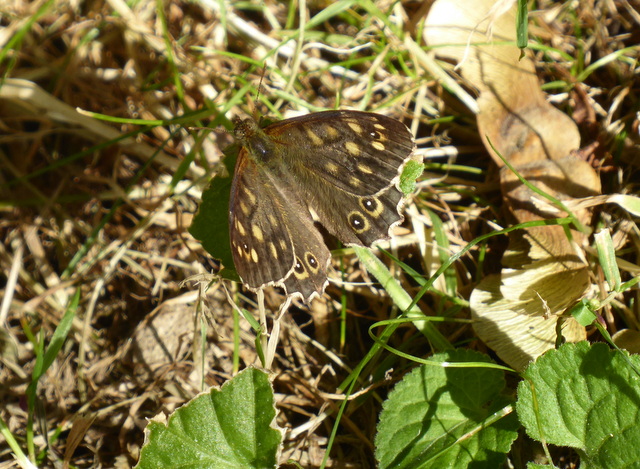
p1010246speckled-wood

Speckled Wood butterfly (Pararge aegeria)

This is a woodland butterfly and its markings make it difficult to spot in dappled shade.

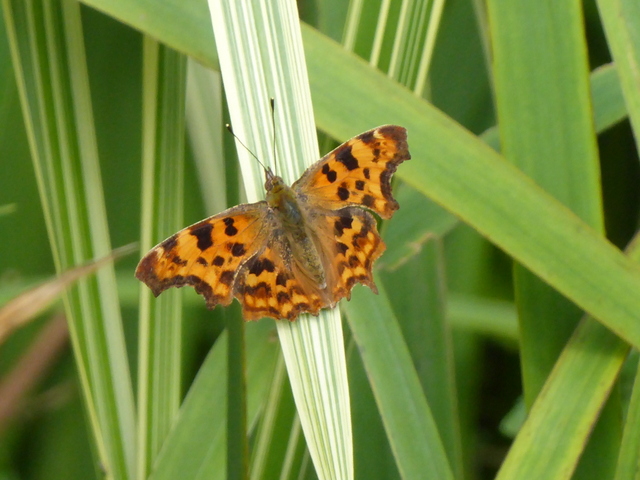
p1010253comma

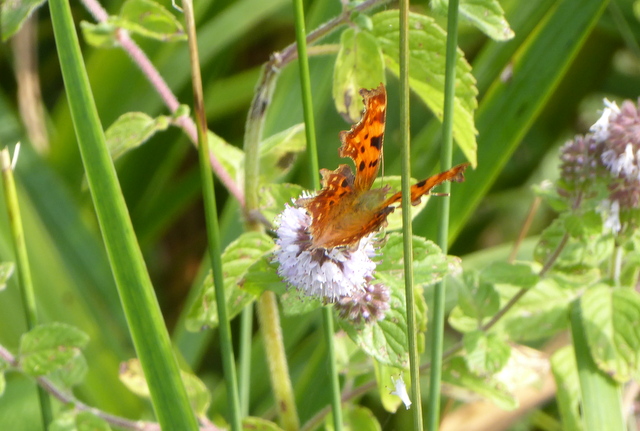
A Comma butterfly (Polygonia c-album) on Water Mint (Mentha aquatica)

p1010248hoverfly-on-creeping-thistle

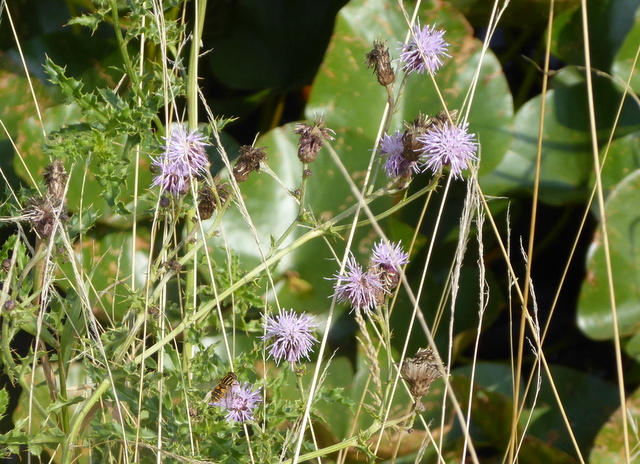
Creeping Thistle (Cirsium arvense) with a Hoverfly (Helophilus pendulus) on the lowest flowerhead

p1010296crabapples

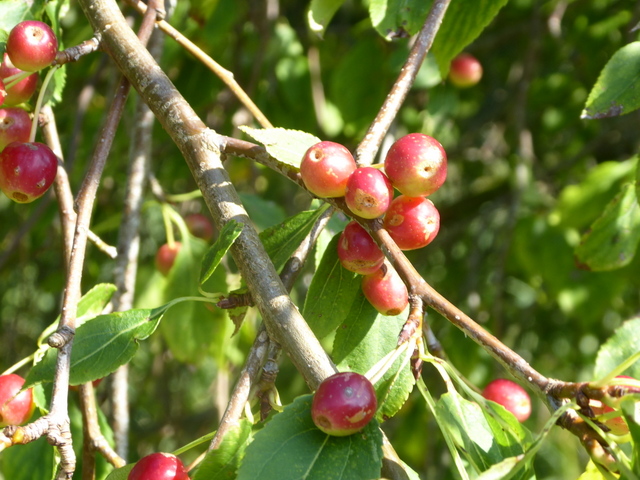
The crabapples on our species crabapple tree look like cherries. Woodpigeons are very fond of them.

p1010298biffin

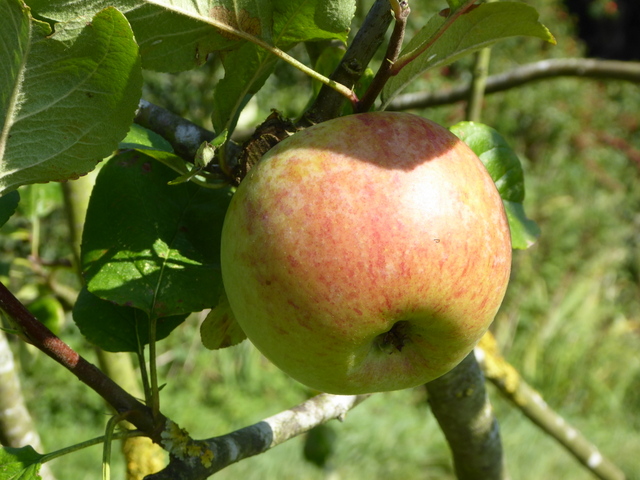
We don’t have many apples this year. This one looks very good – a cooking apple.

p1010301concord

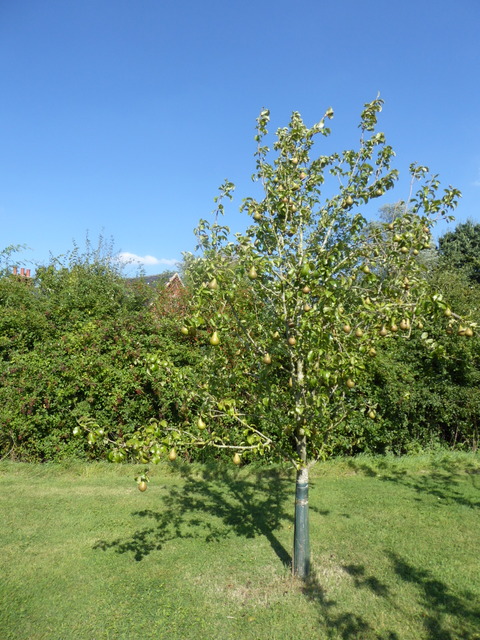
We have what looks like a good crop of pears but sadly many of the fruits are rotting on the tree.

p1010304haws

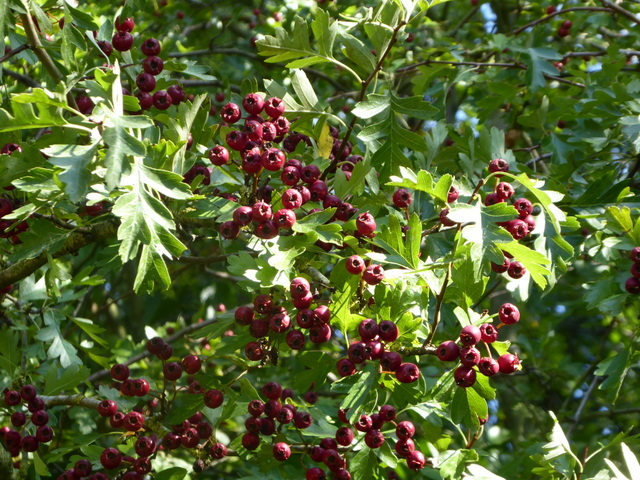
Common Hawthorn berries, known as Haws. (Crataegus monogyna)

The Hawthorns are full of fruit; some people say this means we are to have a hard winter.  I think it means we had good pollination in the spring.

p1010305brown-hawker

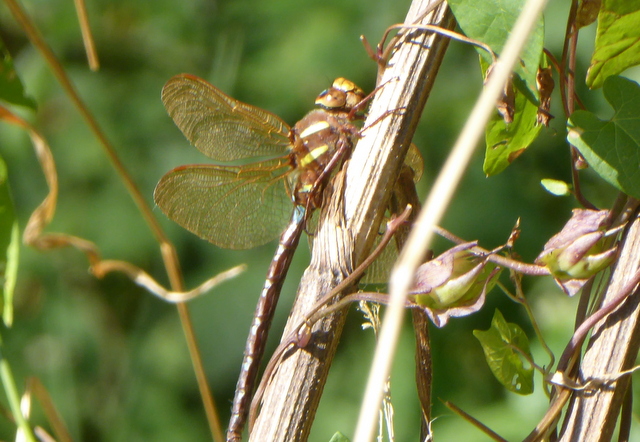
A female Brown Hawker dragonfly (Aeshna grandis)

I took this photo in a hurry as Brown Hawkers are such restless dragonflies and only perch for a few seconds.  I love their amber wings!

p1010324hornet

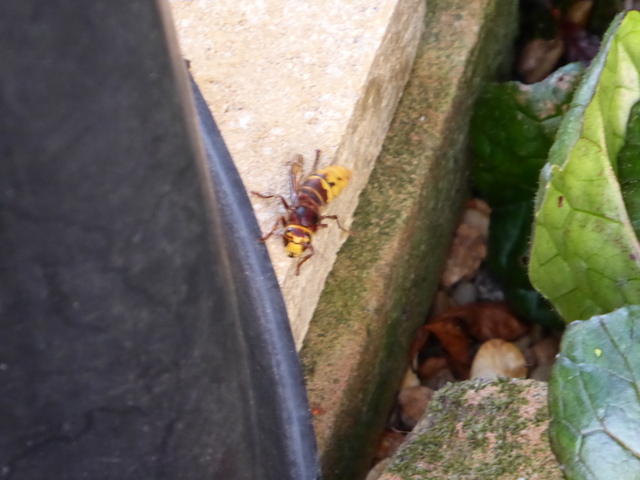
Another poor photo, this time of a Hornet (Vespa crabro)

We have had a Hornets’ nest under the tiles of the garage roof this summer.  They are busy insects and carry on flying until well after sunset, unlike wasps who retire early.  We have also got a wasps’ nest under the house roof tiles near our bedroom window.  I could hear them chewing and munching away through the night when they were first constructing the nest in the early summer.

p1010330mole

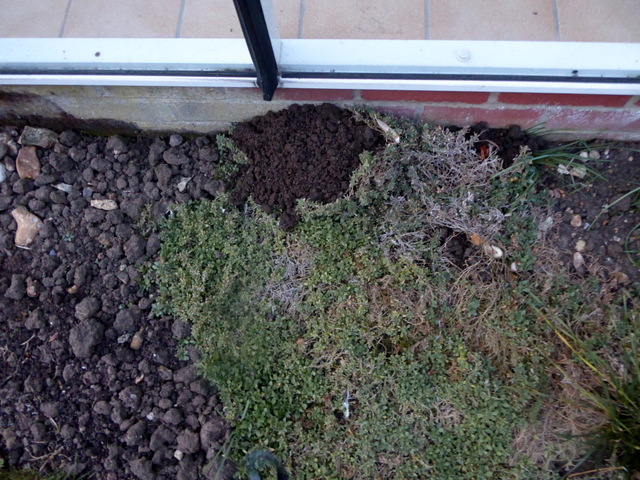
This is a mole hill that appeared in the rather dry border next to the conservatory. The hill got bigger the following day and many spring bulbs were uprooted.

We haven’t had much rain during the past month and the moles are searching for worms.  The worms congregate where there is moisture i.e. in flower-beds (if they are watered) or next to paths or buildings where water runs off into the soil.

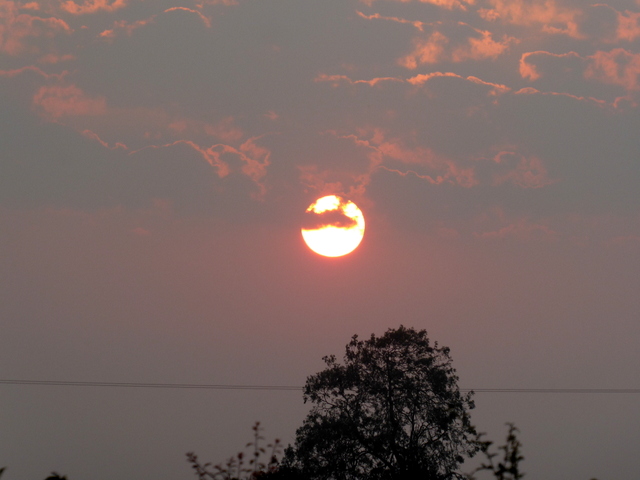
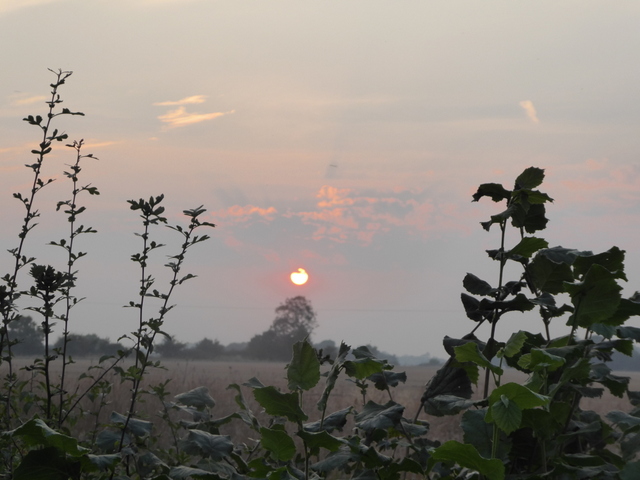
p1010326sunset

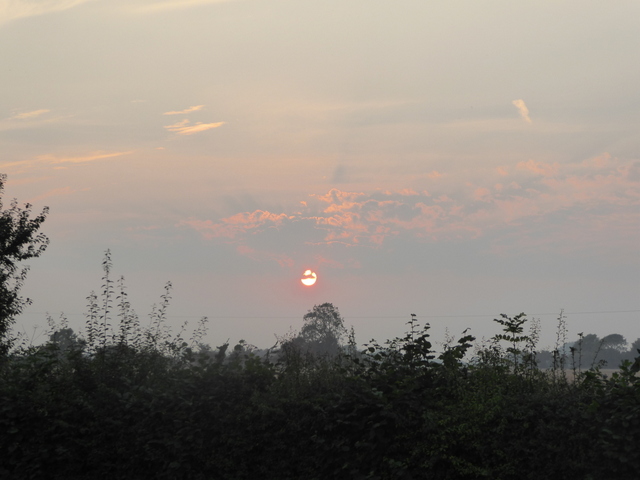
Sunset

p1010327sunset

Sunset

p1010328sunset

Sunset

p1010329sunset

Sunset with mist

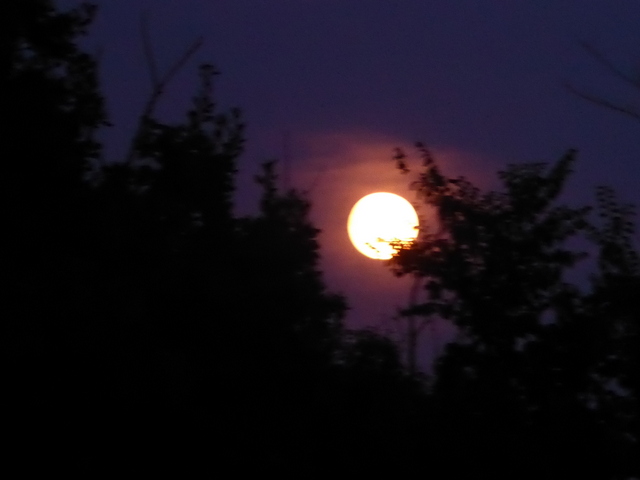
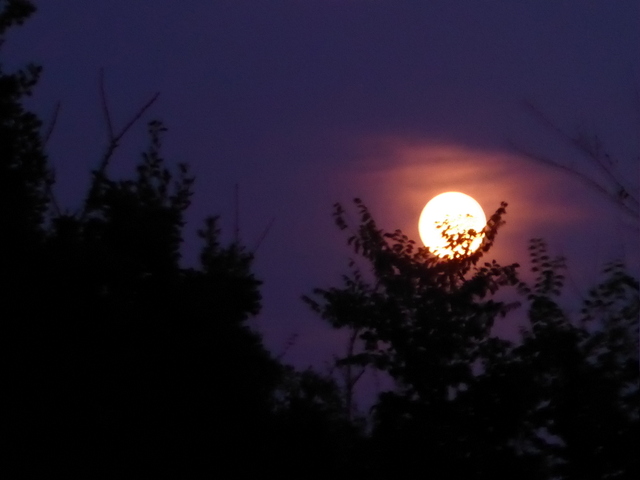
And shortly afterwards on the same evening…..

p1010332moon

Moonrise

p1010333moon

Moonrise

We were pleased to welcome a new visitor to our garden; a Leveret, a young Brown Hare (Lepus europaeus)

This slideshow requires JavaScript.

We first noticed it when it was very close to our kitchen window so you see part of the window frame in my photos!  It then moved a little further away and was easier to photograph.

The best time of day to see hares is early morning or at dusk, as during the day they rest in grass, scrubland or in a ploughed furrow.  They crouch low against the ground with their ears laid flat and are well camouflaged.  If they are disturbed they are capable of running very fast – 35 mph/56kph – and run with their black-topped tail held downwards.  They have large staring eyes, large black-tipped ears and powerful hind legs; they are shy and alert creatures.  They typically live in open country, preferring not to live in direct contact with grazing animals and they are unlikely to be found in hayfields.  They eat a wide selection of grasses and plants of open country as well as crops of cereal, clover, alfalfa, beets and potatoes.  In winter a hare will dig for green plants under the snow and will eat buds and bark from bushes and trees, including fruit trees.  They have suffered in areas of intensive farming and where herbicides are regularly used.  Pesticides contaminate their food and may kill leverets.

In March and April hares can be seen leaping and chasing about which gives rise to the saying ‘mad, March Hares’.   They often stand up on their hind legs and box each other; this may be two males vying for social dominance or, as is now thought more likely, a female (Jill) rebuffing a male (Jack).   Leverets are born in the open with a full coat of fur and with their eyes open.  They are born in litters of about three and the mother moves them immediately to another safe place which makes it more difficult for predators to find them.  Each leveret is placed in a ‘form’ – a depression made in long grass – on its own where it lies low waiting for visits from its mother.  This behaviour is very like that of deer.

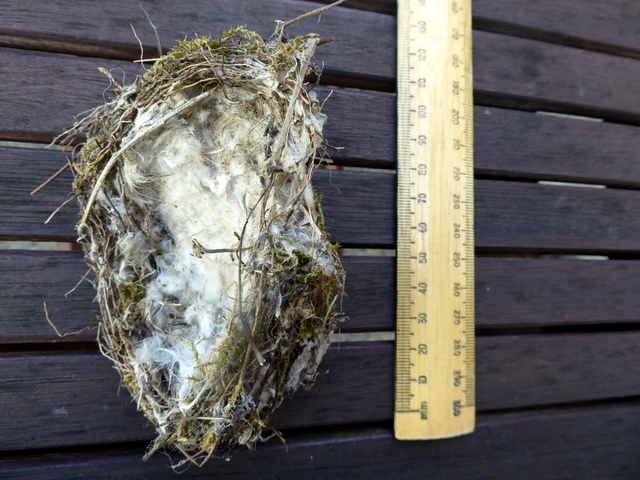
While watering my green beans the other day I noticed some tiny white eggshells lying on the ground and wondered where they could have come from.  Richard looked into the branches of the Laburnum tree above us and saw a tiny nest that I hadn’t been able to see – (I am quite a lot shorter than he is).  It was a windy day and the pieces of shell must have been dislodged by the breeze.  A week later I found the nest on the ground and here is my photograph of it.

p1010346-nest

I do not know what bird built this nest.

As you can see from the photo it is only 11 cm long and about 6 cm wide.  It is made of tiny twigs, grasses, leaves and moss all woven together and is lined with sheep’s wool and white feathers.

And finally, here is my music selection for this post.

Thanks for visiting!
Share this:

  • Share on X (Opens in new window) X
  • Share on Reddit (Opens in new window) Reddit
  • Share on Pinterest (Opens in new window) Pinterest
  • Share on Facebook (Opens in new window) Facebook
  • Email a link to a friend (Opens in new window) Email
  • Share on Tumblr (Opens in new window) Tumblr
  • Print (Opens in new window) Print
  • Share on Pocket (Opens in new window) Pocket
  • Share on LinkedIn (Opens in new window) LinkedIn
Like Loading...

In My Garden

18 Sun Sep 2016

Posted by Clare Pooley in Gardening, Insects, plants, Rural Diary, wild flowers

≈ 62 Comments

Tags

Astrantia, Bittersweet, black bryony, Black Spleenwort, blue-tailed damselfly, butterflies, comma, common blue damselfly, Damselfly, Dragonfly, Essex skipper, Field Bindweed, flowers, fruit tree, garden, gatekeeper, Gladiolus, greengage, hedge bindweed, Hyssop, insects, Jacob's Ladder, Lilium longiflorum, peacock butterfly, perennial sow-thistle, Pheasant Berry, plants, rowan, ruddy darter, runner beans, spleenwort, Stargazer Lily, Suffolk, sunset, Swiss Chard, trees, vegetables, wheat, wild flowers, Woody Nightshade

This post is made up of photos of flowers, insects and other things of interest that I saw in my garden during the last couple of weeks of July and the first fortnight in August.  We spent that time catching up with jobs around the house and doing a lot of gardening as the weather was quite good.

It has not been a good year for insects here; an extremely bad one for butterflies in fact, possibly due to the cool, wet spring and early summer we had.  The flowers and plants had a slow start but once the warm weather arrived in mid July they soon caught up.

P1000970Darter

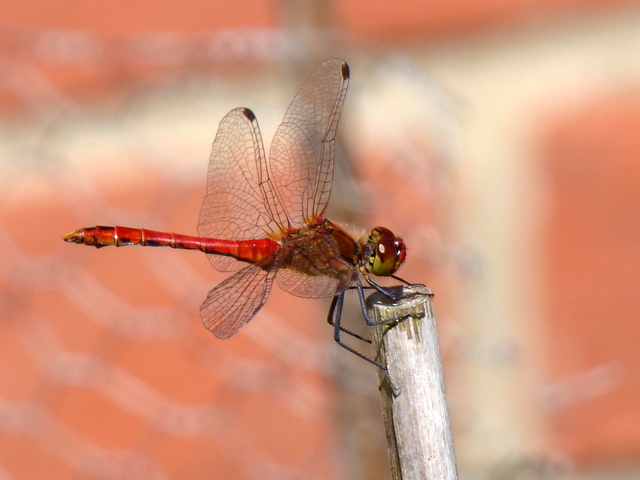
A male Ruddy Darter (Sympetrum sanguineum)

We still had plenty of these small dragonflies in our garden until recently but in July they had just started flying.  They don’t just fly near water but find perches all over the garden from which they ‘dart’ to catch passing prey.  In this photo the dragonfly is on the top of a cane in my flower-border and was happy to let me get very close to him.  Ruddy Darters are the only red dragonflies with totally black legs – they also have a small patch of yellow at the base of the wings.  There are black lines on the upper side of the second- and third-to last segments of the abdomen.  The upper half of the eyes are red-brown and the lower half are green.  The frons (the front of the ‘face’) is red.

P1000974Hyssop

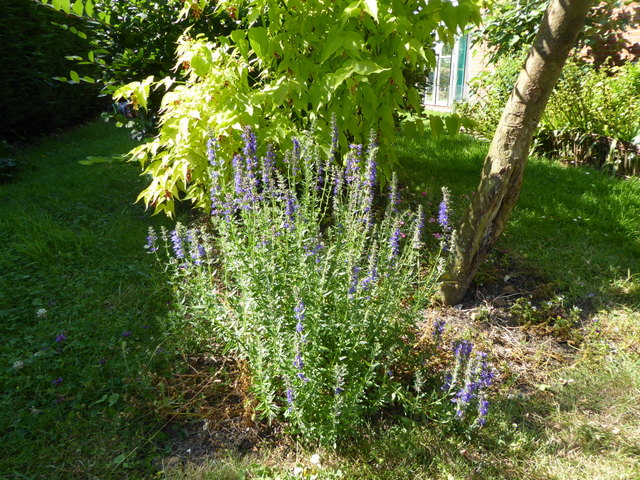
Hyssop (Hyssopus officinalis)

I bought this herb late last summer; it survived the winter very well and has flowered beautifully this year.  It is very popular with the bees and smells good too.

P1000975Swiss Chard

Swiss Chard ‘Bright Lights’ (Beta vulgaris subsp. cicla var. flavescens)

I grew Swiss Chard from seed this year for the first time, mainly because my mother likes it and hasn’t been able to get it for a few of years.  I gave her a few plants and then put some plants into a couple of gaps in my flower-border.  They look beautiful, especially with the sun shining through the colourful stems.  I can’t say the vegetable when eaten has been very popular.  The leaves are like spinach, quickly reducing in size and becoming soft; the stems which I put into the hot water a minute or so before the leaves, have a lovely texture and a very mild taste.  They can be steamed successfully too.  I think it is the mildness that doesn’t appeal – or perhaps the spinach-like leaves.  We love greens in this family and get through large amounts of cabbage, spring-greens, brussels sprouts and broccoli, all of which have fairly powerful flavours.  Perhaps Swiss Chard is too refined for us?

P1000976Skipper

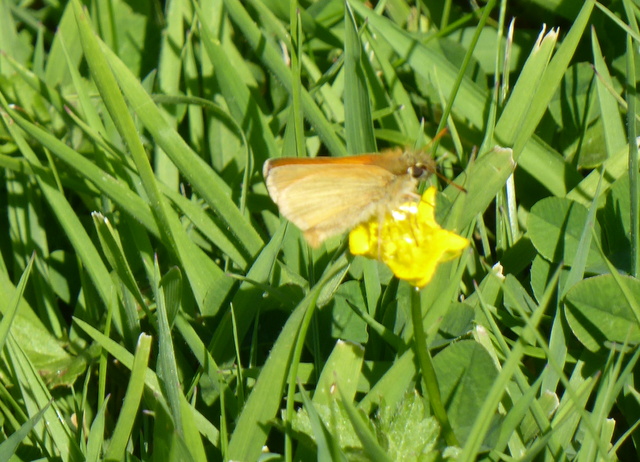
A poor photo of an Essex Skipper butterfly (Thymelicus lineola) sitting on a buttercup flower.

I include this just to prove to myself that we did get a number of skippers in the garden in the summer.  The Essex Skipper is very similar to the Small Skipper but the antennal tip instead of being golden is black underneath, which can just be seen in my photo.

P1000978Greengage

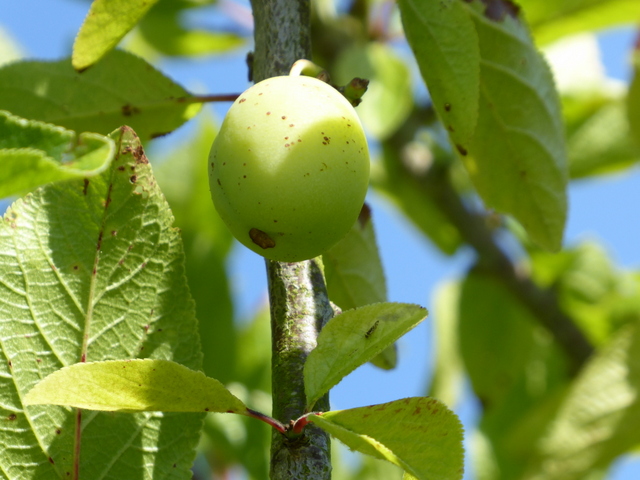
A Greengage (Prunus domestica ssp. italica var. Claudiana)

We bought a young Greengage tree nearly three years ago and this year we got two fruits on it.  We didn’t manage to eat either of them because one or other of our animal, bird or insect visitors got there first.

P1000981Comma

A Comma butterfly (Polygonia c-album)

The name ‘Comma’ refers to a white comma mark on the underside of the wings.

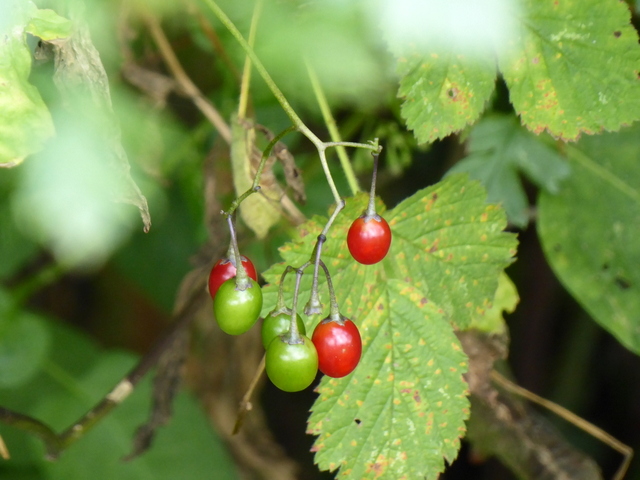
P1000984Woody Nightshade berries

Woody Nightshade/Bittersweet berries (Solanum dulcamara)

This has got everywhere in the garden this year!  I have found it growing in amongst the herbs, up through the Pyracantha and it has taken over the two Cotoneasters that grow next to our gas-tank.  (We are not on mains gas here so have a large butane gas tank near the house).  Bittersweet berries are beautiful and are at their most attractive at this stage when some are still green and they are plump and shiny.

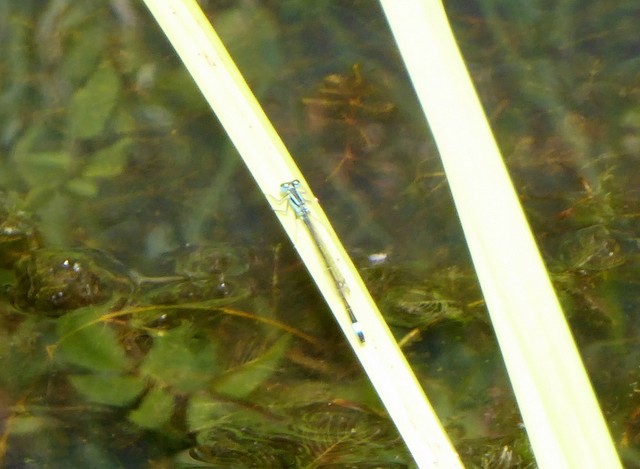
P1000985Blue-tailed Damselfly perhaps

Another poor photograph showing what I believe to be a female Blue-tailed Damselfly (Ischnura elegans)

Another photo that is proof to me that we had these damselflies flying round the pond this summer.

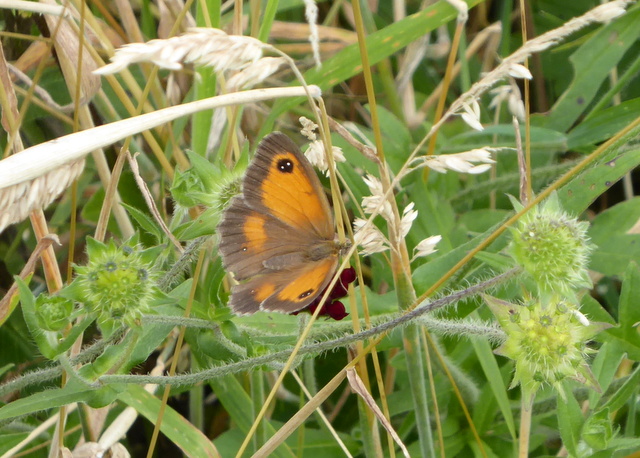
P1000990F Gatekeeper-001

Female Gatekeeper butterfly (Pyronia tithonus)

Male Gatekeepers are territorial and patrol an area of hedgerow often in corners of fields or near gates trying to deter other insects from entering their domains.  The males are smaller and a brighter orange than the females and have a dark patch of scent glands on the fore-wing.

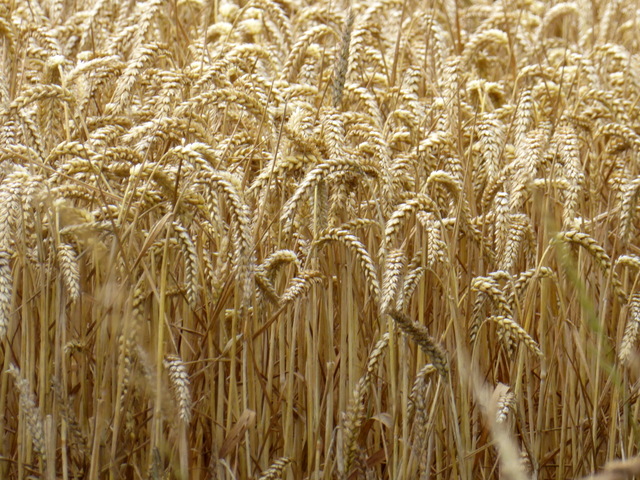
P1000986Ripe wheat

Ripe Wheat (Triticum spp.)

I couldn’t resist taking a photo of the wheat in the field behind our house just before it was harvested this year.

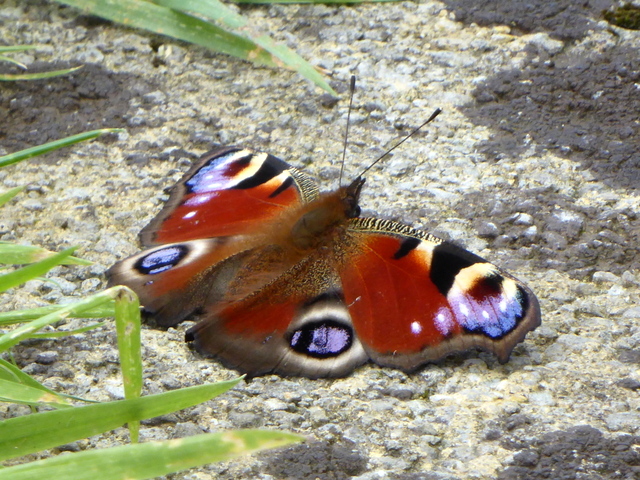
P1000998Peacock butterfly

Peacock butterfly (Inachis io)

This slightly battered Peacock was sunning itself on the path.  They are very hairy-bodied insects and the colours and markings on the wings are beautiful.  I noticed for the first time the lovely tiger-stripe yellow and black ‘shoulders’ on the fore-wing.

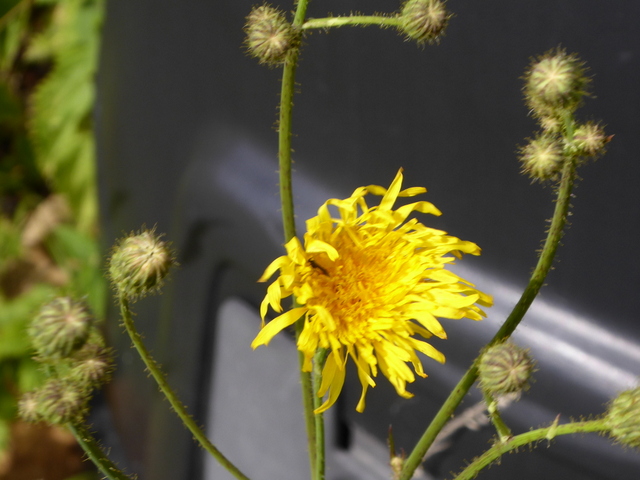
P1010003Perennial Sow-thistle

Perennial Sow-thistle (Sonchus arvensis) This one I discovered growing next to our compost bin.

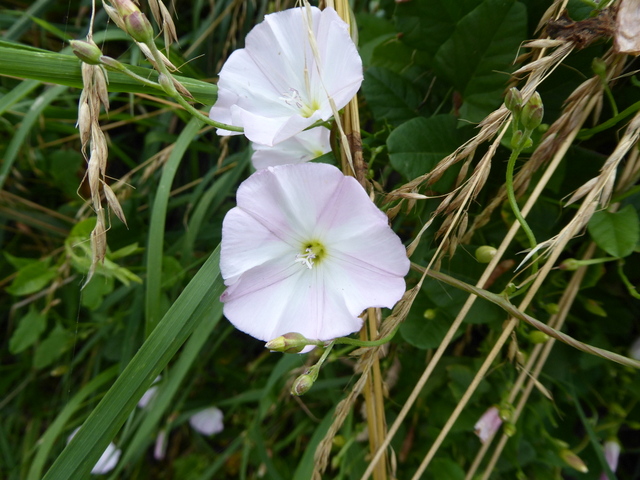
P1010007Field Bindweed

Field Bindweed (Convolvulus arvensis)

The flowers this year are only lightly marked with pink.  They are usually much brighter.

p1010009bumble-bee-hedge-bindweed

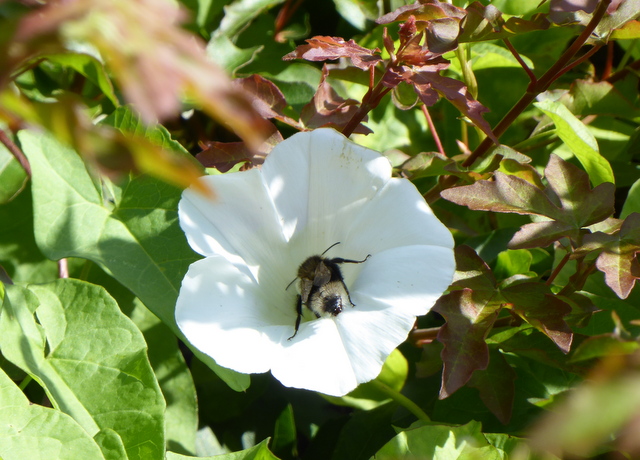
We are lucky (?) to have both Field Bindweed, as in the former photo, and Hedge Bindweed (Calystegia sepium) as here, in our garden. This one was being visited by a bumble bee.

p1010010rowan-berries

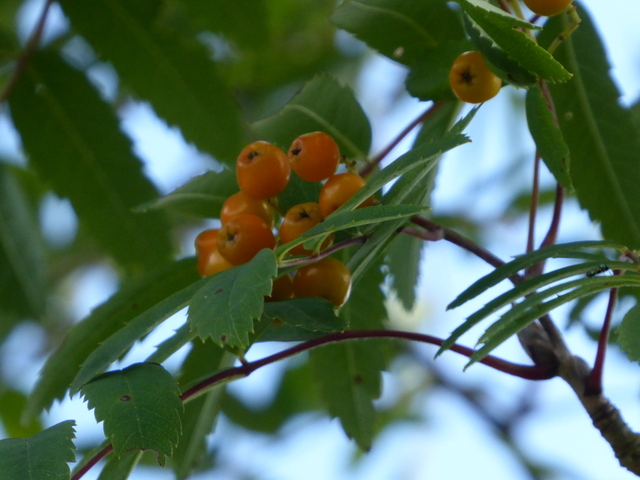
Our young Rowan or Mountain Ash tree (Sorbus aucuparia) had many flowers in the early summer and produced some berries this year. The berries in the photo are not quite ripe yet.  They were eaten by something very quickly once they were red and ripe.

p1010011pheasantberry-flowers

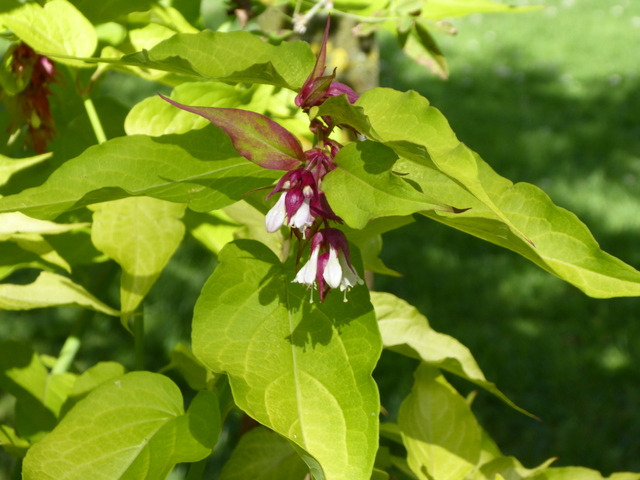
Pheasant Berry (Leycesteria formosa)

I have a pale-leaved Pheasant Berry bush and it has done very well this year, having had enough rain-water at the beginning of the season.  The birds usually enjoy the berries but I’m not sure if the wasps will have left them any!

p1010012lily

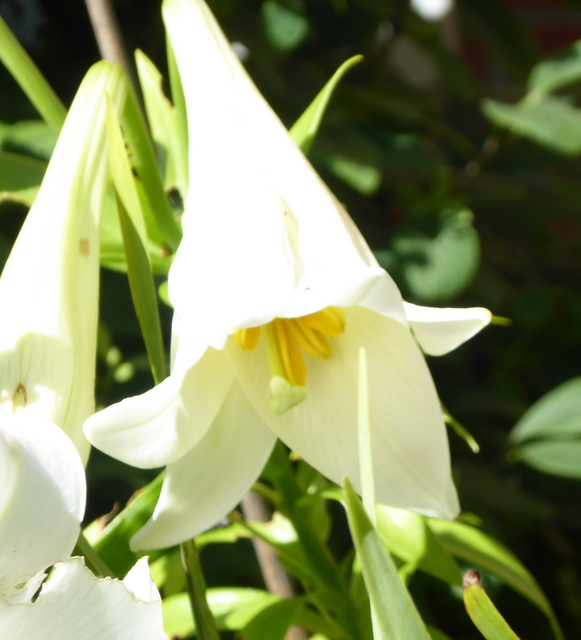
Lilium longiflorum

The white Longiflorum lilies did a little better this year.  I still had some trouble with non-native Red Lily Beetles but the cool wet June meant the flowers were taller and stronger and the beetles didn’t appear until later in the season when the weather improved.  I was as vigilant as I could be, going out checking for beetles at least twice a day and squashing them when I found them.  Unfortunately, nothing could be done while I was away from home so when I returned I soon discovered the horrible grubs eating the plants.  I removed as many as I could and discovered that spraying them regularly with soap was very effective.

p1010014runner-beans

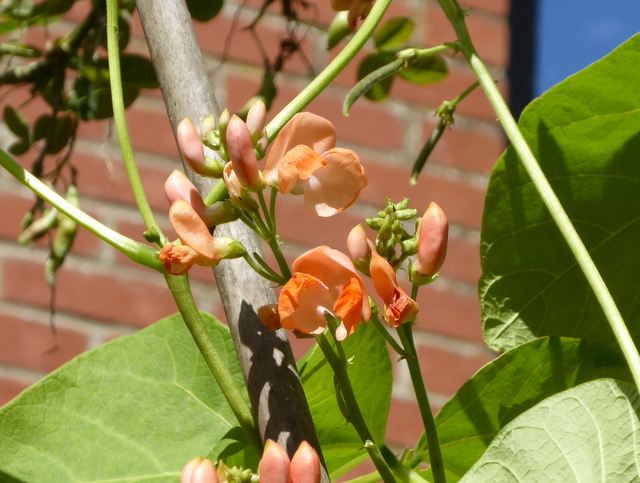
Runner Beans (Phaseolus coccineus) ‘Celebration’

I grew runner beans this year and gave my mother six plants and planted the rest in a gap in my flower border.  They grew up through a laburnum tree and did quite well.  I started them fairly late so they didn’t begin flowering til after mid-summer but the beans develop very quickly and these ones are so sweet and hardly have any ‘strings’.   I love the orange flowers.

p1010015runner-beans-and-jacobs-ladder

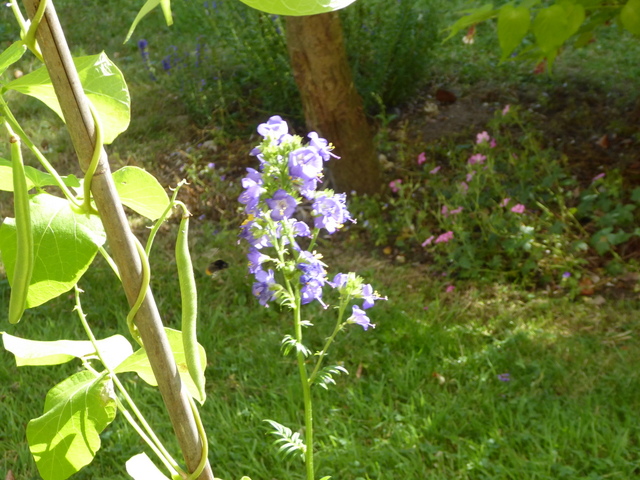
The beans with a Jacob’s Ladder (Polemonium caeruleum) flower-spike and a bumble bee flying towards the Jacob’s Ladder.

p1010016

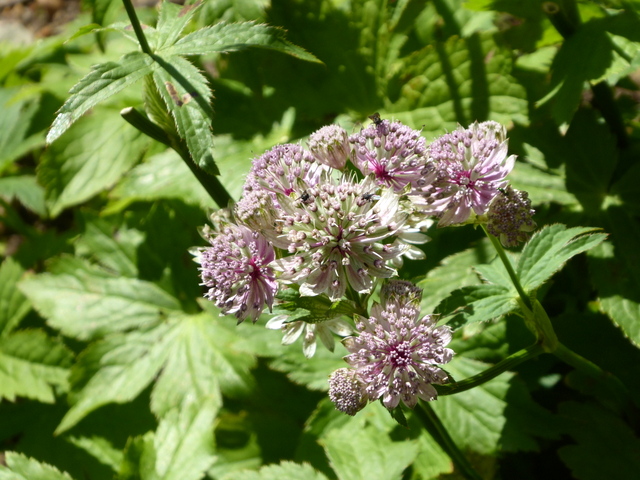
The Astrantia, also known as Masterwort, has done well this year.

p1010018common-blue-damselfly

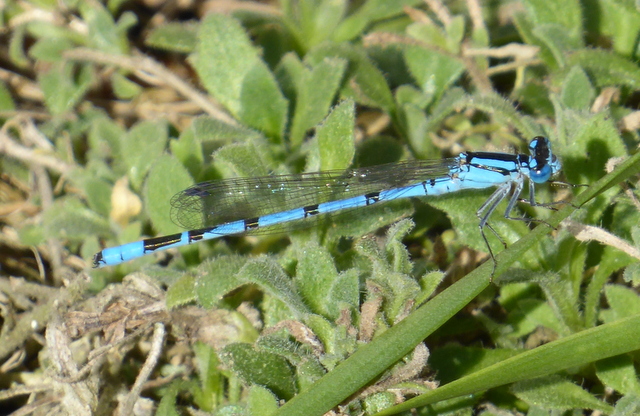
A male Common Blue Damselfly (Enallagma cyathigerum)

p1010028lilies

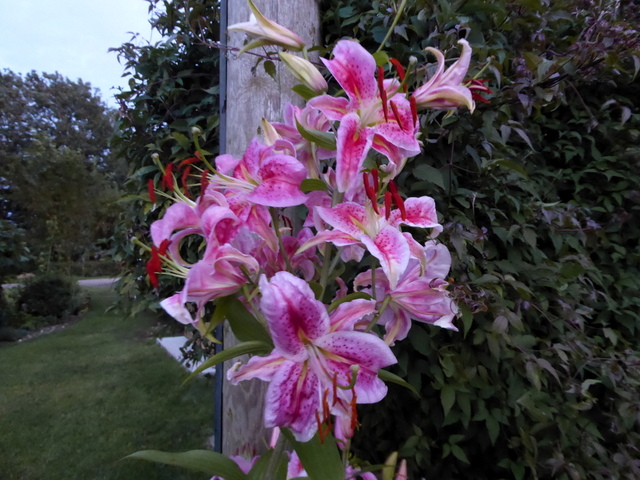
This photo of my lilies (Lilium ‘Stargazer’) was taken well after sunset and without a flash.

I wanted to see if there was enough ambient light to take a successful photo of these luminous lilies.

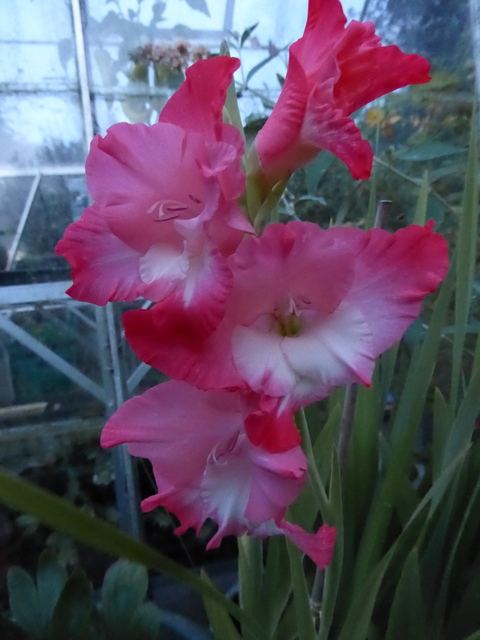
p1010030gladiolus

I then took this photo of a Gladiolus next to the greenhouse

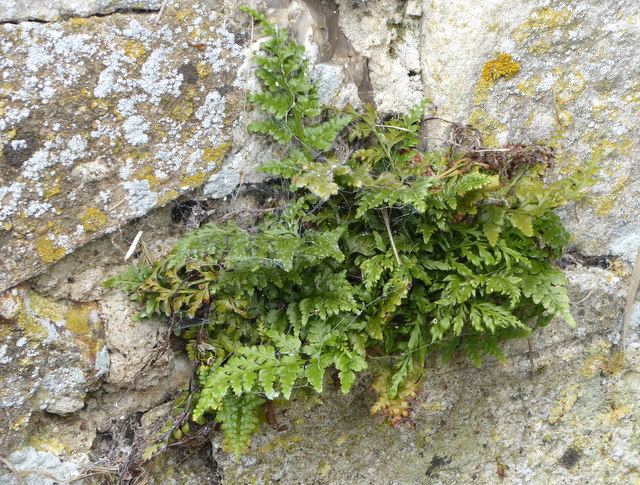
p1010021black-spleenwort

On a church cleaning visit to our church at Rumburgh I noticed this Black Spleenwort (Asplenium adiantum-nigra) growing on the wall.

This plant is mainly found in the west of the country so I was surprised to see it here, almost as far east as one can get.  It loves alkaline soil and here it is growing in the mortar.  A month later and it had gone – removed I presume, in case it caused yet more damage to our poor crumbling church building.

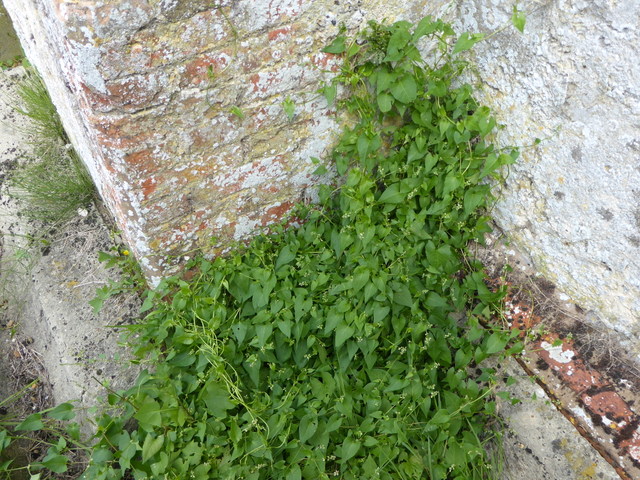
p1010022black-bryony

Just below the spleenwort was this patch of Black Bryony (Tamus communis)

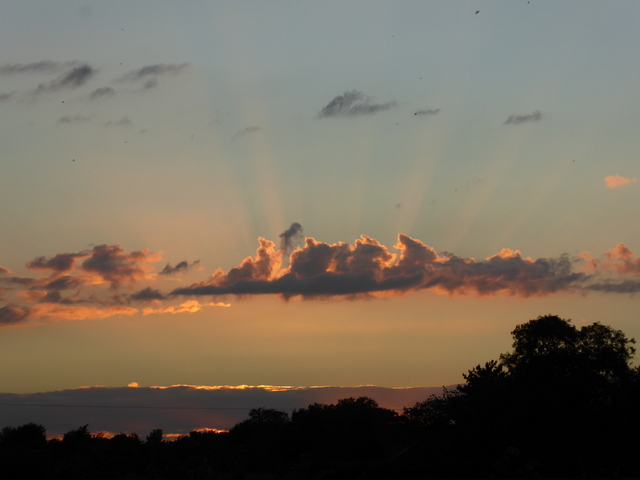
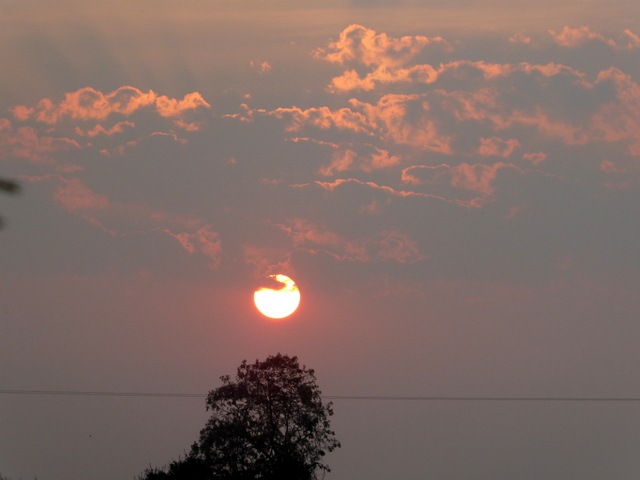
A sunset seen from the back of the house.

p1010020sunset

My music selection today is ‘The Arrival of the Queen of Sheba’ by Handel.

Thanks for visiting!
Share this:

  • Share on X (Opens in new window) X
  • Share on Reddit (Opens in new window) Reddit
  • Share on Pinterest (Opens in new window) Pinterest
  • Share on Facebook (Opens in new window) Facebook
  • Email a link to a friend (Opens in new window) Email
  • Share on Tumblr (Opens in new window) Tumblr
  • Print (Opens in new window) Print
  • Share on Pocket (Opens in new window) Pocket
  • Share on LinkedIn (Opens in new window) LinkedIn
Like Loading...

Art by the Numbers

11 Sun Sep 2016

Posted by Clare Pooley in Uncategorized

≈ 36 Comments

This is a post written by my nephew.


Recently I read about the upcoming nationwide roll out of the Quality Metrics Framework. For those of you who don’t know, The Quality Metrics are a selection of statements presented to audiences to…

Source: Art by the Numbers

Share this:

  • Share on X (Opens in new window) X
  • Share on Reddit (Opens in new window) Reddit
  • Share on Pinterest (Opens in new window) Pinterest
  • Share on Facebook (Opens in new window) Facebook
  • Email a link to a friend (Opens in new window) Email
  • Share on Tumblr (Opens in new window) Tumblr
  • Print (Opens in new window) Print
  • Share on Pocket (Opens in new window) Pocket
  • Share on LinkedIn (Opens in new window) LinkedIn
Like Loading...

A Walk in the Black Forest

02 Fri Sep 2016

Posted by Clare Pooley in holidays, Insects, plants, walking, wild flowers

≈ 46 Comments

Tags

bedstraw, berries, bilberry, Black Forest, brimstone butterfly, butterfly, cat's-ear, Common Bird's-foot Trefoil, Common Cow-wheat, Common Earthball, common knapweed, Dame's-violet, forest, foxglove, holiday, Lesser Stitchwort, Loosestrife, Lysimachia, Male Fern, moth, Polypody, Scarlet Tiger moth, Small Balsam, Speedwell, St John's-wort, trees, Triberg, views, walking

Our week’s holiday was coming to an end and we wanted to take a walk in the beautiful countryside around the town of Triberg.  The hotel thoughtfully provided maps and suggestions for walks so we chose one and adapted it for our use.  Neither Richard nor I are as fit or as young as we used to be and Elinor cannot walk very far because of her scoliosis so we decided on a half-circuit of the town in the woods.  We went in the direction of the railway station and took a steep path up between houses towards the forest.

P1000813Bilberries

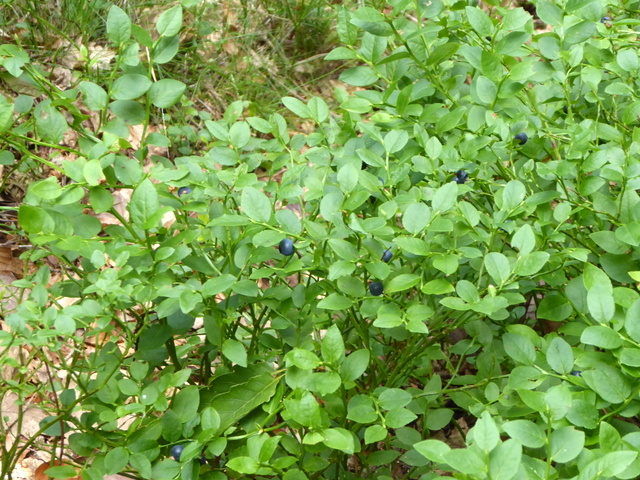
Bilberries (Vaccinium myrtillus)

We were soon high enough to be able to look down on the town which was very busy with Sunday visitors and many motorbikes.  I think Richard told us this part of the walk was called the Bilberry Wood and there were certainly many bilberries growing at the side of the path.

P1000814Common Earthball phps

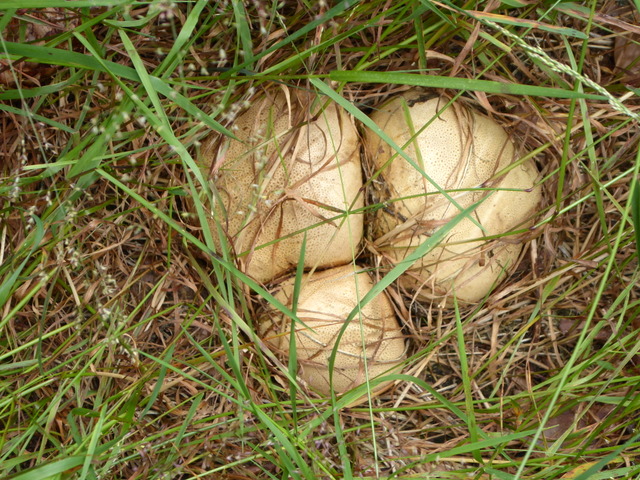
There was plenty of fungus too. I think this may be Common Earthball (Scleroderma citrinum)

We soon climbed a little further into the forest and left the town behind and no longer heard the traffic.

P1000815woodland
P1000816Woodland

The forest became denser but there was never any difficulty following the path which was beautifully maintained.  I began to see many different plants; some I recognised and some I didn’t.  If anyone can help me with the names of these plants I will be very grateful.

P1000817Polypody

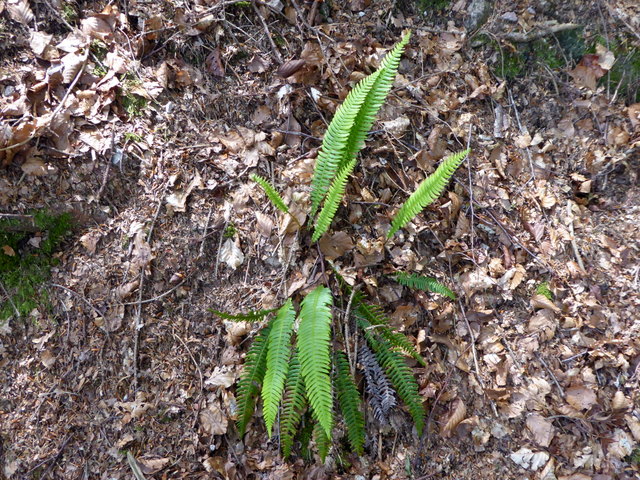
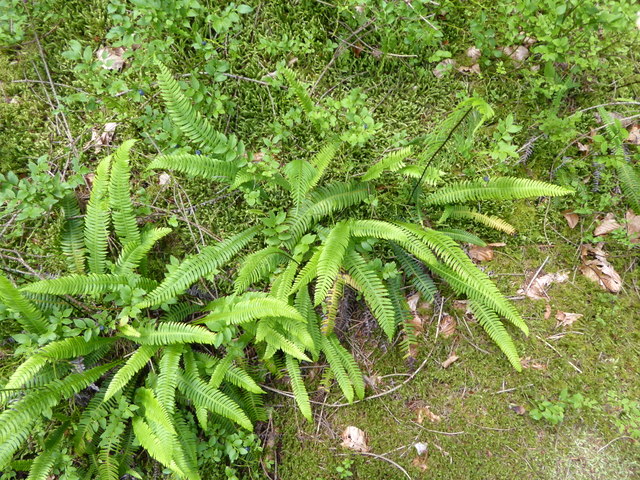
Polypody (Polypodium vulgare) – a true fern. When walking with my family I always get left behind because I like to take photos of plants and fungi. I don’t have the time to take the detailed shots I would like in order to identify my finds in case I am left too far behind!

P1000832Polypody

More Polypody

I love the chunkiness of Polypody so I cropped one of the photos above to look at it in more detail.

P1000817Polypody - Copy (2)

Polypody

P1000818Small Balsam phps

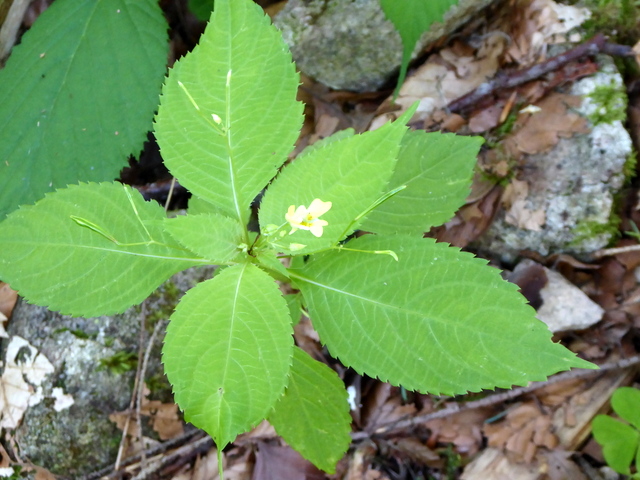
I think this might be Small Balsam (Impatiens parviflora)

P1000823Unknown

Unknown flower

P1000824Unknown

It’s very tall!

P1000820Unknown

Interesting leaves

P1000827Cow-wheat

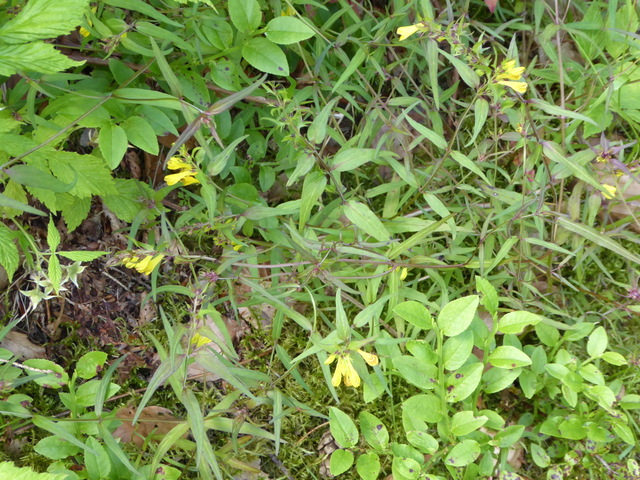
Common Cow-wheat (Melampyrum pratense)

P1000850Wild flowers

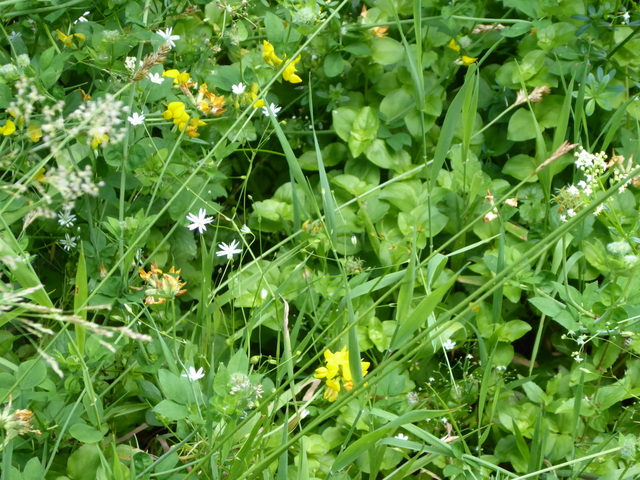
Wild flowers including a Bedstraw, Common Bird’s-foot Trefoil (Lotus corniculatus) and Lesser Stitchwort (Stellaria graminea).

P1000834Foxglove

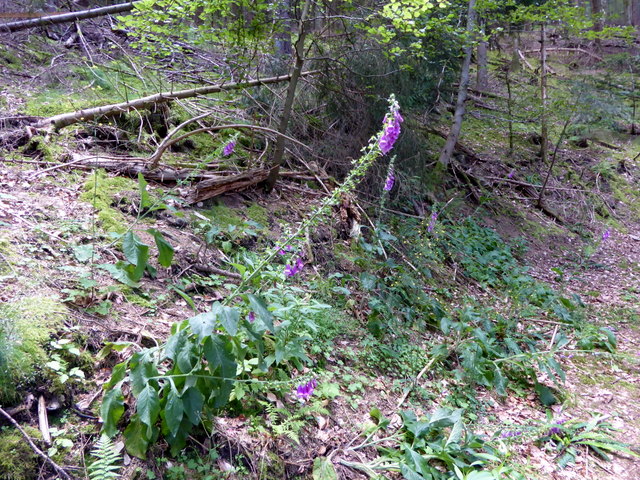
Foxglove (Digitalis purpurea)

Speedwell
Speedwell
Speedwell
Speedwell
P1000837Royal Fern phps

This may be Male Fern (Dryopteris filix-mas)

P1000857

St John’s-wort; I don’t know which of the many St John’s-worts it is.

P1000855Cat's-ear

Cat’s-ear (Hypochaeris radicata)

P1000868Lysimachia

Loosestrife (Lysimachia punctata)

I managed to photograph a butterfly….

P1000866Lysimachia

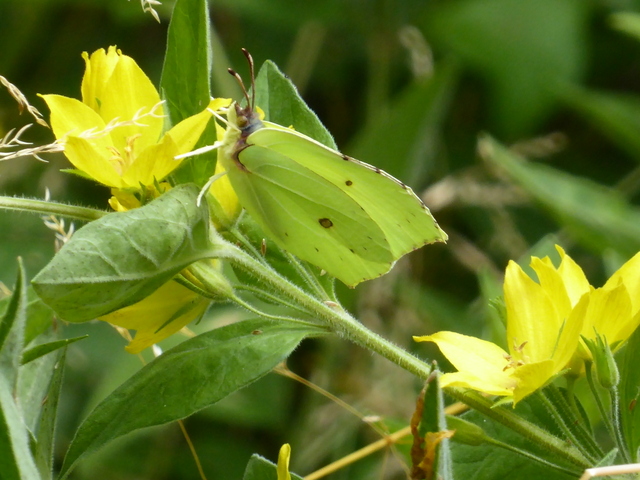
A Brimstone butterfly (Gonepteryx rhamni) on Lysimachia

…and a moth.

P1000864ScarletTiger Moth

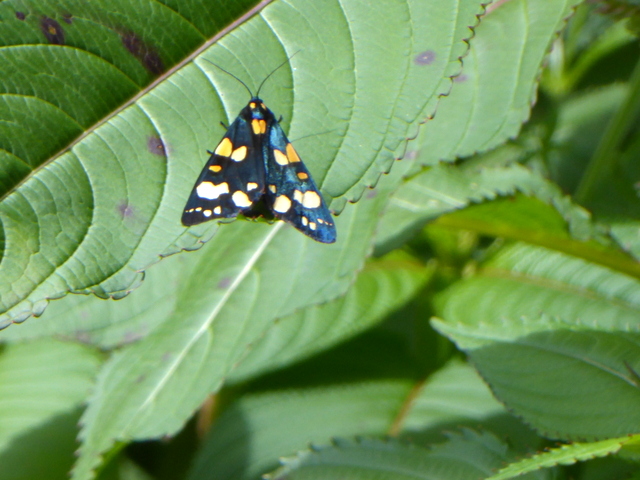
A Scarlet Tiger Moth (Callimorpha dominula). When flying I could see its underwings which were bright scarlet.

The views as we walked were marvellous.

This slideshow requires JavaScript.

Berries
Berries
Dame's-violet (Hesperis matronalis)
Dame’s-violet (Hesperis matronalis)
Unknown yellow flower
Common Knapweed ( Centaurea nigra)

The path eventually returned us to the town near to the waterfall.

My music selection today is ‘A Walk in the Black Forest’ which was so popular on the radio when I was a little girl.

I am hoping that Elinor will provide the last of my Black Forest posts.

Thanks for visiting!
 

Share this:

  • Share on X (Opens in new window) X
  • Share on Reddit (Opens in new window) Reddit
  • Share on Pinterest (Opens in new window) Pinterest
  • Share on Facebook (Opens in new window) Facebook
  • Email a link to a friend (Opens in new window) Email
  • Share on Tumblr (Opens in new window) Tumblr
  • Print (Opens in new window) Print
  • Share on Pocket (Opens in new window) Pocket
  • Share on LinkedIn (Opens in new window) LinkedIn
Like Loading...

A Little Sight-seeing in the Black Forest

13 Sat Aug 2016

Posted by Clare Pooley in Days out, holidays, Rural Diary

≈ 55 Comments

Tags

architecture, Black Forest, Black Forest Museum, cake shops, Furtwanger, Germany, holiday, Maria in der Tanne, Pilgrimage Church, Schonwald

We thought we would go and see what other nearby towns and villages were like so we travelled to Furtwanger on the bus.  We took our Visitor Card with us and didn’t have to pay any bus-fare.

View from the bus
View from the bus
View from the bus
View from the bus
View of a typical Black Forest house taken from the bus

The weather was still cloudy and very cool that morning so after a brief wander through the town we found a café and had a hot drink (or in Elinor’s case, an apple juice) and yet more cake.

Richard's cake
Richard’s cake
Elinor's cake
Elinor’s cake
My cake
My cake
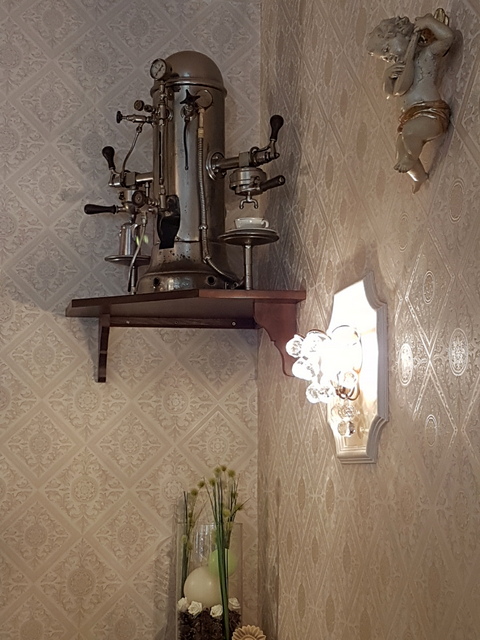
20160715_130911

We admired this beautiful vintage coffee machine

Fortified by our meal we sallied out again and found that the weather had improved and the sun was coming out.  We discovered a little more of the town.

P1000782Furtwanger town hall

The Town Hall

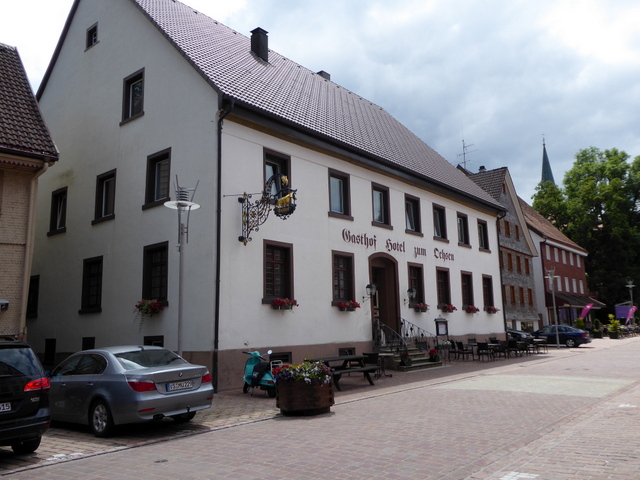
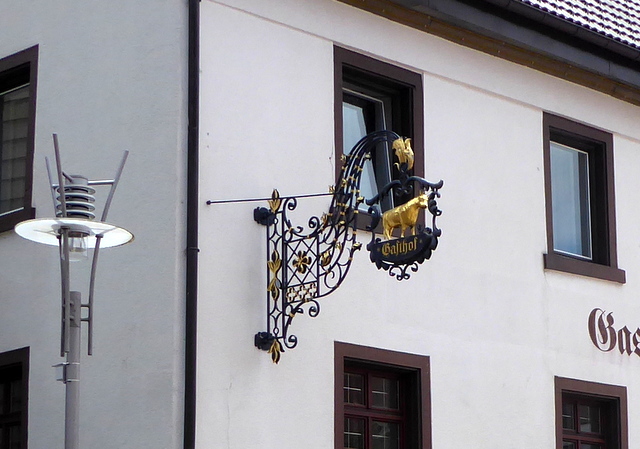
P1000783Gasthof hotel

A Guest house and hotel with an ornate sign outside

P1000783Gasthof hotel-001

The sign

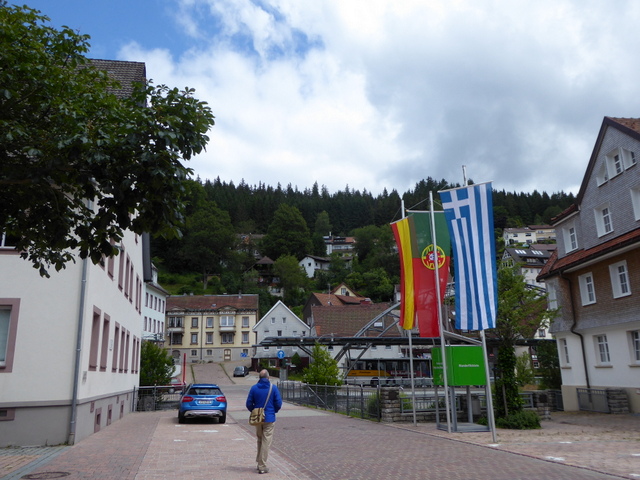
P1000785Furtwanger

Furtwanger : the bus station is just beyond the banners

P1000786Furtwanger

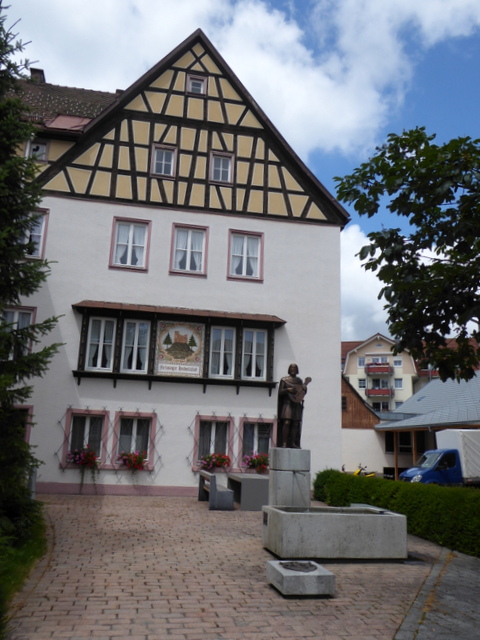
An attractive house.

P1000787Furtwanger

The town river

The following day we thought we would visit another village on the bus but before doing so we would look at a couple of places in Triberg.  The Black Forest Museum was very interesting and was situated in the old Trade Hall.

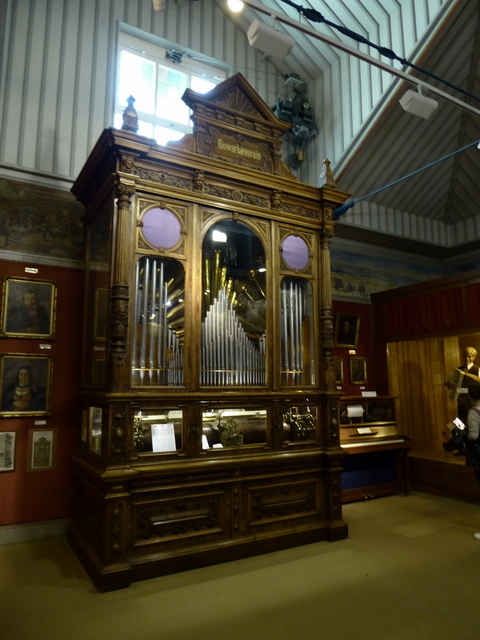
There were musical instruments ….

P1000788Museum

An orchestrion

..and another orchestrion!

There were displays of Black Forest Costumes….

P1000789Museum
P1000790Museum
P1000791Museum

….and lots of clocks!

P1000796Museum
P1000797Museum
P1000798Museum

There was even a rather old and dangerous-looking bob-sleigh!

P1000799Museum

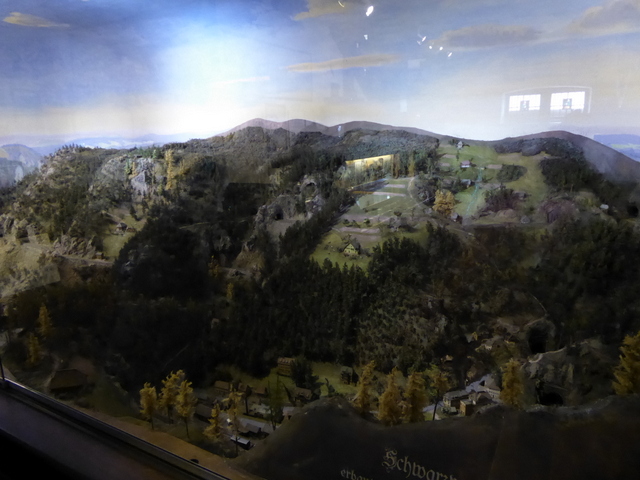
There were exhibits from the local straw-braiding industry and the local glass industry.  A large room was full of information about the Black Forest Railway constructed in the 19th century which has two innovative terminal loops with 39 tunnels that overcame the altitude differences – there is nearly 600 metres difference in height between a couple of the towns.  There was a diorama made in the 1950s that shows this double loop in great detail.

P1000800Museum

Diorama of the Black Forest Railways many tunnels

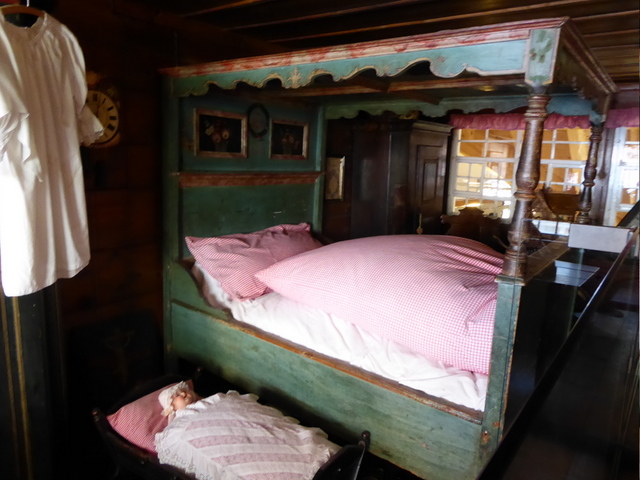
There were reconstructions of workshops and rooms in houses with authentic furniture and tools.

P1000795Museum

A beautiful bed!

We had a wonderful time in the museum!

We then visited the Pilgrimage Church of Maria in der Tanne (Mary in the Forest).  Many years ago, so legend has it, a girl was cured of an eye disease when she bathed it in the spring water nearby.  The following year a man was cured of leprosy by washing in the spring water.  He was grateful and placed a figure of the Virgin Mary in a niche in a fir tree.  The place was forgotten about for about a hundred years until three soldiers rediscovered it after having heard some beautiful singing and followed the sound to the fir tree.  The spring and fir tree became a place of pilgrimage and the church was built in the 18th century.

P1000878Pilgrimage church

Maria in der Tanne

P1000803Pilgrimage church

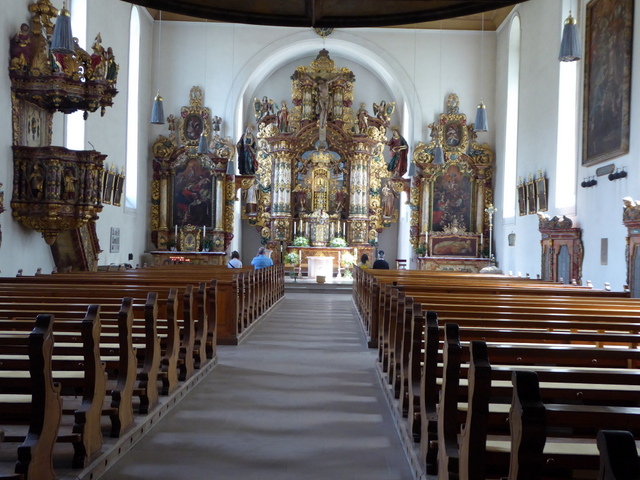
The nave leading up to the enormous and ornate altar

P1000807Pilgrimage church

The altar

P1000804Pilgrimage church

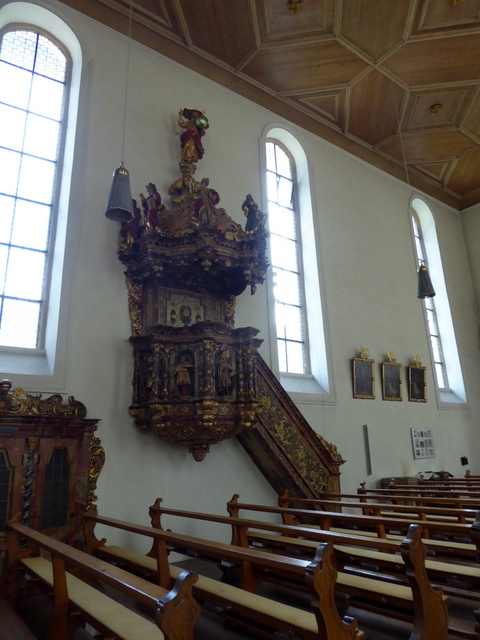
The pulpit

P1000806Pilgrimage church

A detail of the ceiling decoration

P1000808Pilgrimage church

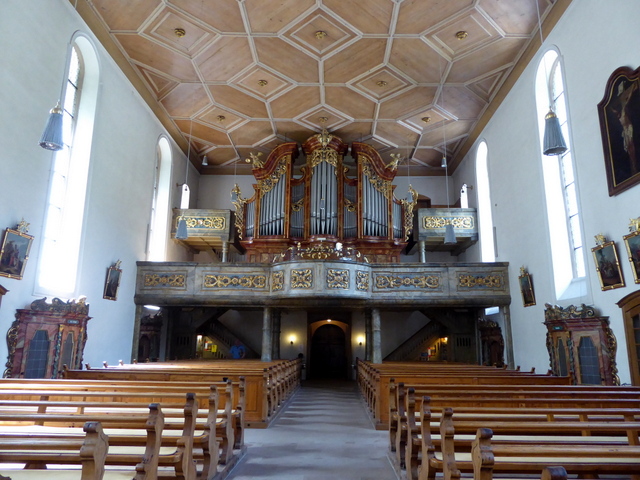
Looking back down the Nave towards the gallery and the organ

We then caught the bus to Schonwald, a pretty village where we had hoped to have some lunch.  Unfortunately, we got there too late.  We had some coffee and a short walk instead.

View from the bus
View from the bus
View from the bus
View from the bus
P1000810Schonwald Trades

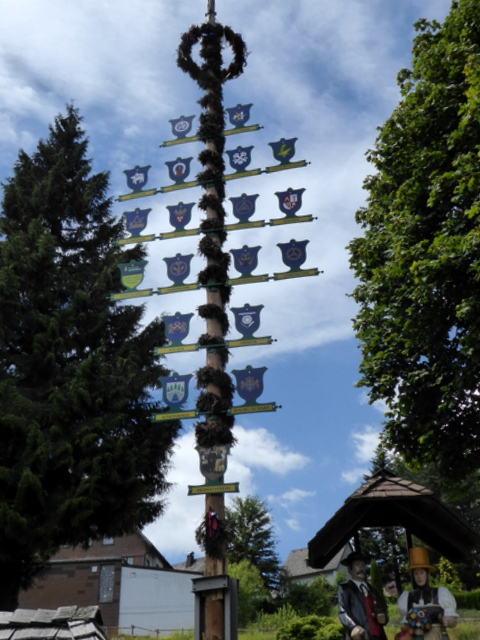
This has symbols of all the trades on it.

We returned to Triberg and to our hotel for a rest before our evening meal.

Thanks for visiting!
Share this:

  • Share on X (Opens in new window) X
  • Share on Reddit (Opens in new window) Reddit
  • Share on Pinterest (Opens in new window) Pinterest
  • Share on Facebook (Opens in new window) Facebook
  • Email a link to a friend (Opens in new window) Email
  • Share on Tumblr (Opens in new window) Tumblr
  • Print (Opens in new window) Print
  • Share on Pocket (Opens in new window) Pocket
  • Share on LinkedIn (Opens in new window) LinkedIn
Like Loading...

Black Forest Holiday – Part 2

08 Mon Aug 2016

Posted by Clare Pooley in family, holidays, walking

≈ 57 Comments

Tags

birds, Black Forest, Ernest Hemingway, fungi, holiday, lichen, memorials, moss, Nutcracker, Otto von Bismarck, red squirrels, Triberg, waterfall, wildflowers

On our second full day on holiday we thought we would go and see the Triberg waterfall which we were informed is the highest waterfall in Germany.  (In fact, it isn’t as Rothbach Waterfall in Bavaria is the highest with a single, vertical drop of 470 metres.)  We had a short walk through the town to the nature park entrance where we were able to get free entry by using the guest-card that the hotel had given us on our arrival.

P1000741Waterfall

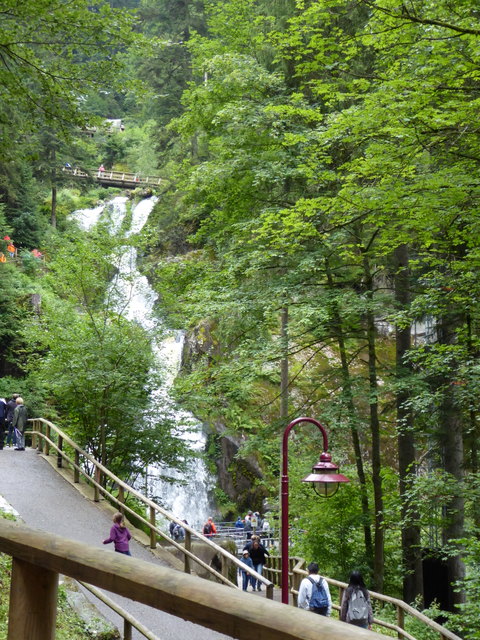
Just a few minutes walk brought us to the waterfall.

P1000743Waterfall

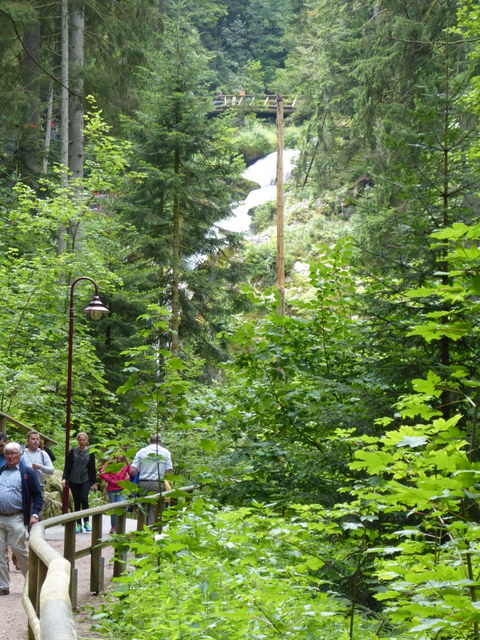
The waterfall is a series of seven cascades falling 160 metres into the valley.

P1000744Waterfall

The waterfall can be heard in the town.

The paths and bridges have been carefully designed to enable everyone to see the falls clearly.

This slideshow requires JavaScript.

I didn’t just photograph the waterfall.  There were plenty of plants that interested me, some I recognised and others I still cannot put a name to.

P1000740Touch-me-not Balsam

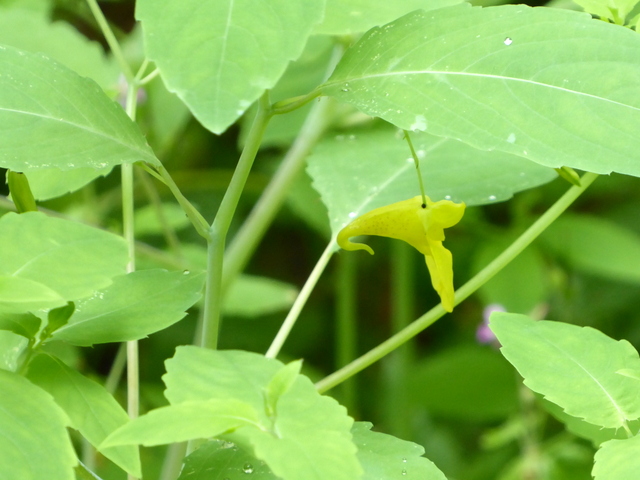
Touch-me-not Balsam (Impatiens noli-tangere)

P1000742Fungus

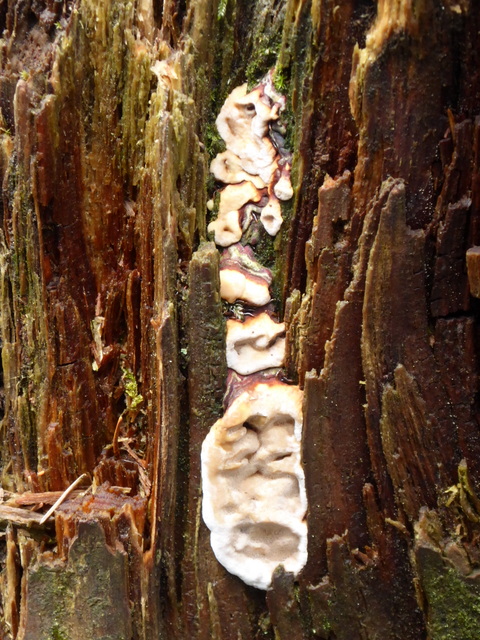
Fungus

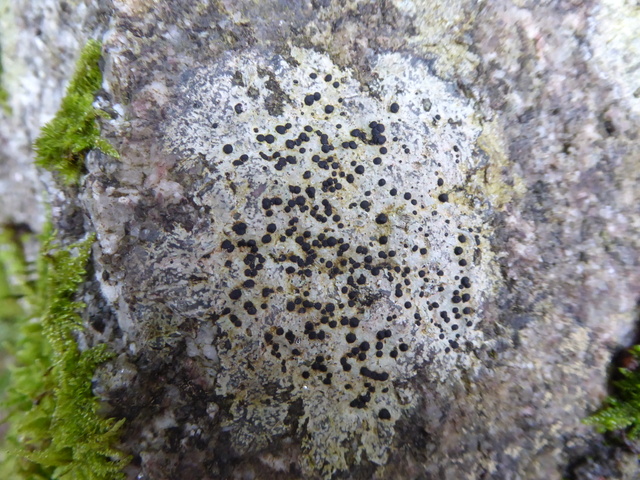
P1000745Lichen

Lichen

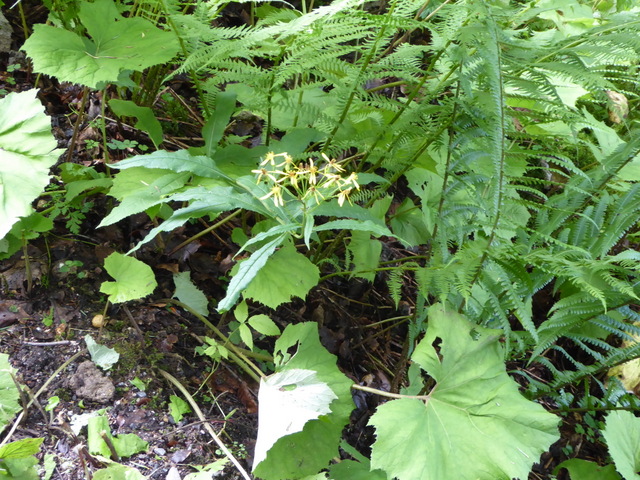
P1000751Yellow flower

Unidentified yellow flower

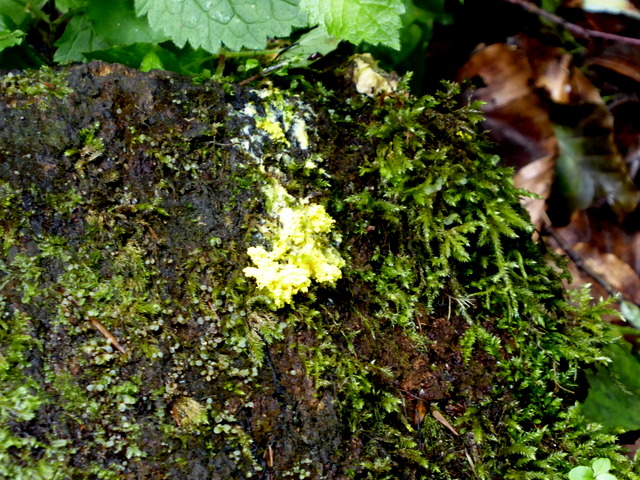
P1000754Slime mould

Slime mould

Moss
Moss
More moss
More moss
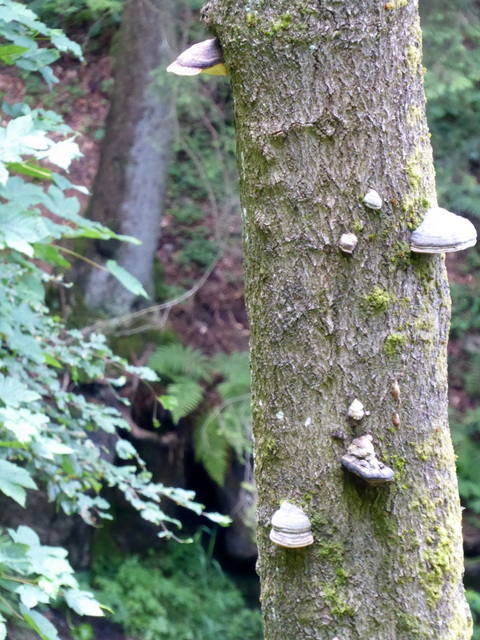
P1000764Hoof fungus

Hoof fungus (Fomes fomentarius) ?

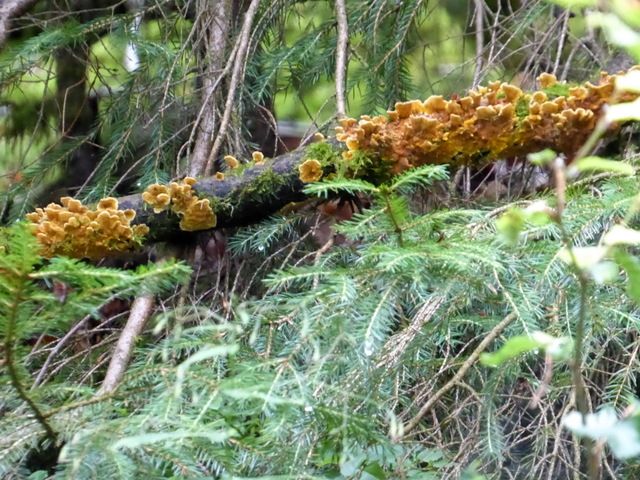
P1000765Fungus

Orange-coloured fungus.

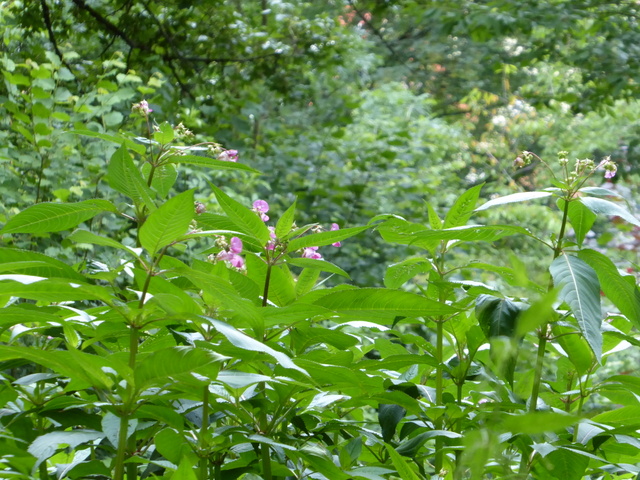
P1000778Indian Balsam

Indian Balsam (Impatiens glandulifera)

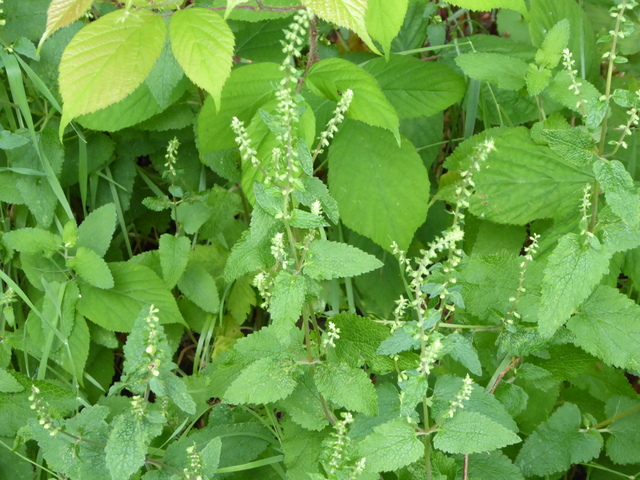
P1000779Figwort phps

Wood Sage (Teucrium scorodonia)

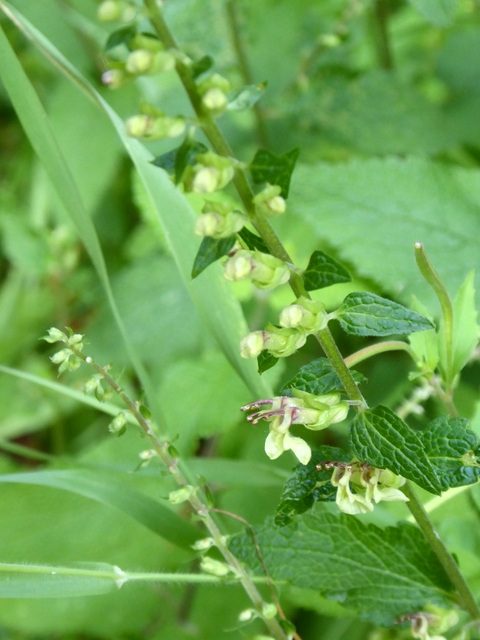
P1000780Figwort phps

Wood Sage flower spike

We also saw glimpses of Red Squirrels, which are not rare in Germany, but they were too quick for me and I was unable to photograph one.

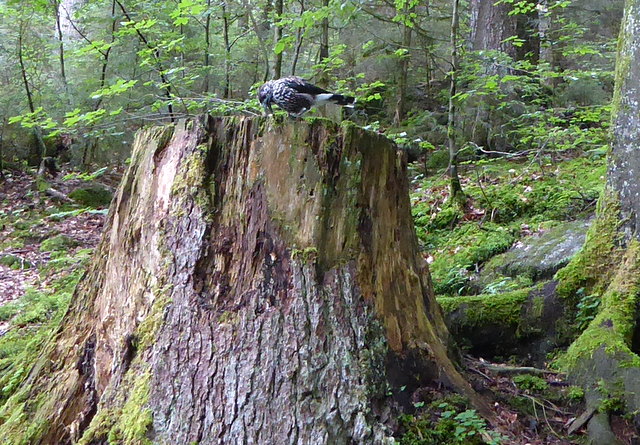
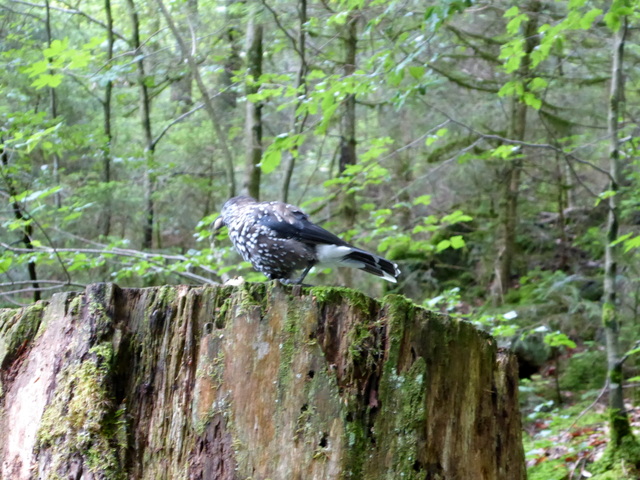
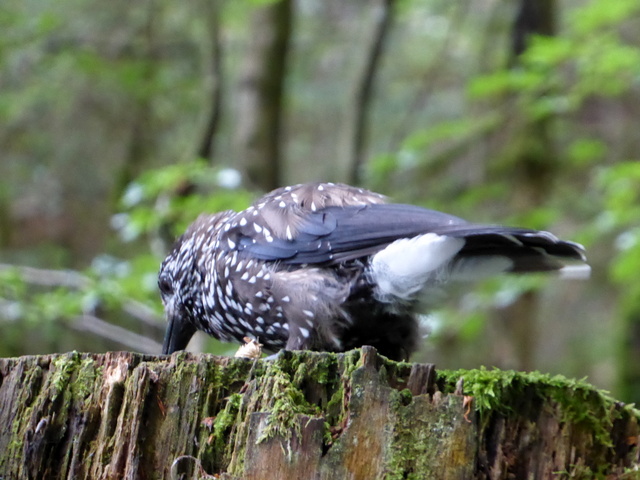
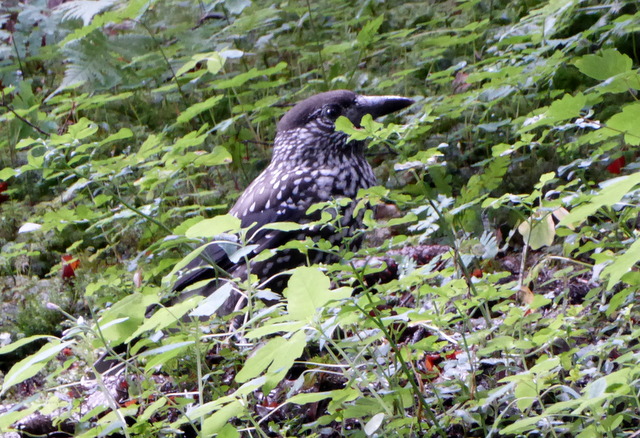
I was very pleased that I managed to photograph a Nutcracker, a bird from the crow family.  They are one of the smallest crows at 12.5 inches long, even smaller than a Jackdaw, and they were moving about quickly in the undergrowth feeding newly fledged young.

P1000767Nutcracker

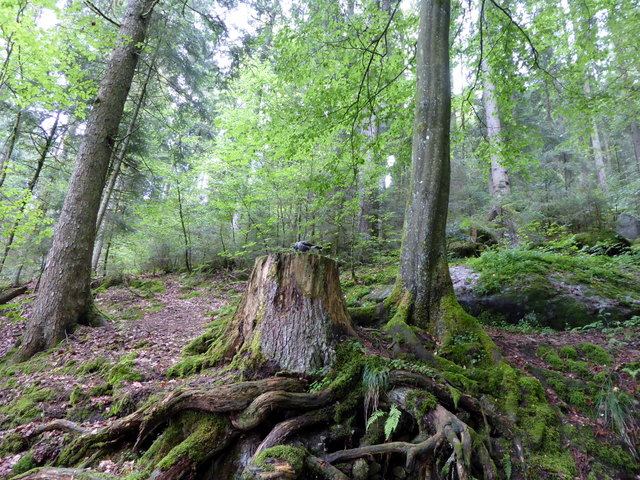
Nutcracker (Nucifraga caryocatactes) on a tree-stump

P1000767Nutcracker - Copy

This is the above photo which has been cropped

P1000768Nutcracker

Nutcracker

P1000769Nutcracker

Nutcracker

P1000771Nutcracker

Nutcracker

Only one of those photos was cropped though I had to use the zoom on my camera to its fullest extent for the rest!

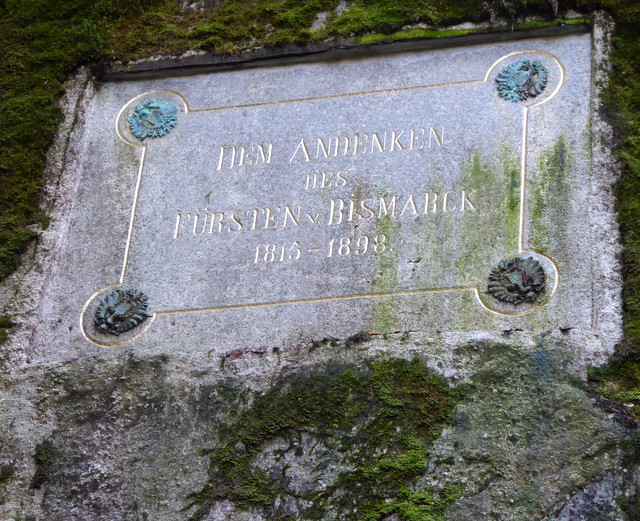
There were a few commemorative plaques placed on the rock face; this one is for Otto von Bismarck.

P1000758Bismark plaque

Bismarck commemoration

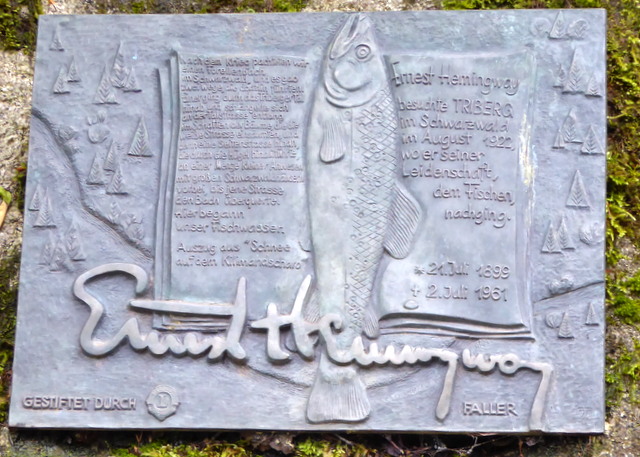
This one is for Ernest Hemingway

P1000749Hemingway plaque

On the right are his dates of birth and death under a note saying that Ernest Hemingway visited Triberg in the Black Forest in August 1922 where he indulged in his passion for fishing. There is a quote from ‘The Snows of Kilimanjaro’ on the left where he talks about a trout-fishing trip to Triberg.

We enjoyed our walk through the forest and before returning to our hotel, indulged in some more coffee and cake!

Thanks for visiting!
Share this:

  • Share on X (Opens in new window) X
  • Share on Reddit (Opens in new window) Reddit
  • Share on Pinterest (Opens in new window) Pinterest
  • Share on Facebook (Opens in new window) Facebook
  • Email a link to a friend (Opens in new window) Email
  • Share on Tumblr (Opens in new window) Tumblr
  • Print (Opens in new window) Print
  • Share on Pocket (Opens in new window) Pocket
  • Share on LinkedIn (Opens in new window) LinkedIn
Like Loading...

A Holiday in the Black Forest

04 Thu Aug 2016

Posted by Clare Pooley in family, holidays, Rural Diary

≈ 51 Comments

Tags

Black Forest railway, Bollenhutte, Brussels, Caffee und Kuchen, cake shops, Cologne, cuckoo-clock shops, Deutsche Bahn, Ebbsfleet, Eurostar, holiday, ICE trains, Liege-Guillemins station, luggage, Luggagemule, Offenburg, packing, Parkhotel Wehrle, River Gutach, trains, travelling, Triberg

We recently had an eight-day holiday in the Black Forest in Germany.  Richard organised the whole trip on his own, booking the hotel independently and then contacting Deutsche Bahn who recommended a route for us to take.  We enjoy travelling by train!  On previous trips we have used couchettes or sleeping cars but Elinor said that she’d rather we didn’t do that again so we managed to get the whole journey done in one day, setting off from home at 4.30 am and getting to the hotel just before 9.00 pm (8.00 pm British time) the same day.

We drove to Ebbsfleet in Kent where we left the car and went through passport control and customs before boarding the Eurostar.

P1000736Ebbsfleet

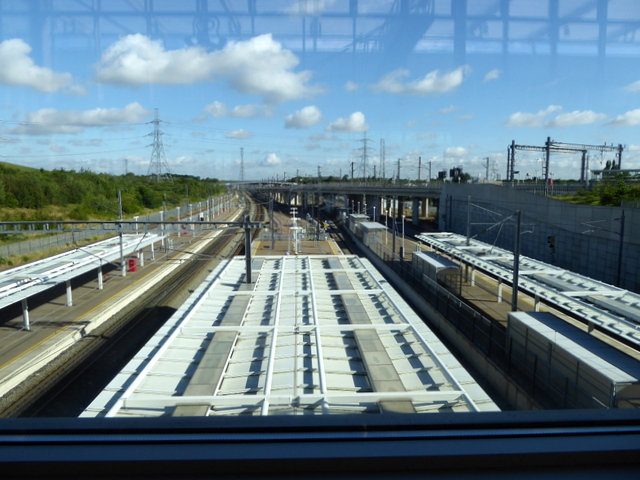
The view from the waiting area at Ebbsfleet

P1000737Ebbsfleet

Richard and Elinor eager to board the train!

Modern high-speed trains are usually very pleasant to travel on.  The seats are comfortable, there is no jolting or bumping and there is hardly any engine noise.  We seem to slide through the countryside at 140 mph almost as though we are hovering above the ground rather than fixed on tracks.  The only downside is travelling through tunnels which make my ears pop and not being able to see the scenery at times because of sound barriers built next to the line near towns and villages.  The tunnel under the English Channel only takes 20 minutes to go through and the train is travelling at a mere 80 mph.  This rate of travel is still very surprising to me; I have always journeyed by train and my first train trip to the Continent when I was 14 years old began at Victoria Station in London.  That first leg from London to Dover took about an hour and 40 minutes.  We went through customs and then boarded a ferry to Ostend in Belgium.  The sea journey took three or four hours and we then caught a large train to Paris.  It was very exciting!  Everything looked and smelt so different.  I remember setting off from London about midday and eventually getting to Paris that evening where we ran from one station to another dodging the crazy traffic and quickly finding something to eat before we boarded the sleeper to Munich.

But back to our recent journey – the Eurostar took just over two hours to get to Brussels where we had a couple of hours wait for our next connection to Cologne.

P1000738Brussels

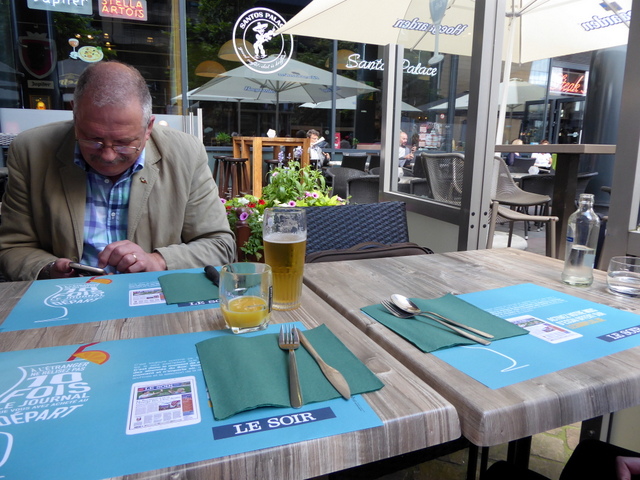
Here we are having some lunch at a café near the station in Brussels.  Richard is just posting a photo of his beer on Facebook……

20160712_123028

Jupiler Belgian Pils

20160712_123201

….and taking a picture of me and Elinor. I see that I am looking very tired which is not surprising as I had only had two hours sleep the night before!

It was so pleasant to be out in the sunshine and the lunch was exceedingly good.  What I found sad was the sight of armoured cars and armed soldiers and police everywhere.  With all the terrible attacks all over Europe it is not to be wondered at but I find it very upsetting all the same.

Our next train arrived on time and we were soon on our way to Cologne.

20160712_151329

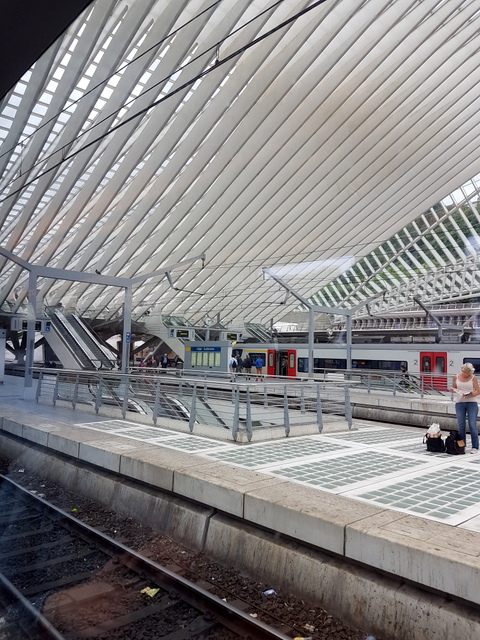
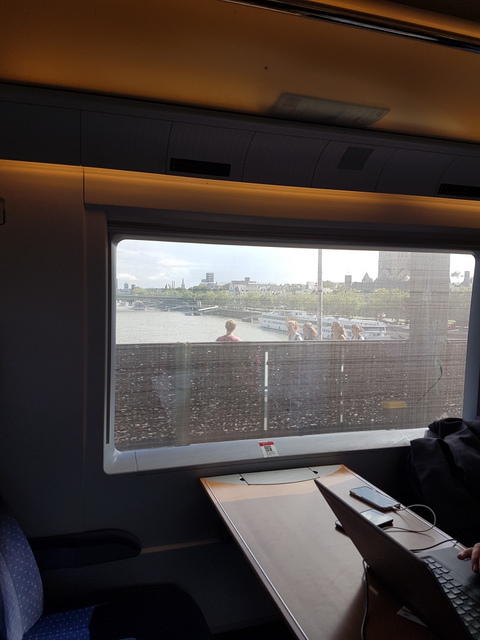
This is the station at Liege-Guillemins – the first stop on the way to Cologne. It is a beautiful building; Richard was able to take this photo through the window while we were there.

The last time we passed through Liege, work had begun recently to up-grade the tracks for high-speed trains.  I don’t remember seeing this station then.  Catalan architect Santiago Calatrava designed the building and it really is superb.

20160712_165919

I think this might be us arriving at Cologne. Richard took this view of the River Rhine through the train window.

We had a 40 minute stop in Cologne where we dashed about looking for food as we would be arriving too late at our hotel for a meal.  Our next high-speed train took us to the small town of Offenburg where we needed to buy more water as we had forgotten this in Cologne.  Luckily, there was a drinks dispenser on the platform and we bought two bottles of ice-cold mineral water.  By this time the fine weather had disappeared and it was raining hard and quite chilly.

Our last train was a double-decker local train to Triberg which travelled through very scenic countryside, though by this time it was very gloomy and wet and after 8.00 in the evening.  We had arranged with the hotel for a taxi to pick us up at the station and as soon as we got off the train we were halloo-ed by the driver who was over on the opposite platform.

He drove us quickly to our hotel where we booked in and found that our other suitcases had already arrived and were waiting in our rooms.  We had decided to use a company called ‘Luggage Mule’ to help get all our belongings on holiday.  Lugging heavy suitcases on and off trains is a back-breaking business and as we usually need a large case for our medication alone we thought having someone else do the lifting was a good idea.  The cases were collected six days before our holiday started and I found packing this far in advance quite tricky.  Inevitably, there were things I wished I’d included and hadn’t and things I wished I hadn’t included but had!  We were amused by the list of things that we were forbidden to pack.  As you will see from the list, we had to leave our sink behind!  We still managed to find more things we couldn’t do without for eight days to fill two smaller suitcases that we carried with us on the journey (see the second photo above)!  Three washbags, cosmetics, medication for three people with chronic illnesses, Elinor’s books and drawing materials, her laptop and my notebook PC, shoes we had forgotten to pack earlier, coats etc made us look like a normal family going away for a week.

Our rooms in the hotel were comfortable and spacious and we slept well after our long day.  The following morning we enjoyed a delicious buffet breakfast and then had a short wander round Triberg, the town where we were staying.

View from our window
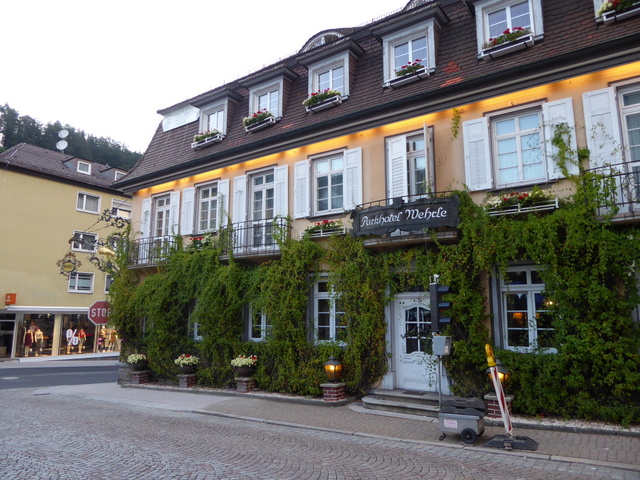
P1000882Our hotel

Our hotel. I took this photo the last evening we were there.

P1000883Our hotel

Another wing of the hotel is on the left of the photo.  Ernest Hemingway stayed in this hotel when he visited the Black Forest.

It wasn’t a warm day and there was a mixture of sunshine and showers but we saw that it was a pretty place though very busy with tourists like us.

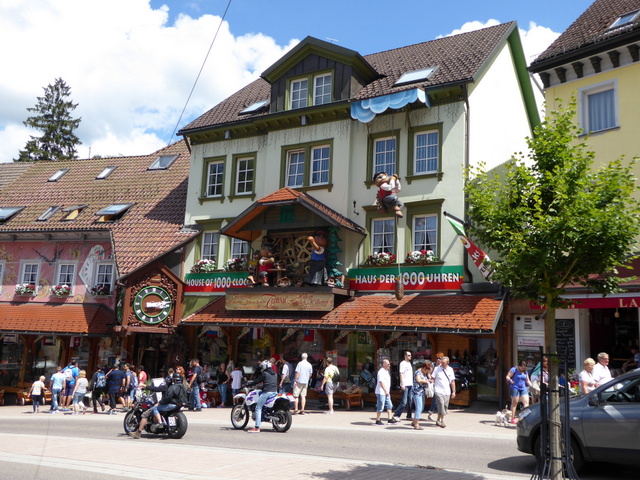
P1000880Clock shop

This is one of many cuckoo-clock shops in the town – I took the photo near the end of our holiday when the weather had improved.

As you see from the picture we had arrived in the land of large teddy bears.  Two worked unceasingly at their clock-making and another abseiled up and down the outside of the shop all day.

20160713_115519

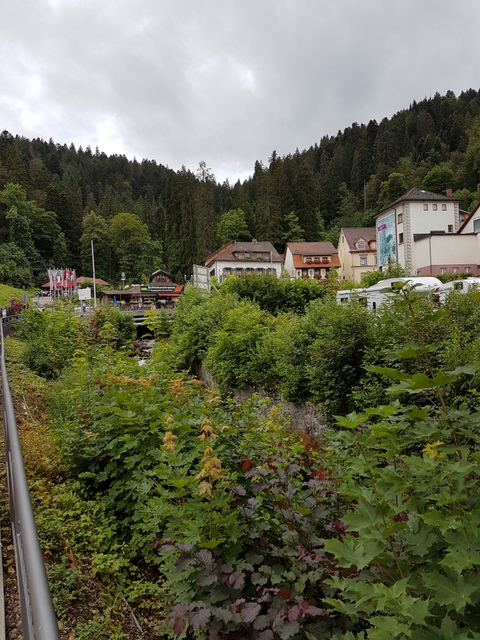
The top of the town with the River Gutach in amongst the trees at the bottom of the photo.

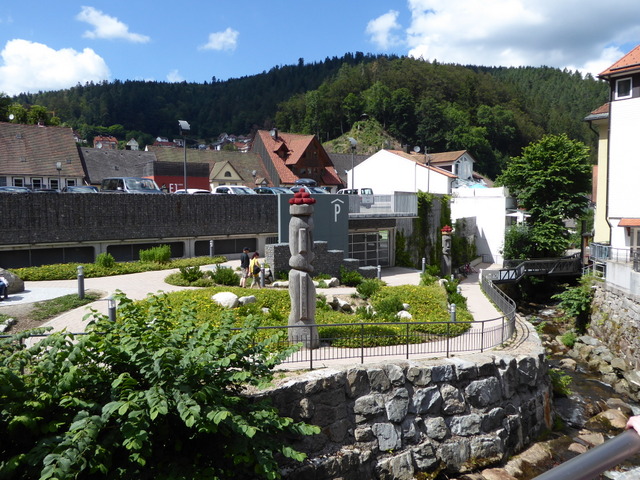
P1000881Park

This is a little garden in the centre of the town. There are two large carved figures here that look like Easter Island statues with red balls on their heads.

I believe these statues represent Triberger women in their distinctive national costume and their Bollenhutte (hats with pompoms).

Photo taken from Google images

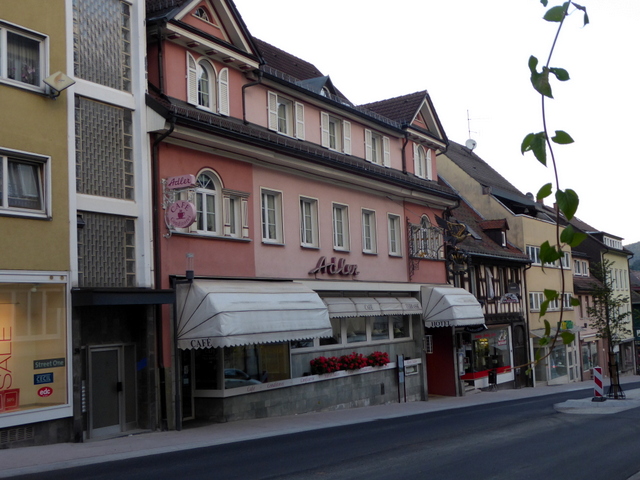
After our walk about the town we returned to the hotel for a few hours to rest and then at about 4 o’clock we went out for ‘Kaffee und Kuchen’ (coffee and cakes)  Our breakfast had been so satisfying that we hadn’t needed lunch but by mid-afternoon we were in need of a little something to eat.  The cake shop opposite the hotel served the most delicious cakes!

P1000884Cake shop

Café Adler – the cake shop

In the evening we went out for a meal at a restaurant close to the hotel.  For the time we were in Germany we tried to eat local Black Forest food for every meal.  It was all very good indeed though I found there weren’t as many vegetables as I am used to in these dishes which were mainly meat with potatoes or arborio rice or noodles.

P1000885A favourite restaurant

One of our favourite places to eat

In the next post I will describe what we did while in Germany.

Thanks for visiting!
Share this:

  • Share on X (Opens in new window) X
  • Share on Reddit (Opens in new window) Reddit
  • Share on Pinterest (Opens in new window) Pinterest
  • Share on Facebook (Opens in new window) Facebook
  • Email a link to a friend (Opens in new window) Email
  • Share on Tumblr (Opens in new window) Tumblr
  • Print (Opens in new window) Print
  • Share on Pocket (Opens in new window) Pocket
  • Share on LinkedIn (Opens in new window) LinkedIn
Like Loading...

Seaside at Sunset

29 Fri Jul 2016

Posted by Clare Pooley in music, plants, Rural Diary, seashore

≈ 55 Comments

Tags

Black-headed Seagull, common ragwort, Common Sea Lavender, gorse, hare's-foot clover, harvestman, mudflats, oil, Perennial Glasswort, plants, sand dunes, sea, sea campion, Sea Sandwort, Sea-holly, seashore, Suffolk, sunset, thrift, Walberswick

After a busy day last Friday and a hot, sunny day too, we thought it might be nice to go to the coast for a little while.  We knew that it would be extremely crowded for most of the day so we left it until after we had eaten our evening meal and set off just before 8.00 pm.

We decided that we’d visit Walberswick as we hadn’t been there for some time and parked the car in the car-park there at about 8.30 pm.

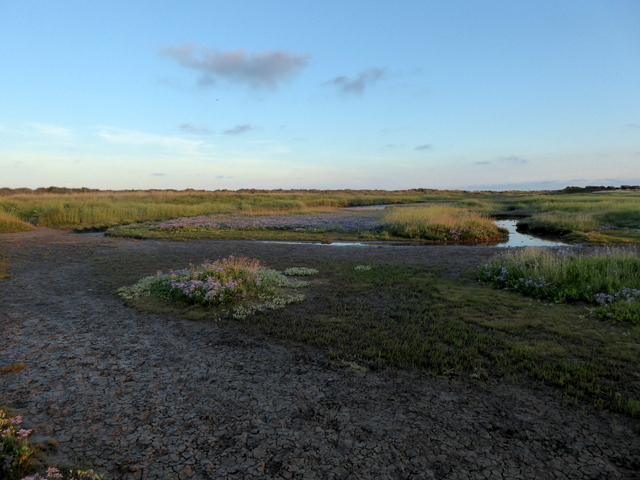
P1000941Walberswick

Walberswick. With its creeks, mudflats, sand-dunes and varied flora it is a favourite place of mine to visit.

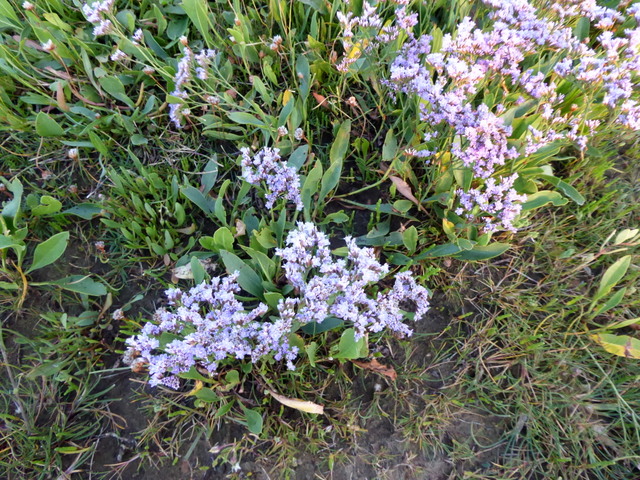
The mass of mauve flowers you can see in the photo above are Sea Lavender.

P1000940Common Sea-lavender

Common Sea-lavender (Limonium vulgare)

I couldn’t get a clear picture of these flowers – mainly because I couldn’t get down low enough!  Sea-lavender (no relation of true Lavender) is related to the cultivated Statices – everlasting flowers.  Many people pick these flowers illegally to make dried flower arrangements.  Strangely, the drier the ground in which it grows, the taller it gets.  This plant grows in great masses on the North Norfolk coast and I would love to see it there again.

P1000944Thrift

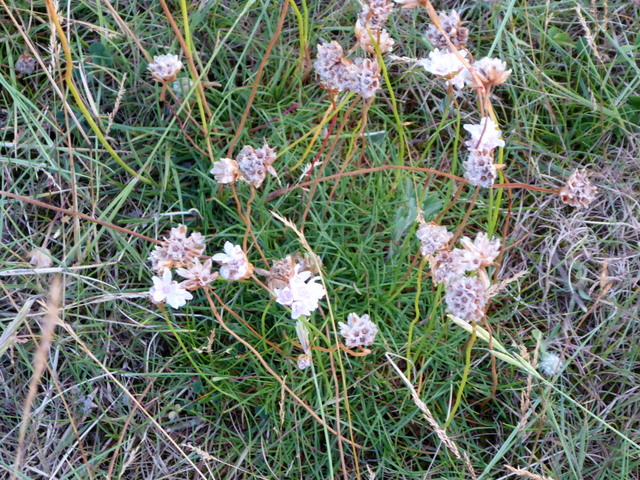
There wasn’t much Thrift or Sea Pink (Armeria maritima) left – mainly seedheads. Thrift is a relative of Common Sea-lavender.

P1000942Hare's-foot Clover

There was a lot of rather scrappy Hare’s-foot Clover (Trifolium arvense)…

P1000943Sea Campion

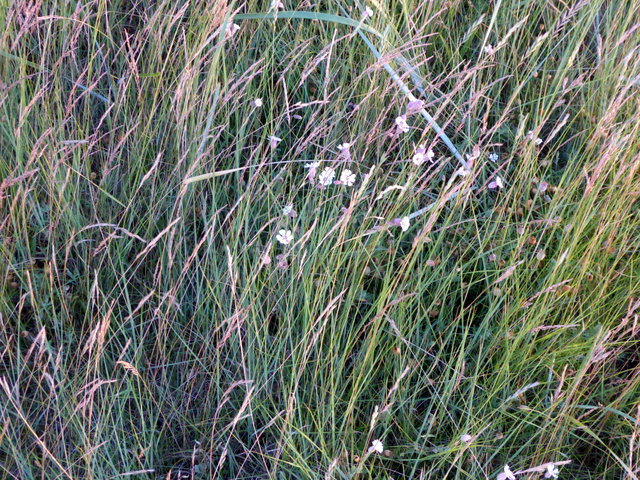
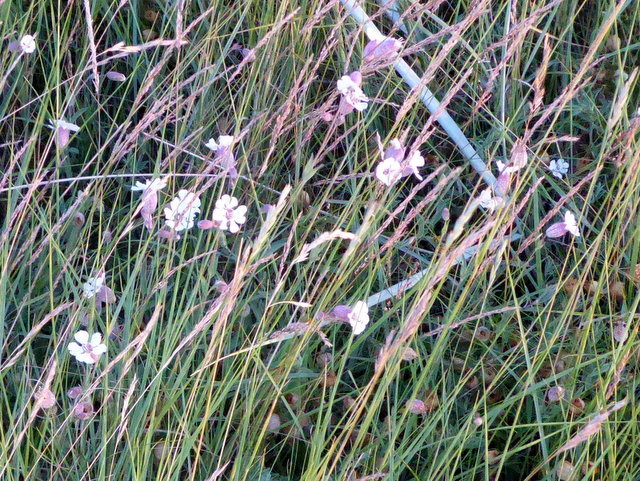
…and a small amount of Sea Campion (Silene uniflora)

I cropped the photo I took.

P1000943Sea Campion-002

The calyx (the area behind the petals) is swollen, like Bladder Campion is and is similarly patterned with red veins. The petals are larger and thicker than other types of Campion and usually overlap each other.

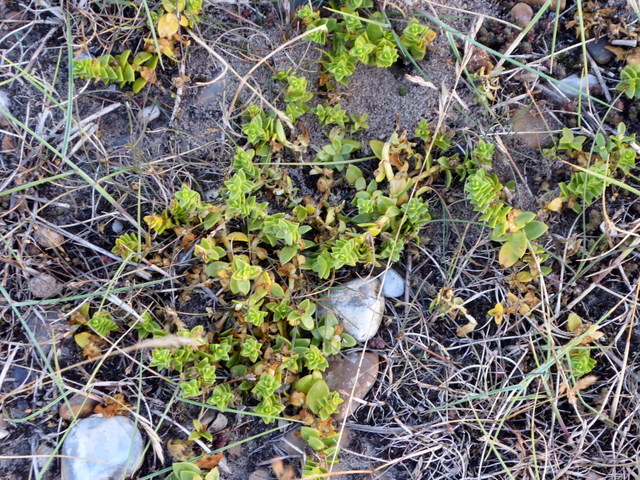
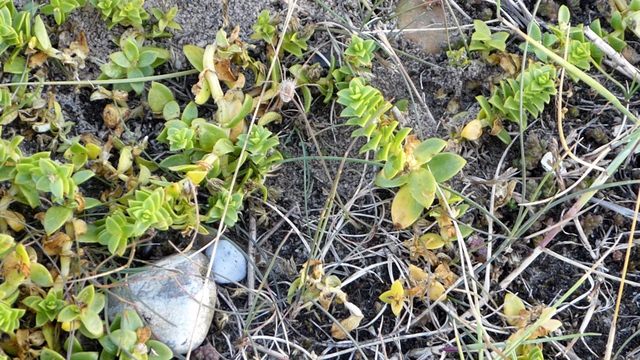
P1000947Sea Sandwort

Sea Sandwort (Honckenya peploides).  I like the way this plant grows. It reminds me of children’s building toys.

In Richard Mabey’s ‘Flora Britannica’ he says ‘… (Sea Sandwort) is one of the earliest colonisers of sand-dunes and shingle, and remarkable for its sprawling concertinas of geometrically stacked leaves’.  It is able to keep growing upwards so if ever it is inundated with sand or mud it can survive.  As with many seashore plants it is succulent and edible.

P1000945Harvestman and Sea Sandwort

More Sea Sandwort, this time with a Harvestman or Harvest Spider. Can you see it? They are not true spiders but are related to them. They have one-piece bodies and no silk-glands so can’t spin webs.

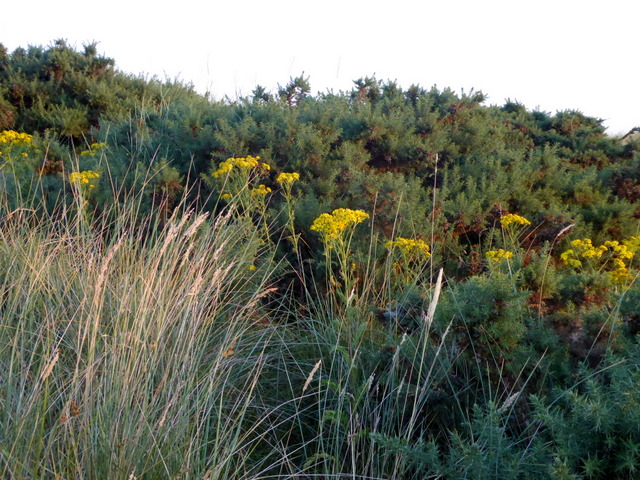
P1000948Common Ragwort

Common Ragwort (Senecio jacobaea) in flower and Gorse bushes (Ulex europaeus)

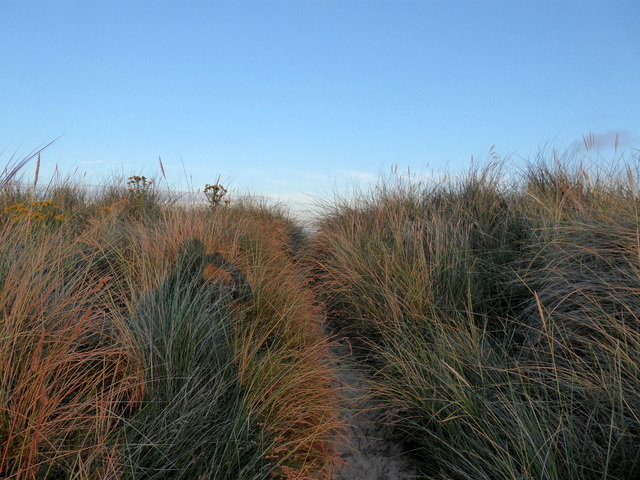
P1000949Dunes

The dunes and my shadow!

P1000950Dunes

Richard and Elinor beat me to the sea. The cool northerly breeze was so refreshing.

P1000951Walberswick

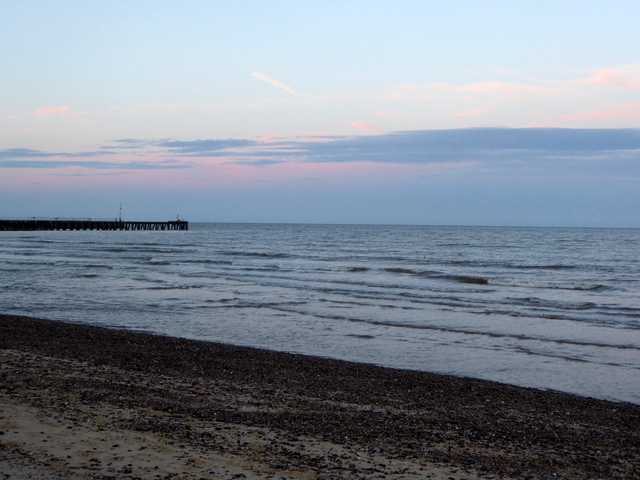
The sea and sky were beautiful

P1000952Sunset

The sun was just setting behind us

Lumps of oil
Lumps of oil
More oil
More oil

I was sorry to see this oil on the beach.  This is evidence that tankers have been flushing out their tanks illegally in N W European waters .

P1000955Sunset

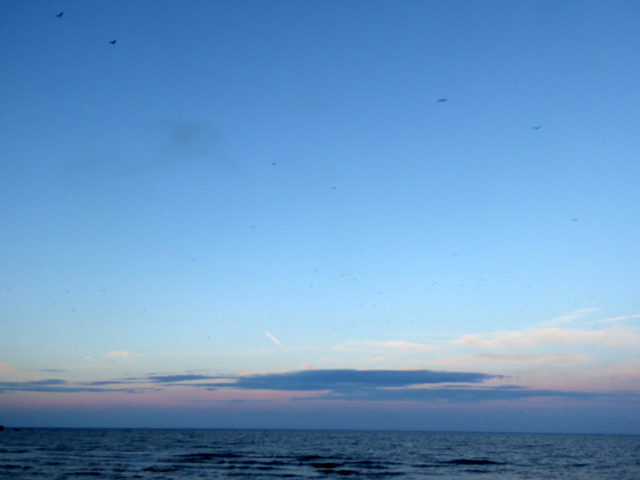
The sunset progressed.

P1000957Sea

The view out to sea still looked good.

P1000958Seagulls

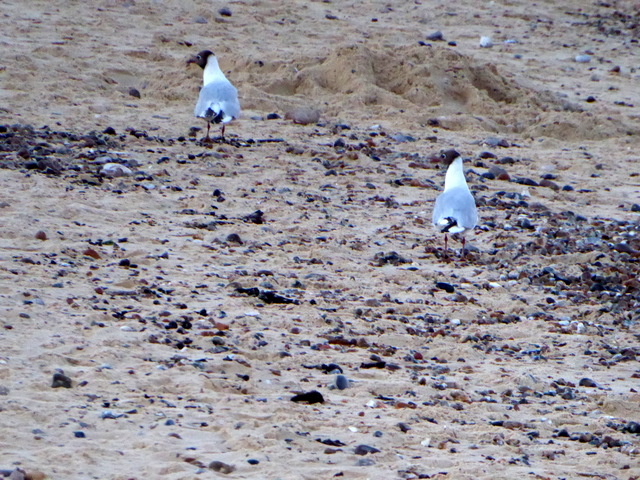
Seagulls were making their way out to wherever it is they go for the night…

P1000959Black-headed Seagulls

…except these two Black-headed Gulls (Larus ridibundus) who seemed to be doing some synchronised beach-combing.

P1000960Sea

One last look at the sea…

We made our way back to the dunes where I found a couple more plants to photograph.

P1000961Sea-holly

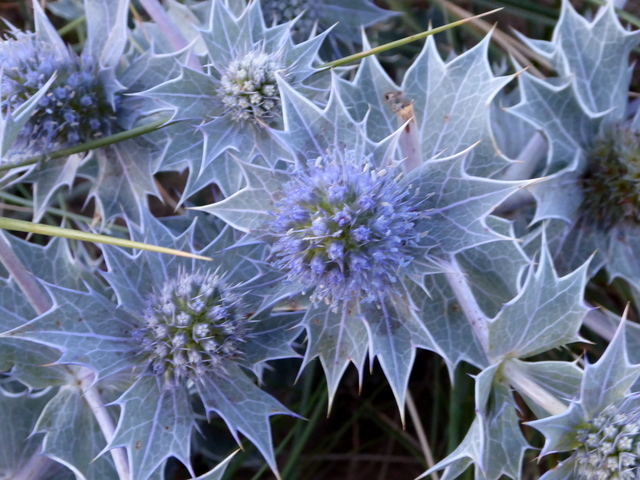
Sea-holly (Eryngium maritimum)

P1000962Sea-holly

A most beautiful plant!

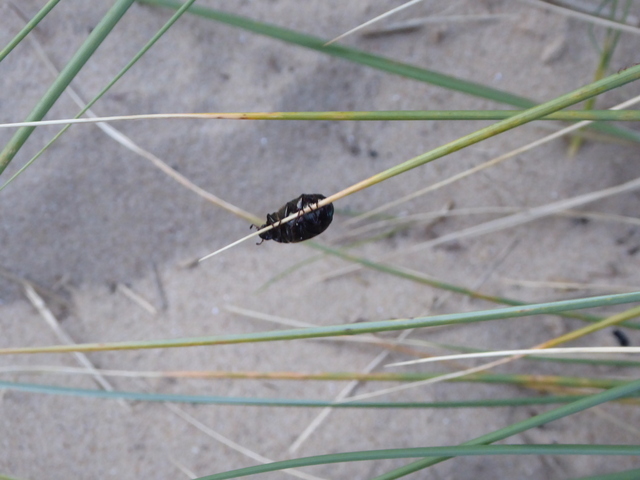
P1000965Bug

A cute little bug hoping I leave him alone!

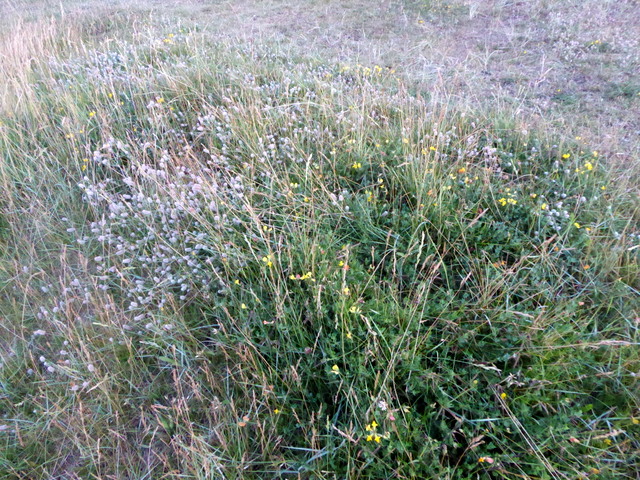
P1000966Vetch & Hare's-foot Clover

Vetch and Hare’s-foot Clover

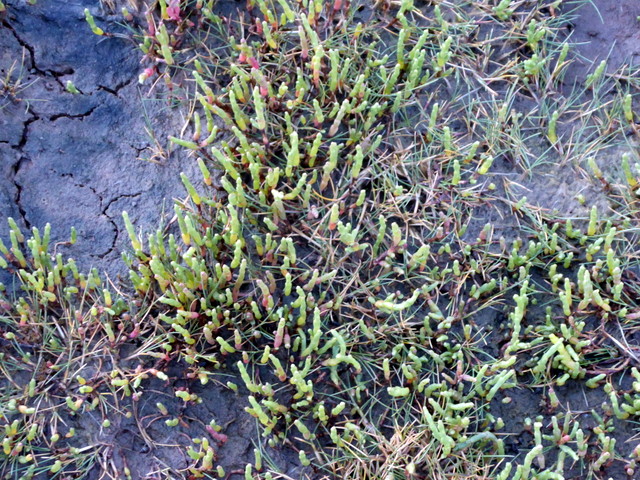
P1000967Perennial Glasswort

Perennial Glasswort (Sarcocornia perennis)

Another name for Glasswort is Samphire and like Common Glasswort (an annual plant which is also called Samphire) it can be eaten lightly boiled or pickled in spiced vinegar.

For many hundreds of years Glasswort was used in the manufacture of glass.  The succulent stems were gathered at low tide, dried and burned in heaps.  The crude ash which is high in soda was then fused with sand to make a poor quality glass.  Saltworts were also used for this purpose.

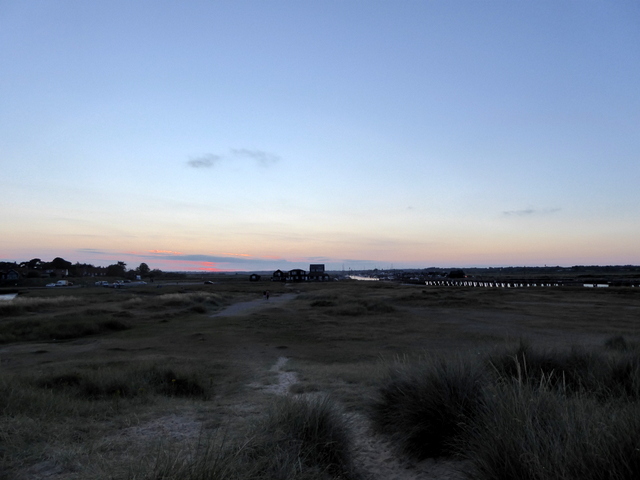
View inland with the R. Blyth on the right

View inland with the R. Blyth on the right

We had enjoyed our hour on the beach and went home cool and relaxed.

Thanks for visiting!
Share this:

  • Share on X (Opens in new window) X
  • Share on Reddit (Opens in new window) Reddit
  • Share on Pinterest (Opens in new window) Pinterest
  • Share on Facebook (Opens in new window) Facebook
  • Email a link to a friend (Opens in new window) Email
  • Share on Tumblr (Opens in new window) Tumblr
  • Print (Opens in new window) Print
  • Share on Pocket (Opens in new window) Pocket
  • Share on LinkedIn (Opens in new window) LinkedIn
Like Loading...

Home from Abroad

27 Wed Jul 2016

Posted by Clare Pooley in family, Insects, music, plants, Rural Diary, trees, wild flowers

≈ 57 Comments

Tags

agrimony, butterflies, clouds, common darter, common knapweed, Diary, dragonflies, Field Beans, gatekeeper, Great Willowherb, hedge bindweed, lane, Lords and Ladies, Marsh Woundwort, Meadowsweet, ponds, ringlet, ruddy darter, scarlet pimpernel, spear thistle, Suffolk, Sweet Chestnut, thunderstorm, wild flowers, yarrow

We arrived back home last Wednesday after spending eight days in the Schwarzwald (Black Forest).  It was probably the hottest day of the year so far and we spent it travelling by train up from Triberg, Germany to Ebbsfleet in Kent (England) where we had left our car.  We set off from the hotel at 6.30 am European time and got home just after 7.00 pm British time (one hour behind Europe).  The car thermometer said it was 32C (89.5F) when we set off from Kent and it peaked at 34C (93F) near the tunnel at the Dartford Crossing (under the Thames).  As we drove home up through Essex and Suffolk we watched large black clouds to the west edging ever nearer and we hoped we’d be able to get home before the storm got to us.  We did.  It was still 32C as we unpacked the car, opened all the windows and doors in the house and wandered round the garden for a while looking at the long grass and the drooping plants.  While I put the kettle on and made a cup of tea Richard telephoned the Chinese restaurant in Halesworth and ordered a take-away meal.  He was just about to set off when the storm broke.  It was the most violent one I’ve seen for many years with continuous thunder and bolts of lightening coming down vertically and travelling horizontally across the sky.  The rain was very heavy indeed.  Elinor and I sat on the stairs together as she gets quite frightened during thunderstorms and Richard went off to collect our evening meal.  The storm gradually abated and the sky cleared but still Richard hadn’t come back and I began to worry about him.  I found his phone which he had left behind so I couldn’t get in touch to find out where he was.  I was considering getting in the car and going to look for him when I was relieved to see him driving up to the house.  He had had a hair-raising journey and when he had got to Halesworth he found that the Chinese restaurant had a power-cut and couldn’t give us a meal.  They had tried to phone him on his mobile to let him know, but of course he had left it at home.  The town’s Thoroughfare was flooded with a foot of water and people were out trying to sweep the water away from the shop doors.  Water was coming up through the drains and the town river was in full spate.  Richard didn’t lose his head and knew he had a mission to accomplish so went to the other Chinese restaurant at the top of the town which hadn’t lost it’s power and ordered our meal from them instead.

When the rain stopped I went outside to enjoy the fresh, cooler air and took some photographs of the strange clouds.

This slideshow requires JavaScript.

The following day I resumed my dutiful-daughter job and took Mum out to do her shopping.  We had bought double her usual amount of shopping just before we’d gone away and we had made sure she had enough of her medication to last as well.  While we were on our holiday she had been taken to church by my brother on the Sunday and he had cooked lunch for her at his house, so she had plenty to tell me.

When I got home again I got on with the washing and started to tidy the garden.  Richard and I called in to see our next-door-neighbours who had been kind enough to water the plants in the greenhouse and to put our rubbish bins out for collection while we were away.  We are very fortunate to have such thoughtful and generous neighbours.

The next day I continued with house and garden work.

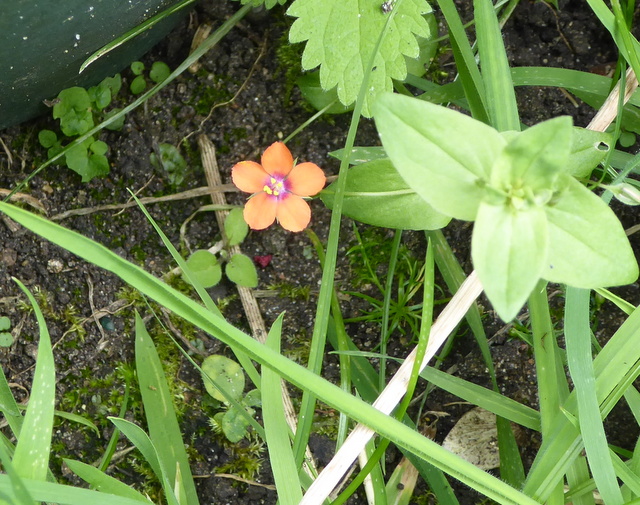
P1000897Scarlet Pimpernel

Scarlet Pimpernel (Anagallis arvensis ssp.arvensis) found behind the greenhouse

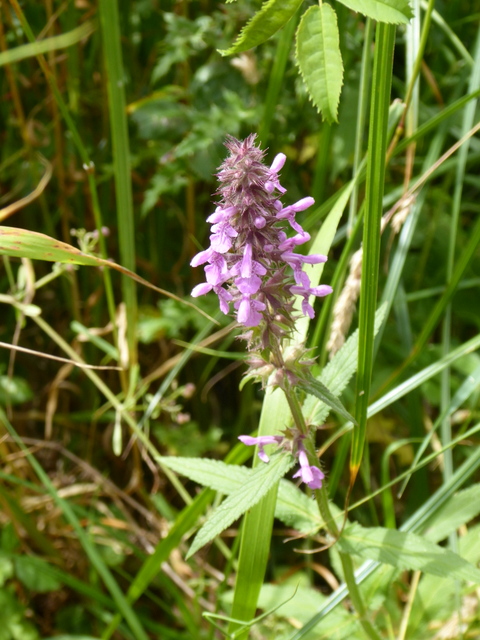
P1000899Marsh Woundwort

Marsh Woundwort (Stachys palustris) found growing on the bank of the big pond.

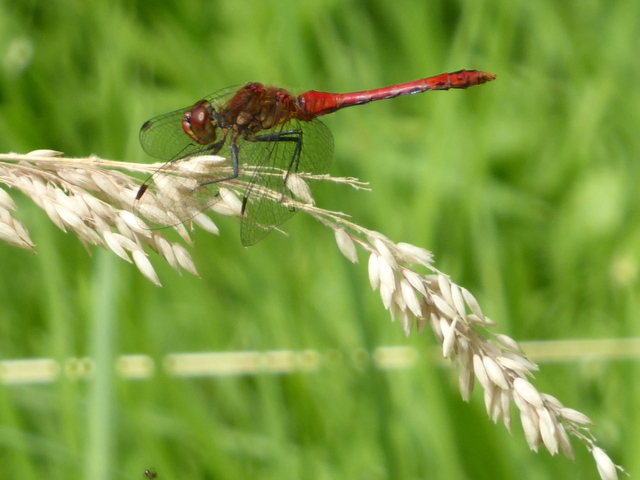
P1000900Common Darter

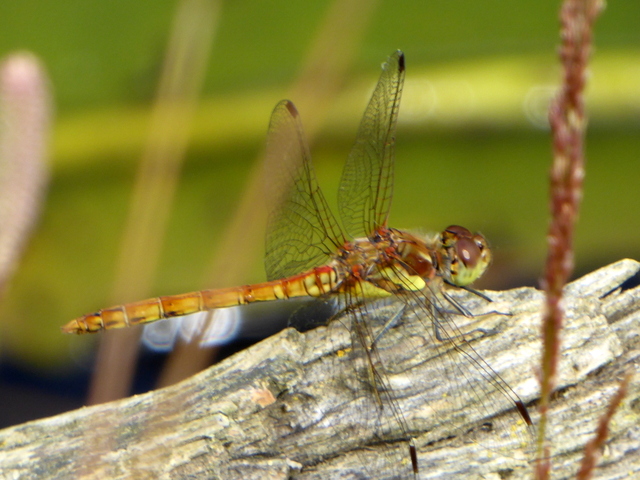
I think this may be a male Common Darter (Sympetrum striolatum) though it could be a male Ruddy Darter (Sympetrum sanguineum)

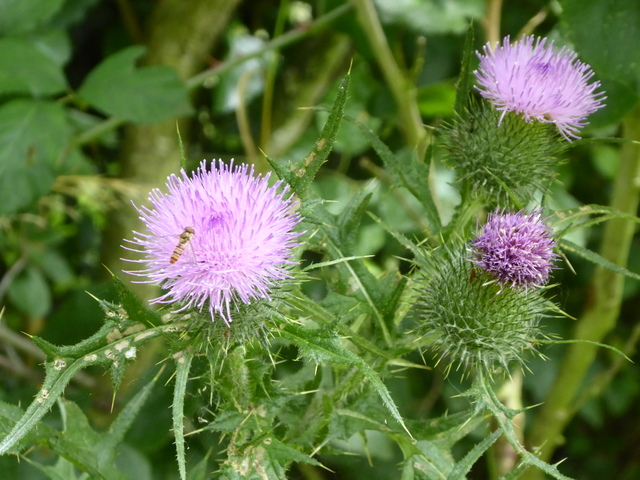
P1000902Spear Thistle

A Spear Thistle (Cirsium vulgare) in flower near the big pond

P1000905Ringlet

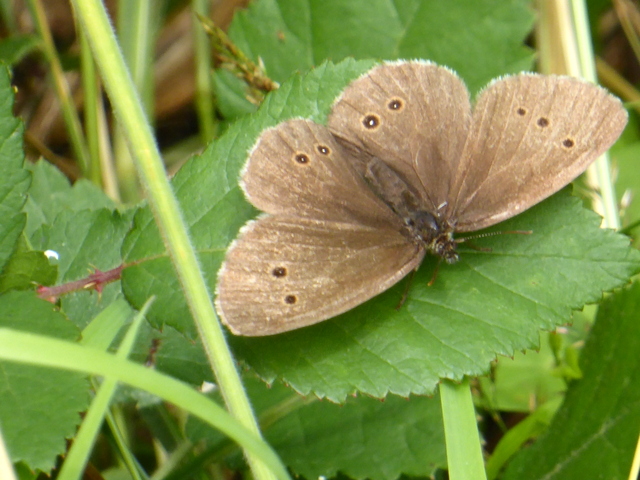
A rather old and tired Ringlet butterfly (Aphantopus hyperantus)

P1000908Hedge Bindweed

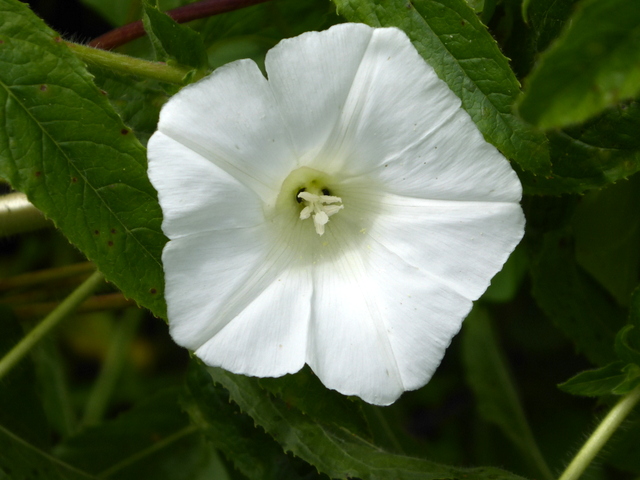
Hedge Bindweed (Calystegia sepium) in flower in the area between our garden and the field at the back of the house.

P1000910Common Darter

I believe this may be a female Common Darter (Sympetrum striolatum)

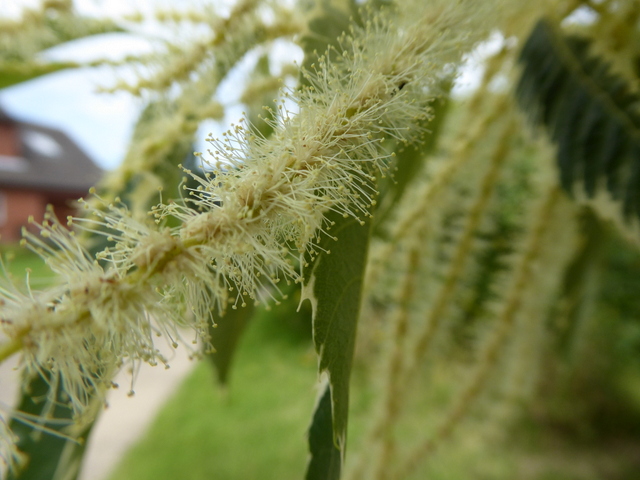
P1000914Sweet Chestnut

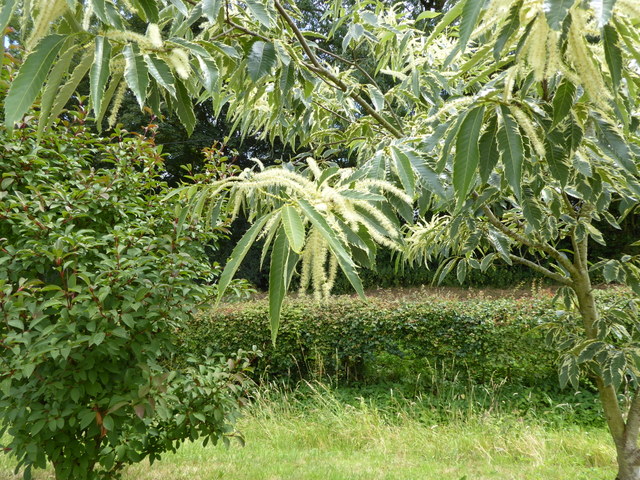
Our Variegated Sweet Chestnut (Castanea sativa variegatum) in flower

P1000915Sweet Chestnut

Sweet Chestnut flowers

I walked down the lane with Elinor to post birthday cards to my niece Natalie (my brother’s daughter) who had her 31st birthday on the 23rd of July and cards to Alice my elder daughter who had her 31st birthday on the 24th of July.  Natalie is exactly 23 hours older than Alice.

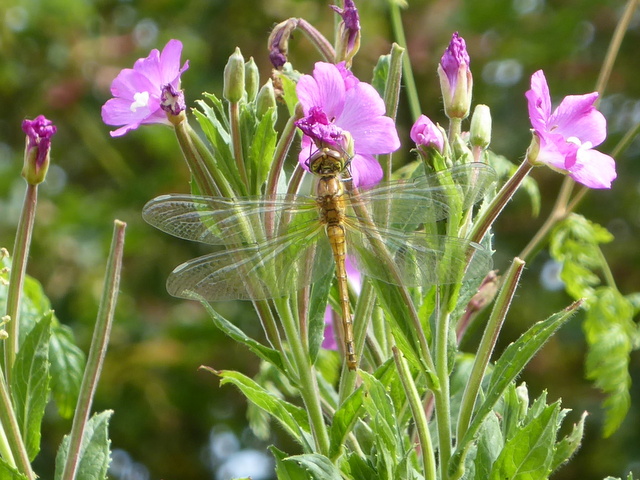
P1000916Darter

This is a teneral, or newly emerged dragonfly as you can see by the pale colouring and very shiny wings. I don’t know which dragonfly it is, unfortunately. It is perched on a Great Willowherb (Epilobium hirsutum) growing in the ditch at the side of the lane.

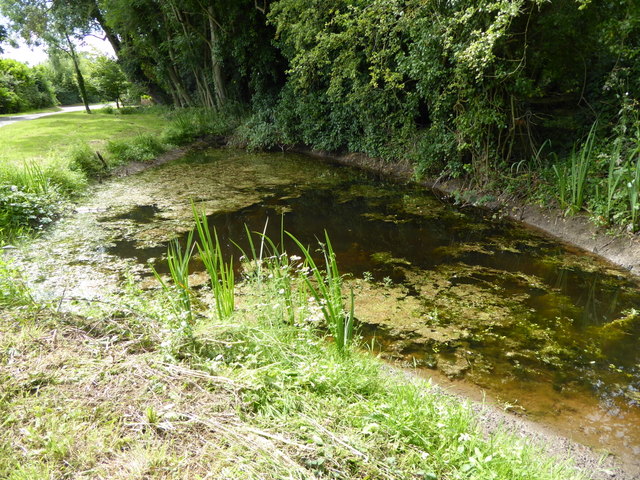
P1000917Pond

The new pond at the side of the lane which was dug during the winter.

Richard spoke to the man who lives on the opposite side of the lane to the pond and who was responsible for digging it.  Apparently, many years ago there was a pond there which was wide enough and deep enough to enable the horses to be led to drink while still attached to their carts.  It was filled in when horses were no longer needed on the farm but it has now been re-instated and I am very pleased.  The pond is already full of interesting plants and insects which have found their way there on their own.

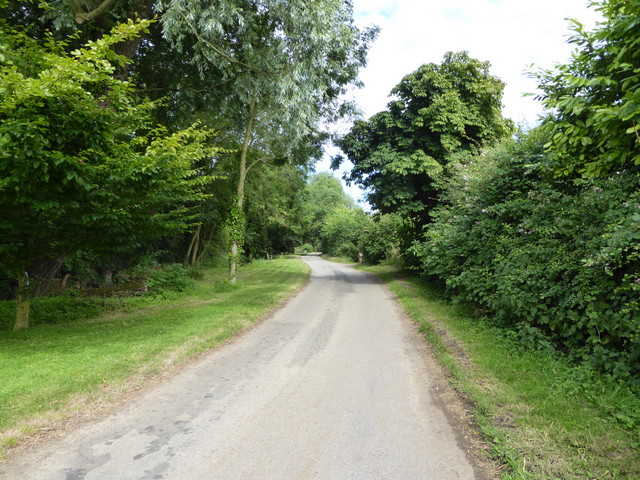
P1000921Lane

Our lane. I am standing next to the pond (on my left) and looking back in the direction from which we had come.

P1000922Perhaps wall of demolished St N church

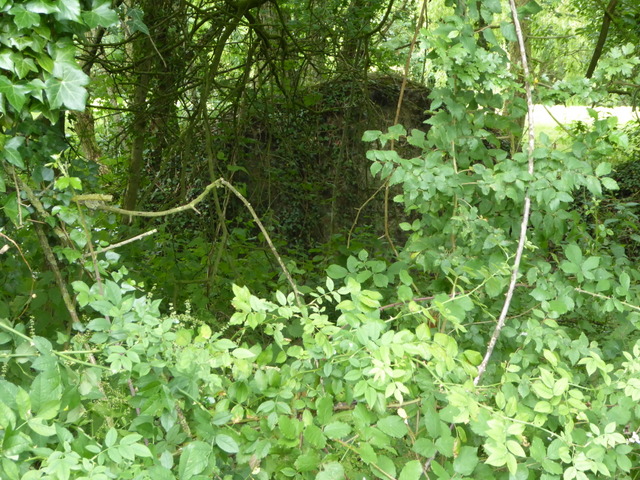
Looking over the hedge into the garden of Church Farm I noticed this piece of wall covered in ivy. I wonder if it is part of the old church of St Nicholas demolished many hundreds of years ago.

P1000923Lords and Ladies

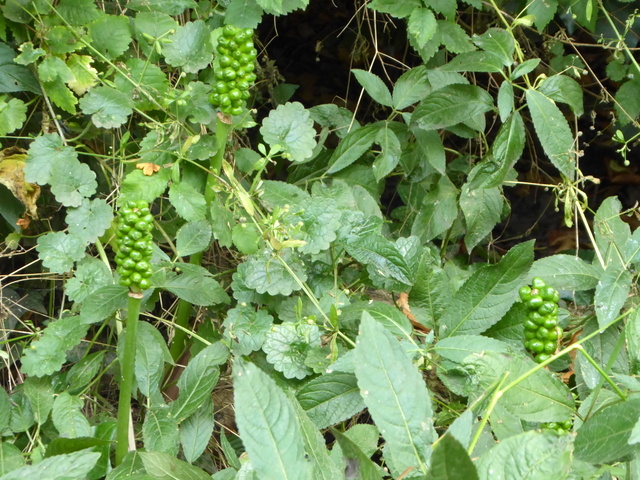
Lots of unripe Lords and Ladies berries (Arum maculatum)

P1000924Field beans

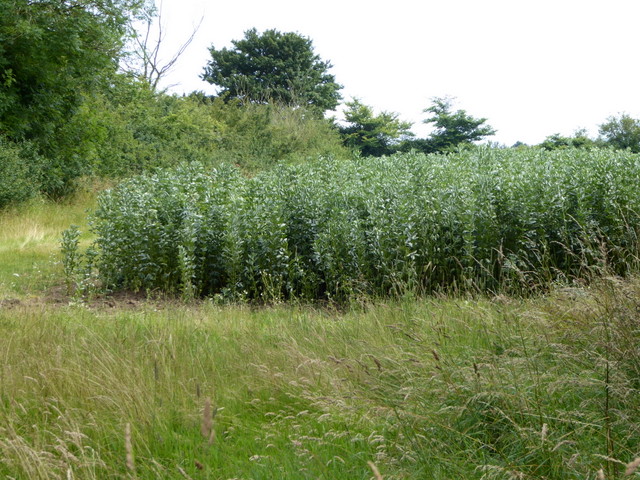
A field full of Field or Broad Beans.

P1000925Pond

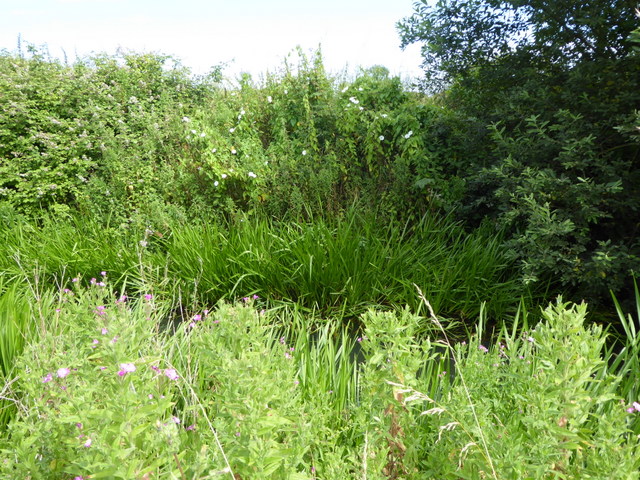
Another pond at the side of the lane. This one has become rather overgrown. It has fish in it and I once saw a couple sitting at the side of the road with rods trying to catch fish.

P1000926View

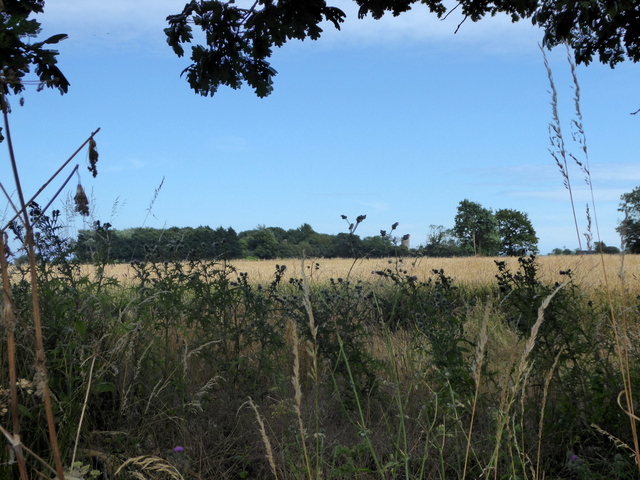
View across the fields towards All Saints church which can just be seen to the right of centre on the horizon. It is slightly obscured by a thistle flower!

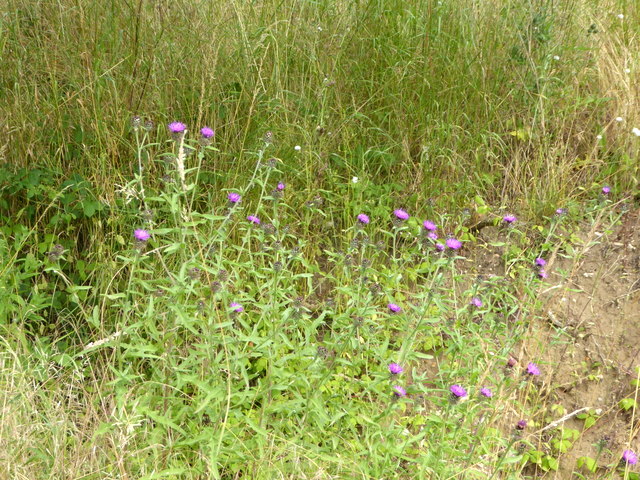
P1000928Common Knapweed

Common Knapweed (Centaurea nigra)

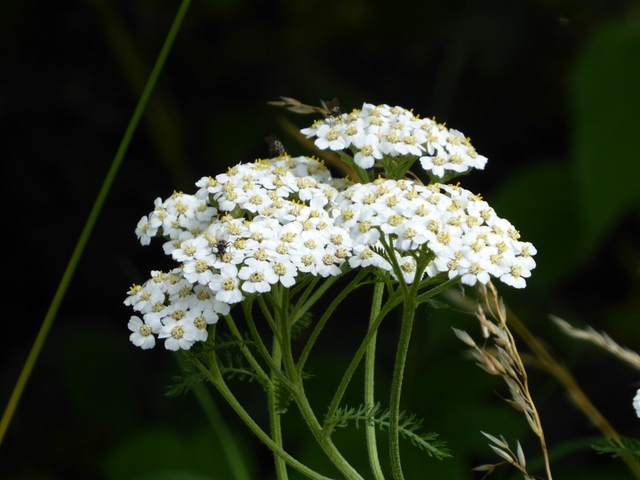
P1000932Yarrow

Yarrow (Achillea millefolium)

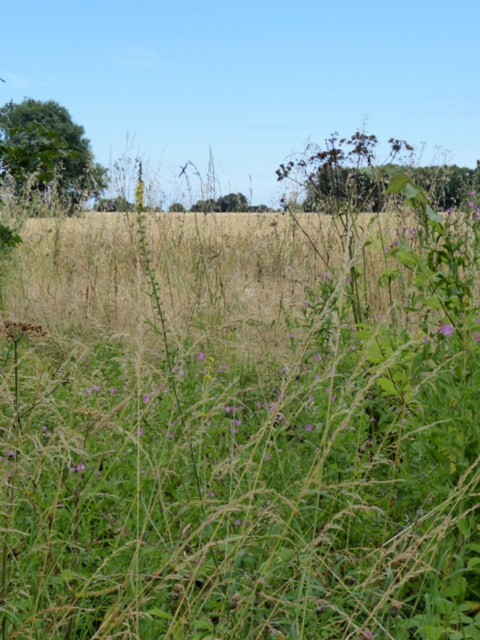
P1000930Wild flowers-001

Wild flowers at the side of the lane.

P1000931Agrimony-001

Agrimony (Agrimonia eupatoria)

P1000934Meadowsweet

Meadowsweet (Filipendula ulmaria)

P1000935Meadowsweet

Meadowsweet has a beautiful almond-blossom-like fragrance.

P1000939Gatekeeper

A poor photo of a male Gatekeeper butterfly (Pyronia tithonus)

These were all the things I saw at the side of the lane on a short 20 minute walk to post cards.

Here now is my musical choice – the Petite Symphonie in B flat for nine wind instruments by Charles Gounod, composed in 1888.  It lasts about 20 minutes and is of four movements.  I love the lyricism of French 19th century music and I like this recording of the piece very much.  It is a piece of music I used to play and it brings back such good memories to me when I hear it.

Thanks for visiting!
Share this:

  • Share on X (Opens in new window) X
  • Share on Reddit (Opens in new window) Reddit
  • Share on Pinterest (Opens in new window) Pinterest
  • Share on Facebook (Opens in new window) Facebook
  • Email a link to a friend (Opens in new window) Email
  • Share on Tumblr (Opens in new window) Tumblr
  • Print (Opens in new window) Print
  • Share on Pocket (Opens in new window) Pocket
  • Share on LinkedIn (Opens in new window) LinkedIn
Like Loading...
← Older posts
Newer posts →
Follow A Suffolk Lane on WordPress.com

Enter your email address to follow this blog and receive notifications of new posts by email.

Join 715 other subscribers.

Unknown's avatar

I talk about what it's like living in a quiet part of Suffolk. I am a wife, mother and daughter, a practising Christian and love the natural world that surrounds me. I enjoy my life - most of the time!
My Posts

Jan 2026
M T W T F S S
 1234
567891011
12131415161718
19202122232425
262728293031  
« Dec    

Pages

  • About my Blog
  • GDPR (General Data Protection Regulations) and This Site
  • My Life in a Suffolk Lane

Archives

Blogs I Follow

Unknown's avatar
Unknown's avatar
Unknown's avatar
Unknown's avatar
Unknown's avatar
Unknown's avatar
Unknown's avatar
Unknown's avatar
Unknown's avatar
Unknown's avatar
Unknown's avatar
Unknown's avatar
Unknown's avatar
Unknown's avatar
Unknown's avatar
Unknown's avatar
Unknown's avatar
Unknown's avatar
Unknown's avatar

Posts I Like

  • Unknown's avatar
  • John’s Postcards's avatar
  • Unknown's avatar
  • Unknown's avatar
  • Limentinus's avatar
  • thesimlux's avatar
  • NEERAJ SINGH's avatar
  • Bernard Aybout (Virii8)'s avatar
  • martzkvi's avatar
  • Unknown's avatar
  • sopantooth's avatar
  • Unknown's avatar
  • Wayne Wolfson's avatar
  • Unknown's avatar
  • Talkmore's avatar
  • Sarah curran's avatar
  • Unknown's avatar
  • Unknown's avatar
  • Unknown's avatar
  • Unknown's avatar
  • Unknown's avatar
  • Ari's avatar
  • (Kitty) Cat Strawberry - Meow!'s avatar
  • Unknown's avatar
  • Unknown's avatar
  • Unknown's avatar
  • Unknown's avatar
  • Unknown's avatar
  • Unknown's avatar
  • womanseyeview's avatar
  • T Ibara Photo's avatar
  • Yeah, Another Blogger's avatar
  • Unknown's avatar
  • Kathleen's avatar
  • Unknown's avatar
  • bitaboutbritain's avatar
  • Andrea Stephenson's avatar
  • Martha's avatar
  • Unknown's avatar
  • Unknown's avatar
  • Unknown's avatar
  • Unknown's avatar
  • Matthew Paul's avatar
  • JAM's avatar
  • Carolina Cuisine Network's avatar
  • Unknown's avatar
  • Unknown's avatar
  • quietsolopursuits's avatar
  • Unknown's avatar
  • Unknown's avatar

amphibians architecture art Arts and Crafts churches cooking Days out domestic animals family fish Folk Traditions Gardening Historic Buildings holidays Insects Landscaping literature music Norwich plants Rural Diary seashore theatre trees Uncategorized walking weather wild animals wild birds wild flowers

Tags

architecture autumn birds blackbird blackthorn Bungay butterfly church clouds common knapweed cow parsley crocus daffodils Diary dogwood family field maple flowers fungus garden gardening geese greylags ground-ivy Halesworth Hawthorn heather holiday Holly Holy Week horse chestnut Hoverfly insects ivy Lake District Lent lesser celandine lichen Lords and Ladies Mallard mallards Minsmere moorhen moss music Norwich Peak District pheasant plants pond ponds primrose primroses Rain rooks Rumburgh Rumburgh Church sheep Sheffield snow snowdrops Southwold spring Suffolk Suffolk Wildlife Trust sunset the Beck trees viburnum bodnantense walking weather wild cherry wild flowers winter-flowering honeysuckle witch-hazel

Meta

  • Create account
  • Log in
  • Entries feed
  • Comments feed
  • WordPress.com

Goodreads

Blog at WordPress.com.

Book Jotter

Reviews, news, features and all things books for passionate readers

Country Life Blog -

A blog about life in the country in the past and present

Matthew Paul: Poetry & Stuff

Poetry and what-not

Schnippelboy

Ein Tagebuch unserer Alltagsküche-Leicht zum Nachkochen

TAMARA JARE

Tamara Jare Contemporary Figurative Art – Bold Colors, Resilient Souls

A Taste of Freedom

Documenting a Dream

Country Ways

Rambling Journeys in Britain, Countryside Matters and campaigning for the Right to Roam

The Strawberry Post

Here to Entertain, Educate & Inspire!
a north east ohio garden

an ongoing experiment in the dirt, 35 plus years

naturechirp

Celebrating God's creatures, birds and plants...

Sophie Neville

Writer

Going Batty in Wales

Developing a more sustainable lifestyle in SW Wales

Our Lake District Escapades

Exploring the Lake District and beyond

Short Walks Long Paths

Wandering trails around the coast of Wales

The Biking Gardener

An English persons experience of living and gardening in Ireland

Nan's Farm

A Journal Of Everyday Life

Walk the Old Ways

Rambling Journeys in Britain with John Bainbridge. Fighting for the Right to Roam. Campaigning to Protect Our Countryside.

Writer Side UP!

Waking the Writer Side...and keeping it "Up!"

Meggie's Adventures

Travel, thank you notes and other stories

amusicalifeonplanetearth

Music and the Thoughts It Can Inspire

lovefoundation.co.uk

Traveling Tortuga

Simply Living Well

Pakenham Water Mill

Historic watermill in the beautiful Suffolk countryside

Take It Easy

Retired, not expired: words from the after(work)life. And music. Lots of music!

Secret Diary Of A Country Vicar's Wife

By Olive Oyl

thanksfortheadventureorg.wordpress.com/

The Beat Goes On

#TBGO

Frank Pleszak's Blogs

Twitter: @frankpleszak @PolishIICorps

John Bainbridge Writer

Indie Writer and Publisher

roughwighting

Life in a flash - a bi-weekly storytelling blog

Walking the Old Ways

Rambling in the British Countryside

CapKane

thoughts on social realities

SkyeEnt

Jottings from Skye

jodie richelle

embracing my inner homemaker

Skizzenbuch/Blog

Just another WordPress.com weblog

Have Bag, Will Travel

The Call of the Pen

Flash Fiction, Book Reviews, Devotionals and other things.

John's Postcards

Art in Nature

You dream, I photographe it !

Smile! You’re in Barnier World......

theinfill

the things that come to hand

Dr. Mary Ann Niemczura

Author of "A Past Worth Telling"

Provincial Woman

The Pink Wheelbarrow

Luanne Castle: Poetry and Other Words (and cats!)

Poetry, Other Words, and Cats

The Family Kalamazoo

A genealogical site devoted to the history of the DeKorn and Zuidweg families of Kalamazoo and the Mulder family of Caledonia

everythingchild

The Book Owl

Canberra's Green Spaces

Paul Harley Photographer

  • Subscribe Subscribed
    • A Suffolk Lane
    • Join 715 other subscribers.
    • Already have a WordPress.com account? Log in now.
    • A Suffolk Lane
    • Subscribe Subscribed
    • Sign up
    • Log in
    • Report this content
    • View site in Reader
    • Manage subscriptions
    • Collapse this bar
 

Loading Comments...
 

    Privacy & Cookies: This site uses cookies. By continuing to use this website, you agree to their use.
    To find out more, including how to control cookies, see here: Cookie Policy
    %d