• About my Blog
  • GDPR (General Data Protection Regulations) and This Site
  • My Life in a Suffolk Lane

A Suffolk Lane

~ A diary of my life in rural north Suffolk.

A Suffolk Lane

Author Archives: Clare Pooley

July (mainly) in Suffolk

30 Thu Jul 2015

Posted by Clare Pooley in Gardening, Insects, plants, Rural Diary, wild birds

≈ 35 Comments

Tags

birds, butterflies, caterpillar, danselfly, dragonflies, flies, garden, garden flowers, green woodpecker, herbs, hoverflies, insects, moths, Suffolk, wild flowers

This post is made up of photos of things I’ve seen in my garden during the last month.  The first few shots were taken during the last two days in June (I did say ‘mainly’!), when the weather suddenly got much warmer and the sun appeared.  Summer arrived and we all felt much better!
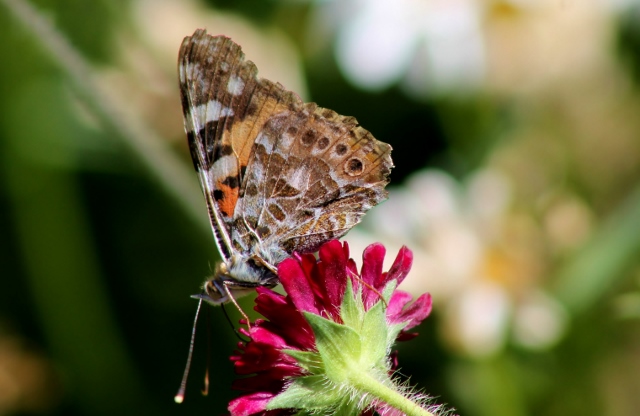
IMG_2329Painted Lady on scabious (2) (640x416)

Painted Lady butterfly (Vanessa cardui) on a scabious flower
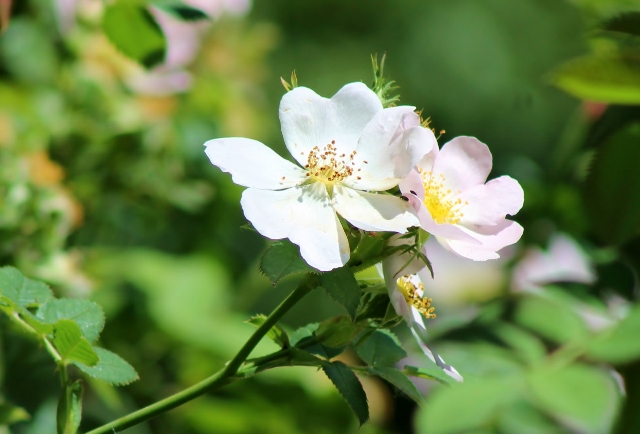
IMG_2333Dog Rose (2) (640x434)

Dog Rose flowers (Rosa canina) next to the big pond
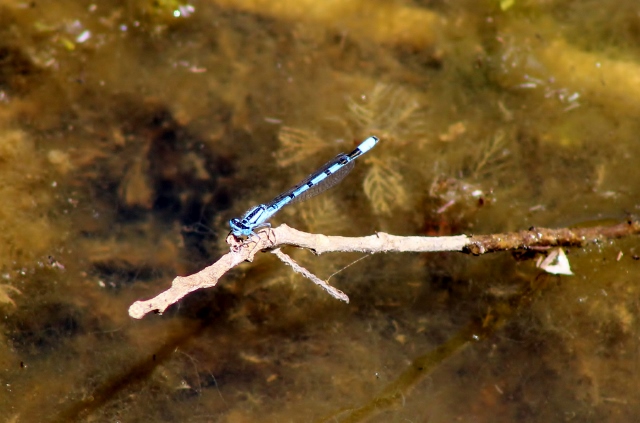
IMG_2335Common Blue Damselfly (640x423)

Male Common Blue damselfly (Enallagma cyathigerum)
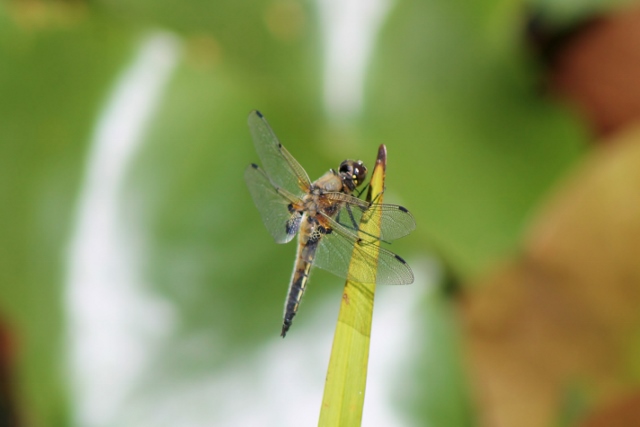
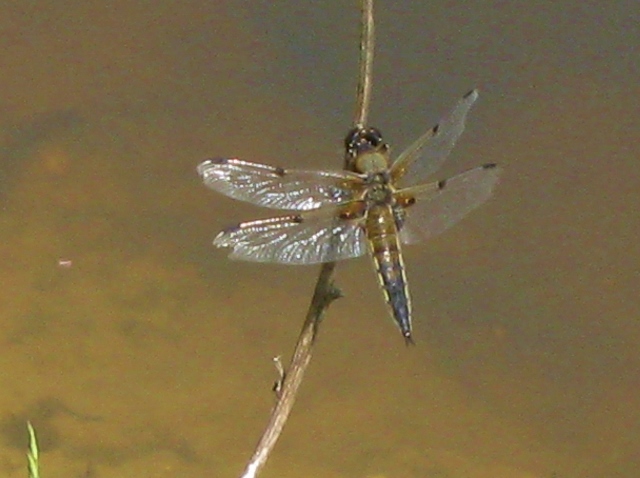
IMG_2341Four-spotted chaser (640x427)

Four-spotted Chaser dragonfly (Libellula quadrimaculata)
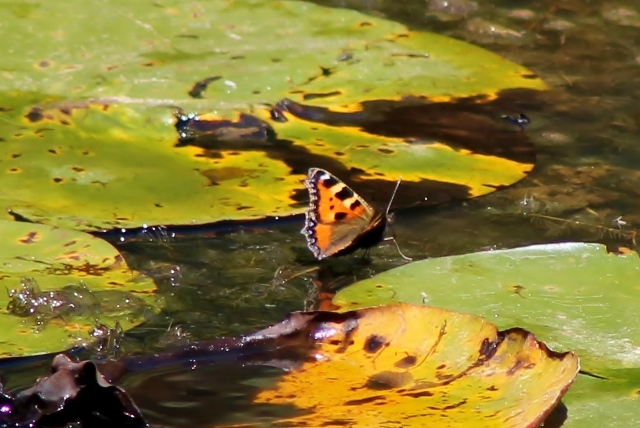
IMG_2340Small Tortoiseshell on pond (2) (640x428)

Small Tortoiseshell butterfly (Aglais urticae) on big pond
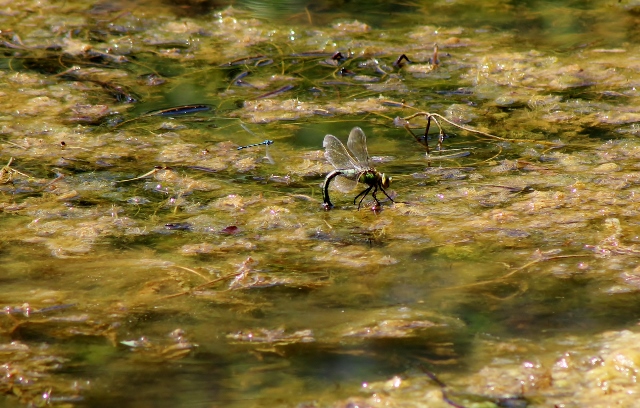
IMG_2348Female Emperor Dragonfly (640x408)

Female Emperor dragonfly (Anax imperator) laying eggs on the big pond

We have Ground Elder in our garden.  I wish we didn’t but there is little chance of us ever getting rid of it here so we will have to try to weaken it and stop it from spreading further.  It is in the ditch between us and the school house next door and also in the ditches at the front of the house and under the hedge.  It is trying to spread into the lawn at the front but we strim and mow as much as possible and try to stop it from flowering.  We often fail in this.
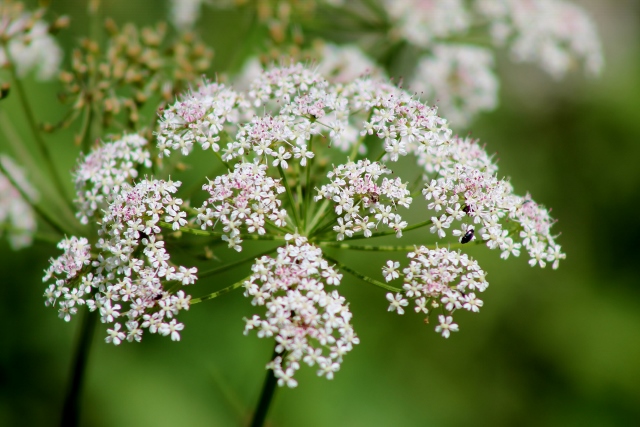
IMG_2350Ground Elder (640x427)

Ground Elder flower! As you see it is a pretty umbellifer with slightly pink buds.

I eradicated it from a former garden by digging it out over a period of a few years.  It was in a flower bed so therefore easier to deal with.
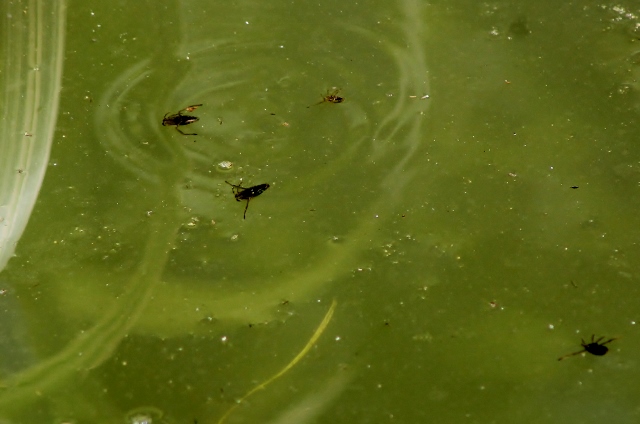
IMG_2351 (2).jpgCommon Backswimmers (640x424)

Common Backswimmers (Notonecta glauca) in the front pond. This pond completely dried up while we were away on holiday but is starting to fill again because of the torrents of rain we’ve had during the past week or two.
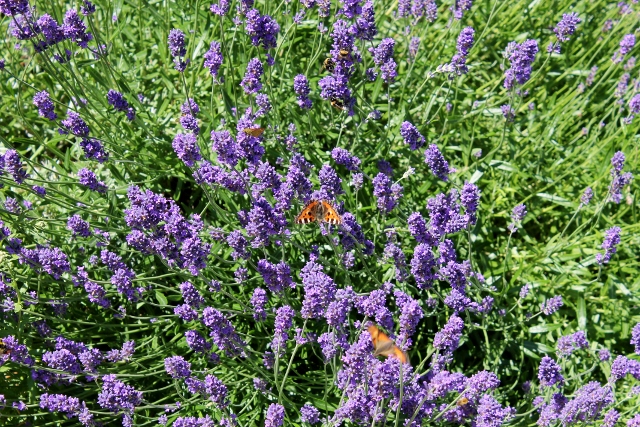
IMG_2359Insects on lavender (640x427)

Insects on Lavender ‘Hidcote’. There haven’t been as many insects this year as last, but the lavender attracted quite few while it flowered. It is a fabulous insect magnet!
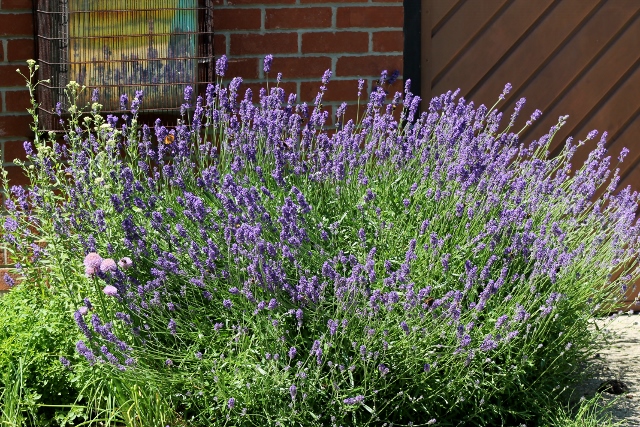
IMG_2354Lavender (640x427)

Lavender growing at the front of our house
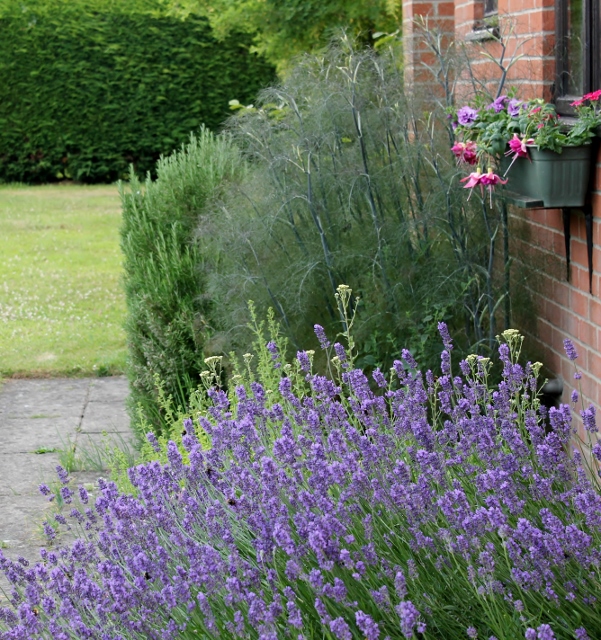
IMG_2373Herb garden (601x640)

My herb garden

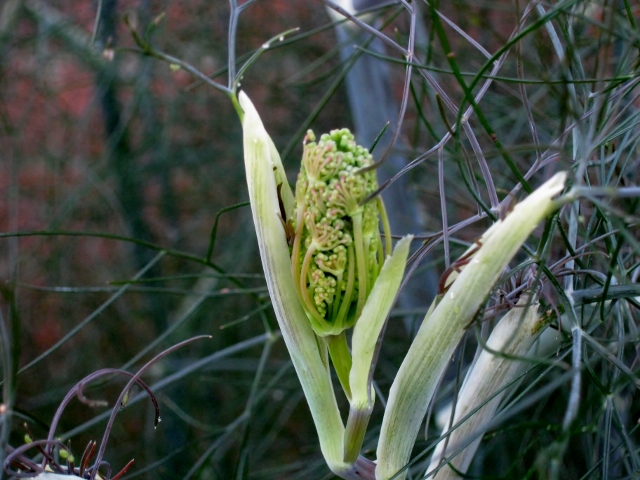
IMG_4908Bronze Fennel flower bud (640x480)

Bronze Fennel flower bud. When we returned form our week away all the leaves on the fennel had died and the flowers were drooping. I watered the herbs and then the rains and cool weather returned; the fennel is still alive (it has an enormous tap root) but no leaves at all for now. The flowers are fine and are being enjoyed by wasps and hoverflies.  A neighbour came in to water the plants in the greenhouse while we were away (tomatoes mainly) but we couldn’t expect him to water all our plants – that would be asking much too much!
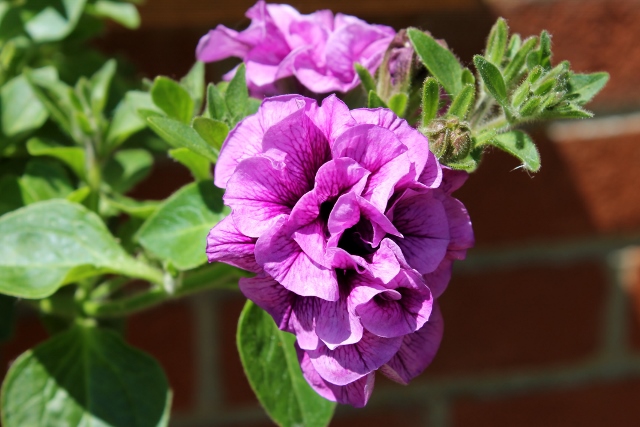
IMG_2355Tumbelina Petunia (640x427)

A pretty Tumbelina Petunia in the window box.  It has a lovely gentle scent.
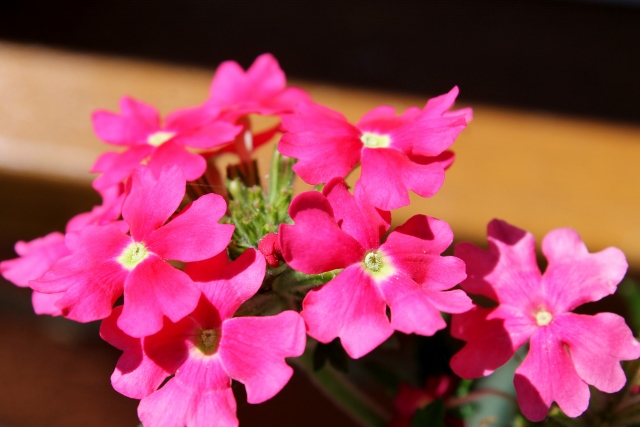
IMG_2356Verbena (640x427)

A very bright pink Verbena in the window box with the petunia. The hoverflies love it very much. I wish it was scented.
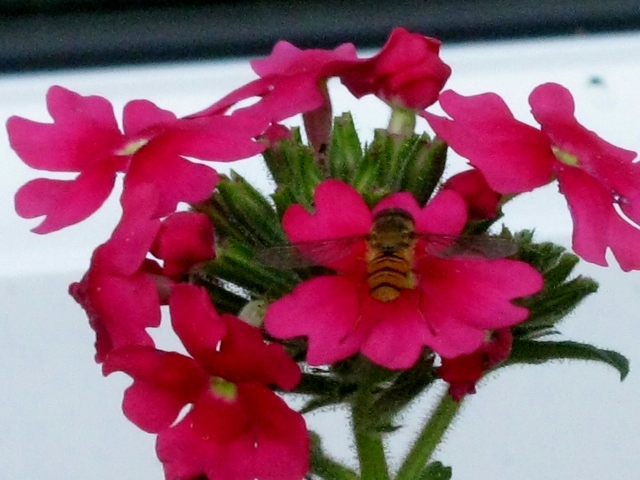
IMG_4917Hoverfly Episyrphus balteatus on verbena (640x480)

Hoverfly Episyrphus balteatus (I think!) on verbena
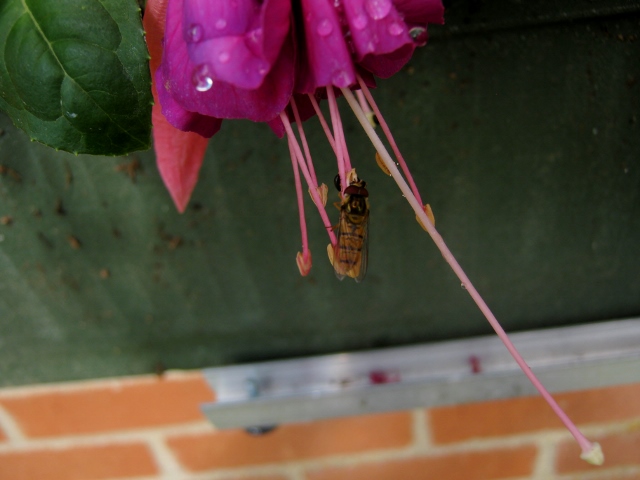
IMG_4926Hoverfly on Fuchsia (640x480)

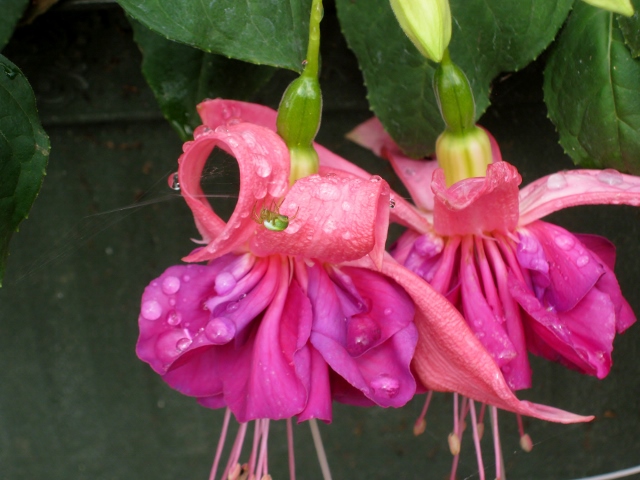
A hoverfly on the Fuschia that is also in the window box. This photo was taken after we had begun to have rain at last after a long dry spell.
IMG_4923Spider on fuchsia (640x480)

A beautiful, tiny green spider on the fuschia. I think this is a Green Orb-weaver (Araniella curcurbitina).
IMG_4915Six-spot Burnet (480x640)

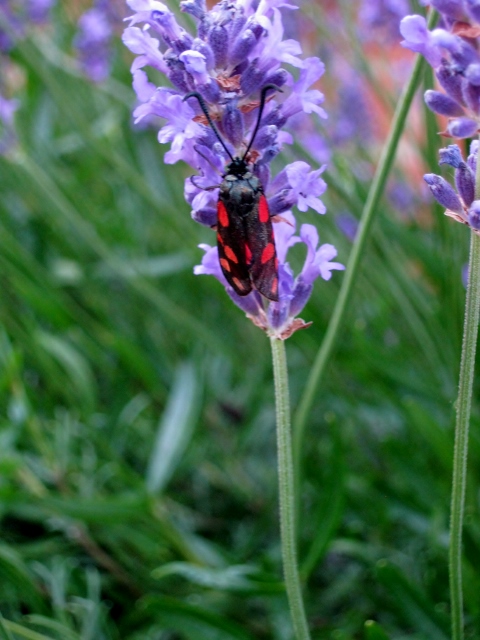
A Six-spot Burnet moth (Zygaena filipendulae) on lavender
IMG_2358Lily (640x427)

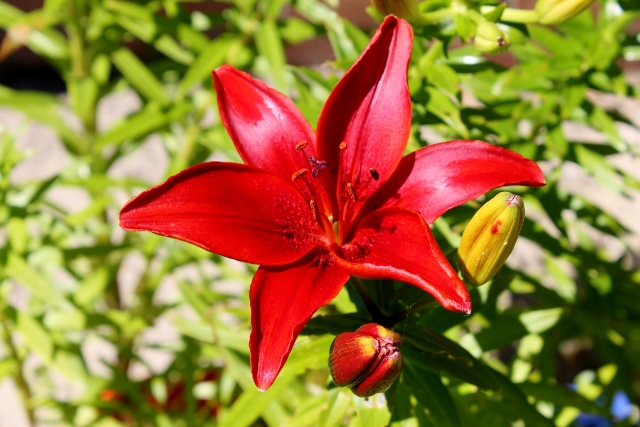
One of my unscented Asian lilies.

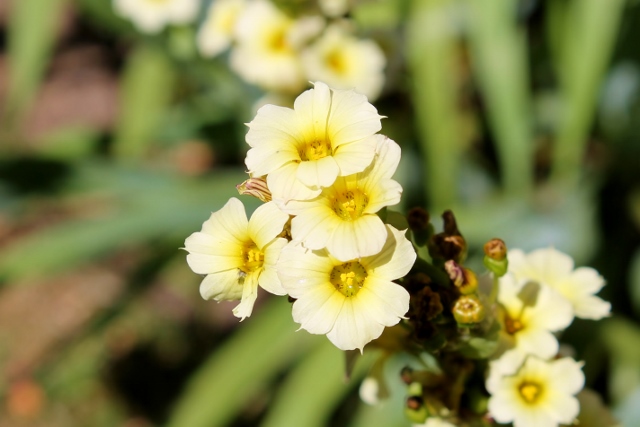
IMG_2369Sisyrinchium striatum (2) (640x427)

Sisyrinchium striatum. These put on a good show this year. Many years ago I had these growing in my garden and loved them as they seemed to go with all the flowers in the border. We moved to Somerset for 18 months and then moved here in 2006. Three years ago I found a seedling sisyrinchium in the garden which appeared from nowhere.  I potted it up and grew it on; it flowered the following year and I let it go to seed. I sprinkled the seed on my border and last year I found lots of plants growing which flowered beautifully this year. Free flowers!
IMG_2370Viola (2) (640x419)

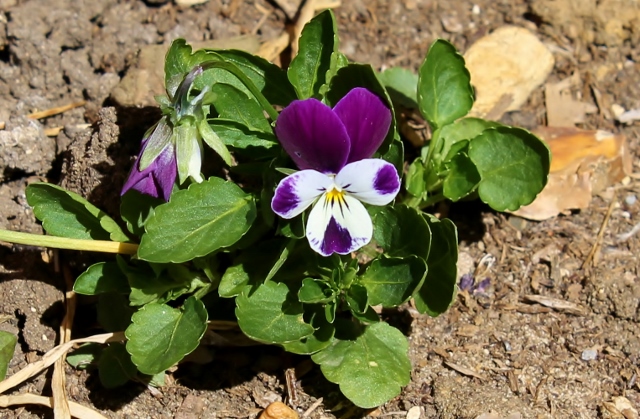
A pretty Viola. These seed themselves all over the garden.
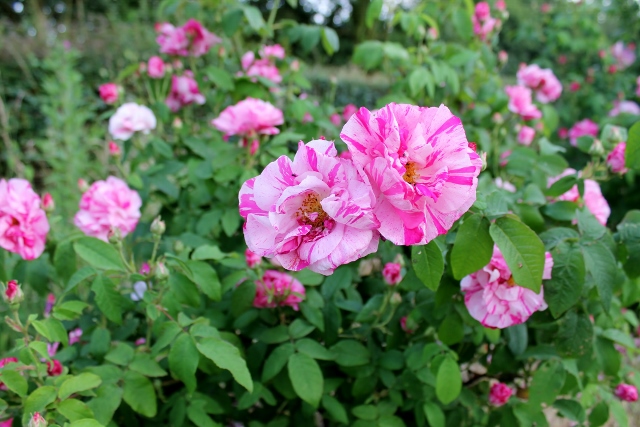
IMG_2376Rosa Mundi (640x427)

I have two Rosa Mundi bushes ( a gift from Richard) and they both flowered well this year. It is sad that they have such a short flowering period but it is worth having them for their pretty, painted petals.
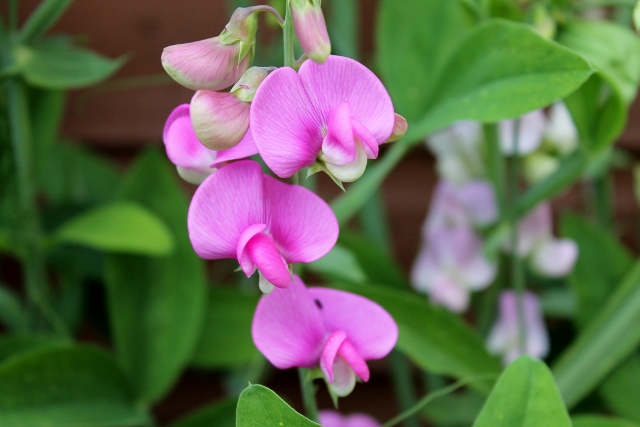
IMG_2378Perennial Sweet Pea (640x427)

Perennial Sweet Pea

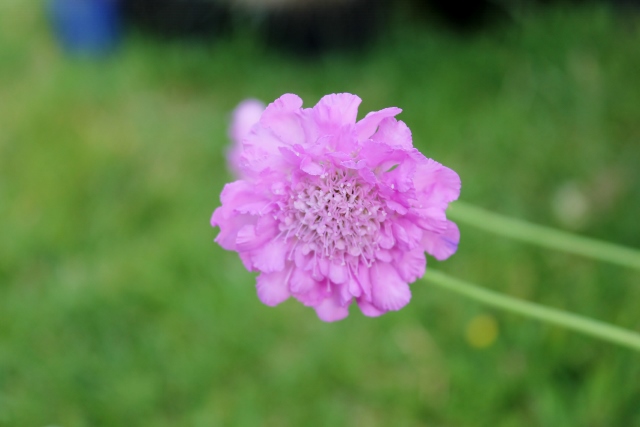
IMG_2379Scabious (640x427)

Scabious flower

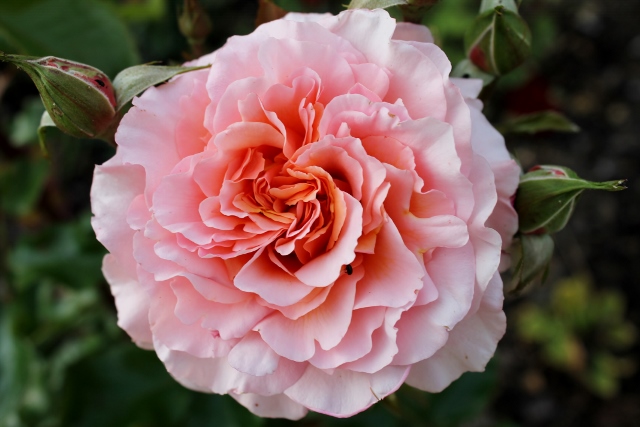
IMG_2382Rose (640x427)

A pretty rose from Richard’s border

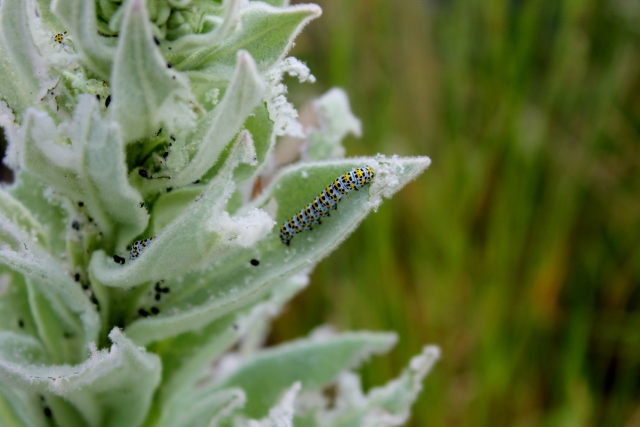
In a former post I posted a photo of a mullein flower infested with Mullein moth caterpillars.  Here is another photo taken a week or so later when the grubs were much bigger.
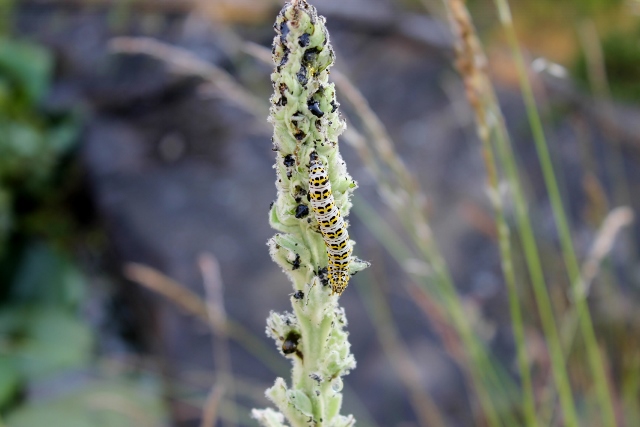
IMG_2380Mullein (640x427)

Mullein Moth caterpillar (Shargacucullia verbasci) on what was left of a Mullein flower spike
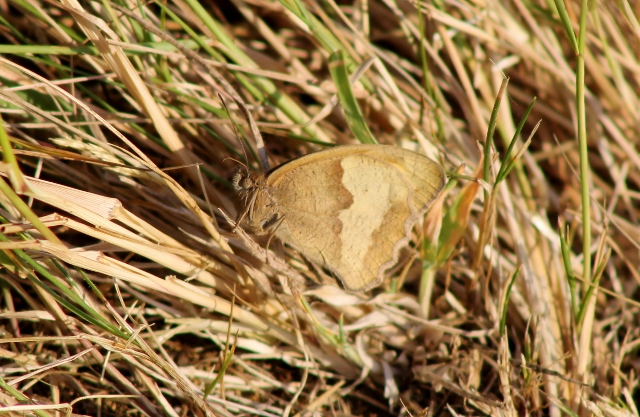
IMG_2386 (2)Meadow Brown (640x417)

A Meadow Brown butterfly (Maniola jurtina). Wonderful camouflage!
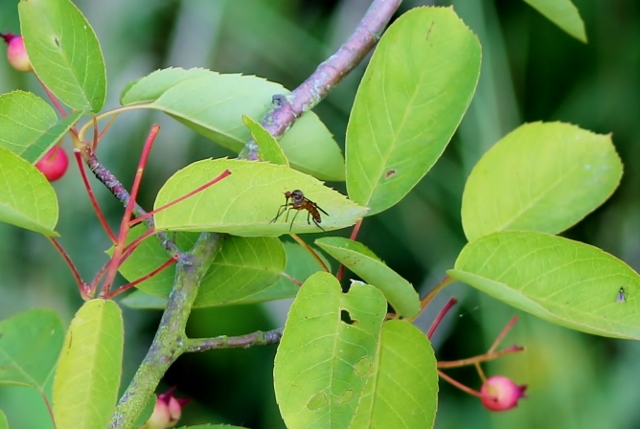
IMG_2387Fly on Amelanchier (2) (640x429)

A fly on the Amelanchier tree. I cannot identify this one properly though it looks a little like Empis digramma, a fly which hunts other flies in long grass and other lush vegetation and spears them with its proboscis.
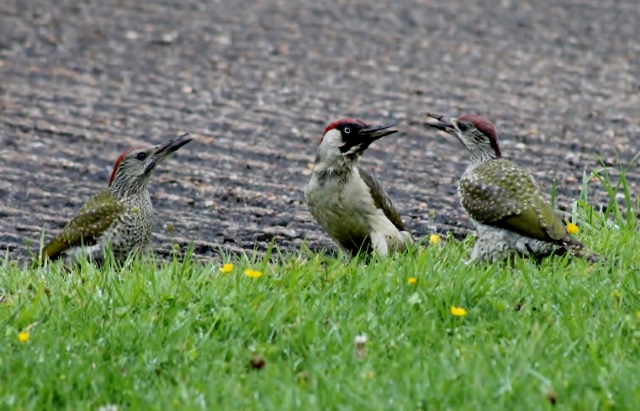
IMG_2404Adult and fledgling Green Woodpeckers (2) (640x411)

I took this photo of the Green Woodpecker (Picus viridis) and its 2 fledglings this evening. The adult was trying to teach its young how to find ant’s eggs.

This last photo wasn’t taken in my garden but in the grounds of the Norfolk and Norwich Hospital where I had to go for a check-up on the day before we went on holiday.  I didn’t know what else to do with it!
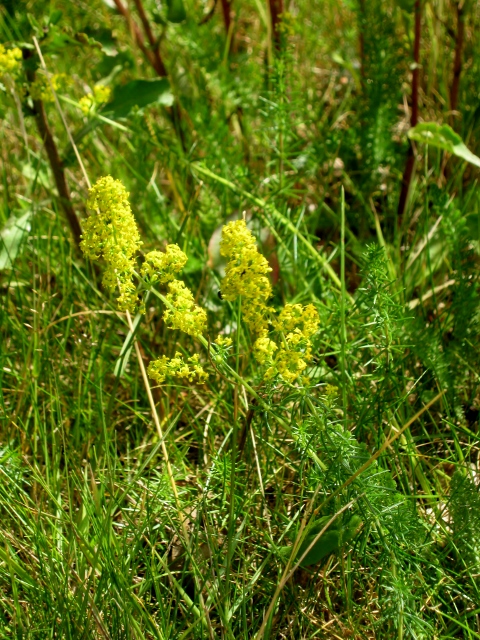
IMG_4929Lady's Bedstraw (480x640)

Lady’s Bedstraw (Galium verum)

Thank’s for visiting!
 

Share this:

  • Share on X (Opens in new window) X
  • Share on Reddit (Opens in new window) Reddit
  • Share on Pinterest (Opens in new window) Pinterest
  • Share on Facebook (Opens in new window) Facebook
  • Email a link to a friend (Opens in new window) Email
  • Share on Tumblr (Opens in new window) Tumblr
  • Print (Opens in new window) Print
  • Share on Pocket (Opens in new window) Pocket
  • Share on LinkedIn (Opens in new window) LinkedIn
Like Loading...

Aira Force – Lake District Holiday

28 Tue Jul 2015

Posted by Clare Pooley in Days out, plants, Rural Diary, walking

≈ 29 Comments

Tags

Aira Force, arboretum, beck, cascade, fells, fungi, Lake District, lichen, liverwort, moss, plants, pool, Ullswater, waterfall, wish tree

We had a slow start to our first day in the Lake District.  We were tired after our long journey of the day before and the weather wasn’t good enough that morning to tempt us out early.  By midday however, the rain had stopped and the clouds had lifted and we thought we would have a short excursion to Ullswater and look at Aira Force.

Ullswater is the second largest lake in the Lake District and last Easter we took a boat trip on it.  I wrote about our Lakes holiday last year but unfortunately that post has gone missing.  I have been sent copies of my missing posts by my friend Heather (thank-you Heather!) but haven’t yet copied them back into my blog.  (Unfortunately, all your wonderful comments have gone for good 😦 ).

Aira Force is a waterfall situated in woodland on the northern shore of the lake and is now in the care of the National Trust.

After a short drive we found the National Trust car park and then started to walk up through woodland towards the force.

IMG_4934Aira Force (640x480)

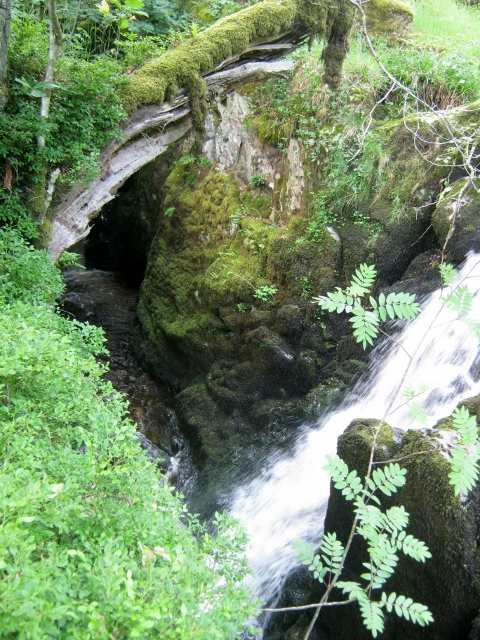
Not easy to see, but this is the Aira Beck as it flows through woodland at the bottom of the hill. It will shortly enter the lake.

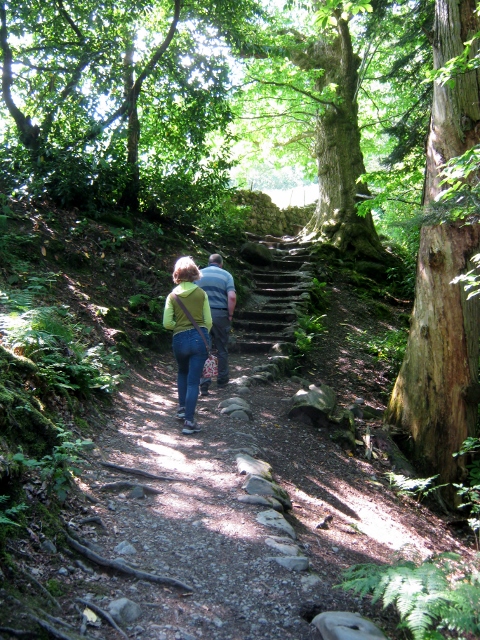
IMG_4935At Aira Force (480x640)

Richard and Elinor walking ahead of me up the path.

This area was once owned by the Howard family who still live in Greystoke Castle near by.  In the 18th century they renovated an old hunting lodge (a former pele tower) and created a sporting estate around it.  They landscaped the area around the force, planting over half a million native and non-native trees.  They made paths and bridges through the woodland and used the place as a pleasure garden.

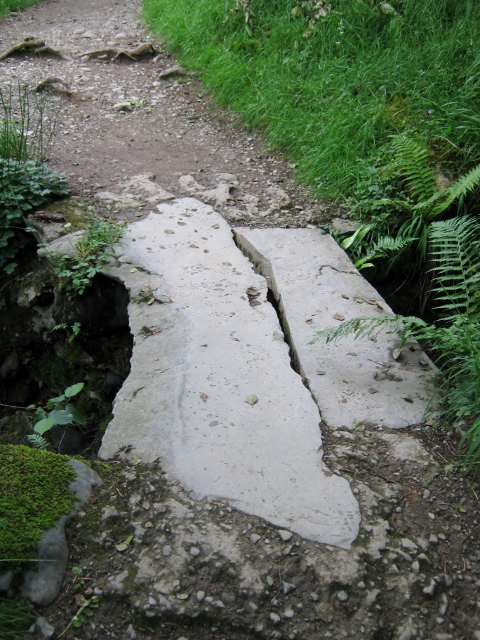
IMG_5007The path (480x640)

Stone slabs used as a bridge across a streamlet

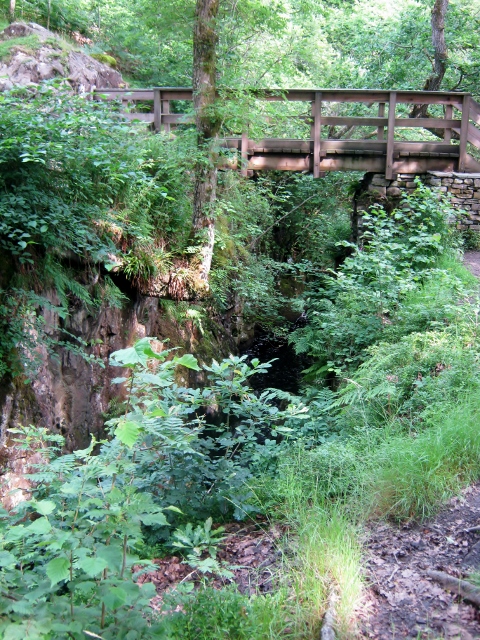
IMG_4974Aira Force (480x640)

Wooden bridge over a narrow chasm

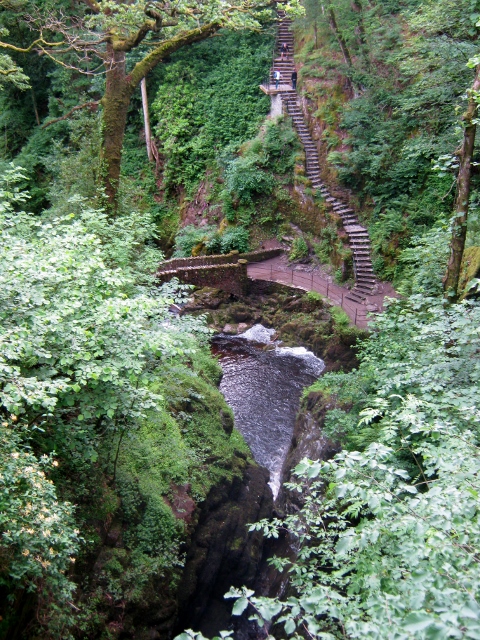
IMG_5017Aira Force (480x640)

Steps and viewing platforms. We didn’t go down the steps as Elinor finds them difficult to manage.

IMG_4936Aira Force

Typically for me, the one shot I wanted to come out clearly, clearly hasn’t! I haven’t down-sized this one in an effort to make it look a little better. I only had my little camera with me and the sunlight was causing such a glare too. That’s probably enough excuses.

The main force drops about 70′ from below a footbridge.

IMG_4942Aira Force (480x640)

Further up in the woods are smaller cascades.

IMG_4943Aira Force (640x480)

The sound of the falling and rushing water was glorious.

IMG_4949Aira Force (640x480)
IMG_4950Aira Force (640x480)
IMG_4951Aira Force (640x480)
IMG_4953Aira Force (640x480)

This pool was good to sit next to.

IMG_4952Aira Force (640x480)

IMG_4958Aira Force (640x480)

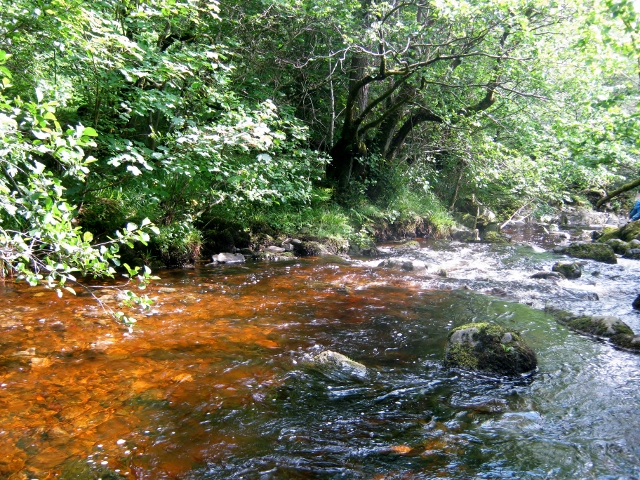
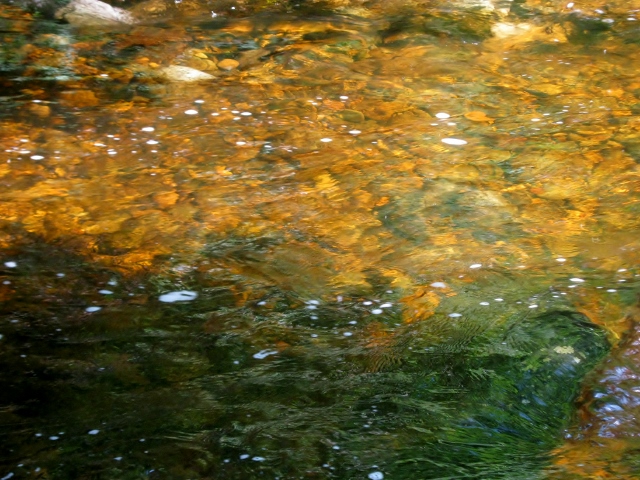
The water is amber-coloured.

IMG_4955Elinor sketching (480x640)

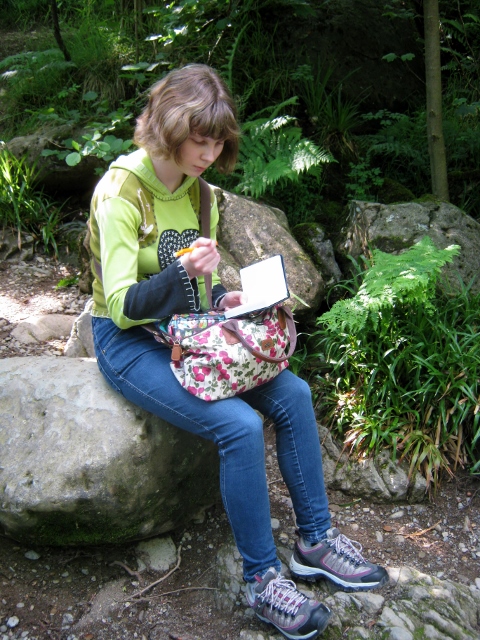
Elinor did some sketching while we were there.

IMG_4983Aira Force (640x480)

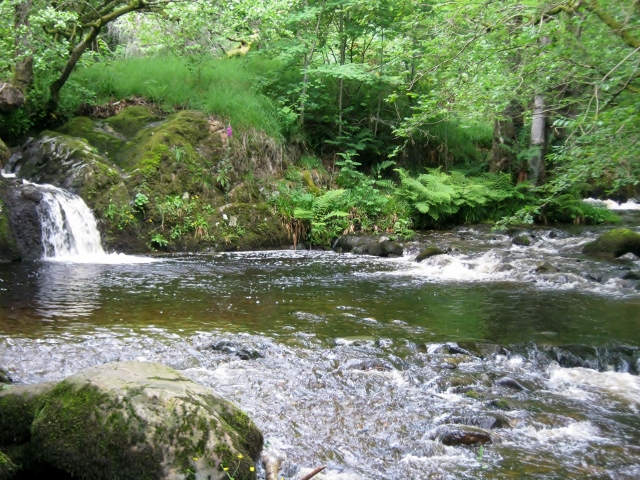
This was my favourite place along the beck

IMG_4973Aira Force (480x640)

There was thick moss everywhere….

IMG_4945Moss (640x480)
IMG_4948Moss (640x480)
IMG_5005Liverwort and moss (640x480)
IMG_5009Liverwort(640x480)

…and liverwort too.

IMG_5012Stone parapet (640x480)

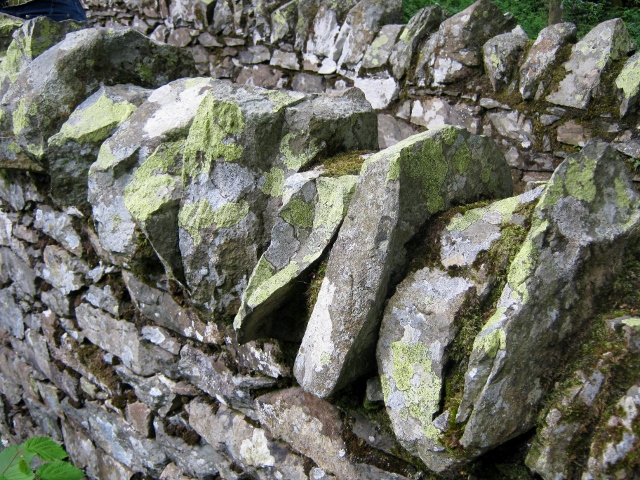
A stone parapet to a bridge was covered in lichen.

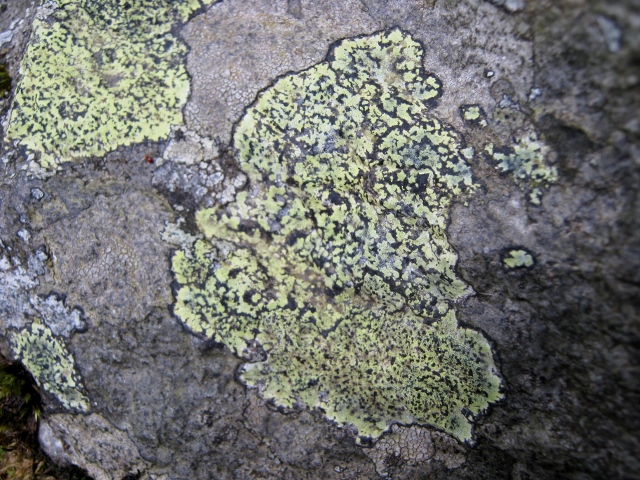
IMG_5011Map Lichen perhaps (640x480)

I think this may be Map Lichen (Rhizocarpon geographicum).

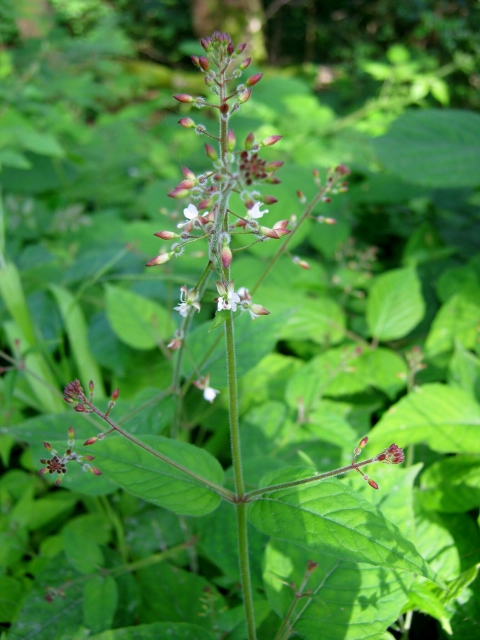
IMG_4937Enchanter's Nightshade (480x640)

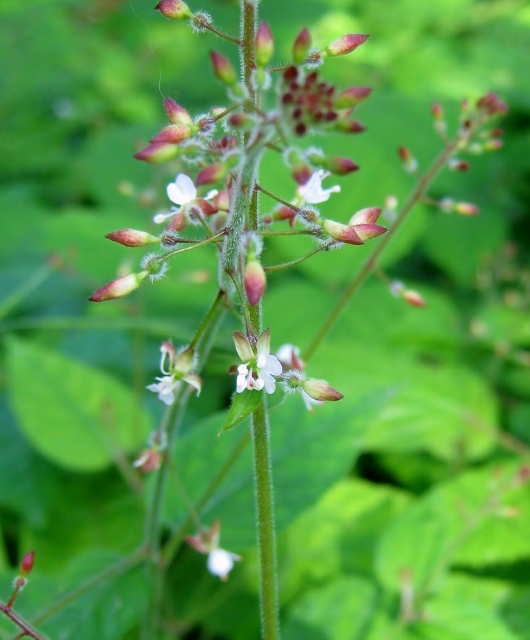
Enchanter’s Nightshade (Circaea lutetiana) grew everywhere.

IMG_4937Enchanter's Nightshade (2) (530x640)

It has tiny flowers which produce burs once pollinated.

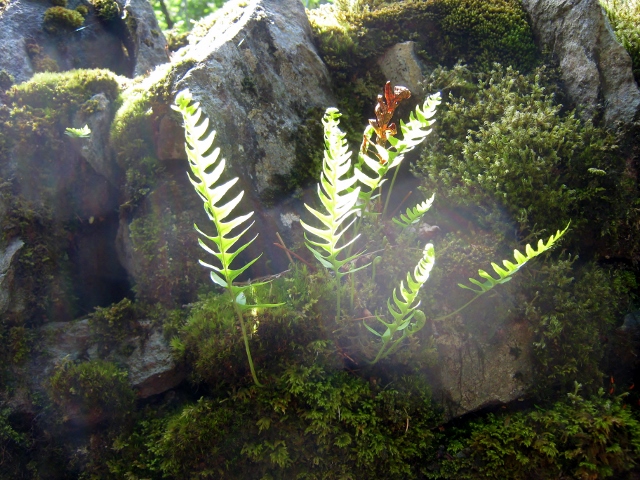
IMG_4944Bracken (640x480)

Bracken and ferns were growing alongside our path. I like the way the sunlight caught this fern.

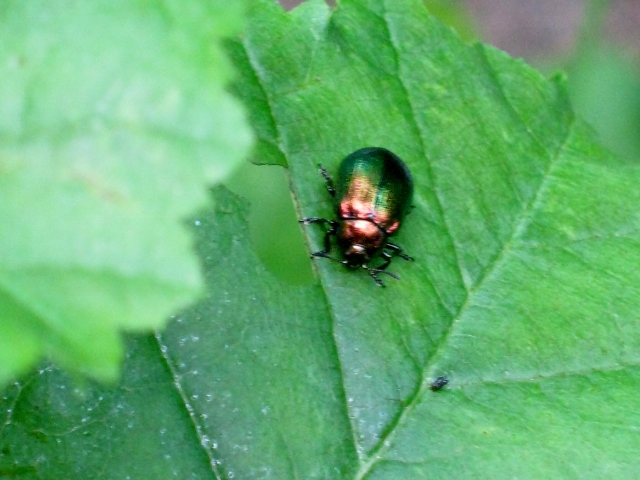
IMG_4960Chrysolina beetle (640x480)

A Chrysolina beetle of some sort.

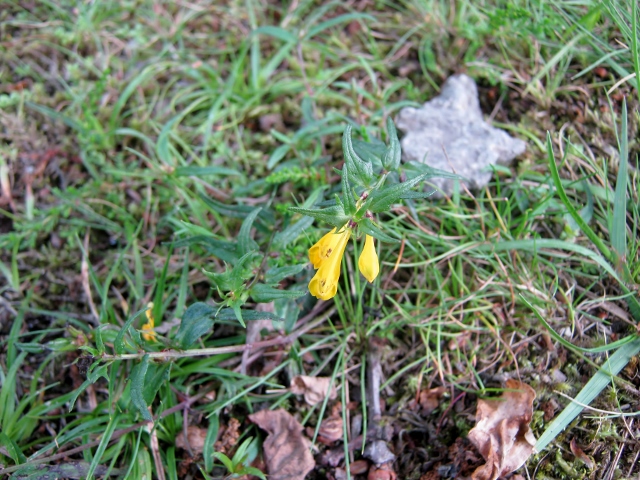
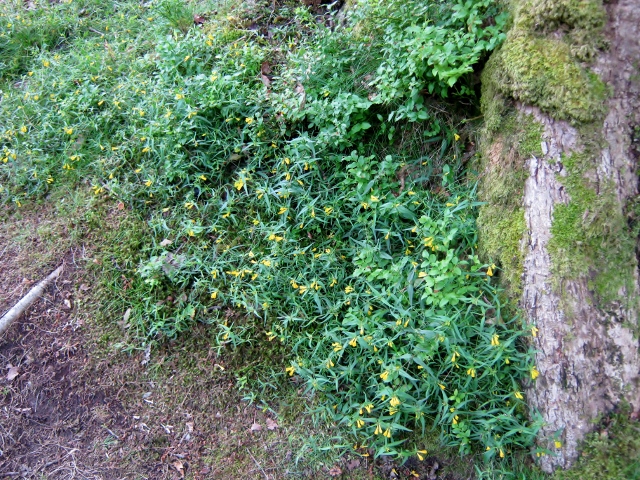
IMG_4970Common Cow-wheat (640x480)

A flower I had never seen before – Common Cow-wheat (Melampyrum pratense)

IMG_4972Common Cow-wheat (640x480)

There was rather a lot of it!

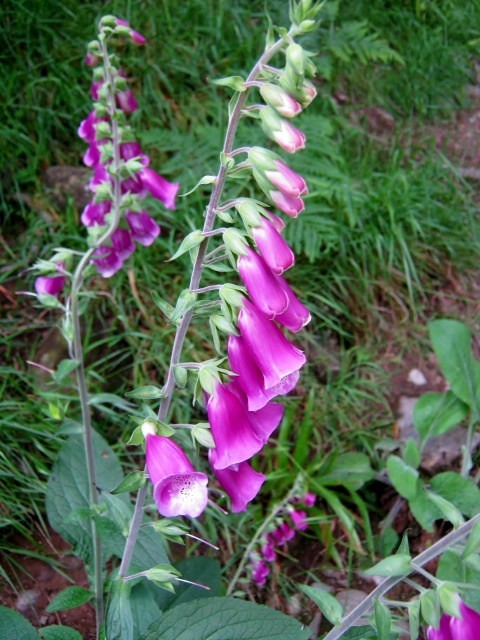
IMG_4980Foxgloves (480x640)

Foxgloves (Digitalis purpurea)

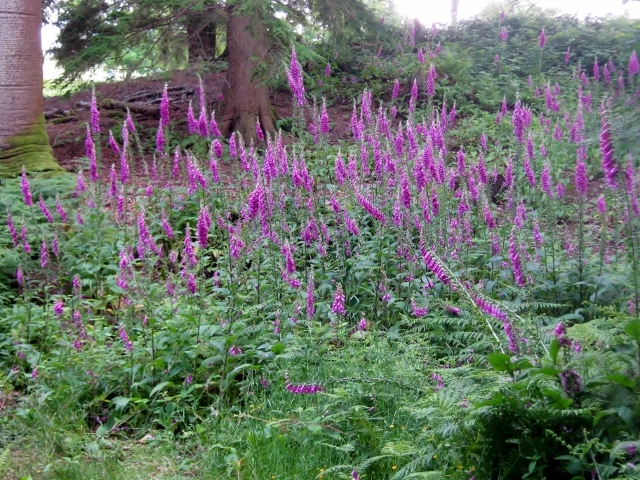
IMG_5028Foxgloves (640x480)

A bank of foxgloves

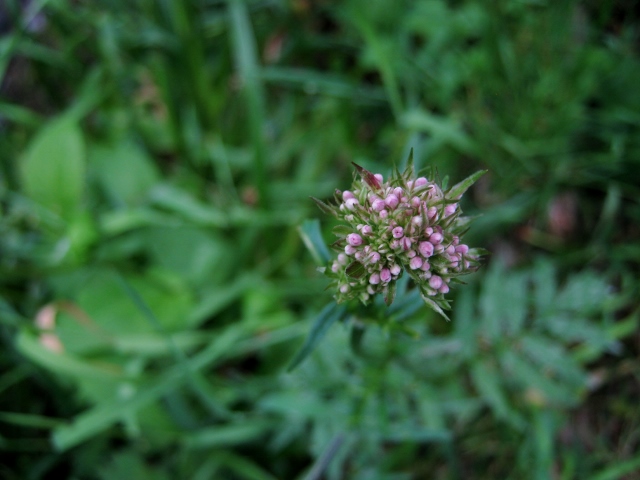
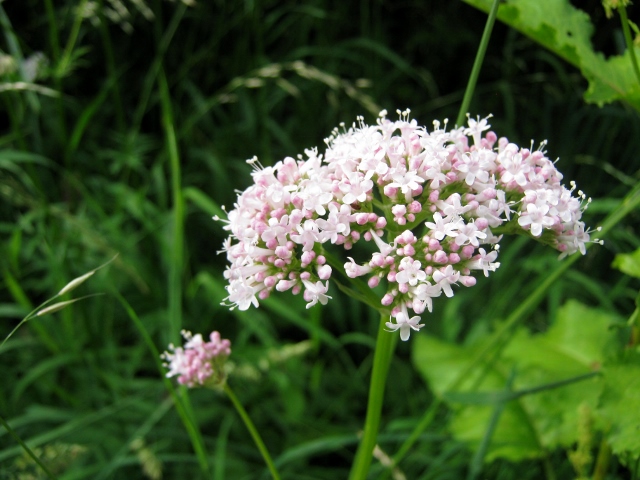
IMG_4986Common Valerian (640x480)

Common Valerian in bud (Valeriana officinalis)

IMG_5038Common Valerian (640x480)

Common Valerian in flower

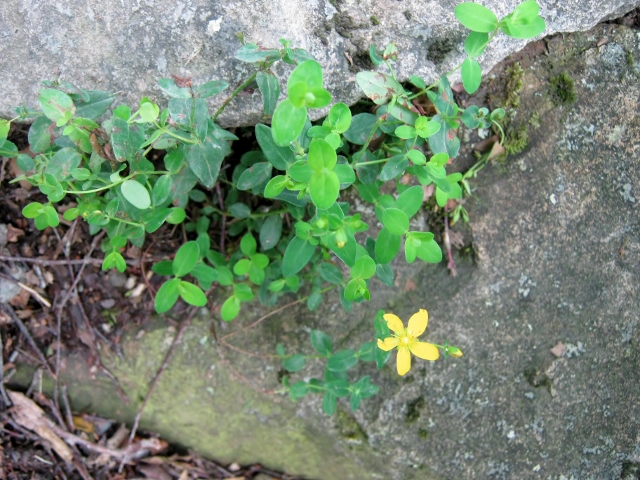
IMG_4998St John's-wort (640x480)

I thought this might be Trailing St John’s-wort (Hypericum humifusum) but the ID description tells me the leaves should have translucent dots and I didn’t see any dots.

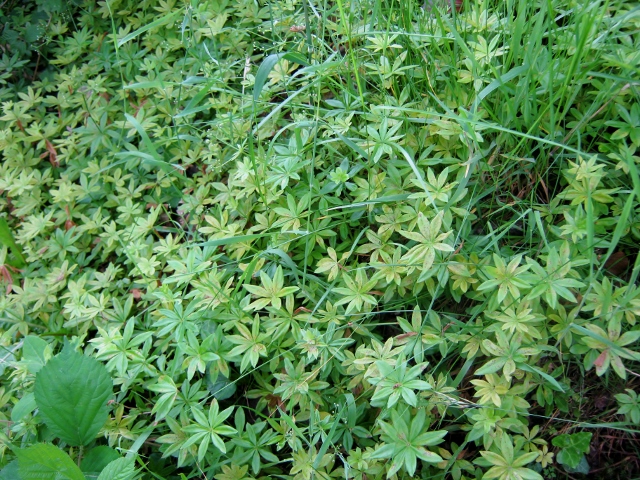
IMG_5018Woodruff perhaps (640x480)

I think these are Woodruff leaves (Galium odoratum)

I saw so many different plants and flowers, grasses and sedges, many of which I have included in posts from home so haven’t included them here, but some I still have no idea what they are despite researching for some time.

IMG_4968Unknown (640x480)

This plant for example! (The tri-foliate leaf near my hand was not part of the plant).

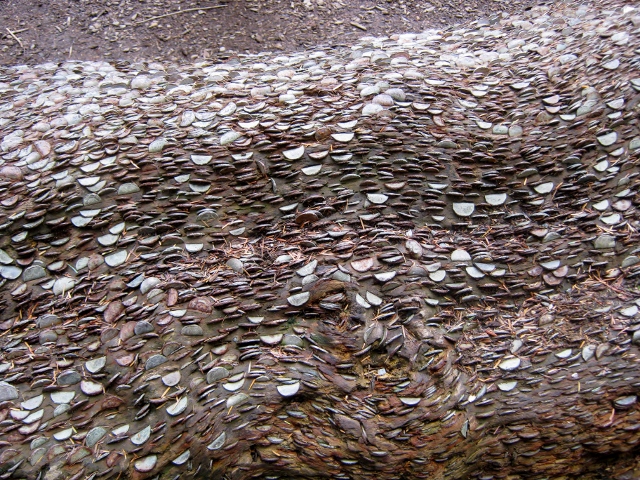
IMG_5022Coins in log (640x480)

On our way back from the waterfall we found this fallen log covered in coins.

This is a ‘Wish Tree’.  People hammer coins into it with a stone from the site and hope that their wish comes true.  We didn’t have any wishes and anyway, I was more interested in the fungi growing on the log.

This slideshow requires JavaScript.

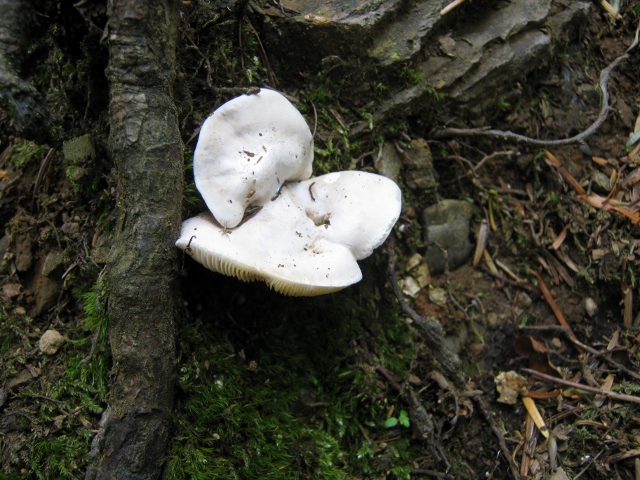
I saw another fungus growing at the base of a tree.

IMG_5021Fungus (640x480)

If anyone can suggest what this or any of the other fungi are I would be very grateful.

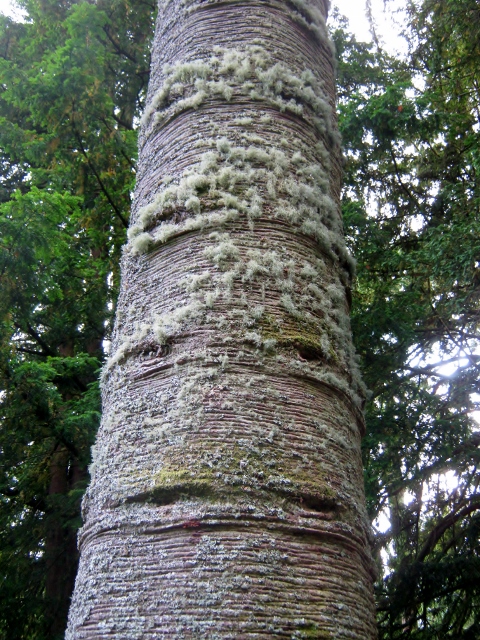
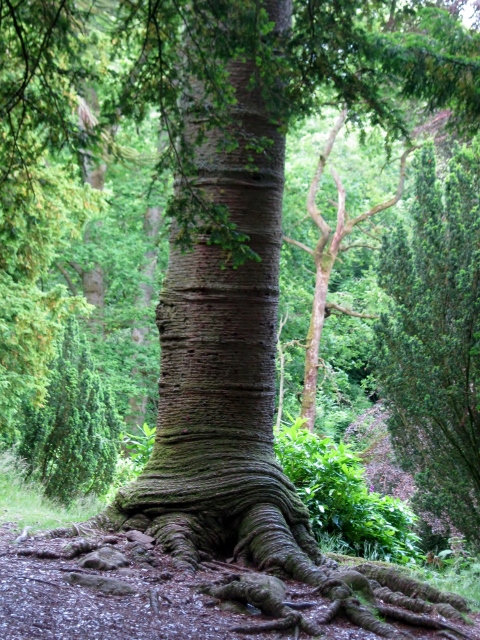
Near to the car park we found the Arboretum that the Howard family had planted in 1846.  They planted over 200 specimen conifers (firs, pines, spruces and cedars) from all over the world.  Apparently there is a Sitka Spruce (Picea sitchensis) that is now 118′ tall though I didn’t see it.  What I did see was a Monkey Puzzle tree (Araucaria araucana) that looked like it’s bark was sliding down like a baggy sock.

IMG_5029Monkey Puzzle tree (480x640)

I used to see Monkey Puzzles all over the place where I grew up. Trees that had been planted in the 19th century in parks and gardens were fully mature when I was a girl in the 60’s and 70’s. I don’t ever remember looking at them closely so I don’t know if this is what all their trunks look like.

IMG_5031Moss and lichen on Monkey Puzzle (480x640)

Moss and lichen were growing on one side of the trunk.

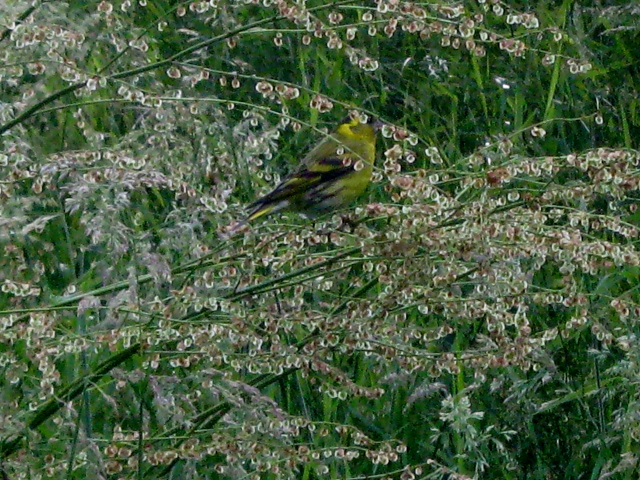
IMG_5033Siskin (640x480)

I saw a Siskin (Carduelis spinus) hiding in a plant I was wanting to get closer to but didn’t because of the Siskin!

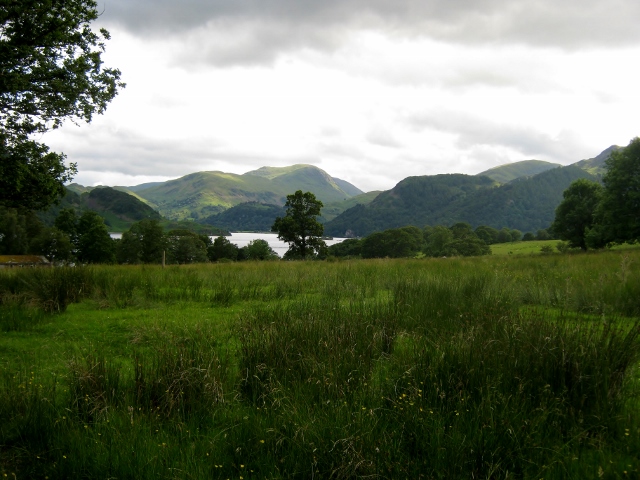
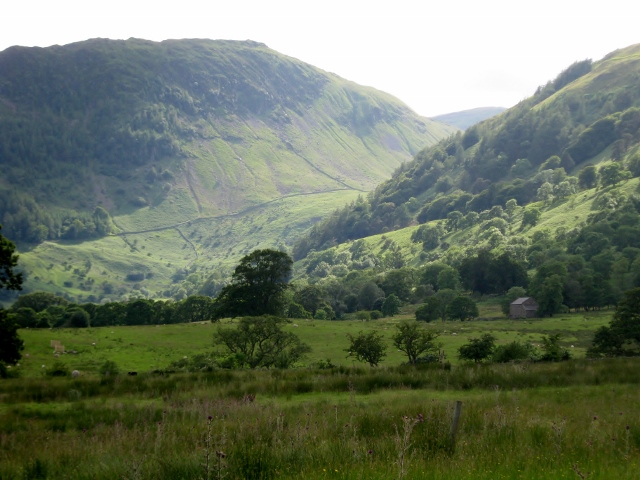
I took a couple of pictures of the fells as we returned to the car.

IMG_5034Ullswater (640x480)

Ullswater in the distance.

IMG_5035Fells near Ullswater (640x480)

I would love to be able to walk up one of these before I get too old!

Thanks for visiting!
Share this:

  • Share on X (Opens in new window) X
  • Share on Reddit (Opens in new window) Reddit
  • Share on Pinterest (Opens in new window) Pinterest
  • Share on Facebook (Opens in new window) Facebook
  • Email a link to a friend (Opens in new window) Email
  • Share on Tumblr (Opens in new window) Tumblr
  • Print (Opens in new window) Print
  • Share on Pocket (Opens in new window) Pocket
  • Share on LinkedIn (Opens in new window) LinkedIn
Like Loading...

Wyken Hall Gardens

21 Tue Jul 2015

Posted by Clare Pooley in Days out, Gardening, plants, Rural Diary

≈ 30 Comments

Tags

Elizabethan house, garden rooms, Suffolk, Wyken Hall Gardens

IMG_4848Wyken Hall (640x480)

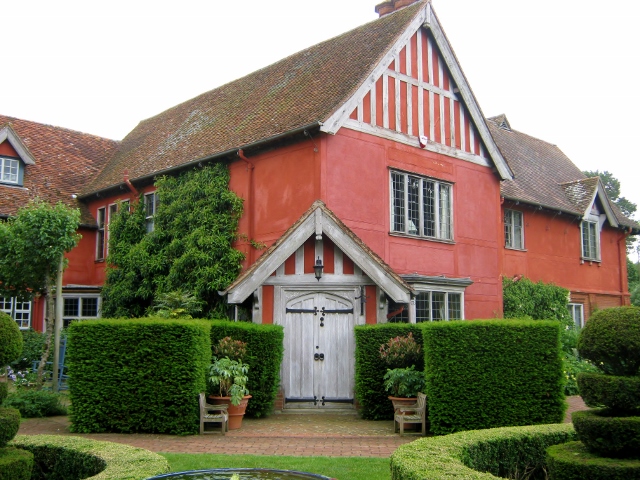
Wyken Hall

On 19th June Richard, Elinor and I visited Wyken Hall Gardens in Suffolk.  This visit was to celebrate our 21st wedding anniversary of the day before.  We never buy each other gifts on our anniversary unless there is something we both would like to have for the house or the garden, for example.  We usually plan an outing to a place we’d like to see or we go out for a meal.  This year we decided on a trip to Wyken Hall Gardens.

IMG_4835Wyken Hall (640x480)

Wyken Hall

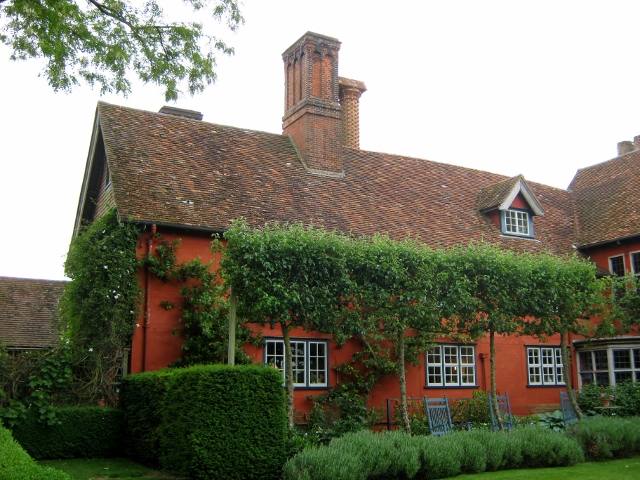
Wyken Hall is an Elizabethan manor house owned by Sir Kenneth and Lady Carla Carlisle.  The house itself isn’t open to the public but the 4 acre gardens are.  The house dates from 1570 with additions being made to it in 1630 and 1680 and then major works were carried out in 1920.

IMG_4833Wyken Hall (640x480)

Lady Carlisle comes from the USA and she designed this area to look like a southern veranda. She brought 5 rocking chairs over from Mississippi and then the row of Spartan apple trees were espaliered high so as not to obscure the view from the house.

The Royal Horticultural Society (RHS) says it is one of the best modern private gardens in the country.

IMG_4852Wyken Hall garden (640x480)

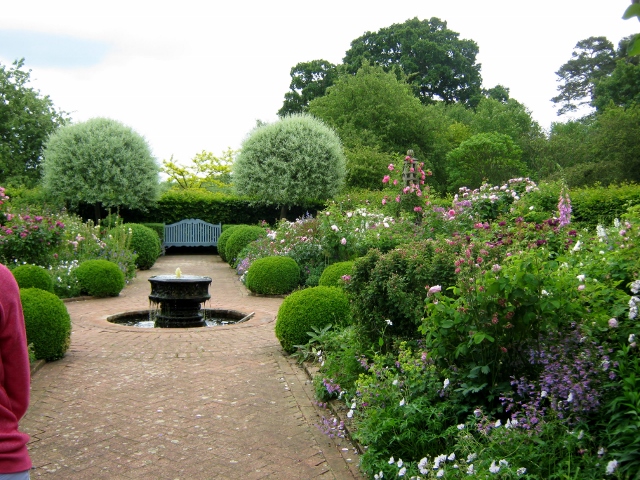
The Rose Garden

Lord Carlisle began work on the garden in the late 70’s and created the Rose Garden, the Winter Garden and the other garden rooms near the house.  More work was done after his marriage in 1986.

IMG_4832Quincunx Wyken Hall (640x480)

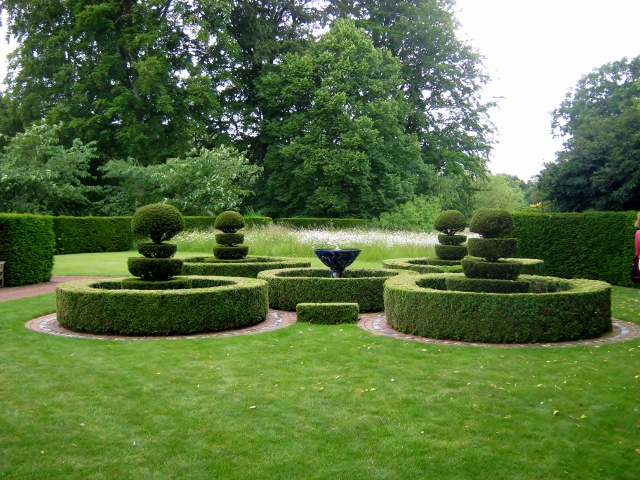
The Quincunx – five equal interlocking circles – inspired by a design for a herb garden by Gertrude Jekyll.

New gardens are continually being created.

IMG_4860WykenHall garden (640x480)

The new garden pond with oak pier. The owners hope that soon the chestnut fencing will be covered with white wisteria.

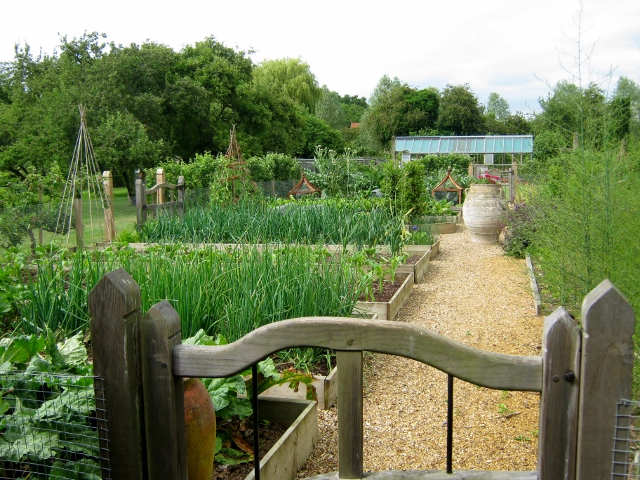
When Lord Carlisle began work on the garden it already had a structure of flint walls and many fine old trees.  Hornbeam and yew hedges divide the garden into its different rooms.  There is a copper-beech maze and a nuttery; a herb garden, a knot garden and an ‘edible’ garden; wildflower meadows and a traditional English kitchen garden.   Many of the old-style gardens complement the Elizabethan house.

IMG_4863Wyken Hall (640x480)

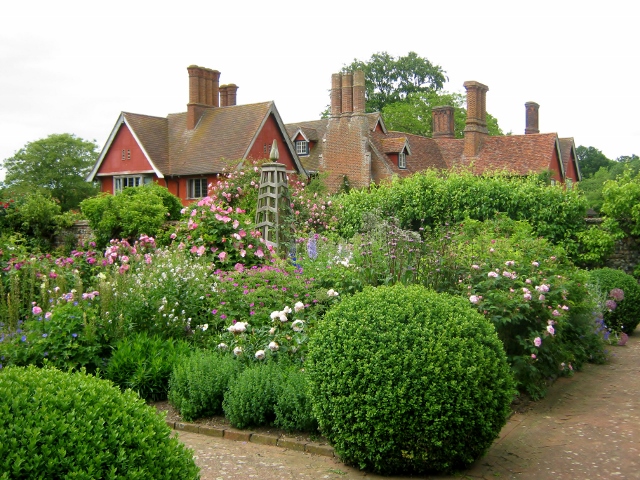
View of the house from the Rose Garden

As well as the garden, the Carlisles own Wyken Wood, which is ancient woodland, a large modern farm and a 7 acre vineyard.  A large medieval barn has been converted into a country store (which sells exclusive goods) a restaurant and café.  As well as different wines they also produce ale from their own barley.

IMG_4837Wyken Hall garden (640x479)

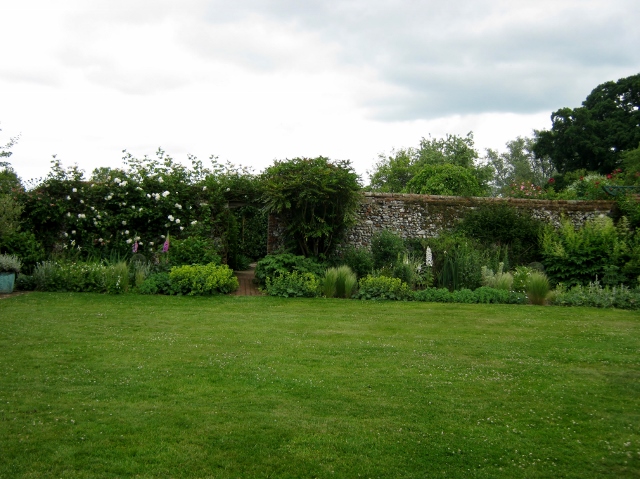
A flower border sheltered by a flint wall in which there is an inviting archway to gardens beyond.

IMG_4846Wyken Hall garden (480x640)

Steps cut into the turf (foreground) and the path through the winter garden

IMG_4841Bellini Bus Stop (480x640)

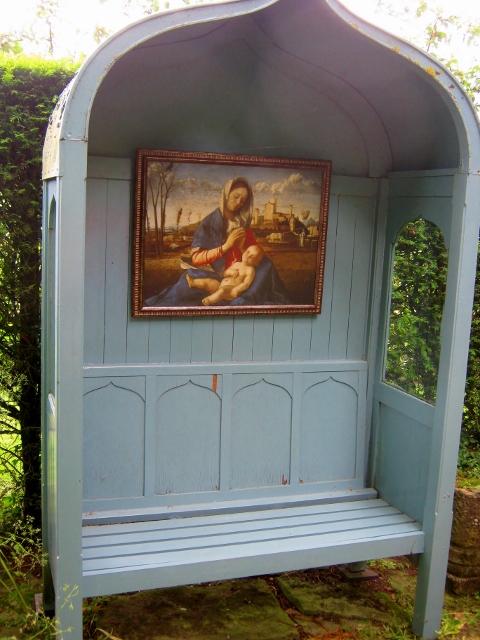
The ‘Bellini Bus Stop’ – a covered seat in the winter garden

IMG_4858Wyken Hall garden (480x640)

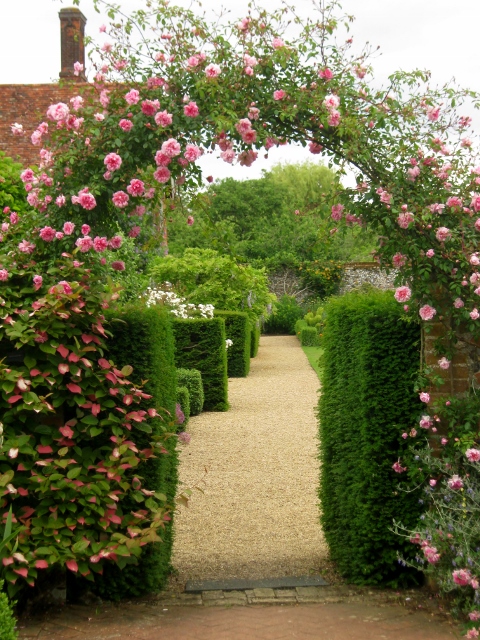
A very pretty arch with an interesting variety of plants round it.

IMG_4873Wyken Hall garden (640x480)

The kitchen garden

IMG_4881Turkey (640x480)

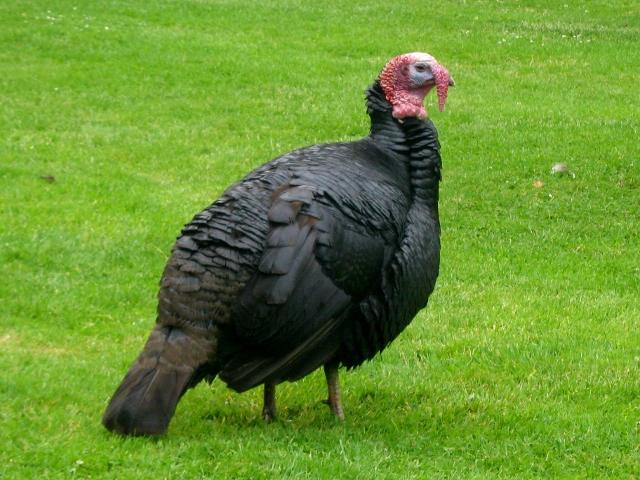
A supercilious-looking turkey

IMG_4874Wyken Hall garden (640x480)

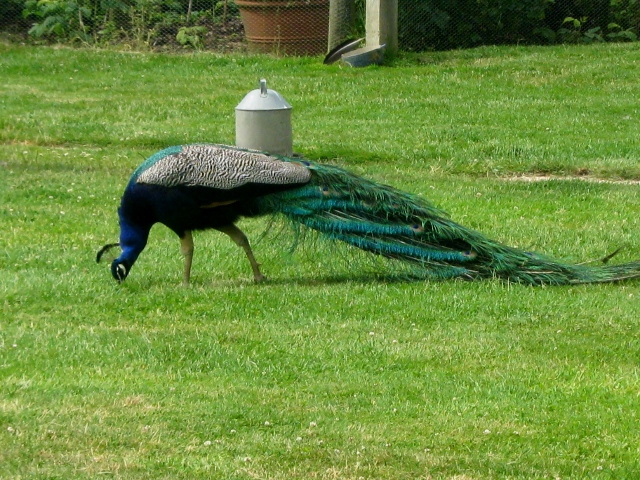
A peacock

This slideshow requires JavaScript.

A slideshow of photos of some of the lovely plants and flowers we saw.

This slideshow requires JavaScript.

A slideshow of the plants in the Red Hot Border.

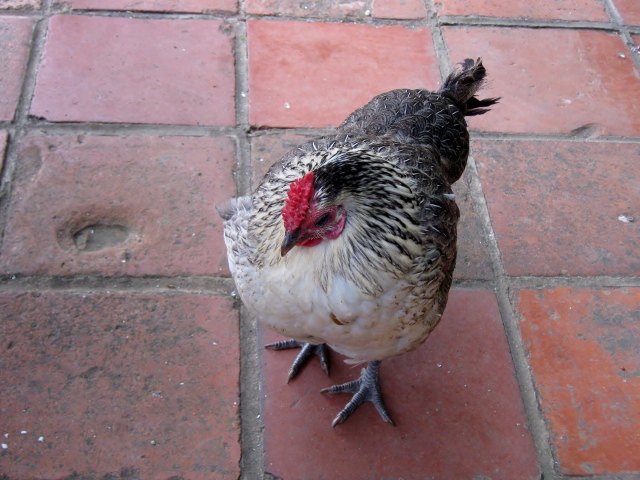
IMG_4890Hen (640x480)

This little hen came and stood under our table outside the café and begged for crumbs. She was given quite a lot of Elinor’s expensive scone!

We had a very enjoyable afternoon at a most beautiful and immaculate garden.

Thanks for visiting!
Share this:

  • Share on X (Opens in new window) X
  • Share on Reddit (Opens in new window) Reddit
  • Share on Pinterest (Opens in new window) Pinterest
  • Share on Facebook (Opens in new window) Facebook
  • Email a link to a friend (Opens in new window) Email
  • Share on Tumblr (Opens in new window) Tumblr
  • Print (Opens in new window) Print
  • Share on Pocket (Opens in new window) Pocket
  • Share on LinkedIn (Opens in new window) LinkedIn
Like Loading...

Lake District in the Summer

18 Sat Jul 2015

Posted by Clare Pooley in Rural Diary

≈ 33 Comments

Tags

Blencathra, holiday, Lake District, Saddleback

We have just returned from a week’s holiday in the Lake District.  (For those people who don’t know, it is an area situated in Cumbria in NW England).  It took us nearly six hours to drive there but that included a twenty minute stop to eat lunch.  We hired a cottage to stay in for the week which was well appointed and quite comfortable though I would have preferred it if it had been a detached cottage with its own garden.  The weather wasn’t too bad either.  We had some rain and some wind but we also had a couple of completely dry days and some sunshine too.  It wasn’t very warm and I was glad I brought two pullovers and two cardigans with me.  On a few occasions I wore all four at the same time over a shirt.  I feel the cold!  If I had been at home I would have warmed myself by doing some housework or gardening but I was on holiday and wanted to read my book!

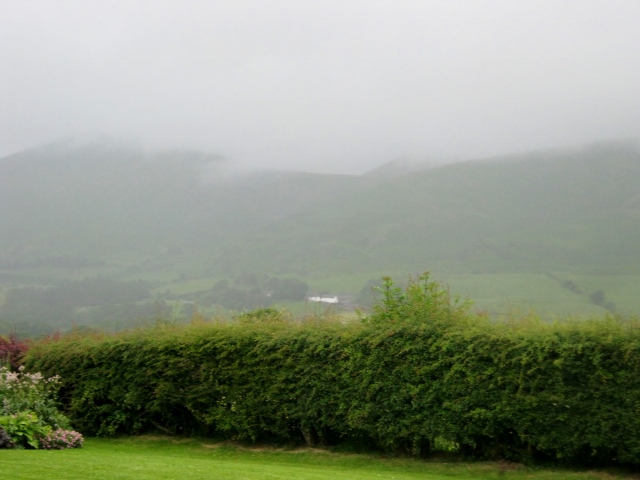
IMG_4931View from kitchen window (640x480)

This is the view we saw from the kitchen window on the day we arrived.

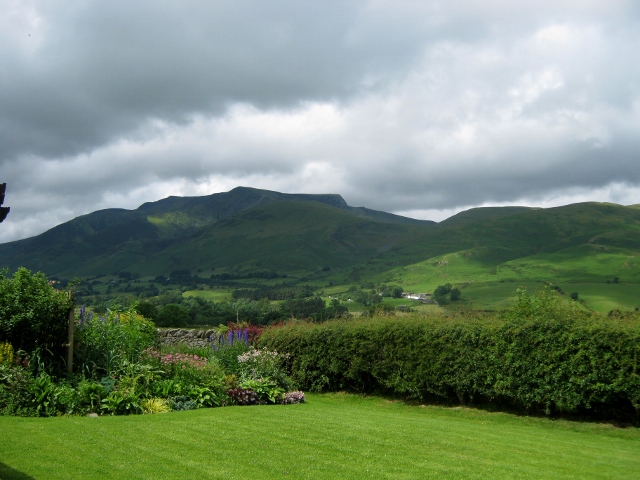
Fortunately, the next day was much brighter.  After some early rain the clouds lifted and we saw the top of the fells.

IMG_4933Saddleback or Blencathra (640x480)

This is Blencathra or Saddleback

I have been reading a book about the Lake District (‘The English Lakes – A History’ by Ian Thompson)  while we’ve been away and have been boring Richard with quotes from it.  Richard knows the Lakes quite well and has walked up many of the hills so it has been a little like ‘teaching my grandmother to suck eggs’.

The hills are made of rocks thrown up by volcanic explosions 450 million years ago which were then ‘humped and crumpled into shape’ by tectonic movements 400 million years ago.  They were then carved by glaciers in the ice age 13,000 years ago making the hills look like a miniature version of the Alps.  The fells often seem larger than they are as many of them start from valleys close to sea level – Blencathra’s summit is 845 metres above sea level for example.

The local name for these hills/mountains is ‘fells’ – a word deriving from the Norse word ‘fjall’.  The name ‘Blencathra’ is said to come from the Celtic words ‘Blain’ and ‘Cadeir’ which means ‘hill of the chair’.

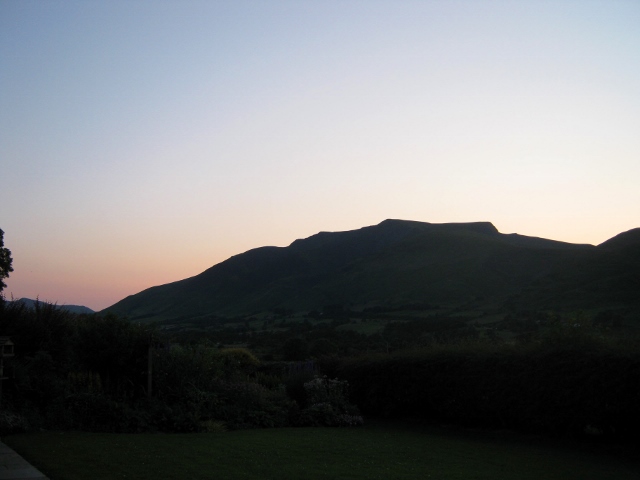
IMG_5137SSunset behind Blencathra (640x480)

Blencathra at sunset.

The previous three times we stayed in the Lake District we stayed near Kendal in the south-east but this trip we were in the north of the region near Keswick and were able to see a lot of different places.

IMG_5260Fell view (640x480)

Another picture of Blencathra seen from the car while we waited for workmen to finish re-surfacing the road.

I will be showing you a few of the places we visited in subsequent posts.

Thank-you for visiting!
Share this:

  • Share on X (Opens in new window) X
  • Share on Reddit (Opens in new window) Reddit
  • Share on Pinterest (Opens in new window) Pinterest
  • Share on Facebook (Opens in new window) Facebook
  • Email a link to a friend (Opens in new window) Email
  • Share on Tumblr (Opens in new window) Tumblr
  • Print (Opens in new window) Print
  • Share on Pocket (Opens in new window) Pocket
  • Share on LinkedIn (Opens in new window) LinkedIn
Like Loading...

Quiet Sunday

01 Wed Jul 2015

Posted by Clare Pooley in churches, Gardening, Insects, plants, Rural Diary, wild birds

≈ 36 Comments

Tags

Bees, Cotoneaster, gardening, Great Mullein, Mullein Moth larva, purple toadflax, recording of Turtle Dove song, scabious, St Michael and St Felix Church Rumburgh, Suffolk, sunset, The Vapourer Moth larva, Turtle Dove


IMG_2312Grasses (640x403)

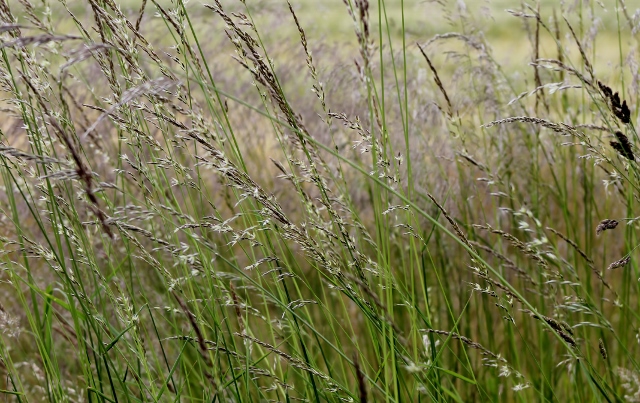
Grasses growing round the edge of the field behind our house.

I have been doing a lot of gardening recently.  Not the gentle-dead-heading, touch-of-light-weeding type of gardening but lots of digging – which always involves extracting large flint boulders from clay soil, lots of watering – carrying heavy watering cans round our large garden and lots of grass-cutting – I do most of this with shears.  We have a large area of grass which is planted up with spring bulbs.  There are a few trees planted there as well and the ground is very uneven.  I think that it was originally a spoil heap from when the house was built; it also slopes quite steeply down to the ditch at the front of the house.  We leave cutting the grass until the bulb leaves have died back which means it is left until June by which time it is looking quite unkempt.  The ground is much too uneven for the tractor mower and because of the trees it is a very difficult area for Richard to do (he is 6′ 3″ tall).  I am a foot shorter in height than he is, so I do this part of the garden.  I can’t use the strimmer as it is too heavy for me so I cut the 3′ high grass with shears.  We bought a scythe but somehow we can’t get it to sharpen.  I like using shears as I can see what I am doing and I don’t cut the wrong things down as I might if I could use the strimmer.  A strimmer makes such a mess; shears are tidy.  Once I have cut the grass to a manageable length I then rake it up into a number of enormous heaps and then transport it to the other end of the garden in a wheelbarrow and put it on the grass heap.  I then use the electric mower and cut the grass even shorter.

IMG_4893Field of barley (640x480)

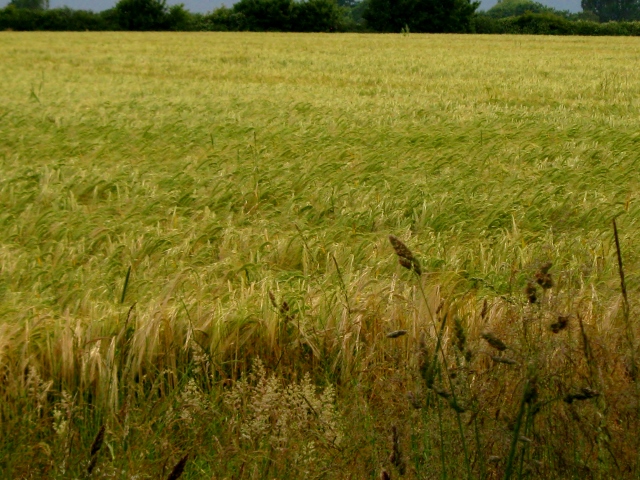
The field of barley behind our house.

As  a result of this work I am extremely achy and stiff but I have developed some good muscles in my arms and shoulders!  I was glad we had a little rain on Sunday so I excused myself from working outside.  I read my book, talked with my husband and daughter and generally had a relaxing day.

IMG_4891View across pond to field (640x480)

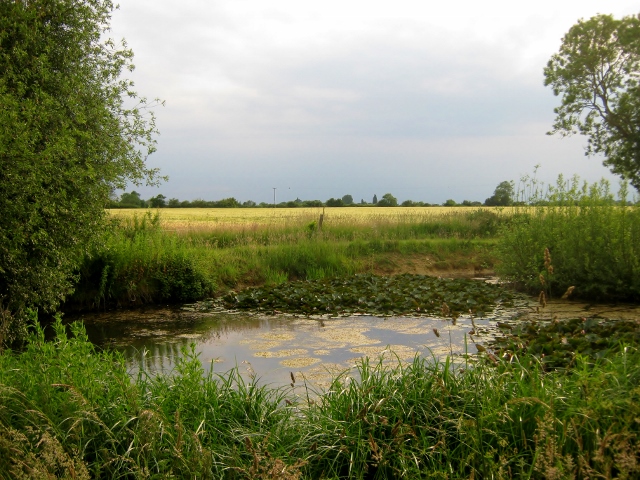
View across the pond to the field beyond.

We had an Evening Prayer service at St Michael and St Felix Church in Rumburgh where Richard is one of the church wardens.  We left home at 5.45 pm to make sure the church was tidy and ready for the service.  There had been a big wedding there on Saturday so the church is full of beautiful flowers.

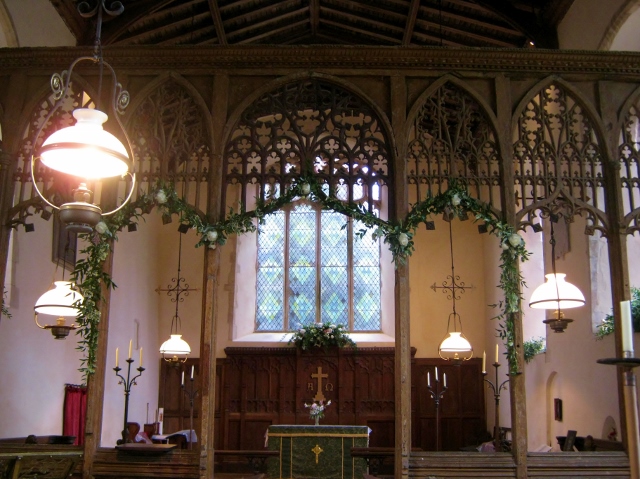
IMG_4895Rood screen (640x479)

The decorated Rood Screen. This is very pretty but it would be better if people didn’t decorate it as the screen is hundreds of years old and falling apart.

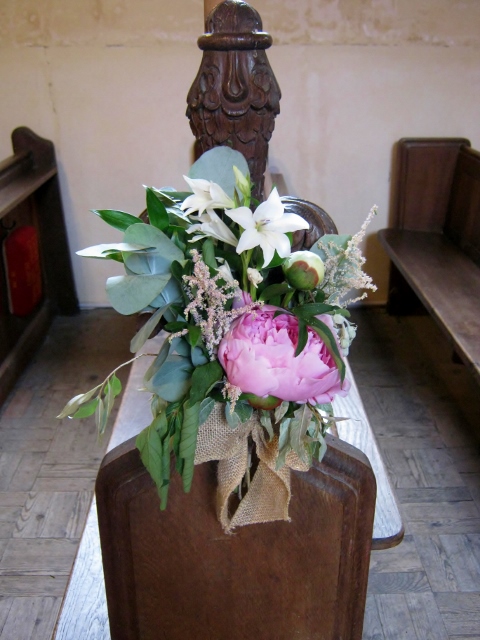
IMG_4897Pew ends (480x640)

Posies on the pew ends. I think the top of the poppyhead (the carved pew end) looks like a clown with a bowler hat.

Flowers at the East Window
Flowers round the Font
Flowers in the porch

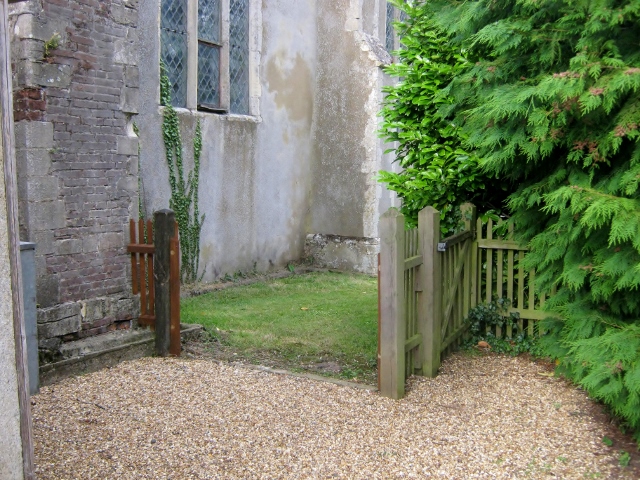
The path has been regravelled and the fence panel at the side of the church has been repaired.

IMG_4904Side of church (640x480)

Fresh gravel and new fence panel.

The bride’s family live at the farm which surrounds the church and the church is in their back garden.  I have never walked all round my church because that would mean walking through someone else’s property.  However, it is so nice to have kind people who decorate our church and repair our fence and path because their daughter wanted to get married in the church!

Our evening service was taken by Maurice and we concentrated on the Trinity.  It was a pleasant, peaceful and thoughtful service.

I’ll use the rest of the post to show you a few more things I’ve seen on my travels and in the garden recently.

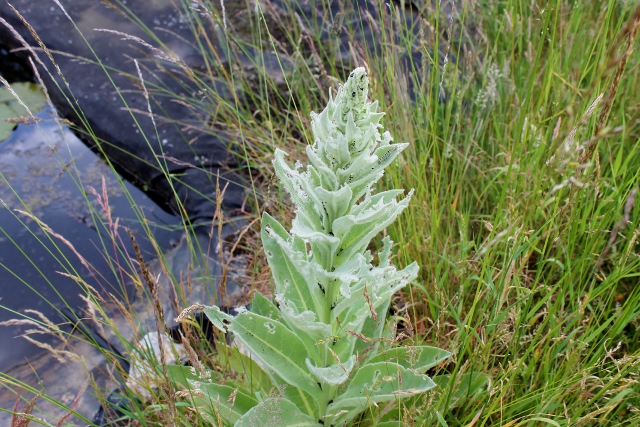
IMG_2323Damaged Great Mullein (640x427)

This is a Great Mullein (Verbascum thapsus) and I noticed the other day that it was looking a little ragged.

IMG_2324Mullein Moth larva (640x427)

This is one of the culprits – a Mullein Moth larva (Shargacucullia verbasci). The plant was covered in the caterpillars which will probably eat most of the plant and leave a blackened stump.

I had noticed that a few of my plants and tree seedlings had been damaged and on Sunday I found a few of the caterpillars that were responsible.

IMG_2327The Vapourer larva (640x427)

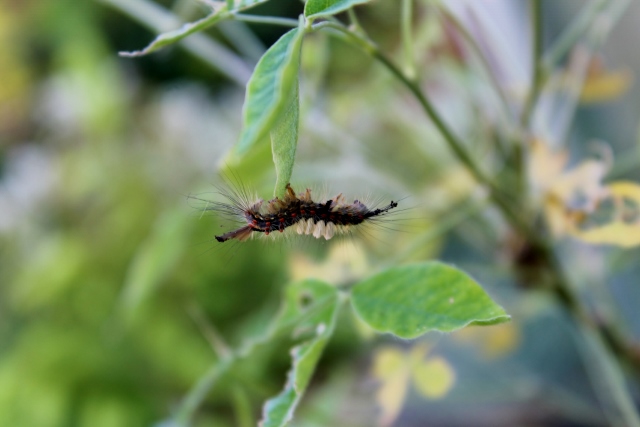
This is a Vapourer Moth larva (Orgyia antiqua), and it is eating a Laburnum seedling.

The Vapourer is often found in towns and often defoliates street trees.  I’ve never seen it in our garden before – perhaps they found their way here on a plant from the garden centre in town.  Vapourers are tussock moths which are all rather hairy.  The Vapourer female moth doesn’t have functional wings and will stay close to her cocoon after hatching out.  The Vapourer larva, along with other members of the Tussock Moth family, has tufts or tussocks of often colourful hairs (the Vapourer’s are yellow).  The hairs on adults and larva are usually barbed which makes them unpleasant and painful to handle.

IMG_2313Bee on scabious (640x427)

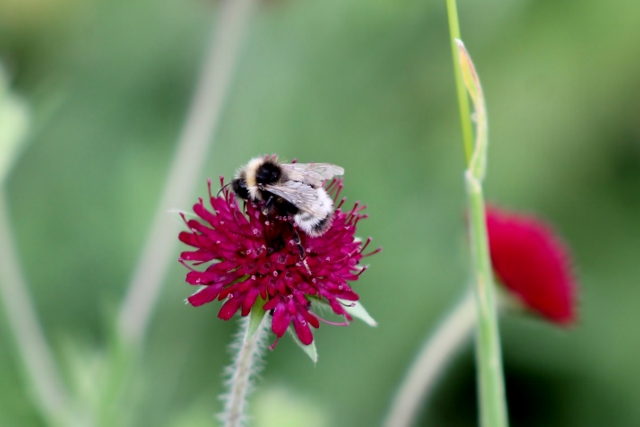
A bee on a scabious flower.

I am not very good at identifying bees.  I never seem to notice or photograph the key feature mentioned in the ID guide.  The bee above could be a cuckoo bee.

I try to grow as many plants as possible that are liked by bees and other insects.

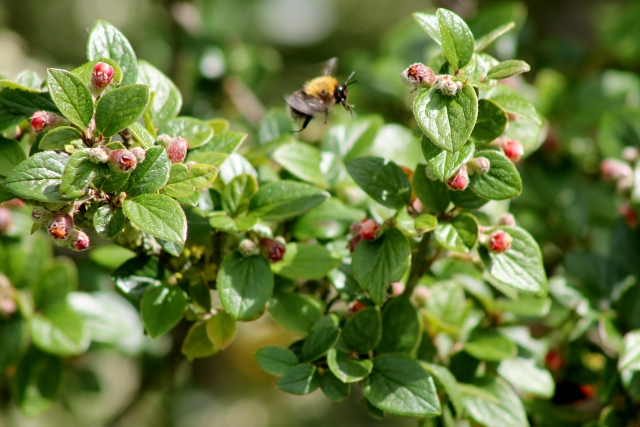
IMG_2320Bee on Cotoneaster (640x427)

Bee on Cotoneaster.

IMG_2321Bee on Purple Toadflax (640x427)

Bee on Purple Toadflax.

IMG_2304Sunset (640x427)

A rather lovely sunset I saw last week.

Lastly, I have another video to share with you but it isn’t the video that’s important just the soundtrack.  I would like you to ignore the video!  It’s rubbish!  I was taking photos in the garden next to the pond, when the Turtle Dove started singing.  I switched the camera to film so I could record the song and vaguely pointed the camera in the direction of the pond.  The video is very shaky as I didn’t have a tripod with me.  I only managed to record a very short part of the song.  It is quite a quiet purring sound and the other birds in the garden were singing very loudly!

Thanks for visiting!
Share this:

  • Share on X (Opens in new window) X
  • Share on Reddit (Opens in new window) Reddit
  • Share on Pinterest (Opens in new window) Pinterest
  • Share on Facebook (Opens in new window) Facebook
  • Email a link to a friend (Opens in new window) Email
  • Share on Tumblr (Opens in new window) Tumblr
  • Print (Opens in new window) Print
  • Share on Pocket (Opens in new window) Pocket
  • Share on LinkedIn (Opens in new window) LinkedIn
Like Loading...

June Flowers and Insects

27 Sat Jun 2015

Posted by Clare Pooley in Insects, plants, Rural Diary, trees, weather

≈ 39 Comments

Tags

azure damselfly, Bittersweet, Black-tailed Skimmer, blue-tailed damselfly, common knapweed, Common Marsh-bedstraw, Common Sorrel, Creeping Cinquefoil, Cyperus Sedge, damselflies, dogwood, dragonflies, Elder, Four-spotted Chaser, garden, greenbottle, Hoverfly, insects, Meadow Buttercup, Oxeye Daisy, pond, Pyracantha, Suffolk, White Water Lily, wild flowers, yellow iris, Yorkshire Fog

Until this week we have had a very cool summer indeed which has meant that there have been very few insects about.  The common garden pests, greenfly and blackfly for example, seem to cope with chilly weather but the insects that eat them don’t!  Some of the flowers are continuing to flower a little late but a few are flowering at about their usual time which has made for unusual combinations.

IMG_4808All Saint's Common (640x480)

Meadow Buttercups (Ranunculus acris) on All Saints’ Common

We have a number of ‘commons’ here in East Anglia.  A common is an area of land either owned by a group of people or one person but it can be used by the general public in certain ways such as walking your dog or playing sport.  Some commons and village greens have ‘rights of common’ where it is possible to graze livestock on the land.  If you want to use the common for anything other than walking on it or having a picnic, (for instance, if you wanted to camp there), you’d have to ask permission of the land owner.

IMG_4831All Saint's Common (640x480)

This is another view of the common showing one of the unusual flower combinations.  This didn’t come out as well as I’d have liked.

The Common Sorrel is flowering at the same time as the buttercups and for a while it looked as though the field was alight with red flames above the yellow.

IMG_4814Common Sorrel (480x640)

Common Sorrel (Rumex acetosa)

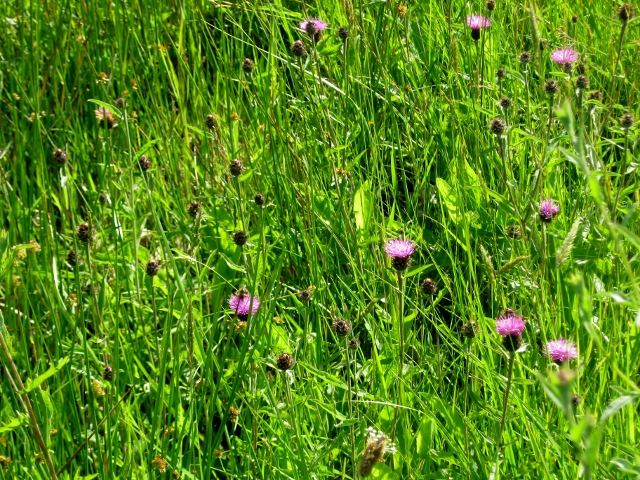
IMG_4807Common Knapweed (640x480)

Common Knapweed (Centaurea nigra) is also in flower on the common.

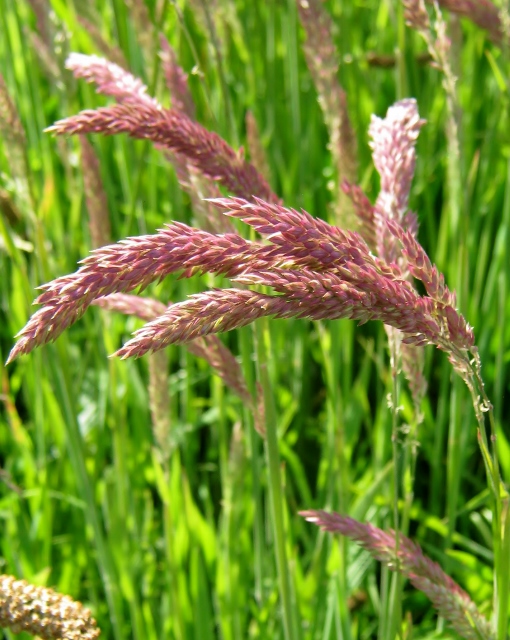
IMG_4810Possibly Yorkshire Fog (2) (510x640)

As is Yorkshire Fog (Holcus lanatus)

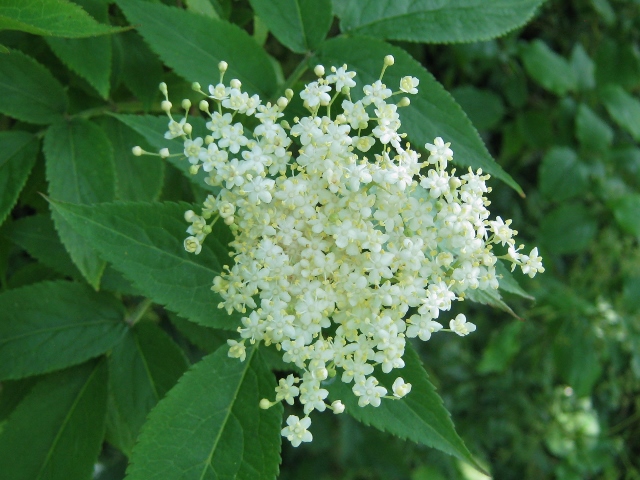
IMG_4819Elderflower (640x480)

The Elder (Sambucus nigra) is in flower.

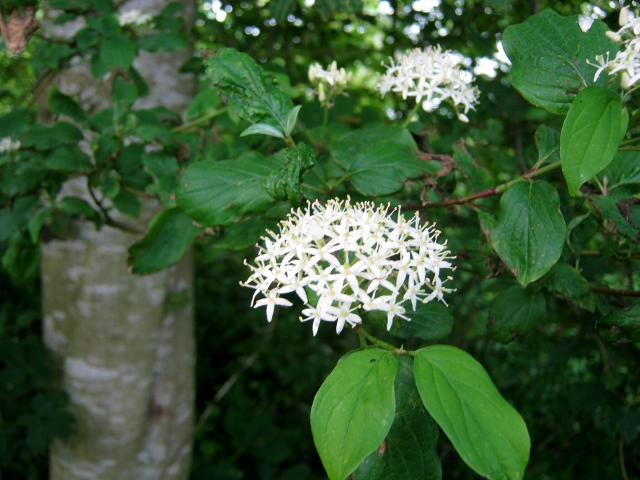
IMG_4892Dogwood (640x480)

The Dogwood (Cornus sanguinea) is in flower too.

Many people dislike the scent of the Elderflower; they describe it as smelling of ‘cats’.  It isn’t a pleasant smell but it is preferable to the smell of Dogwood flowers!

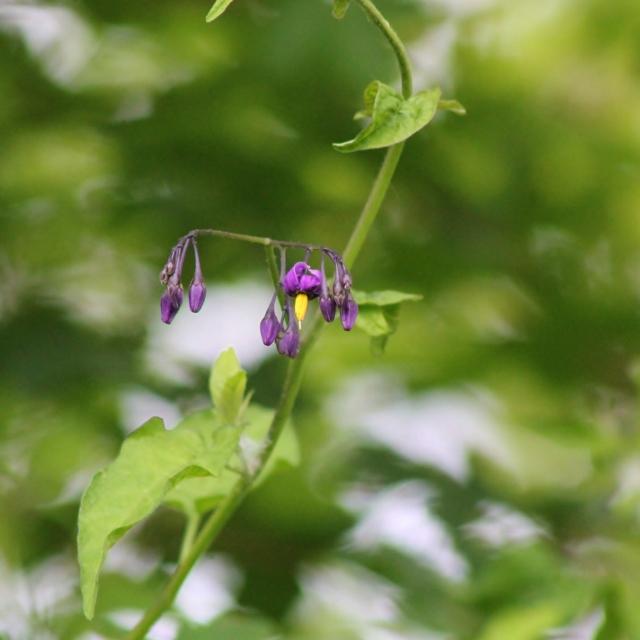
IMG_2269Bittersweet (2) (640x640)

Bittersweet (Solanum dulcamara), also known as Woody Nightshade, is flowering in the hedgerows.

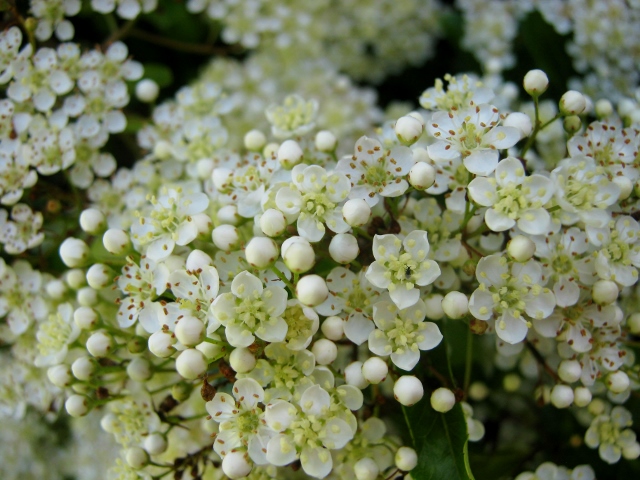
IMG_4828Pyracantha (640x480)

The Pyracantha in our garden is covered in blossom. This is another plant with a strange scent but the bees love it!

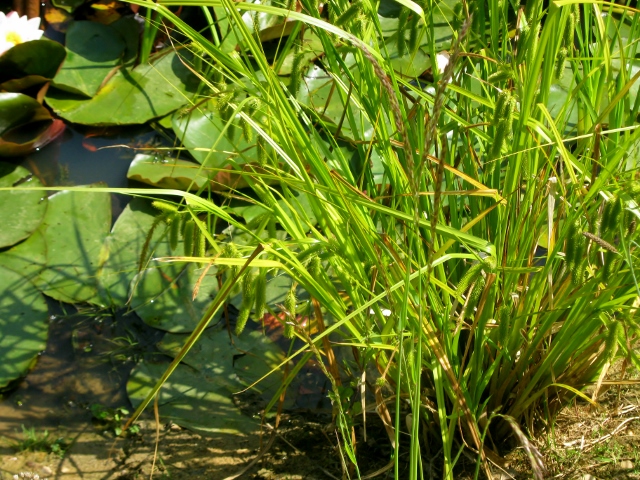
IMG_4822Cyperus sedge (640x480)

I discovered a new plant at the edge of our big pond the other day – a Cyperus Sedge (Carex pseudocyperus), also known as Hop Sedge.

The plant is quite large and must, I suppose, have been there last year without me seeing it.  Its leaves are strap-like, similar to Iris leaves, so I might have thought it was an Iris.  The flowers are unmistakable though.

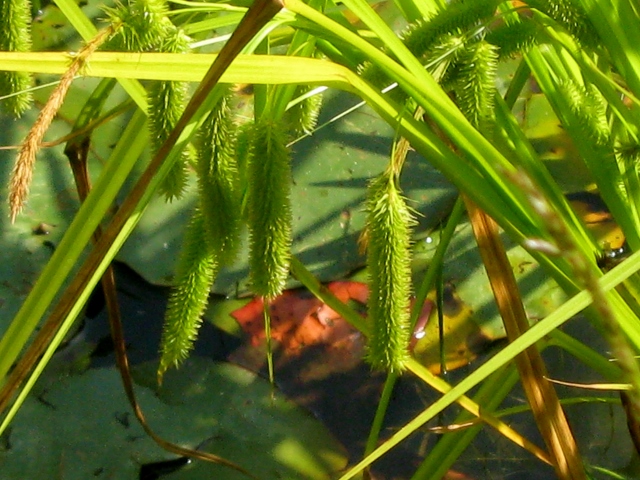
IMG_4823Cyperus Sedge (640x480)

The flowers are pendulous, like catkins.

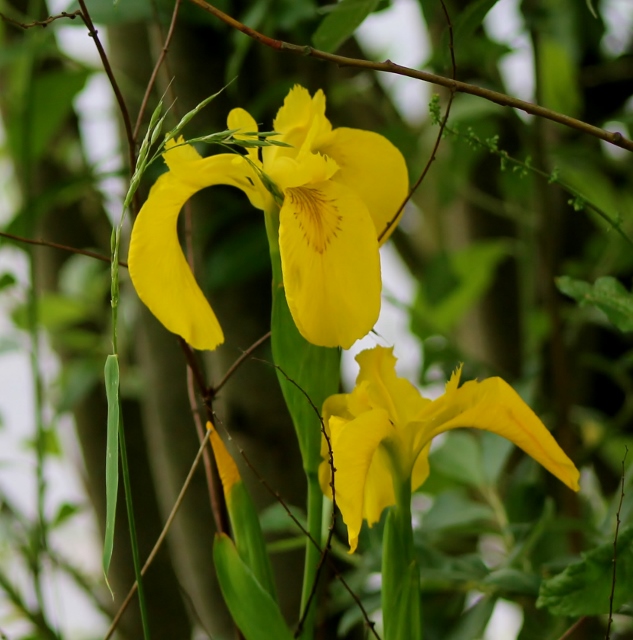
IMG_2268Yellow Iris (633x640)

Yellow Iris (Iris pseudacorus)

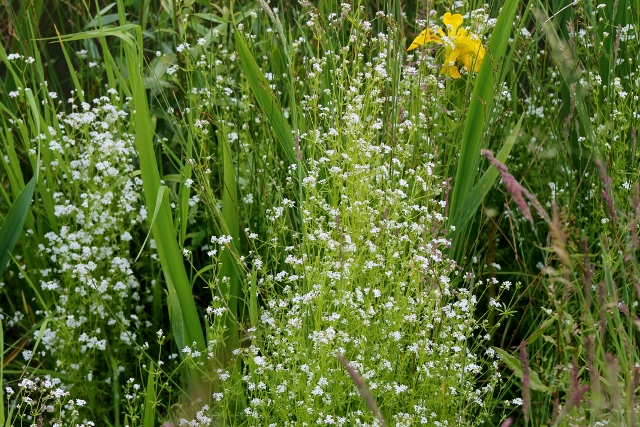
IMG_2302Common Marsh-bedstraw (640x427)

Another new plant to our garden is this Common Marsh-bedstraw (Galium palustre) growing by our corner pond.

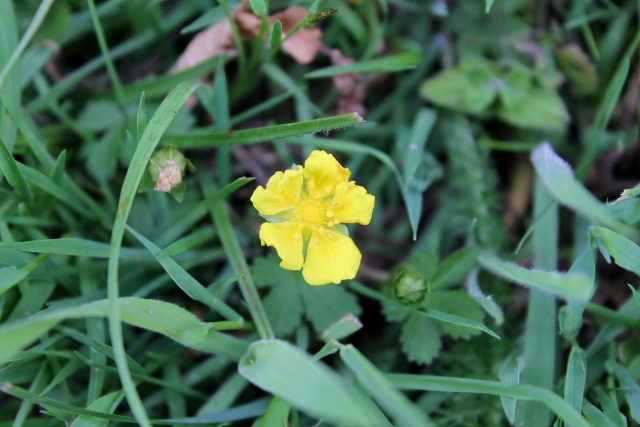
IMG_2277Creeping Cinquefoil (640x427)

One of my favourite flowers is this little one – Creeping Cinquefoil (Potentilla reptans). Its petals are heart-shaped and such a pretty shade of yellow. The creeping refers to its trailing stems that root at the nodes as it grows.

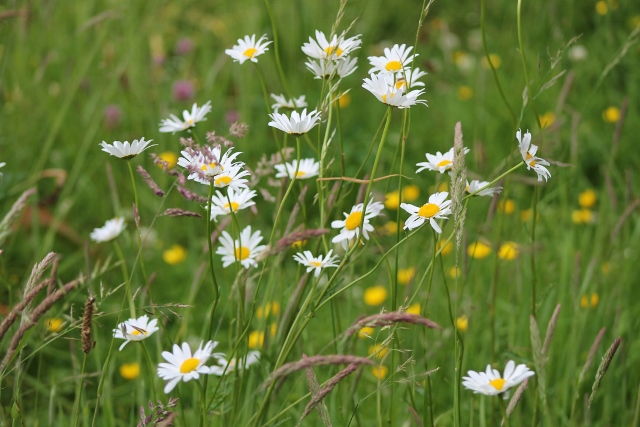
IMG_2279Ox-eye Daisies (640x427)

I love Oxeye Daisies (Leucanthemum vulgare) too.

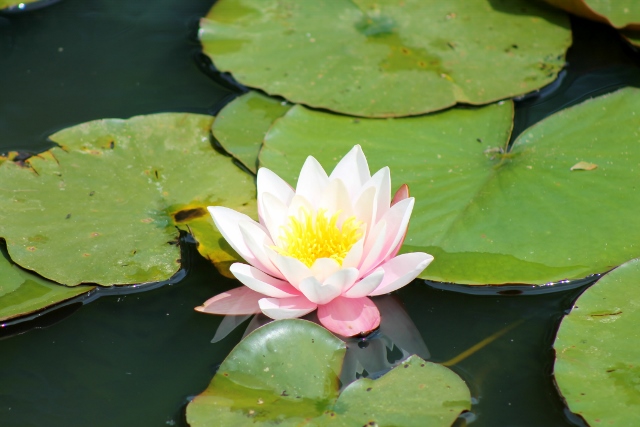
IMG_2289Water Lily (640x427)

A White Water-lily (Nymphaea alba) on our big pond.

Elinor saw the Kingfisher at the pond a couple of days ago and since yesterday we have  all heard the purring of a Turtle-dove in the trees round the pond.  The temperature has risen to 25 degrees Centigrade and I think it has been too cold up til now for the Turtle-dove.

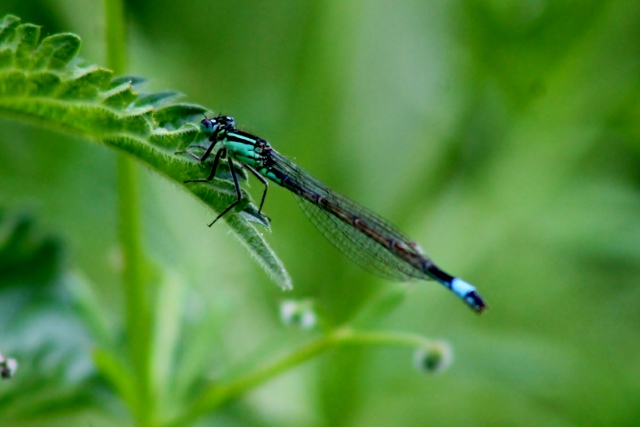
IMG_2270Female Blue-tailed Damselfly (2) (640x427)

Female Blue-tailed Damselfly (Ischnura elegans)

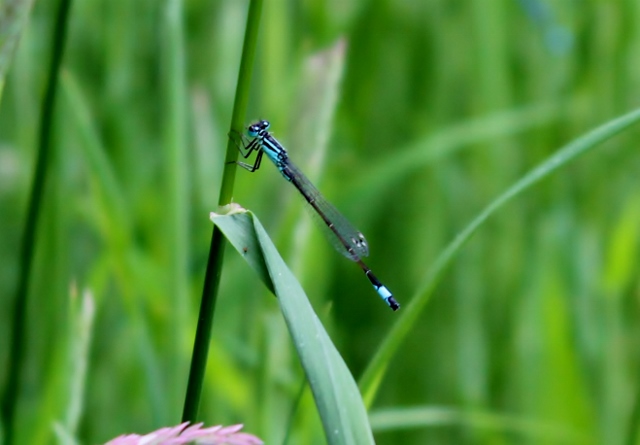
IMG_2276 (2)Male Blue-tailed Damselfly (640x445)

Male Blue-tailed Damselfly (Ischnura elegans)

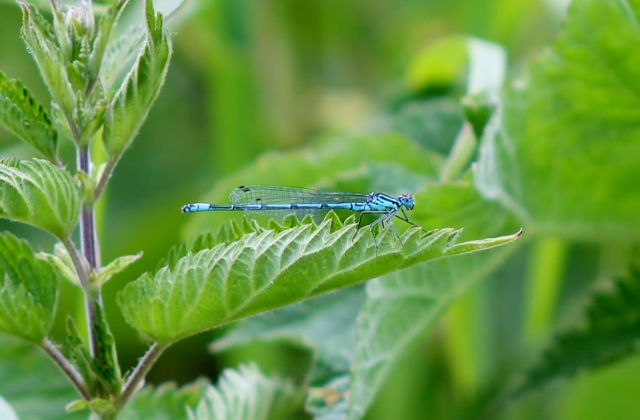
IMG_2271Male Azure Damselfly (2) (640x420)

Male Azure Damselfly (Coenagrion puella)

IMG_4824Male Four-spotted Chaser (640x478)

I believe this is a male Four-spotted Chaser (Libellula quadrimaculata)

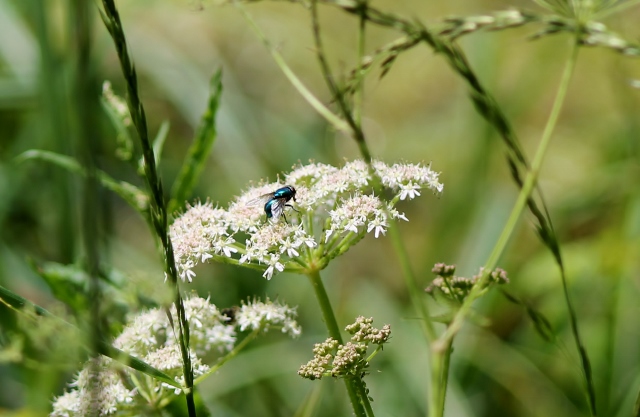
IMG_2283Greenbottle on Hogweed (2) (640x417)

Greenbottle (Lucilia caesar) on Hogweed (Heracleum sphondylium)

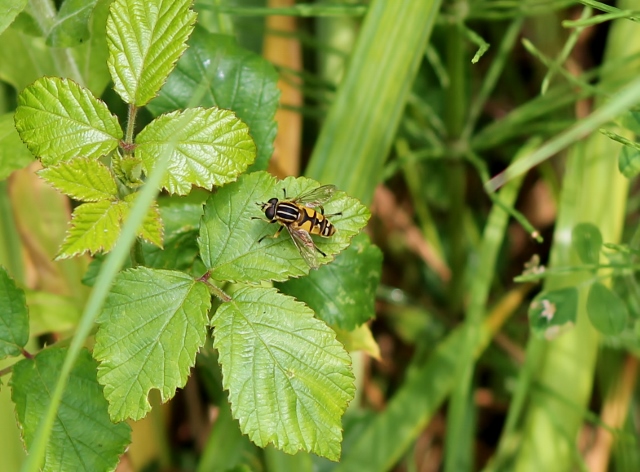
IMG_2294Helophilus pendulus Hoverfly (640x472)

A brightly-patterned Hoverfly (Helophilus pendulus)

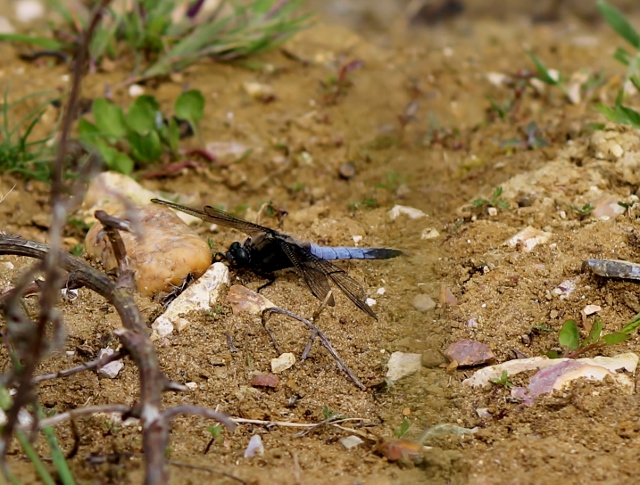
IMG_2298Male Black-tailed Skimmer (640x485)

Male Black-tailed Skimmer (Orthetrum cancellatum)

I hope to see some more insects now the weather has warmed up.

Thank-you for visiting!
Share this:

  • Share on X (Opens in new window) X
  • Share on Reddit (Opens in new window) Reddit
  • Share on Pinterest (Opens in new window) Pinterest
  • Share on Facebook (Opens in new window) Facebook
  • Email a link to a friend (Opens in new window) Email
  • Share on Tumblr (Opens in new window) Tumblr
  • Print (Opens in new window) Print
  • Share on Pocket (Opens in new window) Pocket
  • Share on LinkedIn (Opens in new window) LinkedIn
Like Loading...

Day of Dance 28 March 2015

23 Tue Jun 2015

Posted by Clare Pooley in music, Rural Diary, Uncategorized

≈ 38 Comments

Tags

Day of Dance, Folk dancing, Halesworth, Halesworth Day of Dance, Morris dancing, Suffolk

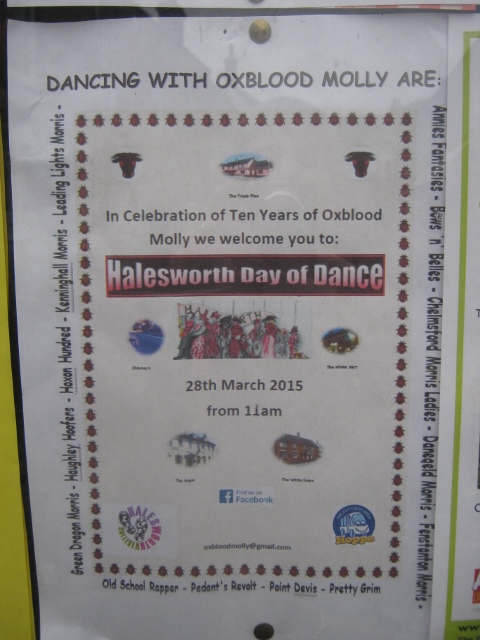
IMG_4285Day of Dance poster (480x640)

Poster for the Day of Dance

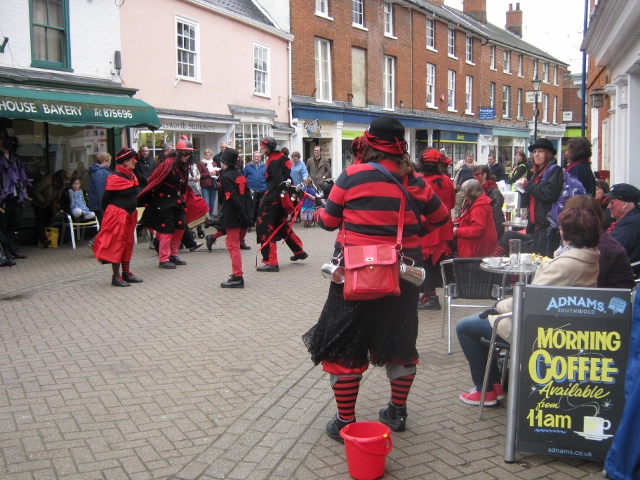
The weekend before Easter Richard and I took Elinor in to Halesworth so that she could go to the hairdressers.  We had a couple of things to buy and had arranged with Elinor that we would meet her back in the car park.  When we got to Halesworth we discovered that a Day of Dance was taking place in the town.

Oxblood Molly, a Molly dancing team were hosting their first Day of Dance in Halesworth and had invited a number of other dance teams to come along and take part.  Richard and I were delighted, as we love to watch Morris, Molly and Sword Dancing.  Elinor isn’t so keen and we got a couple of messages from her telling us about the difficulty she had in getting into the hairdresser’s salon past a large group of dancers, musicians and also a man wearing a horse’s head ( the Hobby Horse).

IMG_4295Oxblood Molly (640x480)

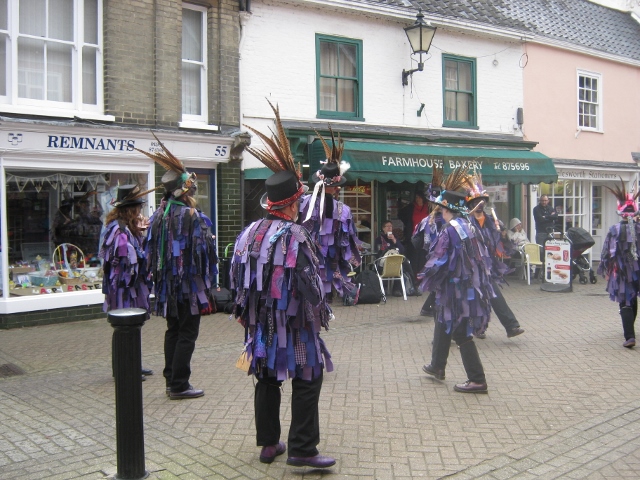
This is the Oxblood Molly side (or team) dancing in Halesworth Thoroughfare. All the dances were performed outside the pubs in the town.  The pub here is just out of shot on the right – The White Hart.

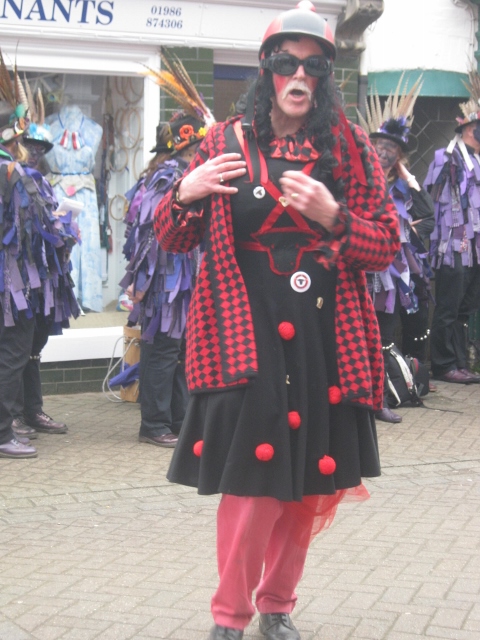
Molly Dancing originated in Cambridgeshire and is traditionally danced on Plough Monday, the first Monday after Epiphany when the agricultural workers went back to work after Christmas.  A decorated plough was dragged through the streets and the farm workers accompanied it with blackened faces asking for pennies to help the poor plough boys.  They disguised themselves so that their employers wouldn’t recognise them.  During harsh winters the farm-workers were often close to starvation.  The dance team went with the farm-workers; one of the dancers (all male) would be dressed as a woman, hence ‘Molly’.

IMG_4289Oxblood Molly (480x640)

This is Molly.


This slideshow requires JavaScript.

Here is a selection of photographs of Oxblood Molly.

IMG_4256Danegeld Morris (640x480)

Danegeld Morris dancing in the yard of the White Swan pub.

There are six main styles of Morris Dance – Cotswold Morris, North West Morris, Border Morris, Longsword Dancing, Rapper and Molly Dancing.  There is another less well-known style called Ploughstots (or Vessel Cupping, or Plew-ladding!) from the East and North Ridings of Yorkshire.

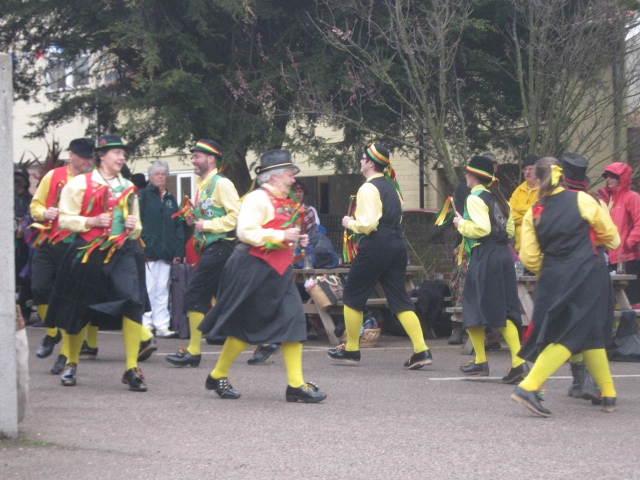
Danegeld Morris dance in the North West style and wear clogs on their feet.  This style was developed during the 19th and 20th centuries and came from the mill towns that had sprung up during the Industrial Revolution.

This slideshow requires JavaScript.

This slideshow requires JavaScript.

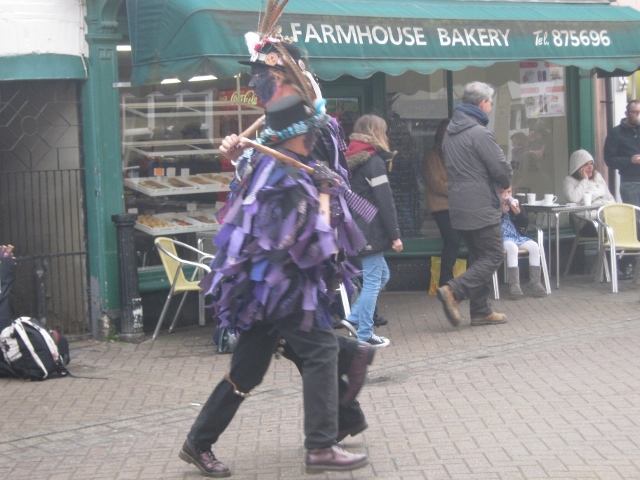
This side is called Pedant’s Revolt and they dance in the Border Morris style.  This is also the White Swan pub yard.  Richard filmed a few of the teams on his phone.  He only filmed short excerpts of three dances.  The video below is of Pedant’s Revolt.

IMG_4286Pedant's Revolt (640x480)

Here they are again outside The White Hart.

IMG_4287Pedant's Revolt (640x480)

I like the pheasant’s feathers they wear in their hats

This slideshow requires JavaScript.

This is Chelmsford Morris Ladies, another North West Morris group dancing in the White Swan pub yard.  Below is another video.

Kenn

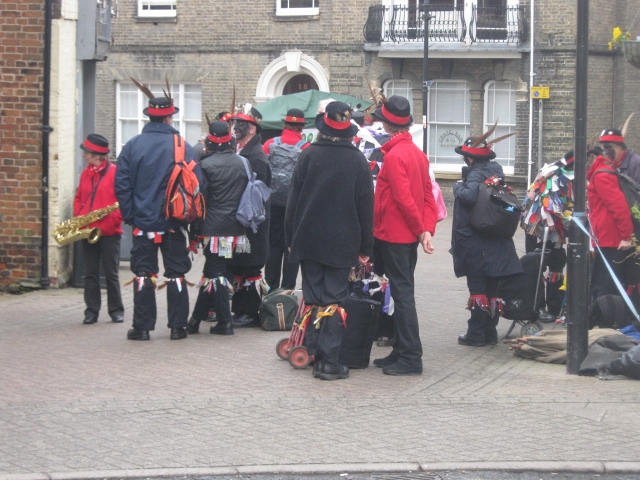
Kenninghall Morris side – a Border Morris dance team relaxing after having performed outside the Swan.

IMG_4280Kenninghall Morris (640x480)

They traditionally blacken their faces, though some of them had whitened their faces instead!  A couple of the Oxblood Molly side are with them here.

This slideshow requires JavaScript.

This side is Bows ‘n’ Belles and they are dancing outside the White Hart.  They are another North West Morris team and their video is below.

We weren’t able to see all the groups dancing that day as we had promised to visit my mother that afternoon.  It has made us want to go to more events like this!

Thanks for visiting!
 

Share this:

  • Share on X (Opens in new window) X
  • Share on Reddit (Opens in new window) Reddit
  • Share on Pinterest (Opens in new window) Pinterest
  • Share on Facebook (Opens in new window) Facebook
  • Email a link to a friend (Opens in new window) Email
  • Share on Tumblr (Opens in new window) Tumblr
  • Print (Opens in new window) Print
  • Share on Pocket (Opens in new window) Pocket
  • Share on LinkedIn (Opens in new window) LinkedIn
Like Loading...

A Wet Weekend

17 Wed Jun 2015

Posted by Clare Pooley in family, Rural Diary

≈ 40 Comments

Tags

azure damselfly, chaffinch, flour, guinea fowl, Pakenham Water Mill, scarlet pimpernel, Suffolk, sunset, topiary, watercress, Waveney District Council Parks and Open Spaces, white campion

This weekend marked the start of my break from driving every day to Norwich.  Hooray!!  Elinor finished her exams on Friday and we are so pleased with her and, I suspect, she is very pleased with herself.

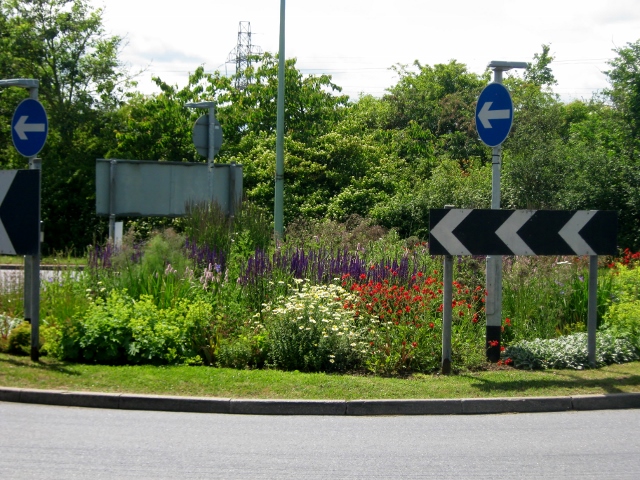
IMG_4802Traffic island Halesworth (640x480)

I thought this might be a good opportunity to show you a beautiful traffic island on a roundabout on the outskirts of Halesworth. The Parks Department have been creating wonderful floral displays all over the district. This island looks like a cottage garden.

The previous weekend was very pleasant as Alice came to visit for a few days.  We went to see Elinor’s college artwork on display at a gallery in Norwich on Friday 5th June and then had a very enjoyable Italian meal before returning home.  The day had started with thunderstorms and heavy rain but the sun came out in the afternoon and we then had some gorgeous warm weather for the rest of the day.  We haven’t had much warm weather and it didn’t last.

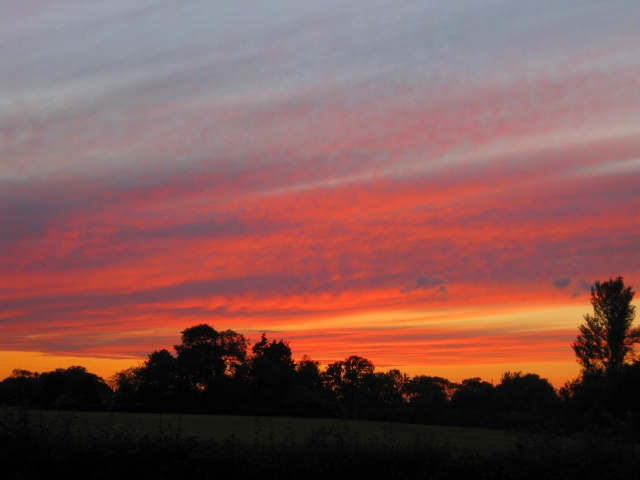
IMG_4780Sunset (640x480)

A beautiful sunset I saw a few days ago.

We went out for another meal that Sunday for lunch to celebrate Alice gaining her PhD.  My mother came with us too – I had taken her to church that morning and we all met at the Fox and Goose restaurant in Fressingfield.  We returned home and were relaxing with some tea and coffee when my brother arrived.  He had gone over to Mum’s house expecting her to be there as he wanted to try out his new lawn-mower on her grass.  He did a little mowing and then came over to our house hoping she was with us.  She wished she had been there while he mowed, as he cut down her cowslips and bluebells that she had been carefully mowing around while they set seed and died down.  She can’t say anything to him about it as he had been so kind but she has spoken a lot on the subject to me.  If bluebell leaves are cut before they die down the bulb isn’t fed and the plant may not survive.  She quoted a part of ‘A Shropshire Lad’ to me and said she also may not have many more bluebell springs and it would be sad if hers had gone for ever.  (I will have to replace her plants if they don’t grow next year!).  My brother has recently moved into his new home in Saxmundham, not far from us.  He seems to be settling in very well.  He got a job transfer from Surrey where he used to live to Suffolk and is getting on splendidly here.  He teaches in open prisons and has already been able to put some of the men in for exams which they have passed.  It has been very nice for me to see Andrew more regularly.  There is only a year and 9 days difference in our ages and we were very close when we were young.  He left home at 17 to become a police cadet and then married at 21.  We then didn’t seem to have much in common any more and only saw each other about once a year.

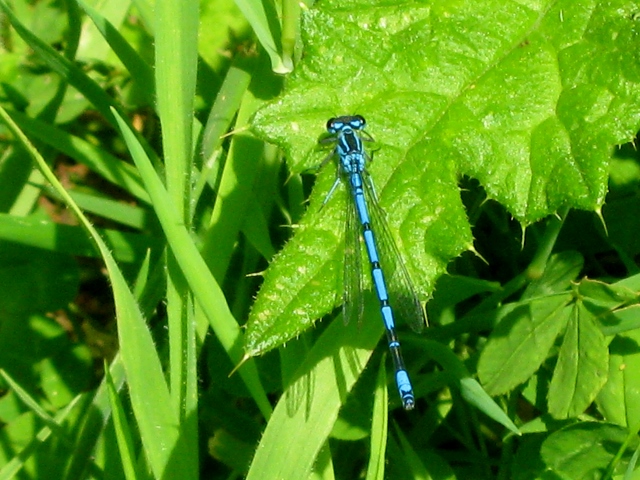
IMG_4818Male Azure Damselfly (640x480)

A male Azure Damselfly (Coenagrion puella) I saw in my garden yesterday.

The past week was very busy with Elinor’s exams, two shopping trips for Mum and a visit to the eye clinic at Norfolk and Norwich hospital with her for a check-up and of course, my usual chores.

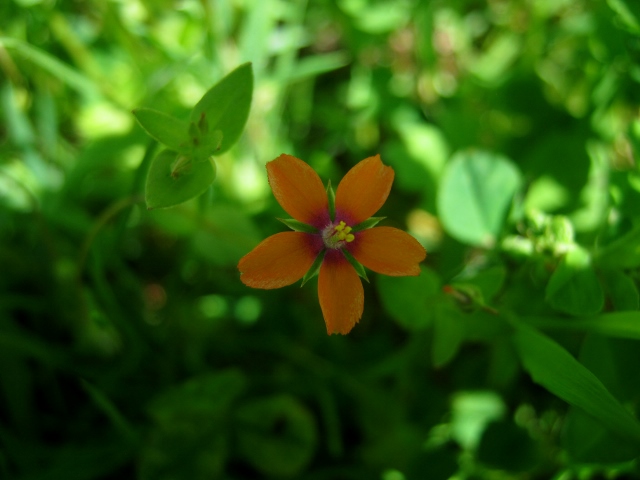
IMG_4815Scarlet Pimpernel (640x480)

A Scarlet Pimpernel flower (Anagallis arvensis ssp. arvensis) in my garden yesterday.

Richard has been taking Fridays off recently, cutting his working week down to four days in preparation for his retirement at the end of August.  He came with Elinor and me when I took her in for her final exam on Friday morning and while she was in college we did a little shopping.  It was a lovely bright day and not too cold for a change.  When Elinor met us we took her to buy some converse trainers she wanted and then went to a coffee shop for a drink and a sandwich.  The afternoon was dry so I managed to get some gardening done at home.

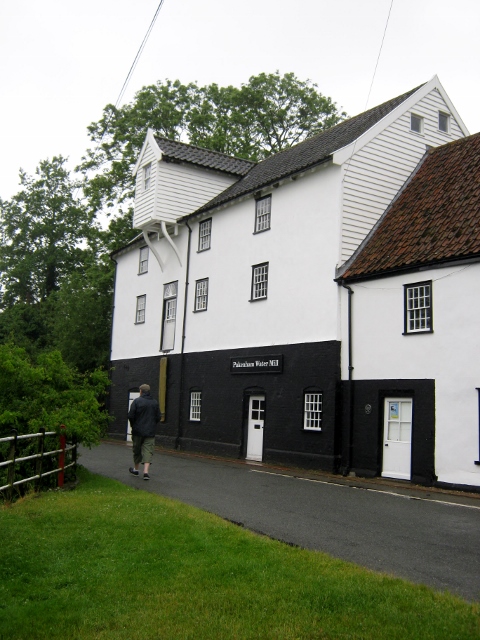
IMG_4791Pakenham Water Mill (480x640)

Pakenham Water Mill with Richard walking up the lane.

Saturday was mainly rainy and cool.  Richard and I decided to go out and buy some more good flour from Pakenham Water Mill.  We have had two tours of the mill already and it was much too wet to walk in the gardens, so we settled for a cup of tea/coffee and some cake in the tea room.  The lady who runs the tea shop wasn’t expecting many people to turn up because of the foul weather, so hadn’t made any of her wonderful scones.   There were plenty of other cakes to chose from and the tea and coffee is good there.  We bought two 5kg bags of flour from the shop and took them to the car.  Before returning home we had a look at the outside of the mill and at the river on the opposite side of the lane.

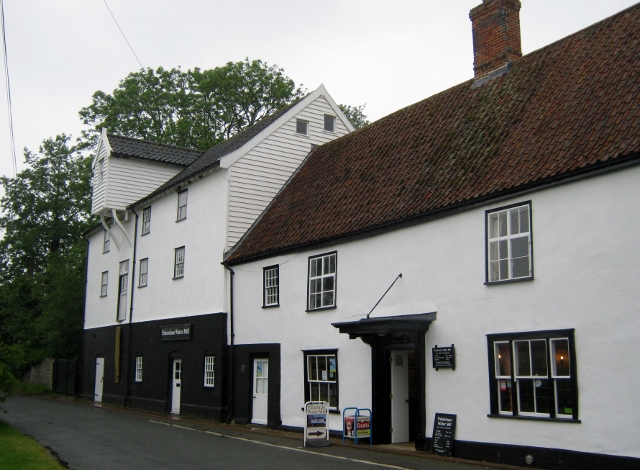
IMG_4792Pakenham Water Mill (640x470)

A wider view of the mill showing the millers house where the tea shop is situated.

IMG_4786Pakenham (640x480)

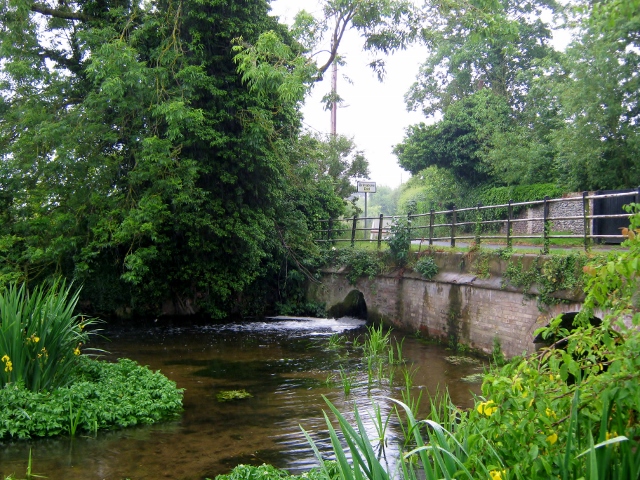
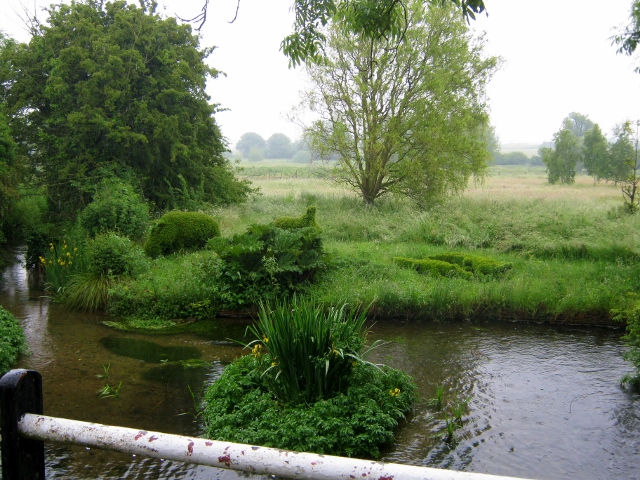
This is the river on the opposite side of the lane to the mill. You see the water that has just been through the mill powering the wheel, flowing into the river.

IMG_4789 (640x480)Watercress

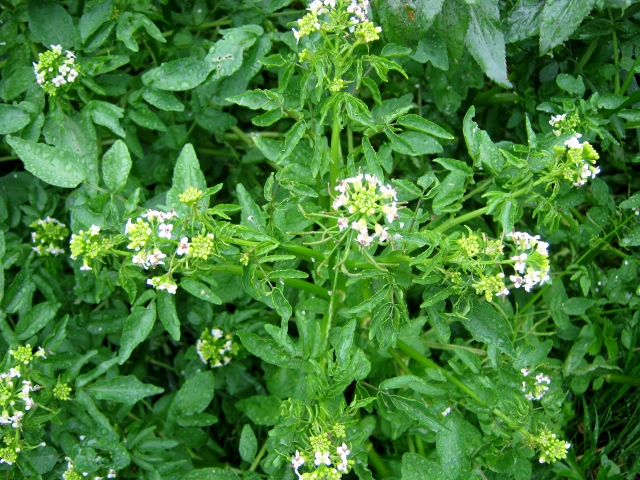
I think this may be Watercress (Rorippa nasturtium-aquaticum). I haven’t been this close to Watercress that’s still growing before so I may be mistaken. I used to see it quite often when we lived in Somerset but I couldn’t get this close to it. This is wild Watercress and not cultivated.

IMG_4790 (640x480)Watercress

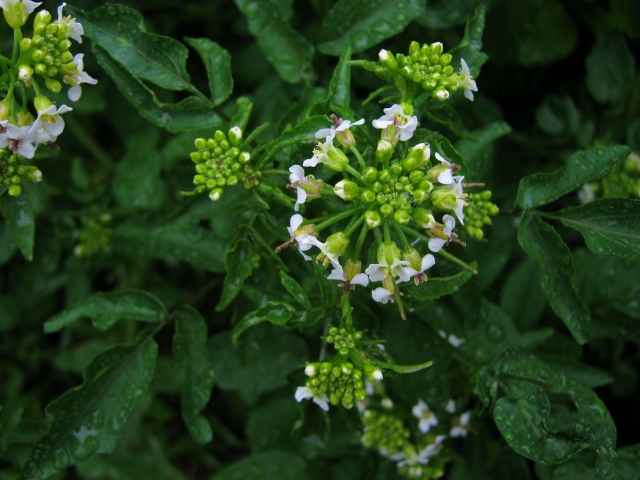
This is a close-up of the flowers.

IMG_4787Spider (640x480)

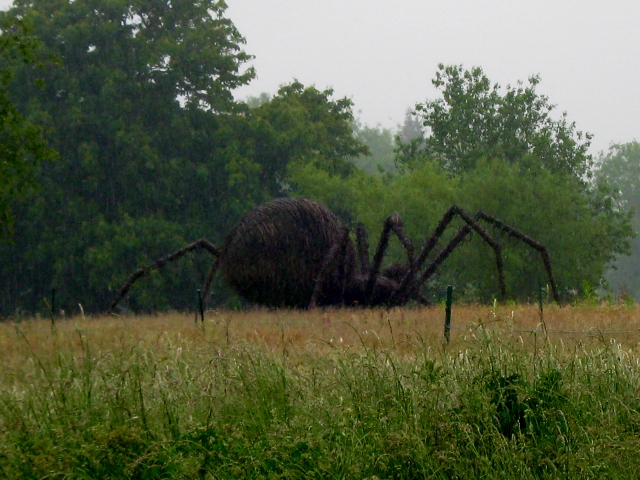
We saw this monstrous beauty in the field on the other side of the river.

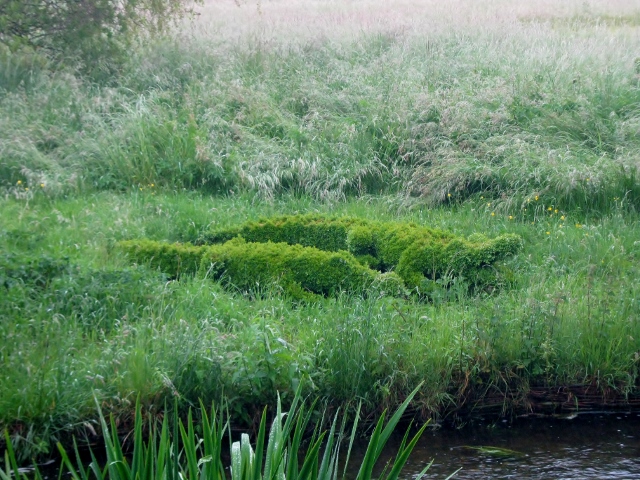
IMG_4794Topiary crocodiles (640x480)

Topiary crocodiles. We discovered that a business specialising in topiary had created all sorts of creatures and put them along the river bank.

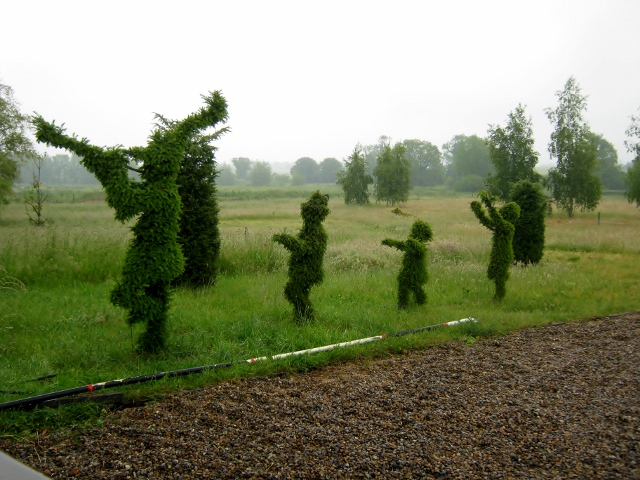
IMG_4795Topiary (640x480)

More topiary.

IMG_4796Topiary (640x480)

And more. This is the Pied Piper of Hamelin .

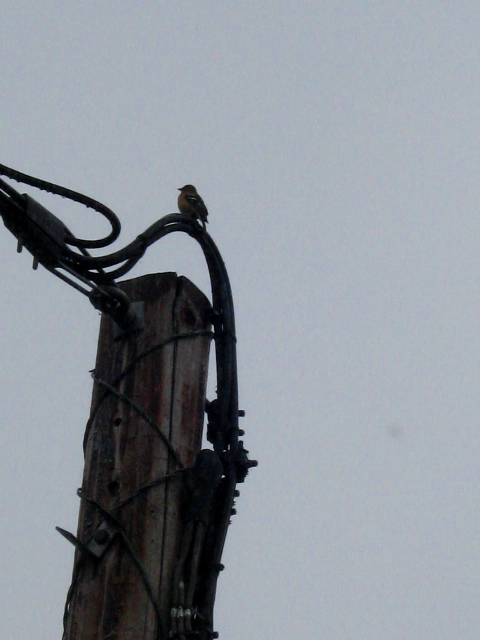
IMG_4797Chaffinch (480x640)

A wet Chaffinch (Fringilla coelebs) singing from the top of an electricity pole.

IMG_4799Guinea Fowl (640x480)

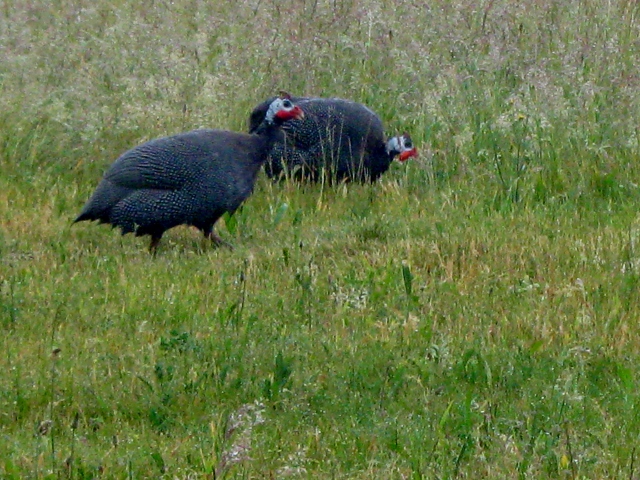
A pair of Guinea Fowl walking quickly through the field.

IMG_4800White Campion (640x480)

A wet White Campion (Silene latifolia) next to the gate.

These were the things we saw before we went back home.

Sunday morning was a very gloomy and chilly one.  We went to Morning Prayer at St James’ church.  We had rain at midday but the afternoon gradually became dryer until at last, the sun came out at tea time.

IMG_4801Green lane at St James (640x480)

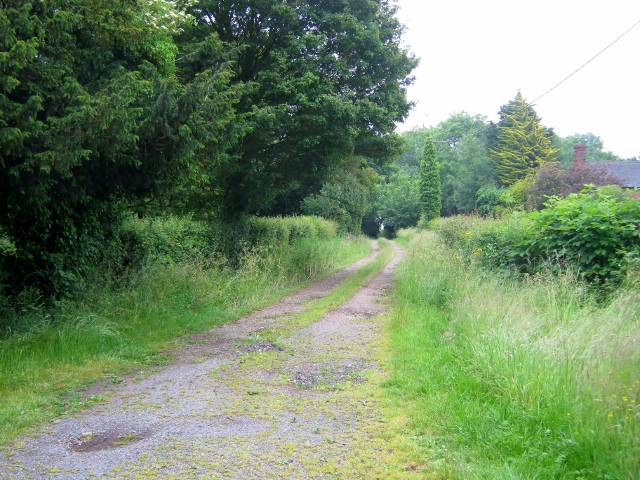
This is an un-tarmacked lane that goes past St James church.

Thank-you for visiting!
Share this:

  • Share on X (Opens in new window) X
  • Share on Reddit (Opens in new window) Reddit
  • Share on Pinterest (Opens in new window) Pinterest
  • Share on Facebook (Opens in new window) Facebook
  • Email a link to a friend (Opens in new window) Email
  • Share on Tumblr (Opens in new window) Tumblr
  • Print (Opens in new window) Print
  • Share on Pocket (Opens in new window) Pocket
  • Share on LinkedIn (Opens in new window) LinkedIn
Like Loading...

A Visit to the Plantation Garden.

11 Thu Jun 2015

Posted by Clare Pooley in Gardening, Norwich, plants, Rural Diary, trees

≈ 44 Comments

Tags

Gothic style, Henry Trevor, Norwich, ornamentation, Plantation Garden

053Plantation Grden (640x480)

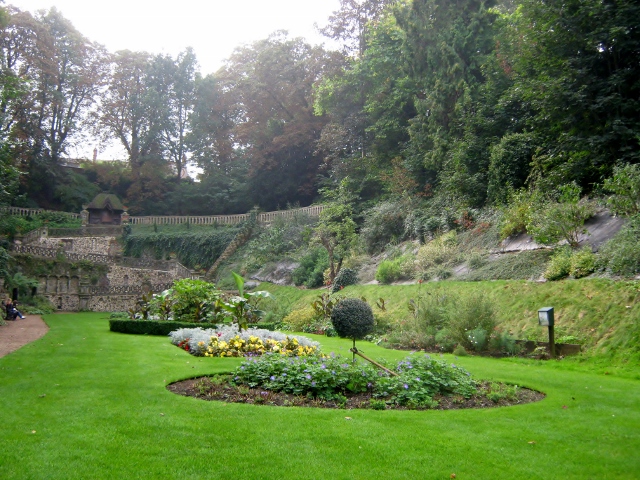
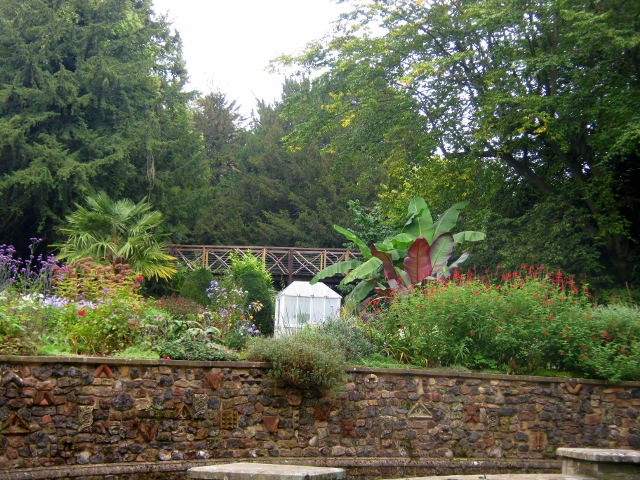
View of the garden looking south.

At the end of September last year, Elinor and I visited the Plantation Garden in Norwich.  Elinor had missed a visit to the garden with her Art class because she hadn’t been well, so we decided we’d go there and have a look for ourselves.  It is a Grade II English Heritage registered garden nearly 3 acres in size.

105Plantation Garden (640x480)

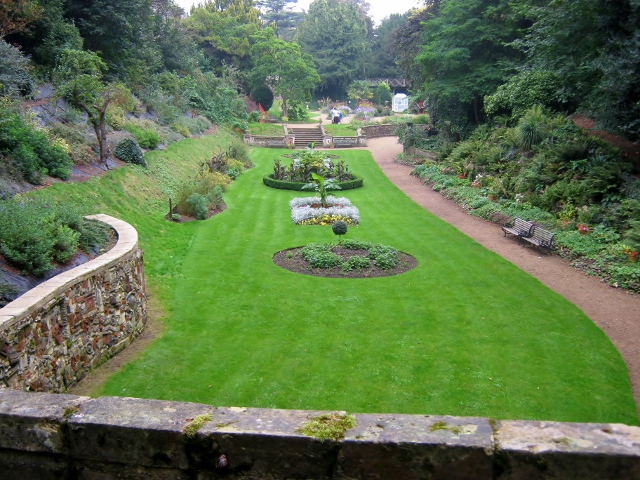
View of the garden from the top of the terrace looking north.

For many years the place where the garden is was an industrial site.  Hundreds of years ago, tunnels were dug into the side of the hills to extract flints that were used to build the city.  (One of these tunnels was accidentally discovered by a bus when it fell down it in 1984!).  The chalk surrounding the flint was gradually dug out to make lime for mortar and agricultural purposes.  Eventually a deep quarry was formed.

060Plantation Garden (640x480)

Looking North towards the Rustic Bridge.

In 1855 the Trustees of the Preachers’ Charity who have owned the land since 1613, decided to convert its use from industrial to residential.  The man who had been running his business as a builder/bricklayer/lime burner at the quarry site was (I presume) asked to move out and Henry Trevor moved in.  Trevor was a prosperous upholsterer and cabinet maker who was also an enthusiastic gardener.  When he took out the lease for the site he said he was eager to build a fine house and garden in ‘this deep dell’.

052 (640x427)Plantation Garden

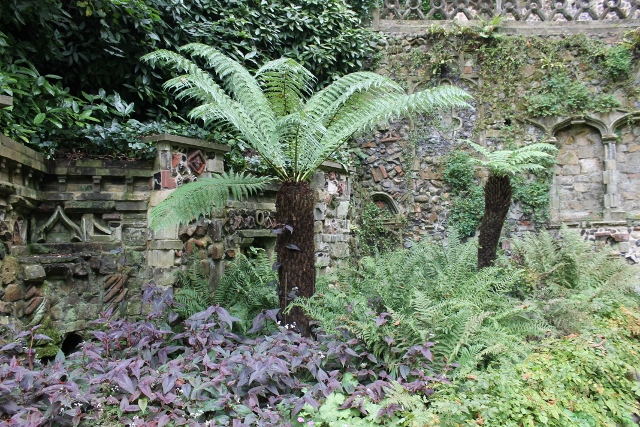
This shows some of the decoration on the walls.

Trevor bought the decorative materials for the hard structure of his garden from Gunton Brothers, a brickworks at Costessey (pronounced Cozzey) just to the west of Norwich, who made ornamental windows, chimneys and patterned bricks and sent them all over the country.  Henry Trevor used these bricks (and other Gunton materials) most imaginatively along with material he found on the site and material acquired elsewhere such as natural and knapped flints, plain bricks, carrstone and clinker from local gas works and kilns.  The Gothic Revival style was very popular at the time (1857) and this ‘medieval’ style was Trevor’s favourite.

118Plantation Garden (640x480)

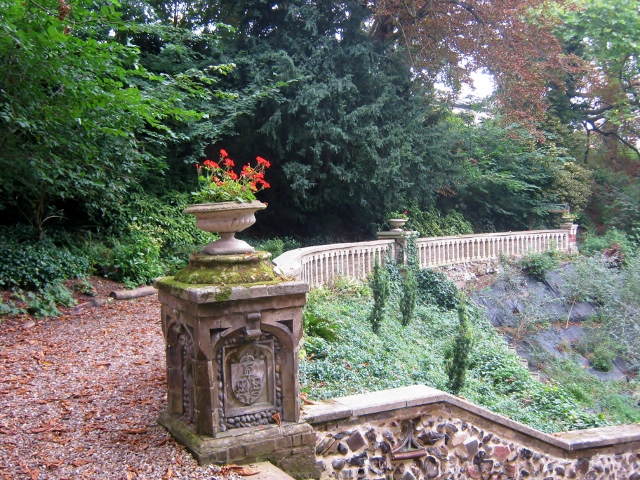
Top of the terrace at the southern end of the garden.

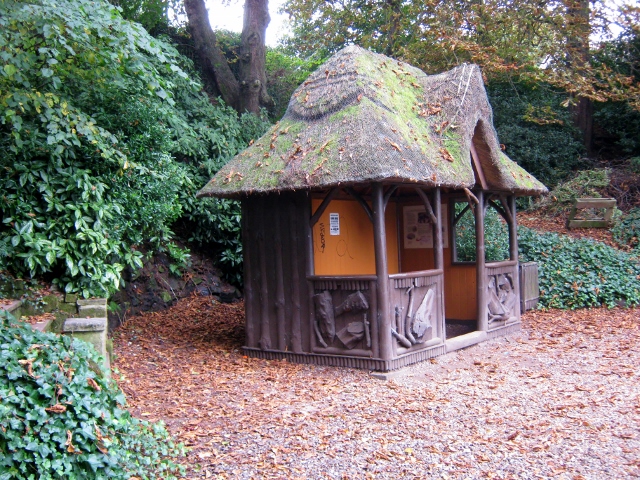
Trevor decided on the ‘Italianate’ style for the steep southern wall of the quarry.  He constructed flights of steps, balustrades and pedestals with urns on them.  He included a little rusticity and built a summerhouse on the top terrace to balance the rustic bridge at the north end of the garden.

117Plantation Garden (640x480)

The rustic summerhouse.

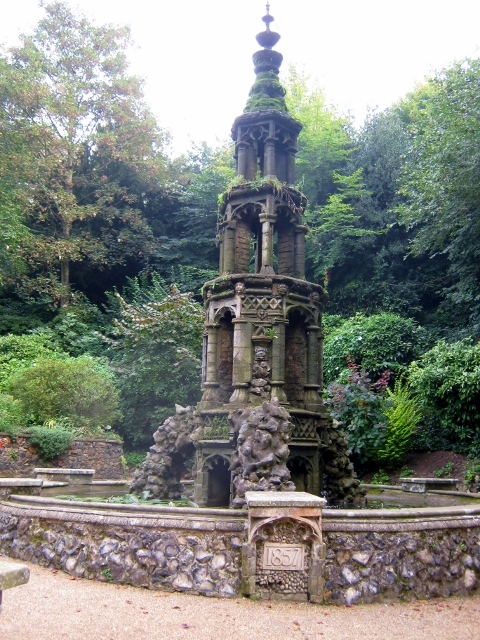
His tour de force is the Gothic fountain in the centre of the garden.

056Plantation Garden (480x640)

Gothic fountain.  The white moulded brick Trevor used weathers to look like stone.

Rock works were also fashionable at the time so Trevor included a 30-metre-long one in his garden.  He planned to plant the steep sides of the quarry with trees and with evergreen shrubs as an understorey.  To do this he must have created planting holes and brought in soil to fill them.  The planting is now over-mature and many of the original trees have died, but there are still some of the original 19th century plants and trees in the garden.

The Plantation Garden Preservation Trust is trying to raise funds to restore the many paths and steps all over the plot which enabled all Trevor’s guests and friends to view his garden from different levels.  He loved nothing better than having visitors and regularly opened the garden to the public.

This slideshow requires JavaScript.

The garden is being restored very carefully and the planting schemes are lovely and in keeping with the history of the site.  I haven’t included many of the plants I saw there as I have concentrated on the original architecture in this post.  It is a very strange place and some of the ornamentation is a little over-fussy for my taste but it is also a beautiful garden and so peaceful and remote from the city though sited in its heart.

I obtained most of the details included in this post from information boards placed round the garden.  I am very grateful to the PGPT for supplying this information.

I have included a link here.

Thank-you for visiting!
Share this:

  • Share on X (Opens in new window) X
  • Share on Reddit (Opens in new window) Reddit
  • Share on Pinterest (Opens in new window) Pinterest
  • Share on Facebook (Opens in new window) Facebook
  • Email a link to a friend (Opens in new window) Email
  • Share on Tumblr (Opens in new window) Tumblr
  • Print (Opens in new window) Print
  • Share on Pocket (Opens in new window) Pocket
  • Share on LinkedIn (Opens in new window) LinkedIn
Like Loading...

Minsmere – 8th May 2015

31 Sun May 2015

Posted by Clare Pooley in plants, Rural Diary, trees, walking, wild birds

≈ 37 Comments

Tags

BBC Spring Watch, black slugs, blackcap, bluebells, Common Vetch, crabapple, Minsmere, oak, oak moss, ponds, red campion, RSPB, Suffolk, woods

Elinor took her Art exam over two days at the beginning of May and on the Friday of that week she and I decided we’d go to the RSPB (Royal Society for the Protection of Birds) reserve at Minsmere for a relaxing walk.  Richard was away in Manchester visiting his mother and brother and helping his brother clear his Mum’s house before putting it on the market.

We go to Minsmere very often and know all the walks.  Elinor decided she wanted to walk through the woods instead of going to the shore.  I was hoping to hear a Cuckoo and a Nightingale.  We had a drink and a cake in the café before we set off.

IMG_2203Something on Birch tree Minsmere (640x427)

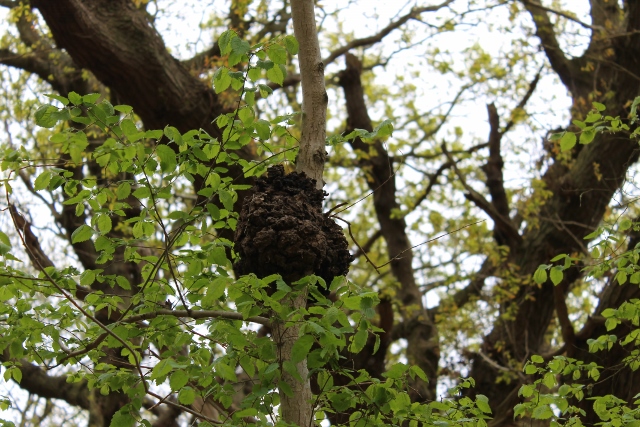
The first thing we saw was this and I have no idea what it is. Is it a canker, a fungus or is it a nest of some sort? It is on a Birch tree.

IMG_2204Crabapple perhaps (640x427)

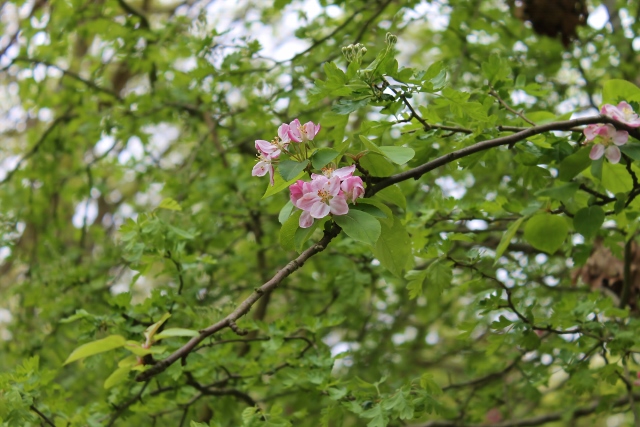
We saw this very pretty Crabapple blossom.

IMG_2205Common vetch (640x427)

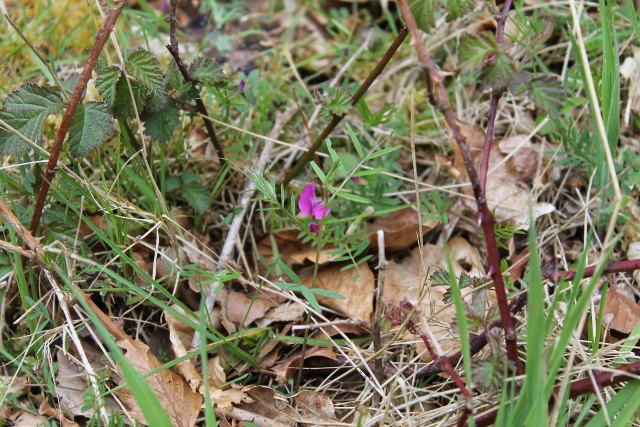
This is Common Vetch (Vicia sativa)

IMG_2212Red Campion (640x427)

Red Campion (Silene dioica). The wind was blowing quite hard and I found it difficult to get anything in focus.

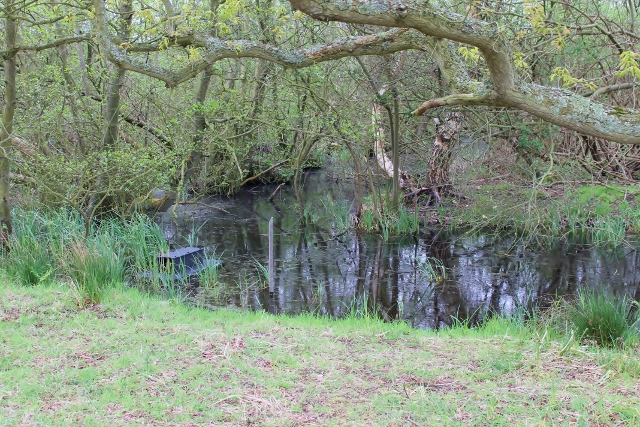
IMG_2206Pond (640x427)

And this is one of the many ponds at Minsmere.

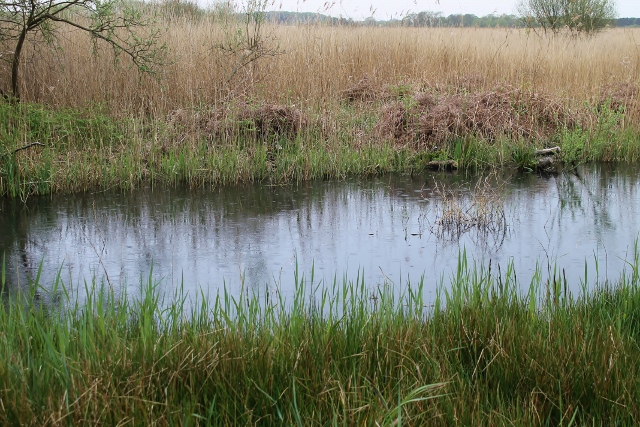
IMG_2207Pond (640x427)

Another pond.

The weather, which had been quite pleasant in the morning, quickly deteriorated  once we began our walk.  It got quite cold and then a drizzly rain started as you can see by the raindrops on the pond above.  Any hopes of hearing a Cuckoo or a Nightingale evaporated away.

There are Adders (Vipera berus) living on the reserve and we had been hoping to see them.  We were told by another visitor that they were sleeping out in the open but unfortunately, by the time we arrived at the area where they are to be found, the rain had started and very sensibly they had gone under cover.  The area is fenced off for their and our protection.  They are Britain’s only venomous snake.

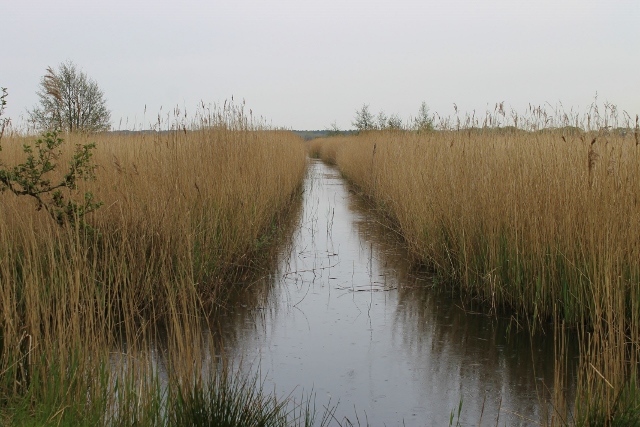
IMG_2208Reeds and water (640x427)

Reeds and water. We could hear Bitterns (Botaurus stellaris) booming in the reeds but we didn’t see any water fowl at all.

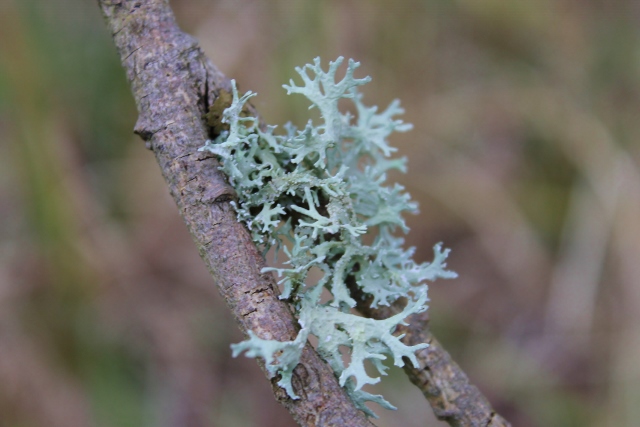
IMG_2209Oak moss (640x427)

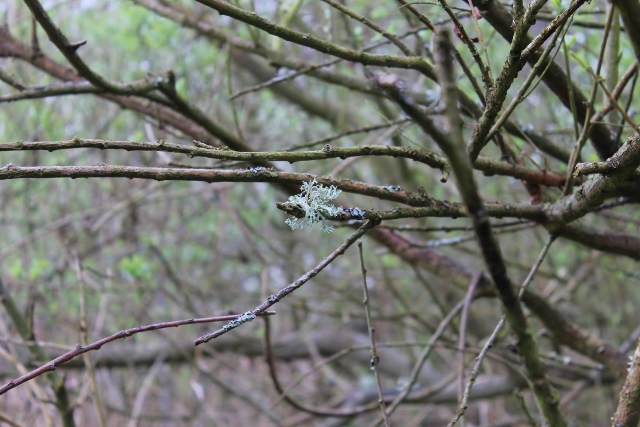
There was plenty of Oak Moss (Evernia prunastri) to be seen.

IMG_2211Oak moss (640x427)

It is very attractive with its flat, curled branches. It isn’t moss at all but is in fact a lichenised fungus.

Air quality in the East of England isn’t as good as in the West of the country because the prevailing wind blows across the country, including London, before it gets to us.  We are pleased when we find any kind of lichen as they are often indicators of clean air.

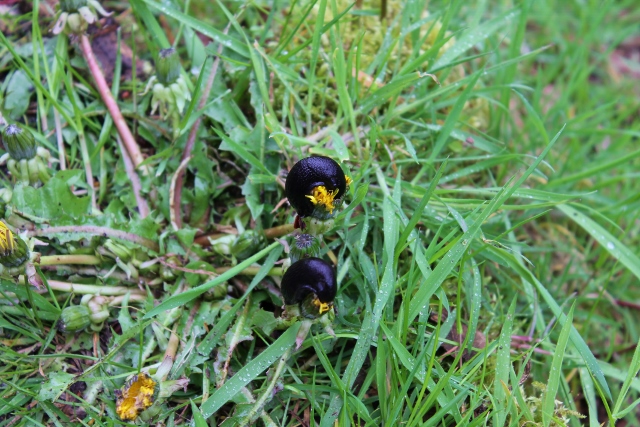
IMG_2210Slugs on dandelion (640x427)

This dandelion plant had a couple of slug visitors.

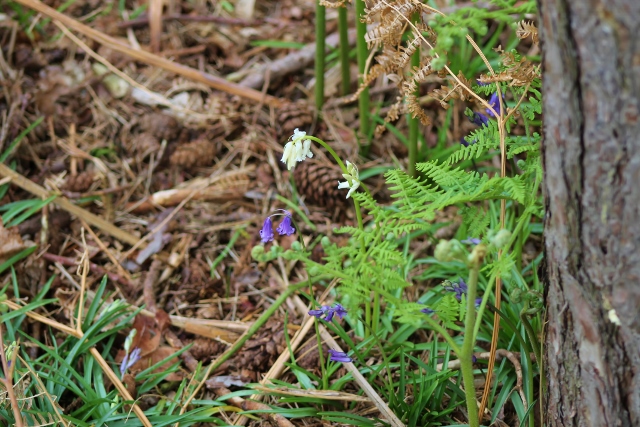
IMG_2218White bluebell (640x427)

We saw very many white bluebells in the wood

IMG_2223Oak tree (640x427)

An Oak tree (Quercus robur) with new leaves and flowers.

IMG_2221Building for the BBC (640x427)

This is the building that was constructed last year for the BBC Spring Watch team. This is as near as us members of the hoi polloi can get to it. The BBC are currently filming at Minsmere though they weren’t when Elinor and I visited.

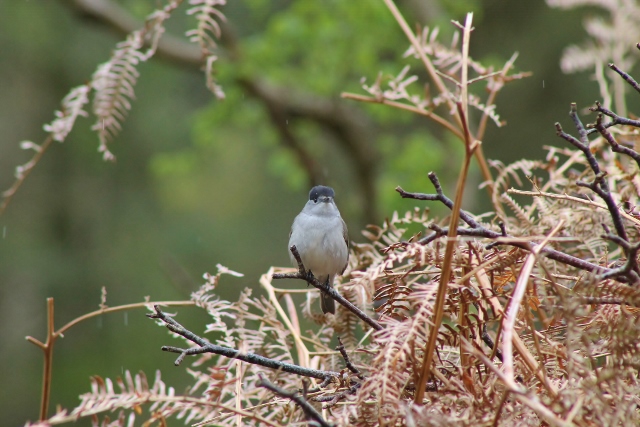
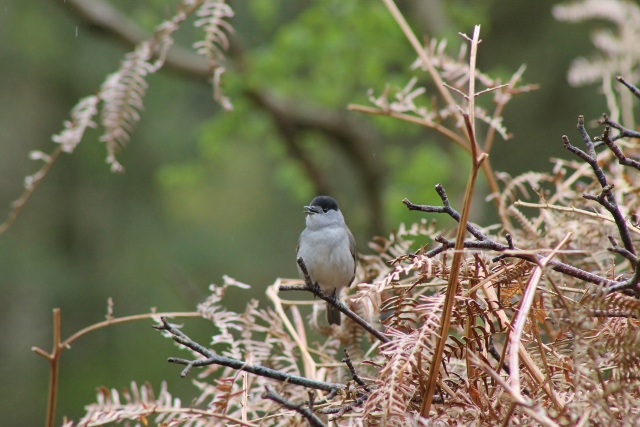
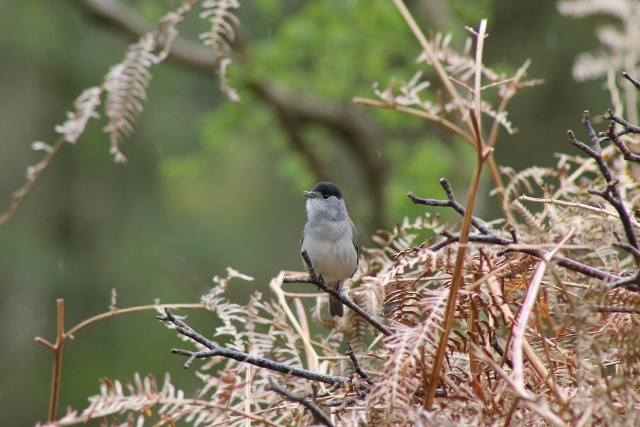
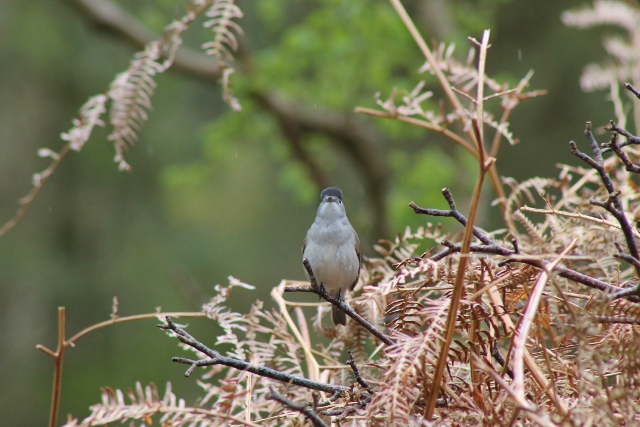
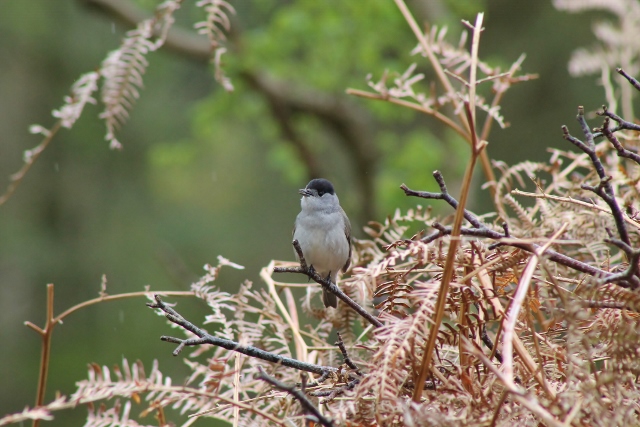
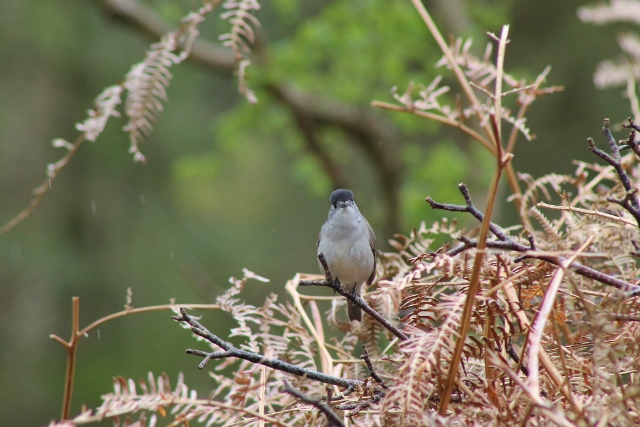
The next six photographs are of a male Blackcap (Sylvia atricapilla) that I found singing next to the path.  The photos are not cropped.  This warbler didn’t appear to be at all nervous and at each pause in his song he seemed to look at me to judge my reaction!  He filled his throat with air and used it like the bag on a bag-pipe to sing.

IMG_2224Blackcap (640x427)

IMG_2225Blackcap (640x427)

IMG_2226Blackcap (640x427)

IMG_2227Blackcap (640x427)

IMG_2228Blackcap (640x427)

IMG_2229Blackcap (640x427)

I was very pleased to get these pictures.

Thank-you for visiting!
Share this:

  • Share on X (Opens in new window) X
  • Share on Reddit (Opens in new window) Reddit
  • Share on Pinterest (Opens in new window) Pinterest
  • Share on Facebook (Opens in new window) Facebook
  • Email a link to a friend (Opens in new window) Email
  • Share on Tumblr (Opens in new window) Tumblr
  • Print (Opens in new window) Print
  • Share on Pocket (Opens in new window) Pocket
  • Share on LinkedIn (Opens in new window) LinkedIn
Like Loading...
← Older posts
Newer posts →
Follow A Suffolk Lane on WordPress.com

Enter your email address to follow this blog and receive notifications of new posts by email.

Join 715 other subscribers.

Unknown's avatar

I talk about what it's like living in a quiet part of Suffolk. I am a wife, mother and daughter, a practising Christian and love the natural world that surrounds me. I enjoy my life - most of the time!
My Posts

Jan 2026
M T W T F S S
 1234
567891011
12131415161718
19202122232425
262728293031  
« Dec    

Pages

  • About my Blog
  • GDPR (General Data Protection Regulations) and This Site
  • My Life in a Suffolk Lane

Archives

Blogs I Follow

Unknown's avatar
Unknown's avatar
Unknown's avatar
Unknown's avatar
Unknown's avatar
Unknown's avatar
Unknown's avatar
Unknown's avatar
Unknown's avatar
Unknown's avatar
Unknown's avatar
Unknown's avatar
Unknown's avatar
Unknown's avatar
Unknown's avatar
Unknown's avatar
Unknown's avatar
Unknown's avatar
Unknown's avatar

Posts I Like

  • Unknown's avatar
  • Unknown's avatar
  • Unknown's avatar
  • Unknown's avatar
  • sherijkennedyriverside's avatar
  • Unknown's avatar
  • Unknown's avatar
  • Unknown's avatar
  • NEERAJ SINGH's avatar
  • Matthew Paul's avatar
  • Unknown's avatar
  • Sarah curran's avatar
  • Unknown's avatar
  • Dad's avatar
  • clivebennett796's avatar
  • Limentinus's avatar
  • Unknown's avatar
  • Unknown's avatar
  • DoF@theinfill's avatar
  • Unknown's avatar
  • Unknown's avatar
  • Unknown's avatar
  • bitaboutbritain's avatar
  • Carolina Cuisine Network's avatar
  • Unknown's avatar
  • CJ's avatar
  • Rich's avatar
  • Unknown's avatar
  • Unknown's avatar
  • Unknown's avatar
  • Martha's avatar
  • Unknown's avatar
  • Unknown's avatar
  • JAM's avatar
  • quietsolopursuits's avatar
  • Unknown's avatar
  • womanseyeview's avatar
  • Unknown's avatar
  • Yeah, Another Blogger's avatar
  • T Ibara Photo's avatar
  • Unknown's avatar
  • sopantooth's avatar
  • Unknown's avatar
  • Unknown's avatar
  • Wayne Wolfson's avatar
  • Stephen G. Hipperson's avatar
  • Unknown's avatar
  • aho's avatar
  • Unknown's avatar
  • Unknown's avatar

amphibians architecture art Arts and Crafts churches cooking Days out domestic animals family fish Folk Traditions Gardening Historic Buildings holidays Insects Landscaping literature music Norwich plants Rural Diary seashore theatre trees Uncategorized walking weather wild animals wild birds wild flowers

Tags

architecture autumn birds blackbird blackthorn Bungay butterfly church clouds common knapweed cow parsley crocus daffodils Diary dogwood family field maple flowers fungus garden gardening geese greylags ground-ivy Halesworth Hawthorn heather holiday Holly Holy Week horse chestnut Hoverfly insects ivy Lake District Lent lesser celandine lichen Lords and Ladies Mallard mallards Minsmere moorhen moss music Norwich Peak District pheasant plants pond ponds primrose primroses Rain rooks Rumburgh Rumburgh Church sheep Sheffield snow snowdrops Southwold spring Suffolk Suffolk Wildlife Trust sunset the Beck trees viburnum bodnantense walking weather wild cherry wild flowers winter-flowering honeysuckle witch-hazel

Meta

  • Create account
  • Log in
  • Entries feed
  • Comments feed
  • WordPress.com

Goodreads

Blog at WordPress.com.

Book Jotter

Reviews, news, features and all things books for passionate readers

Country Life Blog -

A blog about life in the country in the past and present

Matthew Paul: Poetry & Stuff

Poetry and what-not

Schnippelboy

Ein Tagebuch unserer Alltagsküche-Leicht zum Nachkochen

TAMARA JARE

Tamara Jare Contemporary Figurative Art – Bold Colors, Resilient Souls

A Taste of Freedom

Documenting a Dream

Country Ways

Rambling Journeys in Britain, Countryside Matters and campaigning for the Right to Roam

The Strawberry Post

Here to Entertain, Educate & Inspire!
a north east ohio garden

an ongoing experiment in the dirt, 35 plus years

naturechirp

Celebrating God's creatures, birds and plants...

Sophie Neville

Writer

Going Batty in Wales

Developing a more sustainable lifestyle in SW Wales

Our Lake District Escapades

Exploring the Lake District and beyond

Short Walks Long Paths

Wandering trails around the coast of Wales

The Biking Gardener

An English persons experience of living and gardening in Ireland

Nan's Farm

A Journal Of Everyday Life

Walk the Old Ways

Rambling Journeys in Britain with John Bainbridge. Fighting for the Right to Roam. Campaigning to Protect Our Countryside.

Writer Side UP!

Waking the Writer Side...and keeping it "Up!"

Meggie's Adventures

Travel, thank you notes and other stories

amusicalifeonplanetearth

Music and the Thoughts It Can Inspire

lovefoundation.co.uk

Traveling Tortuga

Simply Living Well

Pakenham Water Mill

Historic watermill in the beautiful Suffolk countryside

Take It Easy

Retired, not expired: words from the after(work)life. And music. Lots of music!

Secret Diary Of A Country Vicar's Wife

By Olive Oyl

thanksfortheadventureorg.wordpress.com/

The Beat Goes On

#TBGO

Frank Pleszak's Blogs

Twitter: @frankpleszak @PolishIICorps

John Bainbridge Writer

Indie Writer and Publisher

roughwighting

Life in a flash - a bi-weekly storytelling blog

Walking the Old Ways

Rambling in the British Countryside

CapKane

thoughts on social realities

SkyeEnt

Jottings from Skye

jodie richelle

embracing my inner homemaker

Skizzenbuch/Blog

Just another WordPress.com weblog

Have Bag, Will Travel

The Call of the Pen

Flash Fiction, Book Reviews, Devotionals and other things.

John's Postcards

Art in Nature

You dream, I photographe it !

Smile! You’re in Barnier World......

theinfill

the things that come to hand

Dr. Mary Ann Niemczura

Author of "A Past Worth Telling"

Provincial Woman

The Pink Wheelbarrow

Luanne Castle: Poetry and Other Words (and cats!)

Poetry, Other Words, and Cats

The Family Kalamazoo

A genealogical site devoted to the history of the DeKorn and Zuidweg families of Kalamazoo and the Mulder family of Caledonia

everythingchild

The Book Owl

Canberra's Green Spaces

Paul Harley Photographer

  • Subscribe Subscribed
    • A Suffolk Lane
    • Join 715 other subscribers.
    • Already have a WordPress.com account? Log in now.
    • A Suffolk Lane
    • Subscribe Subscribed
    • Sign up
    • Log in
    • Report this content
    • View site in Reader
    • Manage subscriptions
    • Collapse this bar
 

Loading Comments...
 

    Privacy & Cookies: This site uses cookies. By continuing to use this website, you agree to their use.
    To find out more, including how to control cookies, see here: Cookie Policy
    %d