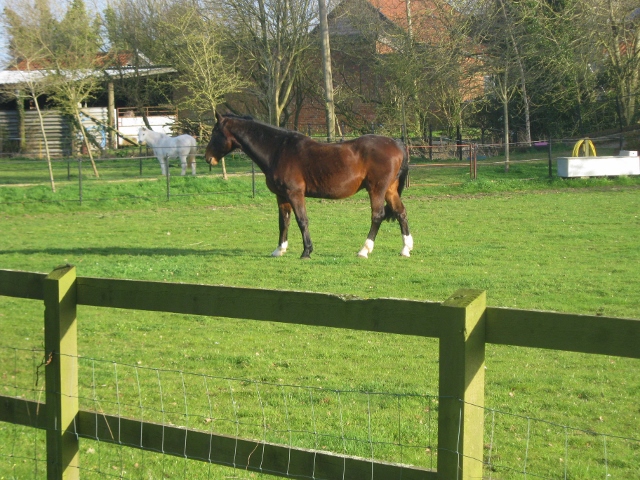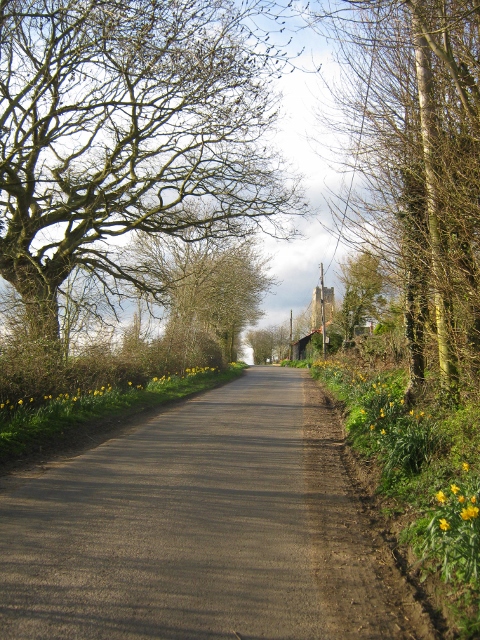
• About my Blog
  • GDPR (General Data Protection Regulations) and This Site
  • My Life in a Suffolk Lane

A Suffolk Lane

~ A diary of my life in rural north Suffolk.

A Suffolk Lane

Category Archives: churches

Autumn in a Suffolk Lane – Part 2

11 Sun Oct 2015

Posted by Clare Pooley in churches, Days out, Gardening, music, plants, Rural Diary, trees

≈ 42 Comments

Tags

Acorn, ash keys, Astrantia, autumn, Bantam Cock, beach, chickens, Chrysanthemum, conker, dogwood, Dunwich Heath, dwarf gorse, eating apples, Elderberries, fungi, gardening, GERANIUM, Grove snail, Hibiscus, Jake Thackray, Knopper gall, leaf colour, Linstead Magna, Linstead Parva, liverwort, Michaelmas Daisy, moorhen, Pyracantha, rough sea, Salvia, silver birch, Suffolk, sunset, Tansy, viola
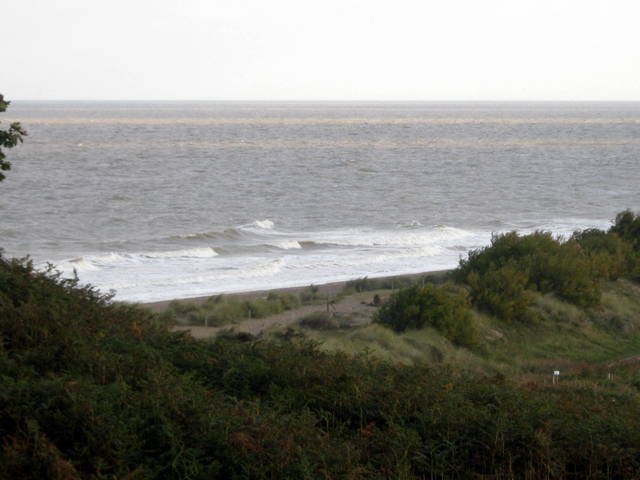
IMG_5766Beach at Dunwich Heath

The beach at Dunwich Heath.

We visited yet another of our local beaches on a very windy, cool afternoon recently.  We only stayed on the beach for a short while because the wind was so biting; Elinor and I both got earache.
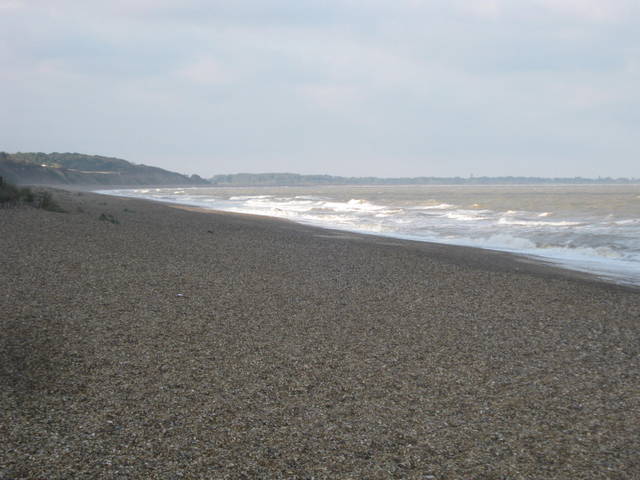
IMG_5767Beach at Dunwich heath

The mist in the distance is sea-spray.
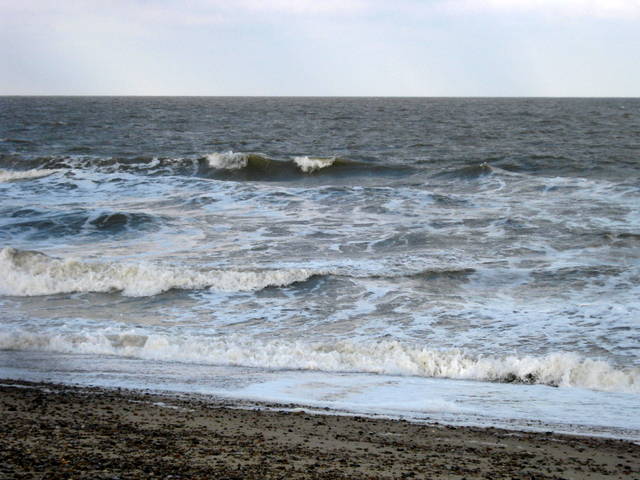
IMG_5768Beach at Dunwich Heath

The waves were quite rough but the tide was going out.
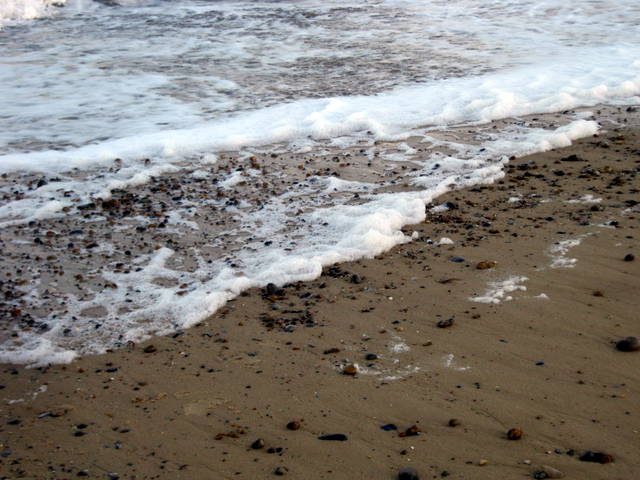
IMG_5769Beach at Dunwich Heath

Foam was left on the sand and was blowing about.
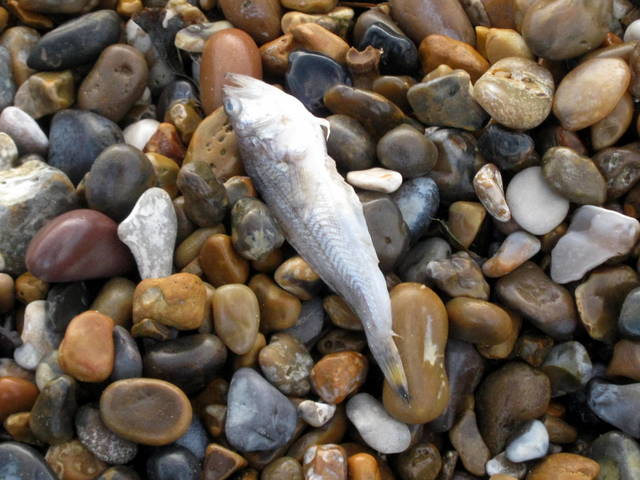
IMG_5770Dead fish

This little fish must have come too close to the shore.
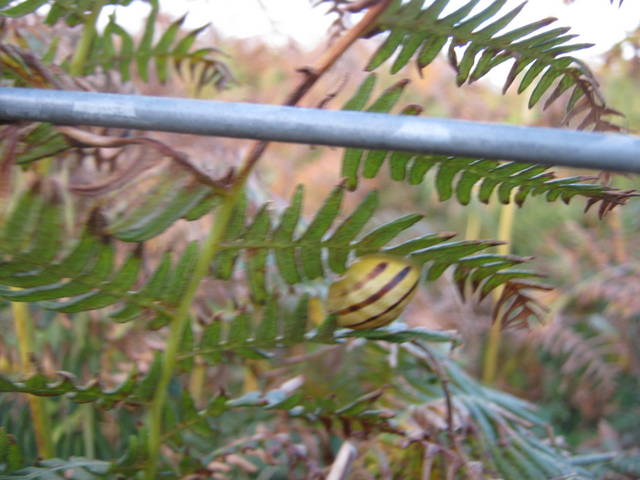
IMG_5771Snail on bracken

This Grove Snail (Cepaea nemoralis) attached to its bit of bracken was swinging about in the wind.

My ID guide suggests that the Grove Snail “is used to demonstrate the survival of the fittest in evolution, because Thrushes eat the snails which are least well camouflaged against their environment.”
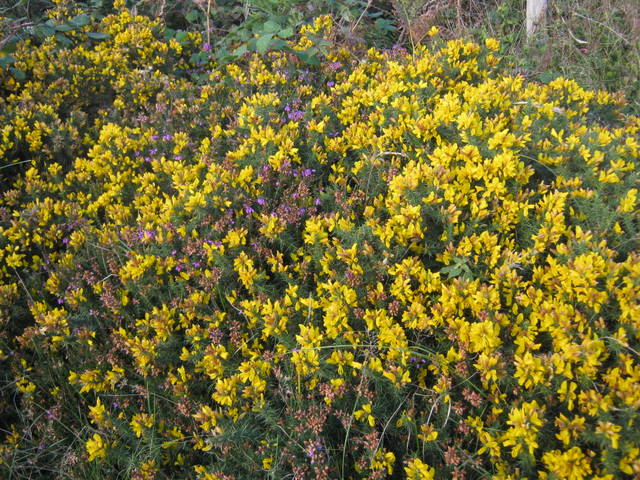
IMG_5772Gorse

The Heather (Calluna vulgaris) was past its best but the Dwarf Gorse (Ulex minor) was looking wonderful

IMG_5776Sunset

Another sunset.

In a post I wrote a couple of weeks ago I mentioned that the bright yellow of the Perennial Sow-thistle was not common at this time of year.  I will have to eat my words because most of the flowers I have seen since then have been yellow!
IMG_5778Tansy

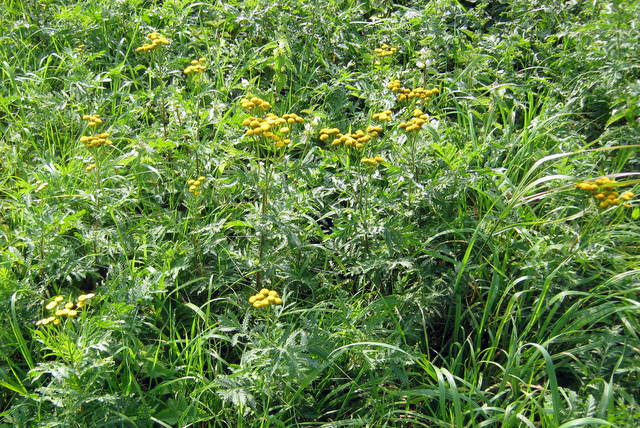
Tansy (Tanacetum vulgare) seen on the roadside between Linstead Magna and the village of Linstead Parva *(see below)
IMG_5779Tansy

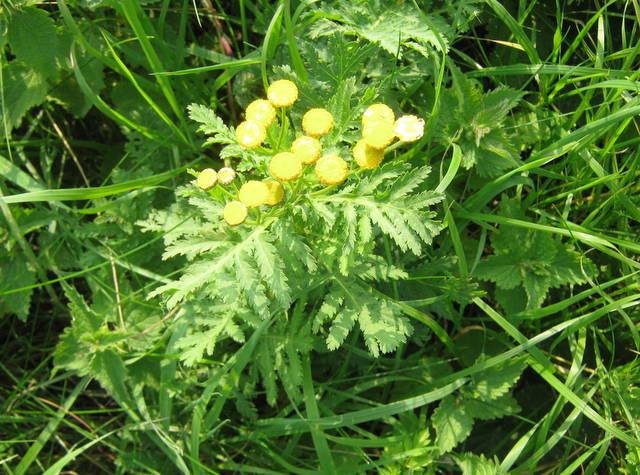
The Tansy has very aromatic leaves and the little button flowerheads are made up of disc florets only.
IMG_5780Tansy

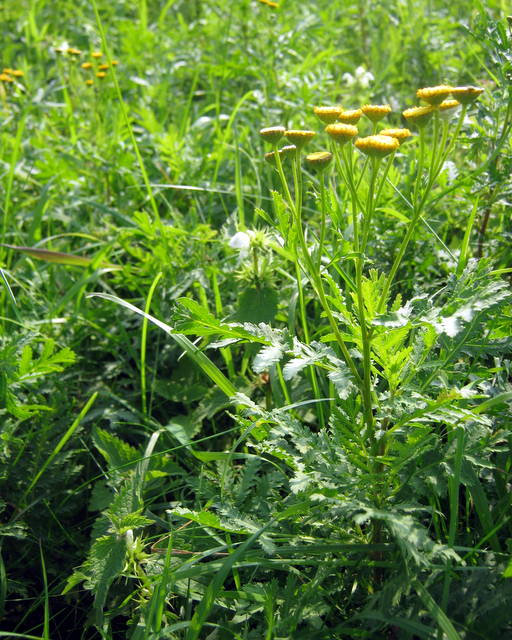
The genus name ‘Tanecetum’ and the name Tansy are both derived from the Greek word for immortality. The plant was believed to give  eternal life to the drinker of an infusion made from it.

Tansy used to be used as a flavouring in food until fairly recently.  Egg dishes especially, were enhanced by the use of finely chopped tansy leaves.  Tansy was also used as an alternative to expensive imported spices such as nutmeg and cinnamon and Tansy Cake at Easter was very popular.  Because of the strength of its scent, Tansy was also used as a repellent, keeping mice from corn and flies from meat.
IMG_5781Dogwood

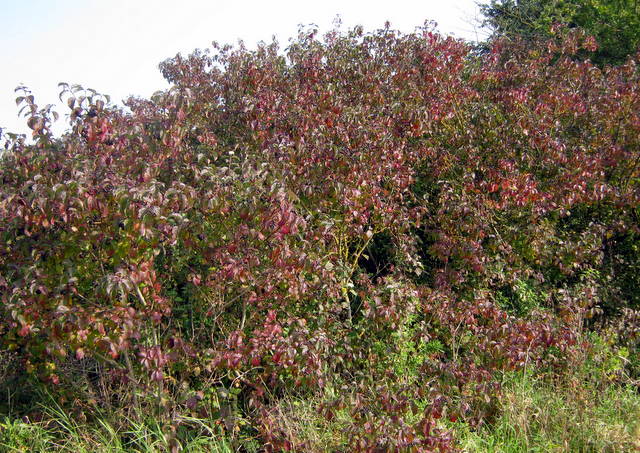
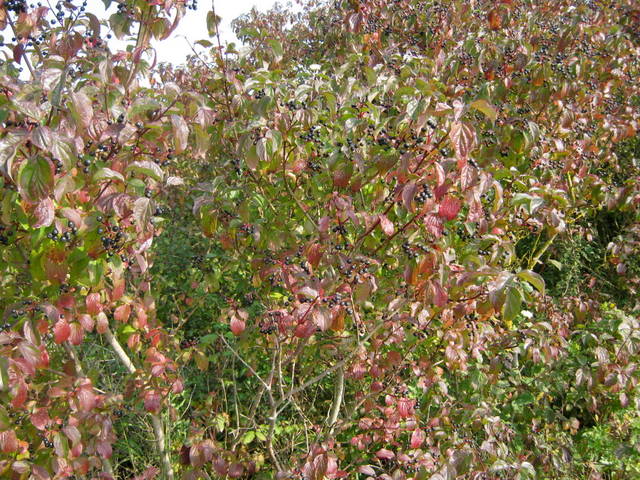
Dogwood (Cornus sanguinea)

Close to where I photographed the Tansy I found this hedge of Dogwood.  It was covered in large black berries – the largest I have ever seen on a Dogwood – and most of  the leaves had turned a beautiful red.  Dogwood leaves are usually a much darker, duller maroon in Autumn.
IMG_5782Dogwood

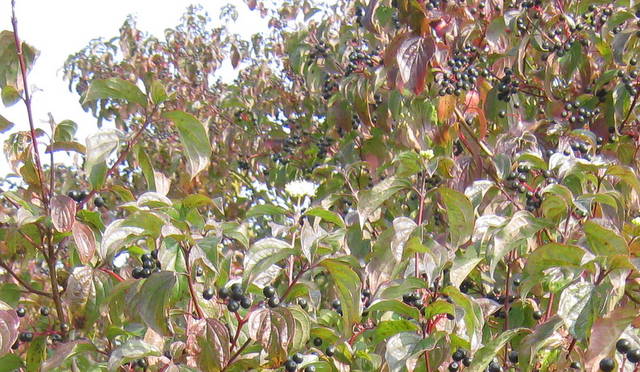
What also surprised me about these Dogwood bushes was seeing flowers in bloom at the same time as the berries and the red leaves.

It isn’t easy to see them in this photo so I cropped it.
IMG_5782Dogwood - Copy

One of the flower-heads is in the centre of this picture.  The couple of weeks of warm and sunny weather we have had recently had fooled the bush into thinking it was spring again.

Richard and I have been working in the garden, getting it ready for winter.  I only seem able to get out there a couple of days a week but I have managed to get quite a lot done.  One of my jobs has been tidying behind the garden shed and round the back of the greenhouse.  Behind the shed was rank with weeds, mainly stinging nettles, which I was able to pull out fairly easily as the soil is quite damp there.  I had stored lots of pots and tubs full of spring bulbs behind the greenhouse so these have come back out to be smartened up and got ready for next spring.  I discovered other flowerpots that should have been emptied and cleaned ages ago.
IMG_5783Marchantia polymorpha liverwort with snail

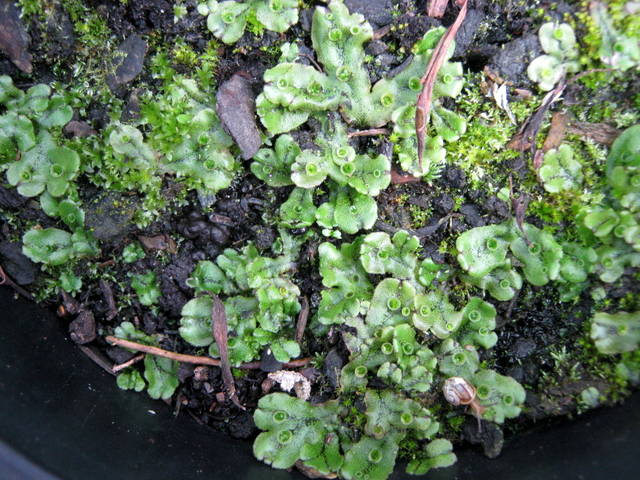
This pot was covered with liverwort Marchantia polymorpha. It has little green cups on the leaf-like structures (thallus). Do you see the baby snail?
IMG_5818Fungus

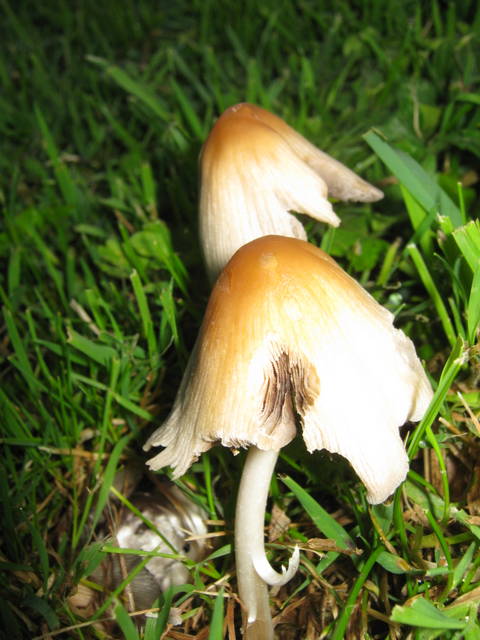
We have a lot of fungus all over the grass in our garden. Nothing exciting or colourful, just brown and cream-coloured toadstools. These had been nibbled by something.

IMG_5814Fungus
IMG_5816Fungus

Two other unidentified types of fungi.
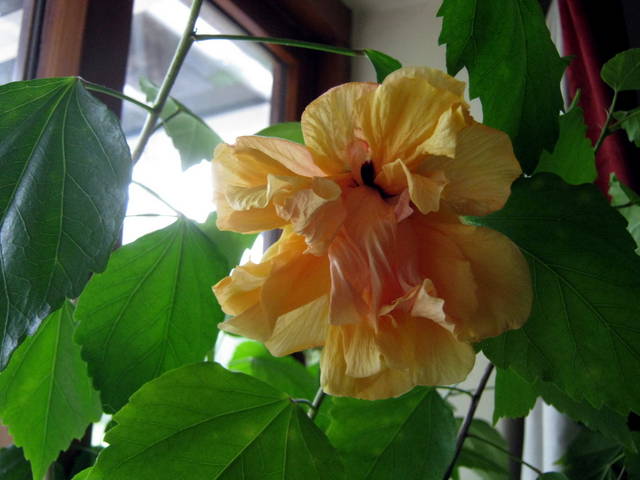
IMG_5786Hibiscus

I have had this Hibiscus for about 26 years. It was a gift from my ex-mother-in-law who brought this with her when she came to see us when Alice was a tiny girl.

I love these double flowers – the peach petals have dark crimson bases.
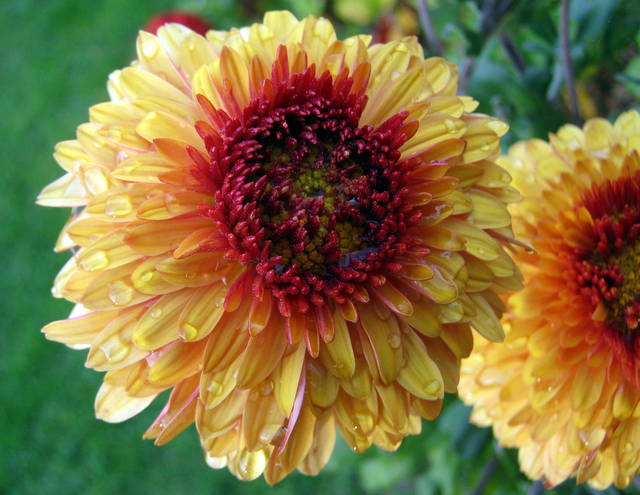
IMG_5788Chrysanthemum

Richard has a new Chrysanthemum flower
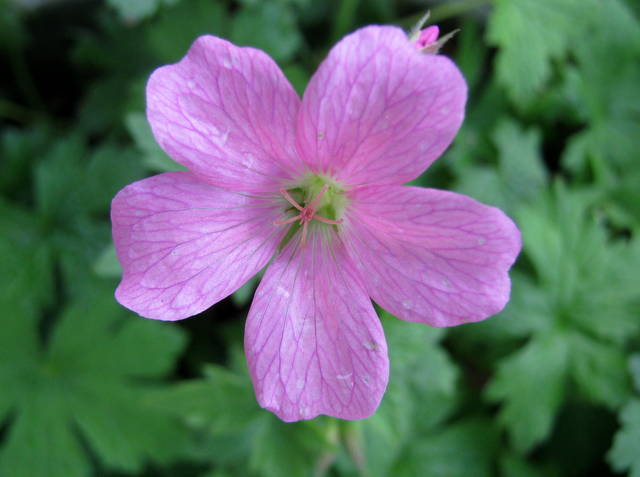
IMG_5789Geranium

My Geraniums are still flowering

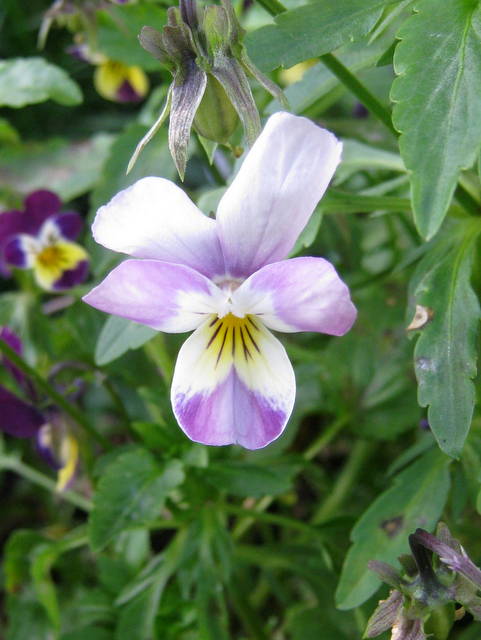
IMG_5792Viola

I like this pretty Viola

IMG_5799Michaelmas Daisy
IMG_5800Michaelmas Daisy
IMG_5807Michaelmas Daisy

Three different Michaelmas Daisies

IMG_5808Salvia

Salvia

IMG_5811Astrantia

The three ages of Astrantia

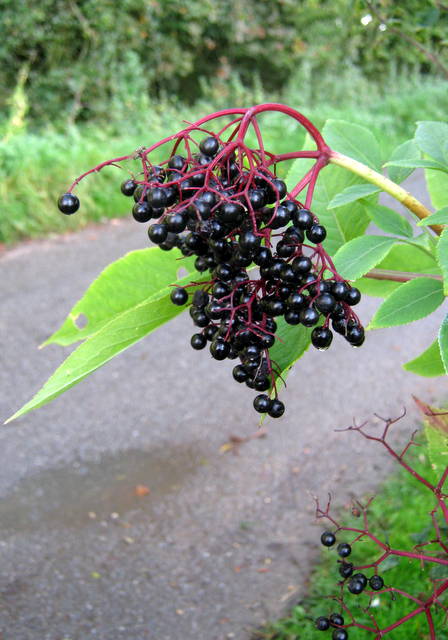
IMG_5793Elderberries

Elderberries from the bush at the end of the drive.
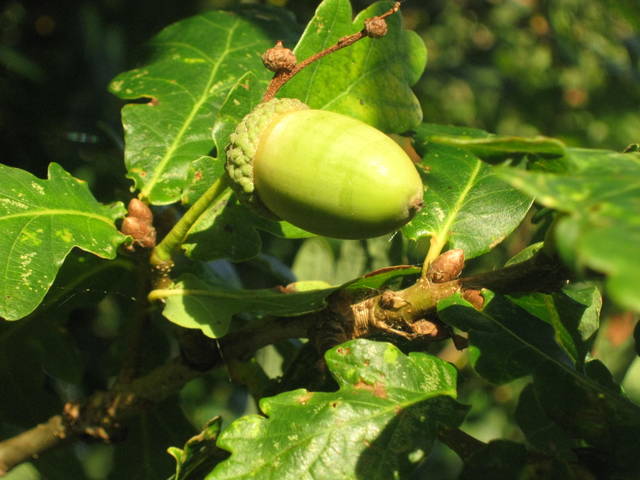
IMG_5805Acorn

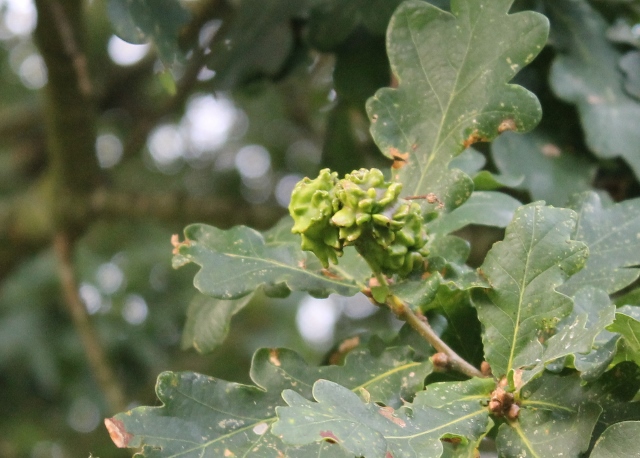
Acorn  This is the first time in years that these acorns aren’t affected by Knopper galls.
018Acorns with galls (640x458)

This is a photo I took last year of Knopper gall damage on acorns
IMG_5806Conker

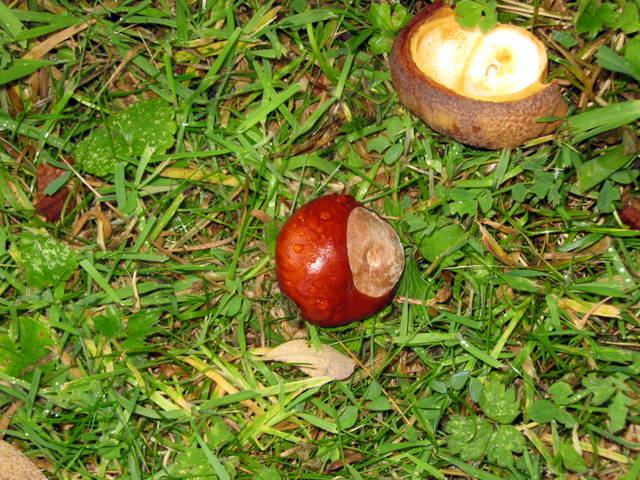
‘Conker’

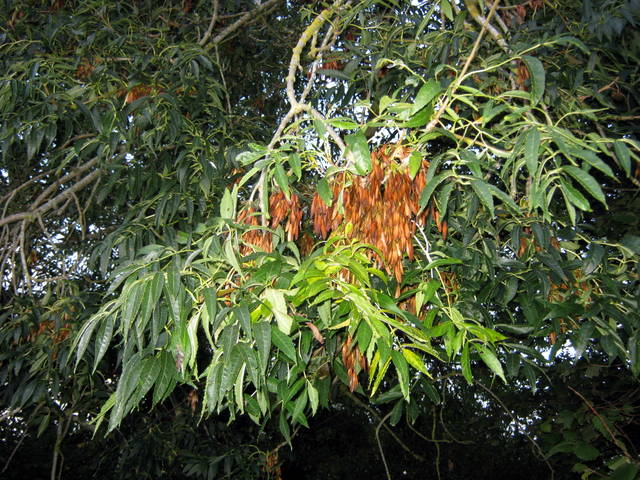
IMG_5815Ash keys

Ash ‘keys’

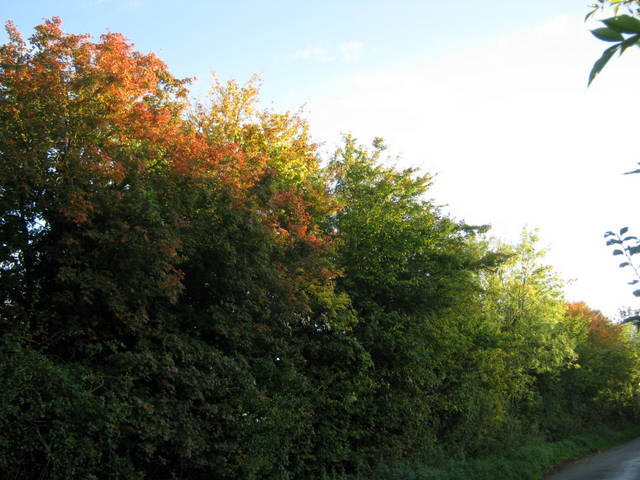
IMG_5795Autumn colour

The trees in our lane

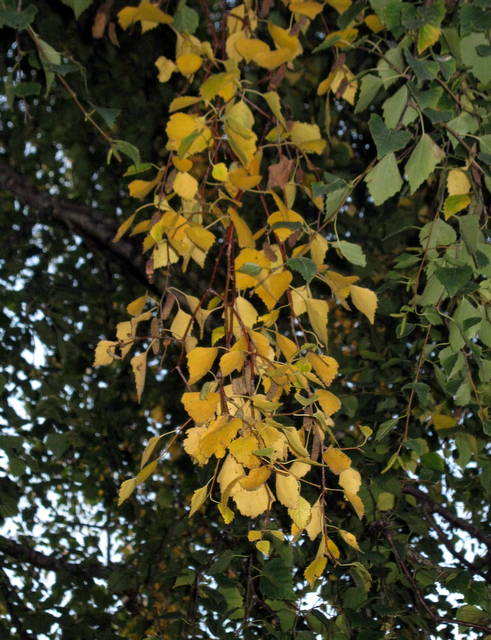
IMG_5812Silver birch

Our Silver Birch is changing colour

IMG_5813Birch leaves

Birch leaves

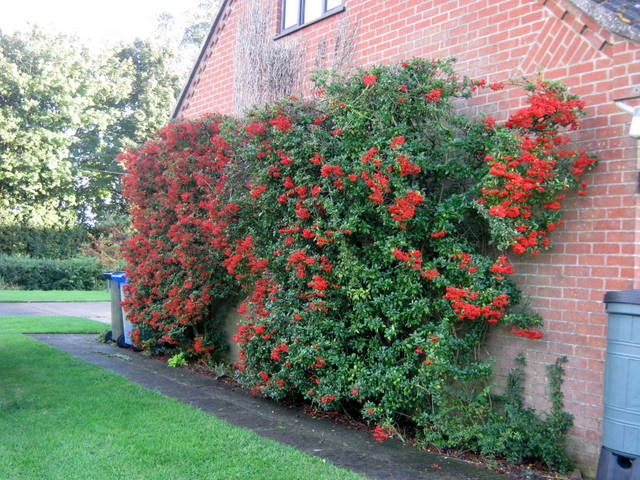
IMG_5797Pyracantha

I pruned our Pyracantha recently

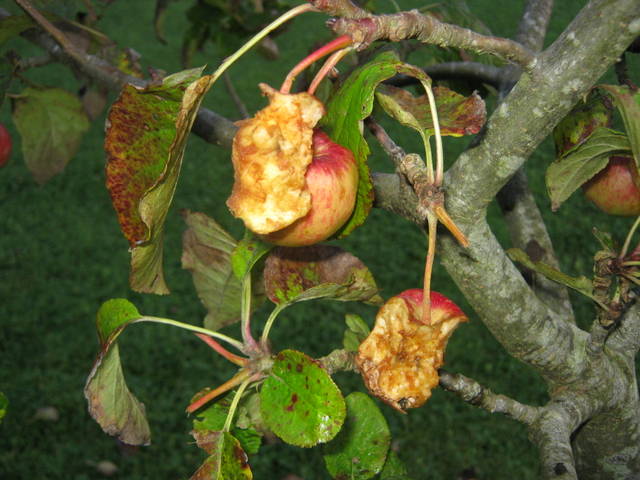
IMG_5821Apple tree damage

We not only had a lot of aphid damage to our apple trees in the spring and early summer but the apples on this tree are now being eaten by Moorhens!  It is odd seeing water birds wobbling about in the trees gulping down our apples as fast as they can.

We are getting a little tired of next-door’s free-range chickens in our garden all day.  They kick about in the flower beds and damage seedlings; they peck off flowers and generally make a mess of the paths, beds and compost heaps in the garden.  We have spoken to our neighbours about it a few times but they don’t appear to have any intention of keeping their chickens on their own land.  They have a constant supply of chicks too.

Linstead Magna (large/greater Linstead) is now a small collection of houses and farm buildings.  The church no longer exists but I spoke to someone some years ago who remembered the church and used to attend it.  For more information about this church see here.

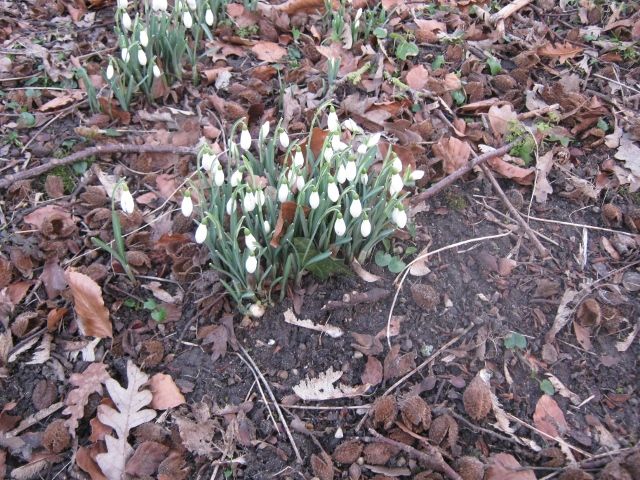
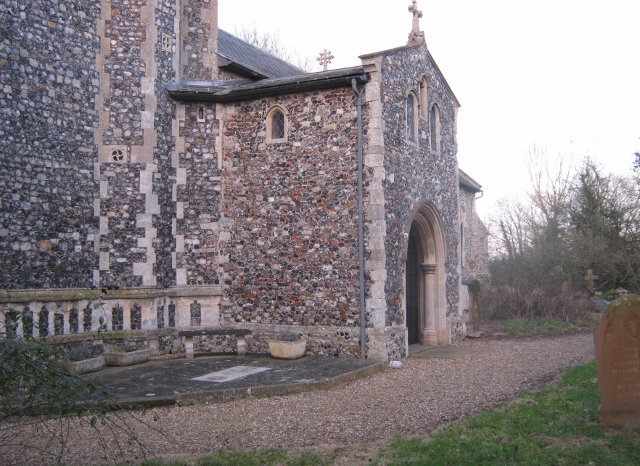
Linstead Parva (small/lesser Linstead) is a pleasant little village with a pretty church.  In spring the churchyard is covered in snowdrops and other spring flowers.

Thanks for visiting!
Share this:

  • Share on X (Opens in new window) X
  • Share on Reddit (Opens in new window) Reddit
  • Share on Pinterest (Opens in new window) Pinterest
  • Share on Facebook (Opens in new window) Facebook
  • Email a link to a friend (Opens in new window) Email
  • Share on Tumblr (Opens in new window) Tumblr
  • Print (Opens in new window) Print
  • Share on LinkedIn (Opens in new window) LinkedIn
Like Loading...

Autumn in a Suffolk Lane

08 Thu Oct 2015

Posted by Clare Pooley in amphibians, churches, Insects, music, Norwich, plants, Rural Diary, wild birds

≈ 38 Comments

Tags

amphibian, autumn leaf colour, church, common toad, Edith Cavell, Elder, field maple, Fish Slapping Dance, fungi, Great Tit, Halesworth, Herring Festival, Lorraine Hunt Lieberson, mezzo-soprano, Monty Python, nest, Norwich Cathedral, picture-wing fly, shaggy inkcap, sunset, trees, wild bird

This post and the next will have assorted photographs of things I have seen.  I’ll also mention briefly a few things I have done.  The photos are inserted in chronological order as I can’t think of anything better!

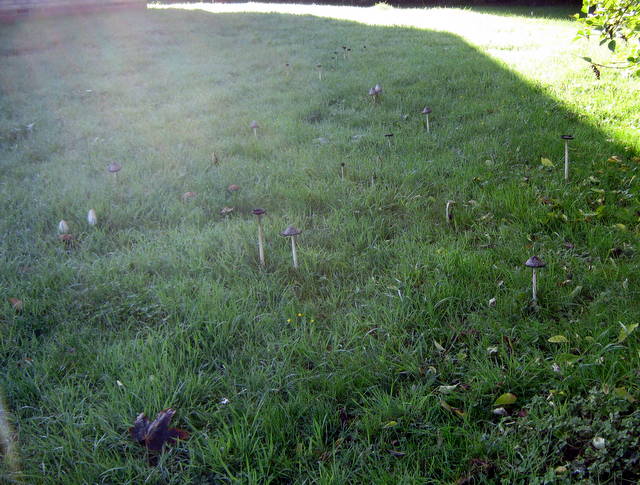
IMG_5742Inkcaps at surgery

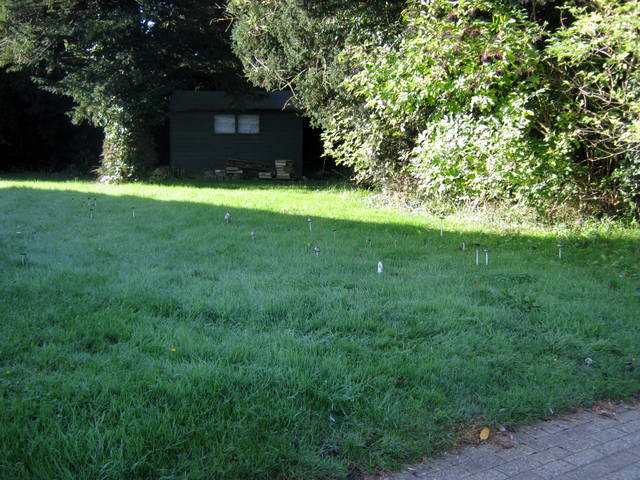
Toadstools on the lawn at the surgery.

A couple of weeks ago I had to attend the doctor’s surgery a few times in one week.  I collected my medication, I had my usual monthly blood test with a test for cholesterol which meant fasting from 10 pm the evening before, and I had my flu injection.  All on different days.  I noticed these toadstools after my blood test but unfortunately I had left my camera in the car.  The following morning I took these photos after my flu jab.

IMG_5743Inkcaps at surgery

These are Shaggy Inkcaps (Coprinus comatus) also known as Lawyer’s Wig and unfortunately most of them are past their best.

The early morning light made it difficult to photograph them and they had deteriorated significantly overnight.

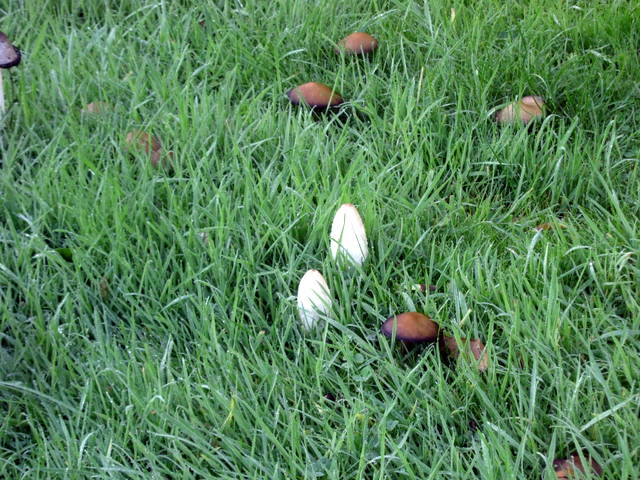
IMG_5744Inkcaps at surgery

The white fungi are emerging Inkcaps but I can’t identify the dark brown mushrooms.

Some of you may remember that our parcels box was taken over by Great Tits in the spring and we had to seal it shut so that the birds were not disturbed.  I believe the brood was successful.  Richard dismantled the box last week as it was rotting and we had a look at the nest inside.

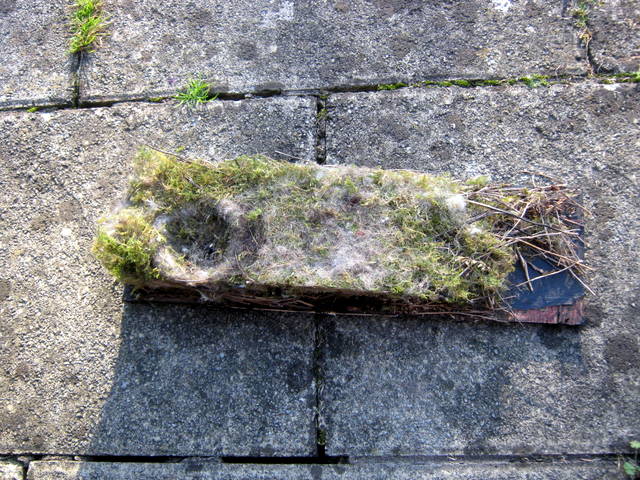
IMG_5745Bird's nest

Great Tit (Parus major) nest.

We looked closely at what had been used.  Please click on each photo to get a description of the materials used.

Dried grass and lots and lots of moss
Bits and pieces of anything soft. I recognise lint/fluff from two of my pullovers here.
Sheep's wool
Sheep’s wool
Feathers
Feathers

The work that went into constructing this nest is astounding.

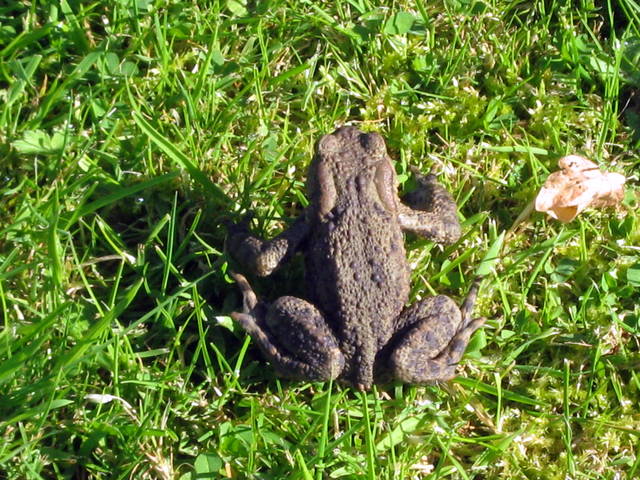
IMG_5746Common Toad

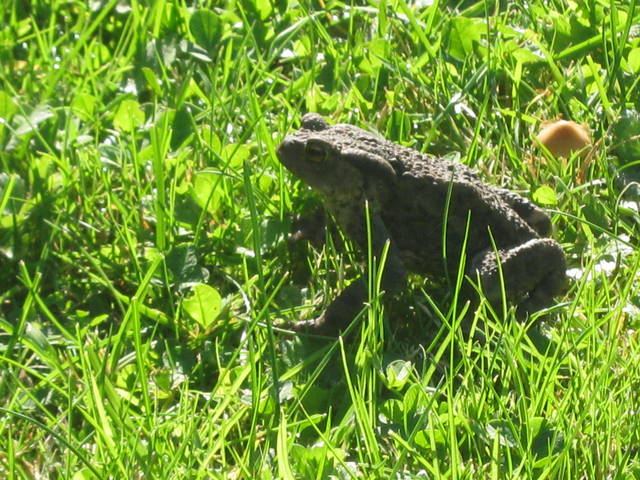
This is a Common Toad (Bufo bufo) that I saw crossing our drive.  Fortunately it took it’s time and I was able to run indoors and fetch my camera before it disappeared.

IMG_5747Common toad

Common Toad

IMG_5755Autumn colour

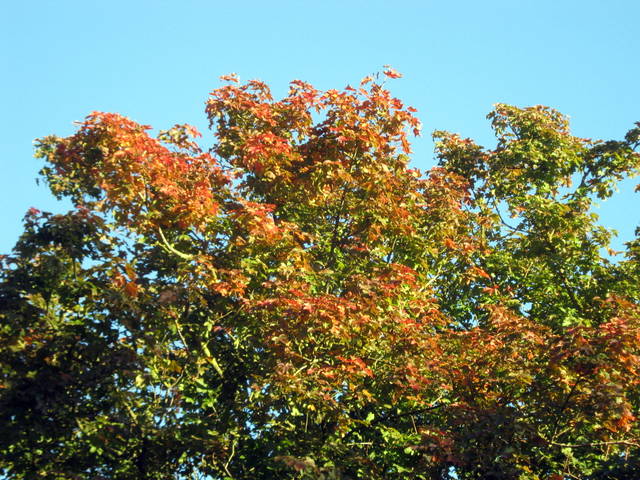
Autumn colour.  A Field Maple (Acer campestre)

Last week was a week of sunny warm days and cool nights.  The trees and plants began to show autumnal tints.

IMG_5758Autumn colour

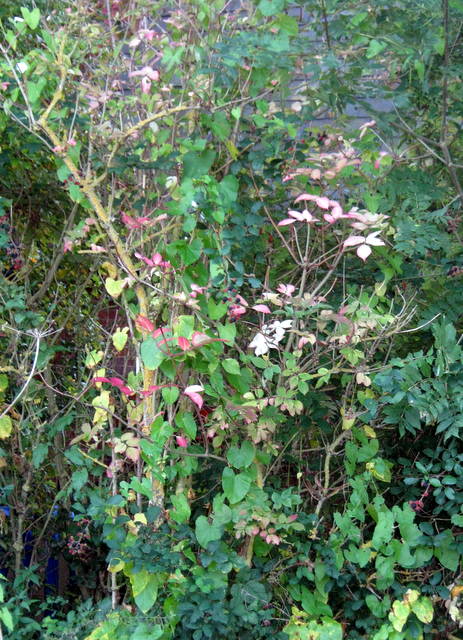
Elder (Sambucus nigra) leaves have turned pink

IMG_5760Sunset

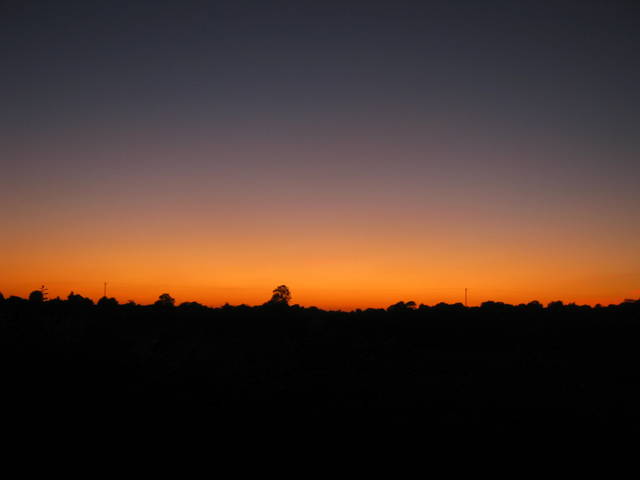
A wonderful sunset seen from the back of our house

IMG_5765Fly

A ‘picture-wing’ fly. Possibly from the Herina group.

This little fly was in our kitchen some nights ago.  I took this photo when it landed on the window blind.  It was only a few millimetres in length.

Richard and I noticed posters up in Halesworth announcing the Herring Festival.  This is to take place in The Cut, the centre for the arts in the town.  The herring industry has been in decline for some time and Richard and I wondered what went on at the festival (not ever having gone).  We remembered this……

I haven’t been able to attend our local churches very often recently.  I have been taking my mother to her church once a fortnight to enable me to go to church with Richard every other week.  We took Elinor to the morning service at Norwich Cathedral a couple of weeks ago as she enjoys these services.  The Cathedral was preparing to hold a number of services to commemorate the life of Edith Cavell.

My music choice for this post is one of my favourite arias sung by my favourite mezzo-soprano, the late, great Lorraine Hunt Lieberson

Thanks for visiting!

Share this:

  • Share on X (Opens in new window) X
  • Share on Reddit (Opens in new window) Reddit
  • Share on Pinterest (Opens in new window) Pinterest
  • Share on Facebook (Opens in new window) Facebook
  • Email a link to a friend (Opens in new window) Email
  • Share on Tumblr (Opens in new window) Tumblr
  • Print (Opens in new window) Print
  • Share on LinkedIn (Opens in new window) LinkedIn
Like Loading...

Quiet Sunday

01 Wed Jul 2015

Posted by Clare Pooley in churches, Gardening, Insects, plants, Rural Diary, wild birds

≈ 36 Comments

Tags

Bees, Cotoneaster, gardening, Great Mullein, Mullein Moth larva, purple toadflax, recording of Turtle Dove song, scabious, St Michael and St Felix Church Rumburgh, Suffolk, sunset, The Vapourer Moth larva, Turtle Dove


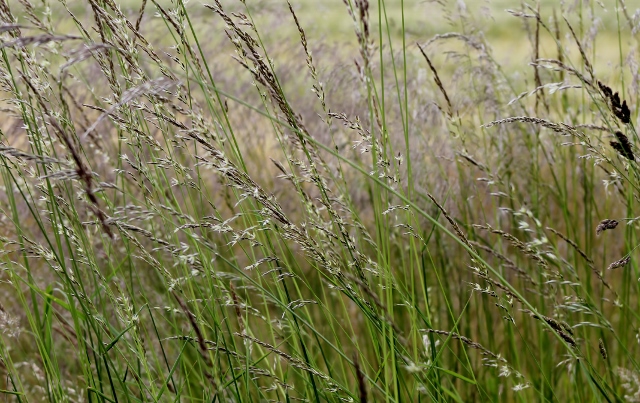
IMG_2312Grasses (640x403)

Grasses growing round the edge of the field behind our house.

I have been doing a lot of gardening recently.  Not the gentle-dead-heading, touch-of-light-weeding type of gardening but lots of digging – which always involves extracting large flint boulders from clay soil, lots of watering – carrying heavy watering cans round our large garden and lots of grass-cutting – I do most of this with shears.  We have a large area of grass which is planted up with spring bulbs.  There are a few trees planted there as well and the ground is very uneven.  I think that it was originally a spoil heap from when the house was built; it also slopes quite steeply down to the ditch at the front of the house.  We leave cutting the grass until the bulb leaves have died back which means it is left until June by which time it is looking quite unkempt.  The ground is much too uneven for the tractor mower and because of the trees it is a very difficult area for Richard to do (he is 6′ 3″ tall).  I am a foot shorter in height than he is, so I do this part of the garden.  I can’t use the strimmer as it is too heavy for me so I cut the 3′ high grass with shears.  We bought a scythe but somehow we can’t get it to sharpen.  I like using shears as I can see what I am doing and I don’t cut the wrong things down as I might if I could use the strimmer.  A strimmer makes such a mess; shears are tidy.  Once I have cut the grass to a manageable length I then rake it up into a number of enormous heaps and then transport it to the other end of the garden in a wheelbarrow and put it on the grass heap.  I then use the electric mower and cut the grass even shorter.

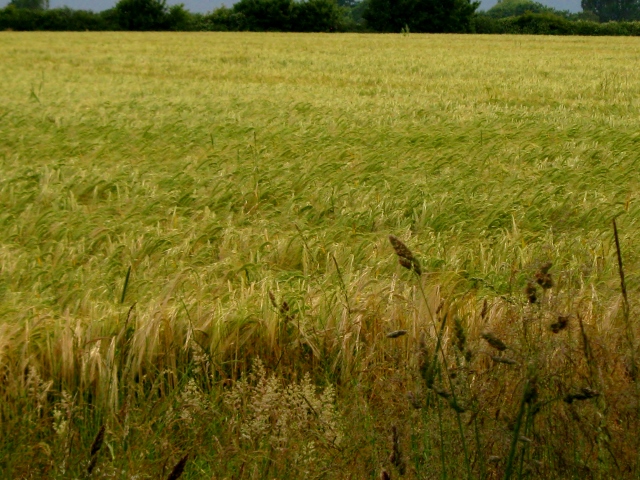
IMG_4893Field of barley (640x480)

The field of barley behind our house.

As  a result of this work I am extremely achy and stiff but I have developed some good muscles in my arms and shoulders!  I was glad we had a little rain on Sunday so I excused myself from working outside.  I read my book, talked with my husband and daughter and generally had a relaxing day.

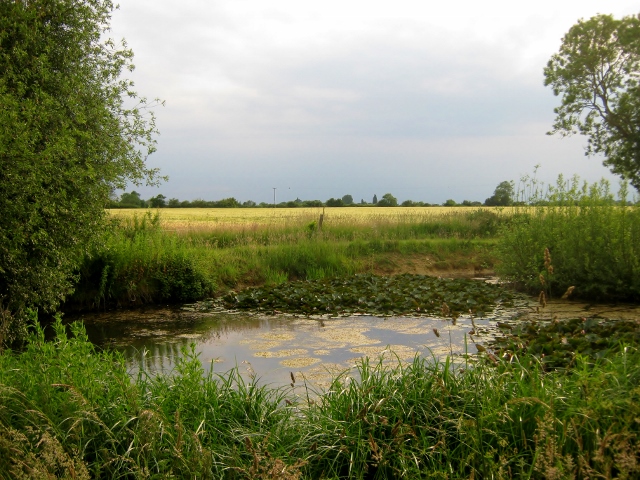
IMG_4891View across pond to field (640x480)

View across the pond to the field beyond.

We had an Evening Prayer service at St Michael and St Felix Church in Rumburgh where Richard is one of the church wardens.  We left home at 5.45 pm to make sure the church was tidy and ready for the service.  There had been a big wedding there on Saturday so the church is full of beautiful flowers.

IMG_4895Rood screen (640x479)

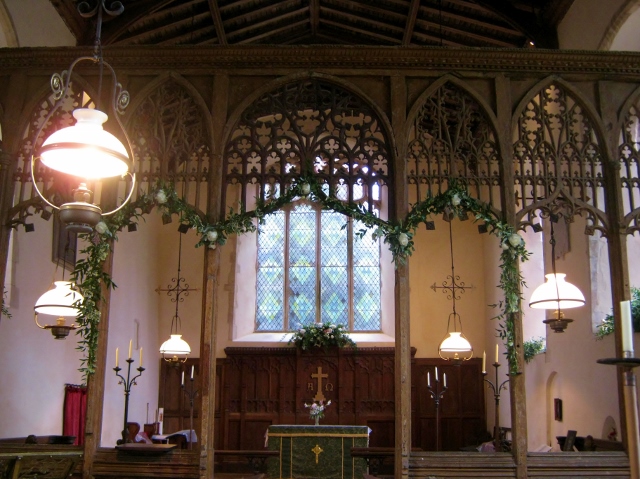
The decorated Rood Screen. This is very pretty but it would be better if people didn’t decorate it as the screen is hundreds of years old and falling apart.

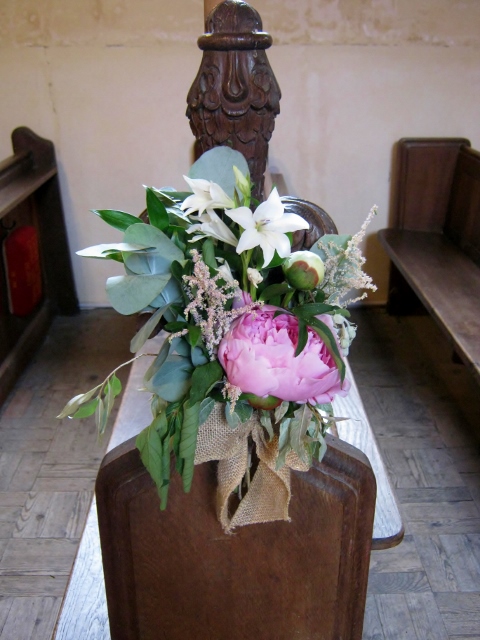
IMG_4897Pew ends (480x640)

Posies on the pew ends. I think the top of the poppyhead (the carved pew end) looks like a clown with a bowler hat.

Flowers at the East Window
Flowers round the Font
Flowers in the porch

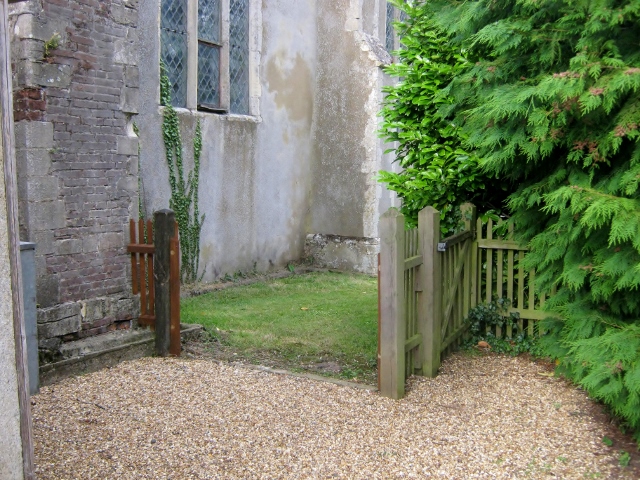
The path has been regravelled and the fence panel at the side of the church has been repaired.

IMG_4904Side of church (640x480)

Fresh gravel and new fence panel.

The bride’s family live at the farm which surrounds the church and the church is in their back garden.  I have never walked all round my church because that would mean walking through someone else’s property.  However, it is so nice to have kind people who decorate our church and repair our fence and path because their daughter wanted to get married in the church!

Our evening service was taken by Maurice and we concentrated on the Trinity.  It was a pleasant, peaceful and thoughtful service.

I’ll use the rest of the post to show you a few more things I’ve seen on my travels and in the garden recently.

IMG_2323Damaged Great Mullein (640x427)

This is a Great Mullein (Verbascum thapsus) and I noticed the other day that it was looking a little ragged.

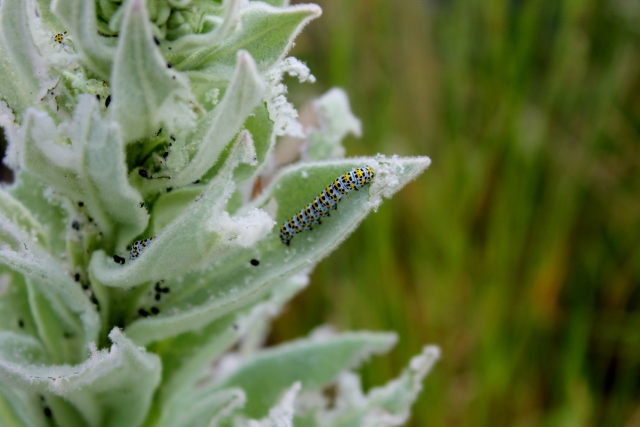
IMG_2324Mullein Moth larva (640x427)

This is one of the culprits – a Mullein Moth larva (Shargacucullia verbasci). The plant was covered in the caterpillars which will probably eat most of the plant and leave a blackened stump.

I had noticed that a few of my plants and tree seedlings had been damaged and on Sunday I found a few of the caterpillars that were responsible.

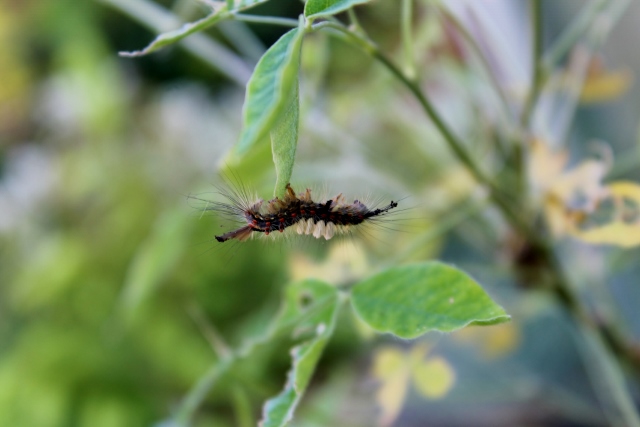
IMG_2327The Vapourer larva (640x427)

This is a Vapourer Moth larva (Orgyia antiqua), and it is eating a Laburnum seedling.

The Vapourer is often found in towns and often defoliates street trees.  I’ve never seen it in our garden before – perhaps they found their way here on a plant from the garden centre in town.  Vapourers are tussock moths which are all rather hairy.  The Vapourer female moth doesn’t have functional wings and will stay close to her cocoon after hatching out.  The Vapourer larva, along with other members of the Tussock Moth family, has tufts or tussocks of often colourful hairs (the Vapourer’s are yellow).  The hairs on adults and larva are usually barbed which makes them unpleasant and painful to handle.

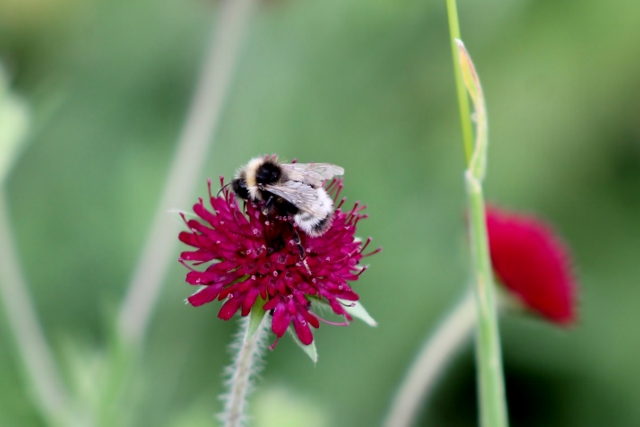
IMG_2313Bee on scabious (640x427)

A bee on a scabious flower.

I am not very good at identifying bees.  I never seem to notice or photograph the key feature mentioned in the ID guide.  The bee above could be a cuckoo bee.

I try to grow as many plants as possible that are liked by bees and other insects.

IMG_2320Bee on Cotoneaster (640x427)

Bee on Cotoneaster.

IMG_2321Bee on Purple Toadflax (640x427)

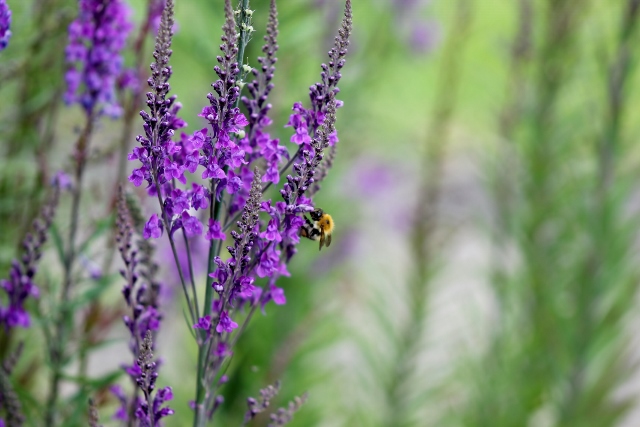
Bee on Purple Toadflax.

IMG_2304Sunset (640x427)

A rather lovely sunset I saw last week.

Lastly, I have another video to share with you but it isn’t the video that’s important just the soundtrack.  I would like you to ignore the video!  It’s rubbish!  I was taking photos in the garden next to the pond, when the Turtle Dove started singing.  I switched the camera to film so I could record the song and vaguely pointed the camera in the direction of the pond.  The video is very shaky as I didn’t have a tripod with me.  I only managed to record a very short part of the song.  It is quite a quiet purring sound and the other birds in the garden were singing very loudly!

Thanks for visiting!

Share this:

  • Share on X (Opens in new window) X
  • Share on Reddit (Opens in new window) Reddit
  • Share on Pinterest (Opens in new window) Pinterest
  • Share on Facebook (Opens in new window) Facebook
  • Email a link to a friend (Opens in new window) Email
  • Share on Tumblr (Opens in new window) Tumblr
  • Print (Opens in new window) Print
  • Share on LinkedIn (Opens in new window) LinkedIn
Like Loading...

A Walk to St Peter’s Church 12th April 2015

09 Sat May 2015

Posted by Clare Pooley in churches, plants, Rural Diary, Uncategorized, walking

≈ 41 Comments

Tags

architecture, churches, St Peter South Elmham, Suffolk, walking

IMG_4351Primrose bank outside St Peters (480x640)

Primrose bank outside St Peter’s church

I am indebted to our Rector the Rev. Richard Thornburgh for the use of his Notes on the church of St Peter South Elmham.  A leaflet we bought when we visited the church.

Richard and I went to church at St Peter South Elmham on the 12th April.  It was a lovely spring day and the primroses on the bank outside the church were glorious!  We decided that, as it was such a nice day, we would walk back to the church in the afternoon and try to get there across the fields instead of along the lanes.  We had travelled there by car in the morning.

We set off on the same route across the fields that we usually use and were pleased to see that the ground was dry and virtually mud free.

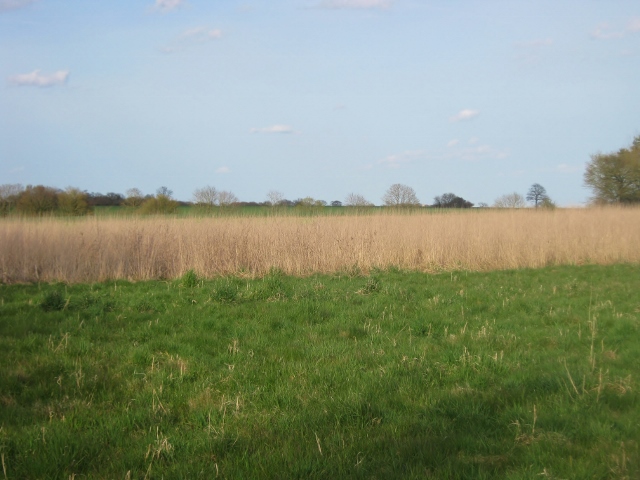
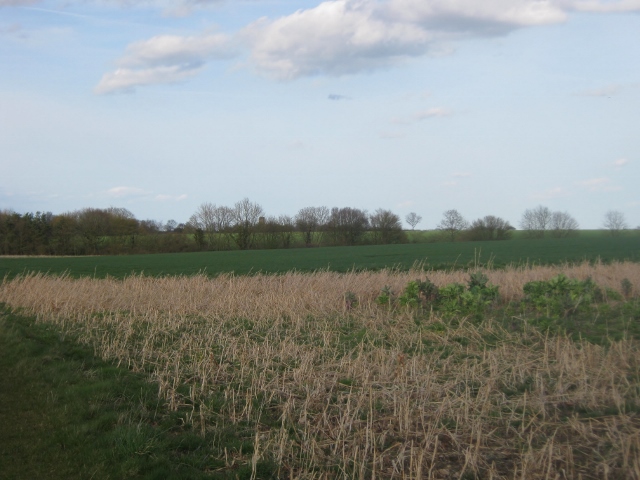
Dried grasses

Dried grass in the field.

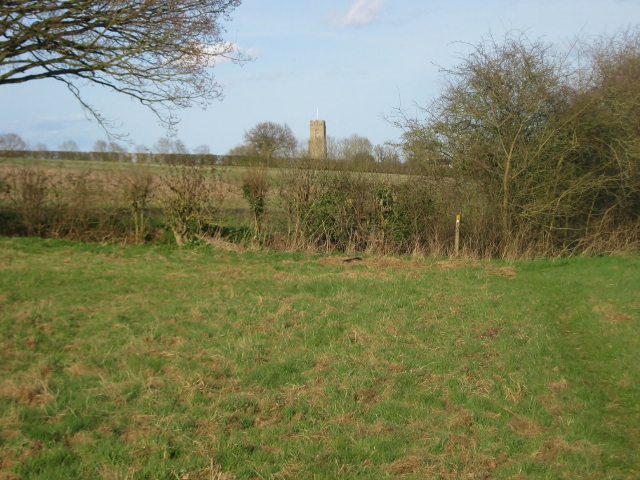
St Peters church across the fields

Our goal; St Peters church across the fields.  You can just see it behind the trees on the horizon.

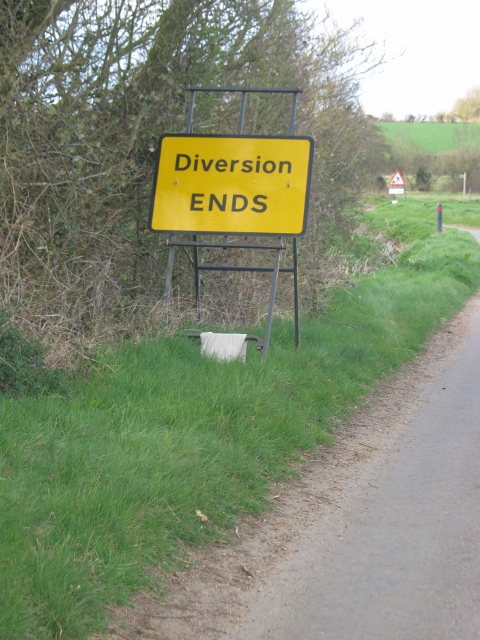
IMG_4360Strange sign (480x640)

We have been having to put up with almost continuous road repairs to our lanes for the past two or three months. The repairs are desperately needed but the long diversions to get past them have been very inconvenient. This was a strange place for this sign to be. It was half way along a very narrow lane with no other lanes turning off it. It would have confused a stranger!

Richard walking across the field

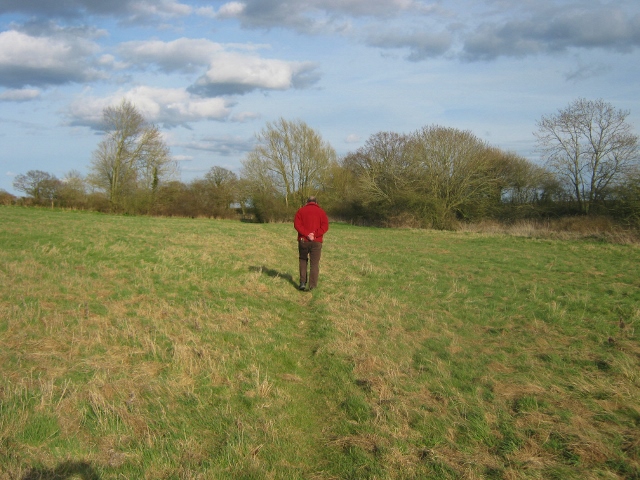
Richard walking across the field at the valley bottom. The paths are so clearly marked in the fields. So many people have used these paths over the centuries that the ground is indented and the grass grows differently.

The Beck and blackthorn blossom

The Beck, our local stream, at the corner of the field; with blackthorn blossom.

St Peters church

Another view of St Peters church

IMG_4364In the Beck (640x480)

The water in the Beck was beautifully clear.

IMG_4365Horses (640x480)

Such a beautiful glossy horse in a field we walked past.

IMG_4367Bridge (640x480)

This bridge over the Beck at the bottom of the hill in St Peter’s village has been rebuilt many times.  You can just about see the couple of patches of red brick.

St Michaels church

St Michael’s church in the village of St Michael can be seen from the bottom of the hill in St Peter’s village. Almost all our village churches in ‘The Saints’ are within very short distances of each other.

Up the hill to St Peters church

The view up the hill to St Peters church

Down the hill from the church

Looking back down the hill from the church to where the bridge is.

IMG_4372Churchyard (480x640)

St Peter’s churchyard

IMG_4393Preaching cross (480x640)

This is believed to be the base and part of the Preaching Cross which once stood at the nearby road junction.

Porch

The 14th century porch which has very worn carved faces (headstops) on the outer arch. Richard is inside reading notices on the notice-board.  The door into the church from inside the porch, that Richard is standing in front of, is much older than the porch.  It is early Norman – late 11th or 12th century.

IMG_4391Stoup (640x480)

The stoup recess inside the porch. This would have contained a bowl of Holy Water.

IMG_4374Window in the tower (2) (597x640)

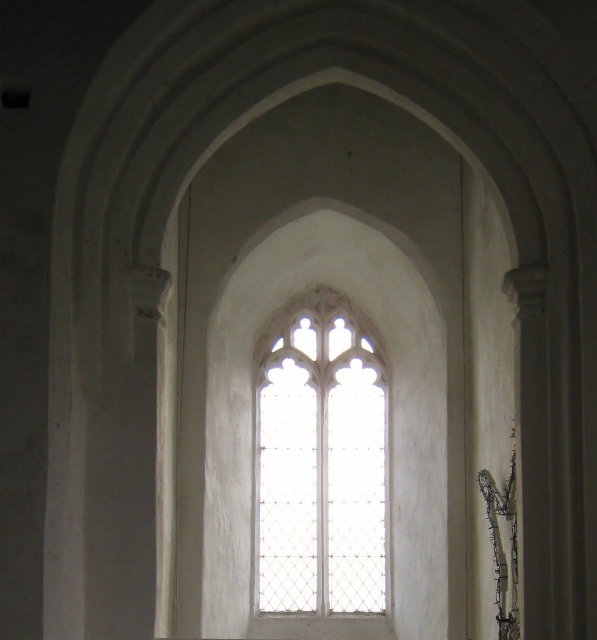
The window in the tower.

Rood screen and chancel

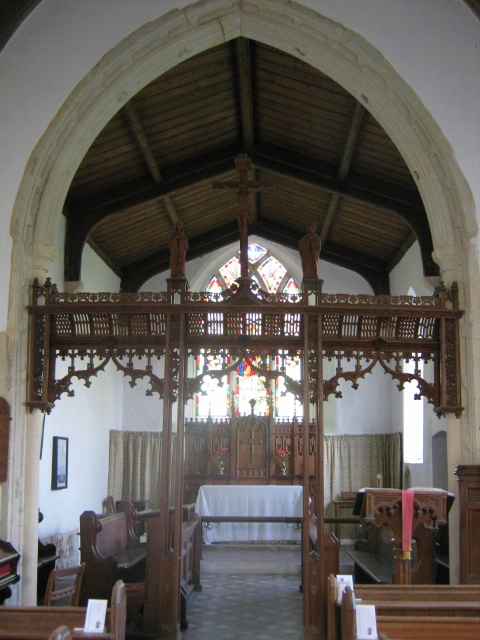
The beautifully carved Rood screen and the chancel.

I was sorry not to be able to get a better photo of the Rood screen as it is quite lovely.  I would have had to light the church properly so that the sunlight from the windows wasn’t causing the Rood Screen to be in silhouette.   The screen isn’t all that old.  It was presented to the church by the Adair family from Flixton Hall in 1923.

You can see the socket holes in the arch above the screen into which the original screen and tympanum were fitted.  The originals were probably destroyed during the time of the Commonwealth.

Roof timbers

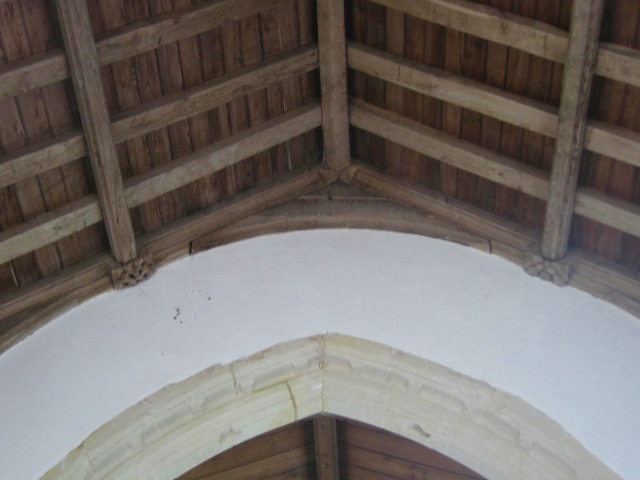
The nave has a beautiful timber roof.

IMG_4379Pulpit (480x640)

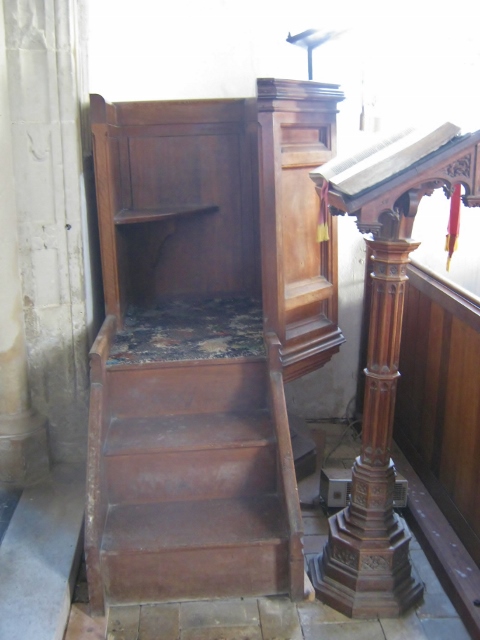
18th century pulpit.

IMG_4380Altar and East Window (476x640)

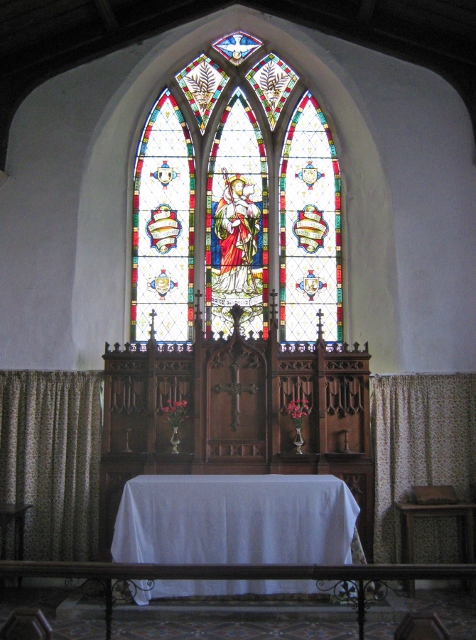
The altar, the modern oak reredos behind the altar and the east window.

Carving in stone and wood
IMG_4381List of Rectors (480x640)

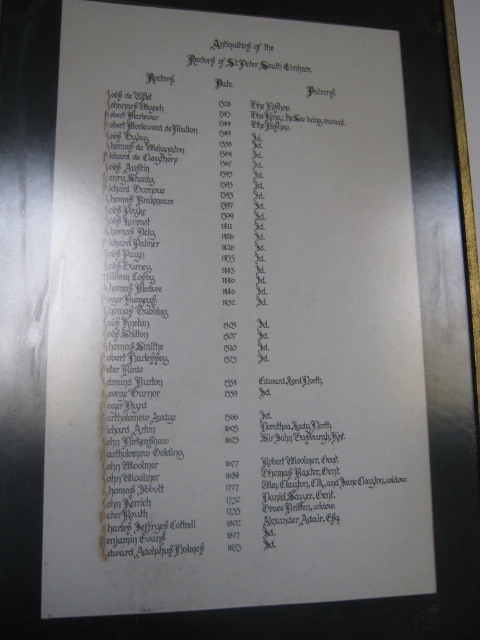
A list of the names of all the Rectors of St Peter’s church from the 14th century to the 19th century and their patrons.

The harmonium
The harmonium
Ancient door
Ancient door
IMG_4388Font (480x640)

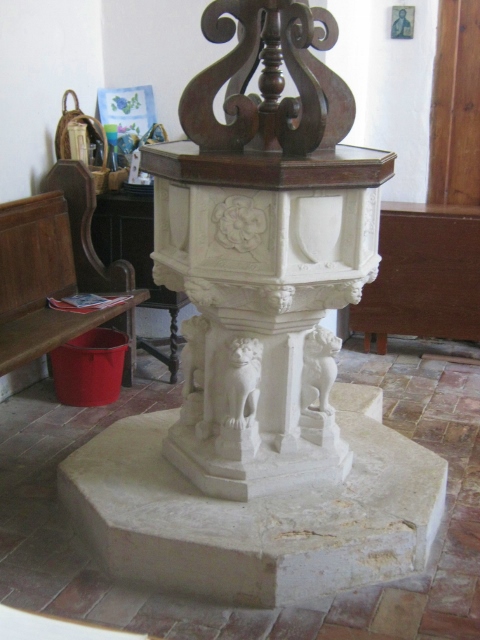
This is the 15th century font with a typically East Anglican lion design. There are four lions round the shaft and angel faces with crossed hands above them. Above the angels are Tudor rose designs and blank shields. The font cover is 17th century work. Please ignore the decorative red bucket under the pew! I didn’t notice it when I took the photo.

IMG_4387Tomb panels (640x480)

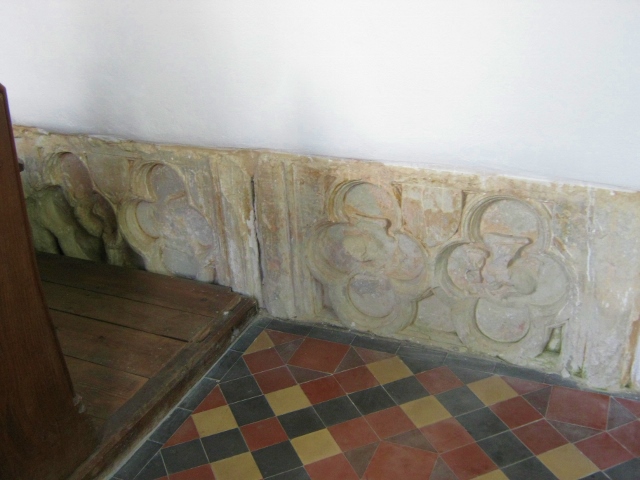
Part of tomb panel

There used to be a Lady Chapel, built in the late 14th or 15th century, on the north side of the church.  In the chapel, John Tasburgh Esq. and his wife Margery, owners of the land on which the church was built, were buried.  The tomb panel pictured above (one of two) is all that is left of their tombs, and therefore all that’s left of the Lady Chapel which was desecrated during the Commonwealth years.  By 1830 the chapel was in a terribly dilapidated state, the tombs had been dismantled and the panels used as the base for the new north wall.  The panels extend for about another foot below ground level.  The last of the chapel was demolished in the 1840’s.


This slideshow requires JavaScript.


South side of the church
The tower
The tower
The east window
The east window

By the time we left the church it had become very windy and we really struggled in our walk home.

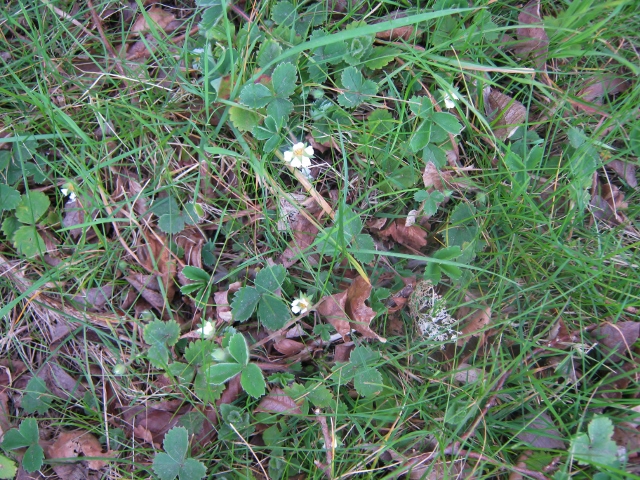
IMG_4396Barren strawberries (640x480)

I thought at first I had found some wild strawberries, but on closer inspection I realised that this is a Barren Strawberry plant.

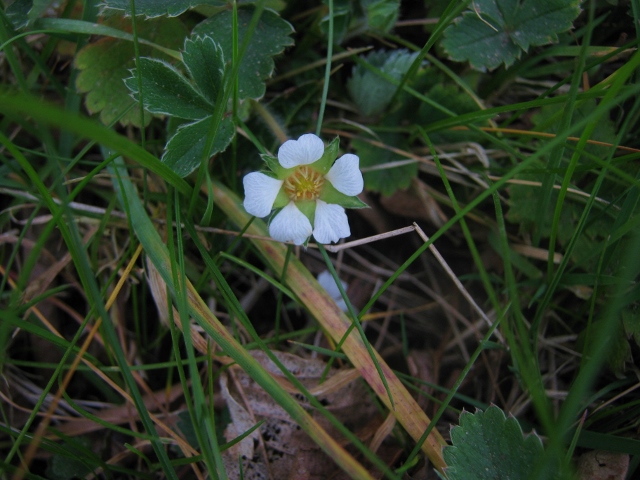
IMG_4397Barren strawberry flower (640x480)

Barren Strawberry (Potentilla sterilis)

The petals of the Barren Strawberry are widely spaced and the fruits are dry and papery.  The terminal tooth of the end leaflet ( the plant is trifoliate like a strawberry plant) is shorter than the adjacent ones.

This slideshow requires JavaScript.

The sky was beautiful.

Thanks for visiting!


Share this:

  • Share on X (Opens in new window) X
  • Share on Reddit (Opens in new window) Reddit
  • Share on Pinterest (Opens in new window) Pinterest
  • Share on Facebook (Opens in new window) Facebook
  • Email a link to a friend (Opens in new window) Email
  • Share on Tumblr (Opens in new window) Tumblr
  • Print (Opens in new window) Print
  • Share on LinkedIn (Opens in new window) LinkedIn
Like Loading...

Weekend

11 Wed Feb 2015

Posted by Clare Pooley in churches, domestic animals, Insects, plants, trees, Uncategorized, walking, weather

≈ 33 Comments

Tags

Celandines, clouds, daffodils, Dog's Mercury, dogwood, farmland, Jacob sheep, lichen, Lords and Ladies, primroses, snowdrops, St Margaret's church, Suffolk, sunset, walking, Winter Heliotrope

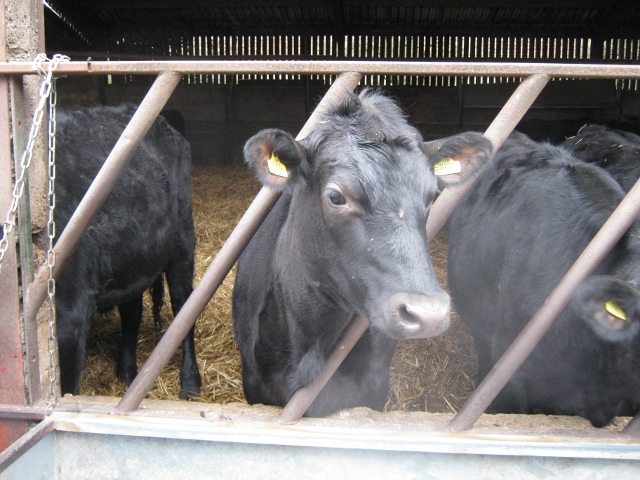
IMG_3980Bullocks (640x480)

Calves in the cow shed at our friends’ farm.  The blurring is caused by the calves’ steamy breath.

On Saturday, Richard and I went to the church coffee morning held this month at our friends’ farm instead of at the Rector’s house.  Our Rector had his heart surgery last week, and will be off work for some time while he recovers.  We wish him a speedy return to full health.  As usual we listened to all the gossip and news.  I bought some delicious home-made Bakewell bars which we ate later that day and Richard won a tin of sweets in the raffle.

Saturday was cloudy and chilly but there was no frost and the birds were singing lustily.  I heard the chaffinch’s spring song for the first time this year.

Sunday was a much brighter day.  The church service was held at our church in Rumburgh so Richard and I got there early to get things ready.  The church didn’t need much tidying as I had helped another lady to clean it thoroughly on Friday and there had been a wedding on Saturday afternoon after which Richard had tidied up again.

After lunch we went out for a walk.  We decided against driving somewhere and also thought it better not to walk across the fields as everywhere is waterlogged.  We took our usual circuit of a couple of miles, walking along the lanes.  I have photographed this walk so many times now, so I will just show you a few of the new and/or interesting things I saw.

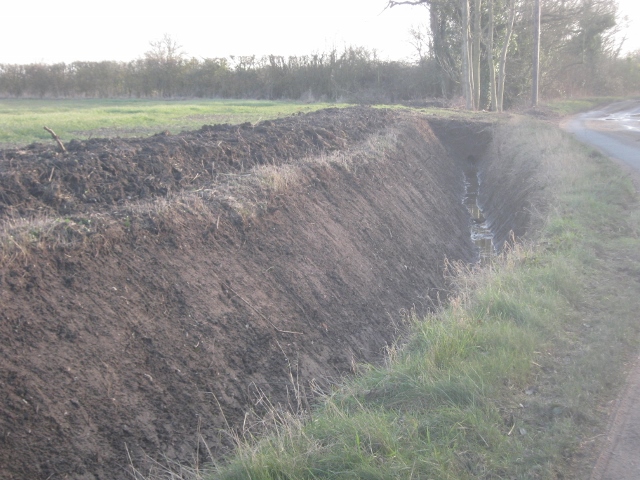
IMG_3982Ditch newly chased out (640x480)

A part of the ditch in our lane has recently been chased out. Regular ditch maintenance is necessary to ensure proper field drainage and to stop flooding on the roads.

IMG_3983Newly ploughed field (640x480)

This field has been newly ploughed. For years probably, it has been rough grass with heaps of old rusty farm implements alongside the hedge.

IMG_3985Italian alder tree (640x480)

Italian Alder tree (Alnus cordata)  There is a row of these trees along the roadside.

IMG_3986Italian Alder catkins (640x480)

Italian Alder catkins

IMG_3988Dog's Mercury (640x480)

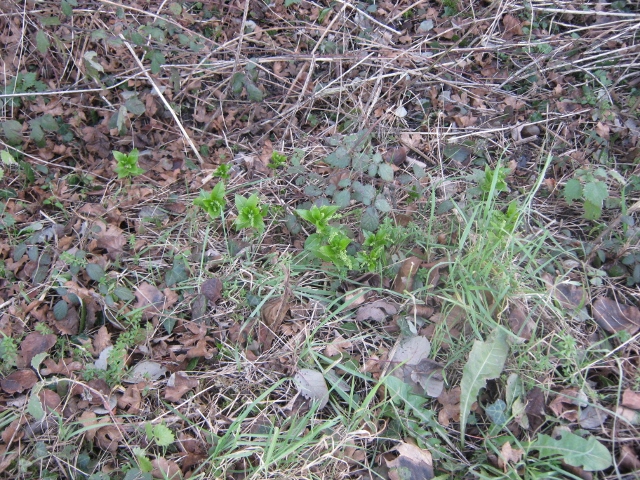
I found that Dog’s Mercury (Mercurialis perennis) was already starting to flower.

This plant is found in woodland often forming carpets, also under hedges and in other shady places.  It has a fetid smell and is poisonous, being a member of the spurge family (Euphorbiaceae).  Male and female flowers are found on separate plants and are small and yellow in spikes.  It is pollinated by midges.

IMG_3989Dog's Mercury (640x480)

Bright green Dog’s Mercury.

IMG_3992Lords and Ladies (640x480)

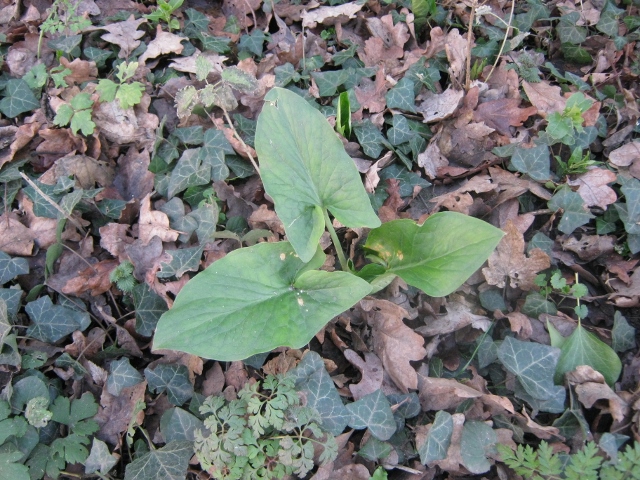
Lords-and-ladies (Arum maculatum)

Another woodland and hedgerow plant.  I was surprised that these leaves were matte green – they are usually glossy.  Another plant that smells of decay when in flower, the berries are poisonous and the roots have a high starch content.  In Elizabethan times the roots were gathered to make starch for stiffening the high pleated linen ruffs that were then in fashion.

IMG_3995Flies in the sunshine (640x480)

The white spots in the photo are midges or Winter Gnats flying in the sunshine.

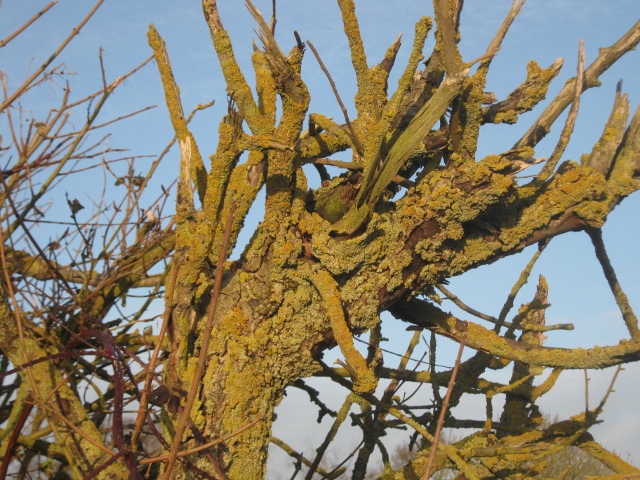
IMG_3996Lichen-covered dead tree (640x480)

This dead tree at the end of a hedge and at the entrance to a field is covered in lichen. The bark of the tree has started to fall off taking the lichen with it.


IMG_3997Clouds and shadows (640x480)

Our long shadows and that of the hedge behind us can be seen on the field as I took a photo of the beautiful cloud patterns

IMG_3998Clouds (640x480)

The clouds.

IMG_3999Dogwood (640x480)

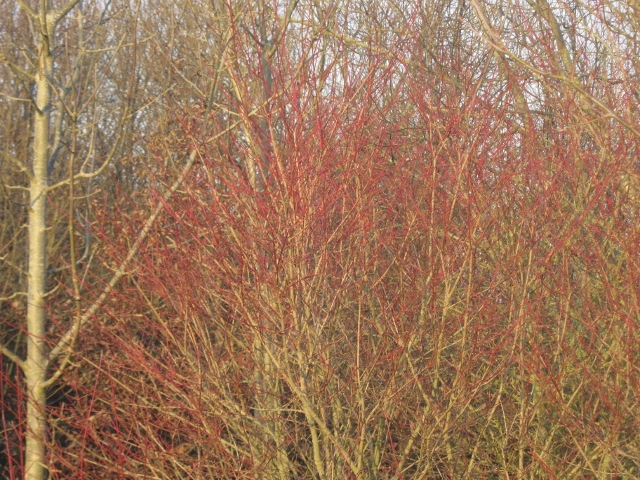
The Dogwood (Cornus sanguinea) twigs were blazing in the low sunlight.

IMG_4001Hollow tree (480x640)

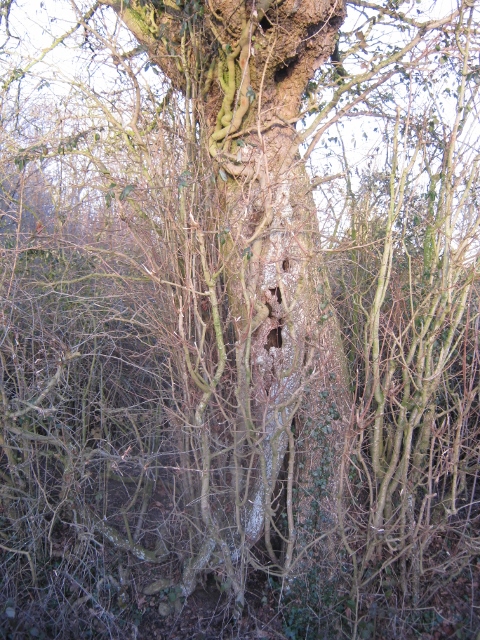
A hollow tree. In spite of its hollow trunk and all the ivy growing up it the tree, an oak I think, is still alive.

IMG_4002Jacob Sheep (640x480)

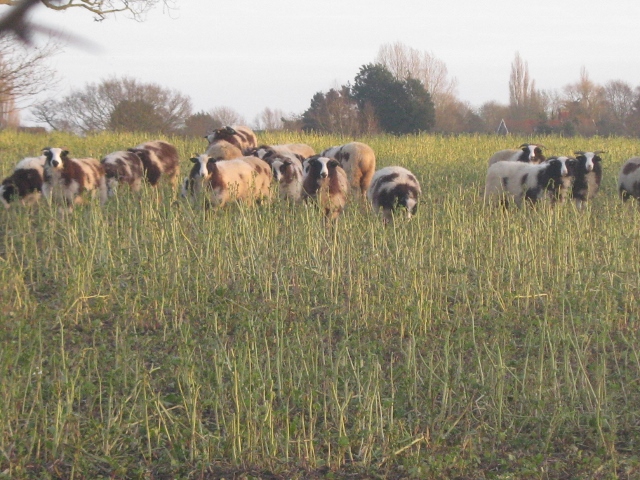
Jacob sheep. They will be having their lambs soon.


IMG_4003Winter Heliotrope (640x480)

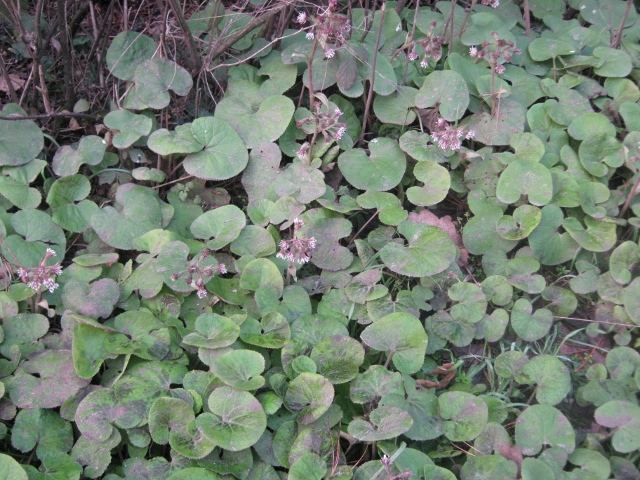
Winter Heliotrope (Petasites fragrans) growing along the roadside verge near someones house. The flowers are vanilla-scented and the plant spreads quite quickly preferring damp and shady places. It is a naturalised garden plant.

IMG_4005Snowdrops (640x480)

Snowdrops (Galanthus nivalis) in the churchyard

IMG_4006Primroses (640x480)

Primroses too! (Primula vulgaris)

IMG_4007St Margaret's church porch (640x466)

St Margaret’s church porch has an upstairs room.


IMG_4010Lichen on gravestone (640x480)

White lichen on a gravestone

IMG_4011Daffodil bud (480x640)

A daffodil bud in the sheltered churchyard.


IMG_4016Celandines (640x480)

Celandines (Ranunculus ficaria) flowering on the roadside verge.  I was so surprised to see these as they don’t usually appear until March.  They were everywhere I looked, though as the sun was setting they were closing up for the night.  I should have got there an hour earlier.

IMG_4017Sunset (640x440)

Sunset.


We got home as the sun sank below the horizon.

This week Elinor is taking her mock GCSE exams.  She has already taken Psychology and English.  Maths is on Wednesday and Thursday and Art is all day on Friday.  She is coping very well indeed though she is exhausted already with the strain of it all.

Richard stays away from home only one night this week; Wednesday night is spent in Gloucestershire.  On Friday he goes back to the specialist to find out more about the lesion/tumour on his pituitary gland and what is to be done about it.

I am disappointed at not being able to go to Sheffield  to see Alice perform in ‘Emma’ especially as she is taking the leading role.  I would really have loved to see her and support her but the performances are at the same time as Elinor’s exams and Richard’s hospital visit.  I also don’t have much money to spare for train travel and hotel rooms after Christmas and Elinor’s birthday in January.

My mother is fine.  She went to the eye specialist on the 30th December and had to return the next day for an injection to stop a bleed in her eye.  We went back last week for a check-up and fortunately all is well again.  The next appointment is in mid March.  My brother has filed for divorce and is in the process of selling his house.  He is moving to Suffolk to be near us and Mum and especially his daughter and has got a transfer to work in the open prison in Suffolk and continue his teaching.  My sister is working hard as always as a paramedic practitioner. She got her degree and will be getting her certificate at a ceremony in May.  My mother-in-law is out of hospital and in a nursing home.  This is a temporary arrangement as she hasn’t yet been assessed but we all know that she won’t be able to go back home.  She has a weak heart, breast cancer, problems with her thyroid and has lost all her mobility.  All so sad.  She understands the situation and is making the best of it; such a sensible woman.

IMG_4018Sunset (480x640)


Share this:

  • Share on X (Opens in new window) X
  • Share on Reddit (Opens in new window) Reddit
  • Share on Pinterest (Opens in new window) Pinterest
  • Share on Facebook (Opens in new window) Facebook
  • Email a link to a friend (Opens in new window) Email
  • Share on Tumblr (Opens in new window) Tumblr
  • Print (Opens in new window) Print
  • Share on LinkedIn (Opens in new window) LinkedIn
Like Loading...

Plough Sunday

12 Mon Jan 2015

Posted by Clare Pooley in churches, Rural Diary, Uncategorized

≈ 24 Comments

Tags

church service, Evening Prayers, Plough Sunday, Rumburgh

009The crib (640x480)

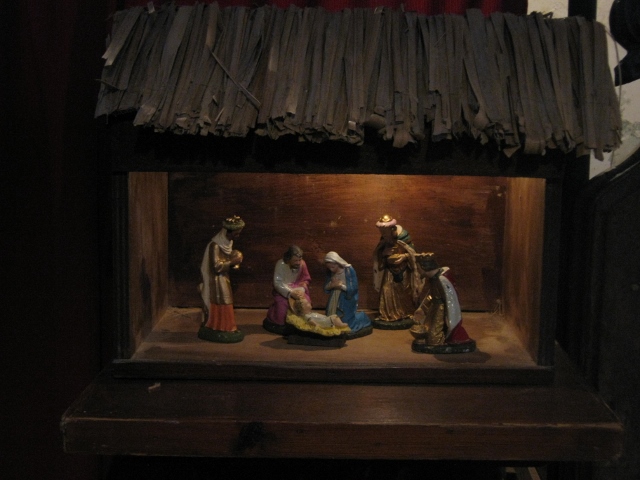
The Crib in Rumburgh Church.  As we are still celebrating Epiphany the Crib shows the Three Kings or Wise Men visiting the Holy Family.


I seem to have spent most of the day in church today.  I woke this morning to clear skies and when the sun rose everything looked beautiful and sparkling.  There was still a strong wind blowing which made it feel much colder outside than it really was.

I had promised my mother that I’d take her to her church this morning, as the services at our church were both in the afternoon.  I left home at just after 9.45 am, picked Mum up at 10.10 and got to Eye just after 10.30.  There were a couple of places near the church where I could park which is the advantage of arriving a little early.  The service went well but is always much longer than our one and by the time we left the skies were beginning to cloud over.  I dropped Mum back at her house at about 12.30 and then went home for something to eat.

Richard and I went to the Plough Service at our church this afternoon.  We set out in plenty of time for the 3.00 pm start but we discovered the road was blocked by a fallen tree.  It wasn’t a large tree and most of it was dead but it was very heavy and Richard and I really struggled to get it to the side of the road.  By the time we had got it half way to the side a few other cars had arrived and first a woman in the car behind us and then a man from a car two behind her and then a young man who had driven up from the opposite direction all got out to help clear the road.  Richard, the woman and I had managed to get it almost to the side of the road by dragging it one way but the young man said he would be able to get it further off the road by taking it a different way.  He was very strong and put the tree over his shoulder and with the other men’s help he got it right off the road.

001Plough Sunday service sheet

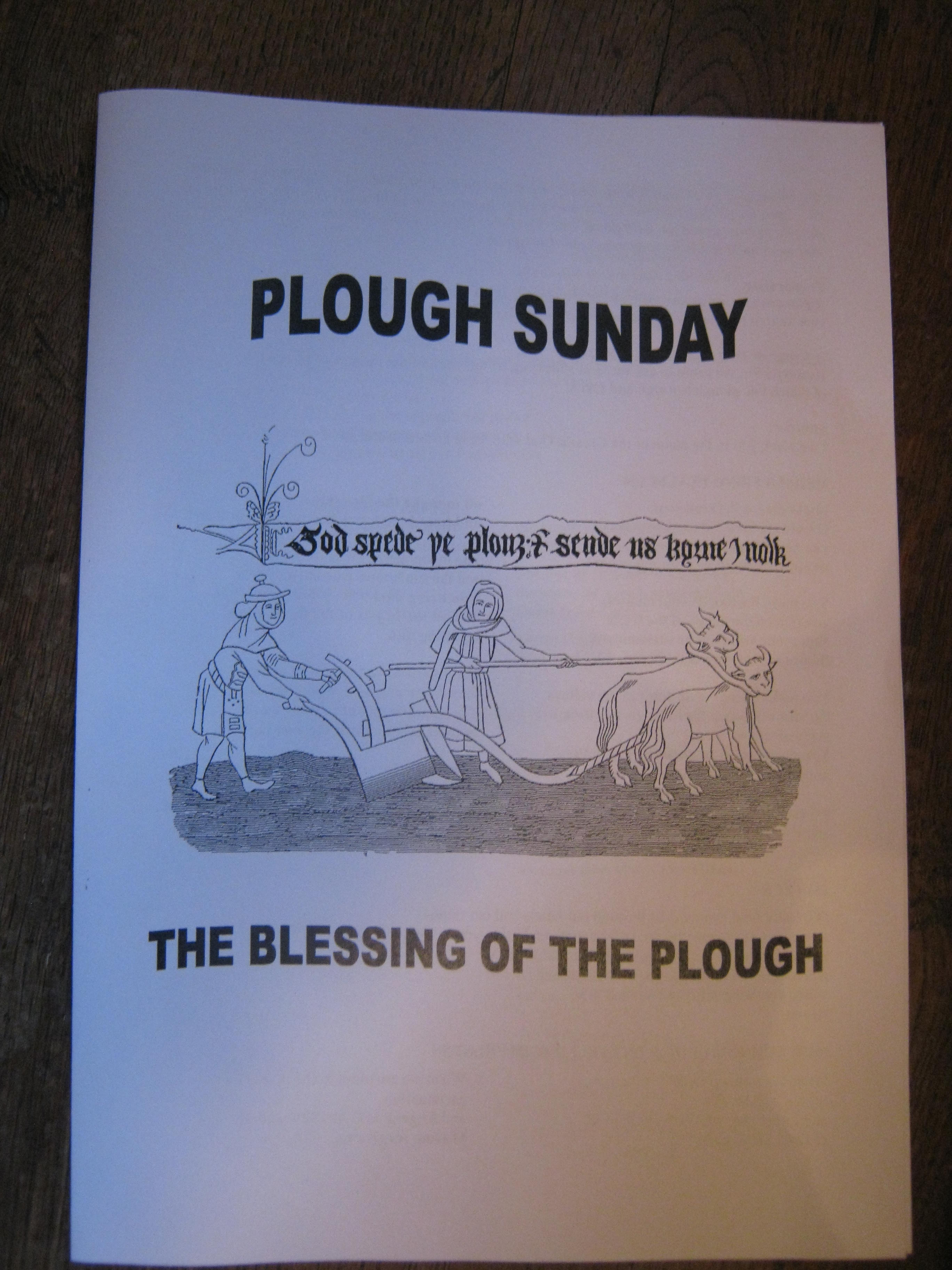
The cover of the Plough Sunday service sheet

To quote from the service sheet –

‘The Blessing of the Plough is traditionally celebrated on the first Sunday after Epiphany, January 6th.  Often the plough was feted and drawn through the streets to be blessed in church.  This was thought to ensure food for the coming year.  The following day, Plough Monday, was the first day that work in the fields recommenced after Christmas’.

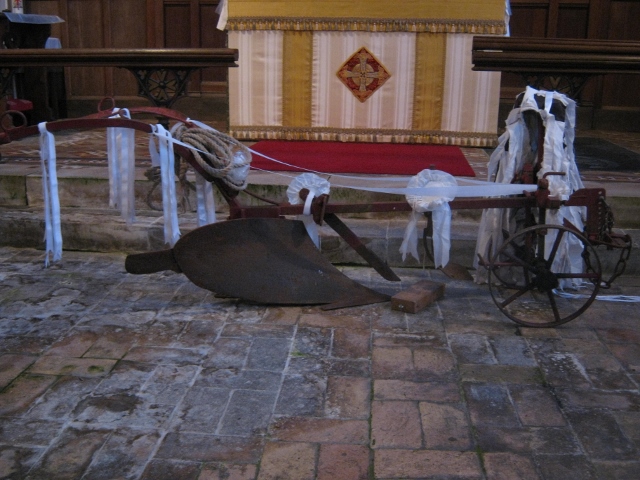
008The plough (640x480)

The decorated plough in our church

A local family bring their plough into the church and decorate it with ribbons and rosettes.

A farmer or his representative says:

‘Reverend Sir, we come to ask for God’s blessing on the work of the farmers of our country, of which this plough is a sign and token’.

To which the Minister replies:

‘I welcome you in the name of the Creator God who made this earth and all life upon it’.

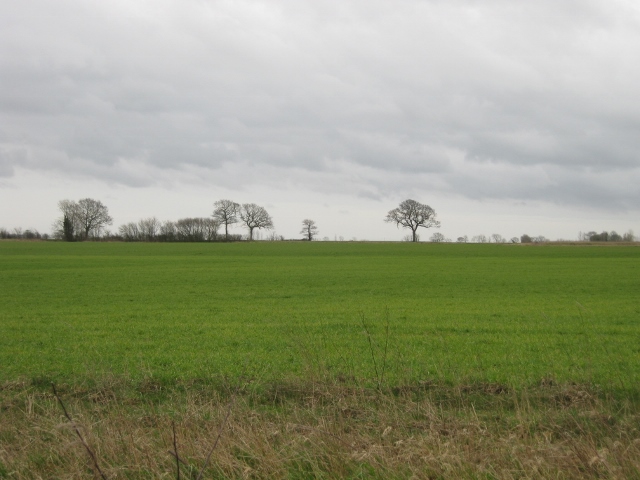
042View across fields (640x480)

The short service that follows includes verses from Psalm 104 which is a lovely song of praise for all creation and is worth a read for the wonderful phrases like ‘…..You cause grass to grow for the cattle,/ and plants for man to cultivate,/ to bring forth food from the earth,/ and wine to gladden the human heart.’

‘…..You bring darkness, it becomes night,/ and all the beasts of the forest come creeping out.’

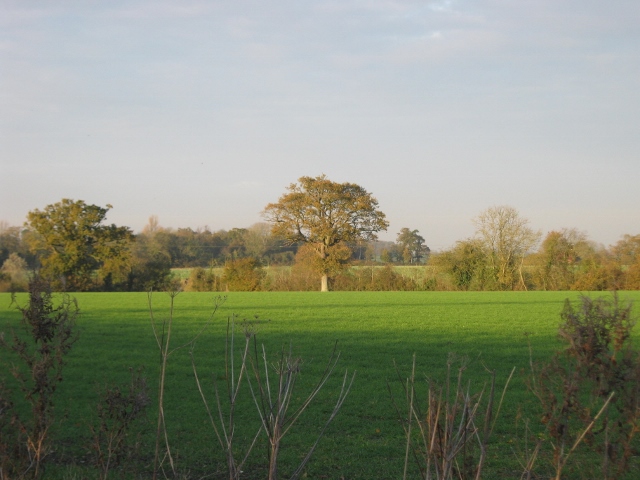
031View across fields (640x480)

In the service we acknowledge our forgetfulness and our gratitude for God’s Gifts.  The blessing of the plough follows and then ‘God Speed the Plough’ – some verses about ploughing.

‘God Speed the Plough,/ the plough and the ploughman,/ the farm and the farmer,/ God Speed the Plough.

God Speed the Plough,/ the beam and the mouldboard,/ the slade and the sidecap,/ the share and the coulters,/ God Speed the Plough.

God Speed the Plough,/ on hillside and in valley,/ on land which is rich and on land that is poor,/ in countries beyond the seas,/ and in our homeland,/ God Speed the Plough.

God Speed the Plough,/ in fair weather and foul,/ in rain and wind, in frost and sunshine,/God Speed the Plough.


We are then blessed and we sing the harvest hymn ‘ We Plough the Fields and Scatter the Good Seed on the Land’.  Even though there were only eight of us in the church we all sang heartily and made a joyful noise.  And the service was over.

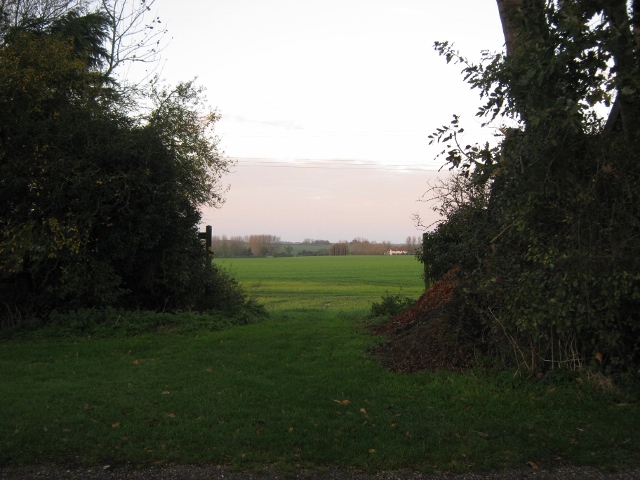
049View across fields (640x480)

The Rector, Richard and I tidied up and blew out the candles and then had a pleasant chat together for a while until it was time for the Rector to leave for home.  He is still suffering from a bad cold and has to visit hospital very soon to be assessed for heart surgery.  He will have some fairly unpleasant procedures to go through and we wish him very well.

Richard and I had put the heater on in the Ringing Chamber (where the bell-ringers ring) and after Richard had done some maintenance in the church and tidied up the candles we sat and read and talked and Richard drank some coffee he had brought with him in a flask and waited for the next service to start at 4.30 pm.

Maurice our Elder arrived to take Evening Prayers and three other people joined us for the service.  Maurice always prepares his services so well; it is a pity more people don’t come to hear him. 

Share this:

  • Share on X (Opens in new window) X
  • Share on Reddit (Opens in new window) Reddit
  • Share on Pinterest (Opens in new window) Pinterest
  • Share on Facebook (Opens in new window) Facebook
  • Email a link to a friend (Opens in new window) Email
  • Share on Tumblr (Opens in new window) Tumblr
  • Print (Opens in new window) Print
  • Share on LinkedIn (Opens in new window) LinkedIn
Like Loading...

Peak District Holiday 1st to 9th July. Day 5 Part 2 and Day 6.

09 Fri Jan 2015

Posted by Clare Pooley in churches, Rural Diary, Uncategorized

≈ 11 Comments

Tags

All Saints church, Brindley's Mill, James Brindley, Leek Staffordshire, murals, Richard Norman Shaw, stained glass

During our day in Leek (mentioned in a former post), we also re-visited two favourite places.

This post is written with some help from the information booklets I obtained from All Saint’s Church, Leek and Brindley’s Mill, Leek.

ALL SAINTS CHURCH

093AAll Saint's church (640x427)

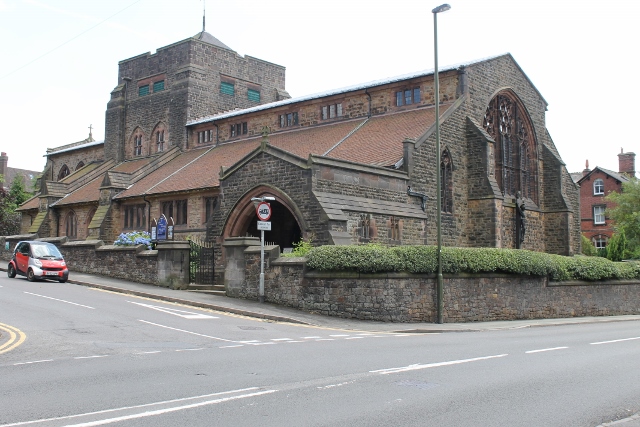
All Saints Church, Leek is built of dark gritstone and some pink sandstone.

This church was designed by Richard Norman Shaw (1831-1912) and is considered the finest of all the sixteen he worked on.  He mainly designed great houses and public buildings – 200 are attributed to him – including ‘Cragside’ in Northumberland and New Scotland Yard in London, the former headquarters of the Metropolitan Police.  He followed A W N Pugin’s methods and principles which included honesty in the use of materials and the use of local building stone wherever possible.  He also worked for some years as assistant to George Edmund Street and many of Street’s principles can be seen in Shaw’s churches – very low chancel screens without superstructure and the altar visible from all parts of the building.

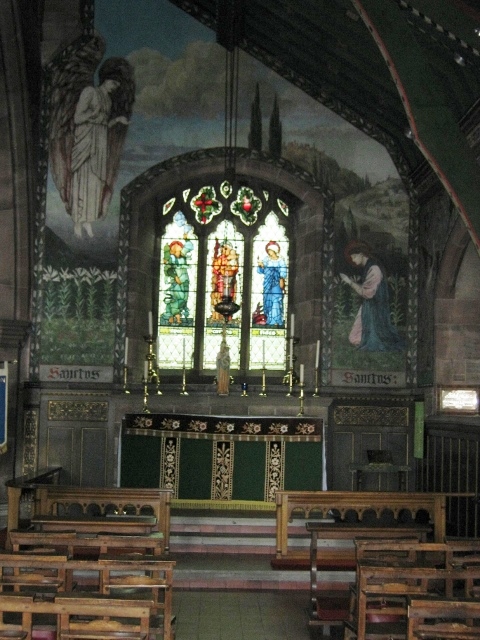
095Altar (640x427)

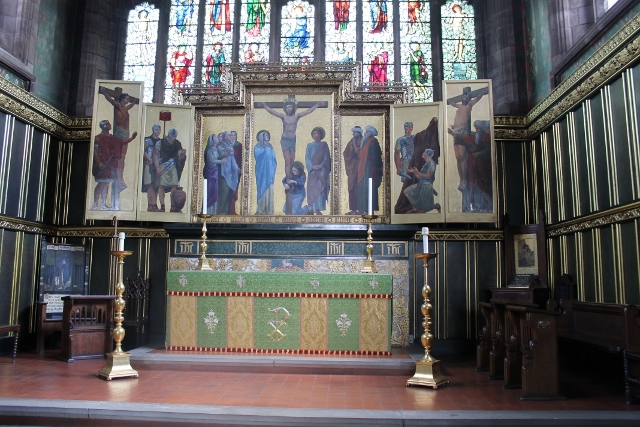
The High Altar. The beautiful painted Reredos shows Christ’s Crucifixion and the Great East Window behind, designed by the artist Edward Burne-Jones, is a ‘Jesse’ window and shows the ancestry of Christ.

This was the third time we had visited this church and each time we have been there we have been welcomed and shown wonderful hospitality by the parishioners who open their church to visitors twice a week, provide coffee, tea and biscuits and lots of information and chat.

The stained glass windows are sumptuously coloured.

Miriam, Esther and Ruth by J E Platt
Faith, Hope and Charity by E Burne-Jones
St Stephen, St Catherine and St Alban by G Horsley
St Chad of Lichfield, King Alfred of Wessex and St Werburgh of Chester by J E Platt
St Augustine of Hippo, St Jerome, St Ambrose and St Gregory by Morris and Co
King David, King Solomon, Hezekiah and Josiah by Morris and Co
Deborah, Huldar and Judith by Morris and Co
East Window - Ancestry of Christ by E Burne-Jones
East Window – Ancestry of Christ by E Burne-Jones
022West window (640x470)

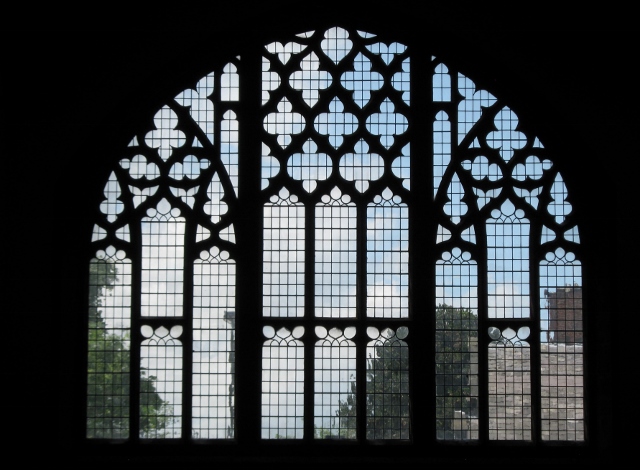
The West Window has no stained glass and shows the beautiful tracery to good effect

018Pulpit (480x640)

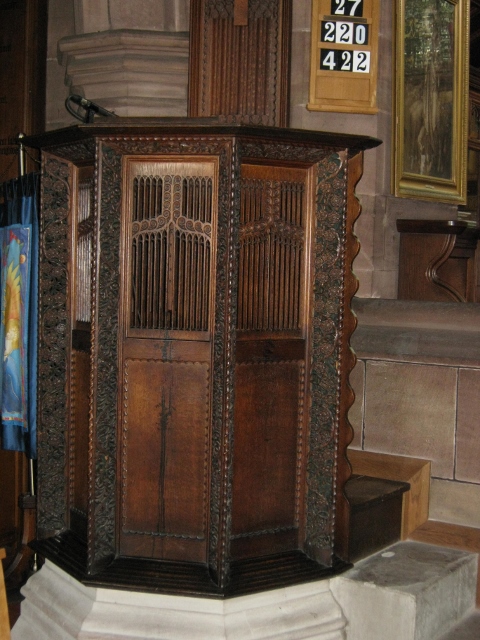
The pulpit is decorated beautifully with carving and pierced woodwork. It also has a tester or sounding board above it which helped with acoustics before the use of microphones.

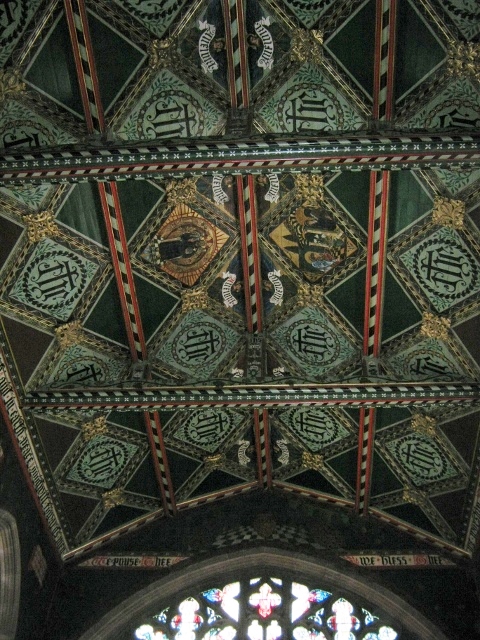
020Ceiling (480x640)

Part of the painted ceiling in the chancel.

027Lady chapel (480x640)

The highly decorated Lady Chapel. The wall painting shows the Annunciation, the visit of the Angel Gabriel to Mary when she is told she has been chosen to be the Mother of Christ.

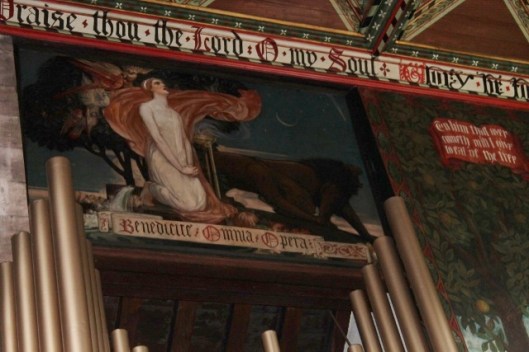
Another painting in the Lady Chapel and on the south wall is of St Francis of Assisi preaching to the birds.  Unfortunately the photographs I took were not good enough as the light levels were poor.

Wall painting
Wall painting

032One of stations of the cross (640x480)

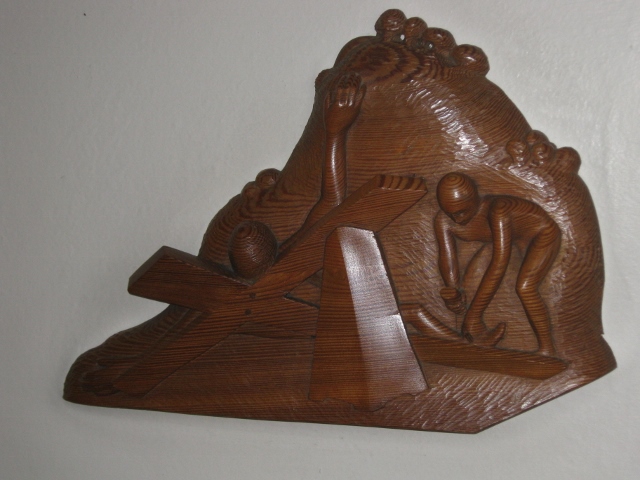
One of the fourteen Stations of the Cross carved in 1991 by a local craftsman, John Owen.

033One of the embroideries (480x640)

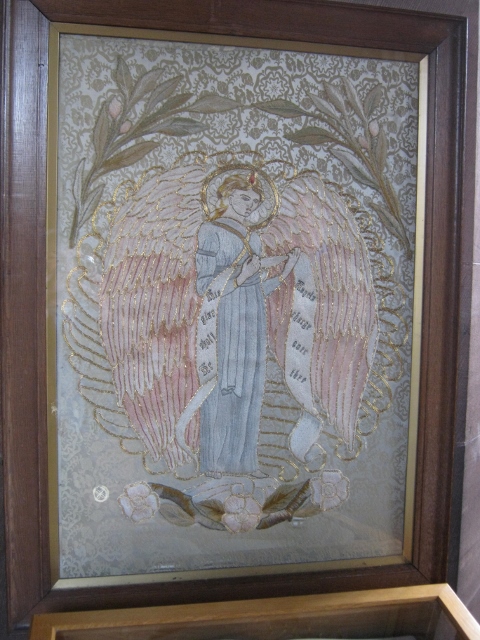
A framed embroidery of an angel – a late example of the work of a member of the Leek School of Embroidery.

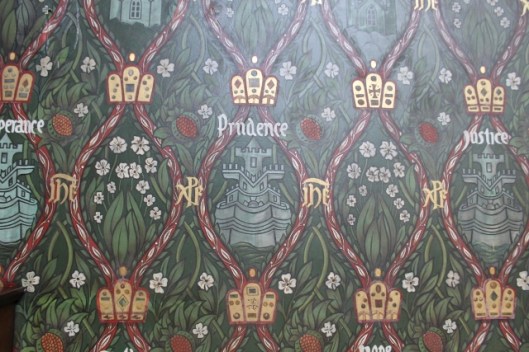
034The font (480x640)

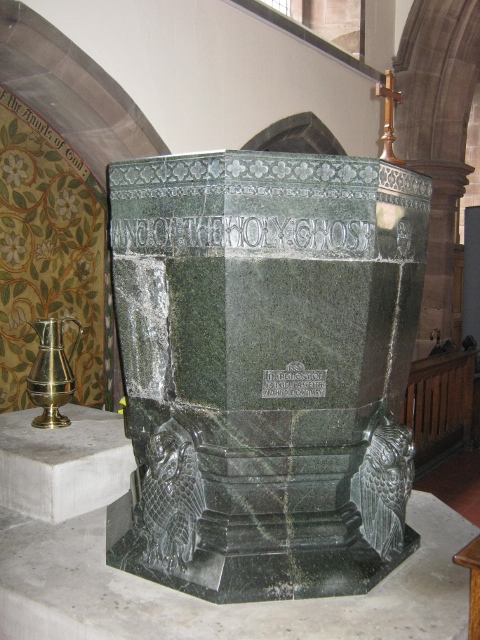
The font is made from green marble and the floral design on the west wall behind it is believed to be by William Morris.

106Painting (640x427)

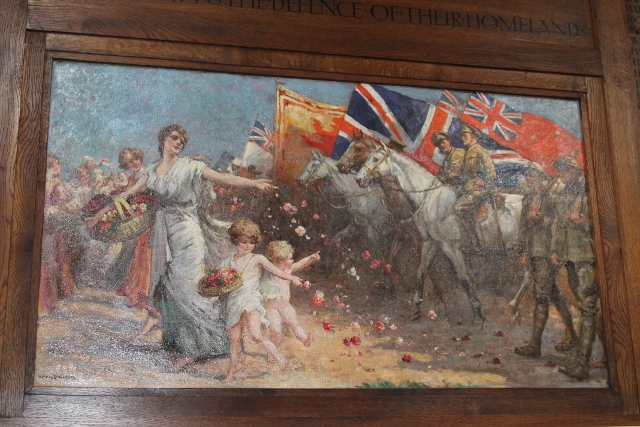
This painting had only just been restored and replaced in the church the day we visited.

BRINDLEY’S MILL

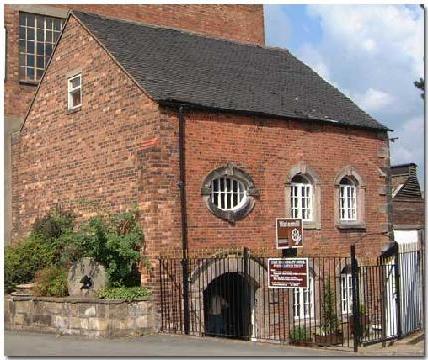
Our next port of call was to Brindley’s Mill.  As it is on a busy road I was unable to take a photograph of the outside of the mill so I have found a picture of it on-line – thanks to the Peak District On-line site.

leek-mill

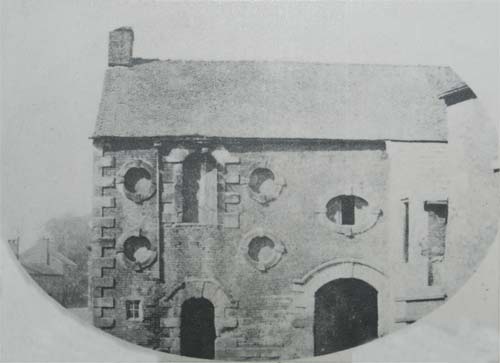
I also found a photograph of what it looked like before successive roadworks raised the road level and caused the demolition of part of the building in 1948.  This photograph comes from the Staffordshire Past Track site.

26896-0

James Brindley was born in 1716, the eldest of the seven children of a Derbyshire small farmer.  Brindley had very little schooling as he was kept very busy on the farm.  The family moved to Leek when he was ten and at the age of seventeen he was apprenticed to a millwright near Macclesfield in Cheshire.  He had a wonderful memory and stored up all sorts of useful information that he gleaned on his trips with journeymen to a variety of mills in the area.  After two years his grasp of mechanical detail was remarked on by a mill manager and when the millwright to whom he was apprenticed failed to produce machinery for a new paper mill, Brindley, on his own initiative, visited the mill fifty miles away to see what was required.  He was subsequently put in charge of the work which was completed satisfactorily.  He thereafter looked after the business until the millwright’s death.  Brindley set up his own millwright’s business in 1742 at the age of 26.  He opened up another workshop in the Potteries where, after working with master potters and colliery owners he became known as ‘The Schemer’.  His mill work continued including water mills for corn, flint and  textiles, all requiring different internal machinery.  Where no water was available he used ‘fire engines’ as early steam pumps were known.  He patented improvements to existing machines.  He replaced water by wind in Burslem for grinding flint for the Wedgewoods.

Brindley built the cornmill in Leek in 1752 on a site where a mill had stood since Domesday, on the River Churnet.

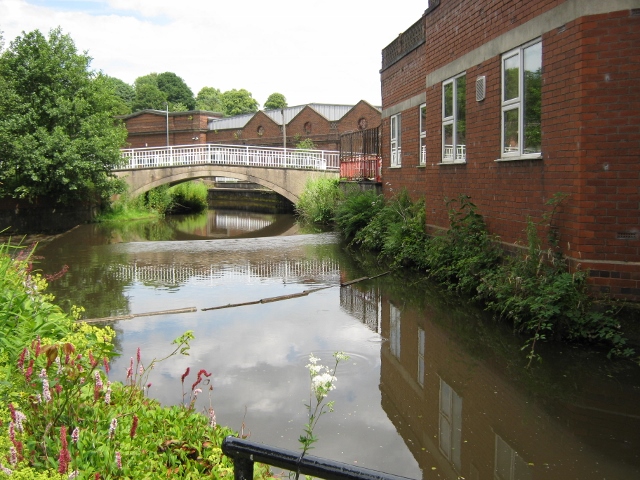
040R Churnet (640x480)

The River Churnet seen from the mill

In constructing this mill he showed a variety of skills – a millwright’s knowledge of mechanics and hydraulics was accompanied by the ability to create a stylish building using new weight-bearing techniques.  He also exhibited civil engineering skills when constructing the weir by compacting clay, as he did later when forming the beds of the canals he made.  His canals transformed the way goods were transported across England and he became very famous.  Because of his lifestyle – constant travelling, overwork and also the onset of diabetes – he died at the early age of 56.

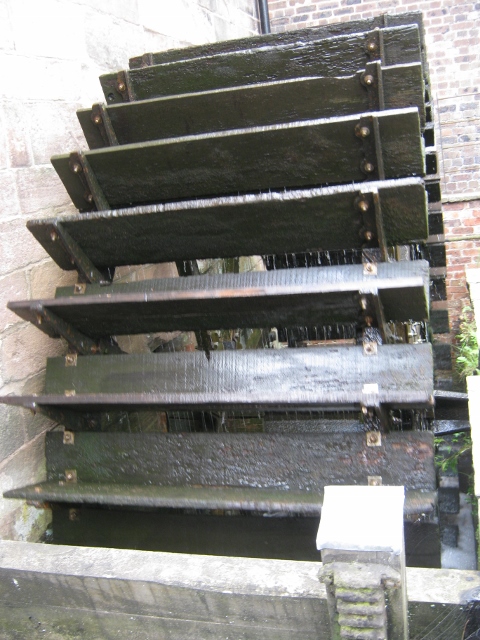
042Wheel (480x640)

The working waterwheel


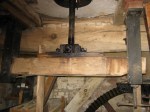
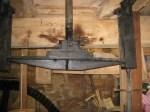
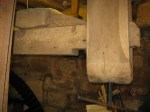
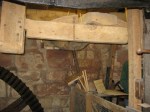
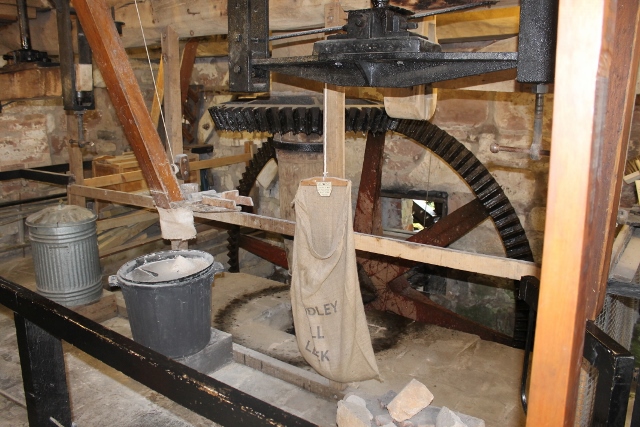
Four photos of the tentering gear (three sets of different vintages are bolted to the ceiling).  They adjust the gaps between the millstones on the floor above to control the fineness of the flour.

At the rear of the photo is the pit wheel which is connected to the waterwheel outside by the axle-tree. The main shaft is made of oak and is 18″ in diameter. It is supported by a brass footstep bearing which is bolted to the floor. Around the base of the main shaft is the wallower – a gear which is driven by the pit wheel. At the front of the photo is the wooden pipe which conveys the meal from the millstones above. The meal is then sieved.

110Mill (640x427)

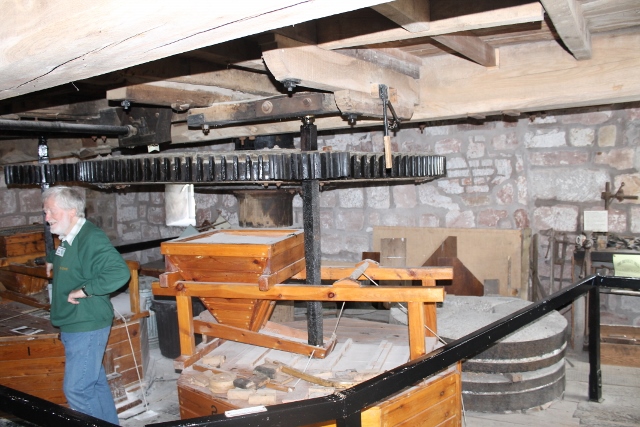
This is a photo of the next floor. Grain is poured into the wooden hopper from the floor above. The new hopper here is a quarter scale replacement to make demonstrations easier. Below the hopper is a tray (the shoe). One of the arms attached to the shoe is held against the rotating four-sided shaft by a rope attached by a springy bar of willow. As the shaft turns its four edges create a shuddering movement in the shoe which allows the grain to be jerked out at a regular pace into the eye of the top stone.

055Mill stones (640x480)

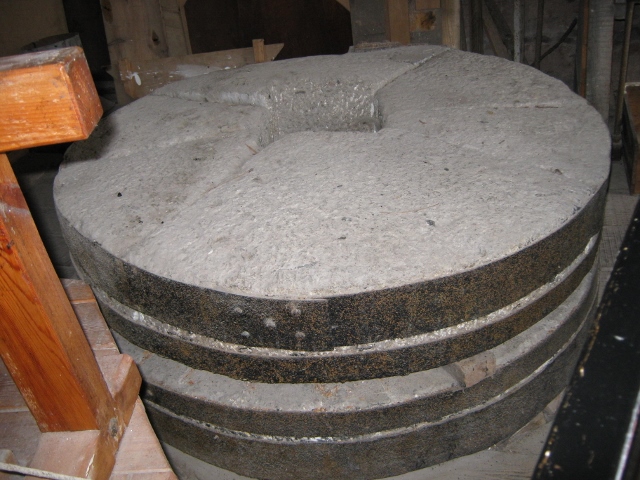
Mill stones

056Weighted with flat iron (640x480)

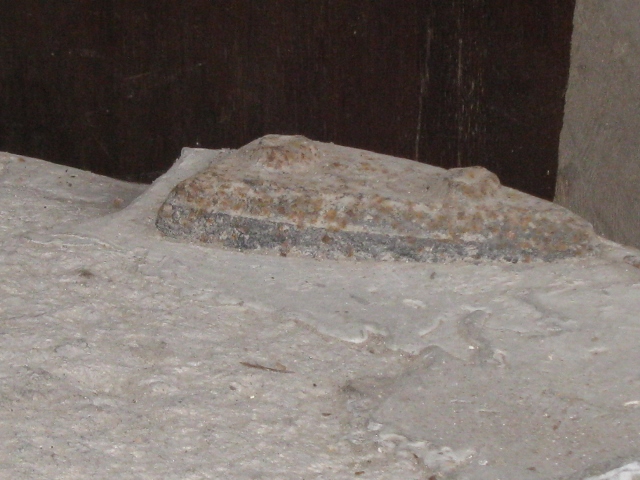
If the stone became worn or it ground unevenly it could be repaired by being weighted on one side. This one has been weighted by an old flat iron.

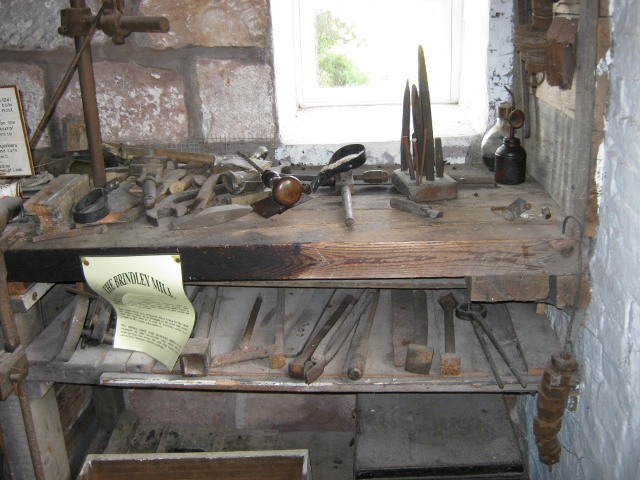
057Tools used in mill (640x480)

A work bench with tools used in the mill

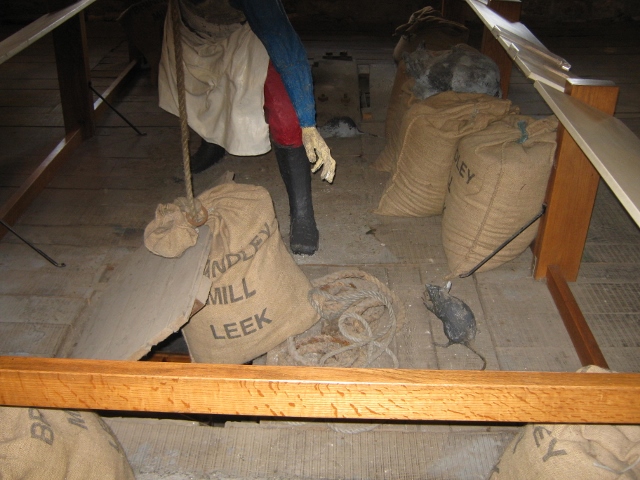
060Garner floor (640x480)

The Garner floor or top floor where the grain is stored prior to milling. The sacks are conveyed up to this floor with a sack hoist

065B's level & notebook (640x480)

Brindley’s level and notebook

This is a theodolite level – a spirit level above a telescope above a compass – and was the most advanced piece of technology which he used in planning his canals.

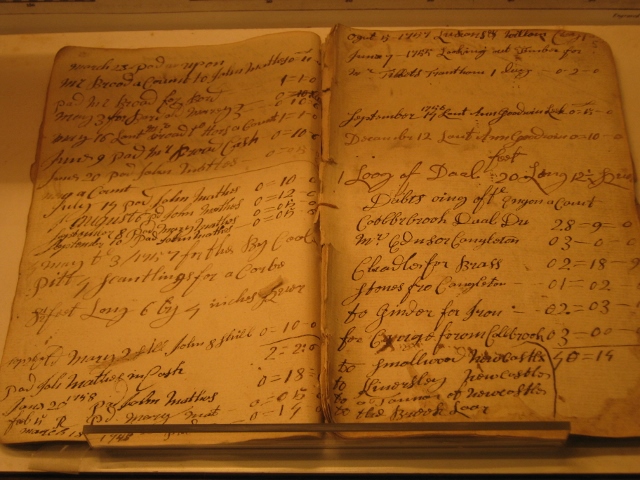
066Notebook (640x480)

This is one of four of Brindley’s notebooks in existence and are mainly aids to his memory – time taken to ride to distant places, where he found suitable timber, clothes he bought, how much he was owed etc.

The following day, which was Sunday, we attended church at All Saints and had coffee afterwards in their large church room in the undercroft.  Such friendly people!

We then travelled to Manchester and spent some time visiting my mother-in-law in her house.  Probably the last time I will see the house, though I didn’t realise it then.


Share this:

  • Share on X (Opens in new window) X
  • Share on Reddit (Opens in new window) Reddit
  • Share on Pinterest (Opens in new window) Pinterest
  • Share on Facebook (Opens in new window) Facebook
  • Email a link to a friend (Opens in new window) Email
  • Share on Tumblr (Opens in new window) Tumblr
  • Print (Opens in new window) Print
  • Share on LinkedIn (Opens in new window) LinkedIn
Like Loading...

Christmas

30 Tue Dec 2014

Posted by Clare Pooley in churches, cooking, Rural Diary

≈ 12 Comments

Tags

Christmas, Christmas Day, Christmas Tree, decorations, food, tradition

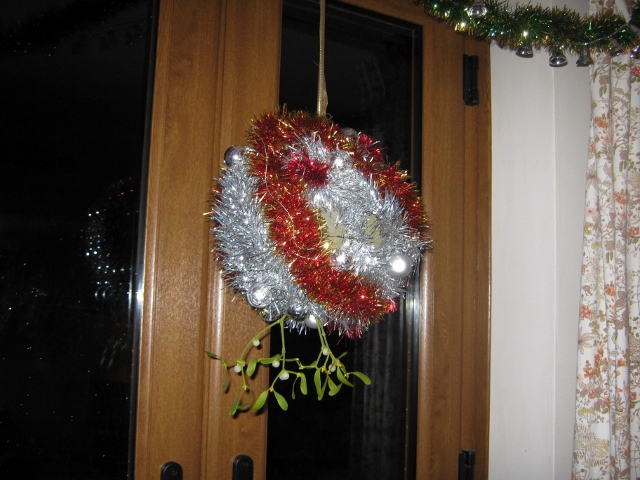
002Mum's kissing ring (640x480)

My mother’s Kissing Ring.  My mother’s family had no tradition of having a Christmas tree.  They had a kissing ring instead.  This one has a sprig of mistletoe for kissing under. 

We have had a very pleasant and quiet Christmas so far.  Christmas Day itself began at Midnight Mass held this year in St. Mary’s church in Flixton.  The Rector handed us all a slice of Christmas cake as we left and when we got home we had some hot mulled wine and a mince pie before going to bed.  I was a little late in going to bed as I still had a few presents to wrap which I did after quickly washing the kitchen floor.  Yes, I know what you are thinking, but it needed doing and that was the only chance I had to do it!

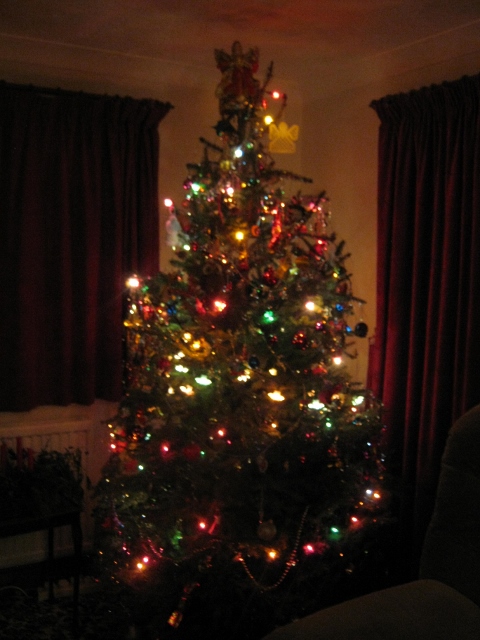
003Christmas tree (480x640)


In the morning we gathered together in the living room where the presents had been put under the Christmas tree and drank a cup of tea while we exchanged our gifts.  In recent years our breakfast has been Italian pannetone which is luxurious but light.

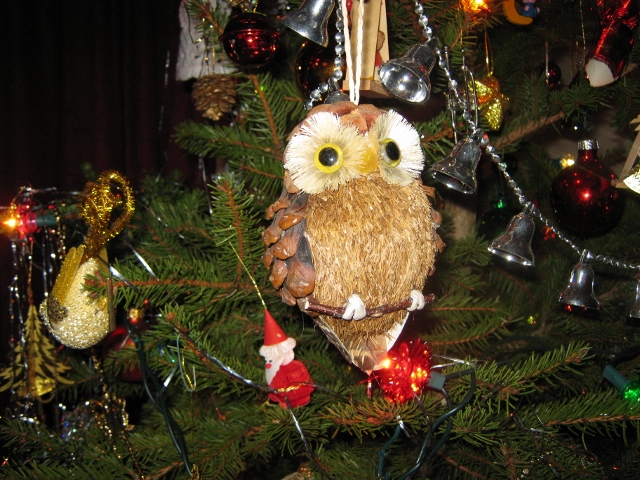
005Tree decorations (640x480)

For lunch this year instead of turkey we had rib of beef and it was gorgeous!  I had a lot of help from Alice who peeled and chopped all the vegetables for me and she also made a lovely lemon sorbet for a starter.  We had roast and mashed potatoes, mashed swede, roast parsnips with honey, carrots and brussels sprouts.  I had another attempt at making Yorkshire puddings and my usual failure.  Why I can’t make them I don’t know but this time they at least were light and in one piece but they were flat like pancakes!  I made some gravy which was rich and good and also some stuffing.  Why stuffing when we had no bird to stuff?  Because Elinor my youngest daughter loves it and it wouldn’t be Christmas for her without sage and onion stuffing.

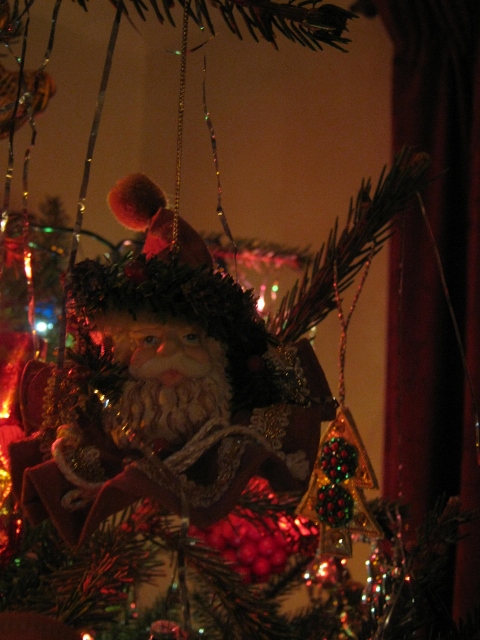
007Tree decorations (480x640)


Richard went to collect my mother who always joins us for Christmas lunch and she brought with her the Christmas Pudding.  She has always made her own puddings and they are very good indeed.  She makes them in October and they are left to mature until Christmas when they are steamed for two hours.  She brings our pudding hot from the steamer and well wrapped and insulated.  I make thick custard to go with it and provide cream as well.

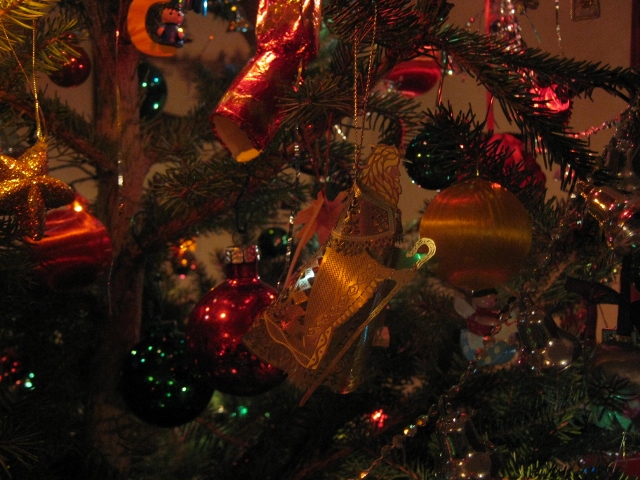
013Tree decorations (640x480)


The afternoon is spent quietly together, talking and drinking tea, coffee, wine or spirits and sleeping.  Richard spent quite a lot of time washing up and loading and re-loading the dish-washer – a seemingly thankless task but a necessary one and I am very grateful to him for doing it.

020Crib (640x480)


Mum had invited us to her house for a buffet evening meal the next day, Boxing Day, so Richard and I decided that it might be a good idea if we went for a walk during the afternoon.  Neither of the girls wanted to come with us.

015Christmas decoration (480x640)

We set off for Mum’s house just before 6.00 pm and it was just starting to rain as we got there.  She had provided a sumptuous spread for us and had worked very hard.  A gammon with orange, chicken pieces coated with sesame seeds, mixed roast vegetables, sausage rolls and a selection of crisps and savoury biscuits. She had also made an apfel strudel and a yule log with chocolate and chestnut filling.  The rain was pouring down when we left and continued all night and into the following morning.  Many of the roads and fields were flooded but we didn’t have the snow that fell just to the north of us.


Share this:

  • Share on X (Opens in new window) X
  • Share on Reddit (Opens in new window) Reddit
  • Share on Pinterest (Opens in new window) Pinterest
  • Share on Facebook (Opens in new window) Facebook
  • Email a link to a friend (Opens in new window) Email
  • Share on Tumblr (Opens in new window) Tumblr
  • Print (Opens in new window) Print
  • Share on LinkedIn (Opens in new window) LinkedIn
Like Loading...

Advent

11 Thu Dec 2014

Posted by Clare Pooley in churches, music, Rural Diary, Uncategorized

≈ 12 Comments

Tags

Advent, Advent Candle, Advent Crown, Carols and Capers, Medieval church, music and dance

013Receding bank of cloud

I took this photo a week ago when, for an hour, the thick pall of cloud that had been over us for a week or more receded towards the coast and we saw the sun. I was amazed to see how deep the cloud was.  The cloud returned shortly after I took this picture.

We are now in the second week of Advent and Christmas is looming fast.  I like Advent – at least I like Advent in theory, if not in practice.  I wish time would go a little slower so that I could fit in all the Christmas preparations and still have opportunity for quiet reflection.  i wish to appreciate and enjoy anticipating Christmas.

There used to be a children’s programme on TV when both my girls were younger called ‘Bernard’s Watch’ in which a boy called Bernard had a special watch that could halt time, stopping everyone in their tracks, while Bernard rushed about trying to catch up and put things right.  I want Bernard’s watch!

Unfortunately, this time of year is so full of doctor’s and hospital appointments, check-ups at the optician and dentist, visits to relatives, trying to remember last postal dates and ordering of meat and wreaths, that the really nice bits are side-lined and fitted-in to our schedule almost as an after-thought.

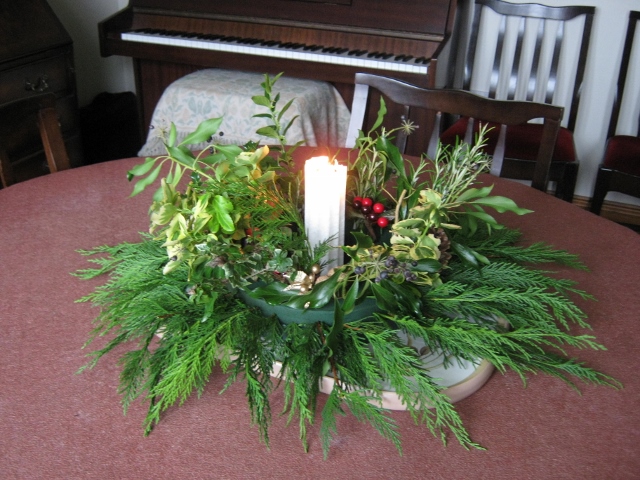
007Advent Crown (640x480)

Our Advent Crown with the first candle alight

At home we make an Advent Crown with evergreen and candles, we have an Advent Candle and Advent Calendars.

006Advent candle (480x640)

The Advent candle

While E and I make the Crown and also a table-centre decoration as well, it is traditional for us to play an ancient tape that we have had since my eldest daughter was little.  It is the most horrible of tapes with what my daughters describe as ‘cheesy’ Christmas songs on it.  If R is around he complains very loudly when we put the ‘music’ on but I don’t think Advent Sunday would be half as much fun without it.

004Elinor's Advent arrangement (640x480)

My daughter’s table-centre arrangment

The Sunday before last (30th November) was Advent Sunday so the day before that, R and I went to Rumburgh Church to make sure all was tidy and in order and to put the church Advent Crown together.  There are plenty of evergreen trees and plants in the churchyard so I gathered a selection of good looking cuttings and arranged them as best I could around the candle holder.

001Rumburgh's Advent Crown (640x480)

Rumburgh’s Advent Crown


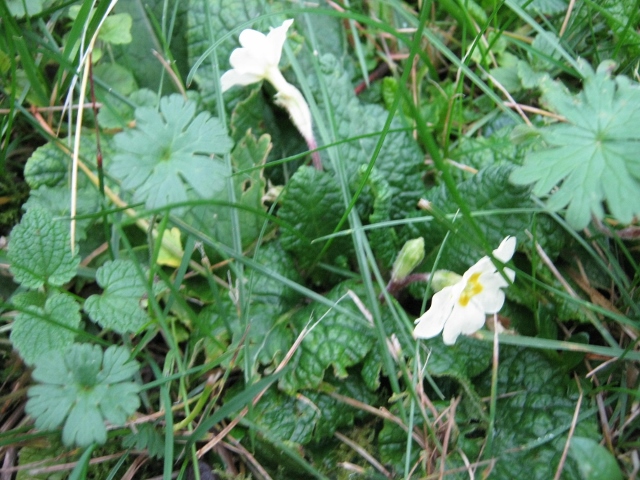
While I was wandering about the churchyard looking for greenery I saw this…

004Primroses (640x480)

An extremely early primrose.

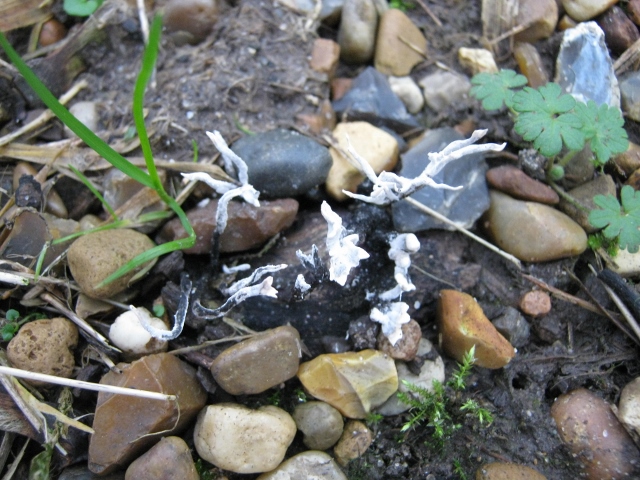
…and this.

005Coral fungus (640x480)

A coral fungus. This was very small as you can see by comparing it to the pea-shingle next to it.

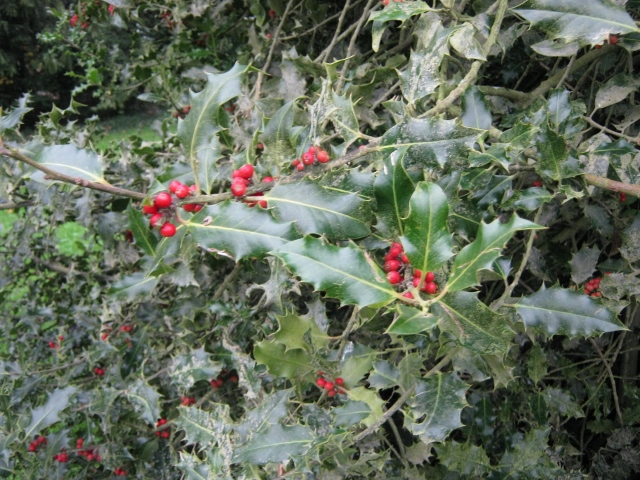
I also saw this…

007Holly (640x480)

Holly with berries. If you look carefully you’ll see the mildew on the shiny leaves. It has been so damp this autumn!

…..and this

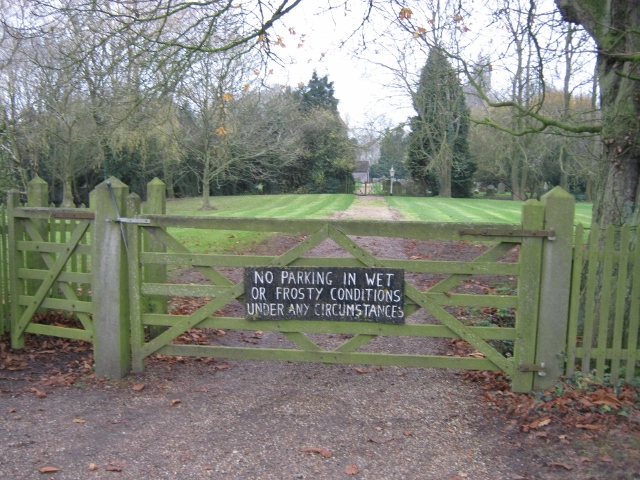
009Church gate (640x480)

The wooden churchyard gate has turned green too

010Gate to path leading to churchyard (640x480)

as has the gate to the path which leads to the churchyard. Our church is not visible from the road.

We have no church services at Rumburgh for the whole of the Advent and Christmas period this year but we do have a couple of carol services, the first of which was last Sunday, 7th December.

We had travelled up to Manchester on Saturday 6th December so that we could visit my in-laws.  R had driven up from Gloucestershire in the West Country where he had been working and E and I had gone on the train from home.  Because of the new franchise there is no longer a direct train route to Manchester from East Anglia.  The quickest and cheapest route was to travel south to London, cross the city from Liverpool Street Station to Euston Station and then take the pendolino train north to Manchester from there.  My poor mother-in-law is still very unwell but has left hospital and is now in a respite care-home for a few weeks.  Since moving to the care home she has caught a chest infection which has added to the problems she has with breathing because of a faulty valve in her heart.  She also fell and broke her thumb so has her hand in a plaster cast.  We stayed with her for about half an hour at most and then left when we saw that she was tiring.  We then drove to a restaurant and met my brother-in-law and his partner, his son and his partner and their two-year-old daughter and had a meal together.  R’s nephew, nephew’s partner and daughter had all had the chesty cough and cold but my brother-in-law was still suffering with it and we have since heard that his partner has become ill with it.  This does not bode well for us!  We returned to our very basic hotel and had a restless night before driving home on Sunday morning.  We set off shortly after 9.00 am and got back home just after 2.00 pm.  We had a short rest before going to the church to get it ready for the carol service.

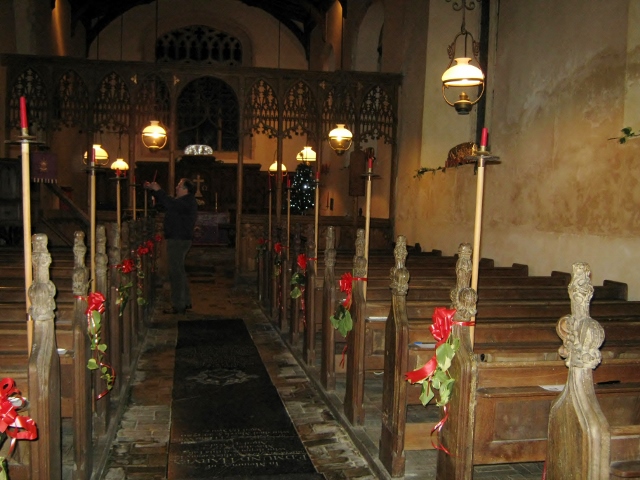
008Rumburgh church (640x480)

The interior of our church. R is starting to get it ready for the service.

There are many candles to be lit and the mince pies and mulled wine to set out before the congregation start to arrive.

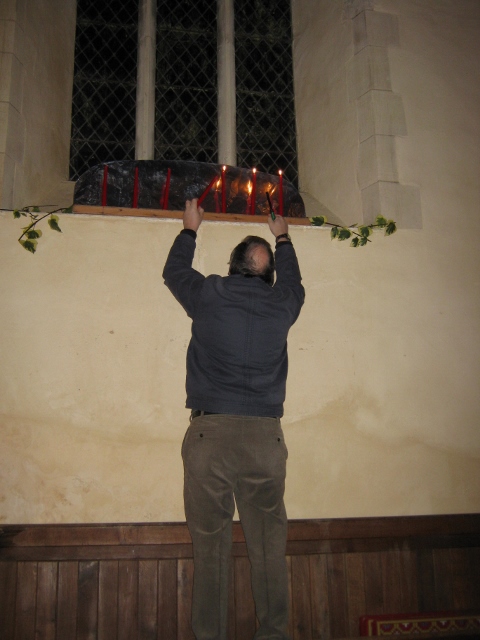
009R lighting candles (480x640)

Here is R lighting the candles on one of the window sills. R is 6′ 3.5″ tall and even by standing on the pew and stretching he can only just reach!

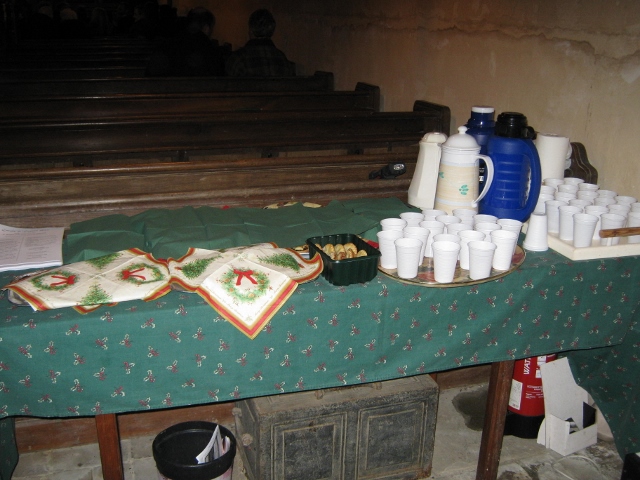
013Mince pies and mulled wine (640x480)

We set out the refreshments on the table at the back of the church and covered them for protection

011Flowers round font (640x480)

Floral display round the font

 This service is called Carols and Capers and is organised by our local folk groups and Morris dancers.  (A caper is a skip or jump and is used in Morris dancing).  Unfortunately, this year we didn’t have as many people in the church as in past years, probably because of a number of other events going on in the area.  I usually make my own mince pies to bring to the service but I had been much too busy and so I brought bought ones.

010Church filling up (640x480)

The congregation began to arrive

014Advent crown (640x480)

The second candle was lit on the Crown

The service went very well with a mixture of communal unaccompanied carol singing, dancing, solo singing, recitation and instrumental music.  Three of us from church were asked to do some readings from the Nativity Story and the Rector gave us a Bidding-prayer at the beginning, an amusing talk on ‘Christmas Words’ and sent us home with a Blessing.

015Gallimaufry (640x480)

Gallimaufry are a dance group who specialise in Medieval and Tudor dances

016Gallimaufry (640x480)

Gallimaufry


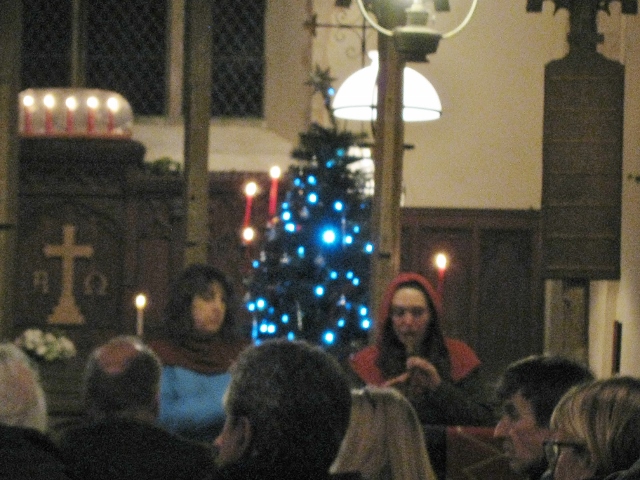
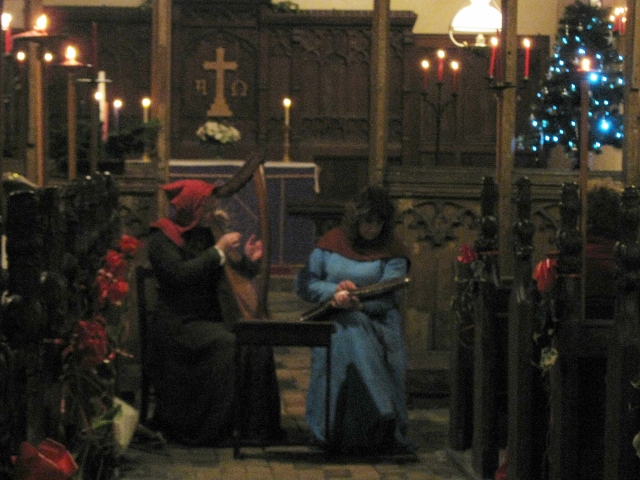
018Pearl in the Egg (640x480)

Pearl in the Egg are a couple of very talented young women who play period instruments. Here they are playing the music for Gallimaufry to dance to.

020Pearl in the Egg (640x480)

Pearl in the Egg then sang and played to us. This is my favourite part of the evening. According to their web-site, Pearl in the Egg (Perle in the Eghe) was the name of a real minstrel, a blind harpist who performed for King Edward I in 1306. He performed along with the Minstrel with the Bells, Matilda Makejoy and Reginald the Liar.

022Pearl in the Egg (640x480)

Pearl in the Egg describe themselves as Historical Musicians and they perform in many places including in churches, at fairs and at schools. They give talks and presentations and not only perform Medieval music but also Tudor, Victorian and 1940’s as well. Pearl in the Egg was a term used to describe cataracts in Medieval England.

023Rumfolk (640x480)

‘Rumfolk’ then sang to us

025Rumburgh Morris (640x480)

And Rumburgh Morris danced for us

A most enjoyable evening rounded of with the mince pies and mulled wine and lots of talk!  Our next carol Service is on Saturday 20th December.


Share this:

  • Share on X (Opens in new window) X
  • Share on Reddit (Opens in new window) Reddit
  • Share on Pinterest (Opens in new window) Pinterest
  • Share on Facebook (Opens in new window) Facebook
  • Email a link to a friend (Opens in new window) Email
  • Share on Tumblr (Opens in new window) Tumblr
  • Print (Opens in new window) Print
  • Share on LinkedIn (Opens in new window) LinkedIn
Like Loading...

Peak District Holiday 1st to 9th July. Day 5.

26 Wed Nov 2014

Posted by Clare Pooley in churches, Rural Diary

≈ 15 Comments

Tags

architecture, church of St Edward the Confessor, George Edmund Street, Greystones, Larner Sugden, Leek, Leek School of Embroidery, Nicholson Institute, Norman Shaw, oatcakes, ragged schools, River Churnet, silk mills, Staffordshire, stained glass, William Morris, William Sugden

092View down street (640x427)

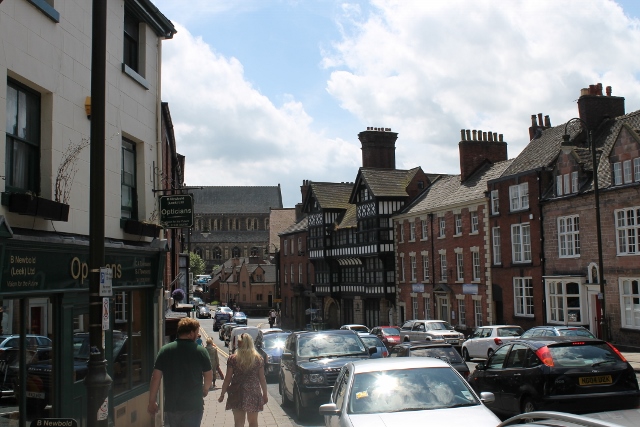
A view down one of the main streets in Leek looking towards the Roman Catholic church.

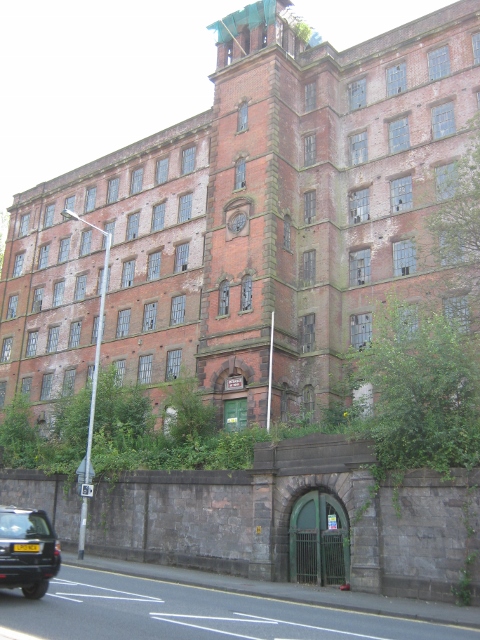
The nearest town to where we usually stay in the Staffordshire Peaks is Leek.  It is the principal town of the area and is known locally as ‘The Queen of the Moorlands’.  It is not a large town; it is built on a hill and is contained in a large bend in the River Churnet.  During the late 18th and early 19th centuries it changed from a quiet market town to a silk-weaving centre and a few large mills were built there.  This industry has completely gone now but some of the old mills remain.

069Abandoned mill (480x640)

An abandoned mill.

William Morris, the founder of the Arts and Crafts movement lived and worked in Leek from 1875 until 1878.  He studied the art of dyeing there and it was Leek which provided his firm with silk.

R and I woke on the Saturday morning to hear the rain still falling and so didn’t rush our breakfast.  Fortunately, by the time we had washed up after our meal the rain had stopped and the sun had come out.  We decided we would spend the rest of the day in Leek so after a mid-morning cup of coffee we drove into town and parked the car in a car-park next to playing fields.

The town is full of interesting architecture.

005Chequered bricks (640x480)

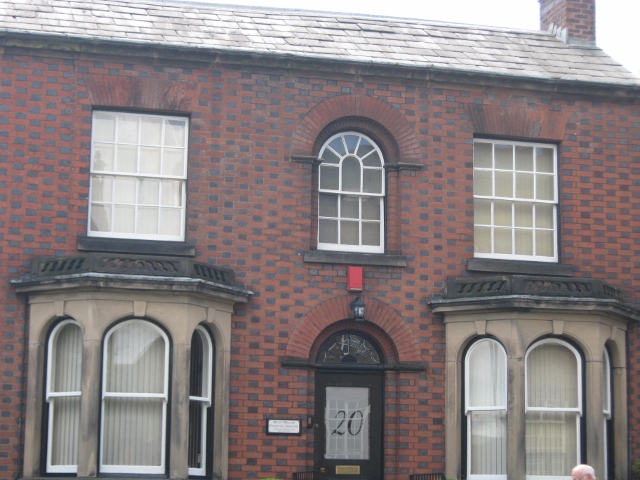
I love this house with its chequered brickwork and the arch over the door mirrored by the arch over the window above it.

004House in Leek with stained glass (2) (640x456)

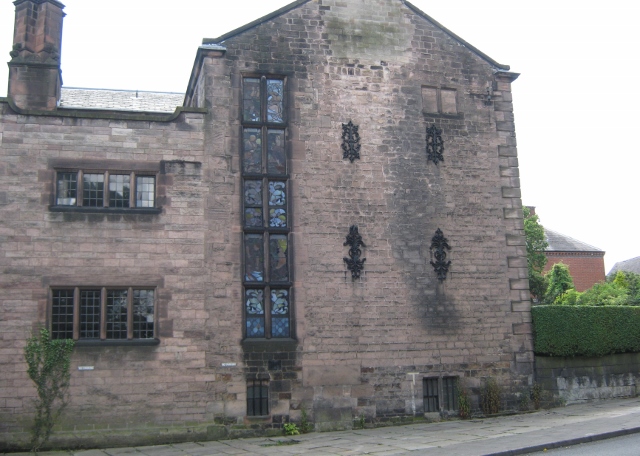
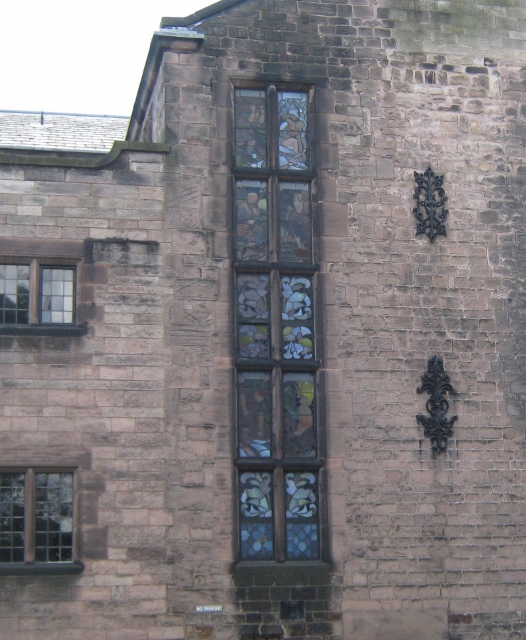
This house has a stained-glass window reaching from top to bottom.

004House in Leek with stained glass (526x640)

I wonder if this window is where the stairs are. How lovely to have jewel-coloured light shining into your home! The next time we go to Leek I must try to find out more about this house.

003Window with boats (640x480)

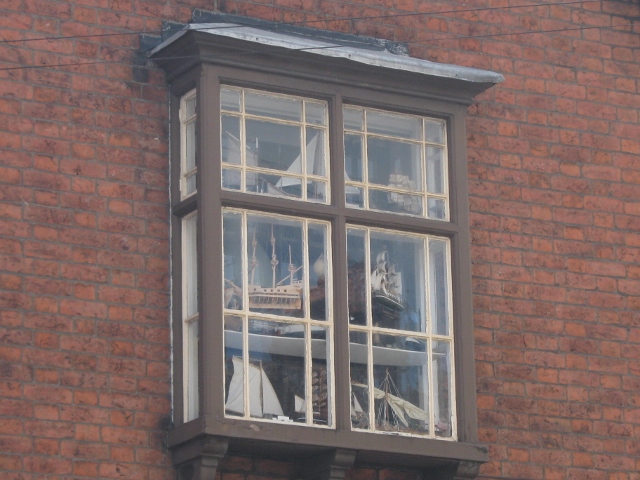
Someone has filled their bay window with model boats

We began to feel hungry and went to the White Hart Tea Room in order that we might sample their wonderful Staffordshire oatcakes.

006Staffordshire oatcakes (640x480)

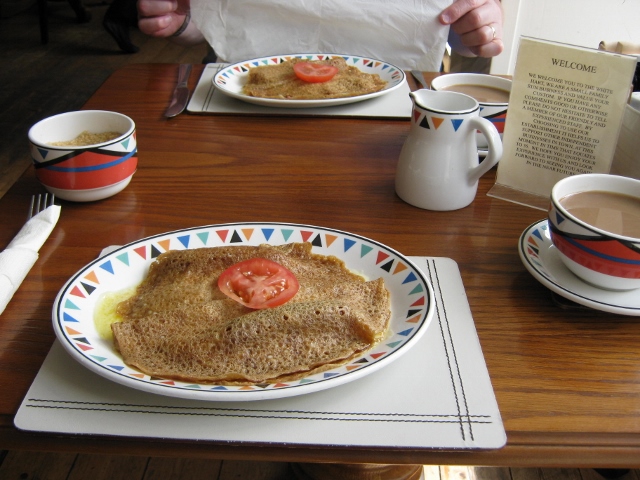
These oatcakes are made like pancakes but with oat-flour instead of wheat-flour. They are like the galettes you get in Brittany, France (which are made with buckwheat!)

Mine was filled with sausage and melted cheese and R’s had bacon and melted cheese.

Rested and refreshed, R and I continued to wander about the town.

008Church of St Edward the Confessor (640x480)

The church of St Edward the Confessor

There is an 8th Century Saxon cross in the churchyard and some of the stained glass in the church is by Morris and Co.  The church also has a wonderful collection of examples of the work of the Leek School of Embroidery that R and I were lucky enough to see a couple of years ago in an exhibition.  There were enormous altar frontals and embroidered panels as well as smaller pieces of work and all so beautifully done.  The church was extended in the 19th Century by the architect George Edmund Street.  William Morris was one of his apprentices.

Apparently, until the trees in the churchyard grew too tall, a phenomenon called a double sunset could be seen from this church at about the time of the summer solstice.  There is a hill called the Cloud and as the sun sets it can be seen above and to the side of the hill at the same time.

007Rectory (640x480)

The Rectory

010Spout Hall (480x640)

Spout Hall. A mock Tudor building constructed in 1873 and attributed to the architect Richard Norman Shaw. Look at the size of the chimney!  The gutters also need clearing!
009Kissing seat (640x477)

A kissing seat decorated with the Staffordshire Knot

014Cast iron railing (640x480)

An attractive iron railing

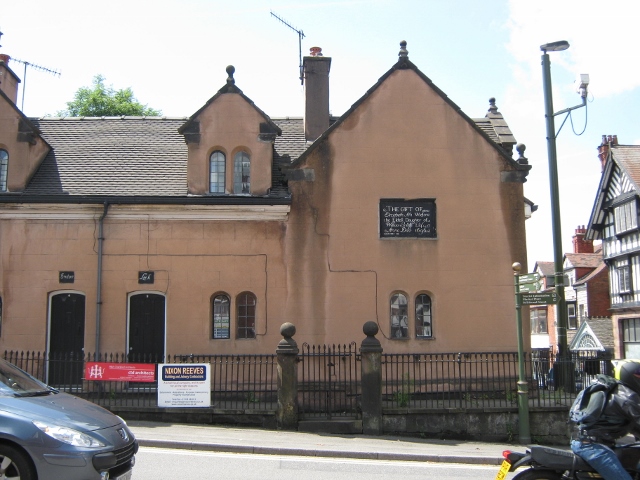
013Building as gift (640x480)

I believe these are almshouses.

The plaque on the wall states that the building was restored in 1911.  It also says ‘The gift of Elizabeth Ash widow, the eldest daughter of William Jolliffe, Esqr.  Anno Dom 1696’

I looked on the British History Online website and discovered that William Jolliffe acquired some land (part of an estate) in 1644.  When he died in 1669 the land passed to his daughter Elizabeth Ashe (the site spells her surname with an ‘e’), widow of Edward Ashe a London draper.  In 1677 she charged the land with rent to support the almshouses which she had founded at Leek.

I wonder what the tenant of the land thought about that!

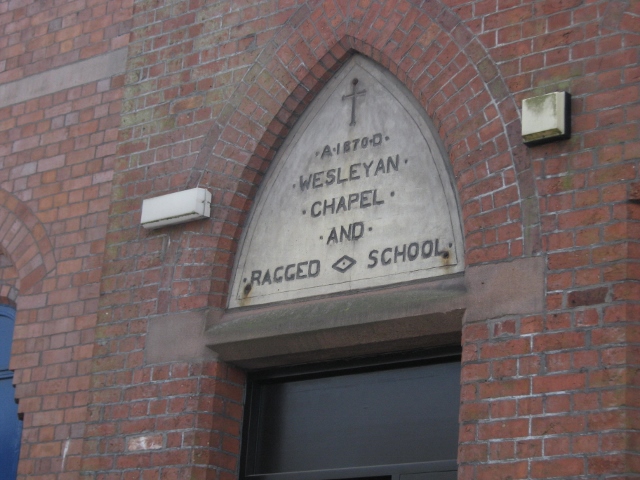
035Wesleyan Chapel and Ragged School (640x480)

As the sign over the door says, this is the Wesleyan Chapel and Ragged School.

Looking at the building it appeared to be disused and was a little worse for wear.

Ragged Schools ‘were charitable organisations dedicated to the free education of destitute children in 19th Century Britain.’  (Wikipedia)  Eventually these schools began opening at night as well to educate all comers, children and adults.  The novelist Charles Dickens began his association with Ragged Schools in 1843 when he visited one in London.  He was appalled by the conditions but wished to help them.  His experience inspired him to write ‘A Christmas Carol’.  He said, ‘They who are too ragged, wretched, filthy and forlorn to enter any other place: who could gain admission into no charity school, and who would be driven from any church door: are invited to come in here, and find some people not depraved, willing to teach them something and show them some sympathy.’

William Sugden the architect arrived in Leek in 1849 to work on the design of the Churnet Valley Railway.  His son Larner was born in 1850 and was apprenticed to his father in 1866.  Both men’s influence on the town was very great.  It was they who built the Methodist Chapel and Ragged School in 1870.  Larner’s masterpiece was the Nicholson Institute built in Queen Anne style in 1882.

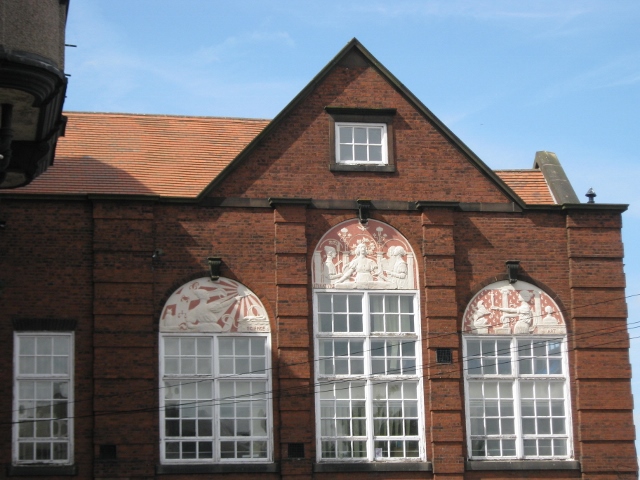
075B & L College (640x480)

This part of the building is now used by Buxton and Leek College.

078B & L College (479x640)

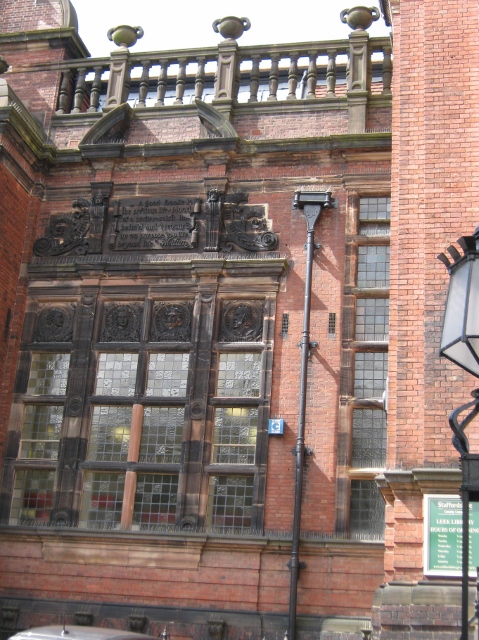
Nicholson Institute.  Now Leek Public Library and Gallery

078B & L College (2) (640x493)

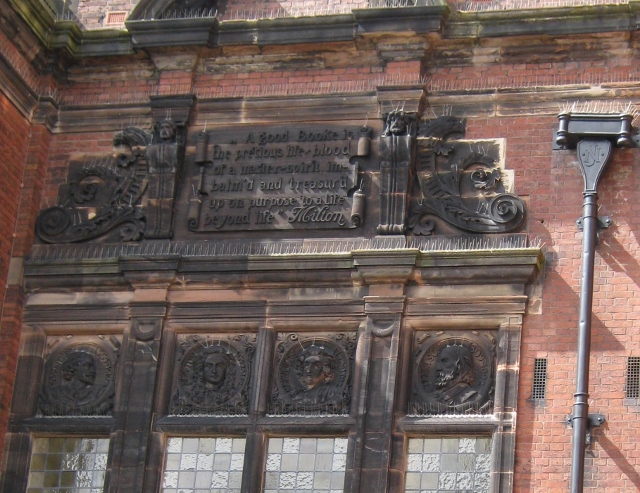
Larner incorporated busts of Shakespeare, Newton, Reynolds and Tennyson into the building, representing 400 years of artistic and scientific achievement from the 16th to 19th Centuries.

The quote from Milton says, ‘A good booke is the precious life-blood of a master-spirit imbalm’d and treasur’d up on purpose to a life beyond life.’

The Institute is tucked away behind a 17th Century building on the main road.  Any other architect of the time would have pulled the building down but apparently Larner had a real regard for old buildings and so the building was allowed to remain.

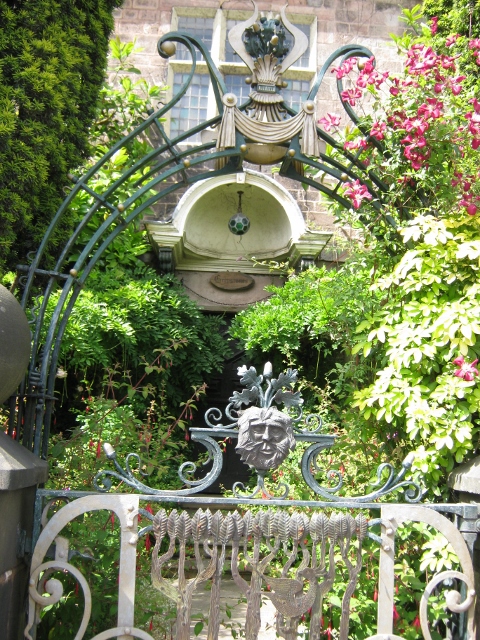
073Ornate gate (480x640)

And here it is. Or at least a part of it. There were so many trees and plants in the front garden that I couldn’t see much of the house.

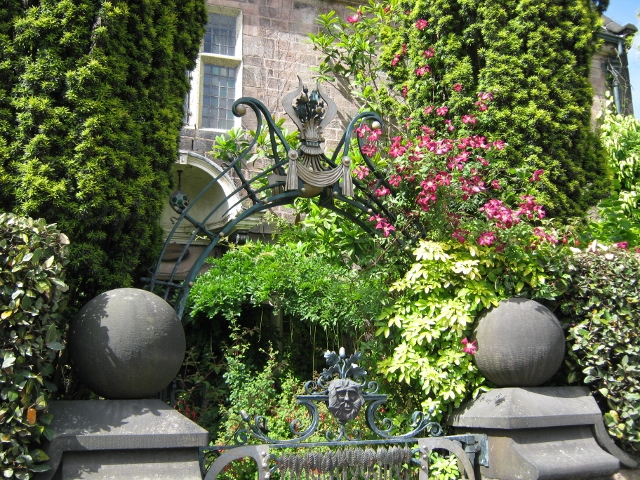
072Ornate gate (640x480)

The house is called ‘Greystones’ and until recently was being used as a tea-shop.

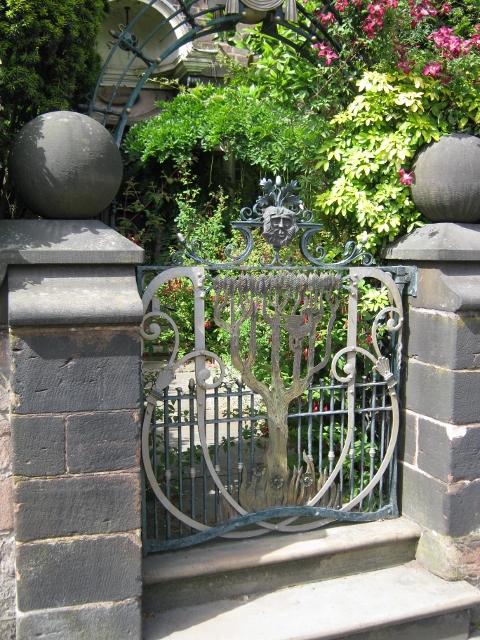
071Ornate gate 17thC house (480x640)

The gate is lovely!

Local rumour has it that William Morris founded the Society for the Protection of Ancient Buildings in 1877 as a result of his successful campaign to prevent the demolition of this building.  It was through the SPAB he came into contact with Larner Sugden who went on to publish some of Morris’ speeches and essays!

Share this:

  • Share on X (Opens in new window) X
  • Share on Reddit (Opens in new window) Reddit
  • Share on Pinterest (Opens in new window) Pinterest
  • Share on Facebook (Opens in new window) Facebook
  • Email a link to a friend (Opens in new window) Email
  • Share on Tumblr (Opens in new window) Tumblr
  • Print (Opens in new window) Print
  • Share on LinkedIn (Opens in new window) LinkedIn
Like Loading...
← Older posts
Newer posts →
Follow A Suffolk Lane on WordPress.com

Enter your email address to follow this blog and receive notifications of new posts by email.

Join 718 other subscribers.

Unknown's avatar

I talk about what it's like living in a quiet part of Suffolk. I am a wife, mother and daughter, a practising Christian and love the natural world that surrounds me. I enjoy my life - most of the time!

My Posts

Mar 2026
M T W T F S S
 1
2345678
9101112131415
16171819202122
23242526272829
3031  
« Feb    

Pages

  • About my Blog
  • GDPR (General Data Protection Regulations) and This Site
  • My Life in a Suffolk Lane

Archives

Blogs I Follow

Unknown's avatar
Unknown's avatar
Unknown's avatar
Unknown's avatar
Unknown's avatar
Unknown's avatar
Unknown's avatar
Unknown's avatar
Unknown's avatar
Unknown's avatar
Unknown's avatar
Unknown's avatar
Unknown's avatar
Unknown's avatar
Unknown's avatar
Unknown's avatar
Unknown's avatar
Unknown's avatar
Unknown's avatar

Posts I Like

  • Unknown's avatar
  • Unknown's avatar
  • Limentinus's avatar
  • DoF@theinfill's avatar
  • Unknown's avatar
  • Carolina Cuisine Network's avatar
  • Martha's avatar
  • Pilgrim's Pondering Ministry's avatar
  • peytonsview's avatar
  • sopantooth's avatar
  • Unknown's avatar
  • Unknown's avatar
  • Amin Academy's avatar
  • Unknown's avatar
  • Unknown's avatar
  • Stephen G. Hipperson's avatar
  • jonathonbhoyt's avatar
  • Unknown's avatar
  • wholelottarosie's avatar
  • Unknown's avatar
  • Unknown's avatar
  • Schnippelboy's avatar
  • John’s Postcards's avatar
  • Julian Summerhayes's avatar
  • Jack Ronald Cotner's avatar
  • Unknown's avatar
  • Unknown's avatar
  • Unknown's avatar
  • Unknown's avatar
  • Sarah curran's avatar
  • Unknown's avatar
  • sherijkennedyriverside's avatar
  • Secret Diary of A Country Vicar's Wife's avatar
  • Unknown's avatar
  • cindy knoke's avatar
  • Unknown's avatar
  • JAM's avatar
  • East of Elveden's avatar
  • Unknown's avatar
  • Matthew Paul's avatar
  • Unknown's avatar
  • Unknown's avatar
  • Unknown's avatar
  • Unknown's avatar
  • John Hric's avatar
  • Unknown's avatar
  • TravelingTortuga's avatar
  • mitchteemley's avatar
  • Unknown's avatar
  • Unknown's avatar

amphibians architecture art Arts and Crafts churches cooking Days out domestic animals family fish Folk Traditions Gardening Historic Buildings holidays Insects Landscaping literature music Norwich plants Rural Diary seashore theatre trees Uncategorized walking weather wild animals wild birds wild flowers

Tags

architecture autumn birds blackbird blackthorn Bungay butterfly church clouds common knapweed cow parsley crocus daffodils Diary dogwood family field maple flowers fungus garden gardening geese greylags ground-ivy Halesworth Hawthorn heather holiday Holly Holy Week horse chestnut Hoverfly insects ivy Lake District Lent lesser celandine lichen Lords and Ladies Mallard mallards Minsmere moorhen moss music Norwich Peak District pheasant plants pond ponds primrose primroses Rain rooks Rumburgh Rumburgh Church sheep Sheffield snow snowdrops Southwold spring Suffolk Suffolk Wildlife Trust sunset the Beck trees viburnum bodnantense walking weather wild cherry wild flowers winter-flowering honeysuckle witch-hazel

Meta

  • Create account
  • Log in
  • Entries feed
  • Comments feed
  • WordPress.com

Goodreads

Blog at WordPress.com.

Book Jotter

Reviews, news, features and all things books for passionate readers

Country Life Blog -

A blog about life in the country in the past and present

Matthew Paul: Poetry & Stuff

Poetry and what-not

Schnippelboy

Ein Tagebuch unserer Alltagsküche-Leicht zum Nachkochen

TAMARA JARE

Tamara Jare Contemporary Figurative Art – Bold Colors, Resilient Souls

A Taste of Freedom

Documenting a Dream

Country Ways

Rambling Journeys in Britain, Countryside Matters and campaigning for the Right to Roam

The Strawberry Post

Here to Entertain, Educate & Inspire!

a north east ohio garden

an ongoing experiment in the dirt, 35 plus years

naturechirp

Celebrating God's creatures, birds and plants...

Sophie Neville

Writer

Going Batty in Wales

Developing a more sustainable lifestyle in SW Wales

Our Lake District Escapades

Exploring the Lake District and beyond

Short Walks Long Paths

Wandering trails around the coast of Wales

The Biking Gardener

An English persons experience of living and gardening in Ireland

Nan's Farm

A Journal Of Everyday Life

Walk the Old Ways

Rambling Journeys in Britain with John Bainbridge. Fighting for the Right to Roam. Campaigning to Protect Our Countryside.

Writer Side UP!

Waking the Writer Side...and keeping it "Up!"

Meggie's Adventures

Travel, thank you notes and other stories

amusicalifeonplanetearth

Music and the Thoughts It Can Inspire

lovefoundation.co.uk

Traveling Tortuga

Simply Living Well

Pakenham Water Mill

Historic watermill in the beautiful Suffolk countryside

Take It Easy

Retired, not expired: words from the after(work)life. And music. Lots of music!

Secret Diary Of A Country Vicar's Wife

By Olive Oyl

thanksfortheadventureorg.wordpress.com/

The Beat Goes On

#TBGO

Frank Pleszak's Blogs

Twitter: @frankpleszak @PolishIICorps

John Bainbridge Writer

Indie Writer and Publisher

roughwighting

Life in a flash - a bi-weekly storytelling blog

Walking the Old Ways

Rambling in the British Countryside

CapKane

thoughts on social realities

SkyeEnt

Jottings from Skye

jodie richelle

embracing my inner homemaker

Skizzenbuch/Blog

Just another WordPress.com weblog

Have Bag, Will Travel

The Call of the Pen

Flash Fiction, Book Reviews, Devotionals and other things.

John's Postcards

Art in Nature

You dream, I photographe it !

Smile! You’re in Barnier World......

theinfill

the things that come to hand

Dr. Mary Ann Niemczura

Author of "A Past Worth Telling"

Provincial Woman

The Pink Wheelbarrow

Luanne Castle: Poetry and Other Words (and cats!)

Poetry, Other Words, and Cats

The Family Kalamazoo

A genealogical site devoted to the history of the DeKorn and Zuidweg families of Kalamazoo and the Mulder family of Caledonia

everythingchild

The Book Owl

Canberra's Green Spaces

Paul Harley Photographer

  • Subscribe Subscribed
    • A Suffolk Lane
    • Join 718 other subscribers.
    • Already have a WordPress.com account? Log in now.
    • A Suffolk Lane
    • Subscribe Subscribed
    • Sign up
    • Log in
    • Report this content
    • View site in Reader
    • Manage subscriptions
    • Collapse this bar
 

Loading Comments...
 

    Privacy & Cookies: This site uses cookies. By continuing to use this website, you agree to their use.
    To find out more, including how to control cookies, see here: Cookie Policy
    %d