As I have mentioned before, we didn’t manage to do as much walking and we didn’t visit as many places as usual last year and, for the same reasons, I also didn’t write very many posts. I have photos from the few excursions we did make and some pictures of interesting things I saw that I haven’t posted yet, so I thought I would put together some retrospective posts whenever I have spare time.
This is the first of a series of posts.
ooooOOoooo
Last spring, Elinor was asked to write about an exhibition she had visited. Unfortunately, she hadn’t visited one for some time so we looked about us to see if there was anything on locally that appealed to her. We were pleased to see that at the Castle Museum in Norwich there was an exhibition of doll’s houses – so that’s where we went.
The exhibits were difficult to photograph because of the lighting and the reflections from the glass cases. Here is a slideshow of photos of some of the houses.
This slideshow requires JavaScript.
Elinor stayed in the exhibition hall to sketch a few of the houses and make some notes while I wandered round the rest of the museum. I spent some time in the art gallery where they have a fine collection of paintings and drawings by local artists: Gainsborough, Constable, Crome, Munnings, Seago and others. I took no photographs there nor in the natural history section where there are a number of dioramas featuring lots of stuffed birds and animals mainly collected during the 19th century. I don’t like stuffed birds and animals.
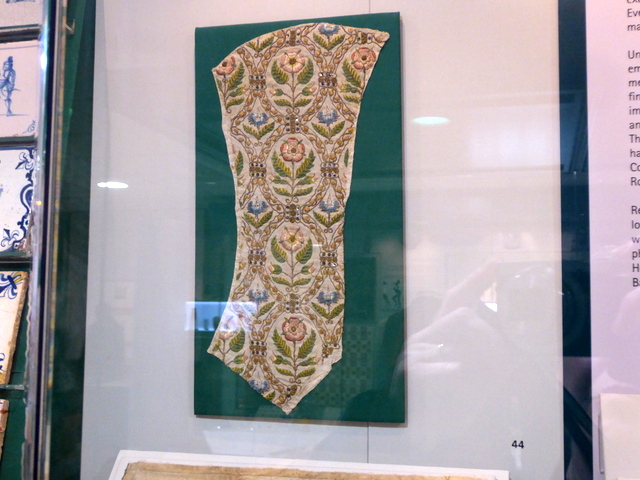
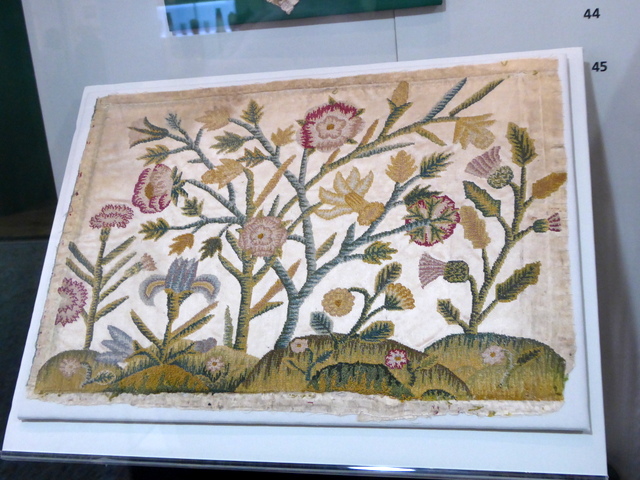
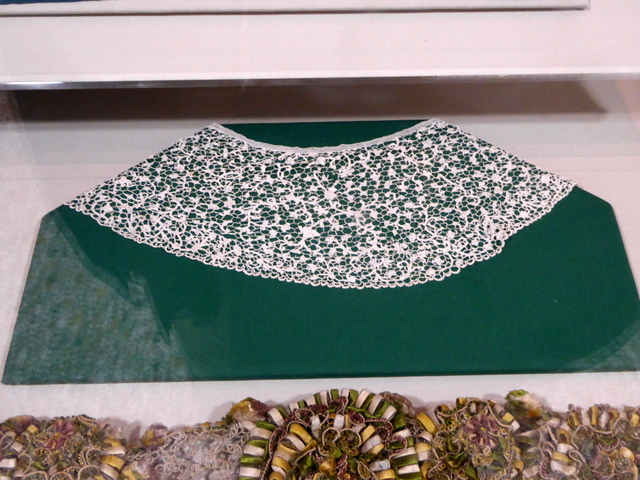
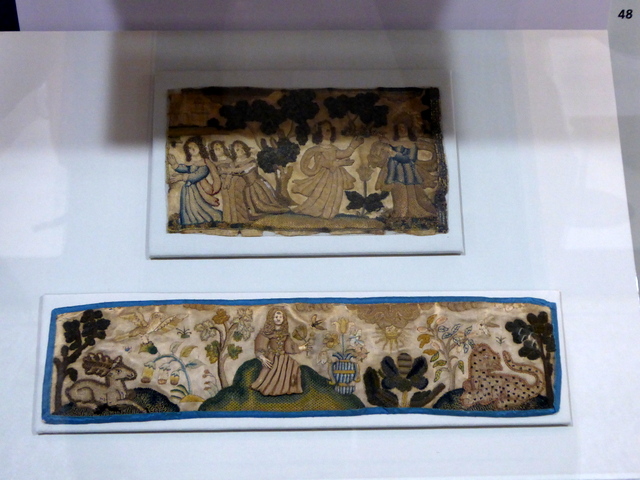
The museum has a collection of antique clothes and costumes which I enjoy seeing and also pieces of needlework and embroidery.
Here are some examples of Jacobean needlework and also a lovely lace collar.
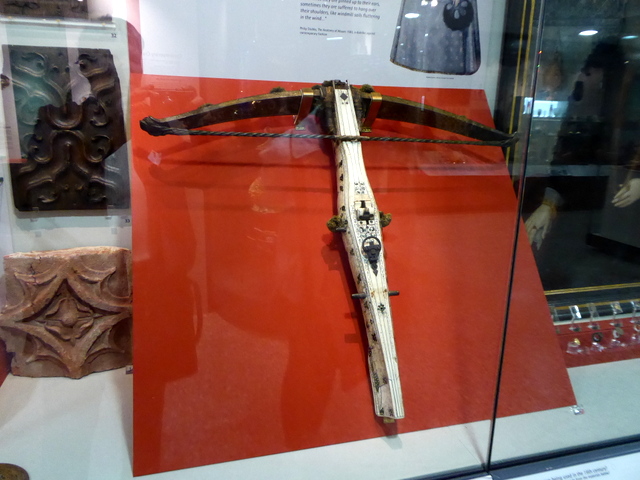
I took a photograph of a splendid crossbow.
The museum has a large collection of teapots. Here are some of them.
This slideshow requires JavaScript.
I wandered through the Boudica and the Romans gallery and took some photos of a few of the artifacts that have been discovered.
This slideshow requires JavaScript.
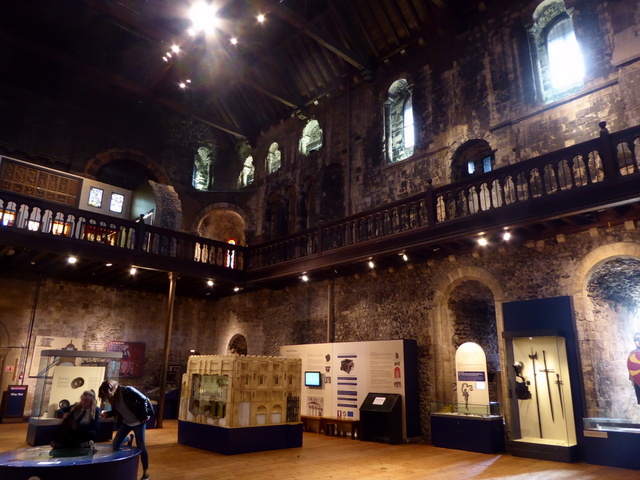
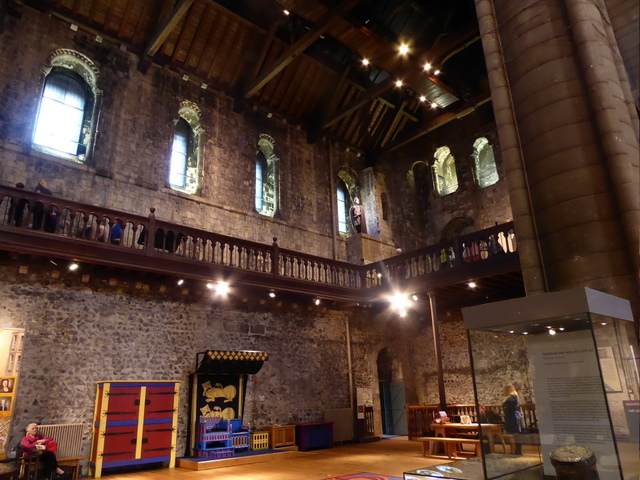
There are a few display cabinets in the large central area in the castle keep.
Castle keep
Castle keep
I like these examples of medieval stained glass. Top left shows winter pruning, top right is a feast, bottom left shows a gardener hurrying indoors out of a spring rain or hail shower, bottom right shows a man harvesting bunches of grapes.
I had to go back to meet Elinor then before I’d finished the whole tour of the museum. We returned a few weeks later with Richard so he could also see the exhibition and for Elinor to check on a few details. We all enjoyed the exhibition very much.
Elinor and I went to Framlingham three weeks ago. Richard had intended coming with us but he had a bad cough and cold and stayed at home instead.
The distance to Framlingham from home is about 17 miles and in ideal conditions would normally take about 40 minutes. However, with local road closures for repairs and other works, the long diversion we had to take meant it took us nearly an hour to get there. I checked the route after we got home on Googlemaps and it now provides information on how to travel to the required destination by public transport. I was amused to discover that it would have taken us 4 hours and 5 minutes to get to Framlingham by using three different buses, walking some distance and only if we had travelled on a Wednesday!
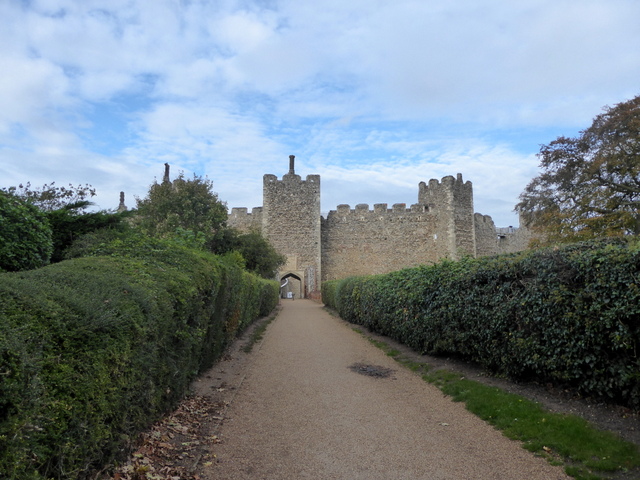
The approach to Framlingham castle
We eventually found somewhere to park in the town centre, though there is a car park at the castle, and walked to the castle. We hadn’t visited it for many years, not since Elinor was very small and she had no recollection of the place at all. The castle is looked after by English Heritage and they have recently been working on expensive improvements to the wall walk, the exhibitions and the museum and in providing a large café. Disabled access has been improved too. While all the repairs were underway a chute was installed from the top of the wall walk down to the inner court to entertain visitors. The chute is still in place but we didn’t avail ourselves of it!
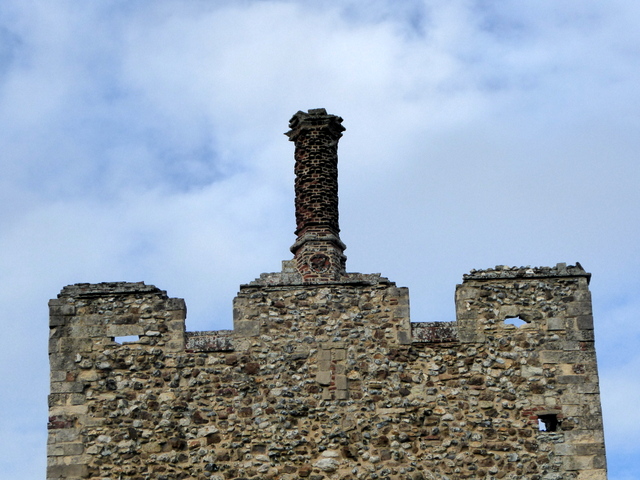
A Tudor brick chimney on the top of the gatehouse. Most of the chimneys at Framlingham are purely ornamental and were added as a sign of wealth.
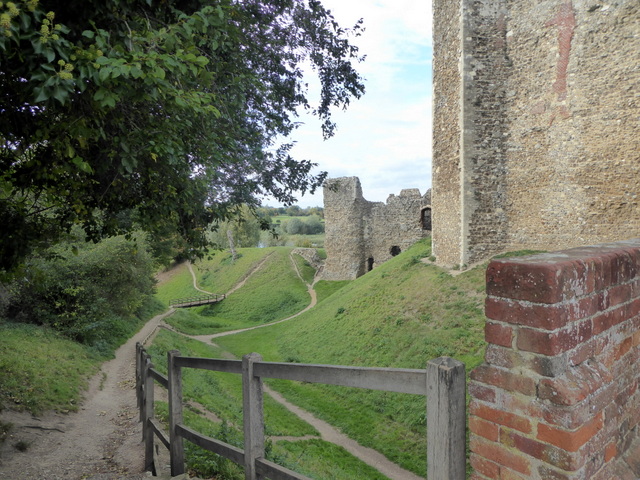
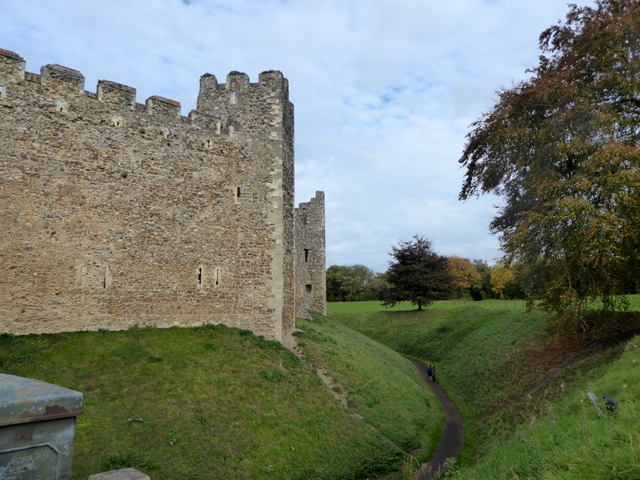
The castle has a deep, steep-sided ditch around it which was always a dry ditch. This was designed to prevent tunnelling under the walls and made breaching the walls almost impossible.
The inner ditch and curtain wall. Do you see the people walking at the bottom of the ditch? This castle is enormous!
Skip this next bit unless you have the time to read some historical background!
Roger Bigod I was formally granted the manor of Framlingham in 1101 by King Henry I even though he had been living there since shortly after the Norman Conquest. The Bigods, who were very powerful and rich barons were also made Earls of Norfolk. Roger Bigod II built the castle that we see today and he and his son were the first two of the list of barons who forced King John to accept the Magna Carta in 1215. The Bigods were constantly at odds with their king and were a law unto themselves. Eventually, the expense of numerous building projects and constant quarrels with Edward I produced such enormous debts that Roger Bigod IV was forced to make the king his heir and at his death all his lands were given to the king.
Edward II gave Framlingham to his half-brother, Thomas Brotherton who left the estate to his two daughters. His elder daughter, Margaret was created Duchess of Norfolk in 1397 – the first Englishwoman to be a duchess in her own right. Her grandson and heir, Thomas Mowbray was created First Duke of Norfolk, also in 1397 and Framlingham remained with the Mowbrays until the death of John Mowbray VII in 1476.
The castle then passed to the Howard family who were descendants of the Mowbrays. The Howards were skillful politicians and also brave soldiers and included John, First Howard Duke of Norfolk who died at the battle of Bosworth aged 60 while commanding Richard III’s troops. His son, Thomas was imprisoned in the Tower of London but was released and gradually recovered the Howard estates. At the age of 70 he led the English forces to victory against King James IV of Scotland at Flodden Field. In gratitude for this victory Henry VIII gave him back the title of Duke of Norfolk. His son, also Thomas, the 3rd Duke of Norfolk was the uncle of two of Henry VIII’s wives – Anne Boleyn and Catherine Howard. He not only schemed to get them to court and to marry the king but also betrayed them both for his own ends. Eventually his scheming and the arrogance of his son Henry, a soldier and gifted poet, proved his downfall. They were both sentenced to death, Henry Howard was executed in January 1547 but his father survived through the good fortune of King Henry’s own death taking place a day before the execution date. The Norfolk title and lands were surrendered to the Crown.
In her father’s will, Mary Tudor was granted most of the Howard lands in East Anglia and received Framlingham in 1552. On his death bed in 1553, Mary’s brother, King Edward VI was persuaded to disinherit both his half-sisters on the plea that they were illegitimate. He and his mentor, the Duke of Northumberland were both staunch Protestants and were fearful that the country would revert back to being Roman Catholic when he died. He named his successor to the throne as Lady Jane Grey, Northumberland’s 17-year-old daughter-in-law. Mary heard that the Duke of Northumberland planned to capture her so she fled to Framlingham and rallied her troops about her. Not only the local landed gentry came to her support but also crowds of the poor country people. Support for Northumberland and Lady Jane Grey dwindled and eventually Northumberland surrendered and Mary was crowned queen. Queen Mary released the elderly Thomas Howard and gave him back his lands and title.
The castle was passed to Queen Elizabeth after the 4th Duke of Norfolk was executed and she used it as a prison, housing mainly Catholics. James I returned the castle to the Howard family in 1603 but by then it was in a sorry state of repair. It was sold to Sir Robert Hitcham, a rich lawyer and politician in 1635 who died the following year leaving it to his old college at Cambridge. He asked that all the castle not built of stone be pulled down and a poorhouse built. The first poorhouse built in the castle grounds was the Red House. It was soon found inadequate but a bigger and better one wasn’t built until 1729.
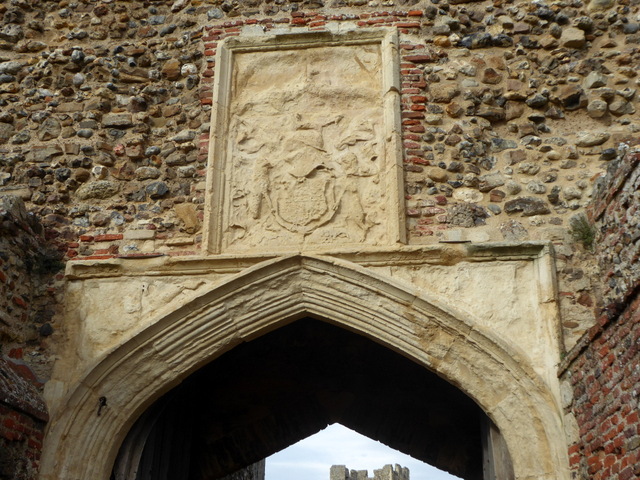
The gatehouse was rebuilt at the beginning of the C16th. This is the coat of arms of the Howard family, much weathered.
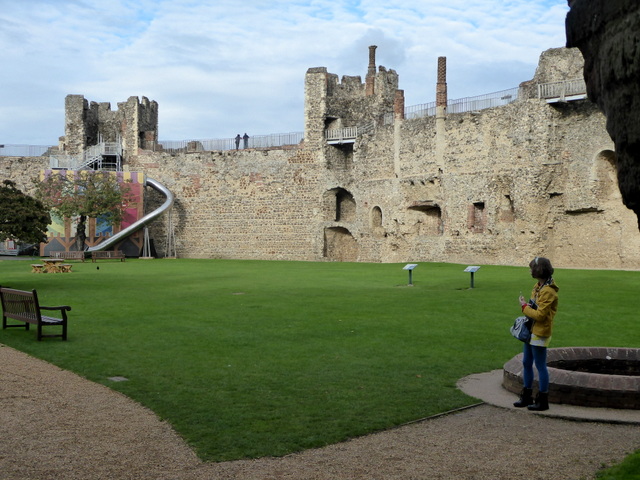
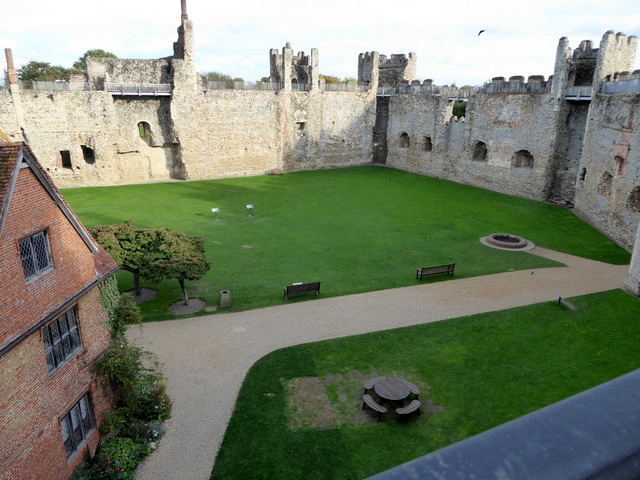
This was our first view of the inside of the curtain wall. You can see the chute on the left of the photo. Elinor stands next to the well.
The buildings in the inner court were originally built out from the curtain wall and you can see window recesses and fireplaces in the curtain wall in the photo above.
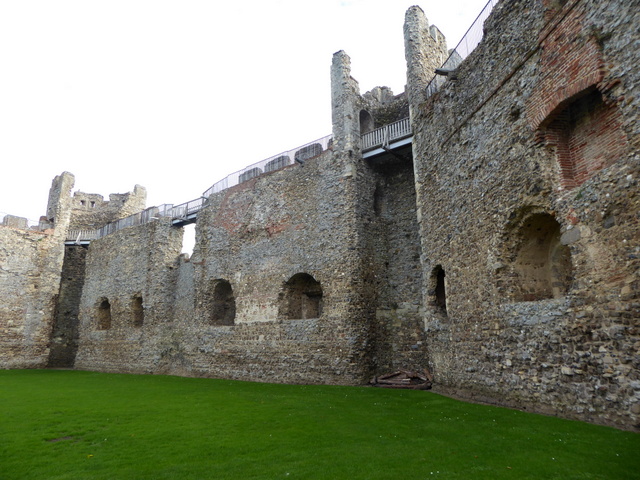
Part of the inside of the curtain wall
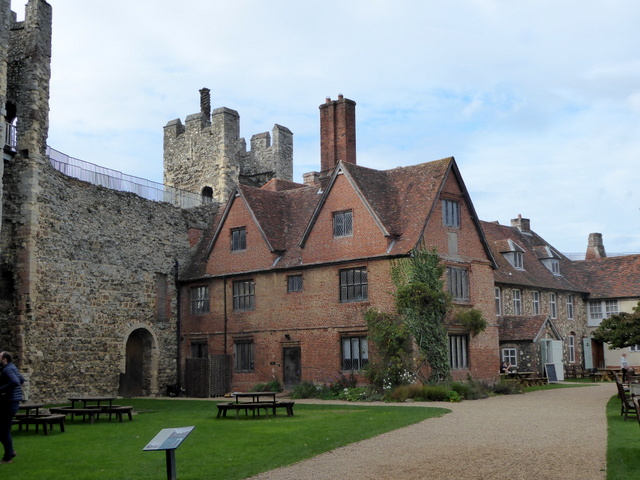
The Red House, built in 1660 and now containing private accommodation and beyond it, the Poorhouse built in 1729 on the site of the Great Hall.
The site of the kitchen, which was always kept well away from other buildings as it was a fire risk.
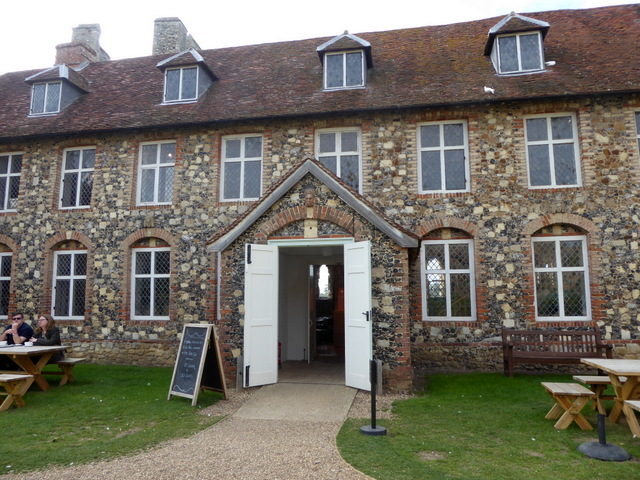
The old Poorhouse, now the café, museum and exhibition room.
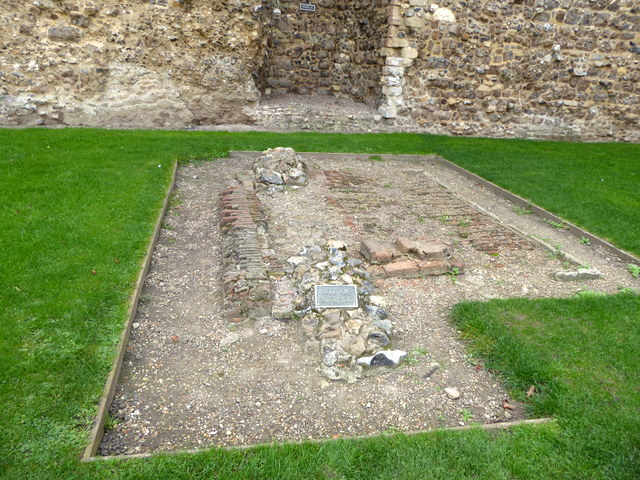
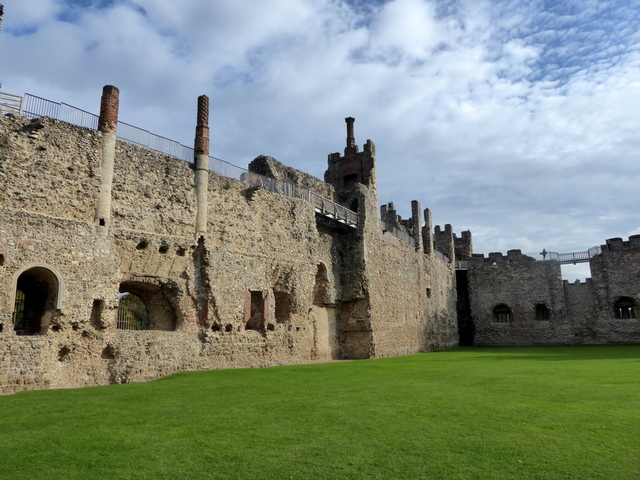
Another view of the inside of the curtain wall showing the traces of the chamber block.
From left to right – the first arch is a 12th century stone window that was later opened up as a doorway. The next wider opening is a Tudor window and above it the three small holes in a row are impressions left by the rafters of the mid-12th century building which was encased in the curtain wall. The floor joists can be seen above them. The stone chimneys are 12th century and were extended in Tudor brick. These two chimneys are the earliest known surviving cylindrical chimneys in England. Two more smaller openings in the wall are followed by the remains of a tower under which was the chapel, the east window of which can be seen below the walkway.
Four of the five stone heads that survive from the medieval buildings. They have been re-set into the facade of the Poorhouse.
Elinor and I went into the Poor House building from where we were able to climb up to the wall walk.
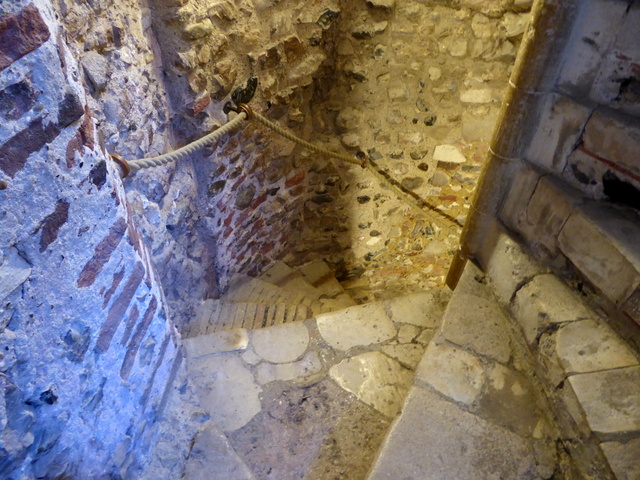
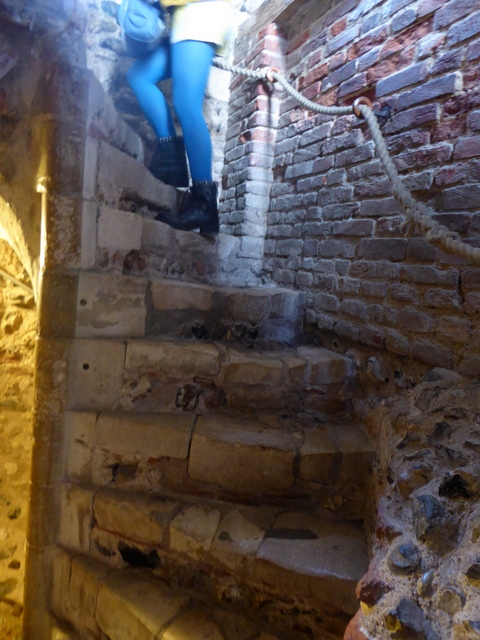
The stairs to the wall walk are in a tower which is part of the curtain wall. This is a photo looking down the stairs.
Looking up the stairs as Elinor climbs up ahead of me.
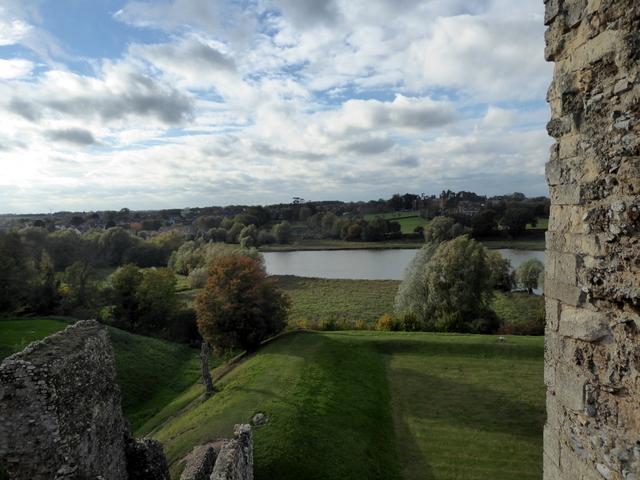
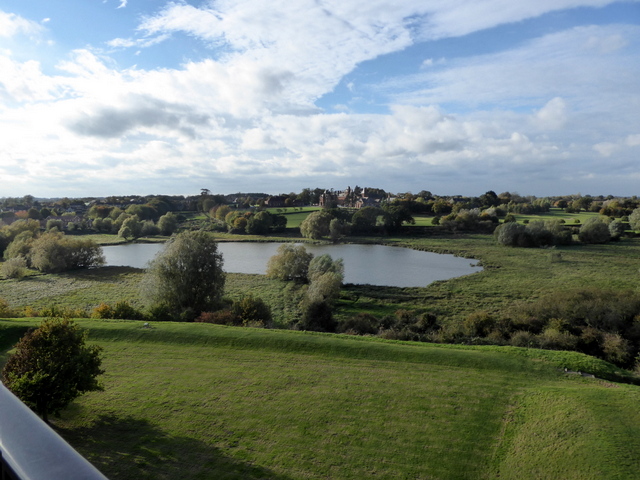
Looking towards Framlingham Mere from the wall walk
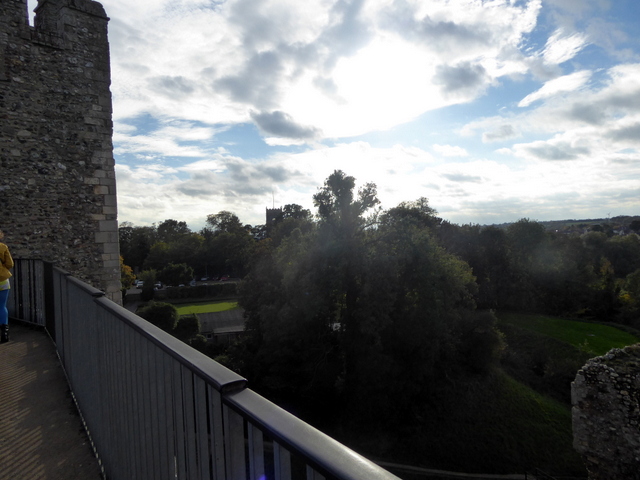
Looking towards the town. The church tower is in the centre of the photo.
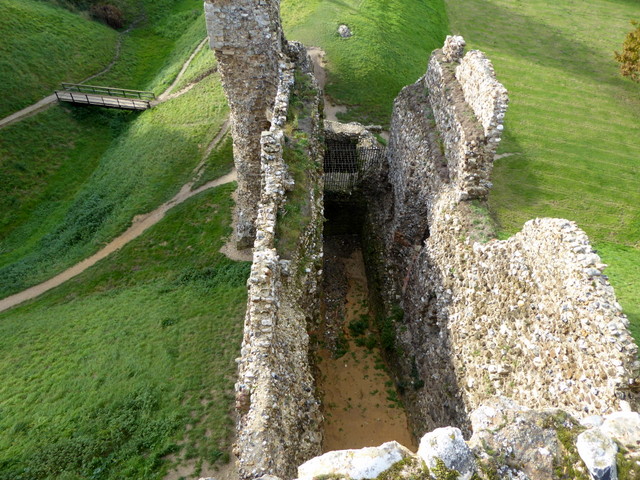
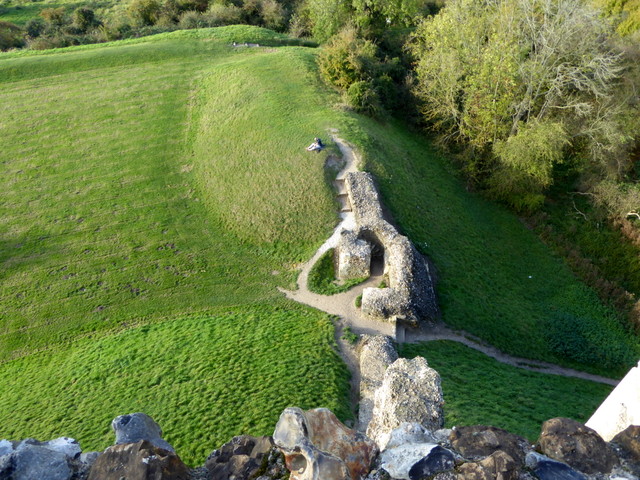
Looking down into the inner ditch.
The remains of the western tower which protected the castle from attack from the west. Also known as the Prison Tower.
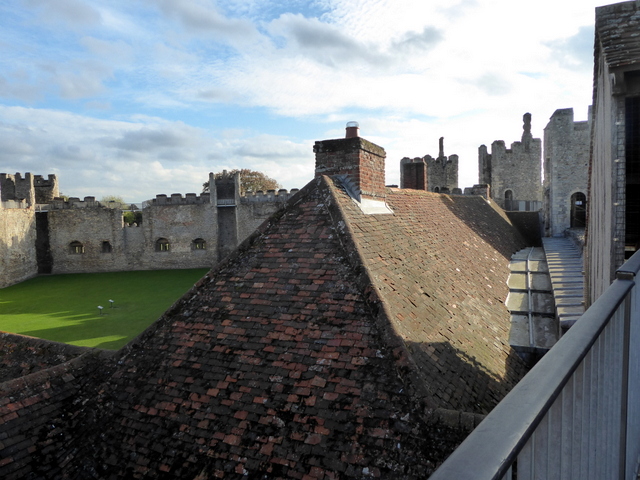
Looking down into the Inner Court.
Here is a slideshow of a few views from the wall walk.
This slideshow requires JavaScript.
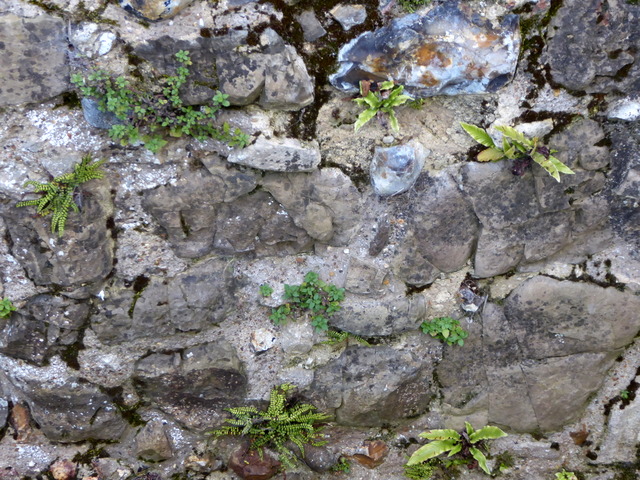
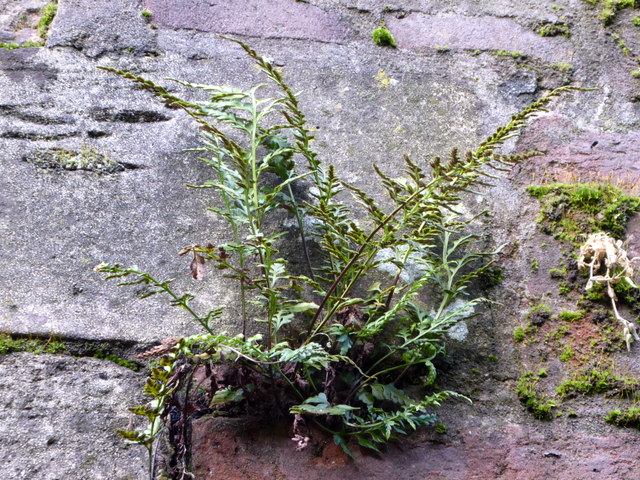
Hart’s-tongue Fern (Phyllitis scolopendrium ), Maidenhair Spleenwort (Asplenium trichomanes ) and other plants growing in the castle wall.
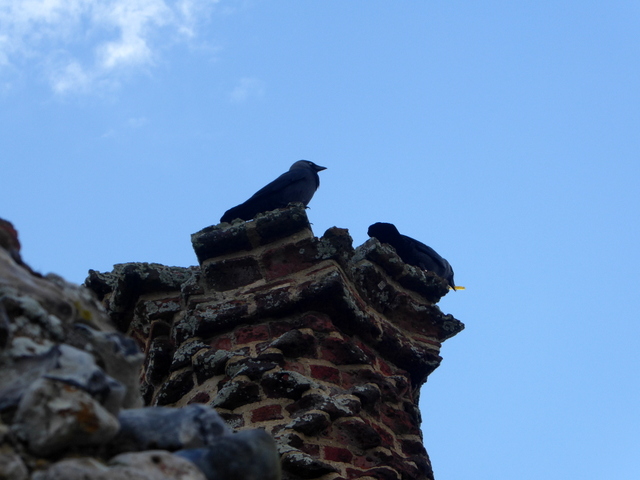
Jackdaws (Corvus monedula ) were still nesting in the chimneys of the castle.
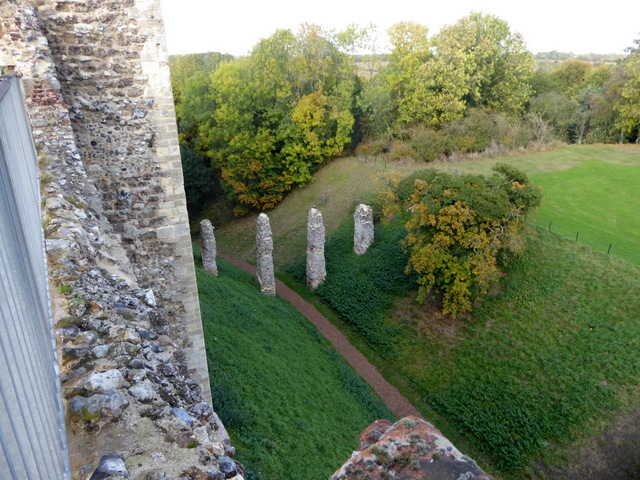
The white pillars are the remains of a Tudor bridge.
Just outside the curtain wall and built at the same time, is the Lower Court. It was walled on all sides and was defended by two towers. It may have originally housed granaries, barns or stables.
Framlingham Mere and beyond it, behind the trees is Framlingham College.
The roof of the Poor House
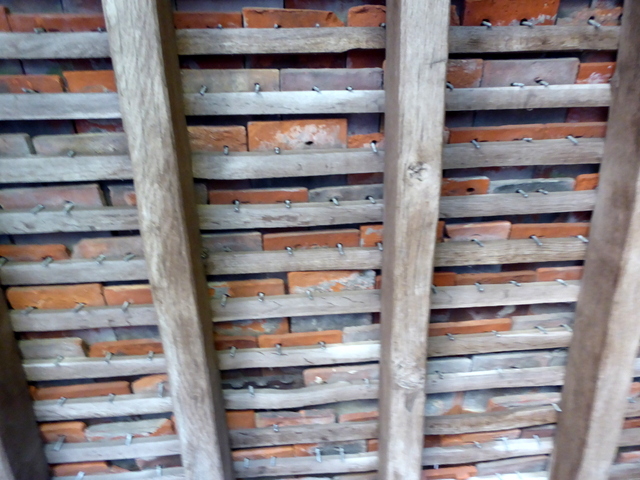
The underside of the roof . You see how the slates are attached to the rafters.
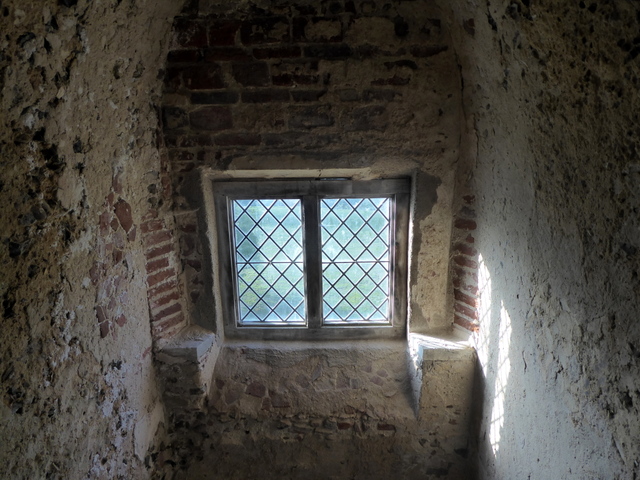
One of the windows in the Poor House
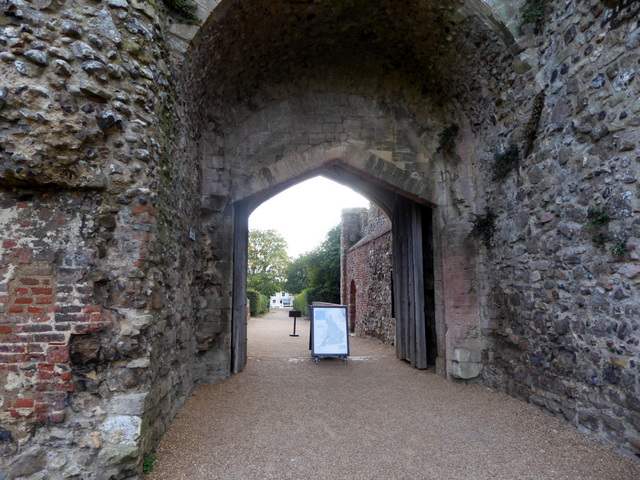
The Gatehouse as we left the castle
We enjoyed our short visit to the castle and went next to the church which I will talk about in another post.
The singer Ed Sheeran, who grew up here, has brought many more visitors to the town than it had before. Here is his recent song, ‘Castle on the Hill’ which talks about the time he lived in the town. The young people acting in the video are members of Framlingham College.
It is over a month since I last wrote a diary post. We haven’t done very much in that time but the days are getting longer and there are signs of spring in the garden and hedgerows.
Witch hazel
Witch hazel
Witch hazel
ooOOoo
The central elements on our old toaster had stopped working so we have bought ourselves a new toaster and this new one manages to toast both sides of a slice of bread at the same time! It has a ‘bagel button’ (though as I have never eaten a bagel I think I would prefer to call it a ‘teacake button’) which toasts one side and warms the other. We can now re-live the old toaster experience, except in reverse.
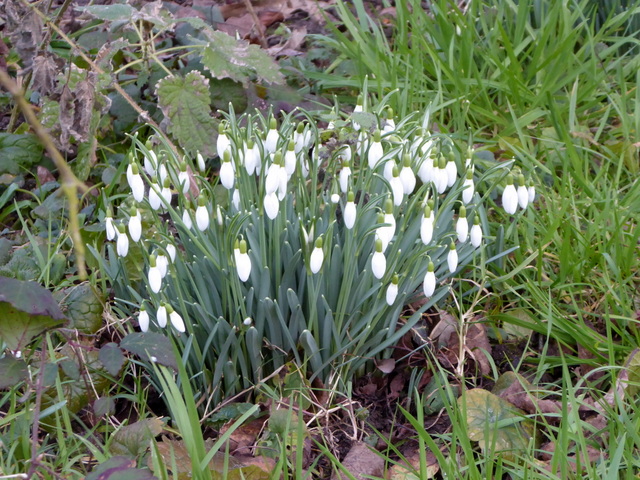
Snowdrops in bud
ooOOoo
Another excitement has been the emptying and repair of the septic tank. Only those of you who do not have mains sewage can truly relate to this. The tank was well overdue for emptying and we knew it needed repairing a year ago but we have been let down by our usual contractor and have had to find someone new. The new contractor arrived and did what he had to do and was efficient and professional. An added bonus, as far as we were concerned, was the wind direction on the day.
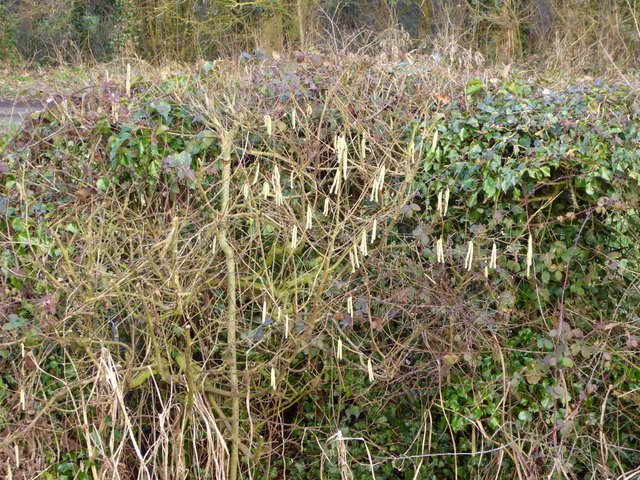
Hazel catkins in the hedge
ooOOoo
We have decided to have all our internal doors replaced and a carpenter has visited and priced up the job for us. He will be doing the work over three days next week. Richard will then have to spend quite a lot of time painting the doors, as well as all the skirting boards and the banisters. We hope to redecorate the hall, stairs and landing and get a new carpet some time in the next few months.
I’m not sure how many hazel nuts we will have on this tree this year. The female flowers have appeared before the male catkins have matured.
ooOOoo
At the very end of January we had a morning prayer service at our church of St Michael and St Felix at Rumburgh. The day before the service Richard and I called in at the church to make sure everything was tidy and to set the heating to come on well before the service. It was a cold day but inside the church was even colder than out in the open!
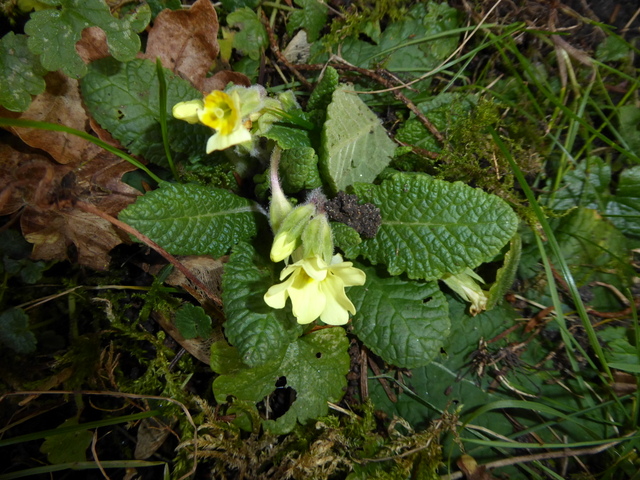
I found the first rather bedraggled primroses of the year in a sheltered spot in the churchyard.
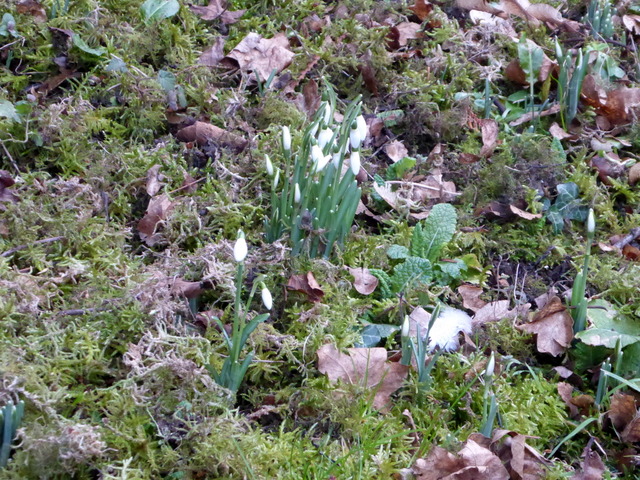
I also found my first snowdrops of the year
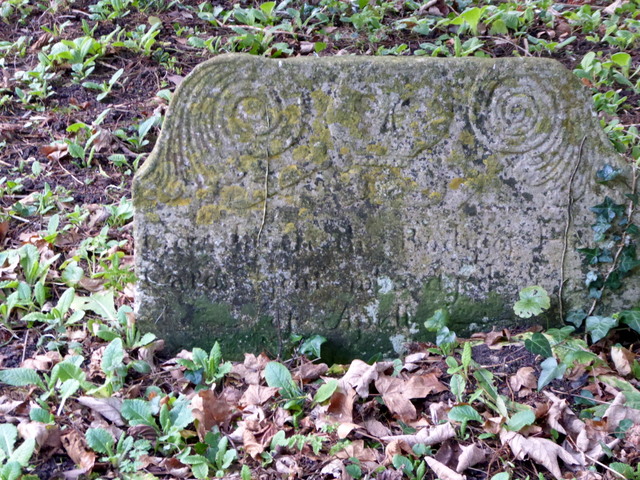
Rumburgh gravestone
This gravestone has a skull engraved on it. Richard was asked to see if it was still in the graveyard recently as there had been a report that it might have gone missing.
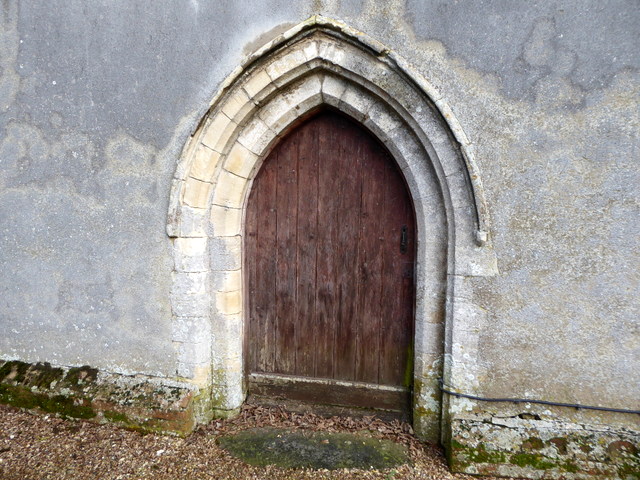
The west door, which isn’t used anymore.
The west window
Work will start on March the 20th on the new tower screen in the church. We have been saving for years and years to get the work done and at last it is about to happen. Once the screen is in place the tower will be shut off from the body of the church and we hope it might be less draughty and warmer.
Black Spleenwort (Asplenium adiantum-nigrum) growing in the mortar on the wall of the church
ooOOoo
Elinor has now left the City College but we hope this is only a temporary thing. As I mentioned in my last diary post she wants to enrol on a one year Art and Design course for older students and has therefore filled out the application form. We have been notified that the college has received the form and I hope we will hear that Elinor has an interview soon. At the interview she will be expected to hand in a review of an exhibition she has been to see recently and with that in mind, we went to the Sainsbury Centre in Norwich and viewed an exhibition of 20th century Japanese photography. Photography was not allowed in the exhibition hall but there is a large collection of world art on display in the main gallery, most of the exhibits donated by Lord and Lady Sainsbury.
Below are my favourites from the main gallery.
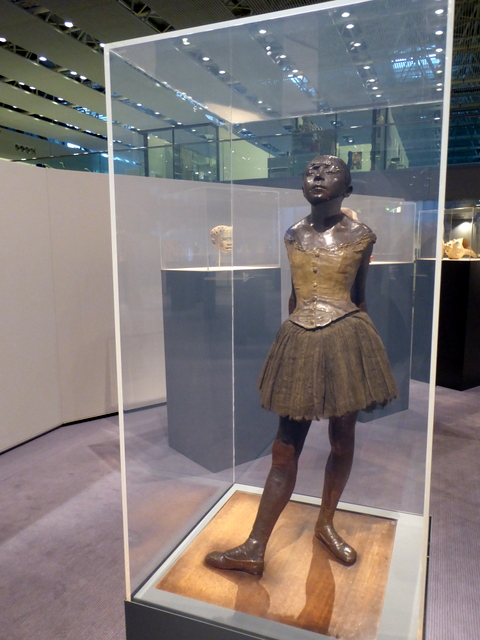
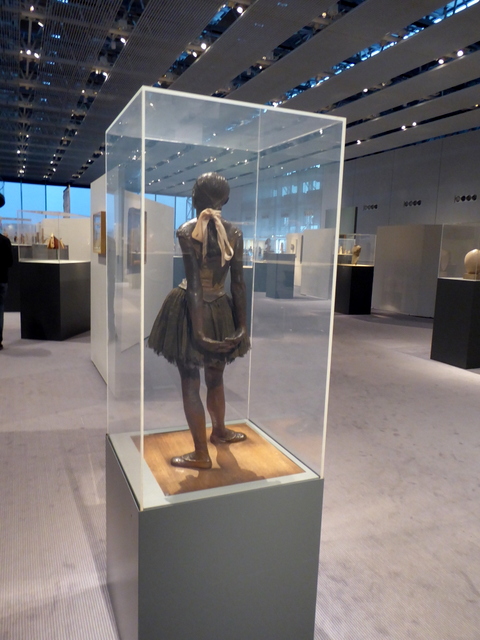
Edgar Degas – Little Dancer Aged Fourteen
Edgar Degas – Little Dancer Aged Fourteen
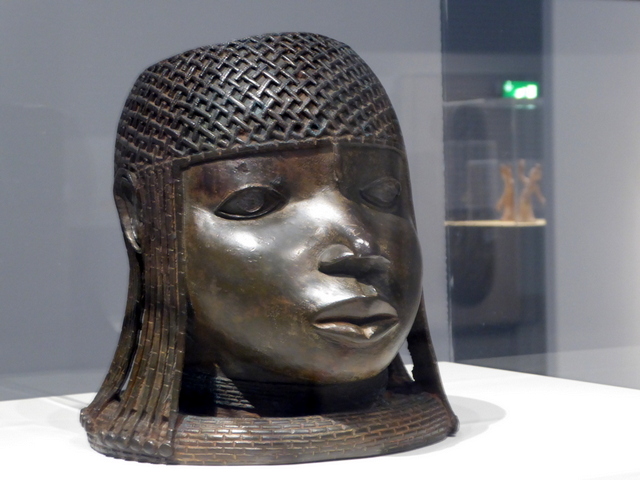
A beautiful Benin bronze – the Head of an Oba; early 16th century
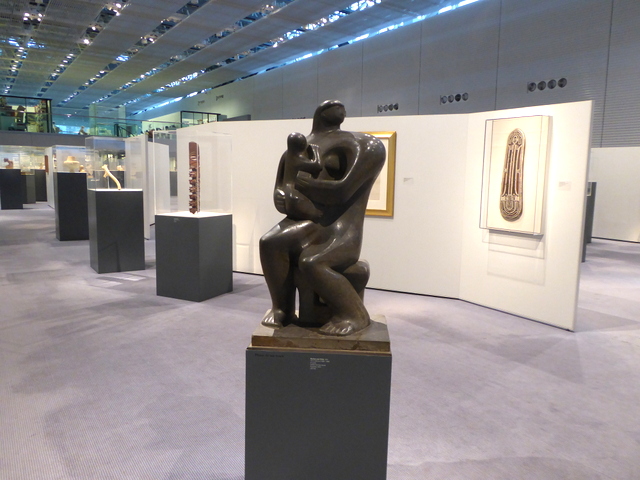
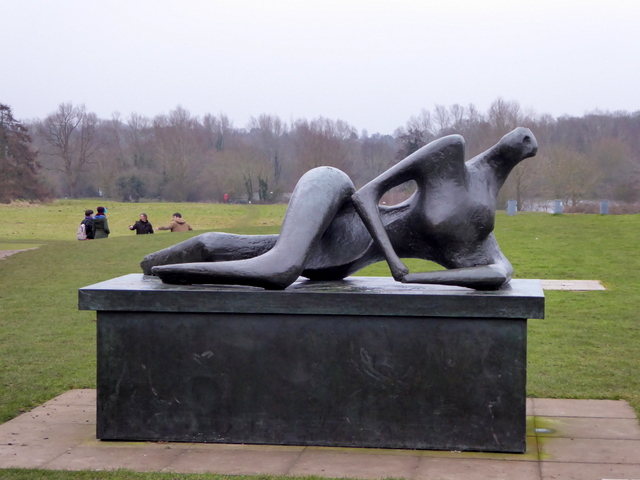
Henry Moore – Mother and Child
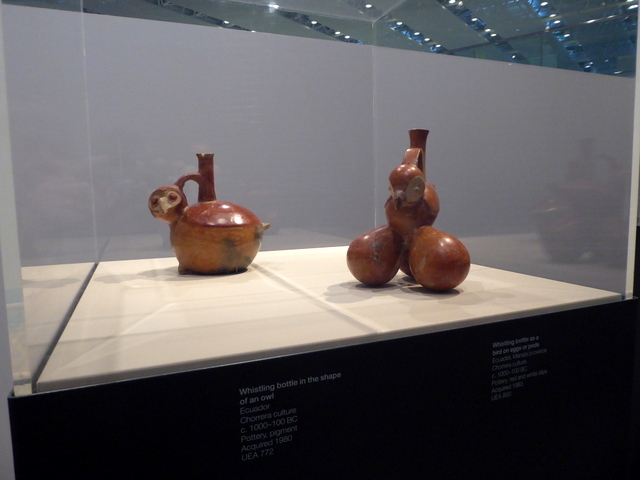
Whistling bottles from Equador – one in the shape of an owl and the other is a bird sitting on eggs or pods. Both 1000 – 100 BC
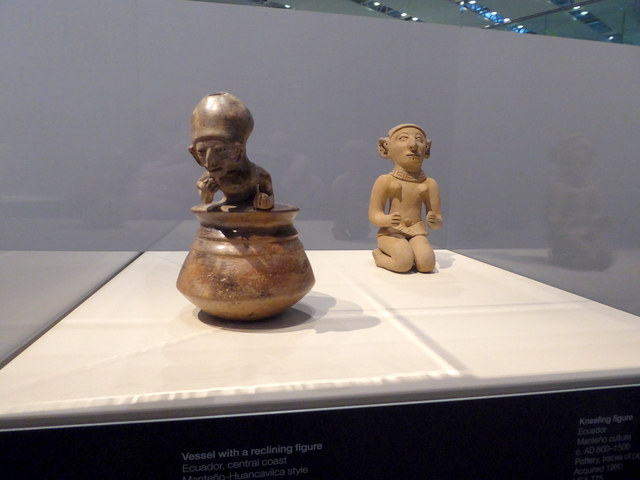
Another couple of exhibits from Equador
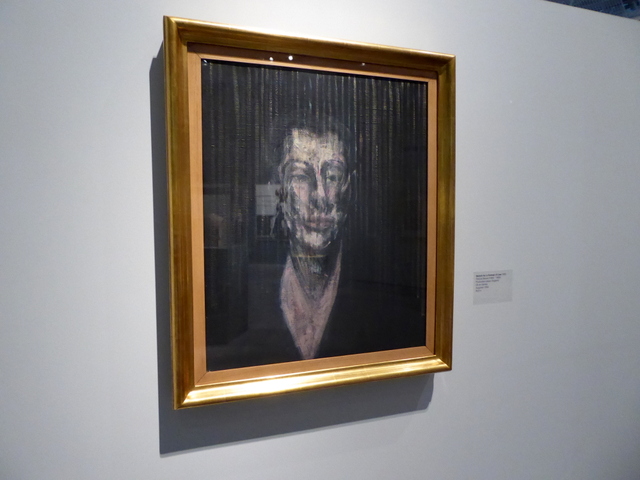
Sketch for a Portrait of Lisa by Francis Bacon
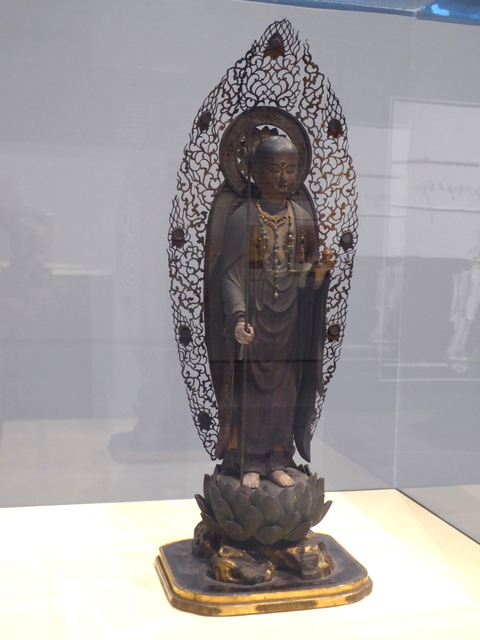
Standing Jizo Bosatsu – Japan (1185-1333)
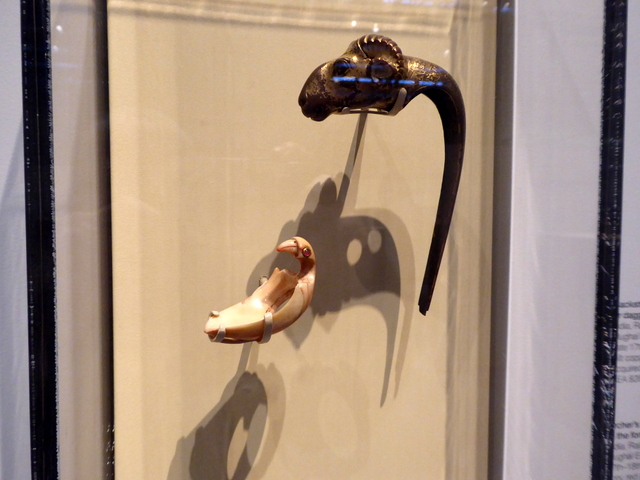
The top exhibit with the ram’s head is a backstrap from a sword or dagger hilt – India late 17th century The lower exhibit is an archer’s thumb-ring in the form of a bird – India 17th – 18th century
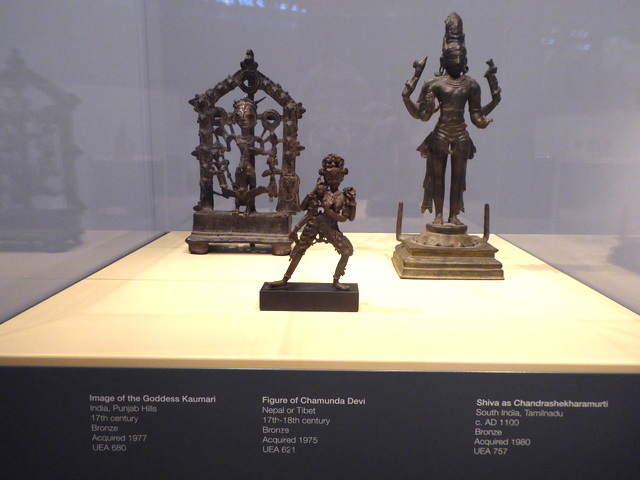
Left rear – Image of the Goddess Kaumari, India 17th century. Right rear – Shiva as Chandrashekharamurti, South India c. AD 1100. Front centre – Figure of Chamunda Devi, Nepal/Tibet 17th/18th century
Walking Hippopotamus – Egypt c. 1880 BC
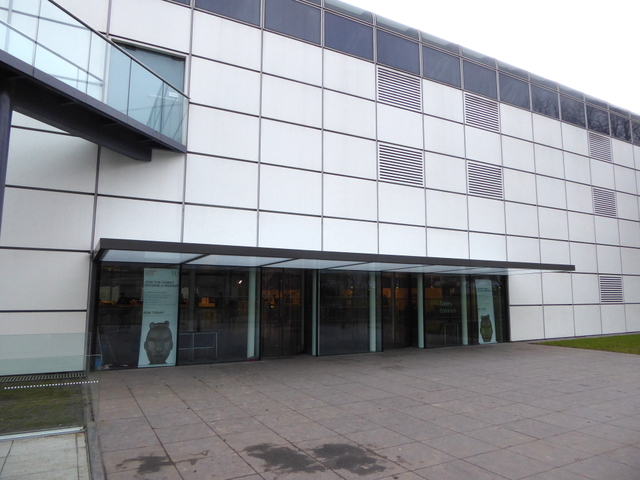
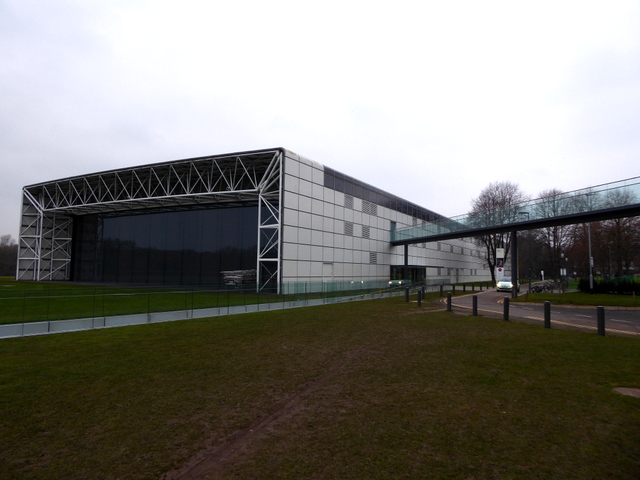
The Sainsbury Centre. One of the first major buildings designed by Sir Norman Foster, it was completed in 1978.
It is a steel clad building with one face almost entirely glazed.
By the late 80’s the collection had grown so much that Foster was asked to design an extension. He decided to build underground and this is one of the entrances to it.
The new basement has a curved glass frontage that emerges from the slope underneath the original building overlooking the man-made lake. This new wing can only be seen from the lake but as it was very muddy there and beginning to go dark on a very gloomy day, I was unable to photograph it.
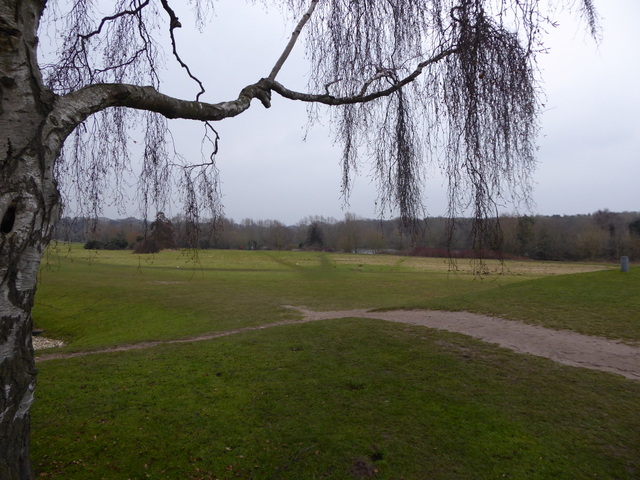
The University of East Anglia’s grounds looking towards the lake
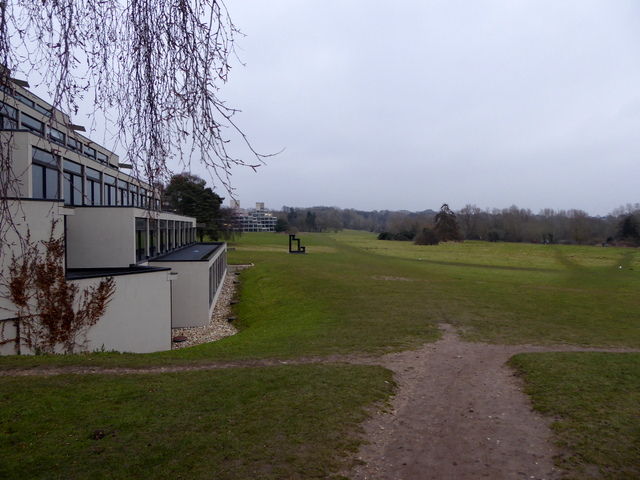
Part of the university. There are many items of sculpture to be seen here.
Another Henry Moore sculpture
The University has an excellent creative writing department and many well known writers have studied here. Tracy Chevalier; Kazuo Ishiguro; Ian McEwan; Rose Tremain – to name but a few.
At the beginning of September, I visited Redgrave and Lopham Fen with my friend Heather whom I hadn’t seen for over a year. It was a very muggy, clammy day so not ideal for walking any distance.
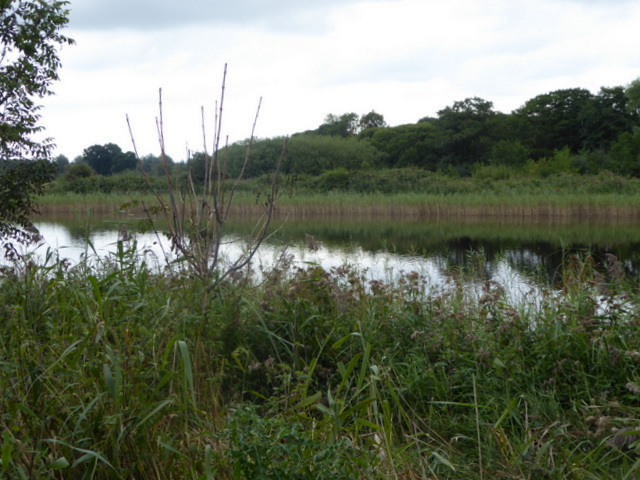
Redgrave and Lopham Fen – one of the many large ponds.
The sedge and reeds were very tall so we didn’t manage to see much open water and the pathways across the fen were quite narrow and enclosed at times. We got very hot and sticky and our feet were black with the peaty soil we walked on. However, we saw a few interesting plants and we managed to catch up with all our news!
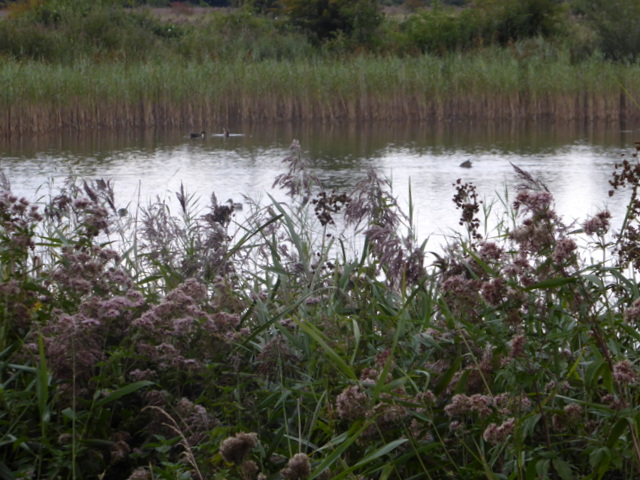
Water at Redgrave and Lopham Fen
Redgrave and Lopham Fen is situated on the border between Suffolk and Norfolk and is owned and maintained by the Suffolk Wildlife Trust. It is where the River Waveney and the Little Ouse River have their beginning. It is the largest remaining area of river valley fen in England. Its diverse habitat make it a very important site; saw sedge beds, open water, heathland, scrub and woodland can all be found here.
It is one of only three sites in the UK where the Fen Raft Spider can be found, though we didn’t manage to see it on our walk. Nineteen species of dragonfly, twenty-seven species of butterfly, twenty-six species of mammal, four species of amphibian, four species of reptile and ninety-six species of bird can be seen here. The beginning of September isn’t a great time of year to go looking for wildlife but we were pleased with what we did manage to see. It is a place I would like to return to one day.
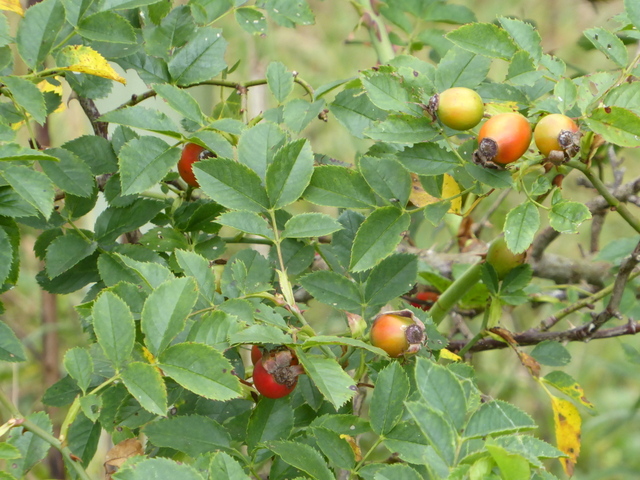
Hips of the Dog Rose (Rosa canina)
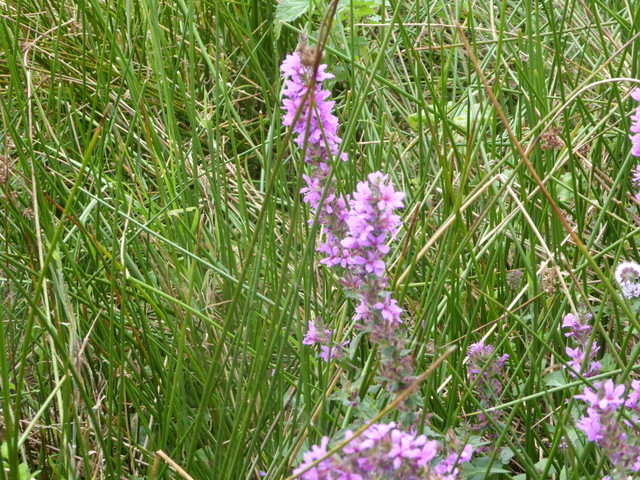
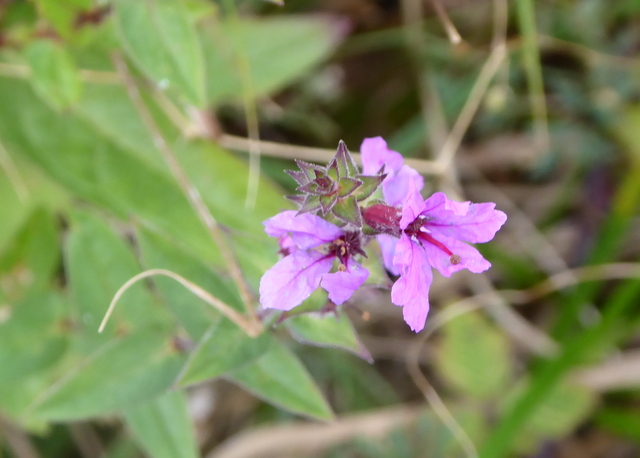
Purple Loosestrife (Lythrum salicaria)
Surprisingly for a plant so widespread, this was the first time I had seen this flower since I was a little girl.
Purple Loosestrife
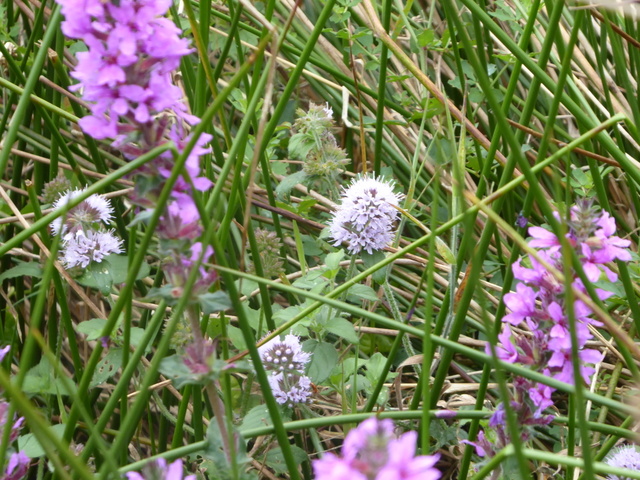
Purple Loosestrife and Water Mint (Mentha aquatica)
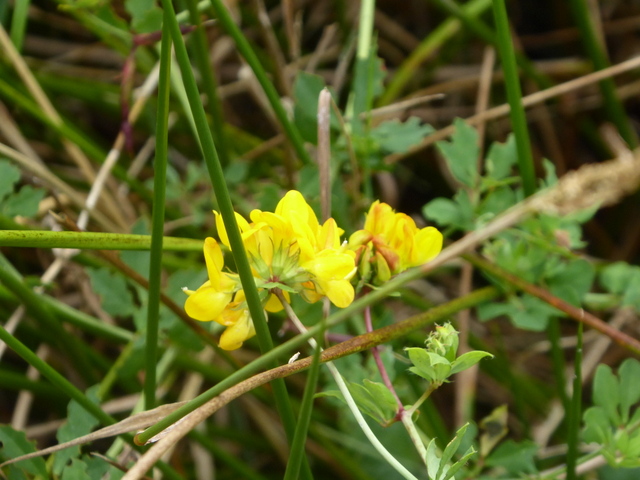
Greater Bird’s-foot Trefoil (Lotus pendunculatus)
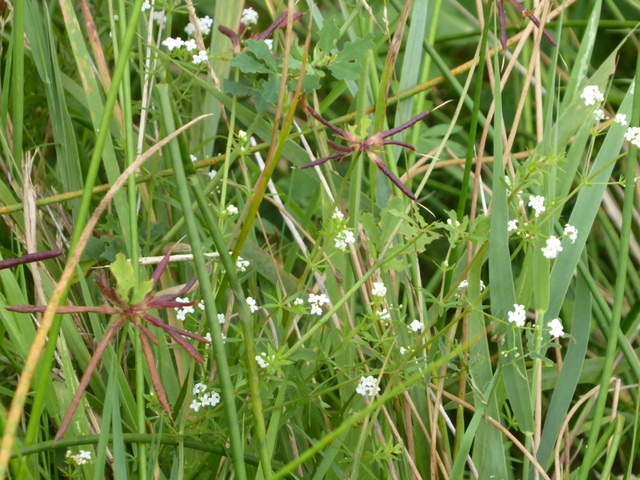
Bird’s-foot Trefoil seedheads with Fen Bedstraw (Galium uliginosum)
These seedheads really do look a bit like birds feet!
Bulrush and Common Reed
Bulrush and Common Reed
Bulrush (Typha latifolia) is also known as Great Reedmace. Common Reed (Phragmites australis) stands in this country are a priority habitat because of their importance for wildlife as food and shelter.
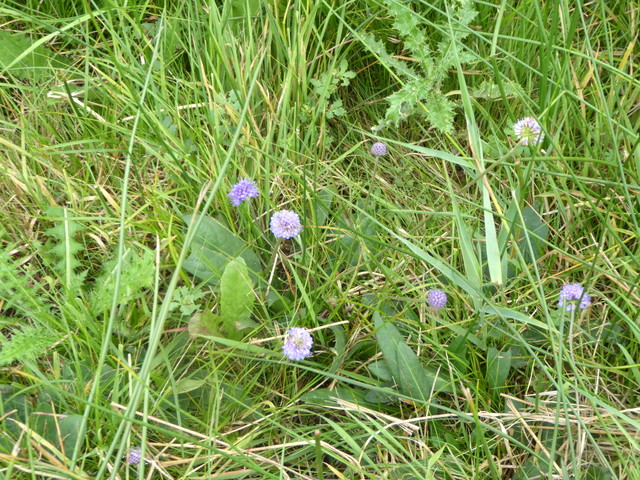
Devil’s-bit Scabious (Succisa pratensis)
According to legend, the Devil was so angry with this plant because it was successful at curing all sorts of ailments that he bit off part of the root. The plant may have a short root but it still has curative powers! Nicholas Culpeper says the boiled root is good for snake-bite, swollen throats, wounds and the plague.
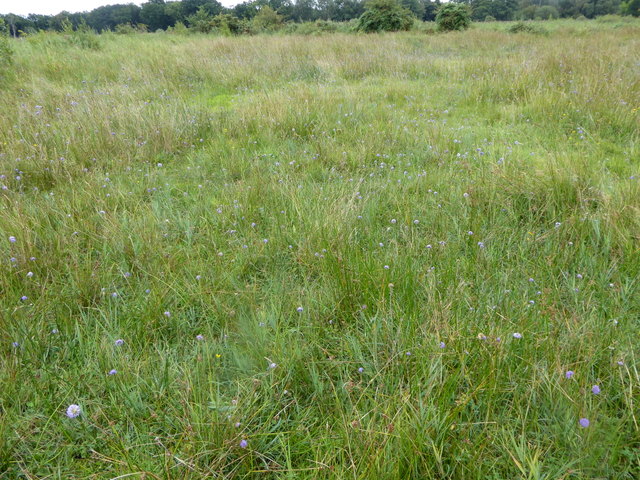
A meadow full of Devil’s-bit Scabious
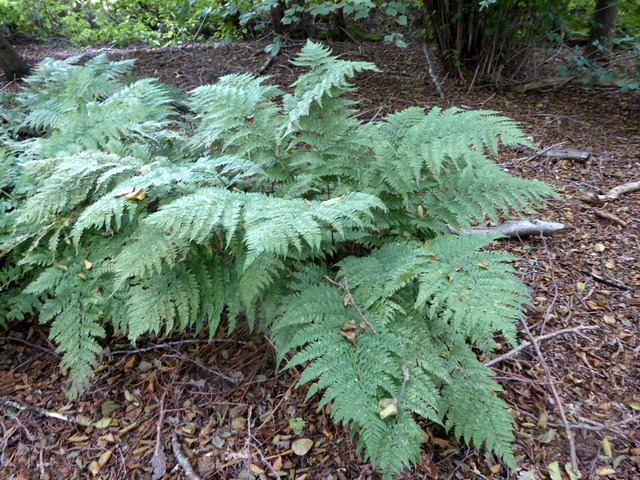
Broad Buckler Fern (Dryopteris dilatata)
Broad Buckler Fern has 3-times pinnate leaves. Pinnate leaves are made up of leaflets, often in pairs, attached to a central stem and often with a terminal leaflet. 2-times pinnate leaves = the leaflets have their own leaflets. 3-times pinnate leaves = the leaflets of the leaflets have leaflets! Broad Buckler Fern has a long stalk which only has leaf branches for half its length.
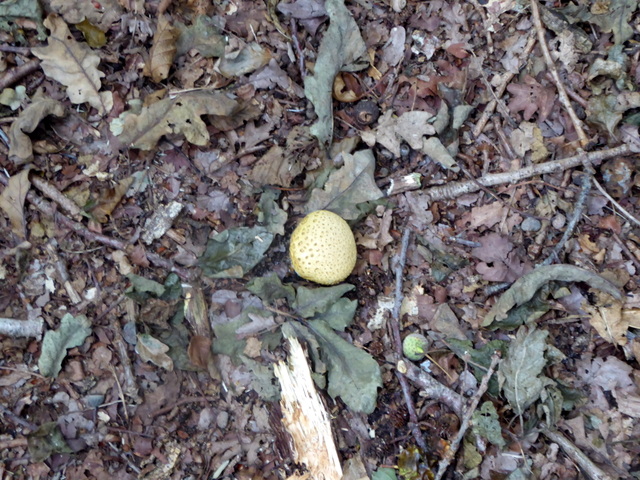
Probably Common Earthball (Scleroderma citrinum)
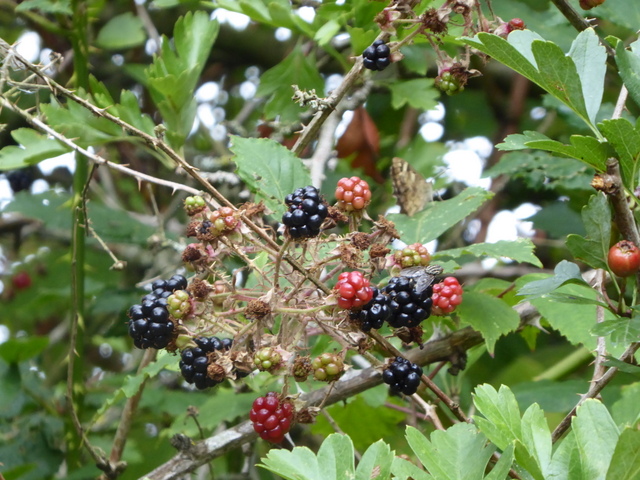
Blackberries on Bramble (Rubus fruticosus agg.) There is an out-of-focus Speckled Wood butterfly sitting on a leaf just to the right of the top red berry
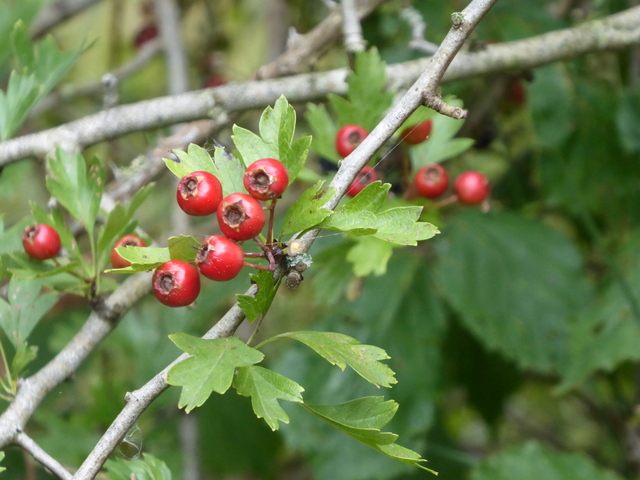
Haws of a Common Hawthorn (Crataegus monogyna)
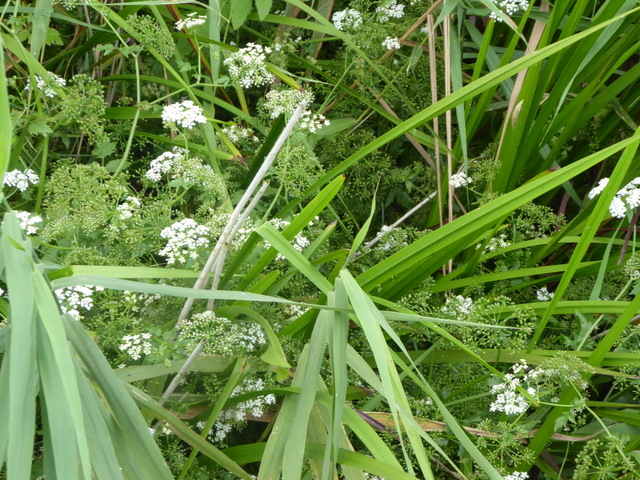
This might be Lesser Water Parsnip (Berula erecta)
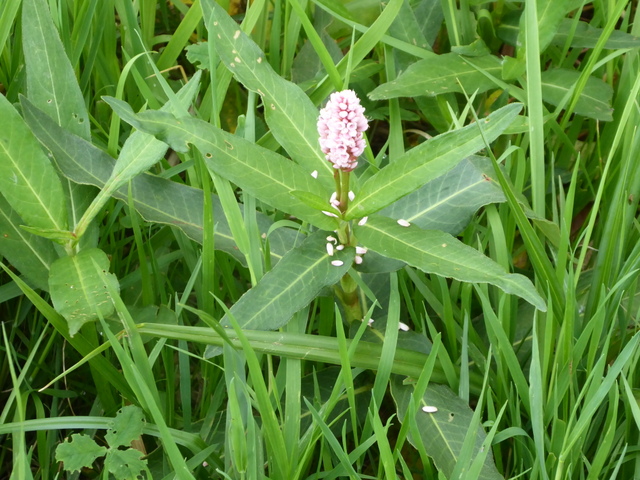
I believe this is probably Amphibious Bistort (Persicaria amphibia)
It took me a while to identify this plant, mainly because it is extremely variable. It has two main forms – an aquatic form, which is described and illustrated in most ID guides, and a terrestrial form, which isn’t often described and hardly ever illustrated. The plant I saw is the terrestrial form.
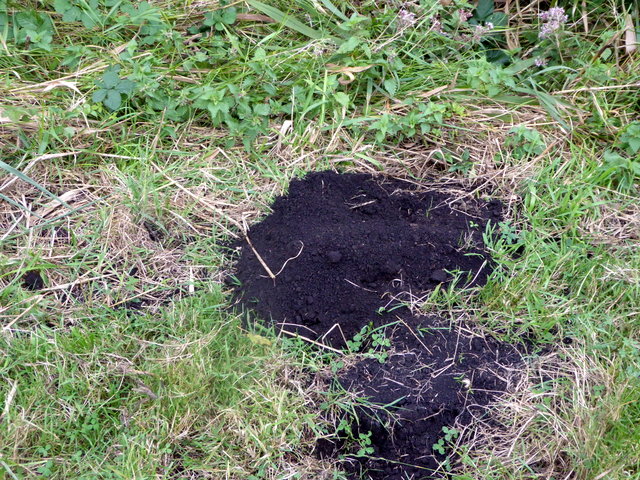
This mole-hill shows how black the soil is
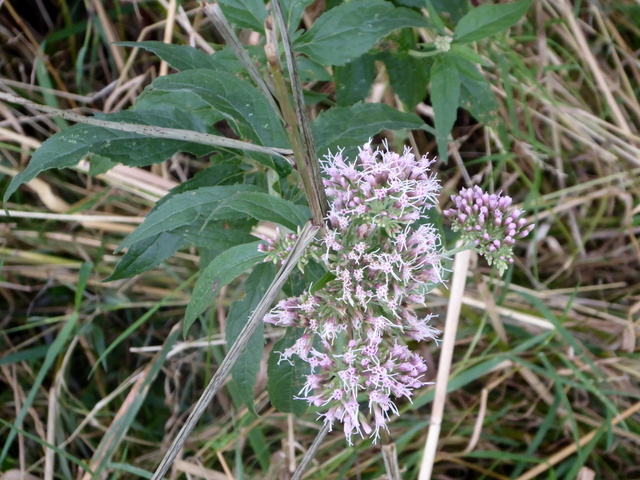
Common Valerian (Valeriana officinalis)
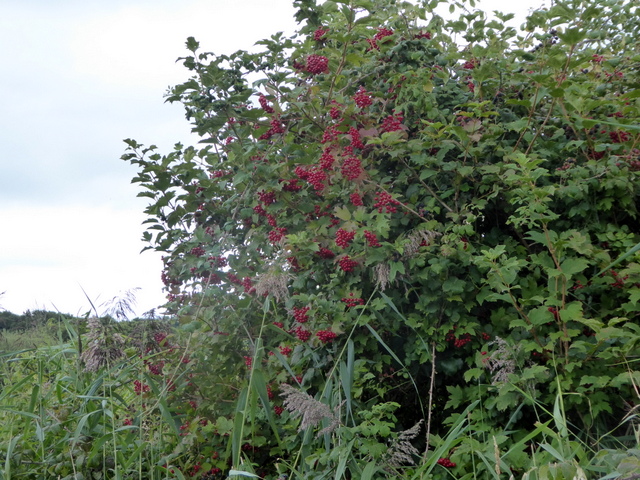
Guelder-rose (Viburnum opulus) with clusters of red berries
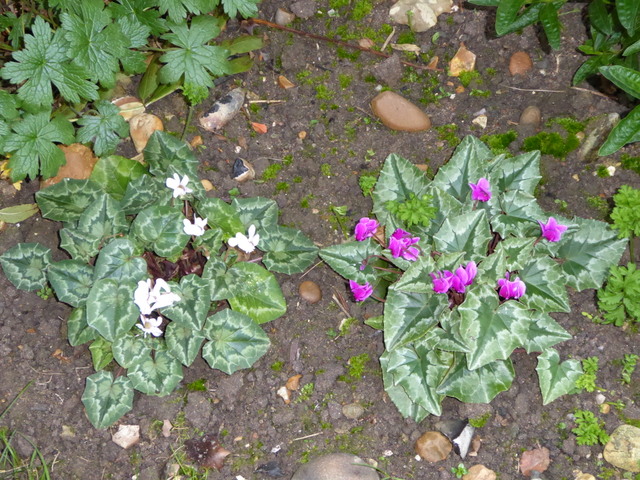
Heather kindly bought me a gift of two hardy cyclamen plants as our meeting was close to my birthday. I took a photo of them at the end of October where I had planted them in my garden.
White and purple hardy cyclamen. I am hoping they will spread out under the shrubs I have in this border and prevent the moss from returning as soon as my back is turned!
After we left the Suffolk Punch Trust we drove a couple of miles to Shingle Street on the coast.
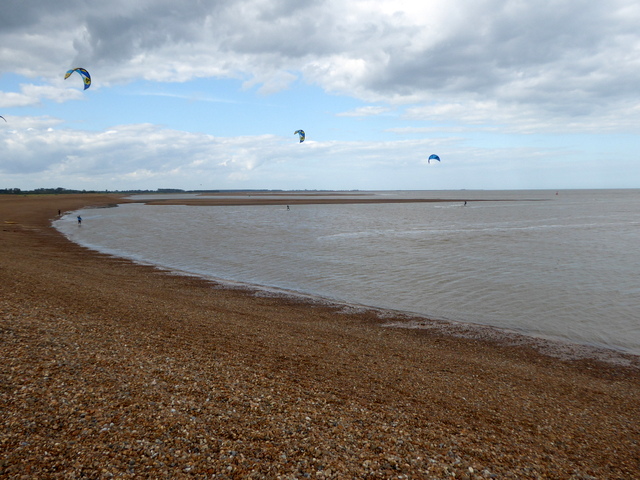
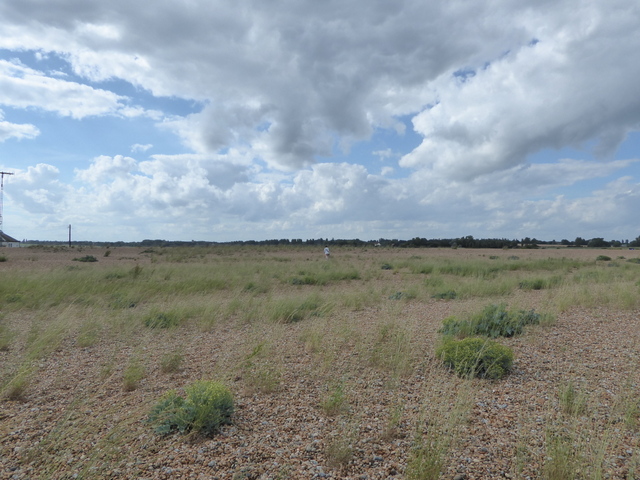
Shingle Street beach
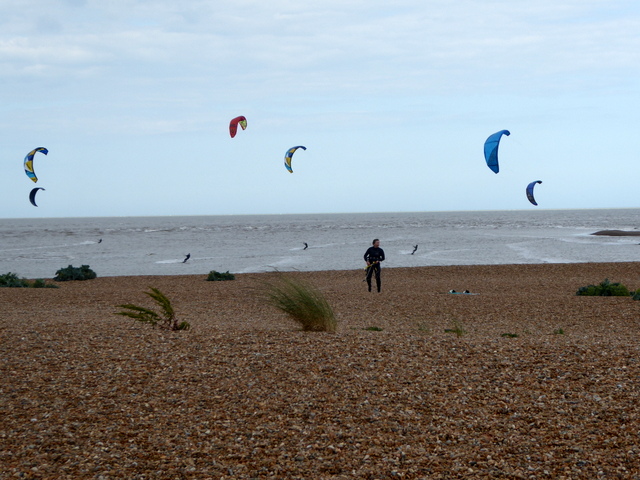
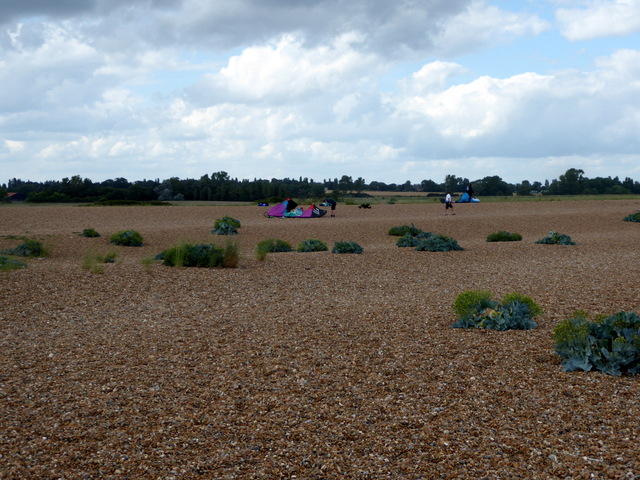
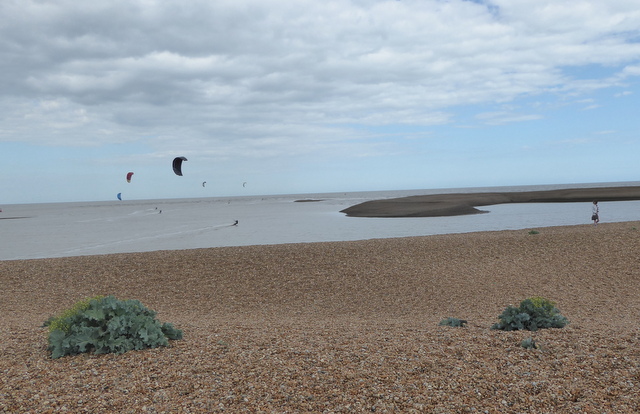
I wanted to visit this beach to look at the plants and flowers that live on the shingle. I had heard that it was a desolate spot but when we were there the place was teeming with kite-surfers!
Kite-surfing on a windy day
Kite-surfers on the beach
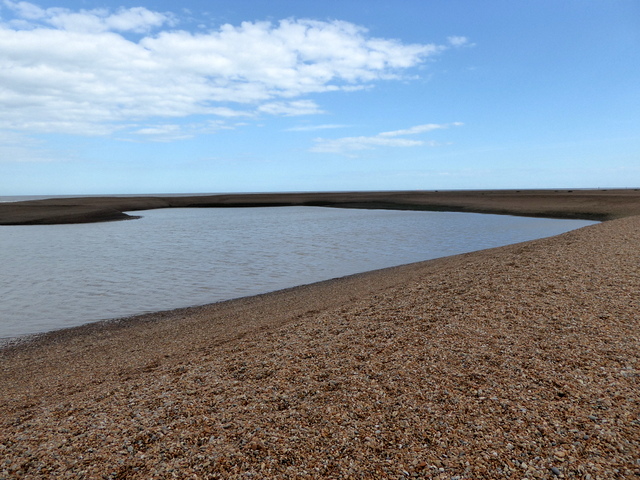
More kite-surfers. Here you can see the spit of shingle which curls round forming a calm lagoon.
The lagoon
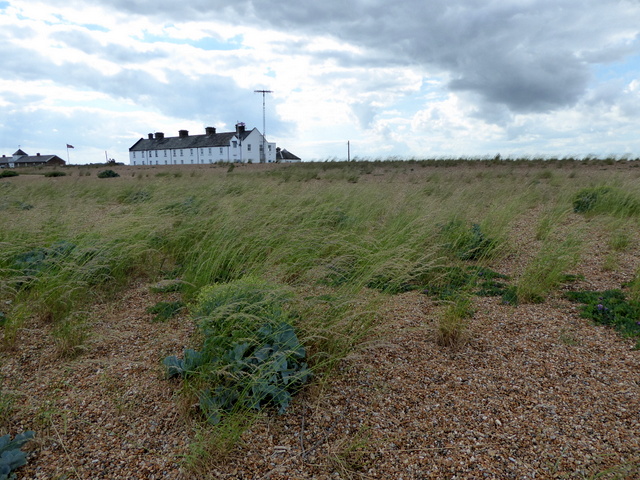
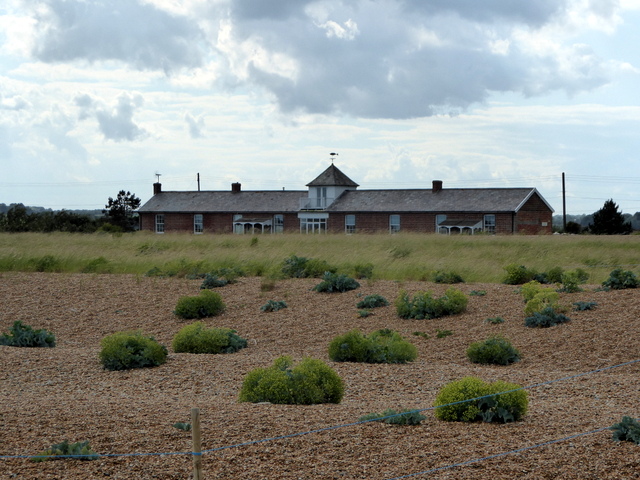
The houses at Shingle Street
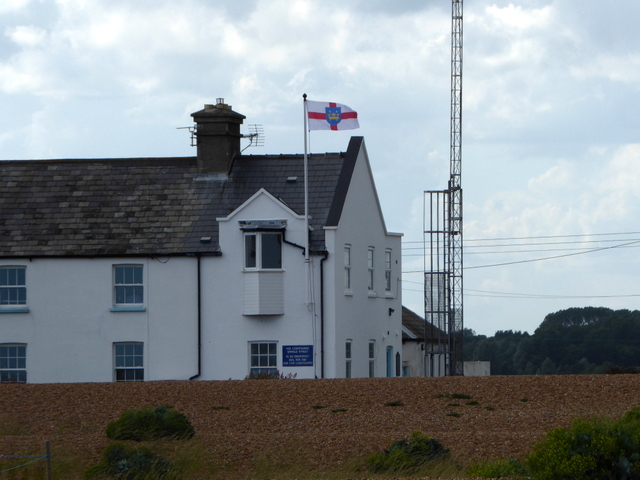
The Coastguard House
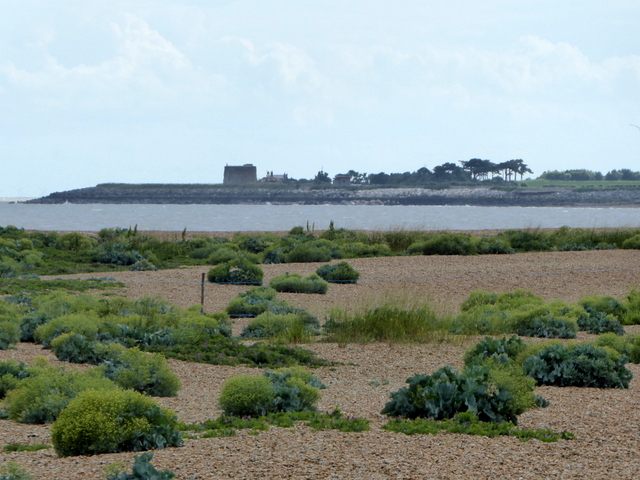
Shingle Street Part of the beach was fenced off to protect nesting birds, little terns and ringed plovers, and to protect this beach from damage by trampling.
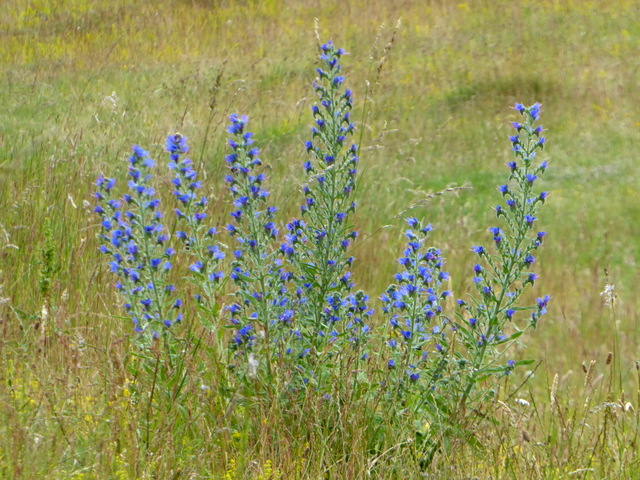
The name ‘Bugloss’ derives from the Greek for ‘ox-tongued’ – the plant is quite rough and bristly to the touch. Parts of the plant are also thought to look like a snake – the fruits, which are said to resemble an adder’s head, used to be used to cure snake bites even though the plant is poisonous!
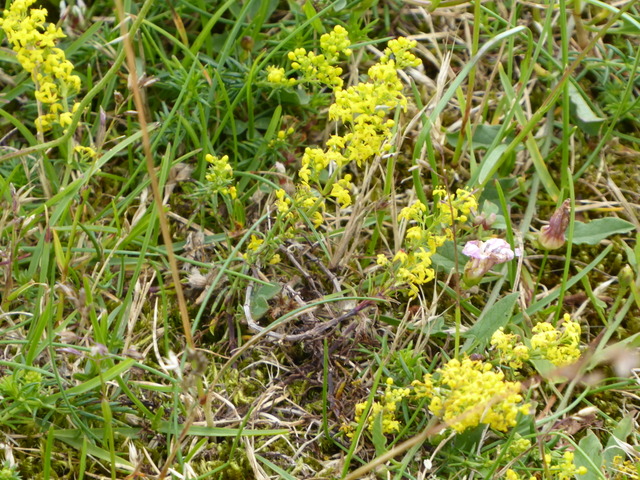
Lady’s Bedstraw (Galium verum)
According to my field guide, the flowers are honey-scented when fresh and smell of new-mown hay when dry. In days gone by, it was said to discourage fleas and so was added to straw mattresses especially for the beds of women about to give birth.
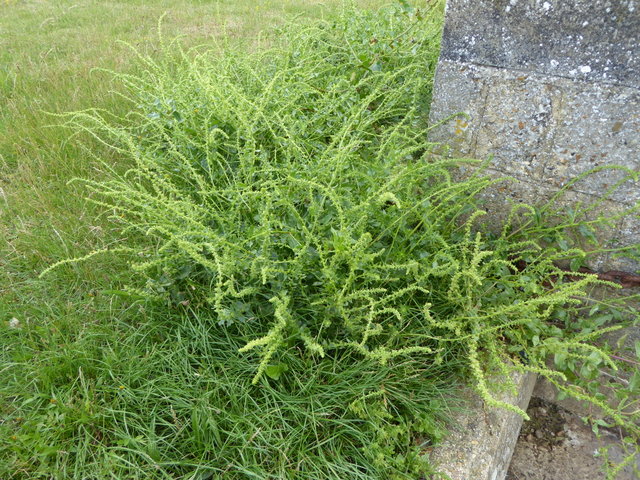
Sea Beet (Beta vulgaris subsp. maritima )
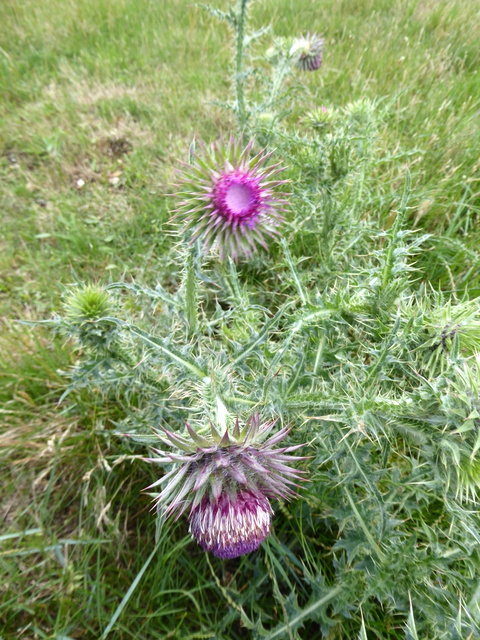
Spear Thistle (Cirsium vulgare). Not an uncommon plant but I find it beautiful – and spiny!
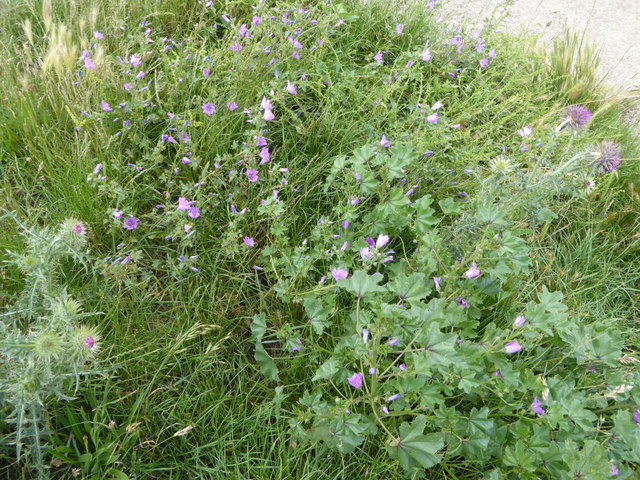
Common Mallow (Malva sylvestris)
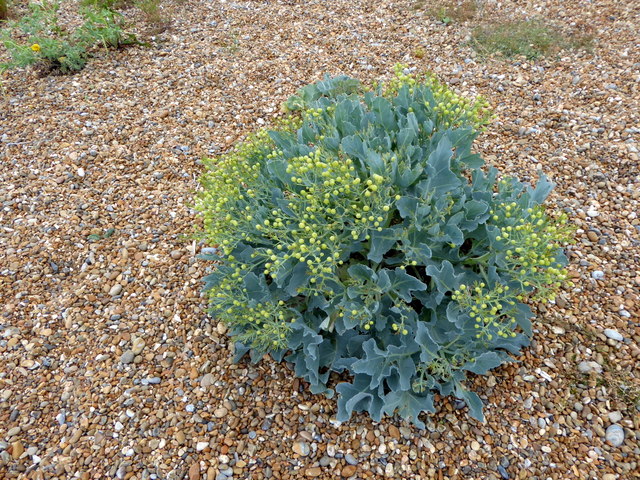
Sea Kale (Crambe maritima)
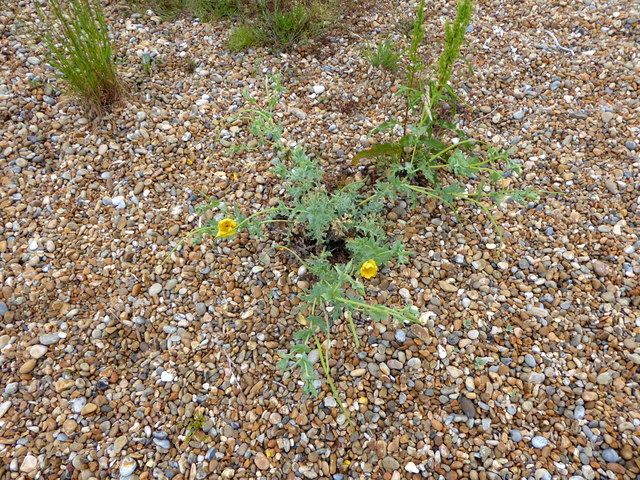
Yellow Horned Poppy (Glaucium flavum)
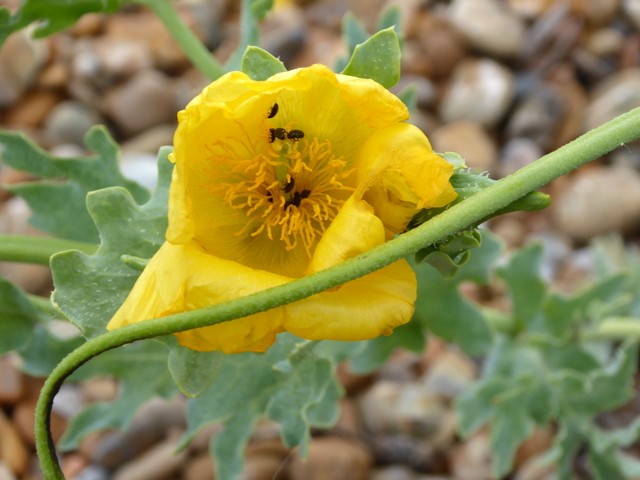
Yellow Horned Poppy (with a few pollen beetles!)
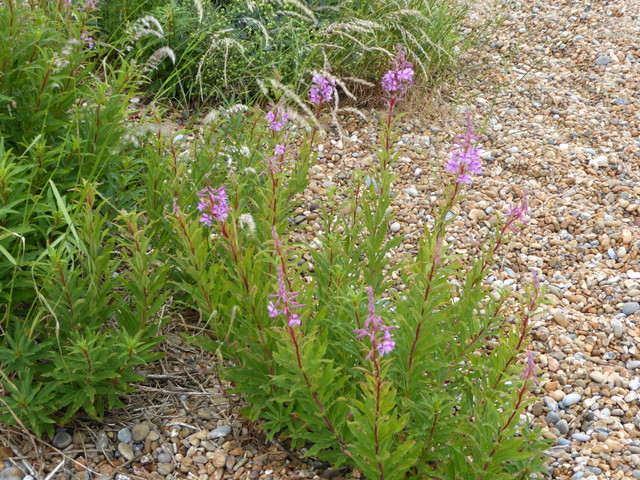
Rosebay Willowherb (Chamerion angustifolium)
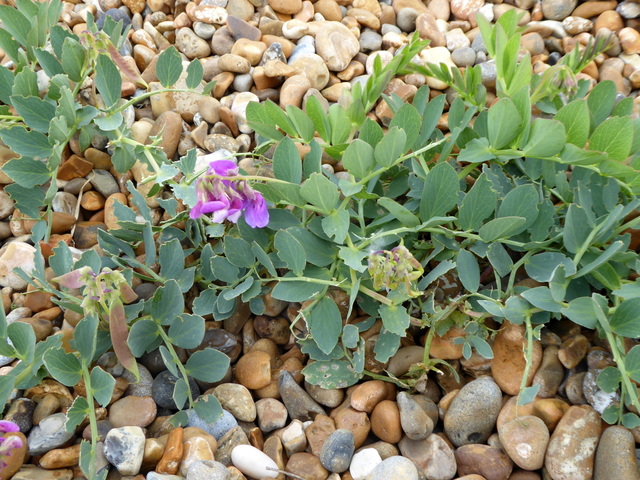
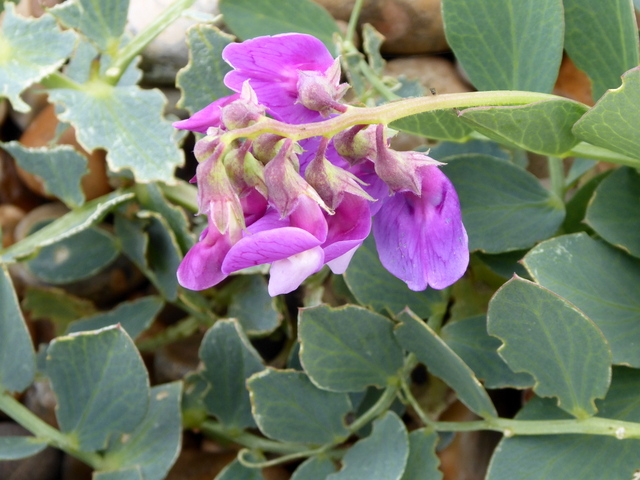
Sea Pea (Lathyrus japonicus)
I was very pleased to see this plant still in flower! Usually I find it too late to admire the bright pink flowers. It is a nationally scarce plant but where it is happy it grows well and plentifully. My field guide tells me that the seed pods resemble garden pea-pods and were eaten (apparently) in Suffolk in times of famine (e.g. 1555). The pods are toxic in large quantities.
Sea pea
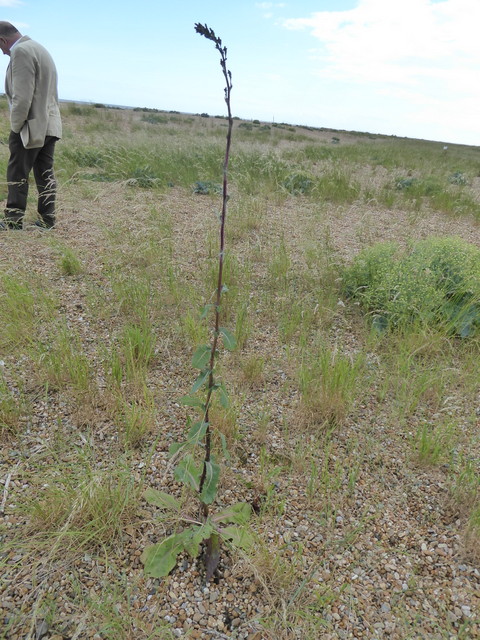
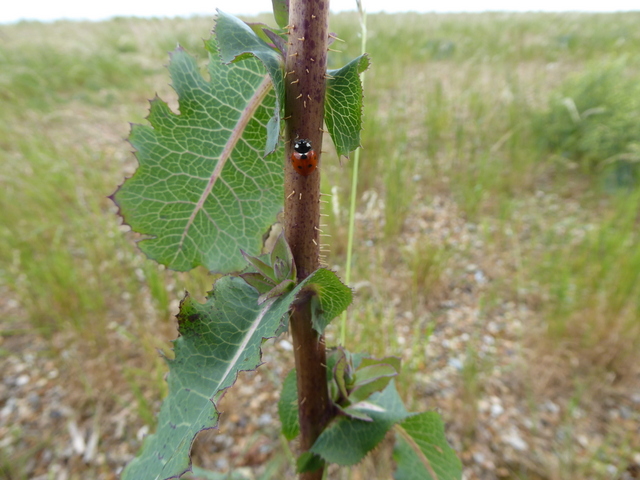
Prickly Lettuce (Lactuca serriola) These plants can grow as tall as 200 cm/ 6.5 ft. Prickly lettuce is a non-native and was first recorded here in 1632.
A Ladybird on Prickly Lettuce
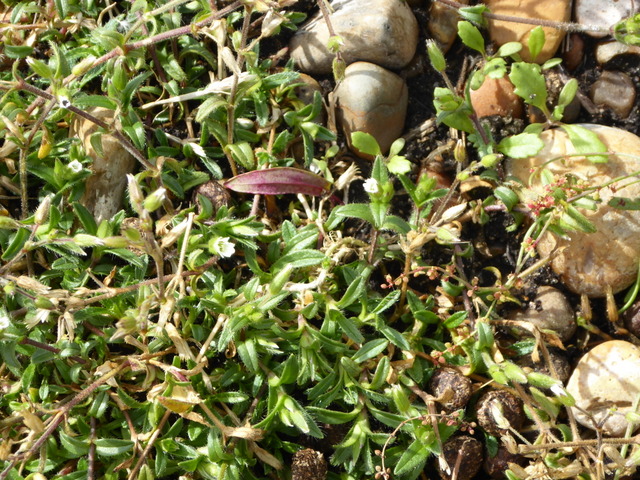
I think this is a type of Mouse-ear, probably Common Mouse-ear (Cerastium fontanum)
This visit to the Shingle Street beach was a very pleasant end to an enjoyable day.
Last summer we visited the Suffolk Punch Trust at Hollesley. Richard had been in touch with his cousin who had enquired about Suffolk Punch horses and wondered if we could go and find some. We obliged.
The Suffolk Punch Trust is a charity that works to protect the critically endangered Suffolk Punch horse by its breeding programme, by making people aware of the horse and its history and by training men and women to work with them. Suffolk Punches have been on this site since 1880 when the then owner of the farm began to breed them here. In 1886, the Colonial College was formed where young gentlemen were trained in farming methods but by 1906 the site was owned by London County Council who used the site to create work for the unemployed. In 1938 the Prison Service took over the farm where they rehabilitated young offenders. When I first came to live in Suffolk in the 1980’s the ‘Colony’ was featured fairly regularly on local news programmes because of the very successful stud the Prison Service with their young offenders had developed. Sadly, the Prison Service found it had to sell the farm in 2002 and many of the workers there were sad to leave the horses. This was when the Trust was formed and the good work that was begun so many years ago has been continued.
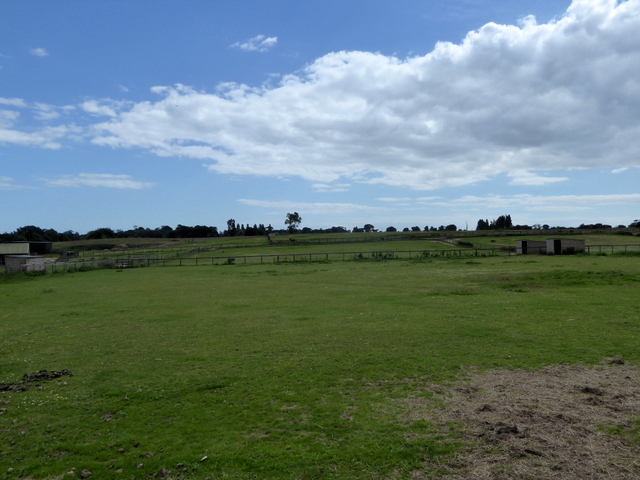
Suffolk Punch Trust land with paddocks.
The Suffolk Punch is a heavy draught horse specially bred for agricultural work on the land rather than as cart horses on the road. They are massive horses with very powerful, muscular necks but are shorter in height than most other draught horses. They were used on and near the battlefields during the First World War because of their strength and because they were accustomed to working on thick, clay soil. With the introduction of the motor tractor the horses were no longer needed and many were slaughtered.
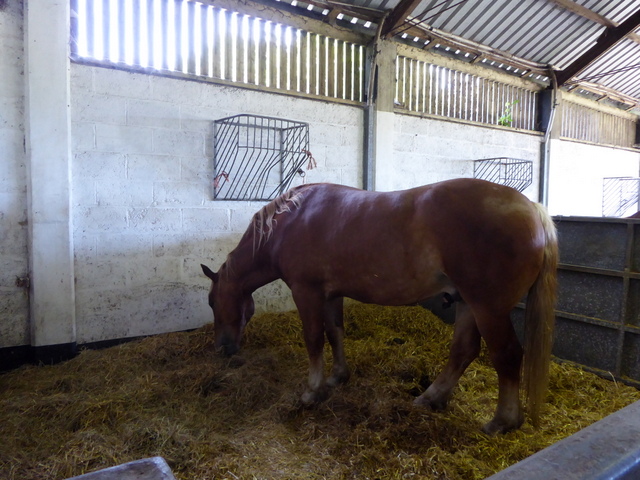
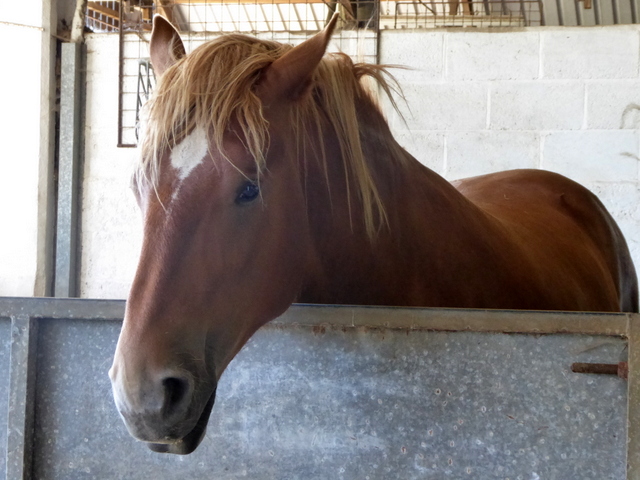
All Suffolk Punches are chestnut horses though traditionally it is spelt ‘chesnut’ without the middle ‘t’
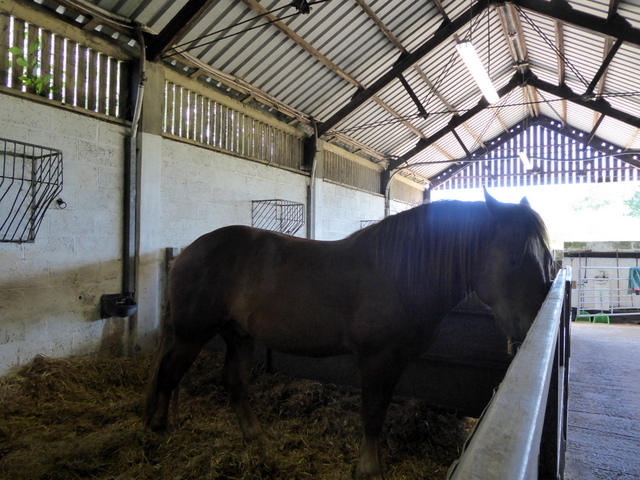
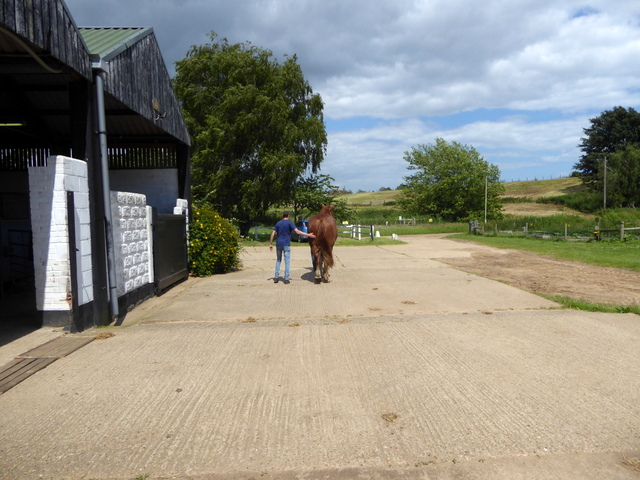
We looked at the horses resting in their stables
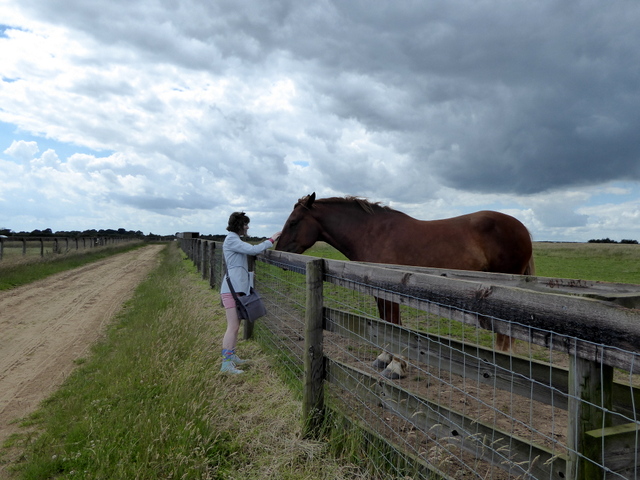
This one was very friendly
The Trust also looks after other horses…
Shetland pony
Shetland pony
…such as these Shetland ponies and also horses just out of racing, that are rested here by the charity ‘Retraining of Racehorses’. They then go on elsewhere to be trained for a second career.
The Trust also looks after other rare breeds of native Suffolk farm animals such as the Large Black Pig, Red Poll Cattle, Suffolk Sheep, Ixworth Chickens and Bantam Silver Appleyard Ducks.
Ixworth hen and chicks
Ixworth hen and chicks
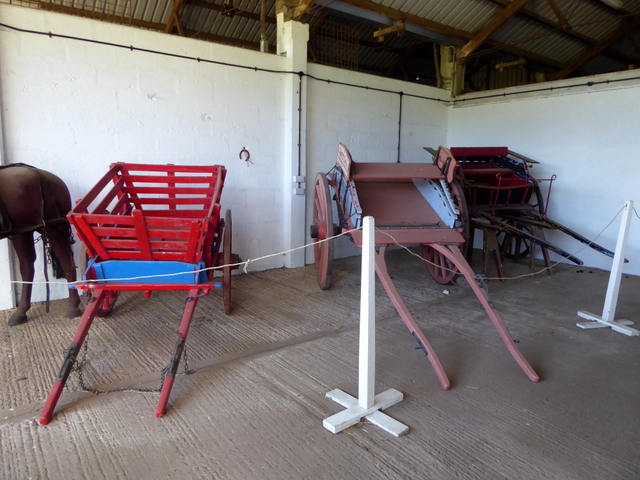
A selection of old carts
They have a Suffolk Heritage Garden stocked with plants, shrubs and trees that originated in or are associated with Suffolk. We didn’t get to see this unfortunately.
We then made our way to a large barn where we were shown how Punches are trained to pull a plough.
This slideshow requires JavaScript.
Richard videoed this as well.
There is a saying about the Suffolk Punch –
A Suffolk Punch should have a face like an angel, a belly like a barrel and a backside like a farmer’s daughter
Well, it’s obvious a woman never thought that one up!
We walked around some of the paddocks and met many of the residents.
A very hairy black and white pig
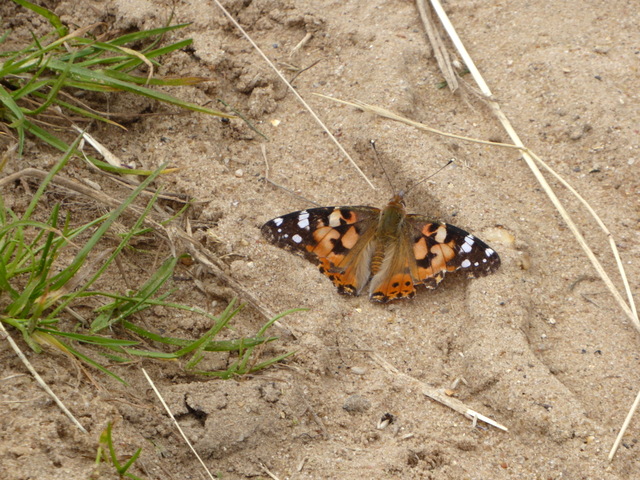
A Painted Lady butterfly (Vanessa cardui)
Richard and friends
Elinor loved this horse!
Black Horehound (Ballota nigra)
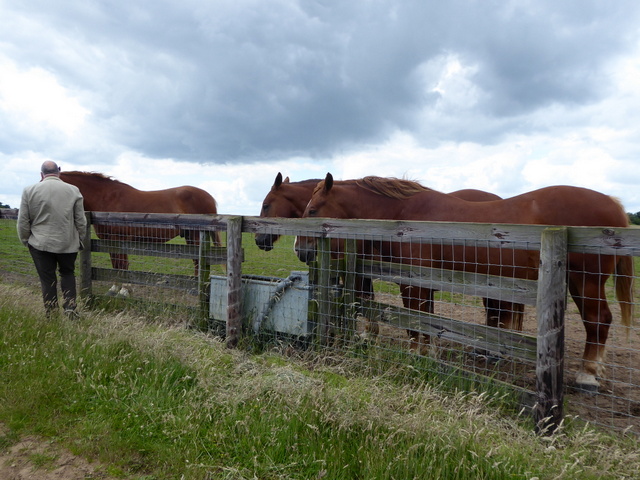
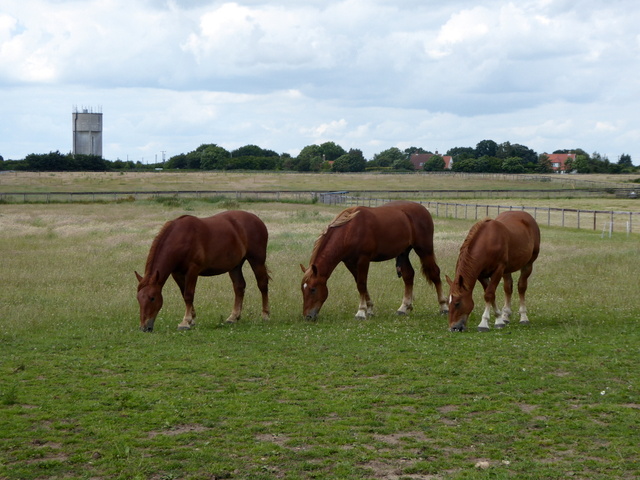
Suffolk Punches
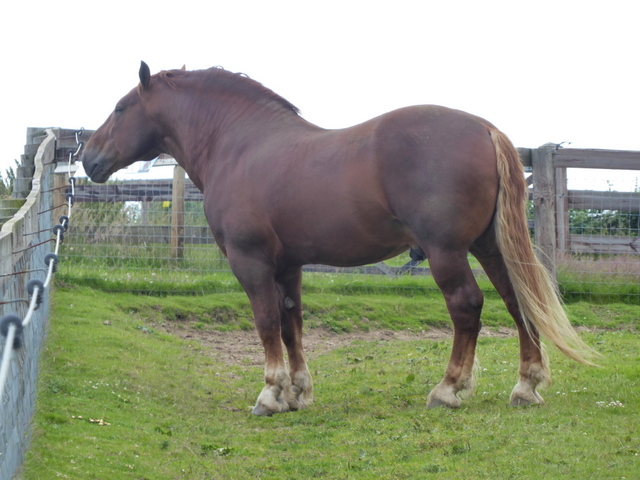
A beautiful stallion
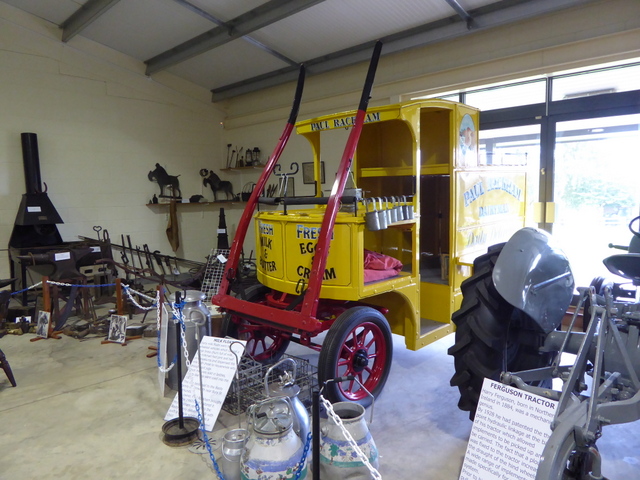
We visited the museum.
All sorts of things that would have been found on farms, in dairies, in villages, in stables and smithies.
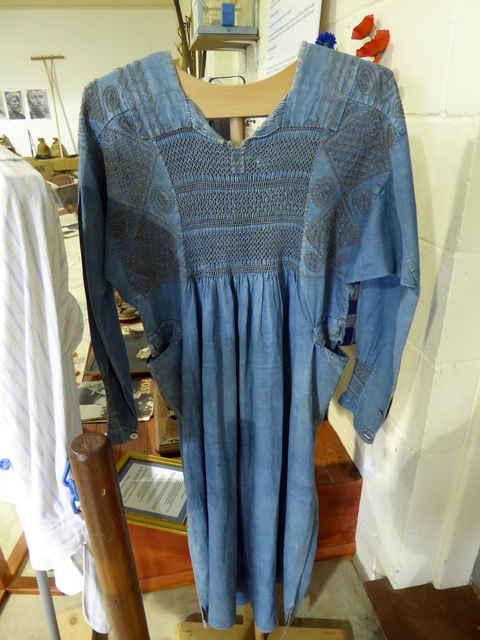
I was pleased to see an example of an old farming smock covered with exquisite smocking!
This slideshow requires JavaScript.
This slideshow requires JavaScript.
We found it a very enjoyable and interesting place.
It was our 22nd wedding anniversary in June and instead of buying each other gifts we usually plan a day out that we will both enjoy. We chose to visit Strumpshaw Fen which is situated in the Broads.
Pond at Strumpshaw Fen
We had hoped to see all sorts of birds here and I had set my heart on finding a Swallowtail butterfly (Papilio machaon), as the Broads is the only place in the British Isles where they can be found.
Fenland
As was the case with many of our ventures last year, we didn’t have as successful a visit as we had hoped because the weather was miserable. It was cold, wet and windy – not a day for viewing rare butterflies or the Norfolk Hawker dragonfly or any of the birds we had hoped to see. However, we persevered with our walk round the reserve and saw a few things of interest.
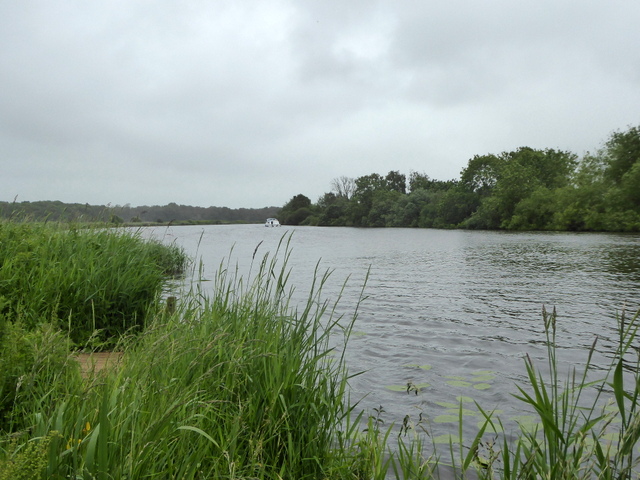
A broad
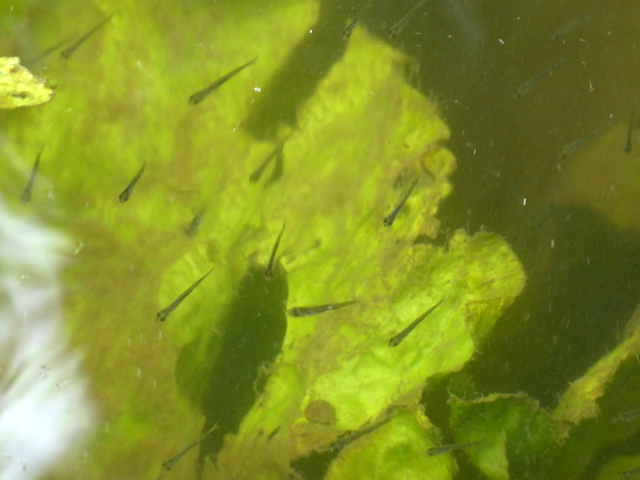
Small fry – baby fish in the broad
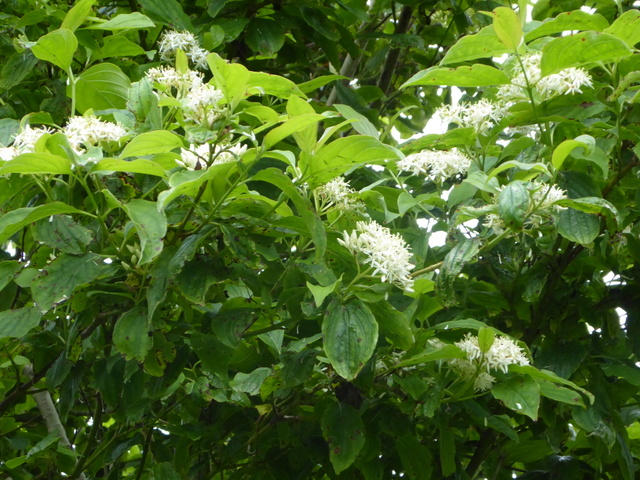
Dogwood (Cornus sanguinea) in flower
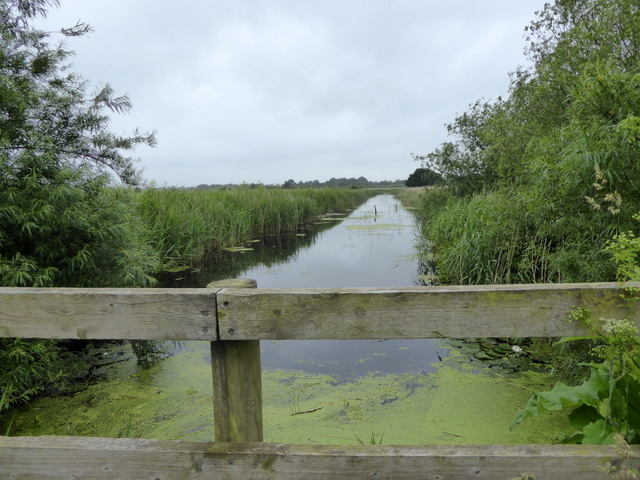
A waterway in the fen
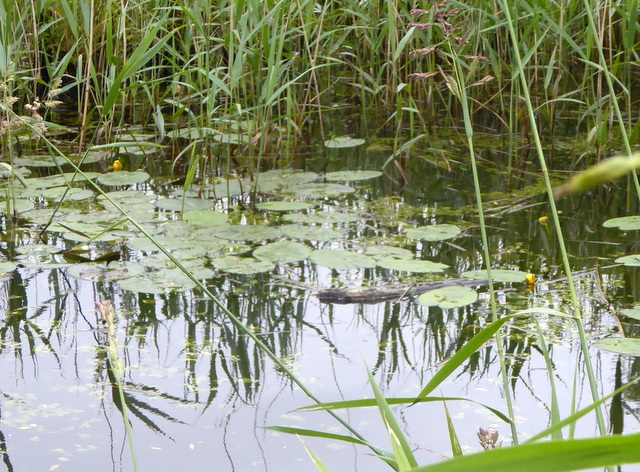
Yellow Water-lily (Nuphar lutea)
The flowers are much smaller than White Waterlily flowers being only 6 cm/2.5 ins across and are alcohol-scented apparently!
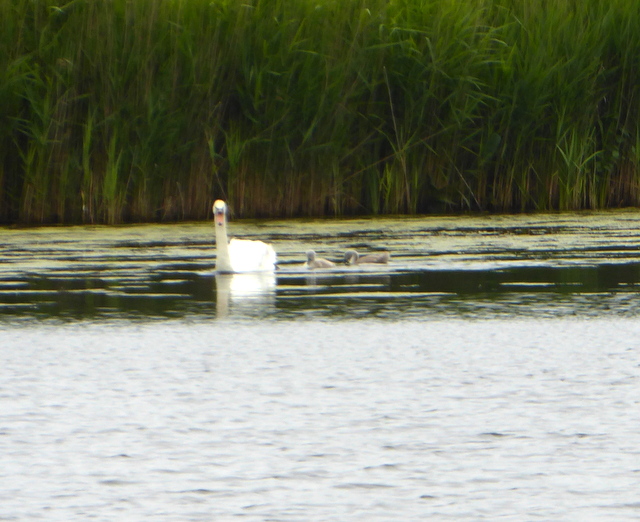
Mute Swan (Cygnus olor) with cygnets
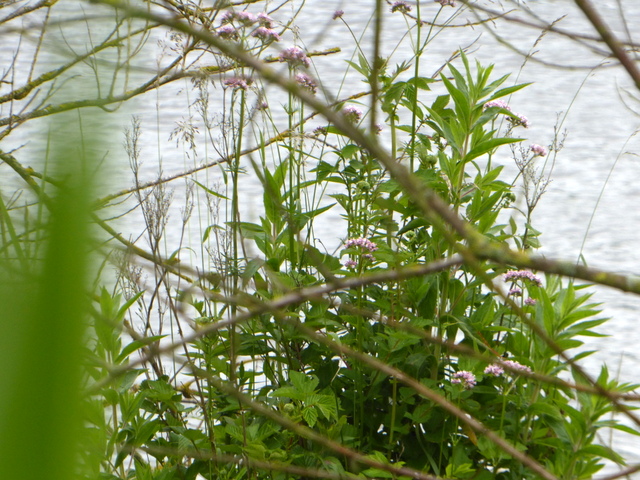
Common Valerian (Valeriana officinalis) You can just see the pink flower-heads!
The River Yare
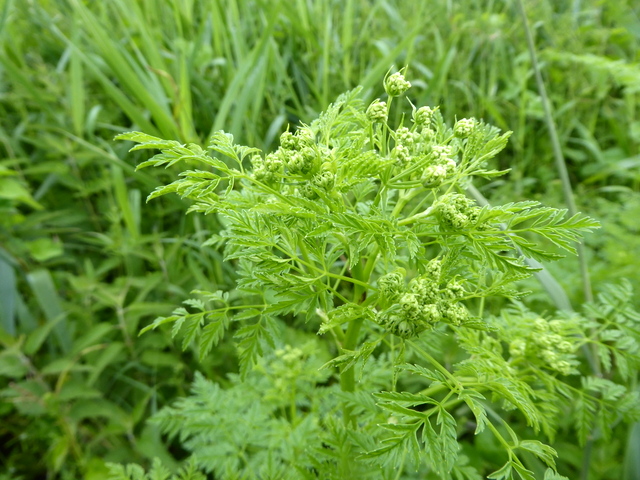
This might be Milk-parsley (Peucedanum palustre) the food plant of the Swallowtail caterpillar.
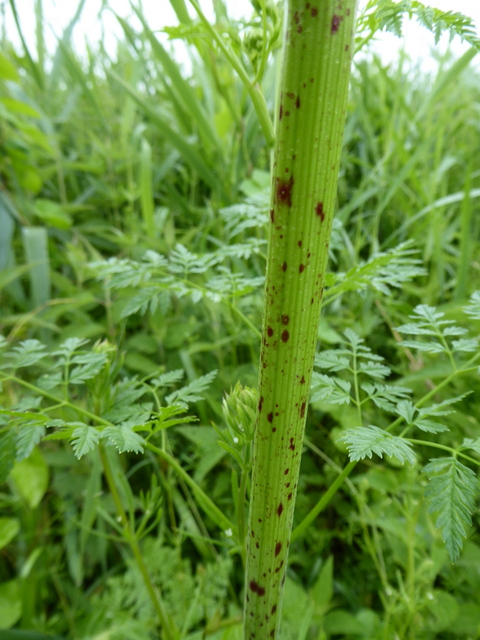
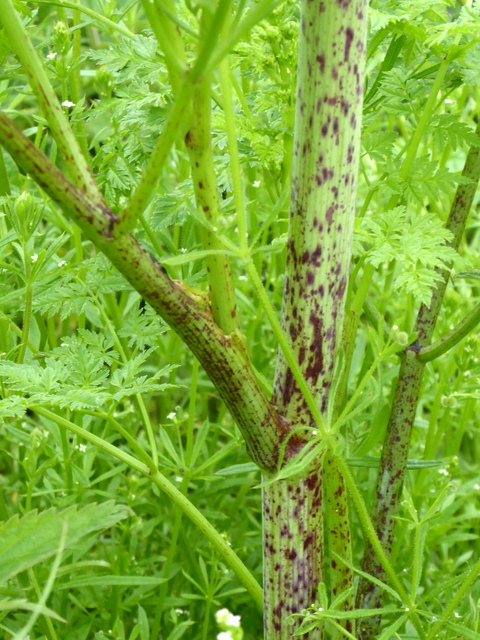
It might also be Hemlock! (Conium maculatum) They are both described as hairless biennials with purple-blotched stems. Hemlock’s stems are hollow and purple-blotched and Milk-parsley has ridged stems that are often blotched purple!
Ridged purple-blotched stems? I can’t decide!
More purple-blotched stems.
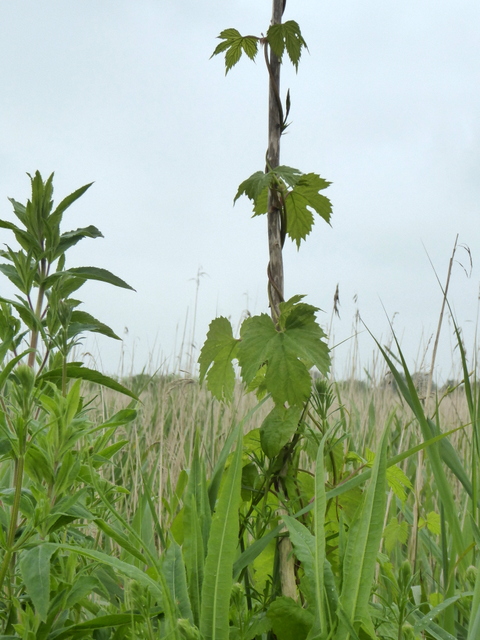
Hop (Humulus lupulus)
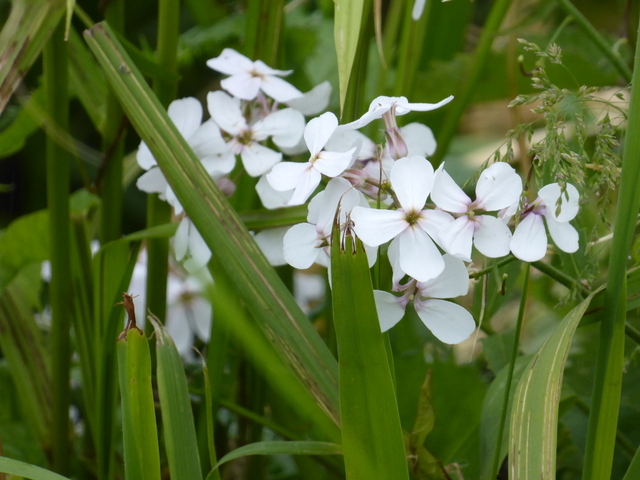
Dame’s-violet (Hesperis matronalis)
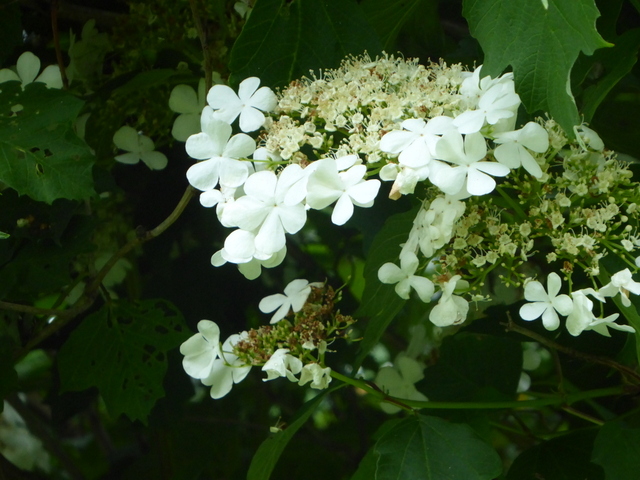
Guelder-rose (Viburnum opulus)
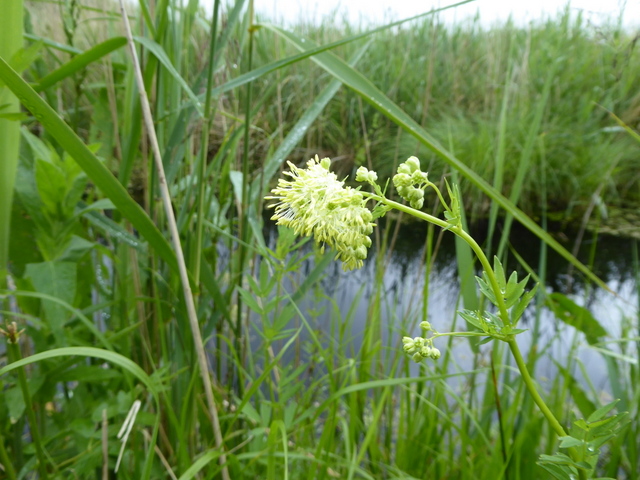
Common Meadow-rue (Thalictrum flavum)
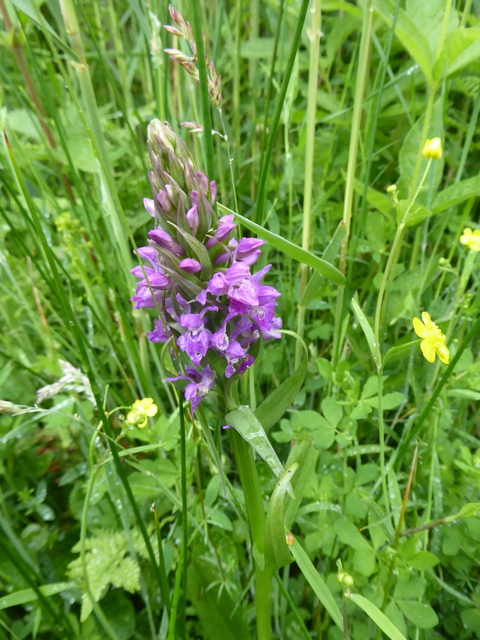
Southern Marsh-orchid (Dactylorhiza praetermissa)
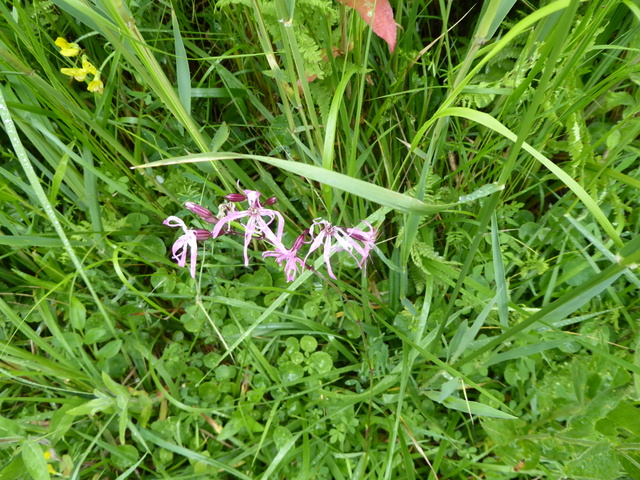
Ragged-robin (Lychnis flos-cuculi)
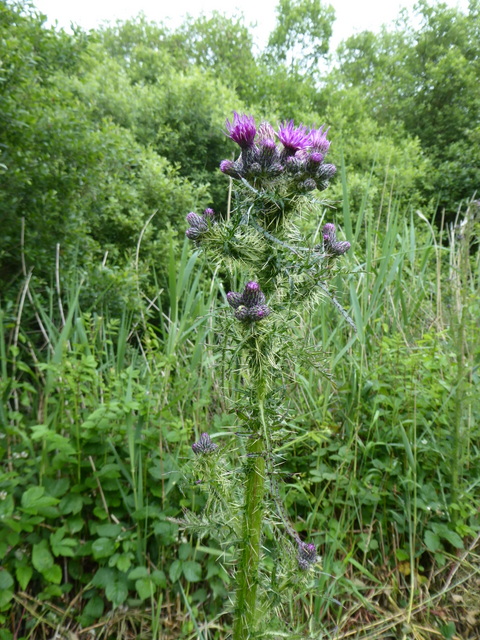
Marsh Thistle (Cirsium palustre)
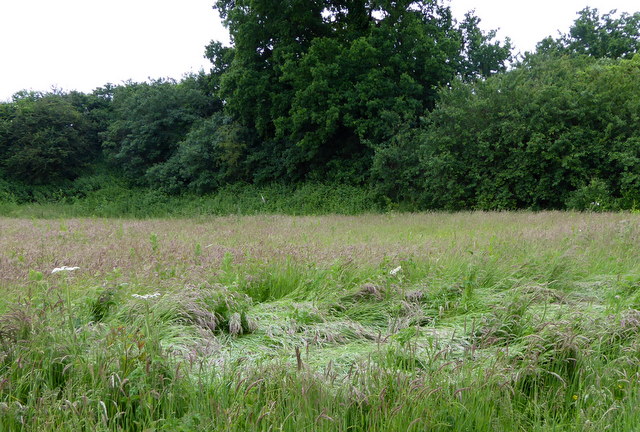
A meadow full of Yorkshire Fog (Holcus lanatus)
The flower-heads of this grass are red-tipped and gave the meadow a pink glow!
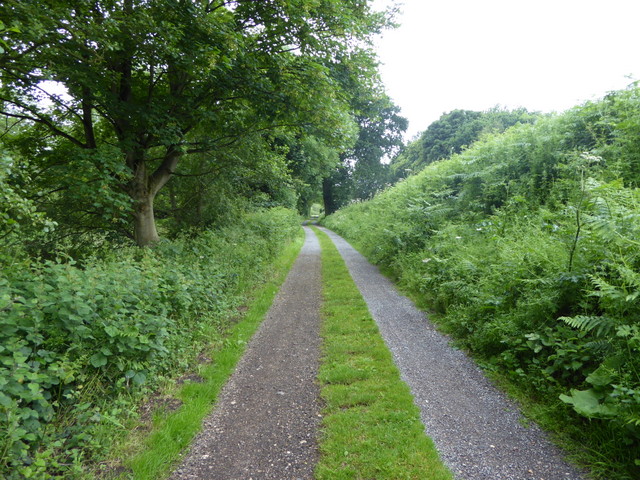
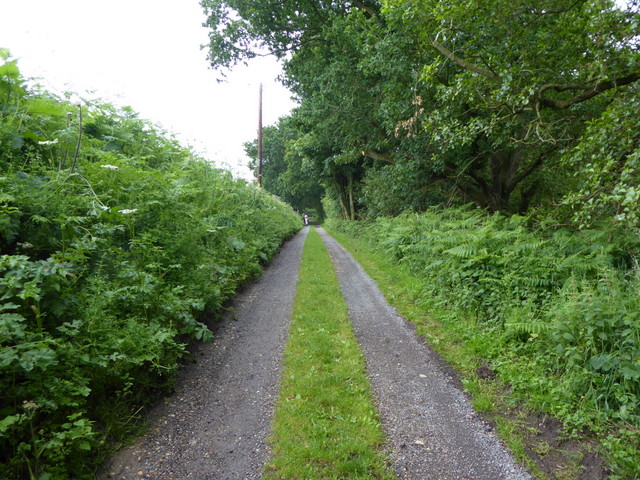
Part of our walk was along Tinker’s Lane
Tinker’s Lane – looking back the way we’d come
Tinker’s Lane – looking ahead. Elinor is the figure in the far distance
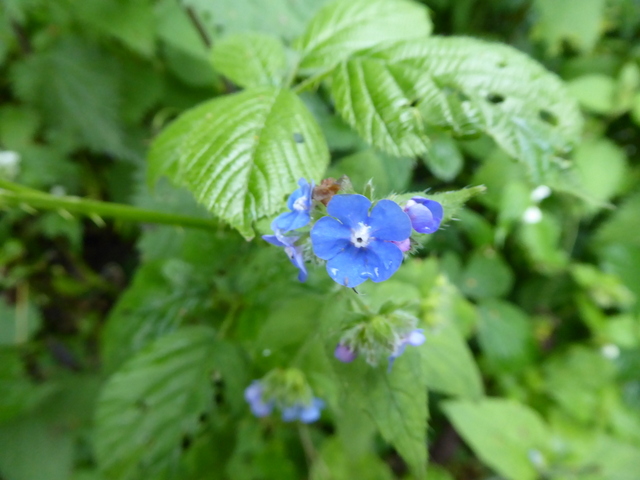
Green Alkanet (Pentaglottis sempervirens)
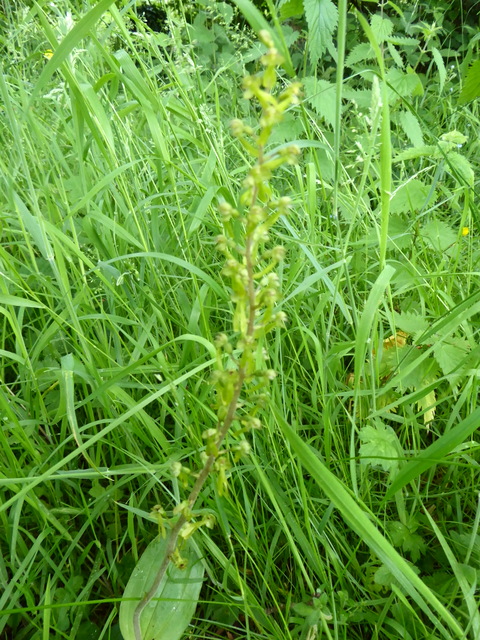
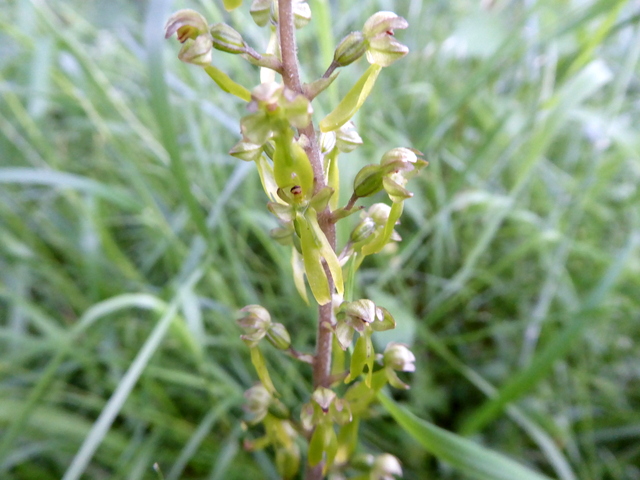
Not a good photo of Common Twayblade (Neottia ovata) Though ‘common’ I had never seen this orchid before and was very pleased.
Common Twayblade
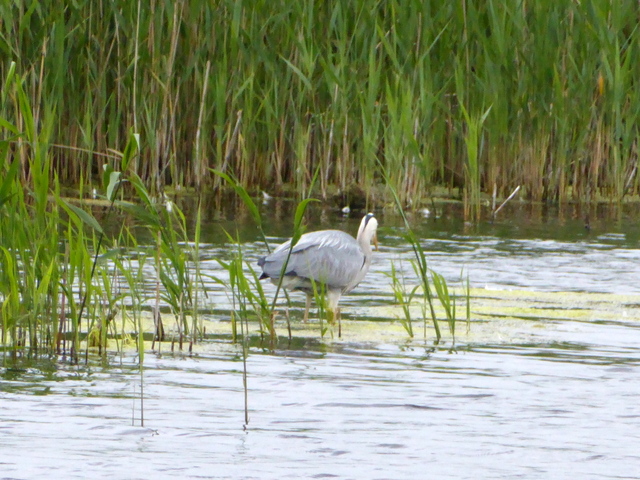
a Grey Heron (Ardea cinerea) that refused to look my way!
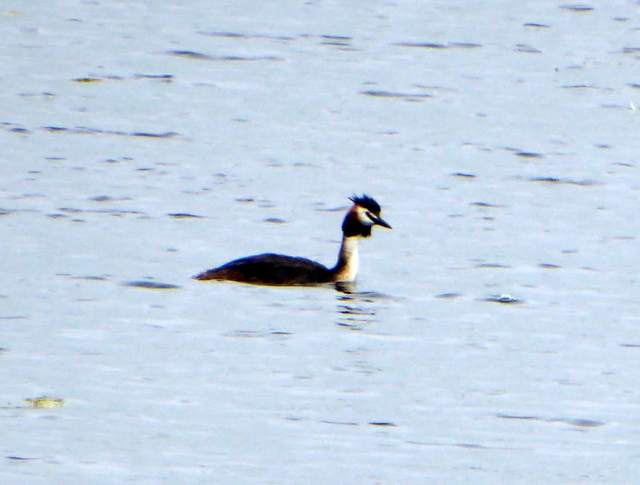
Great Crested Grebe (Podiceps cristatus)
We enjoyed our walk round the fen and were pleased with the amount of interesting plants we had seen. I would like to return there this summer if possible to see the butterflies, dragonflies and birds we had intended seeing last year!
Before Christmastide draws to a close I thought I’d better write something about what we managed to do over the past few weeks.
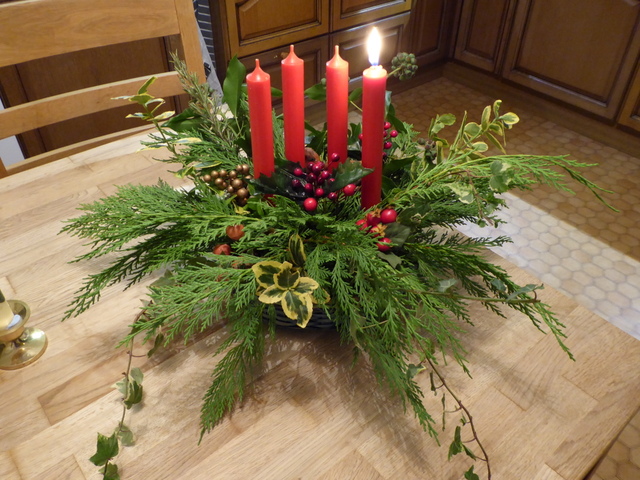
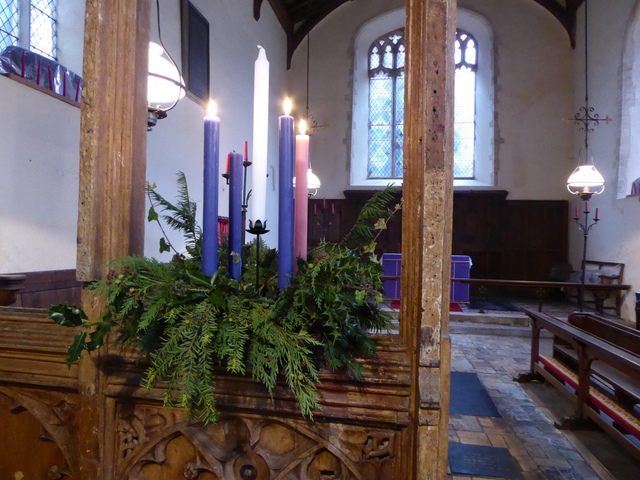
This is the Advent Crown that Elinor and I made this Christmas. The first candle was lit on the first Sunday in Advent.
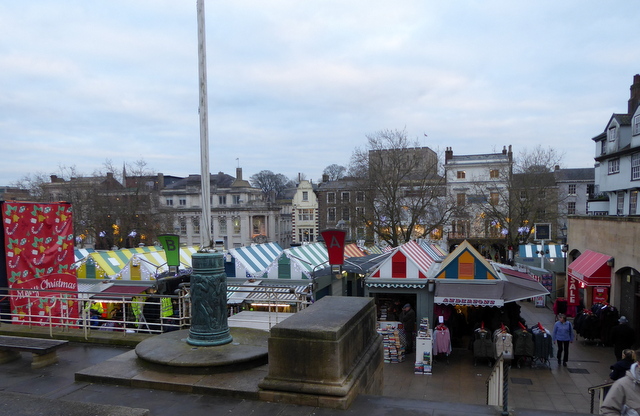
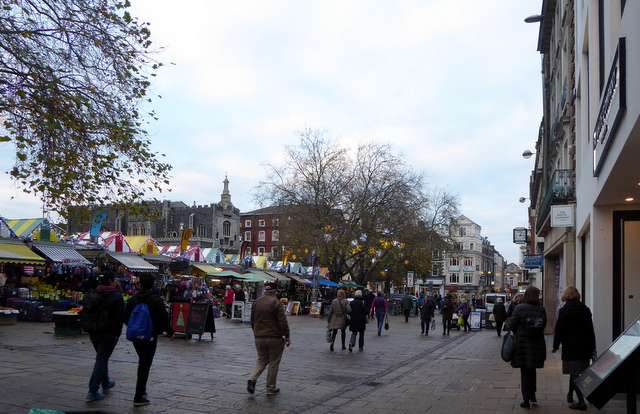
Norwich Market
Norwich Market
The 1st of December began with a frost (we had many frosty and foggy days in December) but by the time I had driven Elinor into Norwich for her afternoon classes at college it had clouded over and had become a little milder. The light wasn’t really good enough for photographs but the city had recently put it’s decorations up and was looking festive, though these photos make it look rather gloomy!
During the whole month, unless I got to the city before 9.00 am, I was unable to find a parking space in any of the car-parks. Norwich Council would like their visitors to arrive by train, bus, bike or on foot and don’t make it at all easy for car drivers. There is very little public transport from where I live so we have to drive into town. There are ‘park and ride’ places on the outskirts of the city but an acquaintance of mine queued for ages to get into the car-park and then waited an age with crowds of other shoppers for a bus which was full before he got to it! He returned home without doing his shopping. I have discovered a roadside parking area near to the college where I get two hours free parking and which is only a fifteen minute walk away from the city centre! This is where I had parked that day. I had coffee and a sandwich in a café and did some Christmas shopping and then made my way back to my car.
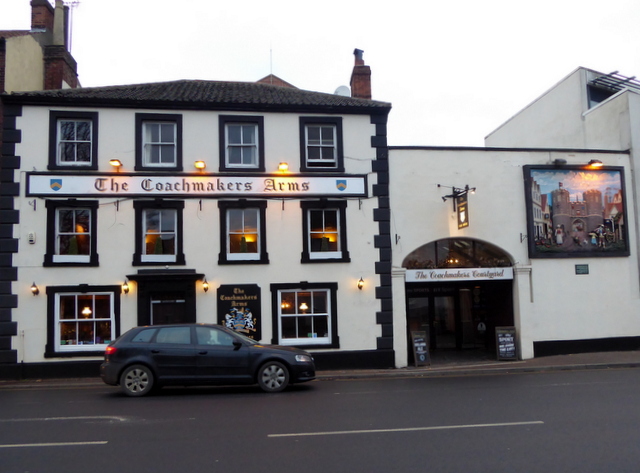
The Coachmaker’s Arms
This former coaching inn is on St Stephen’s Road and was built in the 17th century on the site of an asylum. The pub is said to be haunted.
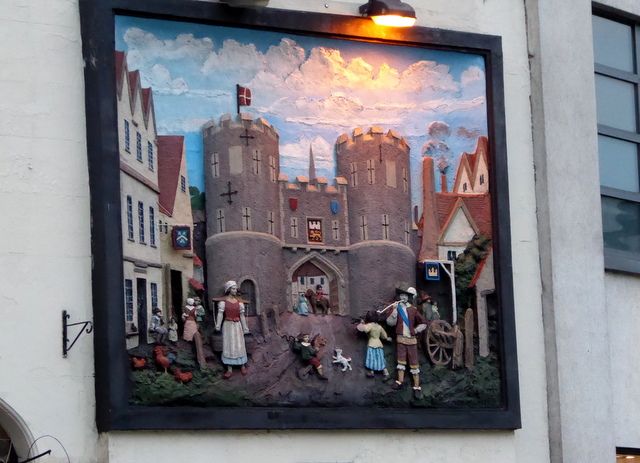
An attractive frieze outside the pub showing what the inn might have looked like when first built. It was near one of the many city gates
For most of the month, Richard was still unable to drive any distance and was very bored being at home all the time. On the 2nd of December he joined Elinor and me in the car and after I had dropped Elinor off at college just before 9.00 am we drove to the north Norfolk coast and spent the morning in Cromer.
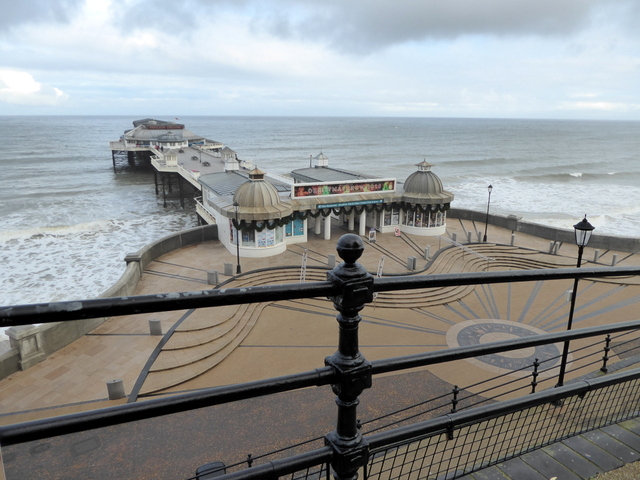
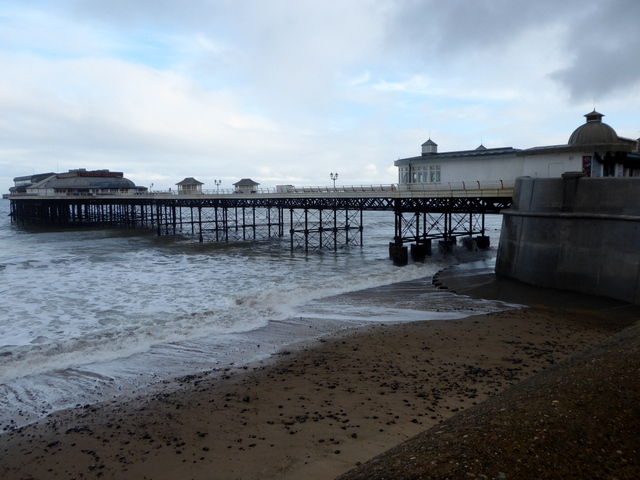
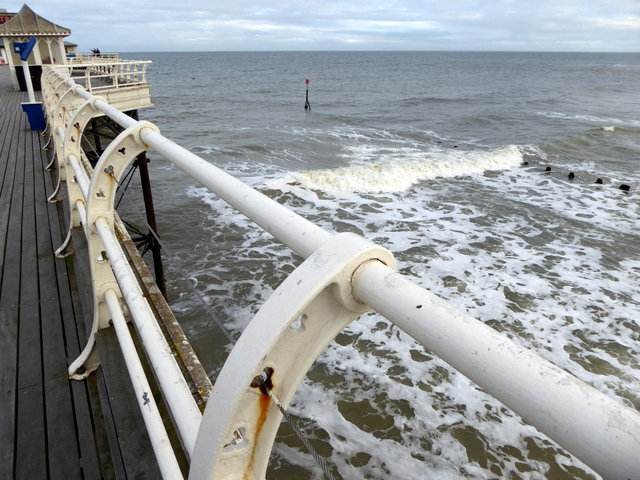
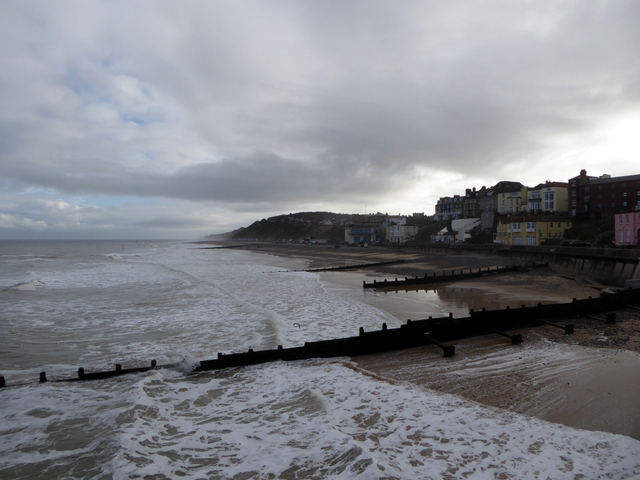
Cromer Pier
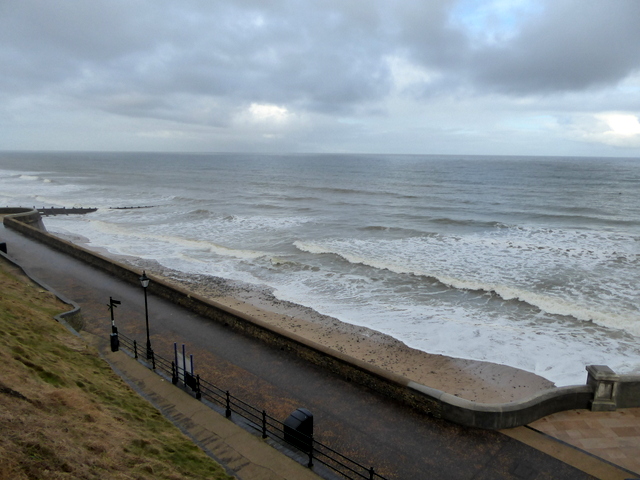
The tide was in. Looking westward.
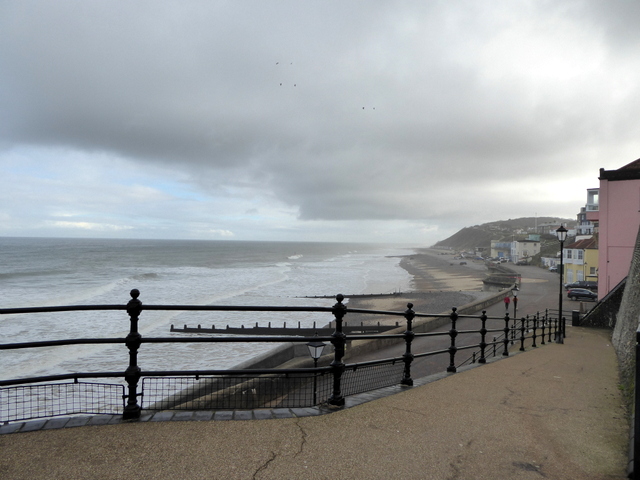
Looking towards the east.
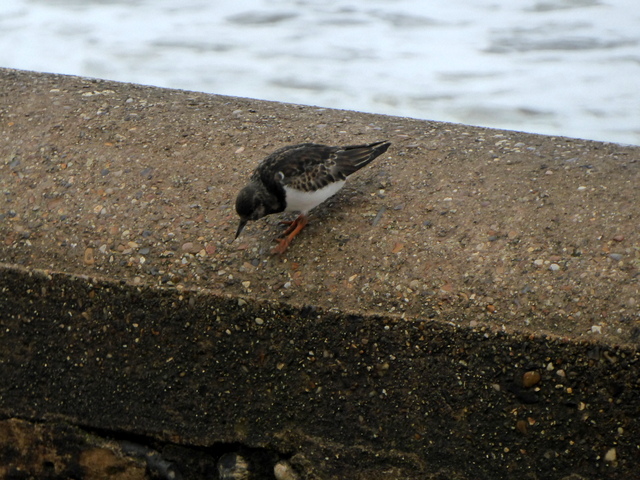
This is a photo of a very tame Turnstone (Arenaria interpres) who had decided that a good living can be made by following visitors about and eating food crumbs. It behaved just like a feral pigeon!
We were so surprised to see this bird at such close quarters! Normally they keep their distance from humans and find worms and molluscs etc. on the shore.
Cromer Pier
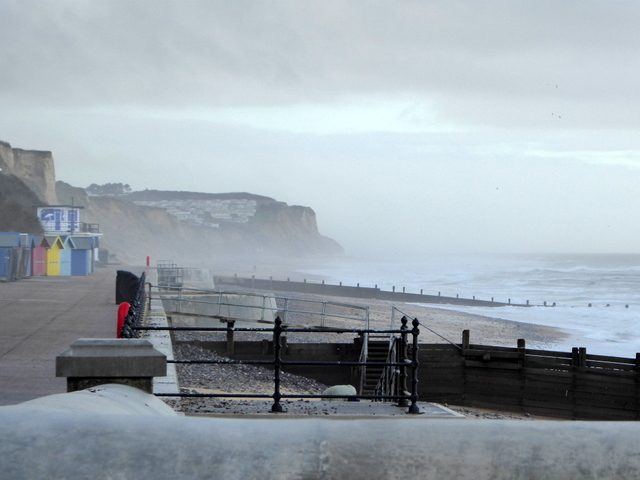
There was a large amount of spray coming off the sea
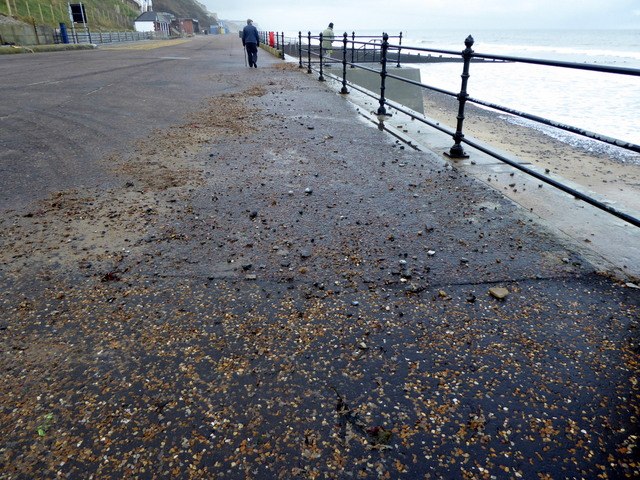
The sand and stones on the promenade show how high a recent tide had been
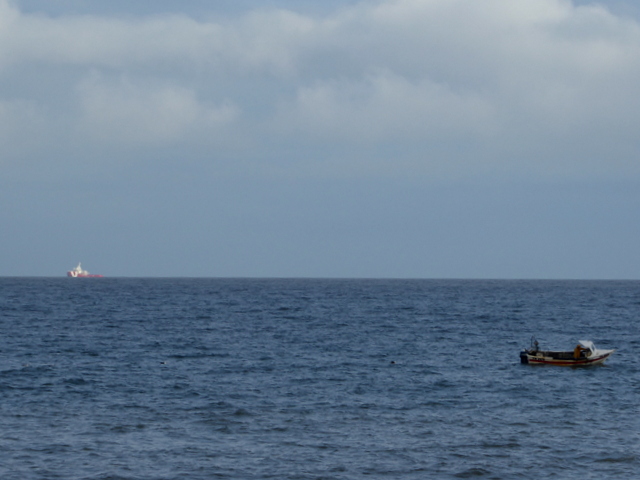
Boats out at sea
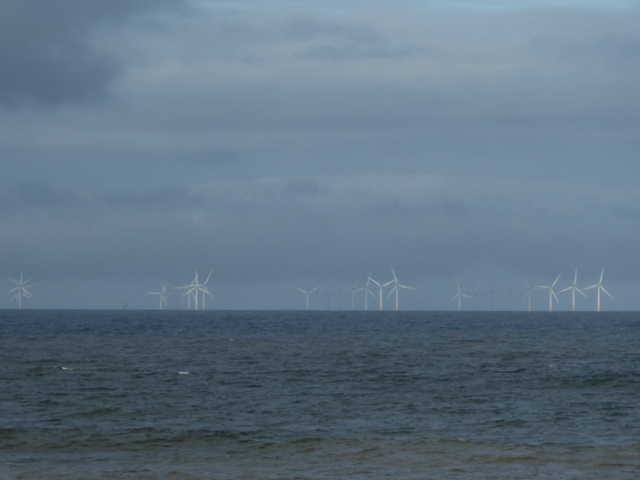
An off-shore wind-farm
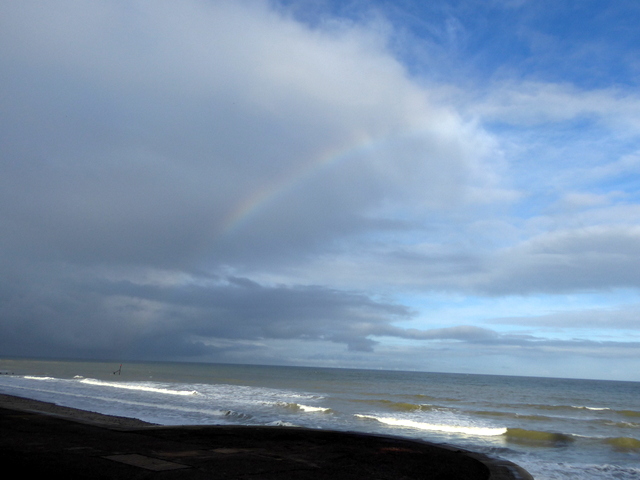
A rainbow
Richard walking towards the beach changing rooms
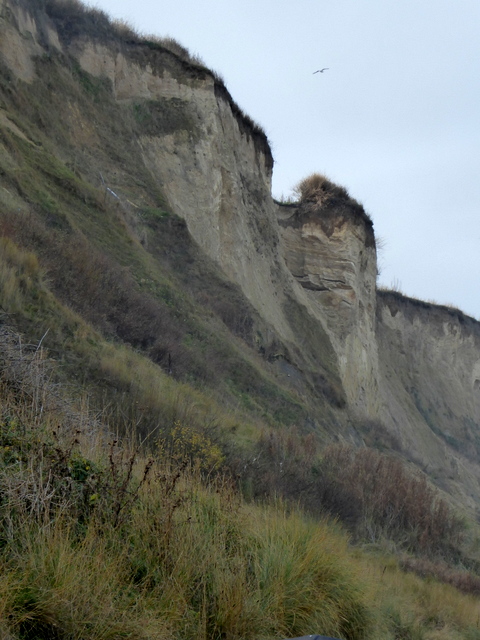
Cromer cliffs
After walking along the front we then visited the pier.
View from the pier
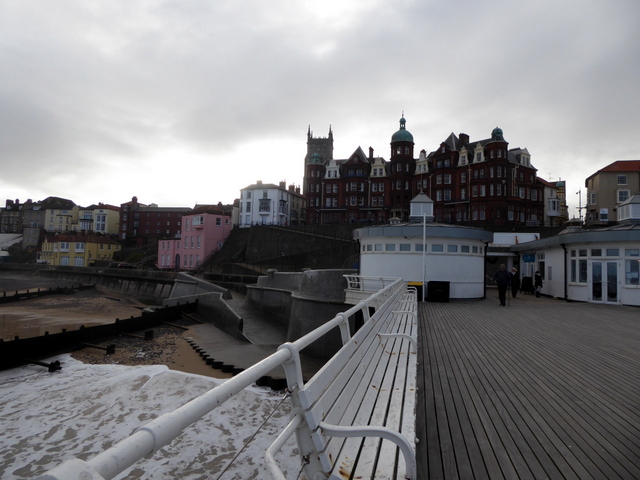
Looking back towards the town
Cromer
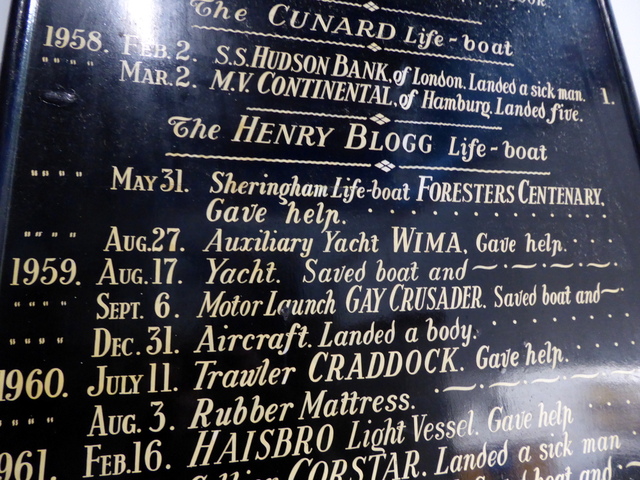
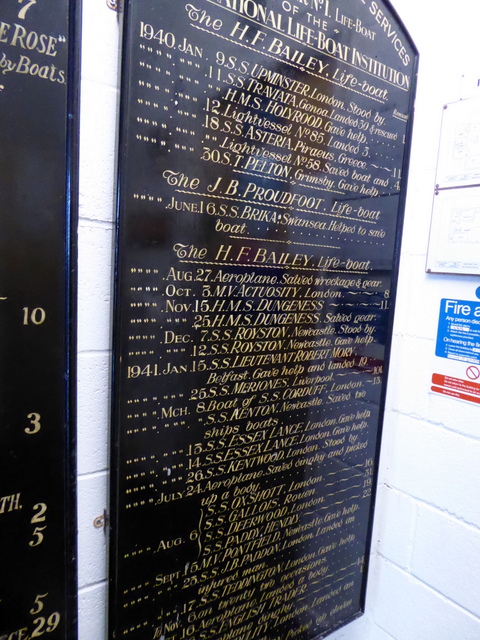
We visited the Lifeboat station at the end of the pier
This slideshow requires JavaScript.
Part of one of the boards listing all their call-outs. I chose this because I was born in 1958
This is one of the war-time boards
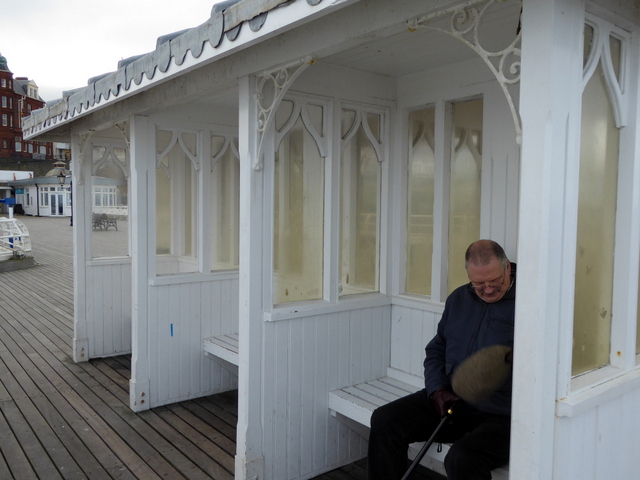
Richard in one of the shelters on the pier
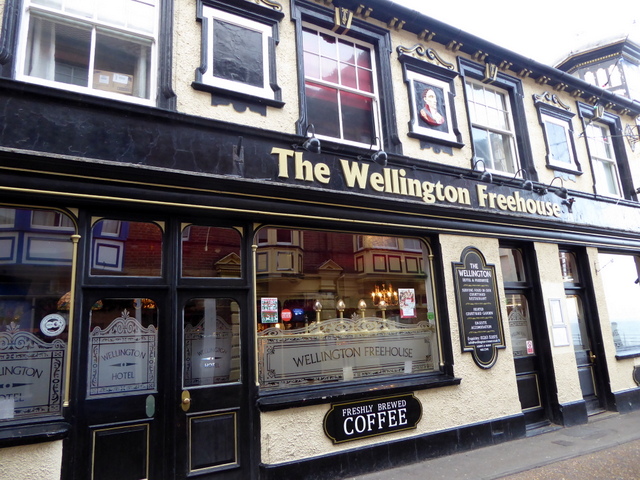
‘The Wellington’ – one of the pubs in the town
Returning home from shopping the following week, Elinor and I marvelled at the beauty of this misty sunset
This slideshow requires JavaScript.
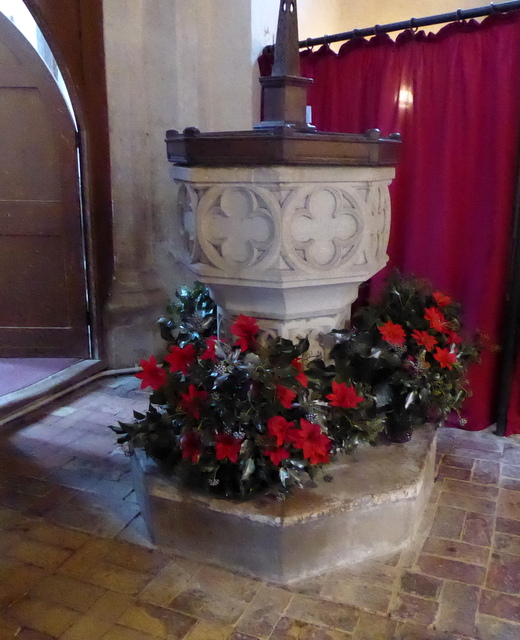
Christmas flower arrangement around the font at our church at Rumburgh
Richard and I had a lot to do at church this Christmas. At the beginning of the month we had an Advent Carol Service with all our favourite Advent hymns and Advent readings. Usually we have a Carols and Capers service with the local Morris group and their friends at the beginning of the season but sadly they were unable to organise it this time. We had a Christmas Carol service on the 21st of December and then our church hosted the Midnight Mass service on Christmas Eve too.
I had made an Advent Crown for church too
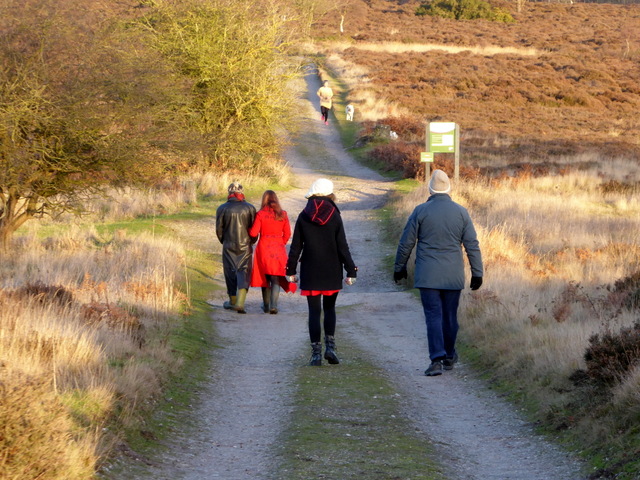
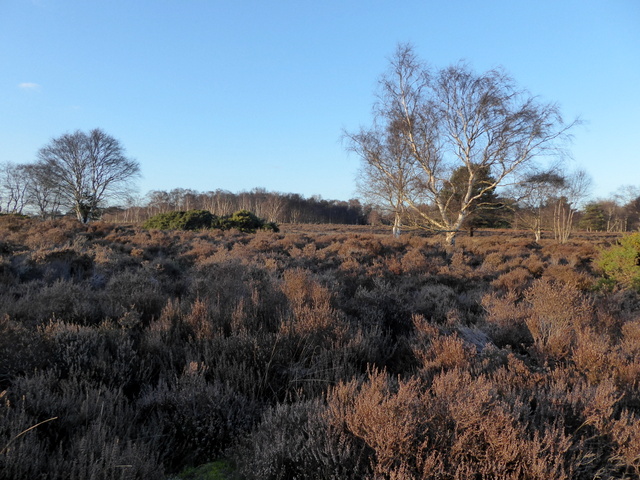
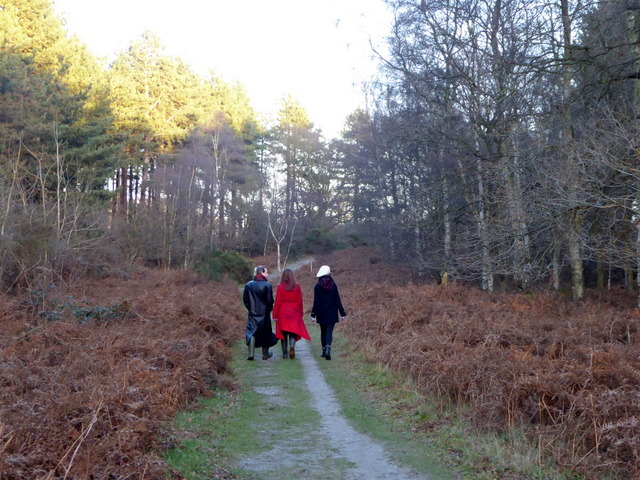
We went for a walk on Westleton Heath on Boxing Day
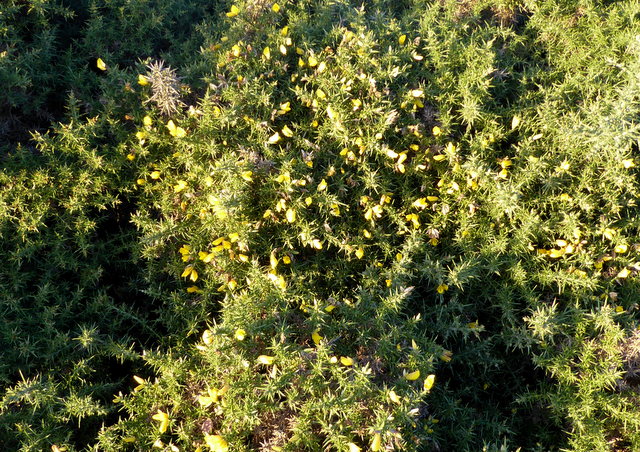
The gorse (Ulex europaeus) was in flower
In the autumn this area of heather is a rich purple colour
Alice, Elinor and Phil, Alice’s boyfriend who stayed with us this Christmas
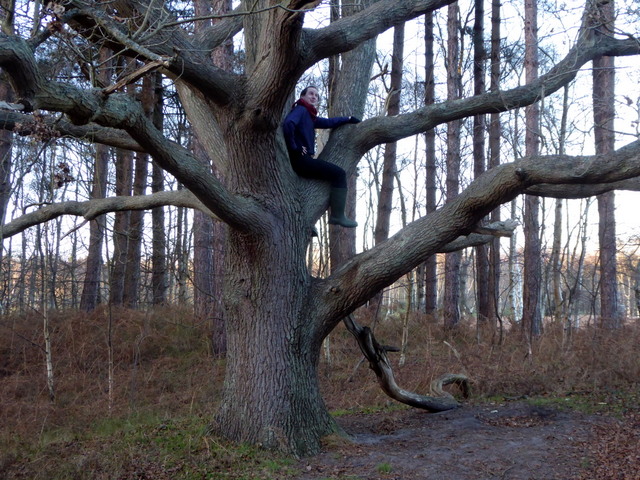
Phil up a tree
Richard, walking without a stick now!
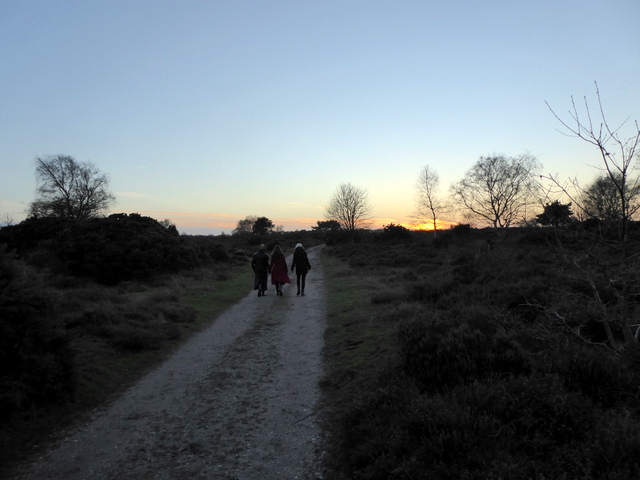
Trees on the heathland as dusk fell
Sunset
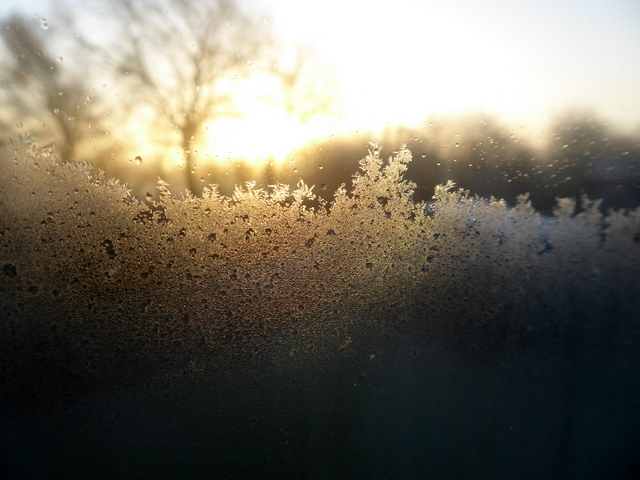
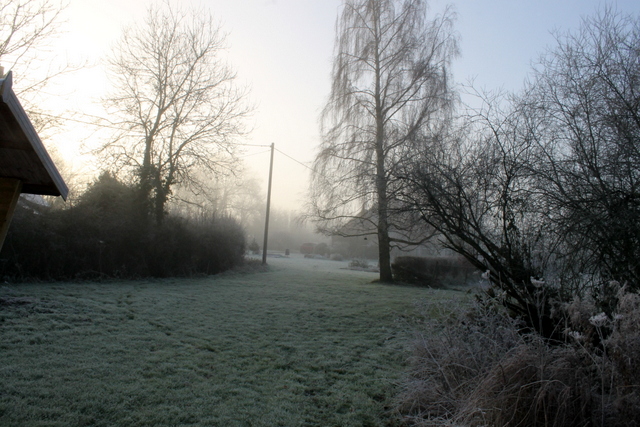
Melting frost on the outside of my bedroom window
These following photos were taken by Richard in our garden that same morning.
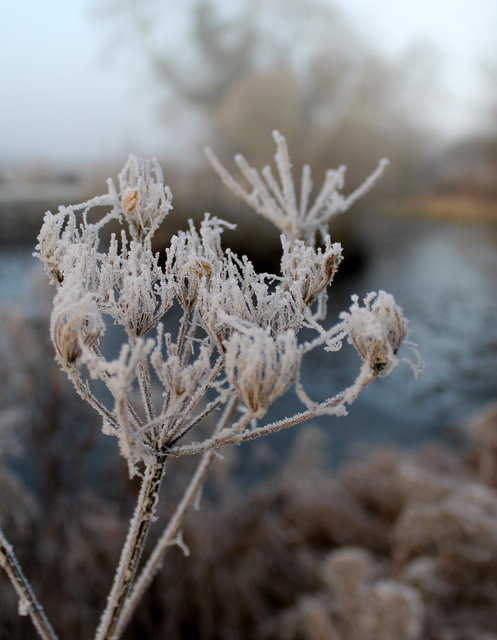
Hoar frost on a Hogweed seedhead
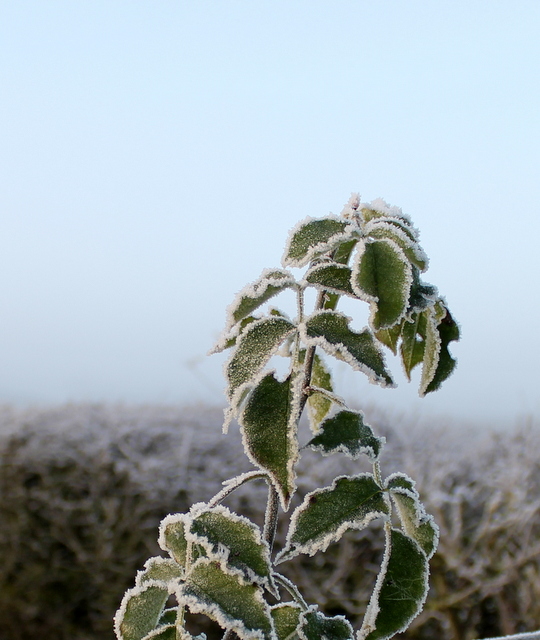
Hoar frost on rose leaves
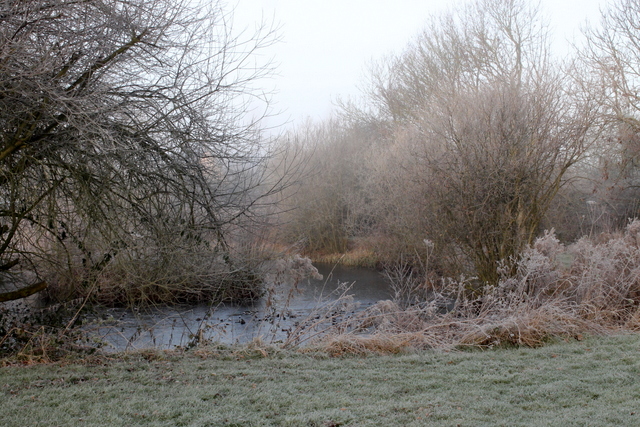
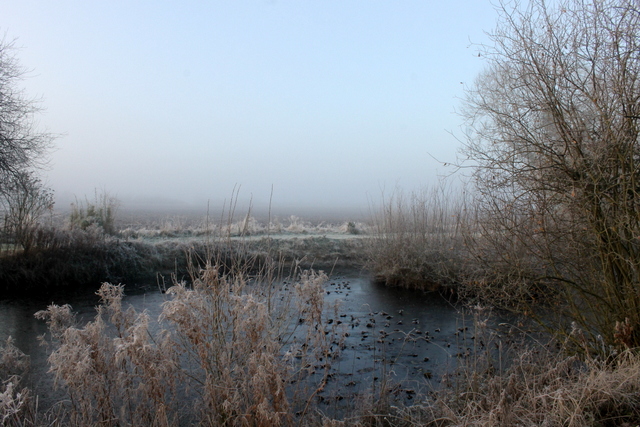
Our big pond
Frost and fog
Frost and fog
Richard and I went out for a walk across the fields on New Year’s Eve. The weather was very gloomy and I didn’t find much to photograph.
View across the fields
View across the fields
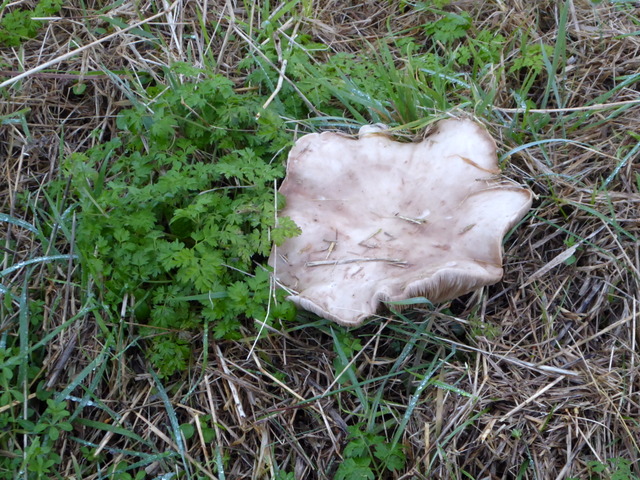
Yet another view! Note the large toadstool – bottom right of the photo.
The large fungus!
And that was my December which also included Christmas celebrations with much cooking and baking, a lot of driving about, lots of shopping and an amazing amount of housework!
This, as promised in my previous post, is the first of my ‘highlight’ posts in which I will let you know some of the things we managed to do this year and will provide photos and links when and where necessary.
Just after Easter we went to the wedding of my dear friend Wendy and her husband John’s daughter Jennifer to her fiancé David. The wedding took place in the lovely church of St David in the village of Groes Faen in south Wales. We were delighted to be included in their family celebration, just as we had been when Jen’s older sister Vicky (my God-daughter) was married a few years ago. The reception was at the Pencoed House Estate, a beautiful manor house in lovely grounds. I was fortunate to be seated next to Wendy’s mother-in-law, Rene; she and her late husband Don had been so kind to me and Alice when my first marriage broke up. I was so sorry to hear that she died just a few weeks ago. I had been unable to take any photos at the wedding so was very pleased to receive a thank-you card from Jen and David which had photos from their wedding on it. I have scanned it and chosen one of the photos but it hasn’t come out very well.
ooOOoo
This next gallery of photos is just a reminder of what we have to look forward to in the spring!
Bluebell wood
Bluebell wood
Bluebell wood
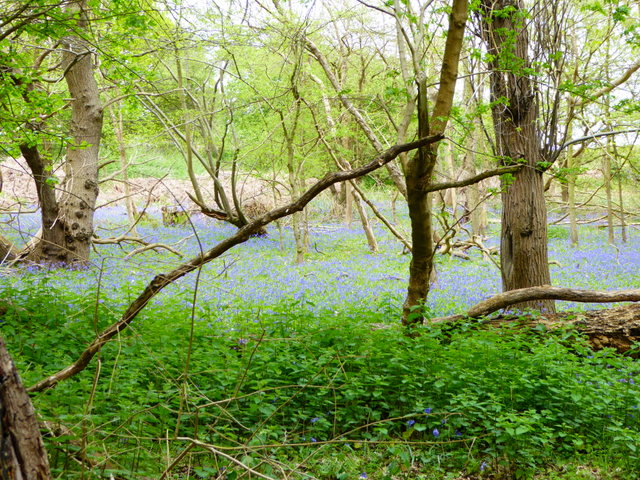
I love bluebells (Hyacinthoides non-scripta) so I took a little detour on my way home from my mother’s house at the beginning of May so that I could see the flowers just outside the village of Withersdale Street.
ooOOoo
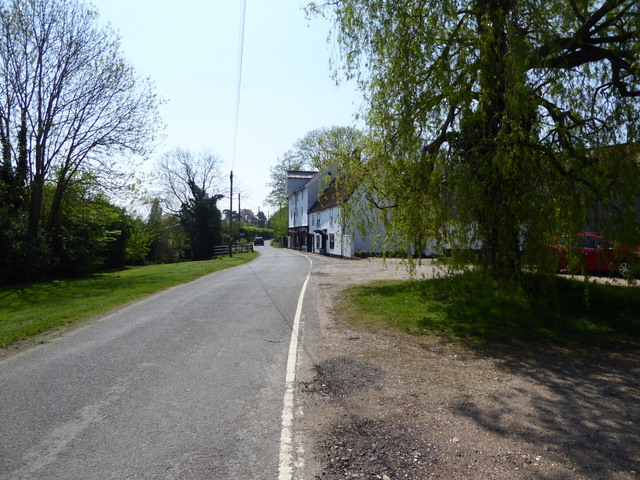
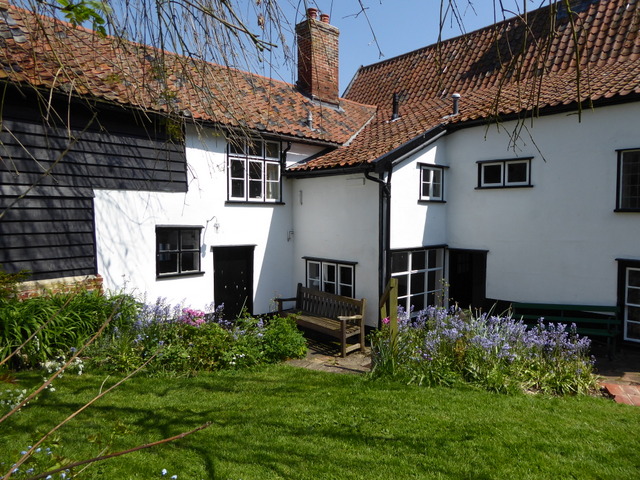
I have mentioned Pakenham Watermill before in my blog. It is where we go to buy the best wholemeal flour which I use to make bread.
Pakenham Watermill
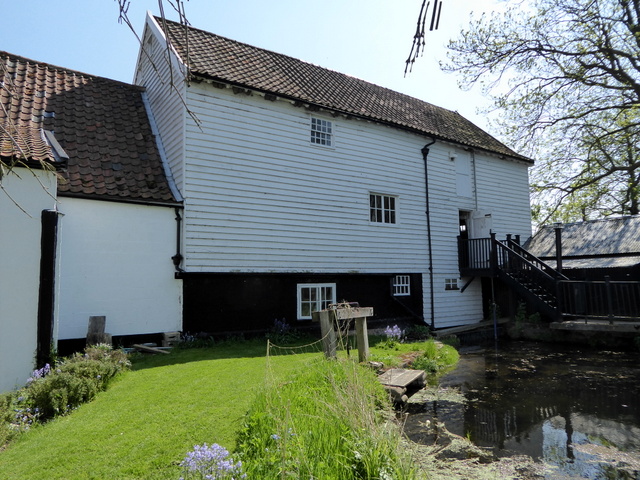
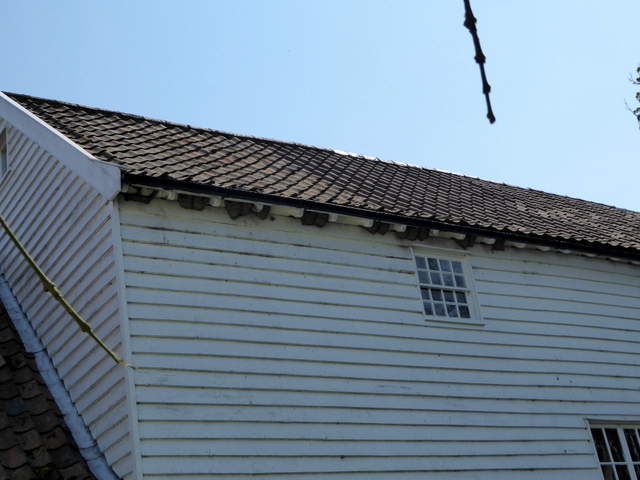
The rear of the building. We visited on a perfect morning in May.
The mill with mill-pond
There are lots of House martin (Delichon urbica) nests under the eaves
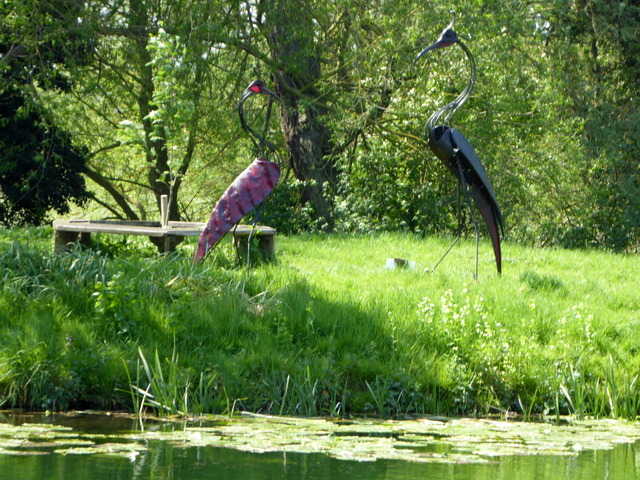
Bird sculpture in the garden
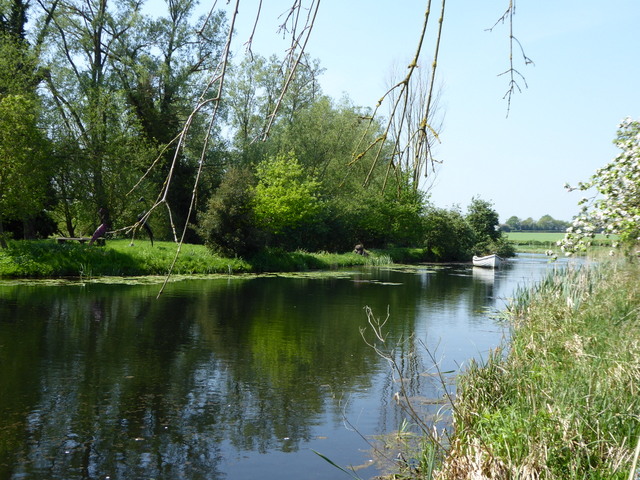
The mill pond
ooOOoo
At about this time I visited Minsmere RSPB Reserve as I wanted to buy something from their shop. While I was there I thought I would quickly walk through the woods to see what I could see.
Bluebells again!
Bluebells
Blue bluebells and white bluebells!
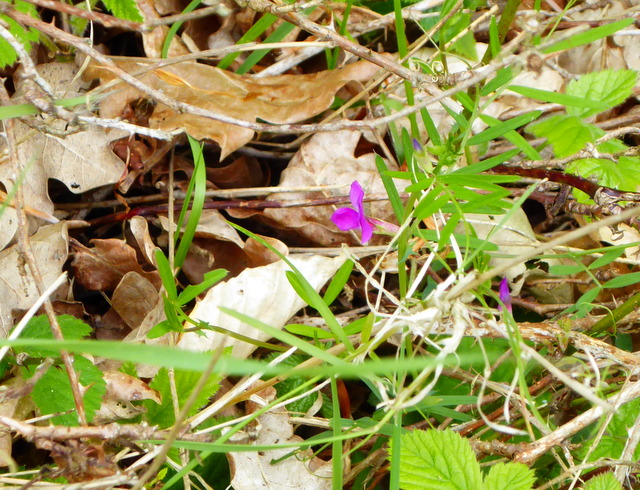
Common vetch (Vicia sativa)
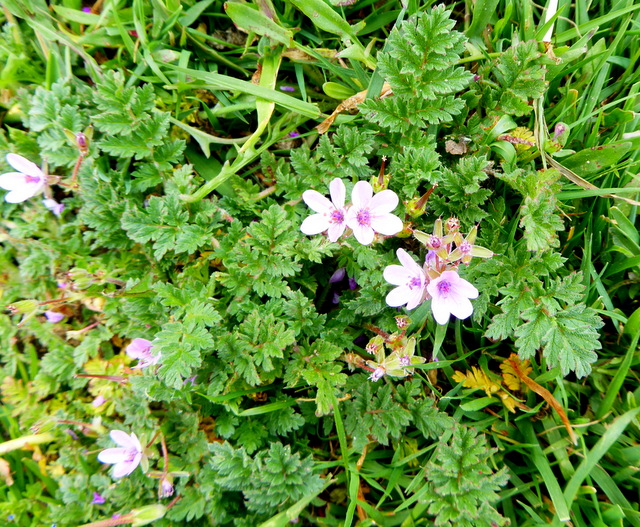
Common stork’s-bill (Erodium cicutarium)
I don’t remember ever having seen this flower before despite it being ‘common’. The seed-heads can be seen next to the flowers and their shape gives the plant it’s name.
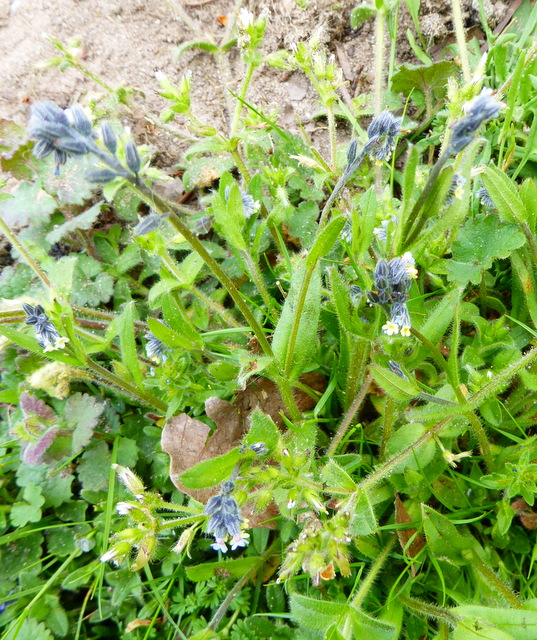
Changing forget-me-not (Myosotis discolor)
The flowers are tiny and very difficult to photograph. When they first open they are yellow but soon change to blue. The plant especially likes to grow on sandy soil.
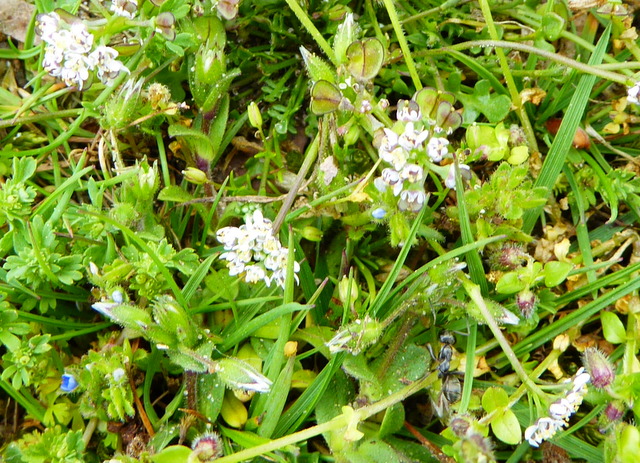
Shepherd’s-cress (Teesdalia nudicaulis)
This is another plant I don’t remember having noticed before, but that is not surprising because it is very low growing and not especially exciting to look at. You can see a wood-ant (10 mm long) towards the bottom right of the photo which gives you some idea of the size of the flowers which are about 2 mm across – two of the four petals of the flower are longer than the other two. The seeds are heart-shaped and a few can be seen at the top of the photo. The leaves in the basal rosette are lobed and can also be seen at the top-centre. Their shape reminds me of pasta servers.
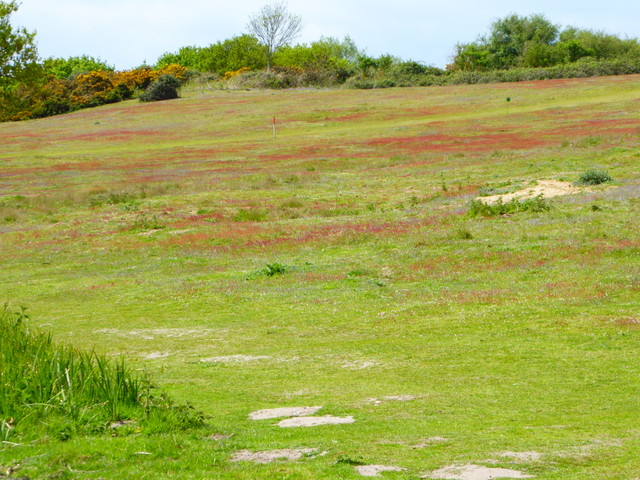
Common sorrel (Rumex acetosa) creating red patches on the rising ground. Gorse (Ulex europaeus) can be seen flowering in the bushes on the sky-line.
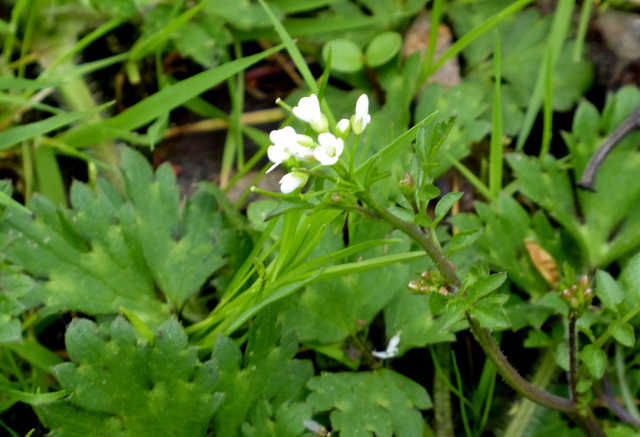
Wavy bitter-cress (Cardamine flexuosa) – so-called because it’s stem is wavy rather than straight!
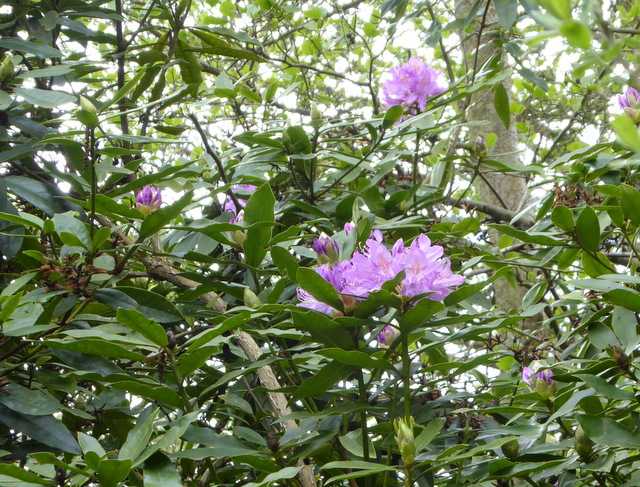
Rhododendron (Rhododendron ponticum)
Rhododendron has naturalised and become invasive in many places. It is unwelcome as it reduces biodiversity and is very difficult to eradicate because it produces new shoots from its roots. This link speaks more about the plant.
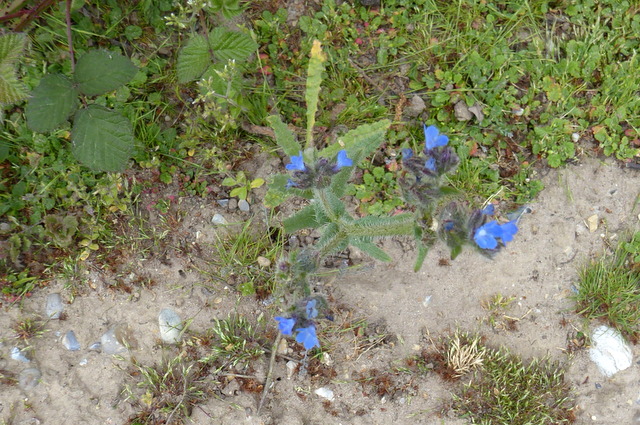
Bugloss (Anchusa arvensis)
This plant is very hairy and has interesting wavy-edged leaves. The flowers are a lovely intense blue colour.
ooOOoo
Elinor wasn’t able to join her art and design group on their trip to London in April so a few weeks later Richard and I took her there ourselves. We visited the Victoria and Albert Museum and Elinor chose to study the exhibits in the cast works gallery and the sculpture galleries.
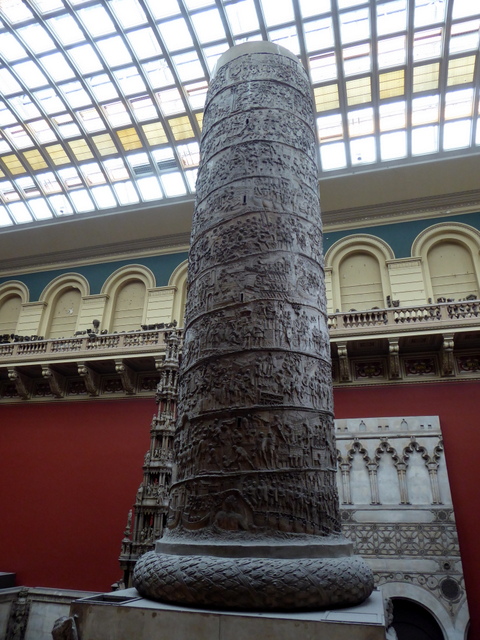
Trajan’s column – lower
Trajan’s column – upper
Someone took a plaster-cast of the whole of Trajan’s column! The column is 30 m / 98 ft tall (with the pedestal it is 35 m / 115 ft tall). Its diameter is 37 m / 12.1 ft. This cast is now invaluable to scholars because the original column has become very weathered and the figures cannot easily be studied.
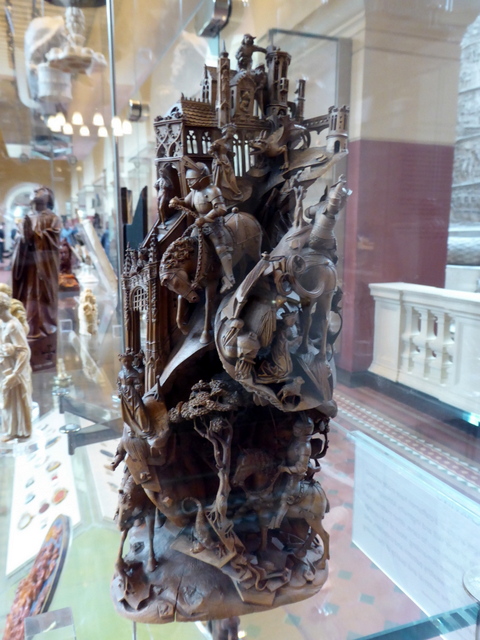
I love this medieval carving from Germany! The details of the knight’s journey are exquisitely worked. There are trees, people and small creatures, buildings, a dragon and a princess to be rescued! It was difficult to get a decent photo because of the reflections off the glass case. I also forgot to make a note of the artist and couldn’t find the piece when I went on the museum’s website.
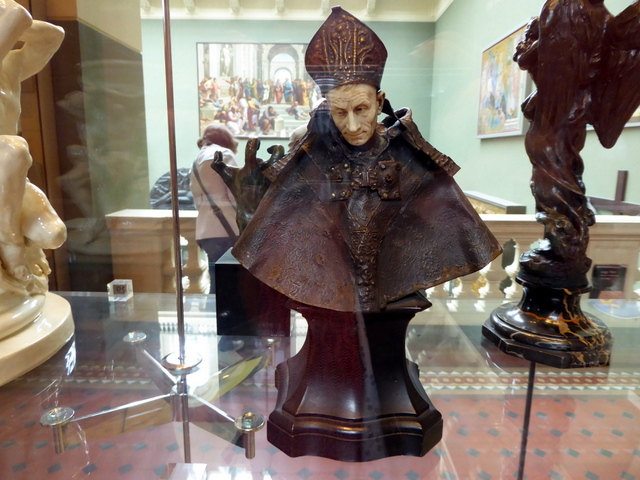
‘A Bishop Saint’ by Sir Alfred Gilbert 1899. This bishop’s gentle expression appealed to me very much.
‘The Virgin with the Laughing Child’ probably by Antonio Rossellino ca. 1465. I could look at this statuette for ever! It is so intimate and loving! Look at the way the mother is holding her little boy on her knee with his leg between her forefinger and middle finger, her other hand on his tummy and his hand on hers.
After leaving the museum we decided to walk to Hyde Park and relax there for a short time before catching our train home.
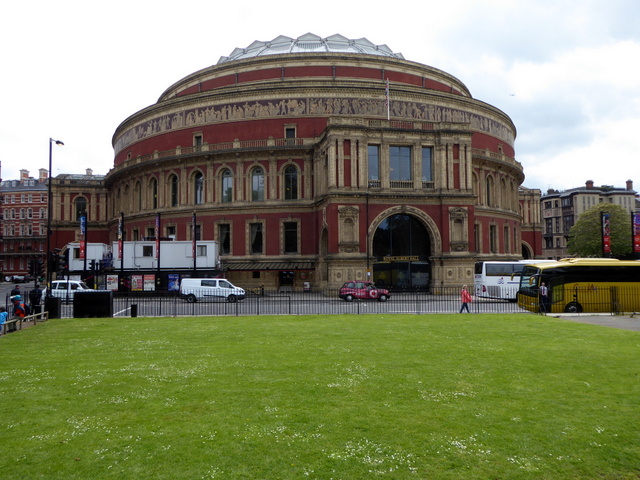
The Royal Albert Hall – a beautiful building and an excellent concert hall
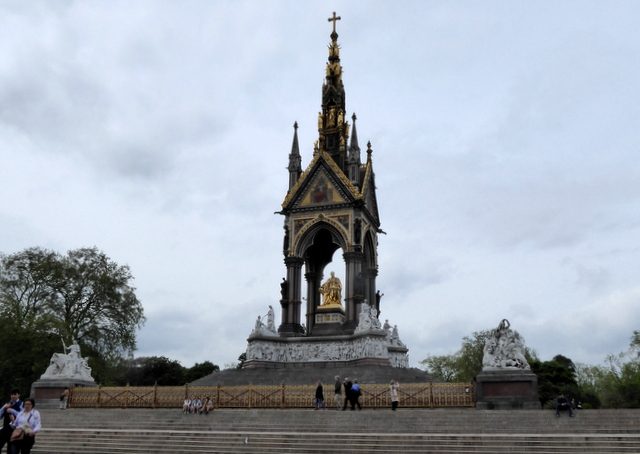
Opposite the Royal Albert Hall is the Albert Memorial
ooOOoo
That’s it for the time being! I will leave you with my music choice, ‘This Is How It Feels’ by Inspiral Carpets, remembering Craig Gill (drums) who died on Tuesday 22 November 2016
The day following our climb up Hen Cloud was very wet and chilly. We did a little shopping and visited the Book Barn at Brierlow Bar where we both found some interesting books to buy. We spent the rest of the day resting and reading. Richard was feeling unwell as he often does on a Saturday which is when he takes a once-weekly tablet for his osteo-porosis.
The next day was our last full day in the Peak District. It began with rain but by lunchtime the weather was beginning to brighten up. We went into Leek and indulged in some more oatcakes and on our return to the caravan we were pleased to see that the awning was dry and so we emptied it and took it down while we could. We drove to Ramshaw Rocks and took our last walk in the Peaks this year.
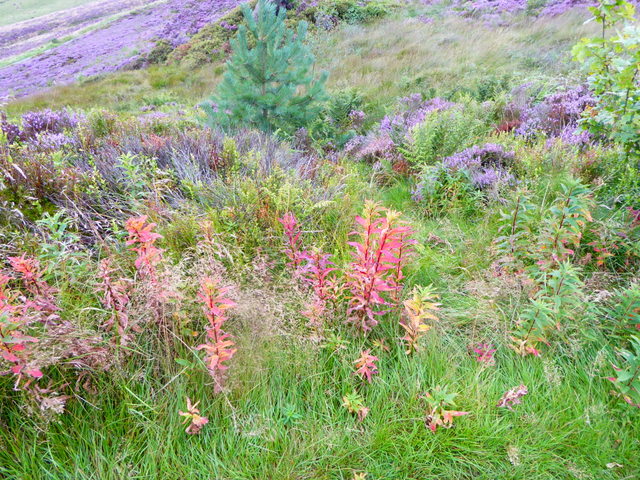
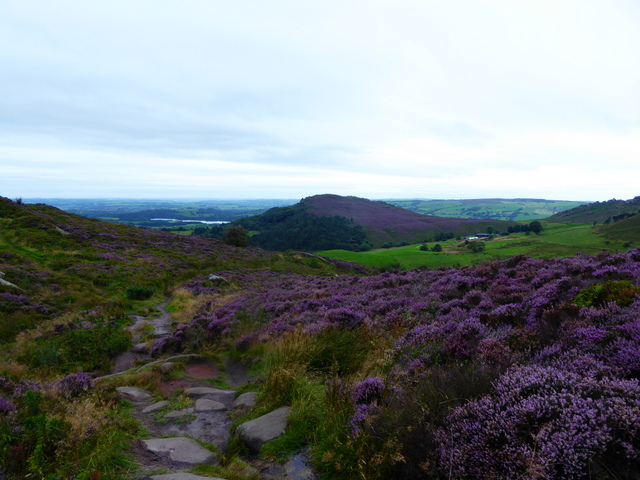
I had to take a photo of the colourful plants we saw at the beginning of our walk
The Rosebay Willowherb (Chamerion angustifolium) had started to change colour because of the cooler temperatures. The bright green grass, the cooler green of the fir tree, the purple heather and the bright pink of the willowherb looked so good together.
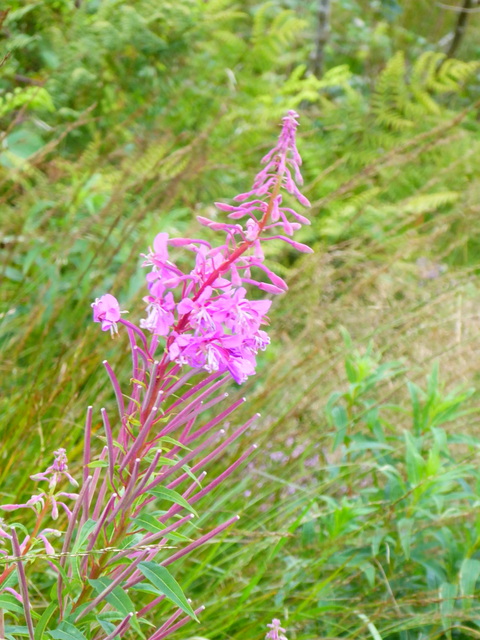
There was still some Rosebay Willowherb in flower
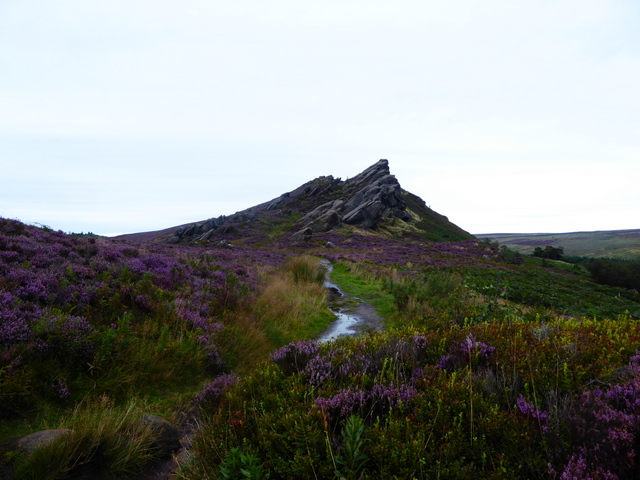
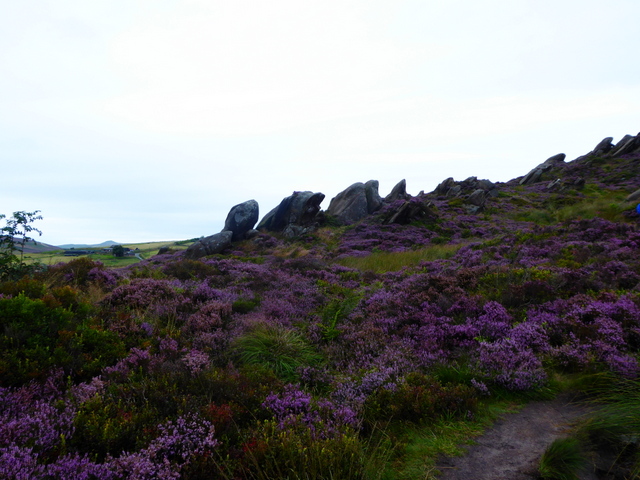
Ramshaw Rocks
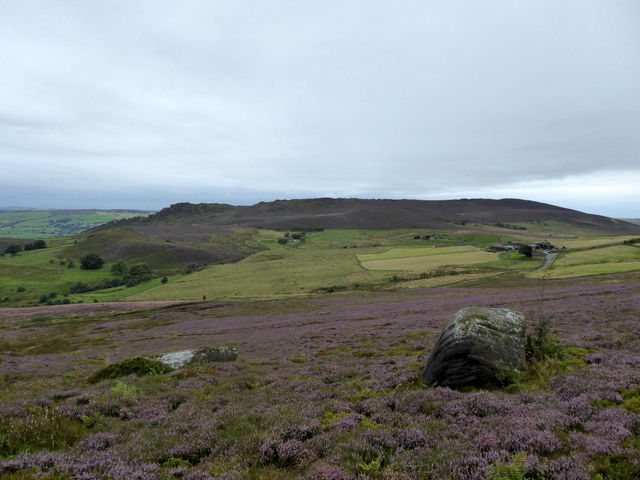
The purple hill in the centre of this photo is Hen Cloud where we had climbed a couple of days before
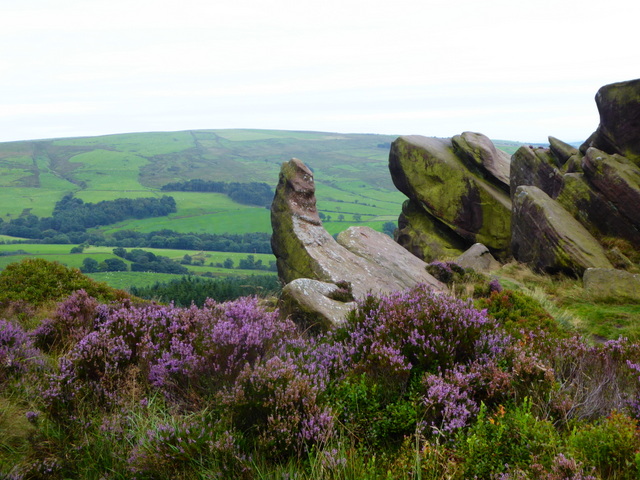
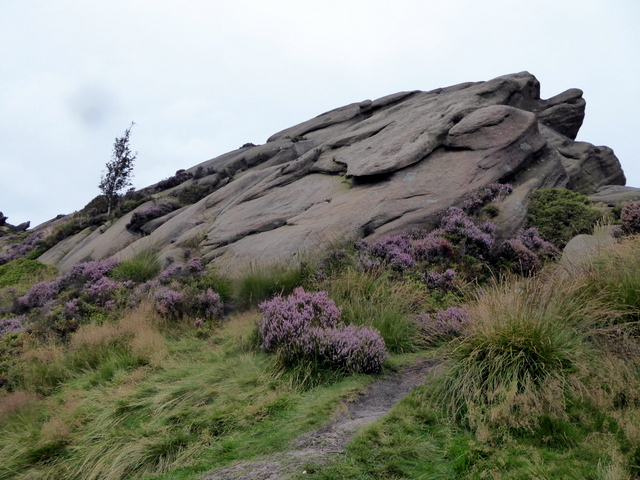
I love the way these limestone rocks have been eroded by wind and rain
The path was a little wet after all the rain we had had.
Ramshaw Rocks
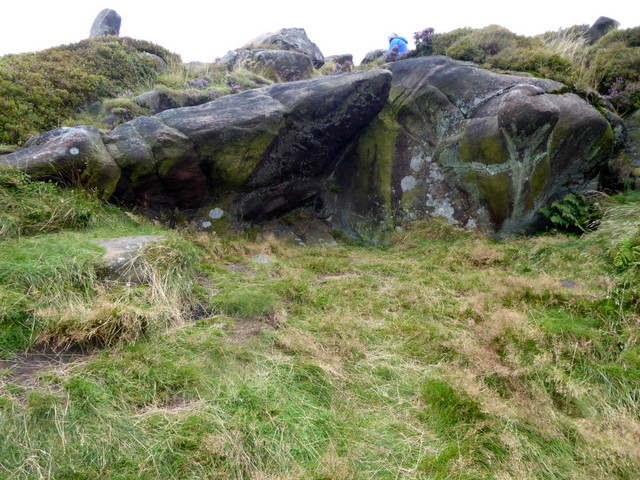
Very strange!
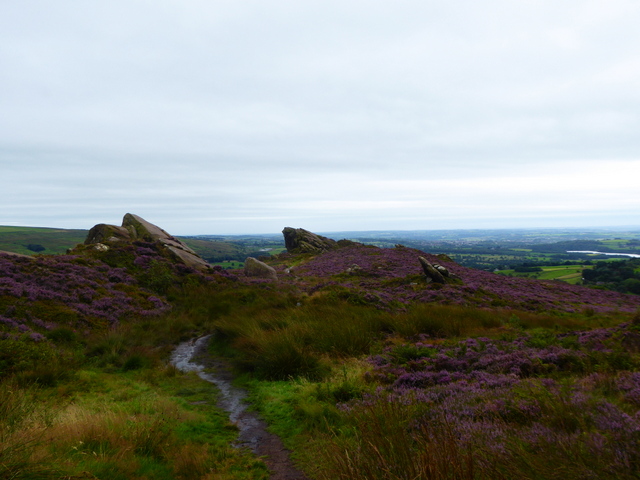
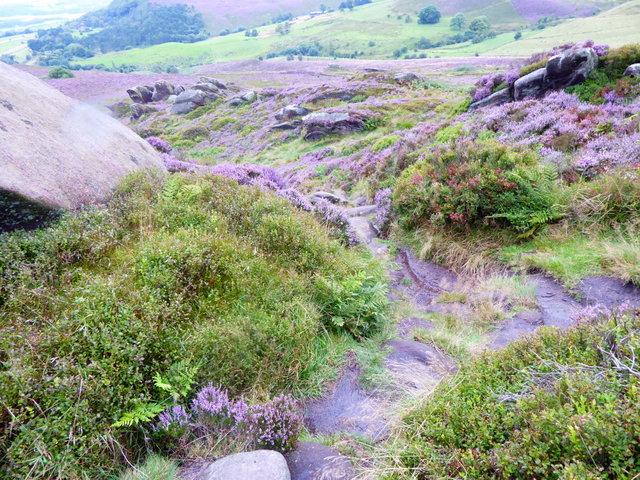
The path
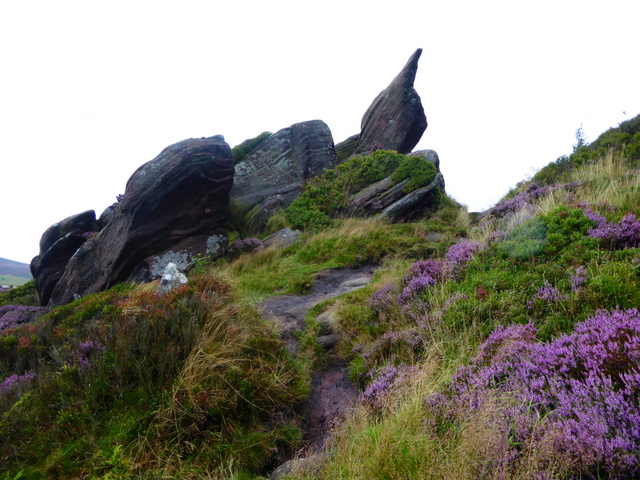
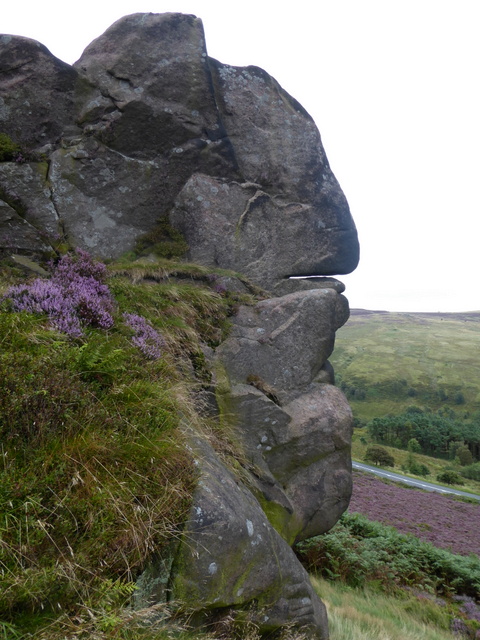
I always think this looks like a pointing finger
Ramshaw Rocks
There was very low light and the rain was never far away during the whole of our walk.
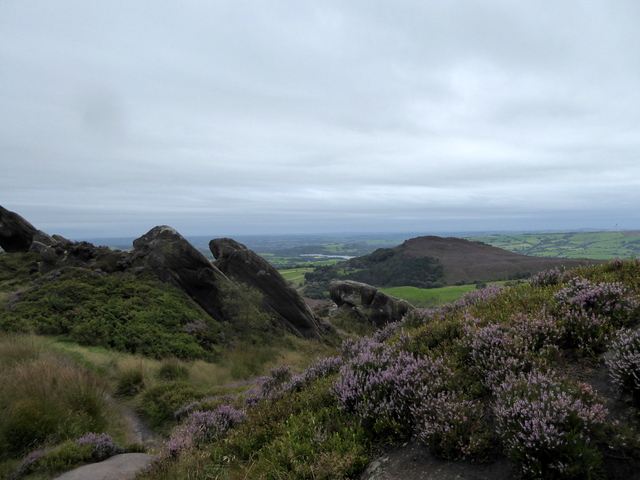
Looking towards Hen Cloud again
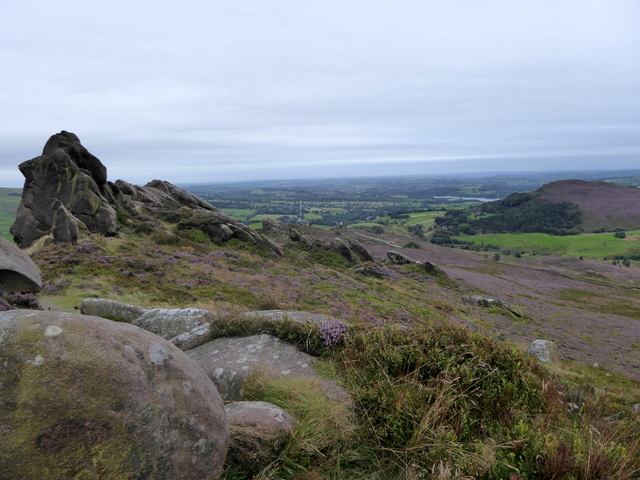
Another view from the rocks
Richard found a pleasant place to sit. Underneath him was a shelter from wind and rain. I can imagine that sheep would like it here in the winter.
Looking down to the road beneath.
Ramshaw Rocks
I call this rock the Top Hat. Those of you who know the 1995 TV adaptation of Pride and Prejudice with Jennifer Ehle and Colin Firth may recognise this rock.
We returned to the car and went back to out caravan to spend our last night away from home. The next morning we set off at 6.00 am to travel to Sheffield to collect Elinor before Alice set off for work at 8.00 am. We took her back to Blackshaw Moor, collected the caravan and went home.












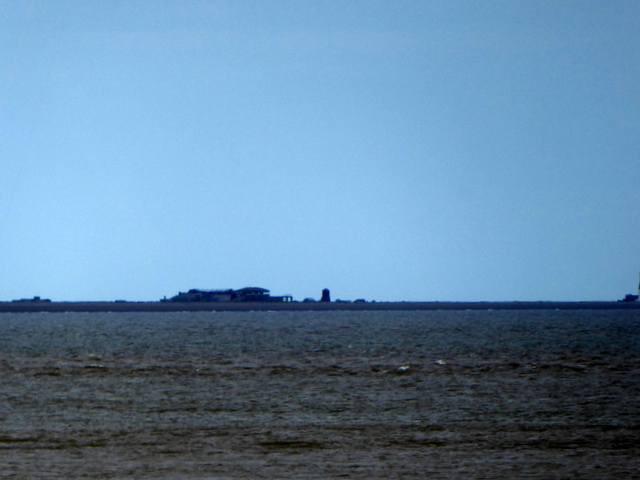
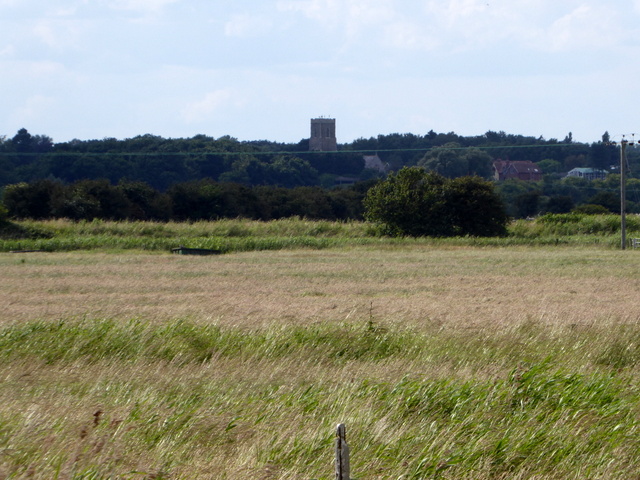














 A Suffolk Lane