• About my Blog
  • GDPR (General Data Protection Regulations) and This Site
  • My Life in a Suffolk Lane

A Suffolk Lane

~ A diary of my life in rural north Suffolk.

A Suffolk Lane

Category Archives: Days out

Oh I Do Like To Be Beside The Seaside

17 Thu Sep 2015

Posted by Clare Pooley in Days out, plants, Rural Diary, wild birds

≈ 34 Comments

Tags

beach huts, beach shop, cannon.Battle of Sole Bay, community radio station, flowers, fungus, GunHill, herring gull, high tide, lichen, life guards, pier, promenade, sand dunes, sea, seaside, shrubs, Southwold, Southwold & Walberswick ferry, Suffolk

My last but one post featured a walk we took on Dunwich beach.  This post is about a walk at Southwold.

As most people who live near the sea know, the best time to visit the beach is after the end of the school holidays.  There are fewer visitors and there’s a greater chance of finding somewhere to park your car.  The sea is warmer than at the beginning of summer and with luck the weather is good too.

We have been having fairly changeable weather this summer so when we saw that the weather was bright and breezy the other Saturday afternoon we decided to make the most of it and go to Southwold.  When we arrived we saw that the tide was right in and the northerly wind was causing the sea to be quite lively.
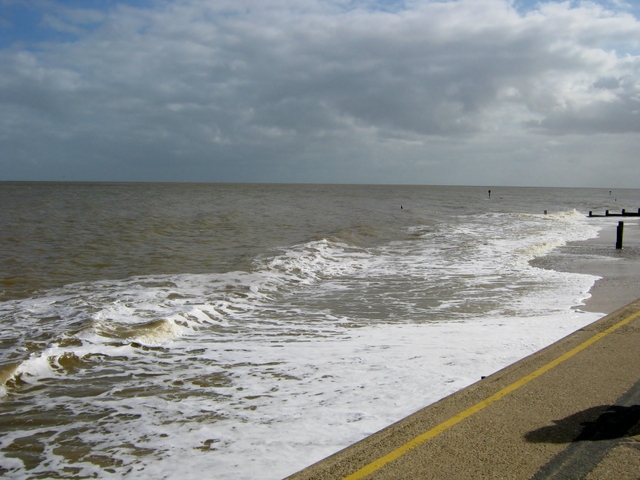
High Tide

High Tide

The waves were rolling in round the base of the steps that go down to the sand so we couldn’t get onto the beach just yet.
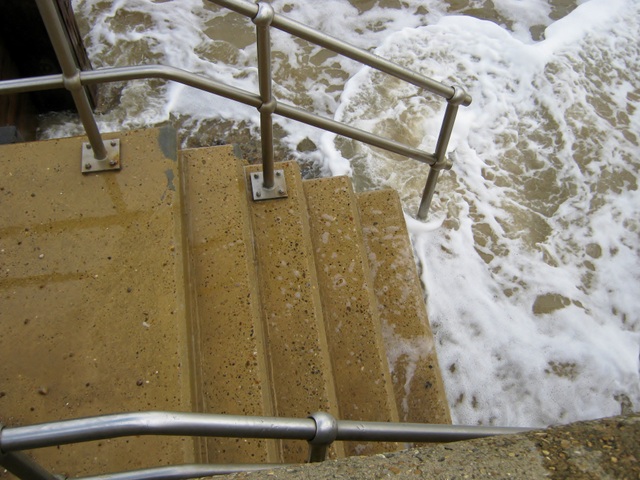
High Tide

Stairway to the sea

We walked along the promenade while the tide started to recede.
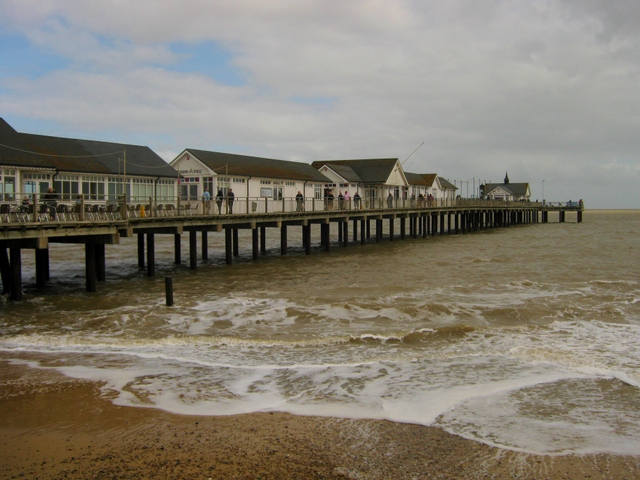
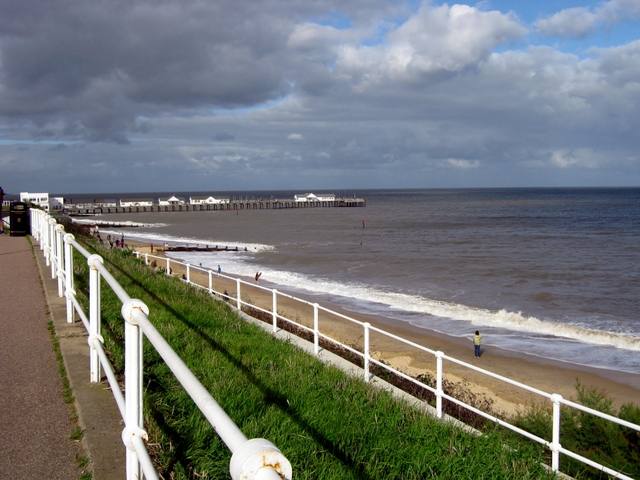
Southwold Pier

Southwold Pier

As I mentioned in a former post about Southwold, the pier was restored a few years ago.  It is fun to walk out there when the tide is in and see the waves splashing just under your feet.  There are places to sit and watch the waves and there are places to buy food and drink and shelter from the wind.  The end of the pier is very popular with fishermen.  This is a link to the Pier Cam which will show you a little of what we like to see.  There isn’t much to see at night except the lighthouse flashing but during the day-time it’s quite interesting and you get to find out what the temperature is on the coast too.  Don’t forget the time difference if you live overseas!

End of the Pier

End of the Pier

There seemed to be a number of young Herring Gulls about. (Larus argentatus)
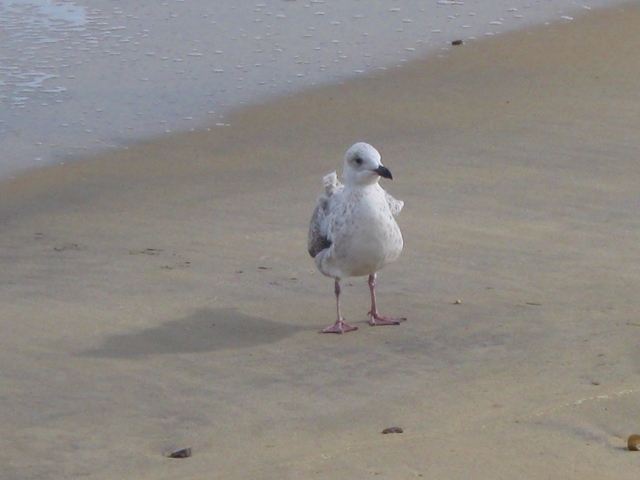
Immature Herring Gull
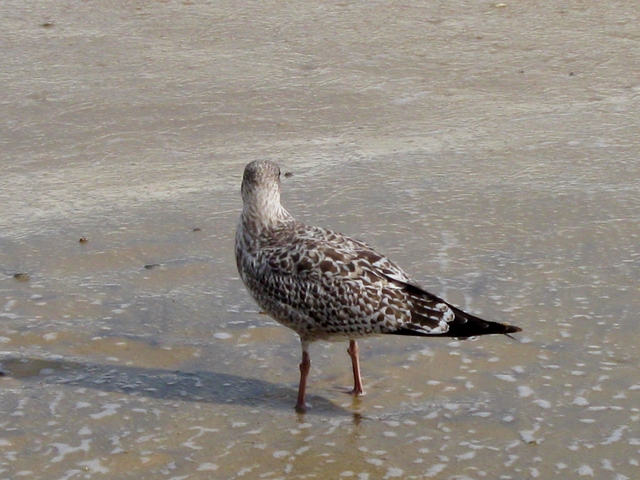
Immature Herring Gull
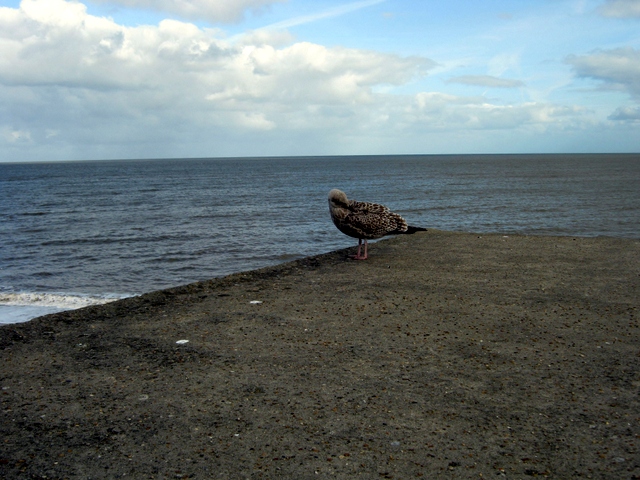
Immature Herring Gull

Immature Herring Gull

Immature Herring Gull

Immature Herring Gull

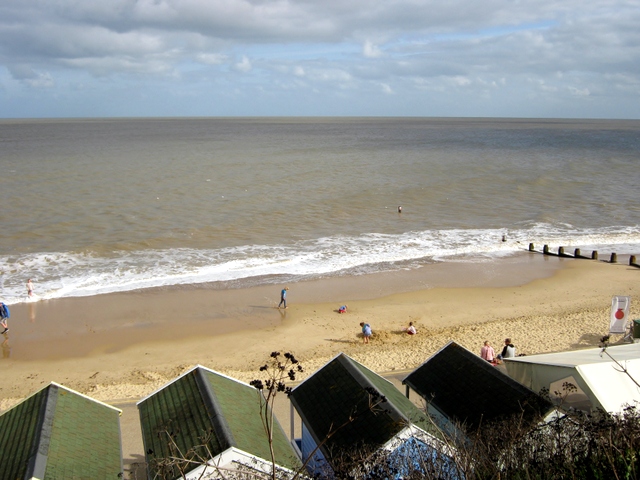
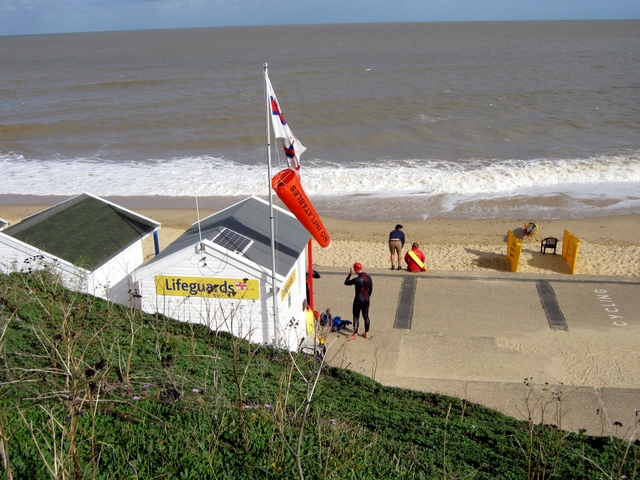
It was a really pleasant walk along the front with other promenaders.  As the sand started to appear people ventured onto the beach and the life guards marked out the safe bathing areas.  Huddled in coats and blankets, the beach hut owners were sitting with the doors opened as they read or drank hot tea or coffee.
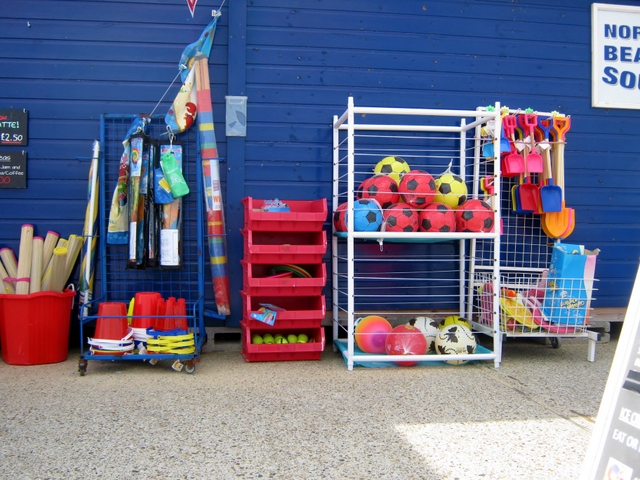
Beach Shop
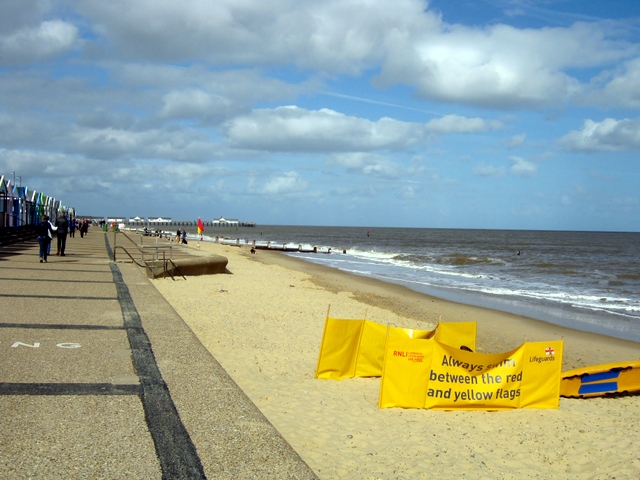
Beach Shop

Southwold Beach

Southwold Beach

Southwold Beach

Southwold Beach

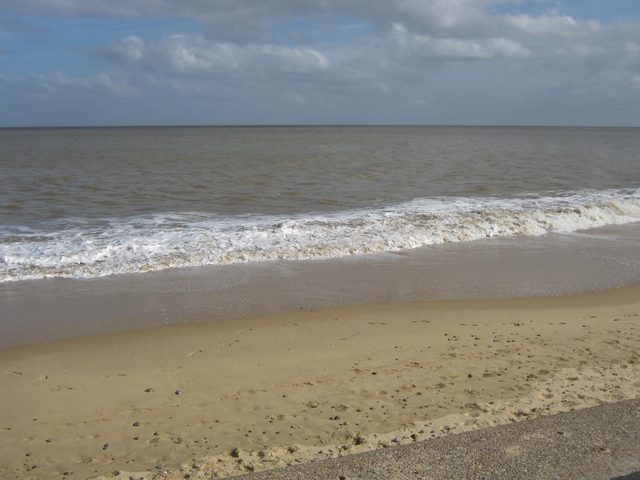
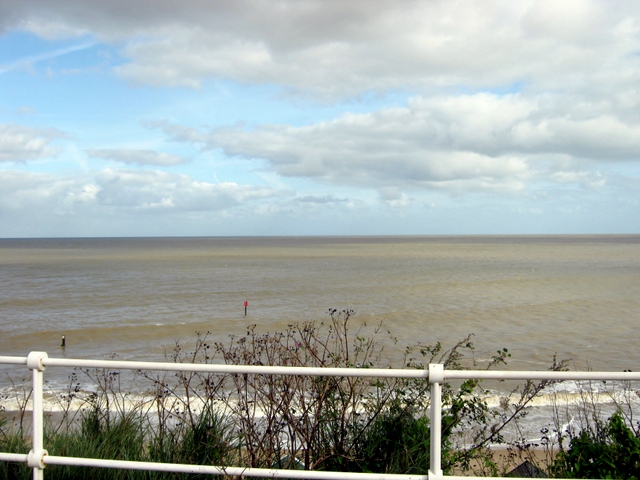
Elinor bewails the fact that our sea isn’t blue.  The North Sea is not deep and the sand on the sea-floor gets churned up especially in stormy weather.  Our sea is brown most of the time.

At the end of the prom. the path goes up the slope to Gun Hill.
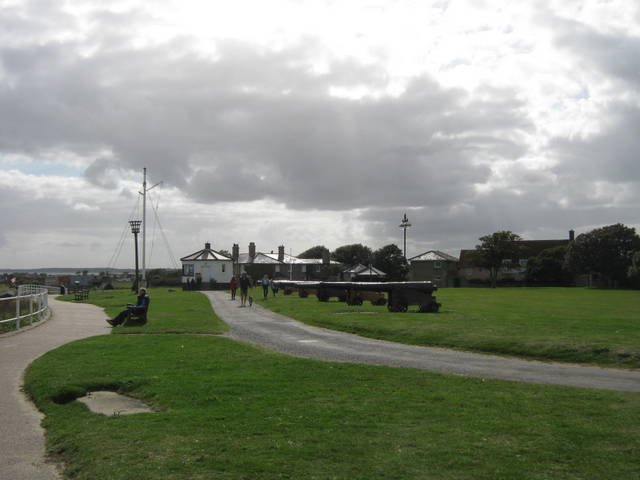
Gun Hill

Gun Hill

On the 28th May 1672 a famous sea battle was fought just off-shore from Southwold.  This was the Battle of Sole Bay when the English and French fleets clashed with the Dutch fleet.  It was the first naval battle of the 3rd Anglo-Dutch War and ended with a tactically indecisive result though a strategic Dutch victory.  The English and French fleets combined had a total of 71 warships and the Dutch had 61 vessels and the total number of men taking part was said to have been 50,000.  There was great loss of life.  James, Duke of York the brother of King Charles II was Admiral of the English Fleet and took up residence for the duration of the battle in Sutherland House in the town.
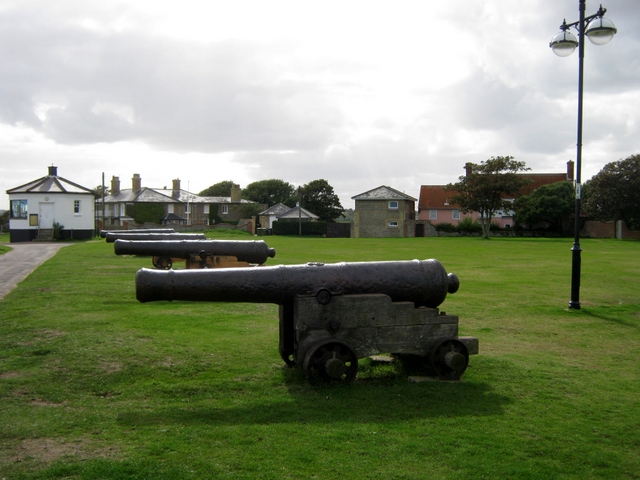
IMG_5627Cannon on Gun Hill

Cannon on Gun Hill

There are six 18lb cannon on the green and were given to the town in 1746 by The Royal Armouries as protection to shipping against raids.
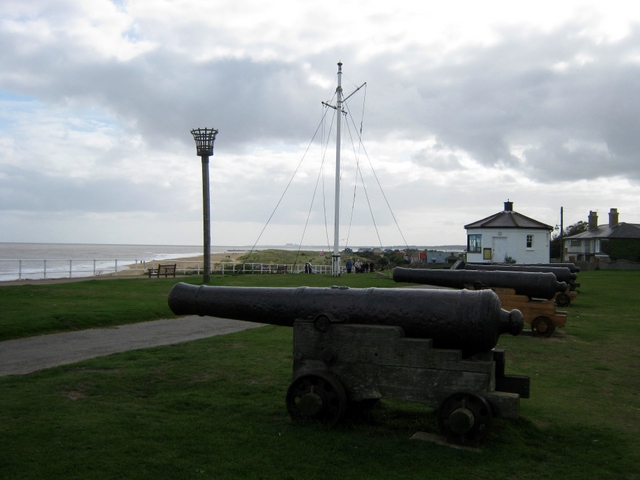
Gun Hill

Gun Hill

Their last known firing was in 1842 to celebrate the then Prince of Wales birthday.  Southwold was bombed during the First World War because the German army considered that Southwold might be a fortified place because they had seen the cannon.  The cannon were buried for safety during the Second World War!
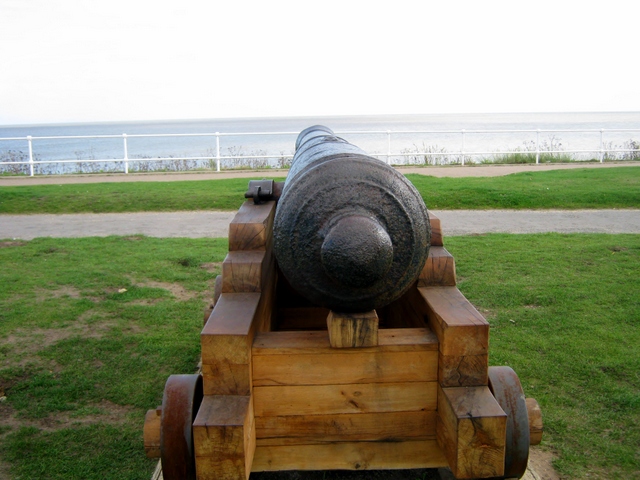
Cannon
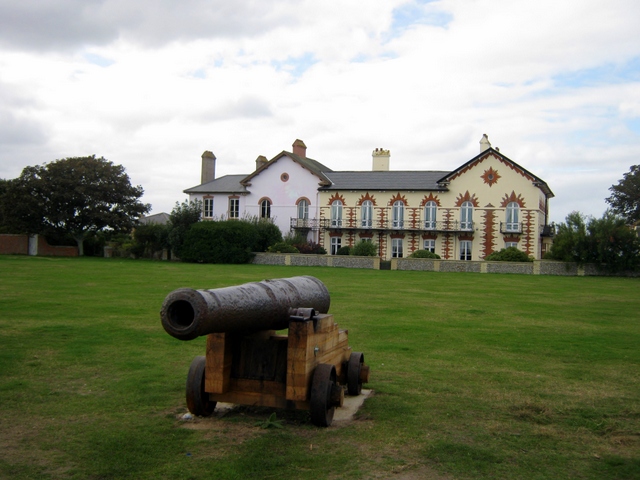
Cannon

Cannon

Cannon

Another feature of Gun Hill is the radio station building.
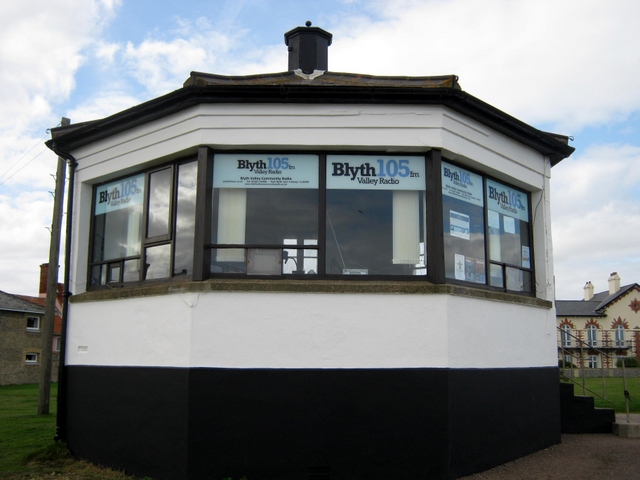
Community Radio Station

Community Radio Station in the Casino

The primary radio transmitting studio is located in an old WWII bunker in the grounds of St Felix School Reydon, a village next to Southwold but further inland.
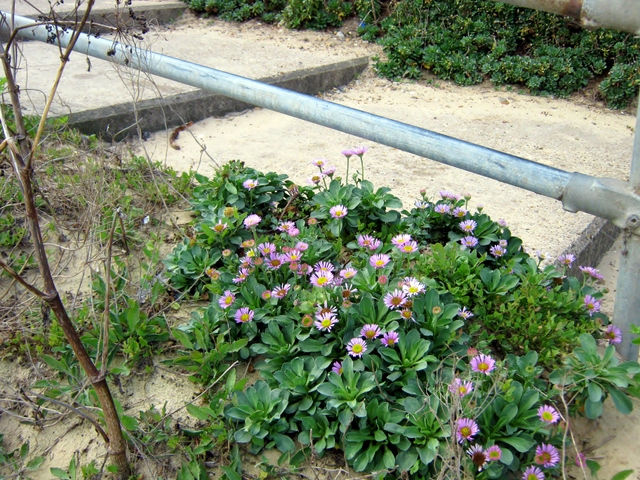
Erigeron glauca

Erigeron glauca

A few naturalised garden plants thrive on the slopes up from the beach.
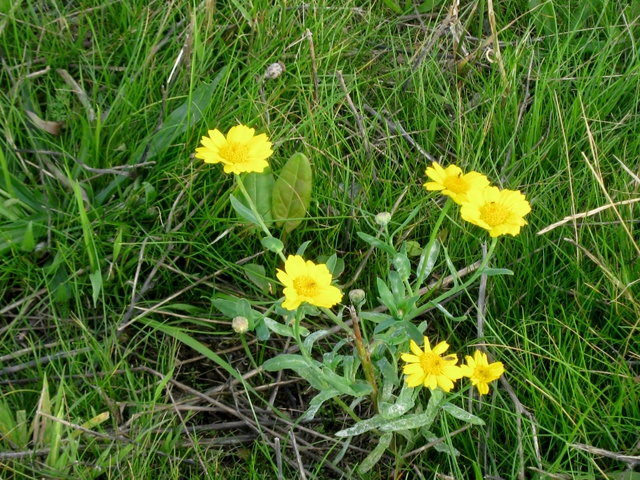
Unknown Yellow Daisy

Unknown Yellow Daisy

I don’t know what this flower is; I see it is suffering from mildew!
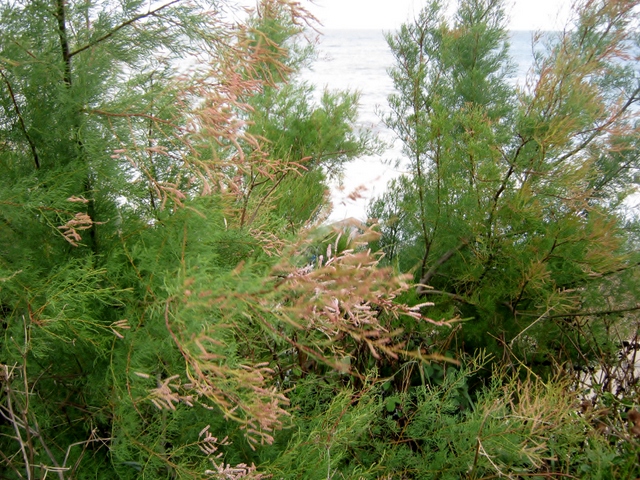
Tamerix

FrenchTamerisk (Tamarix gallica)

These plants are often planted for soil stabilisation or to act as a wind-break.  They aren’t native but have been established here for a long time and do very well on the coast.
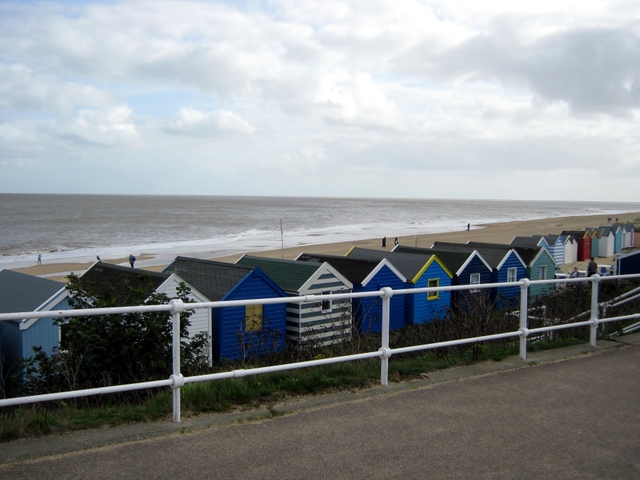
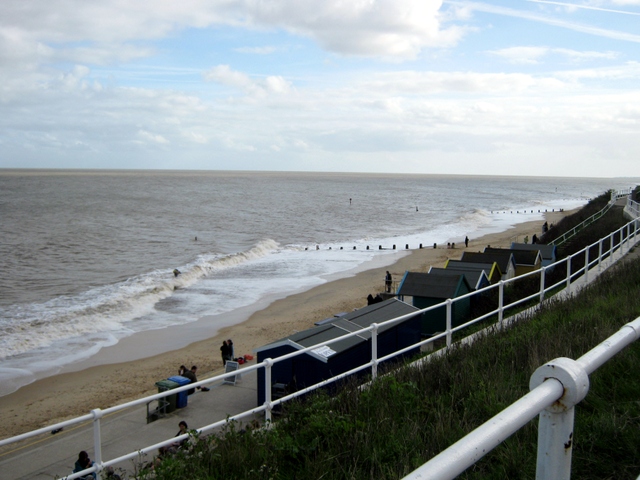
Beach Huts

Beach Huts

There are beach huts all the length of the sea-front.
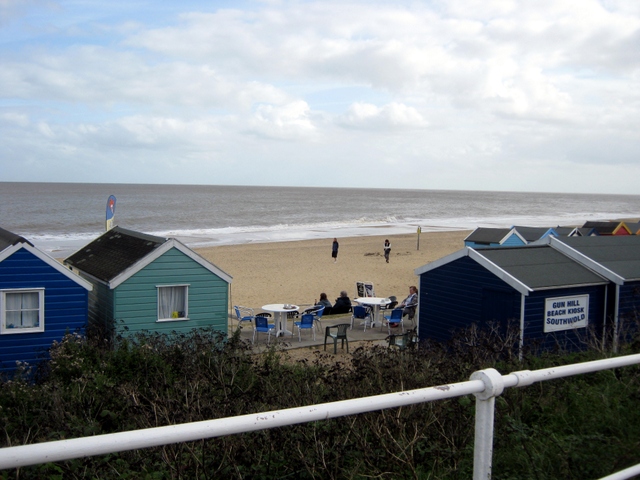
Gun Hill Beach Café

Gun Hill Beach Café

This is one of the two kiosks that sell food and drink.
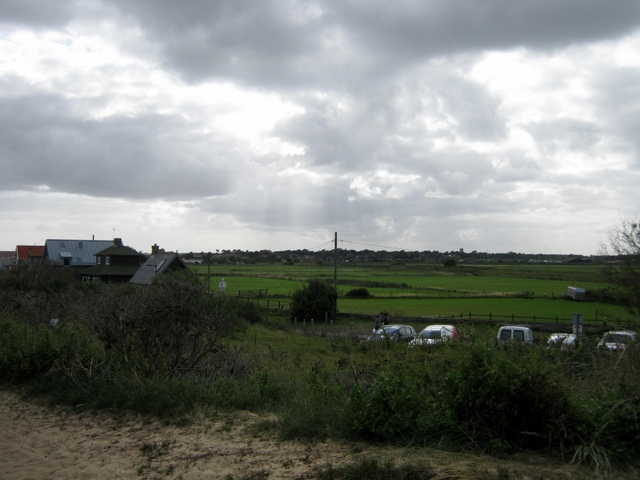
Looking Towards Walberswick

Looking Towards Walberswick

Walberswick is the seaside village next to Southwold going south down the coast.  The two places are separated by the River Blyth as it flows out to sea.  There is a ferry operating during the summer months.
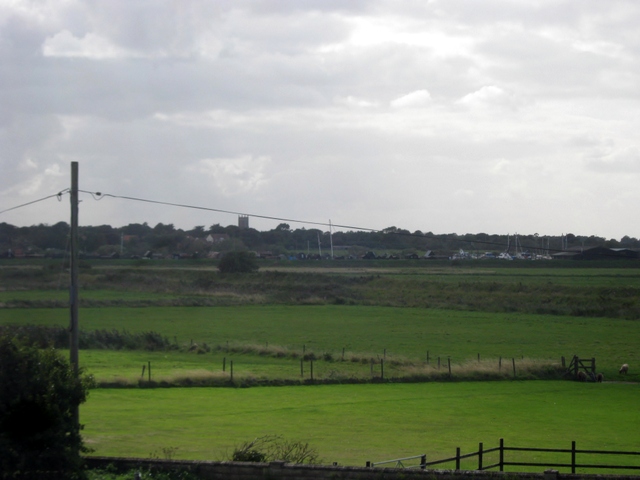
Looking Towards Walberswick

Looking Towards Walberswick

Sand Dunes

Sand Dunes

We thought we might walk through the sand dunes to the ferry.
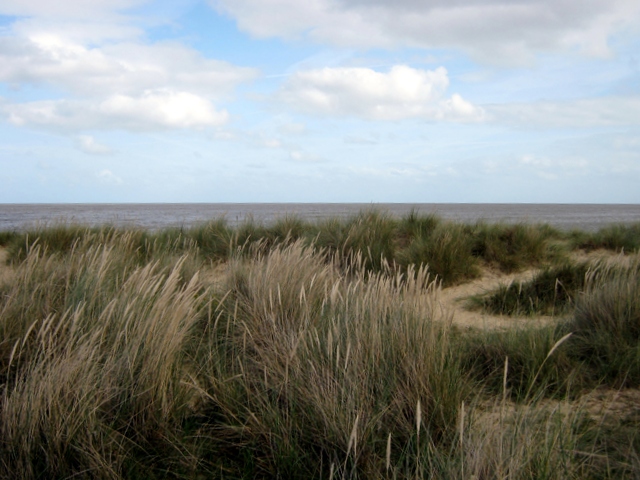
Sand Dunes

Sand Dunes

The Marram Grass (Ammophila arenaria) was bending in the strong wind.
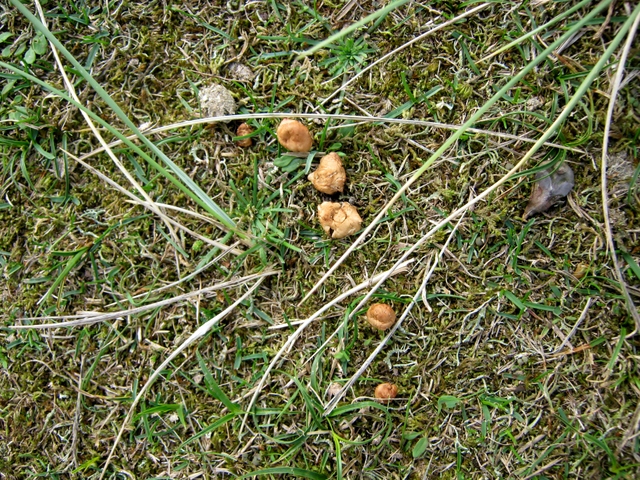
Fairy-ring Champignons

Fairy-ring Champignons (Marasmius oreades)

I found a rather shrivelled fairy-ring.
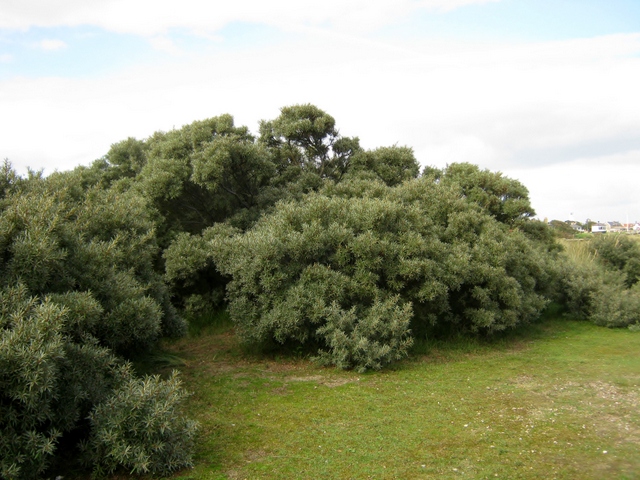
Sea Buckthorn

Sea-Buckthorn (Hippophae rhamnoides)

The tree is small and suckers easily.  It has thorny twigs that have silvery scales that rub off.  The bark is fissured and peeling.
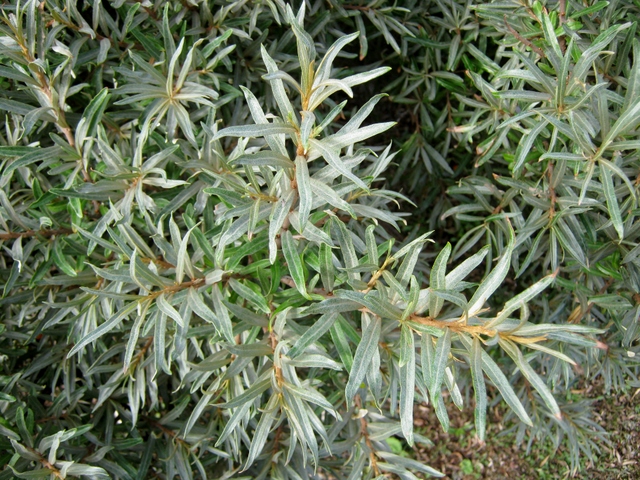
Sea Buckthorn

Sea-Buckthorn

The leaves are long and thin with silvery scales on them.  I couldn’t see any fruits on these trees so they were probably male trees.
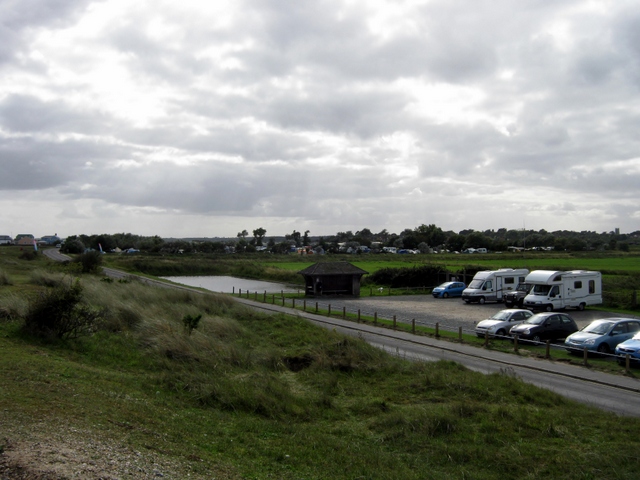
Camp Site

Camp Site

There is a camp-site on the outskirts of the town.

We almost got to the River Blyth but Elinor began to get a back-ache and we had to turn round and make our way back to Southwold.
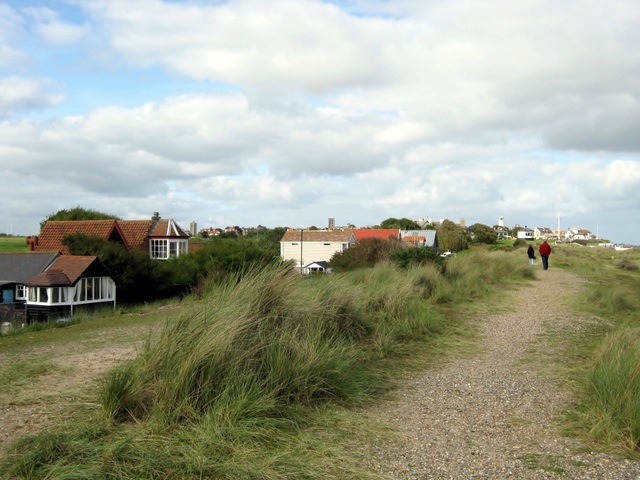
Towards Southwold

Towards Southwold

As well as the lighthouse you can see the tower of St Edmund’s church and the water tower.
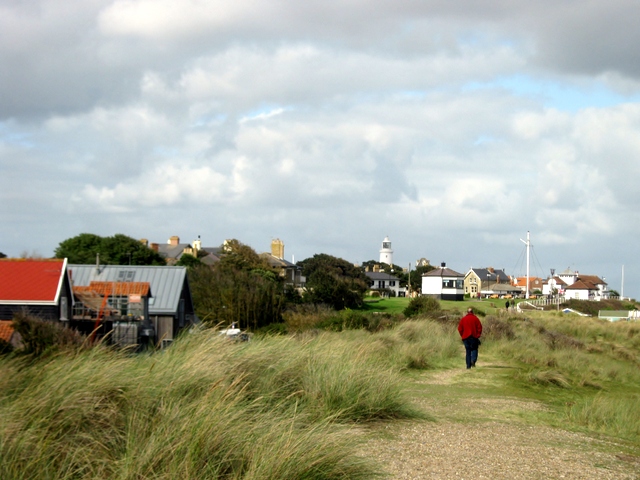
Towards Southwold
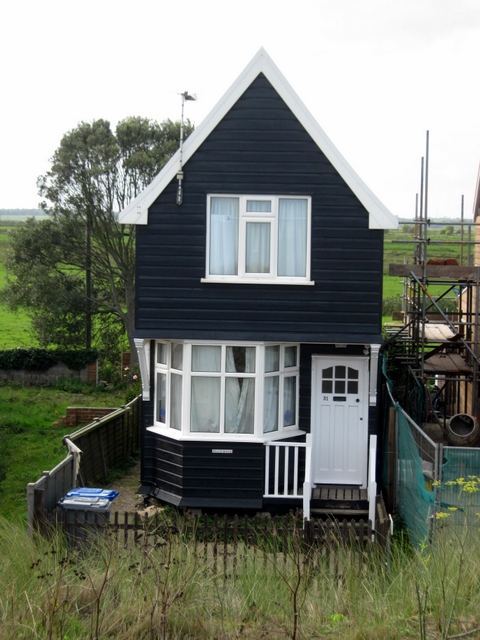
Towards Southwold

Tiny House

Tiny House

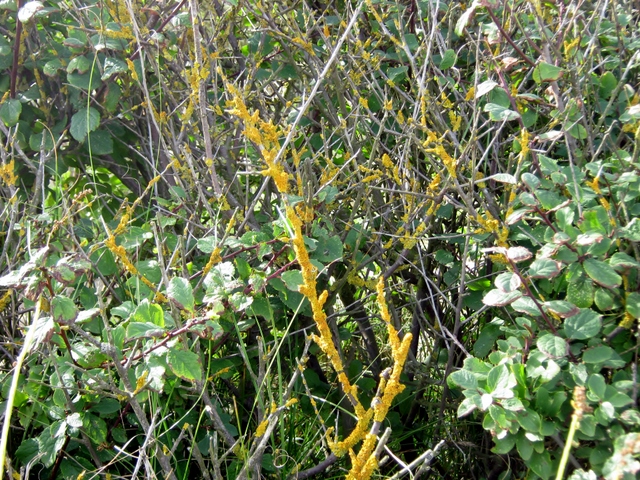
Lichen

Lichen

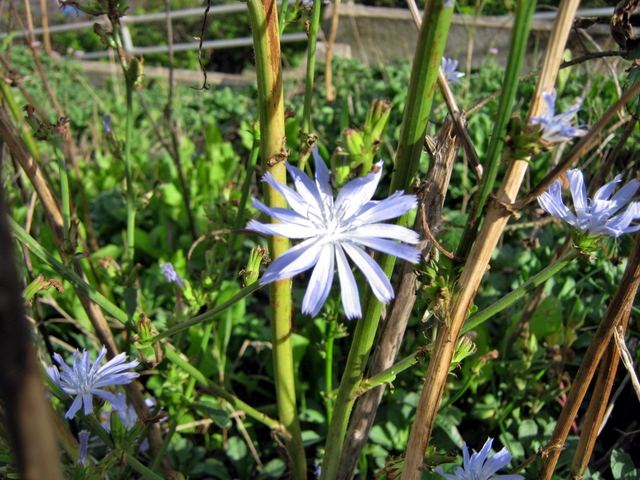
Chickory

Chicory (Chicorium intybus)

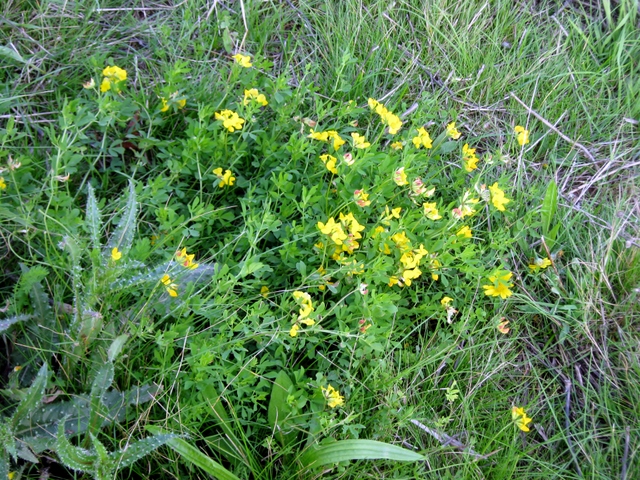
Common Bird's-foot Trefoil

Common Bird’s-foot Trefoil (Lotus corniculatus)
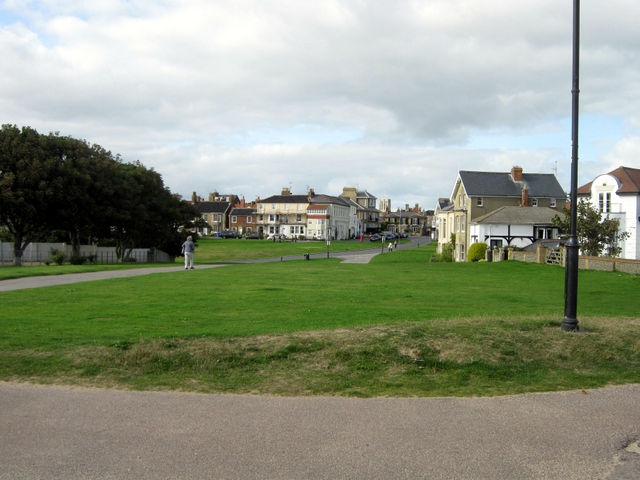
Southwold

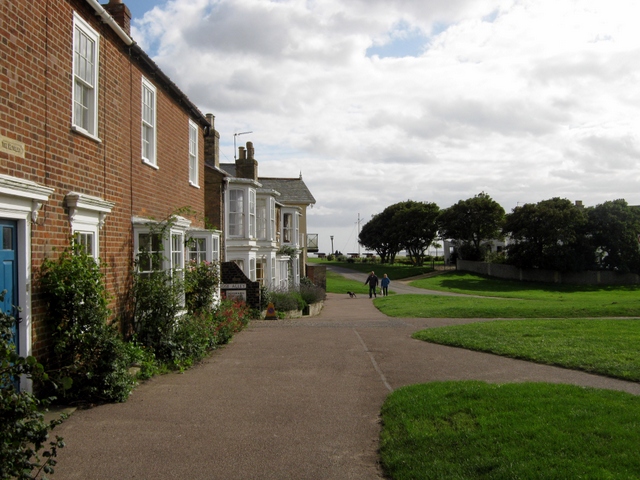
Southwold with one of it’s many greens.
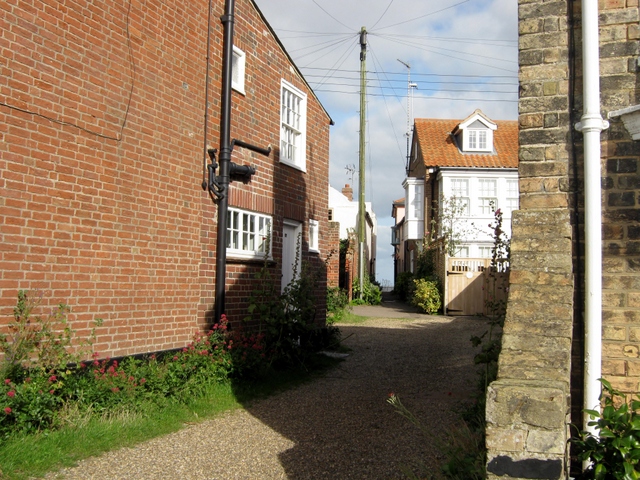
Southwold
Southwold
Southwold

Southwold

Lifeguards

Lifeguards

Southwold Beach

Southwold Beach

Sea at Southwold

Sea at Southwold

Southwold

Southwold
Southwold

Southwold

Southwold

Southwold

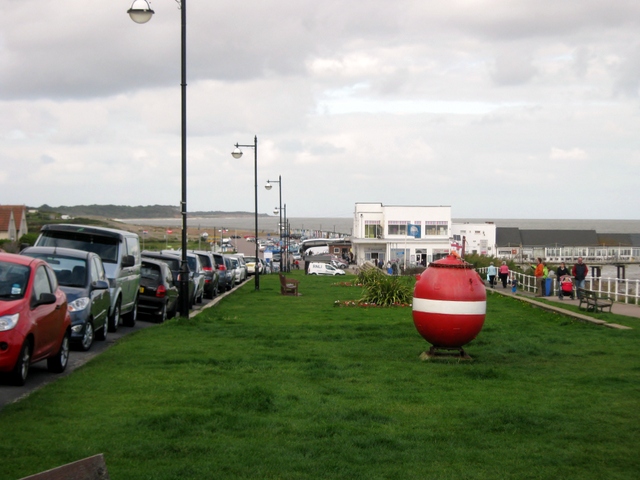
Here we were approaching the pier again and the car park beyond it.  You can also see the two-storey pavillion building at the end of the pier built in 1936.

I hope you have enjoyed this visit to Southwold.

Thanks for visiting!


Share this:

  • Share on X (Opens in new window) X
  • Share on Reddit (Opens in new window) Reddit
  • Share on Pinterest (Opens in new window) Pinterest
  • Share on Facebook (Opens in new window) Facebook
  • Email a link to a friend (Opens in new window) Email
  • Share on Tumblr (Opens in new window) Tumblr
  • Print (Opens in new window) Print
  • Share on Pocket (Opens in new window) Pocket
  • Share on LinkedIn (Opens in new window) LinkedIn
Like Loading...

Endings and Changes

04 Fri Sep 2015

Posted by Clare Pooley in Days out, family, Insects, music, plants, Rural Diary, wild birds

≈ 55 Comments

Tags

family, family life, friends, insects, seashore, wild flowers

This is another diary post.  Before I write anymore accounts of days out and holidays I really ought to tell you about a few things that have been happening lately.

Self-seeded Viola
Self-seeded Viola
Self-seeded Viola
Self-seeded Viola

The saddest event of all is that my mother-in-law died on Thursday 13th August.  She had been in very poor health for some time and had had to move into a nursing home a few months ago.  This made her unhappy but she knew that she was incapable of living on her own any more and was doing her best to come to terms with the changes this entailed.  My brother-in-law had visited her during the afternoon of the day she died and hadn’t been home long when he got a call from the nursing home telling him she had collapsed and the ambulance had been called for.  He telephoned us and said he had been told that there wasn’t much hope that she would survive and we were to prepare for the worst.  He phoned us again a few minutes later to say she had died.

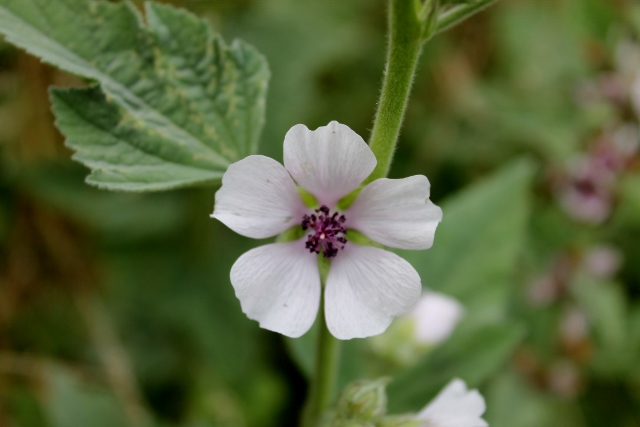
IMG_2433Marsh Mallow (640x427)

Marsh Mallow (Althaea officinalis)

The strange thing was that we were only an hour or so away from Manchester (where my husband’s family live) when Chris phoned us.  Thursday 13th August was the day we travelled to the Peak District with our caravan to spend a week there on holiday and with the hope of visiting Mum-in-law.  We had set up the caravan where we usually stay in Leek, Staffordshire and put up the awning on the side of the van already.  We had then driven to Sheffield (about an hour’s journey) to take Elinor to stay with Alice for the week.  Alice had given us a cup of tea and we had left the girls there together and were driving back to Leek.  We had almost got to Buxton when Chris’s call came through.

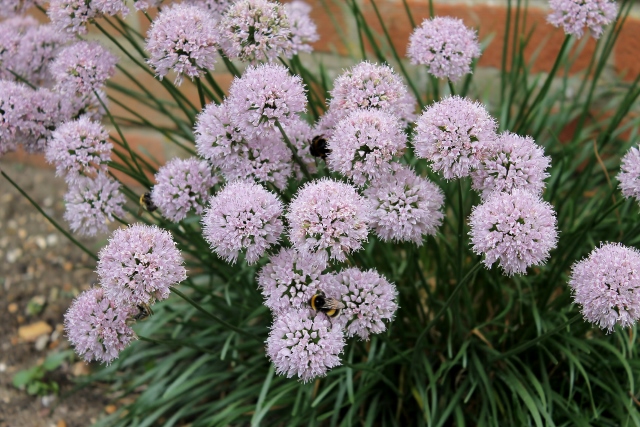
IMG_2439Allium with bees (640x427)

Alpine Allium with bees

We went to Manchester the next morning.  The rain, which had started when we got to Sheffield the night before, was still coming down so the roads were very wet and some were flooded.  We went to Chris’s house and spent some time talking to him and his partner Annie and then went out to have some lunch together in a pub.  During the afternoon we went to Joyce’s (Mum-in-law’s) nursing home and sorted out all her belongings, taking some away with us but donating all of her clothes and a lot of her equipment and wheel-chair to the nursing home.  They were pleased to accept all we could give them as there are many old people in homes who have no relations to get them clothes and other necessaries.

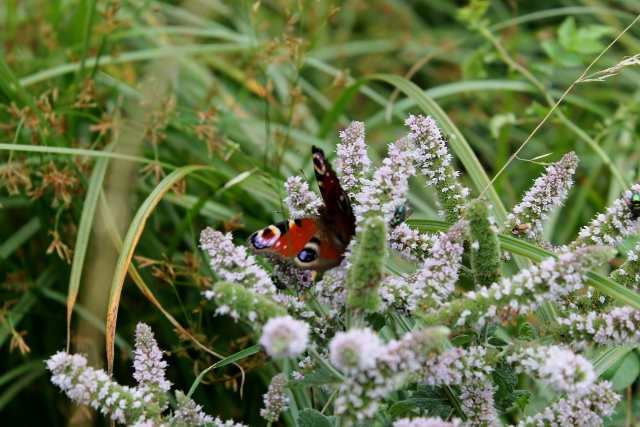
IMG_2450Peacock on mint (640x427)

Peacock butterfly (Inachis io) on Water Mint flowers (Mentha aquatica)

The Coroner couldn’t establish a cause of death despite a post mortem and there have been a number of tests done and an inquest has been held.  All extremely painful for my husband and his brother.  Eventually the date for the funeral was set and it duly took place yesterday 2nd September.  There was a large turn-out of family and friends and all went smoothly and we hope Joyce would have approved.  Richard had the difficult task of writing the eulogy which he delivered with dignity.  The wake was in the upper rooms of a nearby pub and that was a success too.

IMG_5588Female Gatekeeper (640x480)

Female Gatekeeper butterfly (Pyronia tithonus) on Marjoram (Origanum majorana)

Our holiday was a weird one to say the least!  Richard’s 62nd birthday was on Sunday 16th August so we went to a church in Leek and said more prayers for Joyce and then went to a café for brunch.  There wasn’t much else we could do.  We met Alice and Elinor in Bakewell on Tuesday 18th August and told them the sad news.

This was one of Joyce’s favourite pieces of music.

A lot of our time has been spent (as usual) in keeping appointments with doctors, with physiotherapists and at hospital.  Not a week goes by, it seems, without one or other of us having to go to see some specialist or another!  Elinor went to her yearly appointment with the physiotherapist and was told she needed to do more calf-stretching exercises.  I’m not sure that she has done anything about it yet!  Richard went to the hospital for yet another MRI brain scan but won’t hear the results until he sees the specialist in a few weeks.  He also went to the eye clinic and all seems okay.  I took my Mum to her eye clinic again last week and she had to return there on Tuesday for another eye injection.  I went to the Rheumatology clinic for a check-up and it seems I am in a medically-induced remission.  My blood tests show excellent results and I have lost all the fluid on my finger joints.  The nurse suggested I give up one of my drugs for a month to see if it made any difference to the problem I have in my throat.  It hasn’t made any difference at all, so I’m back on the drug and my GP at my local surgery has asked the Ear, Nose and Throat clinic to give me an appointment so they can investigate further.

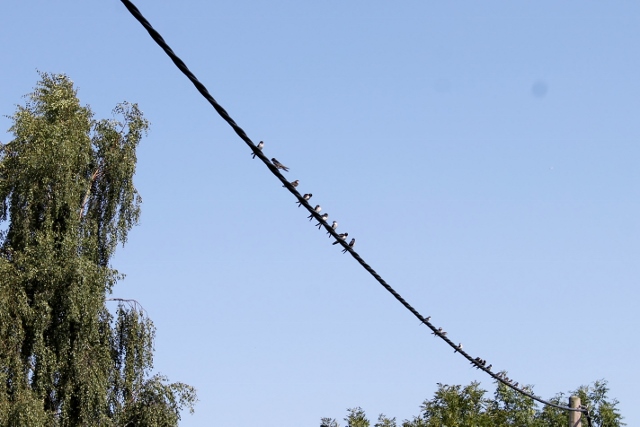
IMG_2410Swallows and Martins on cable (2) (640x427)

Swallows (Hirundo rustica) and House Martins (Delichon urbica) on electric power cable

Alice works part-time in the University library in Sheffield and some months ago went to a number of internal job interviews.  She desperately needs a full-time job, preferably one in which she can use her librarianship skills instead of filling shelves and moving crates of books about as she is doing at the moment.  She was disappointed to hear that though she had been offered a job one grade higher than the one she was doing, it was still a part-time job and as the hours were fewer she would be earning less money.  After a lot of thought she decided to accept the job and after some discussion with her supervisor she has been given a few more hours and is earning slightly more money than in her last position.  She moved house at the weekend and she is now sharing with a few other people (one of them a friend of hers) and will be paying less rent.  This will be a Good Thing!  She has finished the corrections and amendments to her PhD and has handed it back in to have it read through again.  When that’s done she will have to get it printed – not just one copy but several – which will be yet another expense for her.  We will then hear when she will receive her Doctorate which we all hope to attend if possible.  She had her 30th birthday on the 24th July and her friends got together and arranged a Haunted Sheffield Tour for her to go on which she found great fun.

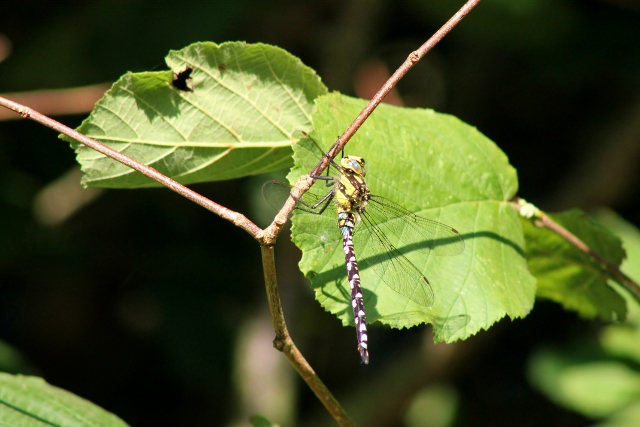
IMG_2415Southern Hawker (640x427)

Southern Hawker dragonfly (Aeshna cyanea)

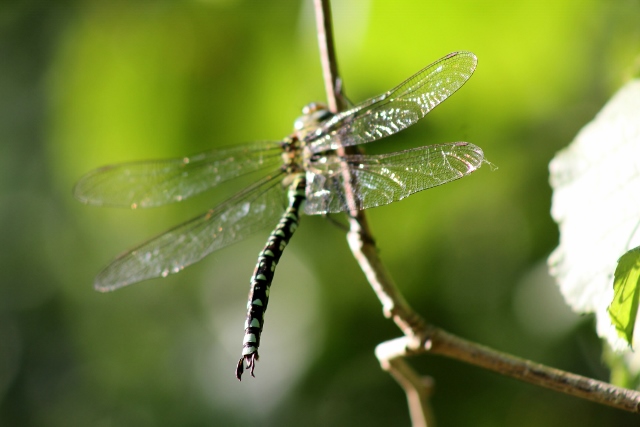
IMG_2421Southern Hawker (640x427)

Southern Hawker dragonfly

Elinor wasn’t able to go into college to collect her GCSE results as we were still away in the Peak District so she got the results in the post.  She didn’t do as well as she had hoped but she passed three out of the four exams she took.  She got a D in Maths so she will have to re-take that exam next year.  She got an A in Psychology but only Cs in English and Art.  We are pleased that she managed to do as well as this because she missed two whole years of school and at one stage we didn’t think she’d ever be able to get any qualifications at all.  The college have found that the grades the students got this year were generally much lower than expected.  I don’t know if this is the fault of the college or if the marking was stricter than usual.   She went into college last Wednesday for her enrolment and was disappointed to find she can’t take the Graphic Art course she wanted to do because of her failed Maths exam.  She will do a years Art and Design course and re-take her Maths and then she will decide what she does next.  The Graphic Design tutors say that they will assess her work after six weeks this term with a view to moving her onto the Graphic Design course if she is doing very well.

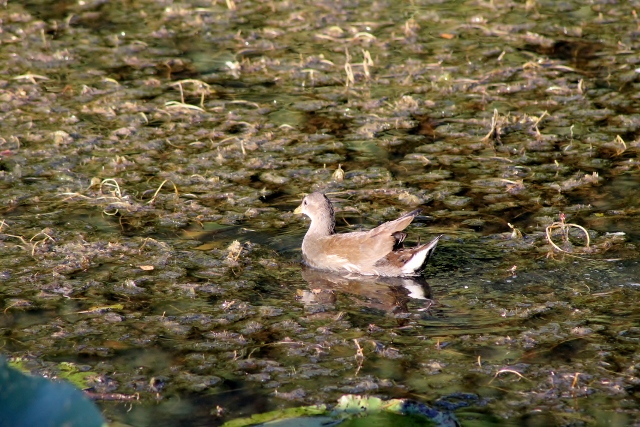
IMG_2425Young Moorhen (640x427)

Young Moorhen (Gallinula chloropus)

Richard has now retired.  His final week at work was last week and he had a good send-off from his colleagues.  He will be giving back his fleet car tomorrow and has ordered a new car of his own which will be delivered in just over a week’s time.  He hasn’t had time to appreciate the fact of his retirement yet.  He still has a number of things to sort out with his brother with regard to his mother.  Once that has been done he will relax a little and then begin to feel retired.

I spent a lovely day in Norwich with my dear friend Wendy.  We met at school 45 years ago!  Her husband was working in this area for a few days so she joined him and took the opportunity to visit former neighbours of theirs and to see me.  Fortunately the weather was fine and we were able to find somewhere to sit outside and have coffee and a long chat.

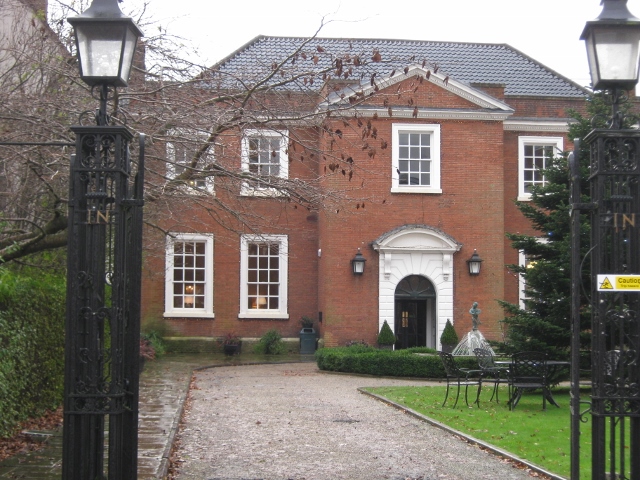
007Restaurant (640x480)

A photo of the Assembly Rooms where we sat outside and had coffee. This photo was taken last December – the garden was much brighter and greener when we were there a few weeks ago!

We then went to have a look at the Roman Catholic Cathedral which is an enormous building and has many fine features.  I’ll probably make a post about it sometime soon.  We walked from there to the Plantation Garden.  We had a lovely lunch together and I then walked back with her to her hotel.  In thinking about this special day I am amazed to realise that I cannot remember the last time I spent a day out with her or in fact with any friend.  I very, very occasionally meet someone for coffee or lunch or I visit Wendy’s house in company with my family but a whole day away from home with a friend enjoying myself…. no, I can’t recall anything since I was in my early twenties!

IMG_2442Gipsywort and sedge (2) (508x640)

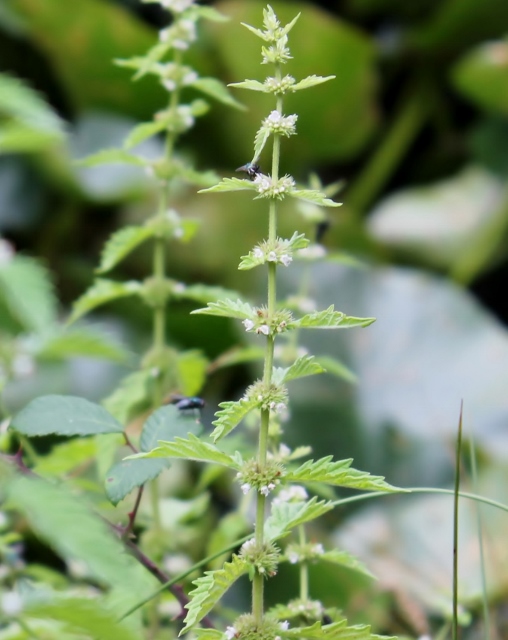
Gipsywort (Lycopus europaeus)

I always look forward to having my piano tuned each year.  Kimble Reynolds is a very skillful man who not only tunes pianos but can also build, restore and repair them.  He has a piano gallery in Blundeston in Suffolk and has recently invented a way of teaching people how to read music which doesn’t entail having to learn the names of the notes.  His invention is called Noterettes.  He is a lovely man and I enjoy talking to him and we spend most of his visit laughing together.

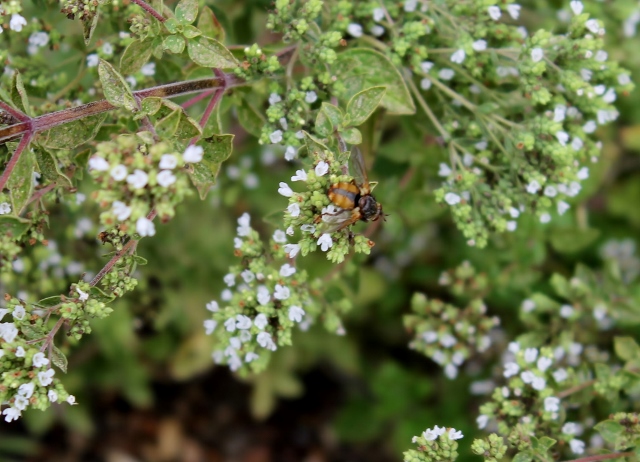
IMG_2440Fly on Marjoram (2) (640x462)

Fly ( possibly Tachina fera) on Marjoram

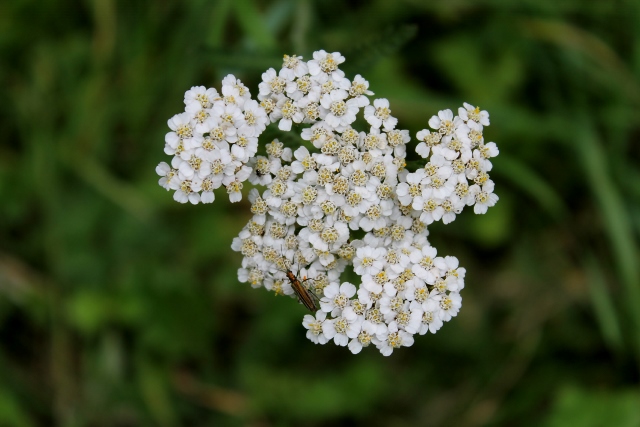
IMG_2444Yarrow and bug or beetle (640x427)

Yarrow (Achillea millefolium) with unknown bug

IMG_2445Ragwort with Hoverfly Sphaerophoria scripta (640x427)

Common Ragwort (Senecio jacobaea) with Hoverfly (Sphaerophoria scripta) and another unknown insect

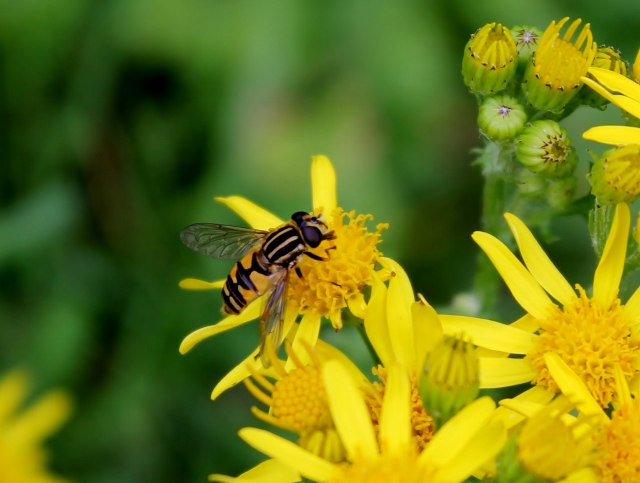
IMG_2446Ragwort with hoverfly Helophilus (2) (640x483)

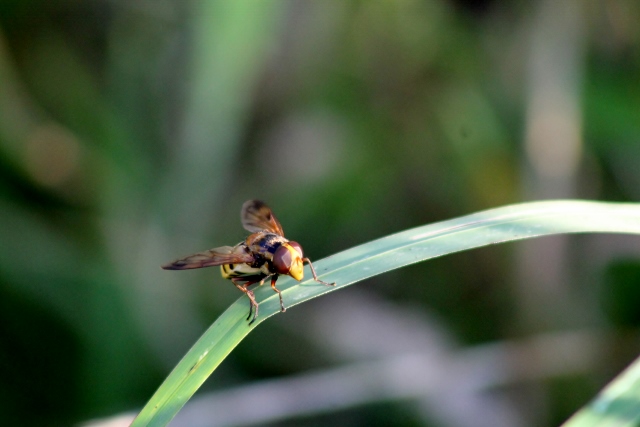
Common Ragwort with Hoverfly (Helophilus pendulus) also known as the Footballer Hoverfly because of the striped thorax which looks like a football jersey

IMG_2428Hoverfly (640x427)

I cannot identify this Hoverfly

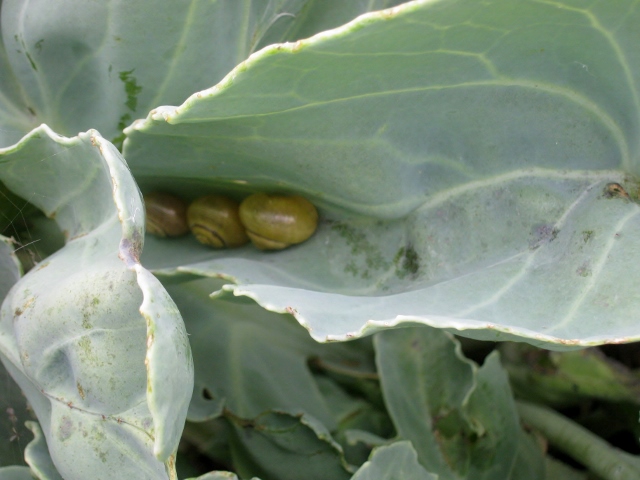
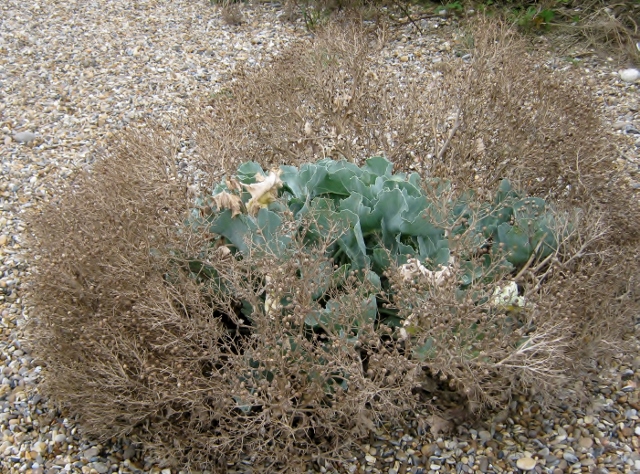
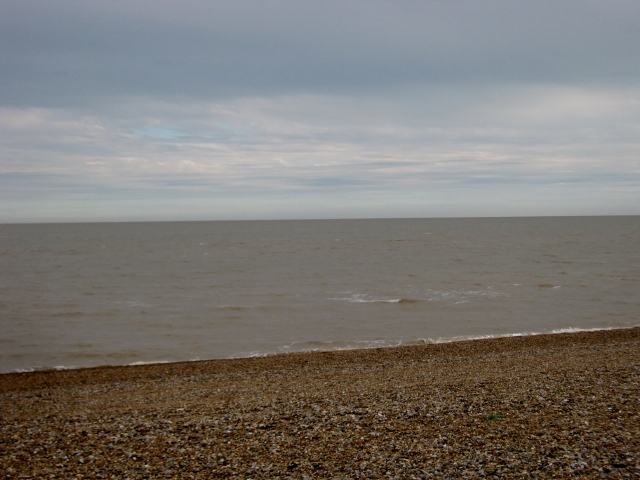
With all the upheaval of Joyce’s death and Richard’s retirement, we haven’t had time for much gardening or walking locally.  We managed to visit Dunwich beach for an hour on Saturday.  We bought some chips from the fish and chip restaurant in the beach car-park and then walked on the beach.  The weather was quite over-cast and there was a very strong wind blowing but it was good to be away from the house for a while.

IMG_5591Snails in Sea Kale leaf (640x480)

Sea Kale leaf (Crambe maritima) with sheltering snails

IMG_5592Sea Kale gone to seed (640x474)

Sea Kale with seed heads

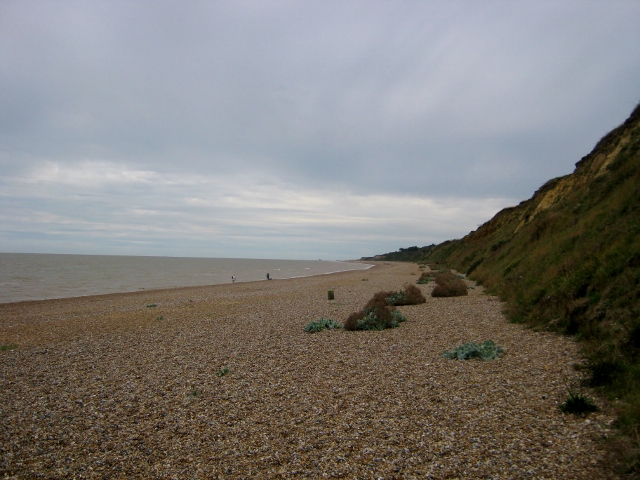
IMG_5593Dunwich beach (640x480)

Dunwich beach

IMG_5594Dunwich beach (640x480)

Dunwich beach

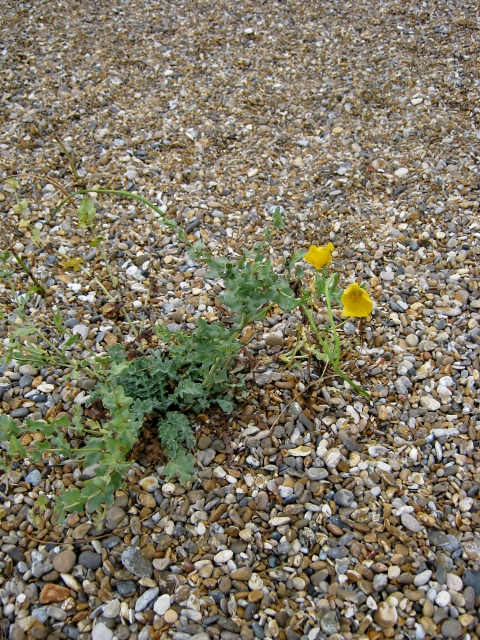
IMG_5595Yellow Horned-poppy (480x640)

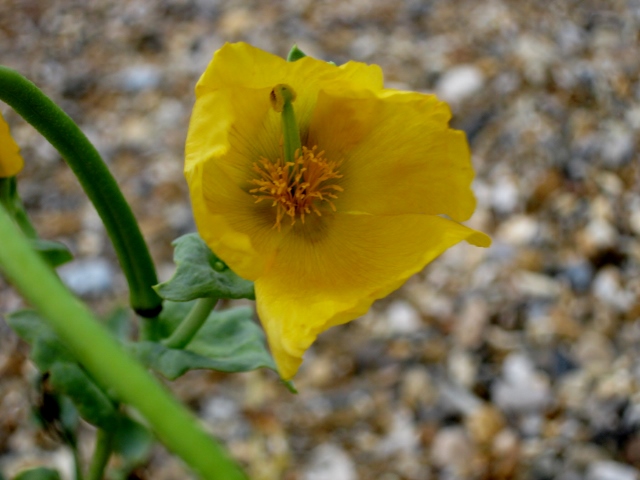
Yellow Horned-poppy (Glaucium flavum)

IMG_5596Yellow Horned-poppy (640x480)

Yellow Horned-poppy

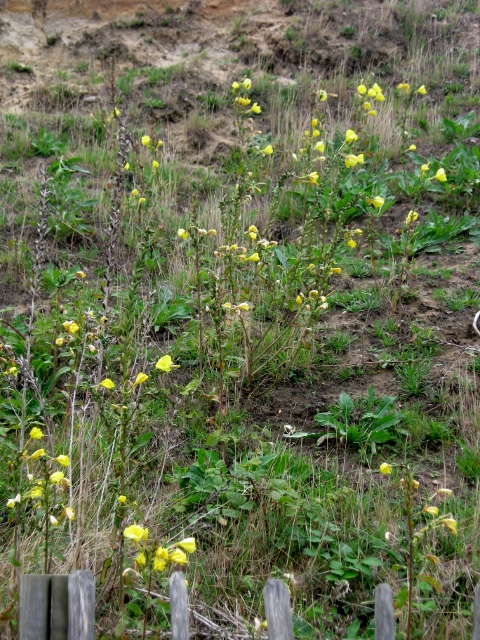
IMG_5600Evening Primrose plants (480x640)

Common Evening Primroses (Oenothera biennis)  Introduced and naturalised, these plants like to live on waste ground on poor soil; they only open on dull days or in the evening.  I see them on railway sidings quite often.  These particular plants have spread along the base of the crumbling cliff.

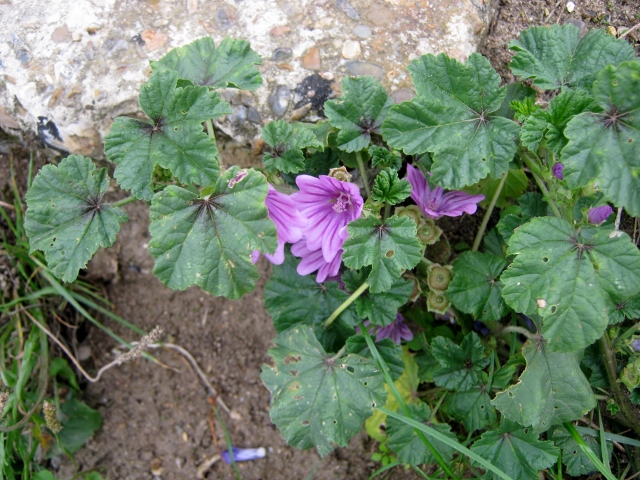
IMG_5603Common Mallow (640x480)

Common Mallow (Malva sylvestris) This plant was on the path from the car-park to the beach but at this time of year Mallows are seen everywhere in East Anglia. The round fruits that you can see just right of centre are called ‘cheeses’ and contain many nutlets.

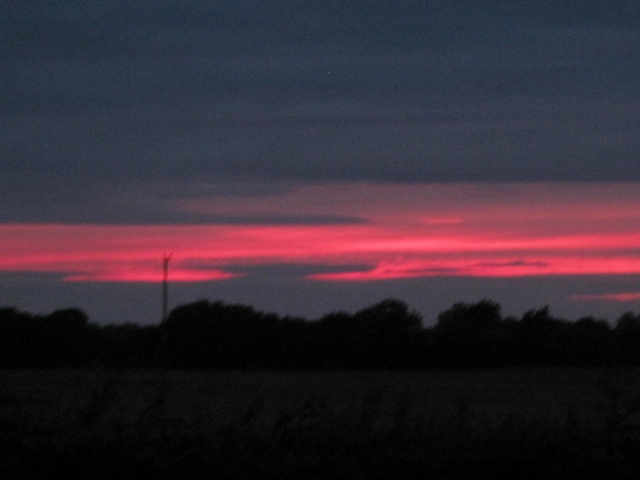
IMG_5604Sunset (640x480)

Out of focus photograph of the sunset that evening during a rain shower.

Thanks for visiting!

Share this:

  • Share on X (Opens in new window) X
  • Share on Reddit (Opens in new window) Reddit
  • Share on Pinterest (Opens in new window) Pinterest
  • Share on Facebook (Opens in new window) Facebook
  • Email a link to a friend (Opens in new window) Email
  • Share on Tumblr (Opens in new window) Tumblr
  • Print (Opens in new window) Print
  • Share on Pocket (Opens in new window) Pocket
  • Share on LinkedIn (Opens in new window) LinkedIn
Like Loading...

Castlerigg Stone Circle

20 Thu Aug 2015

Posted by Clare Pooley in Days out, Rural Diary

≈ 28 Comments

Tags

ancient monument, Castlerigg Stone Circle, neolithic, stone circle

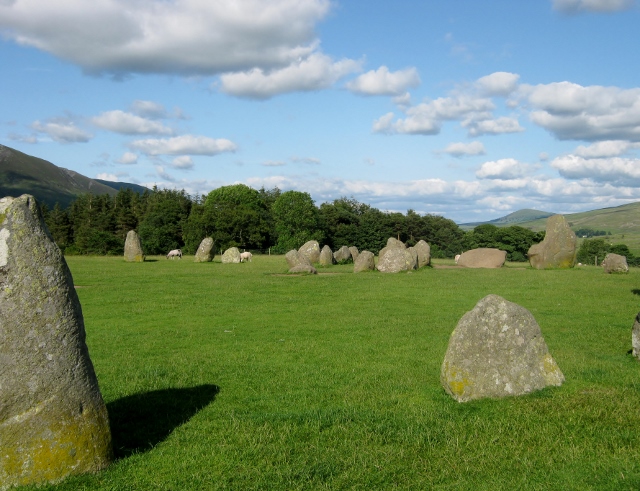
The afternoon was still so fine after our trip round Derwentwater that we thought we wouldn’t waste it but would go to see Castlerigg Stone Circle on our way back to our holiday cottage.

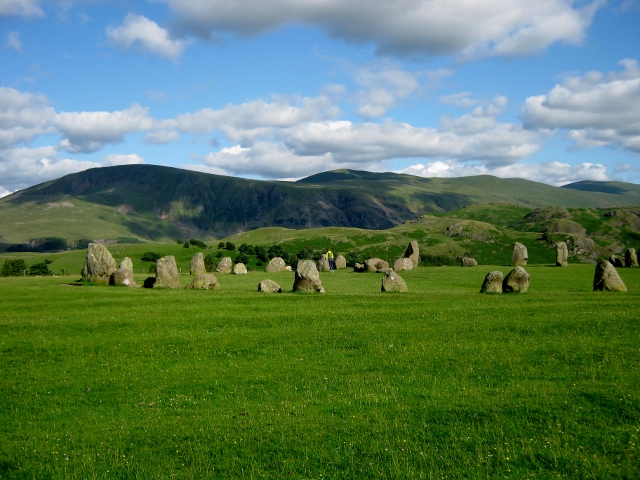
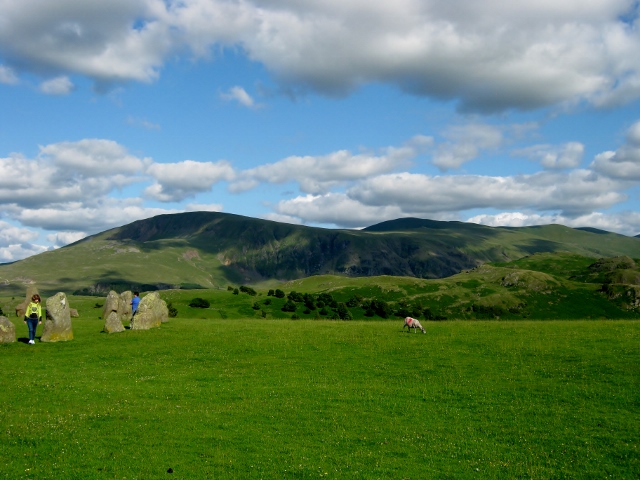
IMG_5117Castlerigg Stone Circle (640x480)

Castlerigg Stone Circle

The stone circle is on the flat top of a hill about 700m above sea level and is encircled by a ring of higher fells.

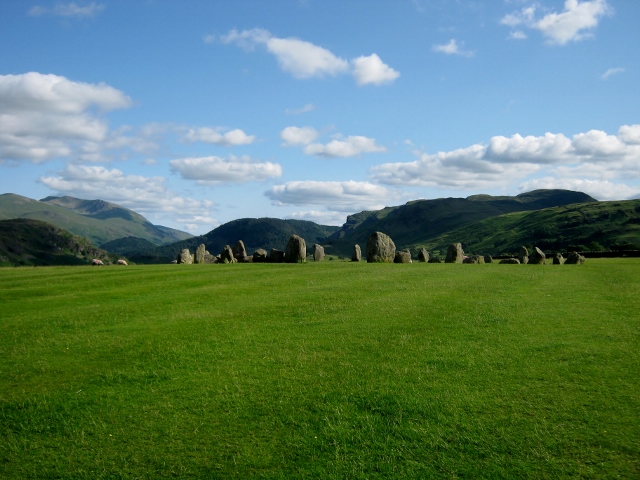
IMG_5116Castlerigg Stone Circle (640x480)

It is thought the circle is about 4500 years old and was constructed at the beginning of the later Neolithic Period.

The circle was probably constructed by early farming communities who practised transhumance farming i.e. they spent the winter on low fertile land near the coast or in the Eden valley and then moved to upland grazing in the central fells in the summer.  It is thought the circle was a meeting place for the communities arriving from the coast to the East and those from the Eden valley in the West before they then travelled on to the summer pastures and also to the axe-making area in the Langdales.

IMG_5123Castlerigg Stone Circle (640x491)

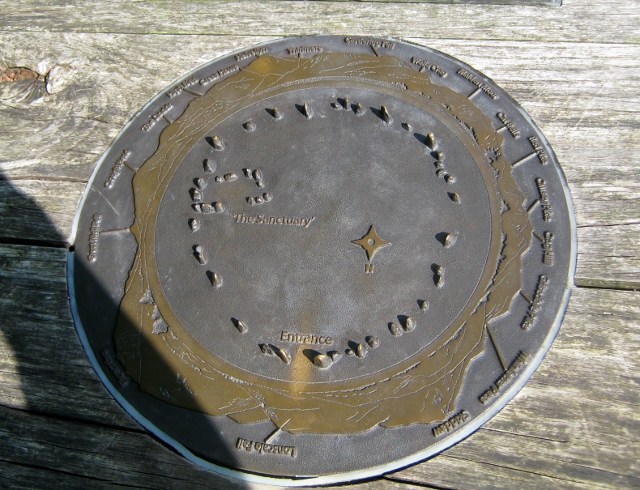
The circle consists of 38 stones in the outer circle and ten more that make up a rectangular enclosure inside the circle

Castlerigg is an early example of a stone circle and isn’t perfectly round – it is ovoid, one side somewhat flattened.

IMG_5114Model of Castlerigg Stone Circle (640x490)

A relief model of the circle

The tallest stone is 2.3m high and the circle is approximately 38m in diameter.  The circle is important in terms of megalithic astronomy and geometry and the construction contains astronomical alignments.

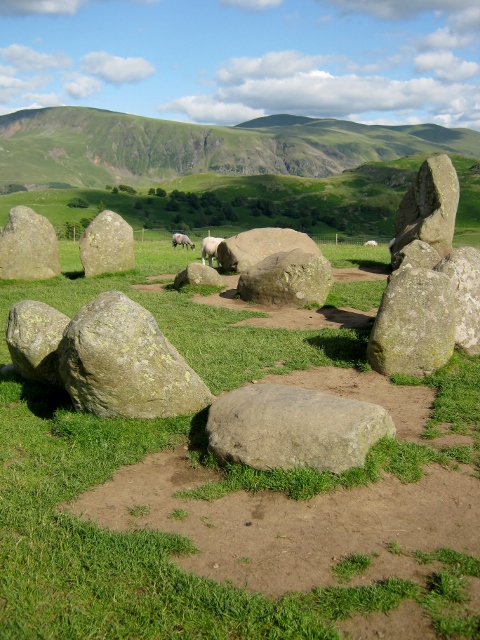
IMG_5126Castlerigg Stone Circle (480x640)

The rectangular enclosure or ‘sanctuary’

We thought the whole place quite special and the setting, breath-taking.

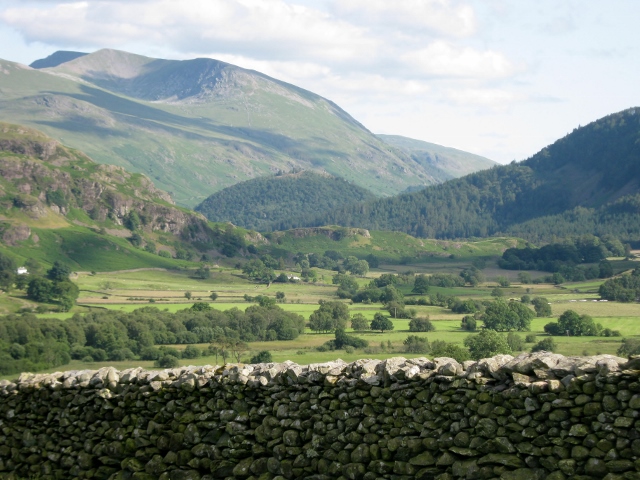
IMG_5133View from Castlerigg (640x480)

View over the wall into the surrounding valley

IMG_5122Castlerigg Stone Circle (640x480)

Sheep are used to graze the grass


This slideshow requires JavaScript.

Thanks for visiting!

Share this:

  • Share on X (Opens in new window) X
  • Share on Reddit (Opens in new window) Reddit
  • Share on Pinterest (Opens in new window) Pinterest
  • Share on Facebook (Opens in new window) Facebook
  • Email a link to a friend (Opens in new window) Email
  • Share on Tumblr (Opens in new window) Tumblr
  • Print (Opens in new window) Print
  • Share on Pocket (Opens in new window) Pocket
  • Share on LinkedIn (Opens in new window) LinkedIn
Like Loading...

Derwentwater and Ashness Bridge

18 Tue Aug 2015

Posted by Clare Pooley in Days out, plants, Rural Diary, walking

≈ 32 Comments

Tags

Ashness Bridge, Derwentwater, Keswick, Lake District, Skiddaw, St Swithin's Day, wild flowers

For our wedding in 1994 we were given a gift of place mats and coasters by one of Richard’s friends.  The mats were decorated with paintings of Lake District attractions – Beatrix Potter’s cottage, The Bridge House at Ambleside and so on.  One of the pictures was a really attractive painting of Ashness Bridge, and for some time we had no idea where it could be found.  Before we left home we decided that as we were staying near Derwentwater, we ought to include it on one of our trips.

The day was bright and sunny and as it was St Swithin’s Day we hoped it would stay dry.  We thought we would take the ferry round Derwentwater from Keswick to Ashness Gate, the stop nearest to Ashness Bridge and then walk up to the bridge.

IMG_5090Derwentwater (640x473)

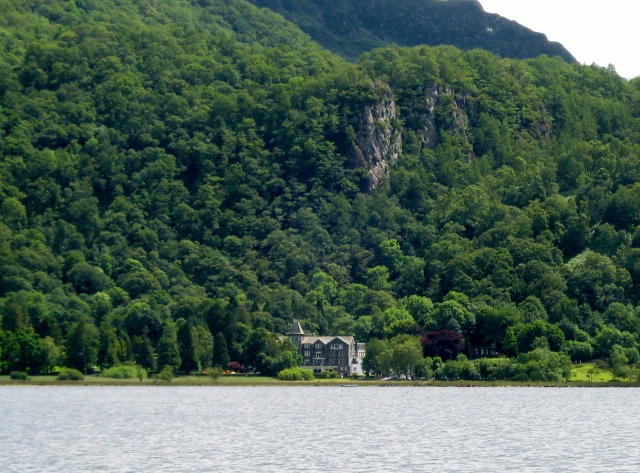
The views of the surrounding hills look wonderful from the boat

The woodlands here are mainly of oak.  These ‘Atlantic Oakwoods’ are an example of temperate rainforest.

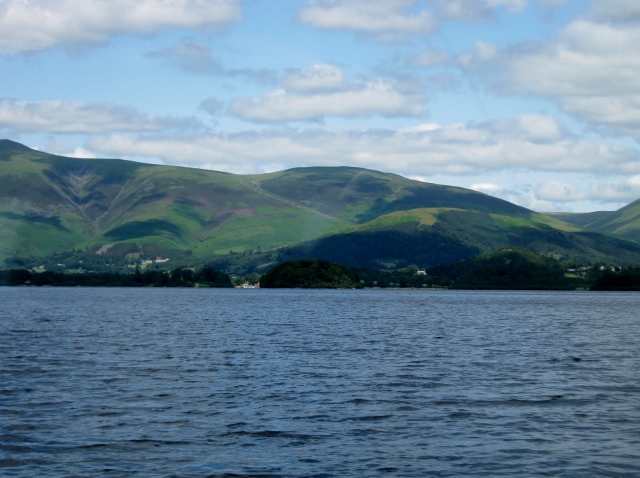
IMG_5091Derwentwater (640x478)

I love looking at cloud shadows sliding over the hills

The ferry was crowded with walkers and other tourists like us, so it wasn’t too easy to take photos.

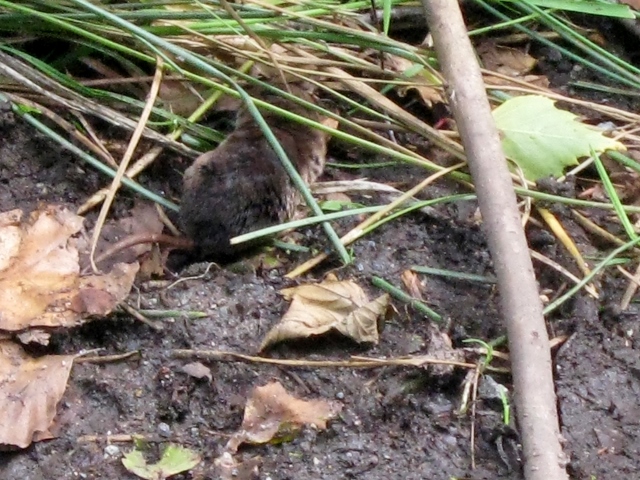
We got off the boat and began the steep walk up the lane to the bridge.  I saw a shrew running about at the side of the road and tried to take its picture but it wouldn’t show its face with the long snout.

IMG_5093Shrew (640x480)

Shy shrew

I saw a few wildflowers by the roadside.

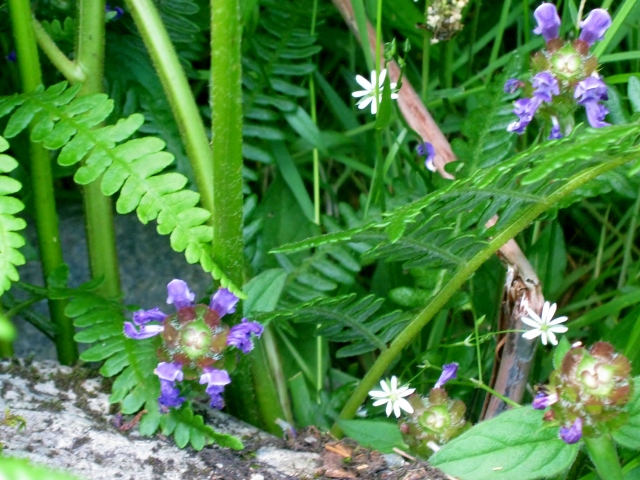
IMG_5094Self-heal and Lesser Stitchwort (640x480)

Self-heal (purple) (Prunella vulgaris) and Lesser Stitchwort (white) (Stellaria graminea) with Bracken (Pteridium aquilinum) also known as Brake Fern

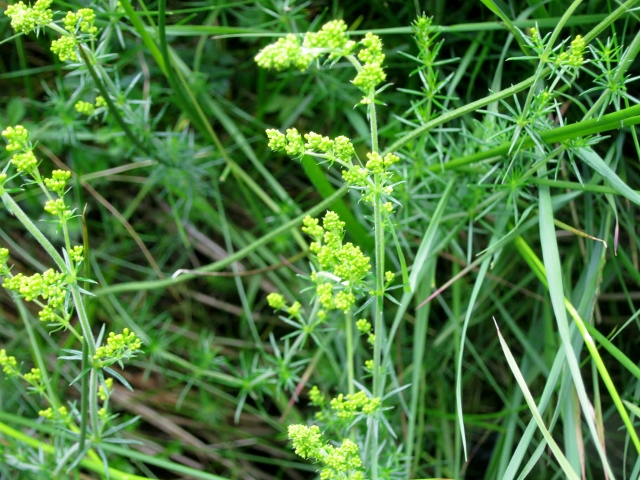
IMG_5096Lady's Bedstraw (640x480)

Lady’s Bedstraw (Galium verum)

IMG_5097View up fell at Ashness (480x640)

Looking up the hill from the path

After quite a long steep climb we left the road and carried on up a pathway and eventually got to the bridge.  It is a very popular attraction and again, trying to get a picture of the bridge without lots of people in the way was hard.

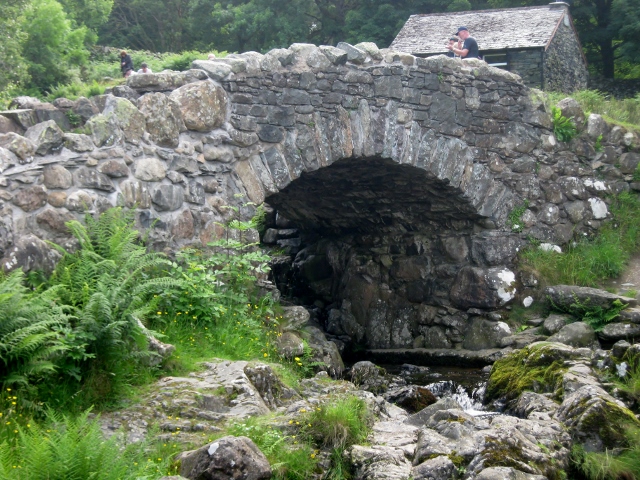
IMG_5099Ashness Bridge (640x480)

Ashness Bridge

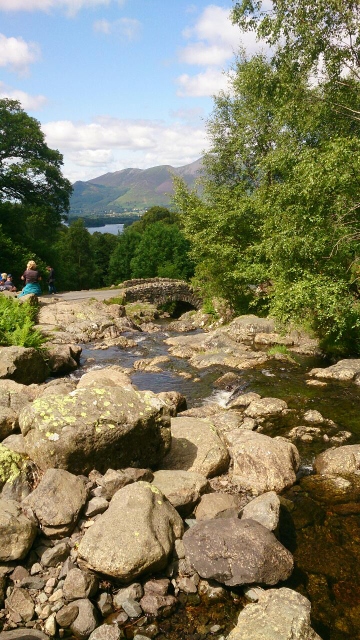
This is an old pack-horse bridge which enables the road to cross Barrow Beck, the stream that joins Derwentwater at the foot of the hill.

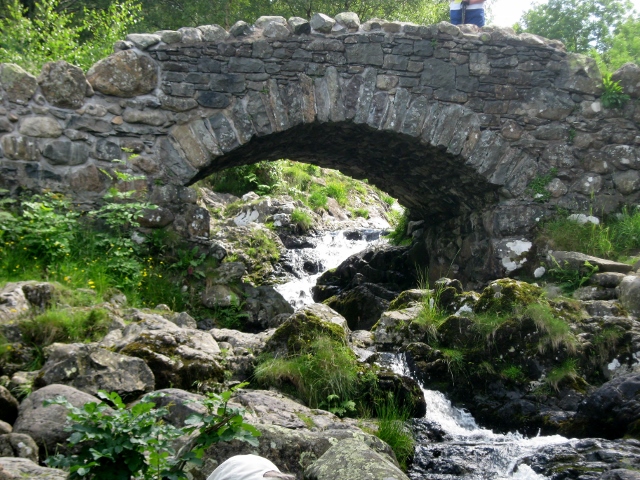
IMG_5105Ashness Bridge (640x480)

These old bridges are beautiful as well as being very useful. The skill of the bridge builder is apparent from this photo – each stone being placed so carefully, one next to the other.

DSC_0538 (360x640)

Richard took this photo from further upstream. Derwentwater can be seen in the distance

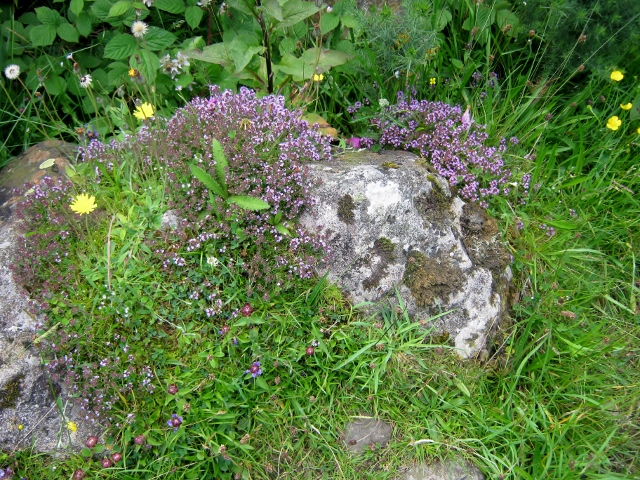
IMG_5100Wild Thyme (640x480)

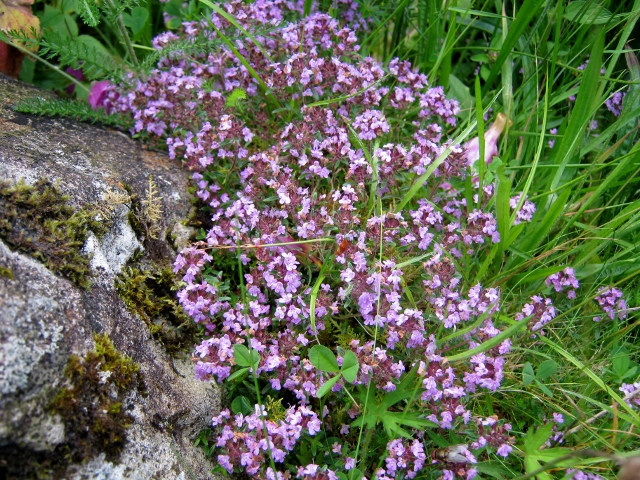
I found some Wild Thyme (Thymus serpyllum) growing by the stream

IMG_5101Wild Thyme (640x480)

It’s scent was wonderful!

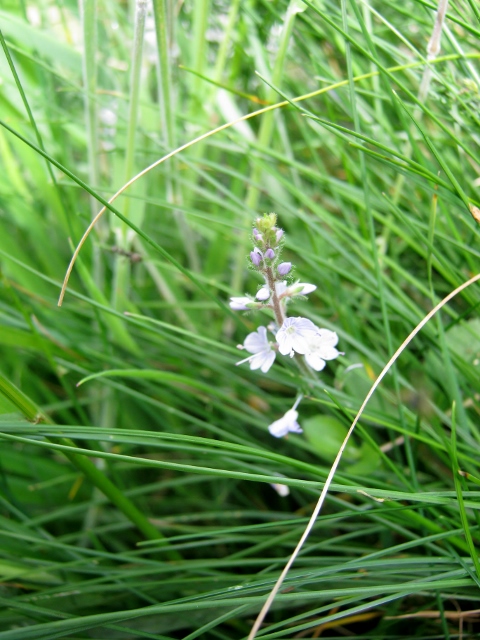
IMG_5110Blue Water-speedwell (480x640)

I also found some Blue Water-speedwell (Veronica anagallis-aquatica)

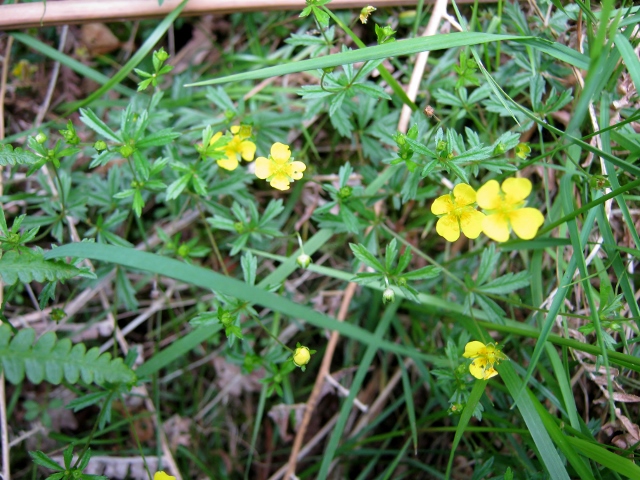
IMG_5112Tormentil (640x480)

Tormentil (Potentilla erecta)

We walked back down the hill and caught the ferry back to Keswick.

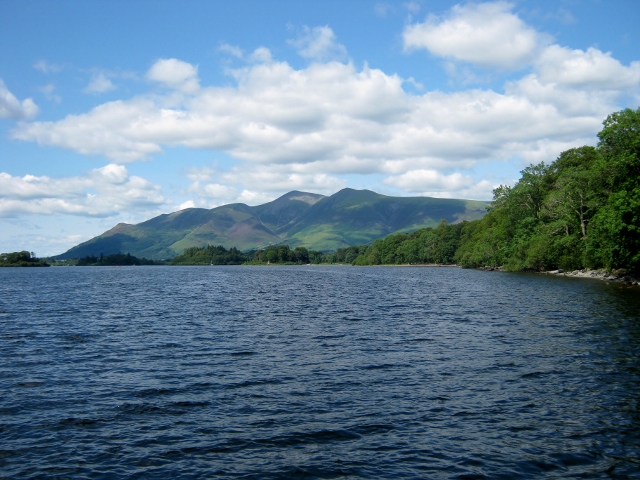
IMG_5113Derwentwater (640x480)

Derwentwater with Skiddaw in the background.

Thanks for visiting!
Share this:

  • Share on X (Opens in new window) X
  • Share on Reddit (Opens in new window) Reddit
  • Share on Pinterest (Opens in new window) Pinterest
  • Share on Facebook (Opens in new window) Facebook
  • Email a link to a friend (Opens in new window) Email
  • Share on Tumblr (Opens in new window) Tumblr
  • Print (Opens in new window) Print
  • Share on Pocket (Opens in new window) Pocket
  • Share on LinkedIn (Opens in new window) LinkedIn
Like Loading...

The Cumbrian Coast

12 Wed Aug 2015

Posted by Clare Pooley in Days out, plants, Rural Diary

≈ 27 Comments

Tags

coastline, Cockermouth, Crested Dog's-tail, holiday, Lake District, Perennial Rye-grass, R Cocker, R Derwent, Silloth, Solway Firth, Whinlatter Forest

We thought we might go to the coast as the weather was fine on the Tuesday of our holiday.  We by-passed Keswick and took the road to Maryport, a town on the coast.  Our road followed the western shore of Bassenthwaite Lake and then through the town of Cockermouth.  We drove to Maryport and then up the coast road to Silloth.  This map will show you the Lake District area, its main towns and will also show how close to Scotland it is.

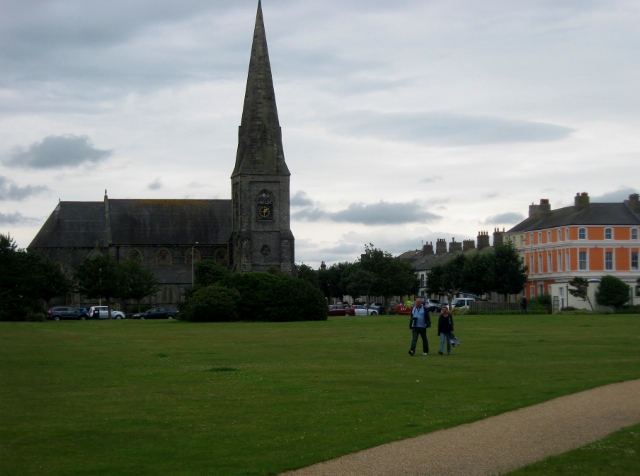
IMG_5077Silloth (640x476)

Silloth church from the Green

We wandered round Silloth; it was very quiet and there wasn’t too much to see though it has some attractive buildings and the roads are wide and straight.  The area between the main road and the coast line had been made into a park some while ago and I read that it has recently had lottery funding to add to its amenities and refurbish existing ones.

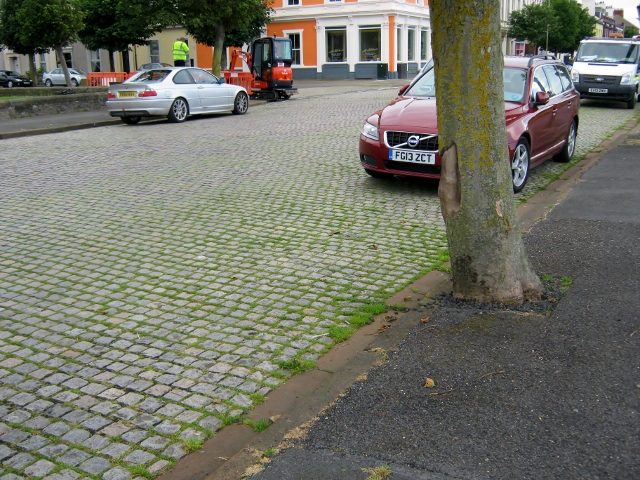
IMG_5078Silloth (640x480)

You can tell how quiet it is by the grass growing in-between the cobbles

IMG_5072Solway Firth (640x474)

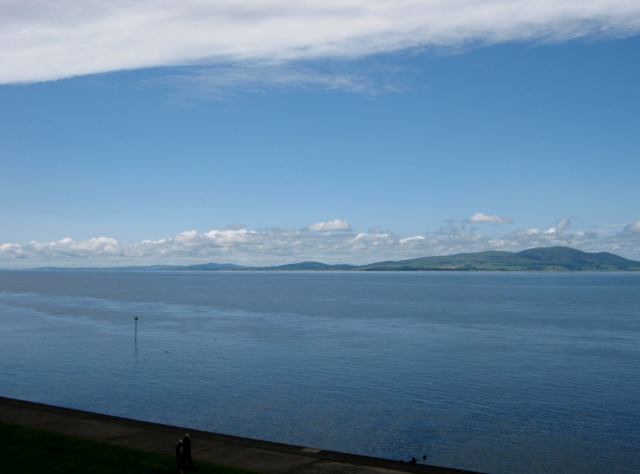
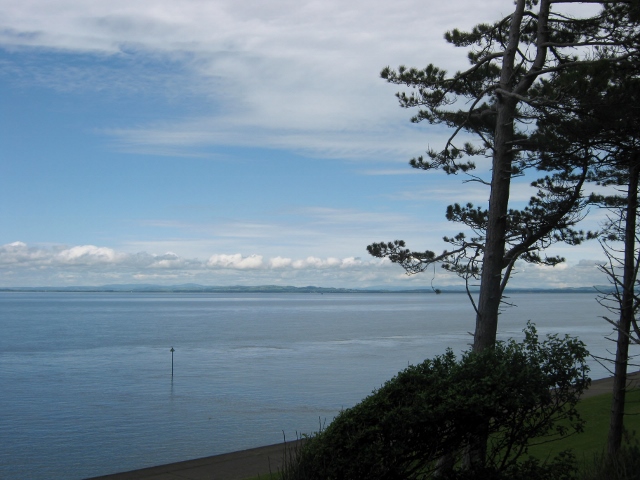
Looking north-west across the Solway Firth

We walked across the green towards the sea and climbed up to the Pagoda which is a shelter with a wonderful view.  It looked like the sun was shining in Scotland.

IMG_5073Solway Firth (640x480)

Looking north-east across the Solway Firth

Standing there, I was reminded of the lovely pictures I had seen taken from the opposite side of the Firth.  I was looking towards the land of the  ‘Tootlepedals’.  This is one of my favourite blogs; a daily insight into what it’s like to live in the Scottish Borders.  Interesting, funny and full of fabulous photos;  Mr T likes alliteration!

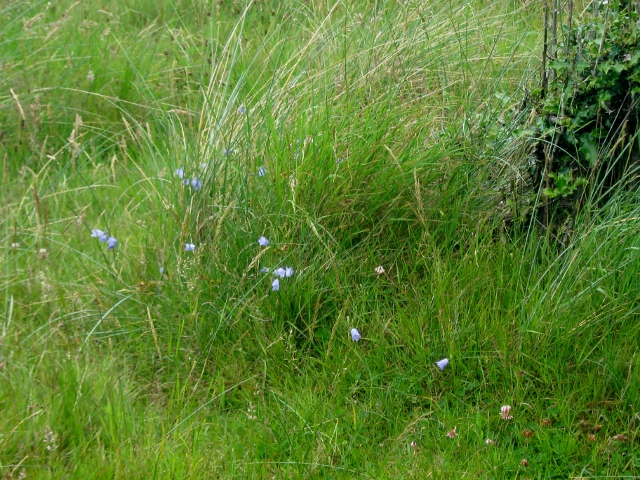
IMG_5074Hare Bells (640x480)

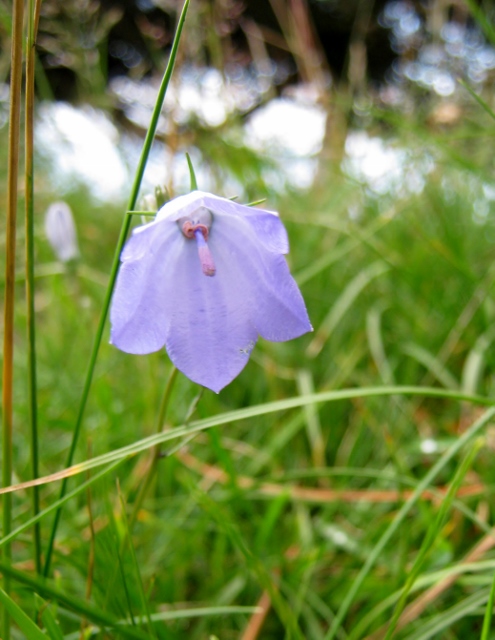
I found some Harebells (Campanula rotundifolia) on the slope up to the Pagoda

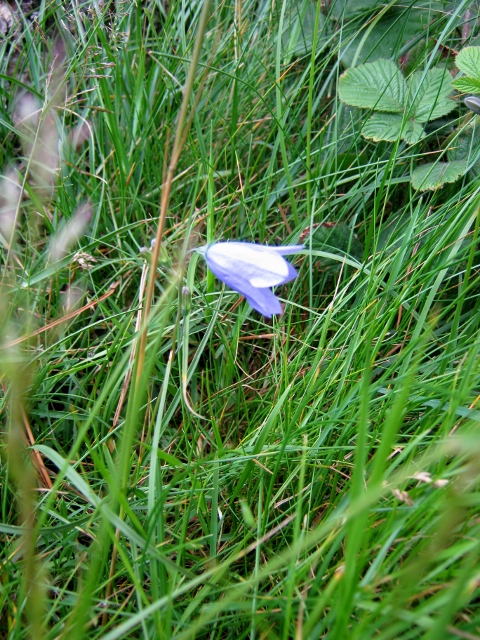
IMG_5075Hare Bell (480x640)

They are delicate, azure-blue bells.

IMG_5076Hare Bell (495x640)

I even managed to photograph inside the flower bell

We decided to return to Cockermouth and have some lunch.

IMG_5079R Cocker (640x480)

The River Derwent

Three famous men were born in or near Cockermouth and all were born within a few years of each other.  The first was Fletcher Christian (Mutiny on the Bounty) who was born a mile from Cockermouth in Eaglesfield in 1764.  The second was John Dalton, a brilliant scientist and the originator of the Atomic Theory.  He also was born in Eaglesfield in 1766.  The third was William Wordsworth, born in Cockermouth in 1770.

IMG_5080R Derwent (640x480)

The River Derwent looking upstream.  The River Cocker joins the Derwent here and in the photo is coming in from the right.

In November 2009 both rivers broke their banks and the town was severely flooded.  The army was called in and assisted the townsfolk for three days until the water began to recede.  Most of the shops, pubs and restaurants in the town centre were wrecked and there was much destruction elsewhere.

IMG_5081Whinlatter (640x480)

Whinlatter Forest with views of the fells

On our way home we drove a different route over the pass at Whinlatter.  We called in at the forest visitor-centre and took a short walk in the forest.  As it is Forestry Commission land and the trees are non-native, there was not much wildlife to be seen.

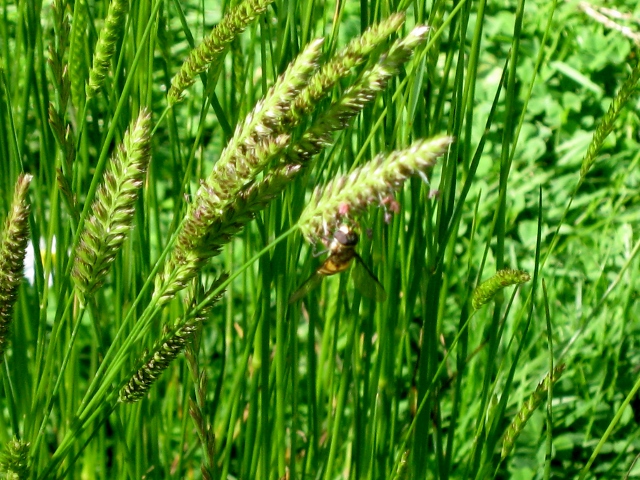
IMG_5088Hoverfly on Crested Dog's-tail (640x480)

A hoverfly on Crested Dog’s-tail (Cynosurus cristatus)

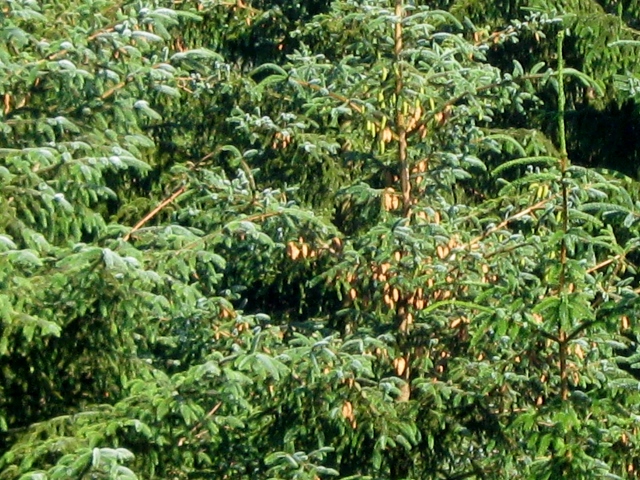
IMG_5082Fir cones (640x480)

A good crop of cones

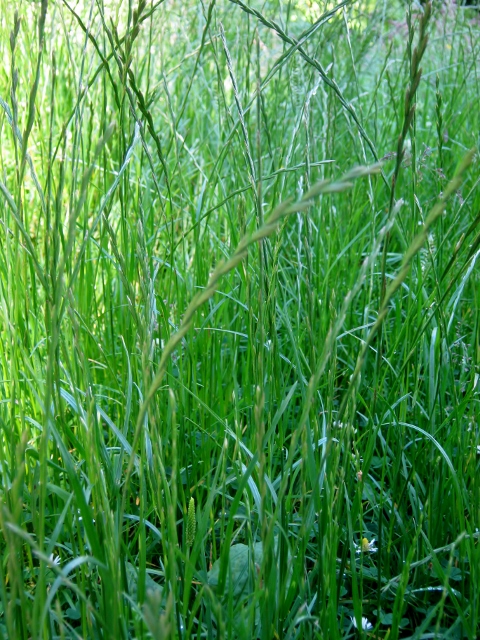
IMG_5083Perennial Rye-grass (480x640)

Perennial Rye-grass (Lolium perenne)

Thank’s for visiting!

Share this:

  • Share on X (Opens in new window) X
  • Share on Reddit (Opens in new window) Reddit
  • Share on Pinterest (Opens in new window) Pinterest
  • Share on Facebook (Opens in new window) Facebook
  • Email a link to a friend (Opens in new window) Email
  • Share on Tumblr (Opens in new window) Tumblr
  • Print (Opens in new window) Print
  • Share on Pocket (Opens in new window) Pocket
  • Share on LinkedIn (Opens in new window) LinkedIn
Like Loading...

Keswick and an Evening Walk

03 Mon Aug 2015

Posted by Clare Pooley in Days out, plants, Rural Diary, walking, weather, wild birds

≈ 33 Comments

Tags

clouds, Derwent Water, flowers, geese, holiday, Keswick, Lake District

Our second day in the Lakes was cooler and rainier than the first.  Again, we left it until after midday before we left our cottage and this time went to the nearest town – Keswick.

Fortunately, the rain left off for the first part of the afternoon so walking round the town was fine.

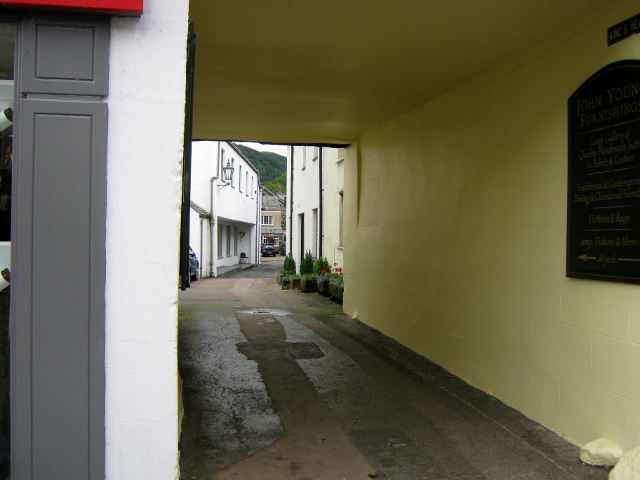
IMG_5041Alleyway in Keswick (640x480)

An interesting alleyway in Keswick

I had never been to this town before and Richard hadn’t visited for many years.  I loved it!  It has lots of interesting shops and plenty going on but it isn’t as packed with tourists as Ambleside is.

We bought gifts from the shop below for my mother and our next-door neighbour (who watered our tomatoes) and also a jar of marmalade as Elinor wanted some. My blogging friend Rachel, formerly of ‘Could Do Worse’ visits the Lakes every year and when I saw this shop I thought of her.

IMG_5042Chocolate shop in Keswick (640x480)

The Chocolate Shop

Here is what Rachel had to say about it last year.  She did three or four great posts from the Lakes last year and you’ll find them just before and just after the post I’ve given you a link to.  She has recently started a new blog called The Patch Out Back – do give her a visit.

IMG_5043Tree in park (480x640)

A pretty tree in the park.

After wandering round for a while, and Elinor sampling some of the best chips she had ever tasted from The Old Keswickian, we agreed we’d like to see the lake.  To get to Derwent Water from the centre of the town you walk through an underpass and alongside part of the town park which is where I took the above photo.

IMG_5044View of fells from Keswick (640x480)

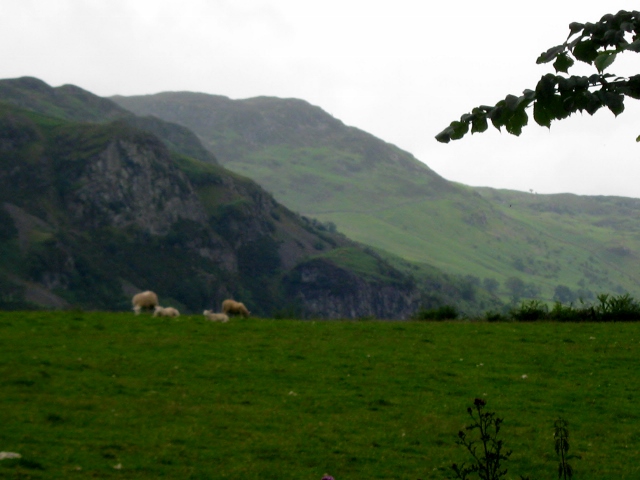
From the path we could see the fells that surround the town

IMG_5045Geese at lakeside (640x480)

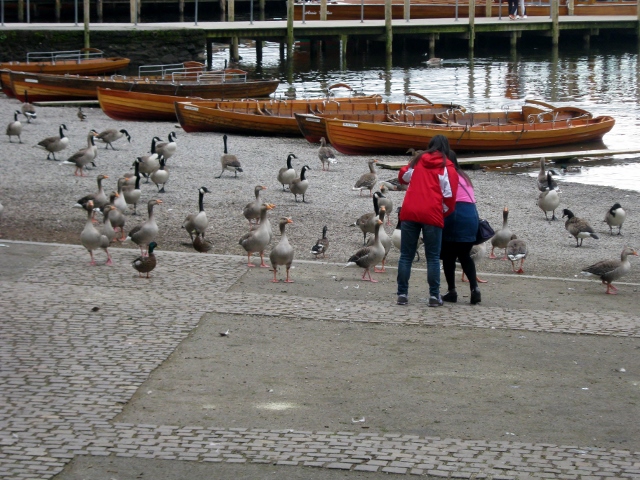
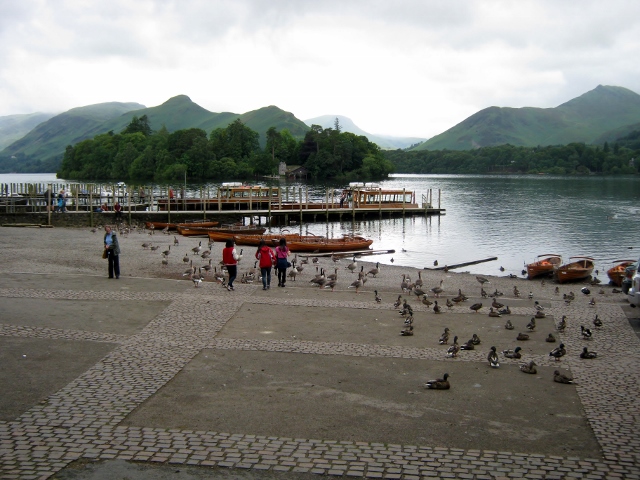
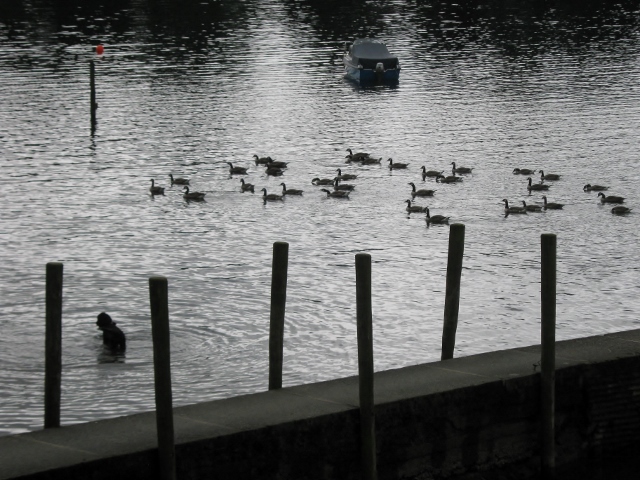
Lots of very friendly Greylags and Canada Geese wait to be fed by anyone foolhardy enough to buy packets of goose-food from the shop.

IMG_5046Derwent water (640x480)

This is Derwent Water

IMG_5047Derwentwater (640x446)

Derwent Water

IMG_5049Derwentwater (640x439)

As you can see, it was a very cloudy day.

IMG_5050Derwentwater (640x480)

The lake has four islands on it and one of them is just opposite the ferry landing stage near where we were standing.

IMG_5051Fells by Derwentwater (640x480)

The clouds began to drift lower and we knew it would rain again soon.

IMG_5053Derwentwater (640x480)

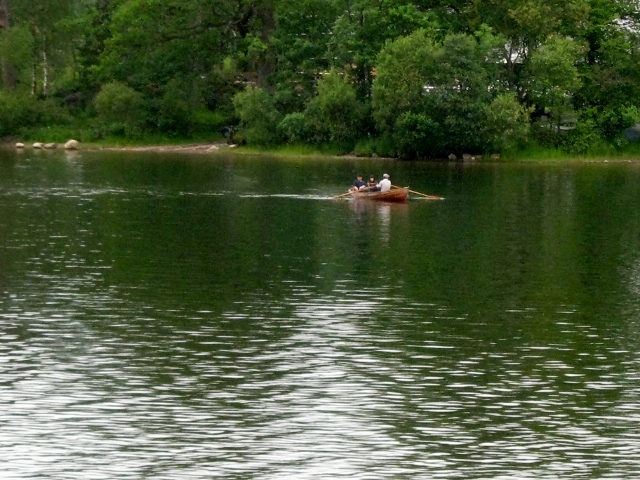
It was nice to watch people rowing on the lake

IMG_5056Fells next to Derwentwater (640x480)

Fells near the lake

IMG_5057Woman with Poodle (640x480)

We found this lady and her Poodle most amusing.

She got to the shore-side and took the dog’s lead off and replaced it with a long rope.  The dog was very excited and was barking loudly and shrilly.  It galloped into the water and splashed about, snapping at the water (I can’t imagine how many pints of lake water it drank).  The woman was having to hold very tight on the end of the rope especially when the dog saw a large flotilla of geese come into view.

IMG_5058Poodle with geese (640x480)

The geese remained out of reach, to the poodle’s disappointment.

IMG_5055Common Vetch (480x640)

I saw some attractive Bush Vetch (Vicia sepium) near the lake.

As it started to rain again we made our way back to the car and then drove back to the cottage.

After our evening meal, Richard and I went for a walk down the lane our cottage was in.

IMG_5059Greater Bird's-foot Trefoil (640x480)

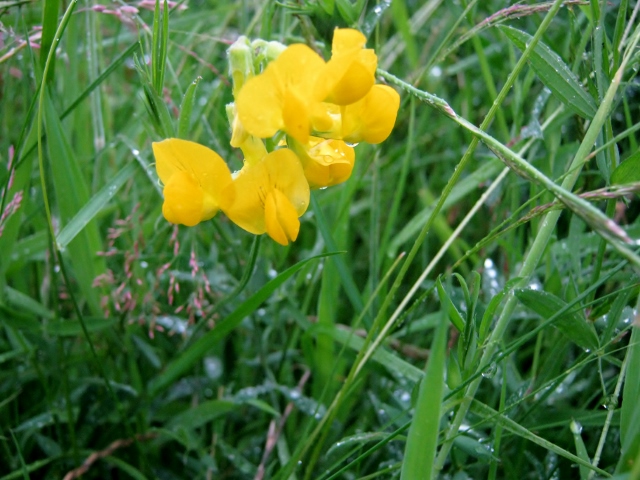
The first plant I saw was Greater Bird’s-foot Trefoil (Lotus pedunculatus)

IMG_5060Low cloud (640x480)

The cloud was low and everything was very wet but the fine rain soon stopped.

IMG_5061Spear Thistle (640x480)

Spear Thistle (Cirsium vulgare) was everywhere – (as it is here at home)

IMG_5063Marsh and Spear Thistle (480x640)

Marsh Thistle (Cirsium palustre) has smaller flower-heads and they are grouped together at the end of the stems. (A Spear Thistle is behind it)

IMG_5065Heath Bedstraw (640x480)

Masses of Heath Bedstraw (Galium saxatile)

IMG_5069Sneezewort (640x480)

Sneezewort (Achillea ptarmica)

Sneezewort’s name ptarmica comes from the Greek word ptarmos which, surprisingly, means ‘sneezing’.  The plant looks grey and in the bad light that evening the flowers seemed almost luminous.  The upper stems are downy and the flower-heads are made up of white ray florets and greenish-white disc florets (though in this photo they look grey).  The leaves, which are hot to the taste, used to be used in salads.  In the Middle Ages Sneezewort was used to alleviate toothache.  Sufferers held the roots in their mouths which helped the toothache by ‘evacuating the rheum’ according to Nicholas Culpeper.  I can’t imagine how sneezing would help anyone with bad toothache!  Culpeper recommends sneezewort for people with stuffy heads.  The powder of the herb was ‘stuffed up the nose..’ which caused sneezing and ‘cleanses the head’.  Explosive!

IMG_5070Low Cloud (640x480)

More low cloud

We walked almost to the end of the lane but as it was getting quite dark we turned round, retraced our steps and returned to our cottage.

Thanks for visiting!
 

Share this:

  • Share on X (Opens in new window) X
  • Share on Reddit (Opens in new window) Reddit
  • Share on Pinterest (Opens in new window) Pinterest
  • Share on Facebook (Opens in new window) Facebook
  • Email a link to a friend (Opens in new window) Email
  • Share on Tumblr (Opens in new window) Tumblr
  • Print (Opens in new window) Print
  • Share on Pocket (Opens in new window) Pocket
  • Share on LinkedIn (Opens in new window) LinkedIn
Like Loading...

Aira Force – Lake District Holiday

28 Tue Jul 2015

Posted by Clare Pooley in Days out, plants, Rural Diary, walking

≈ 29 Comments

Tags

Aira Force, arboretum, beck, cascade, fells, fungi, Lake District, lichen, liverwort, moss, plants, pool, Ullswater, waterfall, wish tree

We had a slow start to our first day in the Lake District.  We were tired after our long journey of the day before and the weather wasn’t good enough that morning to tempt us out early.  By midday however, the rain had stopped and the clouds had lifted and we thought we would have a short excursion to Ullswater and look at Aira Force.

Ullswater is the second largest lake in the Lake District and last Easter we took a boat trip on it.  I wrote about our Lakes holiday last year but unfortunately that post has gone missing.  I have been sent copies of my missing posts by my friend Heather (thank-you Heather!) but haven’t yet copied them back into my blog.  (Unfortunately, all your wonderful comments have gone for good 😦 ).

Aira Force is a waterfall situated in woodland on the northern shore of the lake and is now in the care of the National Trust.

After a short drive we found the National Trust car park and then started to walk up through woodland towards the force.

IMG_4934Aira Force (640x480)

Not easy to see, but this is the Aira Beck as it flows through woodland at the bottom of the hill. It will shortly enter the lake.

IMG_4935At Aira Force (480x640)

Richard and Elinor walking ahead of me up the path.

This area was once owned by the Howard family who still live in Greystoke Castle near by.  In the 18th century they renovated an old hunting lodge (a former pele tower) and created a sporting estate around it.  They landscaped the area around the force, planting over half a million native and non-native trees.  They made paths and bridges through the woodland and used the place as a pleasure garden.

IMG_5007The path (480x640)

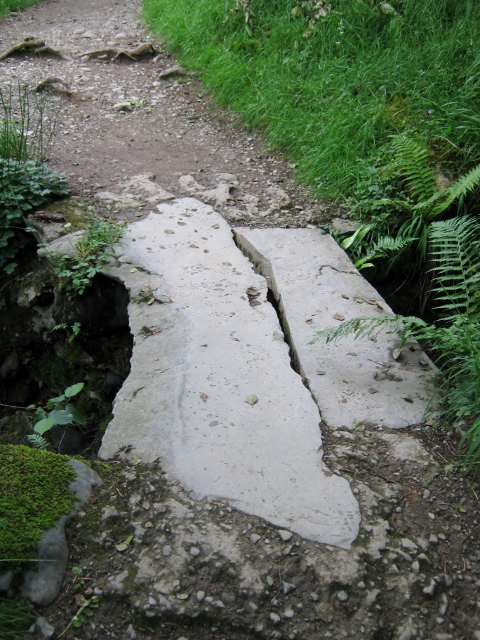
Stone slabs used as a bridge across a streamlet

IMG_4974Aira Force (480x640)

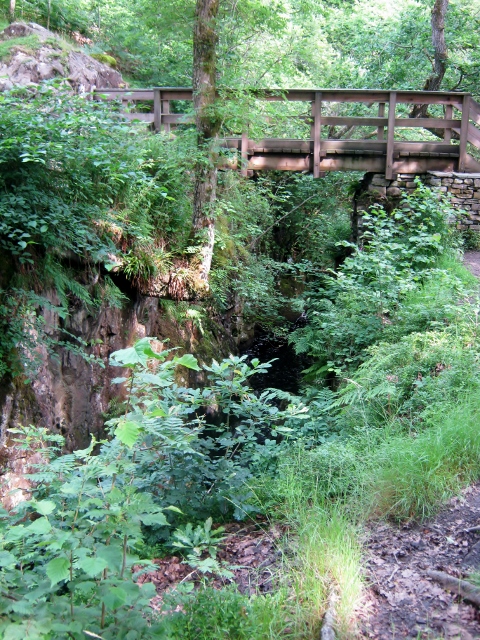
Wooden bridge over a narrow chasm

IMG_5017Aira Force (480x640)

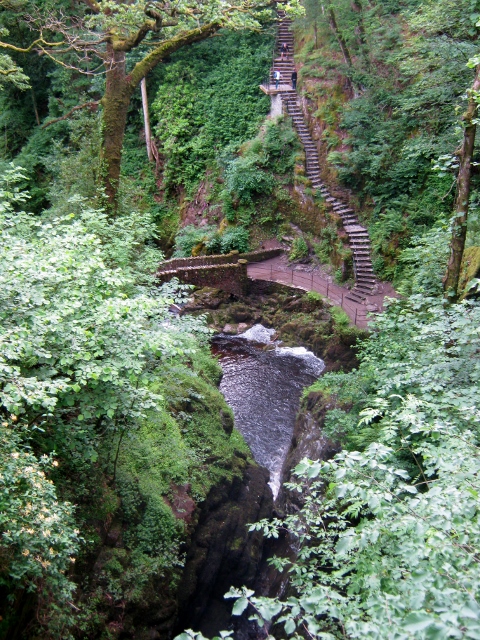
Steps and viewing platforms. We didn’t go down the steps as Elinor finds them difficult to manage.

IMG_4936Aira Force

Typically for me, the one shot I wanted to come out clearly, clearly hasn’t! I haven’t down-sized this one in an effort to make it look a little better. I only had my little camera with me and the sunlight was causing such a glare too. That’s probably enough excuses.

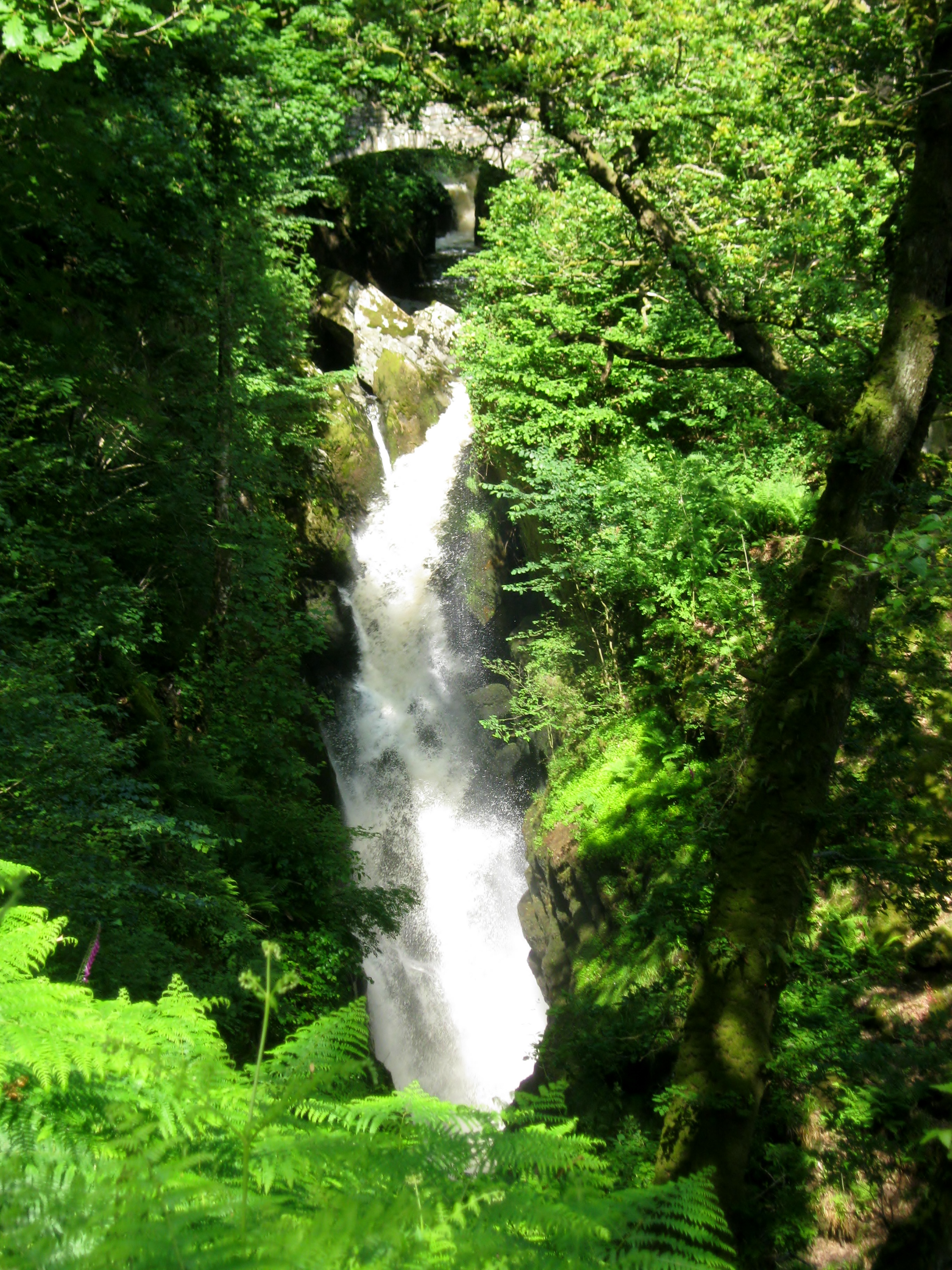
The main force drops about 70′ from below a footbridge.

IMG_4942Aira Force (480x640)

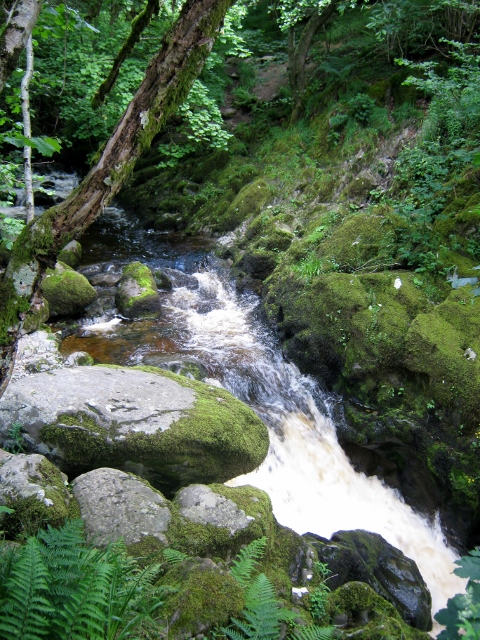
Further up in the woods are smaller cascades.

IMG_4943Aira Force (640x480)

The sound of the falling and rushing water was glorious.

IMG_4949Aira Force (640x480)
IMG_4950Aira Force (640x480)
IMG_4951Aira Force (640x480)
IMG_4953Aira Force (640x480)

This pool was good to sit next to.

IMG_4952Aira Force (640x480)

IMG_4958Aira Force (640x480)

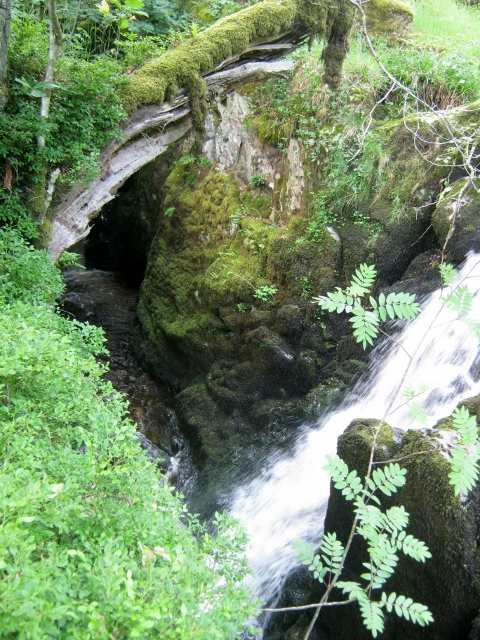
The water is amber-coloured.

IMG_4955Elinor sketching (480x640)

Elinor did some sketching while we were there.

IMG_4983Aira Force (640x480)

This was my favourite place along the beck

IMG_4973Aira Force (480x640)

There was thick moss everywhere….

IMG_4945Moss (640x480)
IMG_4948Moss (640x480)
IMG_5005Liverwort and moss (640x480)
IMG_5009Liverwort(640x480)

…and liverwort too.

IMG_5012Stone parapet (640x480)

A stone parapet to a bridge was covered in lichen.

IMG_5011Map Lichen perhaps (640x480)

I think this may be Map Lichen (Rhizocarpon geographicum).

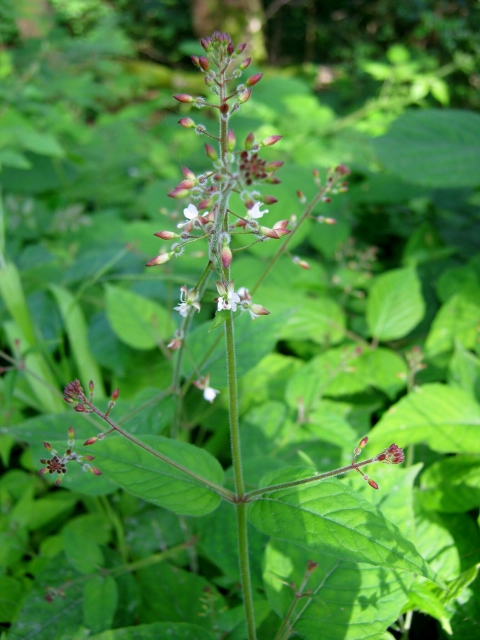
IMG_4937Enchanter's Nightshade (480x640)

Enchanter’s Nightshade (Circaea lutetiana) grew everywhere.

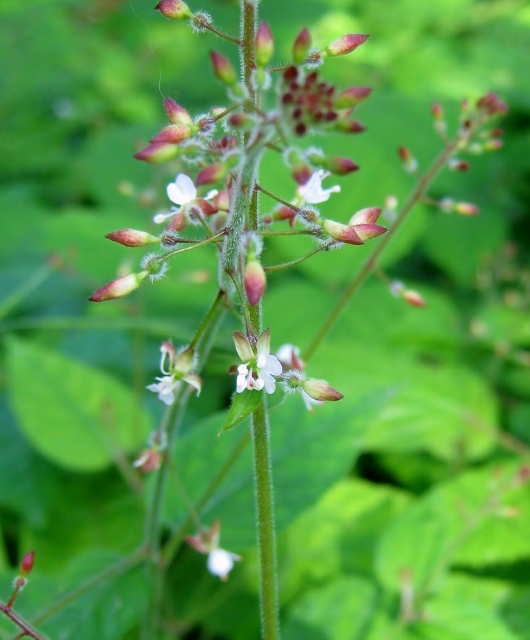
IMG_4937Enchanter's Nightshade (2) (530x640)

It has tiny flowers which produce burs once pollinated.

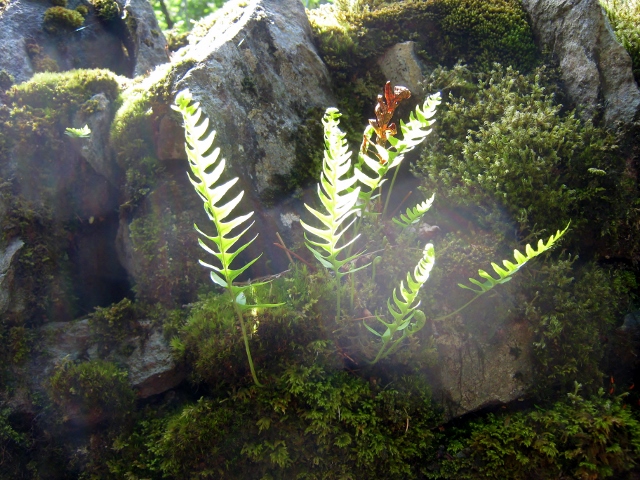
IMG_4944Bracken (640x480)

Bracken and ferns were growing alongside our path. I like the way the sunlight caught this fern.

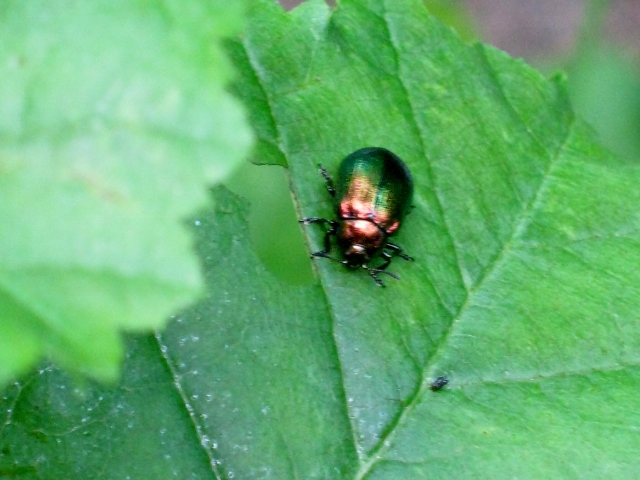
IMG_4960Chrysolina beetle (640x480)

A Chrysolina beetle of some sort.

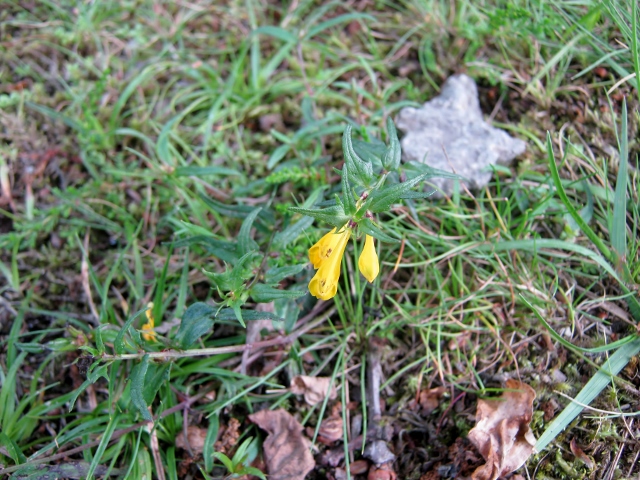
IMG_4970Common Cow-wheat (640x480)

A flower I had never seen before – Common Cow-wheat (Melampyrum pratense)

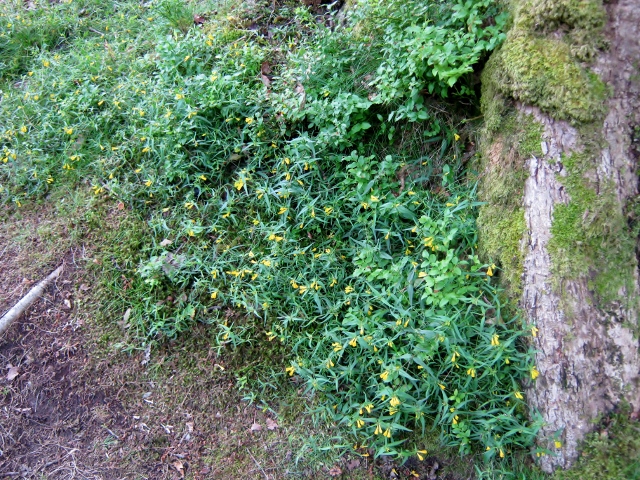
IMG_4972Common Cow-wheat (640x480)

There was rather a lot of it!

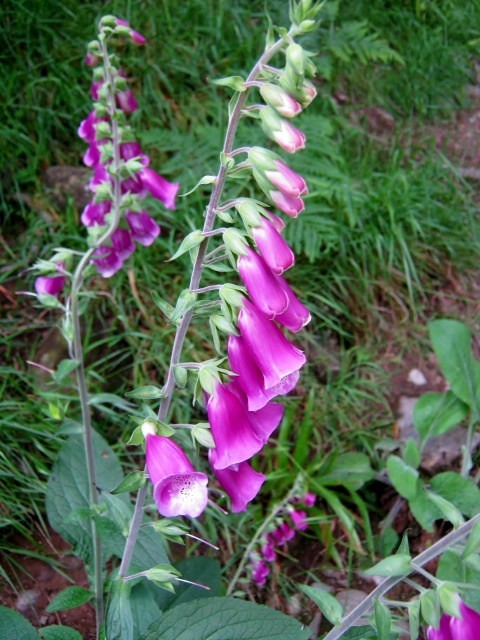
IMG_4980Foxgloves (480x640)

Foxgloves (Digitalis purpurea)

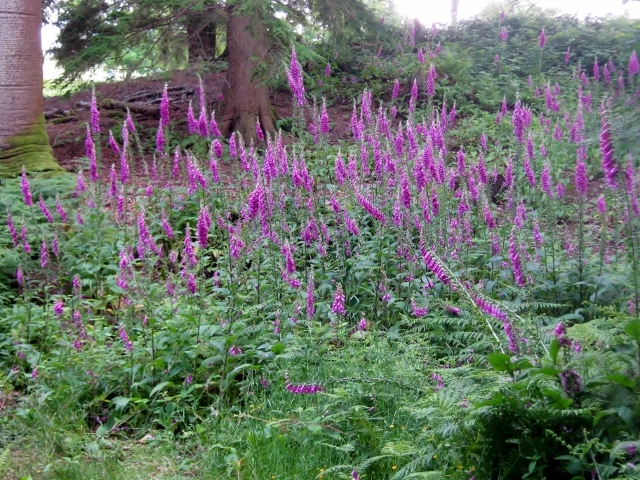
IMG_5028Foxgloves (640x480)

A bank of foxgloves

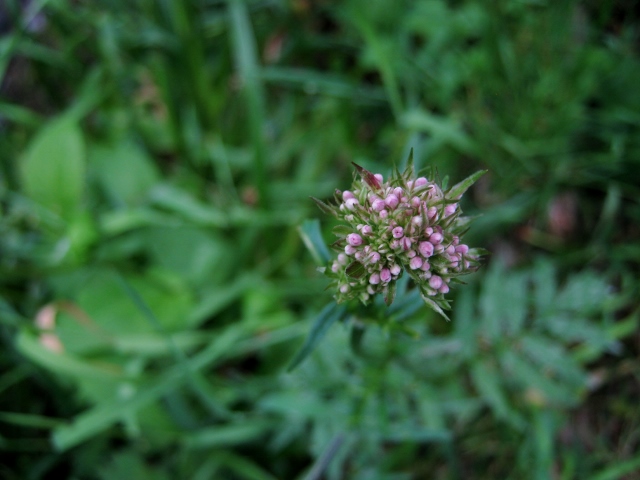
IMG_4986Common Valerian (640x480)

Common Valerian in bud (Valeriana officinalis)

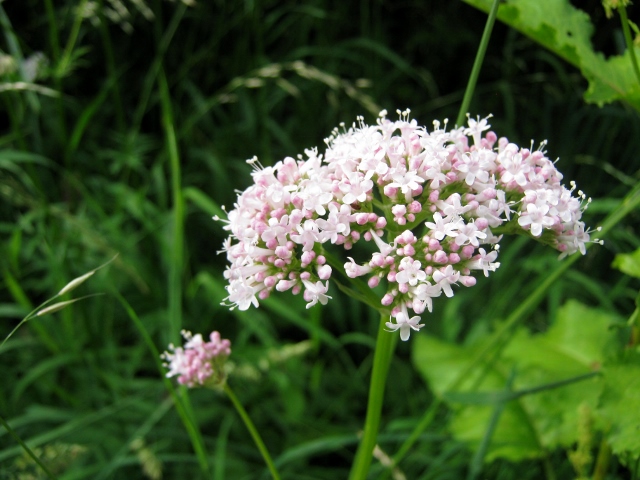
IMG_5038Common Valerian (640x480)

Common Valerian in flower

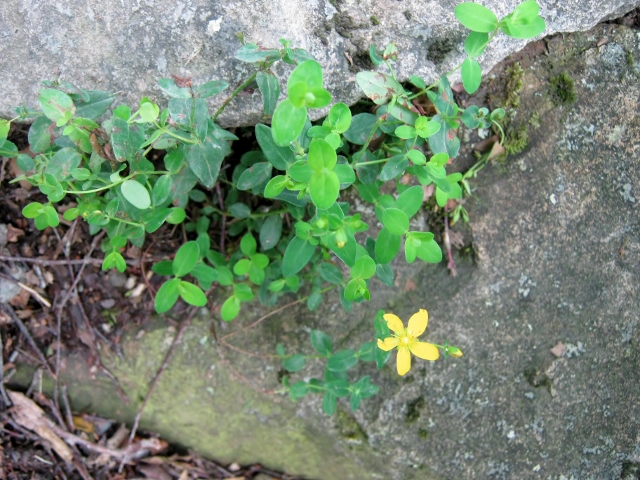
IMG_4998St John's-wort (640x480)

I thought this might be Trailing St John’s-wort (Hypericum humifusum) but the ID description tells me the leaves should have translucent dots and I didn’t see any dots.

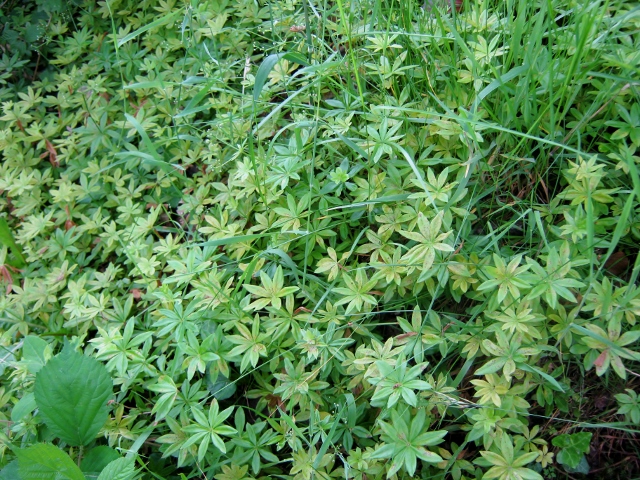
IMG_5018Woodruff perhaps (640x480)

I think these are Woodruff leaves (Galium odoratum)

I saw so many different plants and flowers, grasses and sedges, many of which I have included in posts from home so haven’t included them here, but some I still have no idea what they are despite researching for some time.

IMG_4968Unknown (640x480)

This plant for example! (The tri-foliate leaf near my hand was not part of the plant).

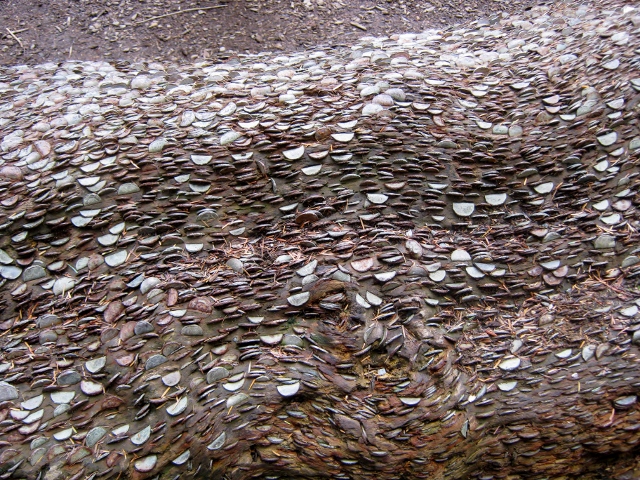
IMG_5022Coins in log (640x480)

On our way back from the waterfall we found this fallen log covered in coins.

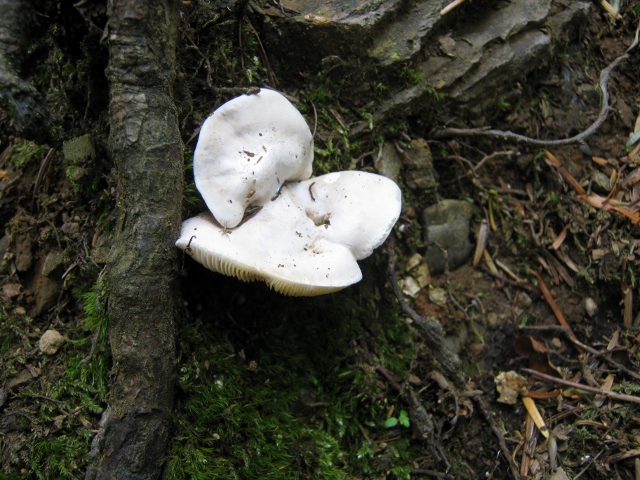
This is a ‘Wish Tree’.  People hammer coins into it with a stone from the site and hope that their wish comes true.  We didn’t have any wishes and anyway, I was more interested in the fungi growing on the log.

This slideshow requires JavaScript.

I saw another fungus growing at the base of a tree.

IMG_5021Fungus (640x480)

If anyone can suggest what this or any of the other fungi are I would be very grateful.

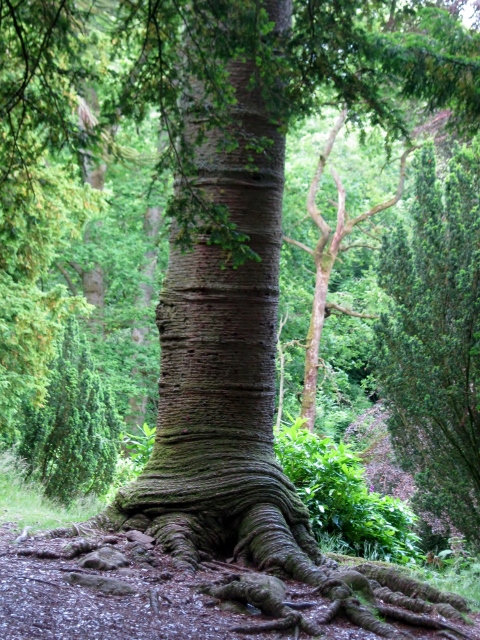
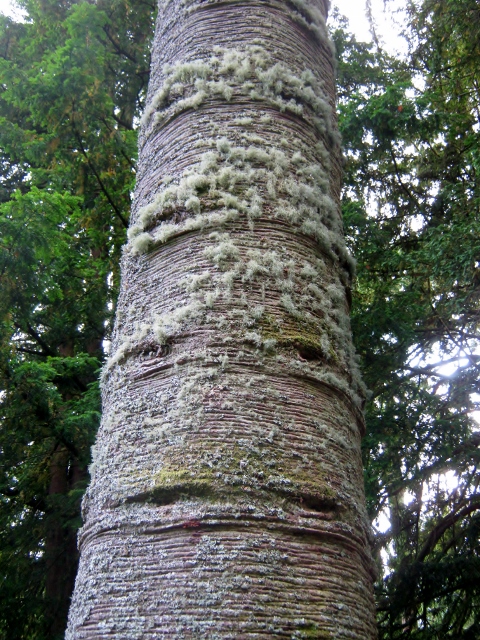
Near to the car park we found the Arboretum that the Howard family had planted in 1846.  They planted over 200 specimen conifers (firs, pines, spruces and cedars) from all over the world.  Apparently there is a Sitka Spruce (Picea sitchensis) that is now 118′ tall though I didn’t see it.  What I did see was a Monkey Puzzle tree (Araucaria araucana) that looked like it’s bark was sliding down like a baggy sock.

IMG_5029Monkey Puzzle tree (480x640)

I used to see Monkey Puzzles all over the place where I grew up. Trees that had been planted in the 19th century in parks and gardens were fully mature when I was a girl in the 60’s and 70’s. I don’t ever remember looking at them closely so I don’t know if this is what all their trunks look like.

IMG_5031Moss and lichen on Monkey Puzzle (480x640)

Moss and lichen were growing on one side of the trunk.

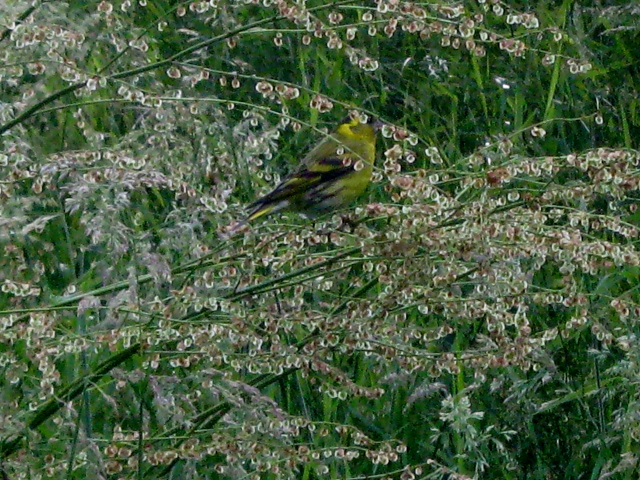
IMG_5033Siskin (640x480)

I saw a Siskin (Carduelis spinus) hiding in a plant I was wanting to get closer to but didn’t because of the Siskin!

I took a couple of pictures of the fells as we returned to the car.

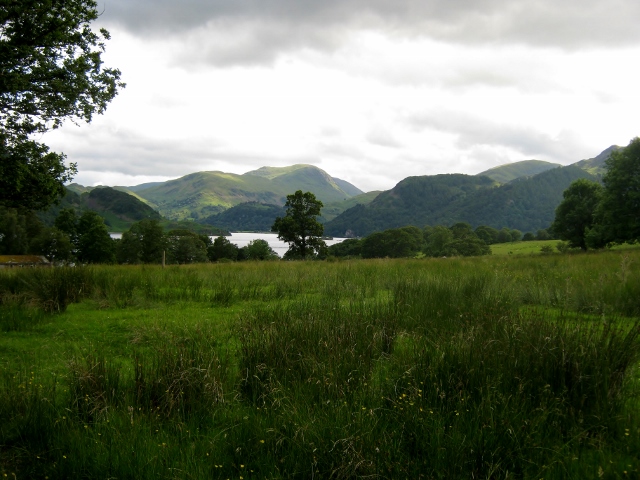
IMG_5034Ullswater (640x480)

Ullswater in the distance.

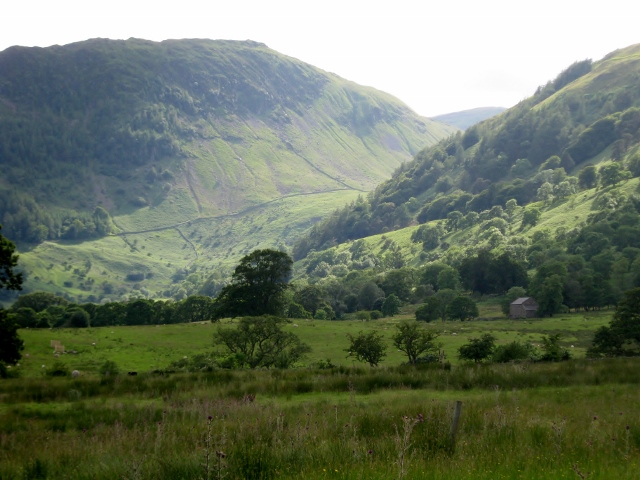
IMG_5035Fells near Ullswater (640x480)

I would love to be able to walk up one of these before I get too old!

Thanks for visiting!
Share this:

  • Share on X (Opens in new window) X
  • Share on Reddit (Opens in new window) Reddit
  • Share on Pinterest (Opens in new window) Pinterest
  • Share on Facebook (Opens in new window) Facebook
  • Email a link to a friend (Opens in new window) Email
  • Share on Tumblr (Opens in new window) Tumblr
  • Print (Opens in new window) Print
  • Share on Pocket (Opens in new window) Pocket
  • Share on LinkedIn (Opens in new window) LinkedIn
Like Loading...

Wyken Hall Gardens

21 Tue Jul 2015

Posted by Clare Pooley in Days out, Gardening, plants, Rural Diary

≈ 30 Comments

Tags

Elizabethan house, garden rooms, Suffolk, Wyken Hall Gardens

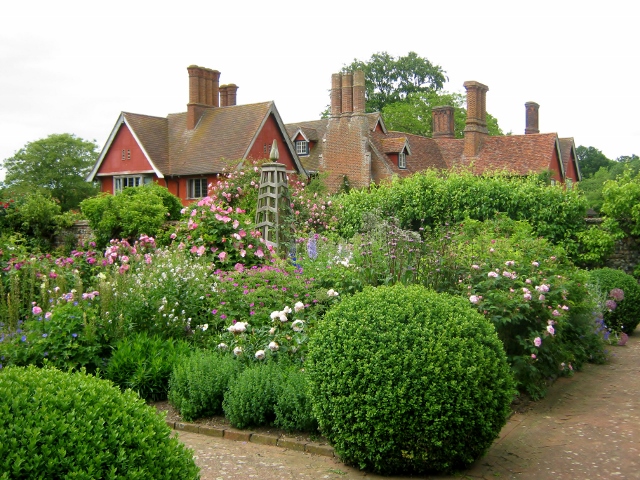
IMG_4848Wyken Hall (640x480)

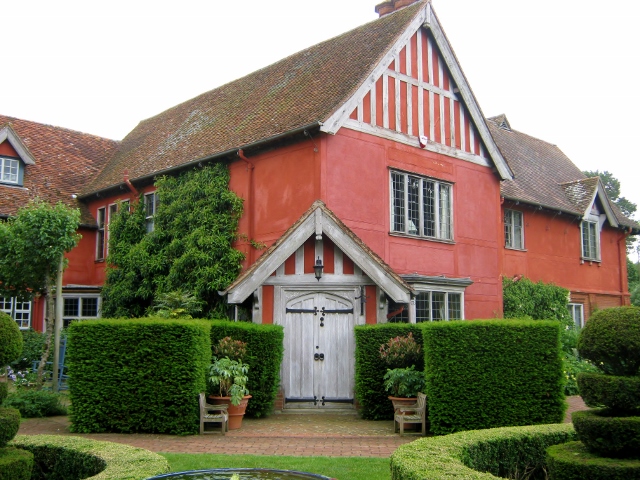
Wyken Hall

On 19th June Richard, Elinor and I visited Wyken Hall Gardens in Suffolk.  This visit was to celebrate our 21st wedding anniversary of the day before.  We never buy each other gifts on our anniversary unless there is something we both would like to have for the house or the garden, for example.  We usually plan an outing to a place we’d like to see or we go out for a meal.  This year we decided on a trip to Wyken Hall Gardens.

IMG_4835Wyken Hall (640x480)

Wyken Hall

Wyken Hall is an Elizabethan manor house owned by Sir Kenneth and Lady Carla Carlisle.  The house itself isn’t open to the public but the 4 acre gardens are.  The house dates from 1570 with additions being made to it in 1630 and 1680 and then major works were carried out in 1920.

IMG_4833Wyken Hall (640x480)

Lady Carlisle comes from the USA and she designed this area to look like a southern veranda. She brought 5 rocking chairs over from Mississippi and then the row of Spartan apple trees were espaliered high so as not to obscure the view from the house.

The Royal Horticultural Society (RHS) says it is one of the best modern private gardens in the country.

IMG_4852Wyken Hall garden (640x480)

The Rose Garden

Lord Carlisle began work on the garden in the late 70’s and created the Rose Garden, the Winter Garden and the other garden rooms near the house.  More work was done after his marriage in 1986.

IMG_4832Quincunx Wyken Hall (640x480)

The Quincunx – five equal interlocking circles – inspired by a design for a herb garden by Gertrude Jekyll.

New gardens are continually being created.

IMG_4860WykenHall garden (640x480)

The new garden pond with oak pier. The owners hope that soon the chestnut fencing will be covered with white wisteria.

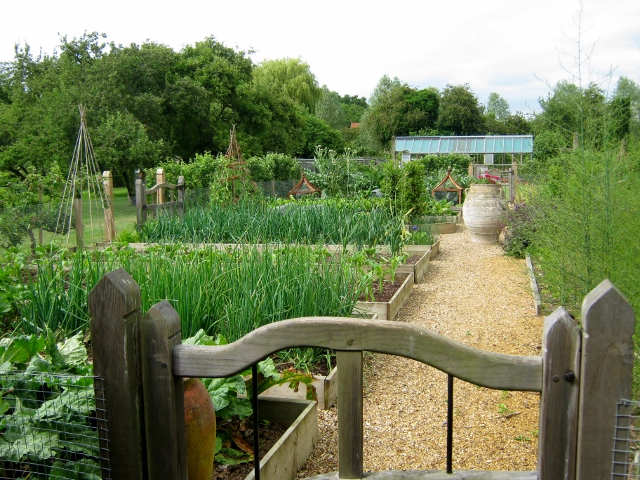
When Lord Carlisle began work on the garden it already had a structure of flint walls and many fine old trees.  Hornbeam and yew hedges divide the garden into its different rooms.  There is a copper-beech maze and a nuttery; a herb garden, a knot garden and an ‘edible’ garden; wildflower meadows and a traditional English kitchen garden.   Many of the old-style gardens complement the Elizabethan house.

IMG_4863Wyken Hall (640x480)

View of the house from the Rose Garden

As well as the garden, the Carlisles own Wyken Wood, which is ancient woodland, a large modern farm and a 7 acre vineyard.  A large medieval barn has been converted into a country store (which sells exclusive goods) a restaurant and café.  As well as different wines they also produce ale from their own barley.

IMG_4837Wyken Hall garden (640x479)

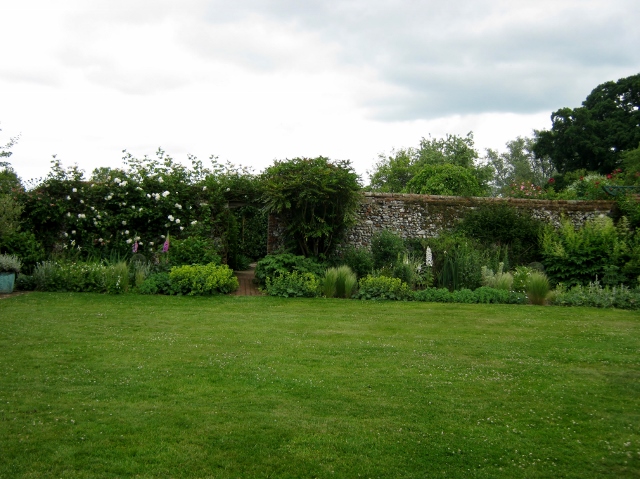
A flower border sheltered by a flint wall in which there is an inviting archway to gardens beyond.

IMG_4846Wyken Hall garden (480x640)

Steps cut into the turf (foreground) and the path through the winter garden

IMG_4841Bellini Bus Stop (480x640)

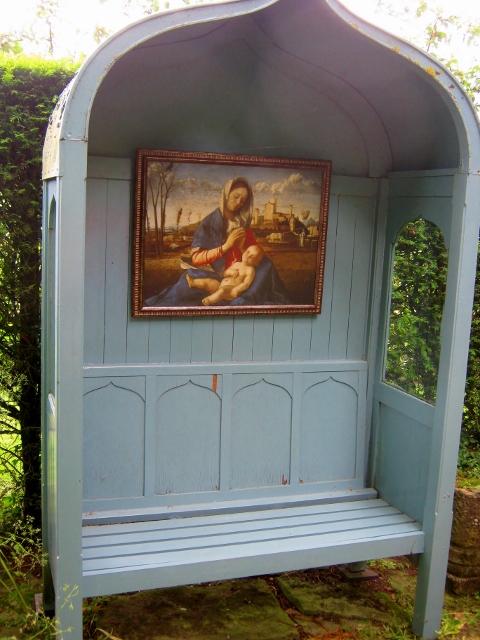
The ‘Bellini Bus Stop’ – a covered seat in the winter garden

IMG_4858Wyken Hall garden (480x640)

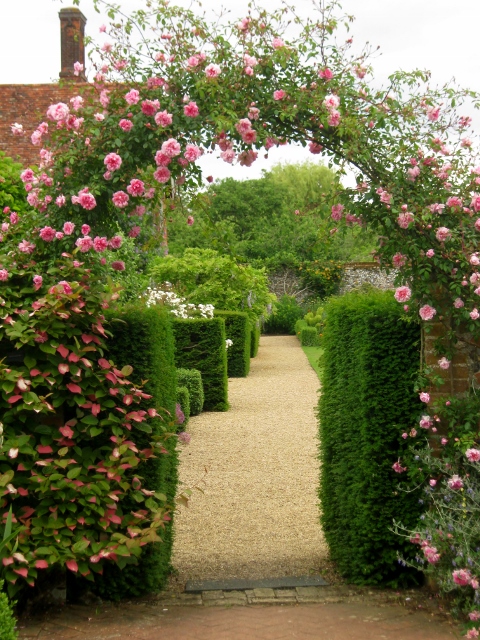
A very pretty arch with an interesting variety of plants round it.

IMG_4873Wyken Hall garden (640x480)

The kitchen garden

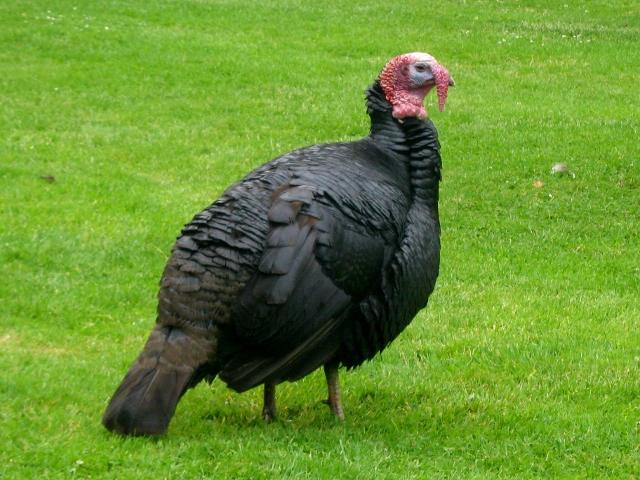
IMG_4881Turkey (640x480)

A supercilious-looking turkey

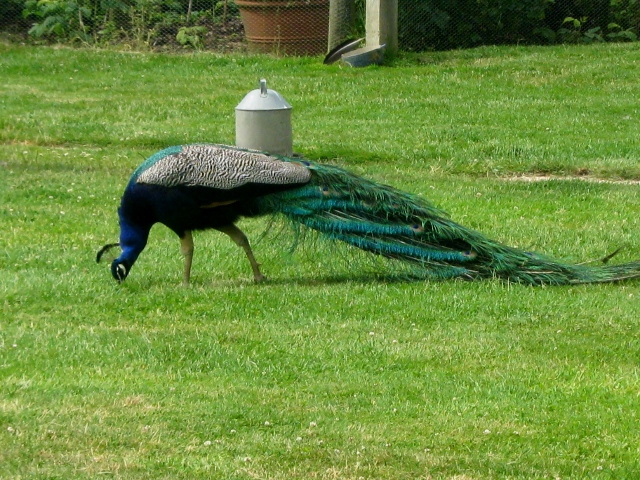
IMG_4874Wyken Hall garden (640x480)

A peacock

This slideshow requires JavaScript.

A slideshow of photos of some of the lovely plants and flowers we saw.

This slideshow requires JavaScript.

A slideshow of the plants in the Red Hot Border.

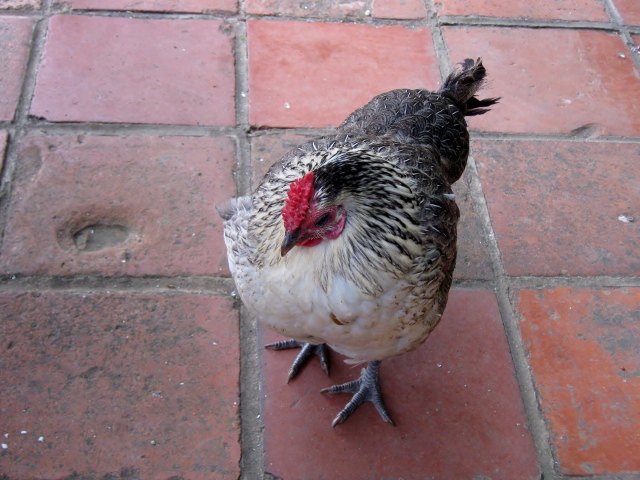
IMG_4890Hen (640x480)

This little hen came and stood under our table outside the café and begged for crumbs. She was given quite a lot of Elinor’s expensive scone!

We had a very enjoyable afternoon at a most beautiful and immaculate garden.

Thanks for visiting!
Share this:

  • Share on X (Opens in new window) X
  • Share on Reddit (Opens in new window) Reddit
  • Share on Pinterest (Opens in new window) Pinterest
  • Share on Facebook (Opens in new window) Facebook
  • Email a link to a friend (Opens in new window) Email
  • Share on Tumblr (Opens in new window) Tumblr
  • Print (Opens in new window) Print
  • Share on Pocket (Opens in new window) Pocket
  • Share on LinkedIn (Opens in new window) LinkedIn
Like Loading...
Newer posts →
Follow A Suffolk Lane on WordPress.com

Enter your email address to follow this blog and receive notifications of new posts by email.

Join 715 other subscribers.

Unknown's avatar

I talk about what it's like living in a quiet part of Suffolk. I am a wife, mother and daughter, a practising Christian and love the natural world that surrounds me. I enjoy my life - most of the time!
My Posts

Jan 2026
M T W T F S S
 1234
567891011
12131415161718
19202122232425
262728293031  
« Dec    

Pages

  • About my Blog
  • GDPR (General Data Protection Regulations) and This Site
  • My Life in a Suffolk Lane

Archives

Blogs I Follow

Unknown's avatar
Unknown's avatar
Unknown's avatar
Unknown's avatar
Unknown's avatar
Unknown's avatar
Unknown's avatar
Unknown's avatar
Unknown's avatar
Unknown's avatar
Unknown's avatar
Unknown's avatar
Unknown's avatar
Unknown's avatar
Unknown's avatar
Unknown's avatar
Unknown's avatar
Unknown's avatar
Unknown's avatar

Posts I Like

  • Unknown's avatar
  • Unknown's avatar
  • Unknown's avatar
  • Unknown's avatar
  • aho's avatar
  • Unknown's avatar
  • Unknown's avatar
  • Unknown's avatar
  • Unknown's avatar
  • Unknown's avatar
  • Martha's avatar
  • Secret Diary of A Country Vicar's Wife's avatar
  • Unknown's avatar
  • Unknown's avatar
  • East of Elveden's avatar
  • Unknown's avatar
  • sopantooth's avatar
  • Unknown's avatar
  • Unknown's avatar
  • Sarah curran's avatar
  • Rich's avatar
  • Unknown's avatar
  • Jack Ronald Cotner's avatar
  • Unknown's avatar
  • Unknown's avatar
  • Unknown's avatar
  • Unknown's avatar
  • Stephen G. Hipperson's avatar
  • Unknown's avatar
  • bitaboutbritain's avatar
  • Unknown's avatar
  • 60onabudget's avatar
  • Unknown's avatar
  • Unknown's avatar
  • clivebennett796's avatar
  • thesimlux's avatar
  • Unknown's avatar
  • Unknown's avatar
  • Unknown's avatar
  • Schnippelboy's avatar
  • Unknown's avatar
  • Dad's avatar
  • quietsolopursuits's avatar
  • Unknown's avatar
  • Maikhel's avatar
  • Unknown's avatar
  • JAM's avatar
  • Unknown's avatar
  • Ari's avatar
  • Unknown's avatar

amphibians architecture art Arts and Crafts churches cooking Days out domestic animals family fish Folk Traditions Gardening Historic Buildings holidays Insects Landscaping literature music Norwich plants Rural Diary seashore theatre trees Uncategorized walking weather wild animals wild birds wild flowers

Tags

architecture autumn birds blackbird blackthorn Bungay butterfly church clouds common knapweed cow parsley crocus daffodils Diary dogwood family field maple flowers fungus garden gardening geese greylags ground-ivy Halesworth Hawthorn heather holiday Holly Holy Week horse chestnut Hoverfly insects ivy Lake District Lent lesser celandine lichen Lords and Ladies Mallard mallards Minsmere moorhen moss music Norwich Peak District pheasant plants pond ponds primrose primroses Rain rooks Rumburgh Rumburgh Church sheep Sheffield snow snowdrops Southwold spring Suffolk Suffolk Wildlife Trust sunset the Beck trees viburnum bodnantense walking weather wild cherry wild flowers winter-flowering honeysuckle witch-hazel

Meta

  • Create account
  • Log in
  • Entries feed
  • Comments feed
  • WordPress.com

Goodreads

Blog at WordPress.com.

Book Jotter

Reviews, news, features and all things books for passionate readers

Country Life Blog -

A blog about life in the country in the past and present

Matthew Paul: Poetry & Stuff

Poetry and what-not

Schnippelboy

Ein Tagebuch unserer Alltagsküche-Leicht zum Nachkochen

TAMARA JARE

TAMARA JARE Tamara Jare: Contemporary Figurative Painting Oil on Canvas Artist Art Studio

A Taste of Freedom

Documenting a Dream

Country Ways

Rambling Journeys in Britain, Countryside Matters and campaigning for the Right to Roam

The Strawberry Post

Here to Entertain, Educate & Inspire!
a north east ohio garden

an ongoing experiment in the dirt, 35 plus years

naturechirp

Celebrating God's creatures, birds and plants...

Sophie Neville

Writer

Going Batty in Wales

Developing a more sustainable lifestyle in SW Wales

Our Lake District Escapades

Exploring the Lake District and beyond

Short Walks Long Paths

Wandering trails around the coast of Wales

The Biking Gardener

An English persons experience of living and gardening in Ireland

Nan's Farm

A Journal Of Everyday Life

Walk the Old Ways

Rambling Journeys in Britain with John Bainbridge. Fighting for the Right to Roam. Campaigning to Protect Our Countryside.

Writer Side UP!

Waking the Writer Side...and keeping it "Up!"

Meggie's Adventures

Travel, thank you notes and other stories

amusicalifeonplanetearth

Music and the Thoughts It Can Inspire

lovefoundation.co.uk

Traveling Tortuga

Simply Living Well

Pakenham Water Mill

Historic watermill in the beautiful Suffolk countryside

Take It Easy

Retired, not expired: words from the after(work)life. And music. Lots of music!

Secret Diary Of A Country Vicar's Wife

By Olive Oyl

thanksfortheadventureorg.wordpress.com/

The Beat Goes On

#TBGO

Frank Pleszak's Blogs

Twitter: @frankpleszak @PolishIICorps

John Bainbridge Writer

Indie Writer and Publisher

roughwighting

Life in a flash - a bi-weekly storytelling blog

Walking the Old Ways

Rambling in the British Countryside

CapKane

thoughts on social realities

SkyeEnt

Jottings from Skye

jodie richelle

embracing my inner homemaker

Skizzenbuch/Blog

Just another WordPress.com weblog

Have Bag, Will Travel

The Call of the Pen

Flash Fiction, Book Reviews, Devotionals and other things.

John's Postcards

Art in Nature

You dream, I photographe it !

Smile! You’re in Barnier World......

theinfill

the things that come to hand

Dr. Mary Ann Niemczura

Author of "A Past Worth Telling"

Provincial Woman

The Pink Wheelbarrow

Luanne Castle: Poetry and Other Words (and cats!)

Poetry, Other Words, and Cats

The Family Kalamazoo

A genealogical site devoted to the history of the DeKorn and Zuidweg families of Kalamazoo and the Mulder family of Caledonia

everythingchild

The Book Owl

Canberra's Green Spaces

Paul Harley Photographer

  • Subscribe Subscribed
    • A Suffolk Lane
    • Join 715 other subscribers.
    • Already have a WordPress.com account? Log in now.
    • A Suffolk Lane
    • Subscribe Subscribed
    • Sign up
    • Log in
    • Report this content
    • View site in Reader
    • Manage subscriptions
    • Collapse this bar
 

Loading Comments...
 

    Privacy & Cookies: This site uses cookies. By continuing to use this website, you agree to their use.
    To find out more, including how to control cookies, see here: Cookie Policy
    %d