• About my Blog
  • GDPR (General Data Protection Regulations) and This Site
  • My Life in a Suffolk Lane

A Suffolk Lane

~ A diary of my life in rural north Suffolk.

A Suffolk Lane

Category Archives: Rural Diary

My life in rural Suffolk. The wildlife around my home, the weather that affects what I do, my family and the people I meet.

Peak District Holiday 1st to 9th July. Day 5 Part 2 and Day 6.

09 Fri Jan 2015

Posted by Clare Pooley in churches, Rural Diary, Uncategorized

≈ 11 Comments

Tags

All Saints church, Brindley's Mill, James Brindley, Leek Staffordshire, murals, Richard Norman Shaw, stained glass

During our day in Leek (mentioned in a former post), we also re-visited two favourite places.

This post is written with some help from the information booklets I obtained from All Saint’s Church, Leek and Brindley’s Mill, Leek.

ALL SAINTS CHURCH

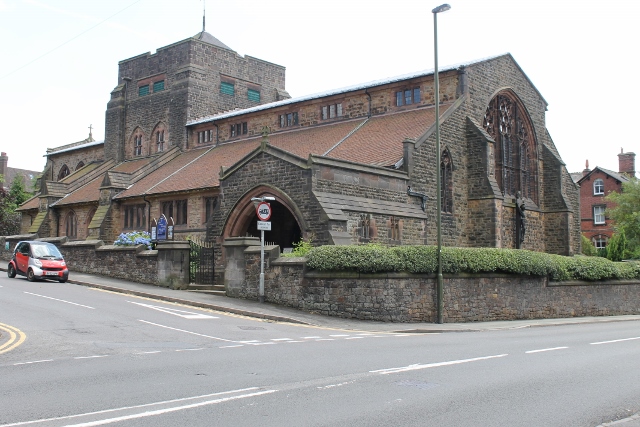
093AAll Saint's church (640x427)

All Saints Church, Leek is built of dark gritstone and some pink sandstone.

This church was designed by Richard Norman Shaw (1831-1912) and is considered the finest of all the sixteen he worked on.  He mainly designed great houses and public buildings – 200 are attributed to him – including ‘Cragside’ in Northumberland and New Scotland Yard in London, the former headquarters of the Metropolitan Police.  He followed A W N Pugin’s methods and principles which included honesty in the use of materials and the use of local building stone wherever possible.  He also worked for some years as assistant to George Edmund Street and many of Street’s principles can be seen in Shaw’s churches – very low chancel screens without superstructure and the altar visible from all parts of the building.

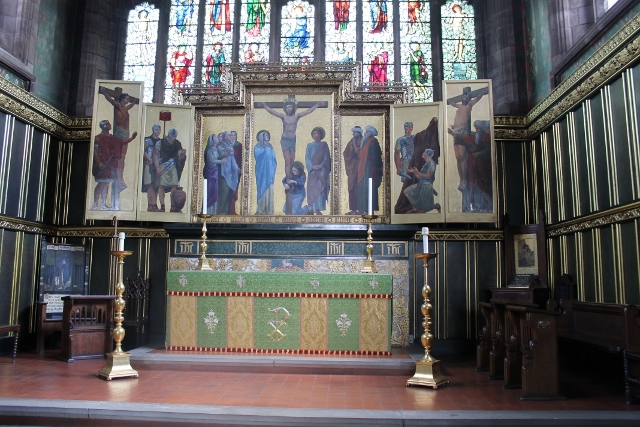
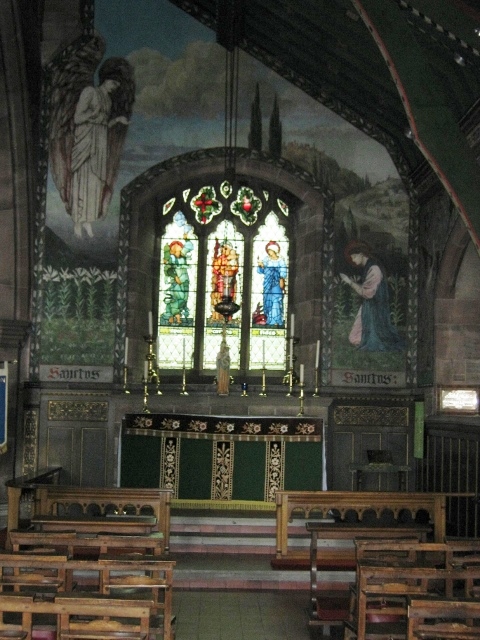
095Altar (640x427)

The High Altar. The beautiful painted Reredos shows Christ’s Crucifixion and the Great East Window behind, designed by the artist Edward Burne-Jones, is a ‘Jesse’ window and shows the ancestry of Christ.

This was the third time we had visited this church and each time we have been there we have been welcomed and shown wonderful hospitality by the parishioners who open their church to visitors twice a week, provide coffee, tea and biscuits and lots of information and chat.

The stained glass windows are sumptuously coloured.

Miriam, Esther and Ruth by J E Platt
Faith, Hope and Charity by E Burne-Jones
St Stephen, St Catherine and St Alban by G Horsley
St Chad of Lichfield, King Alfred of Wessex and St Werburgh of Chester by J E Platt
St Augustine of Hippo, St Jerome, St Ambrose and St Gregory by Morris and Co
King David, King Solomon, Hezekiah and Josiah by Morris and Co
Deborah, Huldar and Judith by Morris and Co
East Window - Ancestry of Christ by E Burne-Jones
East Window – Ancestry of Christ by E Burne-Jones
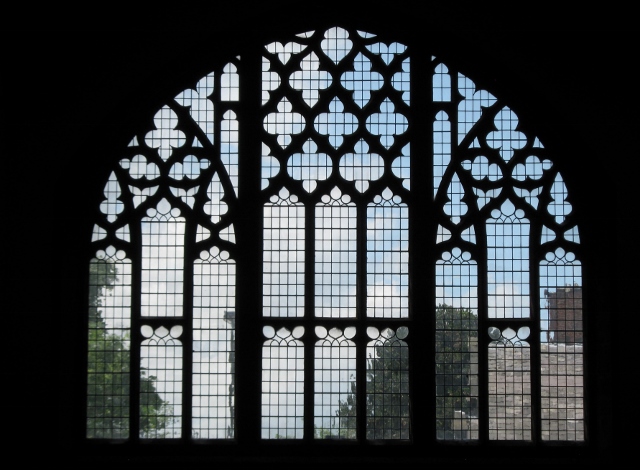
022West window (640x470)

The West Window has no stained glass and shows the beautiful tracery to good effect

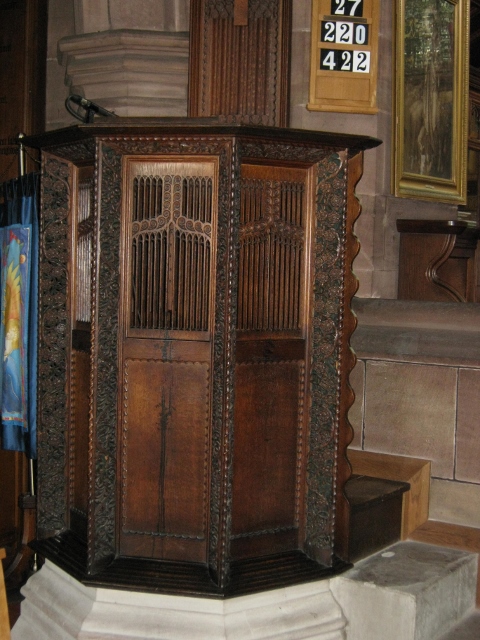
018Pulpit (480x640)

The pulpit is decorated beautifully with carving and pierced woodwork. It also has a tester or sounding board above it which helped with acoustics before the use of microphones.

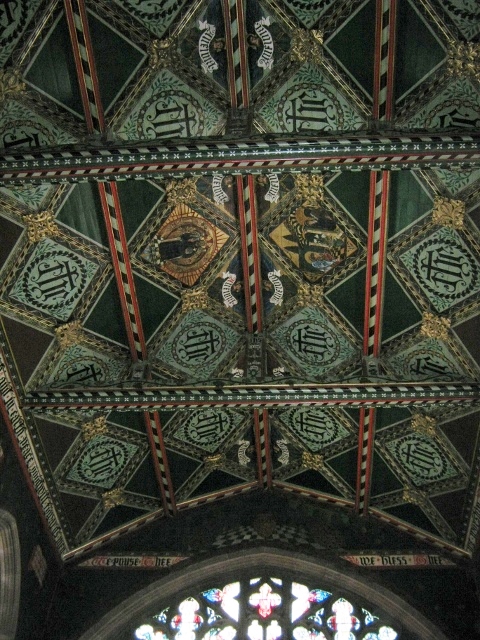
020Ceiling (480x640)

Part of the painted ceiling in the chancel.

027Lady chapel (480x640)

The highly decorated Lady Chapel. The wall painting shows the Annunciation, the visit of the Angel Gabriel to Mary when she is told she has been chosen to be the Mother of Christ.

Another painting in the Lady Chapel and on the south wall is of St Francis of Assisi preaching to the birds.  Unfortunately the photographs I took were not good enough as the light levels were poor.

Wall painting
Wall painting

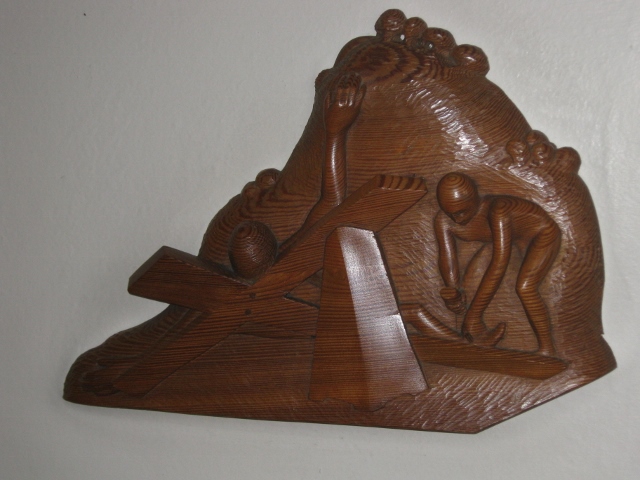
032One of stations of the cross (640x480)

One of the fourteen Stations of the Cross carved in 1991 by a local craftsman, John Owen.

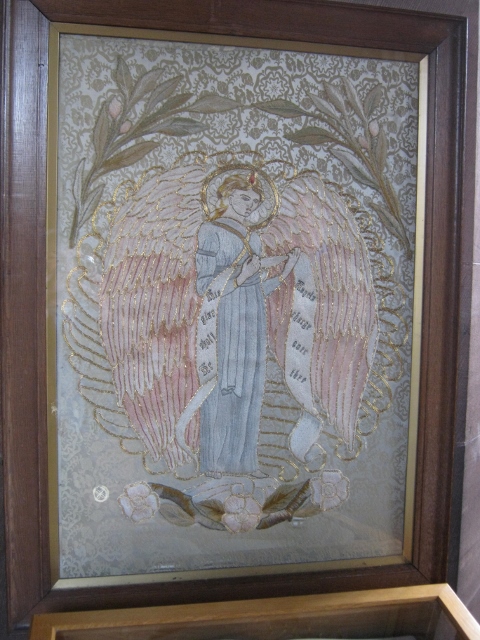
033One of the embroideries (480x640)

A framed embroidery of an angel – a late example of the work of a member of the Leek School of Embroidery.

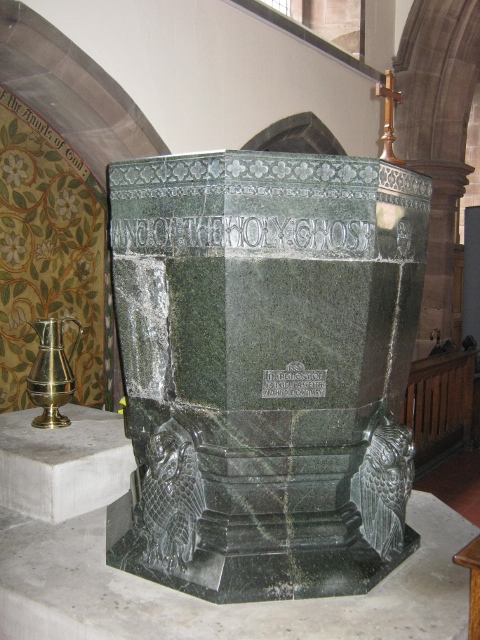
034The font (480x640)

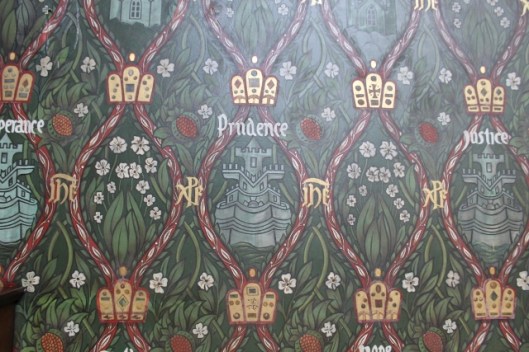
The font is made from green marble and the floral design on the west wall behind it is believed to be by William Morris.

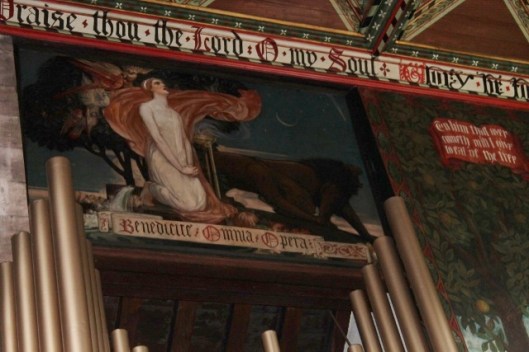
106Painting (640x427)

This painting had only just been restored and replaced in the church the day we visited.

BRINDLEY’S MILL

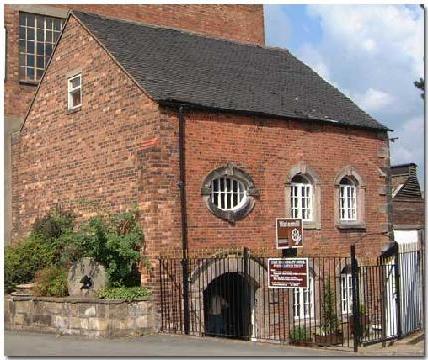
Our next port of call was to Brindley’s Mill.  As it is on a busy road I was unable to take a photograph of the outside of the mill so I have found a picture of it on-line – thanks to the Peak District On-line site.

leek-mill

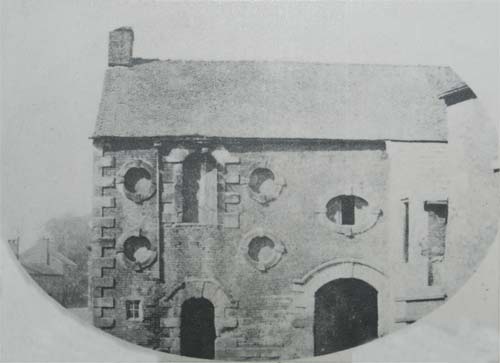
I also found a photograph of what it looked like before successive roadworks raised the road level and caused the demolition of part of the building in 1948.  This photograph comes from the Staffordshire Past Track site.

26896-0

James Brindley was born in 1716, the eldest of the seven children of a Derbyshire small farmer.  Brindley had very little schooling as he was kept very busy on the farm.  The family moved to Leek when he was ten and at the age of seventeen he was apprenticed to a millwright near Macclesfield in Cheshire.  He had a wonderful memory and stored up all sorts of useful information that he gleaned on his trips with journeymen to a variety of mills in the area.  After two years his grasp of mechanical detail was remarked on by a mill manager and when the millwright to whom he was apprenticed failed to produce machinery for a new paper mill, Brindley, on his own initiative, visited the mill fifty miles away to see what was required.  He was subsequently put in charge of the work which was completed satisfactorily.  He thereafter looked after the business until the millwright’s death.  Brindley set up his own millwright’s business in 1742 at the age of 26.  He opened up another workshop in the Potteries where, after working with master potters and colliery owners he became known as ‘The Schemer’.  His mill work continued including water mills for corn, flint and  textiles, all requiring different internal machinery.  Where no water was available he used ‘fire engines’ as early steam pumps were known.  He patented improvements to existing machines.  He replaced water by wind in Burslem for grinding flint for the Wedgewoods.

Brindley built the cornmill in Leek in 1752 on a site where a mill had stood since Domesday, on the River Churnet.

040R Churnet (640x480)

The River Churnet seen from the mill

In constructing this mill he showed a variety of skills – a millwright’s knowledge of mechanics and hydraulics was accompanied by the ability to create a stylish building using new weight-bearing techniques.  He also exhibited civil engineering skills when constructing the weir by compacting clay, as he did later when forming the beds of the canals he made.  His canals transformed the way goods were transported across England and he became very famous.  Because of his lifestyle – constant travelling, overwork and also the onset of diabetes – he died at the early age of 56.

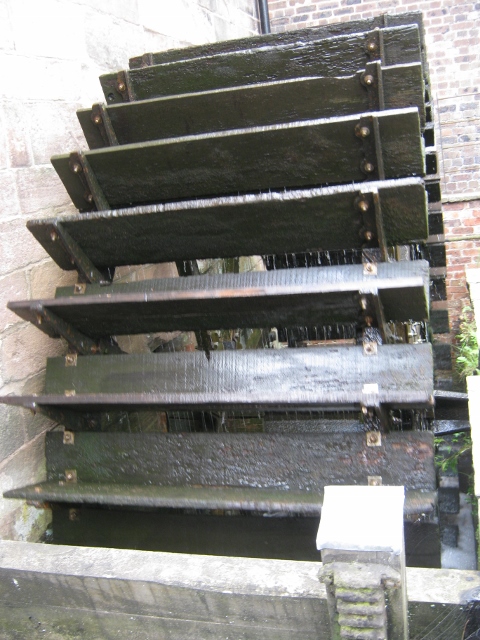
042Wheel (480x640)

The working waterwheel


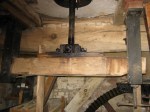
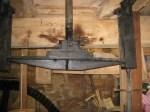
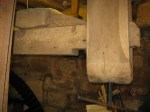
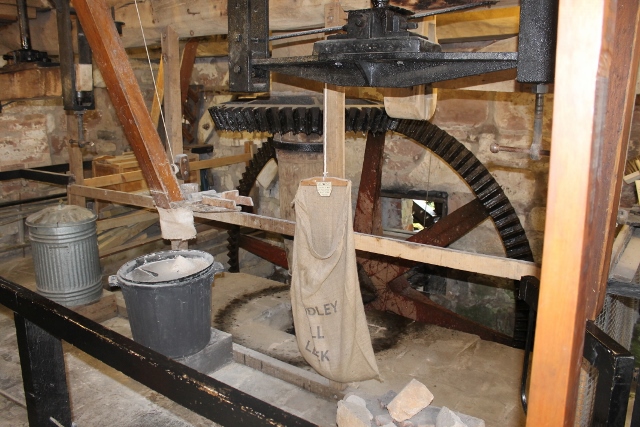
Four photos of the tentering gear (three sets of different vintages are bolted to the ceiling).  They adjust the gaps between the millstones on the floor above to control the fineness of the flour.

At the rear of the photo is the pit wheel which is connected to the waterwheel outside by the axle-tree. The main shaft is made of oak and is 18″ in diameter. It is supported by a brass footstep bearing which is bolted to the floor. Around the base of the main shaft is the wallower – a gear which is driven by the pit wheel. At the front of the photo is the wooden pipe which conveys the meal from the millstones above. The meal is then sieved.

110Mill (640x427)

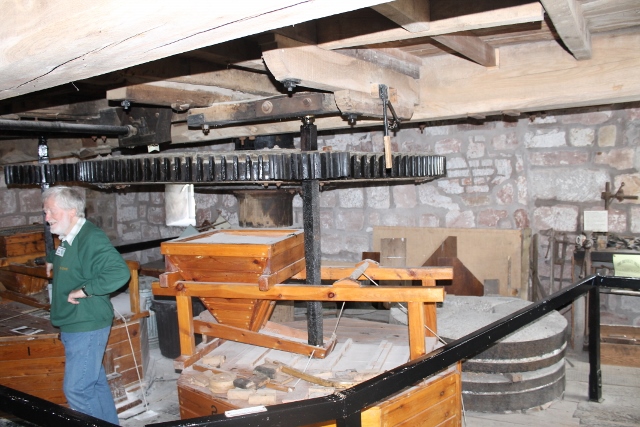
This is a photo of the next floor. Grain is poured into the wooden hopper from the floor above. The new hopper here is a quarter scale replacement to make demonstrations easier. Below the hopper is a tray (the shoe). One of the arms attached to the shoe is held against the rotating four-sided shaft by a rope attached by a springy bar of willow. As the shaft turns its four edges create a shuddering movement in the shoe which allows the grain to be jerked out at a regular pace into the eye of the top stone.

055Mill stones (640x480)

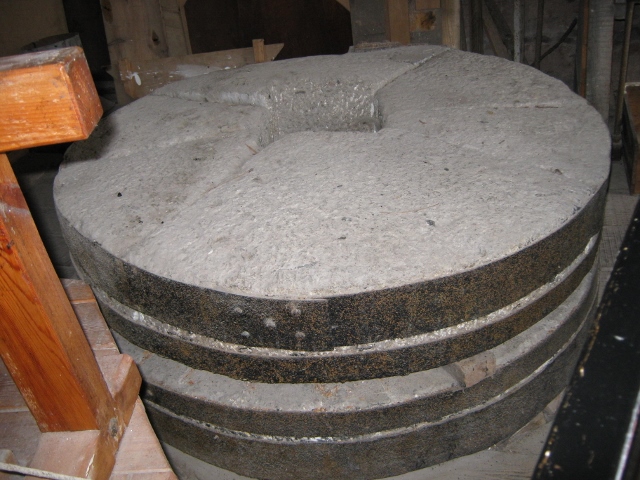
Mill stones

056Weighted with flat iron (640x480)

If the stone became worn or it ground unevenly it could be repaired by being weighted on one side. This one has been weighted by an old flat iron.

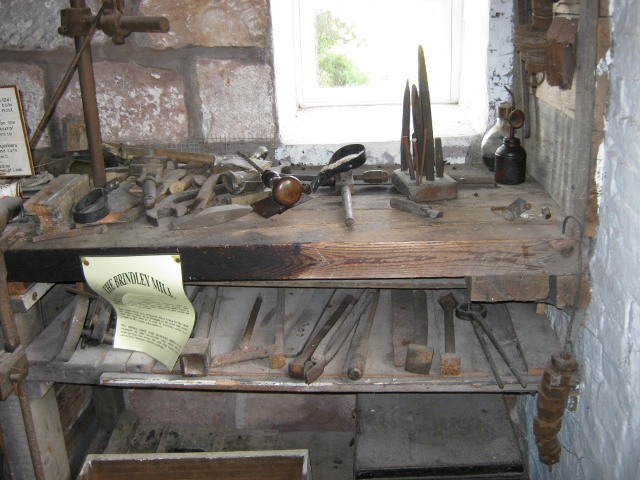
057Tools used in mill (640x480)

A work bench with tools used in the mill

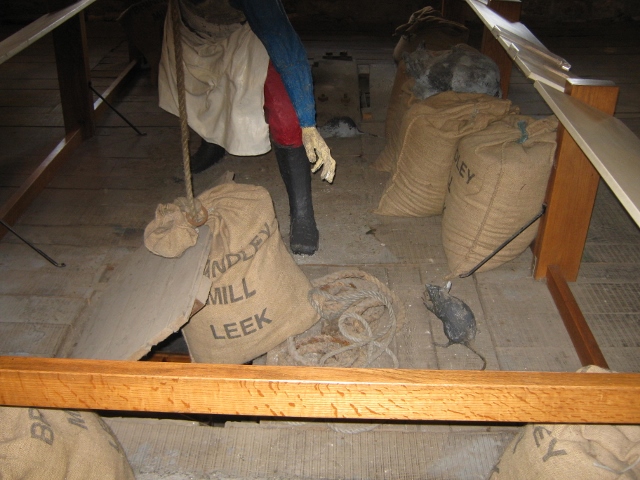
060Garner floor (640x480)

The Garner floor or top floor where the grain is stored prior to milling. The sacks are conveyed up to this floor with a sack hoist

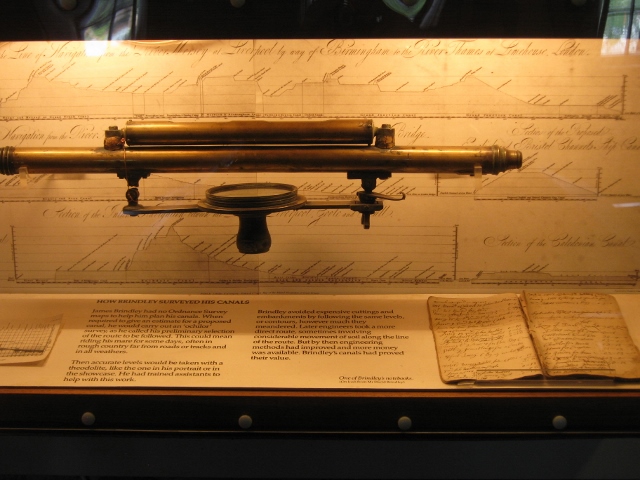
065B's level & notebook (640x480)

Brindley’s level and notebook

This is a theodolite level – a spirit level above a telescope above a compass – and was the most advanced piece of technology which he used in planning his canals.

066Notebook (640x480)

This is one of four of Brindley’s notebooks in existence and are mainly aids to his memory – time taken to ride to distant places, where he found suitable timber, clothes he bought, how much he was owed etc.

The following day, which was Sunday, we attended church at All Saints and had coffee afterwards in their large church room in the undercroft.  Such friendly people!

We then travelled to Manchester and spent some time visiting my mother-in-law in her house.  Probably the last time I will see the house, though I didn’t realise it then.


Share this:

  • Share on X (Opens in new window) X
  • Share on Reddit (Opens in new window) Reddit
  • Share on Pinterest (Opens in new window) Pinterest
  • Share on Facebook (Opens in new window) Facebook
  • Email a link to a friend (Opens in new window) Email
  • Share on Tumblr (Opens in new window) Tumblr
  • Print (Opens in new window) Print
  • Share on Pocket (Opens in new window) Pocket
  • Share on LinkedIn (Opens in new window) LinkedIn
Like Loading...

Two Short Walks

03 Sat Jan 2015

Posted by Clare Pooley in Rural Diary, walking

≈ 25 Comments

Tags

Bridge Street Bungay, Bungay, Dunwich, Dunwich beach, walking

After three days of glorious blue sky and sunshine, the sun not powerful enough to melt the thick frost and ice in shady places, we woke yesterday morning, the first of the new year, to gloom and cloud and increasing wind.  Richard and I had hoped to go to Minsmere with Elinor, walk round the bird reserve and have lunch in the café.  However, after her late night seeing in the new year Elinor didn’t get up til midday by which time it was too late to get there for lunch.  We decided we would try to get to Minsmere at the weekend and drove to Dunwich and had a short walk there instead.

001Dunwich beach (2) (500x640)

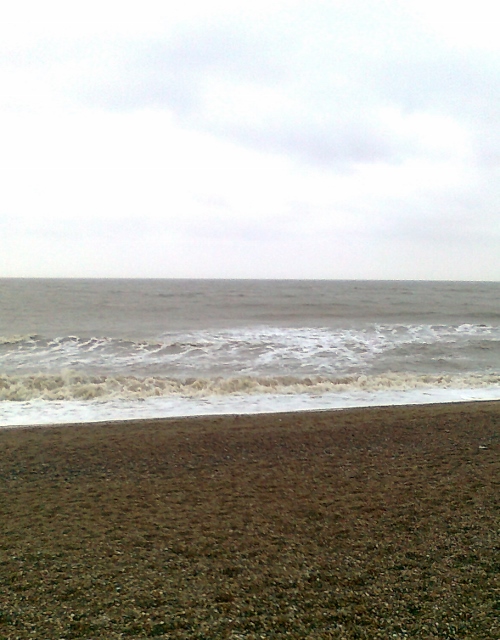
Rough sea at Dunwich beach

No matter what the weather, there are always at least two tents belonging to sea fishermen on this beach.  I only had my phone with me so these photos aren’t too good.

002Dunwich beach (2) (484x640)

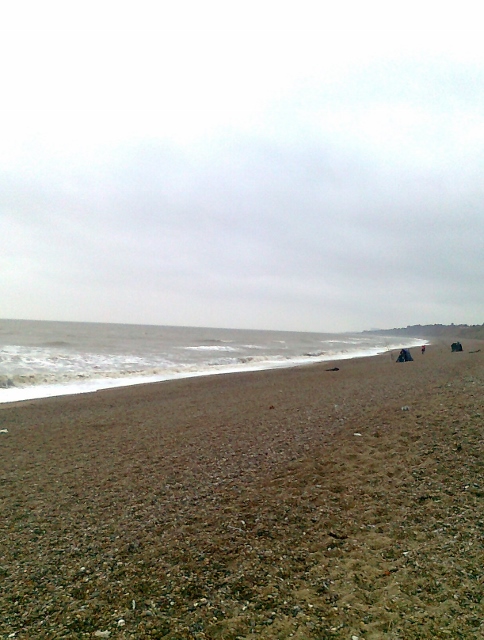
We found it difficult walking on the beach because of the strong, cold wind and Elinor who hasn’t been very well recently decided to return to the warmth of the car.

004Dunwich beach (2) (640x507)

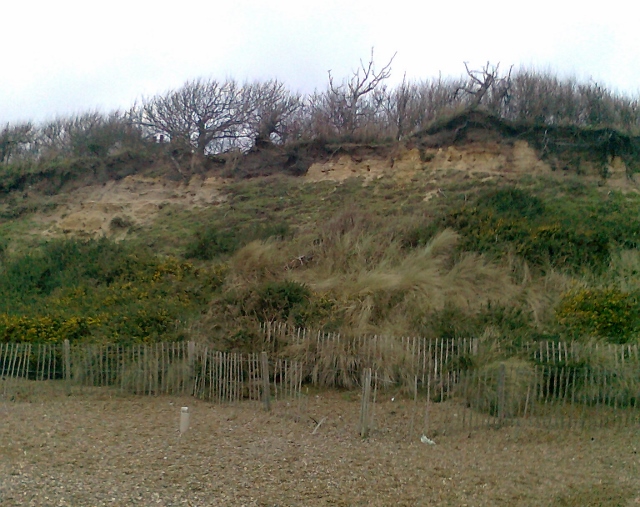
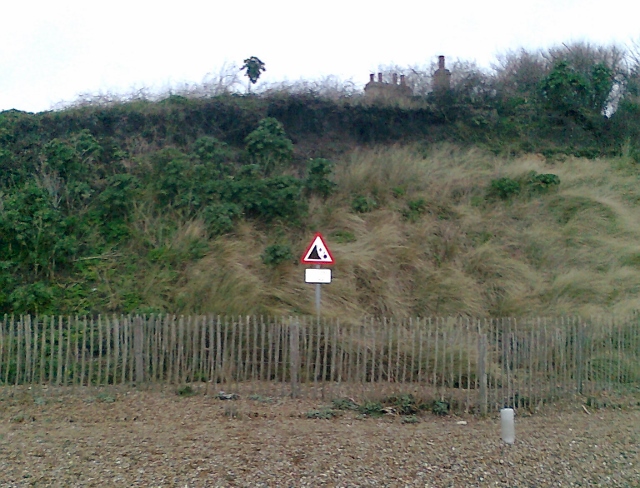
The coast here is being eroded away very quickly and there are frequent land-slips.

005Dunwich beach (2) (640x488)

I am glad I don’t live in the house whose chimneys you can see at the top of the picture.

Dunwich, in the 13th century was a port city equal in size to London (as it was then).  It had six churches, two monasteries and its own mint.  In 1286 a storm washed away many houses into the sea and this was followed by three further storm surges in quick succession until almost all of Dunwich was lost to the sea with only a tiny fragment of the city remaining.  There is a legend that the church bells can still be heard tolling beneath the waves on quiet days.  The port and river mouth became silted up and the trade went away.  The storm surge we had in December 2013 caused a lot of damage all along this coast and many people are still in danger of losing their homes.

Archaeologists have been working in recent years to map the sea floor across the entire area of the town.  A lot of ruins have been discovered and stones with lime mortar attached dating back to the early medieval times.  This is the largest medieval underwater site in Europe.

007Dunwich beach (2) (550x640)

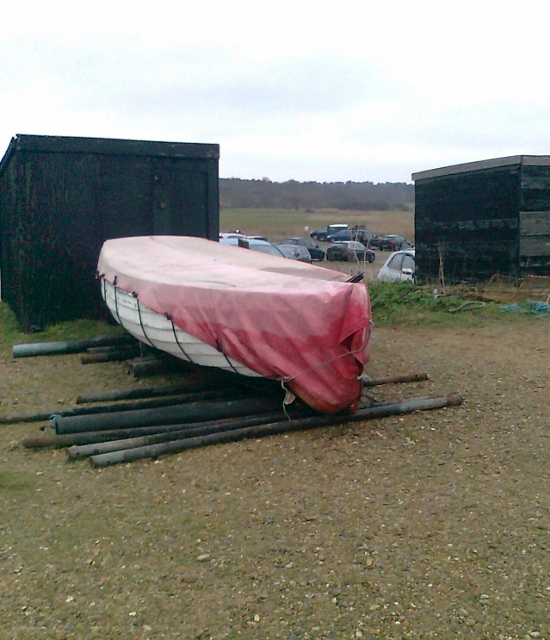
The huts contain winching gear to help pull the boats back up the beach.

008Dunwich beach (480x640)

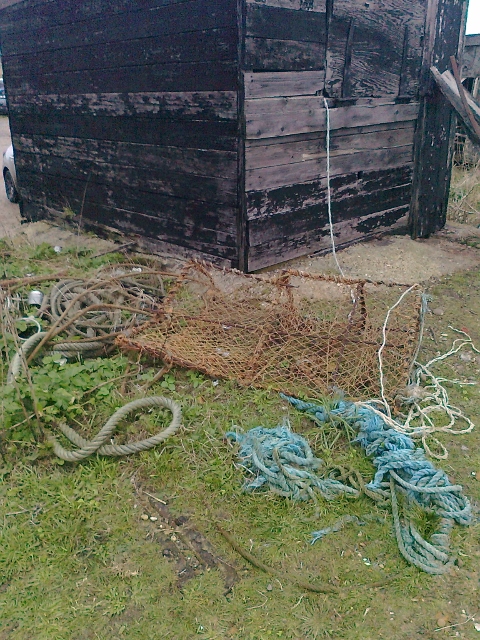
The ‘must-have’ gear of a fisherman

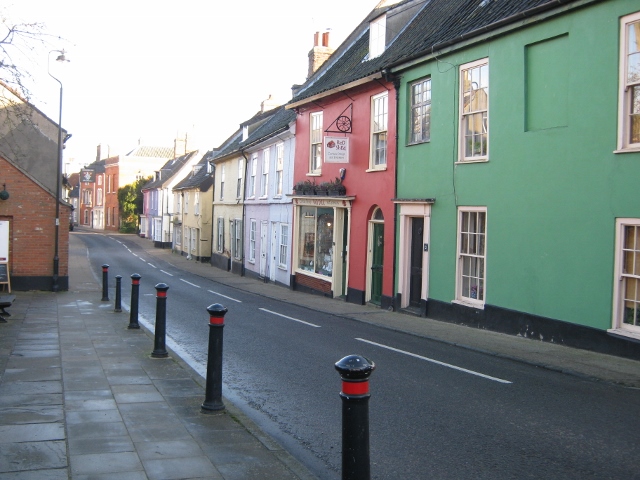
About ten days before Christmas I went shopping in Bungay and, as it was a nice day and I wasn’t in a hurry I decided to walk down Bridge Street to the river and see how high the water was.

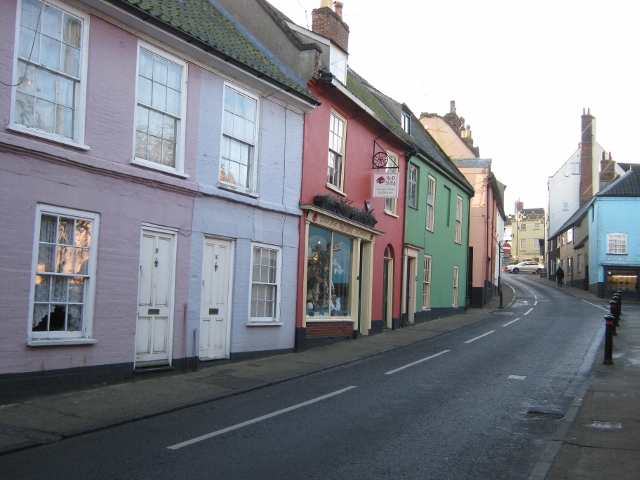
001Bridge Street (640x480)

The colourful houses in Bridge Street.

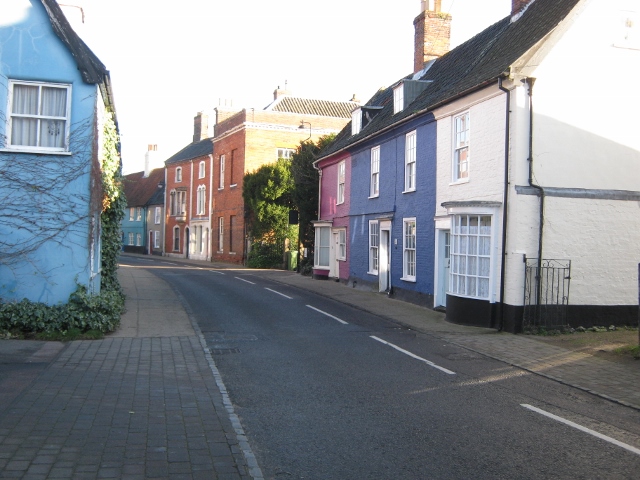
002Bridge Street (640x480)

Looking back up the street towards the Buttercross in the Market Place

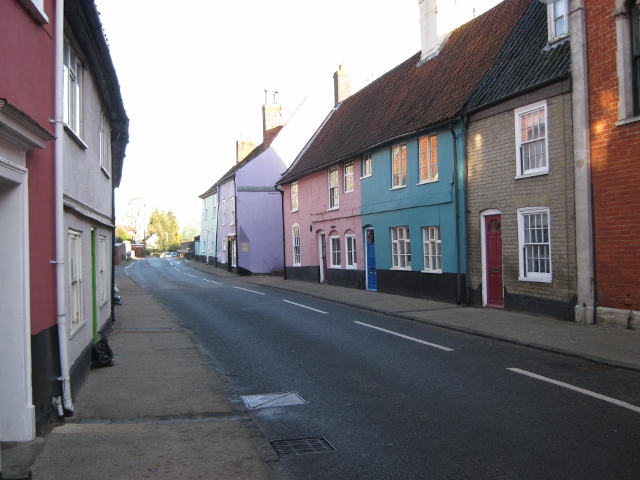
003Bridge Street (640x480)

More colourful houses

004Bridge Street (640x480)

And yet more!

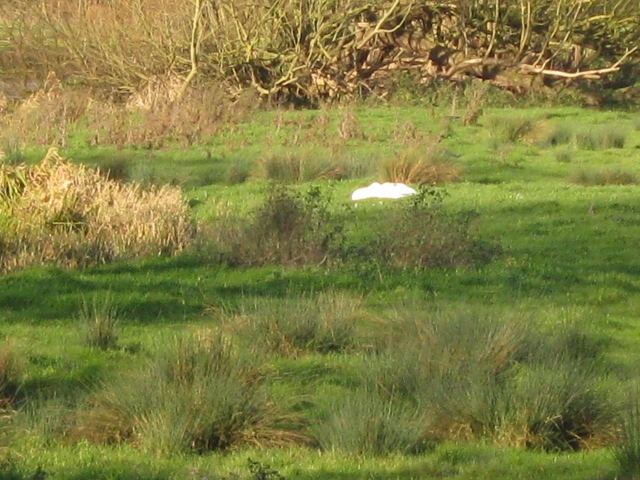
005Swans (640x480)

The white heap is two Mute Swans. I didn’t have my camera with the zoom lens and this is the best I could do.

006River Waveney (640x480)

The River Waveney seen from the bridge.

007River Waveney (640x480)

Looking at the River Waveney from the other side of the bridge.

If you would like to hear more about Bridge Street please click here to listen to local historians and residents talk about the area.  Turn up the volume on your phone/computer.  In the recording you will hear about Nursey’s the sheepskin shop.  Unfortunately, since this recording was made the shop has had to close as they couldn’t find a buyer.


I hope you enjoy listening to this audio tour.

Happy New Year to all my readers!


Share this:

  • Share on X (Opens in new window) X
  • Share on Reddit (Opens in new window) Reddit
  • Share on Pinterest (Opens in new window) Pinterest
  • Share on Facebook (Opens in new window) Facebook
  • Email a link to a friend (Opens in new window) Email
  • Share on Tumblr (Opens in new window) Tumblr
  • Print (Opens in new window) Print
  • Share on Pocket (Opens in new window) Pocket
  • Share on LinkedIn (Opens in new window) LinkedIn
Like Loading...

Boxing Day Walk

30 Tue Dec 2014

Posted by Clare Pooley in Rural Diary, trees, walking

≈ 21 Comments

Tags

fields, oak trees, walking, winter

002Easter chocolate display (480x640)

On the fifth day of Christmas my true love sent to me, a display of Easter chocolate at the supermarket.

Despite the cold and cloud Richard and I had a very pleasant walk on Boxing Day.  We had no wish to drive anywhere so we had our usual amble across the fields.

001Hen (640x480)

One of next-door’s chickens searching for grubs in the leaf litter of the road-side

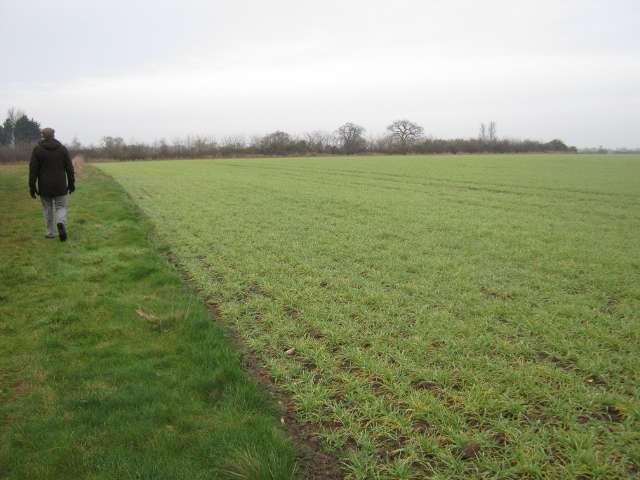
002Field walk (640x480)

Richard walking along the edge of a field of wheat or barley.

003Trees (640x480)

I love the look of leafless trees. These are English Oaks

004Millet (480x640)

Millet

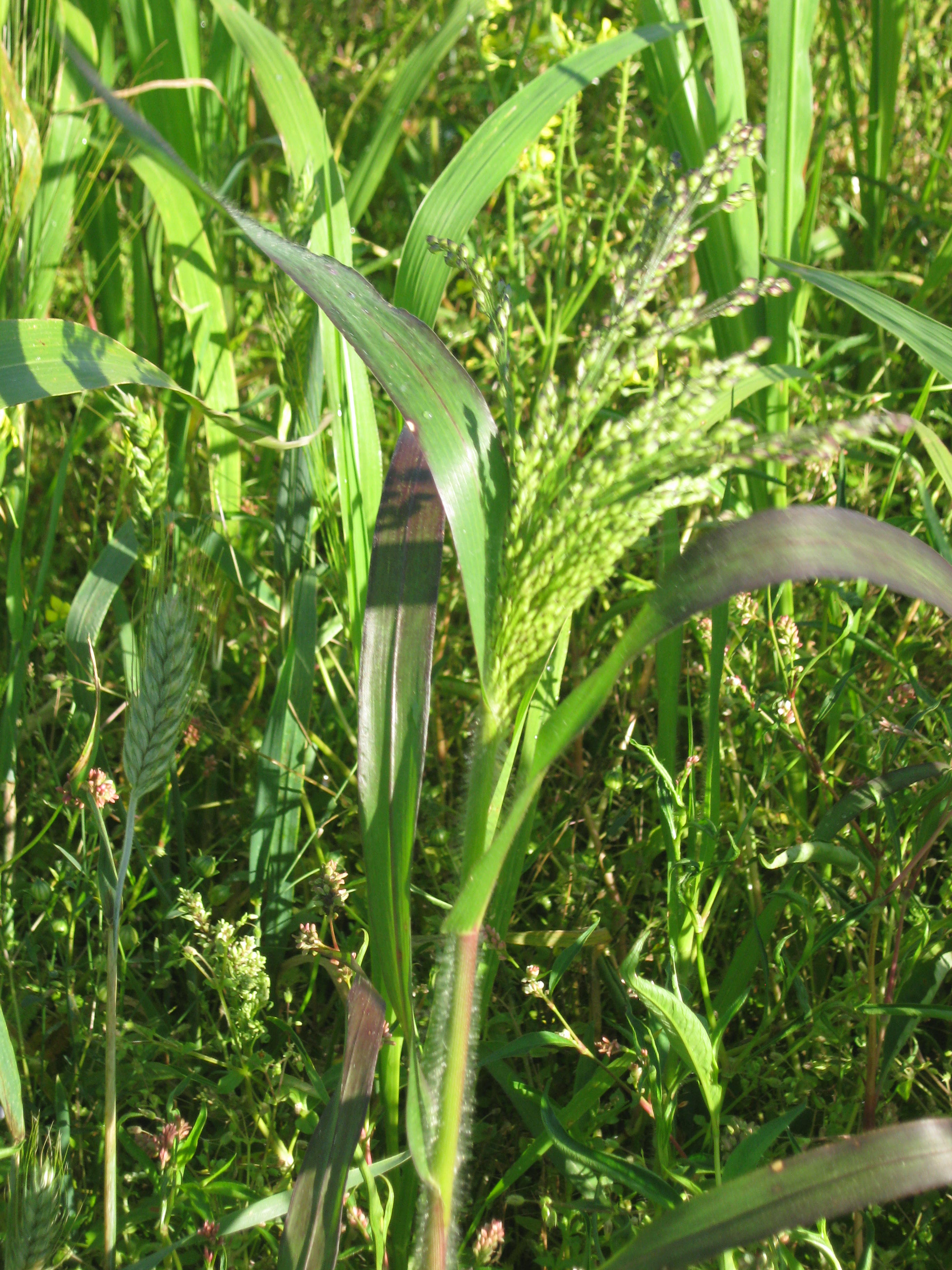
Many of you will remember the walk I had along this path in the summer when I found this plant in flower and didn’t recognise it as millet.  I have Allen of nhgardensolutions to thank for the identification and also Rachel from coulddoworse.me for explaining links to me (though because of my ineptitude and through no fault of Rachel’s, I have still had a lot of difficulty and a lot of help from family in getting them to work!).  Allen’s posts are full of the small but beautiful things he sees on his trails in New Hampshire and he has taught me to slow down even further and look yet more closely at the natural world around me.  Rachel’s posts are packed with anecdotes about her life in London, her lovely family and the walks she takes through the city streets and parks.  She cooks and crochets and reads and gardens and is so inspiring!

028millet

This is what the millet looked like in the summer

013Millet field (640x480)

015Millet field (480x640)

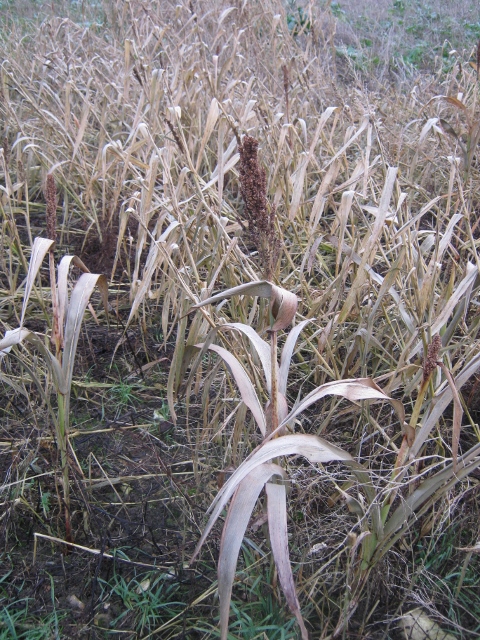
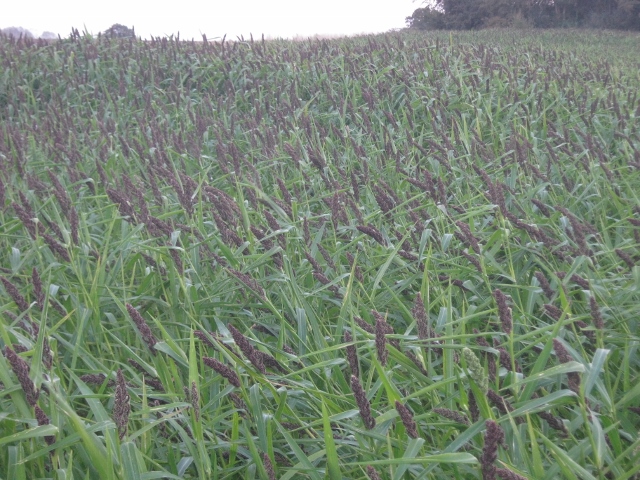
…and these two photos show what it looked like in October when Richard, Elinor and I went for a walk after Richard had got home from work.  One of the last evening walks we took before the clocks went back.  We thought it would be harvested for seed but from the look of the field on Boxing Day it had just been left to dry and die.  A puzzle.

005Sugar beet (640x480)

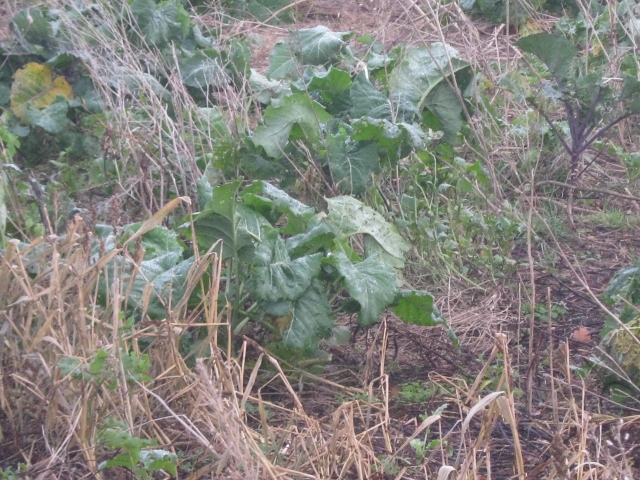
We also saw a few sugar beet plants in amongst the dead grass

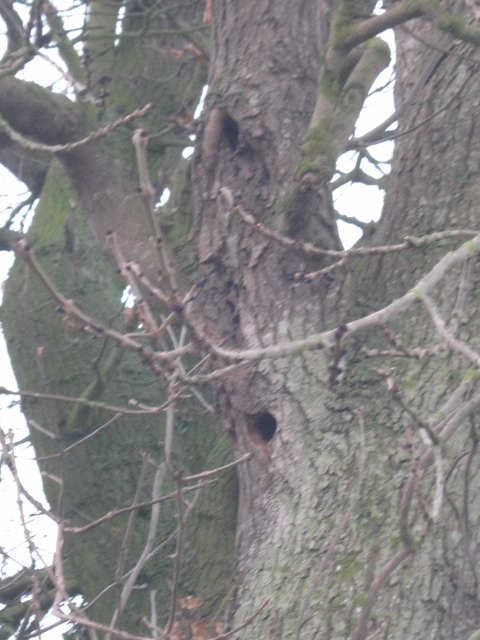
006Holes in trees (480x640)

and holes that we weren’t able to see when the leaves were on the trees.

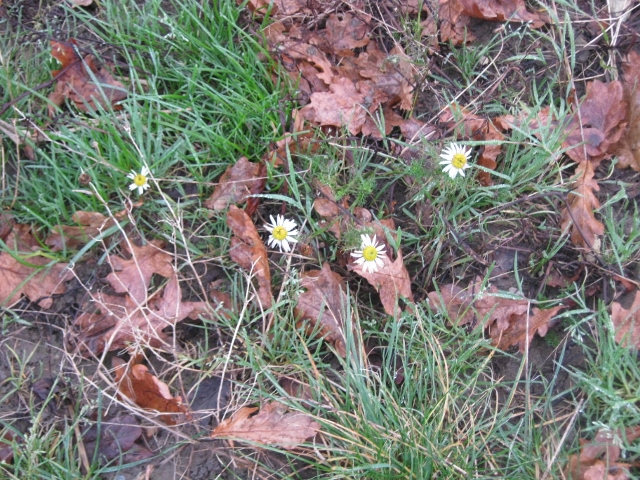
007Mayweed (640x480)

A few tough Mayweed flowers that are struggling on even through a few frosts

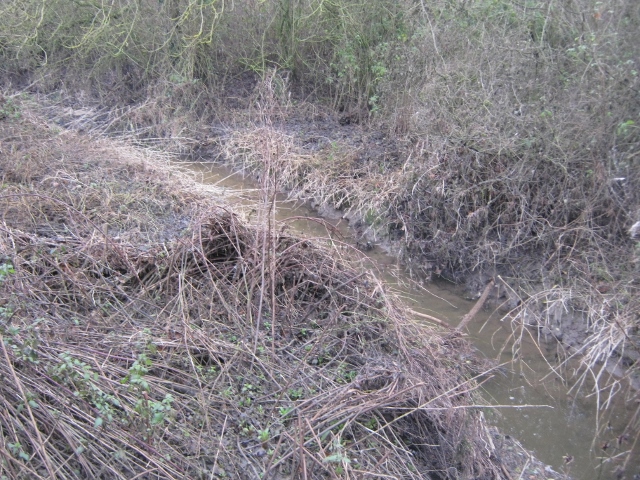
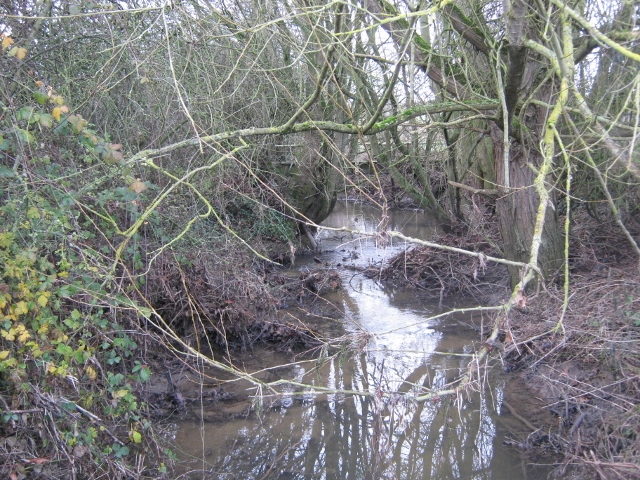
008The Beck (640x480)

The Beck was low but showed signs of when it had been very high a short time ago. It rose again on Boxing Day night and flooded the road at the Washes for a short while.

009The Beck (640x480)

This little stream looks so much nicer in the spring and summer.

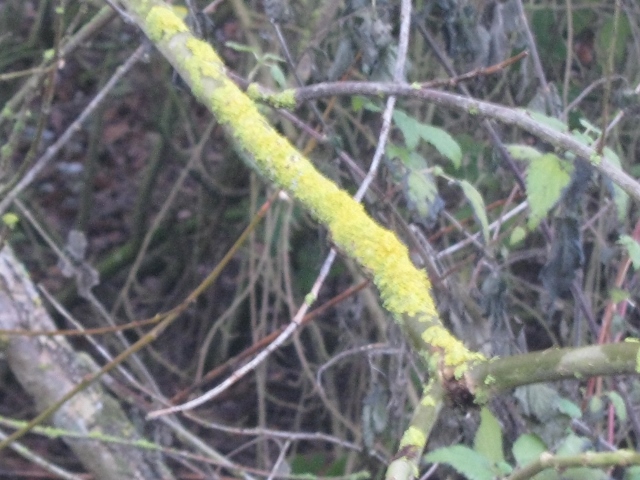
011Lichen on branch (640x480)

We saw lichen on branches…

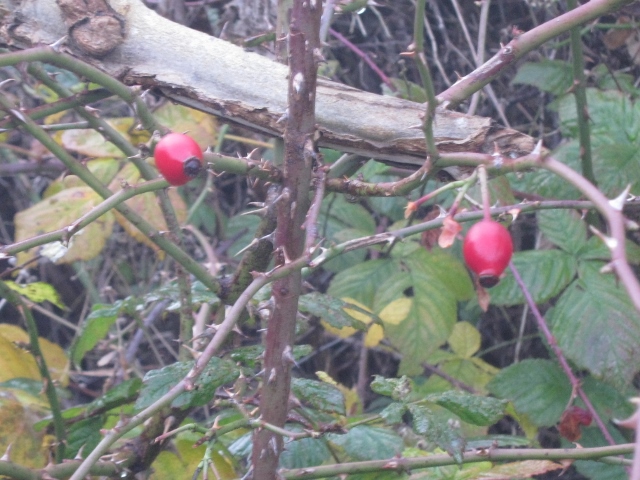
012Rosehips (640x480)

…and a few rosehips.

017Oak (640x480)
English Oak
English Oak
015Oak (640x480)
016Oak (640x480)

These pictures are of my favourite ancient oak tree seen over the hedge from the lane.  I went into the field it stands in and took a photo of the whole tree as well.

026Oak (640x480)
013Oak (640x480)
014Oak (480x640)

These are three more oaks we saw on our walk.

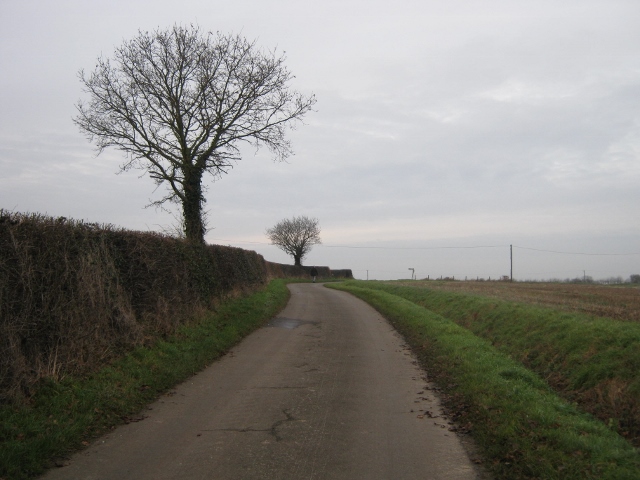
019Lane (640x480)

The lane with Richard in the distance showing how far I had lagged behind him

020Wet field (640x480)

A wet and poorly drained field at the top of the lane. It looks like some heavy vehicle sunk into the soil here.

021View (640x480)

Looking back in the direction we had come

022View (640x480)

Looking towards Flixton where we had been to church on Christmas Eve. There is a wood there on a slight rise in the land.

023New green leaves (640x480)

We saw these new green leaves – the plants have become very confused as the temperature swings from freezing to 10 degrees C or more and then back down to freezing again.

027Lane (640x480)

The Washes don’t often dry out in the winter.

That photograph reminded me of one I took when we last walked this way in October.

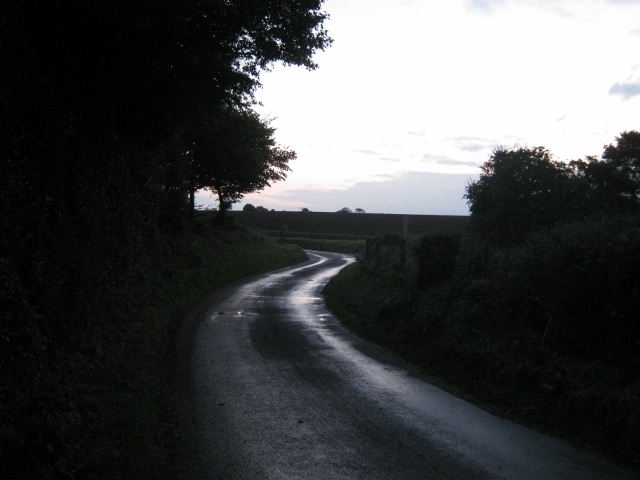
023Lane (640x480)

The sun had set but there was such beautiful silver light in the sky and this was reflected in the shallow puddles on the road

028Field (640x480)

A typical early winter scene. The field is full of dead thistles

030Alder cones (640x480)

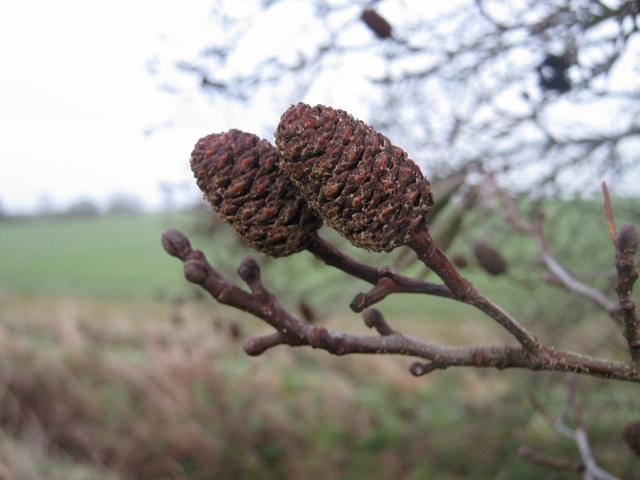
These are Common Alder cones, the female catkins. I tried very hard to photograph the male catkins but I couldn’t get the camera to focus on them.


Share this:

  • Share on X (Opens in new window) X
  • Share on Reddit (Opens in new window) Reddit
  • Share on Pinterest (Opens in new window) Pinterest
  • Share on Facebook (Opens in new window) Facebook
  • Email a link to a friend (Opens in new window) Email
  • Share on Tumblr (Opens in new window) Tumblr
  • Print (Opens in new window) Print
  • Share on Pocket (Opens in new window) Pocket
  • Share on LinkedIn (Opens in new window) LinkedIn
Like Loading...

Christmas

30 Tue Dec 2014

Posted by Clare Pooley in churches, cooking, Rural Diary

≈ 12 Comments

Tags

Christmas, Christmas Day, Christmas Tree, decorations, food, tradition

002Mum's kissing ring (640x480)

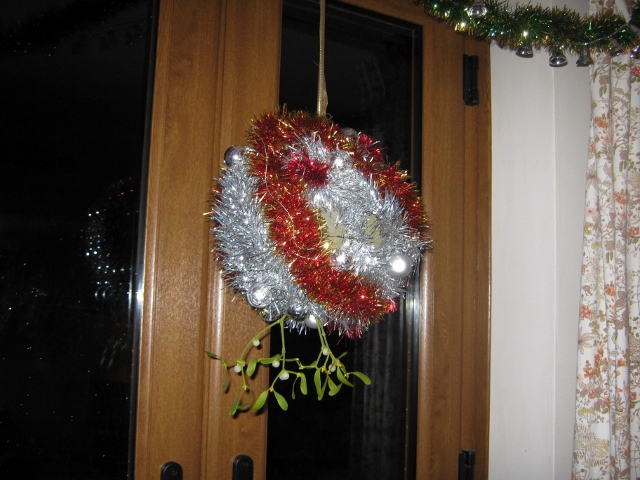
My mother’s Kissing Ring.  My mother’s family had no tradition of having a Christmas tree.  They had a kissing ring instead.  This one has a sprig of mistletoe for kissing under. 

We have had a very pleasant and quiet Christmas so far.  Christmas Day itself began at Midnight Mass held this year in St. Mary’s church in Flixton.  The Rector handed us all a slice of Christmas cake as we left and when we got home we had some hot mulled wine and a mince pie before going to bed.  I was a little late in going to bed as I still had a few presents to wrap which I did after quickly washing the kitchen floor.  Yes, I know what you are thinking, but it needed doing and that was the only chance I had to do it!

003Christmas tree (480x640)


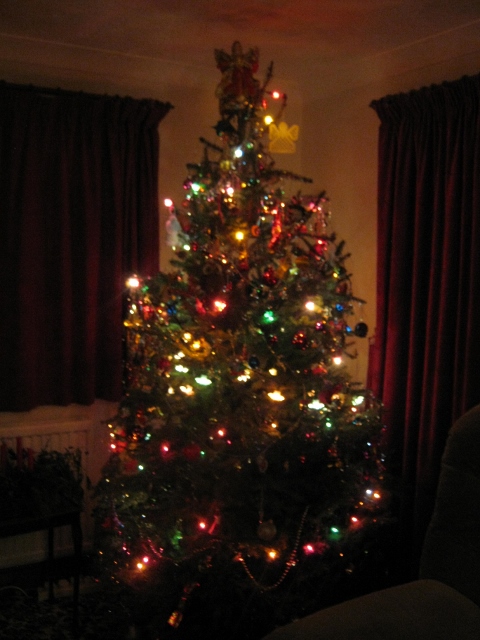
In the morning we gathered together in the living room where the presents had been put under the Christmas tree and drank a cup of tea while we exchanged our gifts.  In recent years our breakfast has been Italian pannetone which is luxurious but light.

005Tree decorations (640x480)

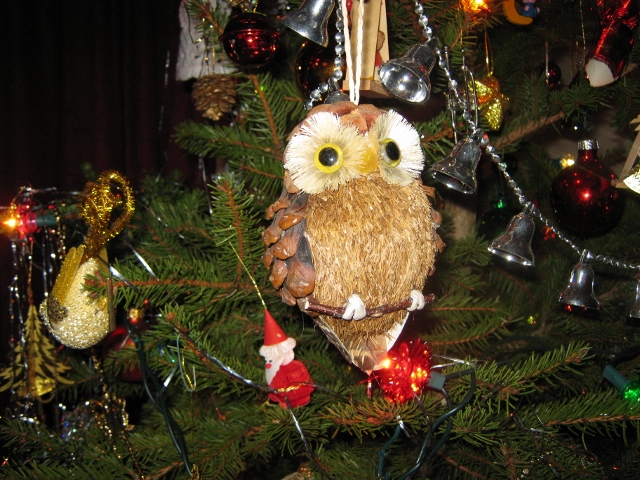
For lunch this year instead of turkey we had rib of beef and it was gorgeous!  I had a lot of help from Alice who peeled and chopped all the vegetables for me and she also made a lovely lemon sorbet for a starter.  We had roast and mashed potatoes, mashed swede, roast parsnips with honey, carrots and brussels sprouts.  I had another attempt at making Yorkshire puddings and my usual failure.  Why I can’t make them I don’t know but this time they at least were light and in one piece but they were flat like pancakes!  I made some gravy which was rich and good and also some stuffing.  Why stuffing when we had no bird to stuff?  Because Elinor my youngest daughter loves it and it wouldn’t be Christmas for her without sage and onion stuffing.

007Tree decorations (480x640)


Richard went to collect my mother who always joins us for Christmas lunch and she brought with her the Christmas Pudding.  She has always made her own puddings and they are very good indeed.  She makes them in October and they are left to mature until Christmas when they are steamed for two hours.  She brings our pudding hot from the steamer and well wrapped and insulated.  I make thick custard to go with it and provide cream as well.

013Tree decorations (640x480)


The afternoon is spent quietly together, talking and drinking tea, coffee, wine or spirits and sleeping.  Richard spent quite a lot of time washing up and loading and re-loading the dish-washer – a seemingly thankless task but a necessary one and I am very grateful to him for doing it.

020Crib (640x480)


Mum had invited us to her house for a buffet evening meal the next day, Boxing Day, so Richard and I decided that it might be a good idea if we went for a walk during the afternoon.  Neither of the girls wanted to come with us.

015Christmas decoration (480x640)

We set off for Mum’s house just before 6.00 pm and it was just starting to rain as we got there.  She had provided a sumptuous spread for us and had worked very hard.  A gammon with orange, chicken pieces coated with sesame seeds, mixed roast vegetables, sausage rolls and a selection of crisps and savoury biscuits. She had also made an apfel strudel and a yule log with chocolate and chestnut filling.  The rain was pouring down when we left and continued all night and into the following morning.  Many of the roads and fields were flooded but we didn’t have the snow that fell just to the north of us.


Share this:

  • Share on X (Opens in new window) X
  • Share on Reddit (Opens in new window) Reddit
  • Share on Pinterest (Opens in new window) Pinterest
  • Share on Facebook (Opens in new window) Facebook
  • Email a link to a friend (Opens in new window) Email
  • Share on Tumblr (Opens in new window) Tumblr
  • Print (Opens in new window) Print
  • Share on Pocket (Opens in new window) Pocket
  • Share on LinkedIn (Opens in new window) LinkedIn
Like Loading...

Making Mince Pies

21 Sun Dec 2014

Posted by Clare Pooley in cooking, Rural Diary

≈ 27 Comments

Tags

Christmas, Christmas cooking, Mince pies, mincemeat, sweet shortcrust pastry, traditional British food

We had our Carol Service at Rumburgh church on Saturday and I made two dozen mince pies to take with me as part of the after-service refreshments.

001Pastry ingredients (640x480)

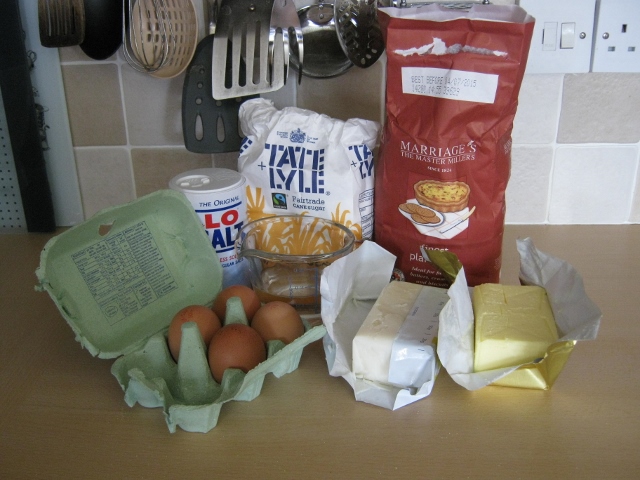
Sweet shortcrust pastry ingredients

Sweet shortcrust pastry is used for French fruit flans, tarts, little fancy cakes – and mince pies!  The following recipe makes about twelve mince pies.  I use the same method when making little individual apple pies which are lovely for buffets, packed lunches and picnics.

225 g / 8 oz plain flour

pinch of salt

50 g / 2 oz butter

50 g / 2 oz lard or vegetable shortening

25 g / 1 oz caster sugar

1 egg yolk

a little water

This makes 225 g  / 8 oz pastry

002Sift flour and salt (640x480)

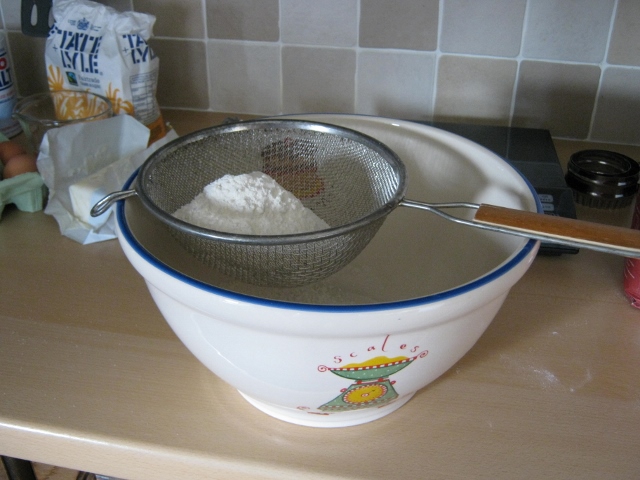
Sift the flour and salt into a mixing bowl

003Cut fat into flour (640x480)

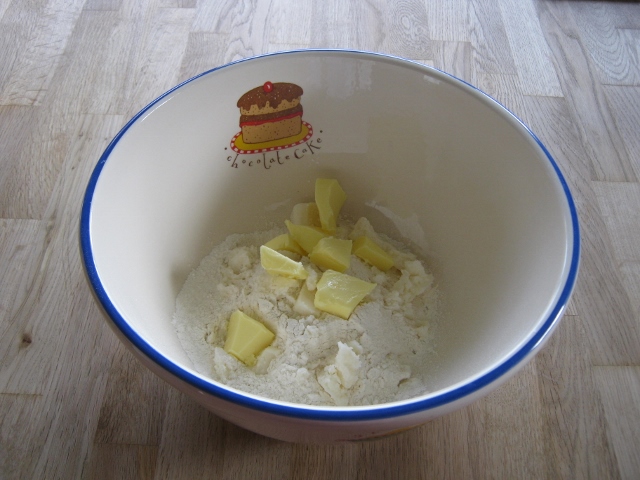
Cut the fat into the flour

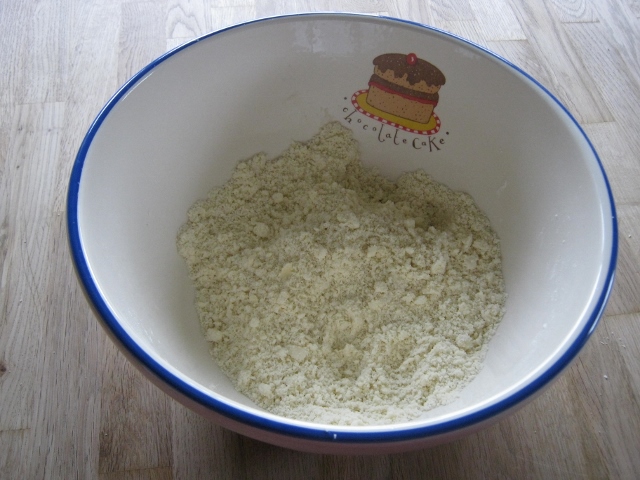
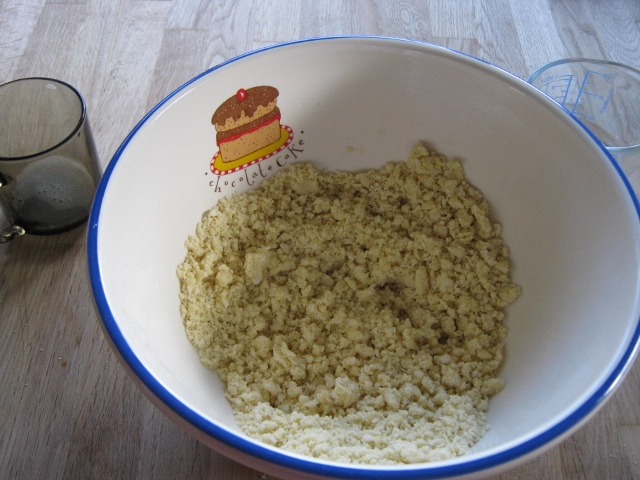
004Breadcrumb consistancy (640x480)

Rub in to a breadcrumb consistency

As soon as I think that I have finished rubbing in the fat I then tell myself to continue for another minute.  I always find a piece of fat I had missed.

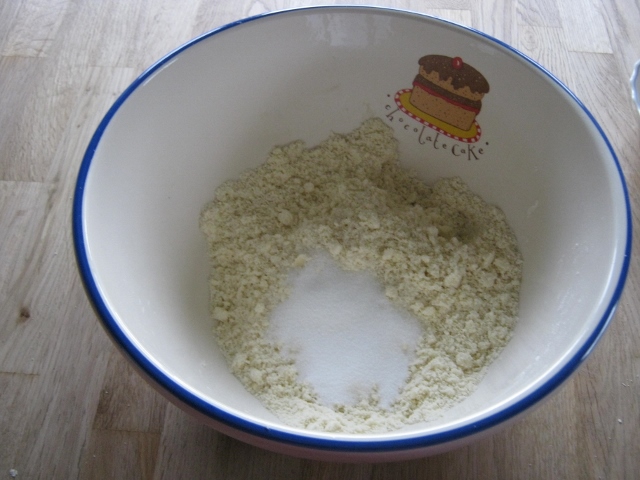
005Add sugar (640x480)

Add the sugar and mix together

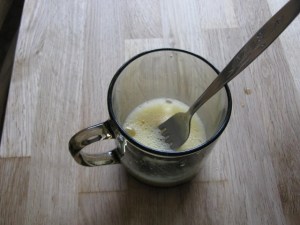
Add about two tablespoons of water to an egg yolk
and beat them together

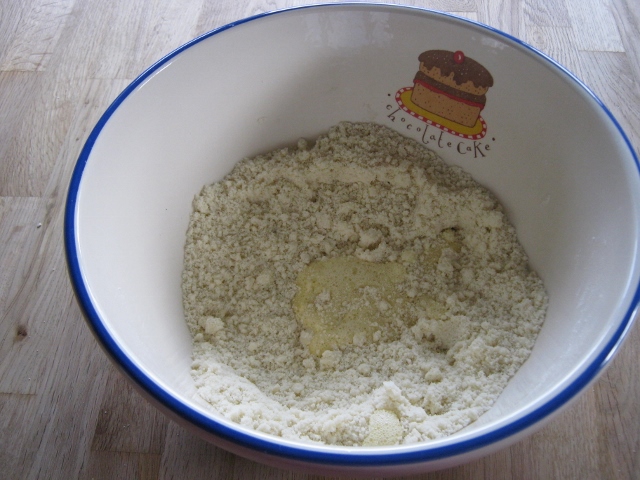
009Add egg to flour and fat (640x480)

Add the egg and water to the flour, fat and sugar

010Mix together (640x480)

Mix them together

I always just use my hands, never a spoon, when making pastry.  I find it mixes together quickly and easily and I can feel when it is of the right consistency rather than just trusting to my eyes.  I have never used a blender to make pastry either.

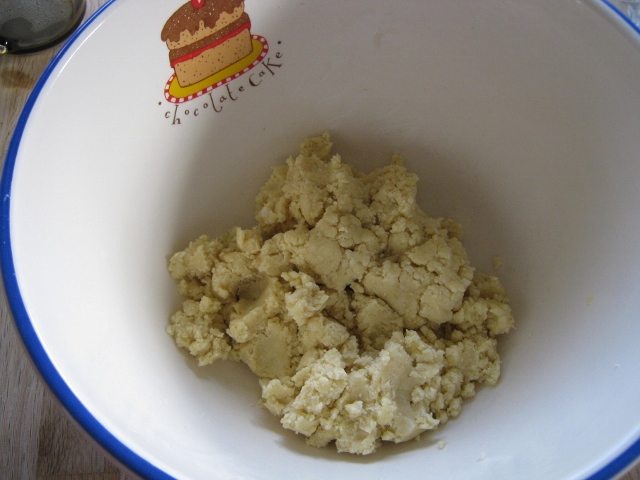
011Keep mixing (640x480)

Keep mixing the ingredients together, adding a very little more water if necessary.

Sometimes just dampening my fingers adds enough water to make the pastry smooth and elastic.  Too much water makes the pastry slimy and horrid and will never be anything other than tough to eat.

Knead lightly until smooth but don’t overwork it or it will lose its lightness.

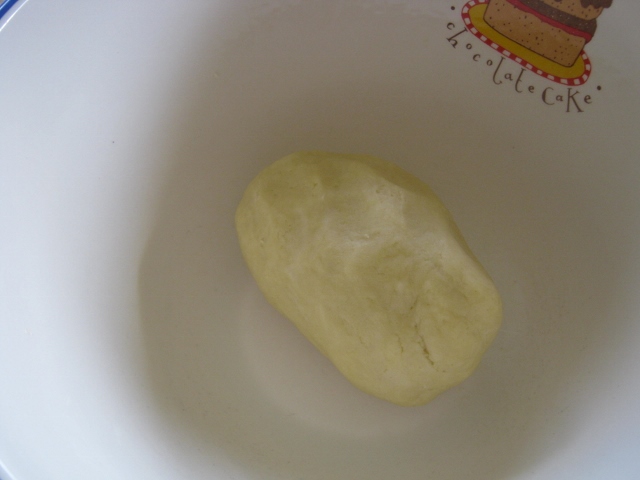
012Pastry (640x480)

The finished pastry – which needs to be rested in the refrigerator for at least 20 minutes before being rolled out. I wrap it in cling-film.

013Mince pie ingredients (640x480)

Mince pie ingredients

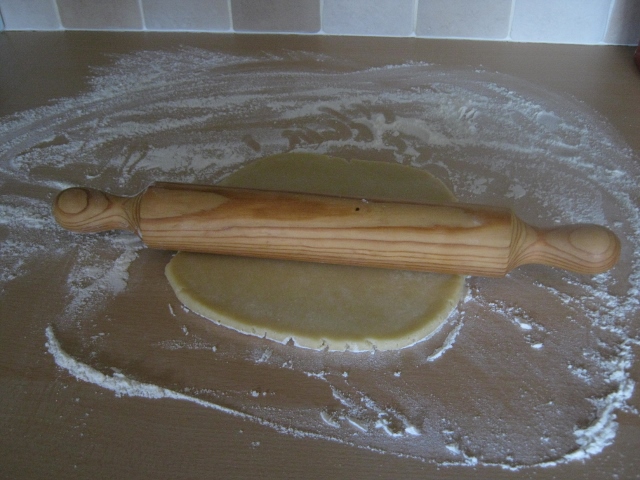
014Roll out the pastry (640x480)

Flour your work surface or pastry board and start to roll the pastry out carefully.

As the pastry is very short (crumbly – difficult to keep together) it requires careful handling or it will split and fall apart.  If you haven’t added enough water when mixing it will fall apart very readily.  This problem can easily be overcome by adding a sprinkle more water and re-kneading the dough.

015Rolled pastry (640x480)

Roll the pastry out very thinly, 2.5 mm / one eighth of an inch thick

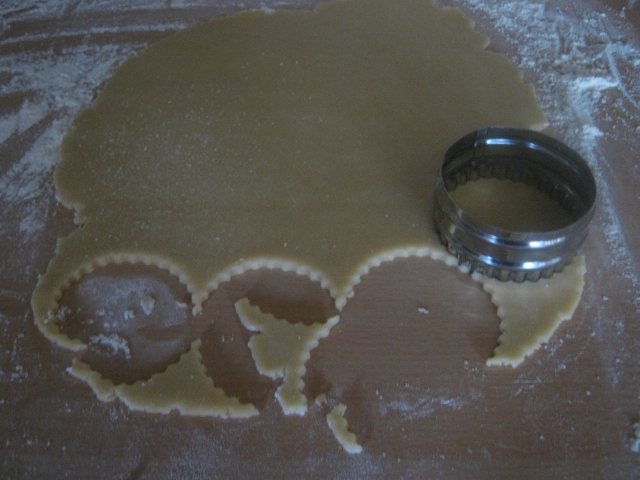
016Cut out the pastry (640x480)

Cut out 12 rounds with a plain or fluted cutter. I use a 7.5 cm / 3″ one.

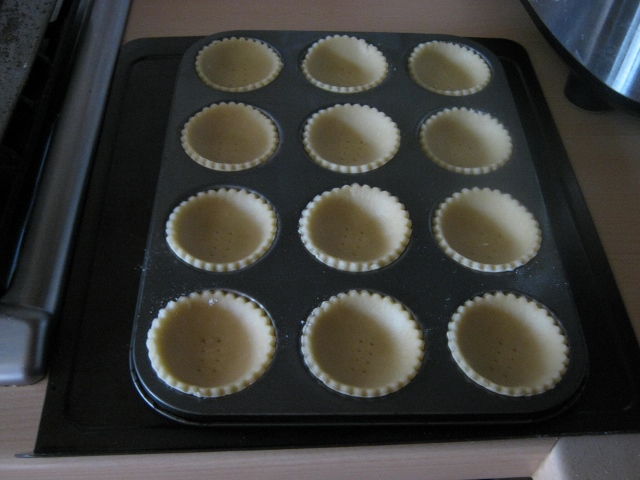
017Circles of pastry in patty pans (640x480)

Line a pastry pan with the pastry rounds and prick the bottom of each pie with a fork to help the pastry cook through

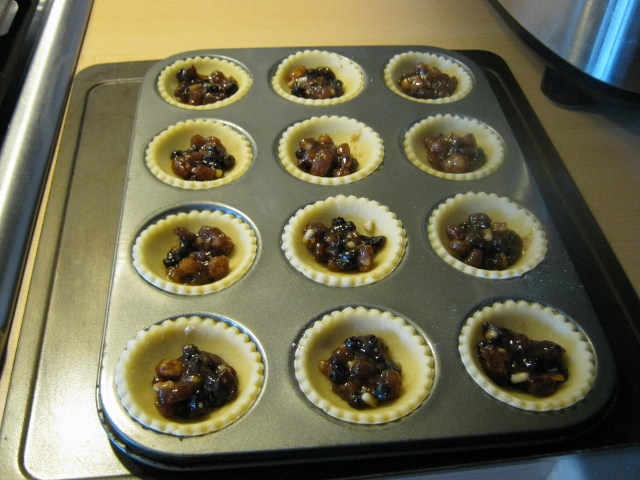
018Filled pies (640x480)

Fill each pie with a teaspoon of mincemeat

I have never made my own mincemeat but have been meaning to for years!  Bought mincemeat is very variable, some very poor and more like runny jam than proper mincemeat.  I have found one that is very good and I use it every year.  Some bought mincemeats can be improved by a little lemon juice or a small drop of brandy or rum.

Mincemeat is made from shredded suet (beef or vegetable), grated or finely chopped apple, mixed dried fruit (sultanas, raisins and currants), brown sugar, chopped blanched almonds, chopped candied orange and lemon peel, finely grated rind and juice of a large lemon, mixed spice, cinnamon, grated nutmeg and some brandy, whisky or rum.  Hundreds of years ago it did contain meat as well, hence the name of mincemeat, but no longer.  If vegetable suet is used then the mince pies can be eaten by vegetarians.

Cut out 12 smaller rounds of pastry with a plain or fluted cutter.  I use a 6 cm / 2.5″ cutter.  If you don’t have enough pastry to cut out all the rounds you need, gather all the trimmings together, knead them with a little water and roll out again.

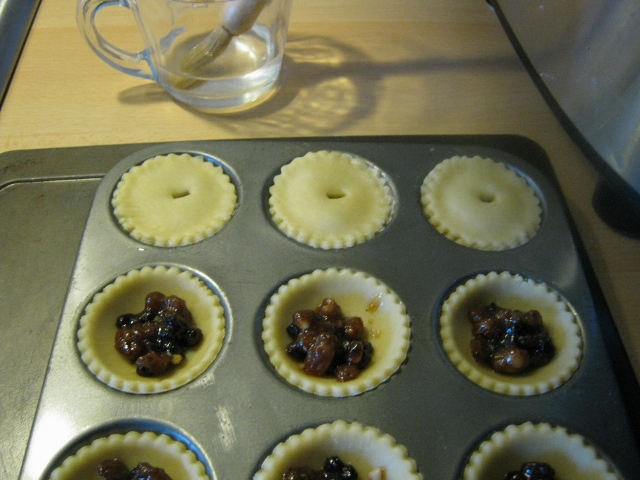
020Covered pies (640x480)

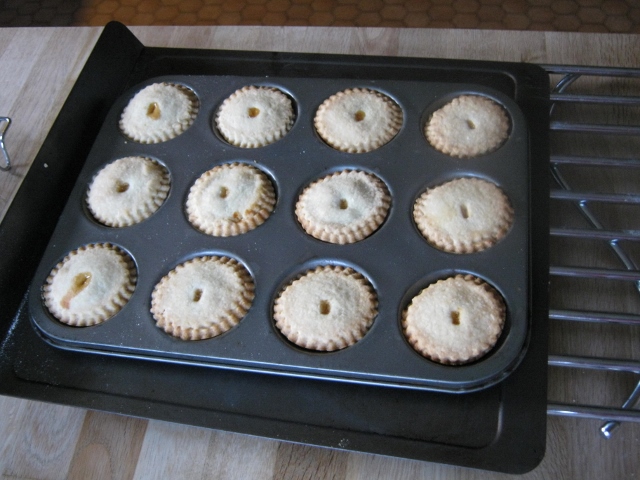
Dampen the edge of the pie with a little water and cover the filling in each tart with the smaller round of pastry, pressing down firmly so the lids are secure. Cut a small hole or cross in the centre of each lid to allow steam to escape.

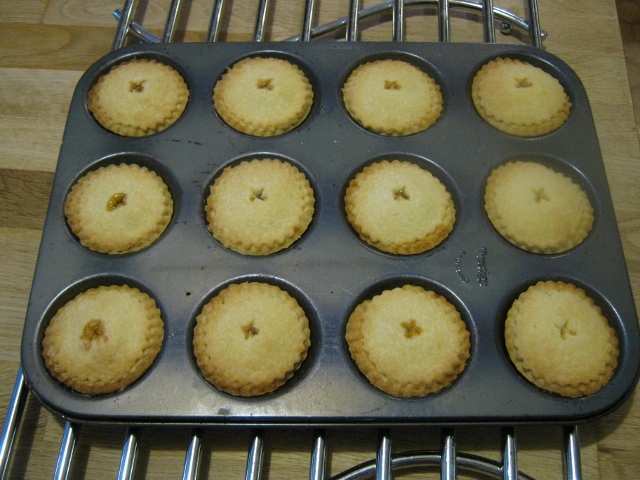
Place the pies in their pastry pan onto a baking sheet and bake in a pre-heated oven at 220 degrees C / 425 degrees F / Gas Mark 7 for 12 to 15 minutes or until well risen and golden.

021Baked pies (640x480)

Baked pies.

023More baked pies (640x480)

More baked pies!

024Another pie (640x480)

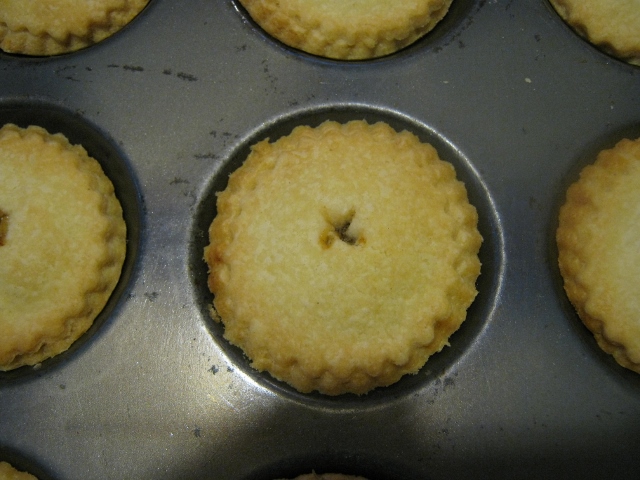
A finished pie

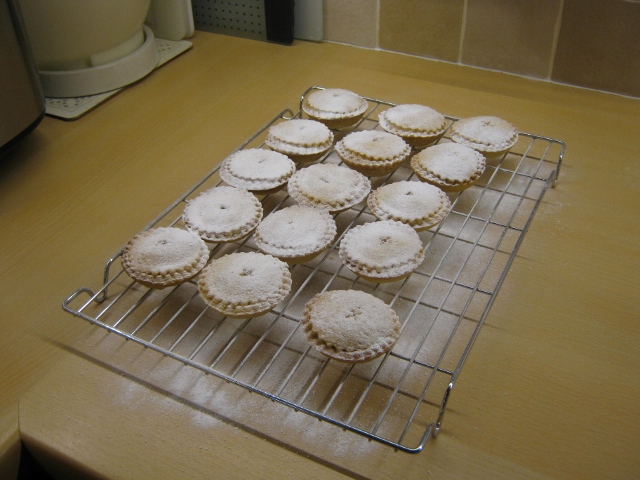
Leave to cool in the pastry pan for a few minutes and then place on a rack to finish cooling.

025Covered with icing sugar (640x480)

If you so wish you can dust the top with a little icing sugar.

Mince pies can be eaten hot straight from the oven or cold, on their own or with custard or cream and even as an accompaniment to Christmas pudding if you are so minded.  They keep for days and days in a sealed container and can be re-heated.  I love them!

Share this:

  • Share on X (Opens in new window) X
  • Share on Reddit (Opens in new window) Reddit
  • Share on Pinterest (Opens in new window) Pinterest
  • Share on Facebook (Opens in new window) Facebook
  • Email a link to a friend (Opens in new window) Email
  • Share on Tumblr (Opens in new window) Tumblr
  • Print (Opens in new window) Print
  • Share on Pocket (Opens in new window) Pocket
  • Share on LinkedIn (Opens in new window) LinkedIn
Like Loading...

A Gentle Day

14 Sun Dec 2014

Posted by Clare Pooley in Rural Diary, Uncategorized, walking

≈ 19 Comments

Tags

Christmas preparations, Christmas Tree, Christmas Wreath, crinkle-crankle wall, Halesworth, Rectory Lane

001Sunrise (640x480)

A beautiful sunrise on Tuesday of this week.


Term has ended and E managed to attend every day for six weeks!  We are so pleased with her and she is very proud of herself too.  She has found a really nice group of friends and is starting to relax and enjoy life.  She is on track with two out of the four subjects she is studying and just needs to do a little extra work to catch-up in Art.  The one subject that needs a lot of work is her Maths but I am hoping that R and I can persuade her to get on with that during the Christmas break.  She is going into college next Tuesday for an Art catch-up day which will be a great help.

I have got most of my present-buying done but I haven’t started on the card-writing yet.  I must clean the house properly as it has only had a lick and a promise lately and then we can put the decorations up.  I must also start baking and freezing food in advance to save time later.

R has one more week at work and then has two weeks annual leave.  He had a hospital appointment during the week for a bone-density scan in case he has started to get osteoporosis.  This is part of the investigation he has to under-go because of the tumour on his pituitary gland.  He has two separate hospital appointments next week, one to see if his adrenal gland is working properly and the other at the eye clinic.  We are not sure if the eye clinic appointment is to do with his pituitary problem (the gland is very close to the optic nerve) or whether it is a routine check-up.  He has keratoconus (conical corneas) and has to wear special contact lenses.

My eldest daughter Alice, will be coming home on Christmas Eve and will stay until New Year’s Eve.  My sister is visiting on Monday and I hope to be seeing my brother sometime soon too.  Mum seems to be fine at the moment.  I took her Christmas shopping in Norwich on Tuesday and then we did her usual grocery shopping on Wednesday.  I will take her to church tomorrow. She hasn’t been for weeks, sadly – I haven’t been able to take her as I’ve had other duties and there is no-one else around it seems, who could do it either.  This is very unfortunate especially as she takes great comfort from her church attendance.  Mum and Dad, when he was alive, give and gave so much of their time and skill to that church that I am surprised that she can be forgotten so easily.  Mum got a phone call a couple of weeks ago from a lady at the church asking if Mum could provide a cake for the Christmas Bazaar.  Mum said she was happy to but had no means of getting the cake to the church.  She was told that that would be no problem.  Someone would come and collect it and as there was a funeral of an old friend of my father’s on the same day as the bazaar, Mum would get a lift to that as well.  Mum made two cakes and phoned and left a message to say she had made them.  She phoned on the day of the bazaar and left another message.  No-one came and no-one has been in touch to apologise.  She is 84 and has very little money to spare and very little energy to spare either.  I am hoping that she will get an apology tomorrow.

I have become very tired because of the extra driving I have had to do lately.  I have driven over 11,000 miles since the beginning of September, spending on average 4 hours a day in the car.  The days I take Mum out as well as doing the double journey to Norwich and back I spend nearer to 5.5 hours in the car.  I have bought a lot of petrol, filling the tank every five days.  Fortunately the price of petrol has gone down recently – at the moment it is 118.9 pence per litre here.  I am still trying to do my household chores but I have had to give up my gardening.  I haven’t even had time to feed the birds for weeks and weeks.  Tiredness has made me grumpy, prone to upset stomachs, prone to tears and a  ‘Scrooginess’ comes over me when I have to think about Christmas.

015Humbug (640x480)

Humbug!

Today, however, has been such a pleasant one.  We woke to another clear and frosty morning.  R and I enjoyed a relaxed breakfast and then I drove us to Bungay so that we could collect the Christmas wreath I had ordered a week or so ago.  We haven’t been out together for some while so this walk through the town made a nice change.  R bought a newspaper and we returned home.

013Wreath (640x480)

Our Christmas Wreath

E had a hair appointment to go to in Halesworth at 1.00 pm so this time R drove us.  We walked with her to the hairdressers and then went to buy some dried ingredients for R’s soup-making from a delicatessen in the Thoroughfare.  In most English towns the main street is known as the High Street but in Suffolk many towns call their main street the ‘thoroughfare’.  We called in at a café and had coffee and then, as there was still about a quarter of an hour until E would be finished we walked up Rectory Lane back to the Market Place.  This is a narrow alleyway that runs behind the Thoroughfare from the north of the town to the south.

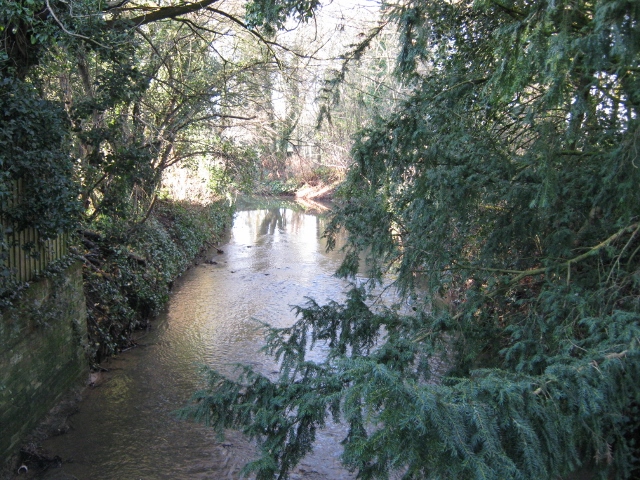
001Town river (640x480)

The lane goes alongside the Town River, a tributary of the River Blyth.

003Town river (640x480)

A few weeks ago when we had nearly two days of heavy rain, this little river was very close to breaking its banks and flooding the town.

005Town river (640x480)

A view down the river from the bridge.

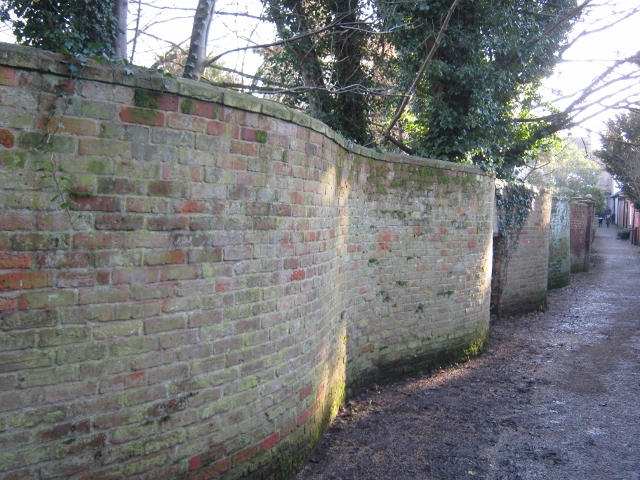
007Crinkle-crankle wall (640x480)

The crinkle-crankle wall. There are twice as many crinkle-crankle walls in Suffolk than in the whole of the rest of the country

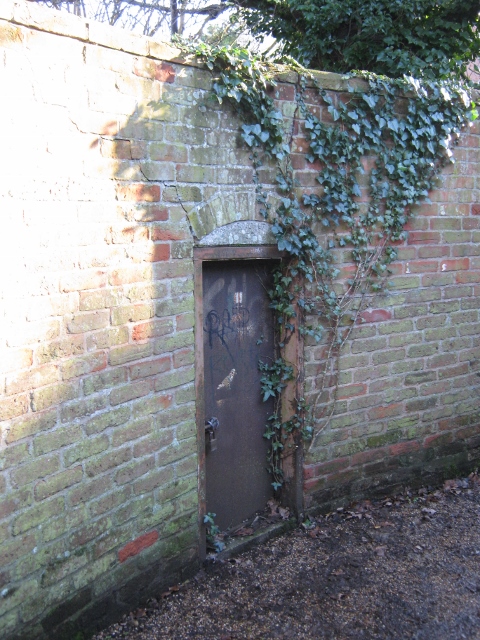
008Door in wall (480x640)

A small door in the wall. It is only about 5′ tall.

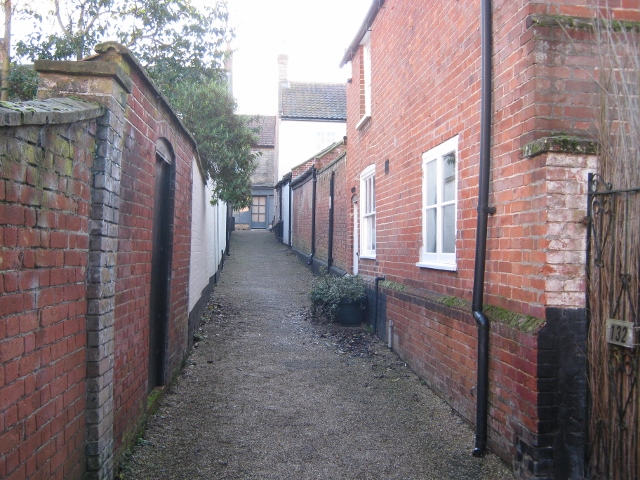
009Alley (640x480)

The end of Rectory Lane just before it emerges into Chediston Street.

010Chediston Street (640x480)

R walking up Chediston Street

Halesworth is quite a busy market town but as you can see, even on a Saturday afternoon less than two weeks before Christmas some peace and quiet can be had.

We returned to our car and almost immediately E joined us looking lovely with her neatly cut and straightened hair.  We drove to Holton, a village on the outskirts of Halesworth where we usually buy our Christmas tree at a farm.  We quickly found a suitable one and took it home with us.

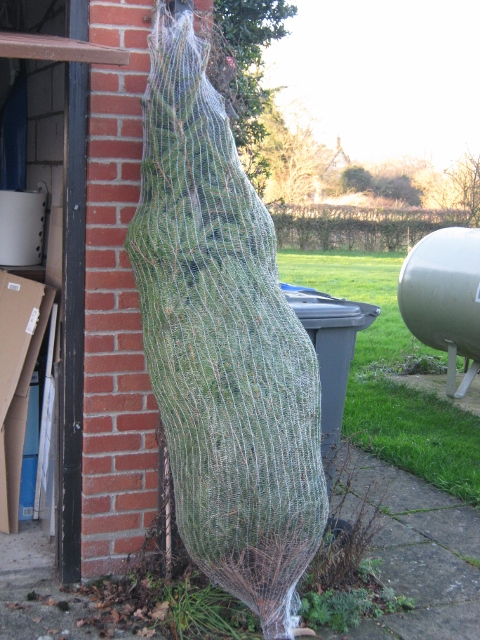
014Christmas tree (480x640)

Our well-wrapped Christmas tree.

R will trim a little off the base of the trunk and a couple of the lower branches and then fit it into the tree stand after we have soaked it for a few days.  We will bring it into the house in a few days time and then decorate it.  This is the first year that Alice hasn’t been here to help us.


Share this:

  • Share on X (Opens in new window) X
  • Share on Reddit (Opens in new window) Reddit
  • Share on Pinterest (Opens in new window) Pinterest
  • Share on Facebook (Opens in new window) Facebook
  • Email a link to a friend (Opens in new window) Email
  • Share on Tumblr (Opens in new window) Tumblr
  • Print (Opens in new window) Print
  • Share on Pocket (Opens in new window) Pocket
  • Share on LinkedIn (Opens in new window) LinkedIn
Like Loading...

Advent

11 Thu Dec 2014

Posted by Clare Pooley in churches, music, Rural Diary, Uncategorized

≈ 12 Comments

Tags

Advent, Advent Candle, Advent Crown, Carols and Capers, Medieval church, music and dance

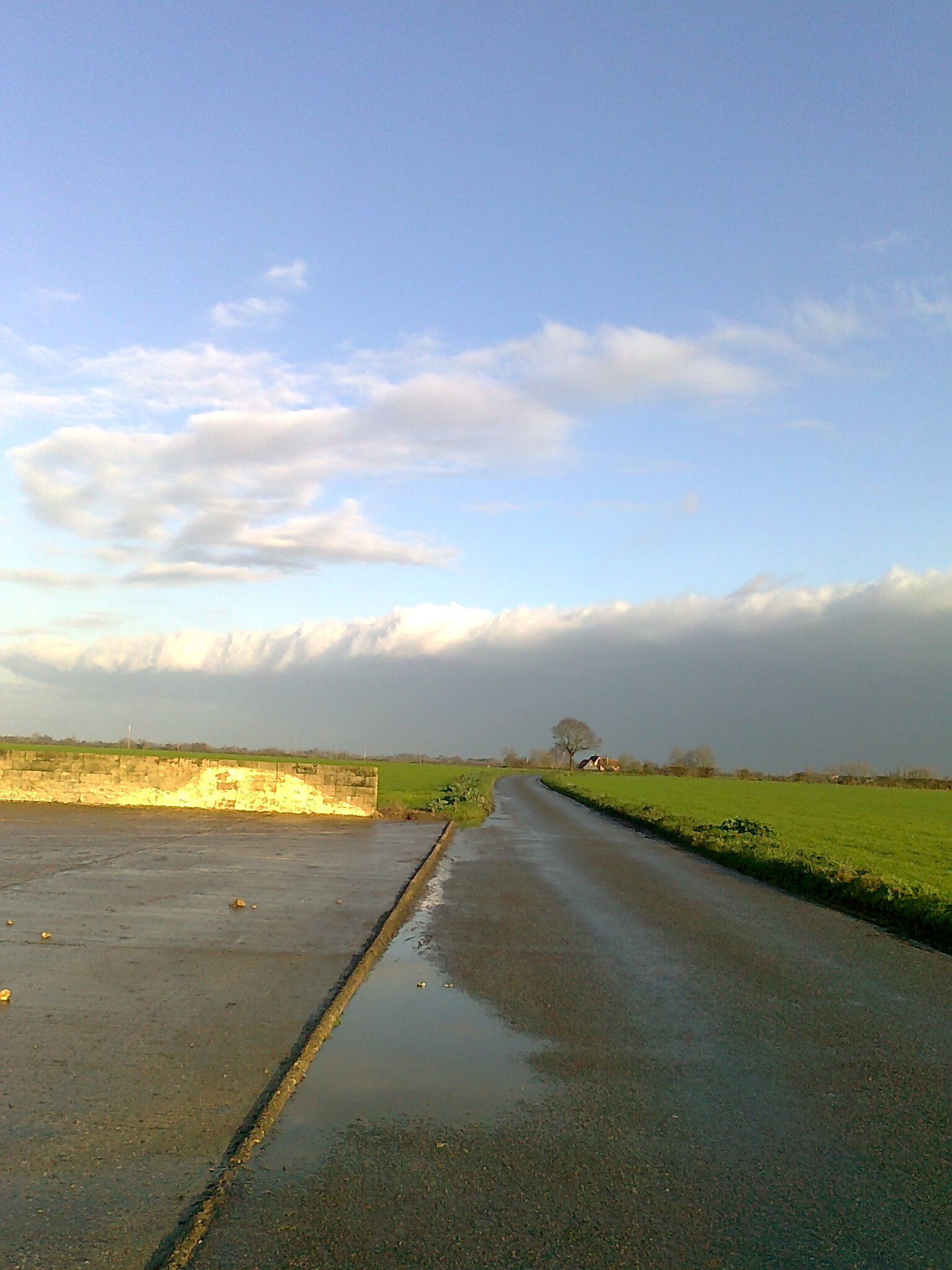
013Receding bank of cloud

I took this photo a week ago when, for an hour, the thick pall of cloud that had been over us for a week or more receded towards the coast and we saw the sun. I was amazed to see how deep the cloud was.  The cloud returned shortly after I took this picture.

We are now in the second week of Advent and Christmas is looming fast.  I like Advent – at least I like Advent in theory, if not in practice.  I wish time would go a little slower so that I could fit in all the Christmas preparations and still have opportunity for quiet reflection.  i wish to appreciate and enjoy anticipating Christmas.

There used to be a children’s programme on TV when both my girls were younger called ‘Bernard’s Watch’ in which a boy called Bernard had a special watch that could halt time, stopping everyone in their tracks, while Bernard rushed about trying to catch up and put things right.  I want Bernard’s watch!

Unfortunately, this time of year is so full of doctor’s and hospital appointments, check-ups at the optician and dentist, visits to relatives, trying to remember last postal dates and ordering of meat and wreaths, that the really nice bits are side-lined and fitted-in to our schedule almost as an after-thought.

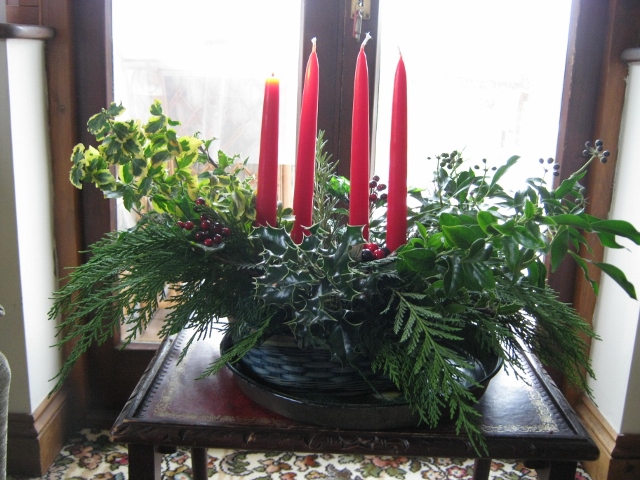
007Advent Crown (640x480)

Our Advent Crown with the first candle alight

At home we make an Advent Crown with evergreen and candles, we have an Advent Candle and Advent Calendars.

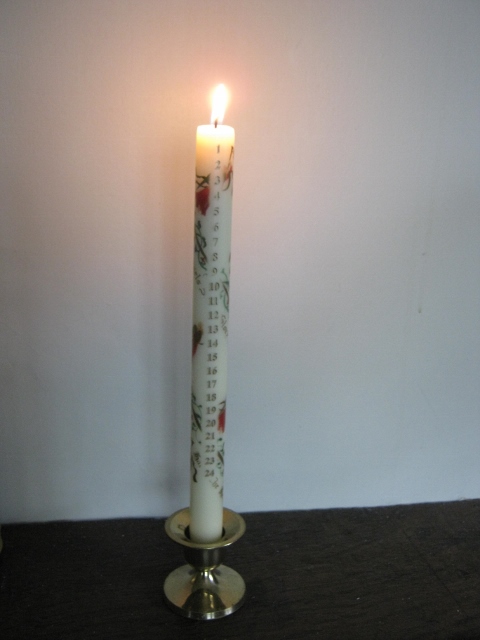
006Advent candle (480x640)

The Advent candle

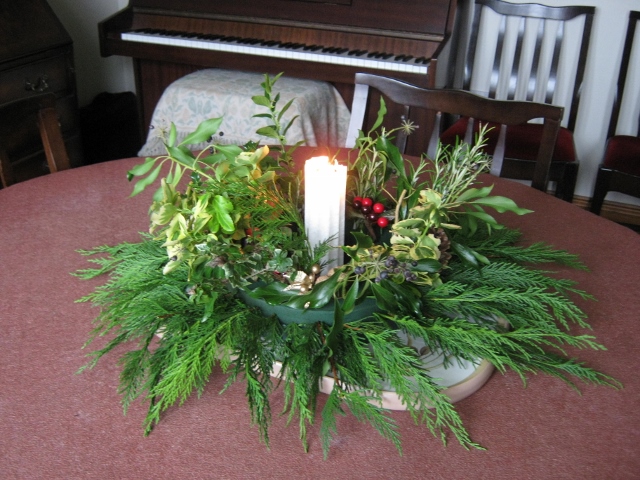
While E and I make the Crown and also a table-centre decoration as well, it is traditional for us to play an ancient tape that we have had since my eldest daughter was little.  It is the most horrible of tapes with what my daughters describe as ‘cheesy’ Christmas songs on it.  If R is around he complains very loudly when we put the ‘music’ on but I don’t think Advent Sunday would be half as much fun without it.

004Elinor's Advent arrangement (640x480)

My daughter’s table-centre arrangment

The Sunday before last (30th November) was Advent Sunday so the day before that, R and I went to Rumburgh Church to make sure all was tidy and in order and to put the church Advent Crown together.  There are plenty of evergreen trees and plants in the churchyard so I gathered a selection of good looking cuttings and arranged them as best I could around the candle holder.

001Rumburgh's Advent Crown (640x480)

Rumburgh’s Advent Crown


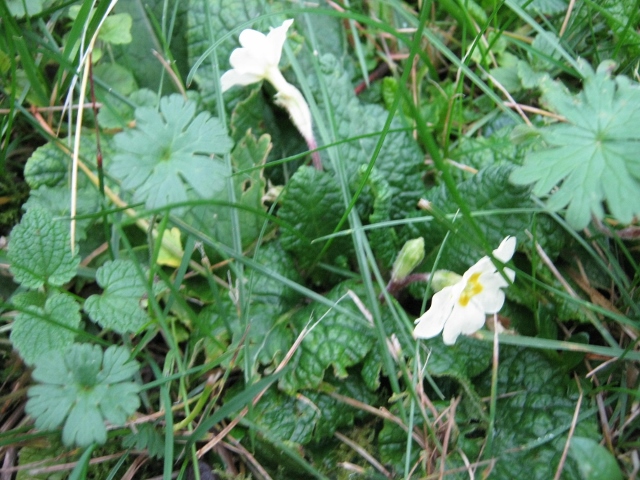
While I was wandering about the churchyard looking for greenery I saw this…

004Primroses (640x480)

An extremely early primrose.

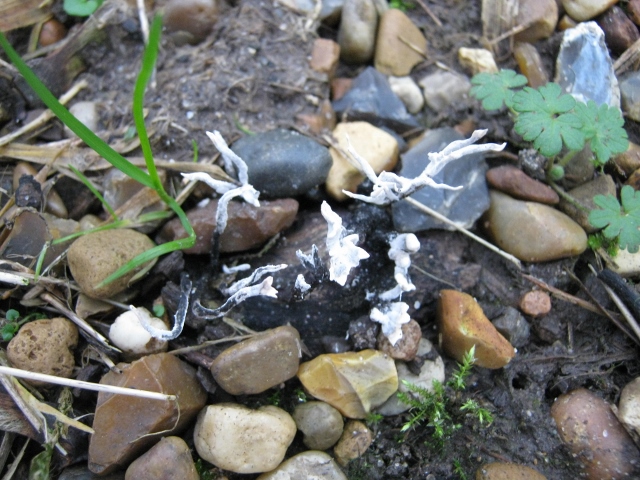
…and this.

005Coral fungus (640x480)

A coral fungus. This was very small as you can see by comparing it to the pea-shingle next to it.

I also saw this…

007Holly (640x480)

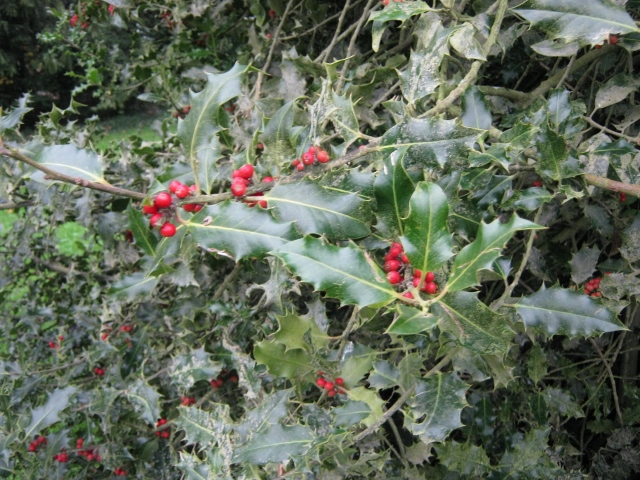
Holly with berries. If you look carefully you’ll see the mildew on the shiny leaves. It has been so damp this autumn!

…..and this

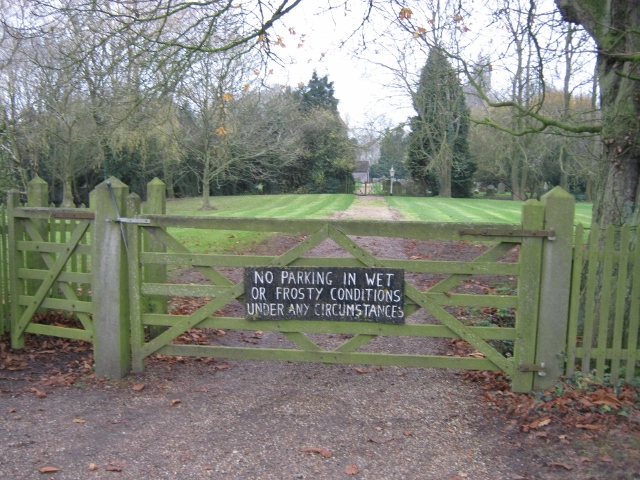
009Church gate (640x480)

The wooden churchyard gate has turned green too

010Gate to path leading to churchyard (640x480)

as has the gate to the path which leads to the churchyard. Our church is not visible from the road.

We have no church services at Rumburgh for the whole of the Advent and Christmas period this year but we do have a couple of carol services, the first of which was last Sunday, 7th December.

We had travelled up to Manchester on Saturday 6th December so that we could visit my in-laws.  R had driven up from Gloucestershire in the West Country where he had been working and E and I had gone on the train from home.  Because of the new franchise there is no longer a direct train route to Manchester from East Anglia.  The quickest and cheapest route was to travel south to London, cross the city from Liverpool Street Station to Euston Station and then take the pendolino train north to Manchester from there.  My poor mother-in-law is still very unwell but has left hospital and is now in a respite care-home for a few weeks.  Since moving to the care home she has caught a chest infection which has added to the problems she has with breathing because of a faulty valve in her heart.  She also fell and broke her thumb so has her hand in a plaster cast.  We stayed with her for about half an hour at most and then left when we saw that she was tiring.  We then drove to a restaurant and met my brother-in-law and his partner, his son and his partner and their two-year-old daughter and had a meal together.  R’s nephew, nephew’s partner and daughter had all had the chesty cough and cold but my brother-in-law was still suffering with it and we have since heard that his partner has become ill with it.  This does not bode well for us!  We returned to our very basic hotel and had a restless night before driving home on Sunday morning.  We set off shortly after 9.00 am and got back home just after 2.00 pm.  We had a short rest before going to the church to get it ready for the carol service.

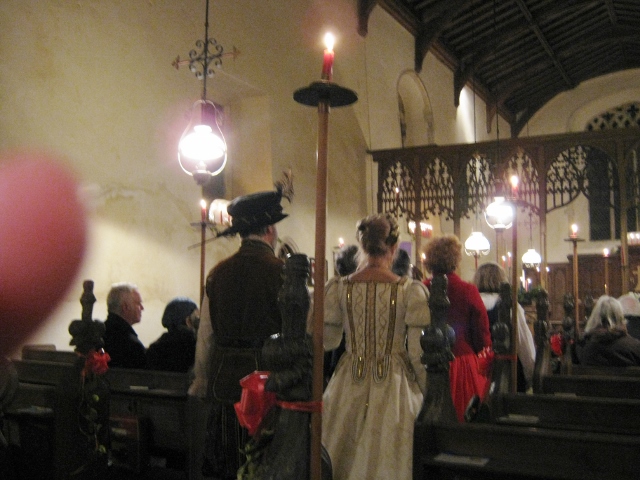
008Rumburgh church (640x480)

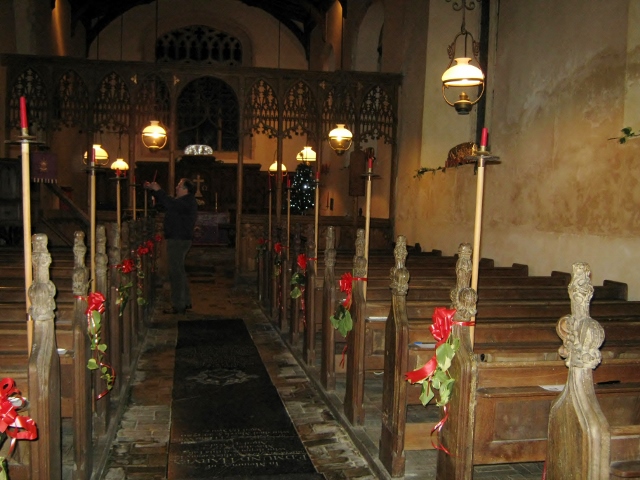
The interior of our church. R is starting to get it ready for the service.

There are many candles to be lit and the mince pies and mulled wine to set out before the congregation start to arrive.

009R lighting candles (480x640)

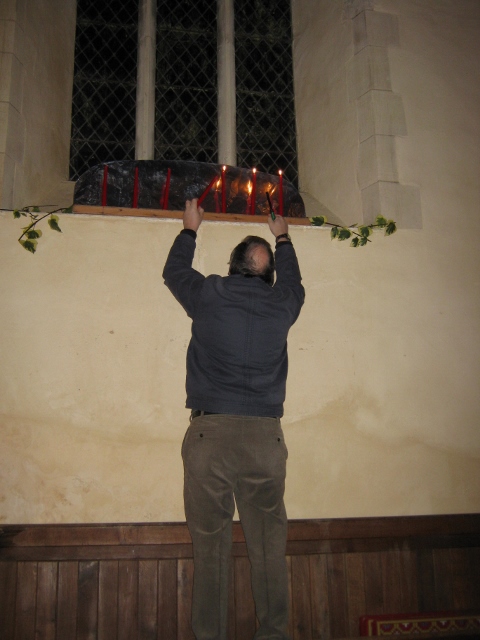
Here is R lighting the candles on one of the window sills. R is 6′ 3.5″ tall and even by standing on the pew and stretching he can only just reach!

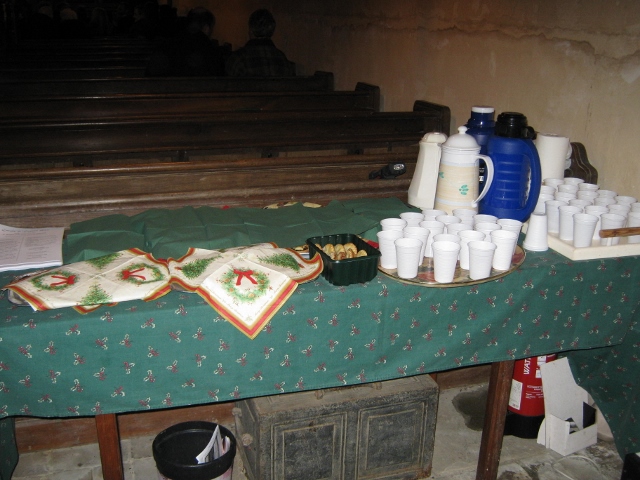
013Mince pies and mulled wine (640x480)

We set out the refreshments on the table at the back of the church and covered them for protection

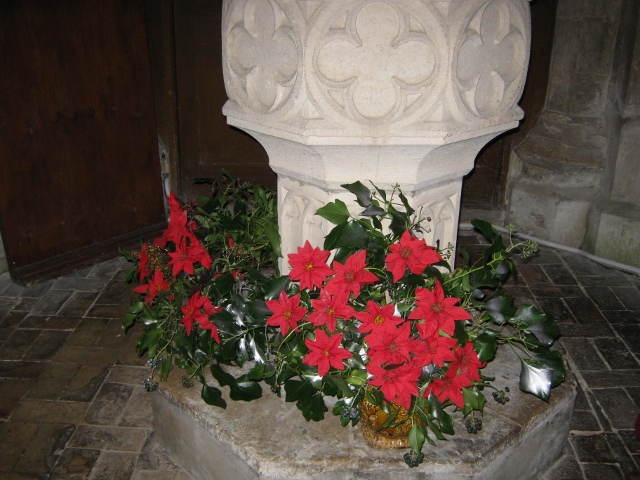
011Flowers round font (640x480)

Floral display round the font

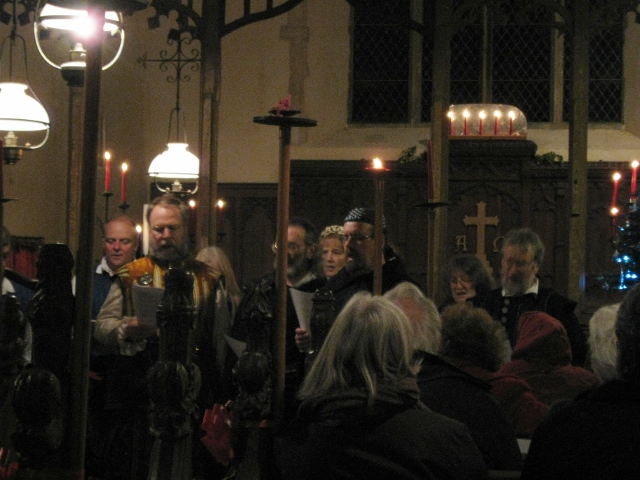
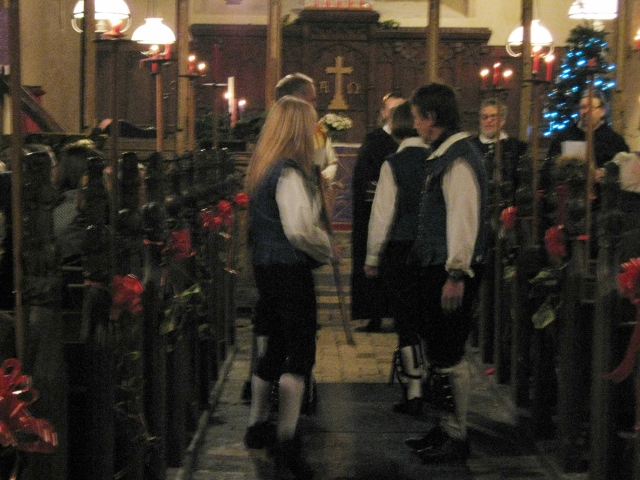
 This service is called Carols and Capers and is organised by our local folk groups and Morris dancers.  (A caper is a skip or jump and is used in Morris dancing).  Unfortunately, this year we didn’t have as many people in the church as in past years, probably because of a number of other events going on in the area.  I usually make my own mince pies to bring to the service but I had been much too busy and so I brought bought ones.

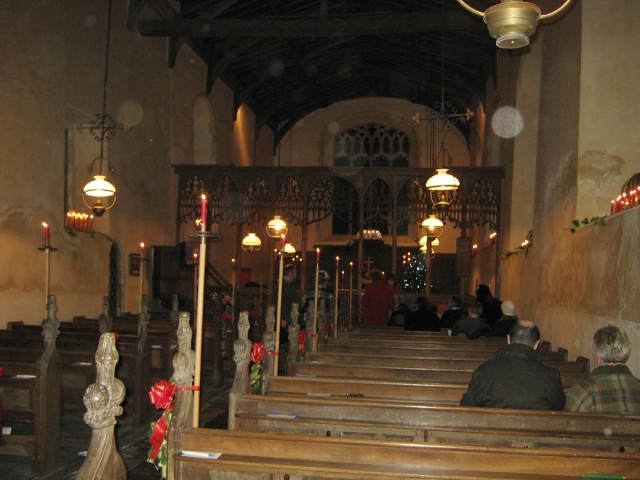
010Church filling up (640x480)

The congregation began to arrive

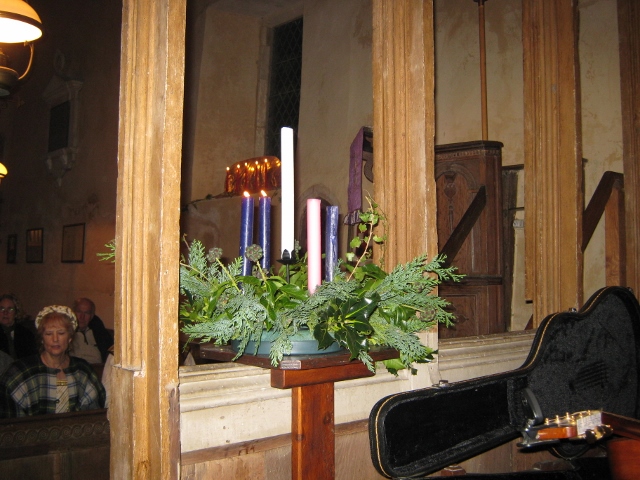
014Advent crown (640x480)

The second candle was lit on the Crown

The service went very well with a mixture of communal unaccompanied carol singing, dancing, solo singing, recitation and instrumental music.  Three of us from church were asked to do some readings from the Nativity Story and the Rector gave us a Bidding-prayer at the beginning, an amusing talk on ‘Christmas Words’ and sent us home with a Blessing.

015Gallimaufry (640x480)

Gallimaufry are a dance group who specialise in Medieval and Tudor dances

016Gallimaufry (640x480)

Gallimaufry


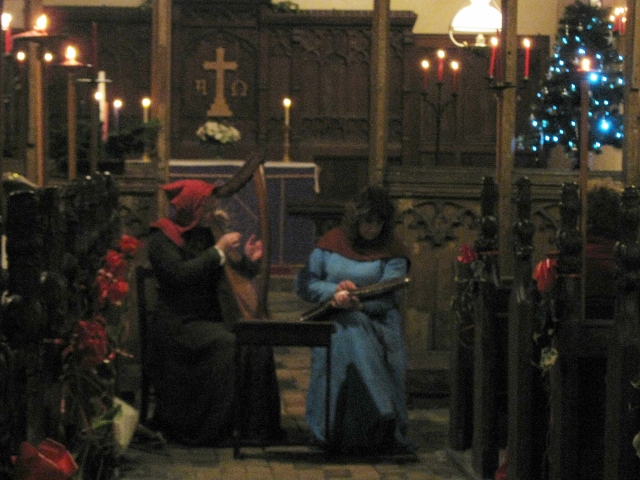
018Pearl in the Egg (640x480)

Pearl in the Egg are a couple of very talented young women who play period instruments. Here they are playing the music for Gallimaufry to dance to.

020Pearl in the Egg (640x480)

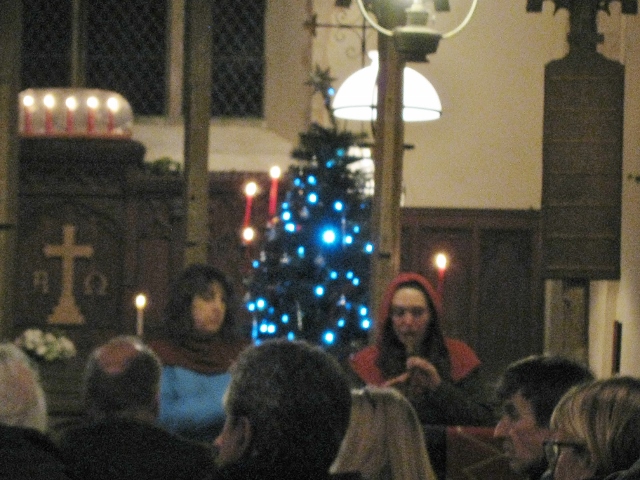
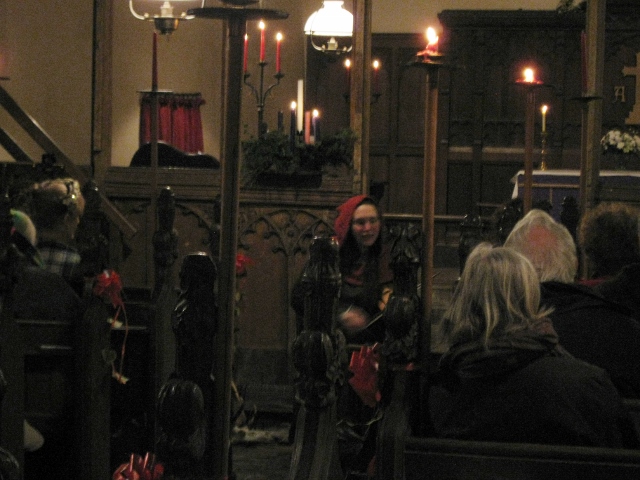
Pearl in the Egg then sang and played to us. This is my favourite part of the evening. According to their web-site, Pearl in the Egg (Perle in the Eghe) was the name of a real minstrel, a blind harpist who performed for King Edward I in 1306. He performed along with the Minstrel with the Bells, Matilda Makejoy and Reginald the Liar.

022Pearl in the Egg (640x480)

Pearl in the Egg describe themselves as Historical Musicians and they perform in many places including in churches, at fairs and at schools. They give talks and presentations and not only perform Medieval music but also Tudor, Victorian and 1940’s as well. Pearl in the Egg was a term used to describe cataracts in Medieval England.

023Rumfolk (640x480)

‘Rumfolk’ then sang to us

025Rumburgh Morris (640x480)

And Rumburgh Morris danced for us

A most enjoyable evening rounded of with the mince pies and mulled wine and lots of talk!  Our next carol Service is on Saturday 20th December.


Share this:

  • Share on X (Opens in new window) X
  • Share on Reddit (Opens in new window) Reddit
  • Share on Pinterest (Opens in new window) Pinterest
  • Share on Facebook (Opens in new window) Facebook
  • Email a link to a friend (Opens in new window) Email
  • Share on Tumblr (Opens in new window) Tumblr
  • Print (Opens in new window) Print
  • Share on Pocket (Opens in new window) Pocket
  • Share on LinkedIn (Opens in new window) LinkedIn
Like Loading...

Peak District Holiday 1st to 9th July. Day 5.

26 Wed Nov 2014

Posted by Clare Pooley in churches, Rural Diary

≈ 15 Comments

Tags

architecture, church of St Edward the Confessor, George Edmund Street, Greystones, Larner Sugden, Leek, Leek School of Embroidery, Nicholson Institute, Norman Shaw, oatcakes, ragged schools, River Churnet, silk mills, Staffordshire, stained glass, William Morris, William Sugden

092View down street (640x427)

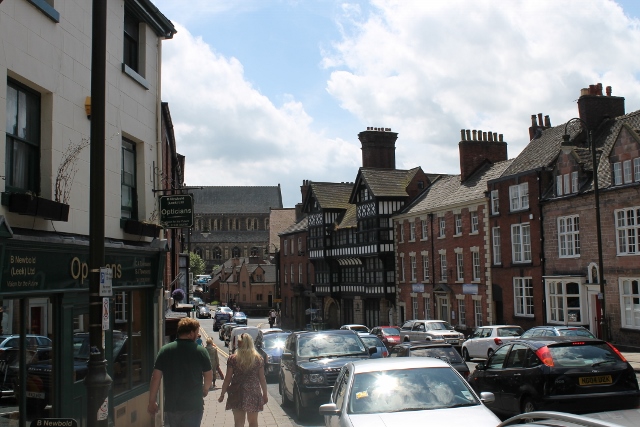
A view down one of the main streets in Leek looking towards the Roman Catholic church.

The nearest town to where we usually stay in the Staffordshire Peaks is Leek.  It is the principal town of the area and is known locally as ‘The Queen of the Moorlands’.  It is not a large town; it is built on a hill and is contained in a large bend in the River Churnet.  During the late 18th and early 19th centuries it changed from a quiet market town to a silk-weaving centre and a few large mills were built there.  This industry has completely gone now but some of the old mills remain.
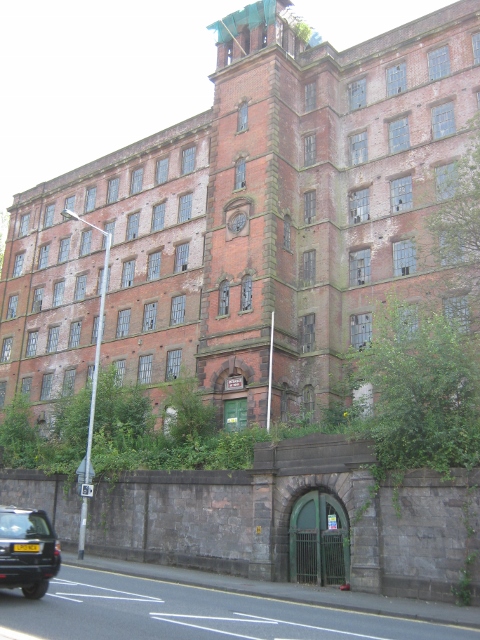
069Abandoned mill (480x640)

An abandoned mill.

William Morris, the founder of the Arts and Crafts movement lived and worked in Leek from 1875 until 1878.  He studied the art of dyeing there and it was Leek which provided his firm with silk.

R and I woke on the Saturday morning to hear the rain still falling and so didn’t rush our breakfast.  Fortunately, by the time we had washed up after our meal the rain had stopped and the sun had come out.  We decided we would spend the rest of the day in Leek so after a mid-morning cup of coffee we drove into town and parked the car in a car-park next to playing fields.

The town is full of interesting architecture.
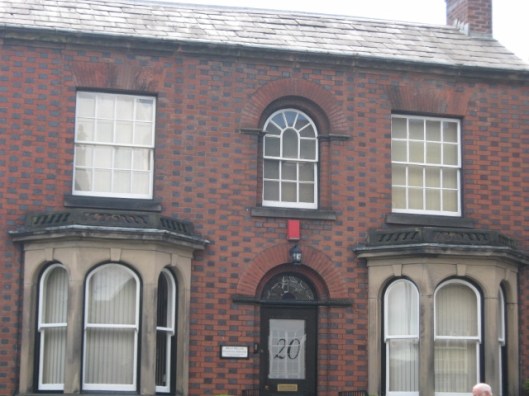
005Chequered bricks (640x480)

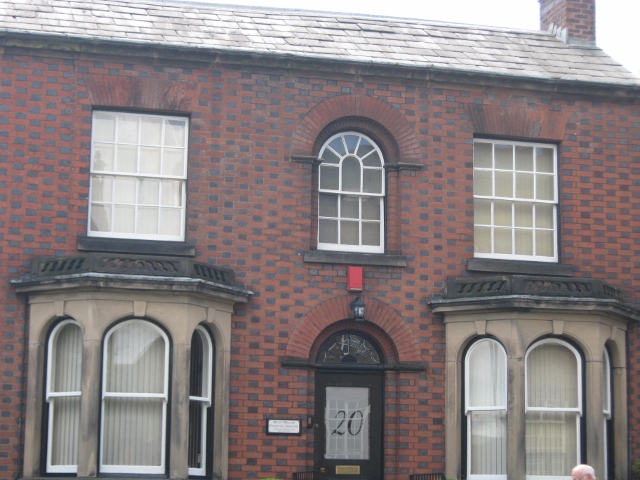
I love this house with its chequered brickwork and the arch over the door mirrored by the arch over the window above it.

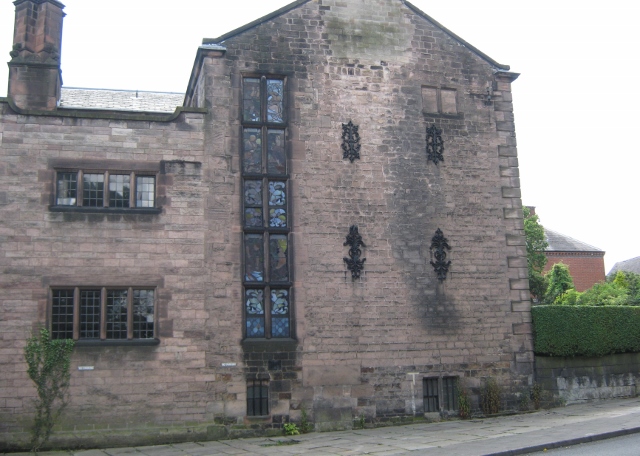
004House in Leek with stained glass (2) (640x456)

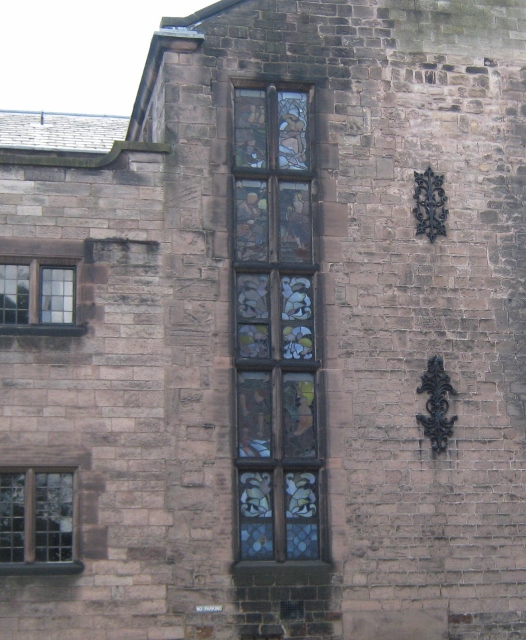
This house has a stained-glass window reaching from top to bottom.
004House in Leek with stained glass (526x640)

I wonder if this window is where the stairs are. How lovely to have jewel-coloured light shining into your home! The next time we go to Leek I must try to find out more about this house.
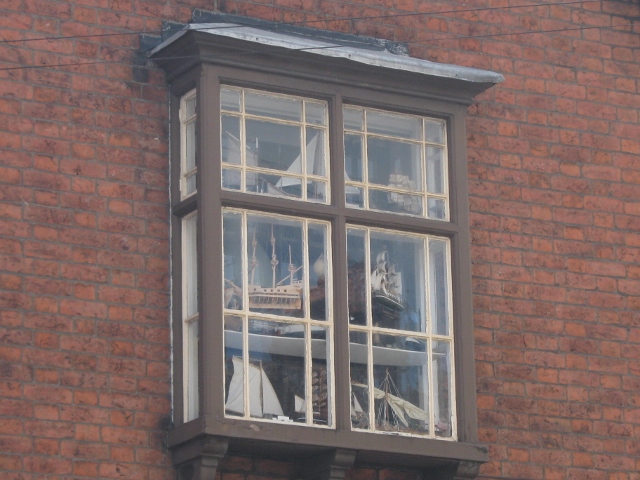
003Window with boats (640x480)

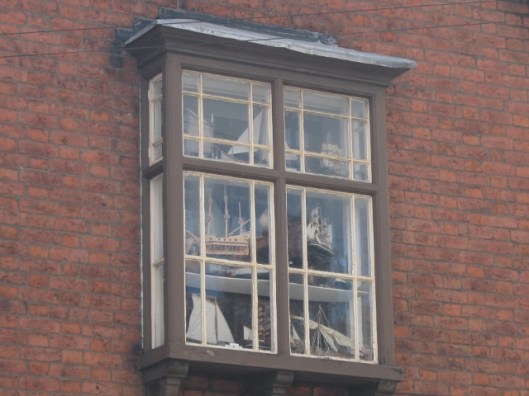
Someone has filled their bay window with model boats

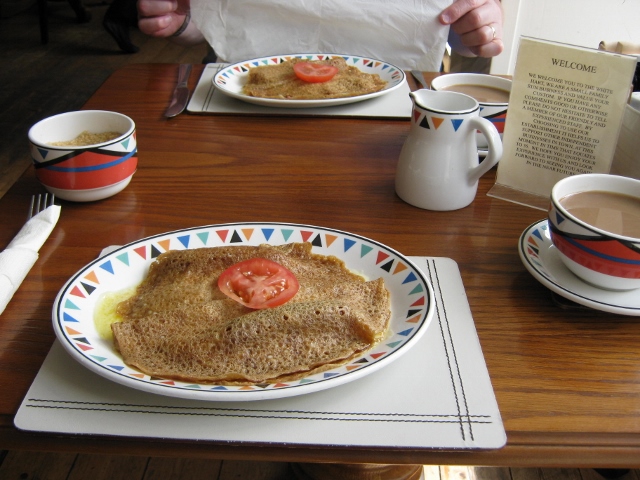
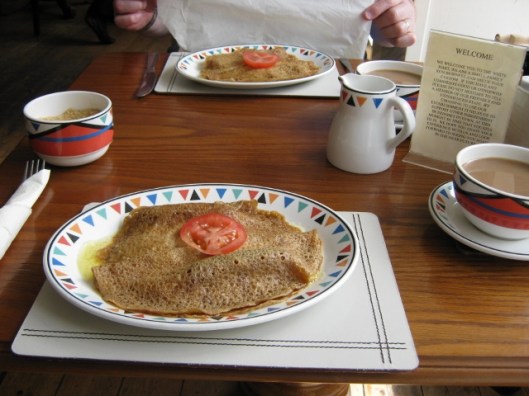
We began to feel hungry and went to the White Hart Tea Room in order that we might sample their wonderful Staffordshire oatcakes.
006Staffordshire oatcakes (640x480)

These oatcakes are made like pancakes but with oat-flour instead of wheat-flour. They are like the galettes you get in Brittany, France (which are made with buckwheat!)

Mine was filled with sausage and melted cheese and R’s had bacon and melted cheese.

Rested and refreshed, R and I continued to wander about the town.
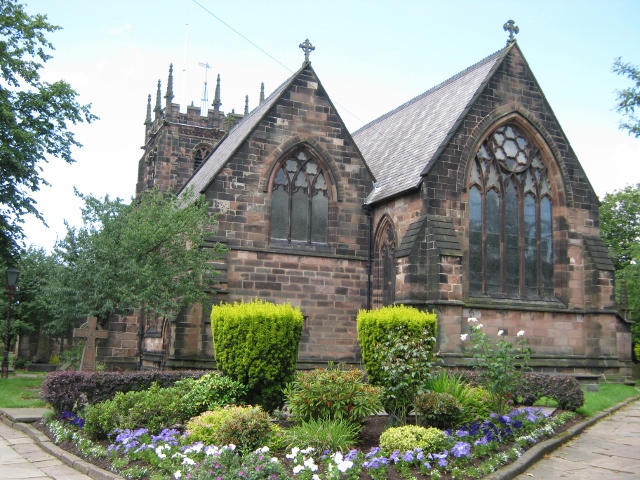
008Church of St Edward the Confessor (640x480)

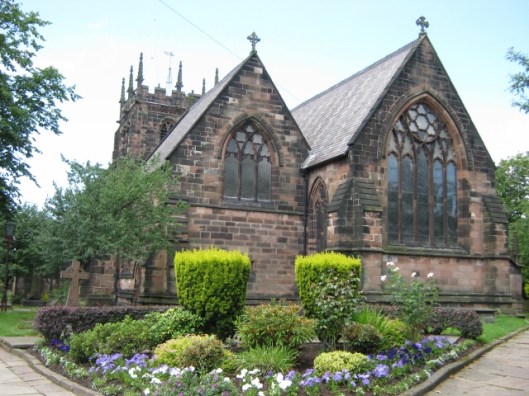
The church of St Edward the Confessor

There is an 8th Century Saxon cross in the churchyard and some of the stained glass in the church is by Morris and Co.  The church also has a wonderful collection of examples of the work of the Leek School of Embroidery that R and I were lucky enough to see a couple of years ago in an exhibition.  There were enormous altar frontals and embroidered panels as well as smaller pieces of work and all so beautifully done.  The church was extended in the 19th Century by the architect George Edmund Street.  William Morris was one of his apprentices.

Apparently, until the trees in the churchyard grew too tall, a phenomenon called a double sunset could be seen from this church at about the time of the summer solstice.  There is a hill called the Cloud and as the sun sets it can be seen above and to the side of the hill at the same time.
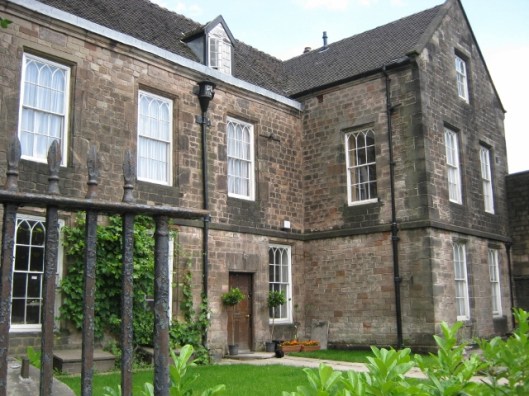
007Rectory (640x480)

The Rectory

010Spout Hall (480x640)

Spout Hall. A mock Tudor building constructed in 1873 and attributed to the architect Richard Norman Shaw. Look at the size of the chimney!  The gutters also need clearing!
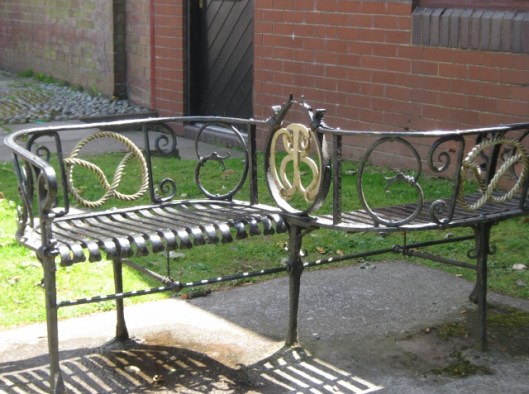
009Kissing seat (640x477)

A kissing seat decorated with the Staffordshire Knot
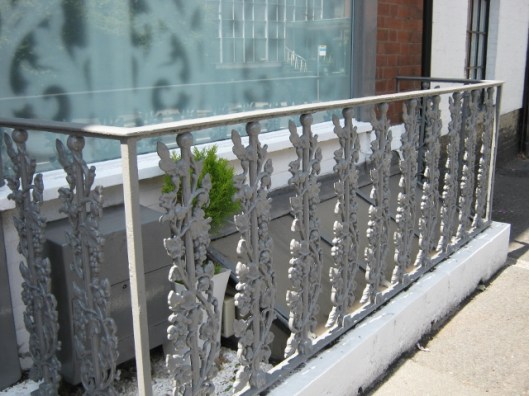
014Cast iron railing (640x480)

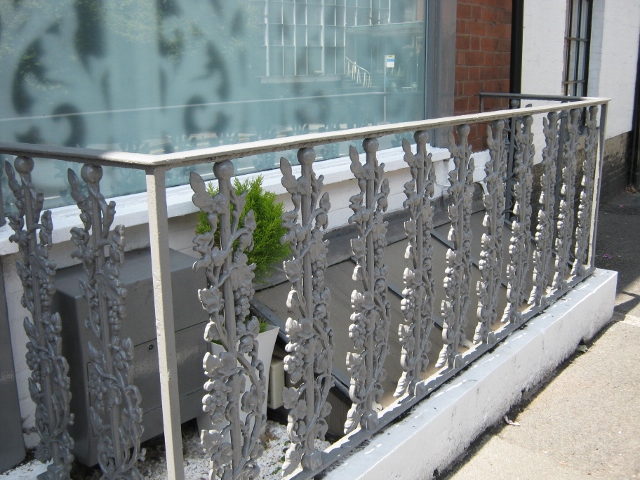
An attractive iron railing

013Building as gift (640x480)

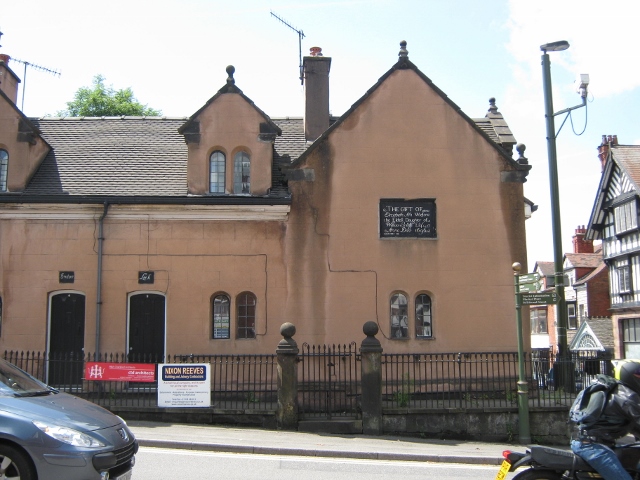
I believe these are almshouses.

The plaque on the wall states that the building was restored in 1911.  It also says ‘The gift of Elizabeth Ash widow, the eldest daughter of William Jolliffe, Esqr.  Anno Dom 1696’

I looked on the British History Online website and discovered that William Jolliffe acquired some land (part of an estate) in 1644.  When he died in 1669 the land passed to his daughter Elizabeth Ashe (the site spells her surname with an ‘e’), widow of Edward Ashe a London draper.  In 1677 she charged the land with rent to support the almshouses which she had founded at Leek.

I wonder what the tenant of the land thought about that!
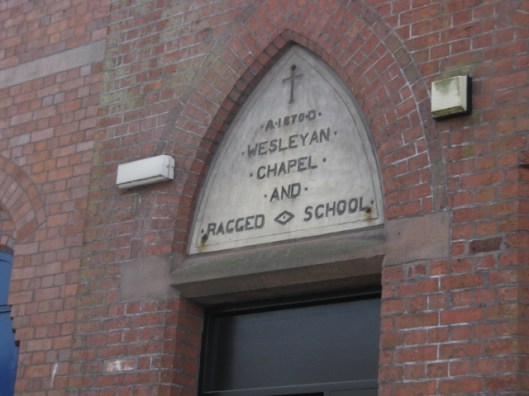
035Wesleyan Chapel and Ragged School (640x480)

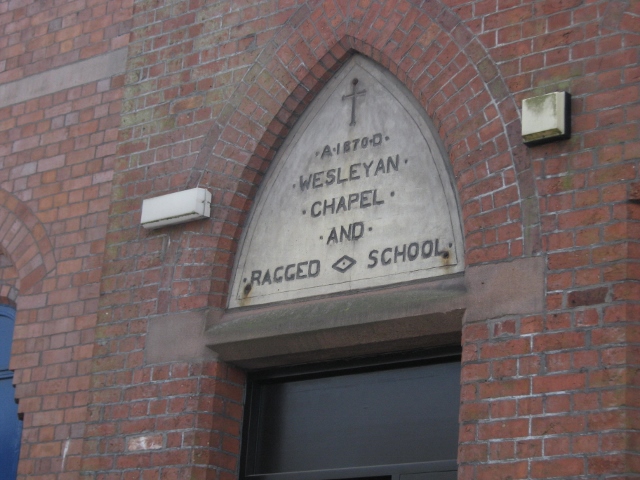
As the sign over the door says, this is the Wesleyan Chapel and Ragged School.

Looking at the building it appeared to be disused and was a little worse for wear.

Ragged Schools ‘were charitable organisations dedicated to the free education of destitute children in 19th Century Britain.’  (Wikipedia)  Eventually these schools began opening at night as well to educate all comers, children and adults.  The novelist Charles Dickens began his association with Ragged Schools in 1843 when he visited one in London.  He was appalled by the conditions but wished to help them.  His experience inspired him to write ‘A Christmas Carol’.  He said, ‘They who are too ragged, wretched, filthy and forlorn to enter any other place: who could gain admission into no charity school, and who would be driven from any church door: are invited to come in here, and find some people not depraved, willing to teach them something and show them some sympathy.’

William Sugden the architect arrived in Leek in 1849 to work on the design of the Churnet Valley Railway.  His son Larner was born in 1850 and was apprenticed to his father in 1866.  Both men’s influence on the town was very great.  It was they who built the Methodist Chapel and Ragged School in 1870.  Larner’s masterpiece was the Nicholson Institute built in Queen Anne style in 1882.
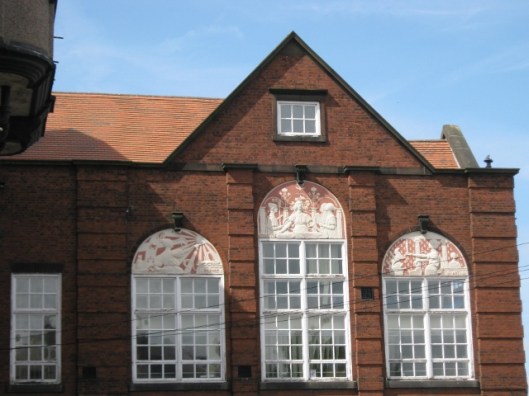
075B & L College (640x480)

This part of the building is now used by Buxton and Leek College.
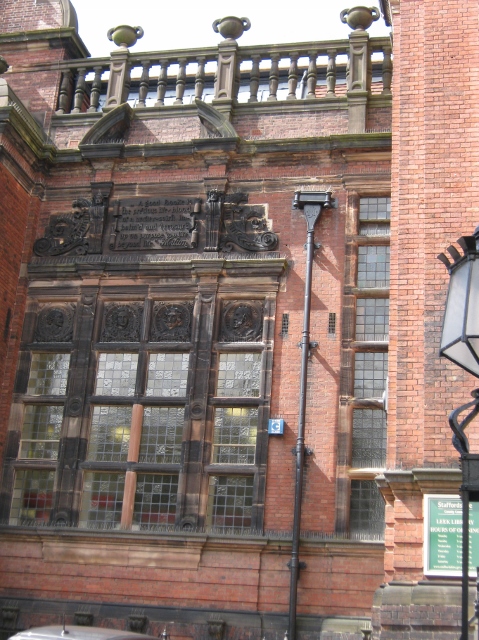
078B & L College (479x640)

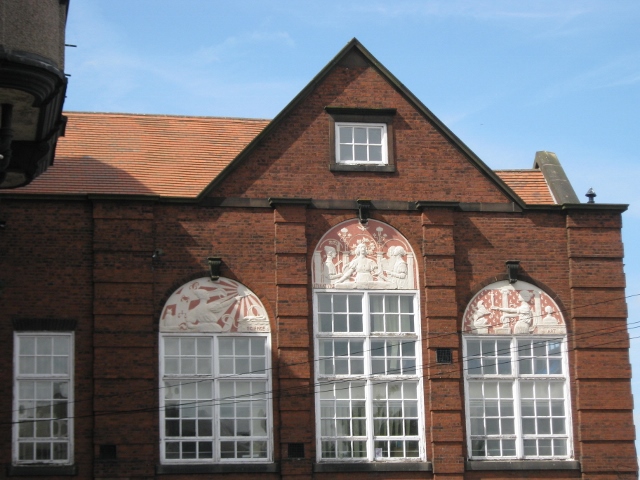
Nicholson Institute.  Now Leek Public Library and Gallery
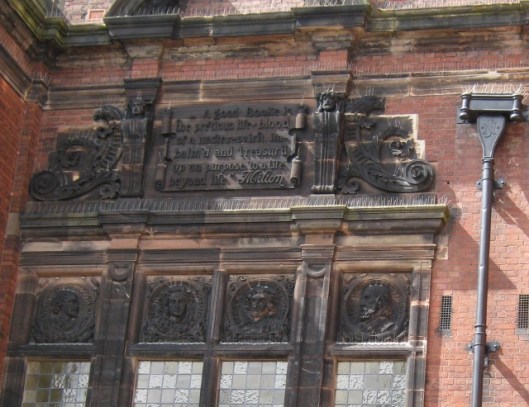
078B & L College (2) (640x493)

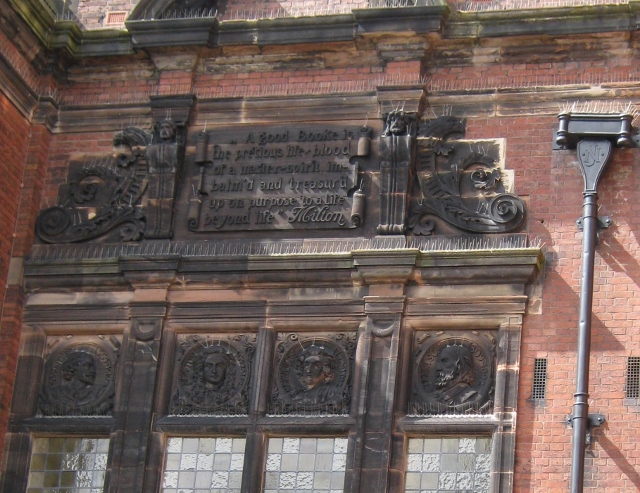
Larner incorporated busts of Shakespeare, Newton, Reynolds and Tennyson into the building, representing 400 years of artistic and scientific achievement from the 16th to 19th Centuries.

The quote from Milton says, ‘A good booke is the precious life-blood of a master-spirit imbalm’d and treasur’d up on purpose to a life beyond life.’

The Institute is tucked away behind a 17th Century building on the main road.  Any other architect of the time would have pulled the building down but apparently Larner had a real regard for old buildings and so the building was allowed to remain.
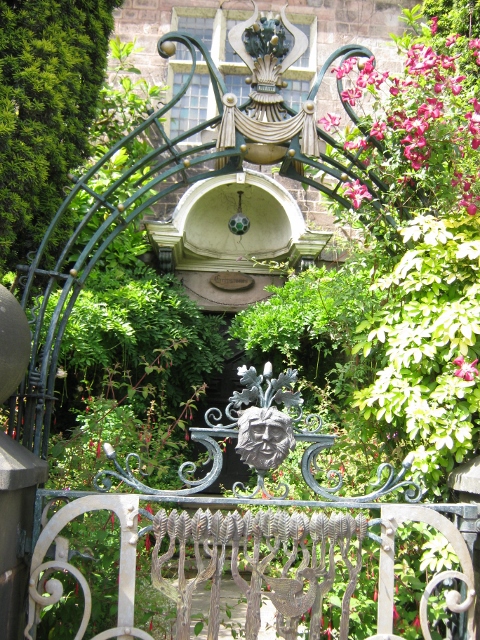
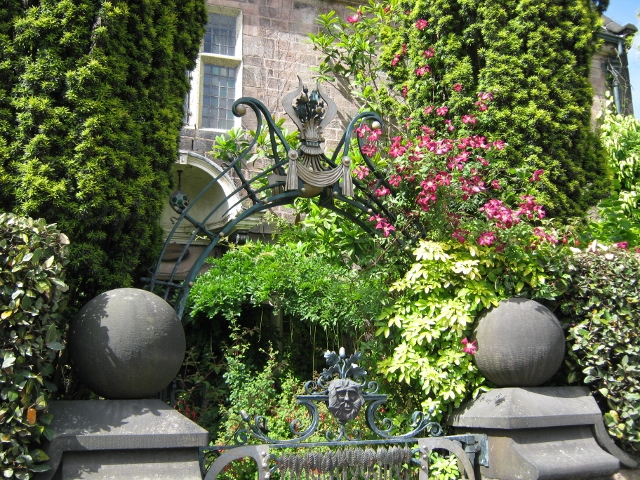
073Ornate gate (480x640)

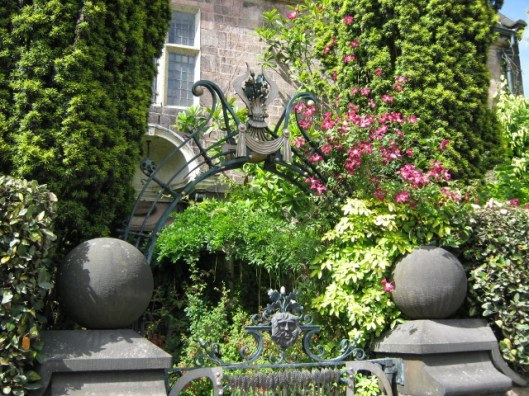
And here it is. Or at least a part of it. There were so many trees and plants in the front garden that I couldn’t see much of the house.
072Ornate gate (640x480)

The house is called ‘Greystones’ and until recently was being used as a tea-shop.
071Ornate gate 17thC house (480x640)

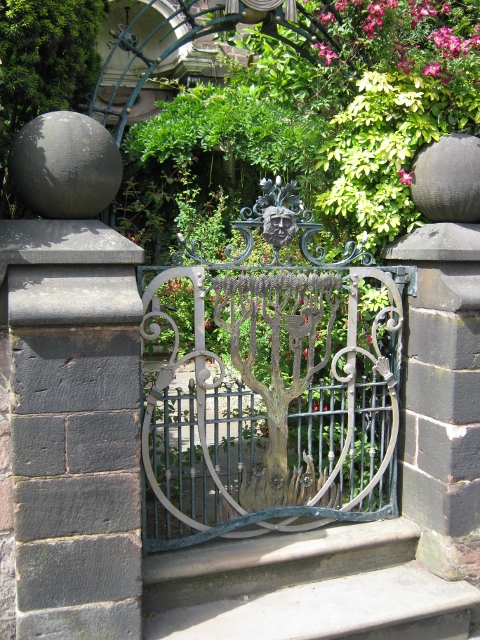
The gate is lovely!

Local rumour has it that William Morris founded the Society for the Protection of Ancient Buildings in 1877 as a result of his successful campaign to prevent the demolition of this building.  It was through the SPAB he came into contact with Larner Sugden who went on to publish some of Morris’ speeches and essays!
Share this:

  • Share on X (Opens in new window) X
  • Share on Reddit (Opens in new window) Reddit
  • Share on Pinterest (Opens in new window) Pinterest
  • Share on Facebook (Opens in new window) Facebook
  • Email a link to a friend (Opens in new window) Email
  • Share on Tumblr (Opens in new window) Tumblr
  • Print (Opens in new window) Print
  • Share on Pocket (Opens in new window) Pocket
  • Share on LinkedIn (Opens in new window) LinkedIn
Like Loading...

November

22 Sat Nov 2014

Posted by Clare Pooley in churches, Rural Diary, weather

≈ 21 Comments

Tags

Christ the King, November, Rumburgh Church, Stir-up Sunday, Thomas Hood

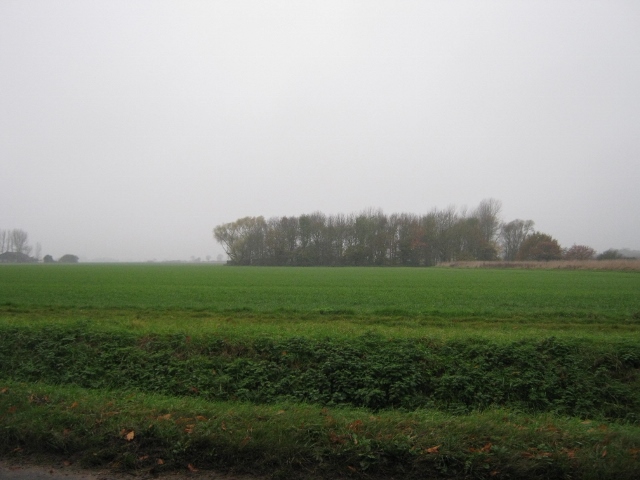
005View across fields (640x480)

It has been a typical November day today (to look at) but as it is 11 degrees Centigrade it is still unnaturally warm for the time of year.  There are also still some leaves on the trees and a few flowers blooming!  The downside is that we have had a lot of rain and mud is everywhere.  R kindly washed my car earlier which was extremely noble of him as it has been drizzling, then raining, all day.

004Rumburgh Church - November (640x480)

We went to the church this afternoon to make sure all was clean and tidy as we have a service there tomorrow.  We will be celebrating Christ the King – ‘the all-embracing authority of Christ’ (Oxford Concise Dictionary of the Christian Church).

002Churchyard in November (640x480)

I find this service uplifting and it is good to celebrate before we enter Advent next Sunday, which is a quiet time of meditation and preparation.

001Churchyard in November (640x480)

This Sunday – the last before Advent – used to be known as ‘Stir-up Sunday’ which comes from the Collect prayer for the 25th Sunday after Trinity.  ‘Stir up, we beseech thee, O Lord, the wills of thy faithful people; that they, plenteously bringing forth the fruit of good works, may of thee be plenteously rewarded’.  Many thought this was the time to be’ stirring up’ their Christmas puddings, though of course, the best time to prepare a good Christmas pudding is in October.  It needs to mature thoroughly!

003Churchyard in November (640x480)

R was reminded of the famous poem by Thomas Hood, written in 1844.

‘No sun – no moon!

No morn – no noon –

No dawn – no dusk – no proper time of day.

No warmth, no cheerfulness, no healthful ease,

No comfortable feel in any member –

No shade, no shine, no butterflies, no bees,

No fruits, no flowers, no leaves, no birds! –
November!’

006View across fields (640x480)

Share this:

  • Share on X (Opens in new window) X
  • Share on Reddit (Opens in new window) Reddit
  • Share on Pinterest (Opens in new window) Pinterest
  • Share on Facebook (Opens in new window) Facebook
  • Email a link to a friend (Opens in new window) Email
  • Share on Tumblr (Opens in new window) Tumblr
  • Print (Opens in new window) Print
  • Share on Pocket (Opens in new window) Pocket
  • Share on LinkedIn (Opens in new window) LinkedIn
Like Loading...

More Birds!
16 Sun Nov 2014

Posted by Clare Pooley in Rural Diary, wild birds

≈ 11 Comments

Tags

birds, black-headed gull, buzzard, dunnock, green woodpecker, kingfisher, pheasant, stock dove, Suffolk, Swallow

041Dunnock (640x427)

This is a Dunnock. They used to be called Hedge Sparrows but they are not like sparrows at all except for their brown and grey colouring. They have quite a bright jangling song and search for food mainly on the ground under hedges and shrubs.

This post will be of more photos of birds I saw this summer and autumn in my garden.  We are very lucky to have so many types of bird visiting.

042Dunnock (640x427)

The dunnock realised I was looking at it and so looked at me.

043Dunnock (640x427)

It then tried to edge behind the hawthorn leaf to hide.

062Green Woodpecker (640x419)

A Green Woodpecker also known as a Yaffle because of its laughing call. This bird is a juvenile as it hasn’t got its full green plumage yet. I hardly ever see these birds in trees. They love ants and ants’ eggs I am pleased to say, and are very welcome in our garden which is ‘ant city’.

065Green Woodpecker (640x427)

They are such attractive birds with their black masks and cherry-red, olive-green, grey-green and primrose-yellow plumage.

064Female pheasant (640x427)

I have re-posted this photo of a female pheasant to show how drab they are compared with the males. Their feathers are so good at blending in with grasses  which is very useful at nesting-time.

063Stock dove (640x427)

A Stock Dove

049Swallow (640x507)

A Swallow – one of our summer visitors. I miss them very much when they fly south for the winter. They left very early this year because we had such a cool August.

050Swallow (640x454)

Swallow

039Seagulls (640x433)

Another re-post of Black-headed Seagulls in the field behind our house. These were losing their summer plumage. During the winter they don’t have a black head only a black spot on the side of the head. And it isn’t black but dark brown!
012Buzzard (640x469)

A Buzzard flying over our house. Buzzards have returned to East Anglia in the last few years having been absent for a very long time.

I must apologise for the quality of the next photograph.  I am including it because I am so pleased and excited to have seen this bird at all, let alone seeing it in my garden.  It decided to perch in a very shaded part of the garden by the pond and I couldn’t focus on it at all.

011Kingfisher (640x467)

The orange and blue bird with white throat and neck patch is a Kingfisher


Share this:

  • Share on X (Opens in new window) X
  • Share on Reddit (Opens in new window) Reddit
  • Share on Pinterest (Opens in new window) Pinterest
  • Share on Facebook (Opens in new window) Facebook
  • Email a link to a friend (Opens in new window) Email
  • Share on Tumblr (Opens in new window) Tumblr
  • Print (Opens in new window) Print
  • Share on Pocket (Opens in new window) Pocket
  • Share on LinkedIn (Opens in new window) LinkedIn
Like Loading...
← Older posts
Newer posts →
Follow A Suffolk Lane on WordPress.com

Enter your email address to follow this blog and receive notifications of new posts by email.

Join 715 other subscribers.

Unknown's avatar

I talk about what it's like living in a quiet part of Suffolk. I am a wife, mother and daughter, a practising Christian and love the natural world that surrounds me. I enjoy my life - most of the time!

My Posts

Jan 2026
M T W T F S S
 1234
567891011
12131415161718
19202122232425
262728293031  
« Dec    

Pages

  • About my Blog
  • GDPR (General Data Protection Regulations) and This Site
  • My Life in a Suffolk Lane

Archives

Blogs I Follow

Unknown's avatar
Unknown's avatar
Unknown's avatar
Unknown's avatar
Unknown's avatar
Unknown's avatar
Unknown's avatar
Unknown's avatar
Unknown's avatar
Unknown's avatar
Unknown's avatar
Unknown's avatar
Unknown's avatar
Unknown's avatar
Unknown's avatar
Unknown's avatar
Unknown's avatar
Unknown's avatar
Unknown's avatar

Posts I Like

  • JAM's avatar
  • Unknown's avatar
  • Yeah, Another Blogger's avatar
  • Unknown's avatar
  • trulymebeingme's avatar
  • Unknown's avatar
  • Unknown's avatar
  • Schnippelboy's avatar
  • Unknown's avatar
  • Unknown's avatar
  • Unknown's avatar
  • 60onabudget's avatar
  • Unknown's avatar
  • Unknown's avatar
  • Unknown's avatar
  • Unknown's avatar
  • Unknown's avatar
  • Unknown's avatar
  • Unknown's avatar
  • M T McGuire's avatar
  • (Kitty) Cat Strawberry - Meow!'s avatar
  • Unknown's avatar
  • Unknown's avatar
  • Maikhel's avatar
  • DoF@theinfill's avatar
  • Unknown's avatar
  • Unknown's avatar
  • Carolina Cuisine Network's avatar
  • clivebennett796's avatar
  • Unknown's avatar
  • Unknown's avatar
  • Unknown's avatar
  • martzkvi's avatar
  • Unknown's avatar
  • Unknown's avatar
  • Annika Perry's avatar
  • Unknown's avatar
  • Unknown's avatar
  • Unknown's avatar
  • Secret Diary of A Country Vicar's Wife's avatar
  • CJ's avatar
  • Unknown's avatar
  • Unknown's avatar
  • Jack Ronald Cotner's avatar
  • Unknown's avatar
  • Unknown's avatar
  • Kathleen's avatar
  • mitchteemley's avatar
  • gederedita's avatar
  • Unknown's avatar

amphibians architecture art Arts and Crafts churches cooking Days out domestic animals family fish Folk Traditions Gardening Historic Buildings holidays Insects Landscaping literature music Norwich plants Rural Diary seashore theatre trees Uncategorized walking weather wild animals wild birds wild flowers

Tags

architecture autumn birds blackbird blackthorn Bungay butterfly church clouds common knapweed cow parsley crocus daffodils Diary dogwood family field maple flowers fungus garden gardening geese greylags ground-ivy Halesworth Hawthorn heather holiday Holly Holy Week horse chestnut Hoverfly insects ivy Lake District Lent lesser celandine lichen Lords and Ladies Mallard mallards Minsmere moorhen moss music Norwich Peak District pheasant plants pond ponds primrose primroses Rain rooks Rumburgh Rumburgh Church sheep Sheffield snow snowdrops Southwold spring Suffolk Suffolk Wildlife Trust sunset the Beck trees viburnum bodnantense walking weather wild cherry wild flowers winter-flowering honeysuckle witch-hazel

Meta

  • Create account
  • Log in
  • Entries feed
  • Comments feed
  • WordPress.com

Goodreads

Blog at WordPress.com.

Book Jotter

Reviews, news, features and all things books for passionate readers

Country Life Blog -

A blog about life in the country in the past and present

Matthew Paul: Poetry & Stuff

Poetry and what-not

Schnippelboy

Ein Tagebuch unserer Alltagsküche-Leicht zum Nachkochen

TAMARA JARE

Tamara Jare Contemporary Figurative Art – Bold Colors, Resilient Souls

A Taste of Freedom

Documenting a Dream

Country Ways

Rambling Journeys in Britain, Countryside Matters and campaigning for the Right to Roam

The Strawberry Post

Here to Entertain, Educate & Inspire!

a north east ohio garden

an ongoing experiment in the dirt, 35 plus years

naturechirp

Celebrating God's creatures, birds and plants...

Sophie Neville

Writer

Going Batty in Wales

Developing a more sustainable lifestyle in SW Wales

Our Lake District Escapades

Exploring the Lake District and beyond

Short Walks Long Paths

Wandering trails around the coast of Wales

The Biking Gardener

An English persons experience of living and gardening in Ireland

Nan's Farm

A Journal Of Everyday Life

Walk the Old Ways

Rambling Journeys in Britain with John Bainbridge. Fighting for the Right to Roam. Campaigning to Protect Our Countryside.

Writer Side UP!

Waking the Writer Side...and keeping it "Up!"

Meggie's Adventures

Travel, thank you notes and other stories

amusicalifeonplanetearth

Music and the Thoughts It Can Inspire

lovefoundation.co.uk

Traveling Tortuga

Simply Living Well

Pakenham Water Mill

Historic watermill in the beautiful Suffolk countryside

Take It Easy

Retired, not expired: words from the after(work)life. And music. Lots of music!

Secret Diary Of A Country Vicar's Wife

By Olive Oyl

thanksfortheadventureorg.wordpress.com/

The Beat Goes On

#TBGO

Frank Pleszak's Blogs

Twitter: @frankpleszak @PolishIICorps

John Bainbridge Writer

Indie Writer and Publisher

roughwighting

Life in a flash - a bi-weekly storytelling blog

Walking the Old Ways

Rambling in the British Countryside

CapKane

thoughts on social realities

SkyeEnt

Jottings from Skye

jodie richelle

embracing my inner homemaker

Skizzenbuch/Blog

Just another WordPress.com weblog

Have Bag, Will Travel

The Call of the Pen

Flash Fiction, Book Reviews, Devotionals and other things.

John's Postcards

Art in Nature

You dream, I photographe it !

Smile! You’re in Barnier World......

theinfill

the things that come to hand

Dr. Mary Ann Niemczura

Author of "A Past Worth Telling"

Provincial Woman

The Pink Wheelbarrow

Luanne Castle: Poetry and Other Words (and cats!)

Poetry, Other Words, and Cats

The Family Kalamazoo

A genealogical site devoted to the history of the DeKorn and Zuidweg families of Kalamazoo and the Mulder family of Caledonia

everythingchild

The Book Owl

Canberra's Green Spaces

Paul Harley Photographer

  • Subscribe Subscribed
    • A Suffolk Lane
    • Join 715 other subscribers.
    • Already have a WordPress.com account? Log in now.
    • A Suffolk Lane
    • Subscribe Subscribed
    • Sign up
    • Log in
    • Report this content
    • View site in Reader
    • Manage subscriptions
    • Collapse this bar
 

Loading Comments...
 

    Privacy & Cookies: This site uses cookies. By continuing to use this website, you agree to their use.
    To find out more, including how to control cookies, see here: Cookie Policy
    %d