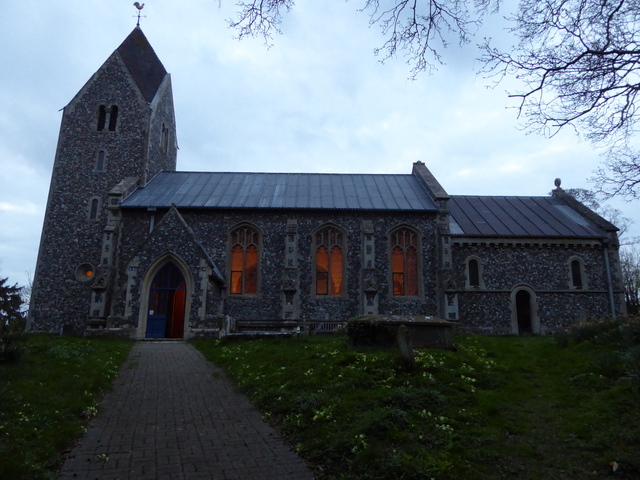
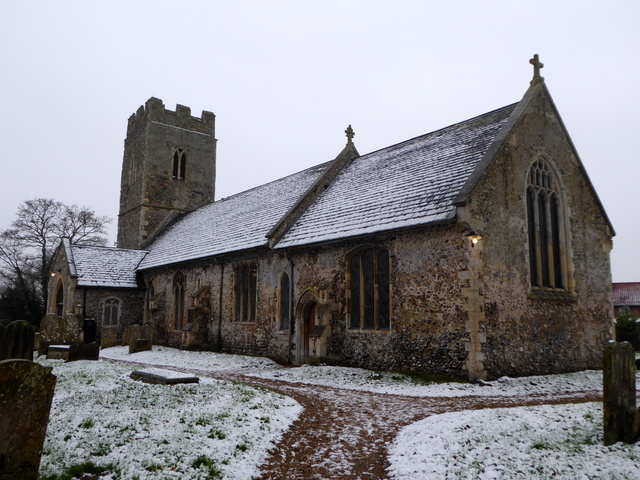
Richard and I attended Compline this evening at St. Mary’s church in Flixton.
“ Make me to know your ways, O Lord;
teach me your paths.
Lead me in your truth, and teach me,
for you are the God of my salvation;
for you I wait all day long.”
I arranged to visit Alice in Sheffield on Thursday 23rd February, spend the night in a hotel and return home again the following day. What I hadn’t expected when I bought the train tickets and booked the hotel room was a visit from ‘Doris’ that day too. For those who don’t know who ‘Doris’ is (or who might have forgotten), ‘Doris’ was a storm that caused some disruption here. Fortunately, my journey went ahead with no problems other than a speed restriction. Alice met me at the station and we decided to have lunch together before I went to my hotel. We nearly got blown off our feet on the way to the café, the door of which kept blowing open while we ate, but we weren’t inconvenienced too much by this. I spent a lovely afternoon with Alice either chatting in my hotel room, drinking tea in another coffee shop or buying books.
While I was enjoying myself, Richard and Elinor were having quite an unpleasant time at home. The power went off at about 2 pm and in the garden a few of our belongings started flying through the air despite Richard having tried to make them safe before the storm began.
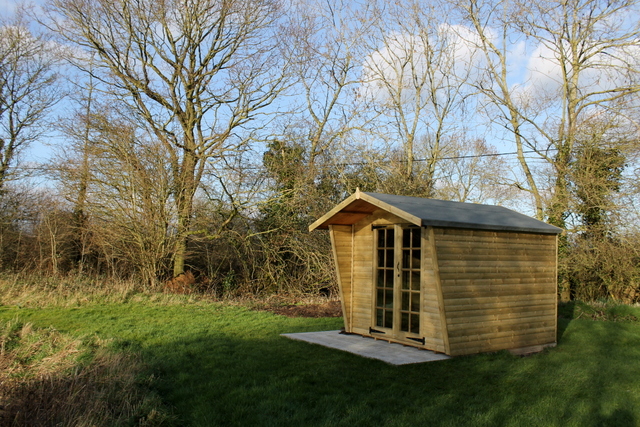
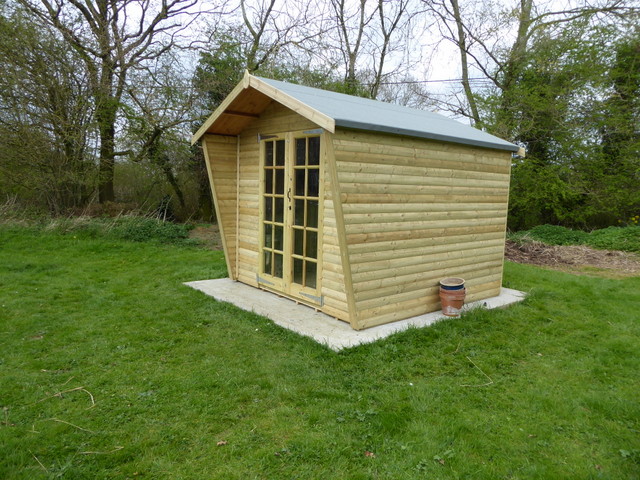
I wonder if any of you remember how pleased we were when we got our new summerhouse last year? Here is a photo of it.
Our summerhouse when it was new last February.
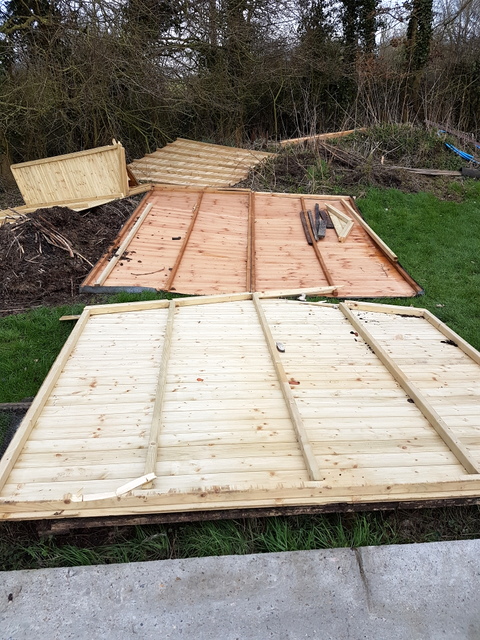
The summerhouse after the storm this February.
The wind ripped the roof off and the rest of the building just broke apart. A number of trees in the area were blown over and roads were blocked. When I got back to Norwich the following afternoon Richard was a little delayed when collecting me from the station by having to make detours to avoid blocked roads. The power was still off when I got home and the house was cold. Richard and Elinor had coped very well using the gas hob to cook meals and heat water for hot drinks and washing up. They had sat together the evening before in front of the gas fire listening to the battery-powered radio by candlelight. We often get power-cuts living where we do, though not as many as we used to do before the power company changed the cables and started regular cutting-back of tree branches that are too close to the cables. Having said that, we have had six power-cuts of at least an hour this year already. We keep a supply of candles and lamps ready and have torches in all the bedrooms and in the kitchen, utility room and garage. We have a portable gas heater as well as the gas fire and gas hob. We can also use the caravan which has a large battery and a gas supply.
Fortunately, the power came back on later that day. I was very grateful for it as we were expecting my cousin Beverley and her partner Jeremy to visit the following day for an evening meal. I didn’t have the time to prepare all the things I had hoped to, but at least the house was warm and the evening was great fun!
We have been able to claim for a new summerhouse on our insurance and our replacement arrived on Monday of this week. We got an identical summerhouse which had to be put where the old one was which is a little worrying, knowing how quickly it succumbed to the storm-force winds. Richard will bolt it to the concrete base and try to make it somewhat sturdier. We will see what we can do. We lost our old incinerator during the storm and wondered how far it had travelled, but once Richard had taken photos of the wreck and started to clear up the glass and the panels he found it squashed as flat as a pancake underneath one of the sections. I am grateful neither Richard nor Elinor got squashed under it!
Here is our new summerhouse. Spot the difference!
Our new internal doors were due to be fitted that week in February but the storm put paid to that, and, because of storm damage the carpenter had to deal with, we didn’t get the doors until nearly a fortnight later. We are very pleased with them. They look good, they are more sound-proof than the old ones and the doors downstairs are now glazed and let much needed light into the hall. The sliding door to the en-suite WC has been replaced with a better one and the sliding door to the downstairs shower-room has been replaced with an ordinary door which is so much nicer. We will now employ a painter and decorator to decorate the hall, stairs and landing and to paint all twelve doors (we replaced the airing cupboard door too).
ooOOoo
Richard and I have attended a Lay-led Worship Training Course at a church in Beccles. To enable us to keep our churches open, the way forward is for us, the members of the church to take the services ourselves if there is no priest to lead us. This will be very useful to us when our Rector retires in the summer. The four-part course was interesting and well-attended and it gave us the opportunity to meet people from other churches in the Deanery. Our Deanery is made up of a number of benefices from Halesworth, Bungay, Beccles, Southwold and the villages in-between.
ooOOoo
We have carried on with the usual round of duties and chores; hospital visits, blood tests, appointments with opticians, hairdressers, acupuncturists and chiropractors; housework, gardening, shopping. We have all had bad colds. I continue to take my mother to church once a fortnight and join Richard at church in our benefice when I can.
Richard went to visit his brother Chris in Manchester for a few days recently and had a very pleasant time. On his return we took part in two quizzes. Last year we had been in a team that had won the quiz held in the village of Walpole. Part of the ‘prize’ was the honour of composing and presenting the following year’s quiz and Richard offered to take it on. The time for the quiz duly arrived and he did a fantastic job as Quizmaster (I was his assistant) and he was presented with a bottle of wine as a thank-you gift. The following night we were at the village of St James taking part in the quiz to raise funds for the Harleston Choral Society. A meal was included in the fees – very good it was, too – and the questions appealed to me more than usual as there were more music ones and fewer sport! Our team managed to win again.
ooOOoo
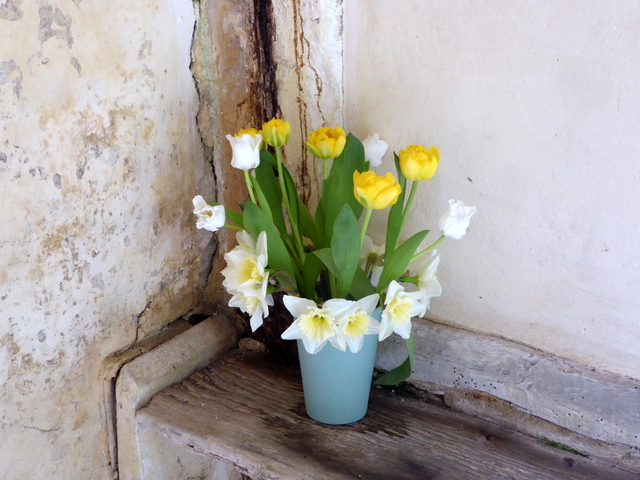
We celebrated Mothering Sunday on the 26th of March and it was our church at Rumburgh’s turn to hold the service. I helped make a few posies to present to the mothers or for people to give to their mothers or take to graves. Though we have no flowers in church during Lent I was asked to provide some flowers to put in the porch.
The flowers in the porch. Looking at this little work of art, you may be surprised to know I am not a flower-arranger 😉 The flowers are lovely in spite of my ministrations. As you can see, the porch is in urgent need of work. If nothing is done soon, the porch will collapse and we won’t be able to use the church.
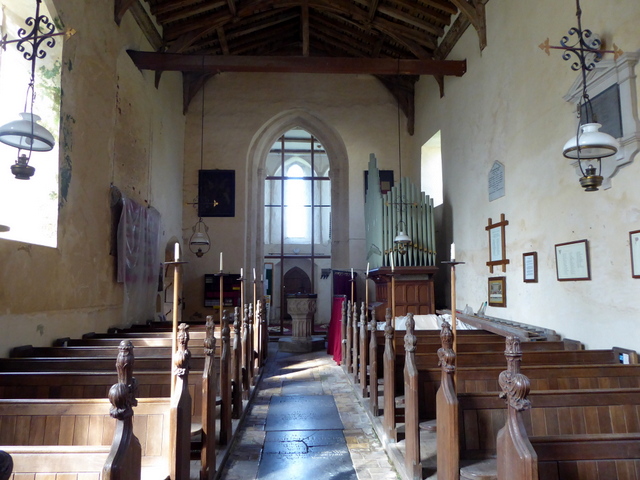
The church was a little disorganised because we are having a tower screen fitted at the moment and there was dust everywhere. We have been saving for years for this improvement! We put everyone as near the front of the church as possible (well away from the building works) sitting in the choir stalls, which was very pleasant. Richard our Rector chose lots of good hymns and his sermon was amusing and instructive. I brought my mother to our church for a change and took her back home afterwards. I couldn’t ask her to lunch because I had no time to prepare a midday meal but she came for an evening meal instead.
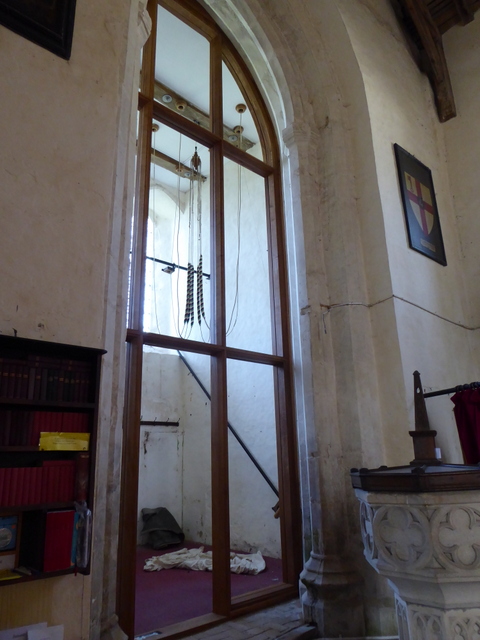
This is the new tower screen. You can see the framework for the glass which has yet to be put in. There will be a glazed door at the bottom of the screen.
We will now be able to see and watch the bell-ringers as they ring before our services.
ooOOoo
I will end this rather wordy post with some photos of the flowers in our garden starting with my favourite iris reticulata that bloomed for too short a time in February.
Miniature iris
Miniature iris
Miniature iris
Miniature irises
Crocus
Crocus
Crocus
Mahonia
Mahonia with a bumblebee
Winter-flowering honeysuckle
Miniature daffodils
My music selection is ‘Handle With Care’ by the Traveling Wilburys.
This is the view from our spare bedroom window. We had had a few days of snow showers but nothing had settled until we woke on the Sunday morning to this. Up until a few years ago we got snow every winter, sometimes a lot of snow; but not now.
Homersfield church is dedicated to St Mary
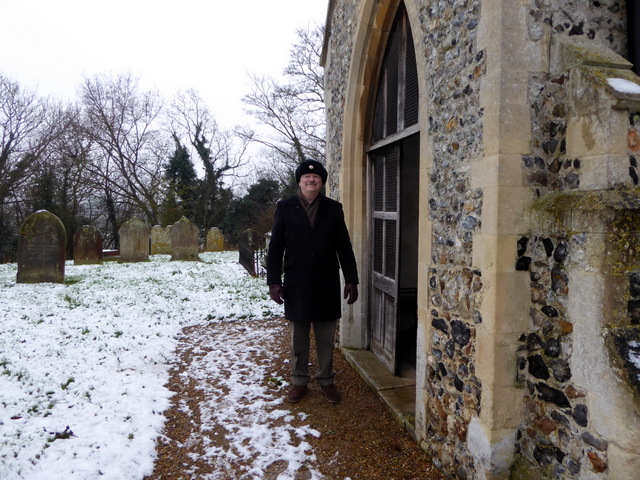
Richard and I went to church together that Sunday.
Here he is, looking very Russian!
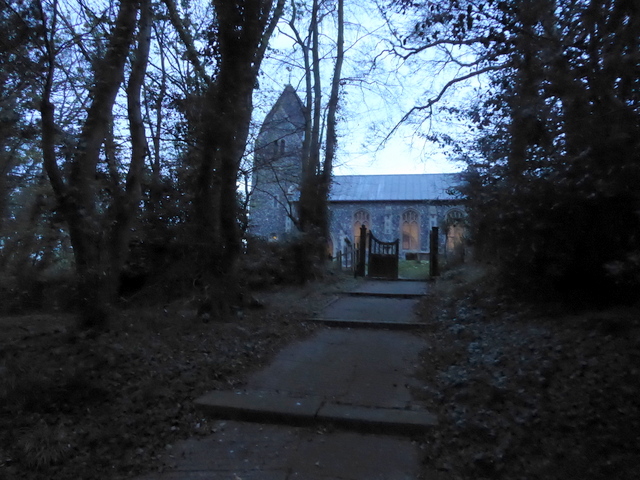
Homersfield church is beautifully situated on a bluff above the River Waveney with its water meadows and marshes. My favourite approach to it is up a track through woodland.
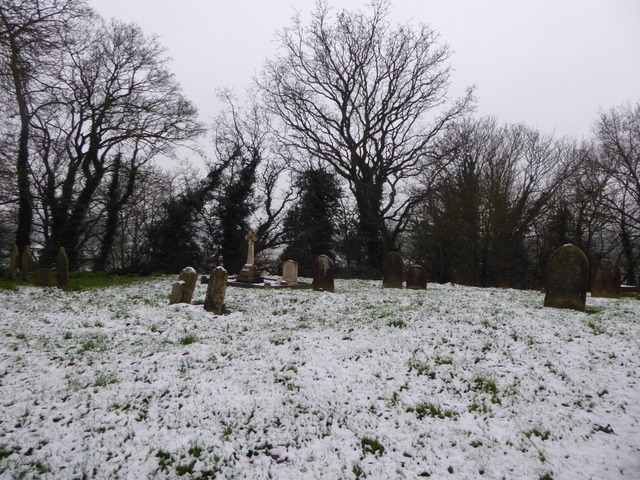
The churchyard. Beyond the trees the land drops away steeply.
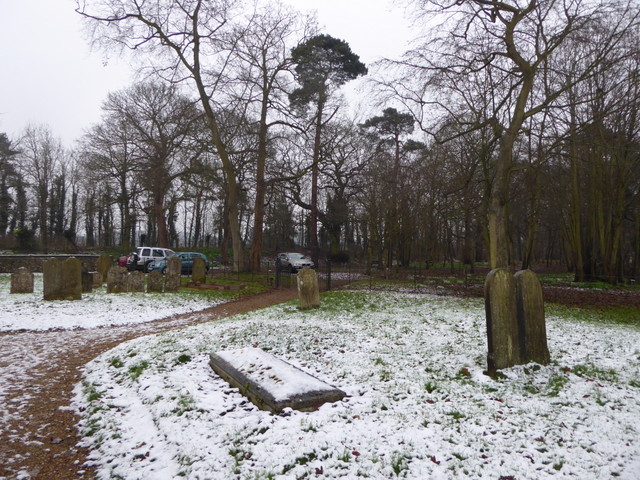
Homersfield churchyard looking towards the woodland where we park our car.
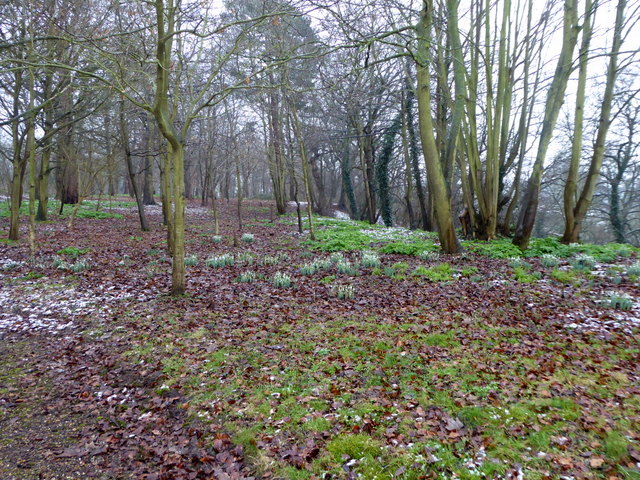
The woodland with snowdrops (Galanthus nivalis)
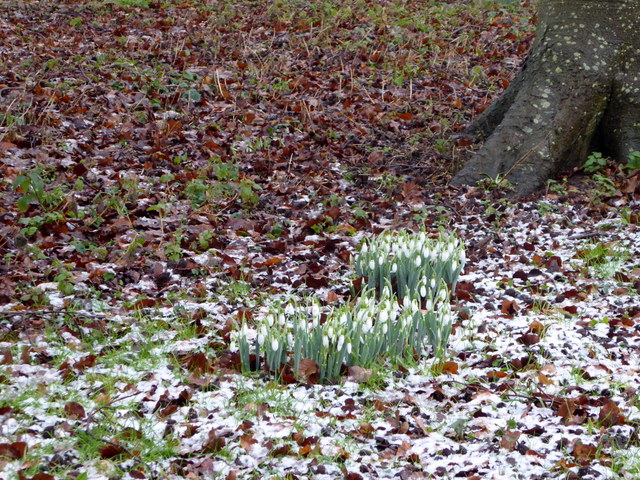
Snowdrops
The snow had all gone by the end of the day and the beginning of the following week was mild and sunny.
Richard and I went out for a short walk down the lane. He can’t walk too far as yet so we weren’t able to do our usual circuit route but it was good to be out together.
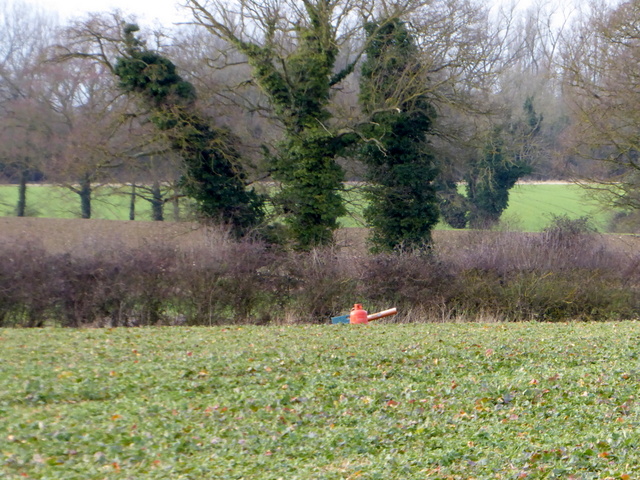
We have been listening to bird-scaring cannons going off at intervals every day, from dawn til dusk since the middle of autumn. Wood pigeons do considerable damage to leafy crops such as oil-seed rape.
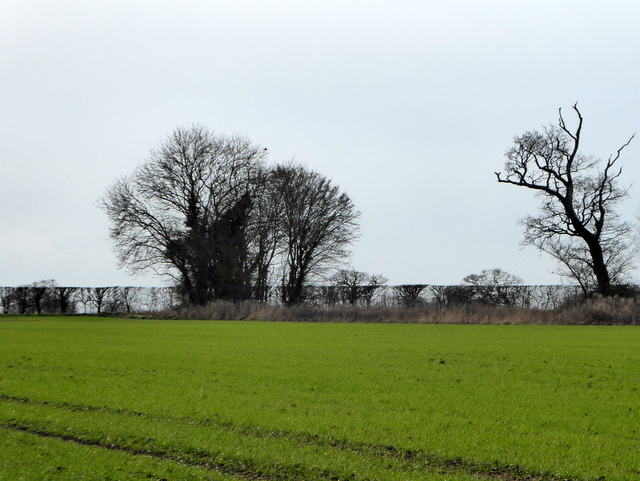
Bare trees and a see-through hedge
Further up the lane was the sheltered bank of a ditch on which I found a number of tiny plants. They had begun flowering in the milder weather we had had that week.
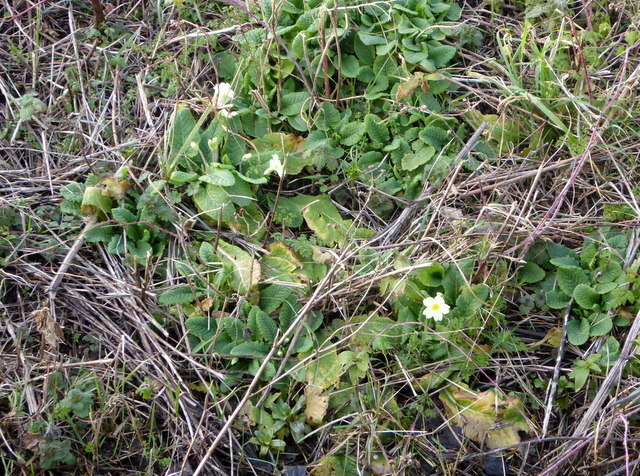
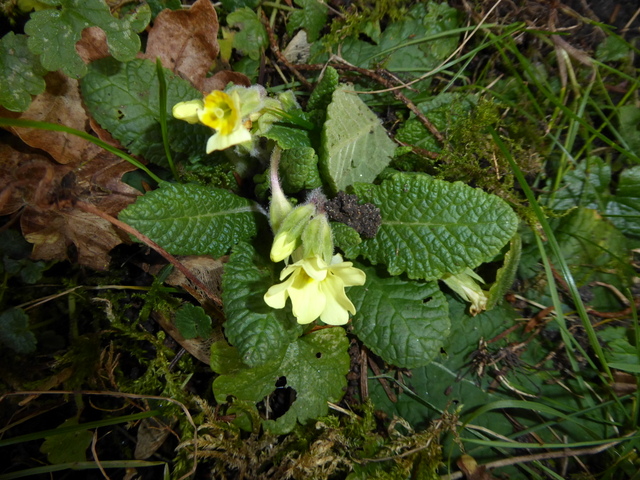
Primrose (Primula vulgaris) plants
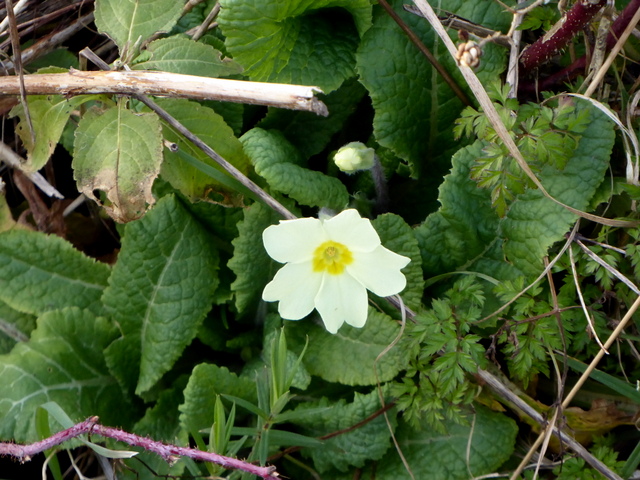
Primrose. This is a ‘thrum-eyed’ primrose flower. If you look at the centre of the flower you see its long stamens, the short stigma is hidden below. A ‘pin-eyed’ primrose has a long stigma visible and its short stamens are concealed. I will see if I can find a ‘pin-eye’ flower so you can compare the two.
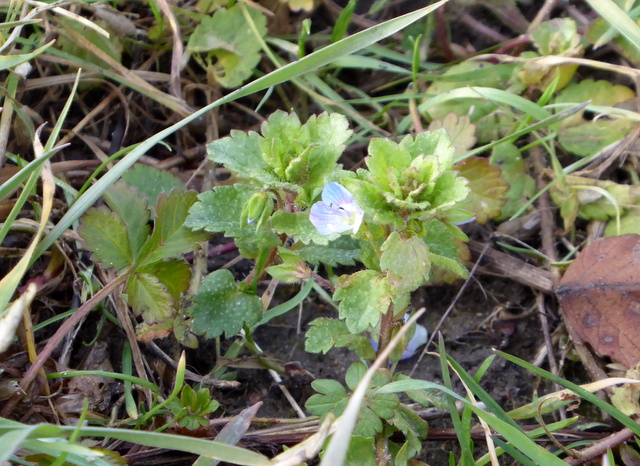
Germander Speedwell (Veronica chamaedrys)
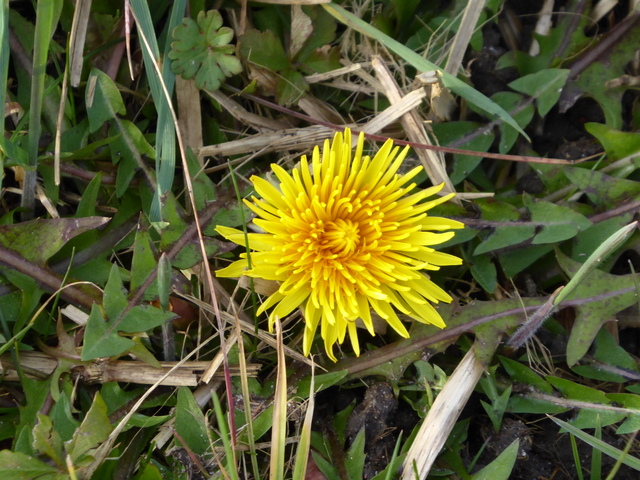
Dandelion (Taraxacum agg.)
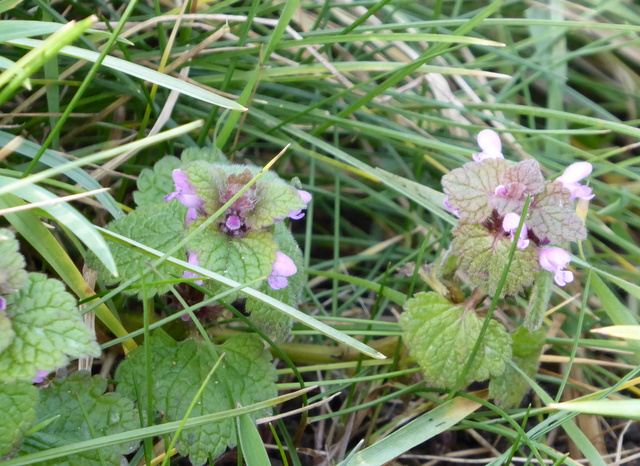
Red Dead-nettle (Lamium purpureum)
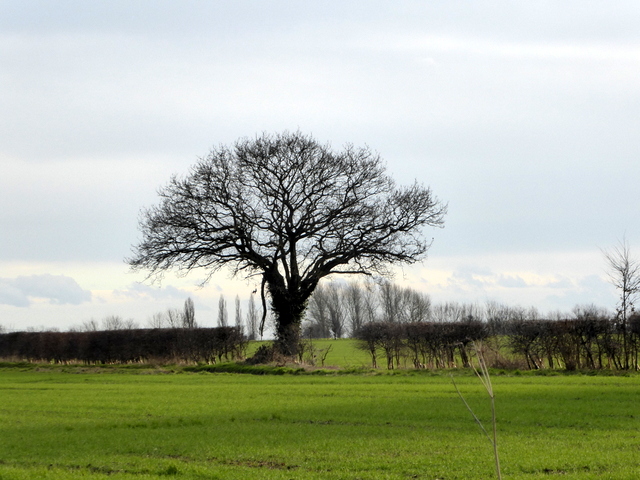
An oak tree in a hedgerow. A dead branch has broken and is dangling from the tree. You cannot see it in this photo but a single track road runs this side of the hedge.
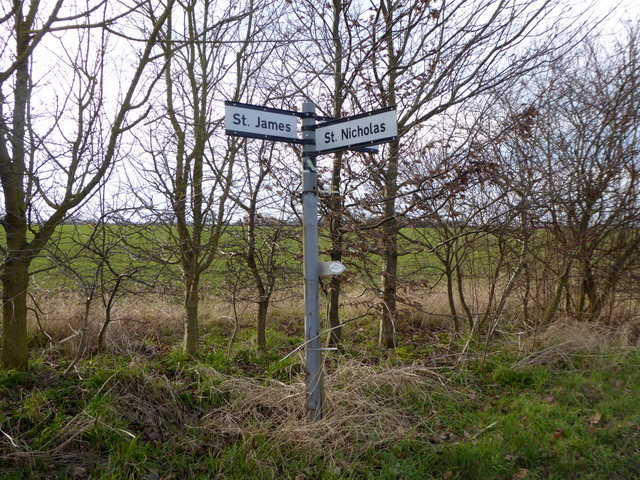
The signpost at the end of the lane
Field view
Field view
We stood for a while and looked across the fields; we tried to walk a little further towards the village of St James but Richard soon knew he would be too tired if he went any further. We turned for home.
Our muddy lane
Our muddy lane
Our muddy lane
For many months of the year our lane is covered with a thick layer of mud. Our cars are perpetually filthy and walking is a messy business!
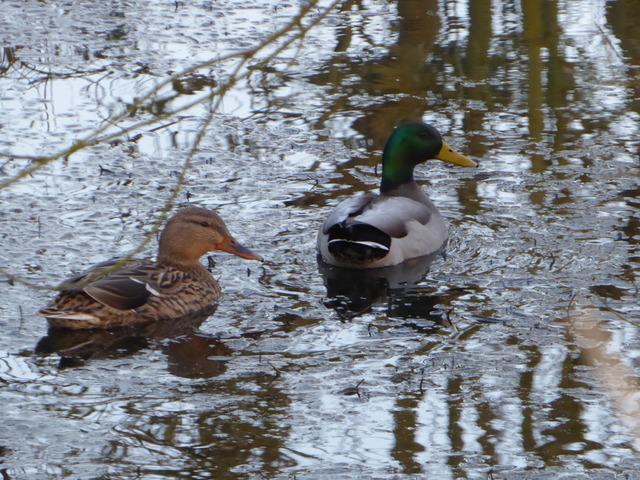
Mallards (Anas platyrhynchos) on our pond.
I know it is spring once I start to see pairs of Mallards on our pond! We have also been visited by our Graylag geese friends and yet again we realise we have failed to clear the the willow and bramble scrub off the island they like to nest on.
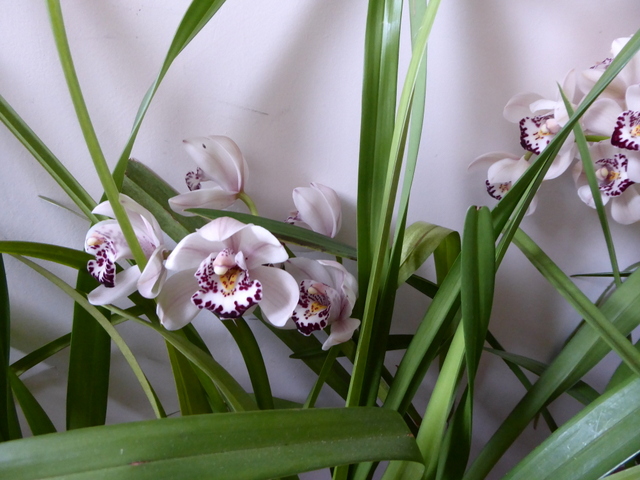
I was pleased that my Cymbidium orchids flowered from Christmas until just a week ago.
They had produced seven spikes of flowers altogether, which is the best ever!
Here is a slideshow of the flowers in bloom in my garden during February.
This slideshow requires JavaScript.
My music choice is ‘Laudate Dominum’ by Mozart and sung by Emma Kirkby. I have been fortunate to have heard Emma Kirkby sing on two occasions, in recitals held at the church in my mother’s village.
It is over a month since I last wrote a diary post. We haven’t done very much in that time but the days are getting longer and there are signs of spring in the garden and hedgerows.
Witch hazel
Witch hazel
Witch hazel
ooOOoo
The central elements on our old toaster had stopped working so we have bought ourselves a new toaster and this new one manages to toast both sides of a slice of bread at the same time! It has a ‘bagel button’ (though as I have never eaten a bagel I think I would prefer to call it a ‘teacake button’) which toasts one side and warms the other. We can now re-live the old toaster experience, except in reverse.
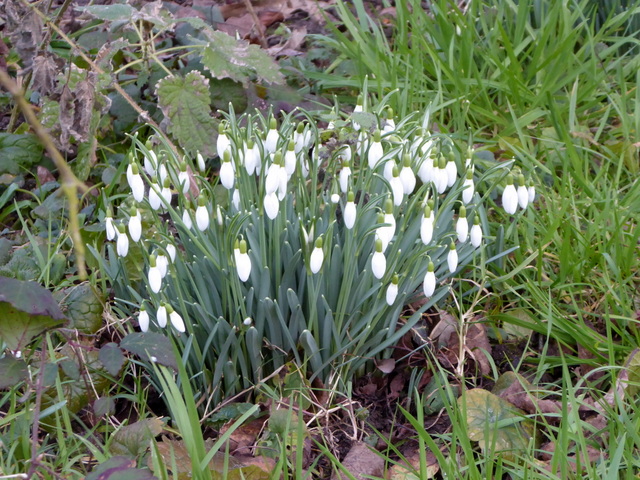
Snowdrops in bud
ooOOoo
Another excitement has been the emptying and repair of the septic tank. Only those of you who do not have mains sewage can truly relate to this. The tank was well overdue for emptying and we knew it needed repairing a year ago but we have been let down by our usual contractor and have had to find someone new. The new contractor arrived and did what he had to do and was efficient and professional. An added bonus, as far as we were concerned, was the wind direction on the day.
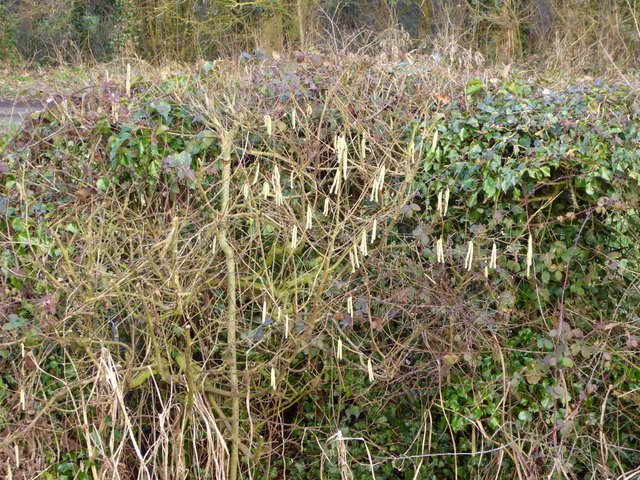
Hazel catkins in the hedge
ooOOoo
We have decided to have all our internal doors replaced and a carpenter has visited and priced up the job for us. He will be doing the work over three days next week. Richard will then have to spend quite a lot of time painting the doors, as well as all the skirting boards and the banisters. We hope to redecorate the hall, stairs and landing and get a new carpet some time in the next few months.
I’m not sure how many hazel nuts we will have on this tree this year. The female flowers have appeared before the male catkins have matured.
ooOOoo
At the very end of January we had a morning prayer service at our church of St Michael and St Felix at Rumburgh. The day before the service Richard and I called in at the church to make sure everything was tidy and to set the heating to come on well before the service. It was a cold day but inside the church was even colder than out in the open!
I found the first rather bedraggled primroses of the year in a sheltered spot in the churchyard.
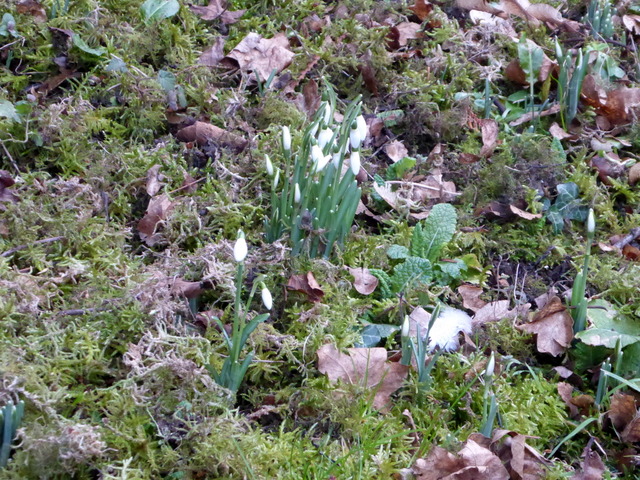
I also found my first snowdrops of the year
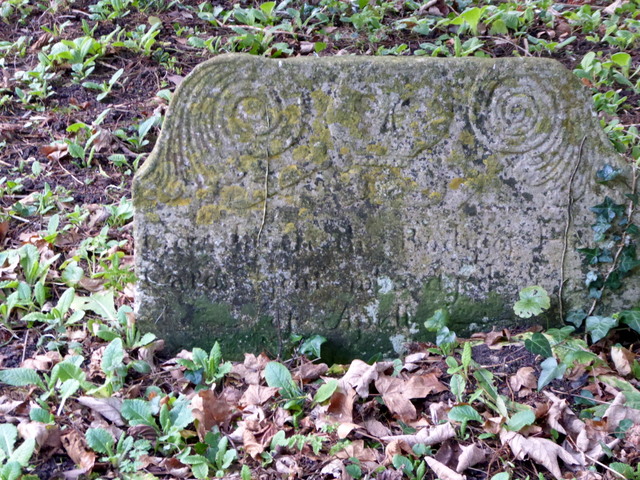
Rumburgh gravestone
This gravestone has a skull engraved on it. Richard was asked to see if it was still in the graveyard recently as there had been a report that it might have gone missing.
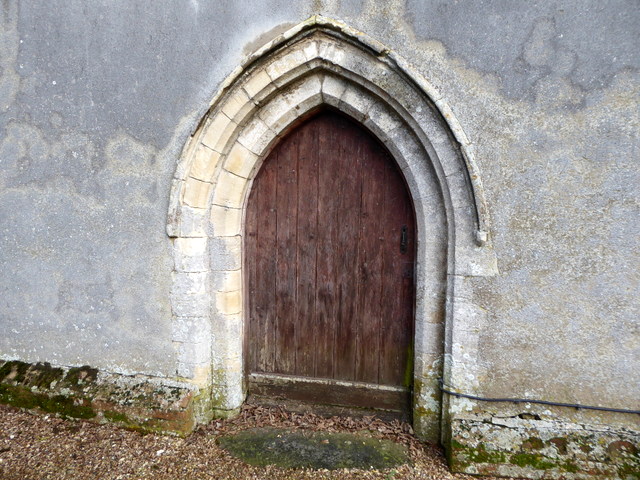
The west door, which isn’t used anymore.
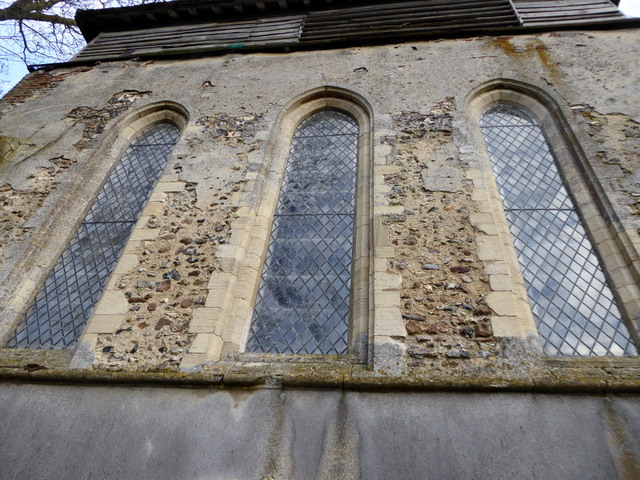
The west window
Work will start on March the 20th on the new tower screen in the church. We have been saving for years and years to get the work done and at last it is about to happen. Once the screen is in place the tower will be shut off from the body of the church and we hope it might be less draughty and warmer.
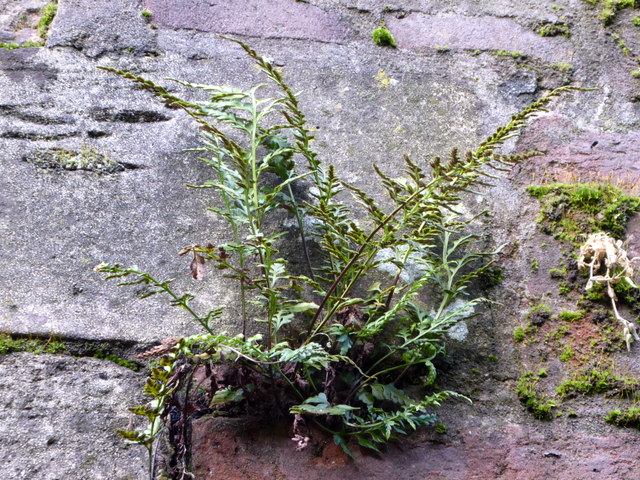
Black Spleenwort (Asplenium adiantum-nigrum) growing in the mortar on the wall of the church
ooOOoo
Elinor has now left the City College but we hope this is only a temporary thing. As I mentioned in my last diary post she wants to enrol on a one year Art and Design course for older students and has therefore filled out the application form. We have been notified that the college has received the form and I hope we will hear that Elinor has an interview soon. At the interview she will be expected to hand in a review of an exhibition she has been to see recently and with that in mind, we went to the Sainsbury Centre in Norwich and viewed an exhibition of 20th century Japanese photography. Photography was not allowed in the exhibition hall but there is a large collection of world art on display in the main gallery, most of the exhibits donated by Lord and Lady Sainsbury.
Below are my favourites from the main gallery.
Edgar Degas – Little Dancer Aged Fourteen
Edgar Degas – Little Dancer Aged Fourteen
A beautiful Benin bronze – the Head of an Oba; early 16th century
Henry Moore – Mother and Child
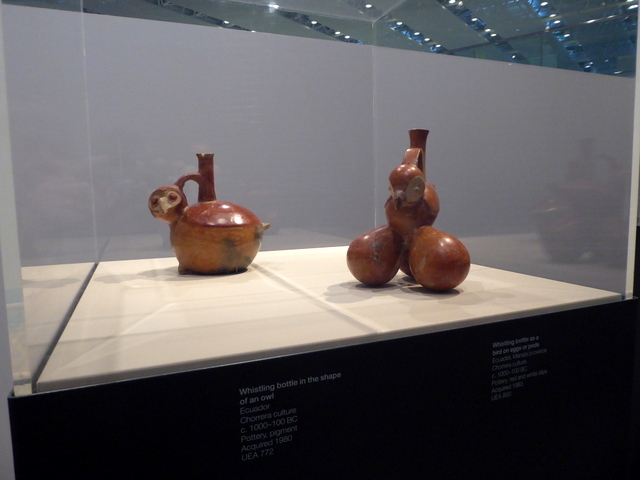
Whistling bottles from Equador – one in the shape of an owl and the other is a bird sitting on eggs or pods. Both 1000 – 100 BC
Another couple of exhibits from Equador
Sketch for a Portrait of Lisa by Francis Bacon
Standing Jizo Bosatsu – Japan (1185-1333)
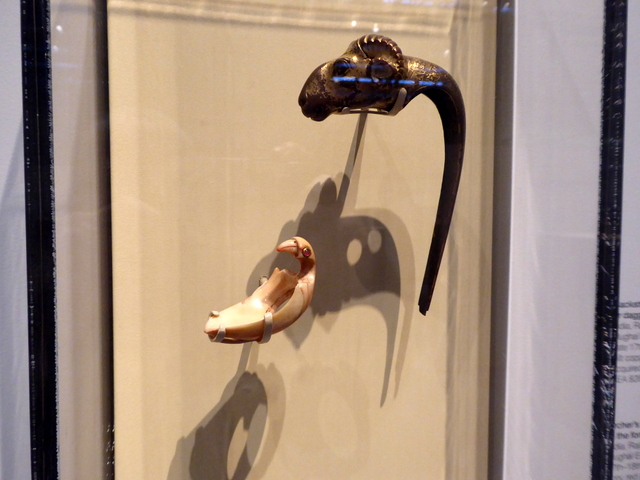
The top exhibit with the ram’s head is a backstrap from a sword or dagger hilt – India late 17th century The lower exhibit is an archer’s thumb-ring in the form of a bird – India 17th – 18th century
Left rear – Image of the Goddess Kaumari, India 17th century. Right rear – Shiva as Chandrashekharamurti, South India c. AD 1100. Front centre – Figure of Chamunda Devi, Nepal/Tibet 17th/18th century
Walking Hippopotamus – Egypt c. 1880 BC
The Sainsbury Centre. One of the first major buildings designed by Sir Norman Foster, it was completed in 1978.
It is a steel clad building with one face almost entirely glazed.
By the late 80’s the collection had grown so much that Foster was asked to design an extension. He decided to build underground and this is one of the entrances to it.
The new basement has a curved glass frontage that emerges from the slope underneath the original building overlooking the man-made lake. This new wing can only be seen from the lake but as it was very muddy there and beginning to go dark on a very gloomy day, I was unable to photograph it.
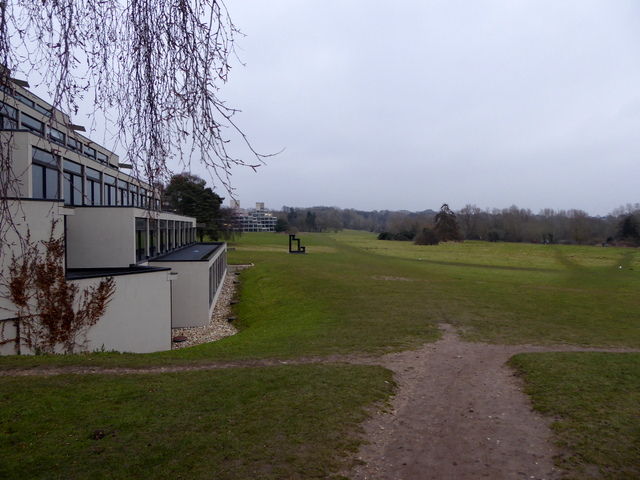
The University of East Anglia’s grounds looking towards the lake
Part of the university. There are many items of sculpture to be seen here.
Another Henry Moore sculpture
The University has an excellent creative writing department and many well known writers have studied here. Tracy Chevalier; Kazuo Ishiguro; Ian McEwan; Rose Tremain – to name but a few.
At the beginning of September, I visited Redgrave and Lopham Fen with my friend Heather whom I hadn’t seen for over a year. It was a very muggy, clammy day so not ideal for walking any distance.
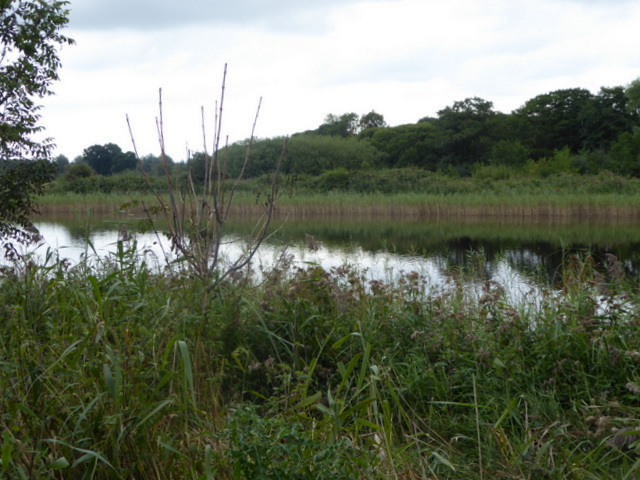
Redgrave and Lopham Fen – one of the many large ponds.
The sedge and reeds were very tall so we didn’t manage to see much open water and the pathways across the fen were quite narrow and enclosed at times. We got very hot and sticky and our feet were black with the peaty soil we walked on. However, we saw a few interesting plants and we managed to catch up with all our news!
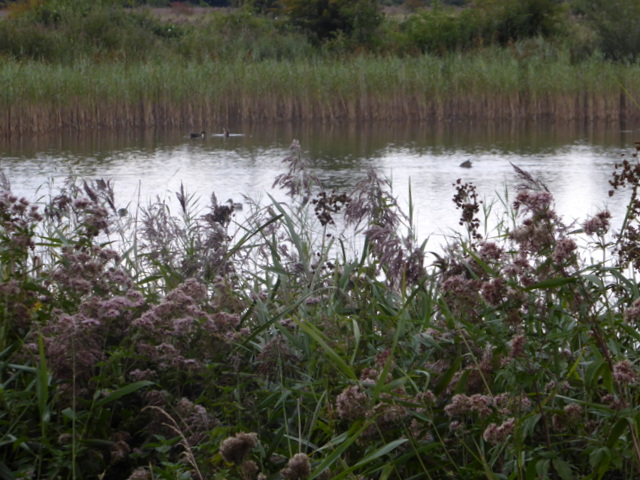
Water at Redgrave and Lopham Fen
Redgrave and Lopham Fen is situated on the border between Suffolk and Norfolk and is owned and maintained by the Suffolk Wildlife Trust. It is where the River Waveney and the Little Ouse River have their beginning. It is the largest remaining area of river valley fen in England. Its diverse habitat make it a very important site; saw sedge beds, open water, heathland, scrub and woodland can all be found here.
It is one of only three sites in the UK where the Fen Raft Spider can be found, though we didn’t manage to see it on our walk. Nineteen species of dragonfly, twenty-seven species of butterfly, twenty-six species of mammal, four species of amphibian, four species of reptile and ninety-six species of bird can be seen here. The beginning of September isn’t a great time of year to go looking for wildlife but we were pleased with what we did manage to see. It is a place I would like to return to one day.
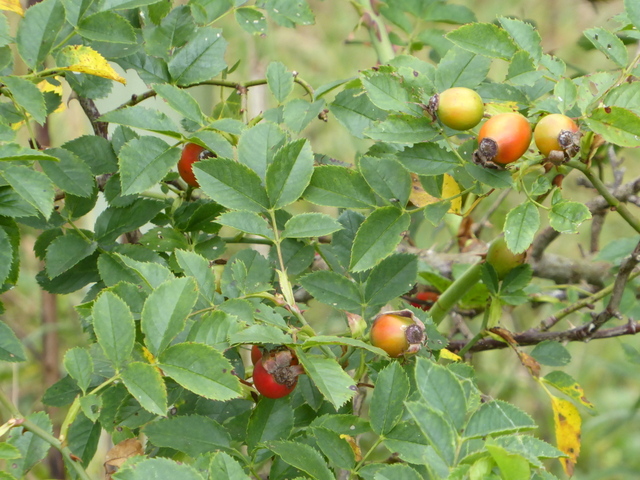
Hips of the Dog Rose (Rosa canina)
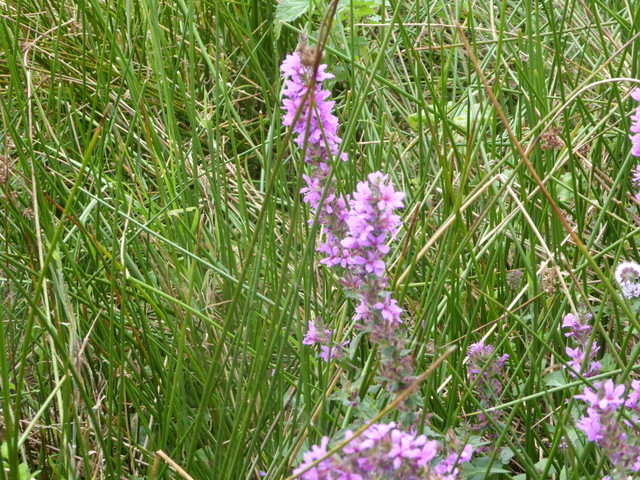
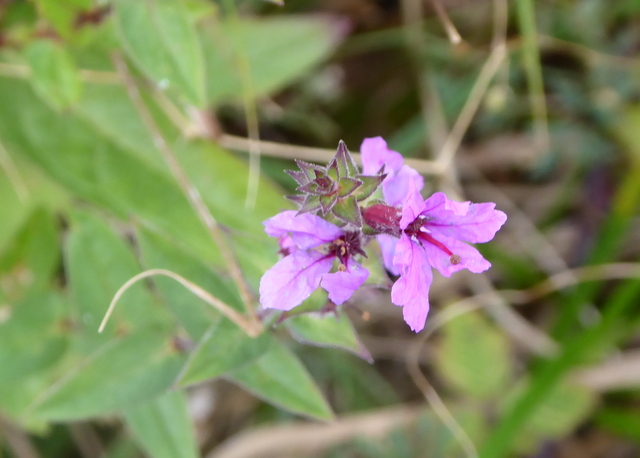
Purple Loosestrife (Lythrum salicaria)
Surprisingly for a plant so widespread, this was the first time I had seen this flower since I was a little girl.
Purple Loosestrife
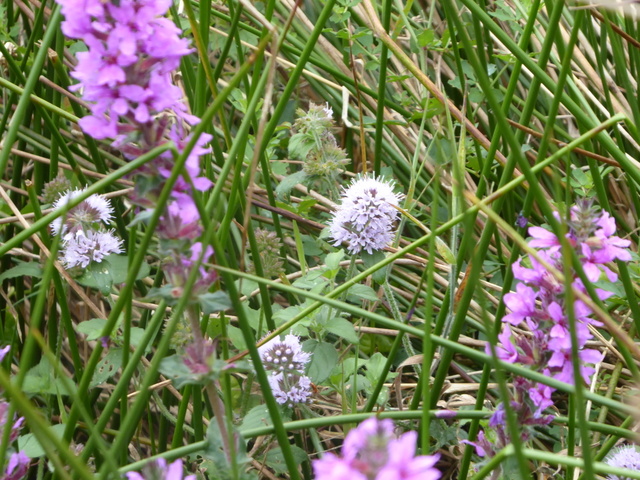
Purple Loosestrife and Water Mint (Mentha aquatica)
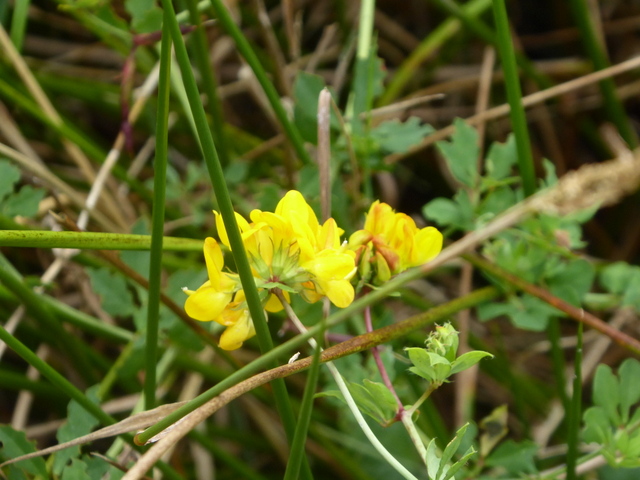
Greater Bird’s-foot Trefoil (Lotus pendunculatus)
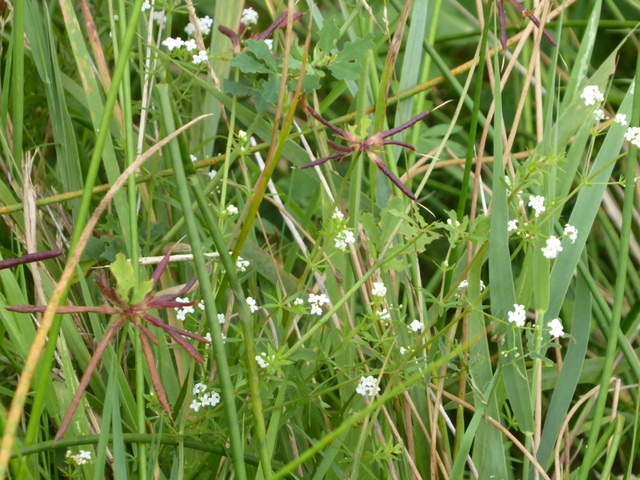
Bird’s-foot Trefoil seedheads with Fen Bedstraw (Galium uliginosum)
These seedheads really do look a bit like birds feet!
Bulrush and Common Reed
Bulrush and Common Reed
Bulrush (Typha latifolia) is also known as Great Reedmace. Common Reed (Phragmites australis) stands in this country are a priority habitat because of their importance for wildlife as food and shelter.
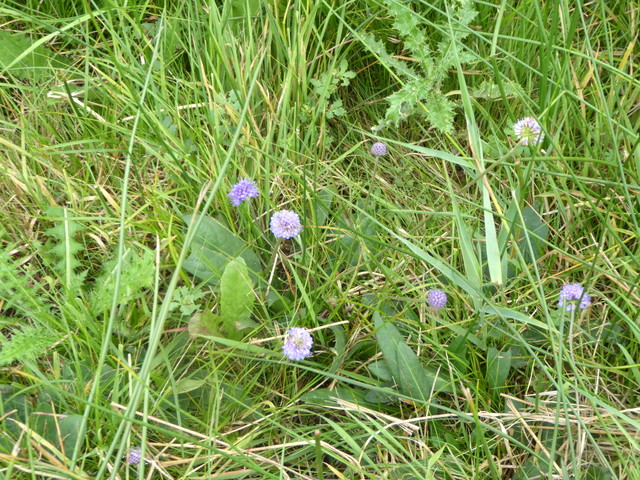
Devil’s-bit Scabious (Succisa pratensis)
According to legend, the Devil was so angry with this plant because it was successful at curing all sorts of ailments that he bit off part of the root. The plant may have a short root but it still has curative powers! Nicholas Culpeper says the boiled root is good for snake-bite, swollen throats, wounds and the plague.
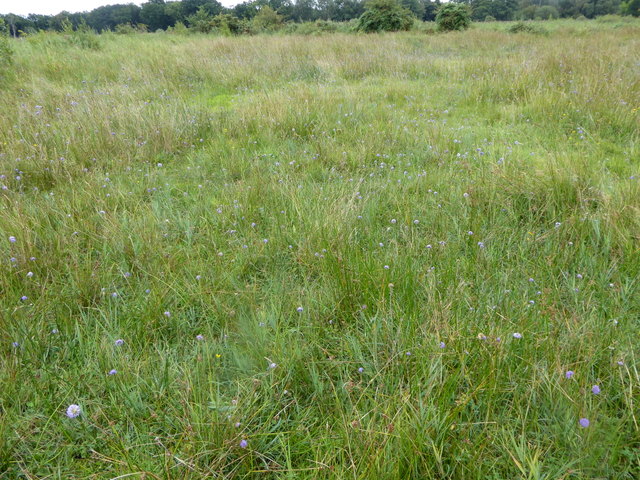
A meadow full of Devil’s-bit Scabious
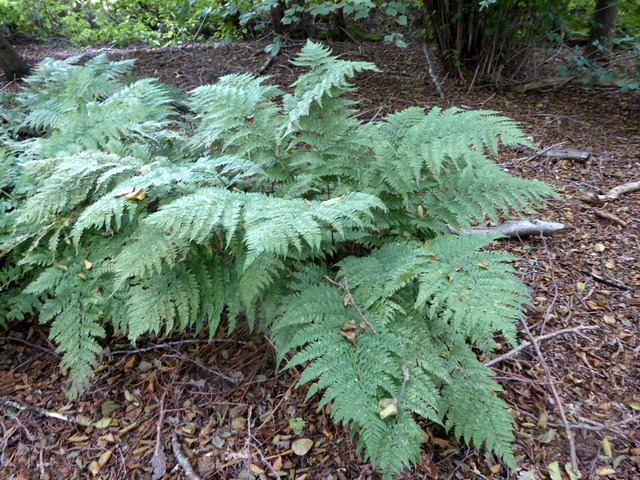
Broad Buckler Fern (Dryopteris dilatata)
Broad Buckler Fern has 3-times pinnate leaves. Pinnate leaves are made up of leaflets, often in pairs, attached to a central stem and often with a terminal leaflet. 2-times pinnate leaves = the leaflets have their own leaflets. 3-times pinnate leaves = the leaflets of the leaflets have leaflets! Broad Buckler Fern has a long stalk which only has leaf branches for half its length.
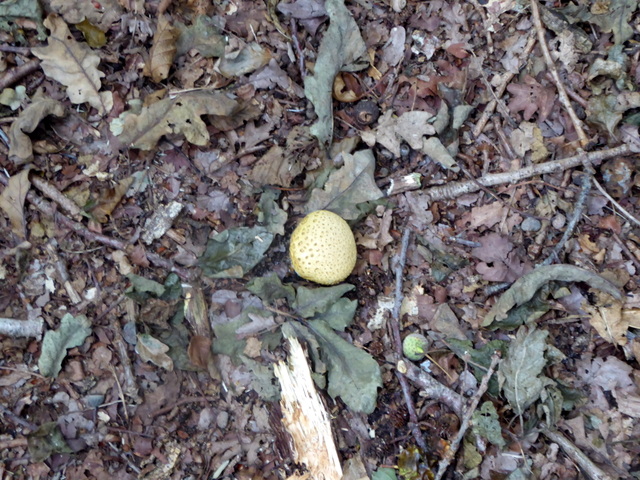
Probably Common Earthball (Scleroderma citrinum)
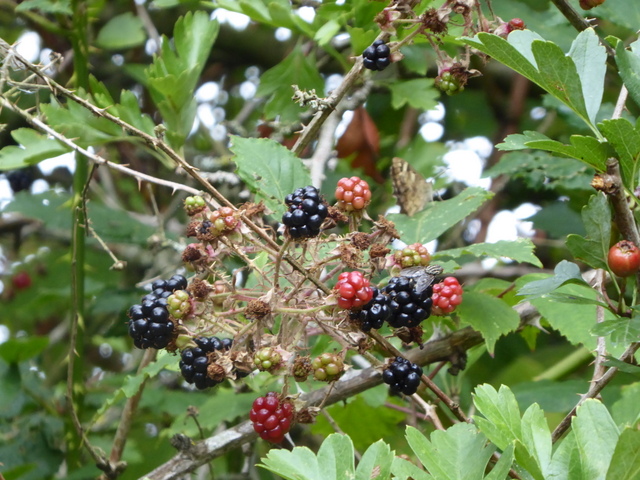
Blackberries on Bramble (Rubus fruticosus agg.) There is an out-of-focus Speckled Wood butterfly sitting on a leaf just to the right of the top red berry
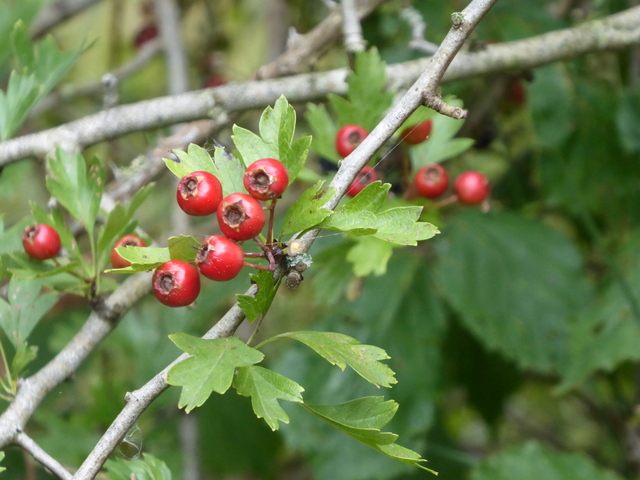
Haws of a Common Hawthorn (Crataegus monogyna)
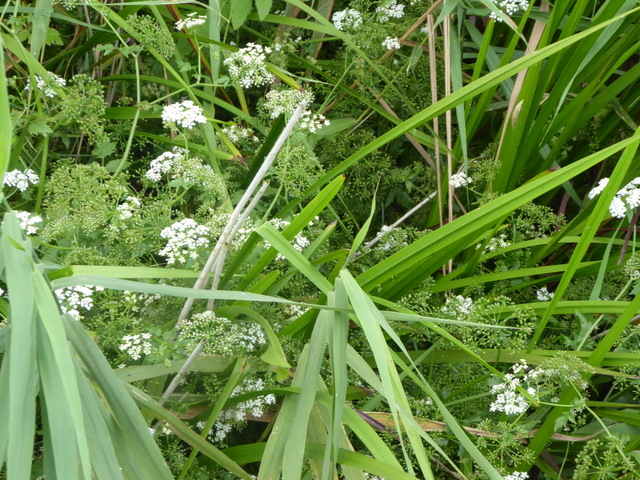
This might be Lesser Water Parsnip (Berula erecta)
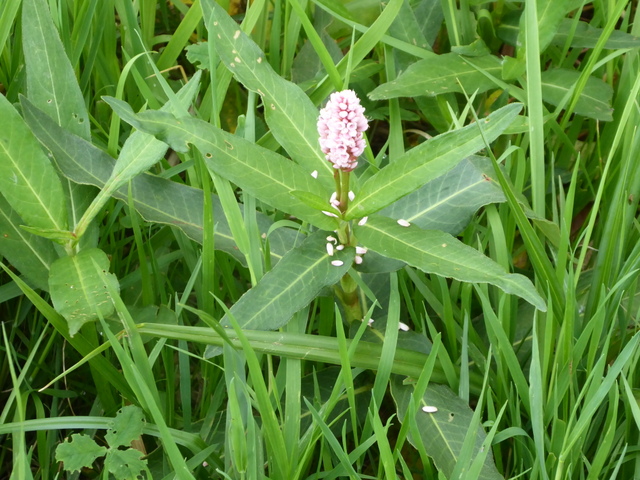
I believe this is probably Amphibious Bistort (Persicaria amphibia)
It took me a while to identify this plant, mainly because it is extremely variable. It has two main forms – an aquatic form, which is described and illustrated in most ID guides, and a terrestrial form, which isn’t often described and hardly ever illustrated. The plant I saw is the terrestrial form.
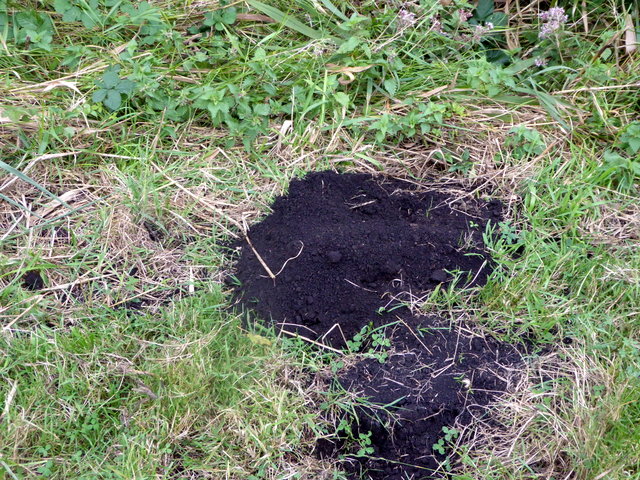
This mole-hill shows how black the soil is
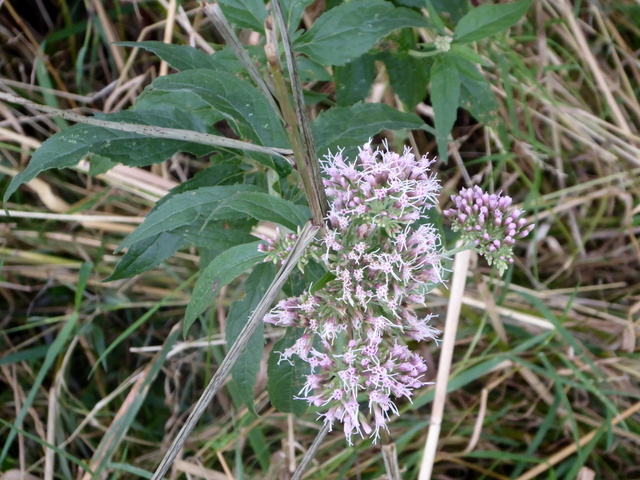
Common Valerian (Valeriana officinalis)
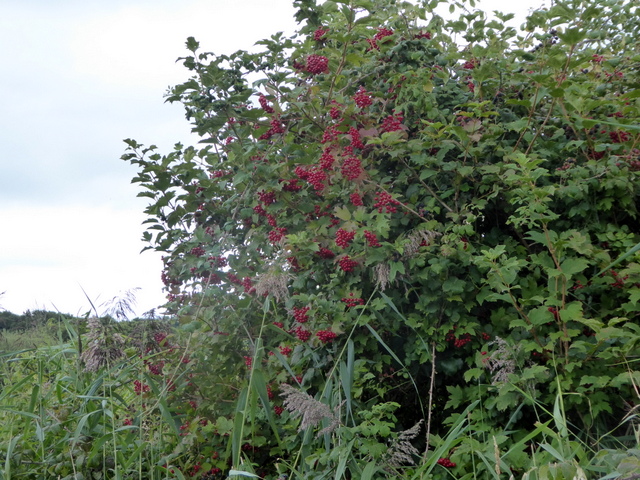
Guelder-rose (Viburnum opulus) with clusters of red berries
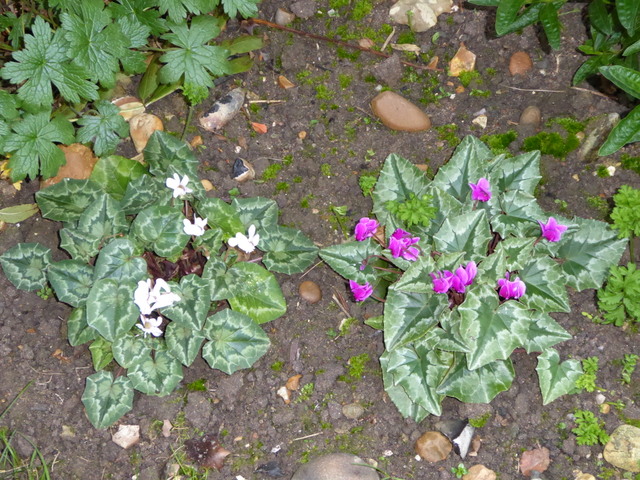
Heather kindly bought me a gift of two hardy cyclamen plants as our meeting was close to my birthday. I took a photo of them at the end of October where I had planted them in my garden.
White and purple hardy cyclamen. I am hoping they will spread out under the shrubs I have in this border and prevent the moss from returning as soon as my back is turned!
After we left the Suffolk Punch Trust we drove a couple of miles to Shingle Street on the coast.
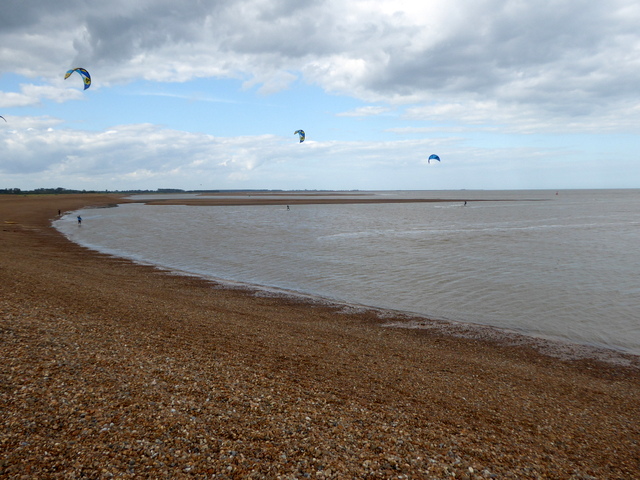
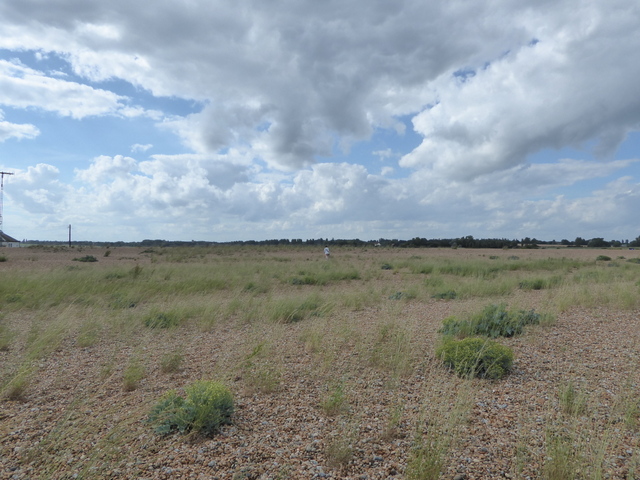
Shingle Street beach
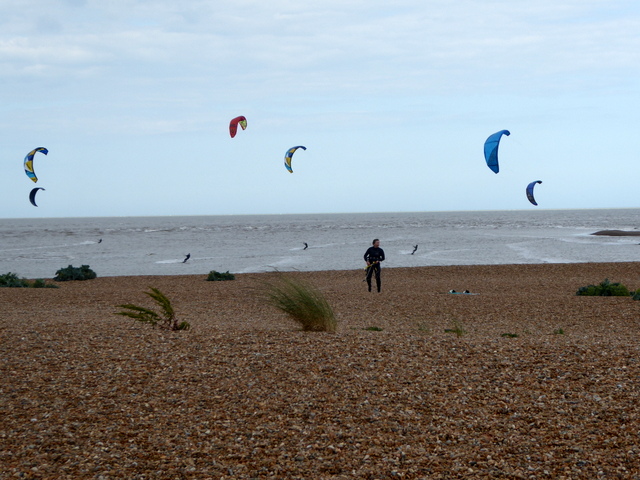
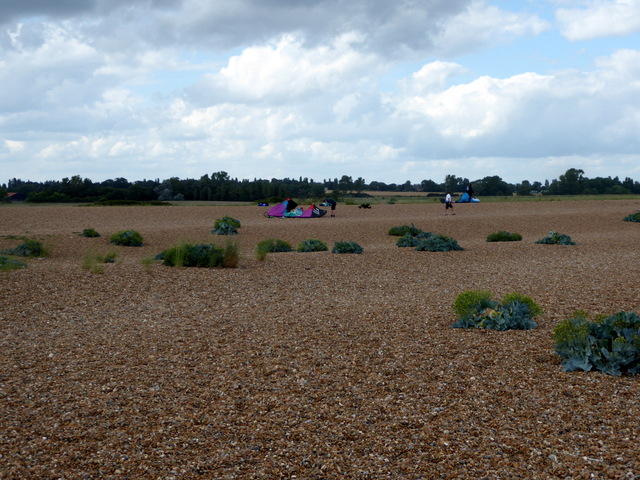
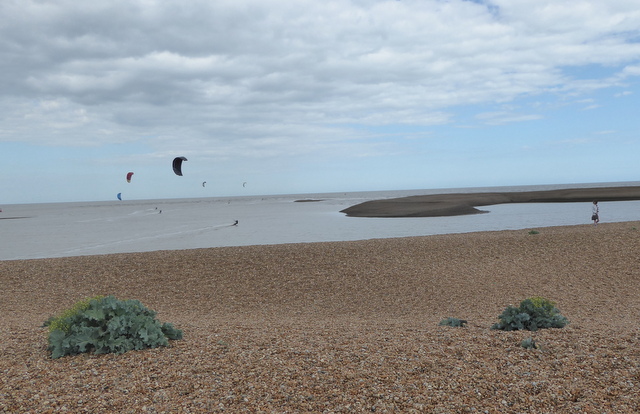
I wanted to visit this beach to look at the plants and flowers that live on the shingle. I had heard that it was a desolate spot but when we were there the place was teeming with kite-surfers!
Kite-surfing on a windy day
Kite-surfers on the beach
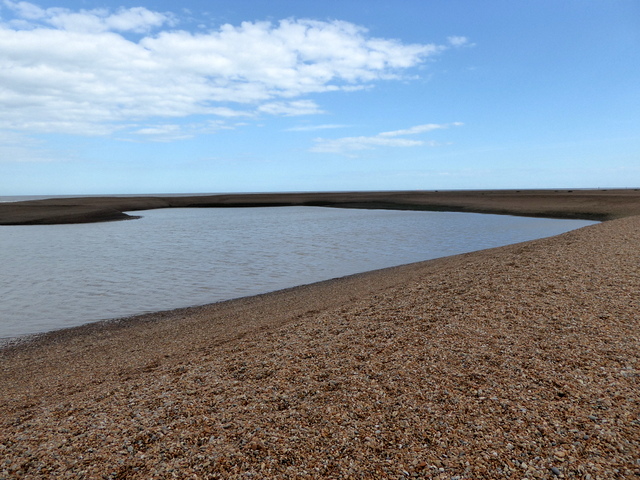
More kite-surfers. Here you can see the spit of shingle which curls round forming a calm lagoon.
The lagoon
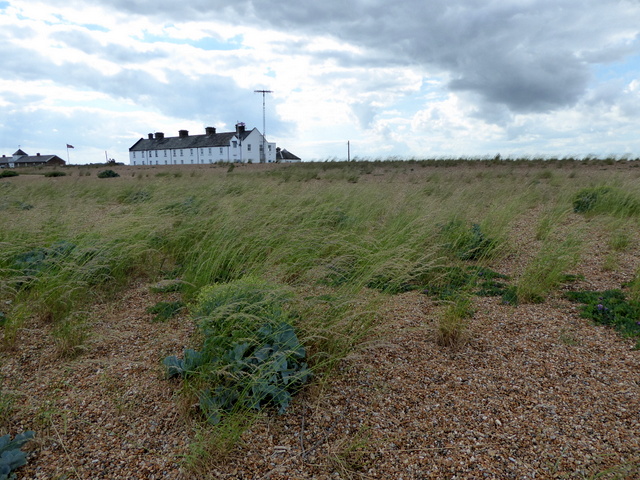
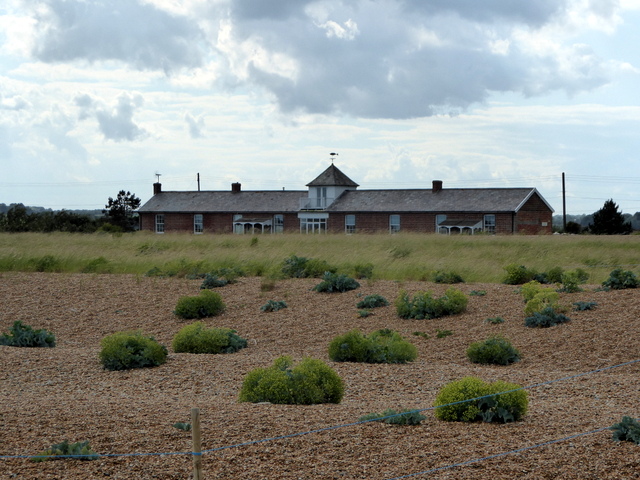
The houses at Shingle Street
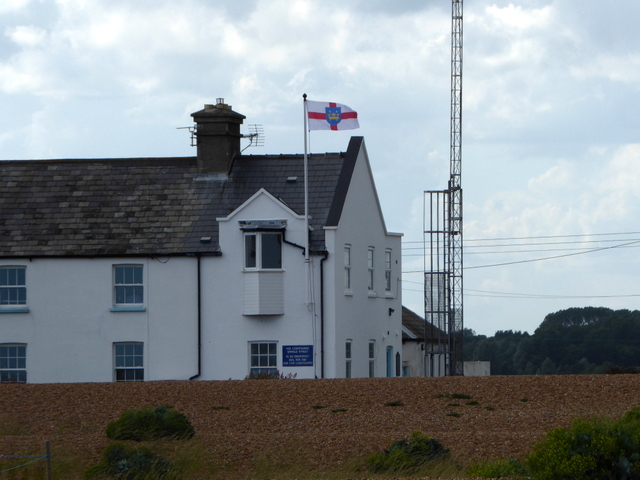
The Coastguard House
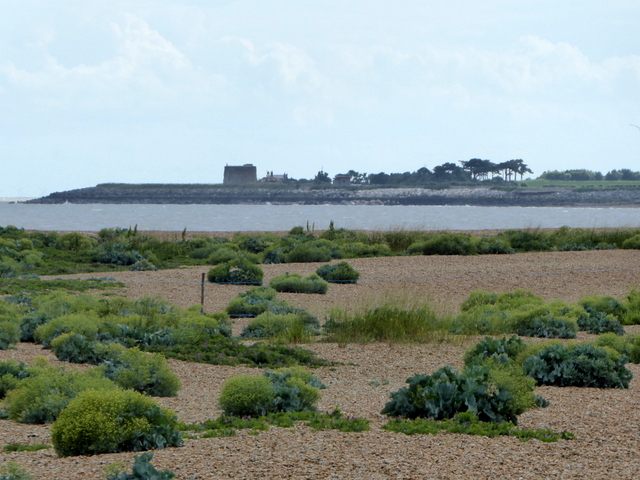
Shingle Street Part of the beach was fenced off to protect nesting birds, little terns and ringed plovers, and to protect this beach from damage by trampling.
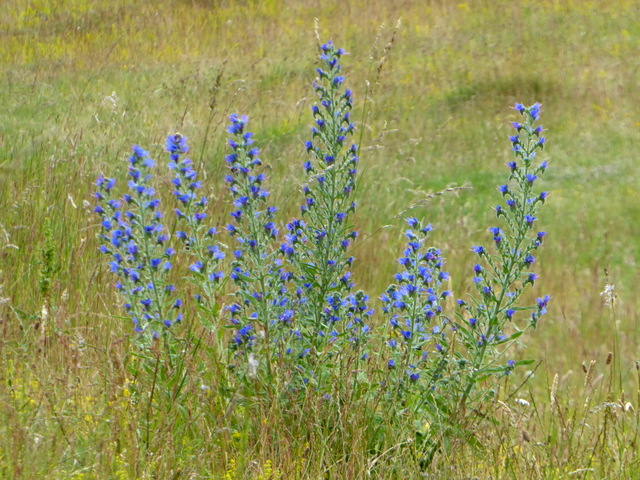
The name ‘Bugloss’ derives from the Greek for ‘ox-tongued’ – the plant is quite rough and bristly to the touch. Parts of the plant are also thought to look like a snake – the fruits, which are said to resemble an adder’s head, used to be used to cure snake bites even though the plant is poisonous!
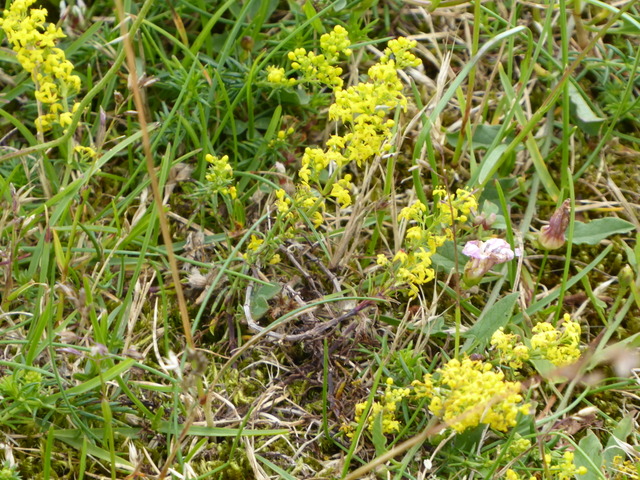
Lady’s Bedstraw (Galium verum)
According to my field guide, the flowers are honey-scented when fresh and smell of new-mown hay when dry. In days gone by, it was said to discourage fleas and so was added to straw mattresses especially for the beds of women about to give birth.
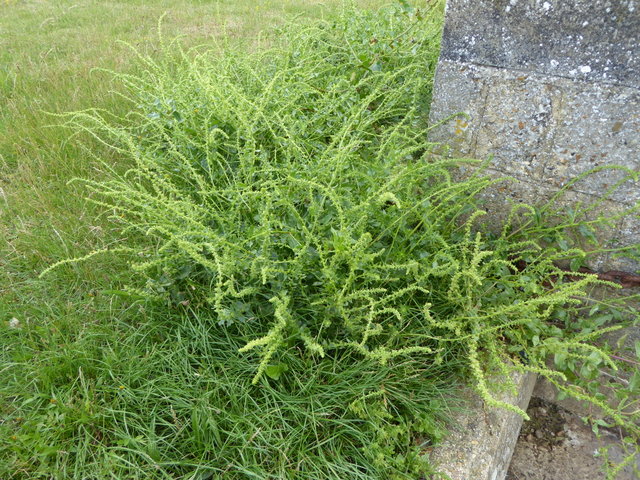
Sea Beet (Beta vulgaris subsp. maritima )
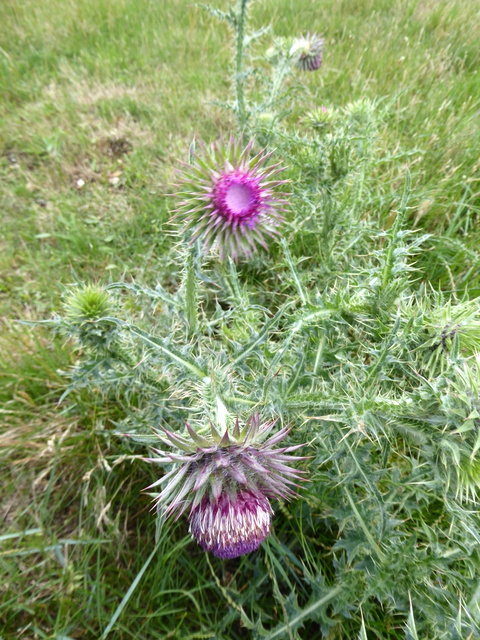
Spear Thistle (Cirsium vulgare). Not an uncommon plant but I find it beautiful – and spiny!
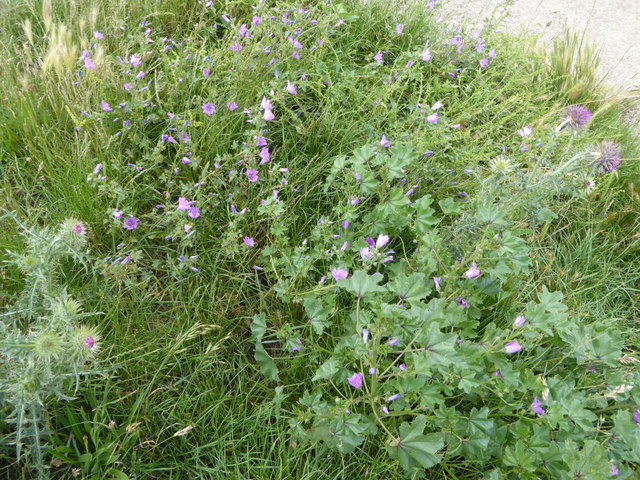
Common Mallow (Malva sylvestris)
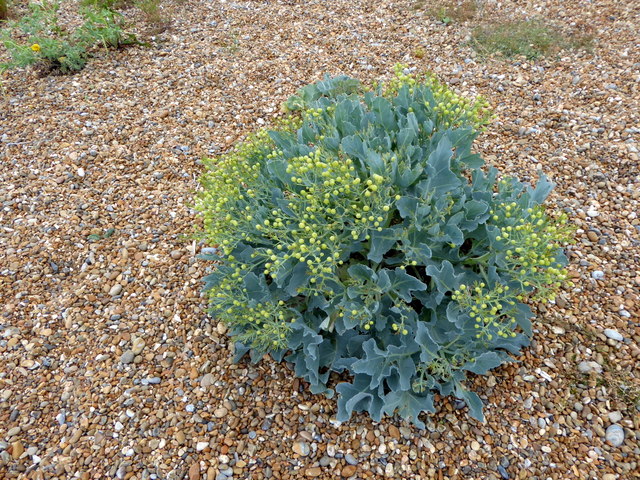
Sea Kale (Crambe maritima)
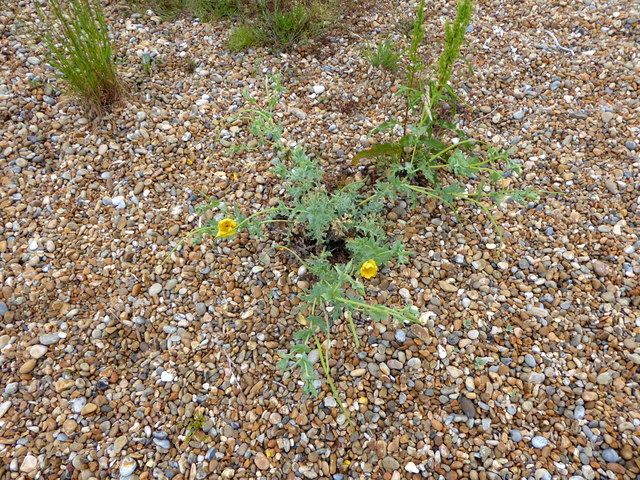
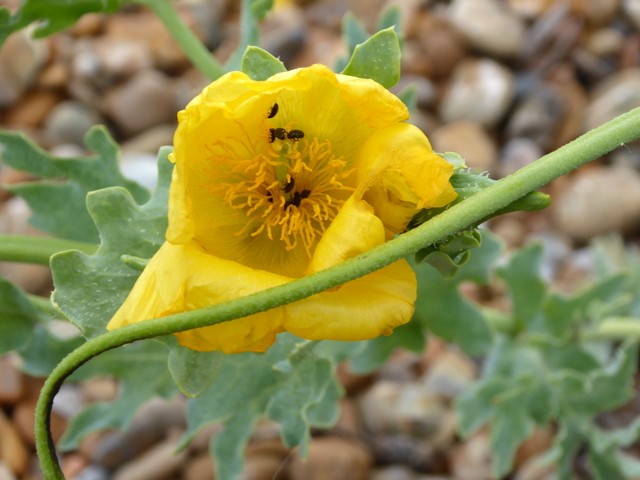
Yellow Horned Poppy (Glaucium flavum)
Yellow Horned Poppy (with a few pollen beetles!)
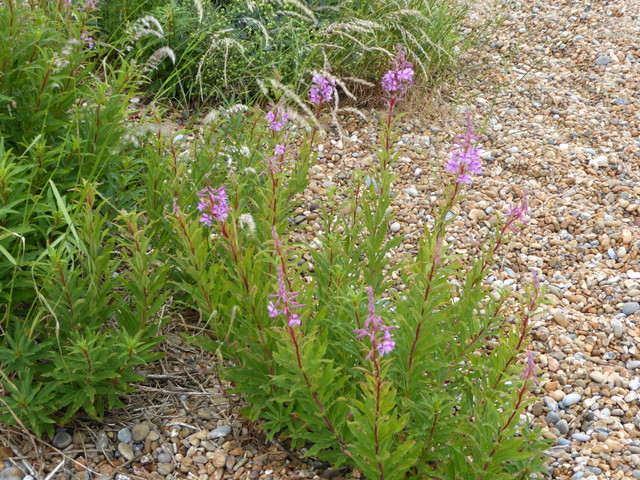
Rosebay Willowherb (Chamerion angustifolium)
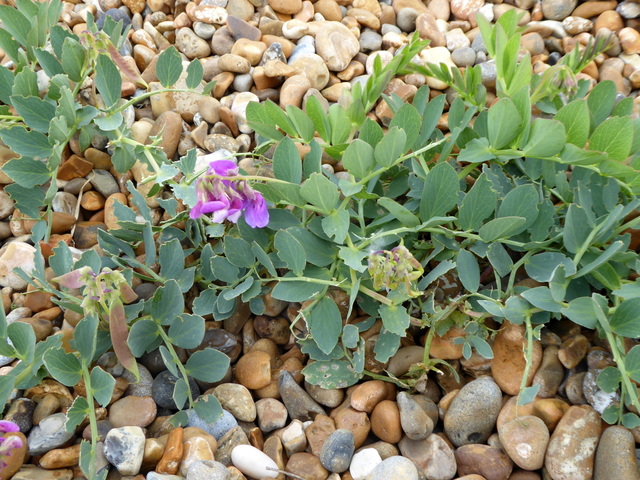
Sea Pea (Lathyrus japonicus)
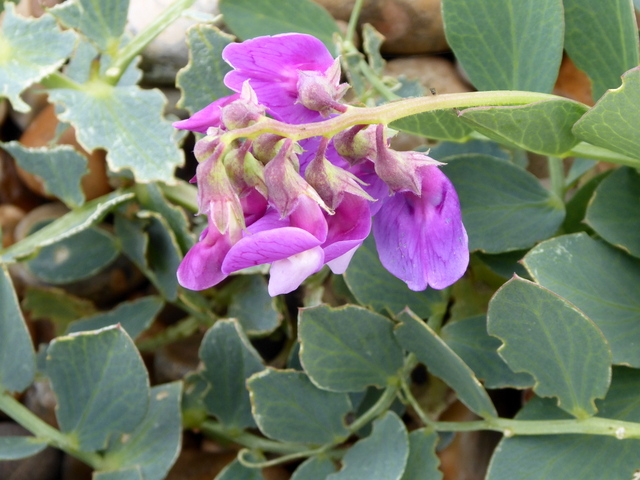
I was very pleased to see this plant still in flower! Usually I find it too late to admire the bright pink flowers. It is a nationally scarce plant but where it is happy it grows well and plentifully. My field guide tells me that the seed pods resemble garden pea-pods and were eaten (apparently) in Suffolk in times of famine (e.g. 1555). The pods are toxic in large quantities.
Sea pea
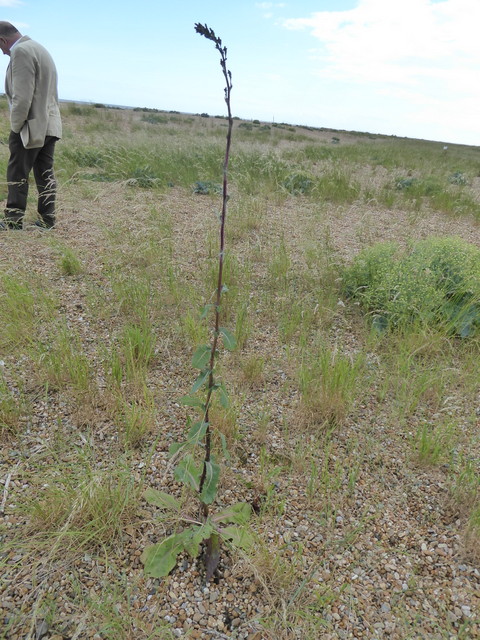
Prickly Lettuce (Lactuca serriola) These plants can grow as tall as 200 cm/ 6.5 ft. Prickly lettuce is a non-native and was first recorded here in 1632.
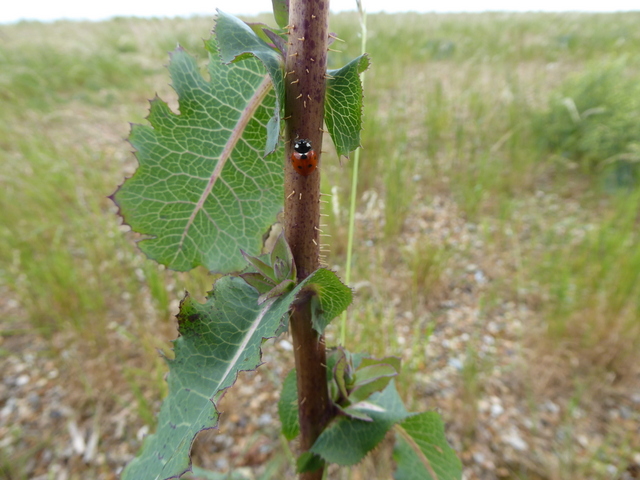
A Ladybird on Prickly Lettuce
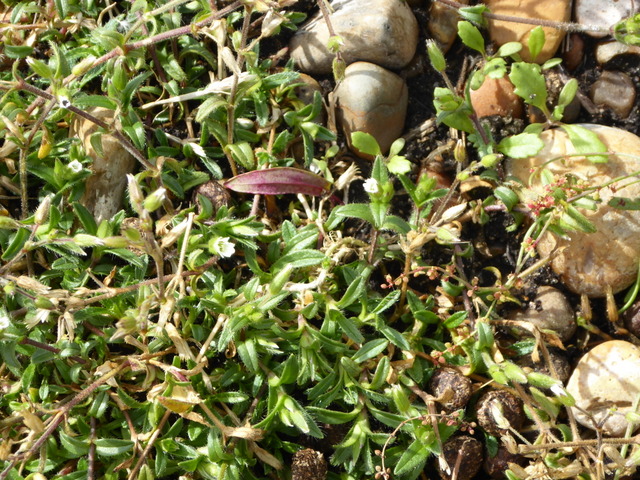
I think this is a type of Mouse-ear, probably Common Mouse-ear (Cerastium fontanum)
This visit to the Shingle Street beach was a very pleasant end to an enjoyable day.
Last summer we visited the Suffolk Punch Trust at Hollesley. Richard had been in touch with his cousin who had enquired about Suffolk Punch horses and wondered if we could go and find some. We obliged.
The Suffolk Punch Trust is a charity that works to protect the critically endangered Suffolk Punch horse by its breeding programme, by making people aware of the horse and its history and by training men and women to work with them. Suffolk Punches have been on this site since 1880 when the then owner of the farm began to breed them here. In 1886, the Colonial College was formed where young gentlemen were trained in farming methods but by 1906 the site was owned by London County Council who used the site to create work for the unemployed. In 1938 the Prison Service took over the farm where they rehabilitated young offenders. When I first came to live in Suffolk in the 1980’s the ‘Colony’ was featured fairly regularly on local news programmes because of the very successful stud the Prison Service with their young offenders had developed. Sadly, the Prison Service found it had to sell the farm in 2002 and many of the workers there were sad to leave the horses. This was when the Trust was formed and the good work that was begun so many years ago has been continued.
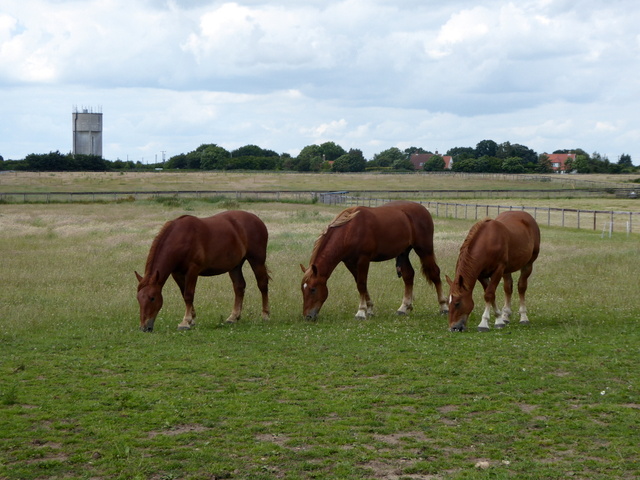
Suffolk Punch Trust land with paddocks.
The Suffolk Punch is a heavy draught horse specially bred for agricultural work on the land rather than as cart horses on the road. They are massive horses with very powerful, muscular necks but are shorter in height than most other draught horses. They were used on and near the battlefields during the First World War because of their strength and because they were accustomed to working on thick, clay soil. With the introduction of the motor tractor the horses were no longer needed and many were slaughtered.
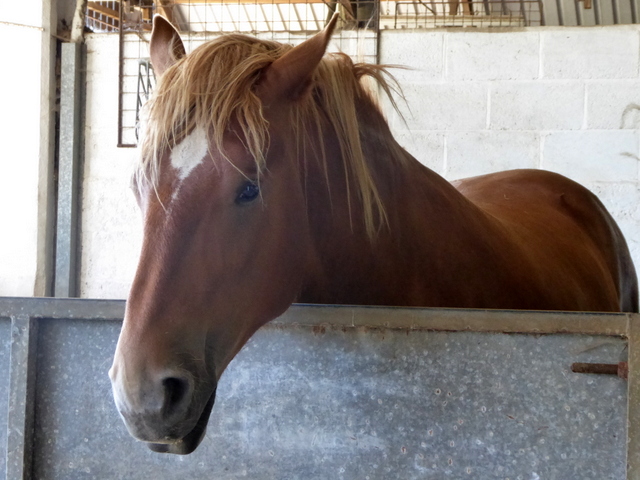
All Suffolk Punches are chestnut horses though traditionally it is spelt ‘chesnut’ without the middle ‘t’
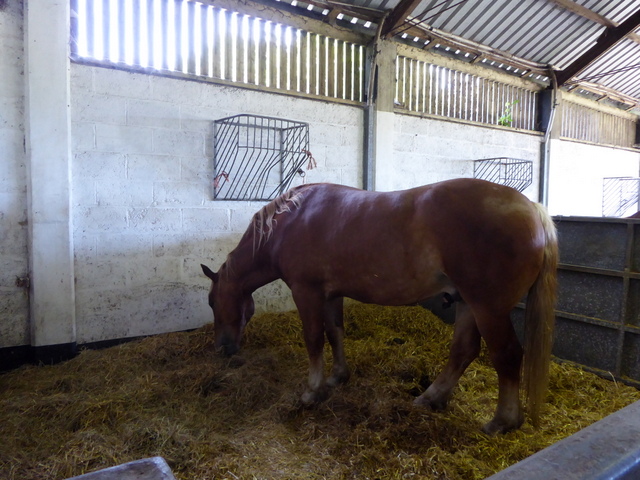
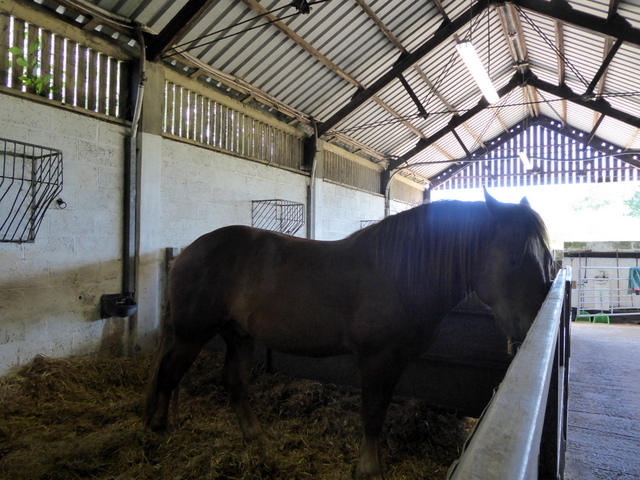
We looked at the horses resting in their stables
This one was very friendly
The Trust also looks after other horses…
Shetland pony
Shetland pony
…such as these Shetland ponies and also horses just out of racing, that are rested here by the charity ‘Retraining of Racehorses’. They then go on elsewhere to be trained for a second career.
The Trust also looks after other rare breeds of native Suffolk farm animals such as the Large Black Pig, Red Poll Cattle, Suffolk Sheep, Ixworth Chickens and Bantam Silver Appleyard Ducks.
Ixworth hen and chicks
Ixworth hen and chicks
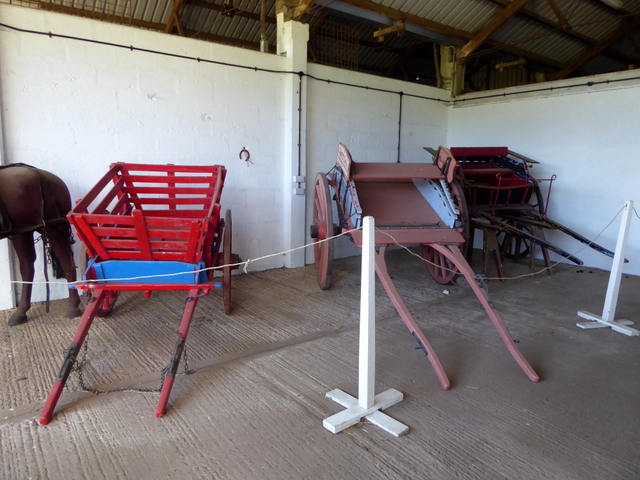
A selection of old carts
They have a Suffolk Heritage Garden stocked with plants, shrubs and trees that originated in or are associated with Suffolk. We didn’t get to see this unfortunately.
We then made our way to a large barn where we were shown how Punches are trained to pull a plough.
This slideshow requires JavaScript.
Richard videoed this as well.
There is a saying about the Suffolk Punch –
A Suffolk Punch should have a face like an angel, a belly like a barrel and a backside like a farmer’s daughter
Well, it’s obvious a woman never thought that one up!
We walked around some of the paddocks and met many of the residents.
A very hairy black and white pig
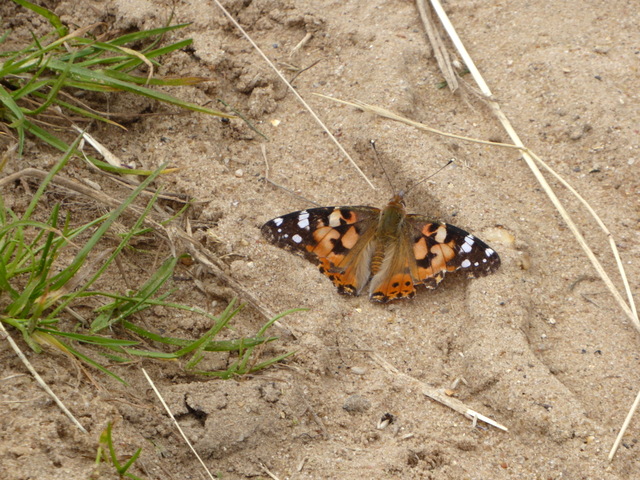
A Painted Lady butterfly (Vanessa cardui)
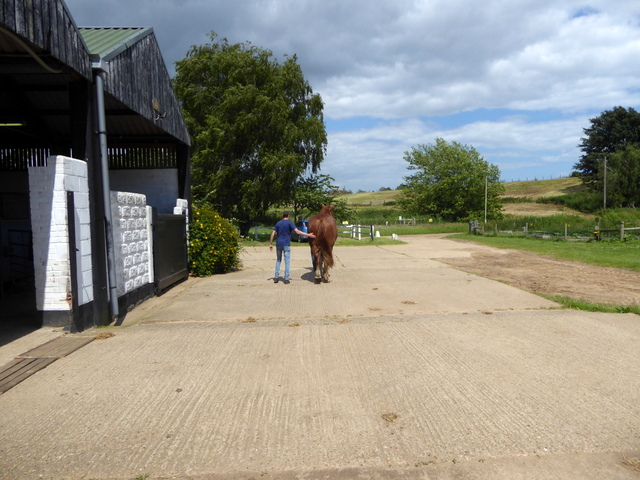
Richard and friends
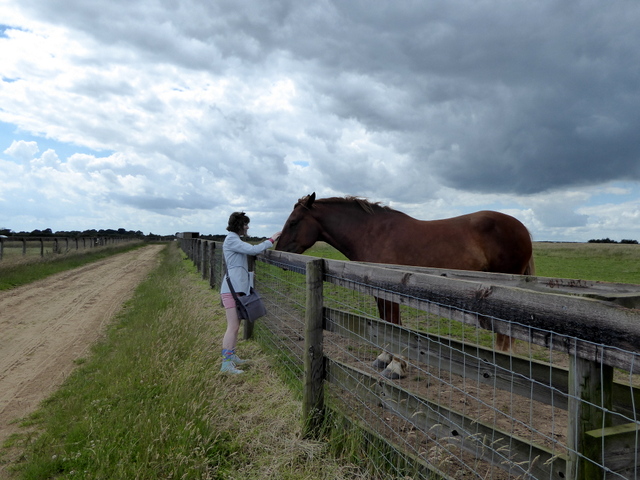
Elinor loved this horse!
Black Horehound (Ballota nigra)
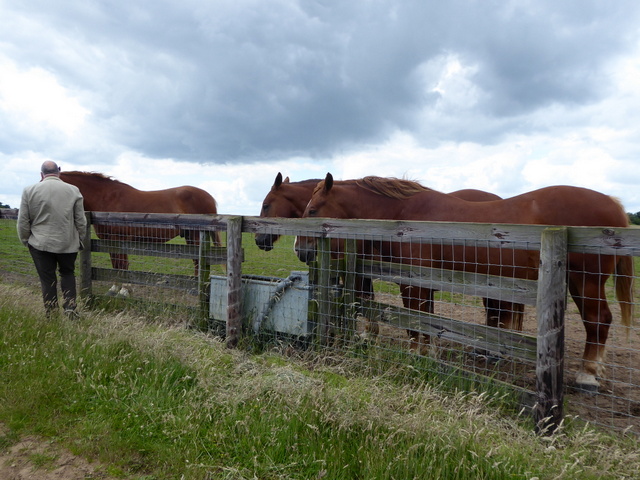
Suffolk Punches
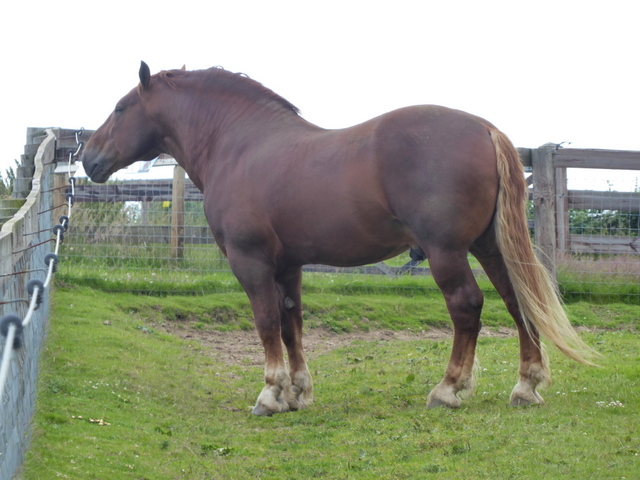
A beautiful stallion
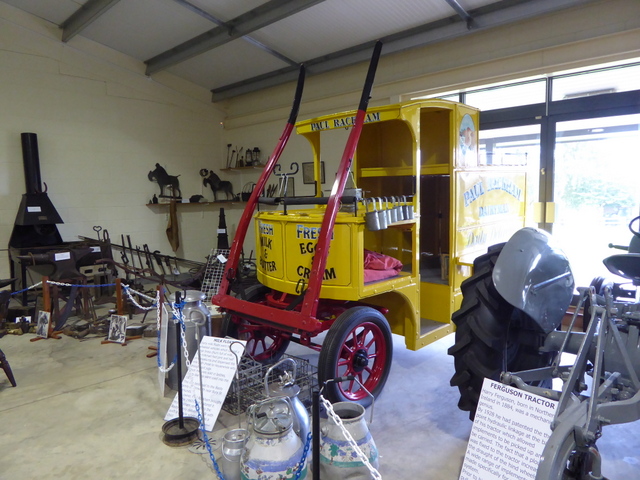
We visited the museum.
All sorts of things that would have been found on farms, in dairies, in villages, in stables and smithies.
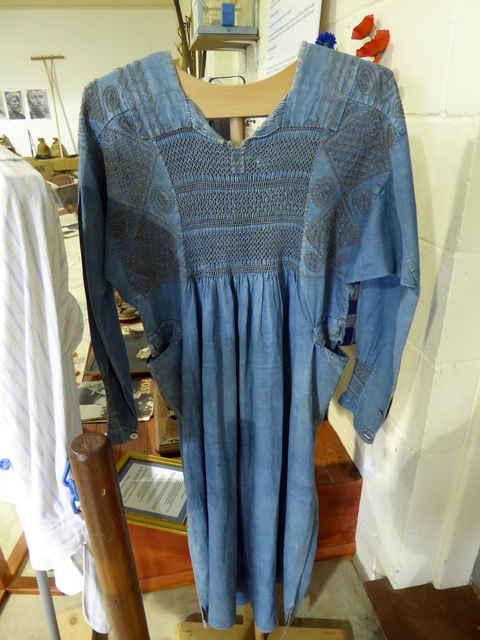
I was pleased to see an example of an old farming smock covered with exquisite smocking!
This slideshow requires JavaScript.
This slideshow requires JavaScript.
We found it a very enjoyable and interesting place.
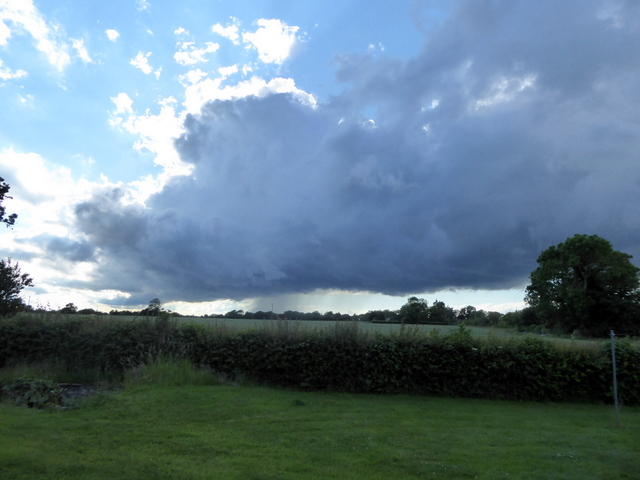
We had stormy weather like this all through last summer!
Many beautiful cloudscapes
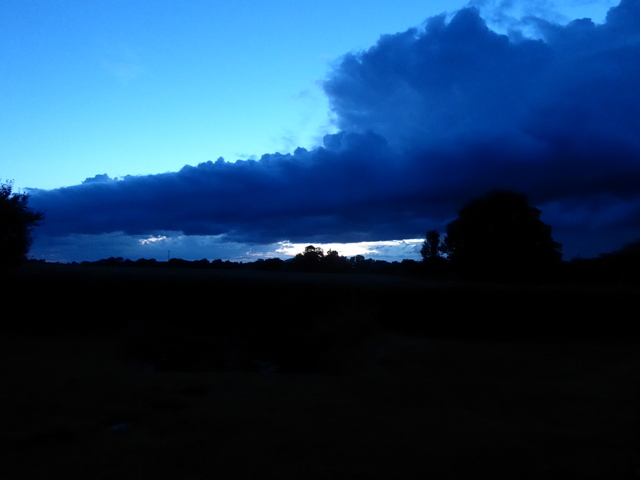
Cloudy sunsets….
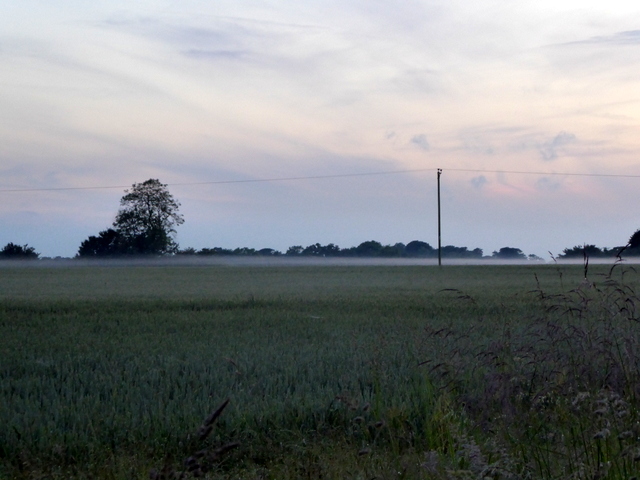
…and a lot of misty evenings!
ooOOoo
Richard grew Gazanias in pots last summer. They did very well especially towards the end of summer when the weather improved.
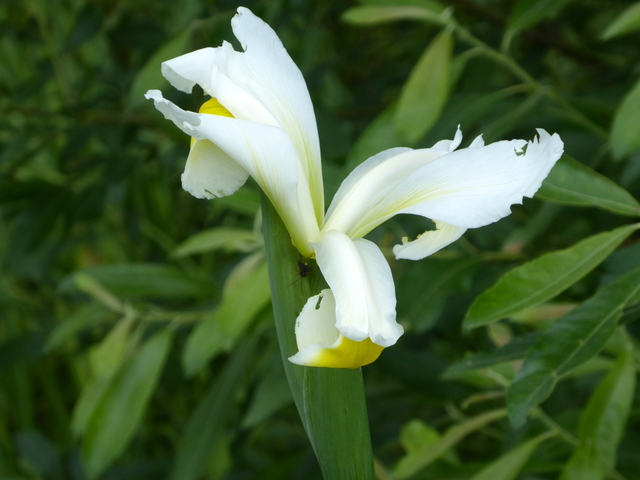
I discovered this rather chewed iris on the bank of the big pond in our garden. We don’t have any other irises like this. I wonder where it came from?
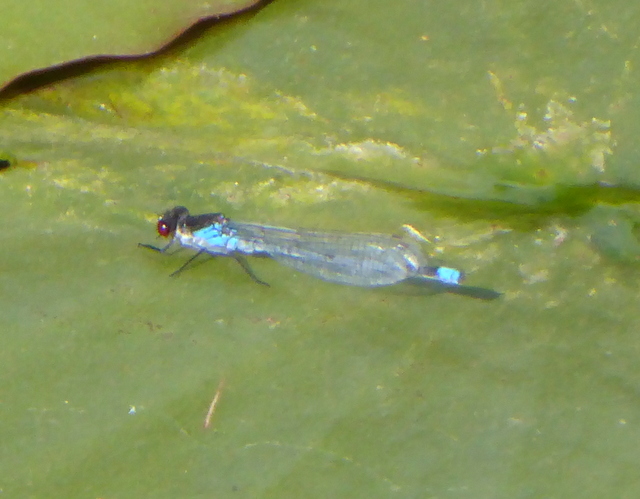
Red-eyed Damselfly (Erythromma najas)
I saw this damselfly on a lilypad on the big pond. I zoomed my camera as far as it would go and then cropped the shot which explains the poor quality of the photo. I needed to ID this damselfly which is a new one for our garden.
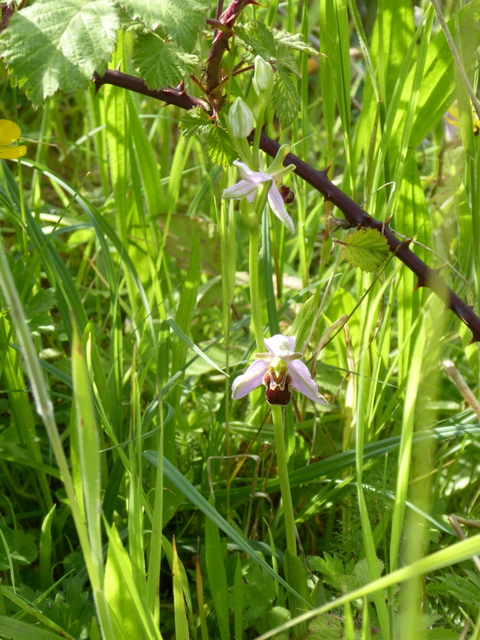
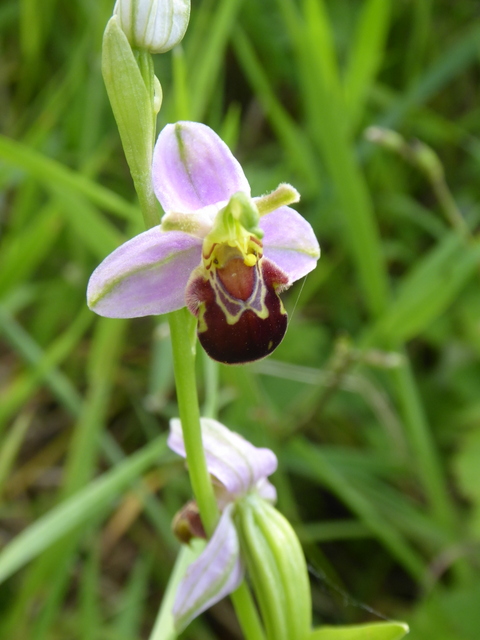
In 2014 I discovered a Bee Orchid in our garden and was very excited. I looked for it again in 2015 but it didn’t re-appear. Last summer I looked again at the place where I had found the orchid and was again disappointed. However, a few days later I found four bee orchid plants about 2 metres away from the original plant. I have already seen a few leaf rosettes this winter so I know that the orchids have survived.
Bee Orchid
Bee Orchid
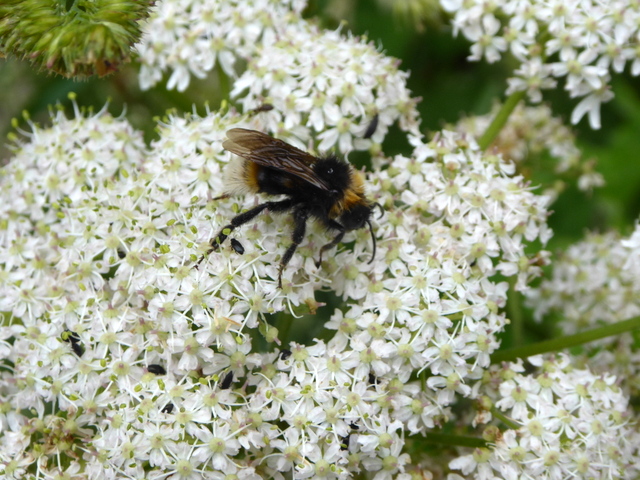
This may be a Southern Cuckoo Bumblebee (Bombus vestalis) on white Allium
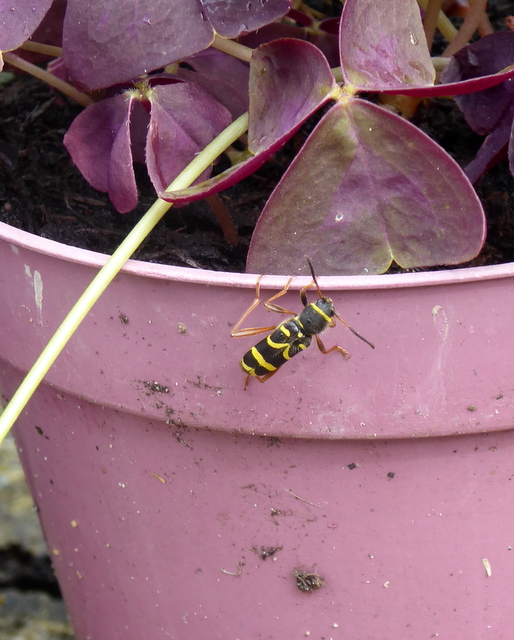
A Wasp Beetle (Clytus arietis)
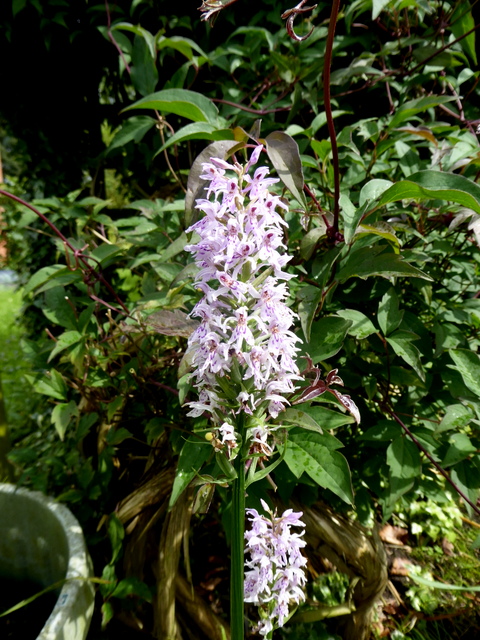
Common Spotted-orchid (Dactylorhiza fuchsii)
When we moved into our house we discovered one of these orchids growing close to the house. I moved it to a safer place and since then it has done well and the plant has spread all over the garden. I often find seedlings in a tub or flower pot where they seem very happy and grow enormous like the one in the photo.
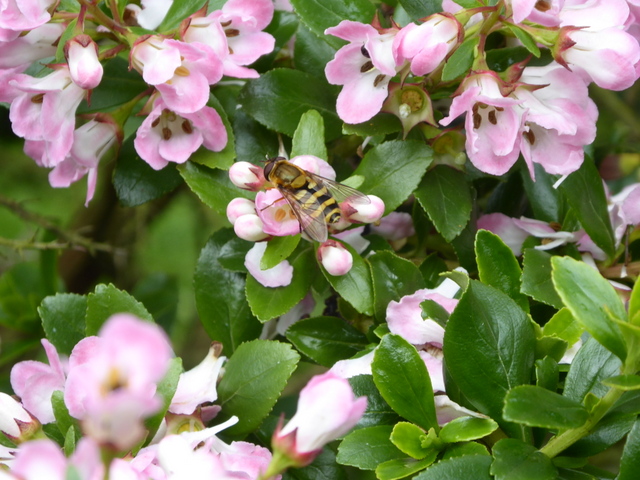
Hoverfly Syrphus ribesii on Escallonia ‘Apple Blossom’
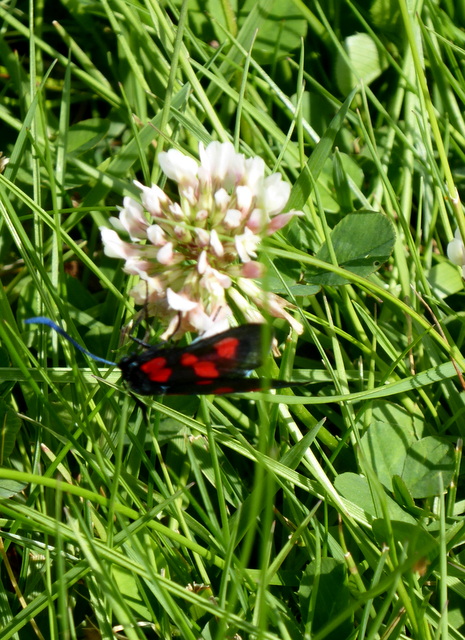
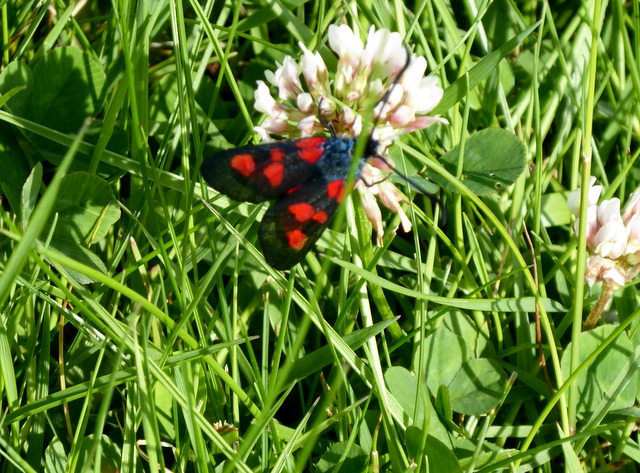
Five-spot Burnet moth (Zygaena trifolii) on White Clover (Trifolium repens)
Five-spot Burnet on White Clover
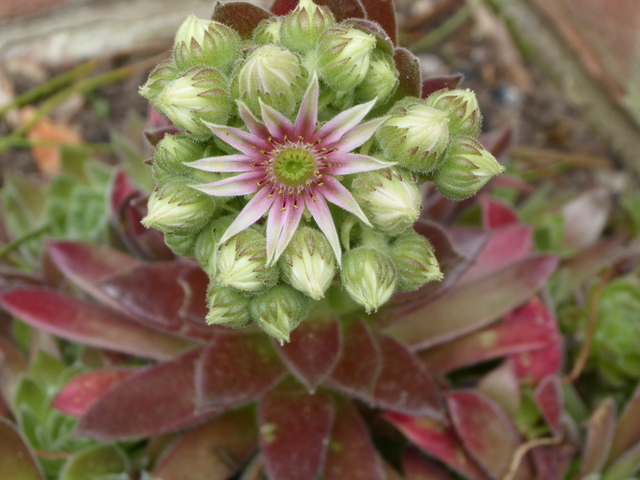
House-leek in flower
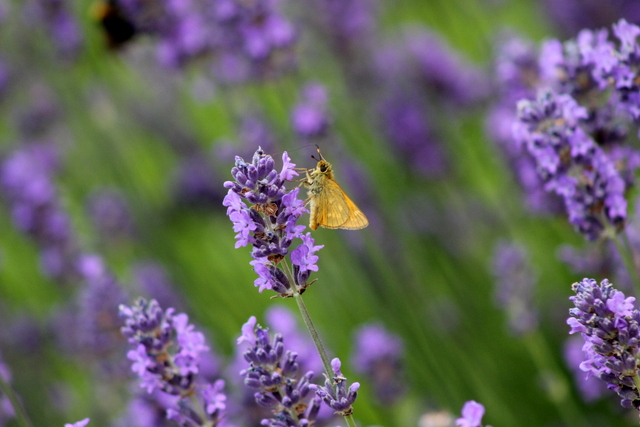
Large Skipper butterfly (Ochlodes sylvanus) on Lavender – Lavandula angustifolia ‘Hidcote’.
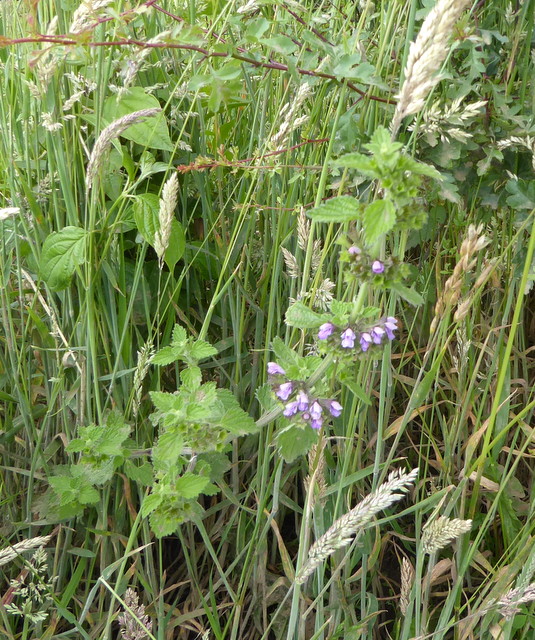
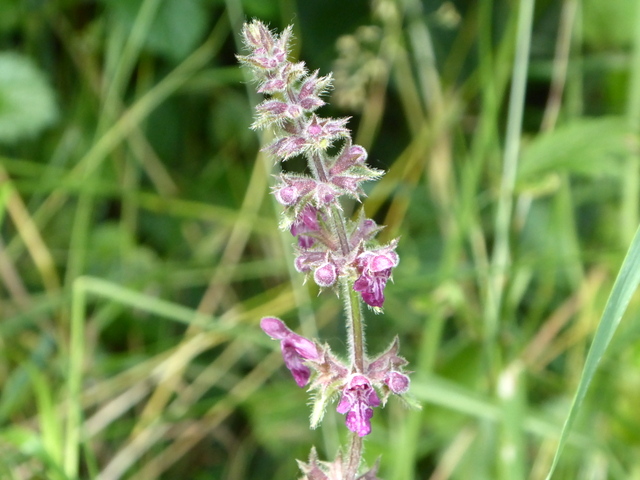
Hedge Woundwort (Stachys sylvatica)
Black Medick (Medicago lupulina)
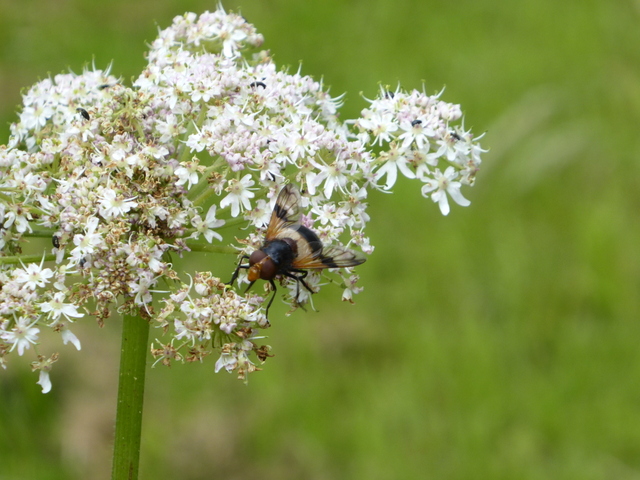
Hoverfly Volucella pellucens
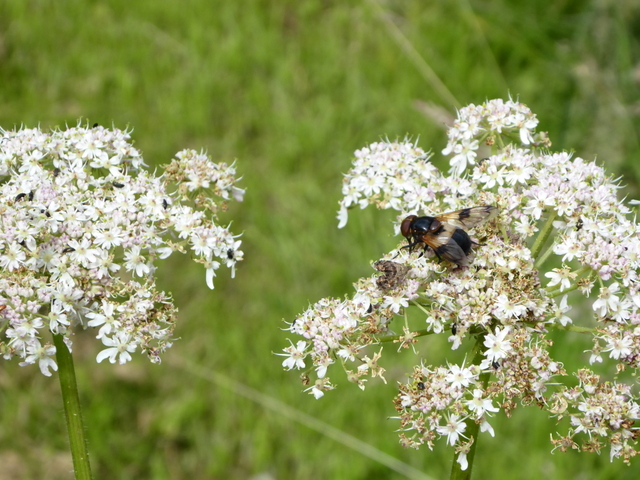
The same hoverfly next to a tiny micro-moth
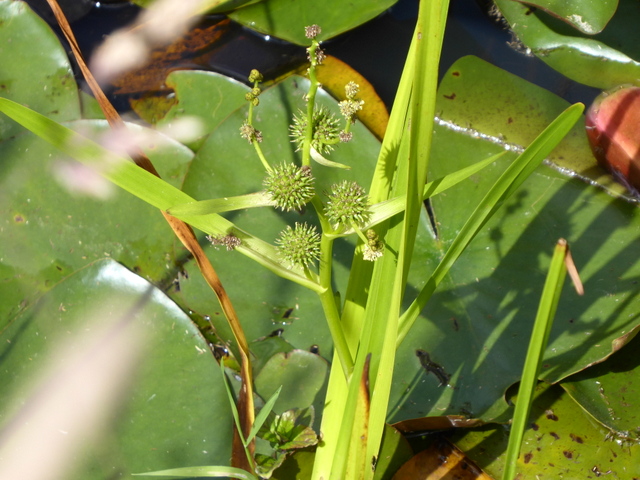
Branched Bur-reed (Sparganium erectum)
I have now caught up with all the photos taken in and near my garden last year. I have photographs from a few outings we did that I would like to share with you and then I can concentrate on this year!
Here is my music selection – Chris Rea’s ‘Heaven’ – one of my most favourite songs!
It was our 22nd wedding anniversary in June and instead of buying each other gifts we usually plan a day out that we will both enjoy. We chose to visit Strumpshaw Fen which is situated in the Broads.
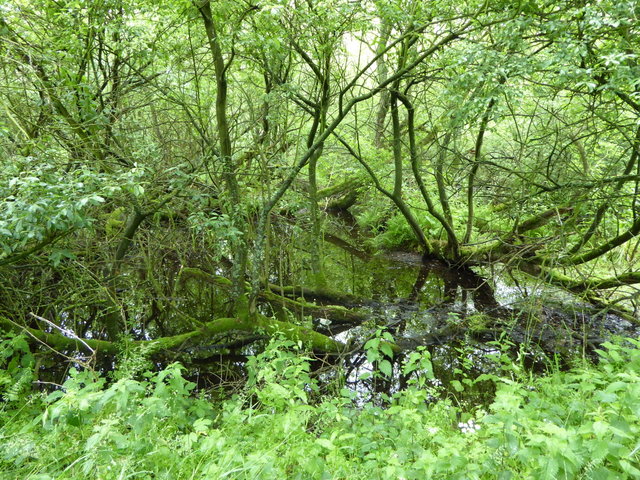
Pond at Strumpshaw Fen
We had hoped to see all sorts of birds here and I had set my heart on finding a Swallowtail butterfly (Papilio machaon), as the Broads is the only place in the British Isles where they can be found.
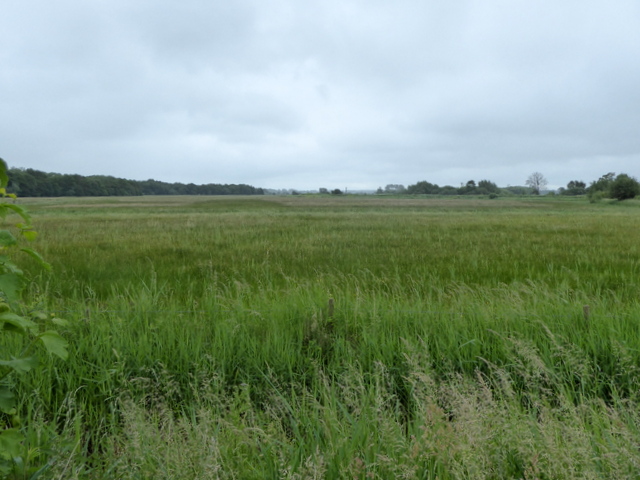
Fenland
As was the case with many of our ventures last year, we didn’t have as successful a visit as we had hoped because the weather was miserable. It was cold, wet and windy – not a day for viewing rare butterflies or the Norfolk Hawker dragonfly or any of the birds we had hoped to see. However, we persevered with our walk round the reserve and saw a few things of interest.
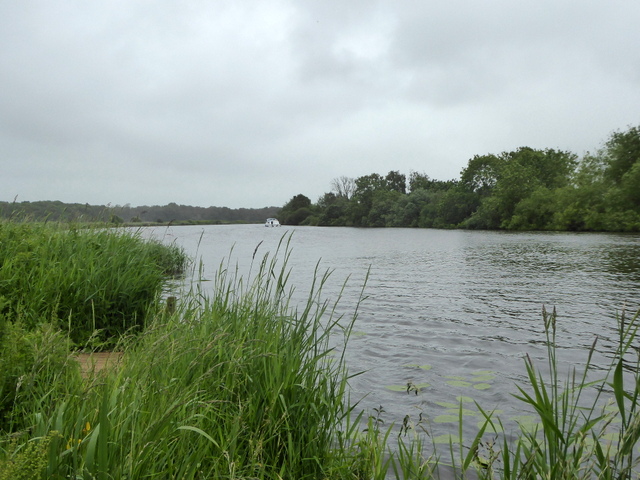
A broad
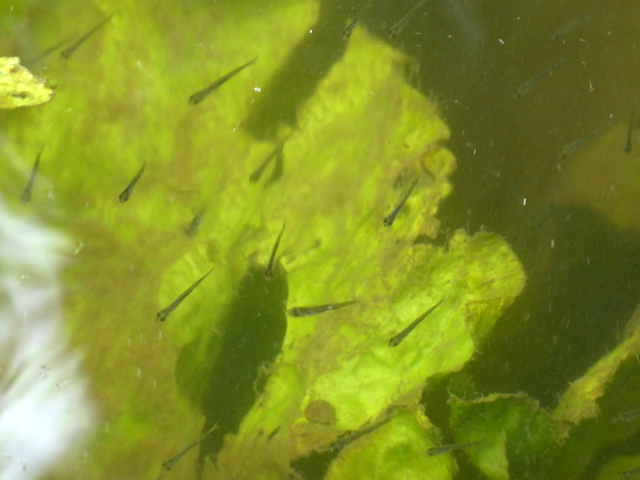
Small fry – baby fish in the broad
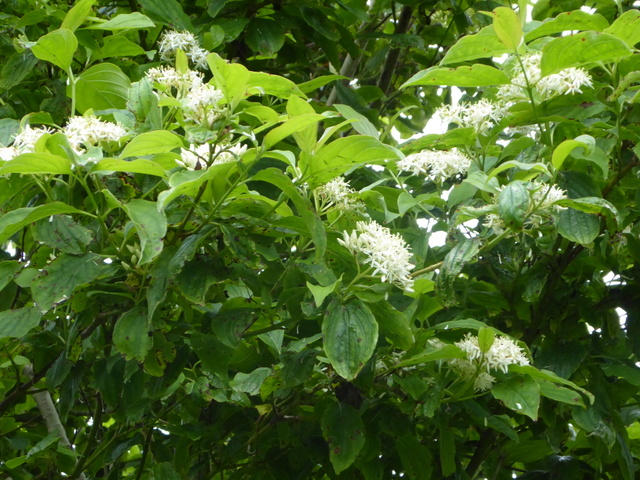
Dogwood (Cornus sanguinea) in flower
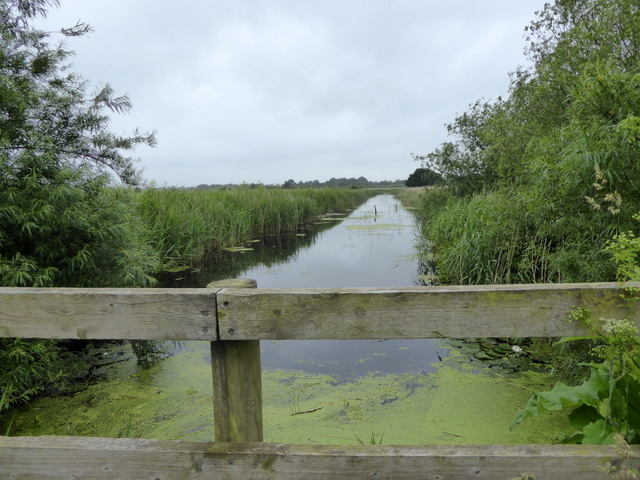
A waterway in the fen
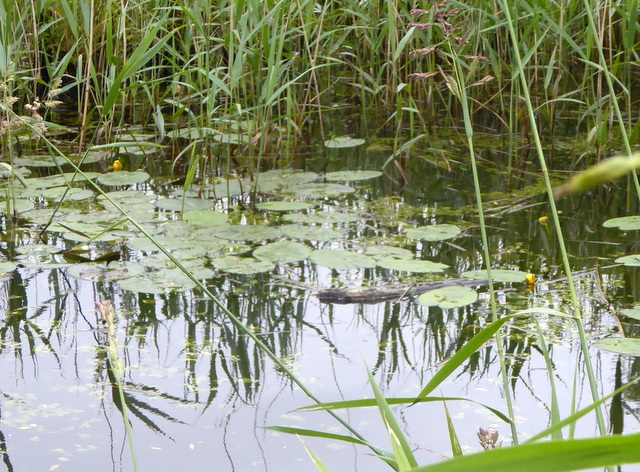
Yellow Water-lily (Nuphar lutea)
The flowers are much smaller than White Waterlily flowers being only 6 cm/2.5 ins across and are alcohol-scented apparently!
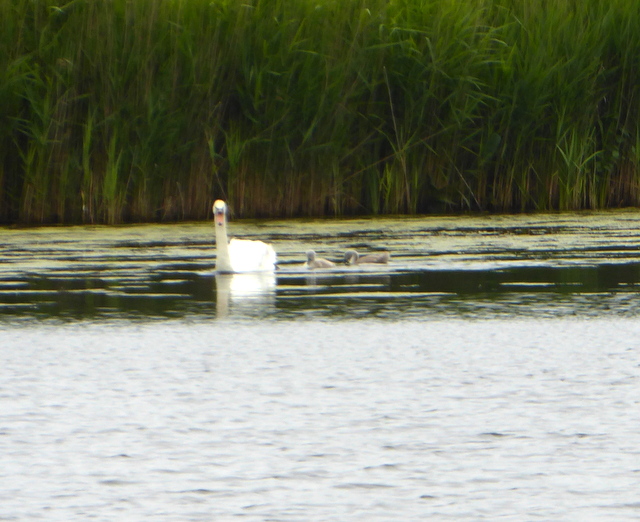
Mute Swan (Cygnus olor) with cygnets
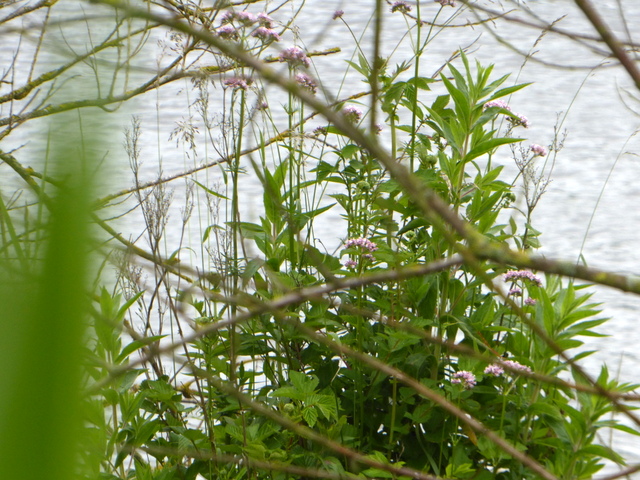
Common Valerian (Valeriana officinalis) You can just see the pink flower-heads!
The River Yare
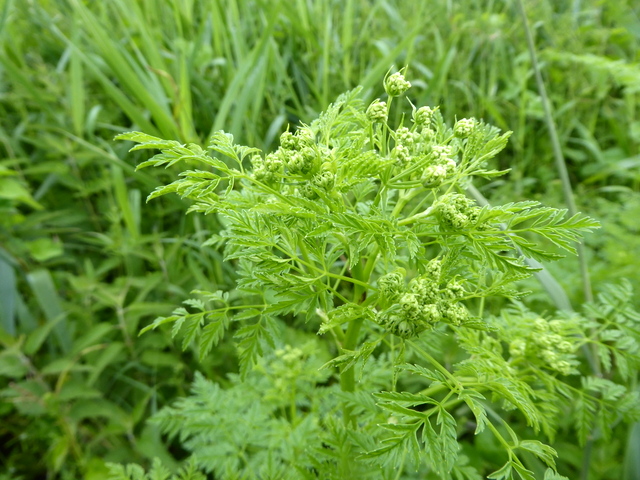
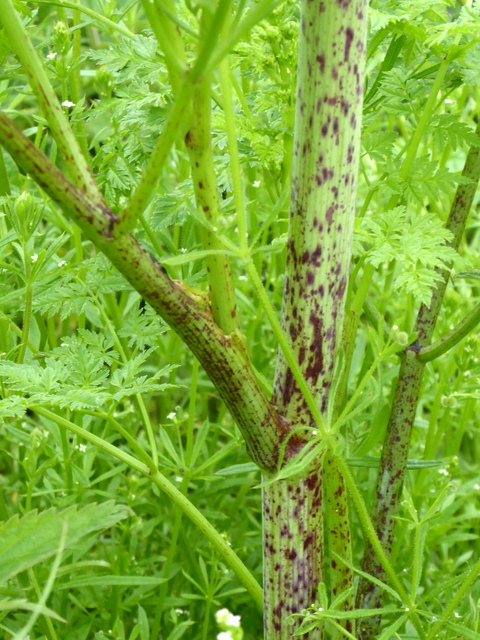
This might be Milk-parsley (Peucedanum palustre) the food plant of the Swallowtail caterpillar.
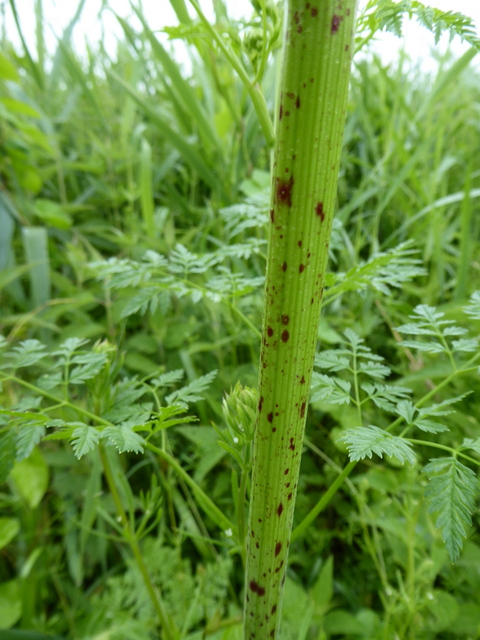
It might also be Hemlock! (Conium maculatum) They are both described as hairless biennials with purple-blotched stems. Hemlock’s stems are hollow and purple-blotched and Milk-parsley has ridged stems that are often blotched purple!
Ridged purple-blotched stems? I can’t decide!
More purple-blotched stems.
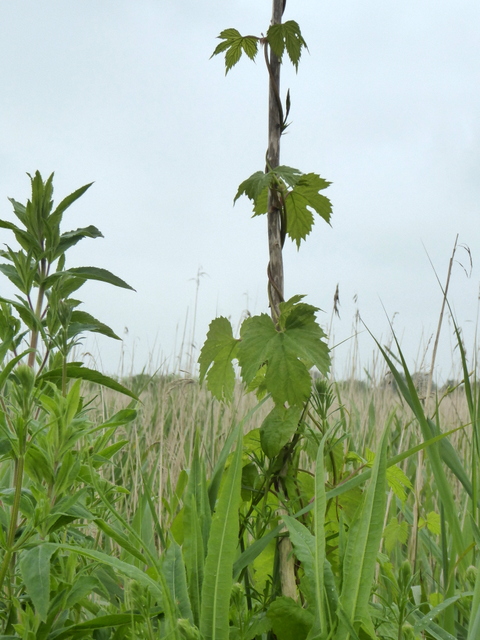
Hop (Humulus lupulus)
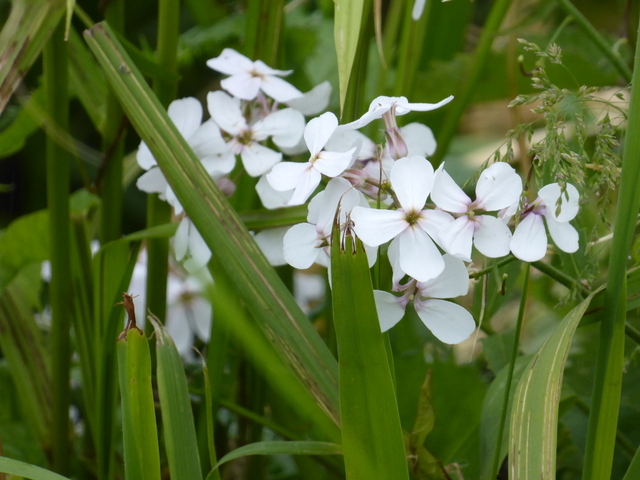
Dame’s-violet (Hesperis matronalis)
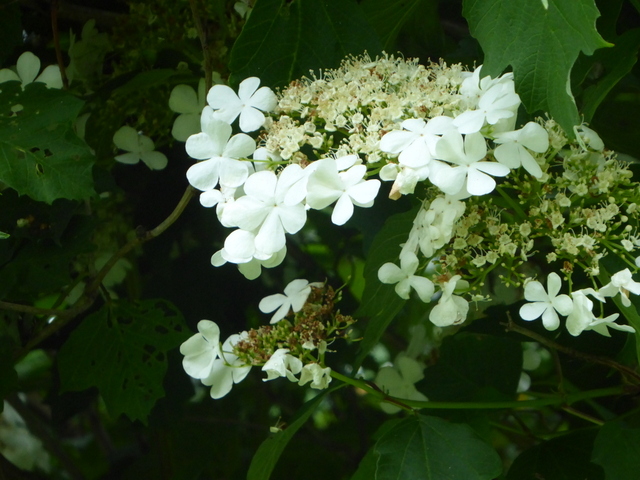
Guelder-rose (Viburnum opulus)
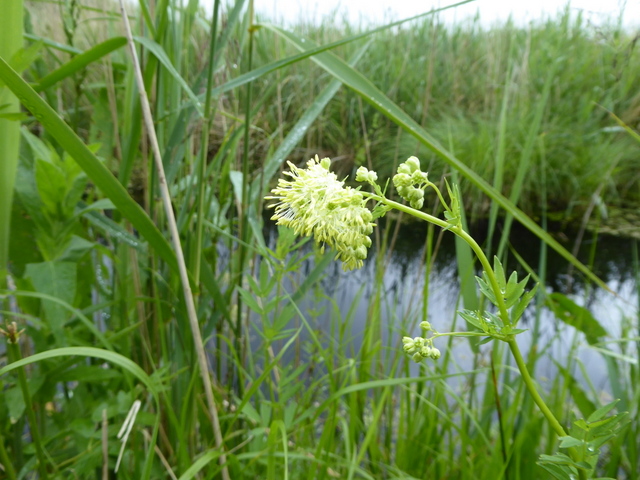
Common Meadow-rue (Thalictrum flavum)
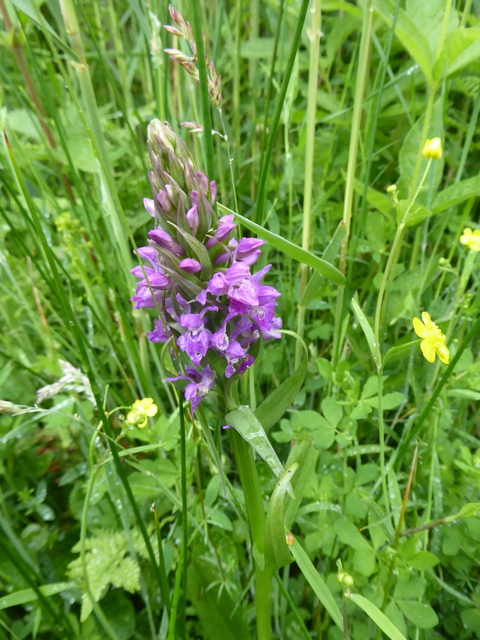
Southern Marsh-orchid (Dactylorhiza praetermissa)
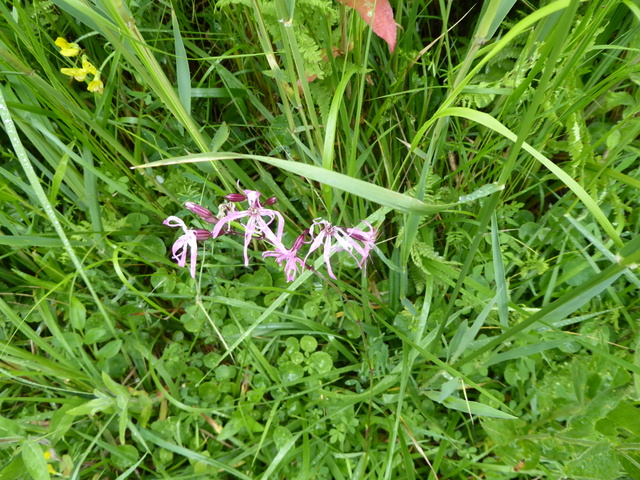
Ragged-robin (Lychnis flos-cuculi)
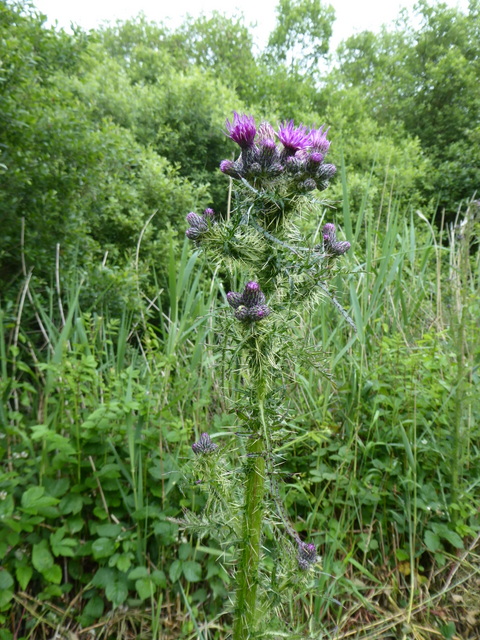
Marsh Thistle (Cirsium palustre)
A meadow full of Yorkshire Fog (Holcus lanatus)
The flower-heads of this grass are red-tipped and gave the meadow a pink glow!
Part of our walk was along Tinker’s Lane
Tinker’s Lane – looking back the way we’d come
Tinker’s Lane – looking ahead. Elinor is the figure in the far distance
Green Alkanet (Pentaglottis sempervirens)
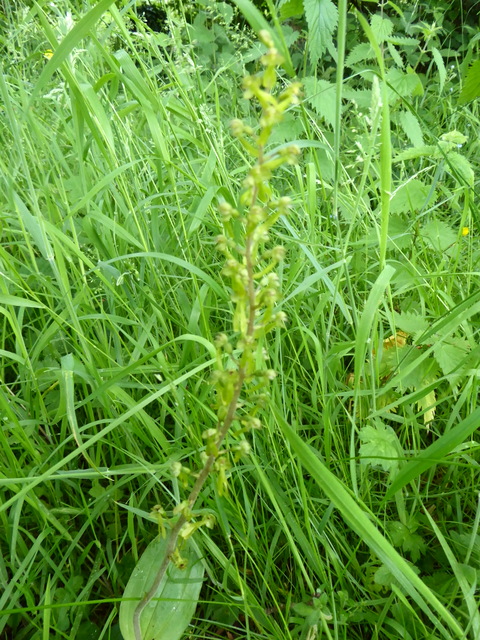
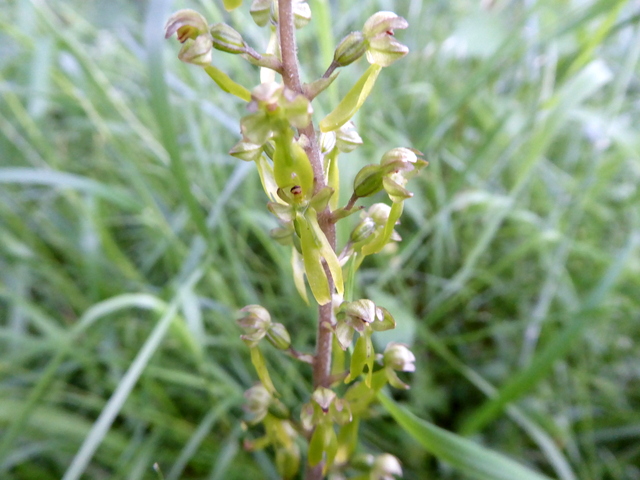
Not a good photo of Common Twayblade (Neottia ovata) Though ‘common’ I had never seen this orchid before and was very pleased.
Common Twayblade
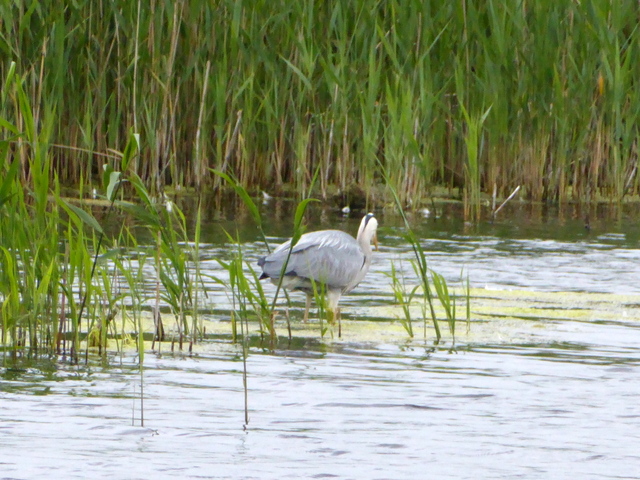
a Grey Heron (Ardea cinerea) that refused to look my way!
Great Crested Grebe (Podiceps cristatus)
We enjoyed our walk round the fen and were pleased with the amount of interesting plants we had seen. I would like to return there this summer if possible to see the butterflies, dragonflies and birds we had intended seeing last year!
Those of you who have been reading my posts for a while will recognise the title of this one. Every year my church of St Felix and St Michael at Rumburgh holds a special Plough Blessing service on the first Sunday after Epiphany. Epiphany is on the 6th of January and celebrates the arrival of the Wise Men who brought gifts of gold, frankincense and myrrh to Jesus. The first Sunday after Epiphany is Plough Sunday and the following day is Plough Monday when traditionally, work on the land is recommenced after the Christmas break. These days there is no real break for Christmas and farm workers do not suffer from the terrible poverty they did in former times though they are still not very highly-paid. Here is a link to the ‘Old Glory’ site of our local Molly Men. Please take time to look at all their pages if you can.
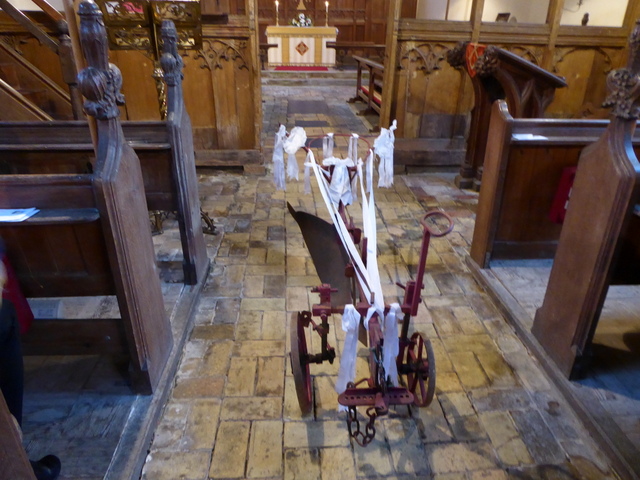
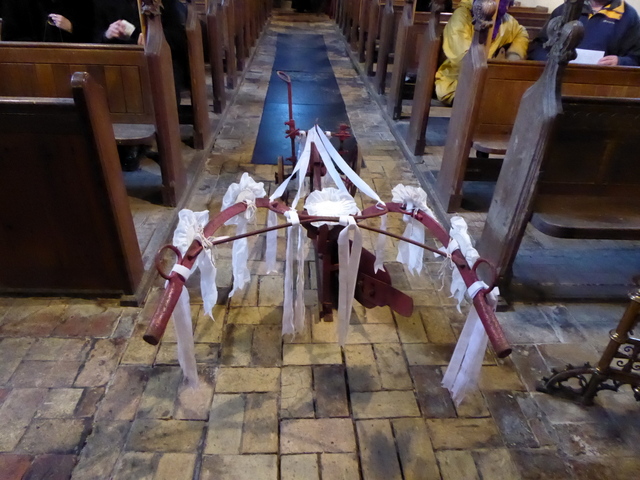
The decorated plough in the nave of the church
The decorated plough
I enjoy this short service each year. In it, we look forward to spring, summer and harvest and pray that not only will there be enough warmth and rain to grow the crops but that we will not take anything for granted and will thank God for his care of us. We don’t just pray for ourselves but for all farmers throughout the world. Each component of the plough is blessed – the beam, the mouldboard, the slade, the sidecap, the share and the coulters.
I love the words from the prayer of gratitude.
From God comes every good and perfect gift:
The rich soil, the smell of the fresh-turned earth.
The keenness of a winter’s frost and our breath steaming.
The hum of the tractor, the gleam of a cutting edge.
The beauty of a clean-cut furrow, the sweep of a well-ploughed field.
The hymn at the end of the service is ‘We Plough the Fields, and Scatter…’
During Harvest-tide we get a little tired of singing this hymn as all the churches in our benefice have their own harvest service and the hymn is very popular, especially with the farming families. However, singing it at this time of year, so gloomy and cold as it is, gives hope and cheer so we all sing with gusto!
The plough and some of the costumes of the Molly Men.
The plough is left in the church over-night and is ready to be processed down the lane to the pub the next evening on Plough Monday. There are no street lights here and the nights are black at this time of the year. Flaming torches are carried to light the way. This year they won’t be accompanied by the church bells which will be silent out of respect to one of the ringers who died suddenly a few days ago.
Here is a film made in 2010 of the procession of Old Glory with the plough from the church to the Rumburgh ‘Buck’ pub.

























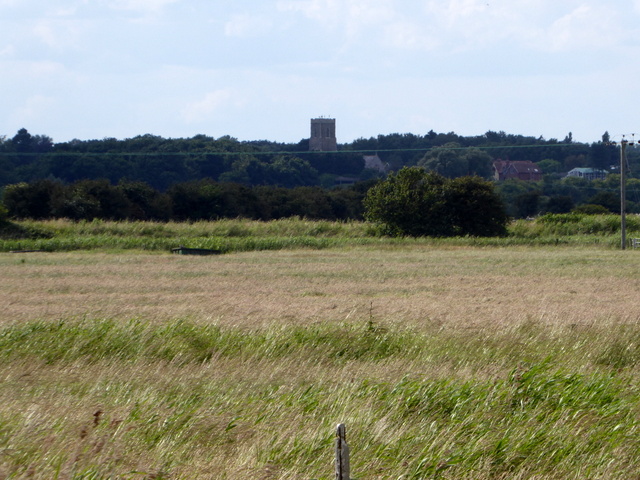









 A Suffolk Lane