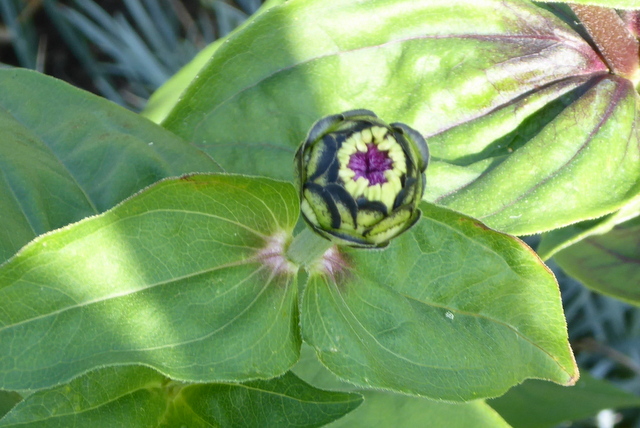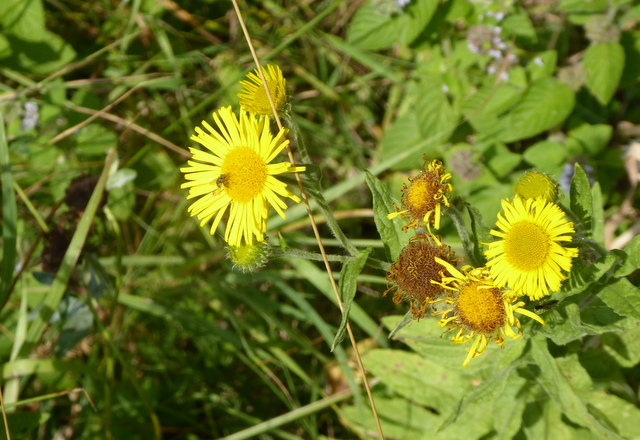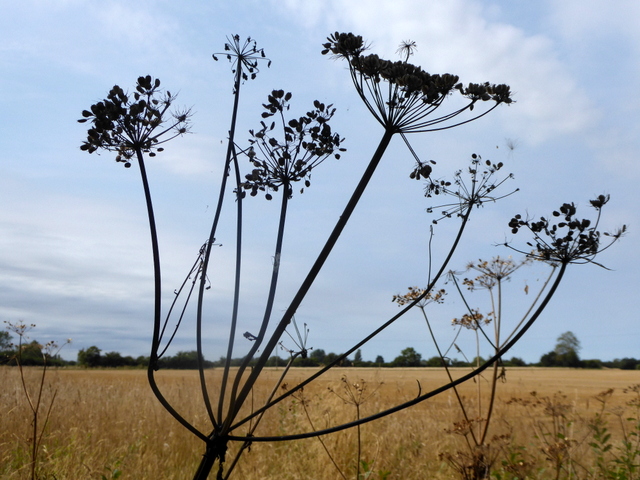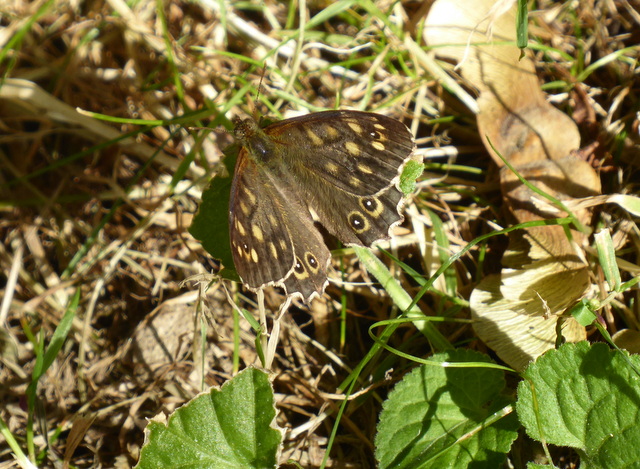
• About my Blog
  • GDPR (General Data Protection Regulations) and This Site
  • My Life in a Suffolk Lane

A Suffolk Lane

~ A diary of my life in rural north Suffolk.

A Suffolk Lane

Category Archives: Rural Diary

My life in rural Suffolk. The wildlife around my home, the weather that affects what I do, my family and the people I meet.

Highlights Part 2

10 Sat Dec 2016

Posted by Clare Pooley in Gardening, Insects, music, plants, Rural Diary, seashore, weather, wild birds, wild flowers

≈ 75 Comments

Tags

'Something in the Way She Moves', alderfly, azure damselfly, cactus flowers, communal mining bee, Early Purple Orchid, echinopsis oxygona, Four-spotted Chaser, greenfinch, highlights, Jacob sheep, lambs, oedemera nobilis, pond water-crowfoot, red campion, Robin, Southwold, Suffolk, The Beatles, the moon, The Saints Benefice in north Suffolk, the sea, thrift

The weather in May was changeable; cold, wet and windy for a few days then a couple of days of warmth and sunshine then back to cool and damp.  The beginning of June wasn’t much different.

These first photos were taken towards the end of May in our garden or within a short walk of home.

p1000277pond-water-crowfoot

Pond Water-crowfoot (Ranunculus peltatus) has two sorts of leaves; the submerged leaves are thread-like but the floating leaves have rounded lobes. I found this plant in the pond at the front of the house. It is a relative of the buttercup and appeared here for the first time this year.

p1000320alder-fly-001

Alderfly (Sialis lutaria) In this country we have just three species of alderfly and they are virtually indistinguishable from each other. One (this one I believe) favours still or slow-moving water and the other two prefer running water.

Adult alderflies are weak-flying insects and never move far away from water.  The two or three weeks they spend as an adult are almost entirely taken up with looking for a mate.  Most don’t bother feeding but some may nibble a little pollen or algae if they are in need of sustenance.

Mining bee
Mining bee
Mining bee
Mining bee

I think this Mining bee is a Communal mining bee (Andrena scotica).  The females share a tunnel entrance but have separate nests underground.  They prefer slightly open ground and so are often found near paths.  I discovered this one while I was weeding and I think I had probably disturbed her nest.  She was making a lot of noise; I am sure she was very cross!

p1000330robin-001

I was being helped in my task by a friendly Robin (Erithacus rubecula)

ooOOoo

Richard had noticed some orchids on the grass verge of a lane near us so we set off to walk to where they were growing.  I took a couple of photos on the way.

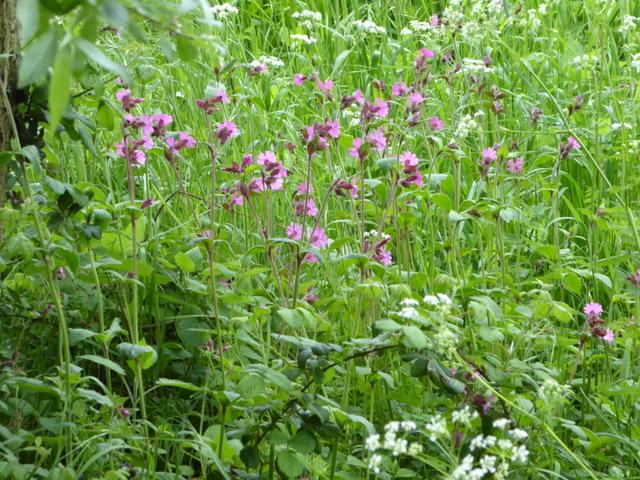
p1000333red-campion

Lots of Red Campion (Silene dioica)

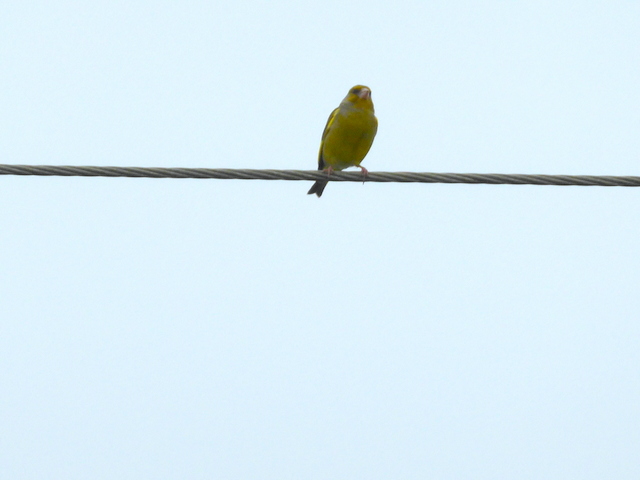
p1000343greenfinch

A Greenfinch (Carduelis chloris). I had to zoom as far as my camera was capable to enable me to get this rather grainy shot.

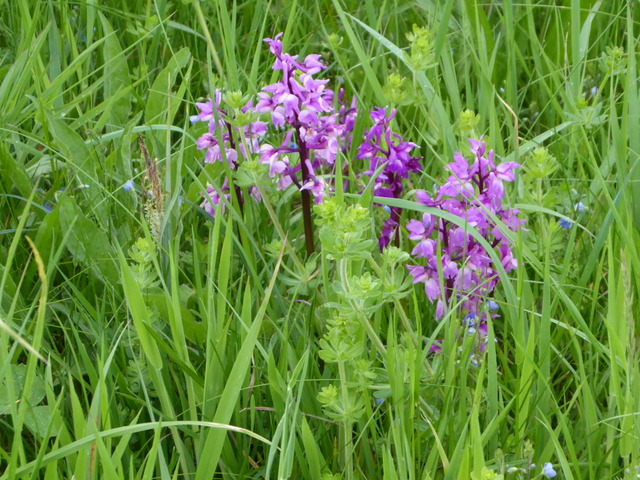
p1000345early-purple-orchid

Early Purple Orchid (Orchis mascula)

p1000346early-purple-orchid

Early Purple Orchid

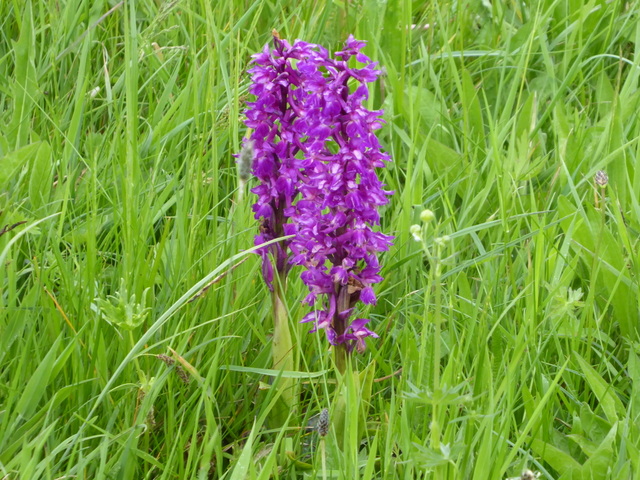
p1000349early-purple-orchid

Early Purple Orchid

p1000367jacob-sheep

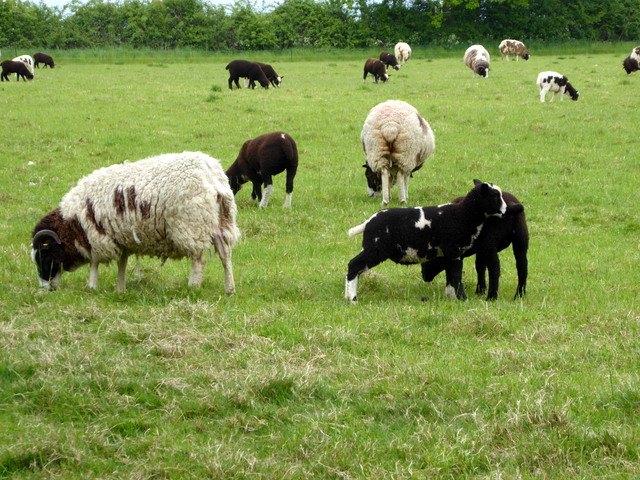
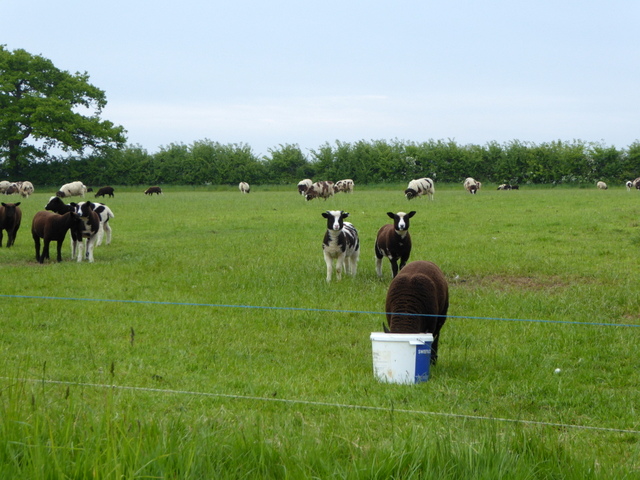
We walked past a field full of Jacob sheep on the way back home

p1000368jacob-sheep

They are more like goats than sheep and the lambs are very endearing and inquisitive.

ooOOoo

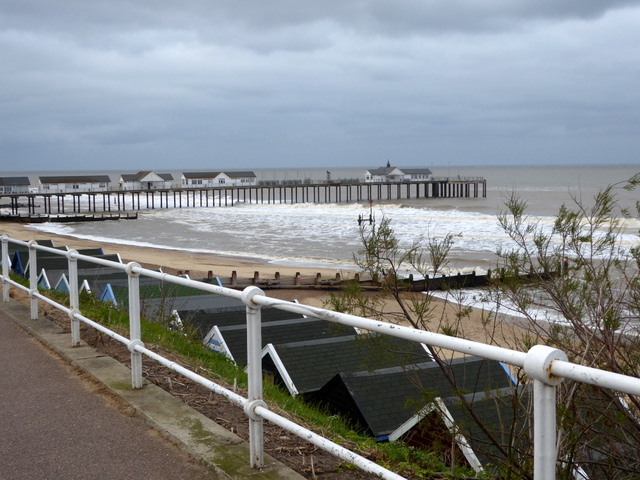
At the very end of May we visited one of our local seaside resorts, Southwold, on a very cool and windy day.

p1000371southwold

Oh we do like to be beside the seaside!

p1000386southwold

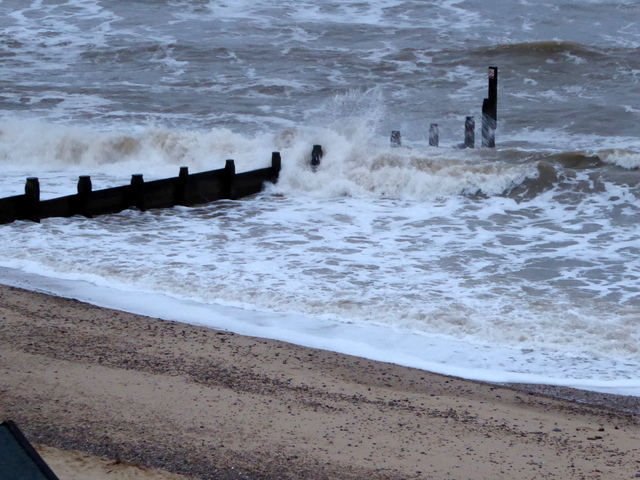
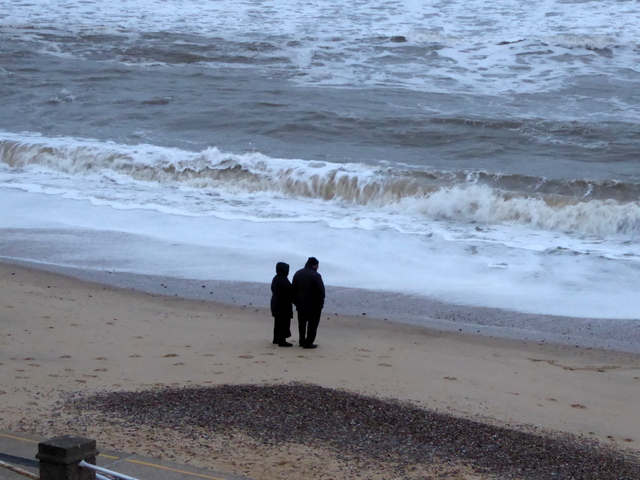
The sea was rough…

p1000387southwold

…but this couple were happy to be there watching the waves together. Note how well wrapped up they were!

p1000375southwold

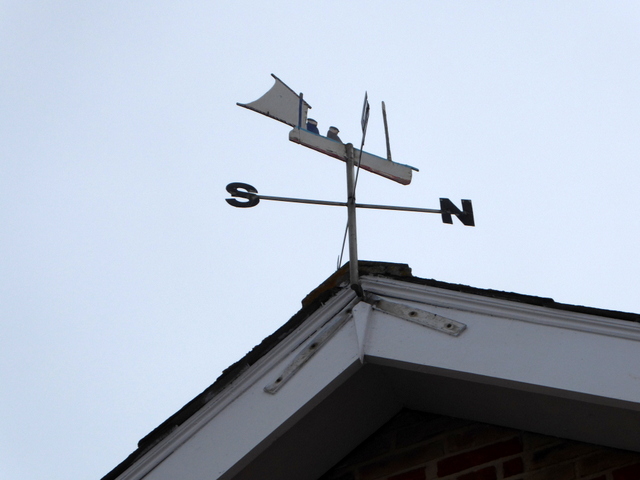
I like this weather vane on top of the Southwold Sailor’s Reading Room

p1000377southwold

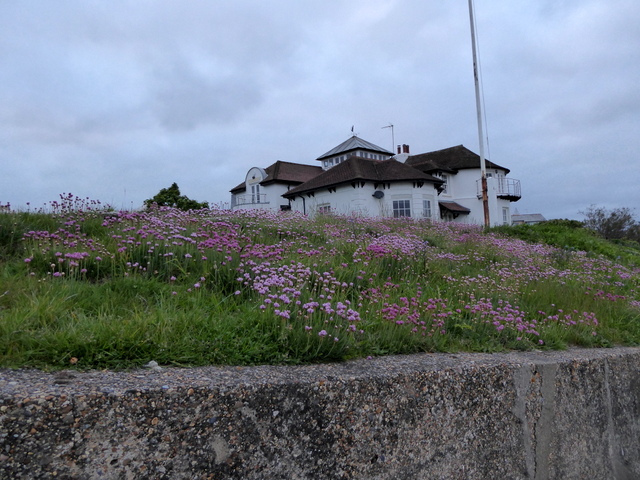
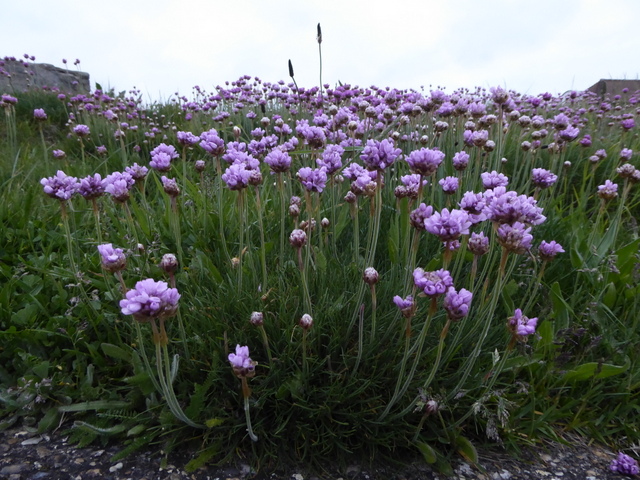
These flowers caught my eye

p1000378southwold

Thrift (Armeria maritima)

ooOOoo

Within a day or so of our trip to Southwold the sun came out again and I was able to find insects to photograph.

p1000392damselfly

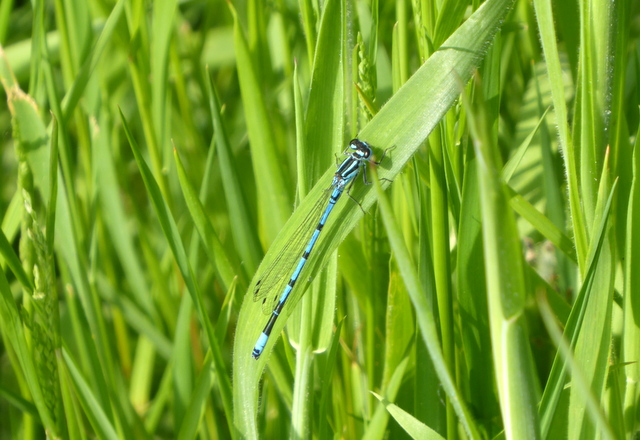
Azure Damselfly (Coenagrion puella)

img_2756damselflies

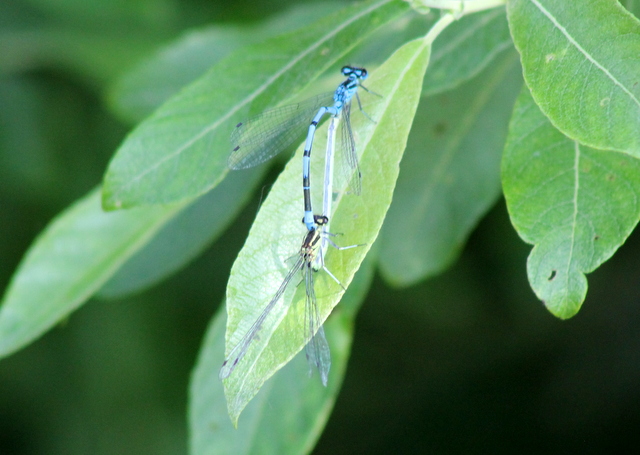
Male and female Azure damselflies

img_2766dragonfly-001

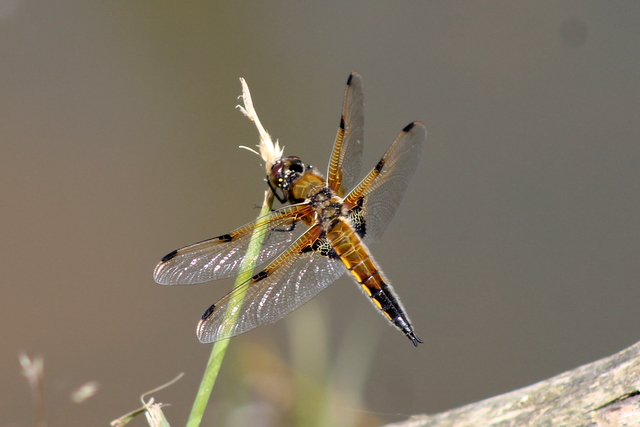
Male Four-spotted Chaser dragonfly (Libellula quadrimaculata)

My field guide says these dragonflies are rather dull but I don’t find them so.

p1000468oedemera-nobilis

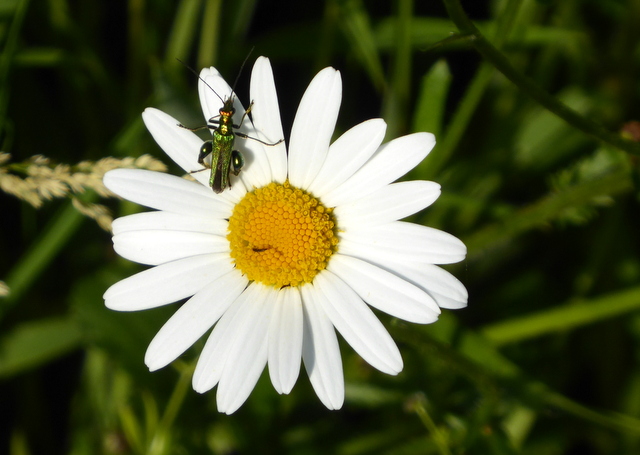
Male Oedemera nobilis.  A beetle that feeds on pollen; only the males have the swollen hind-legs.

ooOOoo

Just a few photos I took towards the middle of June.

p1000475cactus-flowers

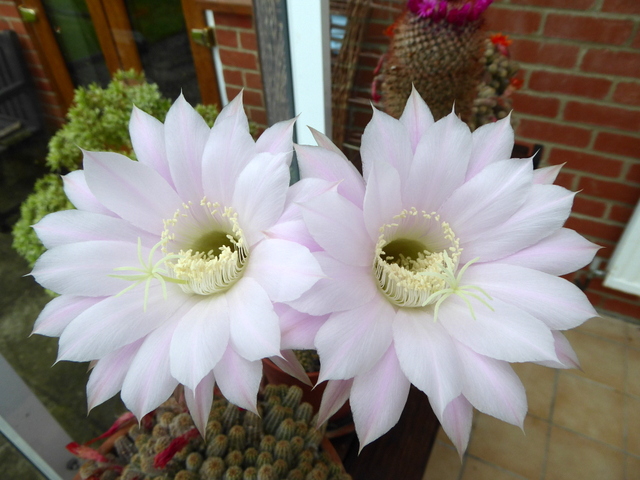
Beautifully scented cactus flowers – Echinopsis oxygona

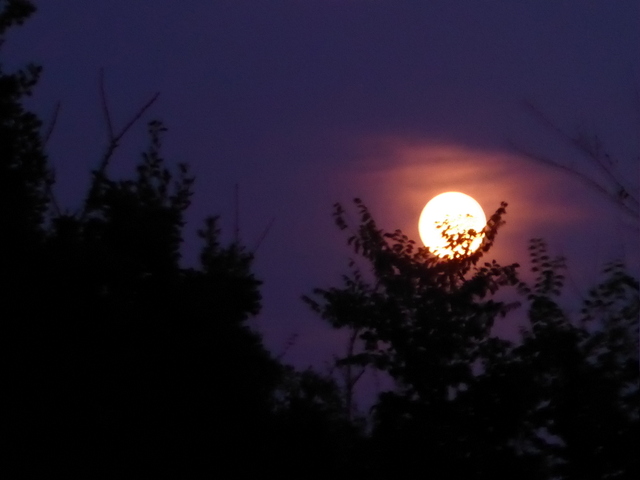
p1000485moon

The moon

And finally a slideshow of a field of Common Poppies (Papaver rhoeas) I saw from the road at Ilketshall St. John this summer.  I wished I could get closer to it!  I think you may also appreciate this link.  It is a wonderful description of where I live and also has praise in it for our Rector who will be retiring next August.

This slideshow requires JavaScript.

My music today is from the Beatles.  Many of you will know why I have chosen this today (though I am a couple of days late as usual!).  I was a student living in Liverpool at the time and heard the news of John’s death as I made my toast for breakfast on the 9th of December.  Thirty-six years ago!  I was surprised later to hear he had been shot on the 8th of December but I had forgotten the time difference.  Listen to the superbly melodic bass playing!

Thanks for visiting!
Share this:

  • Share on X (Opens in new window) X
  • Share on Reddit (Opens in new window) Reddit
  • Share on Pinterest (Opens in new window) Pinterest
  • Share on Facebook (Opens in new window) Facebook
  • Email a link to a friend (Opens in new window) Email
  • Share on Tumblr (Opens in new window) Tumblr
  • Print (Opens in new window) Print
  • Share on Pocket (Opens in new window) Pocket
  • Share on LinkedIn (Opens in new window) LinkedIn
Like Loading...

Highlights from 2016 – Spring

27 Sun Nov 2016

Posted by Clare Pooley in art, Days out, music, plants, Rural Diary, Uncategorized, wild flowers

≈ 58 Comments

Tags

bluebells, flour, mill, mill pond, Minsmere, Pakenham Watermill, sculpture, The Albert Memorial, The Royal Albert Hall, The Victoria and Albert Museum, This is How it Feels Inspiral Carpets, wedding, wild flowers

This, as promised in my previous post, is the first of my ‘highlight’ posts in which I will let you know some of the things we managed to do this year and will provide photos and links when and where necessary.

Just after Easter we went to the wedding of my dear friend Wendy and her husband John’s daughter Jennifer to her fiancé David.  The wedding took place in the lovely church of St David in the village of Groes Faen in south Wales.  We were delighted to be included in their family celebration, just as we had been when Jen’s older sister Vicky (my God-daughter) was married a few years ago.  The reception was at the Pencoed House Estate, a beautiful manor house in lovely grounds.  I was fortunate to be seated next to Wendy’s mother-in-law, Rene; she and her late husband Don had been so kind to me and Alice when my first marriage broke up.  I was so sorry to hear that she died just a few weeks ago.  I had been unable to take any photos at the wedding so was very pleased to receive a thank-you card from Jen and David which had photos from their wedding on it.  I have scanned it and chosen one of the photos but it hasn’t come out very well.

scan_20161124-2

ooOOoo

This next gallery of photos is just a reminder of what we have to look forward to in the  spring!

Bluebell wood
Bluebell wood
Bluebell wood
Bluebell wood
Bluebell wood
Bluebell wood

I love bluebells (Hyacinthoides non-scripta) so I took a little detour on my way home from my mother’s house at the beginning of May so that I could see the flowers just outside the village of Withersdale Street.

ooOOoo

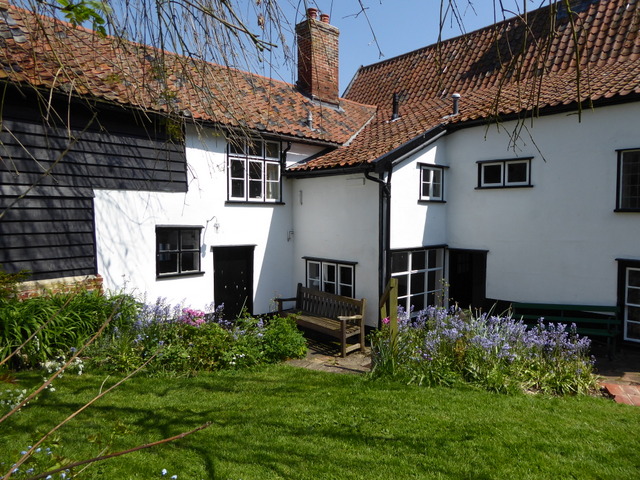
I have mentioned Pakenham Watermill before in my blog.  It is where we go to buy the best wholemeal flour which I use to make bread.

p1000225pakenham-mill

Pakenham Watermill

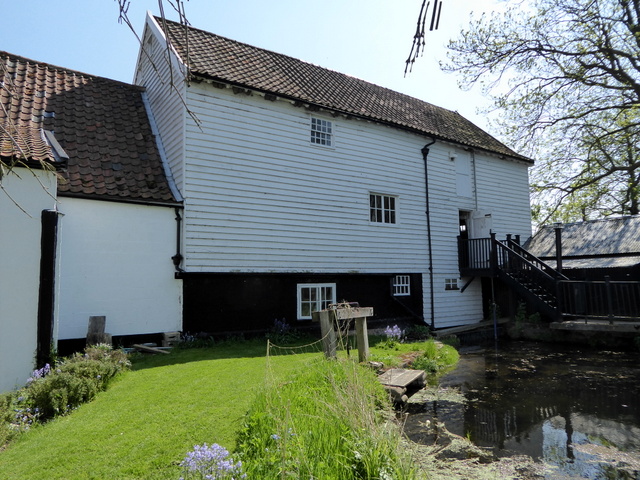
p1000215pakenham-mill

The rear of the building.  We visited on a perfect morning in May.

p1000213pakenham-mill

The mill with mill-pond

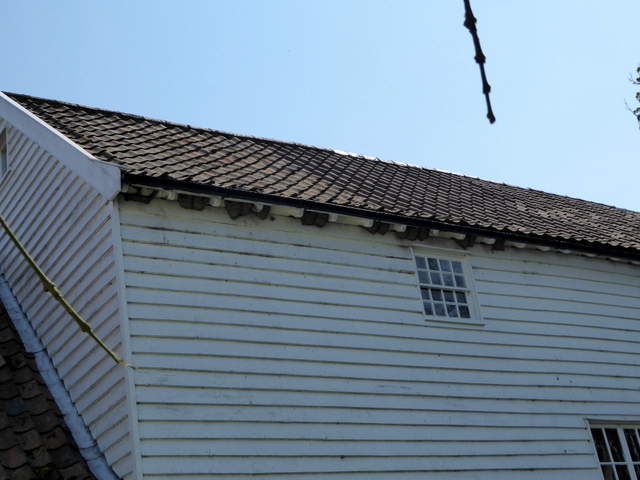
p1000216pakenham-mill

There are lots of House martin (Delichon urbica) nests under the eaves

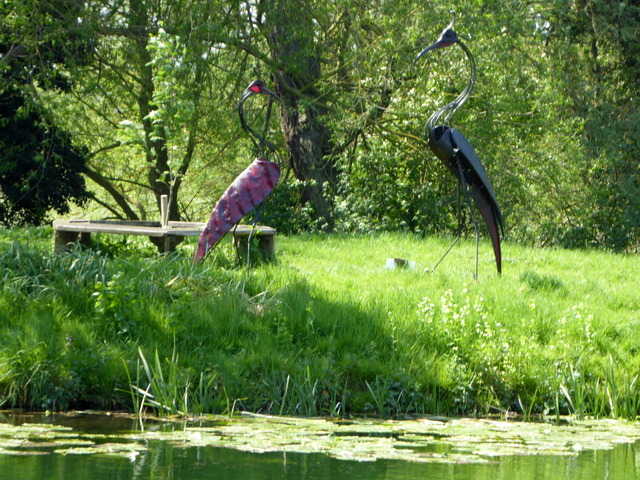
p1000209sculpture-at-pakenham-mill

Bird sculpture in the garden

p1000211pakenham

The mill pond

ooOOoo

At about this time I visited Minsmere RSPB Reserve as I wanted to buy something from their shop.  While I was there I thought I would quickly walk through the woods to see what I could see.

p1000226bluebells-at-minsmere

Bluebells again!

Bluebells
Bluebells
Blue bluebells and white bluebells!
p1000227minsmere-common-vetch

Common vetch (Vicia sativa)

p1000229minsmere-common-storks-bill

Common stork’s-bill (Erodium cicutarium)

I don’t remember ever having seen this flower before despite it being ‘common’.  The seed-heads can be seen next to the flowers and their shape gives the plant it’s name.

p1000233minsmere-changing-forget-me-not

Changing forget-me-not (Myosotis discolor)

The flowers are tiny and very difficult to photograph.  When they first open they are yellow but soon change to blue.  The plant especially likes to grow on sandy soil.

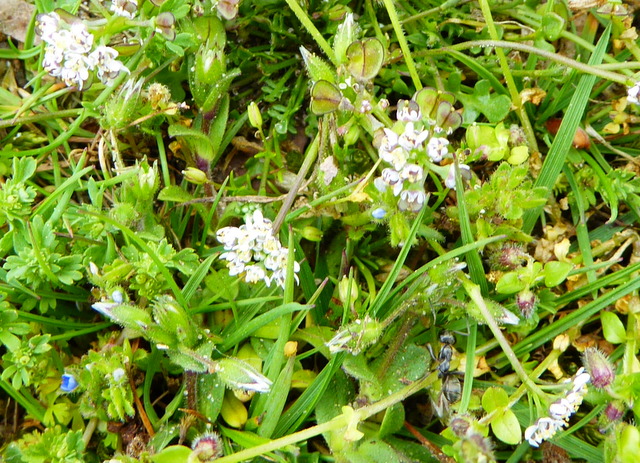
p1000232minsmere-shepherds-cress

Shepherd’s-cress (Teesdalia nudicaulis)

This is another plant I don’t remember having noticed before, but that is not surprising because it is very low growing and not especially exciting to look at.  You can see a wood-ant (10 mm long) towards the bottom right of the photo which gives you some idea of the size of the flowers which are about 2 mm across – two of the four petals of the flower are longer than the other two.  The seeds are heart-shaped and a few can be seen at the top of the photo.  The leaves in the basal rosette are lobed and can also be seen at the top-centre.  Their shape reminds me of pasta servers.

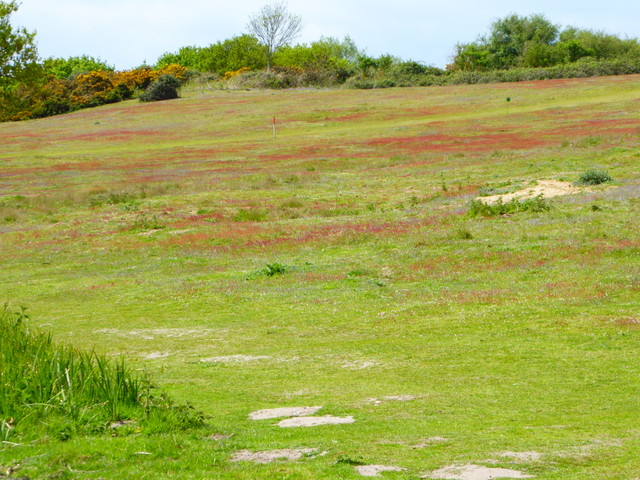
p1000234minsmere-common-sorrel

Common sorrel (Rumex acetosa) creating red patches on the rising ground. Gorse (Ulex europaeus) can be seen flowering in the bushes on the sky-line.

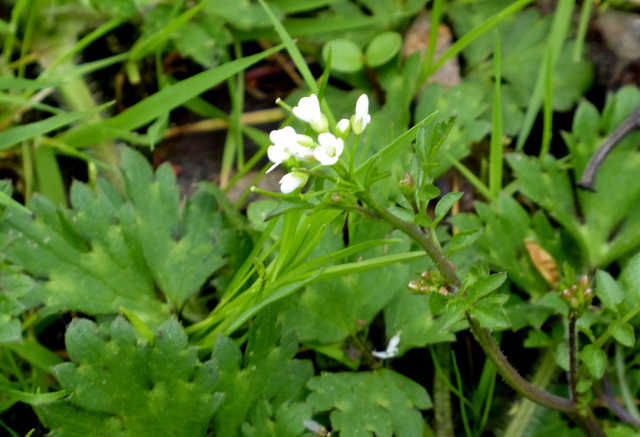
p1000236minsmere-wavy-bitter-cress

Wavy bitter-cress (Cardamine flexuosa) – so-called because it’s stem is wavy rather than straight!

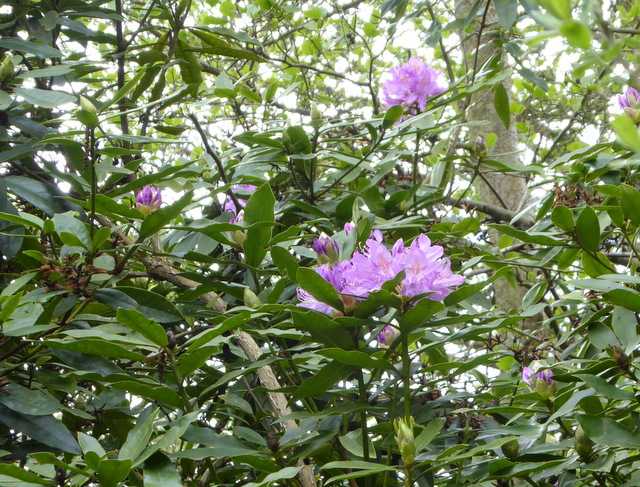
p1000238minsmere

Rhododendron (Rhododendron ponticum)

Rhododendron has naturalised and become invasive in many places.  It is unwelcome as it reduces biodiversity and is very difficult to eradicate because it produces new shoots from its roots.  This link speaks more about the plant.

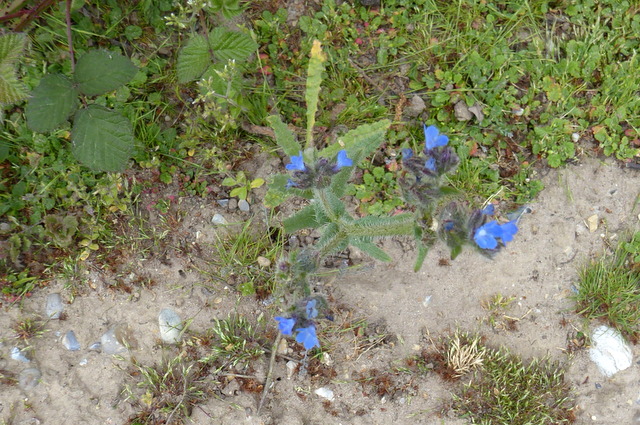
p1000241minsmere-bugloss

Bugloss (Anchusa arvensis)

This plant is very hairy and has interesting wavy-edged leaves.  The flowers are a lovely intense blue colour.

ooOOoo

Elinor wasn’t able to join her art and design group on their trip to London in April so a few weeks later Richard and I took her there ourselves.  We visited the Victoria and Albert Museum and Elinor chose to study the exhibits in the cast works gallery and the sculpture galleries.

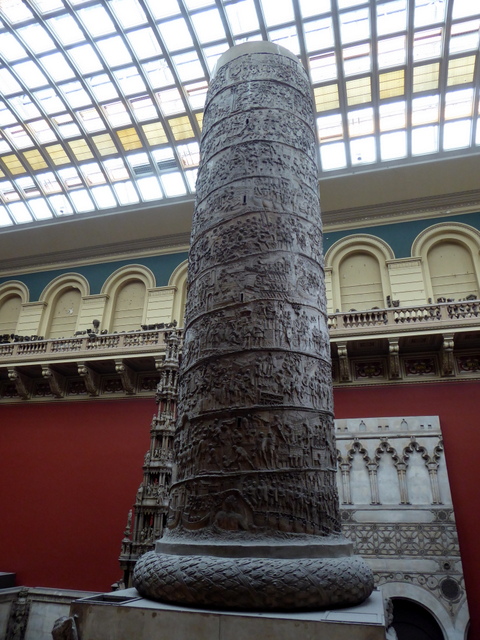
Trajan's column - lower

Trajan’s column – lower

Trajan's column - upper

Trajan’s column – upper

Someone took a plaster-cast of the whole of Trajan’s column!  The column is 30 m / 98 ft tall (with the pedestal it is 35 m / 115 ft tall).  Its diameter is 37 m / 12.1 ft.  This cast is now invaluable to scholars because the original column has become very weathered and the figures cannot easily be studied.

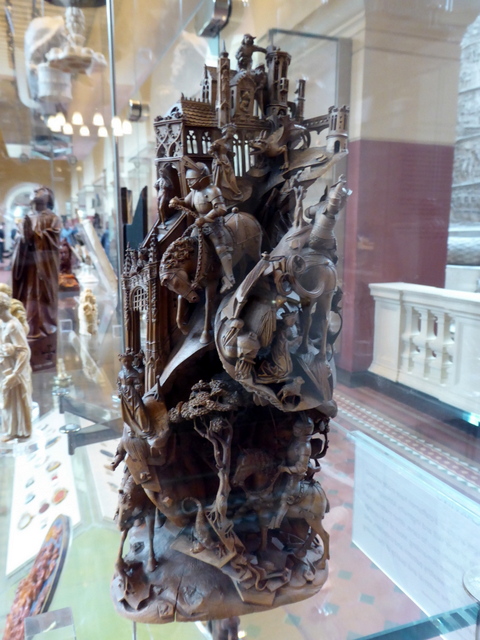
p1000255german-medieval-carving

I love this medieval carving from Germany! The details of the knight’s journey are exquisitely worked. There are trees, people and small creatures, buildings, a dragon and a princess to be rescued! It was difficult to get a decent photo because of the reflections off the glass case.  I also forgot to make a note of the artist and couldn’t find the piece when I went on the museum’s website.

p1000256crving

‘A Bishop Saint’ by Sir Alfred Gilbert 1899.  This bishop’s gentle expression appealed to me very much.

p1000257sculpture

‘The Virgin with the Laughing Child’ probably by Antonio Rossellino ca. 1465.  I could look at this statuette for ever! It is so intimate and loving! Look at the way the mother is holding her little boy on her knee with his leg between her forefinger and middle finger, her other hand on his tummy and his hand on hers.

After leaving the museum we decided to walk to Hyde Park and relax there for a short time before catching our train home.

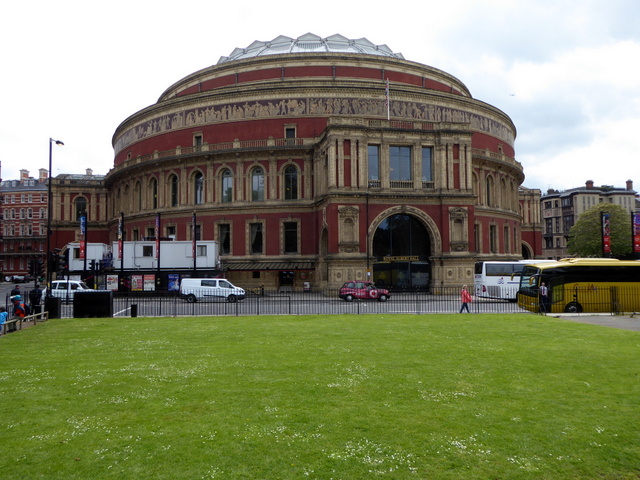
p1000258albert-hall

The Royal Albert Hall – a beautiful building and an excellent concert hall

p1000261albert-memorial

Opposite the Royal Albert Hall is the Albert Memorial

ooOOoo

That’s it for the time being!  I will leave you with my music choice, ‘This Is How It Feels’ by Inspiral Carpets, remembering Craig Gill (drums) who died on Tuesday 22 November 2016

Thanks for visiting!
Share this:

  • Share on X (Opens in new window) X
  • Share on Reddit (Opens in new window) Reddit
  • Share on Pinterest (Opens in new window) Pinterest
  • Share on Facebook (Opens in new window) Facebook
  • Email a link to a friend (Opens in new window) Email
  • Share on Tumblr (Opens in new window) Tumblr
  • Print (Opens in new window) Print
  • Share on Pocket (Opens in new window) Pocket
  • Share on LinkedIn (Opens in new window) LinkedIn
Like Loading...

And Now, The News!

19 Sat Nov 2016

Posted by Clare Pooley in family, music, Rural Diary

≈ 49 Comments

Tags

anxiety, Benjamin Britten's Four Sea Interludes from Peter Grimes, Diary, elderly relatives, family, house improvement, music, retirement, sciatica

This year has been….unsatisfactory.  Nothing terrible has happened.  We are in fairly good health, we are comfortable and very fortunate.  But….almost everything we have tried to do this year has not been straightforward.  There have been delays, cancellations and anxieties.  I think the last update I wrote on our affairs (this is after all a diary blog) – apart from our holidays, a couple of outings and a few posts of things I’ve seen – was in the spring.  I seem to have had less time than ever before for getting things done.

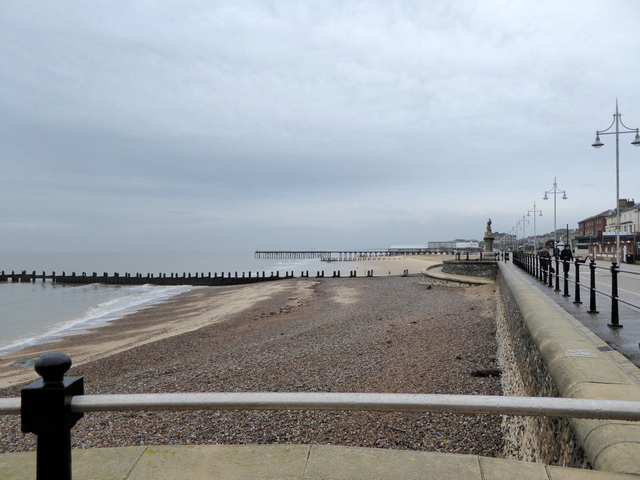
p1010471lowestoft

We visited Lowestoft on Tuesday this week so that Elinor could attend a podiatry appointment. The weather was cloudy and damp but fairly warm for the time of year. This is Lowestoft South Beach

Richard’s first year of retirement was meant to be a year in which we improved our lot.  Retirement after over 40 years of continuous employment was always going to be a bit of a challenge but he decided he was going to see how the first six months went before making any decisions about what he would do with his time.  He has found that he doesn’t miss the work at all though he does miss the social aspect of going out to work.   Living in the country, some miles from the nearest town means that we don’t see people very often and we have to work hard to get any kind of social life – or go without.  He has come to no decision as to whether he takes up a hobby, does voluntary work or any other activity; he has been too busy with the house and driving Elinor about.  He has been a church warden for many years and is a member of our church’s PCC (Parochial Church Council).  He has recently joined our local Parish Council too so he has employment enough!

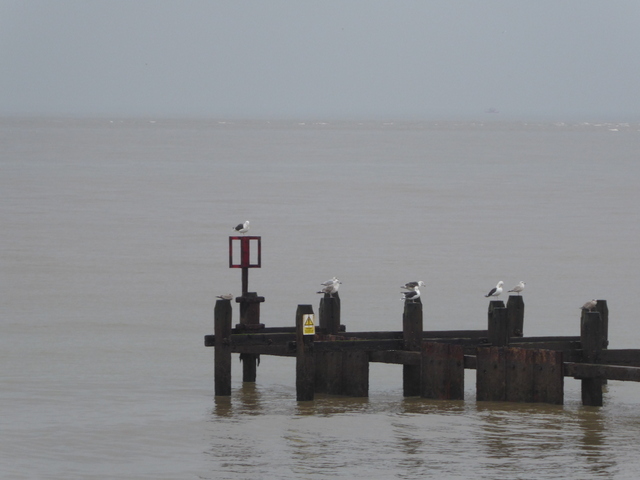
p1010472lowestoft

Gulls on the breakwater

His retirement began with the death and funeral of his mother, which was not a good start.  He has missed her very much; her support of him, her good sense, her understanding.  Our holiday in the Peak District this year was taken at the anniversary of her passing and those of you who have kindly followed this blog for over a year will remember that we heard of her death last year as we arrived in the Peaks all prepared to go and visit her.

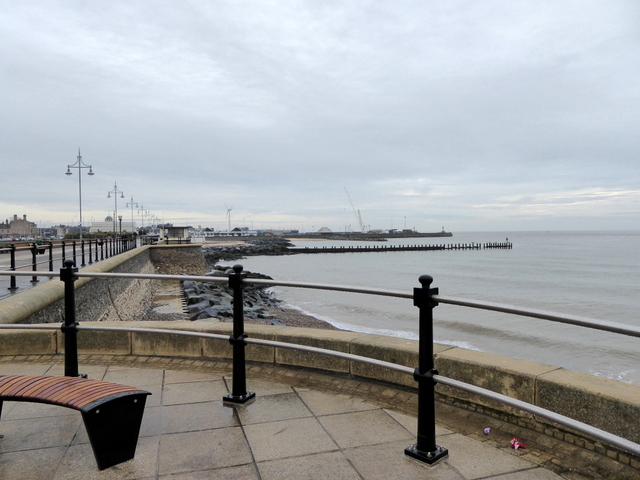
p1010473lowestoft

Looking towards Lowestoft docks

Richard has enjoyed working in our large garden and making a few improvements to it and to our house.  We started the year by getting all our windows and doors replaced.  We have a new summerhouse and a new potting shed.  Our next project was to gut the family bathroom upstairs and the downstairs shower room and get new suites for both rooms and then redecorate.  We asked around for suitable plumbers and a couple were recommended.  We selected one and he came to see us and plans were made.  It was decided that we would also have a water-softener fitted which was done as soon as the downstairs shower room was finished.  And this is where things really went wrong.  We hadn’t been happy with the speed at which the work was done.  Days went by when no-one turned up.  There were delays and more delays.  We said that the upstairs bathroom would have to wait until we returned from Germany as we didn’t want anything left half done while we were away.  The plumber failed to return.  He has made no contact with us and has not responded to any of our messages. We had already paid him, at his request, for the work done to the shower room and for the water softener (we ought to have smelt a rat here!) but there are still a few things that need to be finished off properly in the shower room, ‘snagging’ it is called, which now will never be done except by us, in our non-professional way.  We have a garage full of bathroom fittings and tiles and also some of the plumber’s and his men’s tools and equipment which they haven’t collected.  We must find ourselves another plumber but we cannot face the upheaval until some time in the new year.  I hope the work is done at a time when it isn’t too cold!

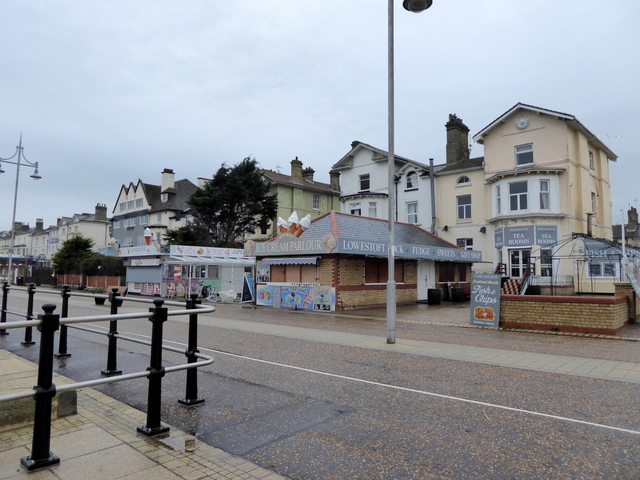
p1010474lowestoft

Off-season seaside resorts are a little sad and quiet

We have just had our gas boiler replaced.  We use propane gas as we aren’t on mains gas here in the country.  It is very expensive but the alternatives, oil or electricity, are not ideal either, both being very expensive too and as we have a gas fire and a gas hob, a gas boiler is the best option for us.  We found a gas fitter who was able to get the work done during the second half of October.  It was to take three days.  In the end it took quite a bit longer as inevitably, problems were found.  The fitter wanted it all done by the end of October as he was going to Las Vegas to celebrate his son’s 21st birthday and he did manage to get his part of the work done by then.  He arranged for an electrician to come and wire the boiler up but the electrician couldn’t come immediately and when he eventually came he had difficulty with the system.  He got it done, so he thought, and we thanked him and sent him on his way but when the boiler switched on the water heated but the pump wouldn’t work.  We called the electrician back and he tried again.  It still didn’t work.  We contacted the fitter when he returned from Las Vegas and he eventually got it going.  It took two and a half weeks to fit the boiler and the weather had been quite chilly!  Fortunately we have an electric immersion heater which meant we still had hot water, a gas fire in the living room and a portable gas fire which we put in the hall at the foot of the stairs.  Elinor got the electric fan heater in her room and the fitter left us another electric fan heater in case of emergency.  We wore lots of layers!

p1010475lowestoft

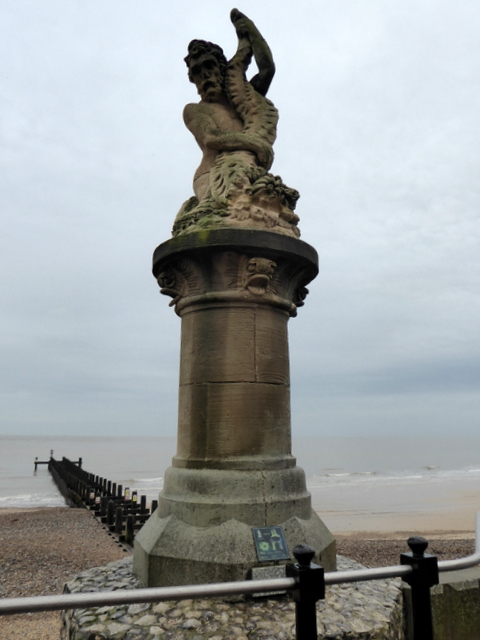
Statue of Triton by John Thomas (1813 – 1862) on the sea front

At the same time as the gas fitter started work Richard began experiencing severe pain in his leg and back.  He saw the doctor who gave him lots of tablets and lots of advice.  He was in agony but manfully struggled on until he found that his leg was becoming numb and it was unable to take any of his weight.  He fell over a couple of times and hurt himself.  We phoned 111 and the medics there passed Richard on to the out-of-hours doctor.  I took Richard to Beccles hospital to see the doctor that evening.  Richard has a partially slipped disc in his back and a trapped sciatic nerve – not full sciatica as he could still feel his foot!  He has still managed to fall over a few times since then – falling down the stairs while I was out with my mother for the day; falling over in the garden while I was out again – but at last the feeling is beginning to return to his leg and the pain has subsided.  The hope is he will gradually be able to do more things and the feeling will come back completely.  He has been told it will take four to six weeks.  At first, he could hardly walk even with a stick and was unable to drive at all.  He can now drive very short distances but the damage is in the leg he uses for the clutch pedal and he doesn’t trust himself to be able to do an emergency stop, to drive in heavy traffic, to drive far.  I am doing all the driving at present.

p1010479lowestoft

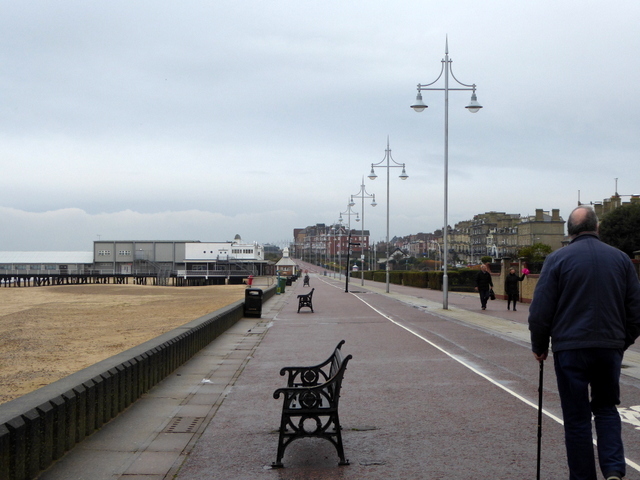
The sea front with Richard and his walking stick

Elinor’s college course since September this year only asks for her to be at college for two and a half days a week.  Richard is at home most of the time now he is retired.  I must admit I miss my alone time and my routines have had to be changed to accommodate these other domestic changes.  One good thing is that Richard and I now (usually) share the duty of driving Elinor to college and I found a little more time to work in the garden this summer!  I still visit my mother a lot and take her shopping and to her many hospital, doctor’s and optician’s appointments.  She is gradually losing her sight and as each month passes I notice she has less energy and is less interested in doing things.  I take her to church once a fortnight; the intervening week I go with Richard to our church.  I miss going to church in my benefice every week;  I miss the people, the churches, the services and the preaching.  But, my mother needs me and I can’t let her down.  I like my mother’s church and I am so pleased to be able to help her do what she needs and loves to do. There used to be members of her church who collected her and brought her home but not any more.  The people who used to do it have either died or moved away and as her church is some miles from where she lives there is no-one now who could easily collect her.

p1010480lowestoft

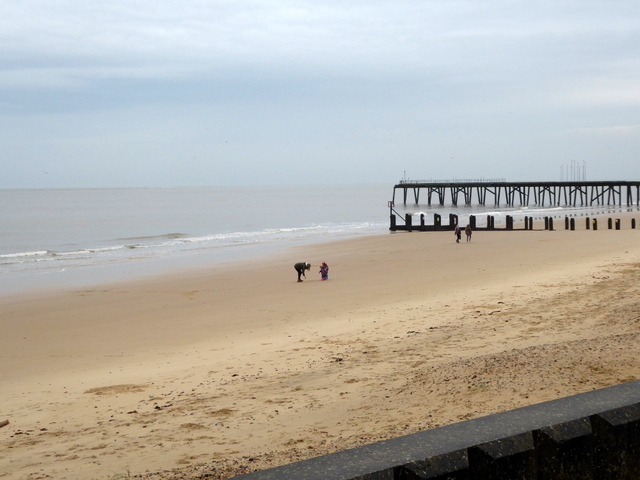
The sandy beach

Elinor did really well at the end of the course she took last academic year.  She re-took her GCSE Maths and managed to get a ‘C’ grade which is what she was hoping for.  She never has to go to a Maths class ever again!  She also got a distinction in her Art and Design course and everyone was very pleased with her.  She applied for and got a place on the two year Graphic Art course she had wanted to go on the year before.  Despite this achievement she is unhappy that yet again she is the oldest one on her course and cannot find anyone interested in being friends with her.  She is lonely.  She has been extremely anxious and has struggled to attend college during the past few weeks and has found that working at home has been difficult too.  She is frightened of making mistakes and that her work might not be of high enough quality.  So she prevaricates and then avoids doing anything and then panics when she realises she is behindhand. It is impossible to convince a chronically anxious person that their fears are unfounded so life at home has been distressing for us all.  There is no escape from the constant pressure of it.  It is our elephant in the room; except it isn’t an elephant as they are too nice.  It is a troll, a gremlin, a monster, a sickness that is almost palpable and it is ever-present.

p1010488fieldfare

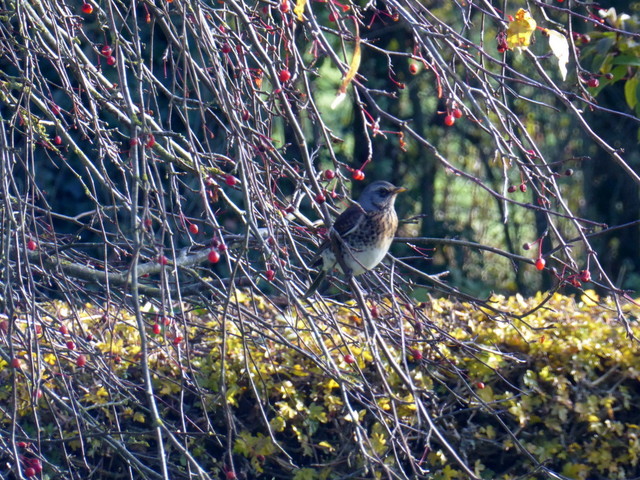
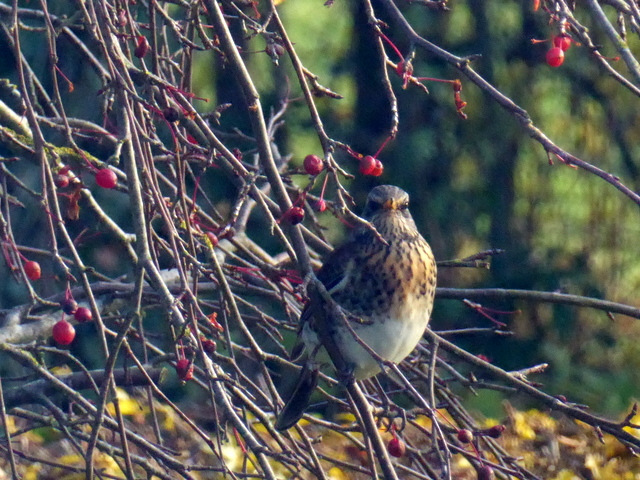
A Fieldfare (Turdus pilaris) eating the tiny crabapples on our species crabapple tree.  The Fieldfares have just arrived for the winter from where they spend the summer in Scandinavia

There is however, a glimmer of light at the end of the tunnel.  We have tried over the years, many different ways to deal with Elinor’s mental health issue.  In our ignorance at first, we attempted the stern attitude.  Well, that failed spectacularly.  We then saw many different therapists who tried countless different methods of finding out why Elinor is as she is and then attempting to help her by getting her to talk about things, them talking to her about things, giving her Cognitive Behavioural Therapy and oh, all sorts of therapies.  Last winter we even resorted to drugs at the insistence of her GP (family doctor).  The side effects were awful and it took until the summer for her to stop getting flashbacks and nightmares.

p1010490fieldfare

The Fieldfare again. They are beautiful and fairly shy birds.

A couple of months ago my hairdresser told me that she was seeing an acupuncturist because of depression and anxiety.  The affect on her health and happiness had been astounding and she was feeling better than she had for years.  She had had regular appointments at first but at the time of talking to me about it she was only going back now and again for ‘top-ups’.  This got me wondering if it would be something that Elinor could try.  I carefully spoke to Elinor about it but she refused to contemplate the thought of someone sticking needles in her.  I tried again two weeks ago when Elinor was tearful and desperate for some kind of relief.  She said she might be willing to think about it.  She thought, and ten days ago she thought we might do some research into it.  She then agreed that it was something she would be willing to try… but those  needles..!  On Thursday last week while Elinor was in college for her half day I went to see my hairdresser to ask for the name of her acupuncturist.  By a happy chance this lady was having her hair done at that moment and agreed to talk to me.  I have made an appointment for Elinor to see her next week.  We will see what happens.

p1010386toadlet

A small Common toad (Bufo bufo) hitching a ride in the wheelbarrow

Alice, my elder daughter who lives in Sheffield, has directed her first play.  It was a great success and Alice enjoyed the experience but found it exhausting.  We thought she would need a rest from her drama group for a while but she tells us she ‘accidentally’ auditioned for their next play and got cast!  Can anyone explain how one can accidentally audition for a play?

p1010388scabious

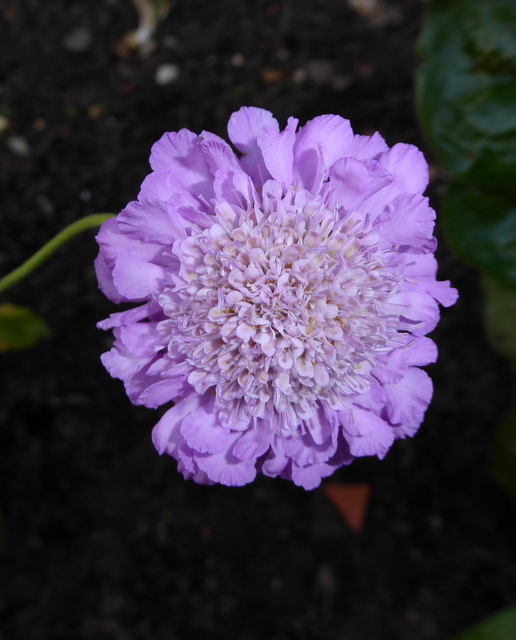
A Scabious flower from the garden photographed in October

She had become unhappy living in the house she shared with a few other young people – they were fine but the landlady was awful – so she gave a month’s notice and found another house with a room to let and moved in at the beginning of this month.  She has bi-polar disorder and if she gets over-tired or anxious her health deteriorates.  The play and then moving house caused her to be very tired and quite anxious so she did feel under-the-weather for a while.  She applied for another six-month temporary job at a higher grade in the university library department where she works, got an interview last week and has been successful!  She hopes to start the job at the beginning of next month.  Yet again it is only a part-time job and is only for six months but the money is better than what she gets at present and one must never look a gift-horse in the mouth – as they say.

p1010457rose-hips

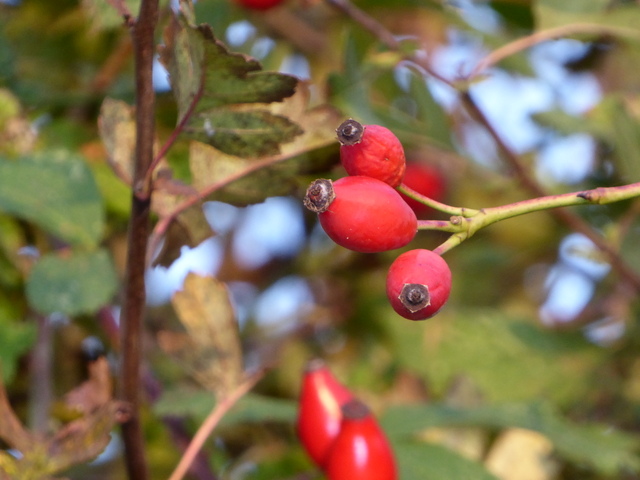
Dog-rose hips (Rosa canina)

There we are.  A resumé of most of the events of the past year with many gripes and groans included.  What I intend doing is to post a few photographic highlights of the past six months (yes, there were a few highlights!) during the next few weeks.  I hope to intersperse these with some current affairs on the approach to Christmas.  Whether I manage any of it, who can tell!

p1010464hawthorn

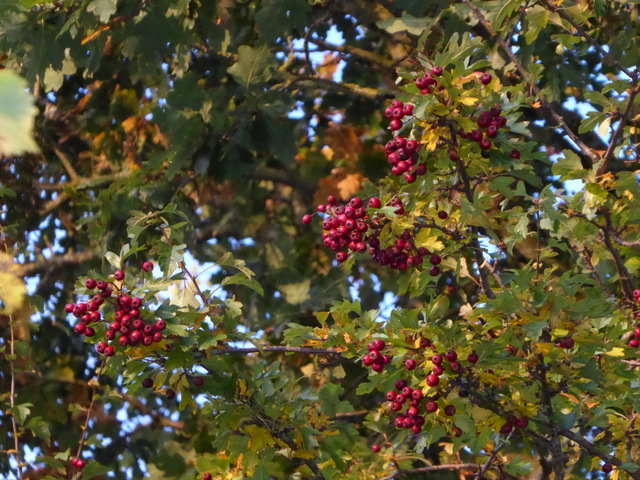
Hawthorn berries (Crataegus monogyna)

I leave you with my music selection which is the Four Sea Interludes from Britten’s opera ‘Peter Grimes’.  Benjamin Britten was born in Lowestoft and lived for many years a few miles further south along the coast at Aldeburgh.  I love the music from Peter Grimes and these interludes give a taster of the opera as a whole but without the singing!  The four interludes are entitled ‘Dawn’, ‘Sunday Morning’, ‘Moonlight’ and ‘Storm’ and the playing time is about 17 minutes.

When we moved to Somerset for 18 months twelve years ago I was very homesick and I listened to this music a lot while we were there to remind me of the coast I love.  Looking through the comments on the different recordings on Youtube I find I am not the only person to find this music, especially ‘Dawn’, so evocative of the Suffolk coast and the North Sea.

Thanks for visiting!


Share this:

  • Share on X (Opens in new window) X
  • Share on Reddit (Opens in new window) Reddit
  • Share on Pinterest (Opens in new window) Pinterest
  • Share on Facebook (Opens in new window) Facebook
  • Email a link to a friend (Opens in new window) Email
  • Share on Tumblr (Opens in new window) Tumblr
  • Print (Opens in new window) Print
  • Share on Pocket (Opens in new window) Pocket
  • Share on LinkedIn (Opens in new window) LinkedIn
Like Loading...

Ramshaw Rocks

07 Mon Nov 2016

Posted by Clare Pooley in Days out, holidays, plants, Rural Diary, walking

≈ 48 Comments

Tags

heather, hills, Peak District, Ramshaw Rocks, Rosebay Willowherb, walking

The day following our climb up Hen Cloud was very wet and chilly.  We did a little shopping and visited the Book Barn at Brierlow Bar where we both found some interesting books to buy.  We spent the rest of the day resting and reading.  Richard was feeling unwell as he often does on a Saturday which is when he takes a once-weekly tablet for his osteo-porosis.

The next day was our last full day in the Peak District.  It began with rain but by lunchtime the weather was beginning to brighten up.  We went into Leek and indulged in some more oatcakes and on our return to the caravan we were pleased to see that the awning was dry and so we emptied it and took it down while we could.   We drove to Ramshaw Rocks and took our last walk in the Peaks this year.

p1010215ramshaw-rocks

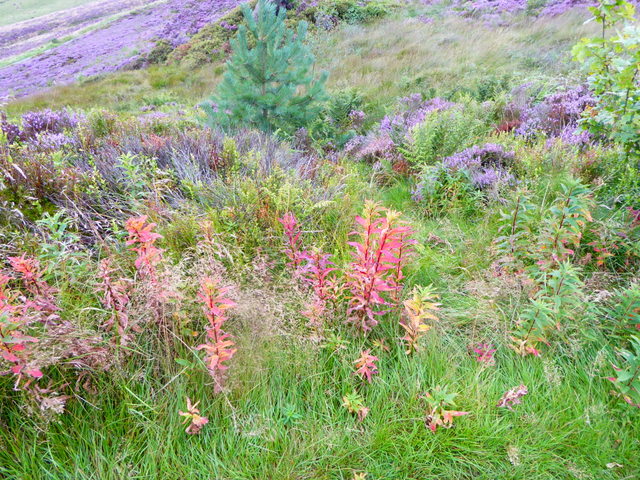
I had to take a photo of the colourful plants we saw at the beginning of our walk

The Rosebay Willowherb (Chamerion angustifolium) had started to change colour because of the cooler temperatures.  The bright green grass, the cooler green of the fir tree, the purple heather and the bright pink of the willowherb looked so good together.

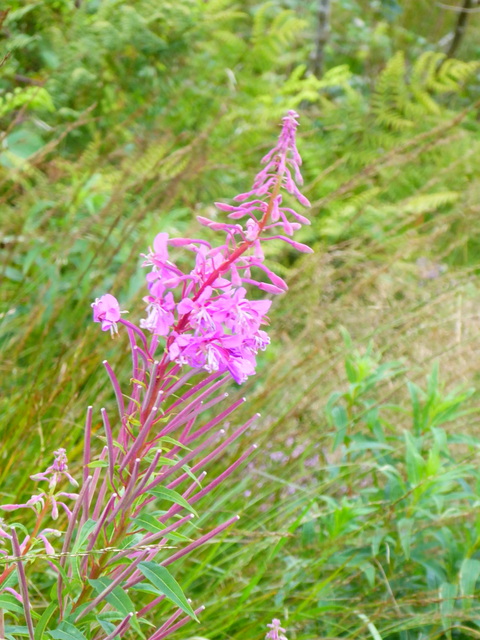
p1010216rosebay-willowherb

There was still some Rosebay Willowherb in flower

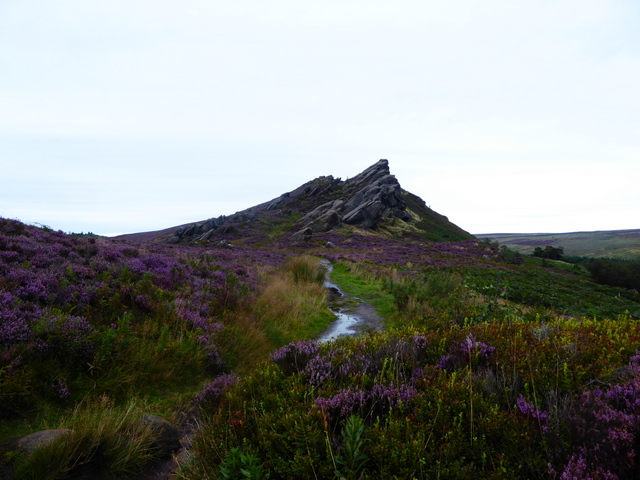
p1010217ramshaw-rocks

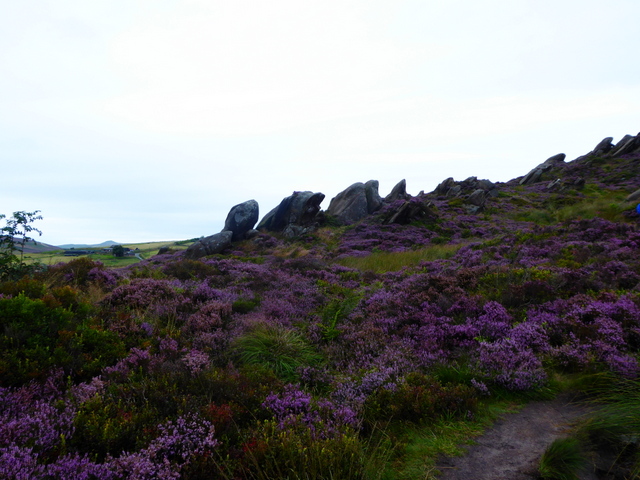
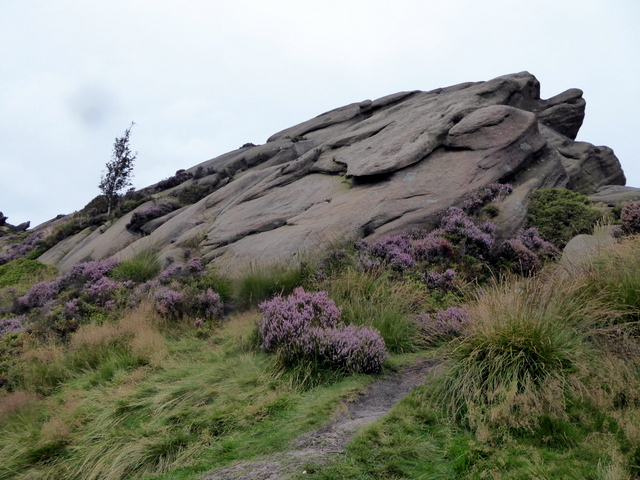
Ramshaw Rocks

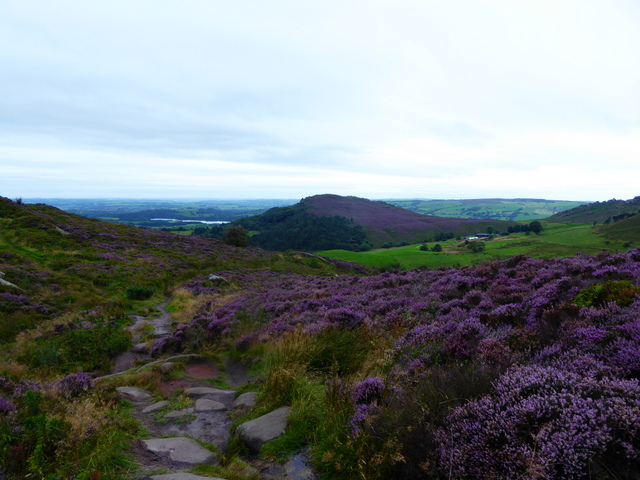
p1010218ramshaw-rocks

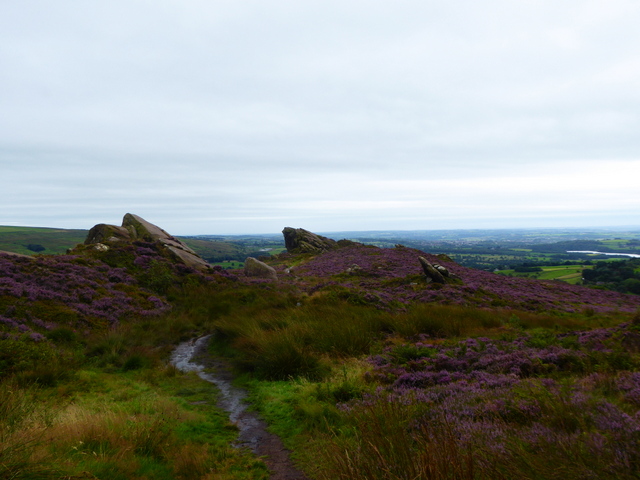
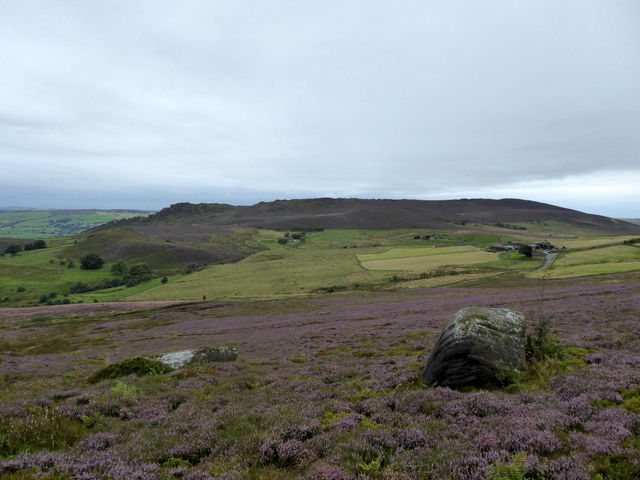
The purple hill in the centre of this photo is Hen Cloud where we had climbed a couple of days before

p1010219ramshaw-rocks

I love the way these limestone rocks have been eroded by wind and rain

p1010220ramshaw-rocks

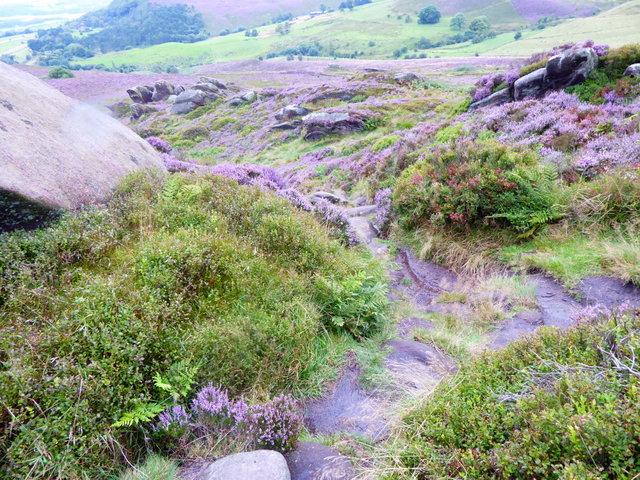
The path was a little wet after all the rain we had had.

p1010221ramshaw-rocks

Ramshaw Rocks

p1010222ramshaw-rocks

Very strange!

p1010223ramshaw-rocks

The path

p1010224ramshaw-rocks

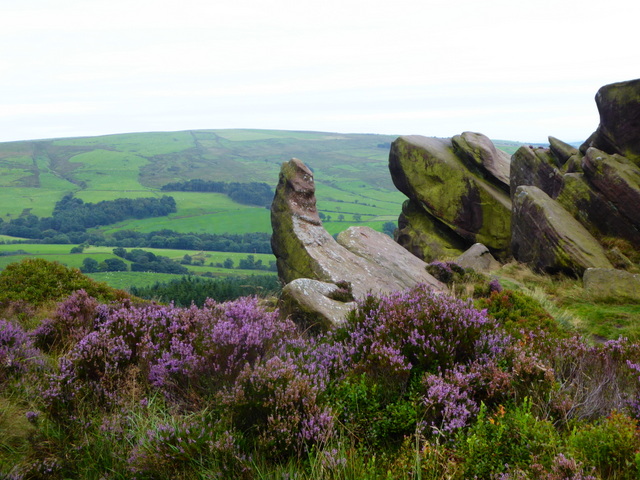
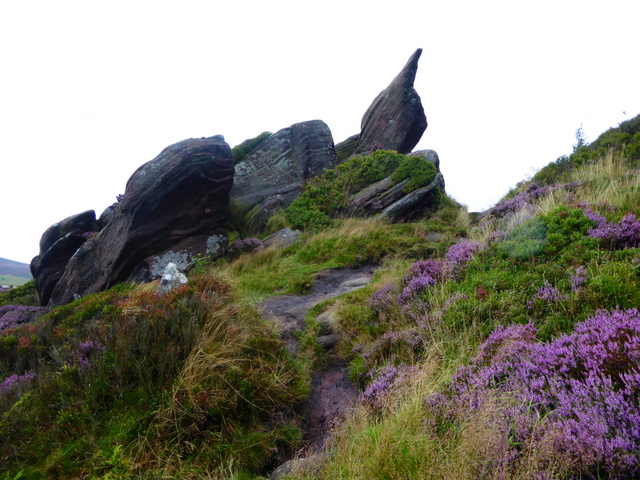
I always think this looks like a pointing finger

p1010225ramshaw-rocks

Ramshaw Rocks

There was very low light and the rain was never far away during the whole of our walk.

p1010226ramshaw-rocks

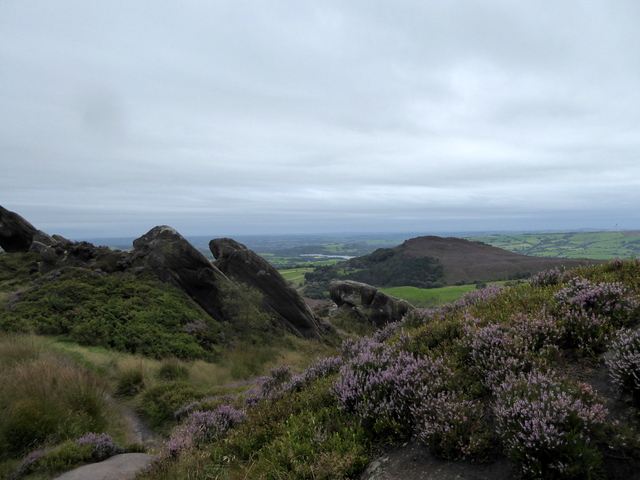
Looking towards Hen Cloud again

p1010228ramshaw-rocks

Another view from the rocks

p1010230ramshaw-rocks

Richard found a pleasant place to sit. Underneath him was a shelter from wind and rain. I can imagine that sheep would like it here in the winter.

p1010232ramshaw-rocks

Looking down to the road beneath.

p1010233ramshaw-rocks

Ramshaw Rocks

p1010234ramshaw-rocks

I call this rock the Top Hat. Those of you who know the 1995 TV adaptation of Pride and Prejudice with Jennifer Ehle and Colin Firth may recognise this rock.  

We returned to the car and went back to out caravan to spend our last night away from home.  The next morning we set off at 6.00 am to travel to Sheffield to collect Elinor before Alice set off for work at 8.00 am.  We took her back to Blackshaw Moor, collected the caravan and went home.

Thanks for visiting!
Share this:

  • Share on X (Opens in new window) X
  • Share on Reddit (Opens in new window) Reddit
  • Share on Pinterest (Opens in new window) Pinterest
  • Share on Facebook (Opens in new window) Facebook
  • Email a link to a friend (Opens in new window) Email
  • Share on Tumblr (Opens in new window) Tumblr
  • Print (Opens in new window) Print
  • Share on Pocket (Opens in new window) Pocket
  • Share on LinkedIn (Opens in new window) LinkedIn
Like Loading...

Rain Almost Stops Play

01 Tue Nov 2016

Posted by Clare Pooley in Days out, holidays, Rural Diary, walking

≈ 44 Comments

Tags

good food, Hen Cloud, Meerbrook, Peak District, Rain, Ramshaw Rocks, The Lazy Trout, The Roaches, Tittesworth Water, views, walking

We woke on the fourth full day of our holiday to thick cloud and while we ate our breakfast we heard the first raindrops on the roof of our caravan.  We spent a little time tidying and cleaning the caravan and then drove into town to do some shopping in the supermarket.  It was very wet by the time we had finished so we were glad to get back and have a hot cup of coffee.  We had arranged to have a meal with Richard’s brother Chris and it was booked for 1.30 pm at ‘The Lazy Trout’ in Meerbrook, a village a few minutes drive away.  We set off at 1.15.

Photograph borrowed from the internet.

My brother-in-law arrived shortly after we did and we enjoyed an extremely pleasant meal in this very welcoming place.  If anyone is in the area I would heartily recommend the food – it is delicious!

We had thought we might have a walk round Tittesworth Water after our meal but the rain was still heavy so we returned to our caravan for hot drinks and a chat.  Chris stayed with us until 6.30 pm by which time the rain had stopped.  Richard and I decided not to waste a nice evening and so drove to Hen Cloud and did our once yearly clamber up to the top.

p1010201view

Looking towards Tittesworth Water from where we parked the car.

p1010202ramshaw-rocks

Looking over the wall towards The Roaches

p1010203hen-cloud

Hen Cloud

p1010204hen-cloud

Hen Cloud again

p1010205hen-cloud

Looking East from halfway up the hill.  Ramshaw Rocks are on the left of the photo

p1010206hen-cloud

Looking towards Ramshaw Rocks from even further up Hen Cloud

p1010207hen-cloud

View down to the road and beyond to Tittesworth Water from the top of Hen Cloud. We noticed more bad weather approaching!

p1010208hen-cloud

Definitely more rain on the way!

p1010209hen-cloud

Threatening clouds

p1010210hen-cloud

It still didn’t look too bad in this direction

We decided to get back to the car before the rain arrived.

p1010211hen-cloud

One last look at the reservoir…

p1010212hen-cloud

…and at the views from the top

p1010213hen-cloud

We would have preferred to have stayed up at the top for much longer but the sensible thing to do was to get to the bottom before the rain caused the rocks to get slippery and the low clouds to lessen visibility.  We were surprised to see a group of young boys being taken climbing up the Roaches as we got to the bottom of the hill.  By this time it was about 8.00 pm and the thick cloud was making it very dark.

We were back at our caravan before the rain began again.

To be continued…

Thanks for visiting!
Share this:

  • Share on X (Opens in new window) X
  • Share on Reddit (Opens in new window) Reddit
  • Share on Pinterest (Opens in new window) Pinterest
  • Share on Facebook (Opens in new window) Facebook
  • Email a link to a friend (Opens in new window) Email
  • Share on Tumblr (Opens in new window) Tumblr
  • Print (Opens in new window) Print
  • Share on Pocket (Opens in new window) Pocket
  • Share on LinkedIn (Opens in new window) LinkedIn
Like Loading...

The Cat and Fiddle

25 Tue Oct 2016

Posted by Clare Pooley in Days out, holidays, plants, Rural Diary, walking, wild flowers

≈ 70 Comments

Tags

Bird's-foot Trefoil, Cat and Fiddle pass, Cat and Fiddle pub, Cladonia pleurota, Common Cottongrass, Common Hawker dragonfly, common knapweed, common ragwort, conifer plantation, Crosswort, Derbyshire Bridge car park, driven grouse shooting, eyebright, Goyt Valley, harebell, Harlequin ladybird, heath bedstraw, heather, Kestrel, Knotted Pearlwort, Lesser Stitchwort, Lousewort, Meadow Crane's-bill, milestone, Mountain Pansy, old coach road, Peak District, River Goyt, Shining Tor, Sneezewort, tormentil, Upright Hedge Parsley, walking, yarrow

On the third day of our stay in the Peak District we decided on a slightly longer walk than usual and took a picnic with us.  We drove towards Buxton but just before entering the town we took the A54 road off to the right and then a minor road off that road and parked the car in the Derbyshire Bridge car park.  This is a pleasant spot and is used as a picnic area.

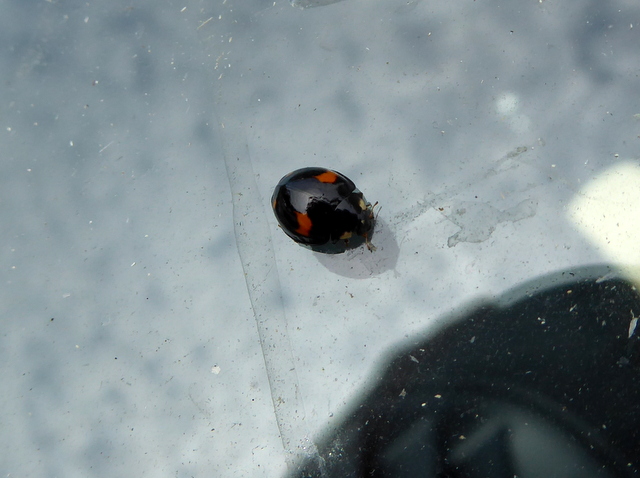
p1010128ladybird

A ladybird on our rather dusty windscreen

p1010129ladybird-larva

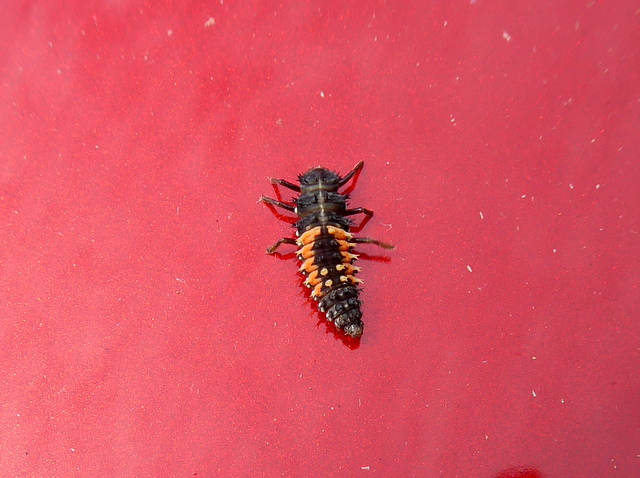
A Ladybird larva on the car.

Unfortunately, both ladybird and larva are Harlequin Ladybirds which have now outstayed their welcome in this country.  I wish that those in authority were more wary about using introduced insects to control other insects.

We were delayed at the beginning of our walk by the car beeping an alarm whenever we tried locking the doors.  After disturbing a couple who were having a picnic with their little grandson we decided that we ought to look at the car’s manual.  We found that the car was telling us that we were locking the spare key inside the car and that it would rather we didn’t.  I took the key out of my handbag which I had left in the boot and we were then able to start our walk.

p1010132infant-r-goyt

The first part of the walk was along a path beside the infant River Goyt.

p1010133dragonfly

I saw this Common Hawker dragonfly (Aeshna juncea). It was typically wary and didn’t settle where I could get a good photo of it.  Only its head and wings and a little part of its thorax/abdomen can be seen here.

p1010134flower

Upright Hedge Parsley (Torilis japonica)

p1010137river

The Goyt was running along merrily

p1010138flowers

Lesser Stitchwort (Stellaria graminea)

p1010135flowers

Bird’s-foot Trefoil (Lotus corniculatus) and Upright Hedge Parsley

p1010140river

A bridge across the water

p1010142view

A view of the surrounding moorland

This is a typical sight in moorland where driven grouse shooting takes place.  The patches on the hillside show where the heather has been burned to promote new growth shoots for the grouse to feed on.   I have recently signed a petition to have this sport banned as I think that instead of conserving wildlife these estates try to eradicate any creatures that may be a threat to their grouse.  All raptors, including the scarce Hen Harrier and Golden Eagles are considered a threat and are regularly shot or poisoned illegally by some, not all, gamekeepers employed on some of these estates.  In Scotland hundreds of thousands of Mountain Hare are culled every year.  I’ve signed another petition about this too!  I feel very strongly about this as you no doubt have realised.

p1010143heather

The Heather (Calluna vulgaris) was in full bloom

p1010145path

The path across the moor

At this point we turned onto another path which rose up towards a plantation.  We entered the forest through a gate.

p1010146path

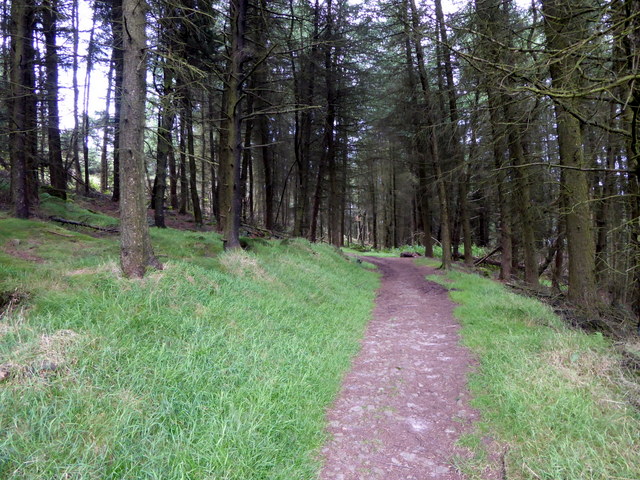
The forest path

p1010147wall

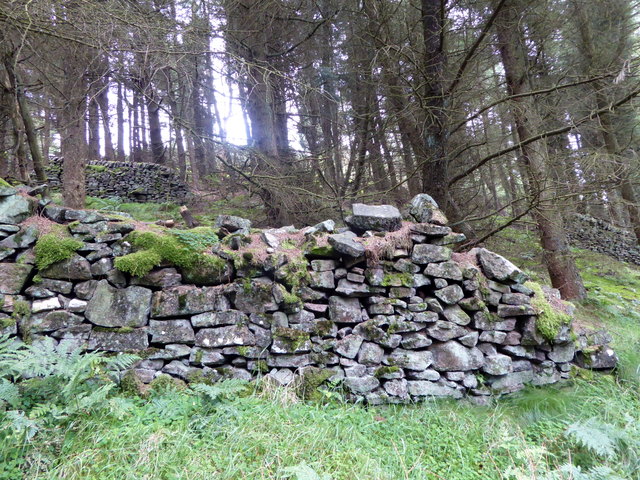
Inside the forest were walls and the remains of buildings

This reminded me of the stone walls that Allen from New Hampshire Garden Solutions  finds in his local forest.  In this case the land that was originally farmed for sheep was subsequently acquired by a company or organisation that planted conifers but didn’t bother dismantling the walls.

p1010150weir

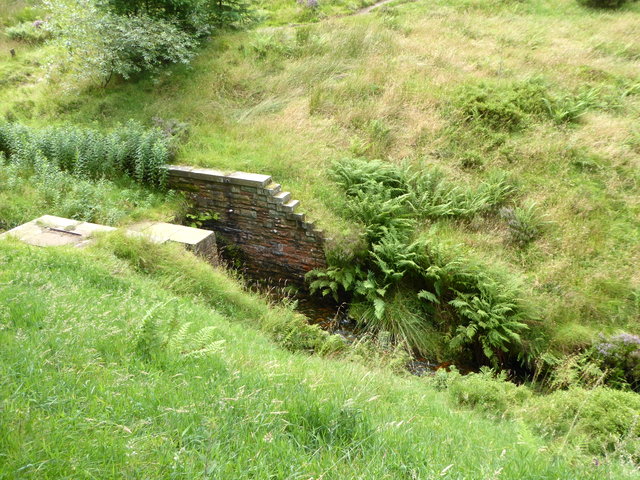
A weir we found halfway through the plantation

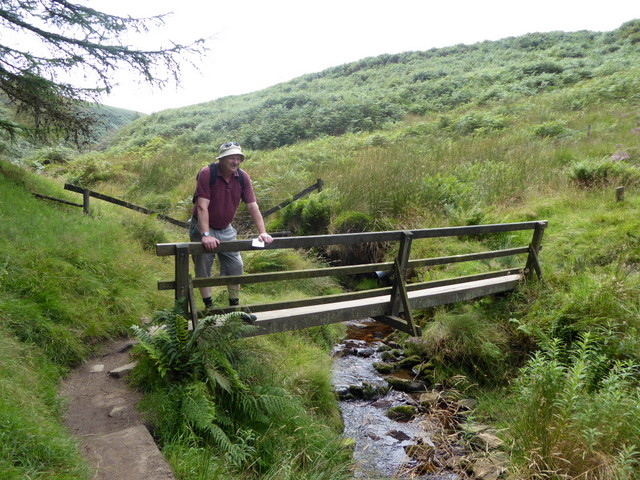
p1010151bridge

Richard on the bridge over the river

p1010152bridge

The simple bridge

p1010153river

The barrier just up-stream from the bridge and weir

p1010155flower

Lousewort (Pedicularis sylvatica)

This was a flower I had never seen before.  It is very small and the leaves are tiny!  It is semi-parasitic on other plants’ roots.

p1010156view

We could see one of the local reservoirs from the path that went up by the side of the plantation.

p1010157path

Our path….

p1010158path

…. got rougher and steeper

p1010161lichen

I think this lichen may be Cladonia pleurota

p1010163plant

Heath Bedstraw (Galium saxatile)

p1010164insect

I cannot identify this tiny bug. It marched purposefully across this rather bleak landscape.

The three photos above were taken while we rested and ate our lunch.  This last part of the walk I found exhausting as it was a continuous uphill climb and on very uneven and rough paths with large, loose rocks to walk over.

p1010166view

This is the view I saw when I looked up from my seat on a rock

The weather was cloudier and cooler than earlier in the week.  We were glad of this!

p1010167cotton-grass

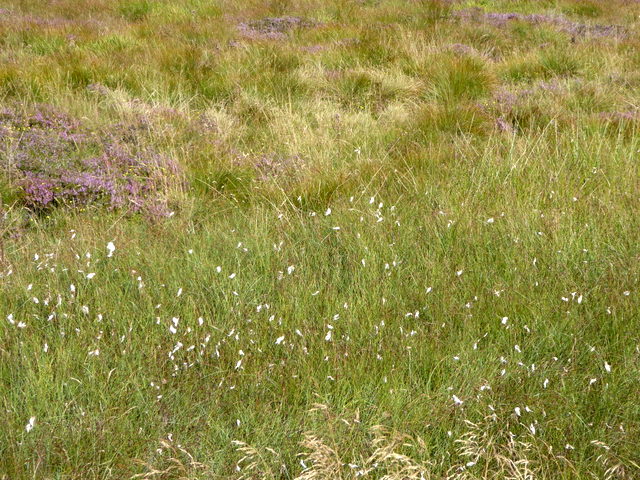
There was still plenty of late Common Cottongrass (Eriophorum angustifolium) in amongst the Heather

p1010168lichen/slime mould

This might be a slime mould but I am not sure!

View from the path
View from the path
View from the path
View from the path
p1010171kestrel

A Kestrel (Falco tinnunculus) hovering high up in the sky

p1010172lichen

A veritable garden of lichen and moss on top of a stone wall.  It’s a pity the photo isn’t any clearer.

Shining Tor from a distance
Shining Tor close up

We had thought we might go up Shining Tor but we changed our minds when we had got to the top of the stony path.  We were too tired.  Why is it called ‘Shining Tor’?  I don’t know.

p1010176view

This is another view from where we were standing.

The visibility wasn’t great and the distant hills were lost in haze but the sky above us was clear and blue now.  We began to descend towards the Cat and Fiddle pass (I expect you were wondering why this post was called Cat and Fiddle) and the Cat and Fiddle pub.

p1010177pansy

An out of focus photo of a wild pansy growing next to the path. I think it may be a Mountain Pansy (Viola lutea)

p1010178pansy

More pansies

p1010179pansies

and even more pansies!

p1010180pansies

Just one more!

p1010181view

I eventually looked up and noticed the view. The road you see in the middle distance is the Cat and Fiddle Pass.

Harebells ( Campanula rotundifolia)
Tormentil (Potentilla erecta)
p1010184cat-and-fiddle

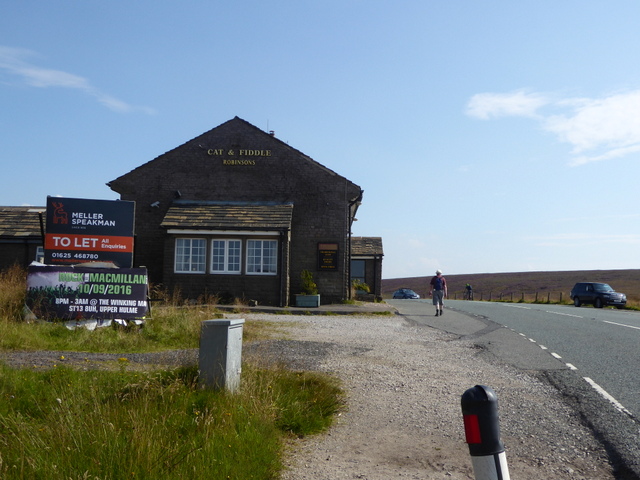
The Cat and Fiddle pub (on the right of the photo)

p1010185cotton-grass

I saw more Cottongrass next to the path but this was definitely past its best!

p1010187mile-stone

I then saw an interesting-looking stone just to the left of the path

p1010186mile-stone

On closer examination I found it was an old mile-stone and realised that the path we had been walking on since Shining Tor was part of the old coach road.

p1010188old-road

I looked at the path and saw that it looked very much like an old road. Richard is ahead of me here as usual and is near where the path joins the new busy road.

p1010189orchid

I found a very late orchid in the grass. It was faded and I couldn’t identify it.

p1010190cat-and-fiddle

We were disappointed to discover that the pub was shut and we weren’t to get a drink after all.

It does seem sad that the place that the pass was named after should be shut and empty.  We walked past the pub.  Through the windows we could see everything had been left as it was on the day it had shut months before.  There was even a menu board extolling the virtues of a meat pie!

We soon turned off the main road onto a narrow road that would eventually bring us back to the carpark.  I saw many different plants on the way.

p1010191flowers

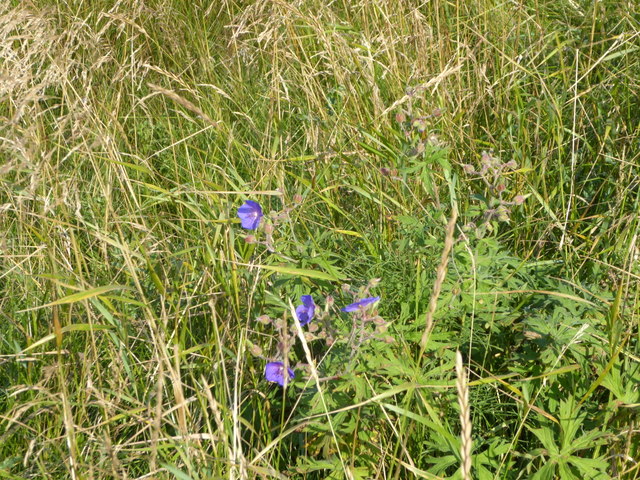
Meadow Crane’s-bill (Geranium pratense)

p1010192cotton-grass

Lots more Common Cotton Grass

p1010193flowers

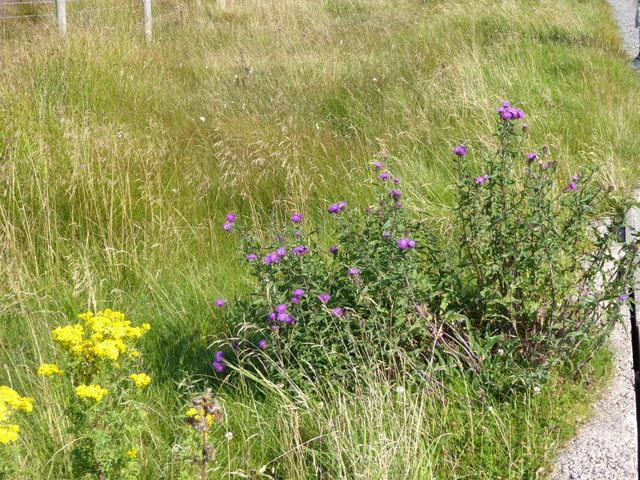
Common Ragwort (Senecio jacobaea) and Common Knapweed (Centaurea nigra)

p1010195flowers

Yet another poor photo I’m afraid! This is another flower I had never seen before – Knotted Pearlwort (Sagina nodosa)

p1010197flower

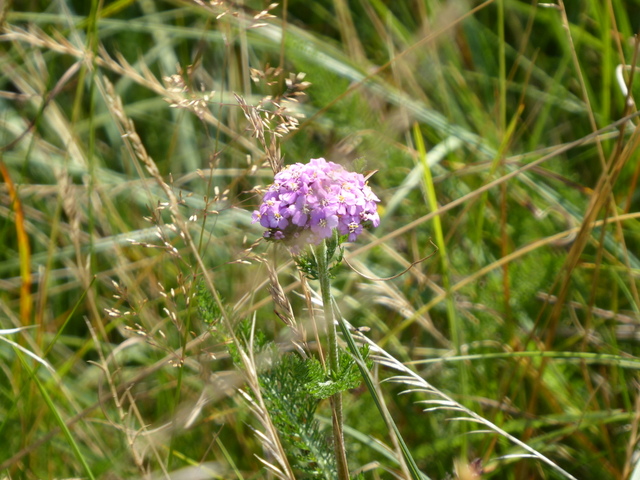
A very pink Yarrow (Achillea millefolium)

p1010198flower

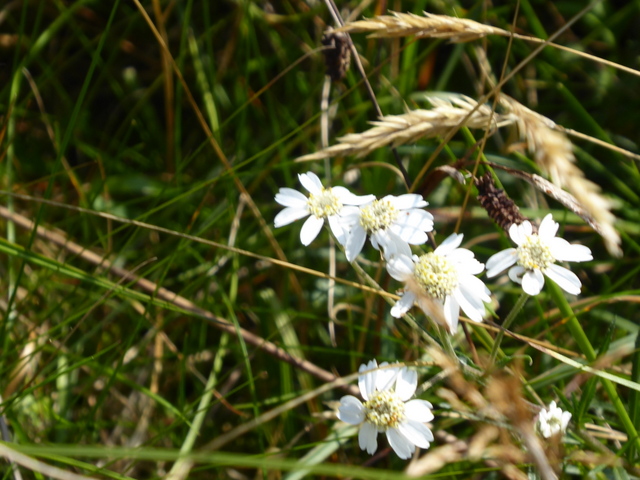
Sneezewort (Achillea ptarmica)

p1010199flower

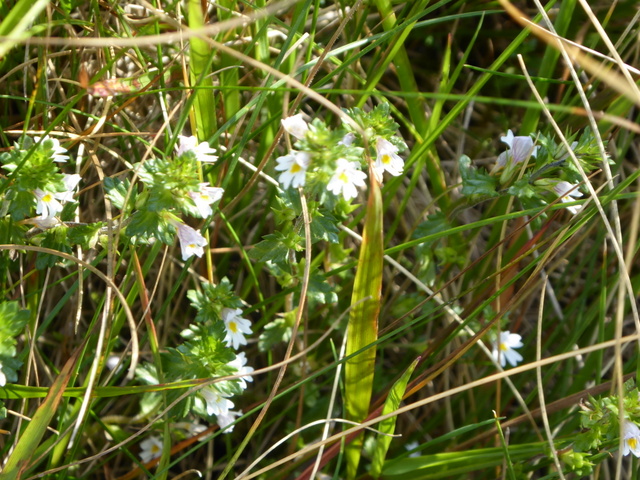
Eyebright (Euphrasia officinalis agg.)

p1010200flower

Crosswort (Cruciata laevipes)

We found the car, drove back to our caravan and made ourselves a nice cup of tea.  We were quite tired after our long walk and found it difficult to stay awake.  We had arranged to have lunch with my brother-in-law the next day so Richard booked a table at a local restaurant and phoned his brother to let him know when and where we were to meet each other.

To be continued….

Thanks for visiting!
Share this:

  • Share on X (Opens in new window) X
  • Share on Reddit (Opens in new window) Reddit
  • Share on Pinterest (Opens in new window) Pinterest
  • Share on Facebook (Opens in new window) Facebook
  • Email a link to a friend (Opens in new window) Email
  • Share on Tumblr (Opens in new window) Tumblr
  • Print (Opens in new window) Print
  • Share on Pocket (Opens in new window) Pocket
  • Share on LinkedIn (Opens in new window) LinkedIn
Like Loading...

Peveril Castle

09 Sun Oct 2016

Posted by Clare Pooley in Days out, holidays, plants, Rural Diary, wild flowers

≈ 54 Comments

Tags

Castleton, courtyard, English Heritage, harebells, maidenhair spleenwort, Mam Tor, Peak District, Peveril Castle, ruins, the keep, views, wild marjoram

The day following our walk at Ilam we had arranged to meet Alice and Elinor at Castleton in Derbyshire.

Castleton is a pretty village and a great place to stay if you want to walk in the hills or visit the mines.  For some years we stayed at a site just outside the village every Whitsun half-term holiday but gave up eventually because we got tired of the crowds of people everywhere.  Looking at the numbers of visitors when we went there this August, it seems that there are fewer visitors in the later summer than earlier in the year.

Alice and Elinor took the bus from Sheffield and arrived ten minutes before us.  We had got delayed by having to make a detour round an accident on the Leek to Buxton road.  We met them in a pub and decided to stay there and have some lunch.

After lunch we wandered through the village and noted all the changes made since we had last visited.  We all agreed that it would be good to climb up to Peveril Castle.  I didn’t manage to take any pictures on my ascent to the castle.  I found it much more tiring than I remembered and in retrospect maybe I shouldn’t have had quite so much for my lunch!  The path zig-zags up the steep climb from Castleton and we got very hot in the bright sunshine.  Alice sped up the path before us; she lives in a very hilly city and is used to walking everywhere.  Eventually we got to the entrance to the castle which is through the remains of one of the gatehouses built in the 12th century.  We then entered the main courtyard of the castle which is now a large lawn.  Originally this space had many buildings in it; a great hall, a kitchen, perhaps guest halls, servants and retainers homes,  store sheds, stables and the like.  It is possible to see the outline of some of these long-demolished buildings.

p1010089pev-castle

The keep at Peveril Castle with the steep lawn which is all that is left of the castle.

p1010086view-from-peveril-castle

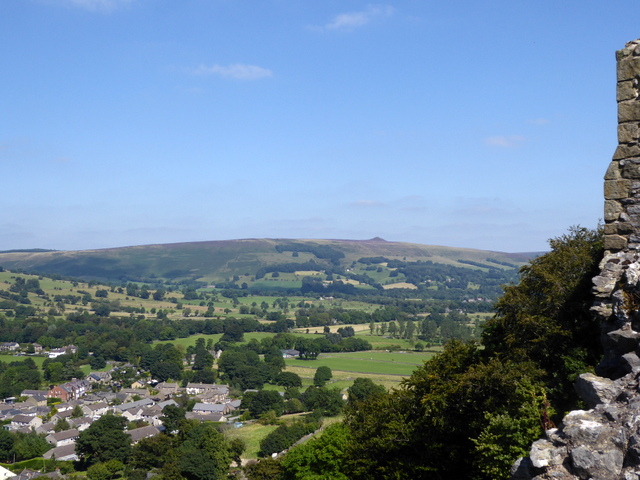
Looking down the courtyard to the remains of the curtain wall and beyond to the surrounding Peak District hills.  Mam Tor is the peak to the left of centre.

The curtain wall which surrounded the courtyard was constructed early on in Norman times.  It was built by the Peverils and apparently includes Roman tiles probably taken from the ruins of the Roman fort at Navio (Brough).

p1010087pev-castle

The curtain wall and gatehouse.

William the Conqueror’s supposedly illegitimate son William Peverel was a great favourite with the Conqueror and after the conquest he was granted the Royal Manors of the Peak.  In this way he became the administrator of the Royal Forest of the Peak in Castleton on behalf of the Conqueror.  He built a castle in 1080 on this site which is naturally strategically strong; it is quite difficult to get to and also easy to defend.  It was originally built of wood but after some years it was thought expedient to replace it with a stone structure and this was done in about 1175 and the remains of this later building is what is seen today.

p1010090pev-castle

Looking over the curtain wall to Castleton below

p1010092pev-castle

One of the views from the courtyard

p1010093pev-castle

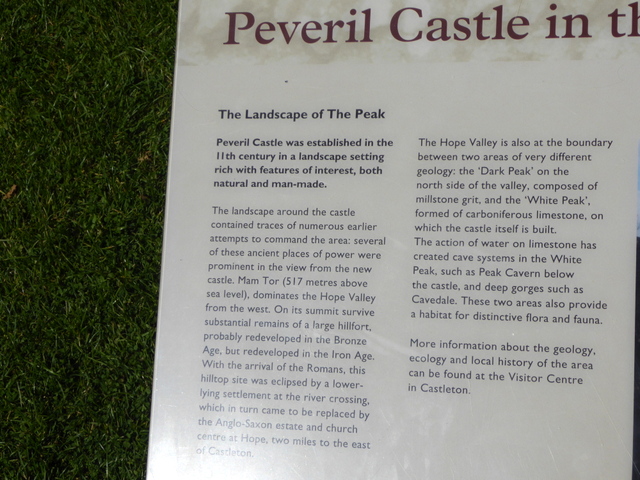
An information board at the castle

p1010094pev-castle

Mam Tor


Castleton
Castleton
Castleton
Castleton
p1010098pev-castle

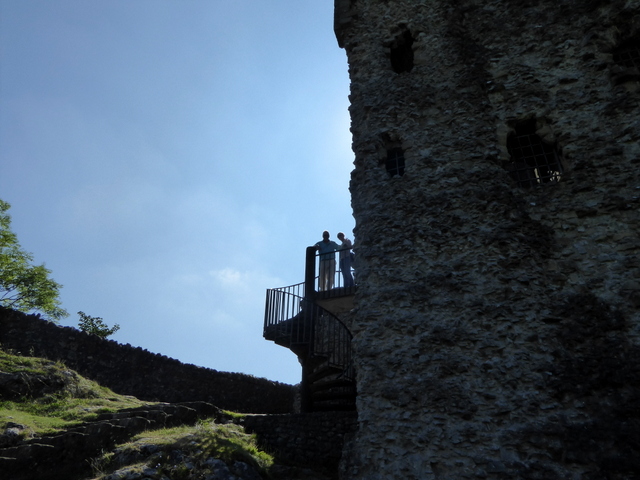
The entrance to the Keep

p1010099pev-castle

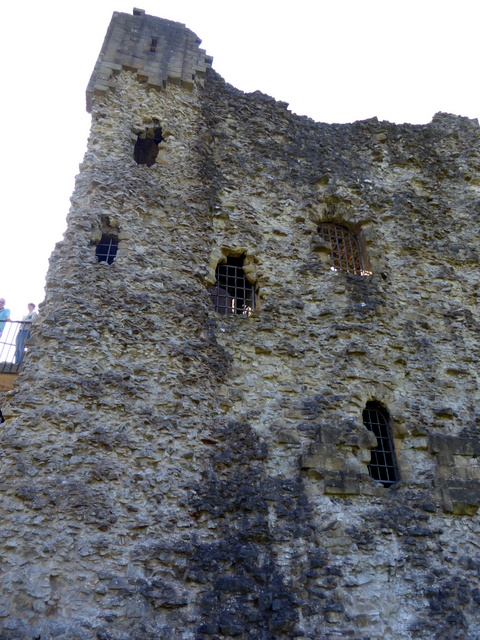
The Keep

The Keep was originally 60′ high and was faced with fine gritstone blocks.  These can still be seen on the south and east sides of the building.  You can see them at the top of the Keep and around the lower window in the photo above.

p1010100pev-castle

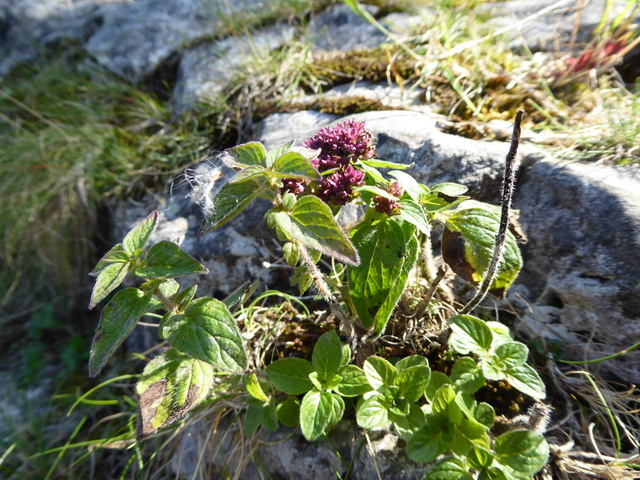
Harebells (Campanua rotundifolia) and what looks like Wild Marjoram (Origanum vulgare) growing in the courtyard.  There are a couple of other plants here that I can’t ID.  I wish I had looked more carefully at the time!

p1010101pev-castle

Looking down into Cavedale at the rear of the castle. Originally the approach to the castle was from this side with a bridge across a moat.

p1010121pev-castle

Cavedale

p1010102pev-castle

Inside the Keep

p1010103pev-castle

Inside the Keep

When the castle was rebuilt in stone in 1175/6 this Keep with round-headed windows was added.  The Keep was never meant to be lived in but was the administrative centre of the castle and would have been a place of refuge if ever the curtain wall was breached.

p1010109pev-castle

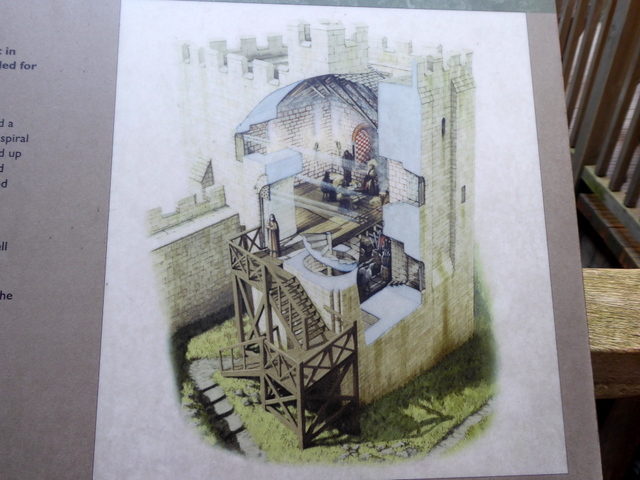
A drawing of what the Keep was thought to look like when it was built

In the 17th century the castle was considered too uncomfortable to live in and all the apartments except the Keep were demolished.  The Keep was retained to serve as a courthouse.  From then on until the early 19th century the place was left unoccupied and it quickly deteriorated.  Repairs and reconstruction work was carried out by the Duchy of Lancaster in the early 1800s who retained the castle until it was taken on by English Heritage.

This slideshow requires JavaScript.

p1010119pev-castle

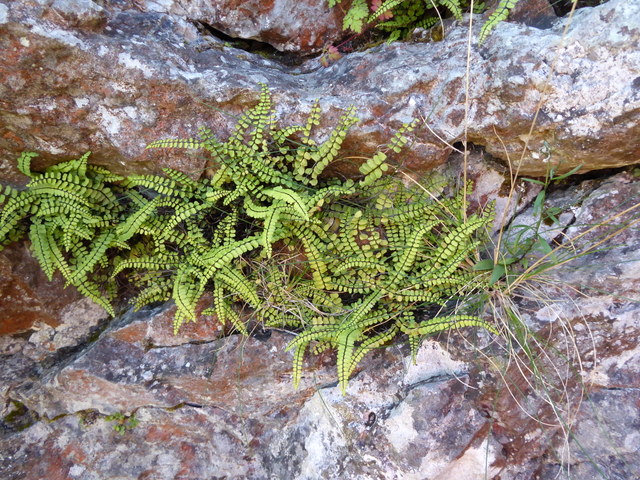
Maidenhair Spleenwort (Asplenium trichomanes)

p1010120pev-castle

More Wild Marjoram

p1010122pev-castle

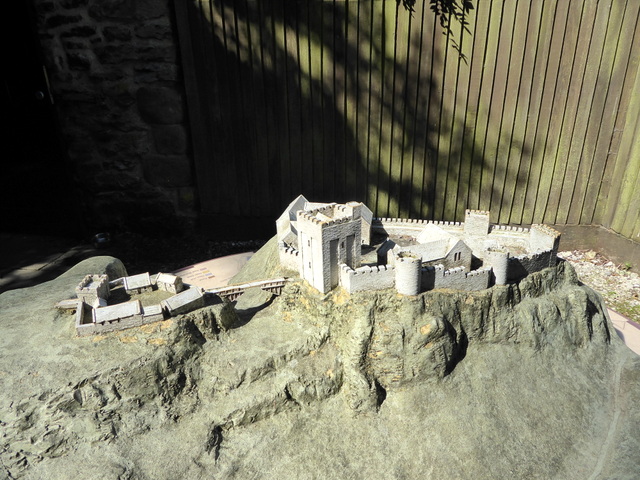
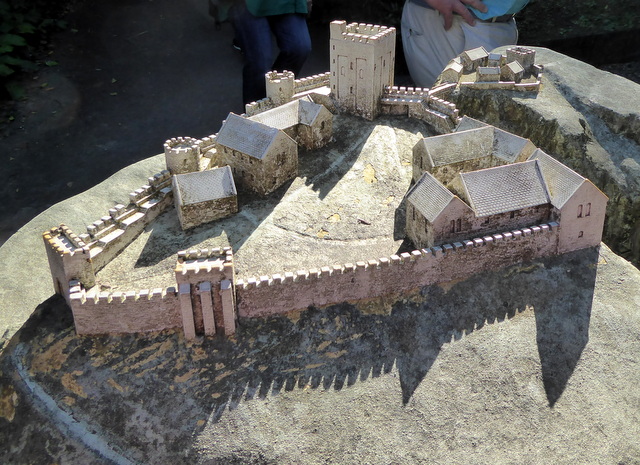
A model showing what the castle was supposed to look like when newly built

p1010123pev-castle

From another angle

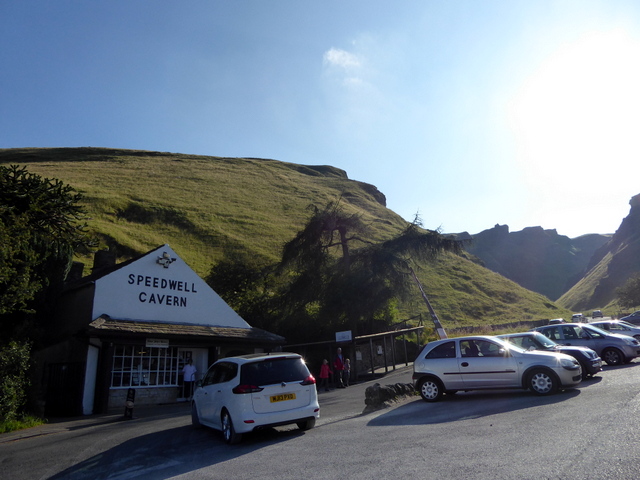
We spent a most enjoyable afternoon together.  Eventually it was time for the girls to catch their bus back to Sheffield.  Richard and I then drove back to Leek, stopping briefly just outside Castleton at the top of Whinnat’s Pass to take the following photograph.

p1010127speedwell-cavern

The entrance to Speedwell Cavern 

Thanks for visiting!

Share this:

  • Share on X (Opens in new window) X
  • Share on Reddit (Opens in new window) Reddit
  • Share on Pinterest (Opens in new window) Pinterest
  • Share on Facebook (Opens in new window) Facebook
  • Email a link to a friend (Opens in new window) Email
  • Share on Tumblr (Opens in new window) Tumblr
  • Print (Opens in new window) Print
  • Share on Pocket (Opens in new window) Pocket
  • Share on LinkedIn (Opens in new window) LinkedIn
Like Loading...

Peak District Holiday 2016

07 Fri Oct 2016

Posted by Clare Pooley in Days out, holidays, plants, Rural Diary, trees, walking, wild flowers

≈ 48 Comments

Tags

annual meadow-grass, Betony, bull, calves, cows, Devil's-bit Scabious, enchanter's nightshade, eyebright, flowers, former industrial landscape, garlic mustard, grasses, greater plantain, harebell, hart's-tongue fern, Hawthorn, Ilam Country Park, Ilam Cross, Ilam Hall, Ilam village, industrial landscape, lamb, Lesser Burdock, Maidenhair Pleenwort, Paradise Walk, Peak District, power station, Rabbit, River Manifold, rowan, Sheep's Fescue, Small Teasel, stile, The Battle Stone, tormentil, unimproved grassland, wind farm

Richard and I had a weeks holiday in the Peak District during August and stayed in our caravan as usual and at a favourite site.  We travelled on the 15th taking Elinor with us and once we had set up the caravan and had had a short rest we then drove to Sheffield as Elinor would be staying the week with Alice.  We had a cup of tea, a nice chat with Alice and Richard met Mona, Alice’s cat for the first time.

20151212_150009-1

This is Mona

Richard and I then returned to our caravan near Leek in Staffordshire calling in at the supermarket on the way where we bought enough food to keep us going for most of the week.  We couldn’t find anywhere to buy a take-away meal so we heated up a ready-made lasagna in the oven and had a very late but tasty dinner.

The weather forecast was for four days of good weather followed by cooler rainy weather so we thought we’d do as much walking in the dry at the beginning of the week as we could.  Our first full day was also Richard’s birthday and we decided to have lunch at the White Hart in Leek where we know we can get very nice Staffordshire oatcakes filled with cheese and bacon or cheese and sausage.  Before going in to Leek we had to put the awning up on the caravan.  An awning (for those who don’t know) is a tent, shelter or canopy which is attached to the side of a caravan which provides a little extra space to live in.  We find ours very useful, especially in wet weather as we can keep our soggy shoes and coats out there.

After lunch we tried to find a wood I wanted to walk in but we had great difficulty following the directions to it.  In the end we gave up and went to Ilam Park and walked from there.

p1010032ilam-hall

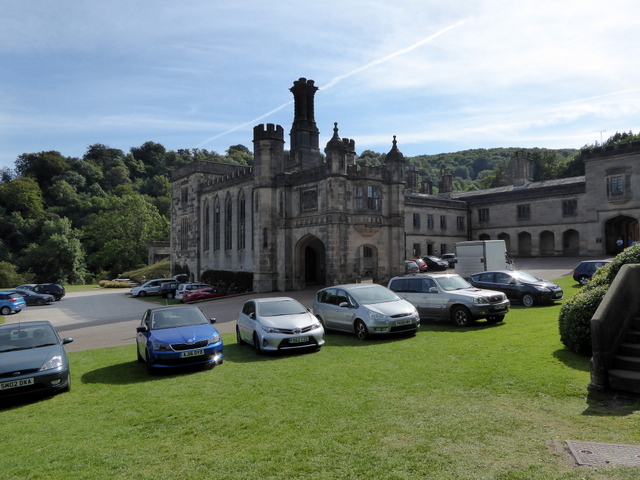
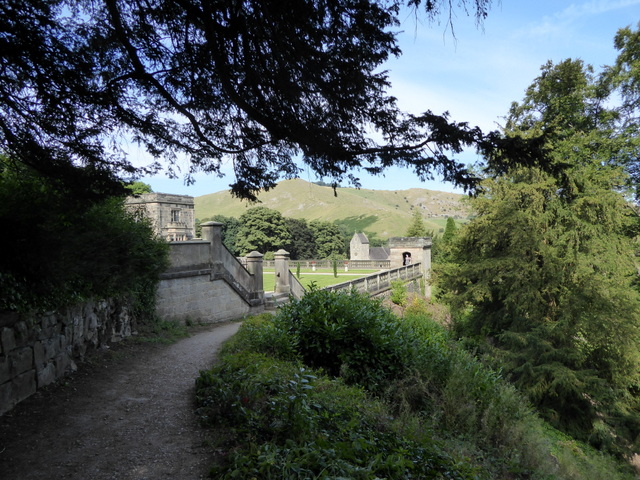
Ilam Hall which is now a Youth Hostel

From the carpark we walked towards the remains of the hall and through the archway to the other side of the building.

p1010034garden-at-ilam-hall

The gardens at Ilam

The gardens are very attractive and have places to sit and admire the scenery.  We made our way through the pleasure grounds, the path descending towards the River Manifold.

p1010033harts-tongue-fern

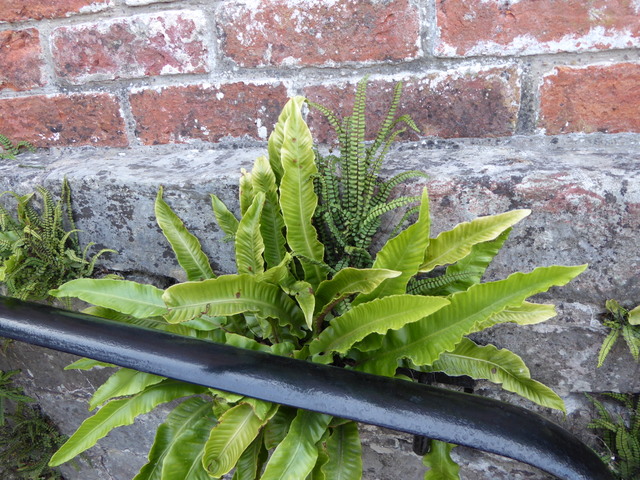
Hart’s-tongue Fern (Phyllitis scolopendrium) and Maidenhair Spleenwort (Asplenium trichomanes) decorate the wall behind the handrail.

p1010036harts-tongue-fern

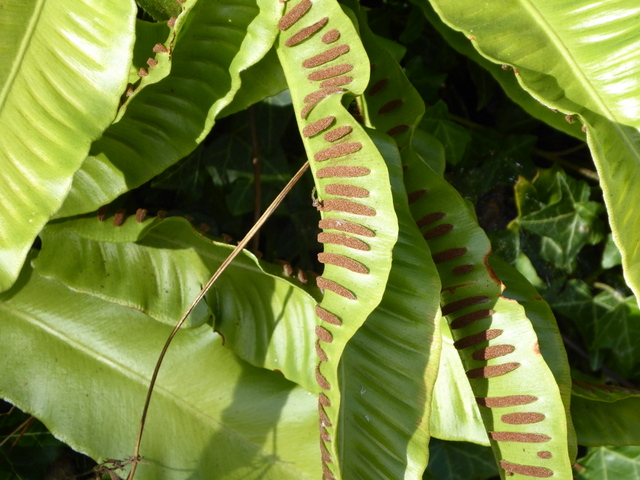
The underside of the leaves of the Hart’s tongue Fern have stripes of spore sacs.

p1010035r-manifold

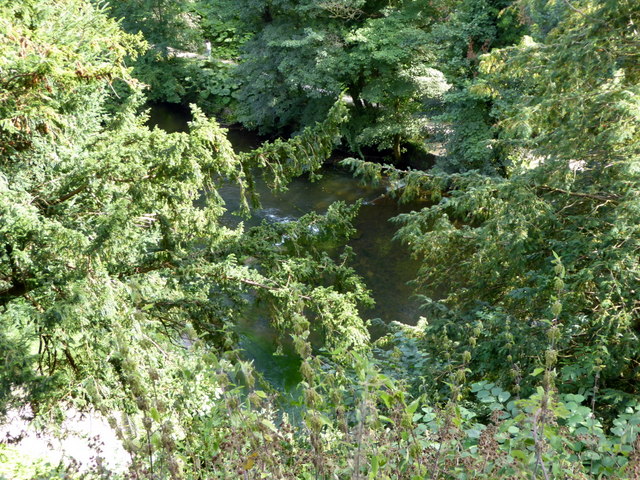
Looking down through the trees to the River Manifold

p1010037steps

Looking back up the steps we had just come down.

p1010038r-manifold

The water in the river is very clear.

p1010039rock-formation

Interesting rock formations can be seen down by the river.

p1010040enchanters-nightshade

A profusion of Enchanter’s-nightshade (Circaea lutetiana)

p1010041ilam

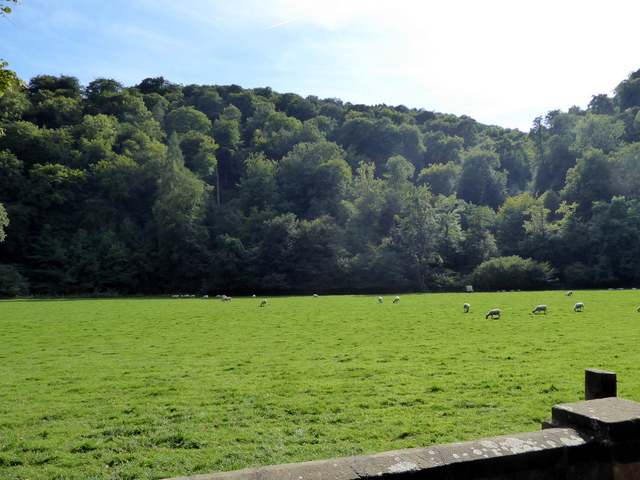
The view across water meadows from ‘Paradise Walk’

Paradise Walk is a Lime tree avenue where, in its heyday, the owners of the hall and their guests could walk and talk and admire the parkland.

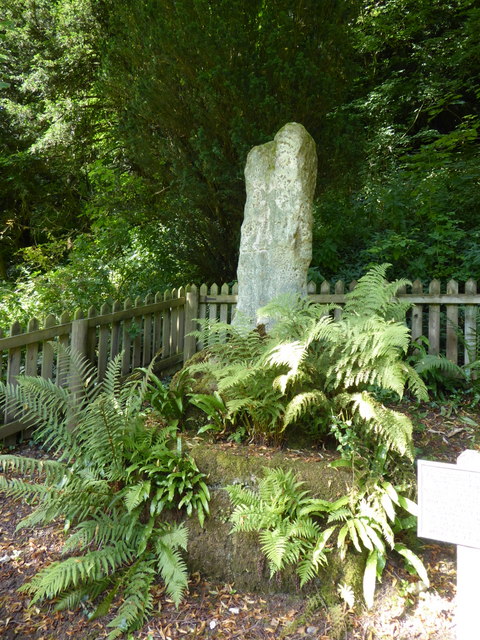
p1010042cross-shaft-ilam

The Battle Stone

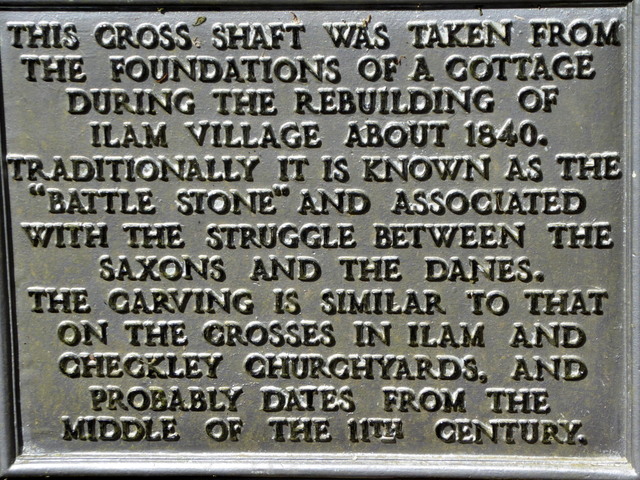
p1010043description-of-cross-shaft

The description of the Battle Stone

This cross shaft, known as the ‘Battle Stone’ has been set in a little enclosure at the side of the Paradise Walk.  It is strange to us to find that people in former times were happy to use any material they found to build their houses, even part of a cross!

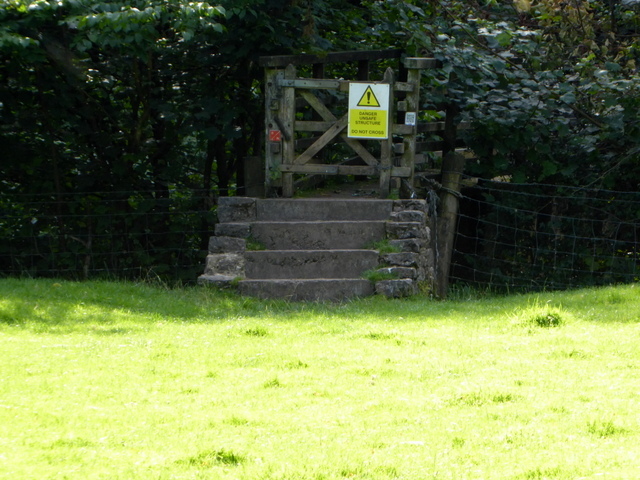
p1010044broken-bridge

We were advised not to use this bridge to cross the river.

p1010045Small Teasel

Small Teasel (Dipsacus pilosus) growing with Lesser Burdock (Arctium minus)

p1010046unknown-plant

Small Teasel

This was the first time I had ever seen this plant and it took me some time to ID it.   My photograph isn’t the best and I wasn’t too sure where to start my search.  The plant is often found on damp, disturbed ground near woodland edges and near streams and rivers.

p1010047lesser-burdock

Lesser Burdock

We went over the river at the next bridge and then crossed a meadow the ascent of which gradually got steeper.

p1010048cows-and-calves

Cow and calves

The calves were a little curious but the cow continued calling to them and they stayed with her.

p1010049bull-and-cows

Bull and cows

At the top of the field was a bull and a couple of cows.  Fortunately, they were more interested in eating than in us because we were quite puffed by the time we had got to the top of the field and I don’t think we could have run anywhere!

p1010050steep-hill

The next field was even steeper and the grass was dry and shiny.

p1010051flowers

There were flowers everywhere! Tormentil (Potentilla erecta) (the yellow flowers) and Harebell (Campanula rotundifolia)

p1010052flowers

Betony (Stachys officinalis)

p1010053flowers

Devil’s-bit Scabious (Succisa pratensis) and Harebells

p1010054flowers

Devil’s-bit Scabious and Tormentil

I’m afraid the photos got more out of focus the further up the hill I got.  It was all I could do to keep my footing.

p1010055grasses

Betony and grasses

p1010056grass

Annual Meadow Grass (Poa annua)

p1010057view

The view from the top of the hill

We were glad to get to the top and catch our breath.  There was still rising ground to cover but the really steep bit was finished with.

p1010058grasses

I think this grass is Sheep’s Fescue (Festuca ovina) It caught my eye because the seedheads were shining in the sunlight.

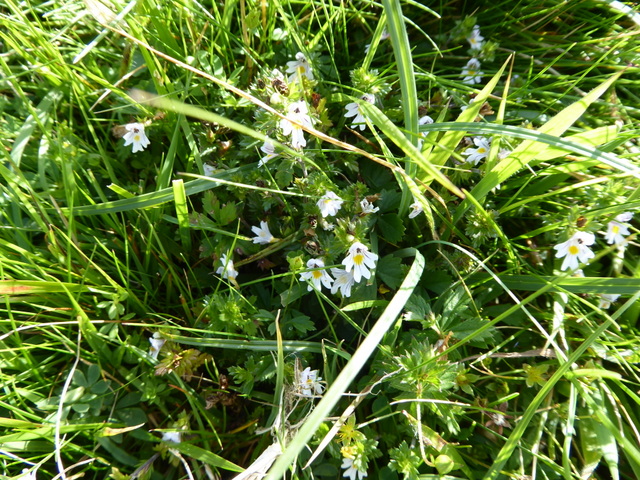
p1010059eyebright

Eyebright (Euphrasia officinalis agg.)

Eyebright is slowly becoming rarer because it is semi-parasitic on the roots of other plants and will only grow in undisturbed grass land.  There is very little undisturbed grassland in this country.

p1010063view

Another shot of the same view but from further up the hill

p1010065gate

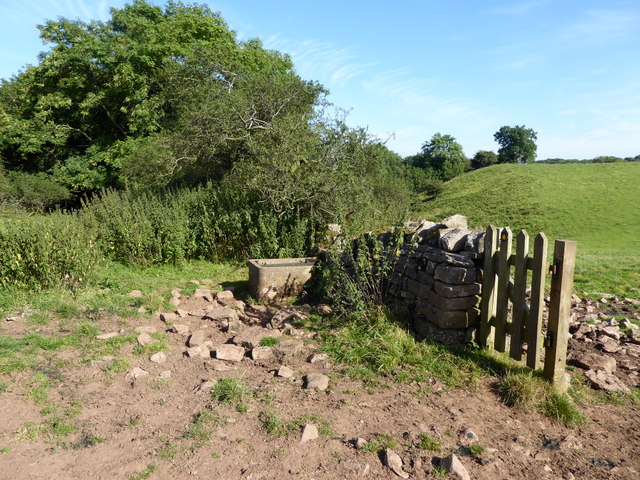
I love this rather untidy scene

p1010066gate

Through the gateway

Both pictures are typical of cattle-farming country.  The well-trampled area next to the gateway and water-trough which in wet weather is extremely squelchy.  The bank of nettles beyond the trough…

p1010067hedge

A hedge in this part of the world is a rare thing

p1010068view

A view of Ilam village below us

p1010069tree

A weathered Hawthorn tree (Crataegus monogyna)

p1010070view

I like the stand of trees on the crest of the next hill

p1010071a-wind-farm

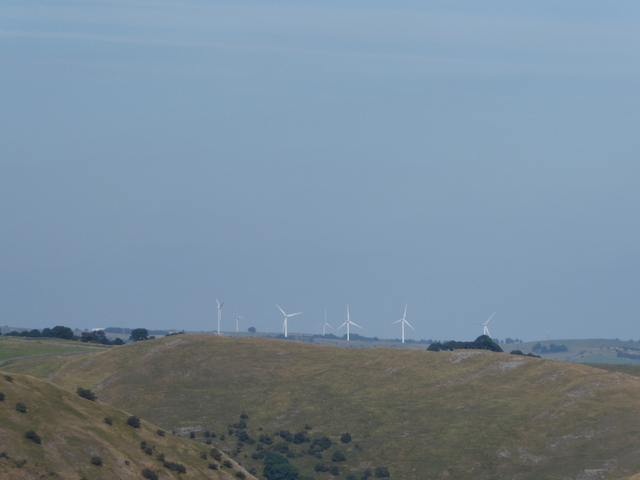
I used the zoom on my camera to photograph a wind farm on the horizon

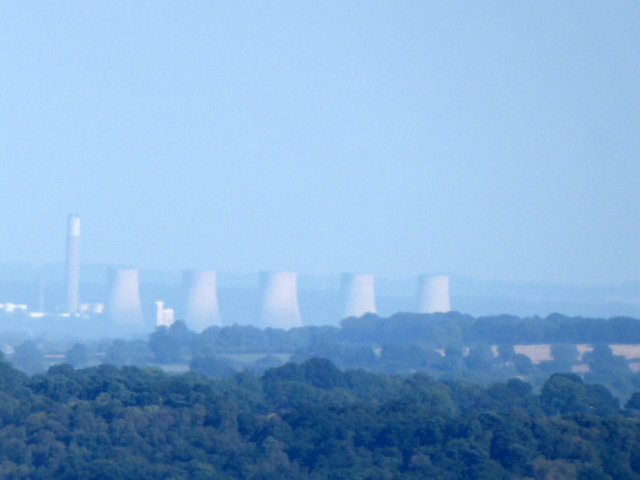
p1010074power-station

A different source of electricity. This may be Willington power station or maybe Rugeley? I know both these places have/had 5 cooling towers and my camera has quite a powerful zoom. I would be interested to know which station this is.

This is the interesting thing about the Peak District.  The whole area has been industrial at some period in its history.  We may be out on the moors and seemingly miles from anywhere but industry or the effects of industry surround us.

We began the descent towards Ilam village.

p1010072flowers

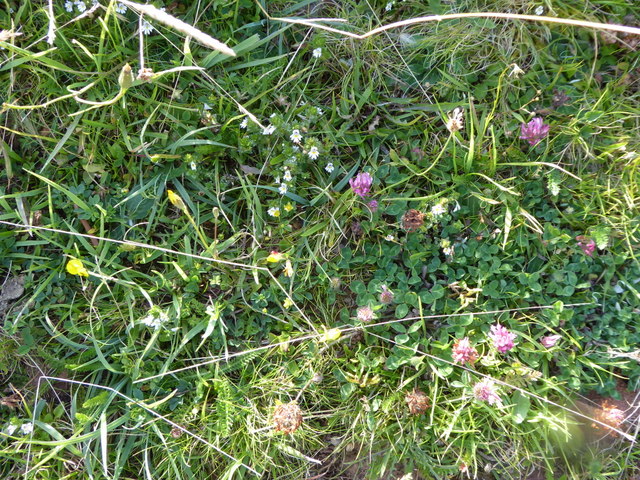
Grasses and flowers

This may look like a rather uninteresting patch of grass with a few flowers in it.  However, in this approximately 40cm x 40cm piece of land there are at least three different types of grass and more than six different flowering plants, not all in flower.  True diversity!

p1010075lamb

Having had cows, calves and a bull on this post we had to have a lamb too. Look at those ears! Richard called him/her ‘Wingnut’!

p1010076stile

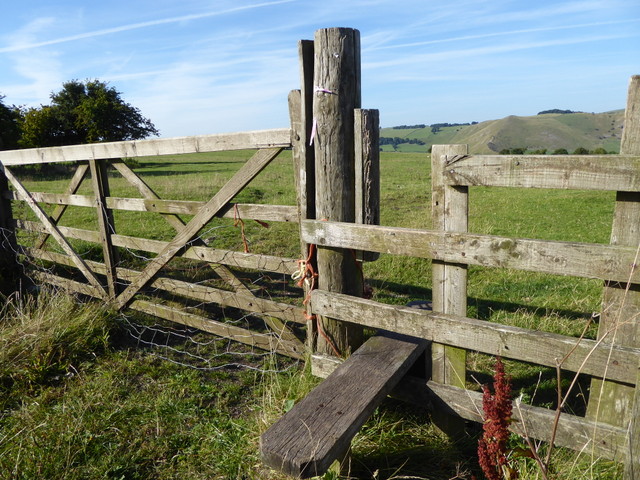
One of the many stiles we clambered over that afternoon

p1010077path

The path across the meadow

The path was much clearer in real life than in my photograph.  An indentation in the soil; the grass growing differently on the path and the light reflecting off it in a different way making it look lighter, sometimes darker than the surrounding grass.  I’m sure it would be more obvious at sunset or sunrise or with a dusting of snow on it.

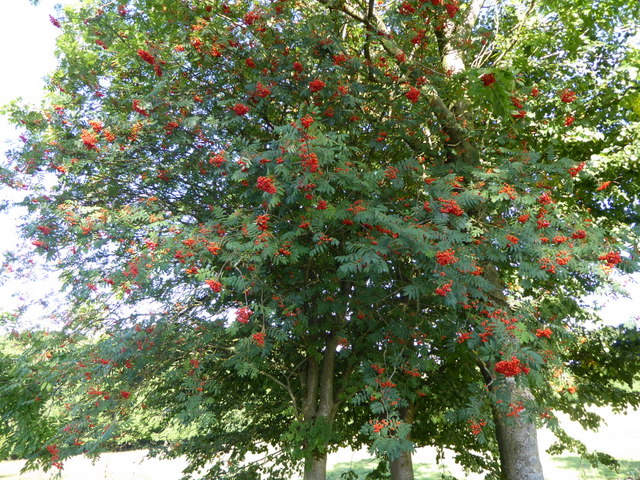
p1010078rowan-tree

A Rowan tree (Sorbus aucuparia)

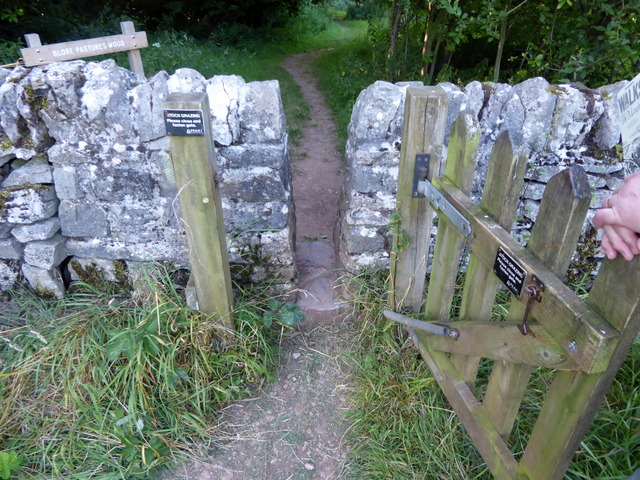
p1010079stile

Another stile. This time a squash stile’; my favourite (I don’t think!)

We had descended to the valley again and entered Blore Pastures Wood by the stile.

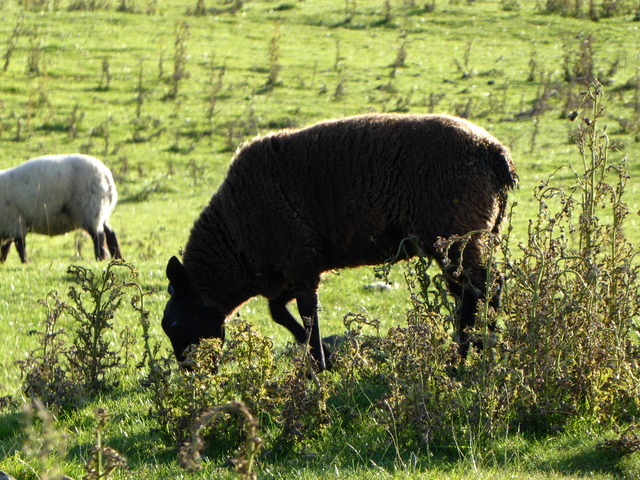
p1010080lamb

A brown lamb in the late afternoon sun

p1010081garlic-mustard

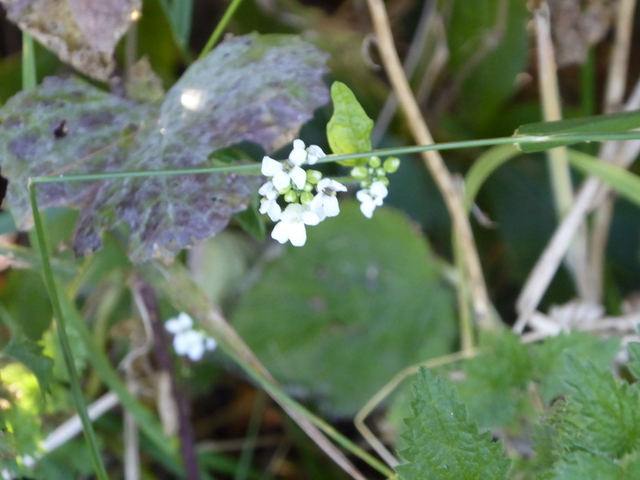
I was surprised to see Jack-by-the-Hedge/Garlic Mustard (Alliaria petiolata) in flower this late in the year

p1010082plantain

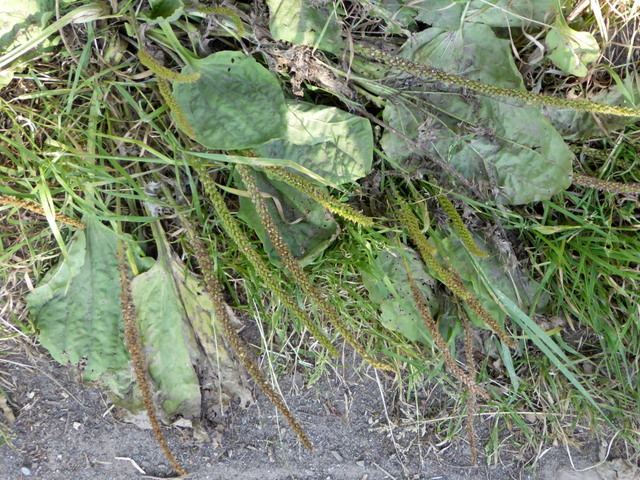
Greater Plantain (Plantago major)

We saw this enormous plantain next to the road as we approached Ilam.

p1010083cross

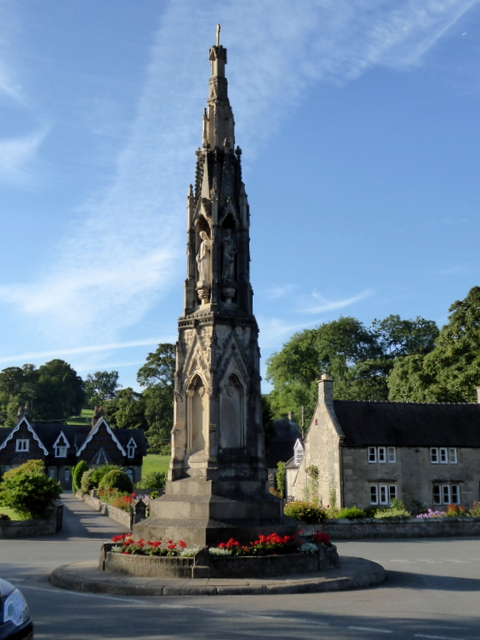
Ilam Cross, built by Jesse Watts-Russell (who also built Ilam Hall) in memory of his wife.

The cross was badly damaged in a storm some years ago but has recently been completely restored.

p1010084cross-info

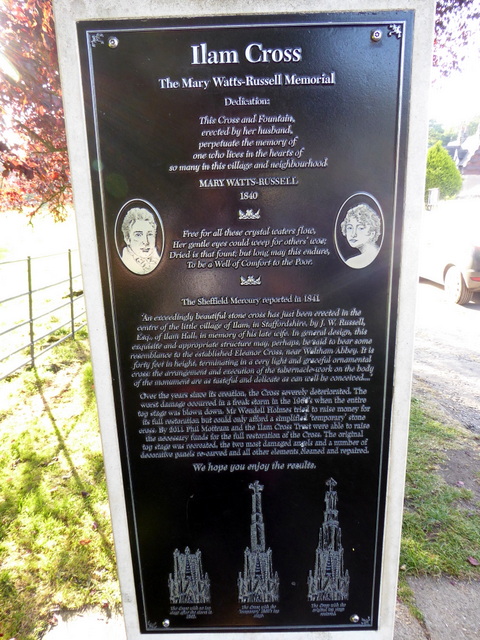
A plaque with all the information about the cross

The village was full of people enjoying the evening sunshine.  I had hoped to photograph the houses and the bridge but there were too many people in the way.

p1010085rabbit

A Rabbit (Oryctolagus cuniculus) seen on our way back to the carpark

A most enjoyable walk in glorious sunshine.

Thanks for visiting!



Share this:

  • Share on X (Opens in new window) X
  • Share on Reddit (Opens in new window) Reddit
  • Share on Pinterest (Opens in new window) Pinterest
  • Share on Facebook (Opens in new window) Facebook
  • Email a link to a friend (Opens in new window) Email
  • Share on Tumblr (Opens in new window) Tumblr
  • Print (Opens in new window) Print
  • Share on Pocket (Opens in new window) Pocket
  • Share on LinkedIn (Opens in new window) LinkedIn
Like Loading...

In My Garden Again

28 Wed Sep 2016

Posted by Clare Pooley in Gardening, Insects, music, plants, Rural Diary, trees, wild animals, wild flowers

≈ 75 Comments

Tags

bird's nest, Brown Hare, Brown Hawker dragonfly, comma butterfly, Common Fleabane, Common Hawthorn berries, cooking apples, Crabapples, Creeping Thistle, Fish-hook Cactus, garden, hogweed, Hornet, Hoverfly, leveret, mole hill, moonrise, pears, speckled wood butterfly, Suffolk, sunset, Sweet Pepper, Water Mint, Zinnia

This is another collection of things I’ve seen in my garden or near my home during the past month.  The weather until a few days ago has been wonderful!  Warm, sometimes very hot, mainly dry and sunny; it has been a lovely late summer.

p1010238fish-hook-cactus

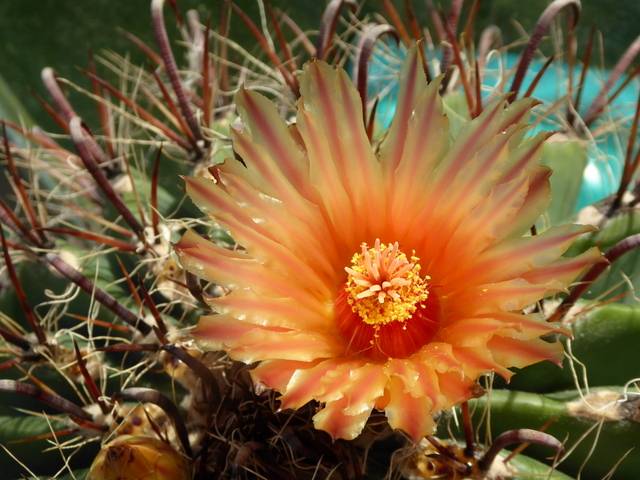
Flower on Richard’s Fish-hook Cactus (Ferocactus wislizeni)

This cactus nearly flowered for the first time two years ago but the warm, sunny weather didn’t last long enough and the buds shrivelled.  Last year was too dull and cool so no buds formed at all.  This year however, one of the three buds opened and stayed open for three days.

p1010239sweet-peppers

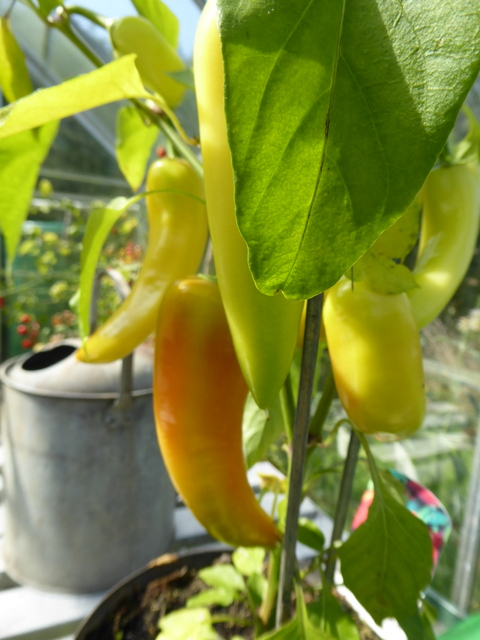
Sweet pepper ‘Sweet Banana’

Richard is growing sweet peppers this year and this is a photo of them when they were just starting to turn red.  Unfortunately, the camera focused on the leaf not the pepper.

p1010240zinnia

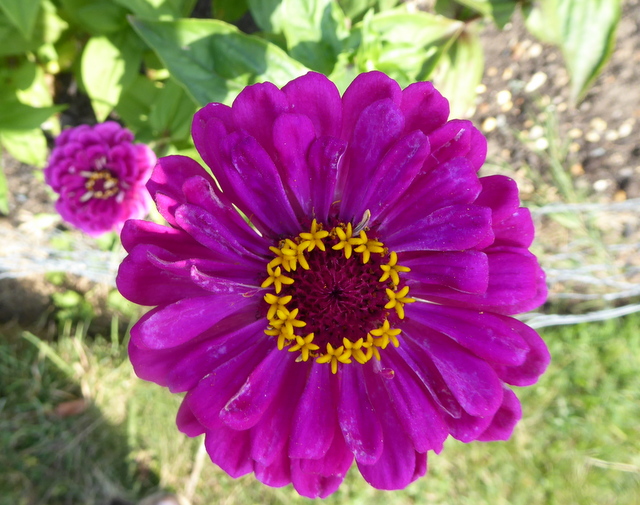
Zinnia flower

p1010241zinnia-001

Zinnia flower-bud

Richard bought a tray of Zinnia flowers from the garden centre.  They took their time to get established but eventually they got going and have been so bright and cheerful for the past month.

p1010245fleabane

Common Fleabane (Pulicaria dysenteria) has been everywhere I’ve looked this summer but this poor shot is the only photo of it I’ve taken.

For centuries, the leaves of Fleabane were hung in bunches from ceilings or dried and burnt as a fumigant to repel fleas.  Richard Mabey in his ‘Flora Britannica’ says the plant is a relative of the species which supplies the insecticide ‘pyrethrum’.

p1010250hogweed

Hogweed (Heracleum sphondylium) seed-heads

p1010246speckled-wood

Speckled Wood butterfly (Pararge aegeria)

This is a woodland butterfly and its markings make it difficult to spot in dappled shade.

p1010253comma

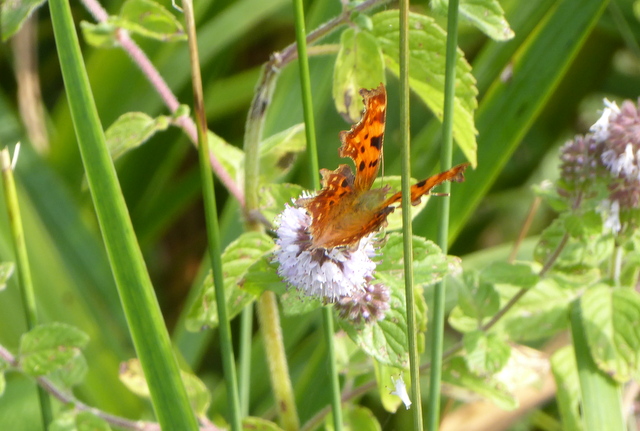
A Comma butterfly (Polygonia c-album) on Water Mint (Mentha aquatica)

p1010248hoverfly-on-creeping-thistle

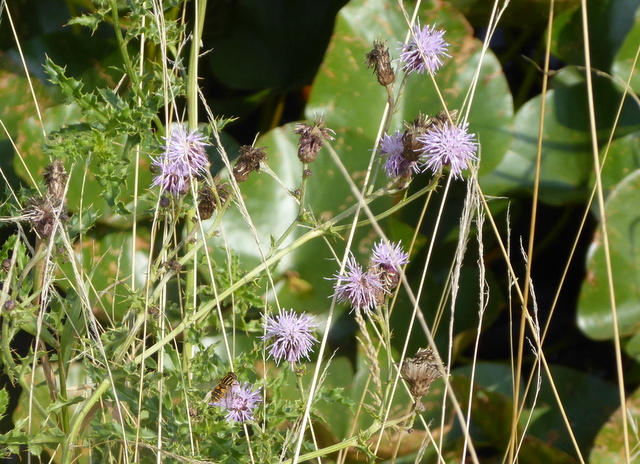
Creeping Thistle (Cirsium arvense) with a Hoverfly (Helophilus pendulus) on the lowest flowerhead

p1010296crabapples

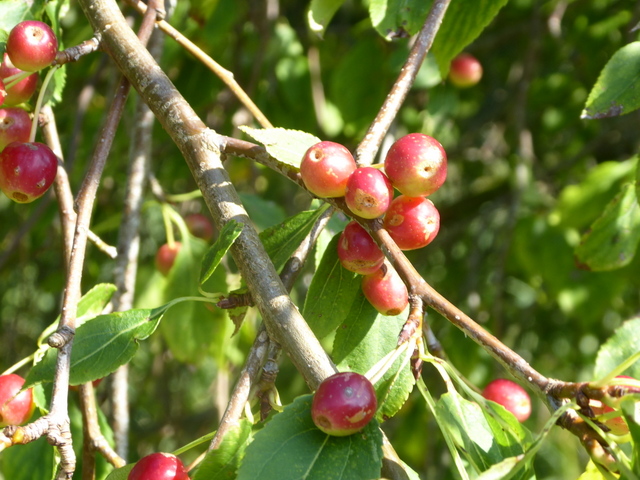
The crabapples on our species crabapple tree look like cherries. Woodpigeons are very fond of them.

p1010298biffin

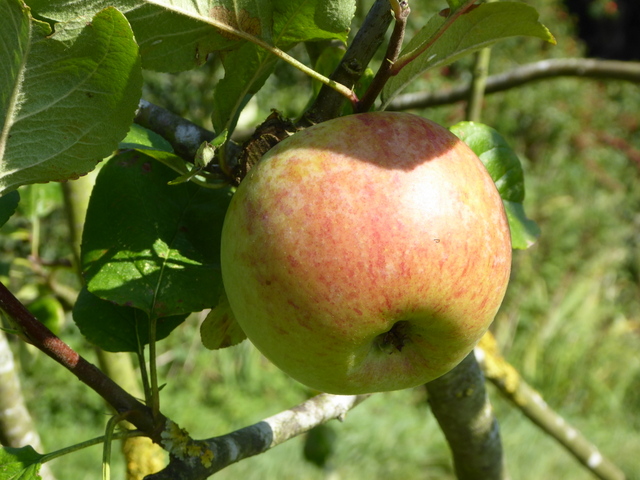
We don’t have many apples this year. This one looks very good – a cooking apple.

p1010301concord

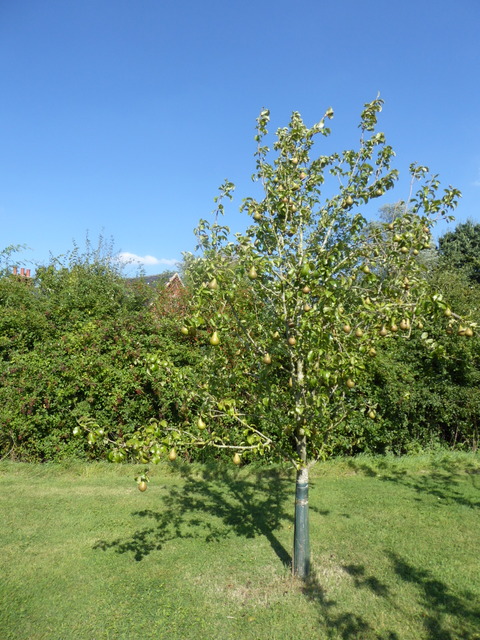
We have what looks like a good crop of pears but sadly many of the fruits are rotting on the tree.

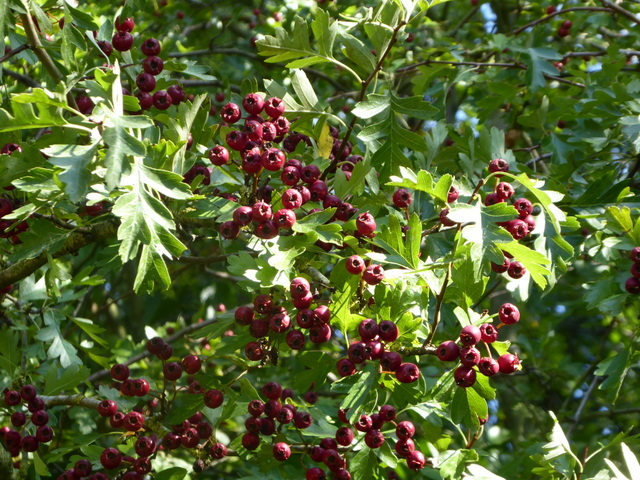
p1010304haws

Common Hawthorn berries, known as Haws. (Crataegus monogyna)

The Hawthorns are full of fruit; some people say this means we are to have a hard winter.  I think it means we had good pollination in the spring.

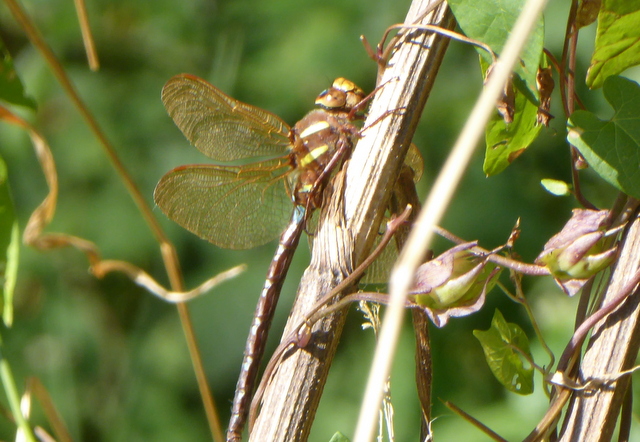
p1010305brown-hawker

A female Brown Hawker dragonfly (Aeshna grandis)

I took this photo in a hurry as Brown Hawkers are such restless dragonflies and only perch for a few seconds.  I love their amber wings!

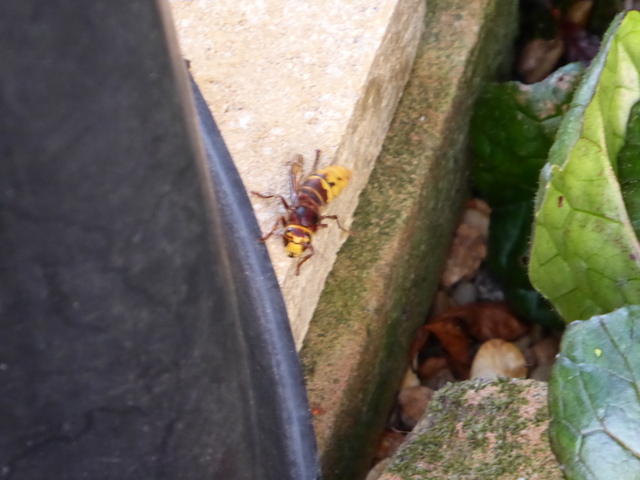
p1010324hornet

Another poor photo, this time of a Hornet (Vespa crabro)

We have had a Hornets’ nest under the tiles of the garage roof this summer.  They are busy insects and carry on flying until well after sunset, unlike wasps who retire early.  We have also got a wasps’ nest under the house roof tiles near our bedroom window.  I could hear them chewing and munching away through the night when they were first constructing the nest in the early summer.

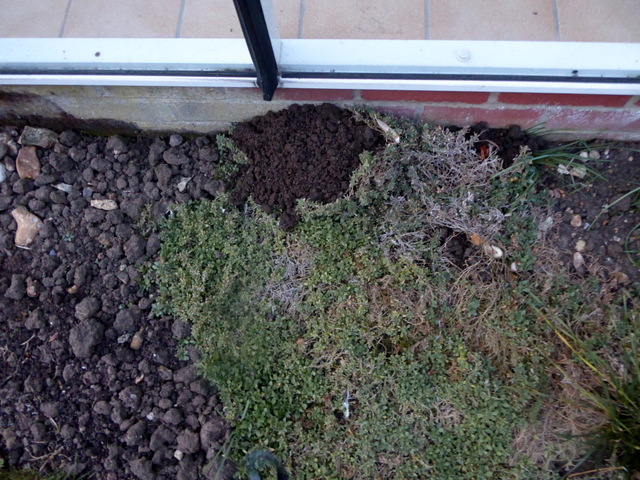
p1010330mole

This is a mole hill that appeared in the rather dry border next to the conservatory. The hill got bigger the following day and many spring bulbs were uprooted.

We haven’t had much rain during the past month and the moles are searching for worms.  The worms congregate where there is moisture i.e. in flower-beds (if they are watered) or next to paths or buildings where water runs off into the soil.

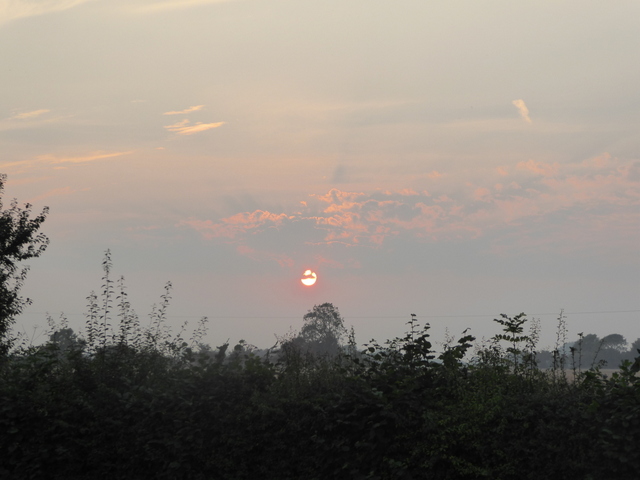
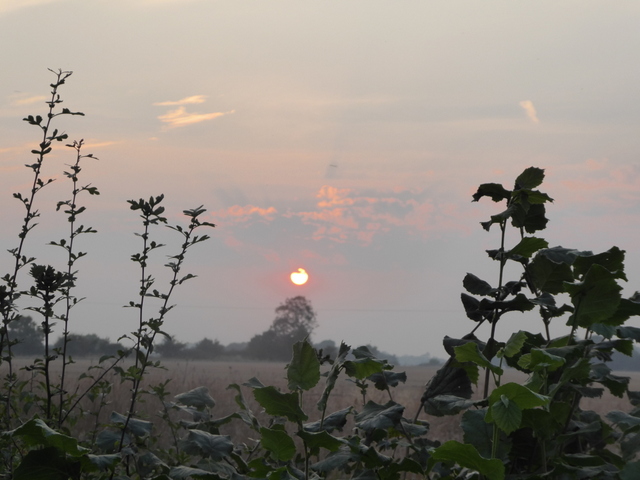
p1010326sunset

Sunset

p1010327sunset

Sunset

p1010328sunset

Sunset

p1010329sunset

Sunset with mist

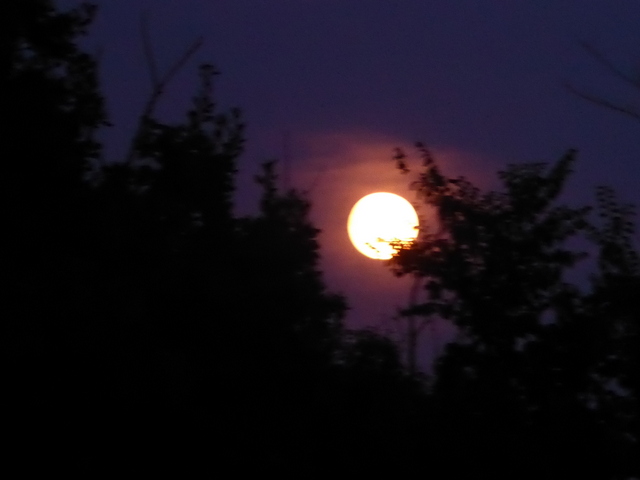
And shortly afterwards on the same evening…..

p1010332moon

Moonrise

p1010333moon

Moonrise

We were pleased to welcome a new visitor to our garden; a Leveret, a young Brown Hare (Lepus europaeus)

This slideshow requires JavaScript.

We first noticed it when it was very close to our kitchen window so you see part of the window frame in my photos!  It then moved a little further away and was easier to photograph.

The best time of day to see hares is early morning or at dusk, as during the day they rest in grass, scrubland or in a ploughed furrow.  They crouch low against the ground with their ears laid flat and are well camouflaged.  If they are disturbed they are capable of running very fast – 35 mph/56kph – and run with their black-topped tail held downwards.  They have large staring eyes, large black-tipped ears and powerful hind legs; they are shy and alert creatures.  They typically live in open country, preferring not to live in direct contact with grazing animals and they are unlikely to be found in hayfields.  They eat a wide selection of grasses and plants of open country as well as crops of cereal, clover, alfalfa, beets and potatoes.  In winter a hare will dig for green plants under the snow and will eat buds and bark from bushes and trees, including fruit trees.  They have suffered in areas of intensive farming and where herbicides are regularly used.  Pesticides contaminate their food and may kill leverets.

In March and April hares can be seen leaping and chasing about which gives rise to the saying ‘mad, March Hares’.   They often stand up on their hind legs and box each other; this may be two males vying for social dominance or, as is now thought more likely, a female (Jill) rebuffing a male (Jack).   Leverets are born in the open with a full coat of fur and with their eyes open.  They are born in litters of about three and the mother moves them immediately to another safe place which makes it more difficult for predators to find them.  Each leveret is placed in a ‘form’ – a depression made in long grass – on its own where it lies low waiting for visits from its mother.  This behaviour is very like that of deer.

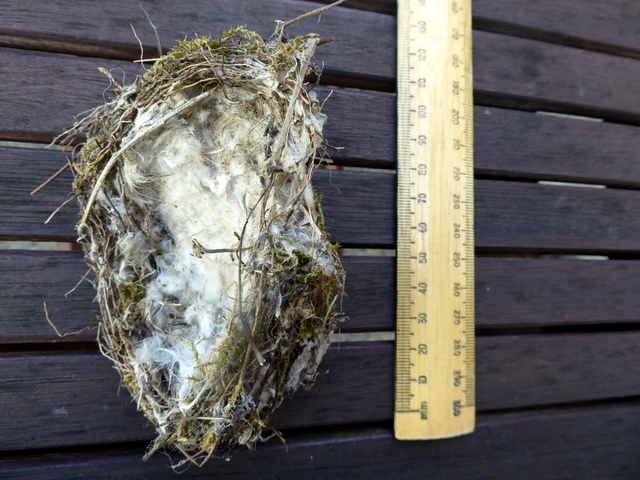
While watering my green beans the other day I noticed some tiny white eggshells lying on the ground and wondered where they could have come from.  Richard looked into the branches of the Laburnum tree above us and saw a tiny nest that I hadn’t been able to see – (I am quite a lot shorter than he is).  It was a windy day and the pieces of shell must have been dislodged by the breeze.  A week later I found the nest on the ground and here is my photograph of it.

p1010346-nest

I do not know what bird built this nest.

As you can see from the photo it is only 11 cm long and about 6 cm wide.  It is made of tiny twigs, grasses, leaves and moss all woven together and is lined with sheep’s wool and white feathers.

And finally, here is my music selection for this post.

Thanks for visiting!

Share this:

  • Share on X (Opens in new window) X
  • Share on Reddit (Opens in new window) Reddit
  • Share on Pinterest (Opens in new window) Pinterest
  • Share on Facebook (Opens in new window) Facebook
  • Email a link to a friend (Opens in new window) Email
  • Share on Tumblr (Opens in new window) Tumblr
  • Print (Opens in new window) Print
  • Share on Pocket (Opens in new window) Pocket
  • Share on LinkedIn (Opens in new window) LinkedIn
Like Loading...

In My Garden

18 Sun Sep 2016

Posted by Clare Pooley in Gardening, Insects, plants, Rural Diary, wild flowers

≈ 62 Comments

Tags

Astrantia, Bittersweet, black bryony, Black Spleenwort, blue-tailed damselfly, butterflies, comma, common blue damselfly, Damselfly, Dragonfly, Essex skipper, Field Bindweed, flowers, fruit tree, garden, gatekeeper, Gladiolus, greengage, hedge bindweed, Hyssop, insects, Jacob's Ladder, Lilium longiflorum, peacock butterfly, perennial sow-thistle, Pheasant Berry, plants, rowan, ruddy darter, runner beans, spleenwort, Stargazer Lily, Suffolk, sunset, Swiss Chard, trees, vegetables, wheat, wild flowers, Woody Nightshade

This post is made up of photos of flowers, insects and other things of interest that I saw in my garden during the last couple of weeks of July and the first fortnight in August.  We spent that time catching up with jobs around the house and doing a lot of gardening as the weather was quite good.

It has not been a good year for insects here; an extremely bad one for butterflies in fact, possibly due to the cool, wet spring and early summer we had.  The flowers and plants had a slow start but once the warm weather arrived in mid July they soon caught up.

P1000970Darter

A male Ruddy Darter (Sympetrum sanguineum)

We still had plenty of these small dragonflies in our garden until recently but in July they had just started flying.  They don’t just fly near water but find perches all over the garden from which they ‘dart’ to catch passing prey.  In this photo the dragonfly is on the top of a cane in my flower-border and was happy to let me get very close to him.  Ruddy Darters are the only red dragonflies with totally black legs – they also have a small patch of yellow at the base of the wings.  There are black lines on the upper side of the second- and third-to last segments of the abdomen.  The upper half of the eyes are red-brown and the lower half are green.  The frons (the front of the ‘face’) is red.

P1000974Hyssop

Hyssop (Hyssopus officinalis)

I bought this herb late last summer; it survived the winter very well and has flowered beautifully this year.  It is very popular with the bees and smells good too.

P1000975Swiss Chard

Swiss Chard ‘Bright Lights’ (Beta vulgaris subsp. cicla var. flavescens)

I grew Swiss Chard from seed this year for the first time, mainly because my mother likes it and hasn’t been able to get it for a few of years.  I gave her a few plants and then put some plants into a couple of gaps in my flower-border.  They look beautiful, especially with the sun shining through the colourful stems.  I can’t say the vegetable when eaten has been very popular.  The leaves are like spinach, quickly reducing in size and becoming soft; the stems which I put into the hot water a minute or so before the leaves, have a lovely texture and a very mild taste.  They can be steamed successfully too.  I think it is the mildness that doesn’t appeal – or perhaps the spinach-like leaves.  We love greens in this family and get through large amounts of cabbage, spring-greens, brussels sprouts and broccoli, all of which have fairly powerful flavours.  Perhaps Swiss Chard is too refined for us?

P1000976Skipper

A poor photo of an Essex Skipper butterfly (Thymelicus lineola) sitting on a buttercup flower.

I include this just to prove to myself that we did get a number of skippers in the garden in the summer.  The Essex Skipper is very similar to the Small Skipper but the antennal tip instead of being golden is black underneath, which can just be seen in my photo.

P1000978Greengage

A Greengage (Prunus domestica ssp. italica var. Claudiana)

We bought a young Greengage tree nearly three years ago and this year we got two fruits on it.  We didn’t manage to eat either of them because one or other of our animal, bird or insect visitors got there first.

P1000981Comma

A Comma butterfly (Polygonia c-album)

The name ‘Comma’ refers to a white comma mark on the underside of the wings.

P1000984Woody Nightshade berries

Woody Nightshade/Bittersweet berries (Solanum dulcamara)

This has got everywhere in the garden this year!  I have found it growing in amongst the herbs, up through the Pyracantha and it has taken over the two Cotoneasters that grow next to our gas-tank.  (We are not on mains gas here so have a large butane gas tank near the house).  Bittersweet berries are beautiful and are at their most attractive at this stage when some are still green and they are plump and shiny.

P1000985Blue-tailed Damselfly perhaps

Another poor photograph showing what I believe to be a female Blue-tailed Damselfly (Ischnura elegans)

Another photo that is proof to me that we had these damselflies flying round the pond this summer.

P1000990F Gatekeeper-001

Female Gatekeeper butterfly (Pyronia tithonus)

Male Gatekeepers are territorial and patrol an area of hedgerow often in corners of fields or near gates trying to deter other insects from entering their domains.  The males are smaller and a brighter orange than the females and have a dark patch of scent glands on the fore-wing.

P1000986Ripe wheat

Ripe Wheat (Triticum spp.)

I couldn’t resist taking a photo of the wheat in the field behind our house just before it was harvested this year.

P1000998Peacock butterfly

Peacock butterfly (Inachis io)

This slightly battered Peacock was sunning itself on the path.  They are very hairy-bodied insects and the colours and markings on the wings are beautiful.  I noticed for the first time the lovely tiger-stripe yellow and black ‘shoulders’ on the fore-wing.

P1010003Perennial Sow-thistle

Perennial Sow-thistle (Sonchus arvensis) This one I discovered growing next to our compost bin.

P1010007Field Bindweed

Field Bindweed (Convolvulus arvensis)

The flowers this year are only lightly marked with pink.  They are usually much brighter.

p1010009bumble-bee-hedge-bindweed

We are lucky (?) to have both Field Bindweed, as in the former photo, and Hedge Bindweed (Calystegia sepium) as here, in our garden. This one was being visited by a bumble bee.

p1010010rowan-berries

Our young Rowan or Mountain Ash tree (Sorbus aucuparia) had many flowers in the early summer and produced some berries this year. The berries in the photo are not quite ripe yet.  They were eaten by something very quickly once they were red and ripe.

p1010011pheasantberry-flowers

Pheasant Berry (Leycesteria formosa)

I have a pale-leaved Pheasant Berry bush and it has done very well this year, having had enough rain-water at the beginning of the season.  The birds usually enjoy the berries but I’m not sure if the wasps will have left them any!

p1010012lily

Lilium longiflorum

The white Longiflorum lilies did a little better this year.  I still had some trouble with non-native Red Lily Beetles but the cool wet June meant the flowers were taller and stronger and the beetles didn’t appear until later in the season when the weather improved.  I was as vigilant as I could be, going out checking for beetles at least twice a day and squashing them when I found them.  Unfortunately, nothing could be done while I was away from home so when I returned I soon discovered the horrible grubs eating the plants.  I removed as many as I could and discovered that spraying them regularly with soap was very effective.

p1010014runner-beans

Runner Beans (Phaseolus coccineus) ‘Celebration’

I grew runner beans this year and gave my mother six plants and planted the rest in a gap in my flower border.  They grew up through a laburnum tree and did quite well.  I started them fairly late so they didn’t begin flowering til after mid-summer but the beans develop very quickly and these ones are so sweet and hardly have any ‘strings’.   I love the orange flowers.

p1010015runner-beans-and-jacobs-ladder

The beans with a Jacob’s Ladder (Polemonium caeruleum) flower-spike and a bumble bee flying towards the Jacob’s Ladder.

p1010016

The Astrantia, also known as Masterwort, has done well this year.

p1010018common-blue-damselfly

A male Common Blue Damselfly (Enallagma cyathigerum)

p1010028lilies

This photo of my lilies (Lilium ‘Stargazer’) was taken well after sunset and without a flash.

I wanted to see if there was enough ambient light to take a successful photo of these luminous lilies.

p1010030gladiolus

I then took this photo of a Gladiolus next to the greenhouse

p1010021black-spleenwort

On a church cleaning visit to our church at Rumburgh I noticed this Black Spleenwort (Asplenium adiantum-nigra) growing on the wall.

This plant is mainly found in the west of the country so I was surprised to see it here, almost as far east as one can get.  It loves alkaline soil and here it is growing in the mortar.  A month later and it had gone – removed I presume, in case it caused yet more damage to our poor crumbling church building.

p1010022black-bryony

Just below the spleenwort was this patch of Black Bryony (Tamus communis)

A sunset seen from the back of the house.

p1010020sunset

My music selection today is ‘The Arrival of the Queen of Sheba’ by Handel.

Thanks for visiting!

Share this:

  • Share on X (Opens in new window) X
  • Share on Reddit (Opens in new window) Reddit
  • Share on Pinterest (Opens in new window) Pinterest
  • Share on Facebook (Opens in new window) Facebook
  • Email a link to a friend (Opens in new window) Email
  • Share on Tumblr (Opens in new window) Tumblr
  • Print (Opens in new window) Print
  • Share on Pocket (Opens in new window) Pocket
  • Share on LinkedIn (Opens in new window) LinkedIn
Like Loading...
← Older posts
Newer posts →
Follow A Suffolk Lane on WordPress.com

Enter your email address to follow this blog and receive notifications of new posts by email.

Join 715 other subscribers.

Unknown's avatar

I talk about what it's like living in a quiet part of Suffolk. I am a wife, mother and daughter, a practising Christian and love the natural world that surrounds me. I enjoy my life - most of the time!
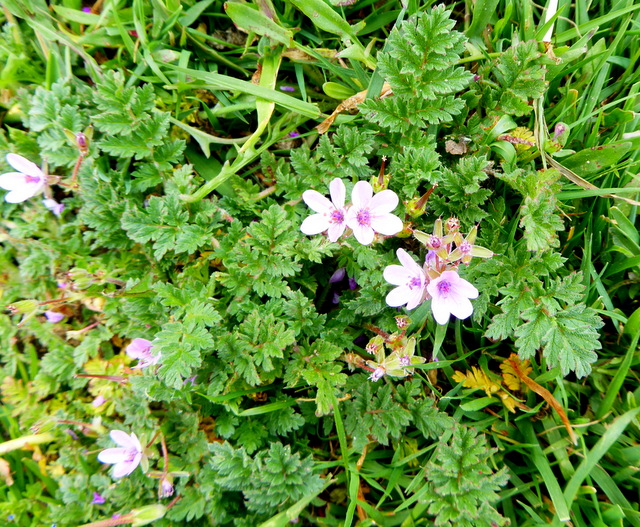
My Posts

Jan 2026
M T W T F S S
 1234
567891011
12131415161718
19202122232425
262728293031  
« Dec    

Pages

  • About my Blog
  • GDPR (General Data Protection Regulations) and This Site
  • My Life in a Suffolk Lane

Archives

Blogs I Follow

Unknown's avatar
Unknown's avatar
Unknown's avatar
Unknown's avatar
Unknown's avatar
Unknown's avatar
Unknown's avatar
Unknown's avatar
Unknown's avatar
Unknown's avatar
Unknown's avatar
Unknown's avatar
Unknown's avatar
Unknown's avatar
Unknown's avatar
Unknown's avatar
Unknown's avatar
Unknown's avatar
Unknown's avatar

Posts I Like

  • Unknown's avatar
  • Unknown's avatar
  • Limentinus's avatar
  • Unknown's avatar
  • bitaboutbritain's avatar
  • Wayne Wolfson's avatar
  • Unknown's avatar
  • Luso Loonie — Devin Meireles's avatar
  • Unknown's avatar
  • John’s Postcards's avatar
  • martzkvi's avatar
  • Unknown's avatar
  • Unknown's avatar
  • Unknown's avatar
  • Ari's avatar
  • Unknown's avatar
  • Unknown's avatar
  • Unknown's avatar
  • Dad's avatar
  • Unknown's avatar
  • Maikhel's avatar
  • Unknown's avatar
  • Sarah curran's avatar
  • trulymebeingme's avatar
  • Mélodie's avatar
  • Unknown's avatar
  • Rich's avatar
  • JAM's avatar
  • Julian Summerhayes's avatar
  • aho's avatar
  • mitchteemley's avatar
  • Jack Ronald Cotner's avatar
  • Unknown's avatar
  • Unknown's avatar
  • NEERAJ SINGH's avatar
  • Unknown's avatar
  • Carolina Cuisine Network's avatar
  • Unknown's avatar
  • Unknown's avatar
  • DoF@theinfill's avatar
  • Unknown's avatar
  • Unknown's avatar
  • Stephen G. Hipperson's avatar
  • Unknown's avatar
  • Unknown's avatar
  • Secret Diary of A Country Vicar's Wife's avatar
  • Unknown's avatar
  • Unknown's avatar
  • Unknown's avatar
  • Unknown's avatar

amphibians architecture art Arts and Crafts churches cooking Days out domestic animals family fish Folk Traditions Gardening Historic Buildings holidays Insects Landscaping literature music Norwich plants Rural Diary seashore theatre trees Uncategorized walking weather wild animals wild birds wild flowers

Tags

architecture autumn birds blackbird blackthorn Bungay butterfly church clouds common knapweed cow parsley crocus daffodils Diary dogwood family field maple flowers fungus garden gardening geese greylags ground-ivy Halesworth Hawthorn heather holiday Holly Holy Week horse chestnut Hoverfly insects ivy Lake District Lent lesser celandine lichen Lords and Ladies Mallard mallards Minsmere moorhen moss music Norwich Peak District pheasant plants pond ponds primrose primroses Rain rooks Rumburgh Rumburgh Church sheep Sheffield snow snowdrops Southwold spring Suffolk Suffolk Wildlife Trust sunset the Beck trees viburnum bodnantense walking weather wild cherry wild flowers winter-flowering honeysuckle witch-hazel

Meta

  • Create account
  • Log in
  • Entries feed
  • Comments feed
  • WordPress.com

Goodreads

Blog at WordPress.com.

Book Jotter

Reviews, news, features and all things books for passionate readers

Country Life Blog -

A blog about life in the country in the past and present

Matthew Paul: Poetry & Stuff

Poetry and what-not

Schnippelboy

Ein Tagebuch unserer Alltagsküche-Leicht zum Nachkochen

TAMARA JARE

Tamara Jare Contemporary Figurative Art – Bold Colors, Resilient Souls

A Taste of Freedom

Documenting a Dream

Country Ways

Rambling Journeys in Britain, Countryside Matters and campaigning for the Right to Roam

The Strawberry Post

Here to Entertain, Educate & Inspire!
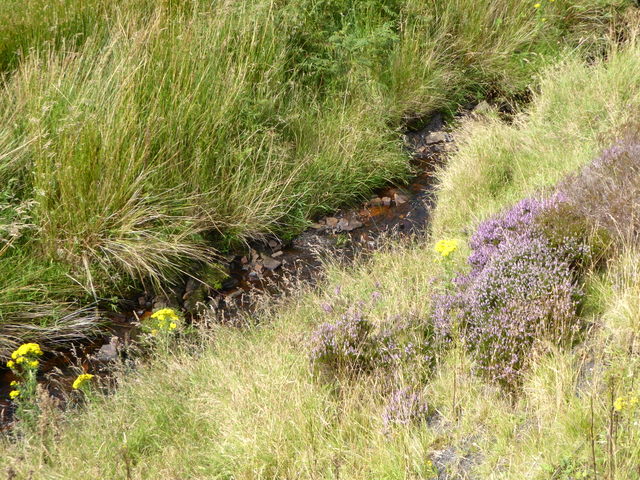
a north east ohio garden

an ongoing experiment in the dirt, 35 plus years

naturechirp

Celebrating God's creatures, birds and plants...

Sophie Neville

Writer

Going Batty in Wales

Developing a more sustainable lifestyle in SW Wales

Our Lake District Escapades

Exploring the Lake District and beyond

Short Walks Long Paths

Wandering trails around the coast of Wales

The Biking Gardener

An English persons experience of living and gardening in Ireland

Nan's Farm

A Journal Of Everyday Life

Walk the Old Ways

Rambling Journeys in Britain with John Bainbridge. Fighting for the Right to Roam. Campaigning to Protect Our Countryside.

Writer Side UP!

Waking the Writer Side...and keeping it "Up!"

Meggie's Adventures

Travel, thank you notes and other stories

amusicalifeonplanetearth

Music and the Thoughts It Can Inspire

lovefoundation.co.uk

Traveling Tortuga

Simply Living Well

Pakenham Water Mill

Historic watermill in the beautiful Suffolk countryside

Take It Easy

Retired, not expired: words from the after(work)life. And music. Lots of music!

Secret Diary Of A Country Vicar's Wife

By Olive Oyl

thanksfortheadventureorg.wordpress.com/

The Beat Goes On

#TBGO

Frank Pleszak's Blogs

Twitter: @frankpleszak @PolishIICorps

John Bainbridge Writer

Indie Writer and Publisher

roughwighting

Life in a flash - a bi-weekly storytelling blog

Walking the Old Ways

Rambling in the British Countryside

CapKane

thoughts on social realities

SkyeEnt

Jottings from Skye

jodie richelle

embracing my inner homemaker

Skizzenbuch/Blog

Just another WordPress.com weblog

Have Bag, Will Travel

The Call of the Pen

Flash Fiction, Book Reviews, Devotionals and other things.

John's Postcards

Art in Nature

You dream, I photographe it !

Smile! You’re in Barnier World......

theinfill

the things that come to hand

Dr. Mary Ann Niemczura

Author of "A Past Worth Telling"

Provincial Woman

The Pink Wheelbarrow

Luanne Castle: Poetry and Other Words (and cats!)

Poetry, Other Words, and Cats

The Family Kalamazoo

A genealogical site devoted to the history of the DeKorn and Zuidweg families of Kalamazoo and the Mulder family of Caledonia

everythingchild

The Book Owl

Canberra's Green Spaces

Paul Harley Photographer

  • Subscribe Subscribed
    • A Suffolk Lane
    • Join 715 other subscribers.
    • Already have a WordPress.com account? Log in now.
    • A Suffolk Lane
    • Subscribe Subscribed
    • Sign up
    • Log in
    • Report this content
    • View site in Reader
    • Manage subscriptions
    • Collapse this bar
 

Loading Comments...
 

    Privacy & Cookies: This site uses cookies. By continuing to use this website, you agree to their use.
    To find out more, including how to control cookies, see here: Cookie Policy
    %d