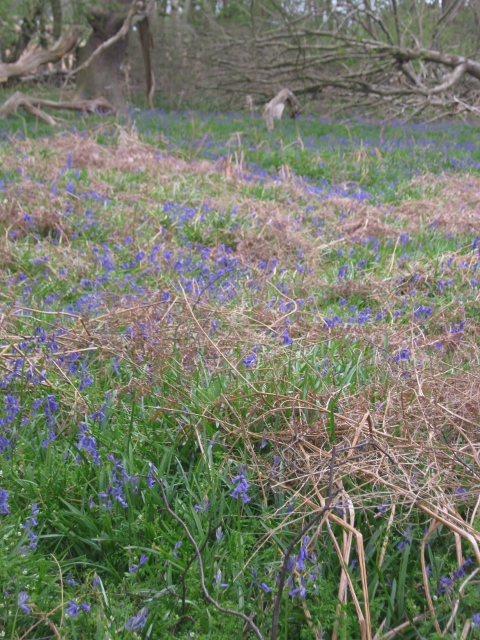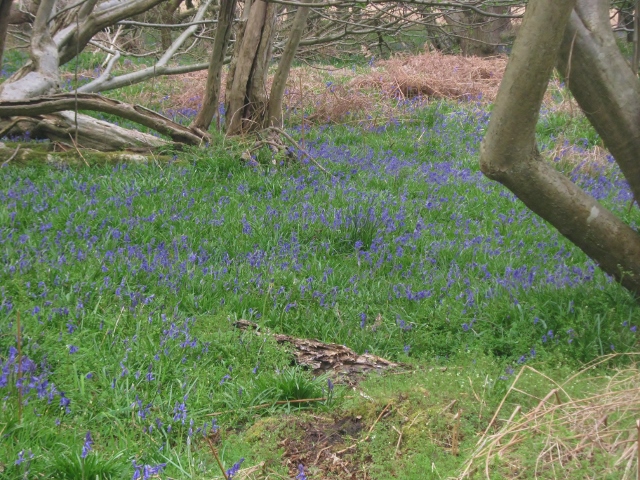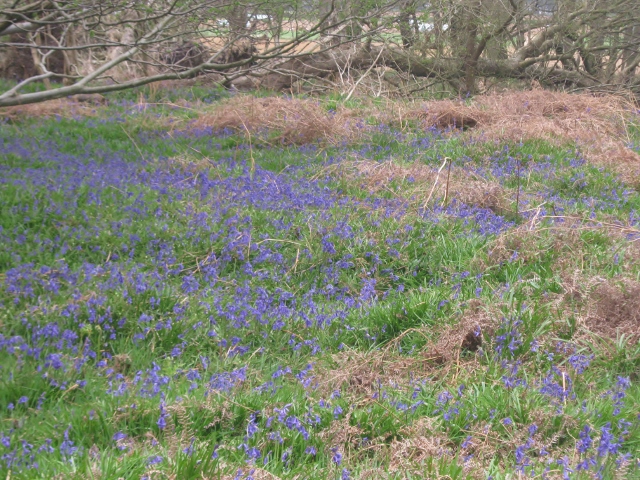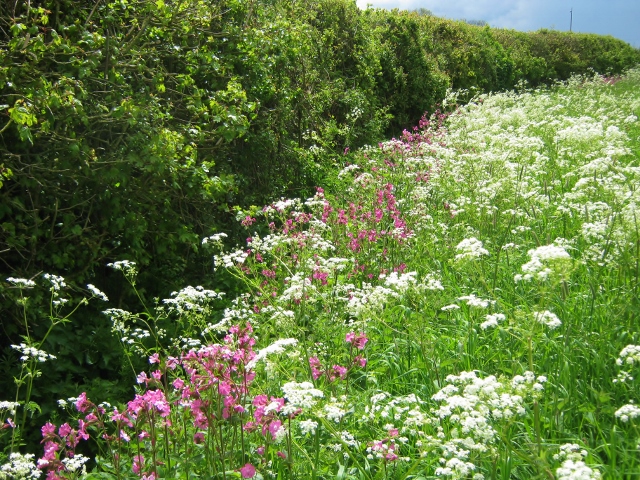
• About my Blog
  • GDPR (General Data Protection Regulations) and This Site
  • My Life in a Suffolk Lane

A Suffolk Lane

~ A diary of my life in rural north Suffolk.

A Suffolk Lane

Category Archives: trees

Autumn in a Suffolk Lane – Part 2

11 Sun Oct 2015

Posted by Clare Pooley in churches, Days out, Gardening, music, plants, Rural Diary, trees

≈ 42 Comments

Tags

Acorn, ash keys, Astrantia, autumn, Bantam Cock, beach, chickens, Chrysanthemum, conker, dogwood, Dunwich Heath, dwarf gorse, eating apples, Elderberries, fungi, gardening, GERANIUM, Grove snail, Hibiscus, Jake Thackray, Knopper gall, leaf colour, Linstead Magna, Linstead Parva, liverwort, Michaelmas Daisy, moorhen, Pyracantha, rough sea, Salvia, silver birch, Suffolk, sunset, Tansy, viola
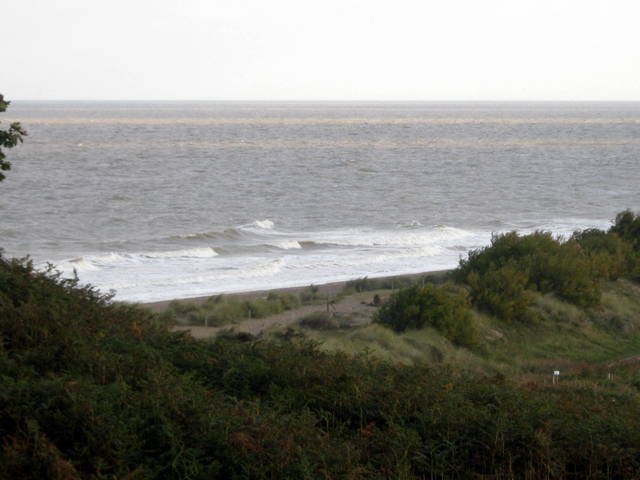
IMG_5766Beach at Dunwich Heath

The beach at Dunwich Heath.

We visited yet another of our local beaches on a very windy, cool afternoon recently.  We only stayed on the beach for a short while because the wind was so biting; Elinor and I both got earache.
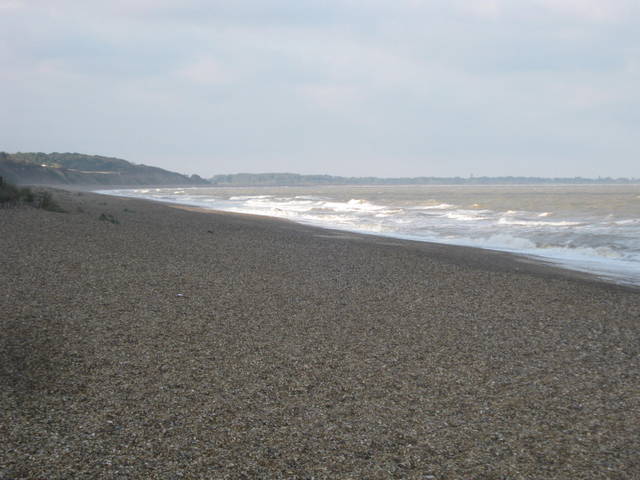
IMG_5767Beach at Dunwich heath

The mist in the distance is sea-spray.
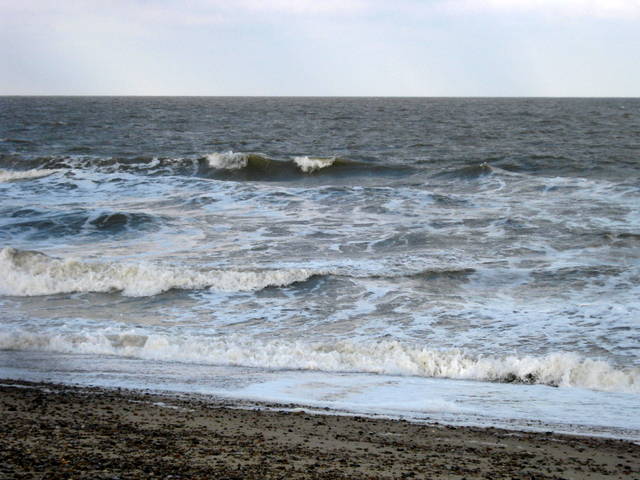
IMG_5768Beach at Dunwich Heath

The waves were quite rough but the tide was going out.
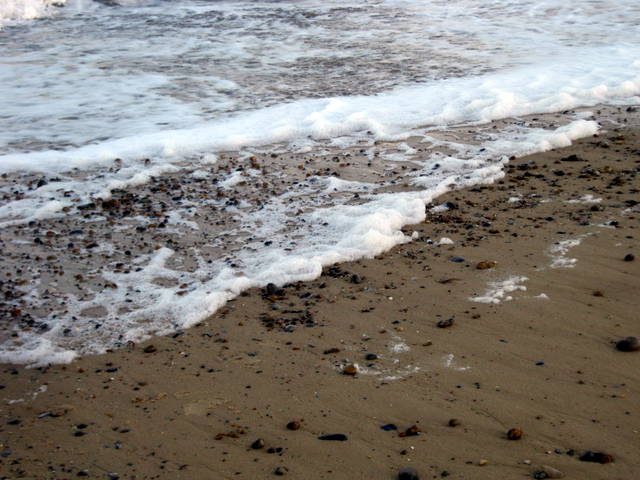
IMG_5769Beach at Dunwich Heath

Foam was left on the sand and was blowing about.
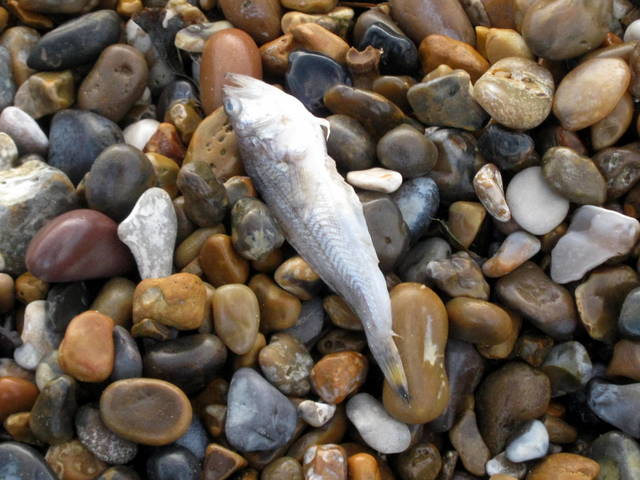
IMG_5770Dead fish

This little fish must have come too close to the shore.
IMG_5771Snail on bracken

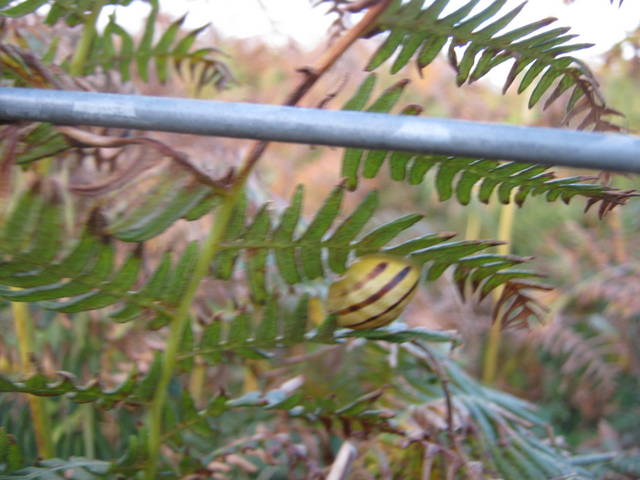
This Grove Snail (Cepaea nemoralis) attached to its bit of bracken was swinging about in the wind.

My ID guide suggests that the Grove Snail “is used to demonstrate the survival of the fittest in evolution, because Thrushes eat the snails which are least well camouflaged against their environment.”
IMG_5772Gorse

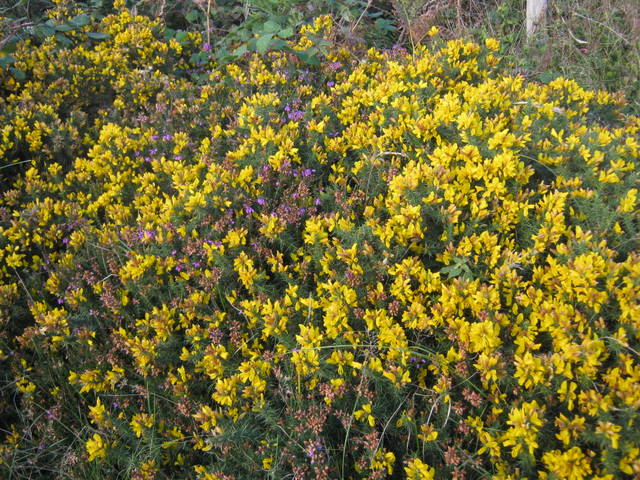
The Heather (Calluna vulgaris) was past its best but the Dwarf Gorse (Ulex minor) was looking wonderful

IMG_5776Sunset

Another sunset.

In a post I wrote a couple of weeks ago I mentioned that the bright yellow of the Perennial Sow-thistle was not common at this time of year.  I will have to eat my words because most of the flowers I have seen since then have been yellow!
IMG_5778Tansy

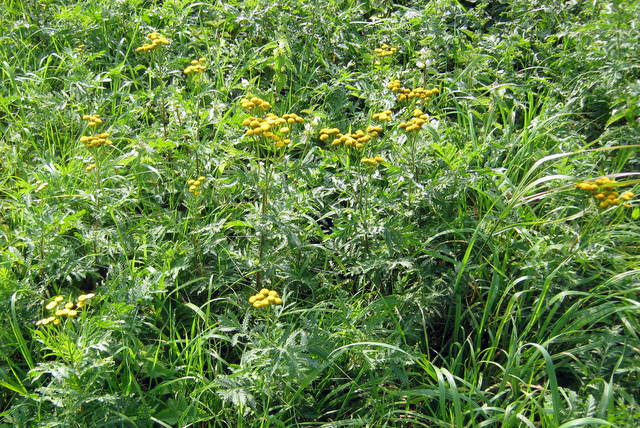
Tansy (Tanacetum vulgare) seen on the roadside between Linstead Magna and the village of Linstead Parva *(see below)
IMG_5779Tansy

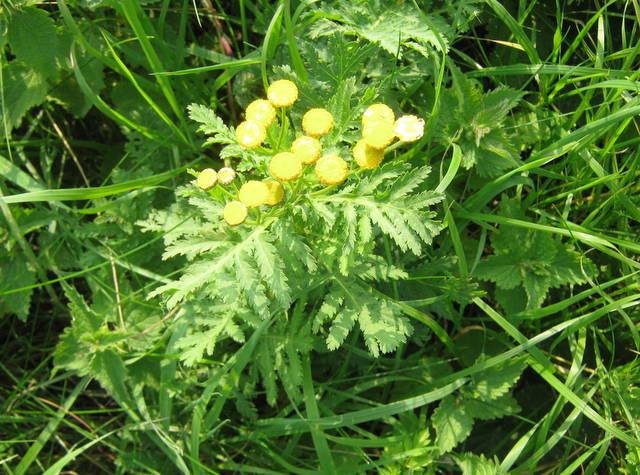
The Tansy has very aromatic leaves and the little button flowerheads are made up of disc florets only.
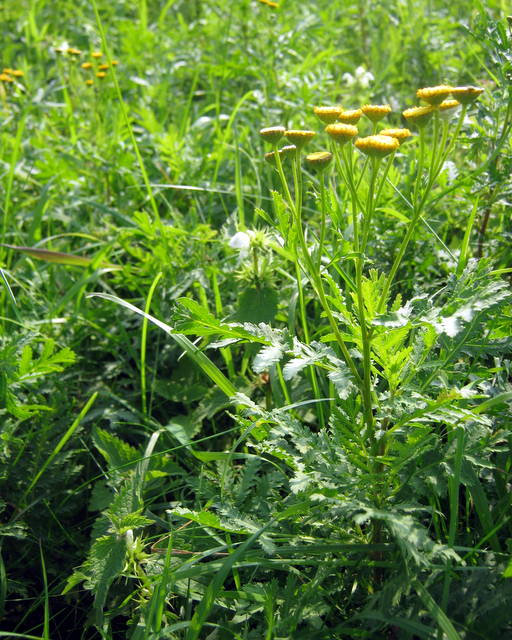
IMG_5780Tansy

The genus name ‘Tanecetum’ and the name Tansy are both derived from the Greek word for immortality. The plant was believed to give  eternal life to the drinker of an infusion made from it.

Tansy used to be used as a flavouring in food until fairly recently.  Egg dishes especially, were enhanced by the use of finely chopped tansy leaves.  Tansy was also used as an alternative to expensive imported spices such as nutmeg and cinnamon and Tansy Cake at Easter was very popular.  Because of the strength of its scent, Tansy was also used as a repellent, keeping mice from corn and flies from meat.
IMG_5781Dogwood

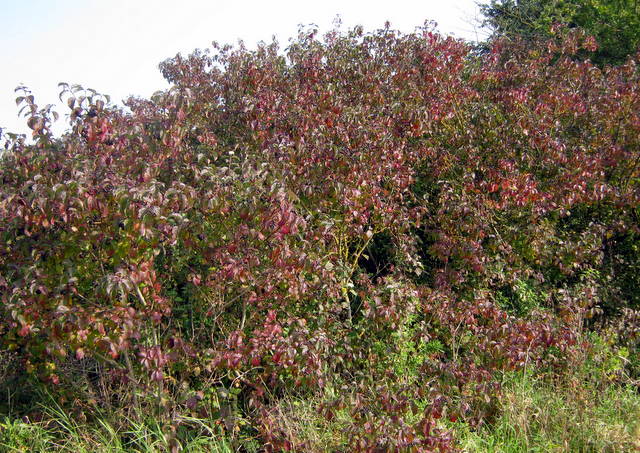
Dogwood (Cornus sanguinea)

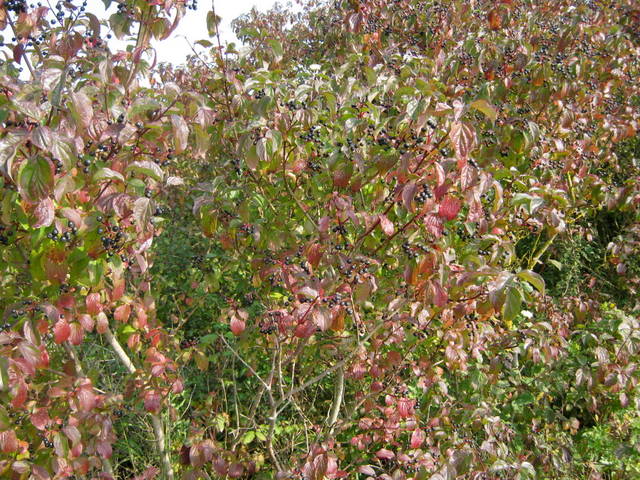
Close to where I photographed the Tansy I found this hedge of Dogwood.  It was covered in large black berries – the largest I have ever seen on a Dogwood – and most of  the leaves had turned a beautiful red.  Dogwood leaves are usually a much darker, duller maroon in Autumn.
IMG_5782Dogwood

What also surprised me about these Dogwood bushes was seeing flowers in bloom at the same time as the berries and the red leaves.

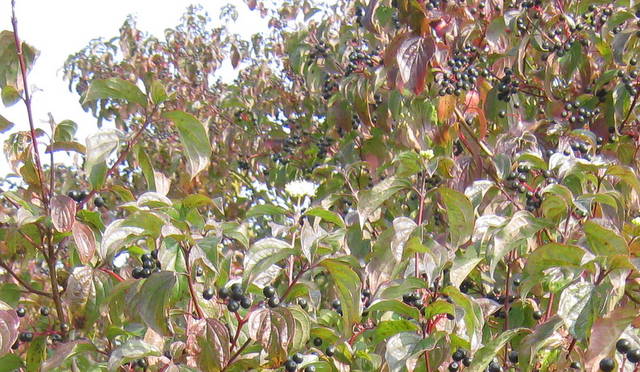
It isn’t easy to see them in this photo so I cropped it.
IMG_5782Dogwood - Copy

One of the flower-heads is in the centre of this picture.  The couple of weeks of warm and sunny weather we have had recently had fooled the bush into thinking it was spring again.

Richard and I have been working in the garden, getting it ready for winter.  I only seem able to get out there a couple of days a week but I have managed to get quite a lot done.  One of my jobs has been tidying behind the garden shed and round the back of the greenhouse.  Behind the shed was rank with weeds, mainly stinging nettles, which I was able to pull out fairly easily as the soil is quite damp there.  I had stored lots of pots and tubs full of spring bulbs behind the greenhouse so these have come back out to be smartened up and got ready for next spring.  I discovered other flowerpots that should have been emptied and cleaned ages ago.
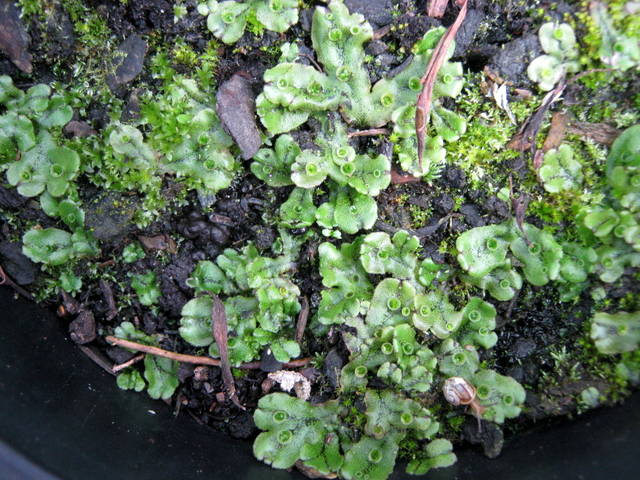
IMG_5783Marchantia polymorpha liverwort with snail

This pot was covered with liverwort Marchantia polymorpha. It has little green cups on the leaf-like structures (thallus). Do you see the baby snail?
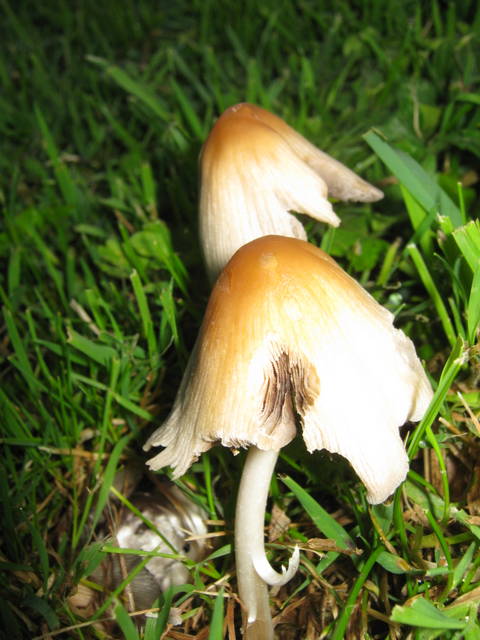
IMG_5818Fungus

We have a lot of fungus all over the grass in our garden. Nothing exciting or colourful, just brown and cream-coloured toadstools. These had been nibbled by something.

IMG_5814Fungus
IMG_5816Fungus

Two other unidentified types of fungi.
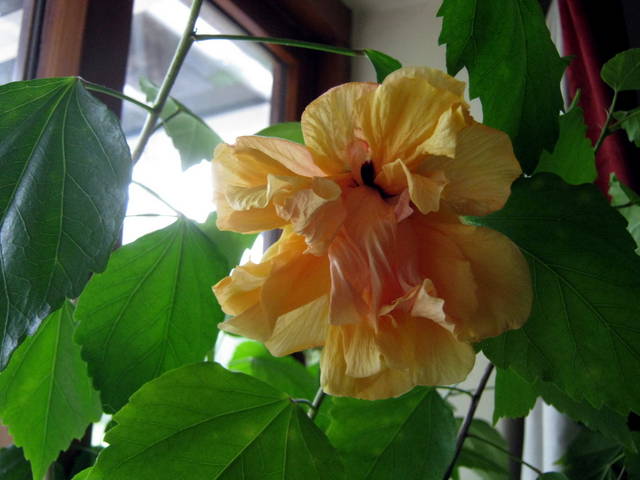
IMG_5786Hibiscus

I have had this Hibiscus for about 26 years. It was a gift from my ex-mother-in-law who brought this with her when she came to see us when Alice was a tiny girl.

I love these double flowers – the peach petals have dark crimson bases.
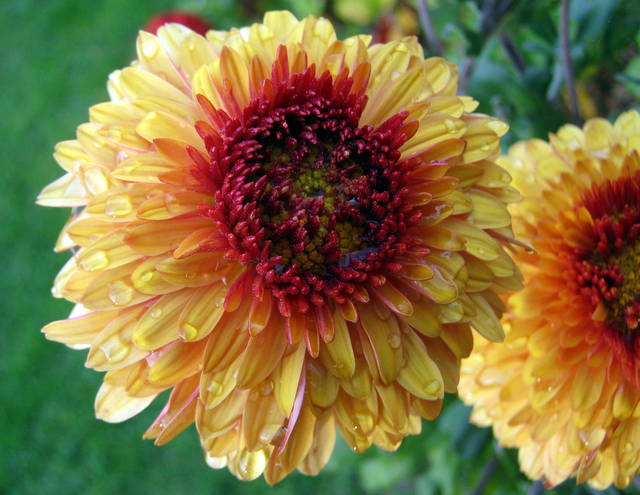
IMG_5788Chrysanthemum

Richard has a new Chrysanthemum flower
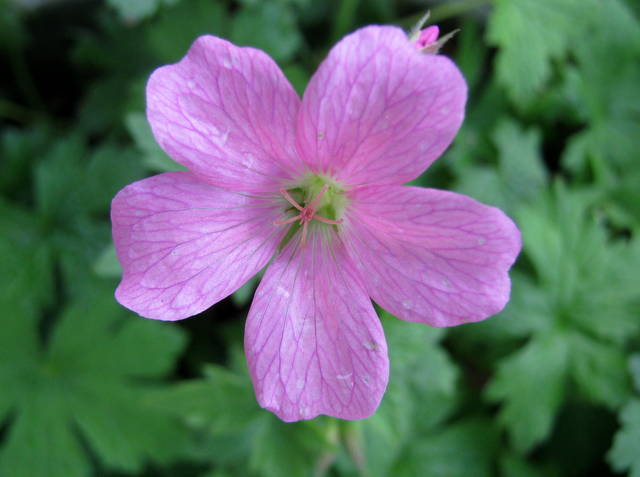
IMG_5789Geranium

My Geraniums are still flowering

IMG_5792Viola

I like this pretty Viola

IMG_5799Michaelmas Daisy
IMG_5800Michaelmas Daisy
IMG_5807Michaelmas Daisy

Three different Michaelmas Daisies

IMG_5808Salvia

Salvia

IMG_5811Astrantia

The three ages of Astrantia

IMG_5793Elderberries

Elderberries from the bush at the end of the drive.
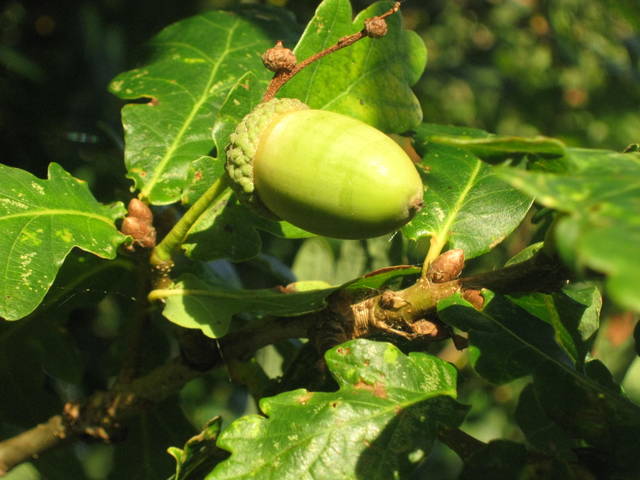
IMG_5805Acorn

Acorn  This is the first time in years that these acorns aren’t affected by Knopper galls.
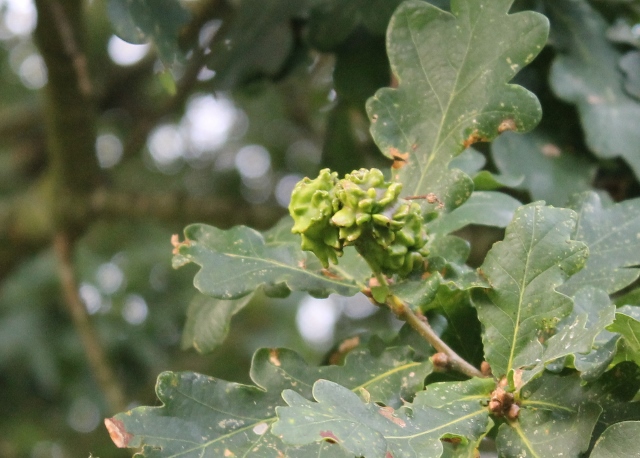
018Acorns with galls (640x458)

This is a photo I took last year of Knopper gall damage on acorns
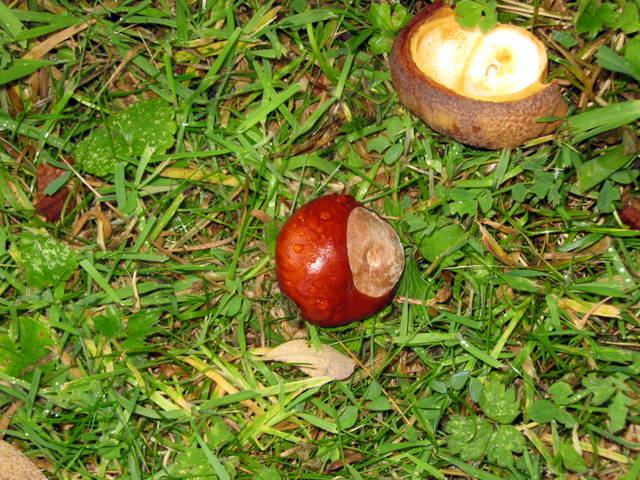
IMG_5806Conker

‘Conker’

IMG_5815Ash keys

Ash ‘keys’

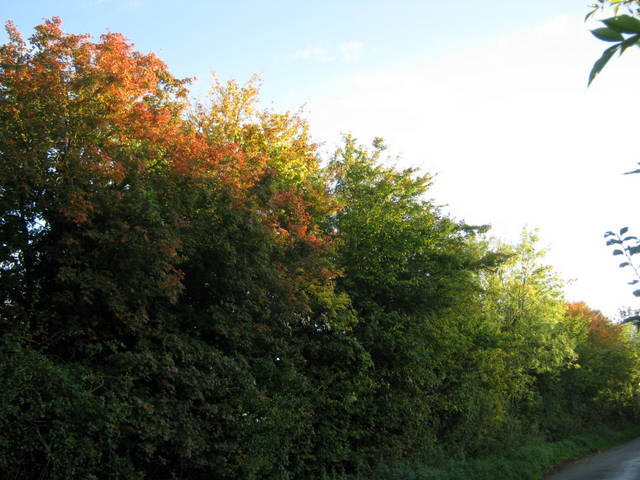
IMG_5795Autumn colour

The trees in our lane

IMG_5812Silver birch

Our Silver Birch is changing colour

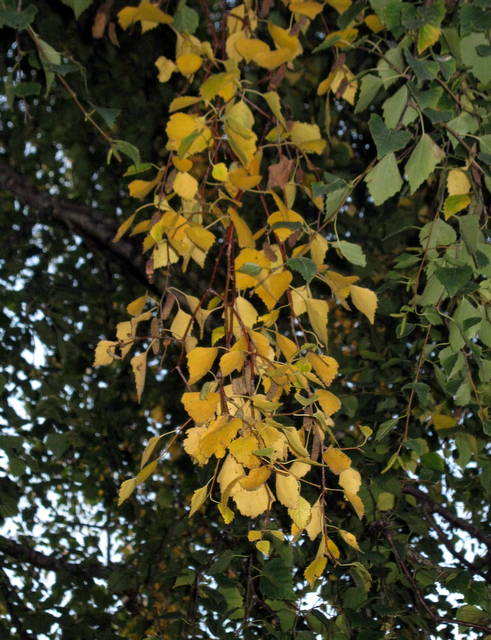
IMG_5813Birch leaves

Birch leaves

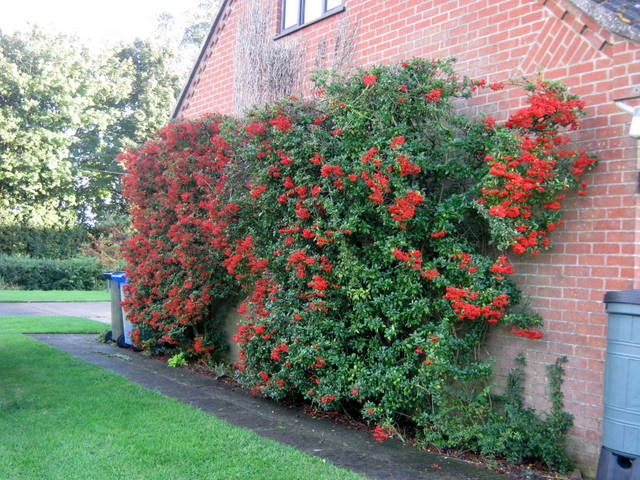
IMG_5797Pyracantha

I pruned our Pyracantha recently

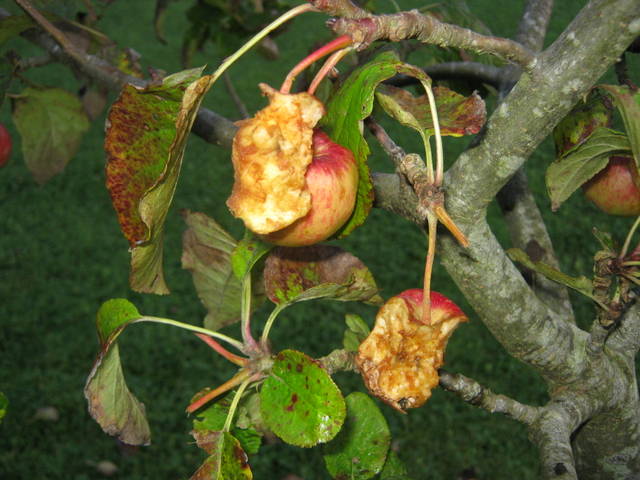
IMG_5821Apple tree damage

We not only had a lot of aphid damage to our apple trees in the spring and early summer but the apples on this tree are now being eaten by Moorhens!  It is odd seeing water birds wobbling about in the trees gulping down our apples as fast as they can.

We are getting a little tired of next-door’s free-range chickens in our garden all day.  They kick about in the flower beds and damage seedlings; they peck off flowers and generally make a mess of the paths, beds and compost heaps in the garden.  We have spoken to our neighbours about it a few times but they don’t appear to have any intention of keeping their chickens on their own land.  They have a constant supply of chicks too.

Linstead Magna (large/greater Linstead) is now a small collection of houses and farm buildings.  The church no longer exists but I spoke to someone some years ago who remembered the church and used to attend it.  For more information about this church see here.

Linstead Parva (small/lesser Linstead) is a pleasant little village with a pretty church.  In spring the churchyard is covered in snowdrops and other spring flowers.

Thanks for visiting!
Share this:

  • Share on X (Opens in new window) X
  • Share on Reddit (Opens in new window) Reddit
  • Share on Pinterest (Opens in new window) Pinterest
  • Share on Facebook (Opens in new window) Facebook
  • Email a link to a friend (Opens in new window) Email
  • Share on Tumblr (Opens in new window) Tumblr
  • Print (Opens in new window) Print
  • Share on Pocket (Opens in new window) Pocket
  • Share on LinkedIn (Opens in new window) LinkedIn
Like Loading...

September’s End

25 Fri Sep 2015

Posted by Clare Pooley in amphibians, family, Insects, music, plants, Rural Diary, trees

≈ 32 Comments

Tags

autumn, berries, buzzard, common lizard, crane fly, family, flowers, Fruit, fruit trees, fungus, garden flowers, greater celandine, wasp nest, wild flowers

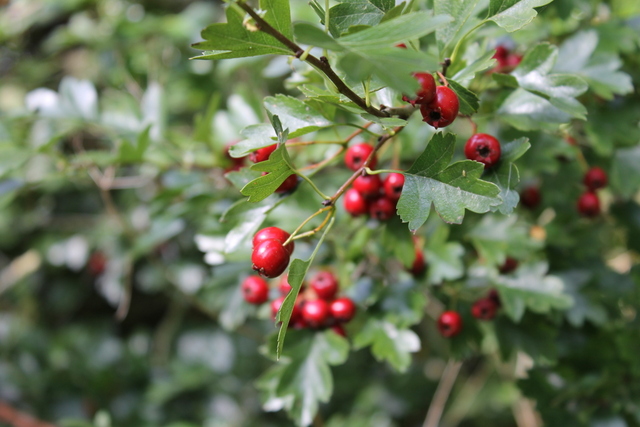
IMG_2485Hawthorn

Common Hawthorn (Crataegus monogyna)

We have had some very cool nights already and lots of rain.  Autumn has arrived!  The nights are drawing in and when I get up just after six o’clock in the morning on Mondays and Fridays I have to wait for well over half an hour before the sun rises.

Chrysanthemum
Chrysanthemum
Chrysanthemum
Chrysanthemum
Chrysanthemum
Chrysanthemum
Chrysanthemum
Chrysanthemum

I have no news to give you about Alice – I haven’t spoken to her for about a fortnight so I assume she is busy and coping alright.

Morning Glory
Morning Glory
Dahlia
Dahlia
Dahlia
Dahlia

To our surprise, the day after I mentioned in this blog that it would take weeks for probate to be granted, it was granted!  Richard has spent two days in Manchester with his brother sorting out all their mother’s finances.  They also went to a place that Joyce was fond of and scattered her ashes.  Richard was hoping to spend three days with Chris and wanted to travel up in his new car but unfortunately his windscreen was hit by a stone chipping last week which left a four inch crack and it needs replacing!  The insurance company is sending someone to our house to carry out the replacement today (which is when Richard had hoped to return home).  He came home yesterday instead (Thursday).  He will have to go back to Manchester in a couple of weeks to finish going through all Joyce’s belongings and deciding what to do with them – a very difficult business.

Dog-rose-hips (Rosa canina)
Blackberries (Rubus fruticosus agg.)
Pyracantha berries
Pyracantha berries
Cotoneaster berries
Cotoneaster berries
Black Bryony (Tamus communis) growing through Cotoneaster horizontalis
Cotoneaster horizontalis

Elinor has almost completed two weeks at college, is working hard and her tutors are very pleased with her.  She is enjoying the course but finds the social side of college life very tricky.  She is very insecure and worries all the time that she is saying or doing the wrong thing.  She has also been badly affected by her grandmother’s death and funeral.  She is afraid of going to sleep in case she doesn’t wake up again and she is frightened of being left alone both now and in the future.

Eating apples 'Saturne'
Eating apples ‘Saturne’
Pears 'Concorde'
Pears ‘Concorde’
Figs 'Brown Turkey'
Figs ‘Brown Turkey’
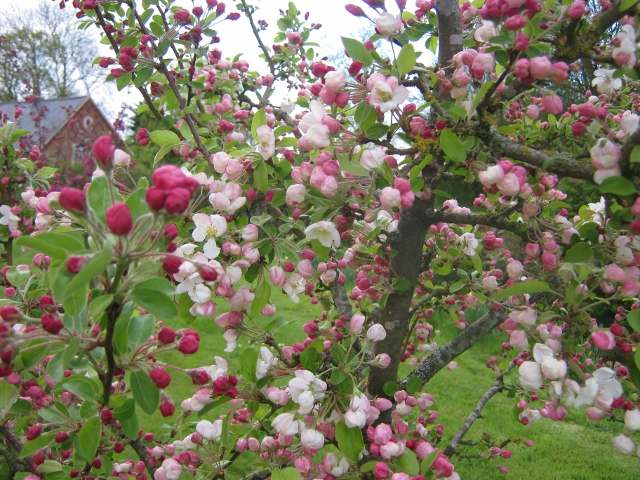
Crabapple 'Evereste'
Crabapple ‘Evereste’
Crabapple 'Harry Baker'
Crabapple ‘Harry Baker’
Crabapple
Crabapple

I have been busy in the house and with my mother; Richard has had a lot to do in the garden and has also been arranging our finances now that he has retired.  We have had no time for a walk recently and in fact have done very few walks together during the whole year.  We hope that in the next week or so things will have calmed down and we will be able to find time to go out together.

Chinese Lanterns (Physalis alkekengi)
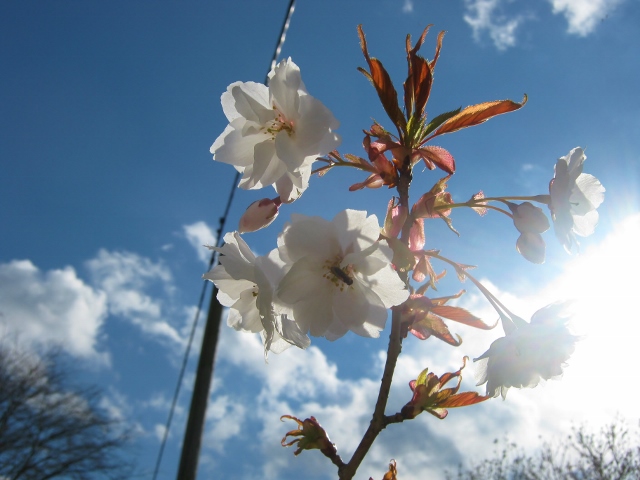
Japanese Ornamental Cherry 'Fragrant Cloud'
Japanese Ornamental Cherry ‘Fragrant Cloud’
Acer palmatum 'Atropurpureum'
Acer palmatum ‘Atropurpureum’
Spindle (Euonymous europaeus)
Hazel new catkins (Corylus avellana)
Elder (Sambucus nigra)
Fungus
Fungus
Fungus
Fungus
Fungus
Fungus

The photographs in this post were mainly done during one afternoon this week.

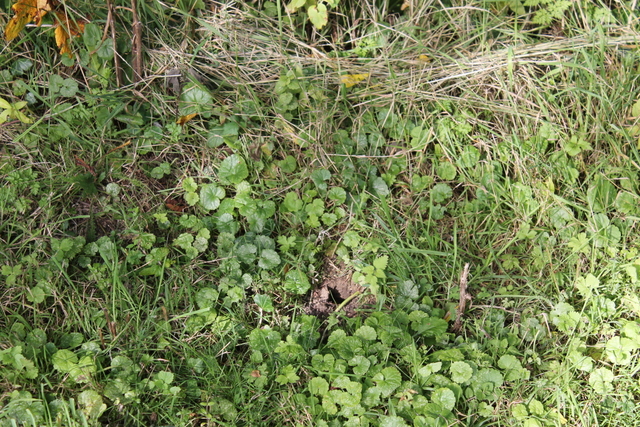
IMG_2479Entrance to wasp nest

This is the entrance to one of the three wasp nests we have in our garden. They took over an old mouse or vole hole.

IMG_2487Crane fly

Crane fly (Tipula paludosa)

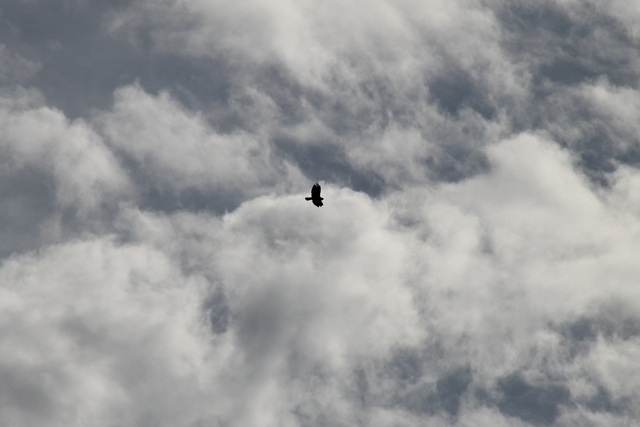
IMG_2494Buzzard

Buzzard (Buteo buteo)

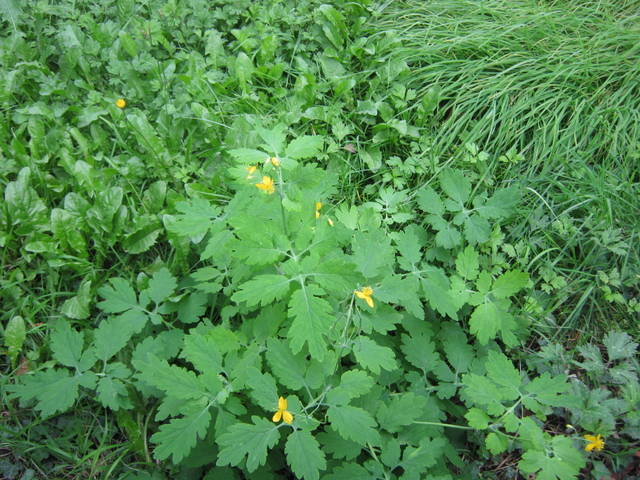
Greater Celandine

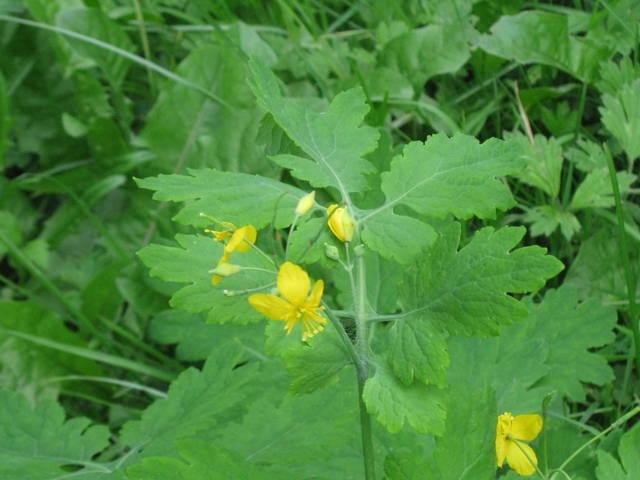
Greater Celandine (Chelidonium majus)

I saw this plant just inside the stone wall that surrounds St Mary’s church in Bungay.

Greater Celandine

Greater Celandine

This plant is no relation to the Lesser Celandine we see in the springtime.  It is a type of poppy, similar to the Yellow Horned-poppy I found on Dunwich beach a few weeks ago.  Its orange-coloured sap has been used in Asia for burning away warts and corns since the beginning of Chinese civilisation.  This caustic liquid was also used to remove soreness and cloudiness from the eyes!  It uses an oil gland on its seeds to ensure they are taken a distance away.  Ants feed on the oil and then carry the seed off.

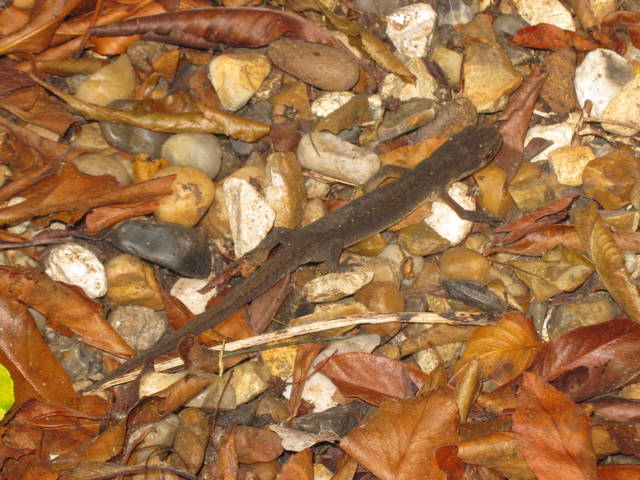
Juvenile Common Lizard

Juvenile Common Lizard

For the second week running, I discovered something hiding under our wheelie-bin.  Obviously, rubbish bins are the go-to shelter for small creatures.

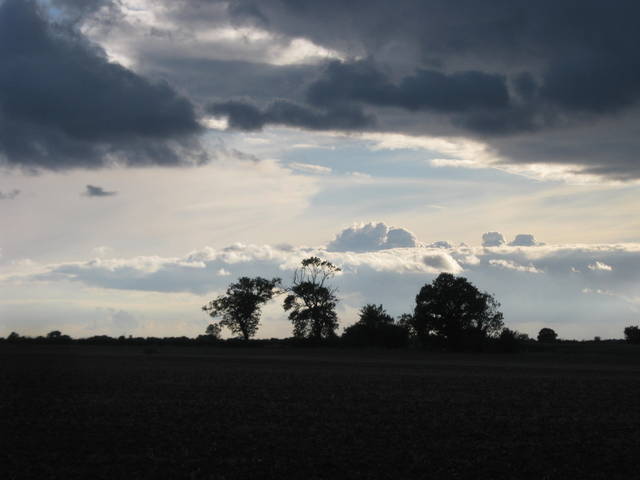
IMG_5734Clouds

Elinor and I admired these clouds as we neared home the other day.

IMG_5736Clouds

We turned to our left and saw these!

The following song is dedicated to Elinor.

Thanks for visiting!

Share this:

  • Share on X (Opens in new window) X
  • Share on Reddit (Opens in new window) Reddit
  • Share on Pinterest (Opens in new window) Pinterest
  • Share on Facebook (Opens in new window) Facebook
  • Email a link to a friend (Opens in new window) Email
  • Share on Tumblr (Opens in new window) Tumblr
  • Print (Opens in new window) Print
  • Share on Pocket (Opens in new window) Pocket
  • Share on LinkedIn (Opens in new window) LinkedIn
Like Loading...

A Little Bit of This and a Little Bit of That

09 Sun Aug 2015

Posted by Clare Pooley in family, Insects, plants, Rural Diary, trees

≈ 31 Comments

Tags

'The Company', beetles, clouds, cream tea, Fruit, harvesting, insects, Lilium longiflorum, moths, purple beans, Sheffield, Suffolk, sunset, The Man in the Iron Mask, trees, wild flowers

I haven’t published a diary post lately so this is a short resumé of my activities over the past month or so.

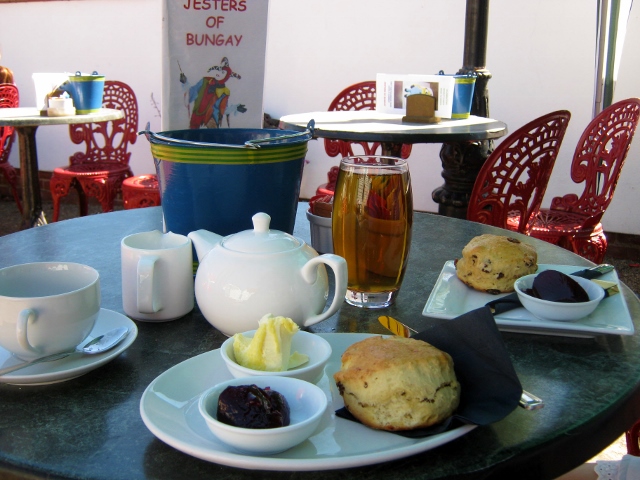
To start things off I have a photo of a cream tea that Elinor and I enjoyed while out shopping in Bungay before our holiday.

IMG_4905Cream tea (640x480)

A very brightly-coloured café called ‘Jesters’ at the entrance to Bungay castle. We were going to walk round what is left of the castle when I remembered in time that I had only allowed myself an hour’s parking . The cream and jam scones were yummy!

Elinor and I went by train to Sheffield on the 2nd of July to visit my elder daughter, Alice.  The day was hot and the journey quite uncomfortable as the carriage we were in on the train from Norwich to Sheffield had faulty air-conditioning.  The ticket collector handed out bottles of water to anyone who wanted some.  We had noticed large quantities of water bottles in the waiting room at Diss Station as well, with a notice saying any customer could help themselves to water if they needed it.

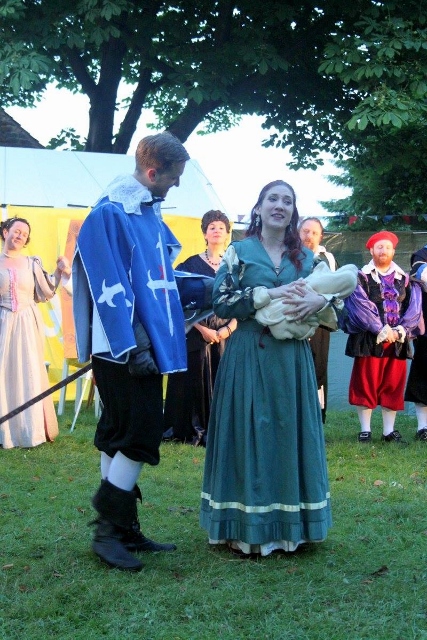
We were travelling to Sheffield in order to watch Alice perform in ‘The Man in the Iron Mask’ by Alexandre Dumas.  We then stayed the night with her in her single room.  It was snug to say the least, but lovely to be all together again.

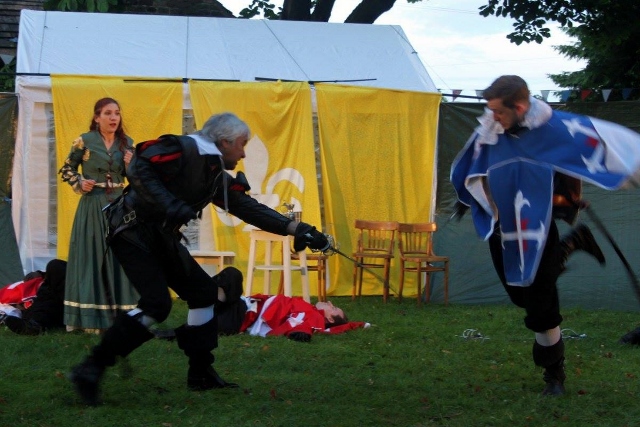
These are some photos of her that I have ‘borrowed’ from her drama group’s Facebook page.

11258095_10204761757547885_1220536374365931542_o (640x427)

Alice (in the green dress) played the part of Constance, D’Artagnan’s wife. She is watching D’Artagnan (on the right) fighting his foe.

The man on the left is an expert in weapons and fighting and has an armoury at his home.  He taught all the cast how to fence and fight.  It all looked very real.

11665579_10155721644210524_7162535900042599508_n (480x640)

I thought Alice did very well especially as she had to wear a costume which gave her a terrible rash for which she needed medical treatment.

11200774_10155721643400524_4718516296672381910_n (640x480)

‘All for one and one for all!’

11741103_10204761762748015_1710620135797317354_o (427x640)

Dumas will be spinning in his grave at their version of his very sad and doom-laden book. It was a brilliant, funny, well-acted and well-choreographed play with a happy ending.

As we were waiting for our train back home the next morning I saw and heard the piano in the concourse being played.  The piano is there for anyone’s use at any time.

IMG_4906Pianist on Sheffield station (640x477)

This young man played well.

Unluckily for me and Elinor, the carriage we were in on our return journey also had no air-conditioning.  This time there was no free water but we were able to leave the carriage at Nottingham (I think) and get into another carriage with AC that they had attached to the train.

The following week was busy with preparations for our holiday.  Elinor’s laptop stopped working and had to be taken in for repair.  She worried that it might not be repaired in time for her to use on holiday.  She used my lap-top all week.  We were able to collect her’s on Friday :).  I shopped with Mum on Tuesday and made sure she’d be alright for food and other necessaries while we were away.  My friend Heather came to lunch on Wednesday and we had an enjoyable time chatting about friends and family.  She gave me a book – Janet Marsh’s ‘Nature Diary’.  Such a thoughtful present.  I had an appointment at Norfolk and Norwich Hospital for a rheumatoid arthritis check-up on Friday – the day before going away.

We were surprised to find on our return from holiday on the 18th July that the field of barley behind our house had still not been harvested.  The weather at home had been warm and quite dry while we had dripped and shivered on holiday.  We did get a superb sunset to welcome us back.

IMG_2389Sunset 18 - 07 (640x427)
IMG_2390Sunset (640x427)
IMG_2391Sunset (640x427)

We had another busy week catching up on household and gardening chores and I had two weeks’ worth of washing and ironing to do.  On the Monday I had to take Mum to the hospital for her regular eye check which went very well.  I collected her shopping list as I would be doing her shopping for her that week.  When I got home I started to make a loaf of bread and discovered I hadn’t enough yeast so had to go out again.  I bought some other groceries as well as the yeast and was on my way home when I got a flat tyre.  I managed to get the car into the town central carpark and got the spare tyre out but couldn’t work out how to remove the jack from the car!  Shameful!  I’m also not strong enough to take the wheel off anyway so had to phone Richard who had just sat down with a drink.  While I was waiting for Richard to come and rescue me I got two offers of help from kind gentlemen who saw my pancake-flat tyre.  The age of chivalry is not dead!  The tyre had a rip in it and a couple of nails too.

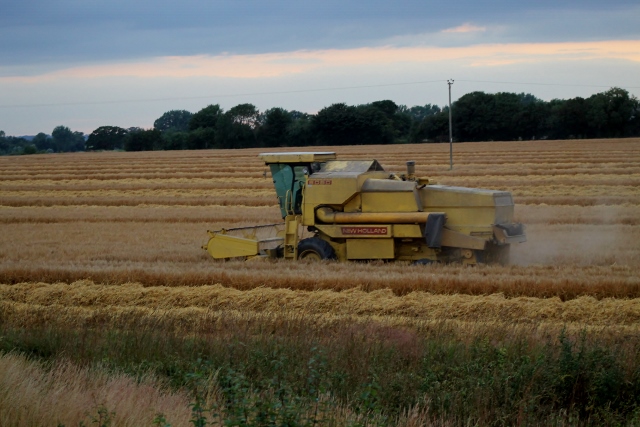
The next day they began harvesting the barley field.

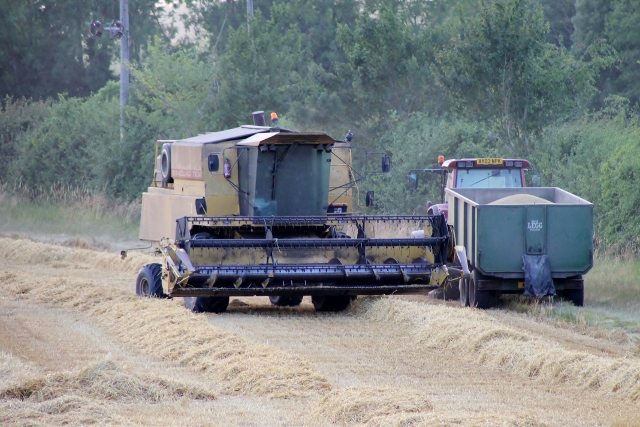
IMG_2392Barley harvest (640x427)

This combine had just off-loaded its grain into the waiting tractor trailer.

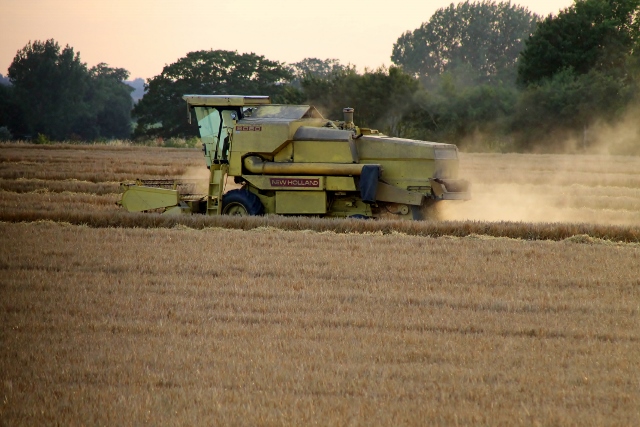
IMG_2394Barley harvest (640x427)

The harvesting wasn’t started until late in the day and continued until quite late in the evening.

The countryside at harvest-time is a very noisy, dusty, dirty place to be.  It proves at this time of year to be very industrial.  Our houses and cars get covered in a thick pall of dust and bits of straw.  We all start wheezing and coughing and anyone with allergies or asthma has problems with their health.  There is a constant roaring and whining of engines as the combines trawl up and down the fields all day and most of the night too and the tractors with full trailers of grain are driven at break-neck speed along our narrow lanes to the silos and barns at the farms.  Woe betide anyone or any creature who gets in their way!

IMG_2395Barley harvest (640x427)

The barley field was only half finished that evening and the combine went off to another field to work on that. Both fields were left with strips of uncut grain.

I am not sure why they left both fields like this.  Bad weather was forecast and duly arrived a couple of days later.  Perhaps less damage is caused by wind and rain when the crop is in strips.

IMG_5290View across field (640x476)

This is a photo of the other field our local farmer cut in strips. We took this picture while on a walk nearly two weeks ago.  The fields were both finished last week – almost a month since they had begun.

This was the first walk we had taken from home in months.

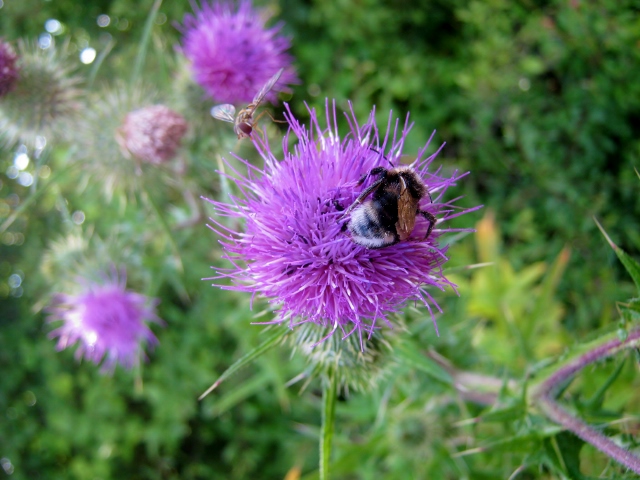
IMG_5294Bee and hoverfly on Spear Thistle (640x480)

A bee and a hoverfly enjoying the nectar of a Spear Thistle (Cirsium vulgare)

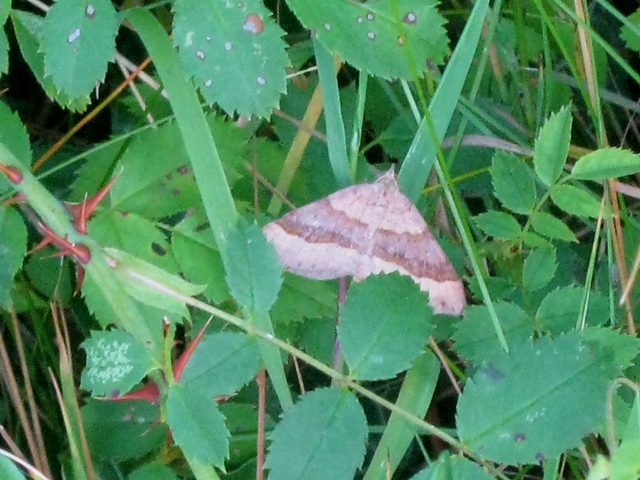
IMG_5295Moth Shaded Broad Bar perhaps (640x480)

I disturbed this moth as I walked through the long grass. I think it may be a Shaded Broad Bar moth (Scotopteryx chenopodiata)

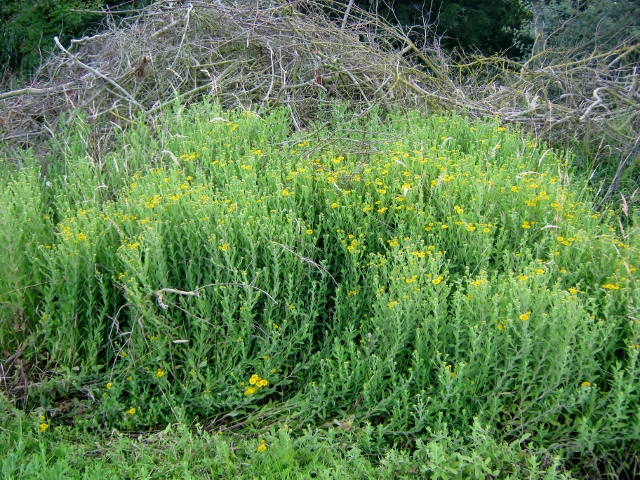
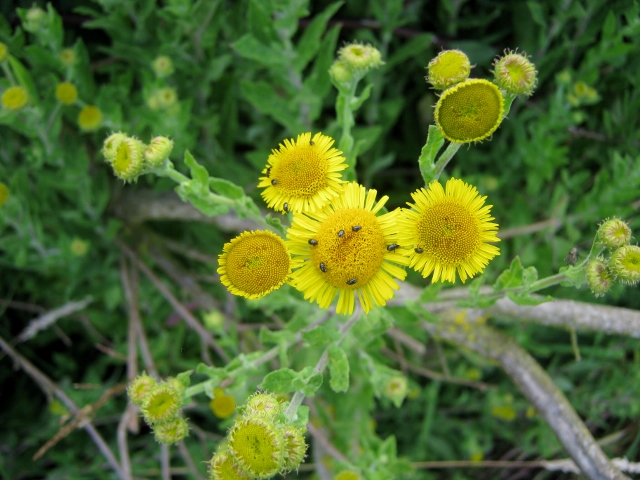
IMG_5297Common Fleabane (640x480)

I remembered seeing a large patch of Common Fleabane (Pulicaria dysenterica) in the corner of a field last year. It was still there though a large heap of prunings had been left there earlier in the year

IMG_5296Common Fleabane with pollen beetles (640x480)

Fleabane with Pollen Beetles (Meligethes aeneus)

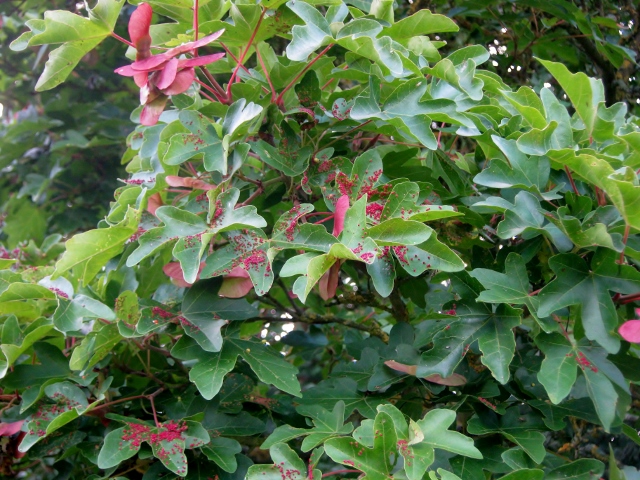
IMG_5298Field Maple (640x480)

The Field Maple(Acer campestre) was looking bright, not only with its new ruby-coloured winged-fruits and leaf stalks but also with the crimson galls on many of its leaves. These galls are small red pustules probably produced by the mite Aceria myriadium.

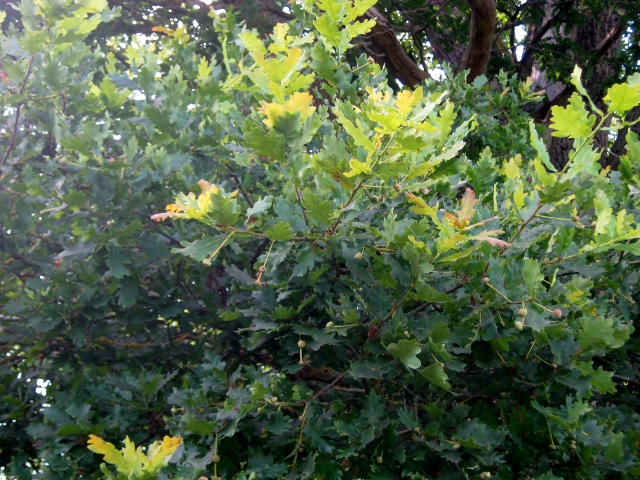
IMG_5300New oak leaves (640x480)

New Pedunculate (or English) Oak leaves (Quercus robur) shining in the afternoon sun. There are also tiny acorns on long stalks to be seen.

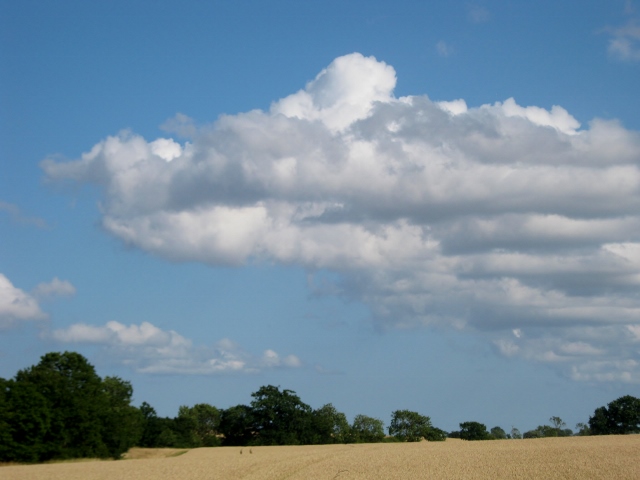
IMG_5303Clouds (640x480)

Interesting cloud formation.

IMG_5307Hoverfly on bramble flowers (640x480)

A hoverfly on Bramble (Rubus fruticosus agg. ) flowers

IMG_5309Bramble (640x480)

Bramble flowers are very attractive and blackberries go so well in pies and crumbles!

IMG_5308Dewberry (640x480)

I saw my first Dewberry (Rubus caesius) last year and was worried I wouldn’t find one this year because of all the hedging and ditching that was done in the spring. I eventually found a small plant under a hedge.

IMG_5310Field view (640x479)

Richard and I like this view across a field

IMG_5312Field view photo-bombed by fly (640x480)

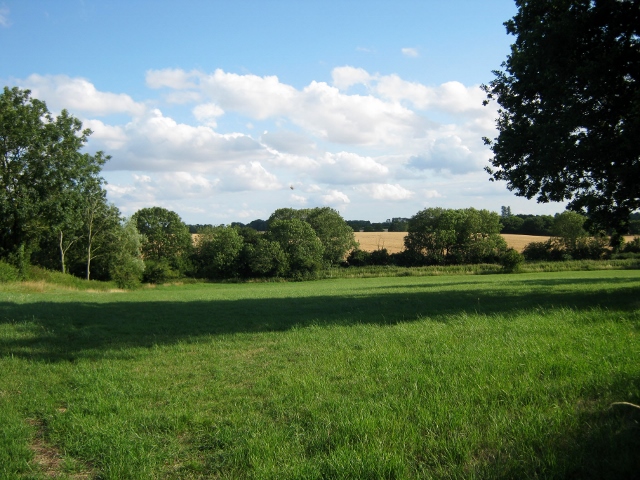
This is another view we like and I’m sure my regular readers recognise it.

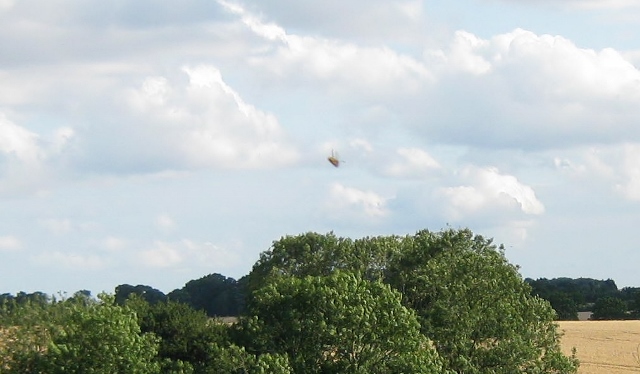
When I checked my photos on my return home I was dismayed to see the spot just above the trees at the centre of the photo.  However, when I cropped the photo…

IMG_5312Field view photo-bombed by fly (2) (640x374)

Cheeky!

…I realised a bee had photobombed my picture!

IMG_5317Oedemeridae beetle perhaps Ischnomera sanguinicollis (640x480)

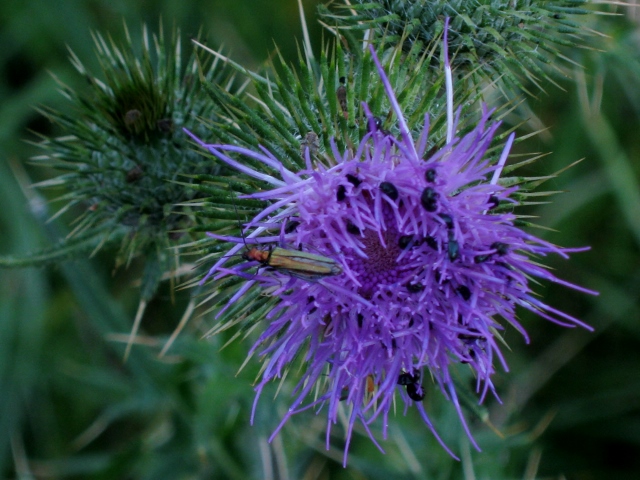
An Oedemeridae beetle, perhaps Ischnomera sanguinicollis on a Spear Thistle flower with lots more Pollen Beetles.

IMG_5322Purple beans (640x480)

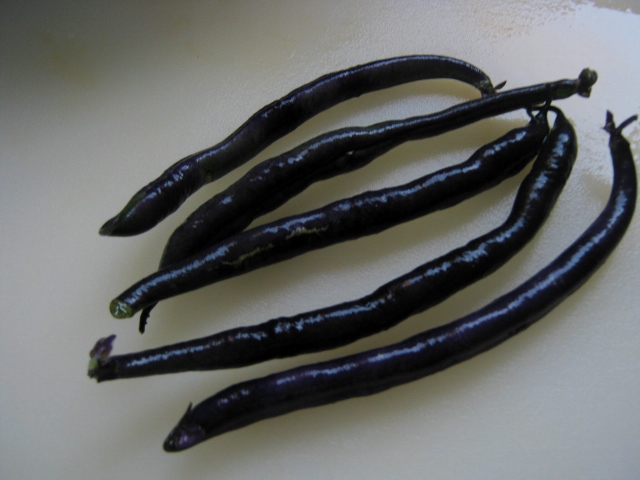
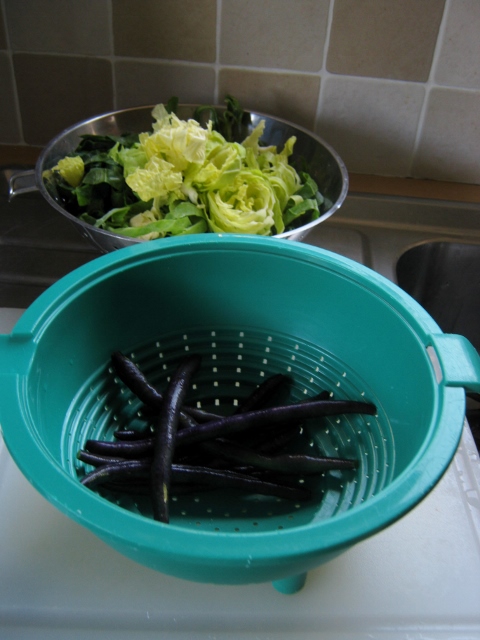
We have had our first harvest of purple beans.

These beans sadly lose their purple colour when cooked and end up a rather dull green.  They taste very nice and they have appreciated growing in the cooler summer.

IMG_5321Purple beans and spring greens (480x640)

French beans are so quick and easy to prepare and taste wonderful straight from the garden.

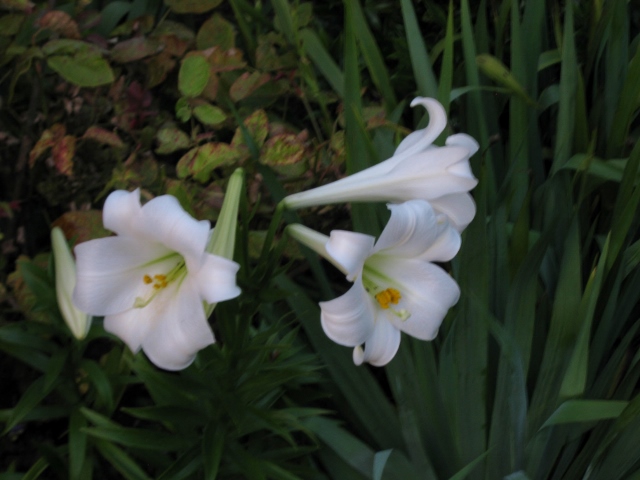
IMG_5330White lilies (640x480)

My white lilies (Lilium longiflorum) are flowering in the garden. This photo was taken at dusk.

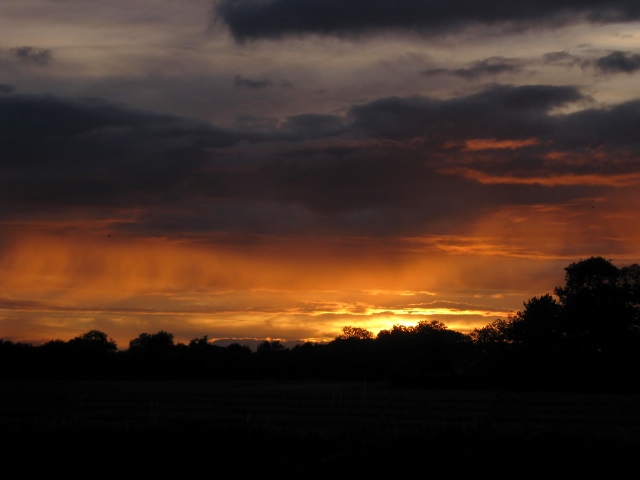
IMG_5323Rain at sunset (640x480)

Another sunset – this time with an added rain shower

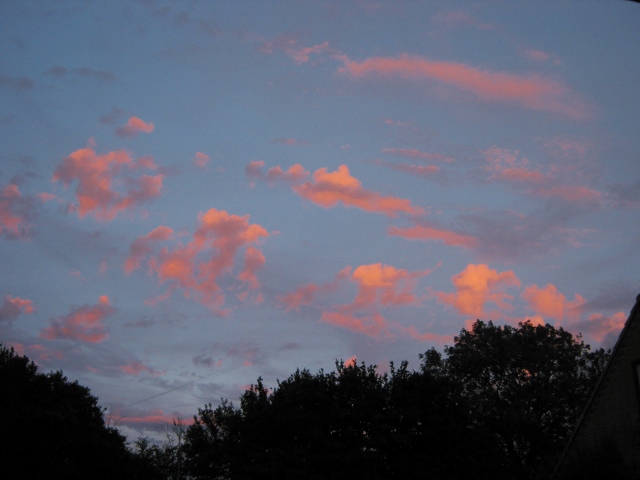
The rain soon cleared away and as I turned back toward the house I saw the sky to the East was lovely too.

IMG_5335Pink clouds at sunset (640x480)

Pretty pink clouds!

Thanks for visiting!


Share this:

  • Share on X (Opens in new window) X
  • Share on Reddit (Opens in new window) Reddit
  • Share on Pinterest (Opens in new window) Pinterest
  • Share on Facebook (Opens in new window) Facebook
  • Email a link to a friend (Opens in new window) Email
  • Share on Tumblr (Opens in new window) Tumblr
  • Print (Opens in new window) Print
  • Share on Pocket (Opens in new window) Pocket
  • Share on LinkedIn (Opens in new window) LinkedIn
Like Loading...

June Flowers and Insects

27 Sat Jun 2015

Posted by Clare Pooley in Insects, plants, Rural Diary, trees, weather

≈ 39 Comments

Tags

azure damselfly, Bittersweet, Black-tailed Skimmer, blue-tailed damselfly, common knapweed, Common Marsh-bedstraw, Common Sorrel, Creeping Cinquefoil, Cyperus Sedge, damselflies, dogwood, dragonflies, Elder, Four-spotted Chaser, garden, greenbottle, Hoverfly, insects, Meadow Buttercup, Oxeye Daisy, pond, Pyracantha, Suffolk, White Water Lily, wild flowers, yellow iris, Yorkshire Fog

Until this week we have had a very cool summer indeed which has meant that there have been very few insects about.  The common garden pests, greenfly and blackfly for example, seem to cope with chilly weather but the insects that eat them don’t!  Some of the flowers are continuing to flower a little late but a few are flowering at about their usual time which has made for unusual combinations.

IMG_4808All Saint's Common (640x480)

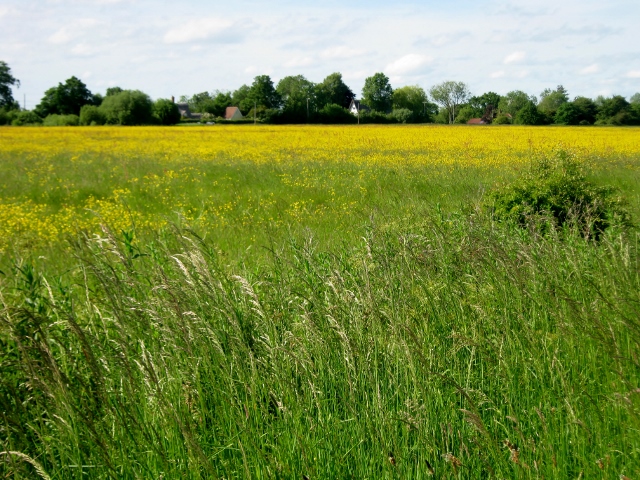
Meadow Buttercups (Ranunculus acris) on All Saints’ Common

We have a number of ‘commons’ here in East Anglia.  A common is an area of land either owned by a group of people or one person but it can be used by the general public in certain ways such as walking your dog or playing sport.  Some commons and village greens have ‘rights of common’ where it is possible to graze livestock on the land.  If you want to use the common for anything other than walking on it or having a picnic, (for instance, if you wanted to camp there), you’d have to ask permission of the land owner.

IMG_4831All Saint's Common (640x480)

This is another view of the common showing one of the unusual flower combinations.  This didn’t come out as well as I’d have liked.

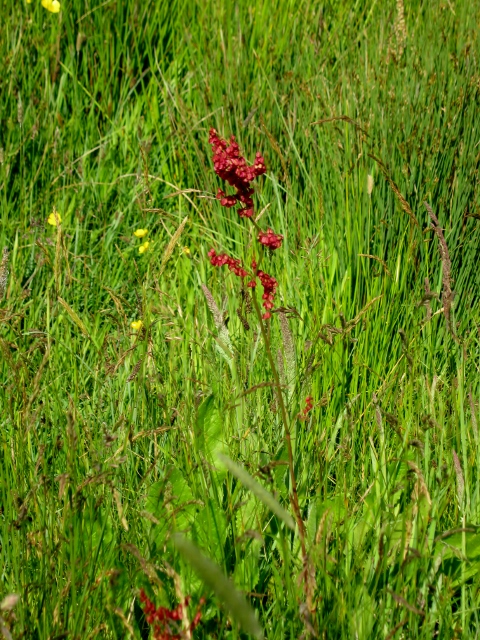
The Common Sorrel is flowering at the same time as the buttercups and for a while it looked as though the field was alight with red flames above the yellow.

IMG_4814Common Sorrel (480x640)

Common Sorrel (Rumex acetosa)

IMG_4807Common Knapweed (640x480)

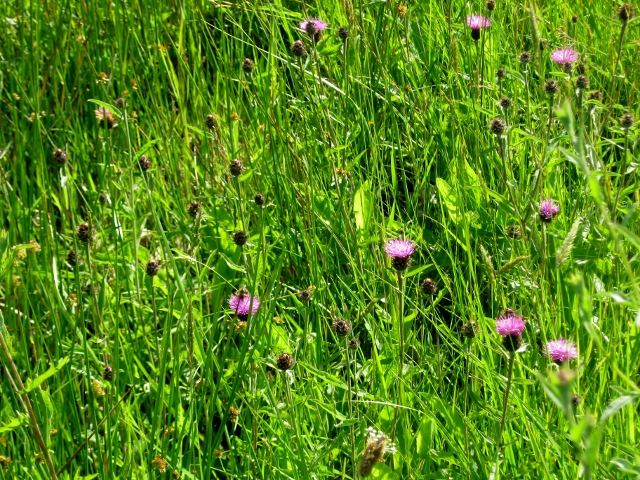
Common Knapweed (Centaurea nigra) is also in flower on the common.

IMG_4810Possibly Yorkshire Fog (2) (510x640)

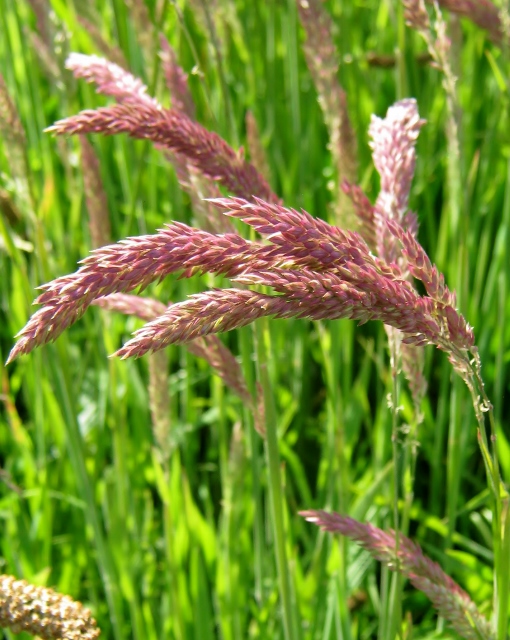
As is Yorkshire Fog (Holcus lanatus)

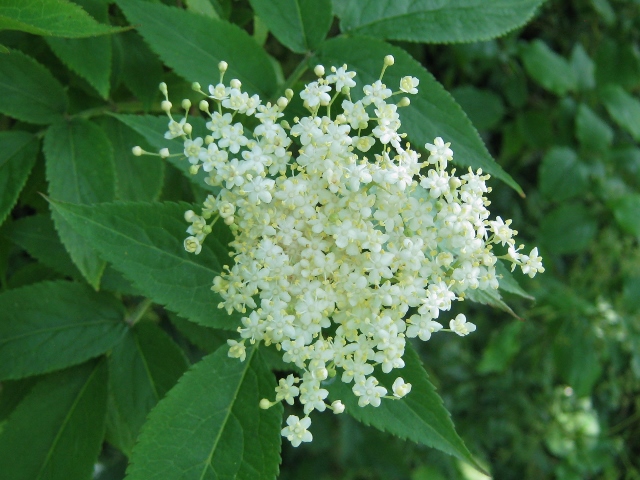
IMG_4819Elderflower (640x480)

The Elder (Sambucus nigra) is in flower.

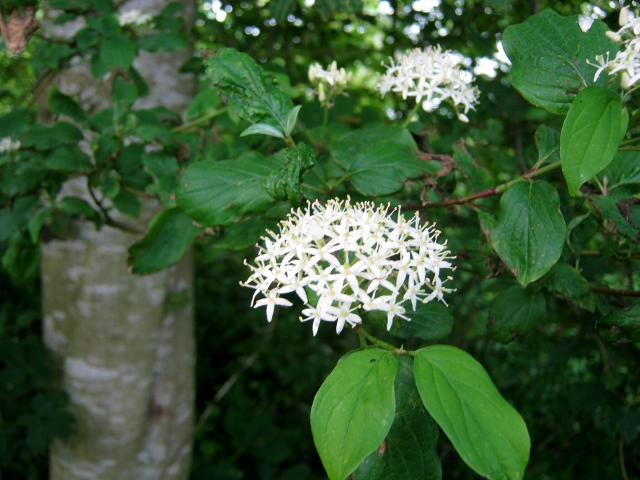
IMG_4892Dogwood (640x480)

The Dogwood (Cornus sanguinea) is in flower too.

Many people dislike the scent of the Elderflower; they describe it as smelling of ‘cats’.  It isn’t a pleasant smell but it is preferable to the smell of Dogwood flowers!

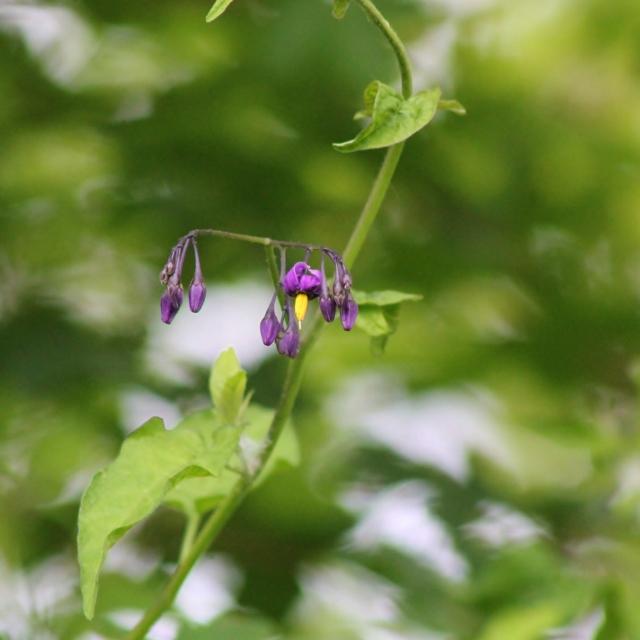
IMG_2269Bittersweet (2) (640x640)

Bittersweet (Solanum dulcamara), also known as Woody Nightshade, is flowering in the hedgerows.

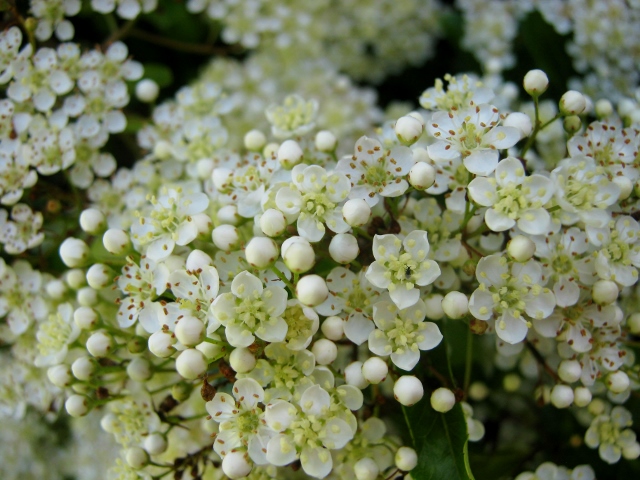
IMG_4828Pyracantha (640x480)

The Pyracantha in our garden is covered in blossom. This is another plant with a strange scent but the bees love it!

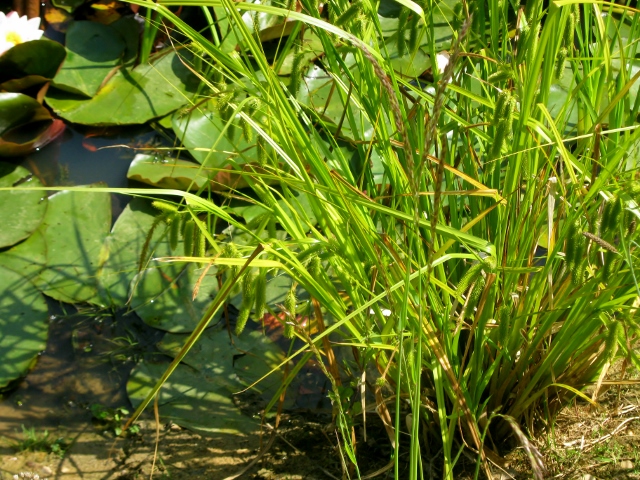
IMG_4822Cyperus sedge (640x480)

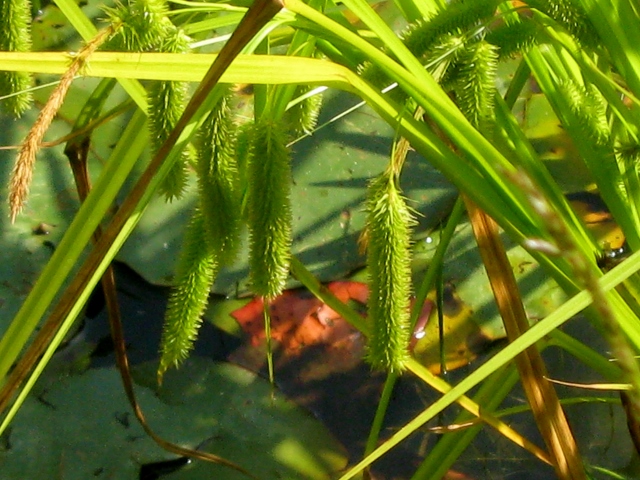
I discovered a new plant at the edge of our big pond the other day – a Cyperus Sedge (Carex pseudocyperus), also known as Hop Sedge.

The plant is quite large and must, I suppose, have been there last year without me seeing it.  Its leaves are strap-like, similar to Iris leaves, so I might have thought it was an Iris.  The flowers are unmistakable though.

IMG_4823Cyperus Sedge (640x480)

The flowers are pendulous, like catkins.

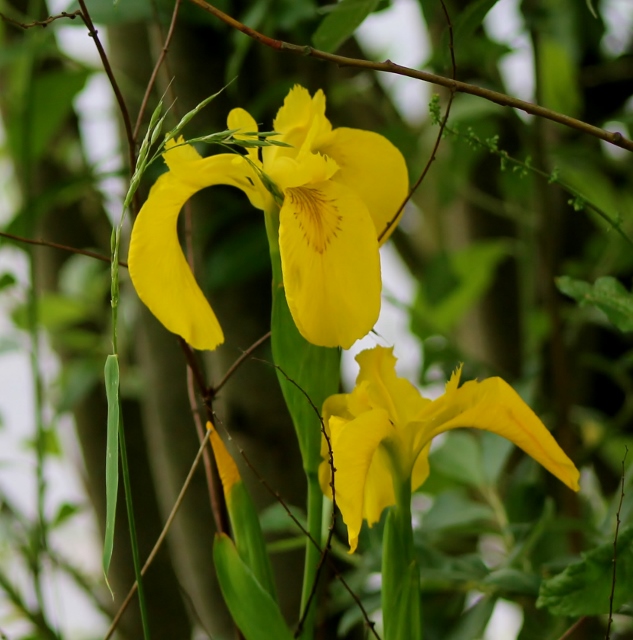
IMG_2268Yellow Iris (633x640)

Yellow Iris (Iris pseudacorus)

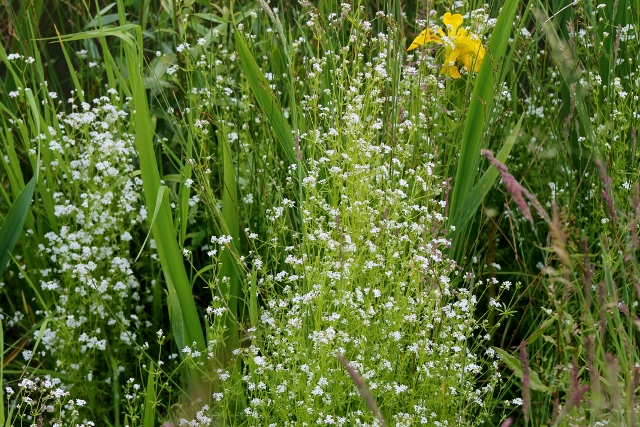
IMG_2302Common Marsh-bedstraw (640x427)

Another new plant to our garden is this Common Marsh-bedstraw (Galium palustre) growing by our corner pond.

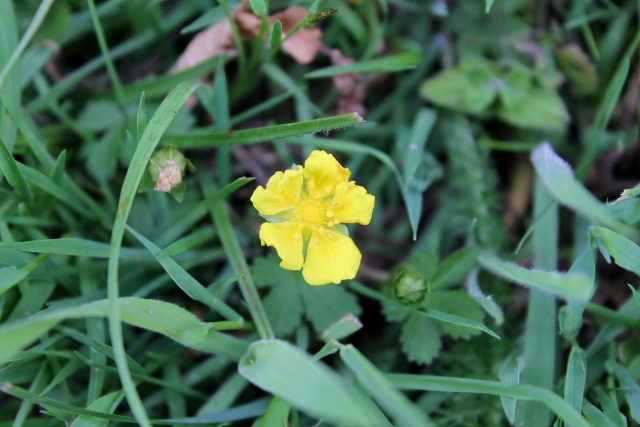
IMG_2277Creeping Cinquefoil (640x427)

One of my favourite flowers is this little one – Creeping Cinquefoil (Potentilla reptans). Its petals are heart-shaped and such a pretty shade of yellow. The creeping refers to its trailing stems that root at the nodes as it grows.

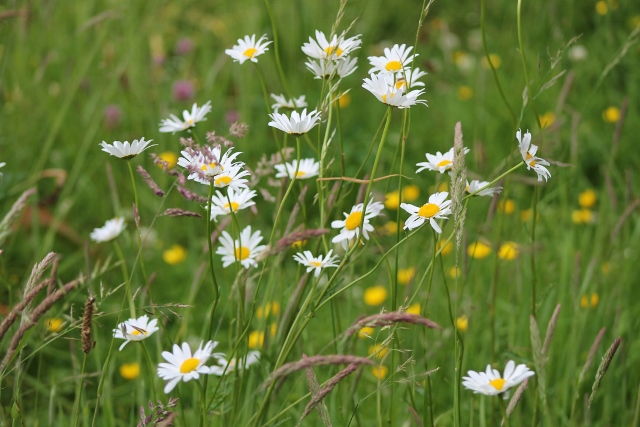
IMG_2279Ox-eye Daisies (640x427)

I love Oxeye Daisies (Leucanthemum vulgare) too.

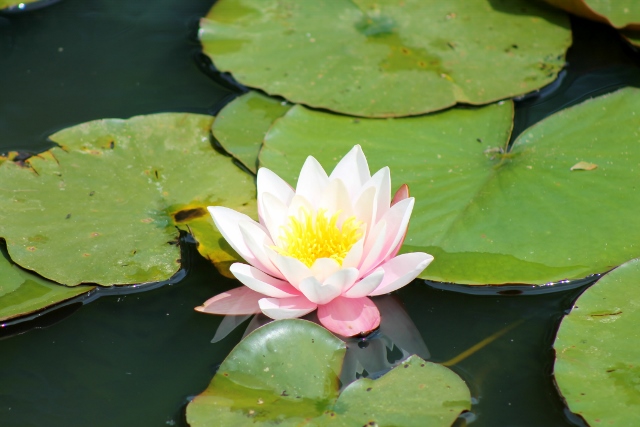
IMG_2289Water Lily (640x427)

A White Water-lily (Nymphaea alba) on our big pond.

Elinor saw the Kingfisher at the pond a couple of days ago and since yesterday we have  all heard the purring of a Turtle-dove in the trees round the pond.  The temperature has risen to 25 degrees Centigrade and I think it has been too cold up til now for the Turtle-dove.

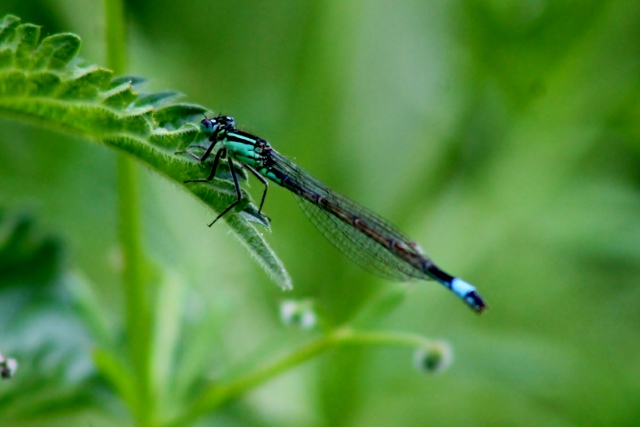
IMG_2270Female Blue-tailed Damselfly (2) (640x427)

Female Blue-tailed Damselfly (Ischnura elegans)

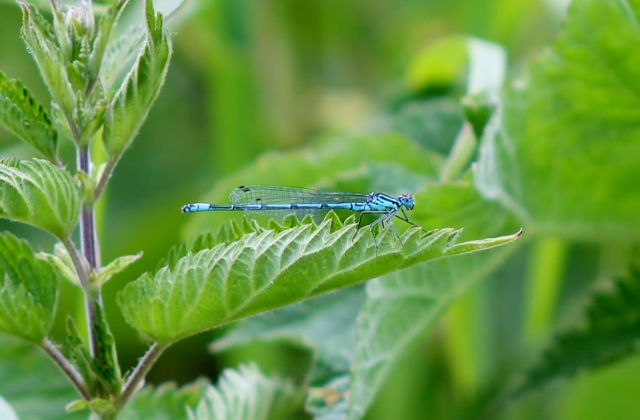
IMG_2276 (2)Male Blue-tailed Damselfly (640x445)

Male Blue-tailed Damselfly (Ischnura elegans)

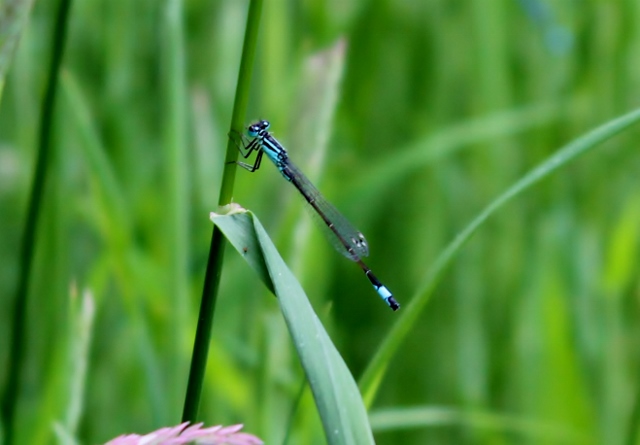
IMG_2271Male Azure Damselfly (2) (640x420)

Male Azure Damselfly (Coenagrion puella)

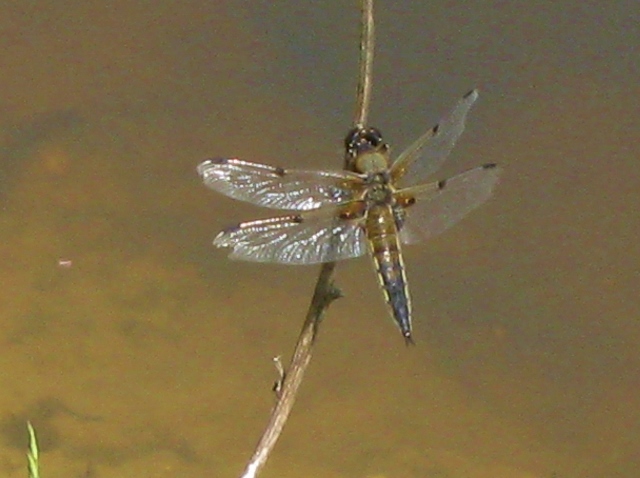
IMG_4824Male Four-spotted Chaser (640x478)

I believe this is a male Four-spotted Chaser (Libellula quadrimaculata)

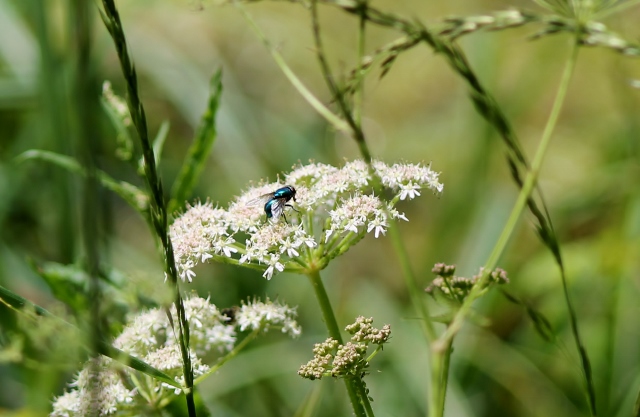
IMG_2283Greenbottle on Hogweed (2) (640x417)

Greenbottle (Lucilia caesar) on Hogweed (Heracleum sphondylium)

IMG_2294Helophilus pendulus Hoverfly (640x472)

A brightly-patterned Hoverfly (Helophilus pendulus)

IMG_2298Male Black-tailed Skimmer (640x485)

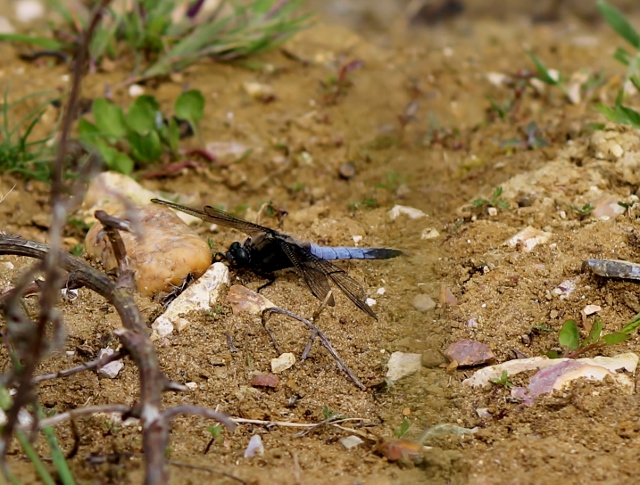
Male Black-tailed Skimmer (Orthetrum cancellatum)

I hope to see some more insects now the weather has warmed up.

Thank-you for visiting!

Share this:

  • Share on X (Opens in new window) X
  • Share on Reddit (Opens in new window) Reddit
  • Share on Pinterest (Opens in new window) Pinterest
  • Share on Facebook (Opens in new window) Facebook
  • Email a link to a friend (Opens in new window) Email
  • Share on Tumblr (Opens in new window) Tumblr
  • Print (Opens in new window) Print
  • Share on Pocket (Opens in new window) Pocket
  • Share on LinkedIn (Opens in new window) LinkedIn
Like Loading...

A Visit to the Plantation Garden.

11 Thu Jun 2015

Posted by Clare Pooley in Gardening, Norwich, plants, Rural Diary, trees

≈ 44 Comments

Tags

Gothic style, Henry Trevor, Norwich, ornamentation, Plantation Garden

053Plantation Grden (640x480)

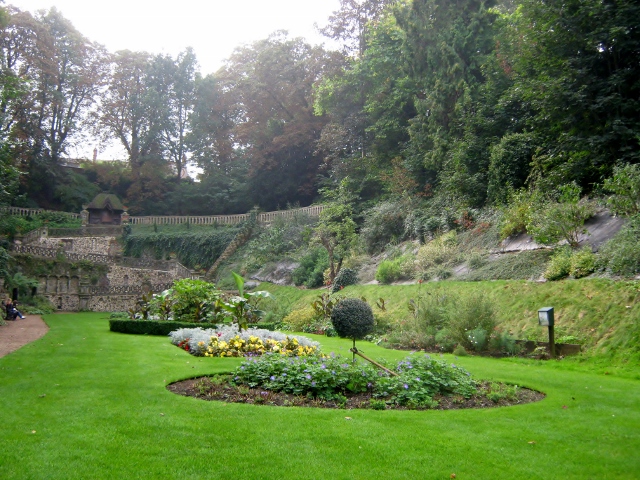
View of the garden looking south.

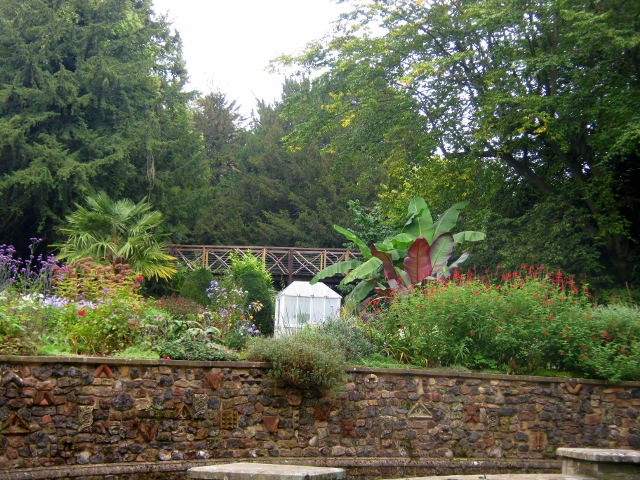
At the end of September last year, Elinor and I visited the Plantation Garden in Norwich.  Elinor had missed a visit to the garden with her Art class because she hadn’t been well, so we decided we’d go there and have a look for ourselves.  It is a Grade II English Heritage registered garden nearly 3 acres in size.

105Plantation Garden (640x480)

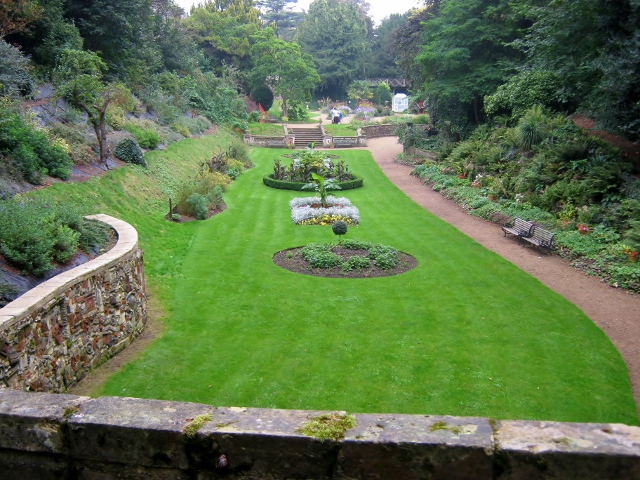
View of the garden from the top of the terrace looking north.

For many years the place where the garden is was an industrial site.  Hundreds of years ago, tunnels were dug into the side of the hills to extract flints that were used to build the city.  (One of these tunnels was accidentally discovered by a bus when it fell down it in 1984!).  The chalk surrounding the flint was gradually dug out to make lime for mortar and agricultural purposes.  Eventually a deep quarry was formed.

060Plantation Garden (640x480)

Looking North towards the Rustic Bridge.

In 1855 the Trustees of the Preachers’ Charity who have owned the land since 1613, decided to convert its use from industrial to residential.  The man who had been running his business as a builder/bricklayer/lime burner at the quarry site was (I presume) asked to move out and Henry Trevor moved in.  Trevor was a prosperous upholsterer and cabinet maker who was also an enthusiastic gardener.  When he took out the lease for the site he said he was eager to build a fine house and garden in ‘this deep dell’.

052 (640x427)Plantation Garden

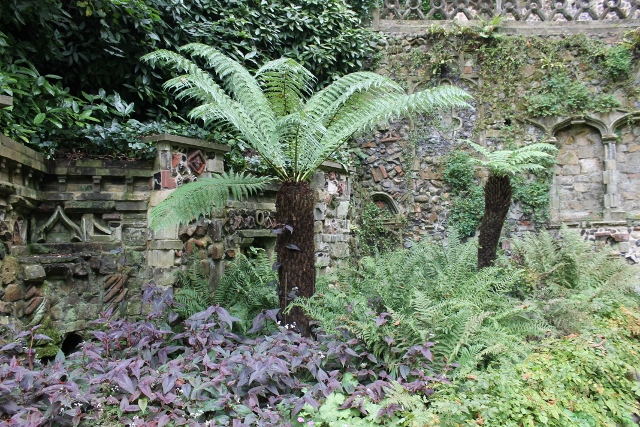
This shows some of the decoration on the walls.

Trevor bought the decorative materials for the hard structure of his garden from Gunton Brothers, a brickworks at Costessey (pronounced Cozzey) just to the west of Norwich, who made ornamental windows, chimneys and patterned bricks and sent them all over the country.  Henry Trevor used these bricks (and other Gunton materials) most imaginatively along with material he found on the site and material acquired elsewhere such as natural and knapped flints, plain bricks, carrstone and clinker from local gas works and kilns.  The Gothic Revival style was very popular at the time (1857) and this ‘medieval’ style was Trevor’s favourite.

118Plantation Garden (640x480)

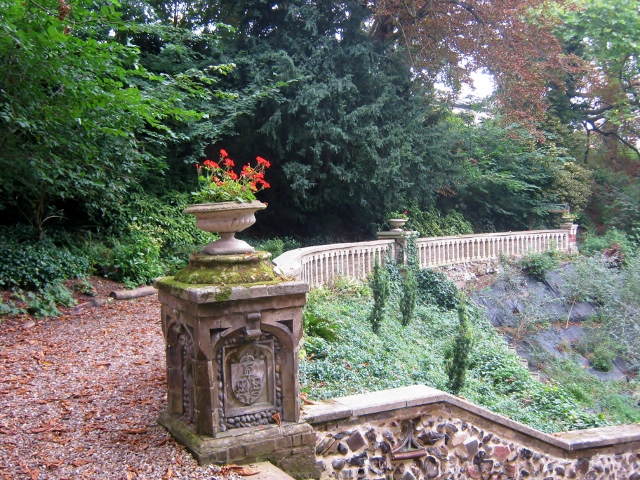
Top of the terrace at the southern end of the garden.

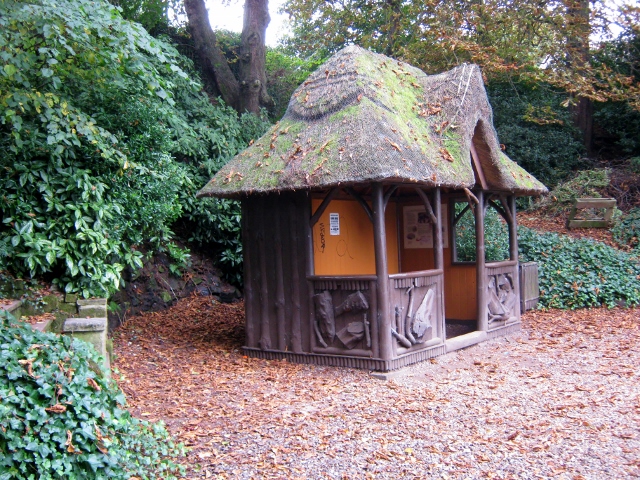
Trevor decided on the ‘Italianate’ style for the steep southern wall of the quarry.  He constructed flights of steps, balustrades and pedestals with urns on them.  He included a little rusticity and built a summerhouse on the top terrace to balance the rustic bridge at the north end of the garden.

117Plantation Garden (640x480)

The rustic summerhouse.

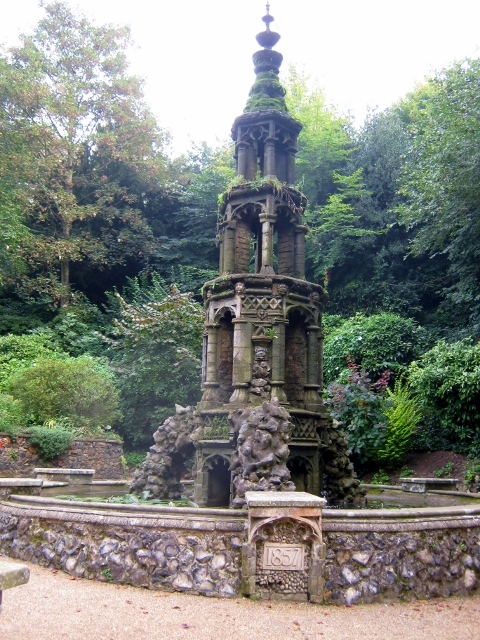
His tour de force is the Gothic fountain in the centre of the garden.

056Plantation Garden (480x640)

Gothic fountain.  The white moulded brick Trevor used weathers to look like stone.

Rock works were also fashionable at the time so Trevor included a 30-metre-long one in his garden.  He planned to plant the steep sides of the quarry with trees and with evergreen shrubs as an understorey.  To do this he must have created planting holes and brought in soil to fill them.  The planting is now over-mature and many of the original trees have died, but there are still some of the original 19th century plants and trees in the garden.

The Plantation Garden Preservation Trust is trying to raise funds to restore the many paths and steps all over the plot which enabled all Trevor’s guests and friends to view his garden from different levels.  He loved nothing better than having visitors and regularly opened the garden to the public.

This slideshow requires JavaScript.

The garden is being restored very carefully and the planting schemes are lovely and in keeping with the history of the site.  I haven’t included many of the plants I saw there as I have concentrated on the original architecture in this post.  It is a very strange place and some of the ornamentation is a little over-fussy for my taste but it is also a beautiful garden and so peaceful and remote from the city though sited in its heart.

I obtained most of the details included in this post from information boards placed round the garden.  I am very grateful to the PGPT for supplying this information.

I have included a link here.

Thank-you for visiting!

Share this:

  • Share on X (Opens in new window) X
  • Share on Reddit (Opens in new window) Reddit
  • Share on Pinterest (Opens in new window) Pinterest
  • Share on Facebook (Opens in new window) Facebook
  • Email a link to a friend (Opens in new window) Email
  • Share on Tumblr (Opens in new window) Tumblr
  • Print (Opens in new window) Print
  • Share on Pocket (Opens in new window) Pocket
  • Share on LinkedIn (Opens in new window) LinkedIn
Like Loading...

Minsmere – 8th May 2015

31 Sun May 2015

Posted by Clare Pooley in plants, Rural Diary, trees, walking, wild birds

≈ 37 Comments

Tags

BBC Spring Watch, black slugs, blackcap, bluebells, Common Vetch, crabapple, Minsmere, oak, oak moss, ponds, red campion, RSPB, Suffolk, woods

Elinor took her Art exam over two days at the beginning of May and on the Friday of that week she and I decided we’d go to the RSPB (Royal Society for the Protection of Birds) reserve at Minsmere for a relaxing walk.  Richard was away in Manchester visiting his mother and brother and helping his brother clear his Mum’s house before putting it on the market.

We go to Minsmere very often and know all the walks.  Elinor decided she wanted to walk through the woods instead of going to the shore.  I was hoping to hear a Cuckoo and a Nightingale.  We had a drink and a cake in the café before we set off.

IMG_2203Something on Birch tree Minsmere (640x427)

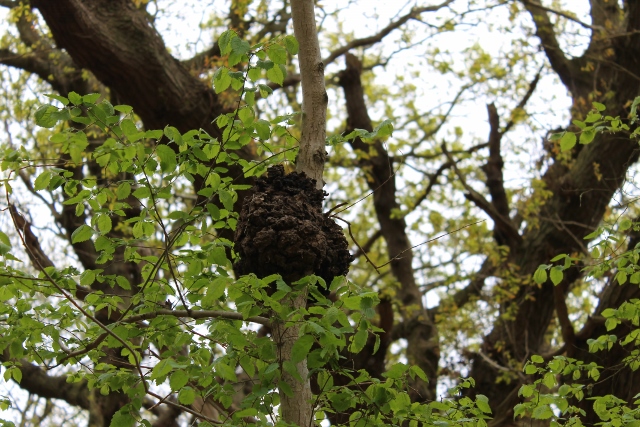
The first thing we saw was this and I have no idea what it is. Is it a canker, a fungus or is it a nest of some sort? It is on a Birch tree.

IMG_2204Crabapple perhaps (640x427)

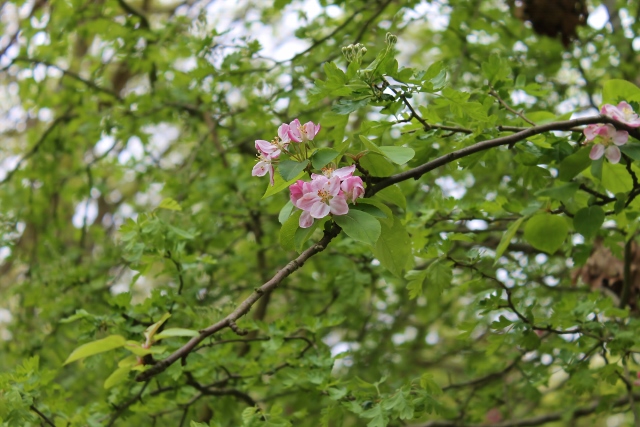
We saw this very pretty Crabapple blossom.

IMG_2205Common vetch (640x427)

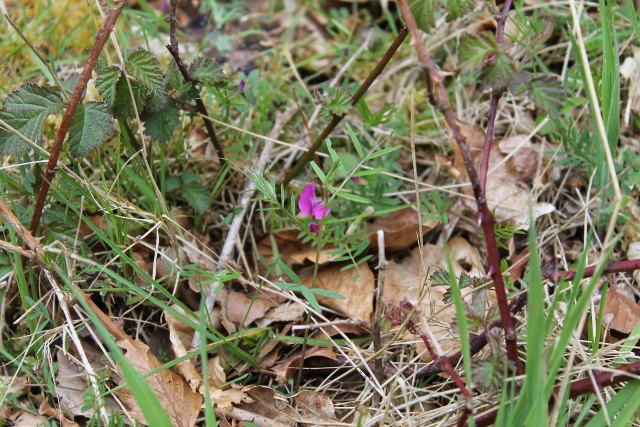
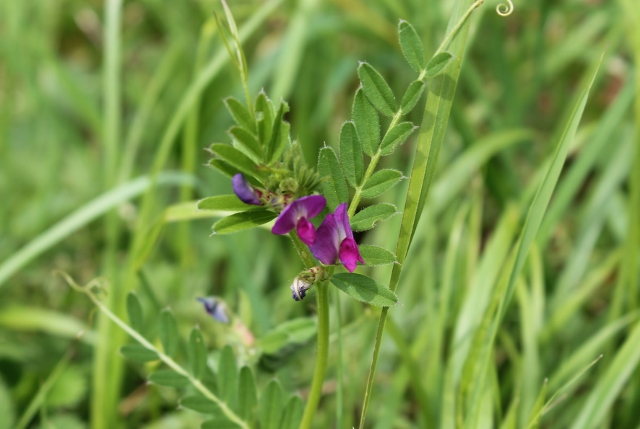
This is Common Vetch (Vicia sativa)

IMG_2212Red Campion (640x427)

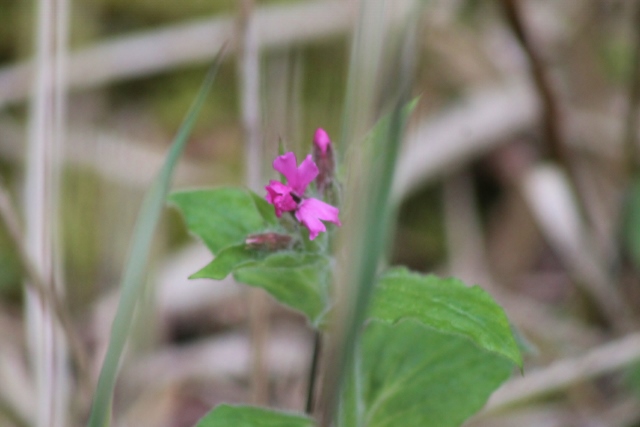
Red Campion (Silene dioica). The wind was blowing quite hard and I found it difficult to get anything in focus.

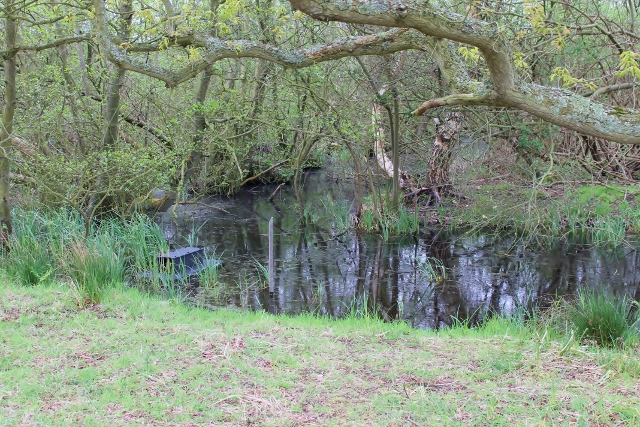
IMG_2206Pond (640x427)

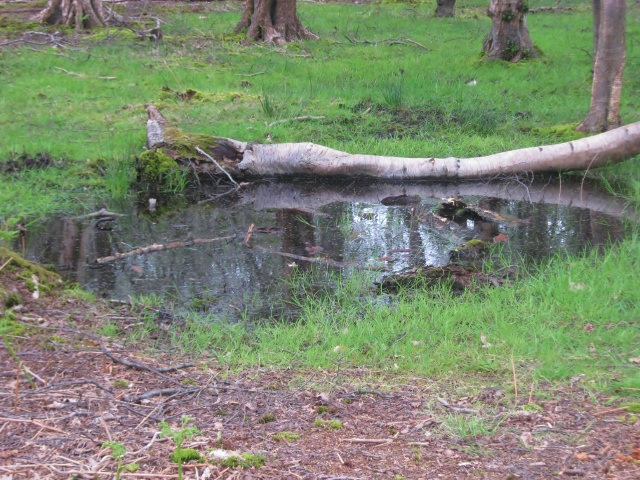
And this is one of the many ponds at Minsmere.

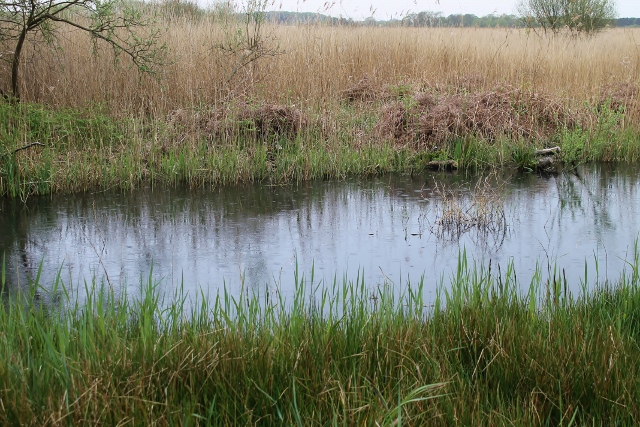
IMG_2207Pond (640x427)

Another pond.

The weather, which had been quite pleasant in the morning, quickly deteriorated  once we began our walk.  It got quite cold and then a drizzly rain started as you can see by the raindrops on the pond above.  Any hopes of hearing a Cuckoo or a Nightingale evaporated away.

There are Adders (Vipera berus) living on the reserve and we had been hoping to see them.  We were told by another visitor that they were sleeping out in the open but unfortunately, by the time we arrived at the area where they are to be found, the rain had started and very sensibly they had gone under cover.  The area is fenced off for their and our protection.  They are Britain’s only venomous snake.

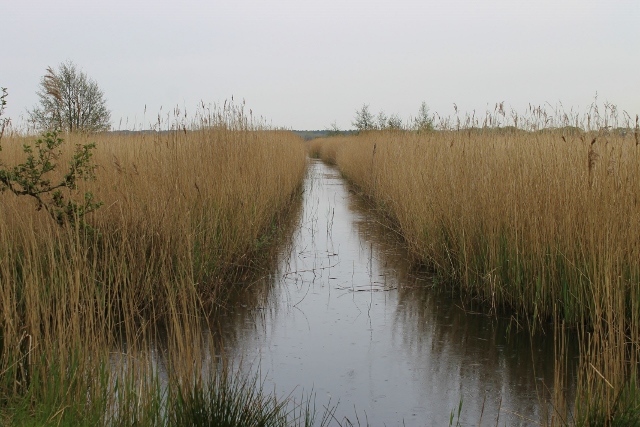
IMG_2208Reeds and water (640x427)

Reeds and water. We could hear Bitterns (Botaurus stellaris) booming in the reeds but we didn’t see any water fowl at all.

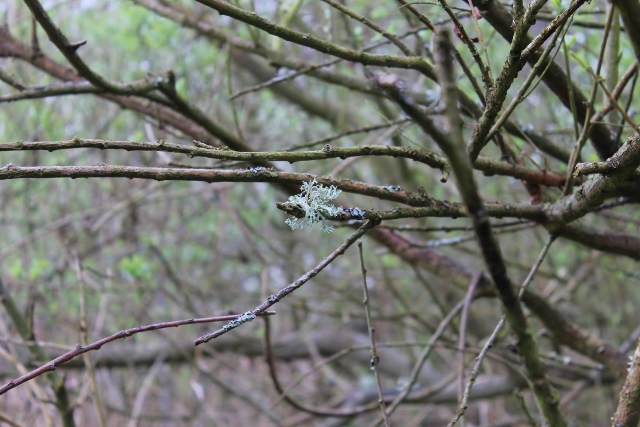
IMG_2209Oak moss (640x427)

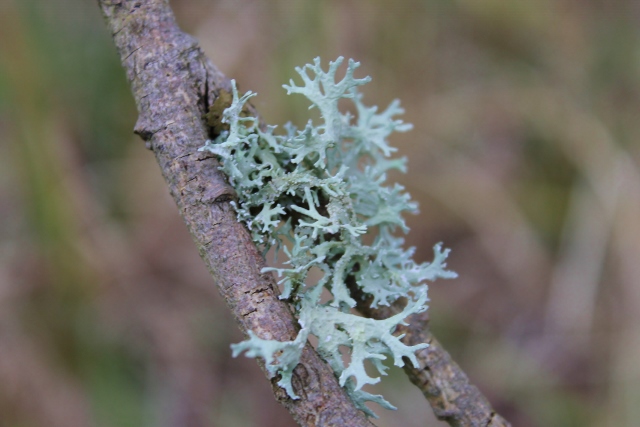
There was plenty of Oak Moss (Evernia prunastri) to be seen.

IMG_2211Oak moss (640x427)

It is very attractive with its flat, curled branches. It isn’t moss at all but is in fact a lichenised fungus.

Air quality in the East of England isn’t as good as in the West of the country because the prevailing wind blows across the country, including London, before it gets to us.  We are pleased when we find any kind of lichen as they are often indicators of clean air.

IMG_2210Slugs on dandelion (640x427)

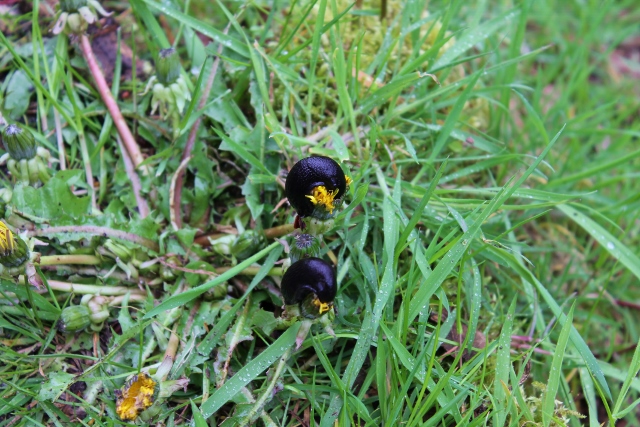
This dandelion plant had a couple of slug visitors.

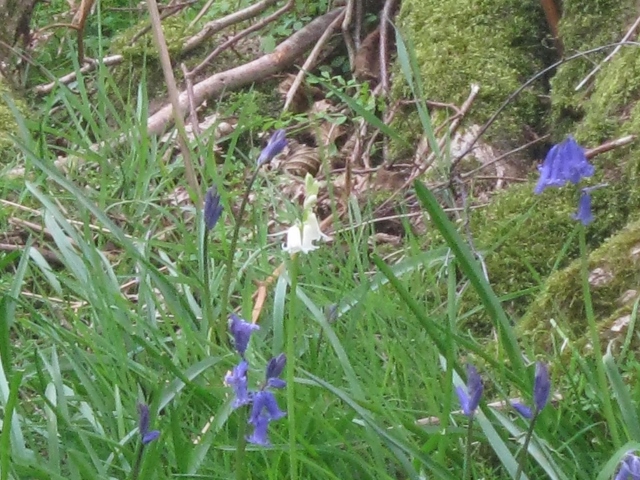
IMG_2218White bluebell (640x427)

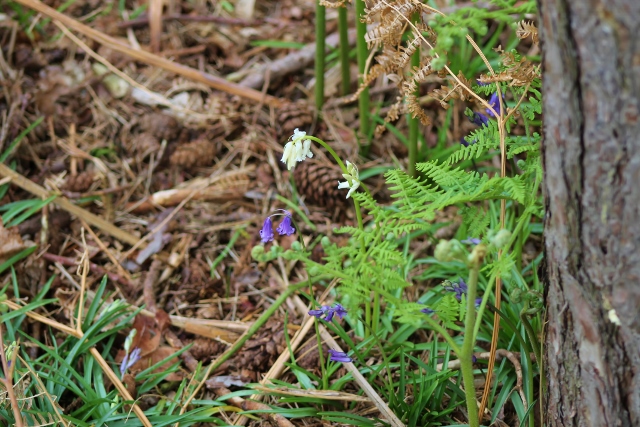
We saw very many white bluebells in the wood

IMG_2223Oak tree (640x427)

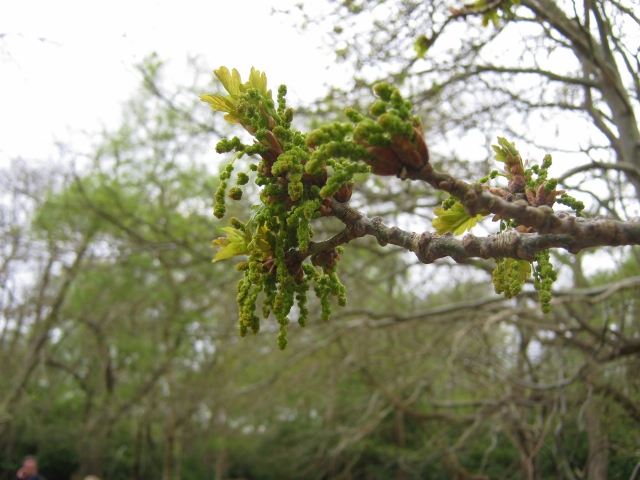
An Oak tree (Quercus robur) with new leaves and flowers.

IMG_2221Building for the BBC (640x427)

This is the building that was constructed last year for the BBC Spring Watch team. This is as near as us members of the hoi polloi can get to it. The BBC are currently filming at Minsmere though they weren’t when Elinor and I visited.

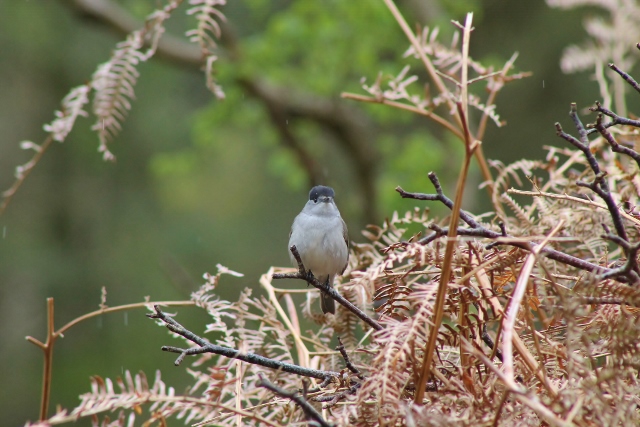
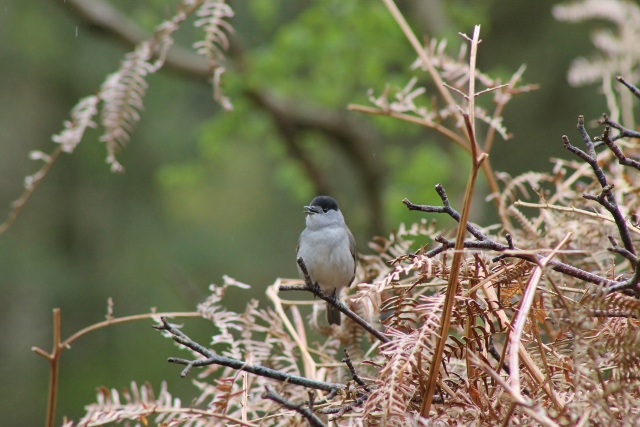
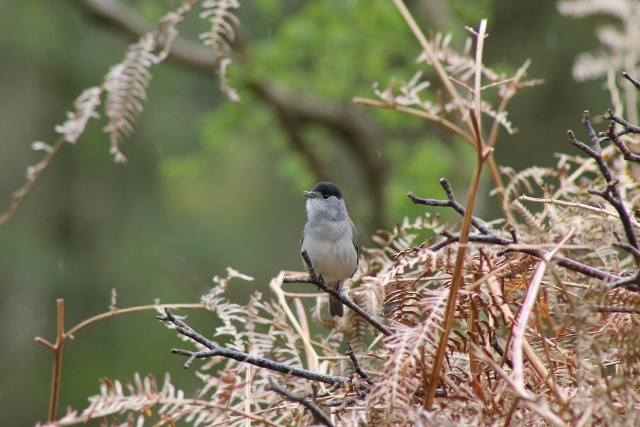
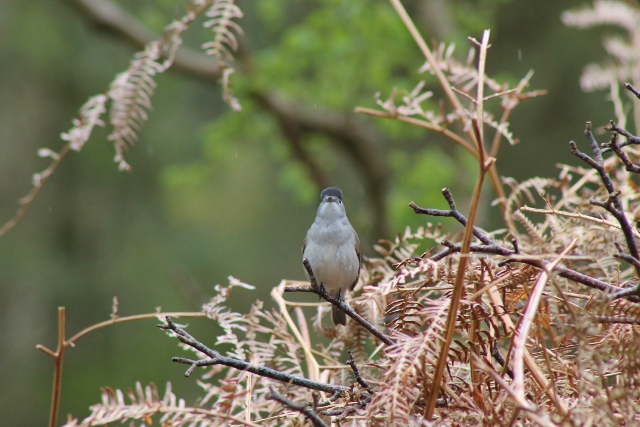
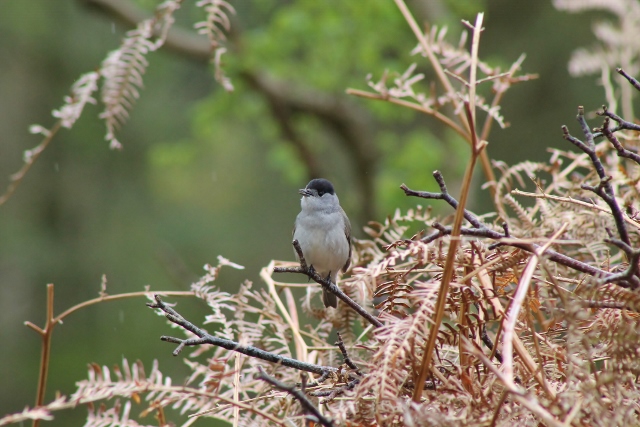
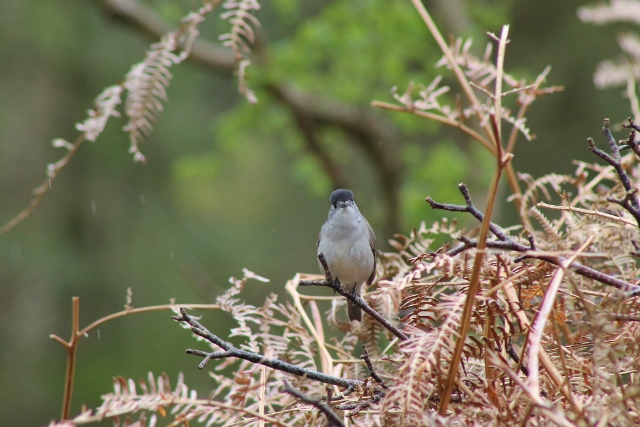
The next six photographs are of a male Blackcap (Sylvia atricapilla) that I found singing next to the path.  The photos are not cropped.  This warbler didn’t appear to be at all nervous and at each pause in his song he seemed to look at me to judge my reaction!  He filled his throat with air and used it like the bag on a bag-pipe to sing.

IMG_2224Blackcap (640x427)

IMG_2225Blackcap (640x427)

IMG_2226Blackcap (640x427)

IMG_2227Blackcap (640x427)

IMG_2228Blackcap (640x427)

IMG_2229Blackcap (640x427)

I was very pleased to get these pictures.

Thank-you for visiting!

Share this:

  • Share on X (Opens in new window) X
  • Share on Reddit (Opens in new window) Reddit
  • Share on Pinterest (Opens in new window) Pinterest
  • Share on Facebook (Opens in new window) Facebook
  • Email a link to a friend (Opens in new window) Email
  • Share on Tumblr (Opens in new window) Tumblr
  • Print (Opens in new window) Print
  • Share on Pocket (Opens in new window) Pocket
  • Share on LinkedIn (Opens in new window) LinkedIn
Like Loading...

A Visit to Captain’s Wood – 4th May 2015

29 Fri May 2015

Posted by Clare Pooley in plants, Rural Diary, trees, walking

≈ 24 Comments

Tags

Alexanders, bluebells, Captain's Wood, Climbing Corydalis, coppice, foxglove, Suffolk, Suffolk Wildlife Trust, veteran Oaks, wild cherry, wood sorrel, woods

Captain’s Wood is owned by Suffolk Wildlife Trust and is found next to the village of Sudbourne which lies south of where we live, about 40 minutes drive away.  The morning had been beautiful and bright but by early afternoon the skies were beginning to cloud over and by the time we got to the wood the sun wasn’t shining much at all.

This was the first time we had visited the wood.  We had heard that the bluebells there were wonderful and hoped that we would see some.  We parked the car in a small car-park a few hundred metres from the entrance to the wood and walked down the lane towards it.

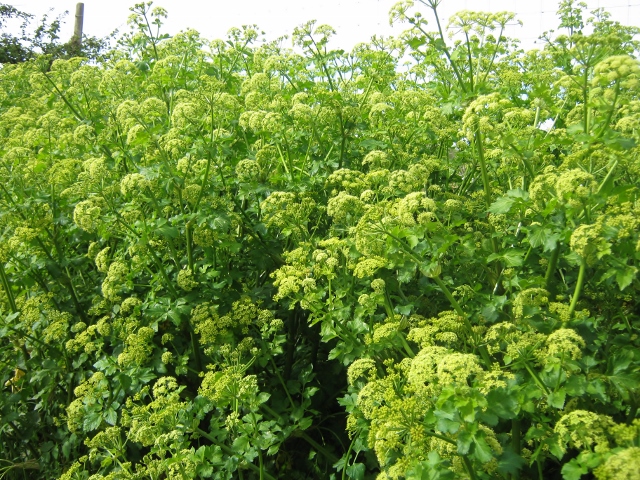
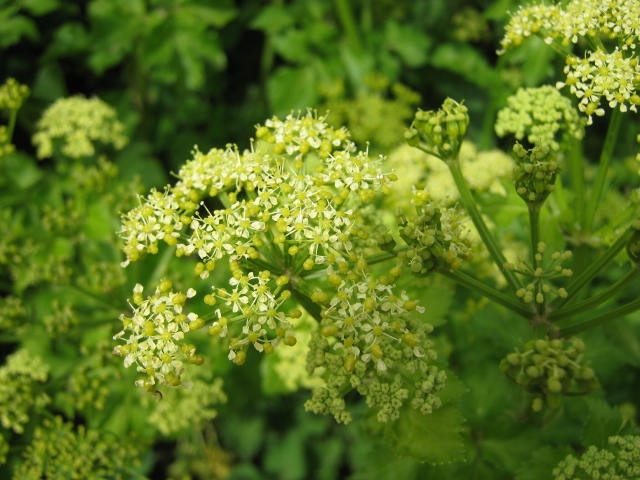
IMG_4571Alexanders (640x480)

Both sides of the lane were covered in Alexanders (Smyrnium olusatrum) which had been in full sun all the morning and as a consequence were giving off a perfume redolent of rotting spinach!

IMG_4572 (640x480)

Alexanders is a very attractive umbellifer and until recently has only been found within a few miles of the coast. I am not sure why, but in the last couple of years it has spread very quickly further inland and I have seen it in Norwich this spring for the first time.

I remember including it in one of my posts last year but can’t remember which so I’ll repeat what I said then.  The name Alexanders refers to its origins as a herb of Macedonia (Alexander the Great’s country of birth). Its black seeds were sold in the 17th century under the name of Macedonian Parsley and Nicholas Culpeper the herbalist noted that among other things, Alexanders could cure not only flatulence but snake bite!  The whole of the plant is edible and the generic name Smyrnium refers to its myrrh-like taste.

We walked along a short entrance path between gardens towards the wood.

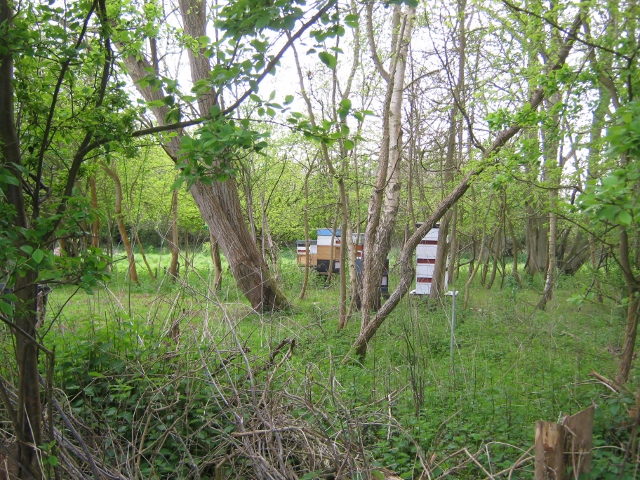
IMG_4573Bee hives (640x480)

Bee hives in someone’s garden

The first part of the wood we walked through didn’t really look like a wood.

IMG_4574Captain's Wood (640x480)
IMG_4575Captain's Wood (640x480)

This is newly acquired land consisting of 17 acres of small fields, scrub and a little area of woodland in-between the village and Captain’s Wood proper.  This land has not been farmed for many years and was largely left fallow.  Part of the land stays wet for most of the year and apparently has Marsh Orchids and other wetland plants growing there.

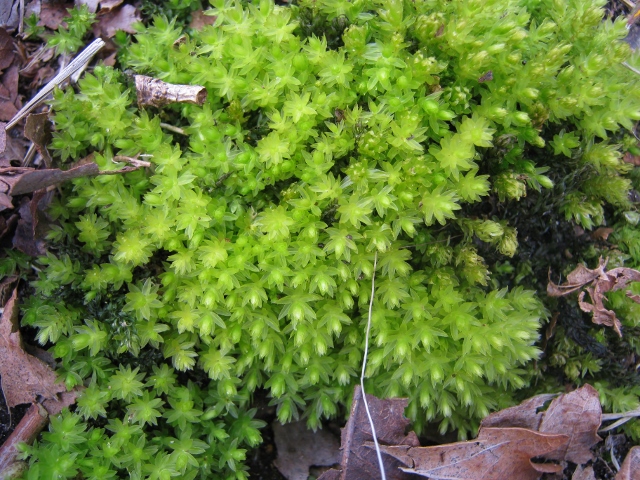
IMG_4576Moss (640x480)

On entering the wood I saw this beautiful moss.

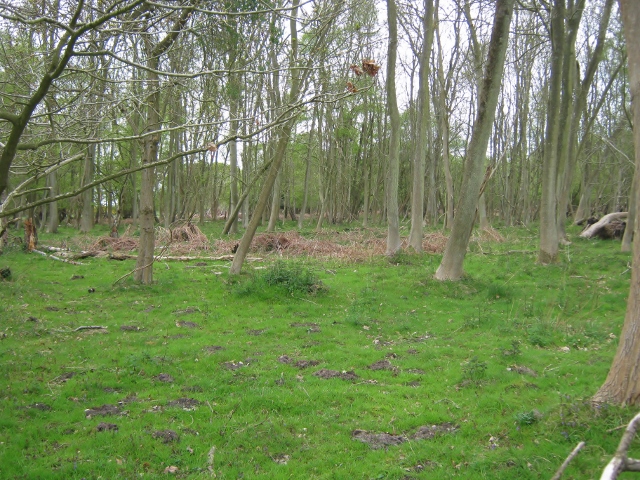
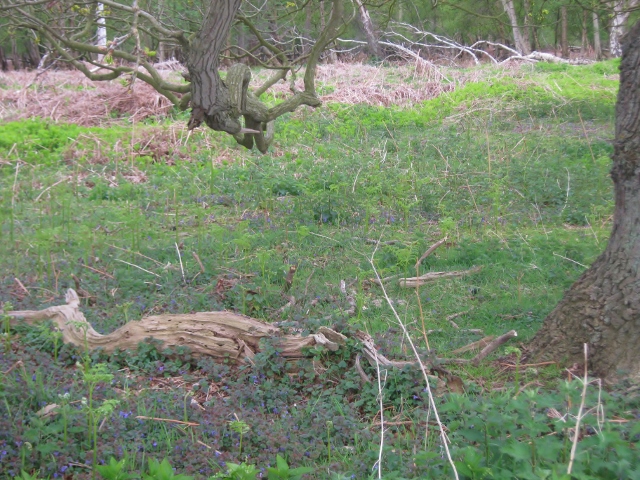
IMG_4577Captain's Wood (640x480)

Most of the wood looks like this.

Captain’s Wood consists of mainly open woodland with Oak and Birch.  There is a large stand of Hazel, clumps of mature Scots Pine and lines of planted Sweet Chestnut.  Herds of deer roam at large through the wood and seven different types of bat live here.

IMG_4578Violet (640x480)

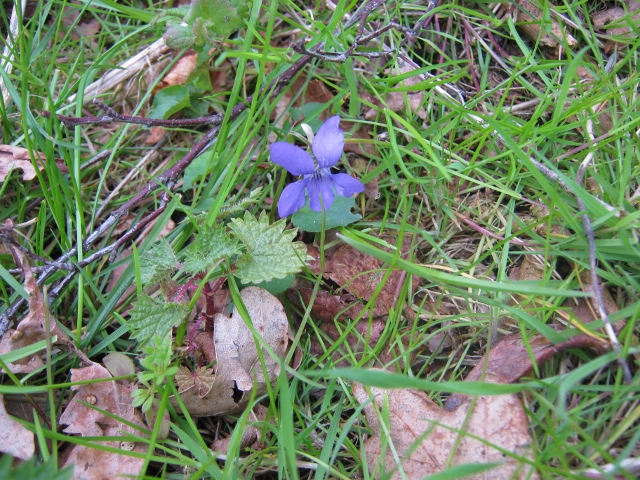
There were a few Violets on the woodland floor. I didn’t check to see which violet this was but I think it may be Sweet Violet (Viola odorata)

IMG_4579New bracken (480x640)

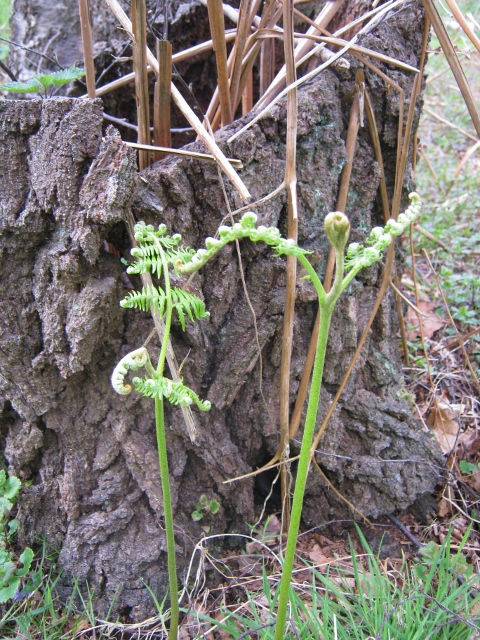
New bracken.

IMG_4580Climbing Corydalis (640x480)

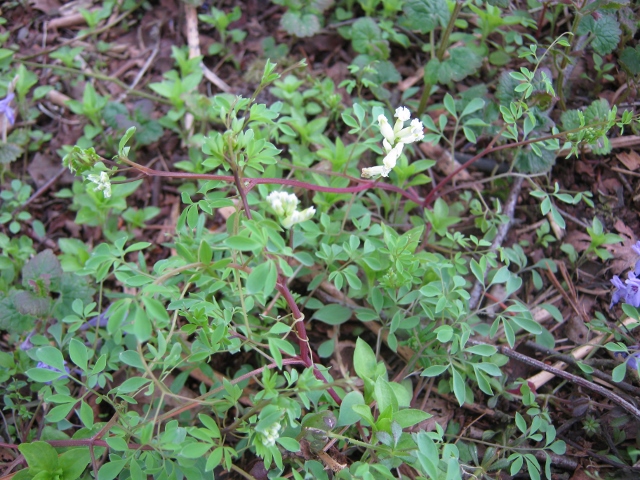
Climbing Corydalis (Ceratocapnos claviculata)

Bartholomew of Glanville was an English friar living in the 13th century.  He wrote an encyclopaedia of natural history and in it he said that, despite its ‘horrible savour’, the roots of this plant could be made into a potion for dispelling melancholy.  Later on Climbing Corydalis became known as a cure for intestinal diseases.  This plant, along with fumitories, has flowers that resemble clovers and vetches though with fewer petals.  The flower’s peculiar shape has been likened to the head of a crested lark; hence the name ‘corydalis’.

IMG_4581Wild Cherry (640x480)

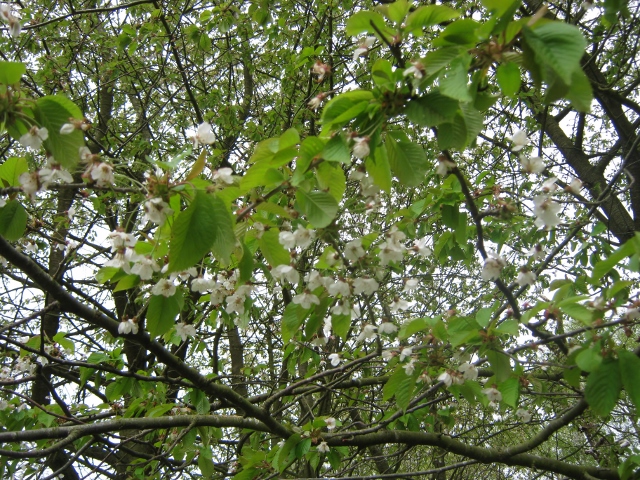
Wild Cherry (Prunus avium)

IMG_4585Foxglove (640x480)

The Foxgloves (Digitalis purpurea) were growing well.

IMG_4586Woodland floor (640x480)

Woodland floor under the pine trees.

IMG_4588Witch's broom (640x480)

A ‘Witch’s Broom’ in a Birch tree.

These ‘Witch’s Brooms’ are caused by a type of parasitic fungus which induces galls in its host.

Bracket fungus
Bracket fungus
Bracket fungus
Bracket fungus
IMG_4591Oak tree (480x640)

One of the veteran Oak trees in the wood.

IMG_4592Lichen-covered trunk (640x480)

A close-up of the lichen-covered trunk of the Oak tree. A lot of the bark has disappeared and it no longer looks like a tree trunk anymore.

These veteran trees support many different species of fungi and invertebrates that are dependent on the slowly rotting heartwood of the tree.  Most notable is the Oak Polypore fungus which is known from only six other sites in Britain.  The Oak Polypore fruits for only a very short time in the summer.

IMG_4623Oak (640x480)

New Oak leaves and flowers

IMG_4593Pond (640x480)

One of the several ponds in the wood

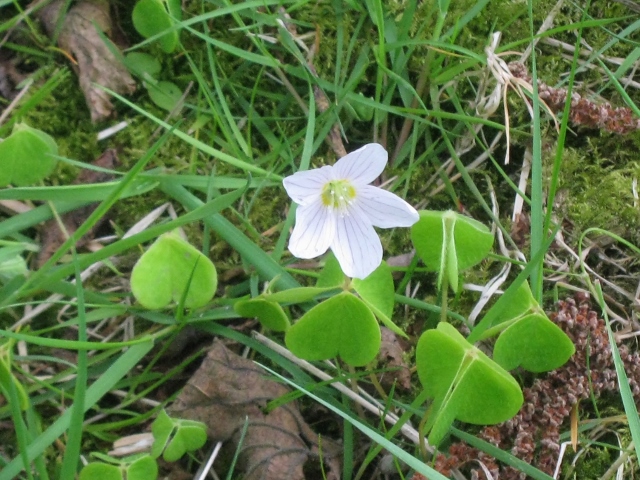
IMG_4608Wood Sorrel (640x480)

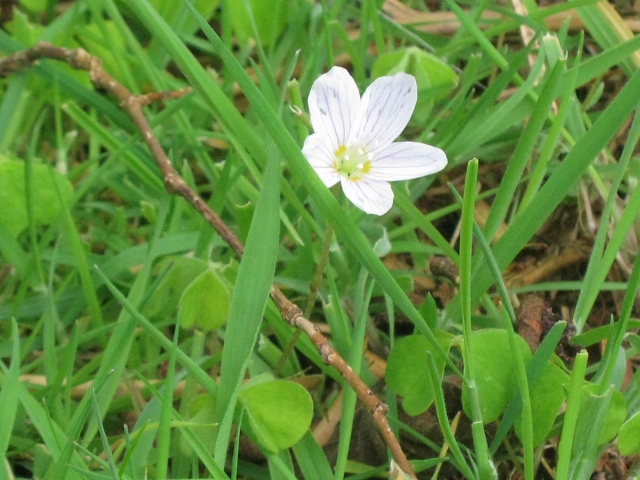
Wood Sorrel (Oxalis acetosella). A flower which indicates ancient, undisturbed woodland and hedges. The petals are white or pink with lilac veins.

IMG_4610Wood Sorrel (640x480)

Wood Sorrel

IMG_4626Beech (480x640)

A Beech tree (Fagus sylvatica) coming into leaf

IMG_4597Green river of Dog's Mercury (640x480)

This bright green, running like a river through the woods is Dog’s Mercury(Mercurialis perennis)

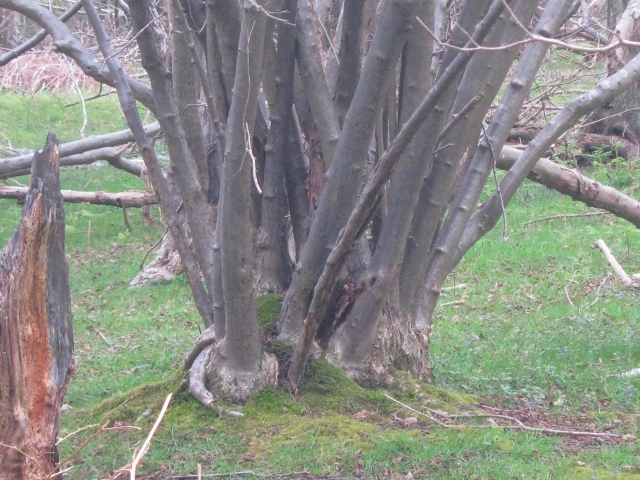
IMG_4611A  coppiced tree (640x480)

A coppice stool. The wood from the coppice is harvested every few years. New shoots are protected from deer and then left to grow until they are ready to be cut again.

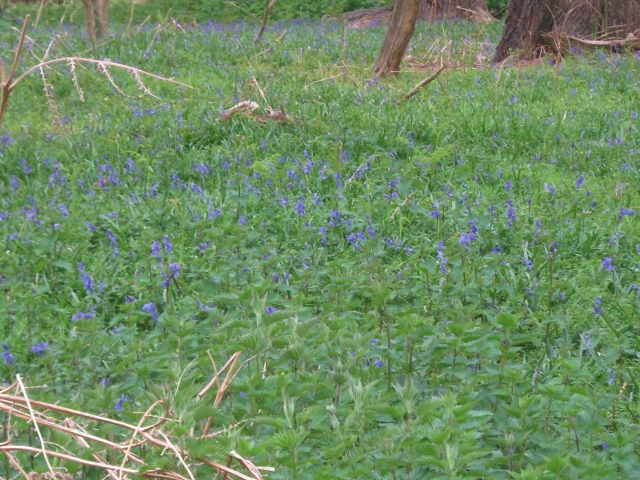
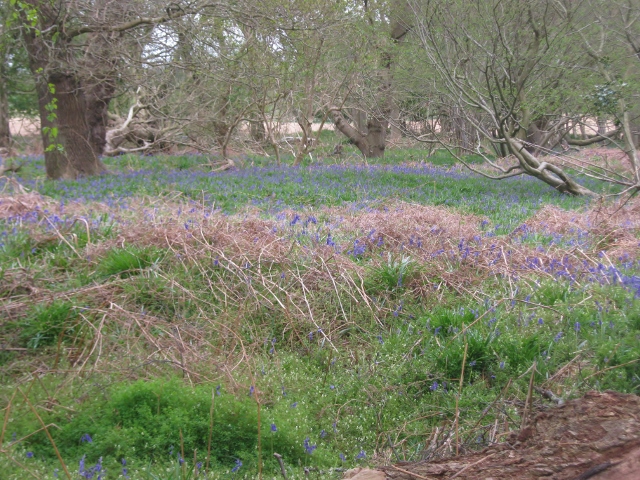
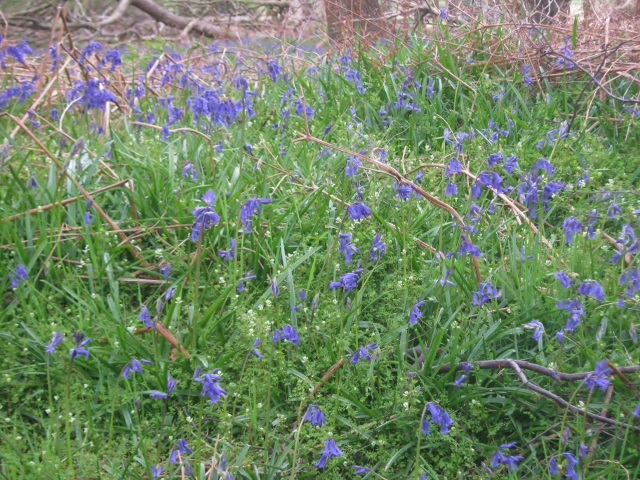
At last we reached the part of the wood where the bluebells were, but found we were just a little too early to see them at their best.

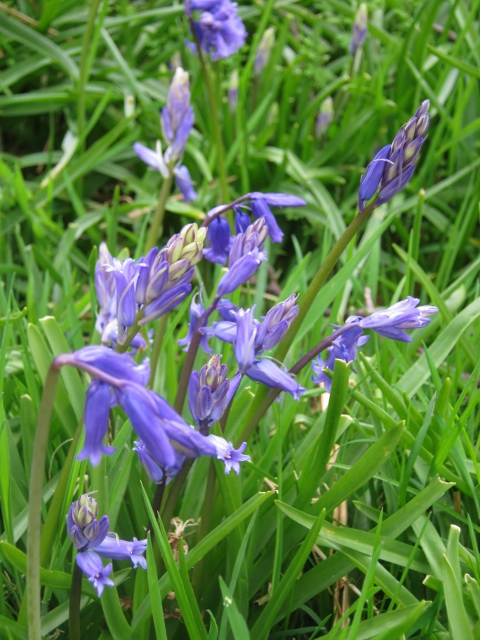
IMG_4604Bluebells (480x640)

Bluebells (Hyacinthoides non-scripta)

IMG_4612White Bluebell (640x480)

There were a number of white bluebells.

IMG_4594Bluebells (640x480)

Bluebell potential was good….

IMG_4599Bluebells (640x480) (2) IMG_4600Bluebells (640x480) IMG_4601Bluebells (480x640) IMG_4605Bluebells (640x480) IMG_4606Bluebells (640x480)

….but if we had visited a week later it would have looked heavenly.   Unfortunately, a week later we were doing other things.

We got back to the car and discovered we had a puncture.  Richard tried to change the tyre himself but we were unable to get the tyre off.  We had to call a rescue company and after just under an hour’s wait the mechanic arrived.  He managed to remove the tyre by sitting on the ground and kicking it with his left then right boot alternately.

Captain’s Wood is somewhere we would visit again.  It has plenty of plants and a variety of trees.  The walk through the wood would be pleasurable at any time of the year.

Thank-you for visiting!

Share this:

  • Share on X (Opens in new window) X
  • Share on Reddit (Opens in new window) Reddit
  • Share on Pinterest (Opens in new window) Pinterest
  • Share on Facebook (Opens in new window) Facebook
  • Email a link to a friend (Opens in new window) Email
  • Share on Tumblr (Opens in new window) Tumblr
  • Print (Opens in new window) Print
  • Share on Pocket (Opens in new window) Pocket
  • Share on LinkedIn (Opens in new window) LinkedIn
Like Loading...

May’s End – Part 2

26 Tue May 2015

Posted by Clare Pooley in plants, Rural Diary, trees, wild animals

≈ 37 Comments

Tags

Brown Hare, Bugle, Common Comfrey, cow parsley, Creeping Buttercup, Dandelion clock, field maple, garlic mustard, Greater Stitchwort, ground-ivy, Hawthorn, Hedgerow Crane's-bill, Herb-Robert, Meadow Buttercup, orange-tip butterfly, red campion, rowan, Suffolk, trees, Tufted Forget-me-not, wild flowers, Wood Avens

This post will be featuring the wild life photographs I have taken away from home, either on short walks to the postbox for example, or when I have stopped the car having seen something special.

The Cow Parsley has been spectacular this year and especially so on the lane I drive down on my way to Norwich each day via Bungay.  I was glad I took the following photos a couple of weeks ago as the road is now closed for road works and I hate to think what has happened to all these lovely flowers.

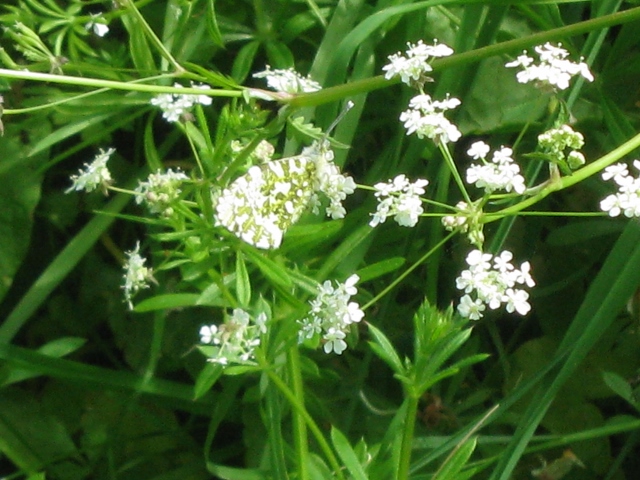
IMG_4679Cow Parsley and Red Campion (640x480)

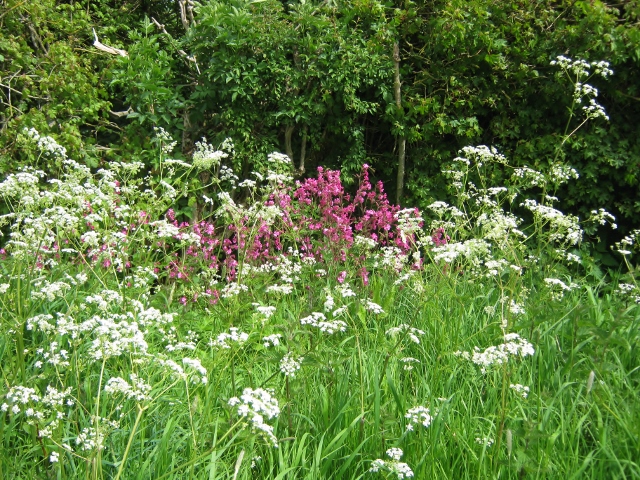
Cow Parsley (Anthriscus sylvestris) and Red Campion (Silene dioica)

The Red Campion has never been better in all the time we have lived here too.

IMG_4677Cow Parsley and Red Campion (640x480)

Cow Parsley and Red Campion

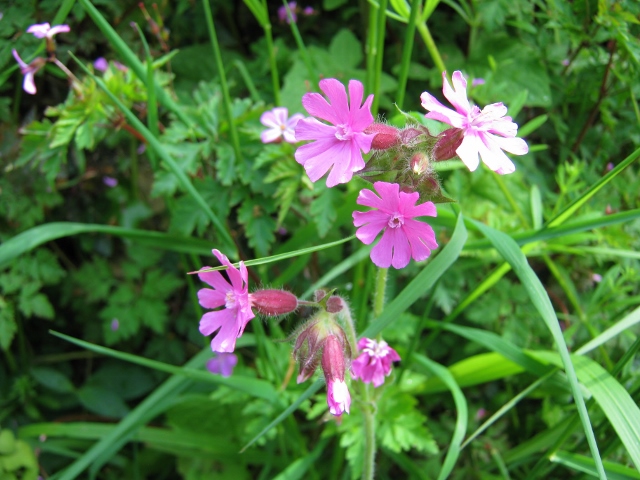
IMG_4691Red Campion (640x480)

Red Campion

Male and female flowers are borne on separate plants.

IMG_4681Greater Stitchwort (640x480)

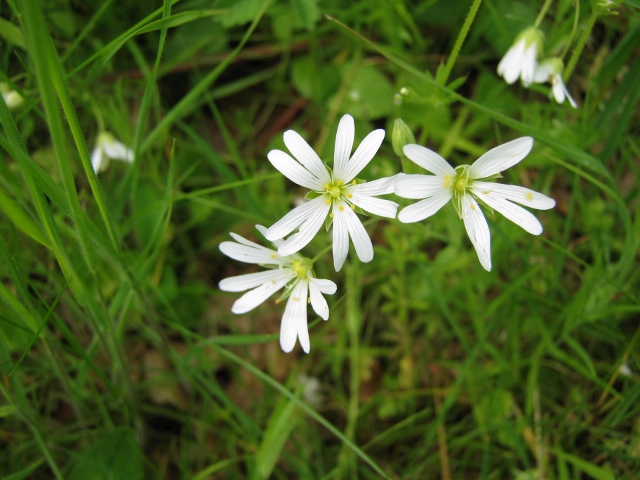
Greater Stitchwort (Stellaria holostea)

This plant is a member of the Pink family and is a shade lover.  It shines luminously in the twilight.  Its stems are very weak and need the support of other plants to gain any height.  The stems snap easily too, and according to the ancient ‘doctrine of signatures’ this means that the plant was thought to be able to help heal broken bones.  The Greek words for whole ‘holos’ and bone ‘osteon’ are incorporated in the botanical name.  The common name of Stitchwort refers not to mending but to another kind of stitch – the horrible pain in the side and similar ailments.  A preparation of stitchwort and acorns taken in wine was a standard remedy.  Stitchwort was regarded, at one time, along with White Campion and Field Poppy, as a ‘thunder flower’ – the picking of which provoked thunder and lightening.

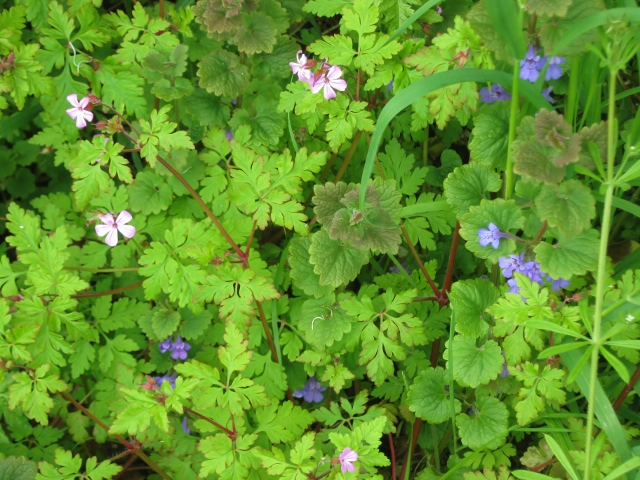
IMG_4682Herb-robert (640x480)

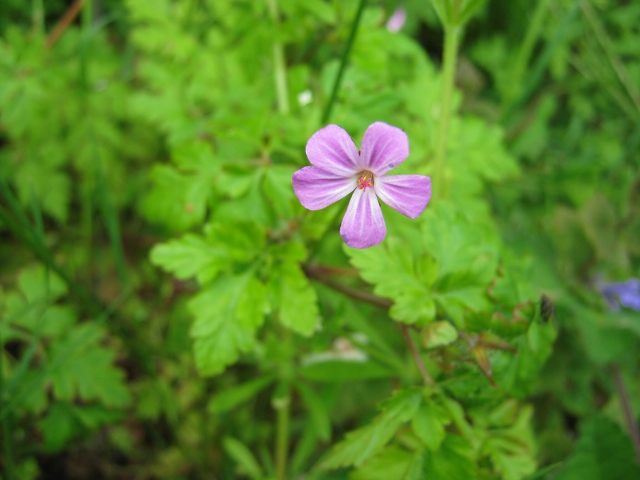
Herb-Robert (Geranium robertianum)

Herb-Robert has orange pollen.

IMG_4685Herb-robert and Ground-ivy (640x480)

Herb-Robert with Ground-ivy (Glechoma hederacea)

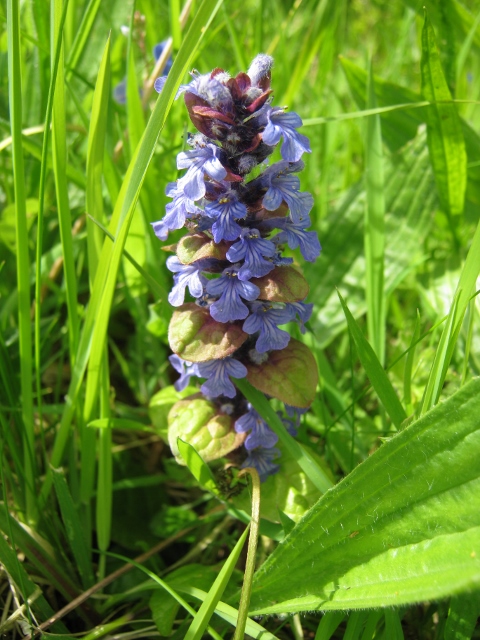
IMG_4688Bugle (480x640)

Bugle (Ajuga reptans) seems to be growing everywhere this year too. I don’t remember seeing any at all last year.

Bugle was thought of as a cure-all by medieval herbalists.  It healed all kinds of wounds, thrusts and stabs, as well as ulcers and broken bones.  It was also highly recommended for delirium tremens brought on by too much alcohol.  It has been called one of the mildest and best narcotics in the world.  The Latin name Ajuga and the common name Bugle appear to be corruptions of one or more of the plants earlier names of ‘abuga’, ‘abija’ and ‘bugula’.

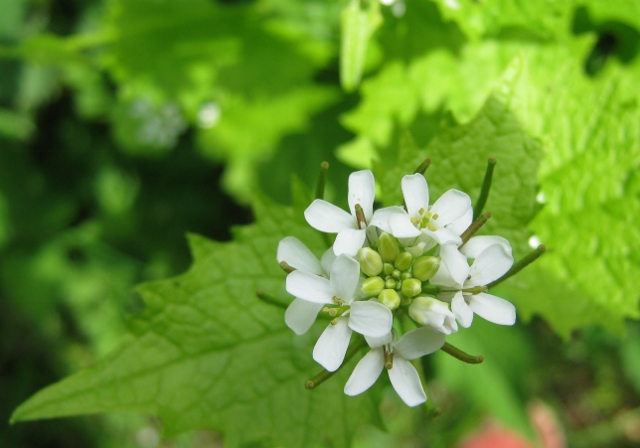
IMG_4693Garlic Mustard (640x448)

Jack-by-the-Hedge or Garlic Mustard (Alliaria petiolata)

This is the only British member of the cabbage family to smell very strongly of garlic.  The smell of the small white flowers isn’t particularly pleasant but it attracts midges and hoverflies.  The plant is self-pollinating.  In June the pale green caterpillars of the Orange-tip butterfly can be seen feeding on the long green seed pods from which they are almost indistinguishable.

IMG_4695Orange Tip on Cow Parsley (640x480)

This is a photo of an Orange-tip butterfly feeding on the nectar from Cow Parsley. The camouflage is very good!

IMG_4696Creeping Buttercup (640x480)

Creeping Buttercup (Ranunculus repens)

This plant spreads very quickly with long-rooted runners.

IMG_4697Field with buttercups (640x480)

This is one of the fields next to the lane I drive down every day. It has a lot of buttercups in it (probably Meadow Buttercup (Ranunculus acris) )

IMG_4698View from lane (640x480)

Another view from the lane.

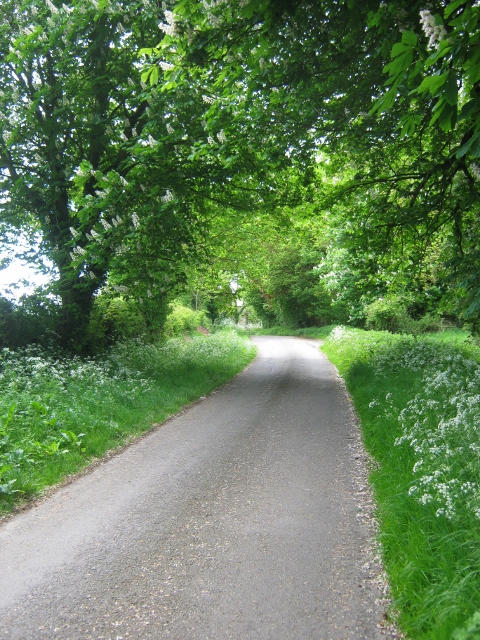
IMG_4699Lane (640x480)

This shows the mass of Cow Parsley on the verge of the lane with two grand-looking Horse-chestnut trees (Aesculus hippocastanum) on the corner.

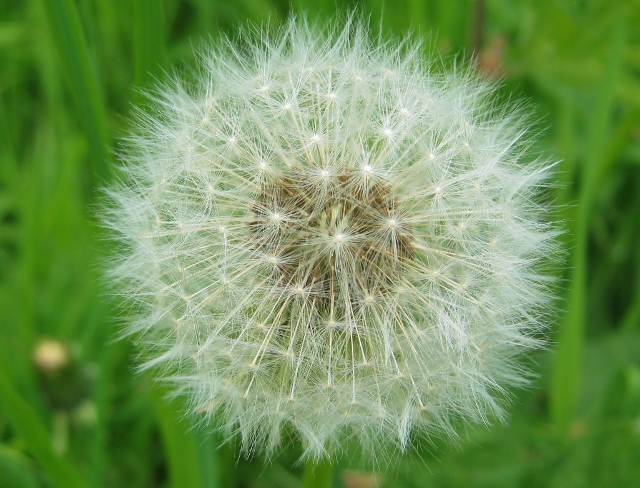
IMG_4703Dandelion clock (2) (640x488)

Common Dandelion (Taraxacum officinale agg. ) fruit or ‘clock’. 

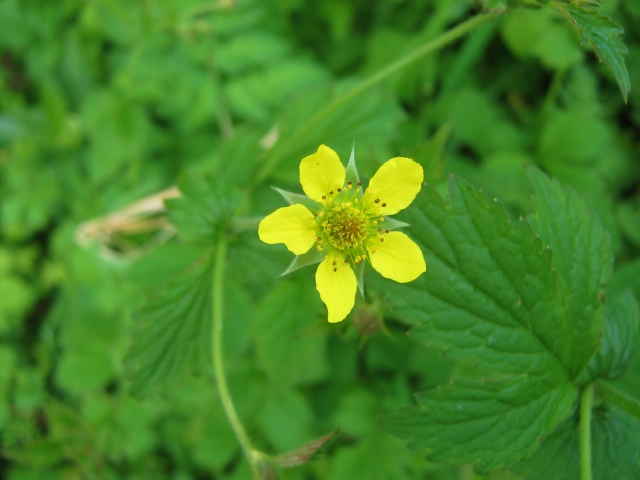
IMG_4704Herb Bennet (640x480)

Wood Avens or Herb Bennet (Geum urbanum)

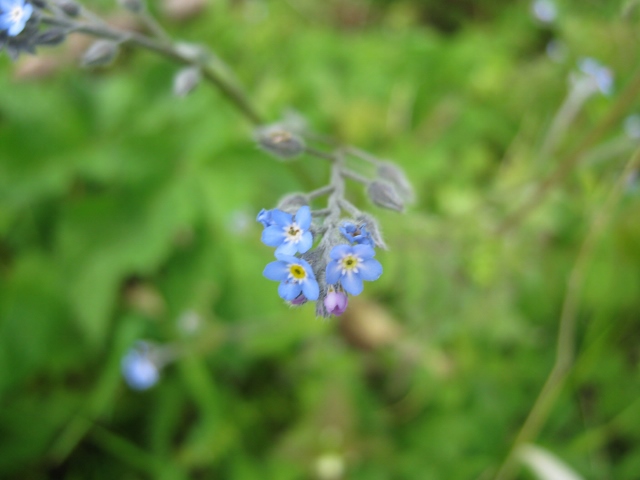
IMG_4705Forget-me-not (640x480)

I think this may be Tufted Forget-me-not (Myosotis laxa)

IMG_4707Lane (480x640)

This is the lane as it goes up a gentle rise towards St Margaret’s church.

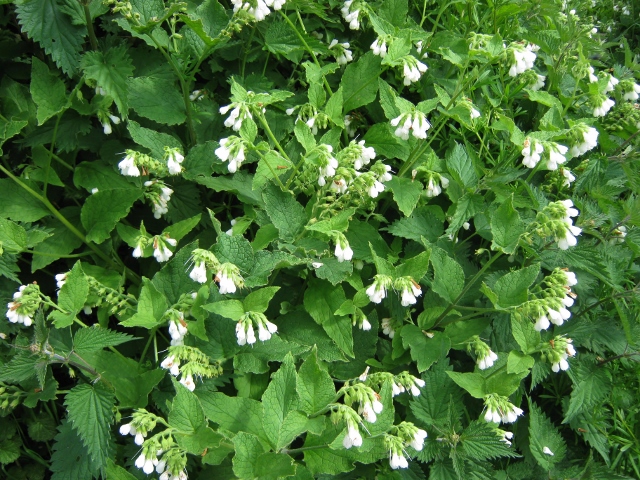
IMG_4729Common Comfrey (640x480)

Common Comfrey (Symphytum officinale)

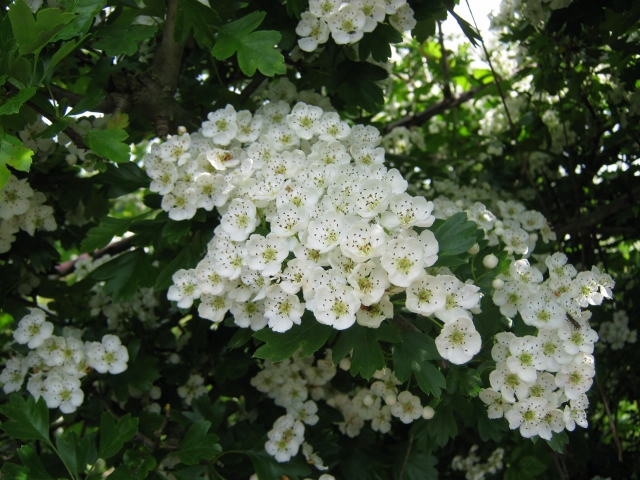
IMG_4730Hawthorn (640x480)

Common Hawthorn (Crataegus monogyna)

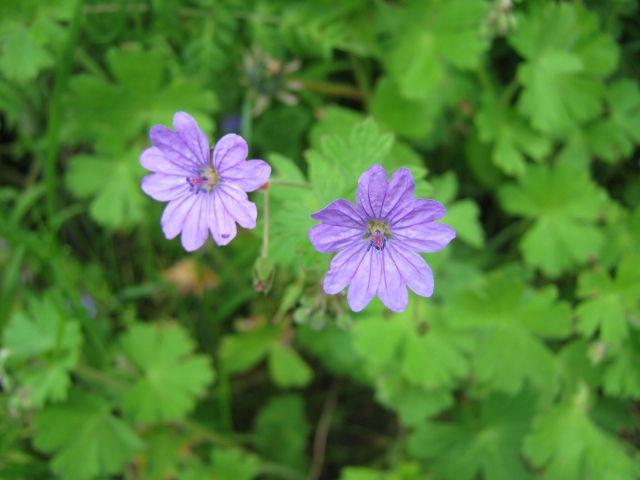
IMG_4732Hedgerow Crane's-bill (640x480)

Hedgerow Crane’s-bill (Geranium pyrenaicum)

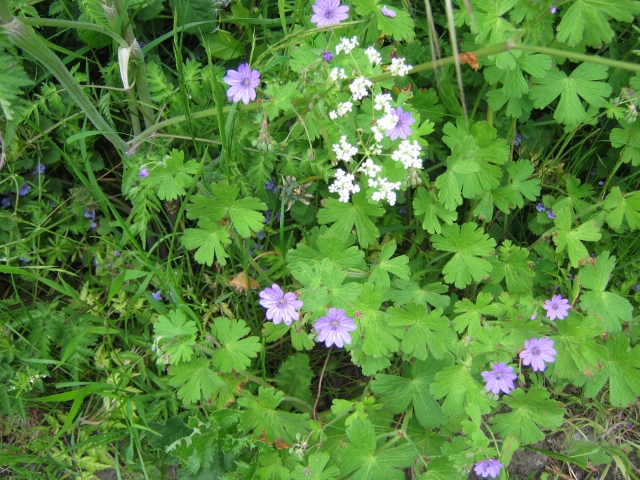
IMG_4731Wild flowers (640x480)

Hedgerow Crane’s-bill with Cow Parsley and Ground-ivy

IMG_4733Field Maple (640x480)

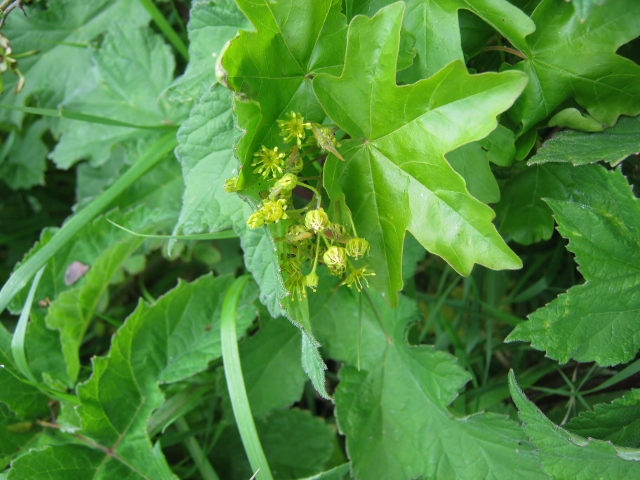
Field Maple (Acer campastre) flowers.

IMG_4736Rowan (640x480)

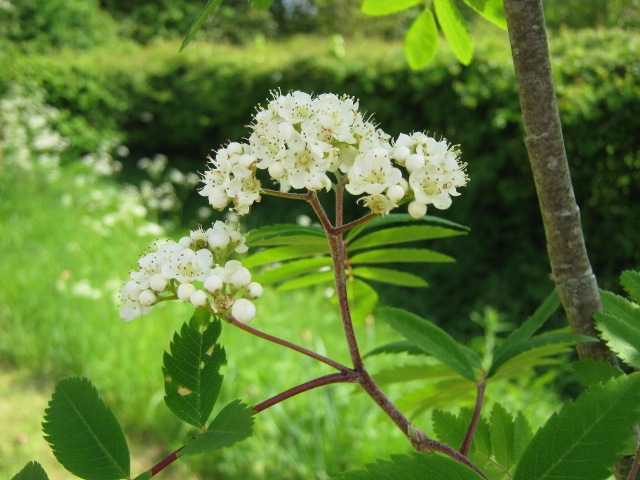
Rowan or Mountain Ash (Sorbus aucuparia). This is a photo I forgot to include in Part 1 as this is a tree in our garden.

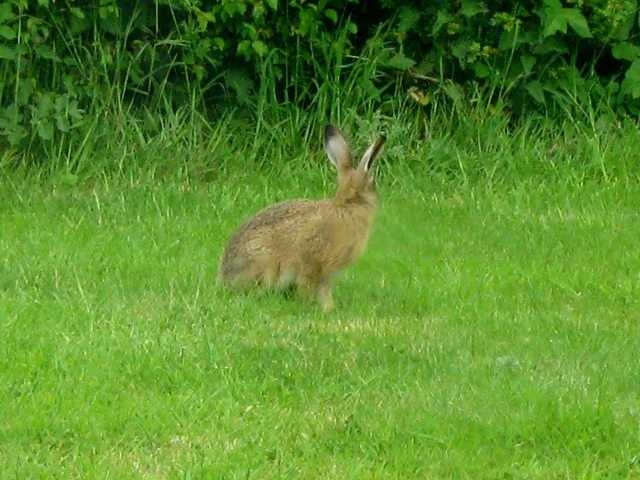
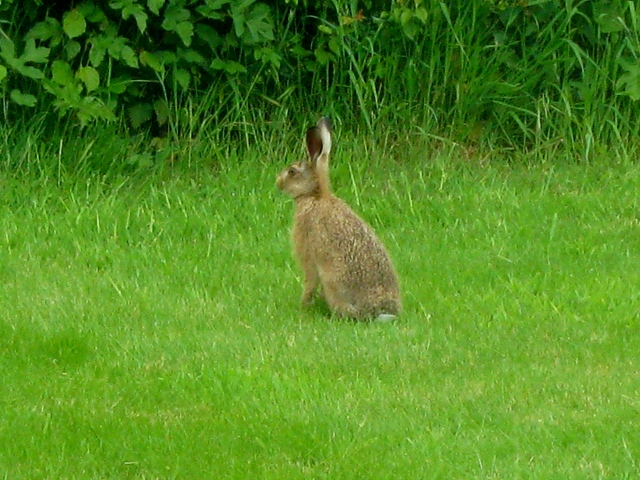
Lastly, I include a couple of photos (not good) of a young Hare, or Leveret (as young Hares are called) that I saw in our garden yesterday.  It was very curious, investigating everything.  It kept on the move all the time, which made photographing it very difficult, suddenly racing off in one direction only to come racing back again next minute.  It appeared to run for the joy of running!

IMG_4777Leveret (640x480) IMG_4778Leveret (640x480)

Thank-you for visiting!
Share this:

  • Share on X (Opens in new window) X
  • Share on Reddit (Opens in new window) Reddit
  • Share on Pinterest (Opens in new window) Pinterest
  • Share on Facebook (Opens in new window) Facebook
  • Email a link to a friend (Opens in new window) Email
  • Share on Tumblr (Opens in new window) Tumblr
  • Print (Opens in new window) Print
  • Share on Pocket (Opens in new window) Pocket
  • Share on LinkedIn (Opens in new window) LinkedIn
Like Loading...

May’s End – Part 1

26 Tue May 2015

Posted by Clare Pooley in plants, Rural Diary, trees, wild animals

≈ 40 Comments

Tags

Ash, Bush Vetch, Common Vetch, cow parsley, cut-leaved crane's-bill, English Elm, garden, Germander Speedwell, horse chestnut, ivy, Muntjac fawn, Red Clover, Ribwort Plantain, Scots Pine, Small-leaved Lime, Suffolk, Thyme-leaved Speedwell, trees, white dead-nettle, wild flowers

Where has this year gone!  It is nearly June already and I have been so busy and concerned for my family that I have been largely unaware of the passing of time.   If it wasn’t for the photographs I have been able to take periodically I would think I had done nothing and gone nowhere.

This post will record the wild plants and trees I have in the garden.  I haven’t been able to photograph any birds successfully for a few weeks and, because of the cool temperatures, there has been a distinct lack of insects other than a few hardy bees.

IMG_2231Common Vetch (640x429)

Common Vetch (Vicia sativa)

IMG_2262Bush Vetch (640x427)

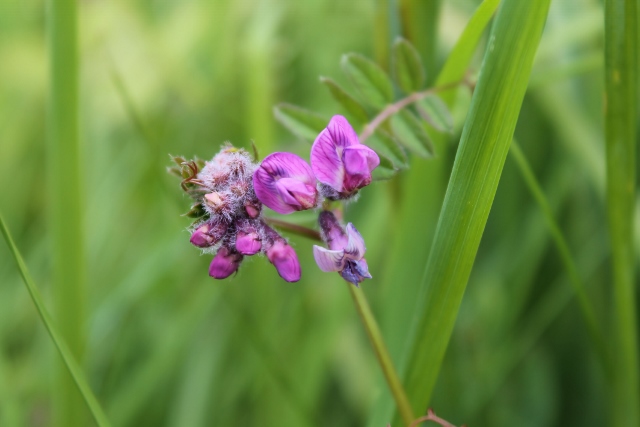
Bush Vetch (Vicia sepium)

IMG_2232Cow Parsley (640x456)

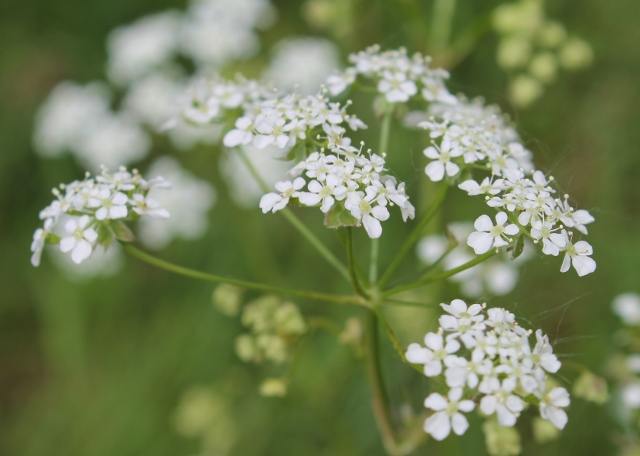
Cow Parsley (Anthriscus sylvestris)

IMG_2233English Elm (640x427)

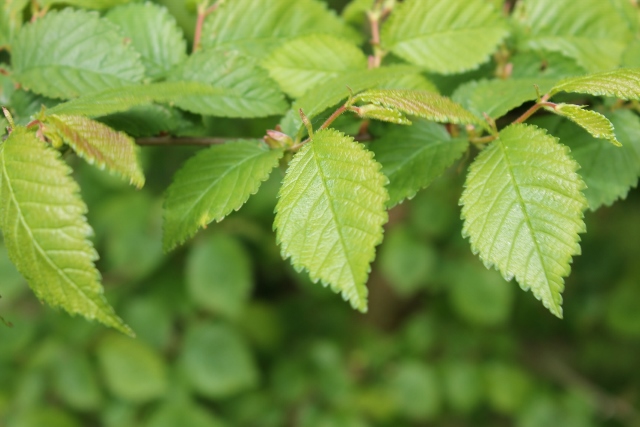
English Elm (Ulmus procera)

We have a number of English Elm saplings in our garden.  The Elm has a suckering habit so we have groups of them in the scrub area near our big pond.  When we first moved here in 2006 there were a few 20′ trees but those have since succumbed to Dutch Elm Disease.  I can just remember the countryside when we had beautiful, stately Elm trees everywhere with their wide, domed crowns.  Many of the trees had gaps where branches had been lost so they looked as though the trunks had leafy clouds on them.  Not a good description I know but maybe those of you who remember Elms will know what I mean.  My mother was always warned not to shelter under an Elm tree as they tended to lose branches easily.

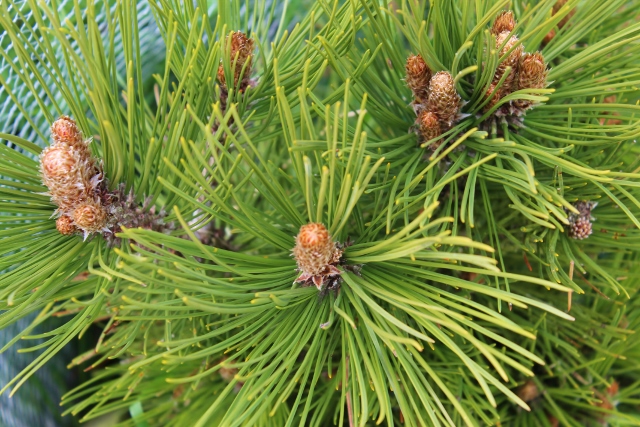
IMG_2257Scots Pine (640x427)

Scots Pine (Pinus sylvestris)

The Scots Pine is another tree that loses branches easily.  This is a little sapling we planted some years ago and hoped that it would be quite tall by now.  Unfortunately it is still only about 3 foot tall and for some time we couldn’t understand why it wasn’t growing.  We now believe that deer have been eating the new tips of the branches and have been pruning it.  We are trying to protect it with a tall ring of mesh.

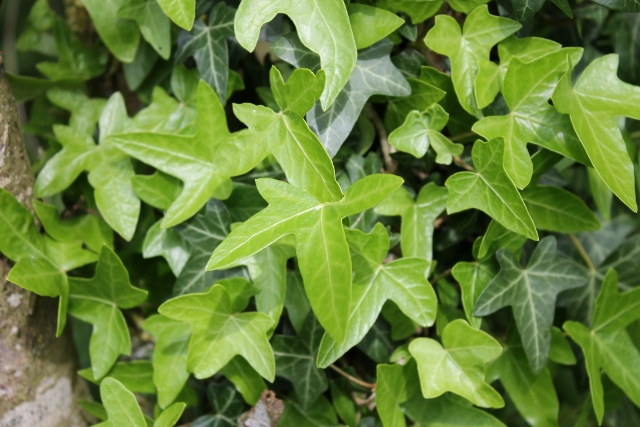
IMG_2234Ivy (640x427)

Ivy (Hedera helix)

I love the look of ivy.  The different shades of green of the new and older leaves, the pale veins and the exciting leaf-shape.  The upper leaves are oval and many people don’t believe they belong to the same plant.  It is such a useful plant to have in the garden.  It provides food and shelter to so many creatures and is useful greenery when I reluctantly have to provide flowers for church.

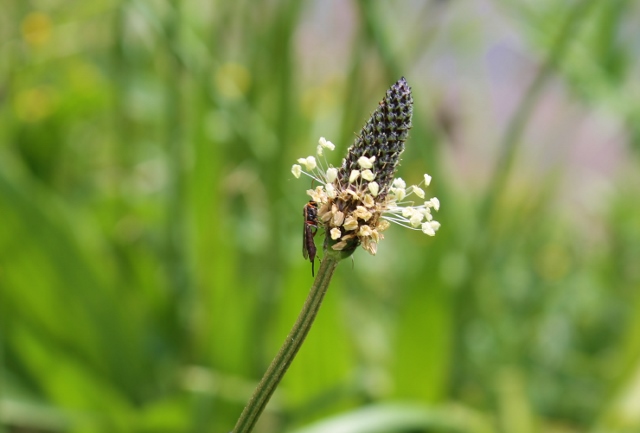
IMG_2235Ribwort Plantain (640x427)

Ribwort plantain (Plantago lanceolata)

The seedheads are food for Goldfinches and other seed eaters.

IMG_2236Ribwort Plantain & a sawfly (640x433)

This flowerhead has a visiting insect – a type of sawfly I think.

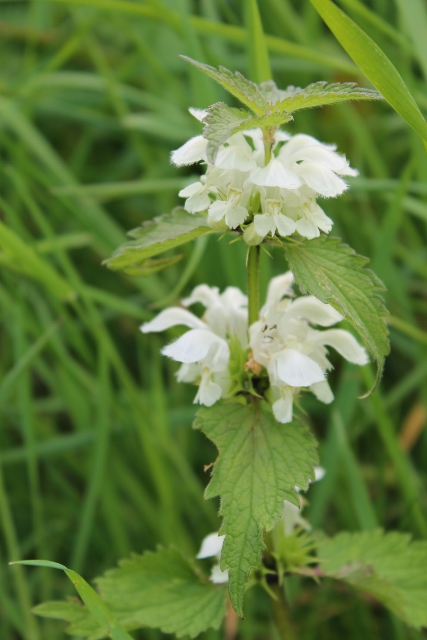
IMG_2260White Dead-nettle (427x640)

White Dead-nettle (Lamium album)

IMG_2244Wild flowers (2) (640x427)

Wild flowers. In this small patch there is Common Vetch, Creeping Buttercup, Heart’s-ease, Red Clover, Ground Ivy, Greater Plantain leaves and grasses.

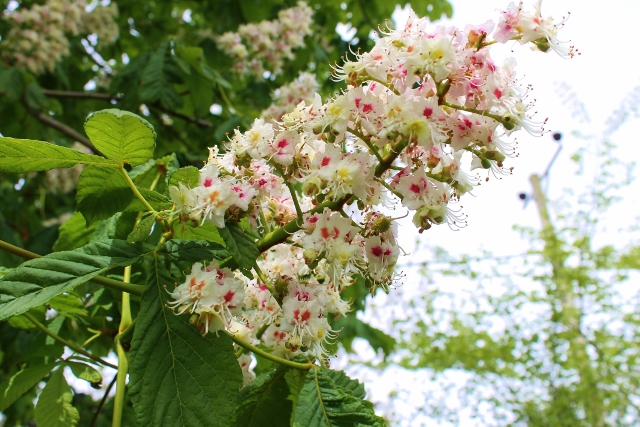
IMG_2245Horse Chestnut (640x427)

The Horse-chestnut (Aesculus hippocastanum) is flowering well. The flowers are scented.

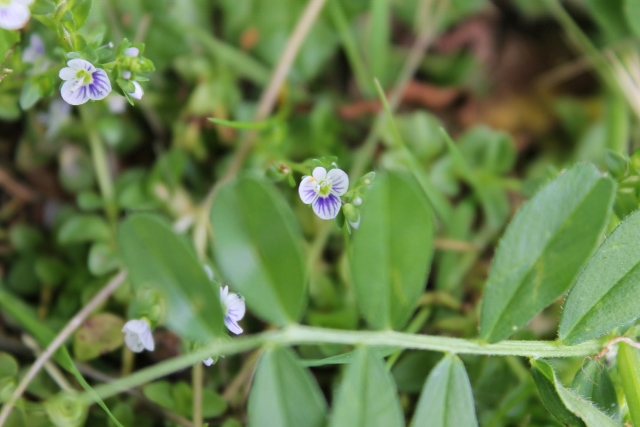
IMG_2248Thyme-leaved Speedwell (640x427)

Thyme-leaved Speedwell (Veronica serpyllifolia) The flowers are tiny!

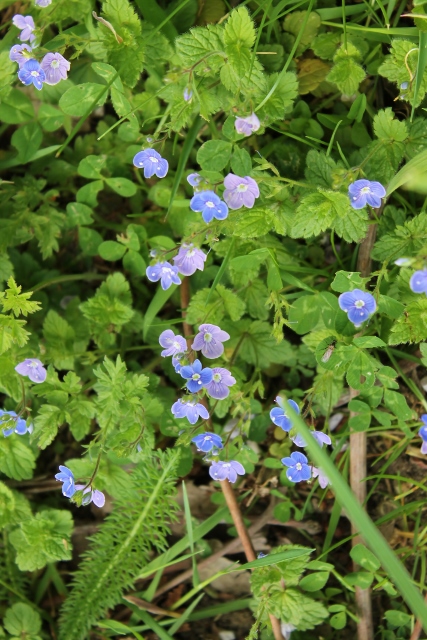
IMG_2250Germander Speedwell (427x640)

Germander Speedwell (Veronica chamaedrys)

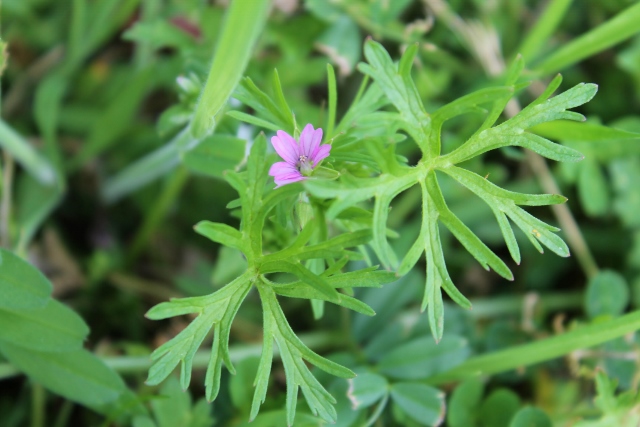
IMG_2249Cut-leaved Crane's-bill (640x427)

Cut-leaved Crane’s-bill (Geranium dissectum)

This is a little plant that is often over-looked but the leaves alone are quite beautiful.

IMG_2252Ash (640x427)

Ash (Fraxinus excelsior). The Ash tree is one of the last trees to come into leaf.

IMG_2258Red Clover (640x427)

Red Clover (Trifolium pratense)

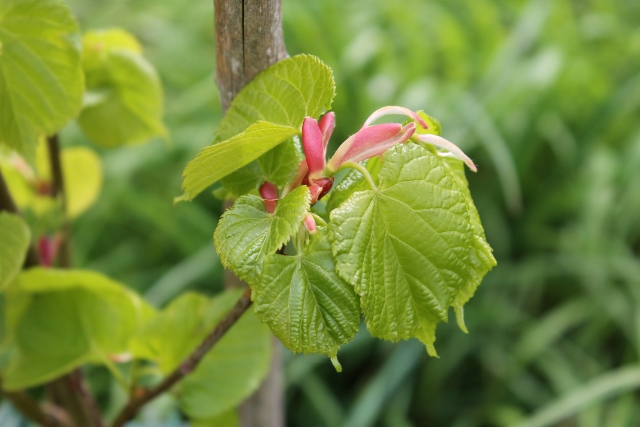
IMG_2255Small-leaved Lime (640x427)

Small-leaved Lime (Tilia cordata)

We have four small Small-leaved Lime trees which were a birthday present to me a couple of years ago.  I think the red buds are lovely.

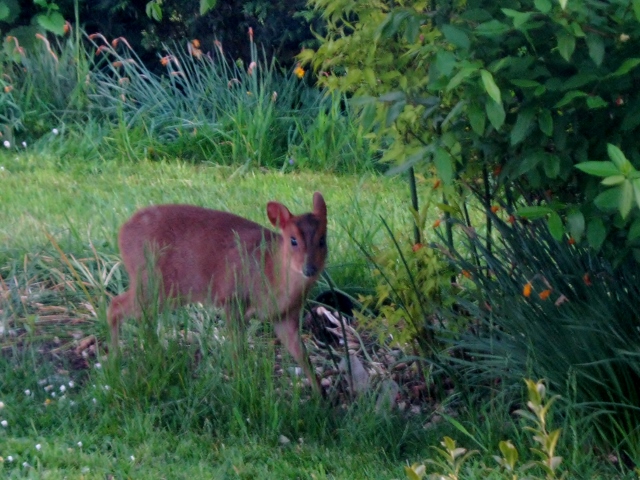
The final photo is a Muntjac fawn we saw a few evenings ago.  It was alone and only stayed for a few minutes.

IMG_4724Muntjac fawn (640x480)

As you can see it was only as tall as my daffodils that needed dead-heading.

Thank-you for visiting!

Share this:

  • Share on X (Opens in new window) X
  • Share on Reddit (Opens in new window) Reddit
  • Share on Pinterest (Opens in new window) Pinterest
  • Share on Facebook (Opens in new window) Facebook
  • Email a link to a friend (Opens in new window) Email
  • Share on Tumblr (Opens in new window) Tumblr
  • Print (Opens in new window) Print
  • Share on Pocket (Opens in new window) Pocket
  • Share on LinkedIn (Opens in new window) LinkedIn
Like Loading...

The Merry (?) Month of May

16 Sat May 2015

Posted by Clare Pooley in cooking, family, Gardening, Insects, plants, Rural Diary, trees

≈ 86 Comments

Tags

family life, flowers, fruit trees, health, spring, Suffolk

IMG_4544Japanese Cherry Fragrant Cloud (640x480)

Japanese Cherry ‘Fragrant Cloud’

We have been fairly busy during the past few weeks with not much time for trips out.  Not that the weather has been conducive to those type of activities; we get one quite nice day with sunshine and a bit of warmth and then we revert to cold, windy days with grey skies and some rain too.  We are still getting cold nights and looking at the photographs I took this time last year, the flowers and blossom I am seeing now were ones I saw then during the second half of April.  The photos I am including in this post have been mainly taken on the few nice days we’ve had this month.

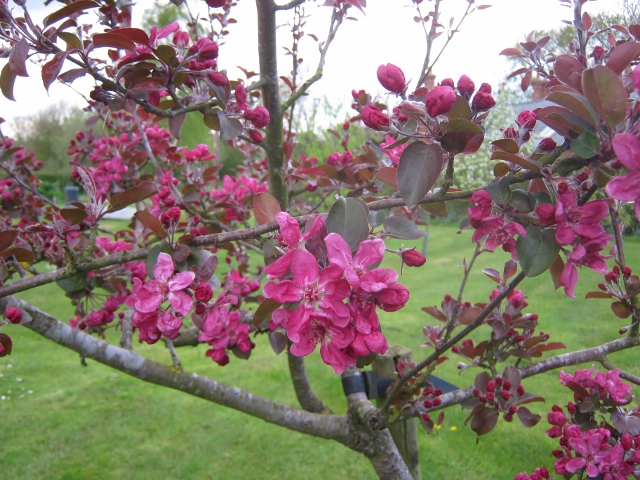
IMG_4547Crabtree Evereste (640x480)

Crabapple ‘Evereste’ 

I took my mother to the hospital for her six-week check-up and we were sorry to be told that both her eyes had suffered a bleed or some damage and she would have to return to have injections in both eyes at the same time.  We duly returned a few days later and she had the injections.  Her eyesight has deteriorated again and for someone who has always enjoyed reading she is finding it so hard not to be able to read with ease any more.  She can’t read sub-titles on the TV quickly enough either so has had to give up watching her favourite foreign-language programmes.  She has also been told her kidneys are not functioning too well and her GP is having to re-think what medication she should be taking now.  She is a brave and sensible woman and is trying to make the best of the situation.

IMG_4550Crabtree Harry Baker (640x480)

Crabapple ‘Harry Baker’

My mother-in-law has now moved into her care-home.  The actual move caused her some distress and she is still very unhappy.  She had lived in her home for over forty years and she had been very happy there.  She knows that she wouldn’t be able to care for herself if she went back home, even with a full care package, as she is almost totally immobile now and has so many other serious medical problems.  But that thought doesn’t take much of the sadness and frustration away; it probably adds to it.  Richard and his brother spent two full days last week going through her whole house finding the few things she would be able to take with her to the home and then trying to decide what to do with the rest of her belongings.  They had four trips to the tip to get rid of things no longer needed and have stored the rest of her possessions in my brother-in-law’s cellar.  My poor mother-in-law is sad that she has to sell her house to pay for her care and that she won’t be able to leave anything to her sons when she dies.

IMG_4553Pear Concord (640x480)

Pear ‘Concord’

My eldest daughter Alice is working hard on the few corrections that have to be made to her thesis before it is printed and bound.  She is also rehearsing for her next production with her drama group.  Because of her work schedule she won’t be able to visit us until the beginning of June.  We haven’t seen her since 31st December – the longest time we have ever gone without seeing each other.

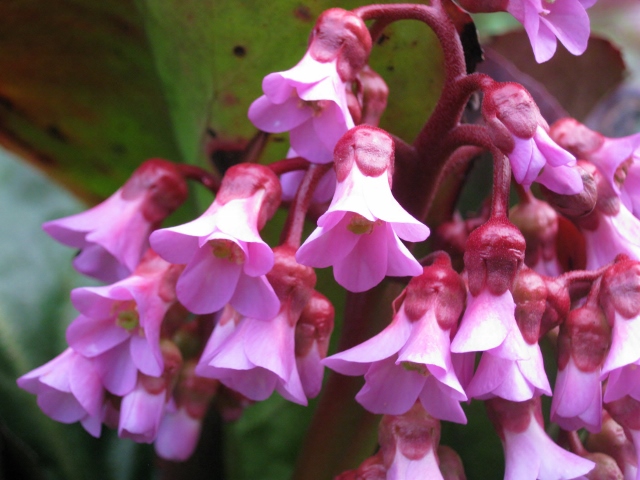
IMG_4560Bergenia (640x480)

Bergenia flowers. I took this photo on the 5th of May thinking that they may not be around that much longer. In past years I have had all my bergenia flowers eaten by deer or rabbits almost as soon as they came out. Not this year (so far). They are still flowering and have got so tall and look wonderful.

Elinor has taken her Art exam and has finished and handed in all her course-work.  She was pleased with the way her exam went.  She managed to do all she had wanted to do and didn’t panic at all.  Of course, she is now starting to worry that she hasn’t done enough and might not pass her exam!  She has an interview on Wednesday with tutors of the next two-year course she has applied to go on.  She wants to do Graphic Art and we and her current tutors think that she will do very well.

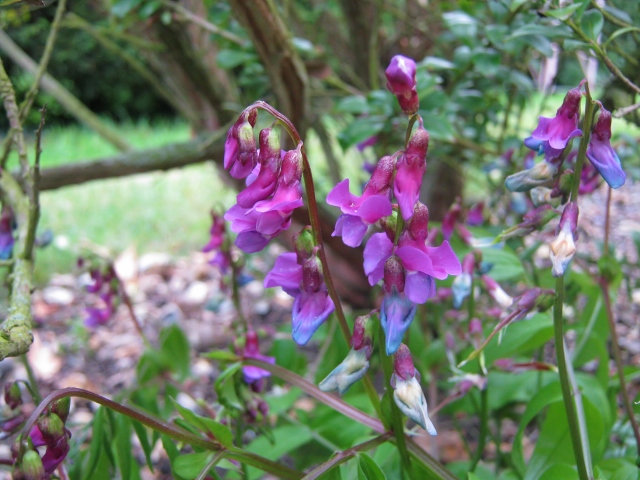
IMG_4563Lathyrus Spring Beauty (640x480)

Lathyrus ‘Spring Beauty’

We are currently applying for assistance for Elinor for next year.  This will provide her with one-to-one mentors who will be able to help her if she experiences anxiety at college and it may also be possible to provide her with different equipment and/or furniture which she may need because of her mild scoliosis.  She suffers from frequent back pain especially when she has to stand for any length of time.

IMG_4631Apple Discovery (640x480)

Apple ‘Discovery’

She has her other exams during the first two weeks in June and is trying to revise for these at the moment.  English and Psychology are no problem to her and she is predicted to do well in both these exams but it is Maths as always which is causing her, and us all, such headaches.

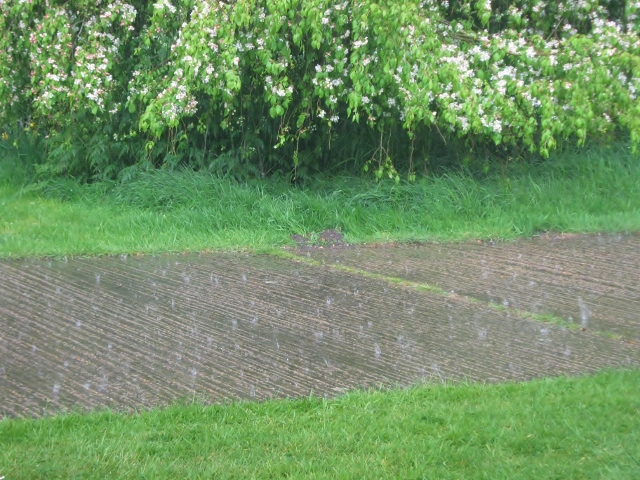
IMG_4632Heavy rain (640x480)

Heavy rain on 8th May

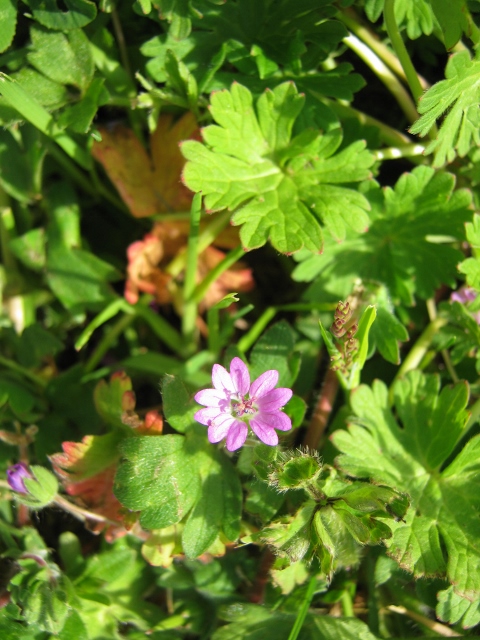
IMG_4640Dove's-foot Crane's-bill (480x640)

Dove’s-foot Crane’s-bill (Geranium molle)

Richard is fine and is getting used to the fact that he will need to be on medication for the rest of his life.  Join the club, I say!  He will be seeing the specialist in a few months time to have his situation reviewed with regard to the lesion on his pituitary gland.  Will he or won’t he have to have an operation to have it removed?  He is counting down the days until his retirement at the end of August but in the meantime is having to work very hard at work and has been allocated a number of jobs to do at locations all over the country, all to be done in the next couple of months.  The firm is getting its money’s worth out of him before he goes.  He is naturally saddened about his mother’s situation but knows she is being cared for properly now.

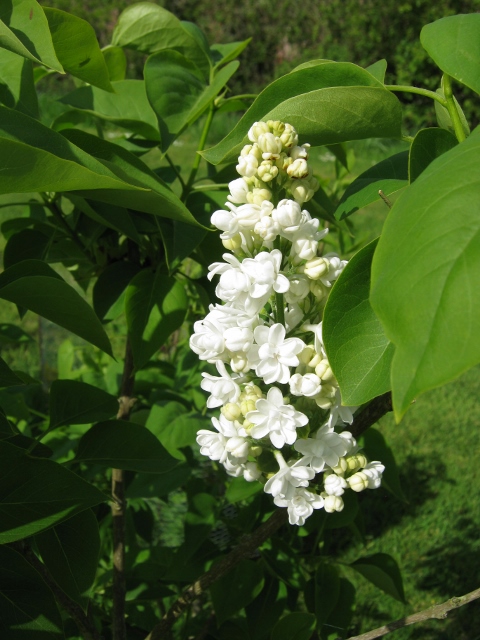
IMG_4639Lilac (480x640)

Lilac

IMG_4636Bush Vetch (640x480)

Not a good photo of Bush Vetch (Vicia sepium)

I continue to have a problem with my dry throat.  I have seen a different doctor at our local surgery a couple of times and he has prescribed artificial saliva spray and also pastilles that should stimulate saliva production.  This all sounds unpleasant but the treatment has improved matters a little.  I would have liked to find out why I suddenly got a dry throat in January, which can be very uncomfortable at times, and would also like to know if there is anything I am doing or eating which has brought it on.  It would be good to know that I could get rid of it by a change in life-style.  I cannot get anyone interested in this and am just supplied with medication to alleviate the symptoms.  The GP says I am to tell my Rheumatology specialist about my dry throat when I next go to see her – there is a possible connection between one of the tablets I take, rheumatoid arthritis and dry throats.  I asked if the specialist might be able to do anything for me.  Oh no, I doubt it, said the GP, she will just find it interesting!  The one unfortunate side-effect is I am unable to sing properly any more.  I get great pleasure from singing and hoped to be able to re-join a choir when circumstances allowed but if things stay as they are I would be a liability.  It saddens me that I have had to give up so many hobbies because of my health and I had hoped that I would be able to sing for a while longer –  I hope nevertheless that the medication will eventually enable me to sing again.  I have also had a very upset stomach for the past ten days.  I have had to continue with driving my daughter and mother to the places they need to be and also had a few appointments of my own to keep, but when I have eventually got back home I have no energy for much housework or any gardening let alone the enthusiasm for reading and blogging.  I have felt quite a lot better today and have managed to catch up with commenting on the blogs I follow but if I have said anything over the last couple of weeks that has been a little odd please blame it on the stomach bug (it wasn’t me!).

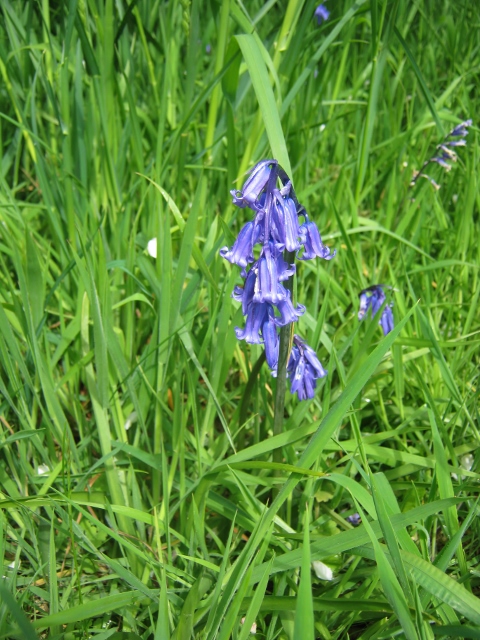
IMG_4635Bluebell (480x640)

Bluebell (Hyacinthoides non-scripta)

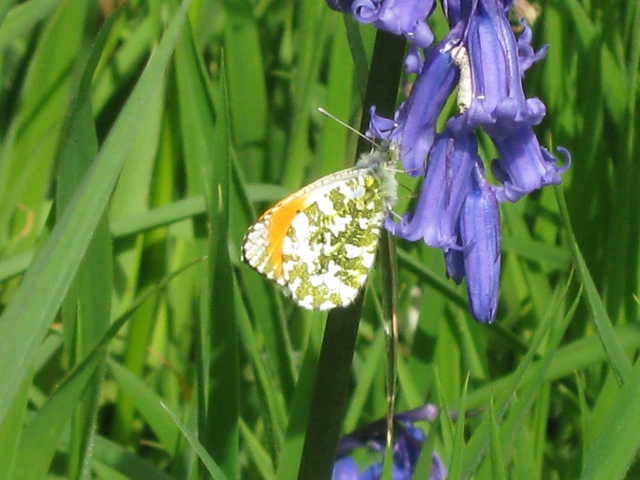
IMG_4645Orange-tip on bluebell (640x480)

Male Orange-tip butterfly (Anthocharis cardamines) on bluebell. It’s a pity the butterfly chose to drink nectar from a bluebell with a bird poo on it! 

On May Day Bank Holiday Monday, Rumburgh village had its annual fete and as usual I provided a couple of cakes for the church’s cake stall.  Richard pulled a large amount of our rhubarb as well which was also sold on the stall.  I spent most of the day before baking the two cakes I took to the fete.  We went out in the afternoon to Captain’s Wood to see if the bluebells were flowering.  I will put that visit in a separate post.

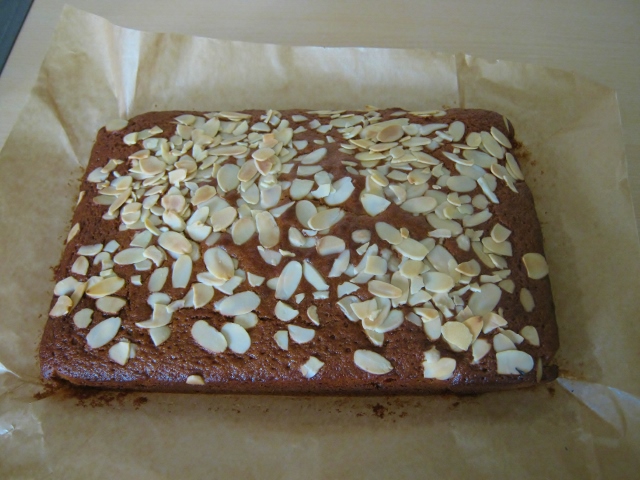
IMG_4541Honey cake (640x480)

Honey Cake tray bake. It’s always good to provide tray bakes or individual small cakes for cake stalls. They sell for more money than a large cake does.

IMG_4569Rumburgh Fete (640x480)

The tea tent at the Rumburgh fete

Last week, while Richard was away in Manchester helping his brother sort out their Mum’s house, Elinor and I went to Minsmere RSPB reserve to walk through the woods.  This will also be the subject of another post.

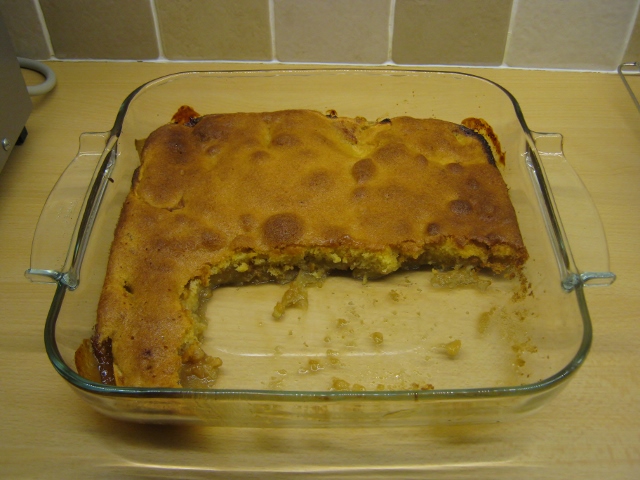
IMG_4564Eve's Pudding (640x480)

While I was baking cakes for the fete I also made an Eve’s Pudding for us to eat at home. I didn’t manage to photograph this before some of it had been eaten. The other cake I made for the fete but didn’t photograph, was a Mincemeat Cake. A good way of using up the extra mincemeat bought at Christmas.

This is the sum total of our activities so far this month.  Quite gloomy in places I’m afraid.

Thank-you for visiting!
Share this:

  • Share on X (Opens in new window) X
  • Share on Reddit (Opens in new window) Reddit
  • Share on Pinterest (Opens in new window) Pinterest
  • Share on Facebook (Opens in new window) Facebook
  • Email a link to a friend (Opens in new window) Email
  • Share on Tumblr (Opens in new window) Tumblr
  • Print (Opens in new window) Print
  • Share on Pocket (Opens in new window) Pocket
  • Share on LinkedIn (Opens in new window) LinkedIn
Like Loading...
← Older posts
Newer posts →
Follow A Suffolk Lane on WordPress.com

Enter your email address to follow this blog and receive notifications of new posts by email.

Join 715 other subscribers.

Unknown's avatar

I talk about what it's like living in a quiet part of Suffolk. I am a wife, mother and daughter, a practising Christian and love the natural world that surrounds me. I enjoy my life - most of the time!
My Posts

Jan 2026
M T W T F S S
 1234
567891011
12131415161718
19202122232425
262728293031  
« Dec    

Pages

  • About my Blog
  • GDPR (General Data Protection Regulations) and This Site
  • My Life in a Suffolk Lane

Archives

Blogs I Follow

Unknown's avatar
Unknown's avatar
Unknown's avatar
Unknown's avatar
Unknown's avatar
Unknown's avatar
Unknown's avatar
Unknown's avatar
Unknown's avatar
Unknown's avatar
Unknown's avatar
Unknown's avatar
Unknown's avatar
Unknown's avatar
Unknown's avatar
Unknown's avatar
Unknown's avatar
Unknown's avatar
Unknown's avatar

Posts I Like

  • Unknown's avatar
  • Unknown's avatar
  • Wayne Wolfson's avatar
  • Martha's avatar
  • Unknown's avatar
  • 60onabudget's avatar
  • Unknown's avatar
  • thesimlux's avatar
  • Ari's avatar
  • Unknown's avatar
  • Unknown's avatar
  • Unknown's avatar
  • Unknown's avatar
  • santable's avatar
  • Unknown's avatar
  • CJ's avatar
  • Unknown's avatar
  • Unknown's avatar
  • Unknown's avatar
  • Unknown's avatar
  • Unknown's avatar
  • Unknown's avatar
  • Unknown's avatar
  • Unknown's avatar
  • Unknown's avatar
  • mitchteemley's avatar
  • Unknown's avatar
  • John’s Postcards's avatar
  • Sarah curran's avatar
  • JAM's avatar
  • Matthew Paul's avatar
  • M T McGuire's avatar
  • Schnippelboy's avatar
  • Unknown's avatar
  • Luso Loonie — Devin Meireles's avatar
  • Bernard Aybout (Virii8)'s avatar
  • Unknown's avatar
  • Unknown's avatar
  • Unknown's avatar
  • Yeah, Another Blogger's avatar
  • Unknown's avatar
  • Unknown's avatar
  • bitaboutbritain's avatar
  • Unknown's avatar
  • Unknown's avatar
  • Unknown's avatar
  • Talkmore's avatar
  • Unknown's avatar
  • Unknown's avatar
  • sopantooth's avatar

amphibians architecture art Arts and Crafts churches cooking Days out domestic animals family fish Folk Traditions Gardening Historic Buildings holidays Insects Landscaping literature music Norwich plants Rural Diary seashore theatre trees Uncategorized walking weather wild animals wild birds wild flowers

Tags

architecture autumn birds blackbird blackthorn Bungay butterfly church clouds common knapweed cow parsley crocus daffodils Diary dogwood family field maple flowers fungus garden gardening geese greylags ground-ivy Halesworth Hawthorn heather holiday Holly Holy Week horse chestnut Hoverfly insects ivy Lake District Lent lesser celandine lichen Lords and Ladies Mallard mallards Minsmere moorhen moss music Norwich Peak District pheasant plants pond ponds primrose primroses Rain rooks Rumburgh Rumburgh Church sheep Sheffield snow snowdrops Southwold spring Suffolk Suffolk Wildlife Trust sunset the Beck trees viburnum bodnantense walking weather wild cherry wild flowers winter-flowering honeysuckle witch-hazel

Meta

  • Create account
  • Log in
  • Entries feed
  • Comments feed
  • WordPress.com

Goodreads

Blog at WordPress.com.

Book Jotter

Reviews, news, features and all things books for passionate readers

Country Life Blog -

A blog about life in the country in the past and present

Matthew Paul: Poetry & Stuff

Poetry and what-not

Schnippelboy

Ein Tagebuch unserer Alltagsküche-Leicht zum Nachkochen

TAMARA JARE

TAMARA JARE Tamara Jare: Contemporary Figurative Painting Oil on Canvas Artist Art Studio

A Taste of Freedom

Documenting a Dream

Country Ways

Rambling Journeys in Britain, Countryside Matters and campaigning for the Right to Roam

The Strawberry Post

Here to Entertain, Educate & Inspire!
a north east ohio garden

an ongoing experiment in the dirt, 35 plus years

naturechirp

Celebrating God's creatures, birds and plants...

Sophie Neville

Writer

Going Batty in Wales

Developing a more sustainable lifestyle in SW Wales

Our Lake District Escapades

Exploring the Lake District and beyond

Short Walks Long Paths

Wandering trails around the coast of Wales

The Biking Gardener

An English persons experience of living and gardening in Ireland

Nan's Farm

A Journal Of Everyday Life

Walk the Old Ways

Rambling Journeys in Britain with John Bainbridge. Fighting for the Right to Roam. Campaigning to Protect Our Countryside.

Writer Side UP!

Waking the Writer Side...and keeping it "Up!"

Meggie's Adventures

Travel, thank you notes and other stories

amusicalifeonplanetearth

Music and the Thoughts It Can Inspire

lovefoundation.co.uk

Traveling Tortuga

Simply Living Well

Pakenham Water Mill

Historic watermill in the beautiful Suffolk countryside

Take It Easy

Retired, not expired: words from the after(work)life. And music. Lots of music!

Secret Diary Of A Country Vicar's Wife

By Olive Oyl

thanksfortheadventureorg.wordpress.com/

The Beat Goes On

#TBGO

Frank Pleszak's Blogs

Twitter: @frankpleszak @PolishIICorps

John Bainbridge Writer

Indie Writer and Publisher

roughwighting

Life in a flash - a bi-weekly storytelling blog

Walking the Old Ways

Rambling in the British Countryside

CapKane

thoughts on social realities

SkyeEnt

Jottings from Skye

jodie richelle

embracing my inner homemaker

Skizzenbuch/Blog

Just another WordPress.com weblog

Have Bag, Will Travel

The Call of the Pen

Flash Fiction, Book Reviews, Devotionals and other things.

John's Postcards

Art in Nature

You dream, I photographe it !

Smile! You’re in Barnier World......

theinfill

the things that come to hand

Dr. Mary Ann Niemczura

Author of "A Past Worth Telling"

Provincial Woman

The Pink Wheelbarrow

Luanne Castle: Poetry and Other Words (and cats!)

Poetry, Other Words, and Cats

The Family Kalamazoo

A genealogical site devoted to the history of the DeKorn and Zuidweg families of Kalamazoo and the Mulder family of Caledonia

everythingchild

The Book Owl

Canberra's Green Spaces

Paul Harley Photographer

  • Subscribe Subscribed
    • A Suffolk Lane
    • Join 715 other subscribers.
    • Already have a WordPress.com account? Log in now.
    • A Suffolk Lane
    • Subscribe Subscribed
    • Sign up
    • Log in
    • Report this content
    • View site in Reader
    • Manage subscriptions
    • Collapse this bar
 

Loading Comments...
 

    Privacy & Cookies: This site uses cookies. By continuing to use this website, you agree to their use.
    To find out more, including how to control cookies, see here: Cookie Policy
    %d