• About my Blog
  • GDPR (General Data Protection Regulations) and This Site
  • My Life in a Suffolk Lane

A Suffolk Lane

~ A diary of my life in rural north Suffolk.

A Suffolk Lane

Tag Archives: Bakewell

A Walk in the Goyt Valley – Peak District Holiday

05 Thu Nov 2015

Posted by Clare Pooley in churches, Days out, domestic animals, plants, Rural Diary, walking, wild birds

≈ 38 Comments

Tags

Bakewell, bridge, Butterbur, Canada Goose, Coot, donkey, ducks, eyebright, Fernilee Reservoir Dam, Field Scabious, Goosander, Goyt Vallry, Great Burnet, Greater Bird's-foot-trefoil, gulls, harebell, marble galls, Peak District, River Goyt, River Wye, sheep, St James' church Taxal, Taxal, Water Mint, watercress, Whaley Bridge, White Beak-sedge

The day after our walk on Ramshaw Rocks we met Alice and Elinor in Bakewell so that we could see how they were and have a meal with them.  They travelled to Bakewell on the bus after Alice had finished work for the day in Sheffield.  We went for a coffee together and told them the sad news of Richard’s mum’s death.  They were both upset but were grateful that we had waited so that we could tell them face-to-face.  We then went for a walk through the town and ended up by the river – our favourite spot.

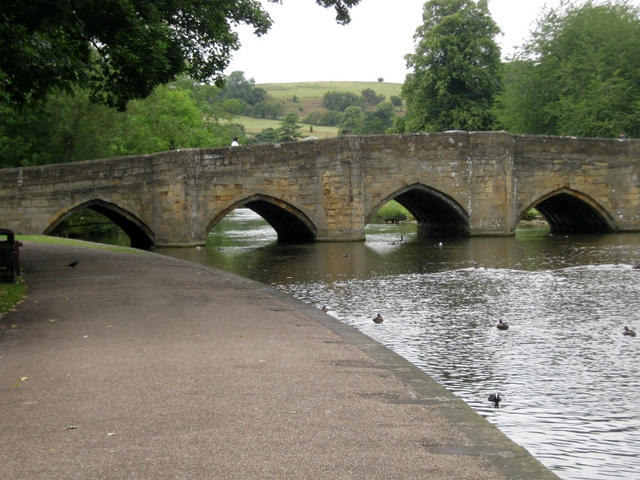
IMG_5505Bridge

The attractive old bridge over the river Wye.

IMG_5496Duck's nest

There is always plenty to see on the river. This duck sitting on her nest, for example.

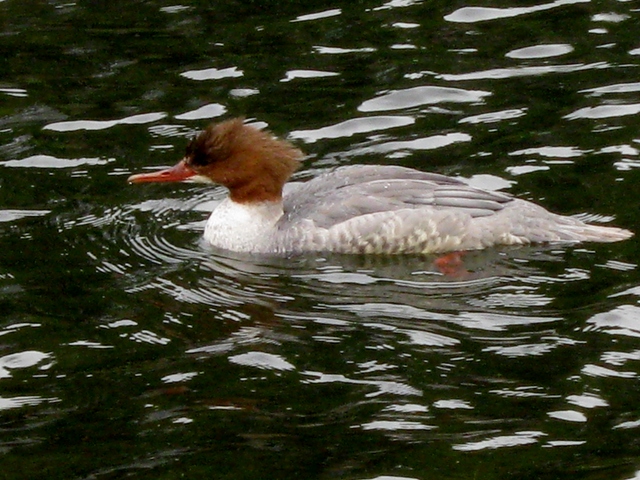
IMG_5498Female Goosander

A female Goosander (Mergus merganser)

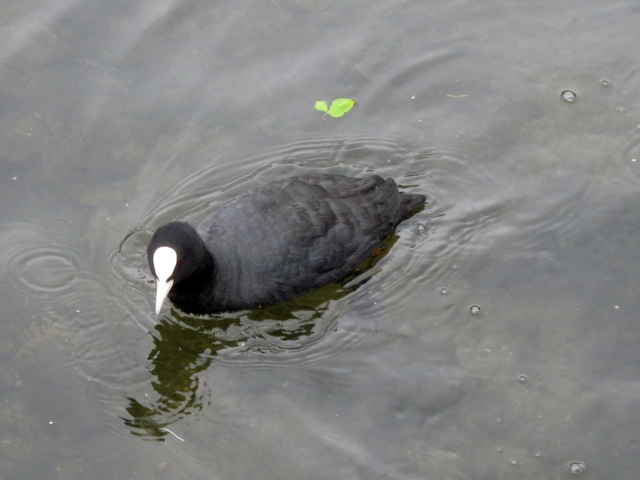
IMG_5500Coot

A Coot (Fulica atra)

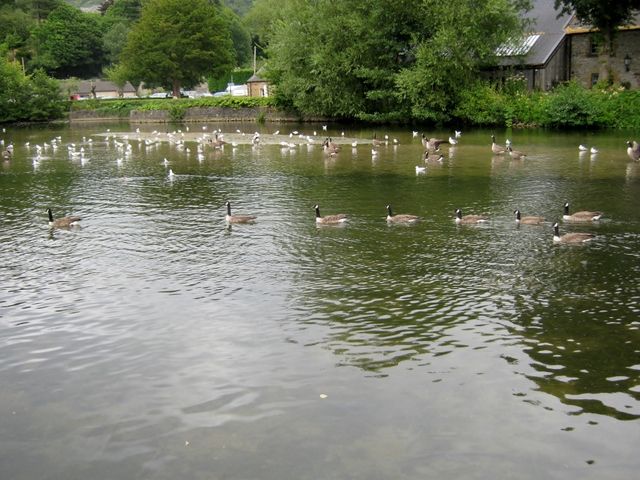
IMG_5502Gulls and Canada Geese

Canada Geese (Branta canadensis) and Gulls

IMG_5507Duck

A duck – partly Mallard I think!

After a pleasant meal together Richard and I saw the girls onto their bus and then we returned to our caravan.

The following day we went for a walk along the valley of the River Goyt.  We left the car in a lay-by just south of Whaley Bridge and followed a track, steep at first, from the lay-by down through woodland towards the River Goyt.

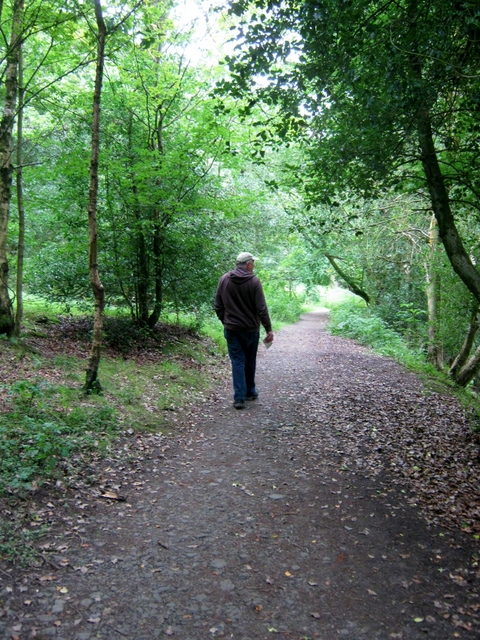
IMG_5509R on walk

Richard on the track through the wood.

The day was very cloudy and there were frequent showers of rain but they weren’t heavy and didn’t diminish the pleasure of our walk.  Richard had walked here very often when he was younger, either with the Scouts or with friends but the area was new to me.

IMG_5510Field Scabious

A Field Scabious flower (Knautia arvensis)

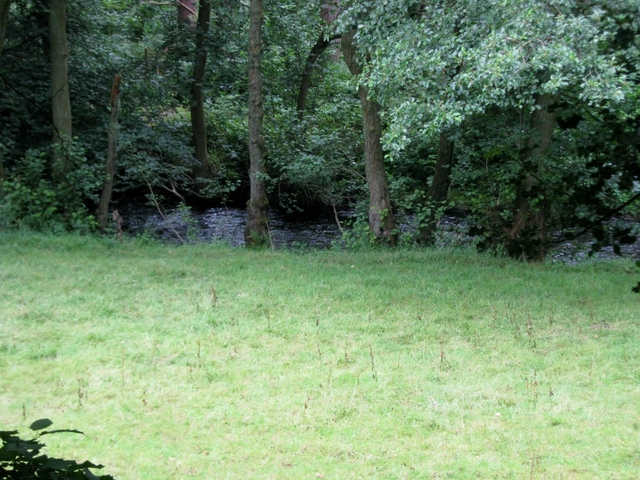
IMG_5512Meadow

A meadow between the track and the river (which is under the trees).

IMG_5513R Goyt

The River Goyt

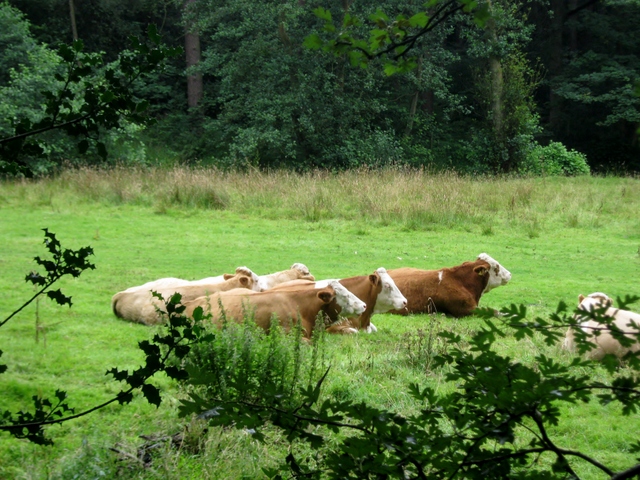
IMG_5515Cattle

Cattle

R. Goyt
R. Goyt
R. Goyt
R. Goyt
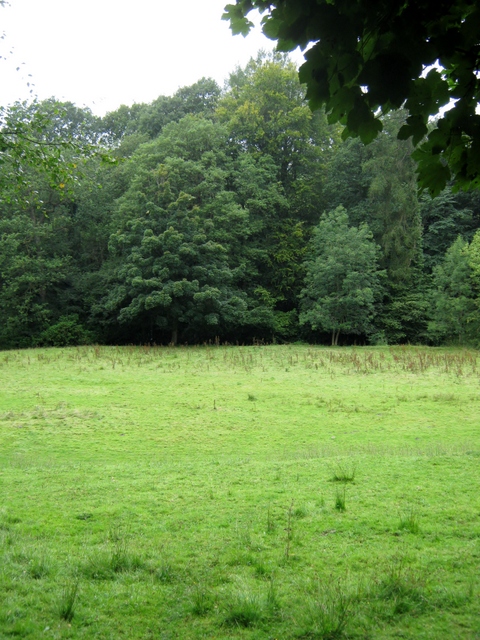
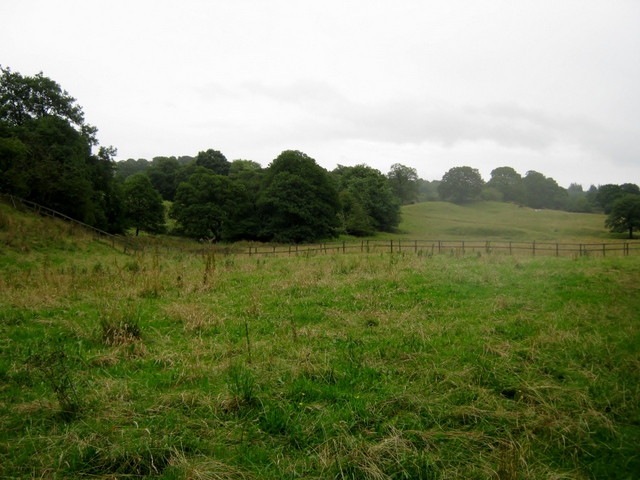
IMG_5517Meadow

The meadows next to the river were pleasant to walk across.  You can see from this photo how gloomy the day was.

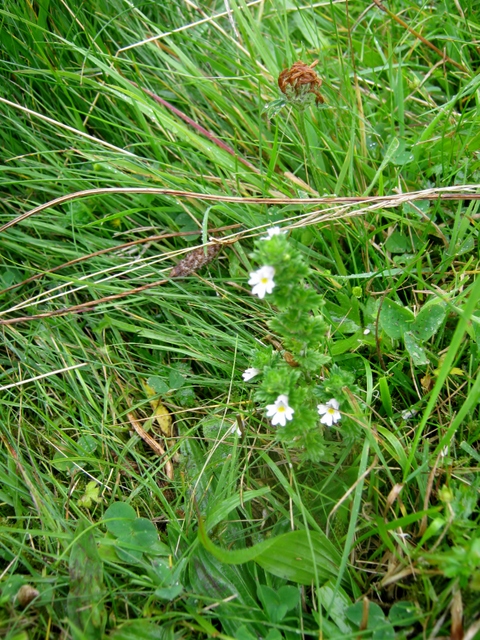
IMG_5519Eyebright

Eyebright (Euphrasia officinalis agg)

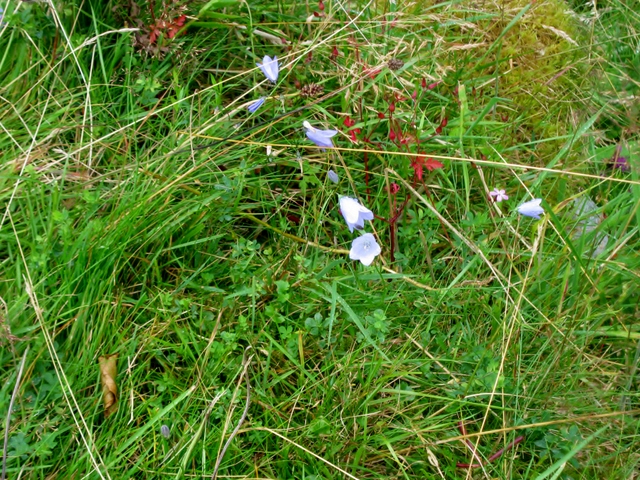
IMG_5521Harebells

Harebells (Campanula rotundifolia)

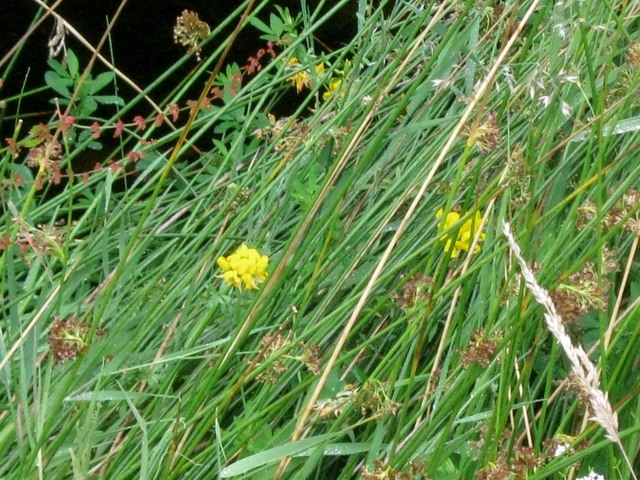
IMG_5522Greater Bird's-foot Trefoil and other plants

Greater Bird’s-foot-trefoil (Lotus pedunculatus)

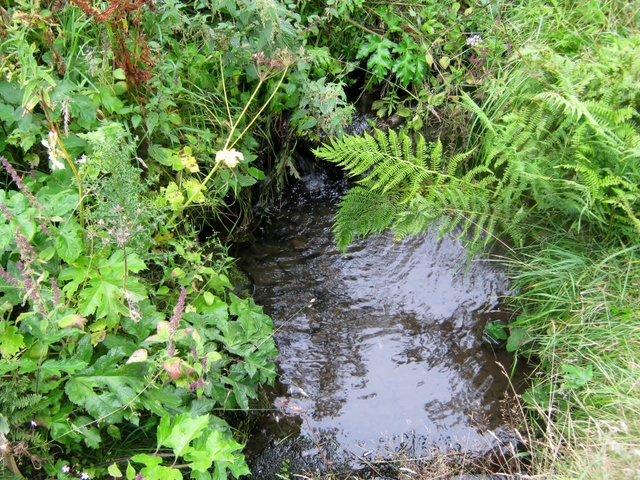
IMG_5523Little cascade

A little cascade

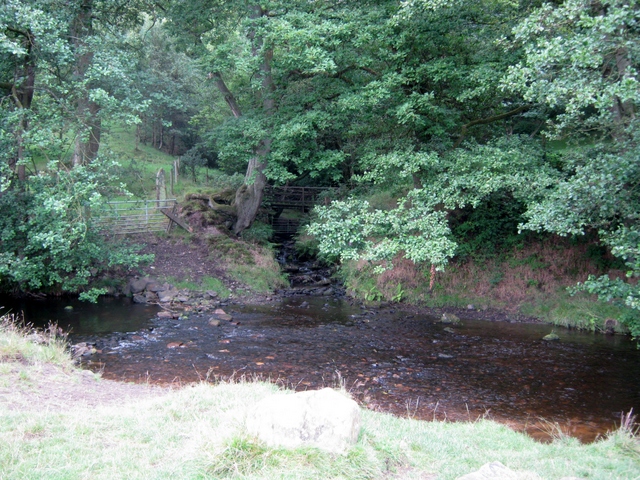
IMG_5524R Goyt

The River Goyt with a wooden bridge just visible under the trees.

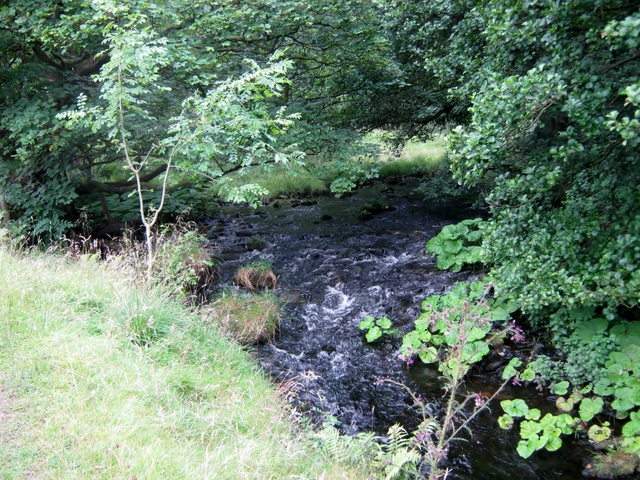
IMG_5525R Goyt

River Goyt

IMG_5527Wild Rhubarb

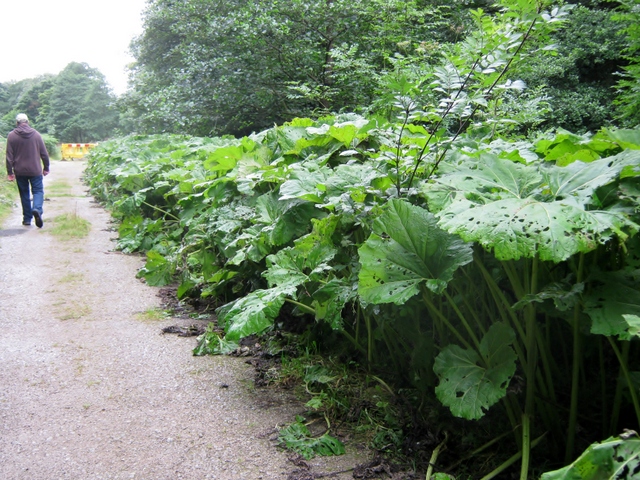
Richard walking along the track next to Wild Rhubarb/Butterbur (Petasites hybridus). It was about as tall as me (5′ 4″)

We were making our way towards some water-works buildings.  I took some photographs of them and some plants I saw but (fortunately for you!) they didn’t come out.  The light wasn’t good enough I think.

We walked up the very steep drive belonging to the waterworks and then, at the top, turned towards the road that crosses Fernilee Reservoir Dam.

IMG_5528Goyt Reservoir

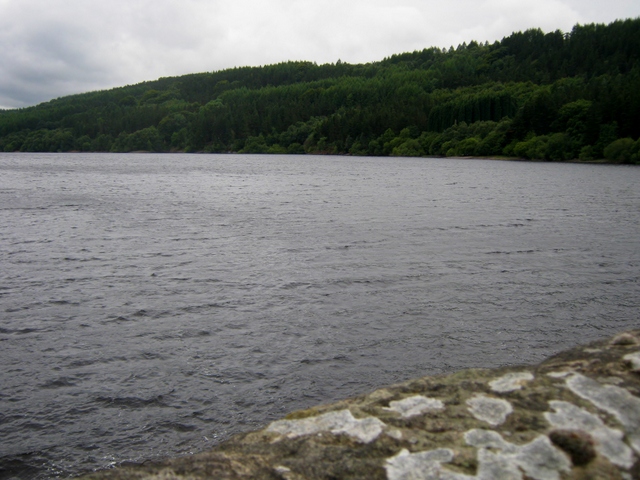
The reservoir

IMG_5530Old Bridge

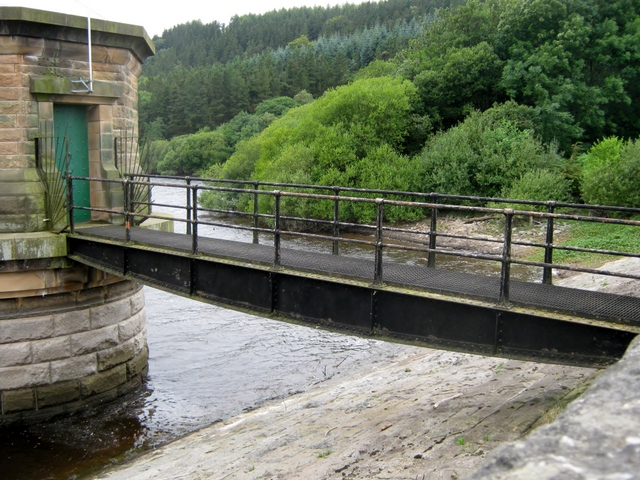
I liked the look of this old bridge from the road to a maintenance building.

Richard told me that this bridge is probably an original one for the dam and therefore quite old.  Bridges aren’t built this way any more.

IMG_5531Goyt Valley

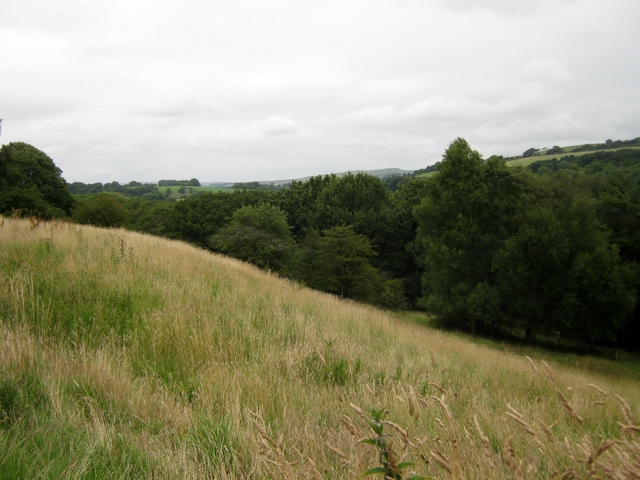
We then walked back along the other side of the river which is down in the trees below.  There were some lovely views from the path.

This slideshow requires JavaScript.

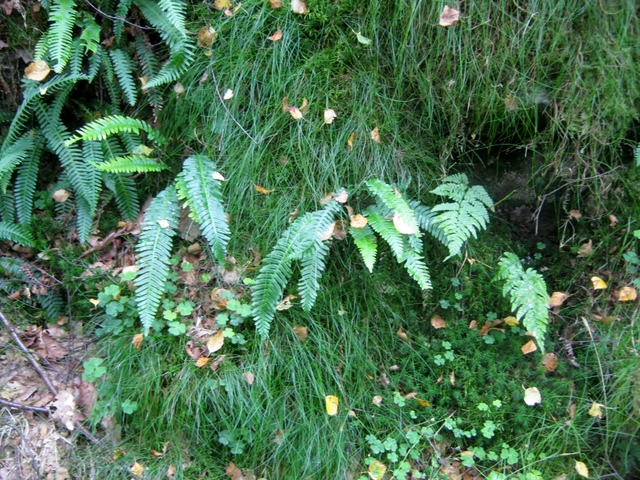
IMG_5536Ferns Moss and grass

A variety of plants and textures

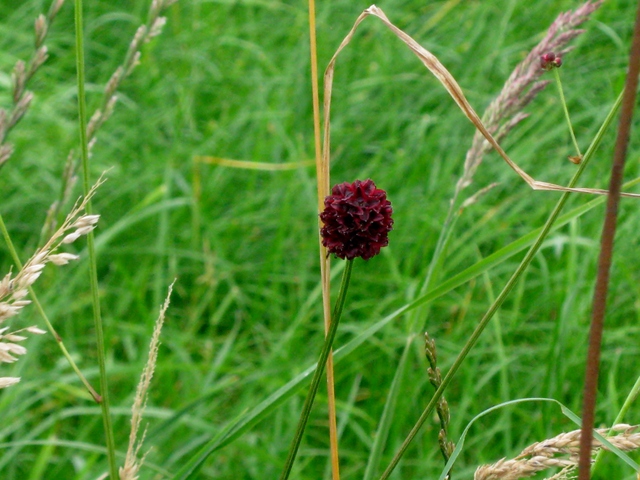
IMG_5539Great Burnet

We saw some beautiful Great Burnet flowers (Sanguisorba officinalis) in the field next to the path.

IMG_5541Great Burnet

Great Burnet – these plants are becoming increasingly rare as water-meadows are drained.

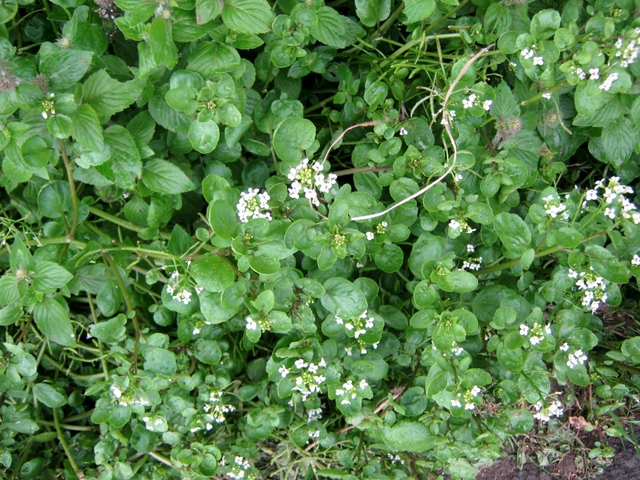
IMG_5542could be water-cress

This could be Water-cress (Rorippa nasturtium-aquaticum)

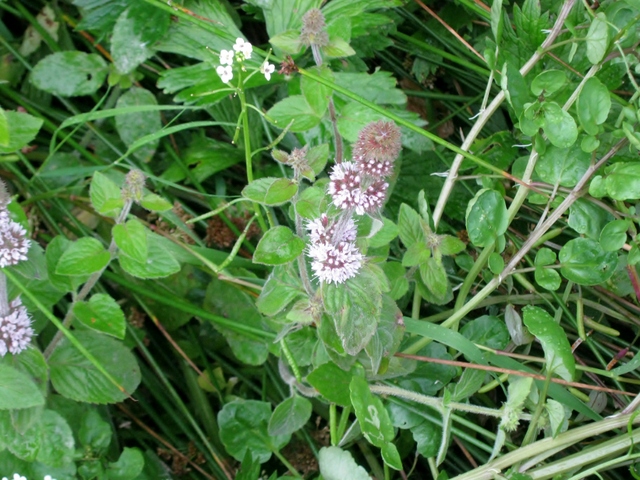
IMG_5543Water mint

Water Mint (Mentha aquatica)

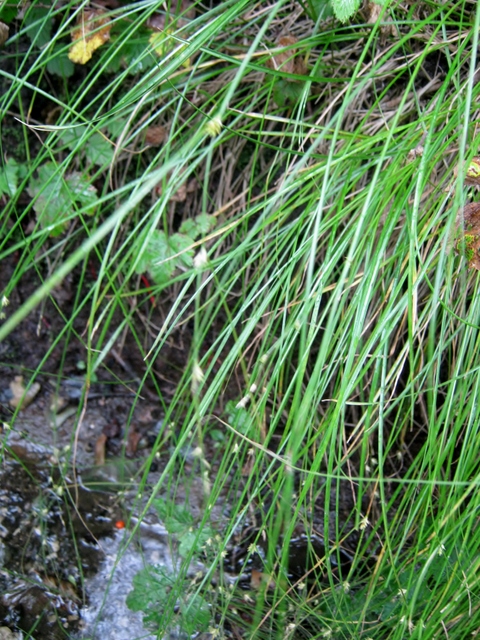
IMG_5545White Beak-sedge

White Beak-sedge (Rhynchospora alba)

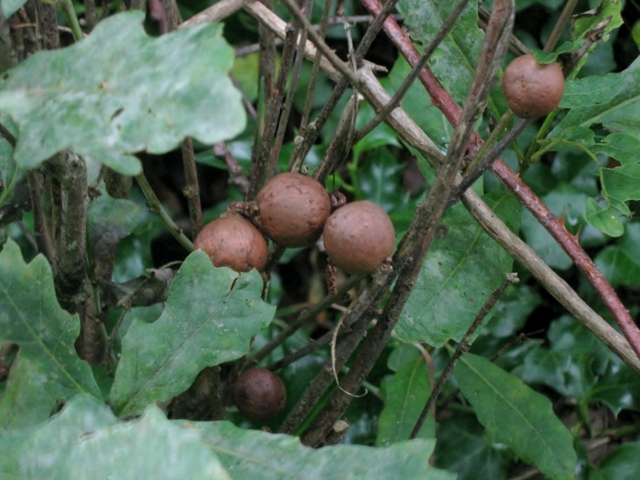
IMG_5546Oak galls

Marble Galls on Oak.

Sheep
Sheep
Sheep
Sheep
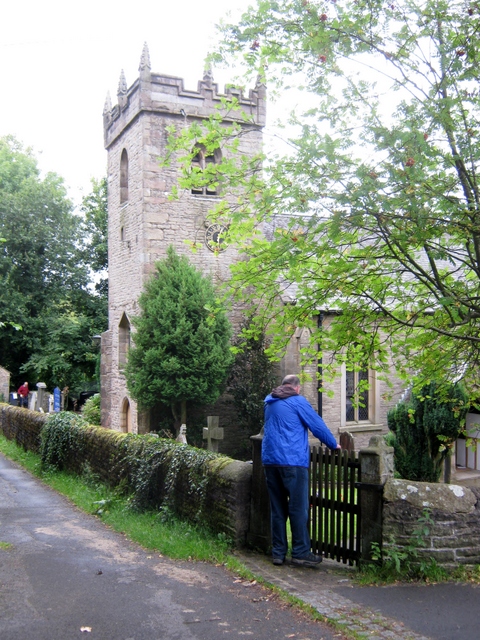
IMG_5549Church

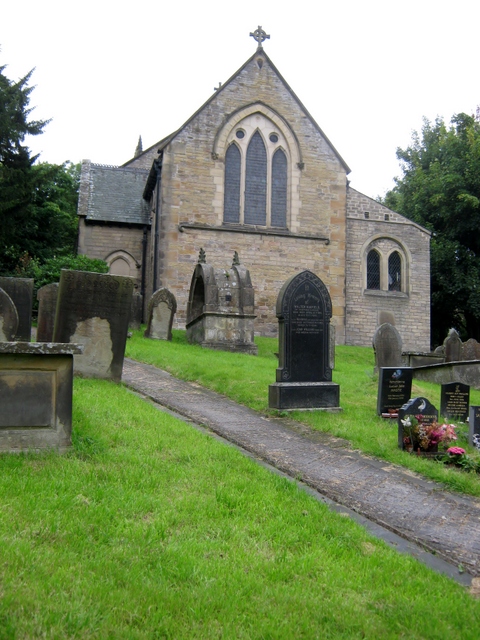
We eventually got to the hamlet of Taxal where we had a look at the church dedicated to St James.

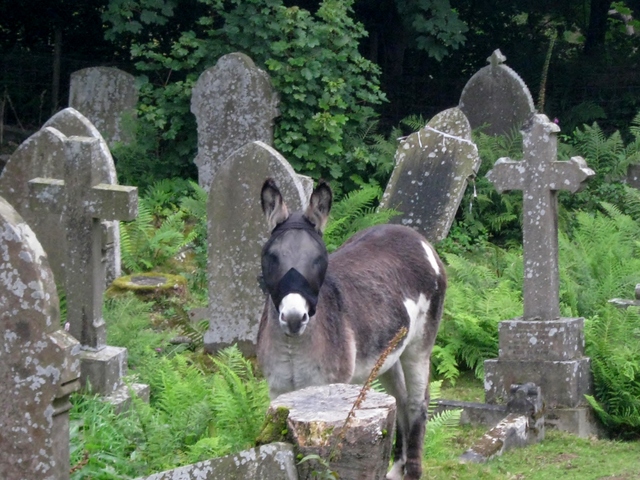
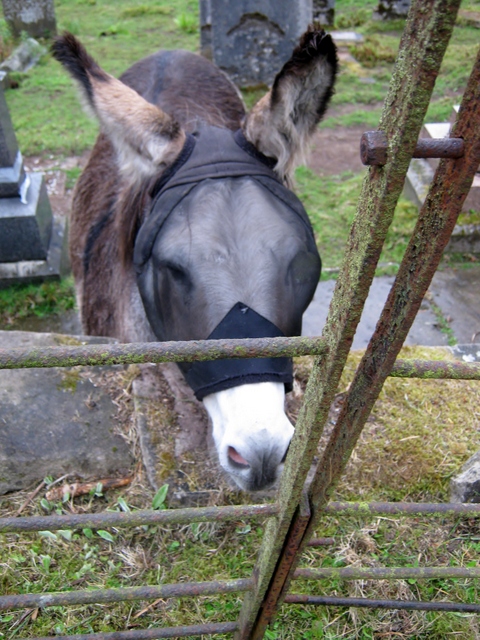
IMG_5550Donkey

We found a very friendly donkey in the churchyard wearing a rather fetching veil.

This donkey had a job to do – eating its way through all the overgrown grass and plants in the yard.  The veil kept the flies out of its eyes.

IMG_5551Donkey

I like donkeys!

IMG_5552Church

St James’ church

River Goyt
River Goyt
River Goyt
River Goyt
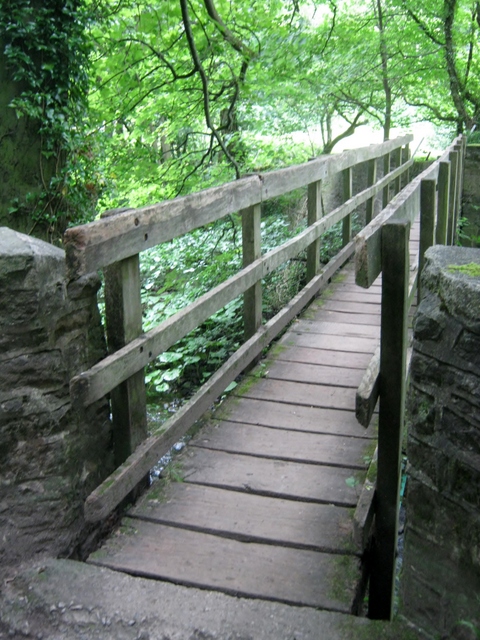
IMG_5556Wooden bridge

We crossed the river by a wooden bridge, walked up the steep path to the lay-by and found our car again.

Thanks for visiting!

Share this:

  • Share on X (Opens in new window) X
  • Share on Reddit (Opens in new window) Reddit
  • Share on Pinterest (Opens in new window) Pinterest
  • Share on Facebook (Opens in new window) Facebook
  • Email a link to a friend (Opens in new window) Email
  • Share on Tumblr (Opens in new window) Tumblr
  • Print (Opens in new window) Print
  • Share on Pocket (Opens in new window) Pocket
  • Share on LinkedIn (Opens in new window) LinkedIn
Like Loading...

Peak District Holiday 1st to 9th July. Day 4 Part 2

19 Sun Oct 2014

Posted by Clare Pooley in churches, Rural Diary, Uncategorized

≈ 19 Comments

Tags

ante-room, Bakewell, banqueting hall, chapel, courtyard, Earl's bedroom, fresco seccoes, gardens, great chamber, Haddon Hall, Jane Eyre film-set, kitchen, long gallery, Manners family, Medieval hall, parlour, Renaissance, state bedroom, Tudor hall, Vernon family

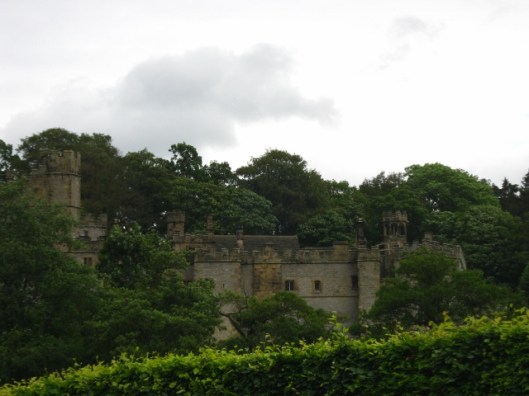
022Haddon Hall (640x480)

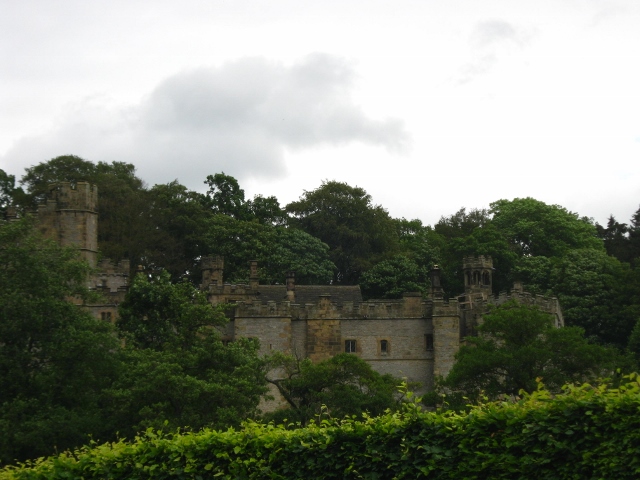
Haddon Hall

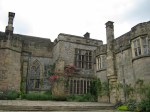
Haddon Hall is about two miles from Bakewell and we were visiting it for the second time.  It is a fortified manor house with Medieval and Tudor architecture and is quite special in that the last building and improvements made to it were done at the end of the 16th century.  The family moved to Belvoir Castle (pronounced ‘beaver’) in Grantham, Leicestershire in 1703, the main home of the Manners family, and left Haddon Hall empty for 200 years.  The 9th Duke and Duchess of Rutland decided at the start of the 20th century to restore the Hall and this work is continuing to this day.  It is now the home of Lord Edward Manners who is the younger brother of the current Duke of Rutland.  He lives in a part of the Hall which is not open to the public.
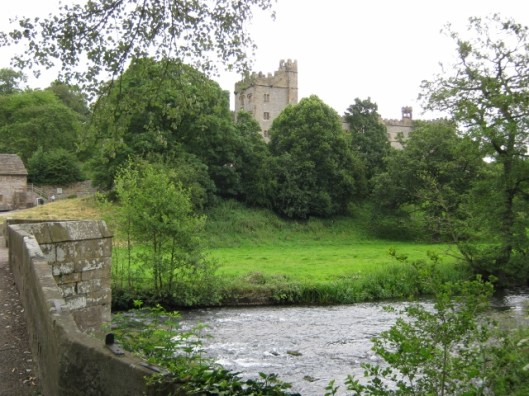
025H H from bridge over R Wye (640x480)

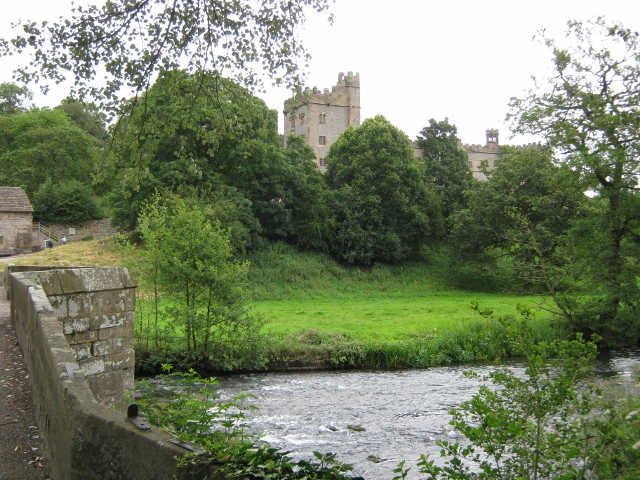
Haddon Hall from the bridge over the R. Wye
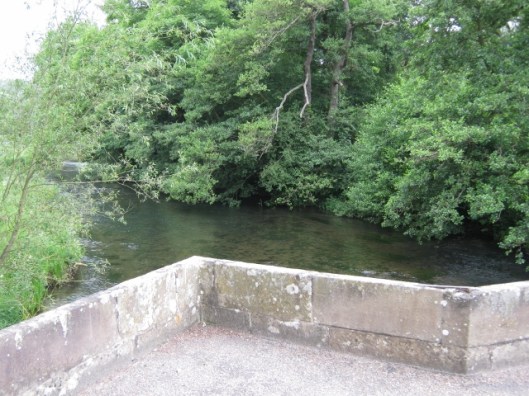
026Parapet passing place on bridge (640x480)

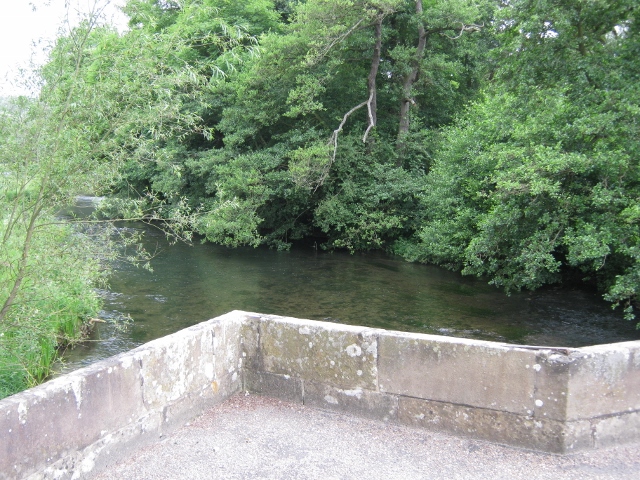
A view of the R. Wye from the bridge. These little triangular areas at the side of the bridge are safe places to stand when there is traffic on the bridge. If you look at Bakewell Bridge in my previous post you’ll see the same thing there.

The Hall has been used many times by film companies so some of you will have seen it already.  A couple of the most famous films in which it is featured are ‘Jane Eyre’ with Mia Wasikowska and Michael Fassbender (2011) and Franco Zefferelli’s version of ‘Jane Eyre’ with Charlotte Gainsbourg and William Hurt (1994).  It had a cameo role in ‘Pride and Prejudice’ with Keira Knightley (2004) and also ‘Elizabeth’ with Cate Blanchett (1998).  The BBC’s most recent version of ‘Jane Eyre’ with Ruth Wilson and Toby Stephens (2006) was also filmed here.
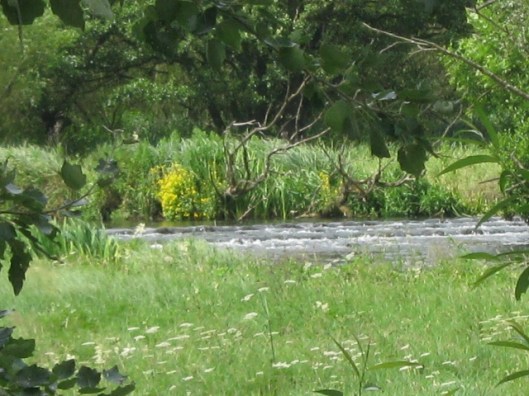
128R Wye (640x480)

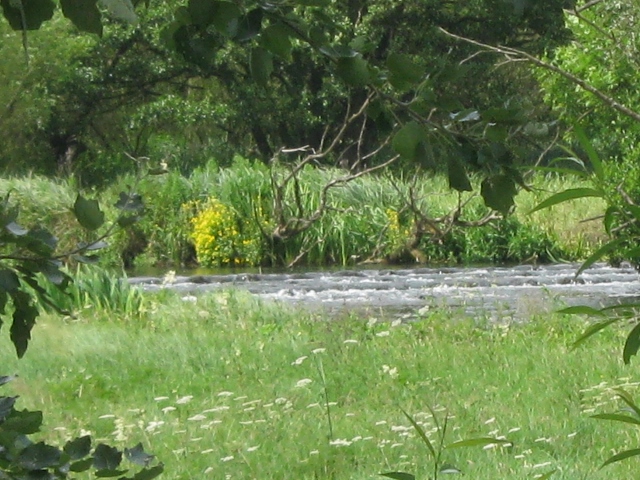
The River Wye

023Gate house (640x480)

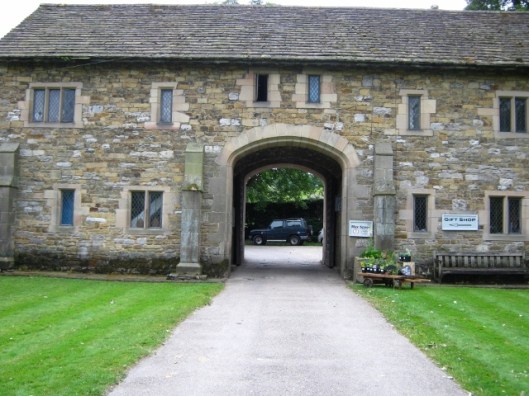
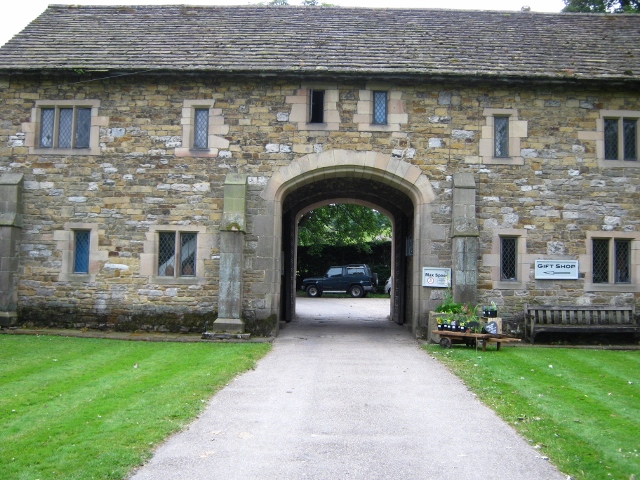
Looking back at the Gate House through which we had just passed
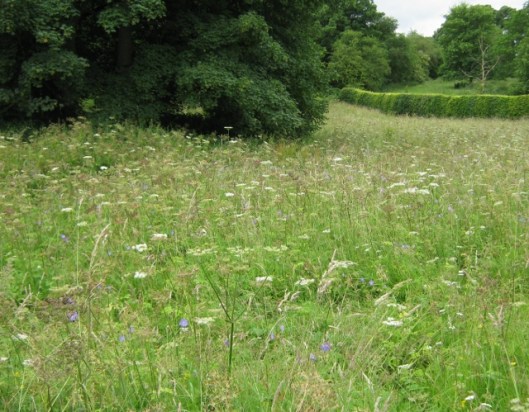
024Wildflower meadow (640x499)

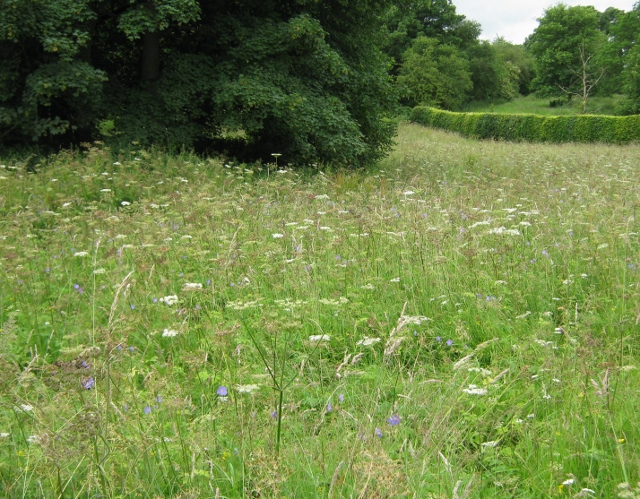
A wildflower meadow on the approach to the Hall

Topiary in the garden next to the old stables
More topiary

These topiary yew trees are clipped into the shapes of a boar’s head and a peacock, the arms of the Vernon and Manners families to whom the Hall still belongs.  The Hall passed to the Manners family in the 16th century as the heir to the estate, Dorothy Vernon, had married Sir John Manners.  There is a story that Dorothy and John eloped in 1563 which may be true but Sir John Manners came of a rich and noble local family and I cannot think that Dorothy’s father would have objected to him.
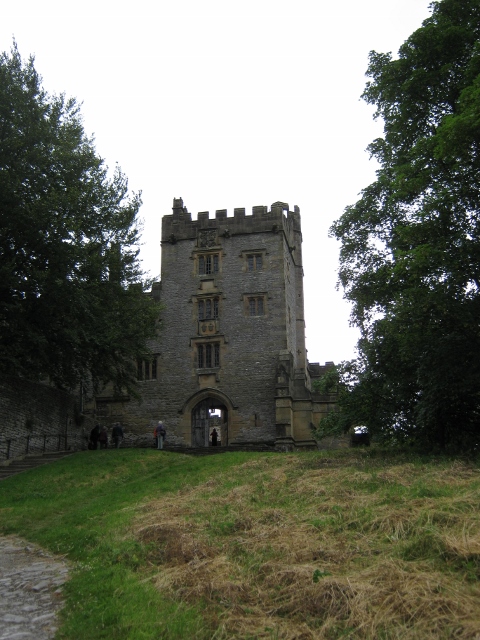
027NW tower (480x640)

The North-West Tower

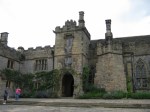
The path ascends to the North-West Tower which became the main entrance to the hall in the 16th century.  Going through the entrance we found ourselves in the Lower Courtyard.

Looking back to the entrance through the NW Tower
Rooms off the Courtyard
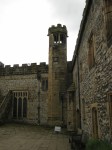
Octagonal bell tower next to the chapel

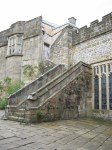
Stairs up to the oldest part of the Hall – King John’s Wall
Rooms off the Courtyard
Entrance to the Hall from the Courtyard

Richard de Vernon, in 1193, was granted a licence to build a wall of not more than 12 feet in height to enclose the Chapel, the Watch Tower and some timber buildings.  12 foot walls were only sufficient to deter marauders and would have proved no barrier to a full-blown attack.  The man granting the licence was John, Count of Mortain who was to become King John four years later on the death of his brother, Richard I ‘the Lionheart’.  This wall is still standing and has been incorporated into the Hall buildings.

17th century doorway
Gargoyle and lead drain pipes

Gargoyle and lead drain pipes
Battlements were only for show and added in the 14th century

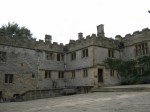
The Courtyard slopes upwards, from the entrance under the tower, to the main buildings.  The Hall evolved over a few hundred years with little or no planning but as it is all built using the same type of material, grey limestone and yellow gritstone, it somehow looks just right.
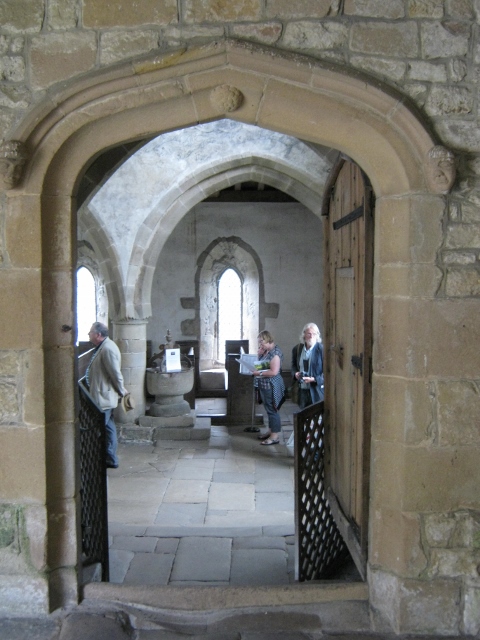
029Entrance to chapel (480x640)

Entrance to the Chapel

The Chapel was one of the first parts of the Hall to be built.  It is dedicated to St Nicholas and is decorated inside with fresco seccoes depicting the life of St Nicholas and of St Anne.  There is a large image of St Christopher the patron saint of travellers and also a picture of three skeletons which were part of a larger painting illustrating a medieval Morality of earthly vanity.

Fresco secco
Fresco secco

St Christopher
Three Skeletons

The frescoes were probably commissioned in the early 15th century when other changes were being carried out.  Fresco seccoes do not last as long as buon frescoes as they are painted onto dry plaster not wet.  They were also damaged during the Reformation.

Stained glass window

As I mentioned, the Hall was left empty for 200 years and in 1828 the faces of the saints in the glass were stolen.  A reward of one hundred guineas was offered for their return but to no avail.

The chapel is filled with wonderful things – a musician’s gallery, lots of box-pews, a beautiful marble effigy of the 9 year old Lord Haddon who died in 1894, an alabaster reredos.  I found it difficult to photograph the chapel as a whole with my small camera as it was so full of furniture.   There were also a number of people like us wandering about and admiring and they always seemed to be standing in the wrong place!

Alabaster reredos
Stairs to musician’s gallery

Six sided pulpit with box pew in front
Box pew with effigy to Lord Haddon in front

We then crossed the Courtyard and entered through the porch to the Banqueting Hall.
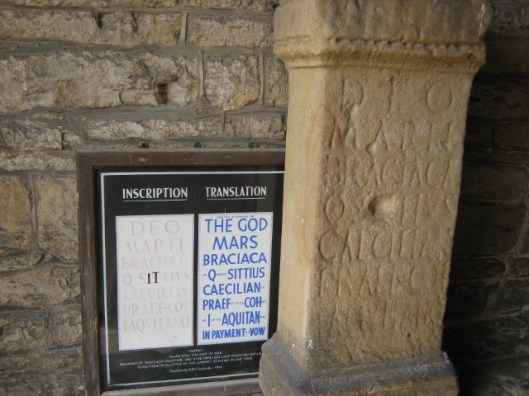
125Roman altar (640x480)

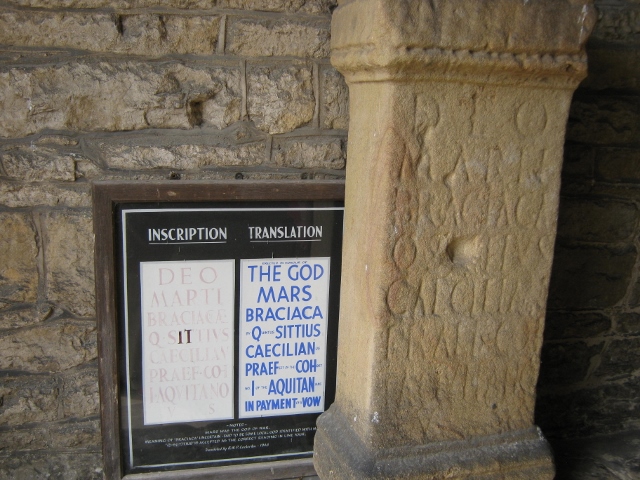
A Roman altar found in the fields of the estate is displayed just inside the porch.
060Passage (480x640)

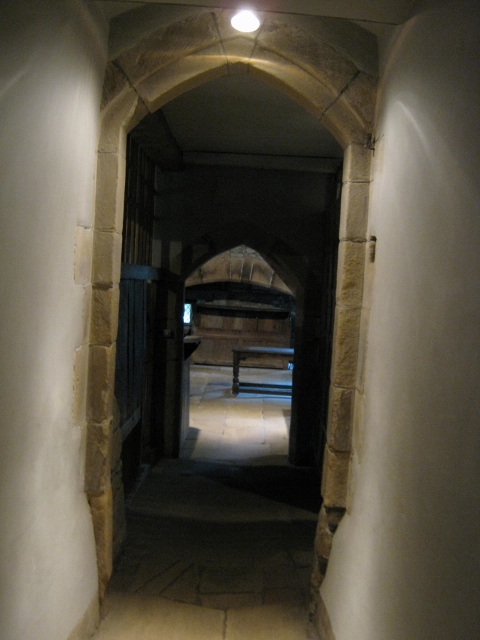
Passageway to kitchen

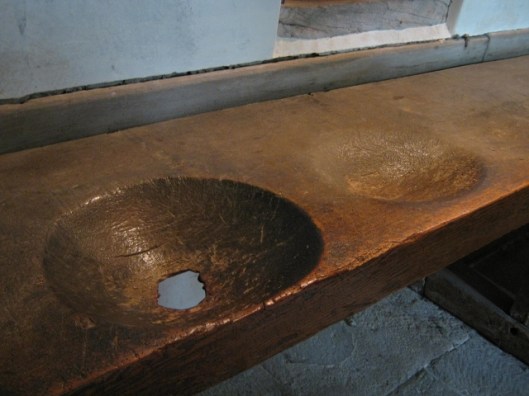
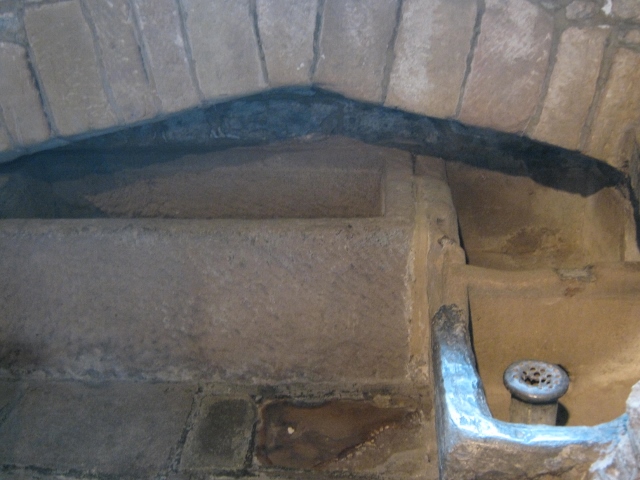
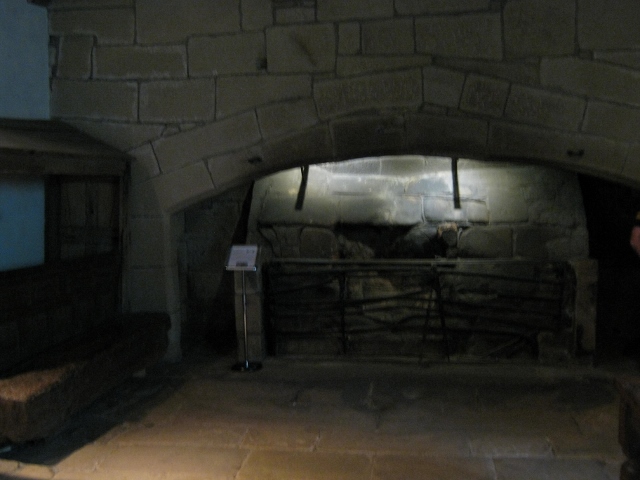
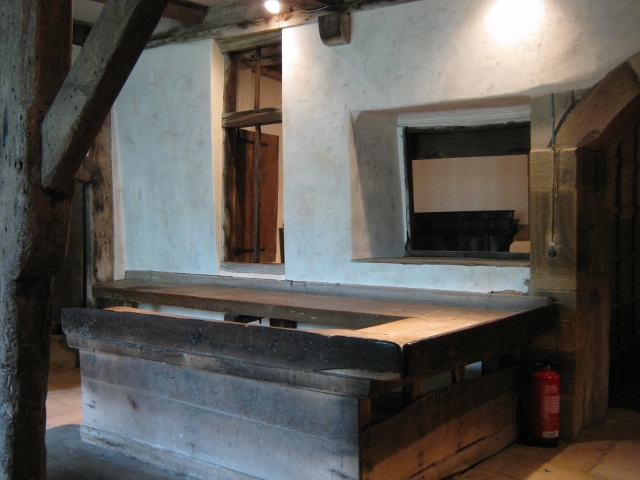
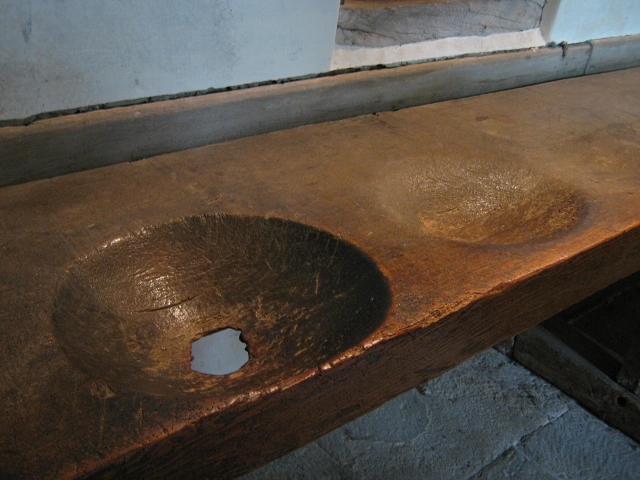
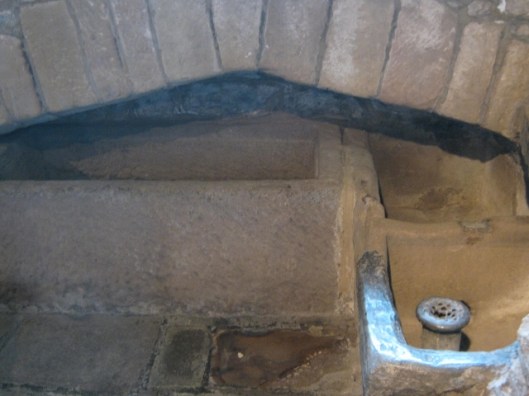
The Kitchen is a fine example of a Tudor kitchen.  Originally it was a separate building to reduce the risk of fire spreading to the main house and the passageway was added much later.  The kitchen is in fact a set of rooms all with different uses.  The main room has a fire heated water boiler and a stone trough fed by the one and only water system to the Hall.   The trough is divided into three to hold water of varying degrees of cleanliness.
064Stone trough (640x480)

Stone trough

074Fire place (640x480)

Kitchen fireplace with a log box on the left and in front of that is a wood block for chopping firewood
062Kitchen (480x640)

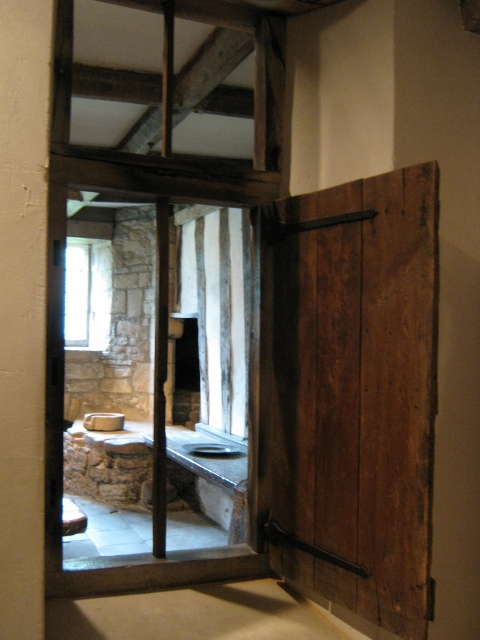
Looking through to the bakery from the kitchen
063Bakery (480x640)

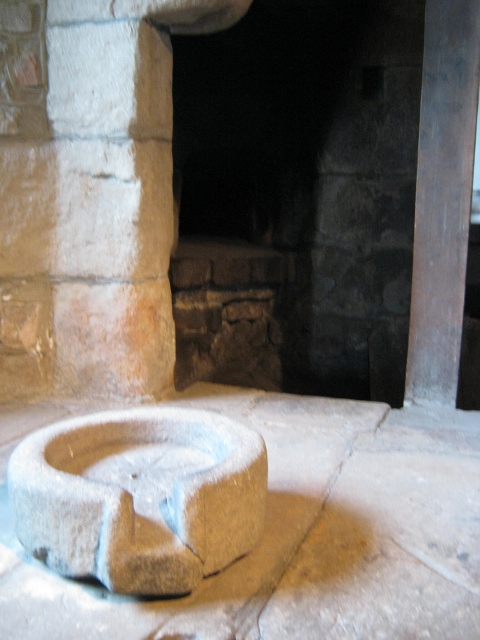
Bakery

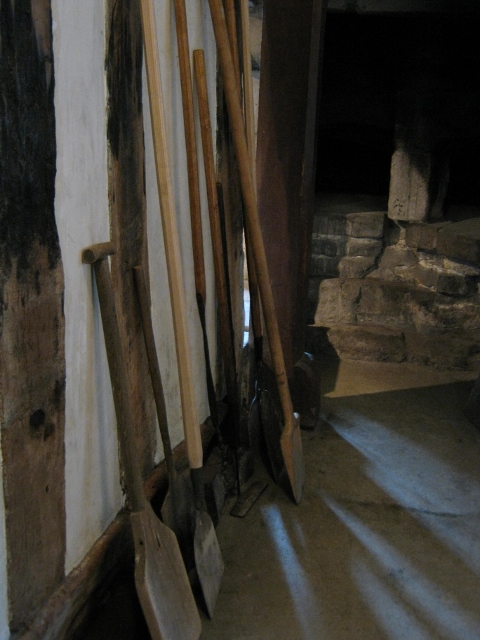
070Paddles (480x640)

A collection of paddles used for putting bread etc into the ovens
071Pastry ovens (480x640)

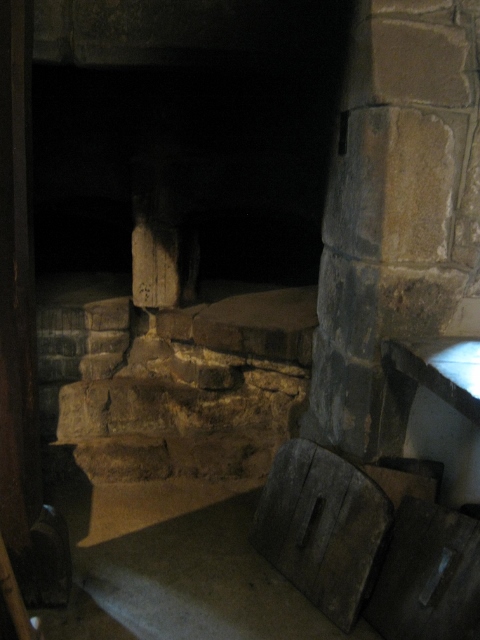
Pastry ovens

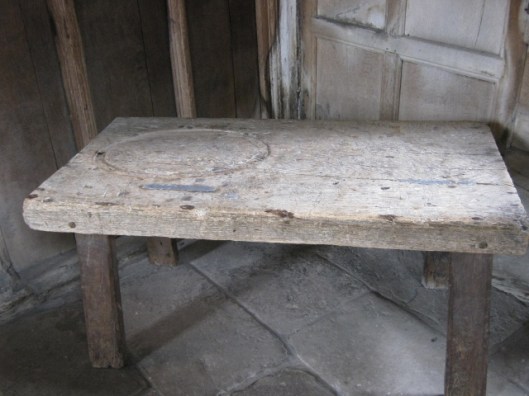
065Carving table (640x480)

Carving table

067Food preparation table (640x480)

Food preparation table

076Carving table (640x480)

Another carving table

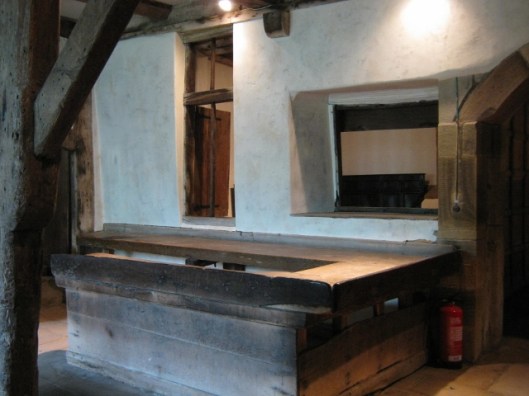
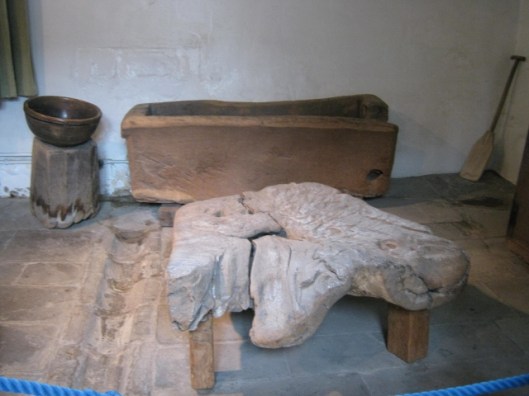
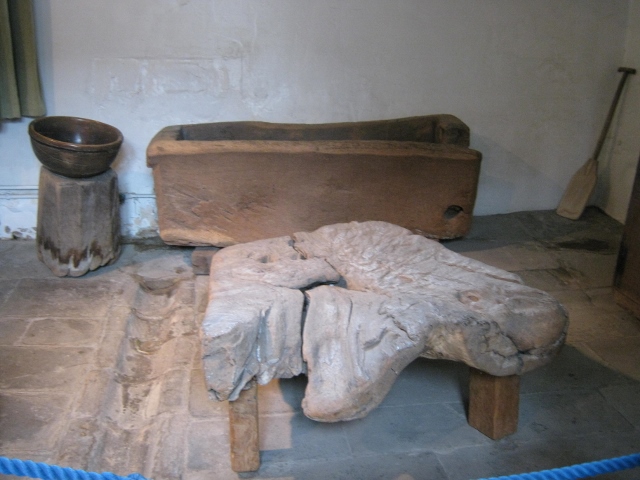
069Butchery (640x480)

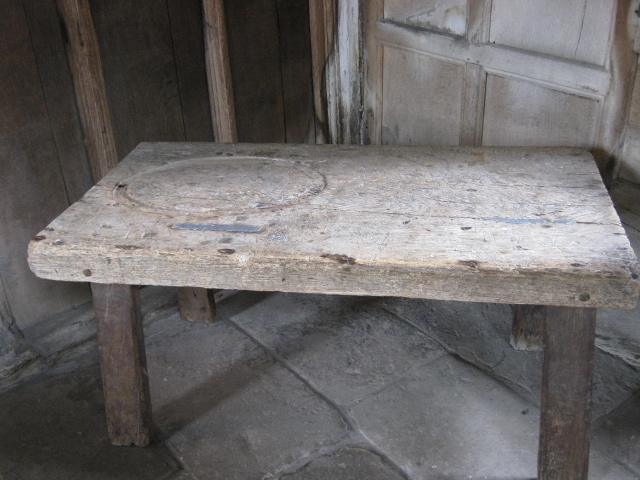
Butchery. The odd object in the foreground is a 15th century oak block on three short legs that was used for jointing meat. The object behind is a salting trough.
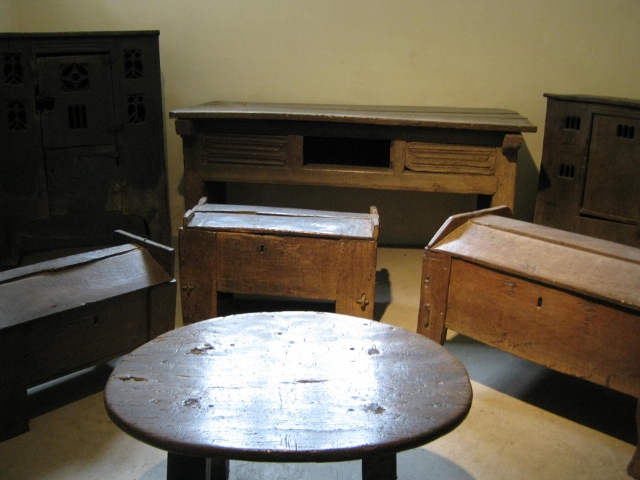
068Dole cupboards (640x480)

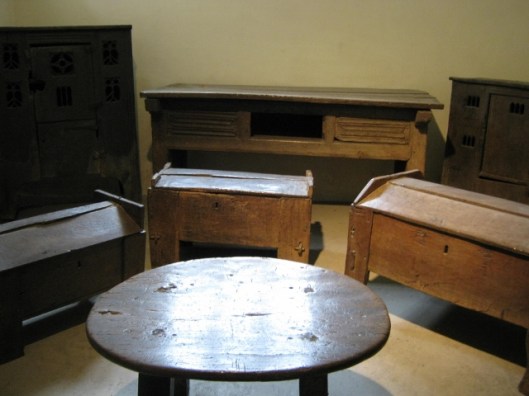
A collection of ‘dole’ cupboards and hutches or meal arks are in the original Milk Larder

‘Dole’ cupboards were put outside houses like Haddon Hall for passing traders or Estate workers and filled with food and left-overs from the kitchen.  Most ‘dole’ cupboards haven’t survived as they were exposed to the elements so these are very rare.  The ‘dole’ cupboards have ornate panels in their doors.  Hutches or meal arks were used for the storage of grain or bread.  These are the smaller chest-shaped boxes.  The table (centre back) is a 15th century oak side-table or buffet.
072Scorch marks (480x640)

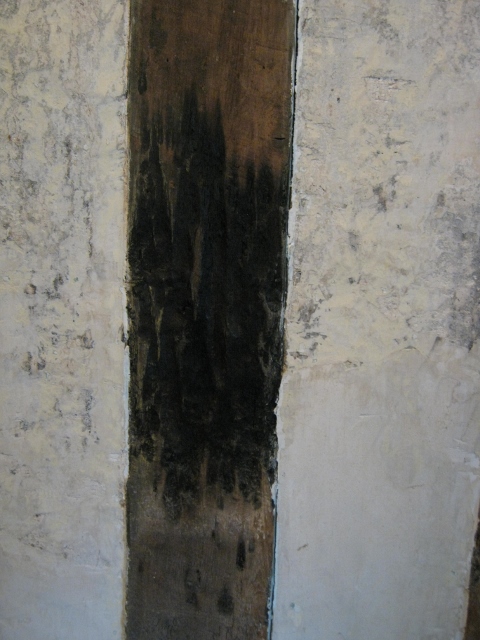
Scorch marks on the timber of the wall show where candles were placed for illumination.
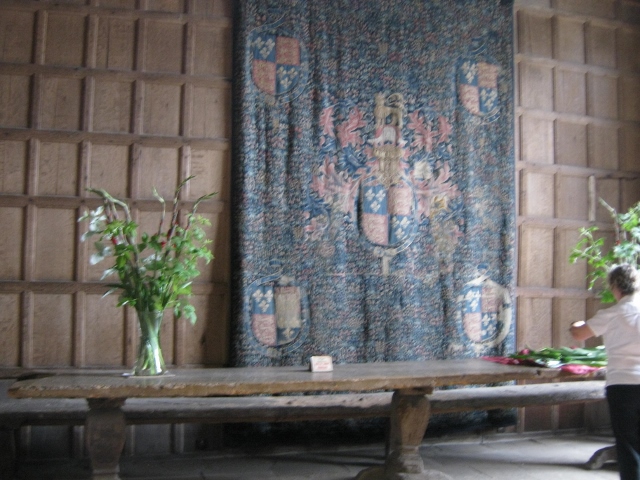
055High table bench & tapestry (640x480)

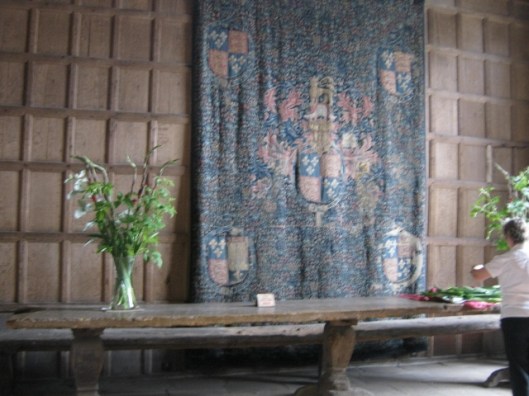
The high table and bench in the Banqueting Hall.

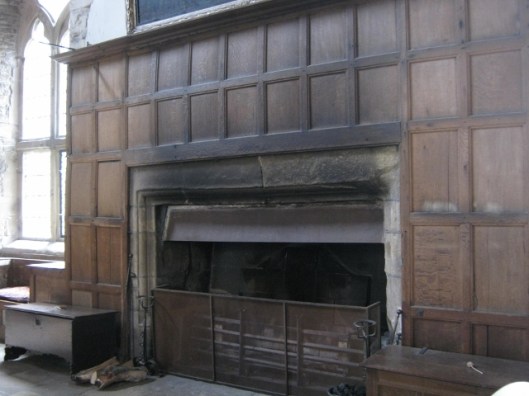
When the hall was built in the 14th century this room would have been the communal living space with a central hearth and vents in the roof to let the smoke out.  It was then known as the Great Hall.  By the beginning of the next century the family would have started to eat, sleep and spend leisure time in their private apartments so the Great Hall became a place for entertaining guests and was re-named the Banqueting Hall.  The walls are panelled which not only helped to insulate the room but was also a status symbol too.  The long table has a top made of two elm planks resting on three square pillars with splayed feet.  The bench is the same age as the table (c.1400) and is one plank on square legs.  The table top is not attached to the base which meant that it could be turned over and both sides used.  The bench and table are on a raised platform at one end of the room.  The tapestry behind the table is French and was made during King Edward IV’s reign (1461-1483).  It shows the Royal Arms of England and is supposed to have been presented to the Vernon family by King Henry VIII whose older brother Prince Arthur spent some time at Haddon Hall.
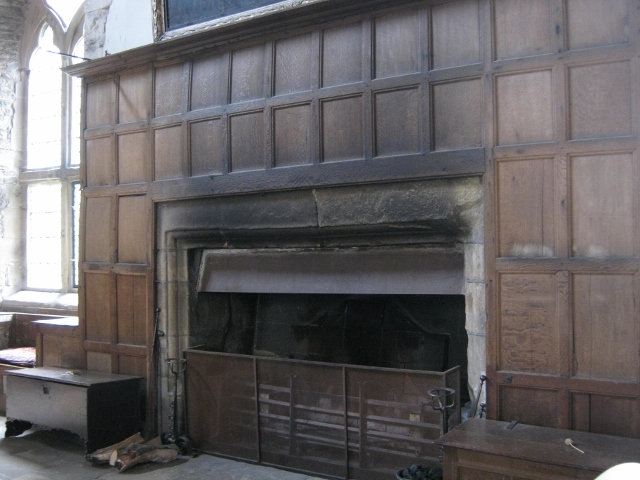
053Fireplace (640x480)

The fireplace. The chimney was added in the mid 15th century.

On entering the Hall you can smell wood smoke even when there is no fire.
058Minstrel's gallery (640x480)

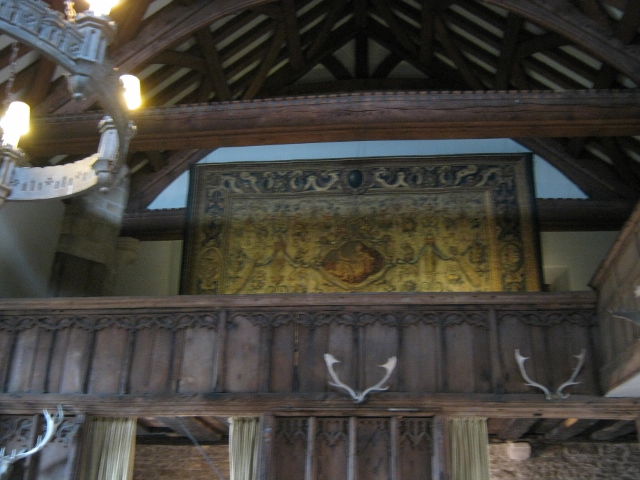
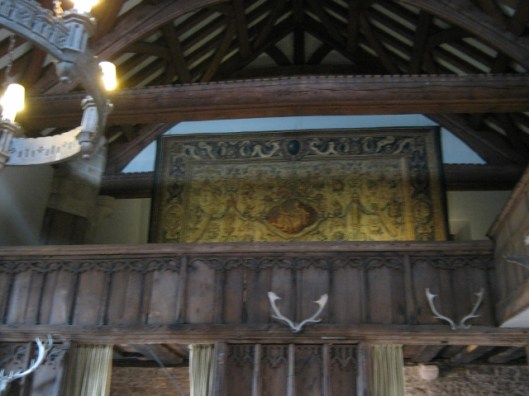
The Minstrel’s Gallery is opposite the High Table

The screen which can be seen at the bottom of the photo is 14th century and is a fine example of Gothic tracery.  Attached to the screen is an iron manacle and lock.  If a guest ‘did not drink fayre’ – either too little or too much – he was punished by having his wrist locked in the manacle and the rest of his drink poured down his sleeve.   The antlers are mid 17th century and the tapestry which hangs above the Minstrel’s Gallery was produced at the beginning of the 17th century.
056Stairs (480x640)

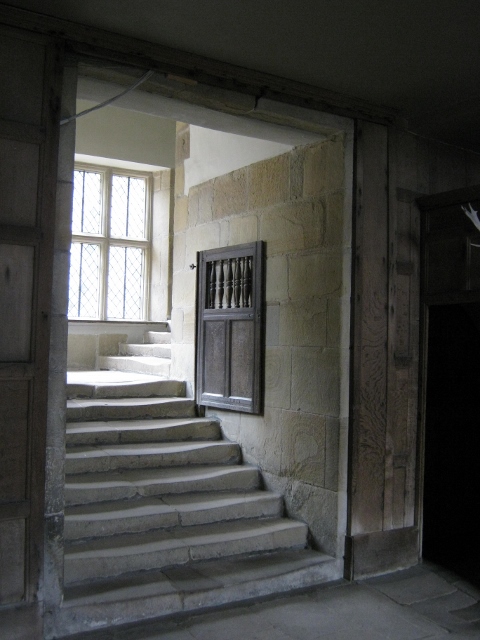
Steps to the upper floor

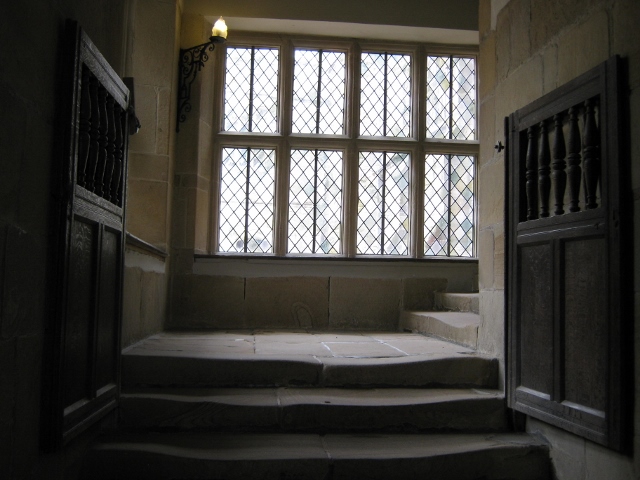
077Stairs (640x480)

Steps showing the 17th century dog gates.

We then went through a door off the Banqueting Hall and entered the Parlour or Dining Room.  This was the room the family used as private quarters and it is still used as a dining room.
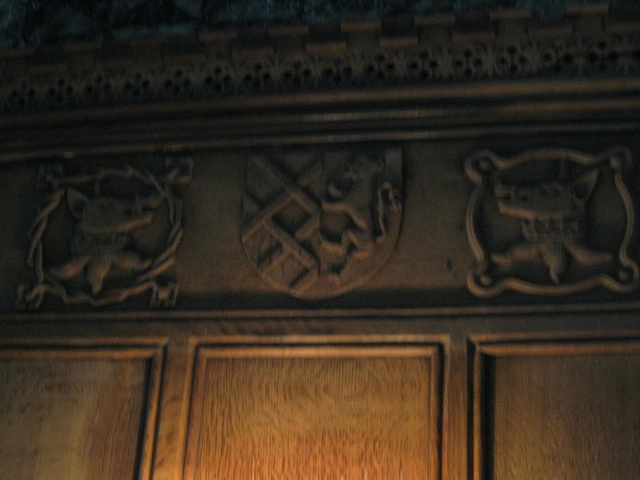
122Wood panelling (640x480)

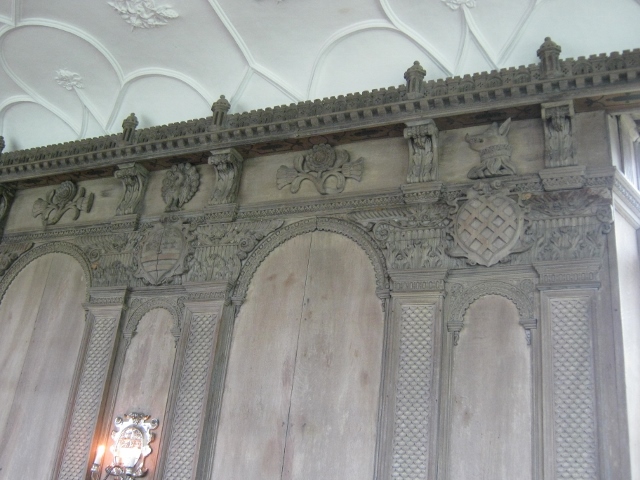
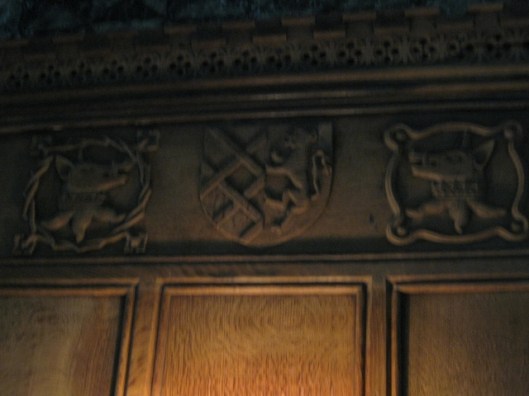
Carved oaken panelling. This is just a part of a frieze around the room showing the armorial shields of the Vernons and the families with whom they had intermarried.
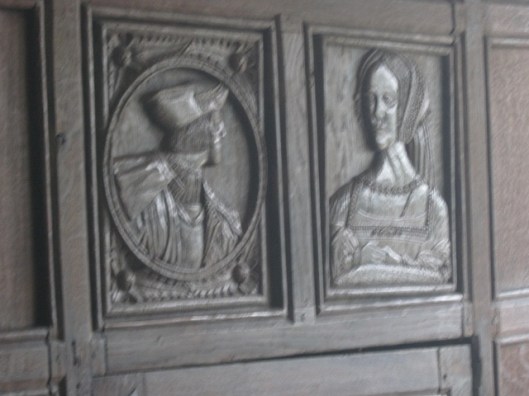
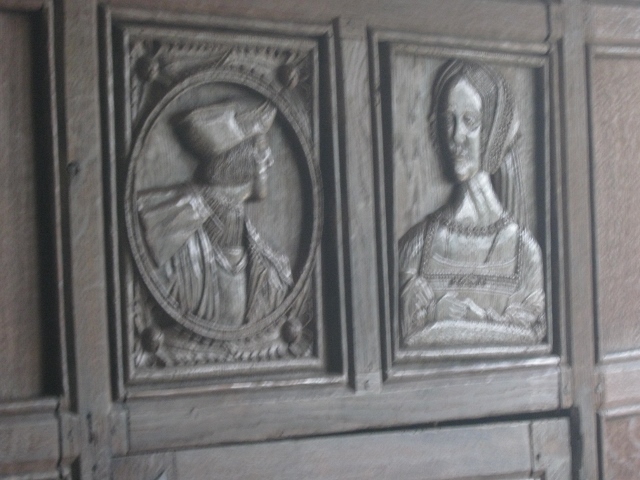
117Carved figures (640x480)

I apologise for the poor quality of this photo but I didn’t wish to leave it out. It is believed that these two figures are those of King Henry VII and his wife Queen Elizabeth of York
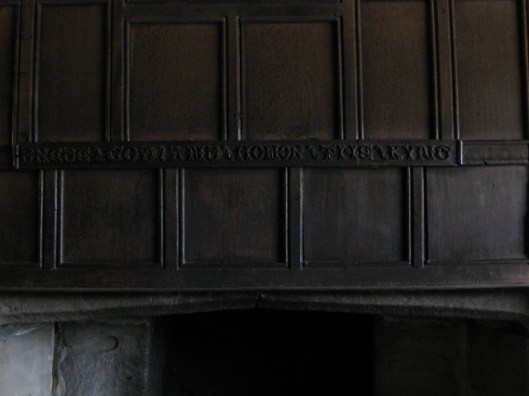
118Carving (640x480)

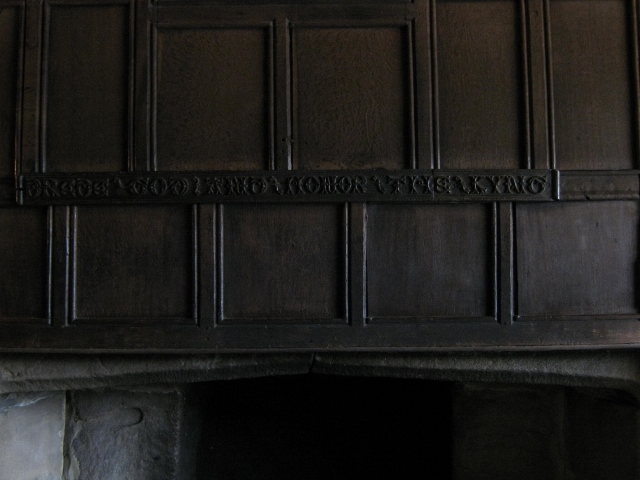
This carving over the fireplace says ‘Drede God and Honour the Kyng’. The text is based on Wycliffe’s translation of the Bible (c.1395) of 1 Peter 2 v.17.
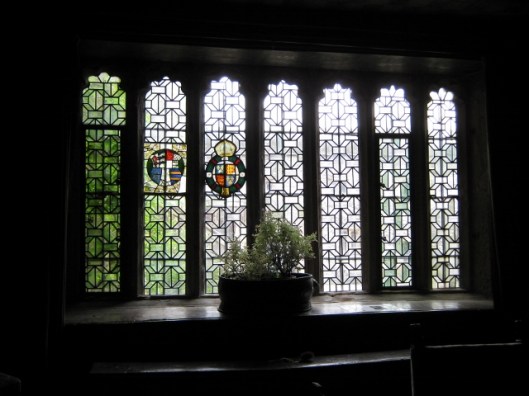
119Window (640x480)

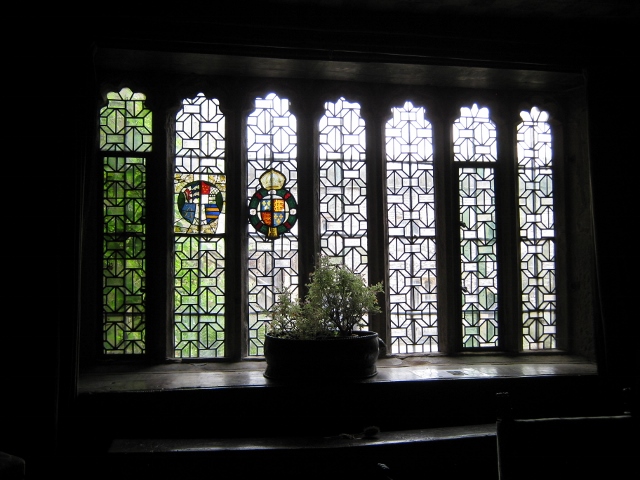
Attractive window in the Parlour

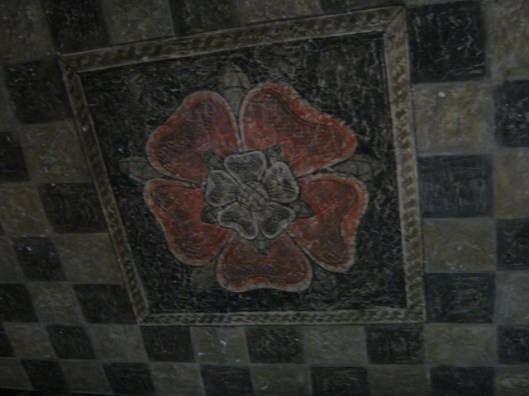
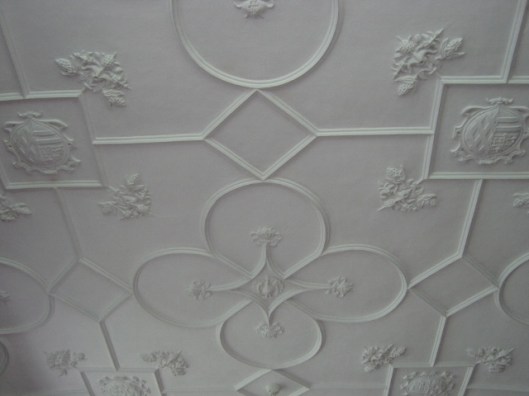
120Ceiling (640x480)

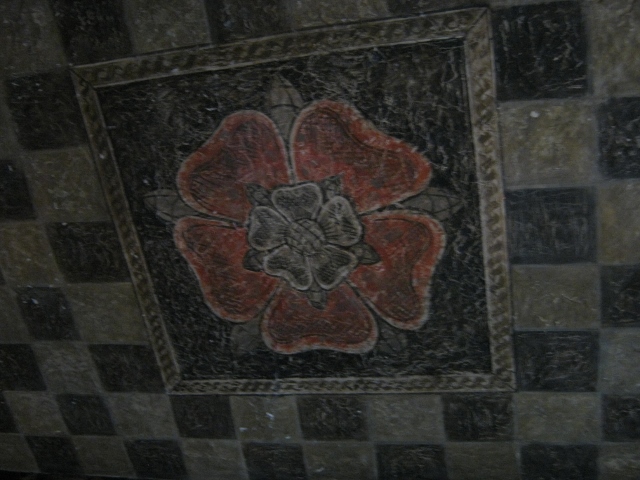
Plaster ceiling installed in the early 1500s. This is a Tudor rose.
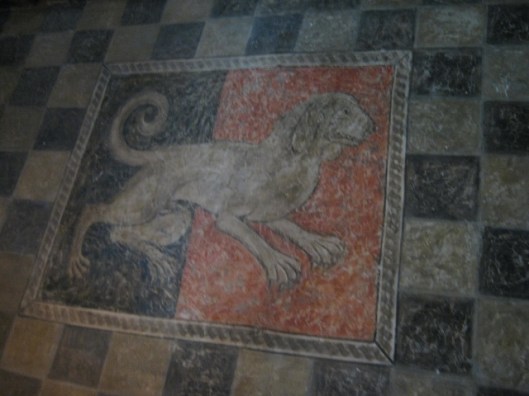
121Ceiling (640x480)

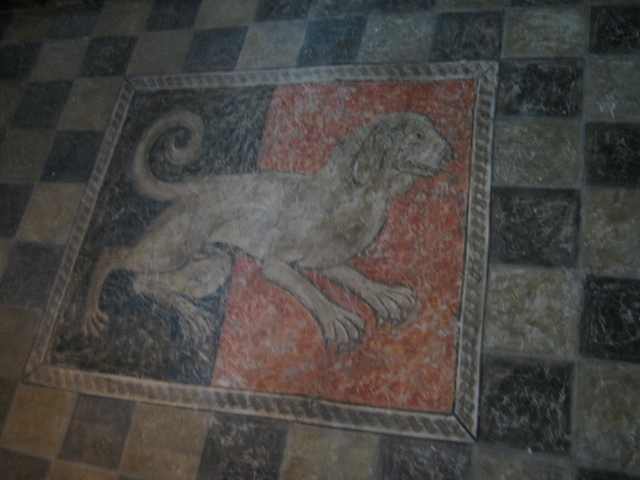
And this is a Talbot dog. Sir Henry Vernon (who installed the ceiling) married Anne Talbot daughter of the Earl of Shrewsbury

We then went up the stairs to the first floor and entered the Great Chamber.  This was re-roofed and remodelled at the same time as the Parlour below.
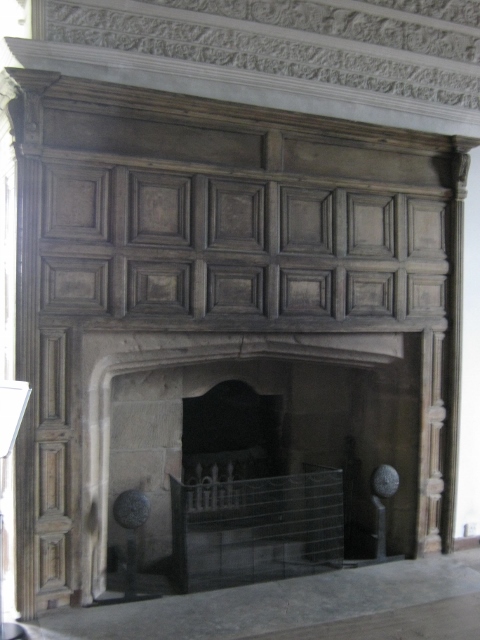
078Fireplace (480x640)

The fireplace. The 17th century oak panelling shows traces of gold and green paint. It must have been beautifully decorated when new.
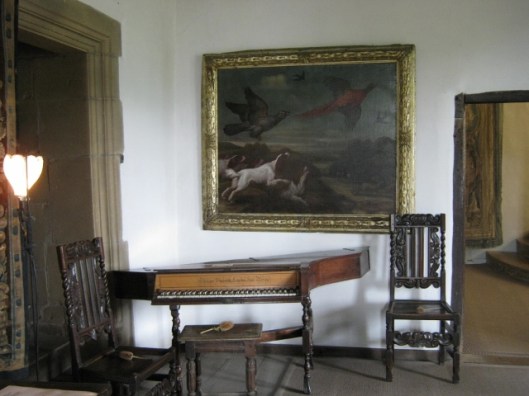
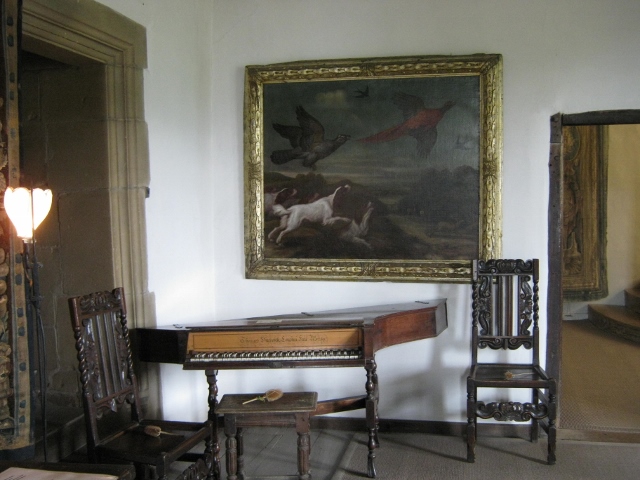
079Furniture (640x480)

Some of the furniture in the room

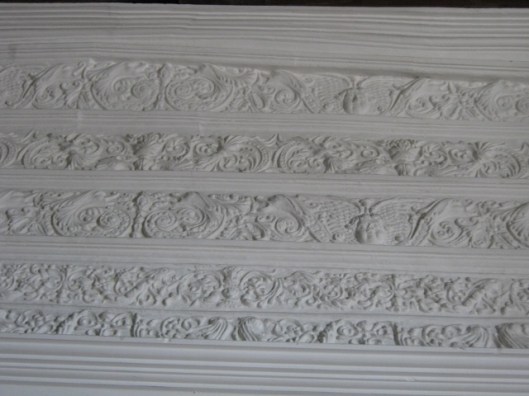
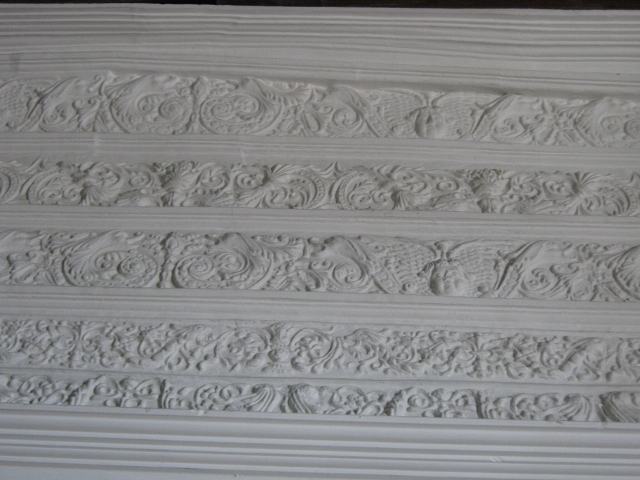
083Frieze (640x480)

This plaster frieze around the room is beautiful and an early example of 17th century English Renaissance decoration
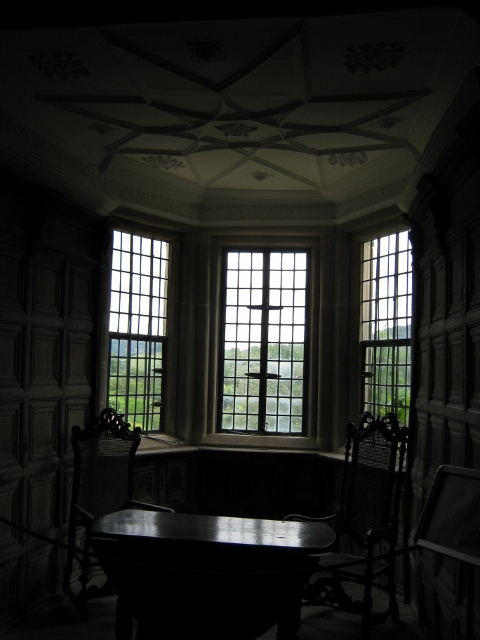
080Bay window (480x640)

The plaster ceiling in this oriel bay window is also of the same date and quality.
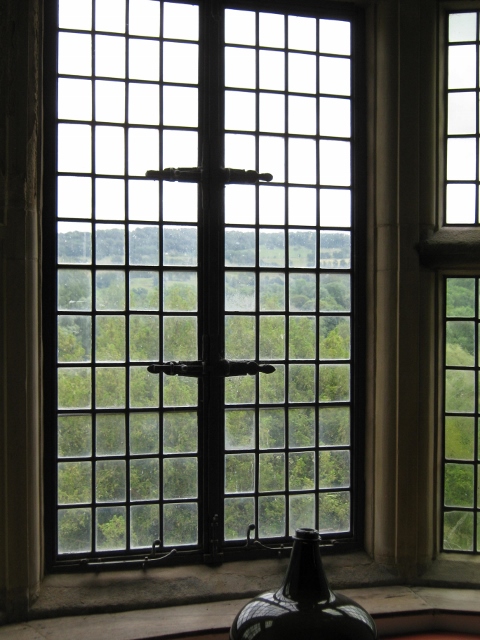
084Window (480x640)

Windows at the opposite end of the room. This room would have originally been the Solar – the private quarters of the family – and Solars were always well provided with windows to make the most of natural light
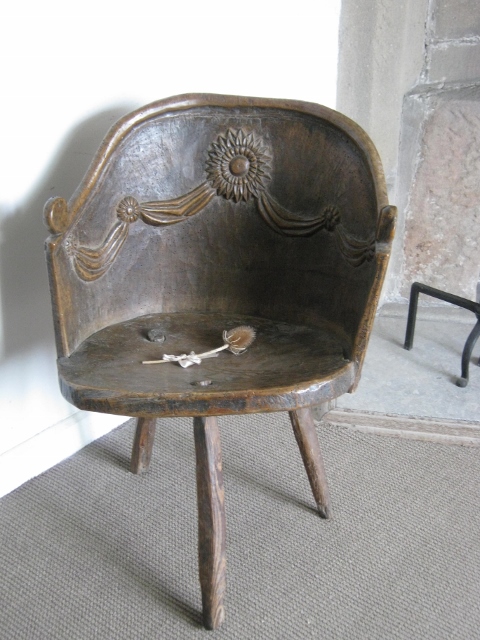
085Chair (480x640)

I loved this chair. The teasel is to stop people from sitting on it. I don’t think it would take the weight of many modern-day adults!
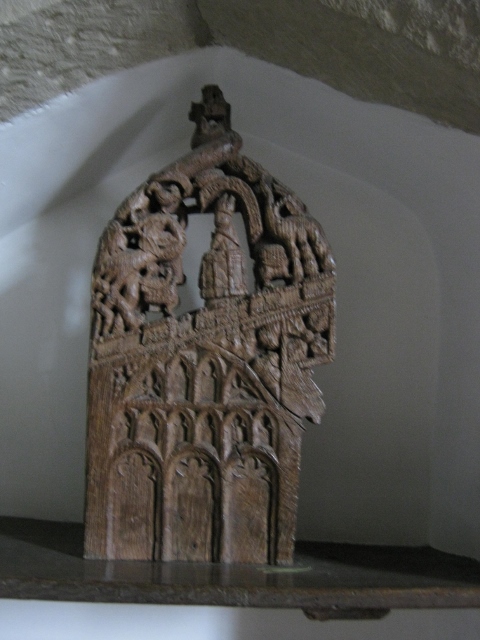
082Pew end (480x640)

This is a 14th century pew end that is displayed in the room. The carving is satirical and depicts the rapacity of the clergy!
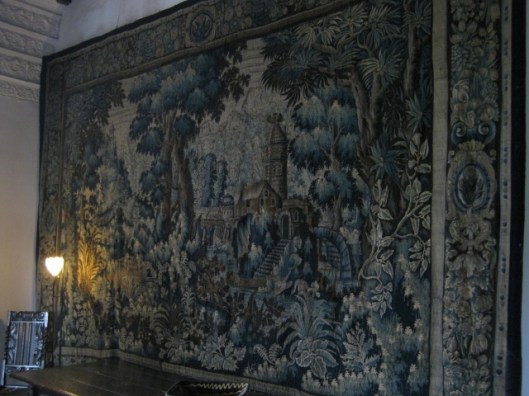
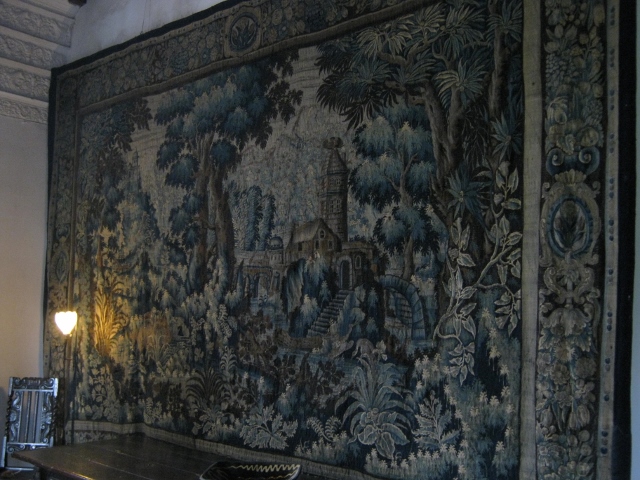
081Tapestry (640x480)

One of the tapestries that hang in the room. They were thought to be Flemish but are now thought to be French and woven in Paris sometime before 1650.

We passed through a small ante-chamber which was once used as a dressing room and entered the Earl’s Apartment.  This was originally two chambers and there are stairs leading to the Chapel below so maybe one of the rooms was used by the clergy.  There are two fireplaces in this room as well.  After the partition was removed it was used as a gallery at first and then when a larger gallery was built the room was used as a bedchamber.
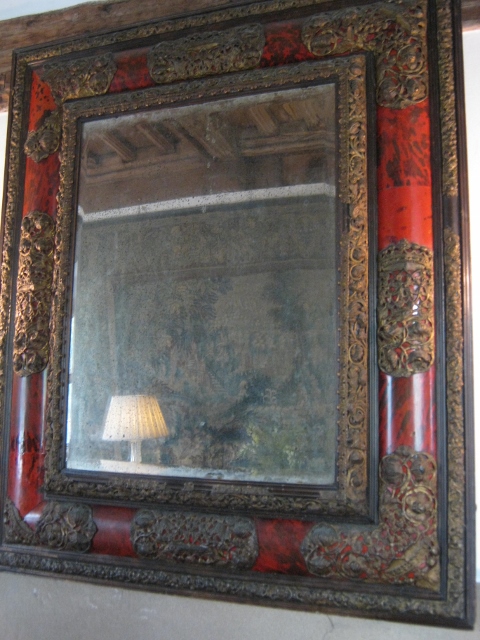
087Mirror (480x640)

A Charles II tortoiseshell looking-glass
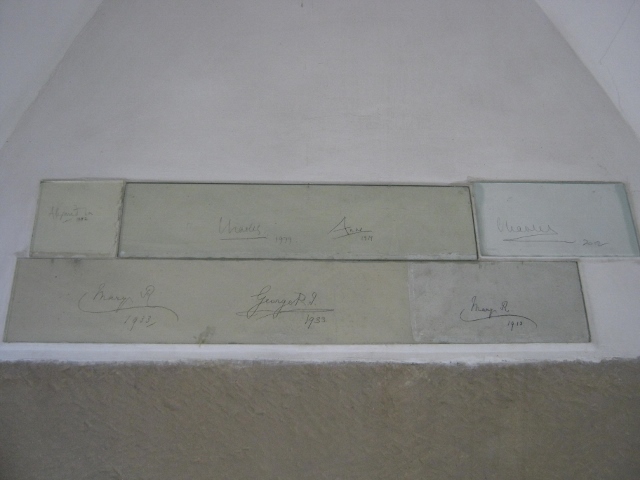
086Signatures (640x480)

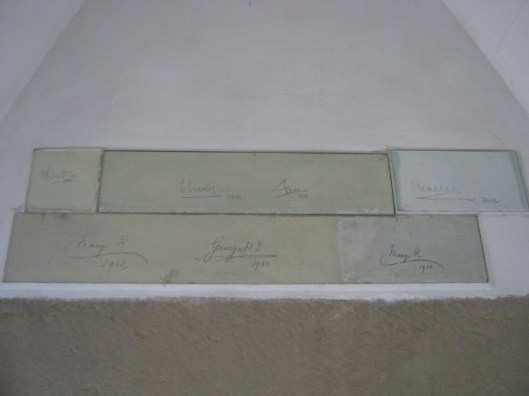
Above the smaller fireplace are signatures in the plaster of visiting members of the Royal Family.  Can you spot Prince Charles’, Princess Anne’s and George V’s signatures?
089Spinning chair (480x640)

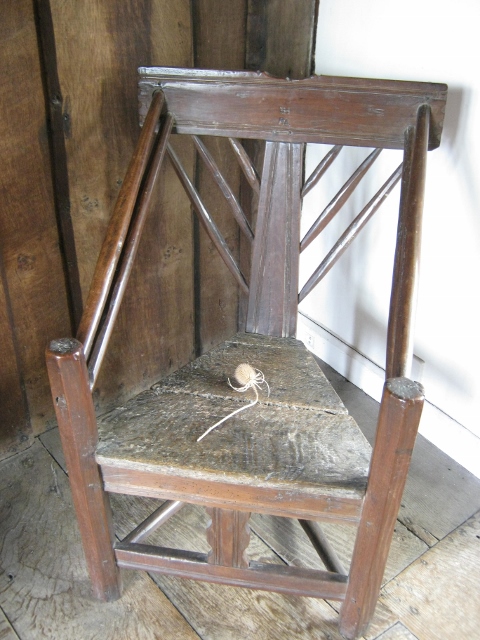
An English early 17th century spinning chair.
090Long gallery (480x640)

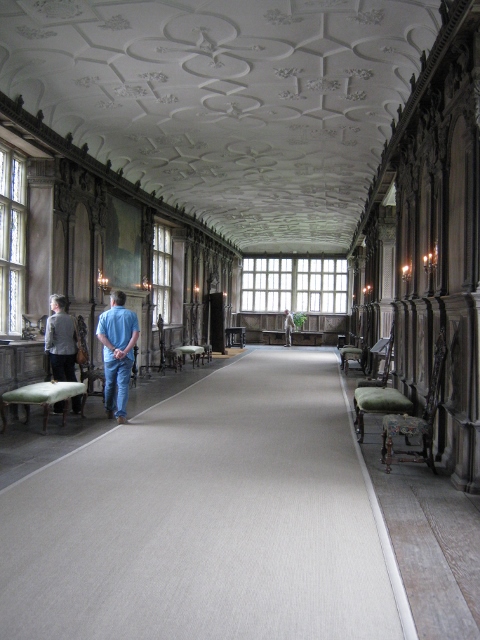
The Long Gallery

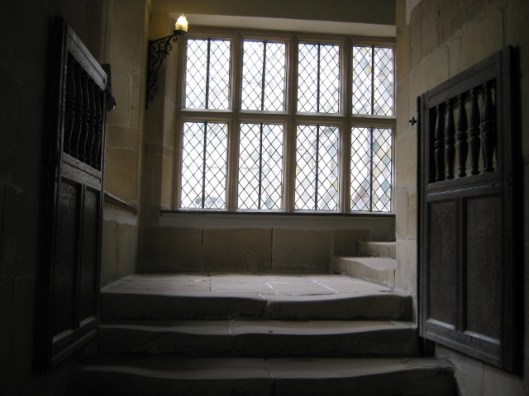
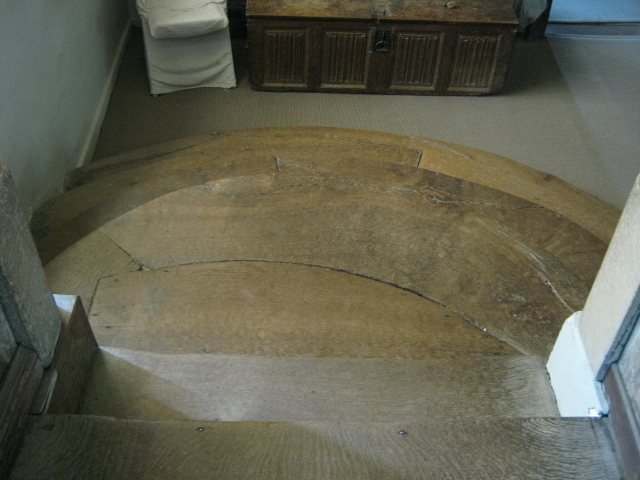
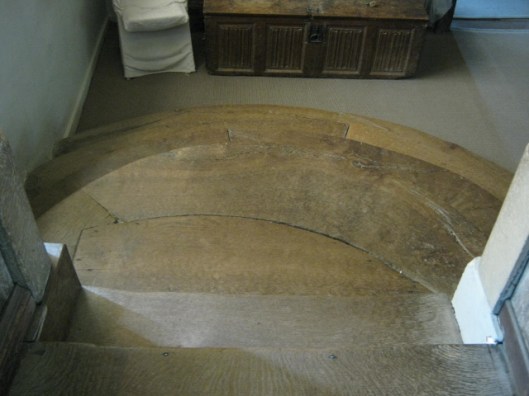
On the opposite side of the landing to the Great Chamber is the Long Gallery.  It is 110 feet long and 17 feet wide.  The entrance to the gallery is up some semi-circular steps said to have been cut from the roots of a single oak.
092Steps (640x480)

Looking down at the steps from inside the Long Gallery
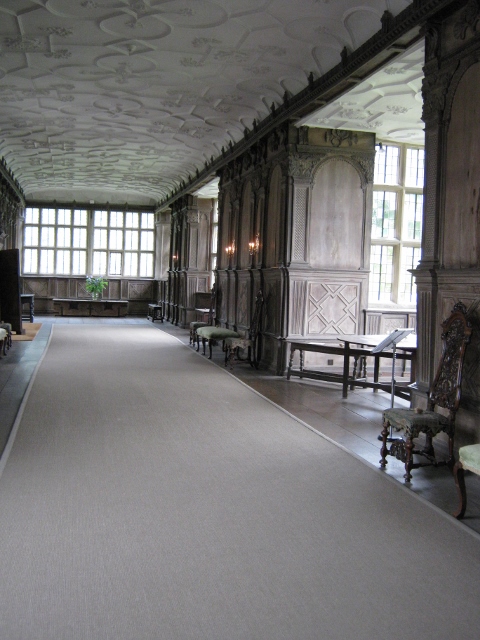
094Long gallery (480x640)

The Long Gallery

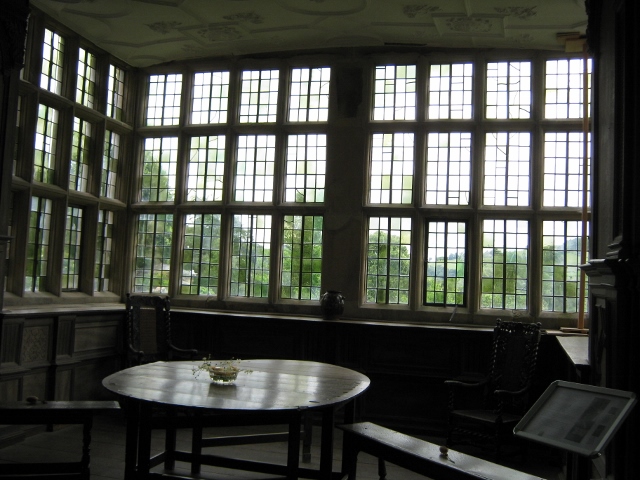
The room is full of light and space.
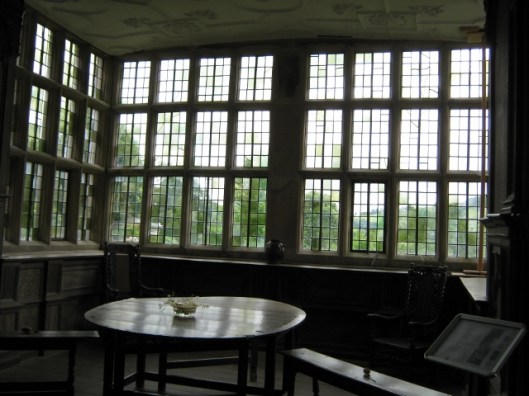
096Long gallery (640x480)

One of the window embrasures. They face south to make the most of the sunlight.

Long Galleries were used as indoor promenades so that the family could take exercise if the weather was too bad to go outside.  There are wonderful views of the gardens and surrounding countryside from the windows.
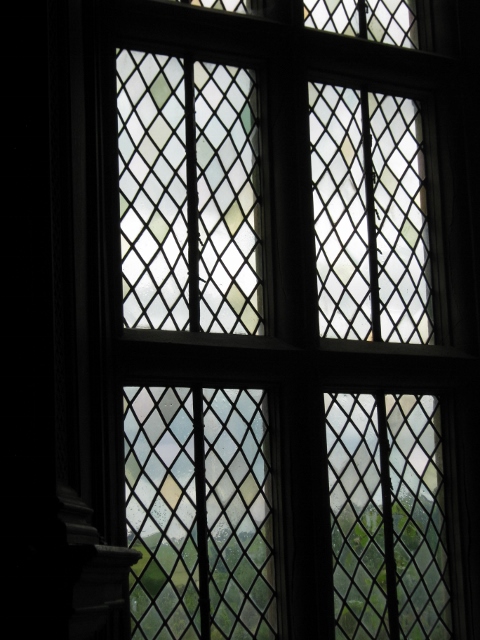
095Glass (480x640)

The diamond-shaped panes are set at different angles which also maximises the use of daylight. It is also very attractive.
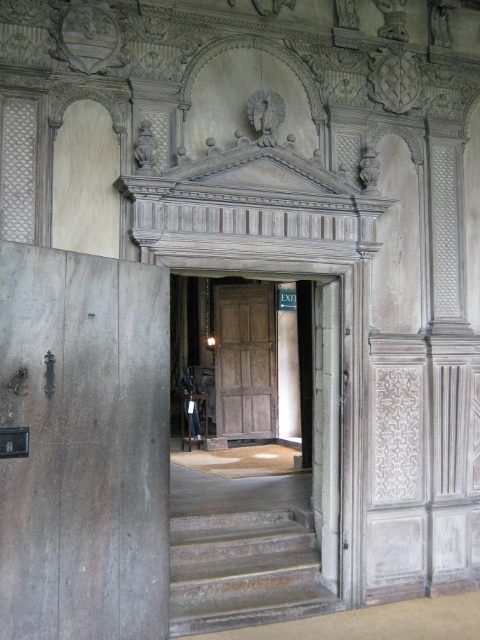
098Carved door frame (480x640)

A doorway surmounted by the Manners’ family crest.

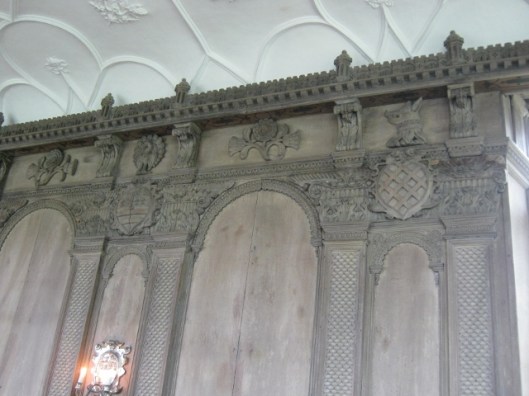
Th panelling is made of oak which was probably originally sized by being lime-washed.  It was then painted with designs in a foxy-red colour.
102Carving (640x480)

Oak panelling

103Ceiling (640x480)

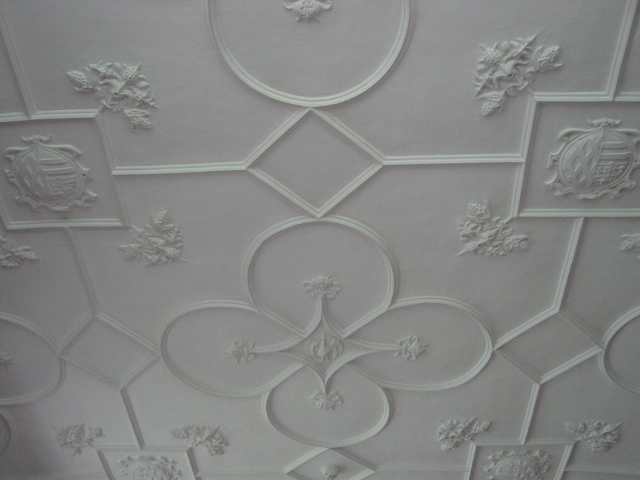
Ornate plaster ceiling

The State Bedroom leads off the Long Gallery.  There is no bed in it because when the Hall was being restored the state bed was moved to Belvoir Castle where it still remains.
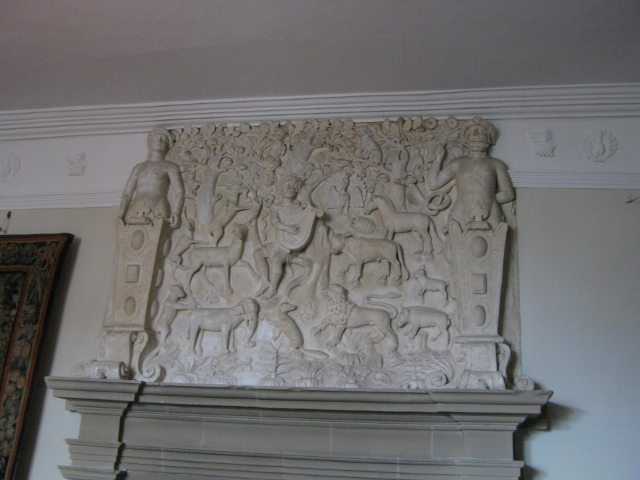
104Orpheus taming the animals (640x480)

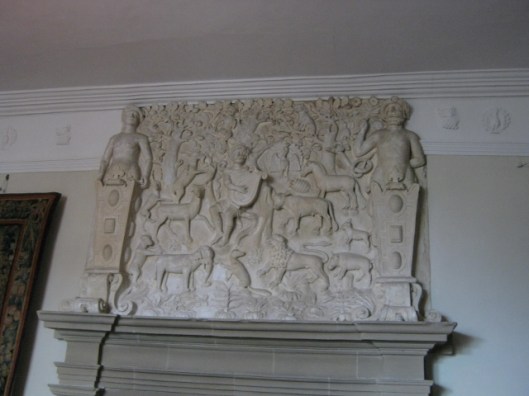
Plaster relief above the fireplace shows Orpheus taming the animals. This dates from the mid 1500s and there is no attempt at realism in the sizes of the animals. There is a very small elephant at the bottom left of the relief.
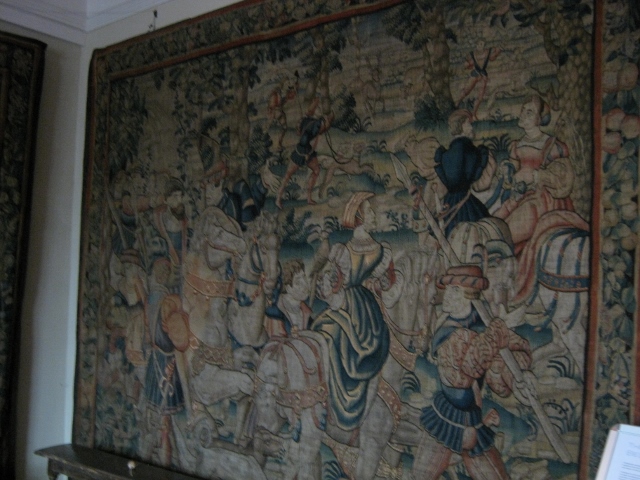
106Tapestry (640x480)

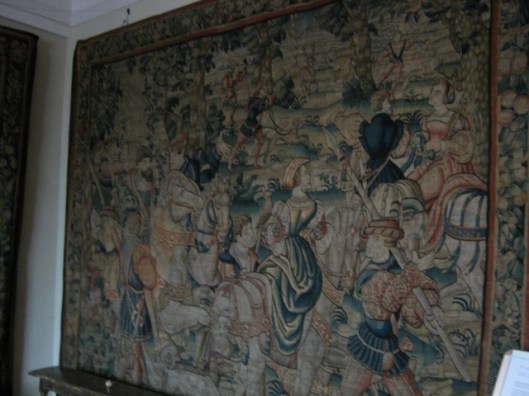
Tapestry in the State Bedroom


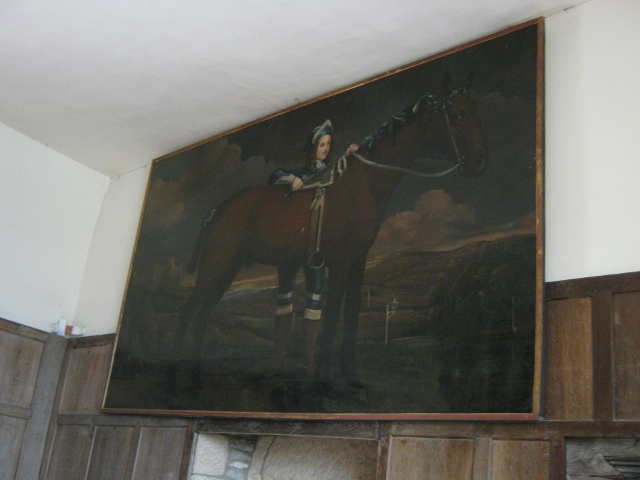
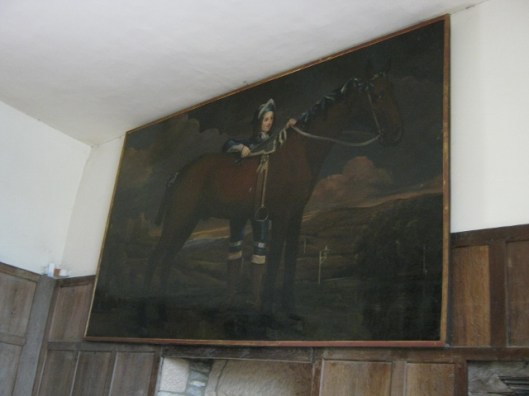
The final room is the Ante-room in which there is one of the earliest racing pictures in existence.
108Early racing picture (640x480)

This painting depicts a pre-Arabian English bay racehorse with his jockey in a landscape. It is attributed to the German-born painter John Baptist Closterman (died 1713).
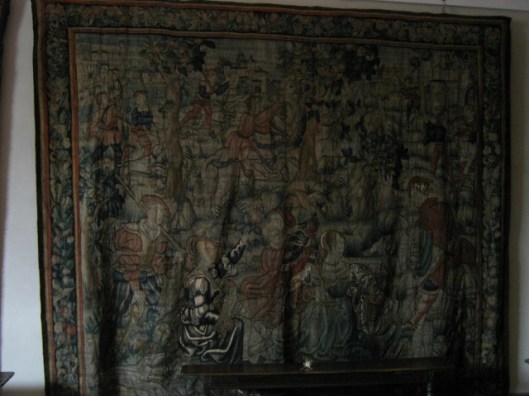
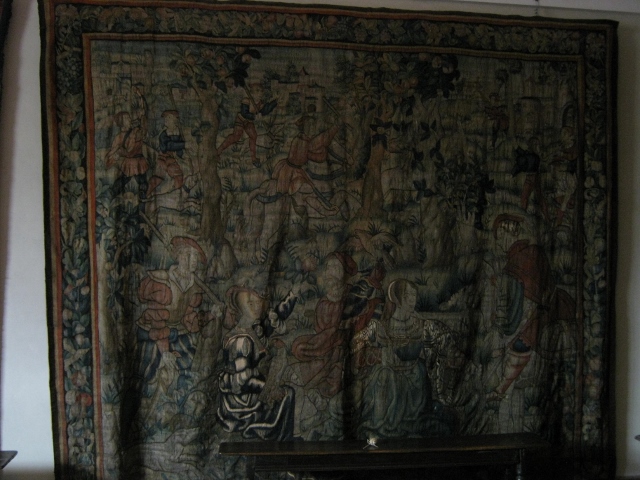
107Tapestry (640x480)

Tapestry in the Ante-room.

There is a flight of worn steps from the Ante-room to the garden but we didn’t go that way but back through the house.

109Gardens (640x480)
110Gardens (640x480)
View of the Hall from the garden
The windows of the Long Gallery
116Garden (640x480)

The main structure of the garden was laid out in the middle of the 17th century.  It has a series of descending terraces – the topmost and the lower garden are closed to the public.  It is a fine example of an English Renaissance garden and avoided being made-over in the 18th century because no-one was living there at the time.

I must apologise for the length of this post and the amount of photographs in it.  I have spent some considerable time trying to shorten it and to delete most of the photos but I find I can’t do either.  I love this Hall very much – I think it is the most beautiful place I know and I wished to have a record of my visit for myself as much as wishing to share it with you.  Thank-you for your patience.


Share this:

  • Share on X (Opens in new window) X
  • Share on Reddit (Opens in new window) Reddit
  • Share on Pinterest (Opens in new window) Pinterest
  • Share on Facebook (Opens in new window) Facebook
  • Email a link to a friend (Opens in new window) Email
  • Share on Tumblr (Opens in new window) Tumblr
  • Print (Opens in new window) Print
  • Share on Pocket (Opens in new window) Pocket
  • Share on LinkedIn (Opens in new window) LinkedIn
Like Loading...

Peak District Holiday 1st to 9th July. Day 4 Part 1.

11 Sat Oct 2014

Posted by Clare Pooley in fish, Rural Diary, Uncategorized, wild birds

≈ 16 Comments

Tags

Bakewell, Bakewell Bridge, Bakewell Pudding, Bakewell Pudding Shop, Black-headed Seagull, Canada Goose, Coot, Mallard, moorhen, Peak District National Park, River Wye, Trout, Tufted Duck

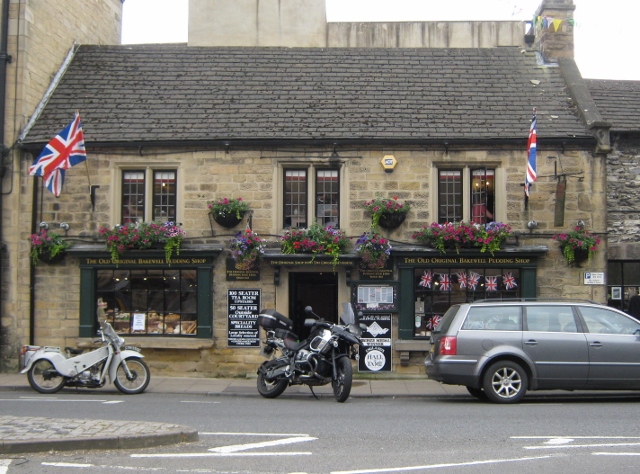
After our long walk the day before we decided to do a little gentle sight-seeing on our fourth day, revisiting a couple of favourite places and then going on to somewhere new.  Our first port of call was the town of Bakewell in Derbyshire which is very attractive but always very crowded.  We surprised ourselves by finding somewhere to park quite quickly and walked to the Bakewell Pudding Shop.

002Bakewell Pudding shop (640x474)

The Old Original Bakewell Pudding Shop

Bakewell is the only market town in the whole of the Peak District National Park.  As with many places in the Peak District, mineral springs are found there and it nearly became a spa town.  The name ‘Bakewell’ comes from ‘Badeca’s Well’ and is nothing to do with baking.  A Bath House was built by the Duke of Rutland in 1697 and it still has the 16′ x 33′ bath in the cellar.  The reason it wasn’t a success as a spa was the temperature of the water which is only 11 degrees Centigrade/52 degrees Fahrenheit – a little chilly!  This is less than half the temperature of the Buxton waters.

R and I wanted to buy a pudding as we love them and hadn’t had one for a couple of years.  We also purchased some bread and a teacloth with the recipe of the pudding printed on it and then went through to their coffee shop and had a pleasant drink while sitting in a sheltered courtyard.


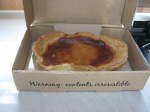
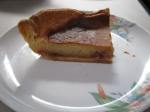
Rather an unprepossessing looking pudding but really very tasty.  It can be eaten hot or cold and with or without cream or custard.  It is made with puff pastry, then a layer of jam (usually raspberry) and then covered with a mixture made of ground almonds, sugar, butter, eggs and almond essence.  This is then baked until the mixture sets.  This confection was made by mistake.  During the 19th century a cook at the Rutland Arms was baking a jam tart but somehow misunderstood the recipe and the result was this pudding.  It was an instant success, though I don’t know how anyone let alone a cook can make a mistake when making a jam tart!
We then walked a little through the town and ended up at our favourite place – the riverside.  There is a wide promenade next to the River Wye and benches to sit on at intervals.  There is a very attractive bridge over the river which flows at a good pace.
008Bridge over R Wye (640x480)

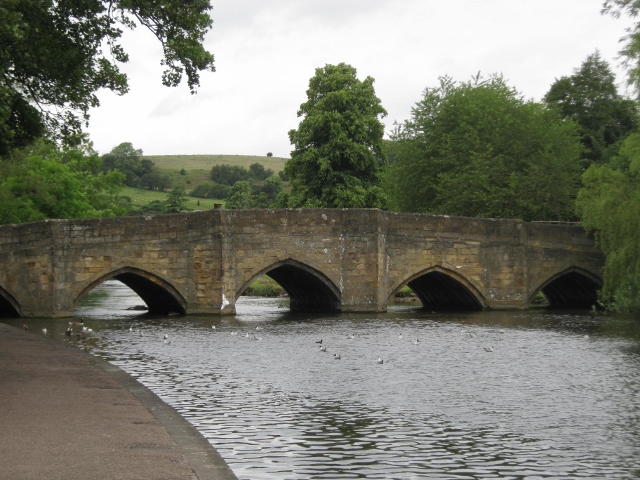
Bakewell Bridge

The river is full of trout and has a couple of little weirs.  There are lots of water-birds to admire and also lots of Black-headed Seagulls too.

020Trout (640x480)

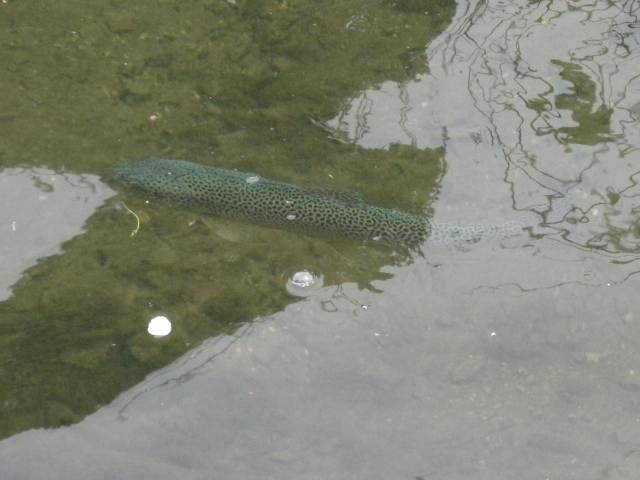
A beautiful speckled trout

014Tufted ducks (640x480)

Tufted Ducks

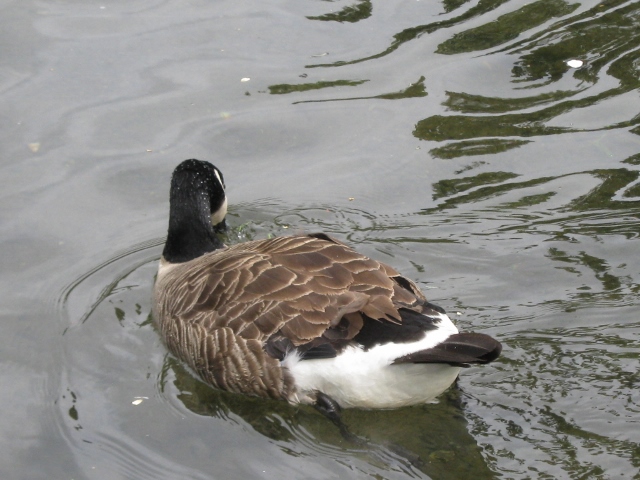
012Canada goose (640x480)

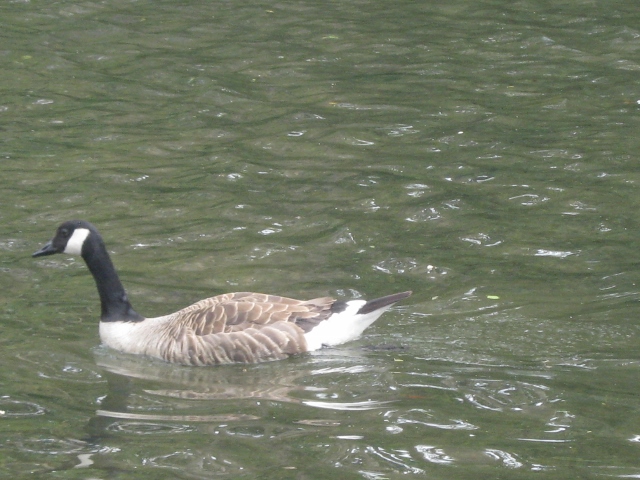
Canada Goose

019Canada goose (640x480)

Canada Goose

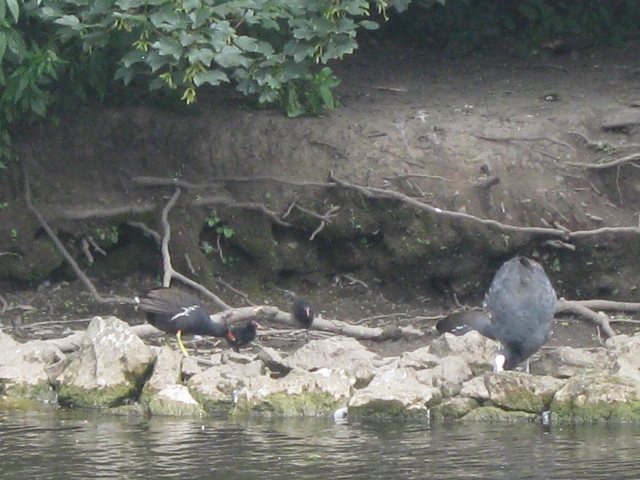
018Coot and moorhen with chicks (640x480)

Coot and Moorhen with chicks

I was fascinated by the behaviour of both the moorhen and the coot.  These birds are not often seen together although very closely related.  I find their chicks indistinguishable and am not sure if these chicks belonged to the coot or moorhen.  Coots have a pure white forehead and bill and are usually found on open water like lakes and moorhens with red bills that have a yellow tip are found on streams and ponds.  Both birds obviously felt threatened by each other and though it isn’t clear in the photo above the coot had lowered its head and had fluffed up all its feathers until it looked enormous.  It was moving very slowly too.

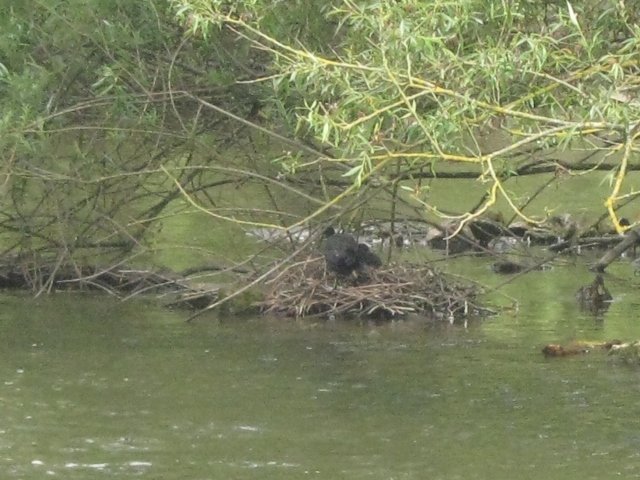
016Coot nest (640x480)

A Coot nest

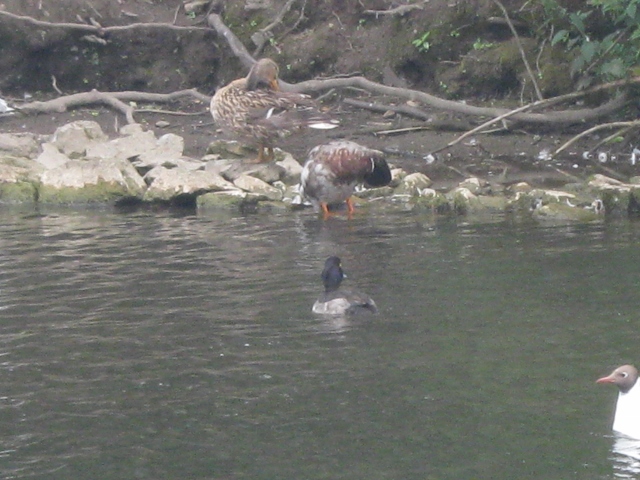
006Mallards, tufted duck & black-headed seagulls (640x480)

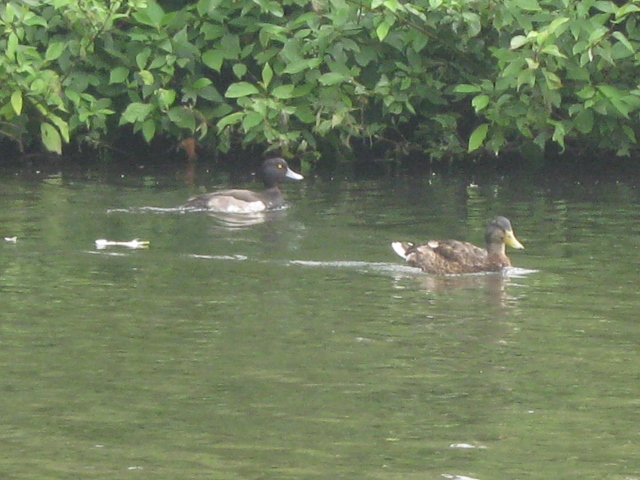
Mallards, Tufted Duck and a Black-headed Seagull which decided it wanted to be photographed too

After sitting by the river for a while, R and I decided we would go on to Haddon Hall which is just a few miles from Bakewell.  I will talk about that in my next post.

Share this:

  • Share on X (Opens in new window) X
  • Share on Reddit (Opens in new window) Reddit
  • Share on Pinterest (Opens in new window) Pinterest
  • Share on Facebook (Opens in new window) Facebook
  • Email a link to a friend (Opens in new window) Email
  • Share on Tumblr (Opens in new window) Tumblr
  • Print (Opens in new window) Print
  • Share on Pocket (Opens in new window) Pocket
  • Share on LinkedIn (Opens in new window) LinkedIn
Like Loading...
Follow A Suffolk Lane on WordPress.com

Enter your email address to follow this blog and receive notifications of new posts by email.

Join 715 other subscribers.

Unknown's avatar

I talk about what it's like living in a quiet part of Suffolk. I am a wife, mother and daughter, a practising Christian and love the natural world that surrounds me. I enjoy my life - most of the time!
My Posts

Jan 2026
M T W T F S S
 1234
567891011
12131415161718
19202122232425
262728293031  
« Dec    

Pages

  • About my Blog
  • GDPR (General Data Protection Regulations) and This Site
  • My Life in a Suffolk Lane

Archives

Blogs I Follow

Unknown's avatar
Unknown's avatar
Unknown's avatar
Unknown's avatar
Unknown's avatar
Unknown's avatar
Unknown's avatar
Unknown's avatar
Unknown's avatar
Unknown's avatar
Unknown's avatar
Unknown's avatar
Unknown's avatar
Unknown's avatar
Unknown's avatar
Unknown's avatar
Unknown's avatar
Unknown's avatar
Unknown's avatar

Posts I Like

  • Unknown's avatar
  • Unknown's avatar
  • Unknown's avatar
  • Unknown's avatar
  • Unknown's avatar
  • Unknown's avatar
  • Unknown's avatar
  • trulymebeingme's avatar
  • Unknown's avatar
  • Unknown's avatar
  • Unknown's avatar
  • aho's avatar
  • Talkmore's avatar
  • Unknown's avatar
  • santable's avatar
  • womanseyeview's avatar
  • gederedita's avatar
  • Schnippelboy's avatar
  • Unknown's avatar
  • Ari's avatar
  • Dad's avatar
  • Stephen G. Hipperson's avatar
  • (Kitty) Cat Strawberry - Meow!'s avatar
  • mitchteemley's avatar
  • John’s Postcards's avatar
  • Unknown's avatar
  • Unknown's avatar
  • Limentinus's avatar
  • Jack Ronald Cotner's avatar
  • NEERAJ SINGH's avatar
  • Unknown's avatar
  • Unknown's avatar
  • Julian Summerhayes's avatar
  • Unknown's avatar
  • Luso Loonie — Devin Meireles's avatar
  • Annika Perry's avatar
  • Unknown's avatar
  • Unknown's avatar
  • Unknown's avatar
  • Unknown's avatar
  • Unknown's avatar
  • Maikhel's avatar
  • Unknown's avatar
  • Unknown's avatar
  • Unknown's avatar
  • Unknown's avatar
  • Unknown's avatar
  • thesimlux's avatar
  • Unknown's avatar
  • Unknown's avatar

amphibians architecture art Arts and Crafts churches cooking Days out domestic animals family fish Folk Traditions Gardening Historic Buildings holidays Insects Landscaping literature music Norwich plants Rural Diary seashore theatre trees Uncategorized walking weather wild animals wild birds wild flowers

Tags

architecture autumn birds blackbird blackthorn Bungay butterfly church clouds common knapweed cow parsley crocus daffodils Diary dogwood family field maple flowers fungus garden gardening geese greylags ground-ivy Halesworth Hawthorn heather holiday Holly Holy Week horse chestnut Hoverfly insects ivy Lake District Lent lesser celandine lichen Lords and Ladies Mallard mallards Minsmere moorhen moss music Norwich Peak District pheasant plants pond ponds primrose primroses Rain rooks Rumburgh Rumburgh Church sheep Sheffield snow snowdrops Southwold spring Suffolk Suffolk Wildlife Trust sunset the Beck trees viburnum bodnantense walking weather wild cherry wild flowers winter-flowering honeysuckle witch-hazel

Meta

  • Create account
  • Log in
  • Entries feed
  • Comments feed
  • WordPress.com

Goodreads

Blog at WordPress.com.

Book Jotter

Reviews, news, features and all things books for passionate readers

Country Life Blog -

A blog about life in the country in the past and present

Matthew Paul: Poetry & Stuff

Poetry and what-not

Schnippelboy

Ein Tagebuch unserer Alltagsküche-Leicht zum Nachkochen

TAMARA JARE

TAMARA JARE Tamara Jare: Contemporary Figurative Painting Oil on Canvas Artist Art Studio

A Taste of Freedom

Documenting a Dream

Country Ways

Rambling Journeys in Britain, Countryside Matters and campaigning for the Right to Roam

The Strawberry Post

Here to Entertain, Educate & Inspire!

a north east ohio garden

an ongoing experiment in the dirt, 35 plus years

naturechirp

Celebrating God's creatures, birds and plants...

Sophie Neville

Writer

Going Batty in Wales

Developing a more sustainable lifestyle in SW Wales

Our Lake District Escapades

Exploring the Lake District and beyond

Short Walks Long Paths

Wandering trails around the coast of Wales

The Biking Gardener

An English persons experience of living and gardening in Ireland

Nan's Farm

A Journal Of Everyday Life

Walk the Old Ways

Rambling Journeys in Britain with John Bainbridge. Fighting for the Right to Roam. Campaigning to Protect Our Countryside.

Writer Side UP!

Waking the Writer Side...and keeping it "Up!"

Meggie's Adventures

Travel, thank you notes and other stories

amusicalifeonplanetearth

Music and the Thoughts It Can Inspire

lovefoundation.co.uk

Traveling Tortuga

Simply Living Well

Pakenham Water Mill

Historic watermill in the beautiful Suffolk countryside

Take It Easy

Retired, not expired: words from the after(work)life. And music. Lots of music!

Secret Diary Of A Country Vicar's Wife

By Olive Oyl

thanksfortheadventureorg.wordpress.com/

The Beat Goes On

#TBGO

Frank Pleszak's Blogs

Twitter: @frankpleszak @PolishIICorps

John Bainbridge Writer

Indie Writer and Publisher

roughwighting

Life in a flash - a bi-weekly storytelling blog

Walking the Old Ways

Rambling in the British Countryside

CapKane

thoughts on social realities

SkyeEnt

Jottings from Skye

jodie richelle

embracing my inner homemaker

Skizzenbuch/Blog

Just another WordPress.com weblog

Have Bag, Will Travel

The Call of the Pen

Flash Fiction, Book Reviews, Devotionals and other things.

John's Postcards

Art in Nature

You dream, I photographe it !

Smile! You’re in Barnier World......

theinfill

the things that come to hand

Dr. Mary Ann Niemczura

Author of "A Past Worth Telling"

Provincial Woman

The Pink Wheelbarrow

Luanne Castle: Poetry and Other Words (and cats!)

Poetry, Other Words, and Cats

The Family Kalamazoo

A genealogical site devoted to the history of the DeKorn and Zuidweg families of Kalamazoo and the Mulder family of Caledonia

everythingchild

The Book Owl

Canberra's Green Spaces

Paul Harley Photographer

  • Subscribe Subscribed
    • A Suffolk Lane
    • Join 715 other subscribers.
    • Already have a WordPress.com account? Log in now.
    • A Suffolk Lane
    • Subscribe Subscribed
    • Sign up
    • Log in
    • Report this content
    • View site in Reader
    • Manage subscriptions
    • Collapse this bar
 

Loading Comments...
 

    Privacy & Cookies: This site uses cookies. By continuing to use this website, you agree to their use.
    To find out more, including how to control cookies, see here: Cookie Policy
    %d