Tags
Alan Road, Albion Mill, Ber Street, Berstrete Gates pub, Bracondale, Carrow Hill, City Wall, close studded timber framing, Crystal House, Dragon Hall, King Street, Music House, Norwich, Norwich Castle, River Wensum, Southgate Lane, St Etheldreda's Artists' Studios, St John the Baptist church, St John-de-Sepulchre church, St Julian's Church, The Black Tower, The Wilderness Tower, Timberhill, walking, Wensum Lodge
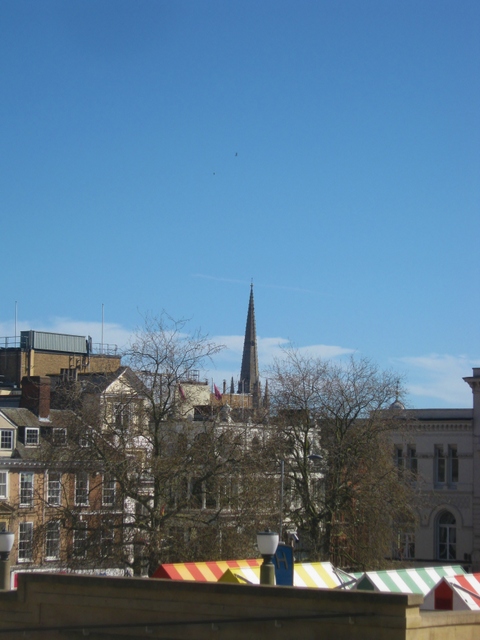
A view of Norwich Cathedral’s spire beyond the market
One bright morning last spring I decided to take another walk through the city. I started at the Market and made my way towards the Castle.
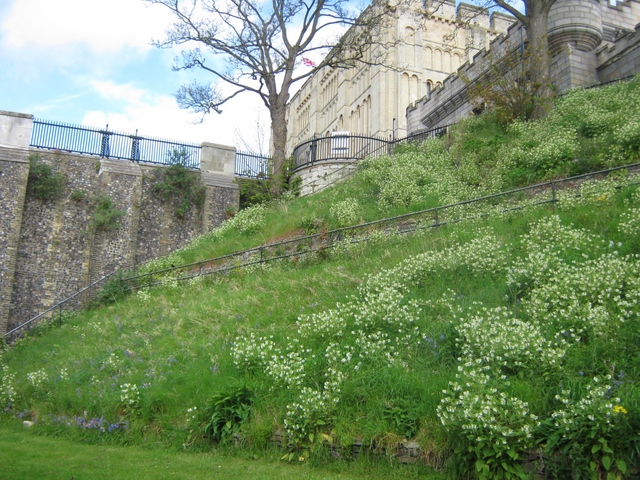
Norwich Castle seen from Castle Gardens
On the wall outside the castle I found these plaques which tell a story. I will have to go into the castle one day and find out who wrote the lines and who designed the plaques. I am put off by the entrance fee of £8.80 though!
If you read the comments you will now see that Simon Nott from Quercuscommunity has supplied all the information I needed with this link
http://www.racns.co.uk/sculptures.asp?action=getsurvey&id=838
Thank-you, Simon!


Just opposite the Castle in Cattle Market Street I found this interesting yard.
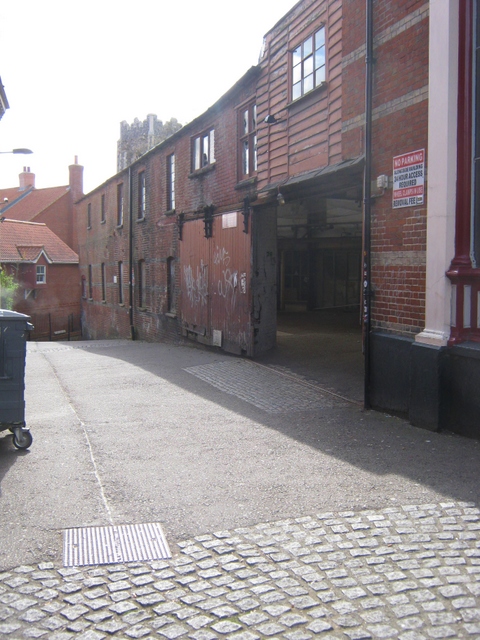
A warehouse yard with workshops.
The warehouse is part of a Grade II Listed building which was originally constructed as a showroom for Holmes and Sons who manufactured and sold agricultural machinery. The front of the building is mainly glass in an iron framework made in a lily pattern design and was inspired by the Crystal Palace (built by Paxton) to house the Great Exhibition of 1851. This building is known as the Crystal House. I believe there have been plans to convert the building into apartments.
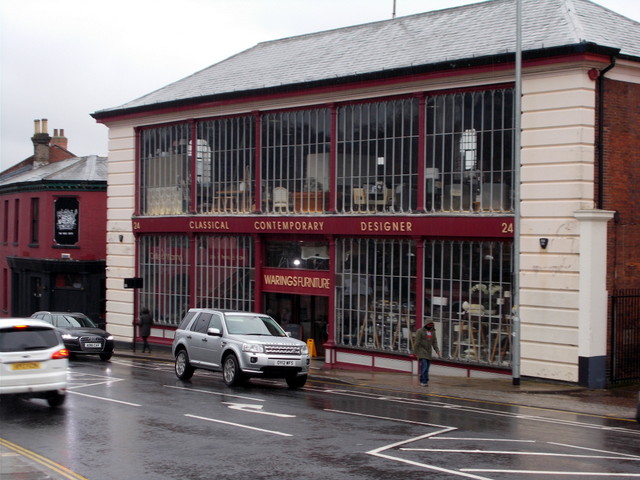
Photo of Waring’s Furniture shop (the Crystal House) taken this April
I walked from the Crystal House in Cattle Market Street, down Rouen Road and into St Julian’s Alley where I took this photo of St Julian’s church. I wrote something about this church and shrine a while ago as well as writing about the castle.
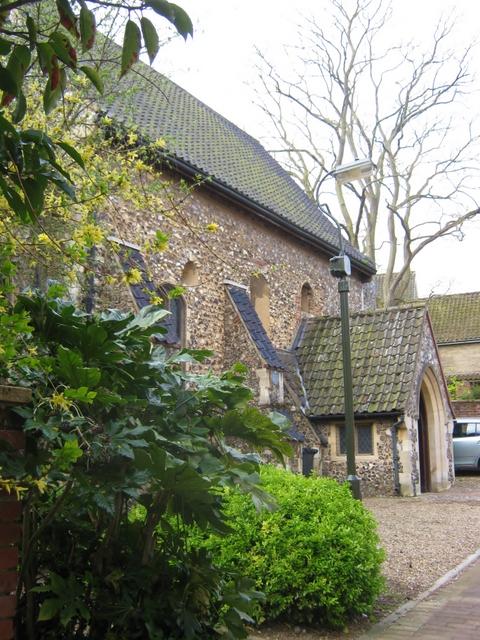
St Julian’s church
There is a narrow path between buildings that runs from St Julian’s Alley to King Street and in King Street is…..
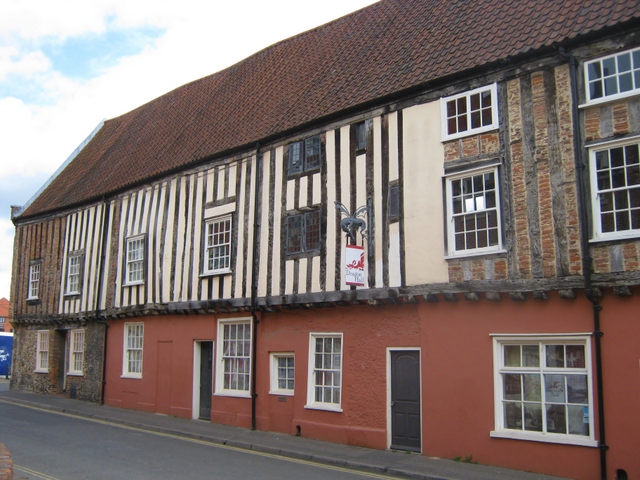
Dragon Hall.
Until last year the Dragon Hall could be visited quite easily. Now, since it has become the home of “The Writers’ Centre Norwich” it is only open for a tour once a month and I cannot find any details of when this one day a month is. Dragon Hall is Grade I listed and dates from 1420 and is the only surviving medieval trading hall in Western Europe built by an individual. That individual was a Robert Toppes who was elected four times Mayor of the City of Norwich.

Dragon Hall
It is made with close studded timber framing where planks of wood (studs) are placed vertically and close together to great effect. It contained a grand hall; the ground floor rooms and the undercroft were used as storage for goods. One of the spandrels (triangles of space between beams and braces in the roof) was intricately carved with a figure of a dragon, which is where the building’s name has come from. I have seen a photograph and would love to see it for myself one day.
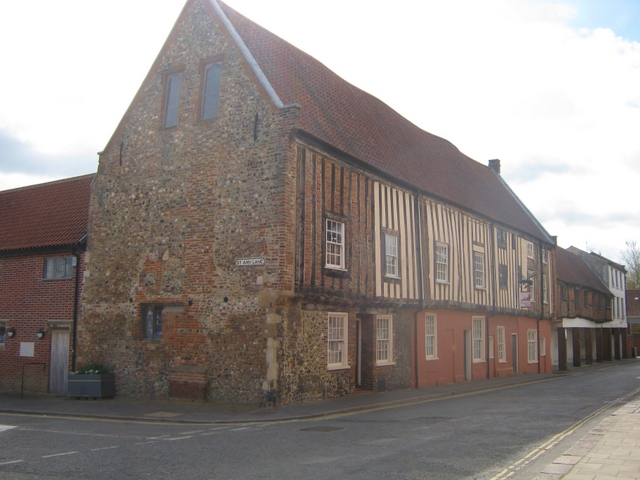
Dragon Hall
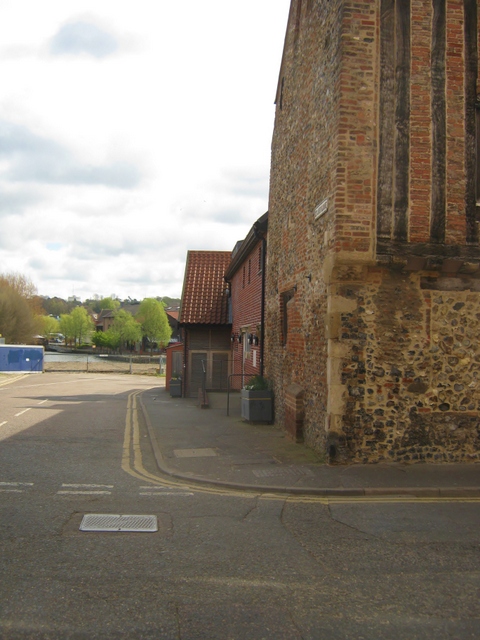
View of the River Wensum behind the Dragon Hall. Goods could easily be brought into the Hall from boats on the river.
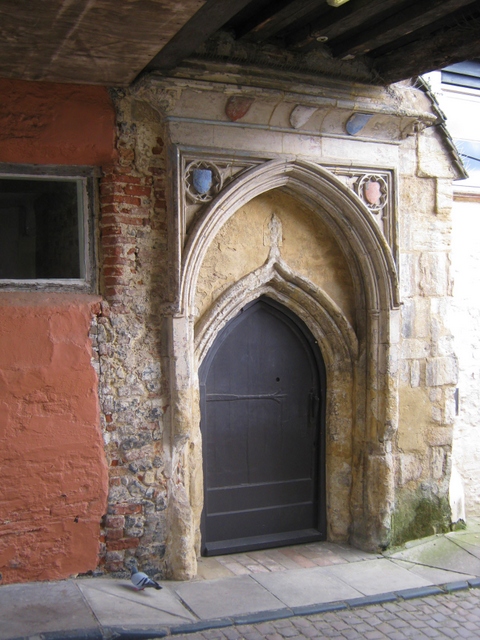
The Dragon Hall’s main door
The King Street area was one of the first areas in Norwich to be inhabited and as it was close to the river many of the inhabitants were rich merchants. The Dukes of Norfolk and the Howard family (Catherine Howard was Henry VIII’s fifth wife) all had houses here. John Caius, physician to Edward VI and founder of Caius College Cambridge was born here.
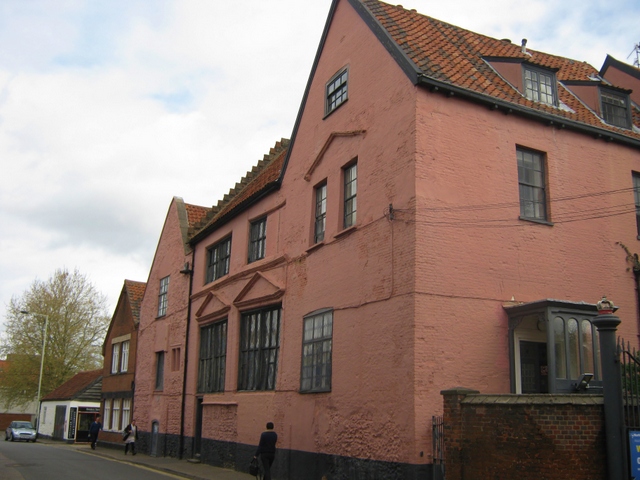
Music House
Just a short step up King Street is the Music House. This was reputed to be the oldest occupied house in Norwich until recently when it was taken over by Wensum Lodge. The first occupants were the Jurnets who were an extremely wealthy Jewish family and who lived there in the 12th century. It became known as the Music House because during the reign of Elizabeth I it was the headquarters for the Norwich waits and minstrels.
Almost next door is…..

Wensum Lodge. The centre for Adult Education in Norwich.
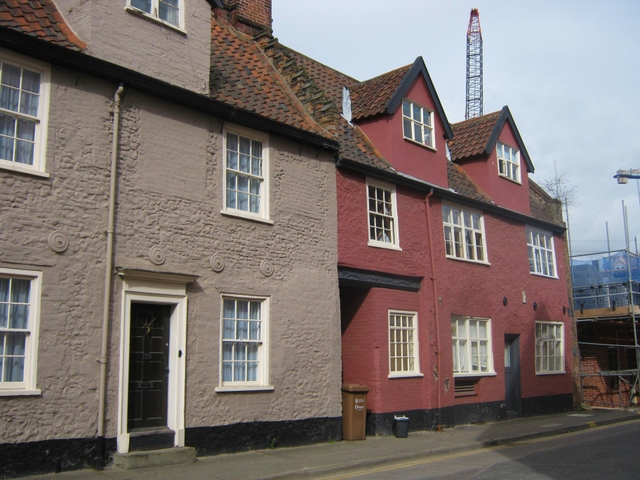
Interesting old houses in King Street. These buildings are probably 400 years old with lots of adaptations made to them over the years.
New buildings were being put up next door to these old houses. From what I could see, great care was being taken that the new construction didn’t look out of place amongst the old buildings.
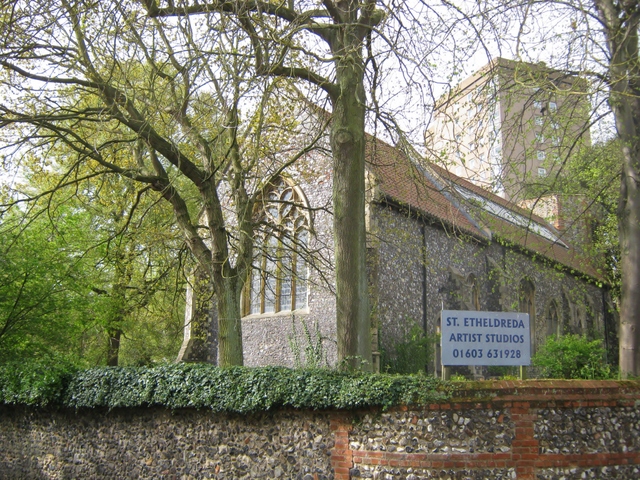
St Etheldreda Artist Studios
St Etheldreda was one of the four daughters of King Anna of East Anglia. She founded a monastery on the Isle of Ely (an example of tautology as Ely means Isle) and she died there in 679.
This is a Norman church which became dilapidated in the 19th century and was then ‘restored’ by an enthusiastic clergyman who got rid of a lot of the original features in order that an idealised ‘medieval’ church could be created. A wall painting of St Christopher was uncovered and was copied but the original painting did not survive. Because of extensive bomb damage during the Second World War the amount of people living in the area dropped considerably and by the 1970’s the church had become derelict. Restoration was begun in 1975 and it has now been fitted out as artists’ studios.
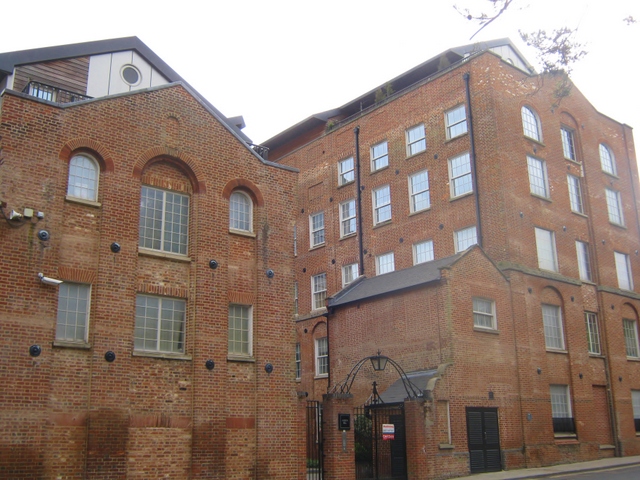
Albion Mill
This former mill has been converted into apartments. You might be interested to see one of the apartments which is available for sale at the moment; a three-bedroom penthouse apartment valued at just under £1,000,000.
The building started out as a yam mill in the 1830’s but by the end of the 19th century it had become derelict. It was bought by Robert John Read (junior) of R J Read Ltd. in 1932 for £5,750 as he needed to expand his already thriving milling business. He milled flour, not only local wheat but imported grain, oyster shell (for the chicken/hen trade) and maize (imported form Argentina). He developed a flaking machine for the maize, as flaked maize was used in the stock and animal feed industry. When Britain joined the Common Market the price of local and European wheat dropped and Read no longer imported grain. By the late 1980’s maize was no longer imported either so the firm concentrated on wheat milling and in 1988 they were producing 5 tons of wheat an hour. The business closed in 1993 and the site remained vacant until 2004 when it was bought along with other buildings nearby to be converted into flats and apartments.
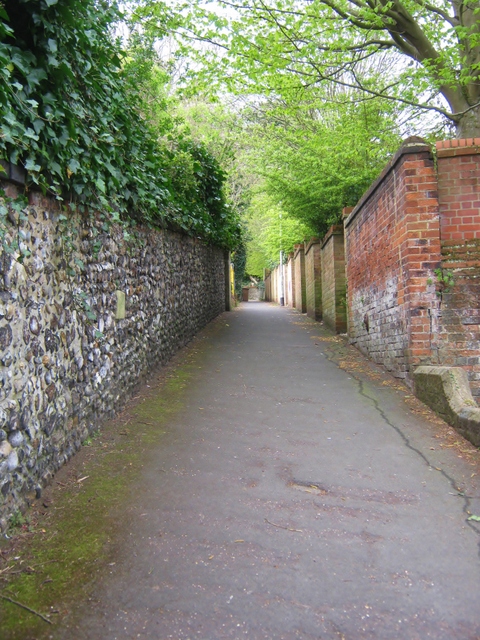
Southgate Lane
I turned up Southgate Lane which is quite a steep climb though this isn’t easy to see in the photo.
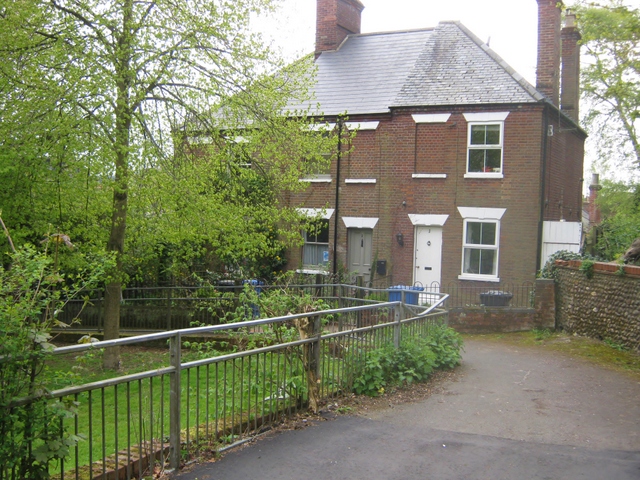
Halfway up the hill were a couple of semi-detached cottages.
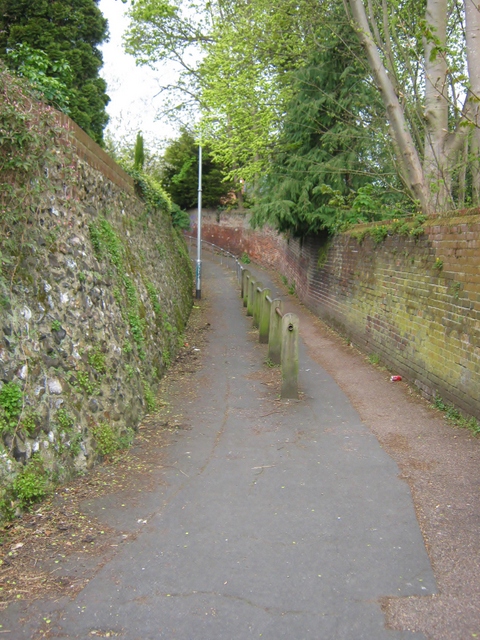
The second half of the lane had a handy handrail.
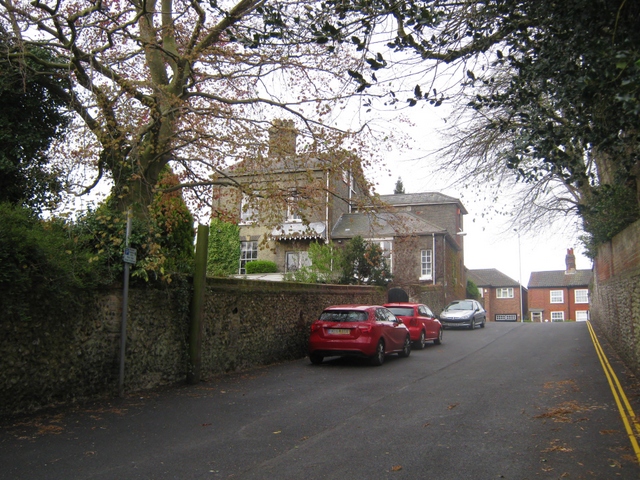
Towards the top of the hill the lane widened and one of the beautiful Victorian villas in Bracondale came into view.
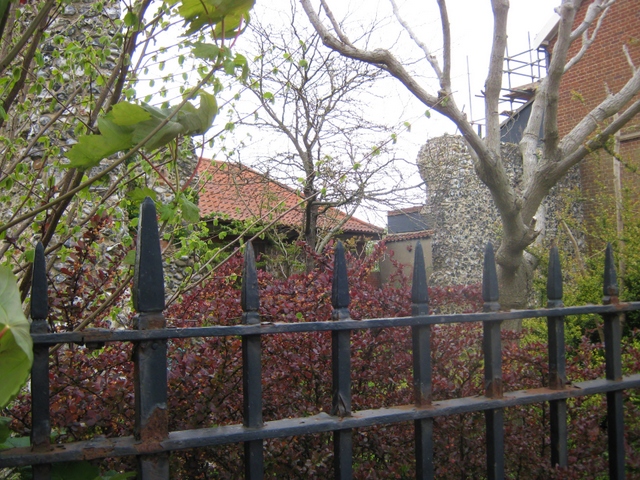
This old flint wall is part of the City Wall
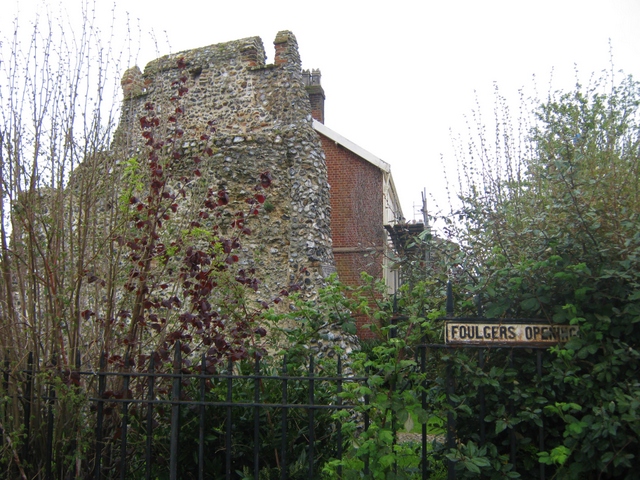
Here is another bit of the Wall next to the interestingly named road, Foulgers Opening.
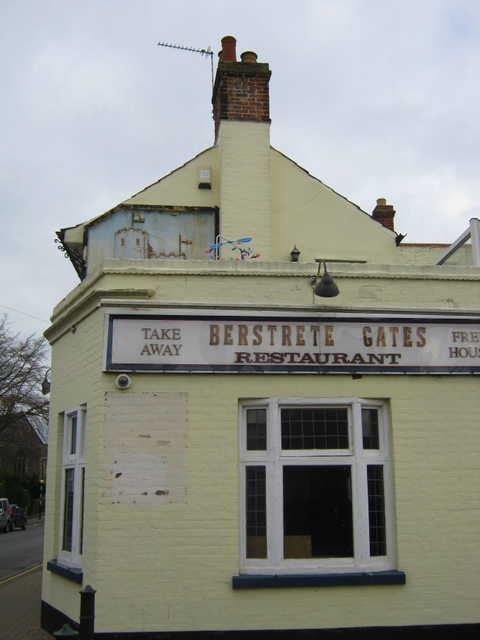
I was now in Ber Street and this is the Berstrete Gates pub. The old Ber Street Gate in the city Wall was taken down in 1807.
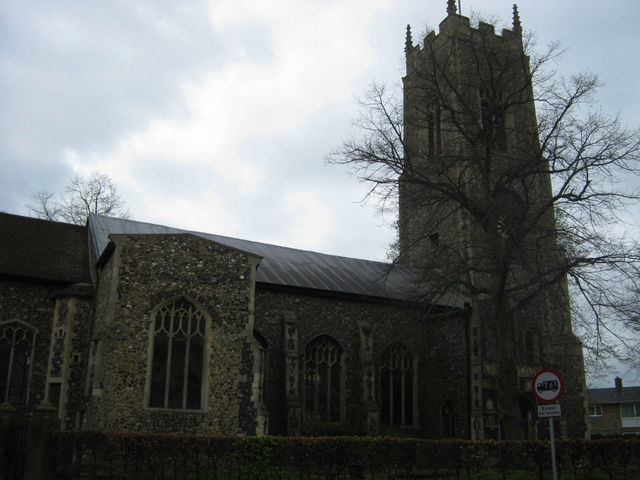
St John-de-Sepulchre’s church
This church on the corner of Ber Street and Finkelgate was made redundant in 1984 and between 1986 and 2009 was used by an Eastern Orthodox congregation.
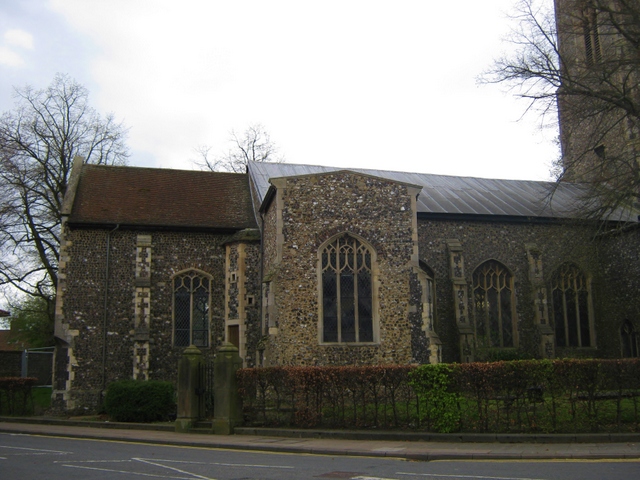
St John-de-Sepulchre’s church
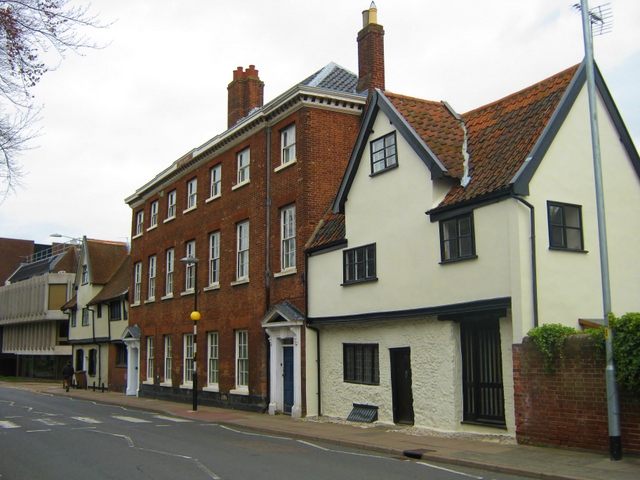
Buildings in Ber Street. The nearest is a medieval house; the one next to it is rather an elegant red-brick Georgian building. Next to that is another ancient medieval house with a modern office building beyond that.
I turned back the way I had come, walked back down Ber Street and into Bracondale and then past Southgate Lane. The next road is Carrow Hill.
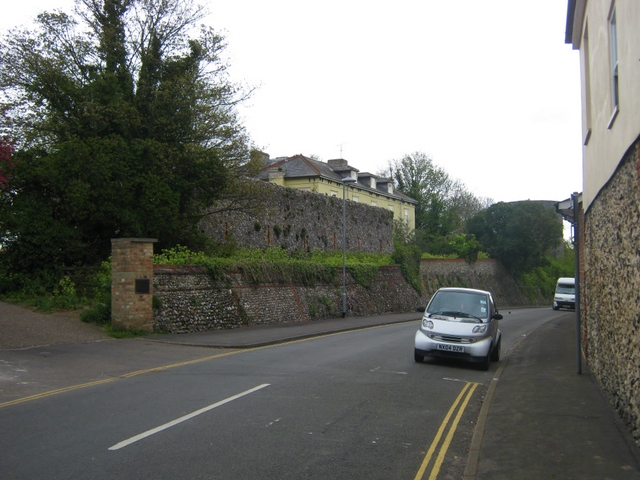
The City Wall in Carrow Hill
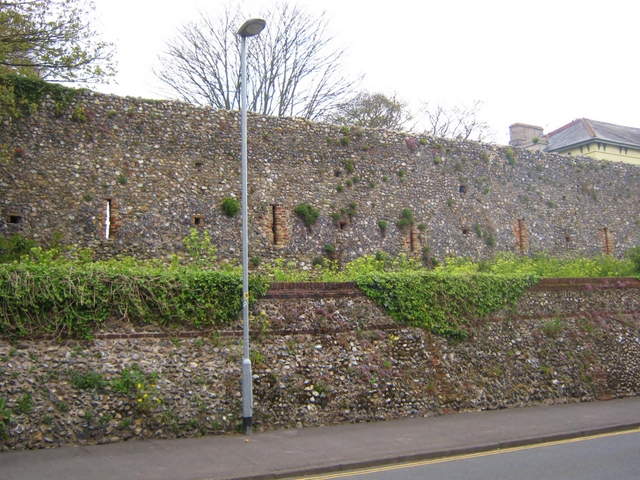
The City Walls are very well preserved here
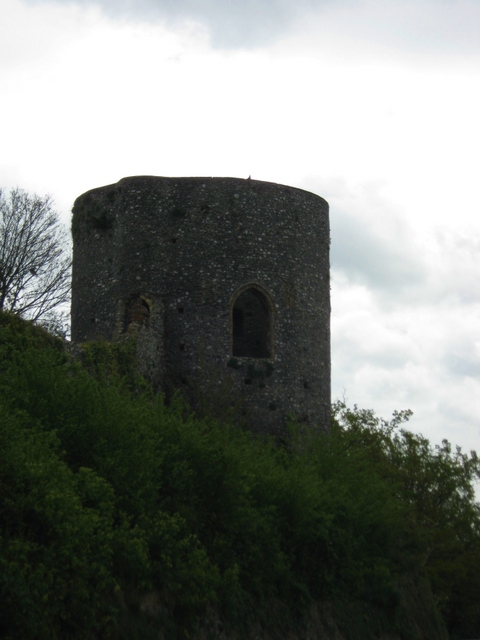
The Black Tower
This tower was part of the defence of the city and was traditionally the residence of the Constable. In the 16th century it was used for plague victims and in the 18th century a snuff mill was built on top of it. The mill was removed in the 19th century but the tower is still sometimes referred to as the Snuff Tower. Another name is the Duke of Buckingham’s Tower though I haven’t yet found a reason for this.
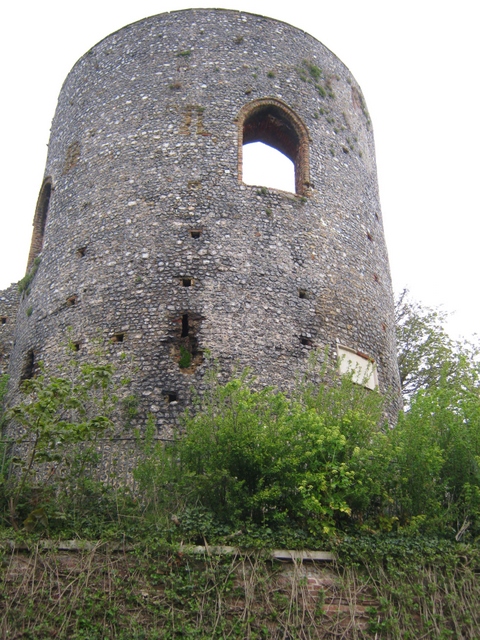
The Black Tower
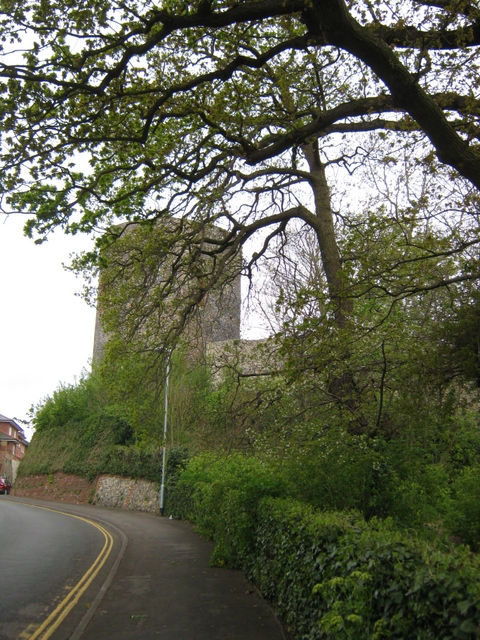
The Black Tower and part of the City Wall
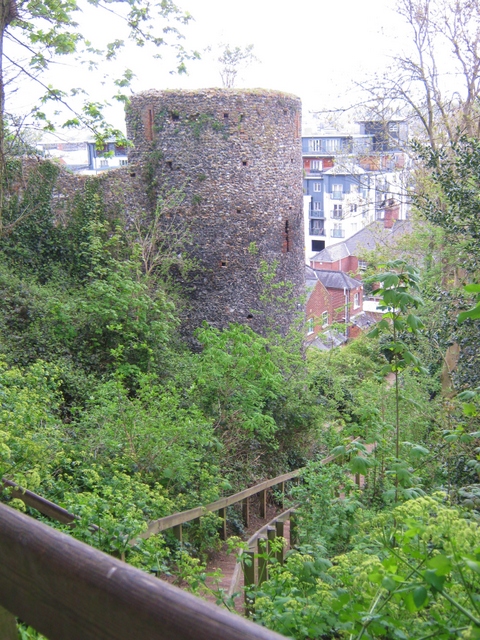
The Wilderness Tower
This second tower is further down the steep hill. There was never any wall built between these two towers but there are plenty of arrow slits built into the sides of the towers to enable the defenders to cover the steep hill inbetween.
The Wilderness is nicely planted with trees and shrubs and there is a wooden path and stairs that take one from the top of the hill in Carrow Hill to the bottom in Alan Road.
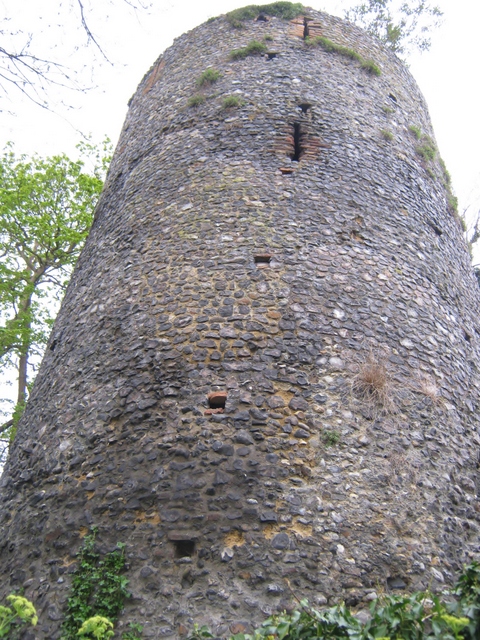
The Wilderness Tower
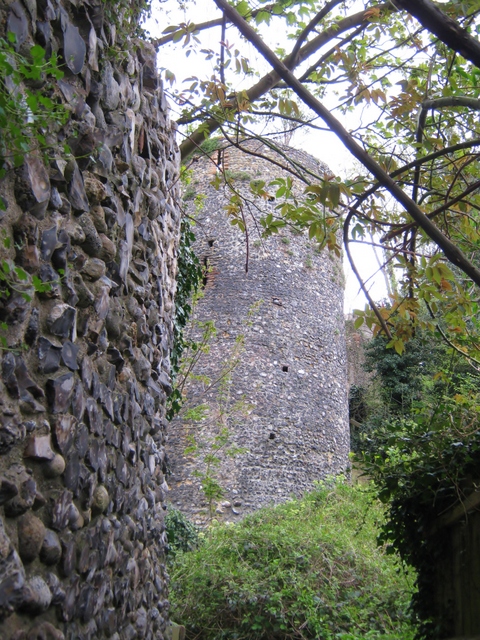
City Wall and the Wilderness Tower
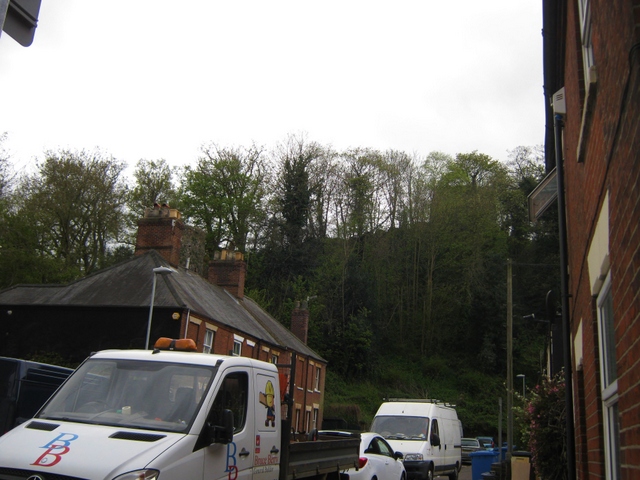
Alan Road with the Wilderness Tower nearly hidden behind the trees
From Alan Road I walked along King Street to Rouen Road and from there back to the city centre.
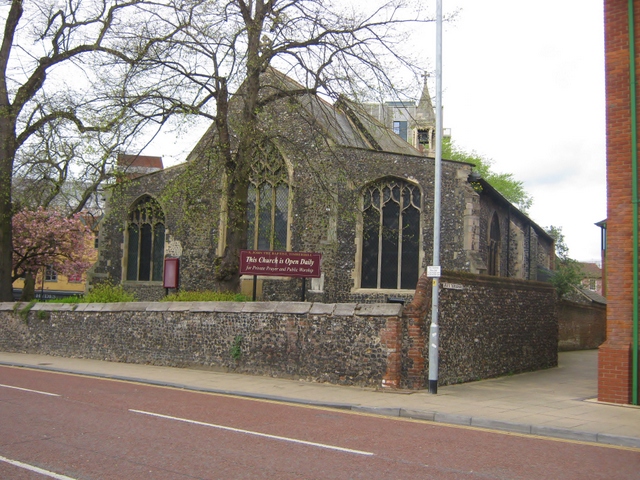
St John the Baptist, Timberhill.
The church was originally sited just outside the Castle’s bailey. Timberhill is to the south of the church, once an open space and the site of the timber market.
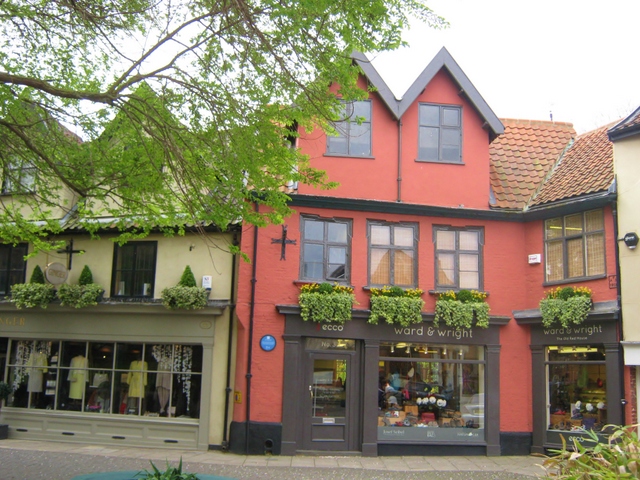
Attractive shops in Timberhill
I apologise for the length of the post.
Thanks for visiting!
 A Suffolk Lane