• About my Blog
  • GDPR (General Data Protection Regulations) and This Site
  • My Life in a Suffolk Lane

A Suffolk Lane

~ A diary of my life in rural north Suffolk.

A Suffolk Lane

Tag Archives: keep

More Norwich Knowledge

19 Fri Sep 2014

Posted by Clare Pooley in churches, plants, Rural Diary, walking

≈ 27 Comments

Tags

'The Revelations of Divine Love', All Hallows Convent, All Hallows House, anchorage, bailey, bomb damage, Castle Gardens, Cell, chickory, Dame Julian, EDP Newspaper Group, Father Raybould, fortified bridge, Julian, Julian Centre, keep, Lady Julian, lady's bedstraw, moat, motte, Norwich Castle, Norwich Museum, St Julian's Church, Whiffler Theatre, wild flowers

Because I am taking E to college each day my routines have had to change to suit her time-table.  Up til now I have taken Mum shopping on a Wednesday but on Wednesdays E has a two hour Psychology class and that is all.  No time to take Mum shopping, so we have changed to Tuesdays when E is at college til 5 pm.  Eventually, we hope that E will be able to spend the rest of  Wednesday at college – with friends and working in the library – but as yet she doesn’t have much work to do and wants to come home again fairly quickly.  It is not worth my while doing anything other than stay on in Norwich after dropping her off at college – I would hardly get home before having to set off again.

Last Wednesday I had yet more college equipment to get for her and then a visit to the Body Shop was in order to purchase shower gel and other lusciously-scented products.  After doing my shopping I still had over an hour to go before I needed to meet E so decided to have another walk-about.
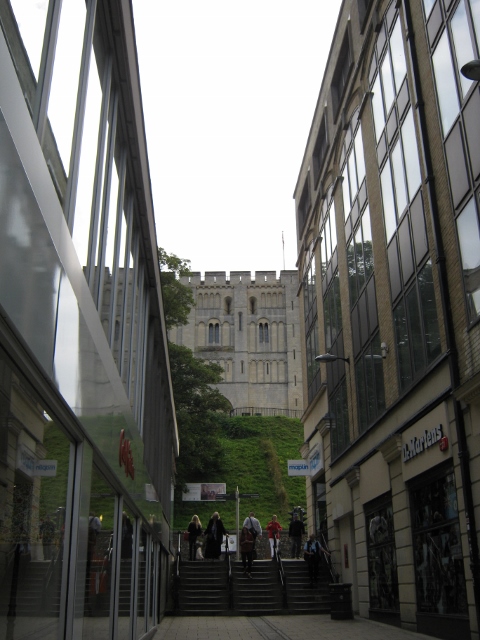
001Norwich Castle (480x640)

Norwich Castle is an enormous and imposing building.  It is built on a large mound or motte and looks so clean and undamaged it could have been built yesterday.
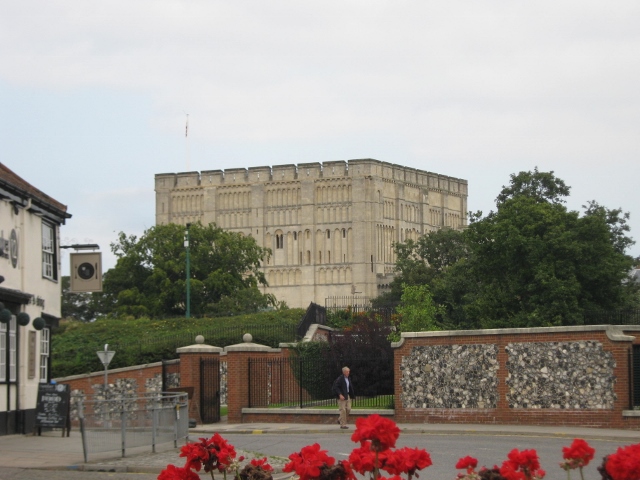
029Norwich Castle (640x480)

In fact, it was one of the first castles to be built after the Norman Conquest in 1066.
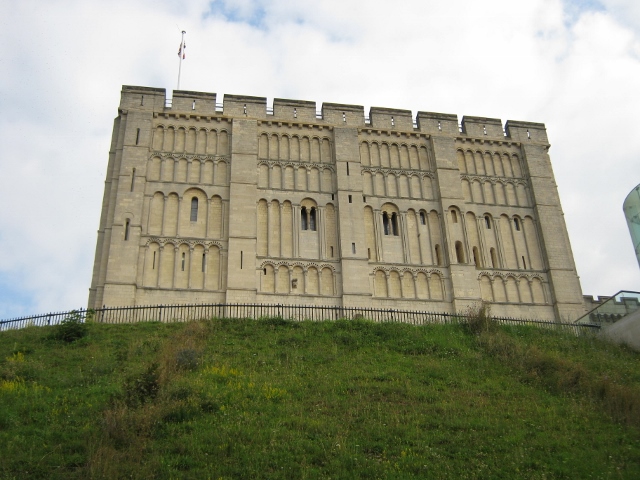
002Norwich Castle (640x480)

At least 98 Saxon homes were demolished from about 1067 onwards so that the earthworks could be dug within which they built a wooden fort (the Bailey).  The fort was surrounded by deep defensive dry ditches.  Once the land had settled they began building the stone keep in 1094 during the reign of William ‘Rufus’ II and, following his death in 1100, his brother Henry I completed the building in 1121.  It was built as a Palace rather than a fortification but no Norman King ever lived in it.  The only time Henry I is known to have stayed in it was at Christmas 1121.  The keep is constructed out of limestone imported from Caen in France.  Originally, the ground floors were faced in flint which would have been such a contrast to the almost white upper floors.

007Norwich Castle (480x640)

The grass mound has been planted with wild flowers – the blue ones here are chickory. The strange blue-topped structure on the right is the lift (non-Norman!) that transports to the top, those not able or wanting to ascend the slope by foot.
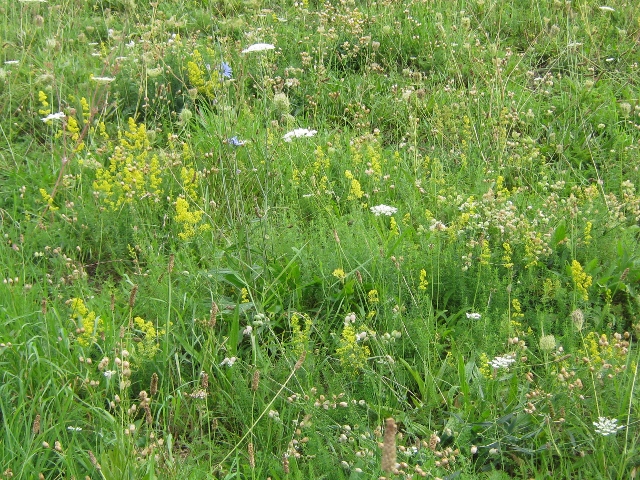
003Wild flowers at cstle (640x480) (2)

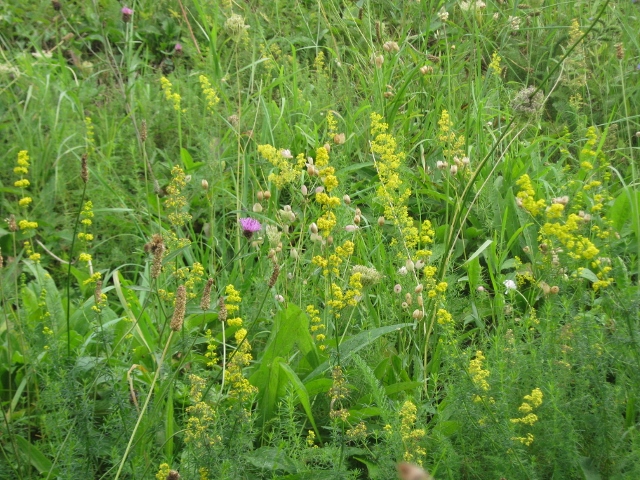
More wild flowers – the yellow ones are Lady’s Bedstraw

Wild Carrot and Bladder Campion grow there amongst many others.
005Wild flowers at castle (640x480)

The keep was used as the County Gaol from the 14th century onwards.  A new gaol designed by Sir John Soane was constructed in and around the keep in 1792-93 but this was soon found to be too small and outdated.  The outside block of Soane’s gaol was demolished between 1822-27 and re-designed by William Wilkins.  When the County Gaol was moved to Mousehold Heath near Norwich in 1883, work began to convert the castle into a museum which it still is to this day.  All the gaol building was demolished leaving the original keep.
009Quote carved on wall (640x480)

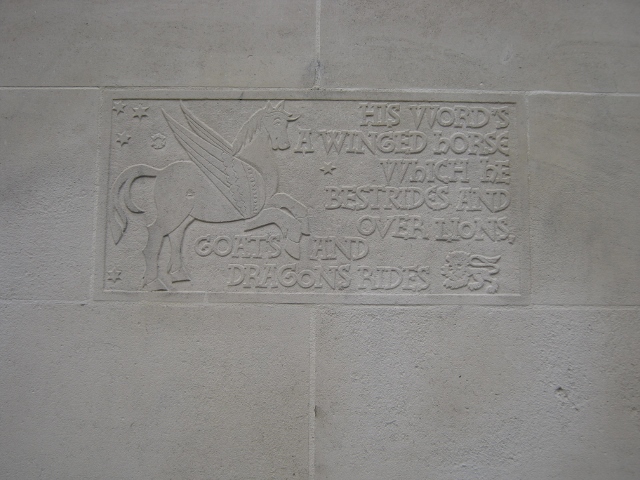
I found this on the wall near the bottom of the lift shaft. Who can tell me where this quote comes from?

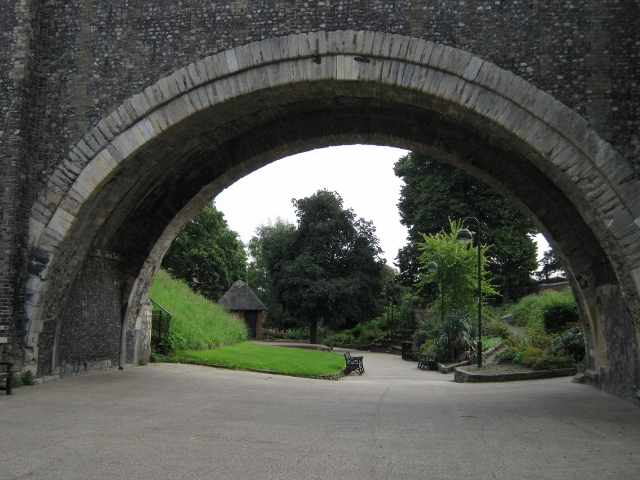
I walked through the Castle Gardens which are in the bottom of the dry moat.
010Castle garden (640x480)

This bridge is the original Norman fortified bridge over the moat but it has been refaced and has a 19th century inner brick arch.
011Outdoor theatre (640x480)

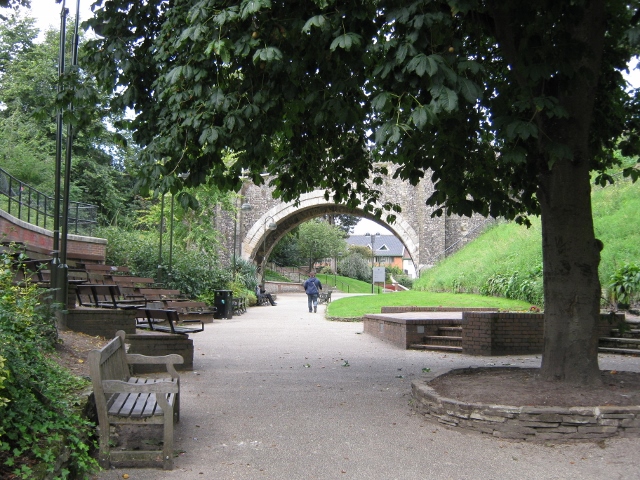
The Whiffler Theatre

This is a small, simple open-air theatre in the Castle Gardens and was given to the people of Norwich by the Eastern Daily Press Newspaper Group.  Next to the performing platform is a small thatched building that is used as dressing rooms.  If you look at the first photo of the bridge, the dressing room building can be seen beyond the bridge on the left.  There is a Whiffler Road in Norwich as well, but I cannot find out anywhere if the road and theatre are named after a specific person.  The word ‘whiffler’ has a number of meanings according to the dictionary.

1.  One who whiffles or frequently changes his opinion or course.  One who uses shifts and evasions in argument, hence a trifler.

2.  One who plays on a whiffle; a fifer or piper.

3.  The Goldeneye duck is also known as the Whiffler probably because of the whistling sound its wings make in flight.

4.  An officer who went before a procession to clear the way by blowing a horn.  Any person who marched at the head of a procession.  A harbinger.  In the 16th century the whiffler was armed with a javelin, battle-axe, sword or staff.  An early form of steward involved in crowd control.

Shakespeare’s Henry V:  ‘…the deep-mouthed sea, which like a mighty whiffler ‘fore the King seems to prepare his way.’

The ‘Whiffler’ pub in Norwich is named after the ceremonial character so perhaps the road and theatre are too.
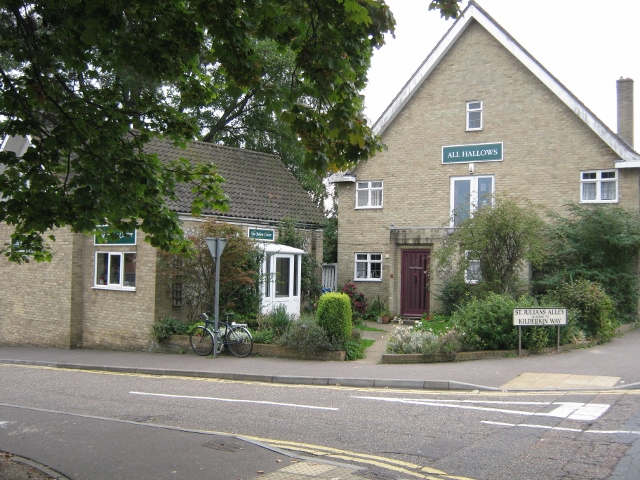
012All Hallows & Julian Centre (640x480)

All Hallows and Julian Centre

I left the Castle grounds and walked down Rouen Road to St Julian’s Alley, on the corner of which is the Julian Centre where books, cards and other merchandise associated with Dame Julian are sold.  There is also a reference library which keeps the main books and articles published about her and also a Christian lending library.   All Hallows House, also on the corner of the road is a small guest house belonging to All Hallows Convent, Ditchingham which is fairly near to where I live.  I went to Ditchingham for a day retreat a number of years ago and it was such a peaceful day.  All Hallows House in Norwich is somewhere else to stay for a retreat, as well as a place of study or just somewhere to stay to be near St Julian’s church.
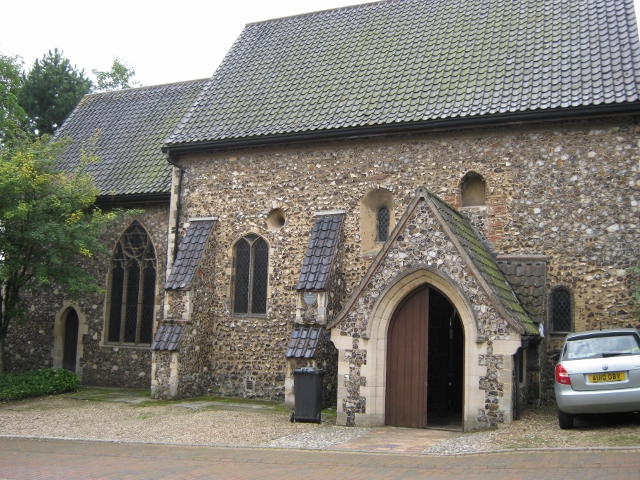
013St Julian's church (640x480)

St Julian’s church

The first time I came here was with A, my eldest daughter and at the time they were preparing for something in the church and had had all the pews removed.  A nun was in the church and welcomed us in saying how much she liked the large space left once the seating had been taken out.  She said it made her want to dance and she then proceeded to dance round the church.  I thought she was wonderful!
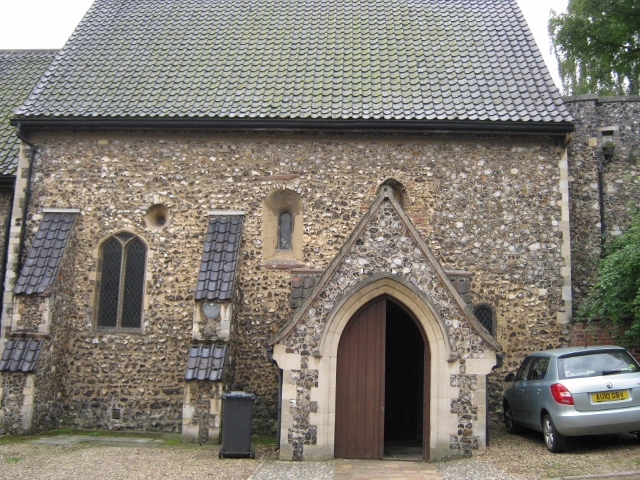
014St Julian's church (640x480)

St Julian’s church

To explain who Dame Julian was I will quote from the information leaflet I picked up from the church.

‘Julian of Norwich was the first woman to write a book in English.  She wrote it while she was an ‘anchoress’ (a hermit) living in a small room attached to St Julian’s church.

It was quite normal for people to live like this in Julian’s day.  Some were monks and nuns, but many were just ordinary men and women who took vows to live a solitary life of prayer and contemplation.  They lived in a room beside the church and many people came to them for comfort and advice.

On 8th May 1373, when she was thirty years old, Julian suffered a severe illness from which she almost died.  During that illness she received a series of visions of the Passion of Christ and the love of God.  When she recovered, she wrote down what she had been taught – perhaps having to learn to read and write in order to do so.

Her book, ‘The Revelations of Divine Love’, took her over 20 years to complete and is today regarded as a spiritual classic throughout the world.  Her clear thinking and deep insight speak directly to today’s troubled world.

Her perception that there is no wrath in God, but that this is a projection of our own wrath upon him, is centuries ahead of her time.  And her understanding that God’s love is like that of a tender loving mother, as well as that of a father, is also one we can respond to today.’

015Door into Julian's cell (480x640)

The doorway into Julian’s cell from the church

The church is not what it seems.  During the Reformation the cell was totally destroyed by reformers who wanted to get rid of anything that reminded them of Papism – the Roman Catholic faith that England’s leaders had given up.  The church fell into disrepair during the 19th century and was on the verge of being pulled down.  The parishioners began to put money into a restoration fund in 1845 which saved the fabric but the money ran out quickly.  More work was done on the church in 1871 and 1901.  In 1942 the church was badly damaged in an air raid during World War II and again there was talk of pulling it down.  There are four other churches within less than quarter of a mile from St Julian’s and after the War the whole area was redeveloped.  It was awareness of the importance of Julian’s writing that led the rector, Father Raybould, with the support of the Community of All Hallows, to encourage the community and other interested bodies to get on with the restoration of the church as a place of prayer and pilgrimage.  The architect has done such a good job in creating this little church and re-cycling a number of features from the old church and others damaged at the same time.  The recreation of Julian’s cell is such a wonderful result of the terrible war damage.

The Norman doorway into the cell came from the church of St Michael at Thorn which stood nearby in Ber Street and was destroyed at the same time as St Julian’s.  There was no door here when the Cell was used as an anchorage.
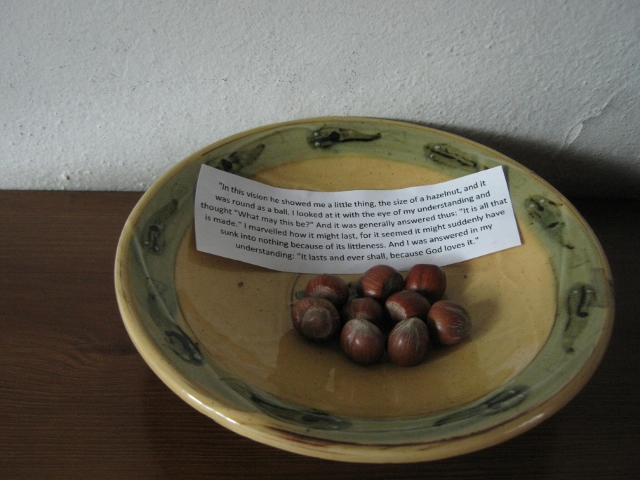
016Dish of hazelnuts (640x480)

A dish of hazelnuts with the quote from Julian’s writing. In her vision, she is shown a little tiny round thing, the size of a hazelnut and is told that it represents all that has been made. She thought it was so small that it would be destroyed easily but she was told that it never would be because it was loved.

I have read Julian’s book a few times and each time I read it I understand it more, I love it more and I marvel more at this woman, who lived so long ago, being able to write and think so profoundly and able to speak so clearly to me today.  The best translation I have found so far is that done by Father John-Julian, an Episcopal priest and monk.  According to the blurb on the back of my copy, he has been a parish priest in Wisconsin, New Hampshire and Connecticut, was the founding Dean of the Seminary of the Streets in New York and has taught at the University of Rhode Island and Hampshire College.  In 1985 he founded the Wisconsin-based contemplative, semi-enclosed monastic Order of Julian of Norwich.  He has read and studied Julian of Norwich each day for over a quarter of a century.  After much research he believes that Dame Julian was Julian Erpingham, the elder sister of Sir Thomas Erpingham, friend of the King, Lord Warden of the Cinque Ports and who fought at Agincourt.  This Julian married a Roger Hauteyn and was widowed in 1373 (the same year as the ‘Revelations’) when her husband was killed, presumably in a duel.  She re-married in 1376 a Sir John Phelip of Dennington in Suffolk.  They had three children, the last of which was born the same year that her second husband died in 1389.  John-Julian believes that if this was the Dame Julian of the ‘Revelations’, she wrote the book before she became an anchorite and in about 1393 she fostered out her youngest child, dictated the Long Version of the book and then entered her anchorhold.  It is possible.
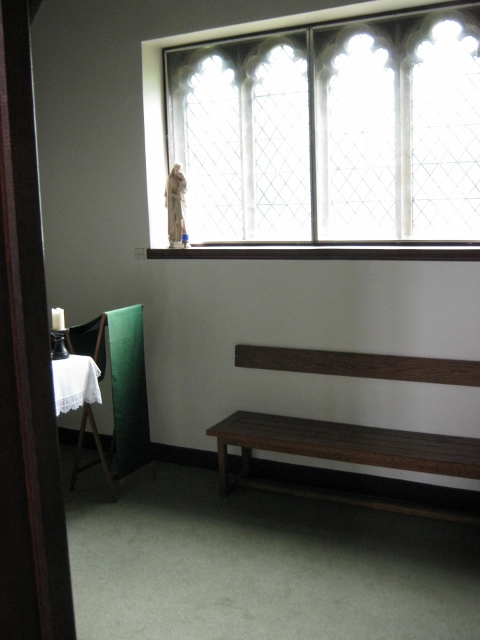
017The cell from doorway (480x640)

The cell, photographed from the doorway

The cell had been used by solitaries before Julian and also by others after her.  When she lived there, there would have been a window onto the street so that she could counsel people, a window into the church and a window or door into an adjacent room where a servant would live.  The servant would remove rubbish etc and bring food from the market and do any other tasks for Dame Julian.
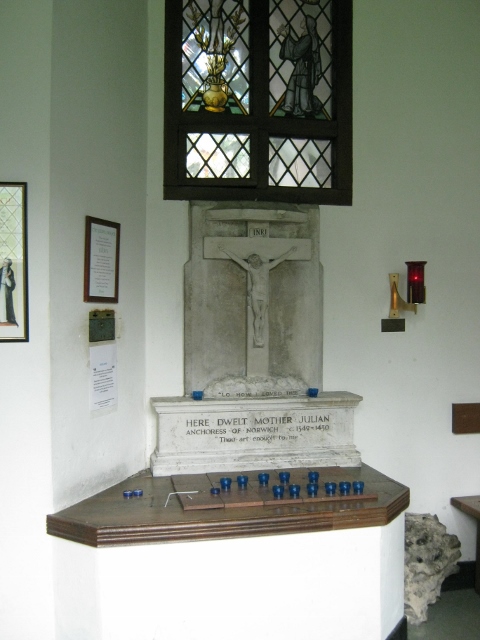
019In the cell (480x640)

The shrine in the cell

The wooden platform marks the original floor-level and the stone memorial above it used to be on the outside wall of the church before the Cell was rebuilt.  The window above that is in the place where Julian’s window into the church would have been.  She would hear Mass through the window and receive Holy Communion there.  She would have been able to see the Sacrament (the consecrated Bread) hanging in a Pyx (a special vessel/container) before the High Altar.  There are two pieces of flintwork near the ground which formed part of the early foundations, one of which can be seen in this photo.
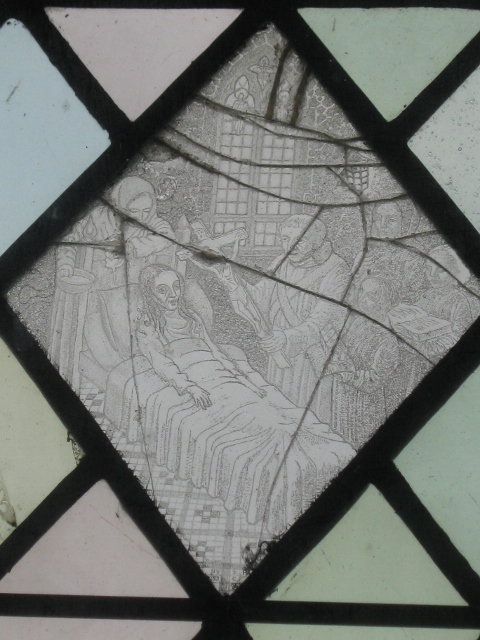
018Glass in window of cell (480x640)

This glass is in a window opposite the shrine and is a memorial to Father Raybould
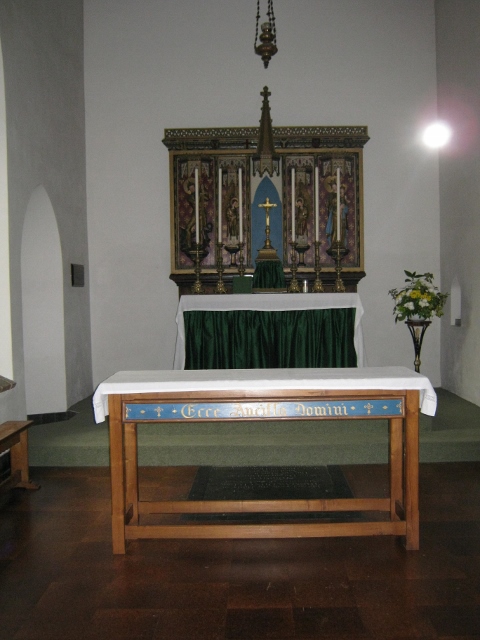
021High Altar in church (480x640)

This is the High Altar in the Church

The High Altar Reredos (the ornamental screen covering the wall behind the Altar) was made in Oberammergau, Germany and dates from 1931 and was a gift.  It survived the bombing.

026Font (480x640)
027Font (480x640)
028Font (480x640)

The font is the finest thing in the church and one of the great architectural treasures of the City of Norwich.  It used to belong to All Saints Church and when it was declared redundant in 1977 the font was brought to St Julian’s as both churches had been pastorally linked at various times.

The church is dedicated to Saint Julian bishop of Le Mans.  Lady Julian has never been declared a ‘saint’ although she is now included in the Church Calender of 1980.  Many people think that Lady Julian took her name from the building where she had her anchorage when she entered her Cell.
Share this:

  • Share on X (Opens in new window) X
  • Share on Reddit (Opens in new window) Reddit
  • Share on Pinterest (Opens in new window) Pinterest
  • Share on Facebook (Opens in new window) Facebook
  • Email a link to a friend (Opens in new window) Email
  • Share on Tumblr (Opens in new window) Tumblr
  • Print (Opens in new window) Print
  • Share on Pocket (Opens in new window) Pocket
  • Share on LinkedIn (Opens in new window) LinkedIn
Like Loading...

Orford Castle

30 Wed Jul 2014

Posted by Clare Pooley in Rural Diary, Uncategorized

≈ 8 Comments

Tags

bailey, curtain wall, Hugh Bigod, keep, King Henry II, medieval, Orford, Orford Castle, Orford Ness, Orford Quay

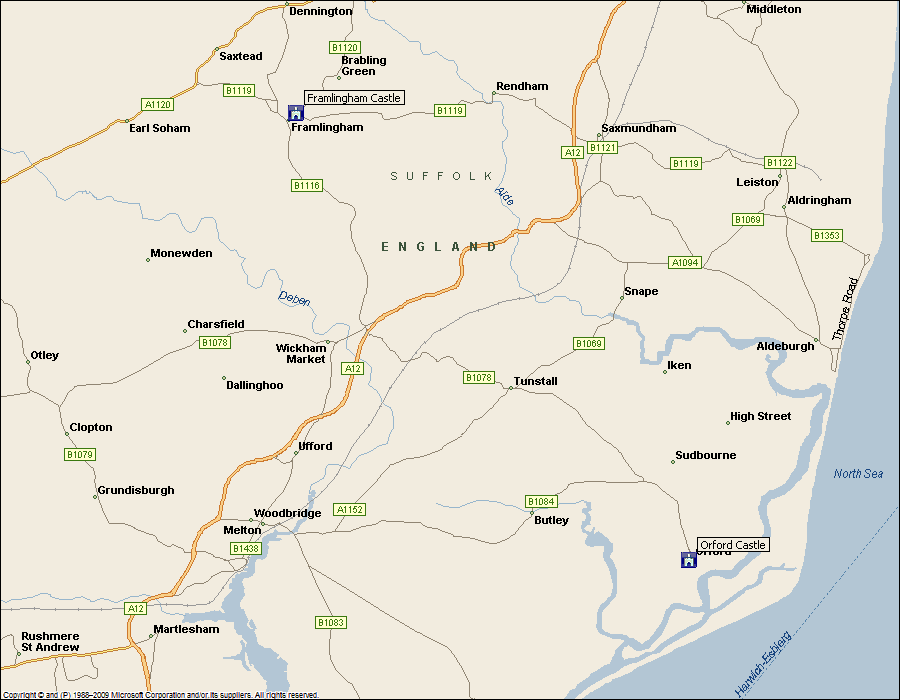
It was a beautiful day on Saturday so R, E and I decided we would like to go out for the afternoon.  We would have liked to go to the beach but at this time of the year the beaches are very busy and the car-parks full so we decided to visit Orford.  We hadn’t been there for years and we couldn’t remember having been there in warm weather before.  It takes about forty minutes to get to Orford from our house and we first travel south on the A12 towards Ipswich, the county town of Suffolk.  We then turn off eastwards and drive past Snape where I took my mother last month.

orfordmapl

A map of part of Suffolk showing Orford (bottom right) and not showing north Suffolk where I live

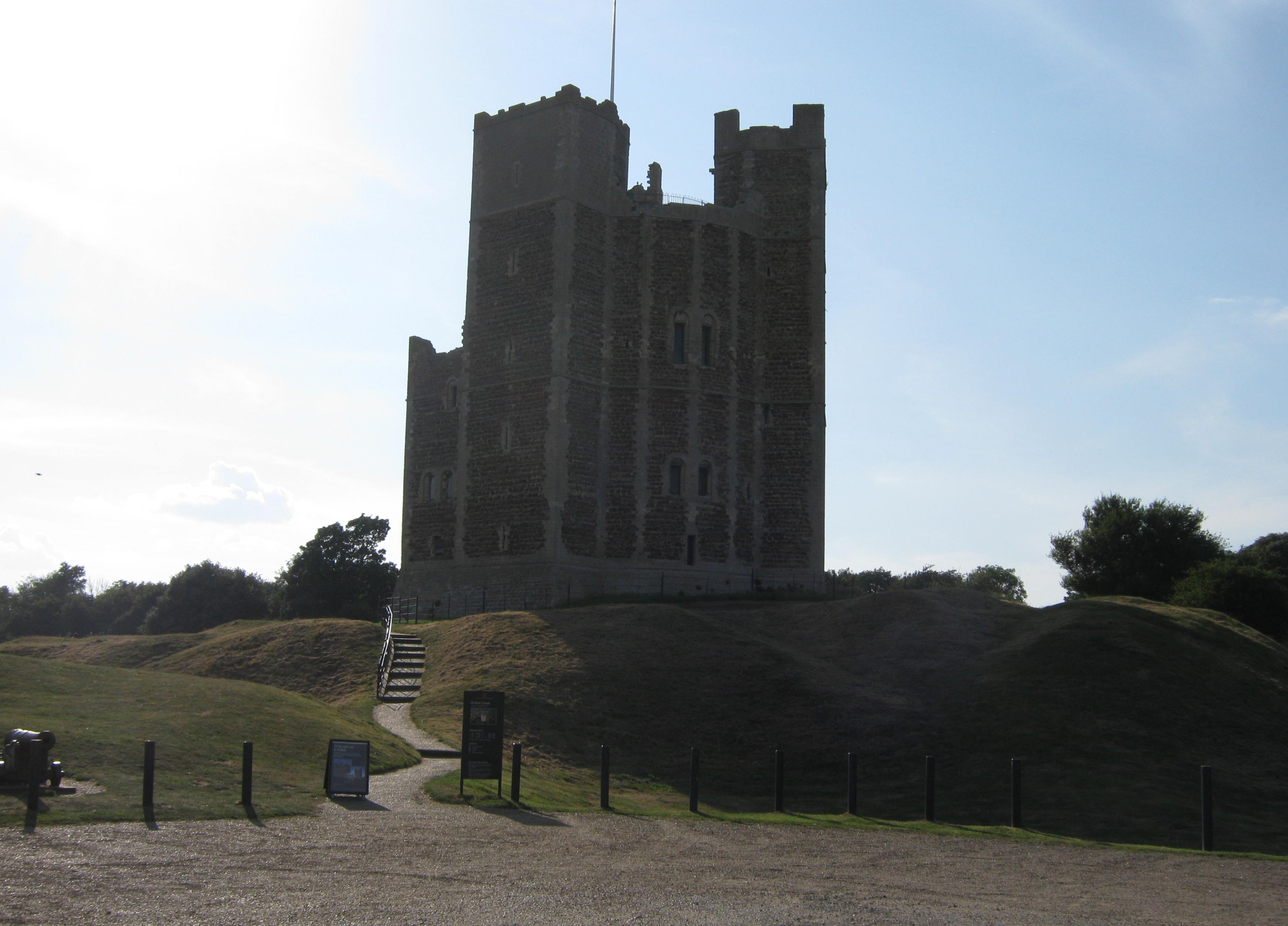
I always think I am going to get lost and am always surprised when I don’t.  I was surprised to find I got to Orford with no trouble at all and I even managed to squeeze the car into the last space in the car park. The castle is very impressive.

148Castle

Orford Castle

Acknowledgements to the English Heritage guide book. The castle was built by King Henry II who reigned from 1154-89 and it took about eight years to build, 1165-73.  Though a formidable king, he had almost constant trouble from rebellious barons, his problematical family and his one-time friend, Thomas Becket. The castle was built to proclaim his authority to the barons of East Anglia, especially Hugh Bigod, Earl of Suffolk and to protect the coast from foreign attack.  It is a grand domestic residence as well as a defensive structure.  The castle has a unique design and amazingly the building accounts for the whole period of its construction still survive.  When the castle had been built, a new church, a new street plan and improved port facilities in the surrounding village followed on. Almost as soon as the castle was completed it helped defeat a rebellion by the united forces of Henry’s wife, Queen Eleanor of Aquitaine and their three sons, the French king and Earl Bigod.   Orford was to remain an important royal castle for another 150 years and was controlled by the king’s constable.  It served as a military stronghold and a centre of local administration. I am fascinated by this period in history.  I remember going to see the 1968 film ‘The Lion in Winter’ when it was re-shown in cinemas in the 70’s; a film based on the Broadway play by James Goldman.  The film is full of brilliant actors – Peter O’Toole, Katharine Hepburn, Anthony Hopkins, John Castle, Nigel Terry, Timothy Dalton – and at the time I thought all the men so good looking – a feast for the eyes! Poor old chaps they are now, but then I’m no spring chicken myself!

hb_orford_castle

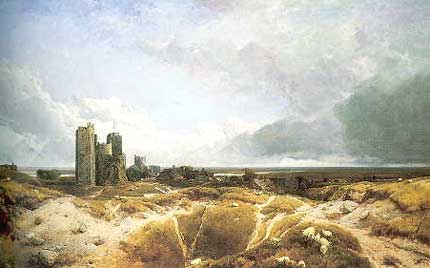
Orford Castle and village by Henry Bright 1856

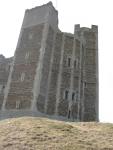
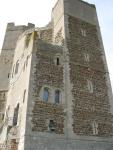
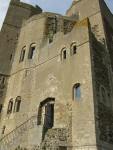
The keep of the castle survives to its full height and can be seen from afar.  It is cylindrical within and polygonal without and has three buttresses.


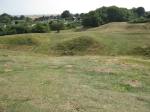
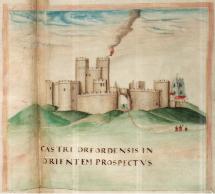
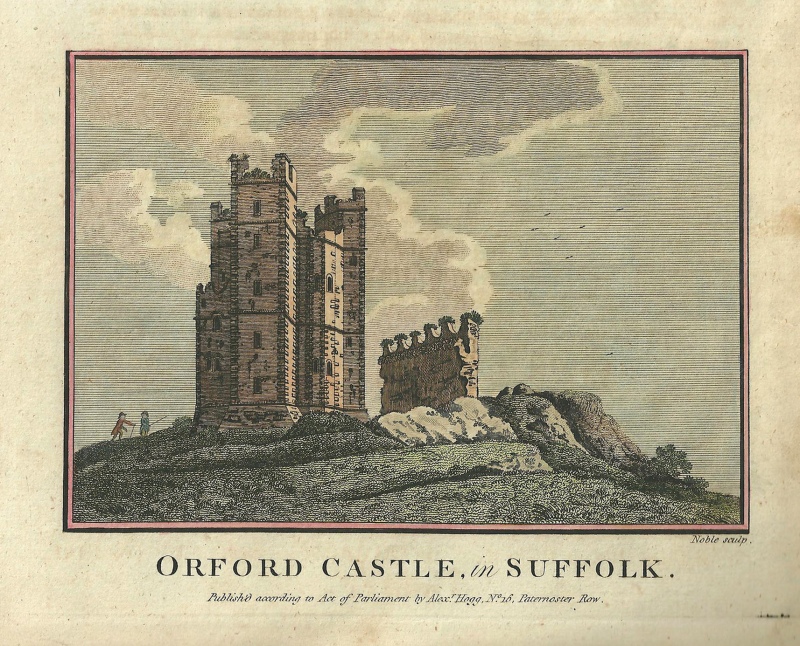
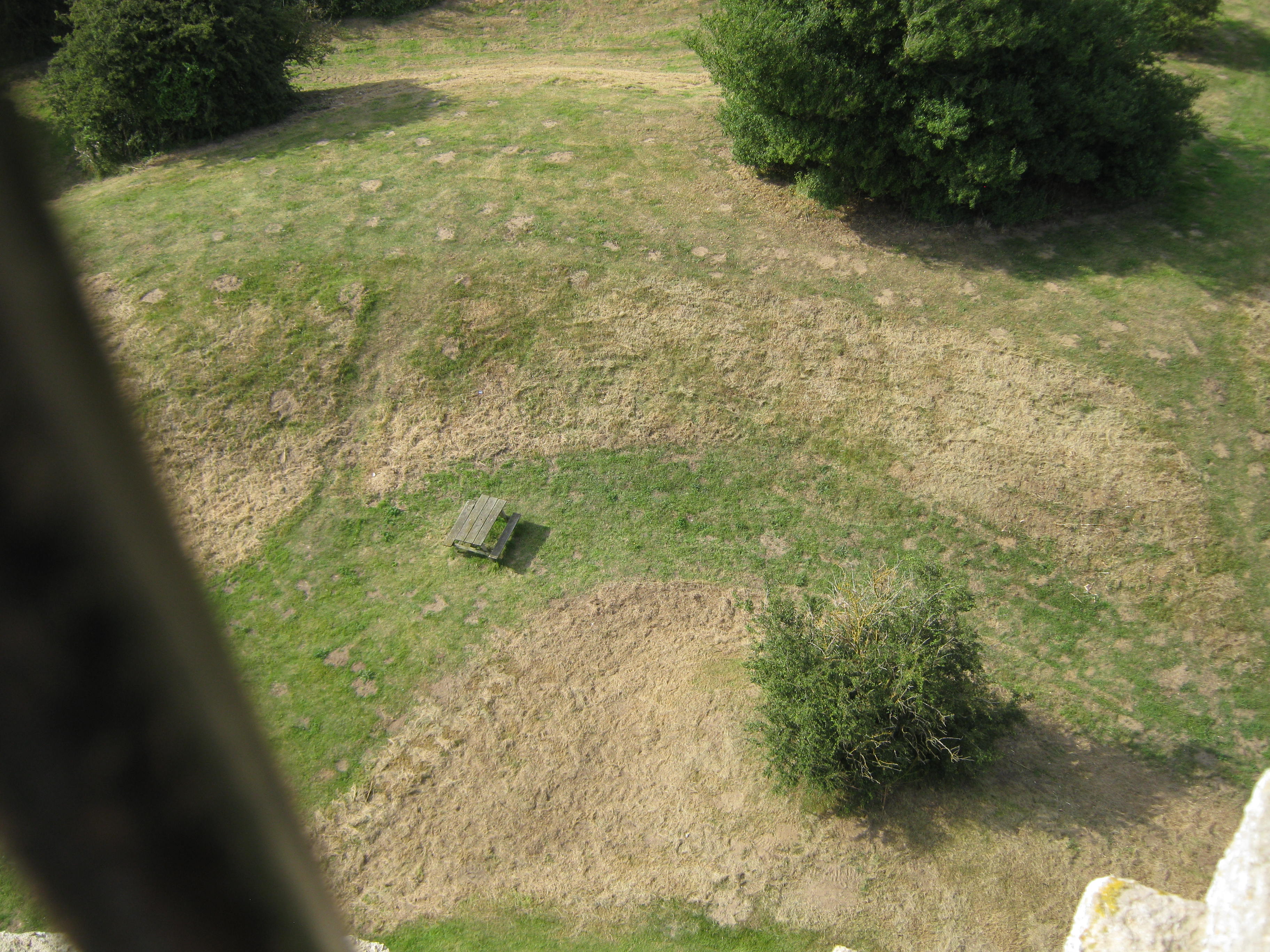
As you can see from the photos above the castle is very bulky and angular.  The top left photo is of the earthworks round the castle.  The part of the castle that remains is the keep.  Immediately surrounding the keep is the bailey (a courtyard) and round the bailey was a curtain wall.  The curtain wall was the last to be built and probably had six projecting towers and a gateway.  An outer ditch lay some distance in front of the wall (perhaps the bailey was originally intended to be larger).  The deep ditches that can be seen close to the keep nowadays are probably the result of the demolition of the curtain wall and the quarrying of its stone for re-use elsewhere.  The last fragment of the curtain wall collapsed in 1841 ‘with a tremendous crash’.
pic22200112norde

This is a water colour painting of the castle by John Norden c. 1600 before the loss of the outer walls and towers

ORFORD-CASTLE-in-SUFFOLK-by-Noble-Hogg-c-1786

This was drawn by Noble/Hogg in c. 1786 which shows how much of the curtain wall had been destroyed during the preceding 180 years

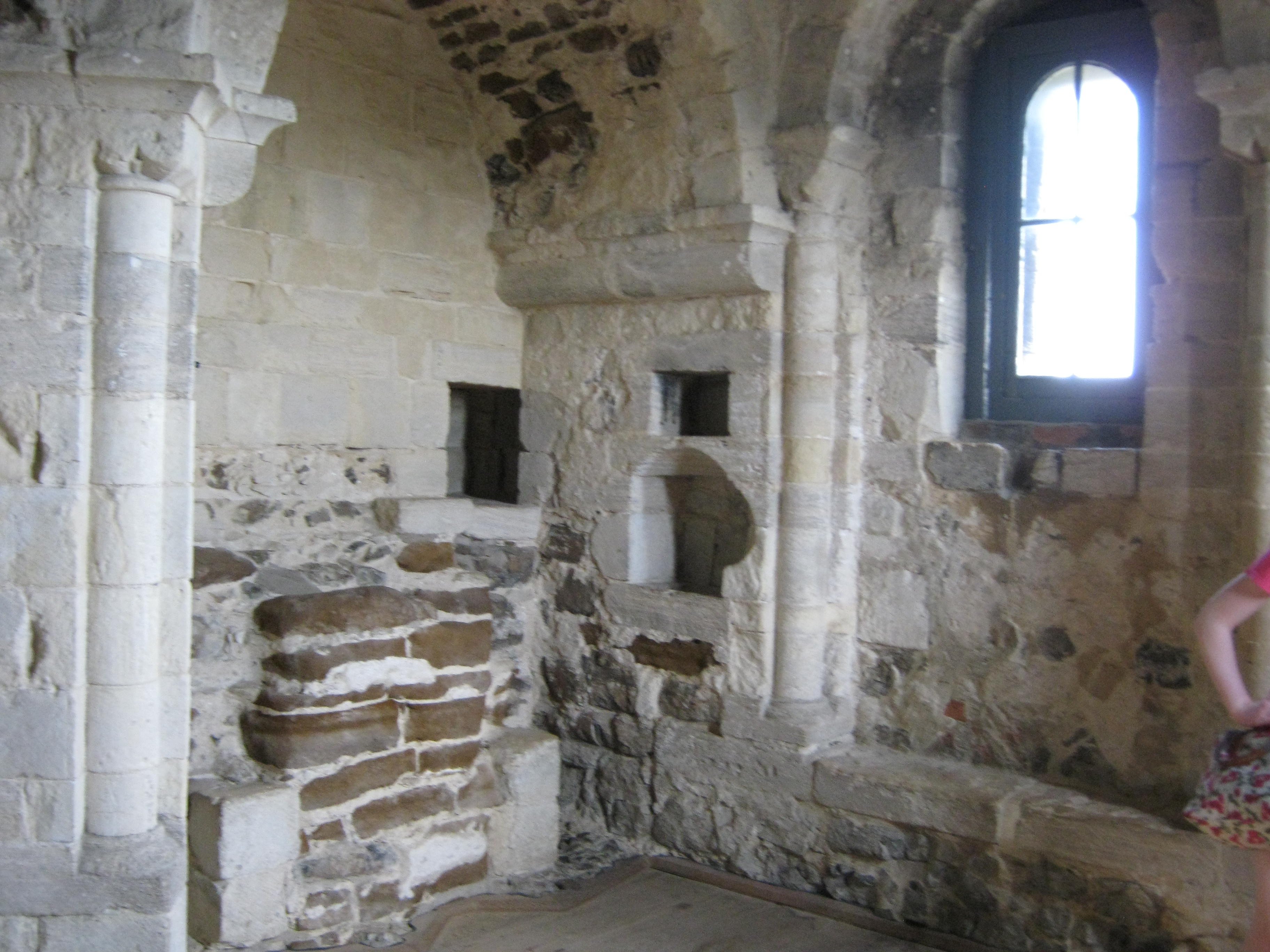
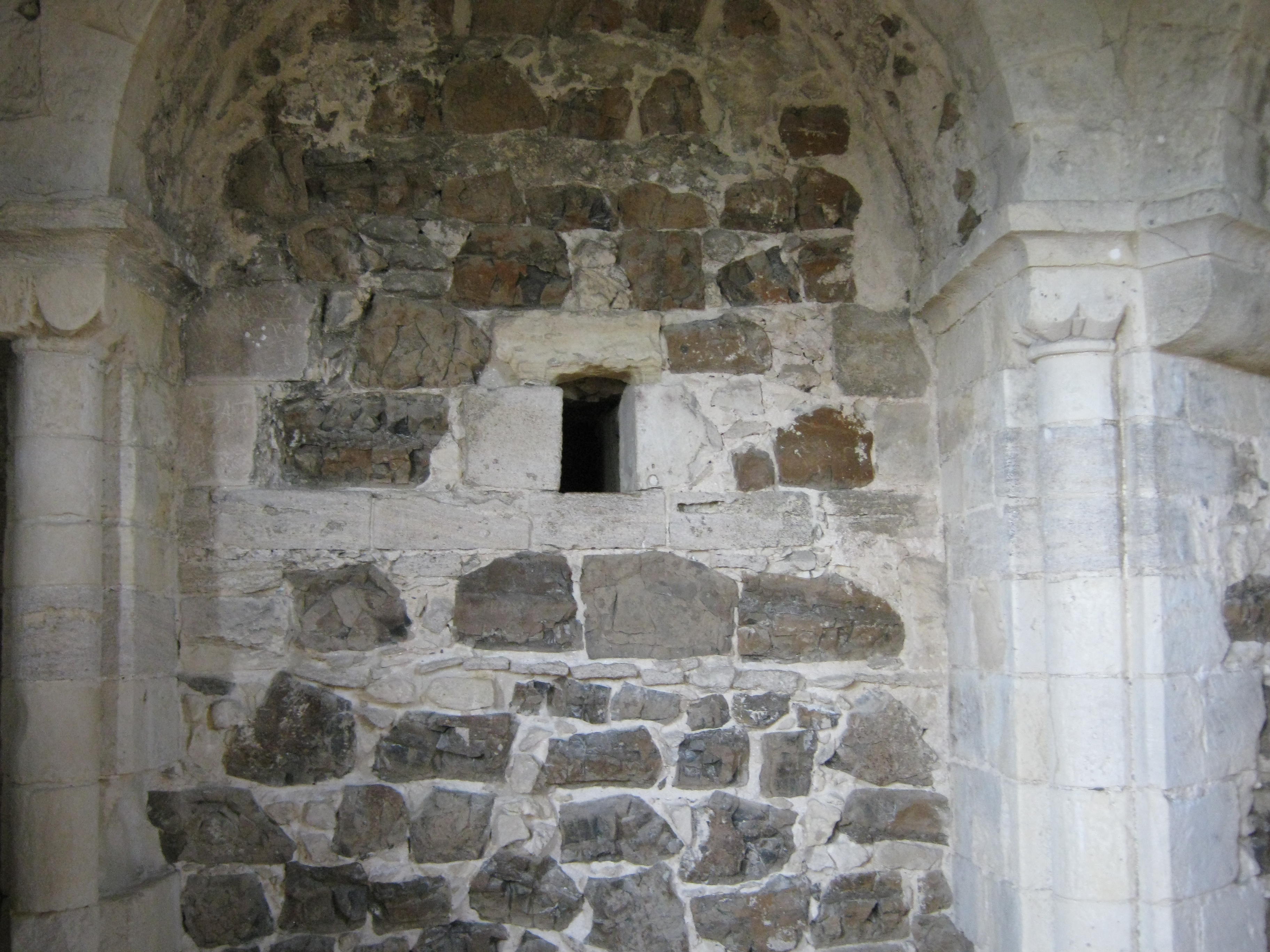
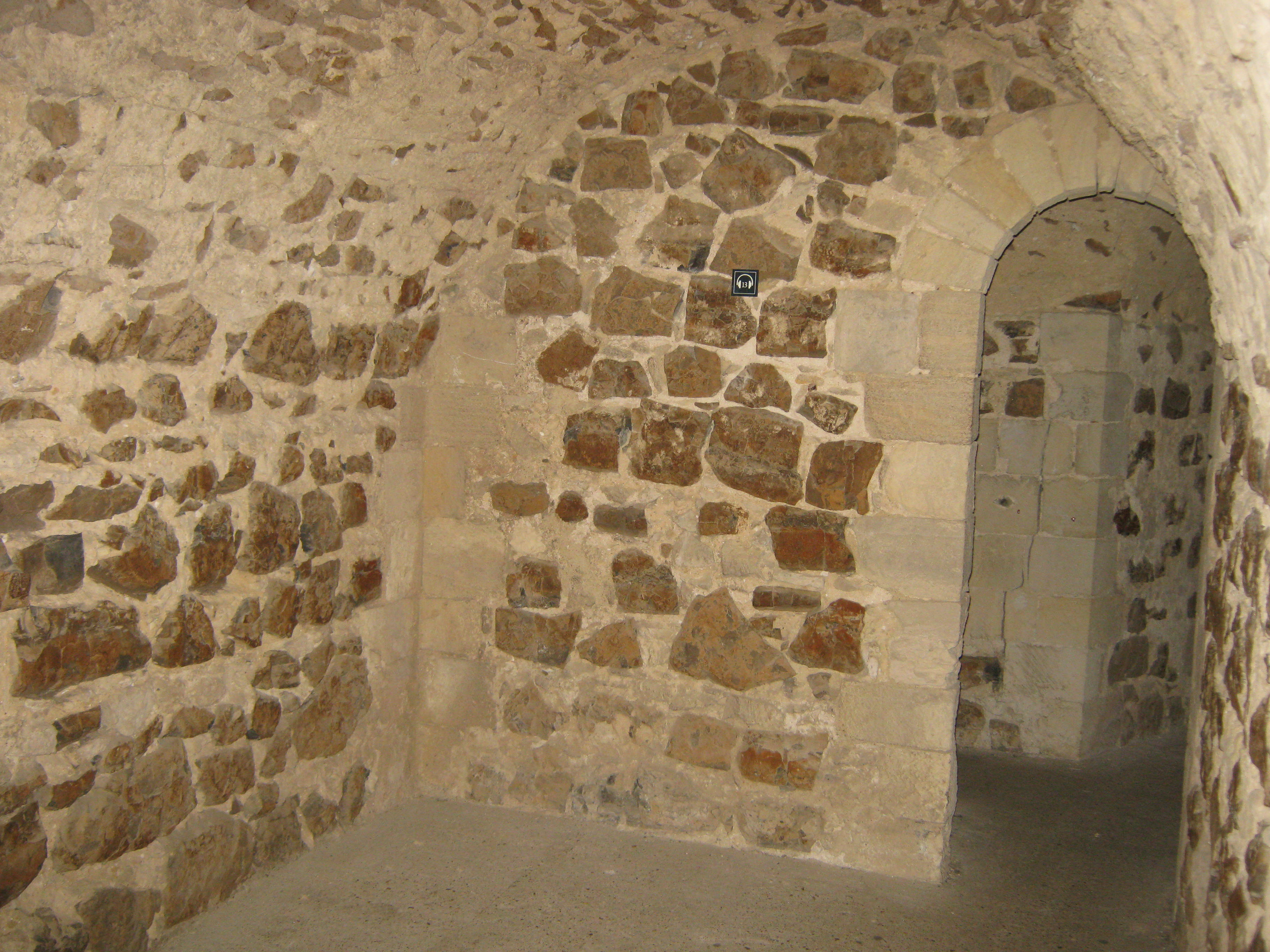
The keep contains two circular halls, one above the other and each hall has its own two storey suite of rooms arranged within the turrets and the thickness of the walls.  The hall windows are quite large but the rooms in the turrets have only slit windows.  Underneath the lower hall within the sloping plinth is a basement for storage with a well, the water of which was probably rather salty.

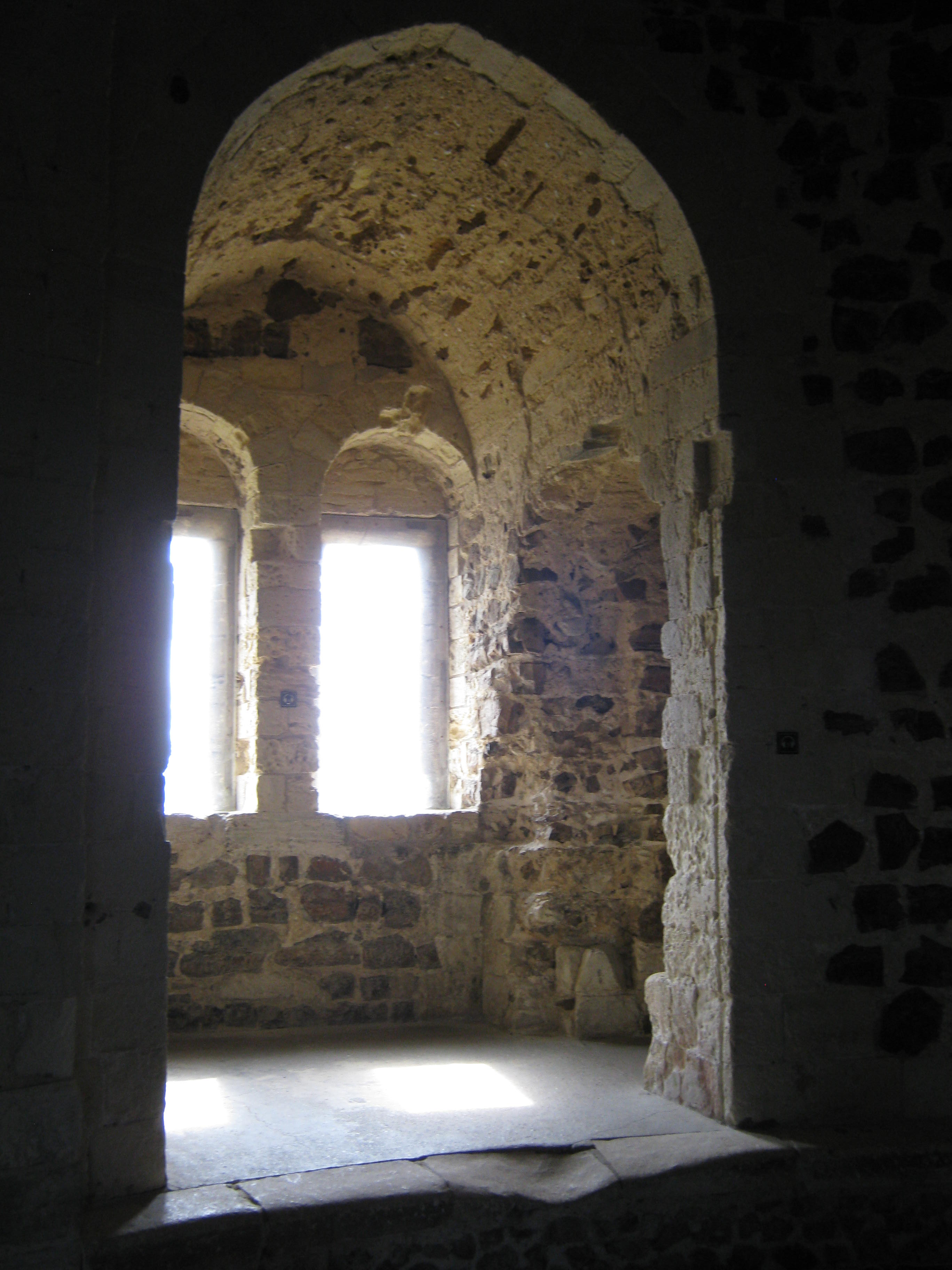
032Window alcove

Window alcove in the Lower Hall

Notice the wear on the step up into the alcove.  This was the way to the kitchen and you can imagine all the kitchen scullions carrying countless dishes of meat and jugs of wine and beer into the hall over this step.

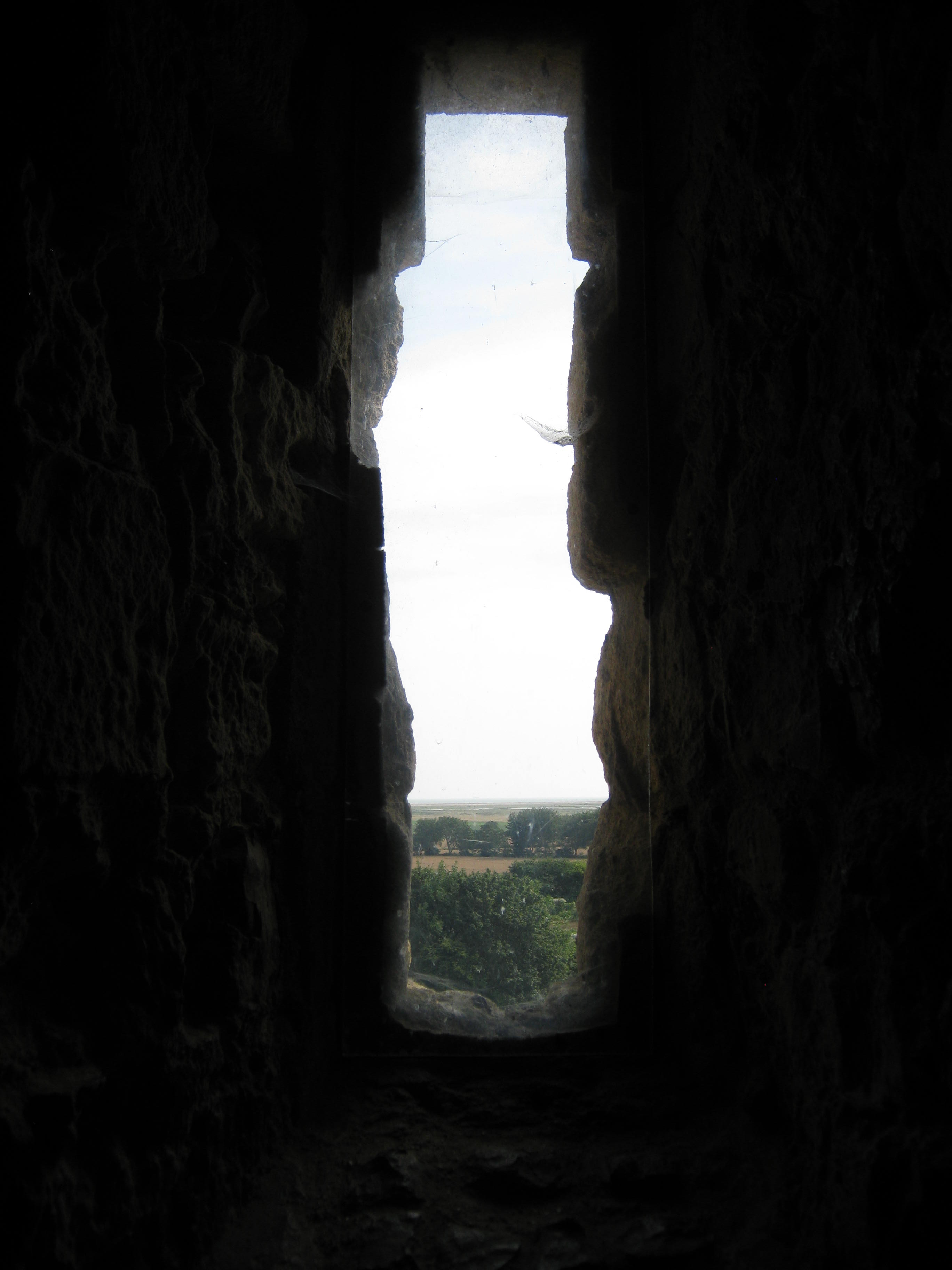
033Slit window with view

A slit window

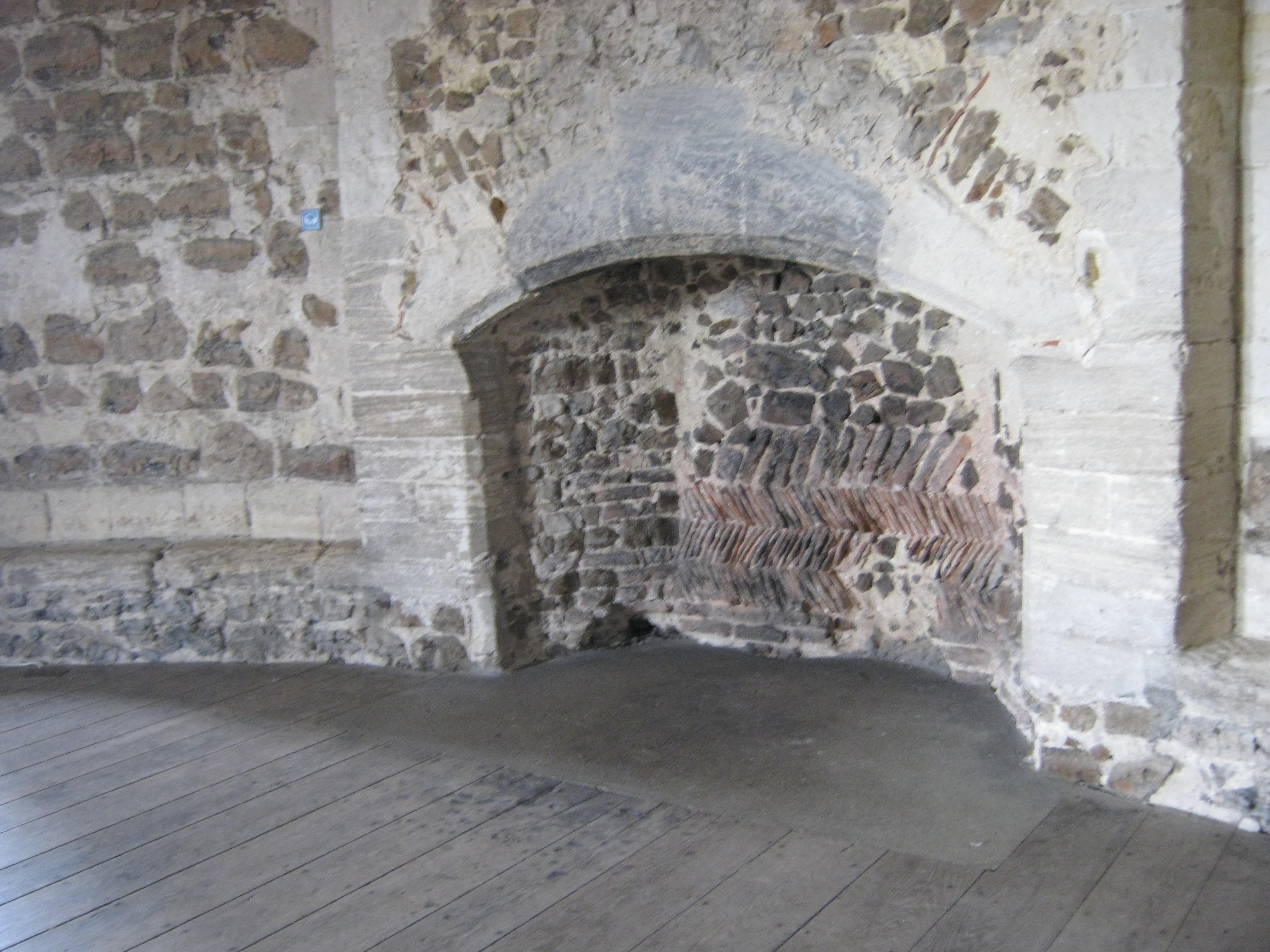
The Lower Hall has a large fire place.

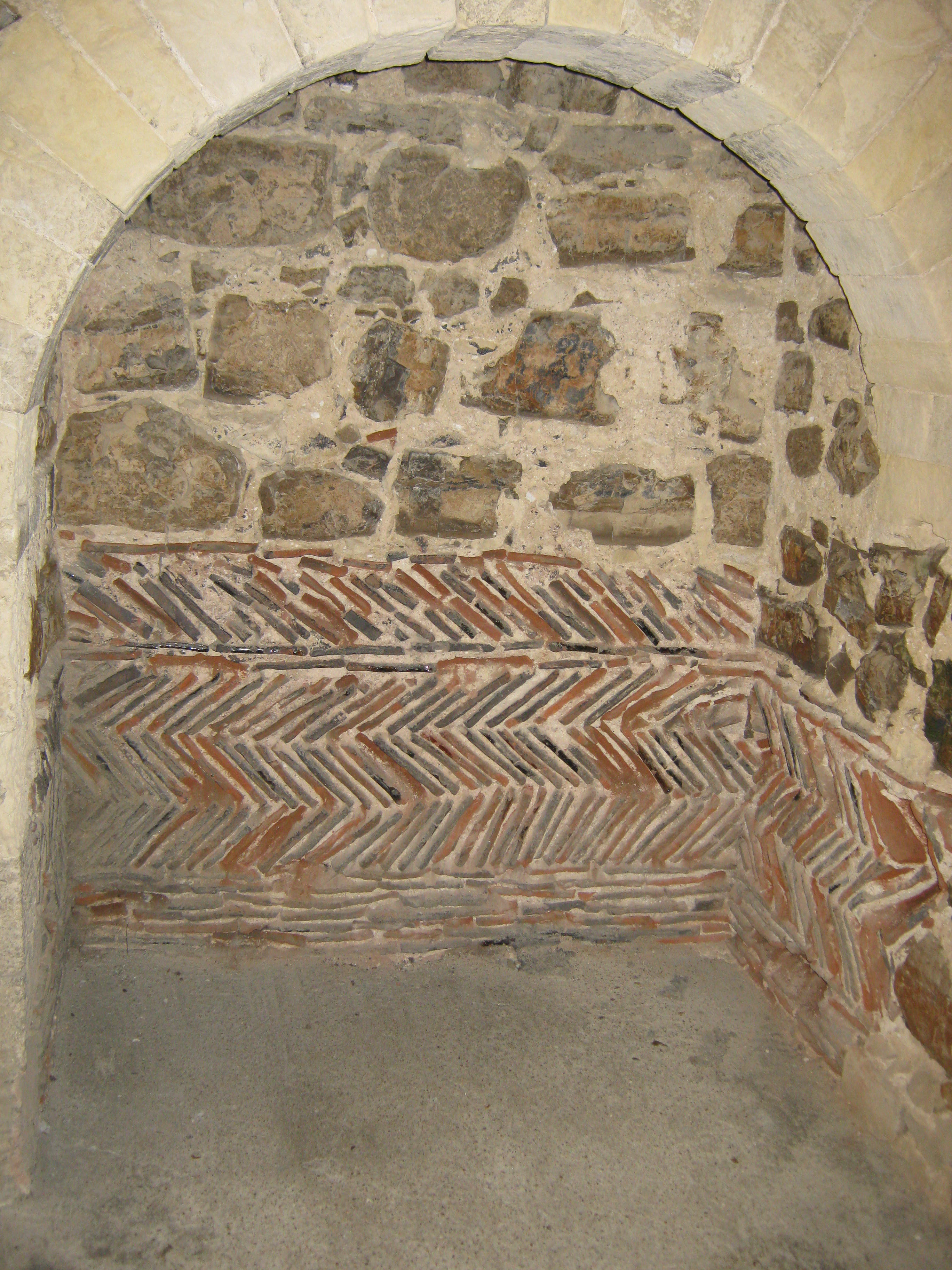
031Lower Hall fireplace

Notice the stone bench which encircles the hall

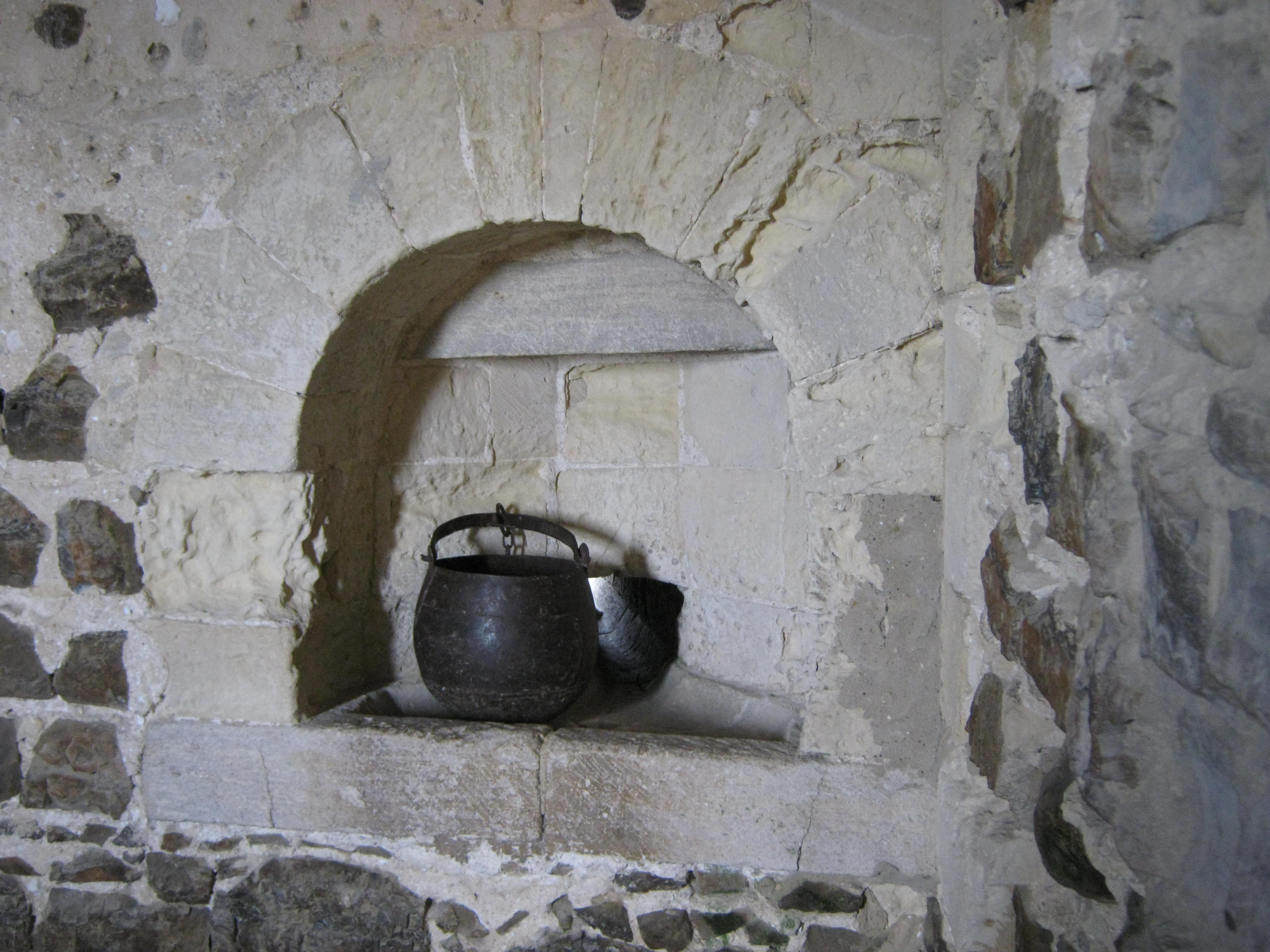
The kitchen has two small fireplaces and a stone sink which would have been adequate for cooking for the small number of people who were the normal residents of the castle.  When there was  major feast with many guests there was probably a larger kitchen outside in the bailey and this kitchen would have been used for heating food.  If the castle was under attack then this kitchen would have been essential.
034Stone sink with drainage hole kitchen

Stone sink with drainage hole to the outside just visible behind the pot

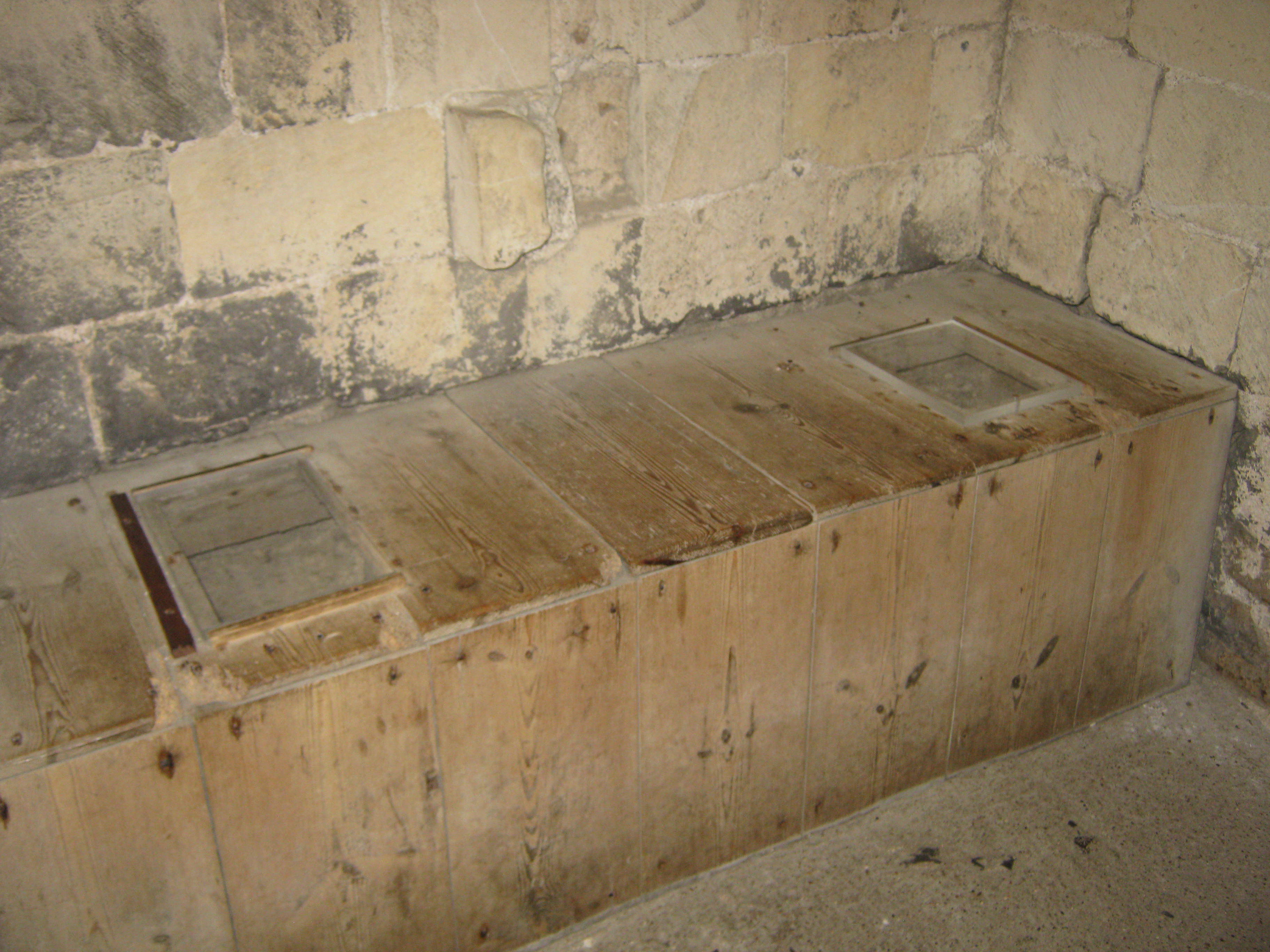
The next picture is of something that always fascinated our daughters when they were little.
036Double latrine

A double latrine

There had been a short wall between the latrines but this was removed for some unknown reason during the Second World War when the castle was requisitioned by the government and a radar observation post was built on top of the south turret.  The latrines are in a garderobe, a cloakroom, and possibly ammonia given off by the latrine may have helped to protect any robes stored there from insect attack.


A selection of passageways. The constable’s chamber is accessed from the Lower Hall and is up a spiral staircase from one of the alcoves and along a passage in the north turret.  For some reason we didn’t go up there so no photo.  There is another chamber for middle-ranking guests off the Lower Hall.  The main doorway to the main stair which fills the south turret and connects all levels of the keep from the basement to the roof is also accessed form the Lower Hall.

116Stairs down

Looking down the stairs

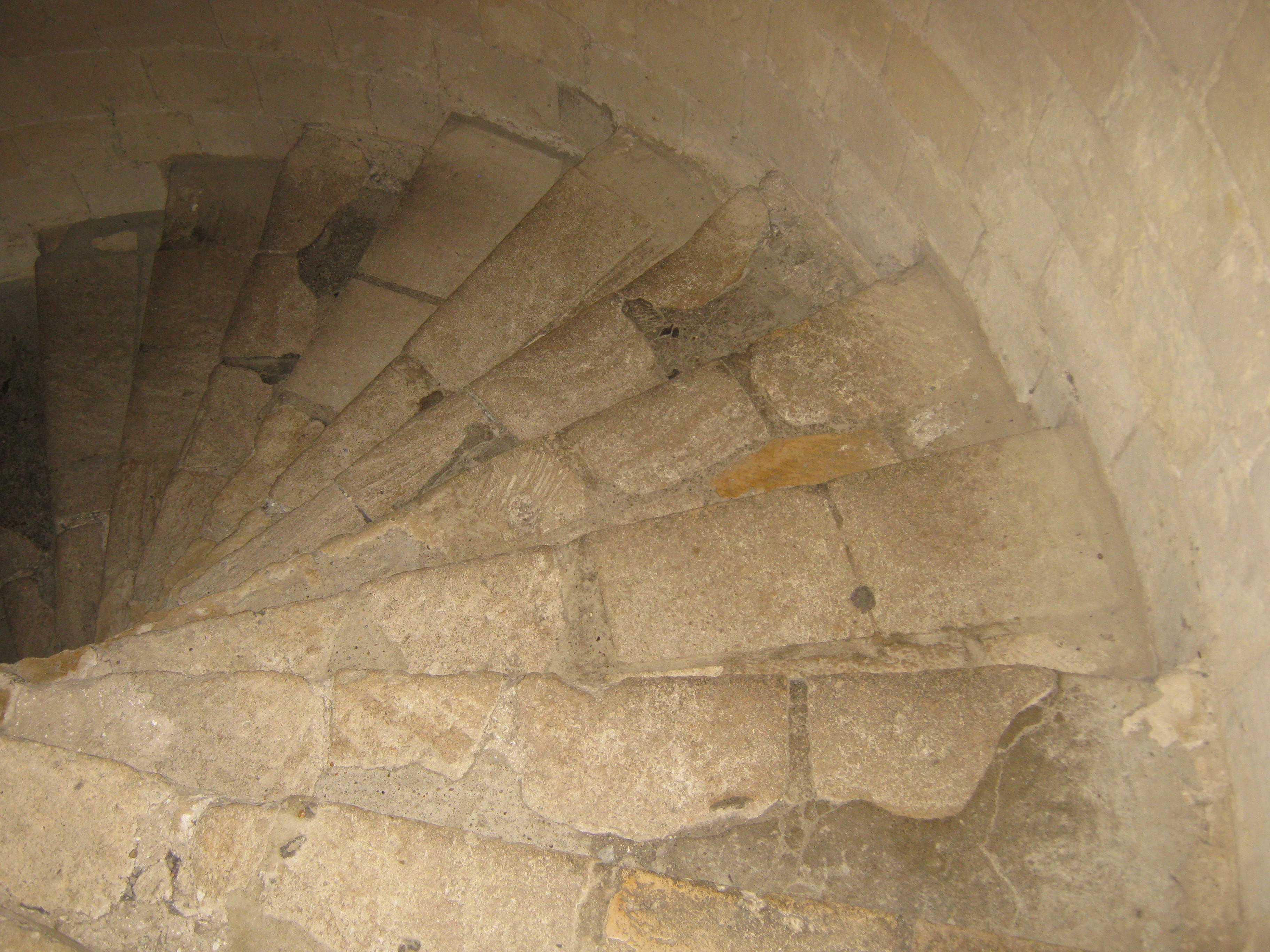
Like most stairs in castles, this one rises clockwise, giving a right-handed defender space to wield his sword while hindering an attacker coming from below. We then went up to the chapel and chaplain’s room which is, like the constable’s room, half way up the keep between the Lower Hall and the Upper Hall.

050The chapel

The chapel with the altar to the left

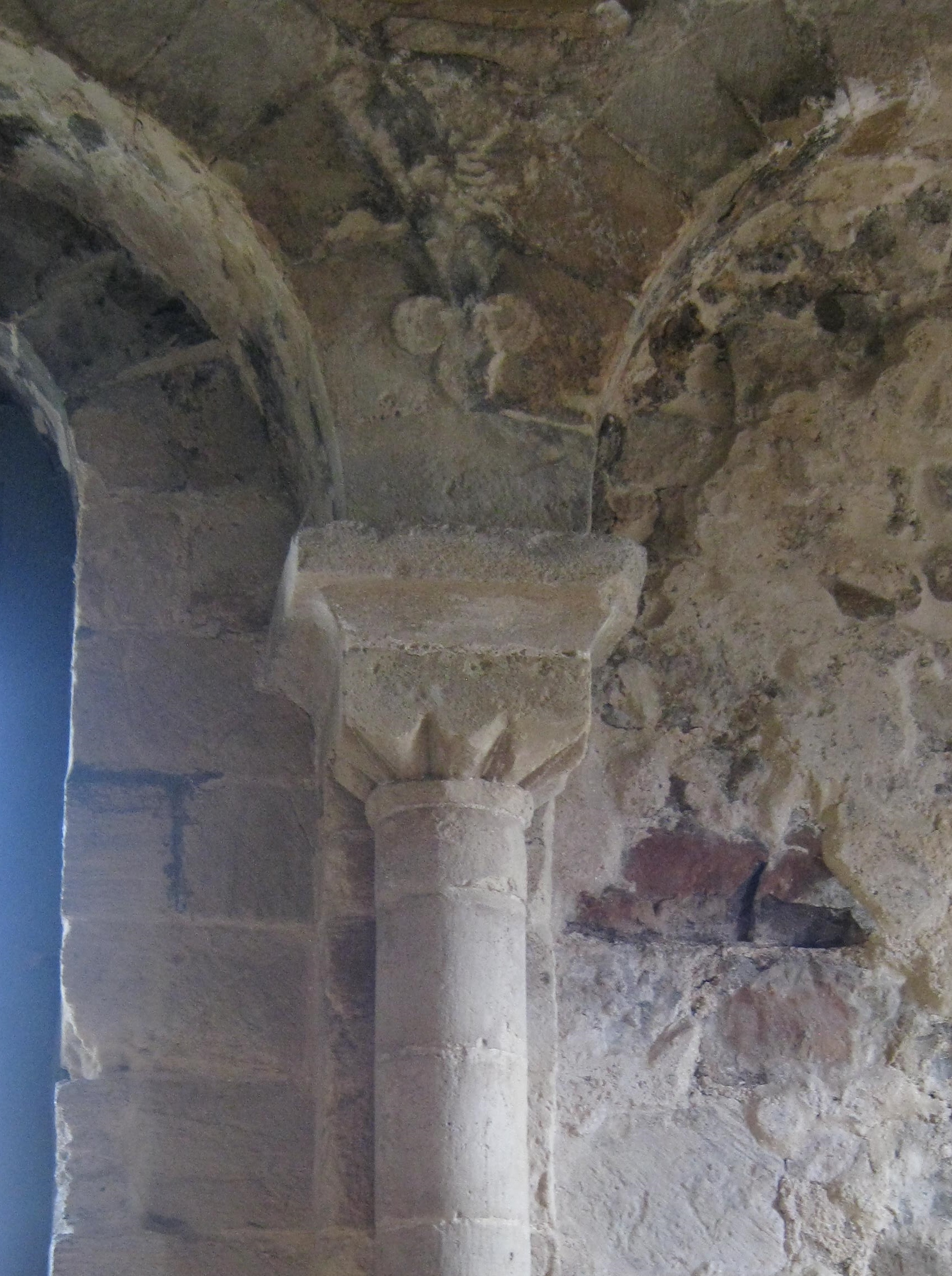
You can also see E’s elbow on the right.  This is the most richly decorated area in the keep. 051Decoration at top of colomn There is a squint to the left of the altar that allowed people to hear divine service from the passage.

053Squint

The squint

The chaplain’s room is further along the passage.  Beyond his room he had his own latrine and a store-cupboard for his clothes and books.

055Chaplain's chamber

Chaplain’s room with archway through to his cupboard and latrine

We then went up to the Upper Hall which is now holding the Orford Museum.

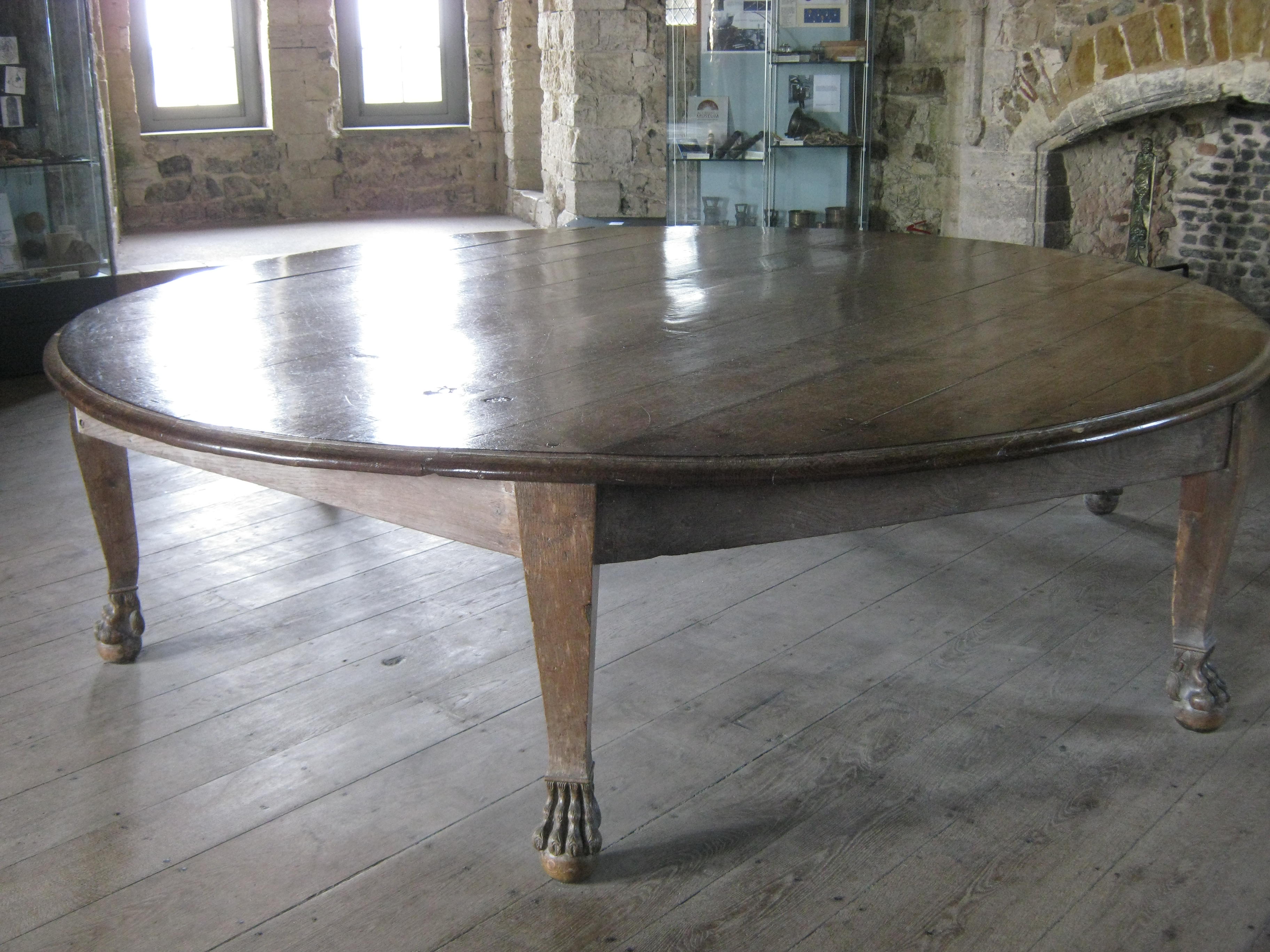
060Large table in Upper Hall

The Upper Hall

This would have been much more richly decorated than the hall below as this was where the most important visitors stayed, even the king himself.  The original form of the roof was a high conical or domed construction supported by thirteen projecting stone corbels around the walls.  Whoever designed this roof for Henry was highly educated, and by designing it to look like roofs in palaces in Byzantium he was associating the king with the great monarchs of antiquity.  The roof rotted and decayed away through the 17th and 18th centuries. An alcove off the Upper Hall leads to another kitchen for heating food prepared elsewhere.

084Drain in kitchen

Floor-level drain in the upper kitchen

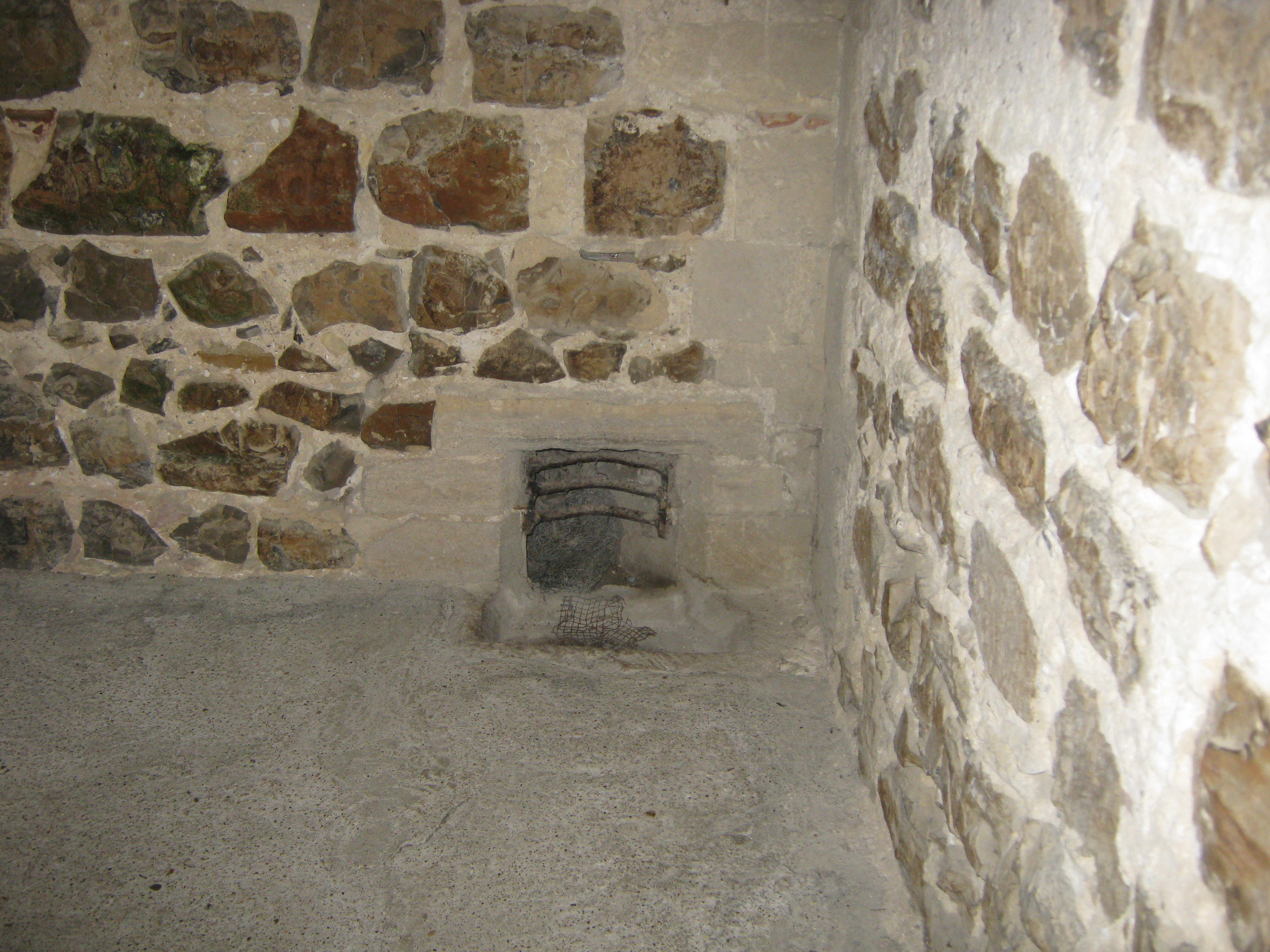
085Fireplace

Single round-arched fireplace in the upper kitchen

This room could also double as a washroom where visitors could bathe in comfort with water heated by the fire and then afterwards poured down the drain.  There is a sleeping chamber intended for grand visitors easily reached from the Upper Hall.  It also had its own latrine with two doors to keep odours at bay.  In another alcove there are a pair of large cupboards facing each other for the safekeeping of valuables and clothes.  There is evidence that there were large doors to these cupboards. Going further up the stairs we found another passageway leading to a lost gallery.

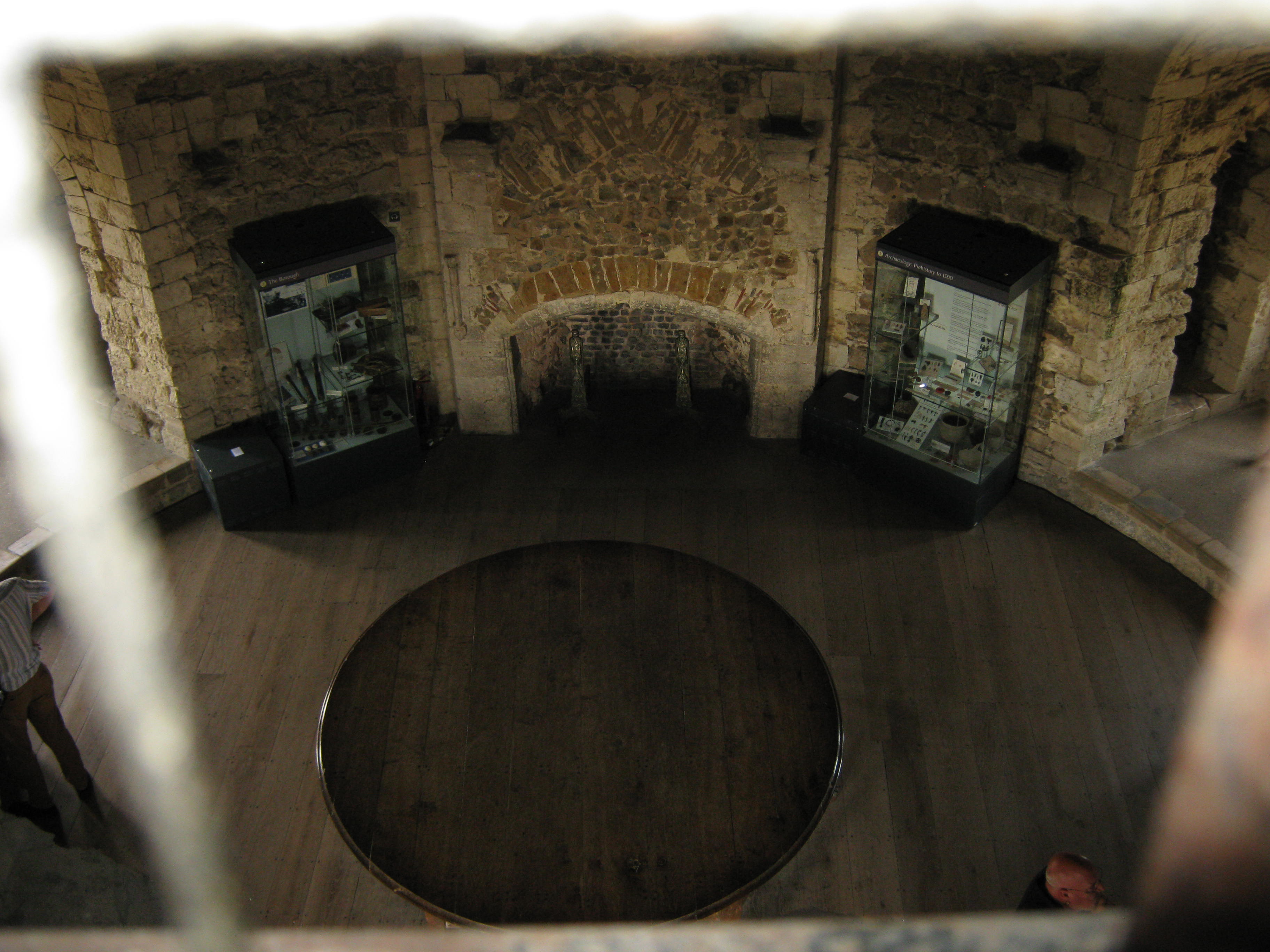
094View down from lost gallery to hall

Looking down into the Upper Hall from the end of the lost gallery

095View across to gallery's other door

Looking across to a doorway that the gallery would have joined

There is also a cistern on this upper level lined with finely dressed stone.  Rainwater was collected from the roofs and stored in this cistern and then distributed to other rooms through a system of pipes.

093Cistern

The cistern

We then went onto the roof where there is a bakery and also the reinforced concrete platform, erected during the Second World War, which was originally used as a gun platform but then adapted as a radar observation post.  The flat roof is modern with the turrets rising still higher.  The medieval conical roof would have kept below the level of the surrounding parapet, both now destroyed.  The tops of the turrets would have served as fighting platforms and watchtowers and were originally reached by ladders.

101Turret

A turret

110B C with 2nd firing chamber

Baking chamber in the bakery with a second firing chamber to the left

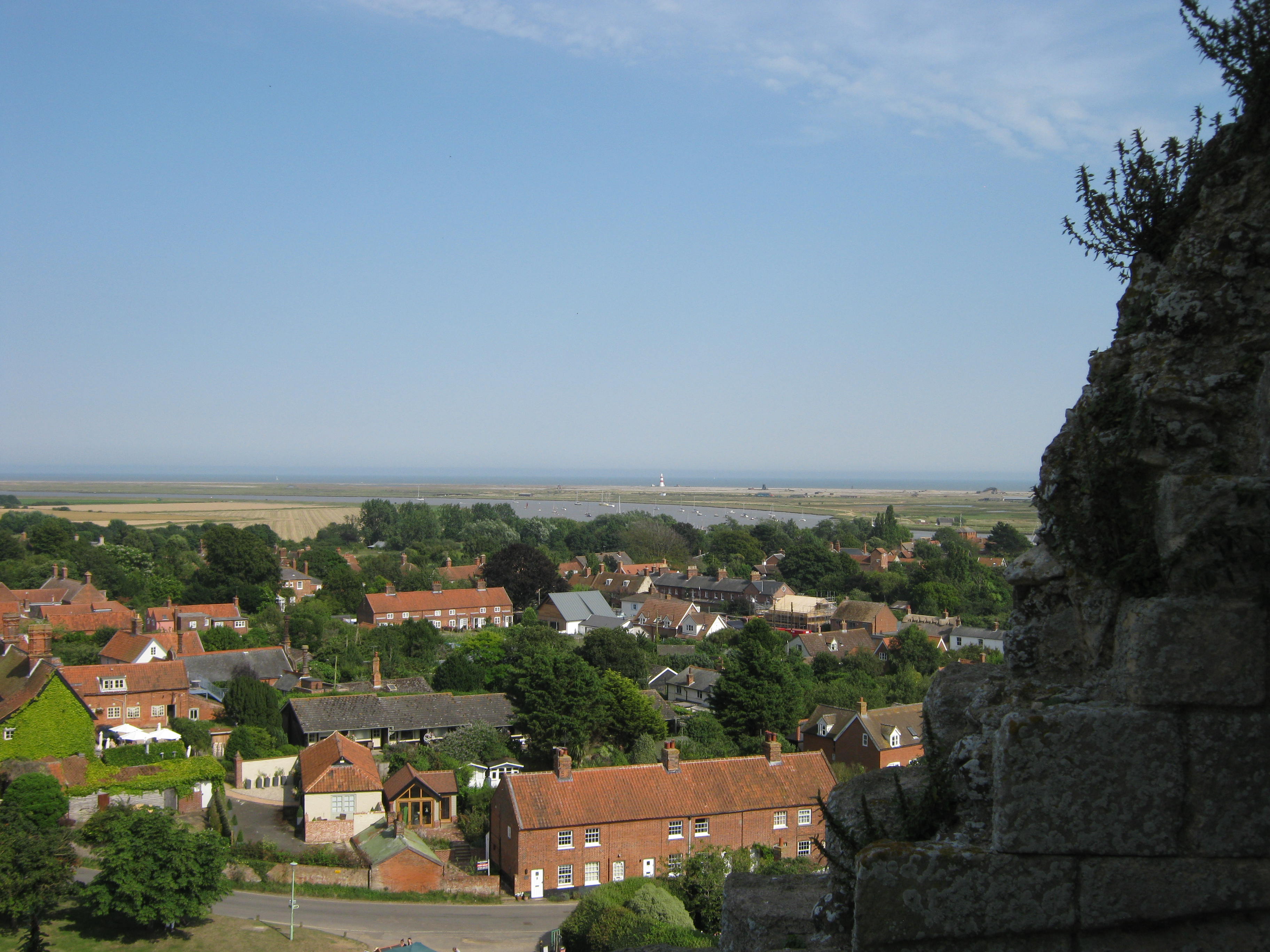
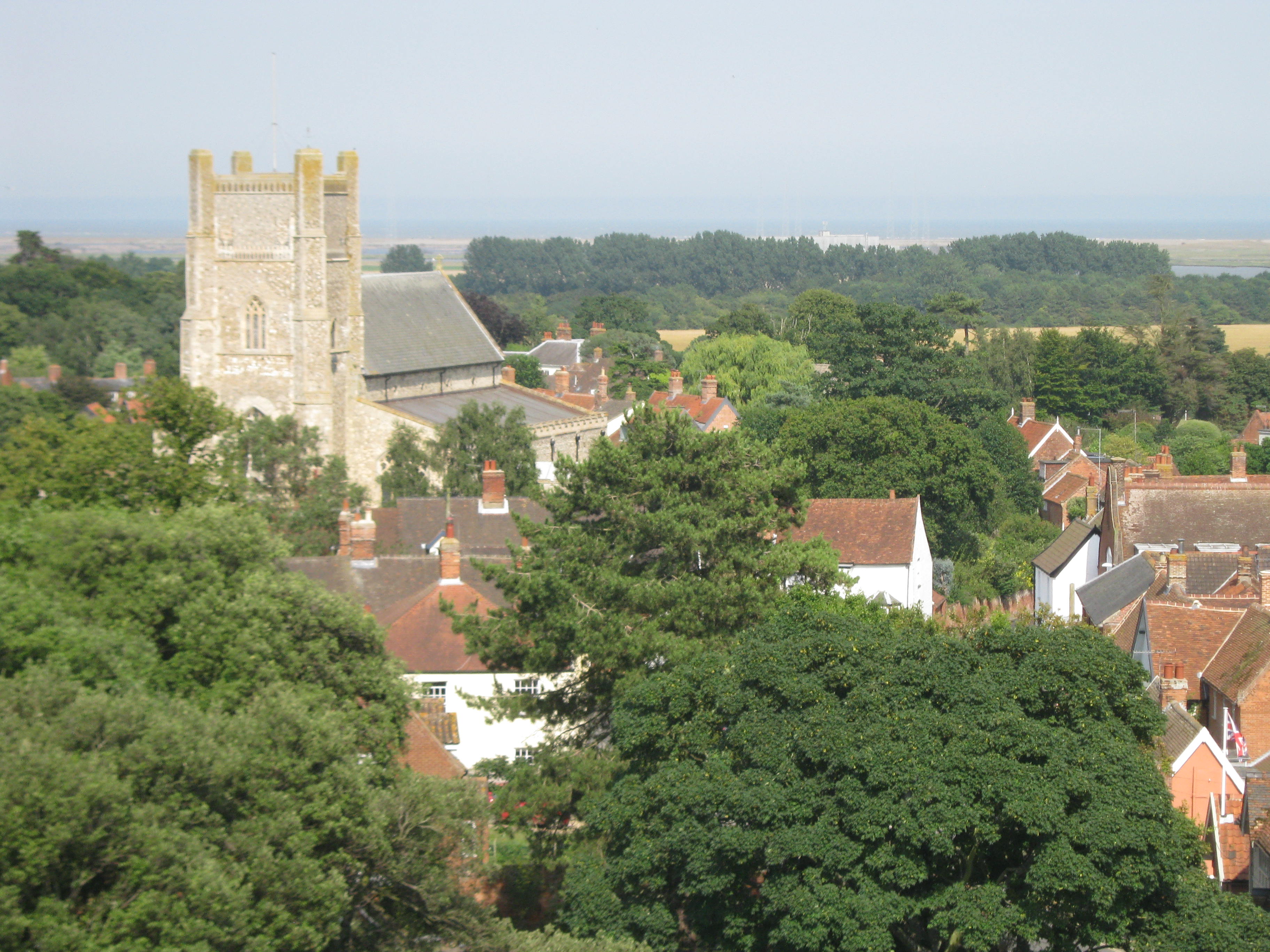
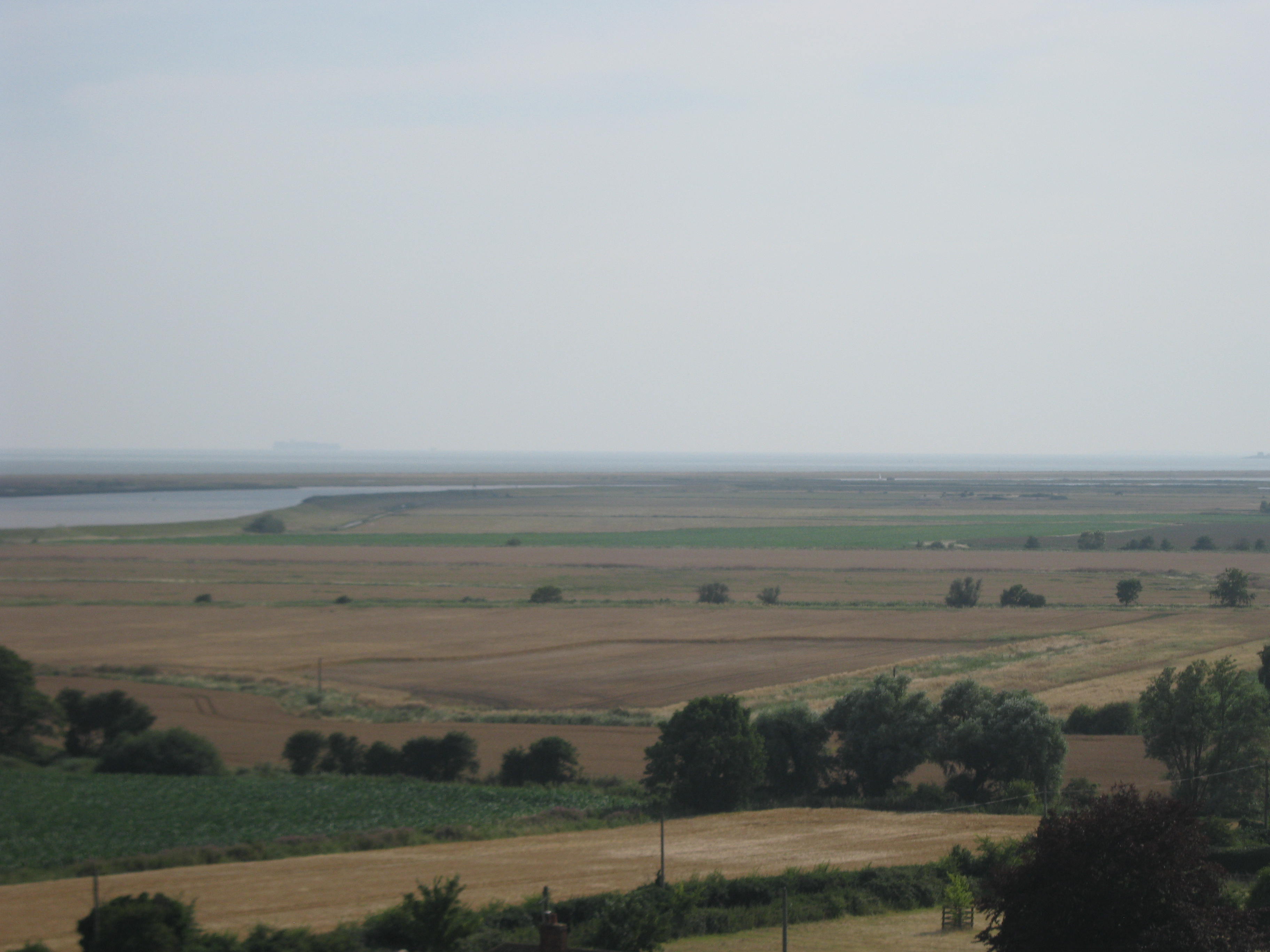
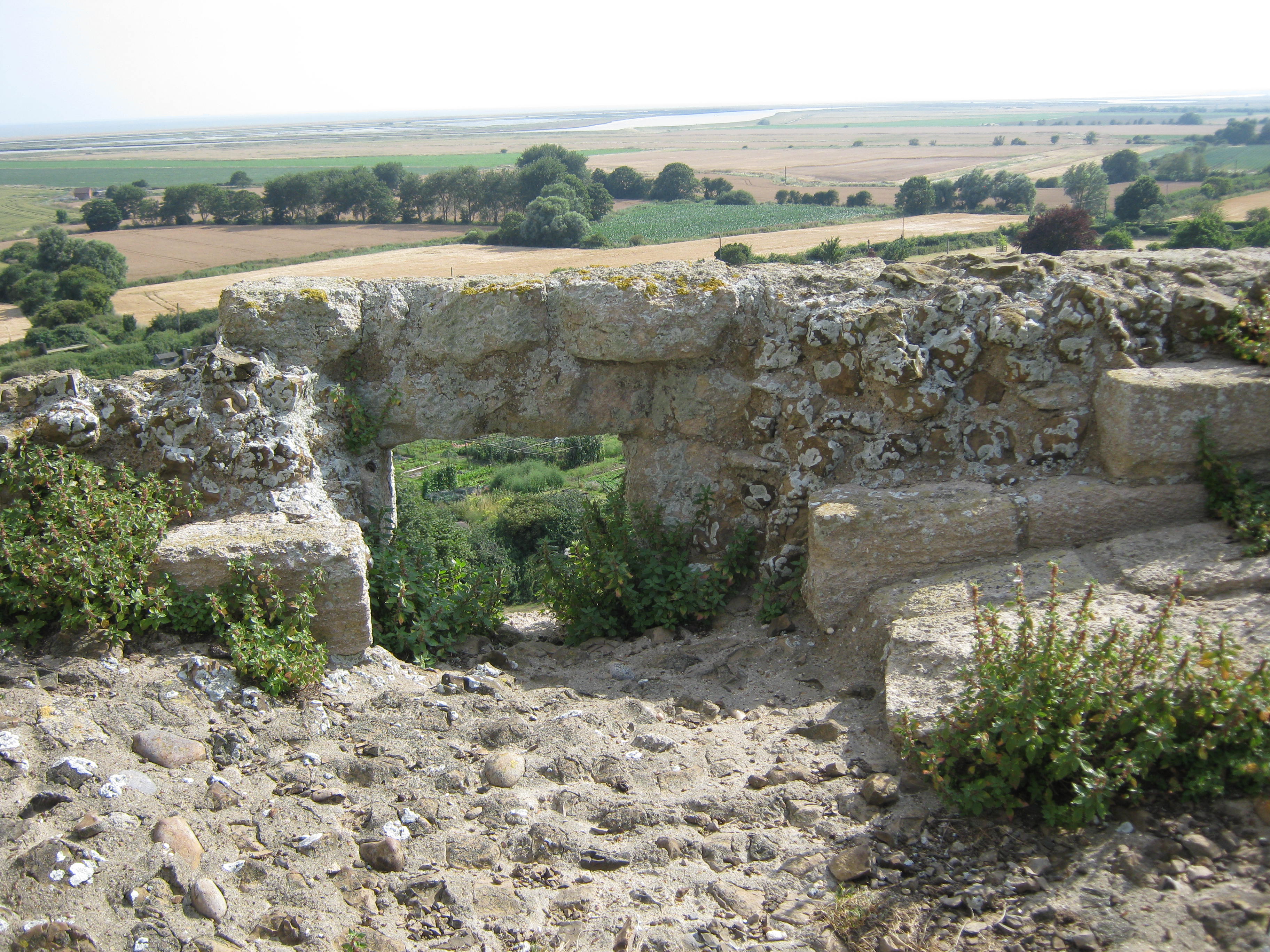
This is the view we saw from the top of the keep. 097View 098View 103View

105Top of castle

A small portion of the battlements is still there

113View down

Looking down to the ground from the top of the keep

112View of pagoda

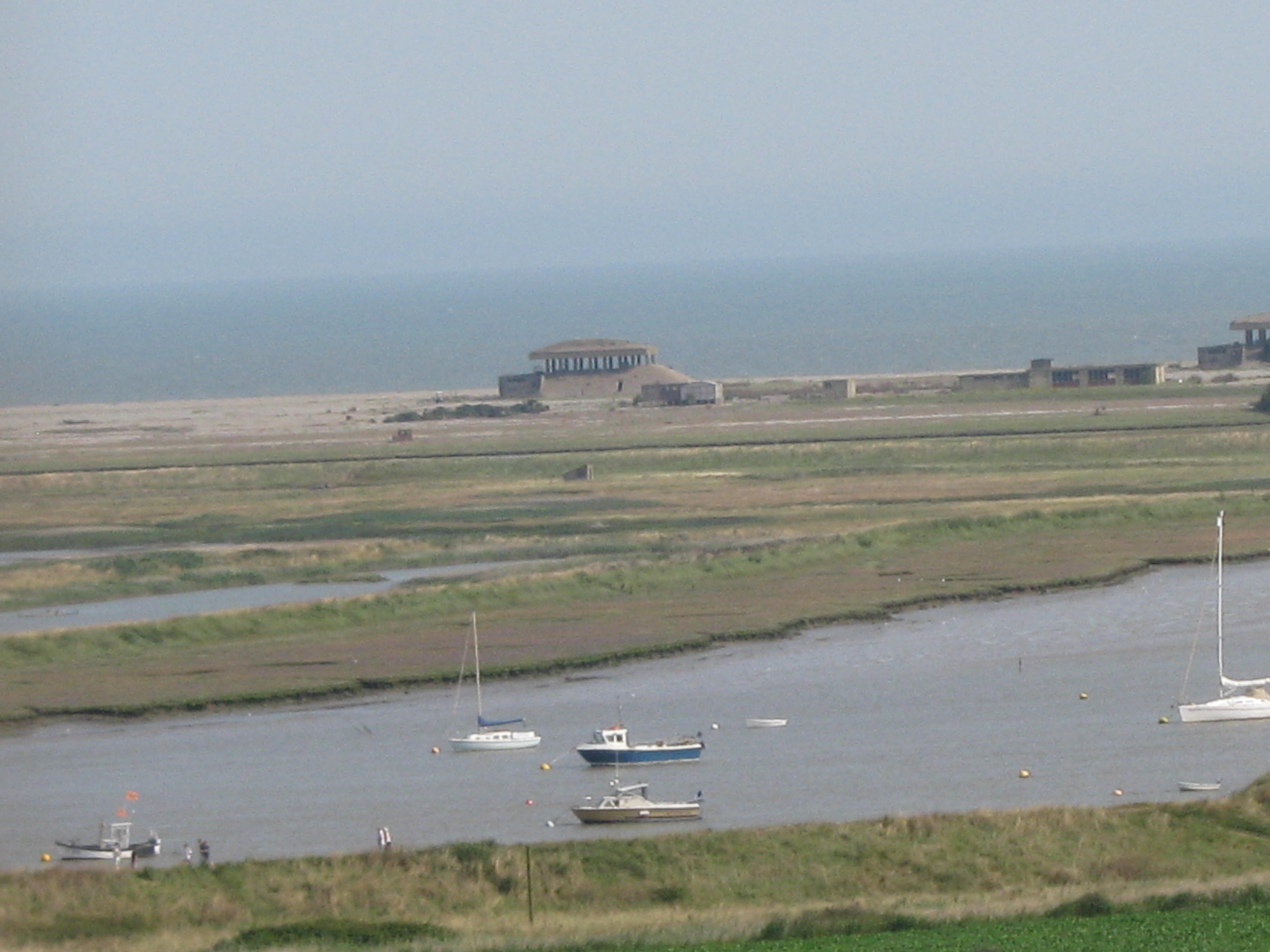
This view includes one of the ‘pagodas’ on Orford Ness

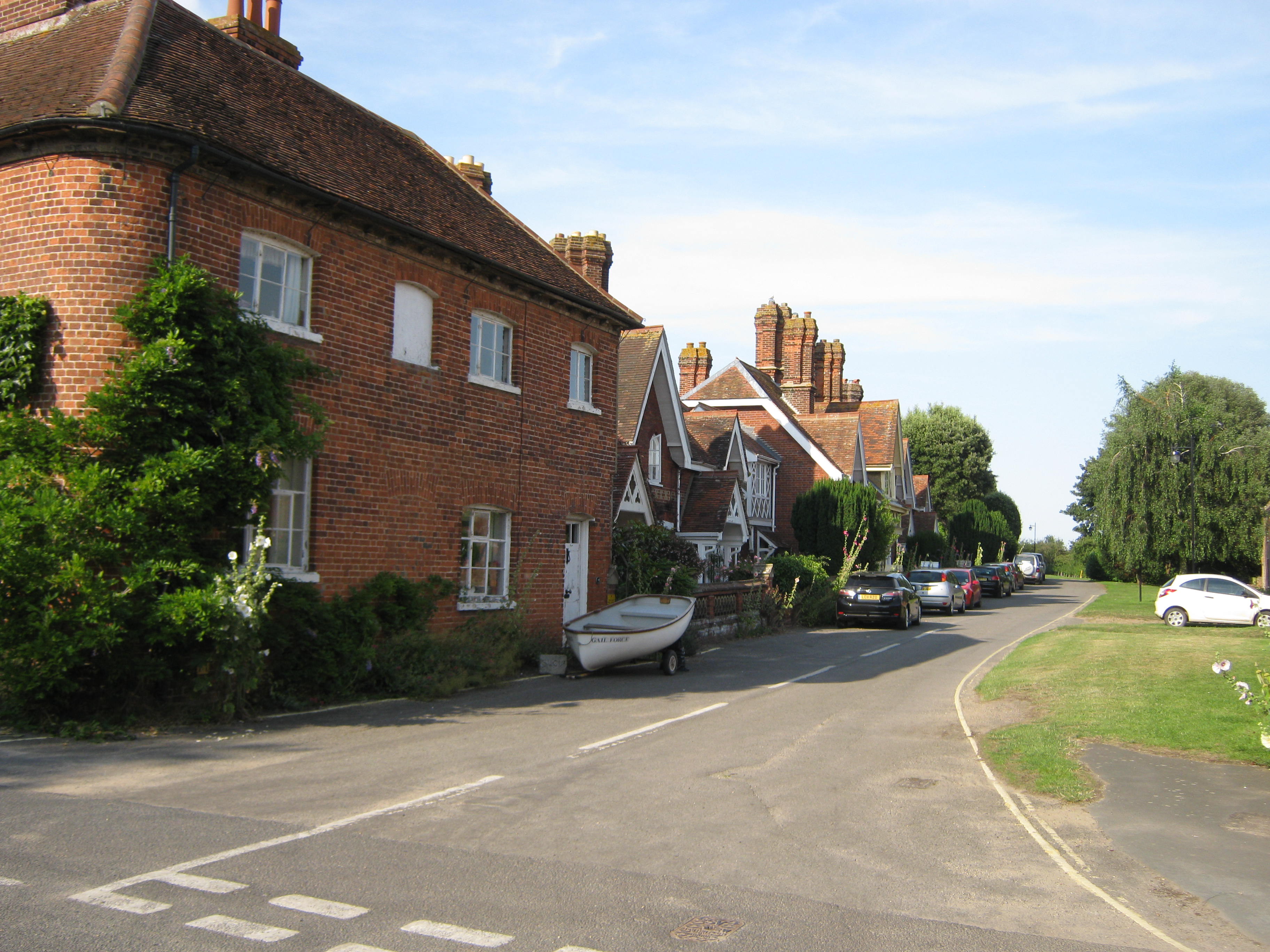
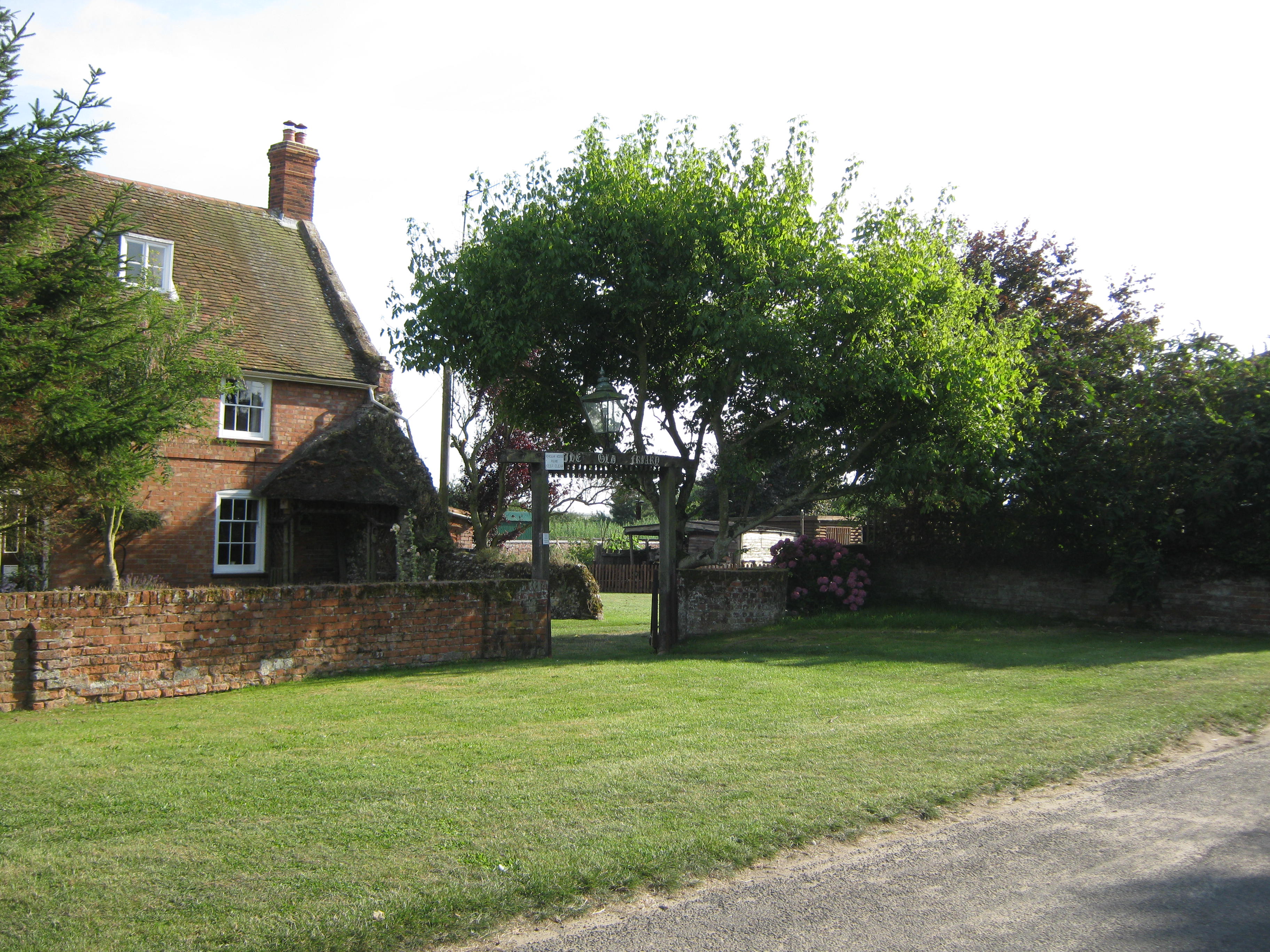
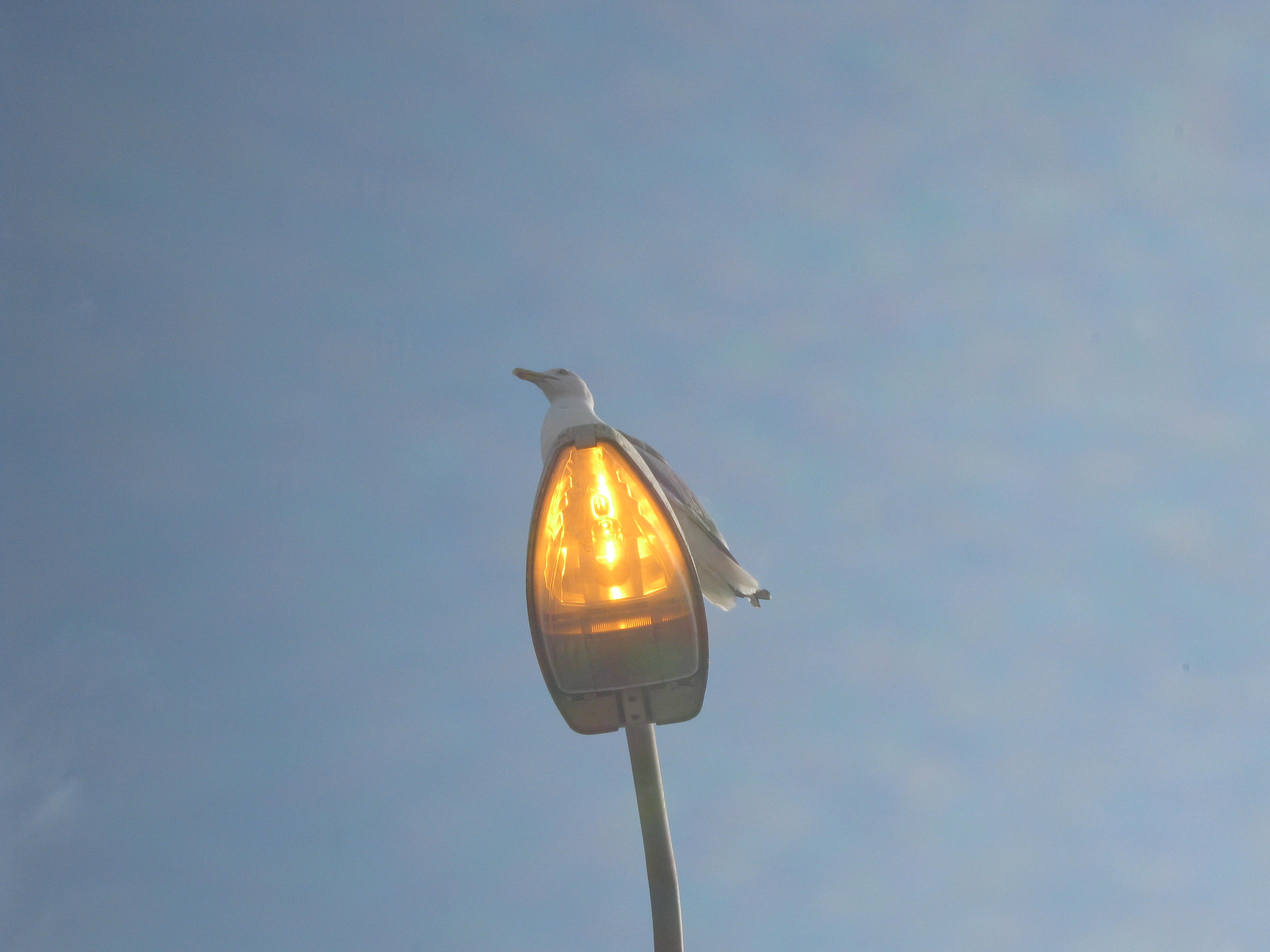
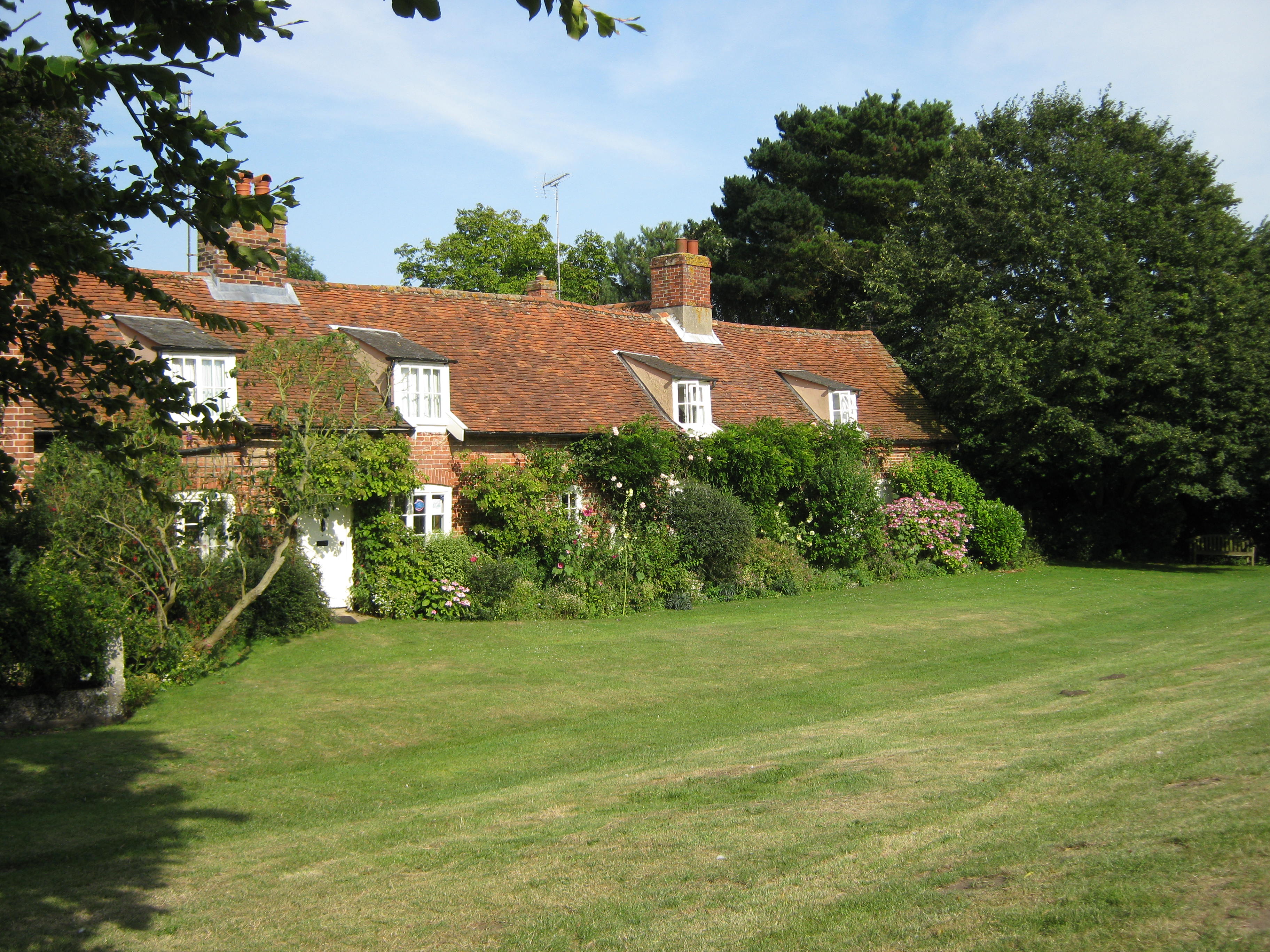
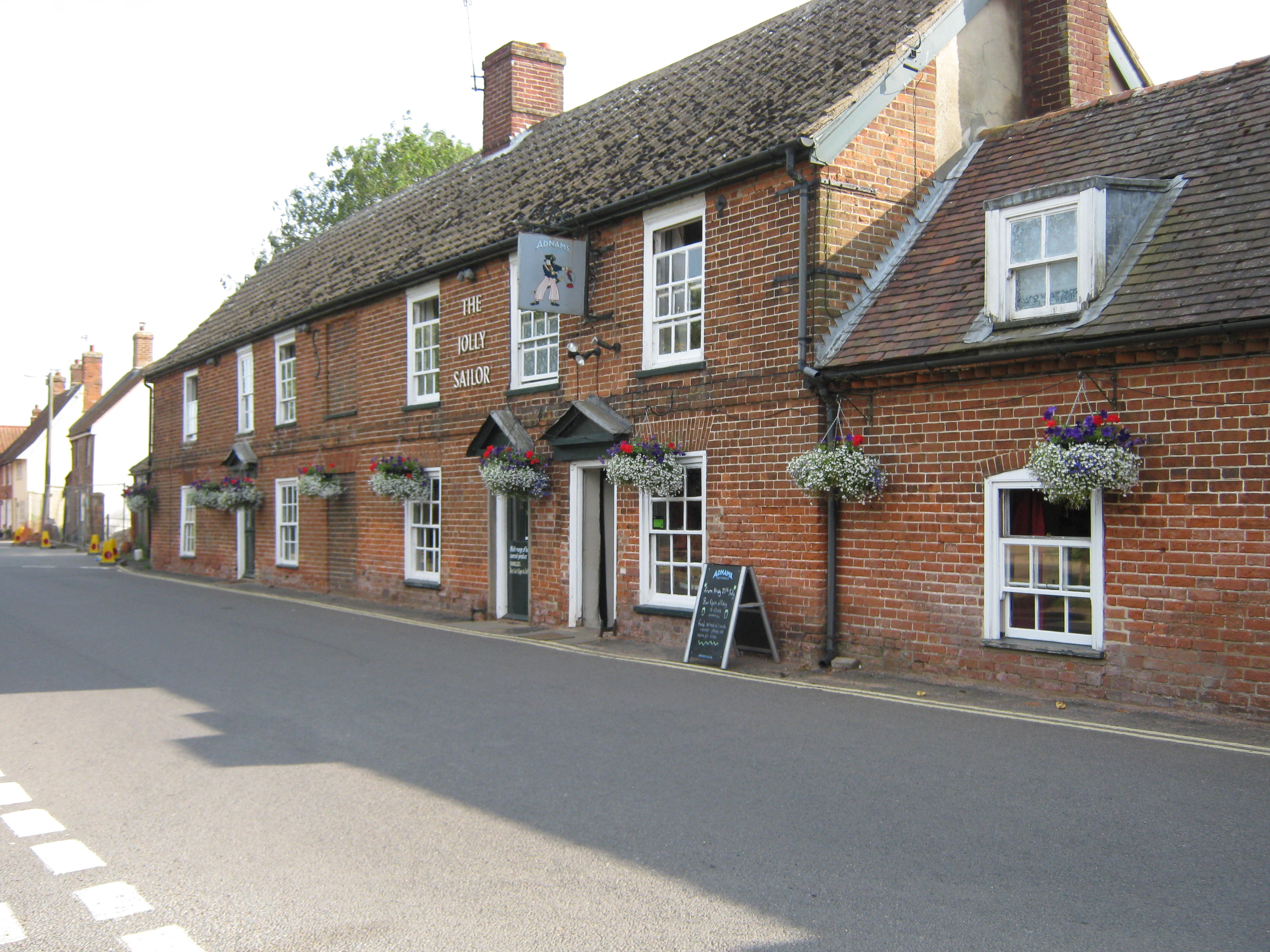
Orford Ness is a long shingle spit now owned by the National Trust.  For many years the Ness was owned by the Ministry of Defence who began work there during the First World War finding out how to use an aeroplane as a weapon.  After WW1 it became a ballistics testing facility and work was done using radio beacons resulting in the birth of the radar.  Ballistics testing continued during WW2 and the Ness was used to improve aircraft and munitions design.  After the war lethality and vulnerability trials continued and work on aerodynamics of ammunition.  Ballistics testing continued and extended to include rockets with jets fired from almost no altitude into King’s Marsh.  Later Orford Ness hosted one of its largest secrets – the huge Cobra Mist radar project.  At the height of the Cold War the Atomic Weapons Research Establishment used the Ness for development work on the atomic bomb. This continued all through the 1960’s and the ominous, half-buried concrete structures known as ‘pagodas’ were built to contain these most lethal of weapons.  From the 1970’s the Ness was home to RAF Explosive Ordnance Disposal and large quantities of munitions were destroyed here which was often very noisy.  The last service personnel left in 1987 and the Ness remained officially closed to the public with occasional trials of new equipment.  The MoD sold the Ness to the National Trust in 1993.  In the late 1970’s and early 1980’s the site and buildings were re-used for the Orfordness Transmitting Station.  The powerful medium wave radio station was originally owned and run by the Foreign Office, then by the BBC and then, after privatization in the 1990’s by a series of private companies.  It is best known for transmitting the BBC World Service in English round the clock to continental Europe from September 1982 until March 2011.  It has been disused since May 2012.  Access is only available by the National Trust ferry from Orford Quay on designated open days.  The importance of the landscape of the spit and the wildlife it supports had become apparent by the time the National Trust took over the Ness.  It cares for the internationally rare and extremely fragile coastal vegetated shingle as well as the historically important military buildings.  Acknowledgements to the National Trust web page on Orford Ness for this information. We then left the castle and walked through the village to the Quay passing by lots of attractive cottages on the way. 125Cottages 126Pub 138Cottages 139Cottages 141The Old Friary 142Thatched roof 143Chantry Farm 144Cottages We spent an enjoyable hour at the Quay watching people, boats, dogs and seagulls. 127Quay 128Herring gull on lamp 129Boats 135Girl crabbing129Boats We bought fish and chips for our tea on the way home, so no cooking for me either – hooray!

Share this:

  • Share on X (Opens in new window) X
  • Share on Reddit (Opens in new window) Reddit
  • Share on Pinterest (Opens in new window) Pinterest
  • Share on Facebook (Opens in new window) Facebook
  • Email a link to a friend (Opens in new window) Email
  • Share on Tumblr (Opens in new window) Tumblr
  • Print (Opens in new window) Print
  • Share on Pocket (Opens in new window) Pocket
  • Share on LinkedIn (Opens in new window) LinkedIn
Like Loading...
Follow A Suffolk Lane on WordPress.com

Enter your email address to follow this blog and receive notifications of new posts by email.

Join 715 other subscribers.

Unknown's avatar

I talk about what it's like living in a quiet part of Suffolk. I am a wife, mother and daughter, a practising Christian and love the natural world that surrounds me. I enjoy my life - most of the time!

My Posts

Jan 2026
M T W T F S S
 1234
567891011
12131415161718
19202122232425
262728293031  
« Dec    

Pages

  • About my Blog
  • GDPR (General Data Protection Regulations) and This Site
  • My Life in a Suffolk Lane

Archives

Blogs I Follow

Unknown's avatar
Unknown's avatar
Unknown's avatar
Unknown's avatar
Unknown's avatar
Unknown's avatar
Unknown's avatar
Unknown's avatar
Unknown's avatar
Unknown's avatar
Unknown's avatar
Unknown's avatar
Unknown's avatar
Unknown's avatar
Unknown's avatar
Unknown's avatar
Unknown's avatar
Unknown's avatar
Unknown's avatar

Posts I Like

  • clivebennett796's avatar
  • Unknown's avatar
  • santable's avatar
  • gederedita's avatar
  • (Kitty) Cat Strawberry - Meow!'s avatar
  • sherijkennedyriverside's avatar
  • Unknown's avatar
  • The Introverted Bookworm's avatar
  • Unknown's avatar
  • Wayne Wolfson's avatar
  • Jack Ronald Cotner's avatar
  • mitchteemley's avatar
  • Unknown's avatar
  • Unknown's avatar
  • Unknown's avatar
  • Matthew Paul's avatar
  • Pilgrim's Pondering Ministry's avatar
  • Unknown's avatar
  • Limentinus's avatar
  • Unknown's avatar
  • JAM's avatar
  • Unknown's avatar
  • Unknown's avatar
  • Mélodie's avatar
  • Unknown's avatar
  • Unknown's avatar
  • Unknown's avatar
  • Unknown's avatar
  • Unknown's avatar
  • Stephen G. Hipperson's avatar
  • Schnippelboy's avatar
  • Unknown's avatar
  • Carolina Cuisine Network's avatar
  • Unknown's avatar
  • Unknown's avatar
  • M T McGuire's avatar
  • Unknown's avatar
  • Unknown's avatar
  • Unknown's avatar
  • Unknown's avatar
  • Unknown's avatar
  • Unknown's avatar
  • Unknown's avatar
  • Unknown's avatar
  • Unknown's avatar
  • CJ's avatar
  • Andrea Stephenson's avatar
  • womanseyeview's avatar
  • sopantooth's avatar
  • Unknown's avatar

amphibians architecture art Arts and Crafts churches cooking Days out domestic animals family fish Folk Traditions Gardening Historic Buildings holidays Insects Landscaping literature music Norwich plants Rural Diary seashore theatre trees Uncategorized walking weather wild animals wild birds wild flowers

Tags

architecture autumn birds blackbird blackthorn Bungay butterfly church clouds common knapweed cow parsley crocus daffodils Diary dogwood family field maple flowers fungus garden gardening geese greylags ground-ivy Halesworth Hawthorn heather holiday Holly Holy Week horse chestnut Hoverfly insects ivy Lake District Lent lesser celandine lichen Lords and Ladies Mallard mallards Minsmere moorhen moss music Norwich Peak District pheasant plants pond ponds primrose primroses Rain rooks Rumburgh Rumburgh Church sheep Sheffield snow snowdrops Southwold spring Suffolk Suffolk Wildlife Trust sunset the Beck trees viburnum bodnantense walking weather wild cherry wild flowers winter-flowering honeysuckle witch-hazel

Meta

  • Create account
  • Log in
  • Entries feed
  • Comments feed
  • WordPress.com

Goodreads

Blog at WordPress.com.

Book Jotter

Reviews, news, features and all things books for passionate readers

Country Life Blog -

A blog about life in the country in the past and present

Matthew Paul: Poetry & Stuff

Poetry and what-not

Schnippelboy

Ein Tagebuch unserer Alltagsküche-Leicht zum Nachkochen

TAMARA JARE

TAMARA JARE Tamara Jare: Contemporary Figurative Painting Oil on Canvas Artist Art Studio

A Taste of Freedom

Documenting a Dream

Country Ways

Rambling Journeys in Britain, Countryside Matters and campaigning for the Right to Roam

The Strawberry Post

Here to Entertain, Educate & Inspire!

a north east ohio garden

an ongoing experiment in the dirt, 35 plus years

naturechirp

Celebrating God's creatures, birds and plants...

Sophie Neville

Writer

Going Batty in Wales

Developing a more sustainable lifestyle in SW Wales

Our Lake District Escapades

Exploring the Lake District and beyond

Short Walks Long Paths

Wandering trails around the coast of Wales

The Biking Gardener

An English persons experience of living and gardening in Ireland

Nan's Farm

A Journal Of Everyday Life

Walk the Old Ways

Rambling Journeys in Britain with John Bainbridge. Fighting for the Right to Roam. Campaigning to Protect Our Countryside.

Writer Side UP!

Waking the Writer Side...and keeping it "Up!"

Meggie's Adventures

Travel, thank you notes and other stories

amusicalifeonplanetearth

Music and the Thoughts It Can Inspire

lovefoundation.co.uk

Traveling Tortuga

Simply Living Well

Pakenham Water Mill

Historic watermill in the beautiful Suffolk countryside

Take It Easy

Retired, not expired: words from the after(work)life. And music. Lots of music!

Secret Diary Of A Country Vicar's Wife

By Olive Oyl

thanksfortheadventureorg.wordpress.com/

The Beat Goes On

#TBGO

Frank Pleszak's Blogs

Twitter: @frankpleszak @PolishIICorps

John Bainbridge Writer

Indie Writer and Publisher

roughwighting

Life in a flash - a bi-weekly storytelling blog

Walking the Old Ways

Rambling in the British Countryside

CapKane

thoughts on social realities

SkyeEnt

Jottings from Skye

jodie richelle

embracing my inner homemaker

Skizzenbuch/Blog

Just another WordPress.com weblog

Have Bag, Will Travel

The Call of the Pen

Flash Fiction, Book Reviews, Devotionals and other things.

John's Postcards

Art in Nature

You dream, I photographe it !

Smile! You’re in Barnier World......

theinfill

the things that come to hand

Dr. Mary Ann Niemczura

Author of "A Past Worth Telling"

Provincial Woman

The Pink Wheelbarrow

Luanne Castle: Poetry and Other Words (and cats!)

Poetry, Other Words, and Cats

The Family Kalamazoo

A genealogical site devoted to the history of the DeKorn and Zuidweg families of Kalamazoo and the Mulder family of Caledonia

everythingchild

The Book Owl

Canberra's Green Spaces

Paul Harley Photographer

  • Subscribe Subscribed
    • A Suffolk Lane
    • Join 715 other subscribers.
    • Already have a WordPress.com account? Log in now.
    • A Suffolk Lane
    • Subscribe Subscribed
    • Sign up
    • Log in
    • Report this content
    • View site in Reader
    • Manage subscriptions
    • Collapse this bar
 

Loading Comments...
 

    Privacy & Cookies: This site uses cookies. By continuing to use this website, you agree to their use.
    To find out more, including how to control cookies, see here: Cookie Policy
    %d