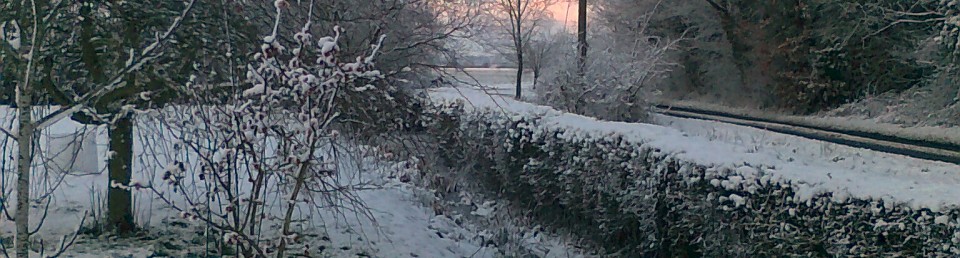
After we left the Suffolk Punch Trust we drove a couple of miles to Shingle Street on the coast.
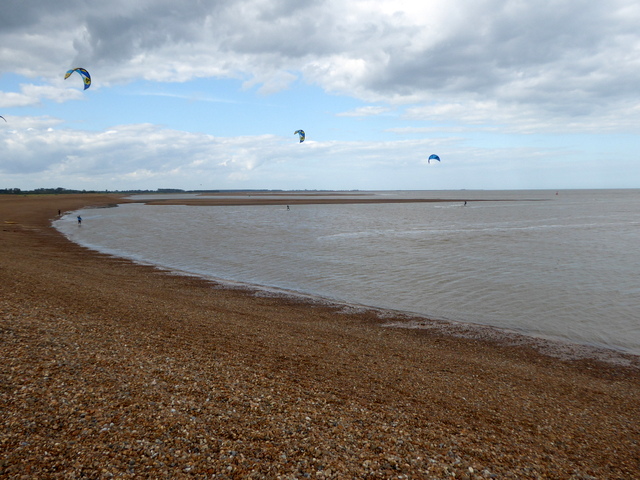
Shingle Street beach
I wanted to visit this beach to look at the plants and flowers that live on the shingle. I had heard that it was a desolate spot but when we were there the place was teeming with kite-surfers!
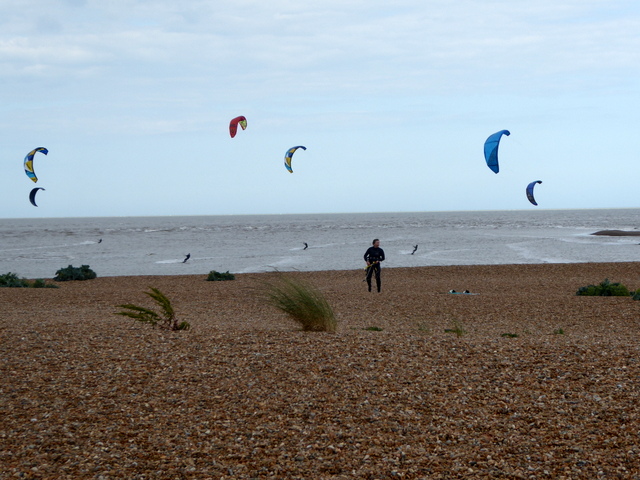
Kite-surfing on a windy day
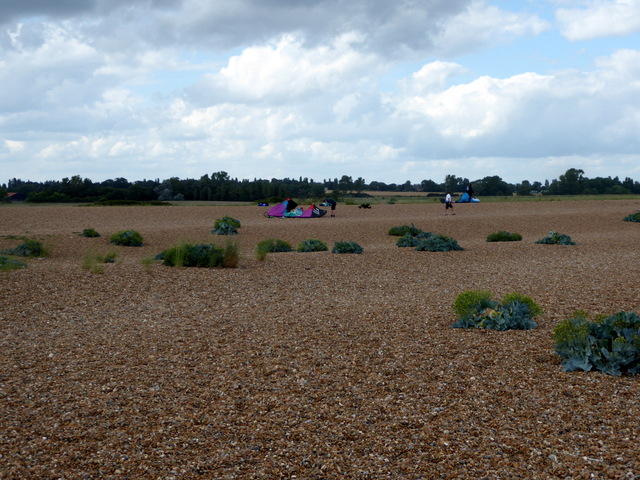
Kite-surfers on the beach
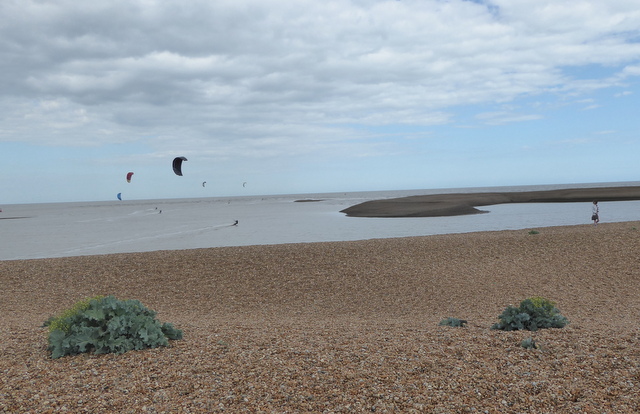
More kite-surfers. Here you can see the spit of shingle which curls round forming a calm lagoon.
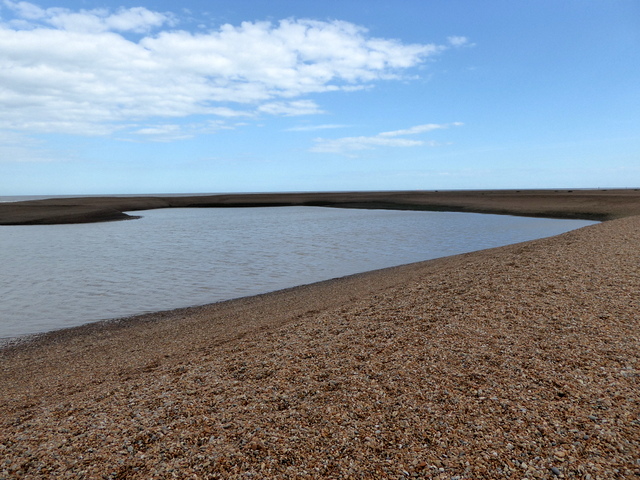
The lagoon
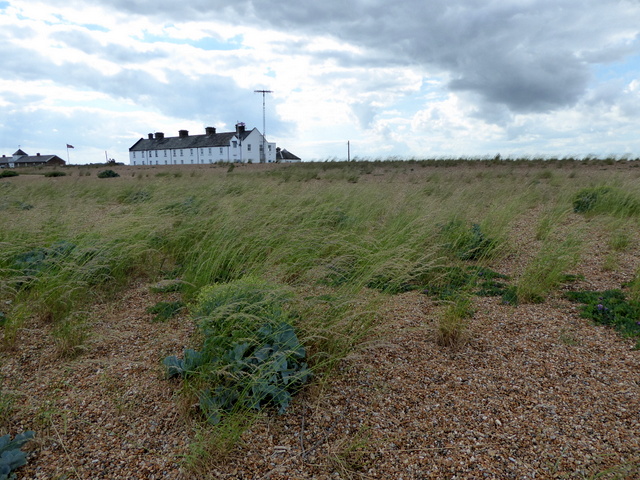
The houses at Shingle Street
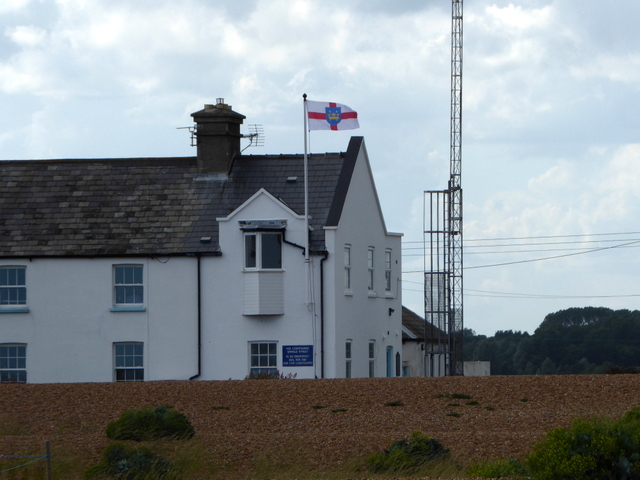
The Coastguard House
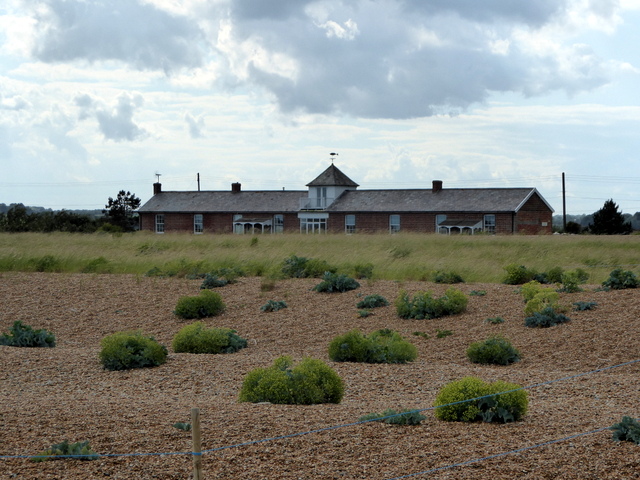
Shingle Street Part of the beach was fenced off to protect nesting birds, little terns and ringed plovers, and to protect this beach from damage by trampling.
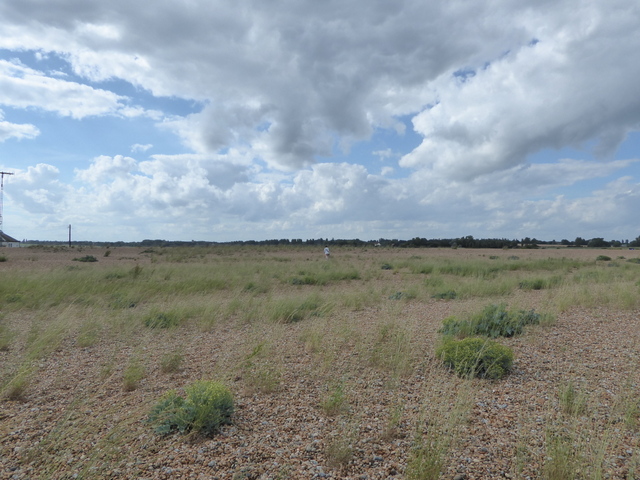
Shingle Street
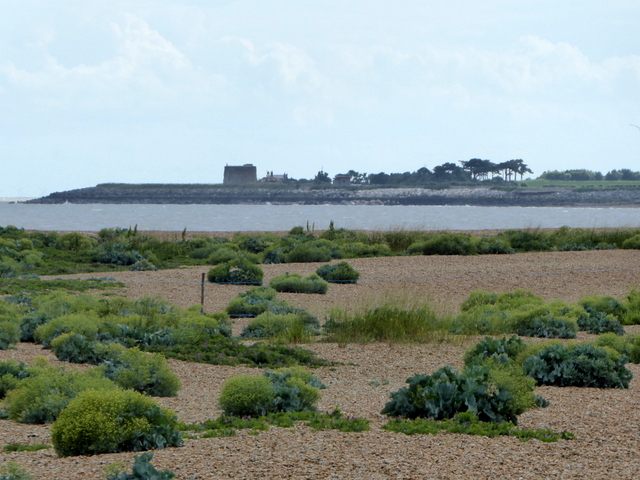
Looking south towards the Martello Tower
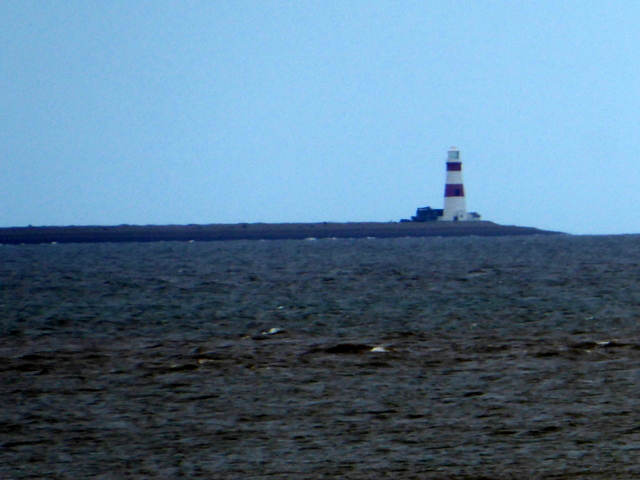
Looking north towards Orfordness lighthouse….
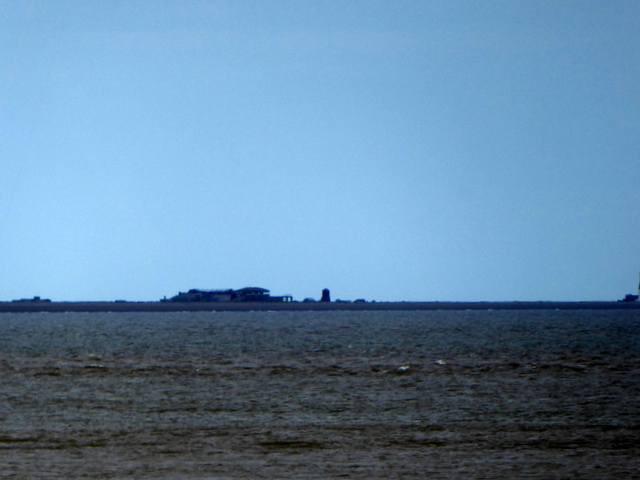
…and the old atomic weapons research establishment
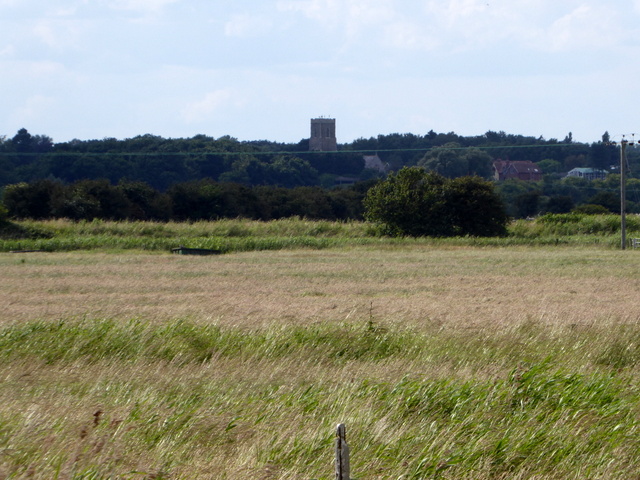
The village of Hollesley
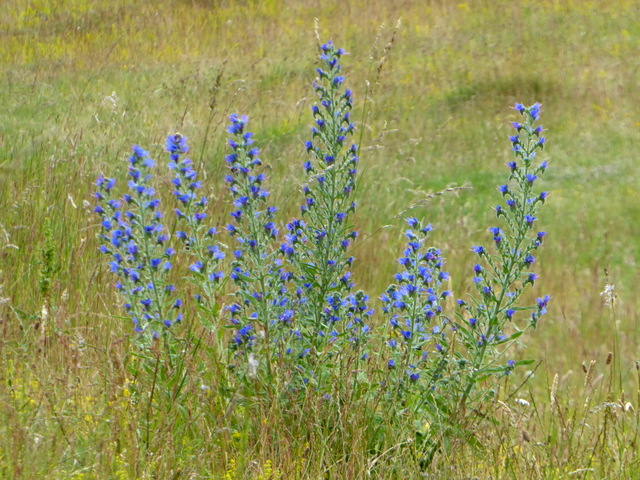
Viper’s Bugloss (Echium vulgare)
The name ‘Bugloss’ derives from the Greek for ‘ox-tongued’ – the plant is quite rough and bristly to the touch. Parts of the plant are also thought to look like a snake – the fruits, which are said to resemble an adder’s head, used to be used to cure snake bites even though the plant is poisonous!
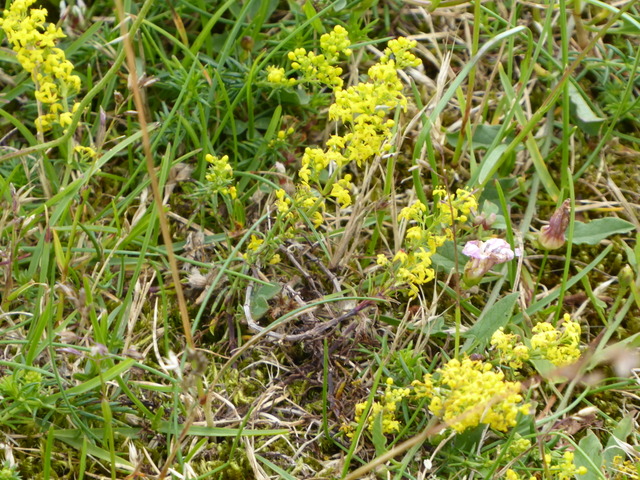
Lady’s Bedstraw (Galium verum)
According to my field guide, the flowers are honey-scented when fresh and smell of new-mown hay when dry. In days gone by, it was said to discourage fleas and so was added to straw mattresses especially for the beds of women about to give birth.
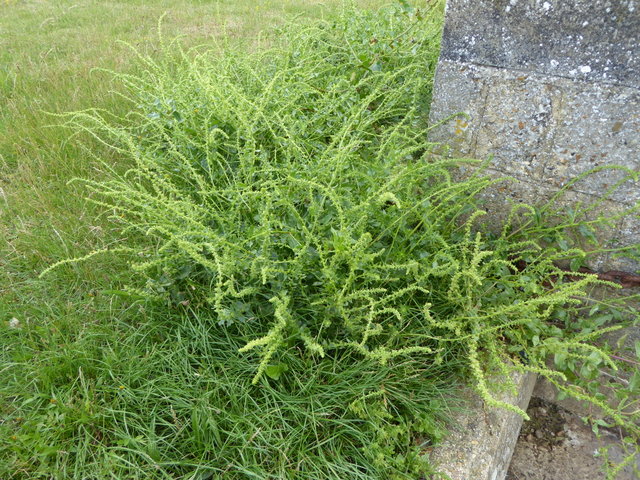
Sea Beet (Beta vulgaris subsp. maritima )
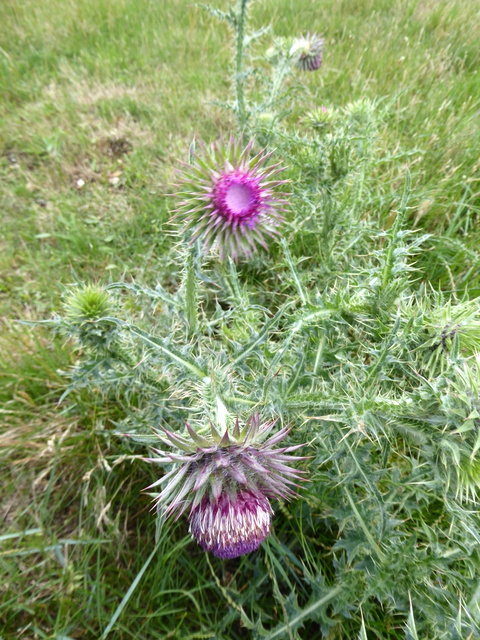
Spear Thistle (Cirsium vulgare). Not an uncommon plant but I find it beautiful – and spiny!
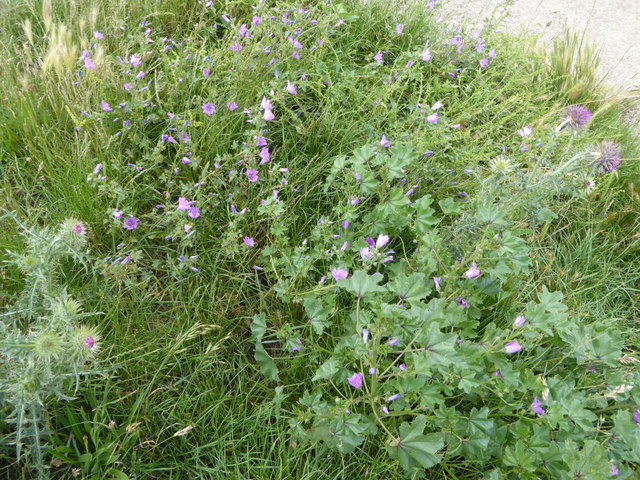
Common Mallow (Malva sylvestris)
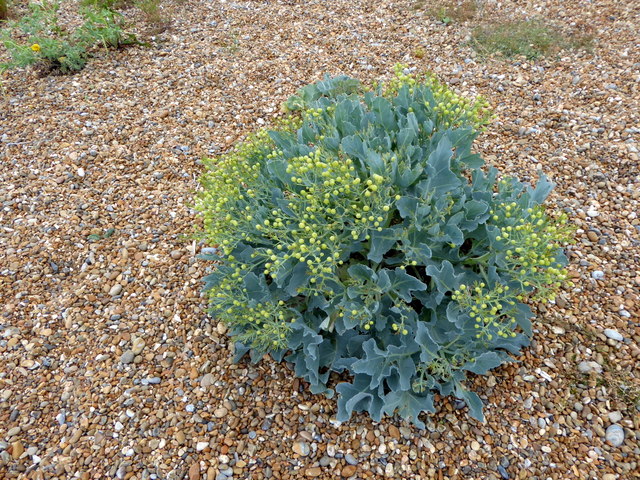
Sea Kale (Crambe maritima)
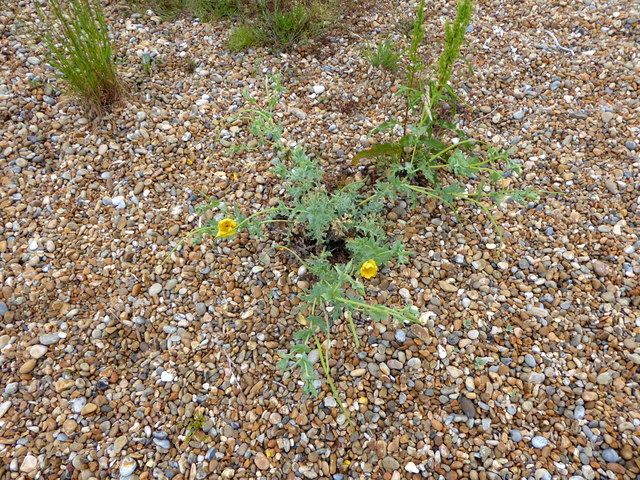
Yellow Horned Poppy (Glaucium flavum)
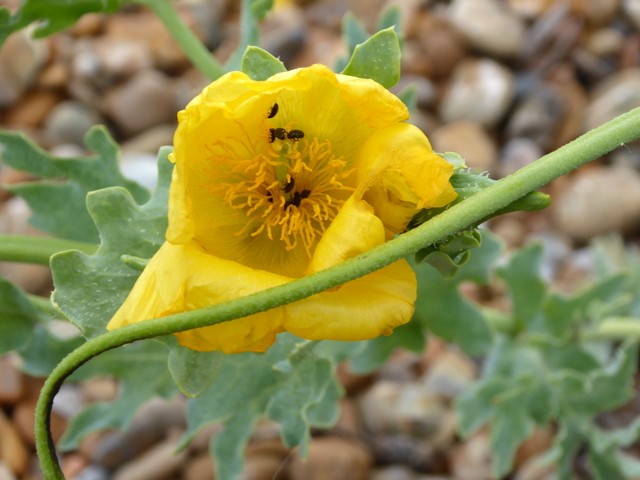
Yellow Horned Poppy (with a few pollen beetles!)
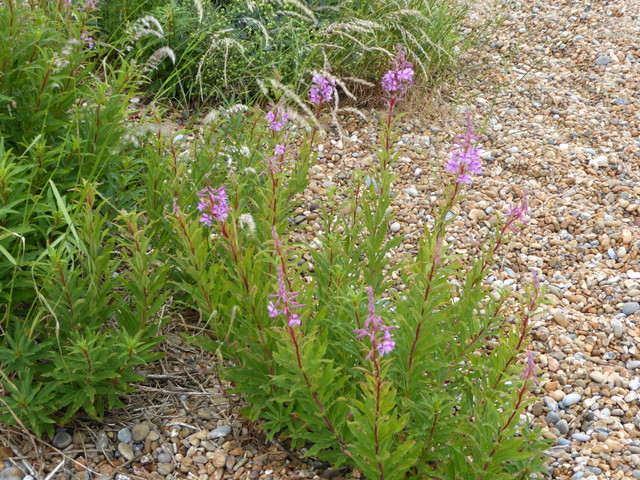
Rosebay Willowherb (Chamerion angustifolium)
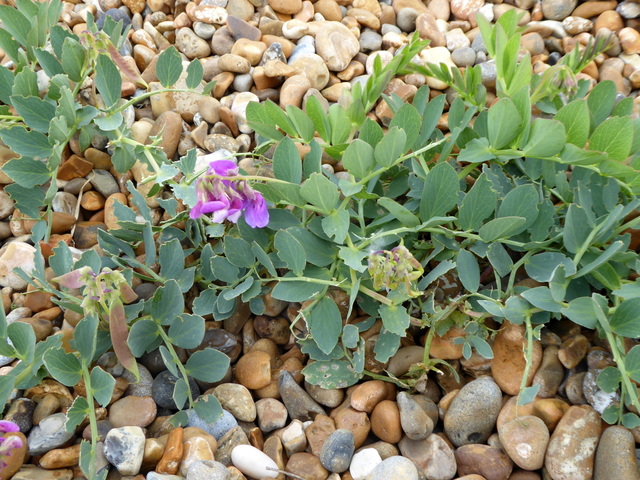
Sea Pea (Lathyrus japonicus)
I was very pleased to see this plant still in flower! Usually I find it too late to admire the bright pink flowers. It is a nationally scarce plant but where it is happy it grows well and plentifully. My field guide tells me that the seed pods resemble garden pea-pods and were eaten (apparently) in Suffolk in times of famine (e.g. 1555). The pods are toxic in large quantities.
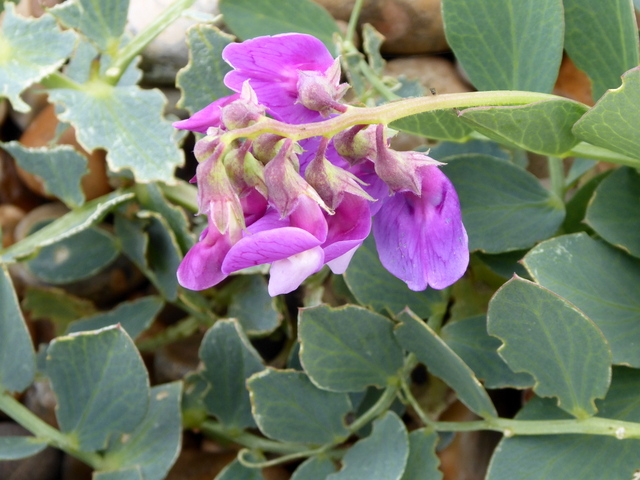
Sea pea
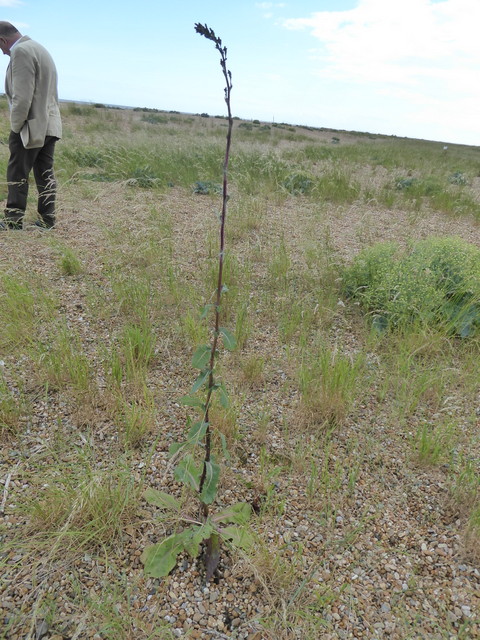
Prickly Lettuce (Lactuca serriola) These plants can grow as tall as 200 cm/ 6.5 ft. Prickly lettuce is a non-native and was first recorded here in 1632.
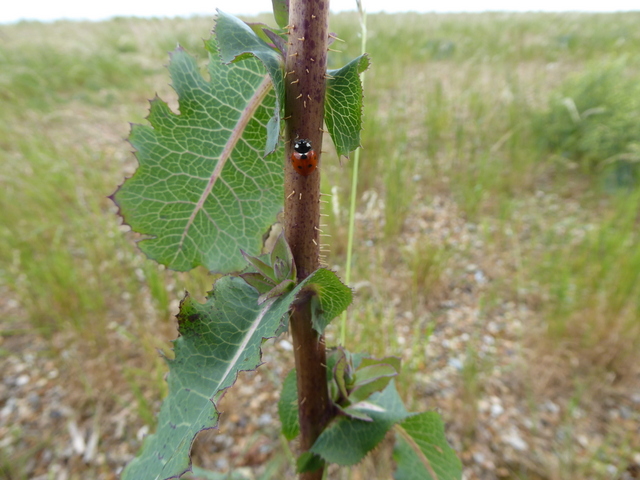
A Ladybird on Prickly Lettuce
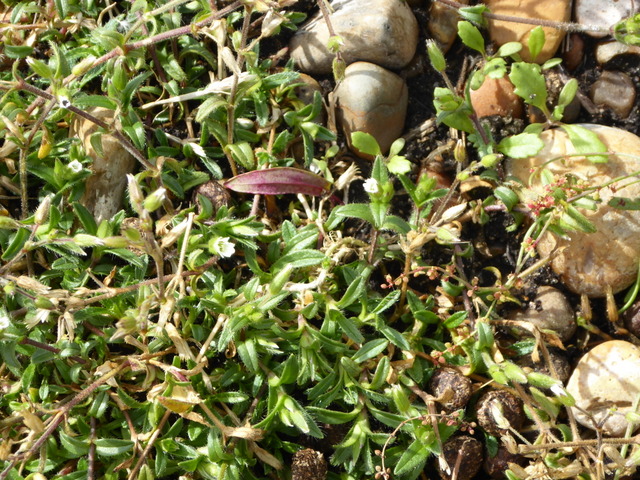
I think this is a type of Mouse-ear, probably Common Mouse-ear (Cerastium fontanum)
This visit to the Shingle Street beach was a very pleasant end to an enjoyable day.
Thanks for visiting!
Harrap’s Wild Flowers: Simon Harrap
 A Suffolk Lane