
Tags
Christmas, Christmas cooking, Mince pies, mincemeat, sweet shortcrust pastry, traditional British food
We had our Carol Service at Rumburgh church on Saturday and I made two dozen mince pies to take with me as part of the after-service refreshments.
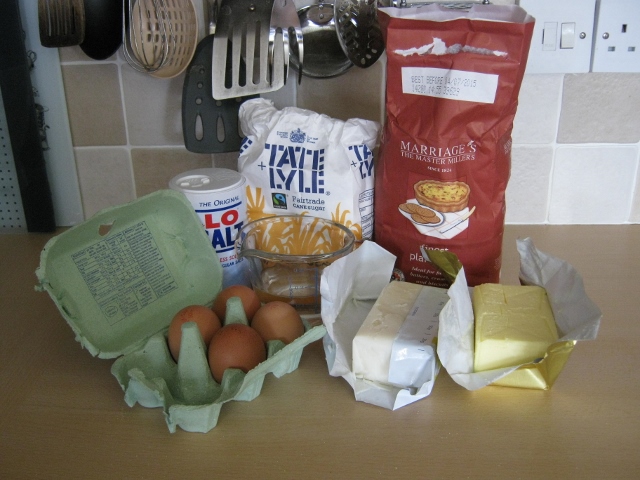
Sweet shortcrust pastry ingredients
Sweet shortcrust pastry is used for French fruit flans, tarts, little fancy cakes – and mince pies! The following recipe makes about twelve mince pies. I use the same method when making little individual apple pies which are lovely for buffets, packed lunches and picnics.
225 g / 8 oz plain flour
pinch of salt
50 g / 2 oz butter
50 g / 2 oz lard or vegetable shortening
25 g / 1 oz caster sugar
1 egg yolk
a little water
This makes 225 g / 8 oz pastry
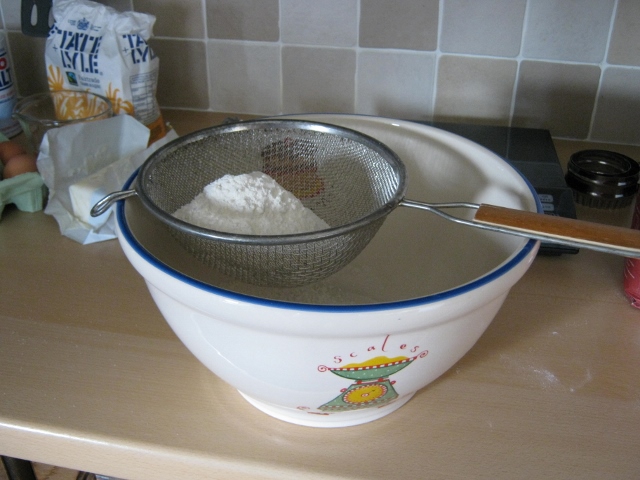
Sift the flour and salt into a mixing bowl
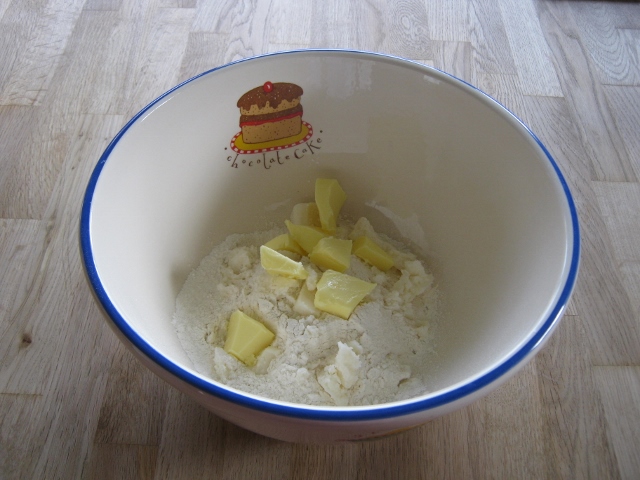
Cut the fat into the flour
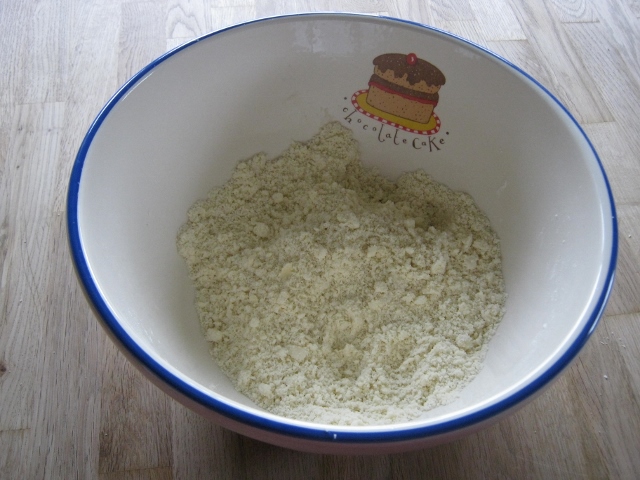
Rub in to a breadcrumb consistency
As soon as I think that I have finished rubbing in the fat I then tell myself to continue for another minute. I always find a piece of fat I had missed.
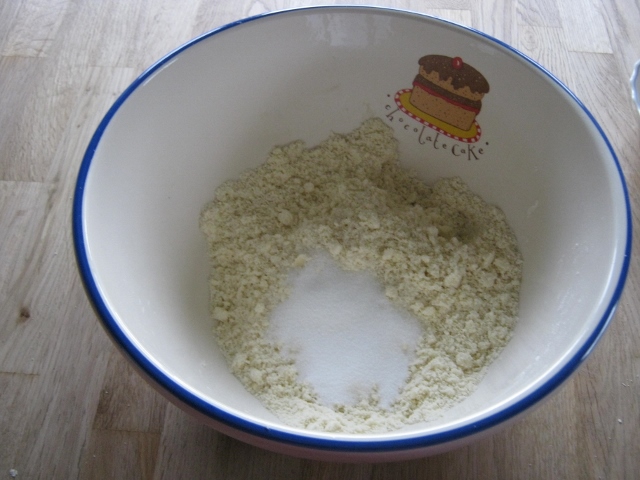
Add the sugar and mix together
-

- Add about two tablespoons of water to an egg yolk
-
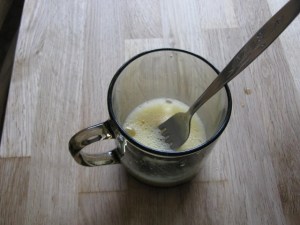
- and beat them together
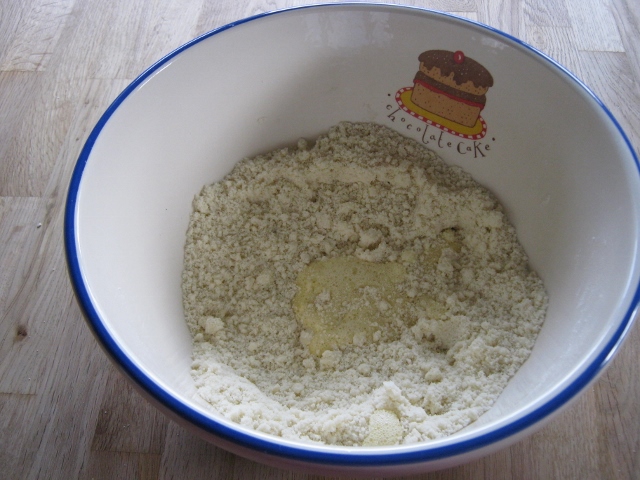
Add the egg and water to the flour, fat and sugar
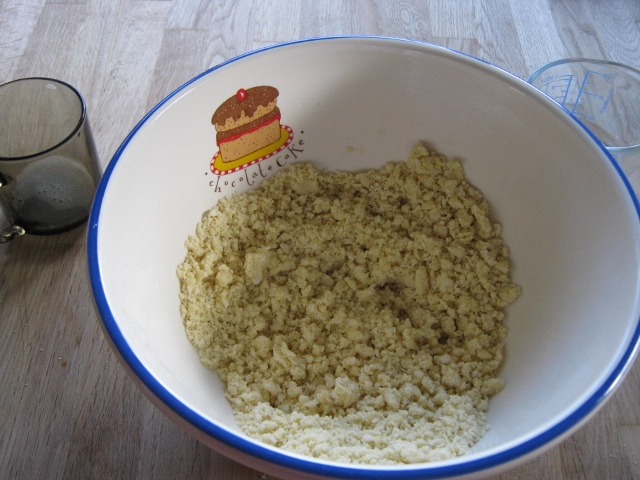
Mix them together
I always just use my hands, never a spoon, when making pastry. I find it mixes together quickly and easily and I can feel when it is of the right consistency rather than just trusting to my eyes. I have never used a blender to make pastry either.
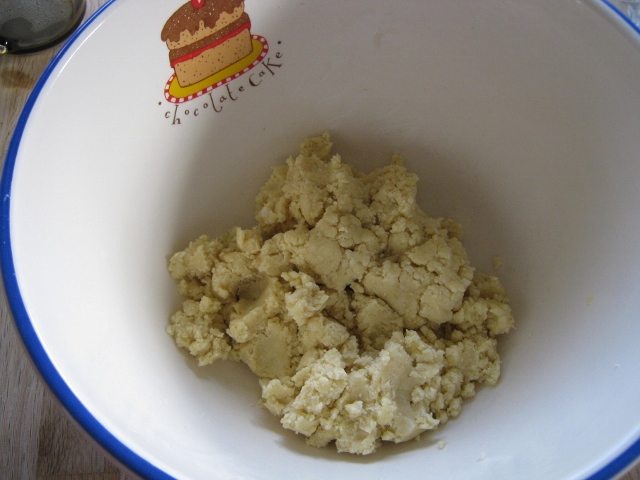
Keep mixing the ingredients together, adding a very little more water if necessary.
Sometimes just dampening my fingers adds enough water to make the pastry smooth and elastic. Too much water makes the pastry slimy and horrid and will never be anything other than tough to eat.
Knead lightly until smooth but don’t overwork it or it will lose its lightness.
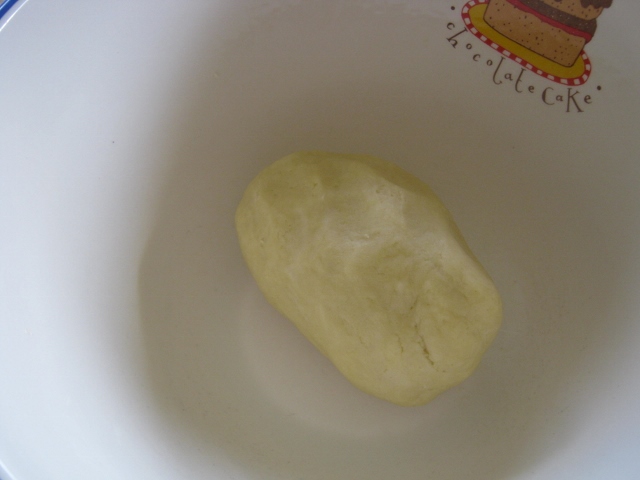
The finished pastry – which needs to be rested in the refrigerator for at least 20 minutes before being rolled out. I wrap it in cling-film.

Mince pie ingredients
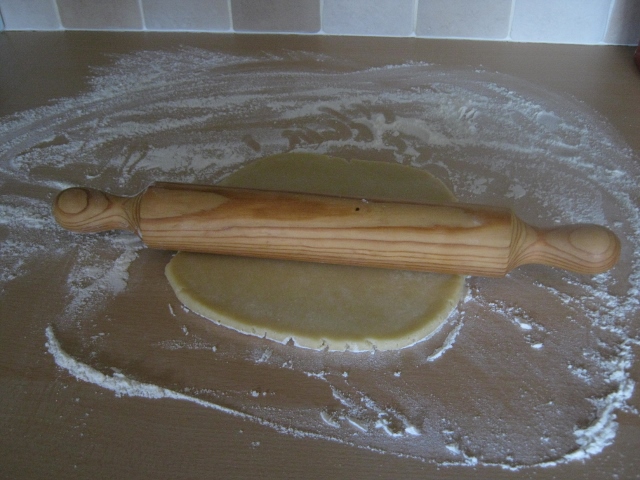
Flour your work surface or pastry board and start to roll the pastry out carefully.
As the pastry is very short (crumbly – difficult to keep together) it requires careful handling or it will split and fall apart. If you haven’t added enough water when mixing it will fall apart very readily. This problem can easily be overcome by adding a sprinkle more water and re-kneading the dough.

Roll the pastry out very thinly, 2.5 mm / one eighth of an inch thick
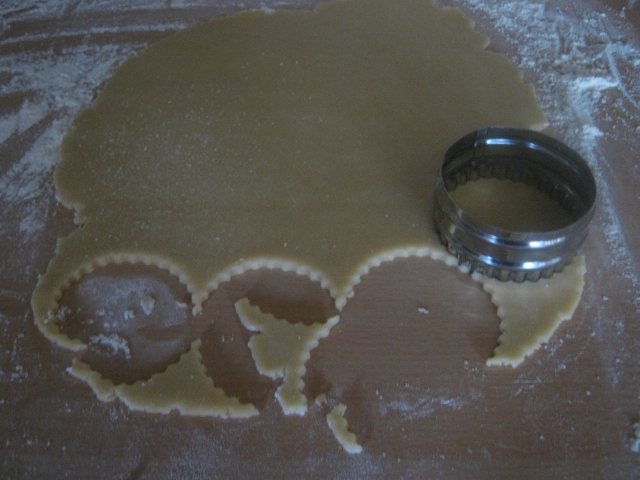
Cut out 12 rounds with a plain or fluted cutter. I use a 7.5 cm / 3″ one.
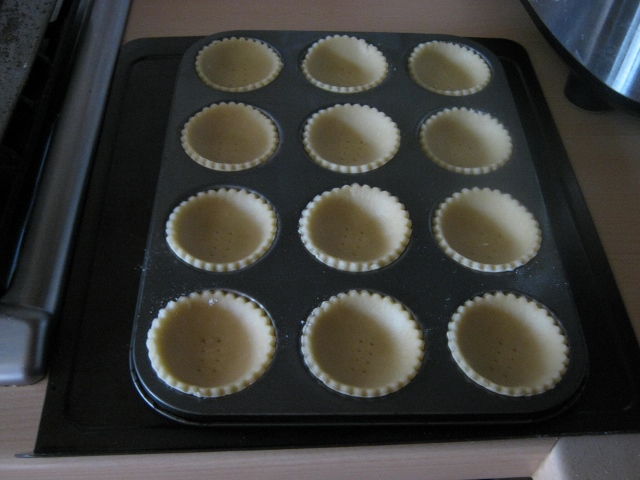
Line a pastry pan with the pastry rounds and prick the bottom of each pie with a fork to help the pastry cook through
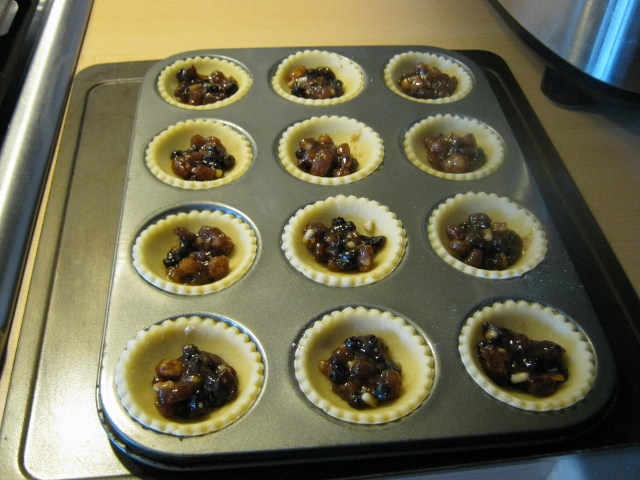
Fill each pie with a teaspoon of mincemeat
I have never made my own mincemeat but have been meaning to for years! Bought mincemeat is very variable, some very poor and more like runny jam than proper mincemeat. I have found one that is very good and I use it every year. Some bought mincemeats can be improved by a little lemon juice or a small drop of brandy or rum.
Mincemeat is made from shredded suet (beef or vegetable), grated or finely chopped apple, mixed dried fruit (sultanas, raisins and currants), brown sugar, chopped blanched almonds, chopped candied orange and lemon peel, finely grated rind and juice of a large lemon, mixed spice, cinnamon, grated nutmeg and some brandy, whisky or rum. Hundreds of years ago it did contain meat as well, hence the name of mincemeat, but no longer. If vegetable suet is used then the mince pies can be eaten by vegetarians.
Cut out 12 smaller rounds of pastry with a plain or fluted cutter. I use a 6 cm / 2.5″ cutter. If you don’t have enough pastry to cut out all the rounds you need, gather all the trimmings together, knead them with a little water and roll out again.
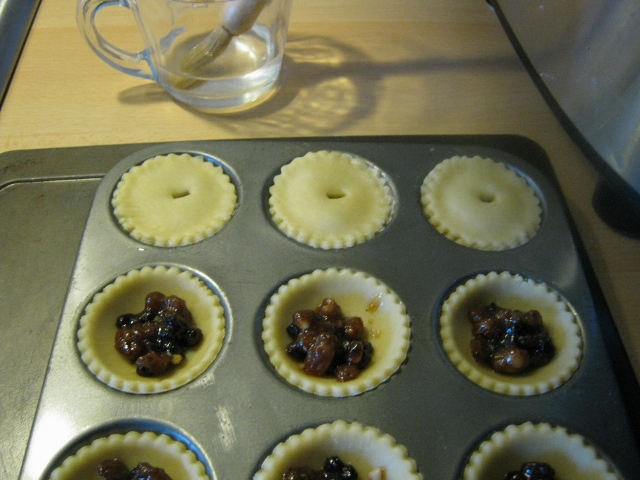
Dampen the edge of the pie with a little water and cover the filling in each tart with the smaller round of pastry, pressing down firmly so the lids are secure. Cut a small hole or cross in the centre of each lid to allow steam to escape.
Place the pies in their pastry pan onto a baking sheet and bake in a pre-heated oven at 220 degrees C / 425 degrees F / Gas Mark 7 for 12 to 15 minutes or until well risen and golden.
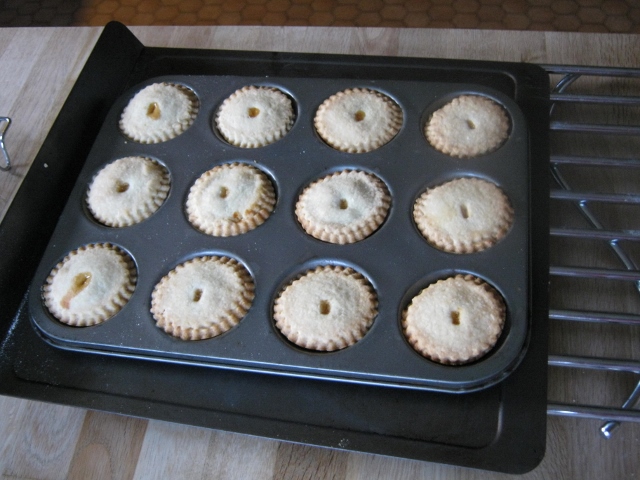
Baked pies.
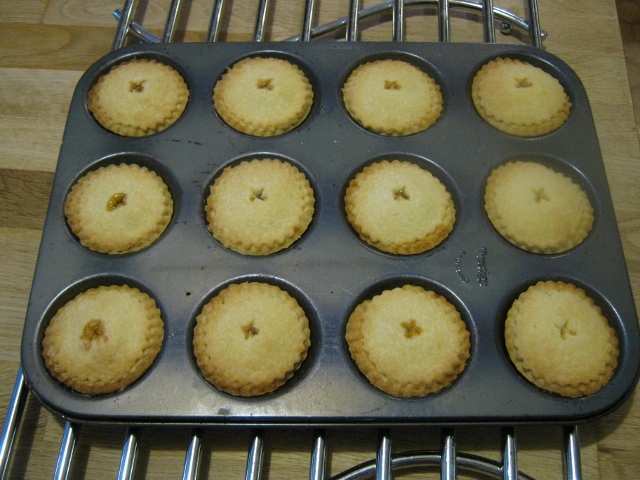
More baked pies!
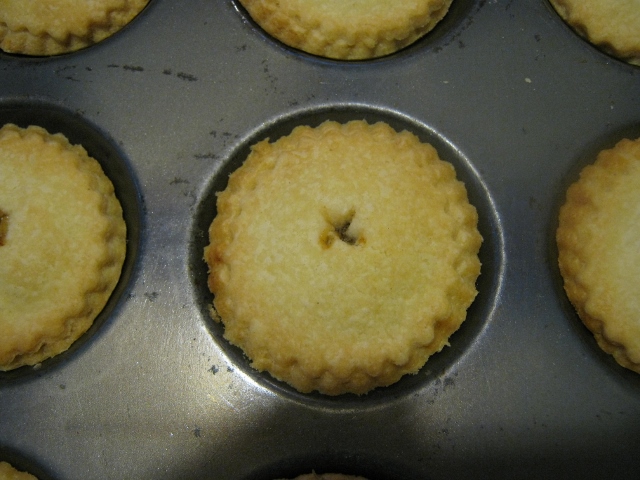
A finished pie
Leave to cool in the pastry pan for a few minutes and then place on a rack to finish cooling.
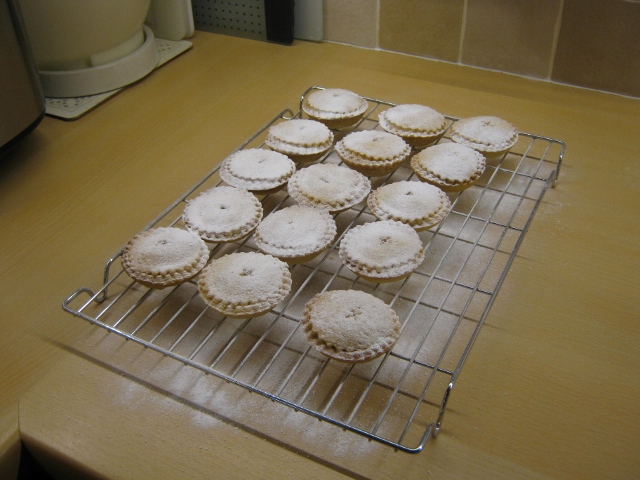
If you so wish you can dust the top with a little icing sugar.
Mince pies can be eaten hot straight from the oven or cold, on their own or with custard or cream and even as an accompaniment to Christmas pudding if you are so minded. They keep for days and days in a sealed container and can be re-heated. I love them!
 A Suffolk Lane