• About my Blog
  • GDPR (General Data Protection Regulations) and This Site
  • My Life in a Suffolk Lane

A Suffolk Lane

~ A diary of my life in rural north Suffolk.

A Suffolk Lane

Tag Archives: Suffolk

Dunwich Beach and Dingle Marshes

03 Sat Aug 2019

Posted by Clare Pooley in plants, Rural Diary, seashore, wild birds

≈ 106 Comments

Tags

beach, birds, buck's-horn plantain, common scurvygrass, Dingle Marshes, Dunwich beach, gorse, little egret, plants, reeds, sea campion, seashore, sheep's sorrel, shingle, Suffolk, wader

On May Bank Holiday, the first Monday after May Day, Rumburgh village always holds a fair and Rumburgh church always has the cake stall – a money-earner, though not as good as the tea tent.  This year, I had made a honey and ginger cake which Richard and I delivered to the stall along with a quantity of our rhubarb, which usually sells well.  We didn’t stay long as we had a few chores to do at home and we had planned to go to the seaside in the afternoon.

The day was cool and breezy and rain was forecast for late in the afternoon so Elinor, Richard and I set off as soon as we had had our lunch.
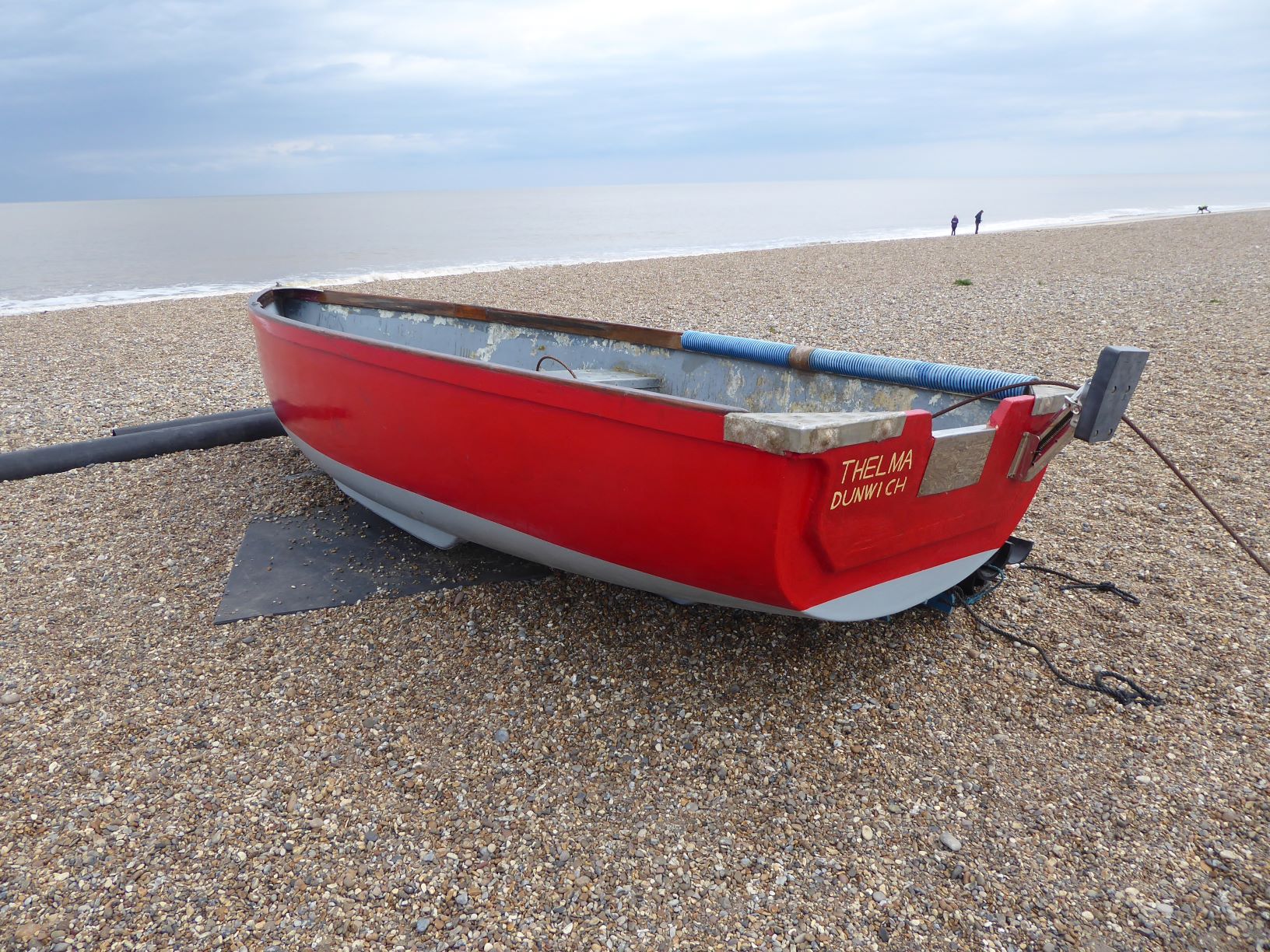
We found ‘Thelma’ hauled far up on the shingle.

We looked inside her and what did we find?
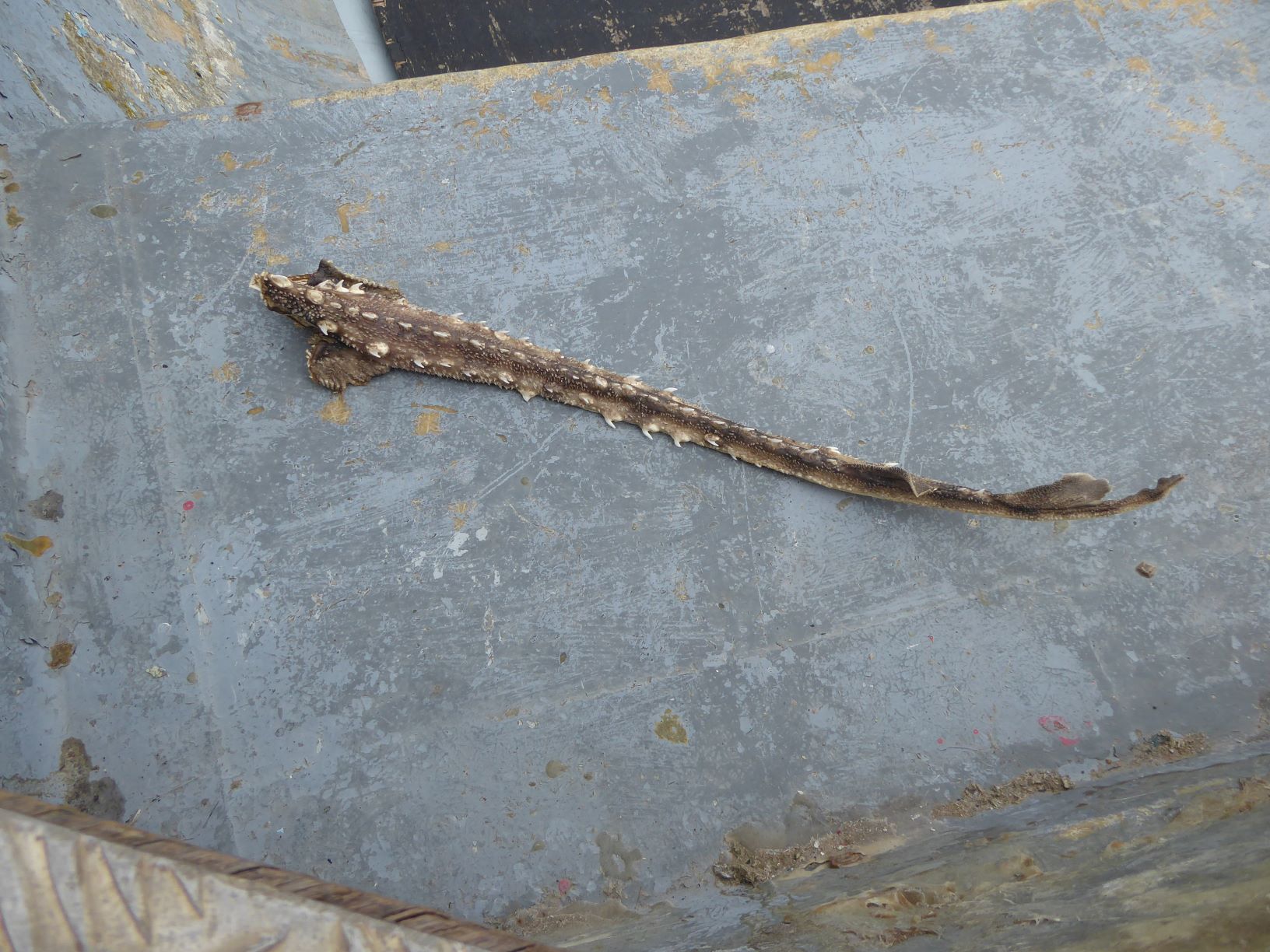
A dried-up dogfish tail.
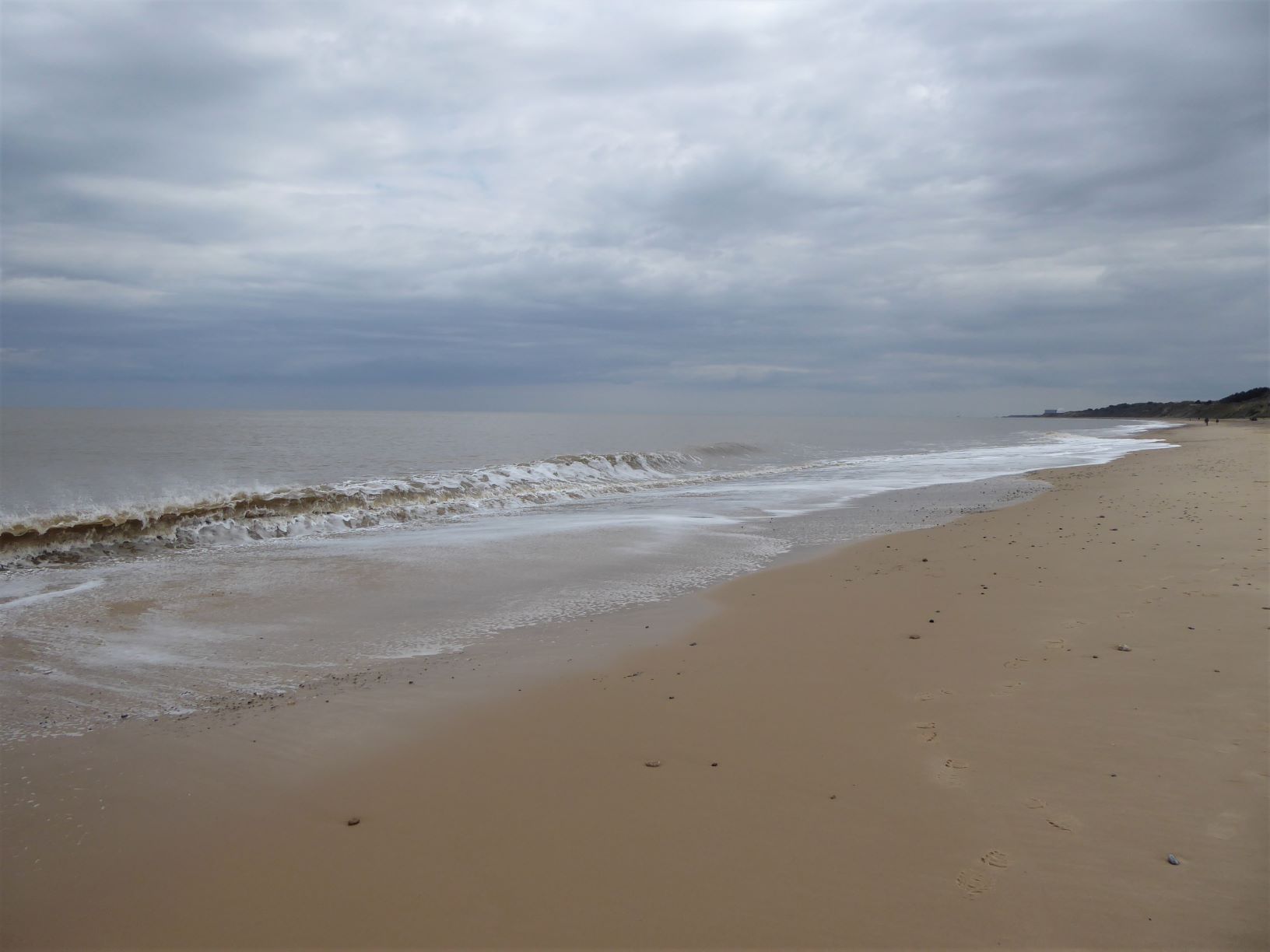
The wind was cold and strong on the beach and the spray from the waves was being blown about.
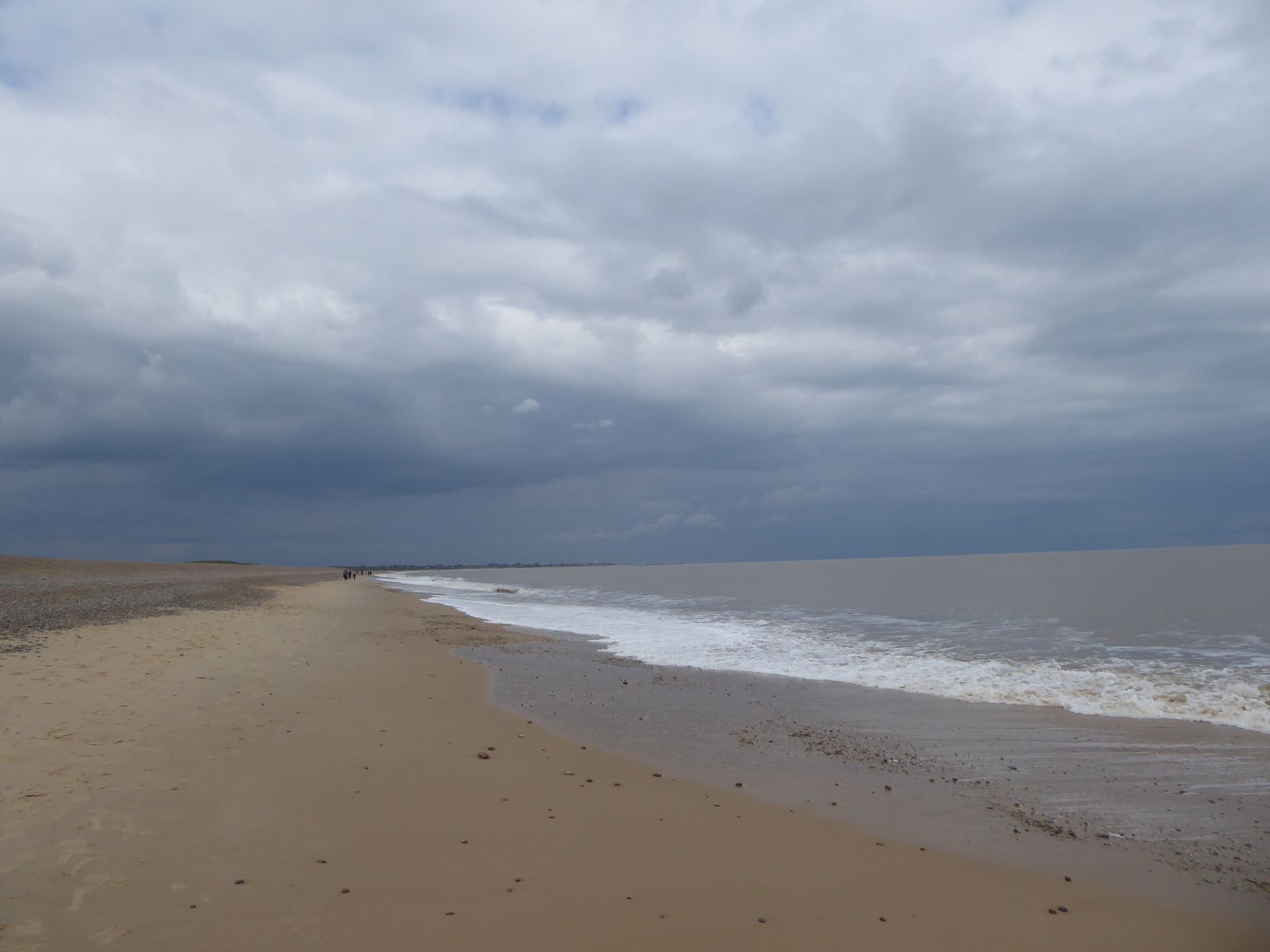
Looking north up the beach….
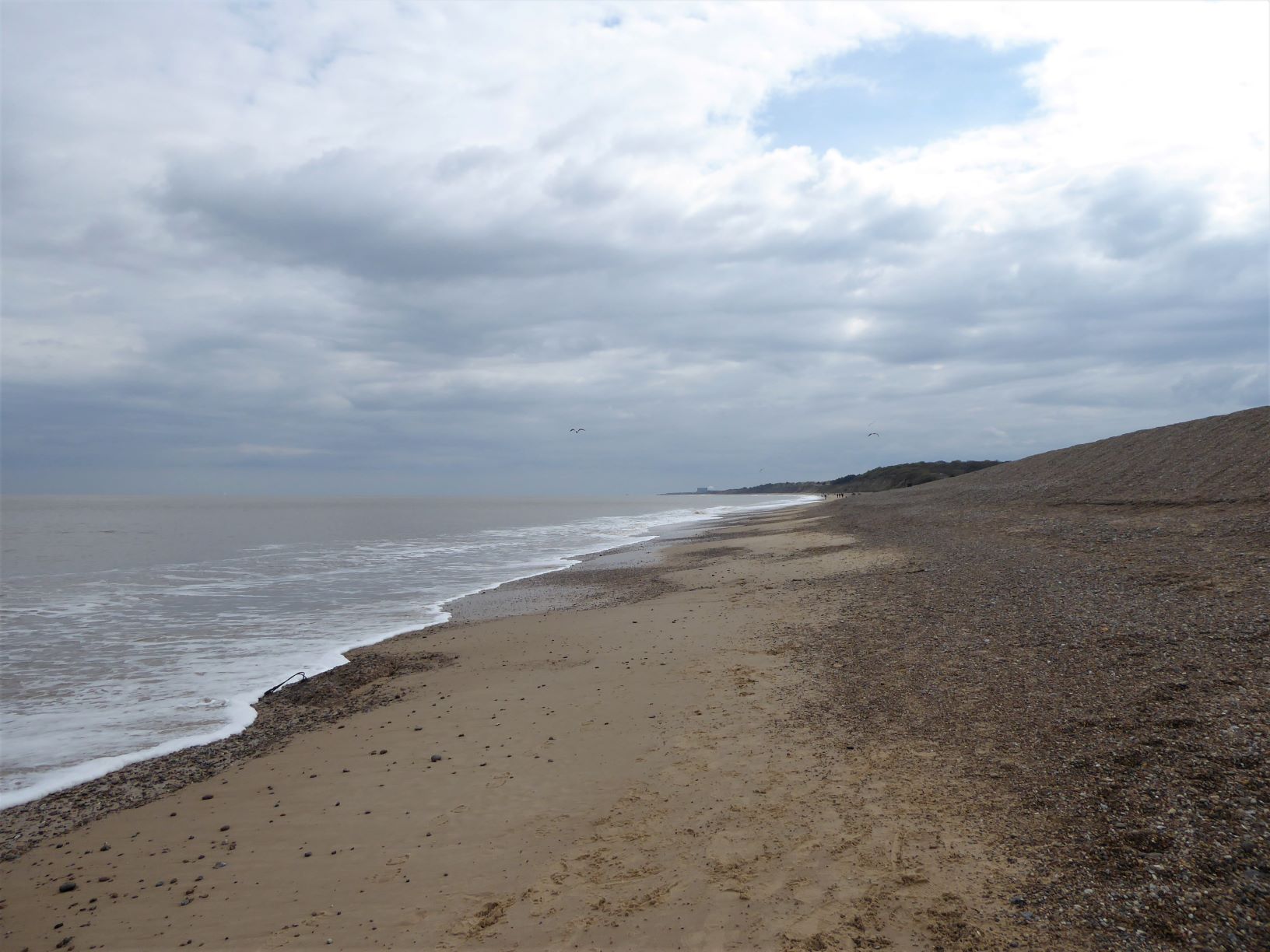
…and southwards.

Inland, behind the shingle bank, is Dingle Marshes Nature Reserve, looked after by the RSPB (Royal Society for the Protection of Birds) and The Suffolk Wildlife Trust.
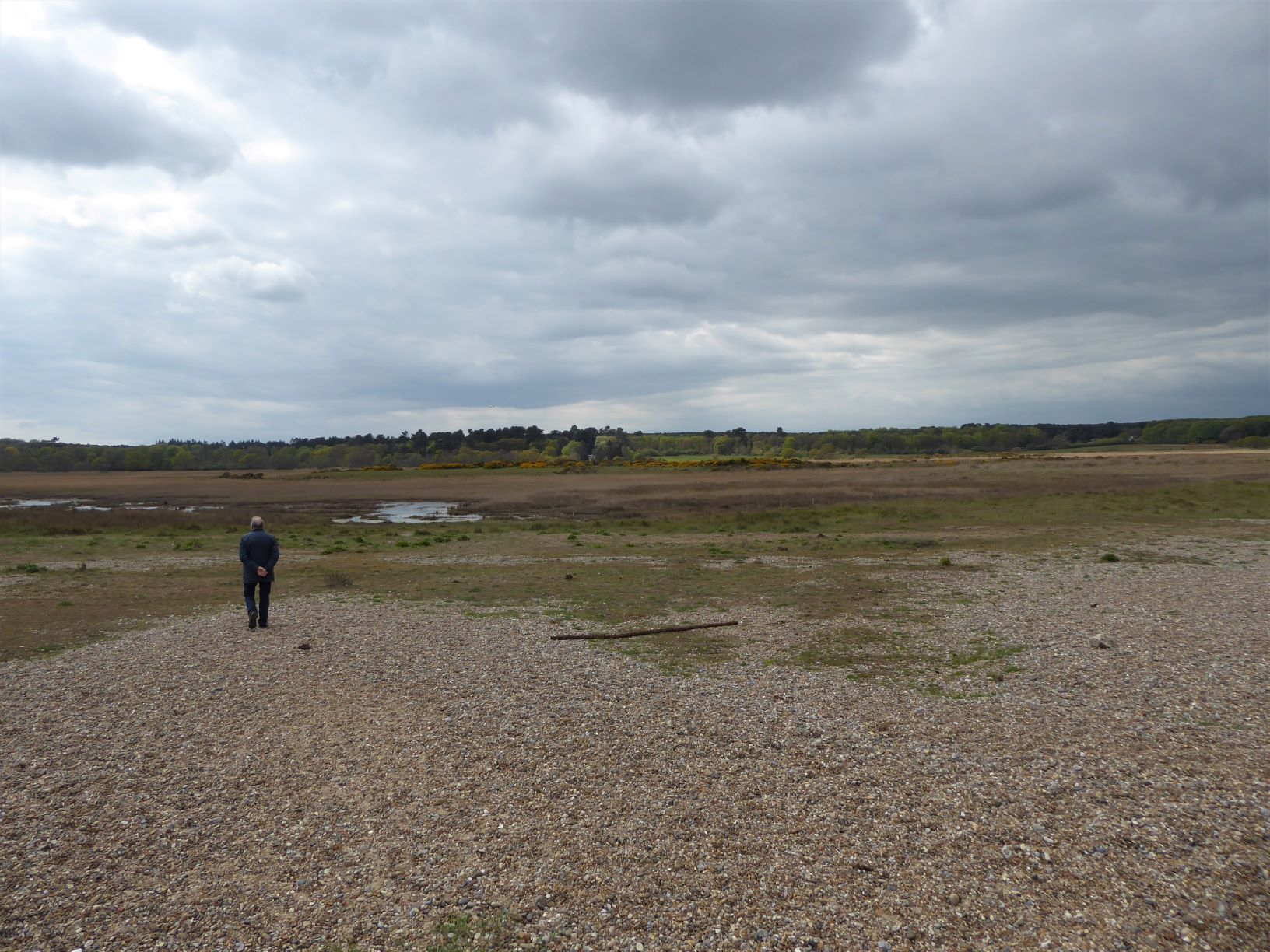
Richard contemplating the view. It was good to be out of the wind!
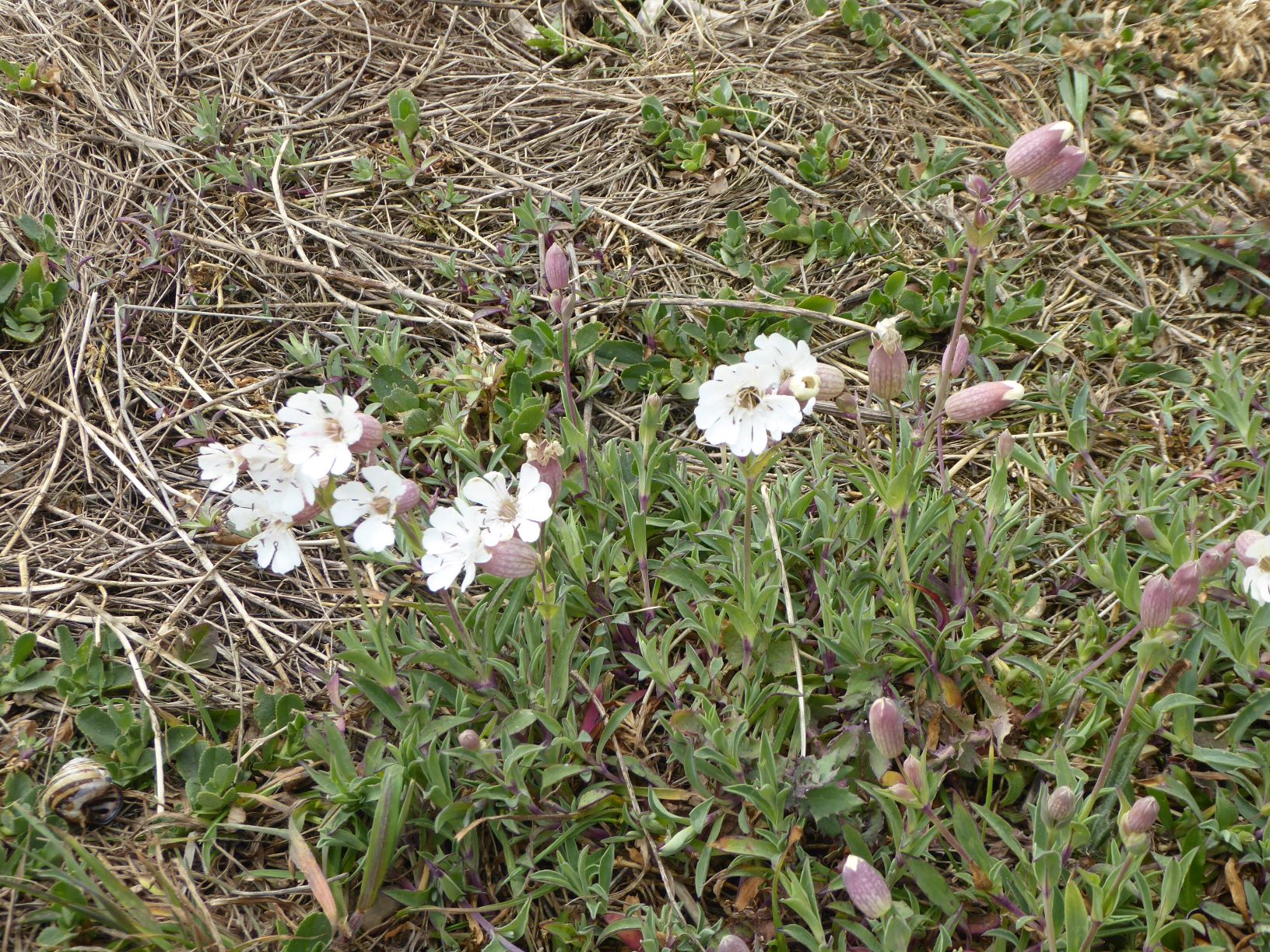
Plenty of Sea Campion (Silene uniflora) were in flower.
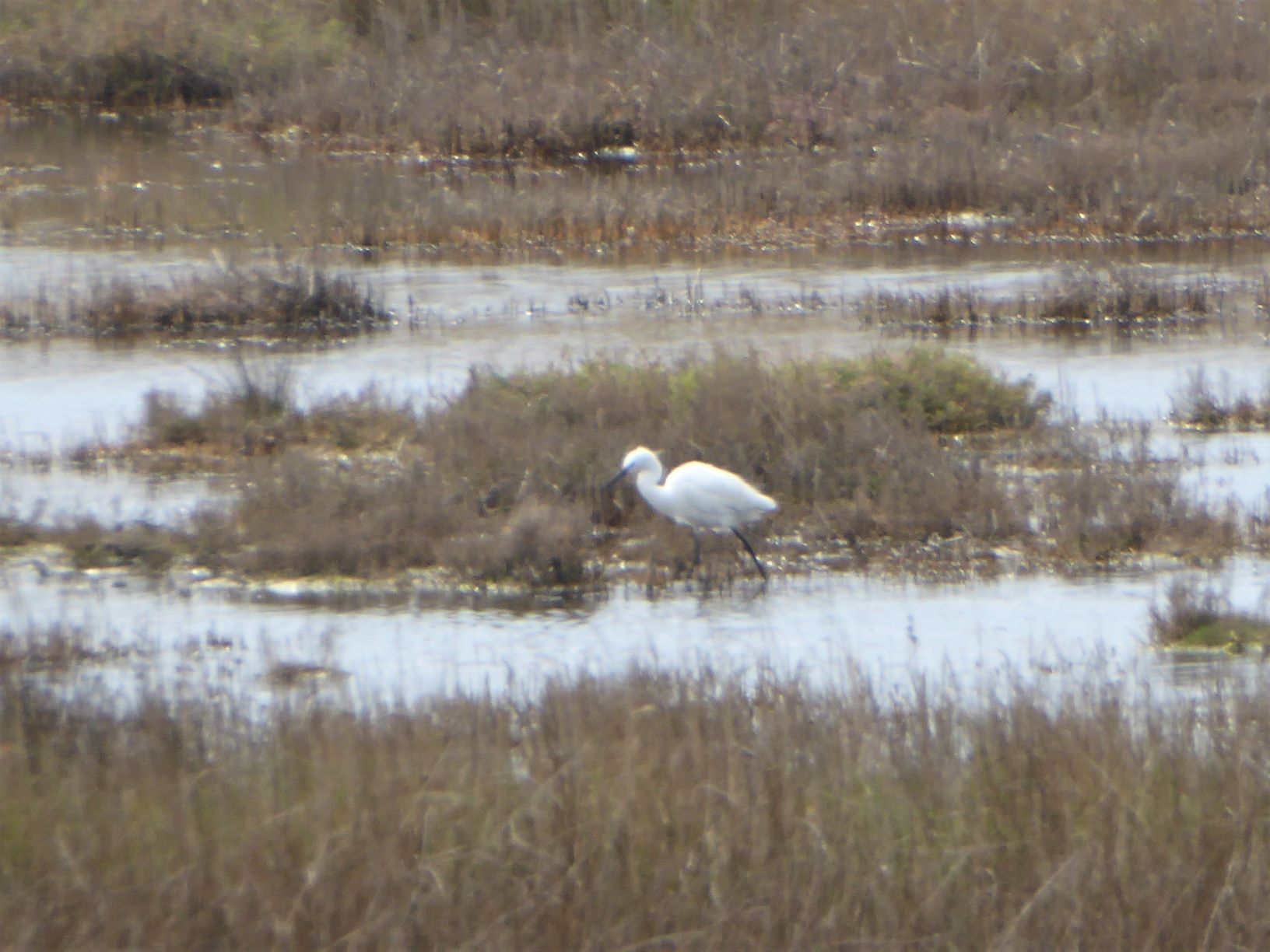
A Little Egret ( Egretta garzetta) was wading through the marsh

Here it is again, marching purposefully on!

Another view of the marshes with a bright yellow ribbon of Gorse (Ulex europaeus)
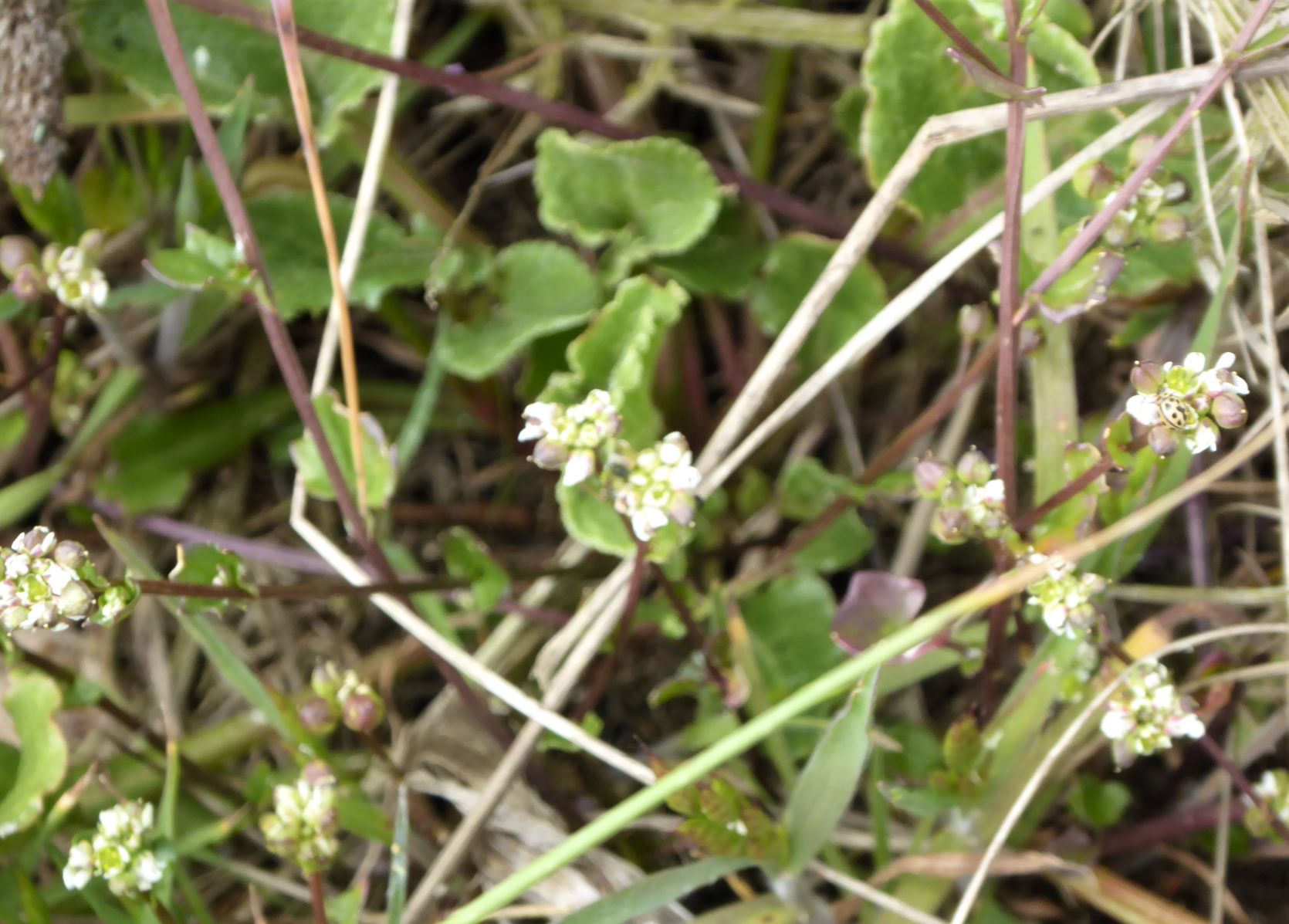
Common Scurvygrass (Cochlearia officinalis)

A plant of saltmarshes and increasingly, along the sides of roads that have been salted during the winter.  (Danish Scurvygrass (Cochlearia danica) however, is seen more regularly than Common Scurvygrass on roadsides).  Common Scurveygrass has almost circular fleshy leaves with a few blunt teeth along the edges.  The seedpods are spherical and a few can be seen on a flower-cluster close to the centre-right edge of this photo.  In that same cluster of flowers and seedpods is a tiny yellow-beige 16 spot ladybird which fees on pollen, fungi and nectar.

In the past, scurvy was a very common disease, often fatal, in those who spent much of their time at sea.  Their diet was restricted to salt pork and dried biscuit and they had no fresh fruit or vegetables.  Many on land also had restricted diets so it was a happy day when herbalists discovered that scurvygrass, with its high vitamin C content, was one of the foods that prevented the disease. It became the fashion in 17th century England to take a glass of scurvygrass water every morning. The leaves were made into a beer called scurvygrass ale.
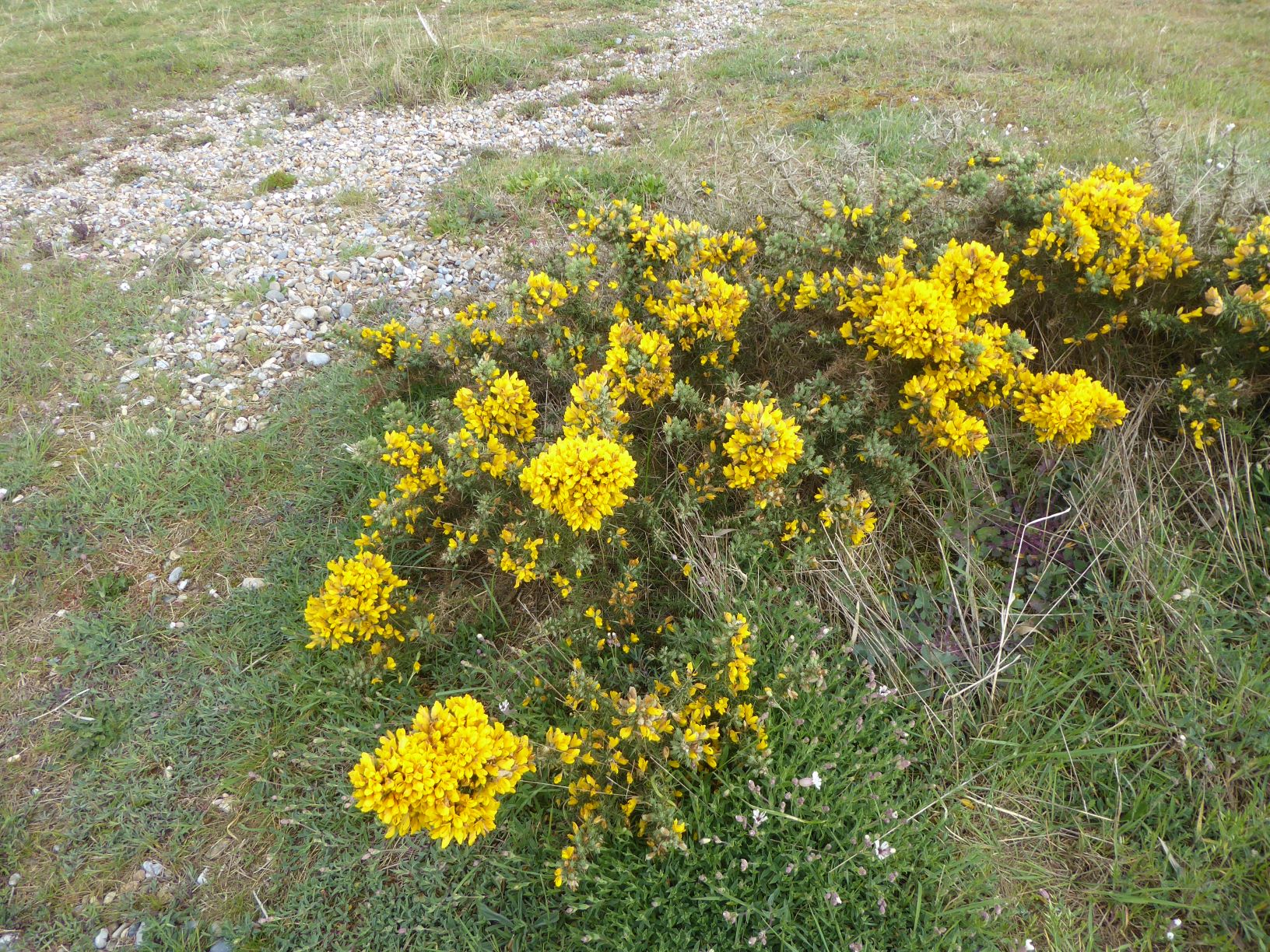
The gorse was so bright and cheerful.

Gorse is also known as furze or whin and grows on the acidic soil of heathland and close to the sea.  It is an excellent fuel and burns quickly and fiercely in dry weather causing heath fires to spread.  It was grown near houses so that washing could be lain out to dry on it and the prickles would prevent the clothes from blowing away.
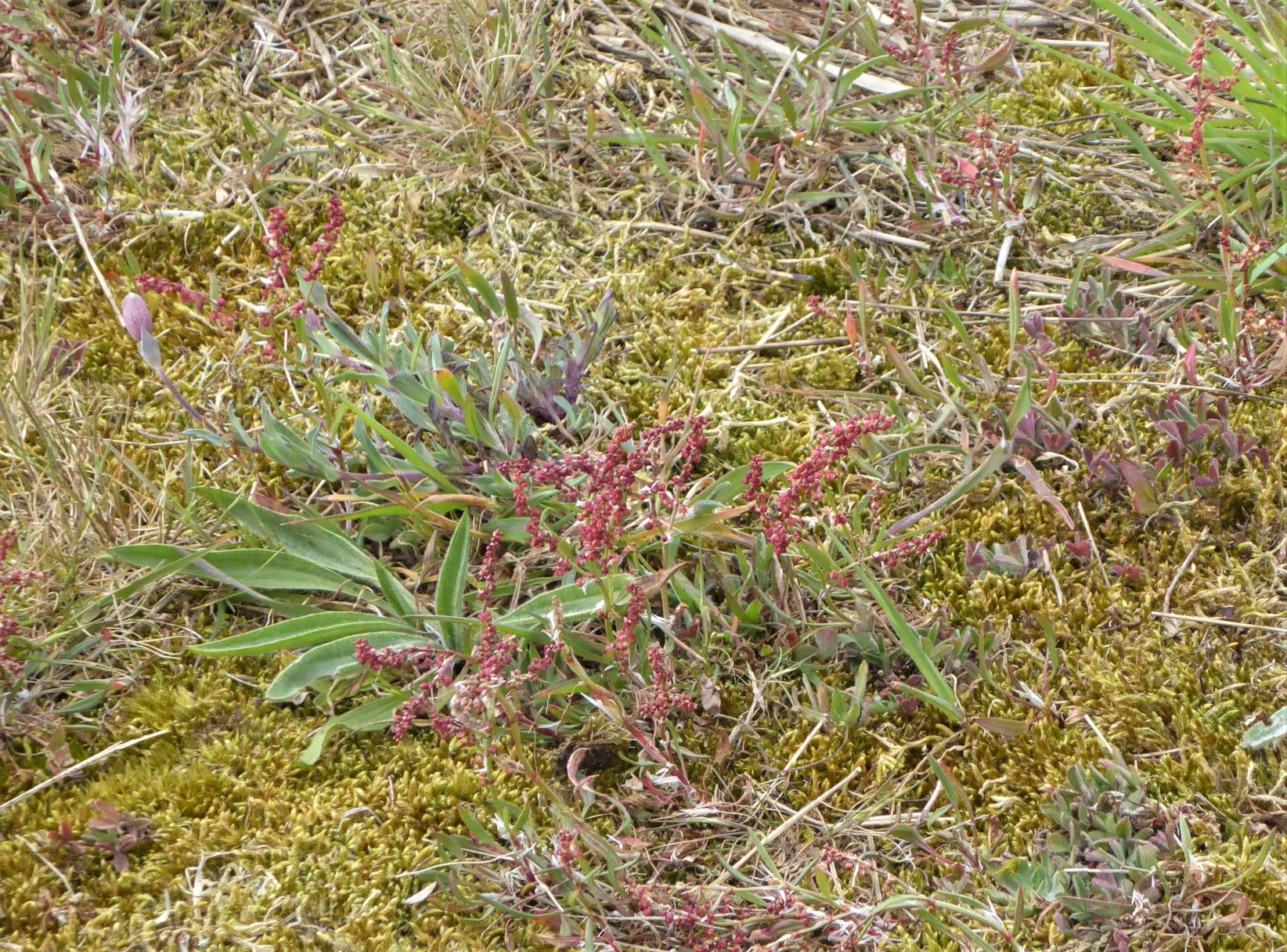
There was plenty of Sheep’s Sorrel (Rumex acetosella ) with its red flower-spikes.

Sheep’s Sorrel is more sprawling than Common Sorrel and is usually found on very poor sandy soil.  The leaves contain the chemical calcium oxalate which tastes acid; the name ‘sorrel’ comes from the old French word for ‘sour’ (‘surele’).
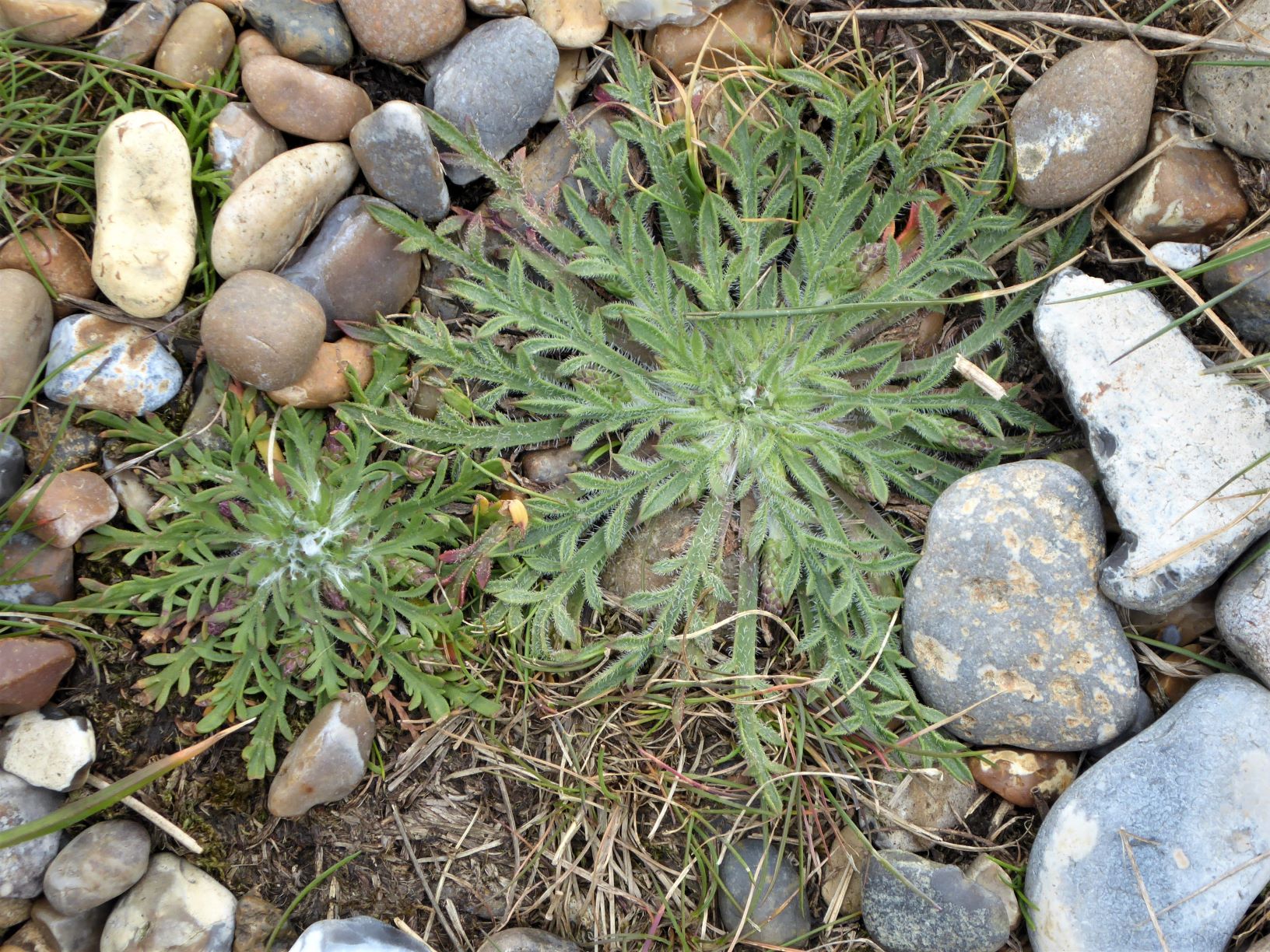
Lovely rosettes of the leaves of Buck’s-horn Plantain ( Plantago coronopus)

The seeds of this plantain exude a large amount of mucilage when they get wet.  This gummy stuff was used in France to stiffen muslins and other woven fabrics.
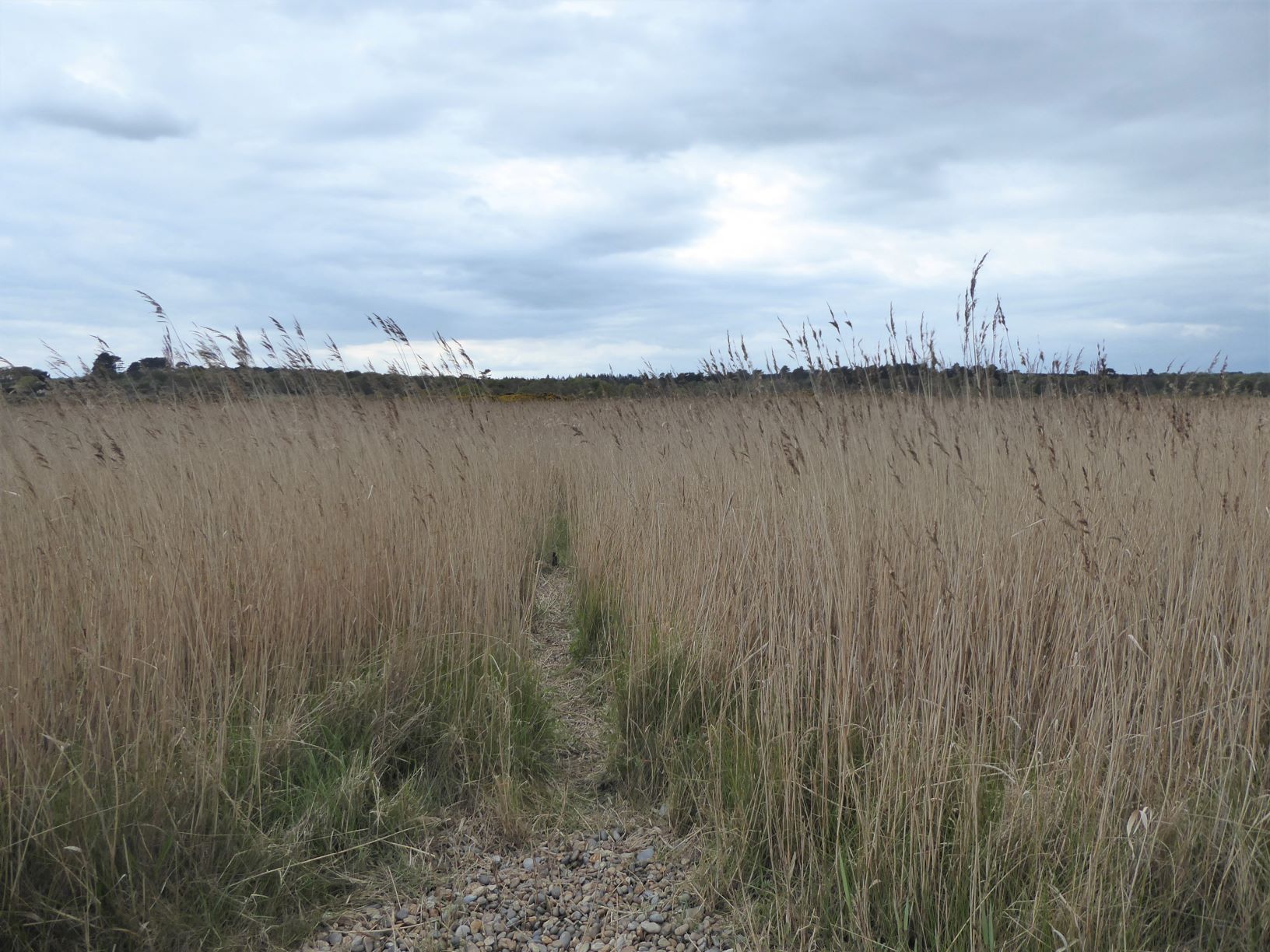
There were paths through the reeds.
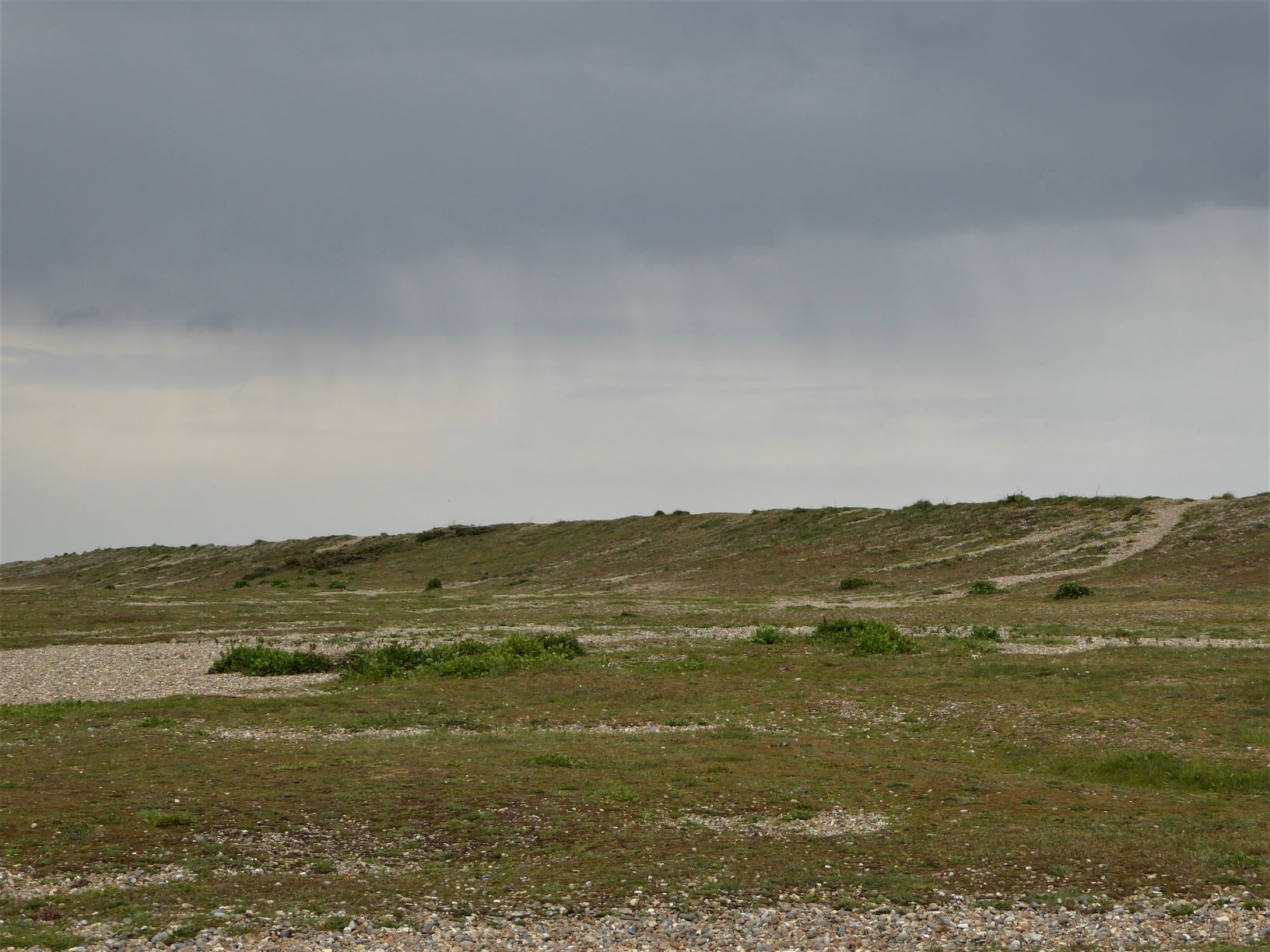
And an approaching rain shower.
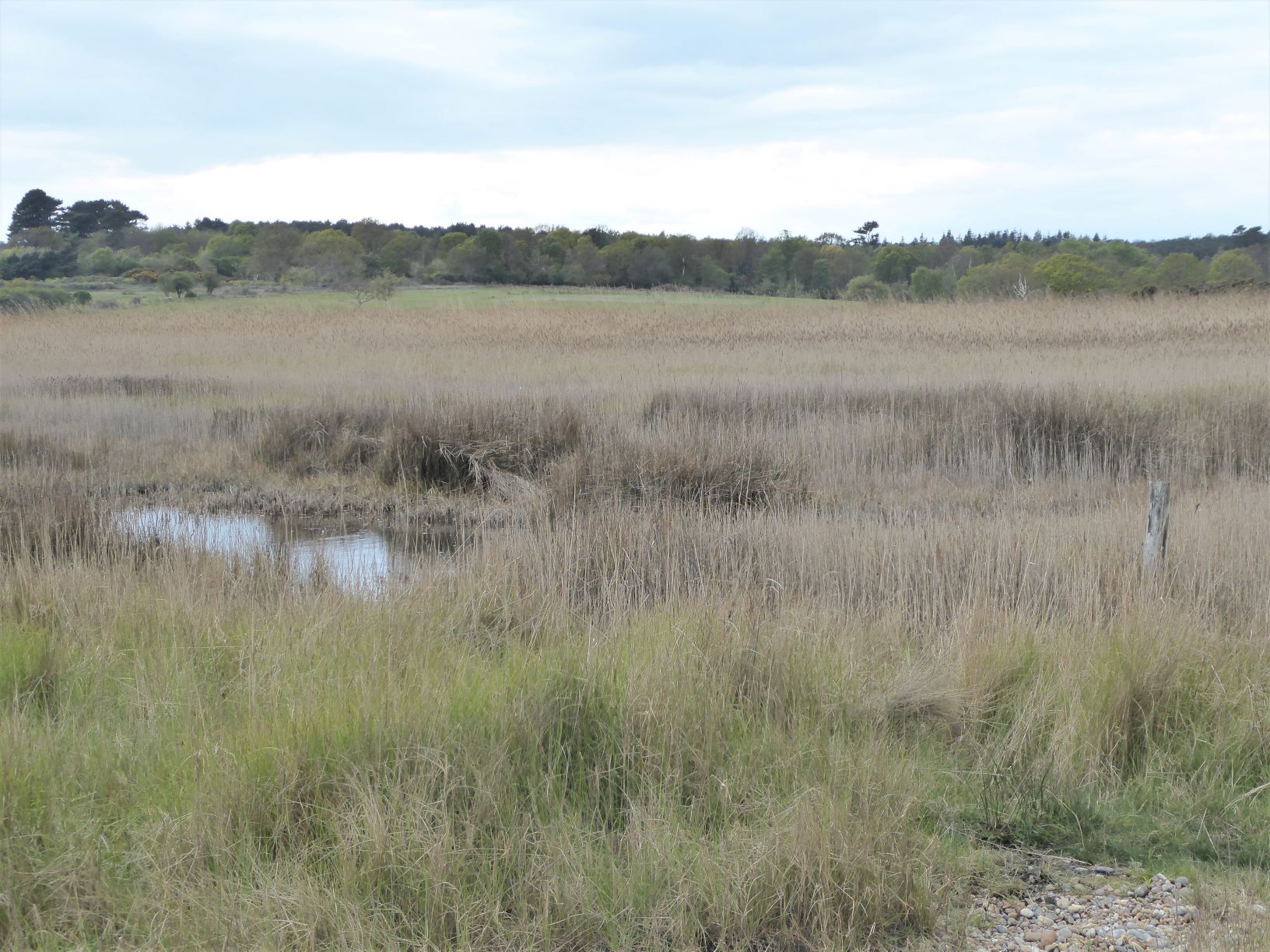
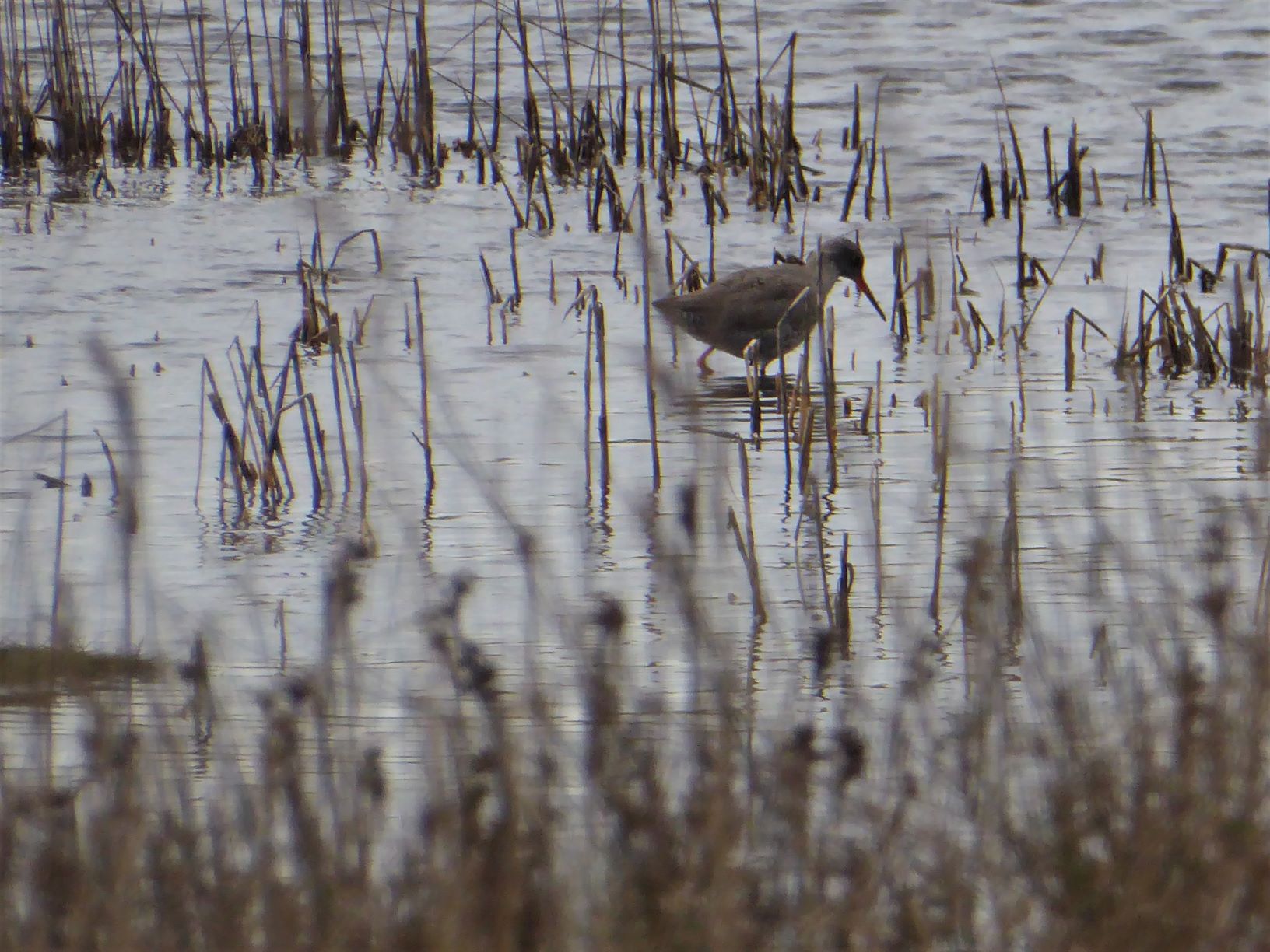
A small wader
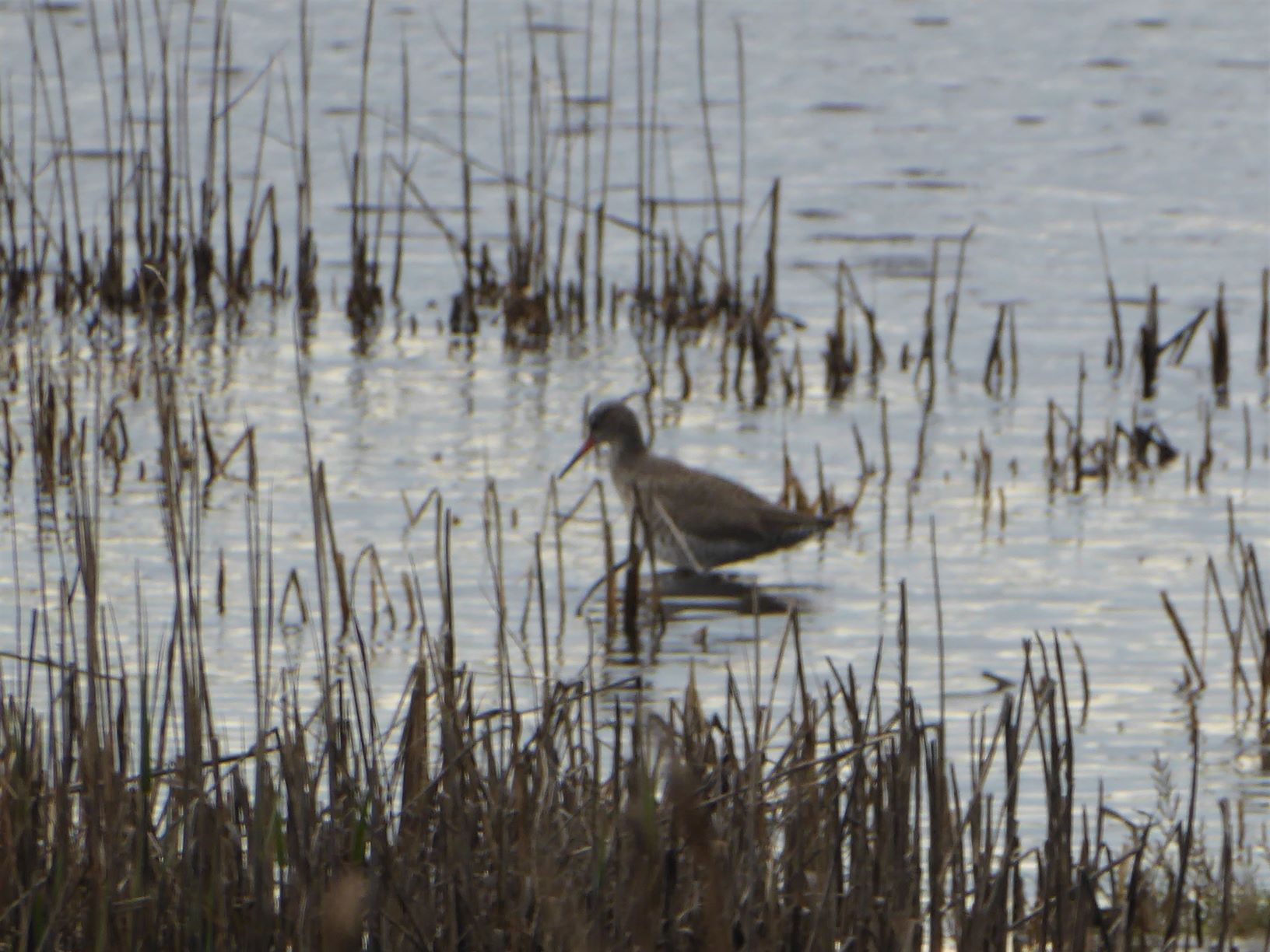
Here it is again. Apologies for the poor quality of my picture.

This is the same bird in both photos but I am unable, through ignorance, to identify it.  It may be a sandpiper of some sort.  I am sure someone will be able to suggest a name.  It moved about very quickly.
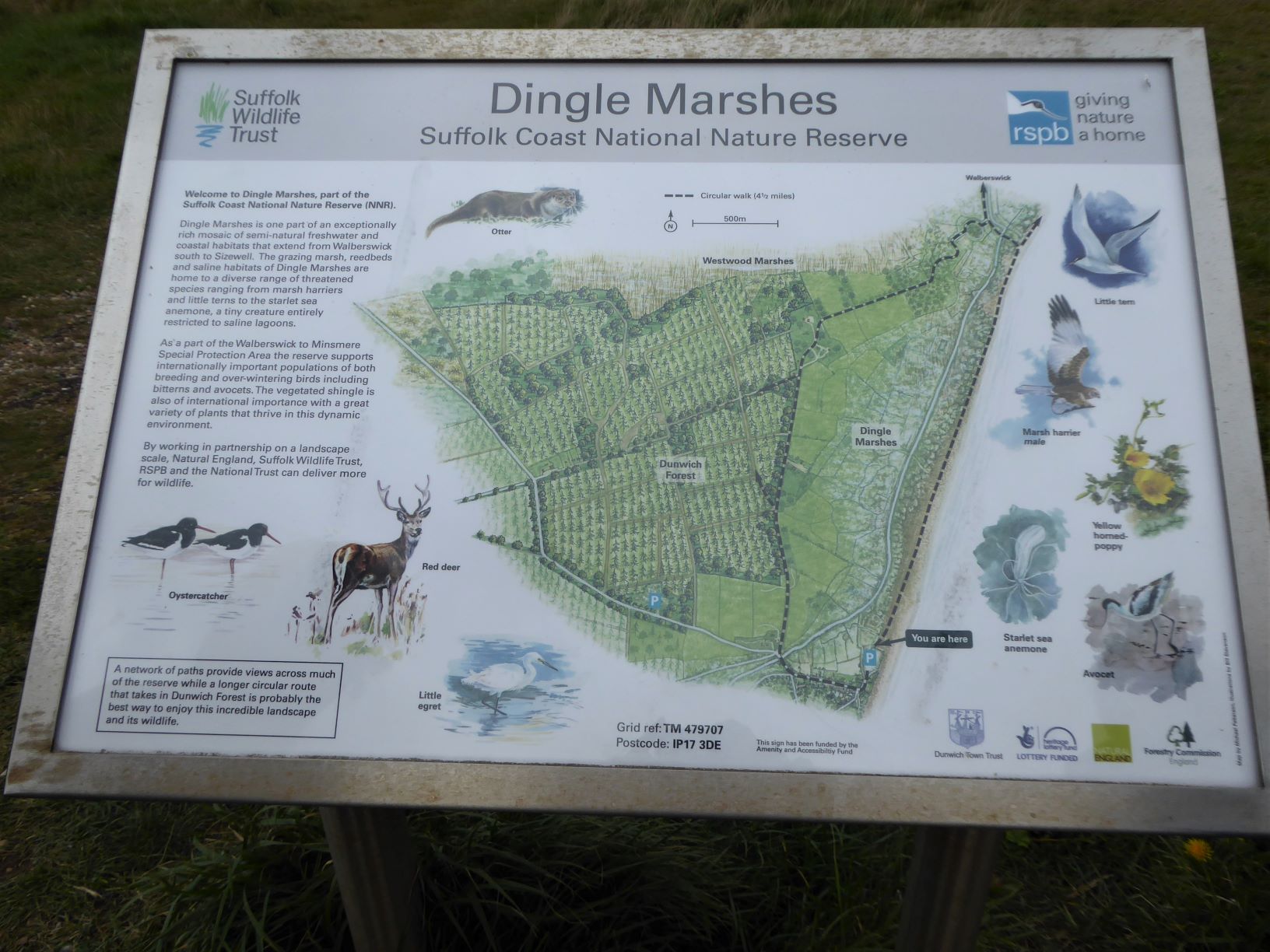
An information board.

Please click on any of my photos to enlarge them.
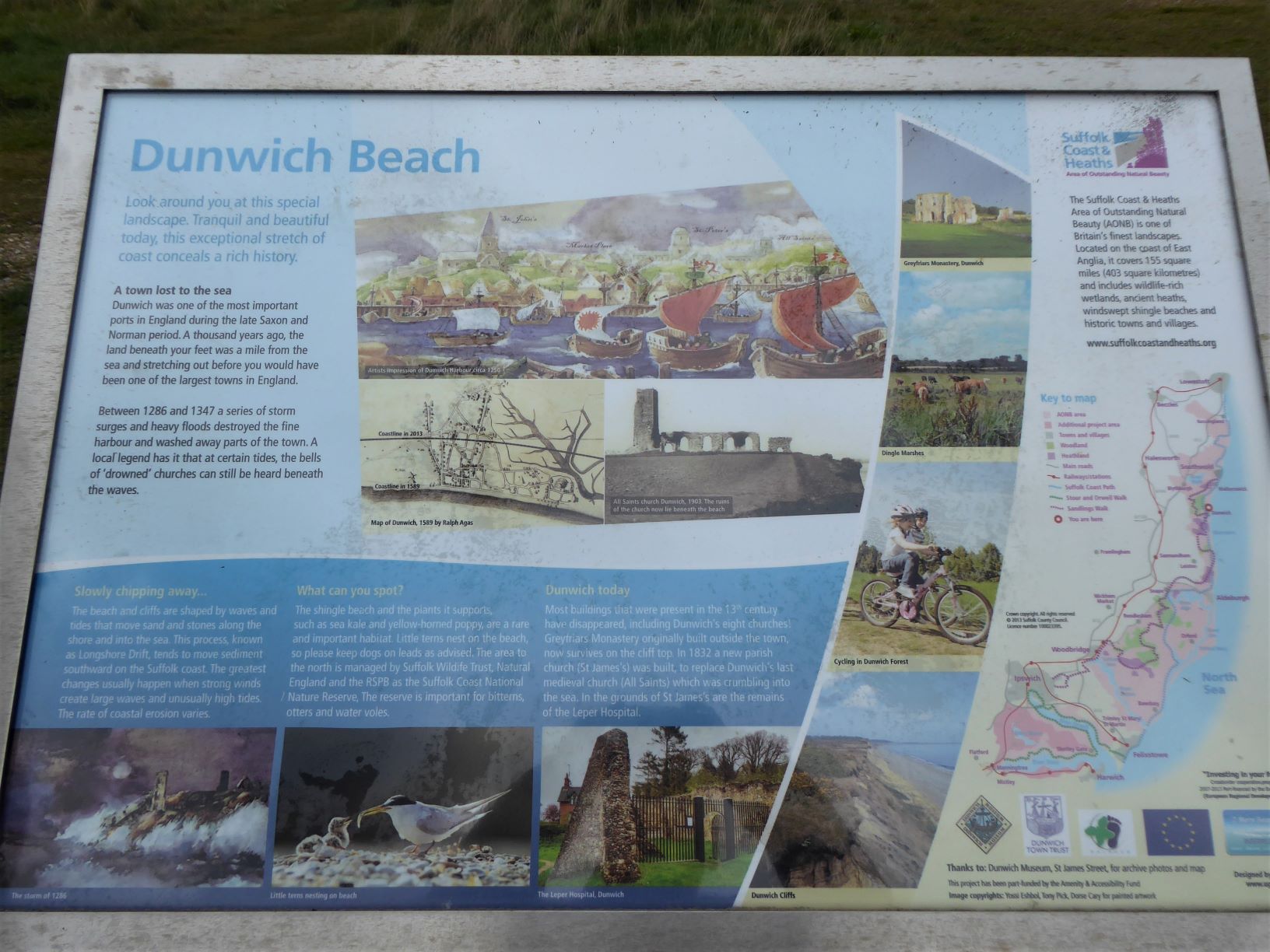
Another information board.

We soon left for home before the rain arrived and had a warming cup of tea.
 

Share this:

  • Share on X (Opens in new window) X
  • Share on Reddit (Opens in new window) Reddit
  • Share on Pinterest (Opens in new window) Pinterest
  • Share on Facebook (Opens in new window) Facebook
  • Email a link to a friend (Opens in new window) Email
  • Share on Tumblr (Opens in new window) Tumblr
  • Print (Opens in new window) Print
  • Share on Pocket (Opens in new window) Pocket
  • Share on LinkedIn (Opens in new window) LinkedIn
Like Loading...

April’s End

28 Sun Jul 2019

Posted by Clare Pooley in churches, Rural Diary, seashore, wild flowers

≈ 80 Comments

Tags

April, church porch repair, churches, Common Hawthorn, Common Storksbill, cowslips, crown imperial, daisy, dandelion, Dove's-foot Cranesbill, Forget-me-not, Greater Stitchwort, Lords and Ladies, Ribwort Plantain, St Michael and St Felix Church Rumburgh, St Michael South Elmham church, Suffolk, sunset, the Beck, walking

I began writing this post immediately after publishing my last one and got well over half way through writing it and then had to stop.  No time for much self-indulgence, reading and writing for some weeks and now that I have a little time, this post seems somewhat irrelevant.  However, I don’t want to waste it by deleting it so I’ll finish it as best I can.

A pastoral scene at St Michael South Elmham church

Holy Week and then Easter week were very busy, so I didn’t manage to take many photos.  This was one of a very few and was taken on Good Friday as I was leaving church after a service of quiet prayer.

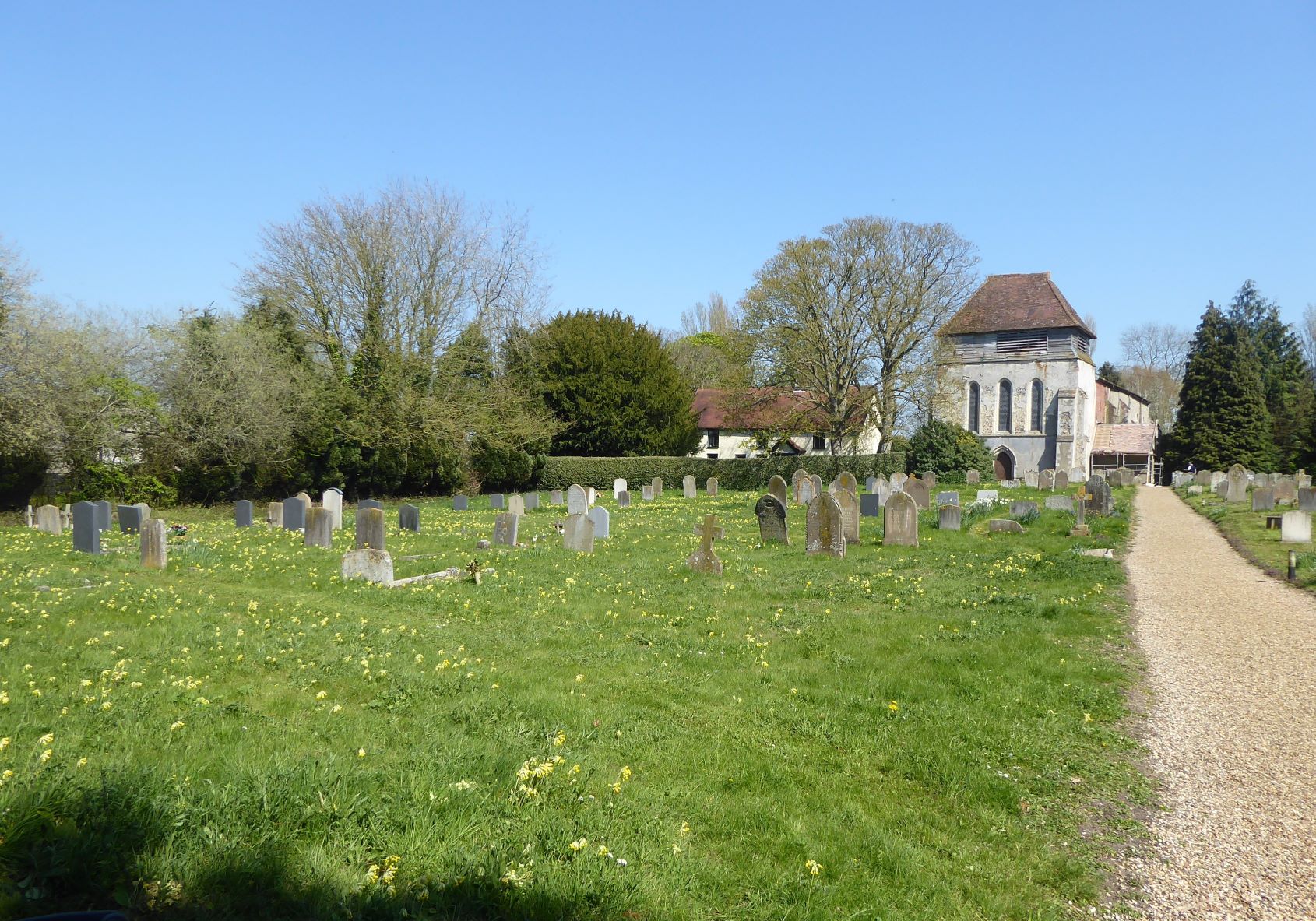
The churchyard of the church of St. Michael and St. Felix at Rumburgh

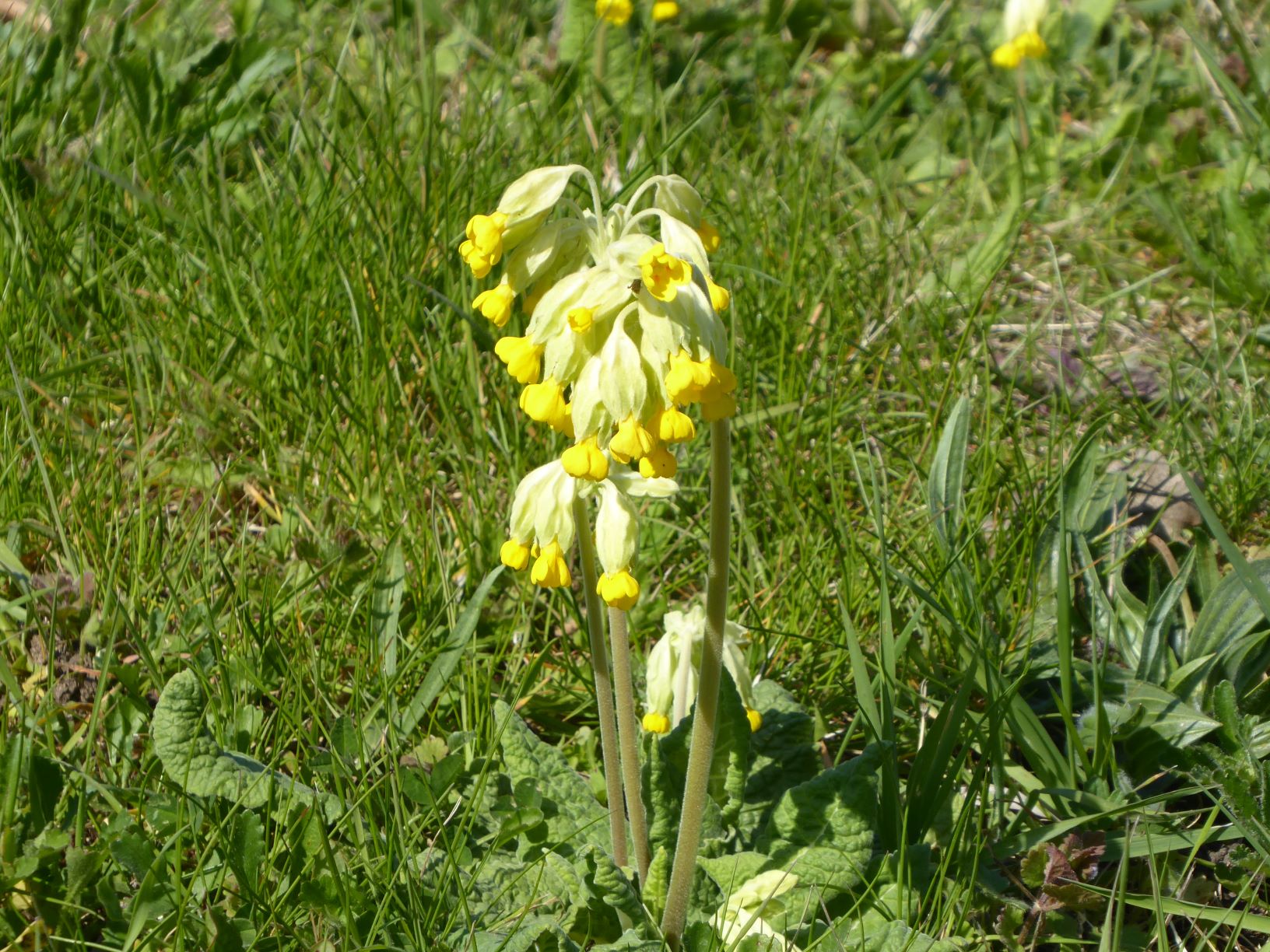
This and the next two photos were taken on Easter Day in the early afternoon.  As you can see, the churchyard was full of yellow Cowslips ( Primula veris).  I had taken Mum to her church at Eye in the morning and Richard had been to a service at St. Margaret South Elmham in our benefice.  After having some lunch we visited Rumburgh church to make sure all was well and to change the colours on the altar and to put flowers in the church.  We returned home and I began preparing the dinner to which Mum had been invited.

One of the many cowslips in the churchyard

Rumburgh church

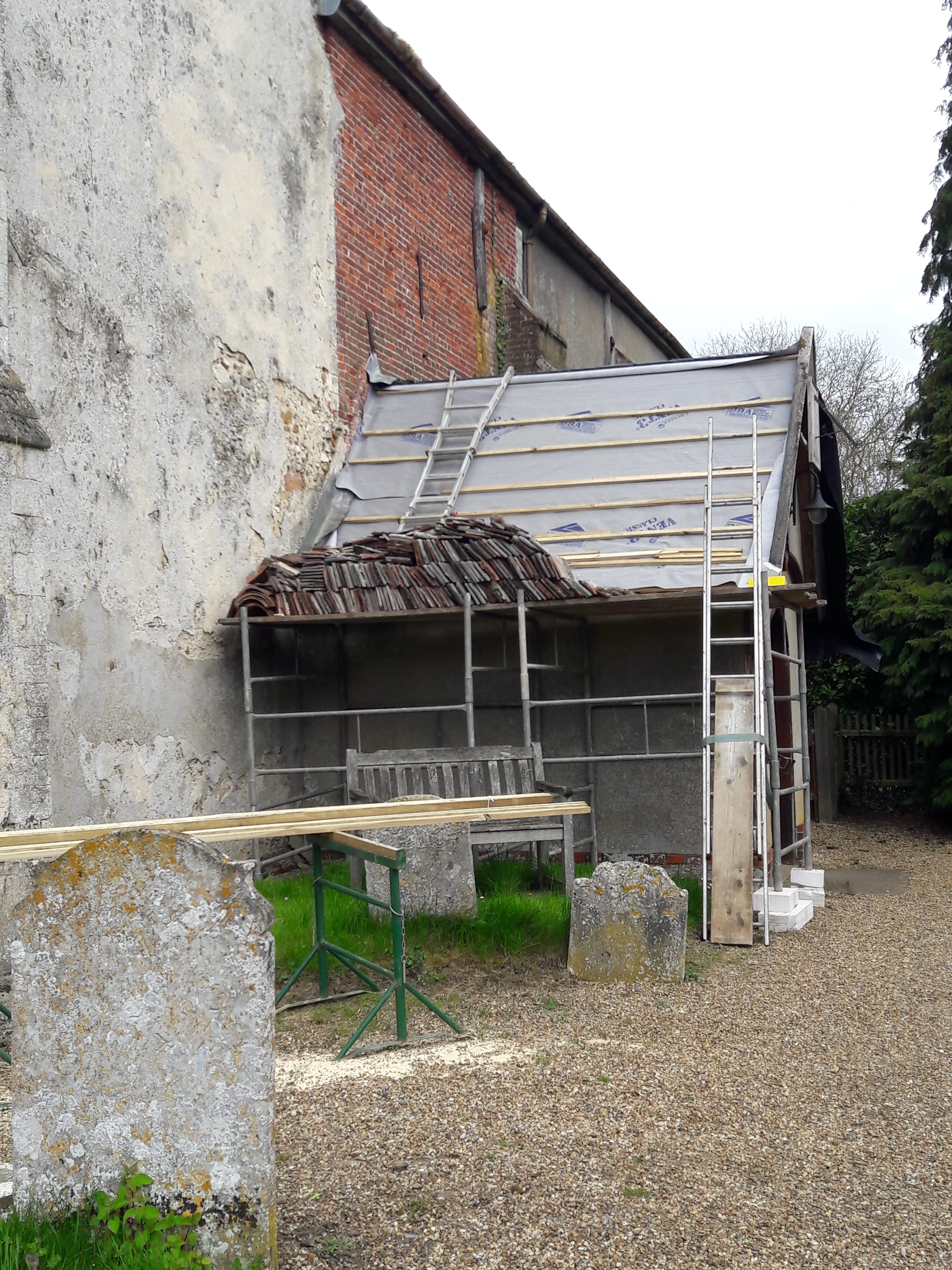
During April we had work done on the church porch at Rumburgh.  It is now less likely to fall down.

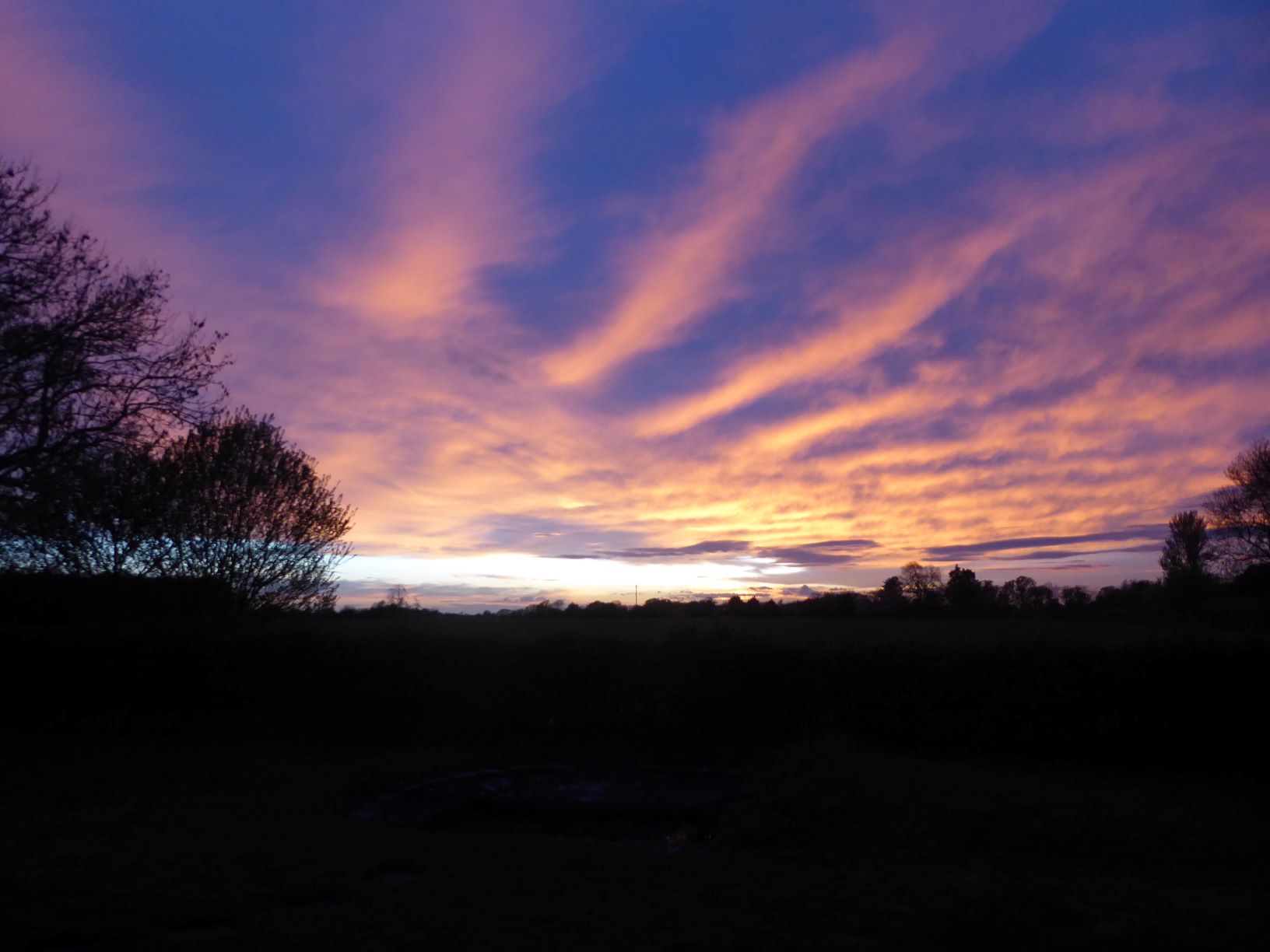
A striking sunset seen from the back of our house.

Richard and I managed to find time for a short walk round the lanes during Easter week.

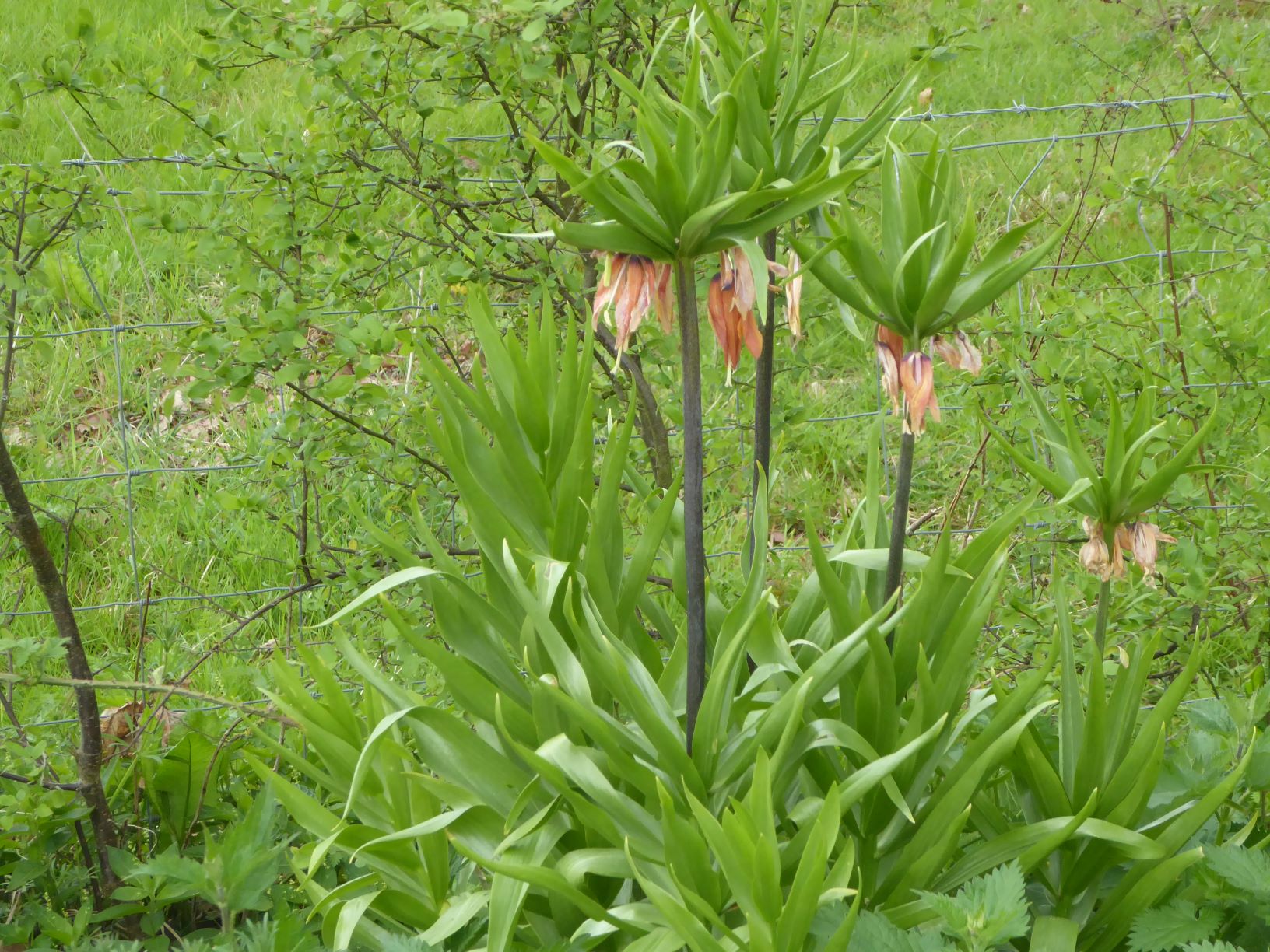
Crown Imperial

Someone must have either discarded a Crown Imperial fritillary at the side of our lane or planted it there on purpose.  We have seen it here for a few springs now and it is getting larger and larger.  It is about 3.5 feet tall, well over a metre in height.  I was unable to stop and photograph it when it was in full and glorious flower but even with its shrivelled petals you can easily see what it is and how well it is doing.

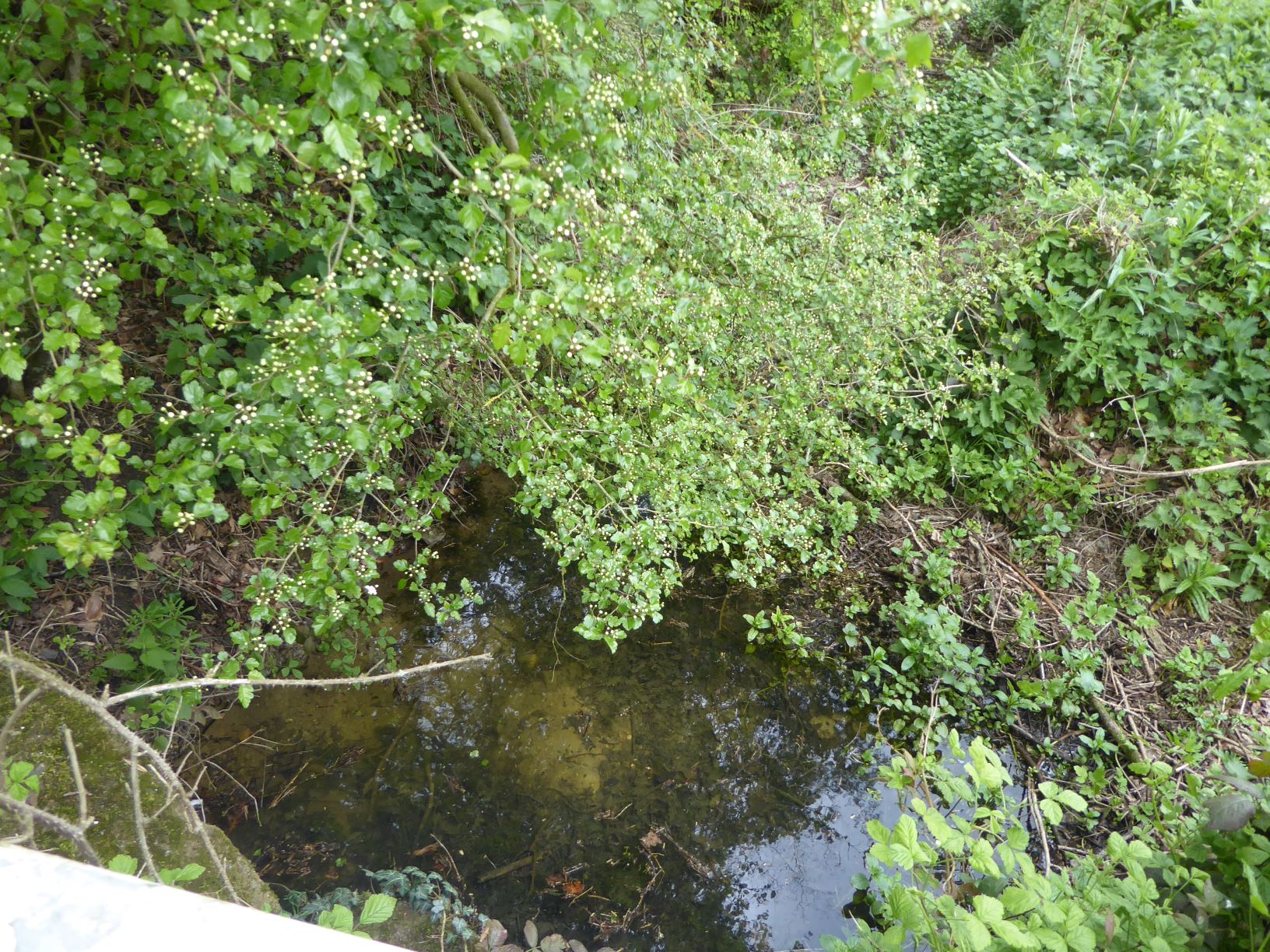
The Beck – the stream that flows through much of The Saints.

There was very little water in the Beck at the end of April and by the middle of the following month it had dried up completely.

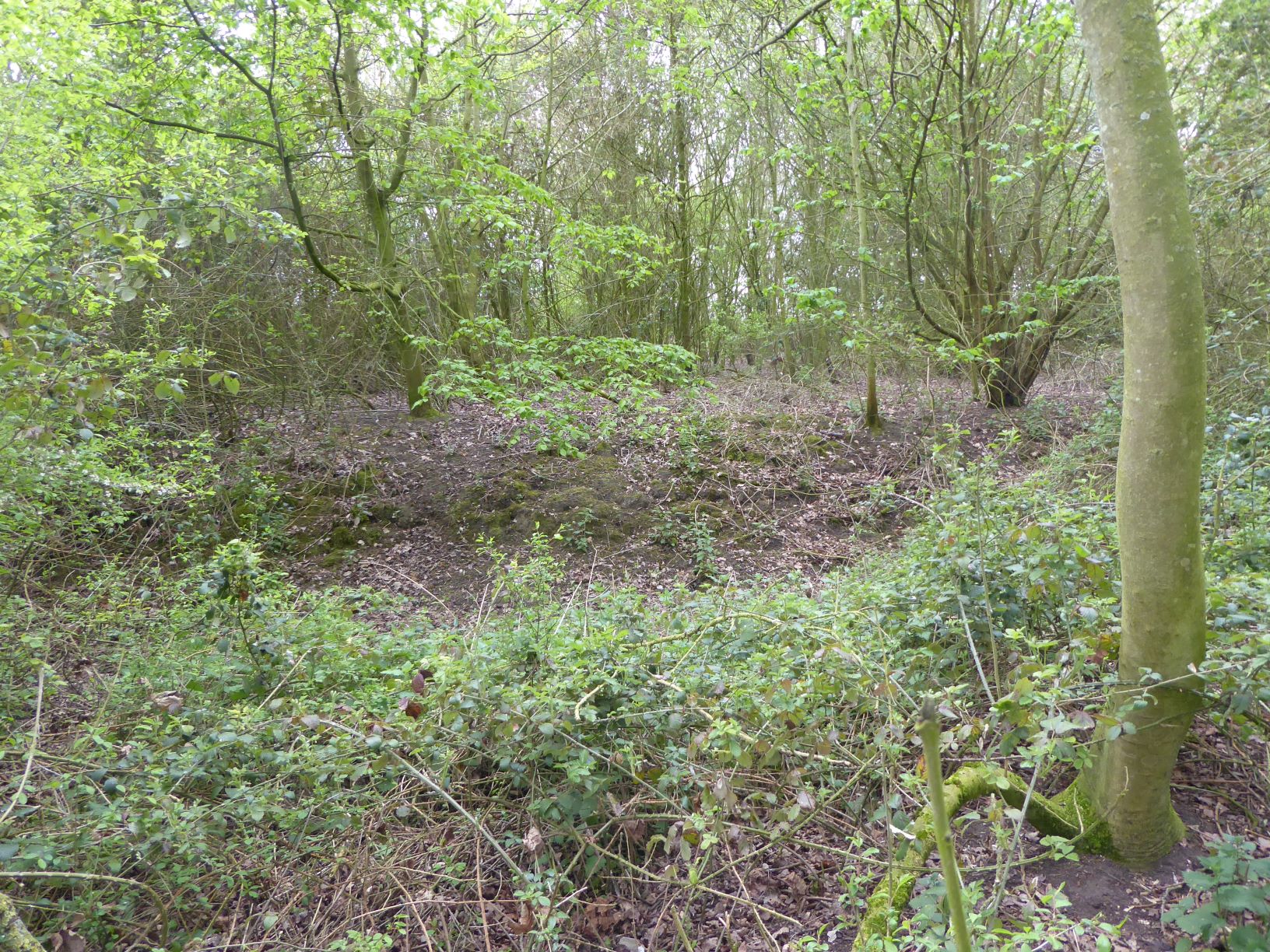
Some of the undergrowth and scrub had been cleared away from this area next to the lane and an ancient boundary ditch was revealed

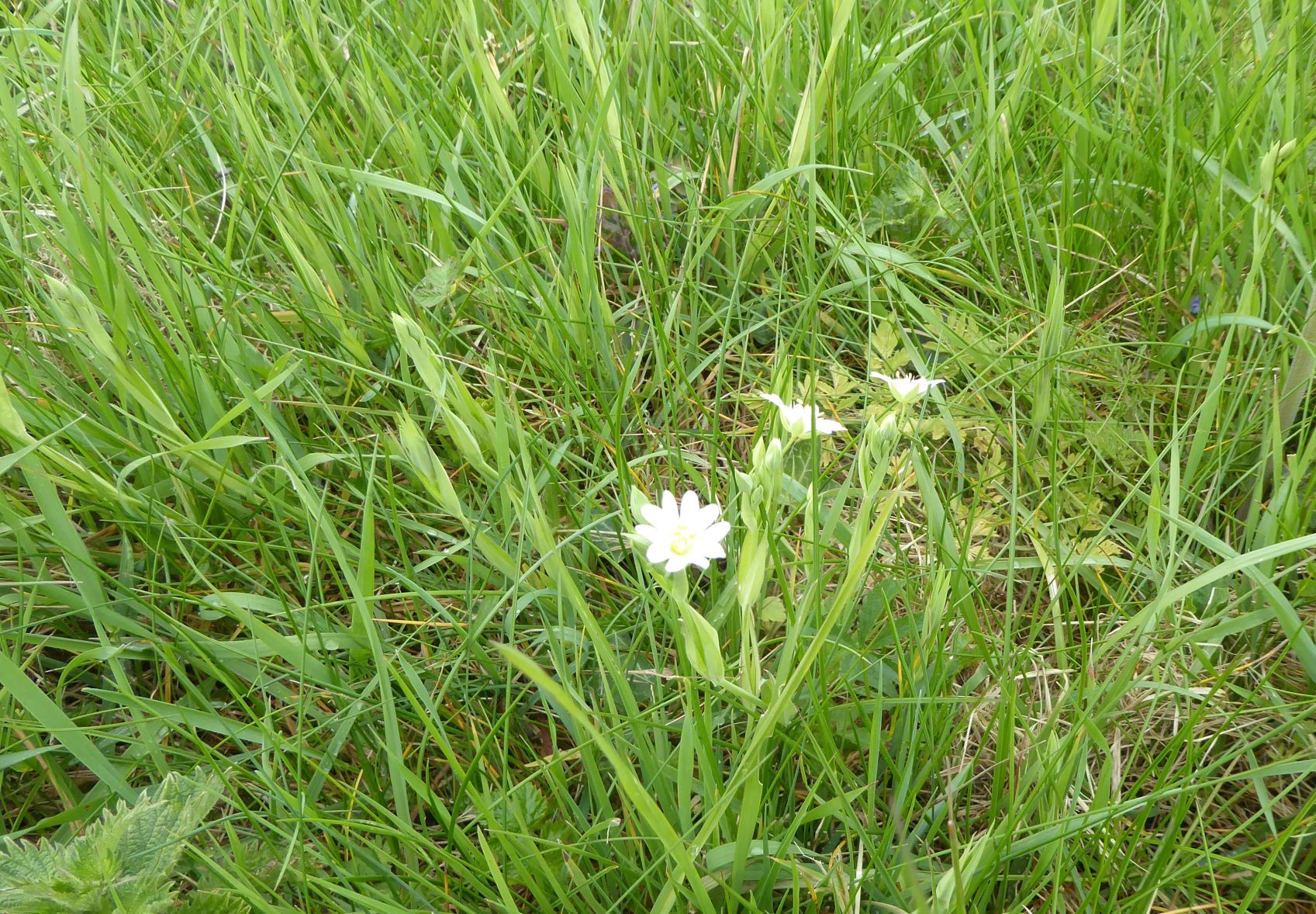
The first Greater Stitchwort (Stellaria holostea ) flowers of the year

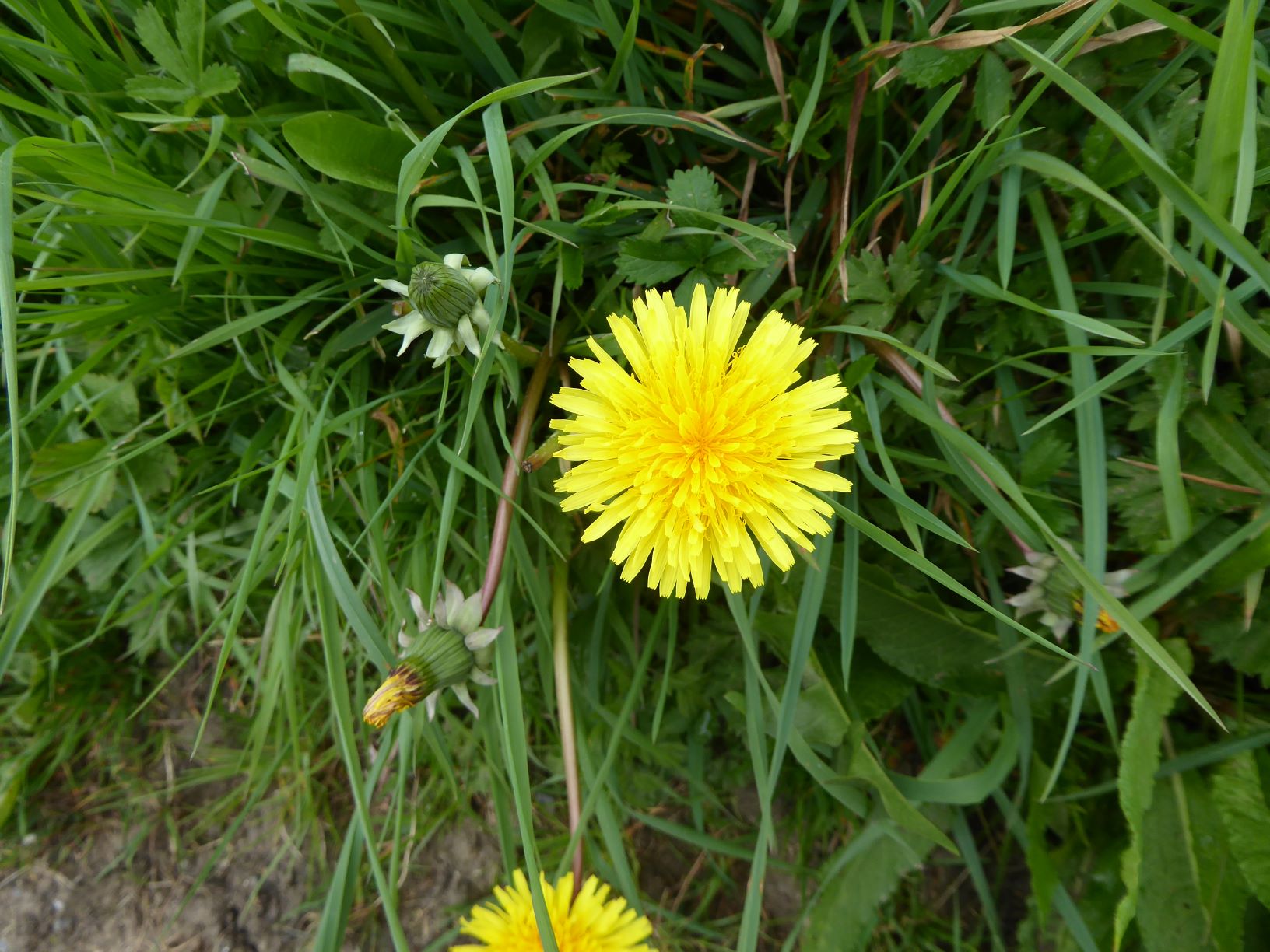
A bright and beautiful Dandelion (Taraxacum agg. )

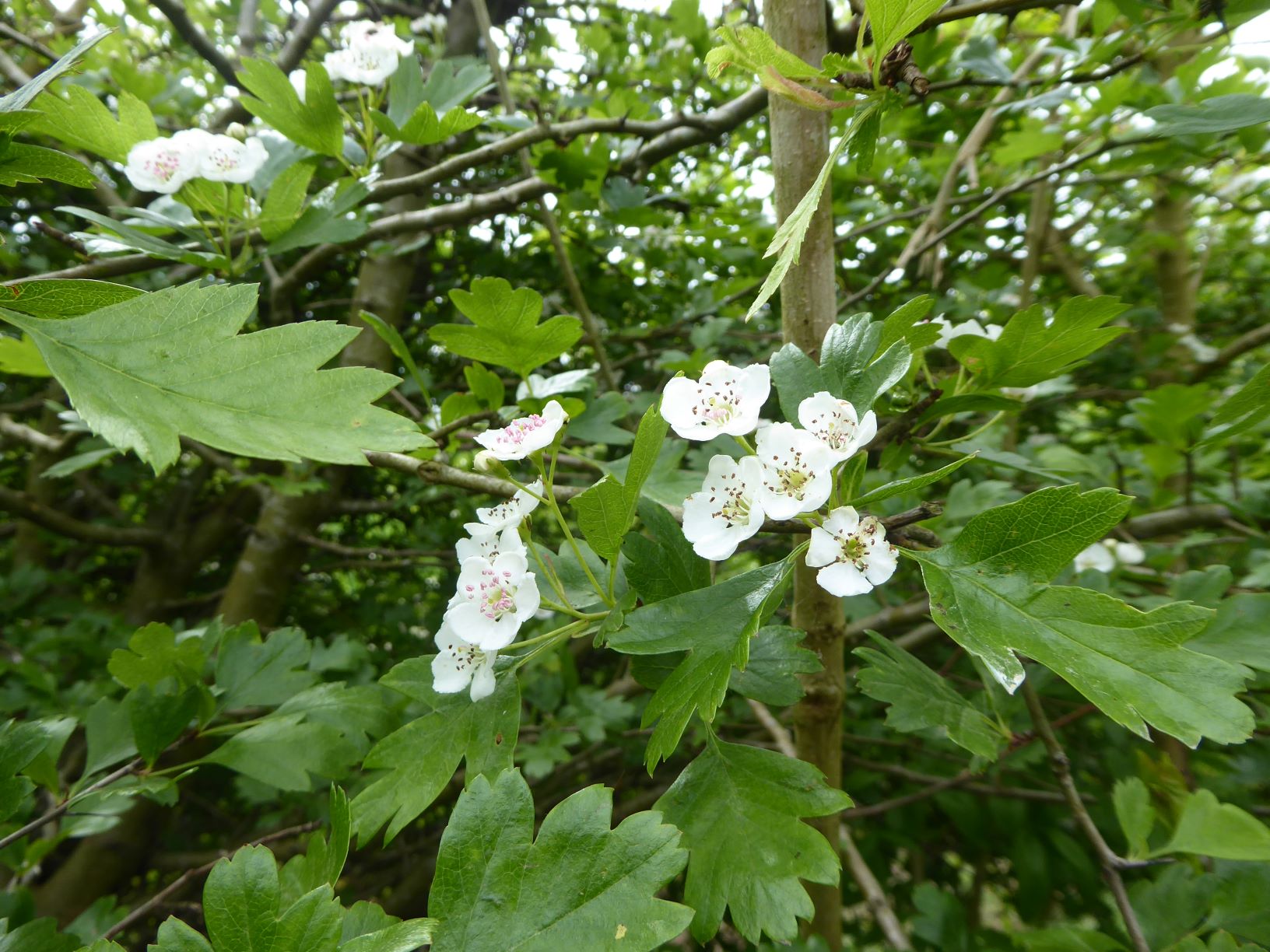
The Common Hawthorn (Crataegus monogyna ) was just beginning to blossom

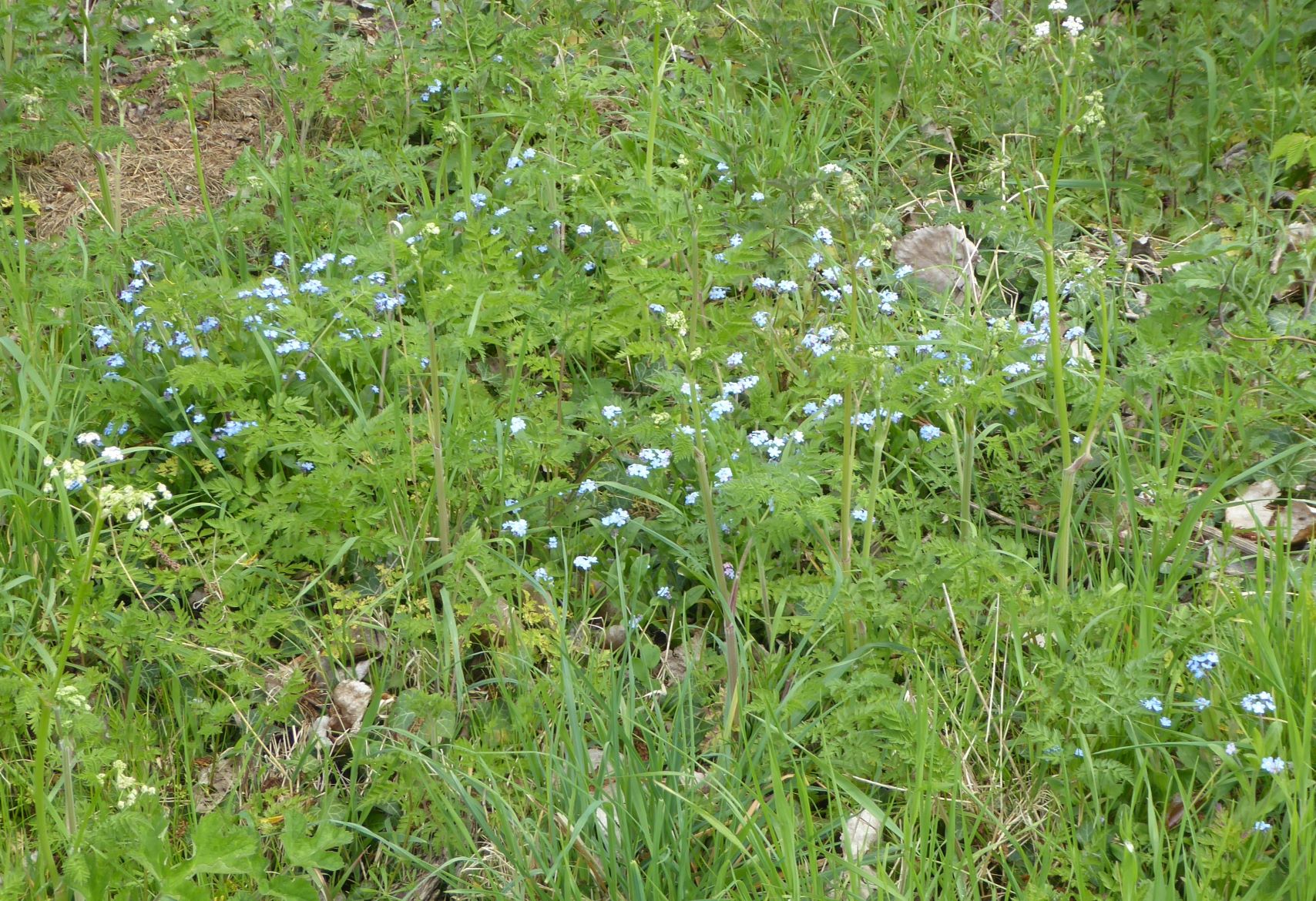
I noticed some Forget-me-nots at the back of the grass verge but didn’t look to see what kind they were.  Probably Field Forget-me-not (Myosotis arvensis).

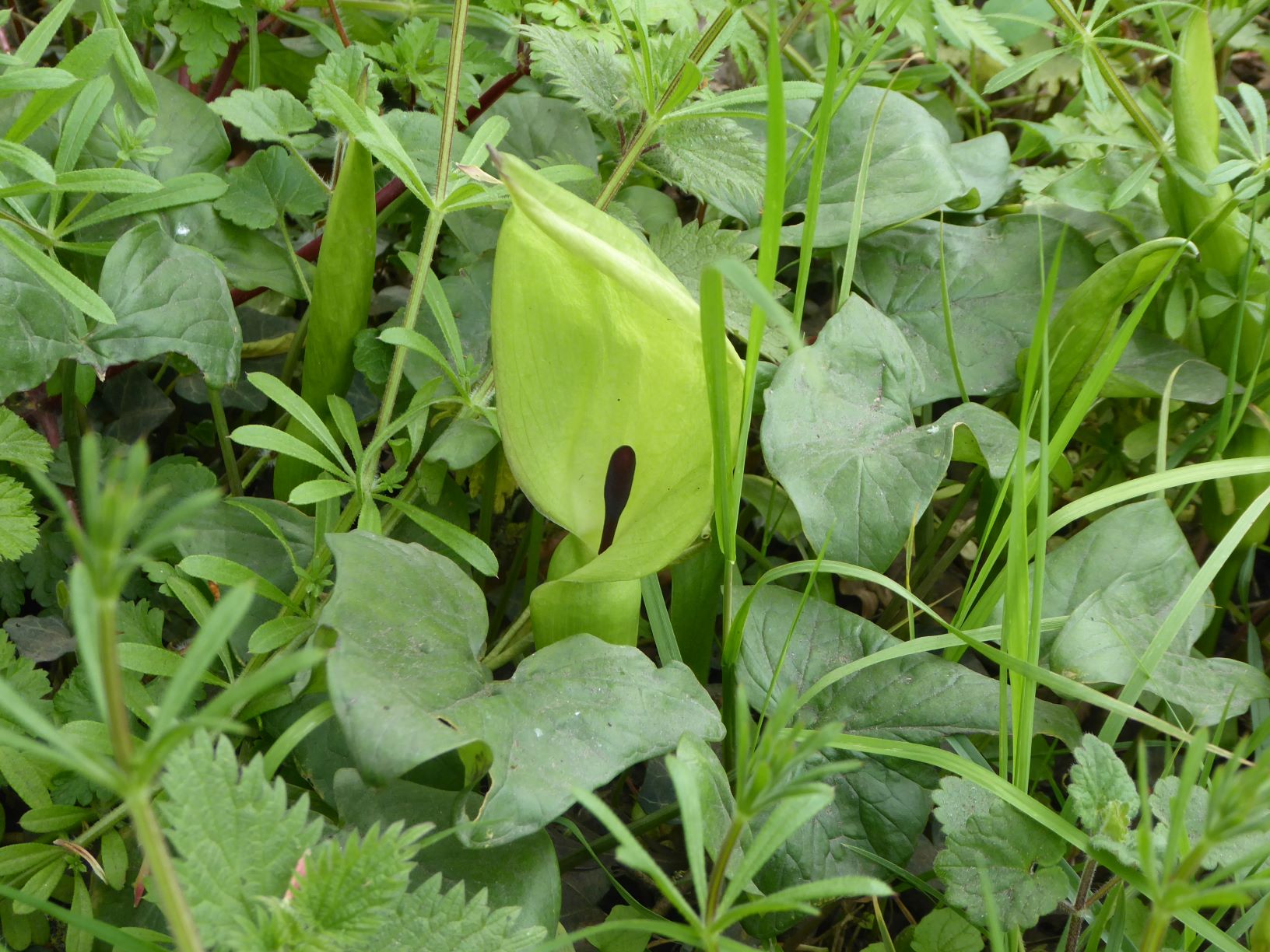
I also saw my first Lords and Ladies (Arum maculatum) of the season. I love all the different shades of green in this photo!

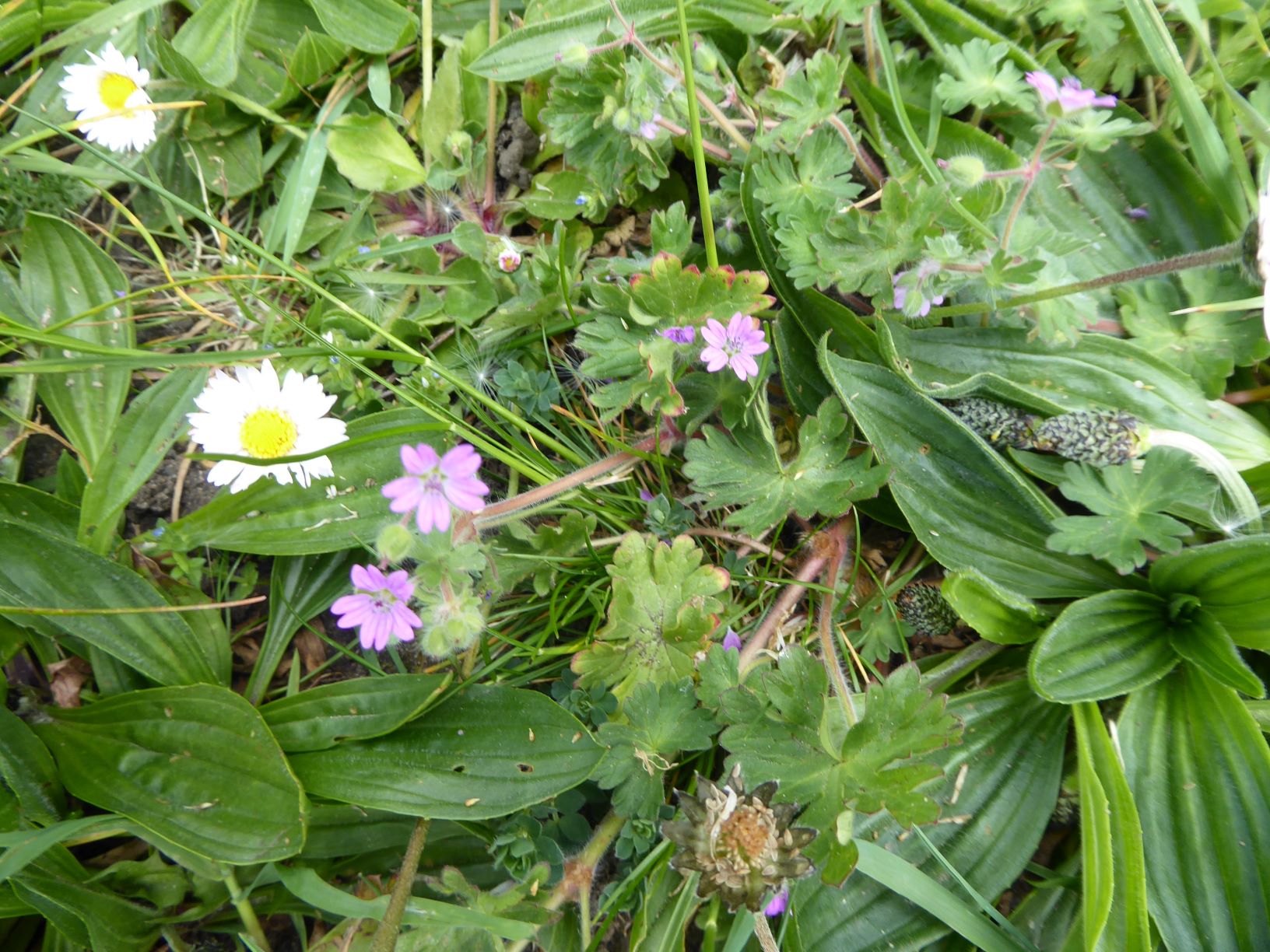
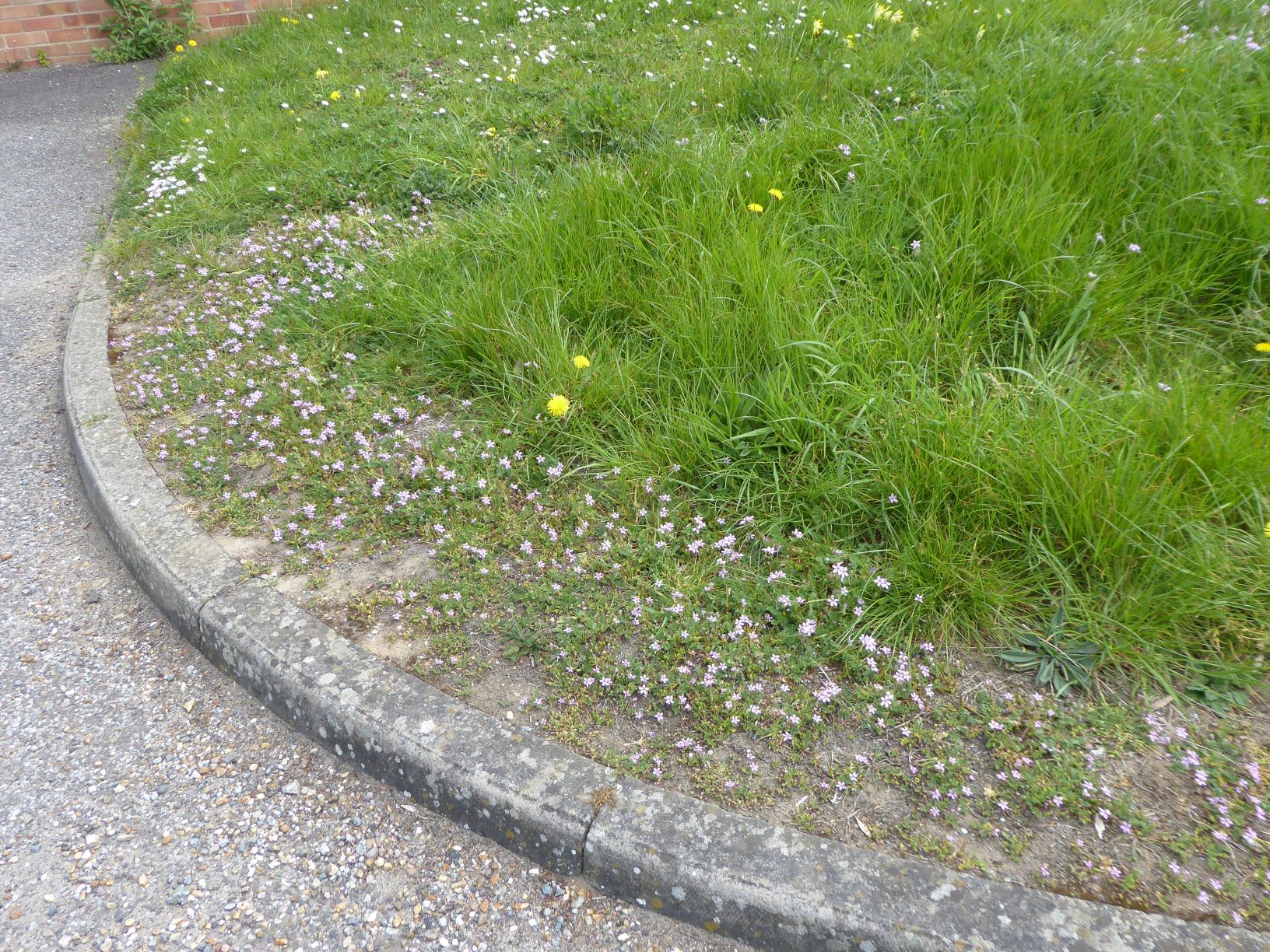
A couple of days later I had to go to the doctor’s surgery for my regular blood-test and noticed that there were many flowers blooming in the patches of grass alongside the driveway.  These grassy areas haven’t been tended as they used to be, due to financial cuts and other problems so these ‘weeds’ have flourished.

Dove’s-foot Cranesbill (Geranium molle) with Daisy (Bellis perennis) and Ribwort Plantain (Plantago lanceolata)

I noticed a profusion of yet more small pink flowers….

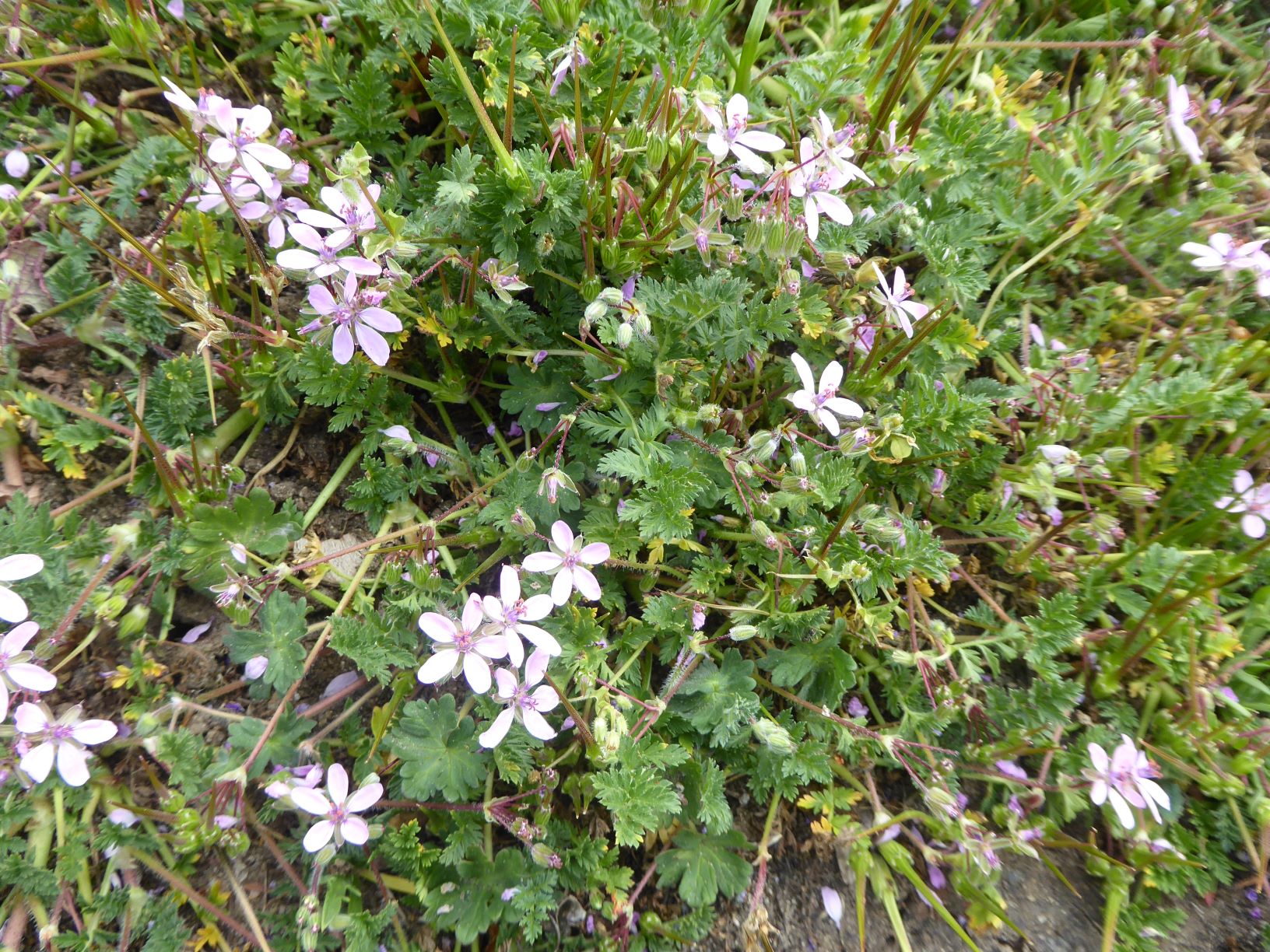
…and discovered they were Common Storksbill (Erodium cicutarium), a plant that I usually see nearer to the sea as it likes growing in sand and gravel. My camera doesn’t show how very pink this flower is.

And that is all I managed to record in April this year.  Rather an abrupt end, for which I apologise.

Share this:

  • Share on X (Opens in new window) X
  • Share on Reddit (Opens in new window) Reddit
  • Share on Pinterest (Opens in new window) Pinterest
  • Share on Facebook (Opens in new window) Facebook
  • Email a link to a friend (Opens in new window) Email
  • Share on Tumblr (Opens in new window) Tumblr
  • Print (Opens in new window) Print
  • Share on Pocket (Opens in new window) Pocket
  • Share on LinkedIn (Opens in new window) LinkedIn
Like Loading...

Spring Odds and Ends – April

12 Wed Jun 2019

Posted by Clare Pooley in Gardening, plants, Rural Diary, trees, wild flowers

≈ 78 Comments

Tags

amelanchier, blackthorn, bullace, cuckooflower, Damson, garden, garden plants, ground-ivy, horse chestnut, Lady's Smock, lesser celandine, lichen, Mallard, marsh marigold, mining bees, montana clematis, pasque flower, Pear, pond, Suffolk, trees, wild cherry, wild flowers

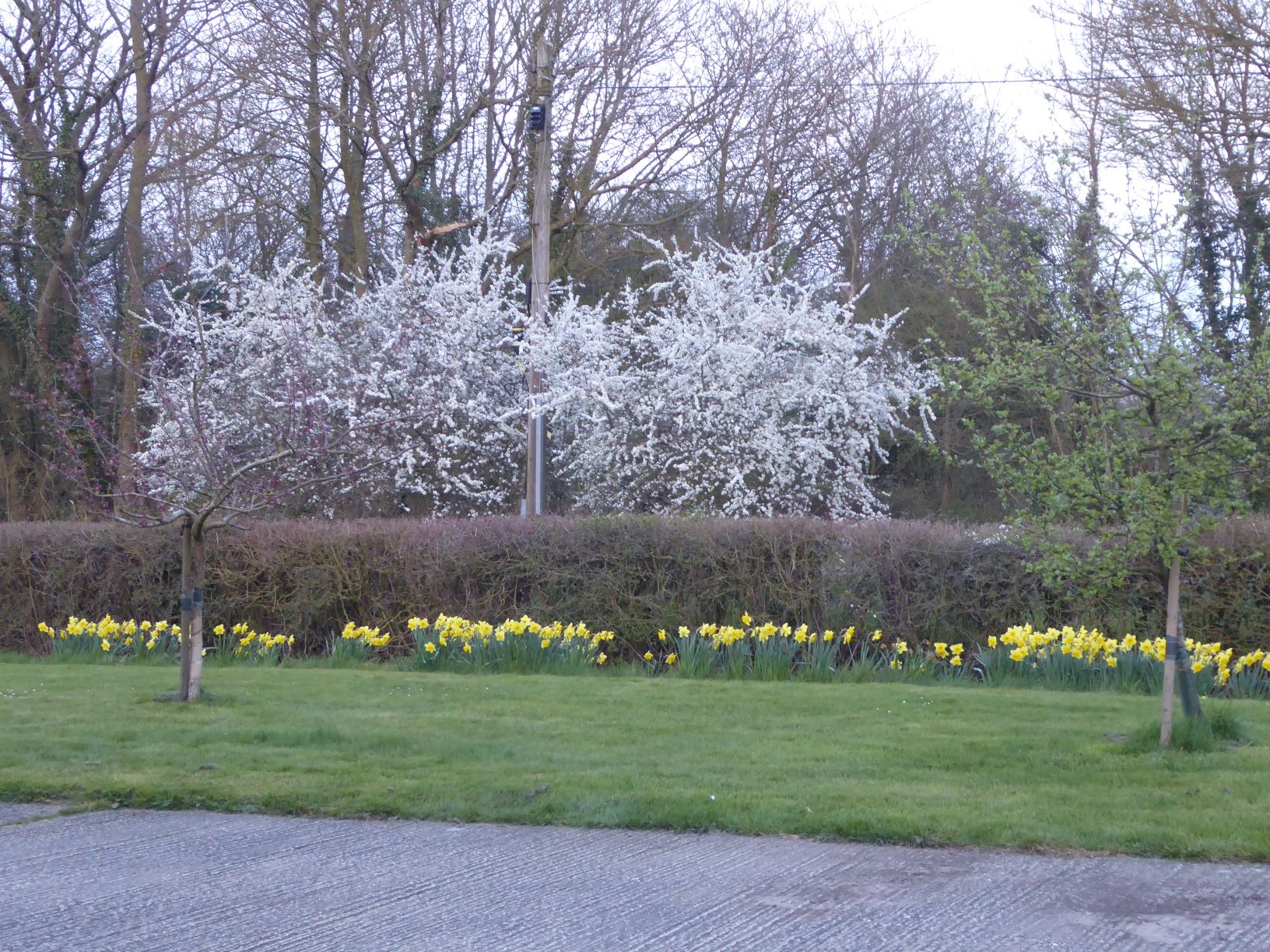
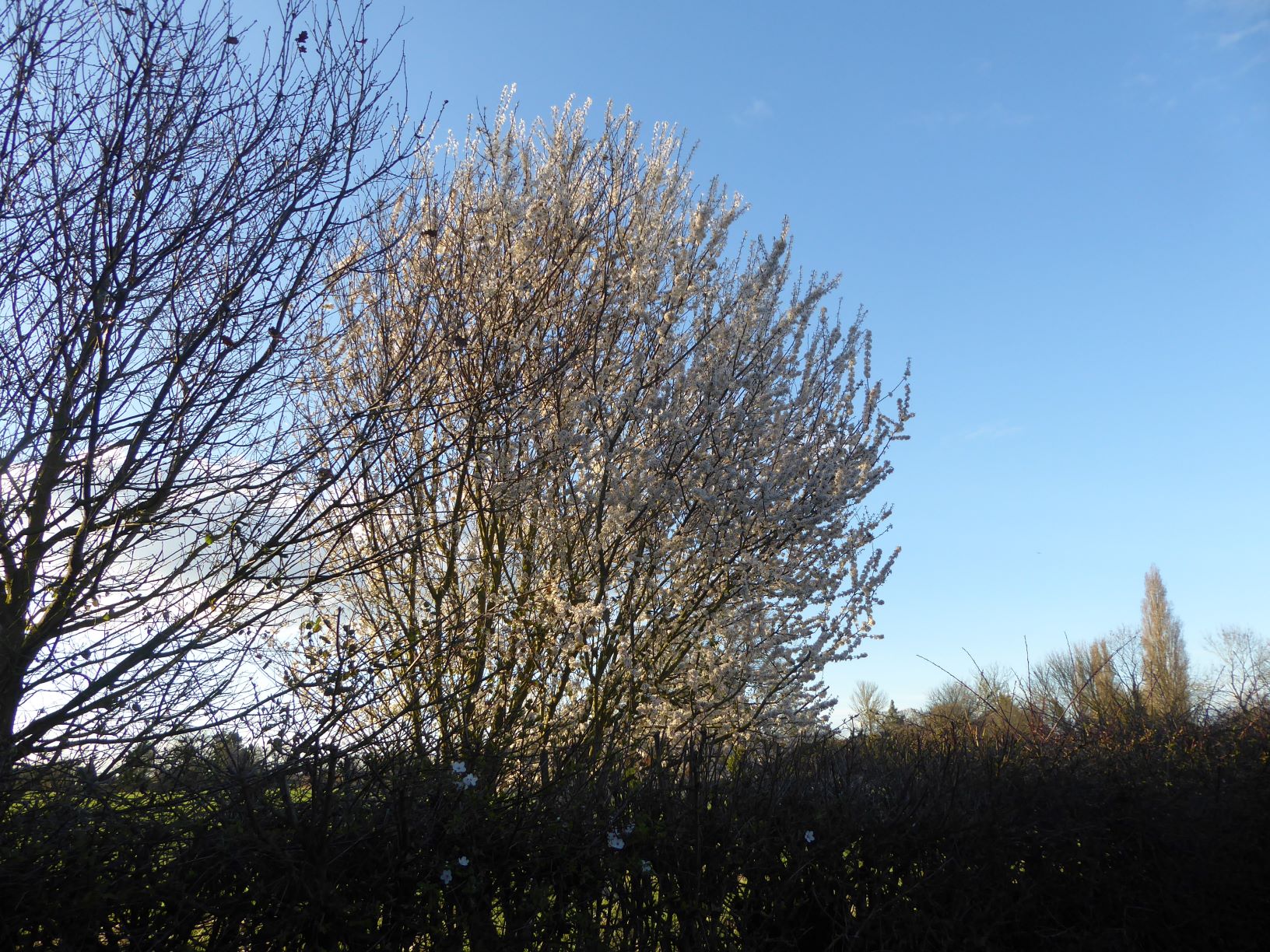
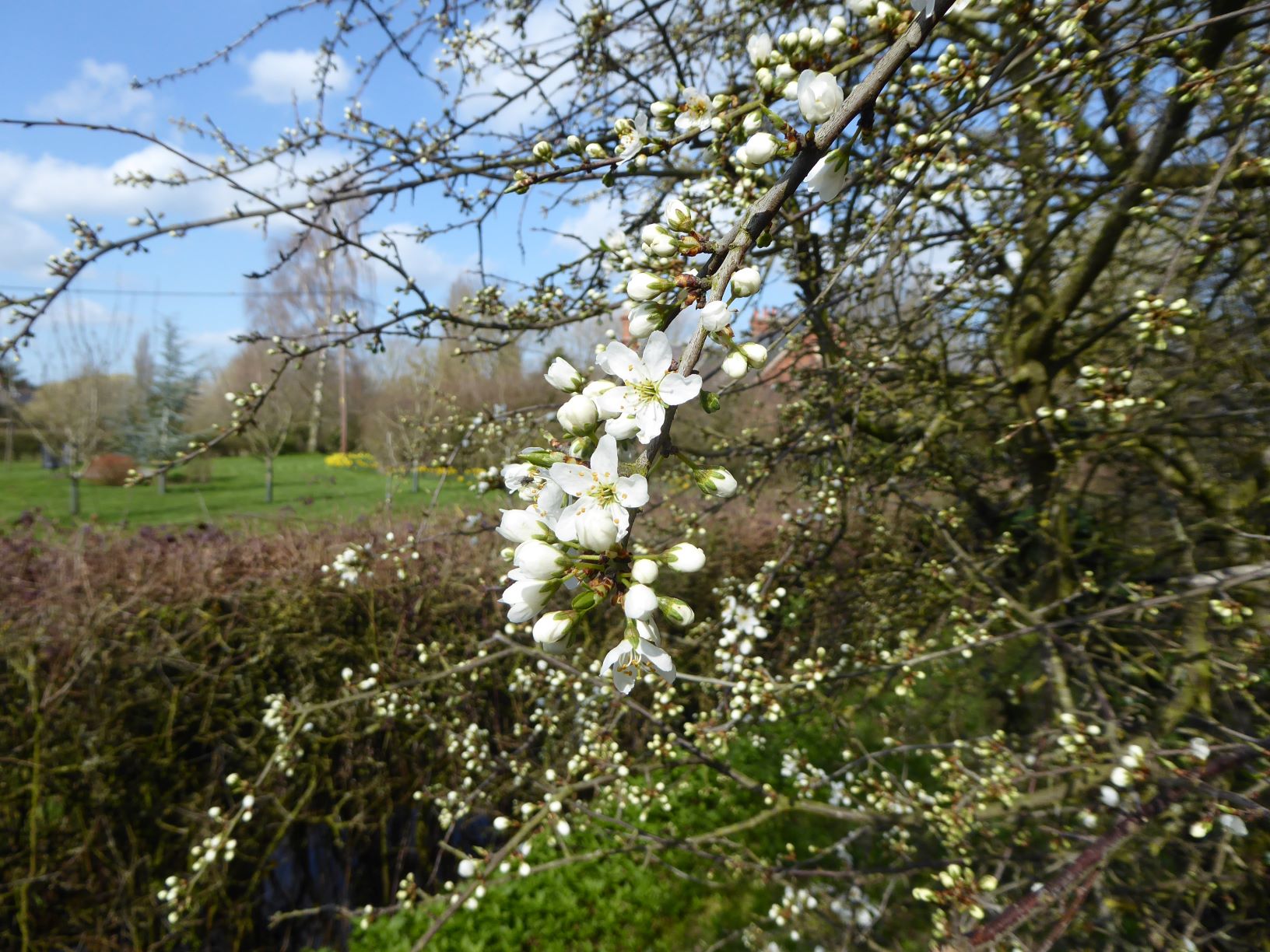
Blackthorn ( Prunus spinosa) in flower

This was the view from our front door on the 1st of April.  The rather untidy Blackthorn trees growing on the verge on the other side of our hedge looked like they were snow-covered; the blossom was so plentiful.

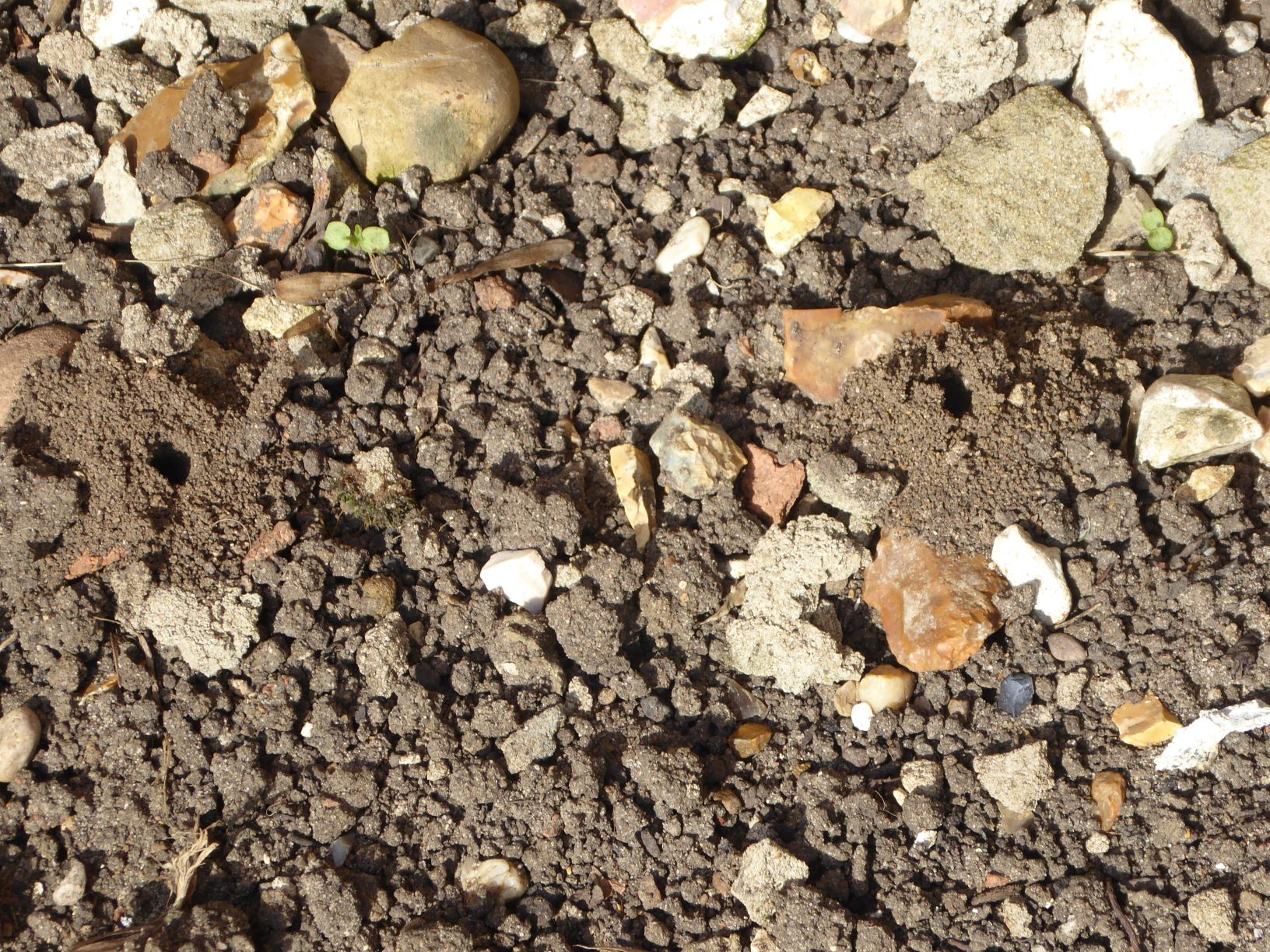
A mining bee nest-tunnel

Just over a week after I took the photo of the Blackthorn I was finding bee nests all over the garden.  Some were plain ones like the photo above….

Mining bee Nest -burrows

…and these ones.

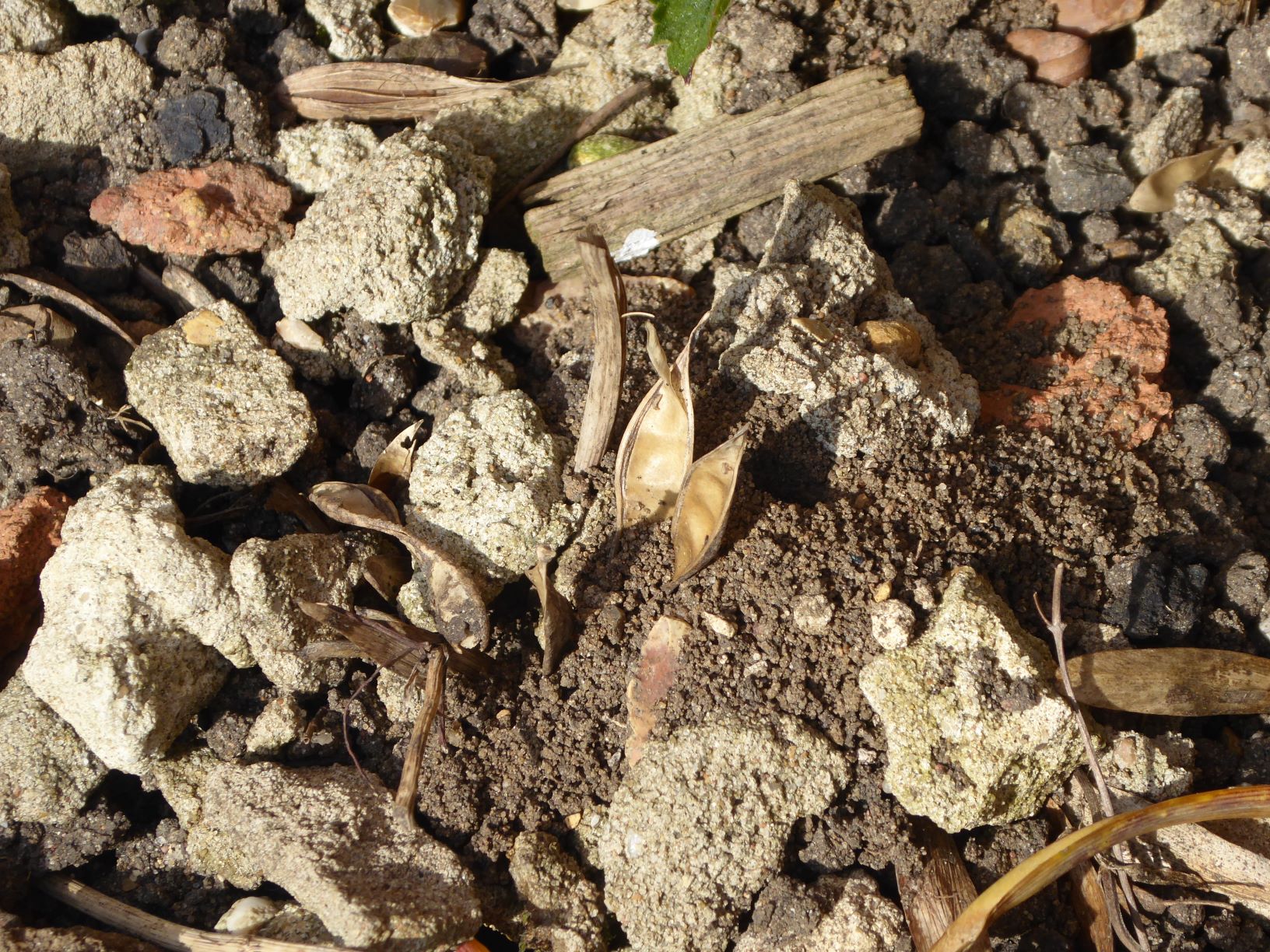
Mining bee nest-burrow

But this one (the burrow is in the shadow of one of the seed-pods) has been decorated with twigs, bits of wood, stone and seed-pods! I wonder if this is just by chance or if not, were these to make it easier to find or, is the bee just more of an individual, more artistic than most other bees?  I have found other nest-burrows seemingly marked with twigs and stones.

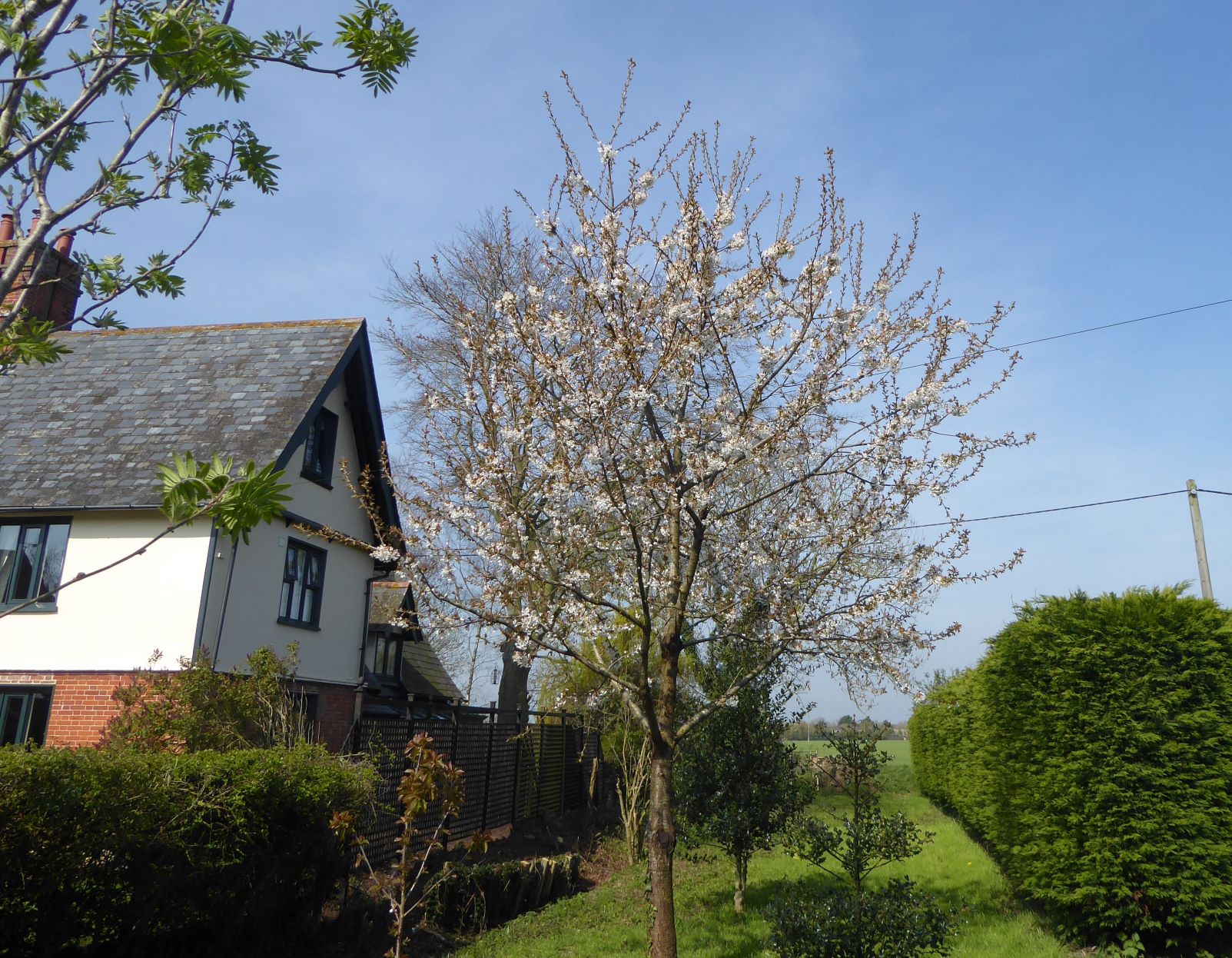
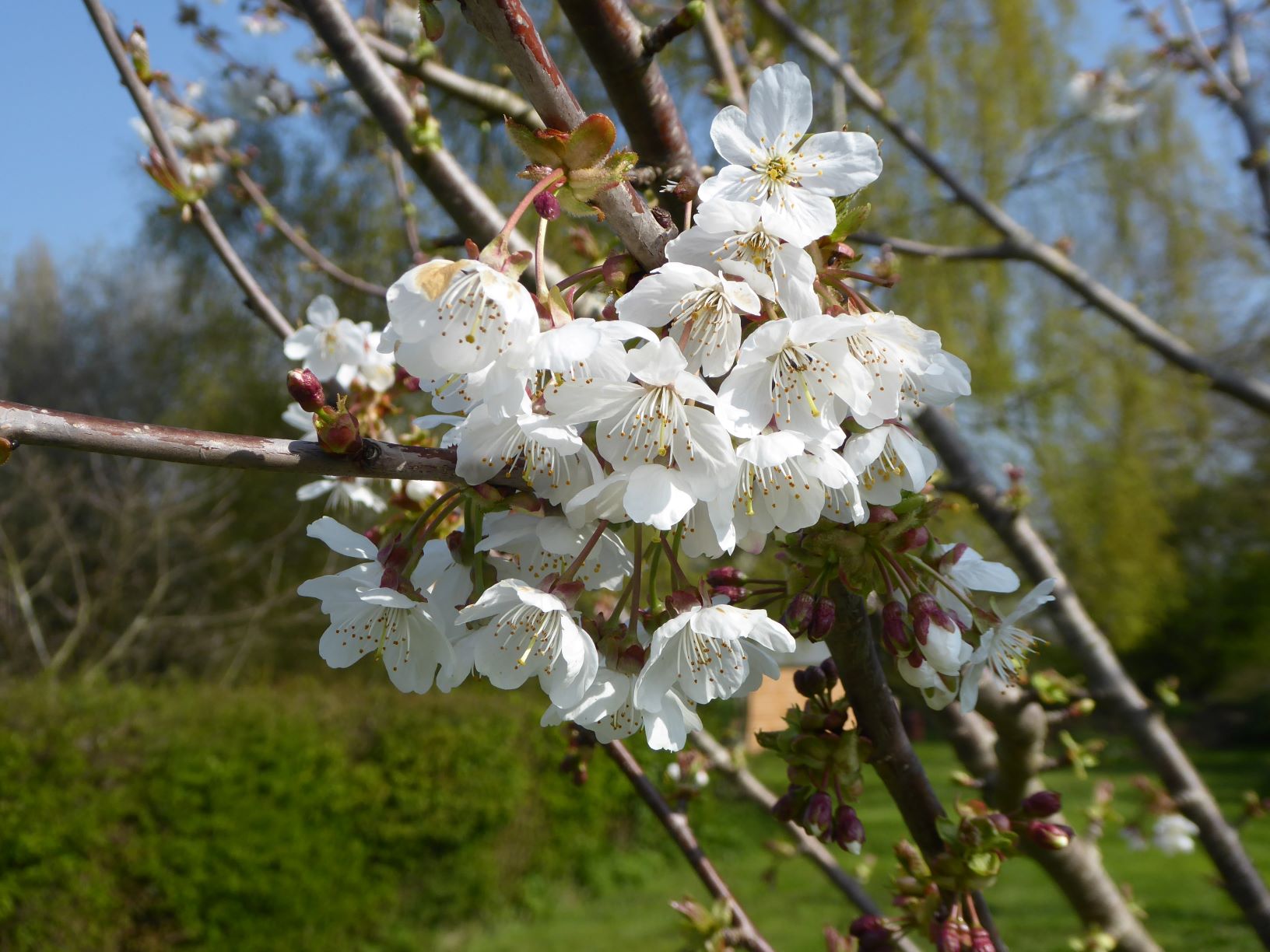
Wild Cherry ( Prunus avium)

This is one of our wild cherry trees just coming into blossom in the middle of April.  The house on the left of the photo is that of our next-door neighbours and this long thin strip of land, in-between their garden and our leylandii hedge on the right, belongs to us and is where the former owners of our house used to park their combine harvester, so we are told.  We have planted a few trees on this strip of land; you can see a couple of hollies and another cherry has decided to grow here too.

Wild cherry blossom from one of our other cherry trees.

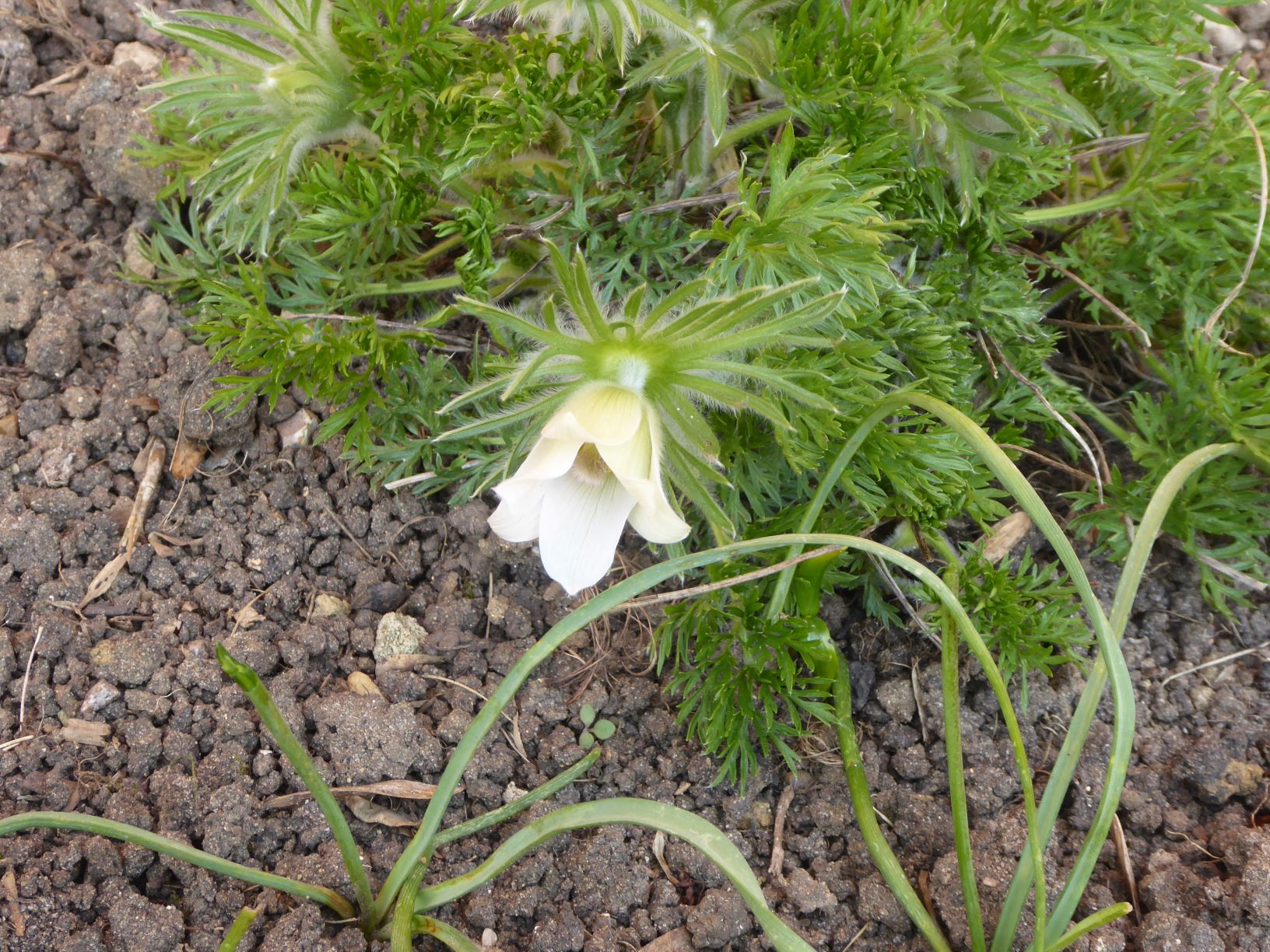
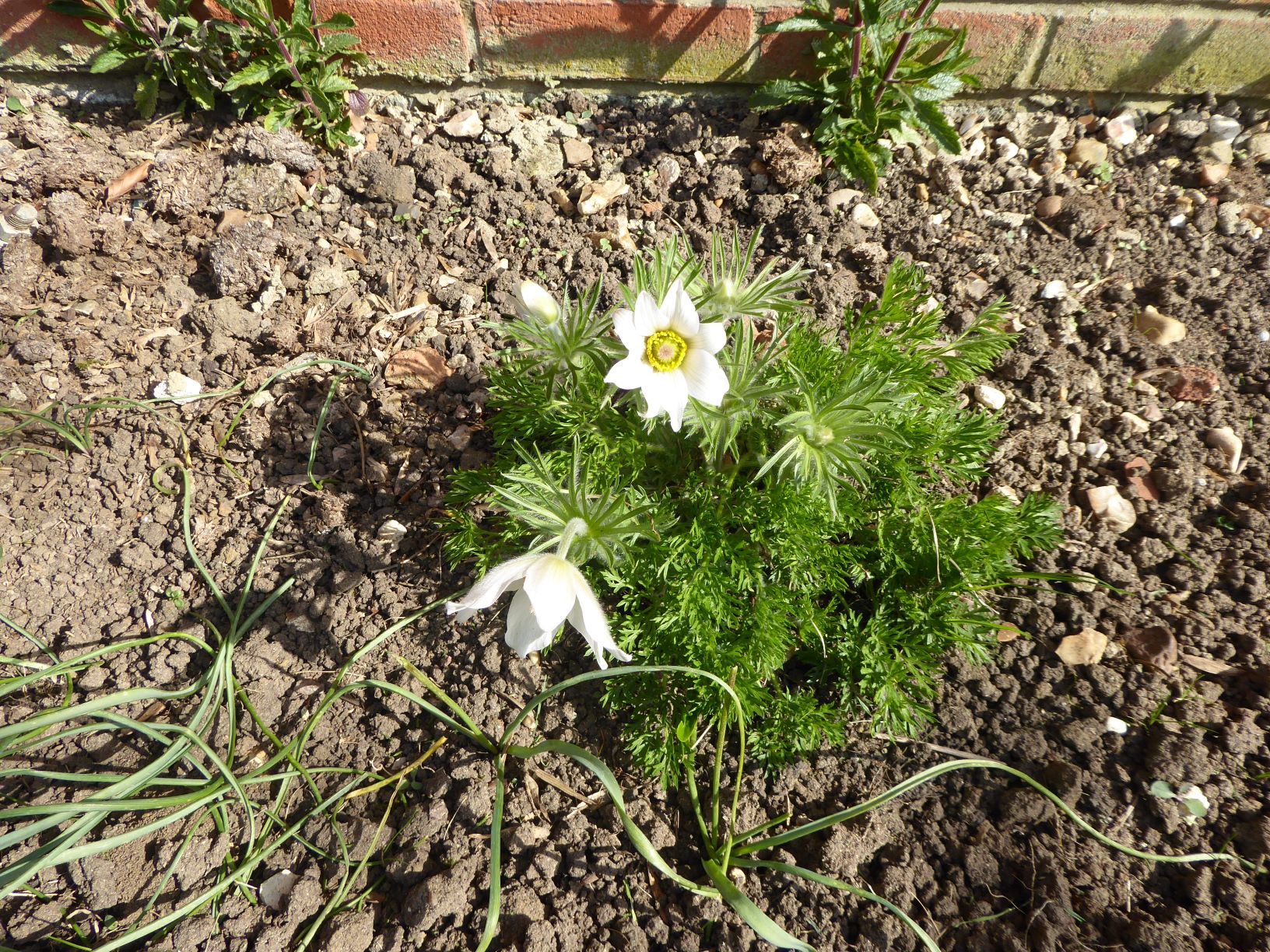
The first Pasque Flower

The same plant a week or so later

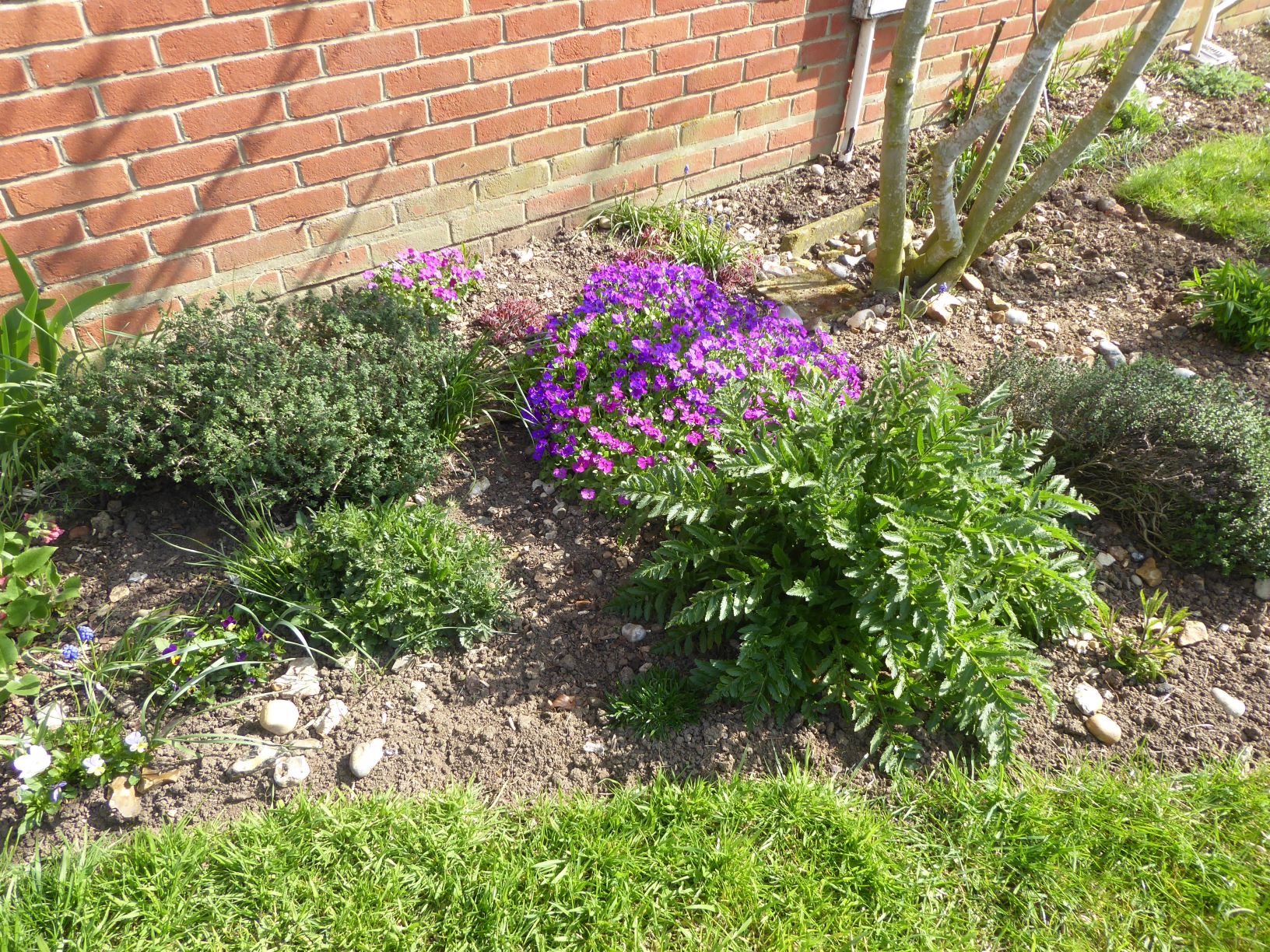
The flowerbed on the south side of the house. As you can see, it is very stony.

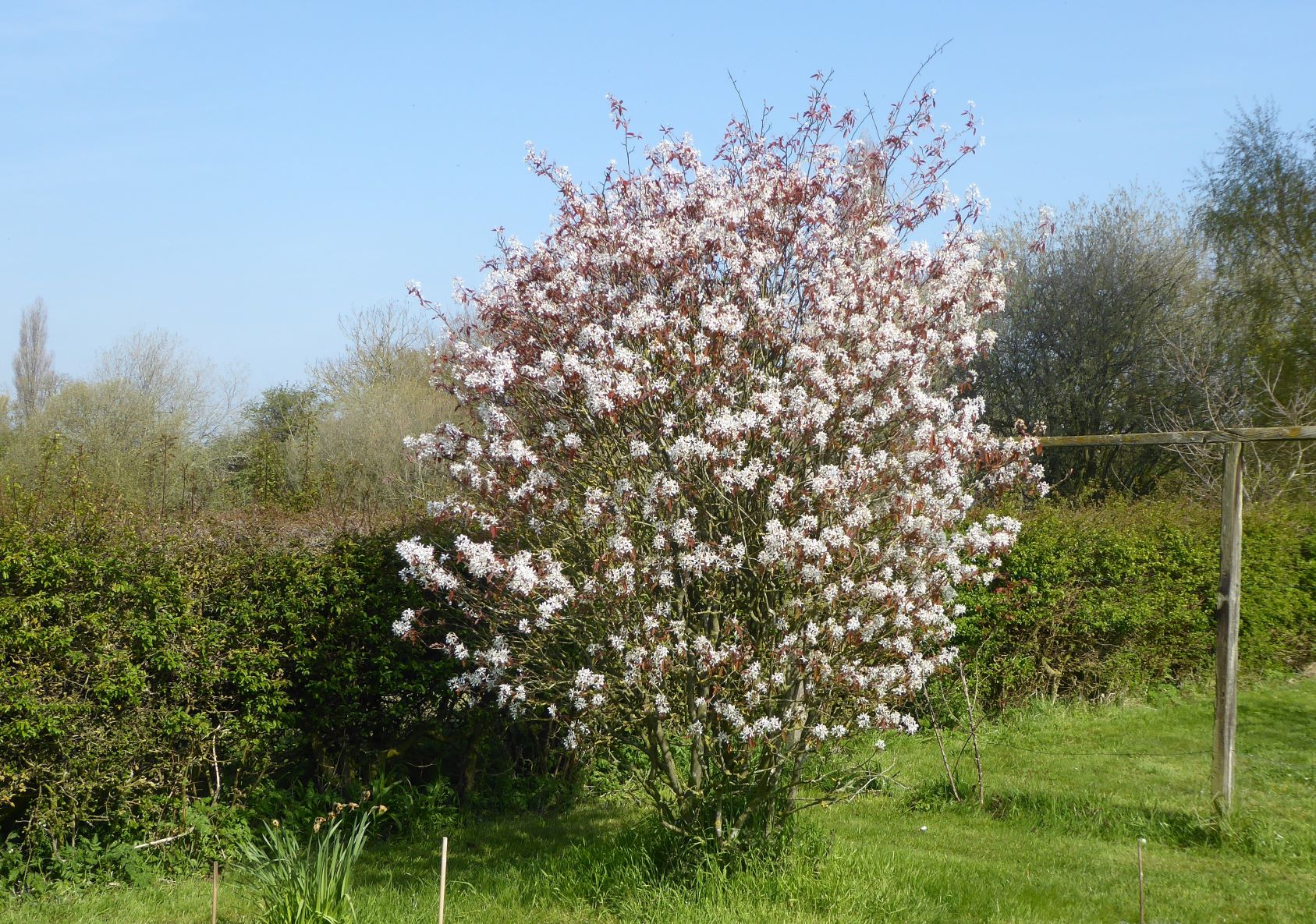
Amelanchier in flower

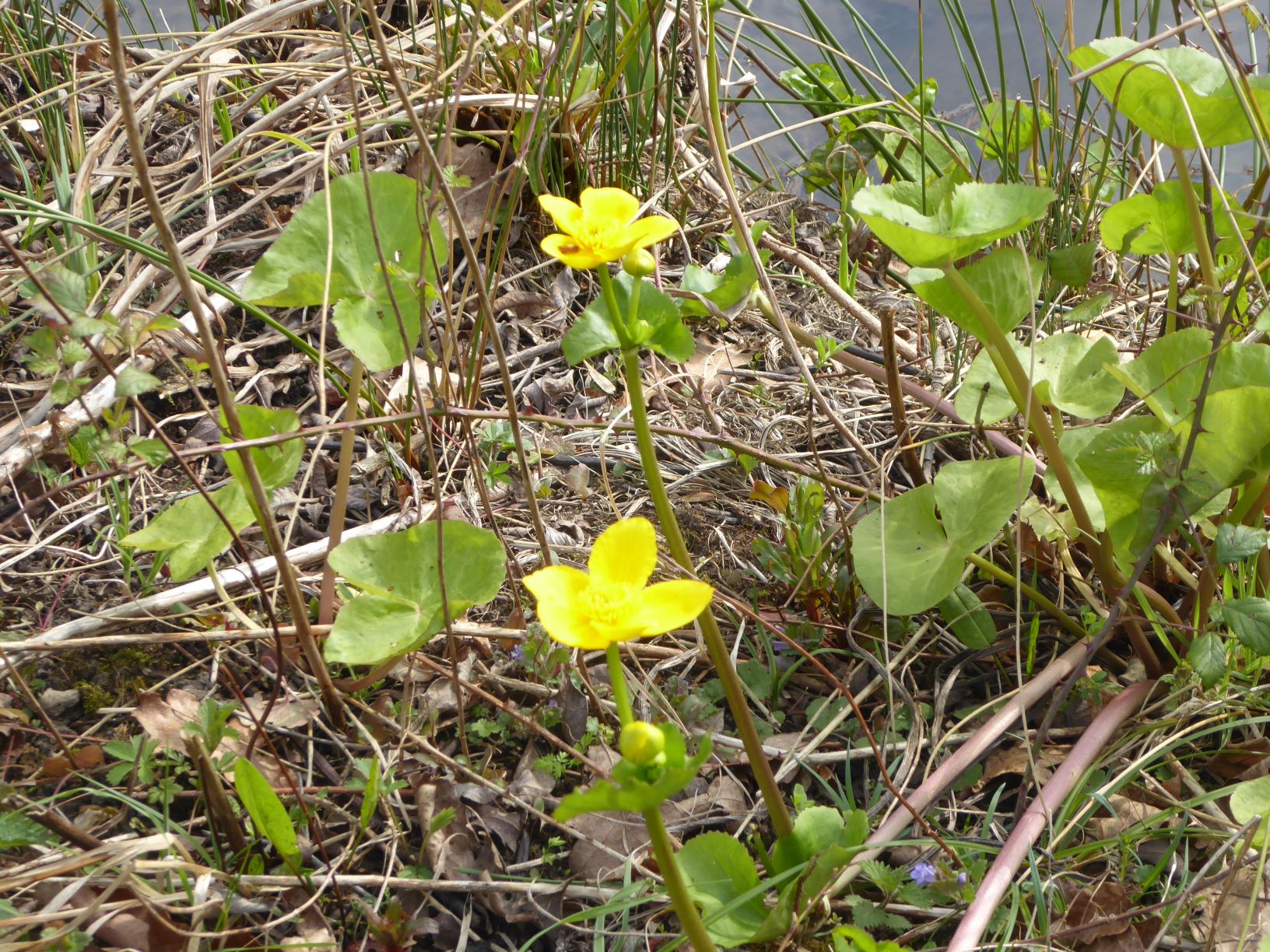
Marsh Marigold or King-cup ( Caltha palustris) next to the pond

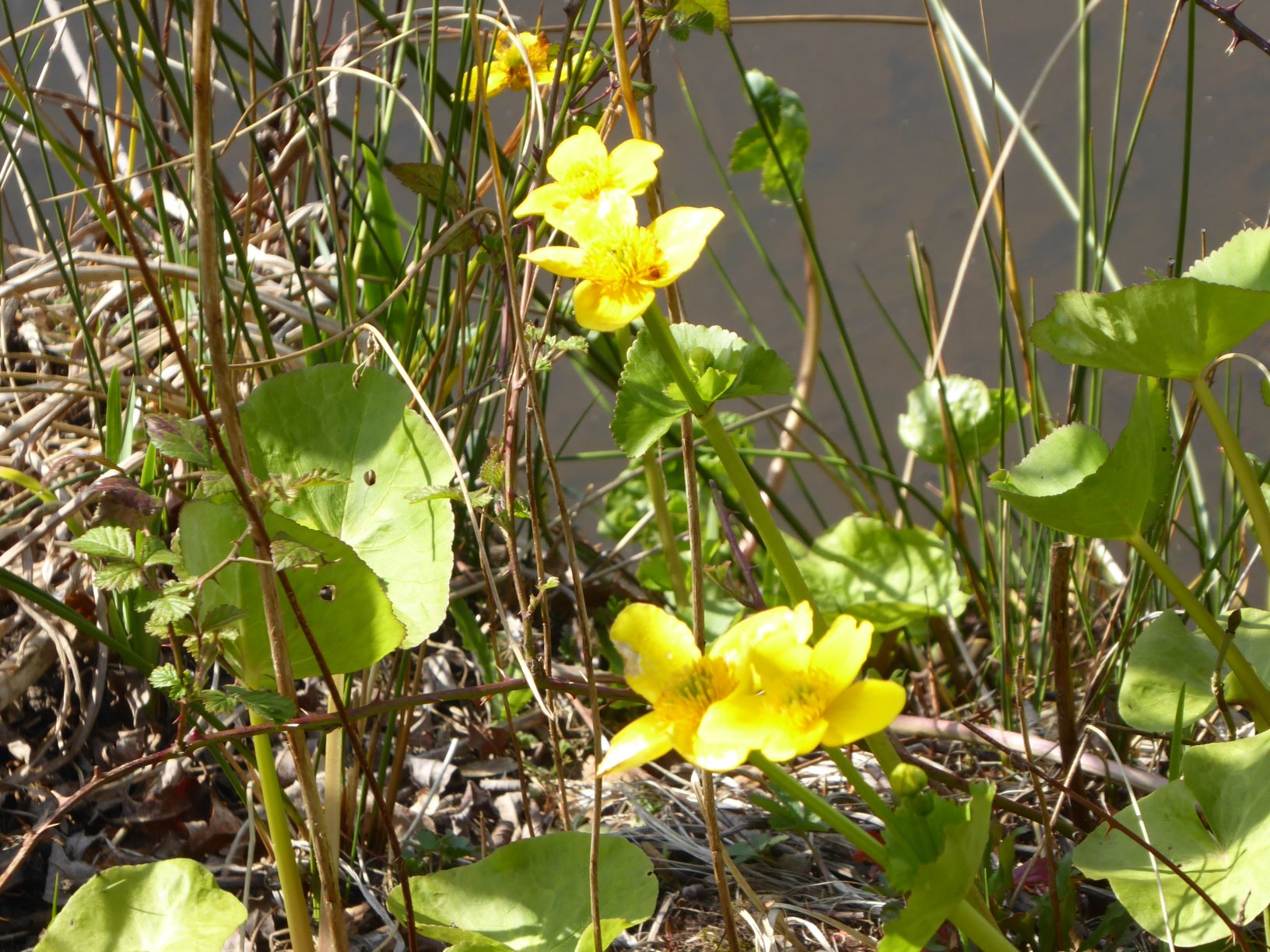
The same plant a week later

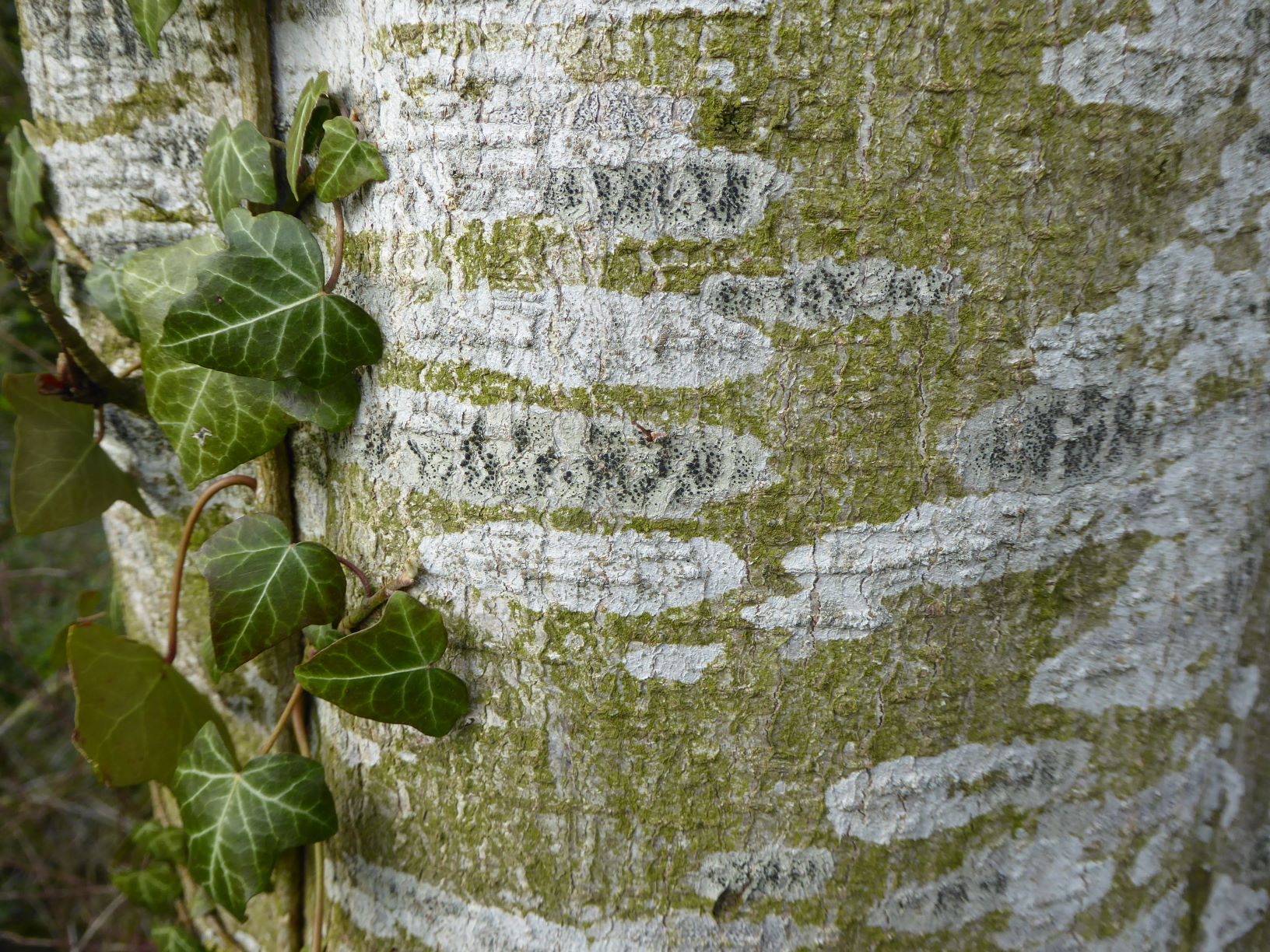
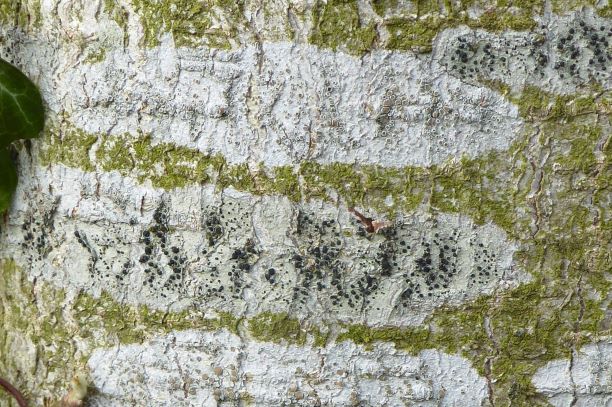
I have posted photos of this lichen-covered tree-trunk before

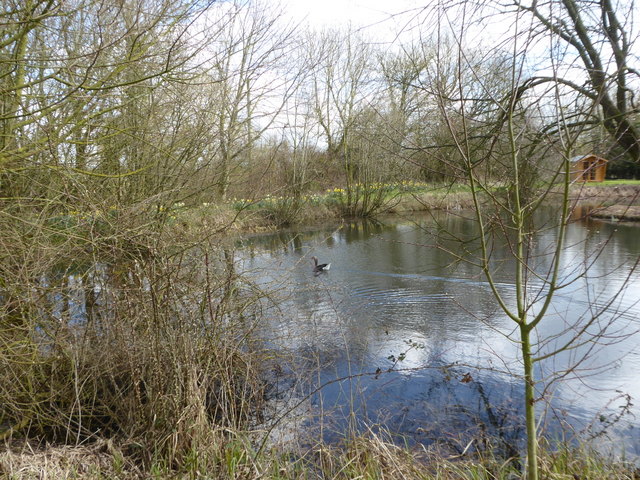
A closer look at the different lichens

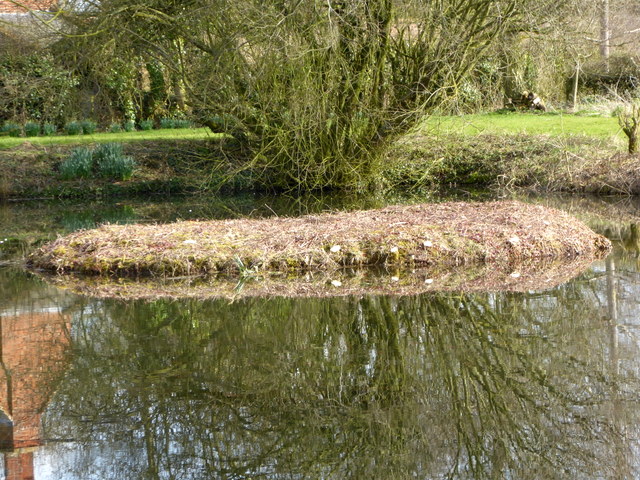
Abandoned goose nest on the island

For the first time since we have lived here we had no nesting geese on the island on our pond.  They built a nest and I am sure they began laying an egg each day prior to incubation but something happened and the nest was abandoned.  The water level in the pond was very low and it would have been easy for a fox to cross the water and get to the nest.  There has always been danger from mink and otters but up til now the geese have coped with them.  A fox is different and much bigger.  This is only a guess – there may have been other reasons; I don’t know.

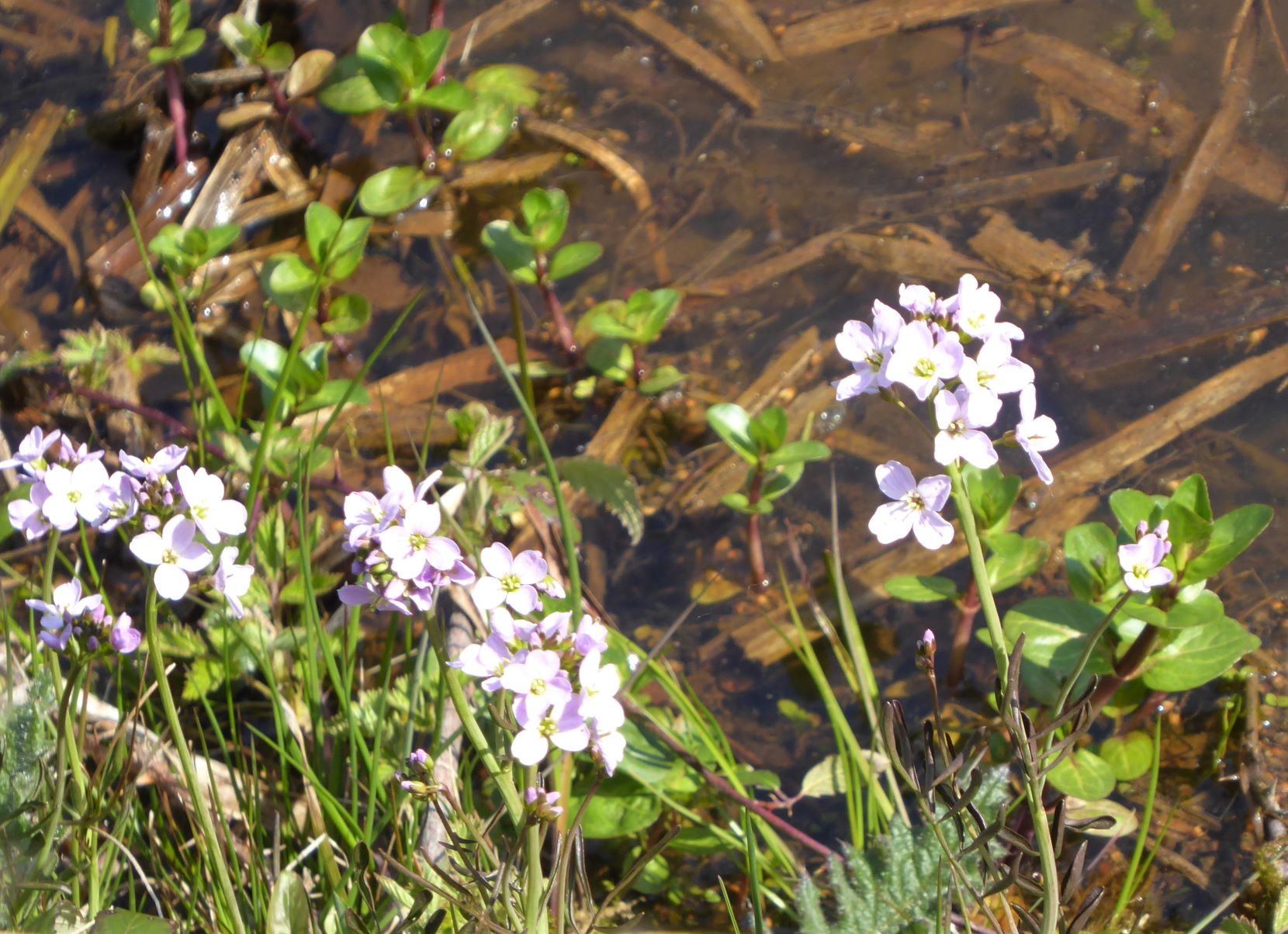
Cuckooflower/Lady’s Smock (Cardamine pratensis ) next to the pond

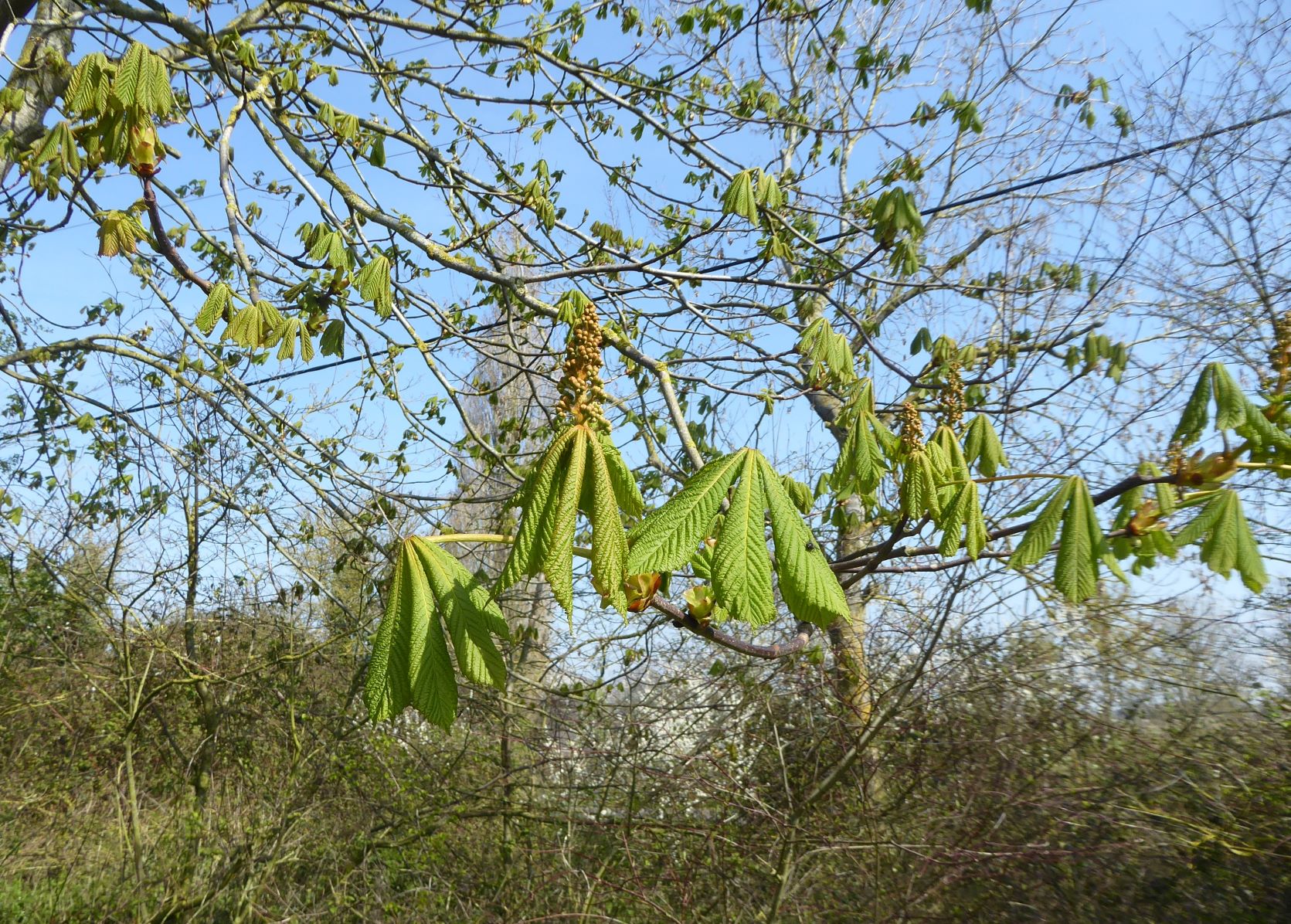
New Horse Chestnut (Aesculus hippocastanum ) leaves and flower buds

We have a couple of spindly Damson or Bullace (Prunus domestica ssp. insititia ) trees growing in the scrubby area near our pond. This is a photo of the blossom and new leaves.

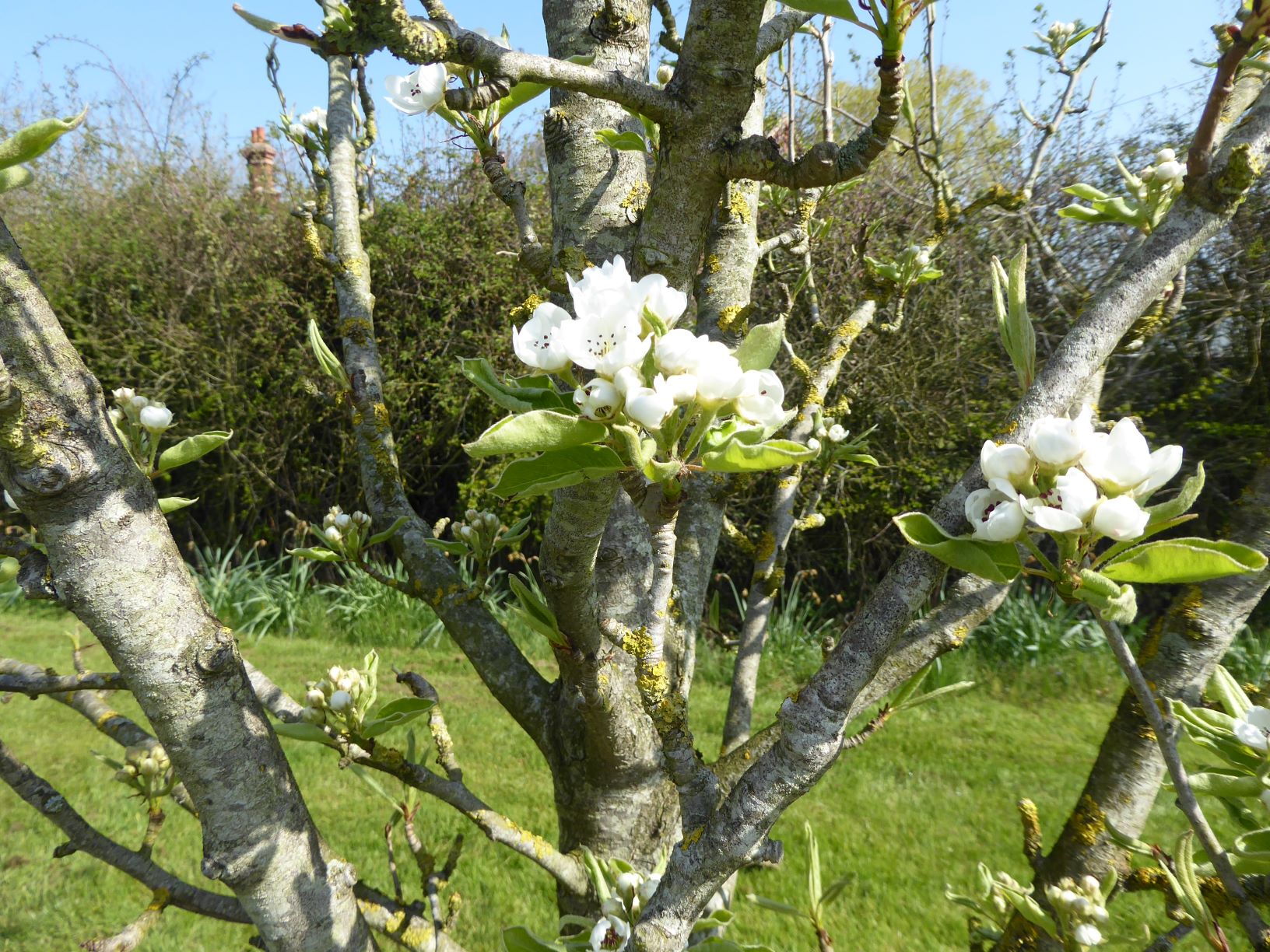
Pear blossom. We recently pruned and topped our pear tree as it was getting enormous. We should still get quite a lot of fruit this year, if all goes well.

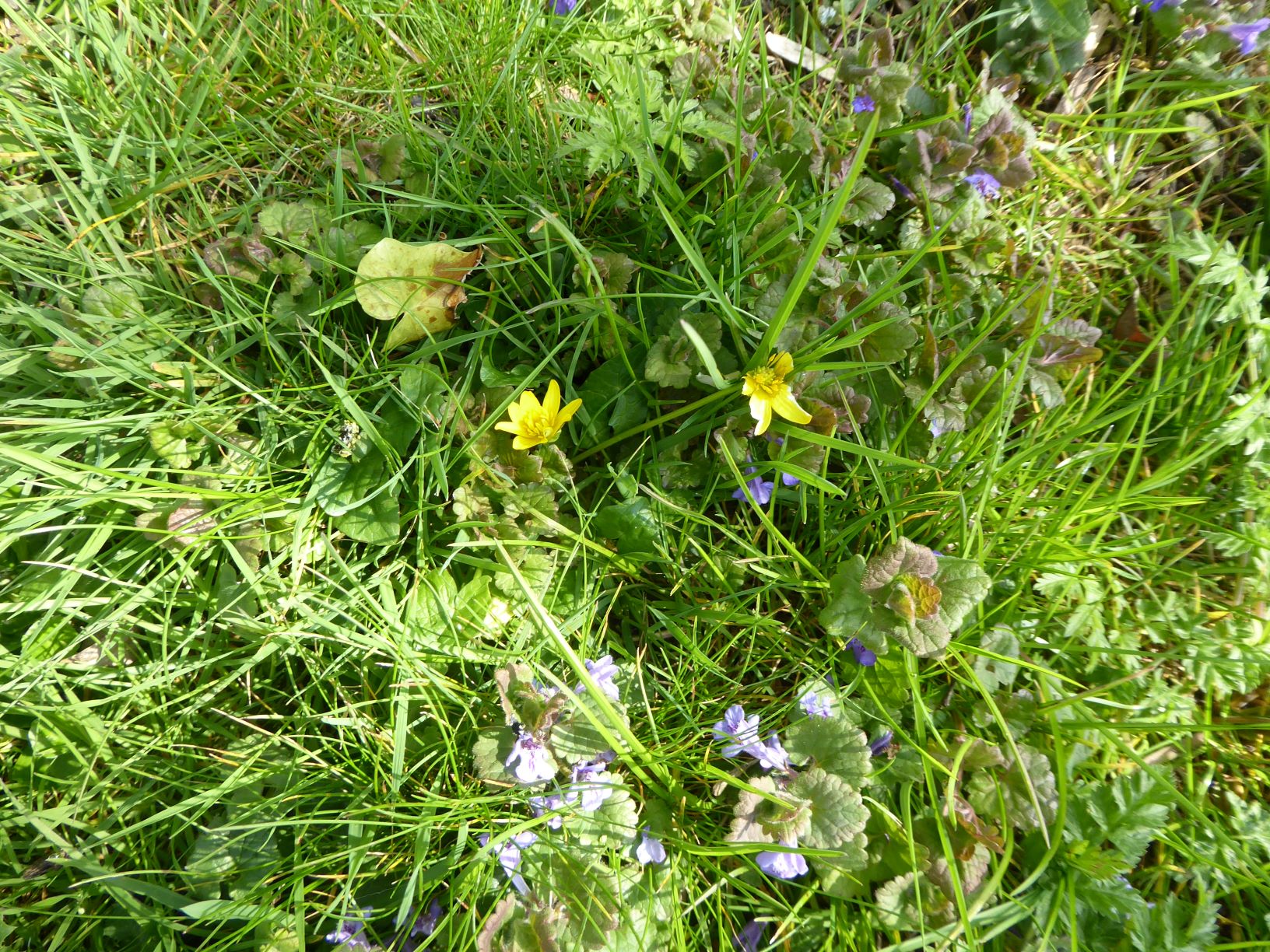
Lesser Celandine ( Ficaria verna) and Ground-ivy ( Glechoma hederacea)

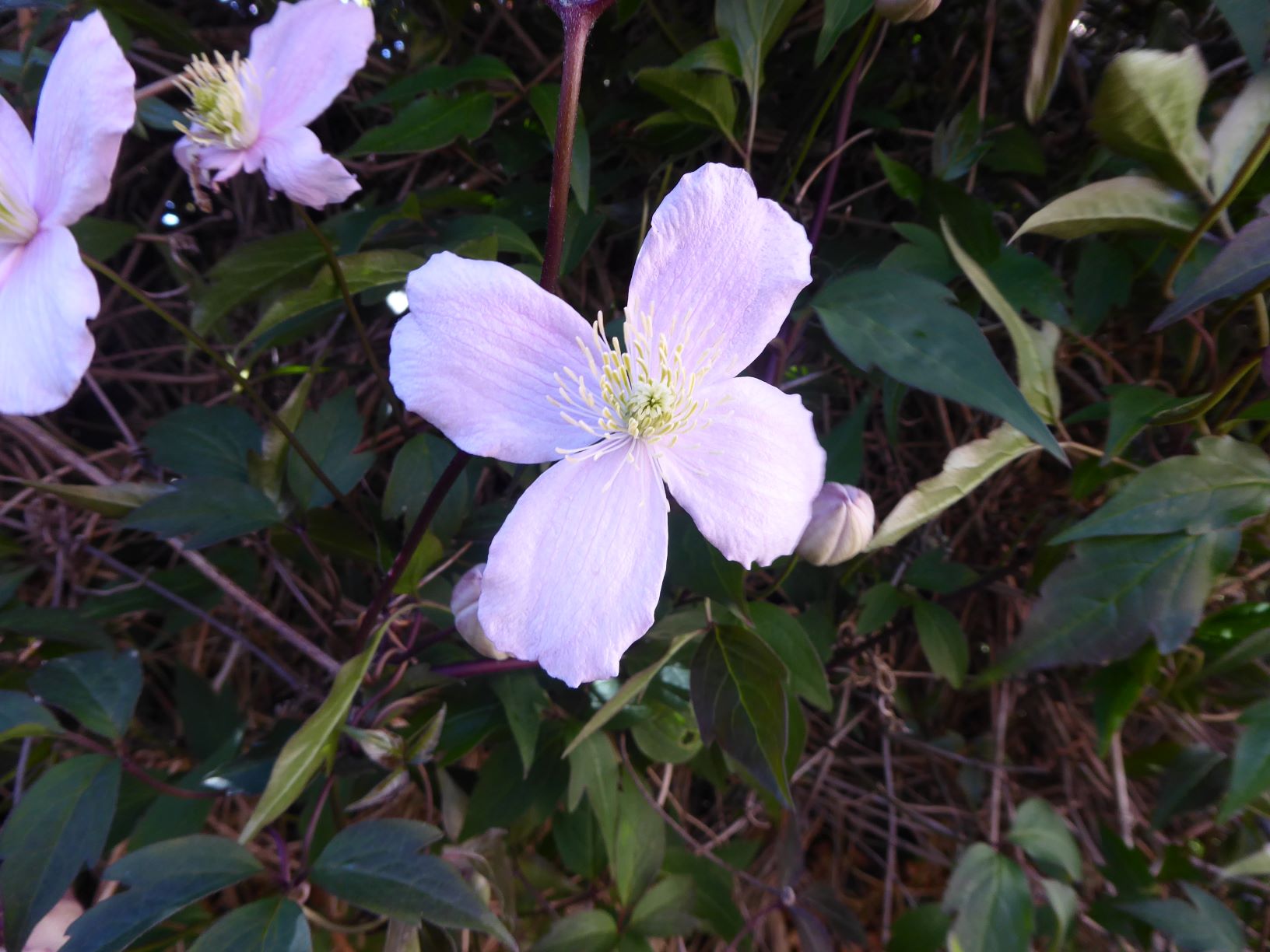
The Montana clematis flowered at the end of the month

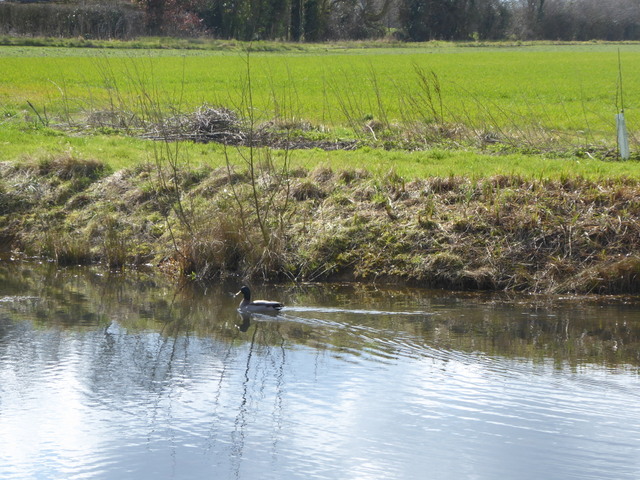
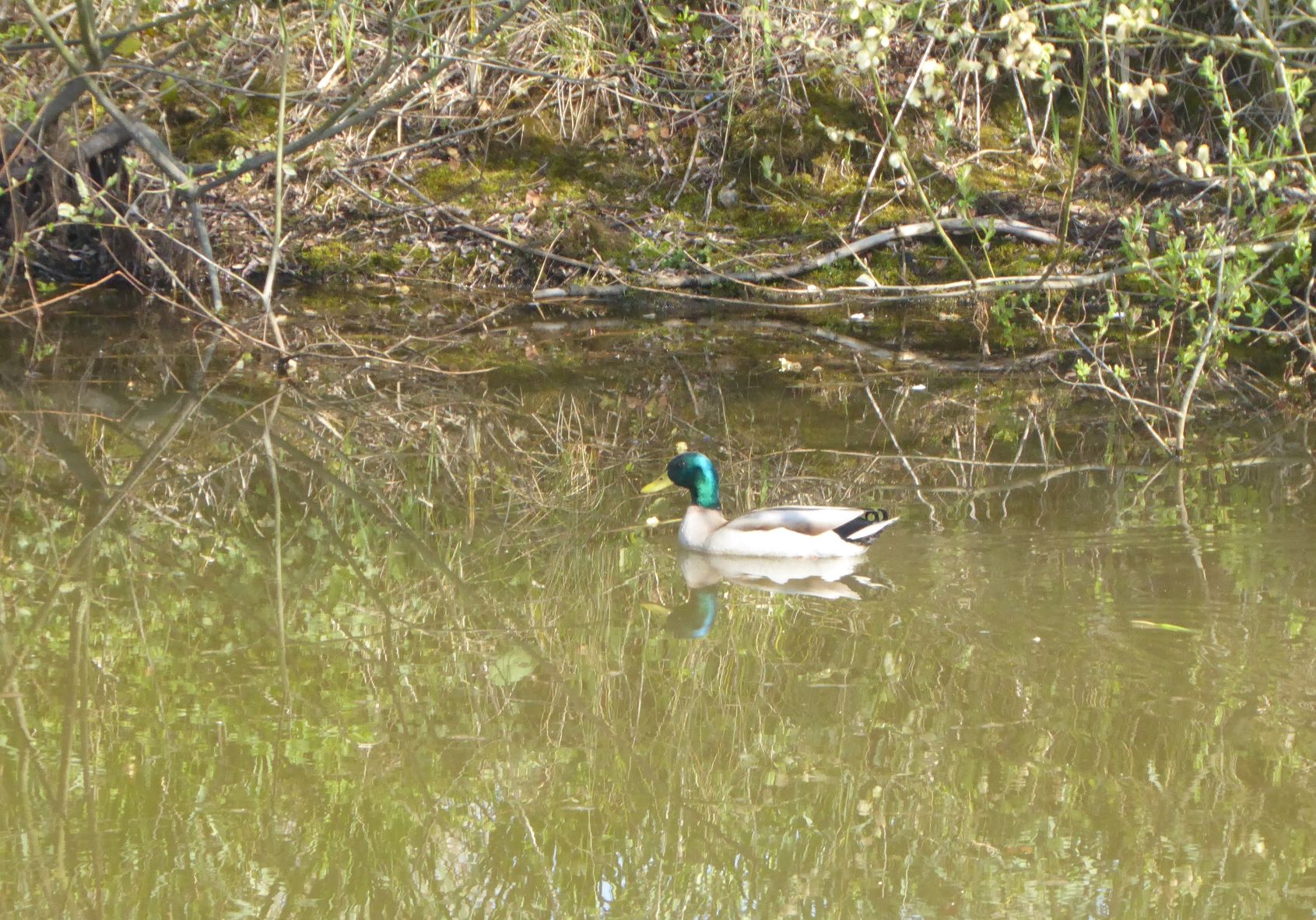
A drake Mallard swimming on the pond.

I have a few more April photos I would like to share but I will save them for a separate post.

Share this:

  • Share on X (Opens in new window) X
  • Share on Reddit (Opens in new window) Reddit
  • Share on Pinterest (Opens in new window) Pinterest
  • Share on Facebook (Opens in new window) Facebook
  • Email a link to a friend (Opens in new window) Email
  • Share on Tumblr (Opens in new window) Tumblr
  • Print (Opens in new window) Print
  • Share on Pocket (Opens in new window) Pocket
  • Share on LinkedIn (Opens in new window) LinkedIn
Like Loading...

Day of Dance, Saturday 30th March 2019

29 Wed May 2019

Posted by Clare Pooley in Days out, Folk Traditions, Rural Diary

≈ 90 Comments

Tags

Border Morris dancing, Day of Dance 2019, folk dance, folk music, Folk Traditions, Halesworth, Molly dancing, Morris dancing, Mummers, Suffolk

Those of you who have kindly followed my intermittent ramblings for a few years might remember that Richard and I have attended the Day of Dance a couple of times before.  One of the local Molly dance sides (teams) wished to celebrate an important anniversary in 2015 so invited other Morris and Molly dance sides to join them in Halesworth for the day, as a one-off.  This was so successful that the Day of Dance has taken place each year since then and it has grown!  Not only Morris Dancers, Border Morris dancers and Molly Dancers take part but also steam punk sides have joined in, belly dancers, buskers and mummers!  Please follow the links if you are interested in finding out about Mollys and Mummers!

Below is a slideshow of some photos I took on the day.  The Morris side wearing blue and white is Rumburgh Morris, our local team who were featured in Episode 4 of Alice Robert’s series ‘Britain’s Most Historic Towns’.

This slideshow requires JavaScript.

Here is a very short video I took of one of the sides.  I have no idea of their name or where they came from but I thought they were fun.

Here follows a video I found on Youtube of the procession round the town at the start of the day.  Thank you for taking the time to visit my blog!


Share this:

  • Share on X (Opens in new window) X
  • Share on Reddit (Opens in new window) Reddit
  • Share on Pinterest (Opens in new window) Pinterest
  • Share on Facebook (Opens in new window) Facebook
  • Email a link to a friend (Opens in new window) Email
  • Share on Tumblr (Opens in new window) Tumblr
  • Print (Opens in new window) Print
  • Share on Pocket (Opens in new window) Pocket
  • Share on LinkedIn (Opens in new window) LinkedIn
Like Loading...

Spring Odds and Ends – March

26 Sun May 2019

Posted by Clare Pooley in churches, Gardening, plants, Rural Diary, trees, wild animals, wild flowers

≈ 83 Comments

Tags

blackthorn, blossom, Brown Hare, Bugle, cherry-plum tree, daffodils, daisy, Dog's Mercury, early dog-violet, flowers, garden, grape hyacinth, lesser celandine, leveret, March, Narcissus Rip van Winkle, Periwinkle, plants, pond, primroses, silver-laced primula, Spindle, St Mary's church Homersfield, Suffolk, Suffolk Lane, trees

Not having posted anything for over two months I have a number of photographs of things I’ve seen on my travels or in the garden.  This post will be a selection of these photos.

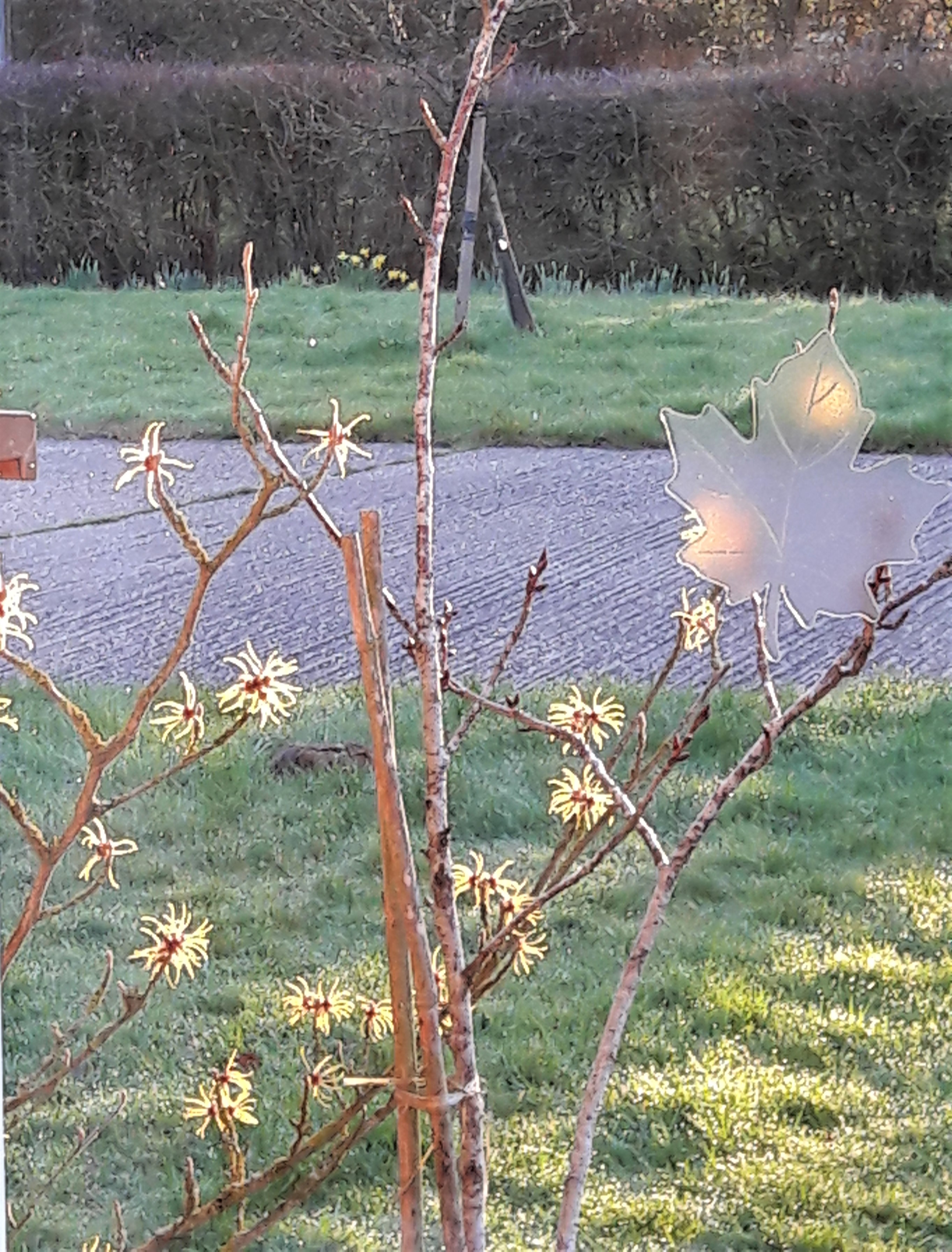
View from my kitchen window

This photo was taken with my phone early one March morning.  You can see the maple leaf sticker on the glass which works well at preventing birds from crashing into the window and injuring themselves.  Just outside the window is my witch-hazel which is planted in a large pot and also a Japanese flowering-cherry tree tied to canes, in a different pot.  We keep both trees up close to the front of the house to protect them from wind damage.  On the other side of our drive you can see the first of the daffodils in flower along the edge of the ditch.  What really excited me was the sight of a leveret, a young hare ( lepus europaeus), crouched in the grass.  Richard had had a sight of this young animal in the garden a couple of days before this and I was so pleased to see it for myself.

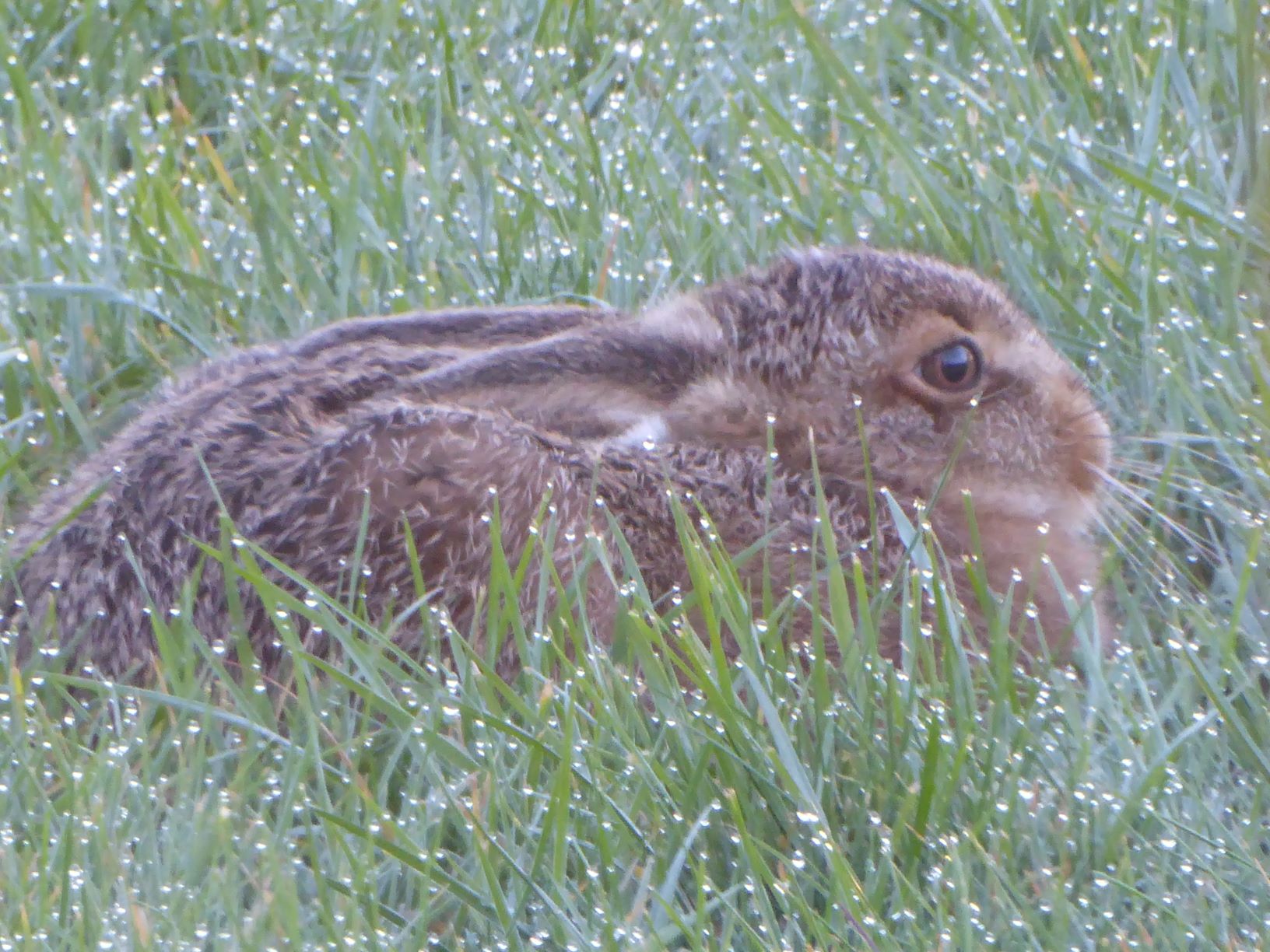
Leveret

I took this picture with my smaller camera from the utility room window and you can see how damp with dew everything was, including the leveret.  It stayed with us for a few days, hardly ever moving from its ‘form’, the nest in the grass it had made for itself.

The leveret’s form

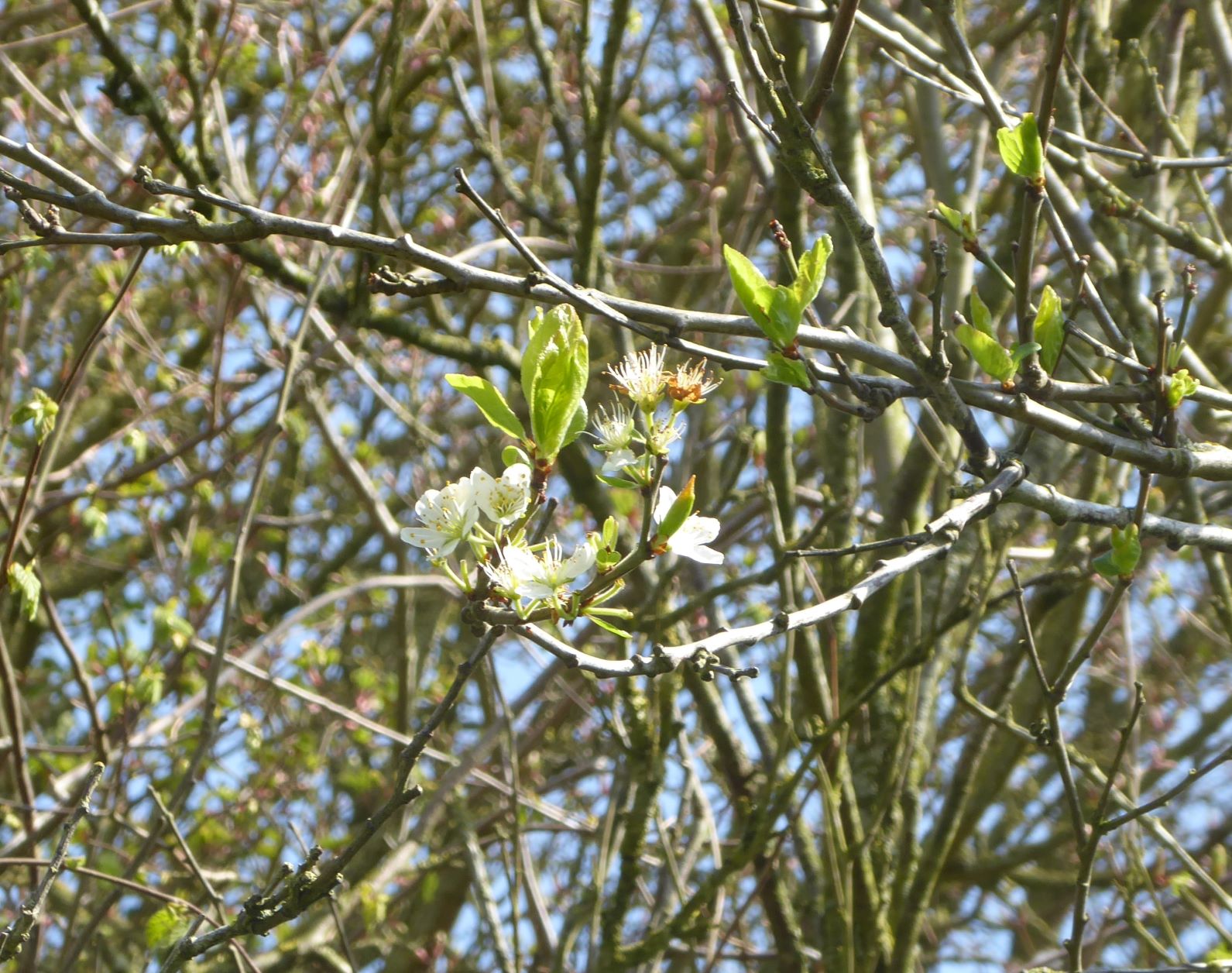
Cherry-plum tree (Prunus cerasifera )covered in blossom

When this tree first grew I assumed it was an early-flowering blackthorn tree as they can look very similar.  However, a few years ago I happened to see some of its fruit before the birds ate it all and realised my mistake.

cherry-plum blossom
cherry-plum blossom
cherry-plum blossom
cherry-plum blossom
cherry-plum blossom
cherry-plum blossom

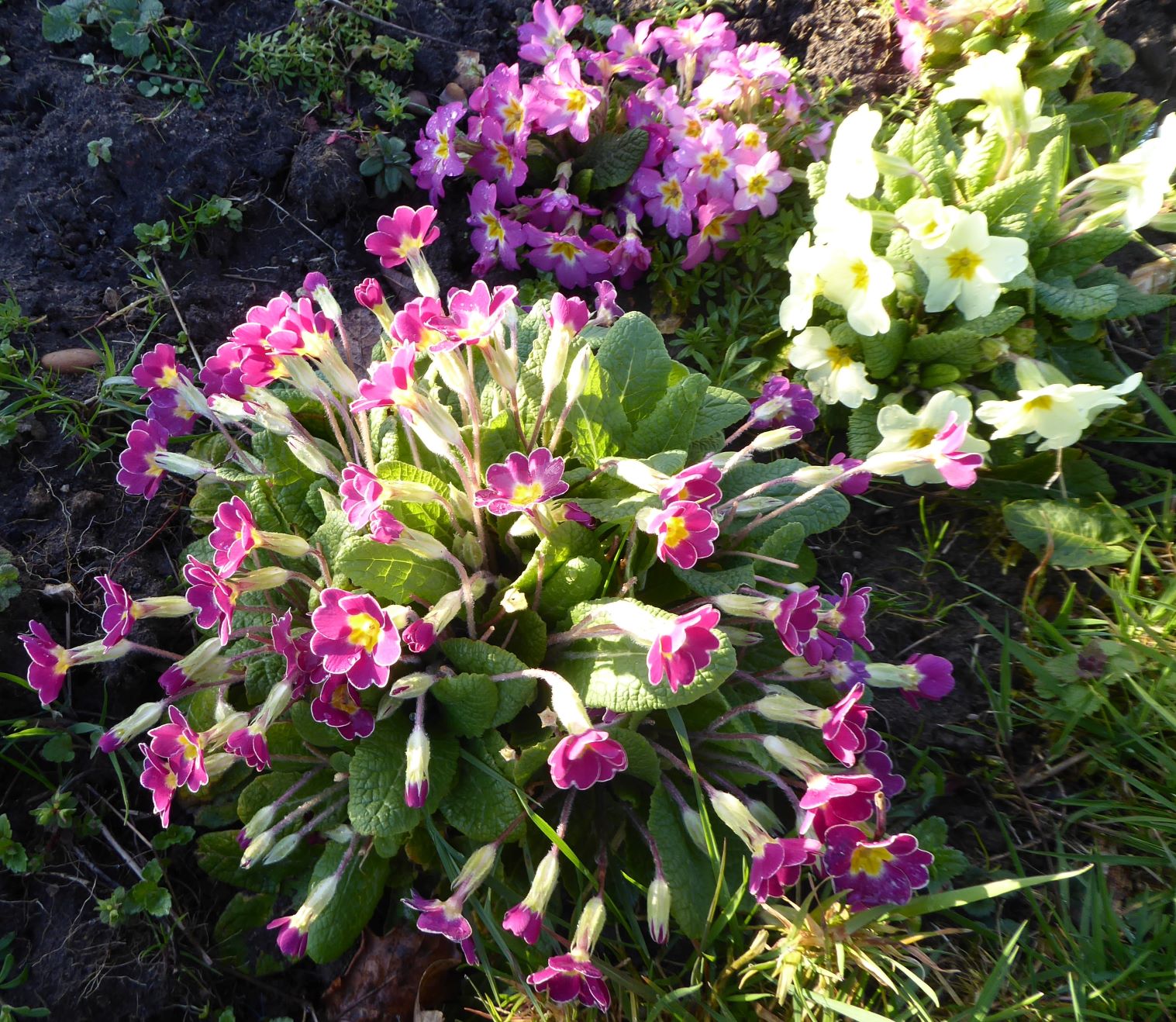
Silver-laced Primula

A year and a half ago I was trying to get rid of Common Nettle and Black Bryony in a flowerbed full of primulas and hellebores.  The only way to deal with them was to remove the plants I wanted before tackling the ones I didn’t.  I planted some of the primulas at the edge of a bed Richard grows dahlias in.  This March I was pleased to see that my treasured silver-laced primula had survived the move and two winters.  I still haven’t finished working on that weedy bed!  The Primula has a pretty silver edge to its petals.

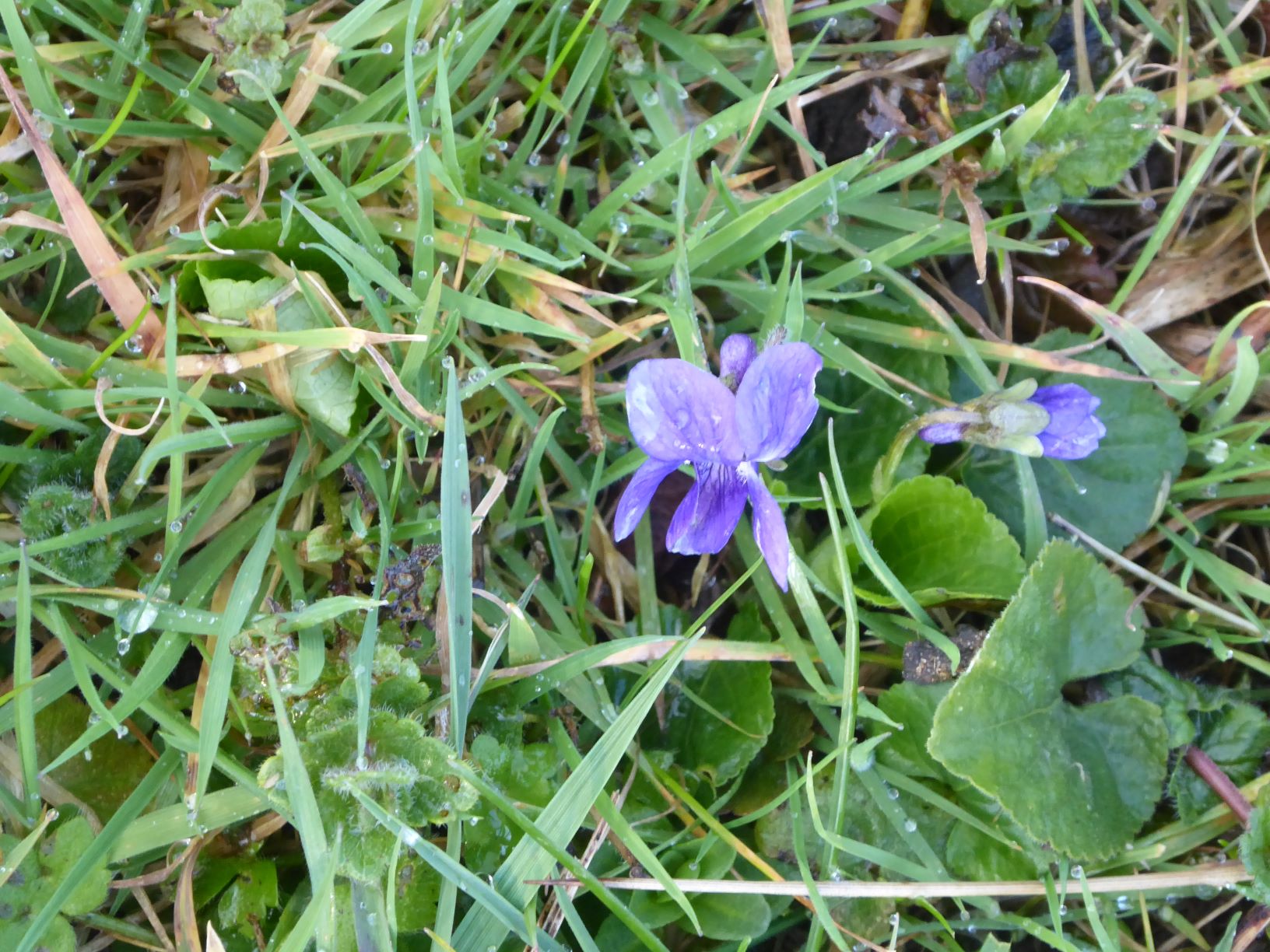
Early Dog-violet ( Viola reichenbachiana )

We have these early violets growing in the grass round our pond.

Large pond
Large pond
Large pond
Large pond

Our large pond in March.  The water-level is very low due to insufficient rainfall for a year.

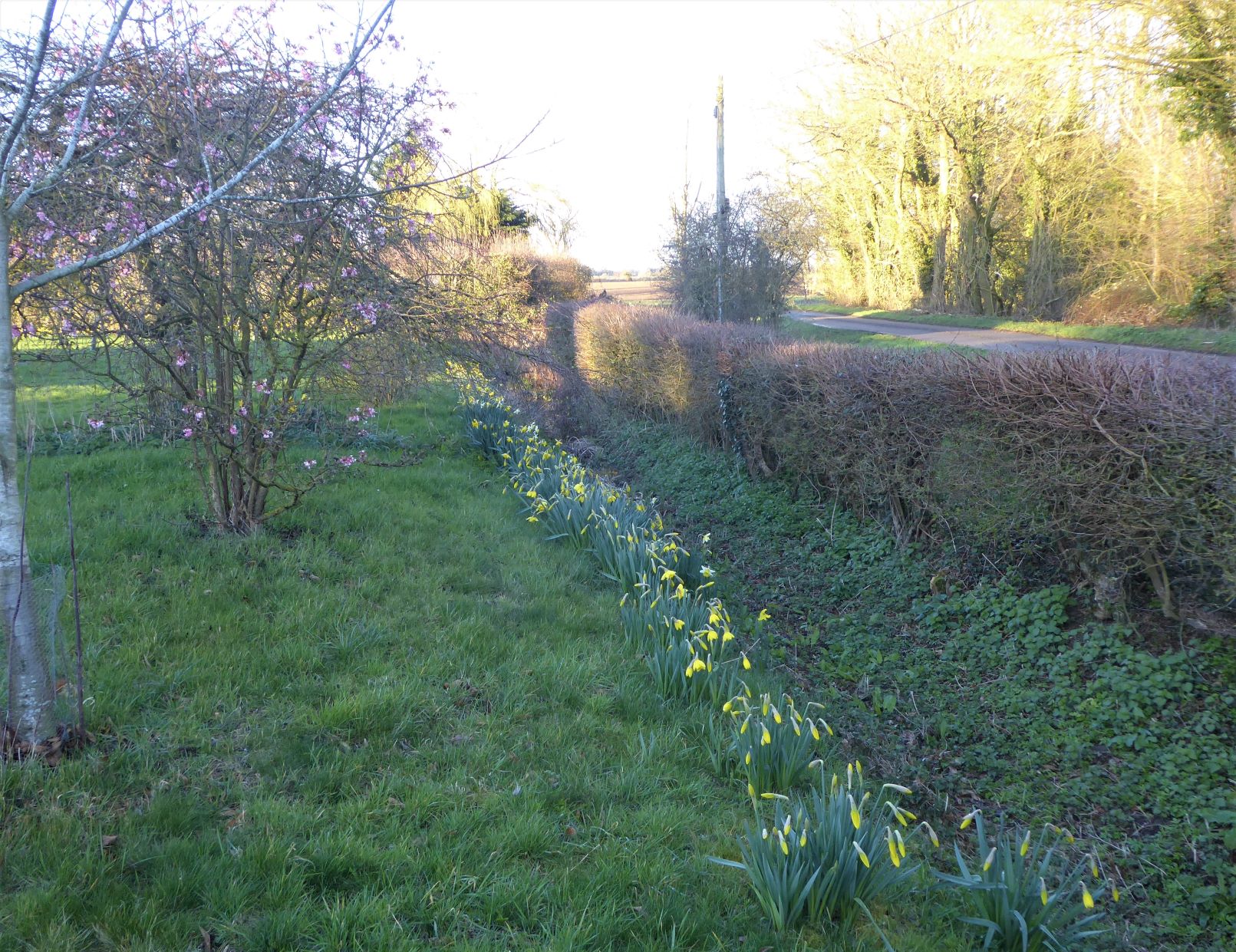
The front hedge and ditch

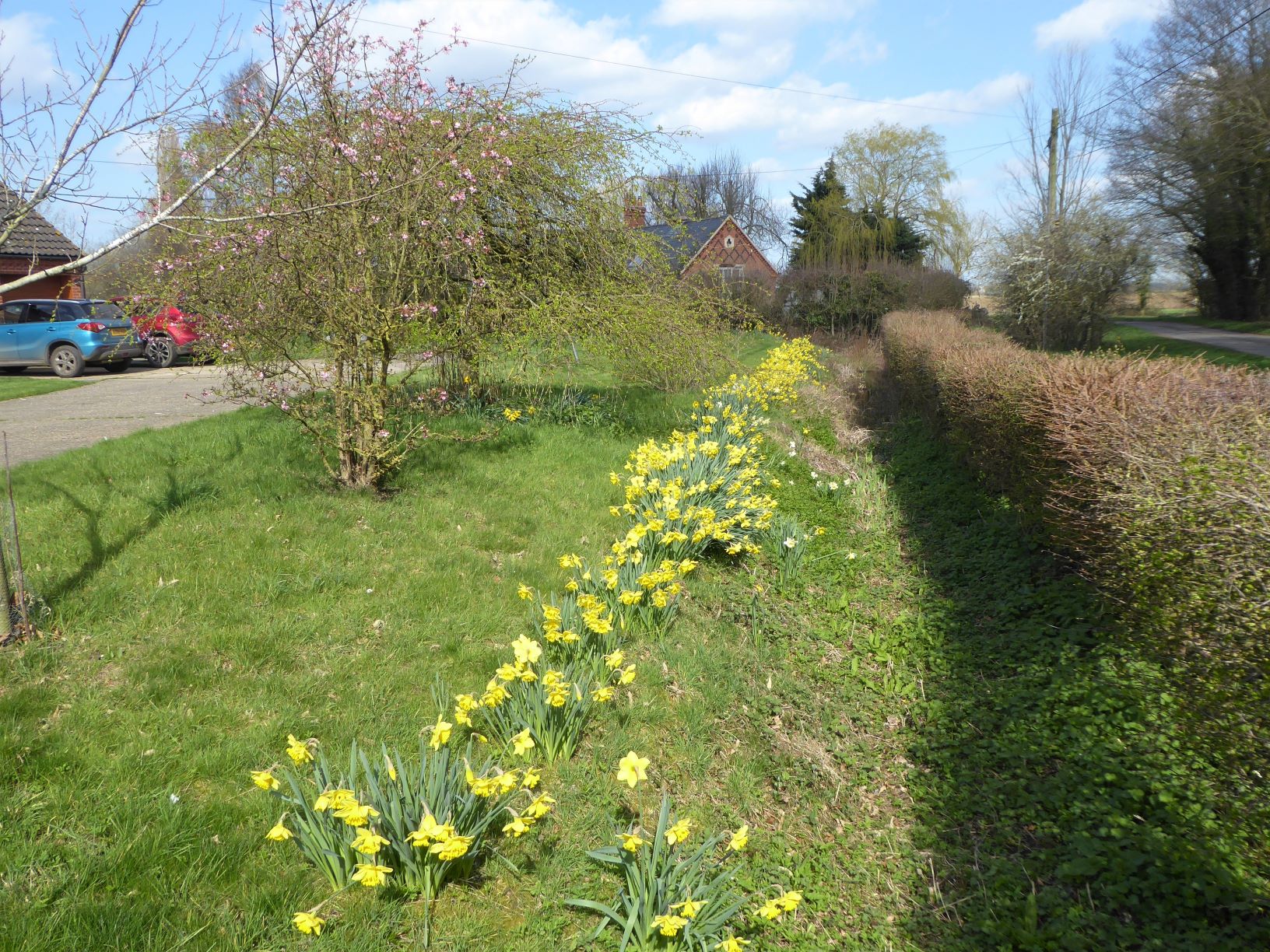
A week or two on from when the photo of the leveret was taken and the daffodils are all coming out.

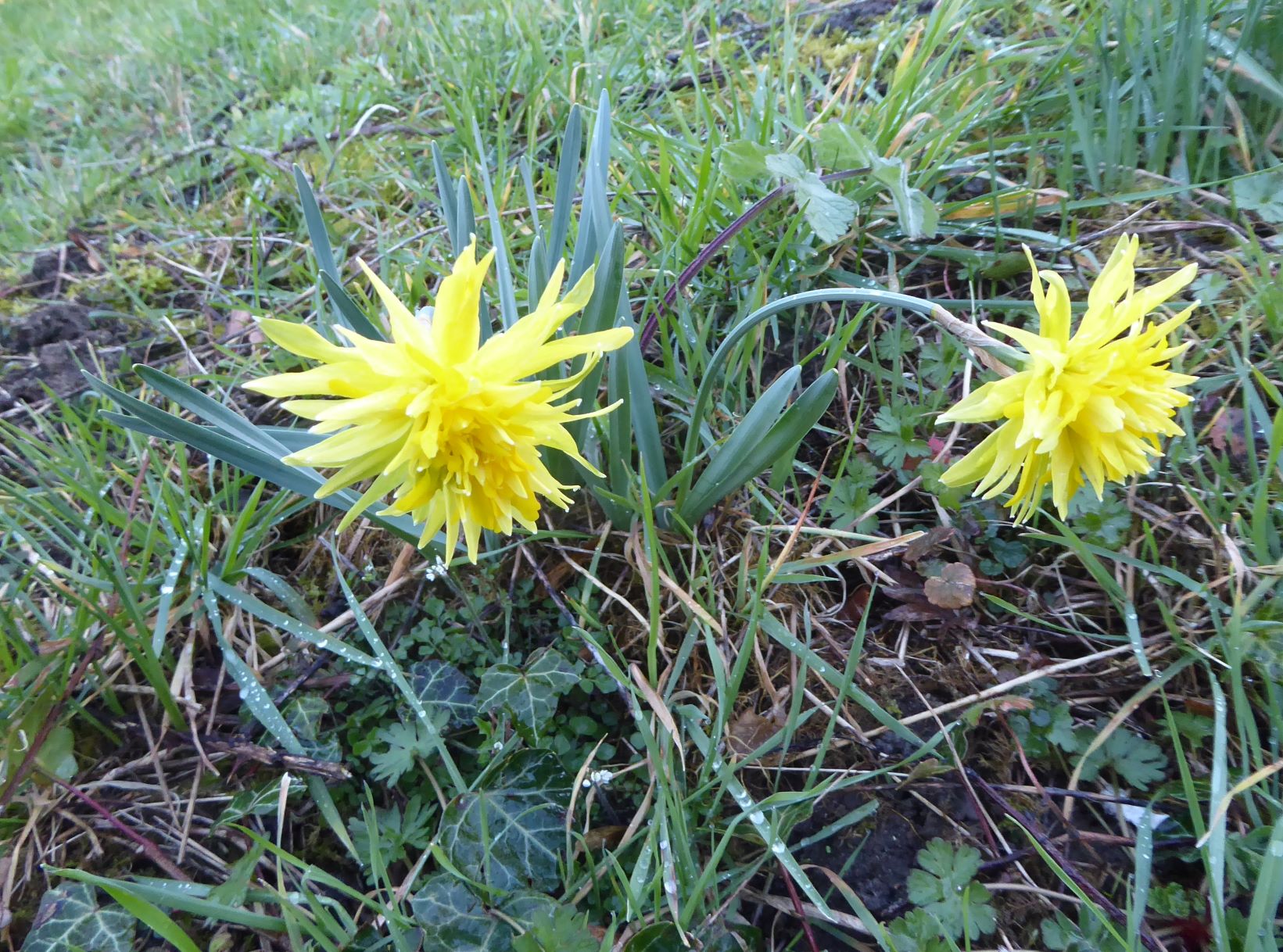
I love these little Narcissus ‘Rip van Winkle’!

Grape Hyacinth (Muscari ), Bugle (Ajuga reptans ), Variegated Lesser Periwinkle(Vinca minor ) and Spindle (Euonymous ) ‘Emerald n Gold’.

This is a very narrow bed alongside the rear of the garage next to the back door.  All the flowers are blue and two of the plants have variegated yellow and green leaves.  However, just to prove that nothing goes exactly to plan, the bed also contains a red-berried Firethorn ( Pyracantha) which has creamy white flowers; this plant was here when we moved here and the birds and bees love it.

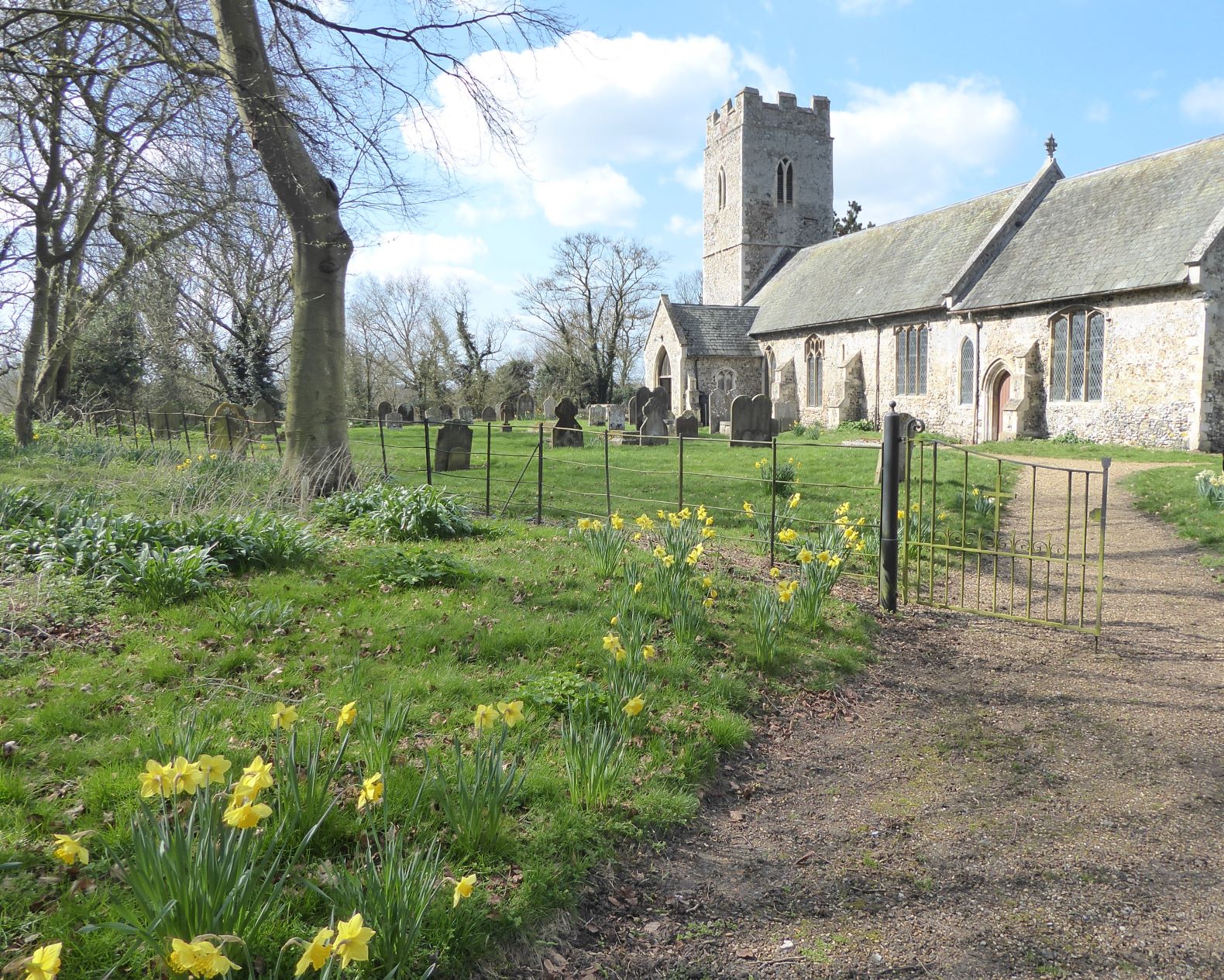
St. Mary’s church at Homersfield

We attended church here in March and I thought it looked lovely in the sunshine.

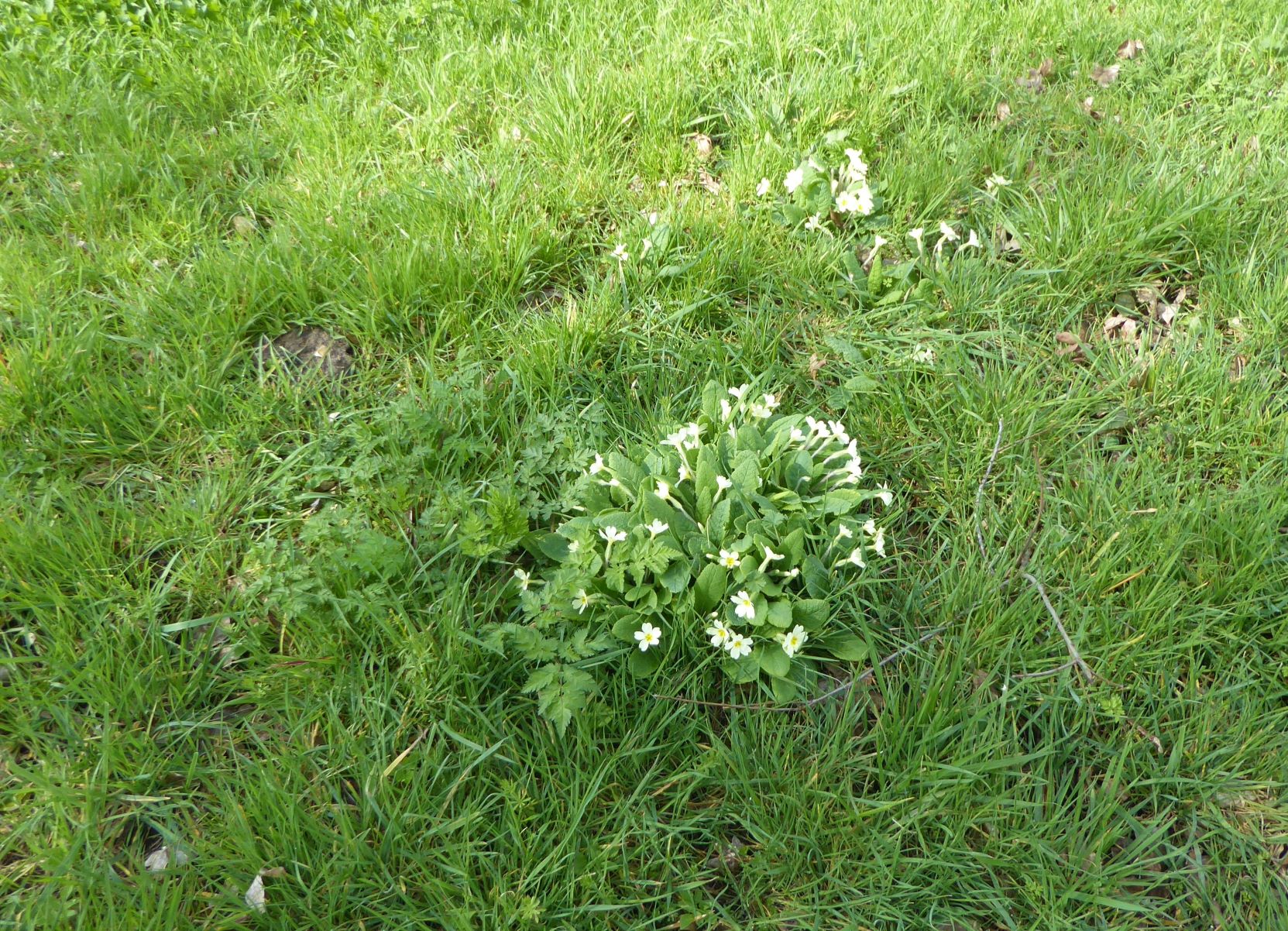
Primroses (Primula vulgaris )

That same day I walked round the garden and then out onto the verge next to the lane  beyond our hedge and found these primroses in flower.  Garden primulas are able to flower at any time of the year as long as it isn’t too hot or too cold.  Wild primroses, however, have their season and late March is the best time to see them round here.

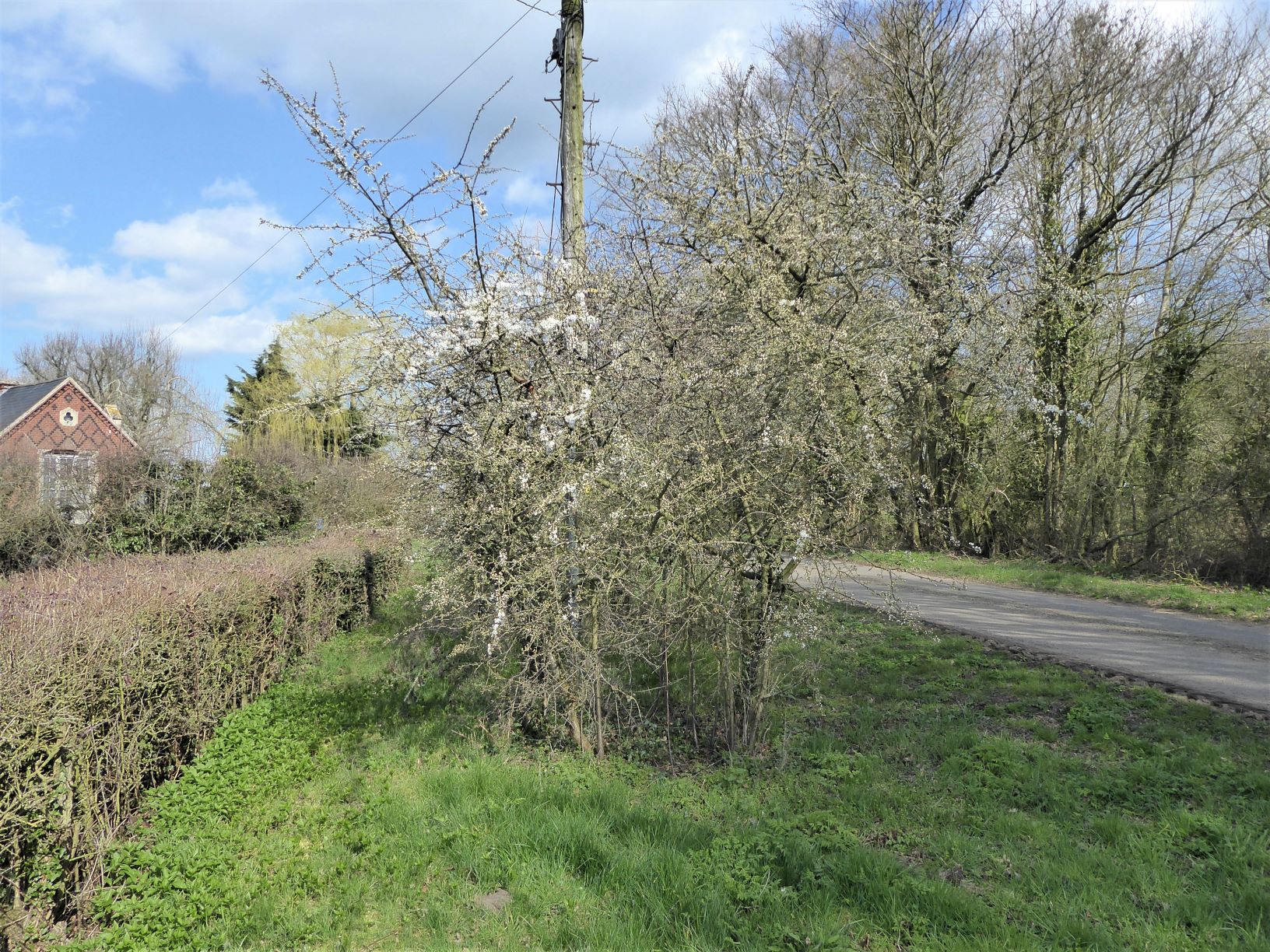
Blackthorn (Prunus spinosa )

There is a tangle of Blackthorn on the verge and it was just coming into flower.  You can see our garden over the other side of the hedge.

Here is the Blackthorn on the verge.

It is a very untidy tree with suckers but it has blossom like snow and the fruit (sloes) in the autumn are used for flavouring gin, among other things.

Dog’s Mercury (Mercurialis perennis )

We have this rather insignificant plant growing under all our hedges and in amongst the trees near the large pond.  It is often a sign of old woodland and won’t tolerate being disturbed; it fades away.  The male and female flowers are on separate plants.

The daffodils at the end of March

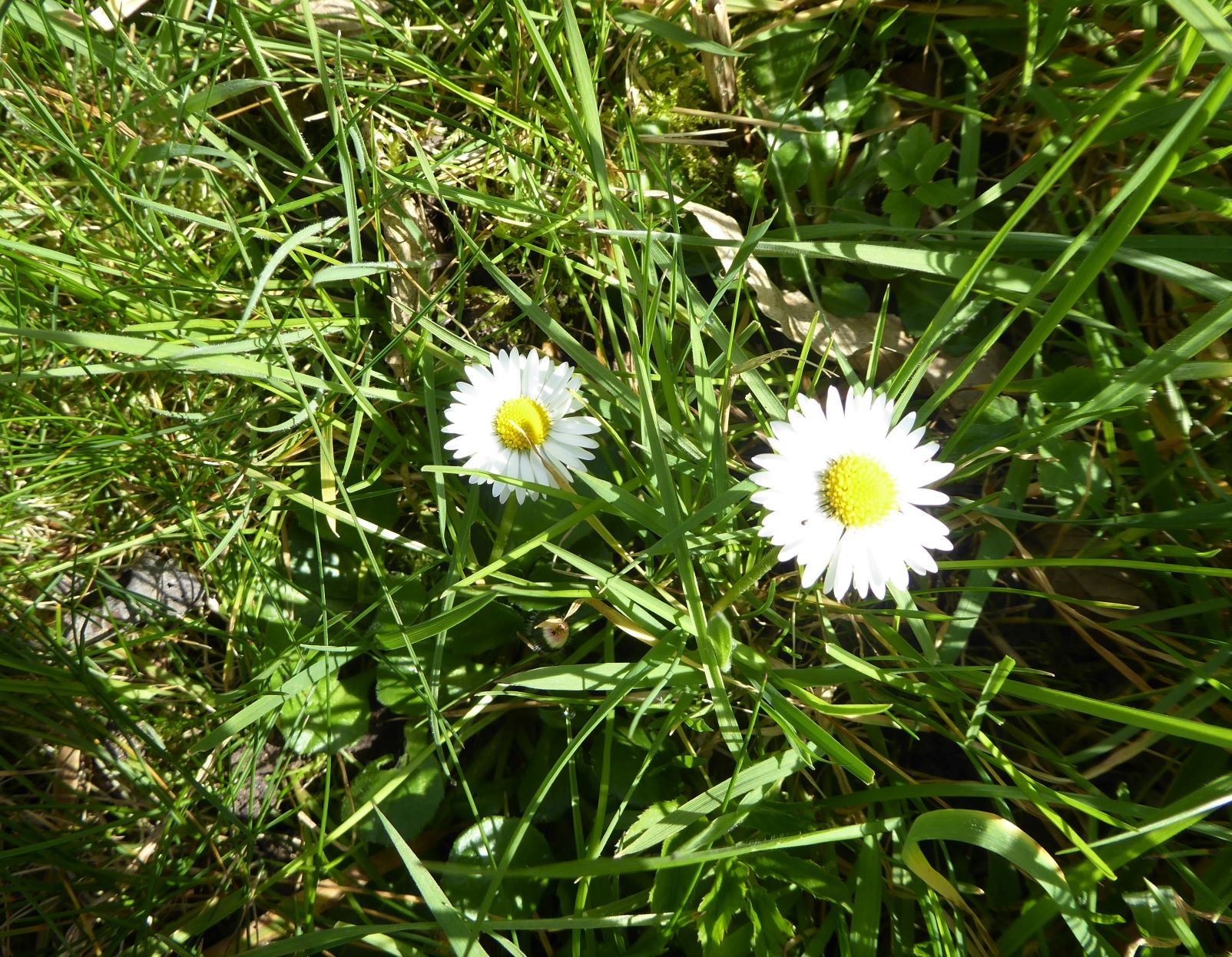
Daisy (Bellis perennis )

Lesser Celandine (Ficaria verna )

Here is this sunshiny little flower peeping out from inbetween Common Nettles and Ground Elder in the ditch.

These were the highlights of March this year.  I hope to begin an April post as soon as I have published this one.  Whether I’ll be able to finish it and publish it in the next day or so only time will tell!

Share this:

  • Share on X (Opens in new window) X
  • Share on Reddit (Opens in new window) Reddit
  • Share on Pinterest (Opens in new window) Pinterest
  • Share on Facebook (Opens in new window) Facebook
  • Email a link to a friend (Opens in new window) Email
  • Share on Tumblr (Opens in new window) Tumblr
  • Print (Opens in new window) Print
  • Share on Pocket (Opens in new window) Pocket
  • Share on LinkedIn (Opens in new window) LinkedIn
Like Loading...

A Walk at Iken

11 Mon Mar 2019

Posted by Clare Pooley in churches, Rural Diary, walking

≈ 61 Comments

Tags

estuary, Iken, River Alde, Roy Tricker, Saxon cross, St. Botolph's church, Suffolk, wading birds, walking

Three days after the walk we took round the lanes on New Year’s Day, mentioned in a previous post, Richard and I took ourselves off for another walk.  Elinor joined us.  We set off quite early as we needed to complete the walk before lunchtime; Richard had an optician’s appointment in the early afternoon in Halesworth and we had decided we would have lunch in a pub together before the appointment.

Iken is about twenty-four miles to the south of us and is a tiny village near the estuary of the River Alde and near the coast.  We have walked here a few times before but not for some time and never in the depths of winter.  The day was cloudy and raw, the temperature didn’t rise above 1 degree Centigrade all day ; a day when it would have been pleasant to have stayed at home and read a book.

The view of the Alde estuary through the trees at the edge of the car park.

There is a narrow pathway from the car park down to the estuary.

Despite the cold weather the Gorse (Ulex europaeus) was still in bloom. ‘Gorse is out of bloom, kissing’s out of fashion’.

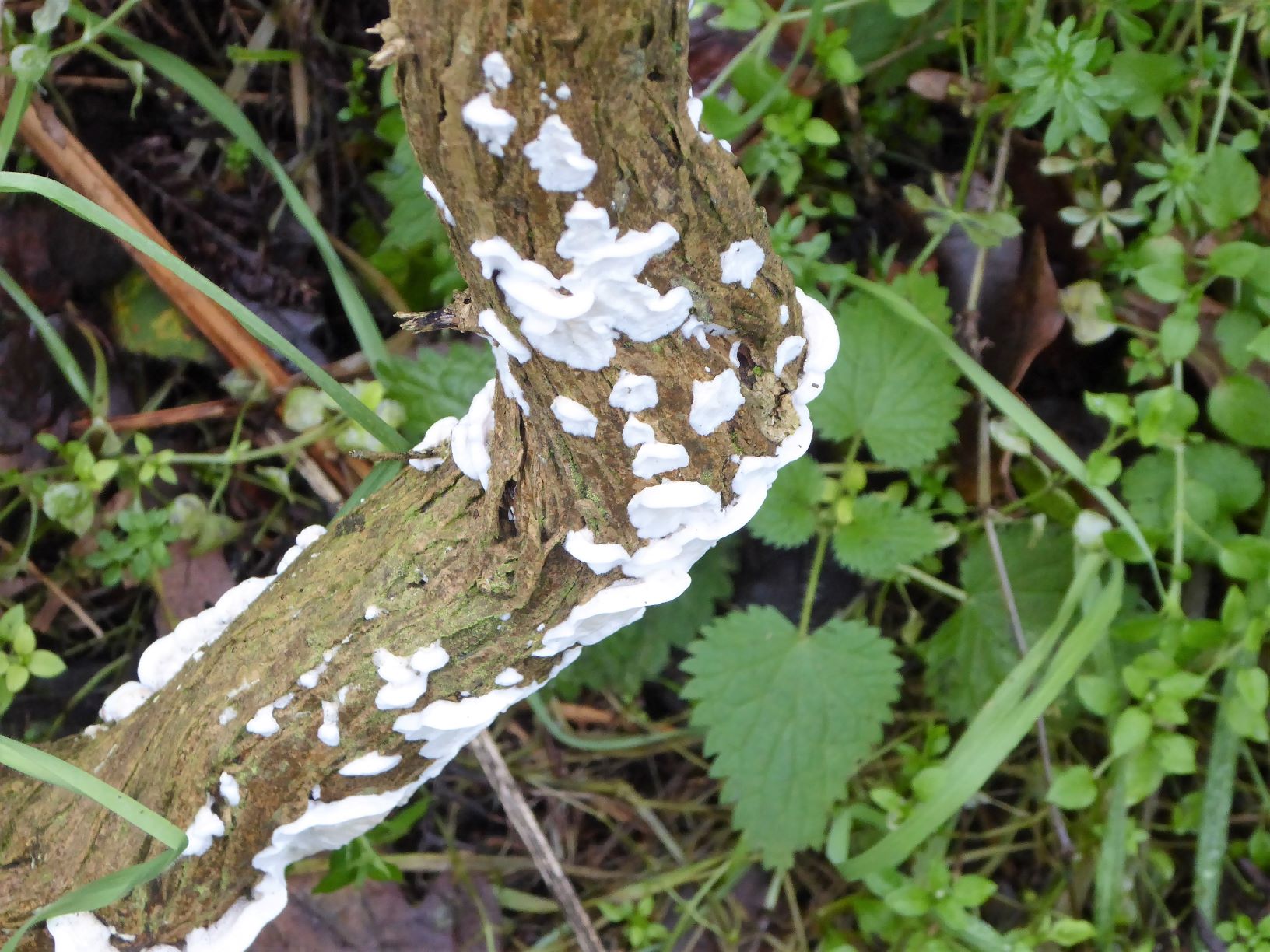
I noticed this branch covered in fungus.  It was almost luminous.

I looked closer……

I don’t know what this fungus is.  It was much too cold to stand still for more than a couple of minutes so I had to leave it.

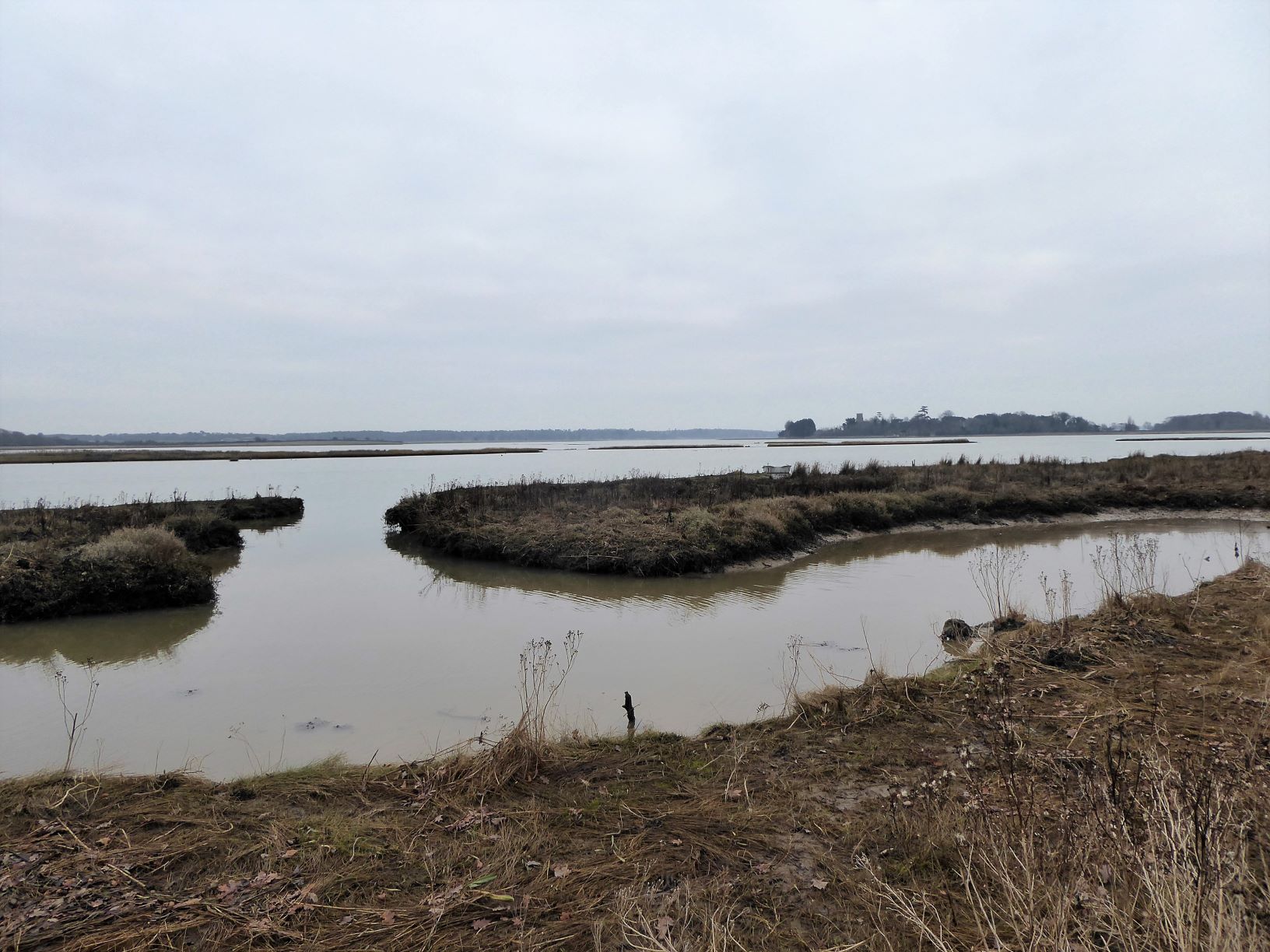
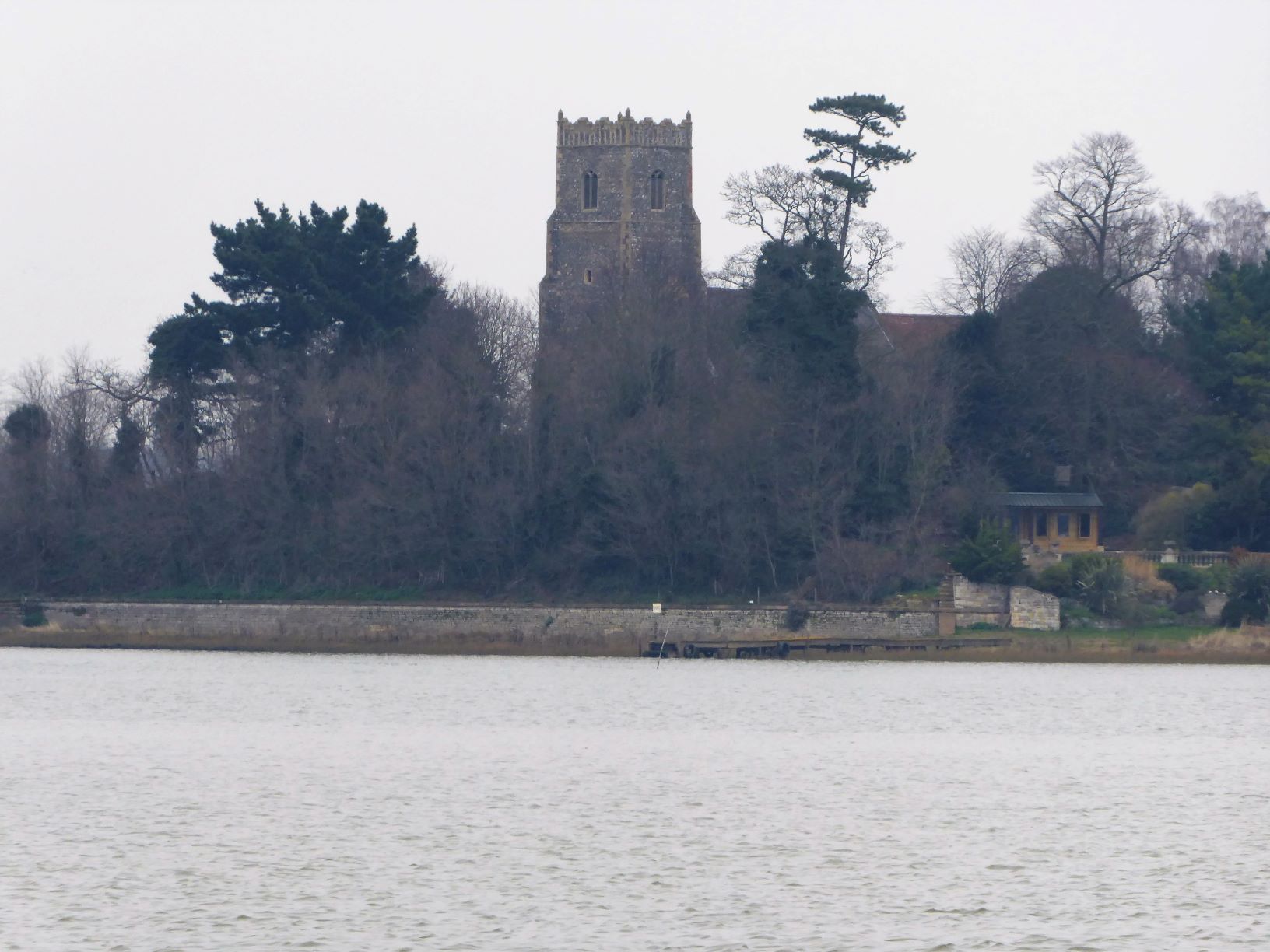
The Alde estuary.  You can just see the tower of Iken church sticking out above the dark trees on the horizon on the right.

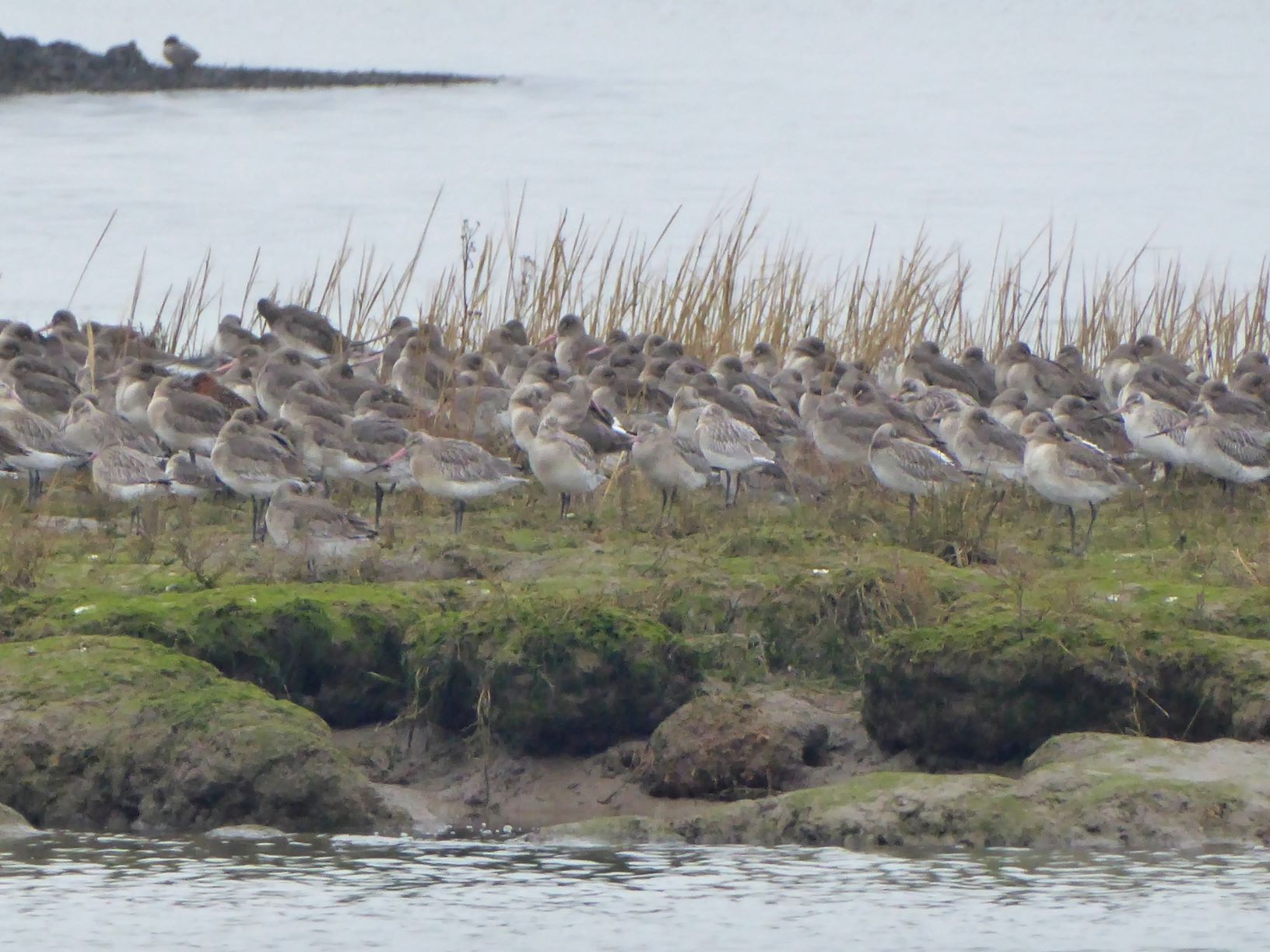
There are many geese, ducks and wading birds on the estuary.  I don’t know what type of geese these are.

Some, if not all of these waders are probably Bar-tailed Godwits (Limosa lapponica). They appear to have slightly up-turned bills with pink-orange bases.

Here is Iken church near the edge of the estuary.

The shore was very muddy and difficult to walk on.

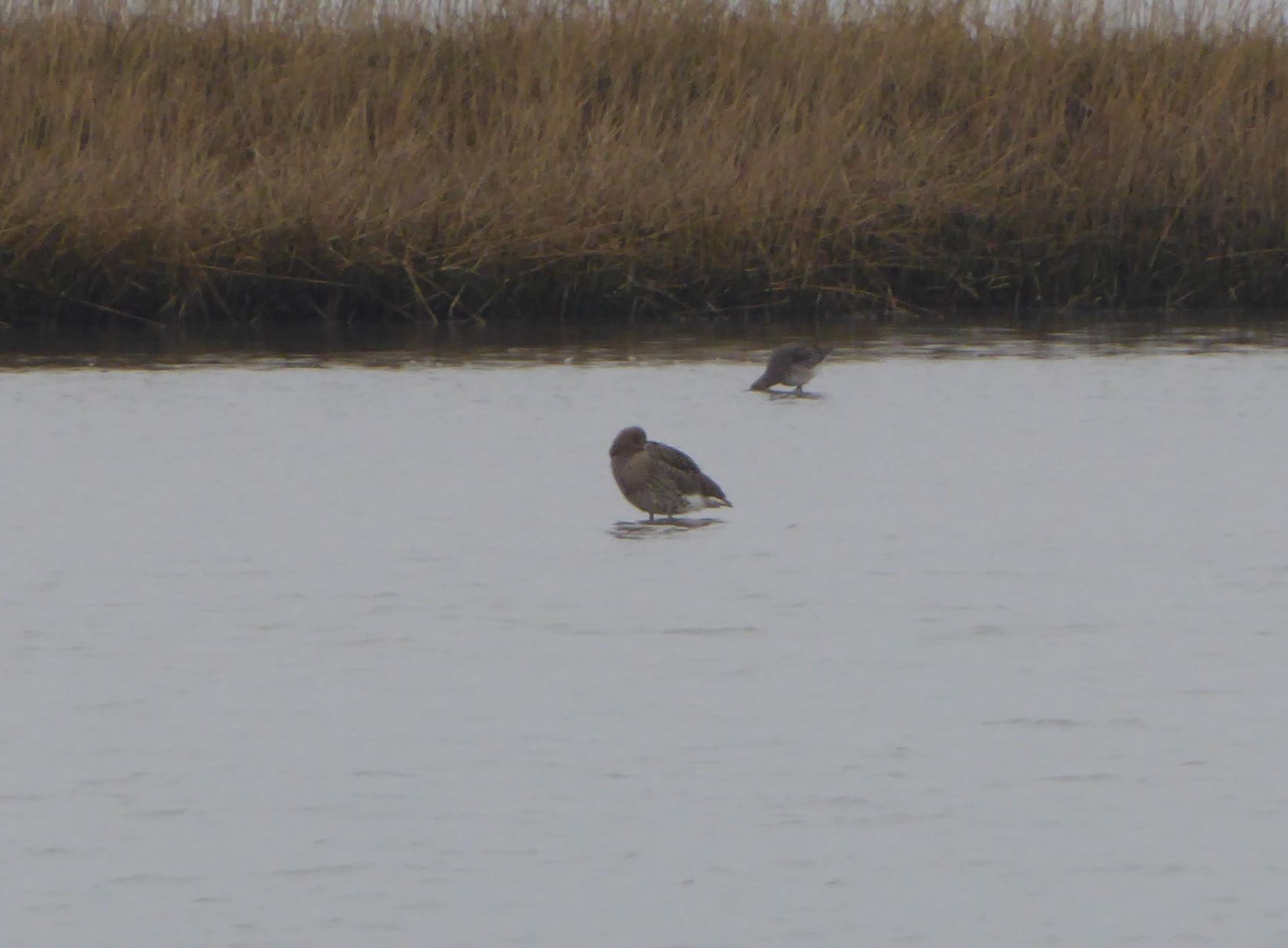
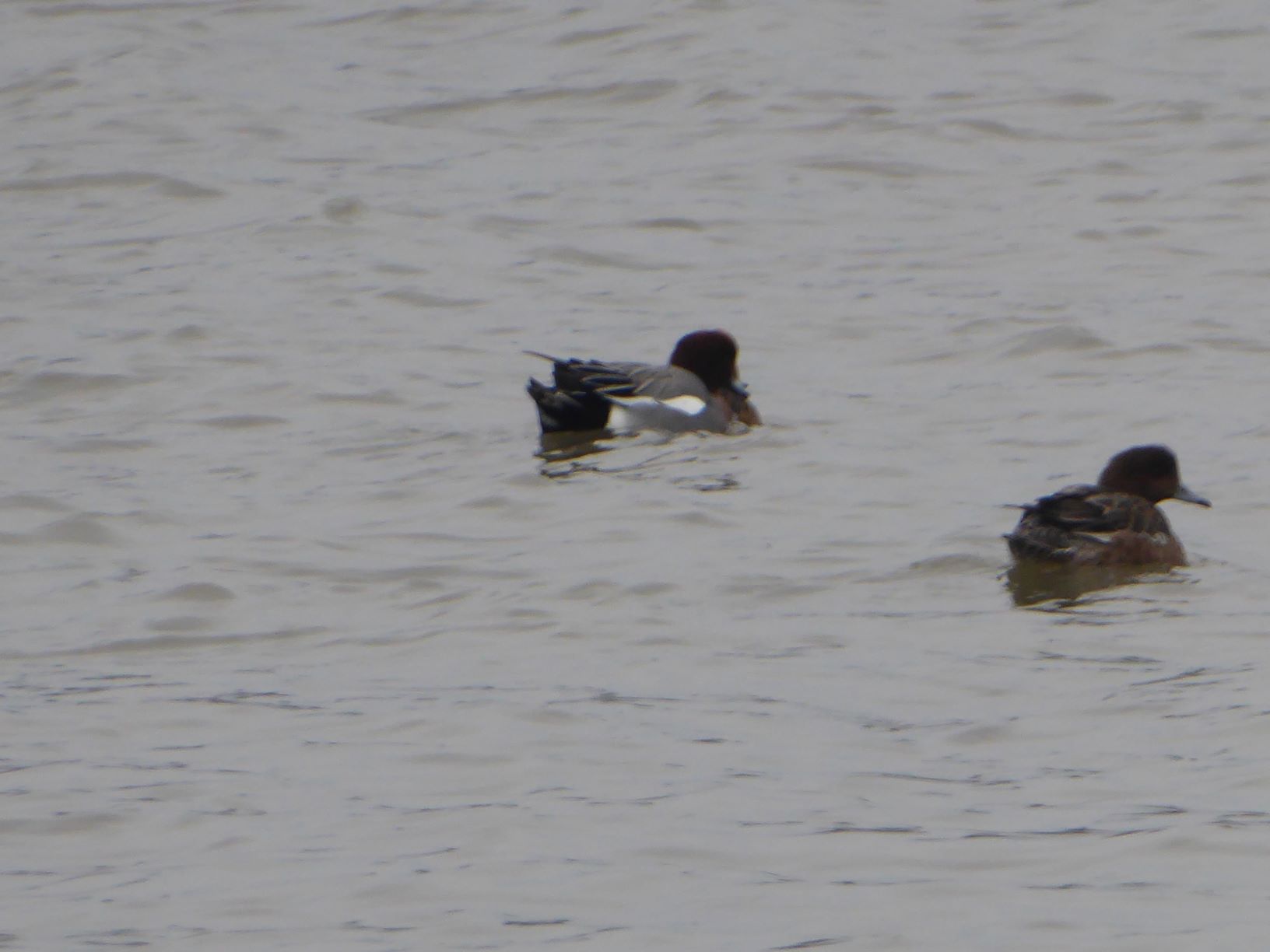
Ducks…..

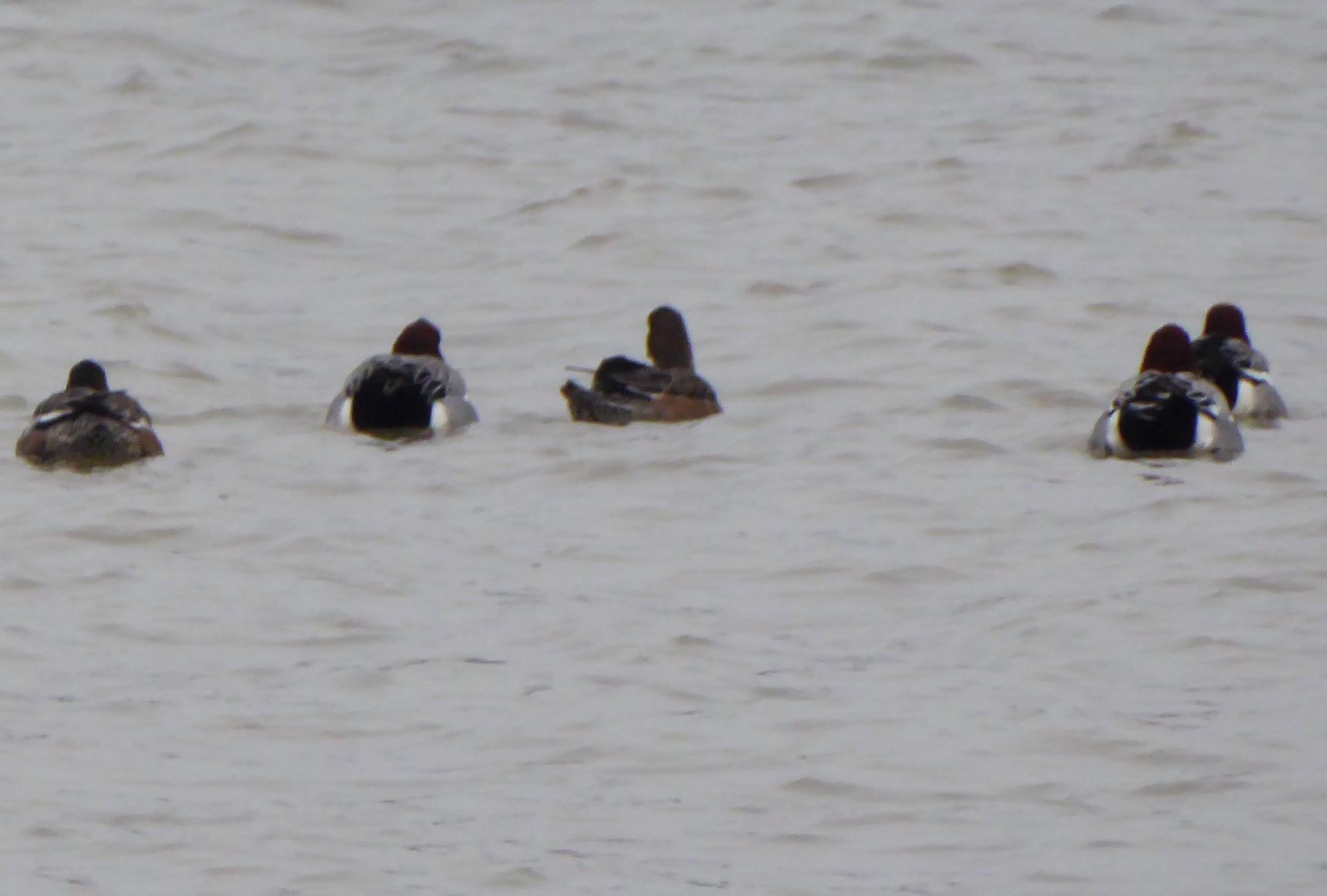
I couldn’t definitely identify these ducks either!

……. and yet more ducks. All floating about far out on the water in the gloom.

We left the estuary and walked along another narrow pathway adjacent to a few gardens until we got to the road in the village.  At a junction on the edge of the village we turned left towards the church which is situated right at the end of a promontory jutting out into the estuary.

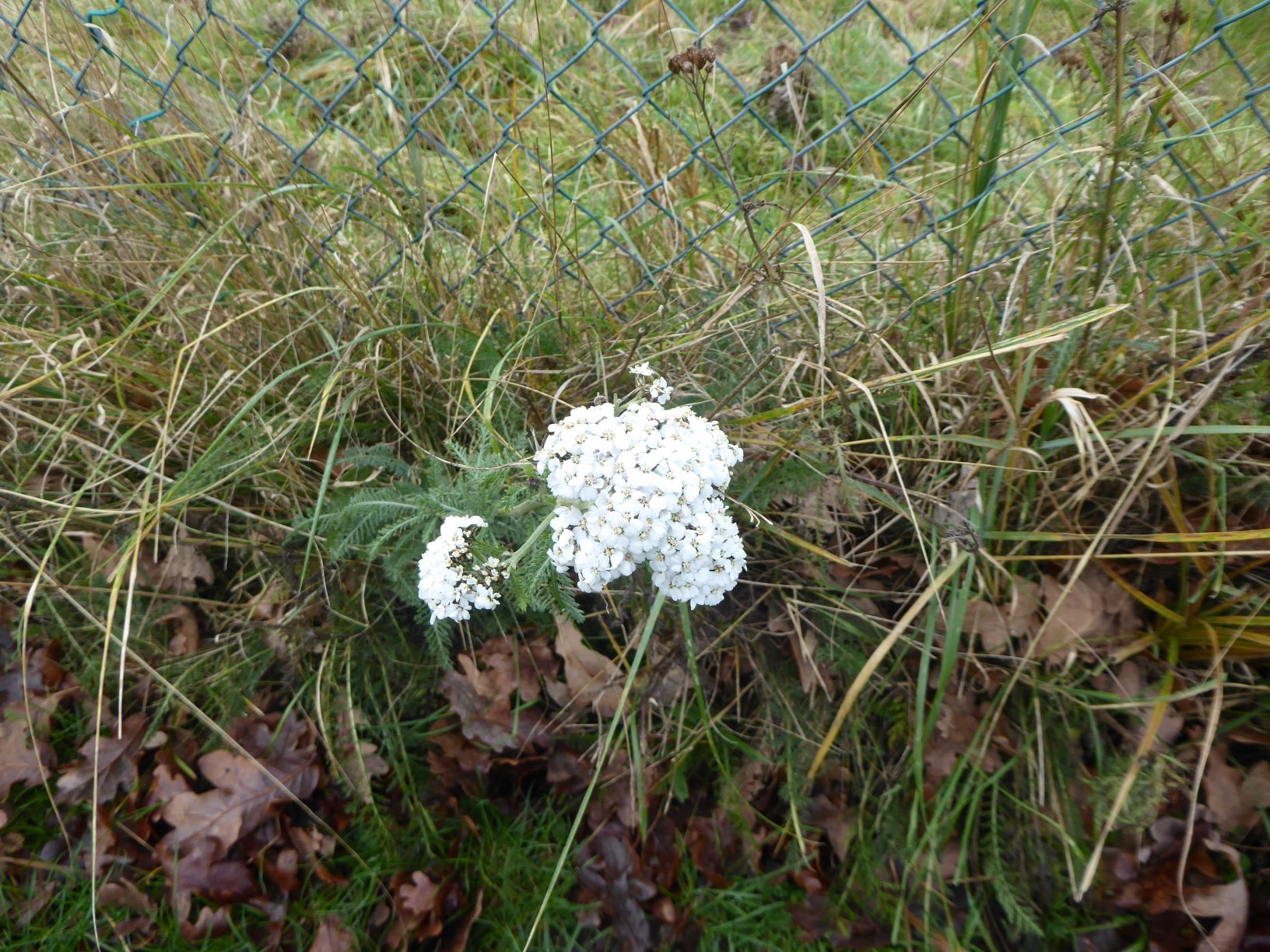
I saw this Yarrow (Achillea millefolium) in flower by the side of the lane, What a hardy plant!

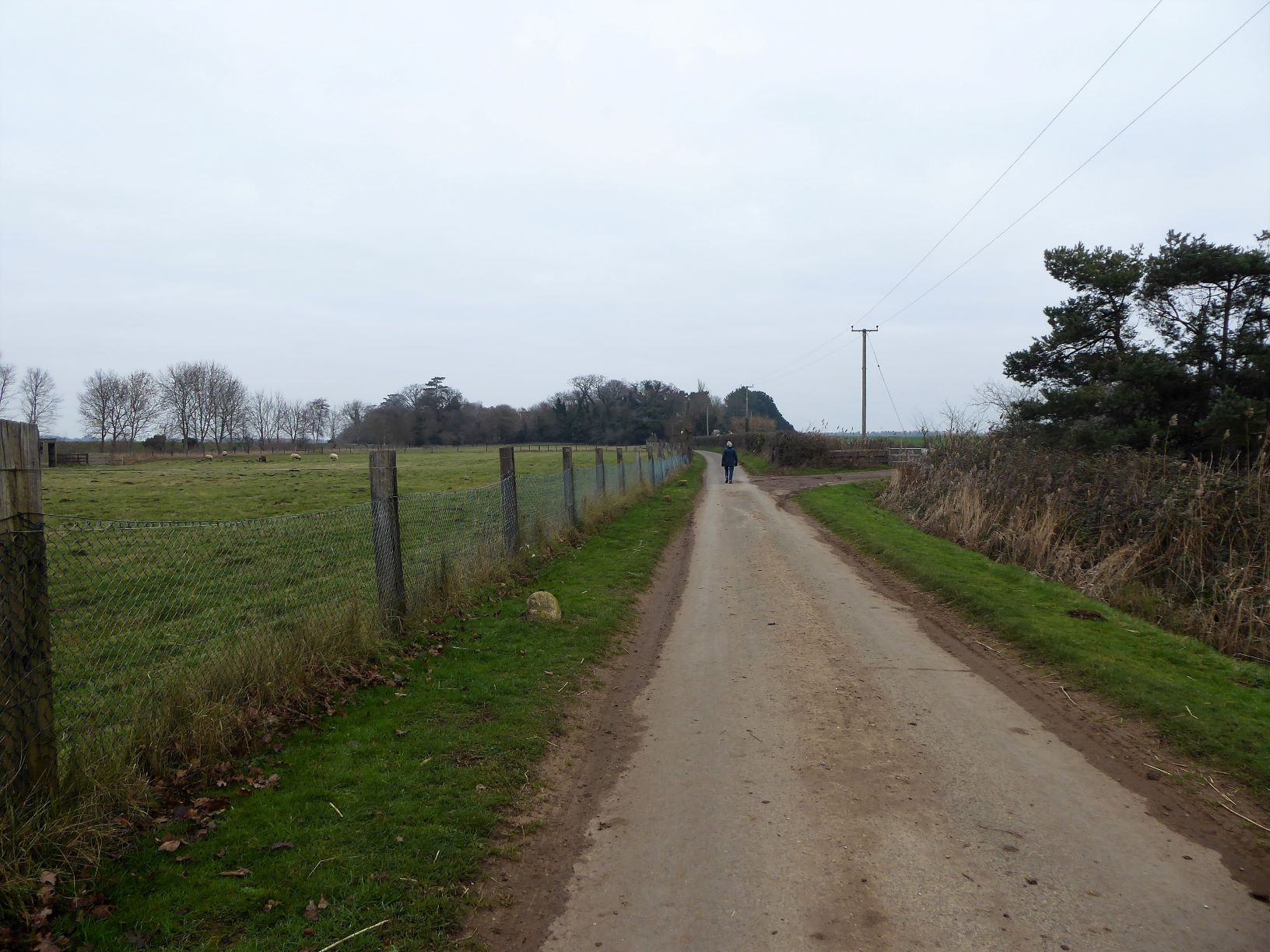
Richard disappearing into the distance along the lane towards the church.

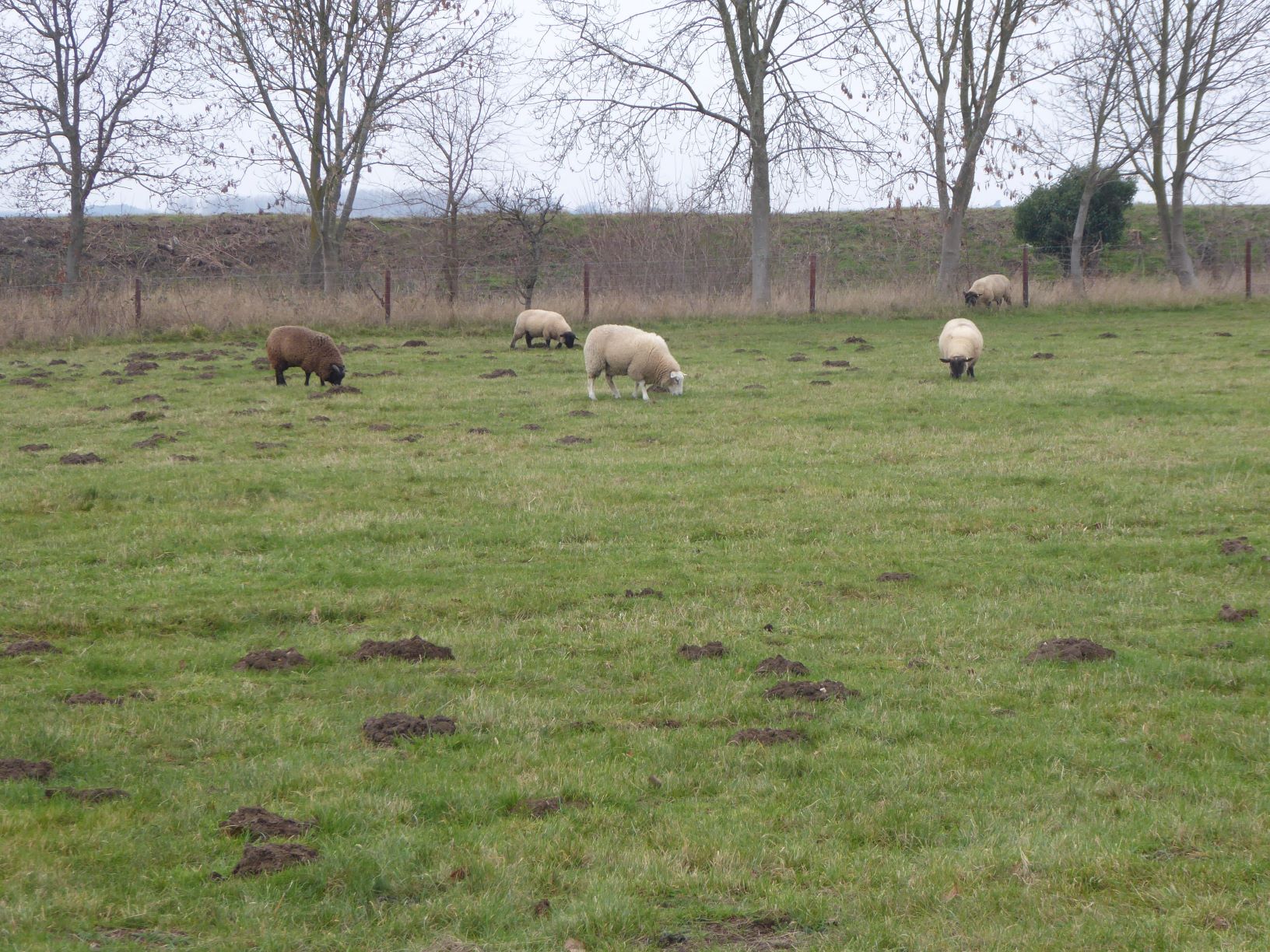
Sheep in a field by the side of the lane. So many molehills in this field!

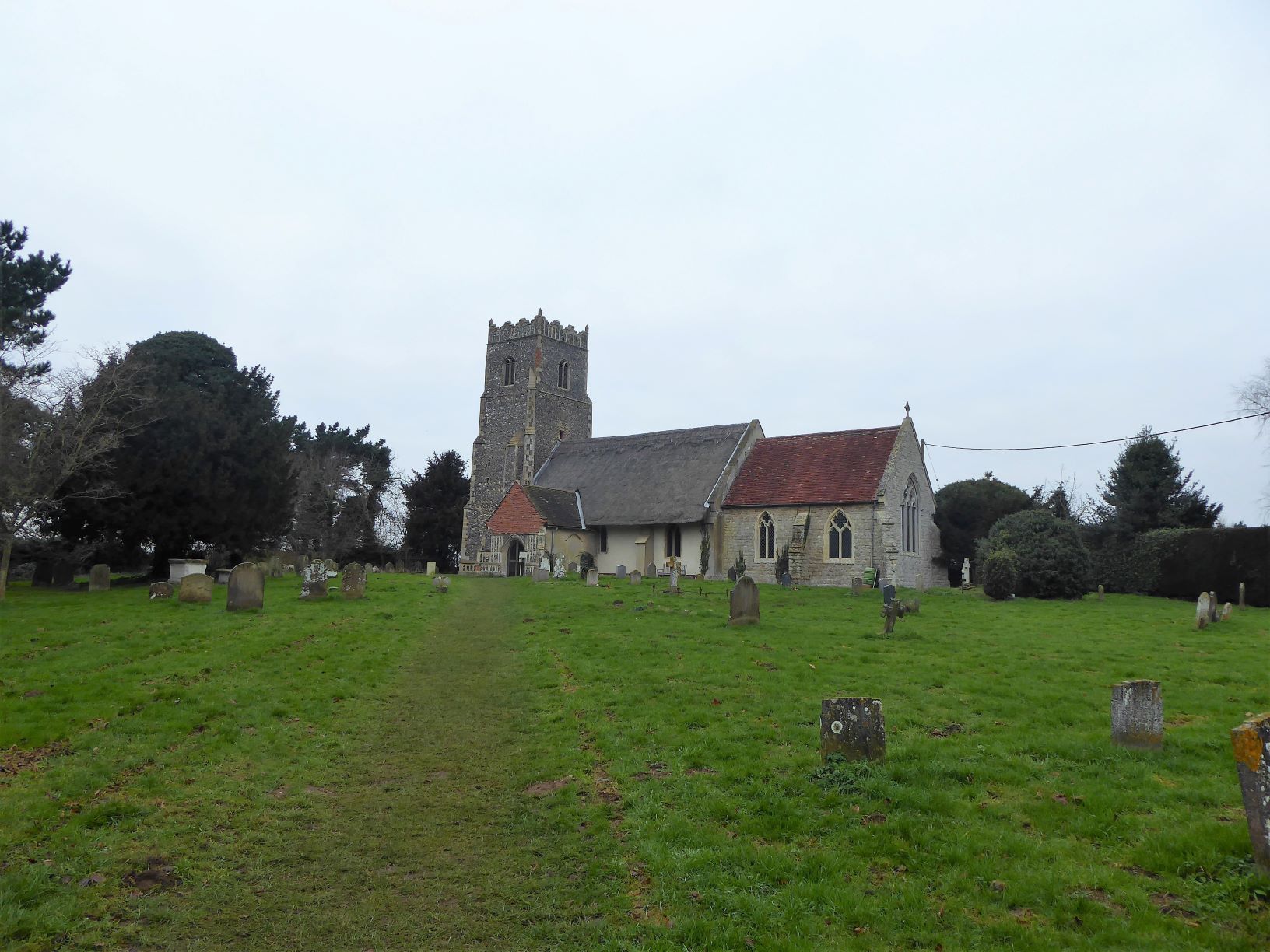
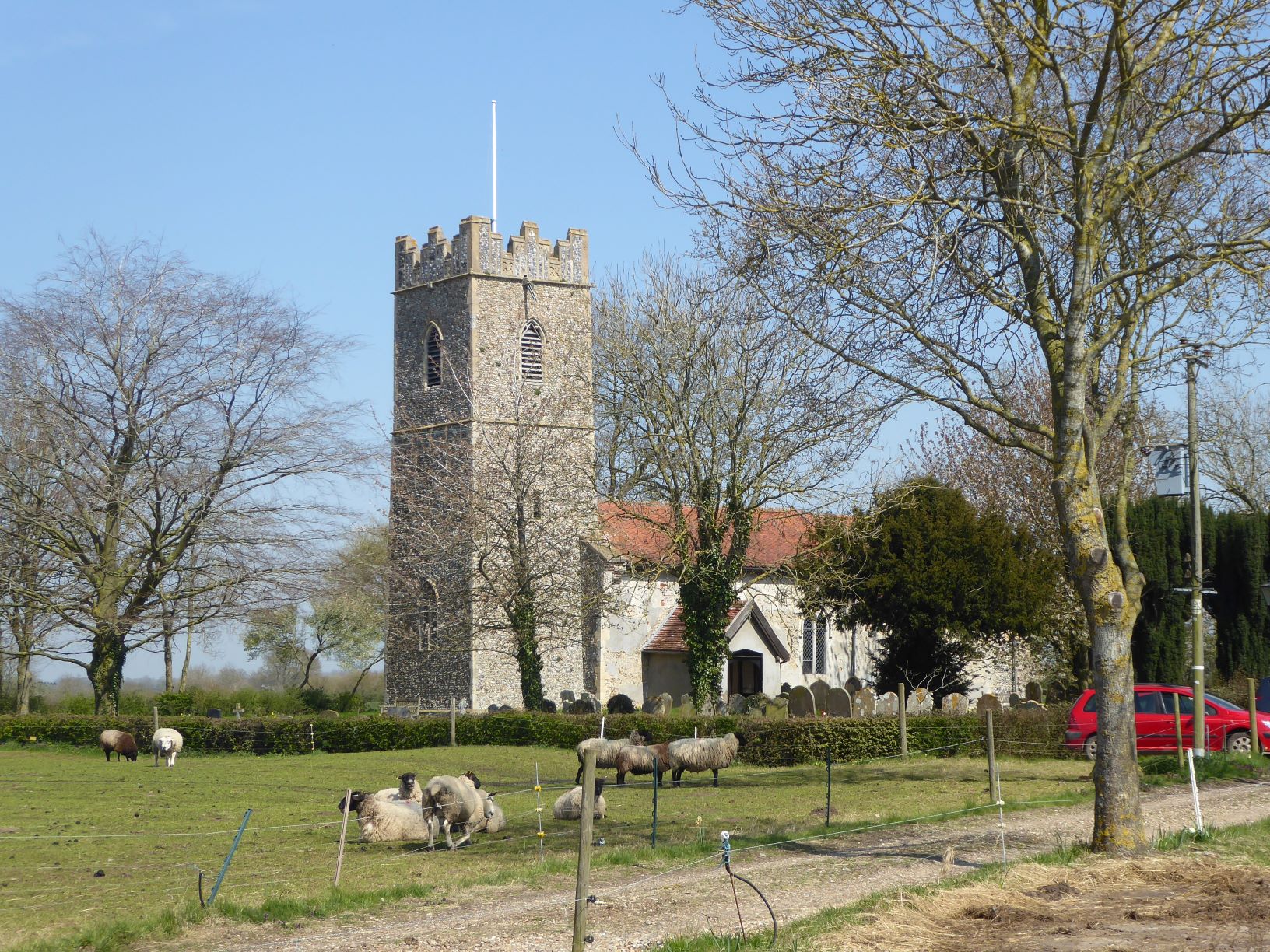
Iken church, dedicated to Saint Botolph.

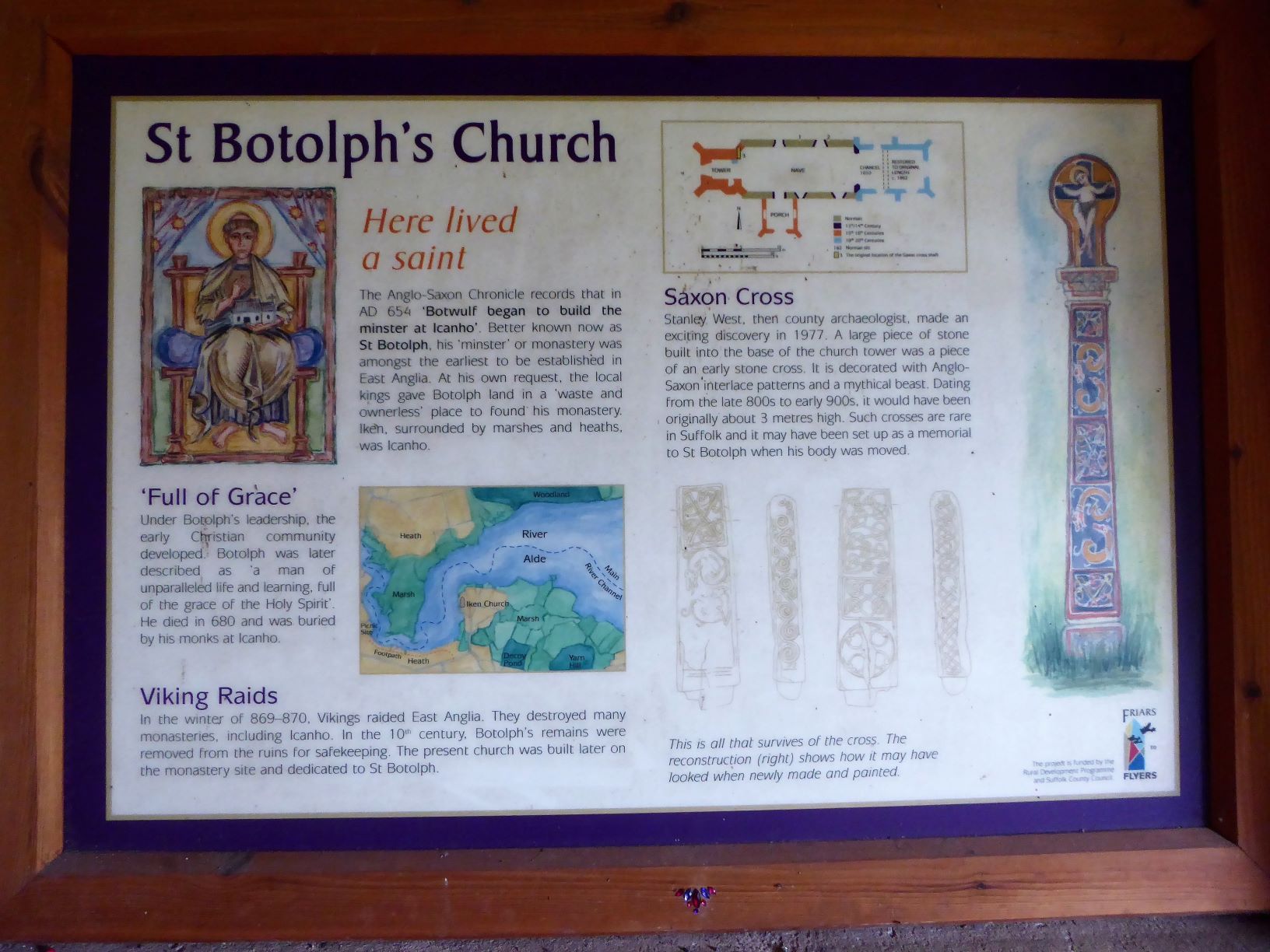
This church is mentioned in the Anglo Saxon Chronicle.  “Here in 654……Botwulf (Botulph) began to build the minster at Icanho”.  There are a couple of other places that have been considered as the possible site of Botulph’s first church (Boston in Lincolnshire and Hadstock in Essex) but this promontory, or hoo is now considered to be the most likely site.Here is a short passage quoted from the church guide written by Roy Tricker.

‘A Saxon minster was a nucleus of Christian worship, witness and learning for a wide area.  It was staffed either by a community of monks or a group of priests and from it missionaries travelled to spread the Faith and to establish satellite churches.  Botolph remained at Icanho as its abbot until his death in c.680.  It is recorded that he was buried by his disciples on June 17th and this has remained his annual feast day.  Abbot Coelfrith of Wearmouth and Jarrow, who nurtured the young (though later to become the Venerable) Bede, paid a visit to Icanho in 670 to observe the type of monastic life in operation here, and it is recorded that he was greatly impressed.
From Icanho the monks made missionary journeys into East Anglia and beyond and it may be that the 75 or so English churches which bear (or have once borne) St. Botolph’s name may give some clue to the extent of their work.  They include 16 in Norfolk, 4 in Essex and 6 in Suffolk, of which the church at Burgh (near Woodbridge) appears to have enshrined the Saint’s remains for a time.  King Cnut authorised the removal of some of Botolph’s bones to the abbey at Bury St. Edmunds, which he had founded in 1020.  These precious relics had clearly at some time been transferred from Icanho to the relative safety of Burgh, which was also a fort and a defensive site”.

The invading Danes destroyed the monastery in 870 and some time later the site was marked with a stone memorial cross.  The church was rebuilt, again in timber in 900 and re-dedicated to Saint Botolph.  The Normans rebuilt the church in flint-rubble between 1070 and 1110 and from then on parts were rebuilt or improved upon over the centuries.  By the early 19th century only the western end of the church was in use, the rest being in ruins.  The church was repaired and a new chancel built in the mid 19th century.  The village was evacuated in 1942 and the church closed so that the area could be used as a centre for battle training.  The church, which had been slightly damaged  by a fallen tree in a gale and then by the blast from a land mine, reopened in 1947 and the parishioners spent the next ten years or so improving and decorating the church.  During tree-felling in the churchyard in 1968 some sparks from a pile of burning logs set fire to the thatched roof of the nave and destroyed it.  Fortunately, the chancel was undamaged and was blocked off and made fairly watertight. The Parochial Church Council and the tiny congregation have worked hard for many years to raise money for the church’s restoration.  The tower was restored first from 1984 onwards then the nave walls and buttresses conserved and the nave got its new roof in 1987-9.  Between 1990-94 the nave floor was laid and repairs done to the porch and chancel roofs, benches and altar rails, the stonework and glass of the windows and the font.  The work continues still.

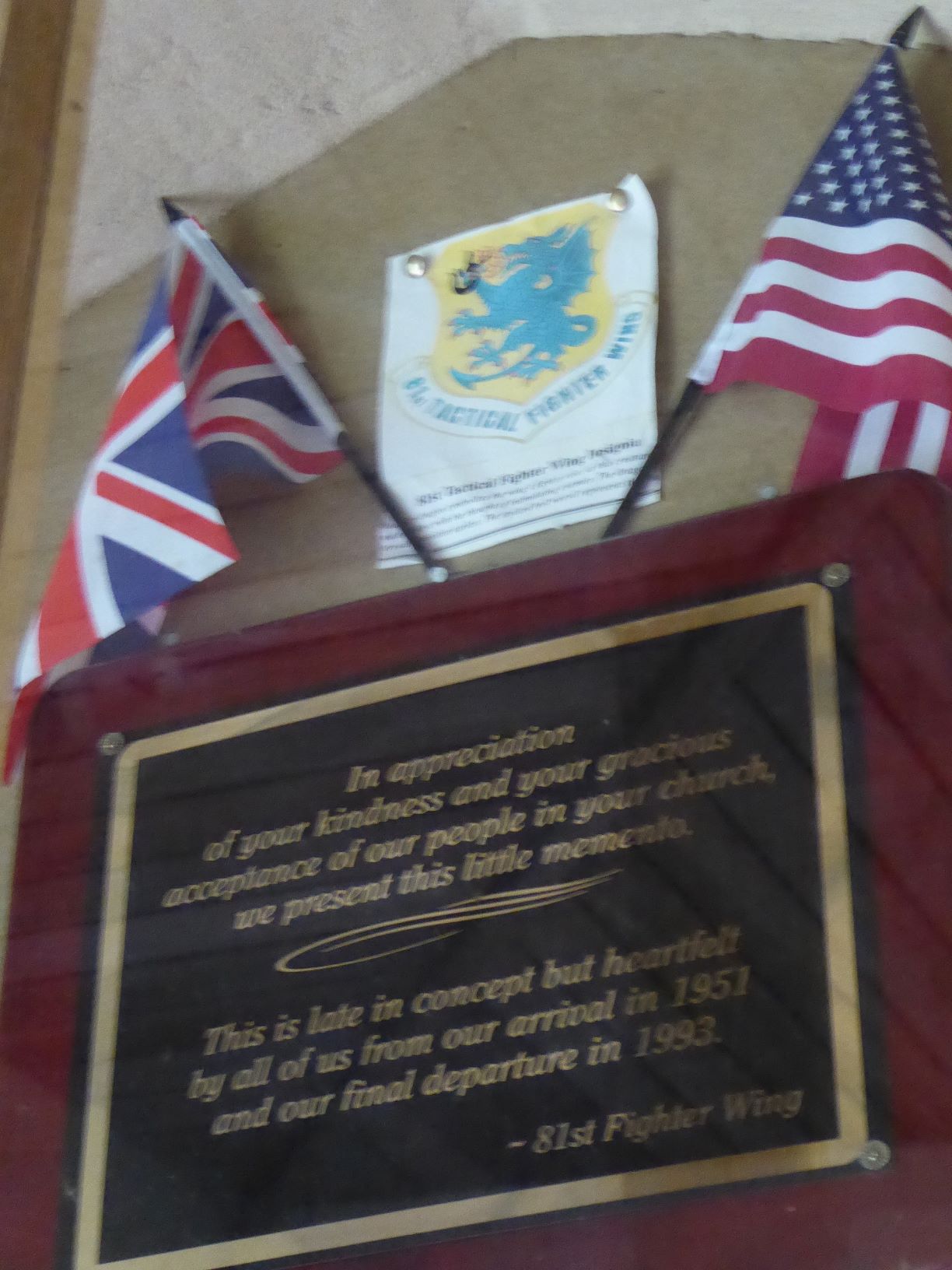
A plaque donated by the 81st Fighter Wing USAF who were stationed near Iken from 1951 – 1993.

Information plaque.

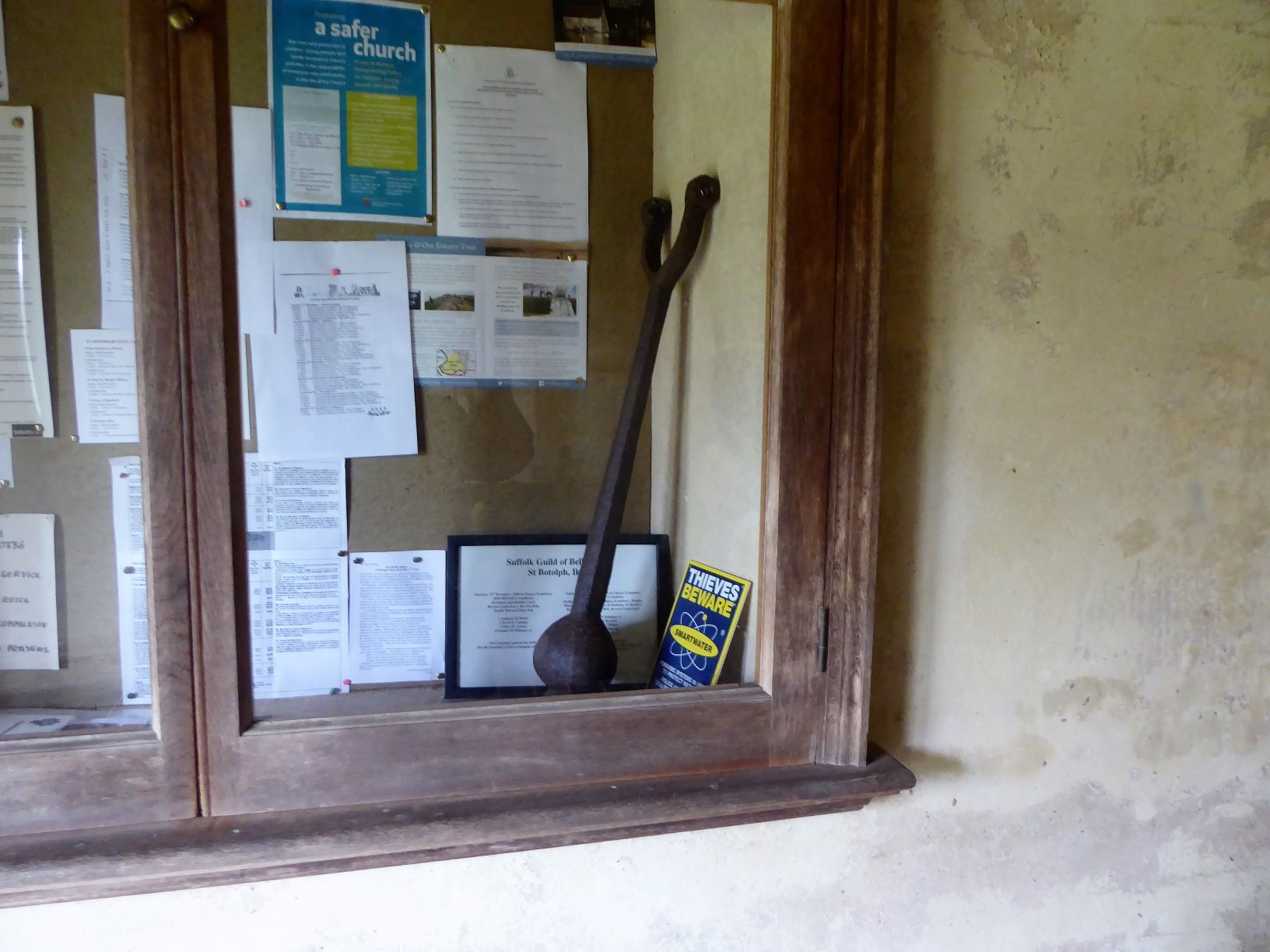
Noticeboard with what I believe to be a bell-clapper.

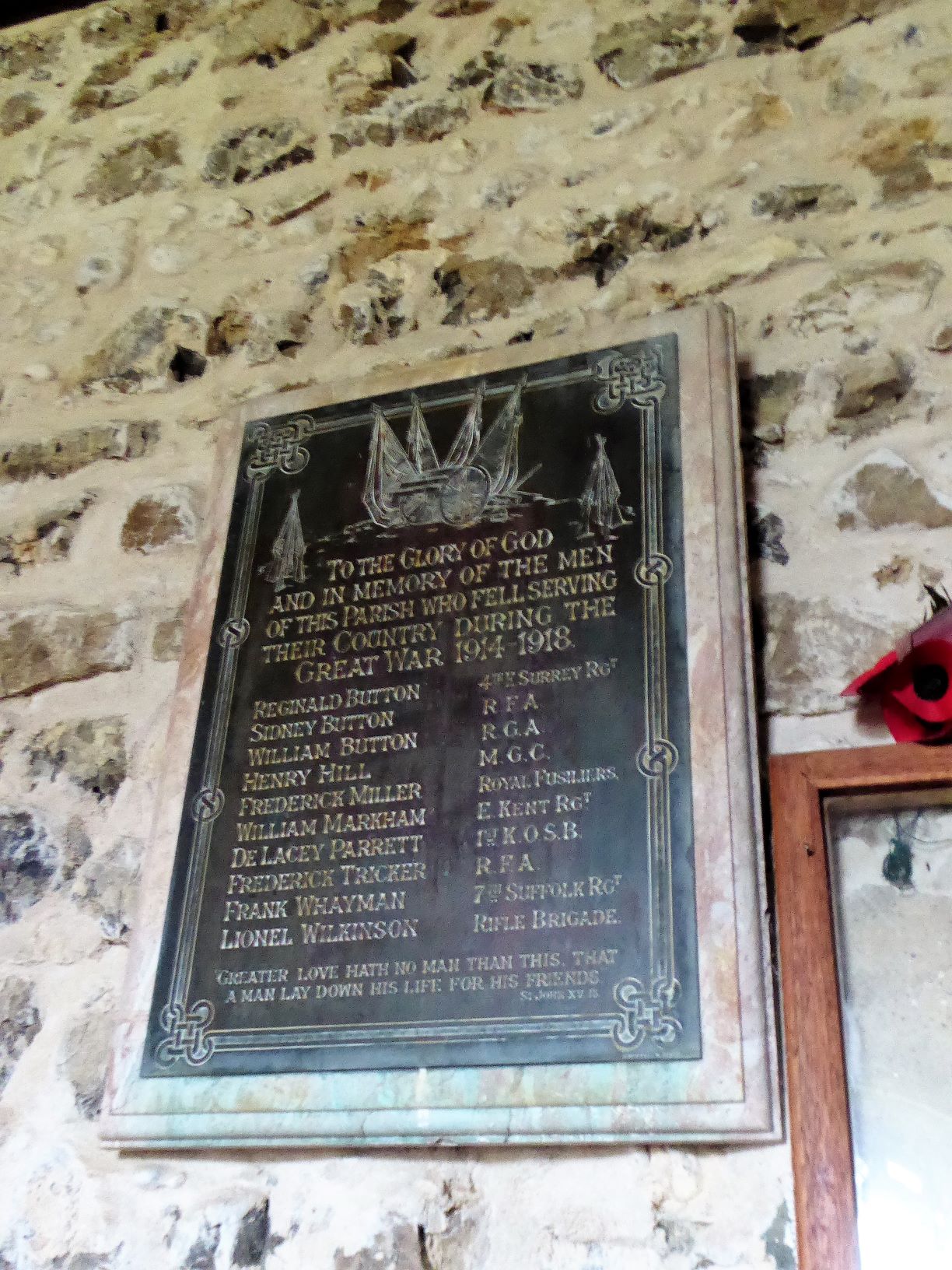
The War Memorial to ten local men who lost their lives in the Great War 1914-18.

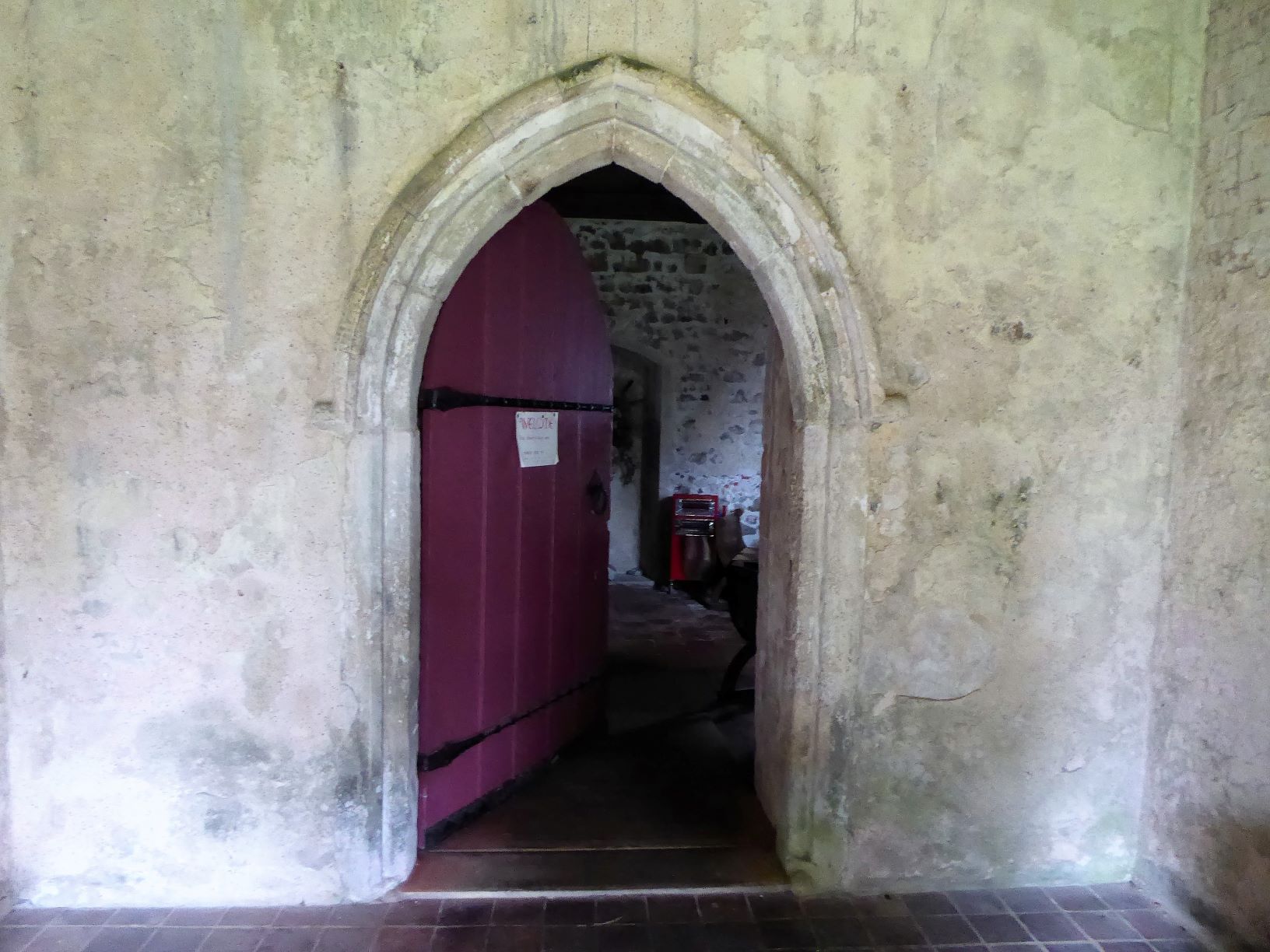
The door from the porch into the church.

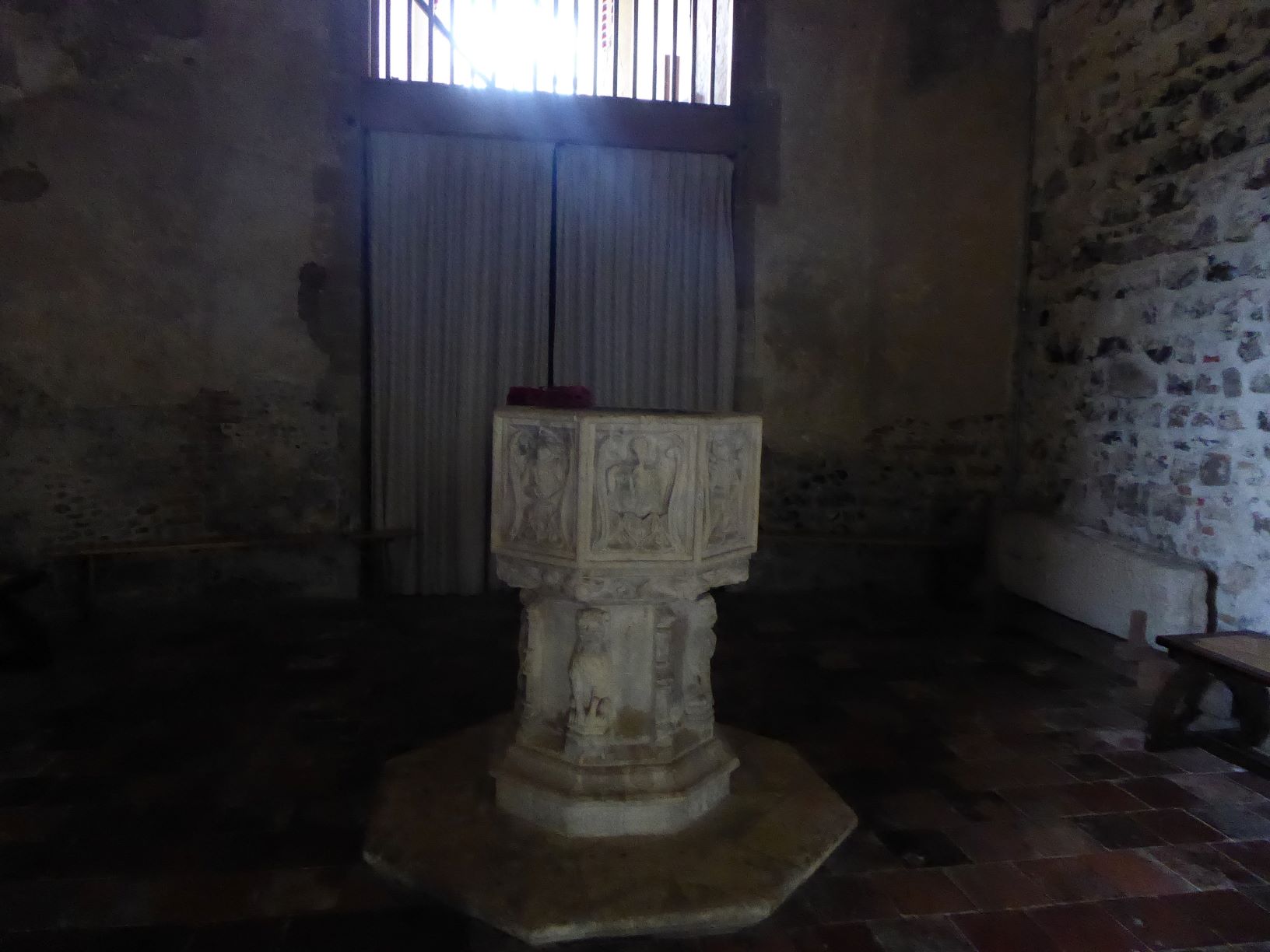
The beautiful 15th Century font with it’s typically East Anglian decoration of four lions round the stem and angels with outstretched wings under the bowl. The bowl is decorated with the emblems of the four Evangelists and four angels.

I apologise for the murky picture.  It was a very gloomy day and the church had no lights available to us.

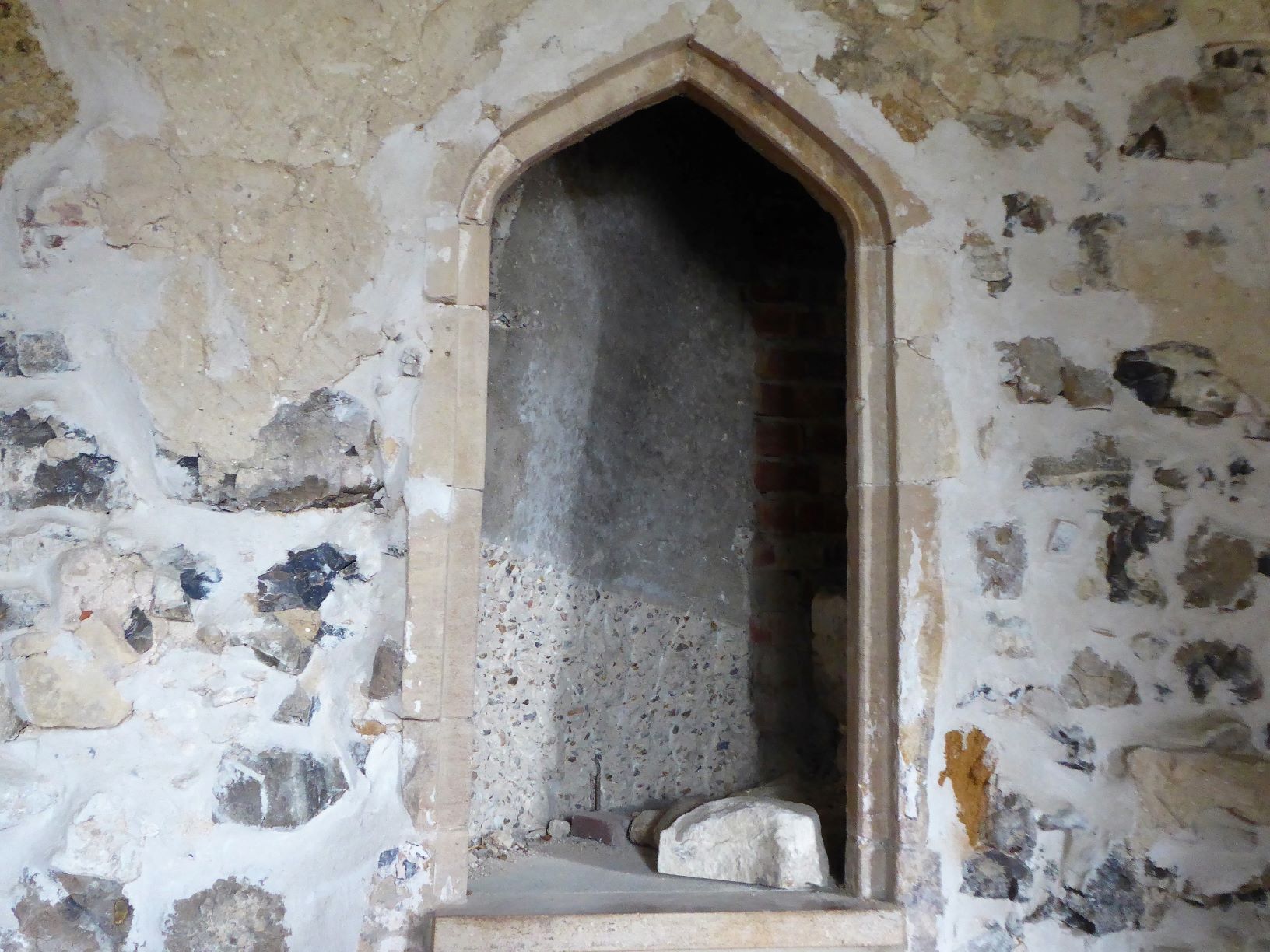
The opening to the rood loft staircase.

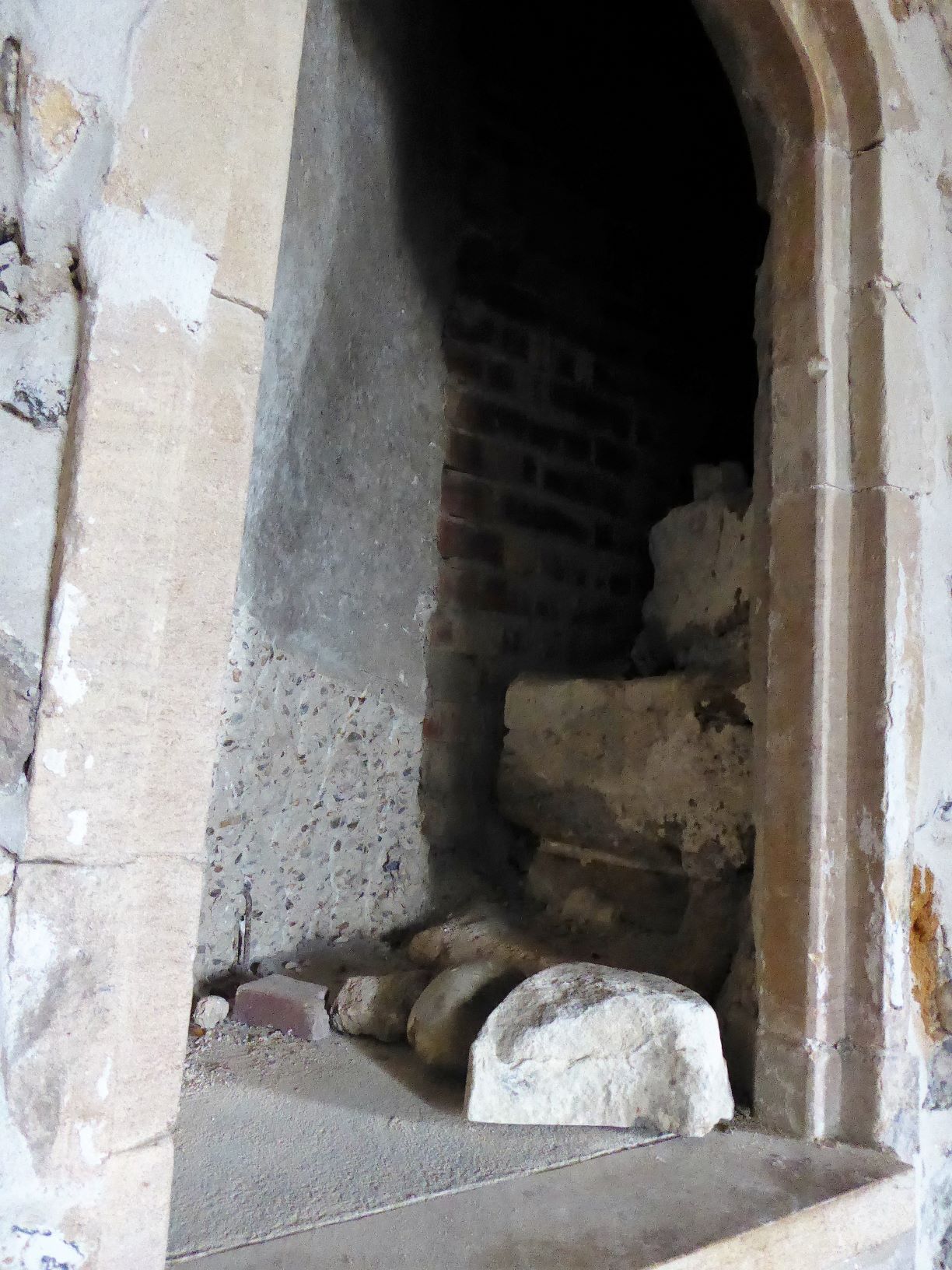
You can just see the stairs going up to the rood loft. The rood loft has long gone so the stairs go nowhere.

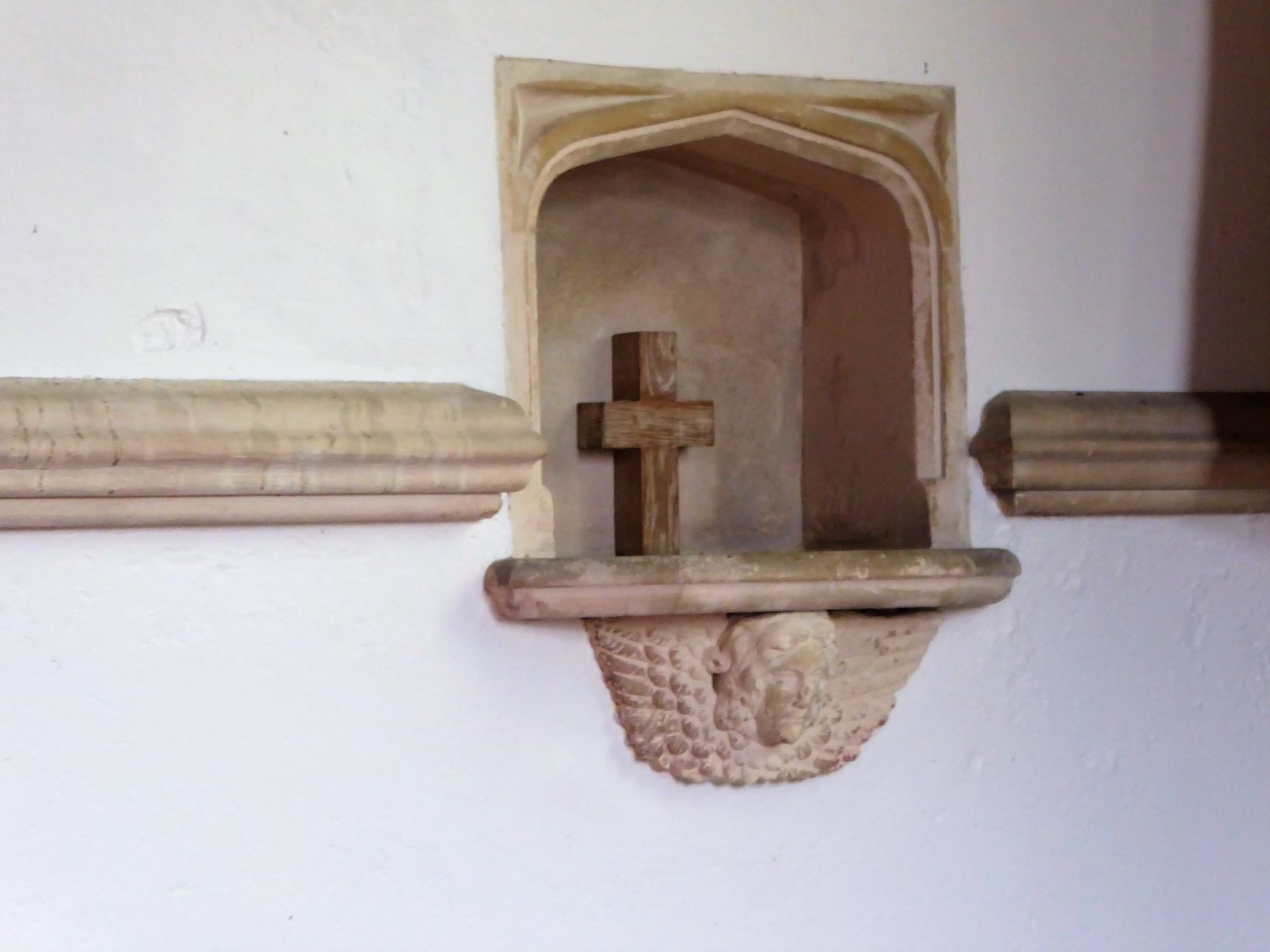
A recess. See the angel with spread wings underneath!

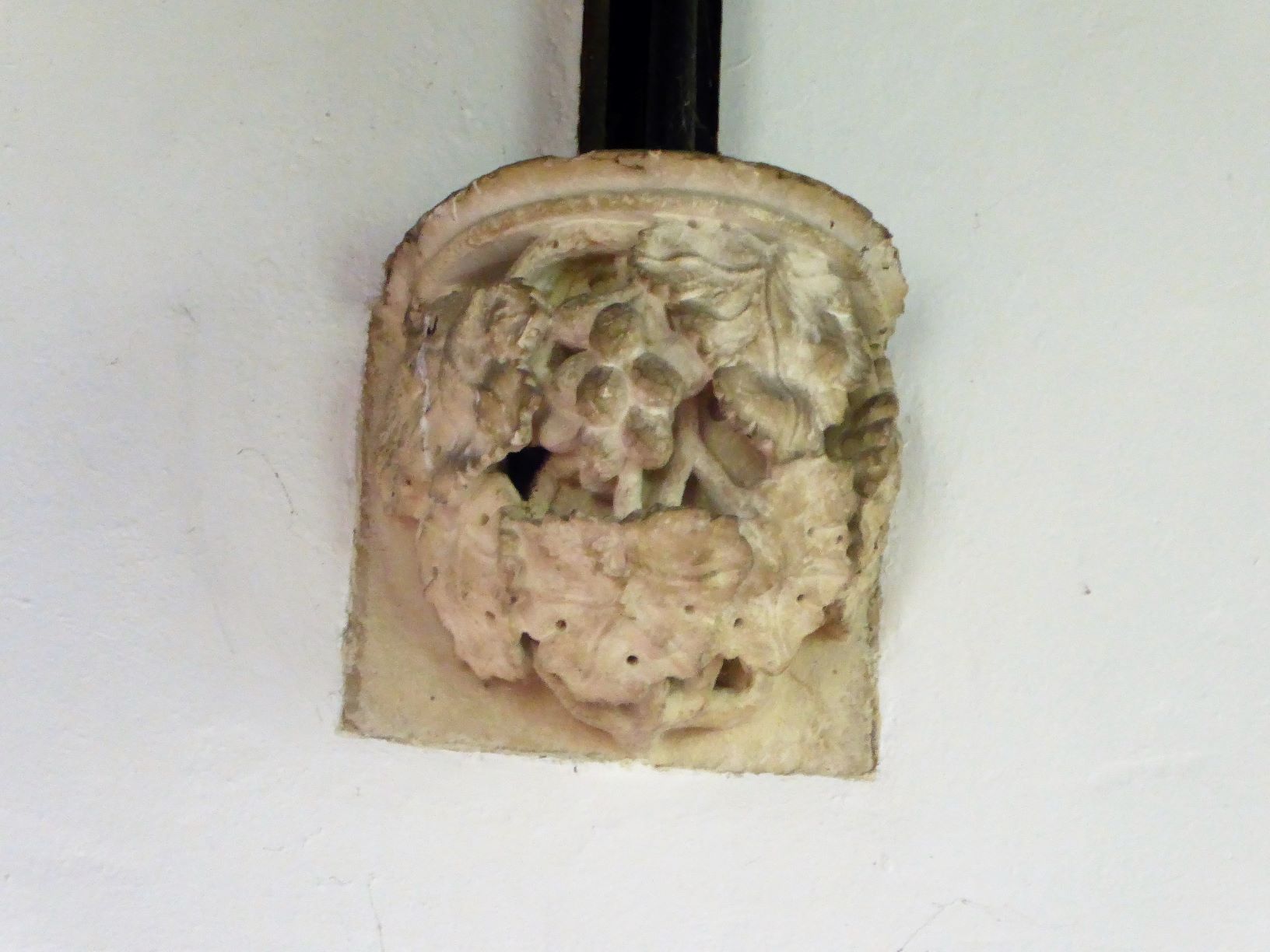
A prettily carved corbel in the roof.

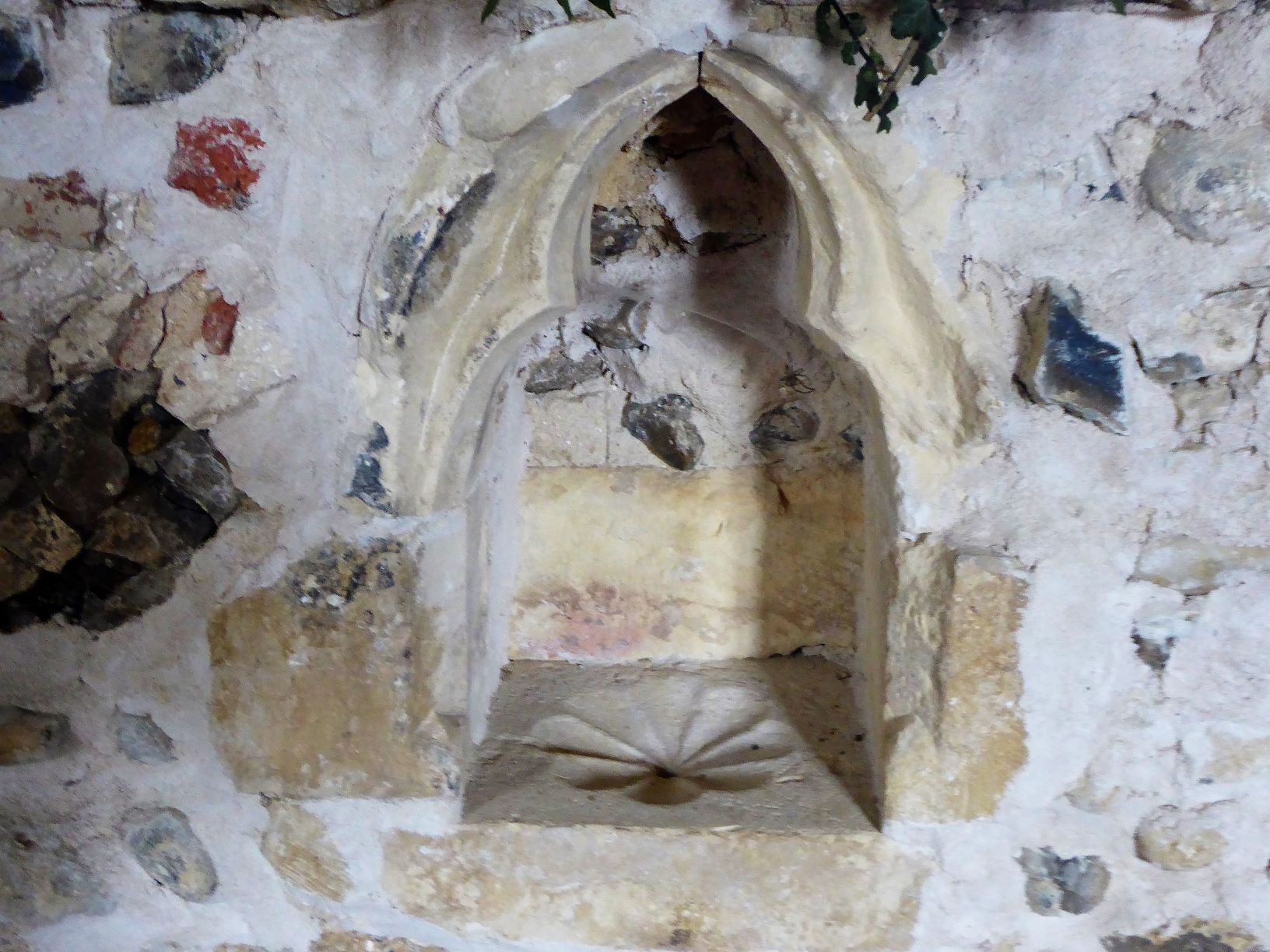
A piscina, so that water used by the priest to wash his hands could be disposed of.

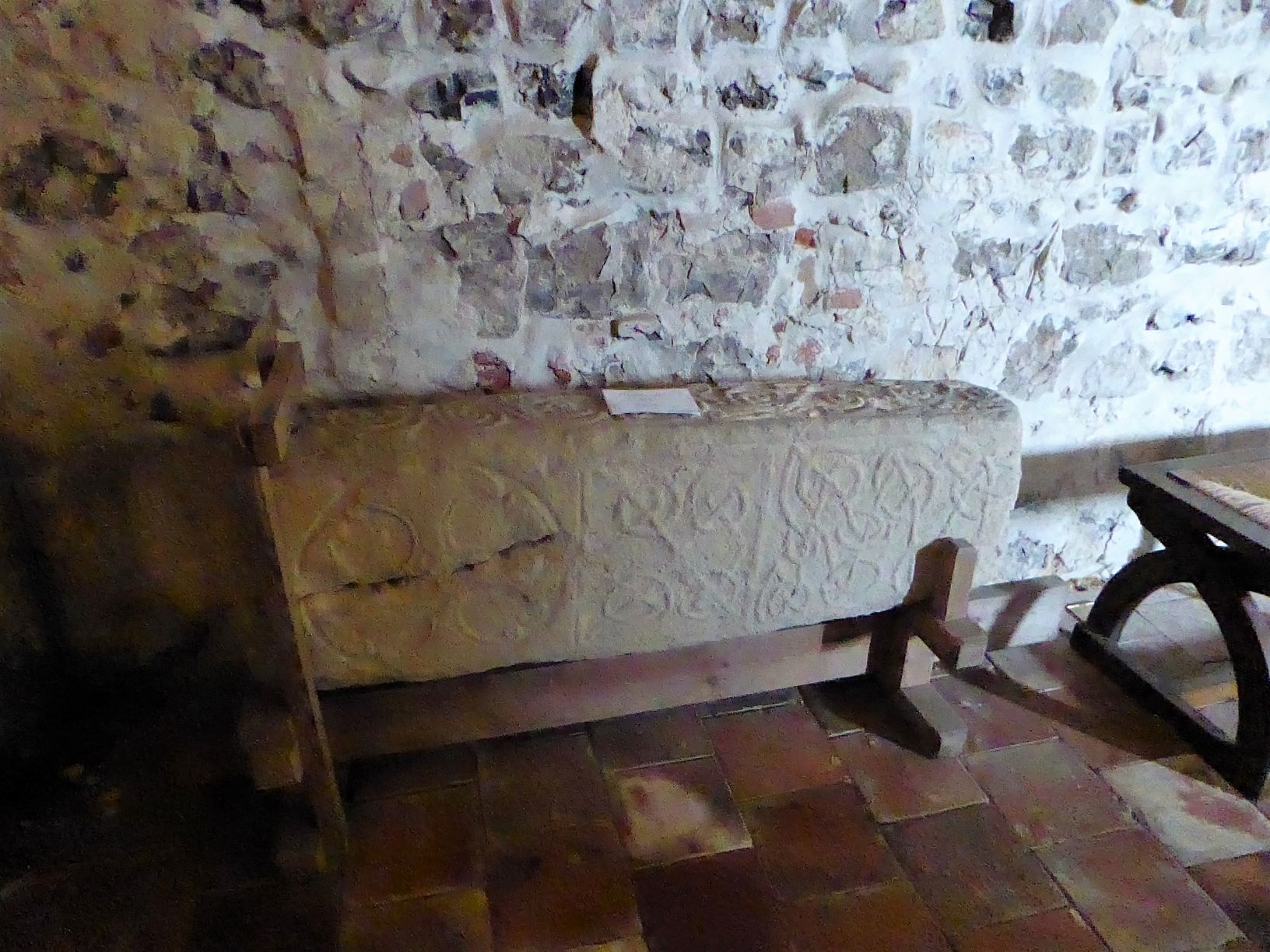
The lower half of the 9th Century Saxon cross probably dedicated to St Botolph found embedded in the tower wall during restoration work in the 1970’s.

The cross is very weather-beaten as one might suppose, but typical inter-lacing Saxon patterns decorate it and there is also what could be a dragon carved on it, but I was unable to photograph it due to the gloom.We left the church and retraced our steps back to the car-park.

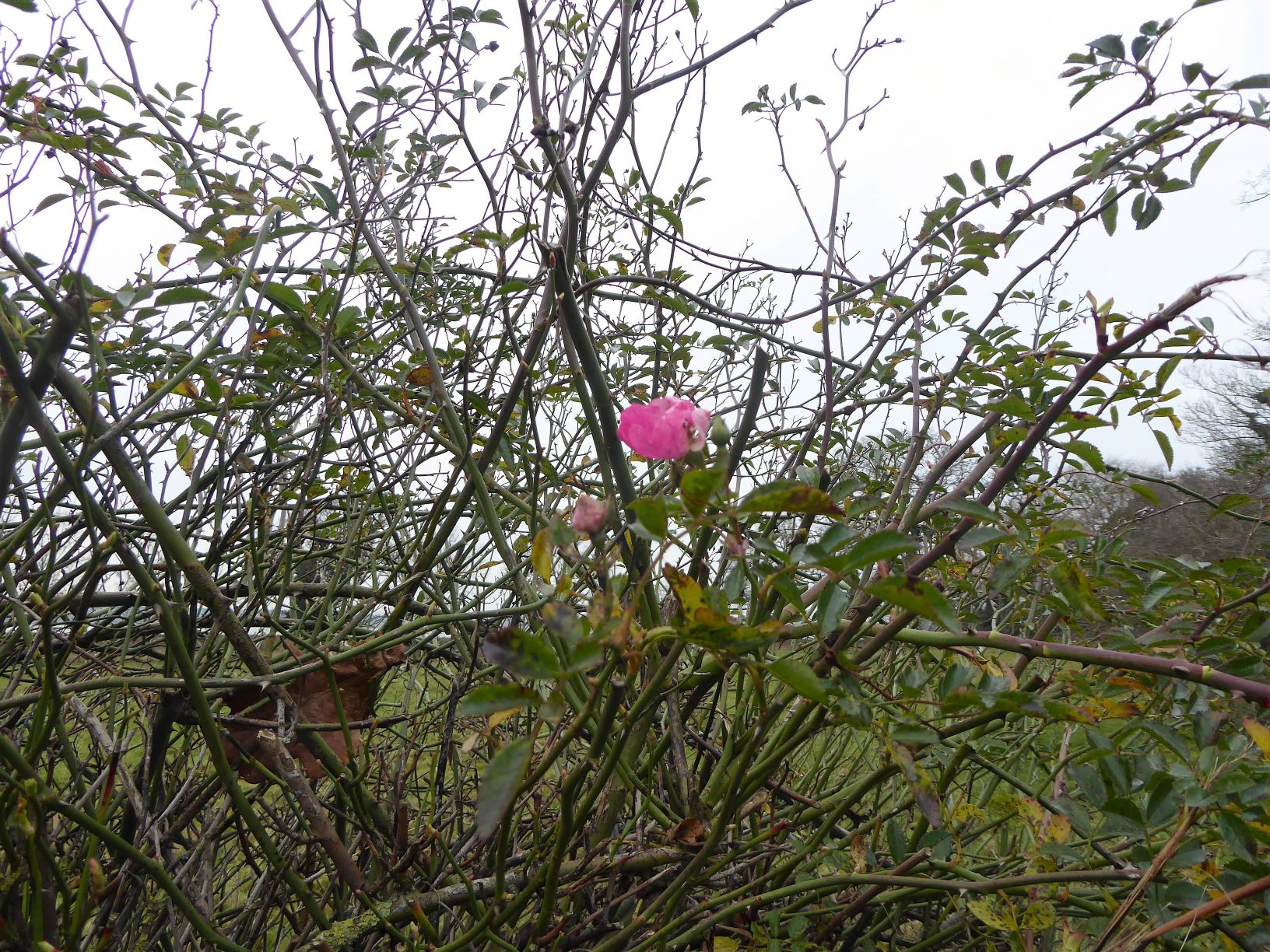
I saw this tiny rose in flower!

The entrance to the car-park.

A replica Saxon cross stands in the car-park.

The view across the estuary.

Another bleak view!

We were glad to return to the car and I drove us to Halesworth where we enjoyed a tasty lunch and a drink.

Share this:

  • Share on X (Opens in new window) X
  • Share on Reddit (Opens in new window) Reddit
  • Share on Pinterest (Opens in new window) Pinterest
  • Share on Facebook (Opens in new window) Facebook
  • Email a link to a friend (Opens in new window) Email
  • Share on Tumblr (Opens in new window) Tumblr
  • Print (Opens in new window) Print
  • Share on Pocket (Opens in new window) Pocket
  • Share on LinkedIn (Opens in new window) LinkedIn
Like Loading...

Southwold Again

07 Thu Feb 2019

Posted by Clare Pooley in Rural Diary, seashore, walking

≈ 98 Comments

Tags

pheasant, pier, seashore, Southwold, Suffolk, walking, waves, white pheasant

Last November, Alice had two weeks holiday after leaving her old job and before starting her new one and came to see us for five days.  We loved having her with us for so long.  She spent those few days sorting out some of her belongings as well as visiting an old friend and cycling to Rumburgh to look round the village where we used to live.  We took her out for a meal one evening and on the one bright and dry day of the week we had lunch in Southwold and walked along the front.

Seagulls perched on the top of the breakwater.

The tide was in and the wind was very strong and cold.

A recent storm had caused this set of steps to be covered in sand and stones.

Even as the tide receded, the waves were still very large and powerful.

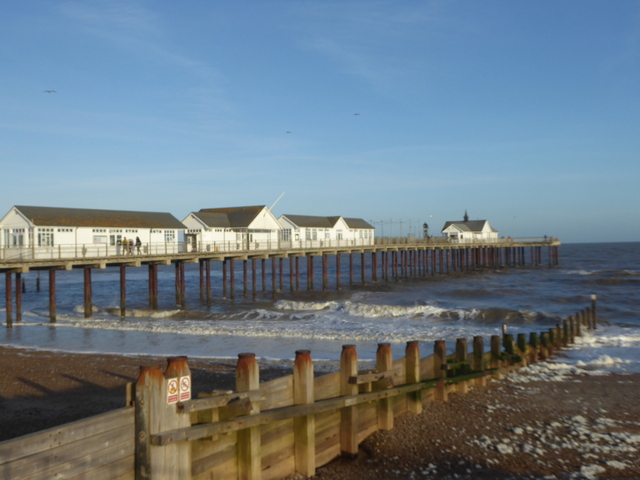
Southwold Pier

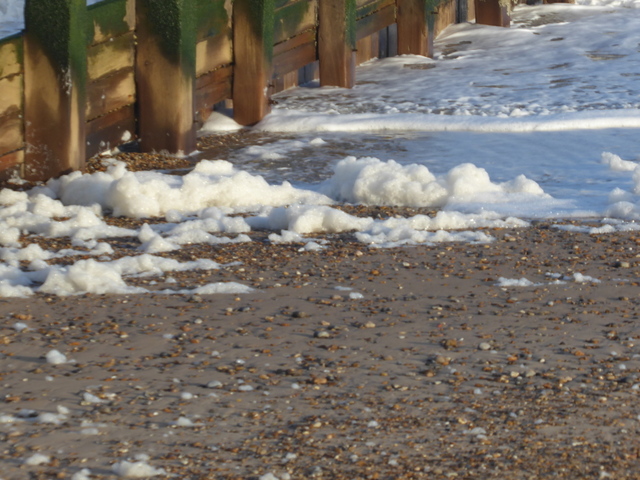
There was spume all over the beach.

Another view of the pier.

Richard, Alice and Elinor sitting on the steps by the café.

We didn’t sit for too long as it really was extremely cold in the wind.  We turned and made our way back to the car and instead of walking back along the front we crossed the road and walked through the town.

A last view of the sea.
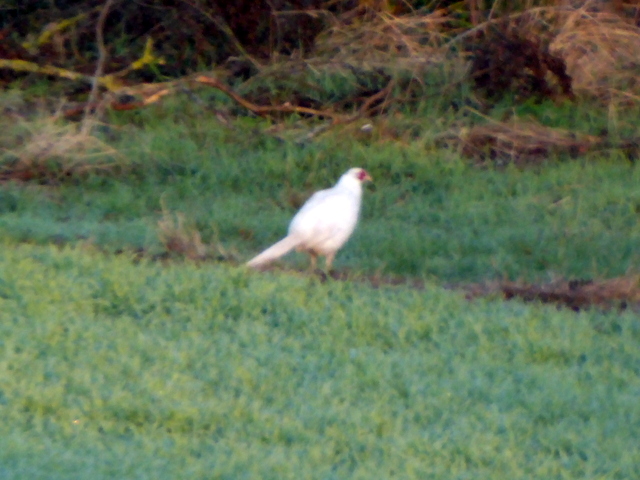
I will end this post by including a rather blurry photograph of a bird seen from our spare room window.
A pure white pheasant.

I last saw this bird just after Christmas.  Friends of ours had two white pheasants visiting their garden.  I am surprised the birds lasted as long as they did as they don’t exactly blend in with their surroundings, do they?

Share this:

  • Share on X (Opens in new window) X
  • Share on Reddit (Opens in new window) Reddit
  • Share on Pinterest (Opens in new window) Pinterest
  • Share on Facebook (Opens in new window) Facebook
  • Email a link to a friend (Opens in new window) Email
  • Share on Tumblr (Opens in new window) Tumblr
  • Print (Opens in new window) Print
  • Share on Pocket (Opens in new window) Pocket
  • Share on LinkedIn (Opens in new window) LinkedIn
Like Loading...

A January Walk

01 Fri Feb 2019

Posted by Clare Pooley in Rural Diary, walking

≈ 81 Comments

Tags

All Saints church, Ash, beech, bramble, common reeds, cow parsley, Down the Garden Path by Beverley Nichols, Holly, ivy, January, muddy lanes, primrose, St Margaret South Elmham church, Suffolk, walking, white bryony, white deadnettle, Winter Heliotrope

Let me take you back to the 1st of January…….

We don’t celebrate New Year in this house; we usually (but not always) stay up till midnight on New Year’s Eve, listen to fireworks being let off in the surrounding farms and villages and then make our way to bed.  We have a relaxed New Year’s Day with a late breakfast and then watch/listen to the New Year’s Day Concert from Vienna on the kitchen TV while we read, drink coffee, do the ironing, chat, think about lunch etc. Often, we go for a walk and this year yes, we went for a walk.

We left it too late to travel to a place to walk so we set off from the front door and did our usual circuit of the lanes round St. Margaret village.

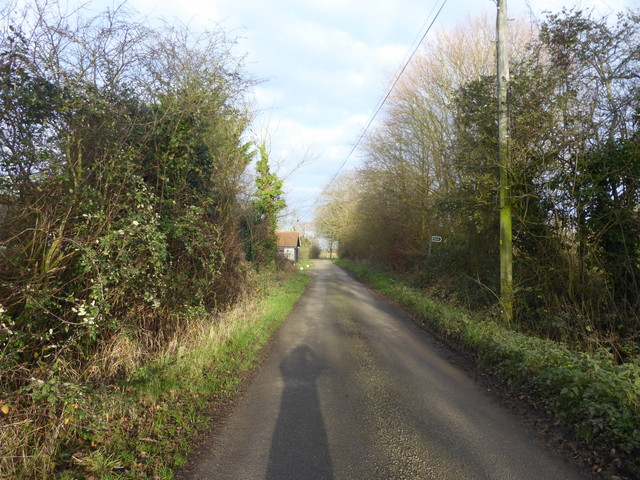
After just a few yards I turned around and looked back the way we’d come. We have such long shadows in January!

Richard and I enjoy this walk as it is familiar, is only a couple of miles and gives us plenty to look at.

Looking across the fields to our left as we walked along we saw All Saint’s church.

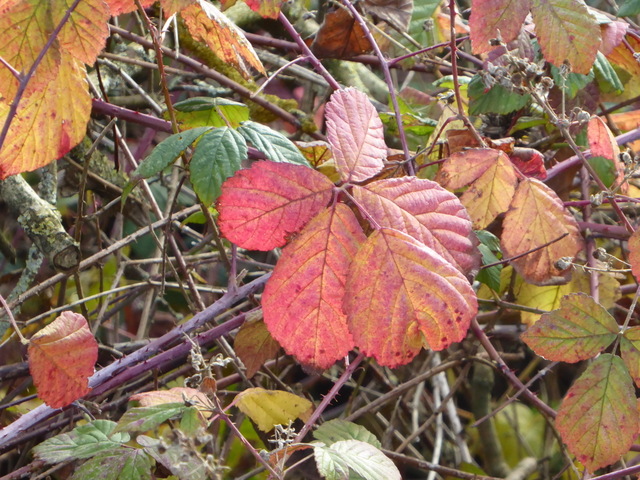
There were still plenty of leaves on the brambles (Rubus fruticosus agg.).

I enjoyed seeing the bright pink and apricot colours on this leaf while many of the other leaves were still green.  The stems of bramble are grey and lavender and very prickly.

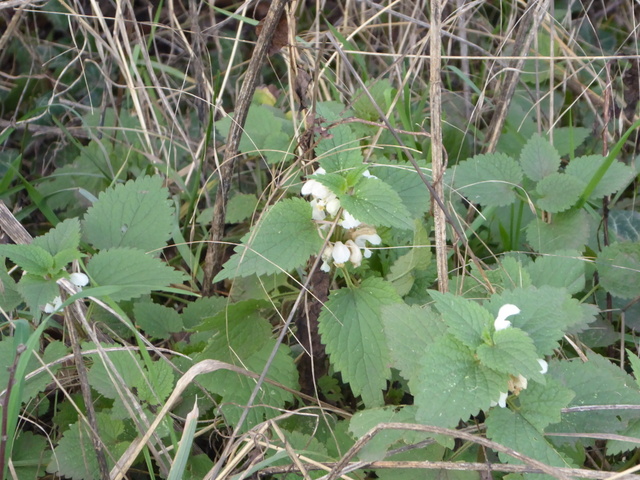
White Deadnettle (Lamium album) in flower.

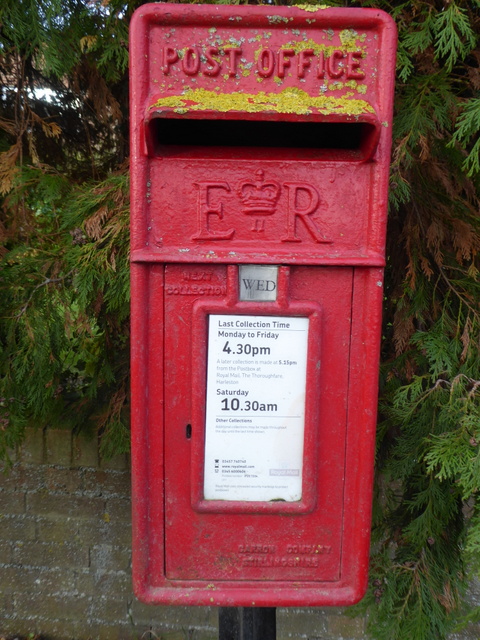
Our post box. It is growing quite a good crop of lichen on it.

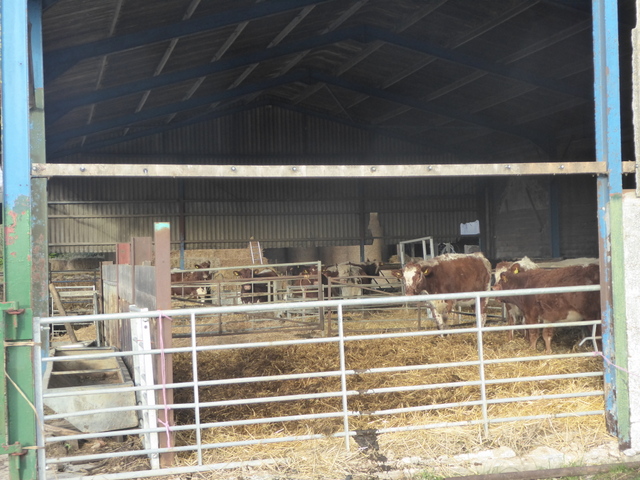
Cattle shed

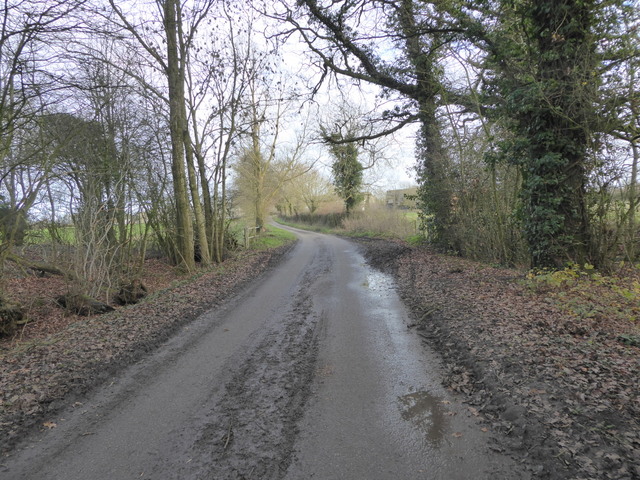
Our very muddy lane.

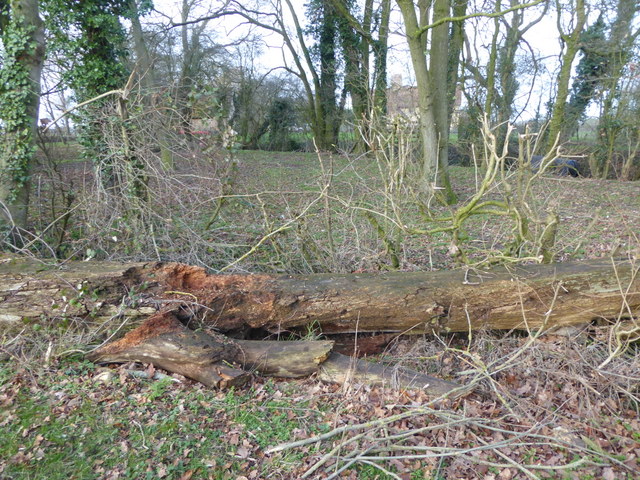
A dead tree fell during one of the recent storms and has crushed part of the hedge.

A glowing rose leaf (Rosa canina).

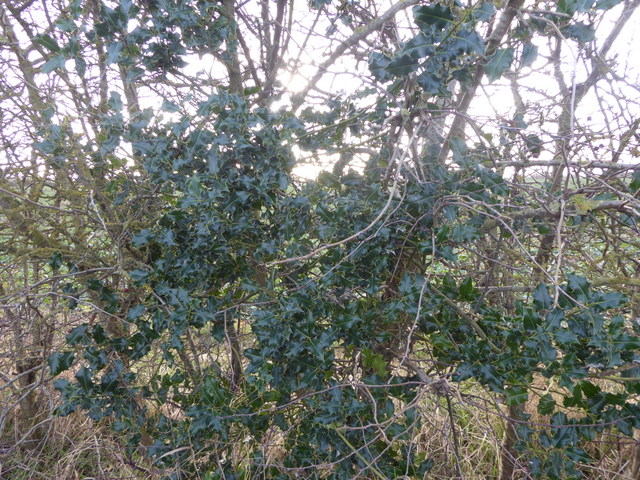
Holly (Ilex aquifolium) growing in the hedge.

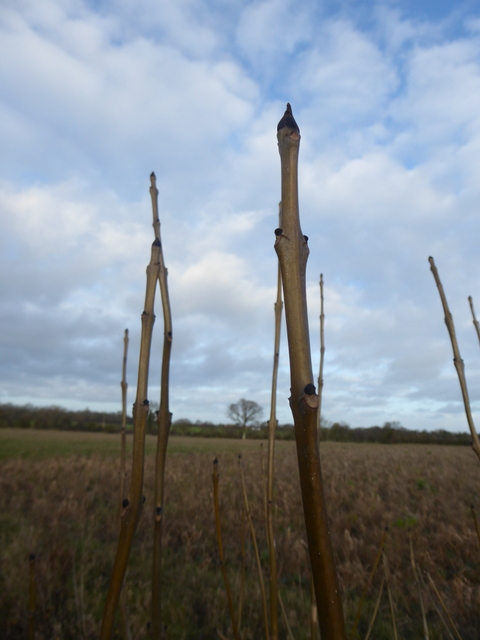
Ash saplings (Fraxinus excelsior) with their black buds.

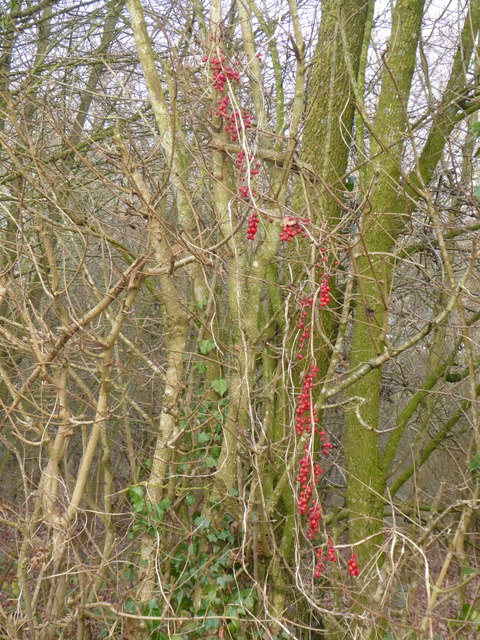
White Bryony berries (Bryonia dioica) decorate the trees.

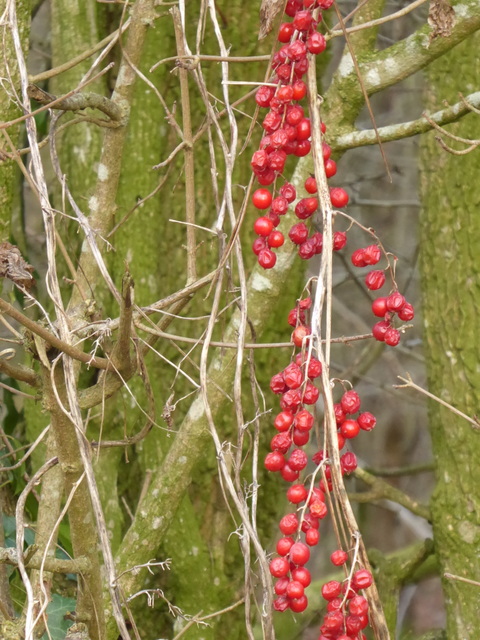
A close-up of the bryony berries; a little shrivelled and past their best.

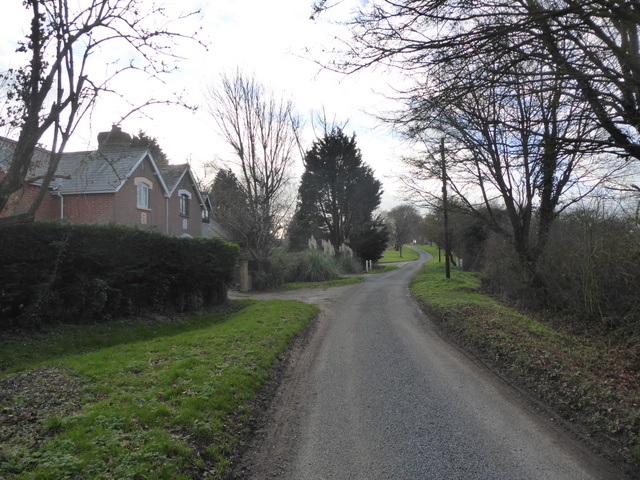
Cottages on the lane from Bateman’s Barn to St Margaret, looking back towards Bateman’s Barn.

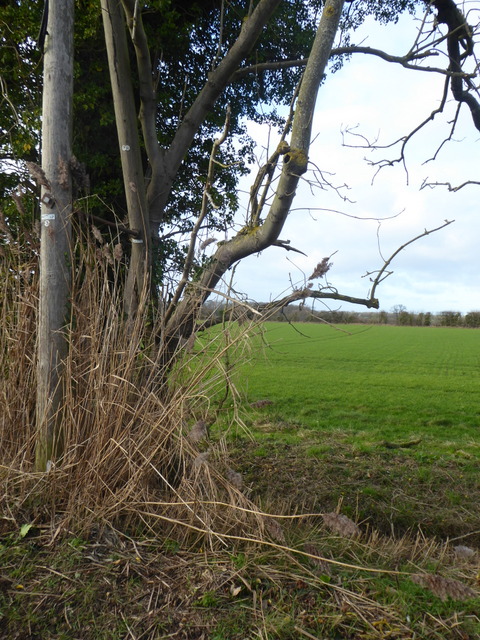
The reeds (Phragmites australis) at the side of the lane have been cut recently leaving just these few at the base of a telegraph pole.

Ivy (Hedera helix) climbing up tree trunks in the hedgerow.

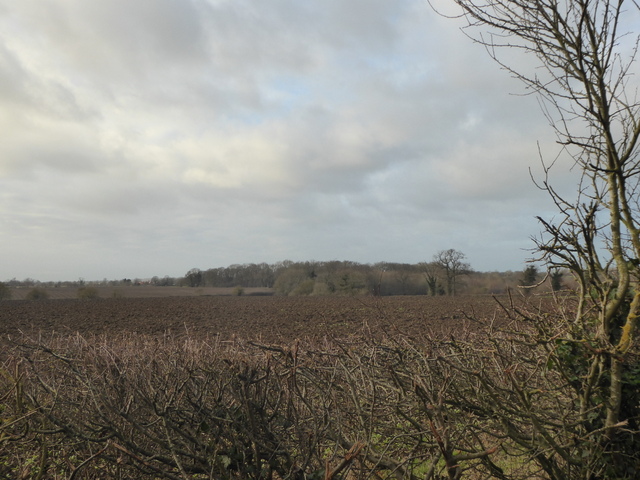
A view across the fields to distant woods on a slight knoll.

I love the muted shades of the countryside in winter.

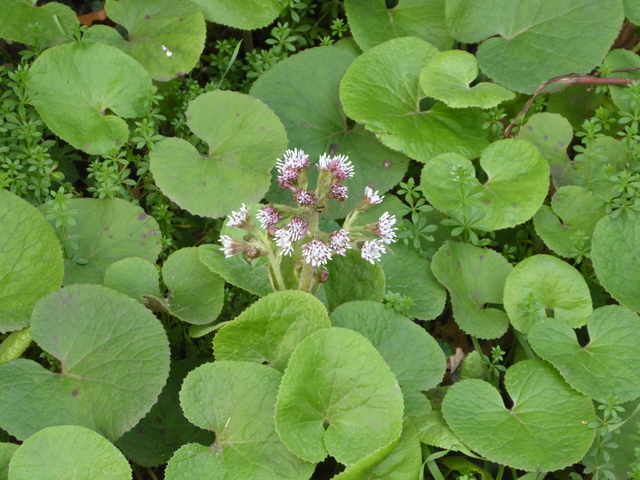
Winter Heliotrope (Petasites fragrans) in flower with myriad Goosegrass or Cleavers (Galium aparine) seedlings.

Winter Heliotrope has the most delicious scent!  On a mild winter’s day the air is filled with its sweet perfume.  It is an invasive alien and takes over large areas of hedgerow to the detriment of all the native plants but…. nothing else has such bright green leaves and such flowers at this time of year.  One of the books I am reading currently is ‘Down the Garden Path’ by Beverley Nichols written in 1932.  He enthuses about Winter Heliotrope!

‘If you want to begin with something that is quite foolproof, you cannot do better than invest in a few roots of Petasites fragrans which has the pretty English name of winter heliotrope.  Some people sneer at the winter heliotrope.  They say the flower is dingy, and that the roots have abominable habits, being inclined to spread indiscriminately into the garden next door.  The people next door should be grateful if the roots do spread into their garden.  For the flower is not dingy at all … it is a little pale and humble … that is all.  Besides, one does not grow the winter heliotrope for its beauty of form.  One grows it for its beauty of scent.  It has a most exquisite fragrance.  If you cut it and carry it indoors it will scent a whole room.’

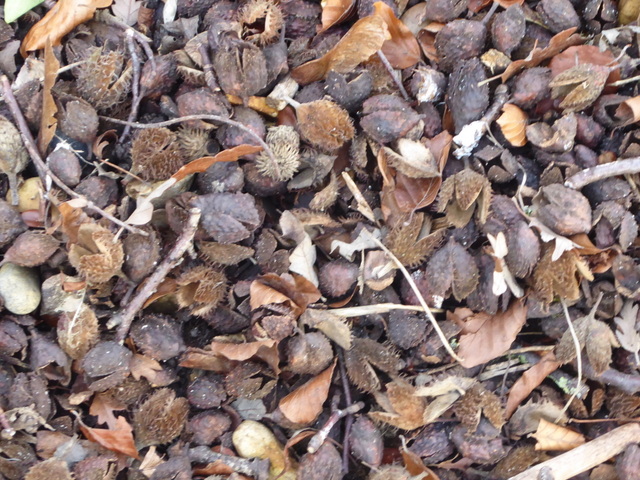
Quantities of Beech mast (Fagus sylvatica) covered the path to the church.

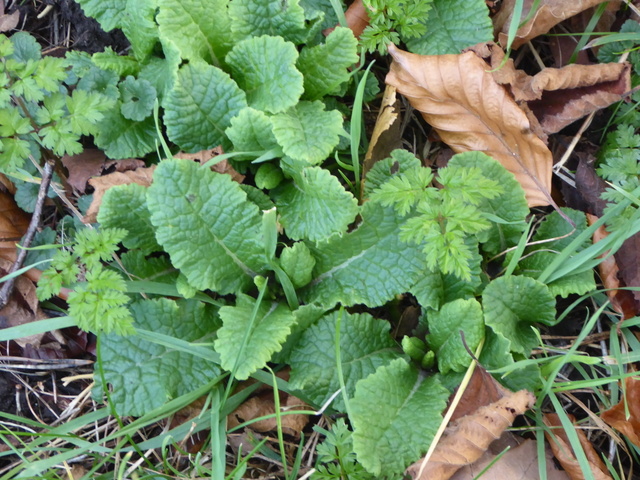
Young primrose leaf-whorls (Primula vulgaris) with a few Cow Parsley (Anthriscus sylvestris) seedlings in the churchyard.

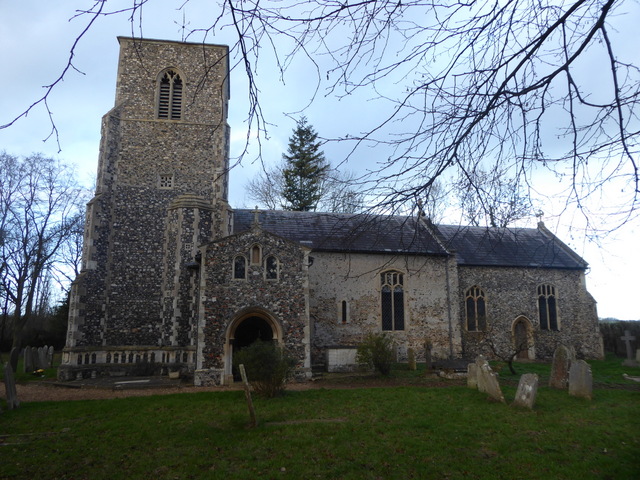
St Margaret South Elmham church. I have been cleaning this church regularly since last February.

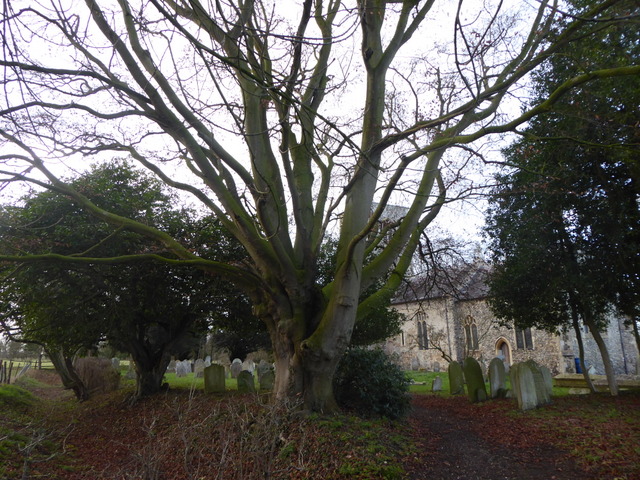
A large beech tree in the churchyard.

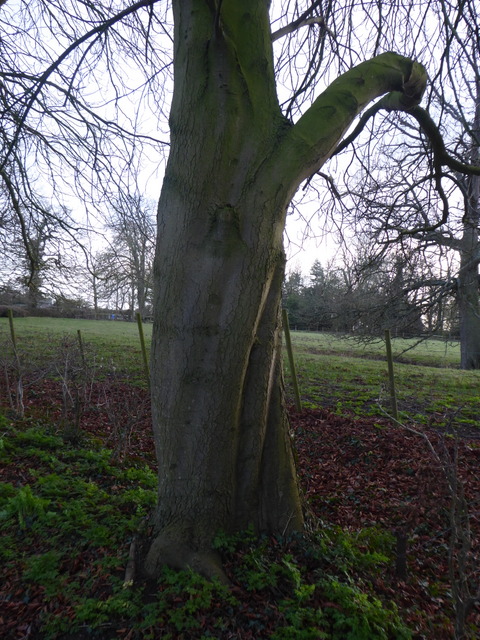
A very twisted Ash tree in the churchyard.

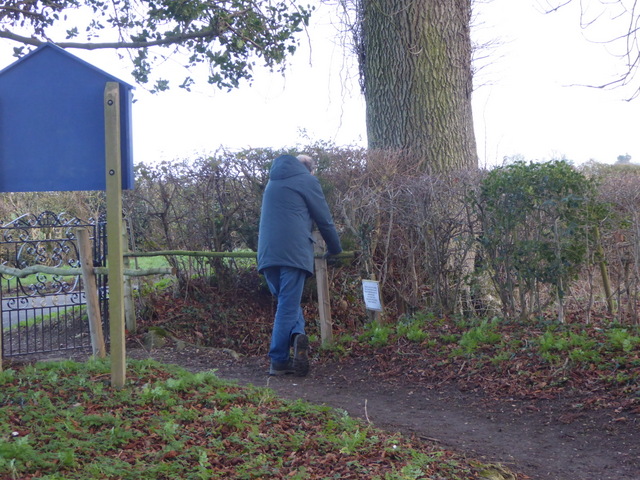
Richard waiting for me at the church gate.

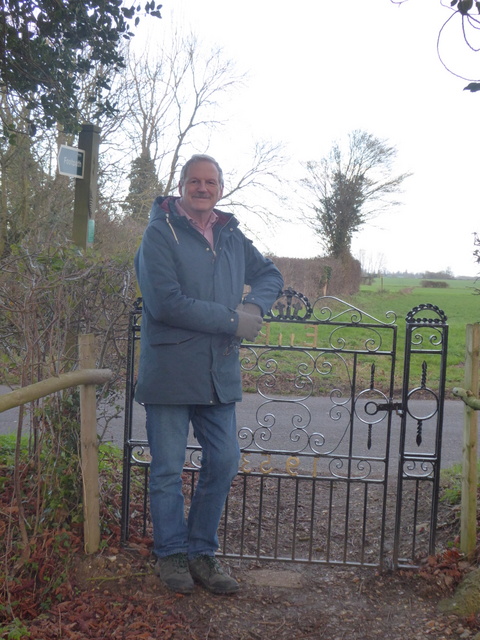
Richard.

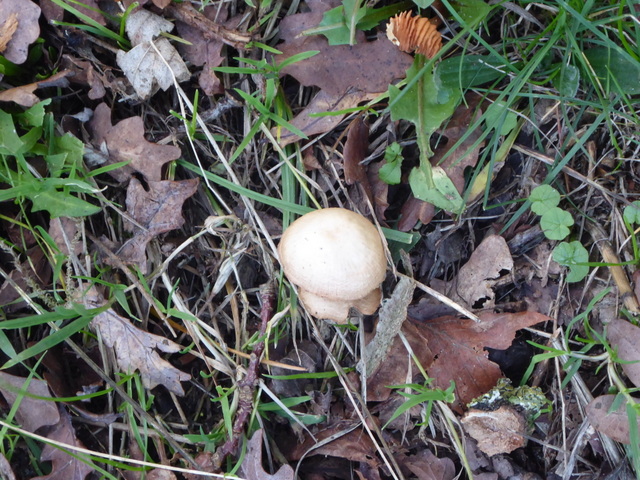
Some small mushrooms discovered on the grass verge.

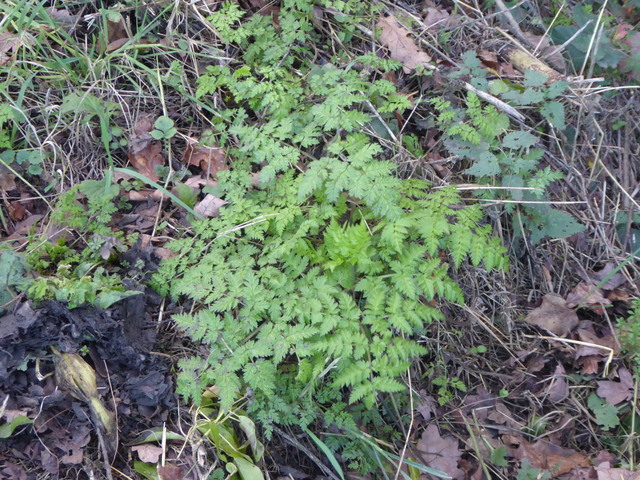
The fern-like leaves of Cow Parsley waiting for spring.

Our house seen across the field.

Home for a cup of tea!

As many of you will have realised, I have been trying to catch-up with all of your posts.  I considered missing all the posts out and just starting afresh but then I found I needed to know what you have been up to for the past few weeks.  I wanted to admire all your photos and read your poems and stories.  I haven’t commented very often for which I apologise, but I have definitely read all you have written and I have enjoyed it all!  I am nearly caught up and I will be back to commenting regularly again.

Share this:

  • Share on X (Opens in new window) X
  • Share on Reddit (Opens in new window) Reddit
  • Share on Pinterest (Opens in new window) Pinterest
  • Share on Facebook (Opens in new window) Facebook
  • Email a link to a friend (Opens in new window) Email
  • Share on Tumblr (Opens in new window) Tumblr
  • Print (Opens in new window) Print
  • Share on Pocket (Opens in new window) Pocket
  • Share on LinkedIn (Opens in new window) LinkedIn
Like Loading...

Wedding and Weaving

03 Wed Oct 2018

Posted by Clare Pooley in family, Rural Diary

≈ 117 Comments

Tags

Brighton Pavilion, family life, Humphries Weaving, restoration work, Suffolk, weaving, wedding

I have been thinking for some time that I ought to let you know something of what we have been doing this year but I haven’t been sure where I should start!  I will begin by telling you of our recent big family celebration, my brother Andrew’s wedding to Helen on the 12th of May.

Helen and Andrew – my brother and his lovely wife

This photo and the one below I ‘obtained’ from Facebook and they were taken by Andrew and Helen’s friends.  I didn’t take any photographs that day and am very grateful to those who did.  Don’t they look a happy couple?

Helen and Andrew

Richard and me – taken by Elinor

Alice and Elinor – taken by Richard

The day was a little chilly but fairly bright and it stayed dry until we were all at the reception, which was very lucky.

I had spent quite a bit of time during the preceding months helping Mum find a new outfit for the occasion.  I visited many shops, on my own, in a number of towns looking for something she might be happy to wear.  The shops had to have easy access and be near to a car park.  The clothes had to be suitable in design and price.  I eventually got together a plan of campaign and we had a shopping trip just ten days before the wedding.  We were very fortunate in finding just what Mum wanted but I am disappointed in not having a photograph of her in her finery.

It was good to see Andrew’s children Natalie and Robert and Natalie’s partner Adam.  My sister Francesca managed to take the day off work but her three children weren’t able to attend.  Mum was very pleased to see them all.

oooOOOooo

My niece, Natalie specialised in weaving when studying for her degree in Art in London.  I thought, as I hadn’t been able in an earlier post of mine to include any photos of the embroidery and textiles I saw at an exhibition, I would mention the work Natalie does and include a few links.

Natalie works for Humphries Weaving based in the town of Sudbury in Suffolk.  Here is a short video produced by that company and in it you will be able to see Natalie and her colleague and listen to them talk about the work they do.  Natalie is the woman with her hair up and she doesn’t have a Scottish accent!

One of the projects Natalie has been working on for the past few years is helping to conserve the Saloon in the Royal Pavilion in Brighton, that wonderful building commissioned by George IV.

Here is an article from the Guardian newspaper about the restoration work.

I also include another film made by Humphries Weaving which explains the work they have had to do and all the detailed research that has been carried out.

I am looking forward to visiting the Royal Pavilion and seeing this beautiful room!

Share this:

  • Share on X (Opens in new window) X
  • Share on Reddit (Opens in new window) Reddit
  • Share on Pinterest (Opens in new window) Pinterest
  • Share on Facebook (Opens in new window) Facebook
  • Email a link to a friend (Opens in new window) Email
  • Share on Tumblr (Opens in new window) Tumblr
  • Print (Opens in new window) Print
  • Share on Pocket (Opens in new window) Pocket
  • Share on LinkedIn (Opens in new window) LinkedIn
Like Loading...

Avian Visitors

28 Mon May 2018

Posted by Clare Pooley in Rural Diary, wild birds

≈ 116 Comments

Tags

Barnacle geese, birdsong, Blue Tit, Fieldfares, Firecrest, Garden birds, goslings, greylags, mallards, moorhens, nesting, Redwings, song thrush, Springtime, starlings, Suffolk, Swallows, Tufted Ducks

We have had some warm periods of weather at last, after a long, cold spring.  Spring flowers have rushed to bloom and set seed before summer arrives and the trees have clothed themselves in delicate green leaves.

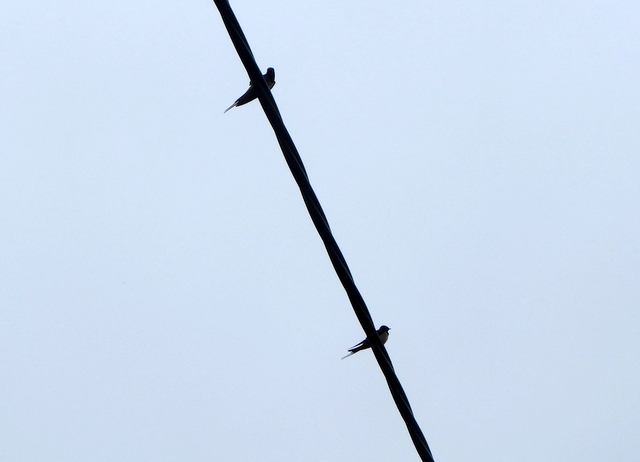
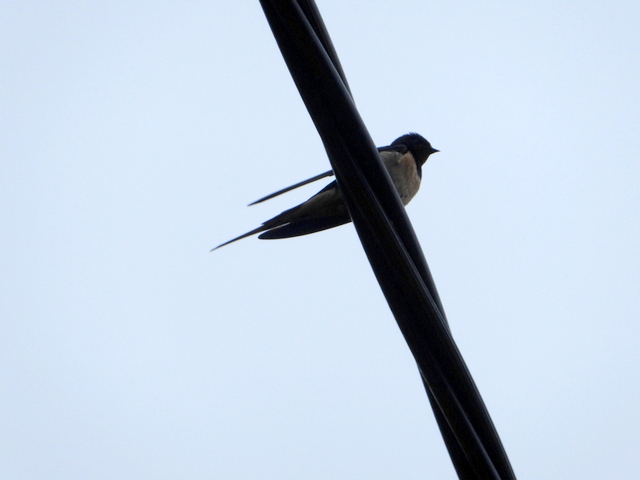
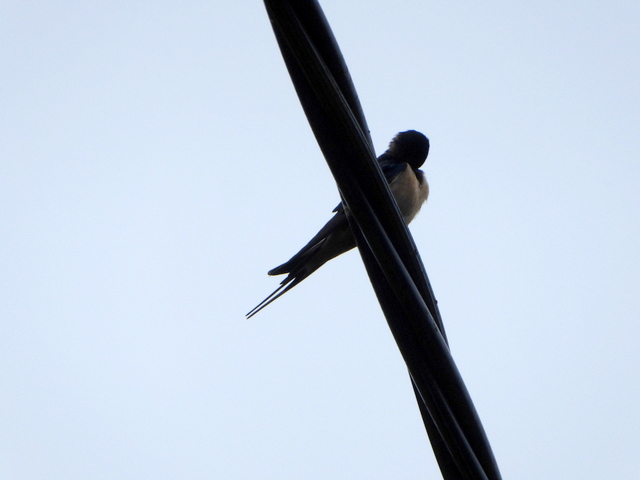
Any warm days we had in early spring were quickly followed by much cooler and wetter weather and the returning birds were confused, I am sure.  I saw a couple of vanguard male Swallows (Hirundo rustica) at the beginning of April but the ensuing wet and windy weather must have sent them back south because I didn’t see them again until mid May!

Two Swallows on the electric cable above our garden in April

Swallow number 1

Swallow number 2

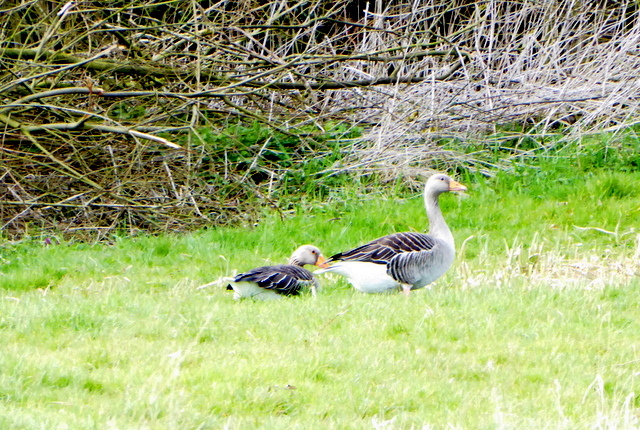
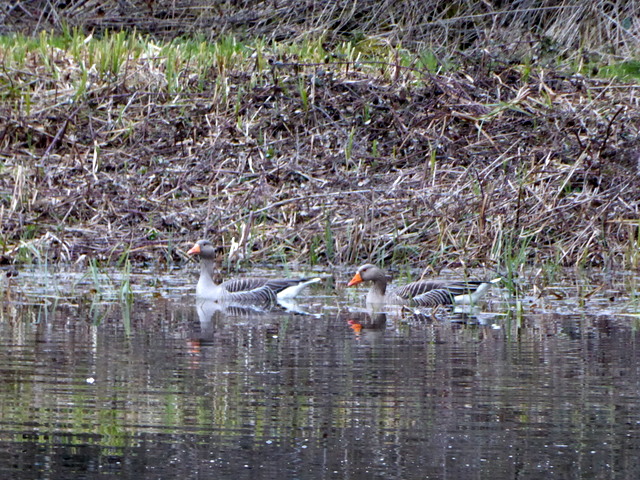
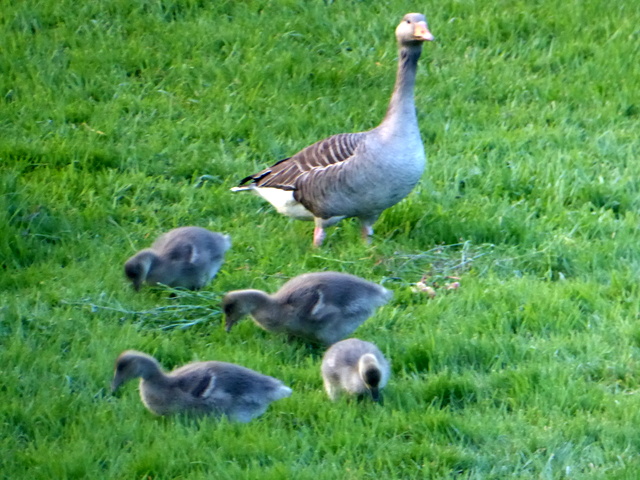
We are pleased to say that the Greylags (Anser anser) did arrive in our garden, a little later than usual and spent a couple of hours a day inspecting the place…..

Greylag male and female

…..until they were ready to set up home here for the duration.  A nest was built on the island and the female began to sit on her eggs at the end of March.

The geese taking up residence.

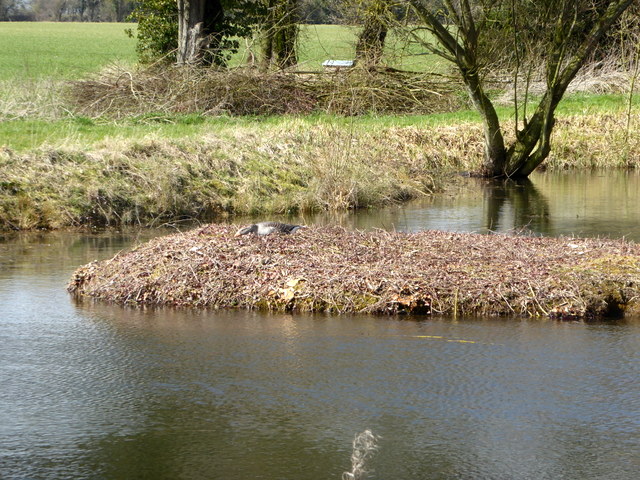
The island

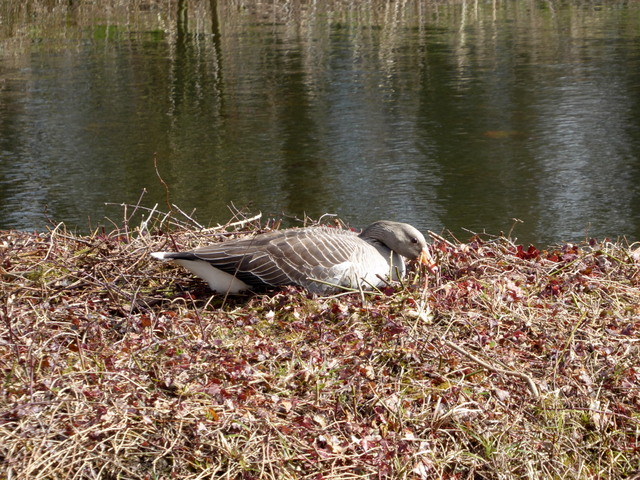
The goose on her nest. She lowers her head to become less noticeable.

The gander patrols the water…..

….but often went off elsewhere to eat and meet his friends, though was within calling range.

The goose sat and sat and sat, only leaving the nest for a couple of minutes in the morning and evening to snatch a quick bite to eat.

Eventually, right at the end of April the goslings hatched.  There are four of them but I have had great difficulty photographing them.

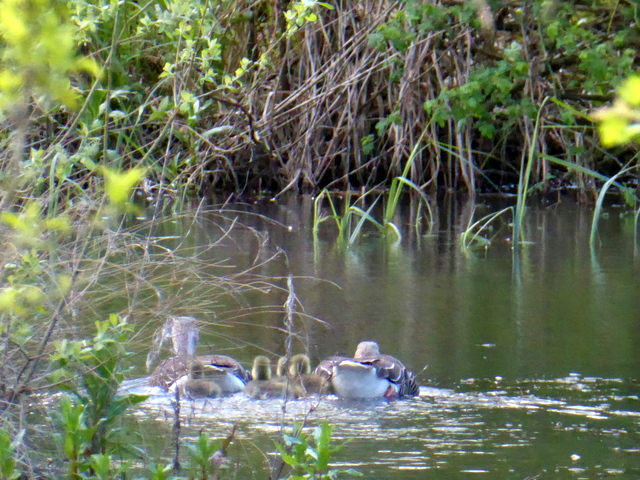
Retreating Greylag family

As the goslings have grown the parents have become a little more relaxed but still beat a hasty retreat if anyone gets too close.

Gander on the lookout

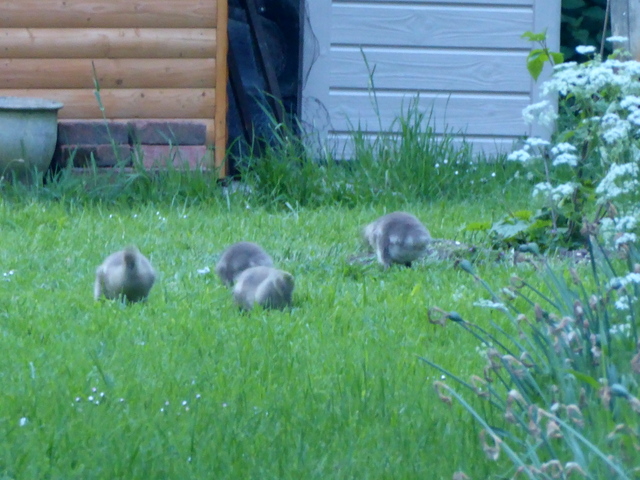
Four fat babies eating our grass

These photos were taken at dusk and with my zoom at full stretch!  The goslings are on the move all the time and it is very difficult to get them in focus.

This photo was taken a few days later from Elinor’s bedroom window

I managed to get the whole family in this one!

While the goose was still sitting on her nest we had some surprise and unexpected visitors in the garden.

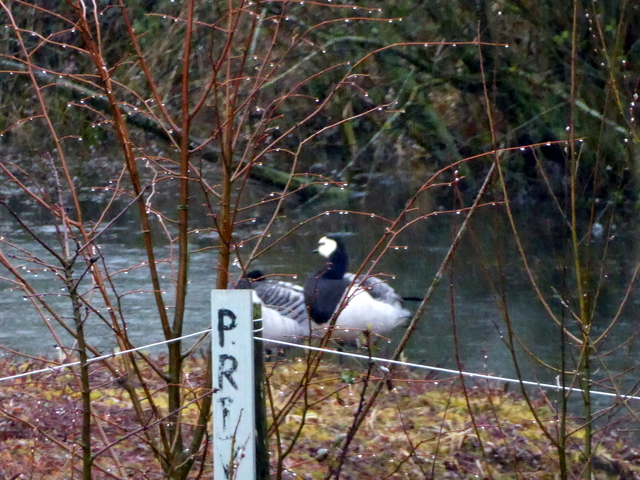
Barnacle Geese! (Branta leucopsis)   They had the cheek to land on the Greylags’ island while the goose was on her nest!

They appeared to want to set up home there too.

Richard saw them visit a few days later when the Greylag goose decided she didn’t want them there any longer.  She called her mate who arrived very quickly and saw them off.  These photos were taken from Elinor’s bedroom window again.

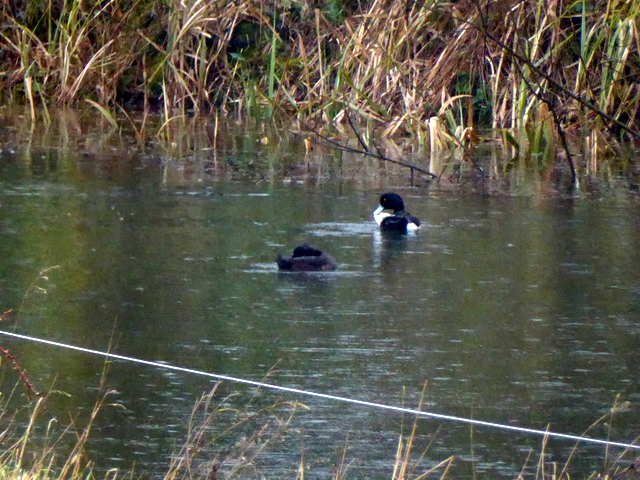
The pond has also had many visits from Tufted Ducks (Aythya fuligula).  There have often been two pairs of them swimming together.

Male and female Tufted Ducks

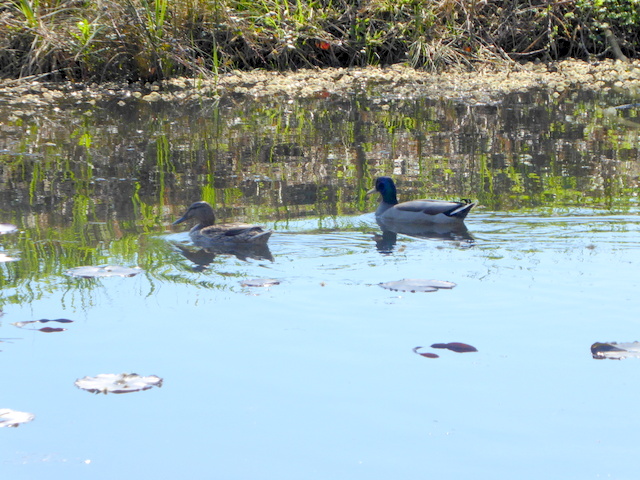
Mallard (Anas platyrhynchos) male and female

Mallard drake

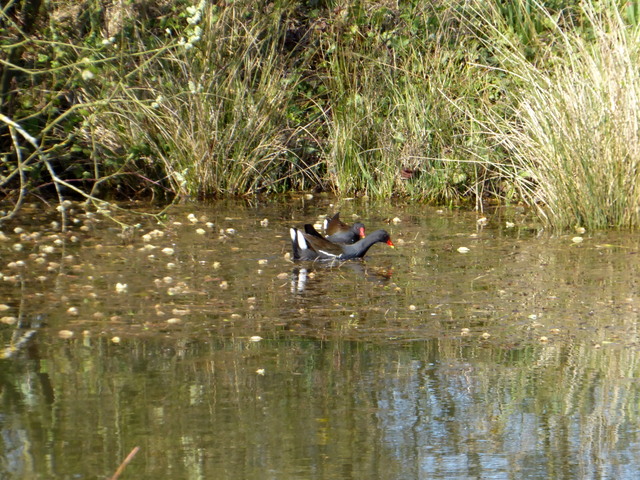
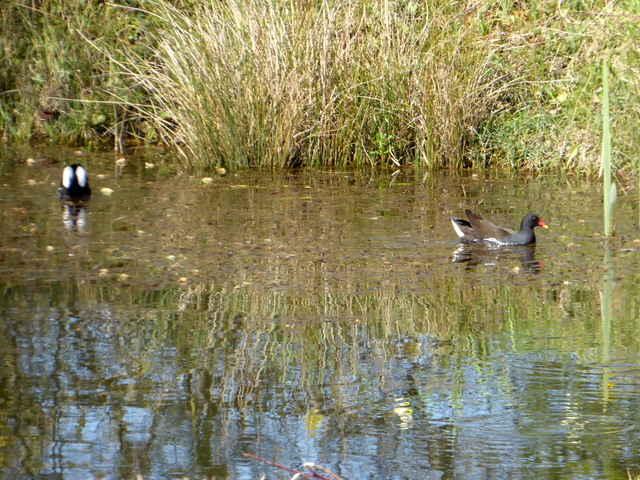
A pair of Moorhens (Gallinula chloropus)

The Moorhens again; one displaying its white feathers under its tail.

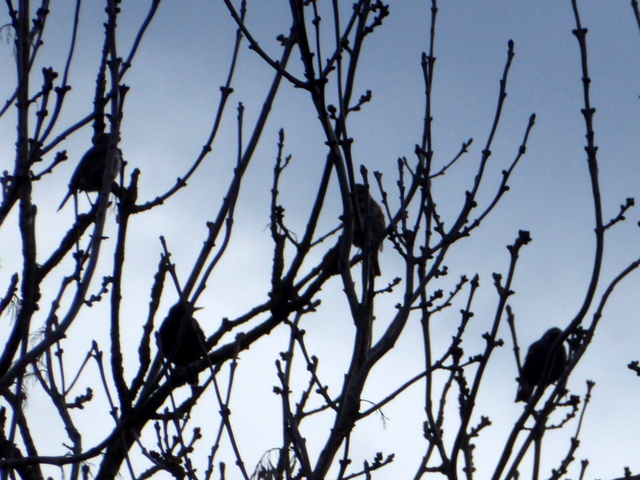
Before the leaves appeared on the Ash tree we had frequent flocks of Starlings visit in the evening

Starlings (Sturnus vulgaris)

We also had Fieldfares (Turdus pilaris) and Redwings (Turdus iliacus) congregate in that same tree before they flew north and east to their breeding grounds.

Once the winter birds had left, Spring decided it ought to do some catching up.  Flowers appeared, summer birds arrived despite the cool temperatures and I took this rather shaky video of our pond, mainly to record the birdsong (and the lambs!)

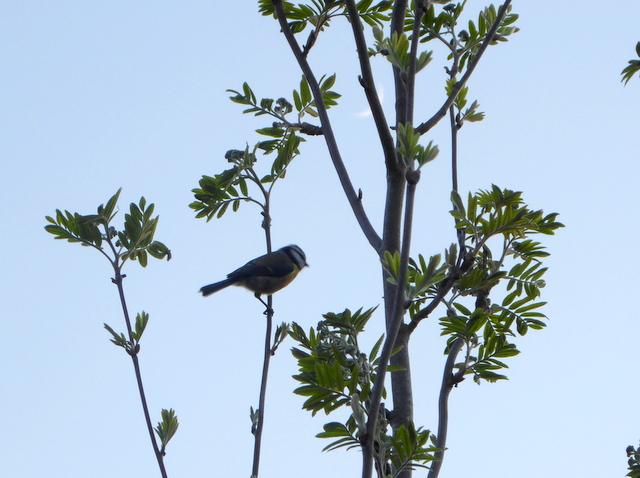
I managed to photograph a Blue Tit (Parus caeruleus) in our Rowan tree.

Blue Tit. There is also a crescent moon behind the tree

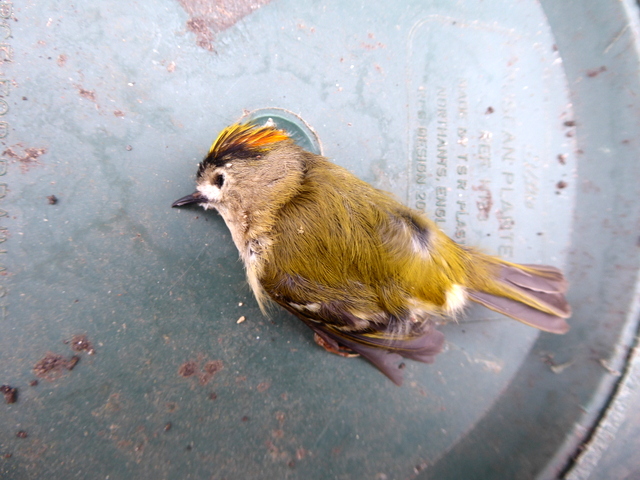
The next photo is a bit sad.  Sad in one sense that it shows a dead bird and sad in another that I am strange enough to want to photograph a dead bird!  I apologise to anyone who is upset at seeing these photos which were taken to record the presence of the bird in the area.  I buried the bird as soon as I had finished looking at it.
A Firecrest (Regulus ignicapillus).

I found this poor bird in the flowerbed under one of our windows and I assume it had flown into the glass and killed itself.

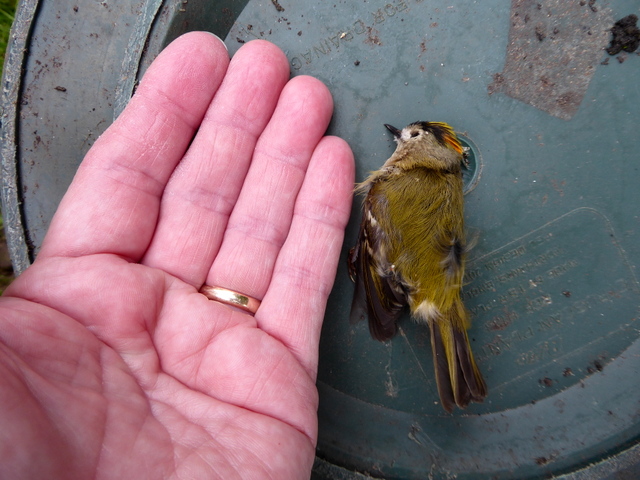
It is a tiny bird as you can see when compared with my hand.

Here is a link with information about Firecrests

We get Goldcrests in our garden but this is the first time I have seen a Firecrest here and am sorry that it had died.  It proves though, that there are probably other Firecrests about so I must be more observant.

A Song Thrush (Turdus philomelos) singing at dusk

I also made another poor video of this lovely bird singing.  I had to balance on one leg while peering round the corner of our house to make the video which is my excuse for the poor quality.  The video is dedicated to Richard Sutton of A Listening Heart blog who lamented in a recent post that he hadn’t heard a Song Thrush for a while.  Please do visit Richard’s blog.  He writes beautifully about the countryside where he lives and about poets and writers too.


Share this:

  • Share on X (Opens in new window) X
  • Share on Reddit (Opens in new window) Reddit
  • Share on Pinterest (Opens in new window) Pinterest
  • Share on Facebook (Opens in new window) Facebook
  • Email a link to a friend (Opens in new window) Email
  • Share on Tumblr (Opens in new window) Tumblr
  • Print (Opens in new window) Print
  • Share on Pocket (Opens in new window) Pocket
  • Share on LinkedIn (Opens in new window) LinkedIn
Like Loading...
← Older posts
Newer posts →
Follow A Suffolk Lane on WordPress.com

Enter your email address to follow this blog and receive notifications of new posts by email.

Join 715 other subscribers.

Unknown's avatar

I talk about what it's like living in a quiet part of Suffolk. I am a wife, mother and daughter, a practising Christian and love the natural world that surrounds me. I enjoy my life - most of the time!

My Posts

Jan 2026
M T W T F S S
 1234
567891011
12131415161718
19202122232425
262728293031  
« Dec    

Pages

  • About my Blog
  • GDPR (General Data Protection Regulations) and This Site
  • My Life in a Suffolk Lane

Archives

Blogs I Follow

Unknown's avatar
Unknown's avatar
Unknown's avatar
Unknown's avatar
Unknown's avatar
Unknown's avatar
Unknown's avatar
Unknown's avatar
Unknown's avatar
Unknown's avatar
Unknown's avatar
Unknown's avatar
Unknown's avatar
Unknown's avatar
Unknown's avatar
Unknown's avatar
Unknown's avatar
Unknown's avatar
Unknown's avatar

Posts I Like

  • Unknown's avatar
  • M T McGuire's avatar
  • Unknown's avatar
  • Dad's avatar
  • Unknown's avatar
  • Unknown's avatar
  • Talkmore's avatar
  • Unknown's avatar
  • Ari's avatar
  • aho's avatar
  • mitchteemley's avatar
  • sherijkennedyriverside's avatar
  • Unknown's avatar
  • Unknown's avatar
  • Martha's avatar
  • Unknown's avatar
  • Unknown's avatar
  • Maikhel's avatar
  • Unknown's avatar
  • Unknown's avatar
  • Unknown's avatar
  • Unknown's avatar
  • Unknown's avatar
  • Mélodie's avatar
  • Unknown's avatar
  • East of Elveden's avatar
  • Unknown's avatar
  • Unknown's avatar
  • Stephen G. Hipperson's avatar
  • Rich's avatar
  • Unknown's avatar
  • Annika Perry's avatar
  • Pilgrim's Pondering Ministry's avatar
  • Unknown's avatar
  • Limentinus's avatar
  • Unknown's avatar
  • Kathleen's avatar
  • Unknown's avatar
  • Unknown's avatar
  • Unknown's avatar
  • Unknown's avatar
  • womanseyeview's avatar
  • Unknown's avatar
  • Unknown's avatar
  • Unknown's avatar
  • NEERAJ SINGH's avatar
  • Unknown's avatar
  • Unknown's avatar
  • Unknown's avatar
  • Unknown's avatar

amphibians architecture art Arts and Crafts churches cooking Days out domestic animals family fish Folk Traditions Gardening Historic Buildings holidays Insects Landscaping literature music Norwich plants Rural Diary seashore theatre trees Uncategorized walking weather wild animals wild birds wild flowers

Tags

architecture autumn birds blackbird blackthorn Bungay butterfly church clouds common knapweed cow parsley crocus daffodils Diary dogwood family field maple flowers fungus garden gardening geese greylags ground-ivy Halesworth Hawthorn heather holiday Holly Holy Week horse chestnut Hoverfly insects ivy Lake District Lent lesser celandine lichen Lords and Ladies Mallard mallards Minsmere moorhen moss music Norwich Peak District pheasant plants pond ponds primrose primroses Rain rooks Rumburgh Rumburgh Church sheep Sheffield snow snowdrops Southwold spring Suffolk Suffolk Wildlife Trust sunset the Beck trees viburnum bodnantense walking weather wild cherry wild flowers winter-flowering honeysuckle witch-hazel

Meta

  • Create account
  • Log in
  • Entries feed
  • Comments feed
  • WordPress.com

Goodreads

Blog at WordPress.com.

Book Jotter

Reviews, news, features and all things books for passionate readers

Country Life Blog -

A blog about life in the country in the past and present

Matthew Paul: Poetry & Stuff

Poetry and what-not

Schnippelboy

Ein Tagebuch unserer Alltagsküche-Leicht zum Nachkochen

TAMARA JARE

TAMARA JARE Tamara Jare: Contemporary Figurative Painting Oil on Canvas Artist Art Studio

A Taste of Freedom

Documenting a Dream

Country Ways

Rambling Journeys in Britain, Countryside Matters and campaigning for the Right to Roam

The Strawberry Post

Here to Entertain, Educate & Inspire!

a north east ohio garden

an ongoing experiment in the dirt, 35 plus years

naturechirp

Celebrating God's creatures, birds and plants...

Sophie Neville

Writer

Going Batty in Wales

Developing a more sustainable lifestyle in SW Wales

Our Lake District Escapades

Exploring the Lake District and beyond

Short Walks Long Paths

Wandering trails around the coast of Wales

The Biking Gardener

An English persons experience of living and gardening in Ireland

Nan's Farm

A Journal Of Everyday Life

Walk the Old Ways

Rambling Journeys in Britain with John Bainbridge. Fighting for the Right to Roam. Campaigning to Protect Our Countryside.

Writer Side UP!

Waking the Writer Side...and keeping it "Up!"

Meggie's Adventures

Travel, thank you notes and other stories

amusicalifeonplanetearth

Music and the Thoughts It Can Inspire

lovefoundation.co.uk

Traveling Tortuga

Simply Living Well

Pakenham Water Mill

Historic watermill in the beautiful Suffolk countryside

Take It Easy

Retired, not expired: words from the after(work)life. And music. Lots of music!

Secret Diary Of A Country Vicar's Wife

By Olive Oyl

thanksfortheadventureorg.wordpress.com/

The Beat Goes On

#TBGO

Frank Pleszak's Blogs

Twitter: @frankpleszak @PolishIICorps

John Bainbridge Writer

Indie Writer and Publisher

roughwighting

Life in a flash - a bi-weekly storytelling blog

Walking the Old Ways

Rambling in the British Countryside

CapKane

thoughts on social realities

SkyeEnt

Jottings from Skye

jodie richelle

embracing my inner homemaker

Skizzenbuch/Blog

Just another WordPress.com weblog

Have Bag, Will Travel

The Call of the Pen

Flash Fiction, Book Reviews, Devotionals and other things.

John's Postcards

Art in Nature

You dream, I photographe it !

Smile! You’re in Barnier World......

theinfill

the things that come to hand

Dr. Mary Ann Niemczura

Author of "A Past Worth Telling"

Provincial Woman

The Pink Wheelbarrow

Luanne Castle: Poetry and Other Words (and cats!)

Poetry, Other Words, and Cats

The Family Kalamazoo

A genealogical site devoted to the history of the DeKorn and Zuidweg families of Kalamazoo and the Mulder family of Caledonia

everythingchild

The Book Owl

Canberra's Green Spaces

Paul Harley Photographer

  • Subscribe Subscribed
    • A Suffolk Lane
    • Join 715 other subscribers.
    • Already have a WordPress.com account? Log in now.
    • A Suffolk Lane
    • Subscribe Subscribed
    • Sign up
    • Log in
    • Report this content
    • View site in Reader
    • Manage subscriptions
    • Collapse this bar
 

Loading Comments...
 

    Privacy & Cookies: This site uses cookies. By continuing to use this website, you agree to their use.
    To find out more, including how to control cookies, see here: Cookie Policy
    %d