Tags
birds, black-headed gull, buzzard, dunnock, green woodpecker, kingfisher, pheasant, stock dove, Suffolk, Swallow
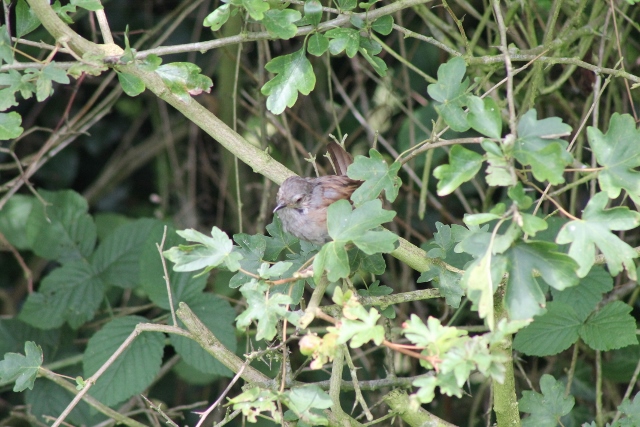
This is a Dunnock. They used to be called Hedge Sparrows but they are not like sparrows at all except for their brown and grey colouring. They have quite a bright jangling song and search for food mainly on the ground under hedges and shrubs.
This post will be of more photos of birds I saw this summer and autumn in my garden. We are very lucky to have so many types of bird visiting.
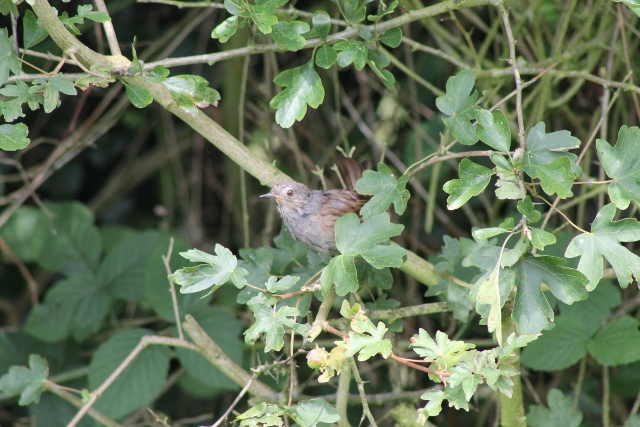
The dunnock realised I was looking at it and so looked at me.
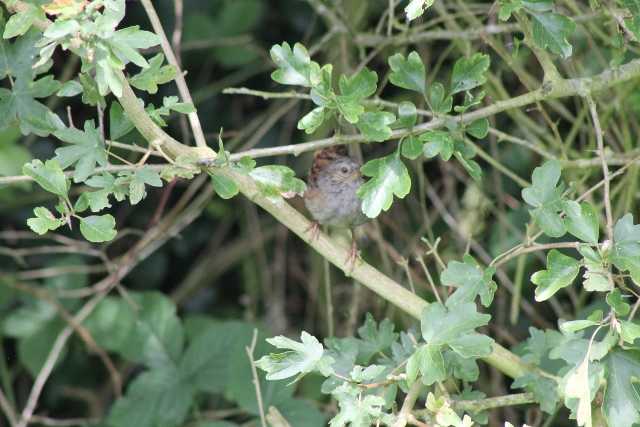
It then tried to edge behind the hawthorn leaf to hide.
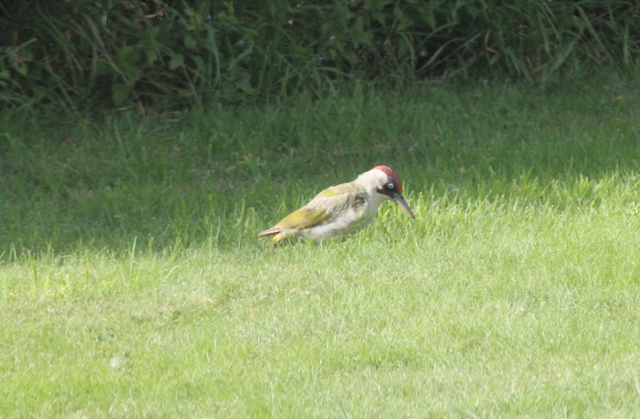
A Green Woodpecker also known as a Yaffle because of its laughing call. This bird is a juvenile as it hasn’t got its full green plumage yet. I hardly ever see these birds in trees. They love ants and ants’ eggs I am pleased to say, and are very welcome in our garden which is ‘ant city’.
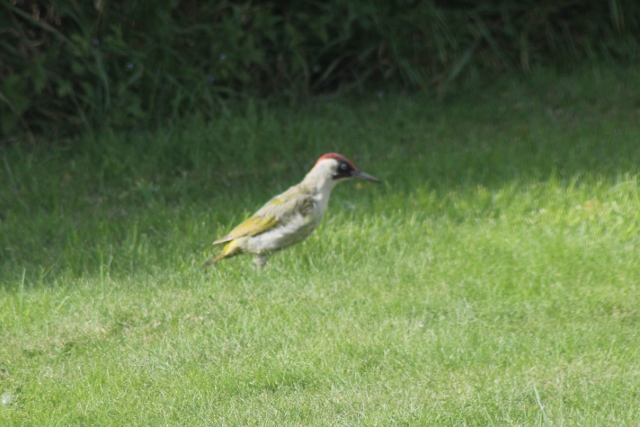
They are such attractive birds with their black masks and cherry-red, olive-green, grey-green and primrose-yellow plumage.
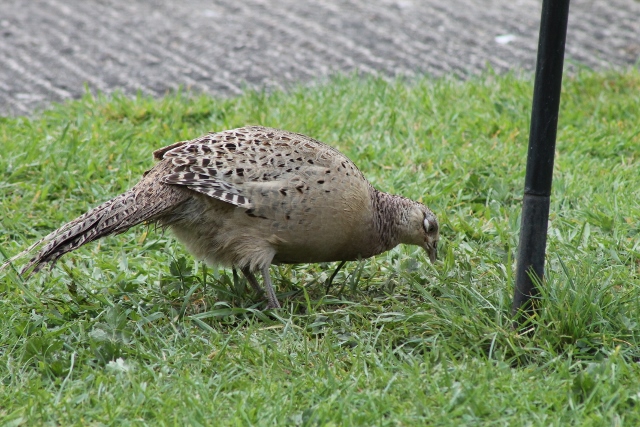
I have re-posted this photo of a female pheasant to show how drab they are compared with the males. Their feathers are so good at blending in with grasses which is very useful at nesting-time.
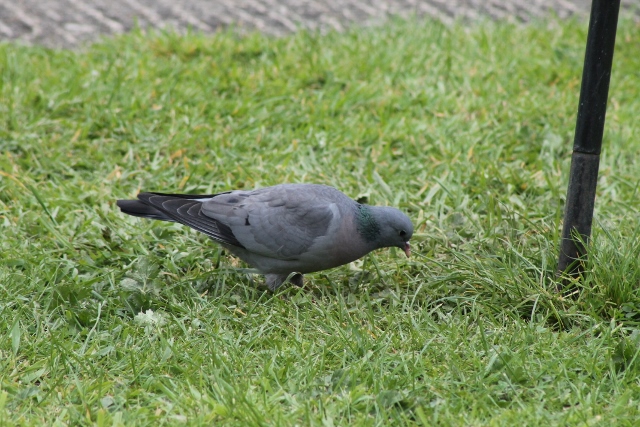
A Stock Dove
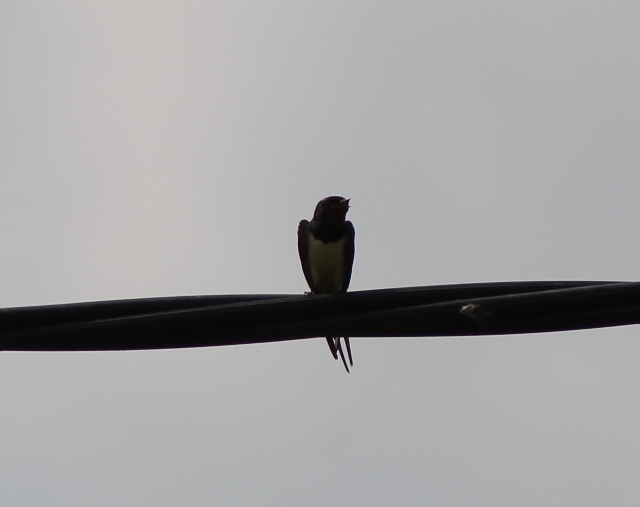
A Swallow – one of our summer visitors. I miss them very much when they fly south for the winter. They left very early this year because we had such a cool August.
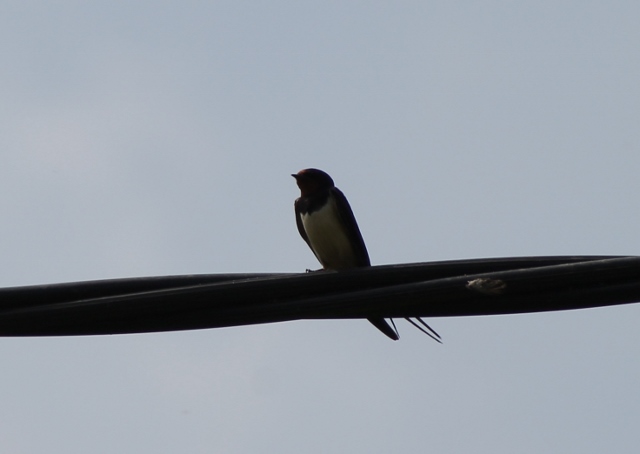
Swallow
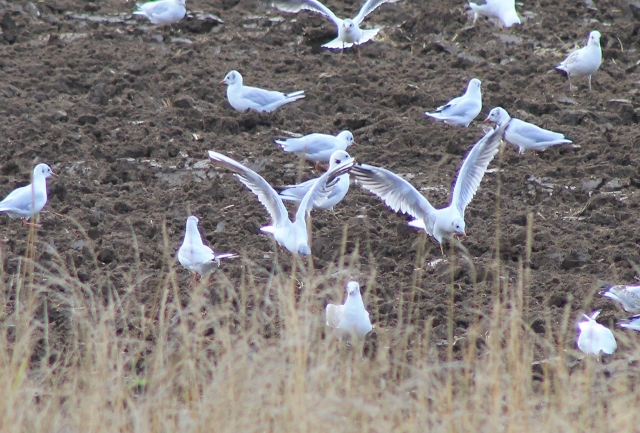
Another re-post of Black-headed Seagulls in the field behind our house. These were losing their summer plumage. During the winter they don’t have a black head only a black spot on the side of the head. And it isn’t black but dark brown!
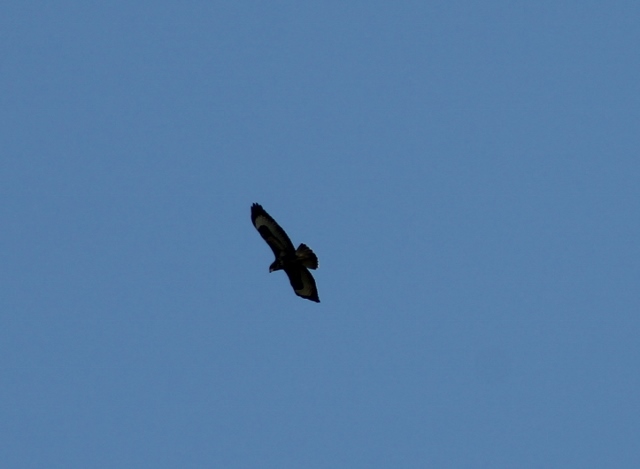
A Buzzard flying over our house. Buzzards have returned to East Anglia in the last few years having been absent for a very long time.
I must apologise for the quality of the next photograph. I am including it because I am so pleased and excited to have seen this bird at all, let alone seeing it in my garden. It decided to perch in a very shaded part of the garden by the pond and I couldn’t focus on it at all.
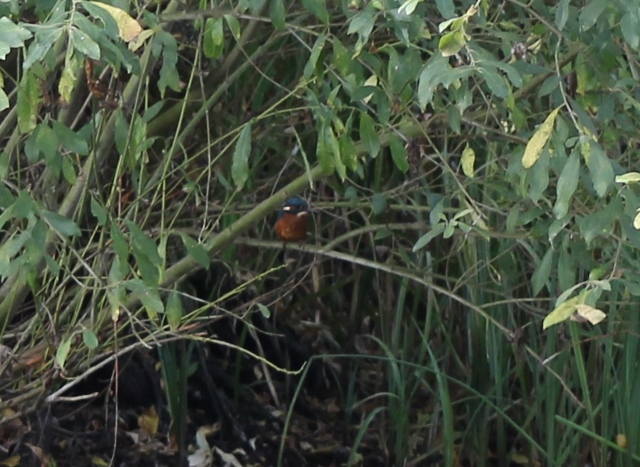
The orange and blue bird with white throat and neck patch is a Kingfisher
Discover more from A Suffolk Lane
Subscribe to get the latest posts sent to your email.
 A Suffolk Lane
Yet more birds! How delightful. As I see the photo of the female pheasant, I now wonder if that’s the large bird I saw in our woods one day. Interesting how bland they look, compared to the fancy males.
When we had a property with a large pond, there was a resident kingfisher who gave us hours of interesting watching. Having a pond can be like having one’s own nature channel.
LikeLike
How lovely to have a resident kingfisher! I don’t think ours is a resident but I could be mistaken as I haven’t been able to get down to the pond very often recently. Time and very wet weather has been against me!
LikeLiked by 1 person
Another fine collection of birds! I had never heard of a green woodpecker before, so seeing one was very cool. They sound as if they are much like our flickers here, feeding on ants. Also, if your kingfishers are anything like their North American counterparts, any photo of one is a good one, since they are very camera shy.
LikeLike
You are very kind, Jerry! I don’t know too much about Kingfishers as I have only seen them a couple of times before. I know that they fly extremely fast!
LikeLike
I’ve never heard of a dunnock or a green woodpecker. It seems like the woodpecker has found a shortcut to insects so he doesn’t have to rattle his brain pounding on trees.
Wouldn’t it be nice if the kingfisher decided to call your yard home? I’ve never even seen one. At least I don’t think so. I’m so colorblind that I may have and not even known it.
LikeLike
Somehow or other I never got notified of your kind response and have only just found it quite by chance. Jerry said he had never heard of the green woodpecker so it must be a European only bird. The Dunnock is a northern European bird too. I think the only time a green woodpecker knocks holes in trees is at nesting time. I would be very pleased if the kingfisher stayed. It is almost at its northern limit here – it isn’t found in the far north of Scotland and only at the southern end of Scandinavia – though that may change with climate change. The fish in our pond get very sluggish during the winter and sink to the bottom of the pond except on milder days. The kingfisher will be very lucky to catch one here during the next few months. They often move to the coast during winter to fish in estuaries. The are very hard to see at the best of times. They are about 6.5″ long and fly very fast. One usually only sees a flash of green as they fly past.
LikeLike
Are these birds from Scotland I wonder ‘Dunnock’ sounds very Scottish.
Hope you’re well Clare 🙂
Best wishes
Charlotte
LikeLike
I agree it does! They are found all over the country and all northern Europe. It just means dun (dull/drab) bird, poor thing! I am well thank-you, just a little tired. I hope you are well too and have recovered from your birthday celebrations. Love, Clare x
LikeLike
Oh Clare I am so jealous – a kingfisher! We used to see green woodpeckers and jays quite a bit in our old garden as we were very close to Epping forest. Sometimes i would see a green woodpecker on the way to collect my children from primary school – they fly in a very distictive way and the flash of irridescent green is very special. I love collared doves as they seem to always arrive in a pair.
Lovely photos.
LikeLike
Thank-you Rachel! Yes, woodpeckers have a bouncing flight that is very distinctive. Is your new house near to any parks or open spaces? You just never know what wildlife will turn up in the city. When I lived in SE London we lived near railway lines and all sorts of birds and animals were around.
LikeLike
We have a local park that is right beside the North circular. There is an embankment between so the traffic seems a bit further away than it otherwise would. It is very pleasent but not as populated with birds as you might hope. From my kitchen window I often see sparrows (i think they are sparrows rather than hedge sparrows) in my neighbours garden. They make a great noise. I am guessing there must be bugs on the forsythia. They are very quick so the lazy cat just looks at them. Good thing too!
LikeLiked by 1 person