Tags
Avocet, beach, Blackthorn sloes, chickweed, Common Reed, common restharrow, Common Sandpiper, Highland Cattle, Konik pony, Lesser Burdock, Lesser Centaury, Marsh Sow-thistle, Marsh-mallow, Michaelmas Daisy, Minsmere, Red Deer, Rosebay Willowherb, RSPB, Sea Kale, silverweed, Spoonbill, Stonecrop, Tansy, Wild Teasel
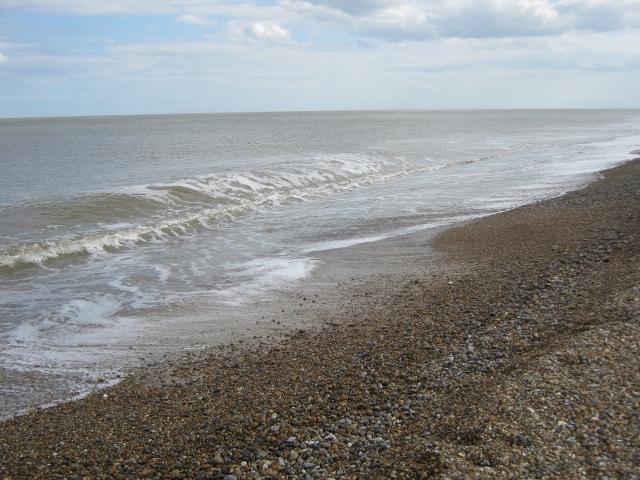
The beach at Minsmere. I never tire of photographing waves rolling in to the shore.
This is another catch-up post featuring some photos I took last year. Richard, Elinor and I visited the RSPB (Royal Society for the Protection of Birds) reserve at Minsmere on the Suffolk coast last August on Richard’s birthday. We are fairly frequent visitors as it is only a few miles drive from our home. It is a large reserve and has many different types of habitat – woodland, heathland, shoreline, lagoons and creeks. Not only does it have many, many species of bird there but it is home to all sorts of other wildlife – insects, mammals, reptiles, amphibians and plants. Quite often we hardly see any birds at all depending on the time of year and where we decide to walk. We don’t often go into the hides but on this occasion we did go into one briefly.
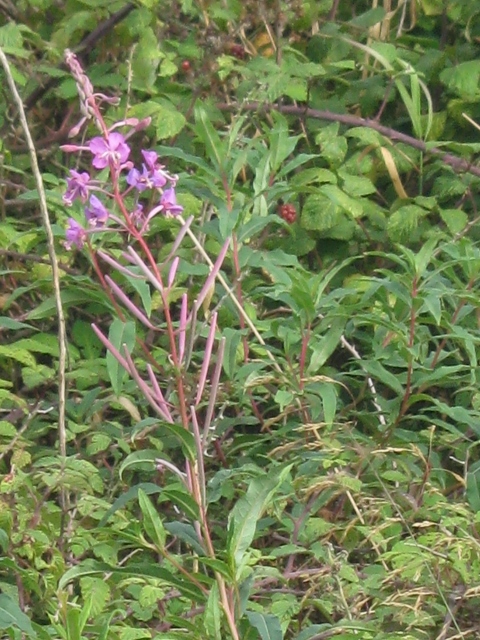
Rosebay Willowherb (Chamerion angustifolium), a common enough plant, but at the time this was the first one I’d seen that year.
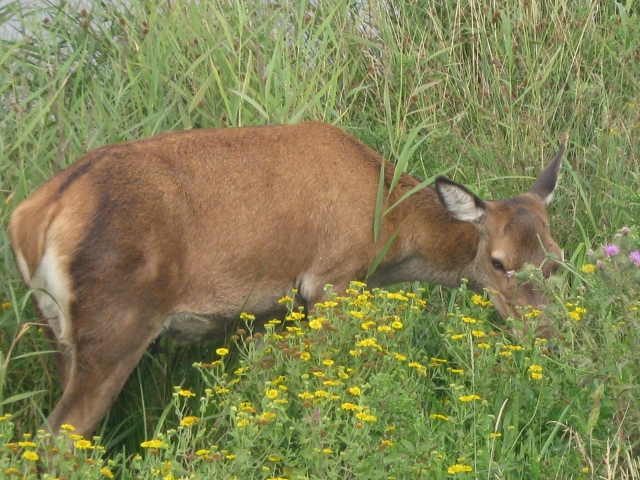
Red Deer (Cervus elaphus). This photograph is not cropped and was taken from the causeway path through the wetland going in the direction of the sea. The deer, though wild, was oblivious to the group of admiring humans taking pictures of it while it ate some tasty vegetation. The deer know they are safe here and feel free to go wherever they want.
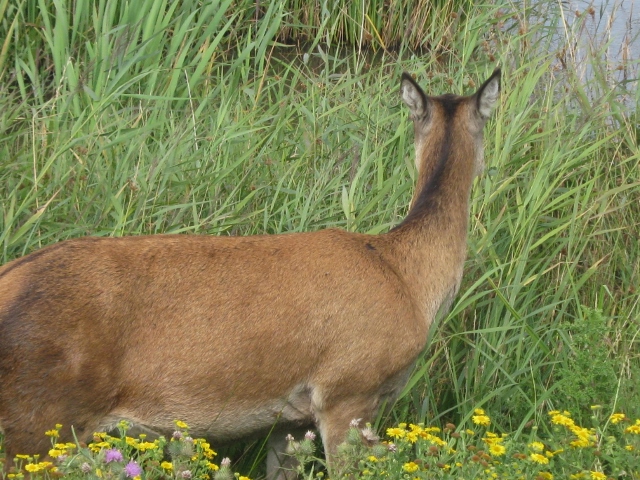
I love the dark edges to their ears and the dark line down their necks.
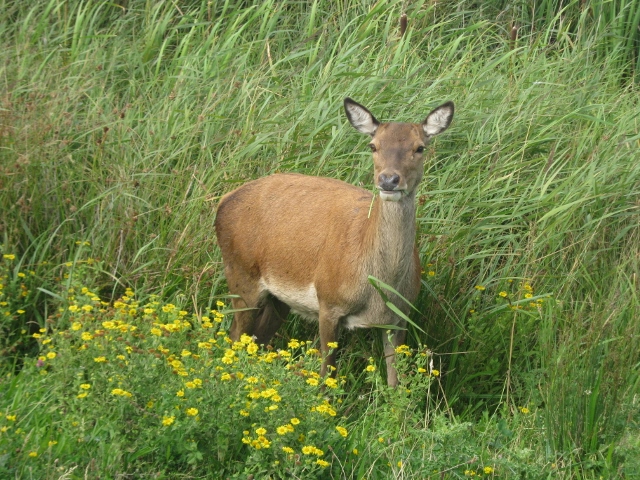
She has such a lovely face! The females are much smaller than the males and are 160 – 210 cm / 63 – 83″ long (not including the tail) and weigh about 120 -170 kg / 260 – 370 lbs.
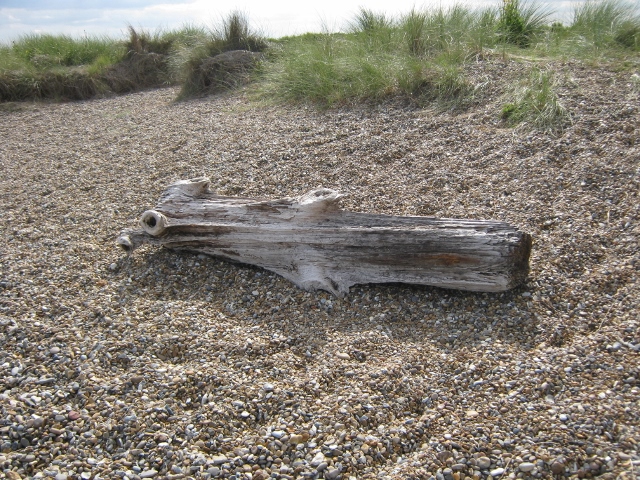
Driftwood on the beach
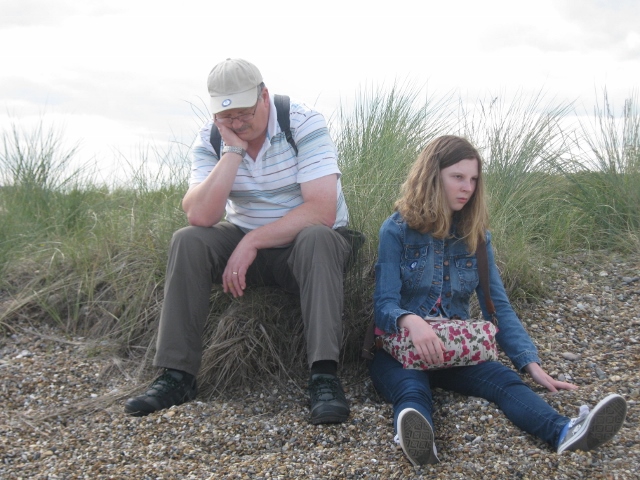
Don’t be fooled! They were enjoying themselves really!
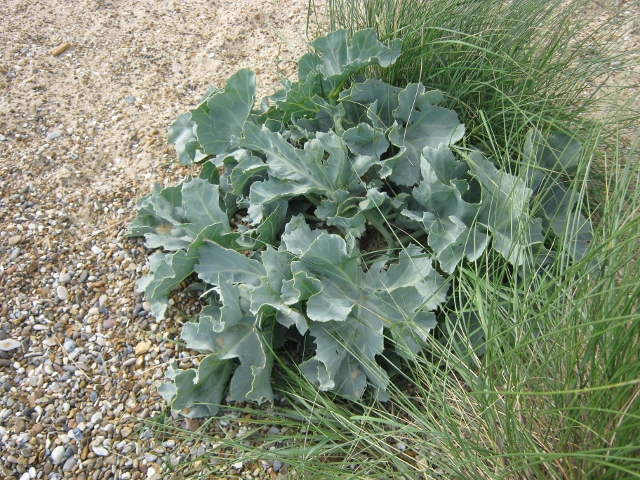
Sea Kale (Crambe maritima)
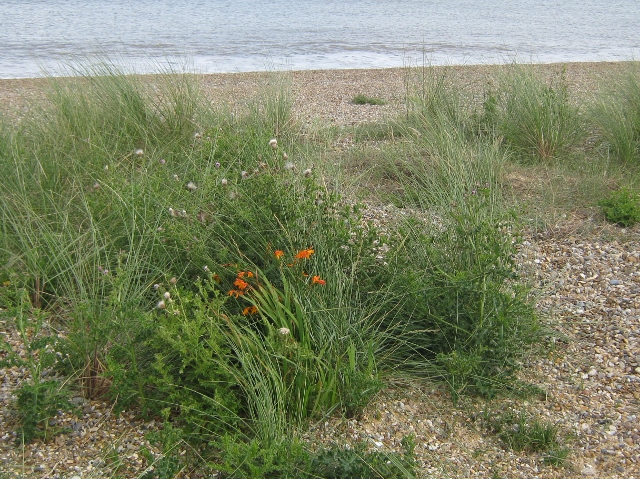
A variety of plants grow on the sand dunes or shingle dunes as they should be called here!
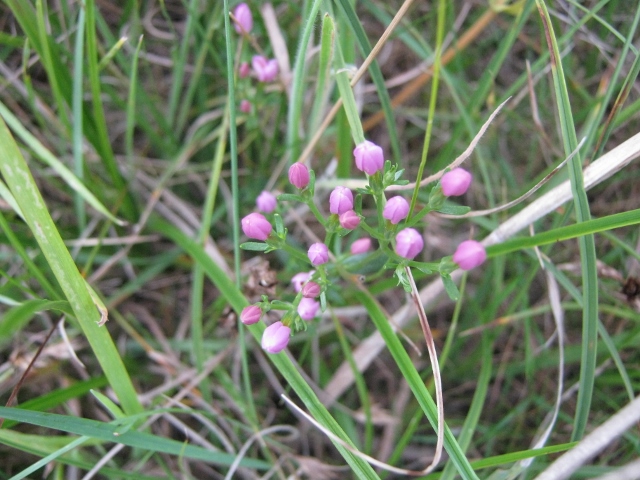
Lesser Centaury (Centaurium pulchellum). Unfortunately I didn’t manage to find any with the flowers open.
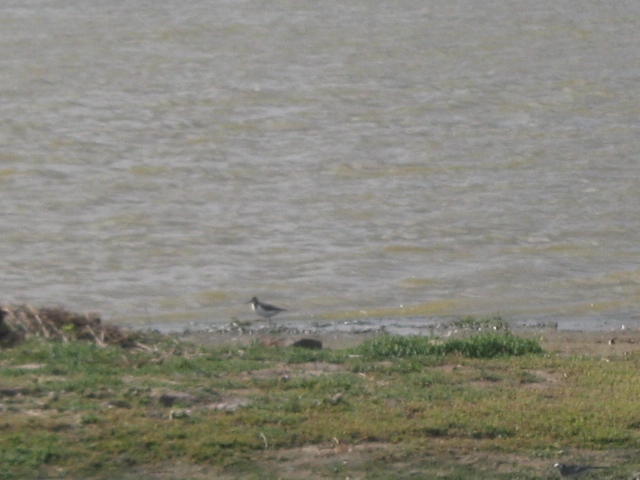
I’m afraid you’ll have to take my word for it that this is a Common Sandpiper (Actitis hypoleucos) My camera wouldn’t zoom any closer.
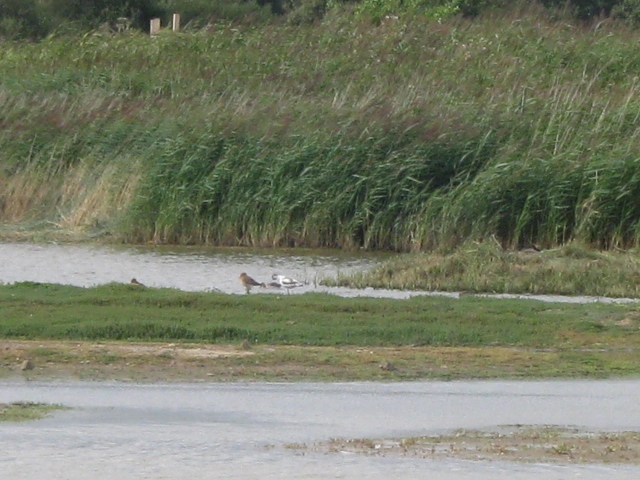
An unidentified duck and an Avocet (Recurvirostra avosetta)
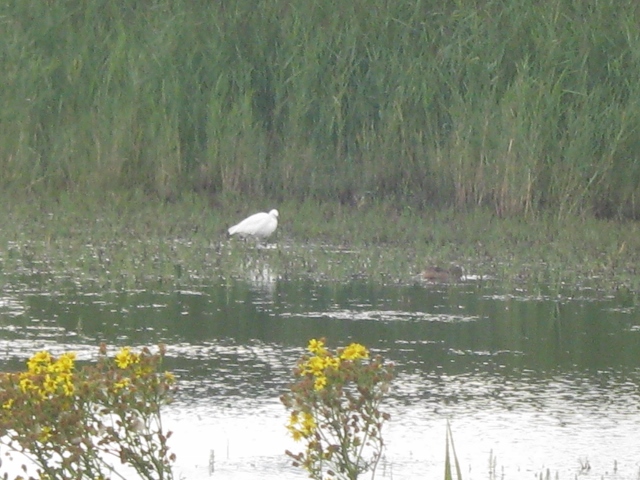
A Spoonbill (Platalea leucorodia)
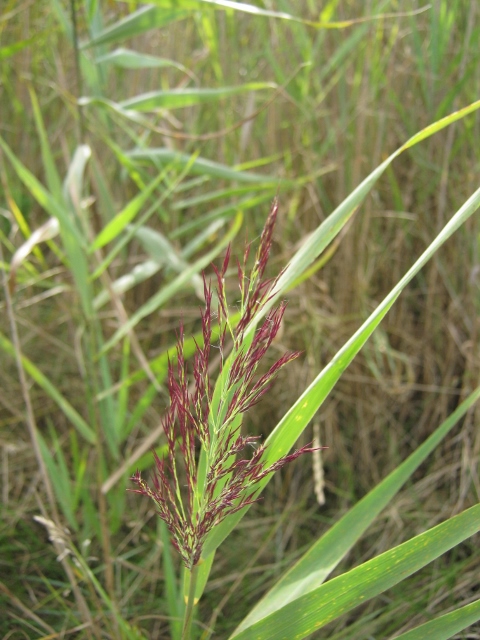
Common Reed (Phragmites australis)
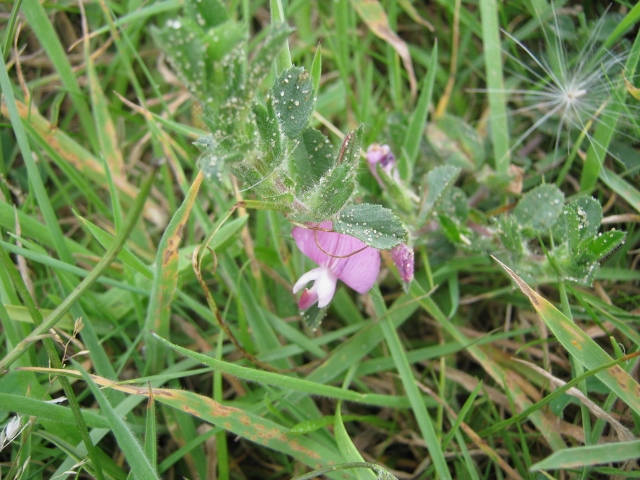
Common Restharrow (Ononis repens) The sticky leaves are covered in grains of sand.
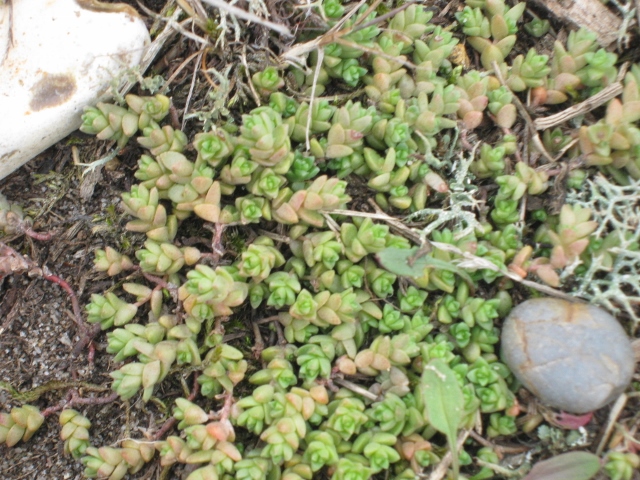
Stonecrop (Sedum). I am not sure which Stonecrop this one is.
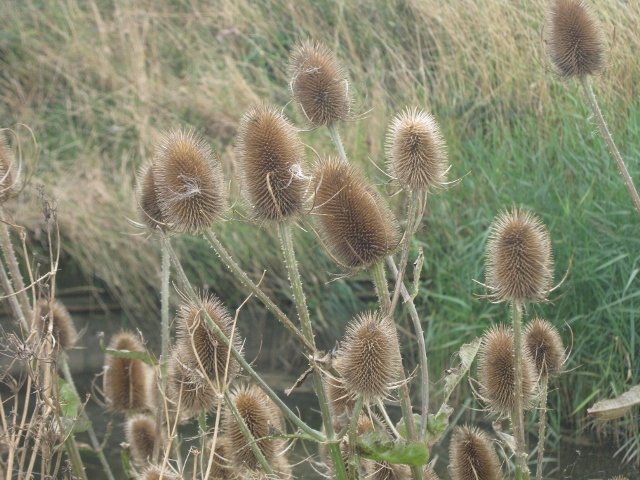
Wild Teasel (Dipsacus fullonum) seedheads
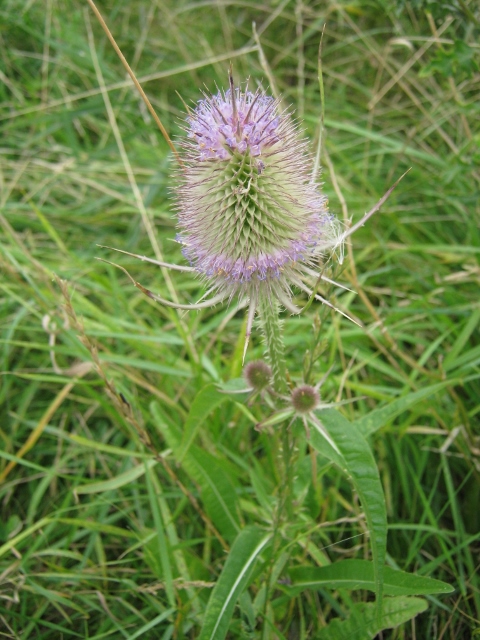
I managed to find a Teasel still in flower – just!
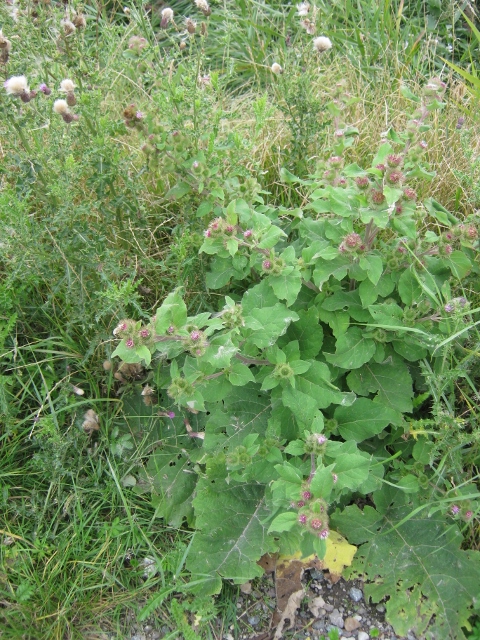
Lesser Burdock (Arctium minus)
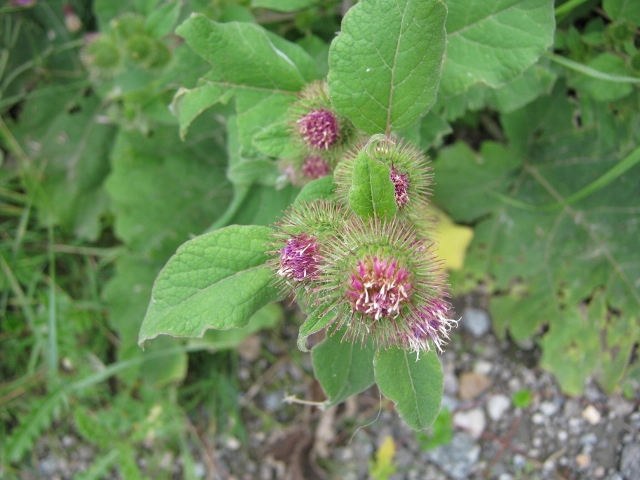
Lesser Burdock flowers – the pink-purple florets grow out from between the spiny bracts.
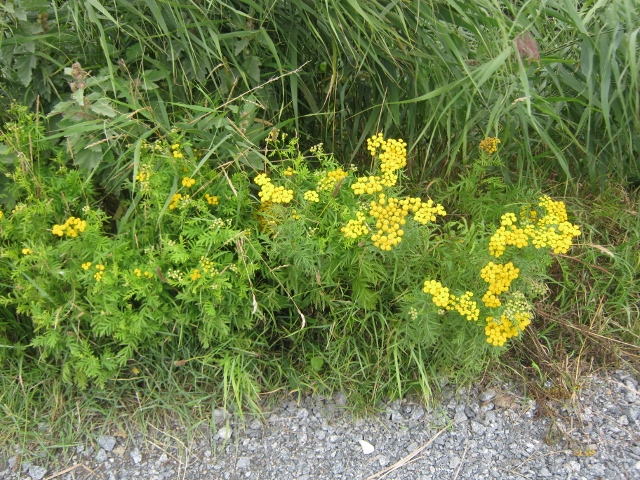
Tansy (Tanacetum vulgare)
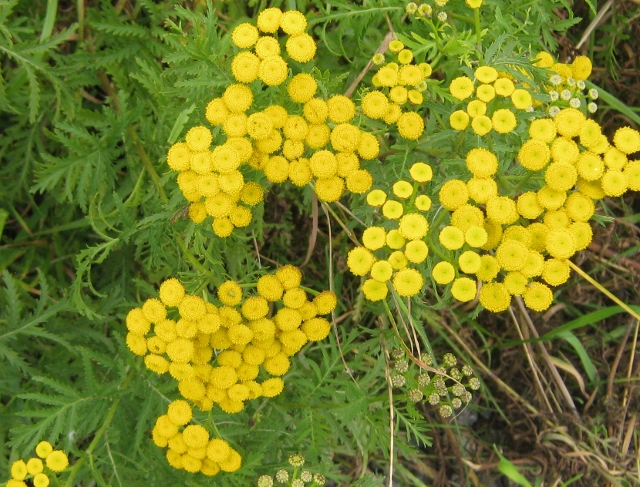
Little yellow buttons!
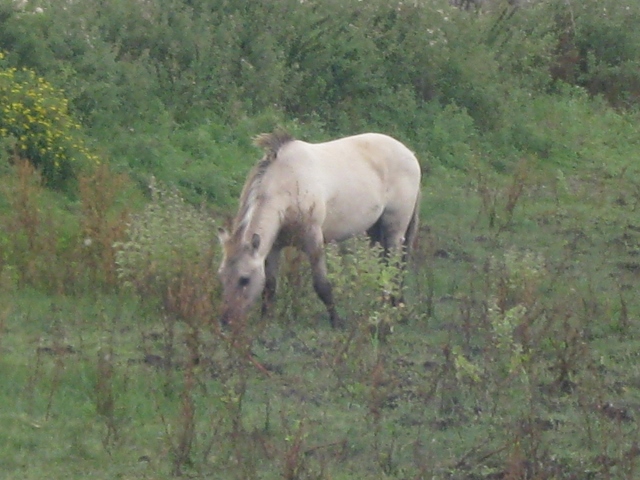
Konik ponies – primitive ponies from Poland – are used by the RSPB as they are very hardy, thrive on rough grazing and tolerate wet conditions.
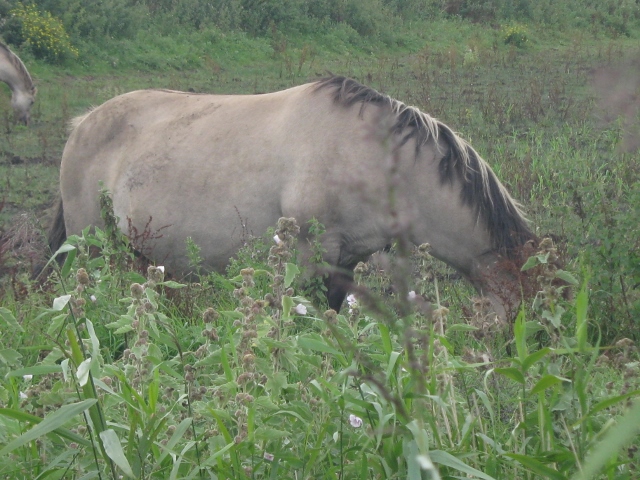
I couldn’t get a shot of the pony’s face –

– no matter how I tried!
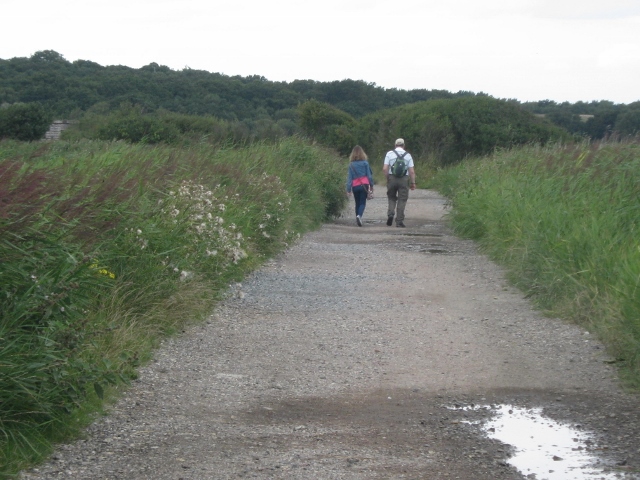
I am always getting left behind!
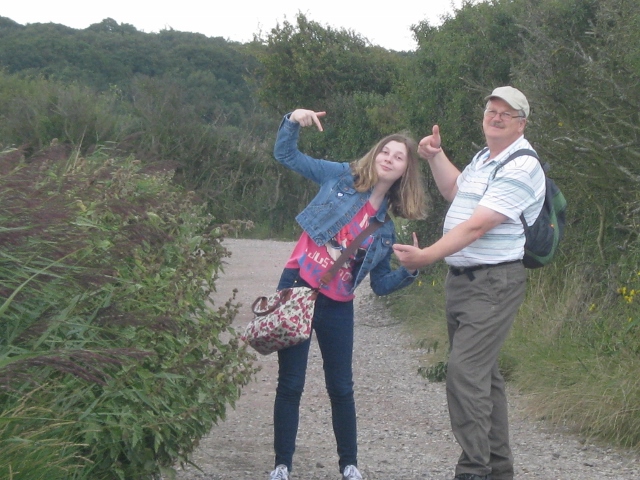
And this is what happens when I catch up!
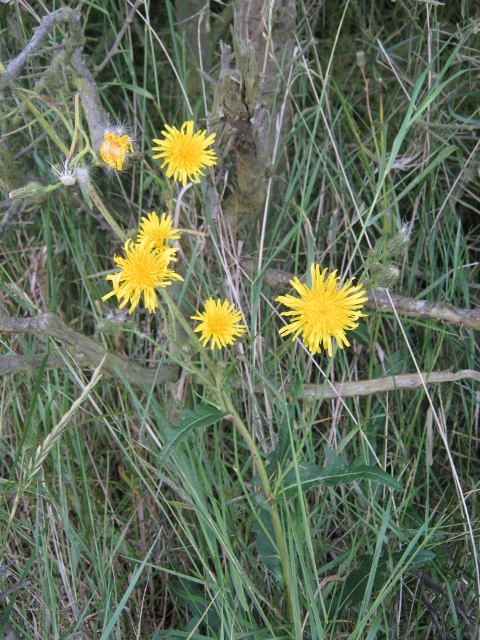
Marsh Sow-thistle (Sonchus palustris)
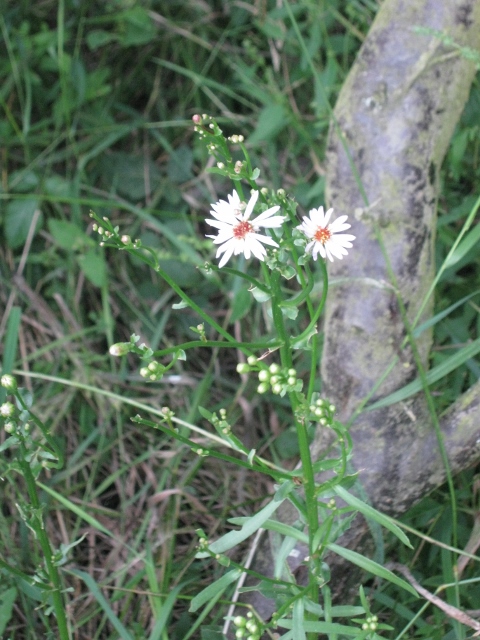
I believe this is Michaelmas Daisy rather than Sea Aster, unfortunately
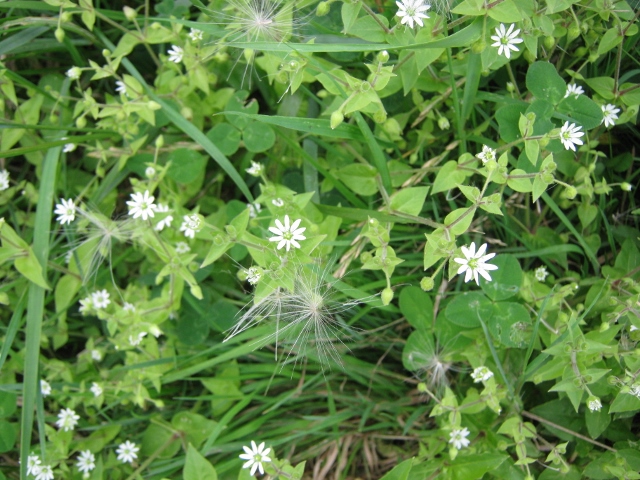
Chickweed (Stellaria media)
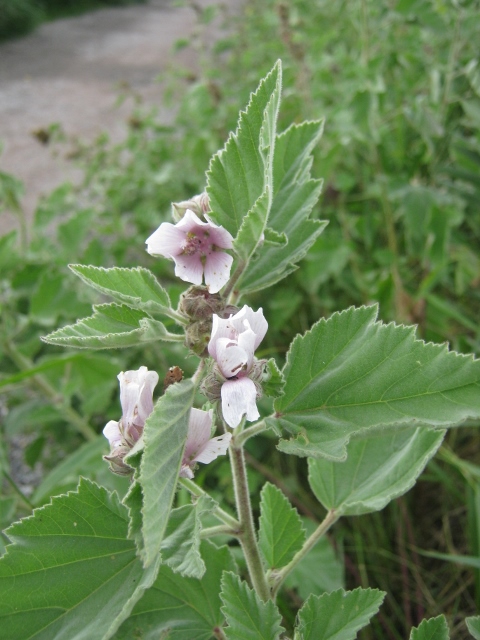
Marsh-mallow (Althaea officinalis)
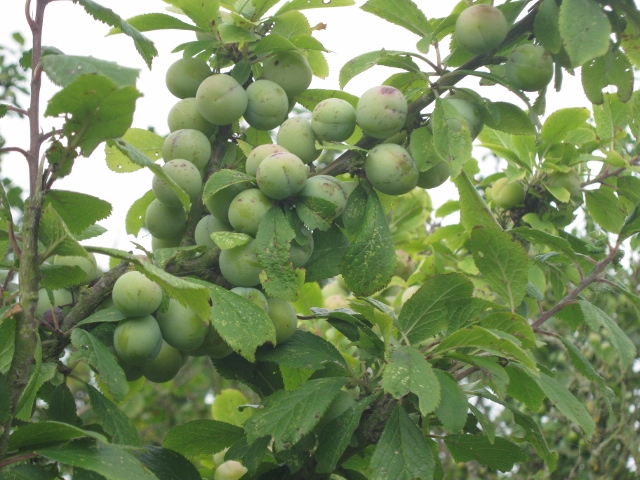
Ripening sloes on the Blackthorn trees (Prunus spinosa)
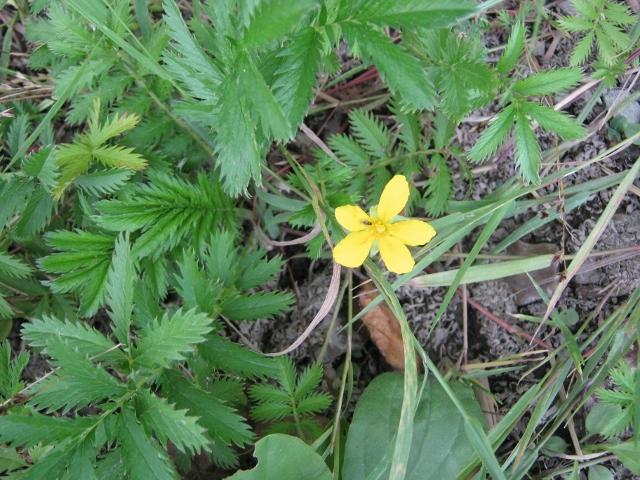
Silverweed (Potentilla anserina) so called because the leaves are covered in silvery, silky hairs that catch the light and shine like silver.
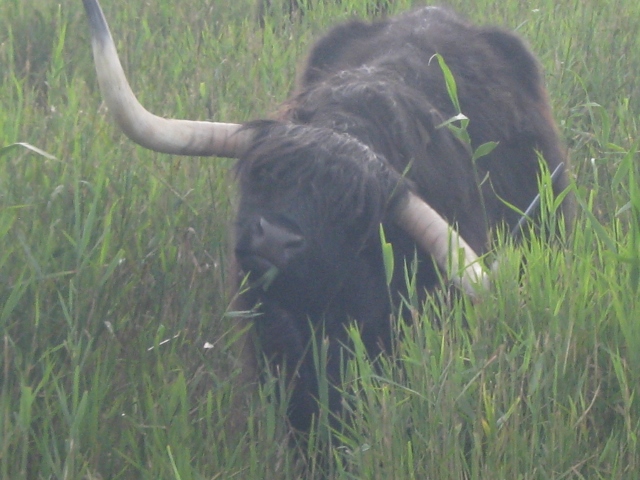
The RSPB also use black Highland cattle to graze the marshes
We will no doubt be visiting the reserve again very soon. I read that they have discovered some Common Bird’s-nest fungi there recently and I would like to see it.
 A Suffolk Lane
Such a variety of plants and wildlife to keep the eye and camera busy. The sea kale looked edible so I googled it and discovered that indeed it is. http://www.independent.co.uk/life-style/food-and-drink/news/like-seaweed-like-kale-youll-love-sea-kale-9210281.html
LikeLiked by 1 person
Yes, it’s wonderful stuff and when I eventually get my gravel garden I hope to plant some. I don’t pick any shoots or leaves when I find it because it is only just finding its feet (so to speak) after nearly dying out.
LikeLiked by 1 person
I see that it is grown in New Zealand. Also, I found a reference to it in a 1918 gardening article!
LikeLiked by 1 person
The Victorians nearly got rid of it altogether they were so keen on it. I am glad it is making a come-back and I am finding it more regularly on beaches now.
LikeLike
Yes, that is good. Maybe I will get to taste it some day.
LikeLiked by 1 person
Interesting breed of pony. I had one once that looked a good bit like that, a mouse dun colored mare named Spring Frost.
LikeLiked by 1 person
What a lovely name! Koniks are genetically very close to the Tarpan, the European wild horse that unfortunately has only recently become extinct. They are feral horses and very unpredictable so they are kept away from the public.
LikeLiked by 1 person
My Spring Frost was a very gentle mare. I’m not sure what breed she was. I love that mouse dun color, especially the mane and tail had a “frosted” look.
LikeLiked by 1 person
Beautiful!
LikeLike
It’s good to see you and your family having fun surrounded by so many different plants, animals and birds! That reserve looks like a place that I would absolutely love, I do hope that you’re able to return again soon to show us more of what’s there.
LikeLiked by 1 person
Thank-you Jerry. I expect we will be back there in the next few weeks.
LikeLike
The first photo of Richard and Elinor is priceless, Clare! All of the photos are so beautiful. I love the deer!
LikeLiked by 1 person
Thank-you Jill. They both looked so gloomy I couldn’t resist taking the picture! The deer are quite impressive being quite large. We often come across small groups of them travelling cross country. The stags are enormous!
LikeLiked by 1 person
Interesting post, Clare. Great pic of Elinor and Richard.
Sloes: are they a kind of plum? Is this what sloe gin is made from?
LikeLiked by 1 person
Thank-you, Cynthia. Yes, they are a kind of plum but they are so tart that the only way to use them is to flavour gin or make a preserve from them. I have only heard of one person who eats them raw. I couldn’t! The blossom of the Blackthorn, from where the sloes come from, is just starting to come out here in a few sheltered places and it, with Cherry-plum, is the earliest of the plum trees to flower. The blossom is very beautiful.
LikeLiked by 1 person
I wanted to ask that, but thought I’d go look it up. Thanks, Cynthia! We are looking at prunus for feeding livestock, and perhaps us. I have heard of sloe gin, and feel so knowledgeable. lol Thanks for lovely photos. I really like seeing the simple local plants.
LikeLiked by 1 person
Thank-you Aggie. Sloe Gin is very nice, so I hear. My husband has made it a couple of times and my eldest daughter can’t get enough of it! My husband finds it too sweet for his taste. I am not supposed to drink because of the medication I am on 😦 For a pound in weight of sloes you add half a pound of sugar. The sloes are pricked all over before adding them with the sugar to the gin (about 1 3/4 pint) in a sterilised container. Seal tightly. Shake well and leave in a cool dark place shaking the mixture every other day for a week then once a week for at least 2 months. Strain the mixture through a linen cloth and bottle up the mixture.
I love finding the wild flowers and plants too.
LikeLike
Clare, thank you so much for the recipe!
LikeLiked by 1 person
My pleasure!
LikeLike
You are lucky to have such an interesting place to visit.
LikeLiked by 1 person
We think so.
LikeLike
You’re so lucky to have a place like that so close to home! I had to laugh at the shot of your daughter and husband sitting. They look like you wore them out!
How great to be able to see so many animals and birds, and especially wildflowers.
I’d definitely go back to see the bird nest fungi. I’ve never seen one, but I know that they’re very small.
LikeLiked by 1 person
They do look tired and miserable, don’t they! We should be going back fairly soon – I hope the fungus is still there when we go. Thanks Allen.
LikeLike
Sigh, what great photos, thank you for letting me walk along! Had a good chuckle from the first photo of the tired walkers ;0)
LikeLiked by 1 person
Thank-you Johanna! I think they were enjoying themselves really though you wouldn’t know it to look at them!
LikeLiked by 1 person
I so enjoyed walking along with the three of you, Clare. That first picture of Richard and Elinor along with your caption was sooo funny. That is one fantastic capture. I could make up a dozen stories just from that one photo. 🙂
LikeLiked by 1 person
They are so much alike though they deny it vociferously which I find really funny. Thank-you, Elizabeth! 😀
LikeLiked by 1 person
Amazing! This blog looks just like my old one! It’s on a entirely different topic but it has pretty much the
same layout and design. Excellent choice of colors!
LikeLike