• About my Blog
  • GDPR (General Data Protection Regulations) and This Site
  • My Life in a Suffolk Lane

A Suffolk Lane

~ A diary of my life in rural north Suffolk.

A Suffolk Lane

Category Archives: Days out

Wenhaston Doom

02 Tue Dec 2025

Posted by Clare Pooley in architecture, churches, Days out, Rural Diary

≈ 43 Comments

Tags

St Peter's church, Suffolk, The Doom, The Resurrection, Wenhaston

It is strange how one can live for years near to places of beauty or interest but never get around to visiting them.  There always seem to be other things to do and of course these places will always be there, won’t they? And we will always be able to get to them whenever we like – yes?  Elinor and I decided to visit one on a very warm afternoon in June this year.
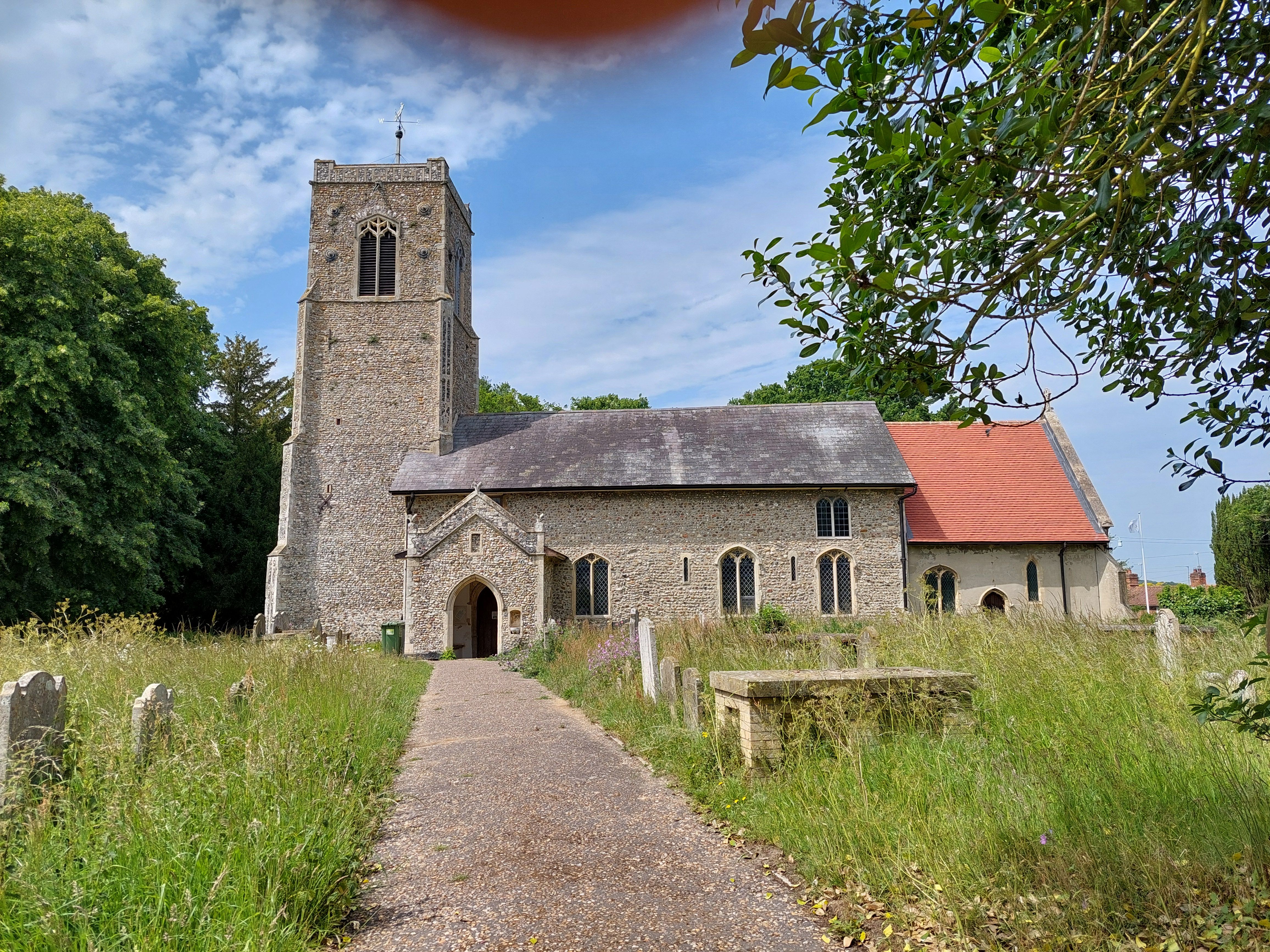
Wenhaston church

Wenhaston is about ten miles from where we live, is fairly near to Southwold on the coast, and is surrounded by farms and heathland.  Not too far away is Bulcamp, the site of a battle in the year 654 between the Anglian King Anna and the Mercian King Penda.  Anna and a couple of his sons were killed during the battle.  A workhouse was built at Bulcamp in 1764 which then became a fever hospital and has now been converted into apartments.  A little bleak and isolated for my liking. There is a nice pub in Wenhaston and I think the choir I belonged to years ago performed a concert or two in the village hall. I also had to take Alice to Wenhaston once a week for guitar lessons for a while.
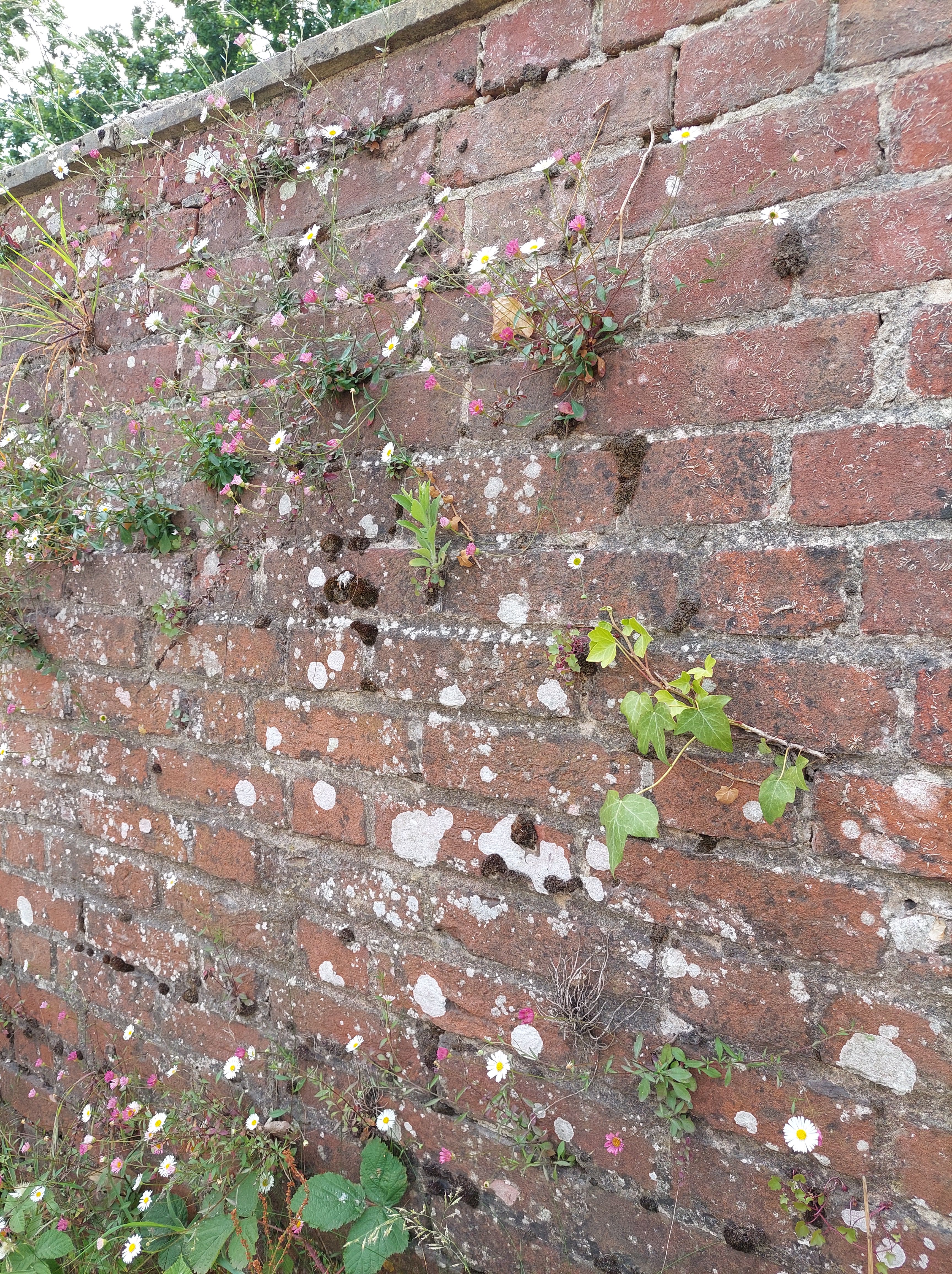
Plants on the churchyard wall
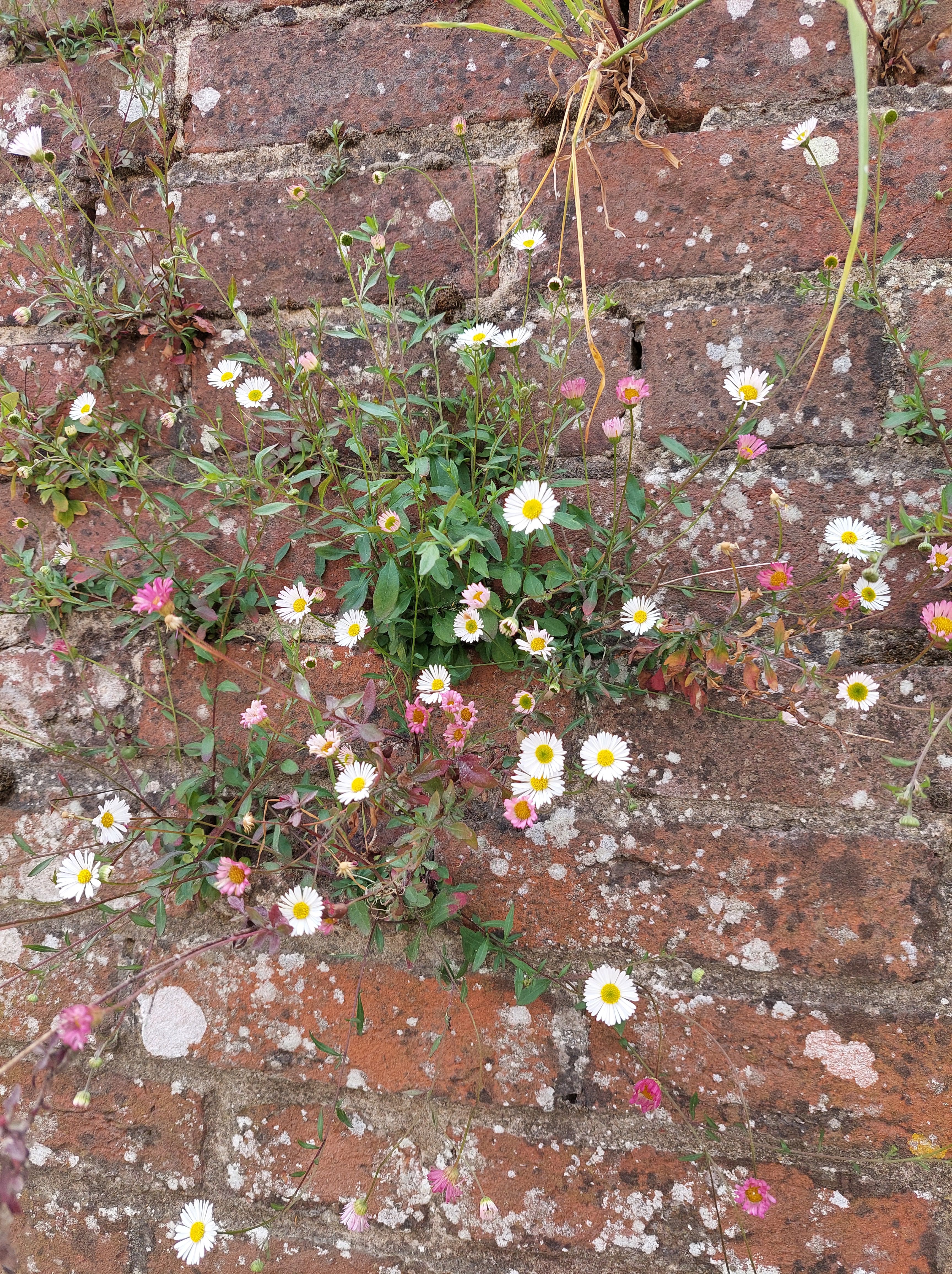
Mexican fleabane
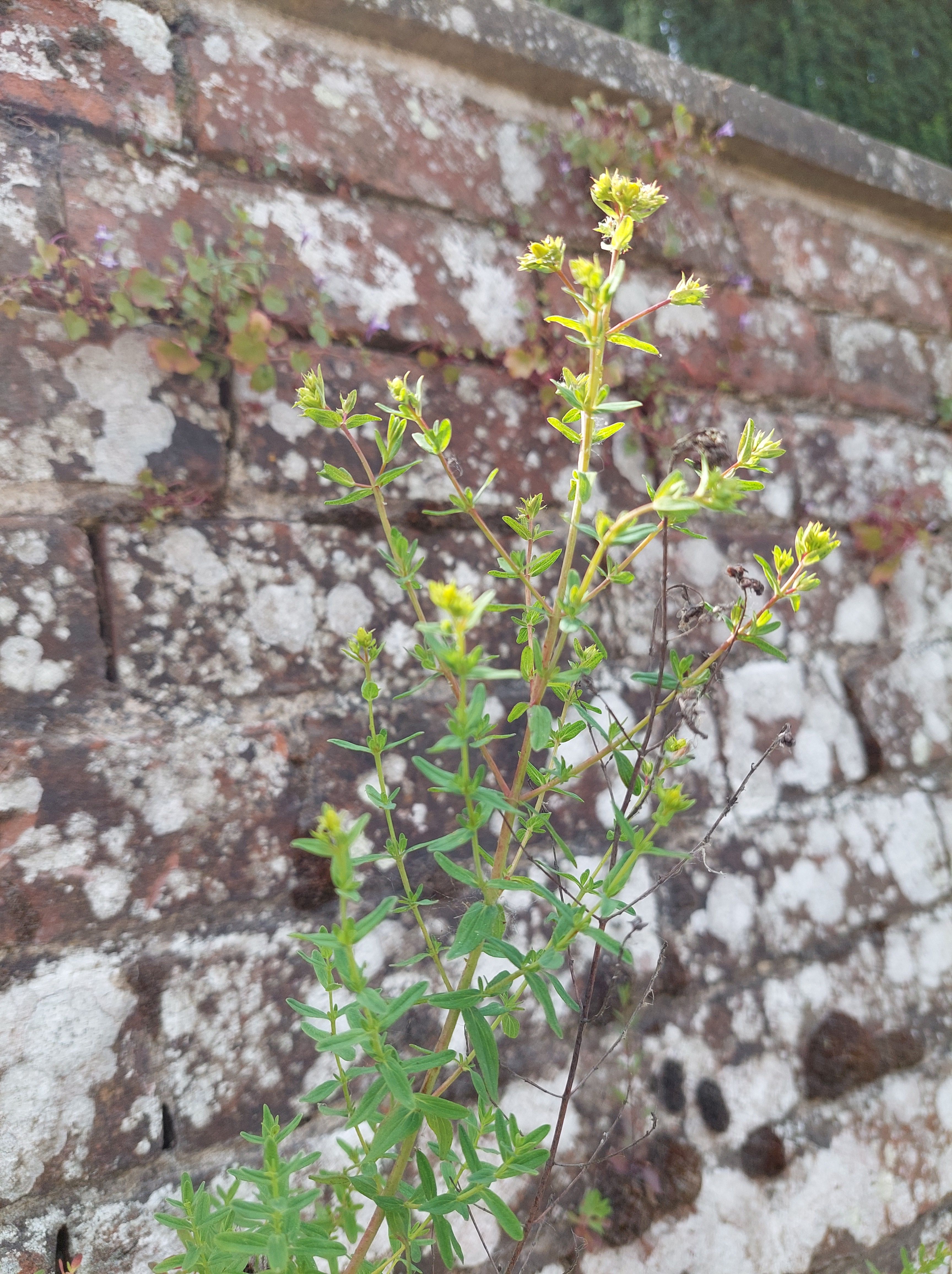
Perforate St John’s-wort
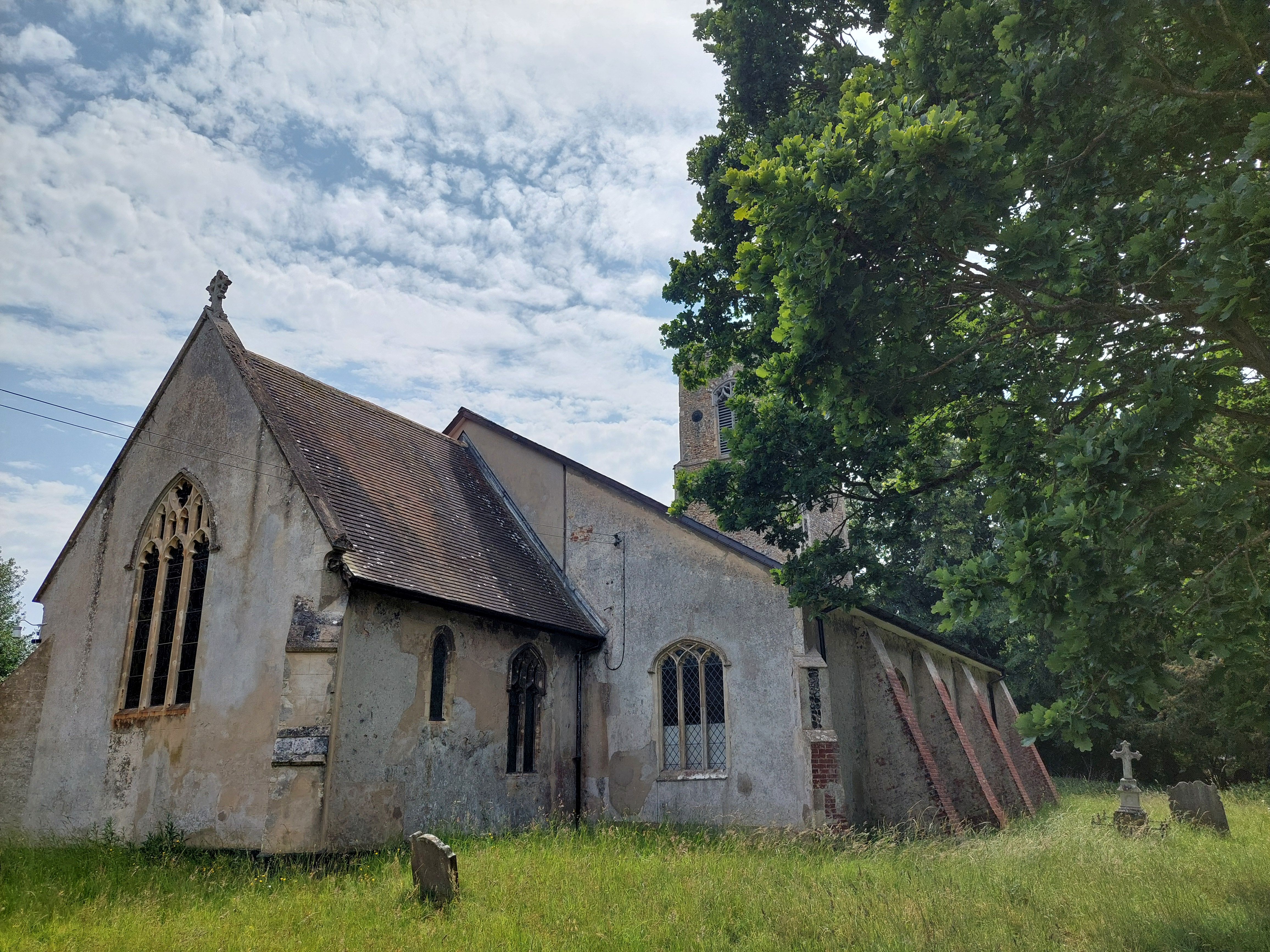
Wenhaston church
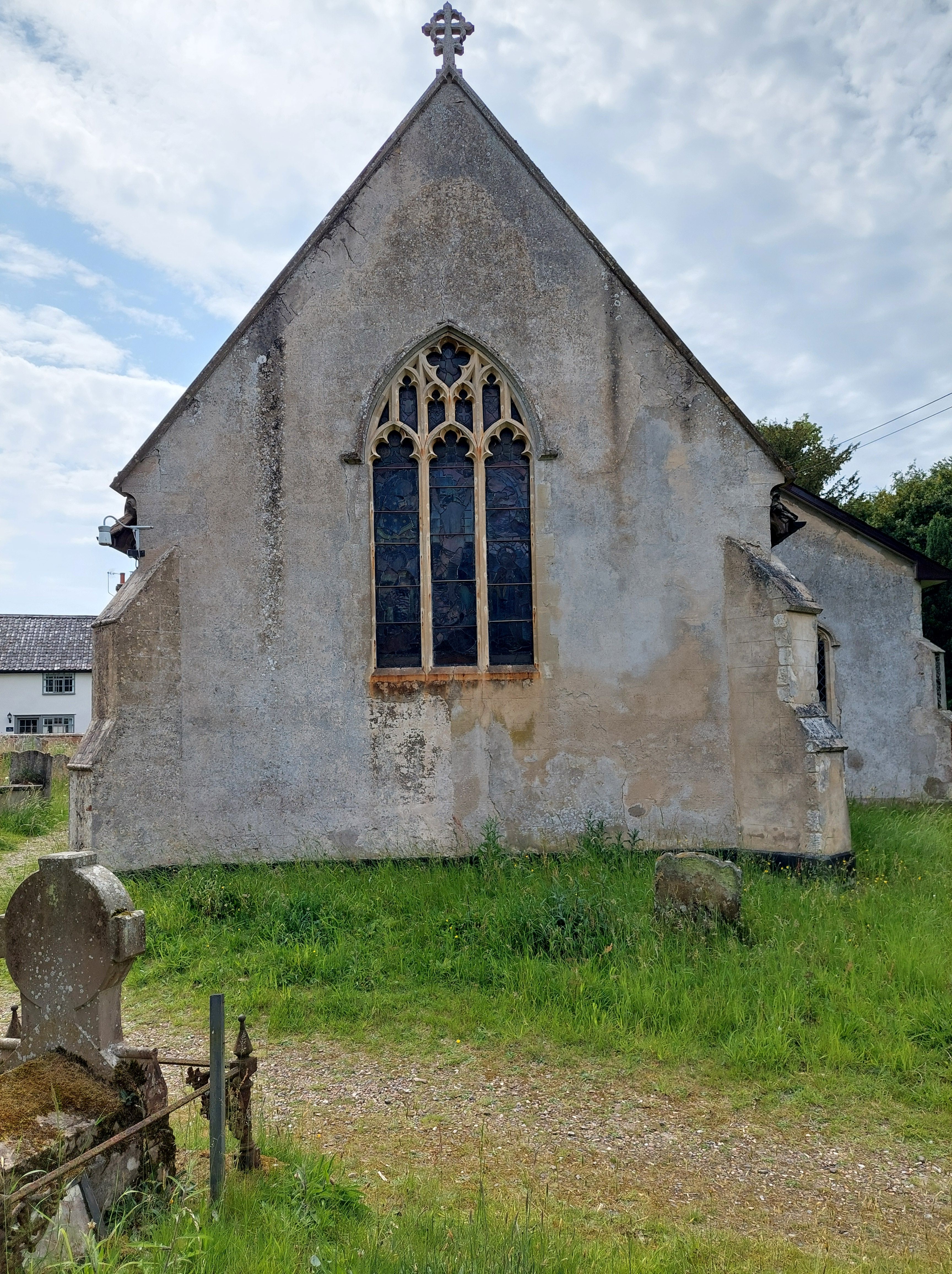
Wenhaston church

Elinor and I had come to see the church which is situated in the middle of the village.  It is referred to in the Domesday Book and part of it is of Saxon origin.  For many years it was looked after by Blythburgh Priory but like lots of churches in this country it suffered much during the reign of Edward VI and also during the Commonwealth of England under Oliver Cromwell.  William Dowsing‘s men visited in 1643 and according to the Wenhaston church guide book ‘did a lot of damage, breaking the stained glass, taking down the carved angels from the roof, removing the organ and the font cover, destroying the altar, hacking the pulpit about and much else besides’.  What they didn’t find was the Doom which the people of the parish had covered with whitewash many years earlier during Edward’s reign when he had demanded the destruction of all roods and the abolition of paintings and pictures in church.  For three centuries and more it stayed undiscovered and forgotten on the rood beam, whitewashed and painted over with passages from the Bible.
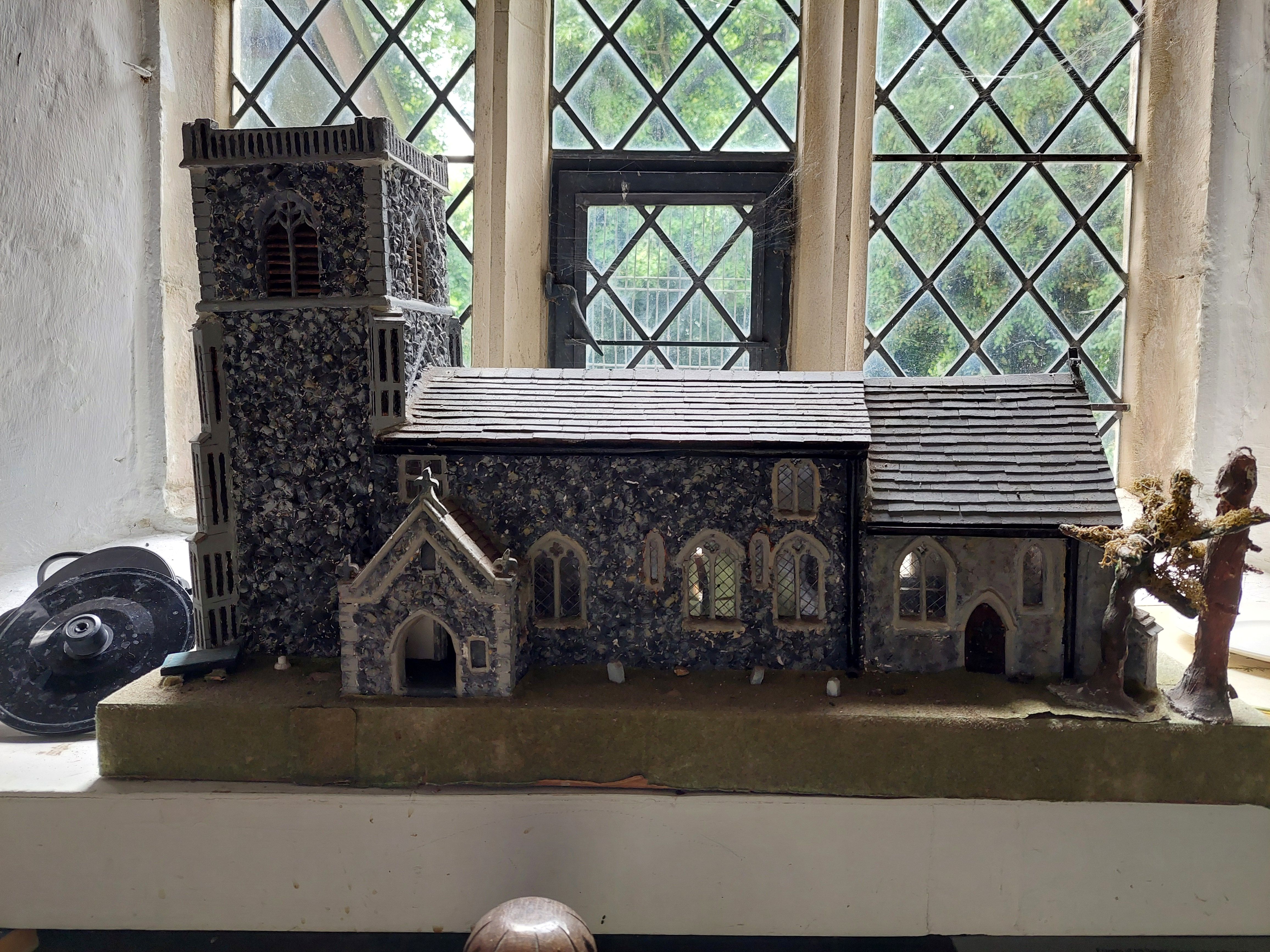
Scale model of the church on a windowsill
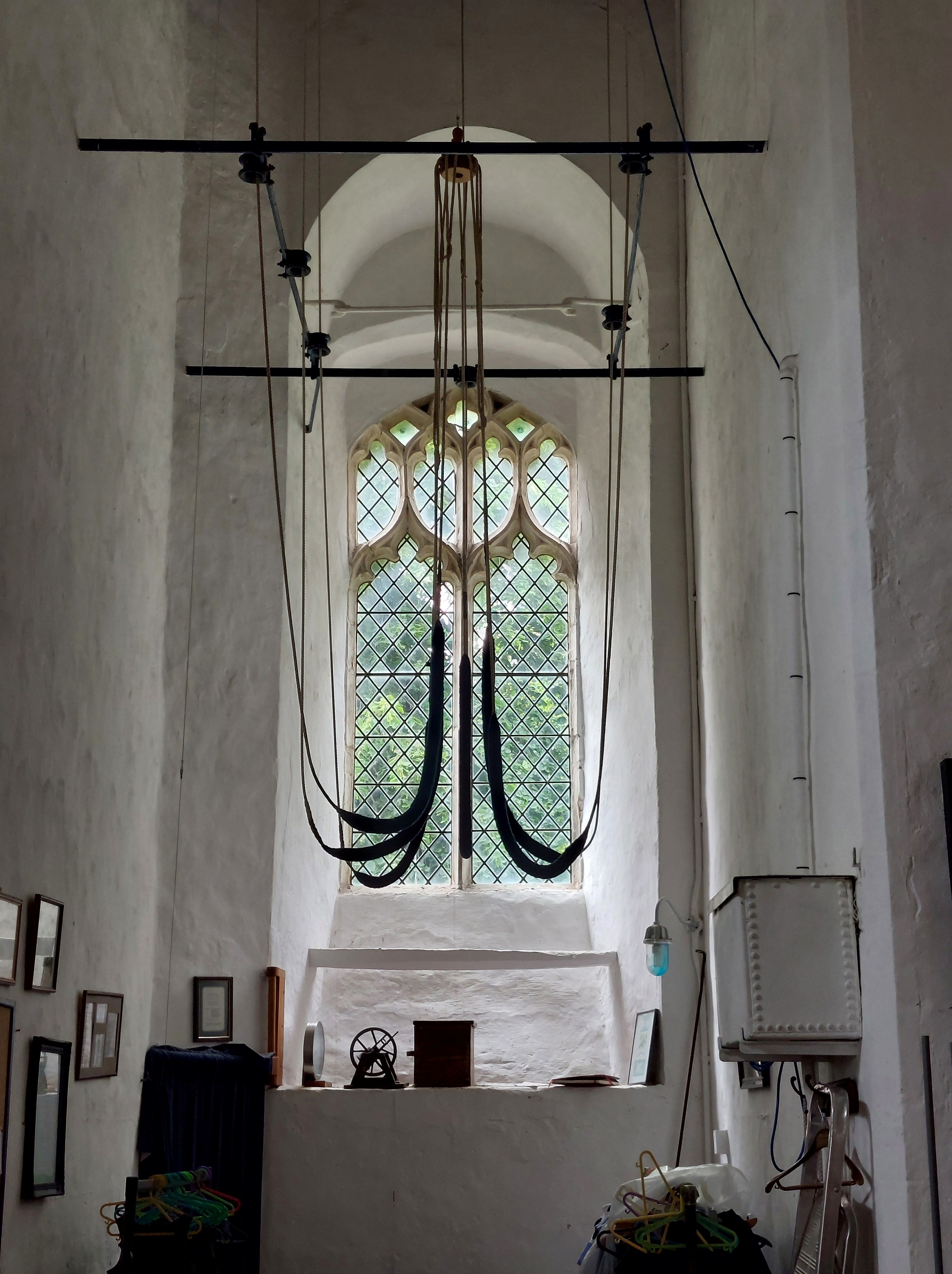
The bell-tower with the ropes lifted high, out of the reach of the hoi-polloi. There are six bells, two of which are medieval and probably came from Blythburgh Priory.
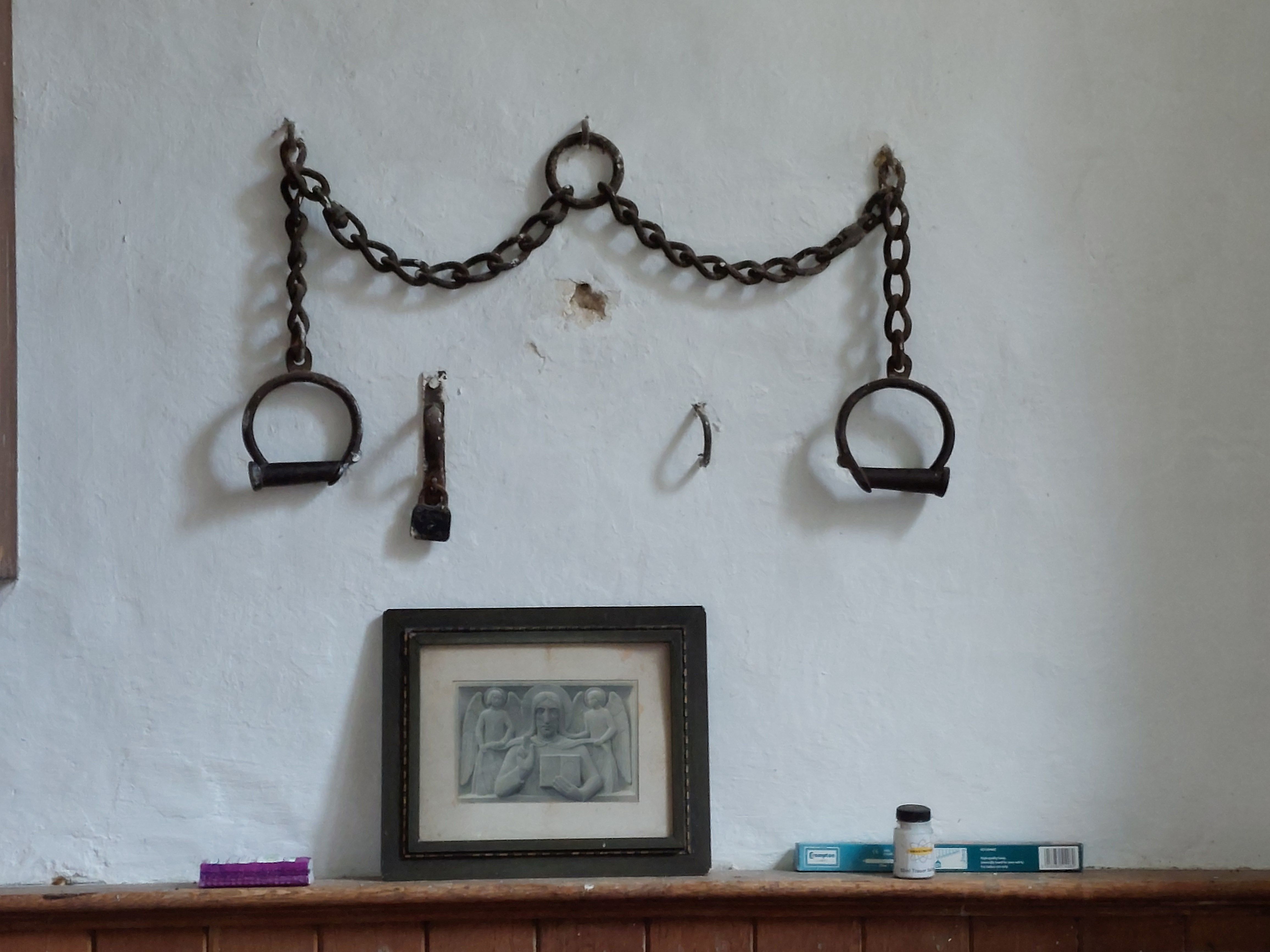
Here are the local Constable’s manacles for the stocks hanging up in the vestry. Redundant now of course, and there is no local constable any more either. I think that is a truncheon hanging there too!

In 1892 the East end of the church was rebuilt.  During the dismantling of the roof the rood beam was discovered intact and to still have its original paint and gilding.  The whitewashed Doom was removed plank by plank and thrown out into the churchyard for later destruction.  Fortunately, it rained heavily during that night and in the morning the painting underneath was beginning to emerge from under the whitewash.  The whole Doom was cleaned and experts were called in to assess its provenance.  The Doom was put on display and people paid to see it; the proceeds of which helped to pay for the rebuilding of the roof and the church was then able to get even more repairs done.  The new chancel arch was too narrow for the Doom to be replaced in its old position so for a while it was put on the West wall of the church where there was a gallery.  The gallery was removed in 1927 so that the Doom could be seen more easily and sometime later the Doom was placed where it is now on the North wall.
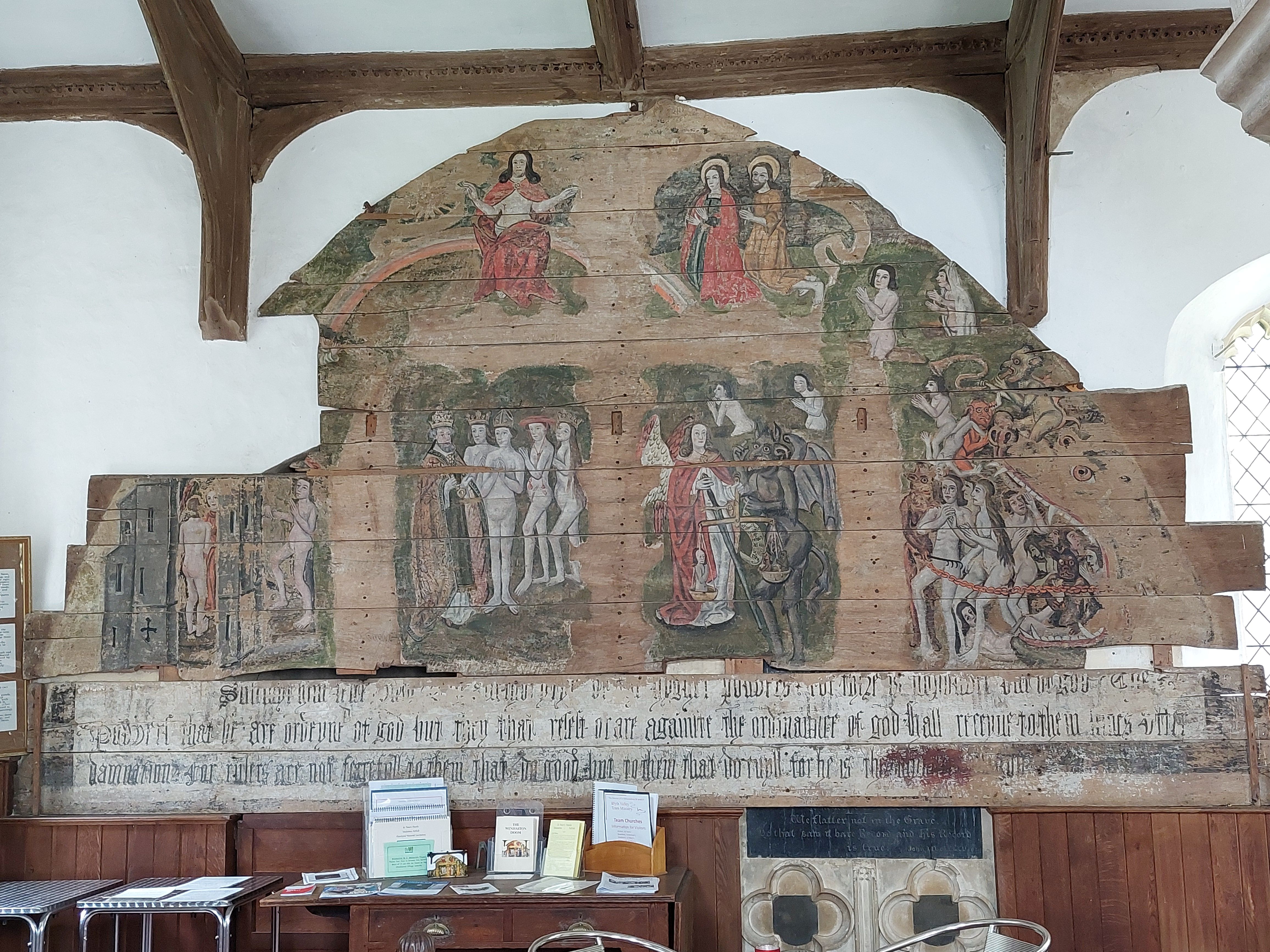
The Doom

The Doom is a representation of the Last Judgement.  It was probably painted in about 1520 or just before then, the date partly based on the style of the Virgin Mary’s bodice as depicted in the Doom. The villagers had started saving for the work to be done during the 1480’s. Dooms were usually placed on the chancel arch which separates the Nave where the common people worship – the Church Militant – and the Chancel, where the priests lead the worship – the Church Triumphant.  A rood screen was often placed at the chancel arch, which added to the seclusion of the chancel, and the sculpted or carved figures of Our Lord on the Cross with the Virgin Mary on one side and St John the Baptist on the other were placed on the top of the rood beam.  In this church the figures of the rood were attached to the Doom.  The figures have long since disappeared but their position and shape can be seen by the blank spaces on the Doom painting.

At the top of the Doom on the left is God as Christ seated on a rainbow and displaying His wounds.  At the top on the right are the Virgin Mary and St John the Baptist kneeling in prayer.  (Sadly my photograph of these two latter figures wasn’t good enough to show here).
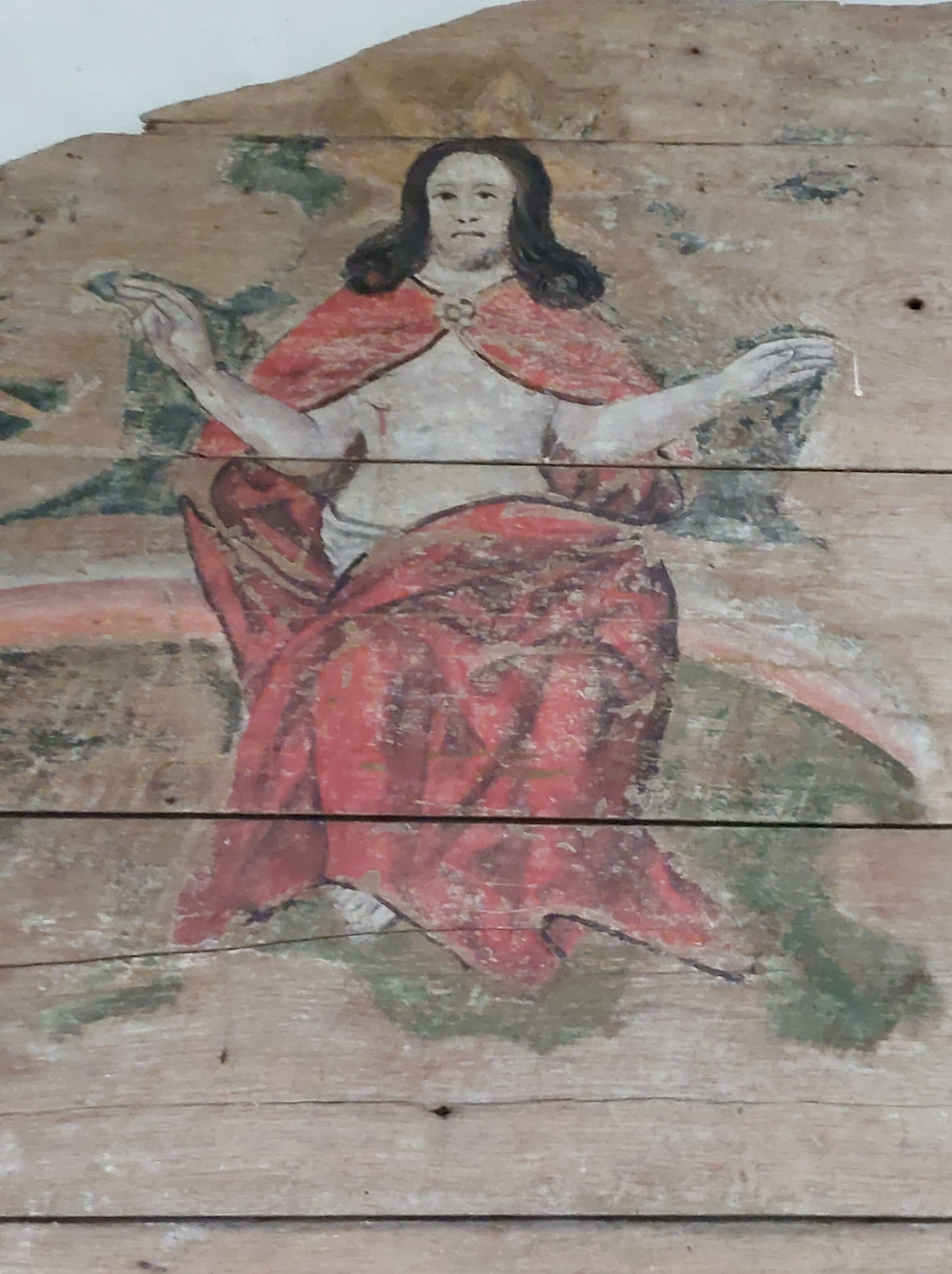
This is God appearing as Christ, the Son of Man

Beneath the figures of the Virgin and St John is the Archangel Michael with the Devil. The early Church adapted many pagan customs and ideas to Christian purposes in order to ease the transition from the pagan life to that of being a Christian.  One such custom was the idea of a messenger from Heaven and therefore the attributes of the Roman god Mercury were assumed by the Archangel Michael who became the guide of the dead.  Mercury weighed souls in classical mythology so now Michael holds the scales in his left hand.  His right hand holds his sword and he wears a circlet surmounted by a cross on his head.  The circlet at the time was very fashionable in Northern European and also English art.  You can see resurrected souls behind Michael and the Devil wending their way towards St Peter. The dead have arisen as naked as they were when they were created and all aged about 33, the age at which Christ was thought to have died.
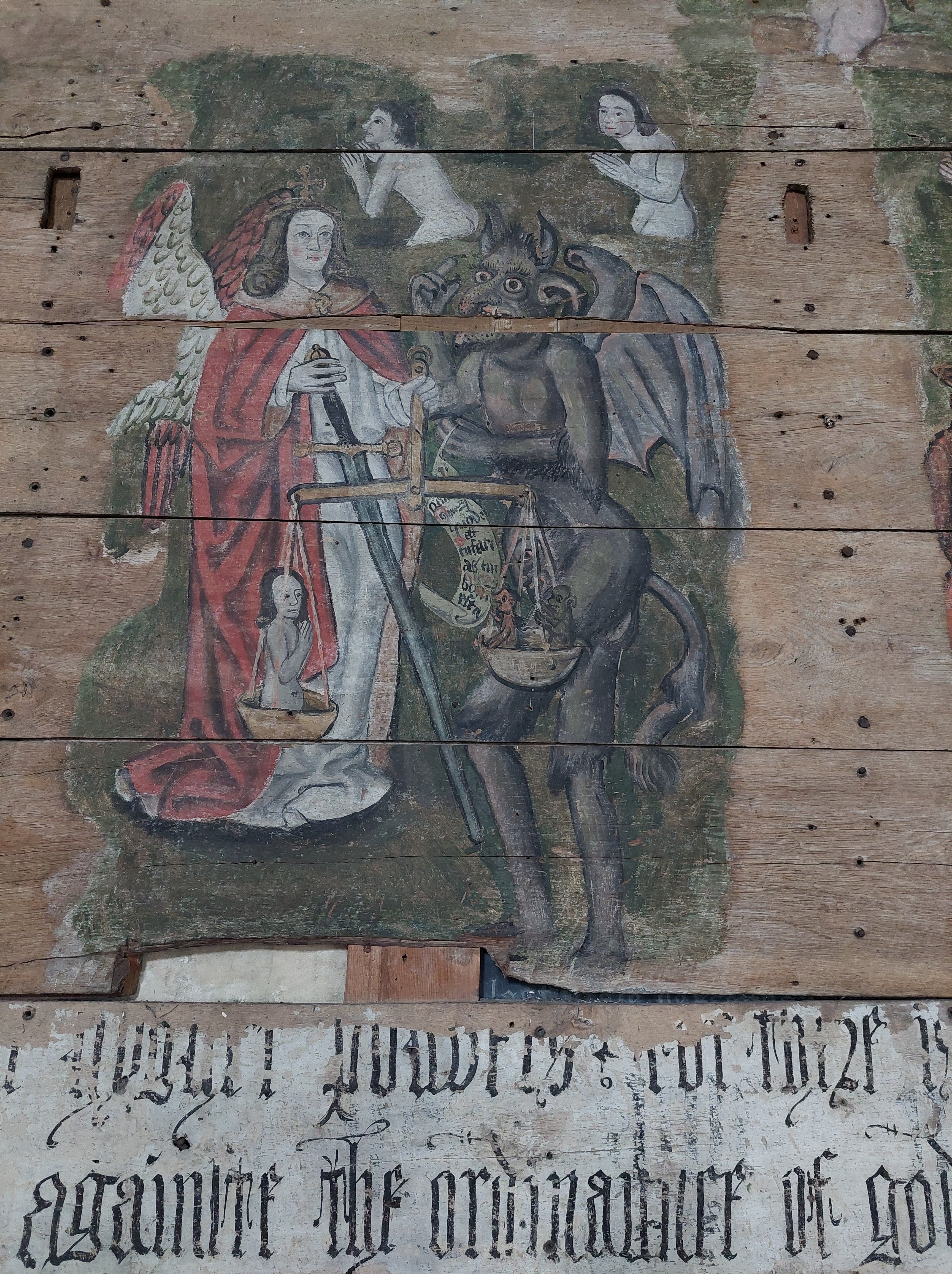
The Archangel Michael and the Devil

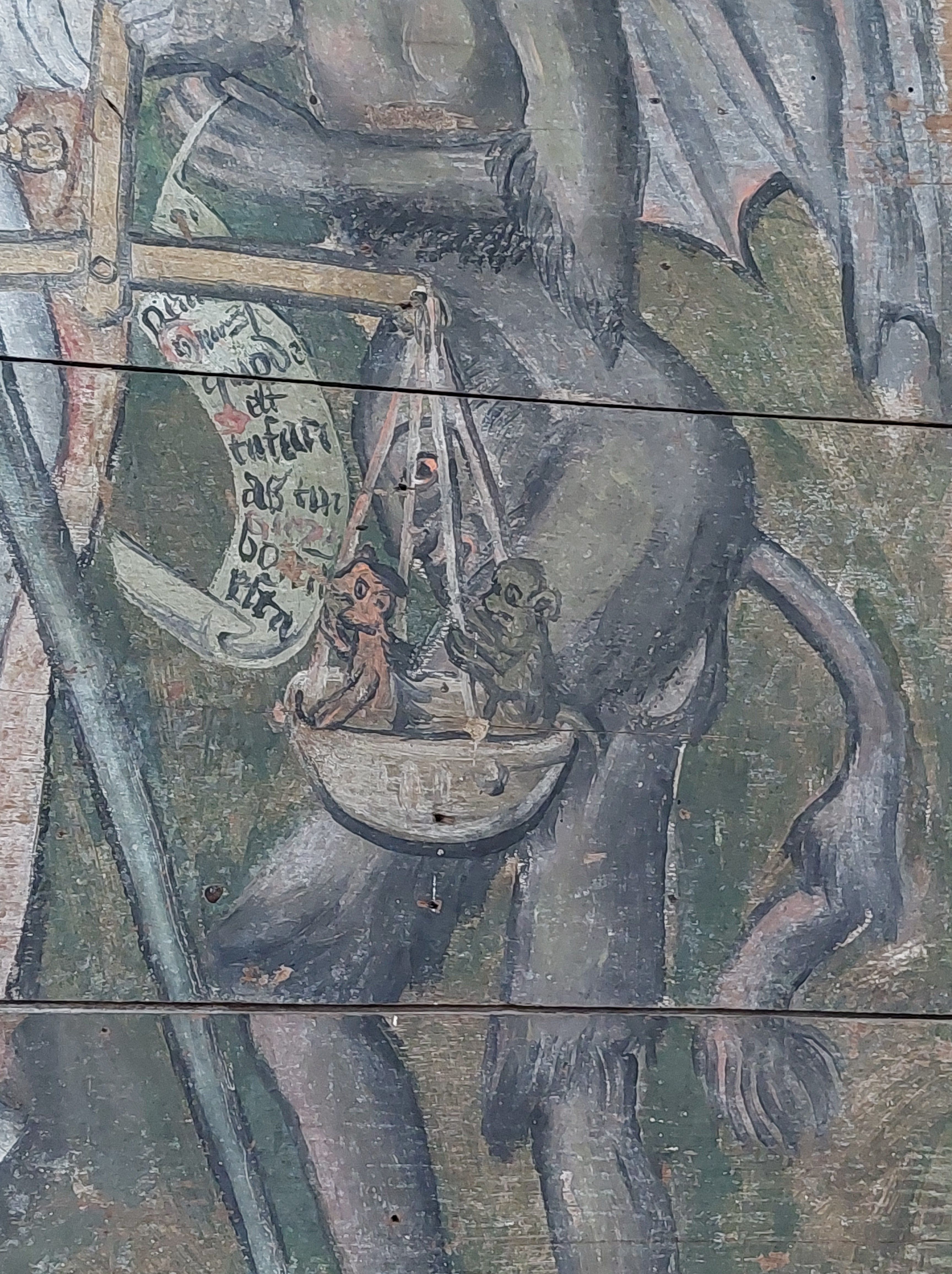
The Devil is wearing ragged sleeves and trousers which, according to the guide book, suggests the outfit worn by the Devil when the Wenhaston actors visited the seaside village of Walberswick in the late 15th century.  The Walberswick churchwardens described the entertainment as the ‘Wenhaston game’.  There is a second face painted on the Devil’s belly.  This is an artistic convention often seen in late medieval painting which suggests that the Devil’s soul had been put at the service of his lower appetite and he was no better than a brute.  The Latin text says ‘N(unc) quo deest tu facias tabo amnesta – now for what is lacking may you give pardon for sin’.  This is for the benefit of these two (rather cute) little souls in the upper pan of the scales as they are weighed against the single pure soul in the lower pan.
Beneath the image of Christ are the resurrected souls appearing above ground and their headgear – crowns, tiaras and mitres – have been included to show their station in life. Usually, the rich and powerful are seen mixing with ordinary mortals in Dooms to show equality on Judgement Day but in the Wenhaston Doom they are set apart for some reason.  Meeting them is St Peter in his papal tiara representing The Church which alone had the power to admit men and women to eternal life through the Sacraments.
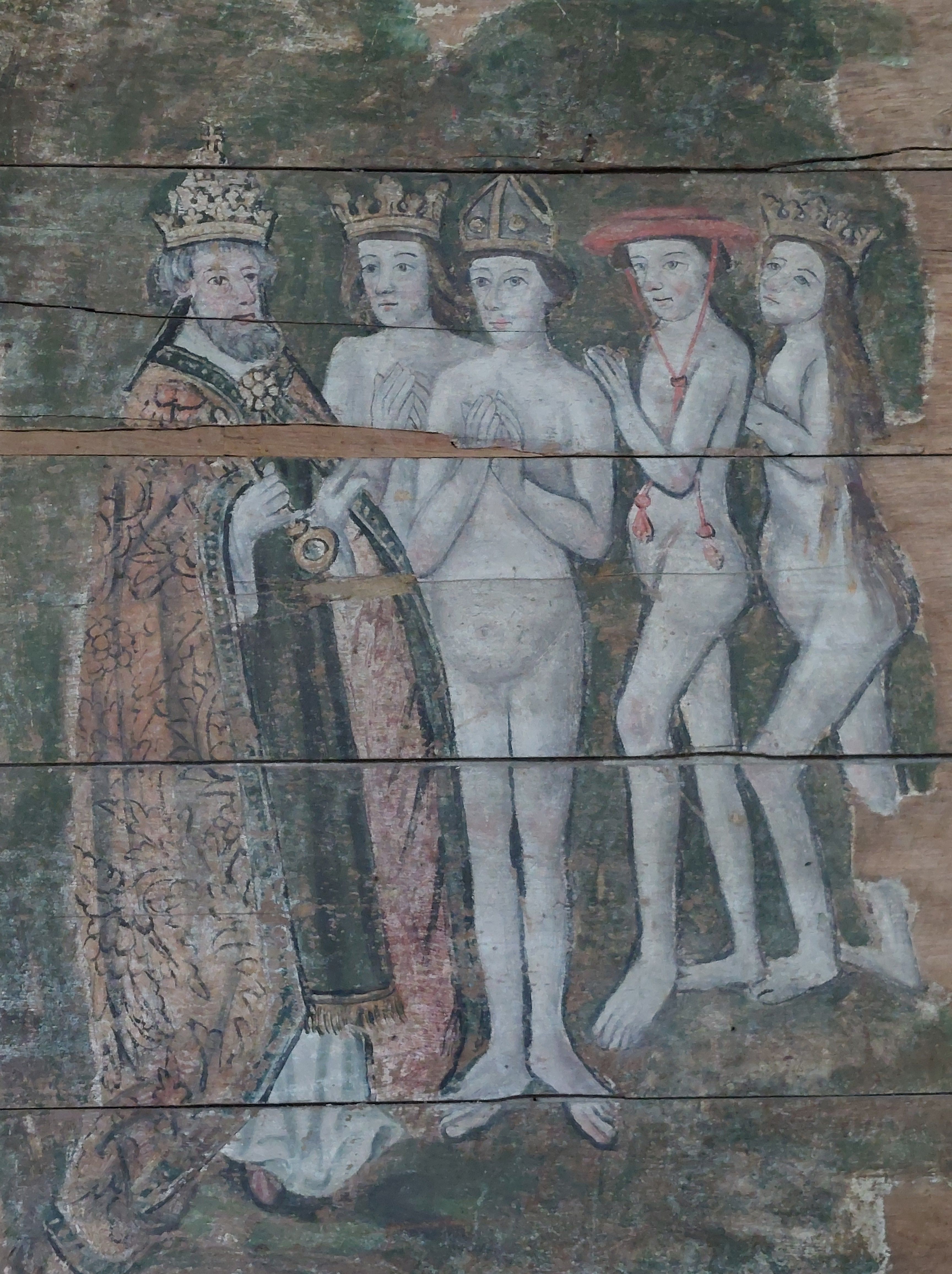
St Peter and the Resurrected.

The sheep and the goats have been separated and the sheep are admitted to the heavenly Mansions.  This is shown on the far left of the Doom.
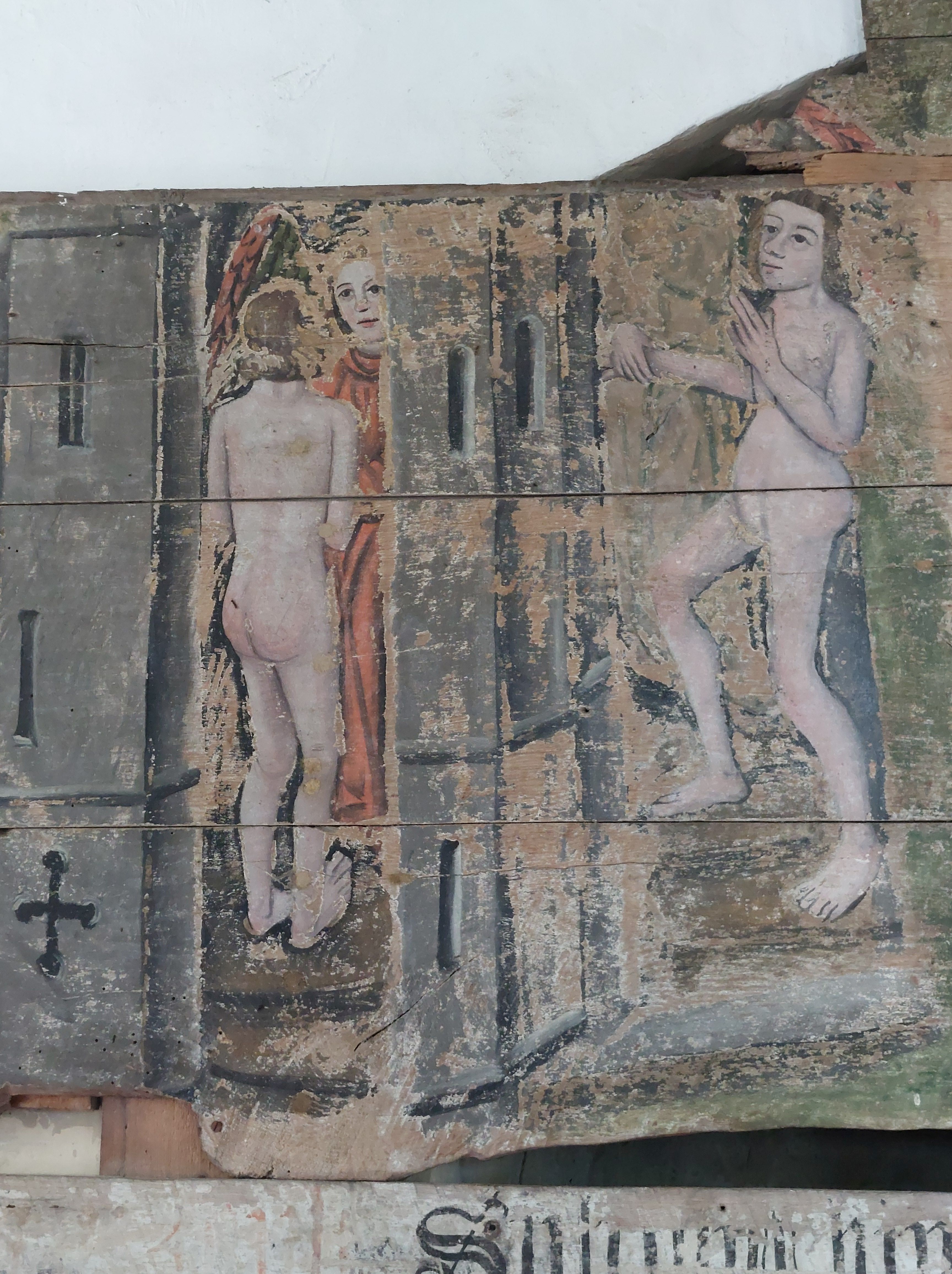
‘Do come in and make yourselves at home!’

The goats however, have only the eternal fires and gnashing of teeth to look forward to.  On the far right of the Doom little devils gather up the accursed and cast them into the jaws of Hell which are depicted here as the gaping, toothed mouth of a fish.  Leviathan, a huge aquatic creature is often mentioned in Hebrew poetry and this led to commentators and artists seeing Satan as Leviathan.  In the picture there is also a person still wearing their shroud, a swine’s snout, a devil blowing on a ram’s horn (the last trump?), the damned encircled by red-hot chains and the Seven Deadly Sins are represented, one of them carrying a female figure upside-down.
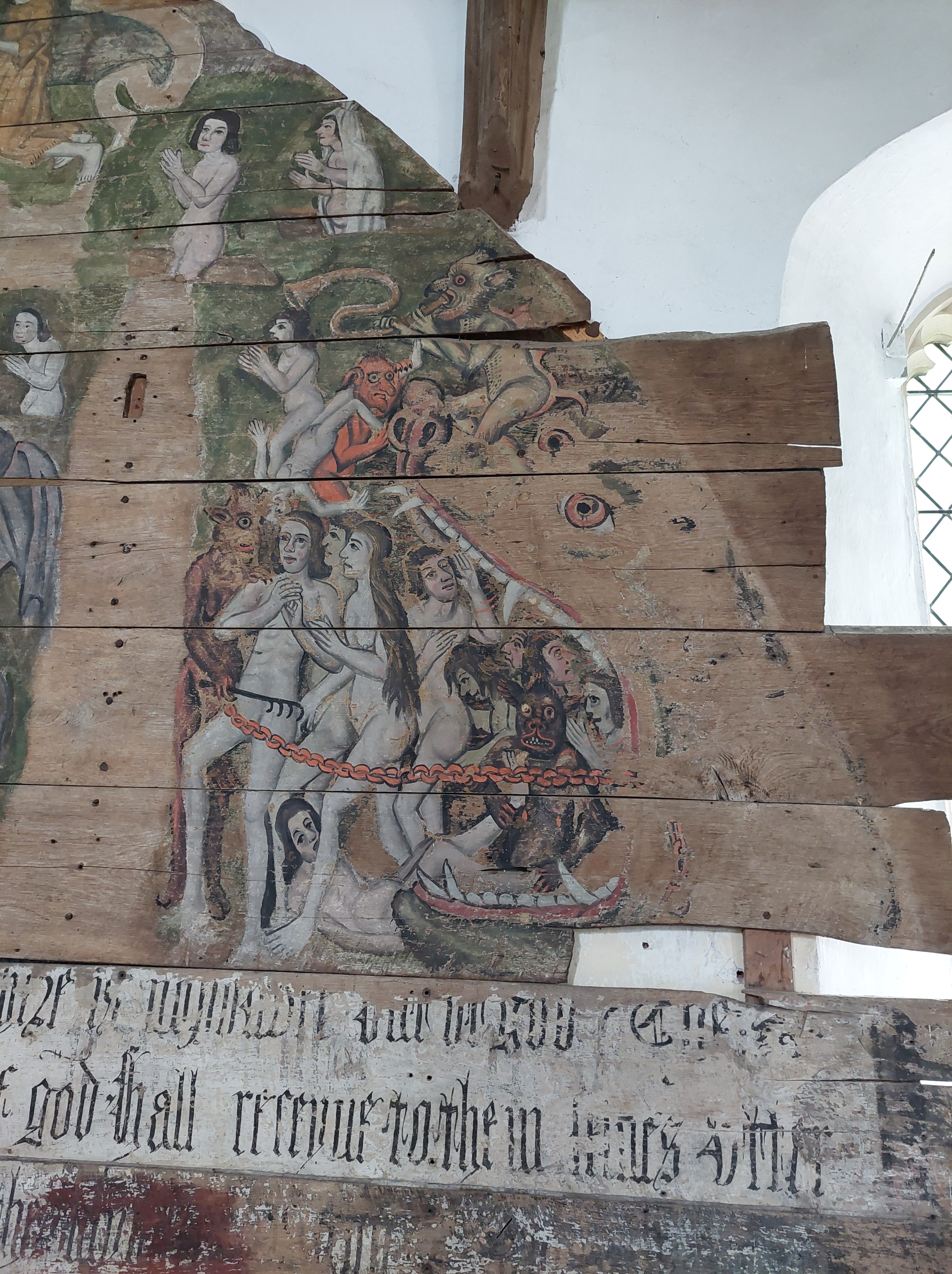
The text underneath the Doom is probably Elizabethan and is from an unknown version of the English Bible.  Romans 13 vv 1-4

“Let every soule submit him selfe unto the authorytye of the hygher powers for there is no power but of God the Powers that be are ordyend of God, but they that rest or are againste the ordinaunce of God shall recyve to them selves utter damnacion.  For rulers are not fearfull to them that do good but to them that do evyll for he is the mynister of God”.

I am greatly indebted to the excellent guide book I bought at the church for the explanation of the Doom’s symbolism.

Elinor in her red hat contemplating the Doom. The wooden panelling you can see beyond her under the windows are the repurposed box pews.
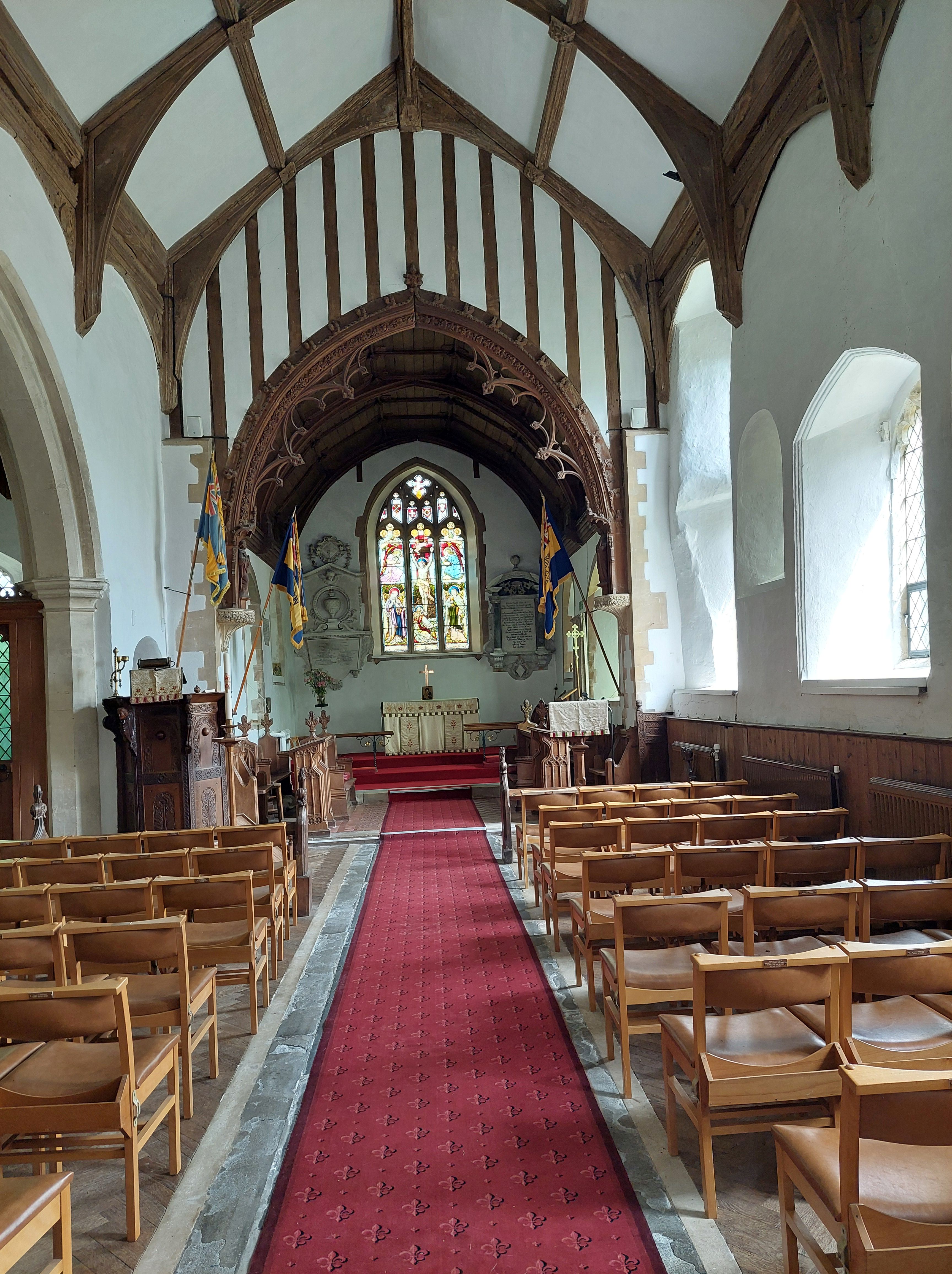
The interior of the church looking Eastward towards the altar

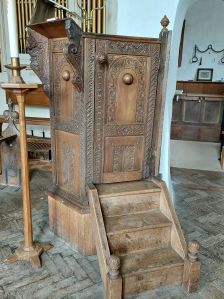
The Jacobean pulpit
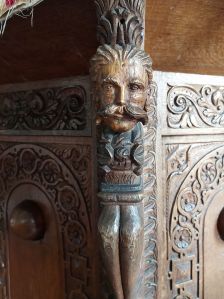
Face carved on pulpit
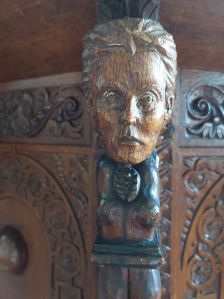
face carved on pulpit

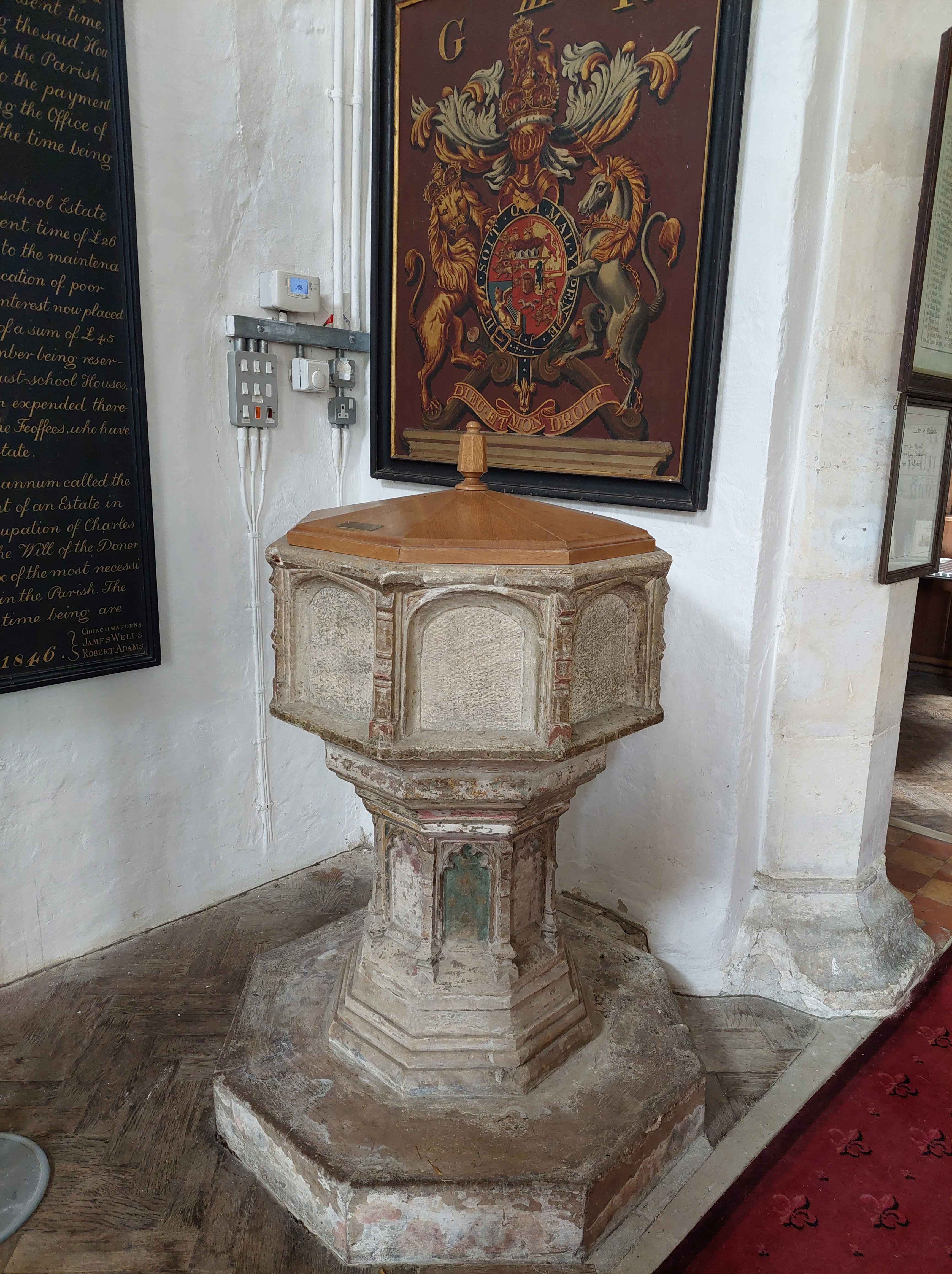
The Font – a Seven Sacrament font but unfortunately the reliefs that had been in the arched panels were erased in the 19th century. Behind the font is the George III Royal Arms
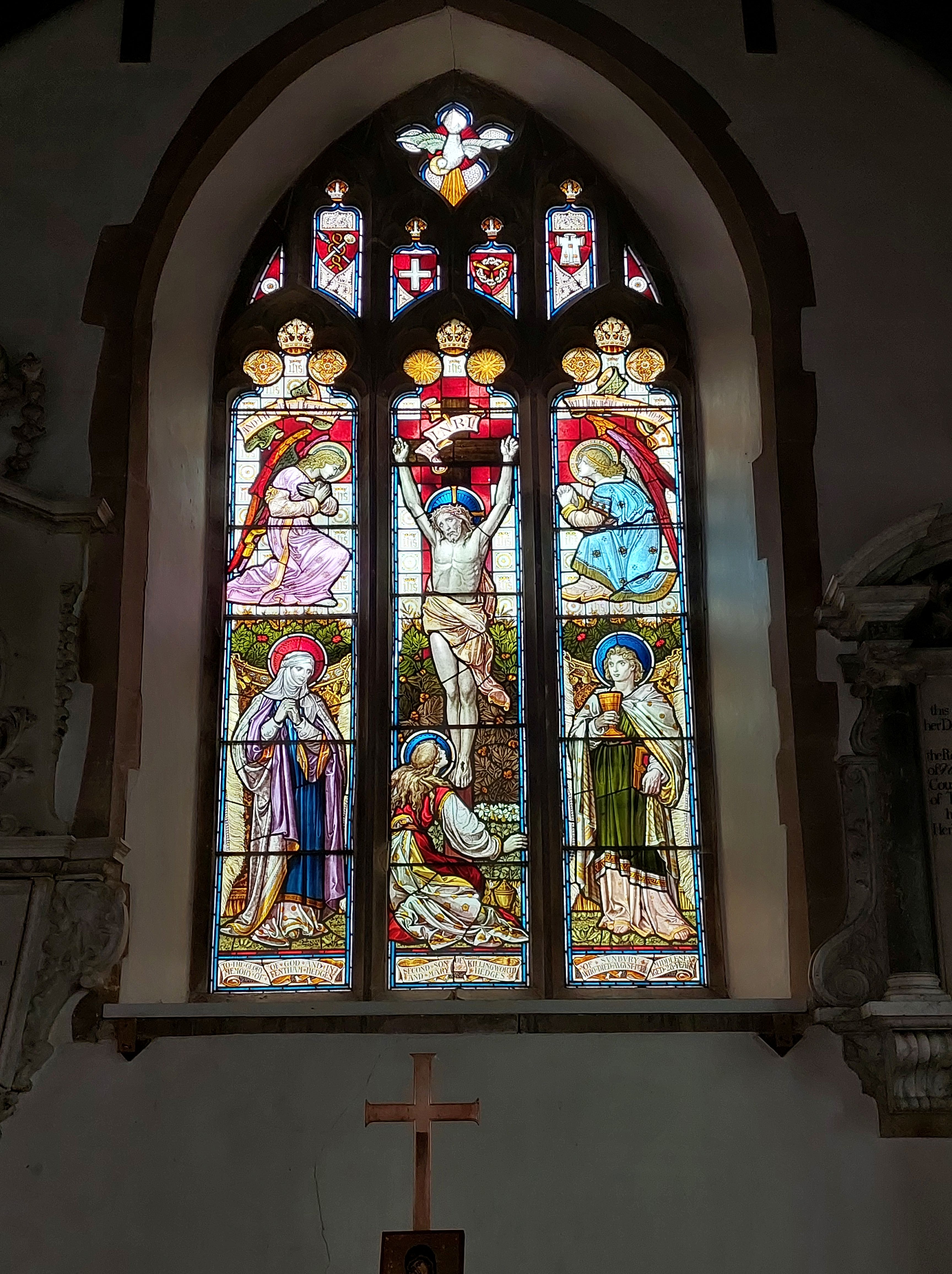
The East window
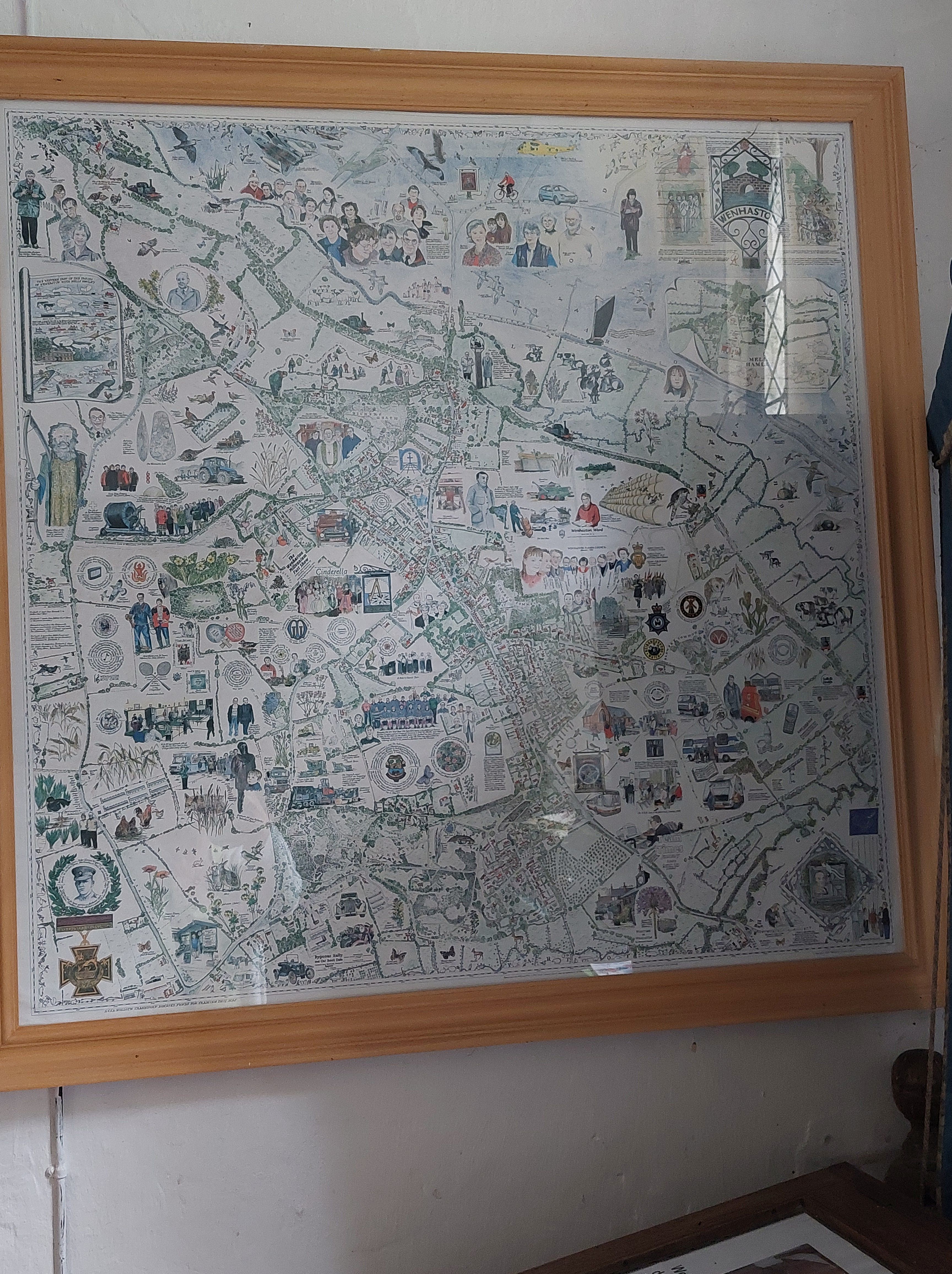
A map of the parish

This slideshow requires JavaScript.

Above is a gallery of all the windows in the church and below is the door.
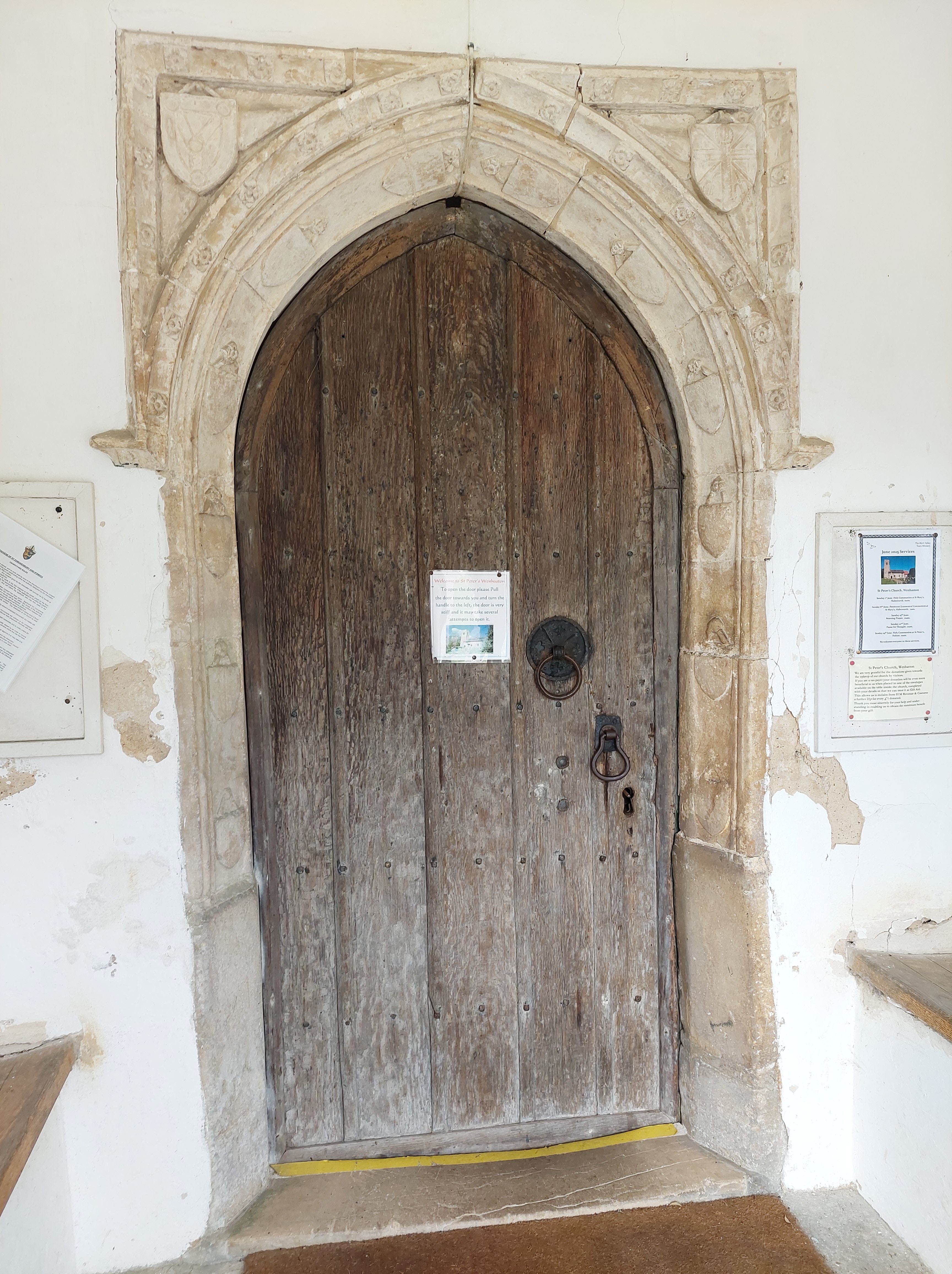
The outside of the South door, the main entrance to the church. The door retains the medieval sanctuary knocker.

A cupboard with a catch
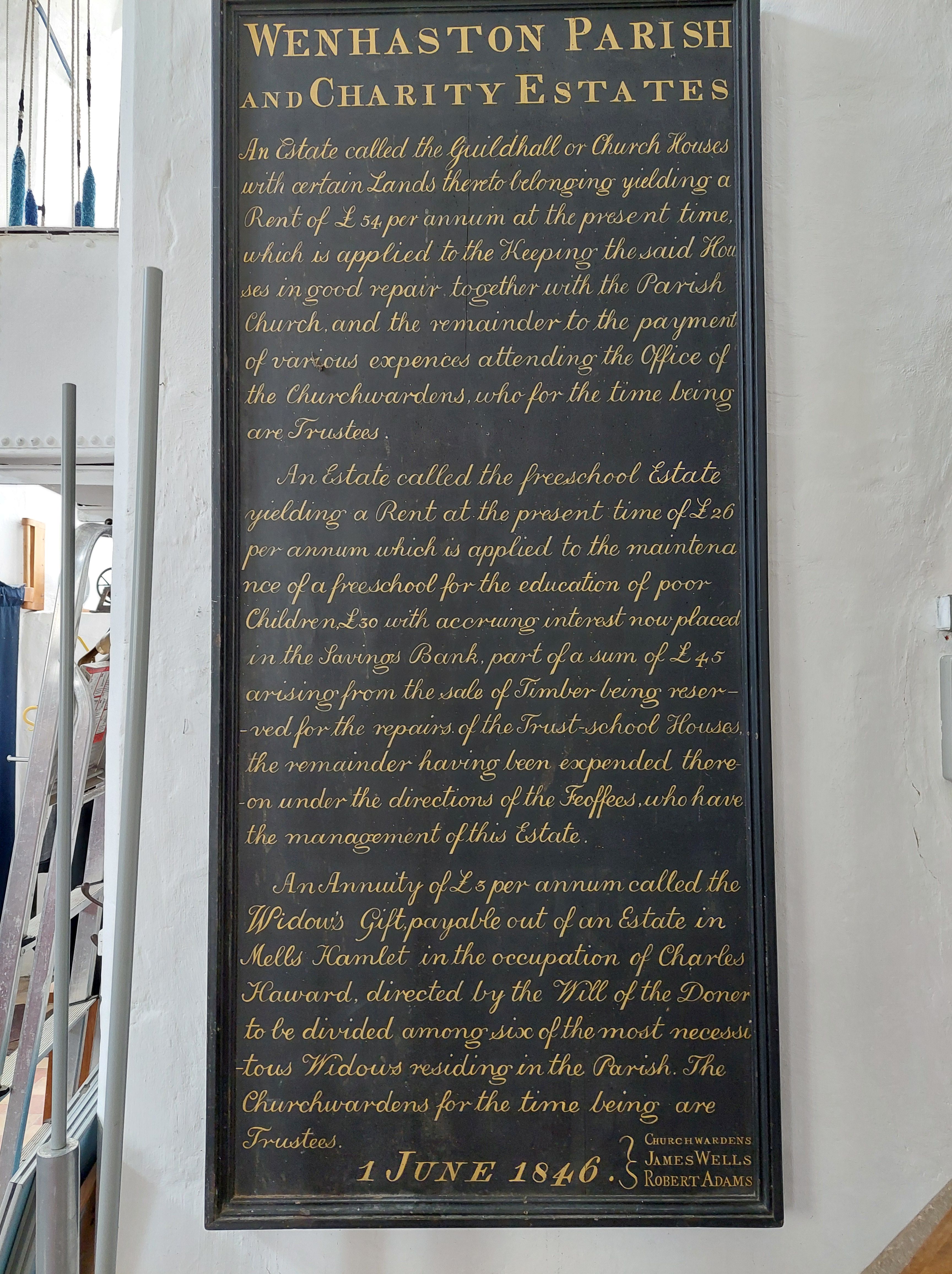
The Charity Board
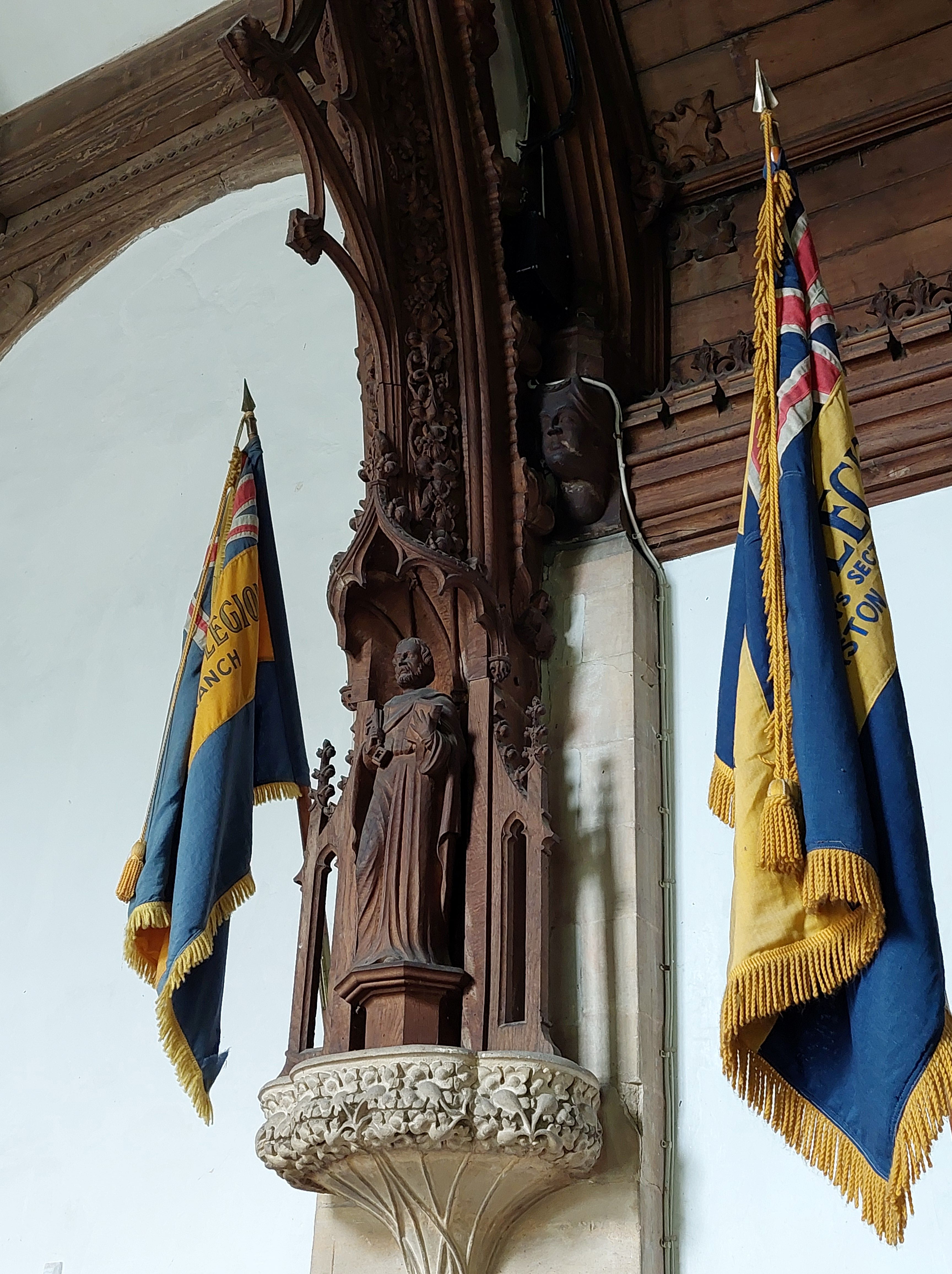
Part of the new chancel arch from 1892
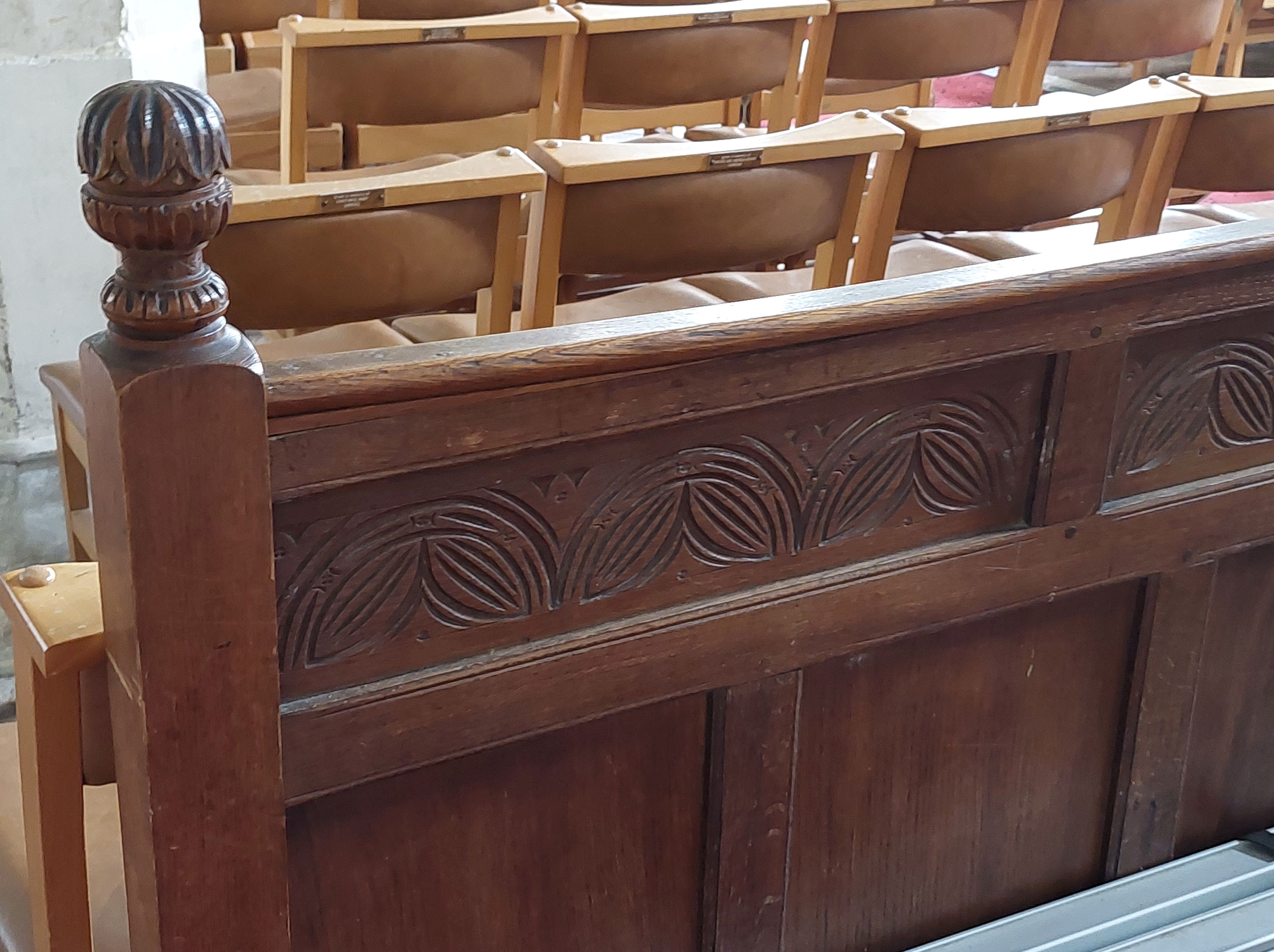
More carved panelling from the box pews.
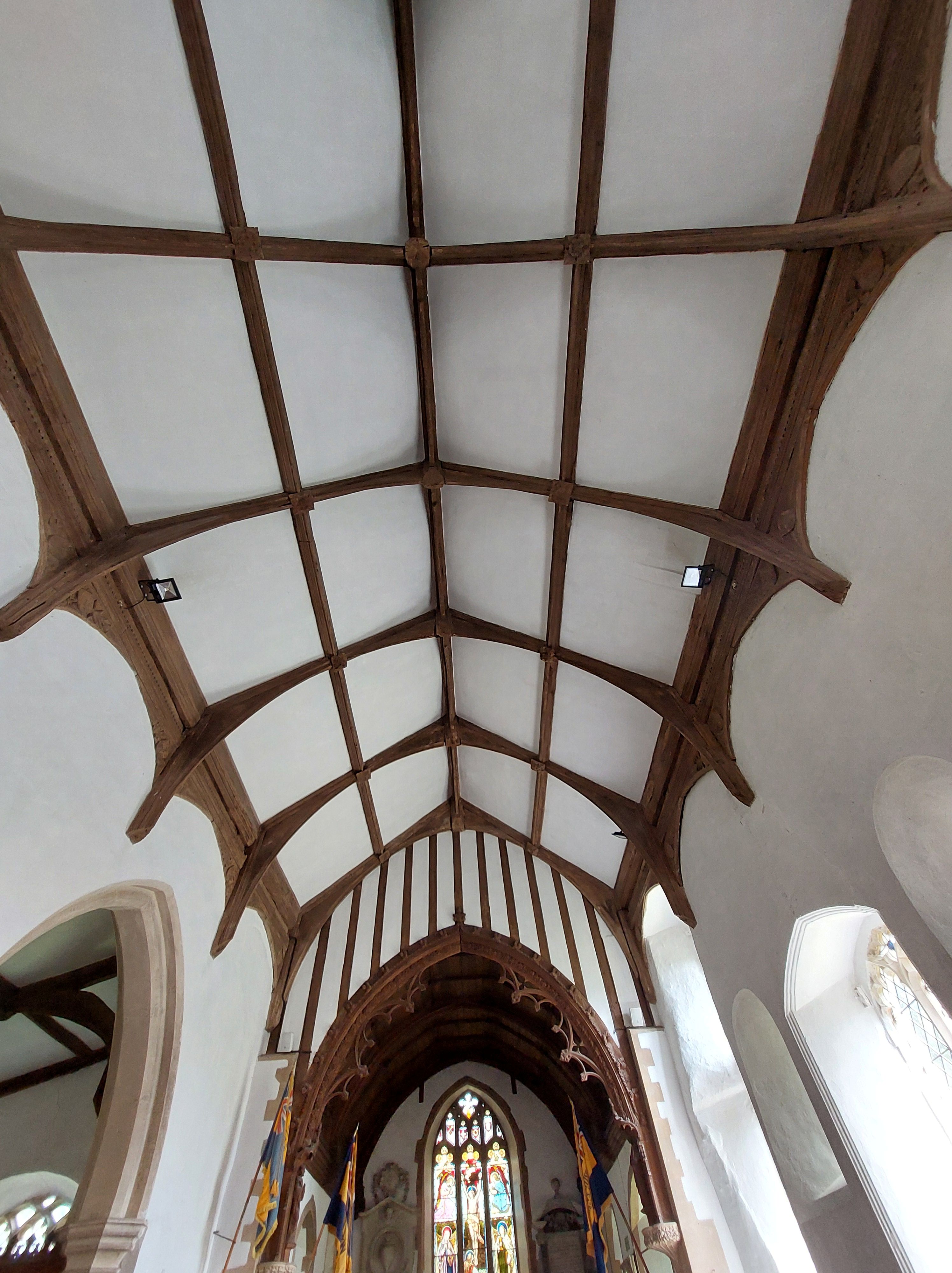
The Nave roof
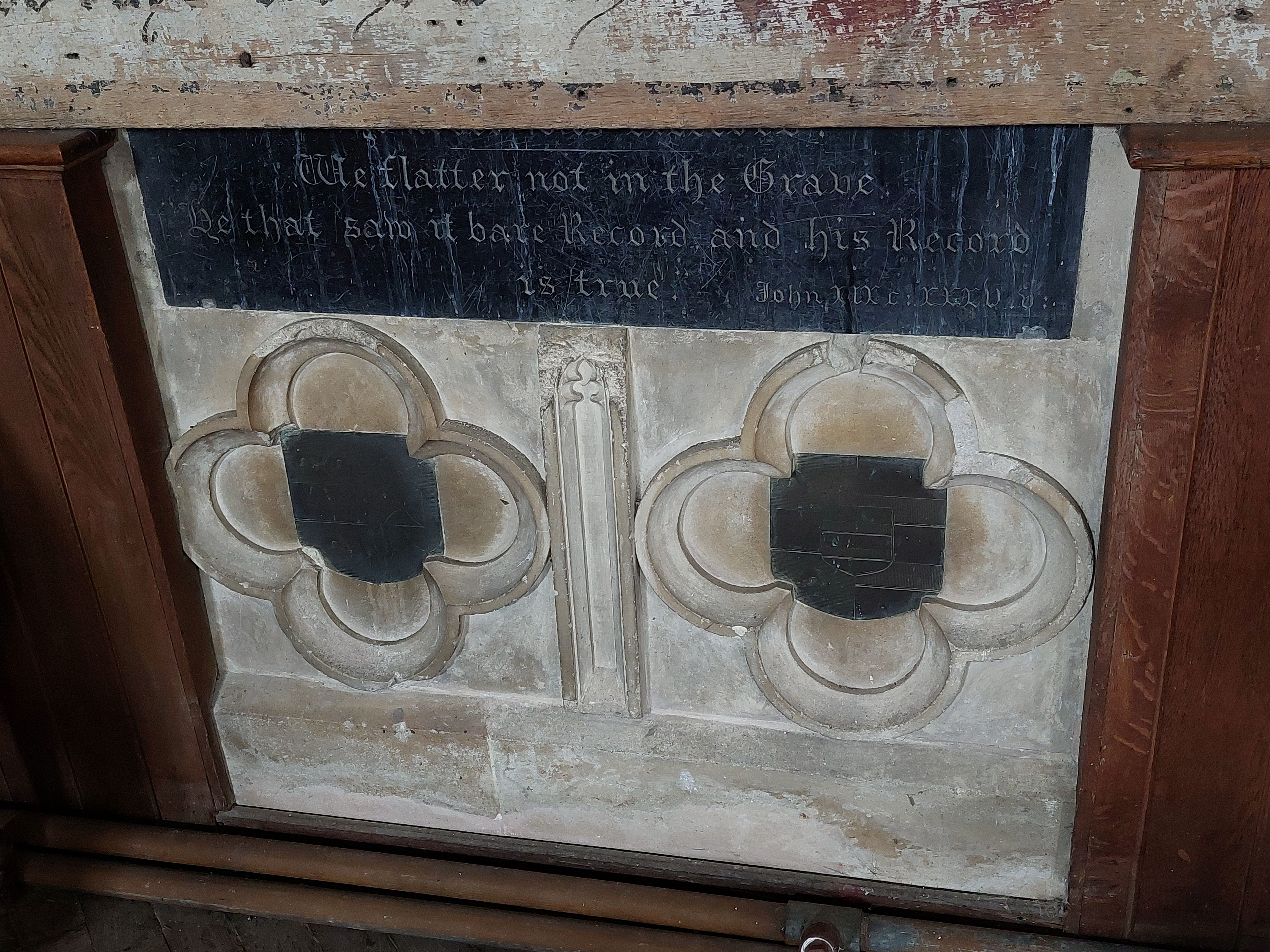
Part of a memorial to Reverend J Leman who died in Bath.
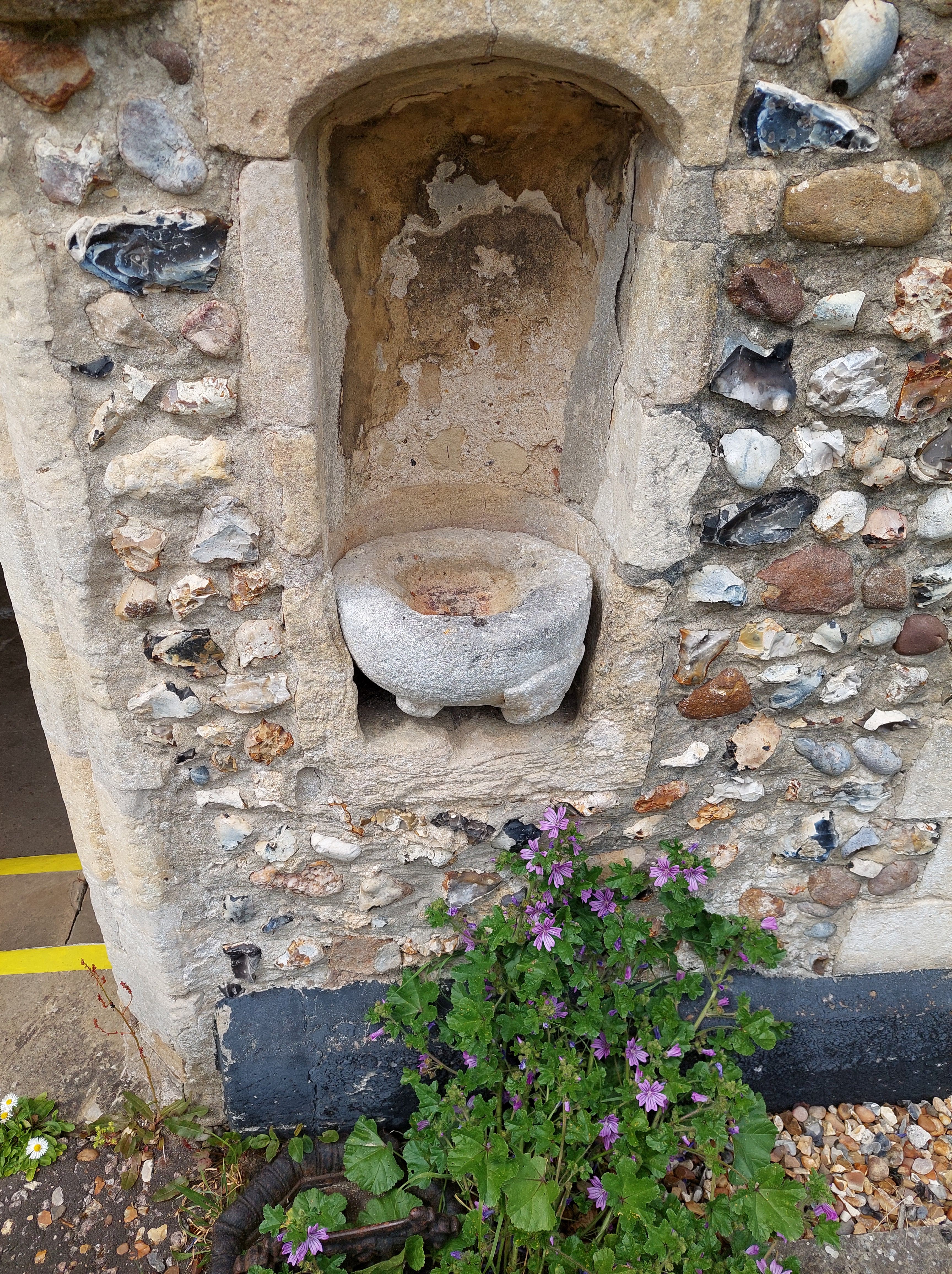
Medieval Holy water stoup on the outside of the church next to the door

Chest tombs
Chest tombs
20250612_142511Creeping cinquefoil1
Chest tomb
Chest tomb

Apologies for the length of this post.
Share this:

  • Share on X (Opens in new window) X
  • Share on Reddit (Opens in new window) Reddit
  • Share on Pinterest (Opens in new window) Pinterest
  • Share on Facebook (Opens in new window) Facebook
  • Email a link to a friend (Opens in new window) Email
  • Share on Tumblr (Opens in new window) Tumblr
  • Print (Opens in new window) Print
  • Share on Pocket (Opens in new window) Pocket
  • Share on LinkedIn (Opens in new window) LinkedIn
Like Loading...

Holiday in Brittany – August 1999. Part 2.

24 Sun Mar 2024

Posted by Clare Pooley in Brittany, Days out, France, holidays, Rural Diary

≈ 49 Comments

Tags

Brittany, Kernascléden, L'Étang du Bel Air, Les Roches du Diable, R. Ellé, R. Scorff

Here follows the next episode of our Brittany holiday.  I thought I would include here an example of Breton folk music just so you can get an idea of the kind of music we heard when we arrived in Brittany.  I also apologise for the grainy and blurred photos.

Sunday 22nd August

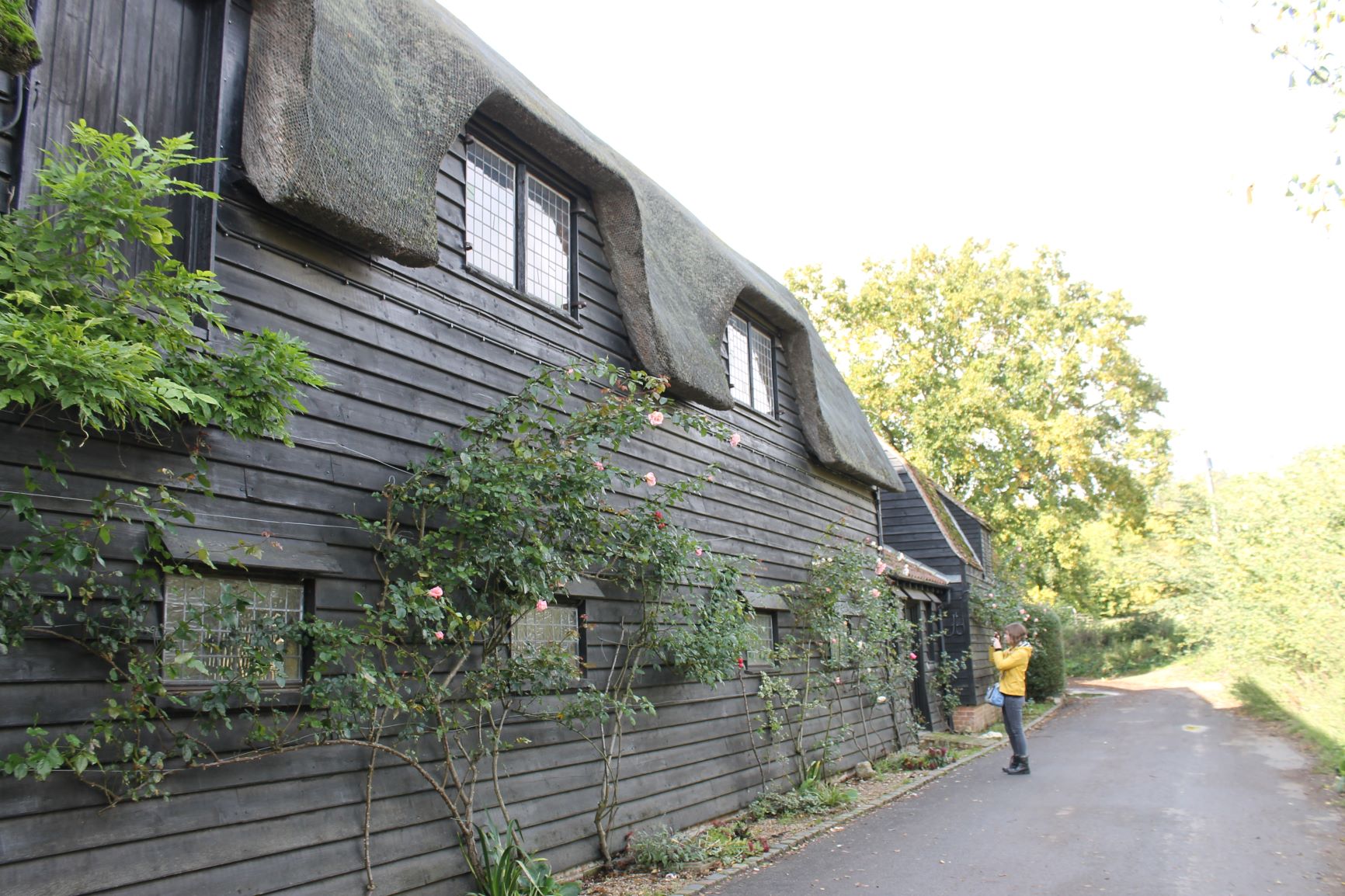
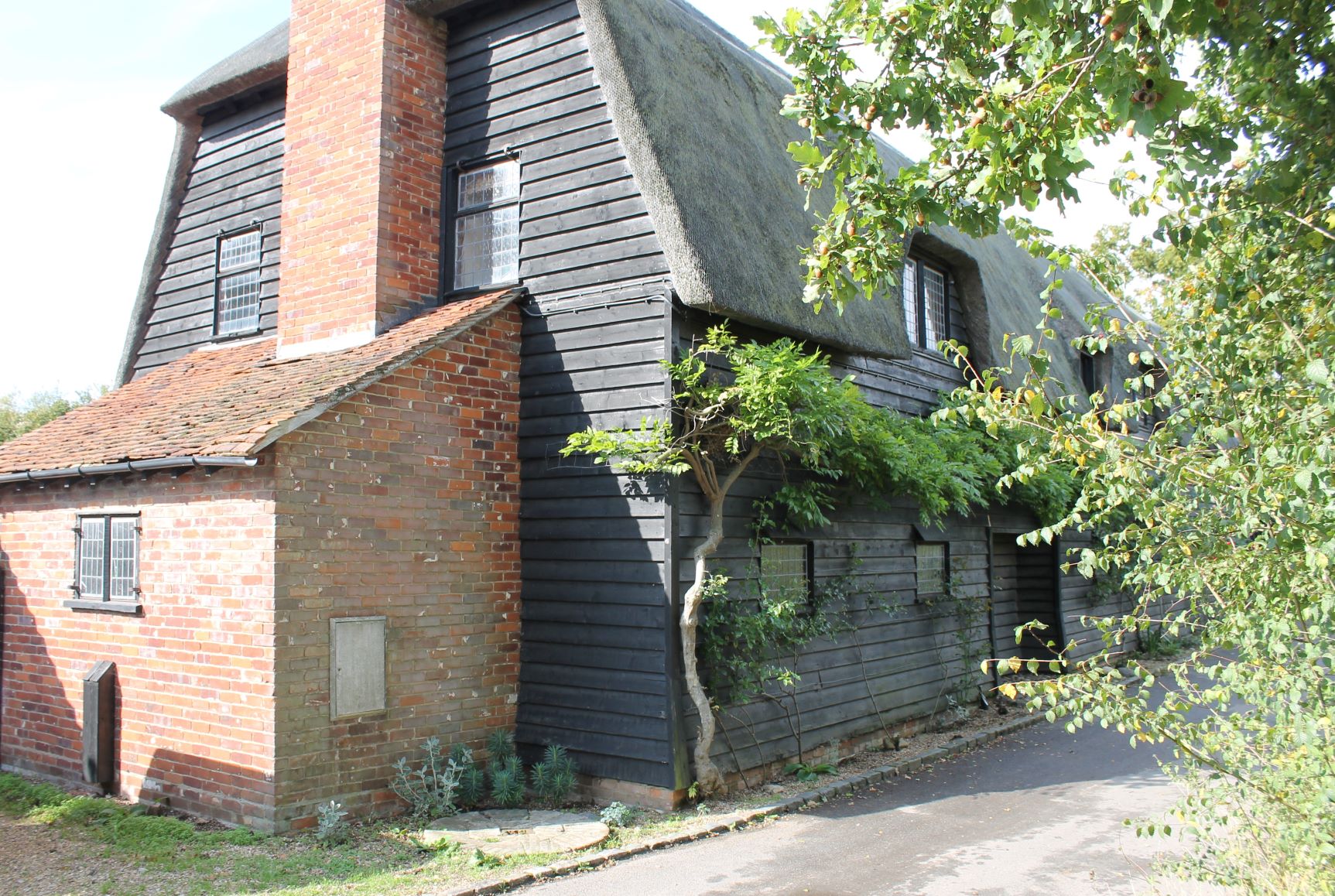
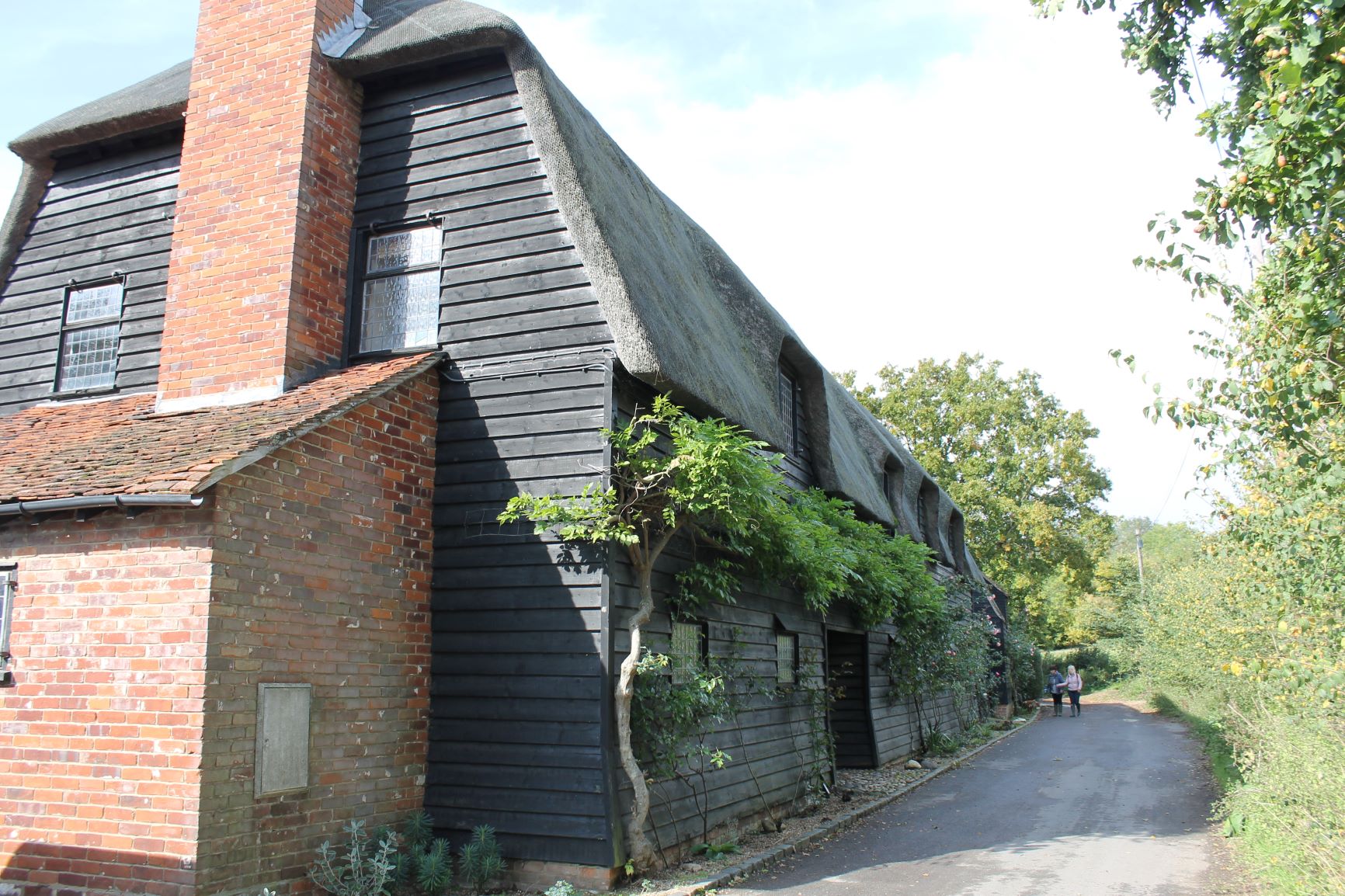
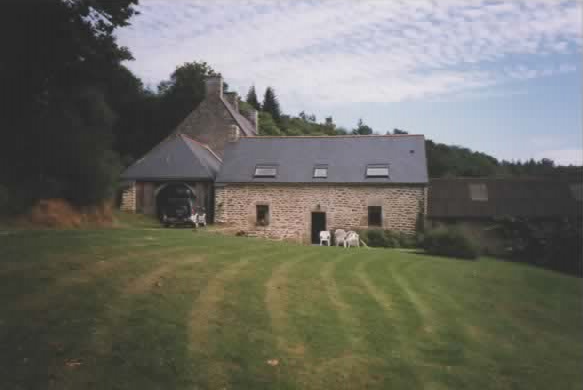
This is where we were staying. I believe the building was a converted barn and the house where the owners lived is the taller building with the chimneys at the back.

We decided that we would not do much today and just get used to being in our cottage in France.  The weather was nice so we sat outside quite a lot.

View from the gîte.

Another view.

We drove into Le Faouët during the early evening and went to a Breton crêperie for tea.  We all enjoyed our meal and decided we would return there sometime soon.

Richard didn’t feel too well during the evening and went to bed early.  (Over-tired probably!).


Monday 23rd August

A foggy start to the day.

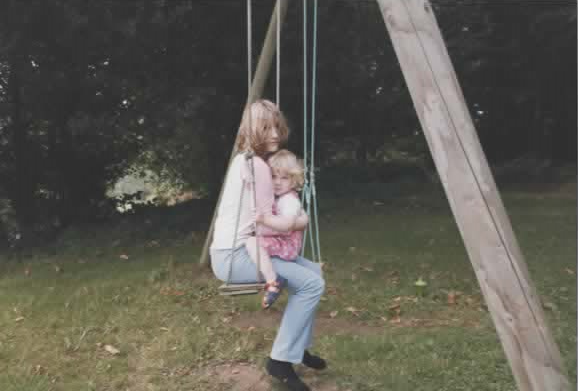
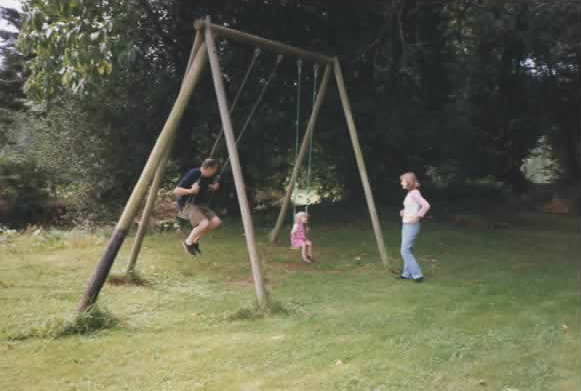
The day began well but we soon had our first accident with Alice breaking one of the plates as she was wiping up after we had washed the breakfast things.  (We are an accident-prone family!).  Richard took Elinor out to play on the swings but the swing broke and Richard badly burnt his arm on the rope as he tried to break his and Elinor’s fall.  After patching up his arm and having a cup of tea we decided we would go for a scenic drive during the afternoon to the Étang du Bel Air and the Scorff valley.  We cooked some soup for our lunch.

Alice and Elinor on the swing.

Everyone wanted a swing!

This slideshow requires JavaScript.

Shortly before setting off for our drive, Elinor fell down the steps from the sitting area onto the hard tiles in the dining area.  We didn’t realise at the time but she had landed on her ear and badly bruised it.

Another view
Another view
... and another!
… and another!

We drove through Le Faouët and, via L’Abbaye Notre-Dame de Langonnet, on to Priziac which is next to L’Étang du Bel Air.  We walked a little way round the lake until Elinor got tired and Alice began complaining of hunger and cold.  We returned to the little beach near the car-park where a café was just opening and bought coffee and crisps and Alice bought an ice-cream.  The ideal food to eat when you are cold!

The link below will lead you to some pictures of the lake courtesy of google maps and the photographers who have donated their photos to that site.

https://www.google.co.uk/maps/place/%C3%89tang+du+Bel-Air+(Priziac)/@48.060833,-3.422222,3a,75y,90t/data=!3m8!1e2!3m6!1sAF1QipNYWgEdiVJ1xESRARXWMaQmEjVSoJRR-nltk3VE!2e10!3e12!6shttps:%2F%2Flh5.googleusercontent.com%2Fp%2FAF1QipNYWgEdiVJ1xESRARXWMaQmEjVSoJRR-nltk3VE%3Dw360-h172-k-no!7i5446!8i2617!4m7!3m6!1s0x4811aaf04b63c65f:0x7b65e6109b4eb1cf!8m2!3d48.060833!4d-3.422222!10e5!16s%2Fg%2F112yg5mzy?entry=ttu

We then drove to Kernascléden via le Croisty and St-Caradec-Trégomel.  We looked at the church which has medieval paintings in it and then went to the toy museum.  (I looked on-line to see if the toy museum is still going and unfortunately I don’t believe it is.  There are some images of the museum but I think they are old pictures.)  We bought some postcards and groceries from a shop before driving off to the Scorff valley with its beautiful scenery.  We stopped at a likely place by the R. Scorff and Richard and Alice got out of the car.  A kingfisher flew past and they saw lots of pond skaters (insects) in the calmer parts of the river.  Next, we drove to Plouay where I used a public toilet (most unpleasant!) and then travelled on to Les Roches du Diable and looked at the wonderful rock formations on the R. Ellé.The rocks are supposed to have been thrown by the devil at Saint Winwaloe who had set up home by the river but the saint outwitted and defeated the devil.  The rocks show the devil’s claw marks on them.

We drove back to our cottage and Richard cooked us pasta and sauce for our evening meal followed by crêpes.  The rain started as we got home and continued to fall very heavily almost all night long.

Share this:

  • Share on X (Opens in new window) X
  • Share on Reddit (Opens in new window) Reddit
  • Share on Pinterest (Opens in new window) Pinterest
  • Share on Facebook (Opens in new window) Facebook
  • Email a link to a friend (Opens in new window) Email
  • Share on Tumblr (Opens in new window) Tumblr
  • Print (Opens in new window) Print
  • Share on Pocket (Opens in new window) Pocket
  • Share on LinkedIn (Opens in new window) LinkedIn
Like Loading...

Walks With Elinor – Reydon Wood

22 Mon Nov 2021

Posted by Clare Pooley in Days out, Rural Diary, woodland

≈ 90 Comments

Tags

bluebell, coppice, dog violet, Goldilocks Buttercup, great crested newt, Holly, Hornbeam, Hoverfly, lesser celandine, primrose, Reydon Wood, Suffolk, Suffolk Wildlife Trust, walk, water-violet, wild strawberry, Wood Anemone, woodland

Let me take you back in time to the end of April of this year.  In preparing this post it has been strange looking through my early spring photographs while the leaves outside are falling from the trees and most of the flowers have gone.

Elinor and I had enjoyed our two previous walks in Halesworth and Beccles but this time we wanted to get away from people and buildings and into the woods.  One of our favourite places is Reydon Wood which is cared for by the Suffolk Wildlife Trust.  I have written posts about family walks in this wood a few times before but the last time we visited was about three years ago; how could we have left it that long?!
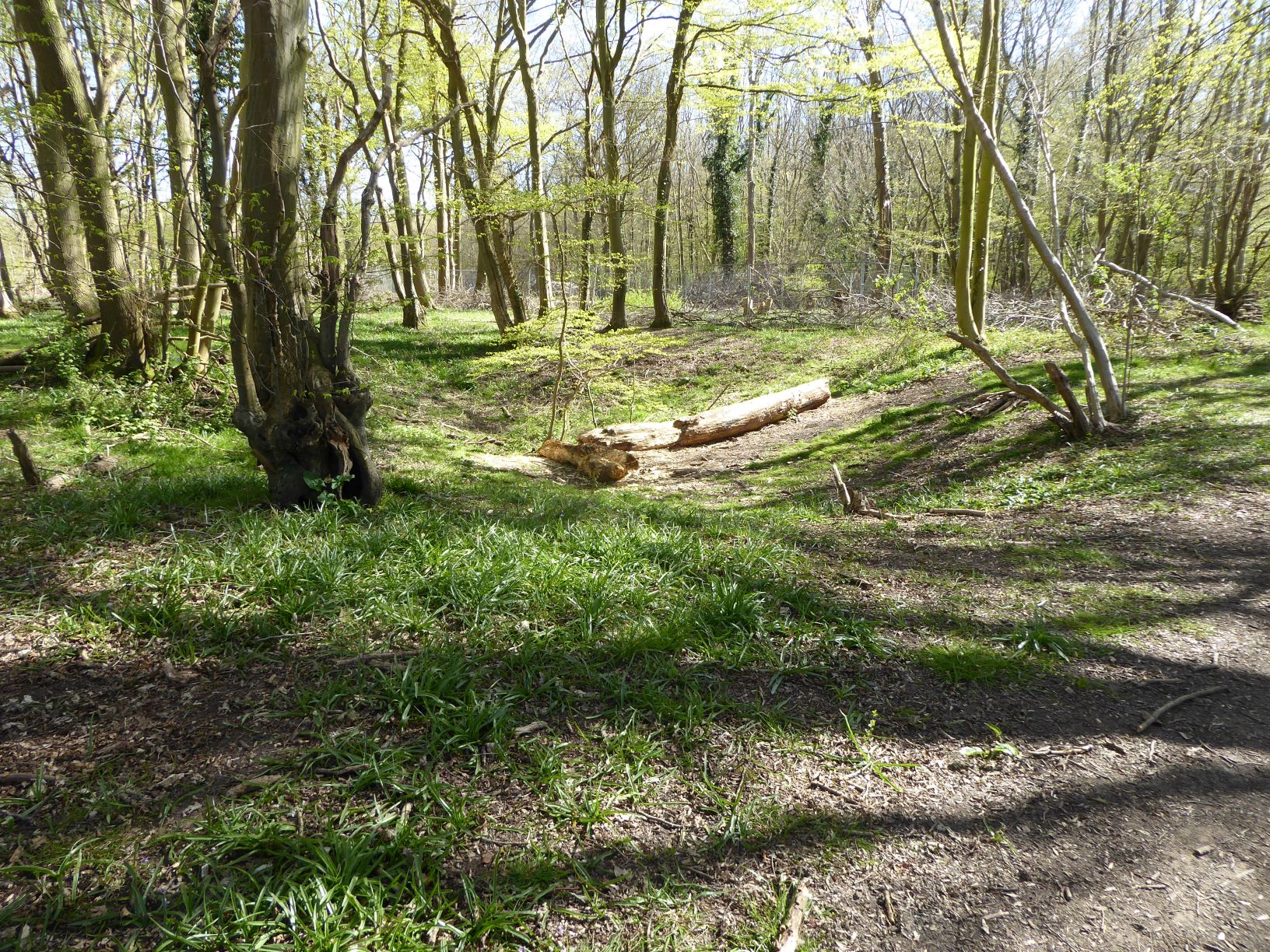
Reydon Wood

The weather was perfect, chilly but sunny and there hadn’t been any rain for quite a while so the paths were free of mud.  Spring was cold and late this year so the first leaves were only just beginning to show on the trees. The wood was full of birdsong and we soon found any number of spring flowers in bloom.  The light was strong and bright which was not conducive to good photography, for which I apologise.

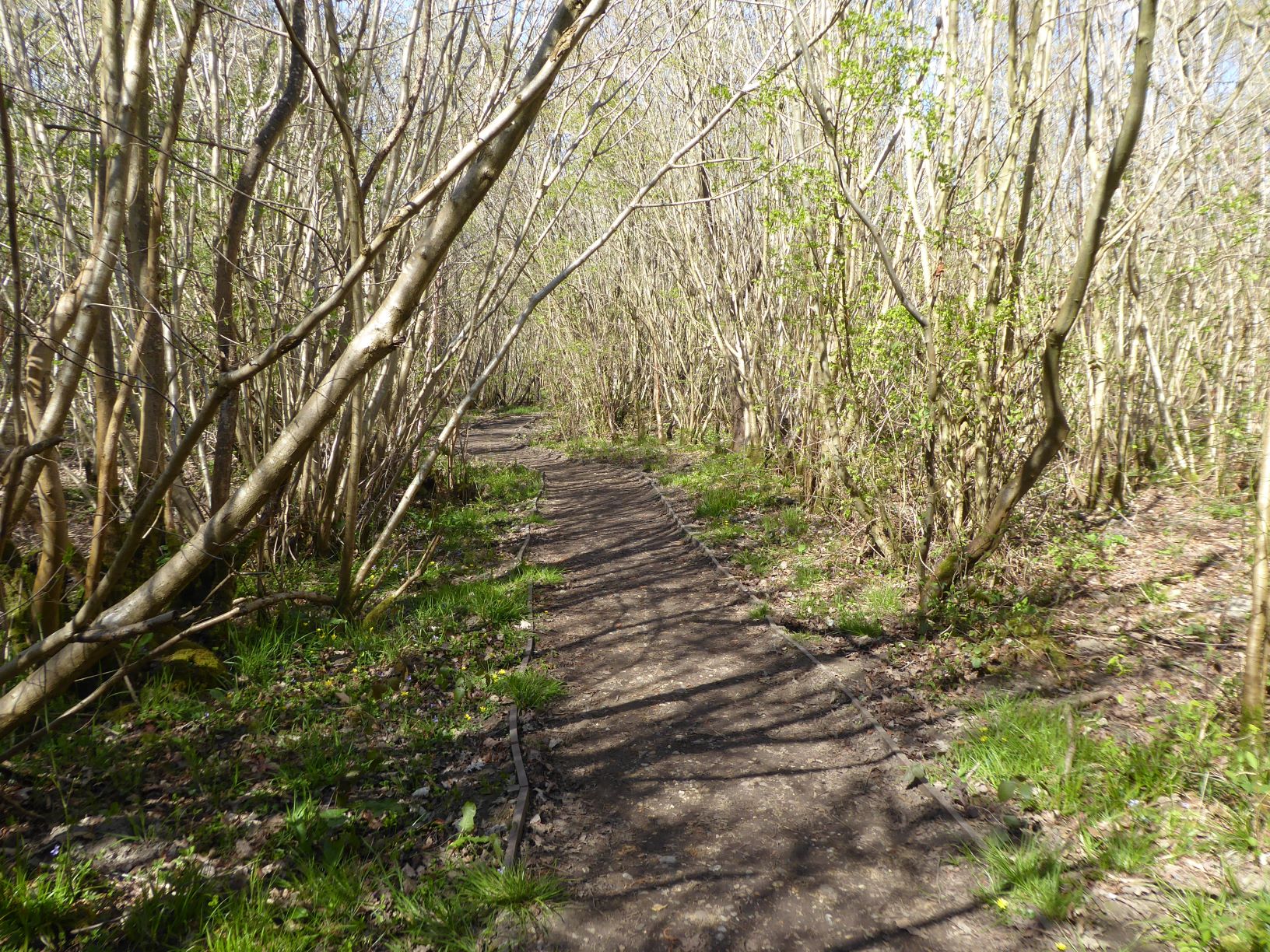
The path through the woods

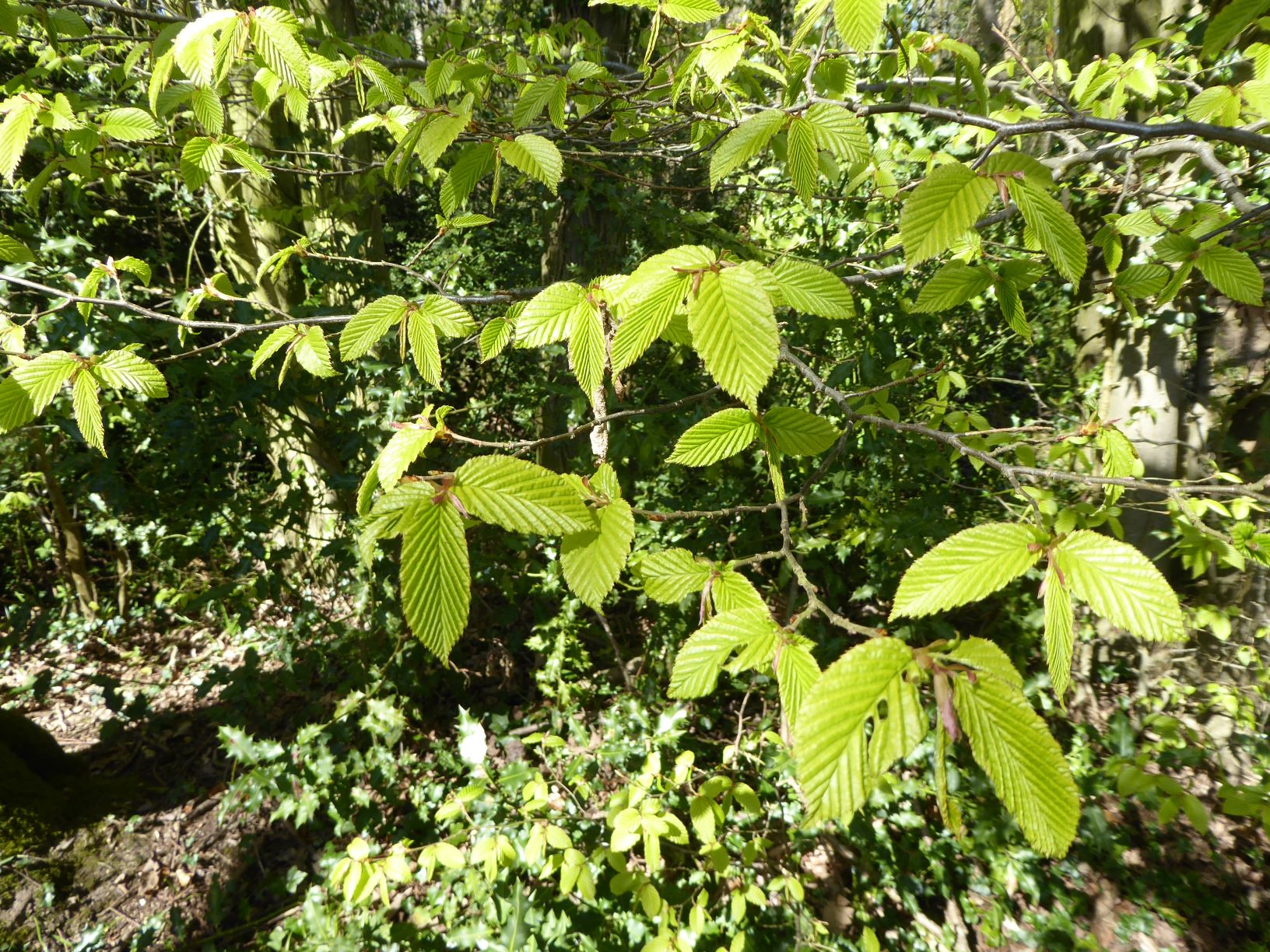
I love these perfectly pleated Hornbeam leaves (Carpinus betulus )

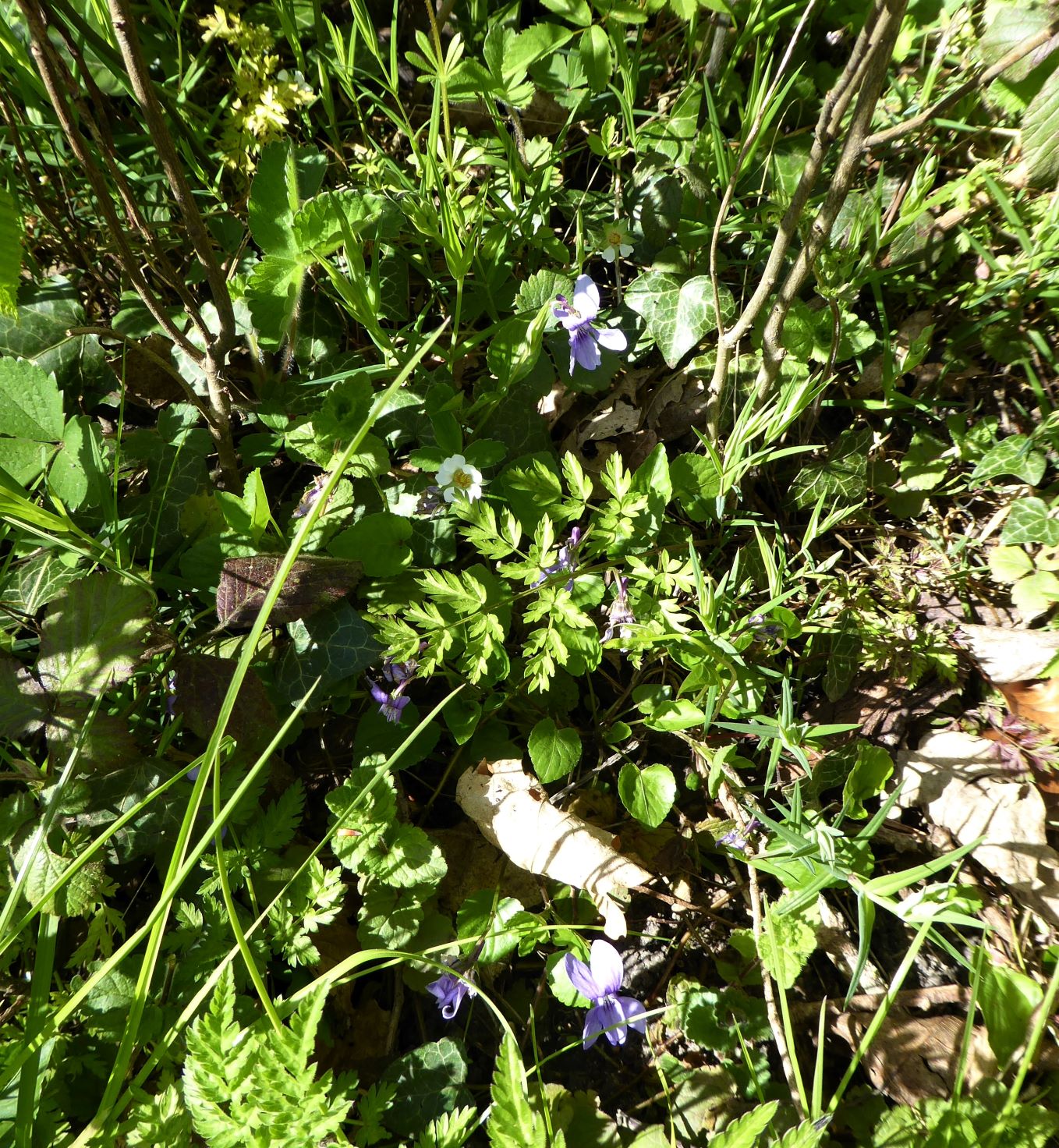
Common Dog Violets (Viola riviniana ) and a small white Wild Strawberry flower (Fragaria vesca) in the centre of the picture

Reydon Wood is quite small and would only take twenty minutes or so to walk round if one wasn’t interested in stopping and looking at anything.  We heard a couple of women approaching from behind us and stood to one side as they walked past talking non-stop.  We waited while the noise of their voices faded and birdsong re-established itself.

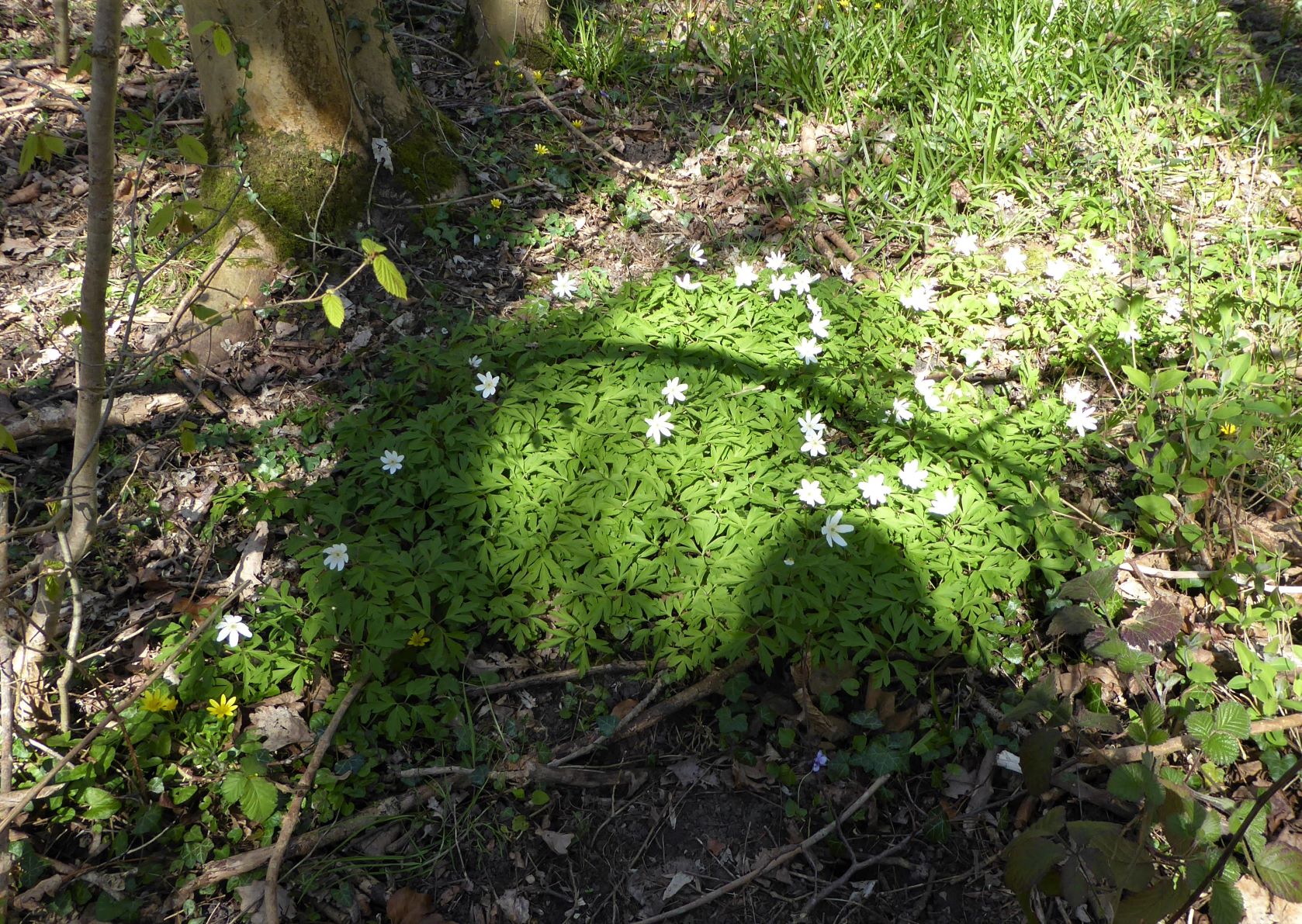
We saw Wood Anemones (Anemone nemorosa ) in the wood for the first time

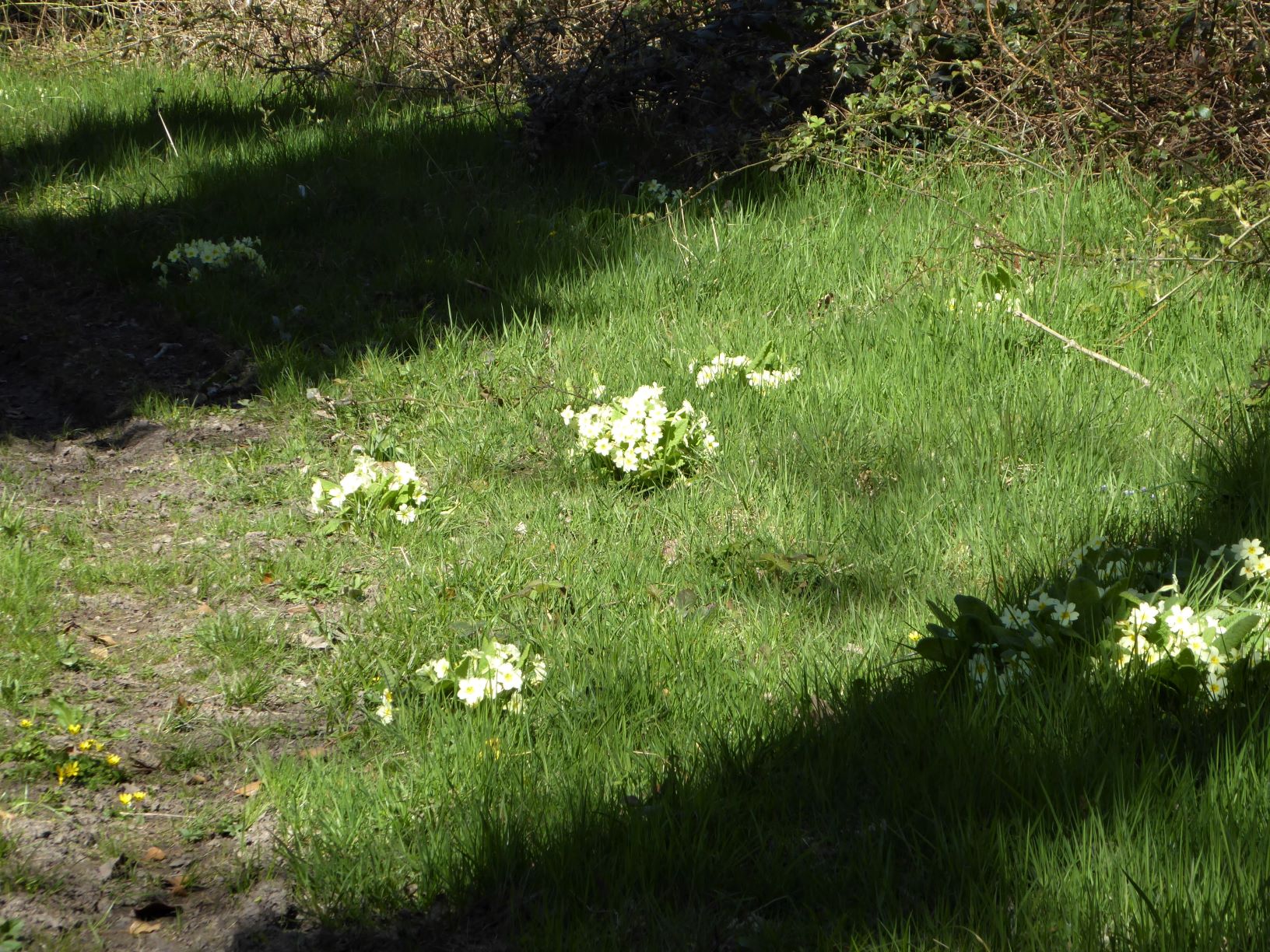
Primroses ( Primula vulgaris) were in flower

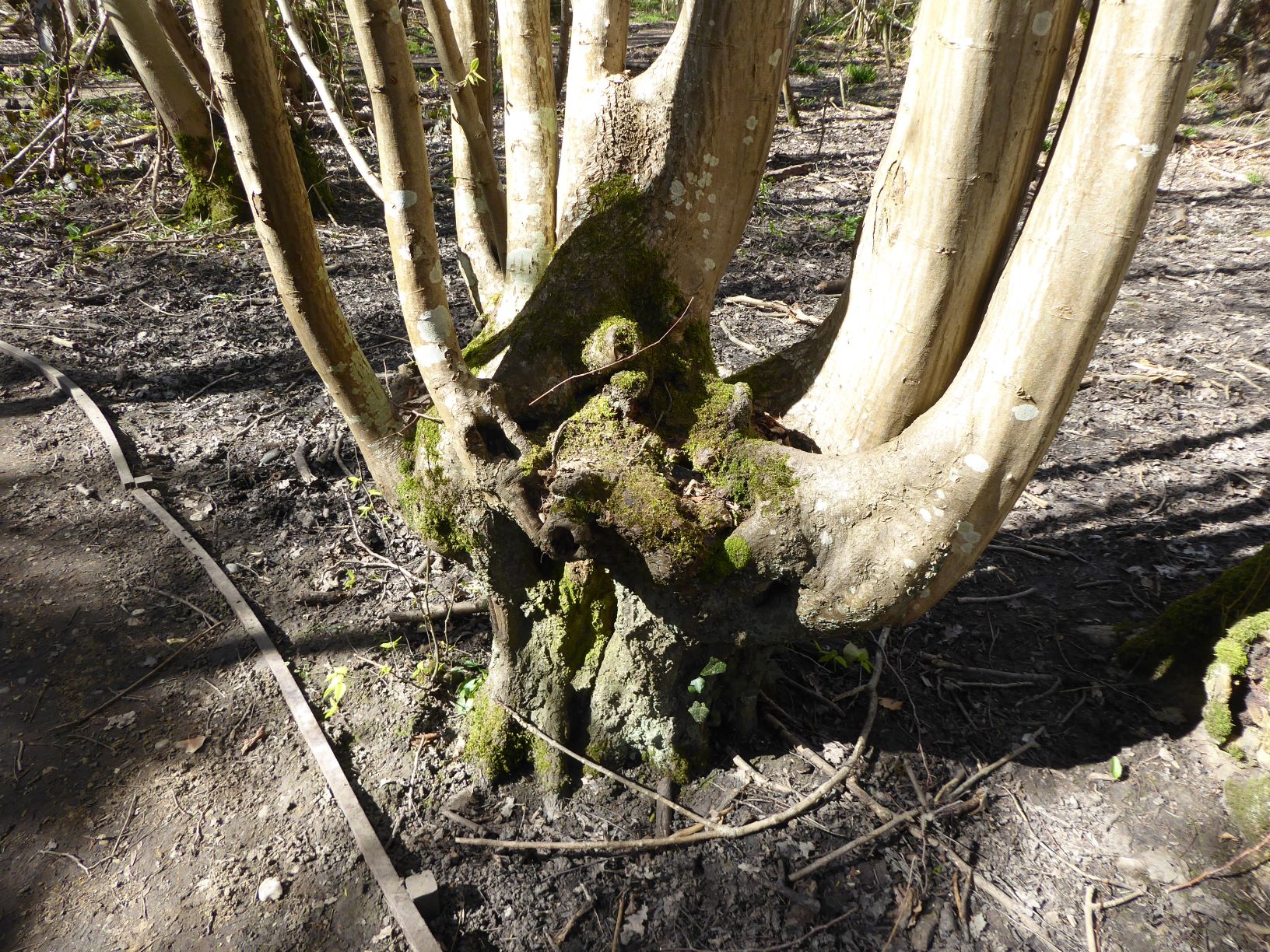
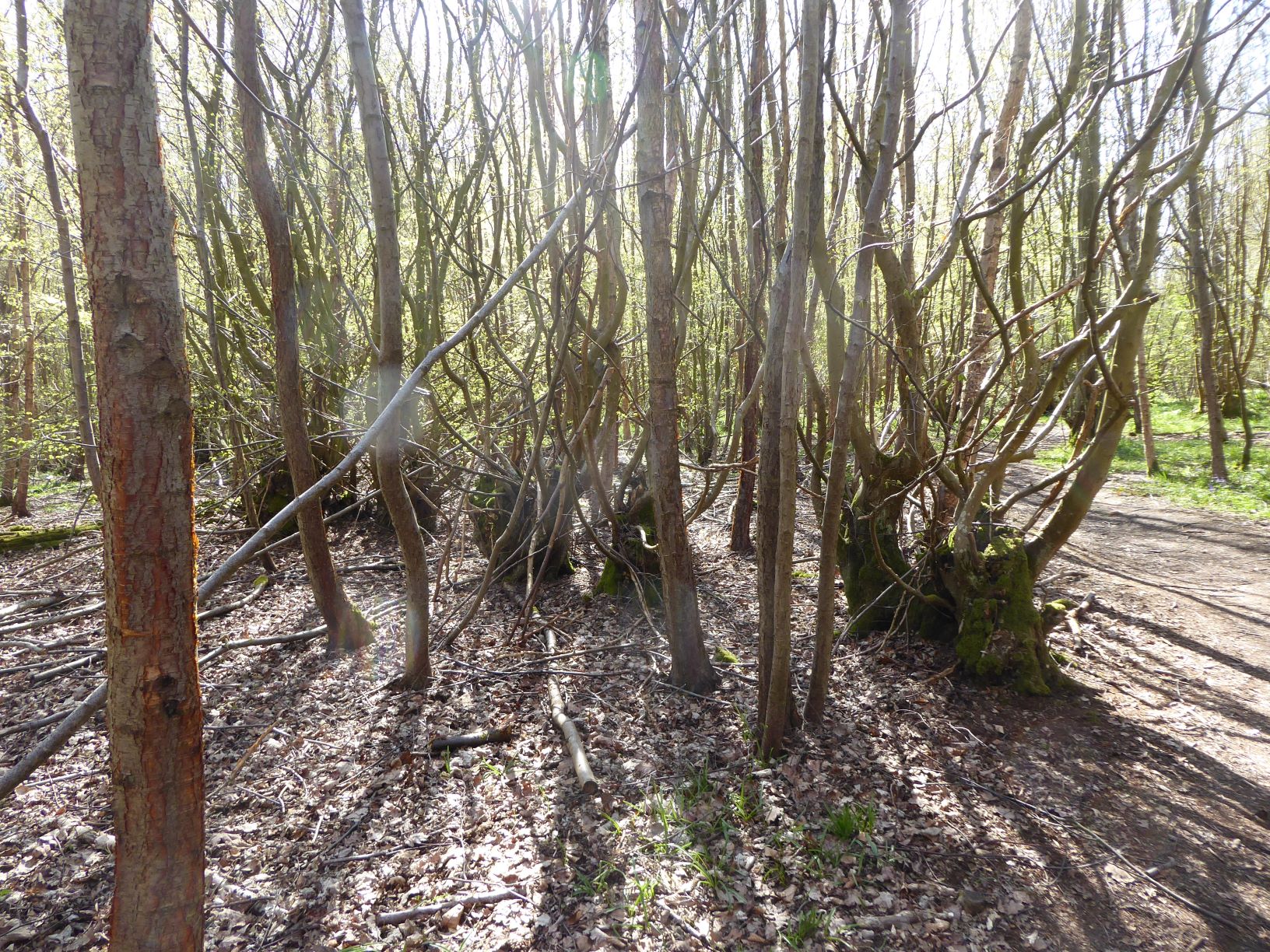
There are plenty of coppice stools like this in the wood

Reydon Wood is coppiced each year.  Some of these trees are hundreds of years old and have been supplying wood for generations.  Here is a link which explains what coppicing is.  A copse is a wood which is or has been coppiced.

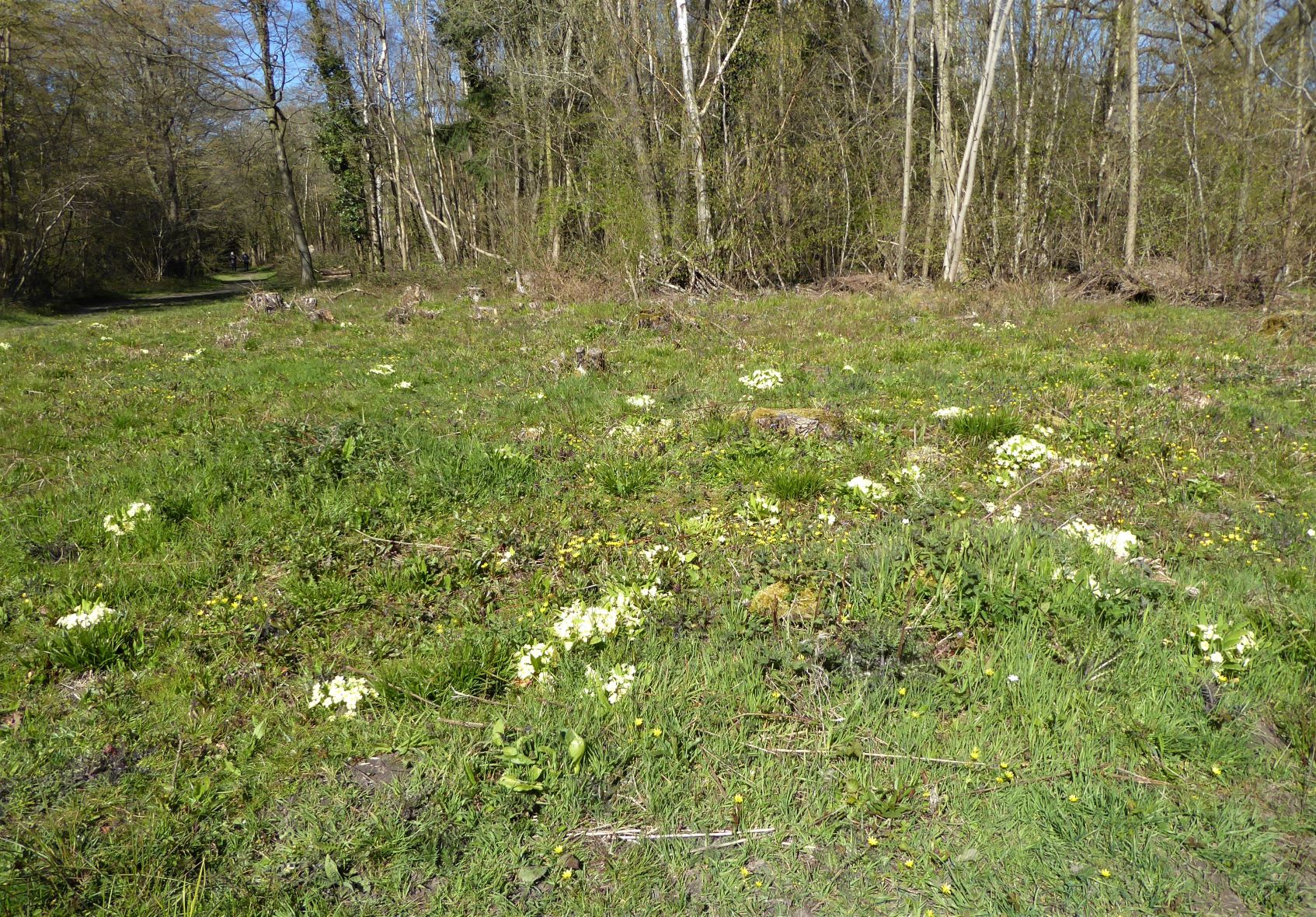
A clearing was carpeted with Primroses and Lesser Celandines (Ficaria verna )

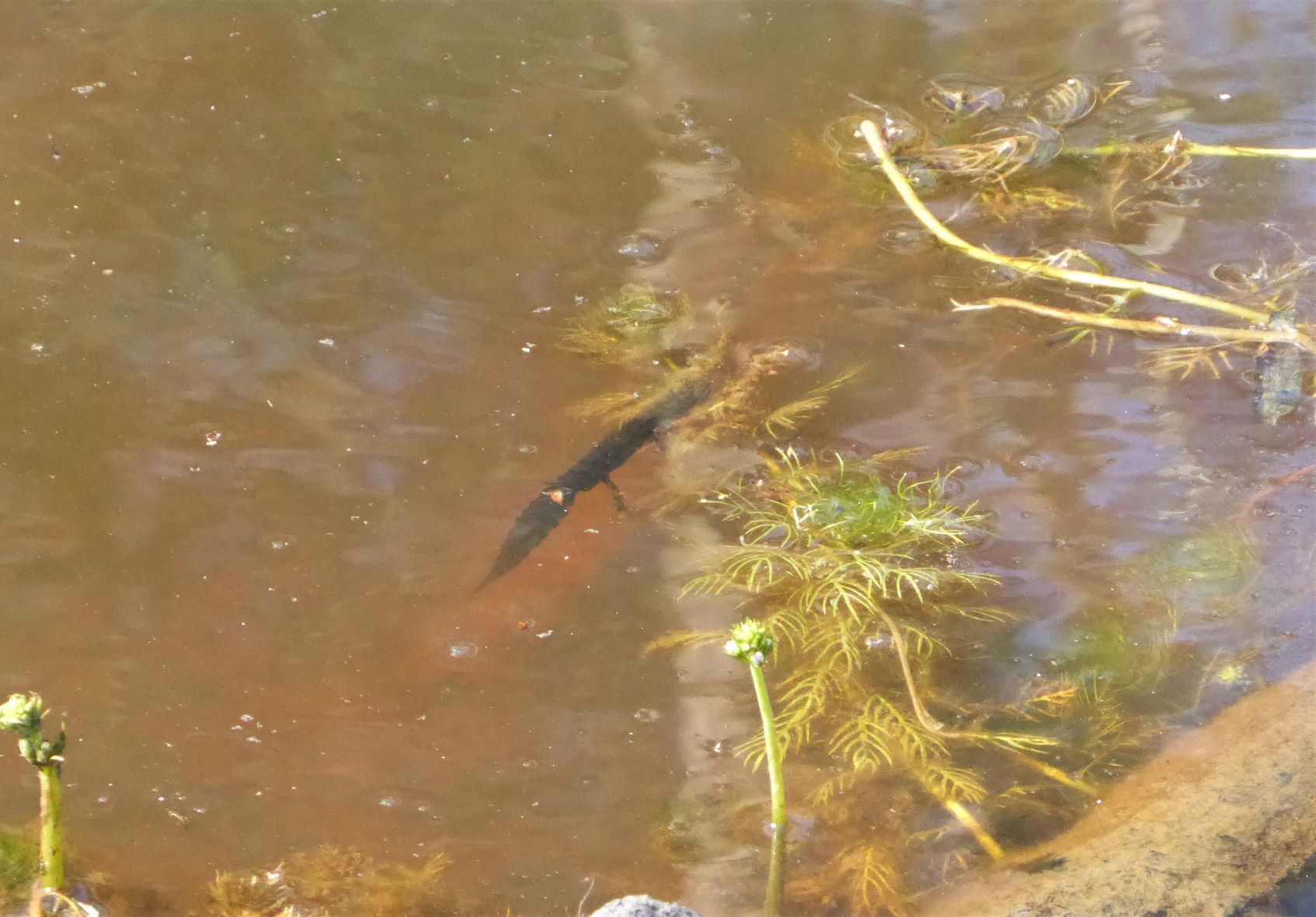
Great Crested Newt ( Triturus cristatus)

In this clearing is a large pond which is home to all sorts of interesting creatures and plants.  The Great Crested Newt is Britain’s largest newt and has suffered in recent years due to habitat loss, especially by the infilling of ponds.

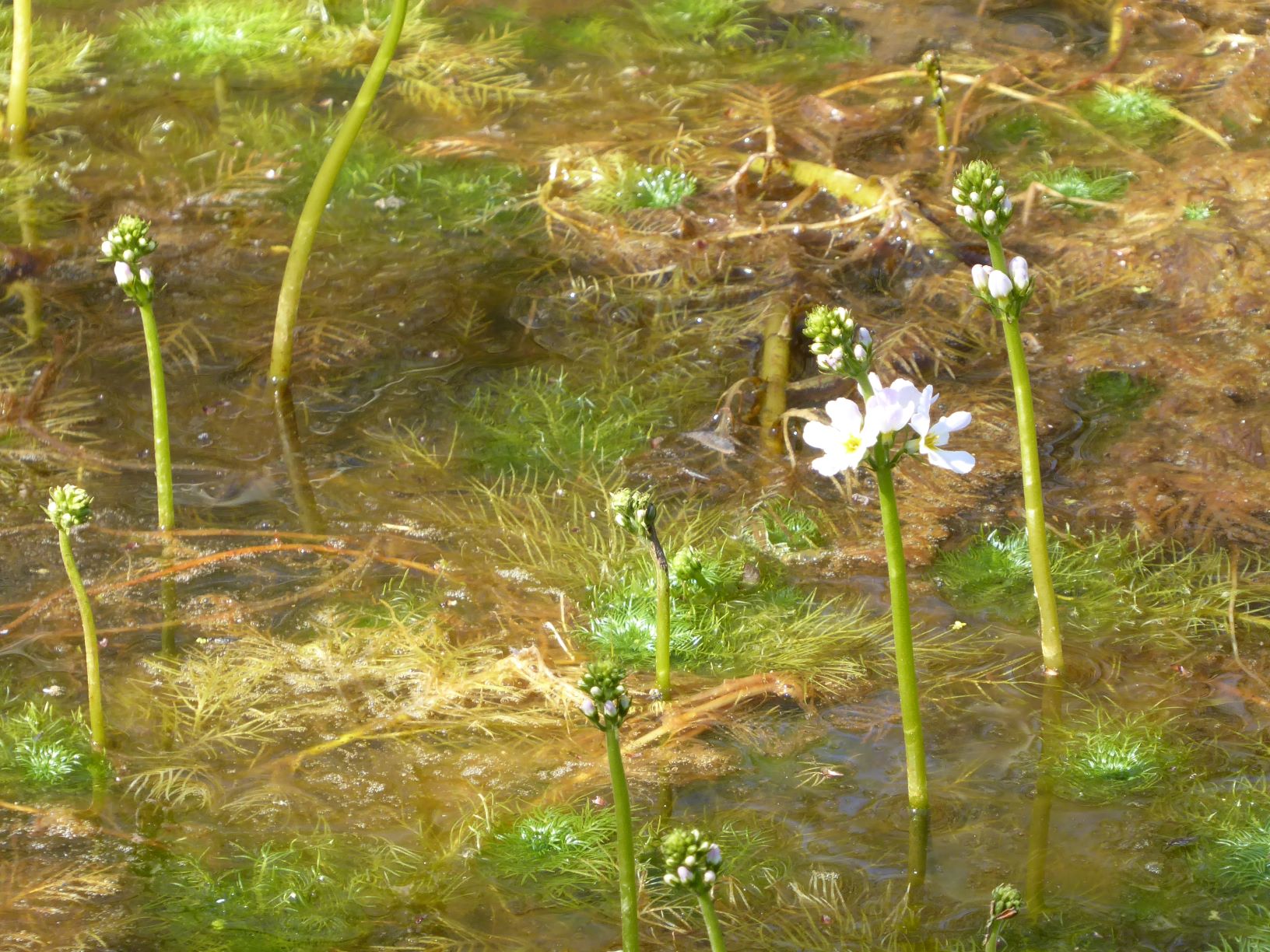
Water Violet (Hottonia palustris )

The Water Violet isn’t a violet at all, it is a member of the primrose family but the petals are a very pale lilac-colour which may be the reason for its common name.  It is usually found in sheltered ditches and ponds with shallow clear water which is rich in calcium.  Another name for it is Featherfoil because of its fine feathery leaves.

Tangled branches and shadows

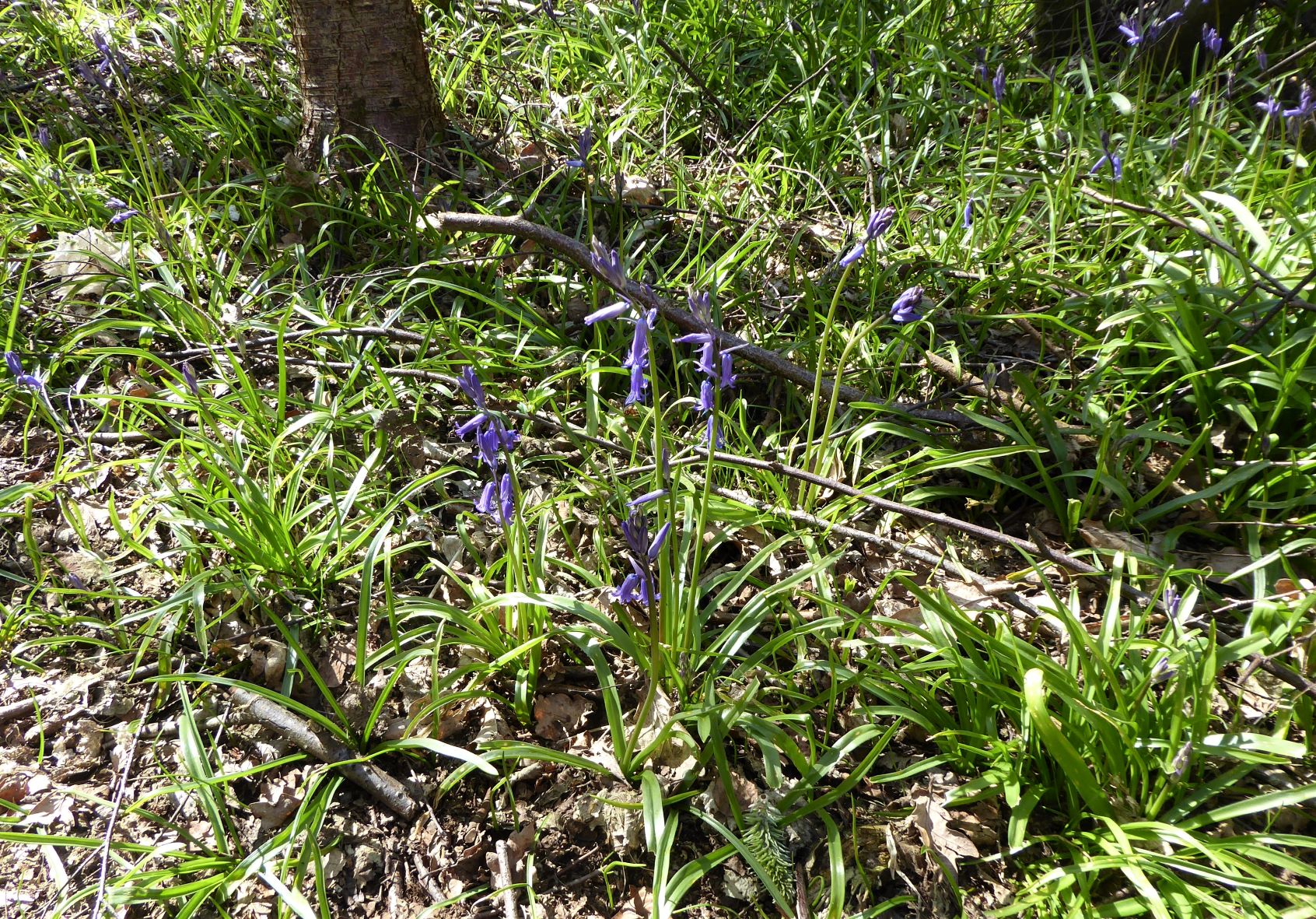
The Bluebells were just beginning to flower (Hyacinthoides non-scripta)

Spring leaves

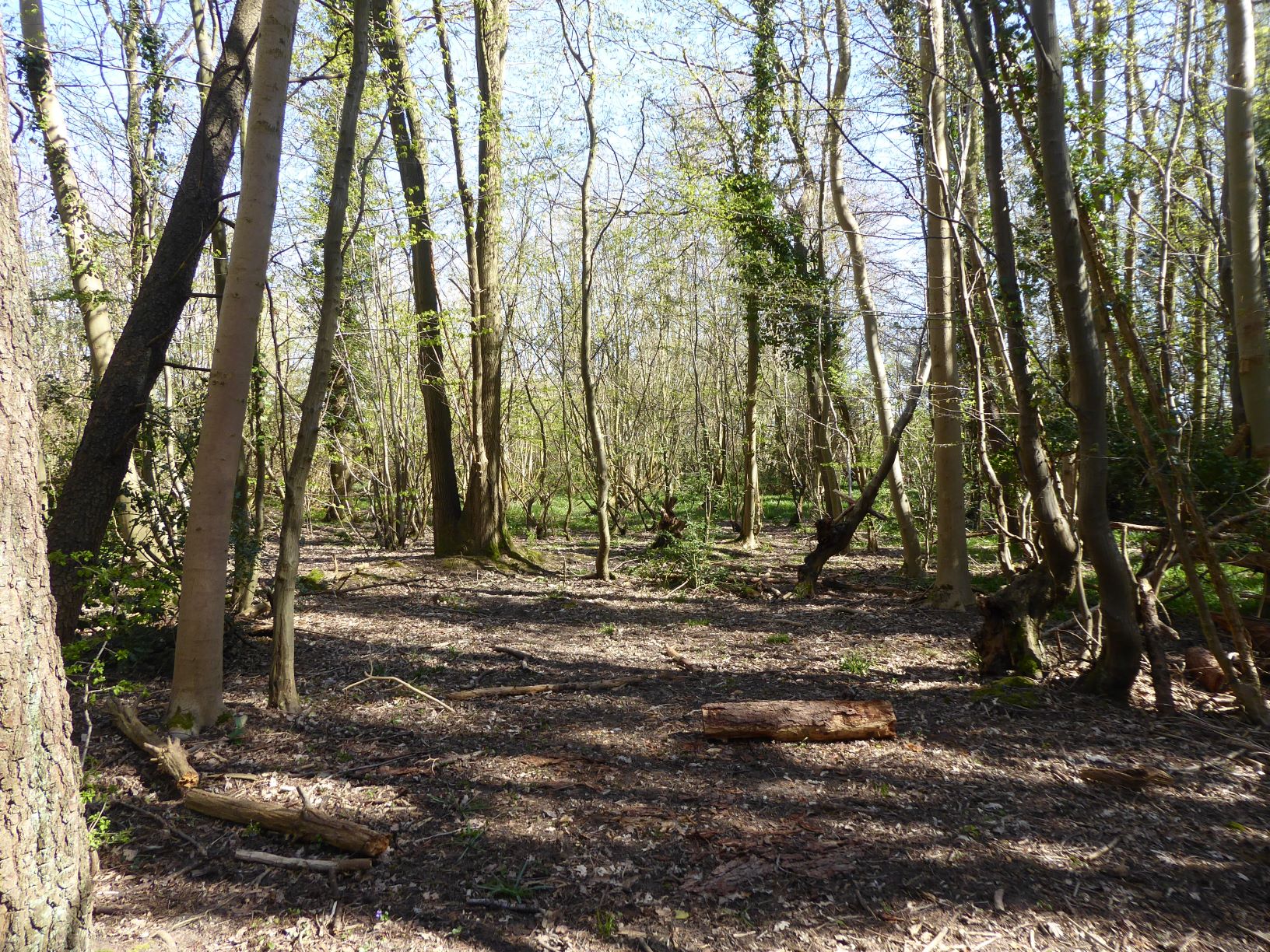
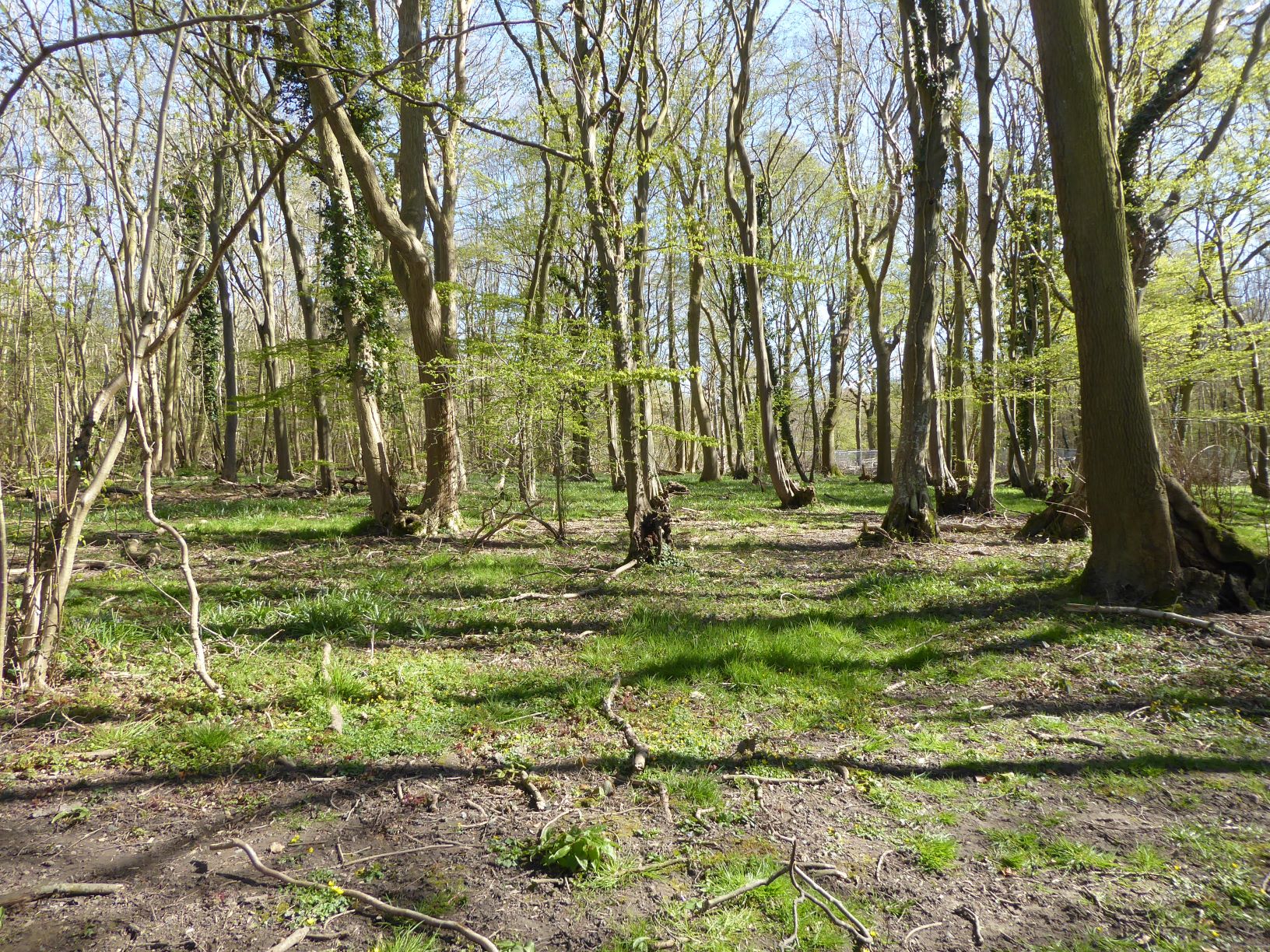
Woodland in the springtime

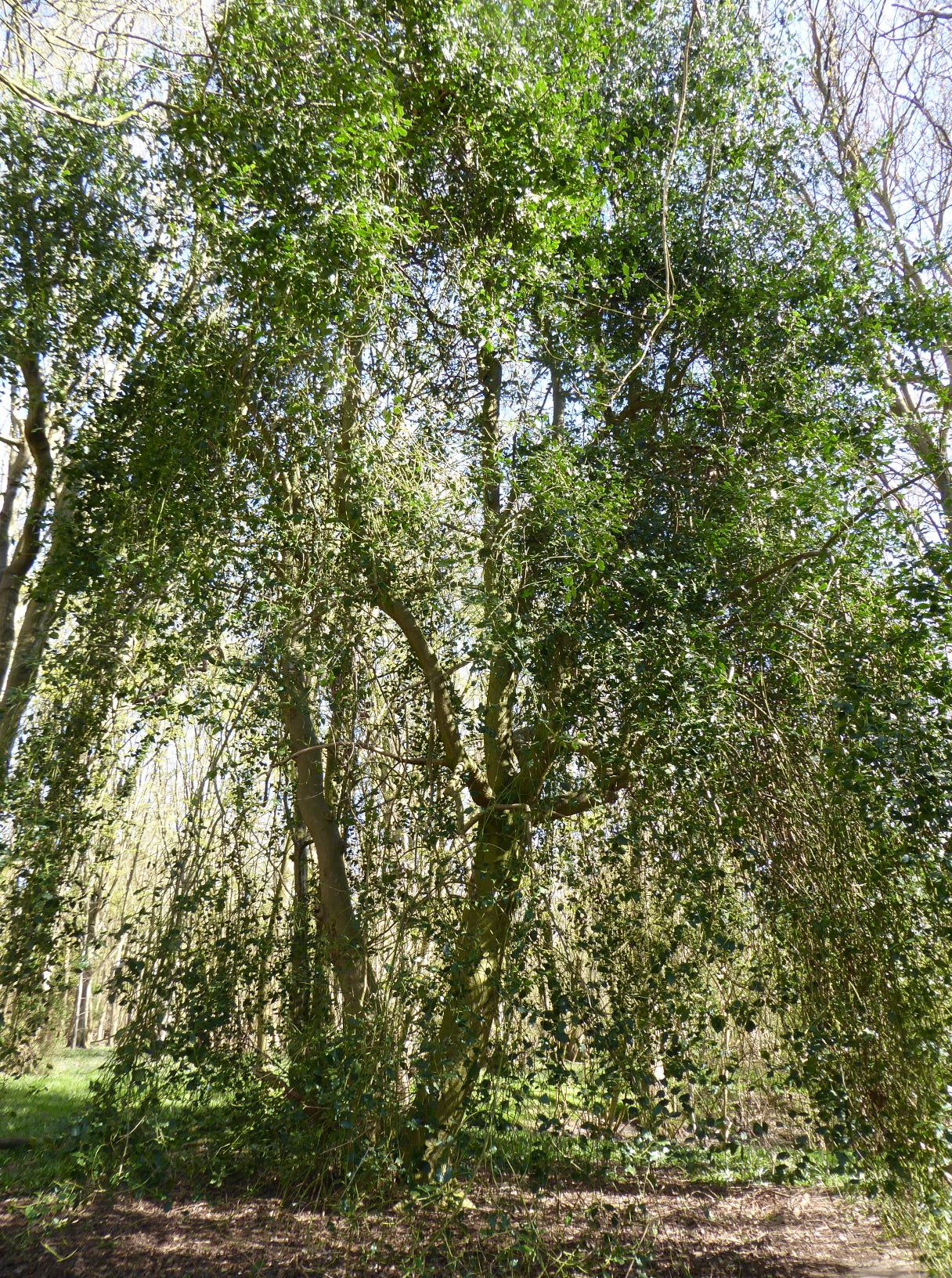
I always like to greet this giant Holly tree with its weeping branches (Ilex aquifolium)

A Hoverfly of some sort sunning itself on the path. With their large ‘fly’ eyes they always look like they are wearing large sun-glasses.

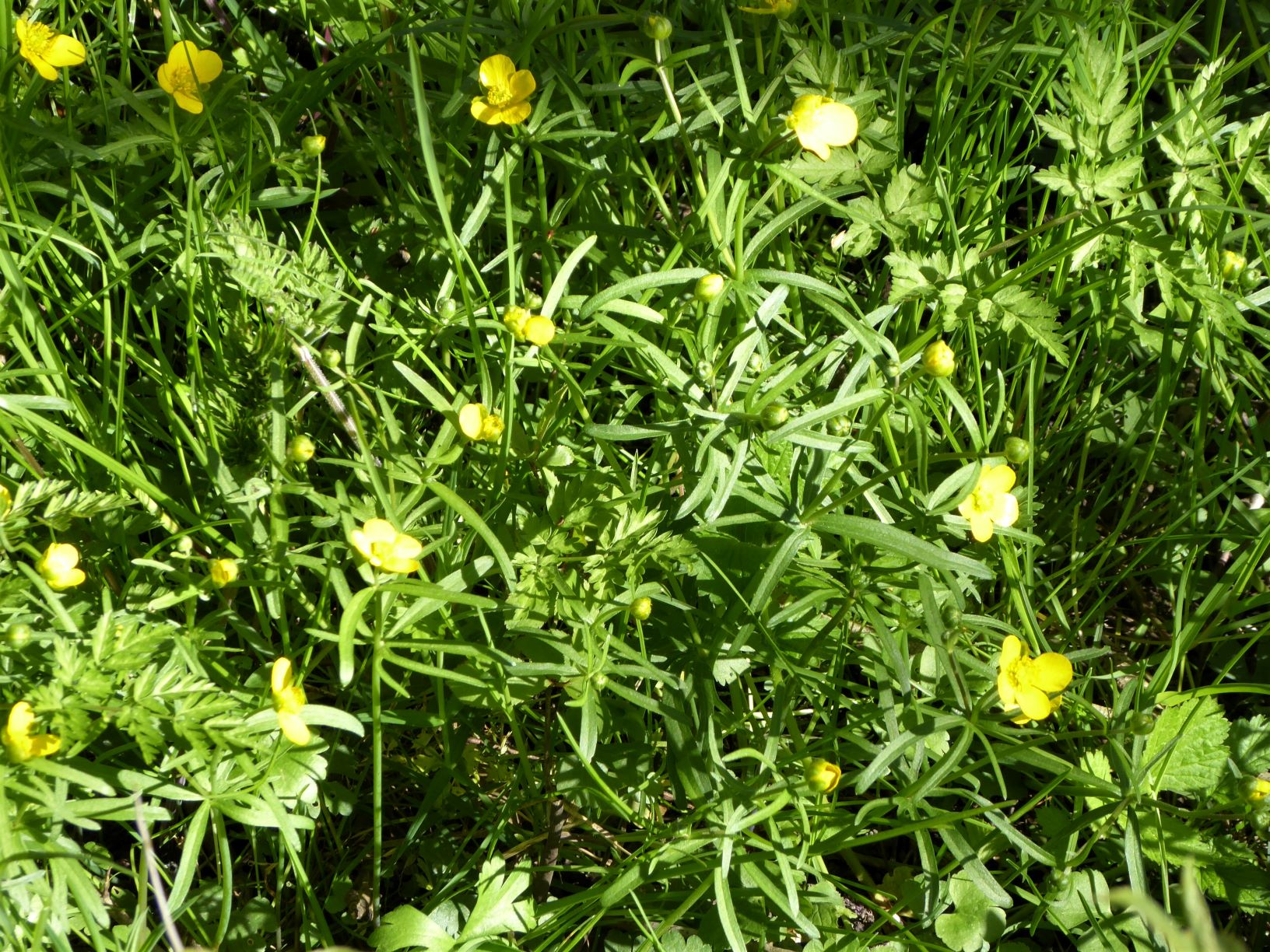
Goldilocks Buttercup (Ranunculus auricomus )

A spring-flowering buttercup.  The whole plant, including the stems and the leaves, dies back by mid-summer.  The flowers are usually deformed with petals missing and the upper leaves deeply cut.
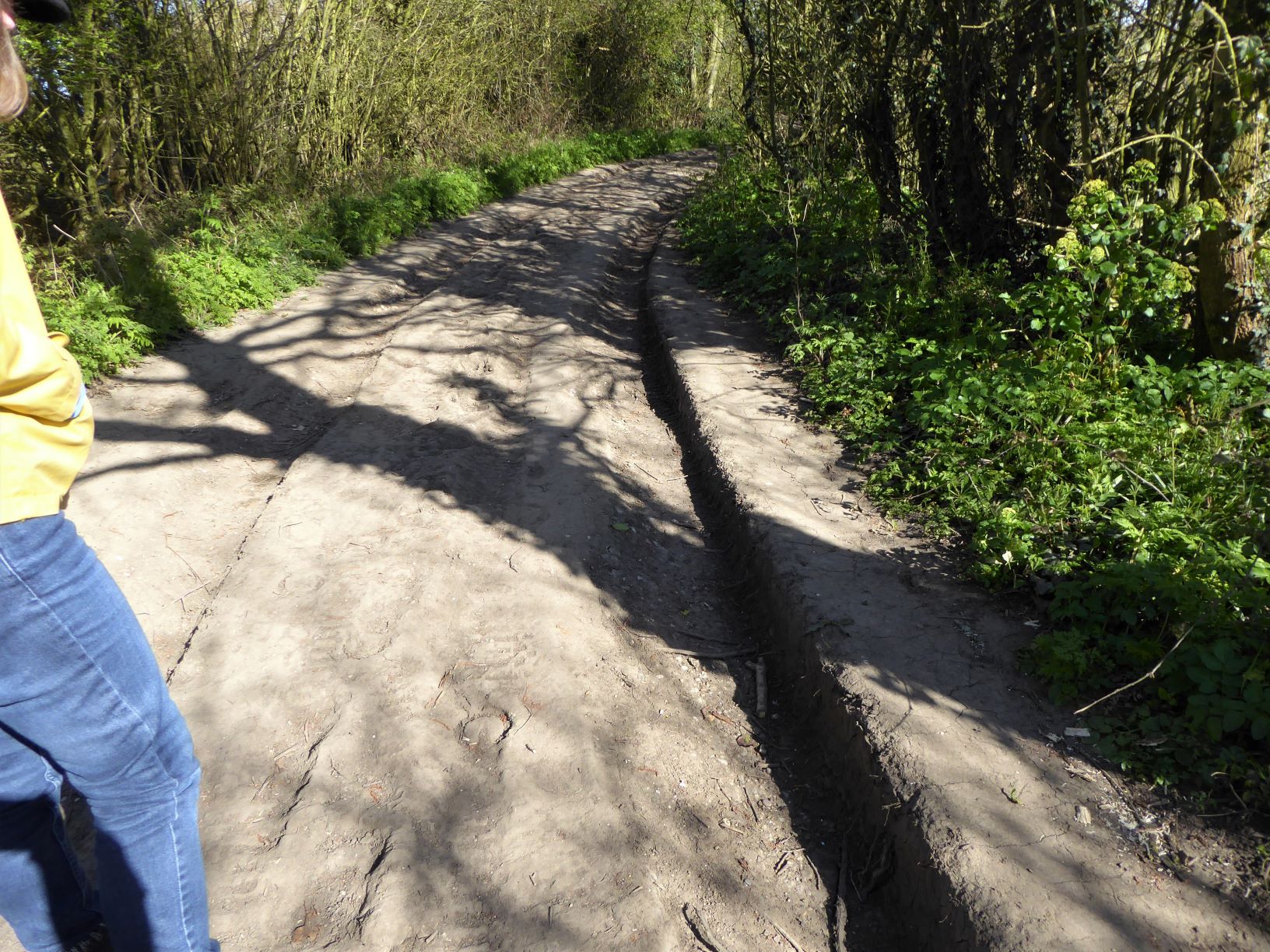
Deeply rutted path

We were extremely fortunate to have had such dry weather during the week before our walk.  The paths had set like concrete and though they were uneven they were easier to walk on than if they had been wet!
With any luck I will be able to add to this short series of walks before Christmas!

Share this:

  • Share on X (Opens in new window) X
  • Share on Reddit (Opens in new window) Reddit
  • Share on Pinterest (Opens in new window) Pinterest
  • Share on Facebook (Opens in new window) Facebook
  • Email a link to a friend (Opens in new window) Email
  • Share on Tumblr (Opens in new window) Tumblr
  • Print (Opens in new window) Print
  • Share on Pocket (Opens in new window) Pocket
  • Share on LinkedIn (Opens in new window) LinkedIn
Like Loading...

Walks With Elinor – Beccles

01 Thu Jul 2021

Posted by Clare Pooley in Days out, Rural Diary

≈ 72 Comments

Tags

Beccles, Beccles Quay, boats, glamping pod, River Waveney, Suffolk, Suffolk Broads, yachts

Elinor and I went to Beccles the week following our chilly walk in Halesworth.  You might think Beccles (rhymes with freckles) is a strange name for a town: according to my Dictionary of English Place-Names the name probably derives from the Old English for ‘pasture by a stream’.  Other derivations put forward are from the Brittonic for ‘small court’ or a contraction of ‘Beata Ecclesia’, the name of a Christian temple erected here c.960 AD.  Take your pick!

Elinor needed to buy her Grandmother a birthday card and gift and Beccles has a greater selection of shops than our more local towns.  We also wanted to have a walk by the river where I used to take Elinor when she was very small.  We used to go there as a place to rest and recuperate after visits to the dentist, which she found extremely stressful.

We were successful with our shopping and then, because Elinor was hungry we bought her a panini to eat in the car.  Unfortunately, it exploded and she and the seat belt were covered with runny cheese!  We often have these events which are sent to try us apparently, but they also make life that bit more interesting!  We then drove to the Boat Station car-park taking a couple of wrong turns on the way just to add to the excitement.

The weather was completely different from the week before.  It wasn’t warm but the sun was shining brightly and there was that something in the air that spoke of Spring and warmth to come.

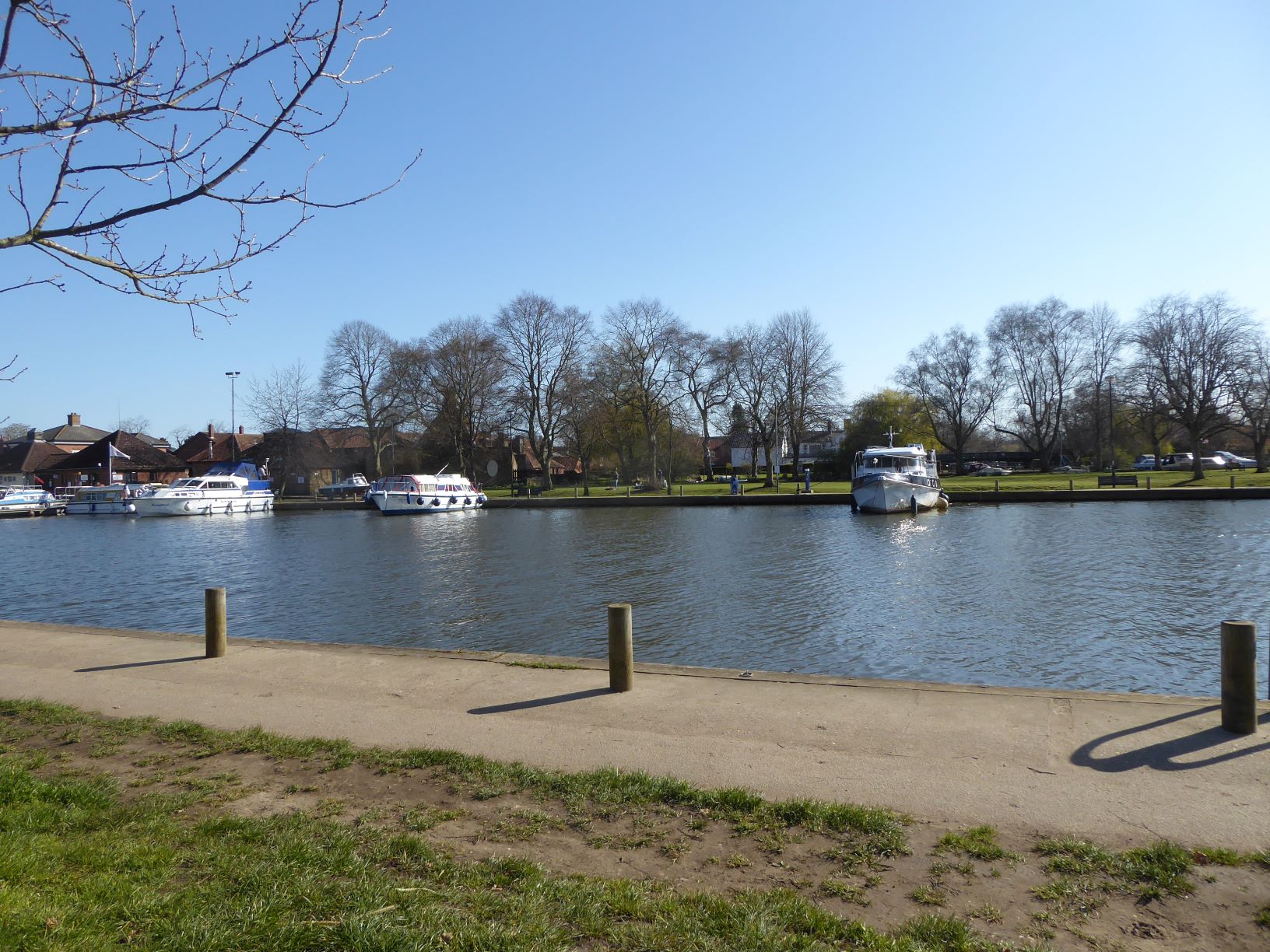
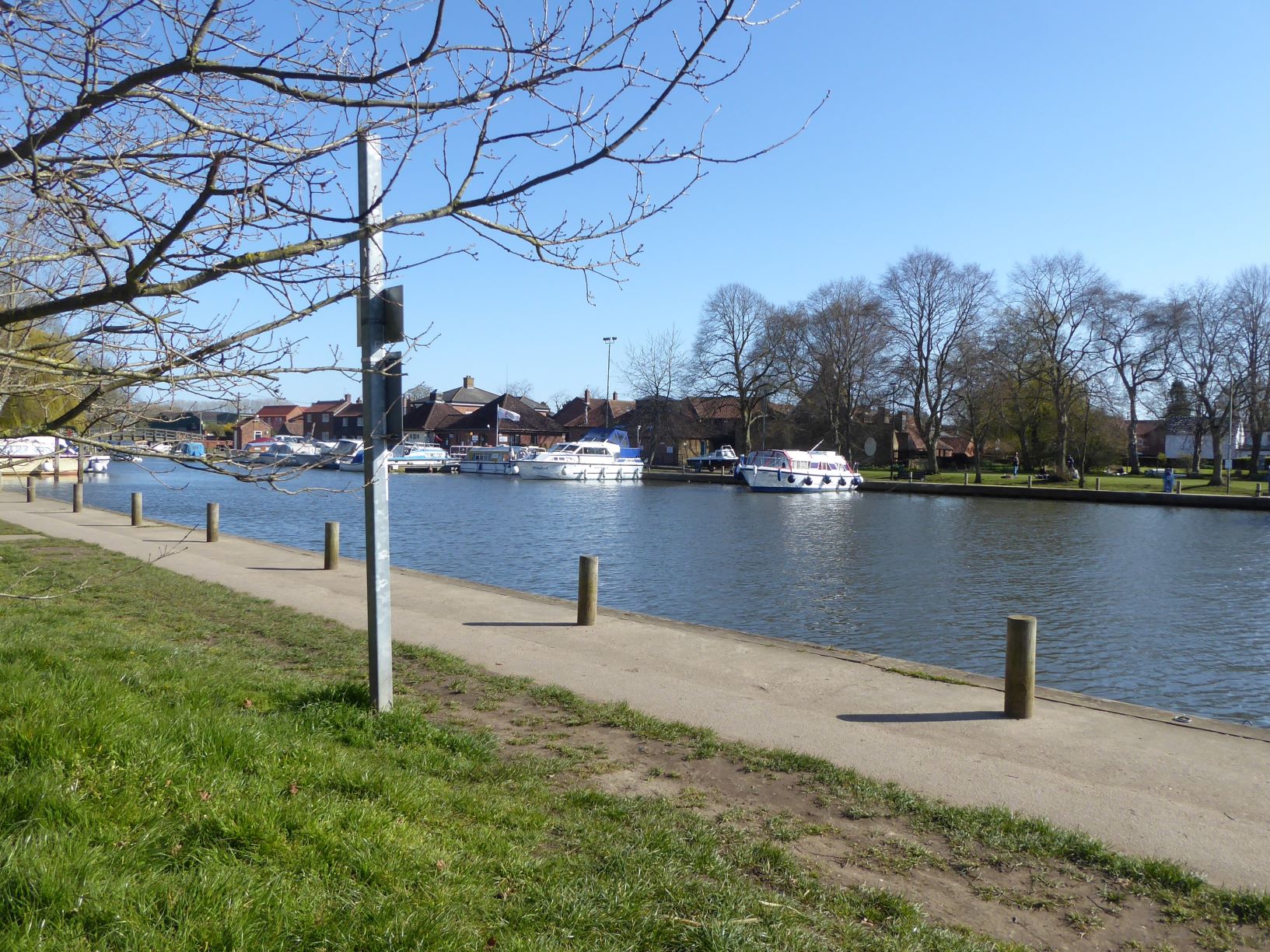
Beccles Quay

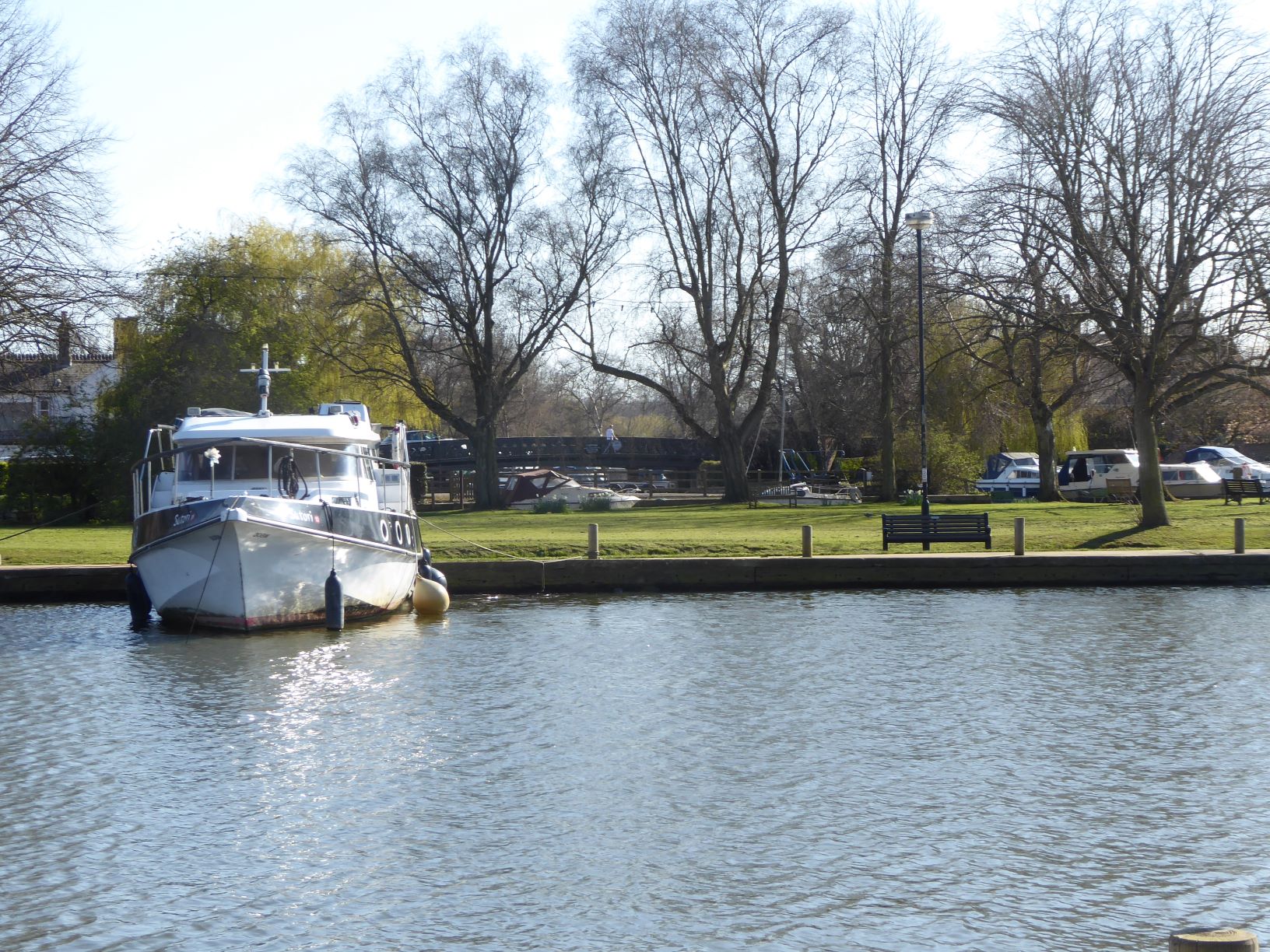
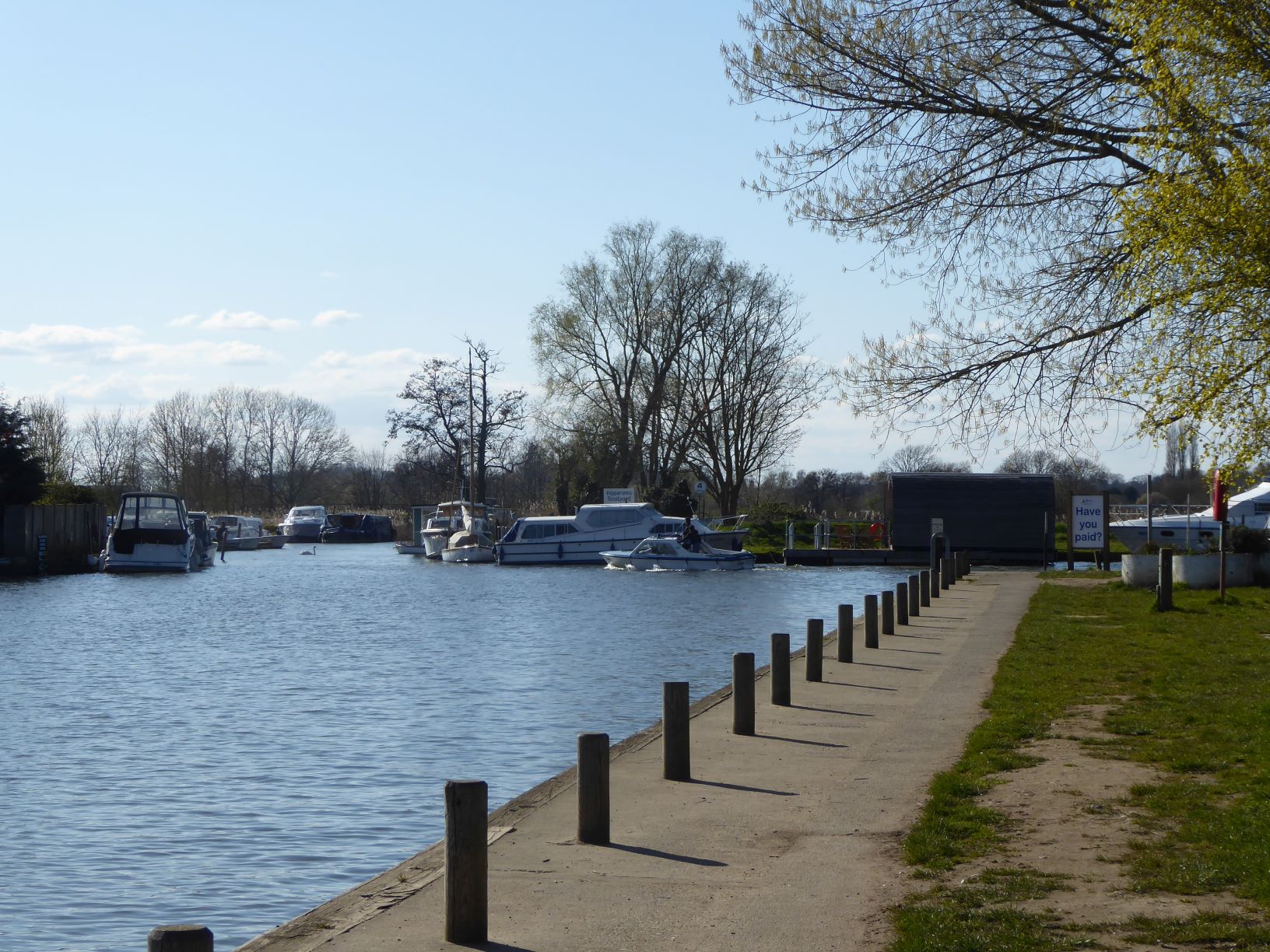
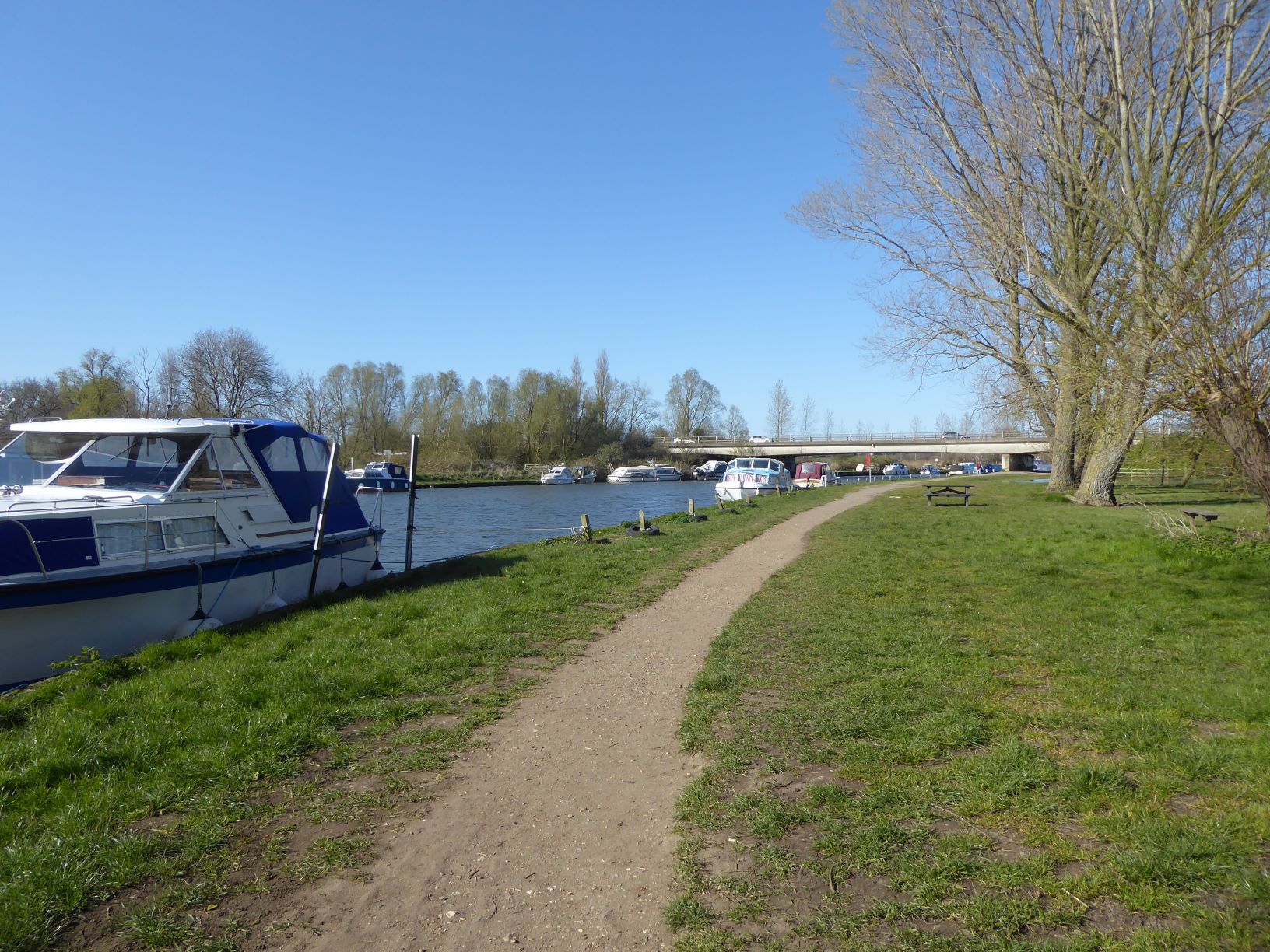
Beccles is part of the Broads.  Not many people realize that the Broads stretch south into Suffolk, but they do.  A few people leave their boats at the Yacht Station at Beccles Quay over the winter.  There are WCs, shower and washing facilities (with points where one can empty chemical toilets), places to dispose of rubbish and a café, all provided for people travelling by boat wishing to stop here and enjoy visiting Beccles and its environs.  There were many people working on their boats when we visited or they were sitting on deck enjoying drinks, hot and cold.  There are boats and yachts for hire and we saw a few people out on the water.

Beccles Quay looking towards the town

Beccles Quay

Beccles Quay looking away from the town

Elinor

Path by the River Waveney looking towards the road bridge

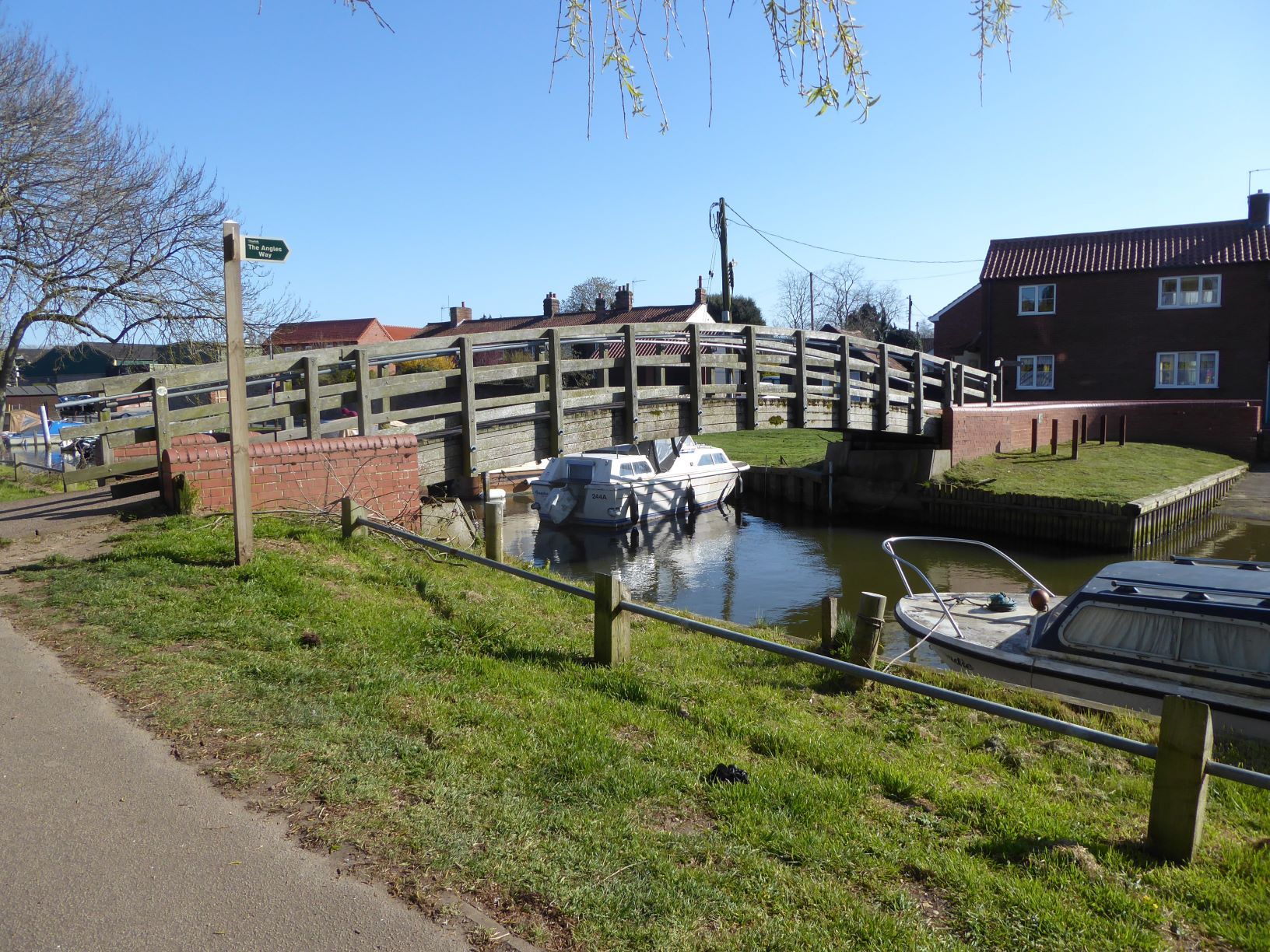
Footbridge over the river which gives access to the town

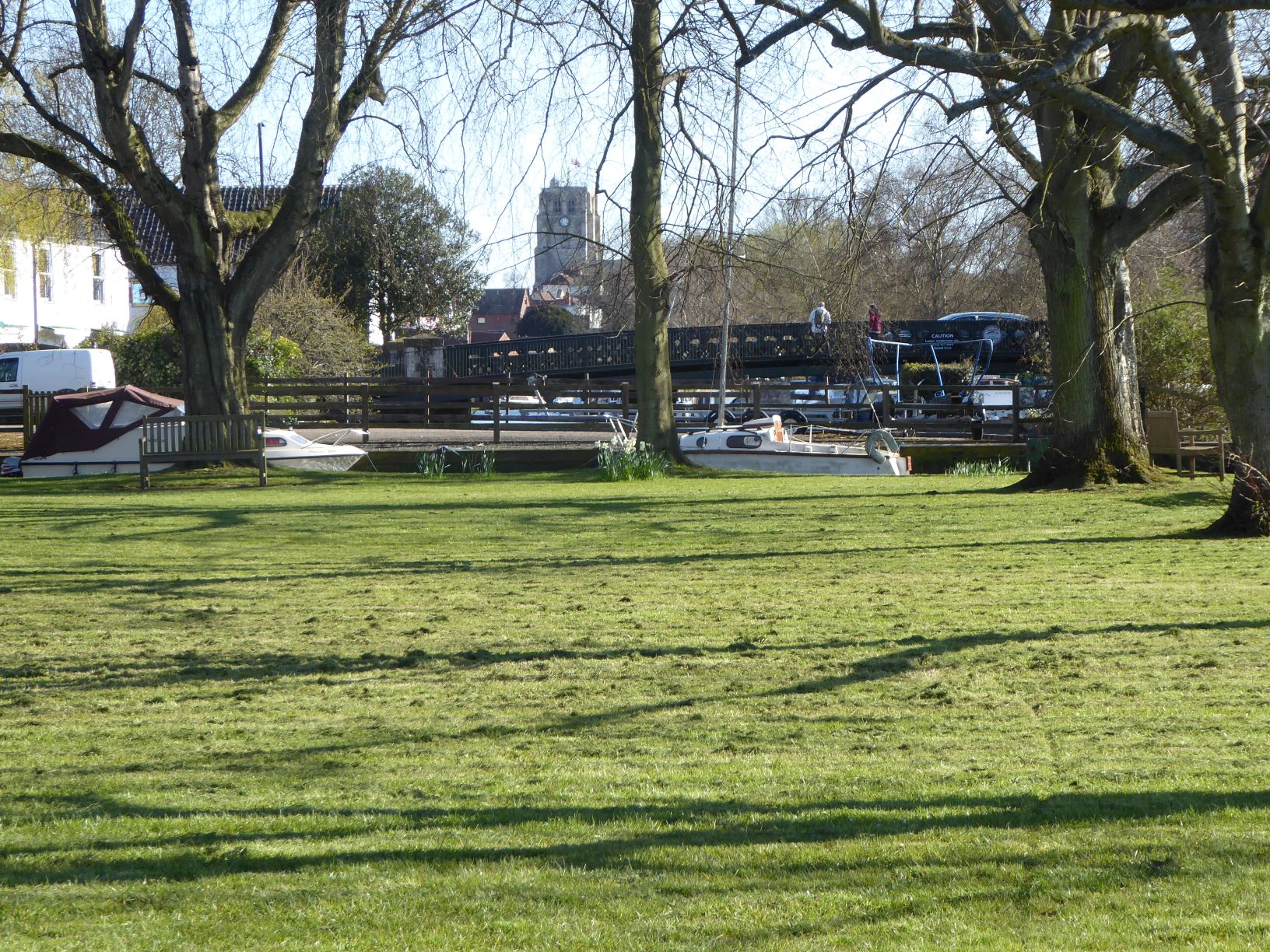
Beccles church tower seen from the green

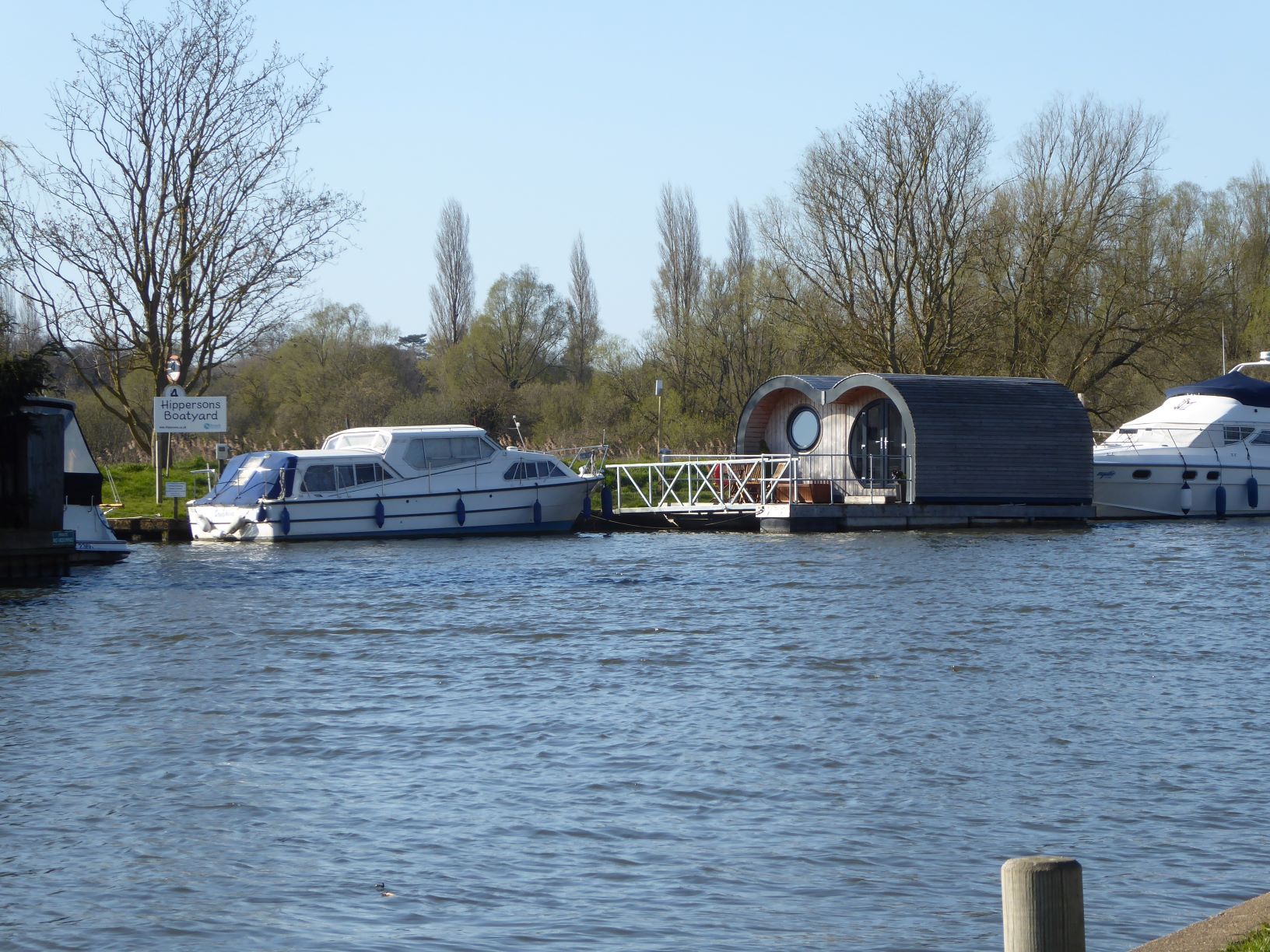
Beccles Quay  The strange floating building is one of the glamping Pods for rental from the boatyard.

Elinor and I returned home much refreshed by our visit to the Quay and the river.

Share this:

  • Share on X (Opens in new window) X
  • Share on Reddit (Opens in new window) Reddit
  • Share on Pinterest (Opens in new window) Pinterest
  • Share on Facebook (Opens in new window) Facebook
  • Email a link to a friend (Opens in new window) Email
  • Share on Tumblr (Opens in new window) Tumblr
  • Print (Opens in new window) Print
  • Share on Pocket (Opens in new window) Pocket
  • Share on LinkedIn (Opens in new window) LinkedIn
Like Loading...

Flatford Mill

23 Tue Feb 2021

Posted by Clare Pooley in Arts and Crafts, Days out, Historic Buildings, Rural Diary

≈ 112 Comments

Tags

Constable, Dedham, Dedham Vale, Flatford, Flatford Mill, John Constable, lock, mill, National Trust, River Stour, Suffolk, the Hay Wain, water meadows, Willy Lott's House

My birthday falls at the beginning of September but last autumn, as we were very busy during that week we decided to put off any celebration or outing until later.  A whole month later we found we had the time, and the weather had improved enough for a trip to Flatford Mill in the Dedham Vale.

Flatford Mill is owned by the National Trust and looking at their website we saw that we need not book a slot to visit but, as parking space is limited we thought we would set off fairly early.  The weather forecast was for rain in the afternoon but the morning was glorious with plenty of sunshine.

We live in North Suffolk in the Waveney Valley and Flatford Mill is in the south of the county on the River Stour near the border with the county of Essex.   If you click on the link just below you will see a map of Suffolk.  Near the top of the map to the right of centre are the towns of Bungay, Halesworth and Harleston.  We live in-between and almost equi-distant from those three towns.  At the bottom of the map in the centre you will see the town of Sudbury and to the right of that is Dedham Vale.

https://images.app.goo.gl/fqi1Da7AAMkpD9GY8

Many of you will recognise the name of the place we visited for my birthday treat.  Some of you may have been there already.  Flatford Mill was owned by the painter John Constable’s father and John was born in East Bergholt, a village on the River Stour.  It is a short walk down a fairly steep winding, wooded lane from the village to the mill.

We wandered round the outside of the mill and over the bridge to the other side of the river.

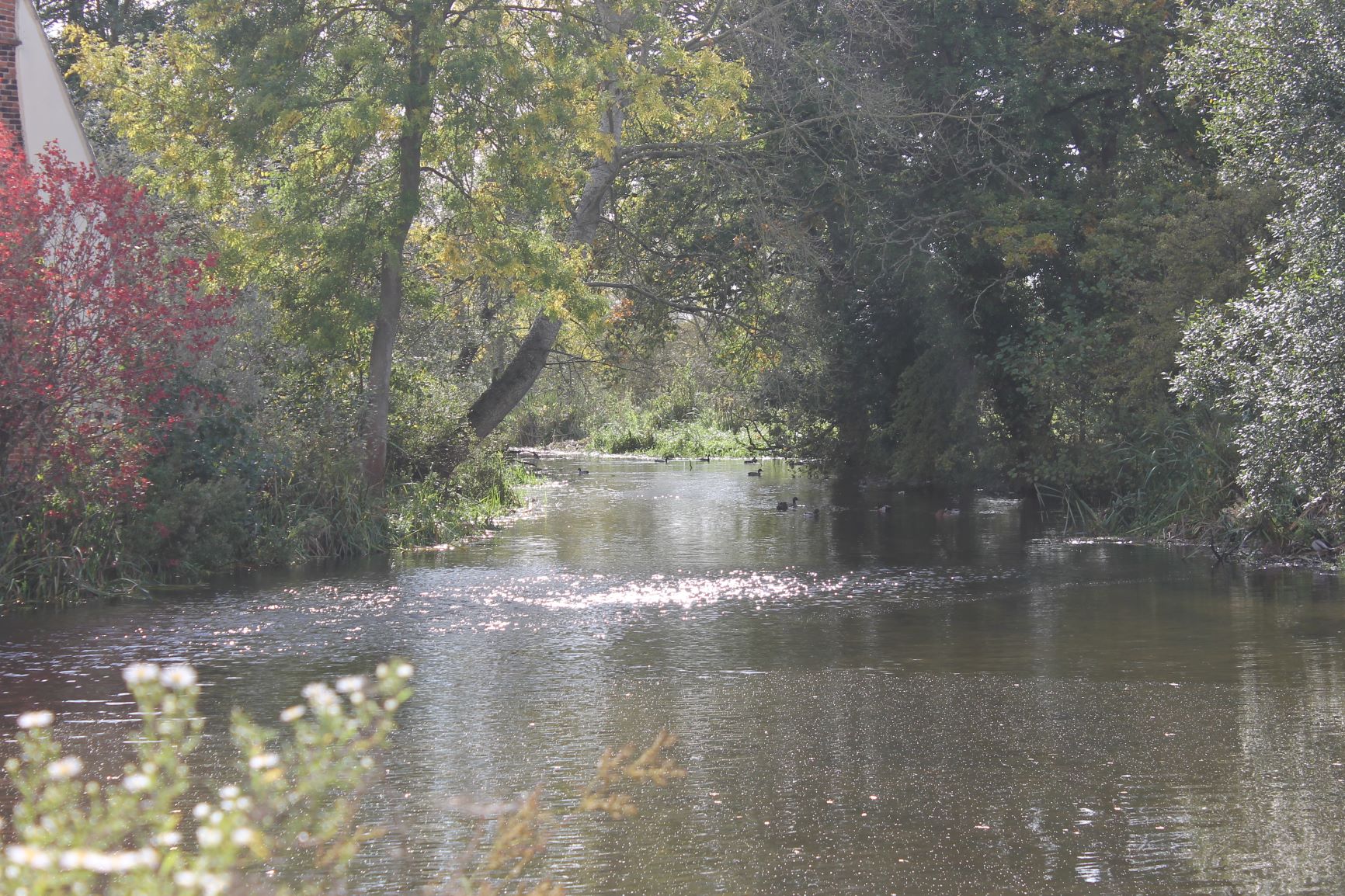
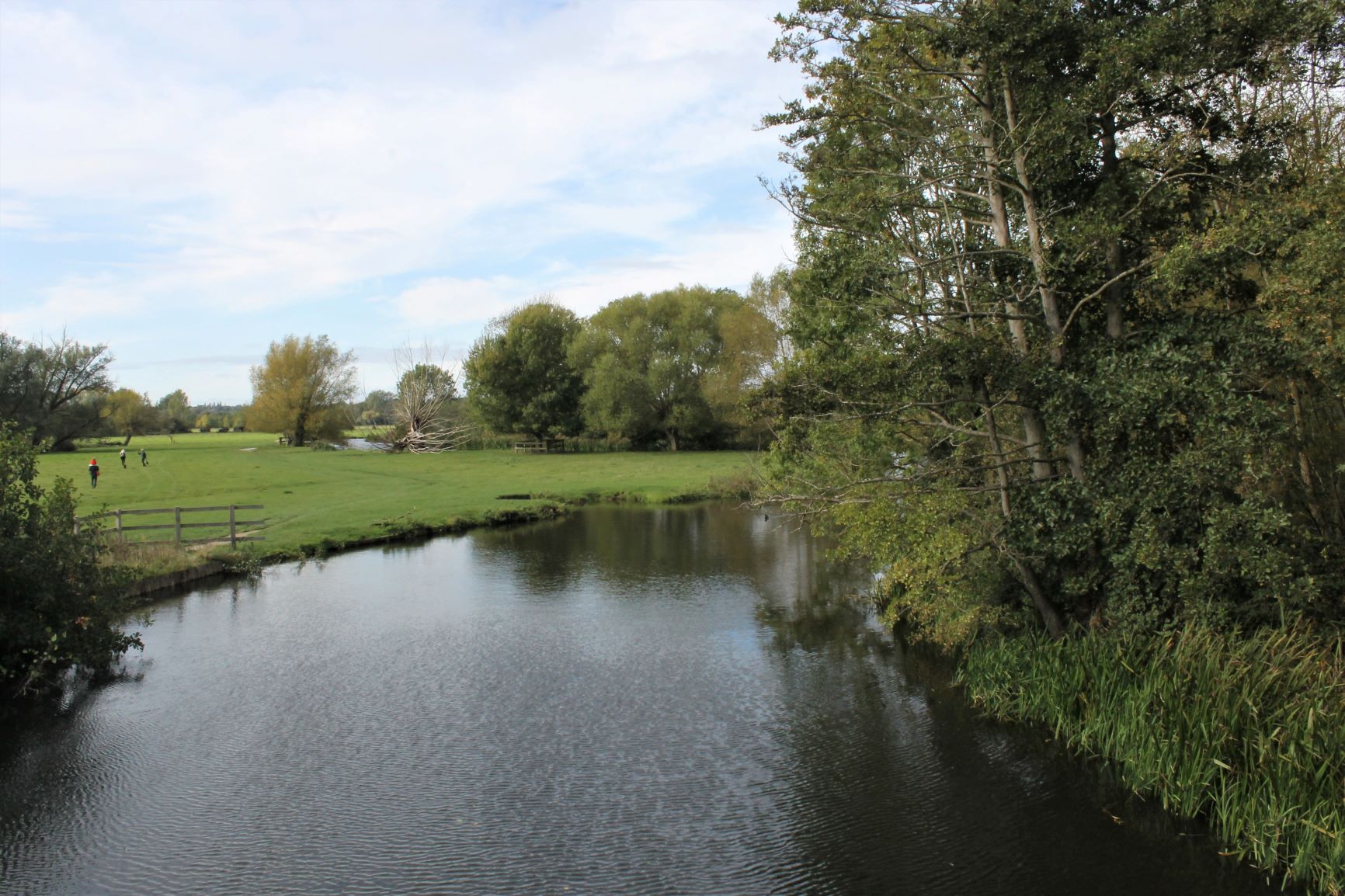
The River Stour

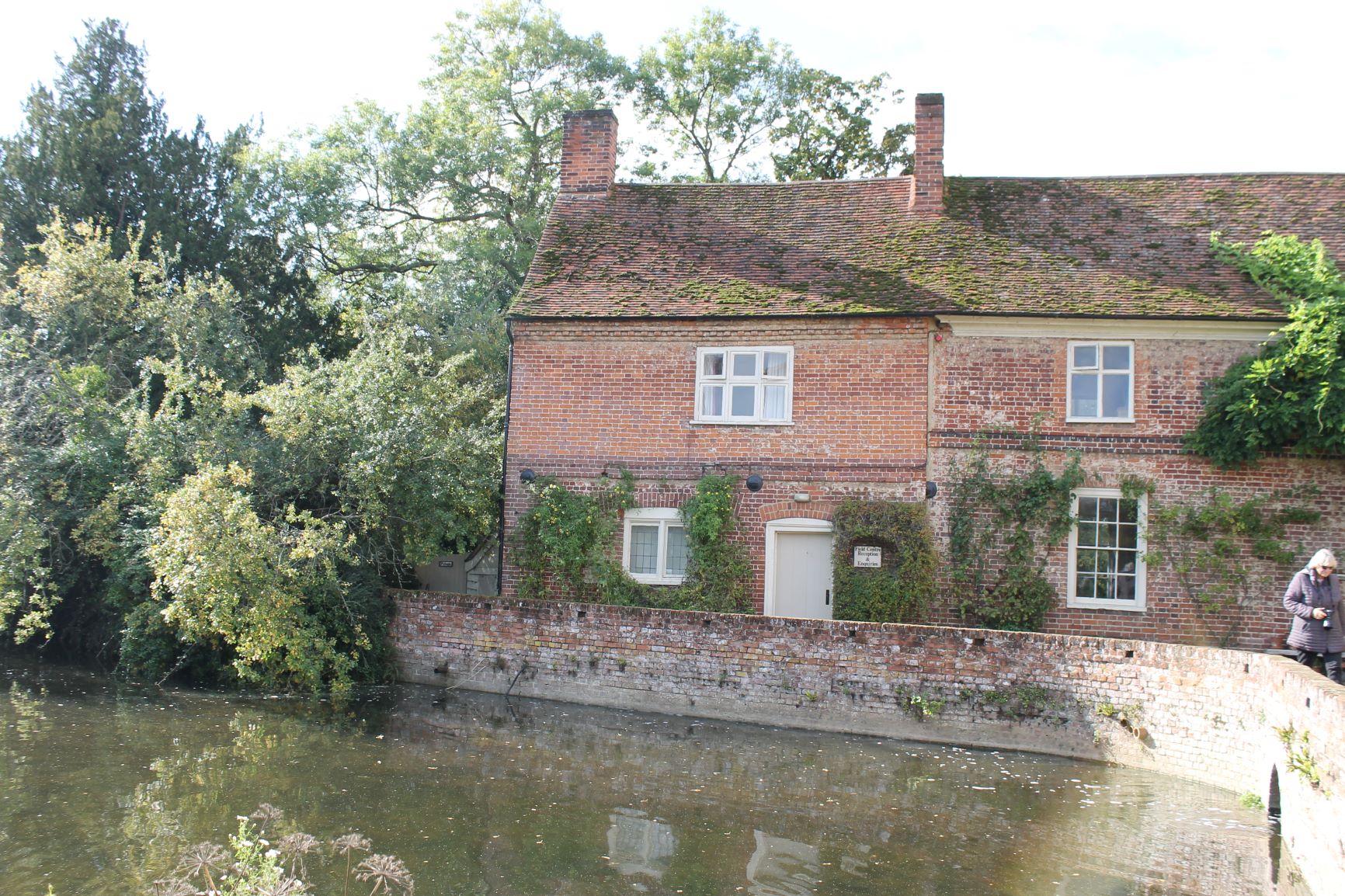
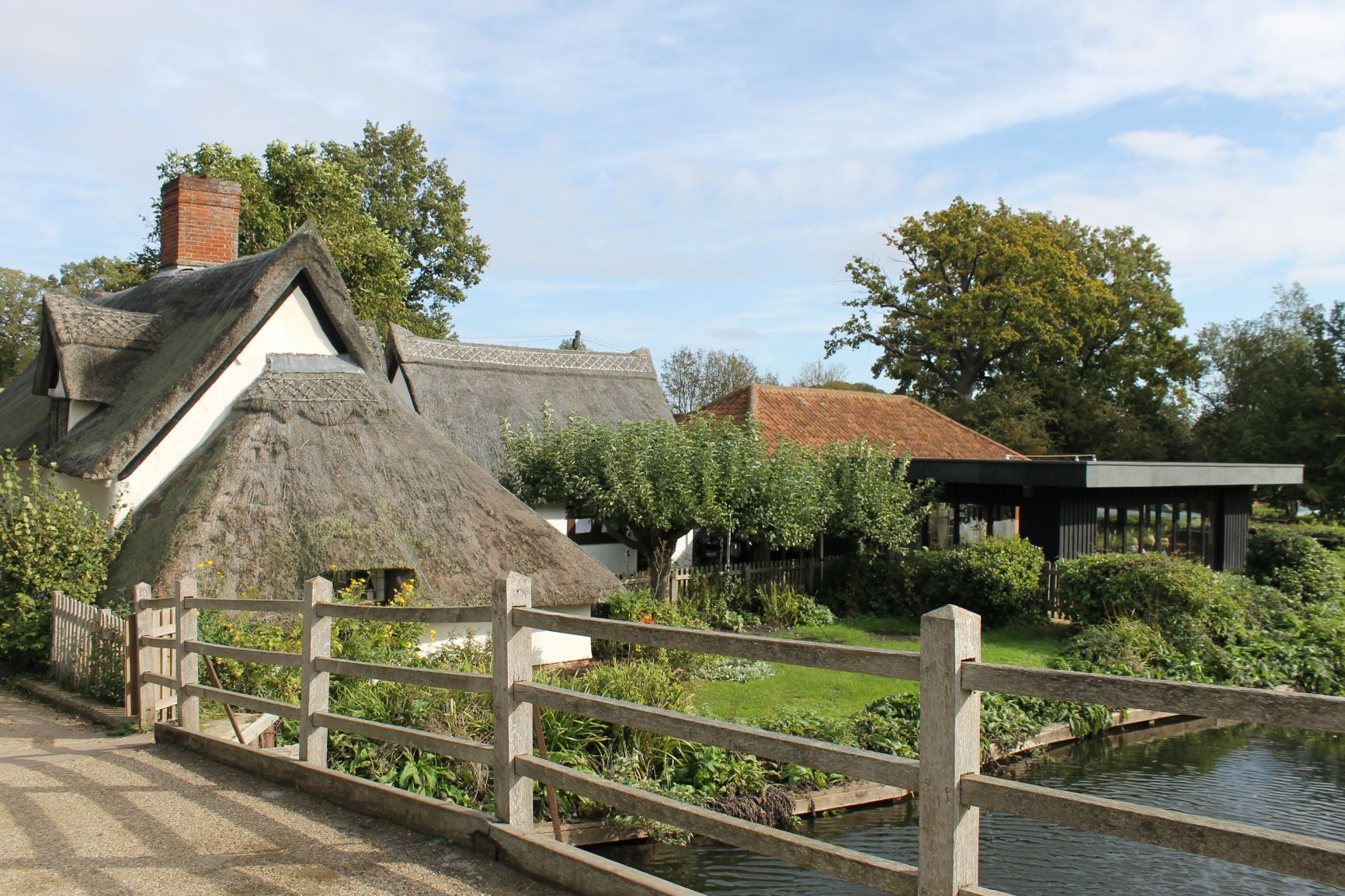
Buildings near to the Mill, seen from the bridge. The building on the right of the photo with the flat roof is the café owned by the National Trust where we had a sandwich lunch.

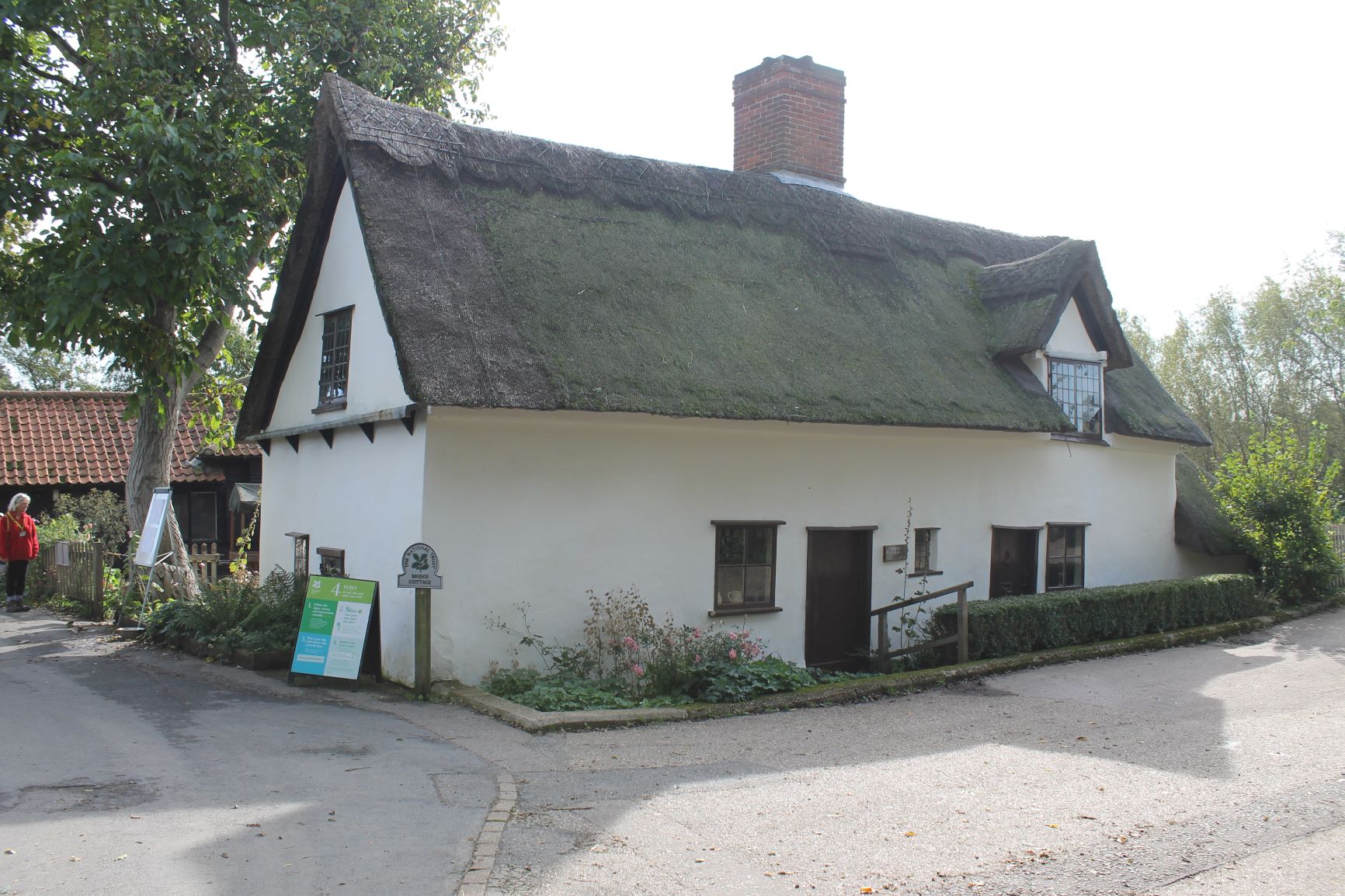
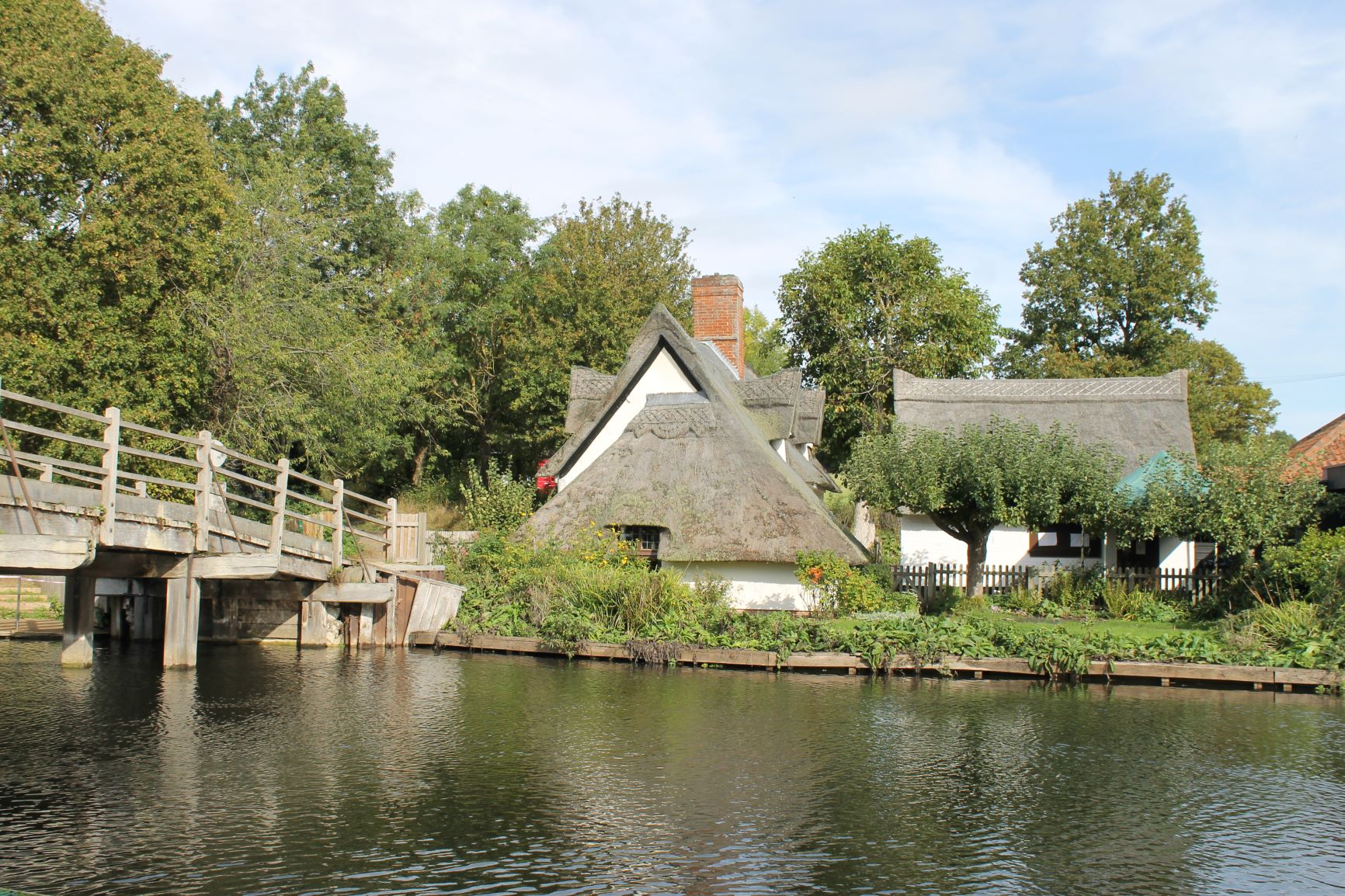
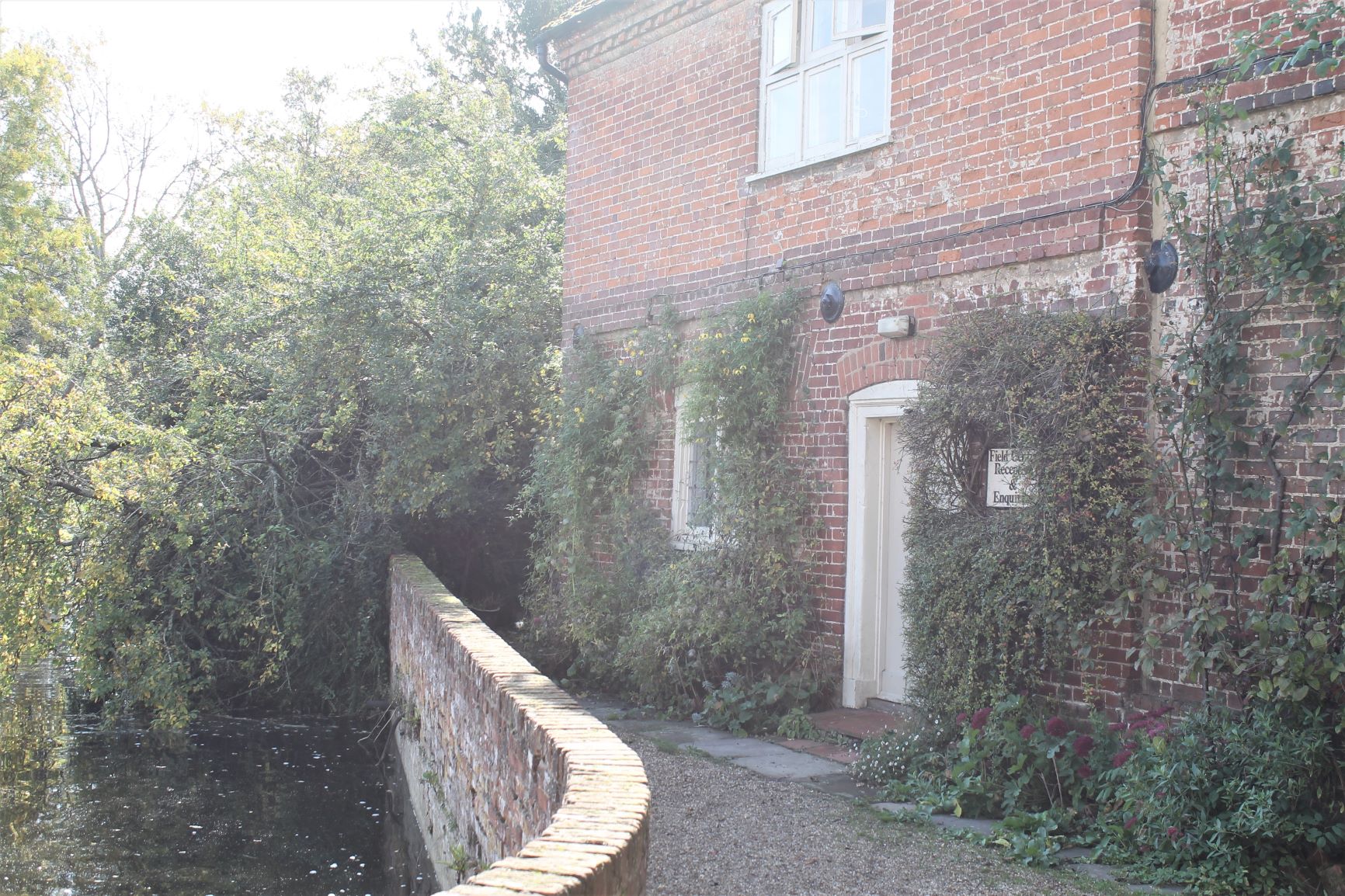
Bridge Cottage

The attractive flowerbed next to the cottage

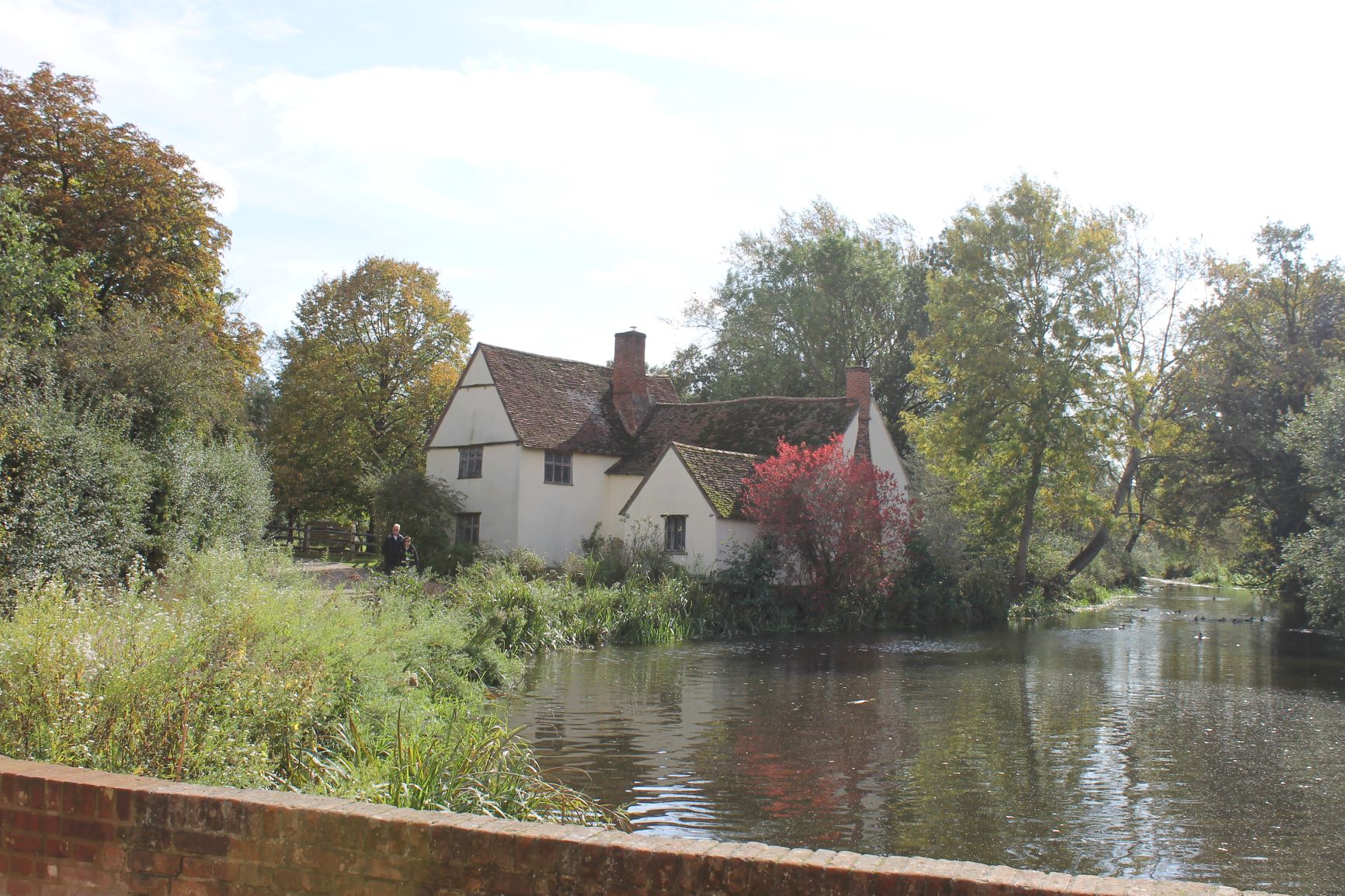
Bridge Cottage seen from the other side of the river

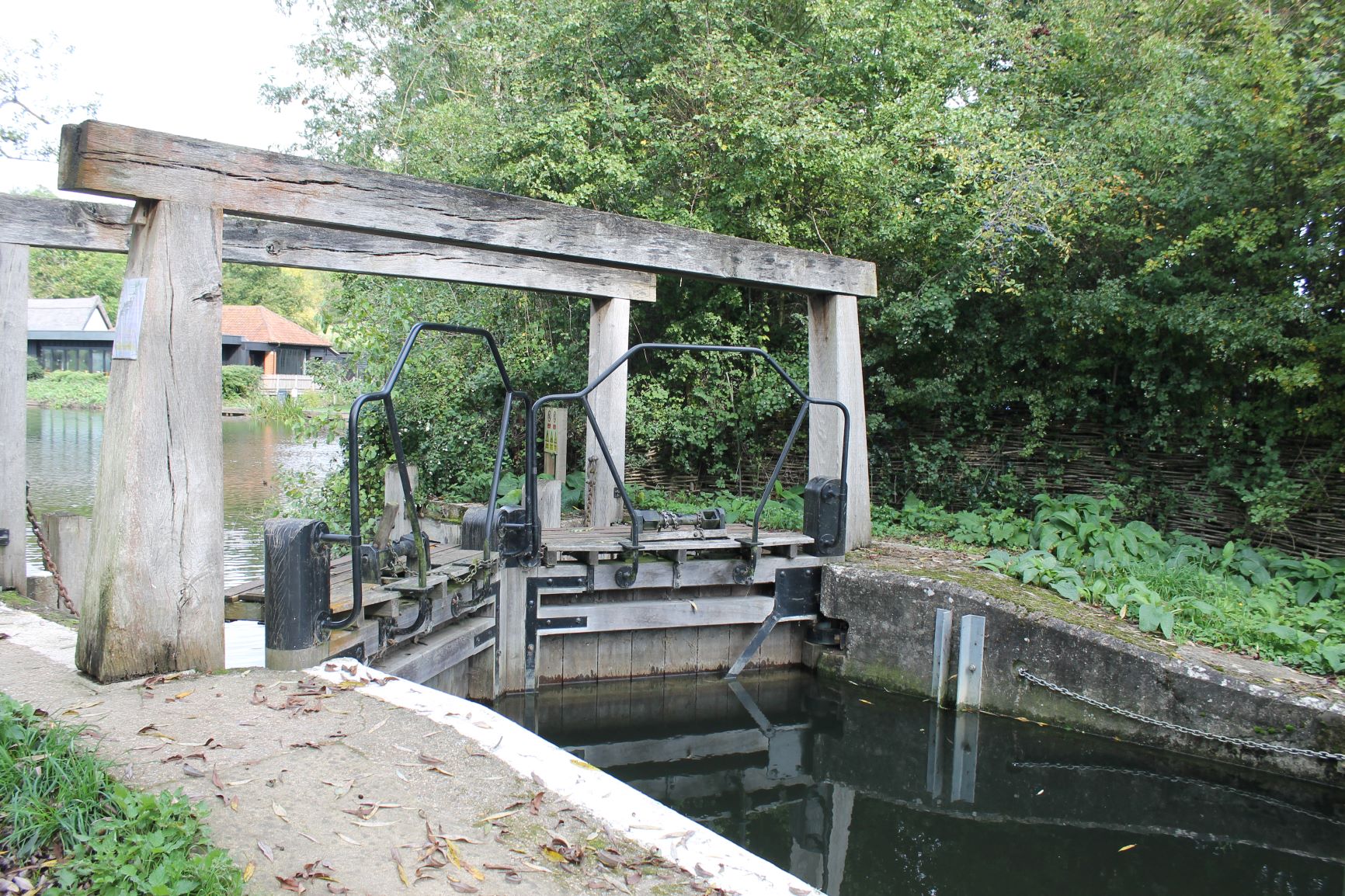
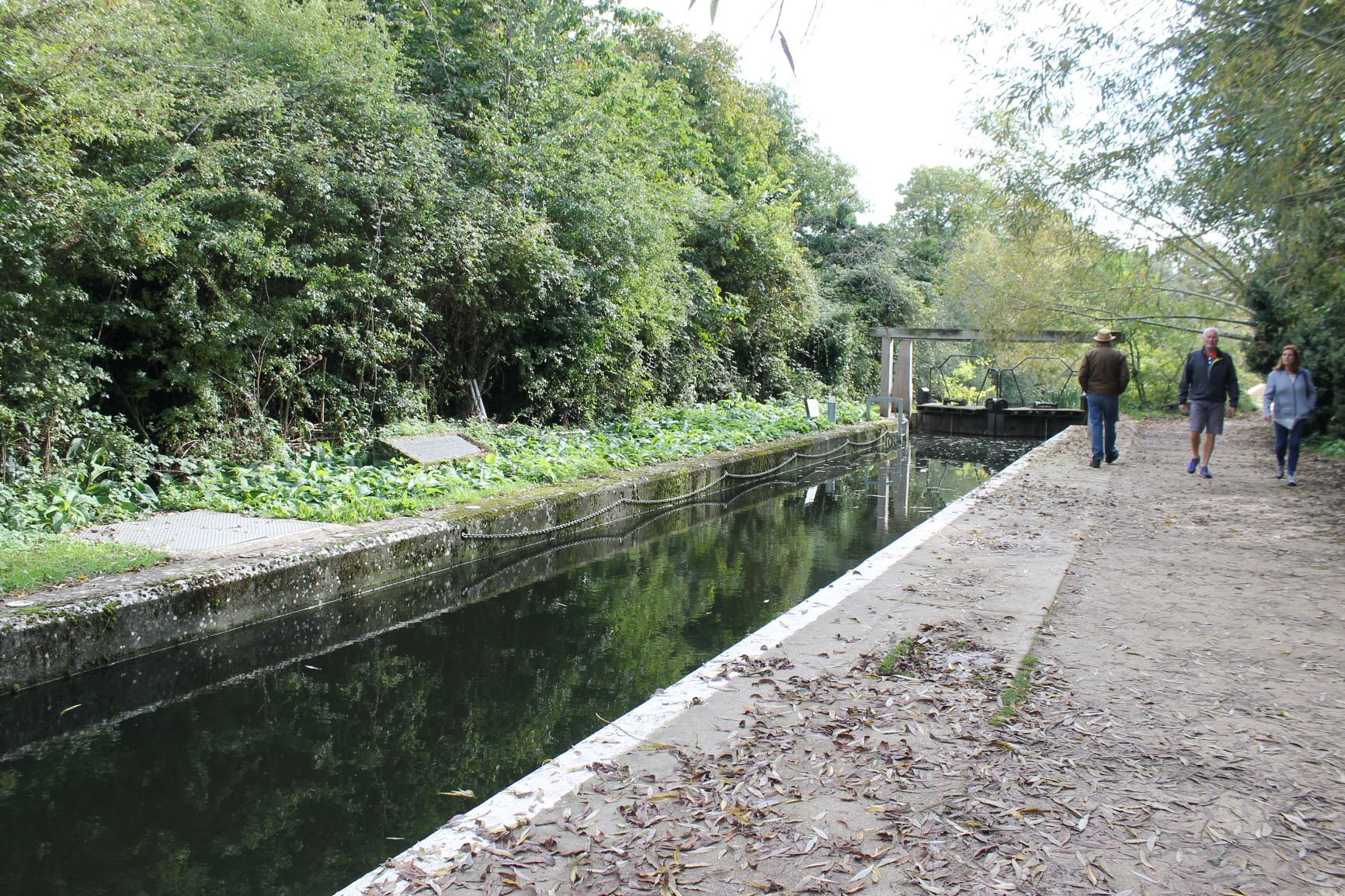
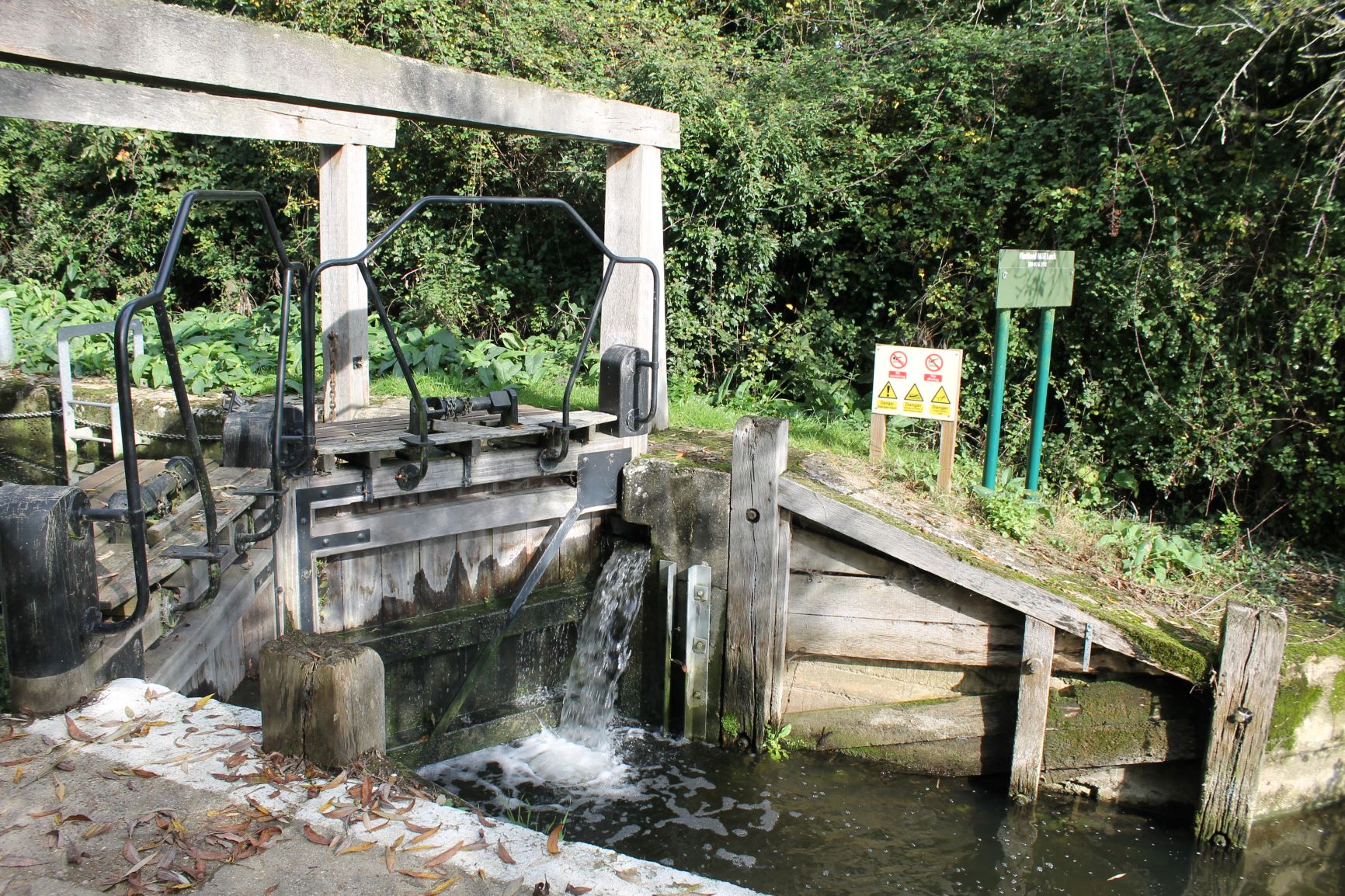
We found the lock which has recently been restored.

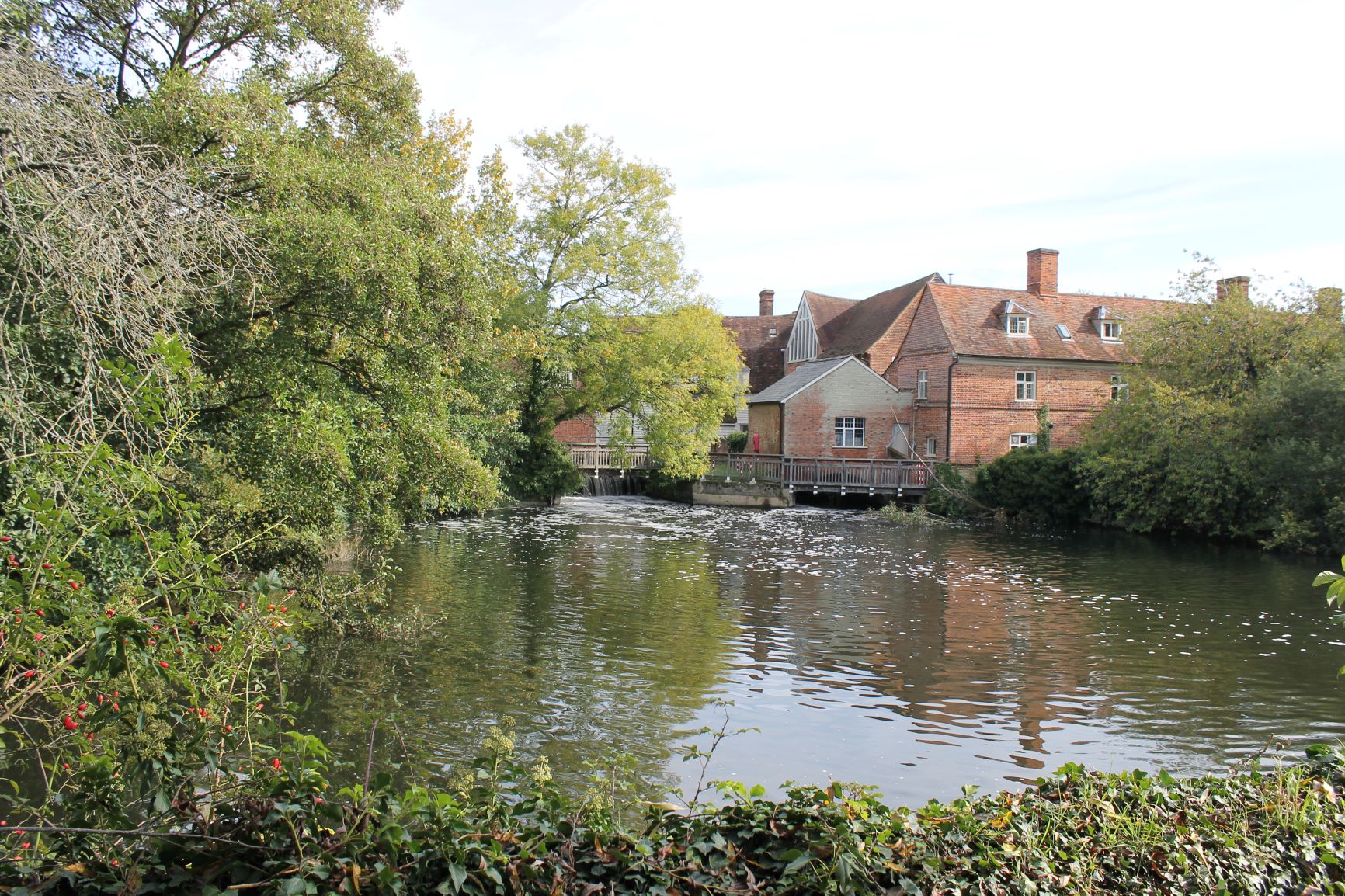
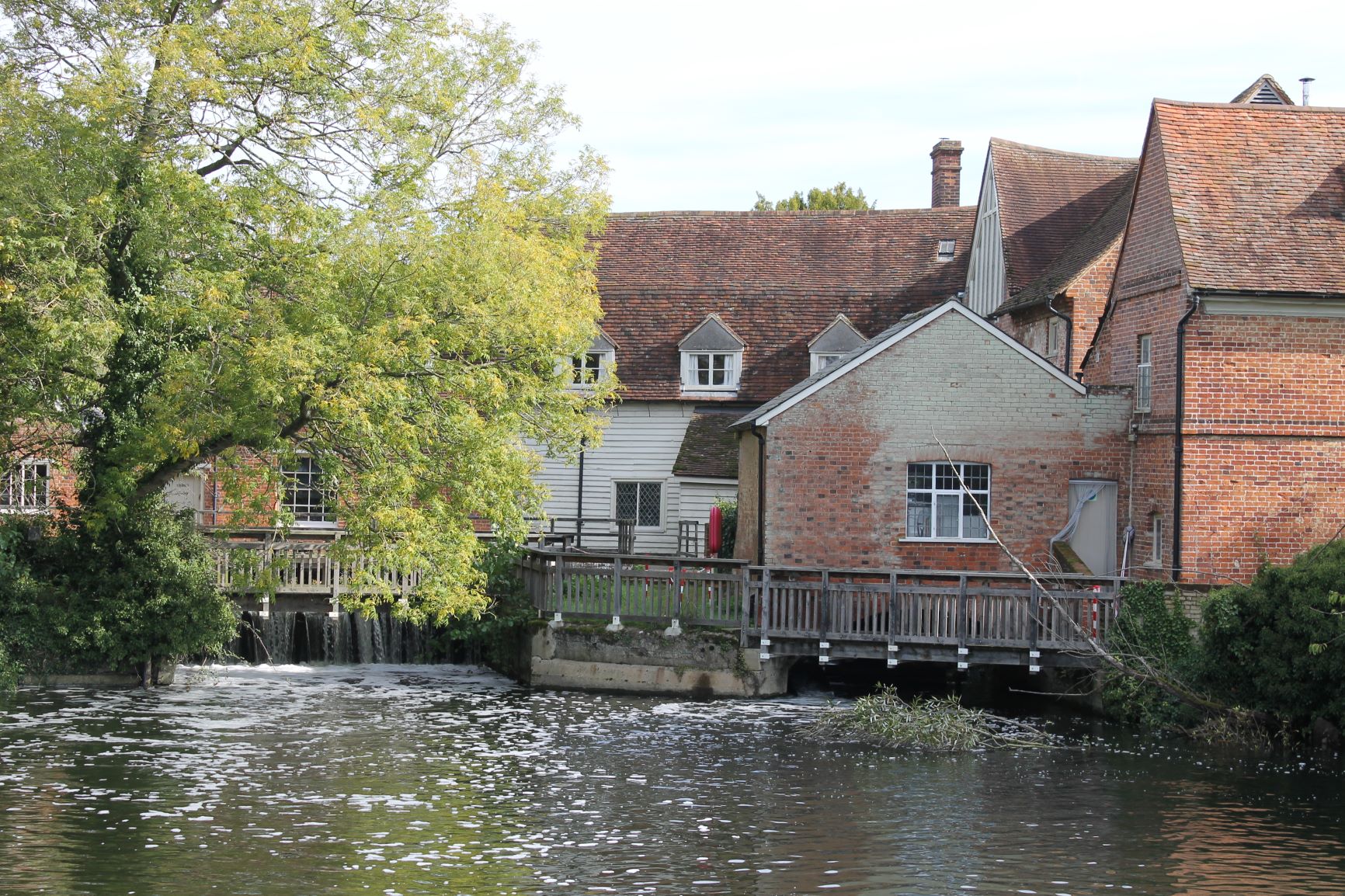
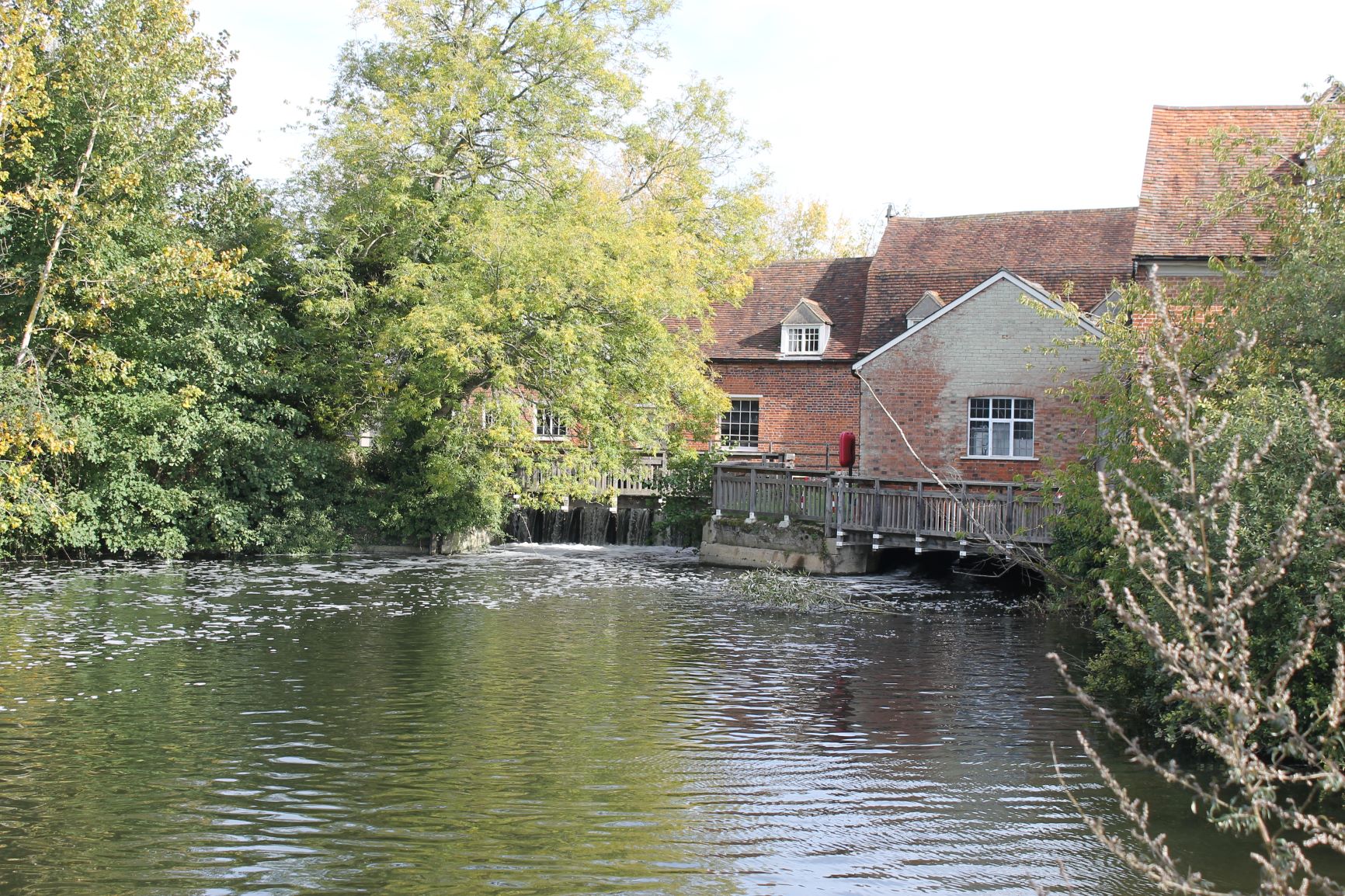
We also found the rear of the mill buildings and the mill pool.

The Stour is a lovely river.

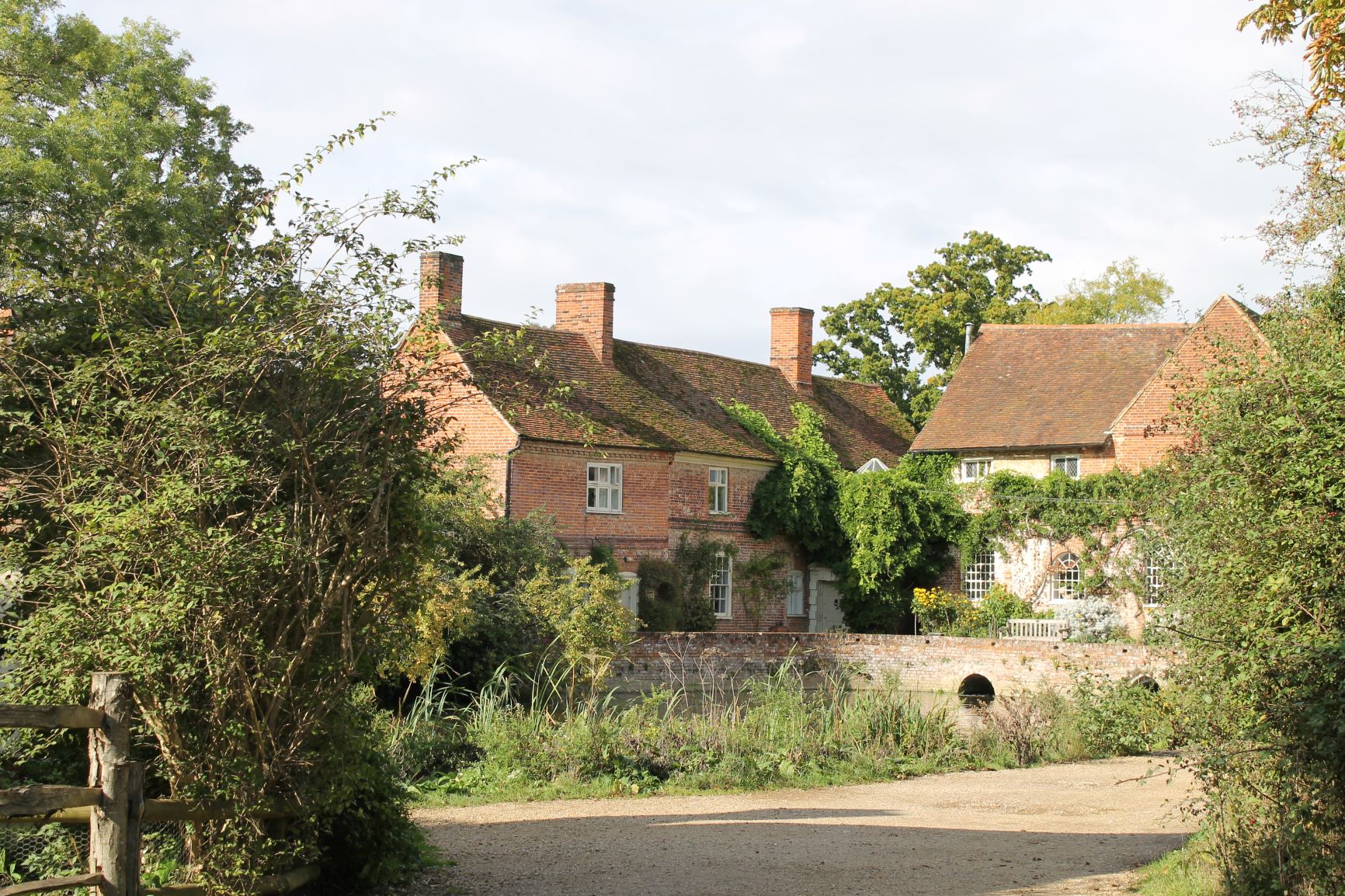
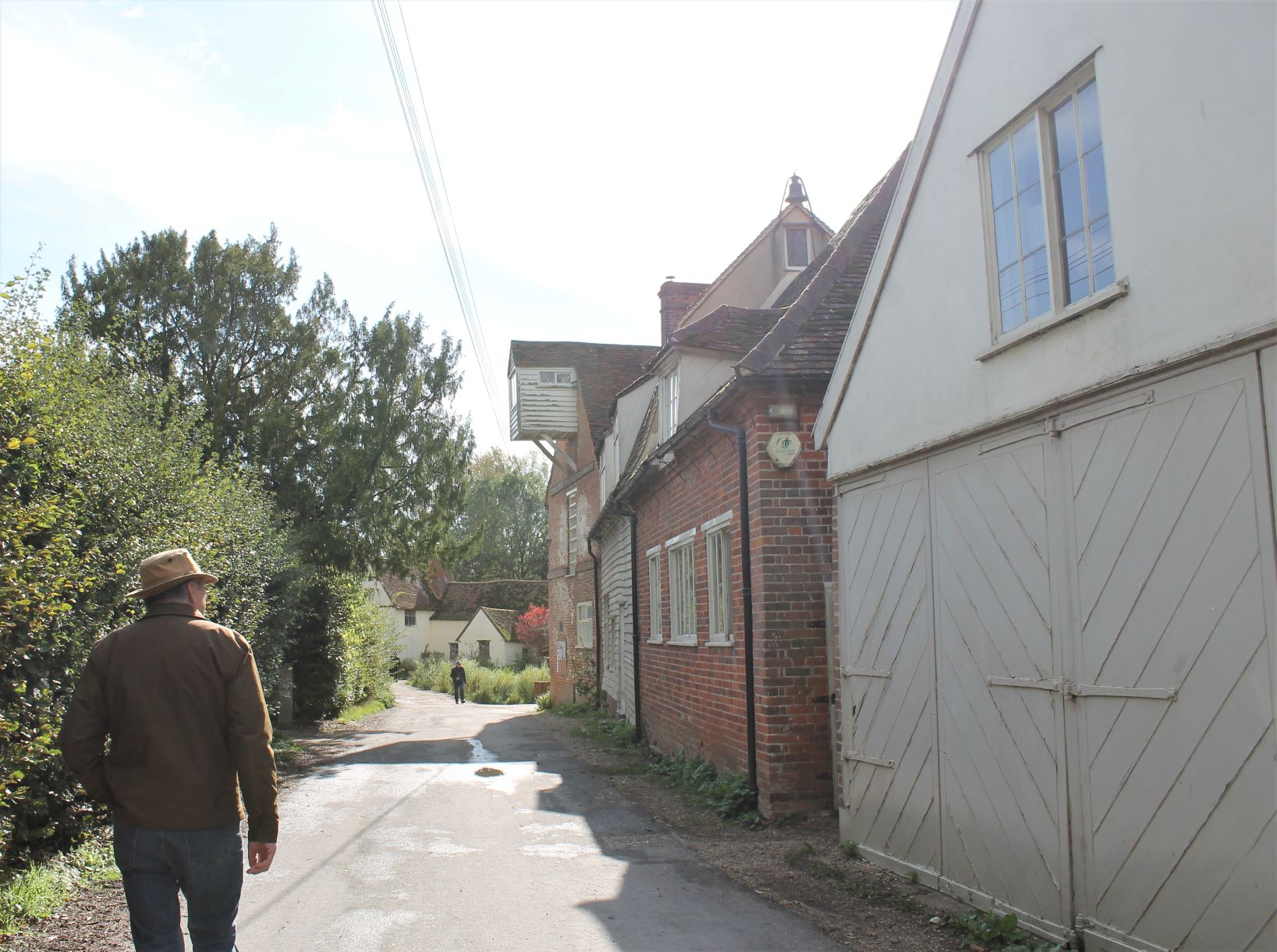
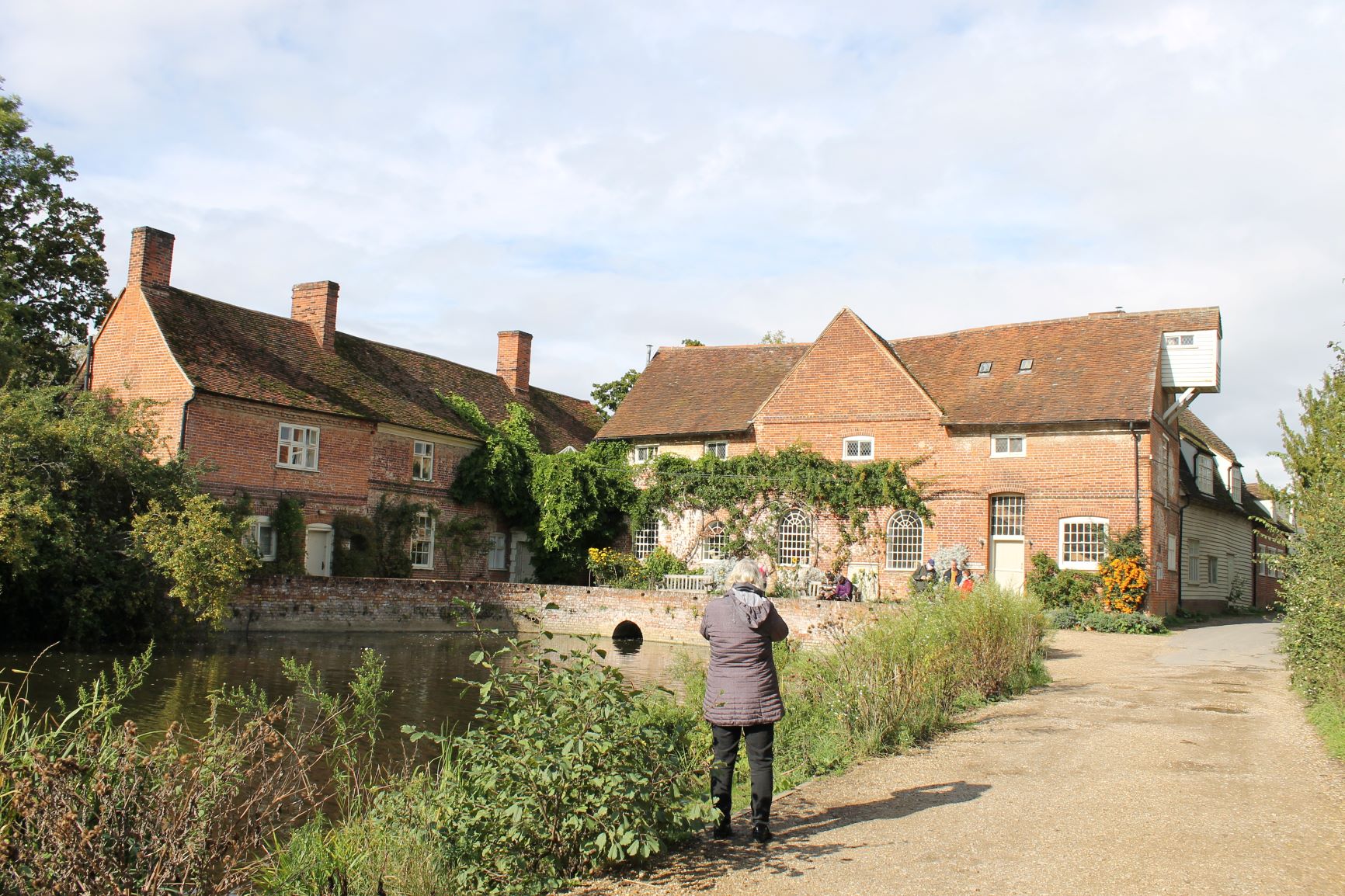
We re-crossed the bridge and walked back down towards the mill, admiring the brick and timber buildings.

After our lunch we sat outside the mill in the sunshine.

This is the corner of the mill building, seen from our bench. I doubt whether the wall was there in John Constable’s time.

It was satisfying to sit looking at a view that Constable looked at every day when he lived in that building and had also included in many of his paintings such as The Mill                      Stream, The Hay Wain and The White Horse.

Beautiful effect of sunlight filtering through the trees.

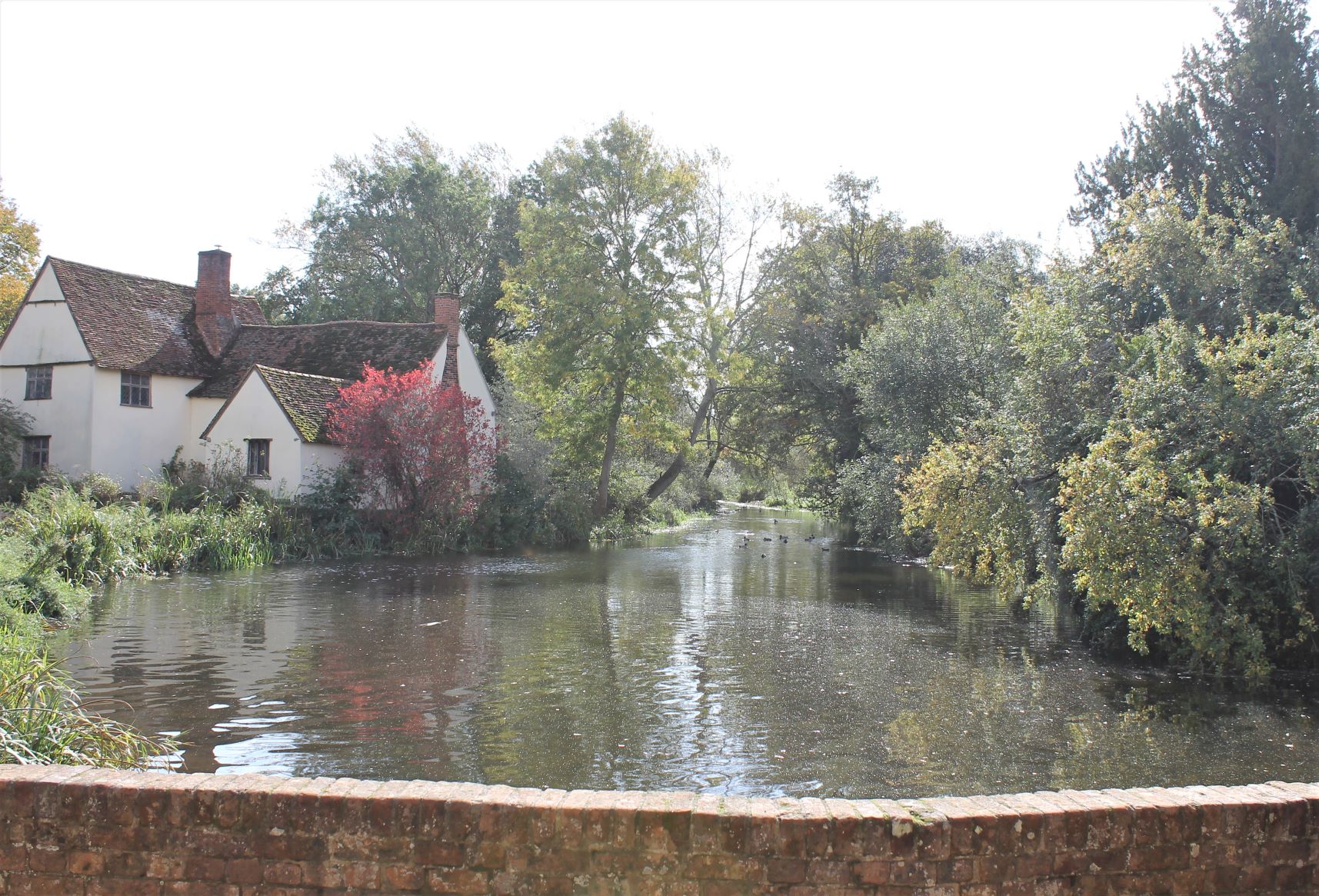
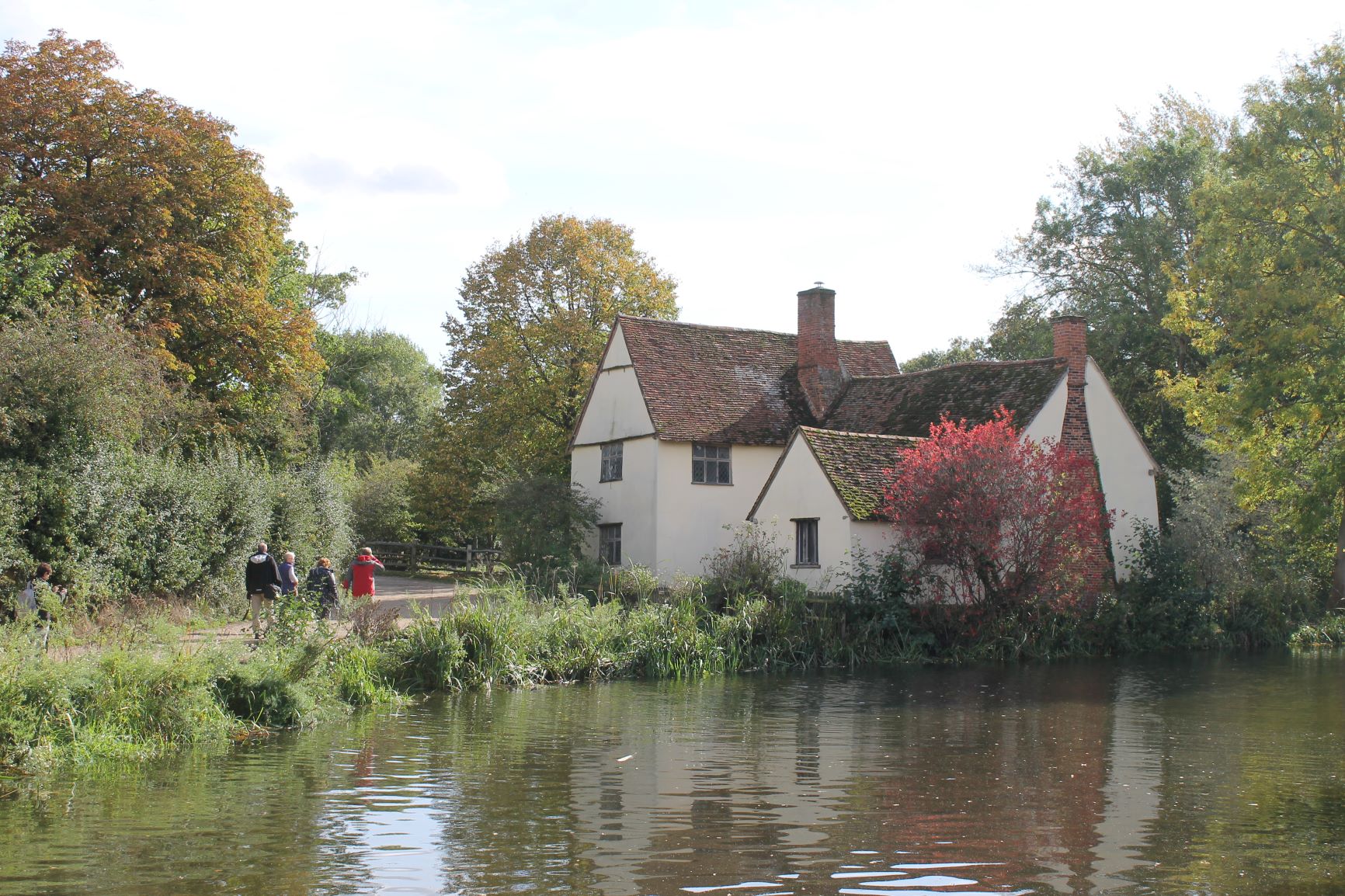
Above are three slightly different views of Willy Lott’s House as seen from outside the mill.  We then walked down the lane towards the house to get a closer view.

Willy Lott's House
Willy Lott’s House
Willy Lott's House
Willy Lott’s House
Willy Lott's House
Willy Lott’s House

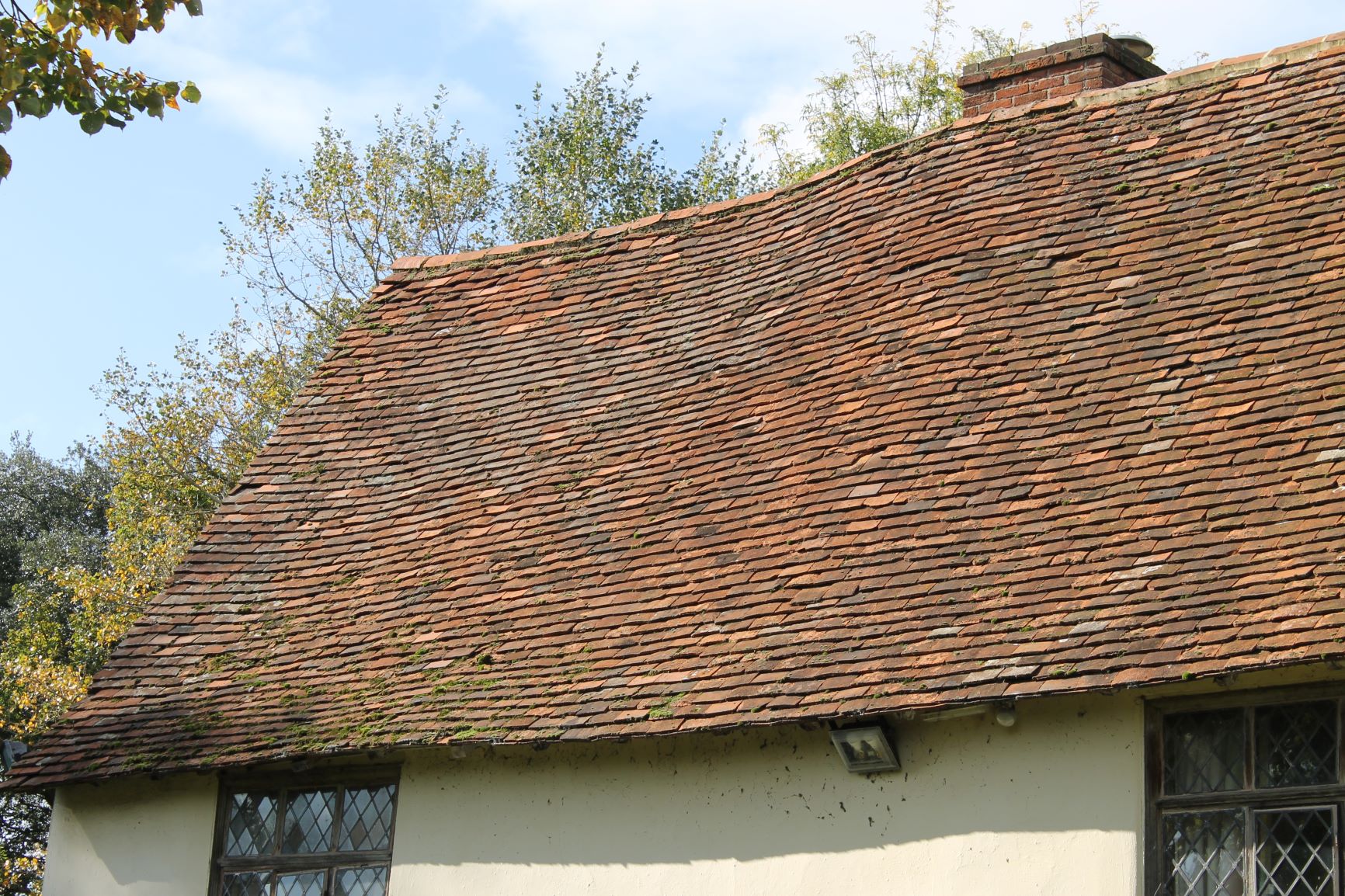
Just look at these glorious roof tiles!

An overgrown withy fence round an allotment with views of the countryside beyond
Forget-me-nots among the nettles
Lush growth next to the river

We then thought we would walk across the water meadows to Dedham which is just into Essex.  Dedham was also painted by Constable and we could see the church tower in the distance.  I have seen this same church tower every time I have travelled down the A12 on my way to London.

As you can see from the sky in these photos, it was looking more and more like rain so we reluctantly turned round and made our way back to Flatford.  The water meadows were more water than meadow, thanks to the very wet weather we had had during September and we would have had great difficulty getting to Dedham dryshod.  The last two photos above show Dedham church tower.

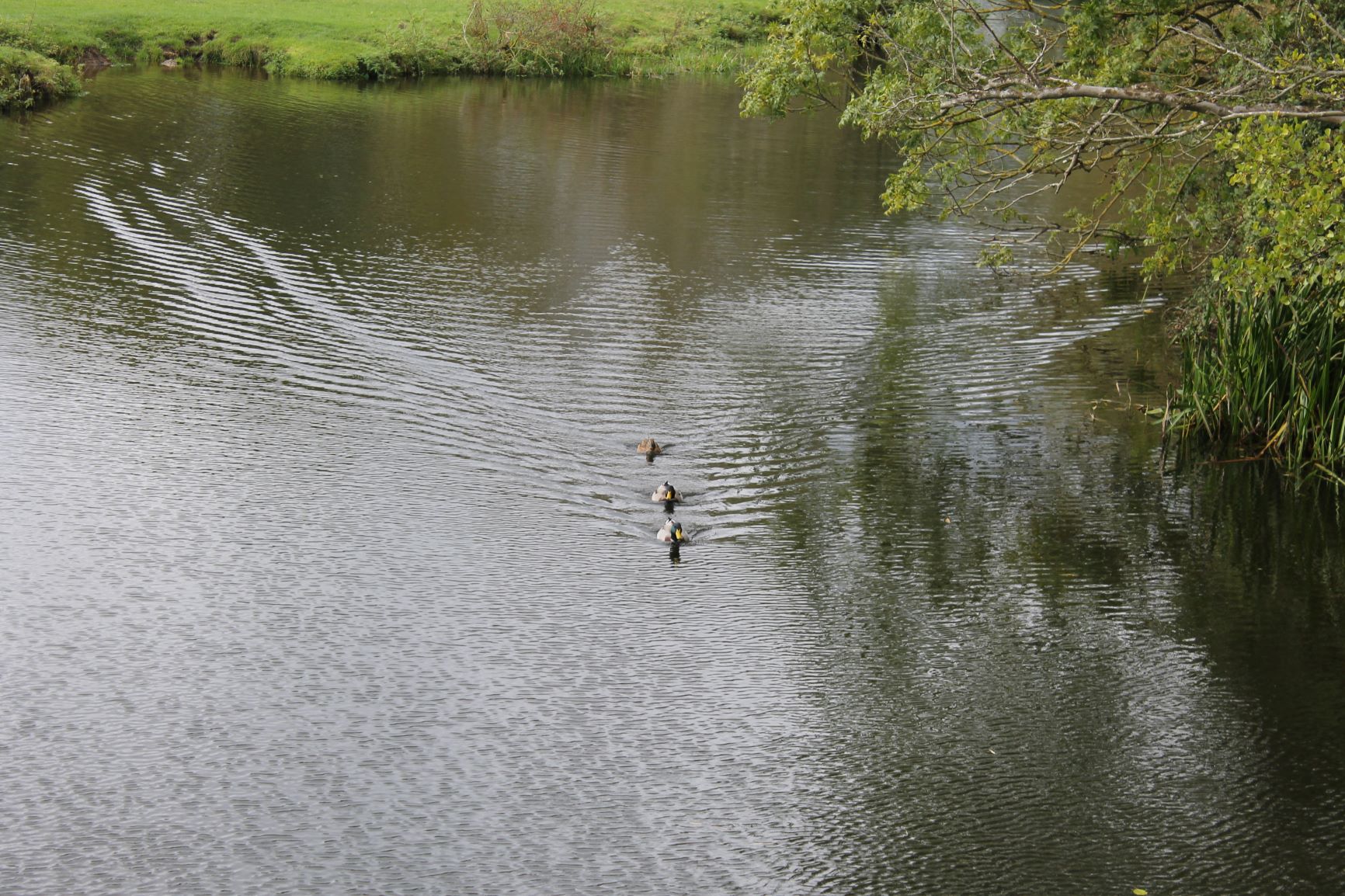
Jolly ducks on the water.

We had a last look at the Stour and then went home in the rain.

Share this:

  • Share on X (Opens in new window) X
  • Share on Reddit (Opens in new window) Reddit
  • Share on Pinterest (Opens in new window) Pinterest
  • Share on Facebook (Opens in new window) Facebook
  • Email a link to a friend (Opens in new window) Email
  • Share on Tumblr (Opens in new window) Tumblr
  • Print (Opens in new window) Print
  • Share on Pocket (Opens in new window) Pocket
  • Share on LinkedIn (Opens in new window) LinkedIn
Like Loading...

Castle Acre Priory

26 Sat Sep 2020

Posted by Clare Pooley in architecture, churches, Days out, family, Historic Buildings, plants, Rural Diary

≈ 99 Comments

Tags

architecture, Castle Acre, Castle Acre Priory, Cluniac, day out, English Heritage, monastic, priory, ruins

It was Richard’s birthday in the middle of August and to celebrate, he decided he would like to visit Castle Acre Priory in Norfolk.  The Priory is a ruin which is cared for by English Heritage.

Because of Covid-19 restrictions we had to book a ‘slot’ and pre-pay for our visit.  We were so happy to have Alice staying with us for a week; she had arrived the day before and accompanied us on our trip.  We made a picnic lunch to take with us and set out at 11.00 am as our ‘slot’ was at 1.00 pm.  I drove us there and because the traffic was light we arrived in very good time.  We ate our picnic sitting in the car in the car-park;  it was a dull, cool day and the only benches and tables were beyond the reception building.  We had liked the look of Castle Acre village as we drove through it, (it also has a castle and an interesting-looking church) but it was very crowded with visitors wandering about the narrow lanes.  We will return in happier times, I think.

We donned our masks and presented ourselves at the reception desk where we were given a map of the priory and I bought a guide book.  Just outside the reception building was a charming herb garden.

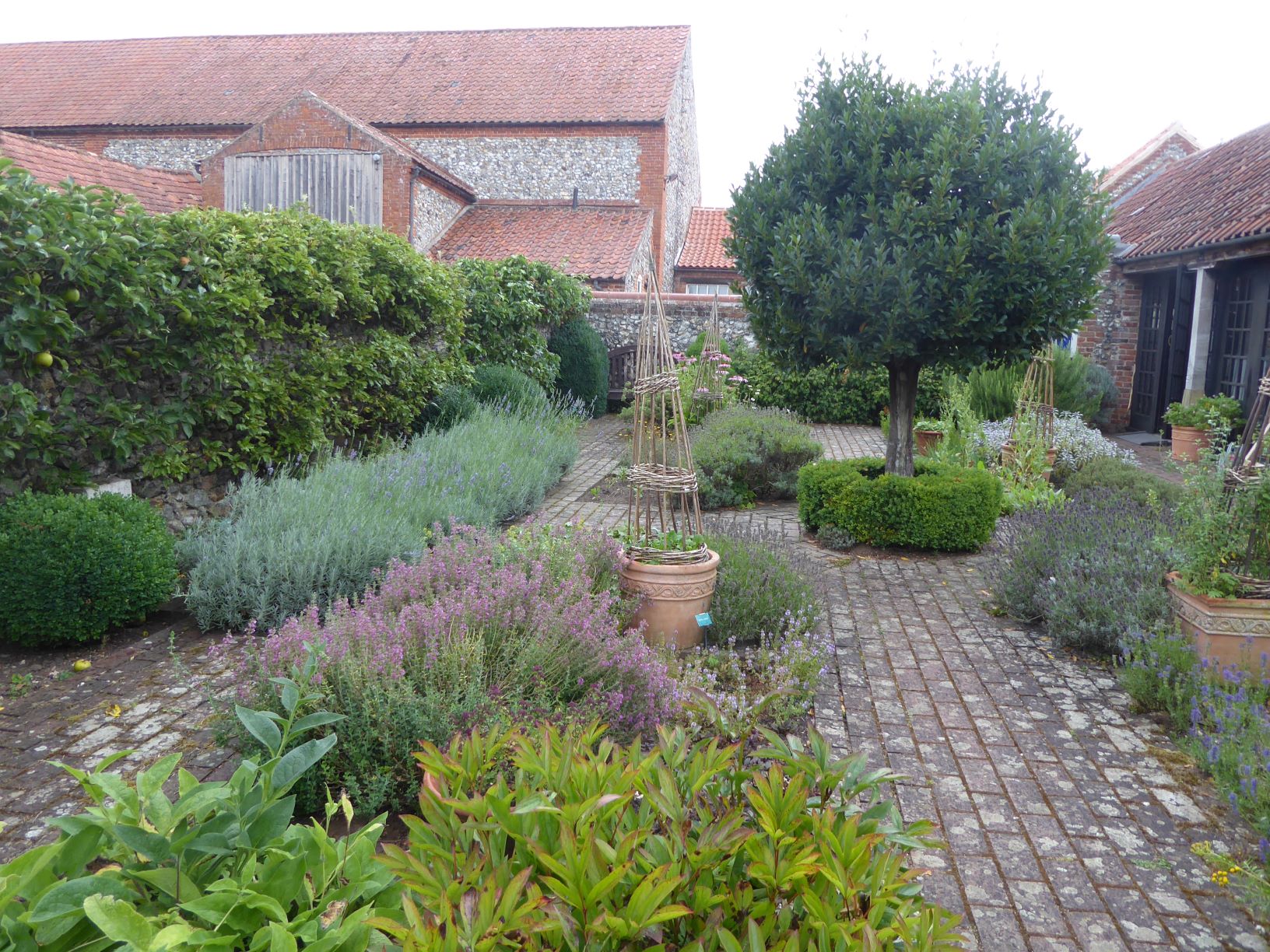
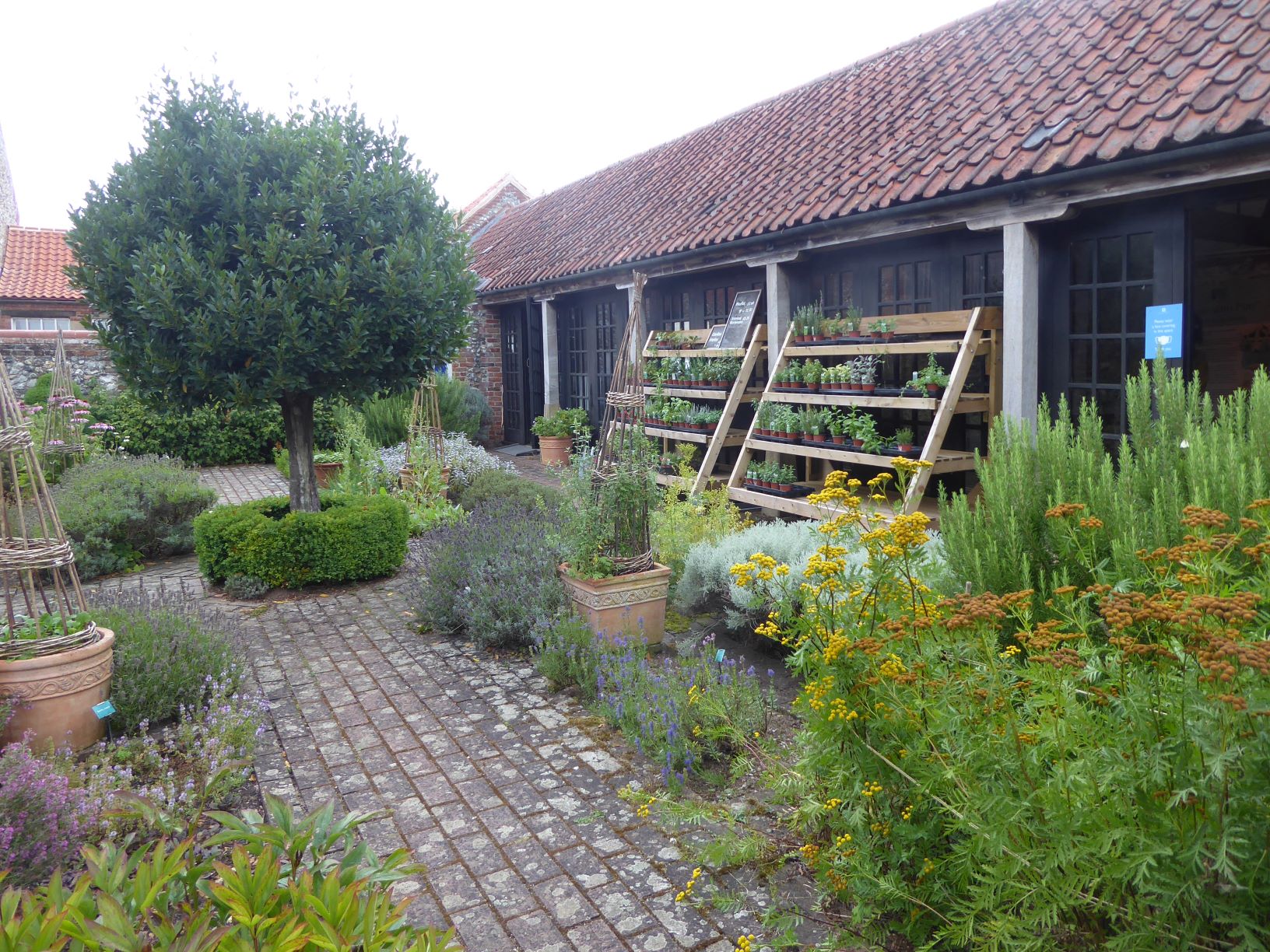
Castle Acre Priory herb garden

There were a couple of stands of plants for sale. I resisted buying from them with difficulty!

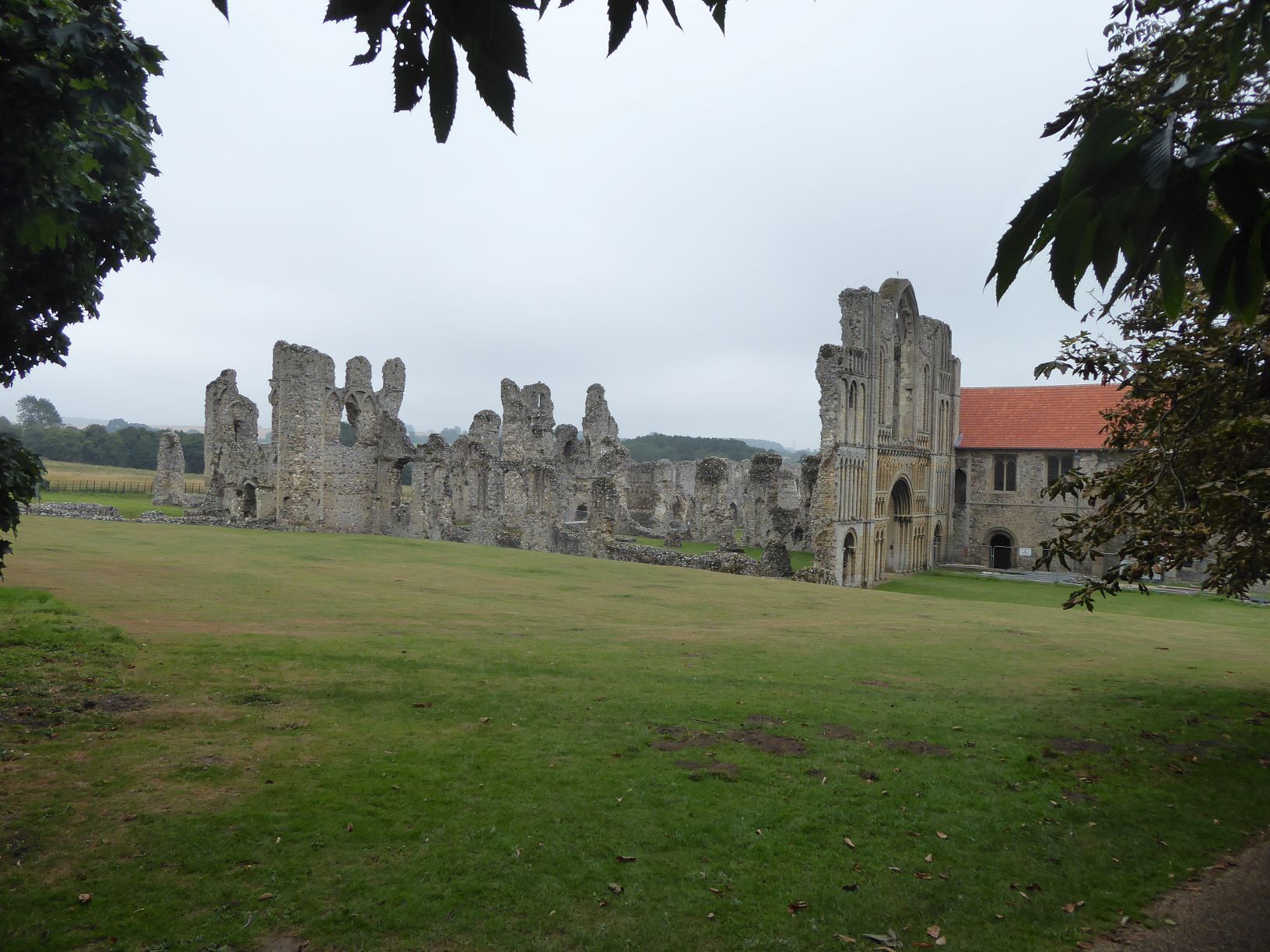
This was our first view of the priory ruins on leaving the herb garden

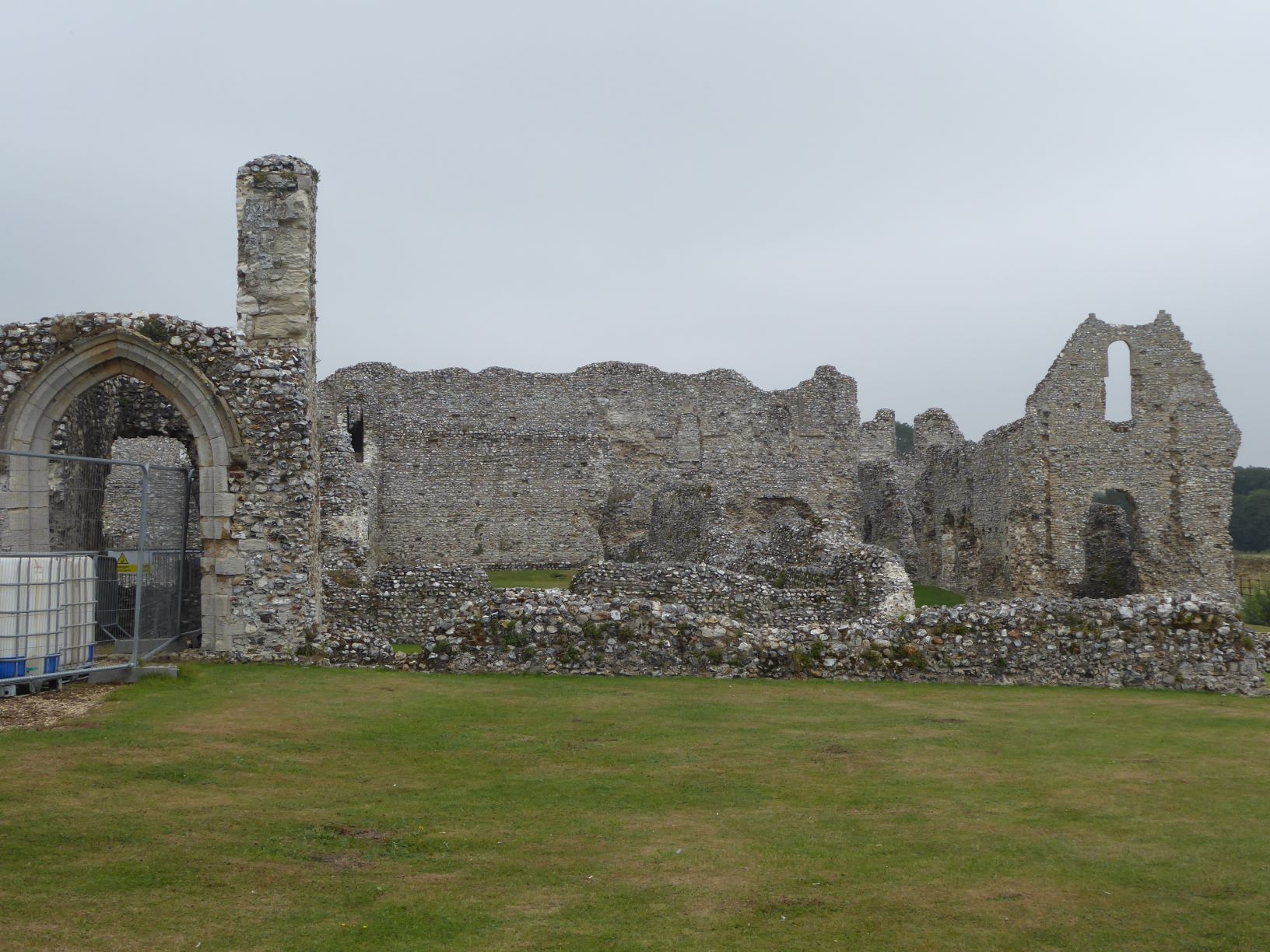
Castle Acre was chosen by William de Warenne, a Norman knight who had fought at the Battle of Hastings, to be the headquarters of all his newly acquired Norfolk properties.  The castle, the priory and the massive 12th century town defences were all built by successive generations of the de Warenne family.  The building of the priory was begun in 1090 by de Warenne’s son.

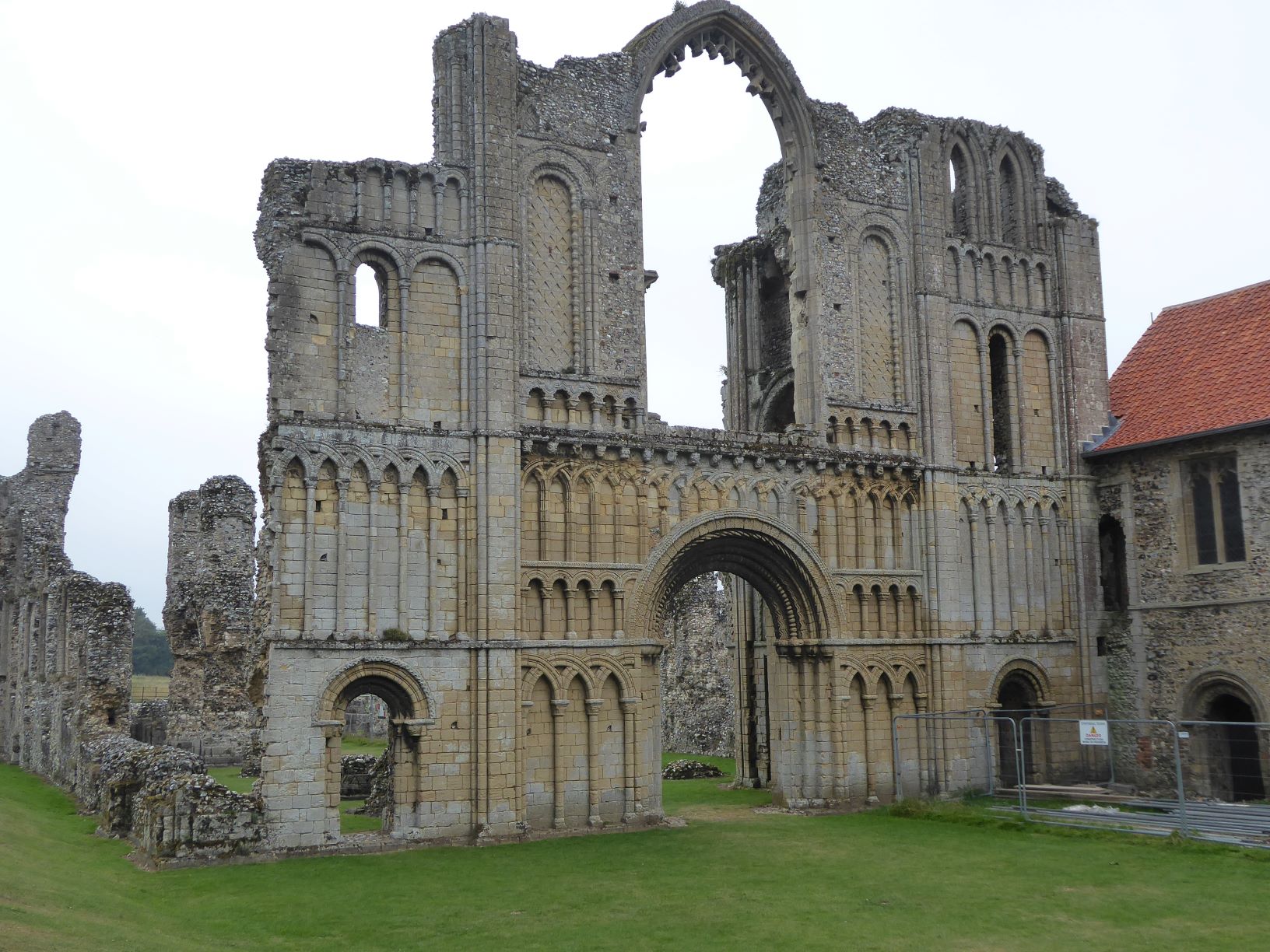
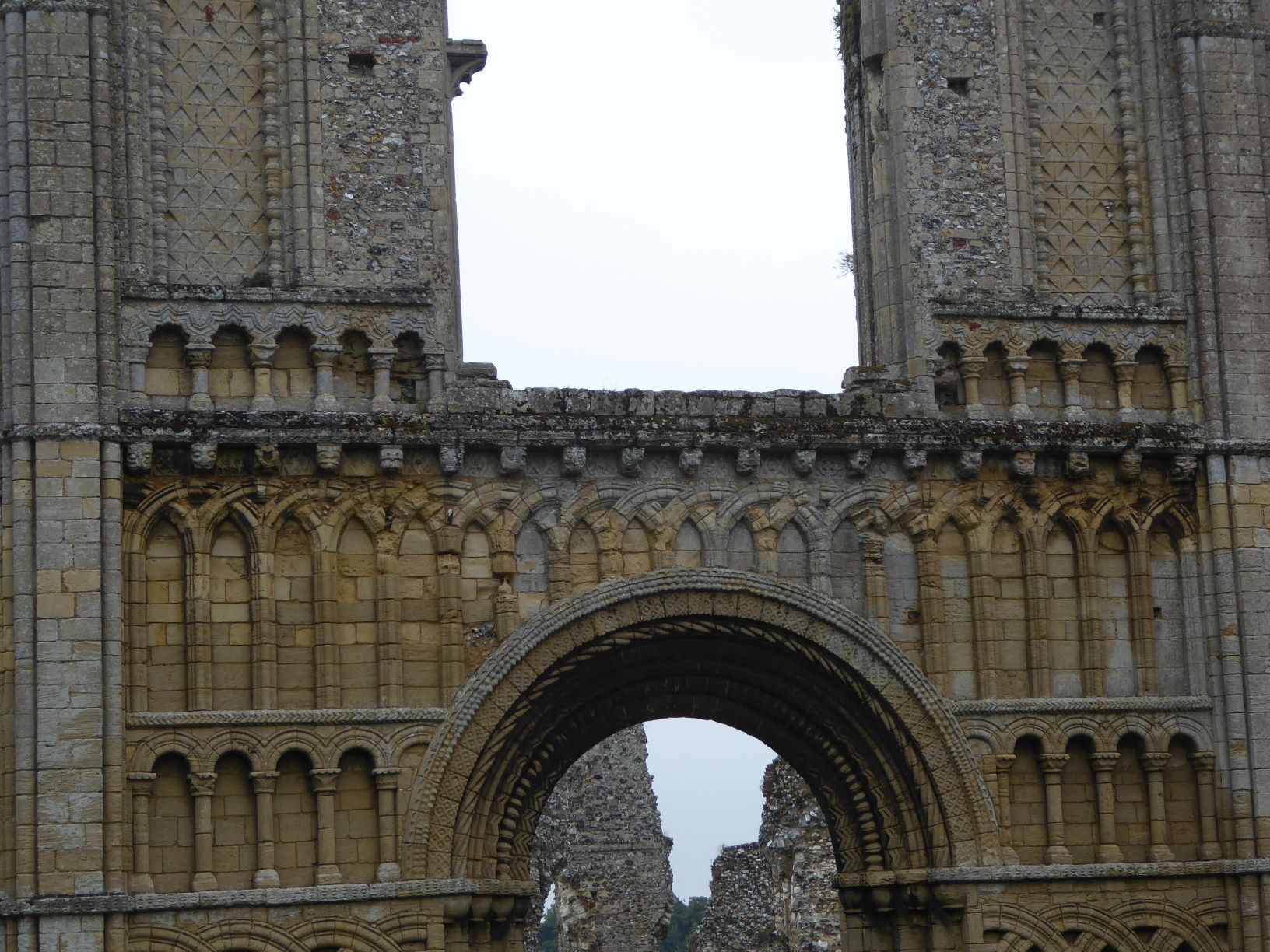
The west front of the priory church

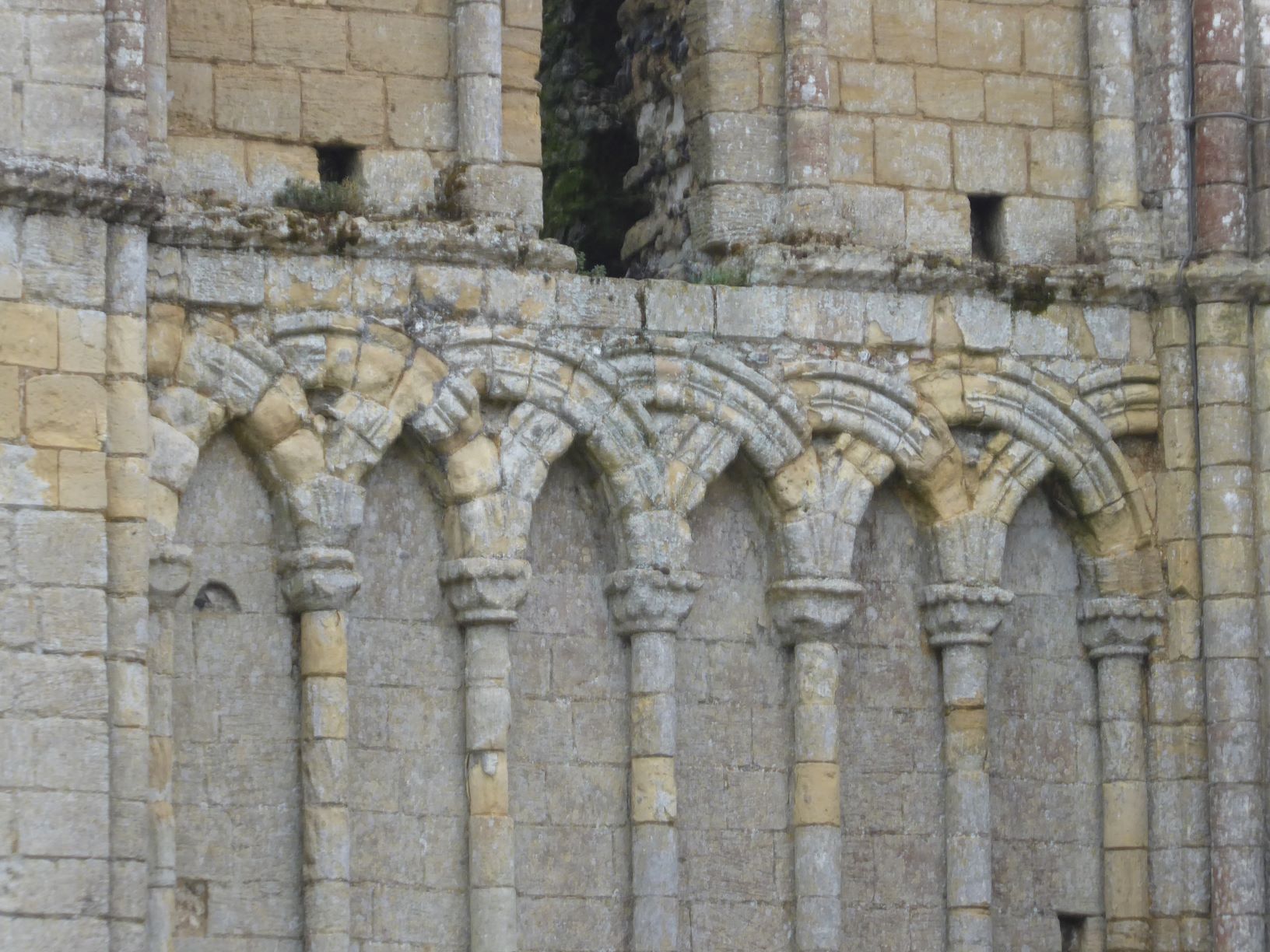
Just look at this exquisite blind arcading!

Have a closer look…

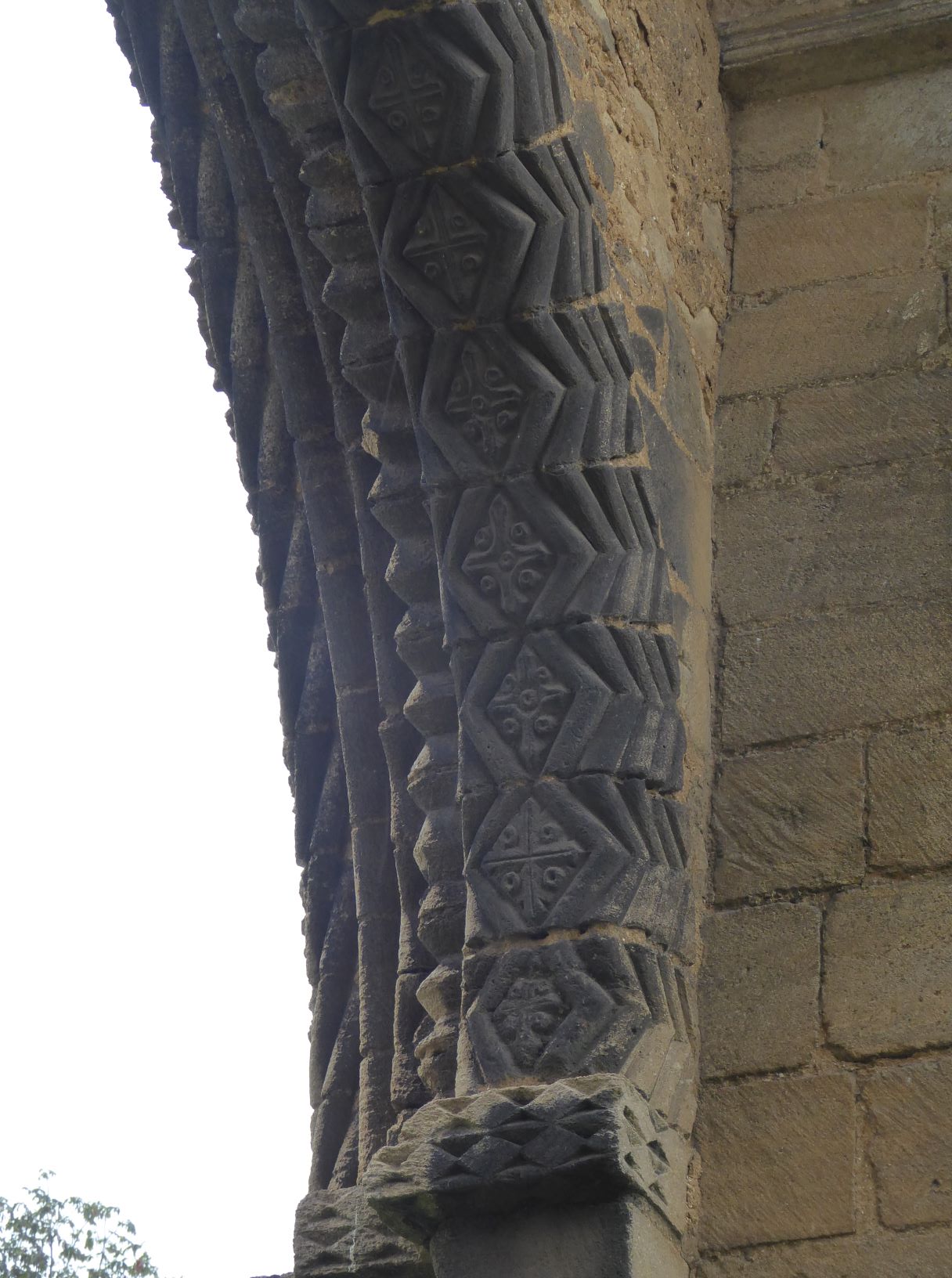
Carved archway in the west front

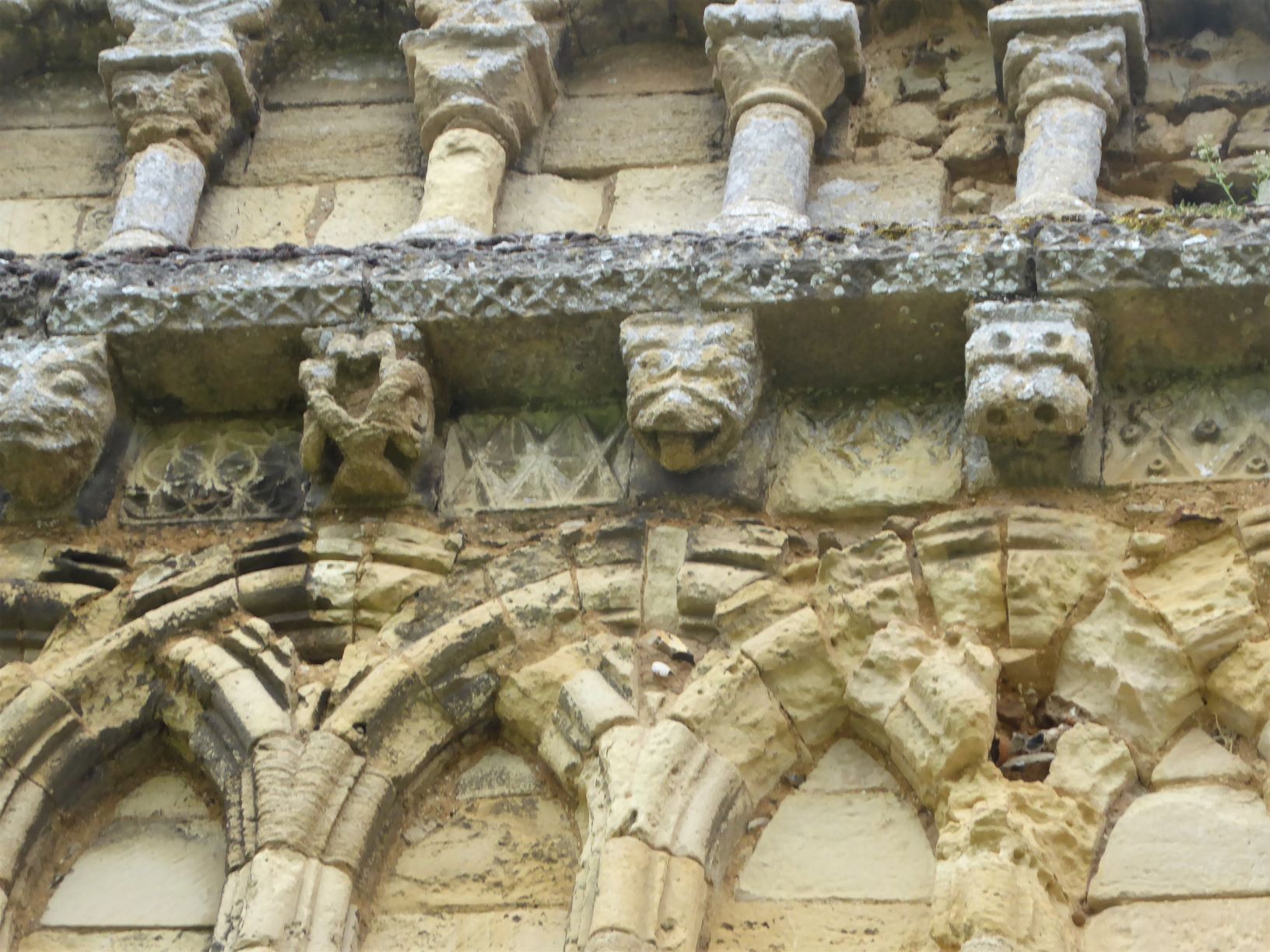
More intricate carving, with a couple of grotesques

We always seem to visit a place which is currently having work done to it!  Last year we visited Hardwick Hall in Derbyshire because I wished to see its stunning facade.  ‘Hardwick Hall, more glass than wall’.  When we got there (in the pouring rain, I might add) the whole of the front was covered in scaffolding because of on-going restoration work.

This time, a number of projects were being worked on at the priory which restricted where we were able to go.

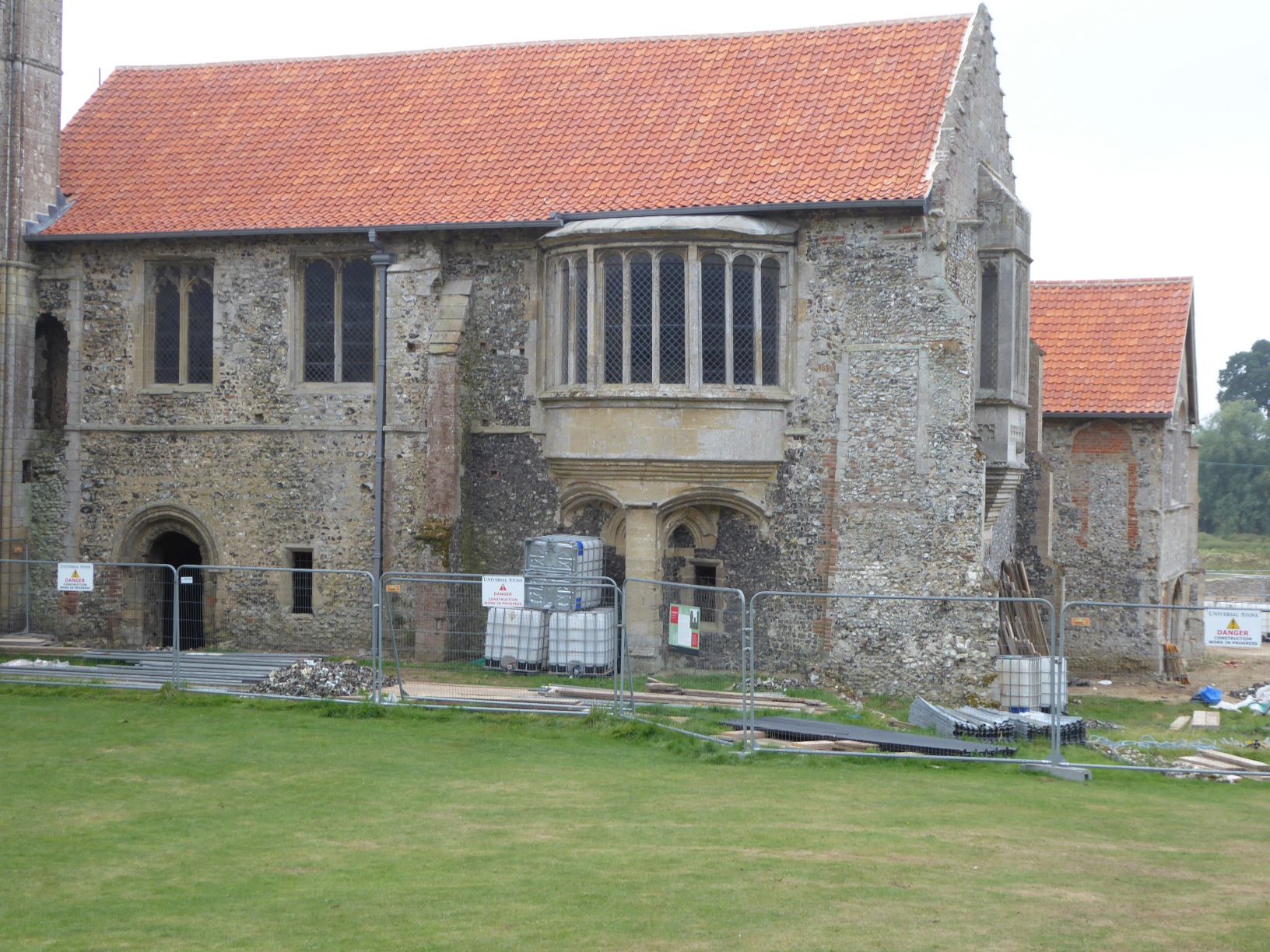
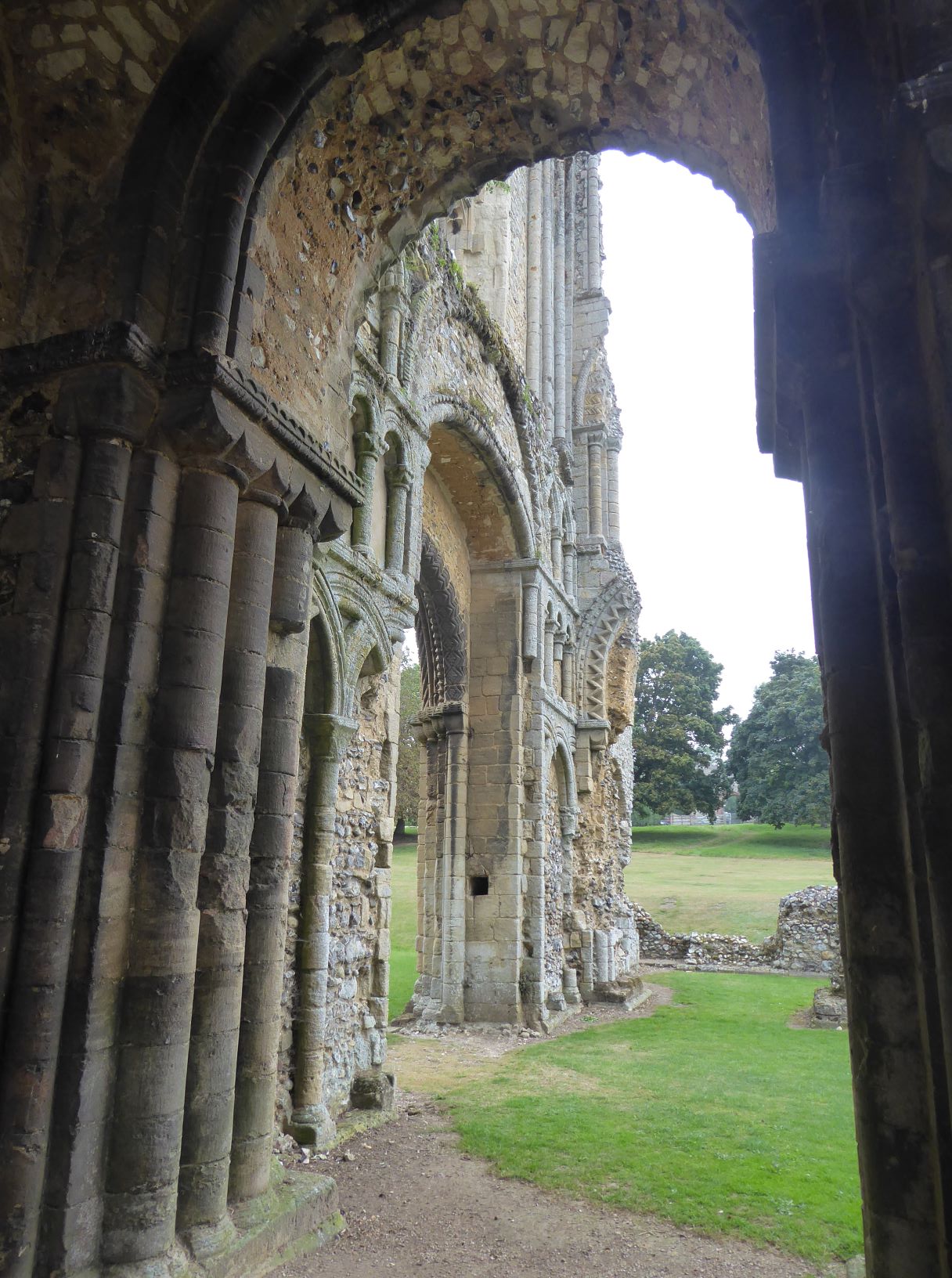
The Prior’s chapel is to the left as you look at the photo and the Prior’s great chamber/study is on the right with its fabulous bay window, added in the early 16th century.  Further round the corner on the right side of the building you can see the side view of an early 16th century oriel window.

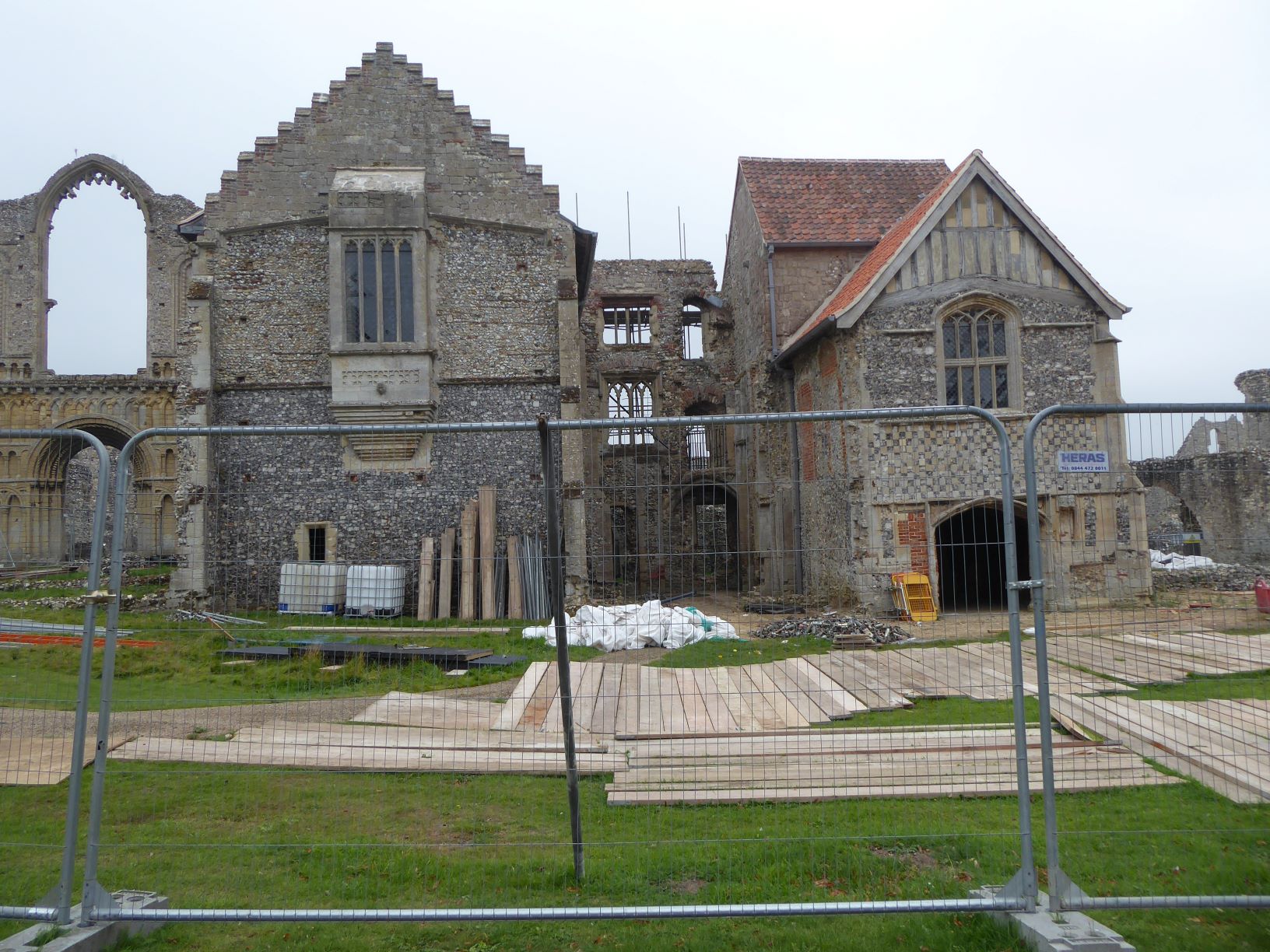
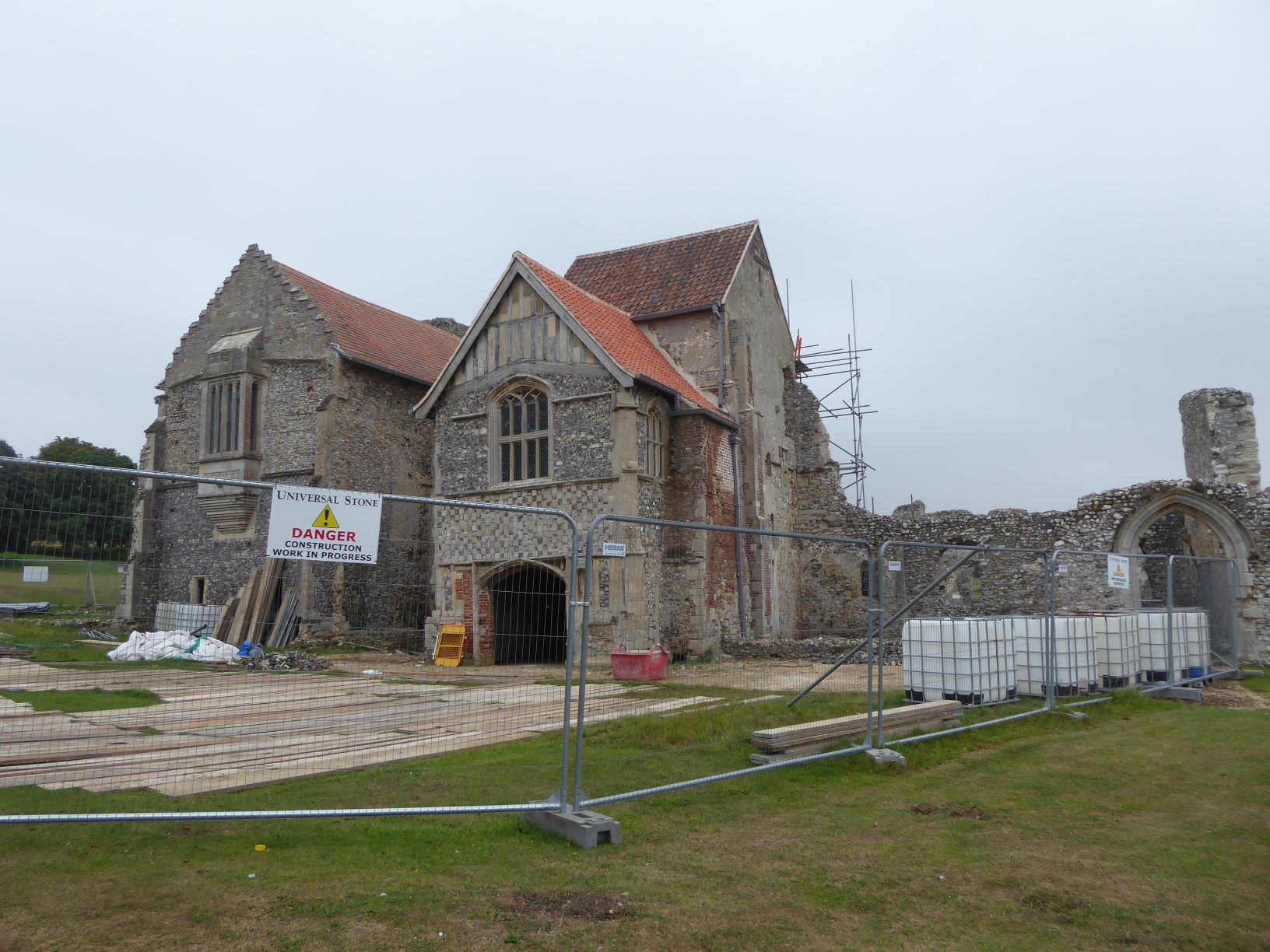
The Prior’s study with the oriel window is on the left and a late 15th century two-storey porch is on the right. The taller building behind the porch is the Prior’s lodging. You can also see the connecting passages and galleries of the west range joining the lodging to the Prior’s chapel behind the great chamber.  The Prior’s chapel was also connected to the Priory church so the Prior had no need to go outside at all, unless he wished to.

Another view of the Prior’s buildings

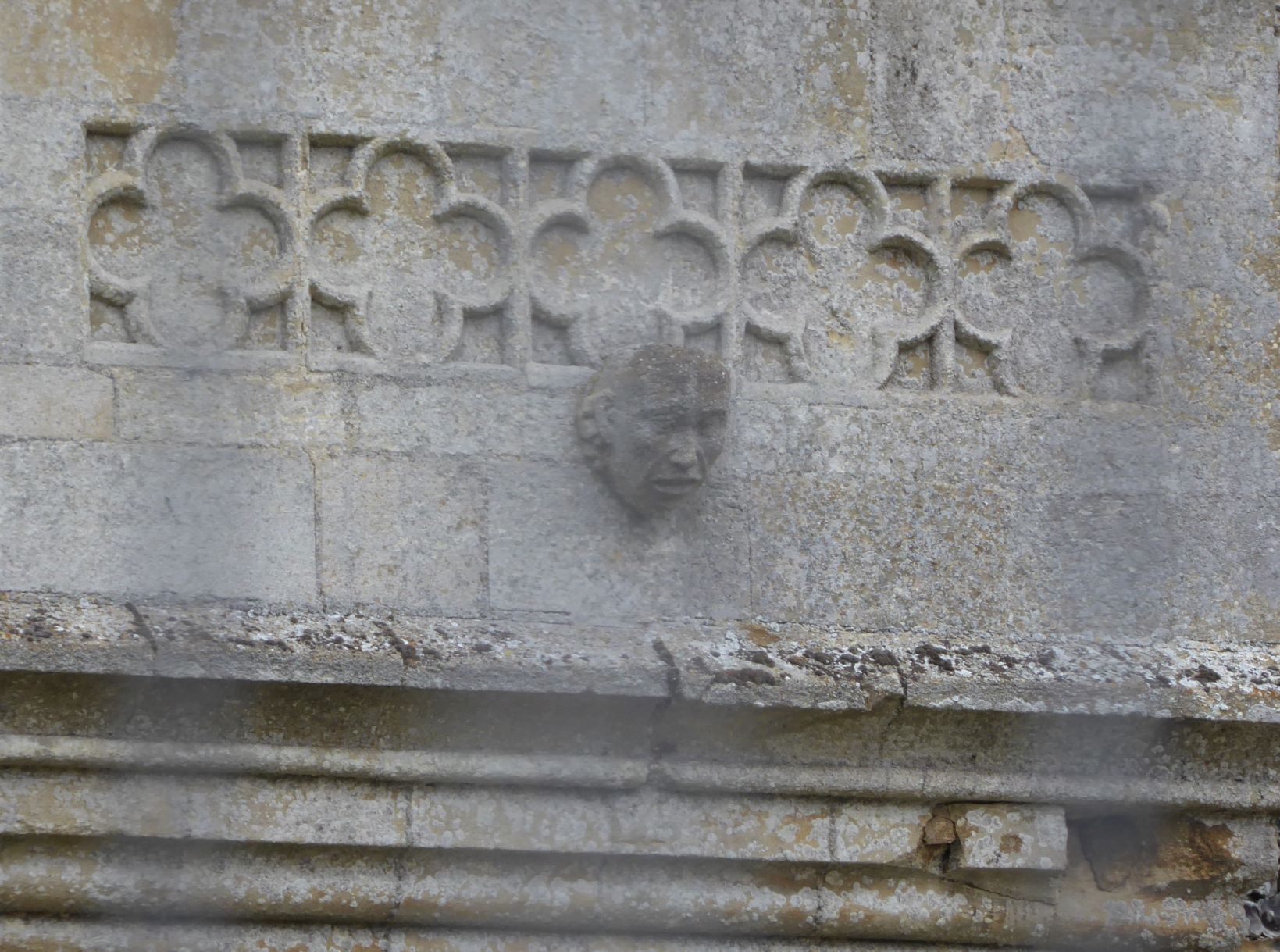
This is part of the decoration on the oriel window. It must be a portrait of someone, don’t you think? Such a wonderful face!  Apologies for the poor photo.

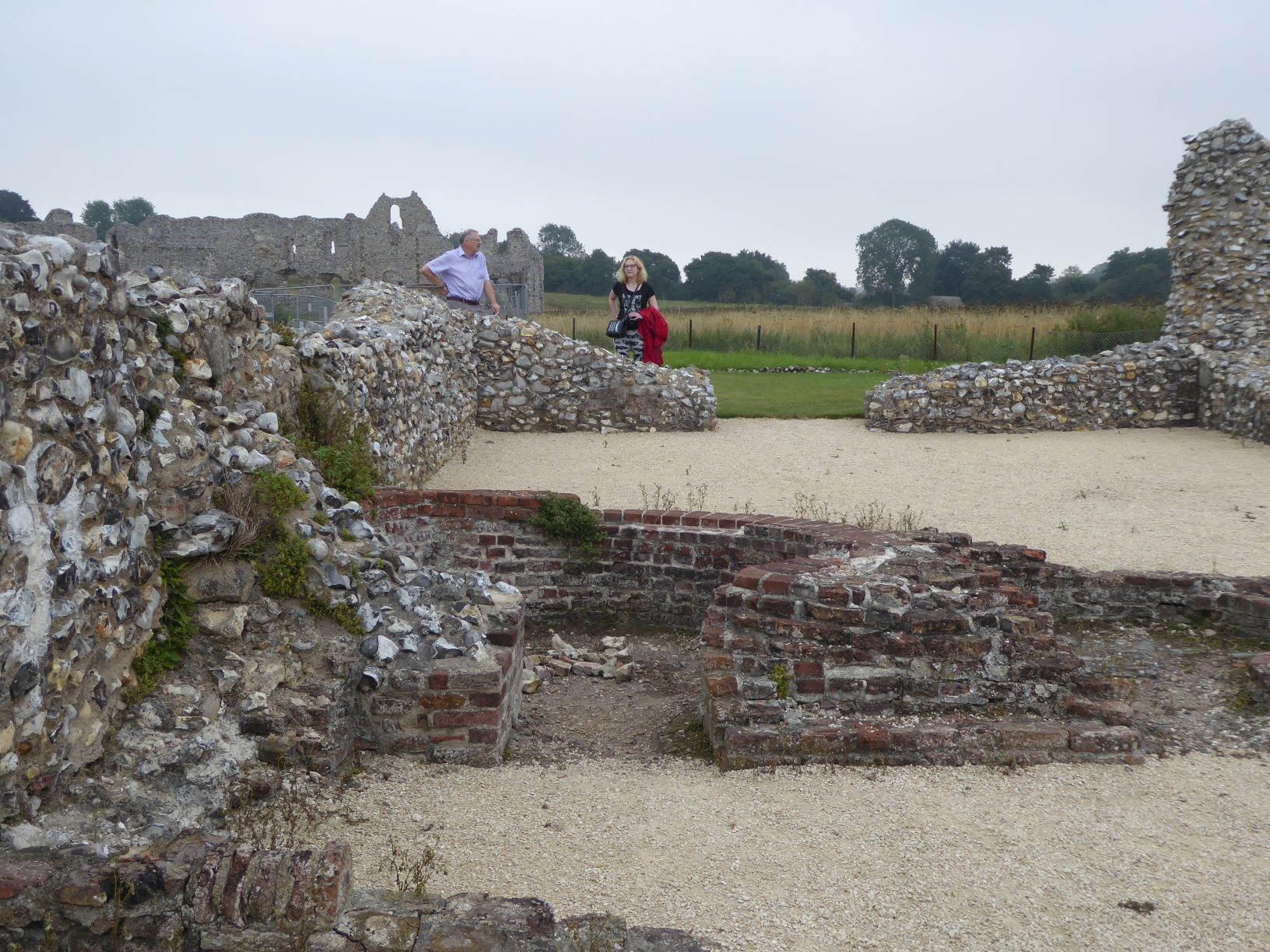
From left to right; entrance to the west range of the priory, then a kitchen and behind it the refectory and then the building on the far right is the reredorter or latrine block.

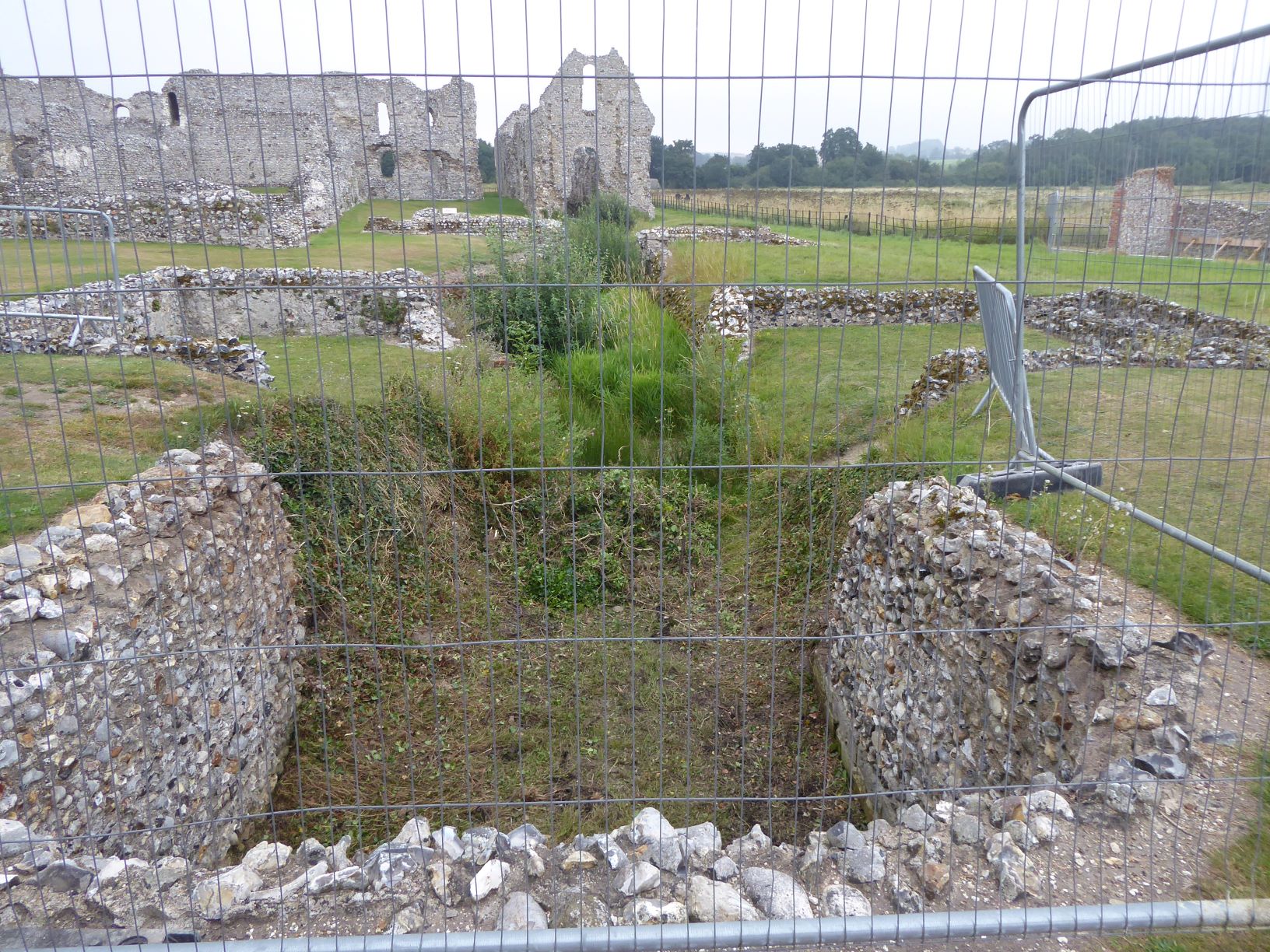
Restoration work is being done to the bridge (in the foreground) over the leat and also to the south boundary wall. The leat is a diversion of the River Nar; this leat was used by the monks to take the waste away from the reredorter. They dug the channel close to the priory and then built the latrine block over the top of it. The leat is dry at present.

This slideshow requires JavaScript.

Castle Acre Priory was a Cluniac priory, a daughter-house of the great monastery at Cluny in Burgundy.  With the support of kings and nobility many Cluniac priories were created in England between 1076 and 1154.  During the wars with France the Cluniac priories had restrictions placed on them because they were ‘alien’ even though most of the monks were, in fact, English.  Gifts to the priory were reduced and the French monks were repatriated. Only after obtaining English or ‘denizen’ status did their situation improve again and their numbers increase.  Castle Acre was suppressed by Thomas Cromwell during the reign of Henry VIII and the deed of surrender was signed on 22 November 1537.  Thomas Howard, third Duke of Norfolk acquired the lease of the priory’s site, lands and rights.  By the following summer the priory buildings were being demolished, though the Prior’s lodging was retained as a house.

Richard and Alice at the Priory

My girls!

Elinor with the reredorter in the background. You can see clearly here how the building straddles the leat.

Richard, Alice and Elinor

It started to rain, and we decided it was time to go home.

Alice and Richard approaching the bay of the south aisle of the priory church under the south-west tower

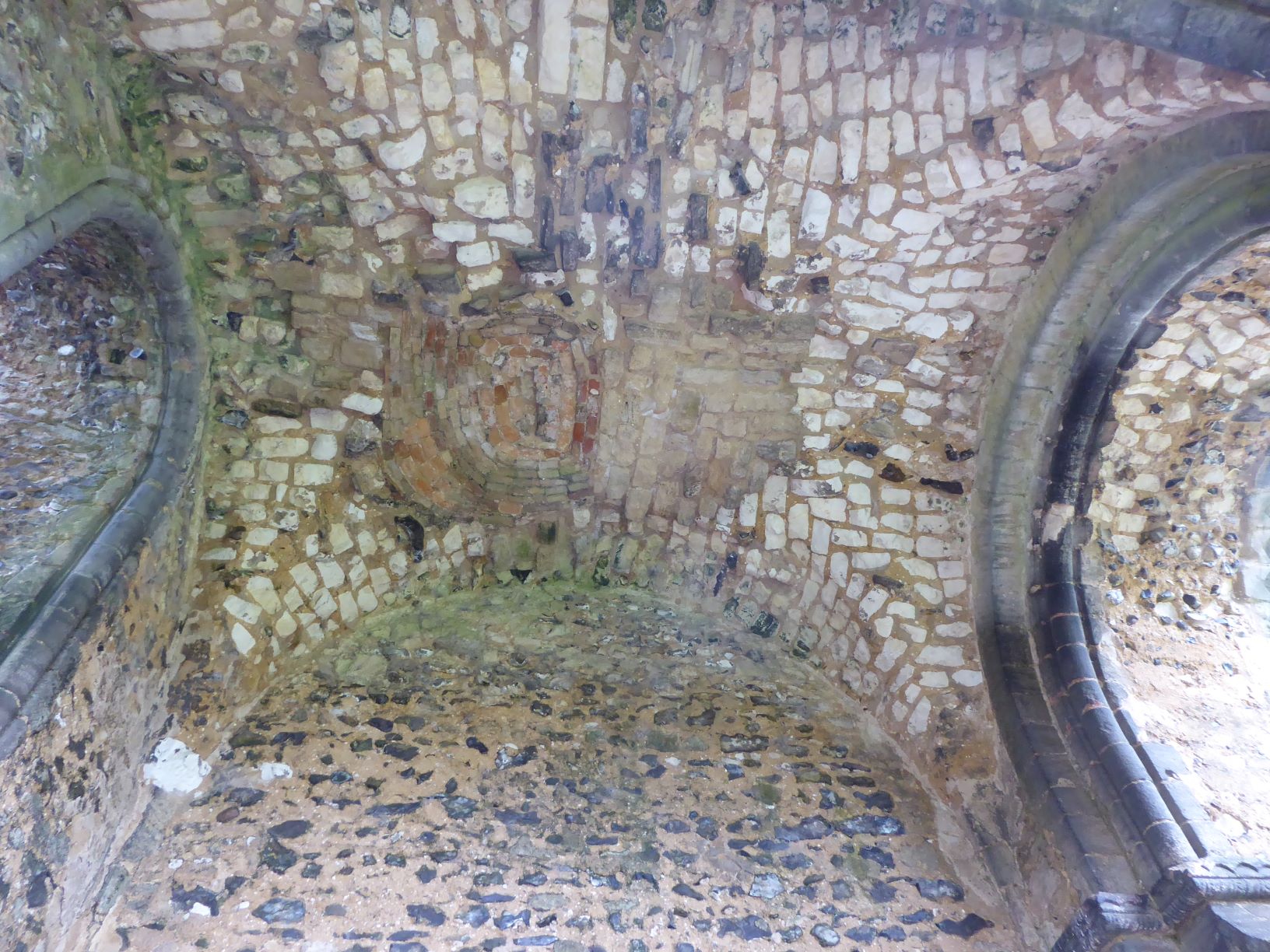
The ceiling of the bay under the tower

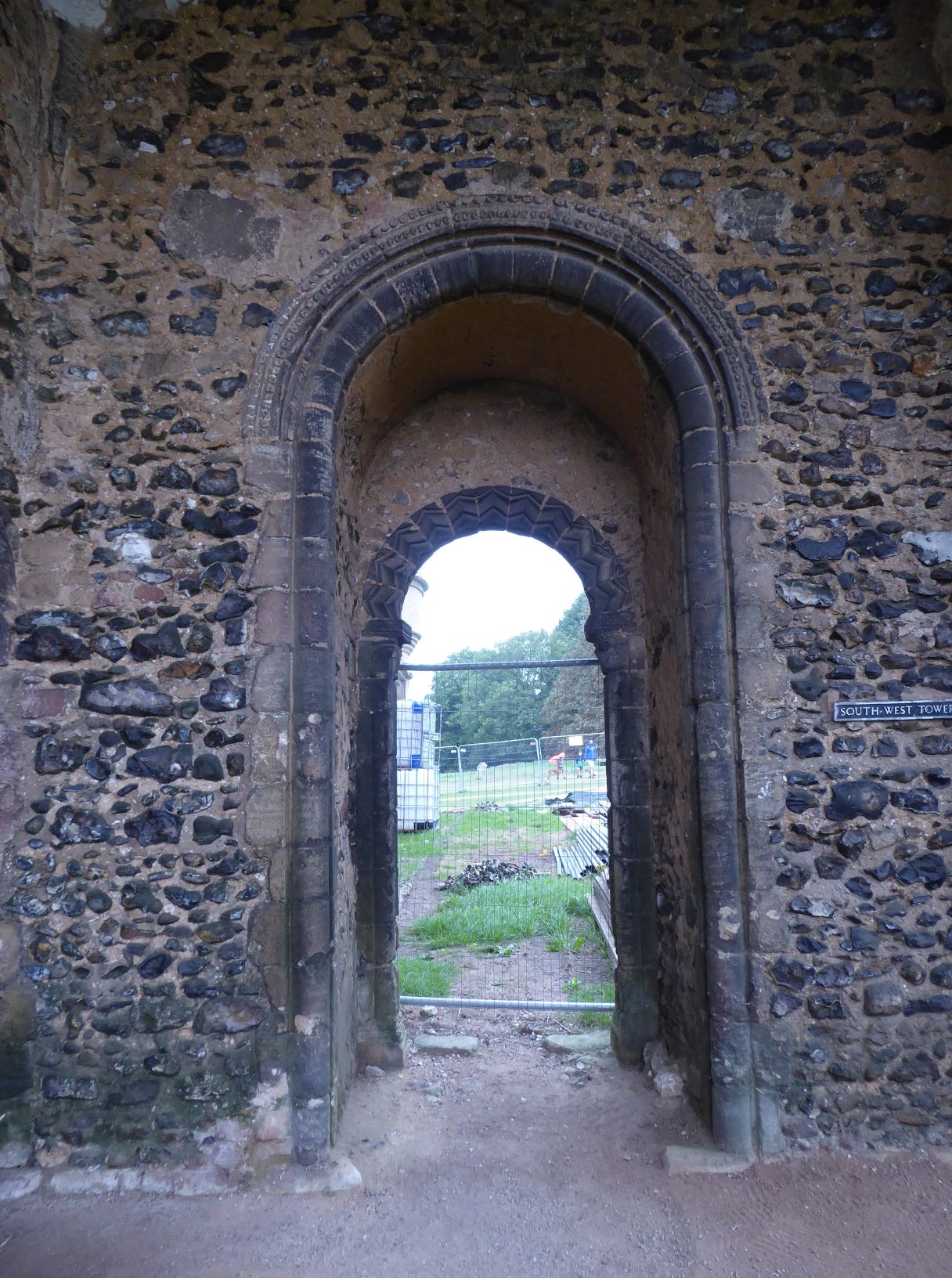
Arched exit from the south-west tower

View from under the south-west tower looking towards the inside of the west door and onwards to what would have been the north-west tower

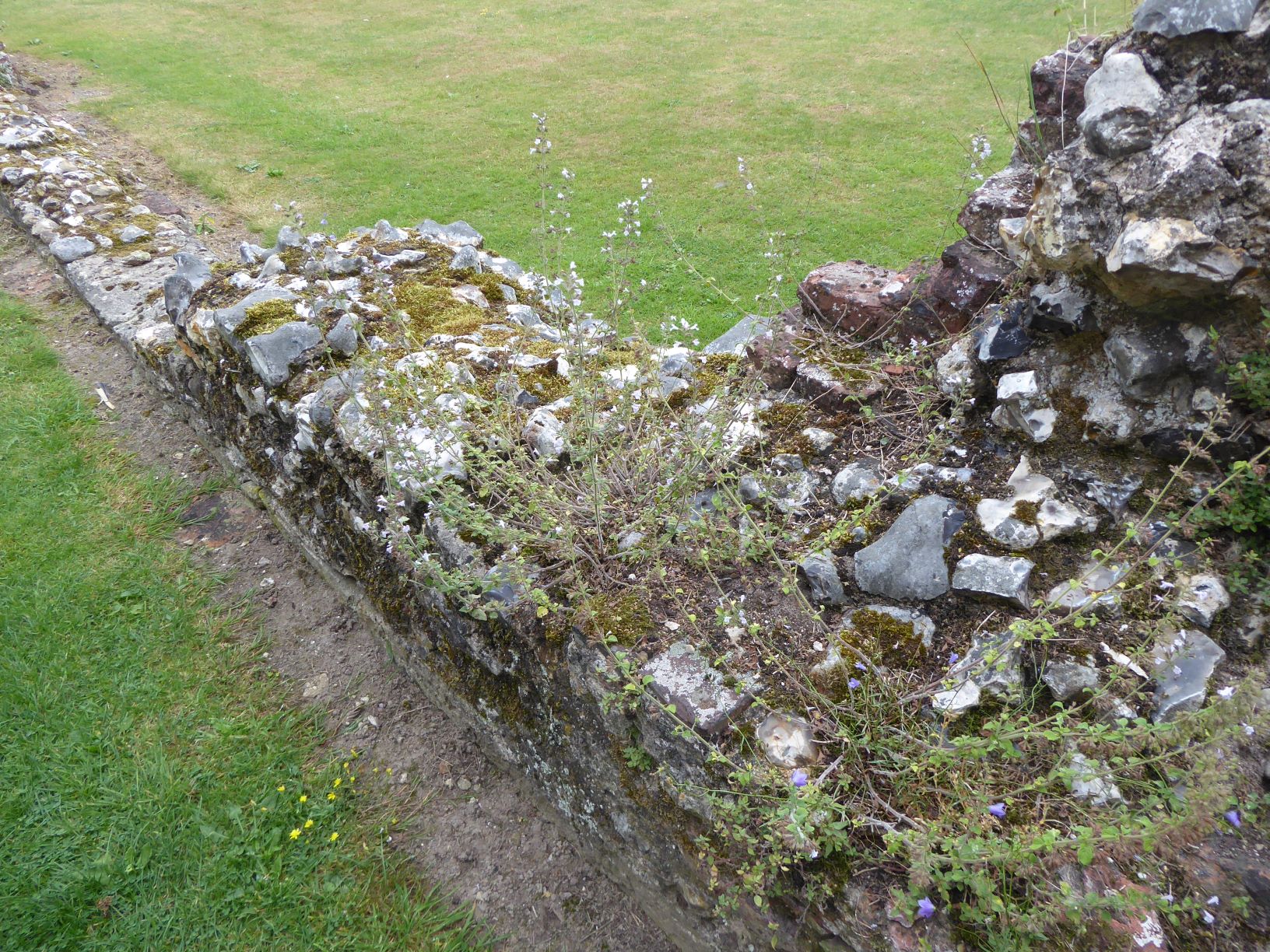
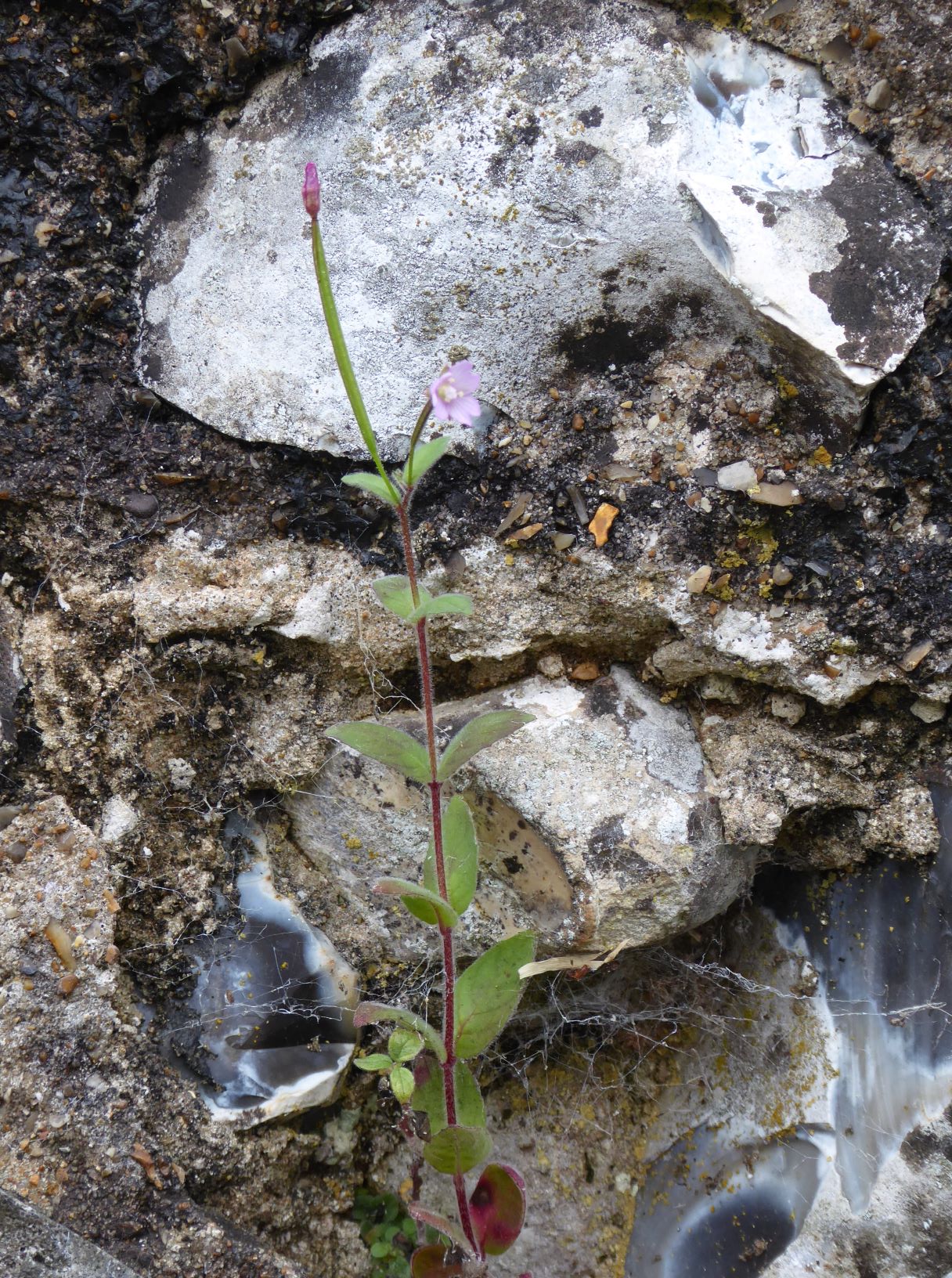
As usual, I also took photos of the plants living on and near the ruins.

A Willowherb. It could be Hoary Willowherb ( Epilobium parviflorum) because of its very hairy stem and leaves. Growing on a wall would account for its small size.  (There are other willowherbs which are hairy which accounts for my doubtful ID).

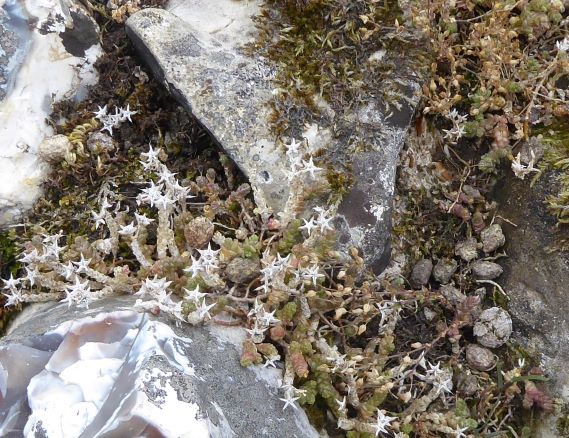
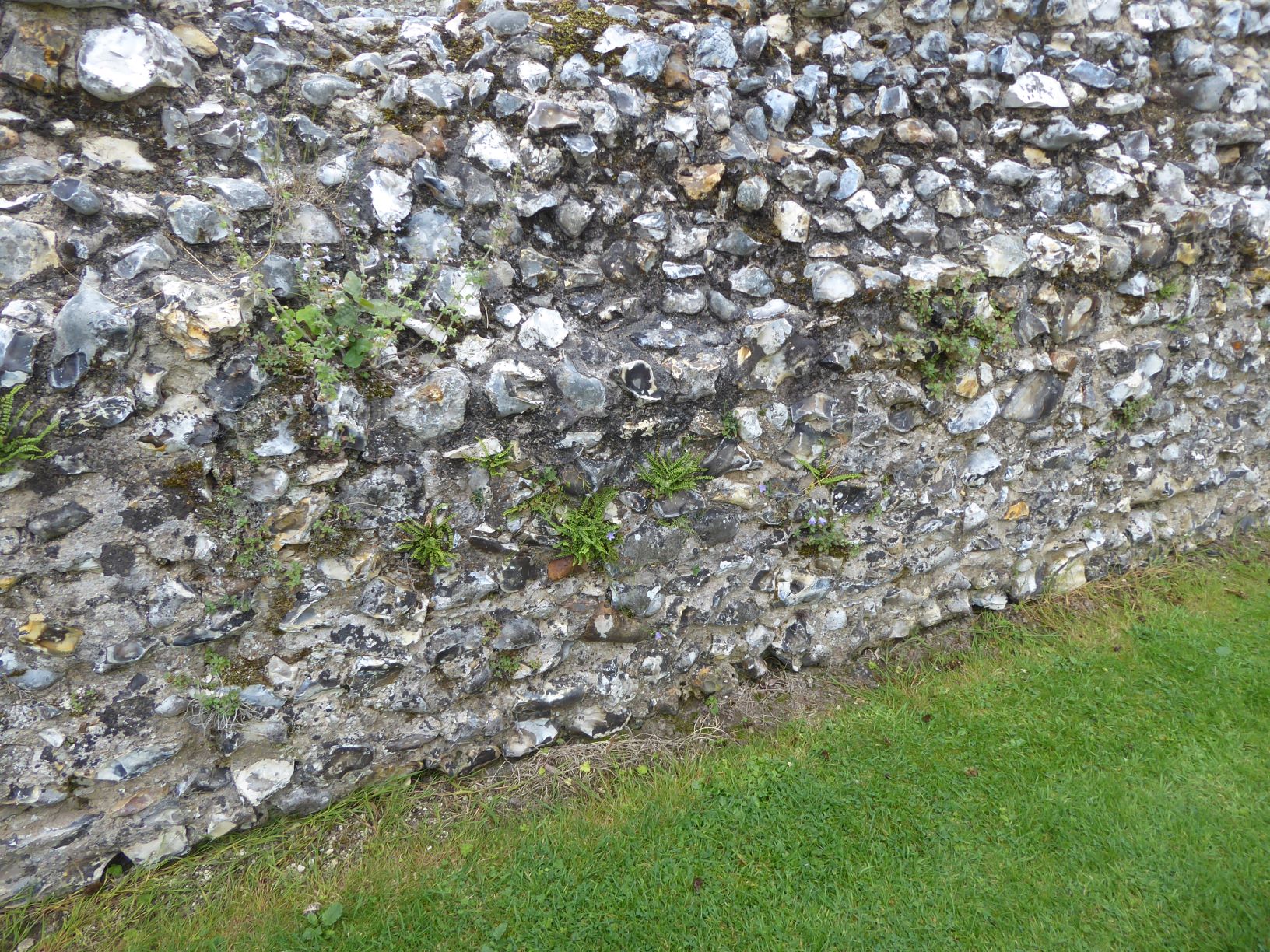
Many plants growing on one of the walls

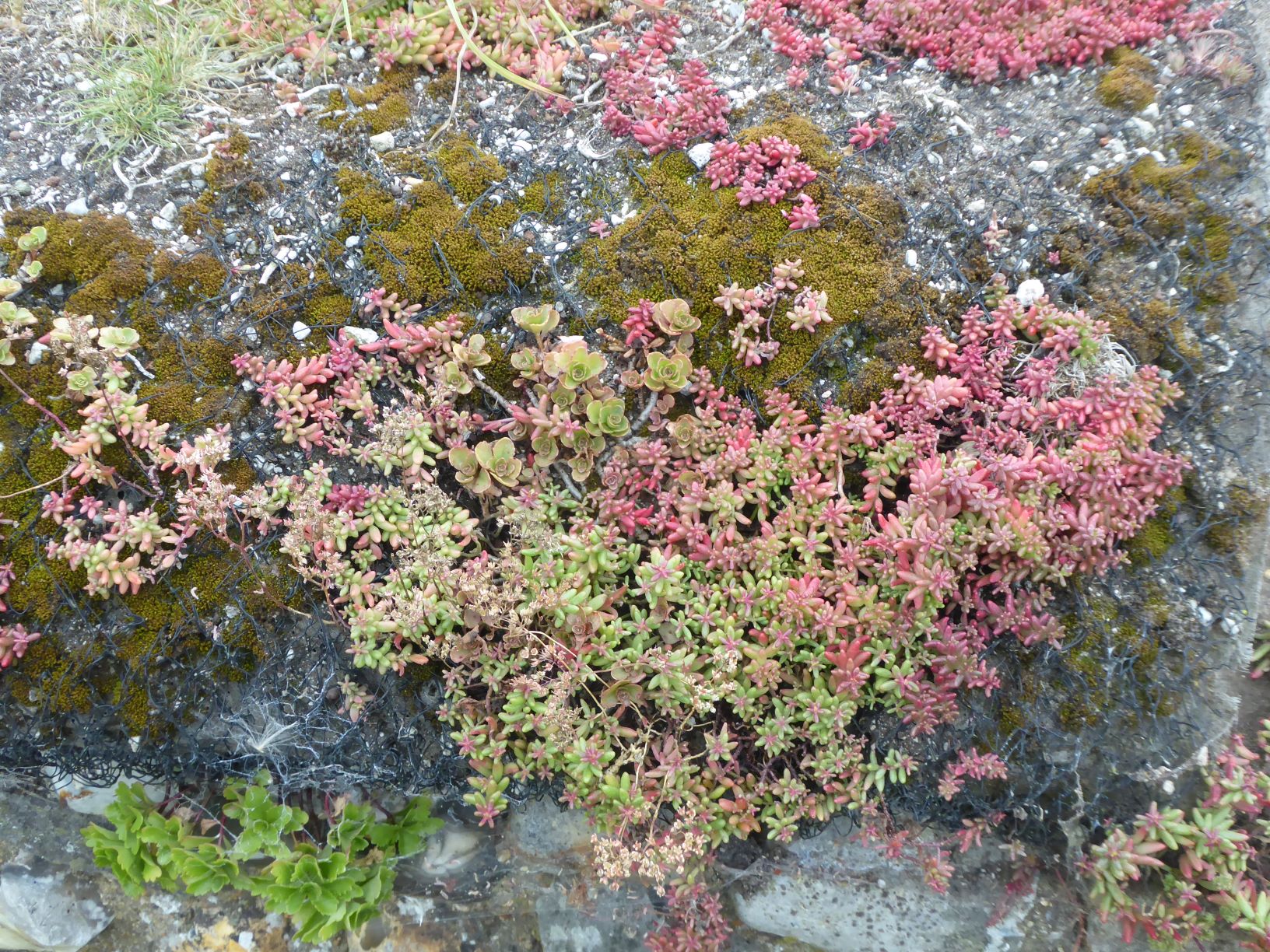
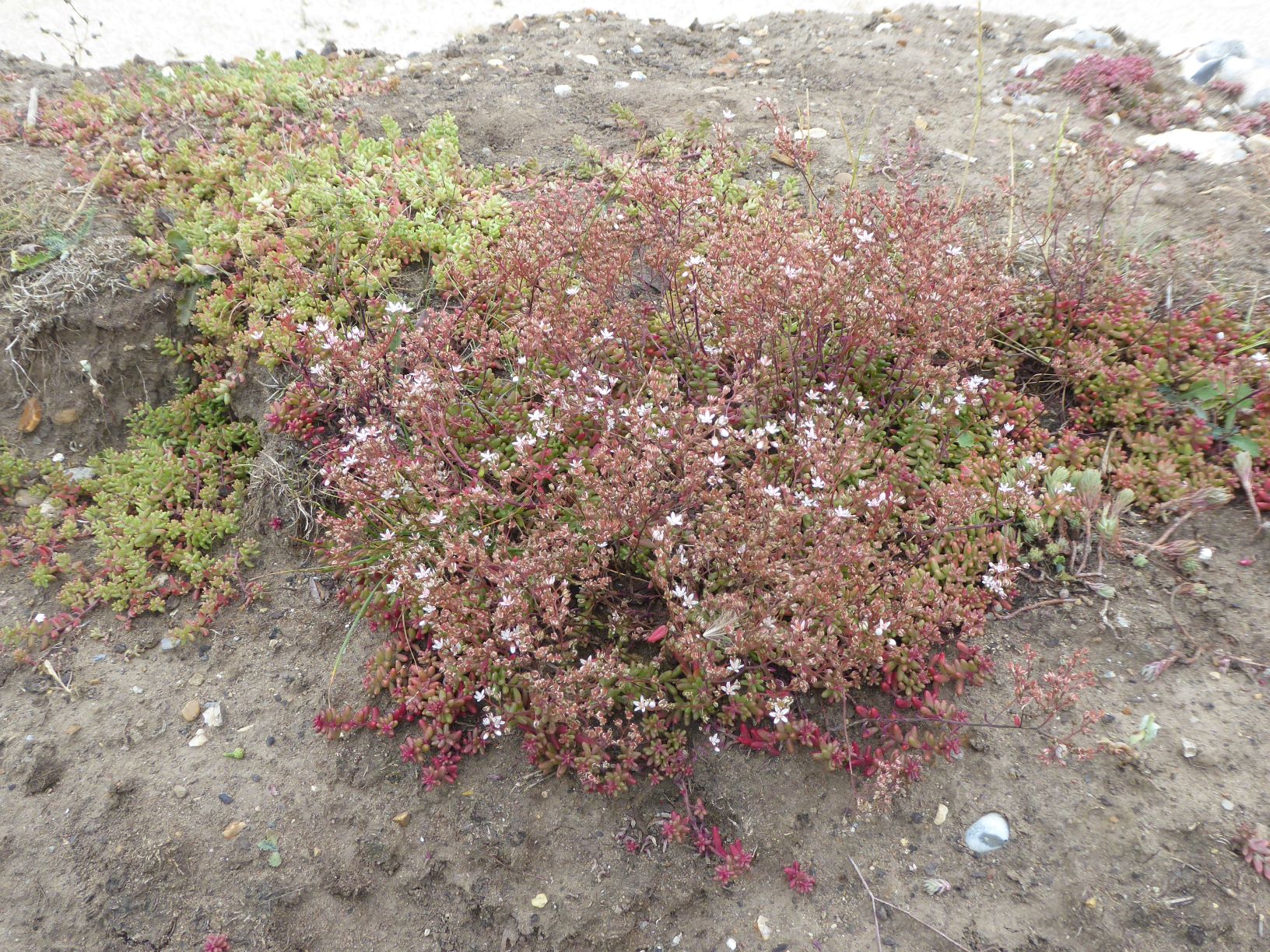
White Stonecrop (Sedum album)  I find its red leaves most attractive

White Stonecrop

White Stonecrop

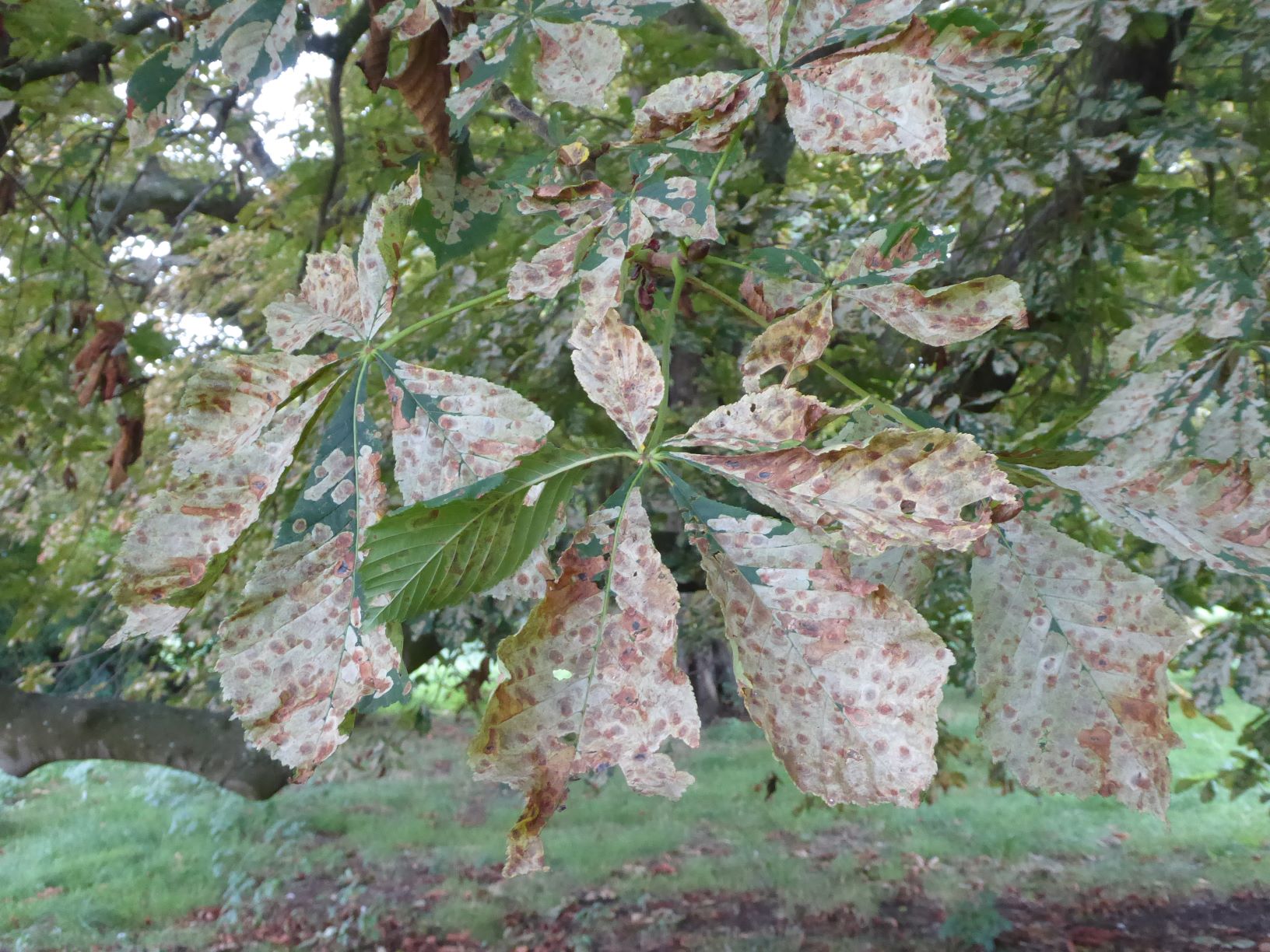
Horse Chestnut ( Aesculus hippocastanum) These leaves are badly affected by leaf blotch caused by a fungus.  Horse chestnut trees are also often badly attacked by Horse chestnut leaf-mining moth larvae

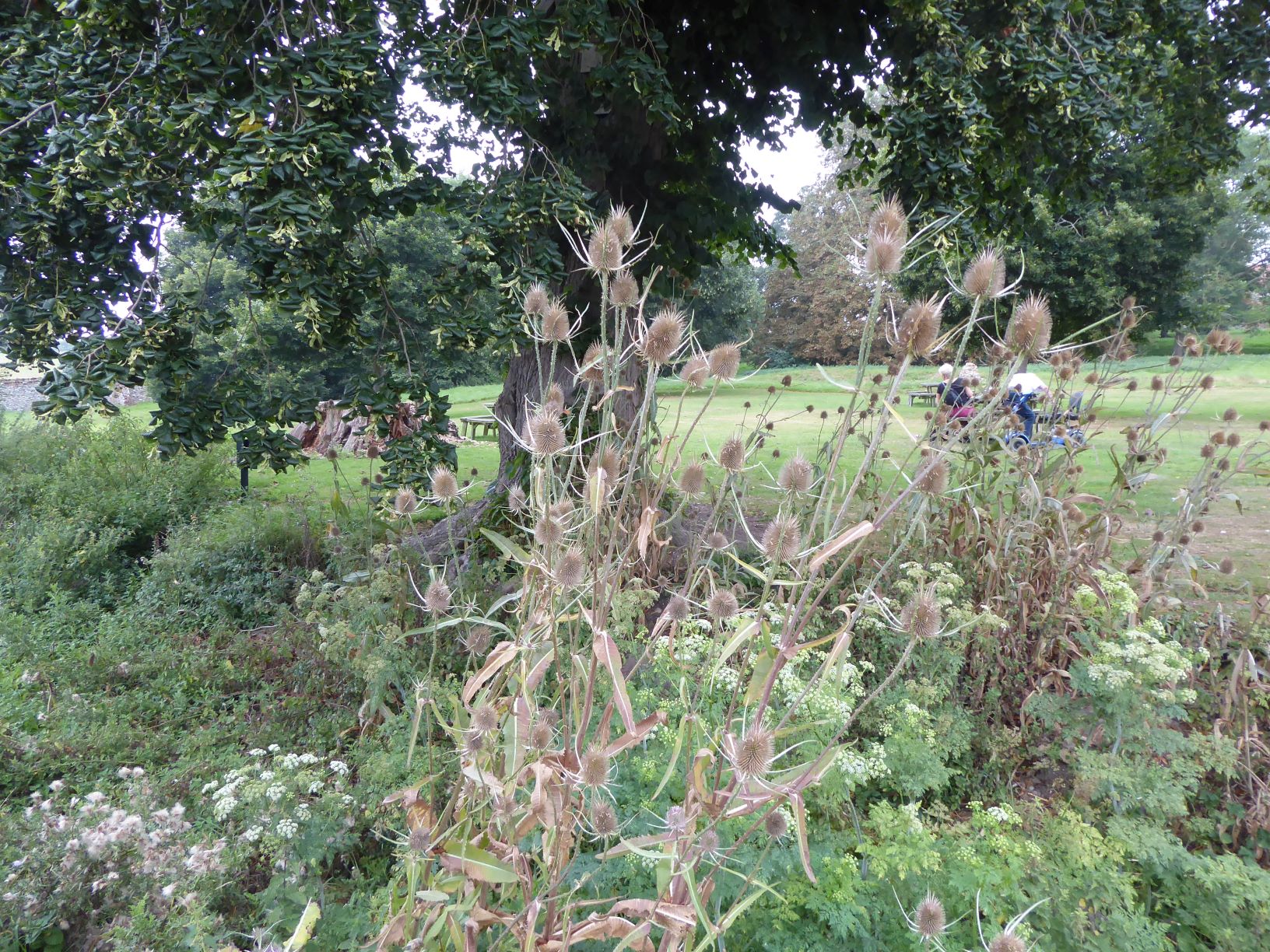
Wild Teasel ( Dipsacus fullonum)

Wild teasel

Maidenhair spleenwort ( Asplenium trichomanes) Recognizable by its black midrib

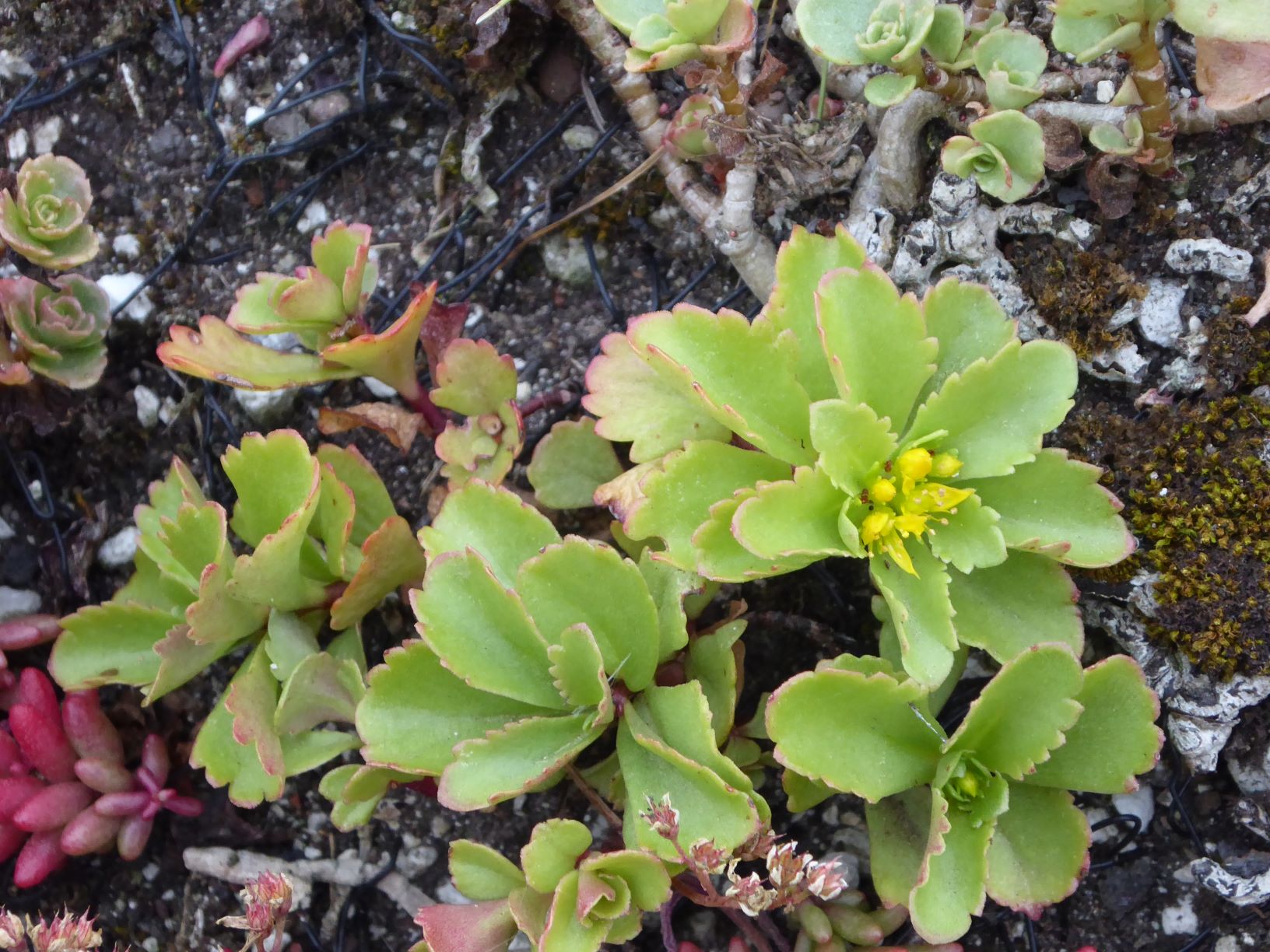
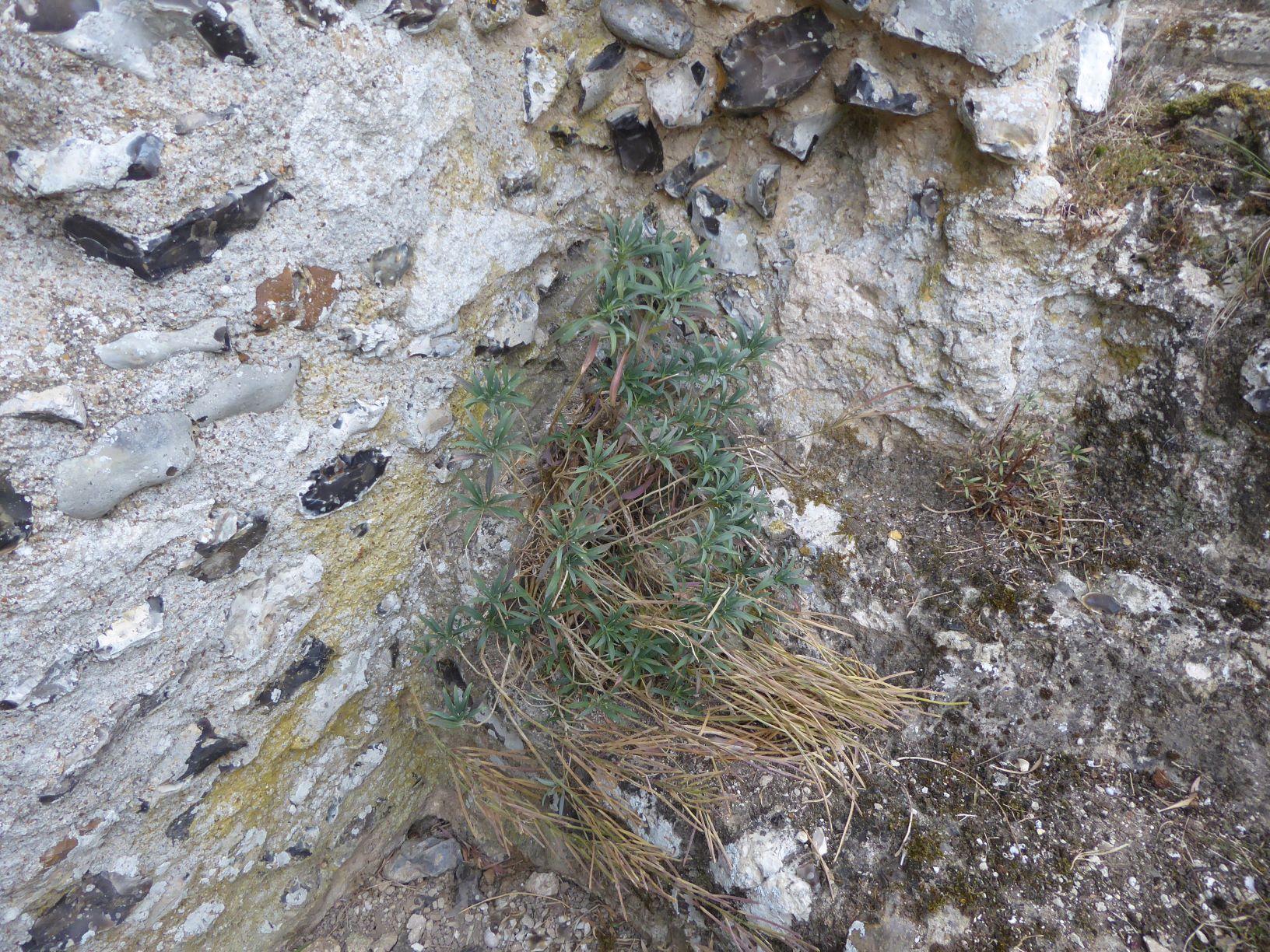
I think this might be Roseroot (Sedum rosea).  Not a plant one would expect to find in this part of the country

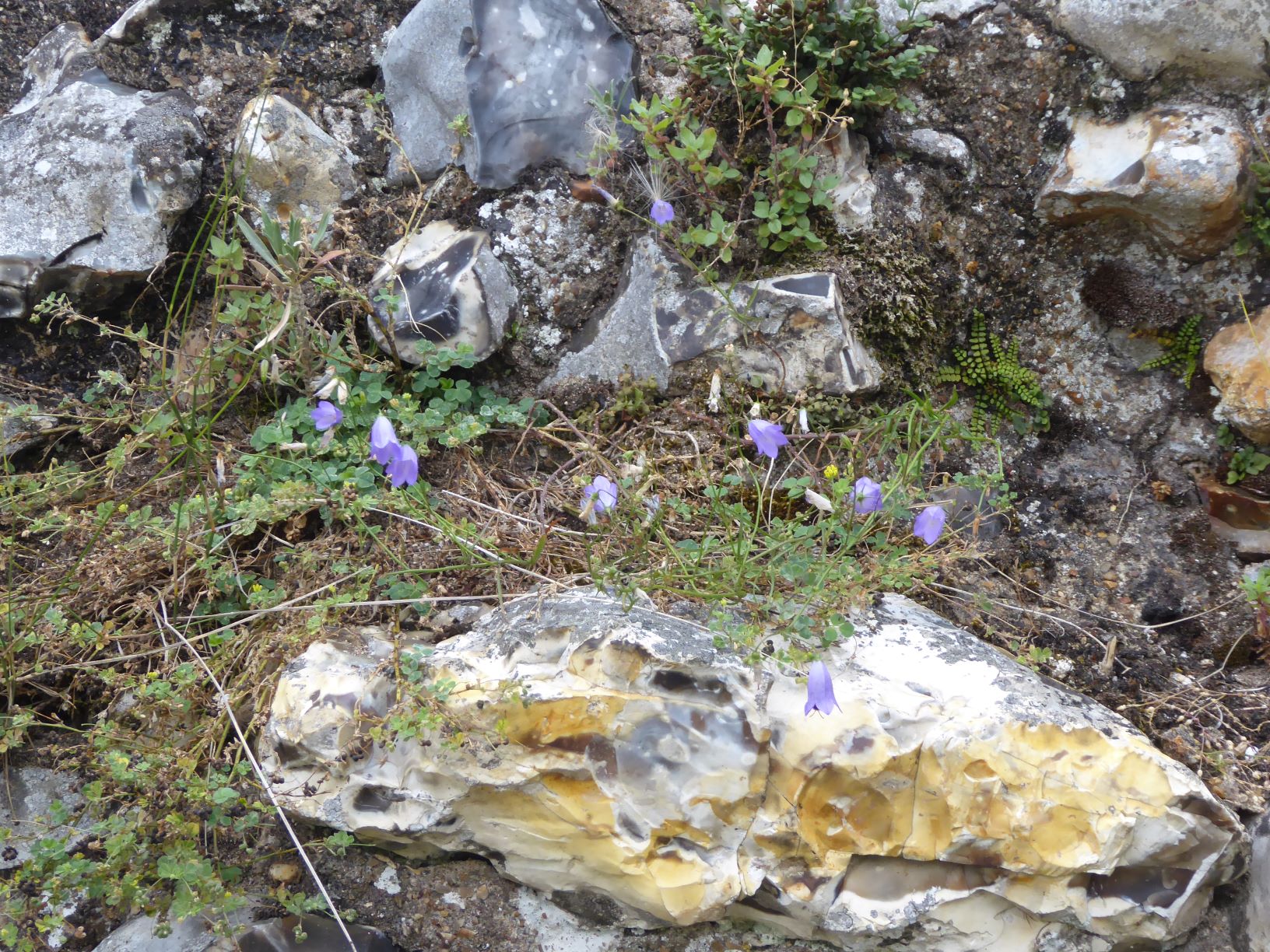
Harebells ( Campanula rotundifolia) and Black Medick ( Medicago lupulina)

Harebells

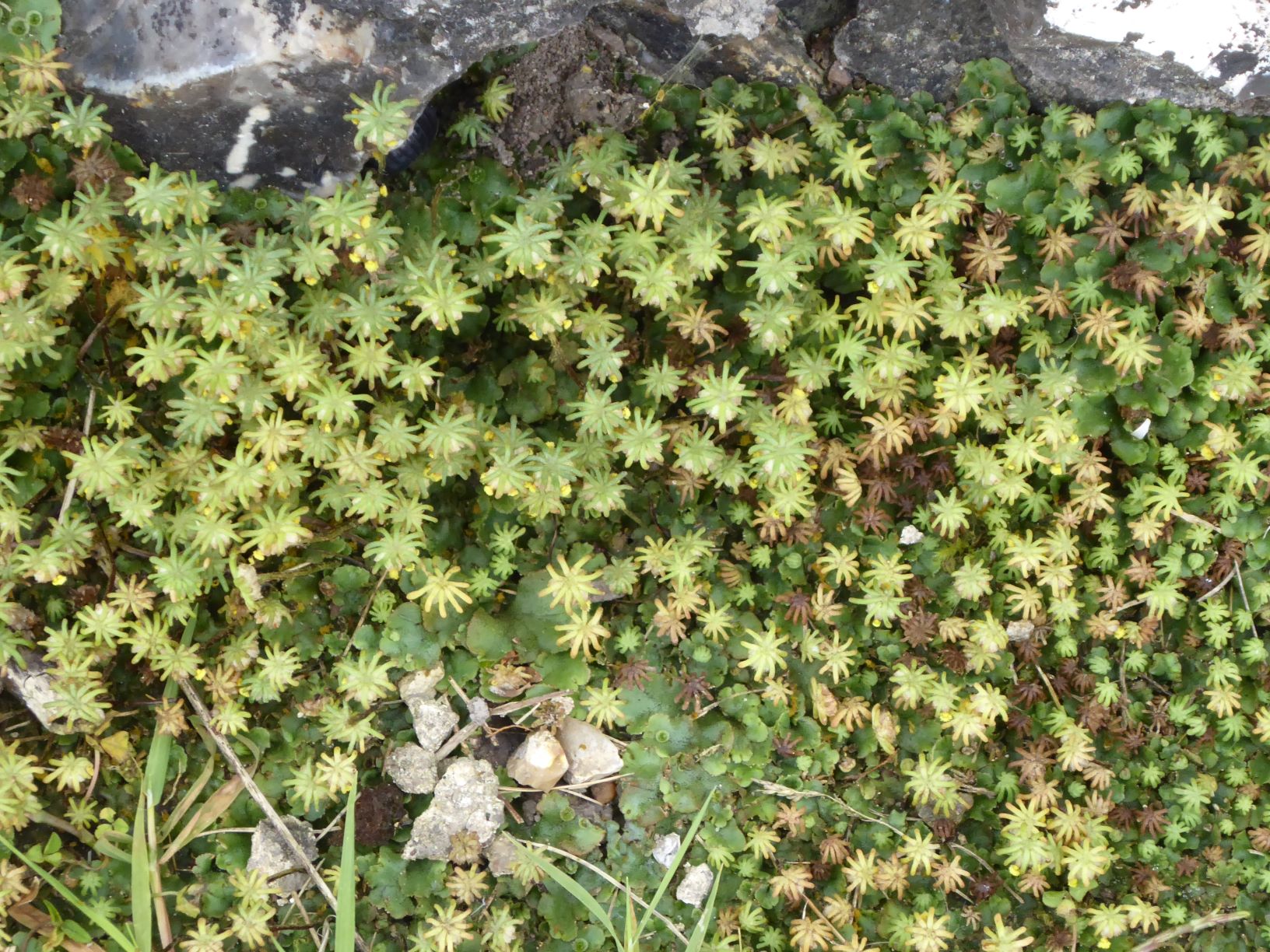
Common liverwort/Umbrella liverwort (Marchantia polymorpha )  Common liverwort is a thallose liverwort; it has flattened leaf-like structures (thalli) with forked branches.  Common liverwort is also dioicous – it has separate male and female plants. This photo is of a female plant as it has star-like umbrella structures some of which are showing yellow mature sporangia or spores.  Common liverworts can also reproduce asexually by ‘gemmae’ produced in gammae cups which can be seen centre bottom of the photo on the thalli.  The gemmae are knocked out of the cups by splashes of water/raindrops.

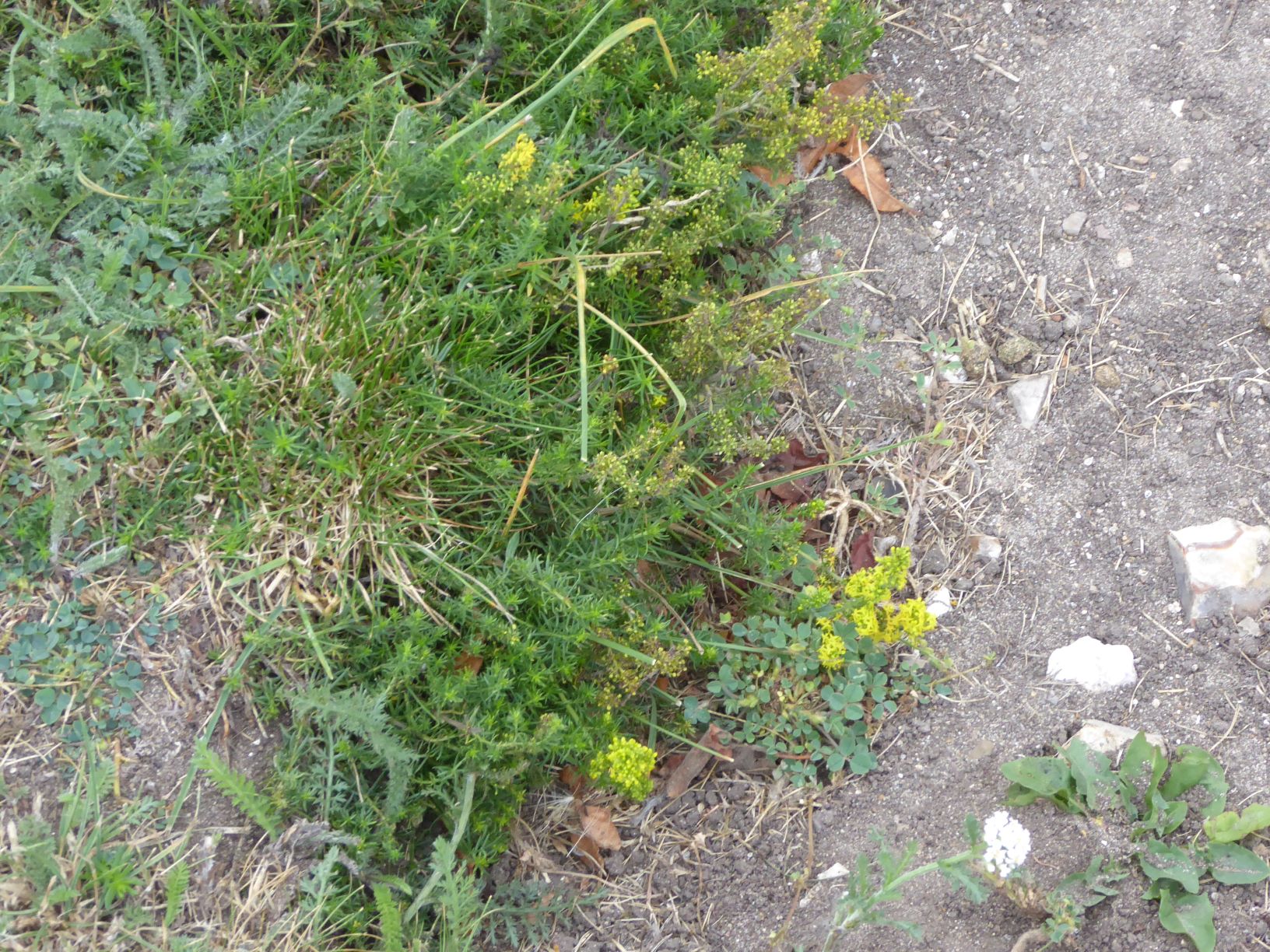
Lady’s bedstraw (Galium verum )

Wallflower ( Erysimum cheiri)

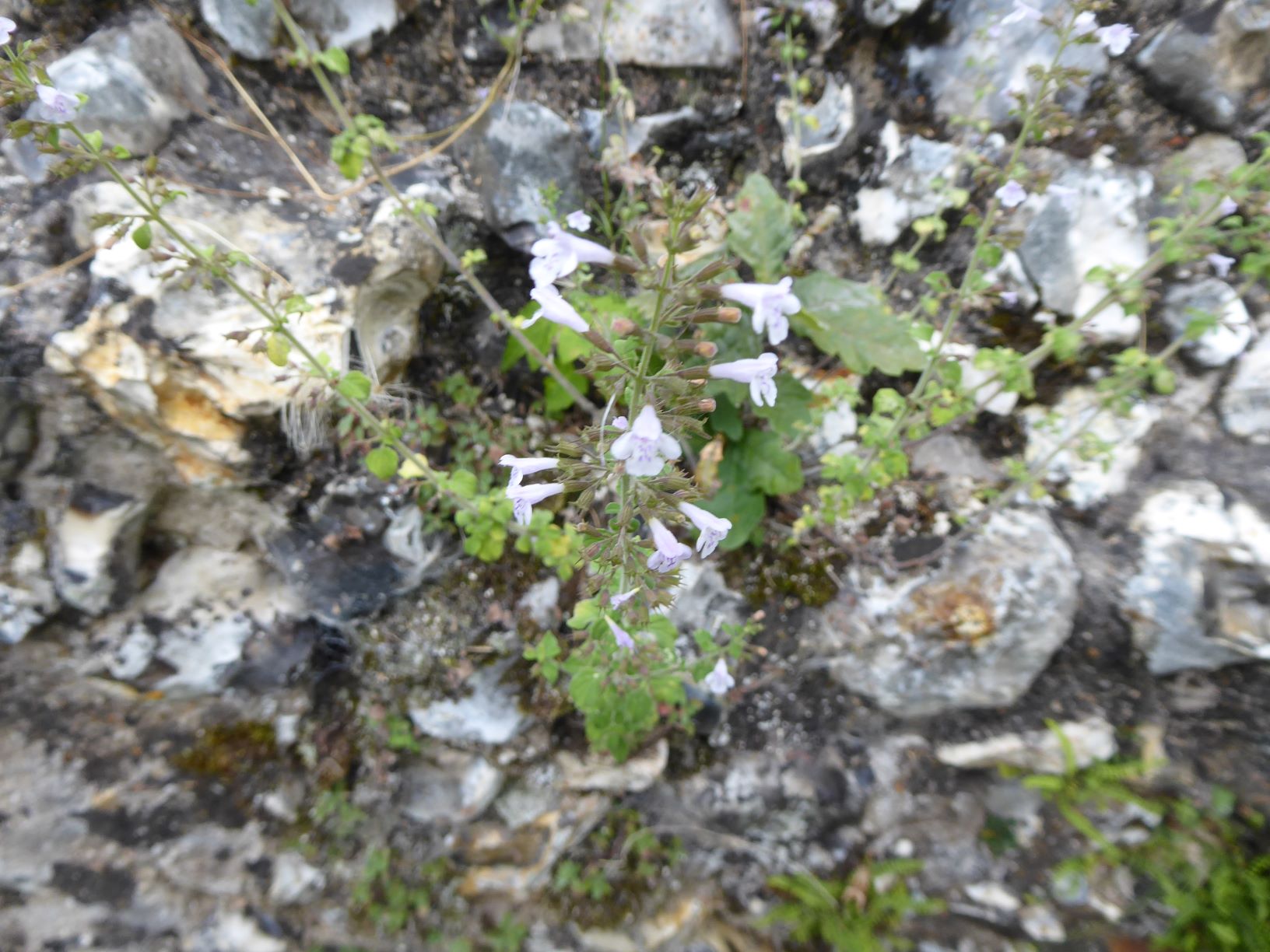
I think this is Common calamint (Clinopodium ascendens )

Common calamint

We had a very enjoyable few hours at the priory and I hope to return to Castle Acre one day to look around the village and revisit the priory.

To end this post, I have added the following English Heritage guide to Medieval Monastic life….

and, here is the Salve Regina, a chant that would have been sung (probably not to this tune) when Castle Acre Priory was in its glory.


Share this:

  • Share on X (Opens in new window) X
  • Share on Reddit (Opens in new window) Reddit
  • Share on Pinterest (Opens in new window) Pinterest
  • Share on Facebook (Opens in new window) Facebook
  • Email a link to a friend (Opens in new window) Email
  • Share on Tumblr (Opens in new window) Tumblr
  • Print (Opens in new window) Print
  • Share on Pocket (Opens in new window) Pocket
  • Share on LinkedIn (Opens in new window) LinkedIn
Like Loading...

South Elmham Minster

01 Wed Jul 2020

Posted by Clare Pooley in churches, Days out, Historic Buildings, plants, Rural Diary, walking, wild flowers

≈ 124 Comments

Tags

historical site, insects, plants, ruined chapel, South Elmham Minster, Suffolk, walking, wild flowers

WARNING: OVERLONG POST

It was our 26th wedding anniversary the Thursday before last and we had intended to go out for a walk and take a picnic with us.  However, the morning was very wet and, even though the rain had stopped by midday we decided that walking through long grass and along overgrown paths and then trying to find somewhere to sit and eat our lunch without getting wet would be too difficult, so we put off the walk until the following day.  I did the ironing instead.

Friday was a much better day for a walk, with warmth, some sunshine and a fair amount of cloud.  There was a light shower of rain mid-morning and another just as we approached our picnic spot but not enough to dampen our spirits or make the going, or sitting, any trouble.

As usual, I took my pocket camera with me and looked out for things of interest.  You will have to excuse the quality of the photos; I have to take the pictures as quickly as possible so that I am not left behind.  Also my camera has decided it doesn’t like pink and has changed all the pink flowers to blue or purple.
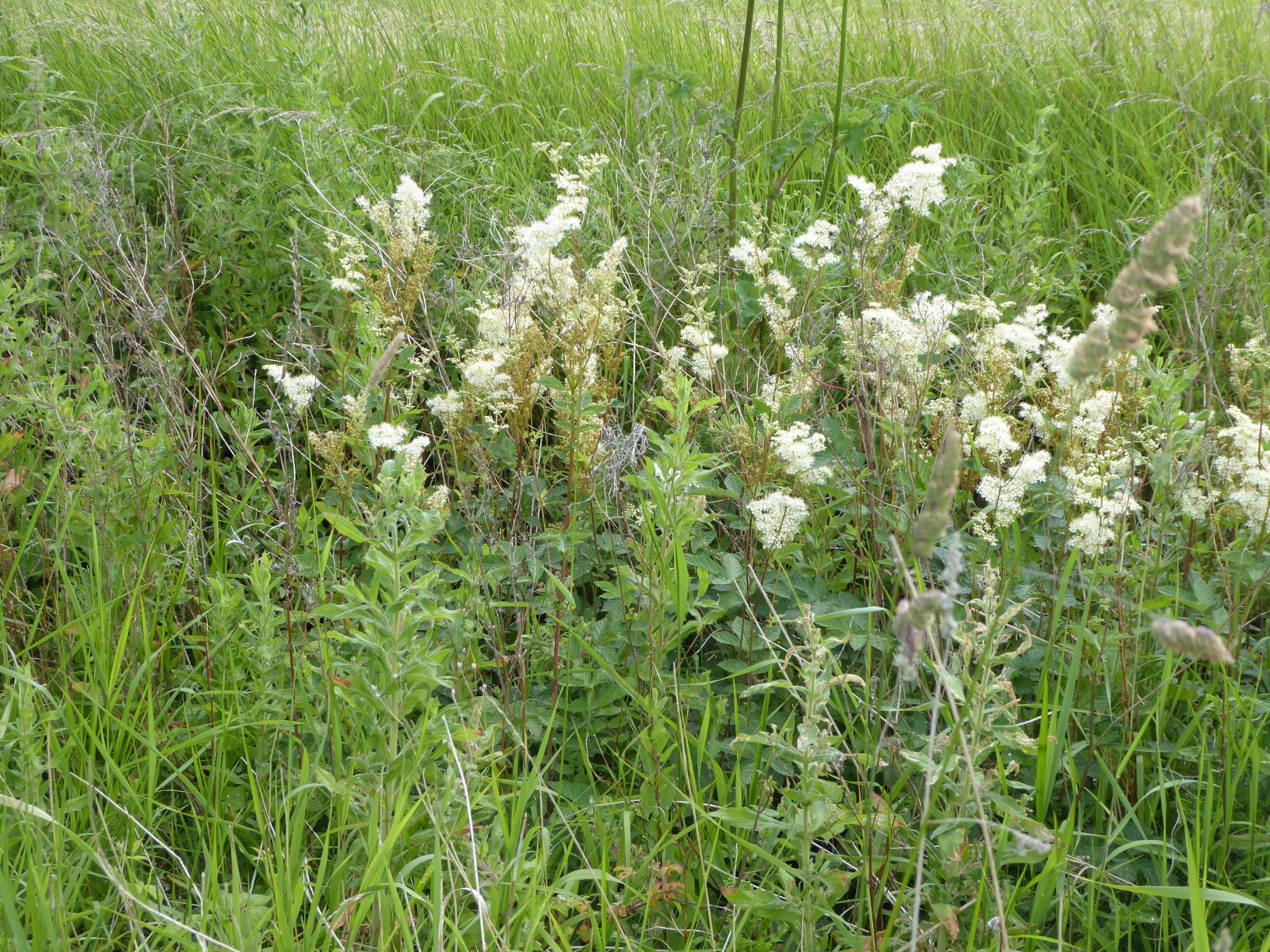
The beautiful almond-scented Meadowsweet (Filipendula ulmaria) was already in bloom along the lane just a few metres from our house.  This is a native plant.
I quote here from my ID, ‘Harrap’s Wild Flowers’ by Simon Harrap ” The name (Meadowsweet) refers to its use in flavouring mead and other drinks, rather than a predilection for meadows, and also used as a strewing herb, scattered on the floor to freshen up the house.”

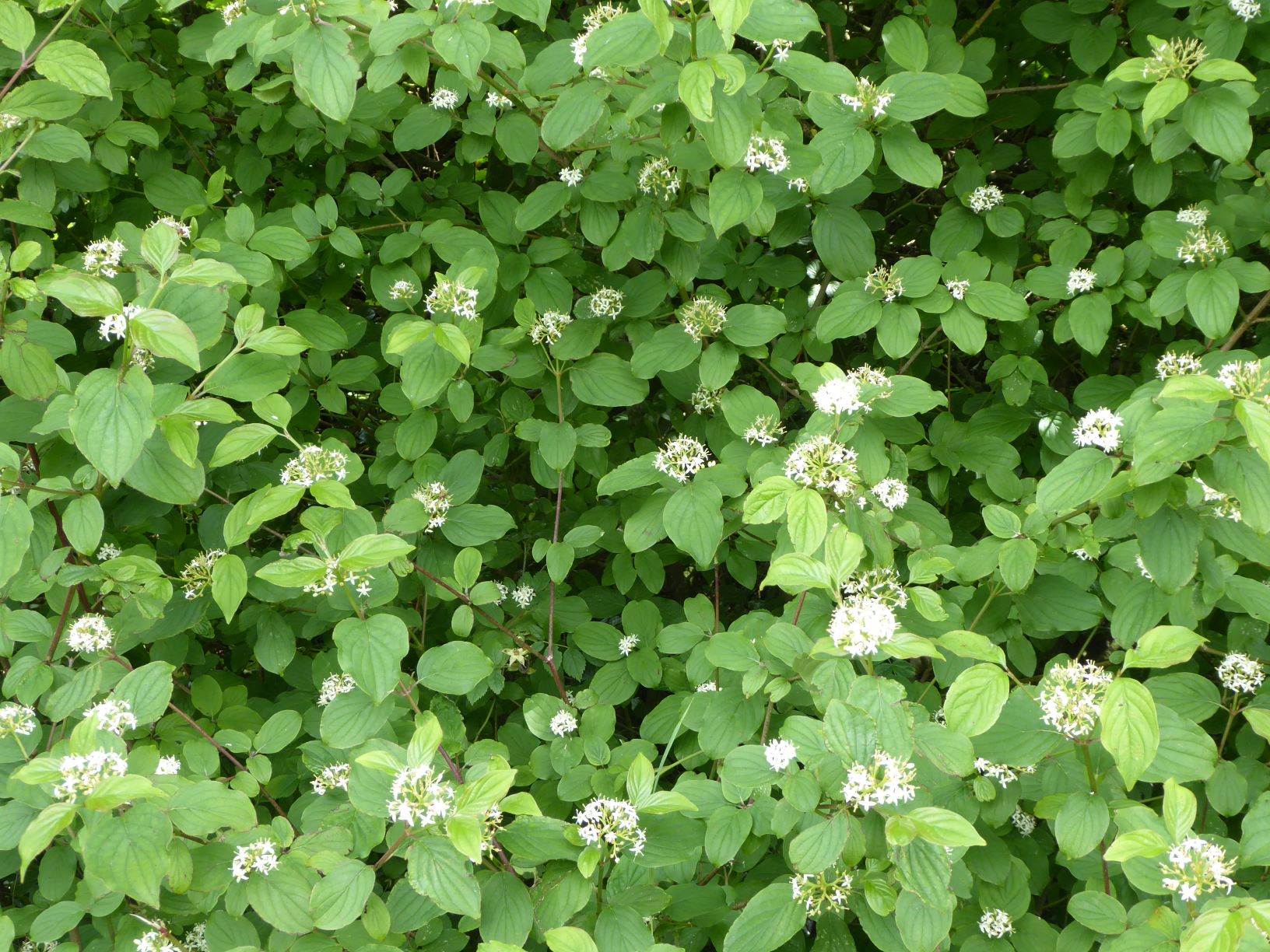
The Dogwoods (Cornus sanguinea) have been marvellous this year. Most were past their best already but I felt I just had to record this shrub’s swansong.
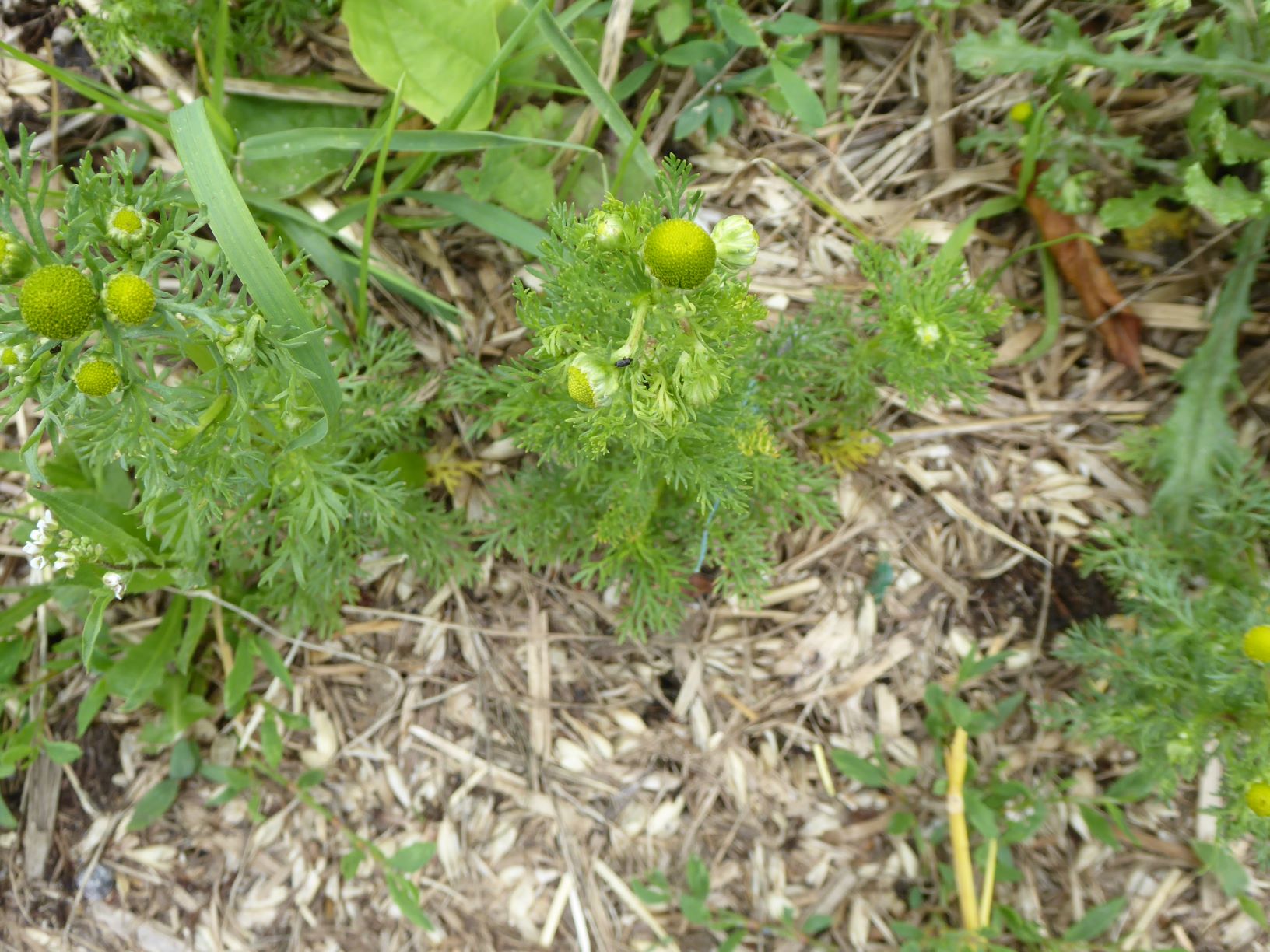
This is a plant I have known since I was a small girl. It used to grow prolifically in the places I played. Pineappleweed (Matricaria discoidea)

The plant gives off a very strong pineapple scent when it is crushed.  It is an introduced plant, coming originally from east Asia and was first recorded in the wild in this country in 1871.

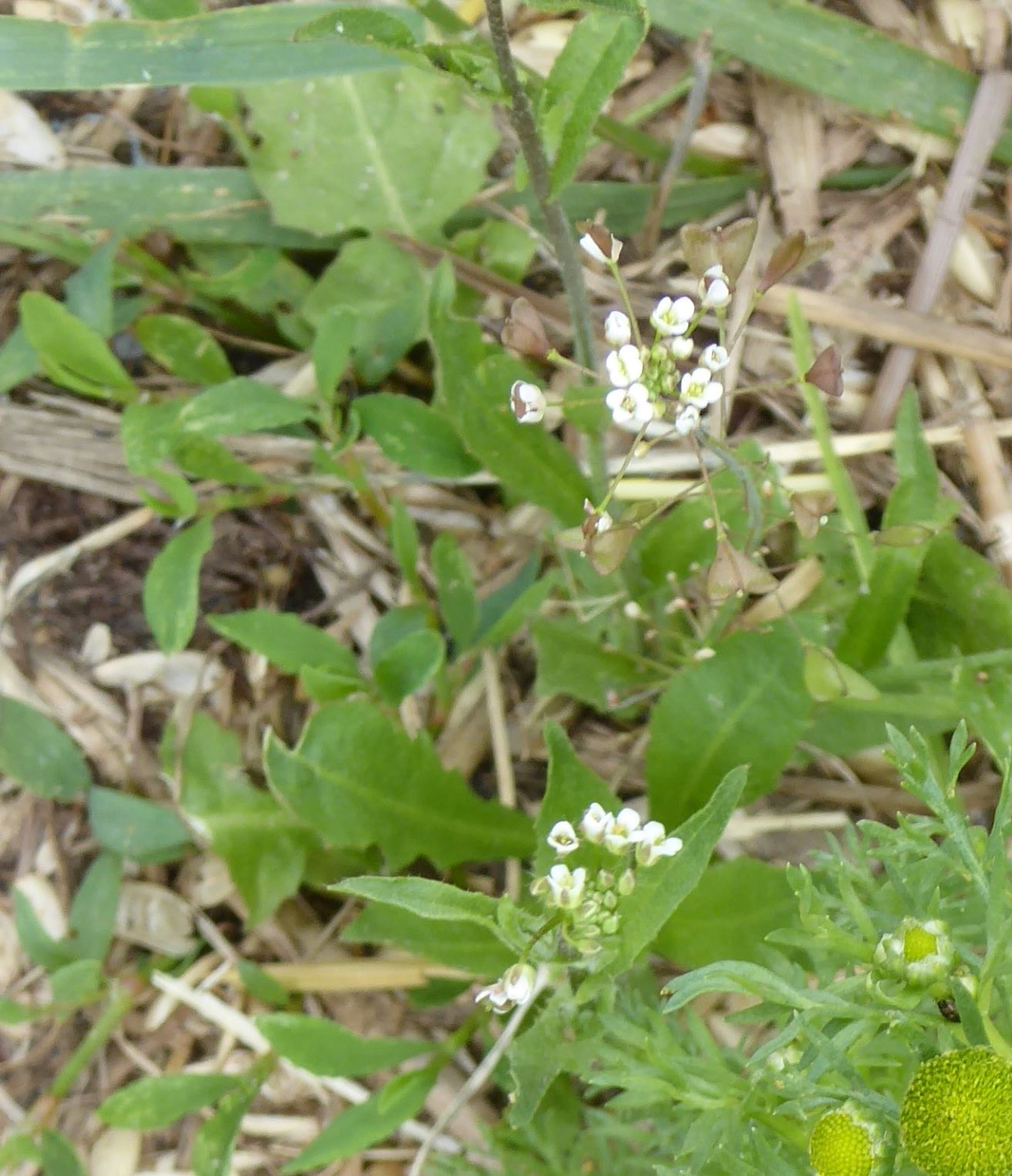
Shepherd’s Purse (Capsella bursa-pastoris). This tiny little plant was right next to the Pineappleweed (which you can see bottom right of the photo). It gets its name from the shape of the seed pods.  You can see them surrounding the upper white flowerhead; they are grey-brown in colour and triangular.  Shepherd’s Purse is an ancient introduction to this country.

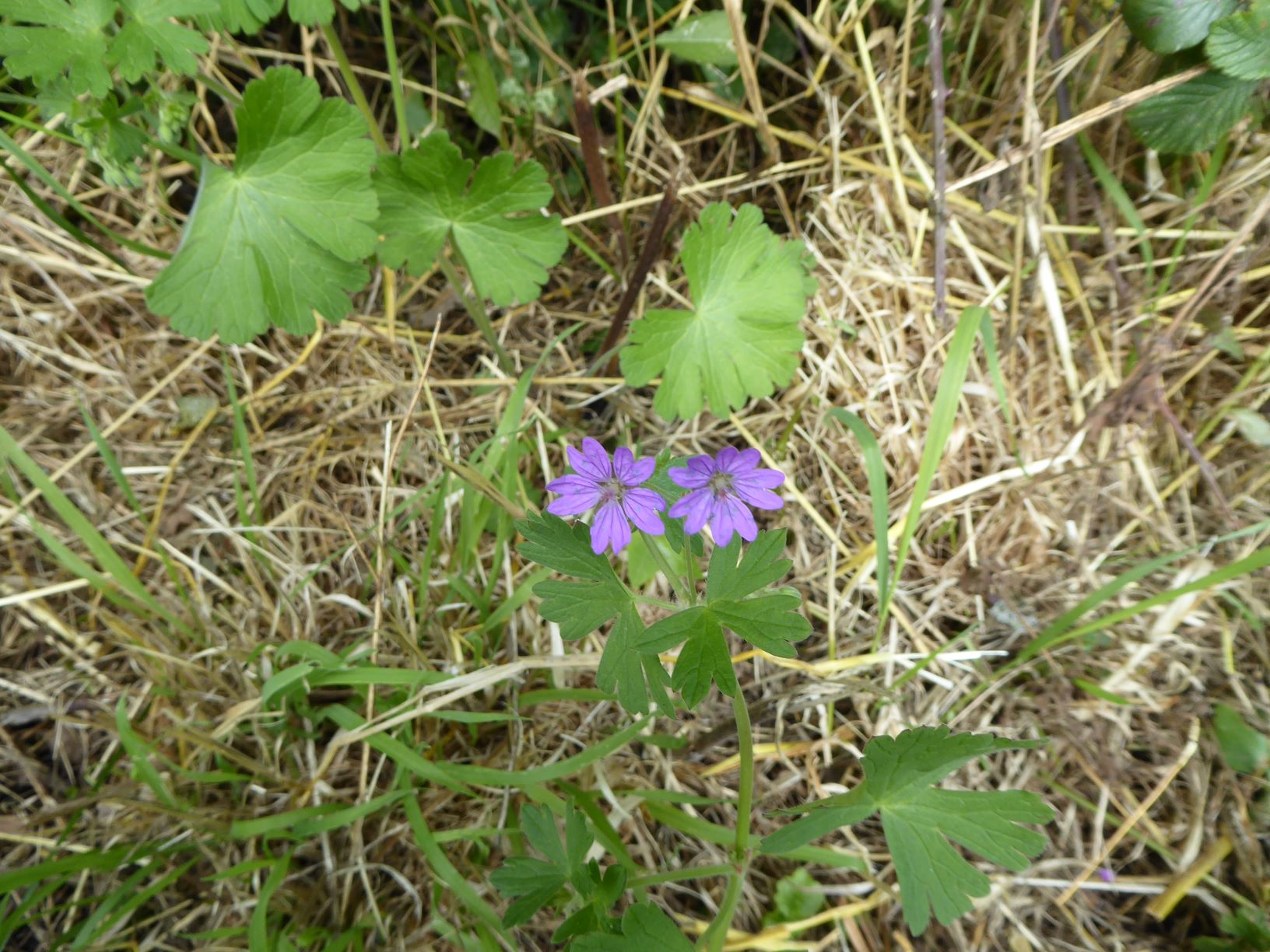
Hedgerow Cranesbill (Geranium pyrenaicum). This is one of the plants my camera decided should not be as pink as it is. It has rather lovely darker veins on its petals. This is yet another introduction, this time from southern Europe and was first recorded in the wild here in 1762.  I have added a link for you to see the usual colour of the flower.

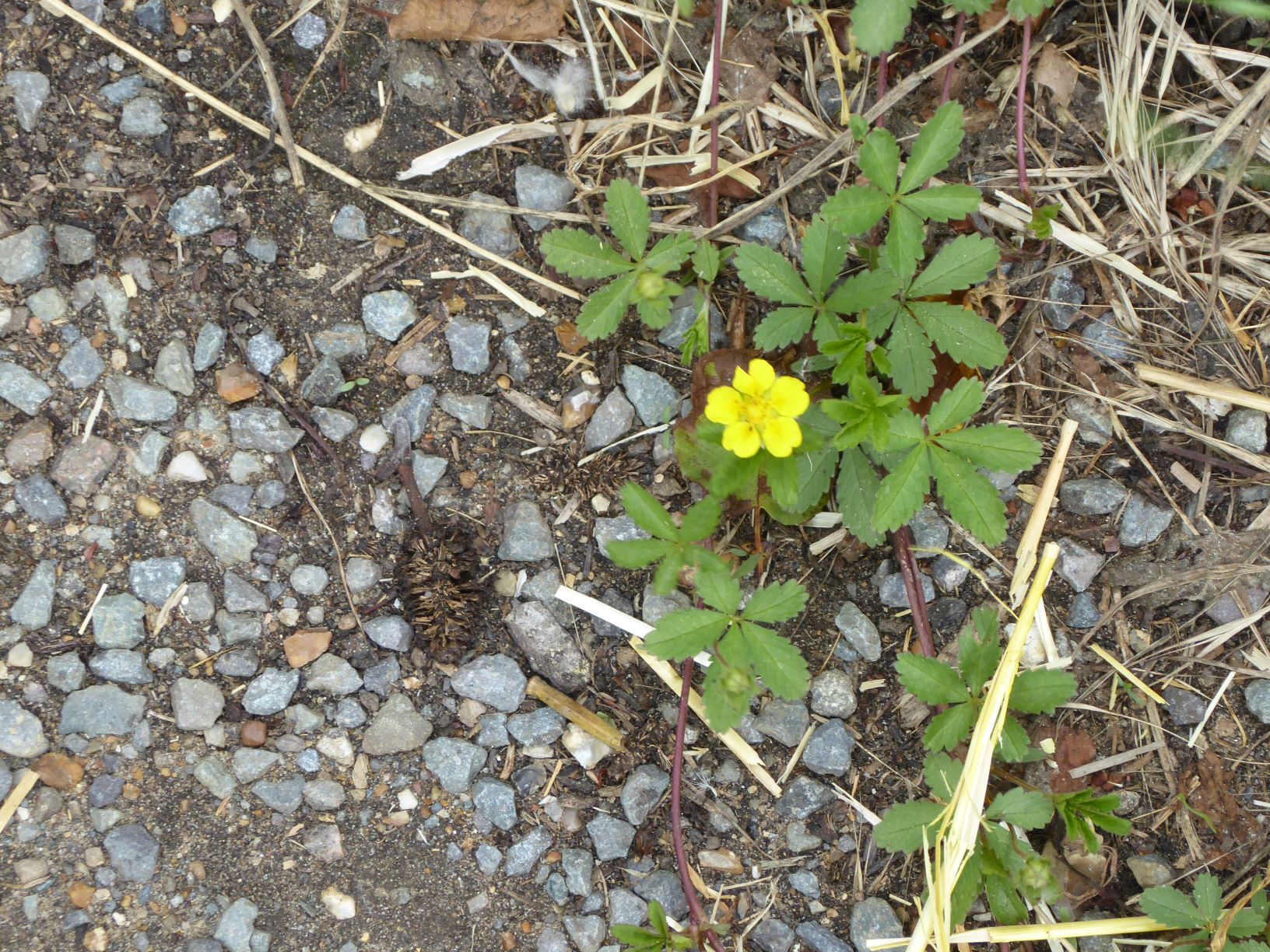
Creeping Cinquefoil (Potentilla reptans). I love the zingy lemon-yellow of this flower! Next to a buttercup it looks too bright but on its own backed by its lovely soft green leaves it looks glorious.

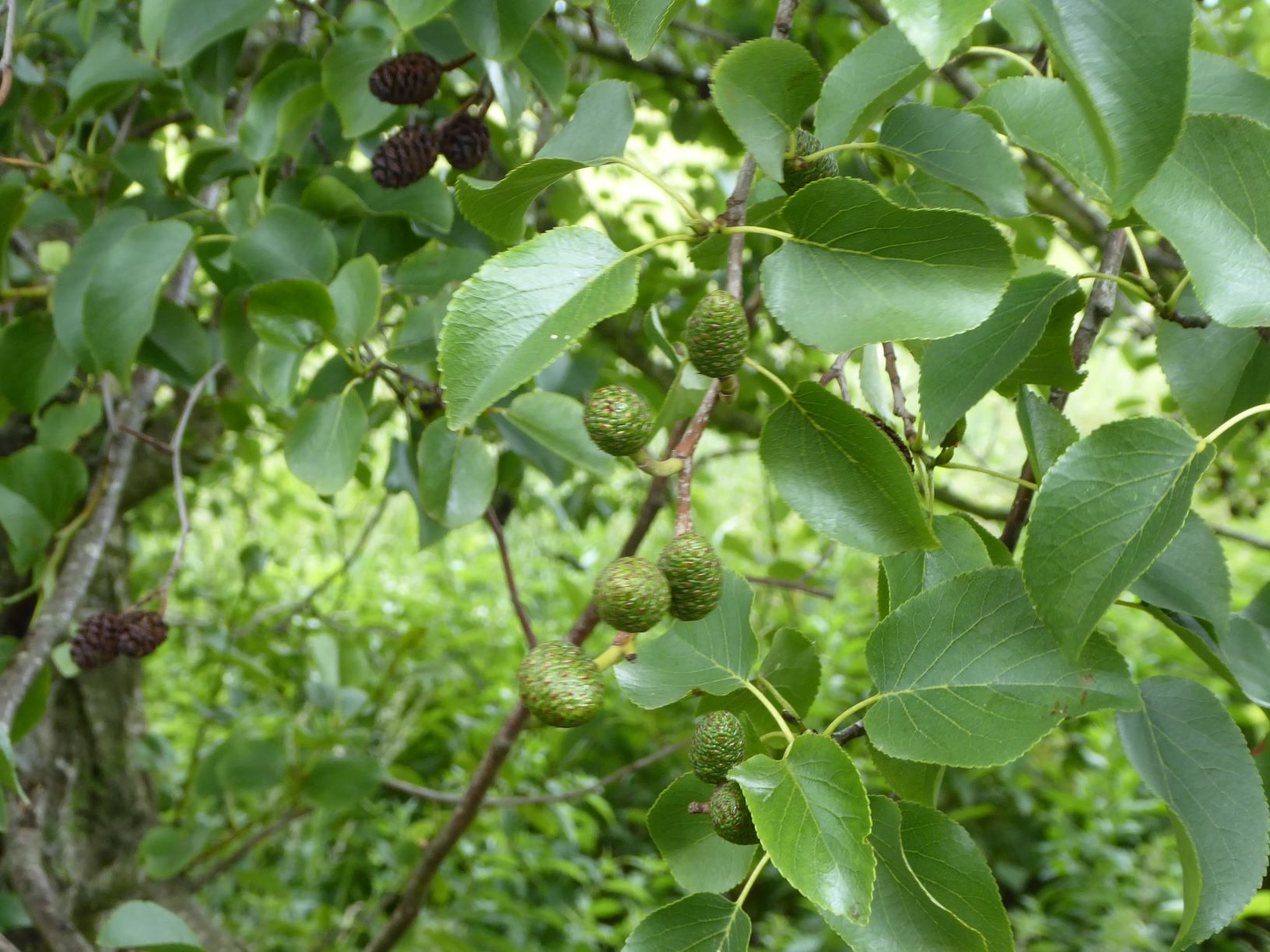
Italian Alder (Alnus cordata). Halfway down our lane a row of Italian Alders were planted as a windbreak. What attractive trees they are! Here you can see the substantial heart-shaped glossy leaves, dark cones from last year and the new green cones. This tree has beautiful long catkins in the spring which flutter in the strong winds that blow here.

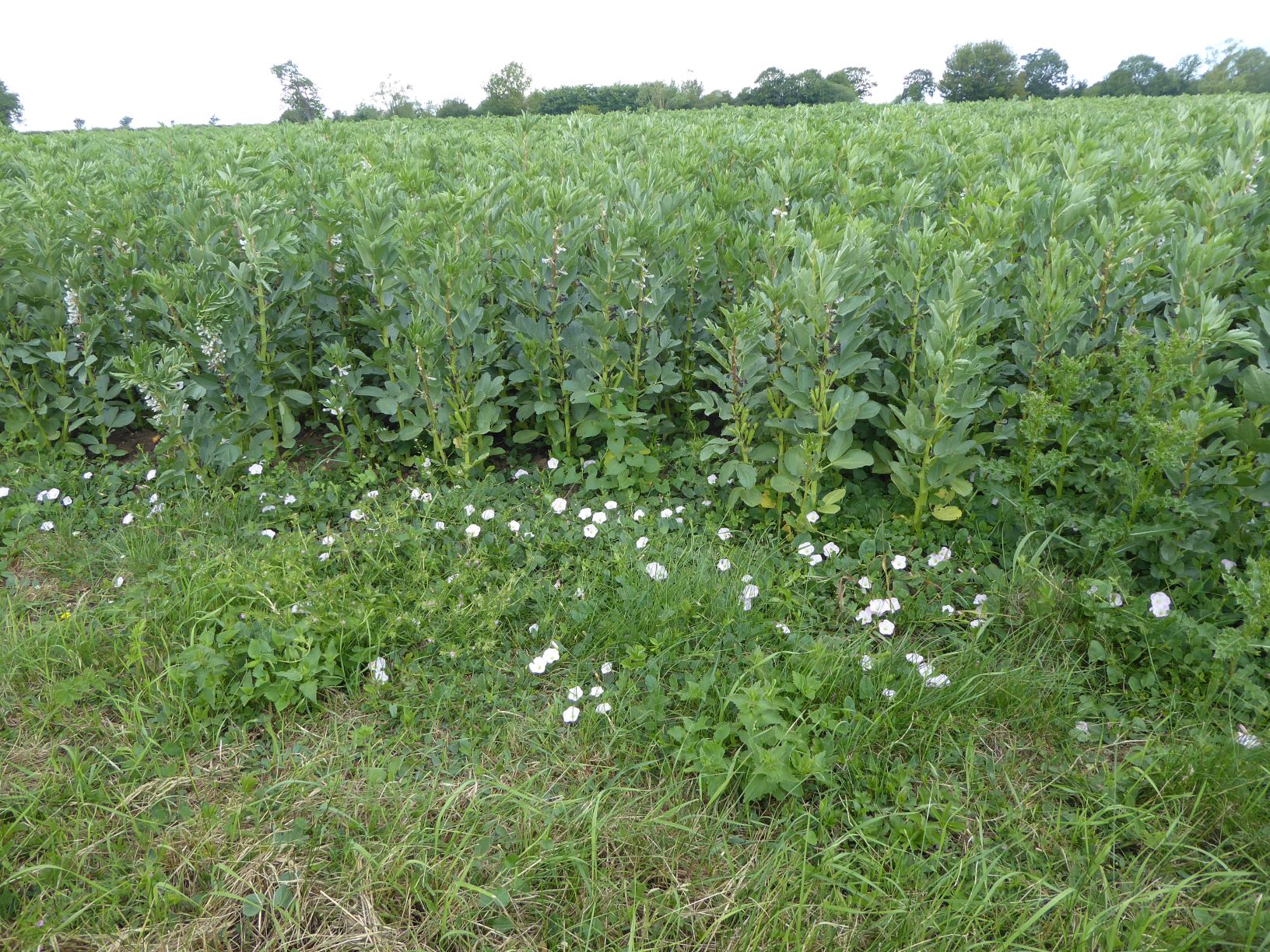
Pretty pink and white striped Field Bindweed (Convolvulus arvensis ) along the edge of this crop of Field Beans.

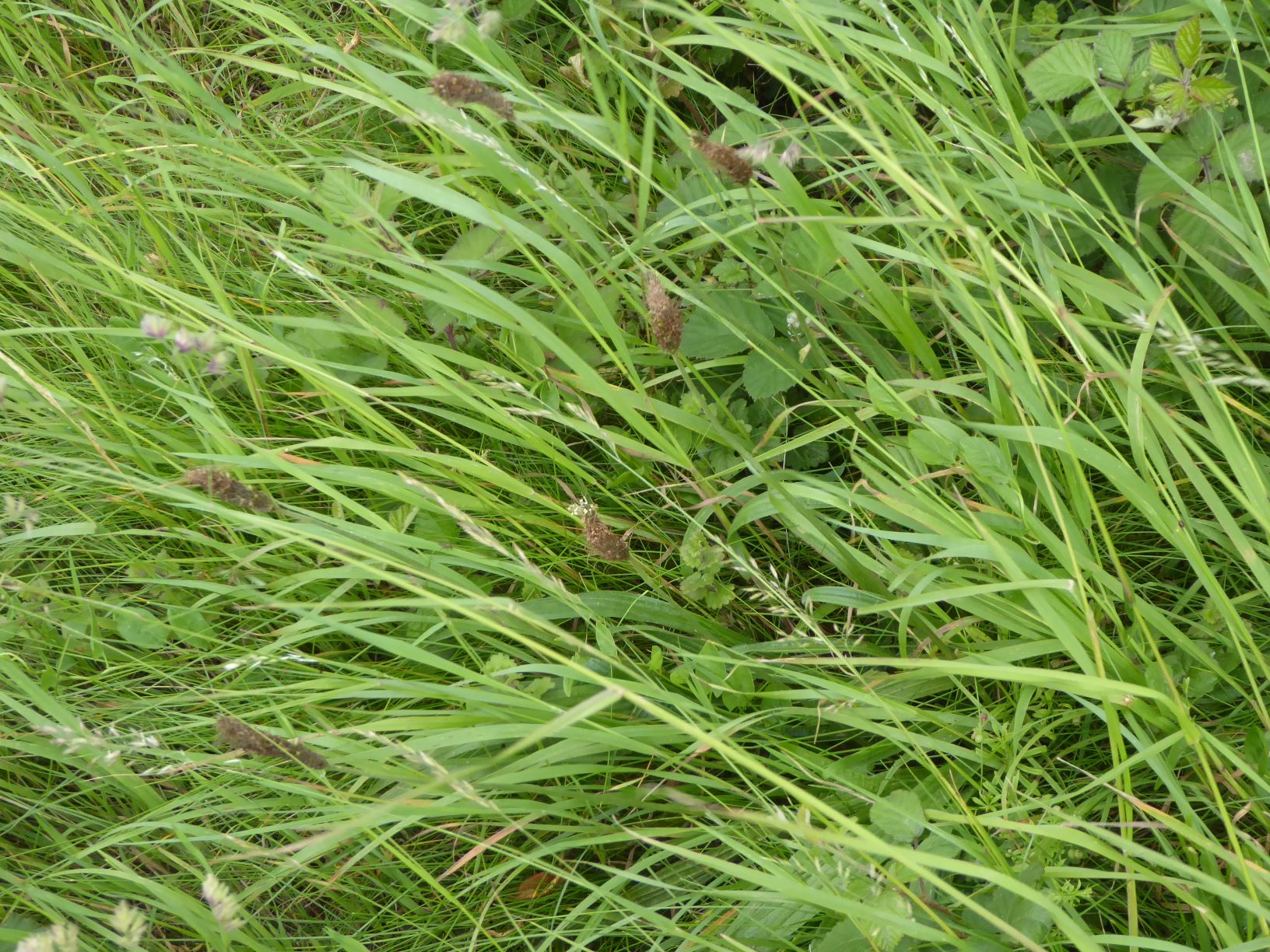
As you can see from this photo, it was quite breezy during our walk; not the best conditions for getting good pictures in a hurry! In amongst the grass you can see the brown seedheads of Ribwort Plantain (Plantago lanceolata).

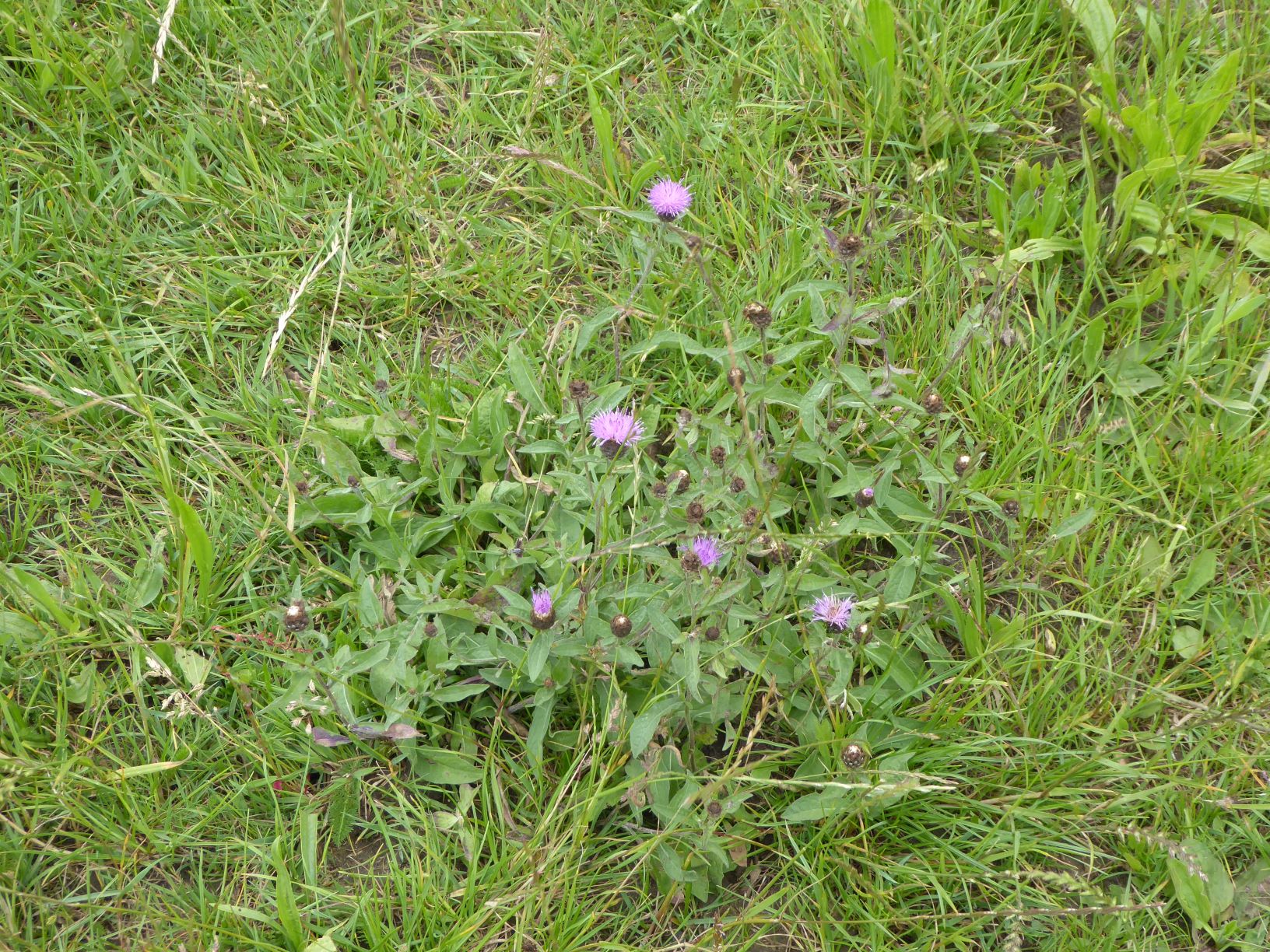
Common Knapweed (Centaurea nigra). The hard flowerheads of this plant have given it the name ‘Knap’ weed; ‘knap’ meaning knob.

In olden times, this flower could be used to tell a girl whether she would marry soon.  She had to pull all the expanded florets off the flowerhead and then put the rest of the flower inside her blouse, next to her heart.  After an hour she should take it out again and if the previously unexpanded florets had blossomed, that was a sure sign that the man she was going to marry was soon coming her way.

By this time we had left the lane and were walking along a footpath between fields.

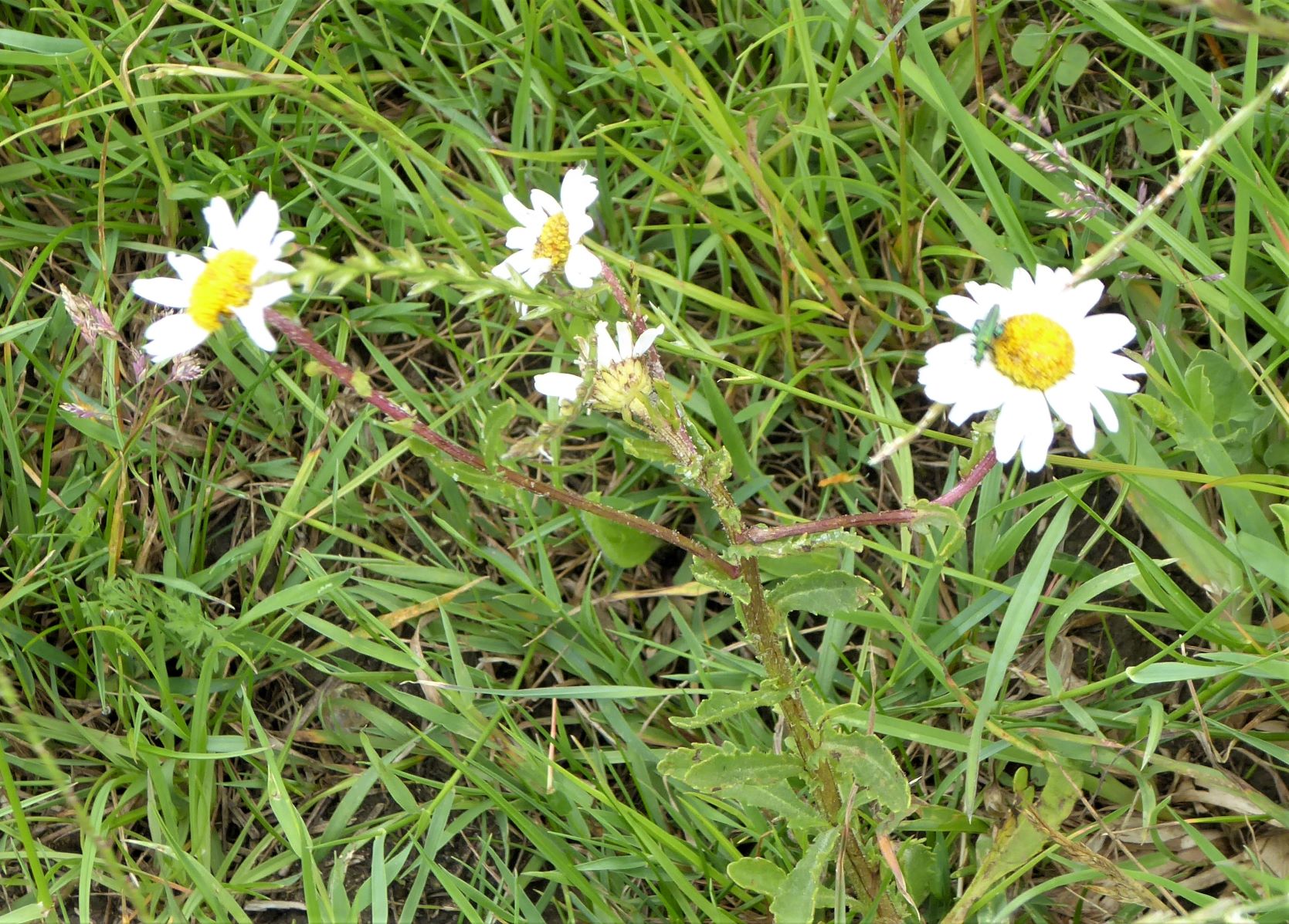
Oxeye Daisy (Leucanthemum vulgare). Sitting on the flower on the right is a Thick-legged Flower Beetle (Oedemera nobilis).  Only the males of this harmless shiny green beetle have the distinctive swollen ‘thighs’.

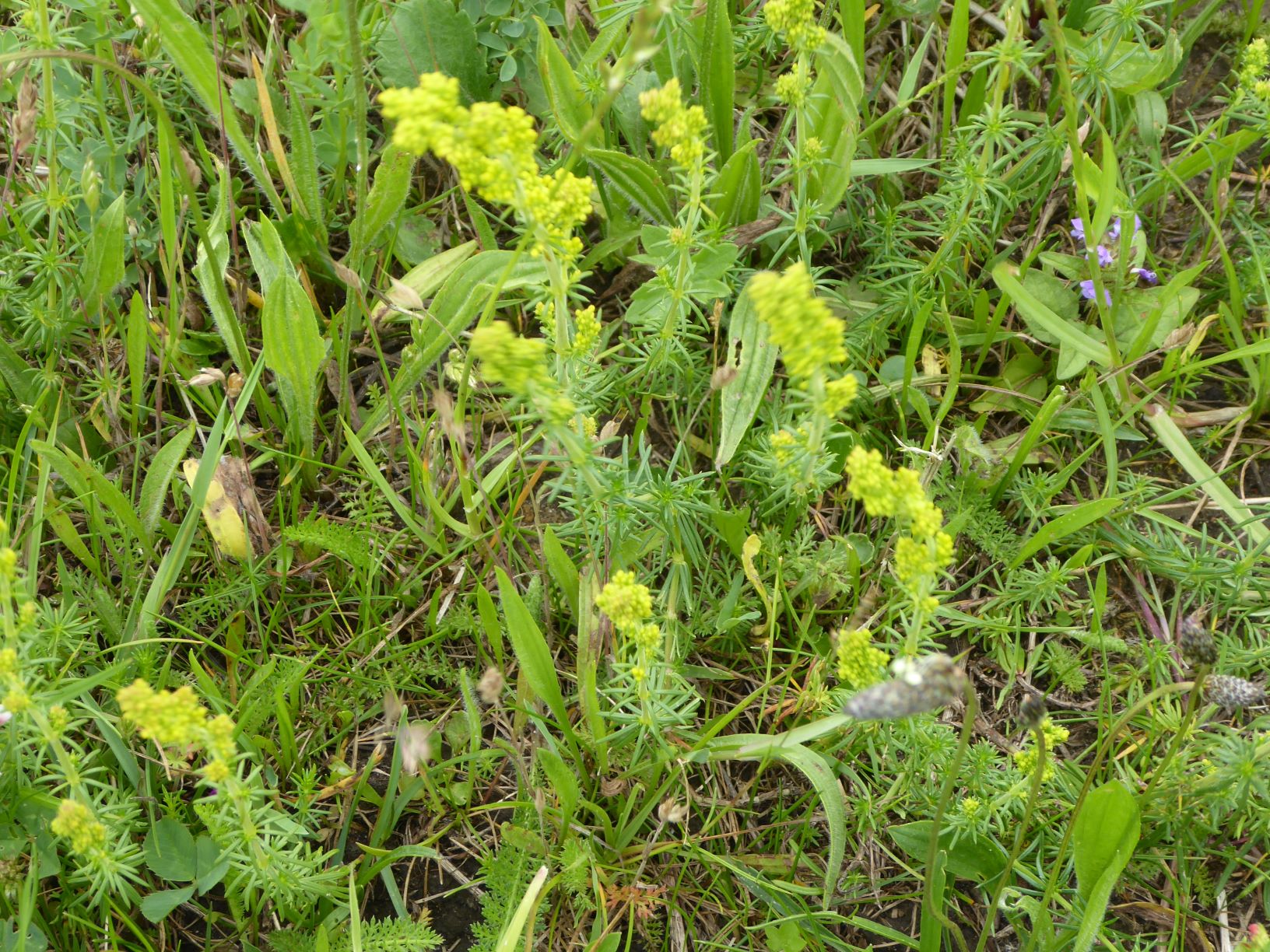
Lady’s Bedstraw (Galium verum). This is the only photo I managed to get of this pretty plant and most of it is out of focus because of the wind blowing it about.

Harrap’s tells me it is ‘honey-scented when fresh but smells of new-mown hay when dry.  Formerly believed to discourage fleas and was incorporated into straw mattresses, especially for the beds of women about to give birth, hence its name.’

I cannot confirm the information about the scent because: 1. I would have found it very difficult getting down low enough to smell the plant and would then have struggled to get back up again, so I didn’t. 2. The wind was blowing too strongly for the delicate scent to be discernible and 3. I haven’t got a strong sense of smell, anyway.  We’ll just have to take Mr Harrap’s word for it.

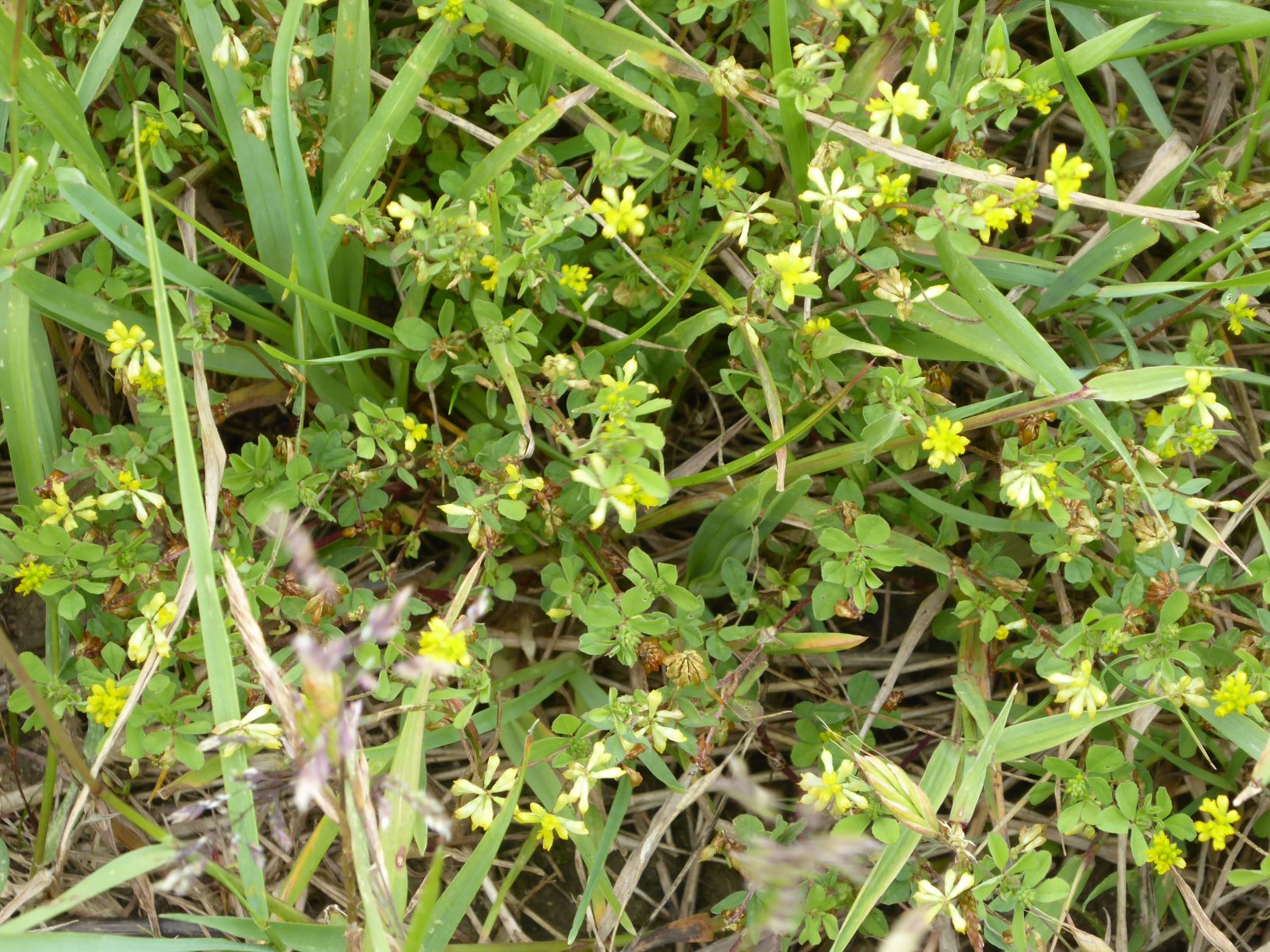
Lesser Trefoil (Trifolium dubium). This plant with its three leaflets joined together is widely believed to be the true shamrock.  There are other plants which are also thought to be the shamrock; white clover, black medick, watercress and wood sorrel.

This plant is one of the hop trefoils; its seedheads look like tiny heads of hops.  Once the seeds begin to ripen the petals don’t fall off the plant but turn brown and the standard, the upper petal of the flower, folds down on either side of its centre line over the ripening pod like a ridged roof.  If you click on the photo above to enlarge it and look about a third of the way up from the bottom, you will find a seed head in the centre.  Does that make sense?

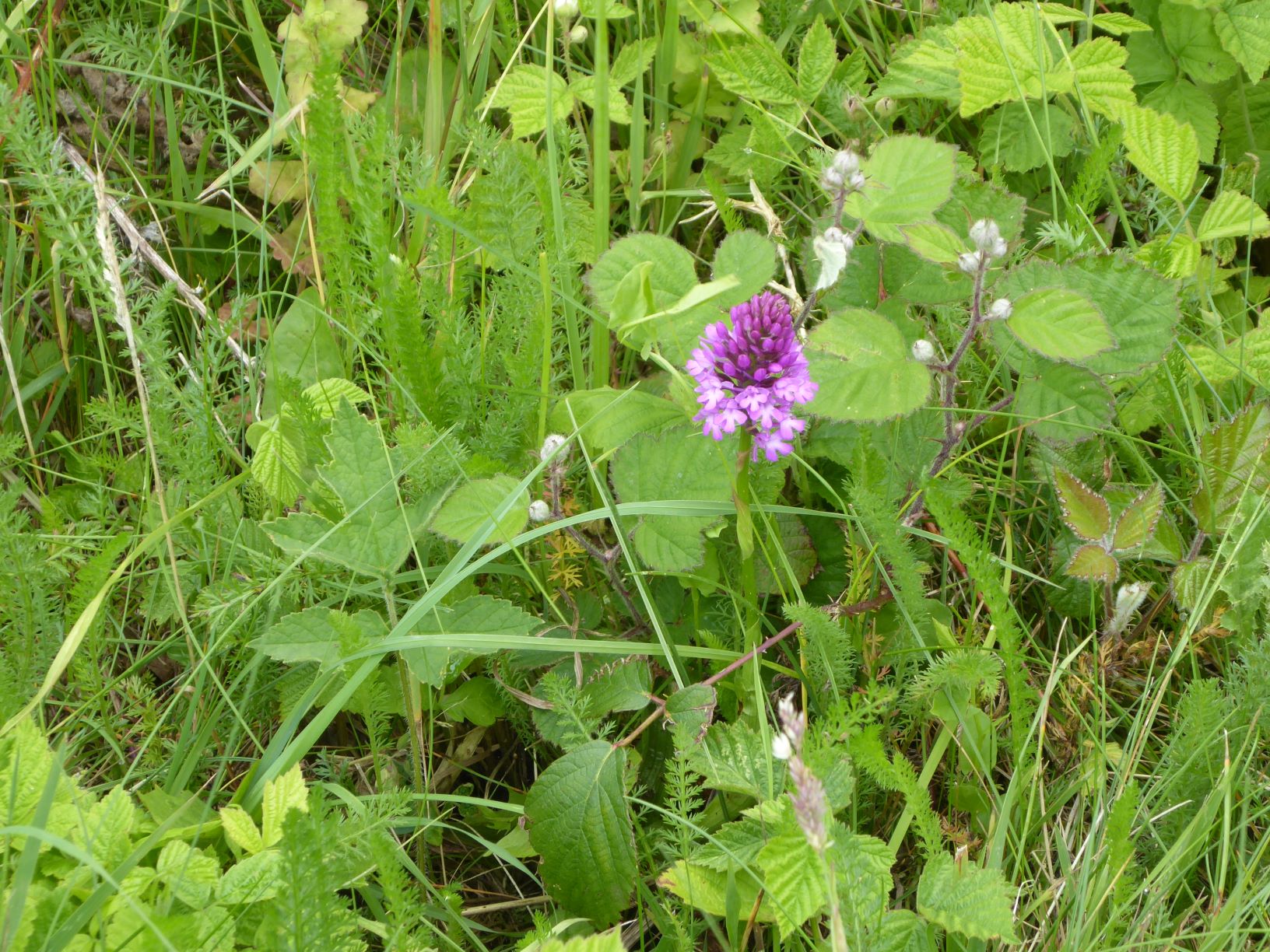
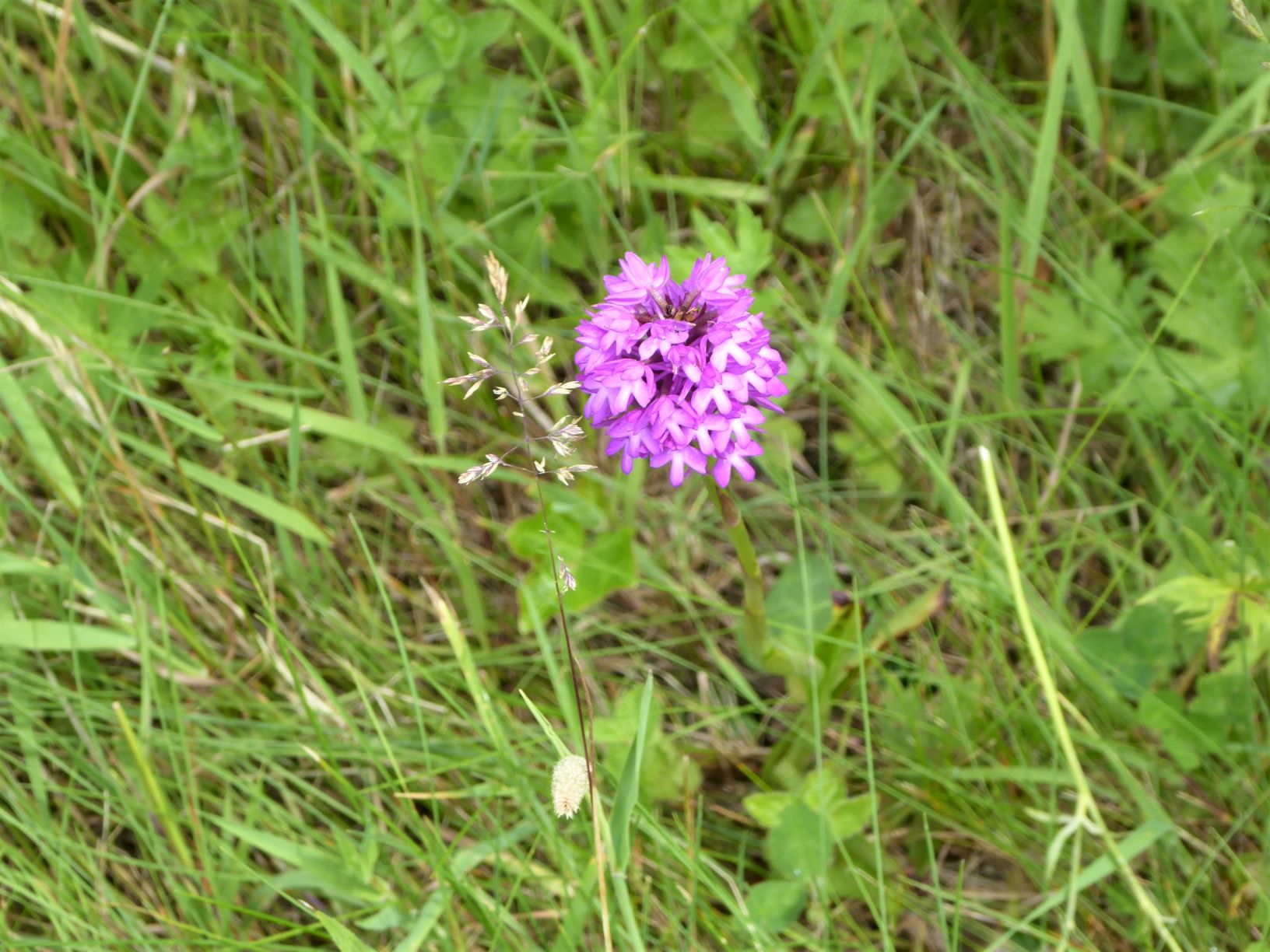
Pyramidal Orchid (Anacamptis pyramidalis).

Another not-as-pink, pink flower.  Here is a link to images of what a Pyramidal Orchid really looks like.

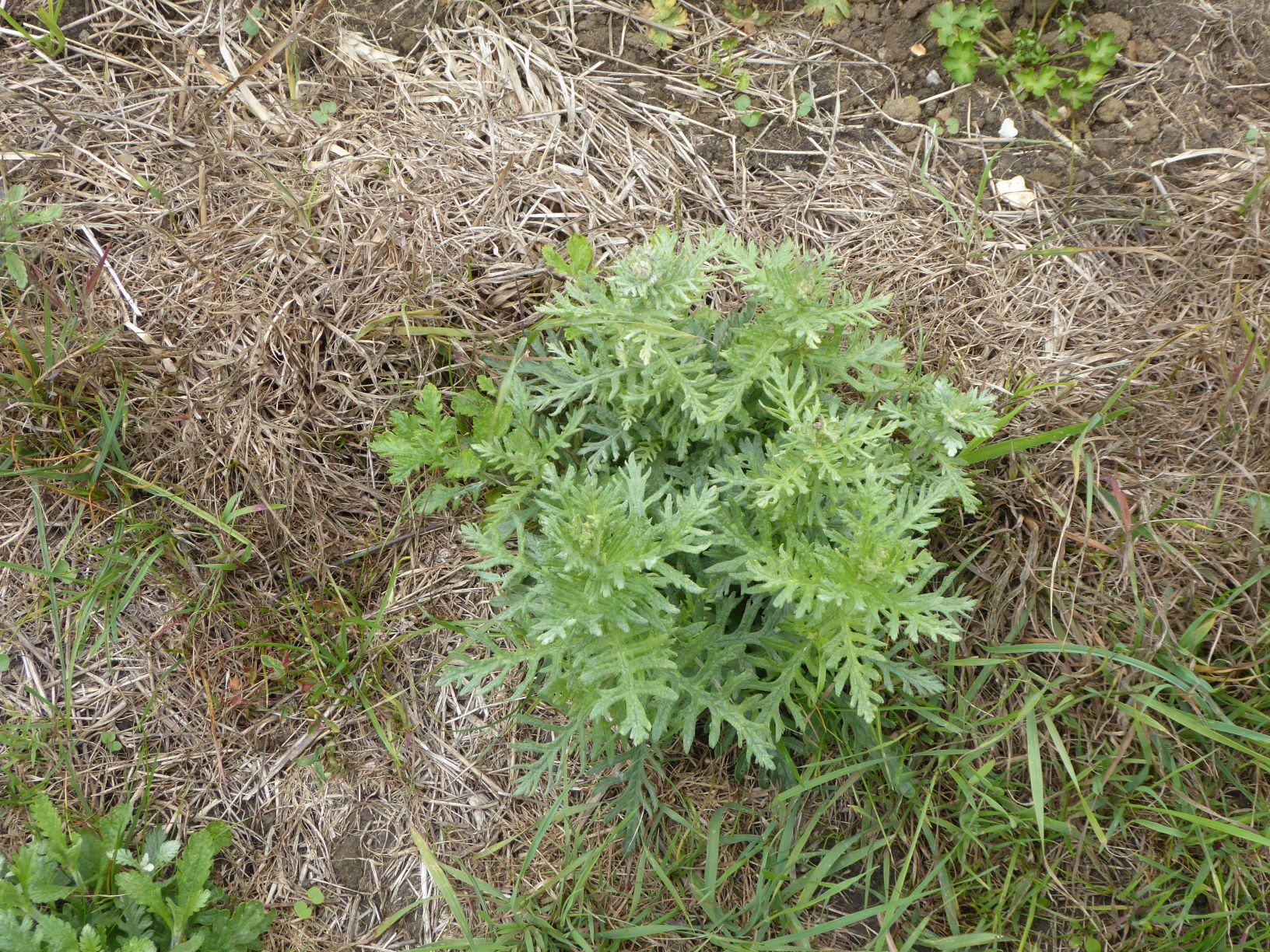
I believe this plant might be Oxford Ragwort (Senecio squalidus). The leaves look too evenly-branched to be the native Common Ragwort (Senecio jacobaea) though the latter plant is what I would expect to find here. Oxford Ragwort is found mainly in urban settings. It escaped from Oxford Botanic Garden in 1794 and then spread rapidly via the railway network. It sounds like the main character in a John Buchan novel!

Ragwort is poisonous, its leaves containing an alkaloid poison that can remain in plants that have been dried with hay.  Animals are not aware they are eating it when it’s in hay (though they will avoid it when it is growing in the field) and the alkaloids will destroy their livers in just a few months. Understandably, farmers will try to get rid of all the ragwort they find.

Our aim was to picnic at South Elmham Minster and we discovered it surrounded by trees.  It is on private land but the owners allow walkers to visit it as long as they respect the place.

Here is Elinor discovering and photographing the entrance to the site.

Richard, Alice and I had been here before, when we walked to it from St James in April 1995, nearly two years before Elinor was born!  We hadn’t been back since, though it is only half an hour’s walk from our present home.

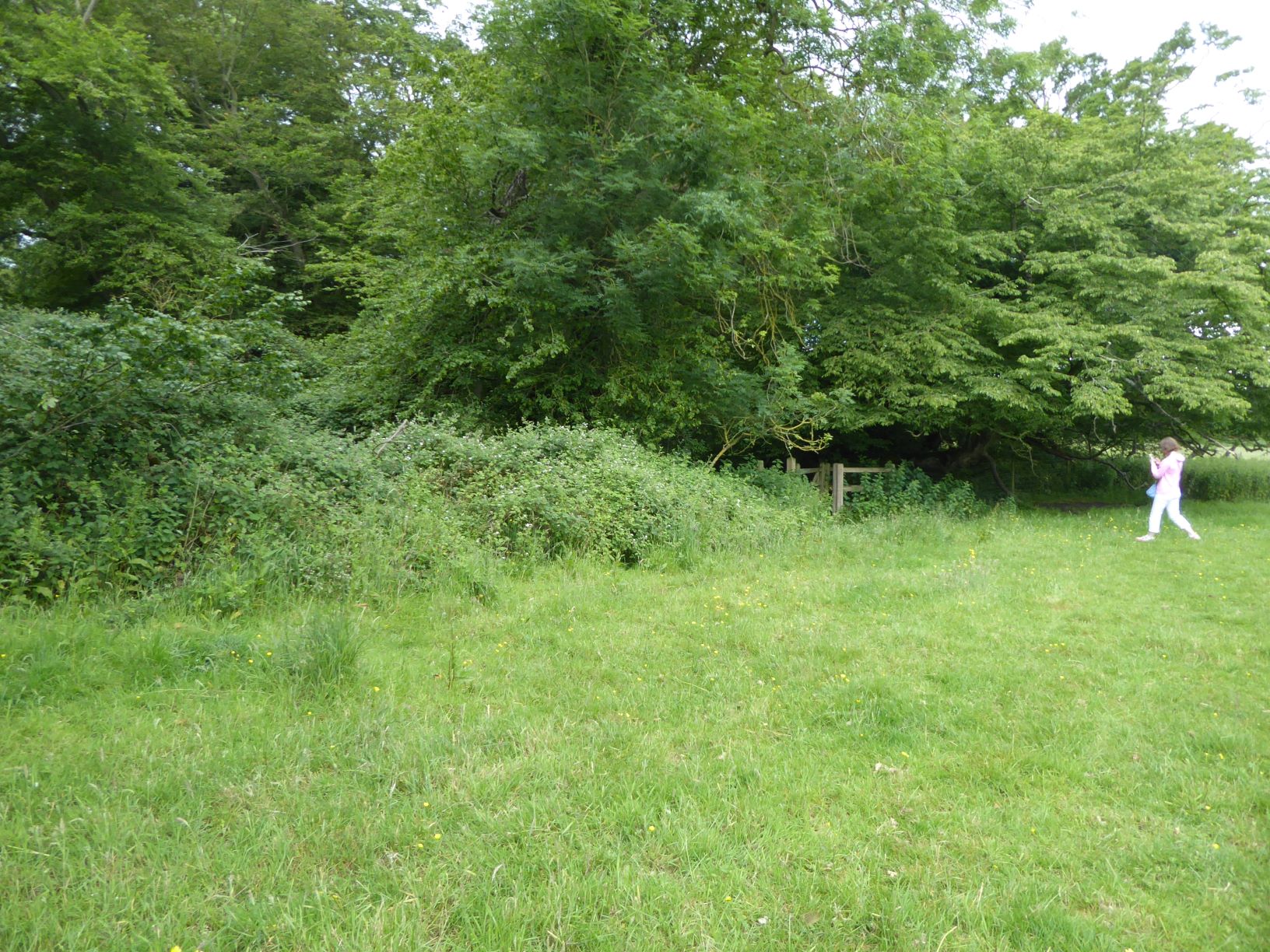
The entrance and path leading to the ruins of the ‘Minster’ were very overgrown which somehow added a frisson of mystery to the occasion.

To the Minster

P1060505Entrance to minster
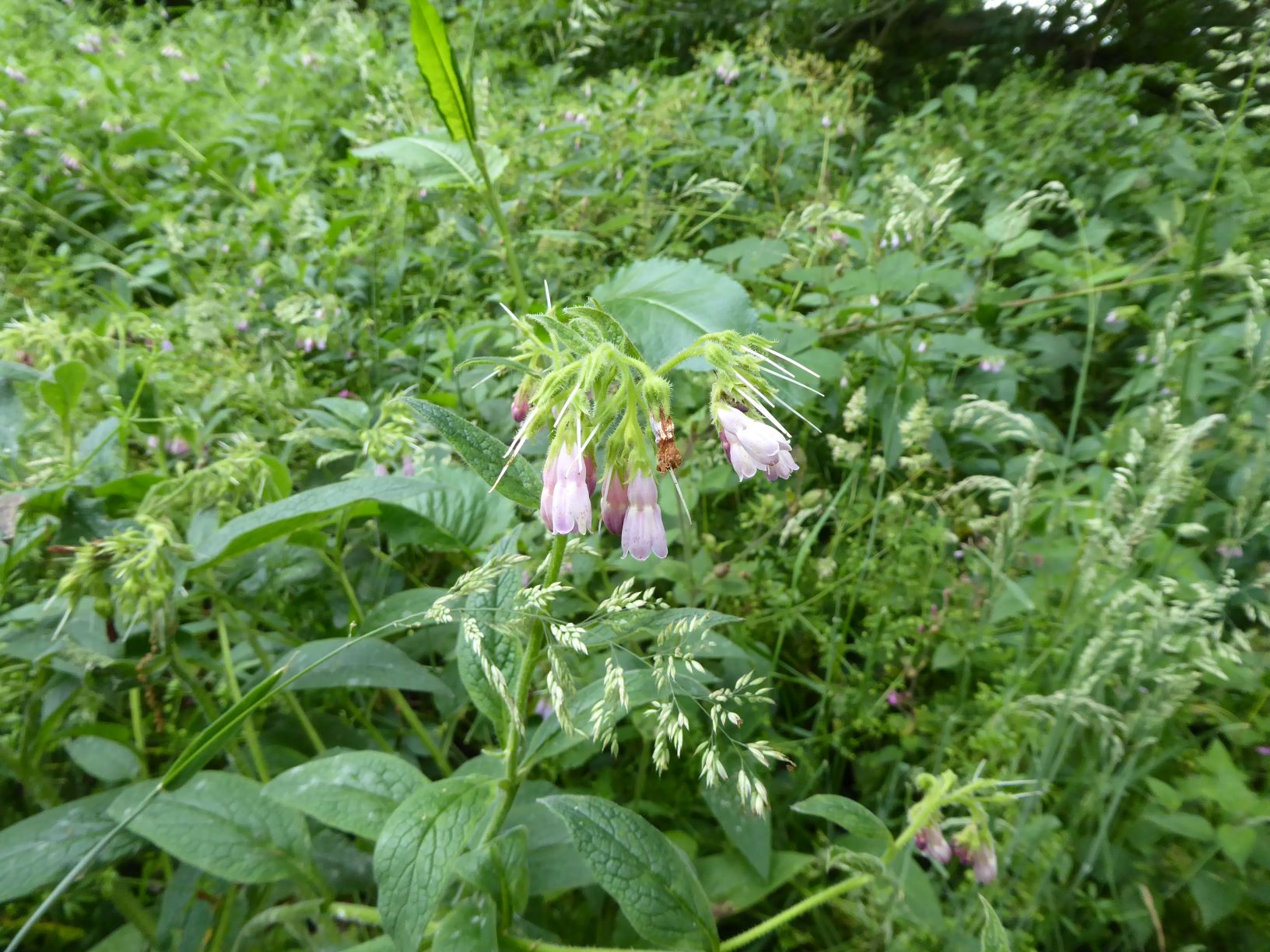
P1060507Common Comfrey
P1060510Entrance to Minster (2)

There was a lot of Comfrey growing next to the path.

Common Comfrey (Symphytum officinale). These flowers were lavender-coloured.

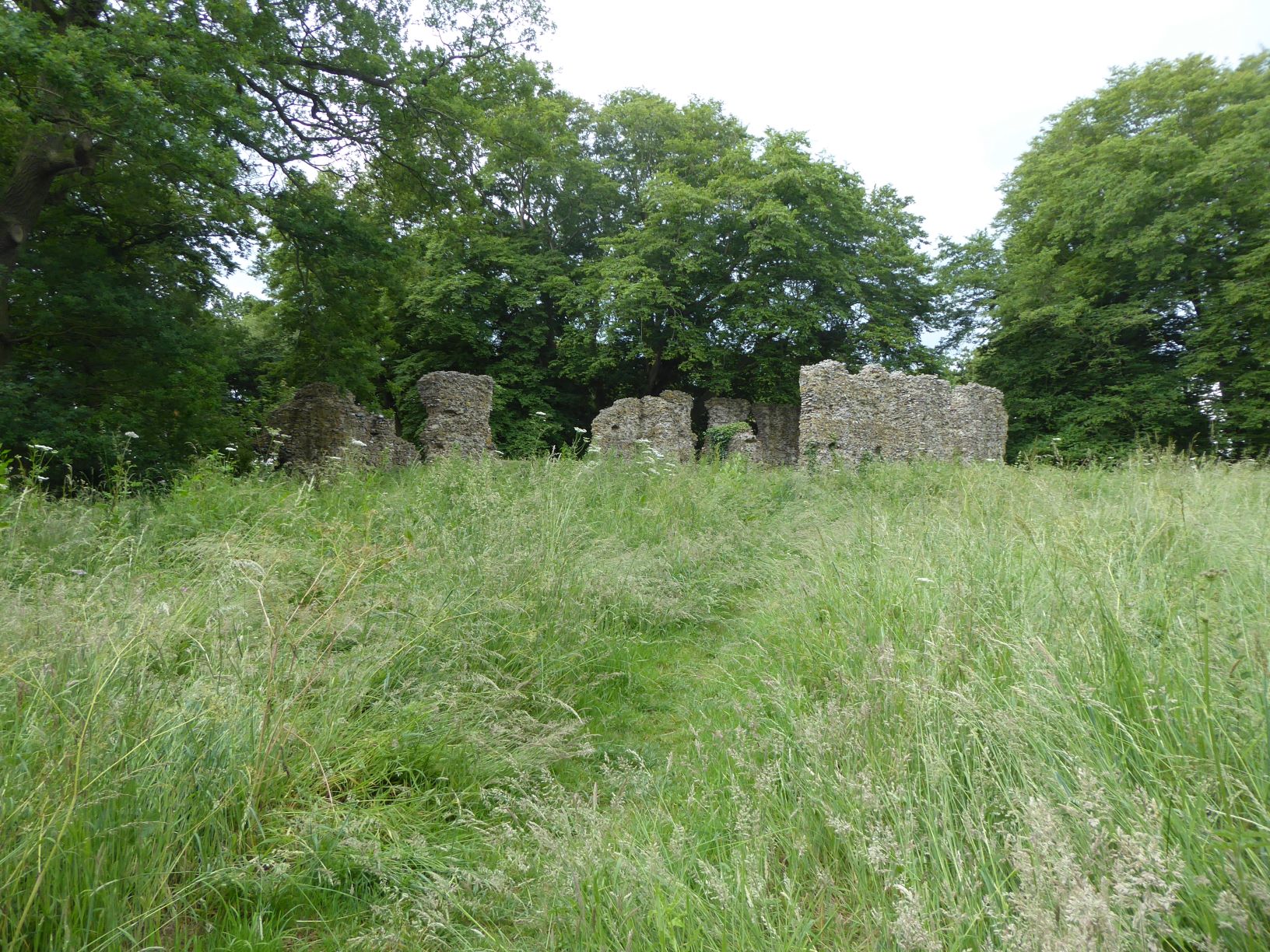
And there it was!

South Elmham Minster

Instead of me writing screeds about this interesting ruin I will recommend this article for you to read, if you so wish.

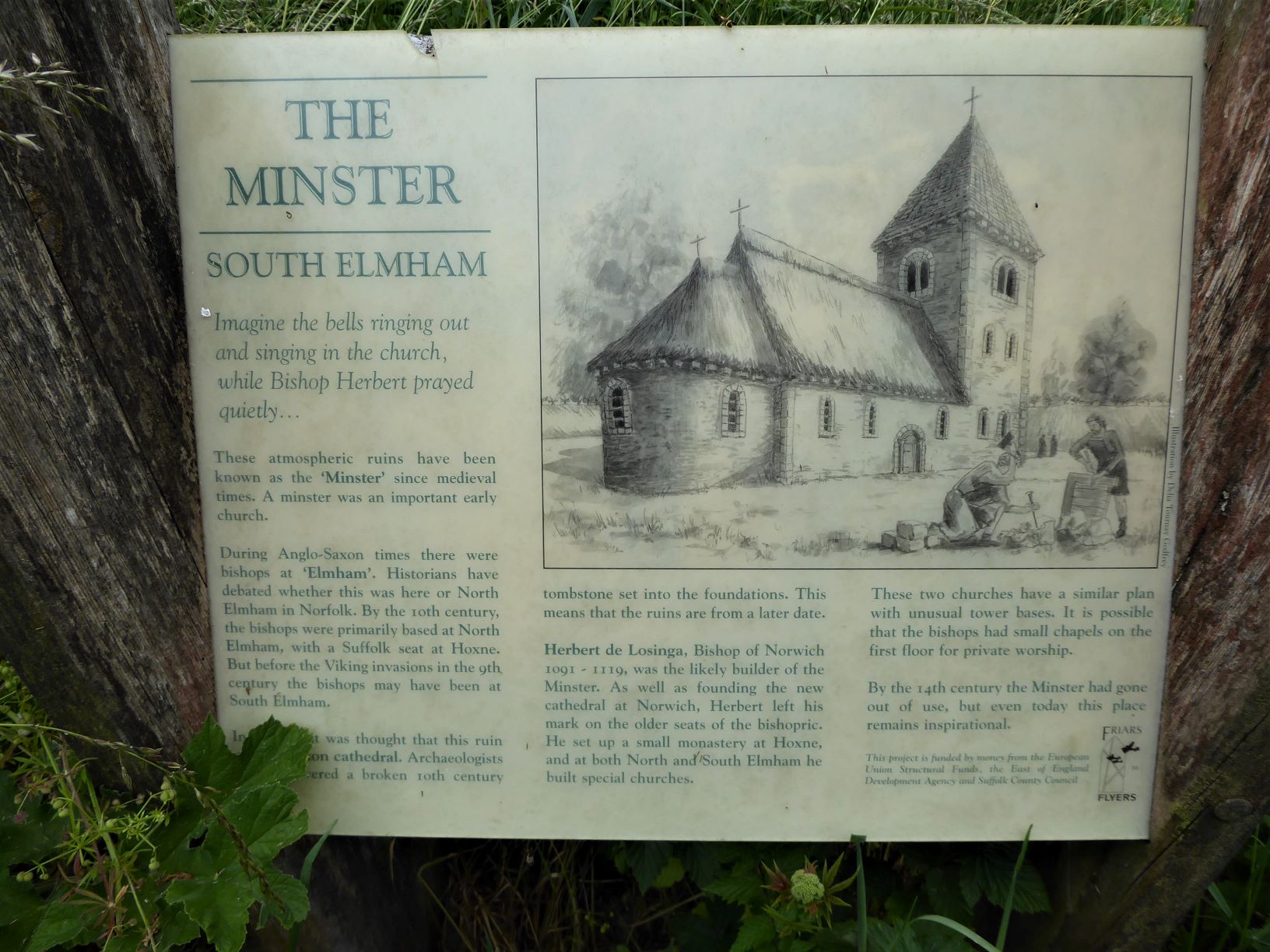
Here is an information sign with the ubiquitous ‘artist’s impression’ of the Minster.

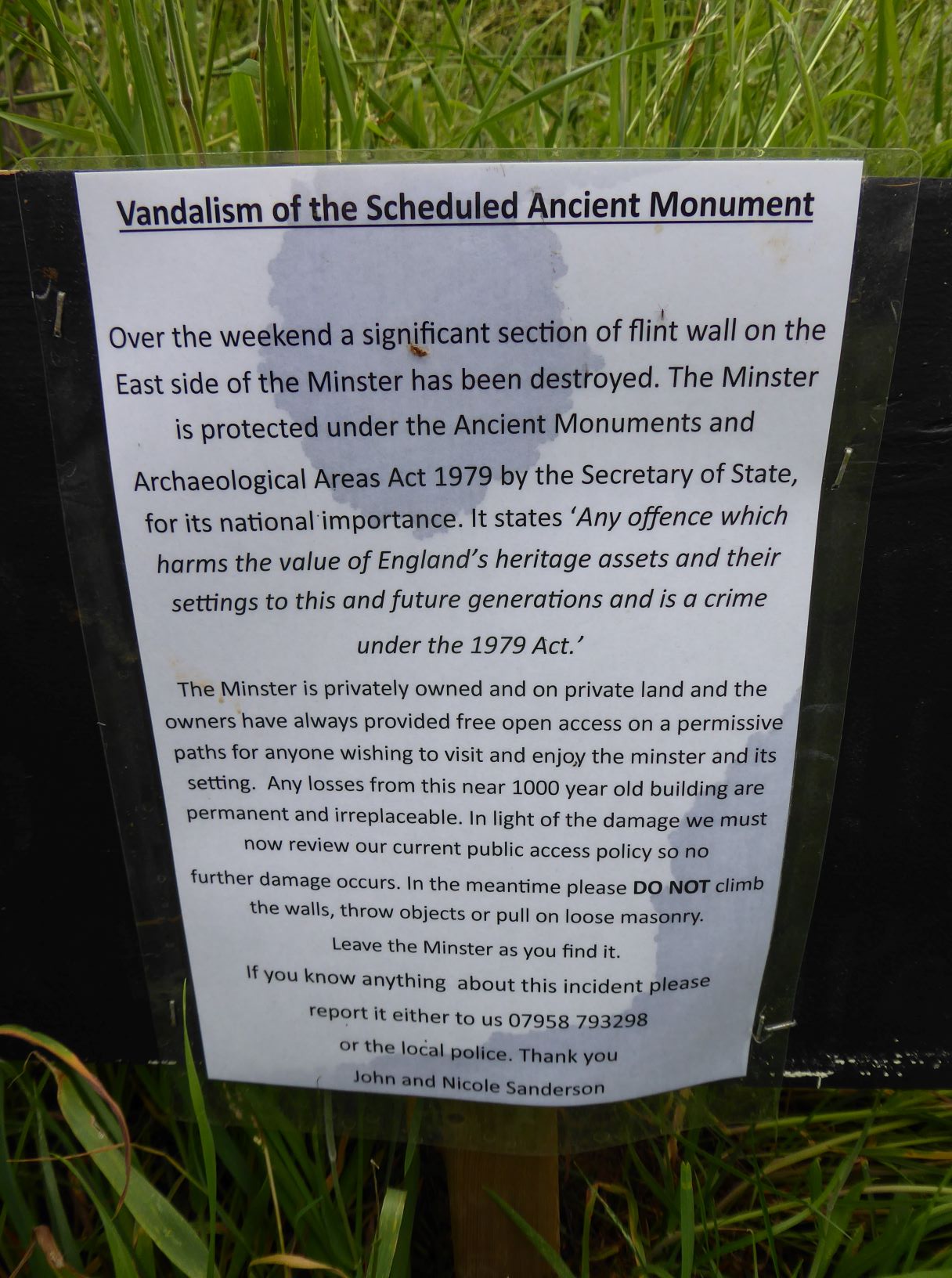
Here is a message we found. We have no idea when the damage was done or when this sign was put up. It looks fairly recent.

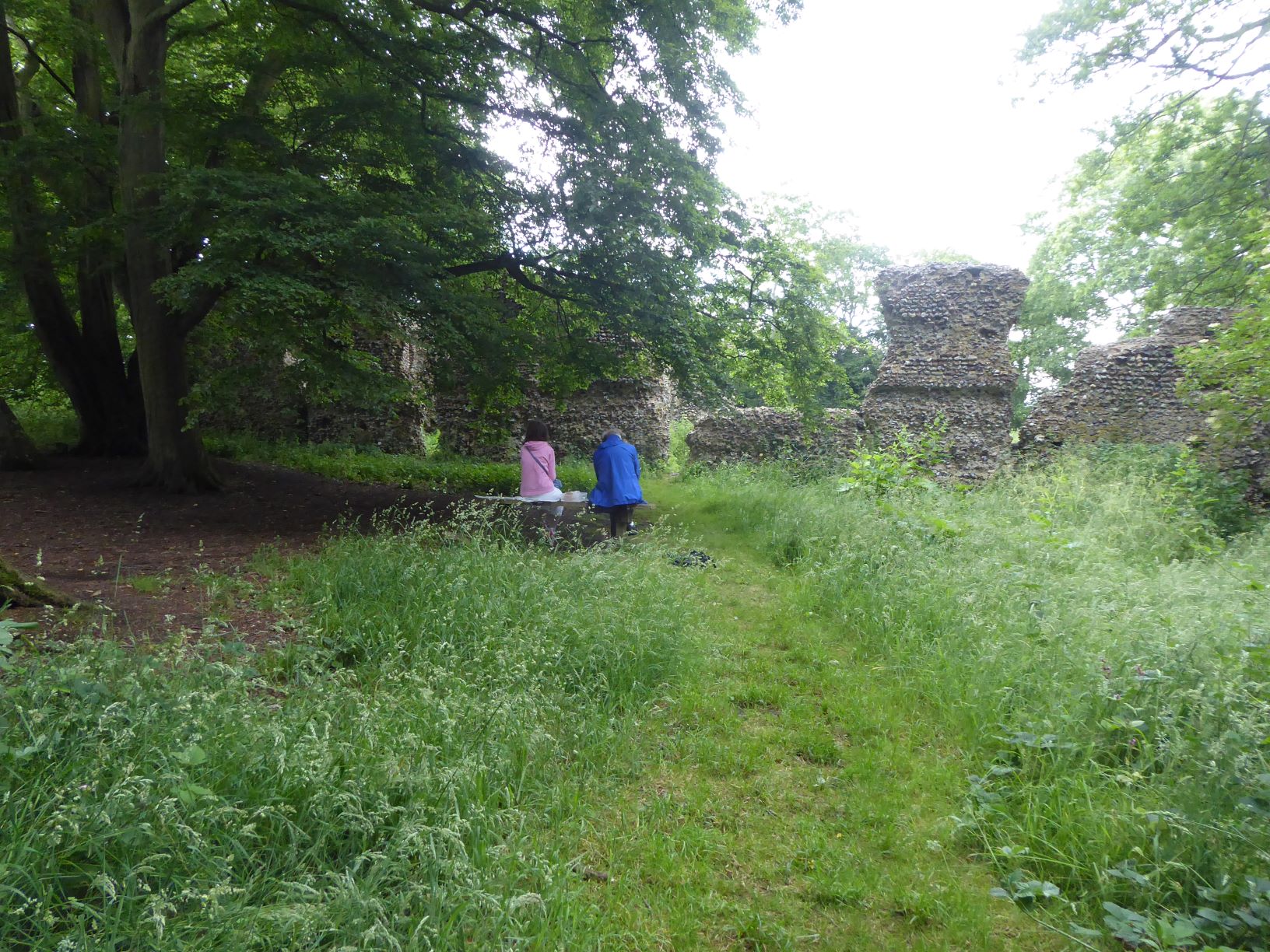
We wandered around for a short while and then sat on the bench provided under the trees and had our lunch.

Our picnic spot

Below are a few photos of the ruins themselves.

This slideshow requires JavaScript.

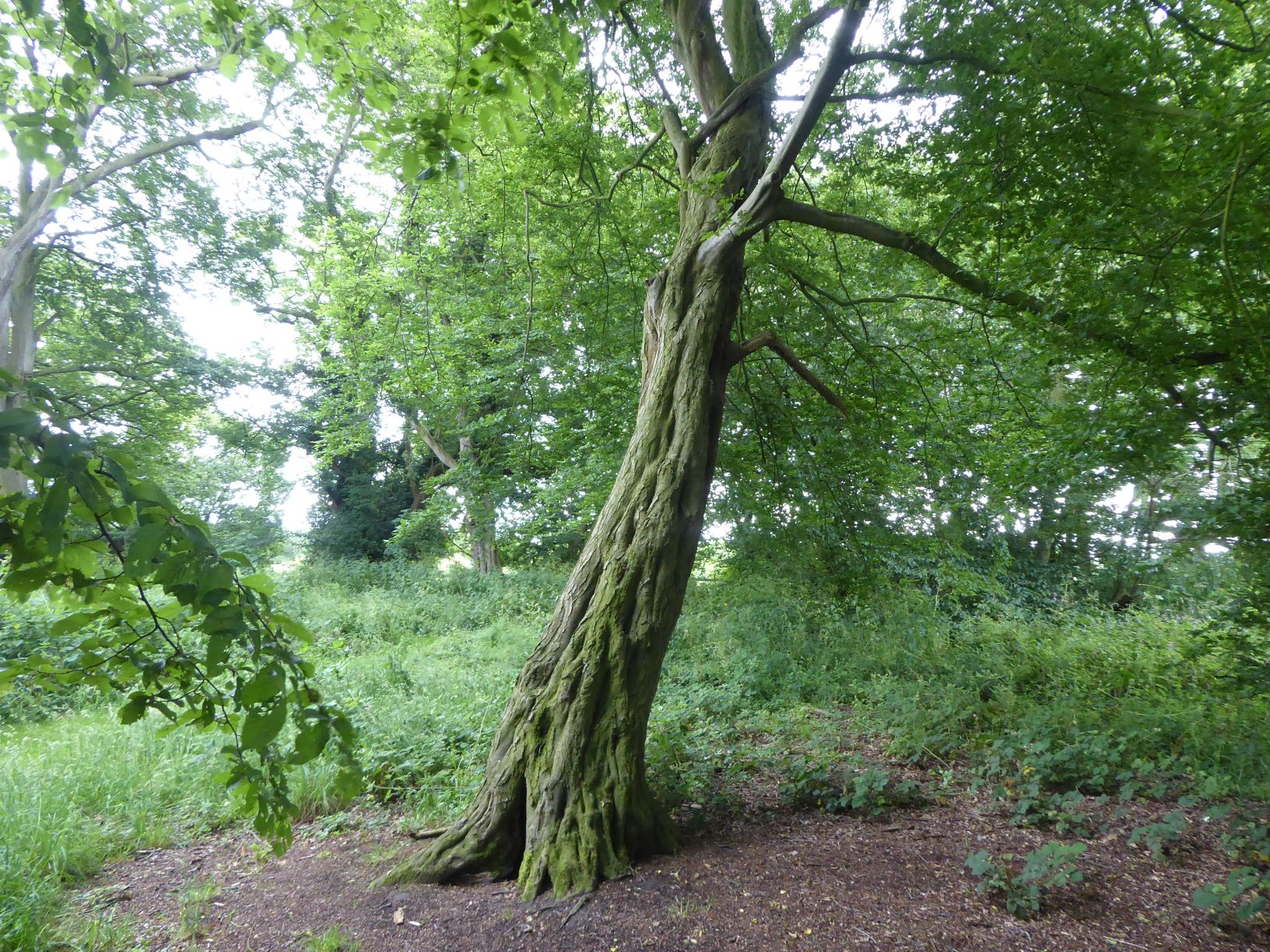
An interesting tree-trunk.

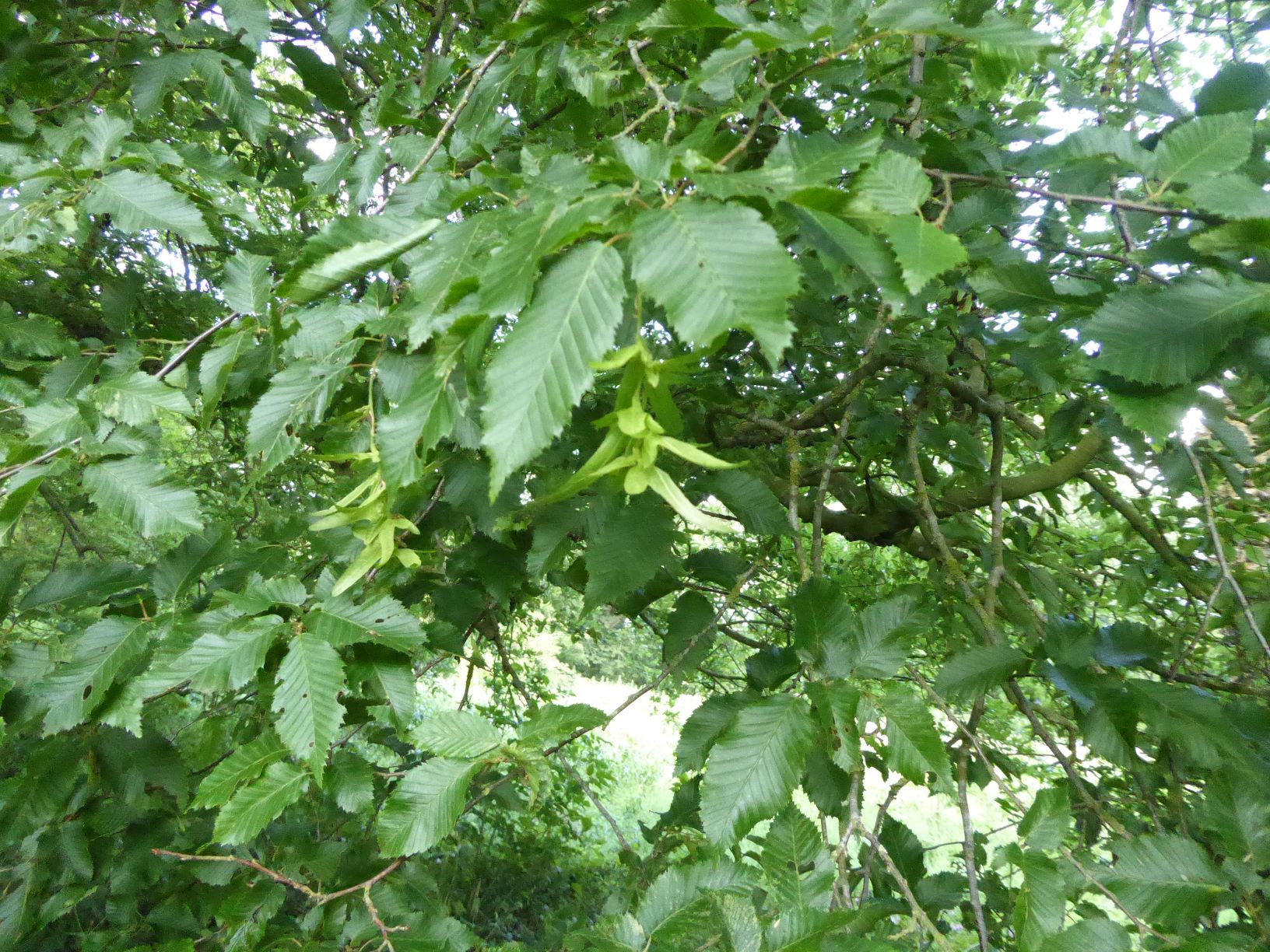
Many of the trees surrounding the Minster were Hornbeam (Carpinus betulus).  Hornbeam trunks are said to be ‘fluted’ which might describe the tree above.

Hornbeam pleated leaves with bunches of fruits

The Hornbeam nut forms with a three-lobed bract attached that sometimes grows as long as 5cms.  This acts as ‘wings’ when the nut is released from the tree in the autumn.

P1060544Clearing
P1060545Clearing

I think the Hornbeams have been coppiced in the past though Hornbeams are usually pollarded.  Local children have been making dens under the trees.

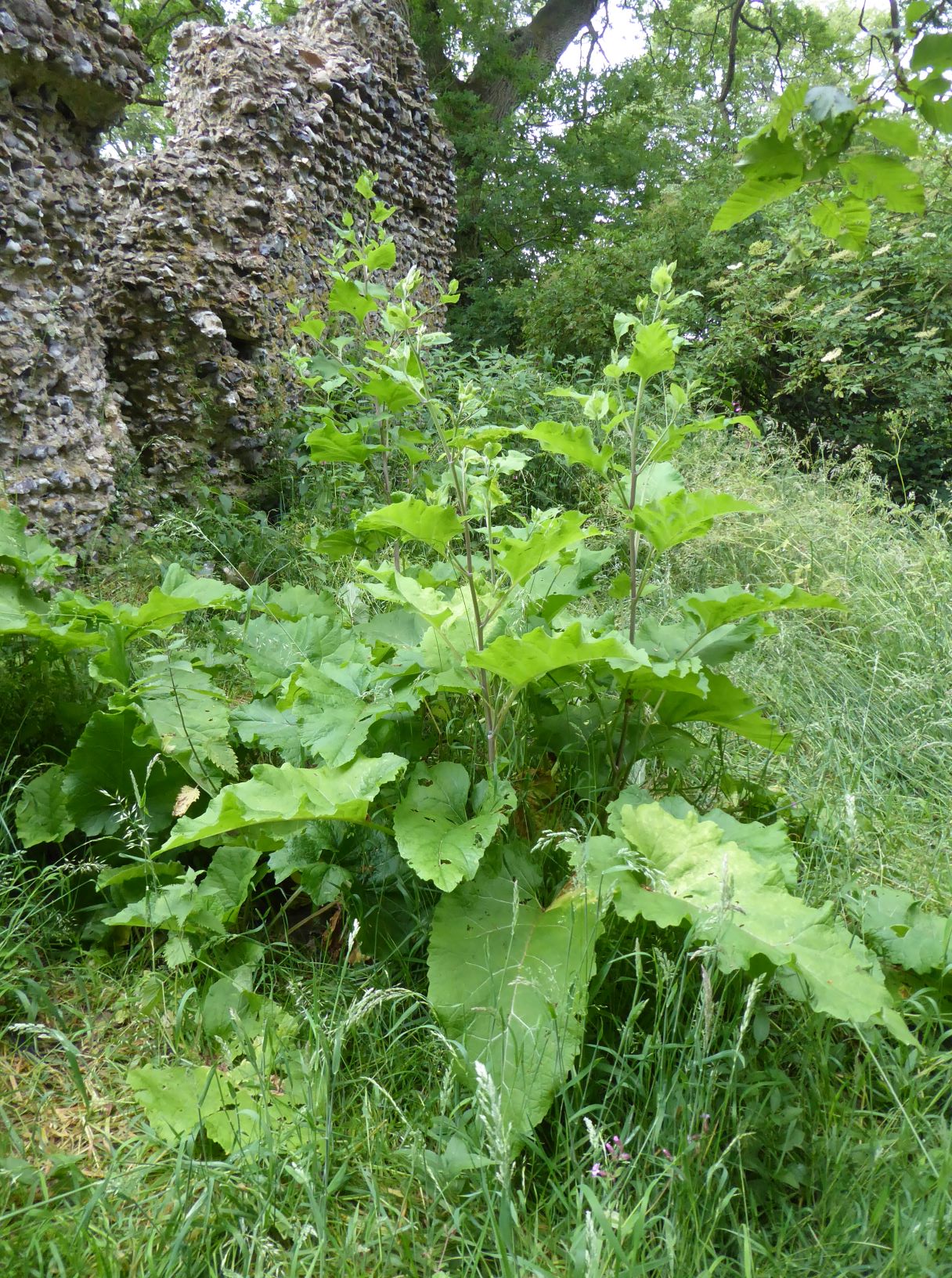
Lesser Burdock ( Arctium minus)

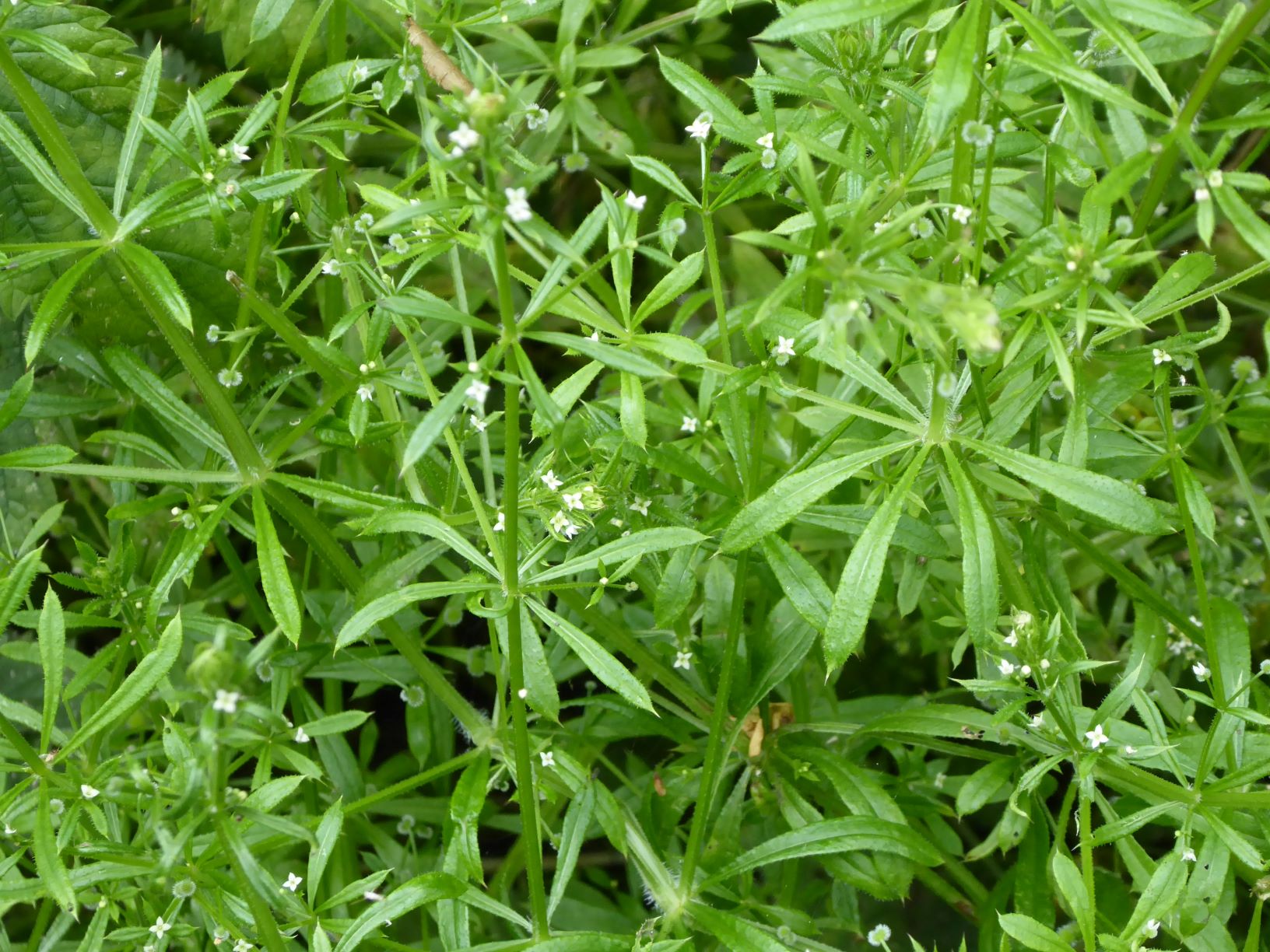
Cleavers or Goosegrass (Galium aparine)

Above are two different plants with fruits covered in hooks.  The stems and leaves of Cleavers also have bristles that cause them to stick to anything that touches them.

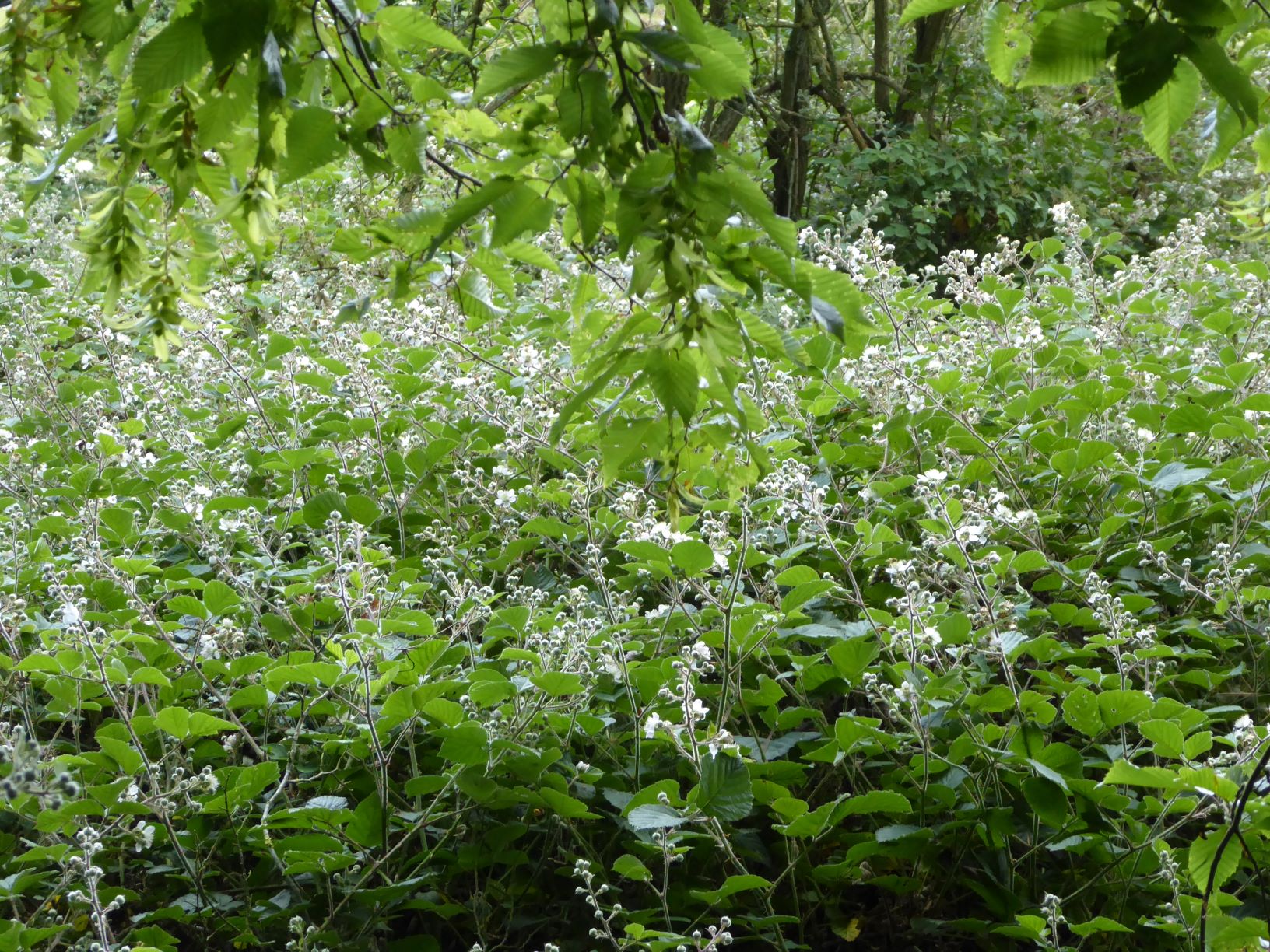
An enormous Bramble patch! (Rubus fruticosus agg. )

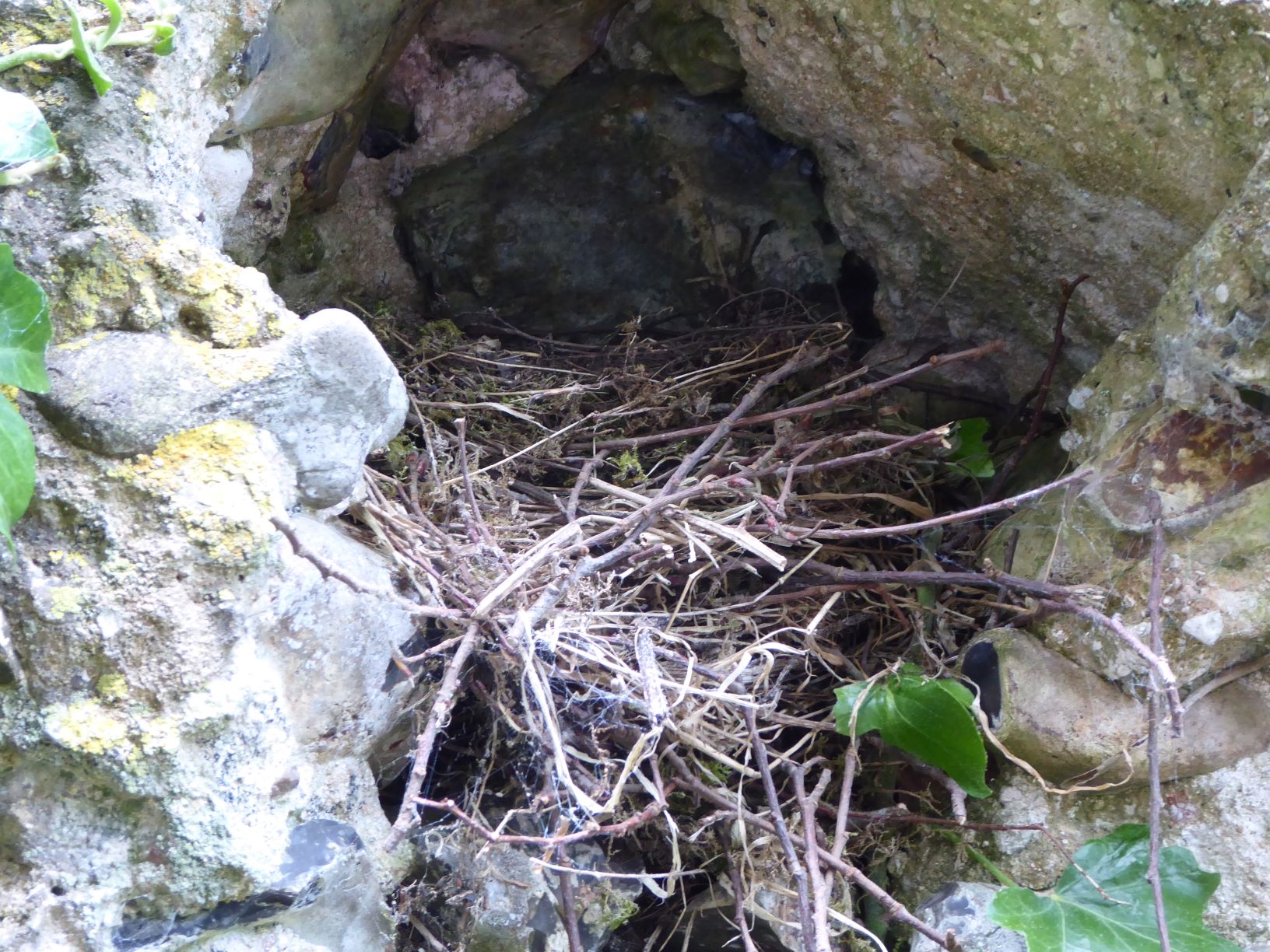
A bird had made a nest in one of the hollows in the wall. It was empty.

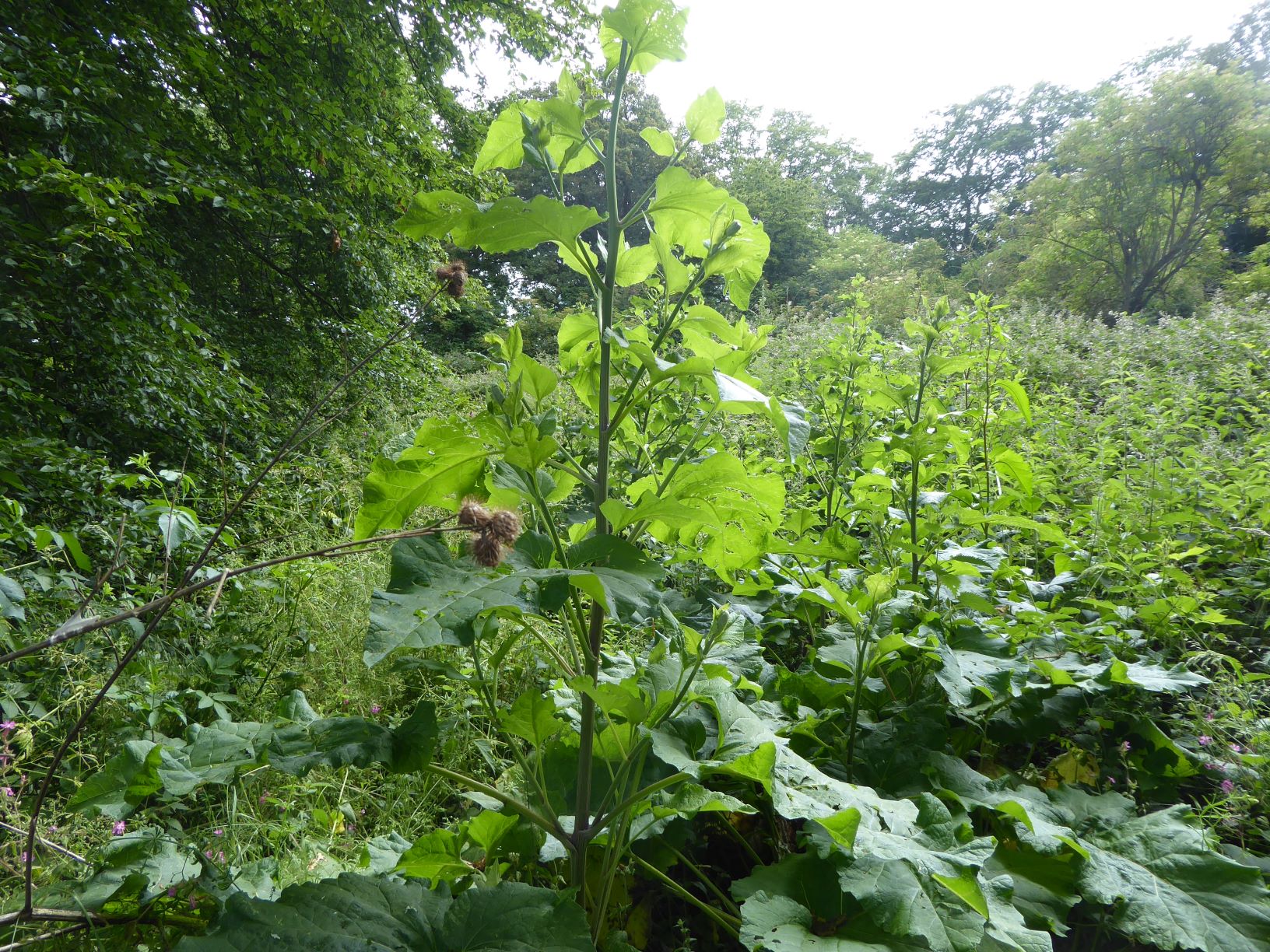
Another enormous Lesser Burdock; it must have been almost 2 metres tall. By this time the sun had come out and the air was becoming warm.

The ditch; looking left
The ditch; looking right

There was another exit path from the Minster which crossed the wide surrounding ditch.  This ditch is fairly deep though my photographs do not show this at all clearly.

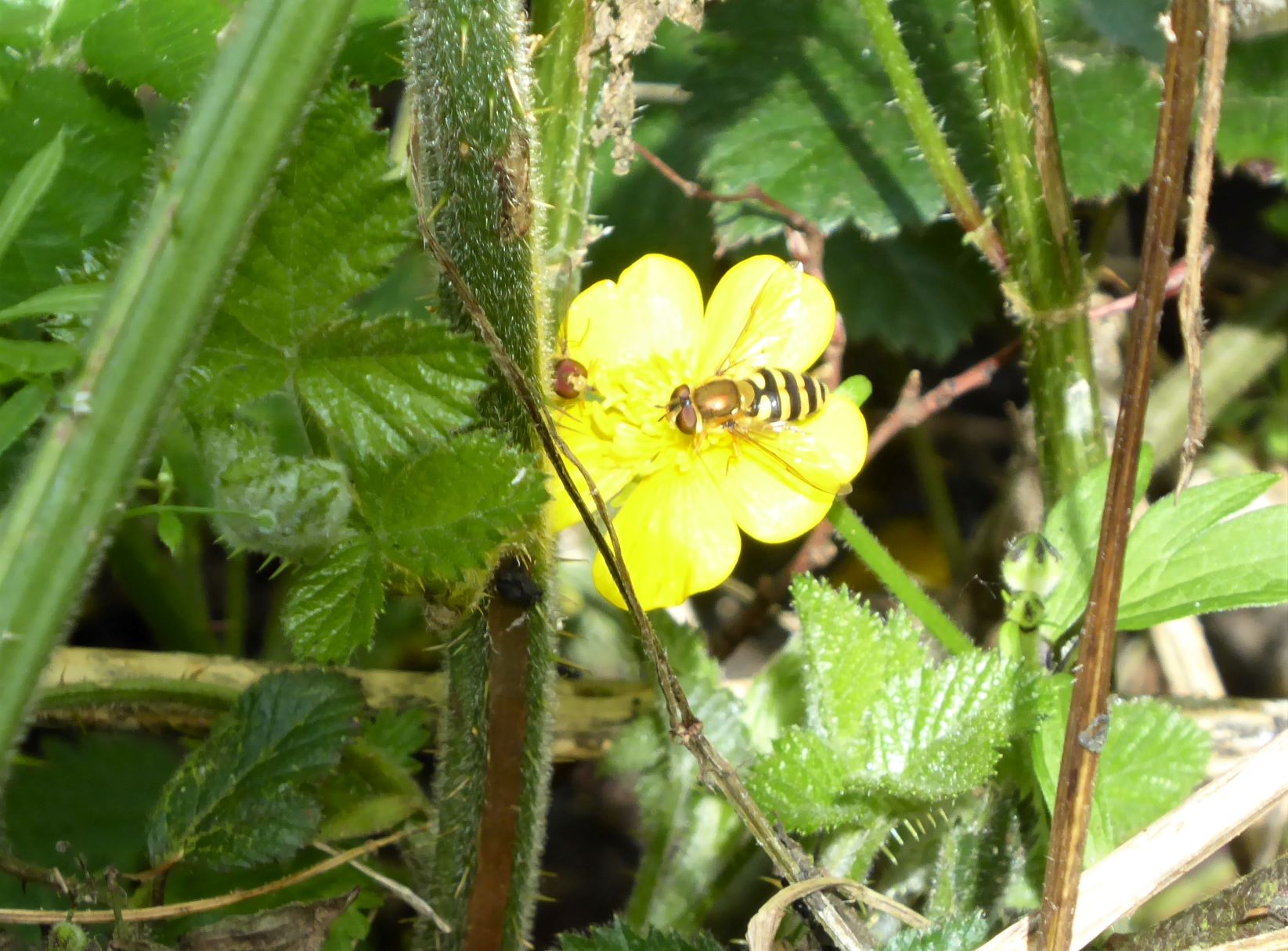
A Hoverfly, I’m not sure which one, on a large Buttercup flower; again I’m not sure which buttercup.

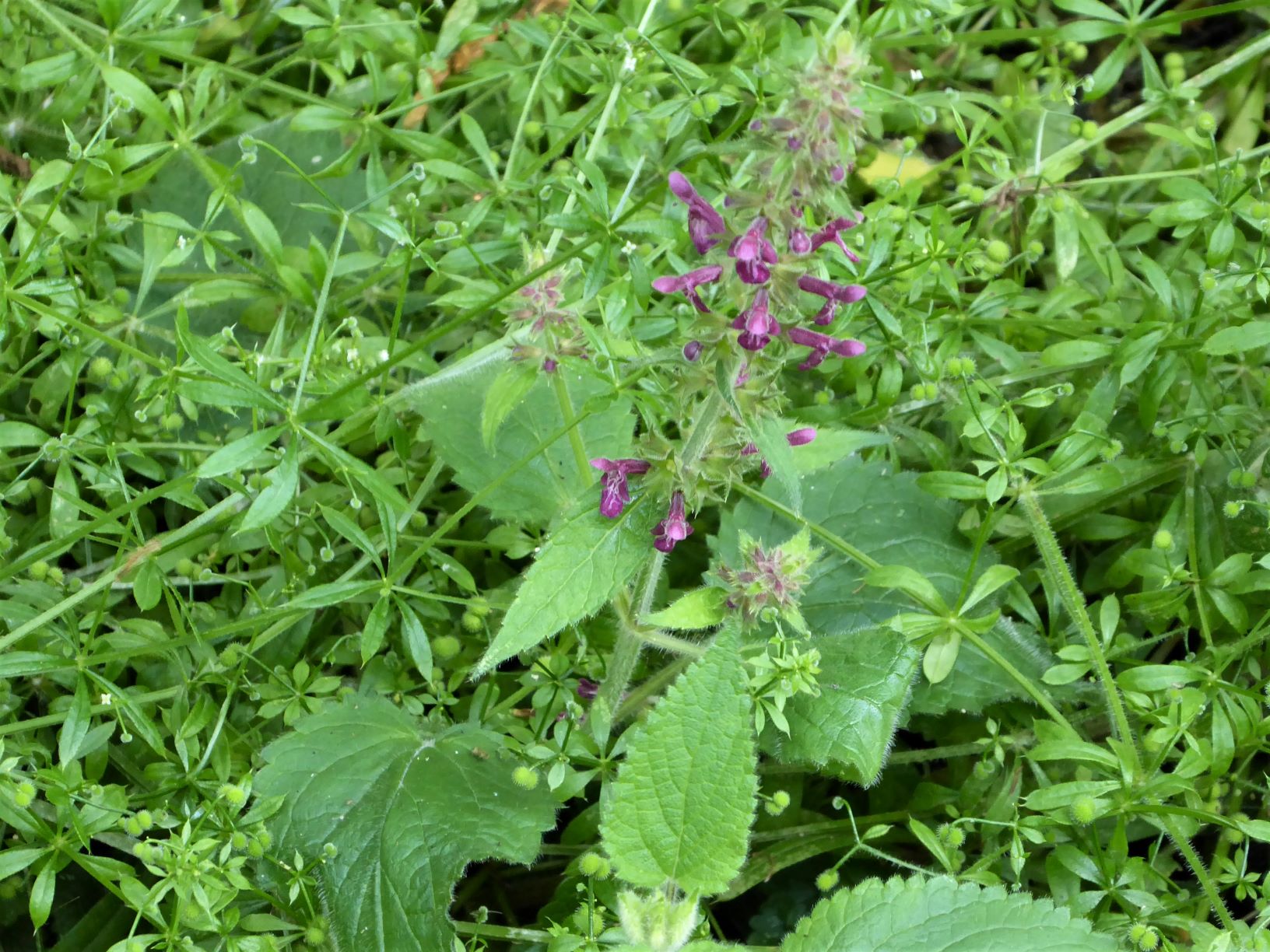
Hedge Woundwort (Stachys sylvatica). In reality this flower is a little pinker than this photo shows.

Woundworts have been used to stem bleeding and treat wounds since the time of the ancient Greeks.  Formally, the leaves were usually used as a poultice.  Ointments and infusions were also made with the leaves and the flowers made into conserves.  In fact, the volatile oil in Hedge Woundwort does have antiseptic qualities.

Dog’s Mercury (Mercurialis perennis)

The Dog’s Mercury was all in seed. This one appears to have lost a few of its upper seeds.  Dog’s Mercury is extremely poisonous to animals and humans alike.

We left the Minster and walked home in the sunshine.

Mayweed.  I wasn’t able to check to see if it was Scentless or Scented Mayweed.  The white outer ray florets were just emerging round the central disc-florets of these daisy-like flowerheads.

Lesser Stitchwort (Stellaria graminea).

Field Rose (Rosa arvensis).

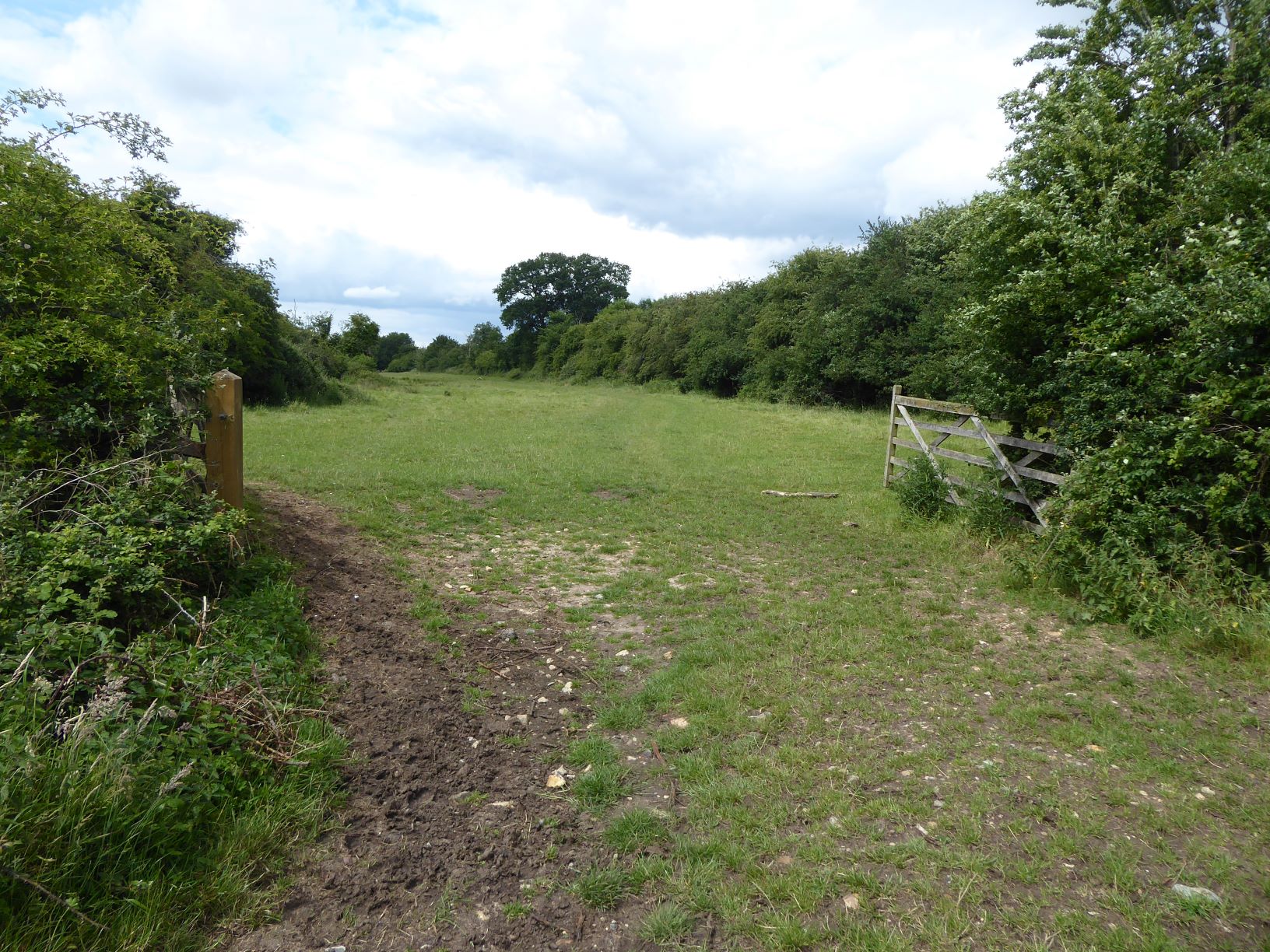
Field entrance

I didn’t take many photos of our surroundings as we walked and most of those shots were not suitable.  I am glad this one came out as it shows the countryside through which we walked.  Old-fashioned small fields with high dense hedges.  Lots of birds were still singing and wherever we walked we heard numerous skylarks.

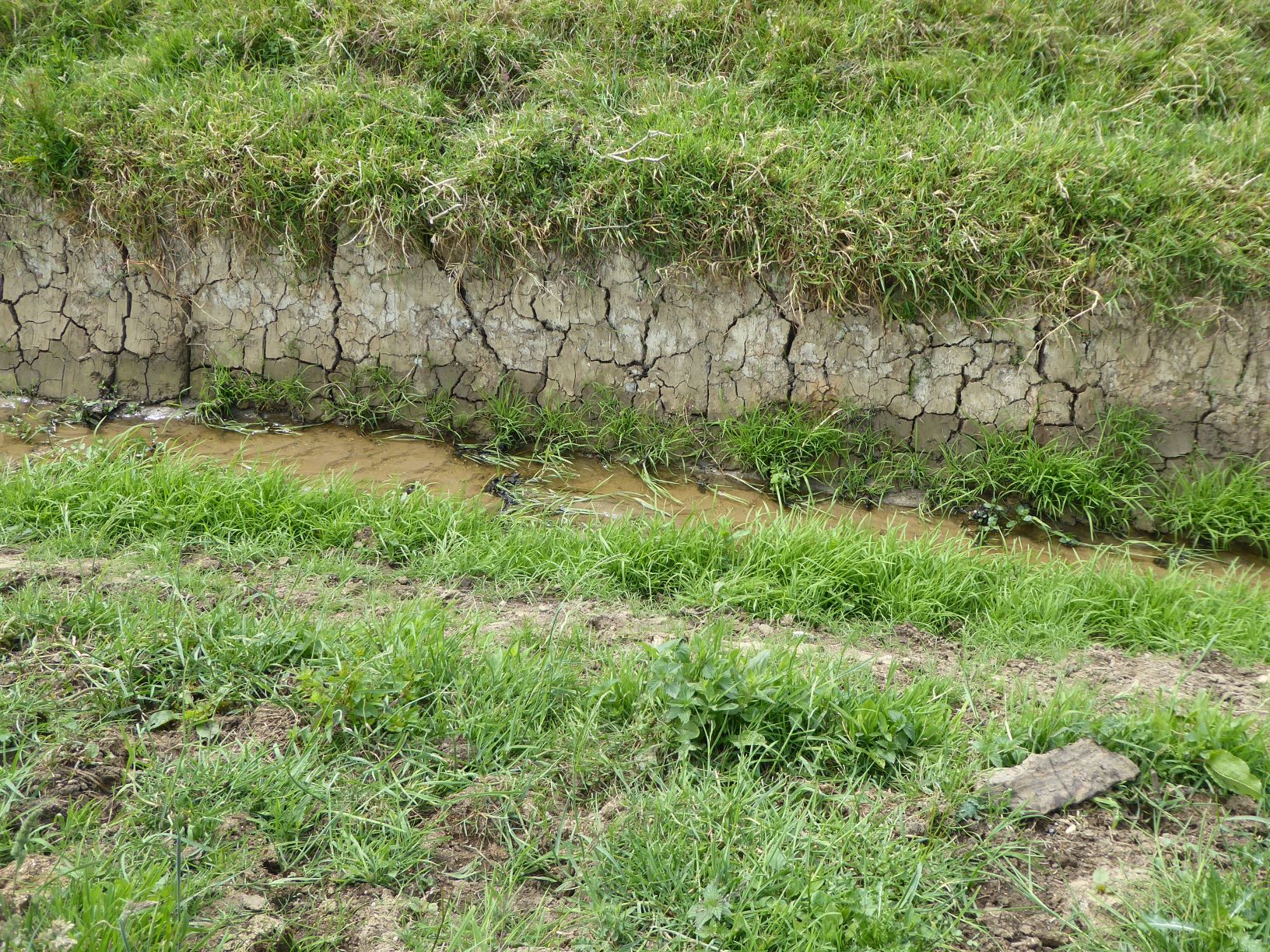
A drainage ditch

Richard pointed out the cracked clay sides of this ditch.  The water though not deep, was running quickly along and was particularly clear.  We saw small fish swimming in it.

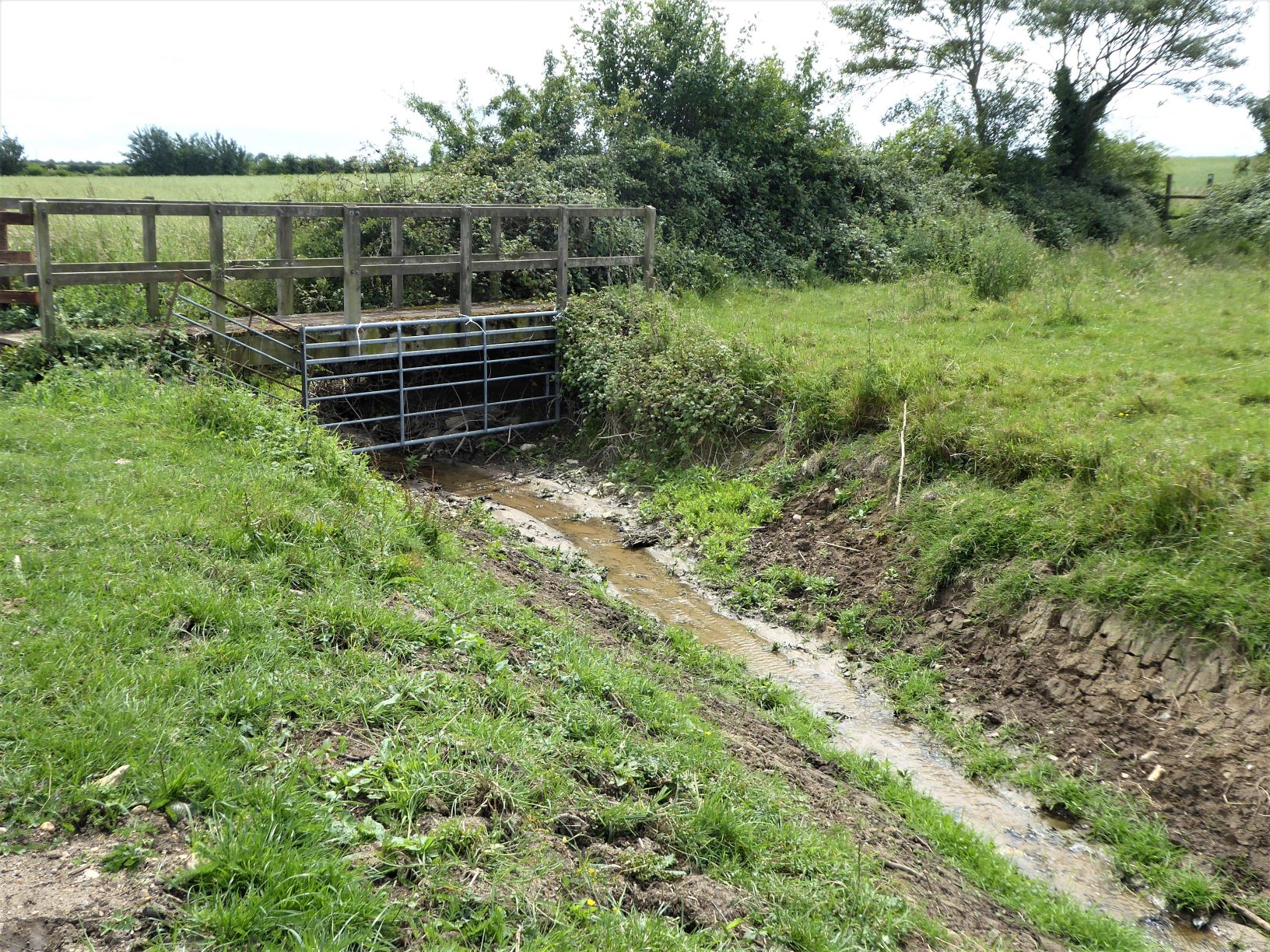
Further along, the ditch was crossed by a small bridge with what I assume is a gate to prevent sheep from crossing from one field to the next.

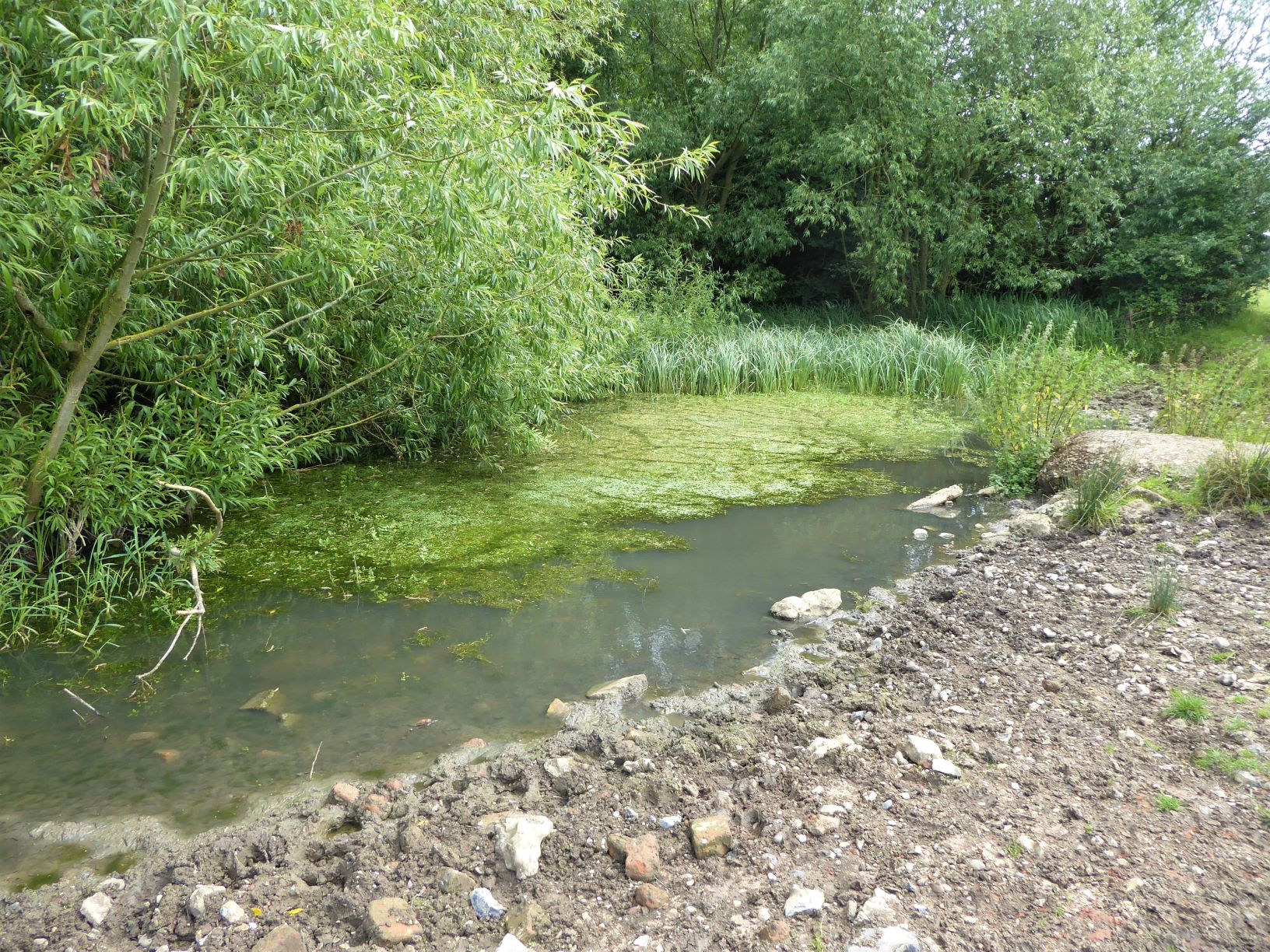
A cart pond.  In former times, when carthorses needed to drink, the cart drivers could get into these ponds and out again easily without having to take the horses off the cart.

Pyramidal orchid

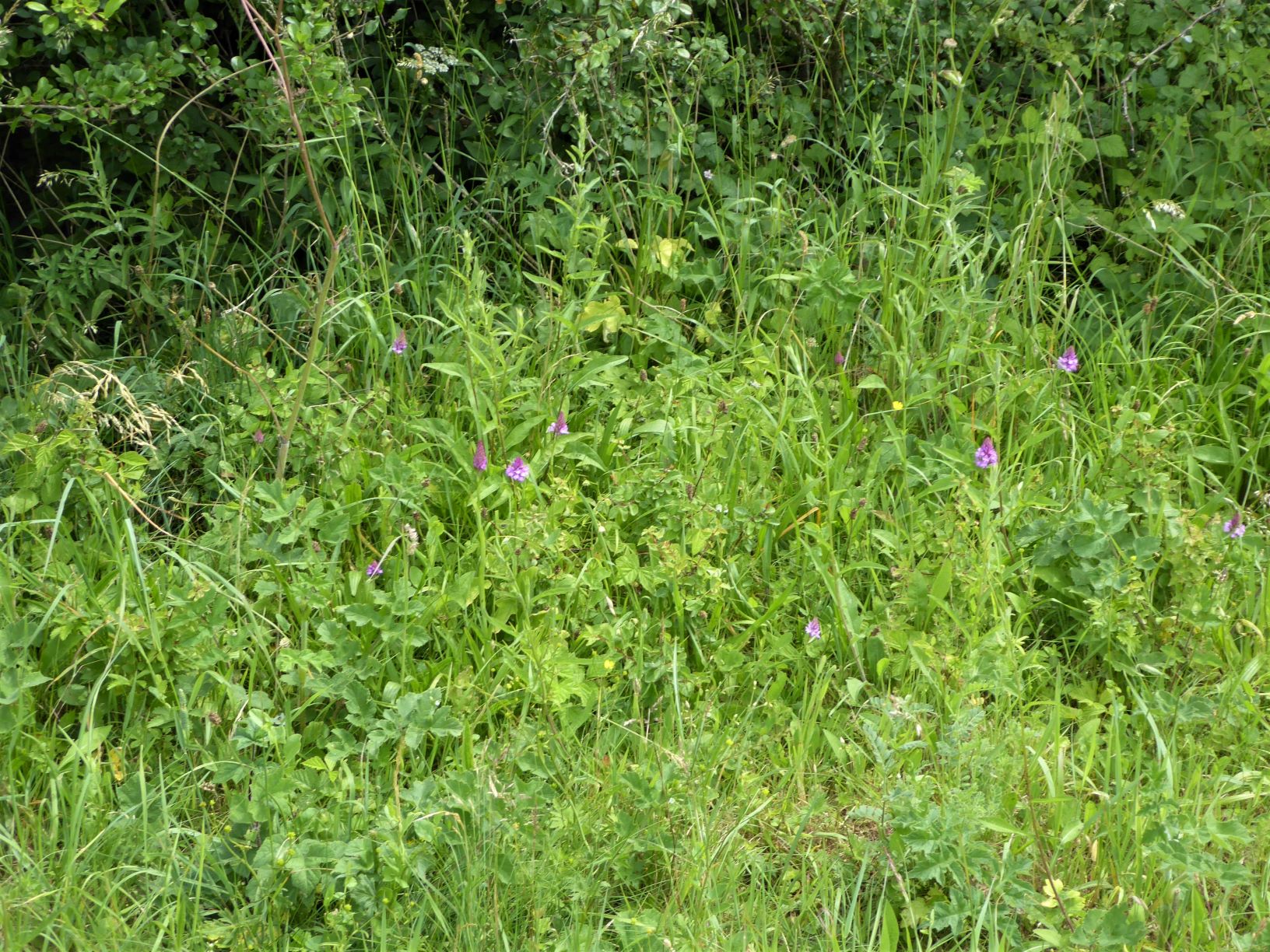
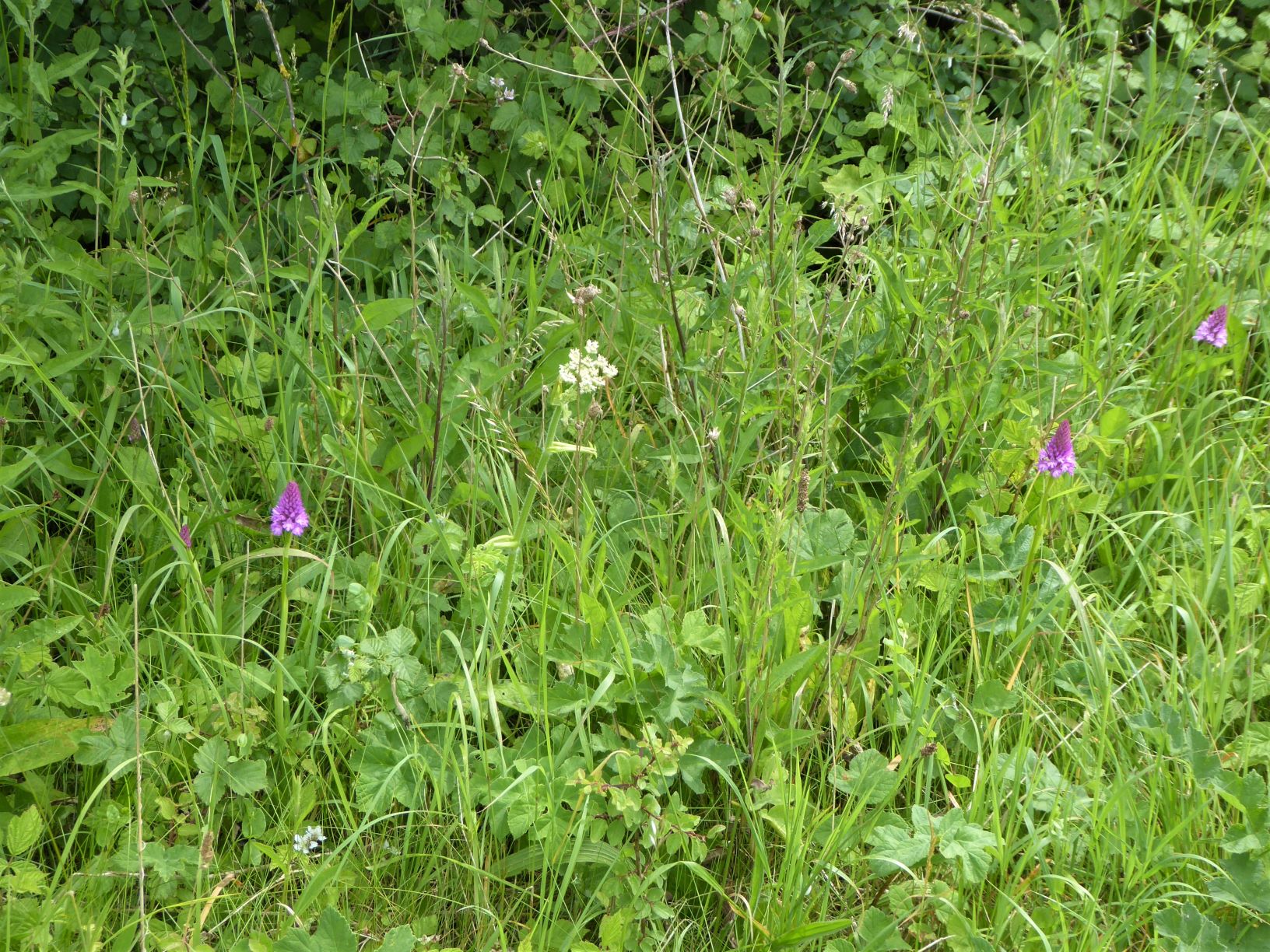
Field edge full of orchids…

…and yet more

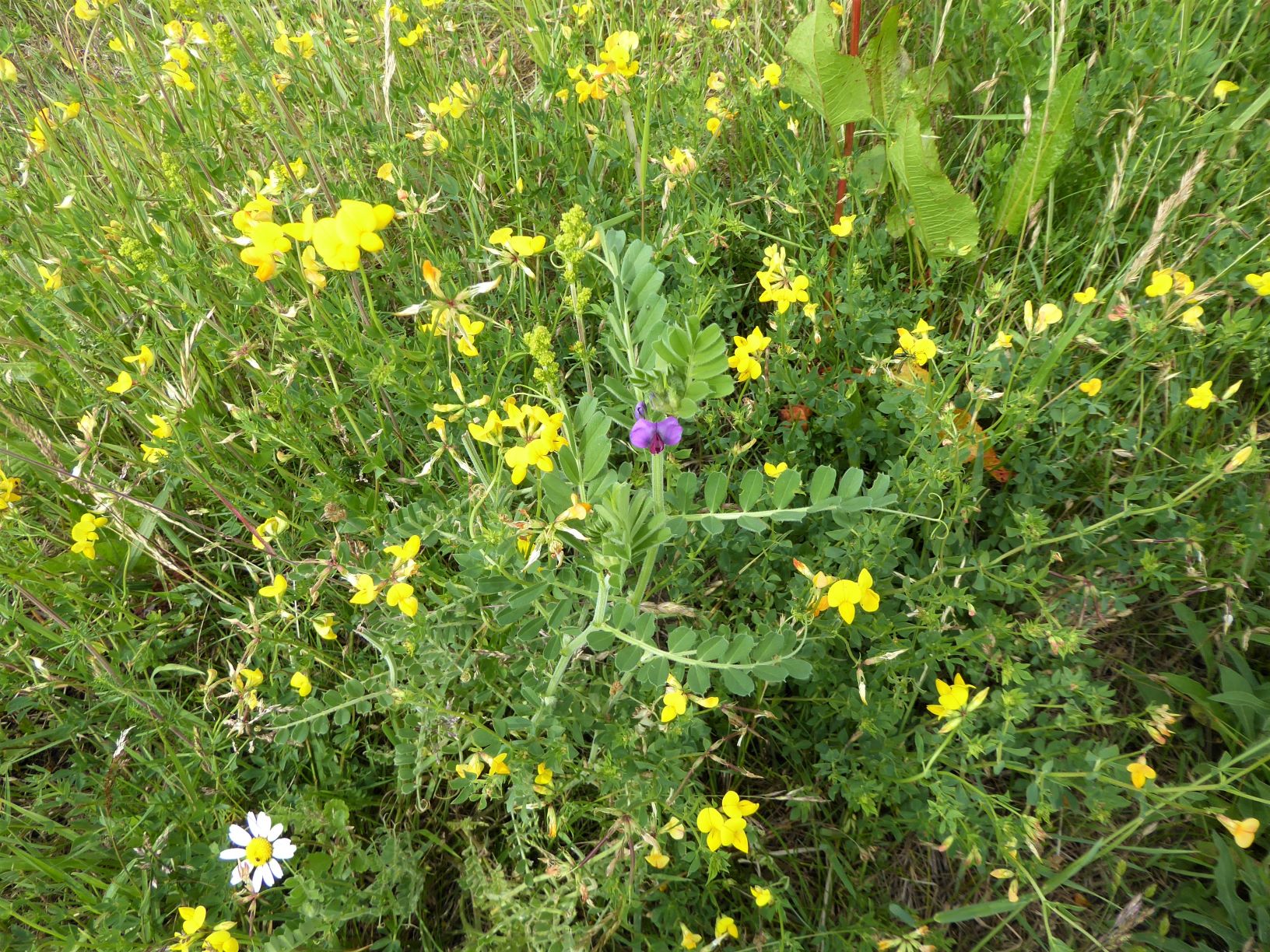
A selection of different Vetches

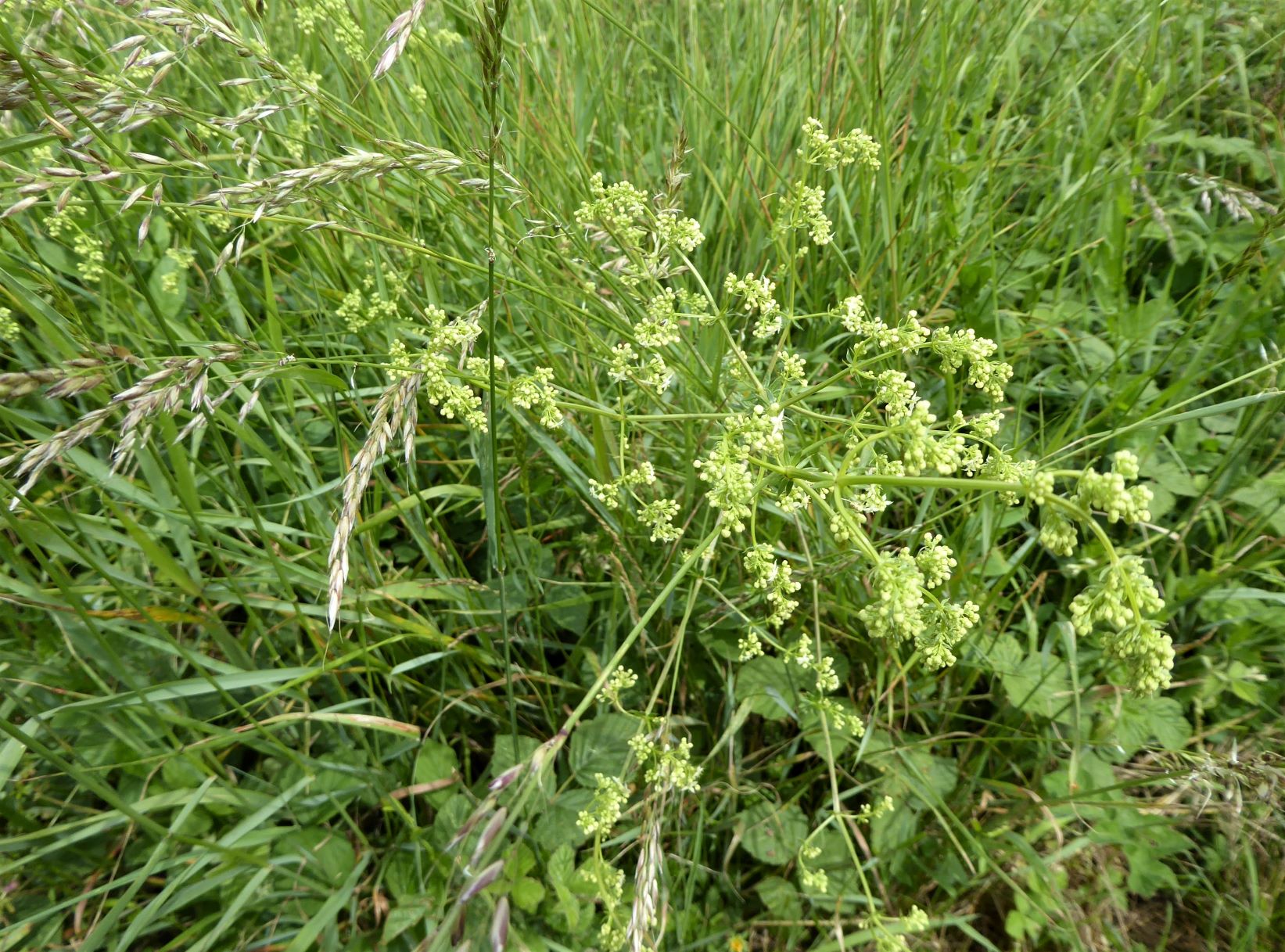
Hedge Bedstraw ( Galium album)

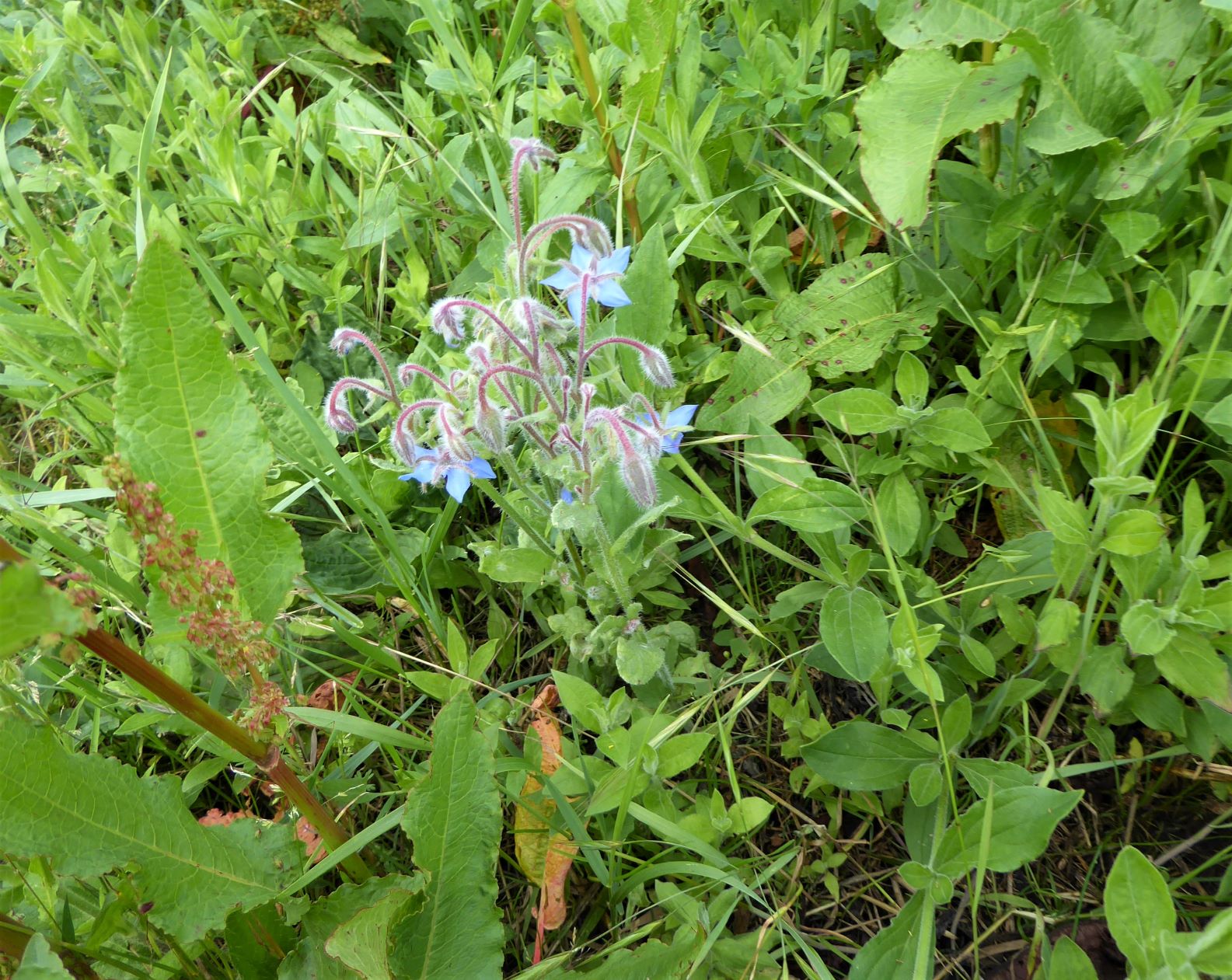
Borage ( Borago officinalis)

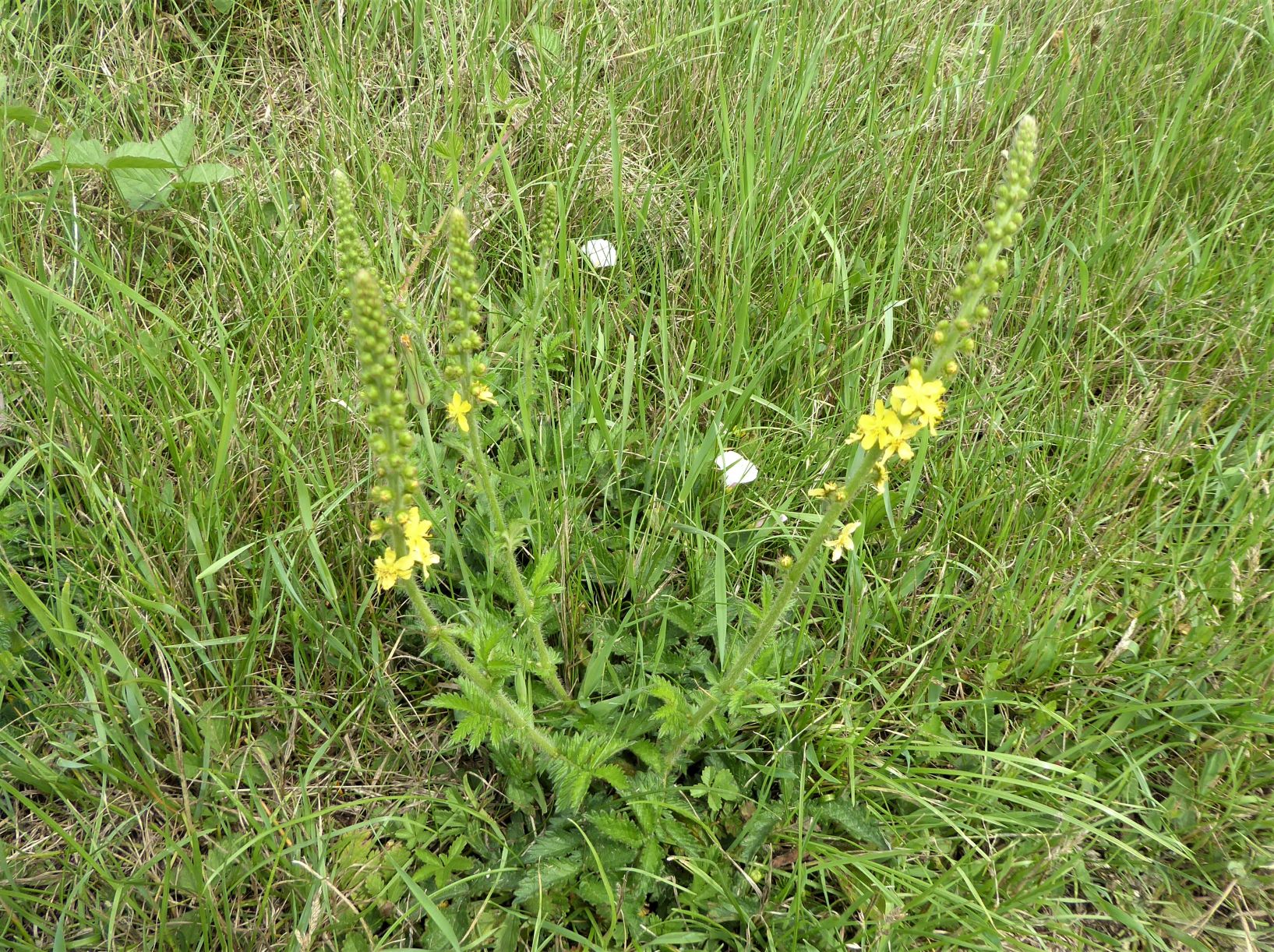
Agrimony ( Agrimonia eupatoria)

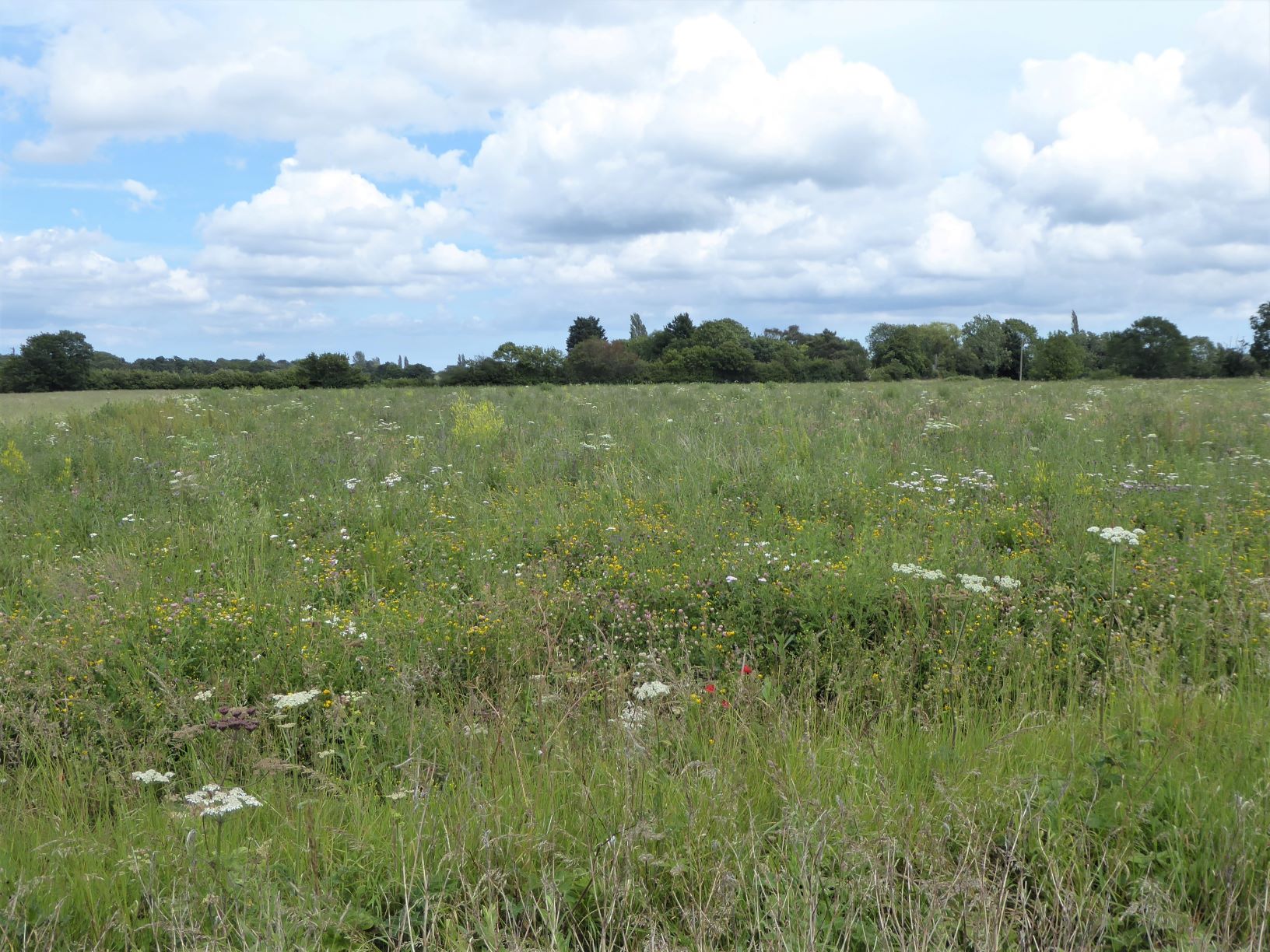
A field full of wild flowers

Unfortunately I couldn’t get into the field because of a deep ditch around it.  I had to take my photos using the zoom on my camera.

P1060597wild flowers (2)
P1060600wild flowers (2)
P1060603wild flowers (2)

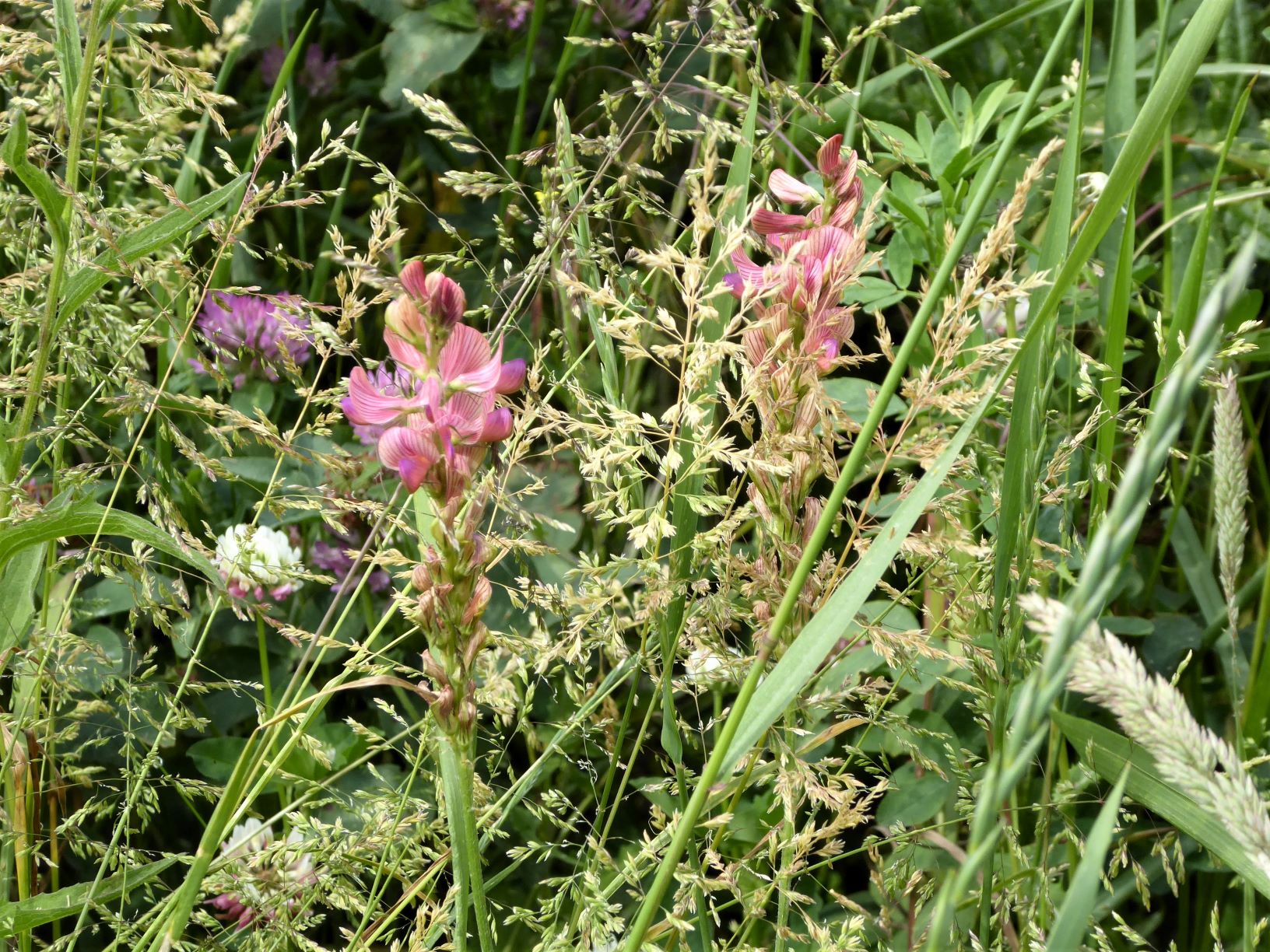
Sainfoin ( Onobrychis viciifolia)

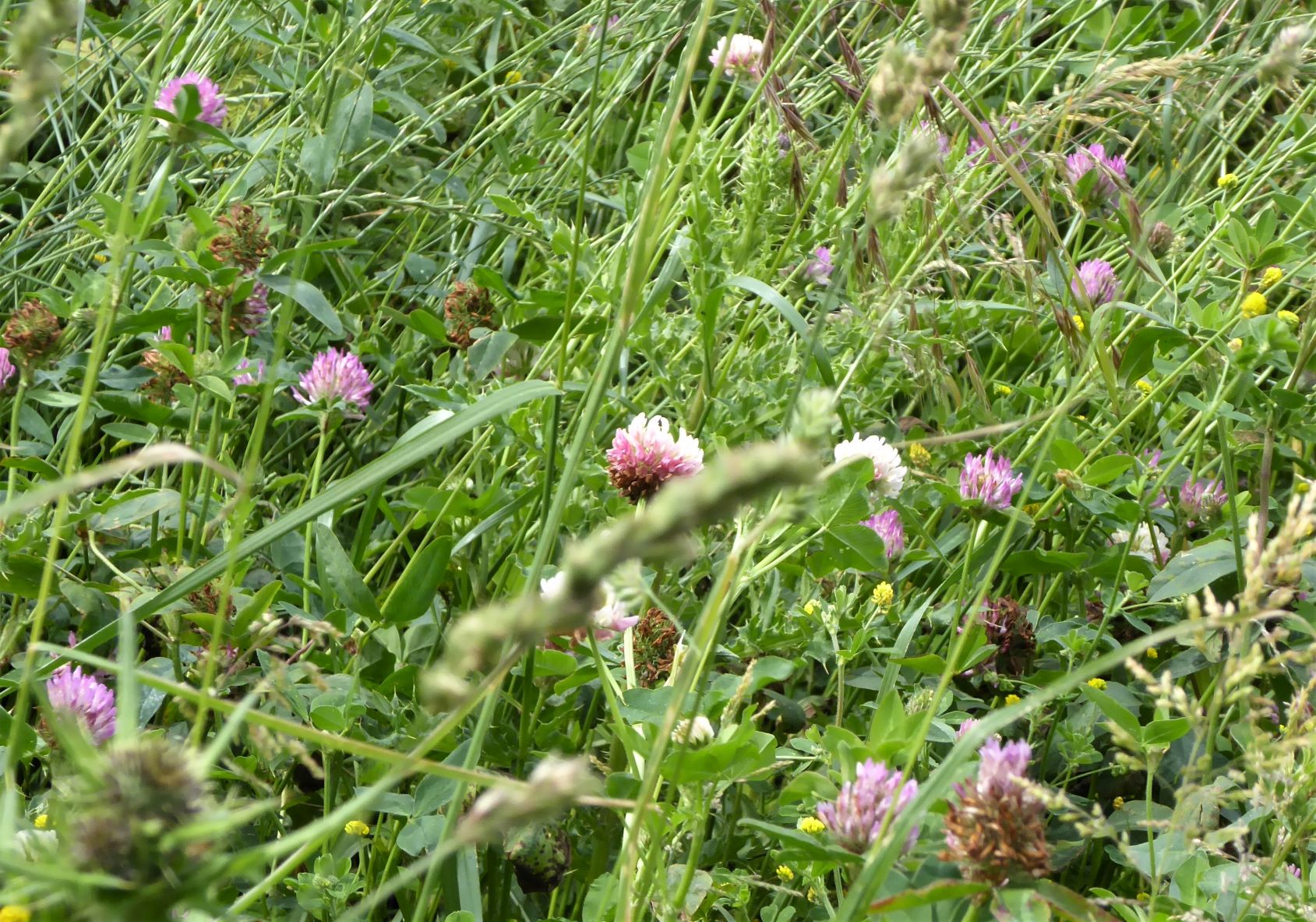
I think the pretty pink and white clover in the centre of the photo is Alsike Clover ( Trifolium hybridum)

I think the owner of this field has sown some wildflower seed mix here.  I have never seen so many different flowers all in one field before.  From what I hear from the stories of the elderly people I know at church, all the fields were covered in wild flowers like these when they were young.  Intensive agriculture was becoming the norm thirty or forty years ago: hedges were ripped out and everything was sprayed to kill off the wild flowers and most of the insects.  This was still being done when I moved to East Anglia in 1988 and the birds I heard regularly then and the quantities of moths, butterflies and other insects I used to see then are much reduced.  I especially noticed the difference when I returned to East Anglia in 2006 after our 18 months in Somerset.  Far fewer insects certainly.  However, we had got used to hearing and seeing Buzzards during that 18 months while in Somerset and I was greatly surprised and excited to see and hear a Buzzard in Suffolk for the first time in 2007.  They are well established here now.

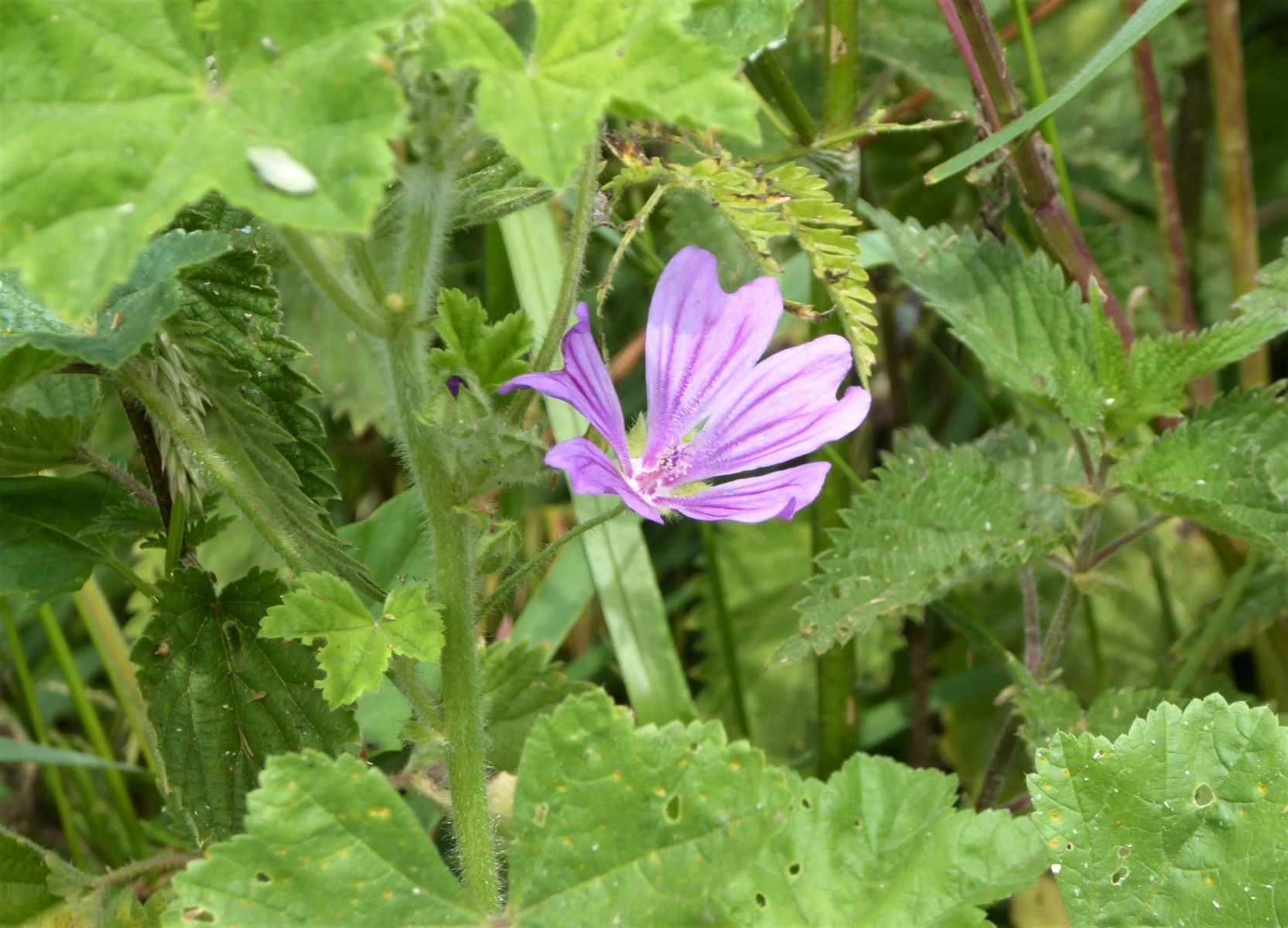
Common Mallow ( Malva sylvestris)  The Common Mallow is an ancient introduction to this country.  It seems to line all the lanes at this time of year.

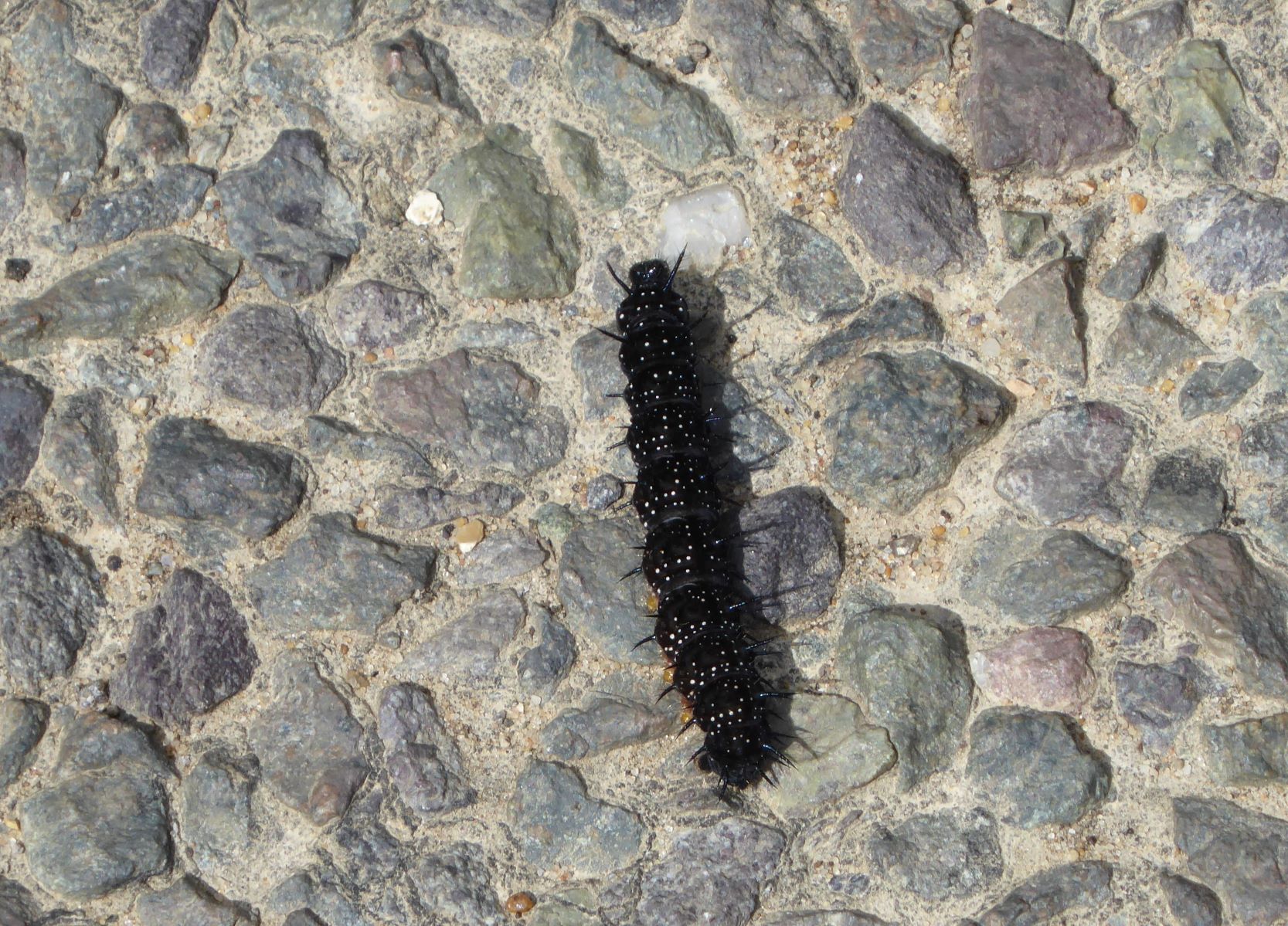
This is the rather handsome caterpillar of the Peacock butterfly . I found it crossing the lane as I was nearing home.

You will be glad to know we all got home safely having met no-one on our walk and only saw a lady driving her pony and trap and I think a couple of cars along the lane.You will be especially glad to know that this is the end of the post!

Share this:

  • Share on X (Opens in new window) X
  • Share on Reddit (Opens in new window) Reddit
  • Share on Pinterest (Opens in new window) Pinterest
  • Share on Facebook (Opens in new window) Facebook
  • Email a link to a friend (Opens in new window) Email
  • Share on Tumblr (Opens in new window) Tumblr
  • Print (Opens in new window) Print
  • Share on Pocket (Opens in new window) Pocket
  • Share on LinkedIn (Opens in new window) LinkedIn
Like Loading...

Vikings!

25 Wed Sep 2019

Posted by Clare Pooley in Days out, Rural Diary

≈ 90 Comments

Tags

artifacts, Castle Museum Norwich, Viking, Viking exhibition

From the fury of the Northmen O Lord deliver us!

Elinor and I went to an exhibition at the Castle Museum in Norwich during May this year.  The subject of the exhibition was ‘The Vikings’ and the items displayed were objects discovered mainly in Britain.  There were treasures on loan from the British Museum in London and from The Yorkshire Museum in York as well as things found here in East Anglia.  East Anglia was part of the Danelaw in the 9th Century.

The first exhibits we looked at were items found from when the Vikings first invaded Britain; things they had brought with them on their journey across the North Sea.  We saw some of the weapons used by them and also by the Anglo Saxons in their battles for land and supremacy.  We then saw artefacts made and used by the Viking settlers once they had made their home here.  They were wonderful traders, with routes across the Irish Sea to Ireland, up to the Arctic Circle, across the Atlantic to America and all over Europe and into Asia, Russia, Turkey and India.  They brought some of the goods they found abroad, home to Britain.  The exhibition also showed how the Vikings assimilated some of the fashions and crafting techniques they found here in Britain and eventually became British themselves. If you wish to read further details of the Viking invasion of Britain this is a fairly good account.

I know I have included too many photos here!  I am sorry for the poor quality of several of them – I had a lot of trouble with reflections off the glass cases.

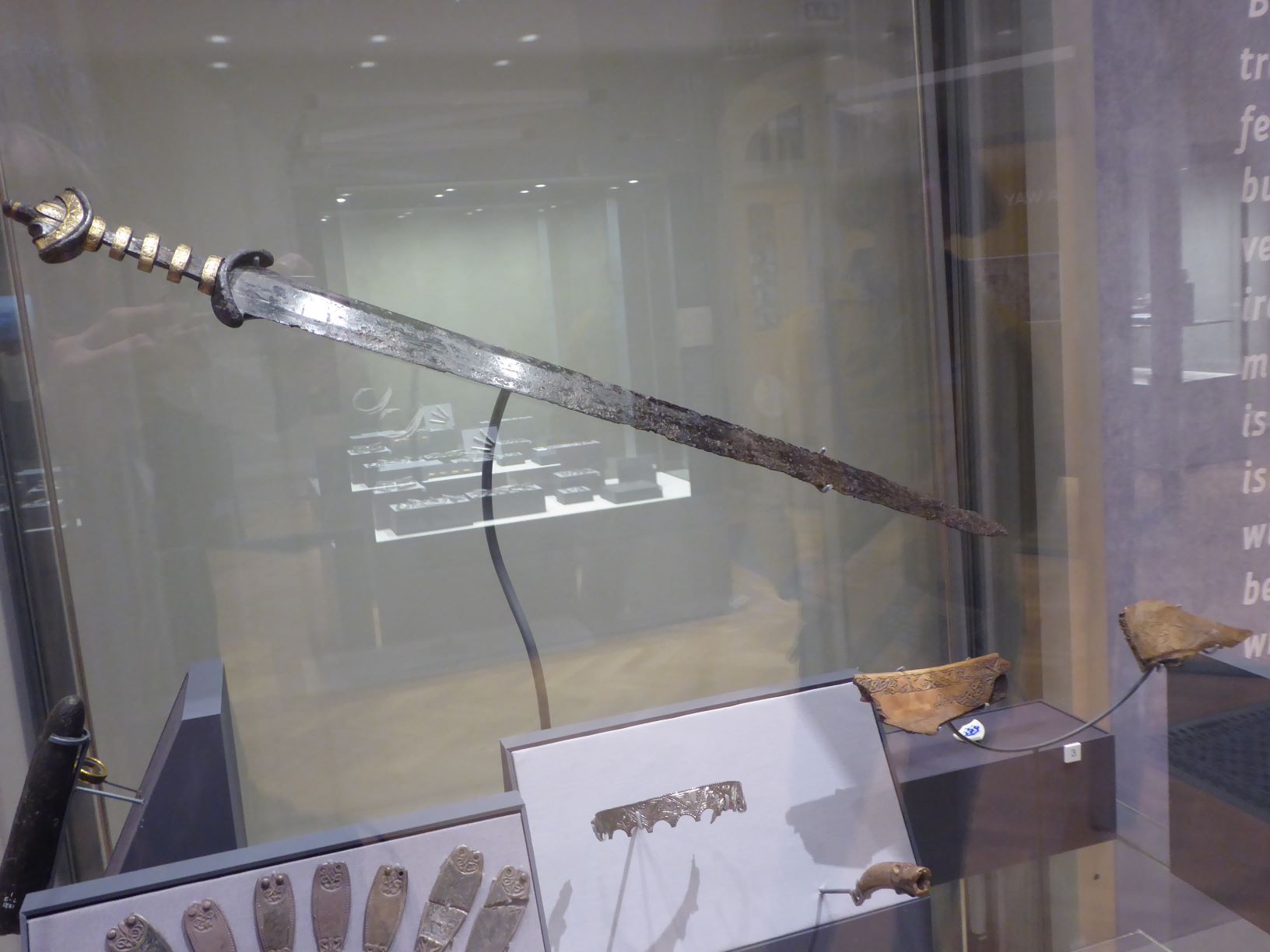
The Gilling Sword – made from iron and silver with an ornate silver gilt handle.  Probably owned by a powerful Saxon earl in the service of Northumbrian King Oswiu.

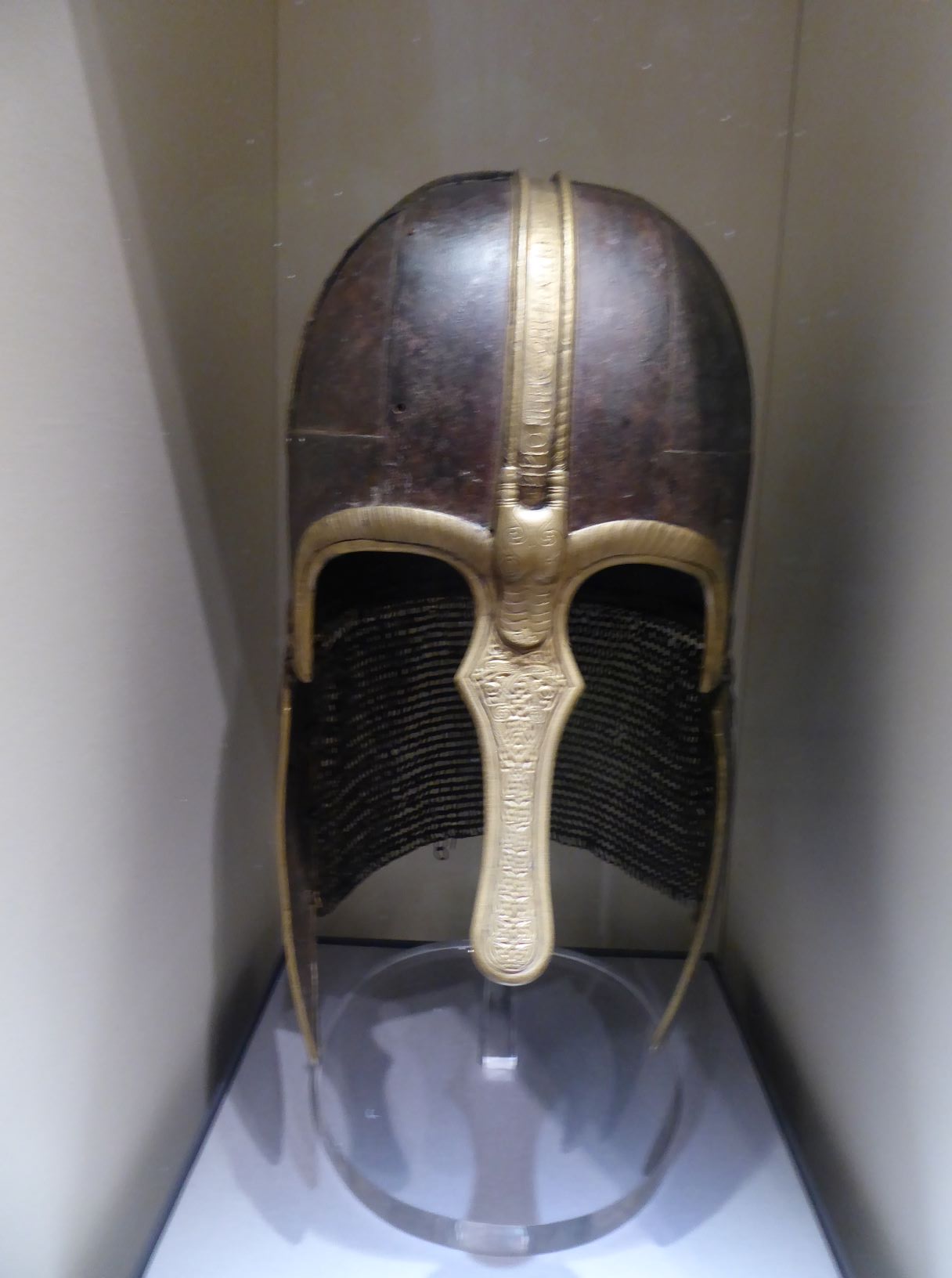
The York Helmet – made from iron and brass by Anglo-Saxon craftsmen.  It has a beautifully decorated nosepiece and there is a Latin inscription across the top which dedicates the helmet to God.

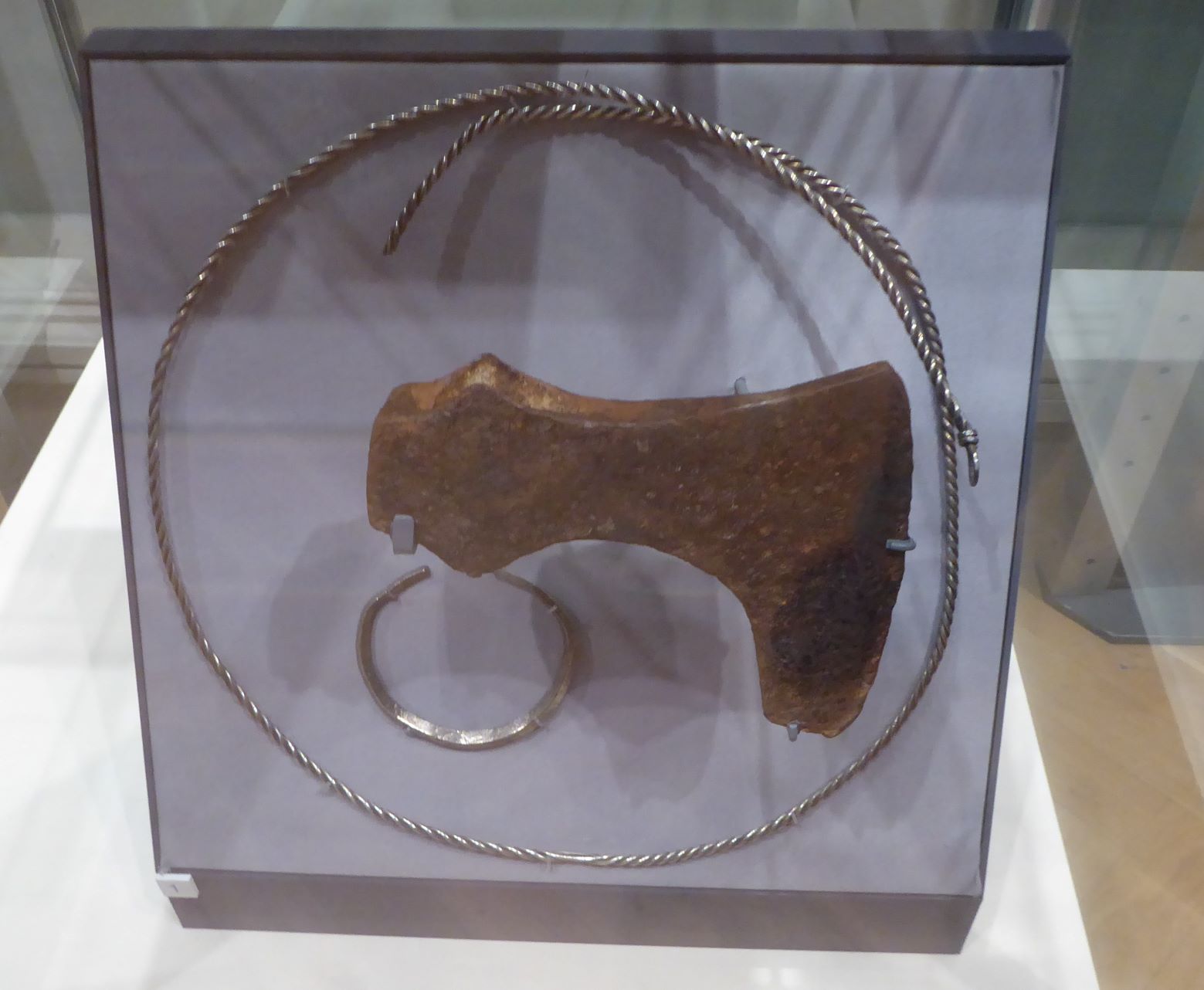
An Iron Axehead with arm and neck rings. The rings were symbols of Viking status, power and wealth. These would often be given as gifts to reward followers and faithful retainers.

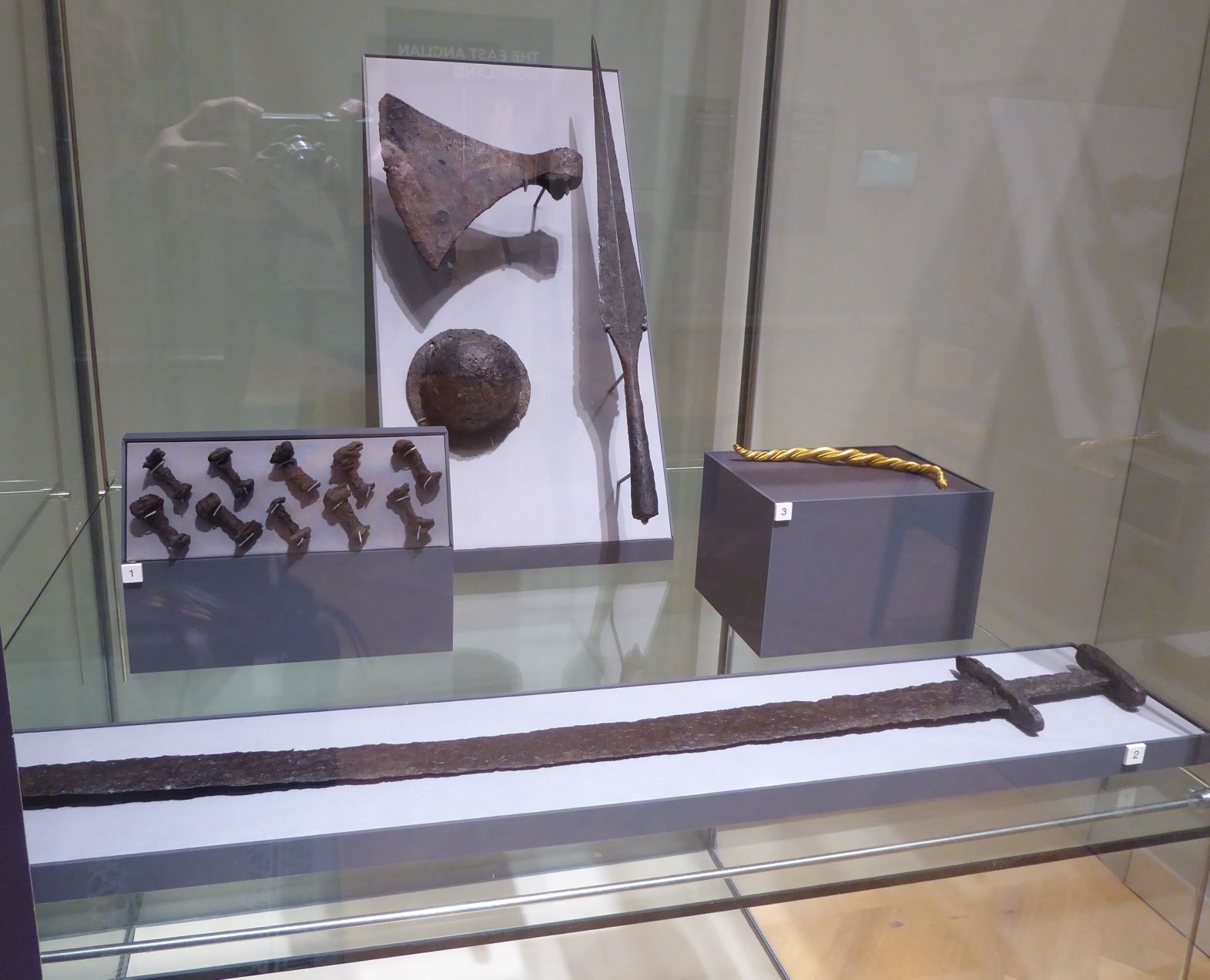
A double-edged Sword, which would have been used by one of the wealthiest Vikings. Also, rivets from a clinker-built ship, an iron axe head, an iron spear head, an iron shield boss and a gold arm ring.

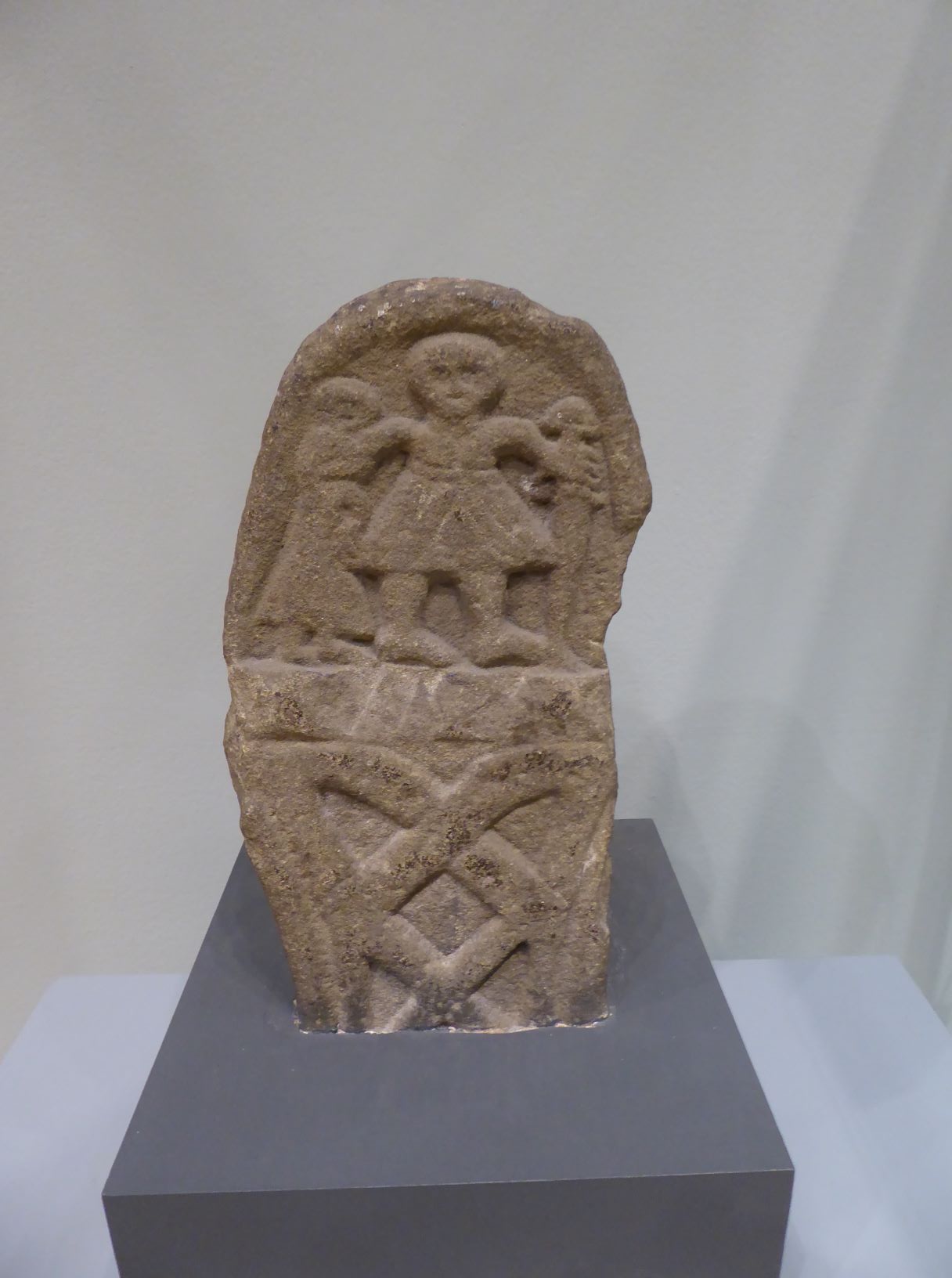
This is a re-used Christian cross showing a warrior with a female hostage.

There were a number of information boards in the exhibition and a large area was taken up as an activity room for children.  A recording of a man and a woman talking quietly together in Old Norse with the sound of wind blowing and seagulls crying in the background was playing all the time we were there.  I found this extremely atmospheric and not at all irritating.

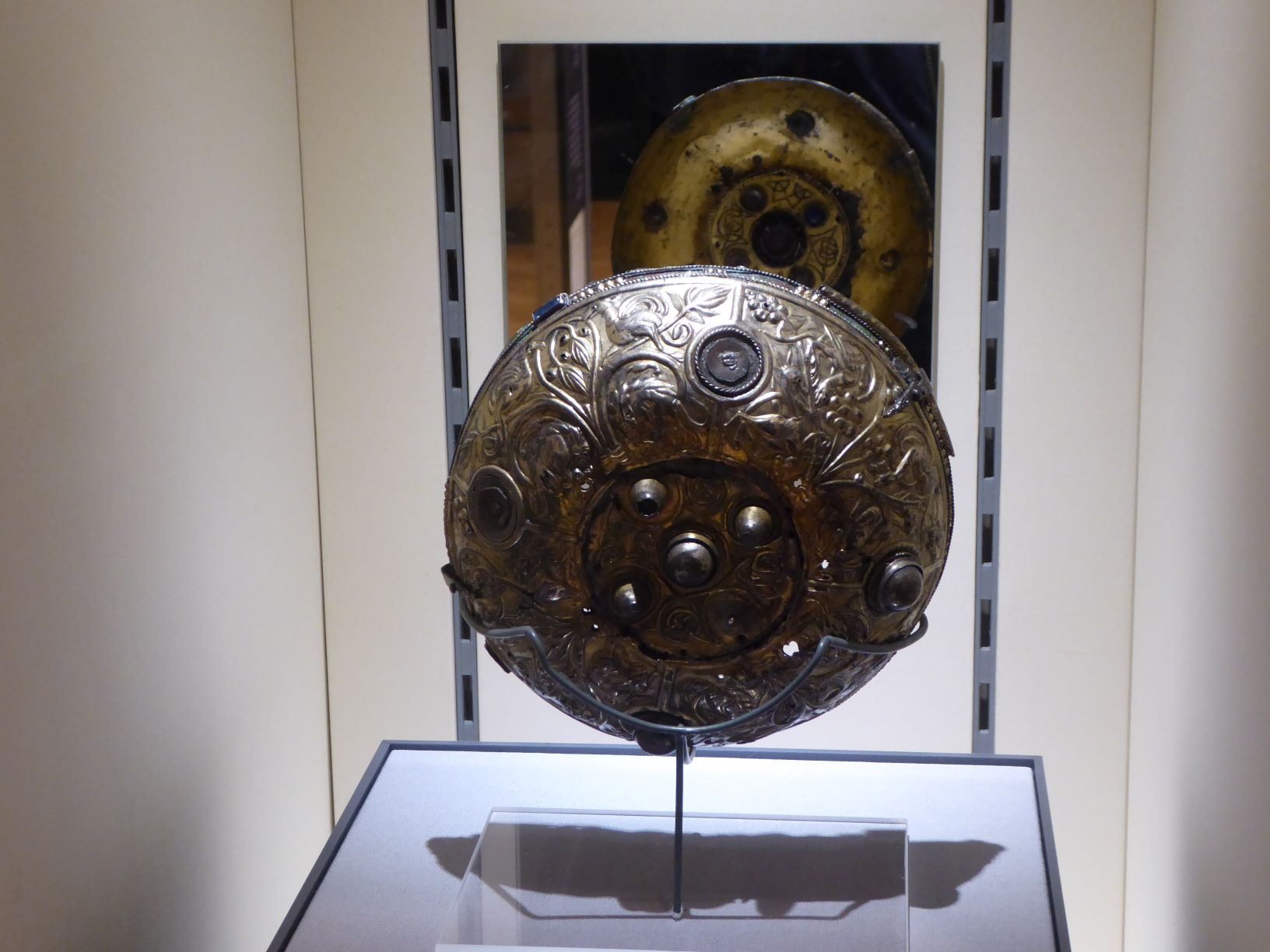
The Ormside Bowl – made in AD 750, the outer skin produced AD 850-900. It is decorated with religious scenes, the work of monks in a Northumbrian monastery. It was discovered in the grave of a Viking man and it had been transformed into a drinking cup.

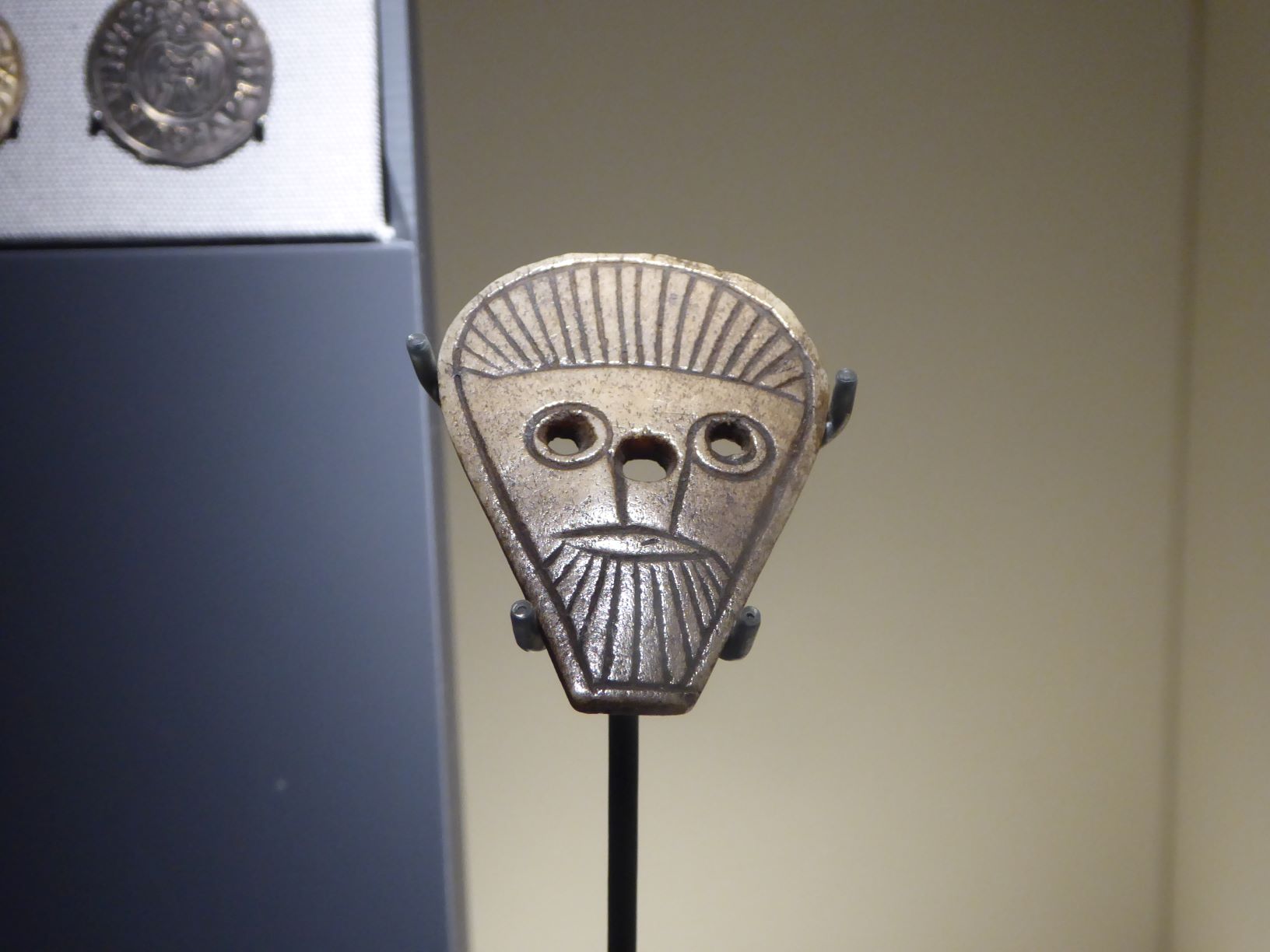
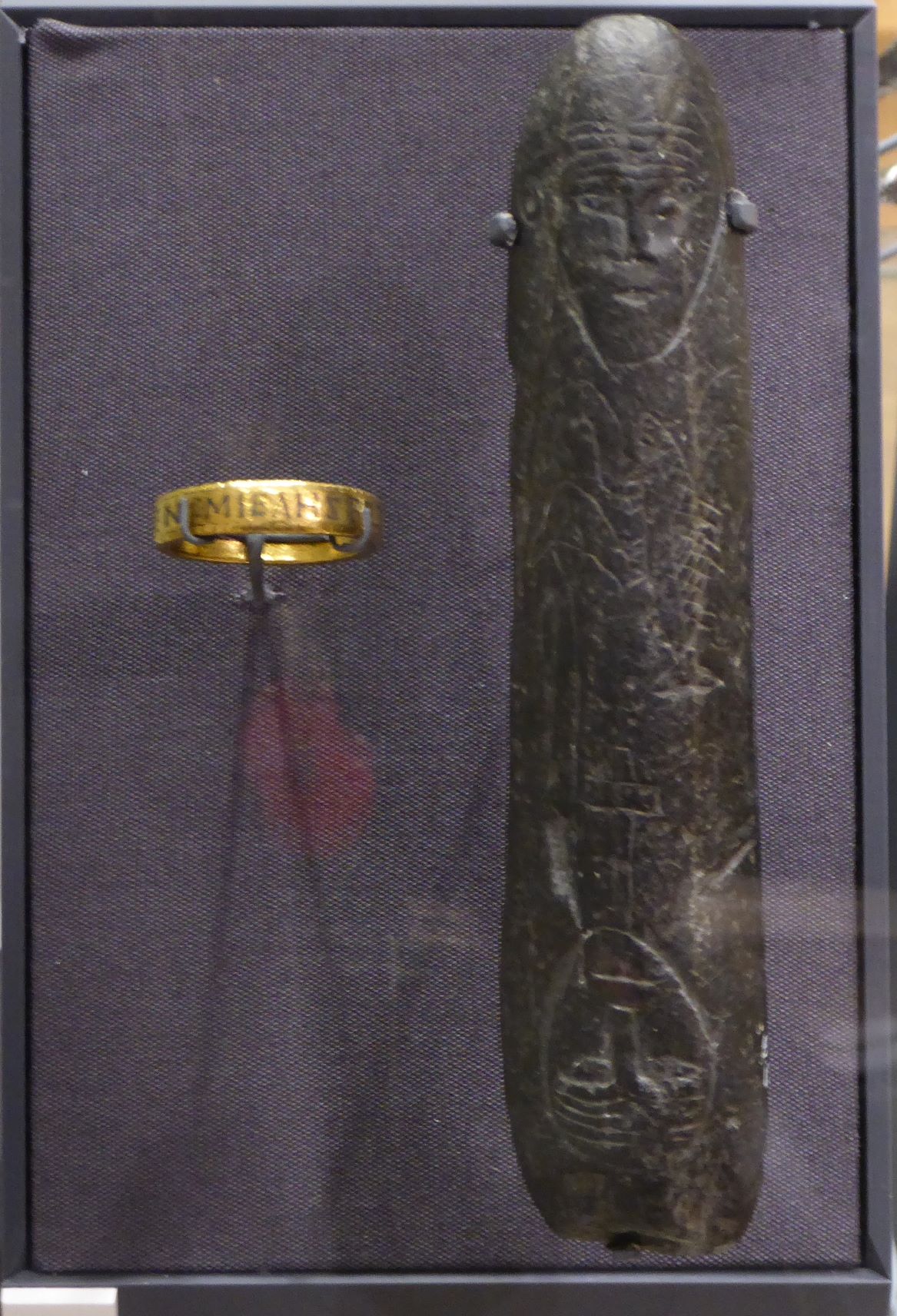
A bone plaque made by a Viking in the image of a Viking.

This is a rare find, there not being many likenesses of Vikings especially ones done by themselves.  The only written accounts of them are made by others.

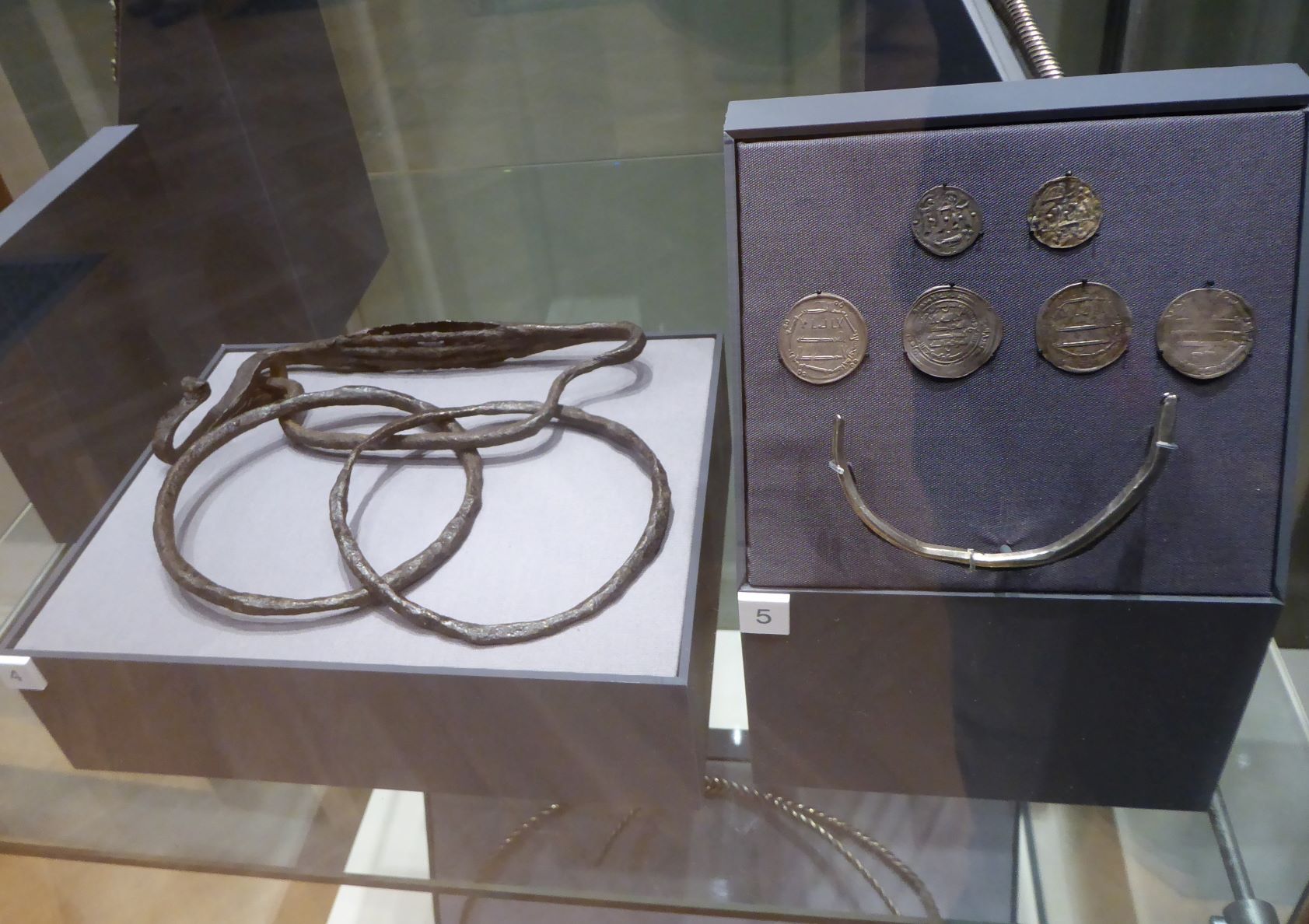
The object on the left is an iron rangel or rattle which may have been used during ceremonies. On the right are two Islamic coins (probably traded for fur and slaves), four silver pennies and some ‘hacksilver’; part of some beautiful silver jewellery. The Vikings traded with bullion and goods and didn’t use coins at first. They would cut up (hack) any treasure or jewellery they had and use it as payment for goods.

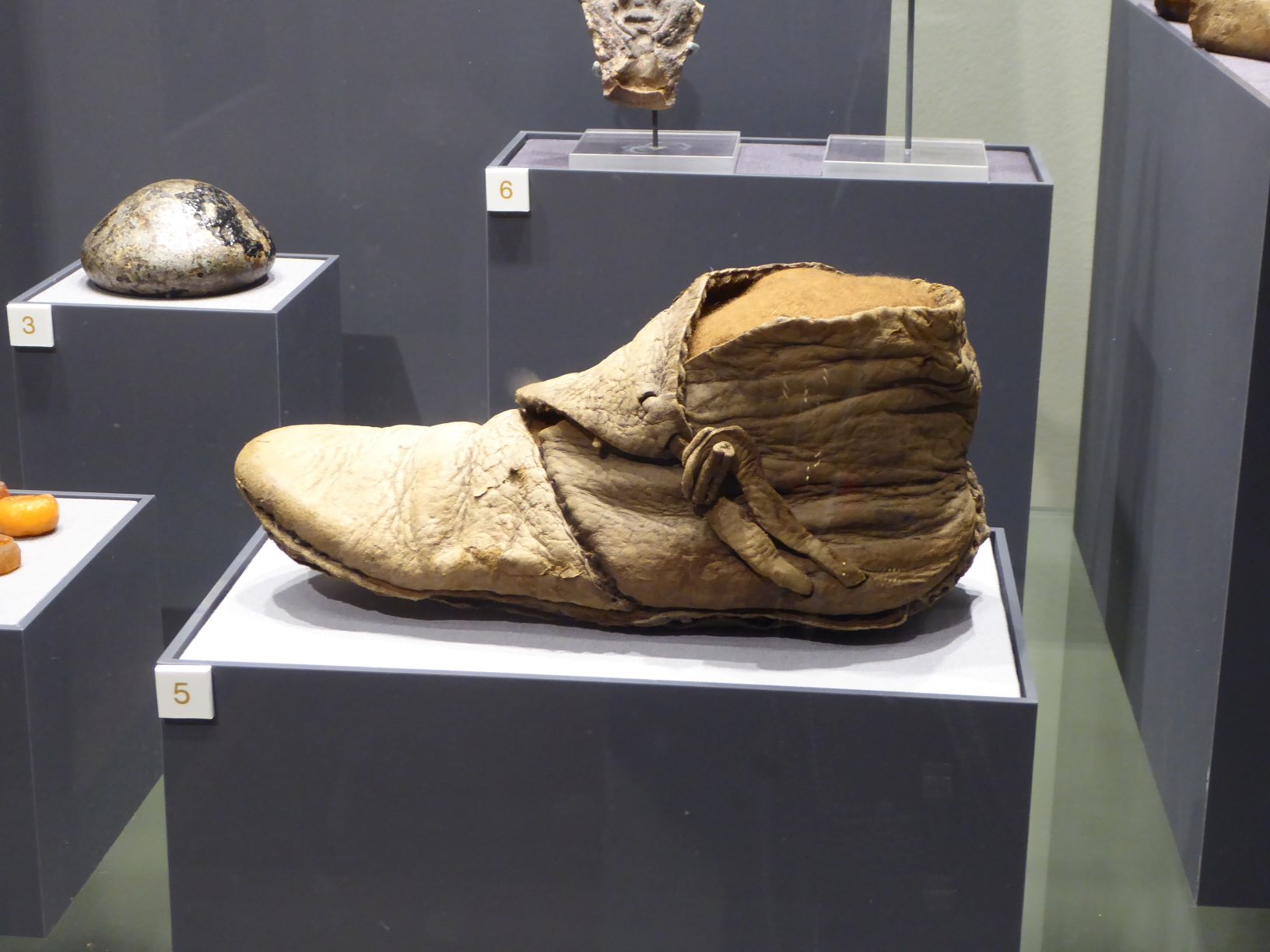
Leather shoe with a toggle found in York – This is of turnshoe construction. The leather is cut to shape, moulded and stitched together and then turned inside-out so the seams are on the inside. A method used in Scandinavia and Britain.

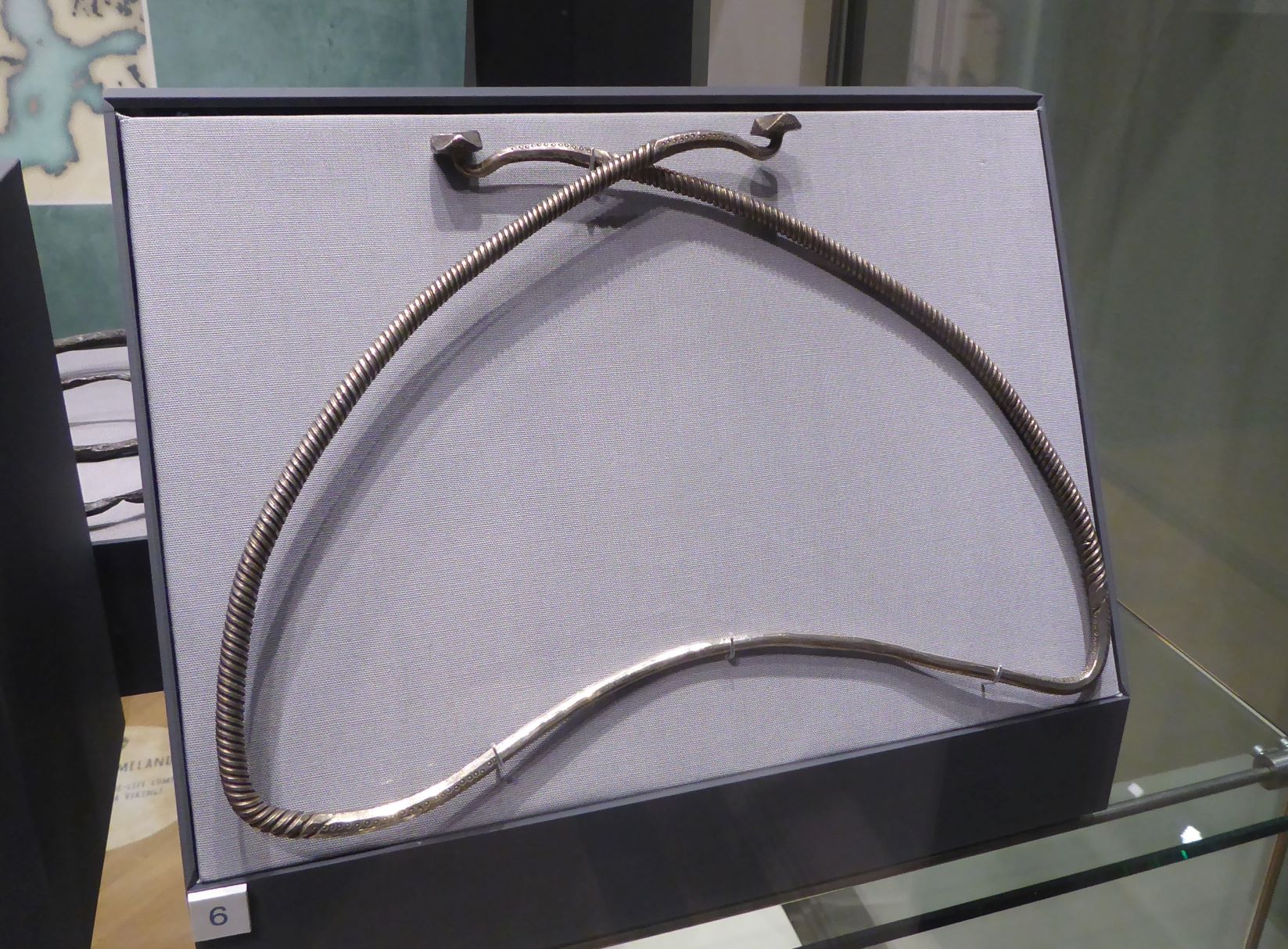
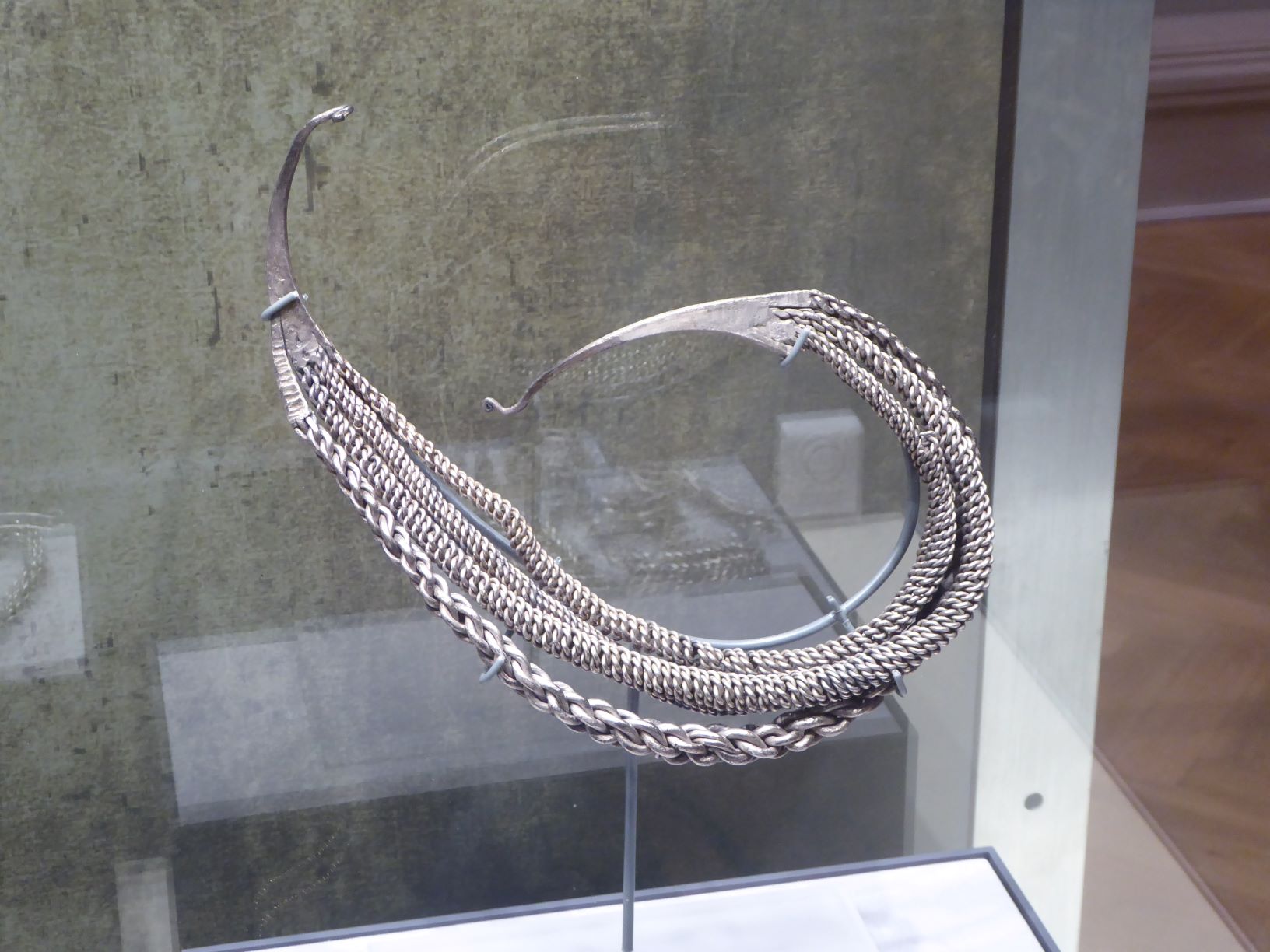
A silver neckring from Russia. These became very popular with well-to-do Viking ladies and sources record that men would have had to collect and melt down 10,000 silver coins to obtain enough silver to have one of these made!

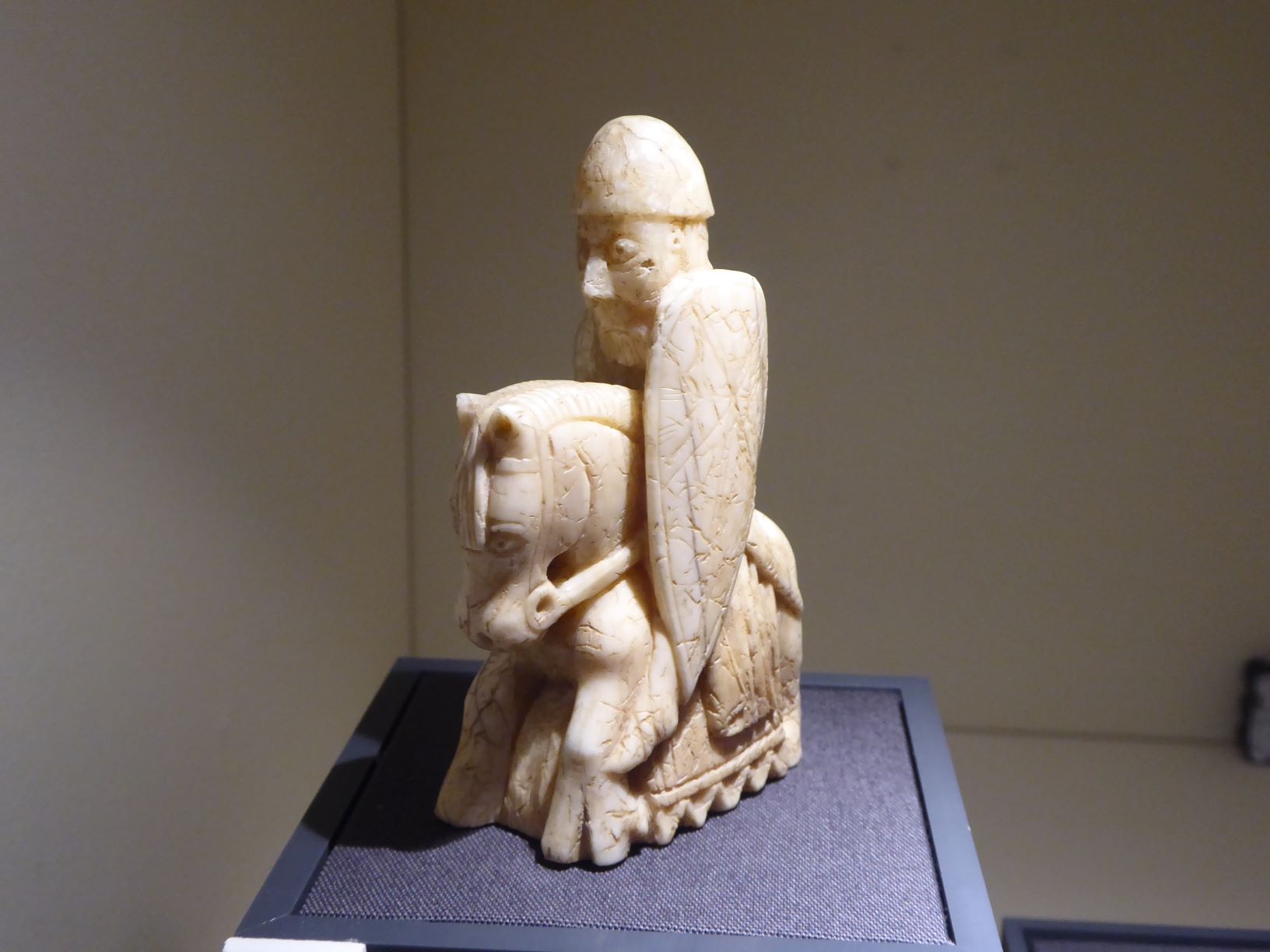
A carved walrus-tooth gaming piece owned by a merchant who travelled along the trade routes from Norway to Ireland. This piece (a knight) is part of a complete chess set probably made in Norway and found in the Western Isles of Scotland.

When this set was made the Western Isles were part of the Kingdom of Norway.  The set includes kings, queens, bishops, knights and warriors.  The warriors are carved as berserkers, fierce men described in sagas as biting their shields in frenzy before battle.  Scary!

Here is Elinor in the model of a viking boat.

P1050160Elinor (2)
P1050159Elinor (2)

At the time of our visit, Elinor was doing research for her final project in her Level Three Art and Design course at college.  She produced a graphic story book and her character’s clothes and belongings were loosely based on Celtic, Saxon and Viking designs.

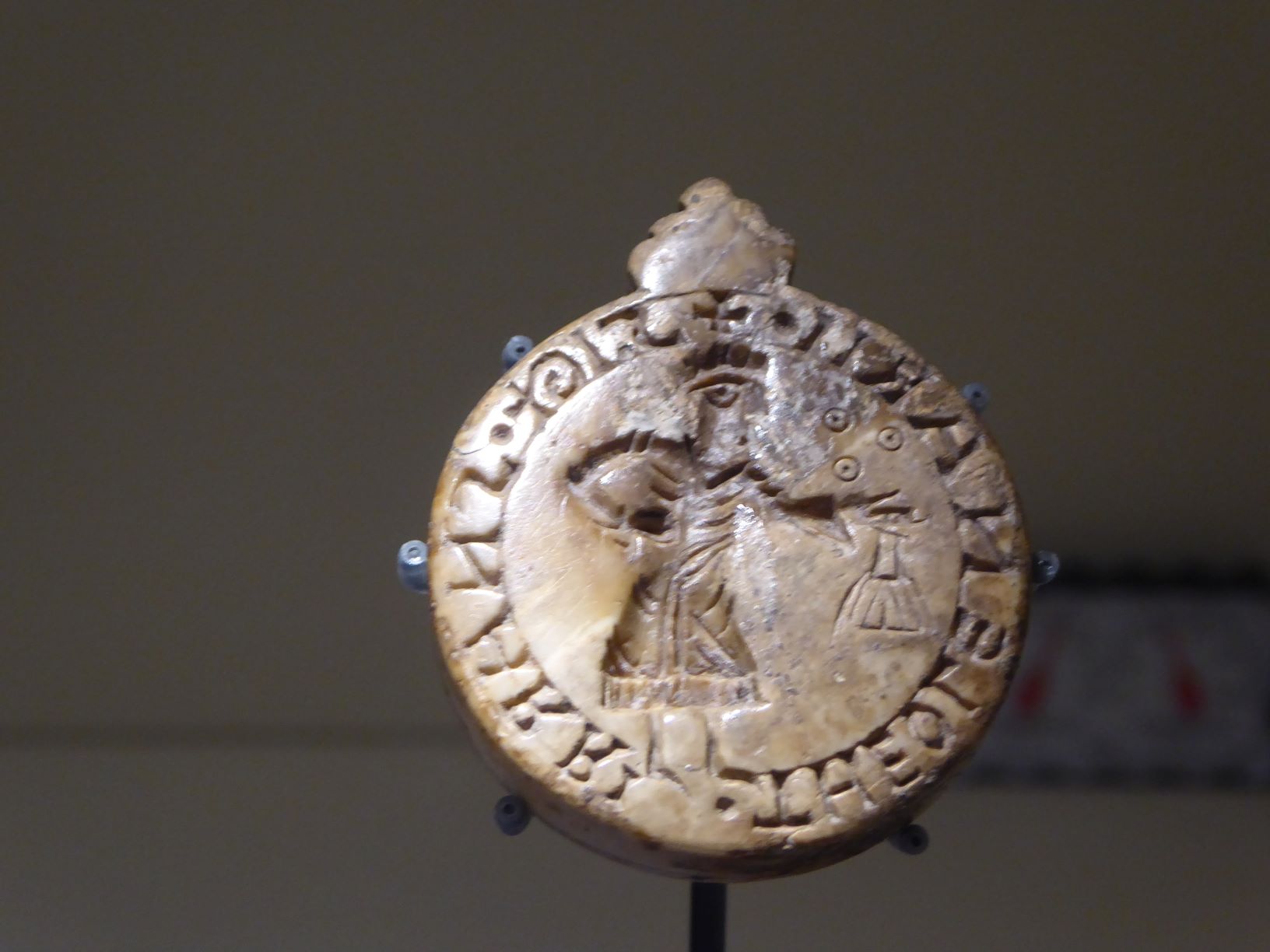
A seal made from walrus ivory depicts a man called Sharrus who worked as a tax and toll collector in York during the 12th century. Sharrus (the name can be seen on the perimeter of the seal) is the Latin form of his name, Snaresnorri, meaning ‘shrewd’.

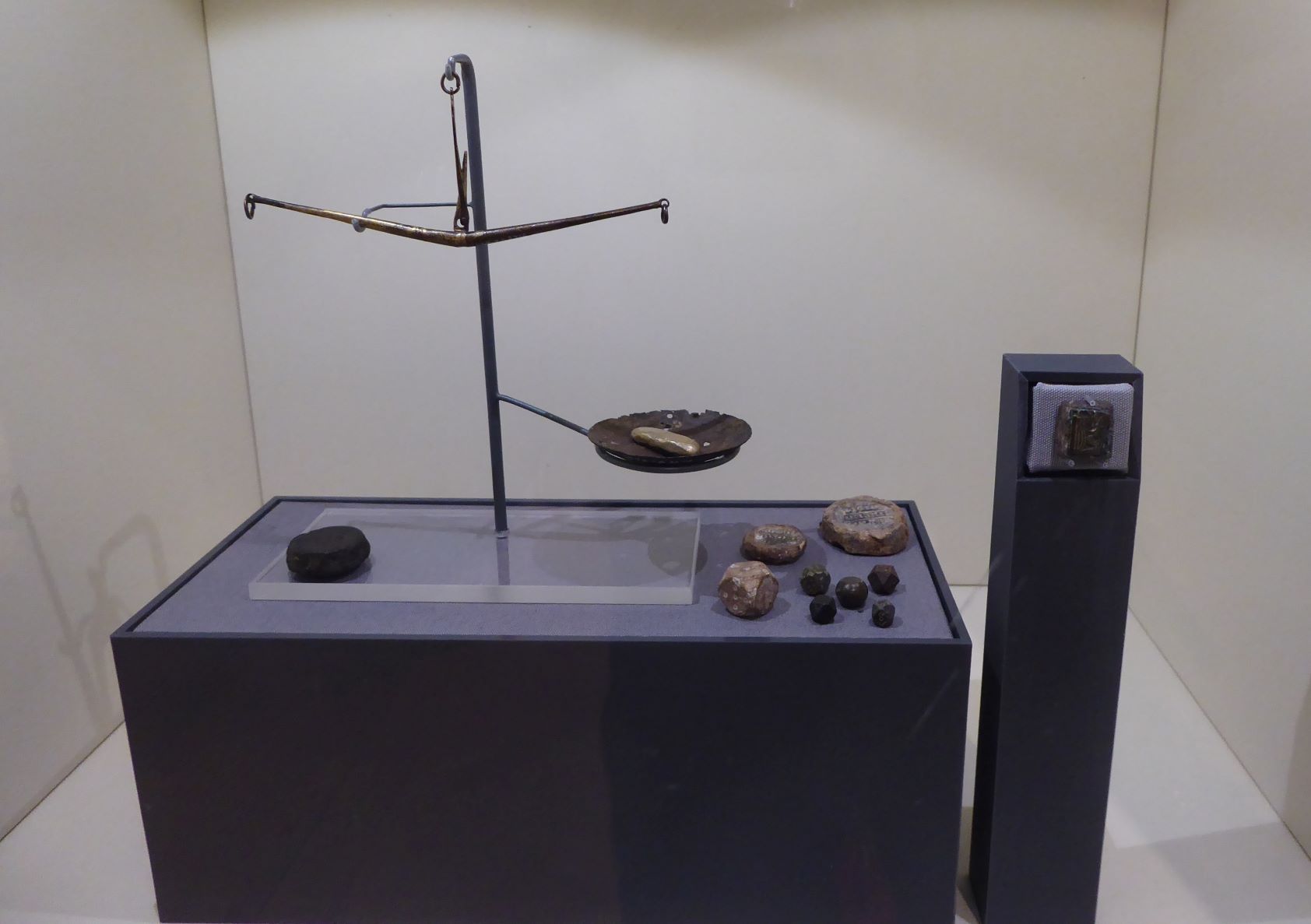
A balance and sets of weights. This is a portable balance and would have been the property of a Viking trader dealing in bullion. This method had long been replaced in England by the use of coins. There were still other areas where commodities were traded directly without the use of silver.

This image of two men carved on a gritstone cross comes from York. One man carries a sword and the other a horn and they are grasping hands in greeting. Another very rare image of Viking people, this cross would have been commissioned and financed by them as a public demonstration of their status and Christian piety.

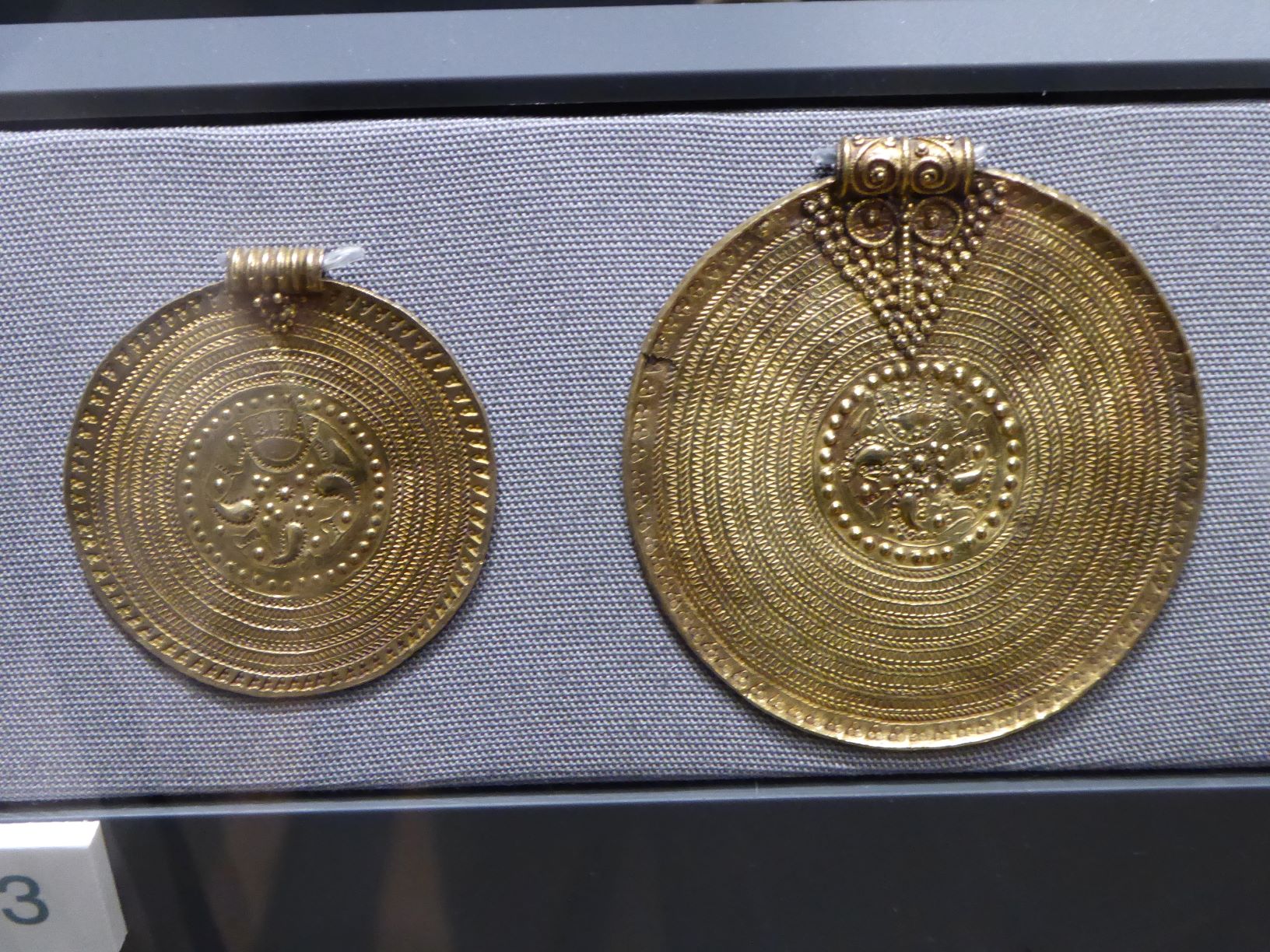
These two discs are fairly small and the detailed work on them is extremely fine. They are both pendants and would have been worn by a wealthy pagan woman.

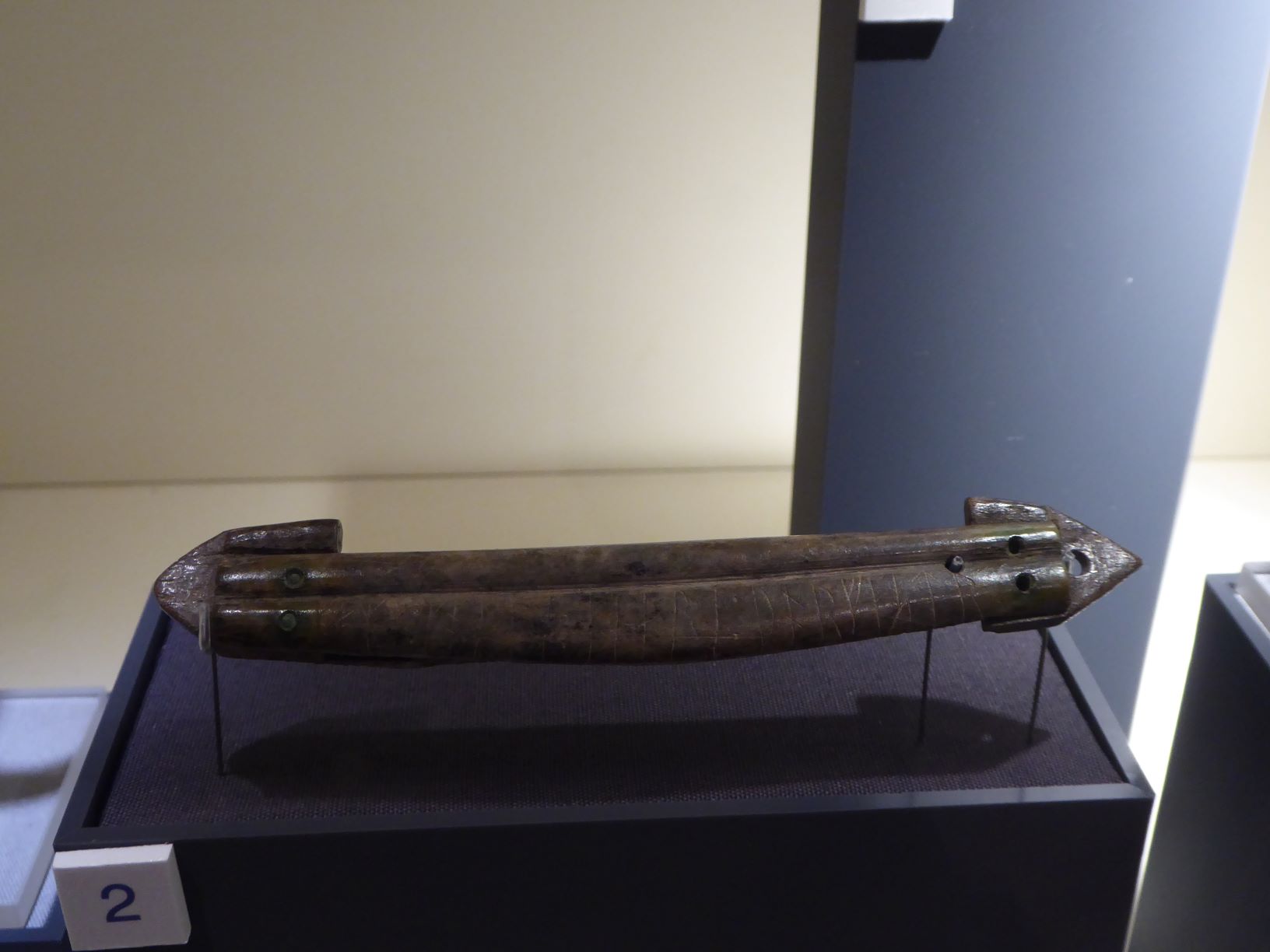
A comb case

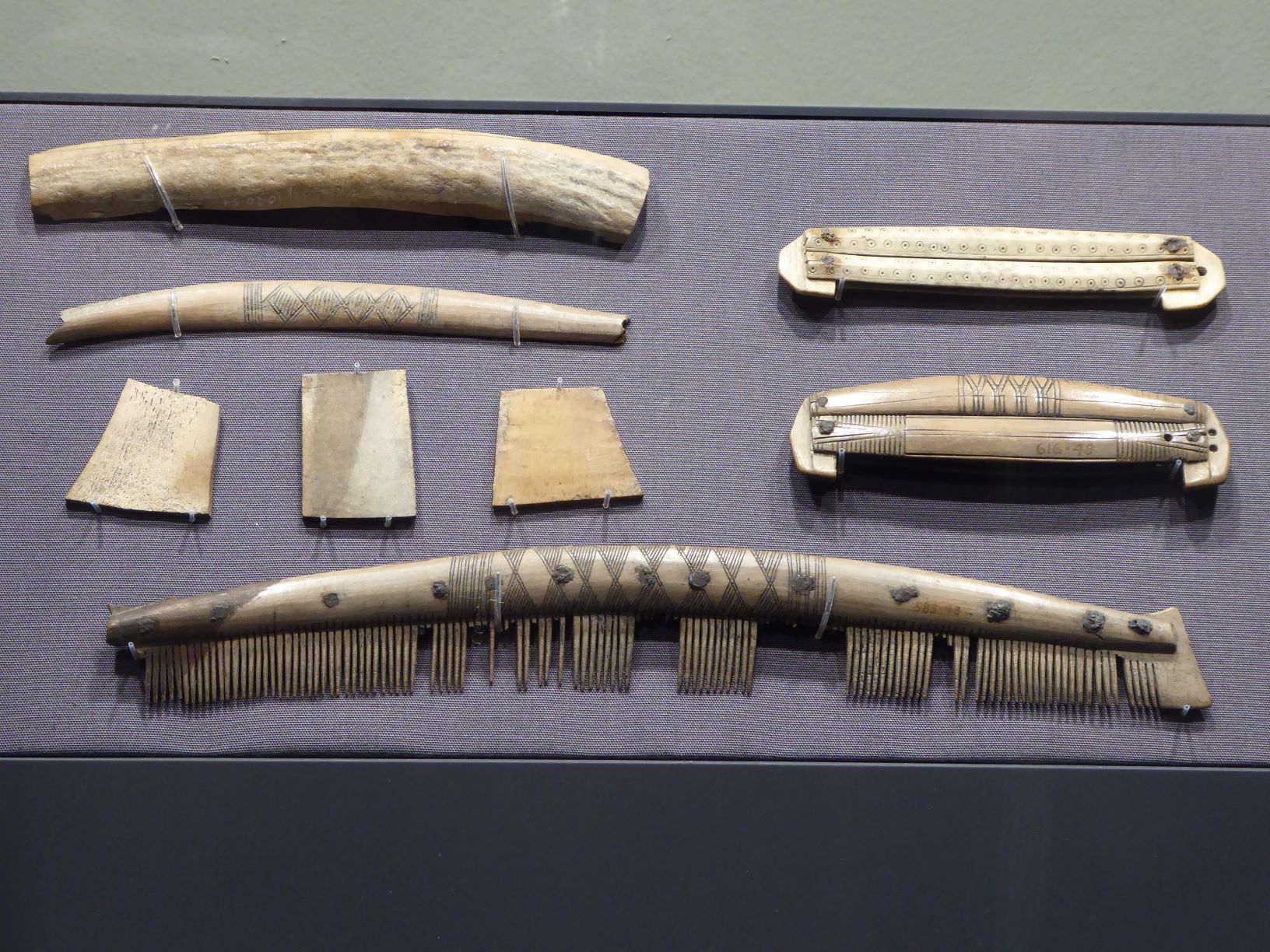
Deer antler blank (unused antler) and roughouts (pieces of horn used to try out designs before including them in the finished article) with a finished comb and cases.

A phyllite whetstone and a gold finger ring. These belonged to a wealthy woman called Egwen who lived in Scotland. The ring is dedicated to St Peter and that saint may also be the image shown on the whetstone.

Torc from the Bedale Hoard

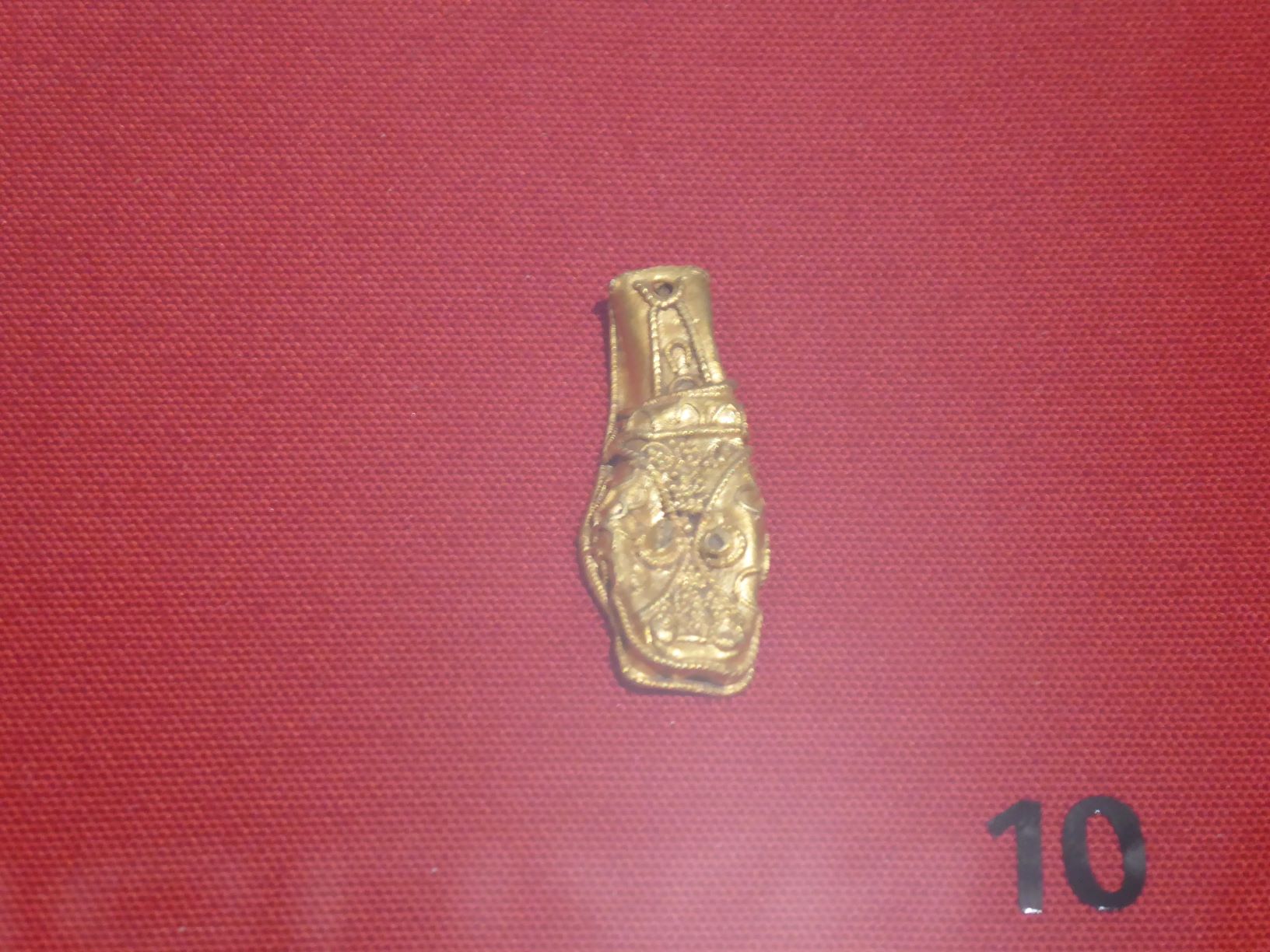
A tiny gold socketed terminal made from gold sheet and decorated with filigree wire depicting an animal’s head. It is probably the terminal of a pointer or aestel.

This object is a similar shape, though much smaller, to the Alfred Jewel which is believed to be an aestel.

Socketed object made of gilded copper alloy in the 8th/9th century. Probably another aestel.

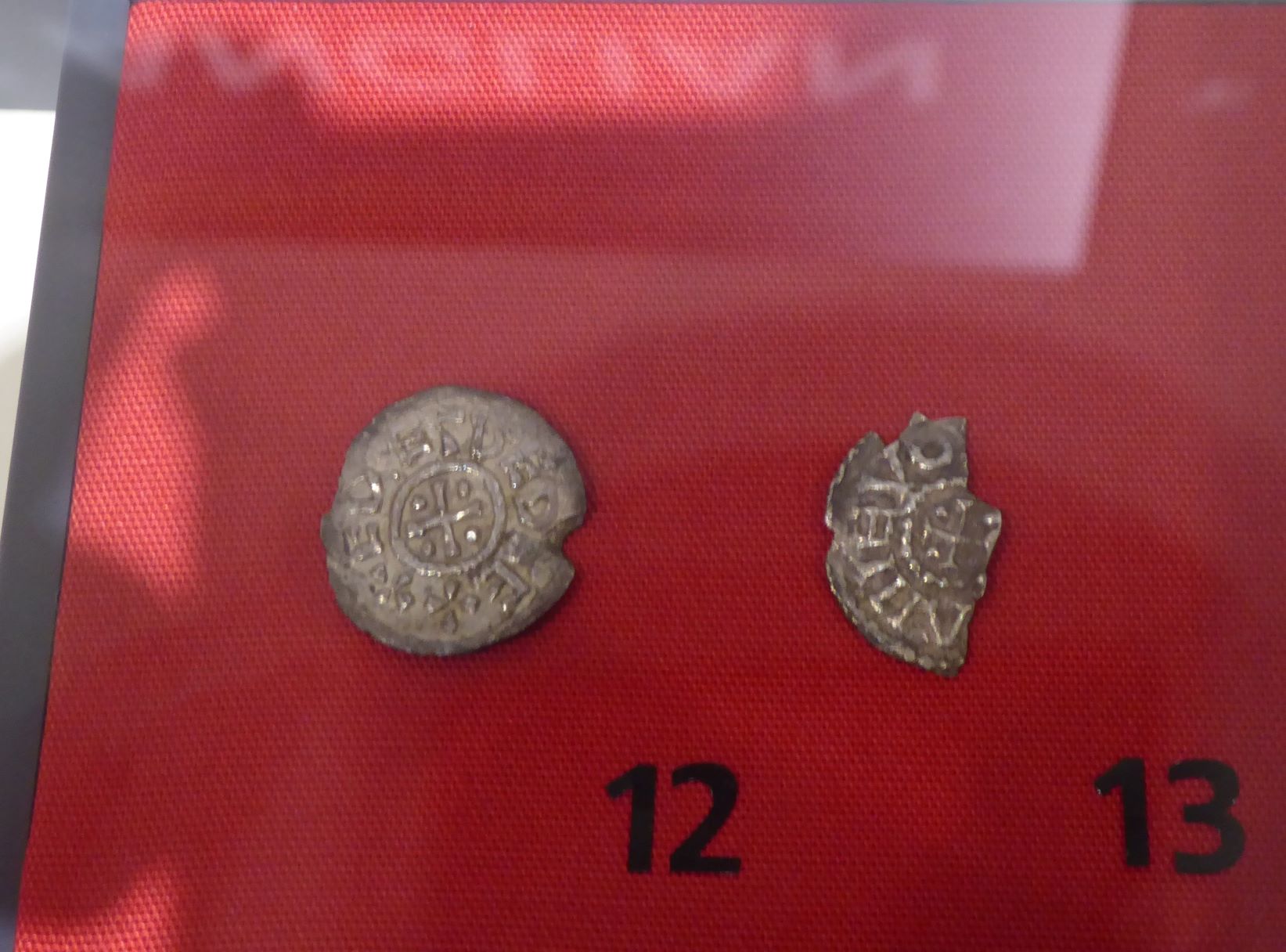
Two silver pennies of King Aethelred of East Anglia. These are immensely important as only seven coins of this obscure king have been found. They show that after Edmund was killed he was succeeded by another East Anglian ruler not recorded in any historical documents.

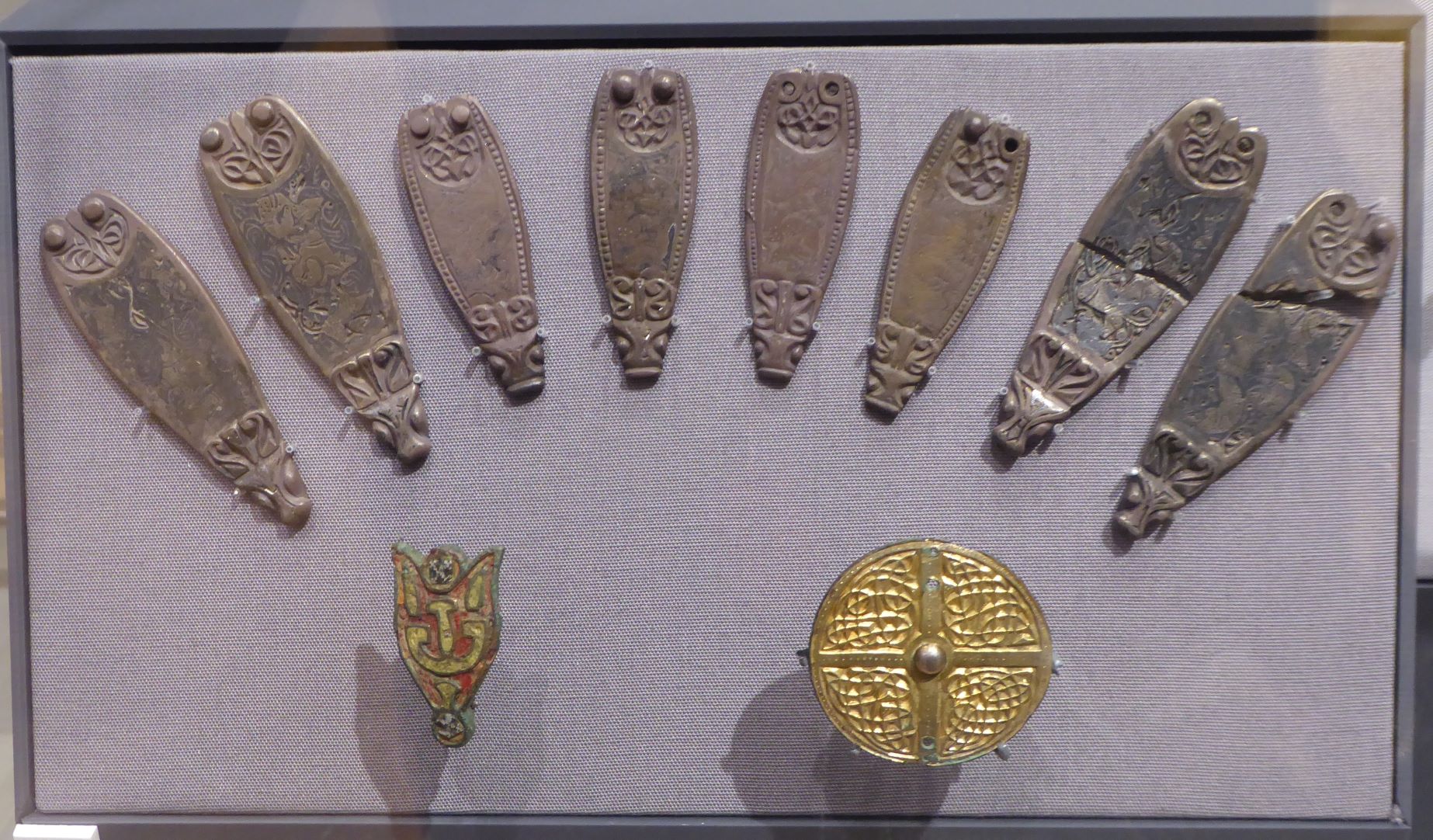
A collection of strap ends (decorated metal ornament added to the end of straps) made from silver and niello, a copper alloy tulip mount and a silver (gilt?) disc brooch

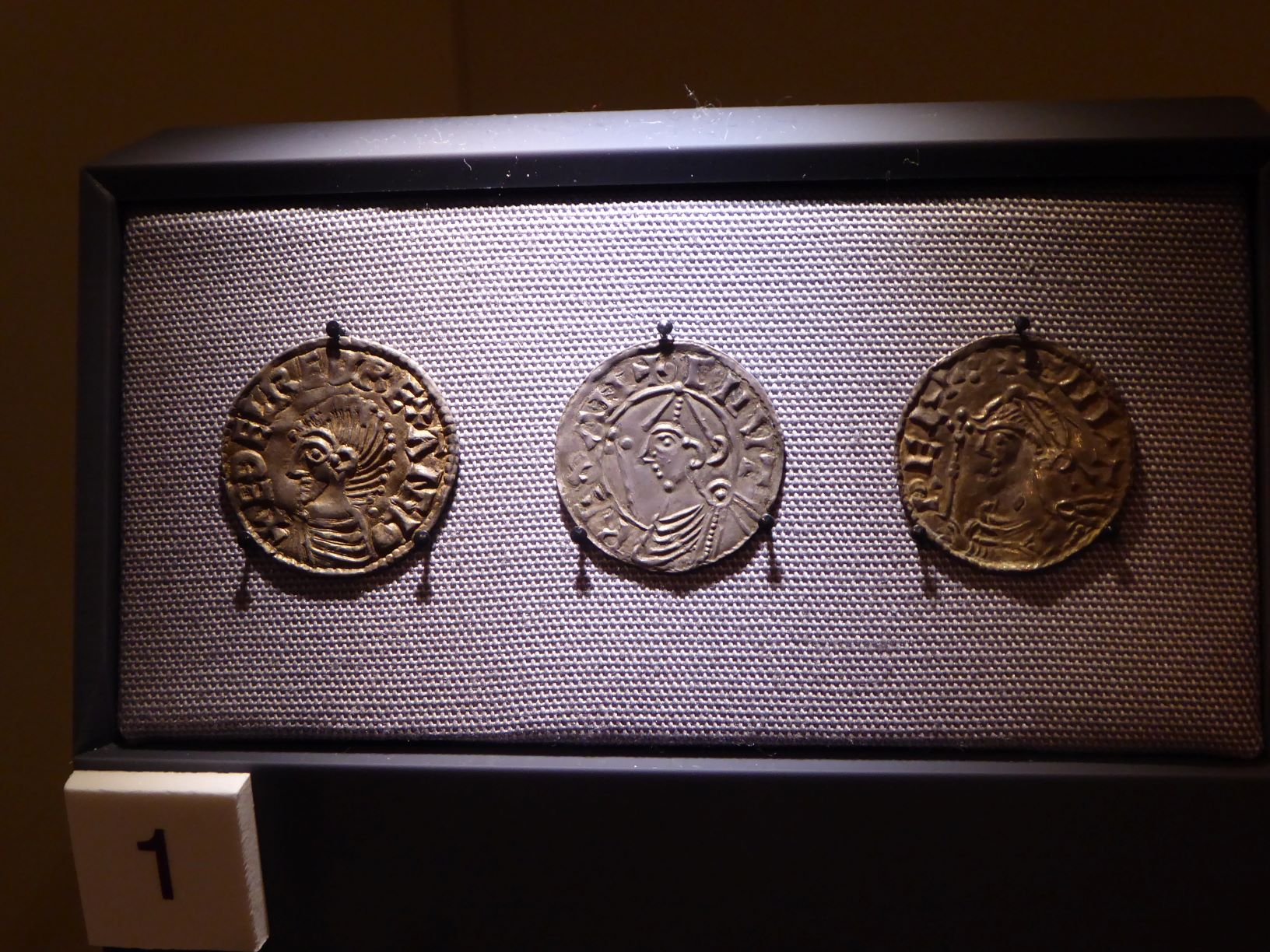
Three coins, part of the Bishopshill hoard l. to r. Silver of Aethelred II; Silver of Cnut; Silver of Harthacnut.

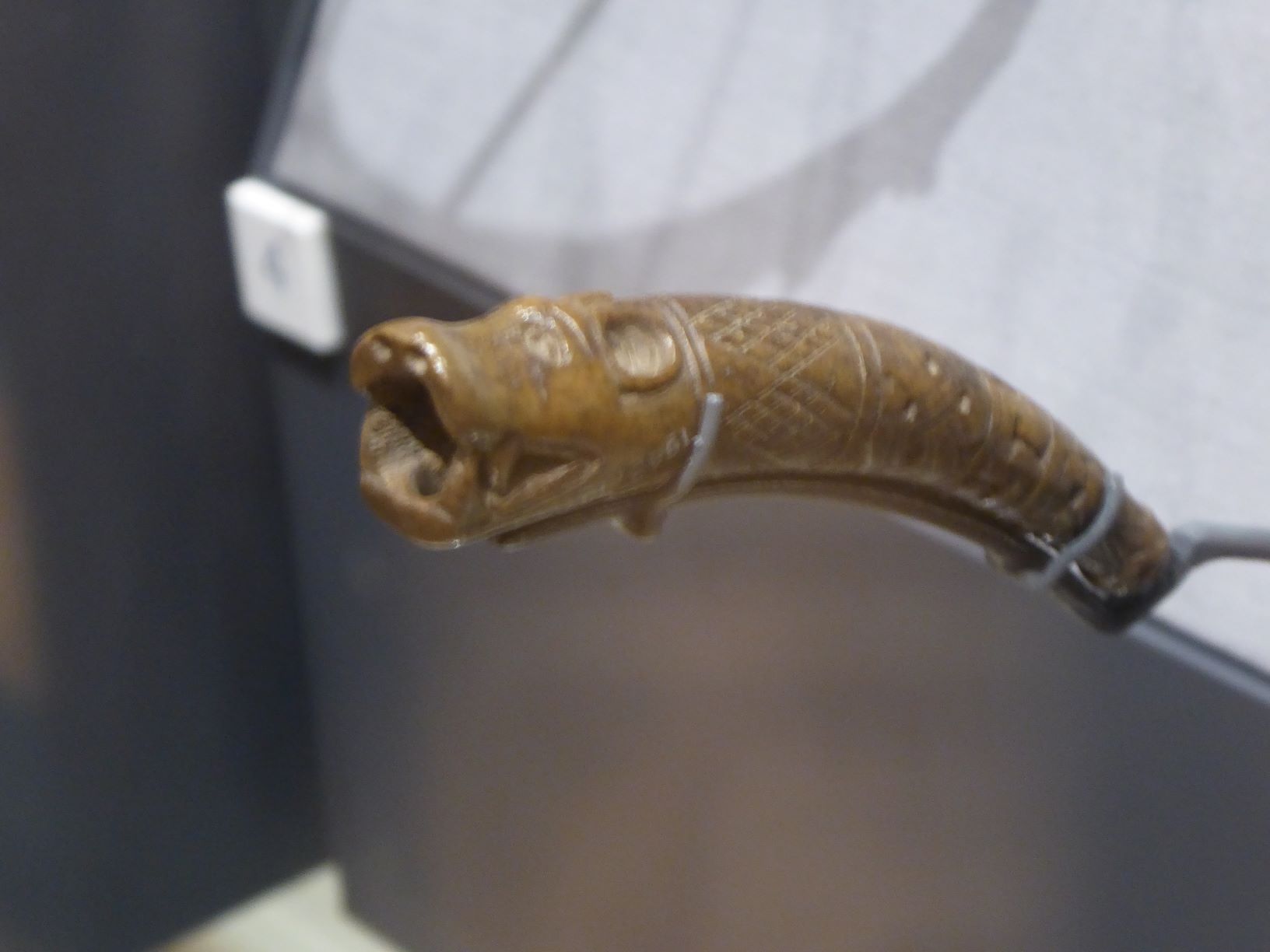
A whalebone handle

The following are photographs of several hoards that have been discovered all over Britain.

This slideshow requires JavaScript.

I hope you enjoyed seeing some of these wonderful things.

I am very grateful to the curators of the Norwich Castle Museum for this exhibition and for all the information they imparted.

Share this:

  • Share on X (Opens in new window) X
  • Share on Reddit (Opens in new window) Reddit
  • Share on Pinterest (Opens in new window) Pinterest
  • Share on Facebook (Opens in new window) Facebook
  • Email a link to a friend (Opens in new window) Email
  • Share on Tumblr (Opens in new window) Tumblr
  • Print (Opens in new window) Print
  • Share on Pocket (Opens in new window) Pocket
  • Share on LinkedIn (Opens in new window) LinkedIn
Like Loading...

Day of Dance, Saturday 30th March 2019

29 Wed May 2019

Posted by Clare Pooley in Days out, Folk Traditions, Rural Diary

≈ 90 Comments

Tags

Border Morris dancing, Day of Dance 2019, folk dance, folk music, Folk Traditions, Halesworth, Molly dancing, Morris dancing, Mummers, Suffolk

Those of you who have kindly followed my intermittent ramblings for a few years might remember that Richard and I have attended the Day of Dance a couple of times before.  One of the local Molly dance sides (teams) wished to celebrate an important anniversary in 2015 so invited other Morris and Molly dance sides to join them in Halesworth for the day, as a one-off.  This was so successful that the Day of Dance has taken place each year since then and it has grown!  Not only Morris Dancers, Border Morris dancers and Molly Dancers take part but also steam punk sides have joined in, belly dancers, buskers and mummers!  Please follow the links if you are interested in finding out about Mollys and Mummers!

Below is a slideshow of some photos I took on the day.  The Morris side wearing blue and white is Rumburgh Morris, our local team who were featured in Episode 4 of Alice Robert’s series ‘Britain’s Most Historic Towns’.

This slideshow requires JavaScript.

Here is a very short video I took of one of the sides.  I have no idea of their name or where they came from but I thought they were fun.

Here follows a video I found on Youtube of the procession round the town at the start of the day.  Thank you for taking the time to visit my blog!


Share this:

  • Share on X (Opens in new window) X
  • Share on Reddit (Opens in new window) Reddit
  • Share on Pinterest (Opens in new window) Pinterest
  • Share on Facebook (Opens in new window) Facebook
  • Email a link to a friend (Opens in new window) Email
  • Share on Tumblr (Opens in new window) Tumblr
  • Print (Opens in new window) Print
  • Share on Pocket (Opens in new window) Pocket
  • Share on LinkedIn (Opens in new window) LinkedIn
Like Loading...

Anglesey Abbey

14 Thu Mar 2019

Posted by Clare Pooley in Days out, Rural Diary

≈ 101 Comments

Tags

Anglesey Abbey, Cambridge, country house, gardens, Lord Fairhaven, National Trust, snowdrops, winter aconites

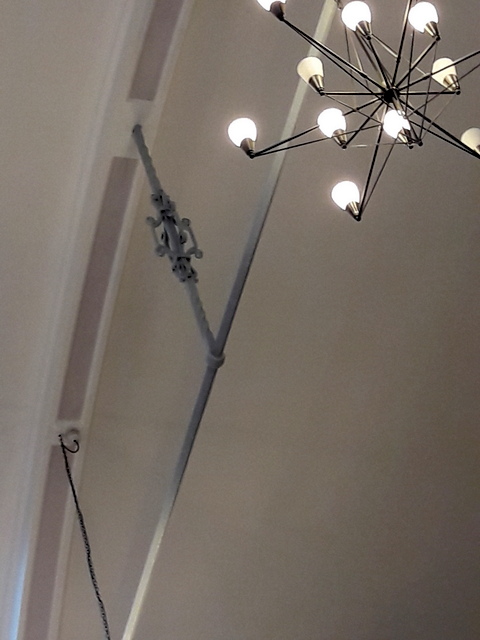
Elinor had an interview at Anglia Ruskin University in Cambridge one Saturday at the beginning of February.  Both Richard and I accompanied her there and waited in the Ruskin Gallery while she went on a tour of the art facilities and then had her interview.  I admired the light fittings which, as with many functional buildings and their fittings designed pre WW2, were beautiful in their own right.

I am not referring to the modern lights but to the wrought iron that attaches the bar ( from which oil lamps were hung, I assume ) to the ceiling.

After Elinor had finished at the University we took the bus back to the park-and-ride car park and drove to nearby Anglesey Abbey.  We had hoped for some lunch in the café and a quiet walk round the grounds in the sunshine.  We hadn’t realised that the whole of Cambridgeshire would also have the same idea as us and the place was packed!  We managed to buy some sandwiches and a drink each and fought our way to a table.  After eating we escaped outside and walked about in the sunshine.

Anglesey Abbey is famous for its spring bulbs, especially its snowdrops, and I had wanted to visit for some years.

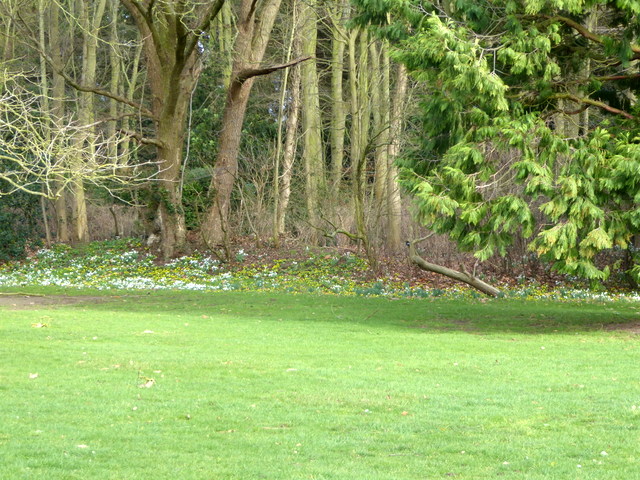
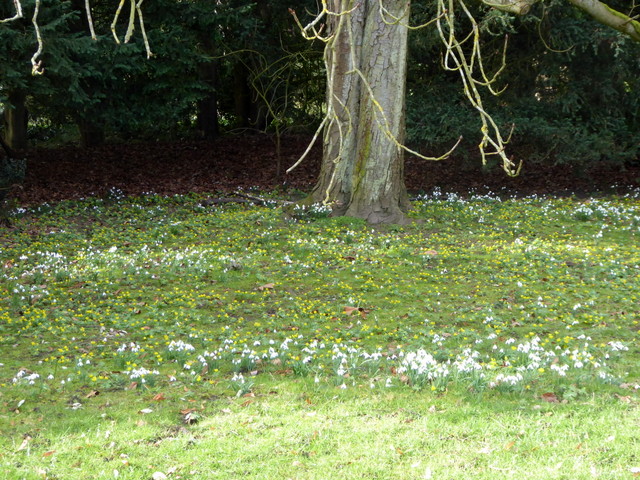
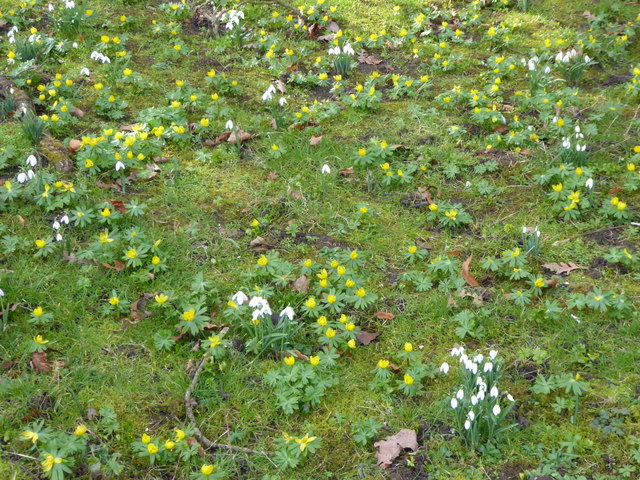
Snowdrops and winter aconites under the trees.

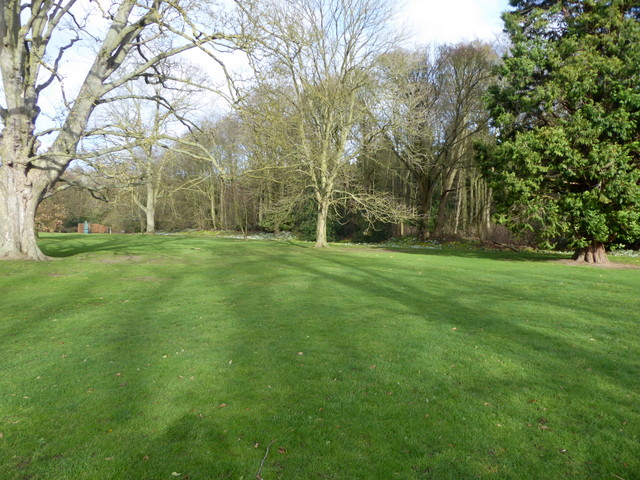
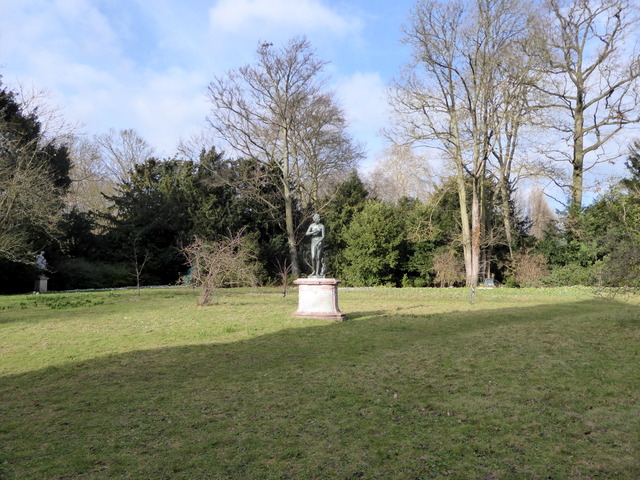
Wide lawns with under-planted trees.

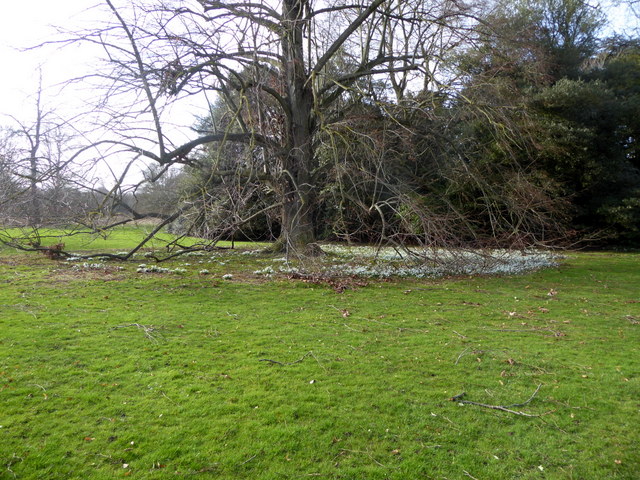
Masses of snowdrops

Snowdrops and winter aconites.

Snowdrops and winter aconites.

Note the long shadows just after midday in February.

We were getting cold in the strong breeze so decided to look at the house.

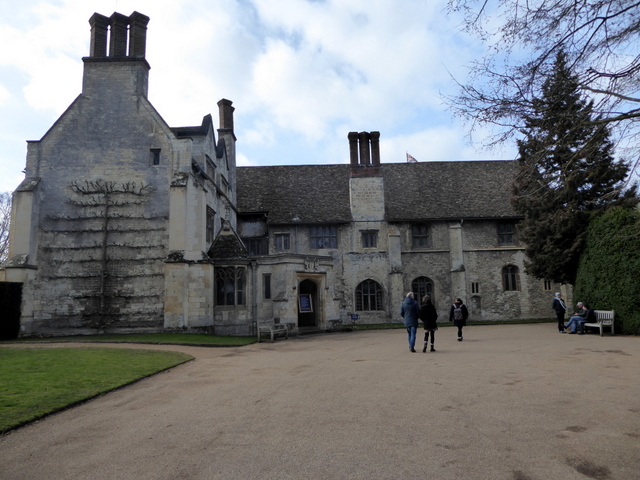
The former priory was converted into a dwelling in about the year 1600.

We toured the house but I didn’t manage to get any photographs of the interior.  It was so crowded it was difficult to see many of the rooms which were stuffed with objets d’arts, paintings and furniture as well as people.  The library was wonderful as it not only contained the typical sets of required books that most large libraries have but also many books that were obviously bought to be read and had been read by the family.  We were pleased to see all Lord Fairhaven’s boyhood adventure books on a top shelf.

The library . A photograph I found by searching Yahoo! images.

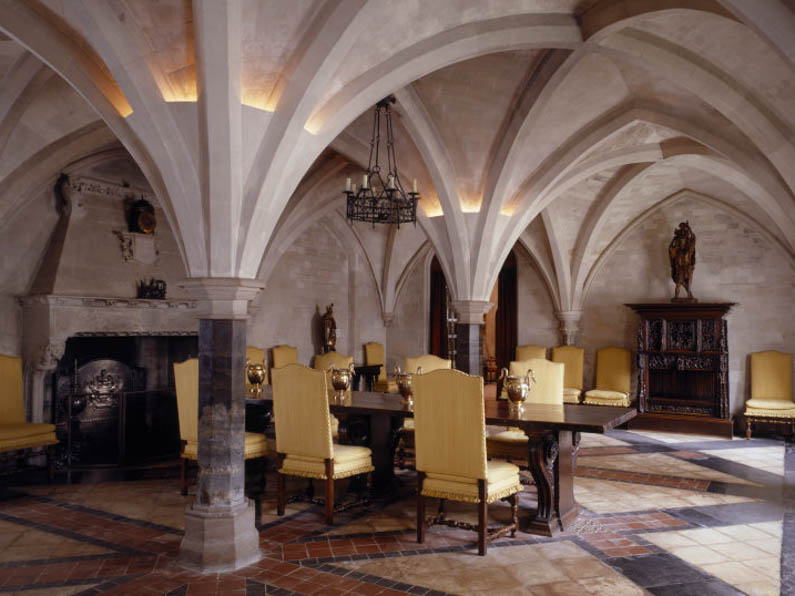
The dining room; also courtesy of Yahoo! images.

The long gallery was being re-decorated and all the furniture and ornaments from there had been redistributed about the house.  I must admit that most of the furniture and ornaments were not to my taste.

I had wished to see the garden with the silver birches but by the time we left the house we were running out of energy.

The winter garden courtesy of Yahoo! images.

One of the many gardens in the grounds.

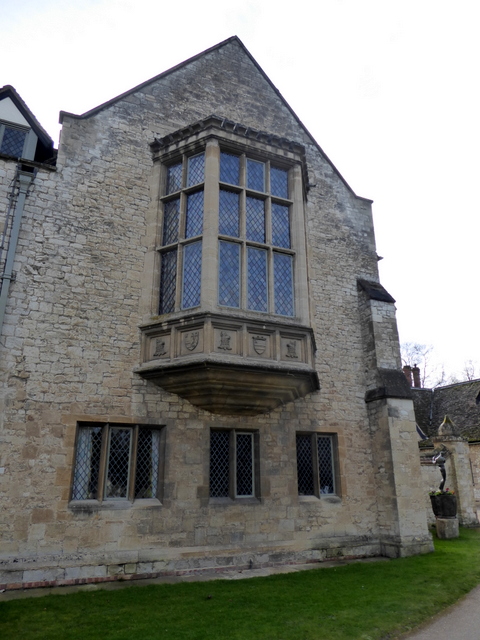
A beautiful oriel window.

An espalier pear tree against the wall of the Abbey.

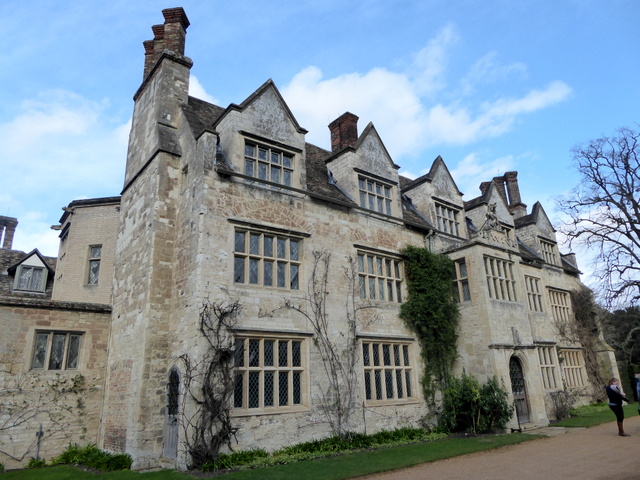
The front of the abbey.

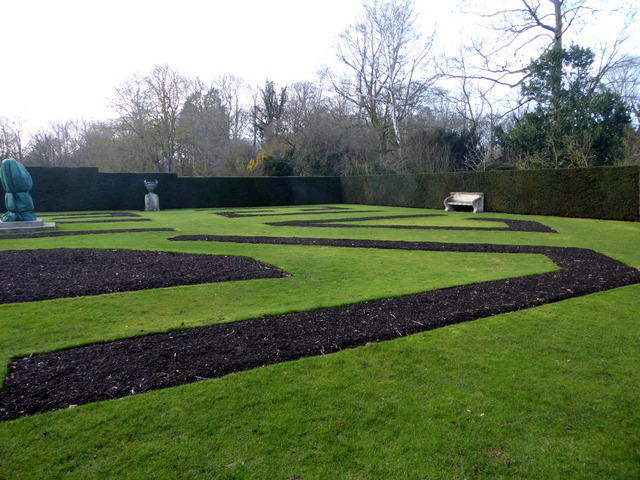
A beautifully prepared garden. I wonder what it will contain later this year!

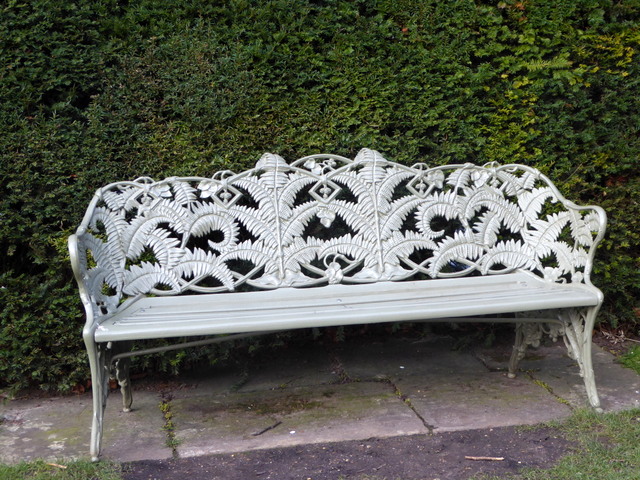
An attractive bench….

……with Richard sitting on it.

Hellebore
Hellebore
Cyclamen
Cyclamen

We left the garden without having seen all of it but with any luck we will return and finish our tour one day.

Share this:

  • Share on X (Opens in new window) X
  • Share on Reddit (Opens in new window) Reddit
  • Share on Pinterest (Opens in new window) Pinterest
  • Share on Facebook (Opens in new window) Facebook
  • Email a link to a friend (Opens in new window) Email
  • Share on Tumblr (Opens in new window) Tumblr
  • Print (Opens in new window) Print
  • Share on Pocket (Opens in new window) Pocket
  • Share on LinkedIn (Opens in new window) LinkedIn
Like Loading...
← Older posts
Follow A Suffolk Lane on WordPress.com

Enter your email address to follow this blog and receive notifications of new posts by email.

Join 715 other subscribers.

Unknown's avatar

I talk about what it's like living in a quiet part of Suffolk. I am a wife, mother and daughter, a practising Christian and love the natural world that surrounds me. I enjoy my life - most of the time!

My Posts

Jan 2026
M T W T F S S
 1234
567891011
12131415161718
19202122232425
262728293031  
« Dec    

Pages

  • About my Blog
  • GDPR (General Data Protection Regulations) and This Site
  • My Life in a Suffolk Lane

Archives

Blogs I Follow

Unknown's avatar
Unknown's avatar
Unknown's avatar
Unknown's avatar
Unknown's avatar
Unknown's avatar
Unknown's avatar
Unknown's avatar
Unknown's avatar
Unknown's avatar
Unknown's avatar
Unknown's avatar
Unknown's avatar
Unknown's avatar
Unknown's avatar
Unknown's avatar
Unknown's avatar
Unknown's avatar
Unknown's avatar

Posts I Like

  • DoF@theinfill's avatar
  • Unknown's avatar
  • Luso Loonie — Devin Meireles's avatar
  • Unknown's avatar
  • Unknown's avatar
  • Unknown's avatar
  • Unknown's avatar
  • Unknown's avatar
  • Unknown's avatar
  • mitchteemley's avatar
  • Unknown's avatar
  • Unknown's avatar
  • Secret Diary of A Country Vicar's Wife's avatar
  • Unknown's avatar
  • Unknown's avatar
  • Dad's avatar
  • bitaboutbritain's avatar
  • Unknown's avatar
  • Limentinus's avatar
  • Unknown's avatar
  • Unknown's avatar
  • 60onabudget's avatar
  • Unknown's avatar
  • Unknown's avatar
  • Unknown's avatar
  • thesimlux's avatar
  • NEERAJ SINGH's avatar
  • Rich's avatar
  • Unknown's avatar
  • The Introverted Bookworm's avatar
  • Unknown's avatar
  • Unknown's avatar
  • Unknown's avatar
  • sherijkennedyriverside's avatar
  • Kathleen's avatar
  • Unknown's avatar
  • Talkmore's avatar
  • Unknown's avatar
  • M T McGuire's avatar
  • Unknown's avatar
  • Unknown's avatar
  • Unknown's avatar
  • Unknown's avatar
  • Unknown's avatar
  • santable's avatar
  • Unknown's avatar
  • Andrea Stephenson's avatar
  • Martha's avatar
  • Bernard Aybout (Virii8)'s avatar
  • Unknown's avatar

amphibians architecture art Arts and Crafts churches cooking Days out domestic animals family fish Folk Traditions Gardening Historic Buildings holidays Insects Landscaping literature music Norwich plants Rural Diary seashore theatre trees Uncategorized walking weather wild animals wild birds wild flowers

Tags

architecture autumn birds blackbird blackthorn Bungay butterfly church clouds common knapweed cow parsley crocus daffodils Diary dogwood family field maple flowers fungus garden gardening geese greylags ground-ivy Halesworth Hawthorn heather holiday Holly Holy Week horse chestnut Hoverfly insects ivy Lake District Lent lesser celandine lichen Lords and Ladies Mallard mallards Minsmere moorhen moss music Norwich Peak District pheasant plants pond ponds primrose primroses Rain rooks Rumburgh Rumburgh Church sheep Sheffield snow snowdrops Southwold spring Suffolk Suffolk Wildlife Trust sunset the Beck trees viburnum bodnantense walking weather wild cherry wild flowers winter-flowering honeysuckle witch-hazel

Meta

  • Create account
  • Log in
  • Entries feed
  • Comments feed
  • WordPress.com

Goodreads

Blog at WordPress.com.

Book Jotter

Reviews, news, features and all things books for passionate readers

Country Life Blog -

A blog about life in the country in the past and present

Matthew Paul: Poetry & Stuff

Poetry and what-not

Schnippelboy

Ein Tagebuch unserer Alltagsküche-Leicht zum Nachkochen

TAMARA JARE

TAMARA JARE Tamara Jare: Contemporary Figurative Painting Oil on Canvas Artist Art Studio

A Taste of Freedom

Documenting a Dream

Country Ways

Rambling Journeys in Britain, Countryside Matters and campaigning for the Right to Roam

The Strawberry Post

Here to Entertain, Educate & Inspire!

a north east ohio garden

an ongoing experiment in the dirt, 35 plus years

naturechirp

Celebrating God's creatures, birds and plants...

Sophie Neville

Writer

Going Batty in Wales

Developing a more sustainable lifestyle in SW Wales

Our Lake District Escapades

Exploring the Lake District and beyond

Short Walks Long Paths

Wandering trails around the coast of Wales

The Biking Gardener

An English persons experience of living and gardening in Ireland

Nan's Farm

A Journal Of Everyday Life

Walk the Old Ways

Rambling Journeys in Britain with John Bainbridge. Fighting for the Right to Roam. Campaigning to Protect Our Countryside.

Writer Side UP!

Waking the Writer Side...and keeping it "Up!"

Meggie's Adventures

Travel, thank you notes and other stories

amusicalifeonplanetearth

Music and the Thoughts It Can Inspire

lovefoundation.co.uk

Traveling Tortuga

Simply Living Well

Pakenham Water Mill

Historic watermill in the beautiful Suffolk countryside

Take It Easy

Retired, not expired: words from the after(work)life. And music. Lots of music!

Secret Diary Of A Country Vicar's Wife

By Olive Oyl

thanksfortheadventureorg.wordpress.com/

The Beat Goes On

#TBGO

Frank Pleszak's Blogs

Twitter: @frankpleszak @PolishIICorps

John Bainbridge Writer

Indie Writer and Publisher

roughwighting

Life in a flash - a bi-weekly storytelling blog

Walking the Old Ways

Rambling in the British Countryside

CapKane

thoughts on social realities

SkyeEnt

Jottings from Skye

jodie richelle

embracing my inner homemaker

Skizzenbuch/Blog

Just another WordPress.com weblog

Have Bag, Will Travel

The Call of the Pen

Flash Fiction, Book Reviews, Devotionals and other things.

John's Postcards

Art in Nature

You dream, I photographe it !

Smile! You’re in Barnier World......

theinfill

the things that come to hand

Dr. Mary Ann Niemczura

Author of "A Past Worth Telling"

Provincial Woman

The Pink Wheelbarrow

Luanne Castle: Poetry and Other Words (and cats!)

Poetry, Other Words, and Cats

The Family Kalamazoo

A genealogical site devoted to the history of the DeKorn and Zuidweg families of Kalamazoo and the Mulder family of Caledonia

everythingchild

The Book Owl

Canberra's Green Spaces

Paul Harley Photographer

  • Subscribe Subscribed
    • A Suffolk Lane
    • Join 715 other subscribers.
    • Already have a WordPress.com account? Log in now.
    • A Suffolk Lane
    • Subscribe Subscribed
    • Sign up
    • Log in
    • Report this content
    • View site in Reader
    • Manage subscriptions
    • Collapse this bar
 

Loading Comments...
 

    Privacy & Cookies: This site uses cookies. By continuing to use this website, you agree to their use.
    To find out more, including how to control cookies, see here: Cookie Policy
    %d