• About my Blog
  • GDPR (General Data Protection Regulations) and This Site
  • My Life in a Suffolk Lane

A Suffolk Lane

~ A diary of my life in rural north Suffolk.

A Suffolk Lane

Category Archives: holidays

Holiday in Brittany – August 1999. Part 2.

24 Sun Mar 2024

Posted by Clare Pooley in Brittany, Days out, France, holidays, Rural Diary

≈ 49 Comments

Tags

Brittany, Kernascléden, L'Étang du Bel Air, Les Roches du Diable, R. Ellé, R. Scorff

Here follows the next episode of our Brittany holiday.  I thought I would include here an example of Breton folk music just so you can get an idea of the kind of music we heard when we arrived in Brittany.  I also apologise for the grainy and blurred photos.

Sunday 22nd August

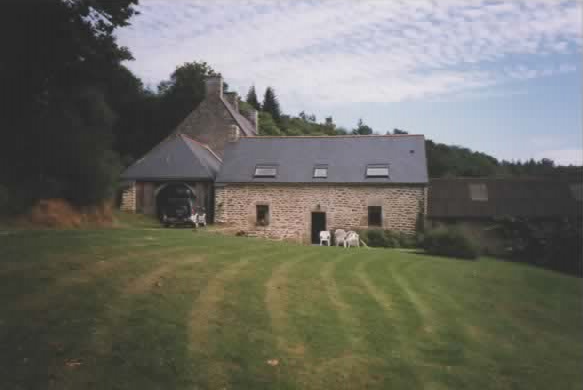
This is where we were staying. I believe the building was a converted barn and the house where the owners lived is the taller building with the chimneys at the back.

We decided that we would not do much today and just get used to being in our cottage in France.  The weather was nice so we sat outside quite a lot.

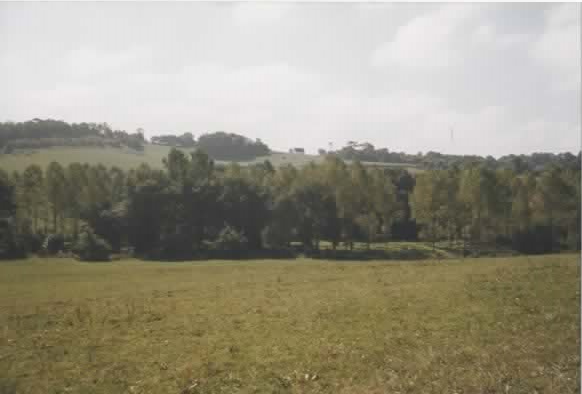
View from the gîte.

Another view.

We drove into Le Faouët during the early evening and went to a Breton crêperie for tea.  We all enjoyed our meal and decided we would return there sometime soon.

Richard didn’t feel too well during the evening and went to bed early.  (Over-tired probably!).


Monday 23rd August

A foggy start to the day.

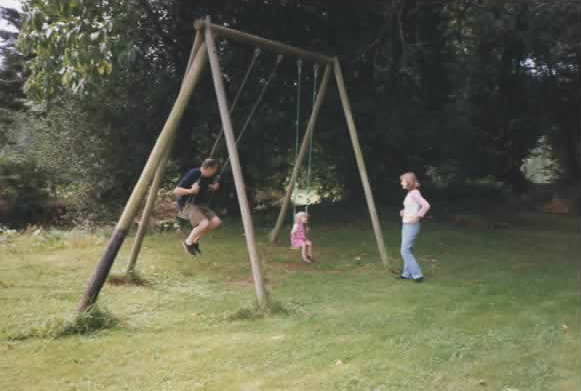
The day began well but we soon had our first accident with Alice breaking one of the plates as she was wiping up after we had washed the breakfast things.  (We are an accident-prone family!).  Richard took Elinor out to play on the swings but the swing broke and Richard badly burnt his arm on the rope as he tried to break his and Elinor’s fall.  After patching up his arm and having a cup of tea we decided we would go for a scenic drive during the afternoon to the Étang du Bel Air and the Scorff valley.  We cooked some soup for our lunch.

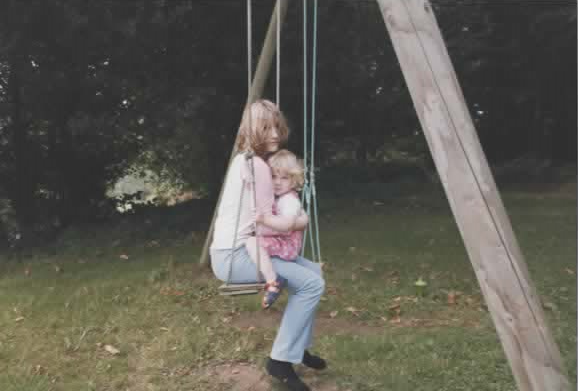
Alice and Elinor on the swing.

Everyone wanted a swing!

This slideshow requires JavaScript.

Shortly before setting off for our drive, Elinor fell down the steps from the sitting area onto the hard tiles in the dining area.  We didn’t realise at the time but she had landed on her ear and badly bruised it.

Another view
Another view
... and another!
… and another!

We drove through Le Faouët and, via L’Abbaye Notre-Dame de Langonnet, on to Priziac which is next to L’Étang du Bel Air.  We walked a little way round the lake until Elinor got tired and Alice began complaining of hunger and cold.  We returned to the little beach near the car-park where a café was just opening and bought coffee and crisps and Alice bought an ice-cream.  The ideal food to eat when you are cold!

The link below will lead you to some pictures of the lake courtesy of google maps and the photographers who have donated their photos to that site.

https://www.google.co.uk/maps/place/%C3%89tang+du+Bel-Air+(Priziac)/@48.060833,-3.422222,3a,75y,90t/data=!3m8!1e2!3m6!1sAF1QipNYWgEdiVJ1xESRARXWMaQmEjVSoJRR-nltk3VE!2e10!3e12!6shttps:%2F%2Flh5.googleusercontent.com%2Fp%2FAF1QipNYWgEdiVJ1xESRARXWMaQmEjVSoJRR-nltk3VE%3Dw360-h172-k-no!7i5446!8i2617!4m7!3m6!1s0x4811aaf04b63c65f:0x7b65e6109b4eb1cf!8m2!3d48.060833!4d-3.422222!10e5!16s%2Fg%2F112yg5mzy?entry=ttu

We then drove to Kernascléden via le Croisty and St-Caradec-Trégomel.  We looked at the church which has medieval paintings in it and then went to the toy museum.  (I looked on-line to see if the toy museum is still going and unfortunately I don’t believe it is.  There are some images of the museum but I think they are old pictures.)  We bought some postcards and groceries from a shop before driving off to the Scorff valley with its beautiful scenery.  We stopped at a likely place by the R. Scorff and Richard and Alice got out of the car.  A kingfisher flew past and they saw lots of pond skaters (insects) in the calmer parts of the river.  Next, we drove to Plouay where I used a public toilet (most unpleasant!) and then travelled on to Les Roches du Diable and looked at the wonderful rock formations on the R. Ellé.The rocks are supposed to have been thrown by the devil at Saint Winwaloe who had set up home by the river but the saint outwitted and defeated the devil.  The rocks show the devil’s claw marks on them.

We drove back to our cottage and Richard cooked us pasta and sauce for our evening meal followed by crêpes.  The rain started as we got home and continued to fall very heavily almost all night long.

Share this:

  • Share on X (Opens in new window) X
  • Share on Reddit (Opens in new window) Reddit
  • Share on Pinterest (Opens in new window) Pinterest
  • Share on Facebook (Opens in new window) Facebook
  • Email a link to a friend (Opens in new window) Email
  • Share on Tumblr (Opens in new window) Tumblr
  • Print (Opens in new window) Print
  • Share on Pocket (Opens in new window) Pocket
  • Share on LinkedIn (Opens in new window) LinkedIn
Like Loading...

Holiday in Brittany: August 1999

12 Tue Mar 2024

Posted by Clare Pooley in France, holidays, Rural Diary

≈ 39 Comments

Tags

Brittany, family, ferry crossing, France, gîte, holiday, Le Faouët, wedding

During a lull in the first year of the pandemic we managed to get our loft re-insulated.  We cleared the area of all our stored boxes and bags and also disposed of a large amount things we no longer needed as well as spare tiles and other decorating material left there by the previous owner. The firm we employed to do the insulation were extremely efficient, did the job quickly and neatly and cleared away all the old insulation material. We are very pleased with the results as it keeps the house cooler in summer and warmer in winter.

All the time we had lived in this house (we moved here in 2006) I had know that a number of boxes of mine were up in the loft but had never quite felt ready to get someone to help me bring them down so I could sort them out.  Therefore, I was very pleased to find my collection of knitting and sewing patterns and a few large cardboard boxes of papers, letters and other miscellaneous odds and ends.  I went through all of these things and disposed of what needed to go.  One or two plastic crates of papers went back up into the loft but all my knitting patterns stayed where I can find them and a couple of things that I thought might be useful were also kept down in the house.  One of those things was a paper bag containing short diaries from two holidays we had had in Brittany with a collection of maps and mementoes.  When I read much-missed Susan’s wonderful posts on her travels round Europe I began to think I ought to make a scrapbook of all my holiday memories.  Of course, I still haven’t got round to doing it but I also thought I might copy out my holiday diaries into this blog and scan some of the photos I took at the time.  The two holidays were in 1999 and 2002 when our daughters were very young and so were we (well, relatively young).

I will begin with our holiday in 1999 and present it in short(ish) installments.  I will also annotate it at times to make the meaning a little clearer.  Annotations are in brackets.  In late August 1999 I was nearly 41 years of age, Richard had just had his 46th birthday, Alice had had her 14th birthday in July and Elinor was 2 and a half years old.  At that time we were living in a cottage in Rumburgh just over two miles away from the house we are living in now.  Remember too, that in 1999 most people didn’t have mobile phones and digital cameras.  At the time, our cameras were the old-fashioned sort with film casettes/reels that needed to be developed by a professional. We didn’t take that many pictures!

                                                                o o O O o o

Friday 20th August 1999

Richard packed everything into the car, I took William (the cat) to the cattery and to our great surprise we managed to set off in good time in the middle of the afternoon.  We were off on our first ever holiday to Brittany and would be staying in a gîte, travelling by car and crossing the English Channel by ferry.

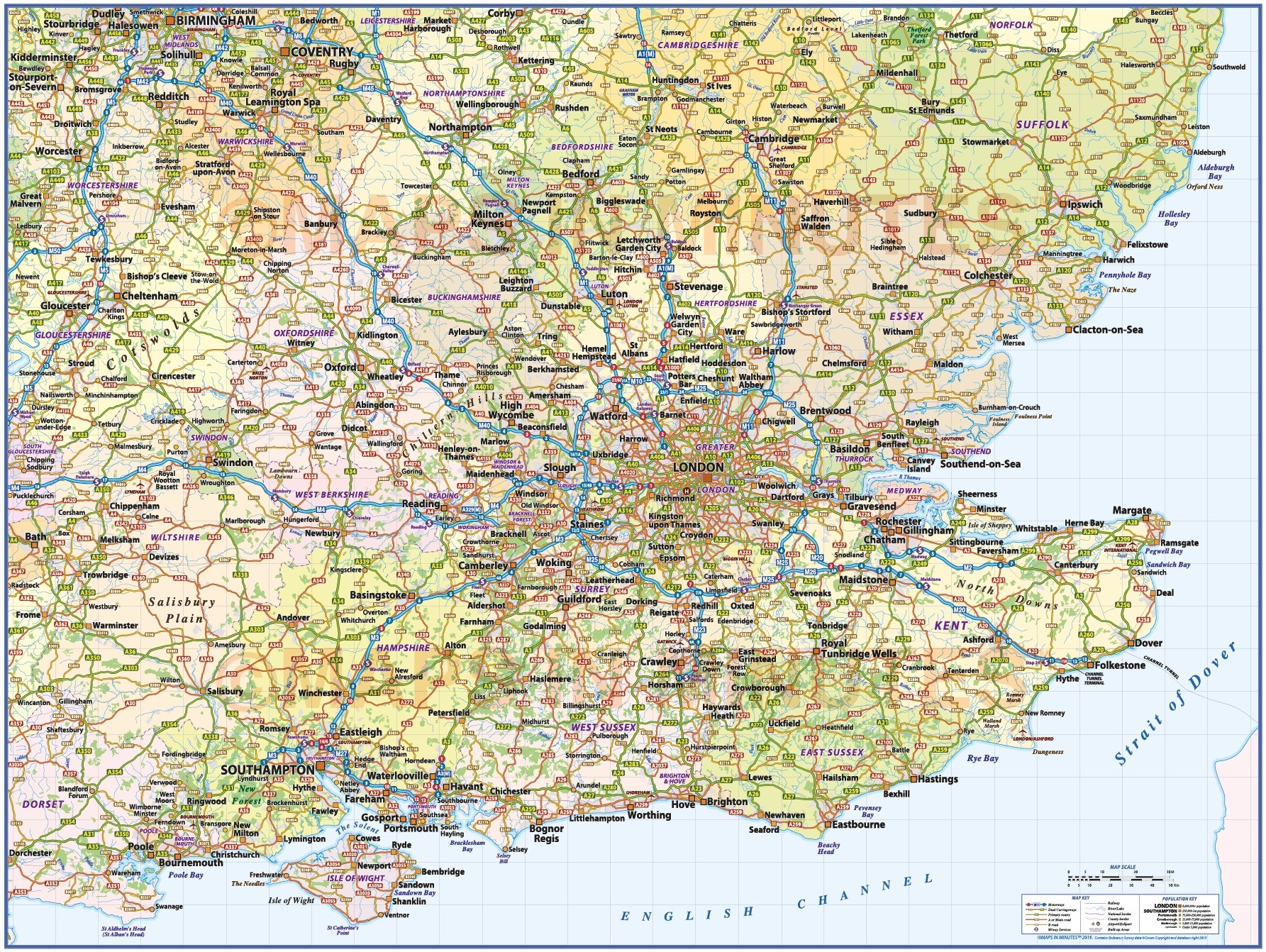
Thanks to atlasdigitalmaps.com. This map shows the south-east of England.  If you look at the top right of the map and you have excellent eyesight you’ll see the towns of Southwold on the coast and Halesworth a few miles inland. Rumburgh is about four miles north-west of Halesworth.  Portsmouth is at the bottom of the map, just left of centre and north of the Isle of Wight.

We had to travel a circuitous route to Portsmouth to avoid accidents and delays on the M25 (the infamous London orbital motorway).  (Going by the most direct route the distance to Portsmouth from home is about 200 miles and on a good day would take just under four hours).  We stopped in Surrey for tea (meal and drink) and then the last leg of the journey to Portsmouth was fairly short and trouble-free.  We found the ferry port easily and after an hour’s wait we boarded the ferry.  However, through not reading our ticket thoroughly enough and not knowing the layout of the ship we had clambered up to Deck 8 before realising our cabin was on Deck 2!  Richard and I left Alice with the six or seven bags on Deck 8 and went to find our cabin.  We had also realised we had left Elinor’s changing bag in the car and had to ask permission to go back to Deck 3 to fetch it.  We took Elinor with us as she cried loudly when left with Alice.  Eventually, everyone was together in our cabin with all our luggage and the ferry had set sail.  We went up to a self-service restaurant and we all had a drink.  Alice then decided she wanted to see a film so we left her at a cinema and Elinor and I went back to our cabin to get ready for bed.  Richard accompanied us there and then went off to have a drink in a bar.  Apparently, the bar was very lively with a band playing and then a magician.  Both Alice and Richard arrived back at the cabin within minutes of each other at about 11.30pm and were soon in bed.  The cabin was small but well laid out with a tiny WC and shower-room attached and we all had enough room.  It was an inside cabin, was air-conditioned and lit by electric light so one quickly lost perception of time.  I became a little claustrophobic and wheezy (I have asthma) and had some trouble getting comfortable.  However, being in a cabin was much better than having to get Elinor and Alice to sleep in one of the lounges as others had to do.  Elinor woke for about an hour during the night as her nose started running and she was sneezing.  (Elinor didn’t manage to sleep through the night until she was three years old.  The first time she did it and we had had our first undisturbed night in years we thought she had died!)  I woke again at 5.00am and got dressed at 5.30.  Richard woke and dressed at 6.00 and then we woke Alice and Elinor at about 6.30 as we were to dock at 7.00 am.  Elinor was a bit upset at being woken so early but soon calmed down when I gave her a Pingu comic.

Saturday 21st August 1999

We found the car and packed everyone and everything into it quickly and waited for permission to leave the boat.  It was wonderful to see the bright sunlight flooding into the car deck as the doors were opened.

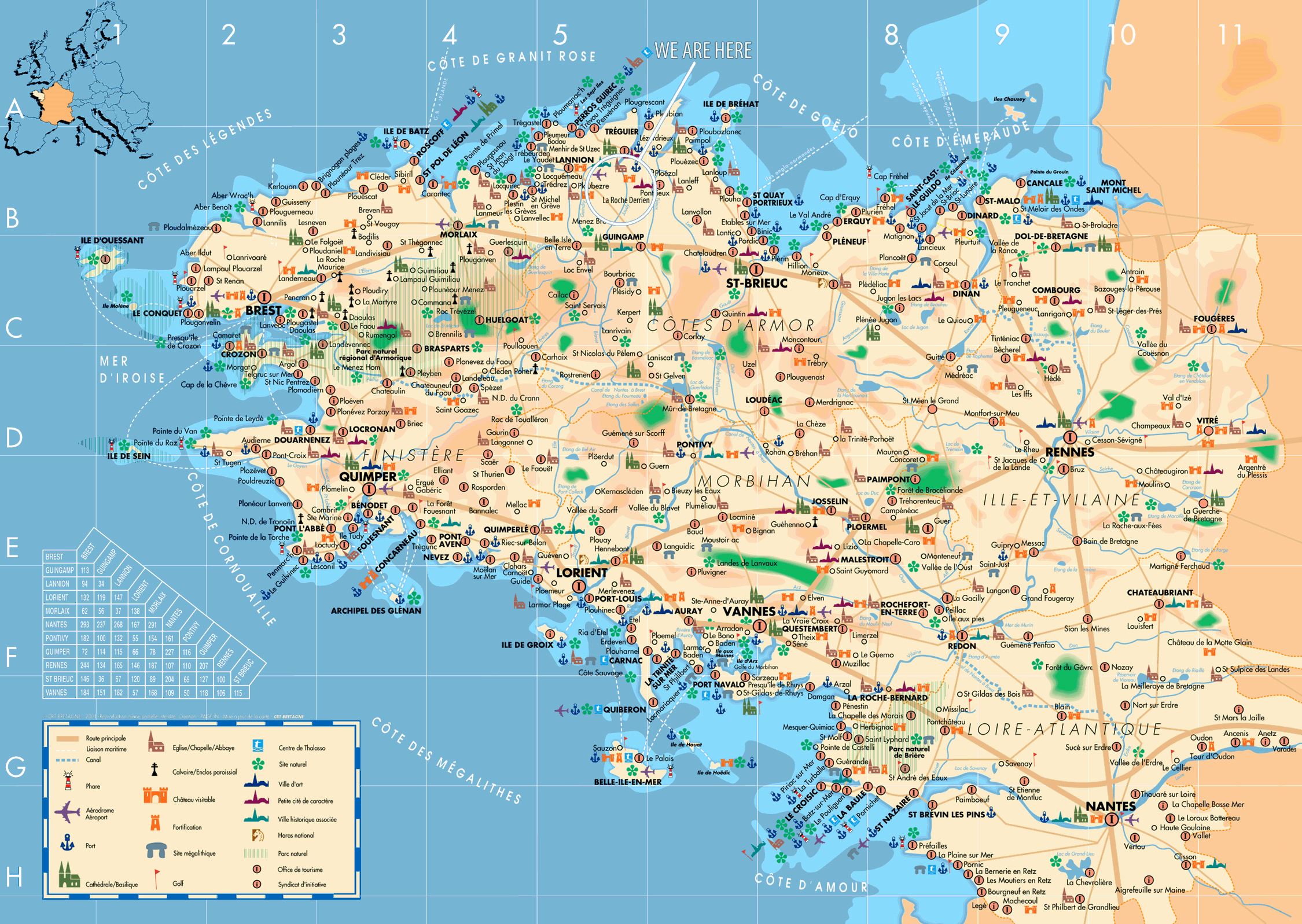
Thanks to orangesmile.com for the map. This is a map of Brittany and St Malo is at the top right of the map. Le Faouët is at D5.

We eventually drove out onto St. Malo docks and then followed the ‘tout directions’ sign posts out of the town.  Somewhere near Dinan Richard stopped for more diesel and we then continued past Lamballe, St. Brieuc, Quintin, Corlay and Rostrenen.  By 10.30 we had arrived at the small town of Glomel, all very hungry and needing a break.  We parked the car and were getting Elinor out and into her pushchair when we realised that a wedding was about to take place.  Cars arrived with little pale blue net bows tied to their aerials or windscreen wipers.  Guests were walking about in their best clothes and with blue ribbon corsages on their lapels.  We walked up through the town to a café where we ordered drinks; orange juice for Alice and coffees for Richard and me.  Elinor had her own drink with her.  We heard car horns hooting and looked down the road to see the bride arriving in an old Citroën.  We heard bagpipe and reed pipe music playing as she was led into a building for the civil ceremony.  Richard went off to a boulangerie and bought pains aux raisins and pains aux chocolat which we were able to eat outside the café (which wasn’t serving food at that moment).  We were sitting opposite the church and we saw more guests beginning to arrive.  A large 4×4 Mitsubishi pulled up with two besom broomsticks tied to the back and a grotesque blow-up woman sitting in a pushchair tied to the roof.   When the civil ceremony finished the bride, groom and wedding party were led up the main street in a procession to the church by two men, one playing a talabard (the reedpipe) and the other playing the bagpipes (a binioù).  We left after they had entered the church at 11.00.  (I wish that one of us had taken a photo or two but our cameras were packed away in the car and those of you who have had children know how preoccupied with them one can be especially when they are away from home).  As we drove out Richard pointed out the large stand for photographs which had been erected outside the church.

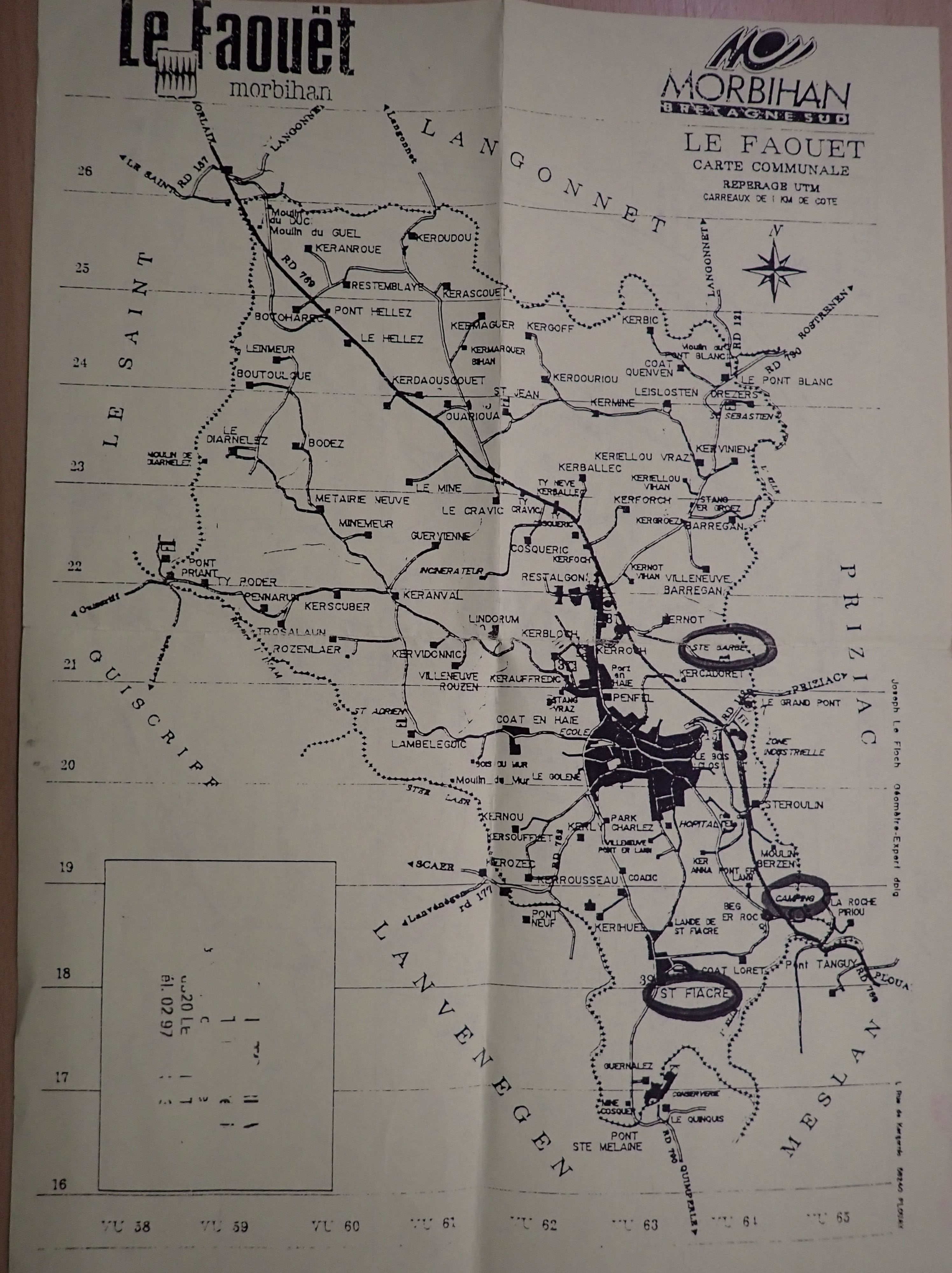
Map of Le Faouët in the Morbihan district of Bretagne Sud (south Brittany). This map shows the town and it’s surrounding villages.

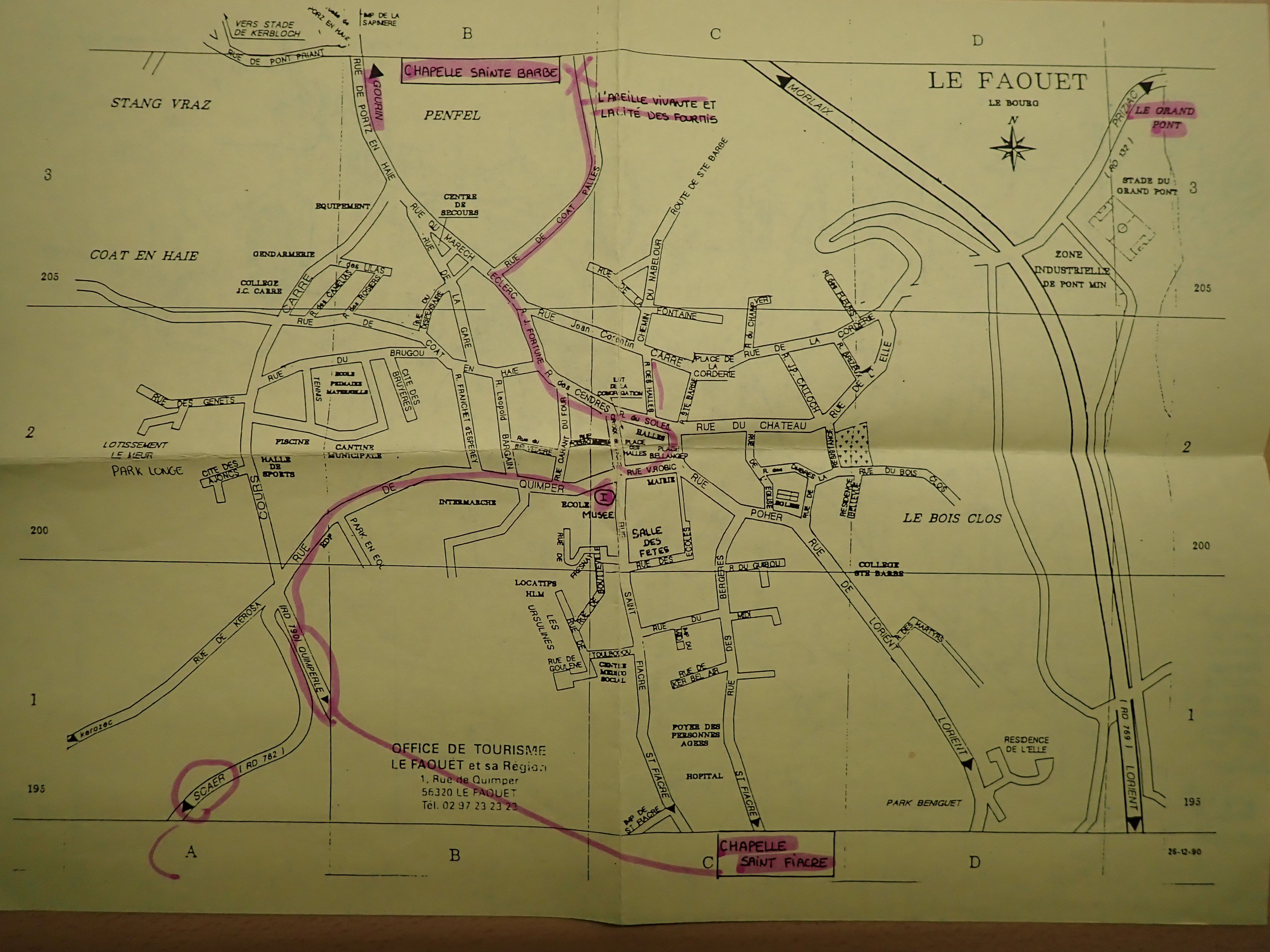
Street map of the town. The tourist office kindly marked the route we needed to take.

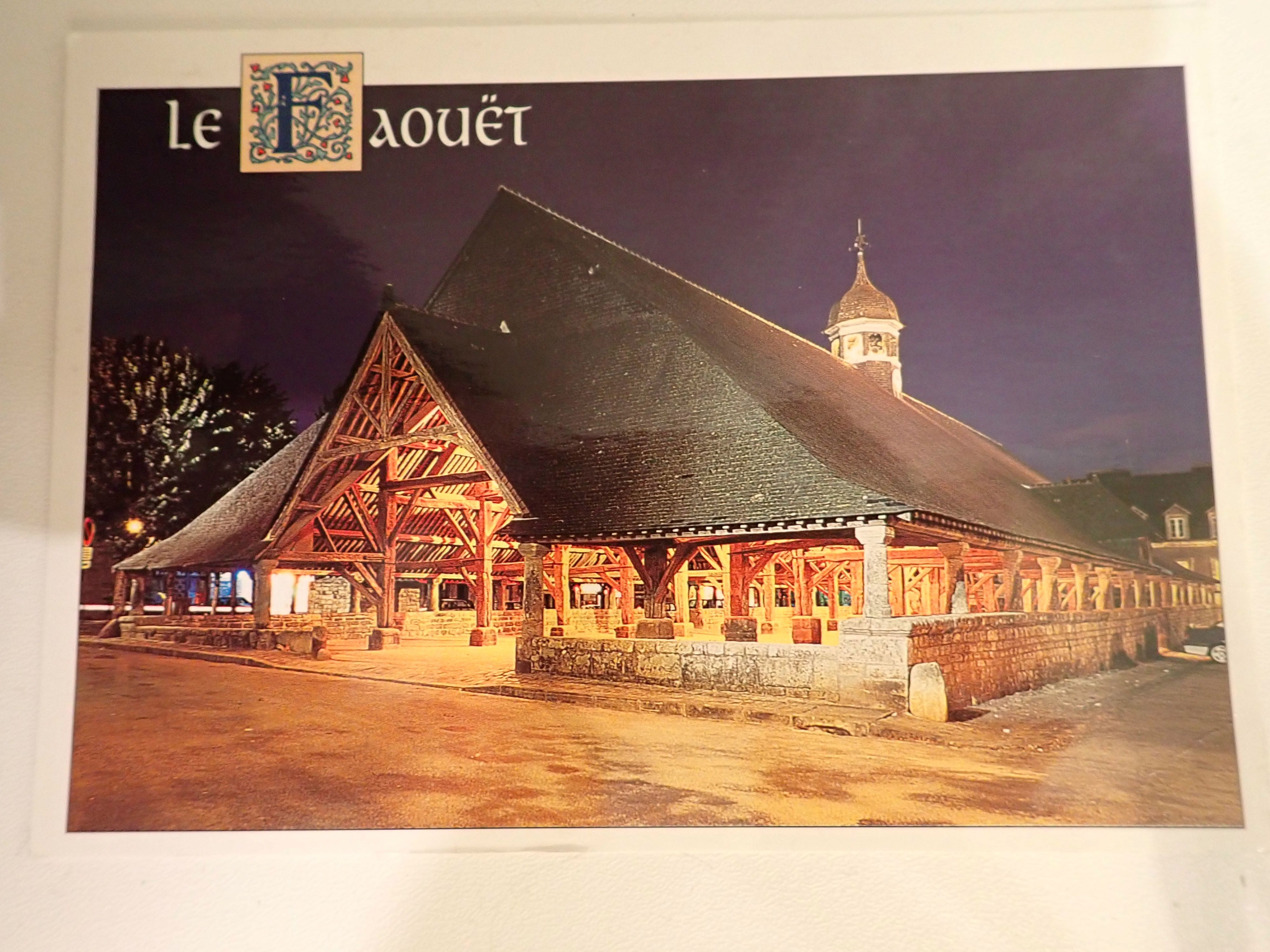
A postcard picture of the Halle.

We arrived in Le Fauoët about half an hour later and parked in the main square.  The large 16th century Halle had a market in it but we didn’t go in. We went to a café and had more drinks and then walked round the town and looked for somewhere to eat.  However, everywhere was very full so we decided we’d go to the supermarket and buy everything we’d need for the next few days and go on to Lanvénégen where we would be staying and try to eat at the café there.  We called in at the tourist office and got a lot of local information and the directions out of the town to Lanvénégen. 

Unfortunately, the café in Lanvénégen was closed until the 5th September so we drove on to St. Thurien, noting where the gîte was, and then on to Bannalec not finding anywhere open for lunch.  We had yet more drinks in Bannalec and then agreed to go to the gîte and risk arriving too early.  In fact it was gone 3.45 pm by the time we arrived at the Manoir des Lescreant.  Annie and Erick were very welcoming and we met their little daughter Emma too.  We unpacked the car and ate some bread and cheese.  We discovered that we had bought fermented milk by mistake – this is a very runny, cheesey, live yogurt – no good for Elinor or cups of coffee or tea!  Richard and I went back to the supermarket and got some sterilised milk (no fresh milk available in Brittany’s shops at that time) and more food for the evening meal.

At last, we settled down for the evening, the only excitement being the horses escaping from their field and finding their way onto the field outside our gîte.  Elinor settled down for the night surprisingly quickly and we all slept quite well.

More next time….!

Share this:

  • Share on X (Opens in new window) X
  • Share on Reddit (Opens in new window) Reddit
  • Share on Pinterest (Opens in new window) Pinterest
  • Share on Facebook (Opens in new window) Facebook
  • Email a link to a friend (Opens in new window) Email
  • Share on Tumblr (Opens in new window) Tumblr
  • Print (Opens in new window) Print
  • Share on Pocket (Opens in new window) Pocket
  • Share on LinkedIn (Opens in new window) LinkedIn
Like Loading...

Ramshaw Rocks

07 Mon Nov 2016

Posted by Clare Pooley in Days out, holidays, plants, Rural Diary, walking

≈ 48 Comments

Tags

heather, hills, Peak District, Ramshaw Rocks, Rosebay Willowherb, walking

The day following our climb up Hen Cloud was very wet and chilly.  We did a little shopping and visited the Book Barn at Brierlow Bar where we both found some interesting books to buy.  We spent the rest of the day resting and reading.  Richard was feeling unwell as he often does on a Saturday which is when he takes a once-weekly tablet for his osteo-porosis.

The next day was our last full day in the Peak District.  It began with rain but by lunchtime the weather was beginning to brighten up.  We went into Leek and indulged in some more oatcakes and on our return to the caravan we were pleased to see that the awning was dry and so we emptied it and took it down while we could.   We drove to Ramshaw Rocks and took our last walk in the Peaks this year.

p1010215ramshaw-rocks

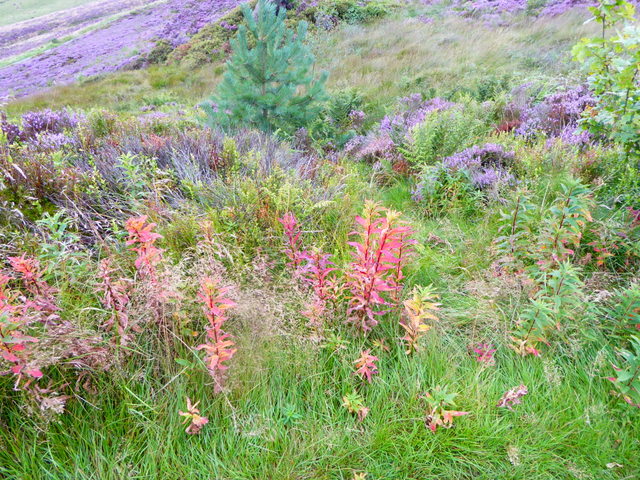
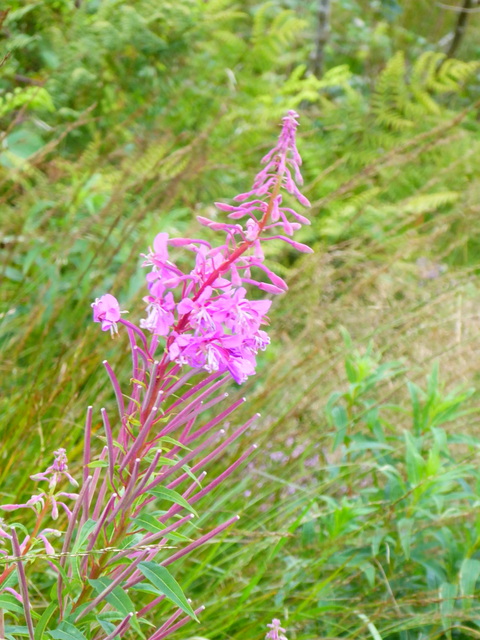
I had to take a photo of the colourful plants we saw at the beginning of our walk

The Rosebay Willowherb (Chamerion angustifolium) had started to change colour because of the cooler temperatures.  The bright green grass, the cooler green of the fir tree, the purple heather and the bright pink of the willowherb looked so good together.

p1010216rosebay-willowherb

There was still some Rosebay Willowherb in flower

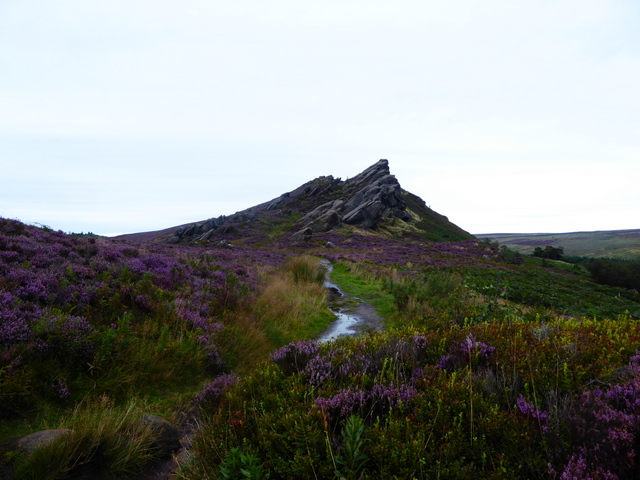
p1010217ramshaw-rocks

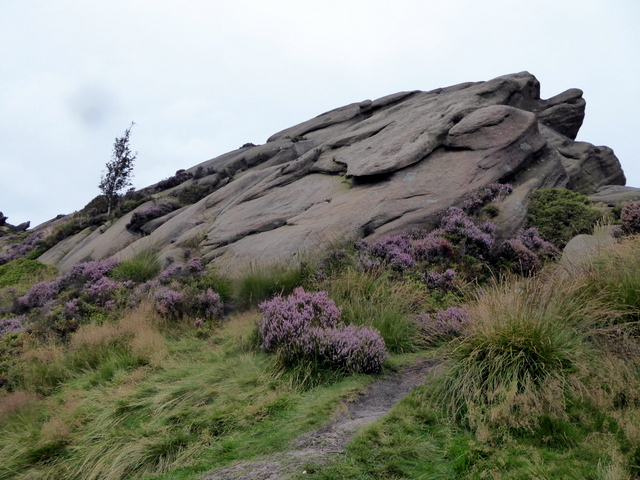
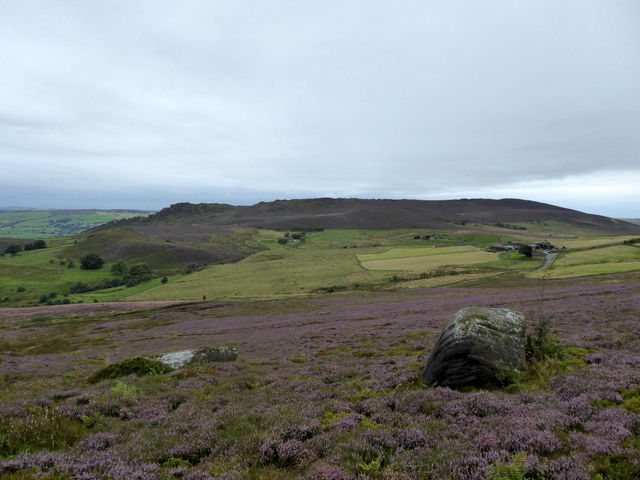
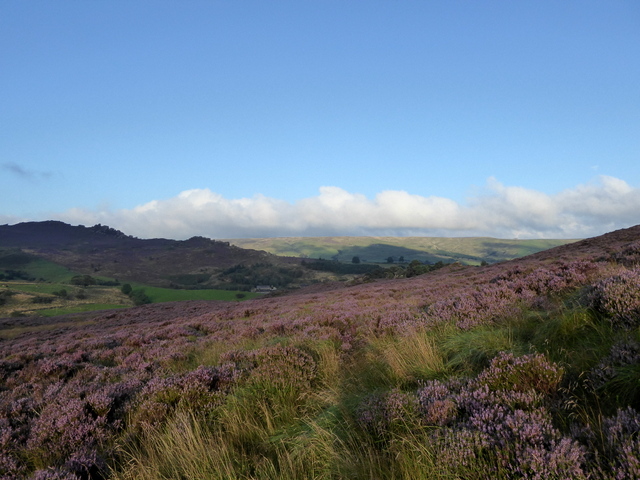
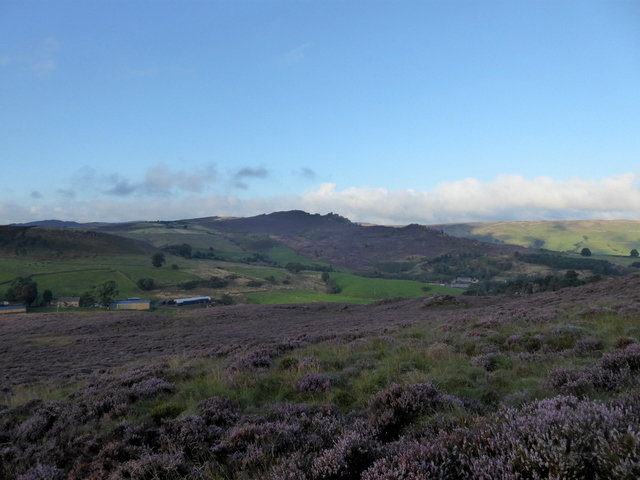
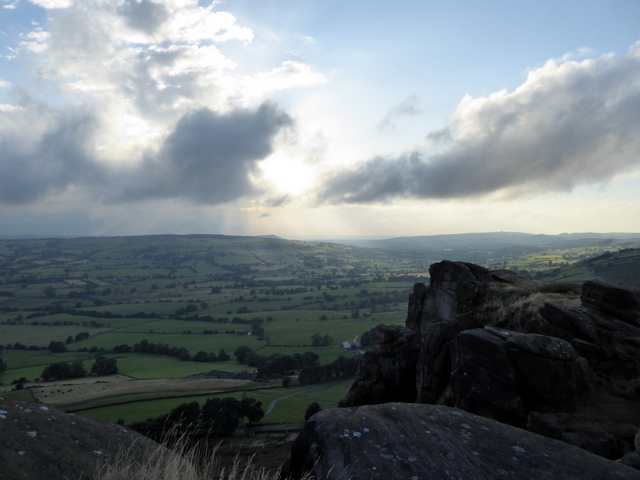
Ramshaw Rocks

p1010218ramshaw-rocks

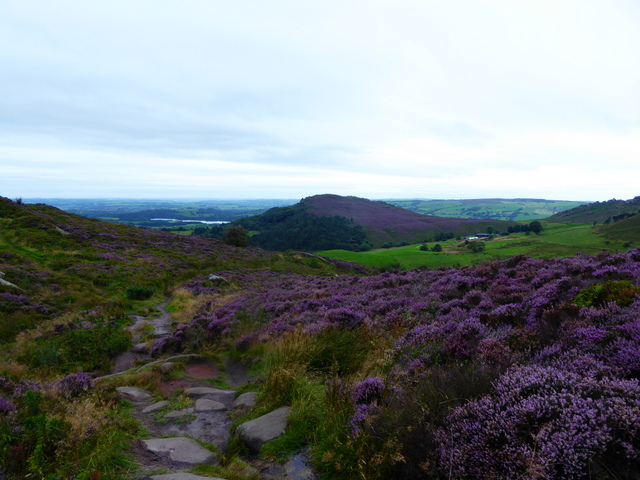
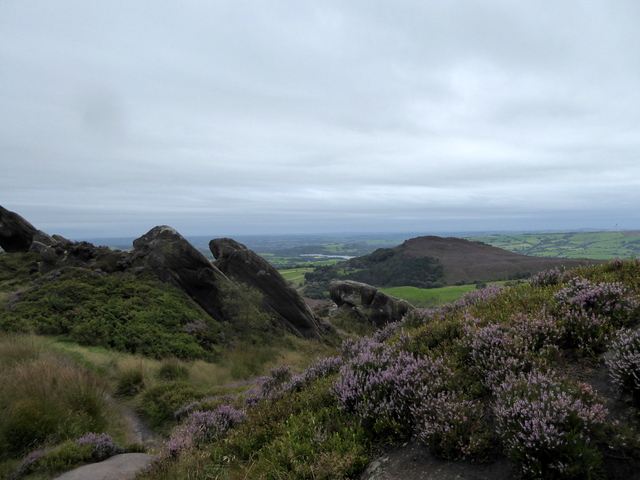
The purple hill in the centre of this photo is Hen Cloud where we had climbed a couple of days before

p1010219ramshaw-rocks

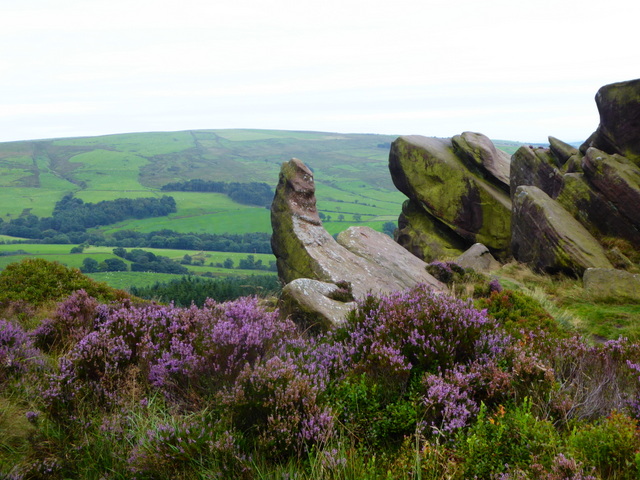
I love the way these limestone rocks have been eroded by wind and rain

p1010220ramshaw-rocks

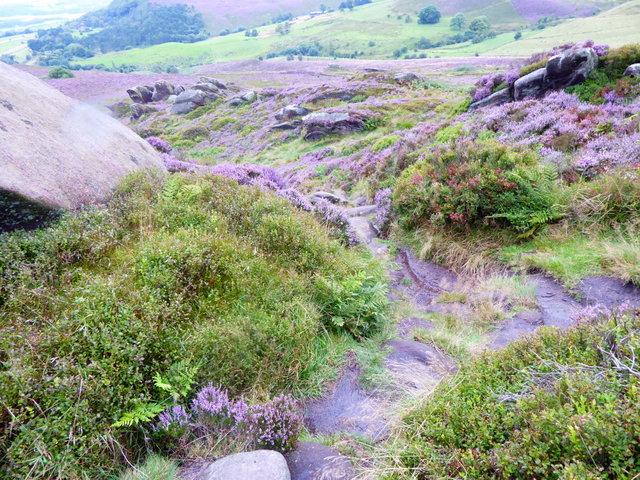
The path was a little wet after all the rain we had had.

p1010221ramshaw-rocks

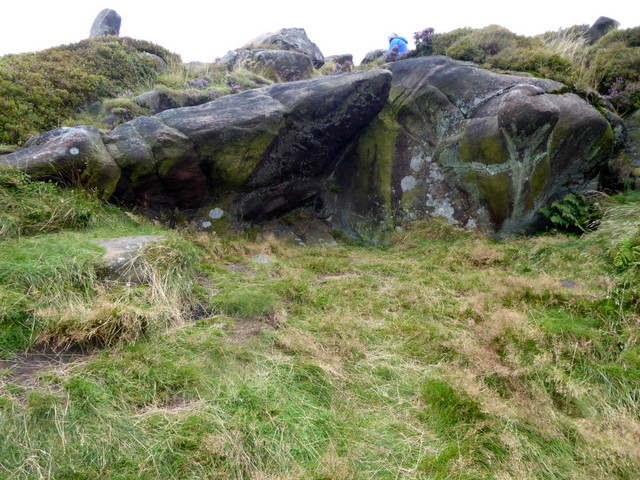
Ramshaw Rocks

p1010222ramshaw-rocks

Very strange!

p1010223ramshaw-rocks

The path

p1010224ramshaw-rocks

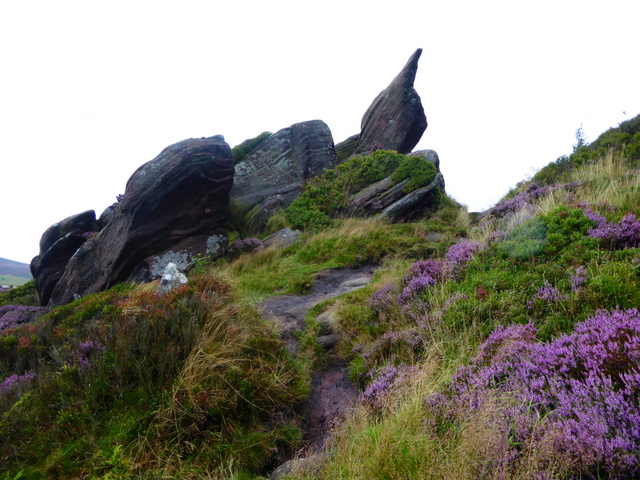
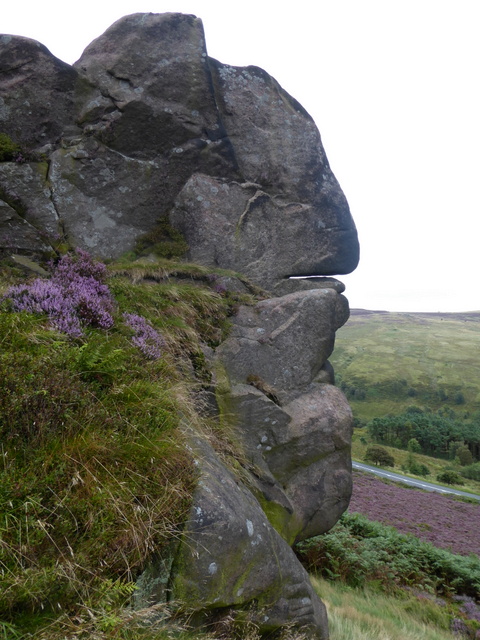
I always think this looks like a pointing finger

p1010225ramshaw-rocks

Ramshaw Rocks

There was very low light and the rain was never far away during the whole of our walk.

p1010226ramshaw-rocks

Looking towards Hen Cloud again

p1010228ramshaw-rocks

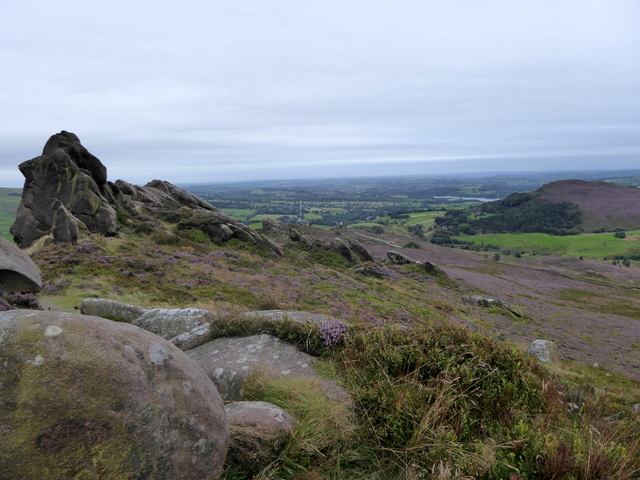
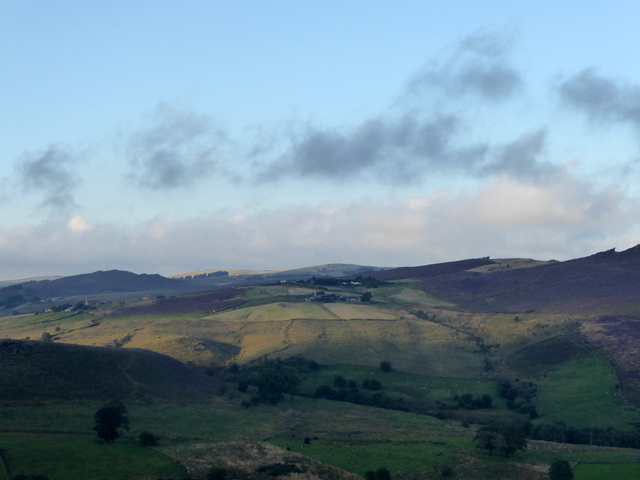
Another view from the rocks

p1010230ramshaw-rocks

Richard found a pleasant place to sit. Underneath him was a shelter from wind and rain. I can imagine that sheep would like it here in the winter.

p1010232ramshaw-rocks

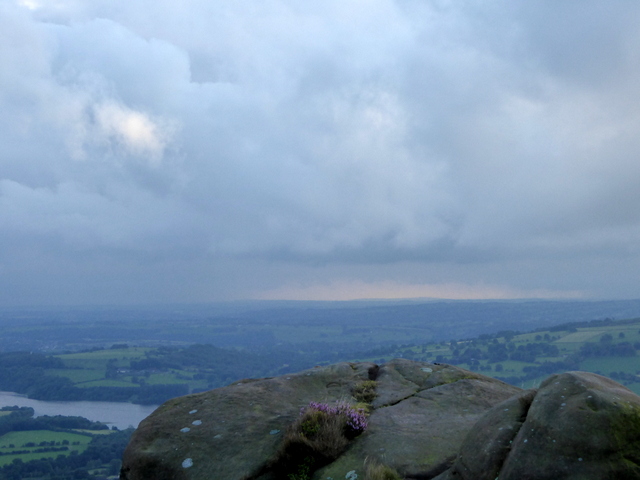
Looking down to the road beneath.

p1010233ramshaw-rocks

Ramshaw Rocks

p1010234ramshaw-rocks

I call this rock the Top Hat. Those of you who know the 1995 TV adaptation of Pride and Prejudice with Jennifer Ehle and Colin Firth may recognise this rock.  

We returned to the car and went back to out caravan to spend our last night away from home.  The next morning we set off at 6.00 am to travel to Sheffield to collect Elinor before Alice set off for work at 8.00 am.  We took her back to Blackshaw Moor, collected the caravan and went home.

Thanks for visiting!

Share this:

  • Share on X (Opens in new window) X
  • Share on Reddit (Opens in new window) Reddit
  • Share on Pinterest (Opens in new window) Pinterest
  • Share on Facebook (Opens in new window) Facebook
  • Email a link to a friend (Opens in new window) Email
  • Share on Tumblr (Opens in new window) Tumblr
  • Print (Opens in new window) Print
  • Share on Pocket (Opens in new window) Pocket
  • Share on LinkedIn (Opens in new window) LinkedIn
Like Loading...

Rain Almost Stops Play

01 Tue Nov 2016

Posted by Clare Pooley in Days out, holidays, Rural Diary, walking

≈ 44 Comments

Tags

good food, Hen Cloud, Meerbrook, Peak District, Rain, Ramshaw Rocks, The Lazy Trout, The Roaches, Tittesworth Water, views, walking

We woke on the fourth full day of our holiday to thick cloud and while we ate our breakfast we heard the first raindrops on the roof of our caravan.  We spent a little time tidying and cleaning the caravan and then drove into town to do some shopping in the supermarket.  It was very wet by the time we had finished so we were glad to get back and have a hot cup of coffee.  We had arranged to have a meal with Richard’s brother Chris and it was booked for 1.30 pm at ‘The Lazy Trout’ in Meerbrook, a village a few minutes drive away.  We set off at 1.15.

Photograph borrowed from the internet.

My brother-in-law arrived shortly after we did and we enjoyed an extremely pleasant meal in this very welcoming place.  If anyone is in the area I would heartily recommend the food – it is delicious!

We had thought we might have a walk round Tittesworth Water after our meal but the rain was still heavy so we returned to our caravan for hot drinks and a chat.  Chris stayed with us until 6.30 pm by which time the rain had stopped.  Richard and I decided not to waste a nice evening and so drove to Hen Cloud and did our once yearly clamber up to the top.

p1010201view

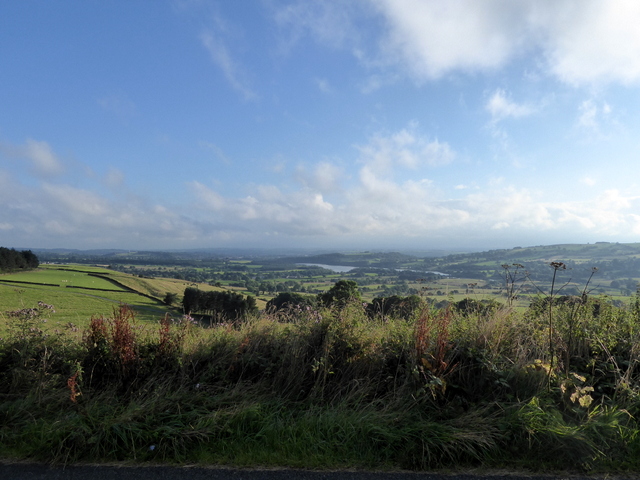
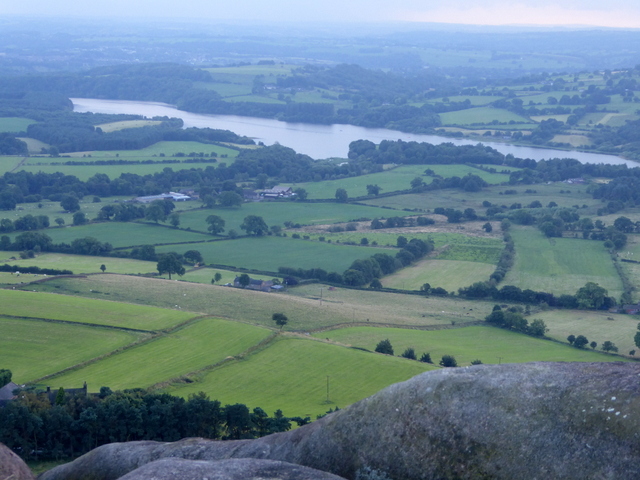
Looking towards Tittesworth Water from where we parked the car.

p1010202ramshaw-rocks

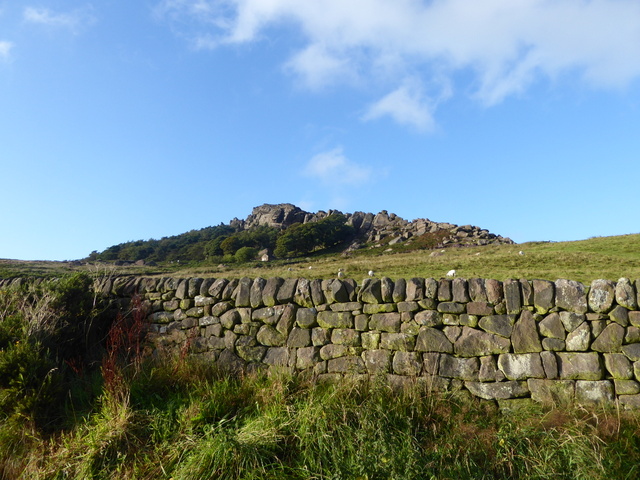
Looking over the wall towards The Roaches

p1010203hen-cloud

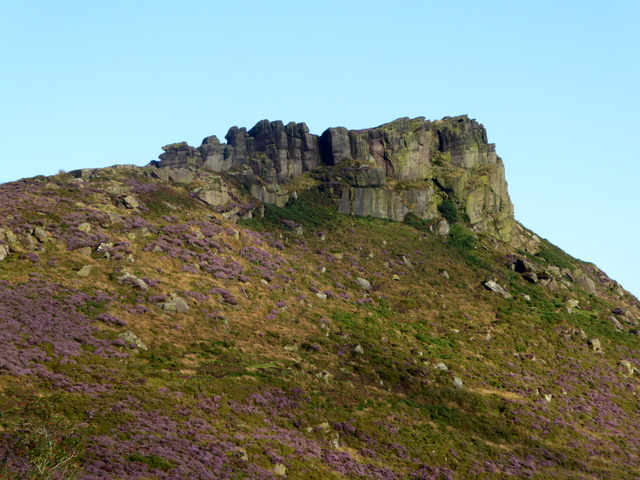
Hen Cloud

p1010204hen-cloud

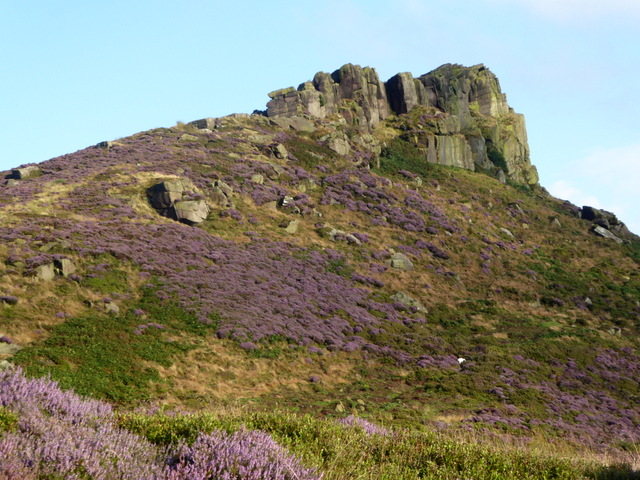
Hen Cloud again

p1010205hen-cloud

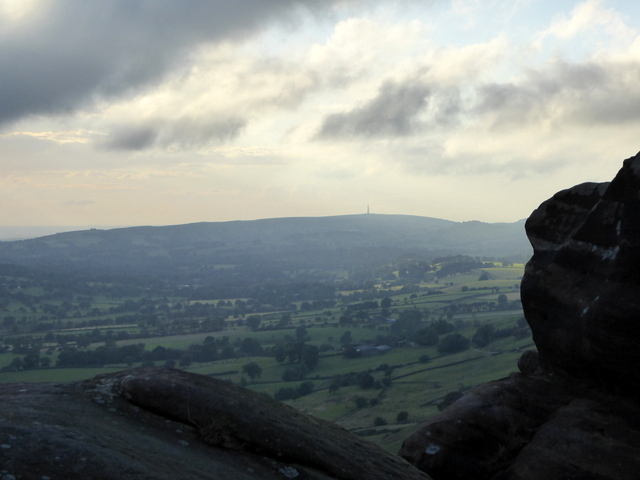
Looking East from halfway up the hill.  Ramshaw Rocks are on the left of the photo

p1010206hen-cloud

Looking towards Ramshaw Rocks from even further up Hen Cloud

p1010207hen-cloud

View down to the road and beyond to Tittesworth Water from the top of Hen Cloud. We noticed more bad weather approaching!

p1010208hen-cloud

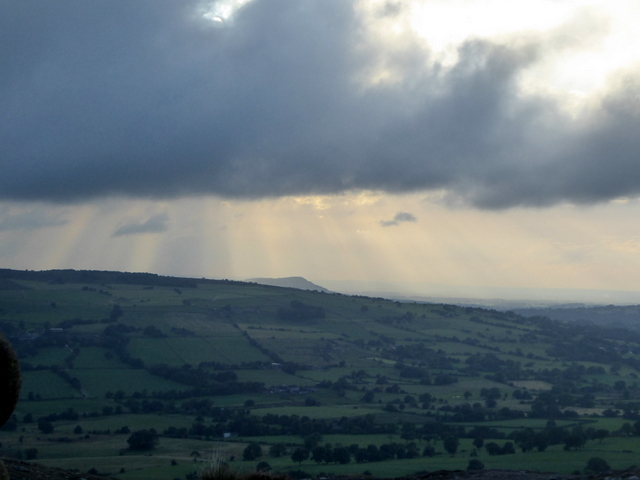
Definitely more rain on the way!

p1010209hen-cloud

Threatening clouds

p1010210hen-cloud

It still didn’t look too bad in this direction

We decided to get back to the car before the rain arrived.

p1010211hen-cloud

One last look at the reservoir…

p1010212hen-cloud

…and at the views from the top

p1010213hen-cloud

We would have preferred to have stayed up at the top for much longer but the sensible thing to do was to get to the bottom before the rain caused the rocks to get slippery and the low clouds to lessen visibility.  We were surprised to see a group of young boys being taken climbing up the Roaches as we got to the bottom of the hill.  By this time it was about 8.00 pm and the thick cloud was making it very dark.

We were back at our caravan before the rain began again.

To be continued…

Thanks for visiting!

Share this:

  • Share on X (Opens in new window) X
  • Share on Reddit (Opens in new window) Reddit
  • Share on Pinterest (Opens in new window) Pinterest
  • Share on Facebook (Opens in new window) Facebook
  • Email a link to a friend (Opens in new window) Email
  • Share on Tumblr (Opens in new window) Tumblr
  • Print (Opens in new window) Print
  • Share on Pocket (Opens in new window) Pocket
  • Share on LinkedIn (Opens in new window) LinkedIn
Like Loading...

The Cat and Fiddle

25 Tue Oct 2016

Posted by Clare Pooley in Days out, holidays, plants, Rural Diary, walking, wild flowers

≈ 70 Comments

Tags

Bird's-foot Trefoil, Cat and Fiddle pass, Cat and Fiddle pub, Cladonia pleurota, Common Cottongrass, Common Hawker dragonfly, common knapweed, common ragwort, conifer plantation, Crosswort, Derbyshire Bridge car park, driven grouse shooting, eyebright, Goyt Valley, harebell, Harlequin ladybird, heath bedstraw, heather, Kestrel, Knotted Pearlwort, Lesser Stitchwort, Lousewort, Meadow Crane's-bill, milestone, Mountain Pansy, old coach road, Peak District, River Goyt, Shining Tor, Sneezewort, tormentil, Upright Hedge Parsley, walking, yarrow

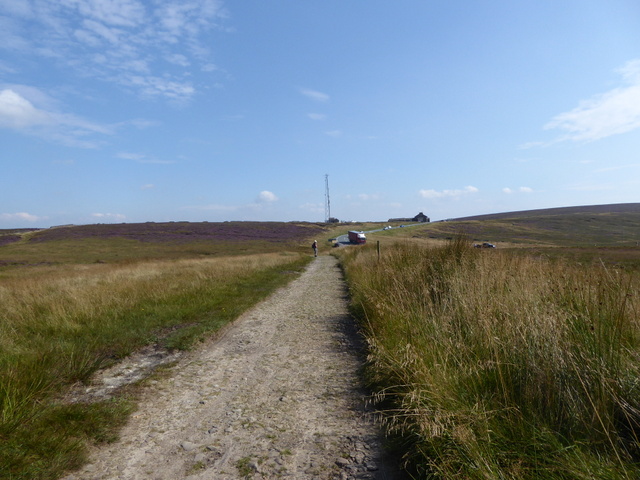
On the third day of our stay in the Peak District we decided on a slightly longer walk than usual and took a picnic with us.  We drove towards Buxton but just before entering the town we took the A54 road off to the right and then a minor road off that road and parked the car in the Derbyshire Bridge car park.  This is a pleasant spot and is used as a picnic area.

p1010128ladybird

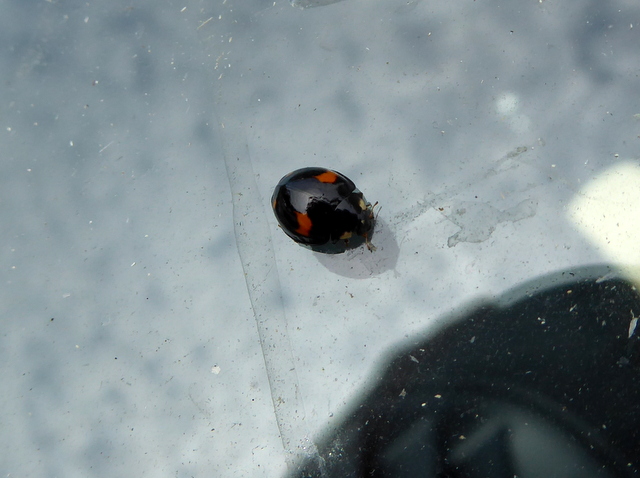
A ladybird on our rather dusty windscreen

p1010129ladybird-larva

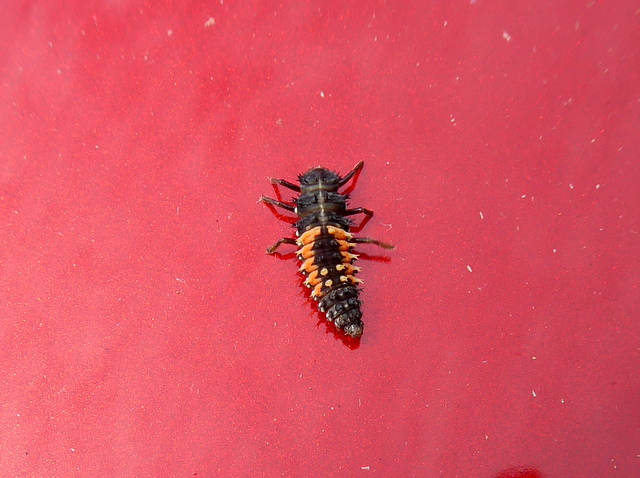
A Ladybird larva on the car.

Unfortunately, both ladybird and larva are Harlequin Ladybirds which have now outstayed their welcome in this country.  I wish that those in authority were more wary about using introduced insects to control other insects.

We were delayed at the beginning of our walk by the car beeping an alarm whenever we tried locking the doors.  After disturbing a couple who were having a picnic with their little grandson we decided that we ought to look at the car’s manual.  We found that the car was telling us that we were locking the spare key inside the car and that it would rather we didn’t.  I took the key out of my handbag which I had left in the boot and we were then able to start our walk.

p1010132infant-r-goyt

The first part of the walk was along a path beside the infant River Goyt.

p1010133dragonfly

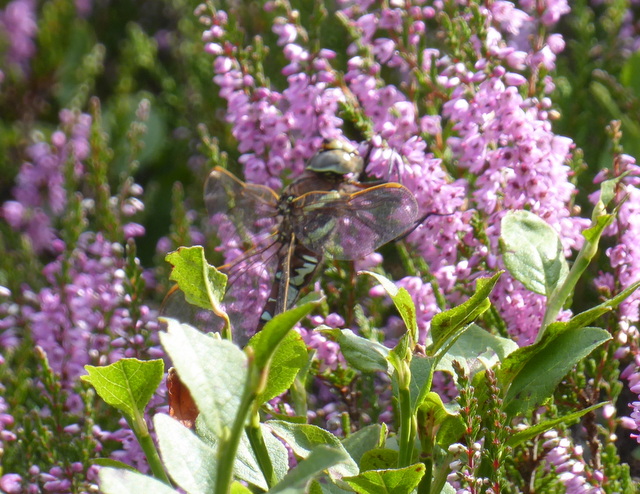
I saw this Common Hawker dragonfly (Aeshna juncea). It was typically wary and didn’t settle where I could get a good photo of it.  Only its head and wings and a little part of its thorax/abdomen can be seen here.

p1010134flower

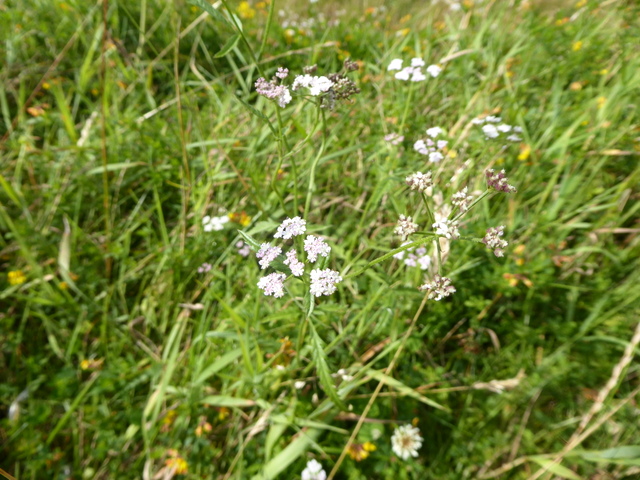
Upright Hedge Parsley (Torilis japonica)

p1010137river

The Goyt was running along merrily

p1010138flowers

Lesser Stitchwort (Stellaria graminea)

p1010135flowers

Bird’s-foot Trefoil (Lotus corniculatus) and Upright Hedge Parsley

p1010140river

A bridge across the water

p1010142view

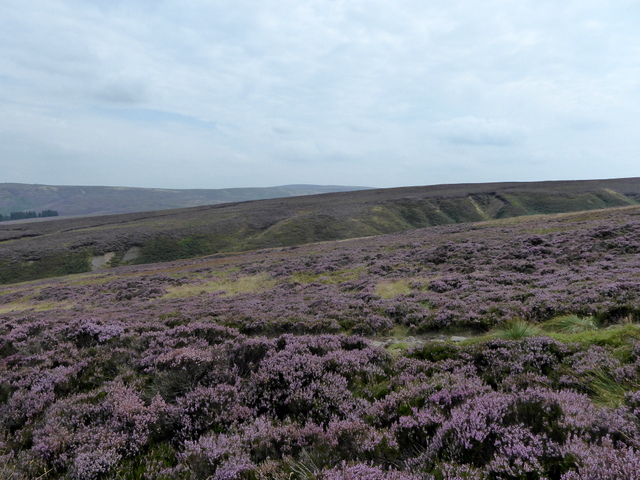
A view of the surrounding moorland

This is a typical sight in moorland where driven grouse shooting takes place.  The patches on the hillside show where the heather has been burned to promote new growth shoots for the grouse to feed on.   I have recently signed a petition to have this sport banned as I think that instead of conserving wildlife these estates try to eradicate any creatures that may be a threat to their grouse.  All raptors, including the scarce Hen Harrier and Golden Eagles are considered a threat and are regularly shot or poisoned illegally by some, not all, gamekeepers employed on some of these estates.  In Scotland hundreds of thousands of Mountain Hare are culled every year.  I’ve signed another petition about this too!  I feel very strongly about this as you no doubt have realised.

p1010143heather

The Heather (Calluna vulgaris) was in full bloom

p1010145path

The path across the moor

At this point we turned onto another path which rose up towards a plantation.  We entered the forest through a gate.

p1010146path

The forest path

p1010147wall

Inside the forest were walls and the remains of buildings

This reminded me of the stone walls that Allen from New Hampshire Garden Solutions  finds in his local forest.  In this case the land that was originally farmed for sheep was subsequently acquired by a company or organisation that planted conifers but didn’t bother dismantling the walls.

p1010150weir

A weir we found halfway through the plantation

p1010151bridge

Richard on the bridge over the river

p1010152bridge

The simple bridge

p1010153river

The barrier just up-stream from the bridge and weir

p1010155flower

Lousewort (Pedicularis sylvatica)

This was a flower I had never seen before.  It is very small and the leaves are tiny!  It is semi-parasitic on other plants’ roots.

p1010156view

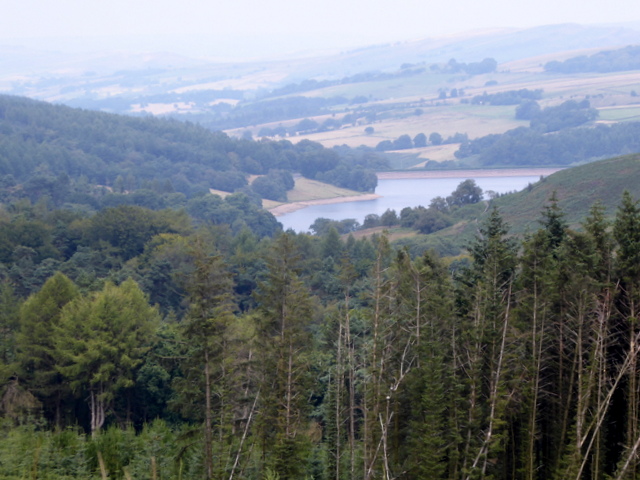
We could see one of the local reservoirs from the path that went up by the side of the plantation.

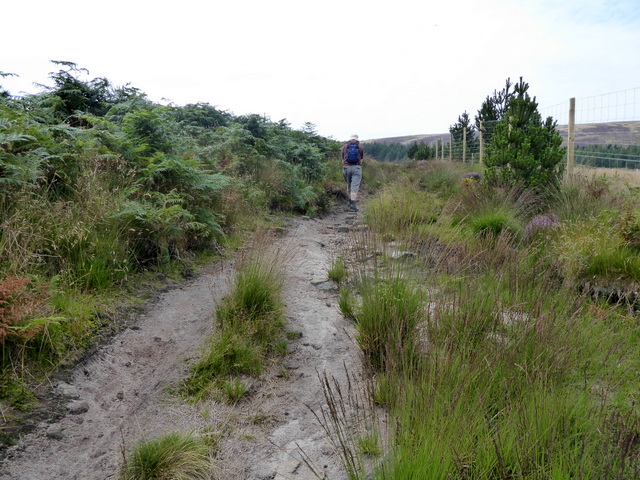
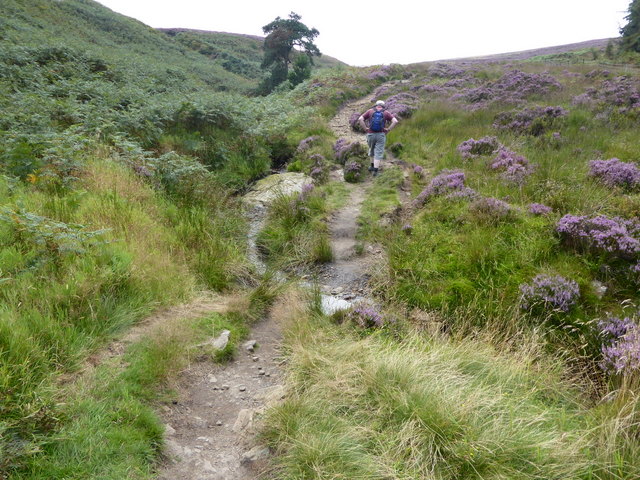
p1010157path

Our path….

p1010158path

…. got rougher and steeper

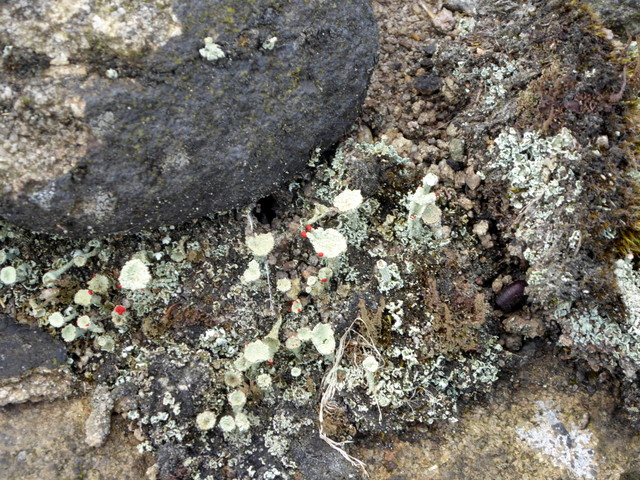
p1010161lichen

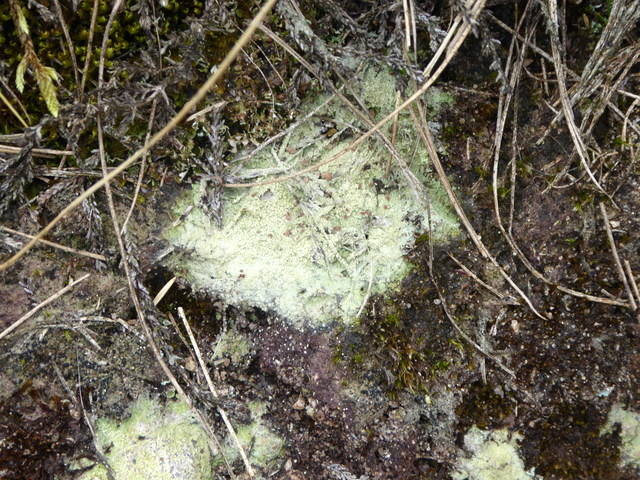
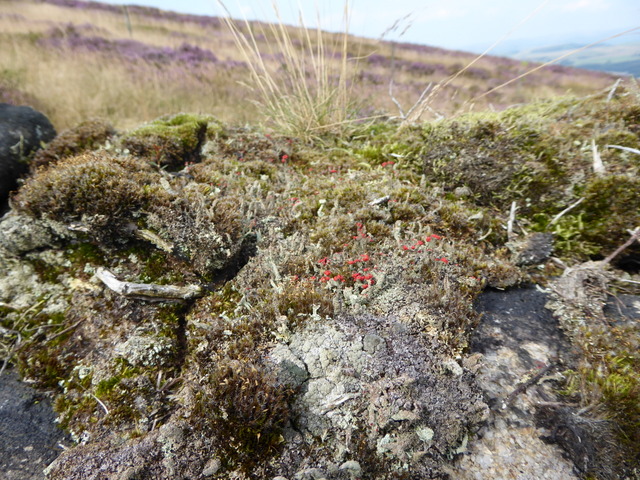
I think this lichen may be Cladonia pleurota

p1010163plant

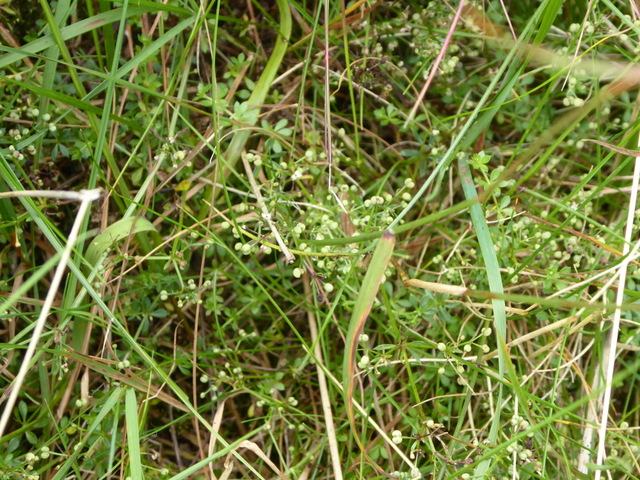
Heath Bedstraw (Galium saxatile)

p1010164insect

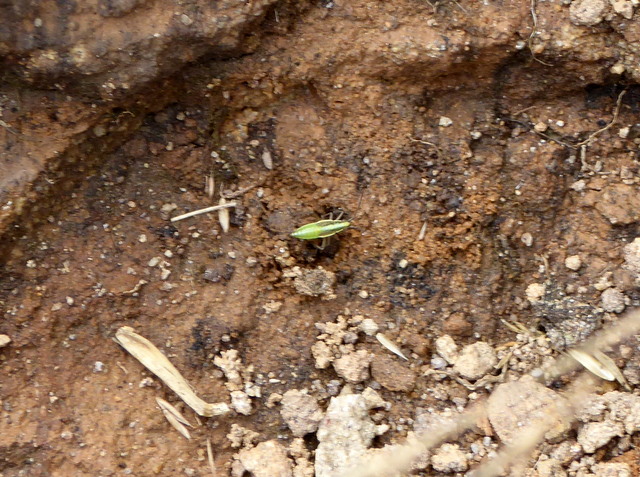
I cannot identify this tiny bug. It marched purposefully across this rather bleak landscape.

The three photos above were taken while we rested and ate our lunch.  This last part of the walk I found exhausting as it was a continuous uphill climb and on very uneven and rough paths with large, loose rocks to walk over.

p1010166view

This is the view I saw when I looked up from my seat on a rock

The weather was cloudier and cooler than earlier in the week.  We were glad of this!

p1010167cotton-grass

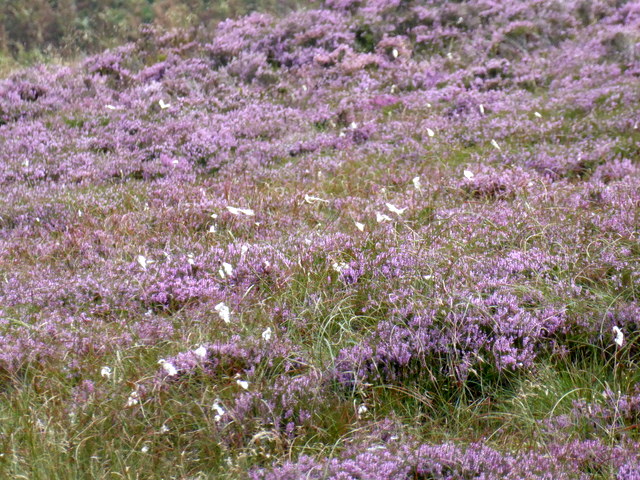
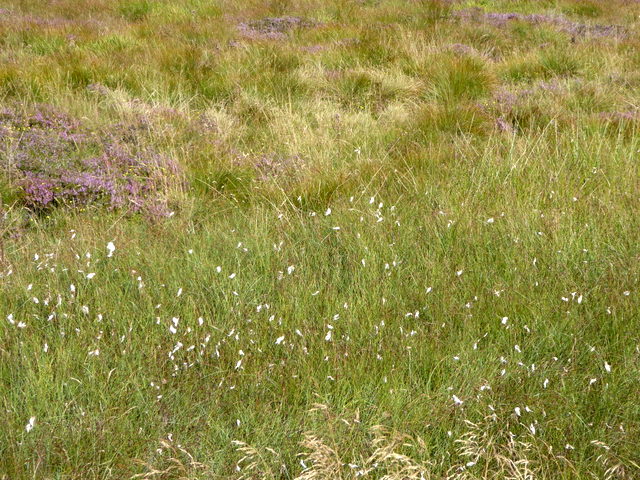
There was still plenty of late Common Cottongrass (Eriophorum angustifolium) in amongst the Heather

p1010168lichen/slime mould

This might be a slime mould but I am not sure!

View from the path
View from the path
View from the path
View from the path
p1010171kestrel

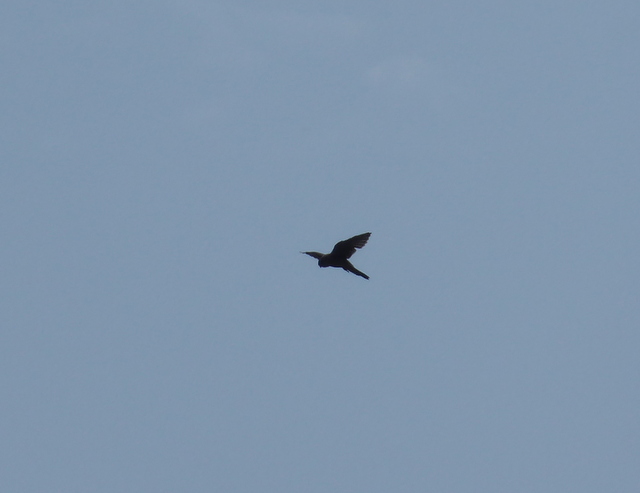
A Kestrel (Falco tinnunculus) hovering high up in the sky

p1010172lichen

A veritable garden of lichen and moss on top of a stone wall.  It’s a pity the photo isn’t any clearer.

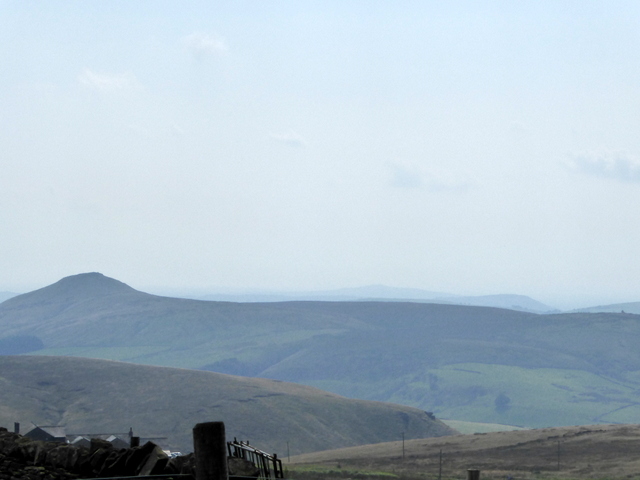
Shining Tor from a distance
Shining Tor close up

We had thought we might go up Shining Tor but we changed our minds when we had got to the top of the stony path.  We were too tired.  Why is it called ‘Shining Tor’?  I don’t know.

p1010176view

This is another view from where we were standing.

The visibility wasn’t great and the distant hills were lost in haze but the sky above us was clear and blue now.  We began to descend towards the Cat and Fiddle pass (I expect you were wondering why this post was called Cat and Fiddle) and the Cat and Fiddle pub.

p1010177pansy

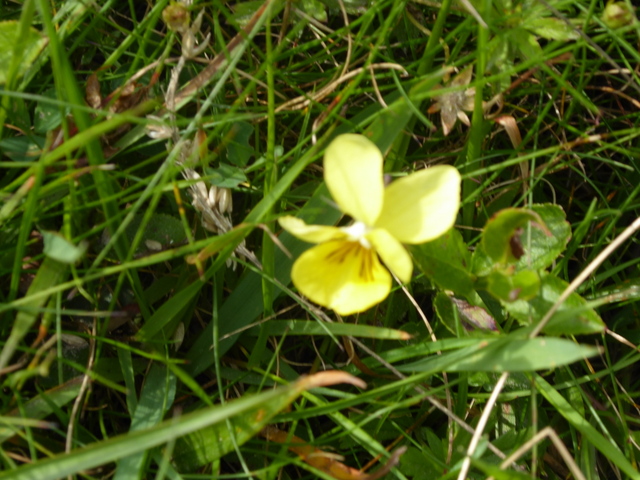
An out of focus photo of a wild pansy growing next to the path. I think it may be a Mountain Pansy (Viola lutea)

p1010178pansy

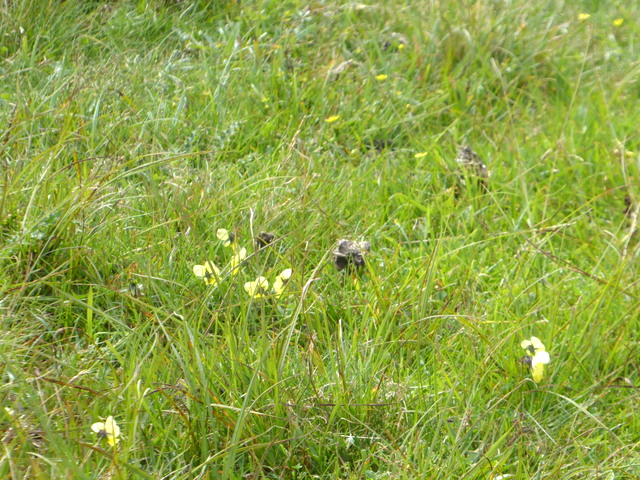
More pansies

p1010179pansies

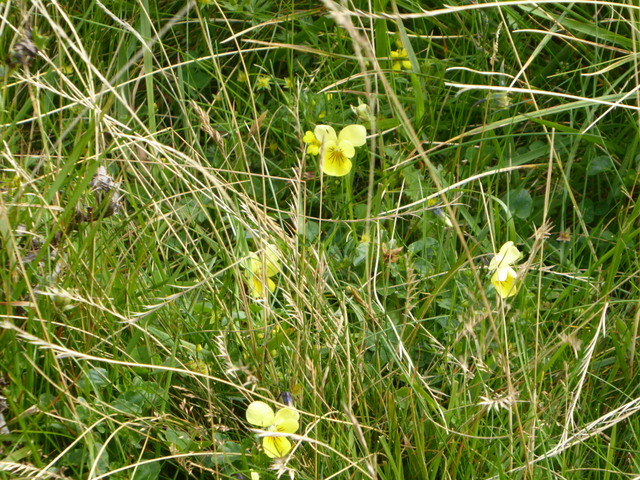
and even more pansies!

p1010180pansies

Just one more!

p1010181view

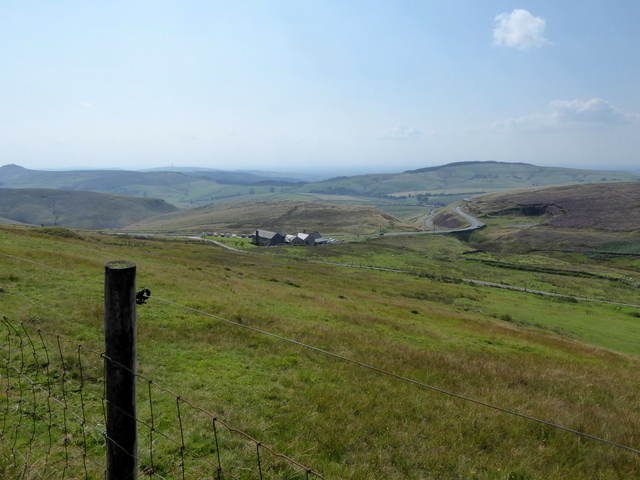
I eventually looked up and noticed the view. The road you see in the middle distance is the Cat and Fiddle Pass.

Harebells ( Campanula rotundifolia)
Tormentil (Potentilla erecta)
p1010184cat-and-fiddle

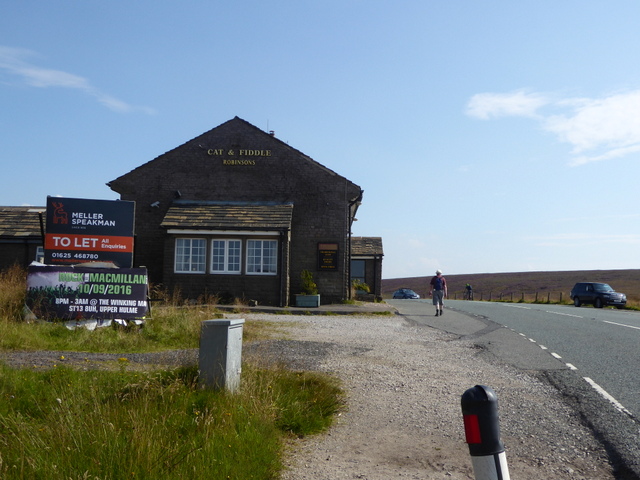
The Cat and Fiddle pub (on the right of the photo)

p1010185cotton-grass

I saw more Cottongrass next to the path but this was definitely past its best!

p1010187mile-stone

I then saw an interesting-looking stone just to the left of the path

p1010186mile-stone

On closer examination I found it was an old mile-stone and realised that the path we had been walking on since Shining Tor was part of the old coach road.

p1010188old-road

I looked at the path and saw that it looked very much like an old road. Richard is ahead of me here as usual and is near where the path joins the new busy road.

p1010189orchid

I found a very late orchid in the grass. It was faded and I couldn’t identify it.

p1010190cat-and-fiddle

We were disappointed to discover that the pub was shut and we weren’t to get a drink after all.

It does seem sad that the place that the pass was named after should be shut and empty.  We walked past the pub.  Through the windows we could see everything had been left as it was on the day it had shut months before.  There was even a menu board extolling the virtues of a meat pie!

We soon turned off the main road onto a narrow road that would eventually bring us back to the carpark.  I saw many different plants on the way.

p1010191flowers

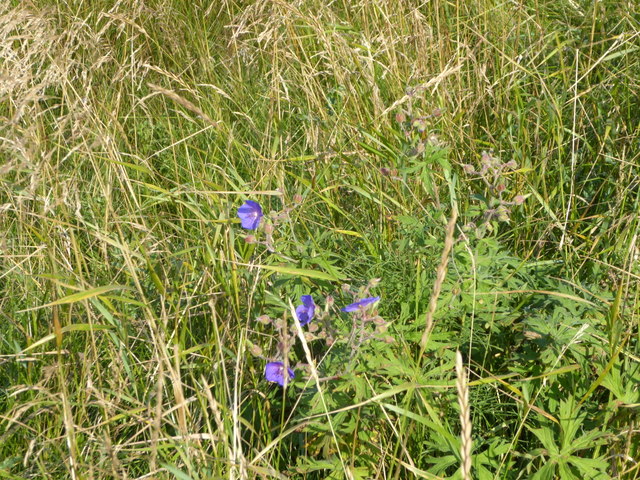
Meadow Crane’s-bill (Geranium pratense)

p1010192cotton-grass

Lots more Common Cotton Grass

p1010193flowers

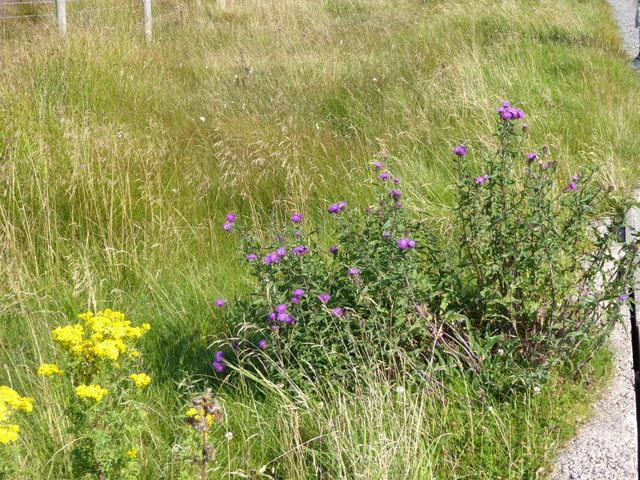
Common Ragwort (Senecio jacobaea) and Common Knapweed (Centaurea nigra)

p1010195flowers

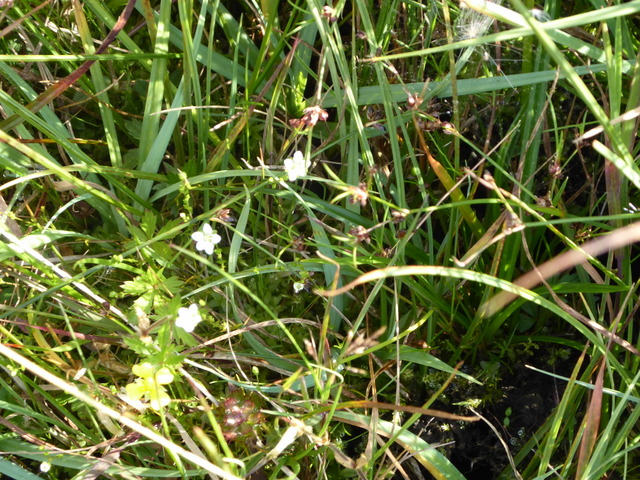
Yet another poor photo I’m afraid! This is another flower I had never seen before – Knotted Pearlwort (Sagina nodosa)

p1010197flower

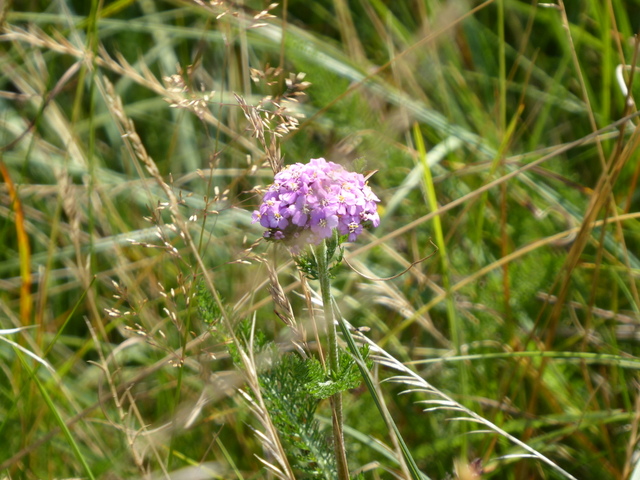
A very pink Yarrow (Achillea millefolium)

p1010198flower

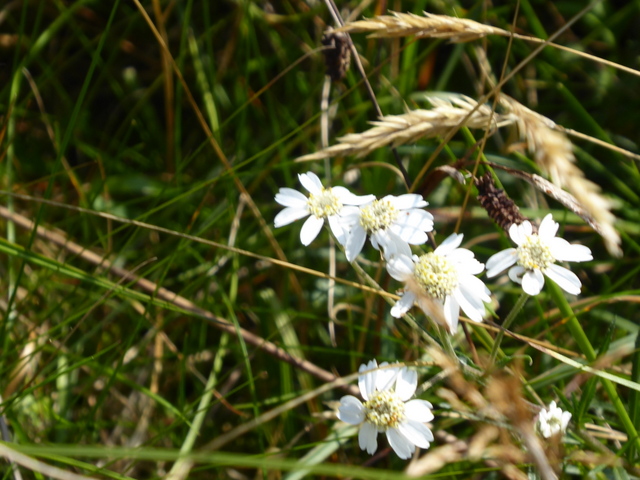
Sneezewort (Achillea ptarmica)

p1010199flower

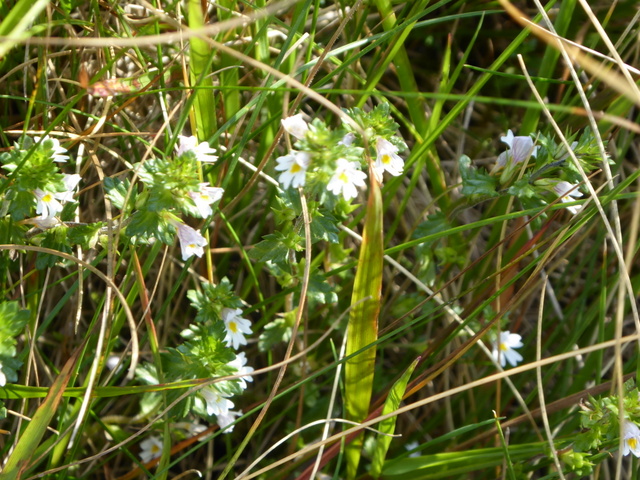
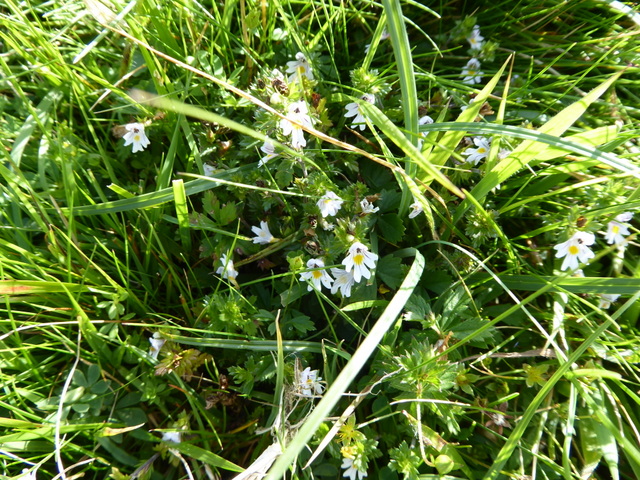
Eyebright (Euphrasia officinalis agg.)

p1010200flower

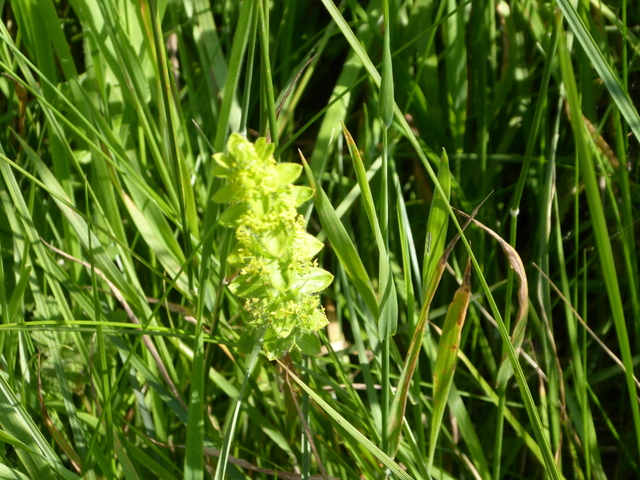
Crosswort (Cruciata laevipes)

We found the car, drove back to our caravan and made ourselves a nice cup of tea.  We were quite tired after our long walk and found it difficult to stay awake.  We had arranged to have lunch with my brother-in-law the next day so Richard booked a table at a local restaurant and phoned his brother to let him know when and where we were to meet each other.

To be continued….

Thanks for visiting!

Share this:

  • Share on X (Opens in new window) X
  • Share on Reddit (Opens in new window) Reddit
  • Share on Pinterest (Opens in new window) Pinterest
  • Share on Facebook (Opens in new window) Facebook
  • Email a link to a friend (Opens in new window) Email
  • Share on Tumblr (Opens in new window) Tumblr
  • Print (Opens in new window) Print
  • Share on Pocket (Opens in new window) Pocket
  • Share on LinkedIn (Opens in new window) LinkedIn
Like Loading...

Peveril Castle

09 Sun Oct 2016

Posted by Clare Pooley in Days out, holidays, plants, Rural Diary, wild flowers

≈ 54 Comments

Tags

Castleton, courtyard, English Heritage, harebells, maidenhair spleenwort, Mam Tor, Peak District, Peveril Castle, ruins, the keep, views, wild marjoram

The day following our walk at Ilam we had arranged to meet Alice and Elinor at Castleton in Derbyshire.

Castleton is a pretty village and a great place to stay if you want to walk in the hills or visit the mines.  For some years we stayed at a site just outside the village every Whitsun half-term holiday but gave up eventually because we got tired of the crowds of people everywhere.  Looking at the numbers of visitors when we went there this August, it seems that there are fewer visitors in the later summer than earlier in the year.

Alice and Elinor took the bus from Sheffield and arrived ten minutes before us.  We had got delayed by having to make a detour round an accident on the Leek to Buxton road.  We met them in a pub and decided to stay there and have some lunch.

After lunch we wandered through the village and noted all the changes made since we had last visited.  We all agreed that it would be good to climb up to Peveril Castle.  I didn’t manage to take any pictures on my ascent to the castle.  I found it much more tiring than I remembered and in retrospect maybe I shouldn’t have had quite so much for my lunch!  The path zig-zags up the steep climb from Castleton and we got very hot in the bright sunshine.  Alice sped up the path before us; she lives in a very hilly city and is used to walking everywhere.  Eventually we got to the entrance to the castle which is through the remains of one of the gatehouses built in the 12th century.  We then entered the main courtyard of the castle which is now a large lawn.  Originally this space had many buildings in it; a great hall, a kitchen, perhaps guest halls, servants and retainers homes,  store sheds, stables and the like.  It is possible to see the outline of some of these long-demolished buildings.

p1010089pev-castle

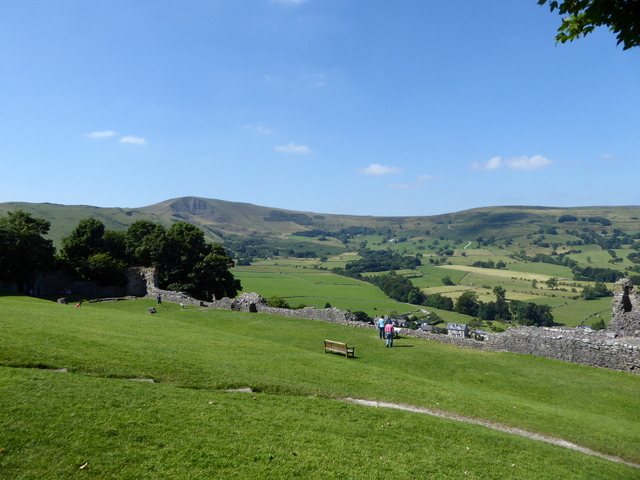
The keep at Peveril Castle with the steep lawn which is all that is left of the castle.

p1010086view-from-peveril-castle

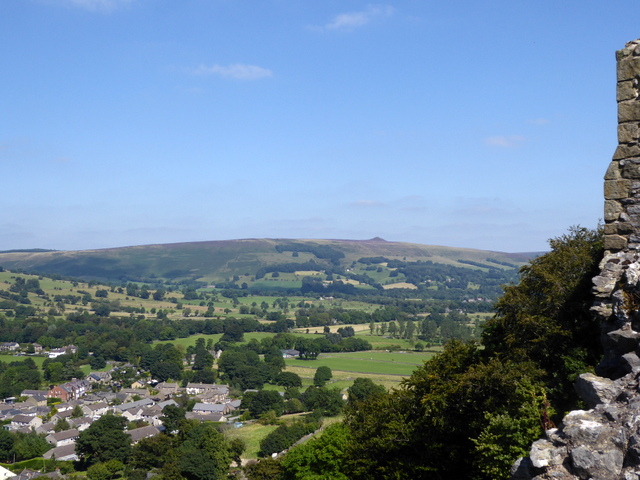
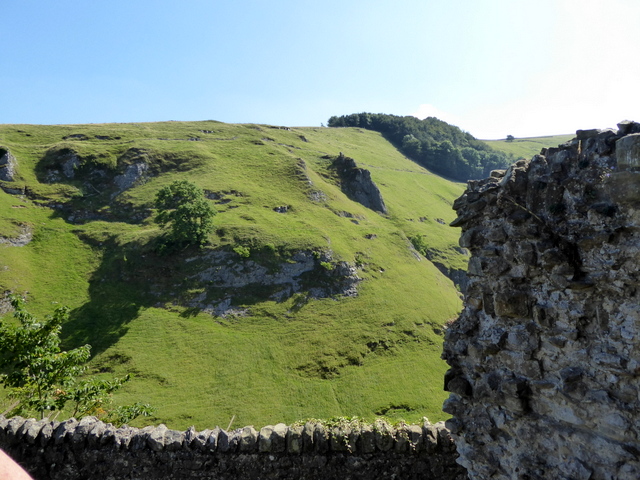
Looking down the courtyard to the remains of the curtain wall and beyond to the surrounding Peak District hills.  Mam Tor is the peak to the left of centre.

The curtain wall which surrounded the courtyard was constructed early on in Norman times.  It was built by the Peverils and apparently includes Roman tiles probably taken from the ruins of the Roman fort at Navio (Brough).

p1010087pev-castle

The curtain wall and gatehouse.

William the Conqueror’s supposedly illegitimate son William Peverel was a great favourite with the Conqueror and after the conquest he was granted the Royal Manors of the Peak.  In this way he became the administrator of the Royal Forest of the Peak in Castleton on behalf of the Conqueror.  He built a castle in 1080 on this site which is naturally strategically strong; it is quite difficult to get to and also easy to defend.  It was originally built of wood but after some years it was thought expedient to replace it with a stone structure and this was done in about 1175 and the remains of this later building is what is seen today.

p1010090pev-castle

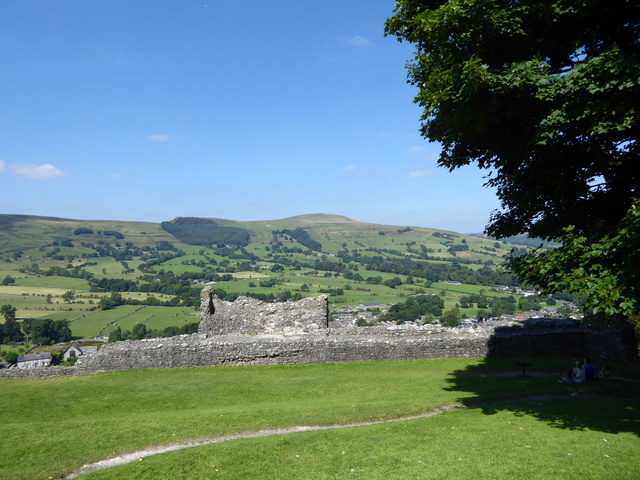
Looking over the curtain wall to Castleton below

p1010092pev-castle

One of the views from the courtyard

p1010093pev-castle

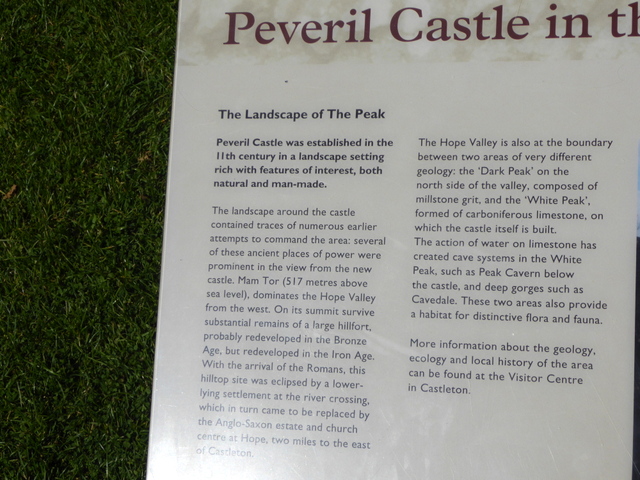
An information board at the castle

p1010094pev-castle

Mam Tor


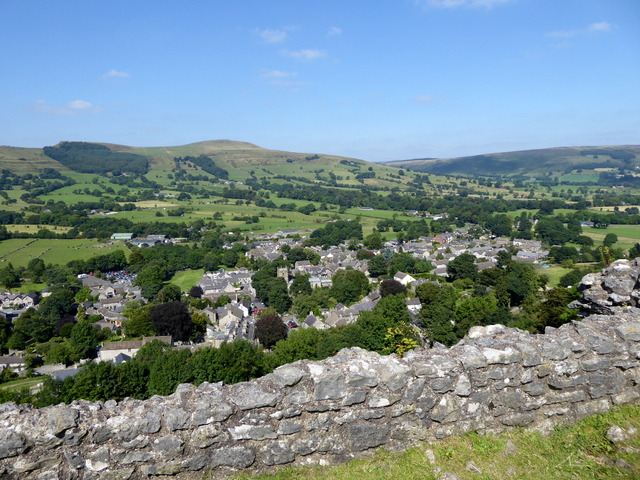
Castleton
Castleton
Castleton
Castleton
p1010098pev-castle

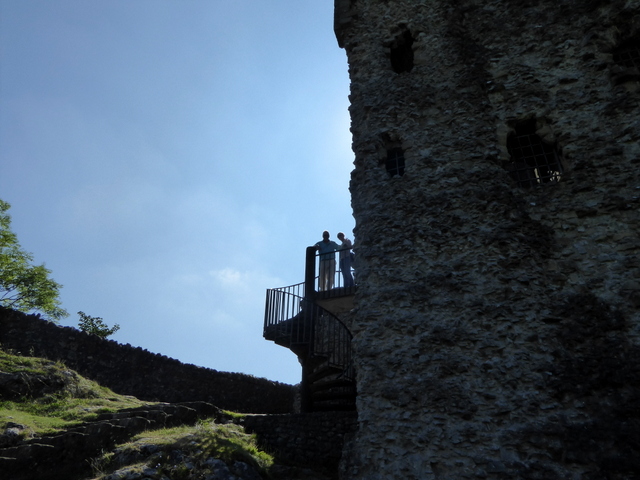
The entrance to the Keep

p1010099pev-castle

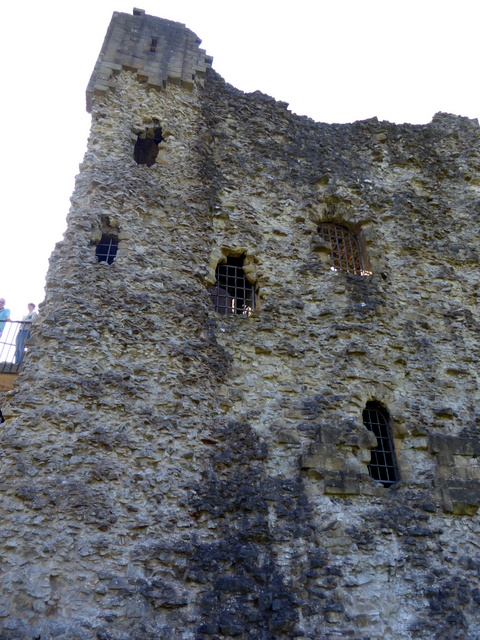
The Keep

The Keep was originally 60′ high and was faced with fine gritstone blocks.  These can still be seen on the south and east sides of the building.  You can see them at the top of the Keep and around the lower window in the photo above.

p1010100pev-castle

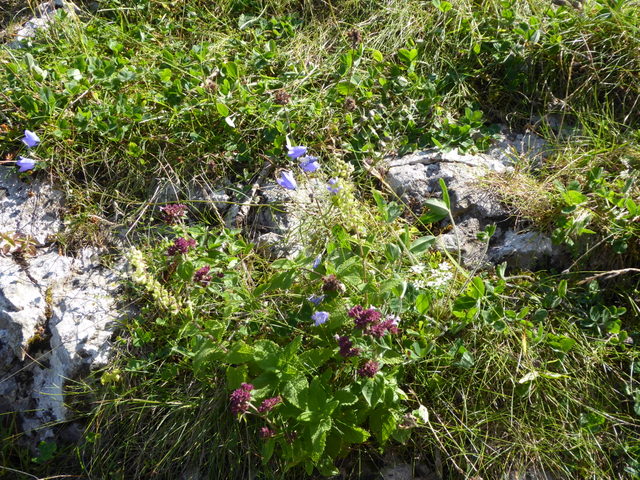
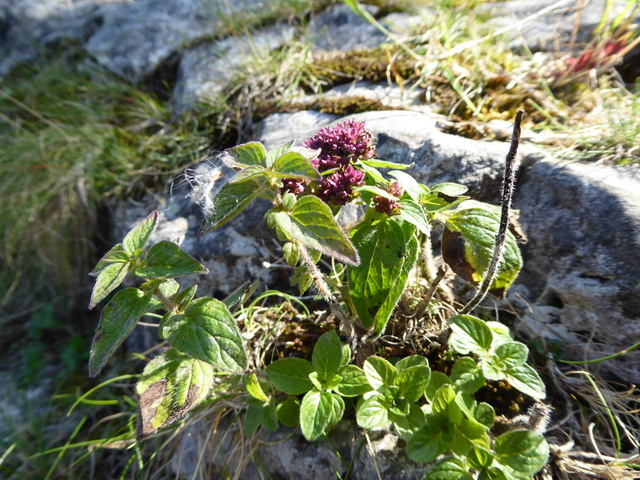
Harebells (Campanua rotundifolia) and what looks like Wild Marjoram (Origanum vulgare) growing in the courtyard.  There are a couple of other plants here that I can’t ID.  I wish I had looked more carefully at the time!

p1010101pev-castle

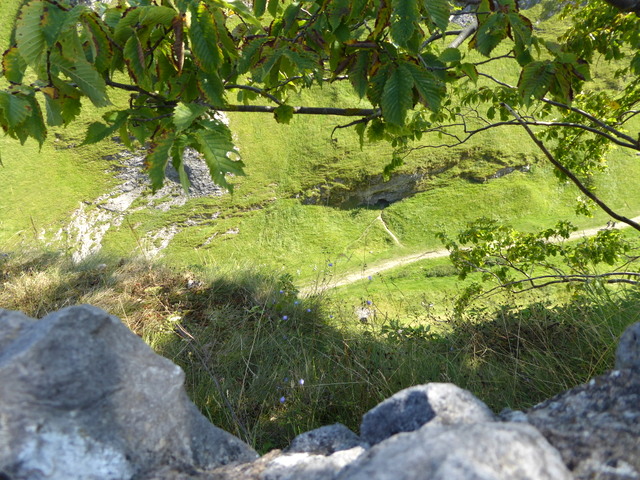
Looking down into Cavedale at the rear of the castle. Originally the approach to the castle was from this side with a bridge across a moat.

p1010121pev-castle

Cavedale

p1010102pev-castle

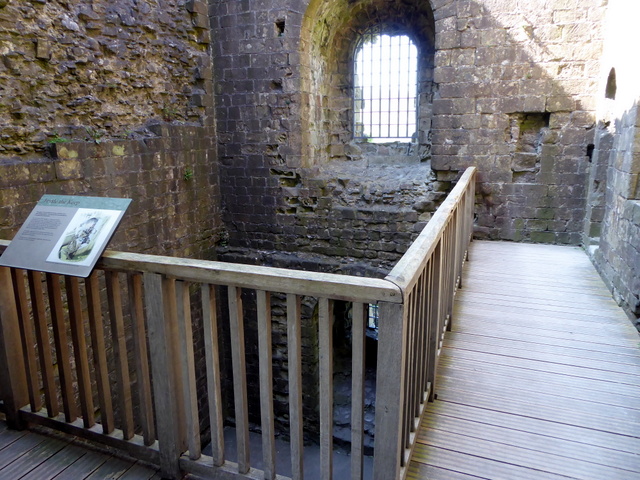
Inside the Keep

p1010103pev-castle

Inside the Keep

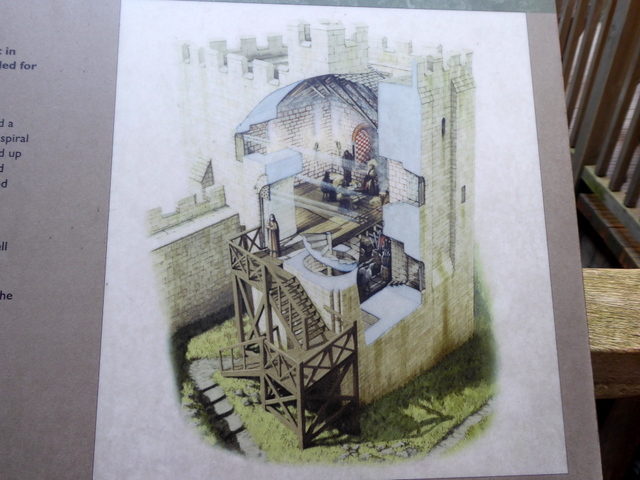
When the castle was rebuilt in stone in 1175/6 this Keep with round-headed windows was added.  The Keep was never meant to be lived in but was the administrative centre of the castle and would have been a place of refuge if ever the curtain wall was breached.

p1010109pev-castle

A drawing of what the Keep was thought to look like when it was built

In the 17th century the castle was considered too uncomfortable to live in and all the apartments except the Keep were demolished.  The Keep was retained to serve as a courthouse.  From then on until the early 19th century the place was left unoccupied and it quickly deteriorated.  Repairs and reconstruction work was carried out by the Duchy of Lancaster in the early 1800s who retained the castle until it was taken on by English Heritage.

This slideshow requires JavaScript.

p1010119pev-castle

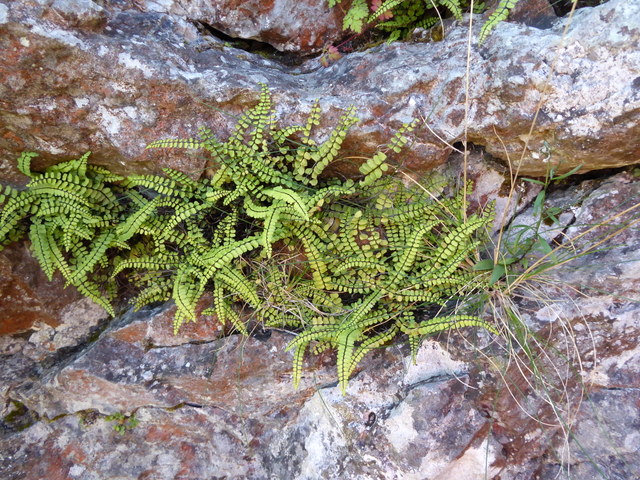
Maidenhair Spleenwort (Asplenium trichomanes)

p1010120pev-castle

More Wild Marjoram

p1010122pev-castle

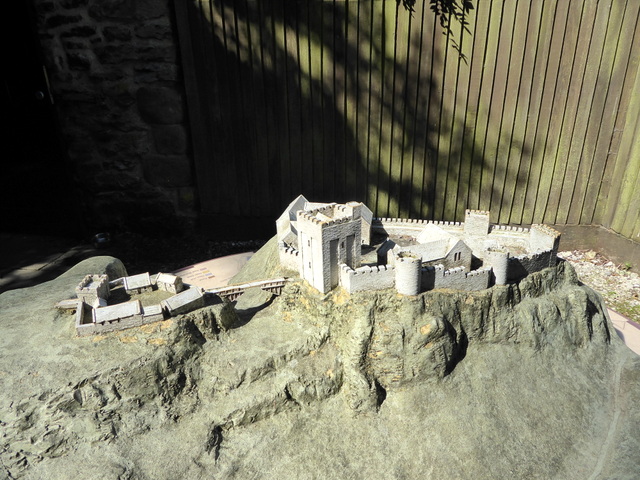
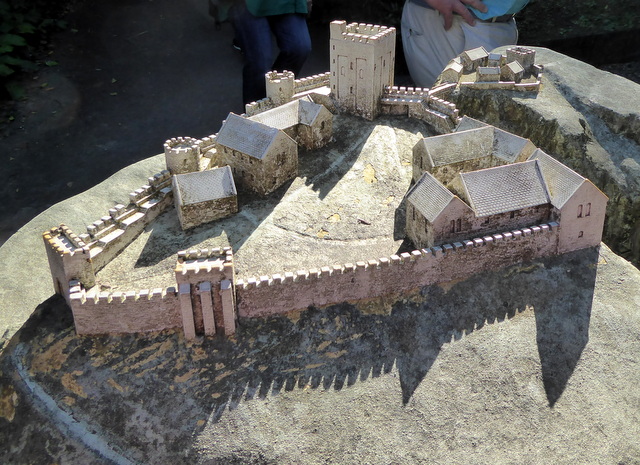
A model showing what the castle was supposed to look like when newly built

p1010123pev-castle

From another angle

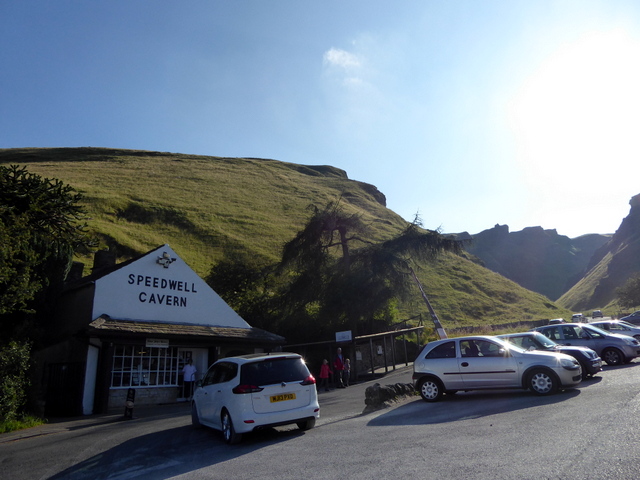
We spent a most enjoyable afternoon together.  Eventually it was time for the girls to catch their bus back to Sheffield.  Richard and I then drove back to Leek, stopping briefly just outside Castleton at the top of Whinnat’s Pass to take the following photograph.

p1010127speedwell-cavern

The entrance to Speedwell Cavern 

Thanks for visiting!

Share this:

  • Share on X (Opens in new window) X
  • Share on Reddit (Opens in new window) Reddit
  • Share on Pinterest (Opens in new window) Pinterest
  • Share on Facebook (Opens in new window) Facebook
  • Email a link to a friend (Opens in new window) Email
  • Share on Tumblr (Opens in new window) Tumblr
  • Print (Opens in new window) Print
  • Share on Pocket (Opens in new window) Pocket
  • Share on LinkedIn (Opens in new window) LinkedIn
Like Loading...

Peak District Holiday 2016

07 Fri Oct 2016

Posted by Clare Pooley in Days out, holidays, plants, Rural Diary, trees, walking, wild flowers

≈ 48 Comments

Tags

annual meadow-grass, Betony, bull, calves, cows, Devil's-bit Scabious, enchanter's nightshade, eyebright, flowers, former industrial landscape, garlic mustard, grasses, greater plantain, harebell, hart's-tongue fern, Hawthorn, Ilam Country Park, Ilam Cross, Ilam Hall, Ilam village, industrial landscape, lamb, Lesser Burdock, Maidenhair Pleenwort, Paradise Walk, Peak District, power station, Rabbit, River Manifold, rowan, Sheep's Fescue, Small Teasel, stile, The Battle Stone, tormentil, unimproved grassland, wind farm

Richard and I had a weeks holiday in the Peak District during August and stayed in our caravan as usual and at a favourite site.  We travelled on the 15th taking Elinor with us and once we had set up the caravan and had had a short rest we then drove to Sheffield as Elinor would be staying the week with Alice.  We had a cup of tea, a nice chat with Alice and Richard met Mona, Alice’s cat for the first time.
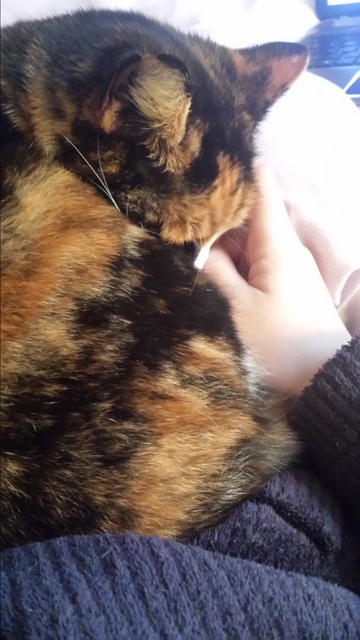
20151212_150009-1

This is Mona

Richard and I then returned to our caravan near Leek in Staffordshire calling in at the supermarket on the way where we bought enough food to keep us going for most of the week.  We couldn’t find anywhere to buy a take-away meal so we heated up a ready-made lasagna in the oven and had a very late but tasty dinner.

The weather forecast was for four days of good weather followed by cooler rainy weather so we thought we’d do as much walking in the dry at the beginning of the week as we could.  Our first full day was also Richard’s birthday and we decided to have lunch at the White Hart in Leek where we know we can get very nice Staffordshire oatcakes filled with cheese and bacon or cheese and sausage.  Before going in to Leek we had to put the awning up on the caravan.  An awning (for those who don’t know) is a tent, shelter or canopy which is attached to the side of a caravan which provides a little extra space to live in.  We find ours very useful, especially in wet weather as we can keep our soggy shoes and coats out there.

After lunch we tried to find a wood I wanted to walk in but we had great difficulty following the directions to it.  In the end we gave up and went to Ilam Park and walked from there.

p1010032ilam-hall

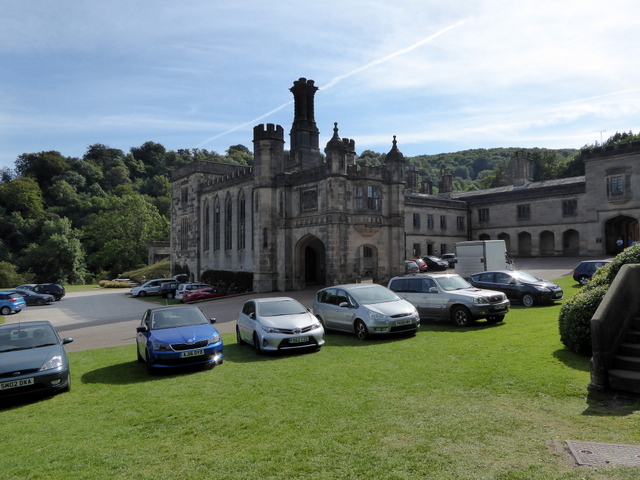
Ilam Hall which is now a Youth Hostel

From the carpark we walked towards the remains of the hall and through the archway to the other side of the building.

p1010034garden-at-ilam-hall

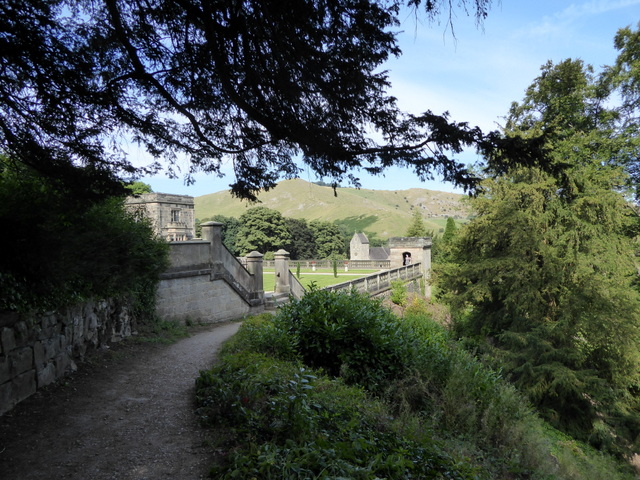
The gardens at Ilam

The gardens are very attractive and have places to sit and admire the scenery.  We made our way through the pleasure grounds, the path descending towards the River Manifold.
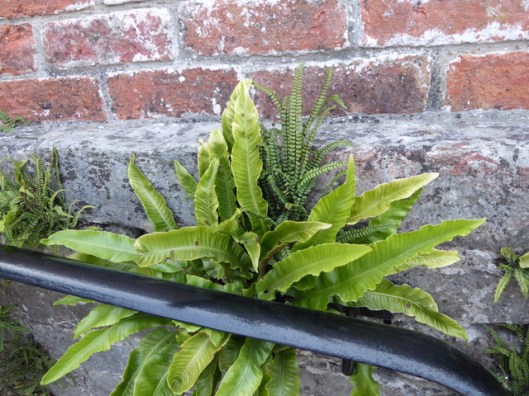
p1010033harts-tongue-fern

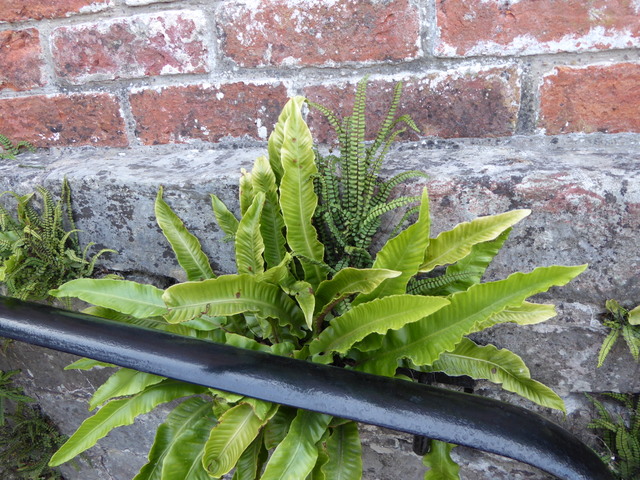
Hart’s-tongue Fern (Phyllitis scolopendrium) and Maidenhair Spleenwort (Asplenium trichomanes) decorate the wall behind the handrail.
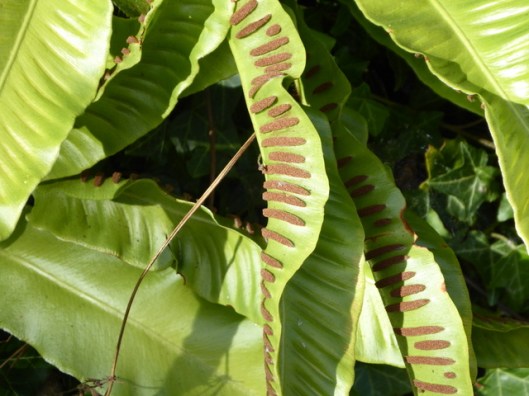
p1010036harts-tongue-fern

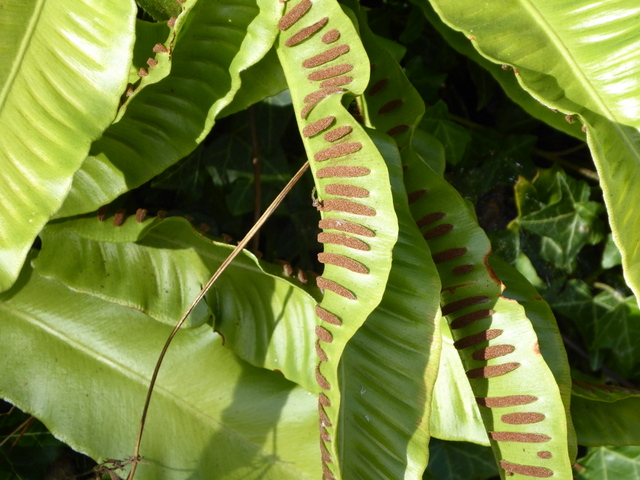
The underside of the leaves of the Hart’s tongue Fern have stripes of spore sacs.

p1010035r-manifold

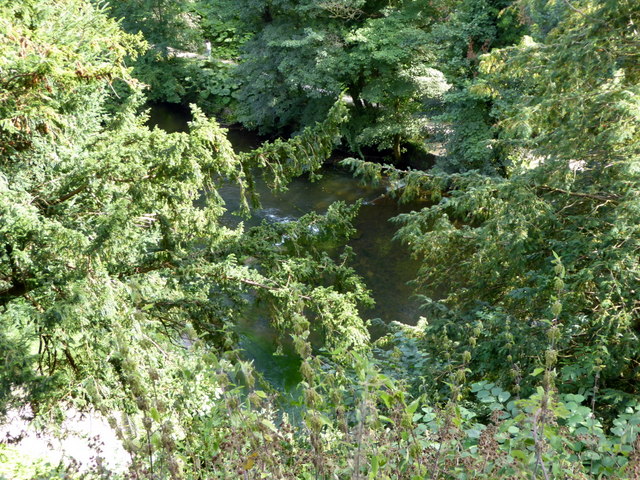
Looking down through the trees to the River Manifold
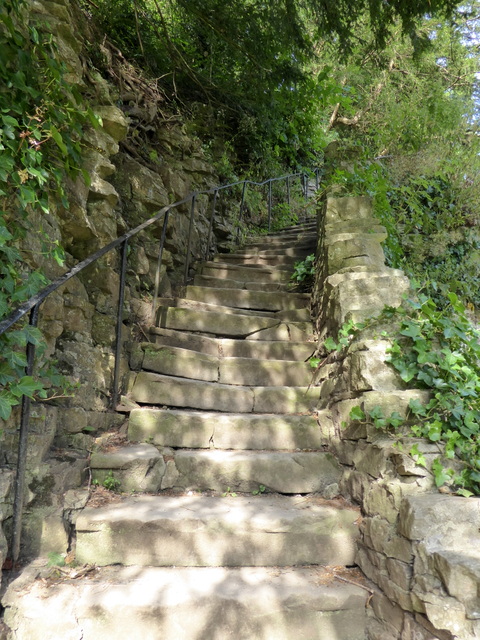
p1010037steps

Looking back up the steps we had just come down.
p1010038r-manifold

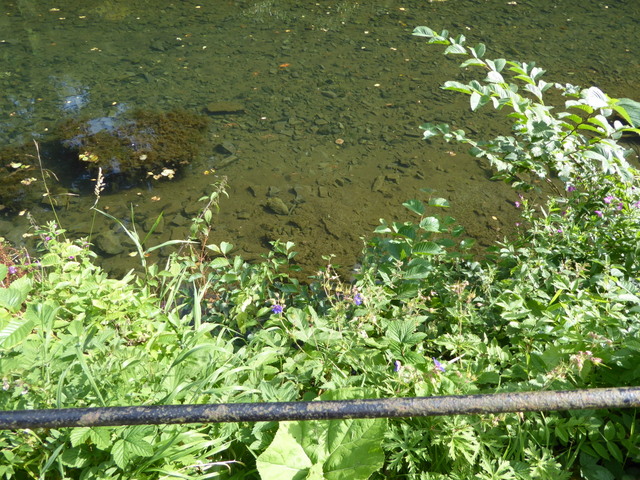
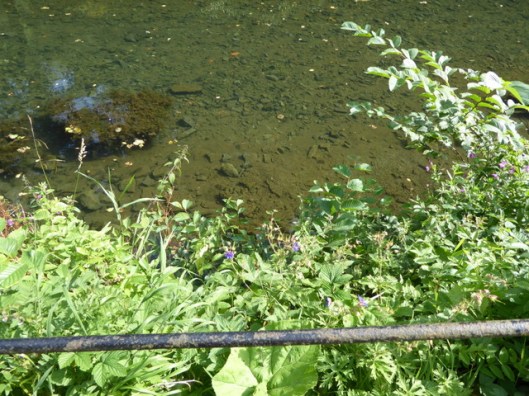
The water in the river is very clear.
p1010039rock-formation

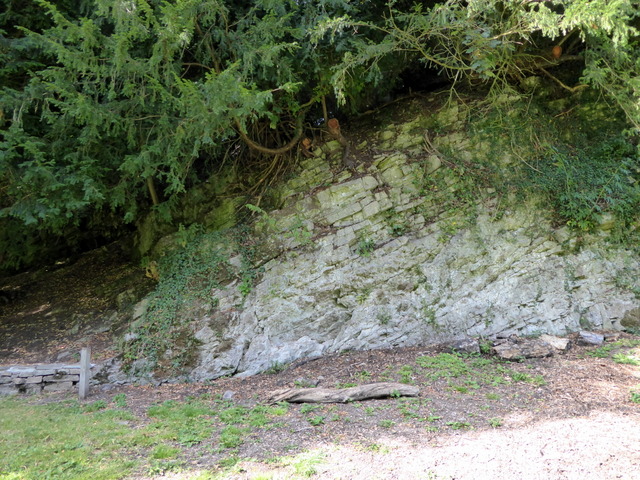
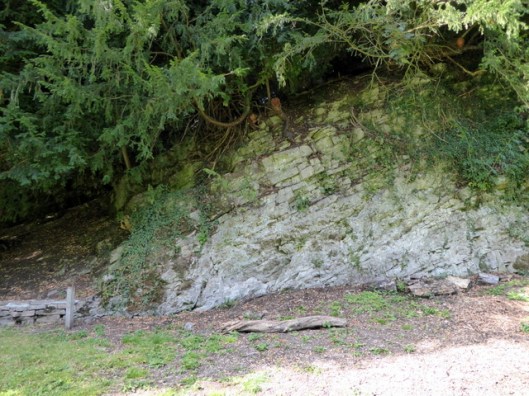
Interesting rock formations can be seen down by the river.
p1010040enchanters-nightshade

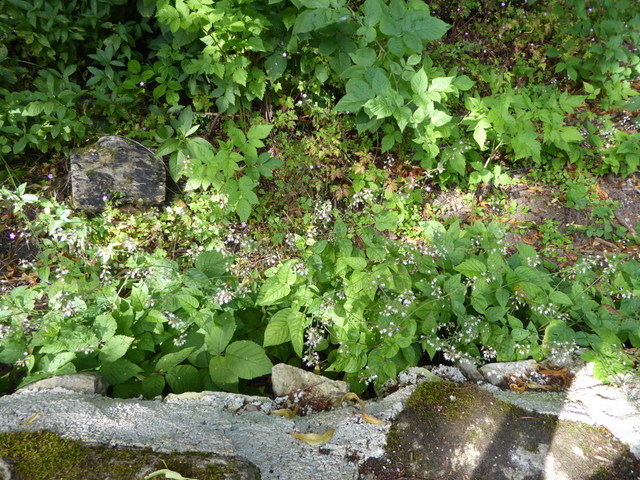
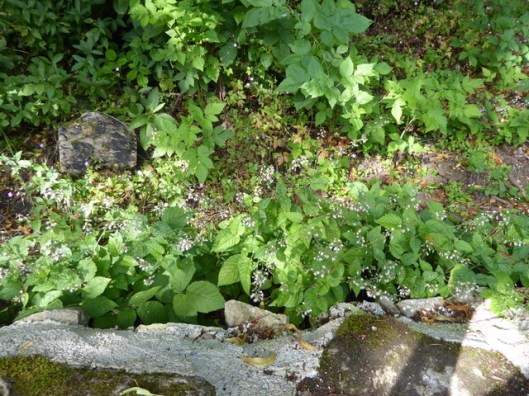
A profusion of Enchanter’s-nightshade (Circaea lutetiana)
p1010041ilam

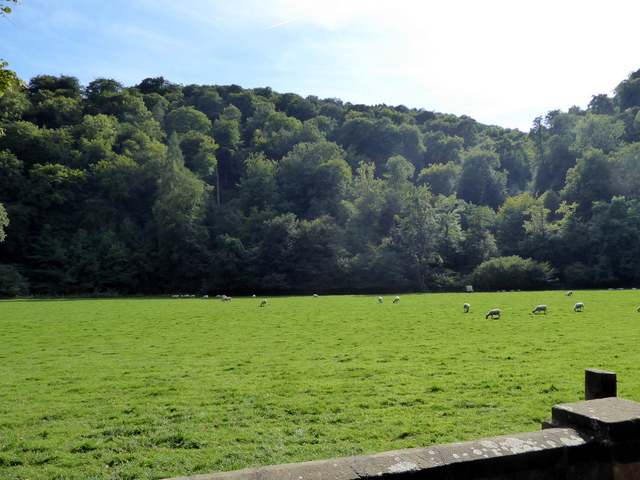
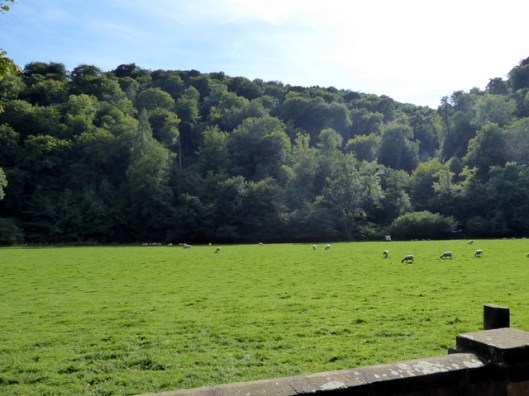
The view across water meadows from ‘Paradise Walk’

Paradise Walk is a Lime tree avenue where, in its heyday, the owners of the hall and their guests could walk and talk and admire the parkland.
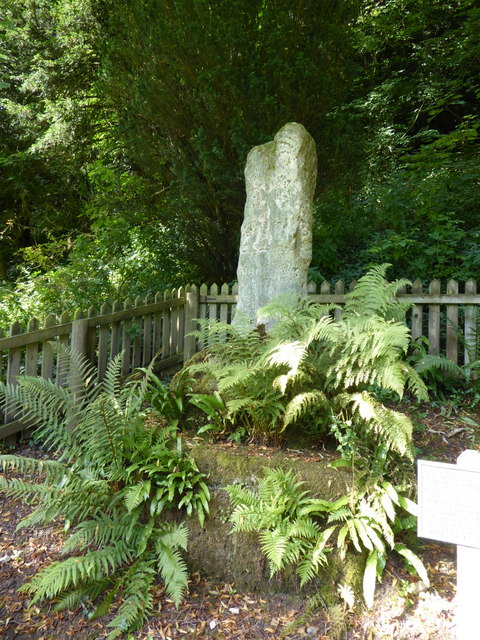
p1010042cross-shaft-ilam

The Battle Stone

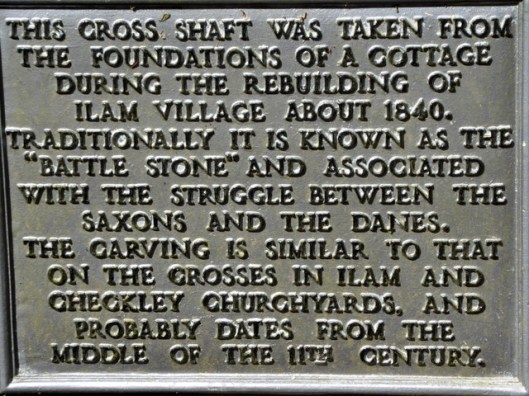
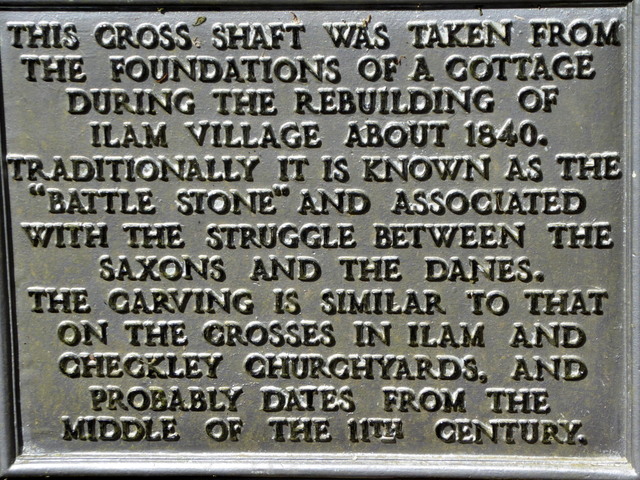
p1010043description-of-cross-shaft

The description of the Battle Stone

This cross shaft, known as the ‘Battle Stone’ has been set in a little enclosure at the side of the Paradise Walk.  It is strange to us to find that people in former times were happy to use any material they found to build their houses, even part of a cross!
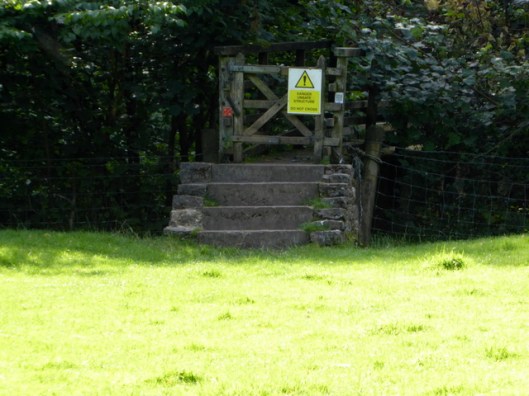
p1010044broken-bridge

We were advised not to use this bridge to cross the river.
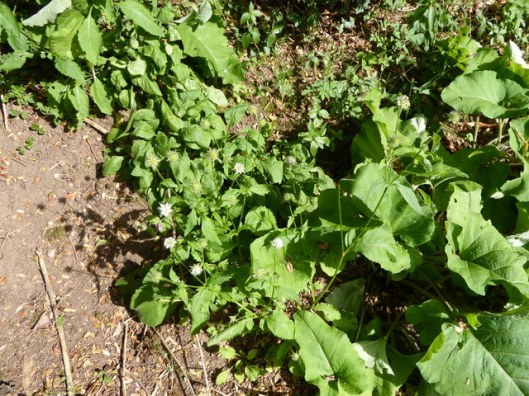
p1010045Small Teasel

Small Teasel (Dipsacus pilosus) growing with Lesser Burdock (Arctium minus)
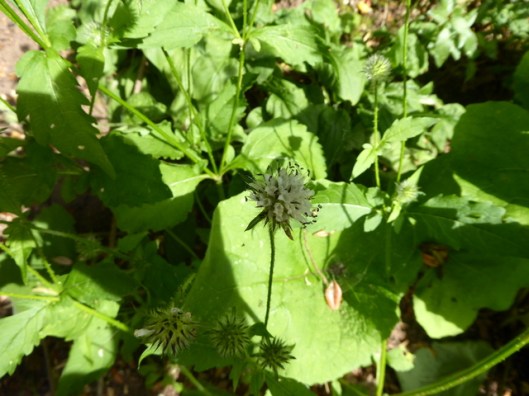
p1010046unknown-plant

Small Teasel

This was the first time I had ever seen this plant and it took me some time to ID it.   My photograph isn’t the best and I wasn’t too sure where to start my search.  The plant is often found on damp, disturbed ground near woodland edges and near streams and rivers.
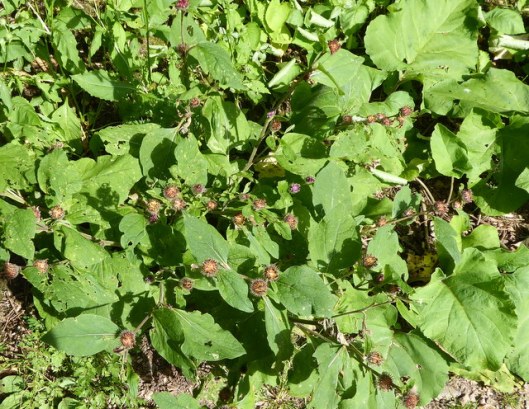
p1010047lesser-burdock

Lesser Burdock

We went over the river at the next bridge and then crossed a meadow the ascent of which gradually got steeper.
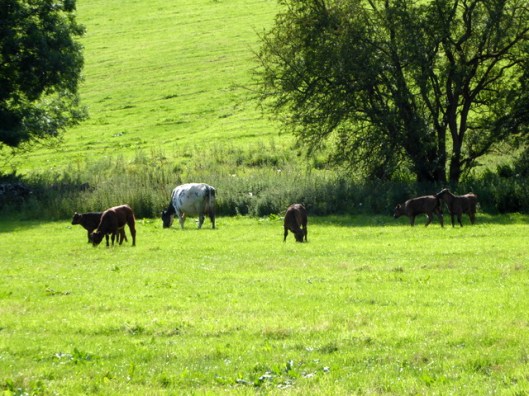
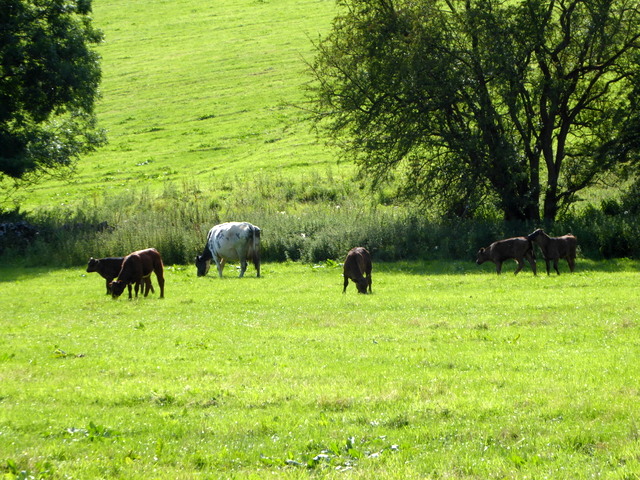
p1010048cows-and-calves

Cow and calves

The calves were a little curious but the cow continued calling to them and they stayed with her.
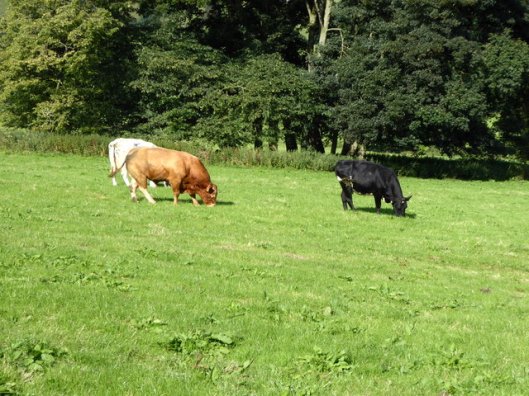
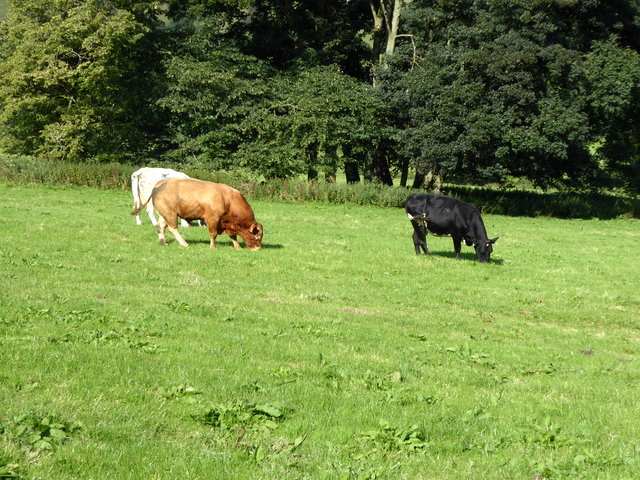
p1010049bull-and-cows

Bull and cows

At the top of the field was a bull and a couple of cows.  Fortunately, they were more interested in eating than in us because we were quite puffed by the time we had got to the top of the field and I don’t think we could have run anywhere!
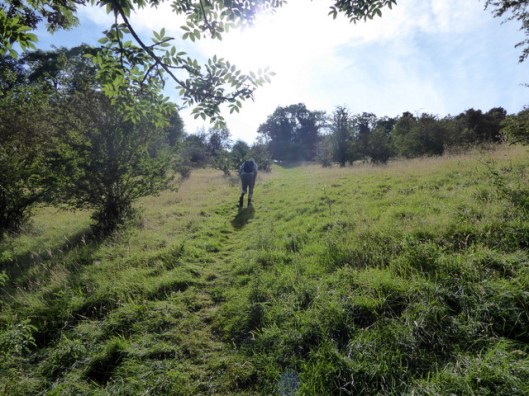
p1010050steep-hill

The next field was even steeper and the grass was dry and shiny.
p1010051flowers

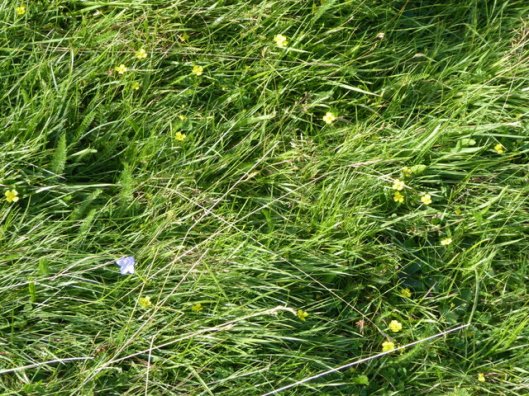
There were flowers everywhere! Tormentil (Potentilla erecta) (the yellow flowers) and Harebell (Campanula rotundifolia)

p1010052flowers

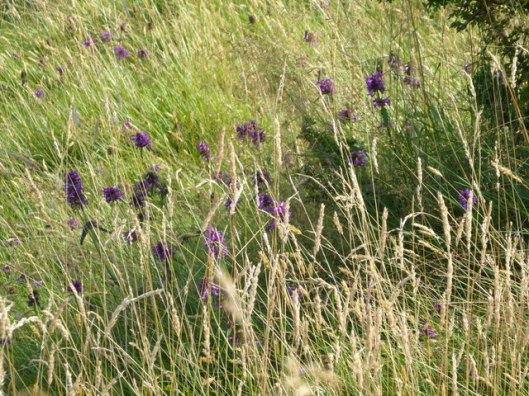
Betony (Stachys officinalis)

p1010053flowers

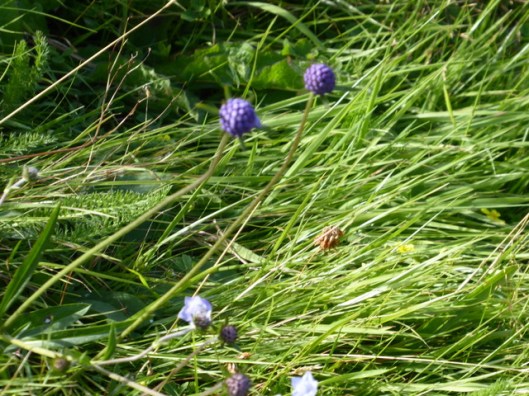
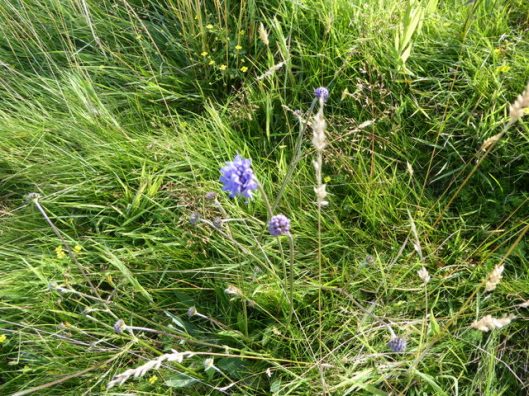
Devil’s-bit Scabious (Succisa pratensis) and Harebells
p1010054flowers

Devil’s-bit Scabious and Tormentil

I’m afraid the photos got more out of focus the further up the hill I got.  It was all I could do to keep my footing.
p1010055grasses

Betony and grasses

p1010056grass

Annual Meadow Grass (Poa annua)

p1010057view

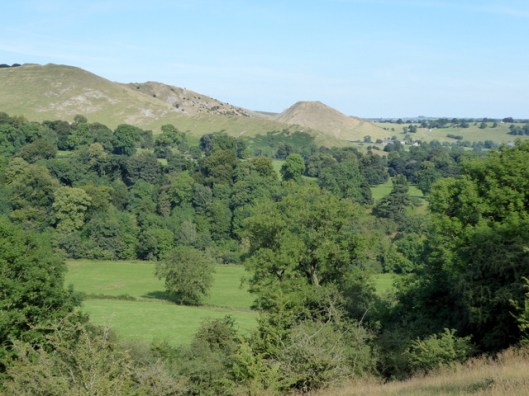
The view from the top of the hill

We were glad to get to the top and catch our breath.  There was still rising ground to cover but the really steep bit was finished with.
p1010058grasses

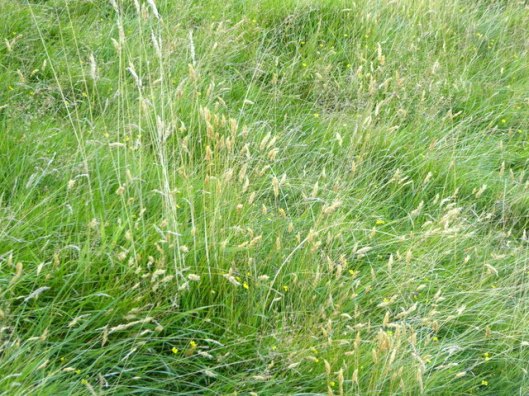
I think this grass is Sheep’s Fescue (Festuca ovina) It caught my eye because the seedheads were shining in the sunlight.

p1010059eyebright

Eyebright (Euphrasia officinalis agg.)

Eyebright is slowly becoming rarer because it is semi-parasitic on the roots of other plants and will only grow in undisturbed grass land.  There is very little undisturbed grassland in this country.
p1010063view

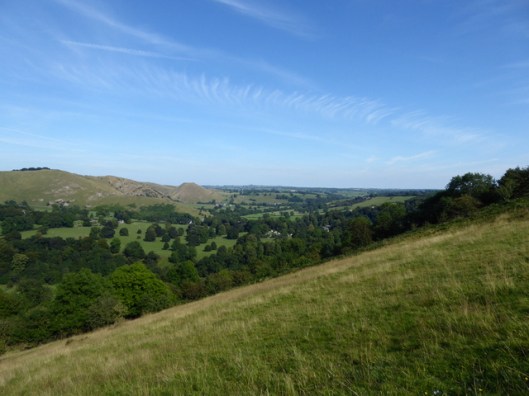
Another shot of the same view but from further up the hill
p1010065gate

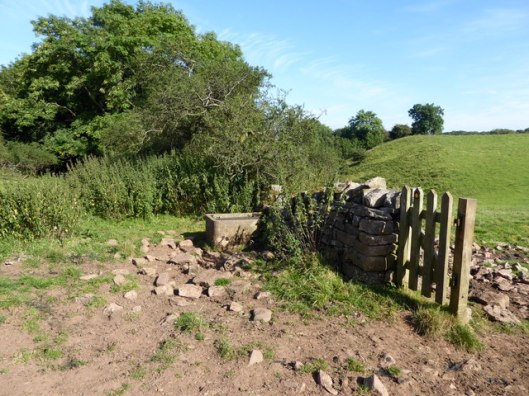
I love this rather untidy scene

p1010066gate

Through the gateway

Both pictures are typical of cattle-farming country.  The well-trampled area next to the gateway and water-trough which in wet weather is extremely squelchy.  The bank of nettles beyond the trough…
p1010067hedge

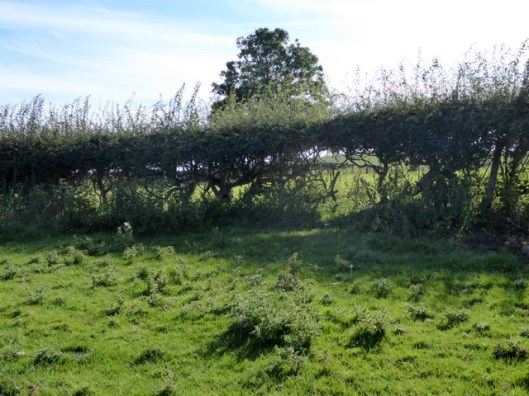
A hedge in this part of the world is a rare thing
p1010068view

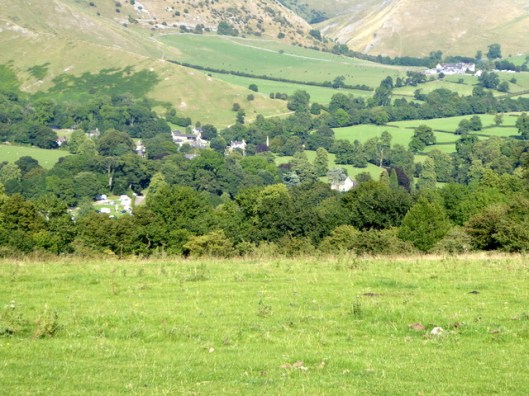
A view of Ilam village below us

p1010069tree

A weathered Hawthorn tree (Crataegus monogyna)
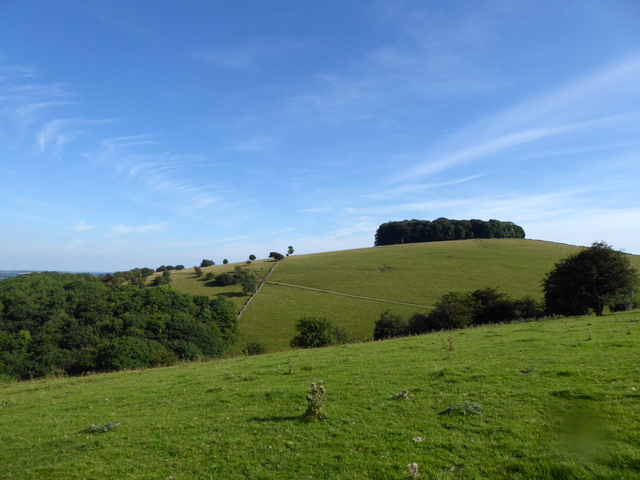
p1010070view

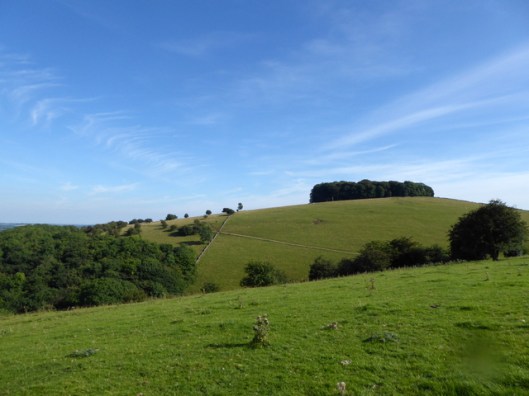
I like the stand of trees on the crest of the next hill
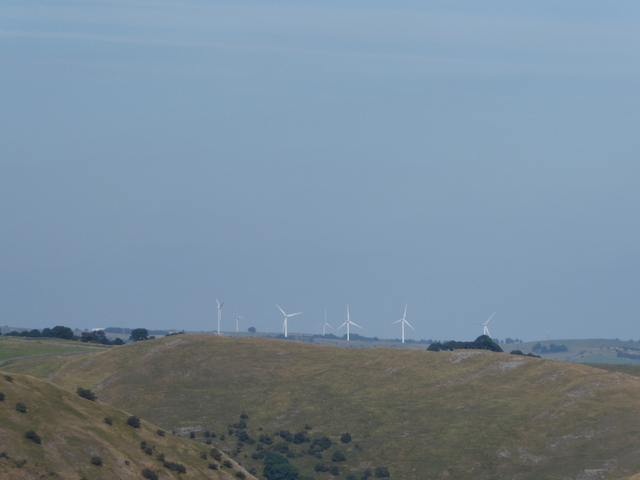
p1010071a-wind-farm

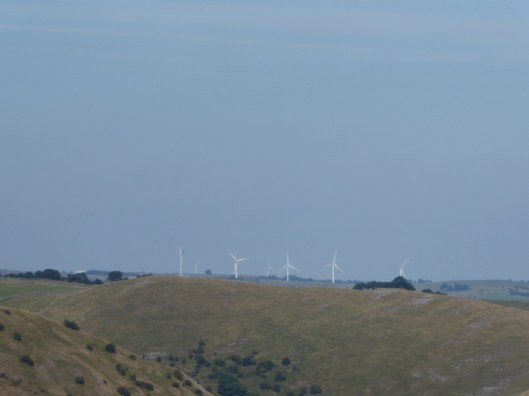
I used the zoom on my camera to photograph a wind farm on the horizon
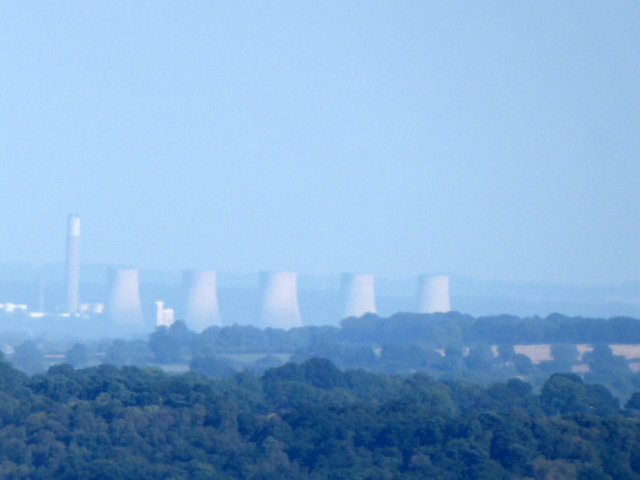
p1010074power-station

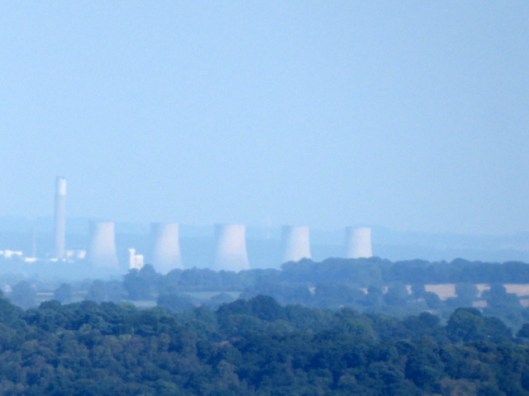
A different source of electricity. This may be Willington power station or maybe Rugeley? I know both these places have/had 5 cooling towers and my camera has quite a powerful zoom. I would be interested to know which station this is.

This is the interesting thing about the Peak District.  The whole area has been industrial at some period in its history.  We may be out on the moors and seemingly miles from anywhere but industry or the effects of industry surround us.

We began the descent towards Ilam village.
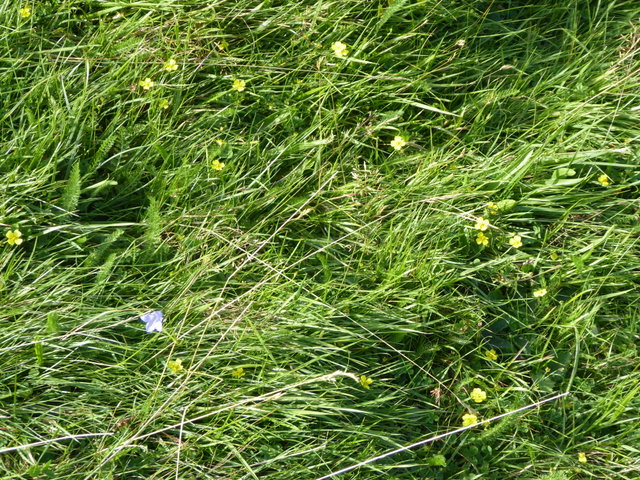
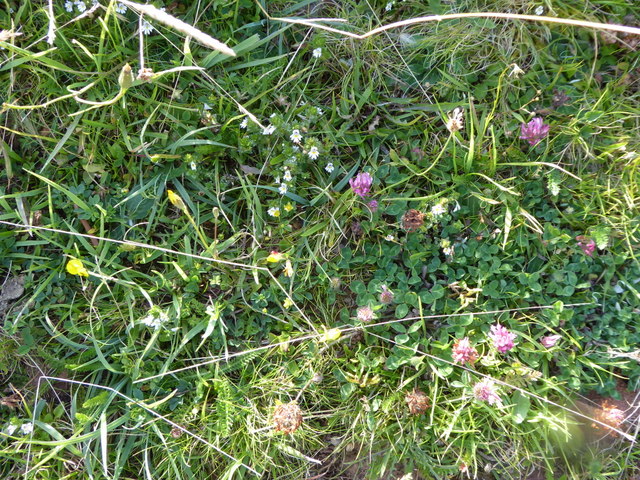
p1010072flowers

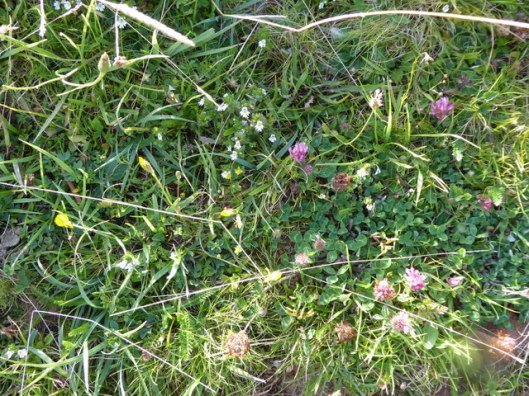
Grasses and flowers

This may look like a rather uninteresting patch of grass with a few flowers in it.  However, in this approximately 40cm x 40cm piece of land there are at least three different types of grass and more than six different flowering plants, not all in flower.  True diversity!
p1010075lamb

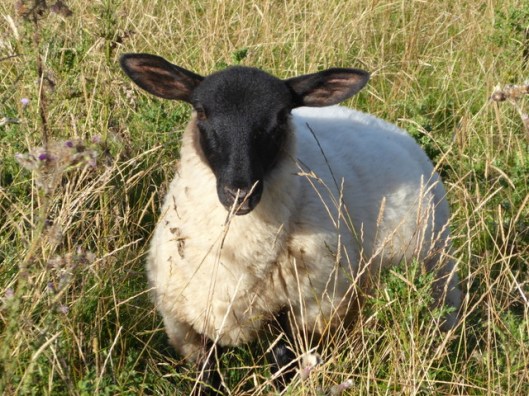
Having had cows, calves and a bull on this post we had to have a lamb too. Look at those ears! Richard called him/her ‘Wingnut’!
p1010076stile

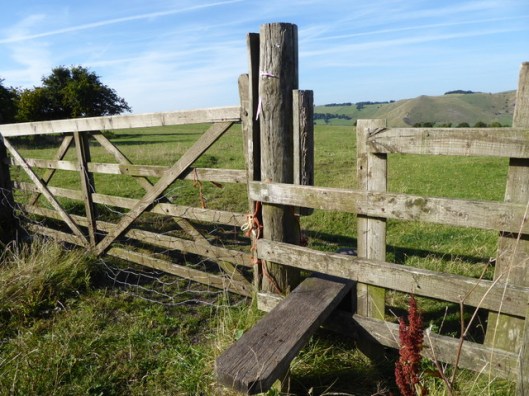
One of the many stiles we clambered over that afternoon
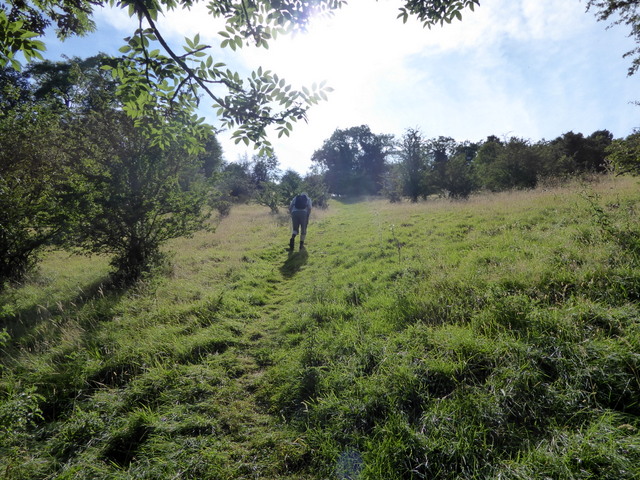
p1010077path

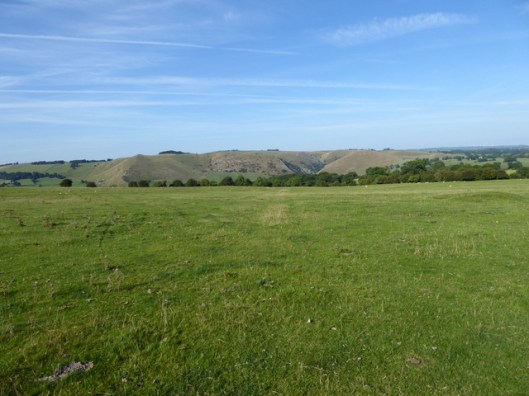
The path across the meadow

The path was much clearer in real life than in my photograph.  An indentation in the soil; the grass growing differently on the path and the light reflecting off it in a different way making it look lighter, sometimes darker than the surrounding grass.  I’m sure it would be more obvious at sunset or sunrise or with a dusting of snow on it.
p1010078rowan-tree

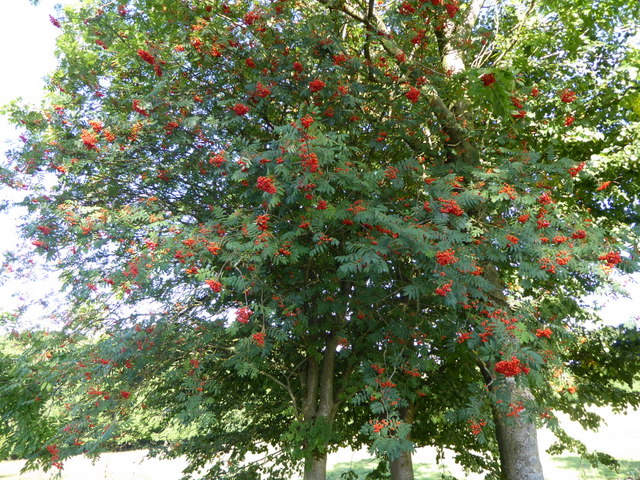
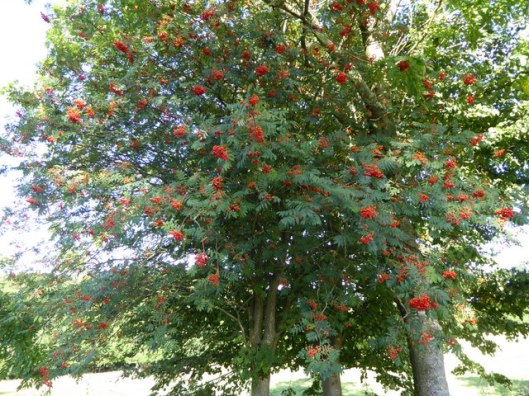
A Rowan tree (Sorbus aucuparia)

p1010079stile

Another stile. This time a squash stile’; my favourite (I don’t think!)

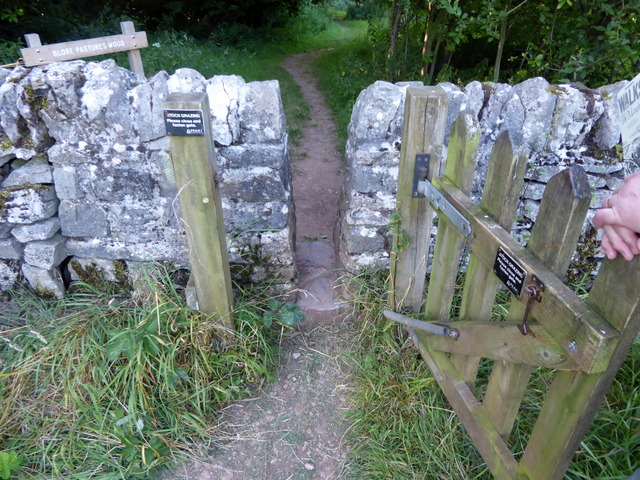
We had descended to the valley again and entered Blore Pastures Wood by the stile.
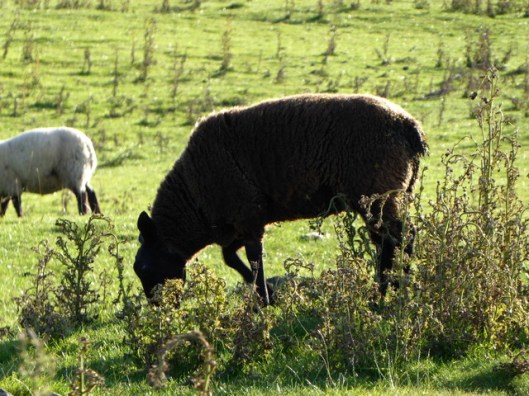
p1010080lamb

A brown lamb in the late afternoon sun

p1010081garlic-mustard

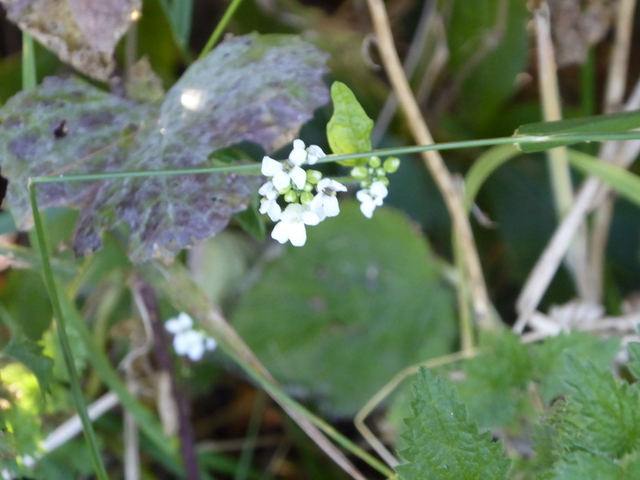
I was surprised to see Jack-by-the-Hedge/Garlic Mustard (Alliaria petiolata) in flower this late in the year
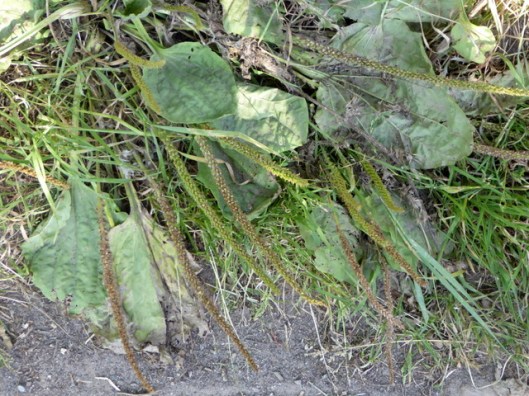
p1010082plantain

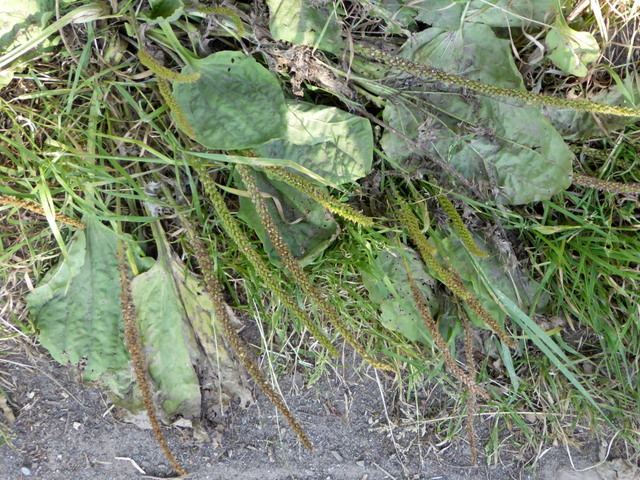
Greater Plantain (Plantago major)

We saw this enormous plantain next to the road as we approached Ilam.
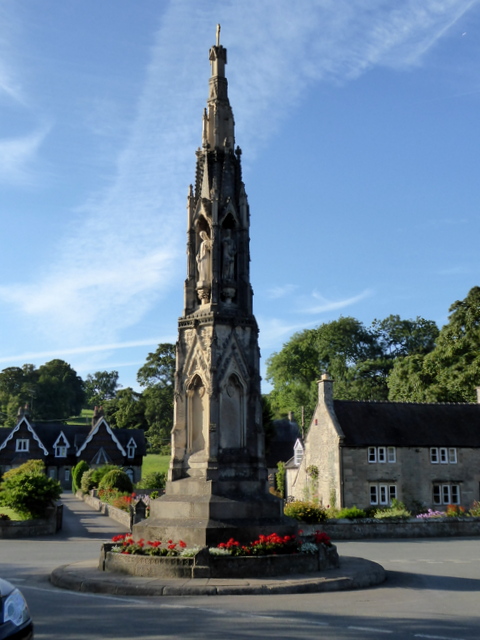
p1010083cross

Ilam Cross, built by Jesse Watts-Russell (who also built Ilam Hall) in memory of his wife.

The cross was badly damaged in a storm some years ago but has recently been completely restored.
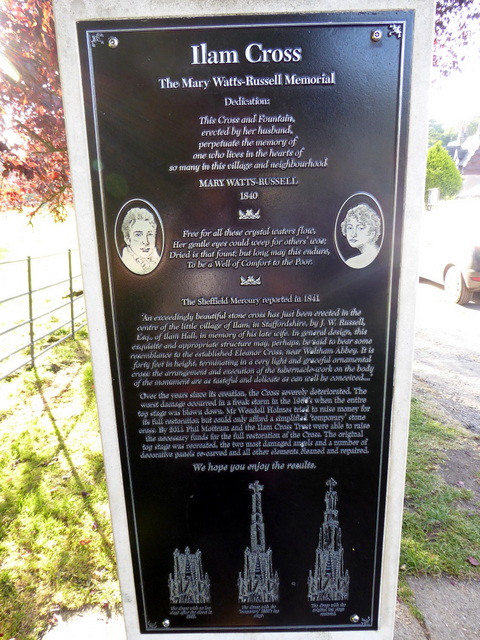
p1010084cross-info

A plaque with all the information about the cross

The village was full of people enjoying the evening sunshine.  I had hoped to photograph the houses and the bridge but there were too many people in the way.
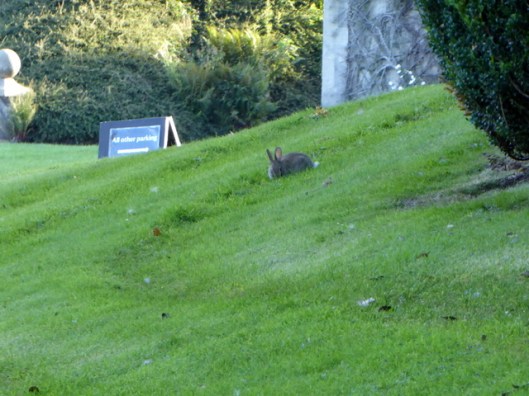
p1010085rabbit

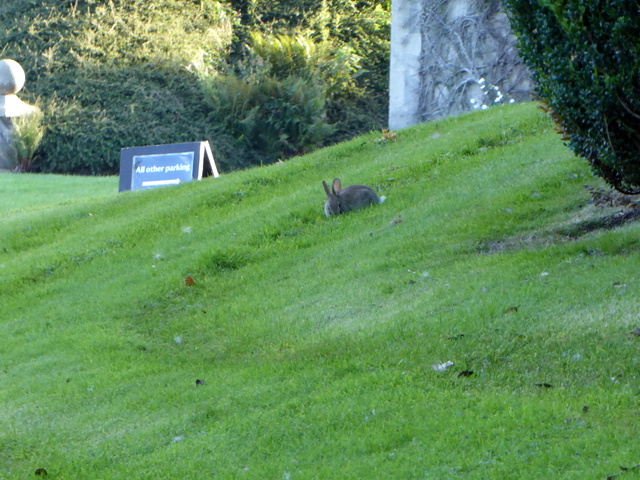
A Rabbit (Oryctolagus cuniculus) seen on our way back to the carpark

A most enjoyable walk in glorious sunshine.

Thanks for visiting!


Share this:

  • Share on X (Opens in new window) X
  • Share on Reddit (Opens in new window) Reddit
  • Share on Pinterest (Opens in new window) Pinterest
  • Share on Facebook (Opens in new window) Facebook
  • Email a link to a friend (Opens in new window) Email
  • Share on Tumblr (Opens in new window) Tumblr
  • Print (Opens in new window) Print
  • Share on Pocket (Opens in new window) Pocket
  • Share on LinkedIn (Opens in new window) LinkedIn
Like Loading...

A Walk in the Black Forest

02 Fri Sep 2016

Posted by Clare Pooley in holidays, Insects, plants, walking, wild flowers

≈ 46 Comments

Tags

bedstraw, berries, bilberry, Black Forest, brimstone butterfly, butterfly, cat's-ear, Common Bird's-foot Trefoil, Common Cow-wheat, Common Earthball, common knapweed, Dame's-violet, forest, foxglove, holiday, Lesser Stitchwort, Loosestrife, Lysimachia, Male Fern, moth, Polypody, Scarlet Tiger moth, Small Balsam, Speedwell, St John's-wort, trees, Triberg, views, walking

Our week’s holiday was coming to an end and we wanted to take a walk in the beautiful countryside around the town of Triberg.  The hotel thoughtfully provided maps and suggestions for walks so we chose one and adapted it for our use.  Neither Richard nor I are as fit or as young as we used to be and Elinor cannot walk very far because of her scoliosis so we decided on a half-circuit of the town in the woods.  We went in the direction of the railway station and took a steep path up between houses towards the forest.

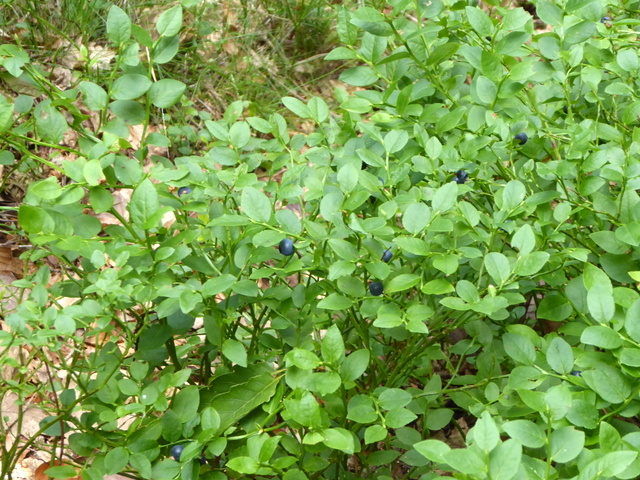
P1000813Bilberries

Bilberries (Vaccinium myrtillus)

We were soon high enough to be able to look down on the town which was very busy with Sunday visitors and many motorbikes.  I think Richard told us this part of the walk was called the Bilberry Wood and there were certainly many bilberries growing at the side of the path.

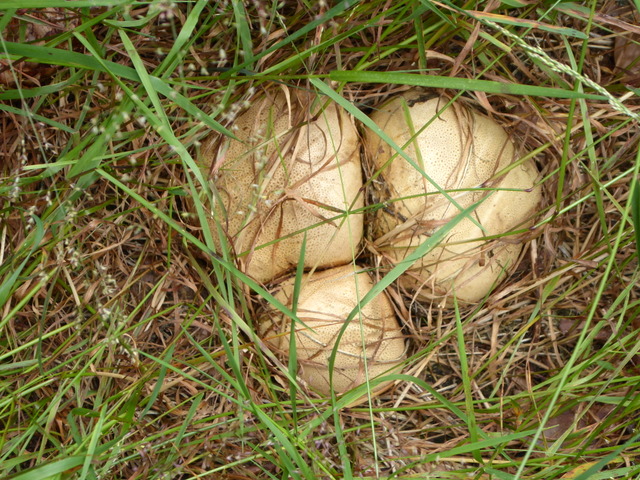
P1000814Common Earthball phps

There was plenty of fungus too. I think this may be Common Earthball (Scleroderma citrinum)

We soon climbed a little further into the forest and left the town behind and no longer heard the traffic.

P1000815woodland
P1000816Woodland

The forest became denser but there was never any difficulty following the path which was beautifully maintained.  I began to see many different plants; some I recognised and some I didn’t.  If anyone can help me with the names of these plants I will be very grateful.

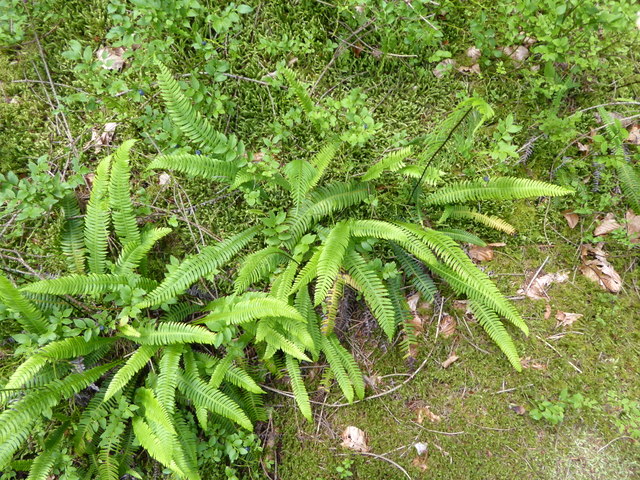
P1000817Polypody

Polypody (Polypodium vulgare) – a true fern. When walking with my family I always get left behind because I like to take photos of plants and fungi. I don’t have the time to take the detailed shots I would like in order to identify my finds in case I am left too far behind!

P1000832Polypody

More Polypody

I love the chunkiness of Polypody so I cropped one of the photos above to look at it in more detail.

P1000817Polypody - Copy (2)

Polypody

P1000818Small Balsam phps

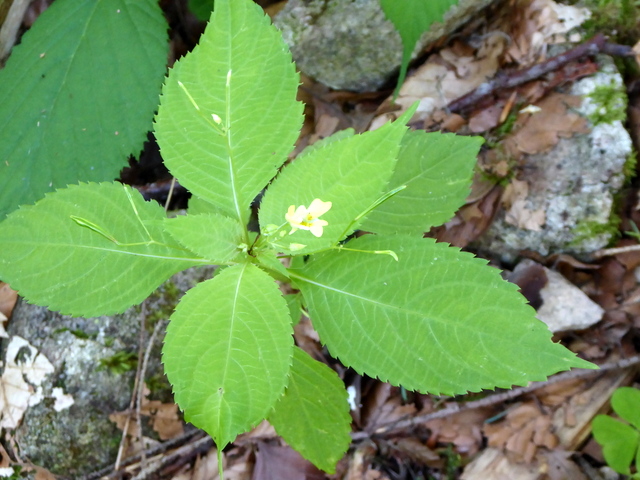
I think this might be Small Balsam (Impatiens parviflora)

P1000823Unknown

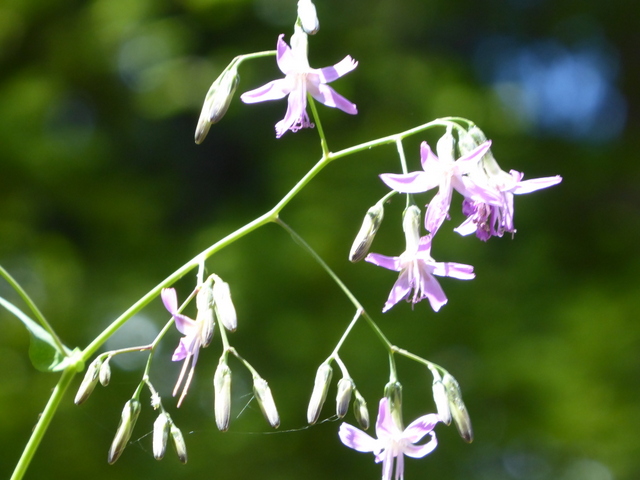
Unknown flower

P1000824Unknown

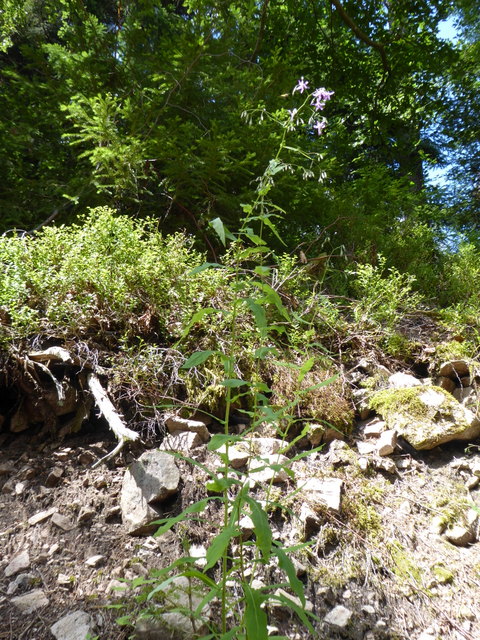
It’s very tall!

P1000820Unknown

Interesting leaves

P1000827Cow-wheat

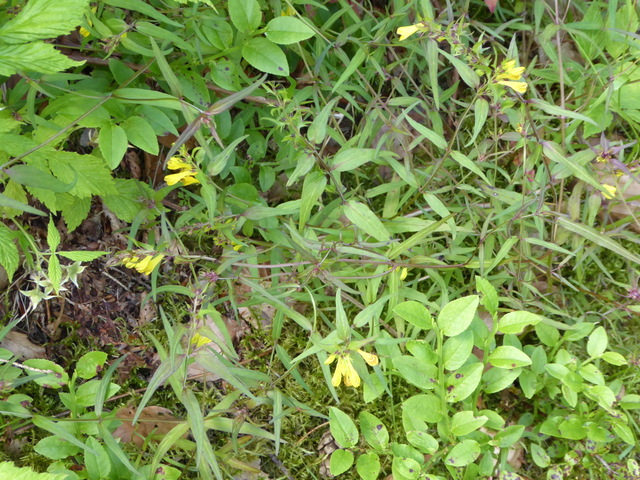
Common Cow-wheat (Melampyrum pratense)

P1000850Wild flowers

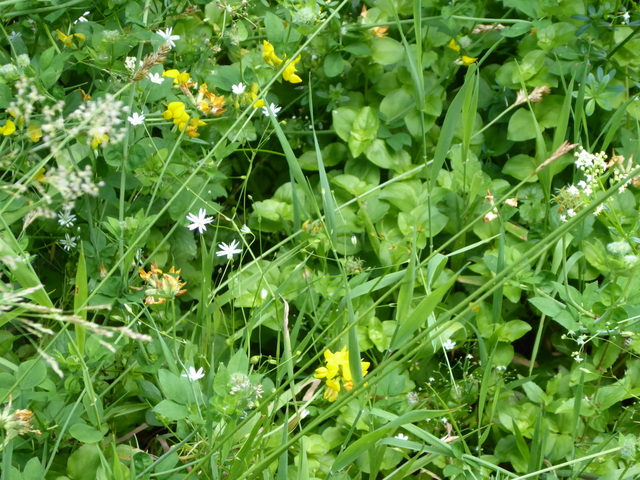
Wild flowers including a Bedstraw, Common Bird’s-foot Trefoil (Lotus corniculatus) and Lesser Stitchwort (Stellaria graminea).

P1000834Foxglove

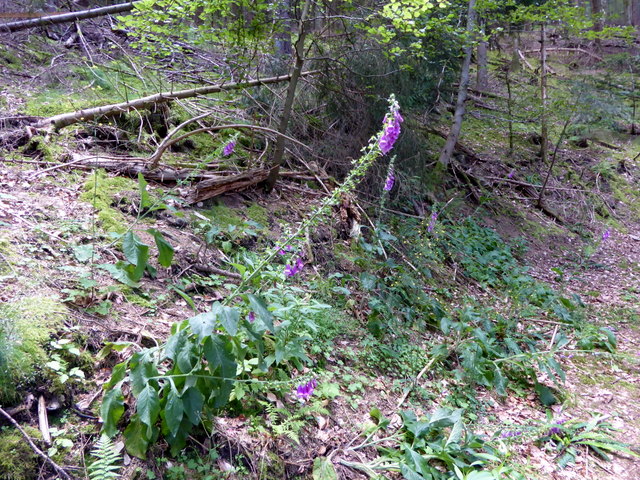
Foxglove (Digitalis purpurea)

Speedwell
Speedwell
Speedwell
Speedwell
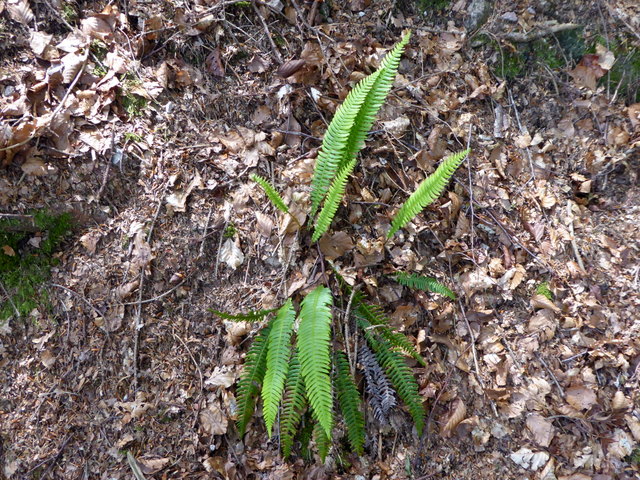
P1000837Royal Fern phps

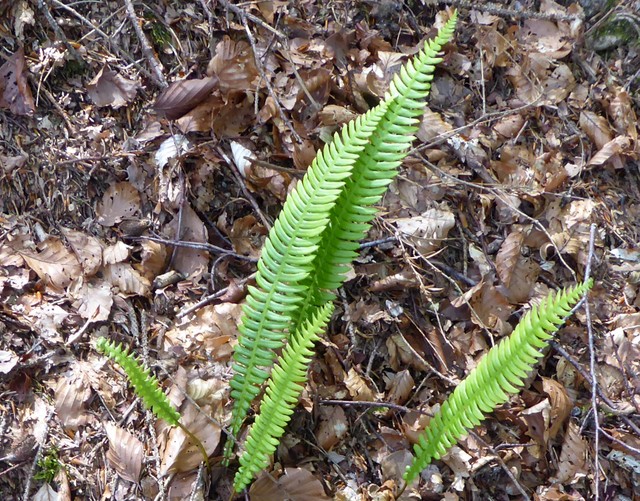
This may be Male Fern (Dryopteris filix-mas)

P1000857

St John’s-wort; I don’t know which of the many St John’s-worts it is.

P1000855Cat's-ear

Cat’s-ear (Hypochaeris radicata)

P1000868Lysimachia

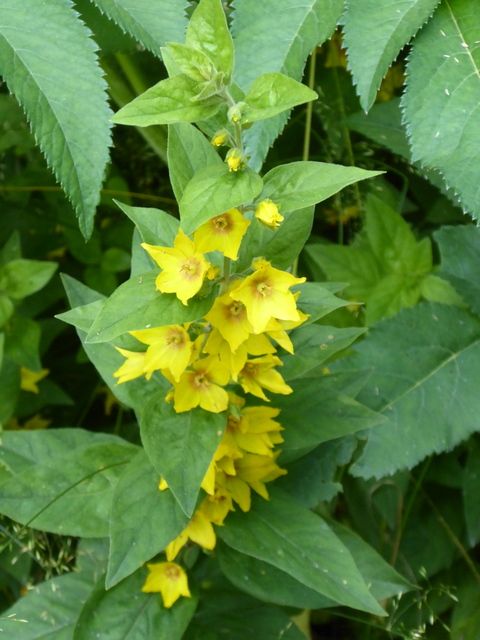
Loosestrife (Lysimachia punctata)

I managed to photograph a butterfly….

P1000866Lysimachia

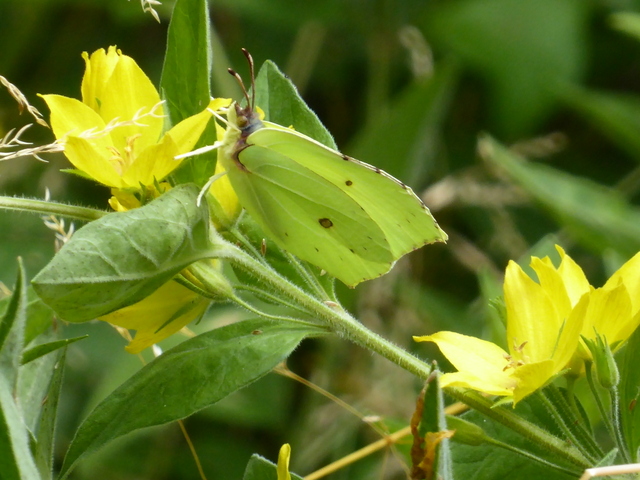
A Brimstone butterfly (Gonepteryx rhamni) on Lysimachia

…and a moth.

P1000864ScarletTiger Moth

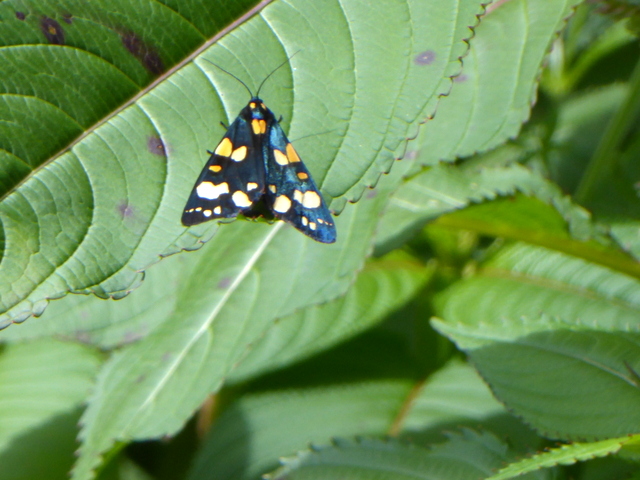
A Scarlet Tiger Moth (Callimorpha dominula). When flying I could see its underwings which were bright scarlet.

The views as we walked were marvellous.

This slideshow requires JavaScript.

Berries
Berries
Dame's-violet (Hesperis matronalis)
Dame’s-violet (Hesperis matronalis)
Unknown yellow flower
Common Knapweed ( Centaurea nigra)

The path eventually returned us to the town near to the waterfall.

My music selection today is ‘A Walk in the Black Forest’ which was so popular on the radio when I was a little girl.

I am hoping that Elinor will provide the last of my Black Forest posts.

Thanks for visiting!
 

Share this:

  • Share on X (Opens in new window) X
  • Share on Reddit (Opens in new window) Reddit
  • Share on Pinterest (Opens in new window) Pinterest
  • Share on Facebook (Opens in new window) Facebook
  • Email a link to a friend (Opens in new window) Email
  • Share on Tumblr (Opens in new window) Tumblr
  • Print (Opens in new window) Print
  • Share on Pocket (Opens in new window) Pocket
  • Share on LinkedIn (Opens in new window) LinkedIn
Like Loading...

A Little Sight-seeing in the Black Forest

13 Sat Aug 2016

Posted by Clare Pooley in Days out, holidays, Rural Diary

≈ 55 Comments

Tags

architecture, Black Forest, Black Forest Museum, cake shops, Furtwanger, Germany, holiday, Maria in der Tanne, Pilgrimage Church, Schonwald

We thought we would go and see what other nearby towns and villages were like so we travelled to Furtwanger on the bus.  We took our Visitor Card with us and didn’t have to pay any bus-fare.

View from the bus
View from the bus
View from the bus
View from the bus
View of a typical Black Forest house taken from the bus

The weather was still cloudy and very cool that morning so after a brief wander through the town we found a café and had a hot drink (or in Elinor’s case, an apple juice) and yet more cake.

Richard's cake
Richard’s cake
Elinor's cake
Elinor’s cake
My cake
My cake
20160715_130911

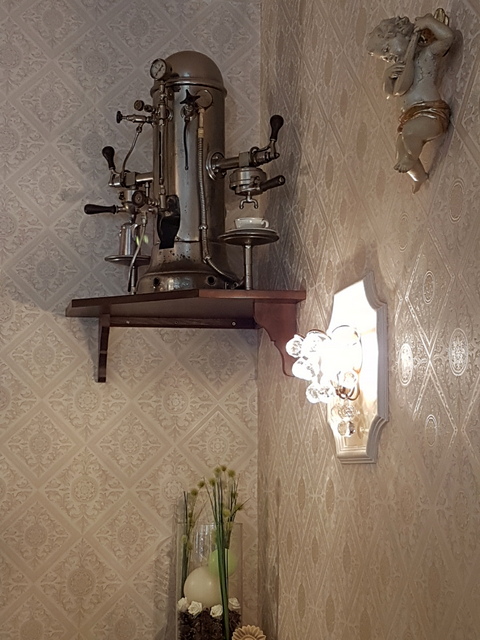
We admired this beautiful vintage coffee machine

Fortified by our meal we sallied out again and found that the weather had improved and the sun was coming out.  We discovered a little more of the town.

P1000782Furtwanger town hall

The Town Hall

P1000783Gasthof hotel

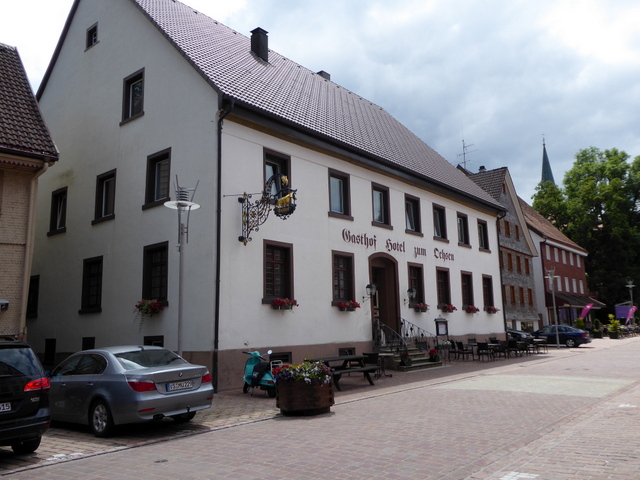
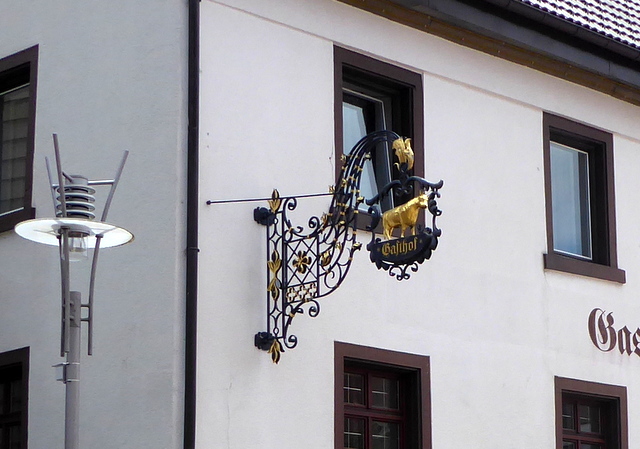
A Guest house and hotel with an ornate sign outside

P1000783Gasthof hotel-001

The sign

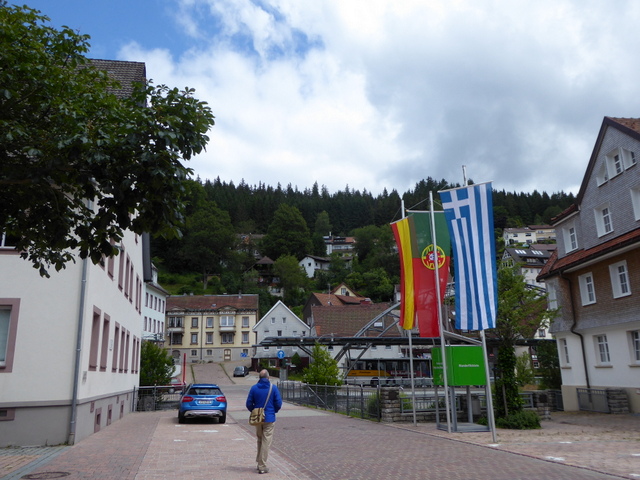
P1000785Furtwanger

Furtwanger : the bus station is just beyond the banners

P1000786Furtwanger

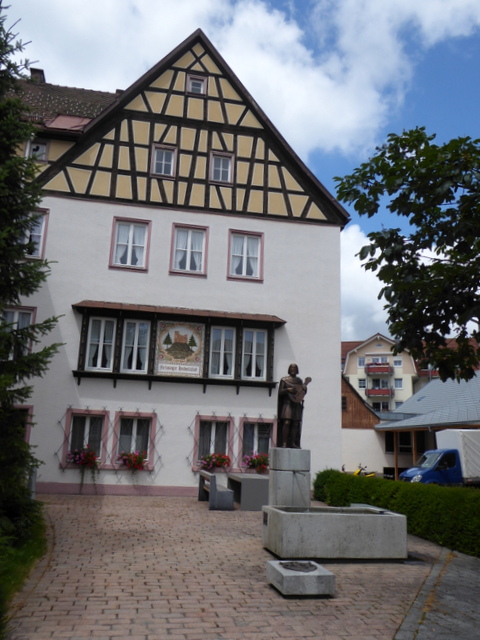
An attractive house.

P1000787Furtwanger

The town river

The following day we thought we would visit another village on the bus but before doing so we would look at a couple of places in Triberg.  The Black Forest Museum was very interesting and was situated in the old Trade Hall.

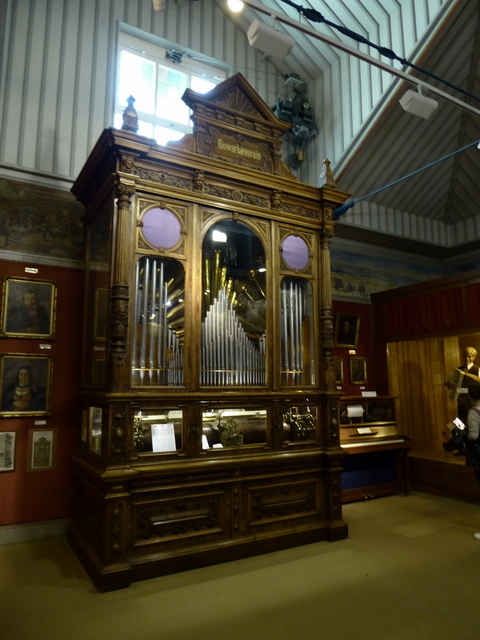
There were musical instruments ….

P1000788Museum

An orchestrion

..and another orchestrion!

There were displays of Black Forest Costumes….

P1000789Museum
P1000790Museum
P1000791Museum

….and lots of clocks!

P1000796Museum
P1000797Museum
P1000798Museum

There was even a rather old and dangerous-looking bob-sleigh!

P1000799Museum

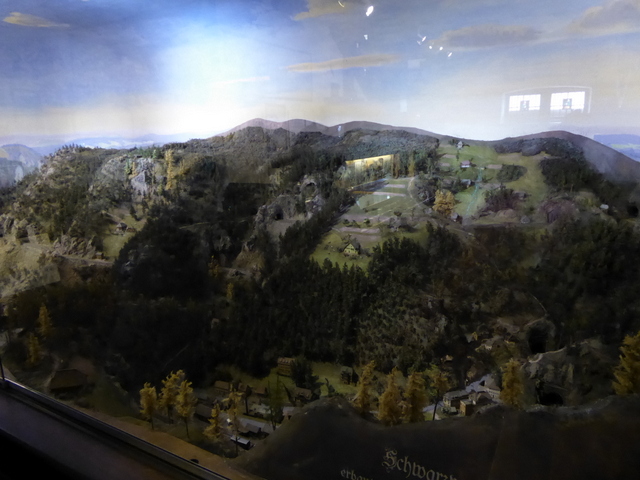
There were exhibits from the local straw-braiding industry and the local glass industry.  A large room was full of information about the Black Forest Railway constructed in the 19th century which has two innovative terminal loops with 39 tunnels that overcame the altitude differences – there is nearly 600 metres difference in height between a couple of the towns.  There was a diorama made in the 1950s that shows this double loop in great detail.

P1000800Museum

Diorama of the Black Forest Railways many tunnels

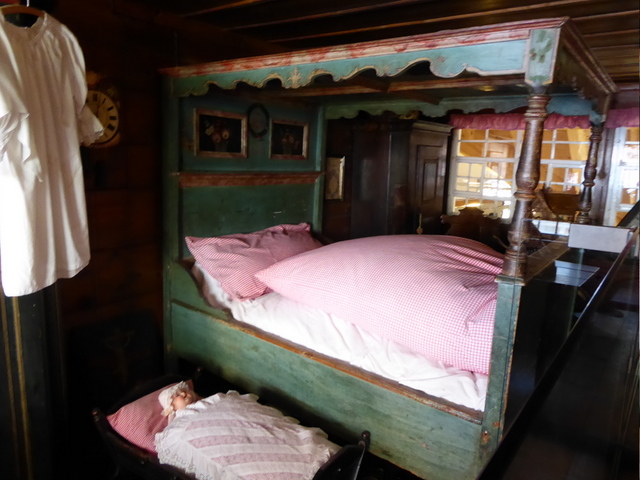
There were reconstructions of workshops and rooms in houses with authentic furniture and tools.

P1000795Museum

A beautiful bed!

We had a wonderful time in the museum!

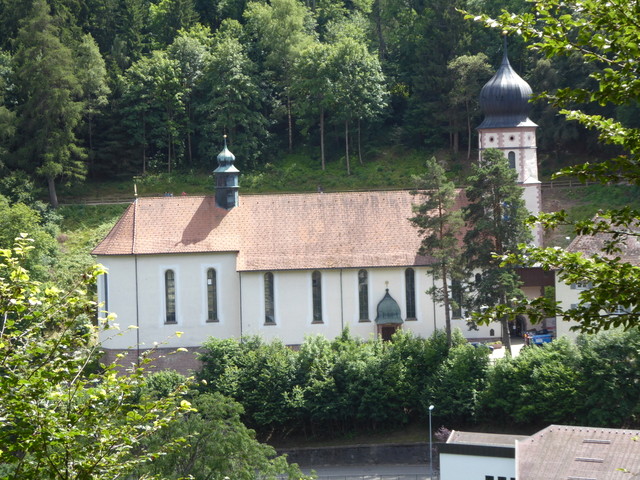
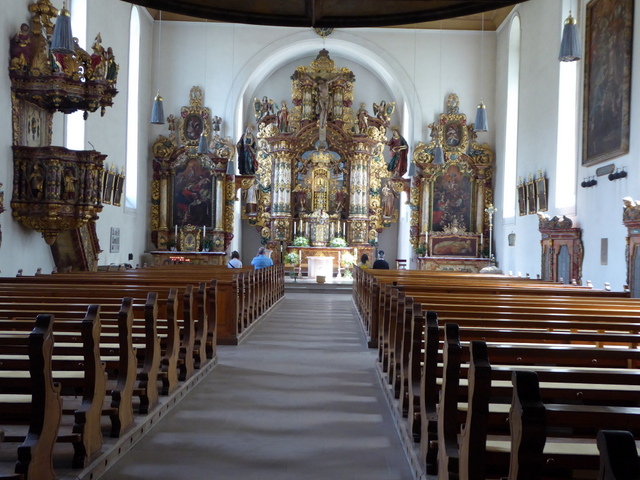
We then visited the Pilgrimage Church of Maria in der Tanne (Mary in the Forest).  Many years ago, so legend has it, a girl was cured of an eye disease when she bathed it in the spring water nearby.  The following year a man was cured of leprosy by washing in the spring water.  He was grateful and placed a figure of the Virgin Mary in a niche in a fir tree.  The place was forgotten about for about a hundred years until three soldiers rediscovered it after having heard some beautiful singing and followed the sound to the fir tree.  The spring and fir tree became a place of pilgrimage and the church was built in the 18th century.

P1000878Pilgrimage church

Maria in der Tanne

P1000803Pilgrimage church

The nave leading up to the enormous and ornate altar

P1000807Pilgrimage church

The altar

P1000804Pilgrimage church

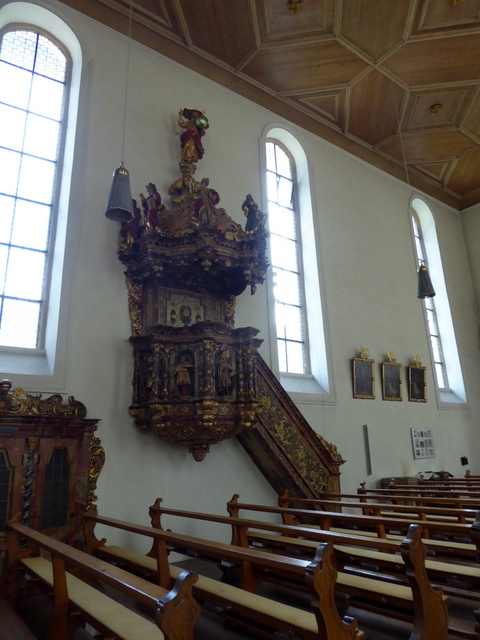
The pulpit

P1000806Pilgrimage church

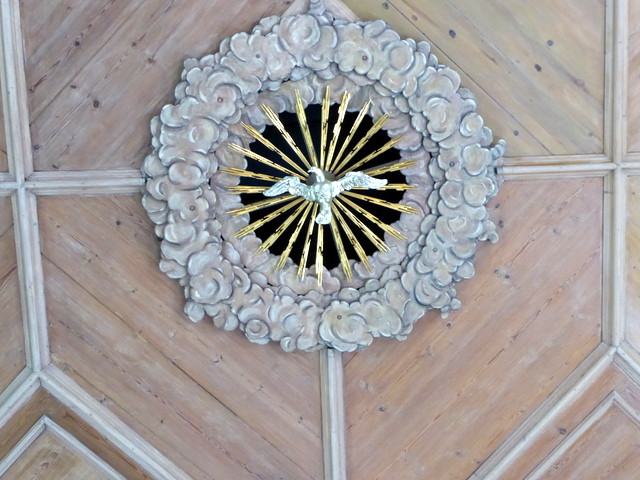
A detail of the ceiling decoration

P1000808Pilgrimage church

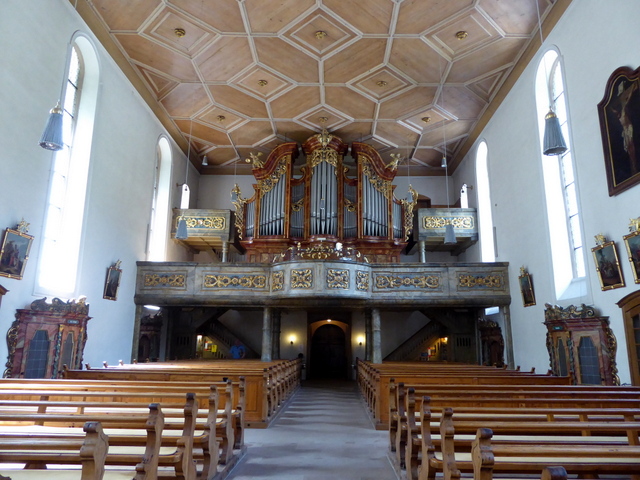
Looking back down the Nave towards the gallery and the organ

We then caught the bus to Schonwald, a pretty village where we had hoped to have some lunch.  Unfortunately, we got there too late.  We had some coffee and a short walk instead.

View from the bus
View from the bus
View from the bus
View from the bus
P1000810Schonwald Trades

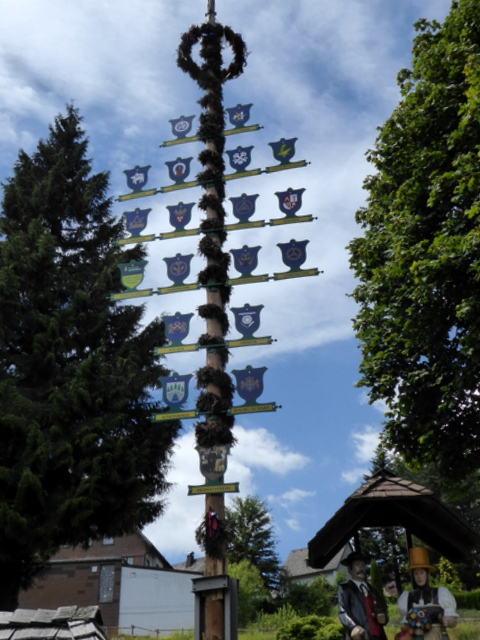
This has symbols of all the trades on it.

We returned to Triberg and to our hotel for a rest before our evening meal.

Thanks for visiting!

Share this:

  • Share on X (Opens in new window) X
  • Share on Reddit (Opens in new window) Reddit
  • Share on Pinterest (Opens in new window) Pinterest
  • Share on Facebook (Opens in new window) Facebook
  • Email a link to a friend (Opens in new window) Email
  • Share on Tumblr (Opens in new window) Tumblr
  • Print (Opens in new window) Print
  • Share on Pocket (Opens in new window) Pocket
  • Share on LinkedIn (Opens in new window) LinkedIn
Like Loading...

Black Forest Holiday – Part 2

08 Mon Aug 2016

Posted by Clare Pooley in family, holidays, walking

≈ 57 Comments

Tags

birds, Black Forest, Ernest Hemingway, fungi, holiday, lichen, memorials, moss, Nutcracker, Otto von Bismarck, red squirrels, Triberg, waterfall, wildflowers

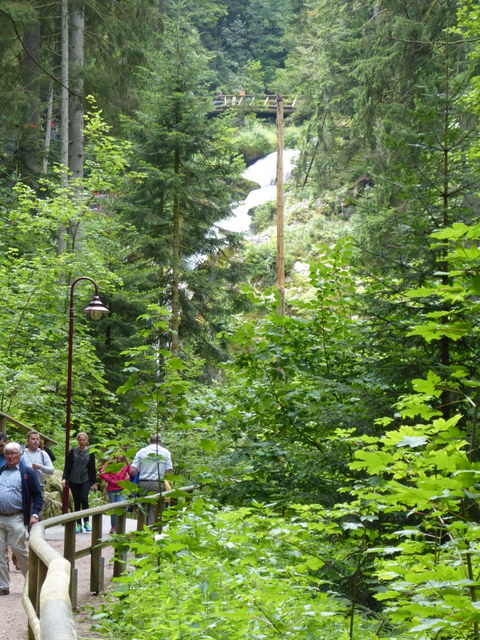
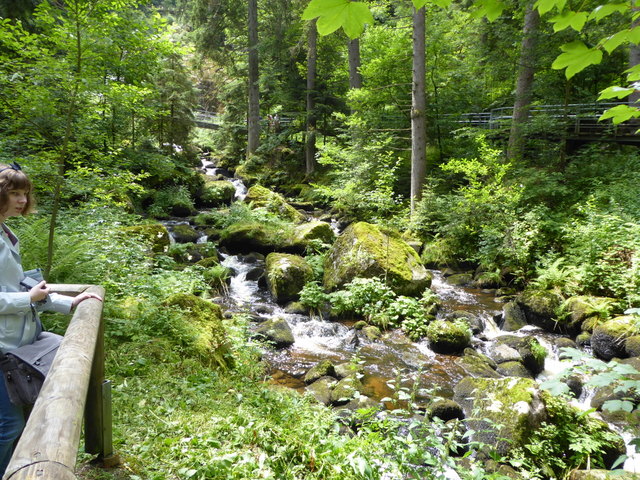
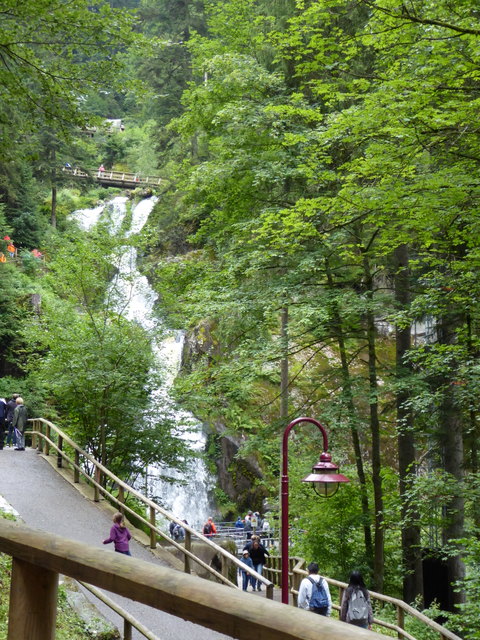
On our second full day on holiday we thought we would go and see the Triberg waterfall which we were informed is the highest waterfall in Germany.  (In fact, it isn’t as Rothbach Waterfall in Bavaria is the highest with a single, vertical drop of 470 metres.)  We had a short walk through the town to the nature park entrance where we were able to get free entry by using the guest-card that the hotel had given us on our arrival.

P1000741Waterfall

Just a few minutes walk brought us to the waterfall.

P1000743Waterfall

The waterfall is a series of seven cascades falling 160 metres into the valley.

P1000744Waterfall

The waterfall can be heard in the town.

The paths and bridges have been carefully designed to enable everyone to see the falls clearly.

This slideshow requires JavaScript.

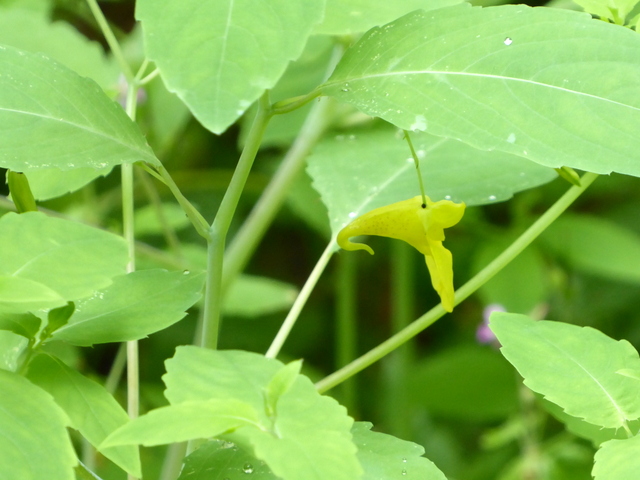
I didn’t just photograph the waterfall.  There were plenty of plants that interested me, some I recognised and others I still cannot put a name to.

P1000740Touch-me-not Balsam

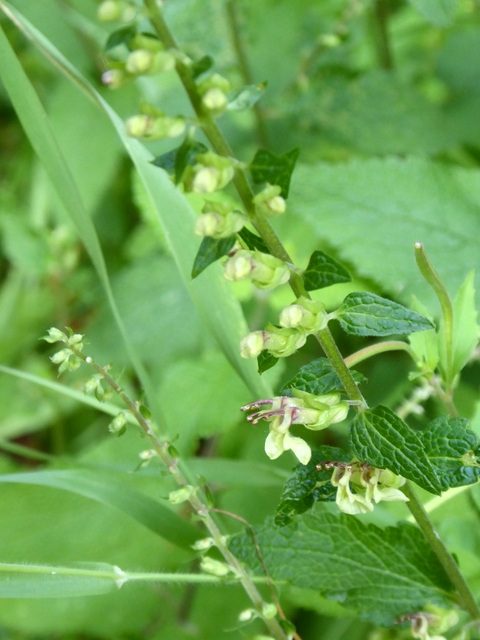
Touch-me-not Balsam (Impatiens noli-tangere)

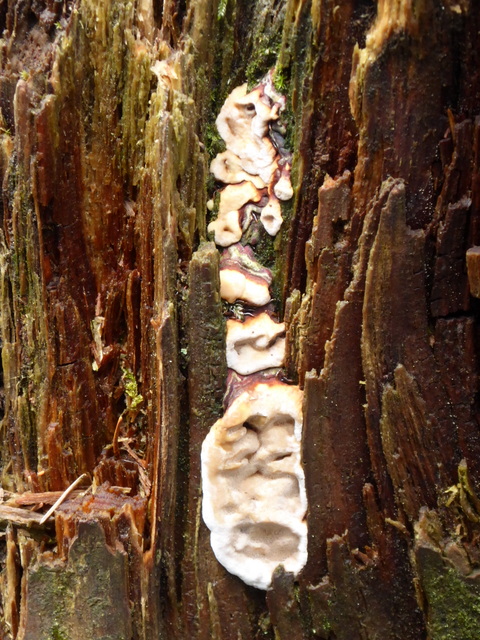
P1000742Fungus

Fungus

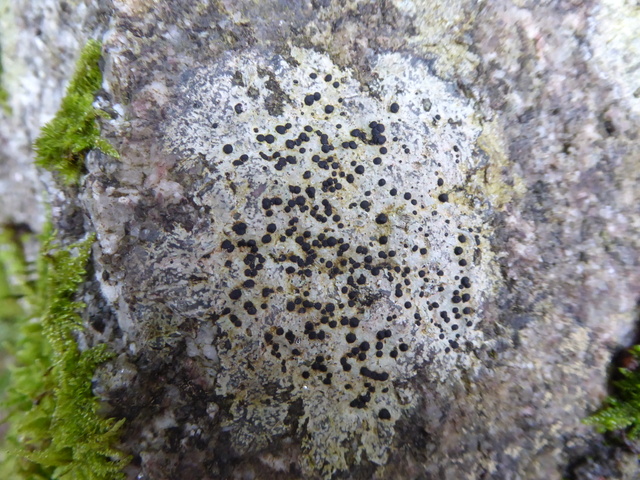
P1000745Lichen

Lichen

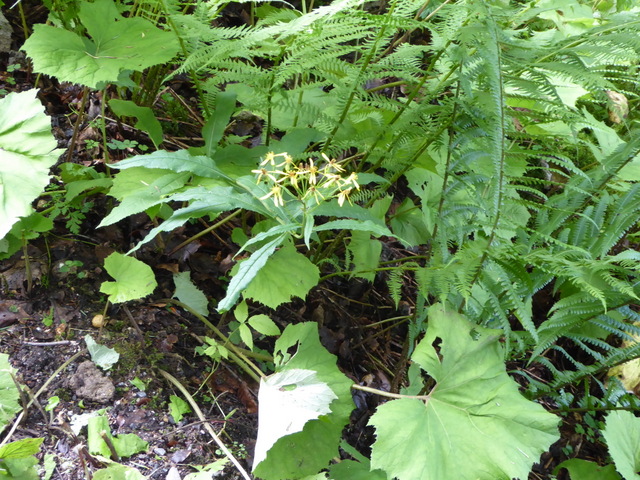
P1000751Yellow flower

Unidentified yellow flower

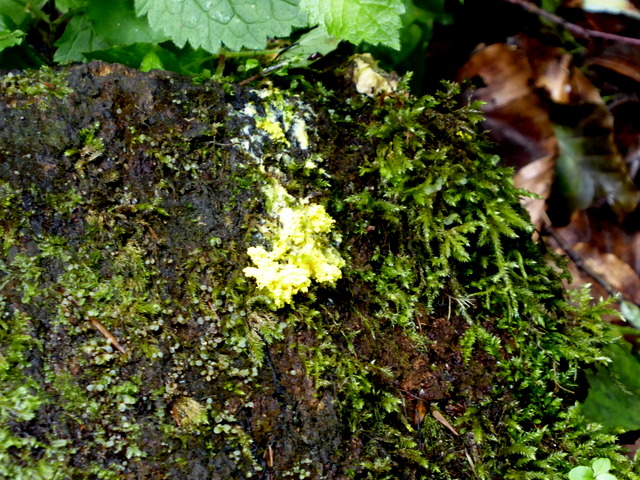
P1000754Slime mould

Slime mould

Moss
Moss
More moss
More moss
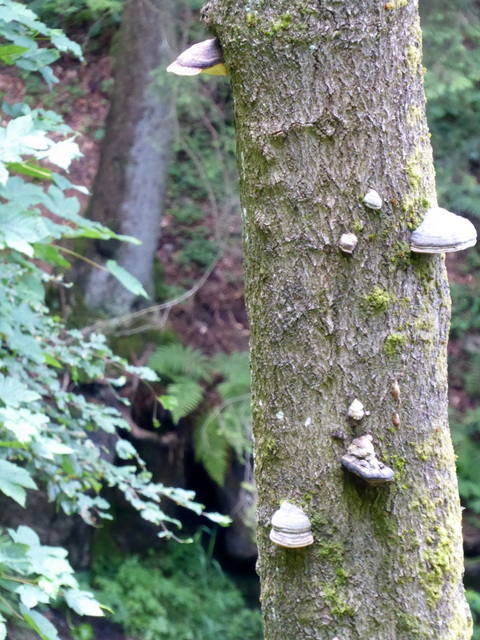
P1000764Hoof fungus

Hoof fungus (Fomes fomentarius) ?

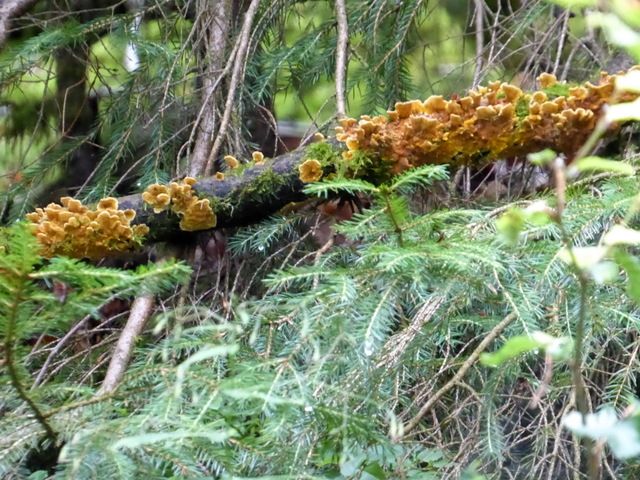
P1000765Fungus

Orange-coloured fungus.

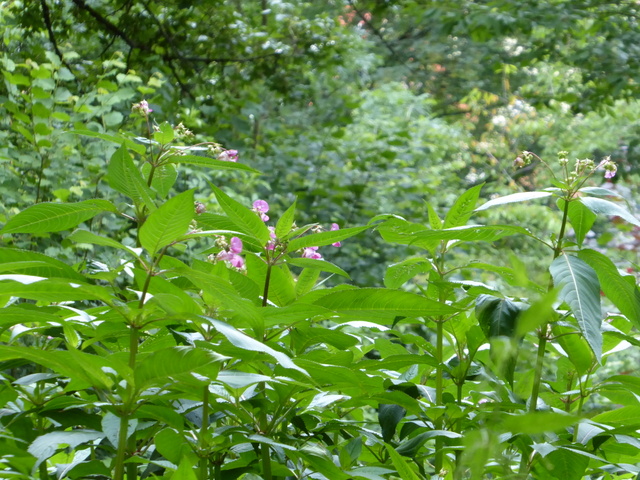
P1000778Indian Balsam

Indian Balsam (Impatiens glandulifera)

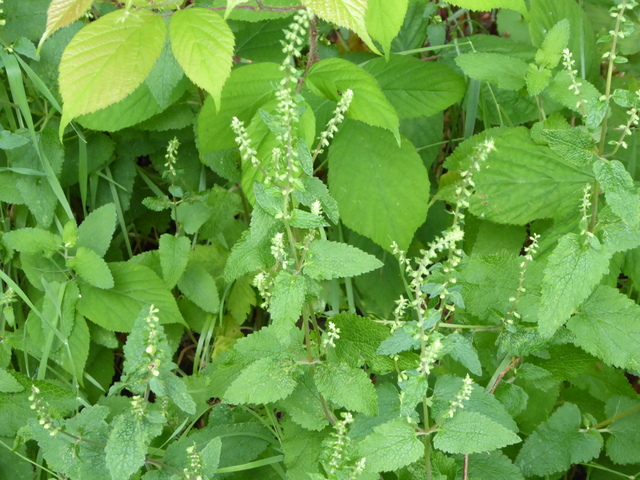
P1000779Figwort phps

Wood Sage (Teucrium scorodonia)

P1000780Figwort phps

Wood Sage flower spike

We also saw glimpses of Red Squirrels, which are not rare in Germany, but they were too quick for me and I was unable to photograph one.

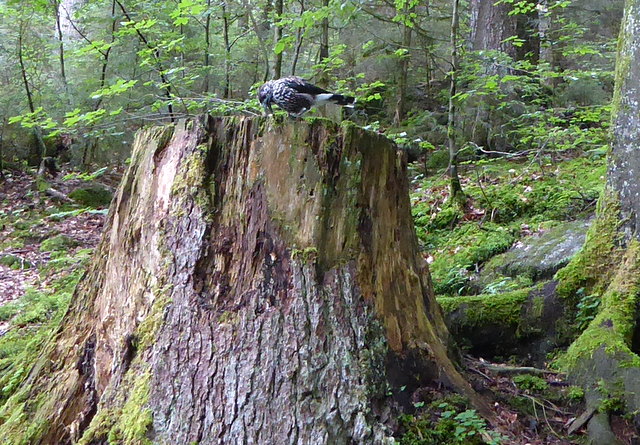
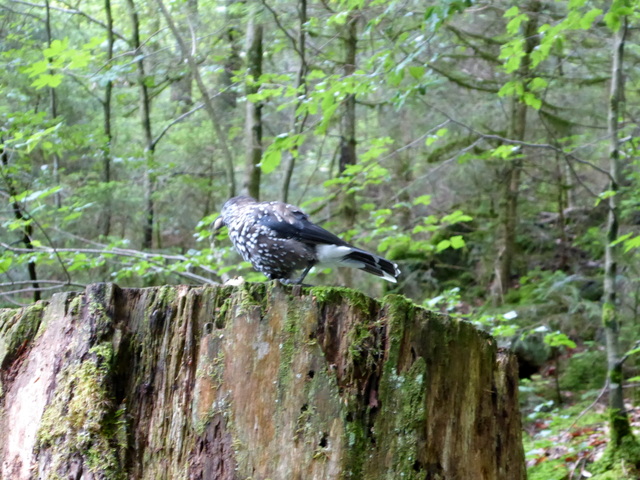
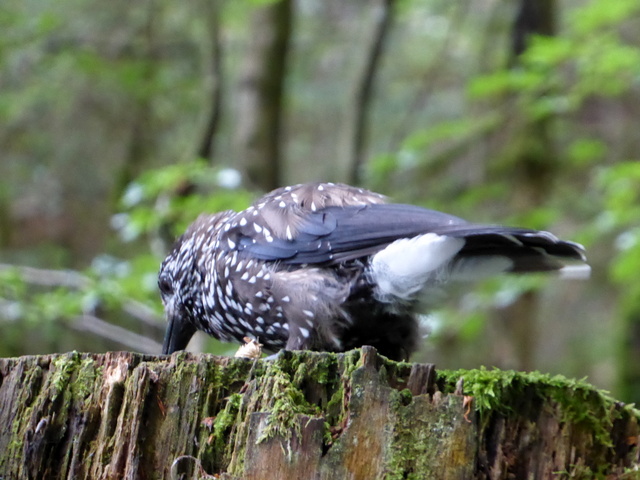
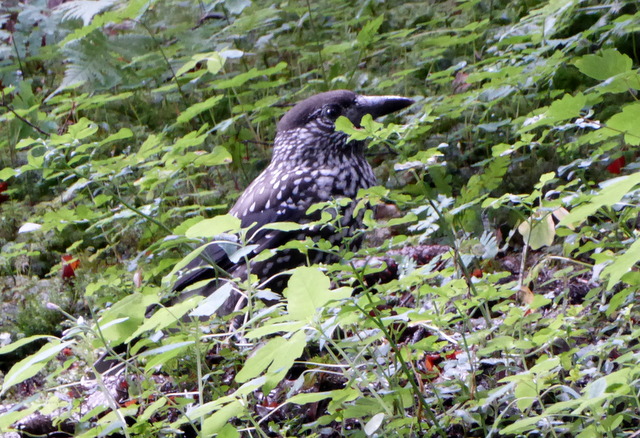
I was very pleased that I managed to photograph a Nutcracker, a bird from the crow family.  They are one of the smallest crows at 12.5 inches long, even smaller than a Jackdaw, and they were moving about quickly in the undergrowth feeding newly fledged young.

P1000767Nutcracker

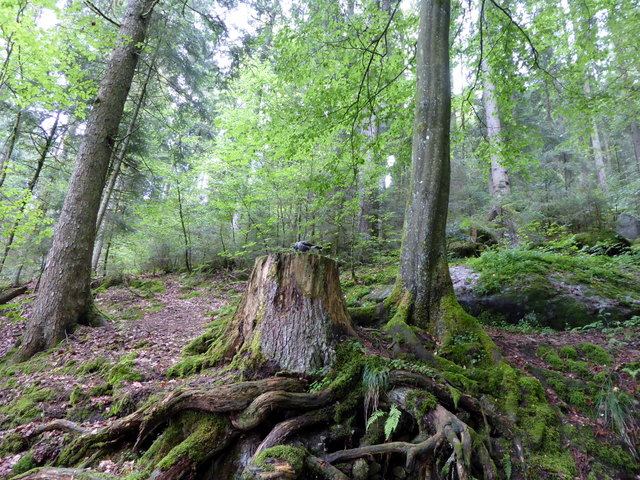
Nutcracker (Nucifraga caryocatactes) on a tree-stump

P1000767Nutcracker - Copy

This is the above photo which has been cropped

P1000768Nutcracker

Nutcracker

P1000769Nutcracker

Nutcracker

P1000771Nutcracker

Nutcracker

Only one of those photos was cropped though I had to use the zoom on my camera to its fullest extent for the rest!

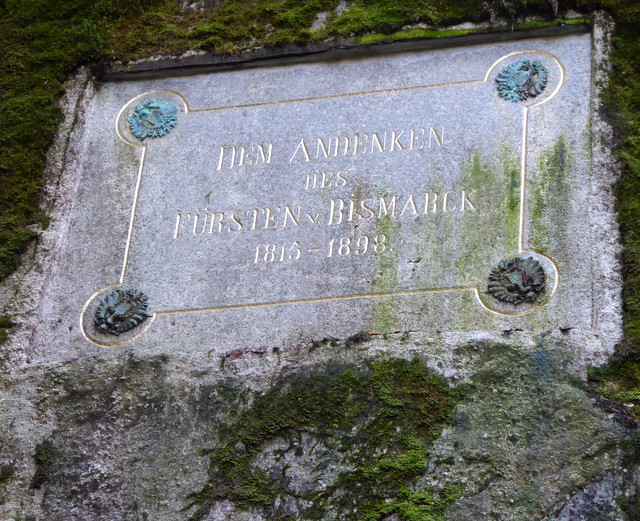
There were a few commemorative plaques placed on the rock face; this one is for Otto von Bismarck.

P1000758Bismark plaque

Bismarck commemoration

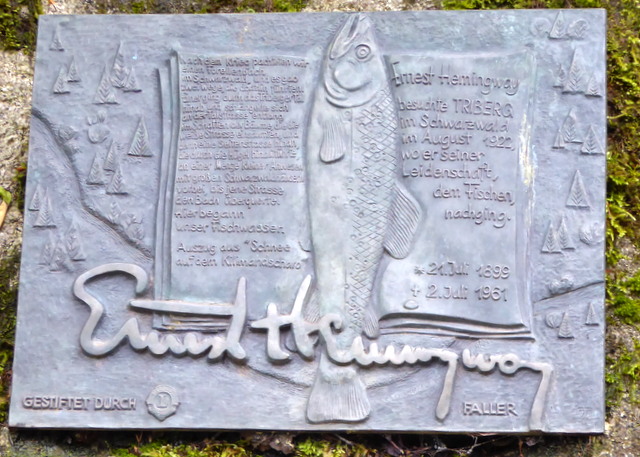
This one is for Ernest Hemingway

P1000749Hemingway plaque

On the right are his dates of birth and death under a note saying that Ernest Hemingway visited Triberg in the Black Forest in August 1922 where he indulged in his passion for fishing. There is a quote from ‘The Snows of Kilimanjaro’ on the left where he talks about a trout-fishing trip to Triberg.

We enjoyed our walk through the forest and before returning to our hotel, indulged in some more coffee and cake!

Thanks for visiting!
Share this:

  • Share on X (Opens in new window) X
  • Share on Reddit (Opens in new window) Reddit
  • Share on Pinterest (Opens in new window) Pinterest
  • Share on Facebook (Opens in new window) Facebook
  • Email a link to a friend (Opens in new window) Email
  • Share on Tumblr (Opens in new window) Tumblr
  • Print (Opens in new window) Print
  • Share on Pocket (Opens in new window) Pocket
  • Share on LinkedIn (Opens in new window) LinkedIn
Like Loading...
← Older posts
Follow A Suffolk Lane on WordPress.com

Enter your email address to follow this blog and receive notifications of new posts by email.

Join 715 other subscribers.

Unknown's avatar

I talk about what it's like living in a quiet part of Suffolk. I am a wife, mother and daughter, a practising Christian and love the natural world that surrounds me. I enjoy my life - most of the time!
My Posts

Jan 2026
M T W T F S S
 1234
567891011
12131415161718
19202122232425
262728293031  
« Dec    

Pages

  • About my Blog
  • GDPR (General Data Protection Regulations) and This Site
  • My Life in a Suffolk Lane

Archives

Blogs I Follow

Unknown's avatar
Unknown's avatar
Unknown's avatar
Unknown's avatar
Unknown's avatar
Unknown's avatar
Unknown's avatar
Unknown's avatar
Unknown's avatar
Unknown's avatar
Unknown's avatar
Unknown's avatar
Unknown's avatar
Unknown's avatar
Unknown's avatar
Unknown's avatar
Unknown's avatar
Unknown's avatar
Unknown's avatar

Posts I Like

  • DoF@theinfill's avatar
  • Unknown's avatar
  • Luso Loonie — Devin Meireles's avatar
  • Unknown's avatar
  • Unknown's avatar
  • Unknown's avatar
  • Unknown's avatar
  • Unknown's avatar
  • Unknown's avatar
  • mitchteemley's avatar
  • Unknown's avatar
  • Unknown's avatar
  • Secret Diary of A Country Vicar's Wife's avatar
  • Unknown's avatar
  • Unknown's avatar
  • Dad's avatar
  • bitaboutbritain's avatar
  • Unknown's avatar
  • Limentinus's avatar
  • Unknown's avatar
  • Unknown's avatar
  • 60onabudget's avatar
  • Unknown's avatar
  • Unknown's avatar
  • Unknown's avatar
  • thesimlux's avatar
  • NEERAJ SINGH's avatar
  • Rich's avatar
  • Unknown's avatar
  • The Introverted Bookworm's avatar
  • Unknown's avatar
  • Unknown's avatar
  • Unknown's avatar
  • sherijkennedyriverside's avatar
  • Kathleen's avatar
  • Unknown's avatar
  • Talkmore's avatar
  • Unknown's avatar
  • M T McGuire's avatar
  • Unknown's avatar
  • Unknown's avatar
  • Unknown's avatar
  • Unknown's avatar
  • Unknown's avatar
  • santable's avatar
  • Unknown's avatar
  • Andrea Stephenson's avatar
  • Martha's avatar
  • Bernard Aybout (Virii8)'s avatar
  • Unknown's avatar

amphibians architecture art Arts and Crafts churches cooking Days out domestic animals family fish Folk Traditions Gardening Historic Buildings holidays Insects Landscaping literature music Norwich plants Rural Diary seashore theatre trees Uncategorized walking weather wild animals wild birds wild flowers

Tags

architecture autumn birds blackbird blackthorn Bungay butterfly church clouds common knapweed cow parsley crocus daffodils Diary dogwood family field maple flowers fungus garden gardening geese greylags ground-ivy Halesworth Hawthorn heather holiday Holly Holy Week horse chestnut Hoverfly insects ivy Lake District Lent lesser celandine lichen Lords and Ladies Mallard mallards Minsmere moorhen moss music Norwich Peak District pheasant plants pond ponds primrose primroses Rain rooks Rumburgh Rumburgh Church sheep Sheffield snow snowdrops Southwold spring Suffolk Suffolk Wildlife Trust sunset the Beck trees viburnum bodnantense walking weather wild cherry wild flowers winter-flowering honeysuckle witch-hazel

Meta

  • Create account
  • Log in
  • Entries feed
  • Comments feed
  • WordPress.com

Goodreads

Blog at WordPress.com.

Book Jotter

Reviews, news, features and all things books for passionate readers

Country Life Blog -

A blog about life in the country in the past and present

Matthew Paul: Poetry & Stuff

Poetry and what-not

Schnippelboy

Ein Tagebuch unserer Alltagsküche-Leicht zum Nachkochen

TAMARA JARE

TAMARA JARE Tamara Jare: Contemporary Figurative Painting Oil on Canvas Artist Art Studio

A Taste of Freedom

Documenting a Dream

Country Ways

Rambling Journeys in Britain, Countryside Matters and campaigning for the Right to Roam

The Strawberry Post

Here to Entertain, Educate & Inspire!
a north east ohio garden

an ongoing experiment in the dirt, 35 plus years

naturechirp

Celebrating God's creatures, birds and plants...

Sophie Neville

Writer

Going Batty in Wales

Developing a more sustainable lifestyle in SW Wales

Our Lake District Escapades

Exploring the Lake District and beyond

Short Walks Long Paths

Wandering trails around the coast of Wales

The Biking Gardener

An English persons experience of living and gardening in Ireland

Nan's Farm

A Journal Of Everyday Life

Walk the Old Ways

Rambling Journeys in Britain with John Bainbridge. Fighting for the Right to Roam. Campaigning to Protect Our Countryside.

Writer Side UP!

Waking the Writer Side...and keeping it "Up!"

Meggie's Adventures

Travel, thank you notes and other stories

amusicalifeonplanetearth

Music and the Thoughts It Can Inspire

lovefoundation.co.uk

Traveling Tortuga

Simply Living Well

Pakenham Water Mill

Historic watermill in the beautiful Suffolk countryside

Take It Easy

Retired, not expired: words from the after(work)life. And music. Lots of music!

Secret Diary Of A Country Vicar's Wife

By Olive Oyl

thanksfortheadventureorg.wordpress.com/

The Beat Goes On

#TBGO

Frank Pleszak's Blogs

Twitter: @frankpleszak @PolishIICorps

John Bainbridge Writer

Indie Writer and Publisher

roughwighting

Life in a flash - a bi-weekly storytelling blog

Walking the Old Ways

Rambling in the British Countryside

CapKane

thoughts on social realities

SkyeEnt

Jottings from Skye

jodie richelle

embracing my inner homemaker

Skizzenbuch/Blog

Just another WordPress.com weblog

Have Bag, Will Travel

The Call of the Pen

Flash Fiction, Book Reviews, Devotionals and other things.

John's Postcards

Art in Nature

You dream, I photographe it !

Smile! You’re in Barnier World......

theinfill

the things that come to hand

Dr. Mary Ann Niemczura

Author of "A Past Worth Telling"

Provincial Woman

The Pink Wheelbarrow

Luanne Castle: Poetry and Other Words (and cats!)

Poetry, Other Words, and Cats

The Family Kalamazoo

A genealogical site devoted to the history of the DeKorn and Zuidweg families of Kalamazoo and the Mulder family of Caledonia

everythingchild

The Book Owl

Canberra's Green Spaces

Paul Harley Photographer

  • Subscribe Subscribed
    • A Suffolk Lane
    • Join 715 other subscribers.
    • Already have a WordPress.com account? Log in now.
    • A Suffolk Lane
    • Subscribe Subscribed
    • Sign up
    • Log in
    • Report this content
    • View site in Reader
    • Manage subscriptions
    • Collapse this bar
 

Loading Comments...
 

    Privacy & Cookies: This site uses cookies. By continuing to use this website, you agree to their use.
    To find out more, including how to control cookies, see here: Cookie Policy
    %d