• About my Blog
  • GDPR (General Data Protection Regulations) and This Site
  • My Life in a Suffolk Lane

A Suffolk Lane

~ A diary of my life in rural north Suffolk.

A Suffolk Lane

Category Archives: Rural Diary

My life in rural Suffolk. The wildlife around my home, the weather that affects what I do, my family and the people I meet.

South Elmham Minster

01 Wed Jul 2020

Posted by Clare Pooley in churches, Days out, Historic Buildings, plants, Rural Diary, walking, wild flowers

≈ 124 Comments

Tags

historical site, insects, plants, ruined chapel, South Elmham Minster, Suffolk, walking, wild flowers

WARNING: OVERLONG POST

It was our 26th wedding anniversary the Thursday before last and we had intended to go out for a walk and take a picnic with us.  However, the morning was very wet and, even though the rain had stopped by midday we decided that walking through long grass and along overgrown paths and then trying to find somewhere to sit and eat our lunch without getting wet would be too difficult, so we put off the walk until the following day.  I did the ironing instead.

Friday was a much better day for a walk, with warmth, some sunshine and a fair amount of cloud.  There was a light shower of rain mid-morning and another just as we approached our picnic spot but not enough to dampen our spirits or make the going, or sitting, any trouble.

As usual, I took my pocket camera with me and looked out for things of interest.  You will have to excuse the quality of the photos; I have to take the pictures as quickly as possible so that I am not left behind.  Also my camera has decided it doesn’t like pink and has changed all the pink flowers to blue or purple.
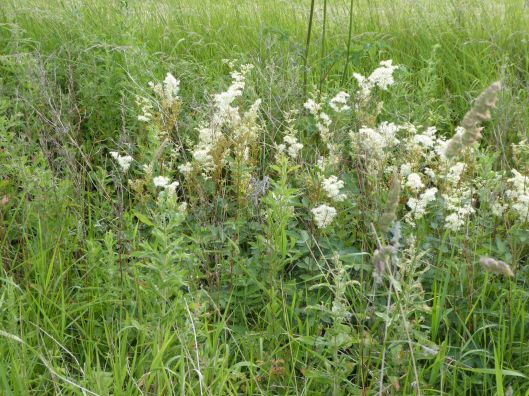
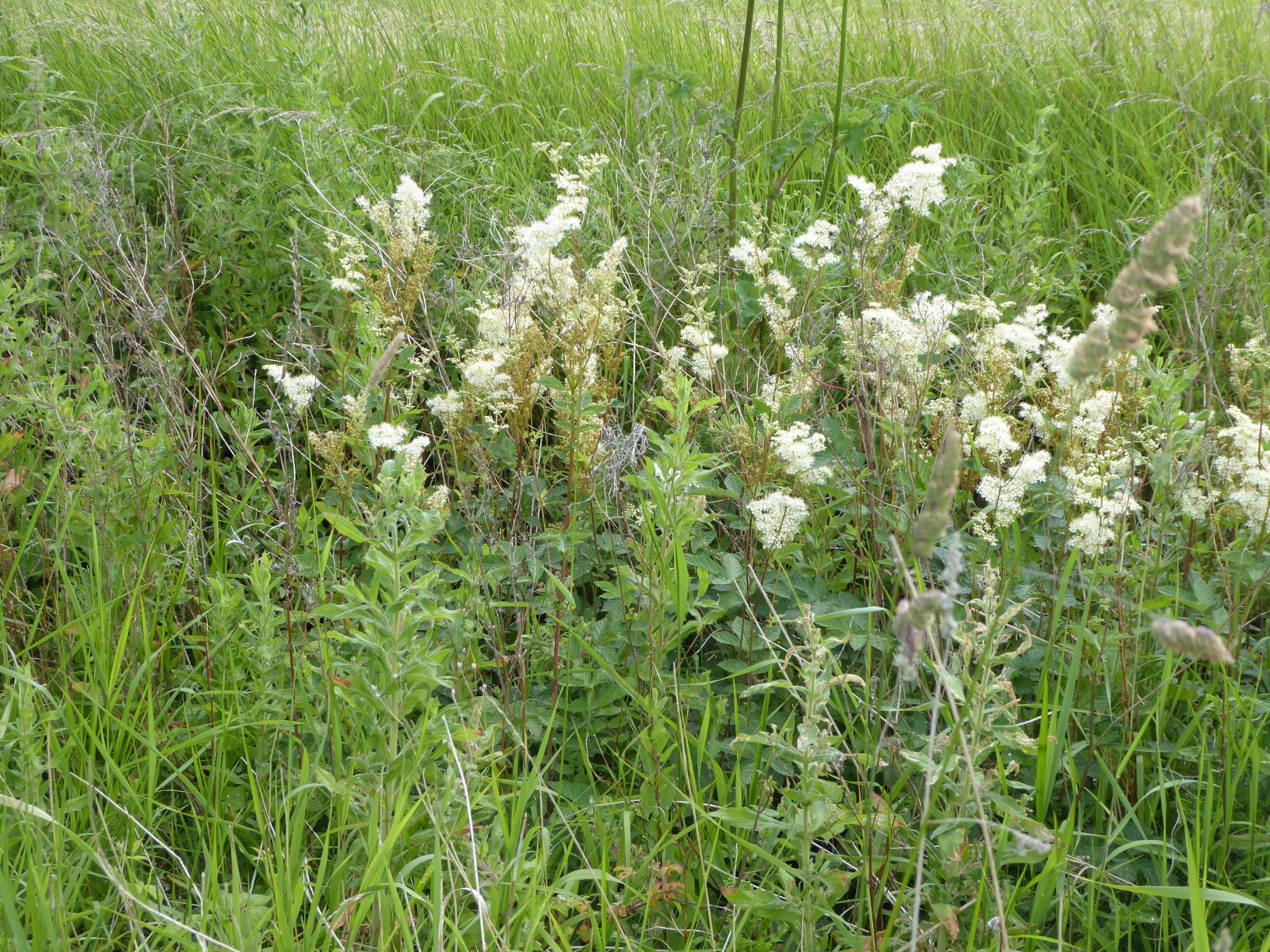
The beautiful almond-scented Meadowsweet (Filipendula ulmaria) was already in bloom along the lane just a few metres from our house.  This is a native plant.

I quote here from my ID, ‘Harrap’s Wild Flowers’ by Simon Harrap ” The name (Meadowsweet) refers to its use in flavouring mead and other drinks, rather than a predilection for meadows, and also used as a strewing herb, scattered on the floor to freshen up the house.”
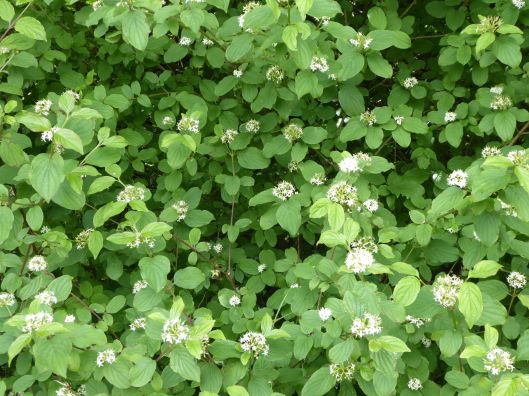
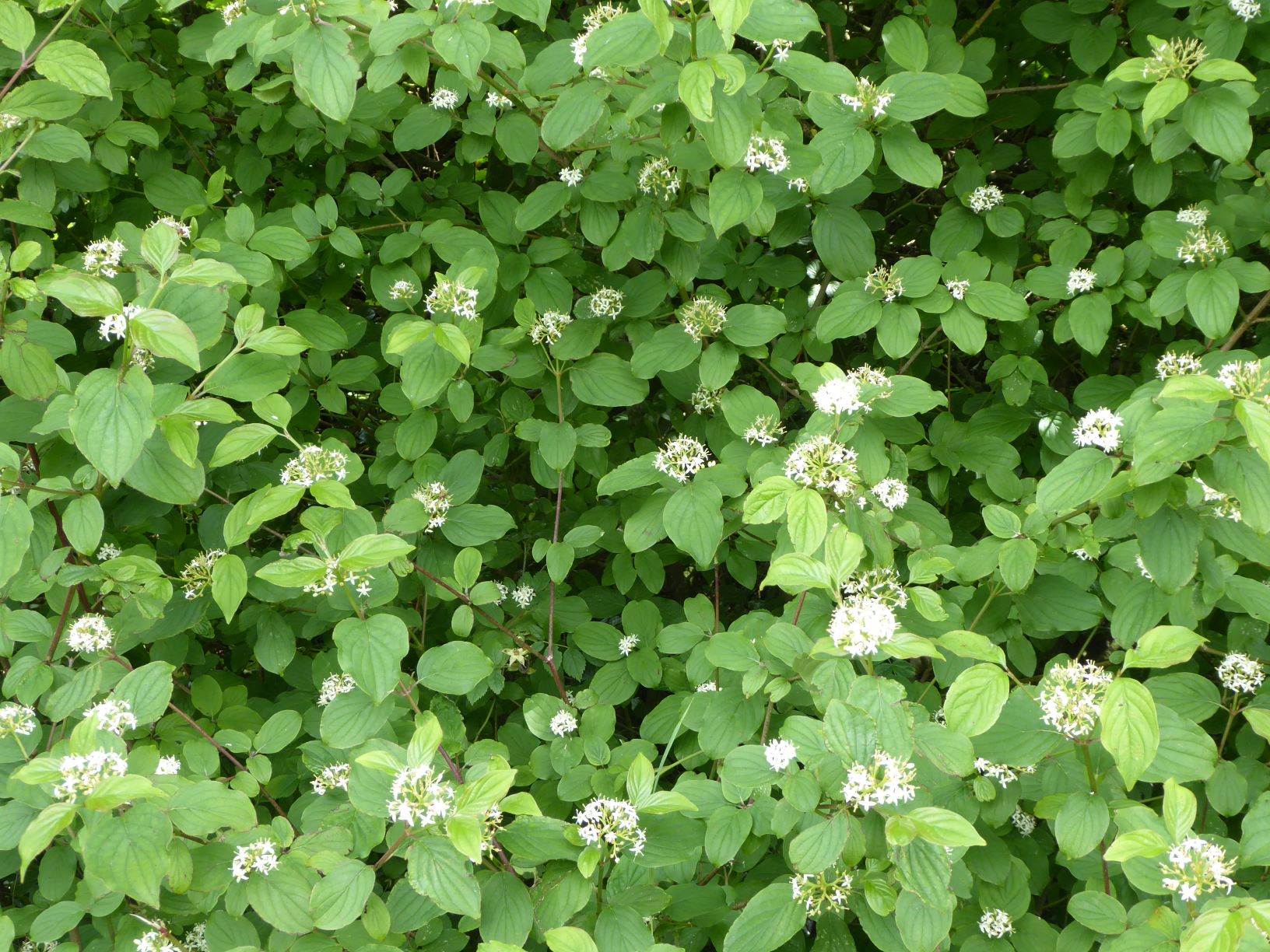
The Dogwoods (Cornus sanguinea) have been marvellous this year. Most were past their best already but I felt I just had to record this shrub’s swansong.
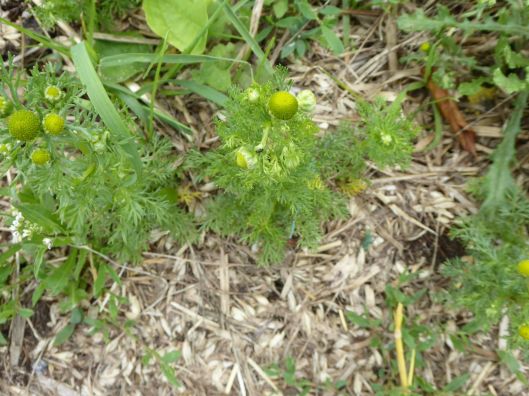
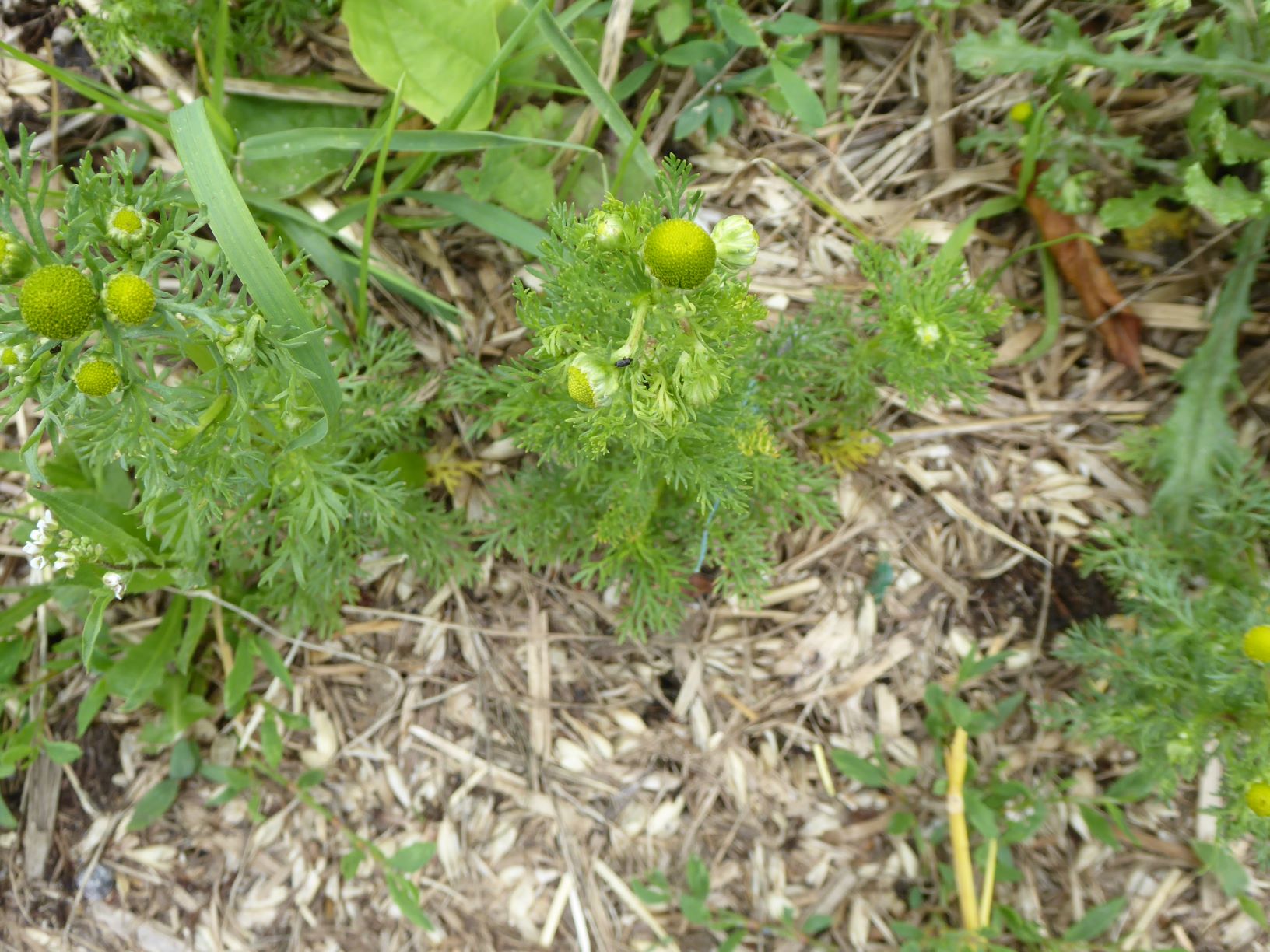
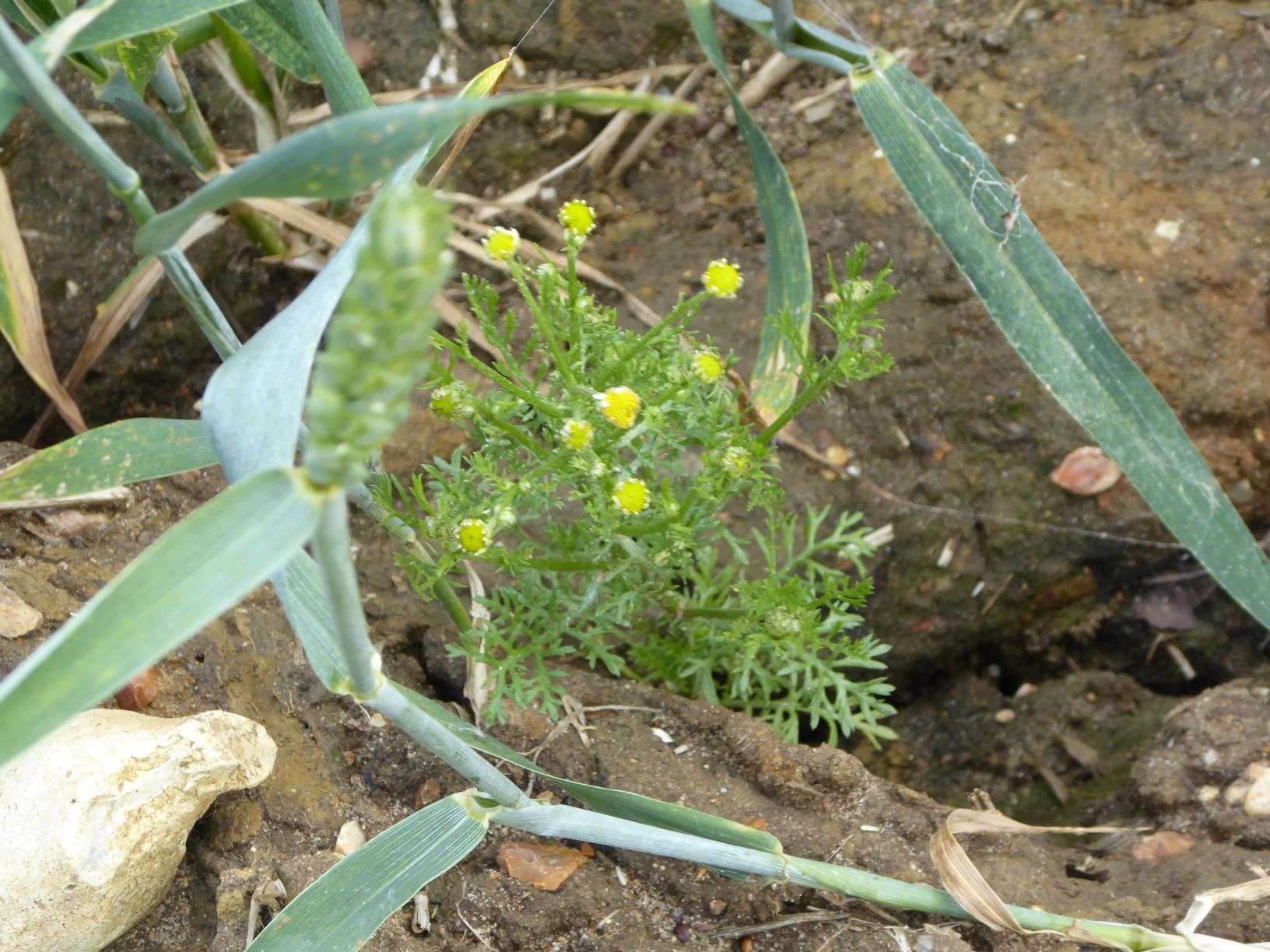
This is a plant I have known since I was a small girl. It used to grow prolifically in the places I played. Pineappleweed (Matricaria discoidea)

The plant gives off a very strong pineapple scent when it is crushed.  It is an introduced plant, coming originally from east Asia and was first recorded in the wild in this country in 1871.
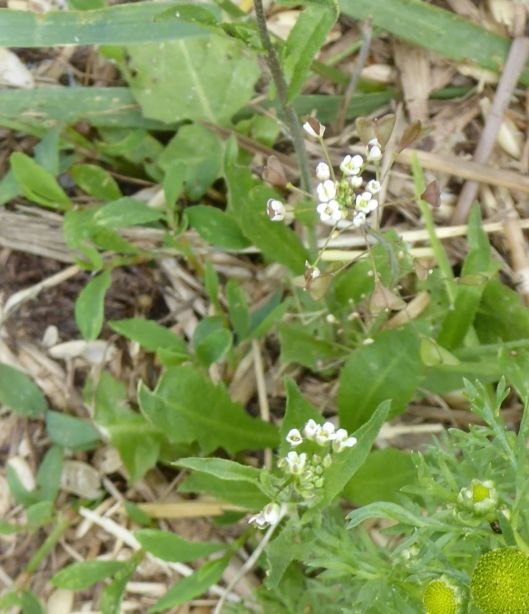
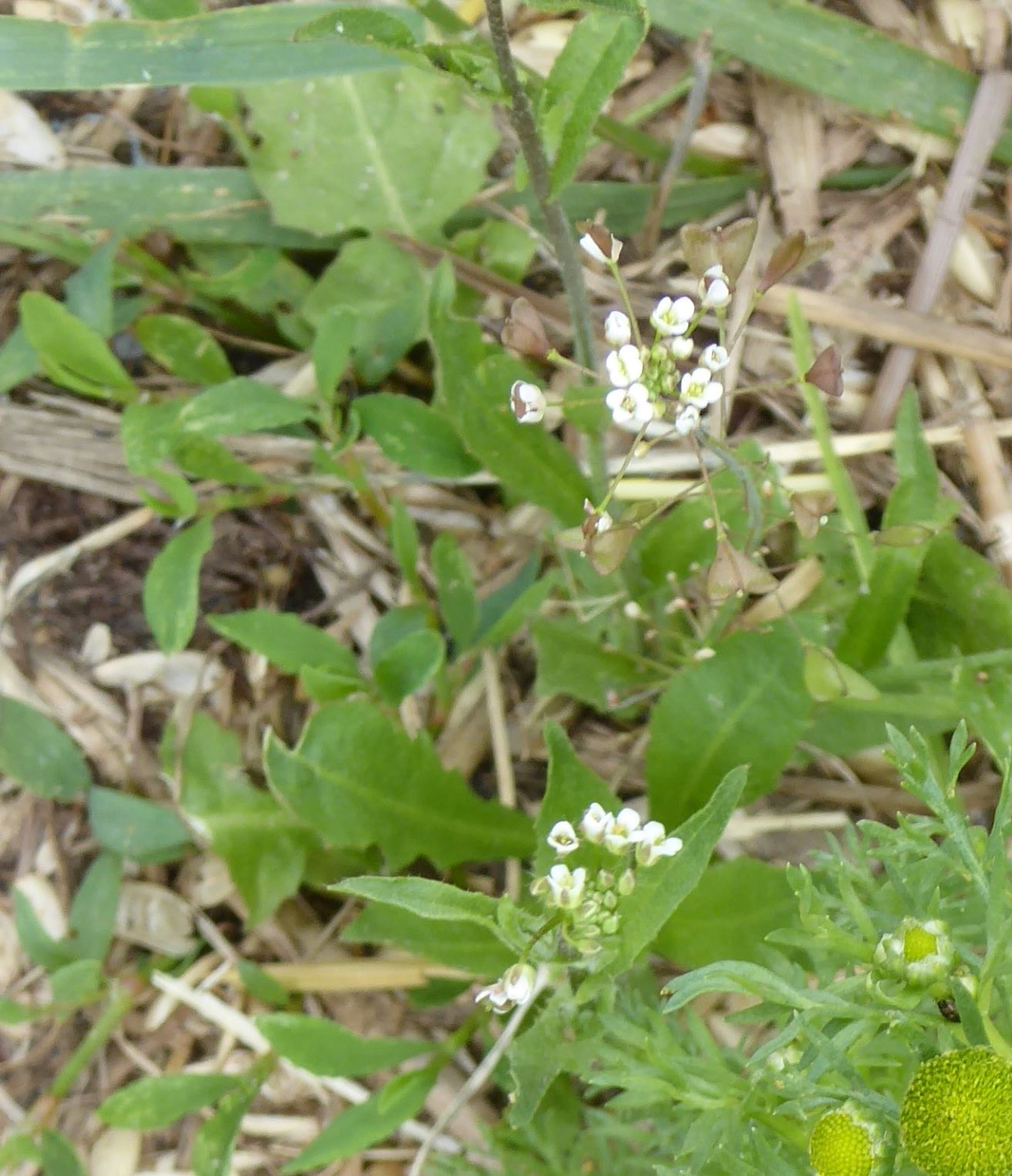
Shepherd’s Purse (Capsella bursa-pastoris). This tiny little plant was right next to the Pineappleweed (which you can see bottom right of the photo). It gets its name from the shape of the seed pods.  You can see them surrounding the upper white flowerhead; they are grey-brown in colour and triangular.  Shepherd’s Purse is an ancient introduction to this country.
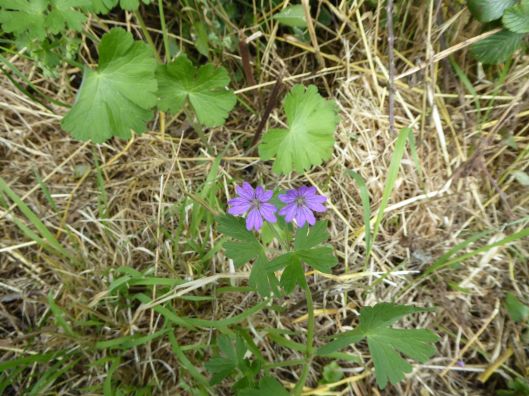
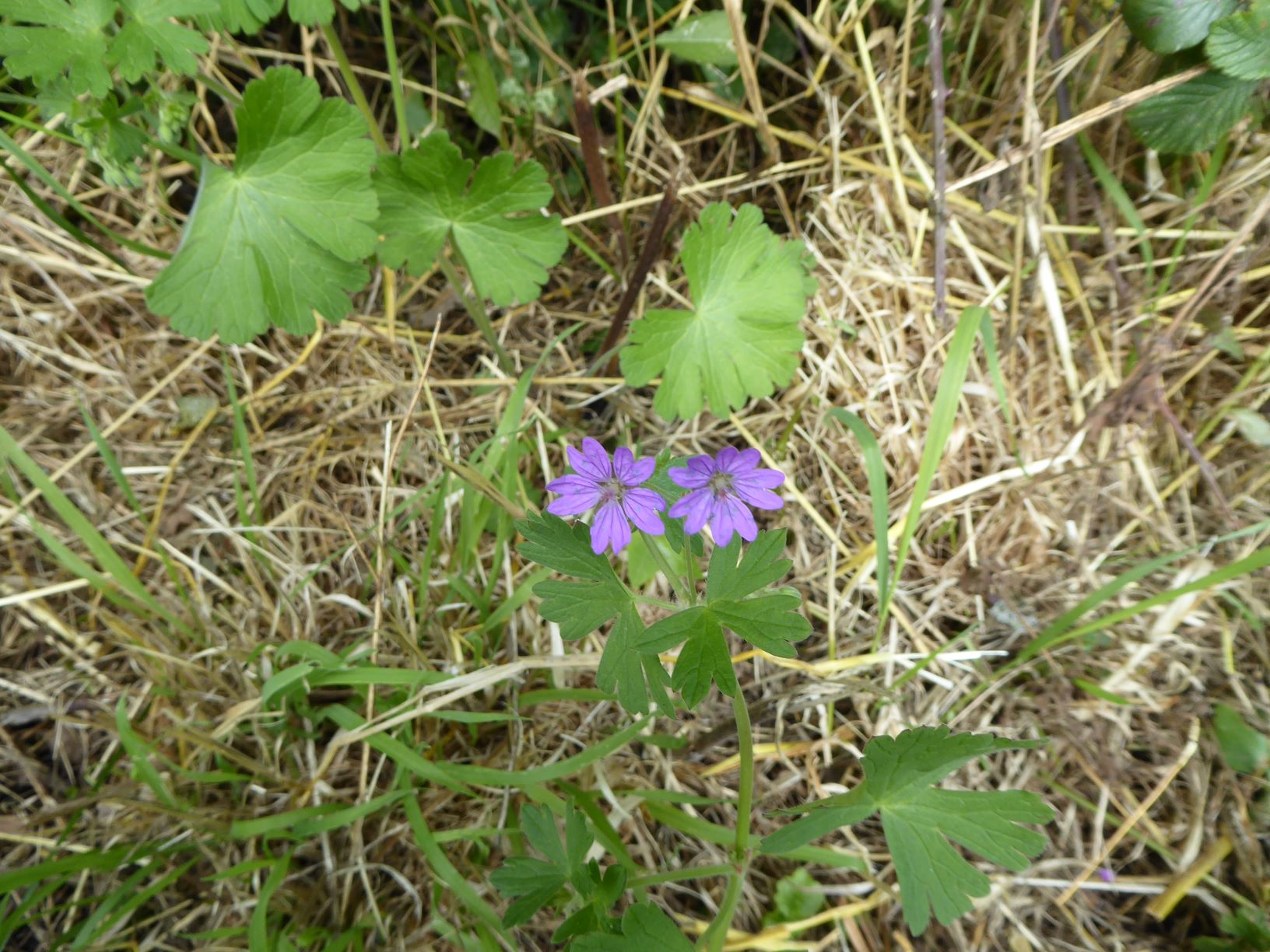
Hedgerow Cranesbill (Geranium pyrenaicum). This is one of the plants my camera decided should not be as pink as it is. It has rather lovely darker veins on its petals. This is yet another introduction, this time from southern Europe and was first recorded in the wild here in 1762.  I have added a link for you to see the usual colour of the flower.
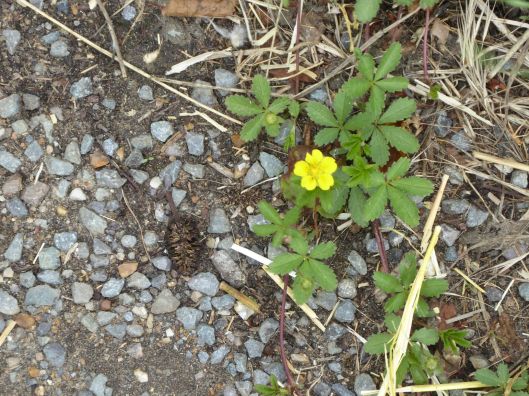
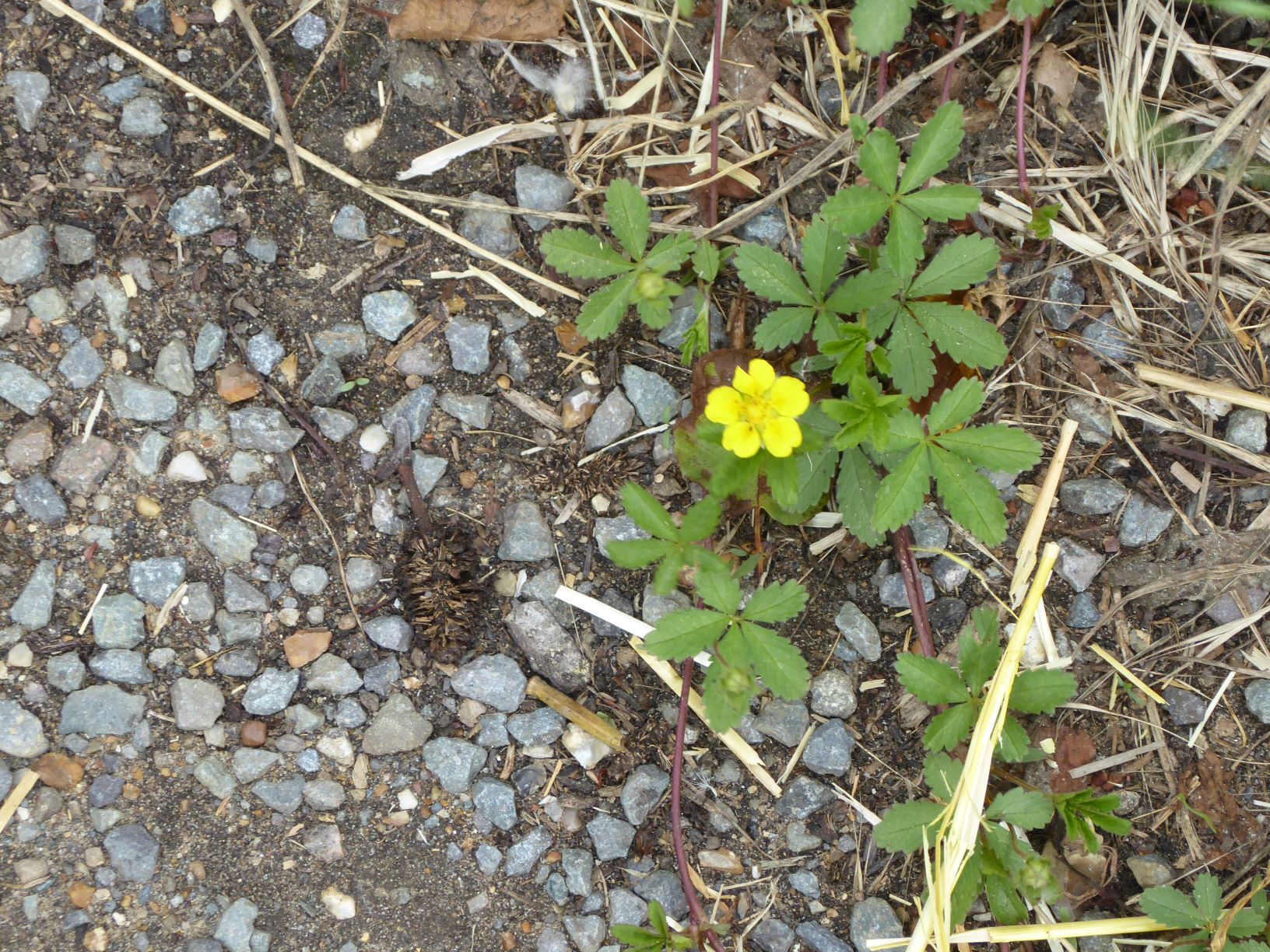
Creeping Cinquefoil (Potentilla reptans). I love the zingy lemon-yellow of this flower! Next to a buttercup it looks too bright but on its own backed by its lovely soft green leaves it looks glorious.
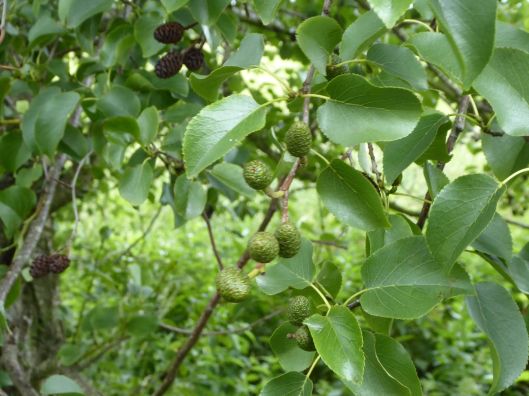
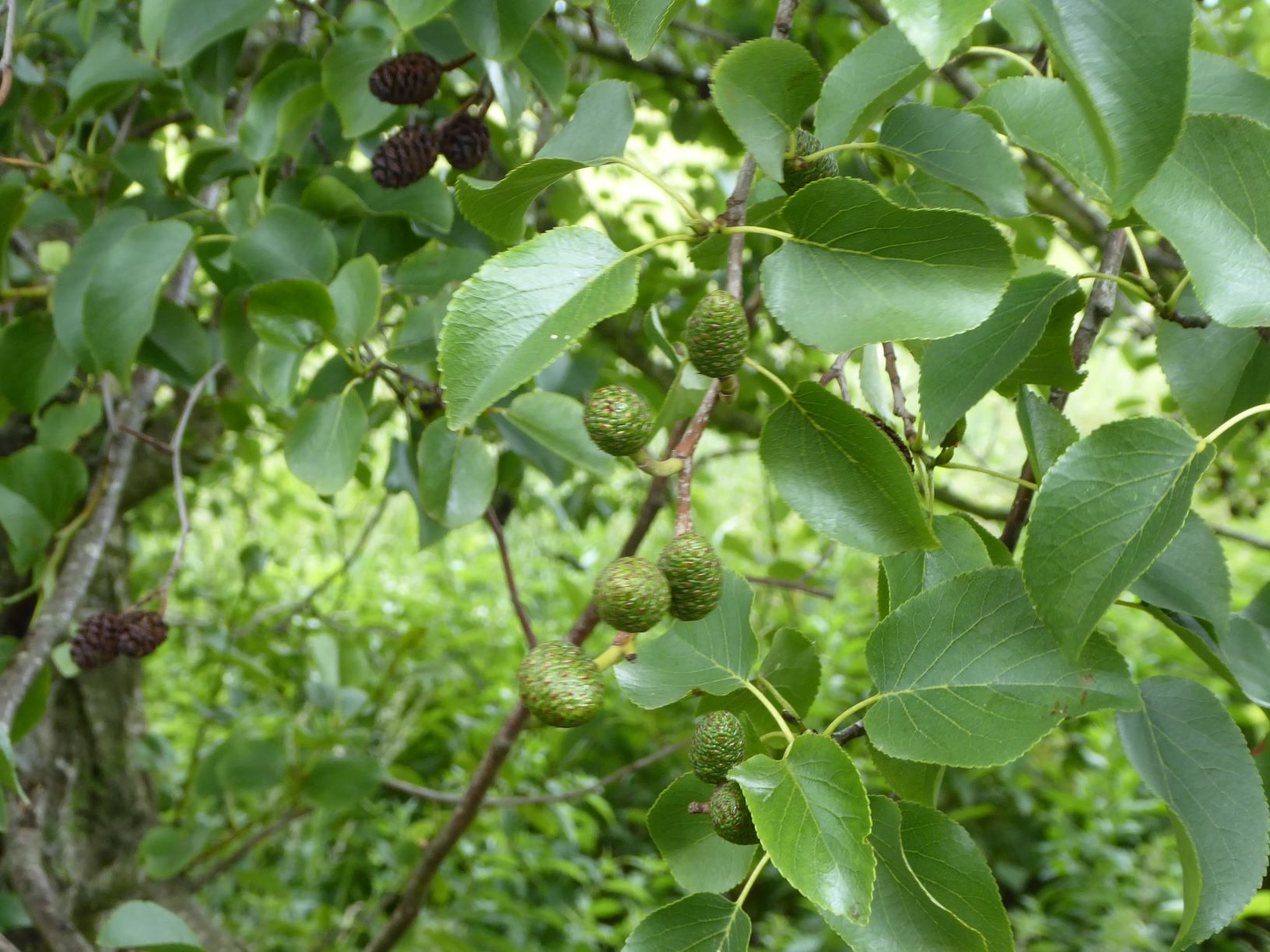
Italian Alder (Alnus cordata). Halfway down our lane a row of Italian Alders were planted as a windbreak. What attractive trees they are! Here you can see the substantial heart-shaped glossy leaves, dark cones from last year and the new green cones. This tree has beautiful long catkins in the spring which flutter in the strong winds that blow here.
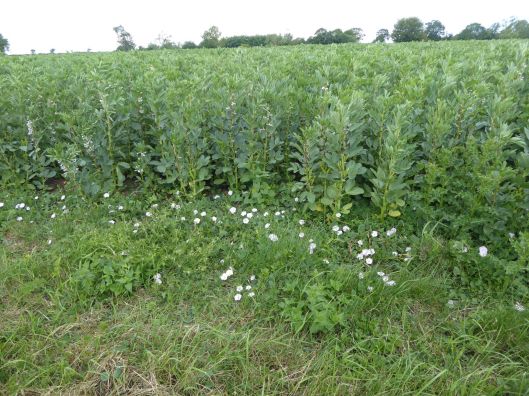
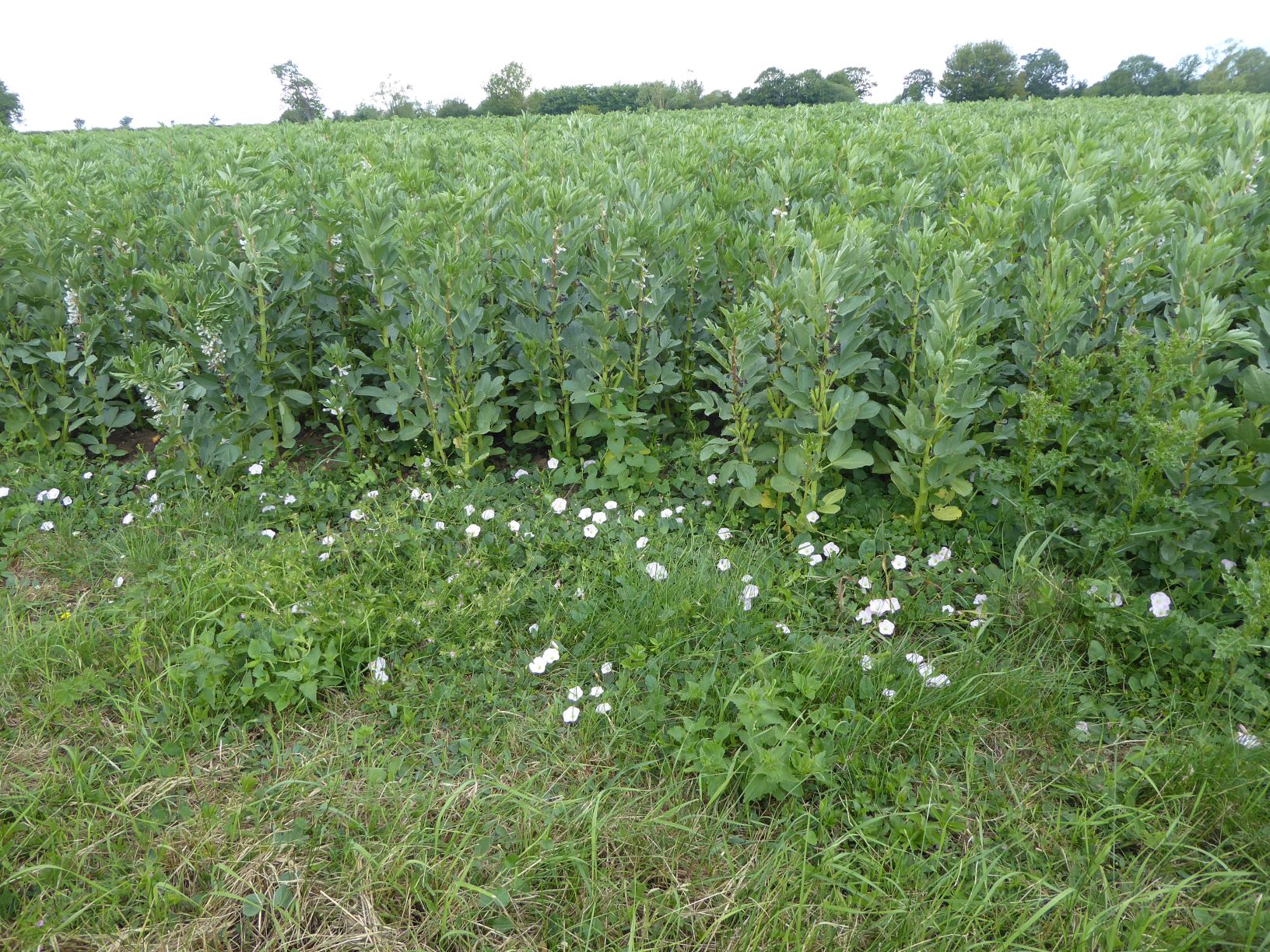
Pretty pink and white striped Field Bindweed (Convolvulus arvensis ) along the edge of this crop of Field Beans.
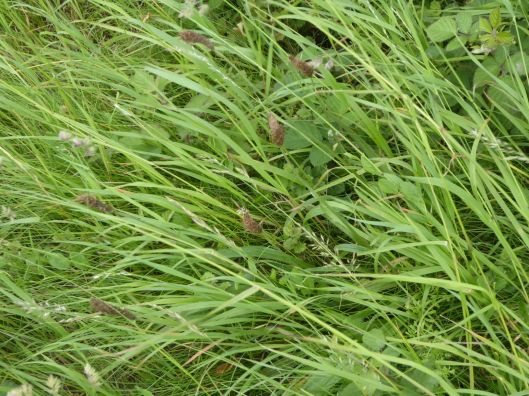
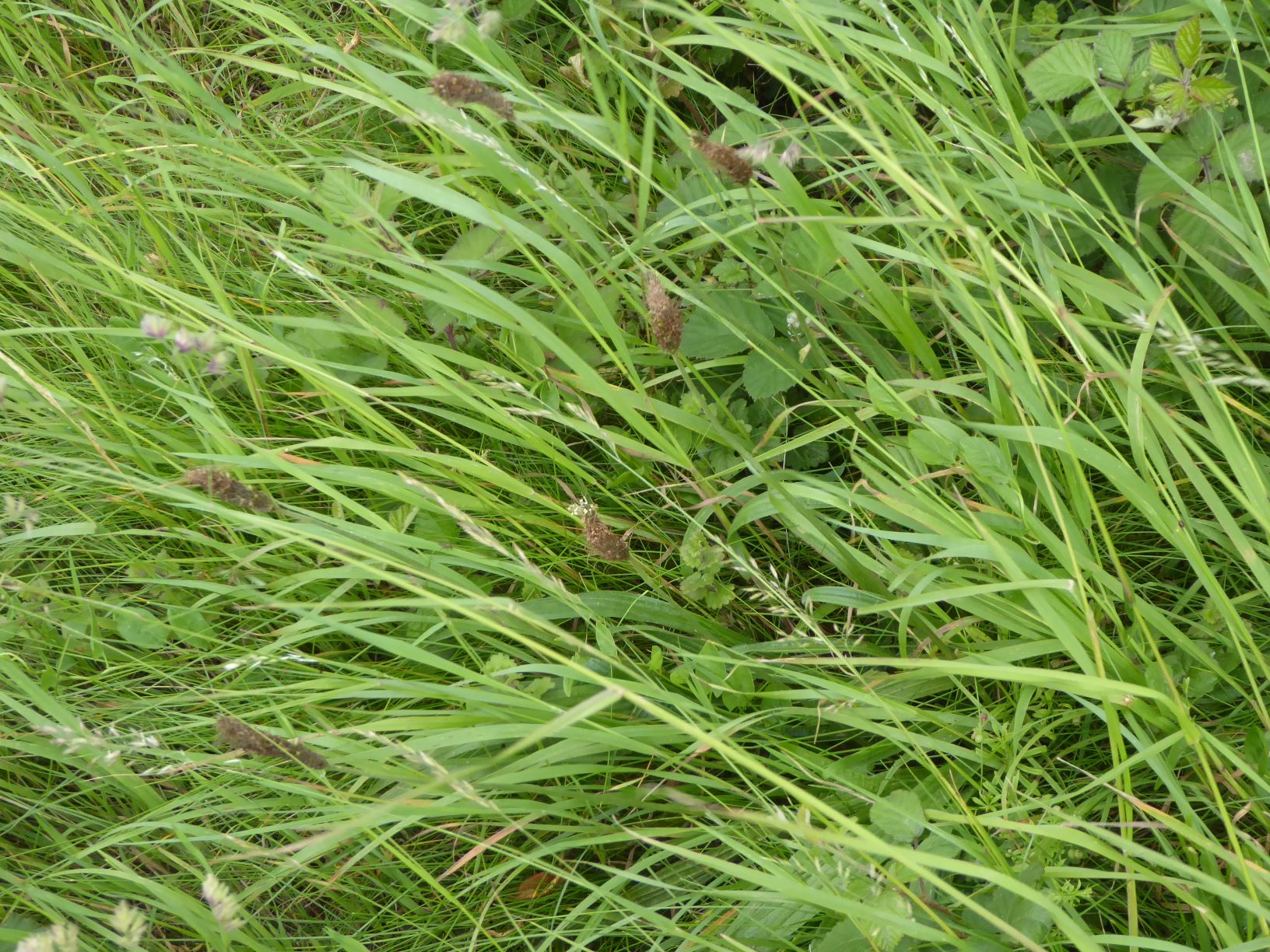
As you can see from this photo, it was quite breezy during our walk; not the best conditions for getting good pictures in a hurry! In amongst the grass you can see the brown seedheads of Ribwort Plantain (Plantago lanceolata).

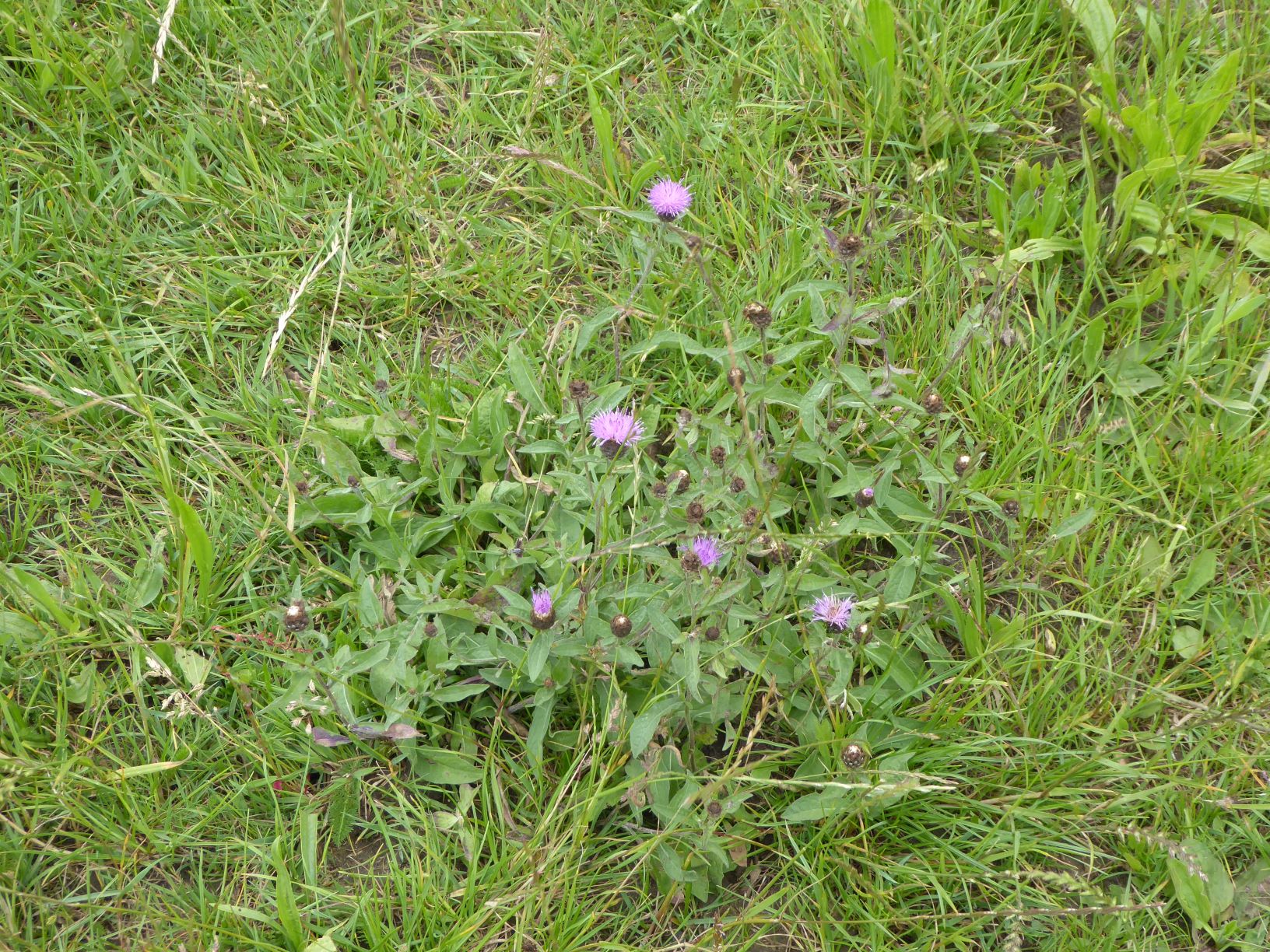
Common Knapweed (Centaurea nigra). The hard flowerheads of this plant have given it the name ‘Knap’ weed; ‘knap’ meaning knob.

In olden times, this flower could be used to tell a girl whether she would marry soon.  She had to pull all the expanded florets off the flowerhead and then put the rest of the flower inside her blouse, next to her heart.  After an hour she should take it out again and if the previously unexpanded florets had blossomed, that was a sure sign that the man she was going to marry was soon coming her way.

By this time we had left the lane and were walking along a footpath between fields.
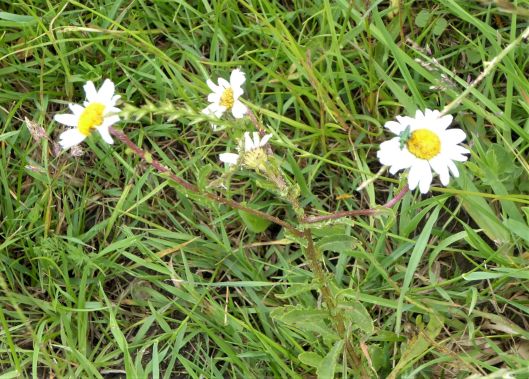
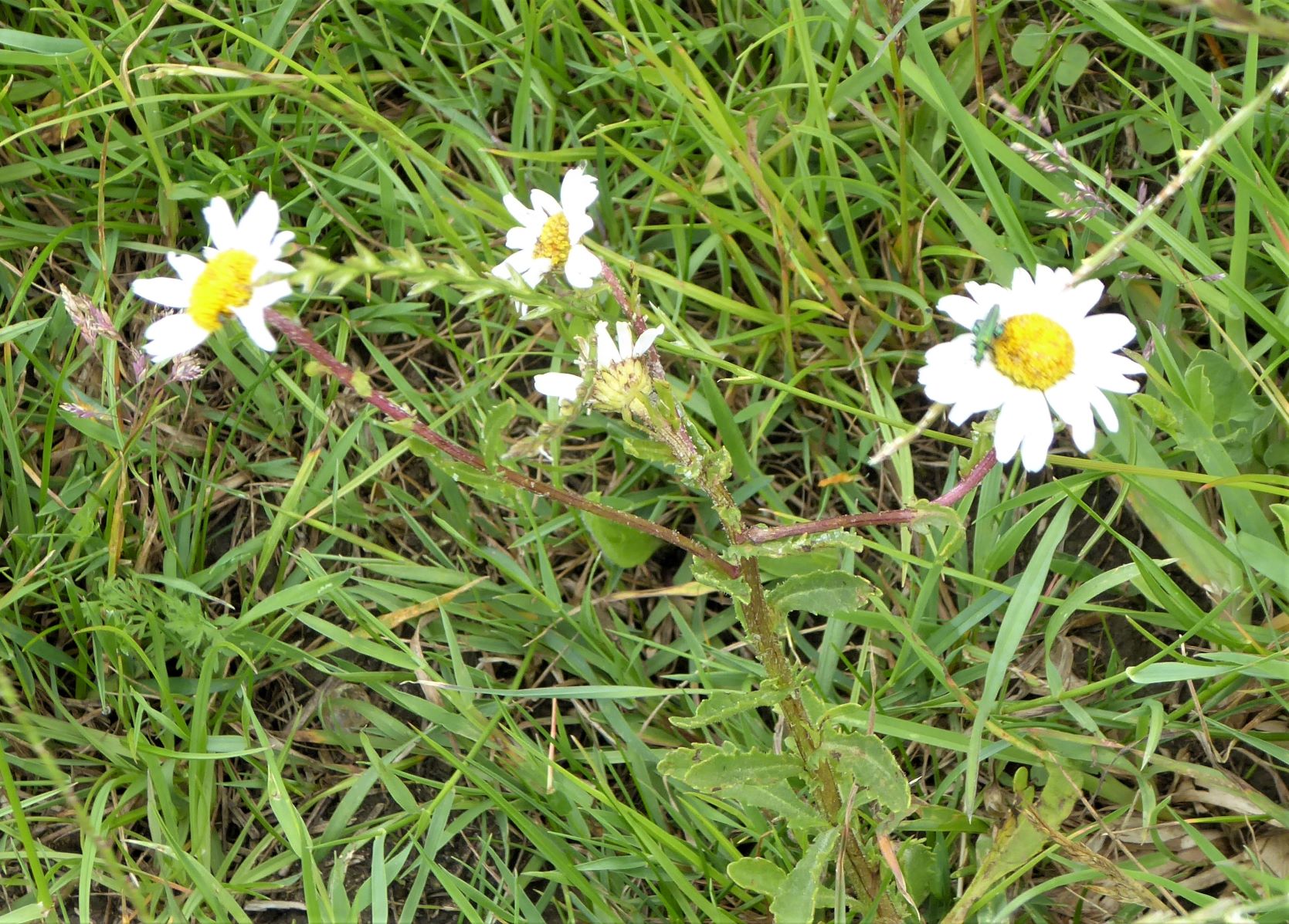
Oxeye Daisy (Leucanthemum vulgare). Sitting on the flower on the right is a Thick-legged Flower Beetle (Oedemera nobilis).  Only the males of this harmless shiny green beetle have the distinctive swollen ‘thighs’.
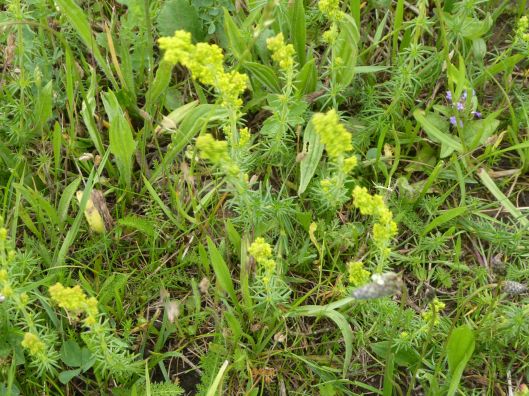
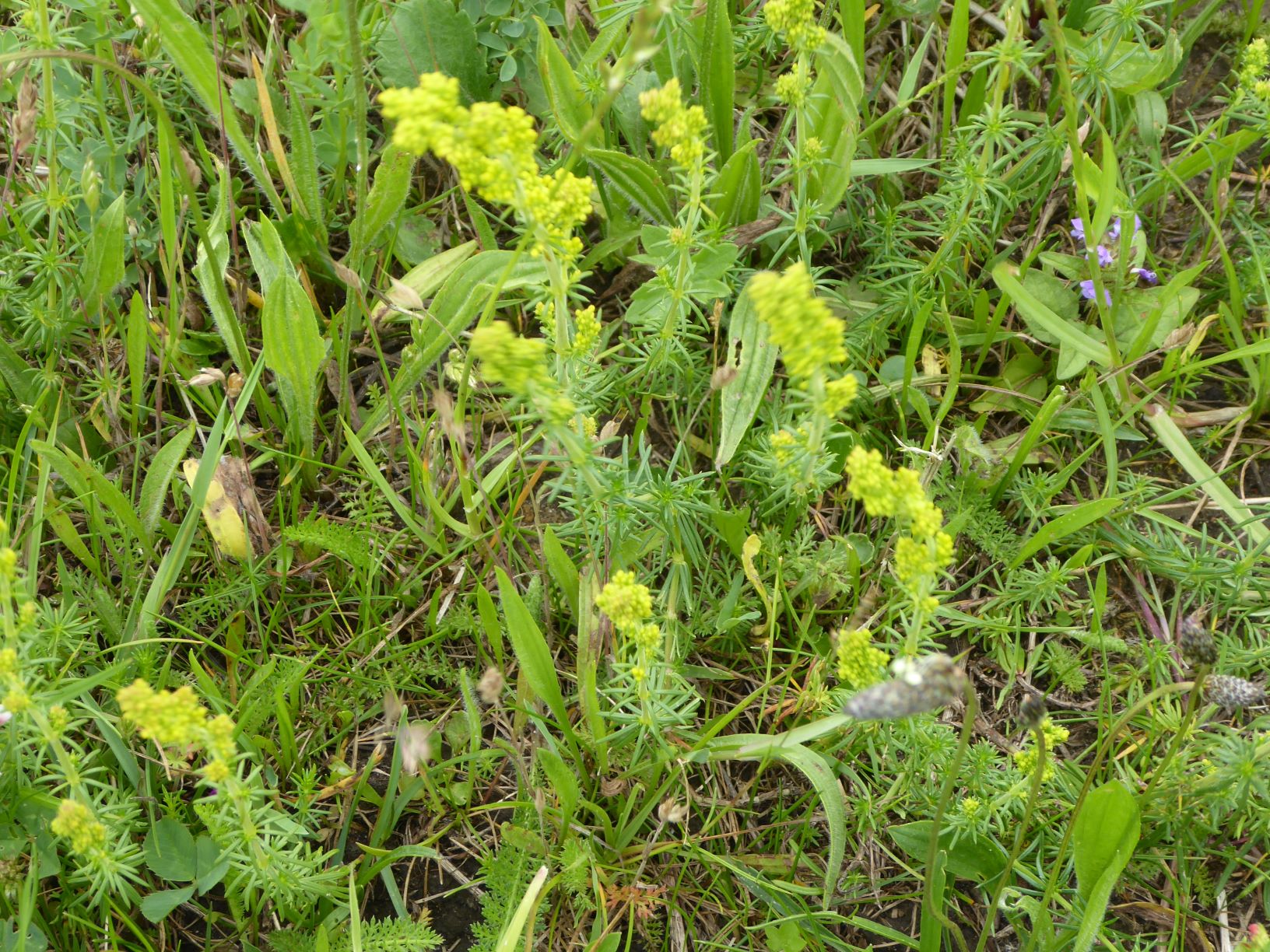
Lady’s Bedstraw (Galium verum). This is the only photo I managed to get of this pretty plant and most of it is out of focus because of the wind blowing it about.

Harrap’s tells me it is ‘honey-scented when fresh but smells of new-mown hay when dry.  Formerly believed to discourage fleas and was incorporated into straw mattresses, especially for the beds of women about to give birth, hence its name.’

I cannot confirm the information about the scent because: 1. I would have found it very difficult getting down low enough to smell the plant and would then have struggled to get back up again, so I didn’t. 2. The wind was blowing too strongly for the delicate scent to be discernible and 3. I haven’t got a strong sense of smell, anyway.  We’ll just have to take Mr Harrap’s word for it.
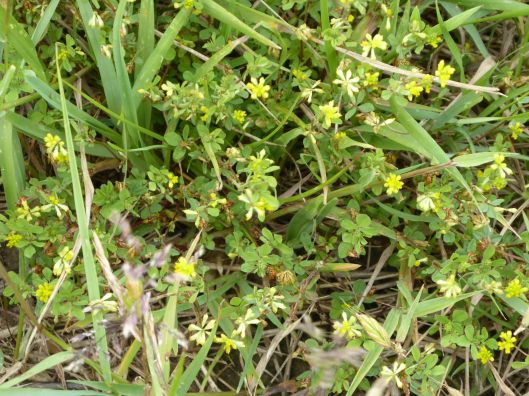
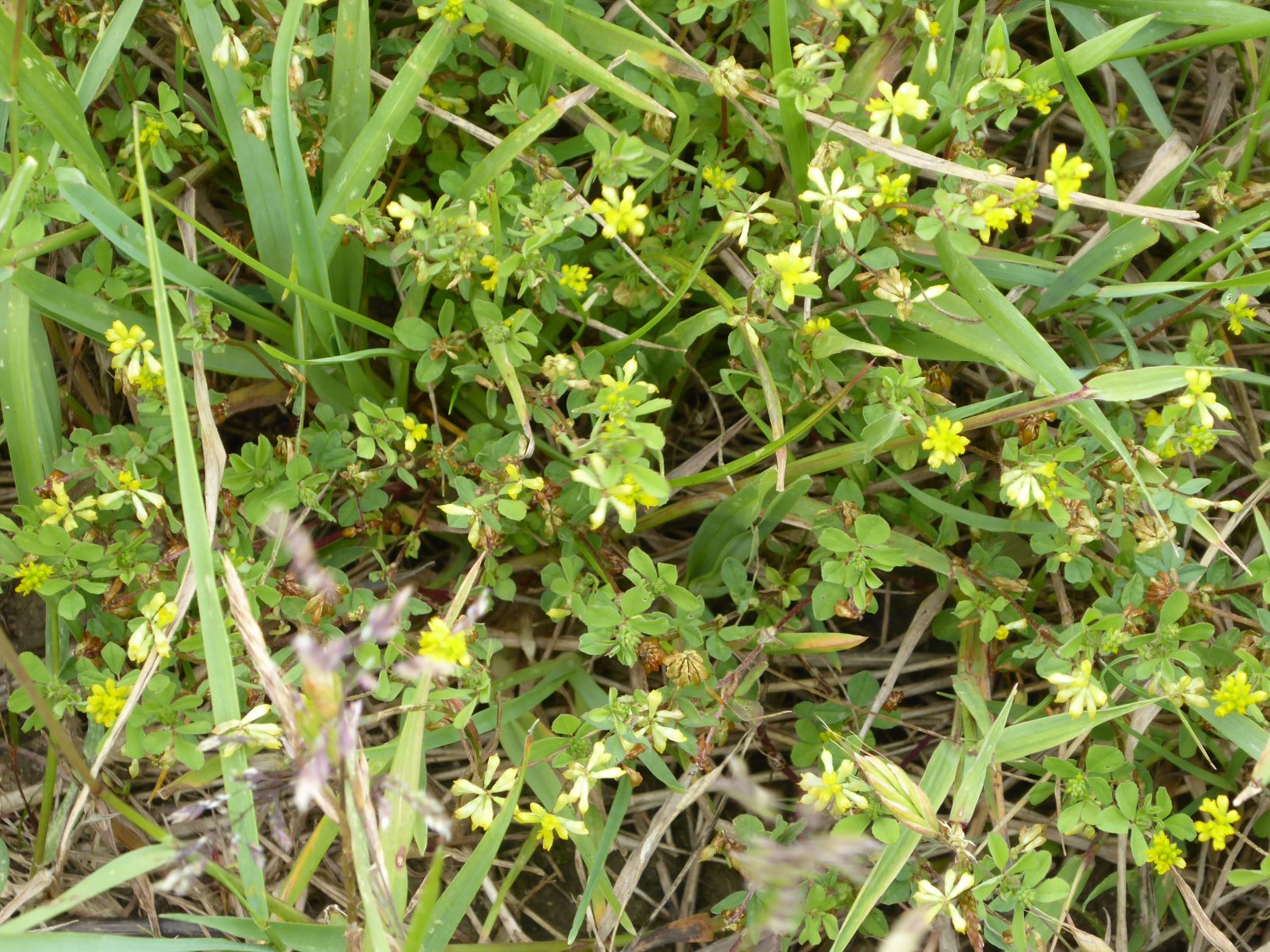
Lesser Trefoil (Trifolium dubium). This plant with its three leaflets joined together is widely believed to be the true shamrock.  There are other plants which are also thought to be the shamrock; white clover, black medick, watercress and wood sorrel.

This plant is one of the hop trefoils; its seedheads look like tiny heads of hops.  Once the seeds begin to ripen the petals don’t fall off the plant but turn brown and the standard, the upper petal of the flower, folds down on either side of its centre line over the ripening pod like a ridged roof.  If you click on the photo above to enlarge it and look about a third of the way up from the bottom, you will find a seed head in the centre.  Does that make sense?
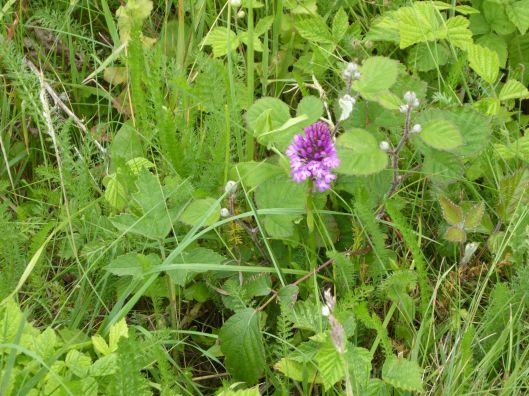
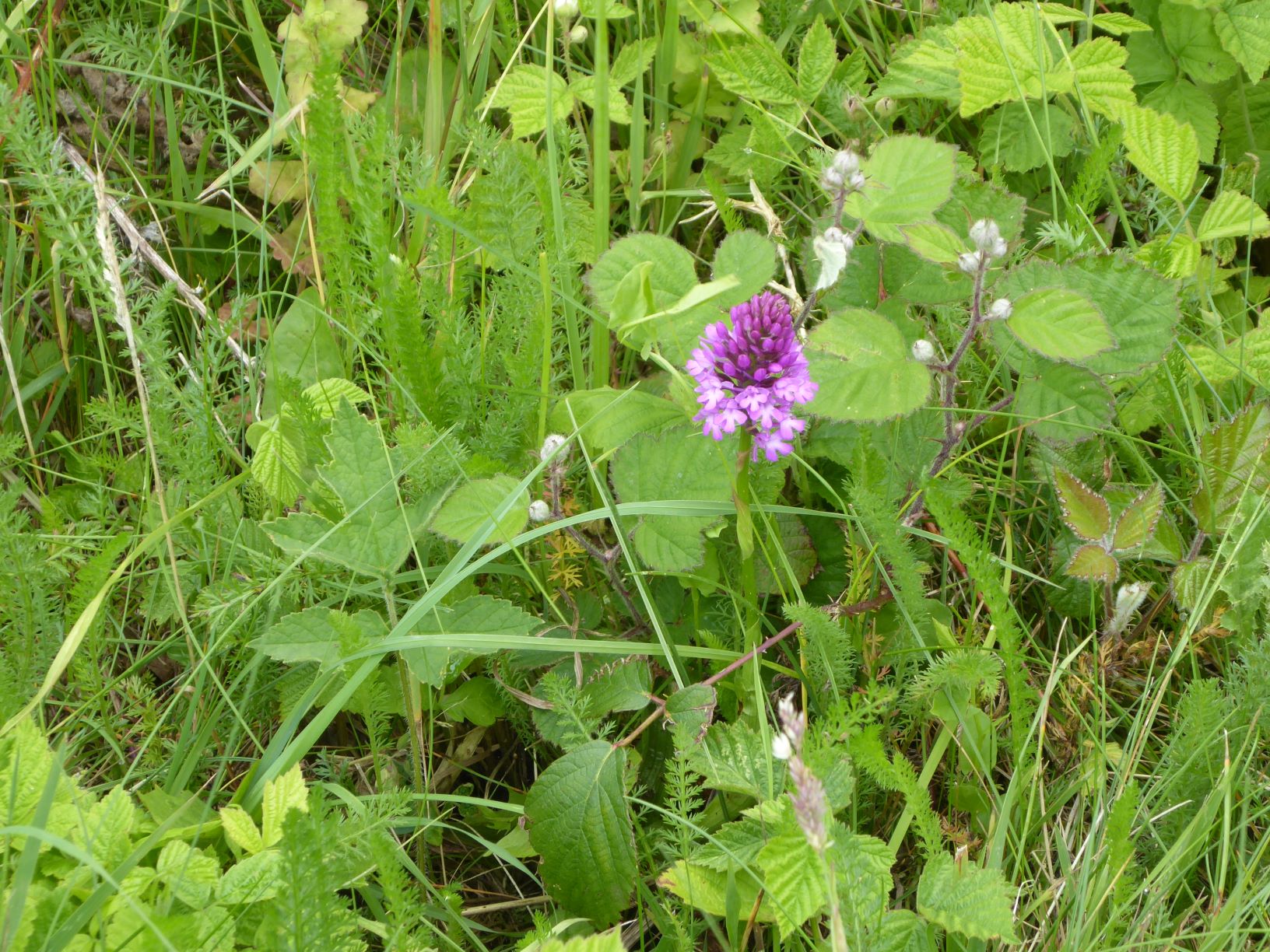
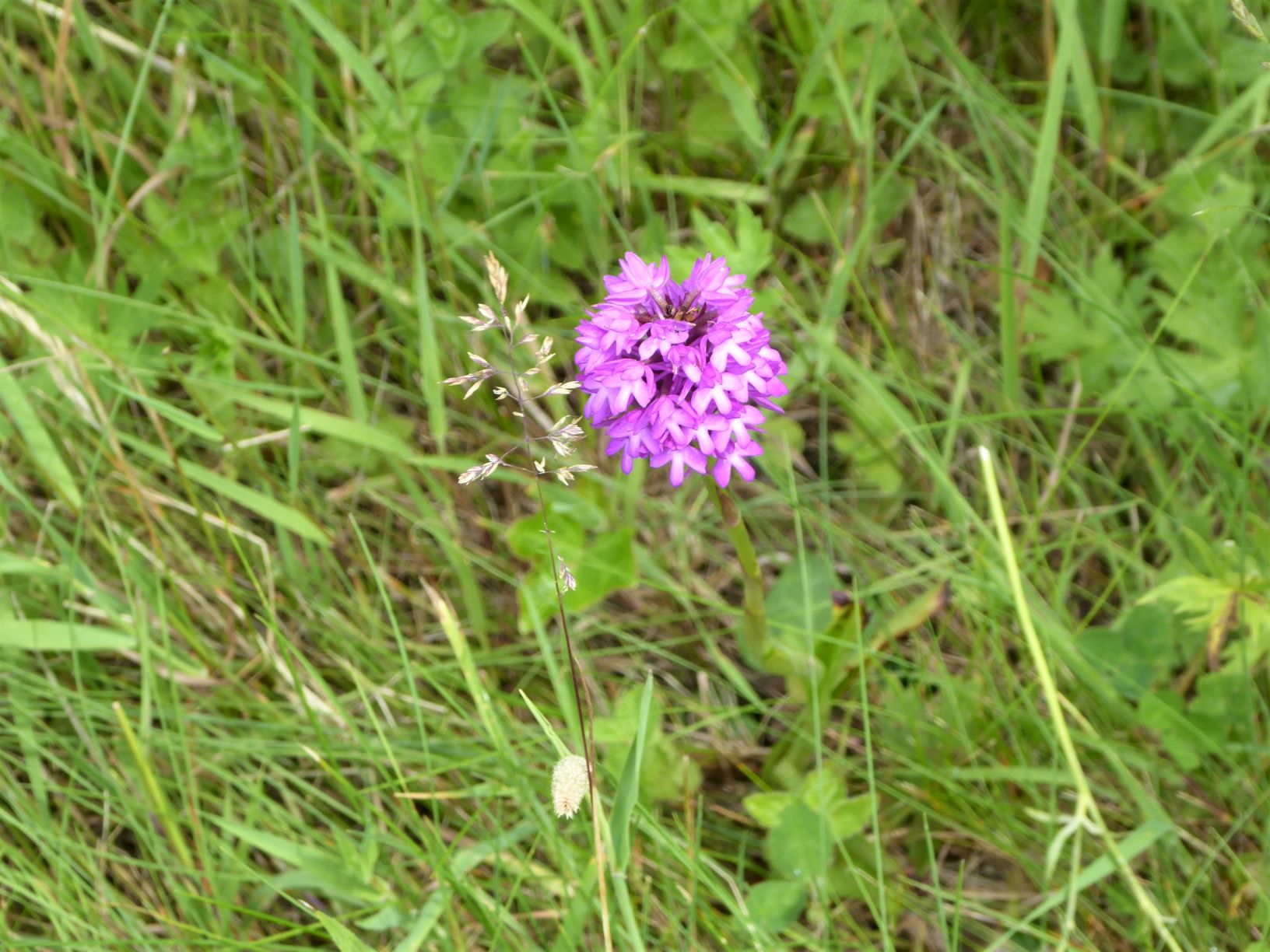
Pyramidal Orchid (Anacamptis pyramidalis).

Another not-as-pink, pink flower.  Here is a link to images of what a Pyramidal Orchid really looks like.
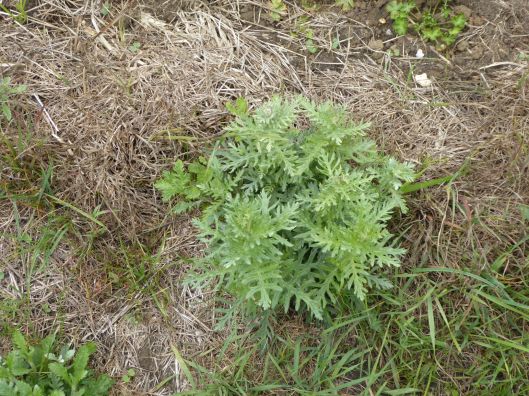
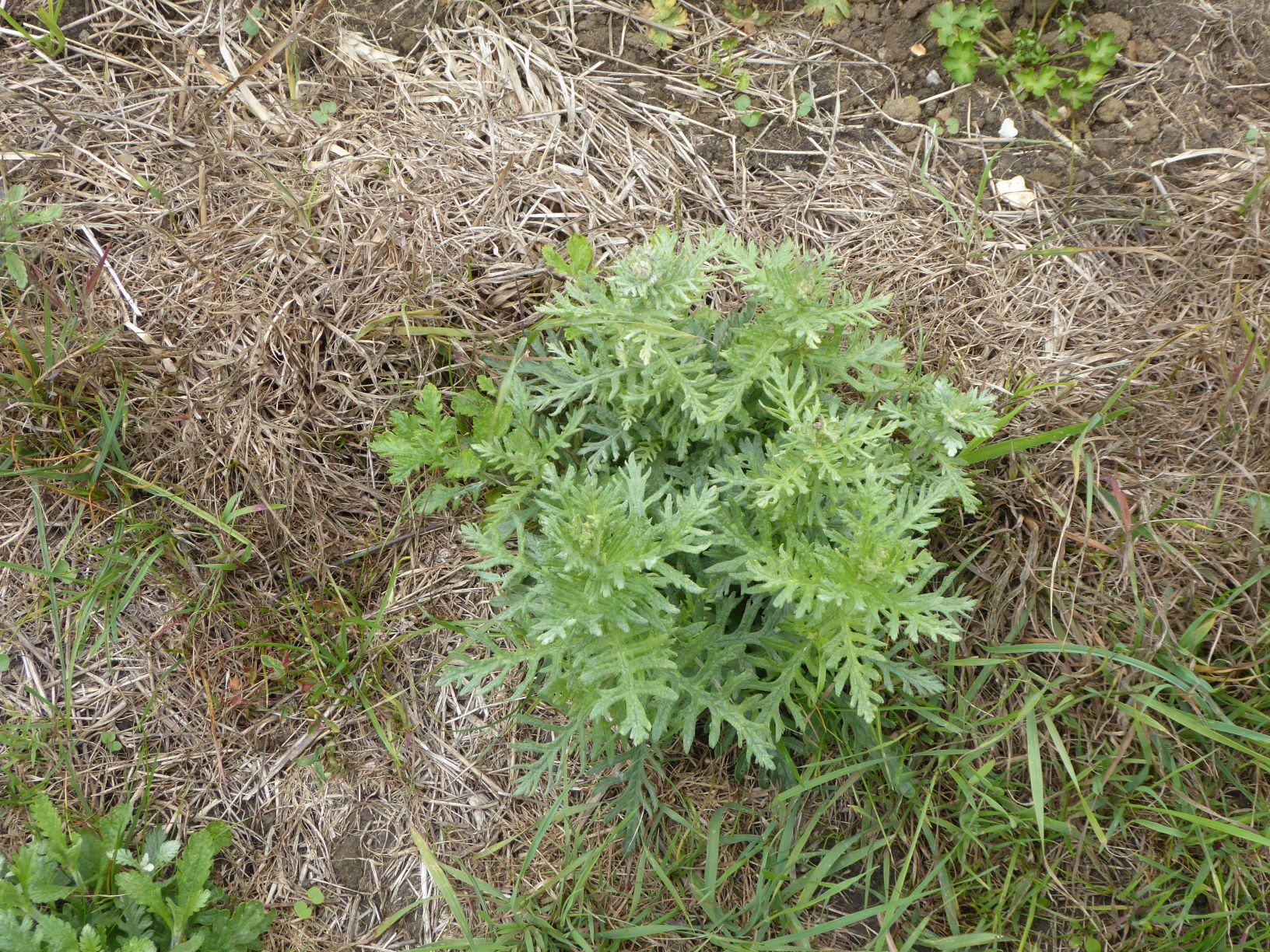
I believe this plant might be Oxford Ragwort (Senecio squalidus). The leaves look too evenly-branched to be the native Common Ragwort (Senecio jacobaea) though the latter plant is what I would expect to find here. Oxford Ragwort is found mainly in urban settings. It escaped from Oxford Botanic Garden in 1794 and then spread rapidly via the railway network. It sounds like the main character in a John Buchan novel!

Ragwort is poisonous, its leaves containing an alkaloid poison that can remain in plants that have been dried with hay.  Animals are not aware they are eating it when it’s in hay (though they will avoid it when it is growing in the field) and the alkaloids will destroy their livers in just a few months. Understandably, farmers will try to get rid of all the ragwort they find.

Our aim was to picnic at South Elmham Minster and we discovered it surrounded by trees.  It is on private land but the owners allow walkers to visit it as long as they respect the place.
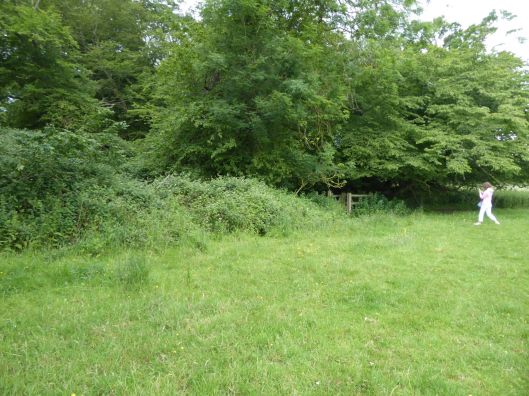
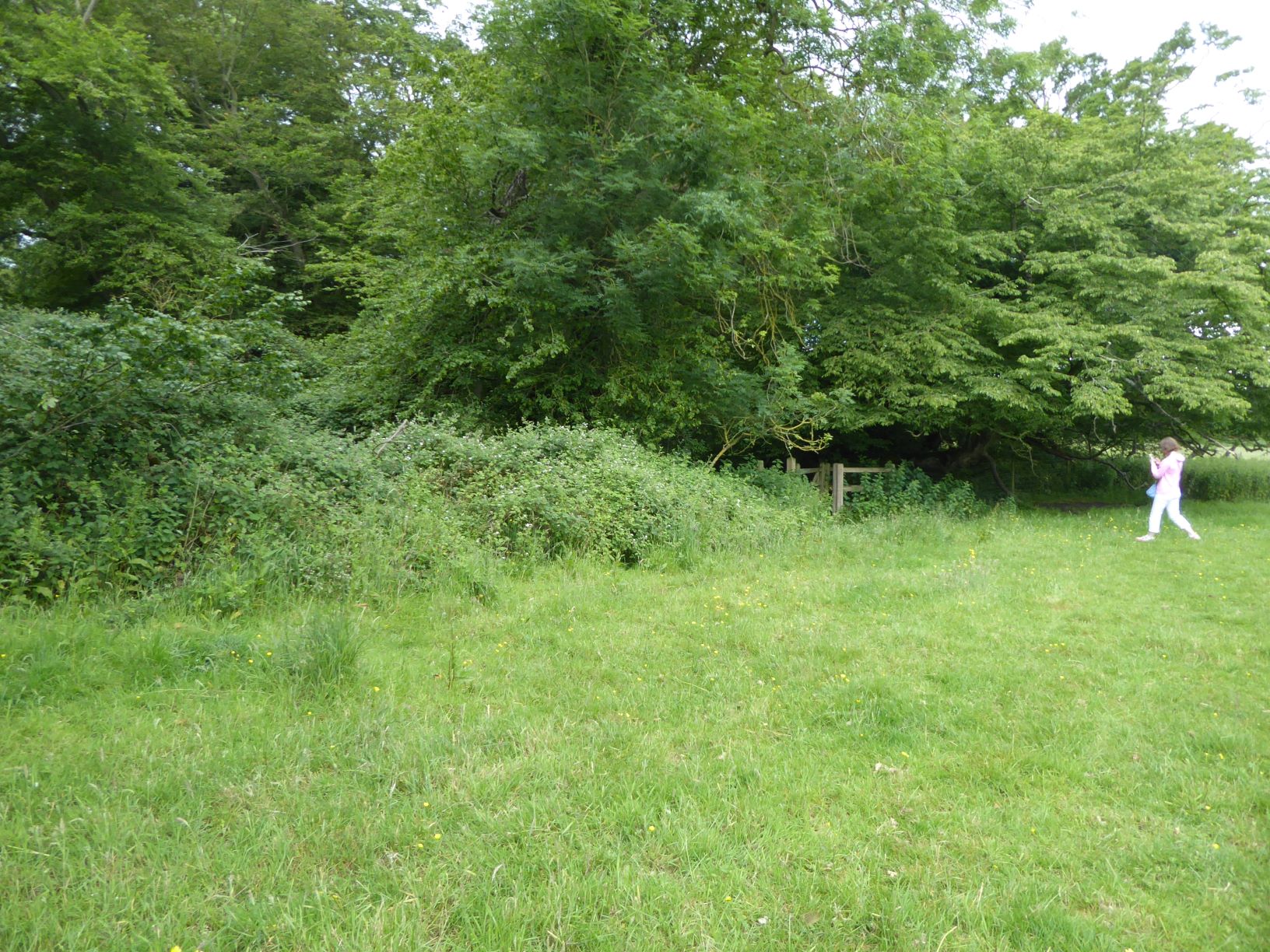
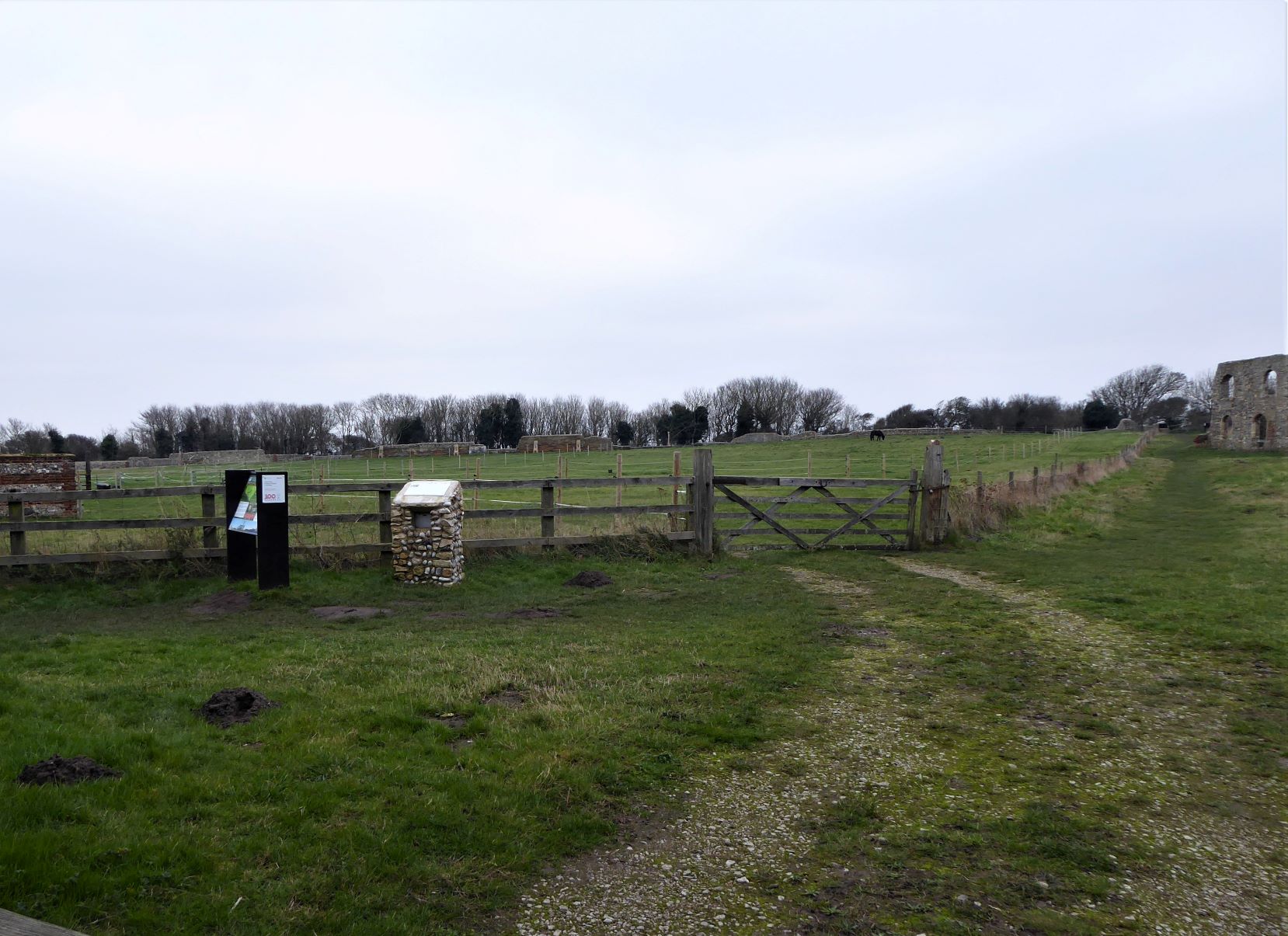
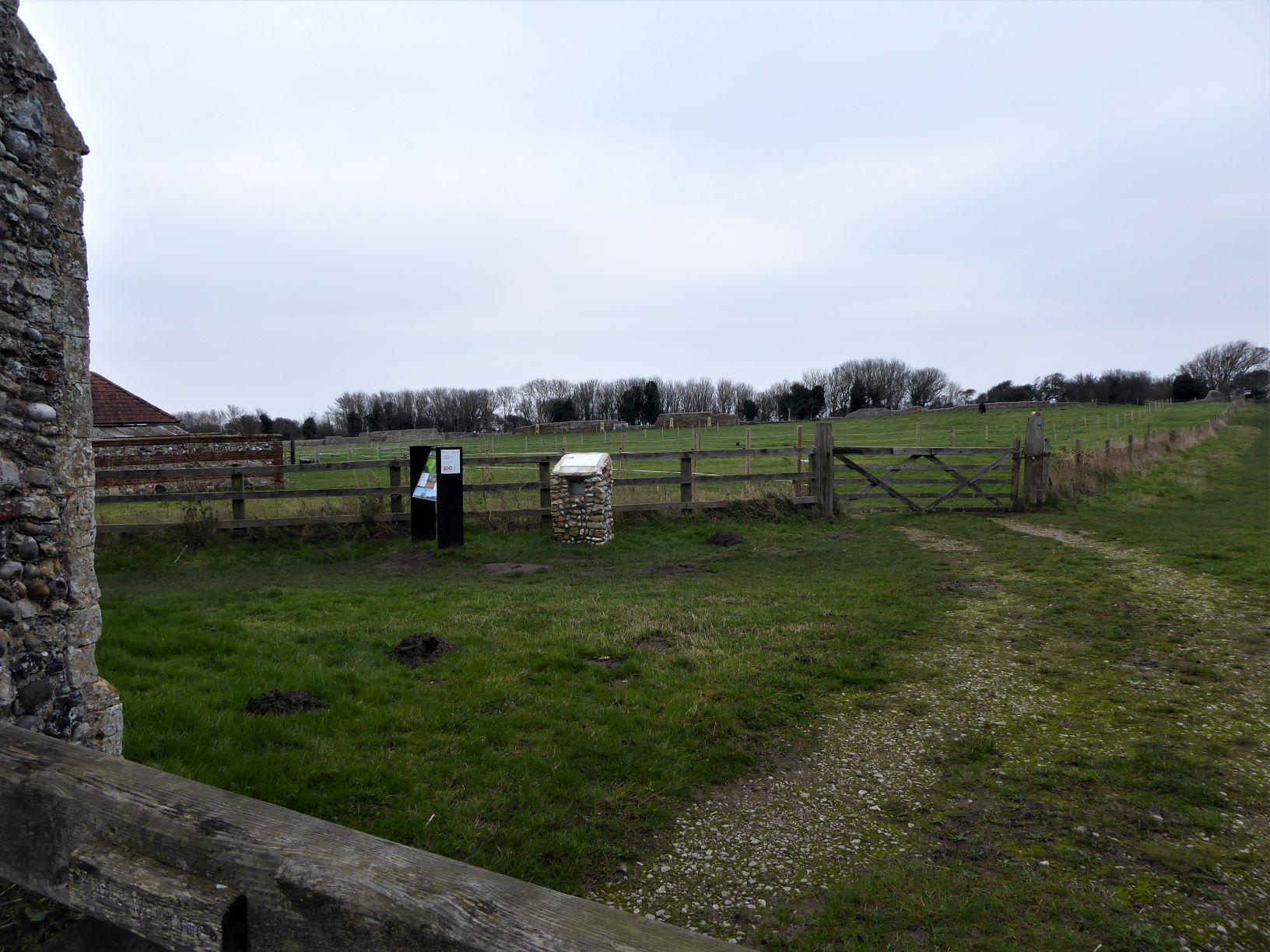
Here is Elinor discovering and photographing the entrance to the site.

Richard, Alice and I had been here before, when we walked to it from St James in April 1995, nearly two years before Elinor was born!  We hadn’t been back since, though it is only half an hour’s walk from our present home.

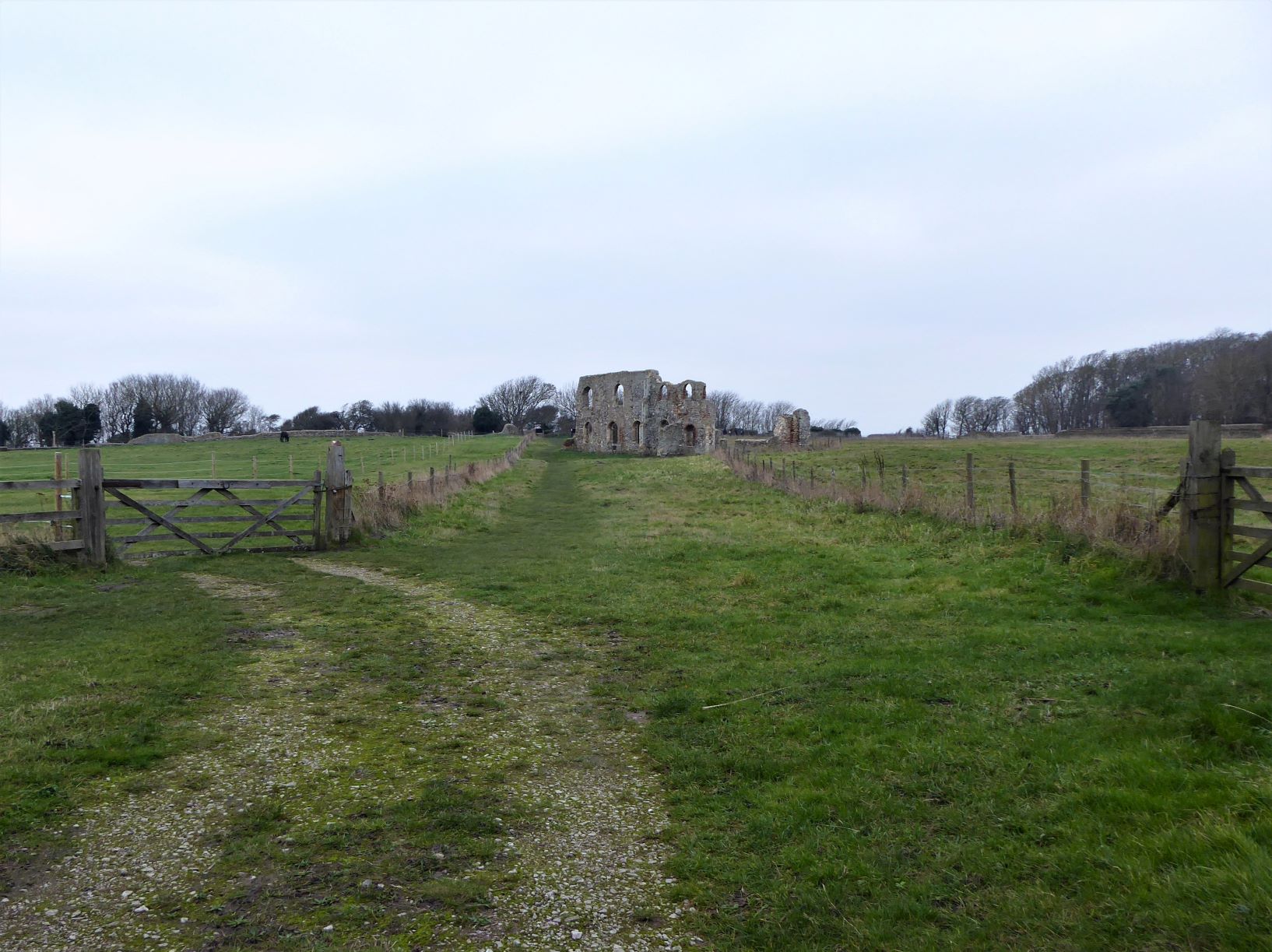
The entrance and path leading to the ruins of the ‘Minster’ were very overgrown which somehow added a frisson of mystery to the occasion.
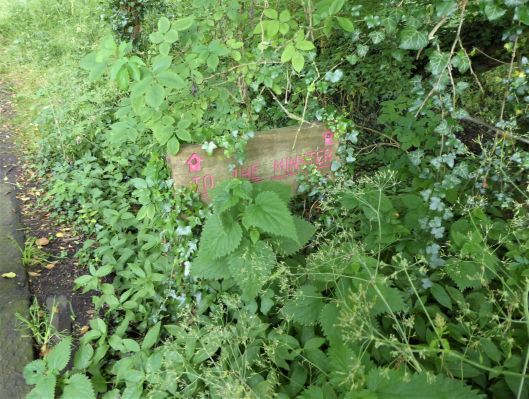
To the Minster

P1060505Entrance to minster
P1060507Common Comfrey
P1060510Entrance to Minster (2)

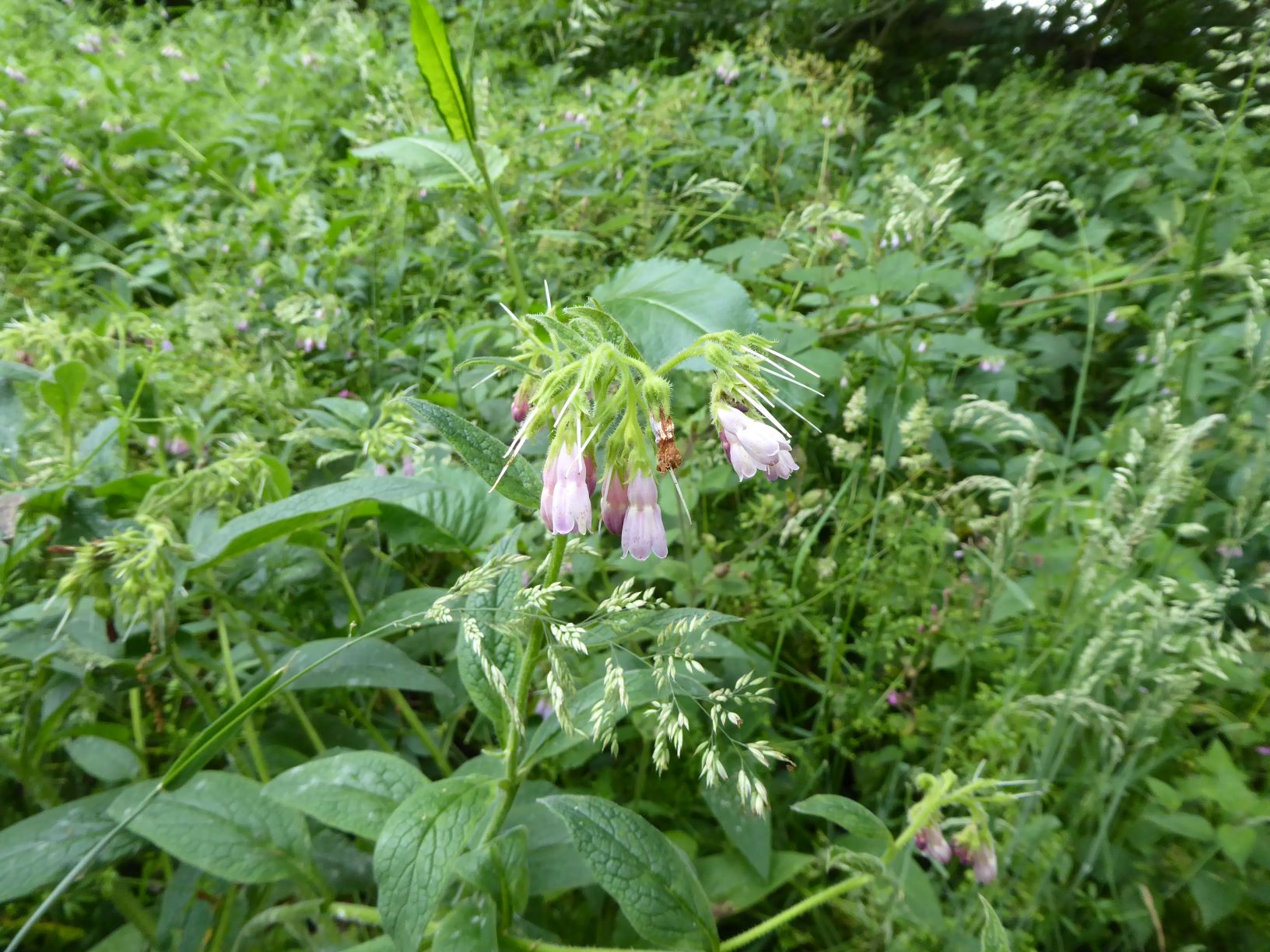
There was a lot of Comfrey growing next to the path.
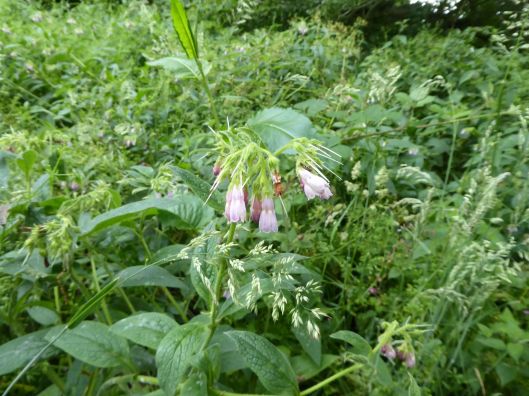
Common Comfrey (Symphytum officinale). These flowers were lavender-coloured.

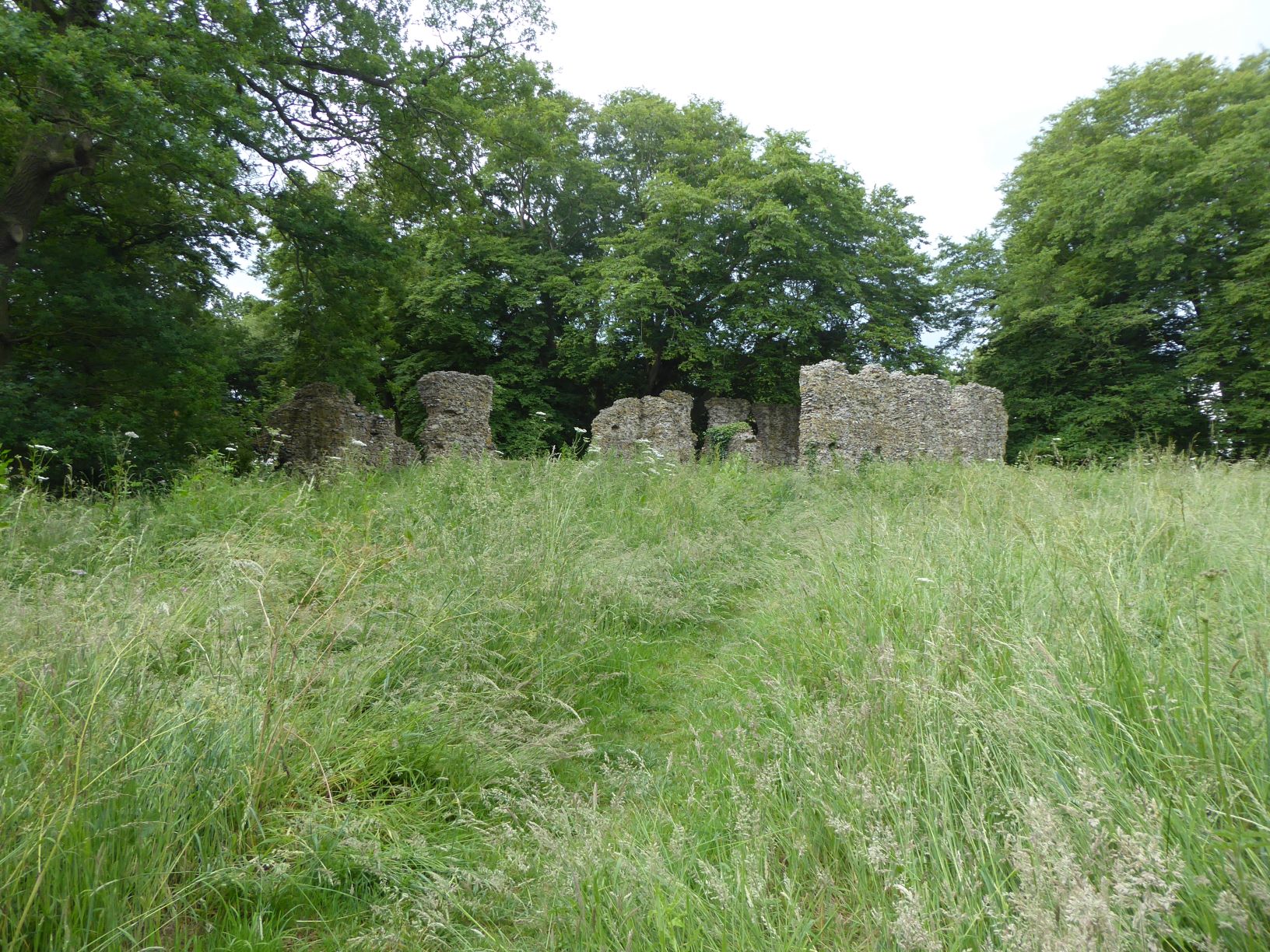
And there it was!
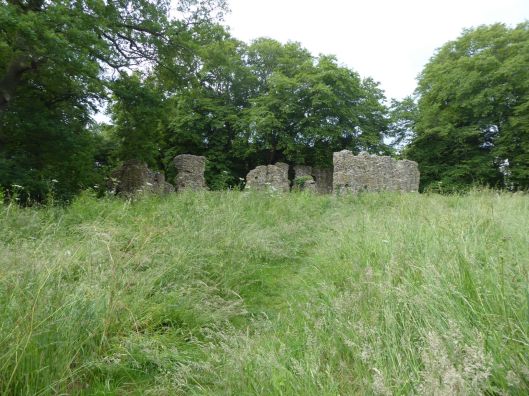
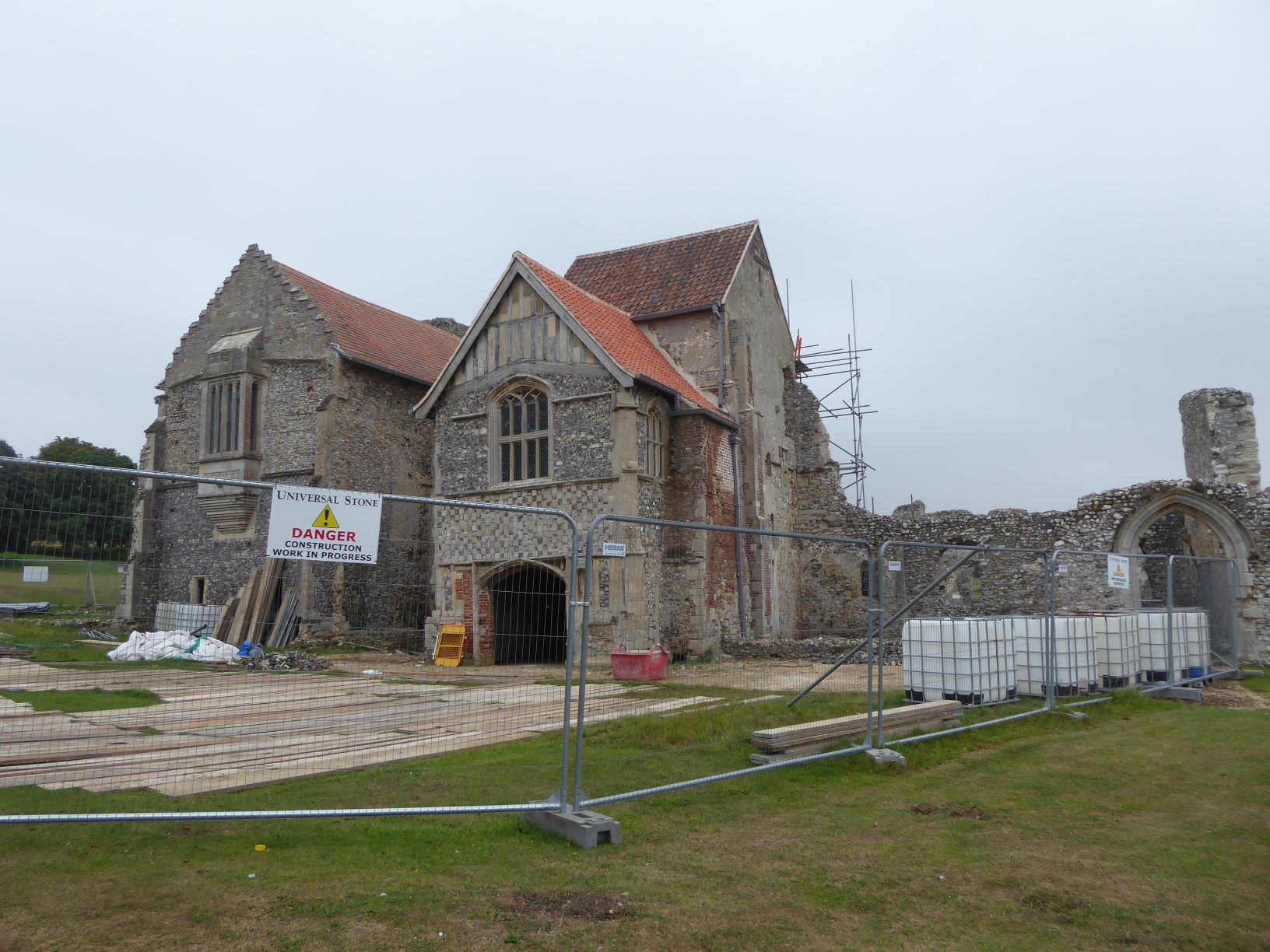
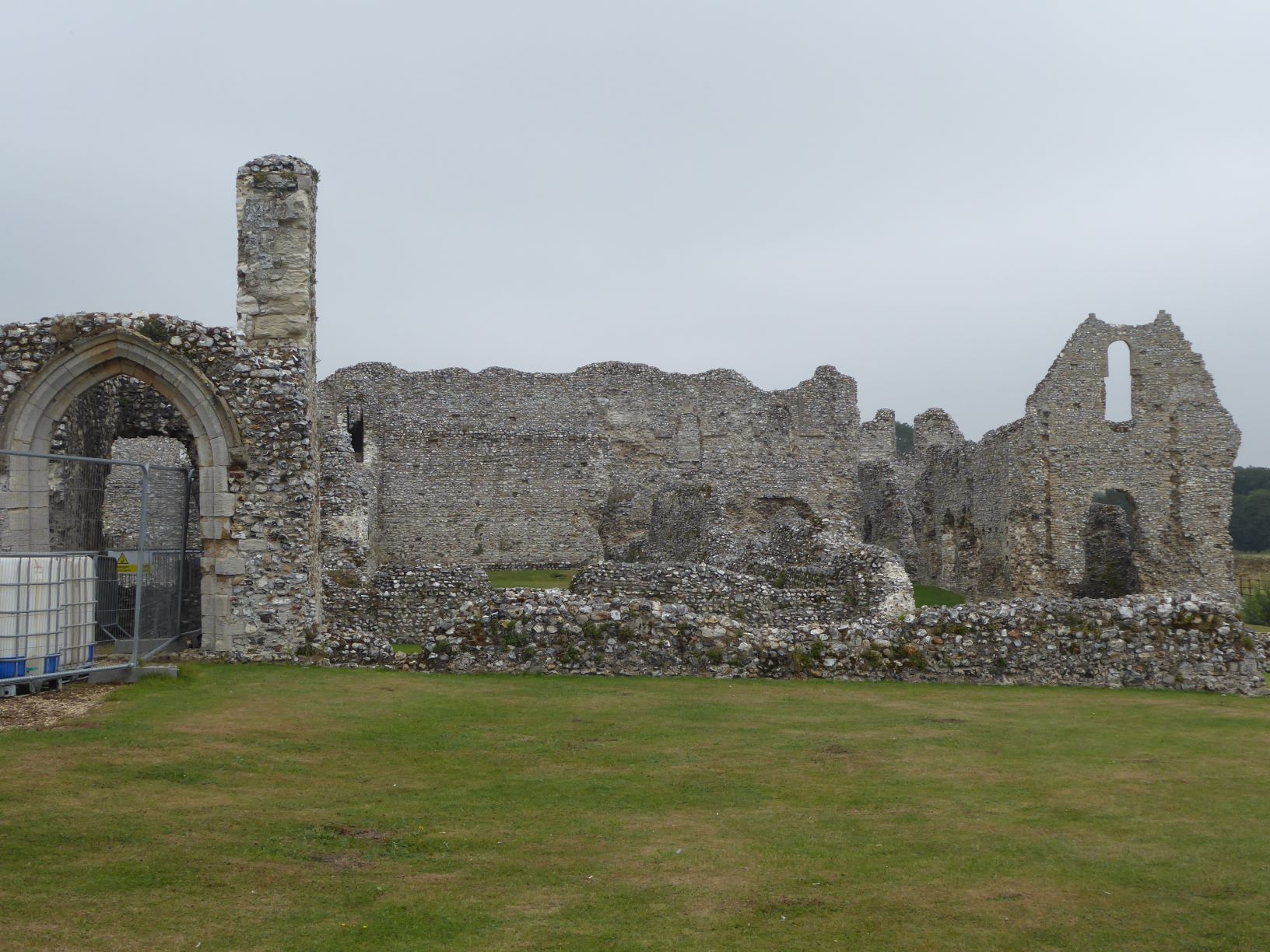
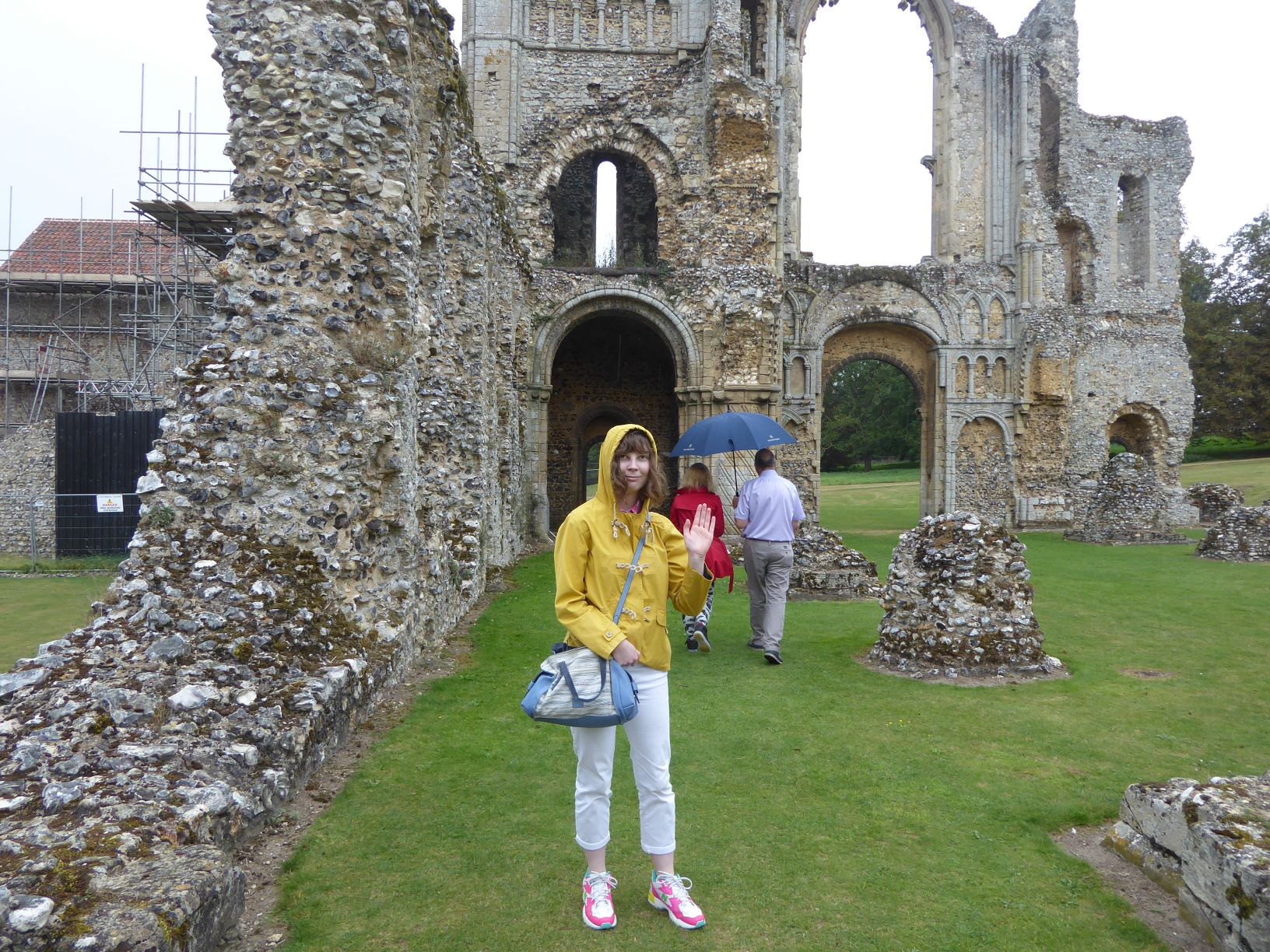
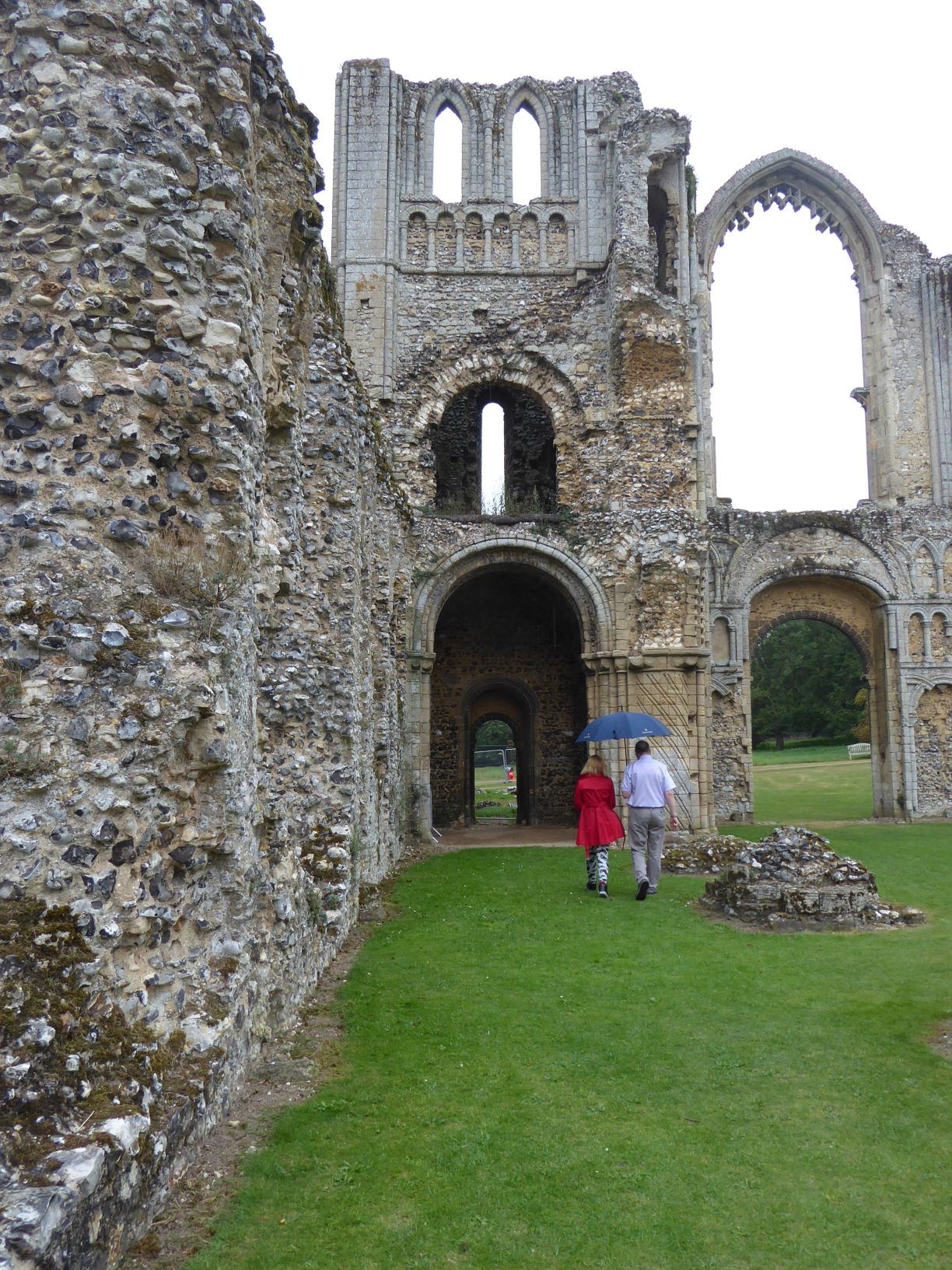
South Elmham Minster

Instead of me writing screeds about this interesting ruin I will recommend this article for you to read, if you so wish.
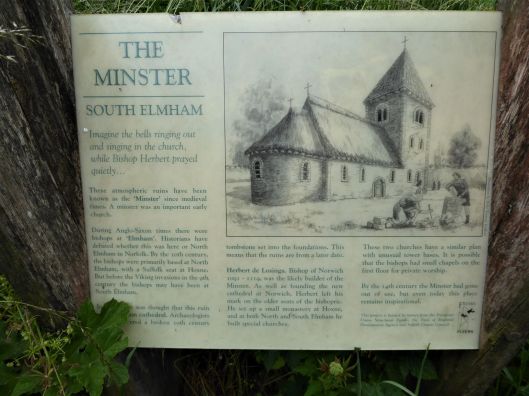
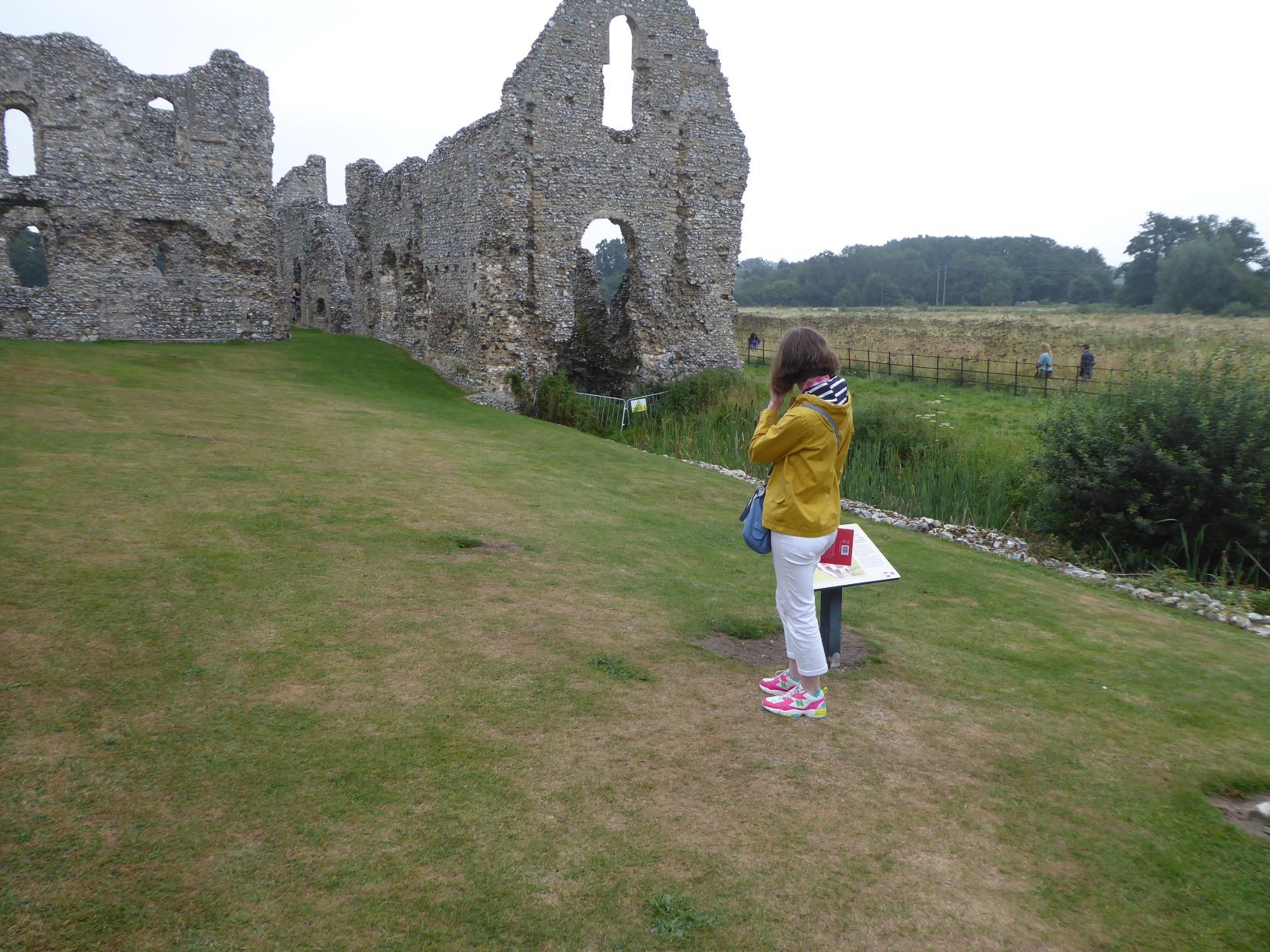
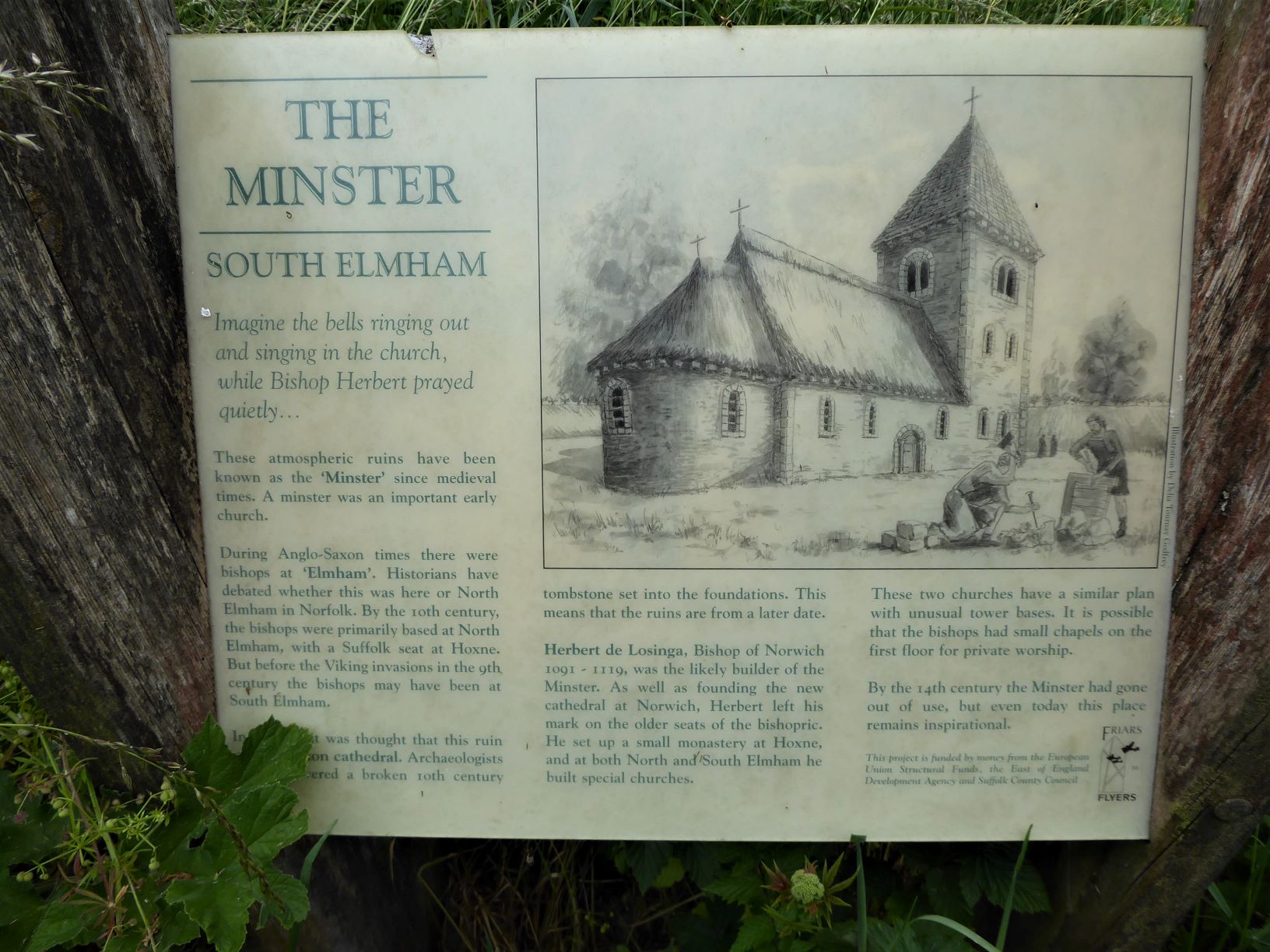
Here is an information sign with the ubiquitous ‘artist’s impression’ of the Minster.
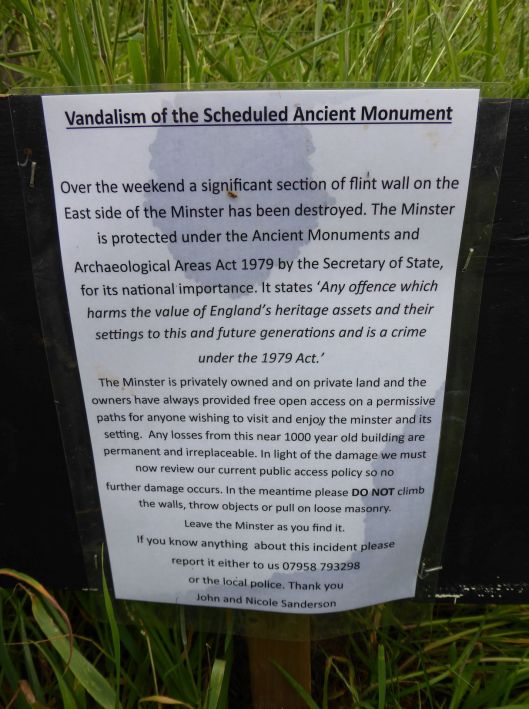
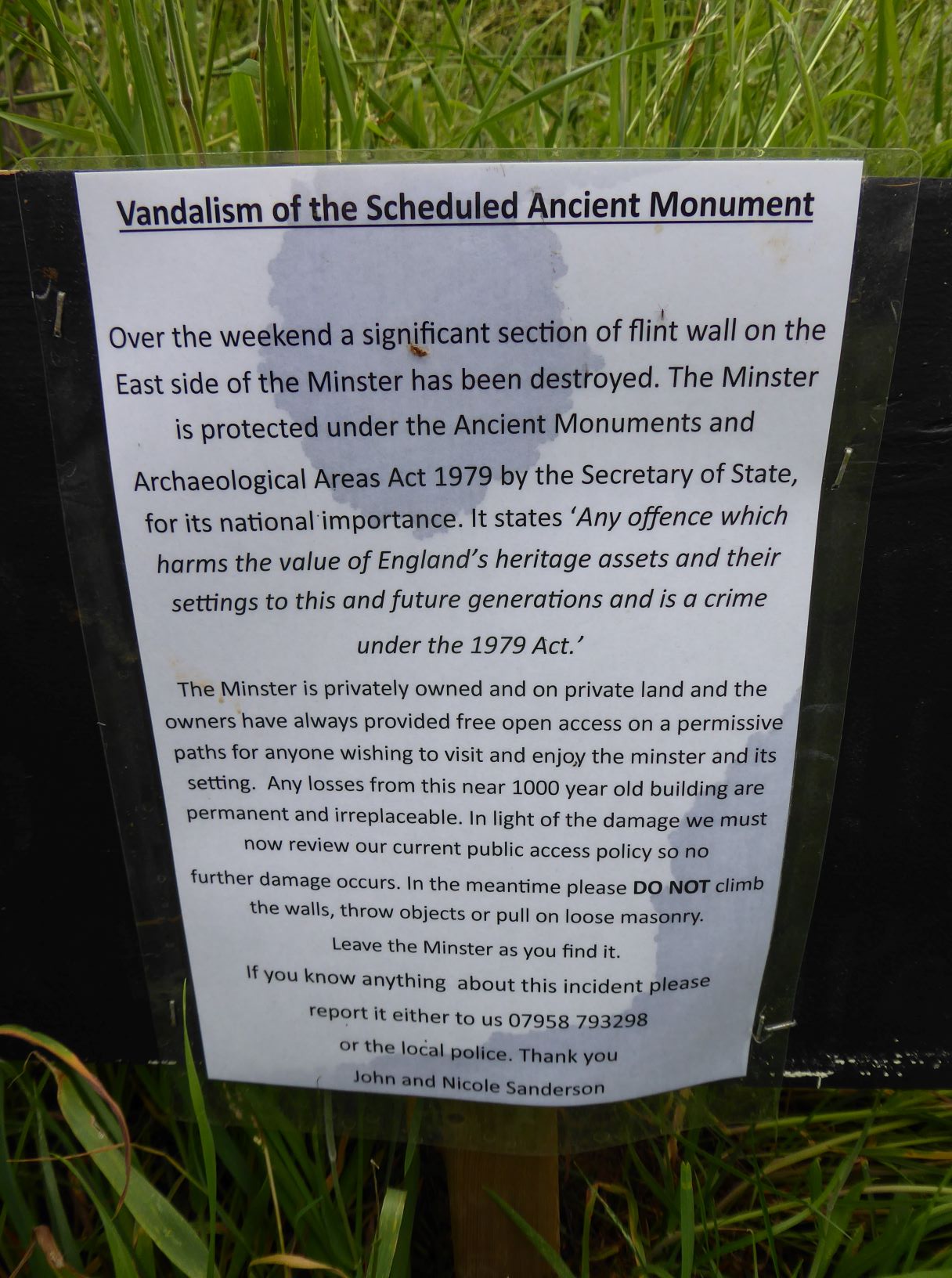
Here is a message we found. We have no idea when the damage was done or when this sign was put up. It looks fairly recent.

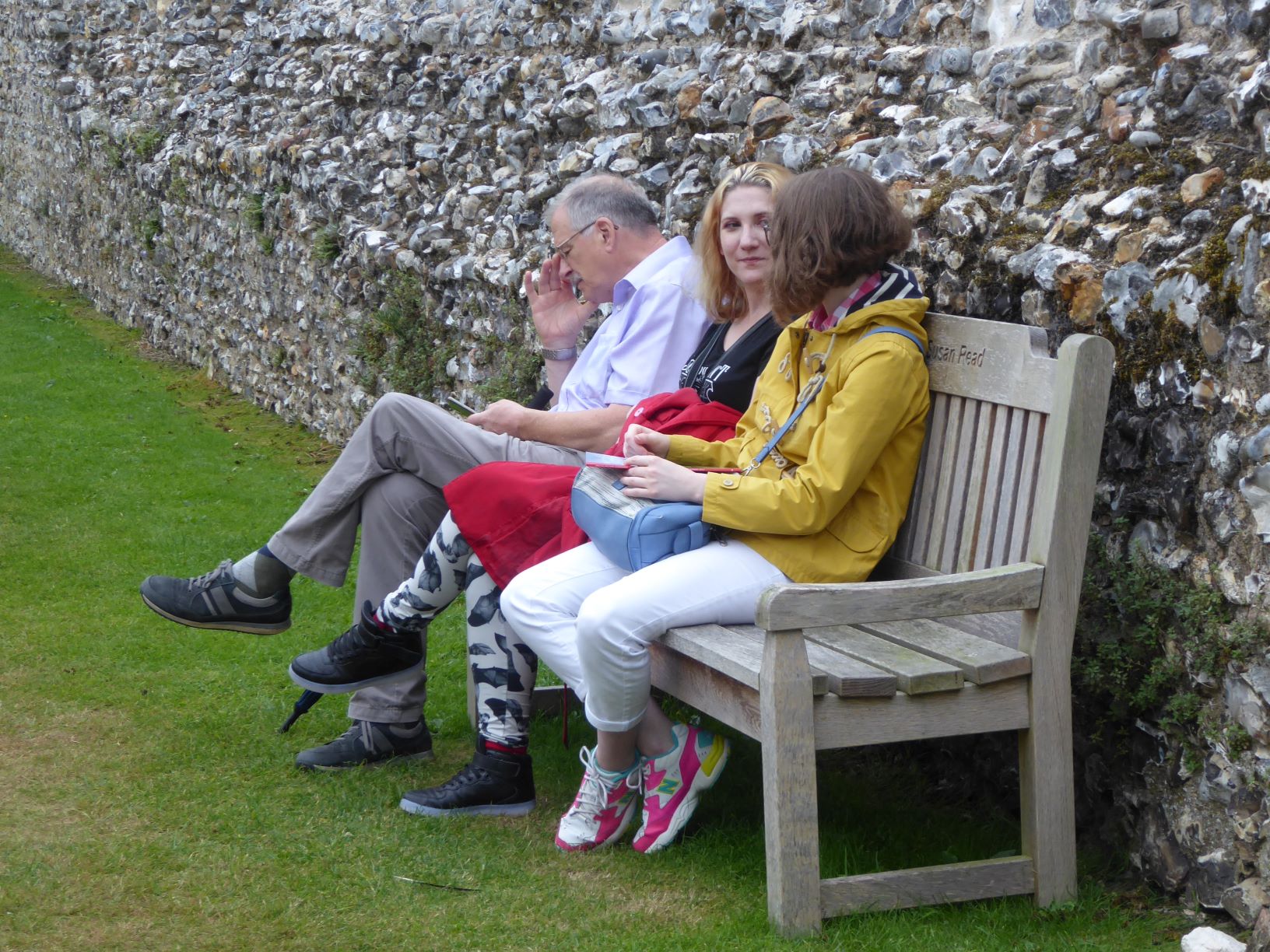
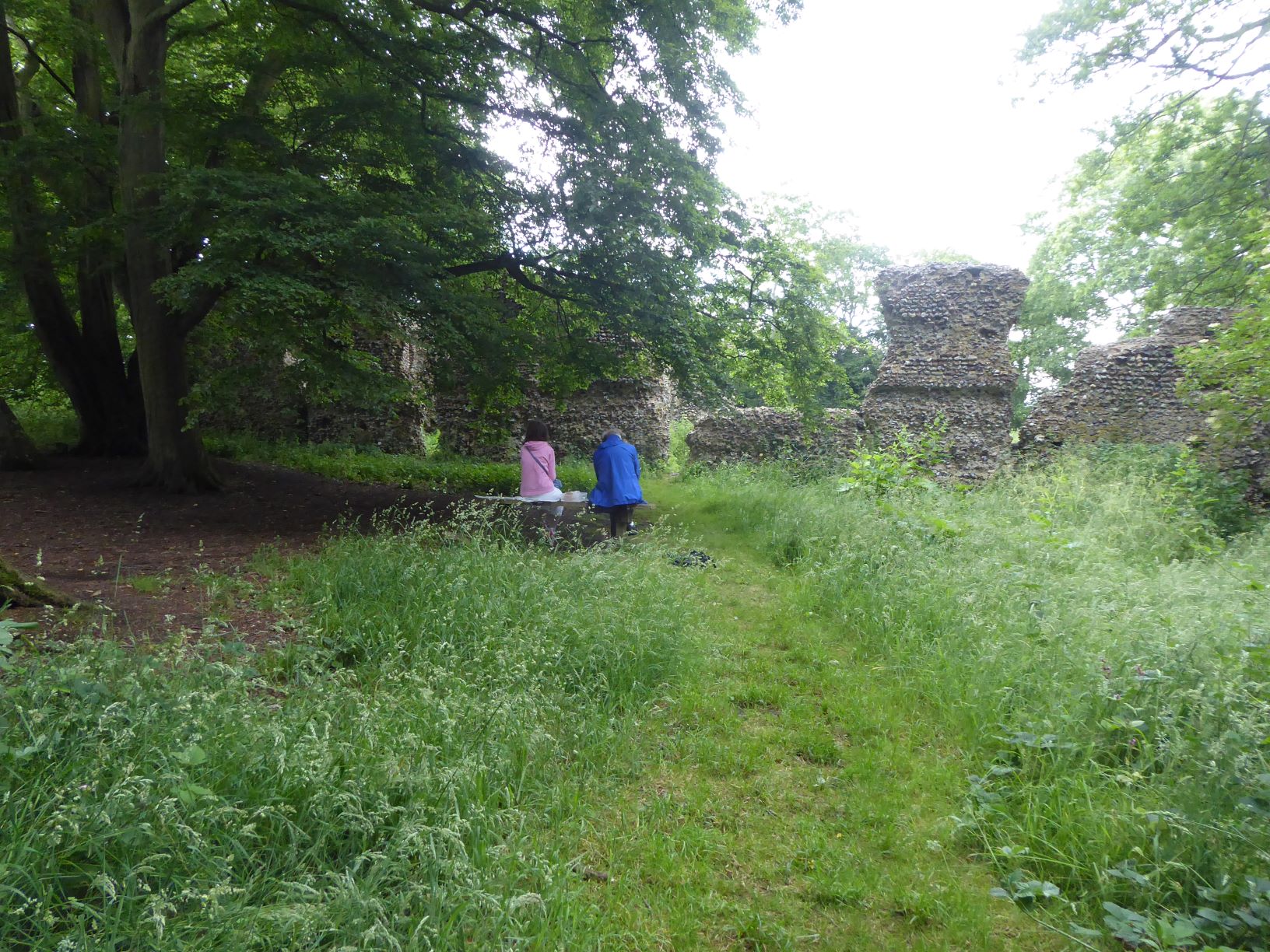
We wandered around for a short while and then sat on the bench provided under the trees and had our lunch.
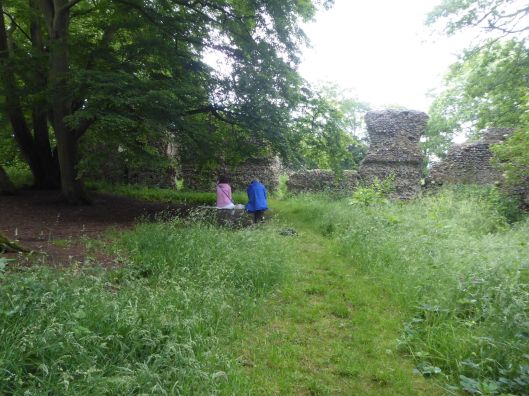
Our picnic spot

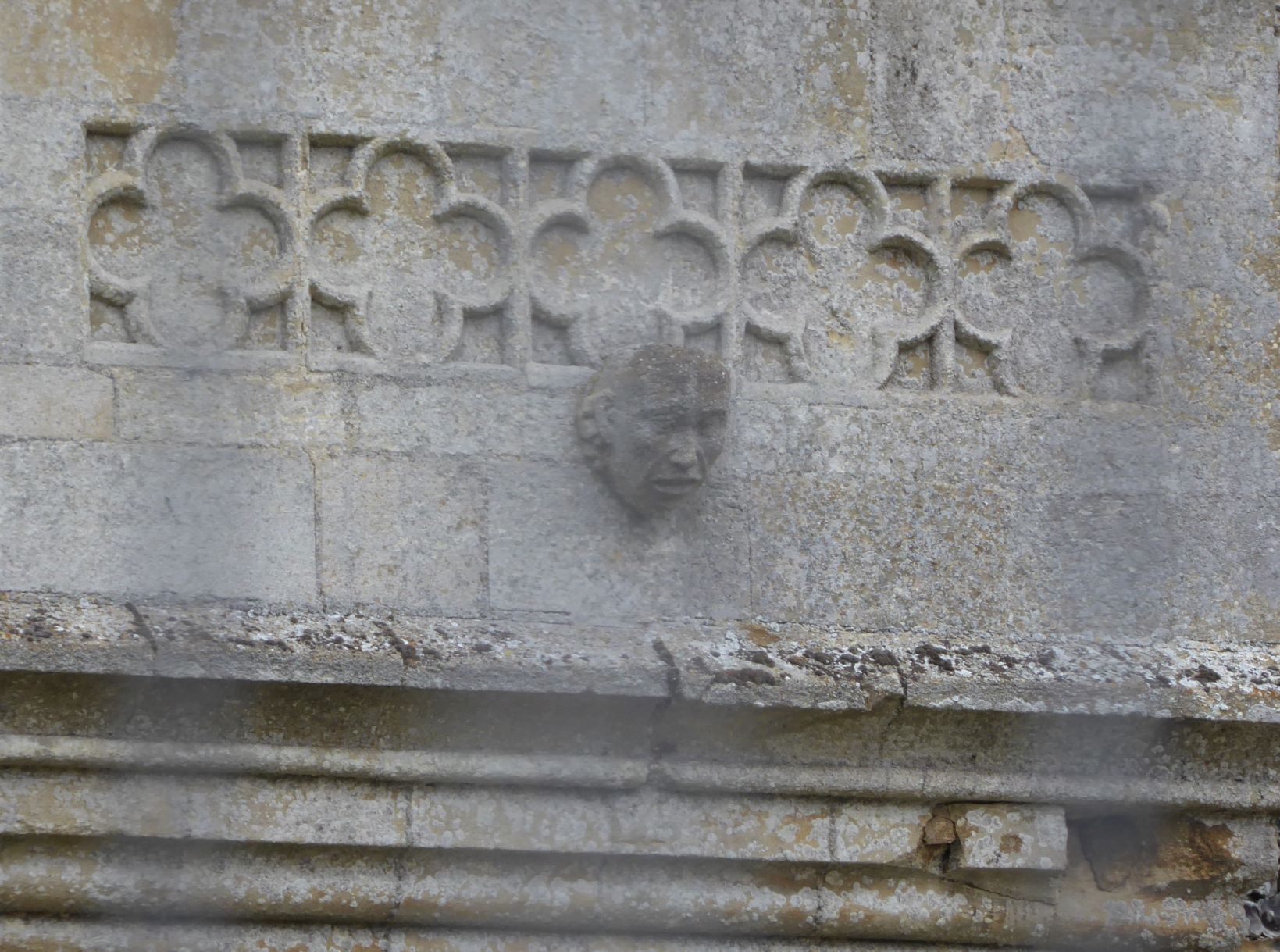
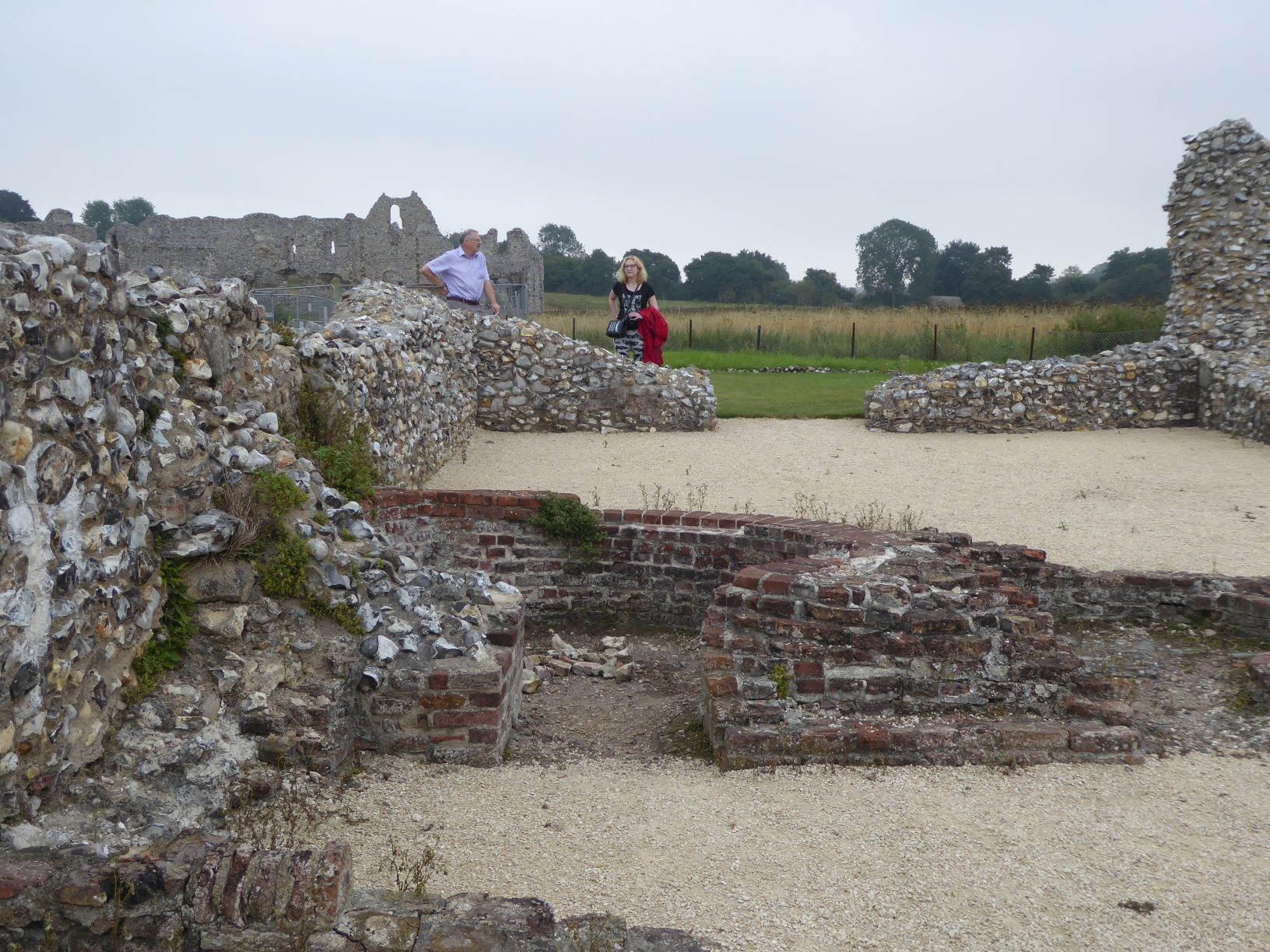
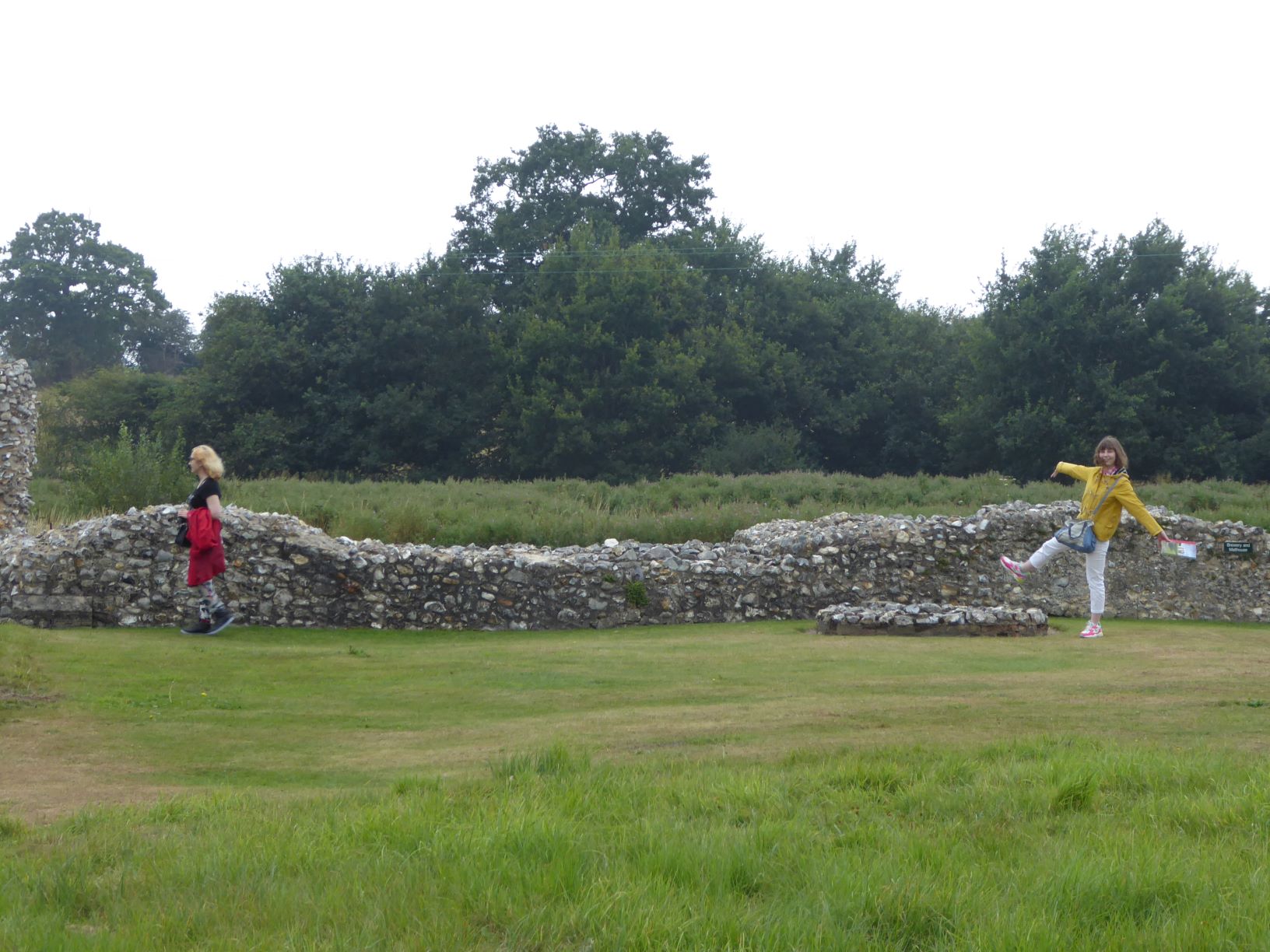
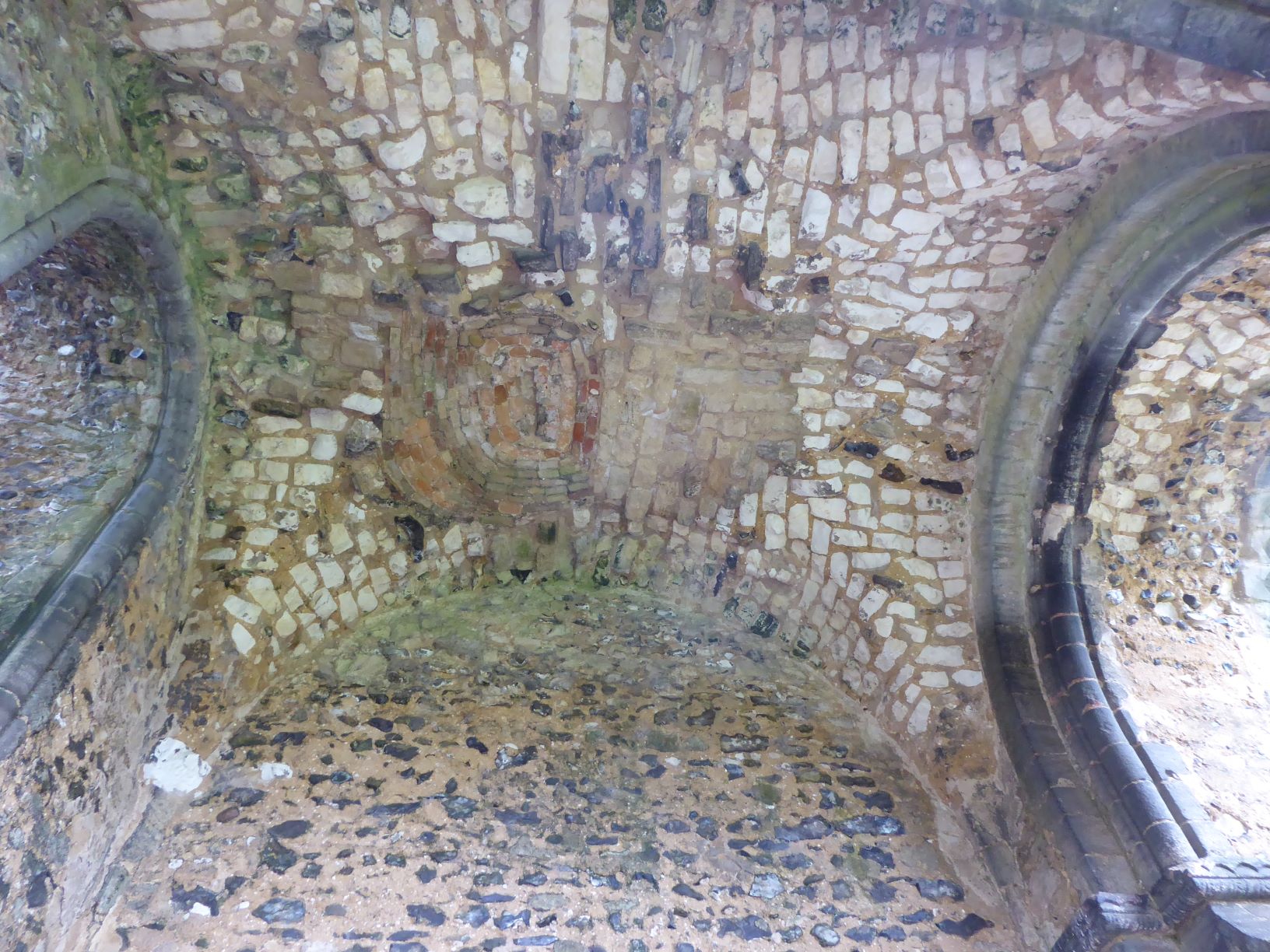
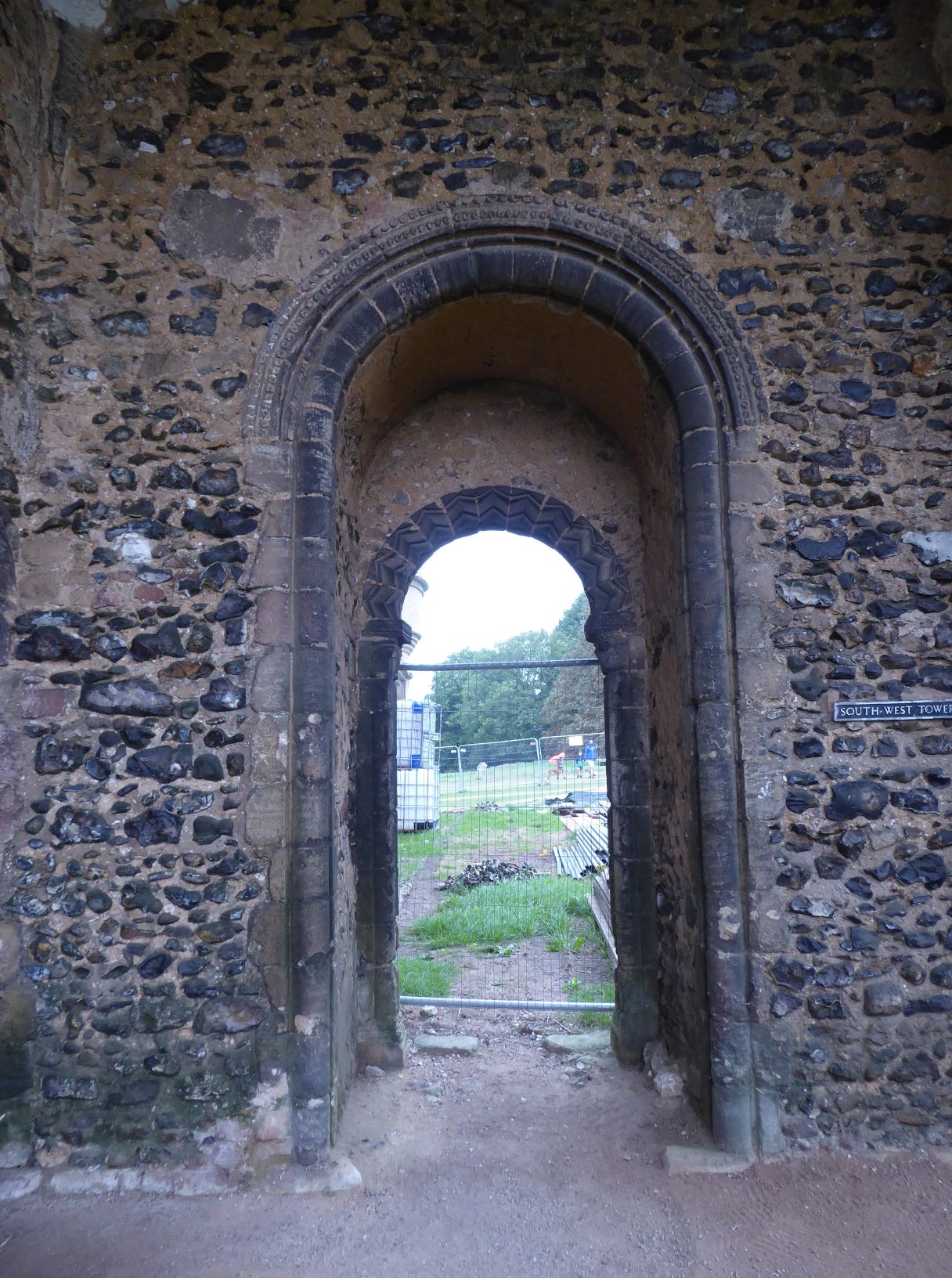
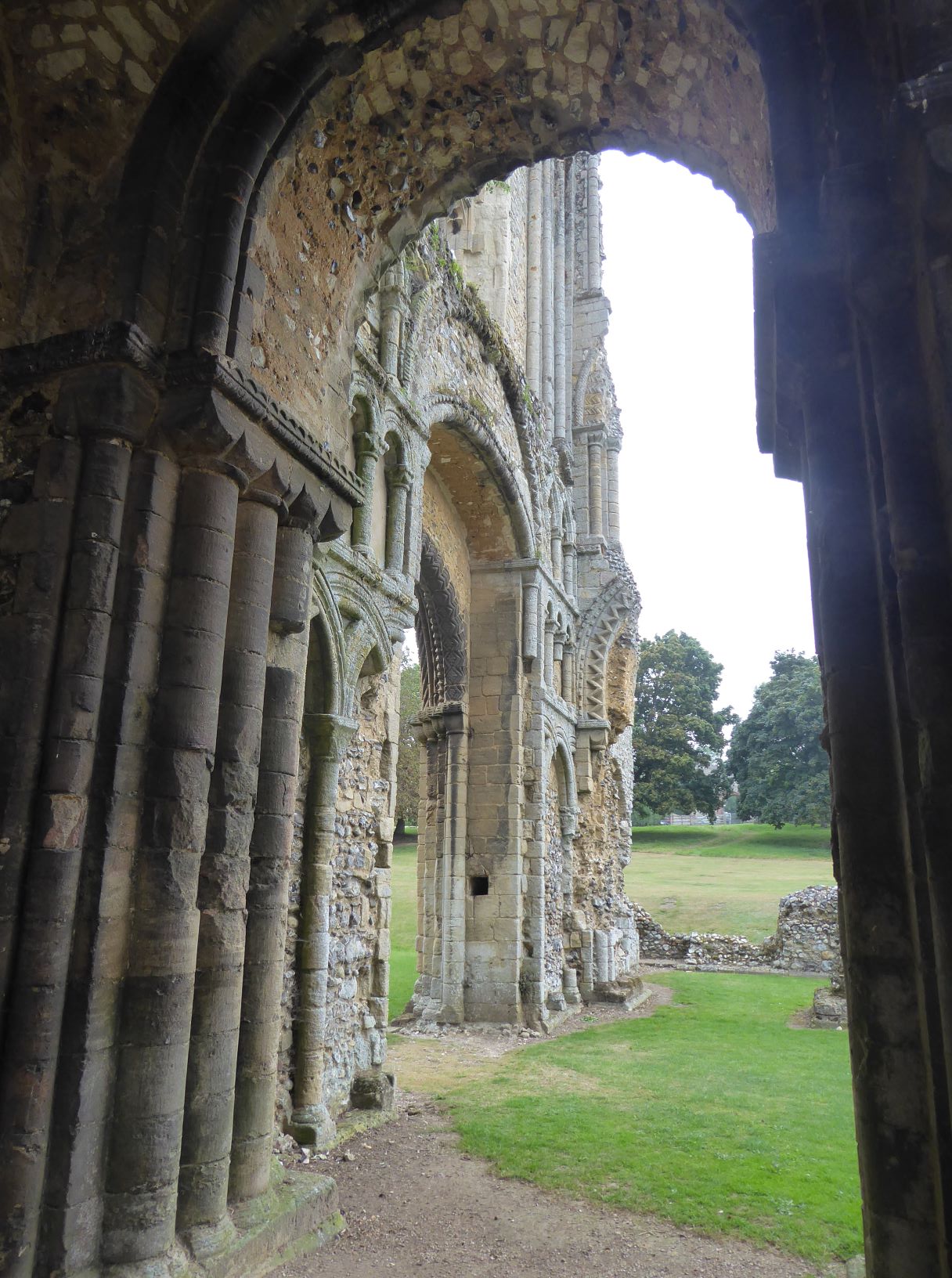
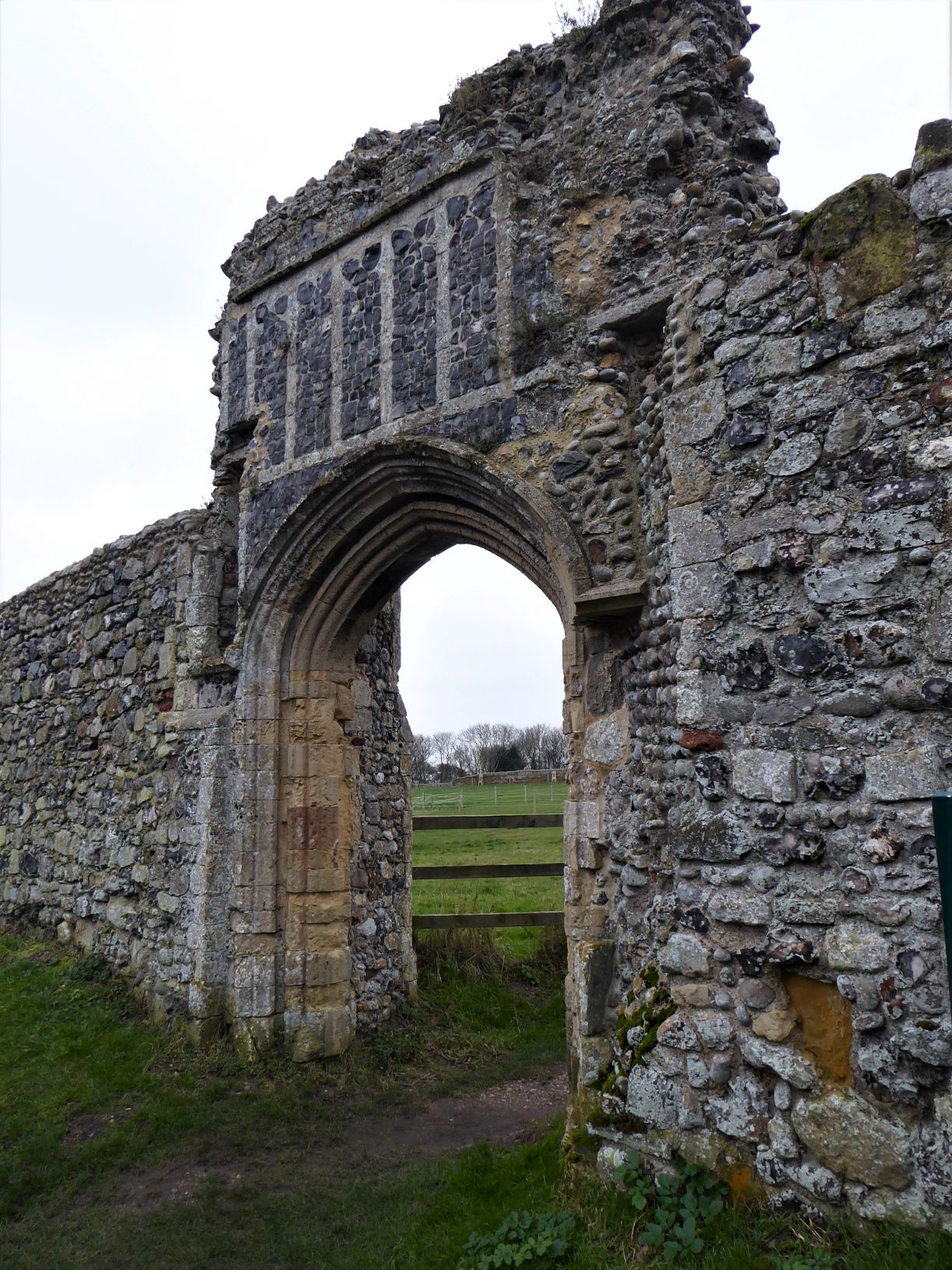
Below are a few photos of the ruins themselves.

This slideshow requires JavaScript.
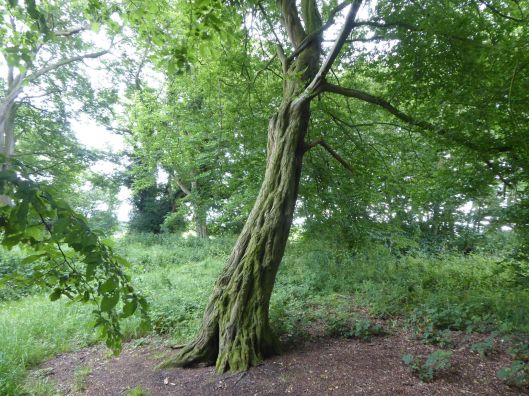
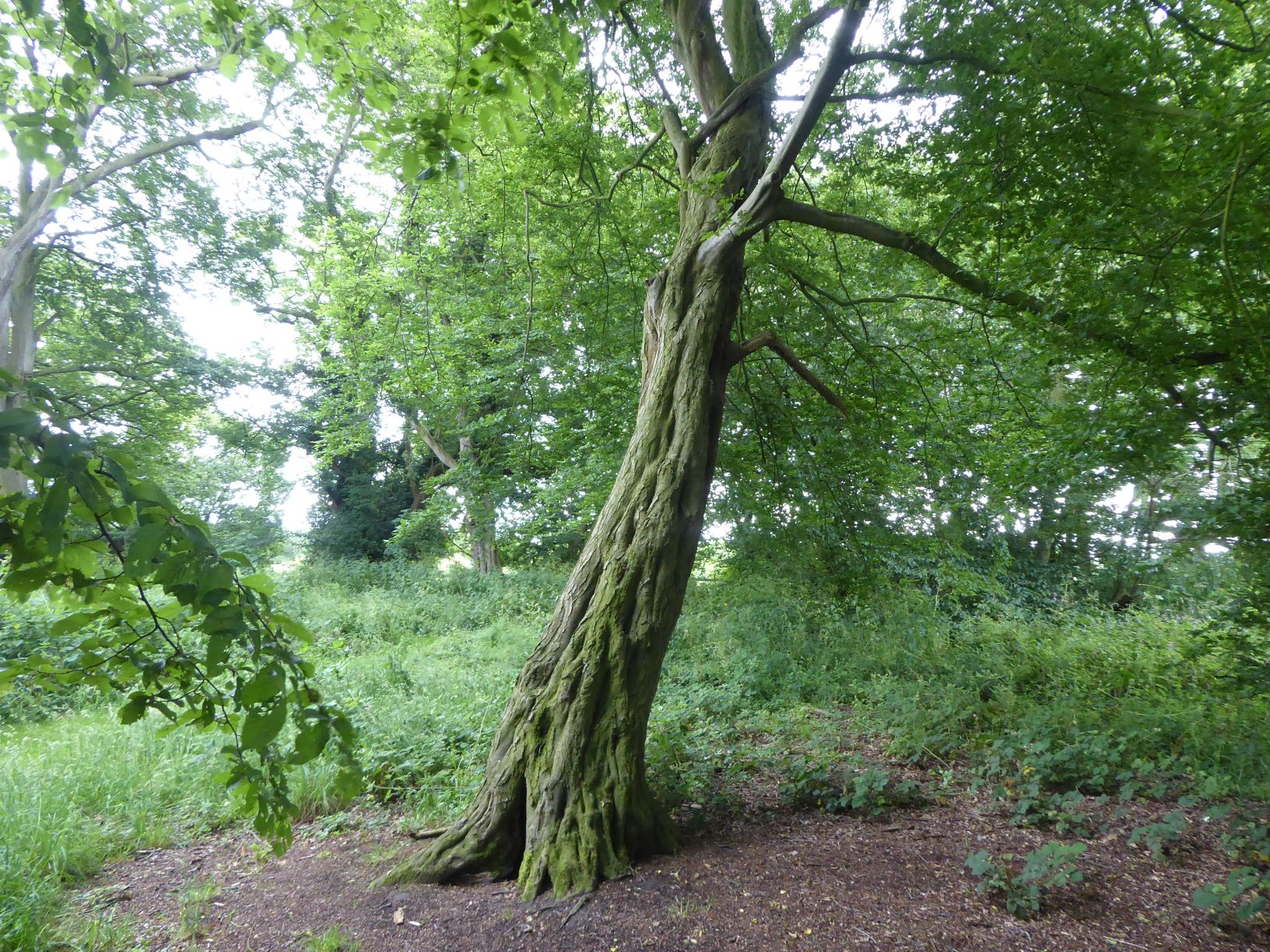
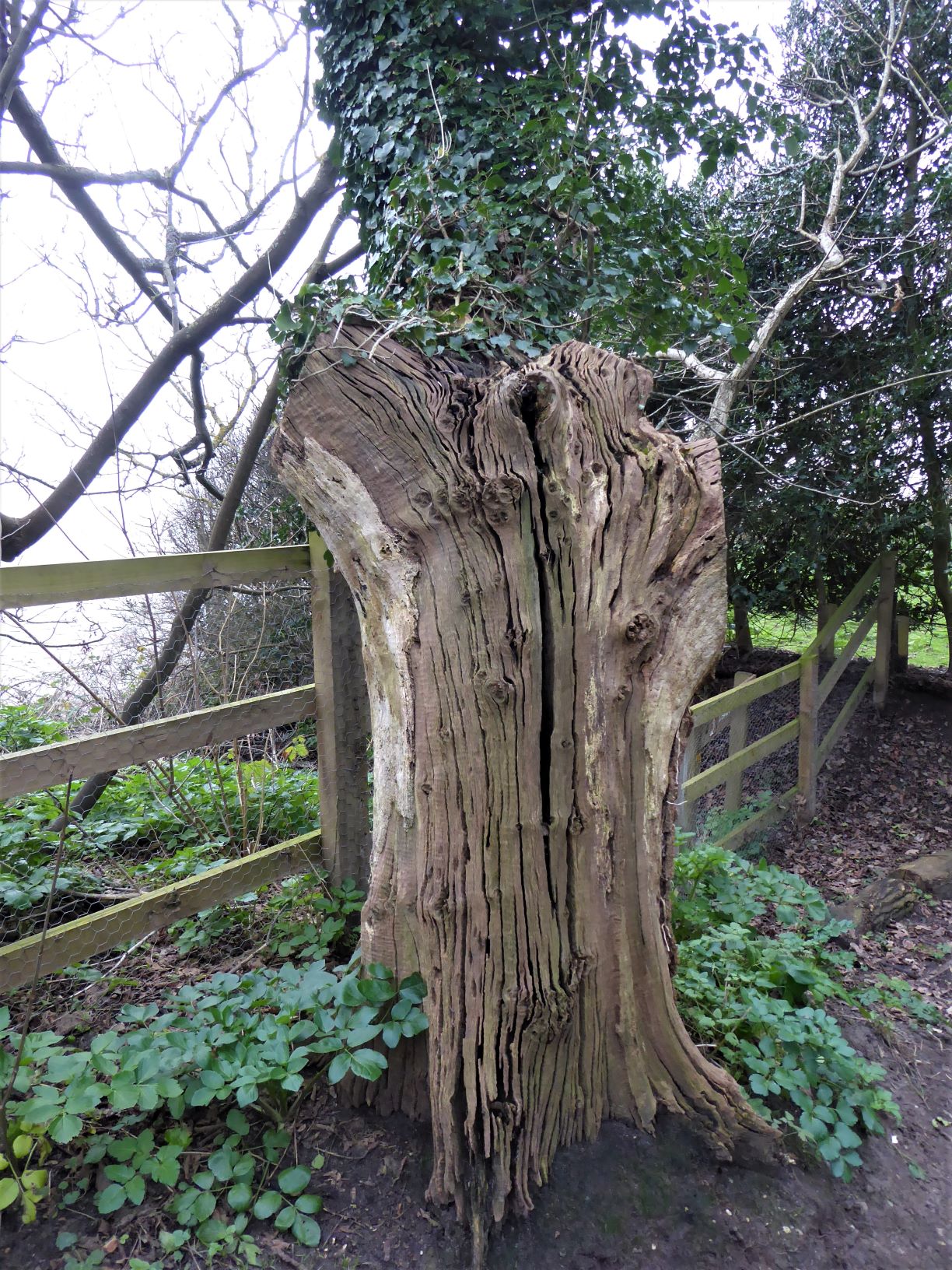
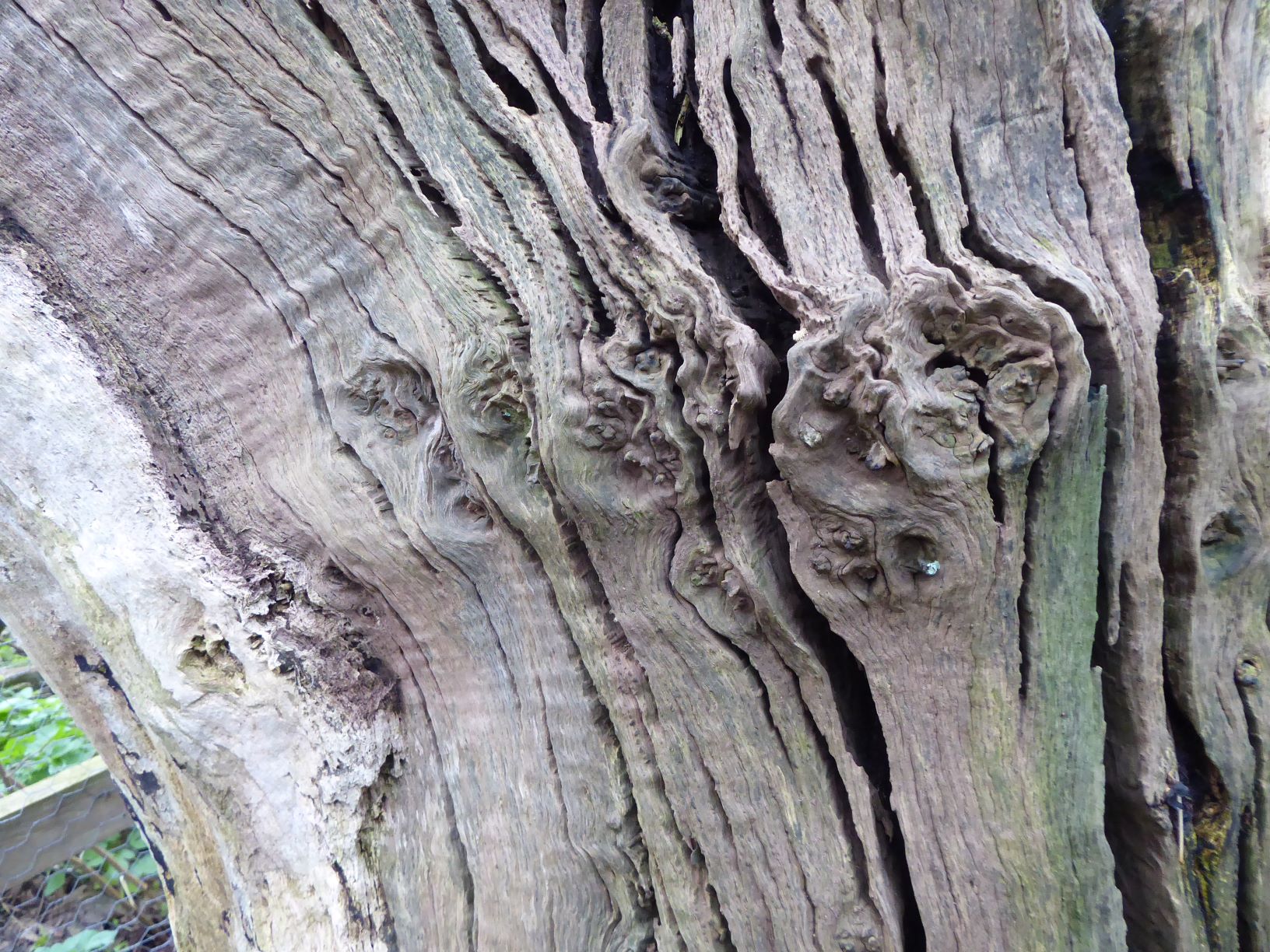
An interesting tree-trunk.

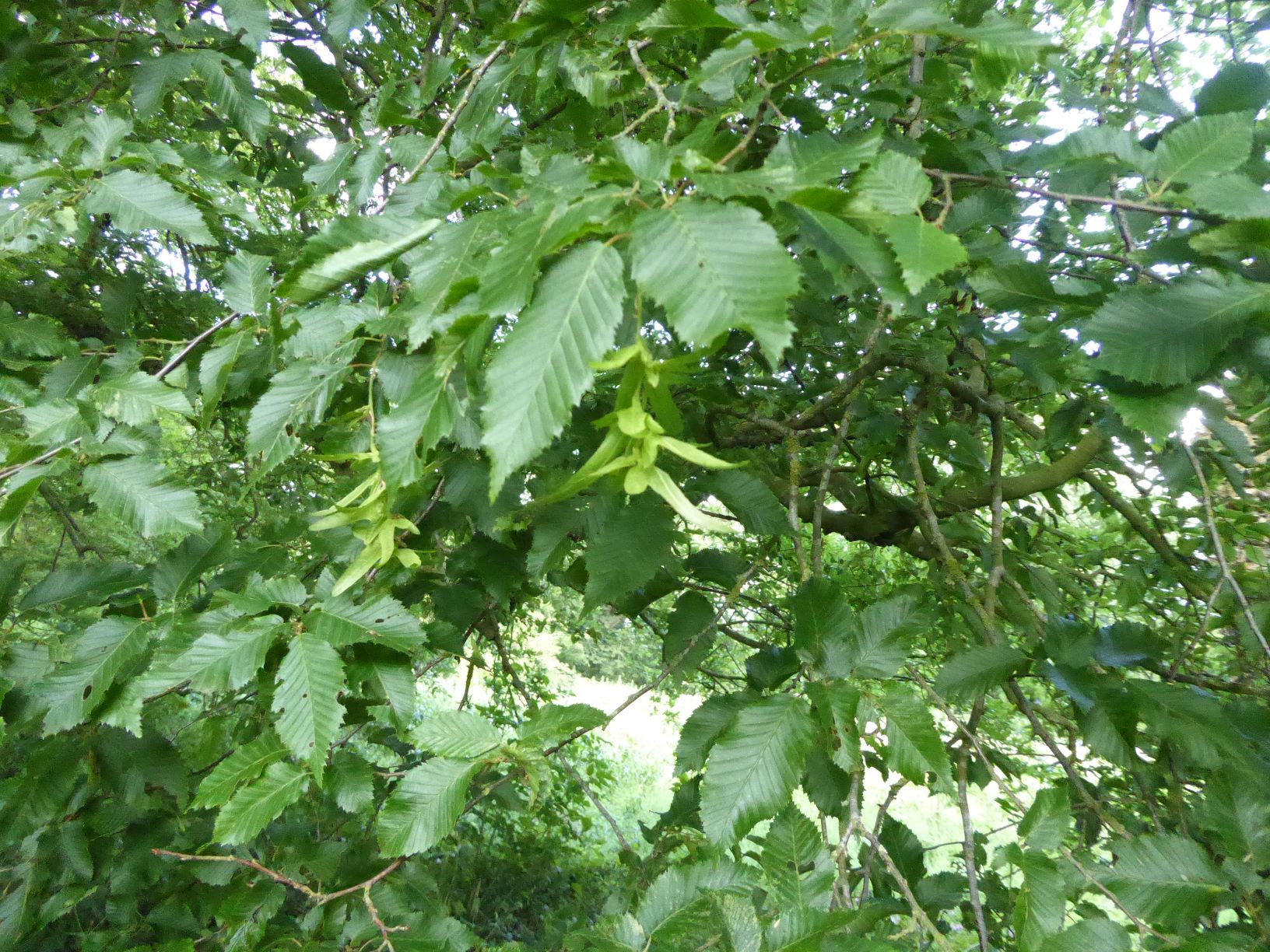
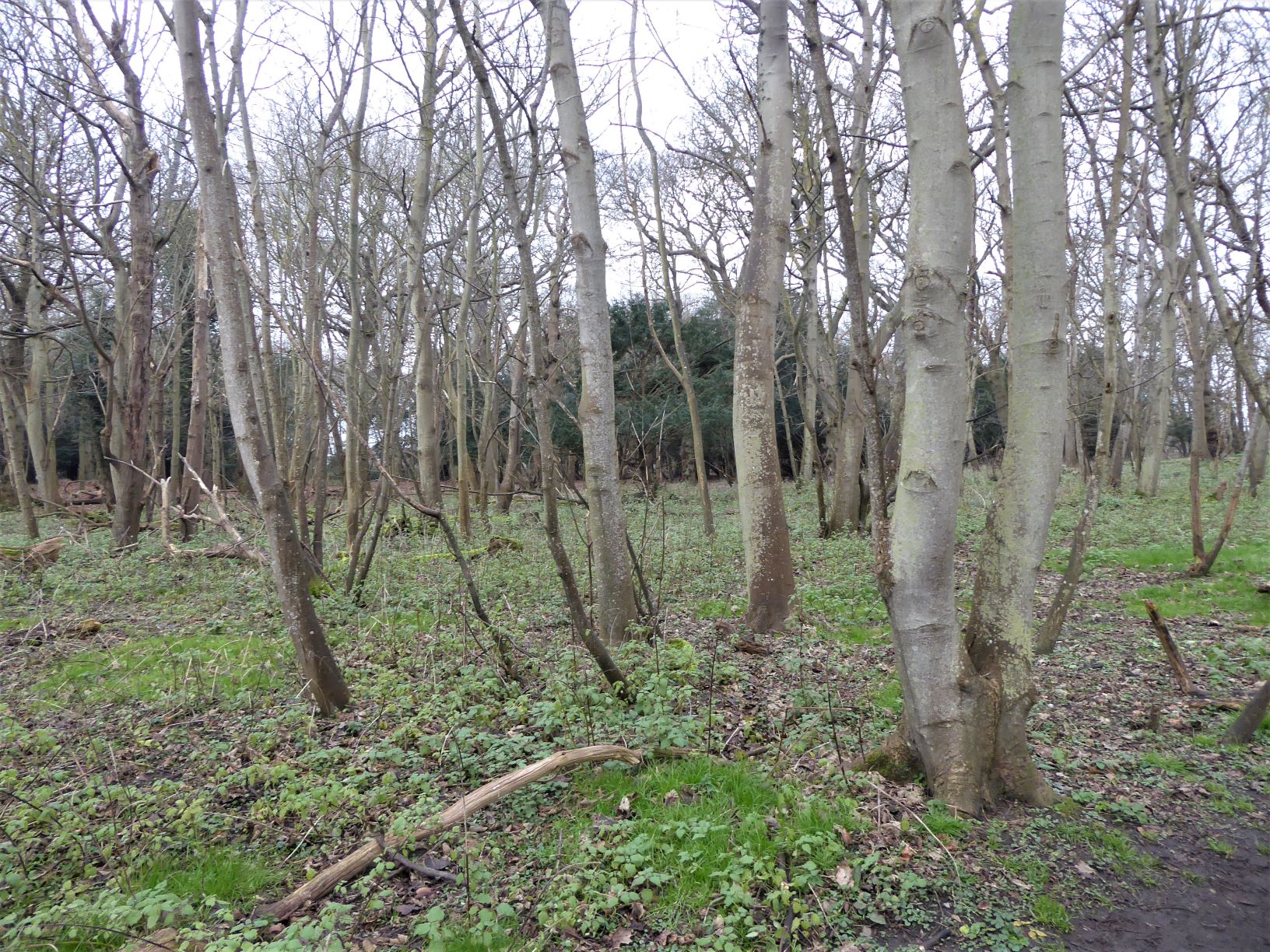
Many of the trees surrounding the Minster were Hornbeam (Carpinus betulus).  Hornbeam trunks are said to be ‘fluted’ which might describe the tree above.

Hornbeam pleated leaves with bunches of fruits

The Hornbeam nut forms with a three-lobed bract attached that sometimes grows as long as 5cms.  This acts as ‘wings’ when the nut is released from the tree in the autumn.

P1060544Clearing
P1060545Clearing

I think the Hornbeams have been coppiced in the past though Hornbeams are usually pollarded.  Local children have been making dens under the trees.
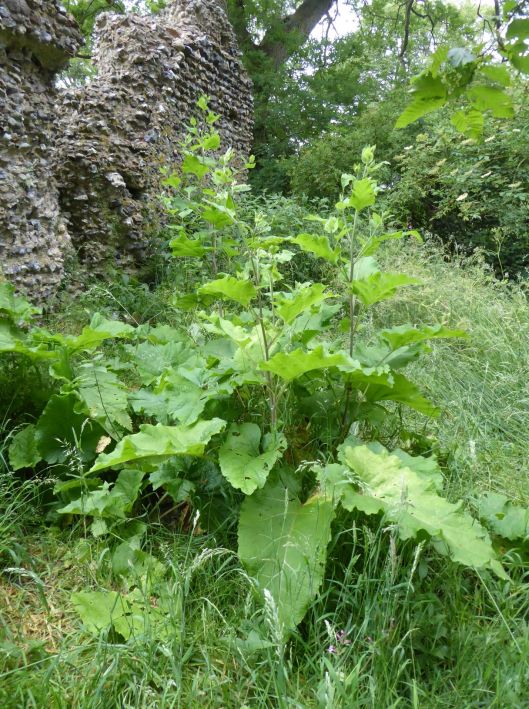
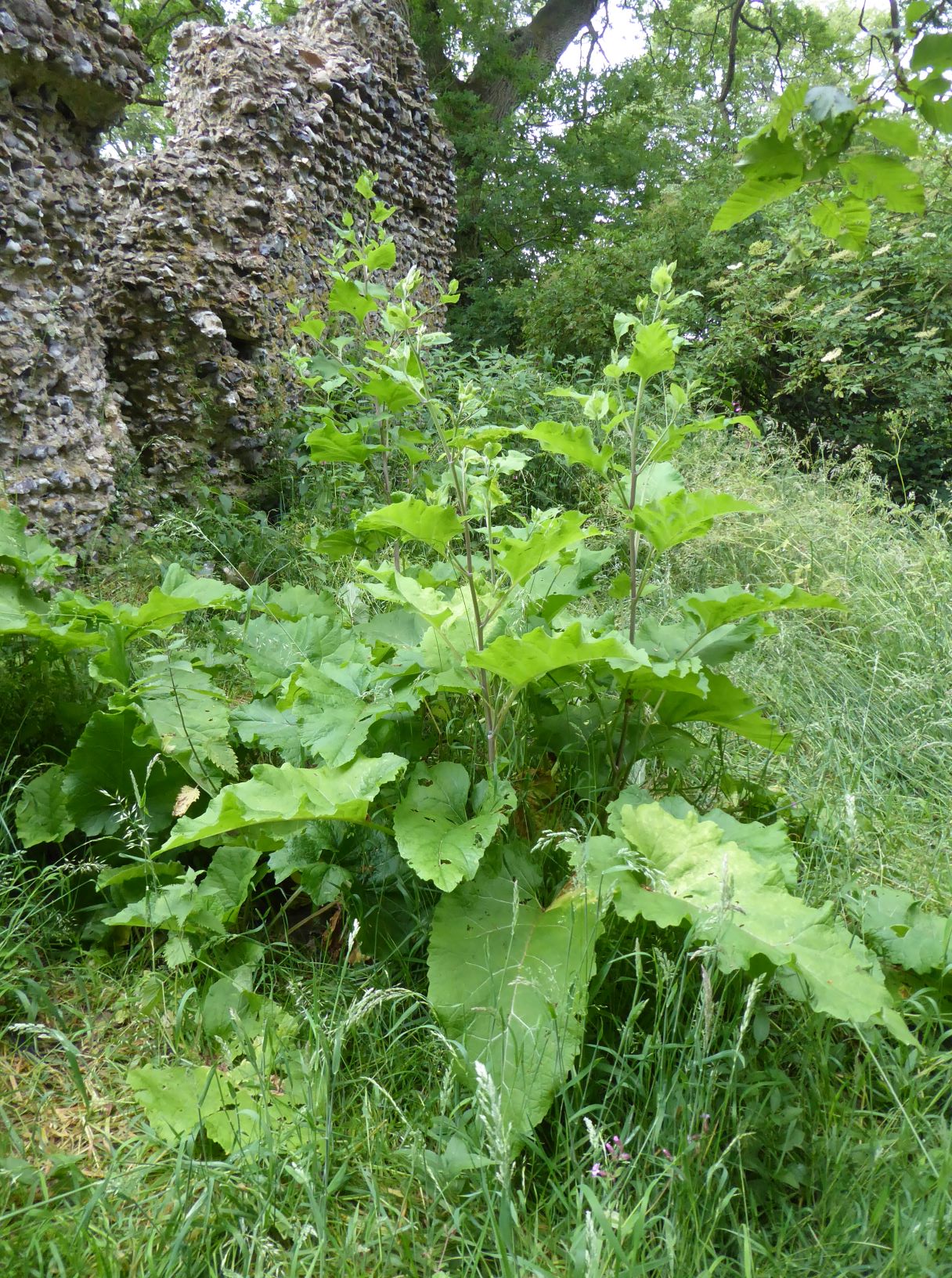
Lesser Burdock ( Arctium minus)
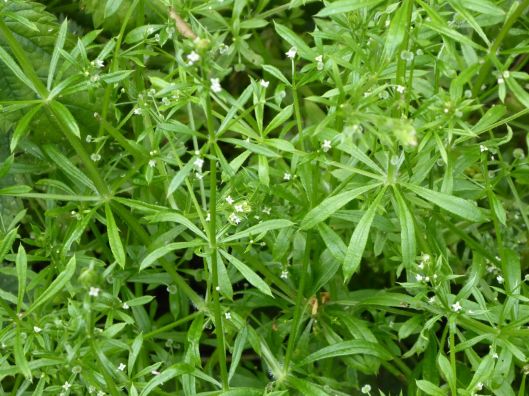
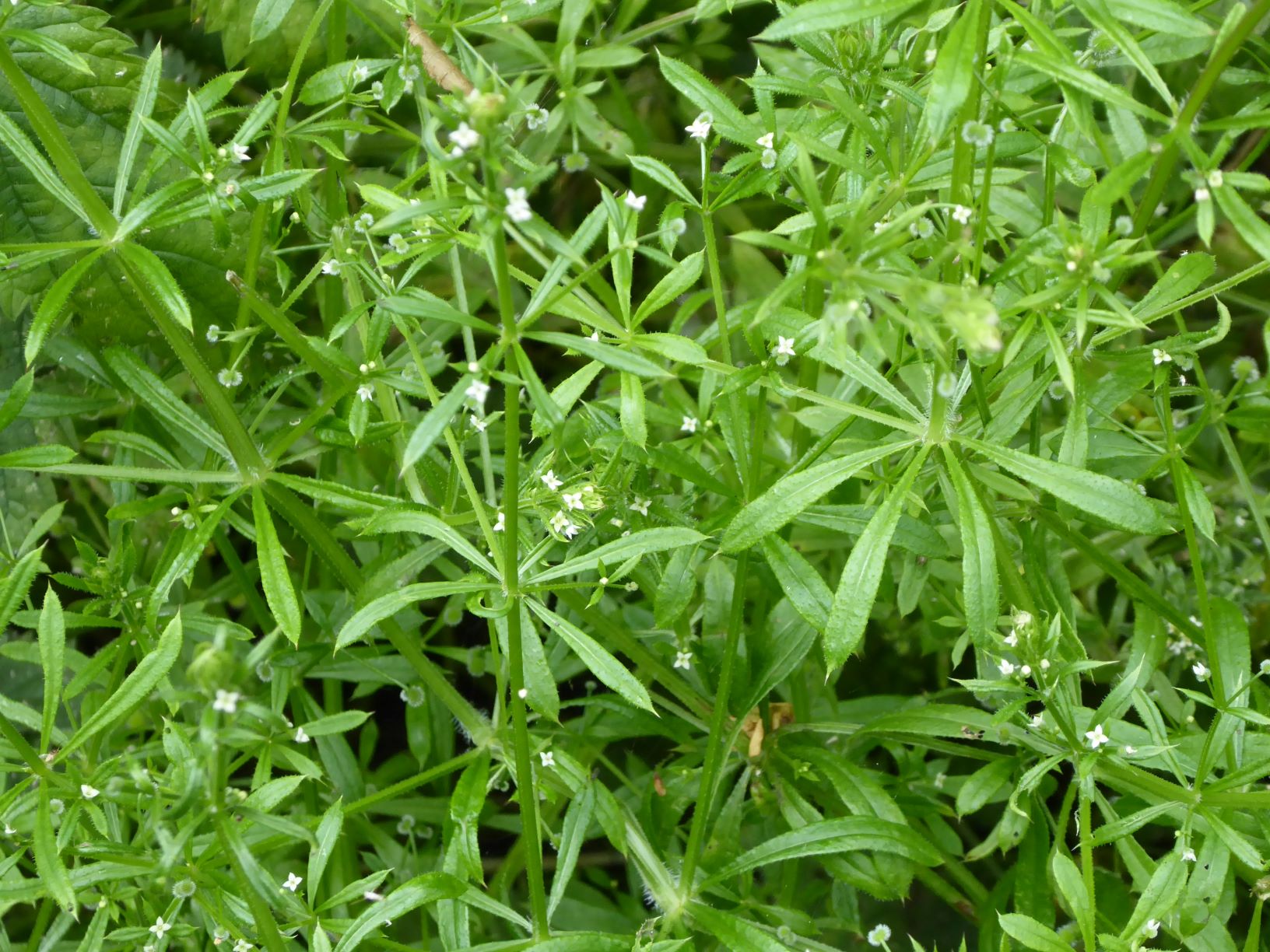
Cleavers or Goosegrass (Galium aparine)

Above are two different plants with fruits covered in hooks.  The stems and leaves of Cleavers also have bristles that cause them to stick to anything that touches them.
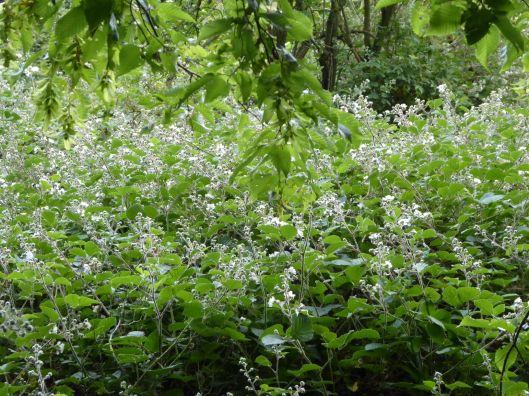
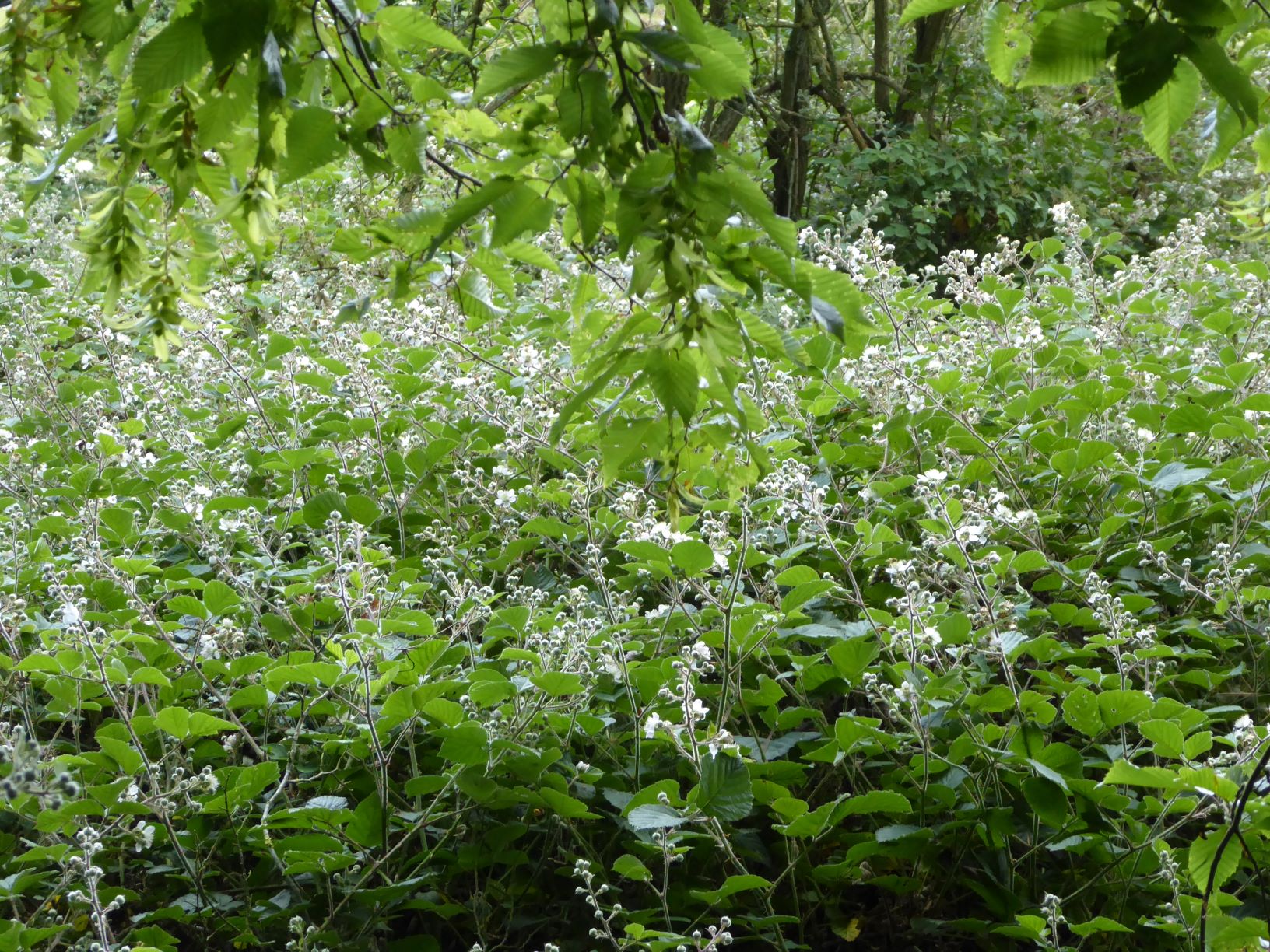
An enormous Bramble patch! (Rubus fruticosus agg. )

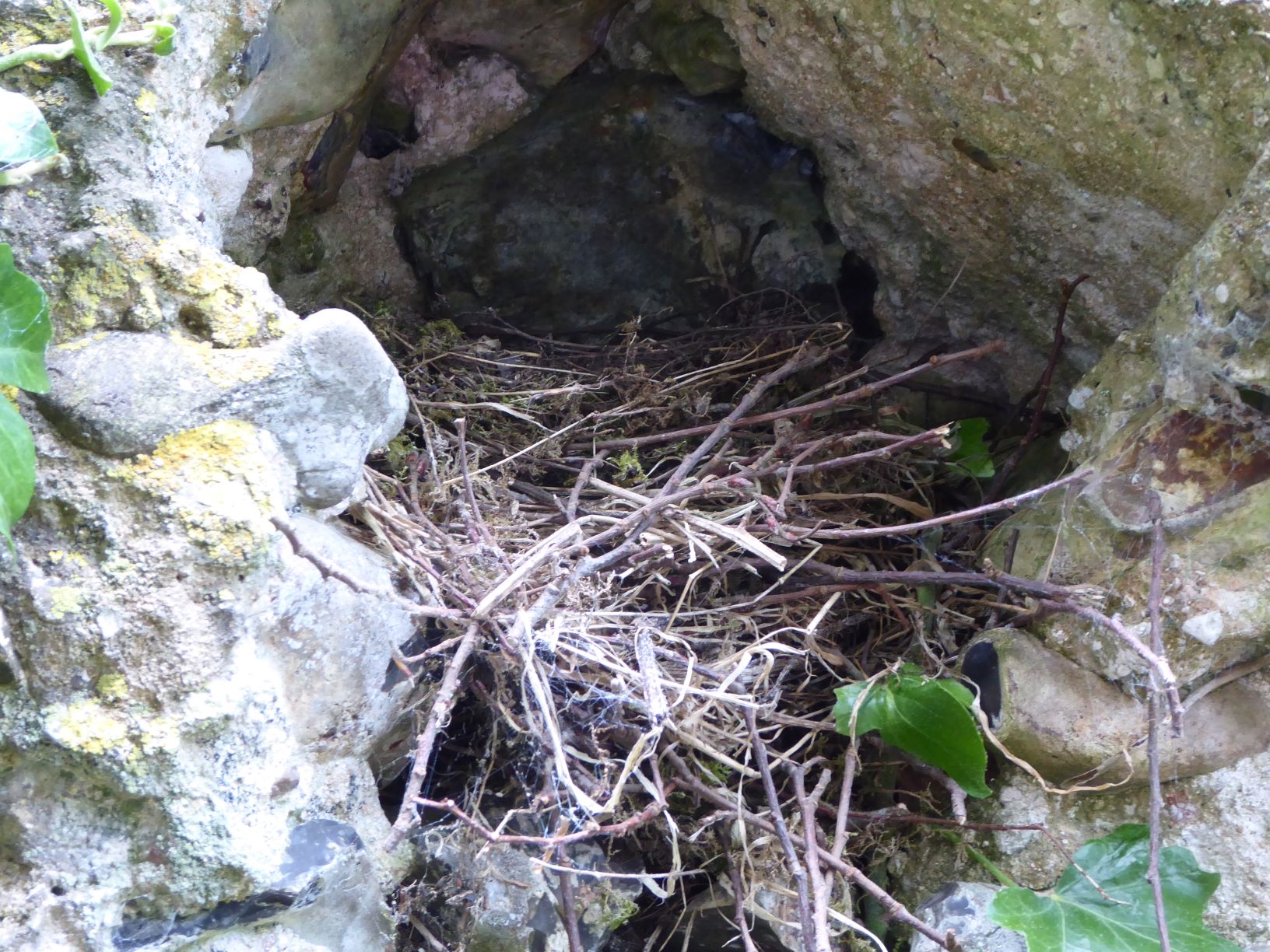
A bird had made a nest in one of the hollows in the wall. It was empty.
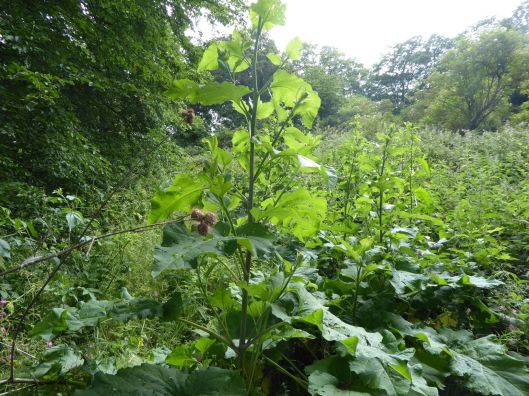
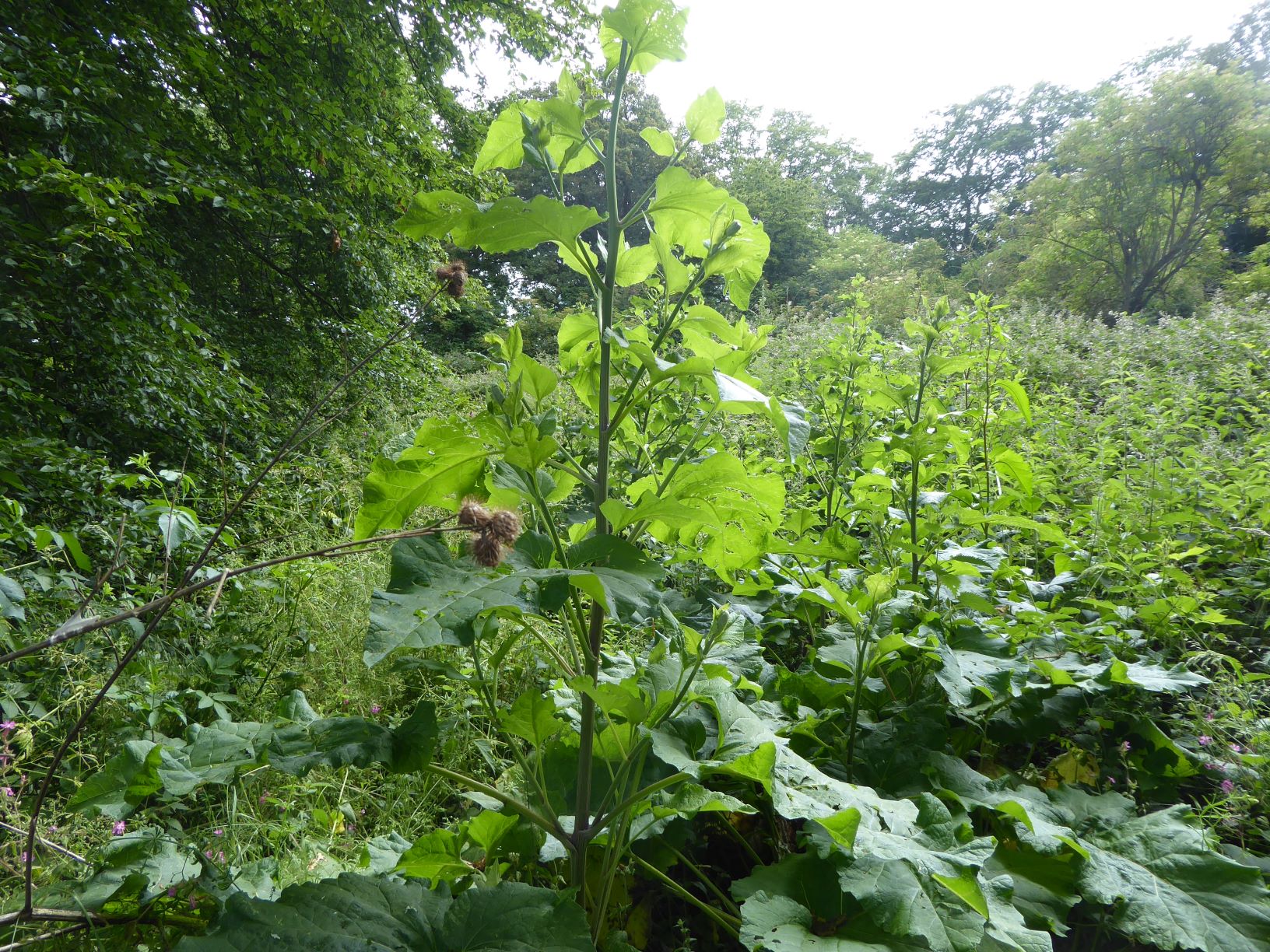
Another enormous Lesser Burdock; it must have been almost 2 metres tall. By this time the sun had come out and the air was becoming warm.

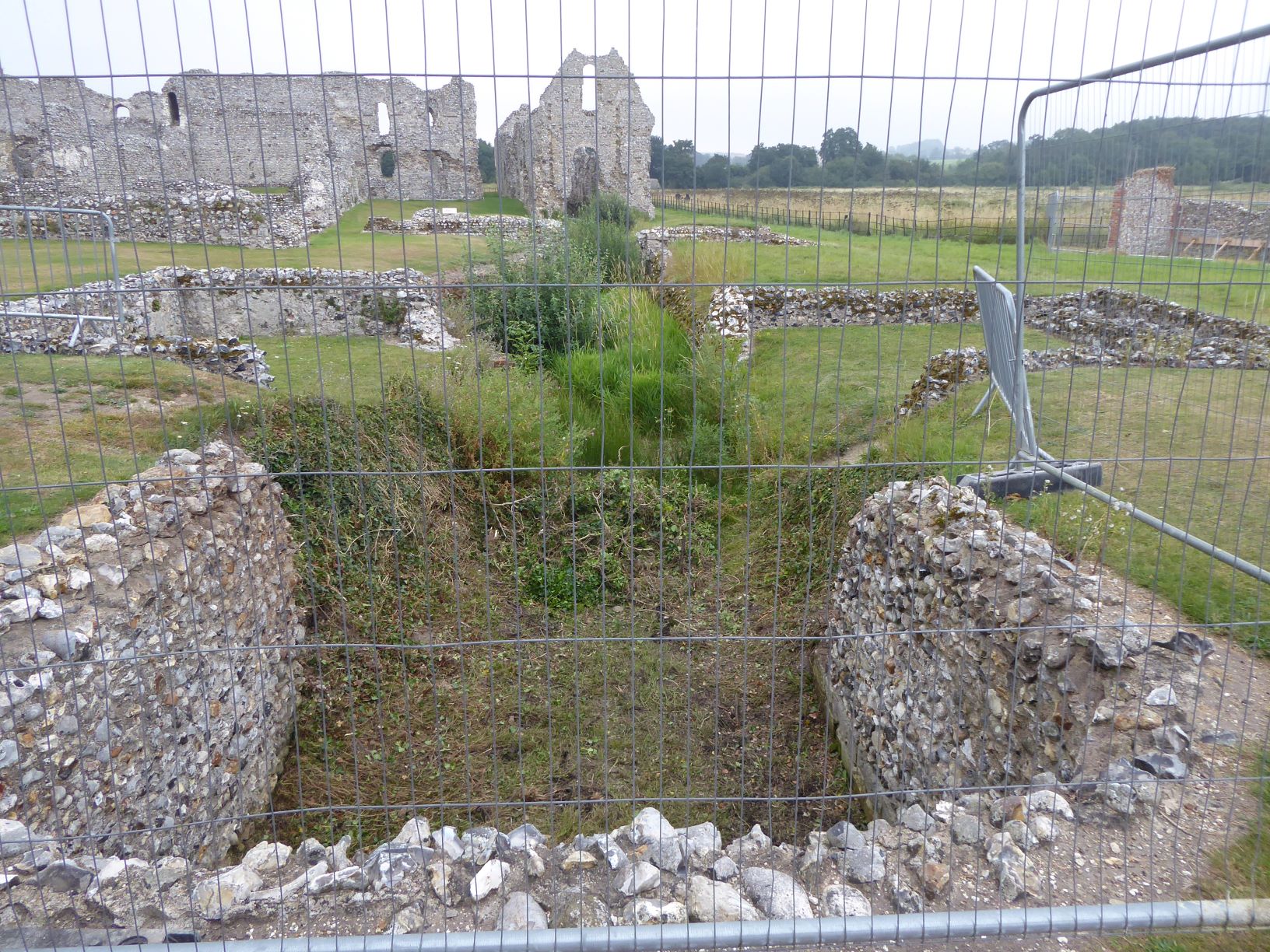
The ditch; looking left
The ditch; looking right

There was another exit path from the Minster which crossed the wide surrounding ditch.  This ditch is fairly deep though my photographs do not show this at all clearly.
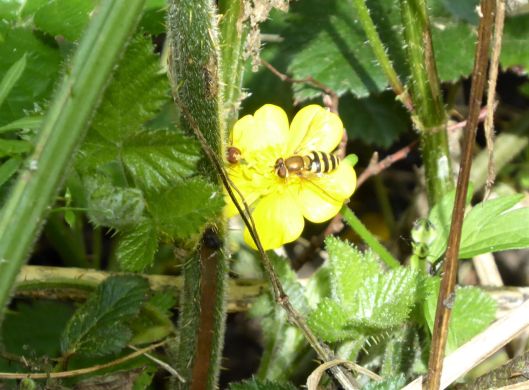
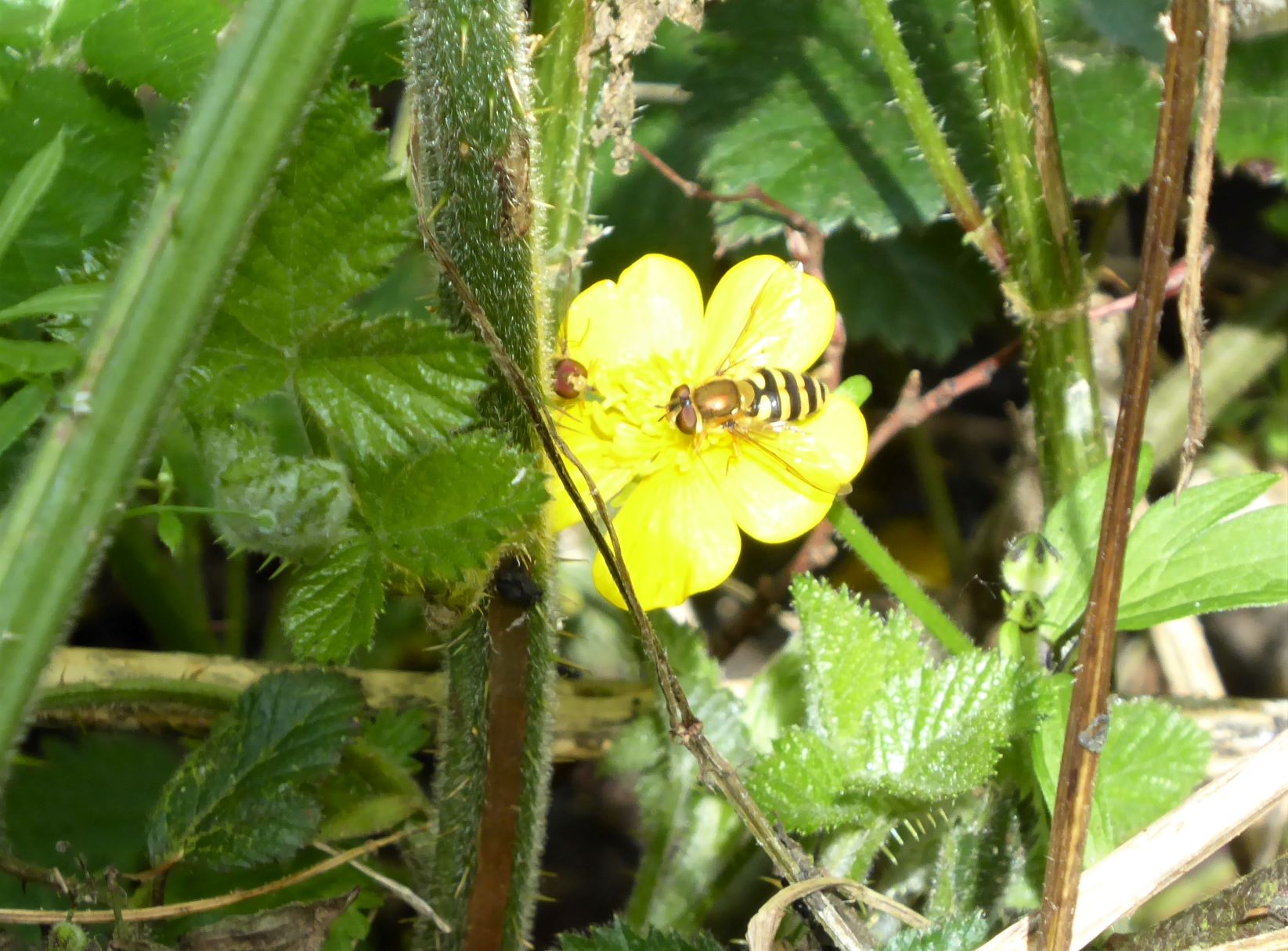
A Hoverfly, I’m not sure which one, on a large Buttercup flower; again I’m not sure which buttercup.
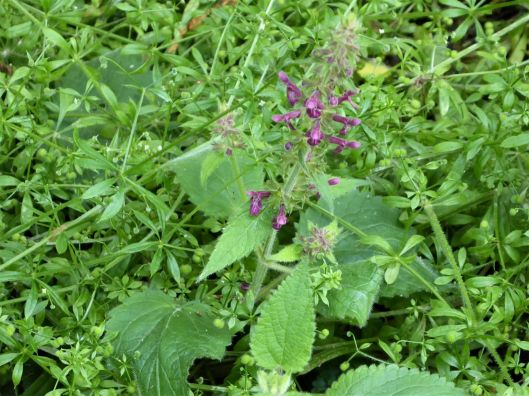
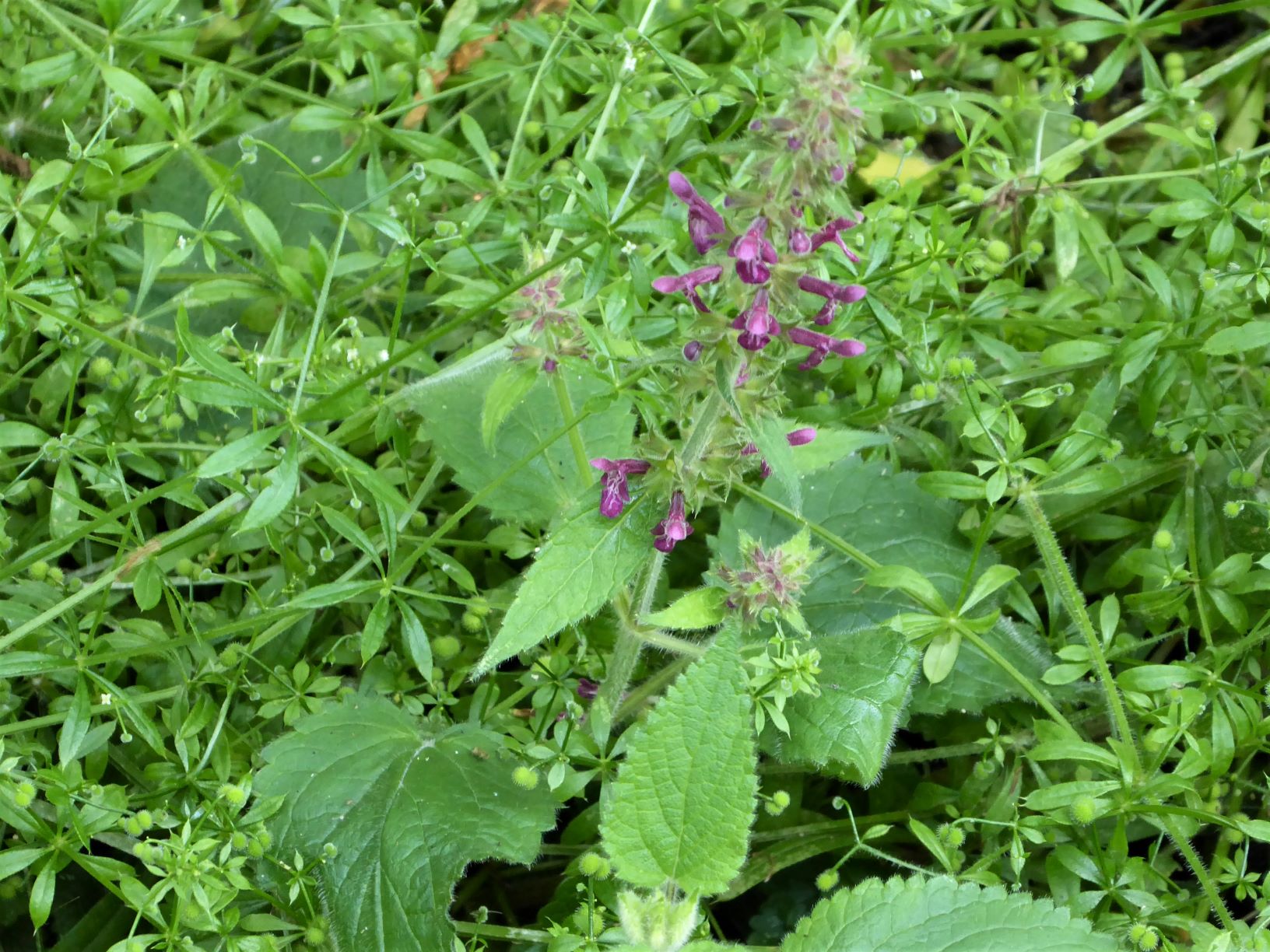
Hedge Woundwort (Stachys sylvatica). In reality this flower is a little pinker than this photo shows.

Woundworts have been used to stem bleeding and treat wounds since the time of the ancient Greeks.  Formally, the leaves were usually used as a poultice.  Ointments and infusions were also made with the leaves and the flowers made into conserves.  In fact, the volatile oil in Hedge Woundwort does have antiseptic qualities.
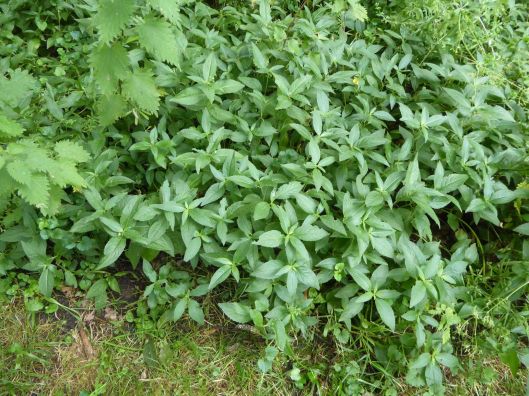
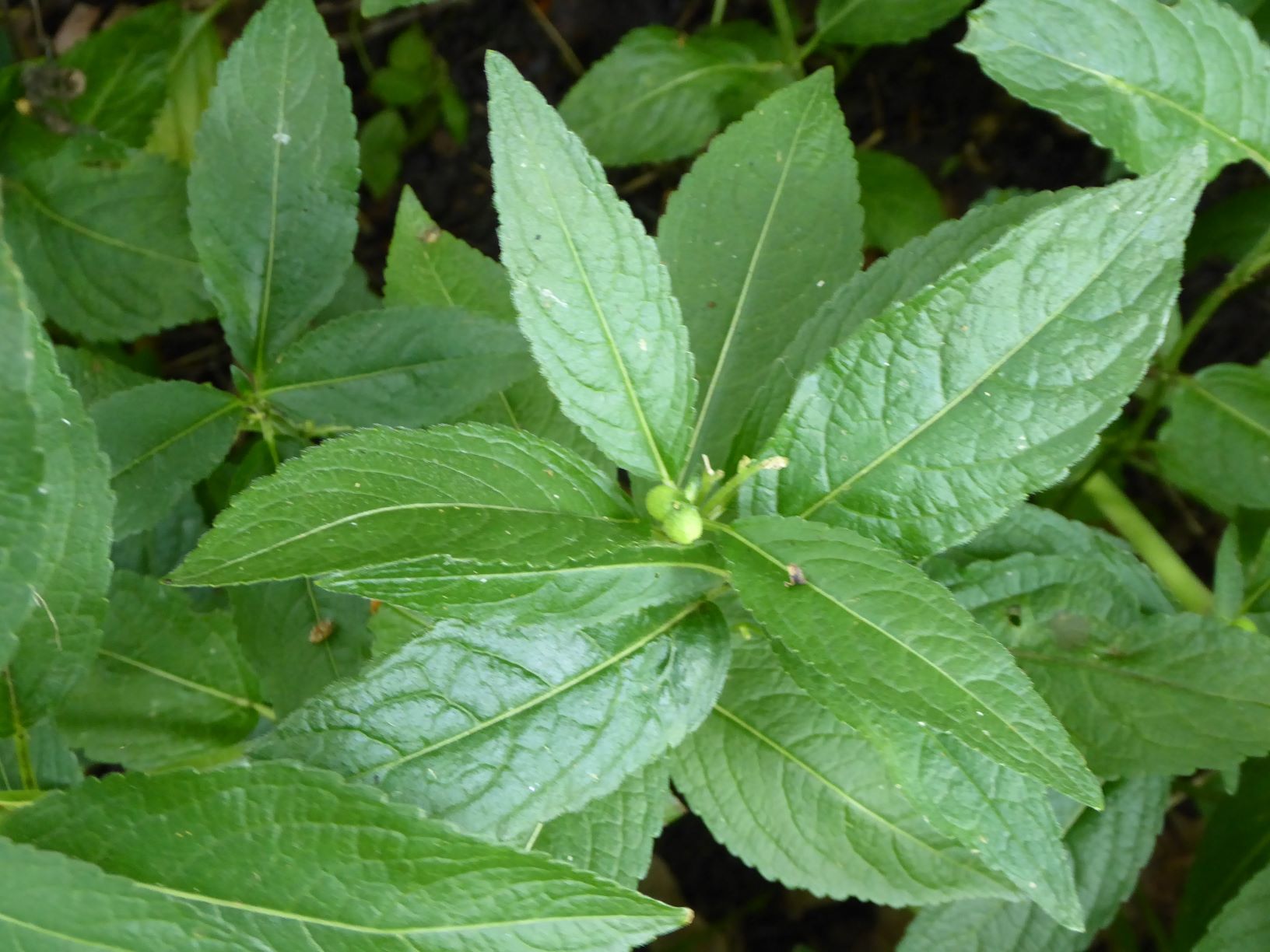
Dog’s Mercury (Mercurialis perennis)
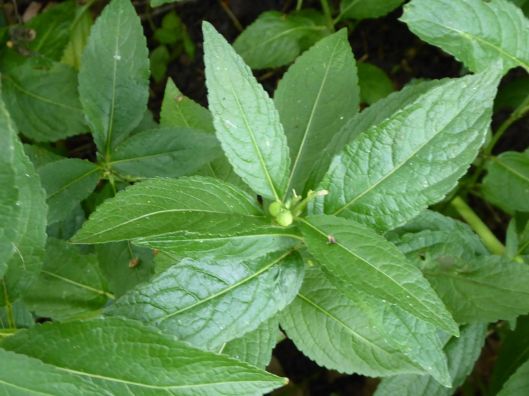
The Dog’s Mercury was all in seed. This one appears to have lost a few of its upper seeds.  Dog’s Mercury is extremely poisonous to animals and humans alike.

We left the Minster and walked home in the sunshine.
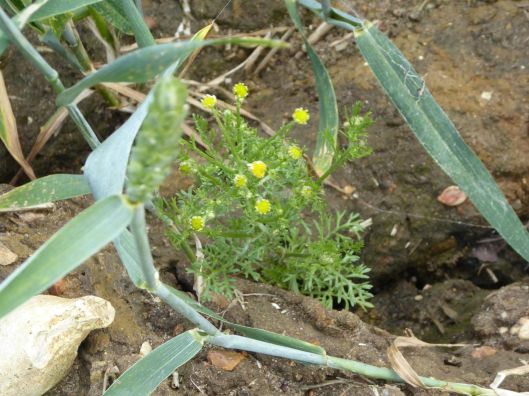
Mayweed.  I wasn’t able to check to see if it was Scentless or Scented Mayweed.  The white outer ray florets were just emerging round the central disc-florets of these daisy-like flowerheads.
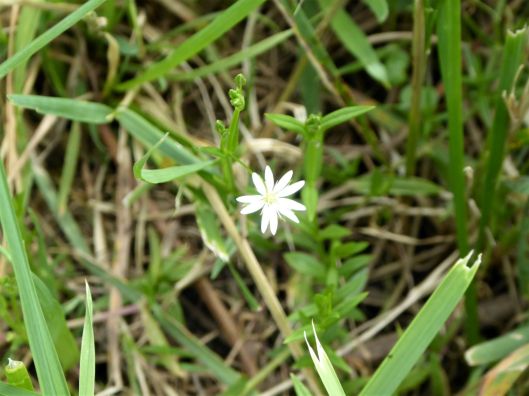
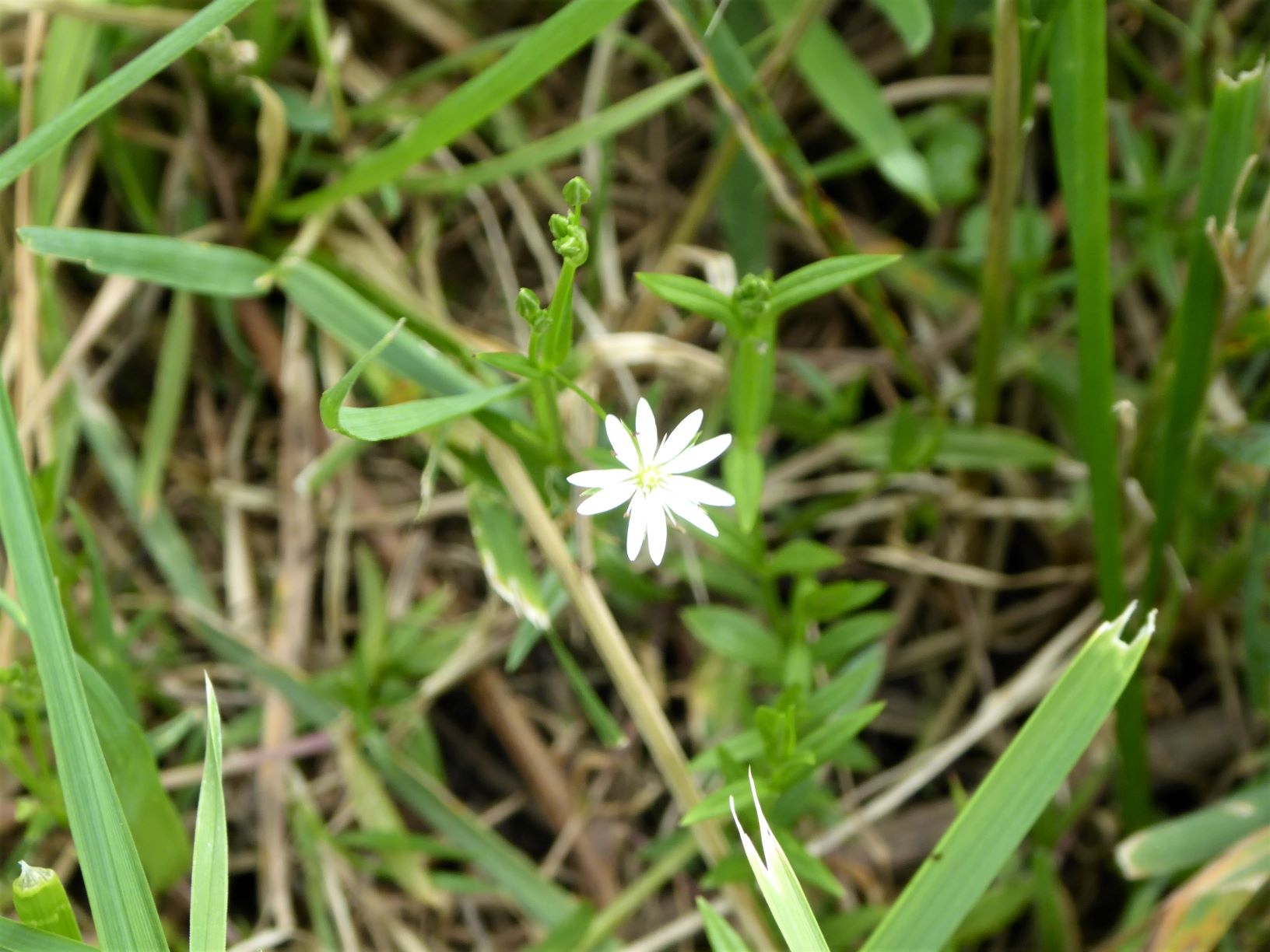
Lesser Stitchwort (Stellaria graminea).
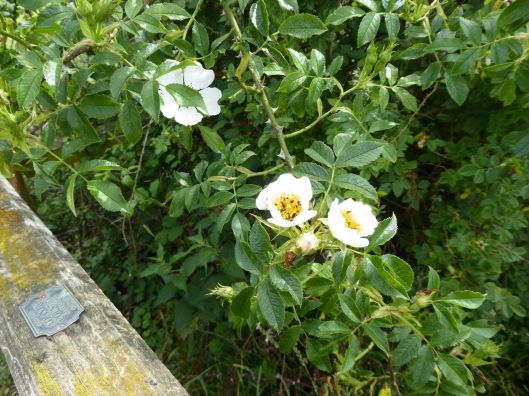
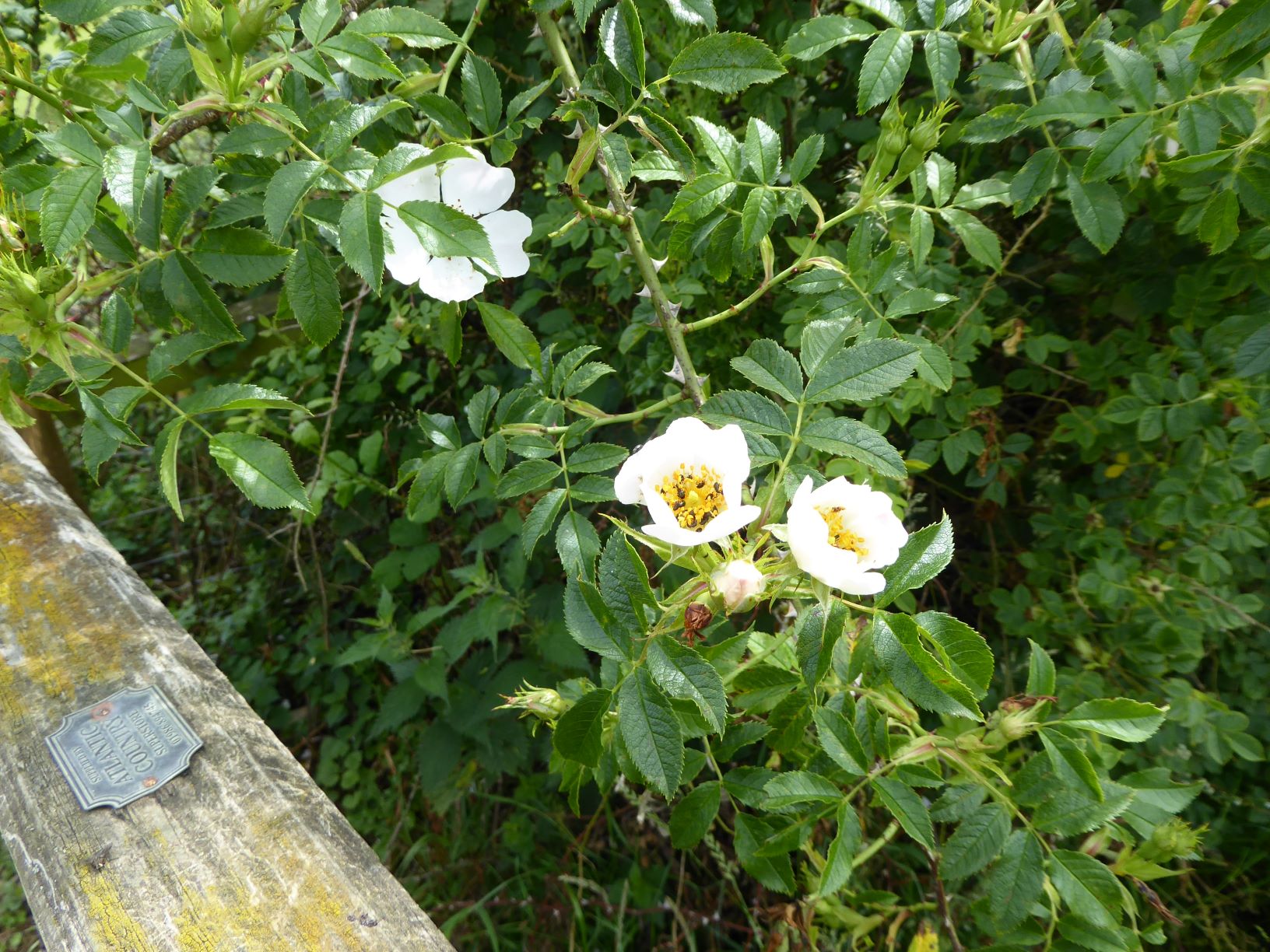
Field Rose (Rosa arvensis).
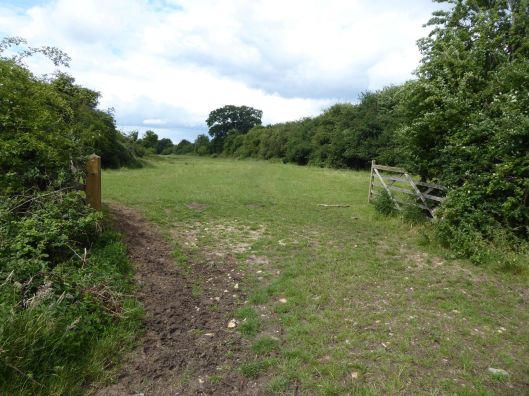
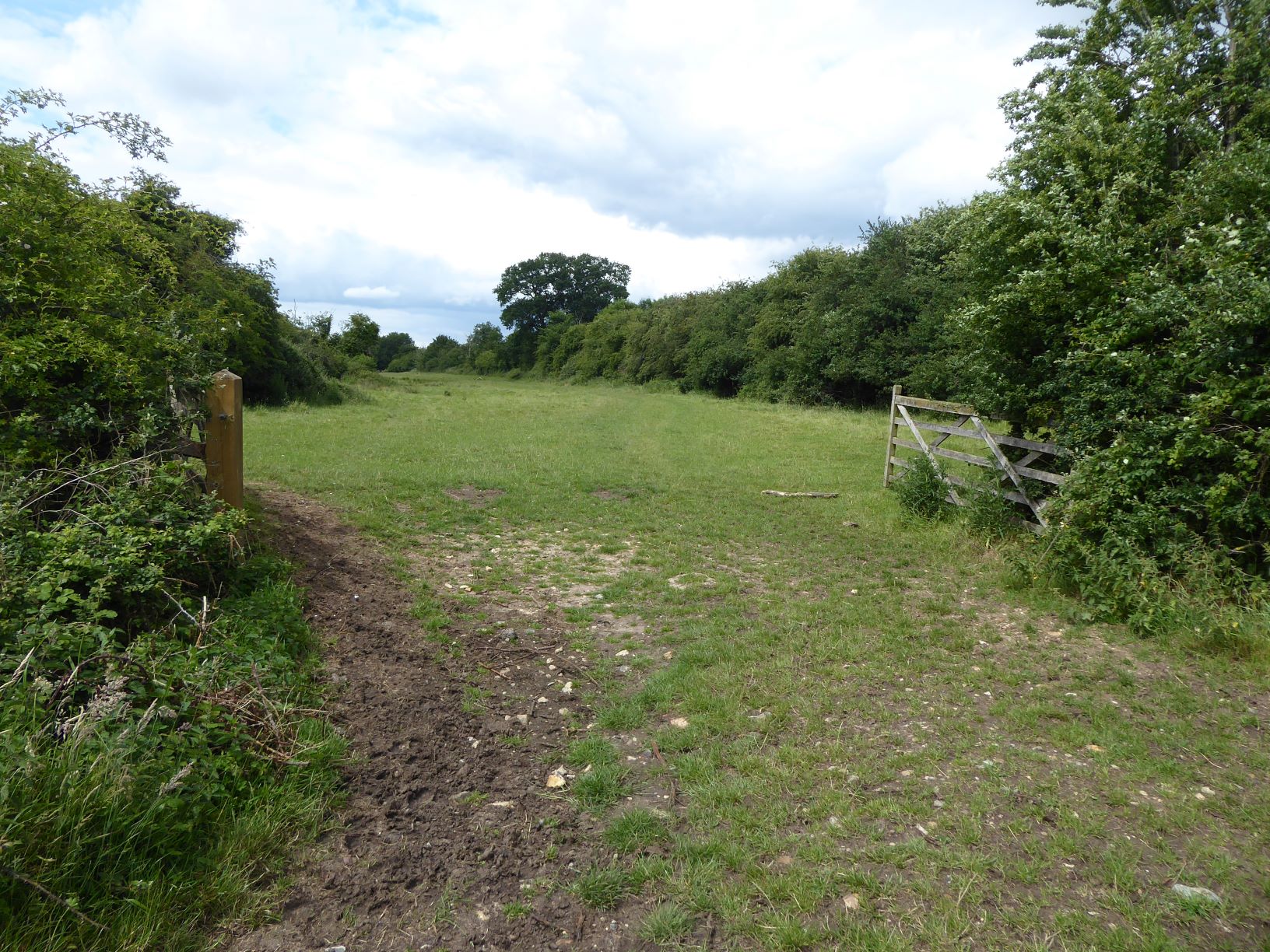
Field entrance

I didn’t take many photos of our surroundings as we walked and most of those shots were not suitable.  I am glad this one came out as it shows the countryside through which we walked.  Old-fashioned small fields with high dense hedges.  Lots of birds were still singing and wherever we walked we heard numerous skylarks.

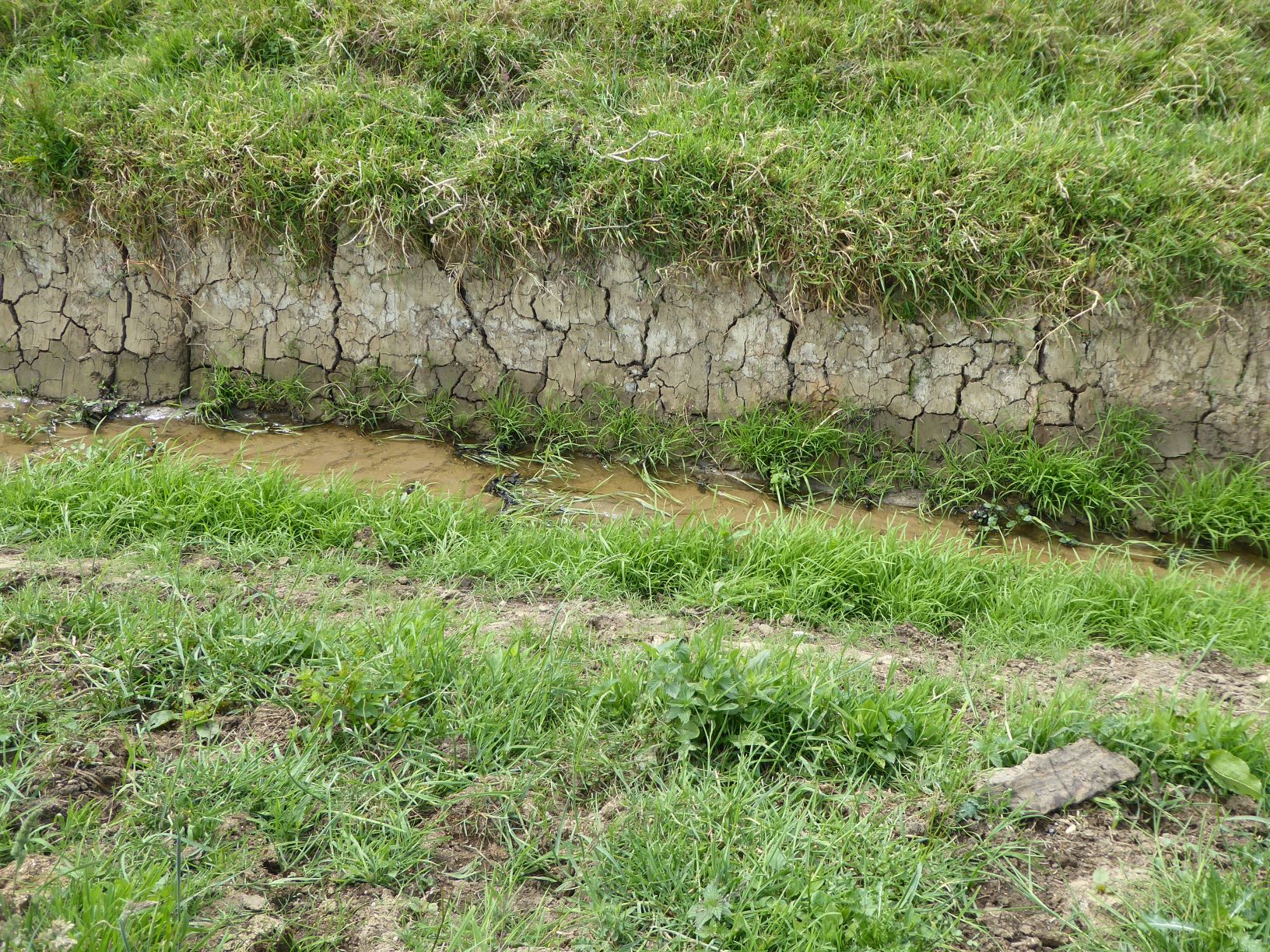
A drainage ditch

Richard pointed out the cracked clay sides of this ditch.  The water though not deep, was running quickly along and was particularly clear.  We saw small fish swimming in it.
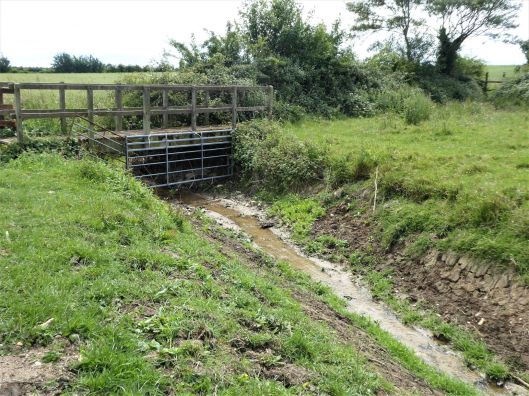
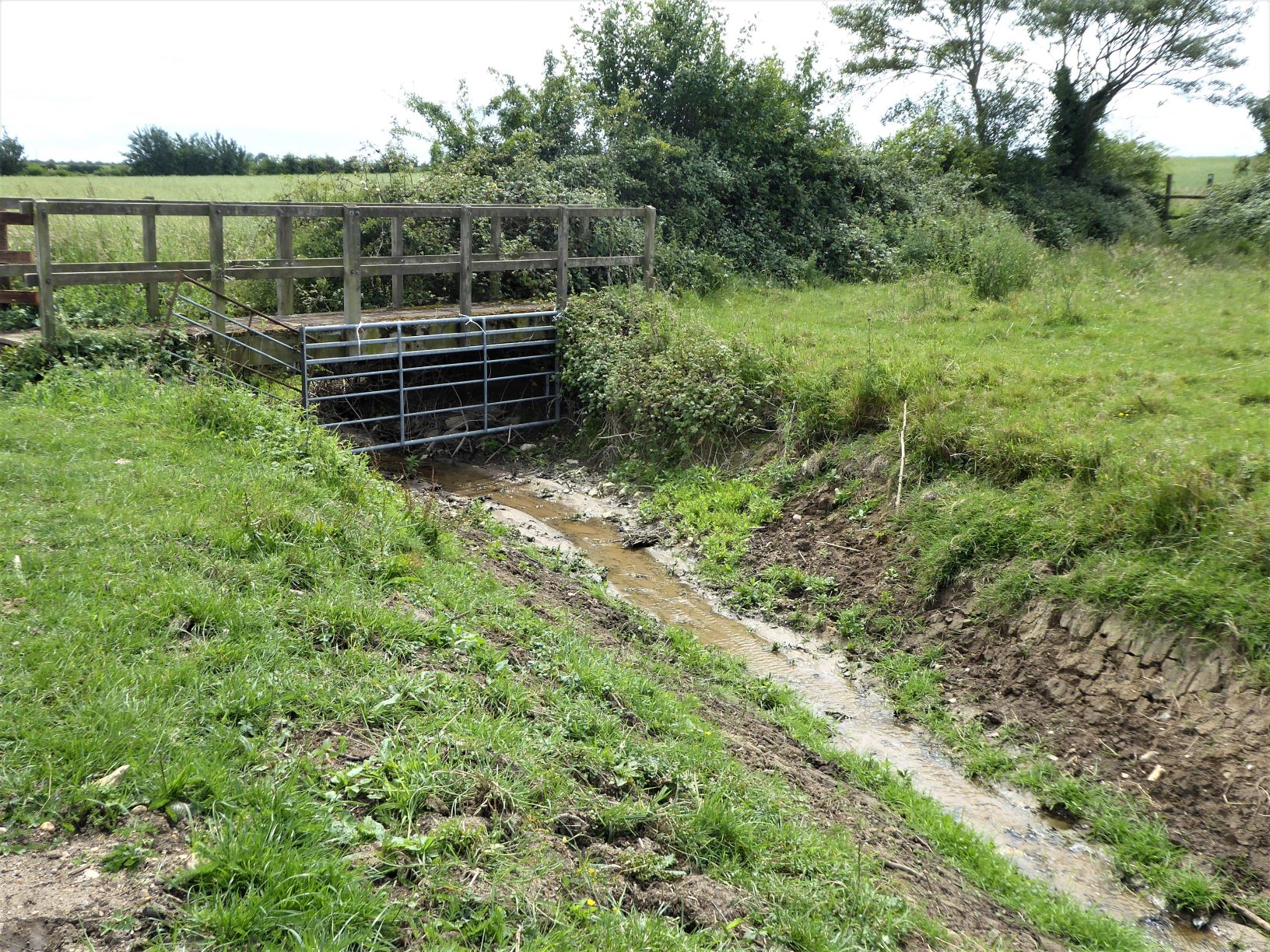
Further along, the ditch was crossed by a small bridge with what I assume is a gate to prevent sheep from crossing from one field to the next.
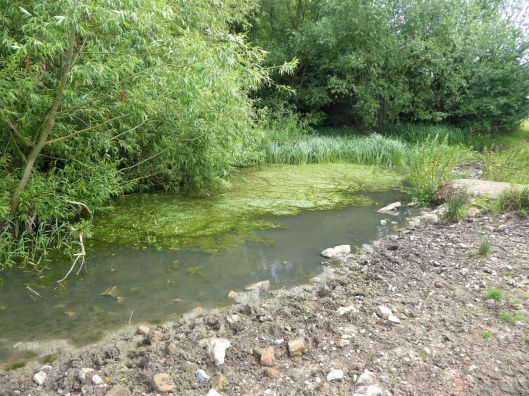
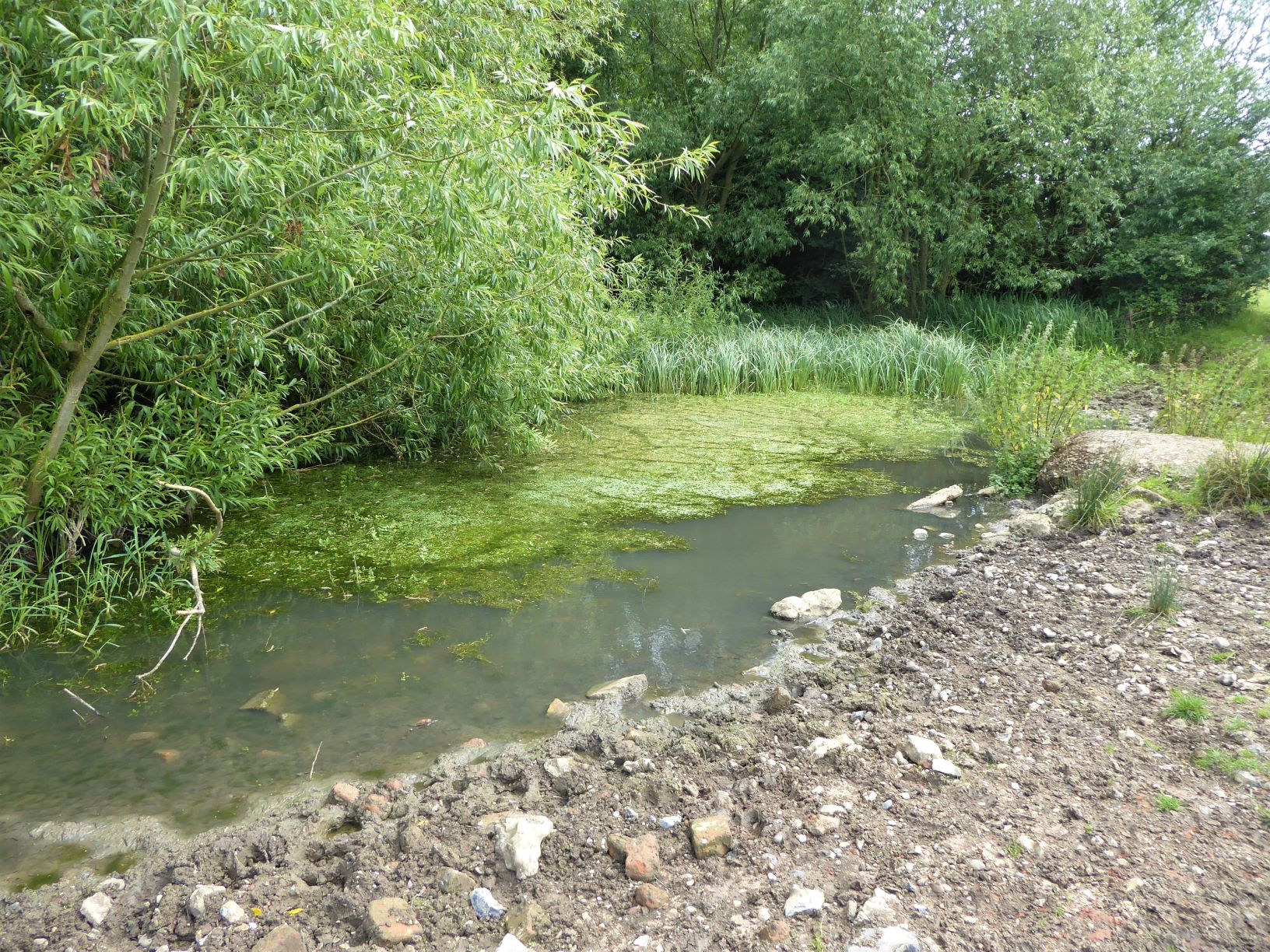
A cart pond.  In former times, when carthorses needed to drink, the cart drivers could get into these ponds and out again easily without having to take the horses off the cart.
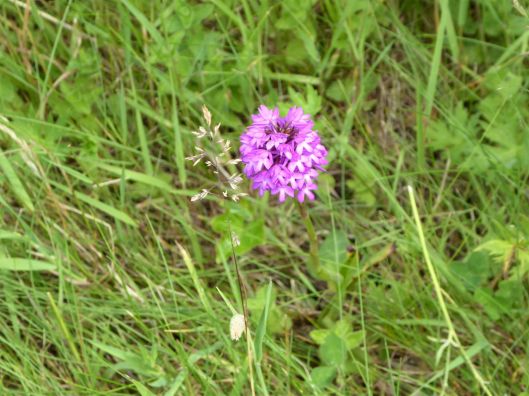
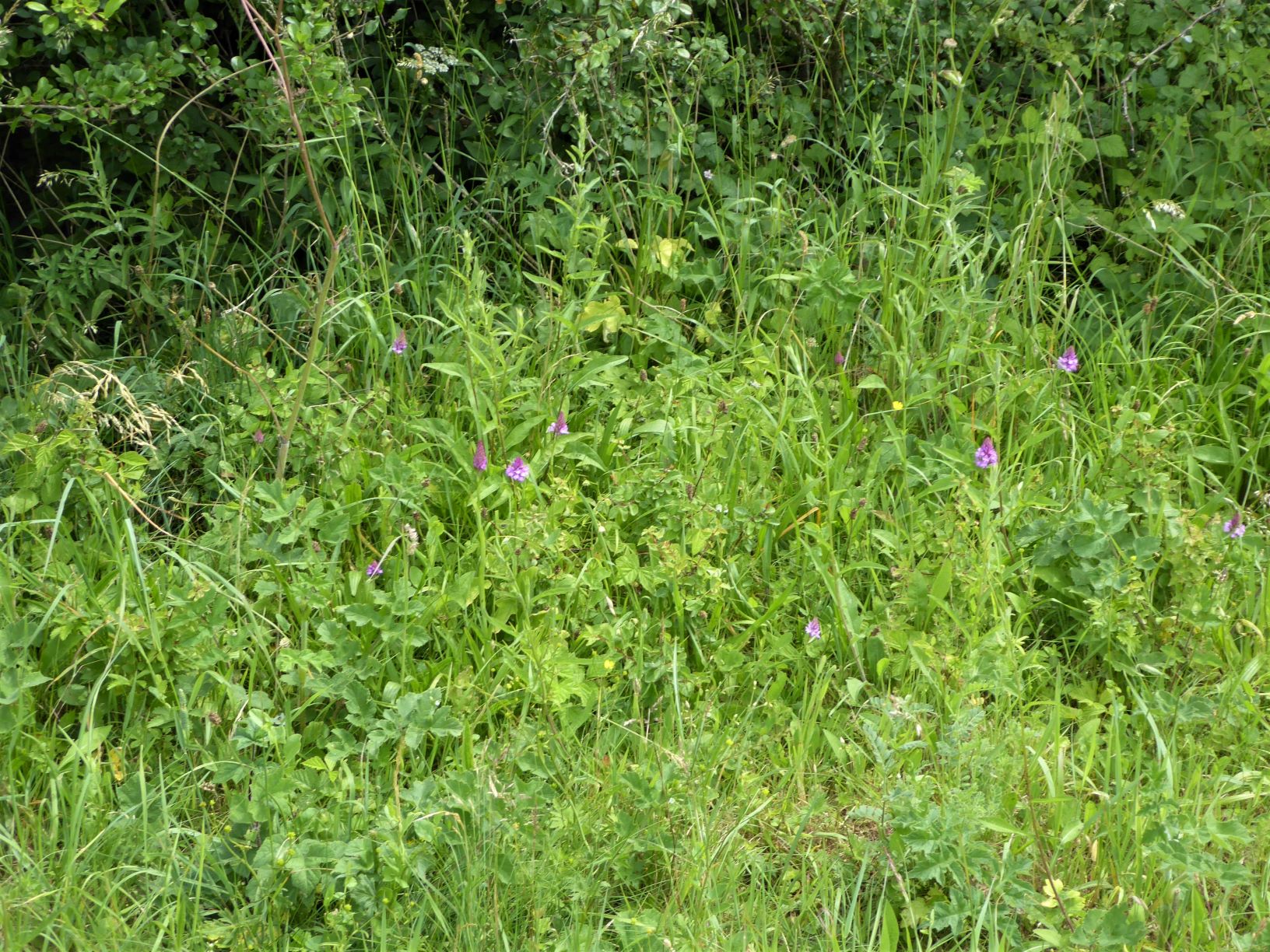
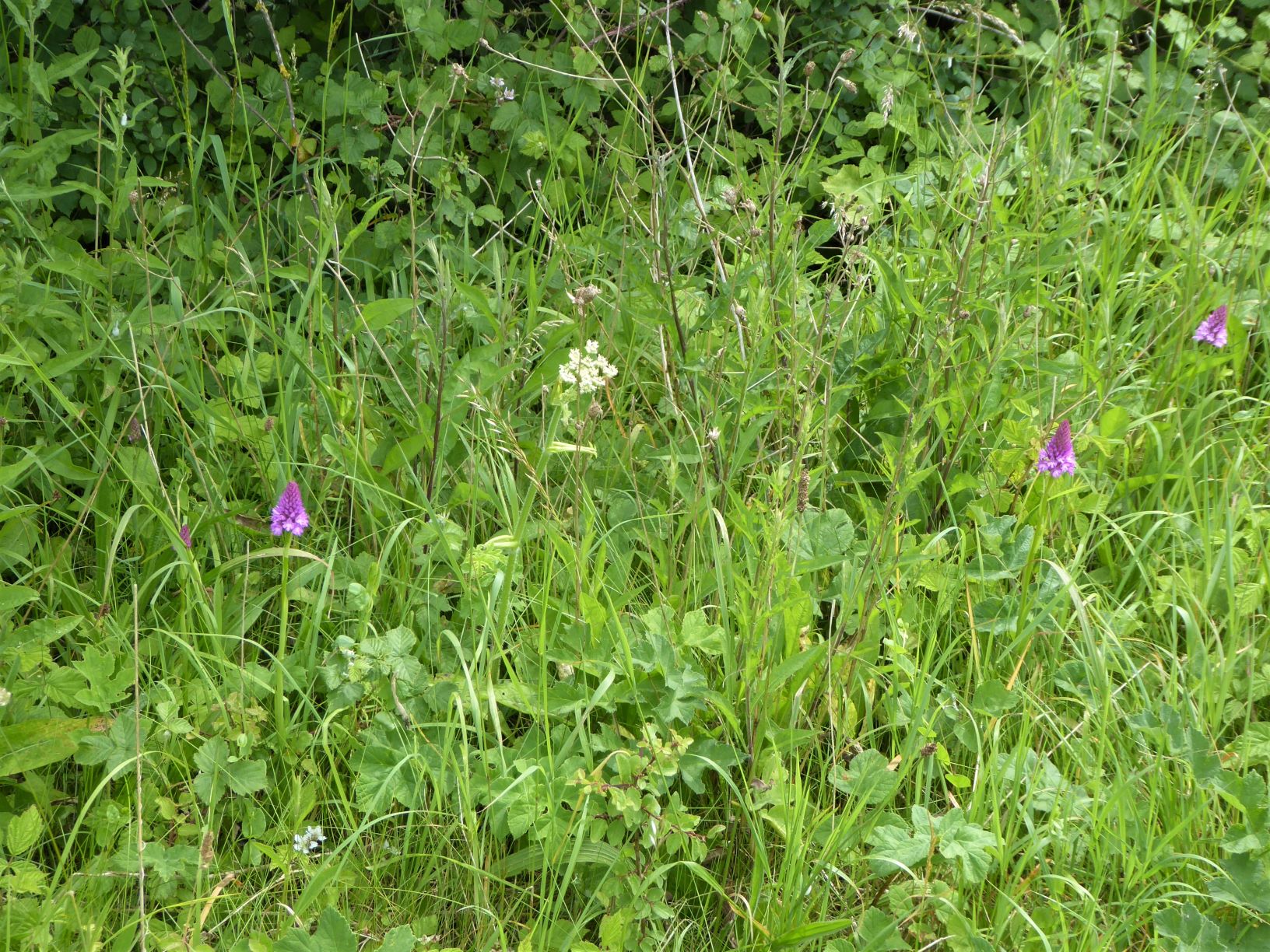
Pyramidal orchid
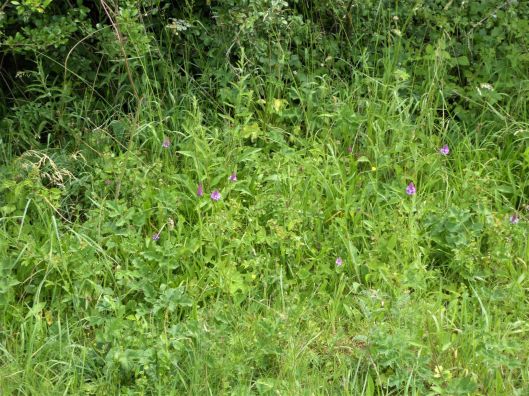
Field edge full of orchids…
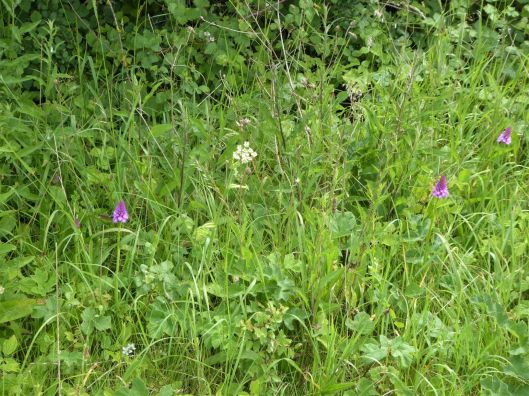
…and yet more
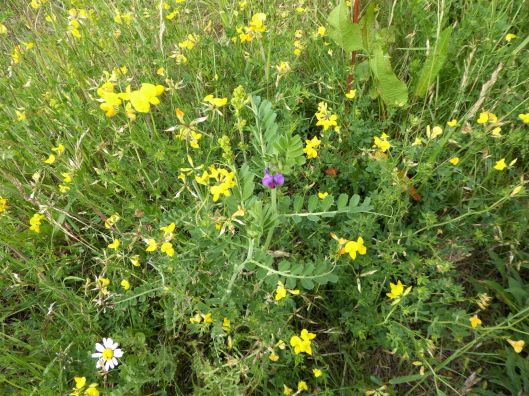
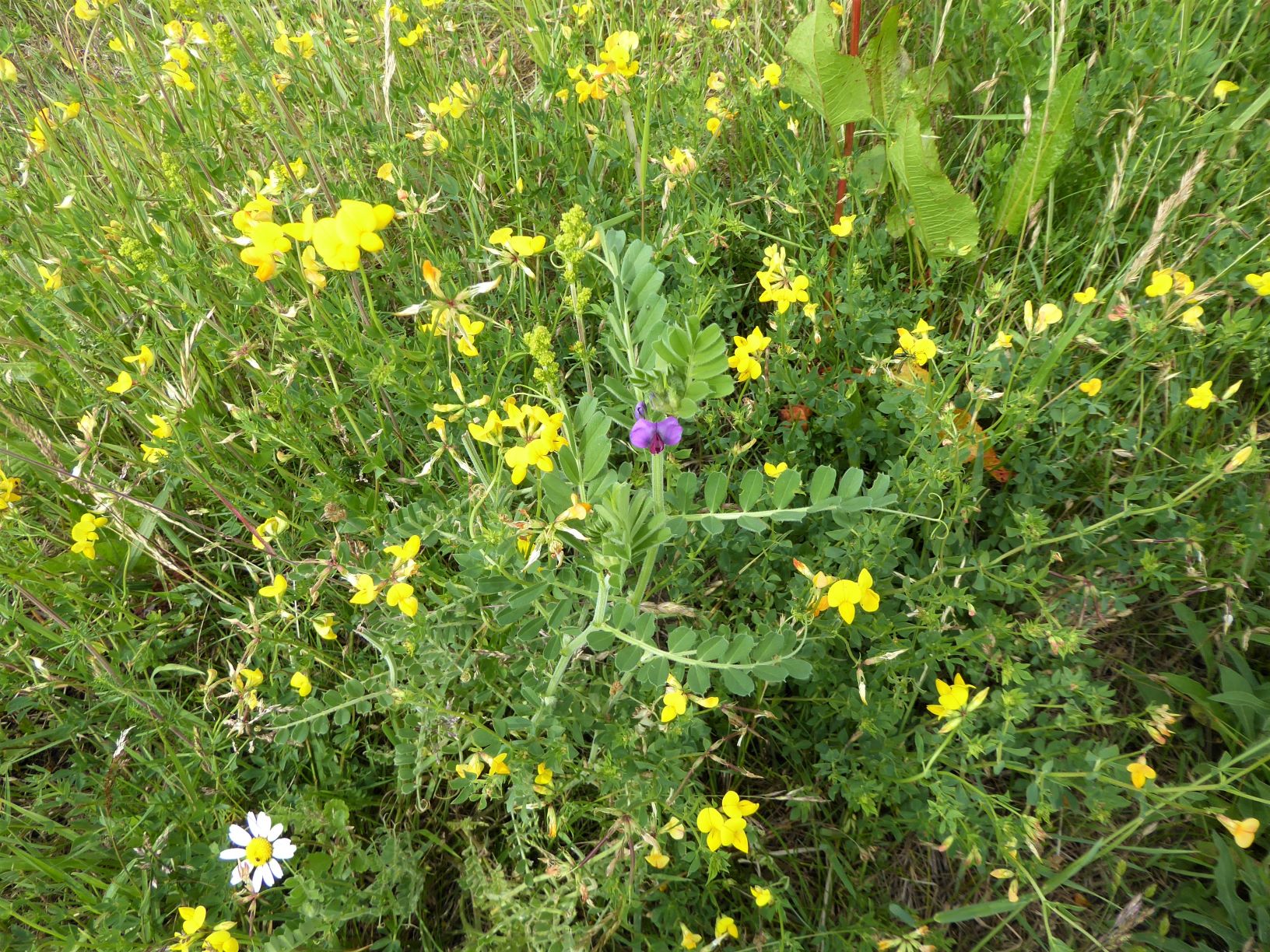
A selection of different Vetches
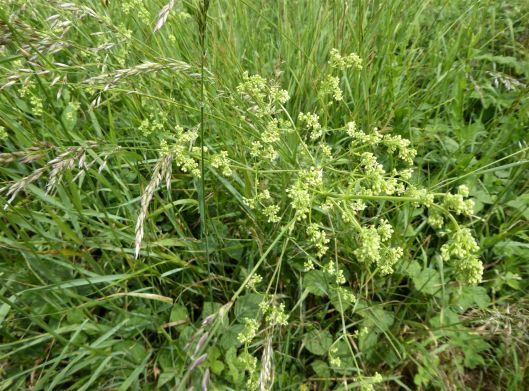
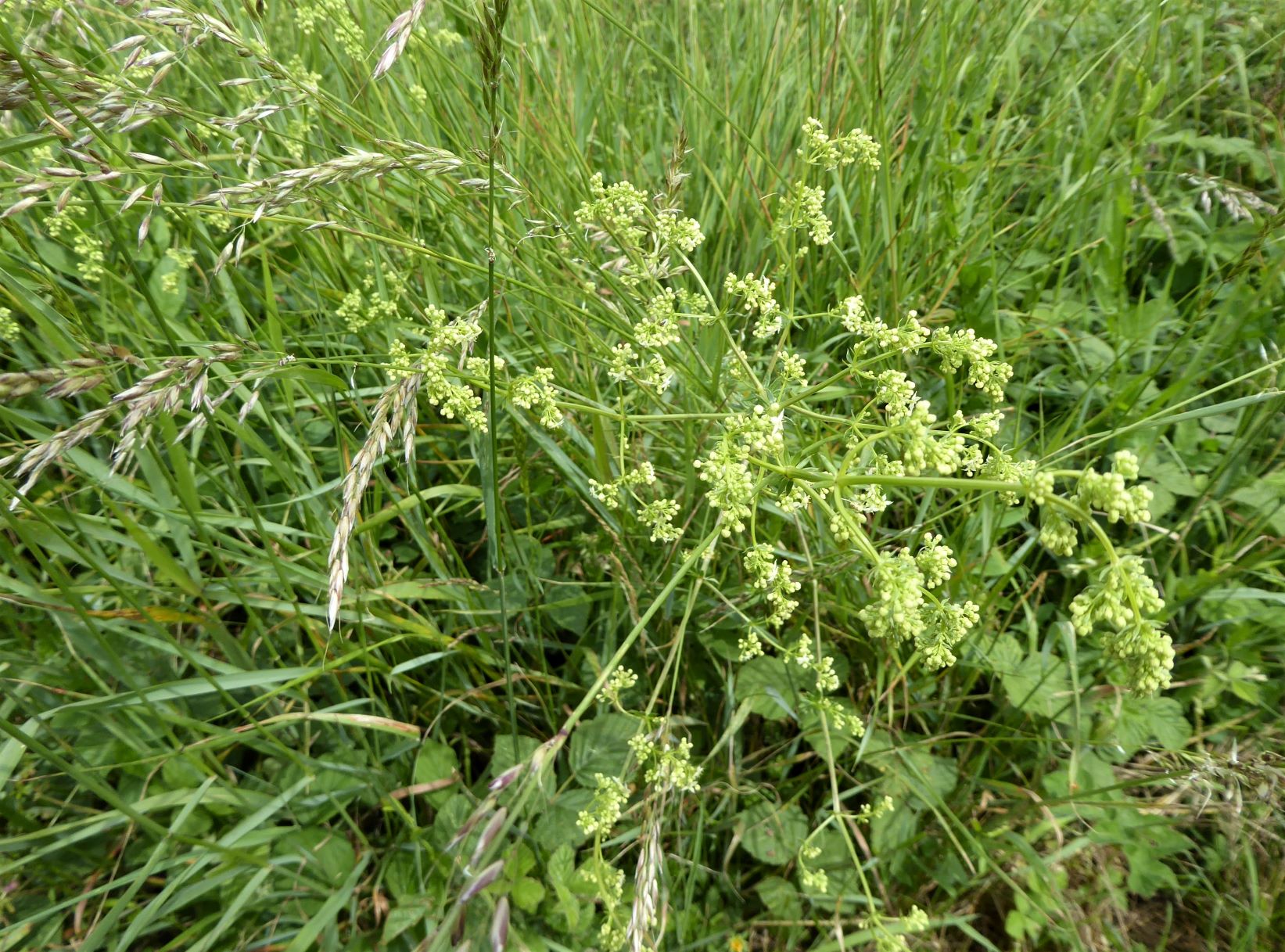
Hedge Bedstraw ( Galium album)
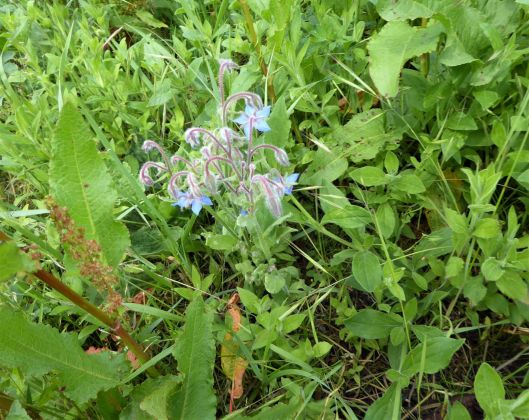
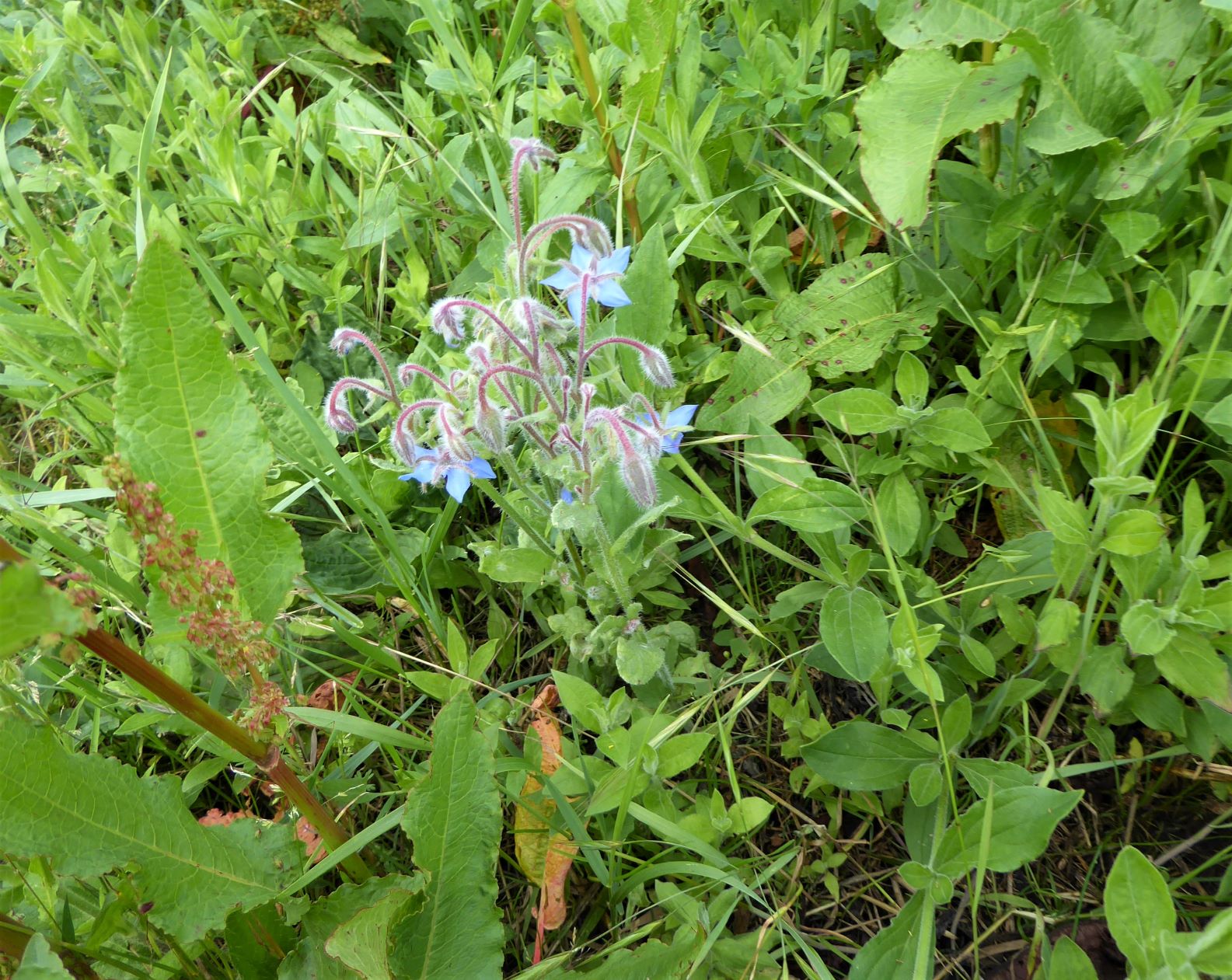
Borage ( Borago officinalis)
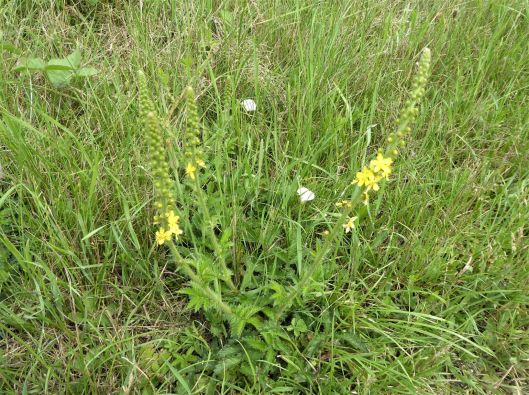
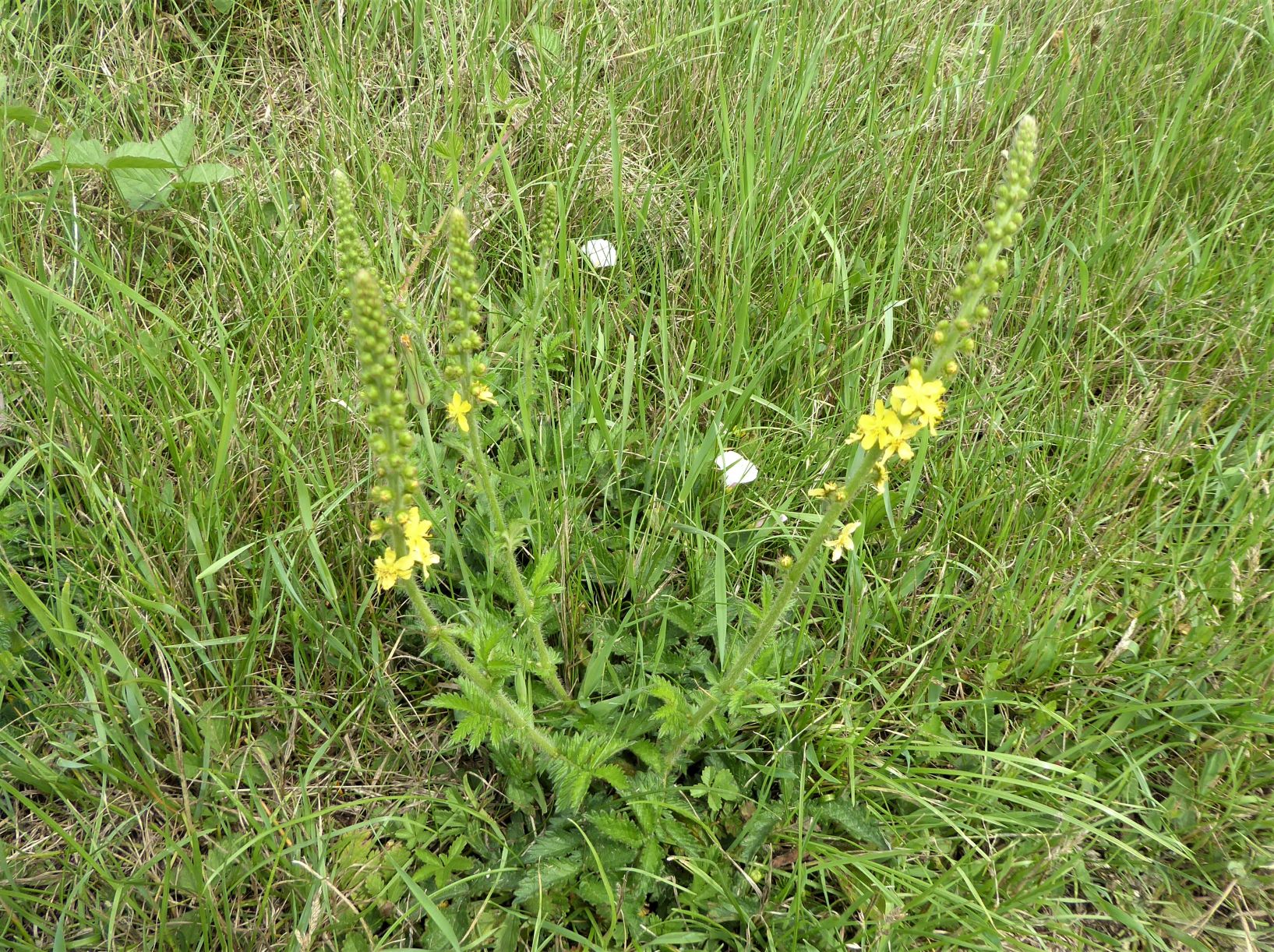
Agrimony ( Agrimonia eupatoria)
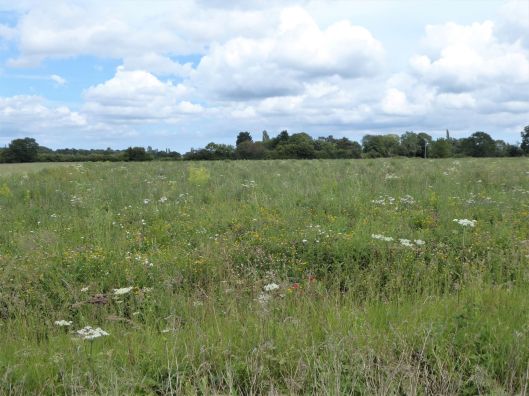
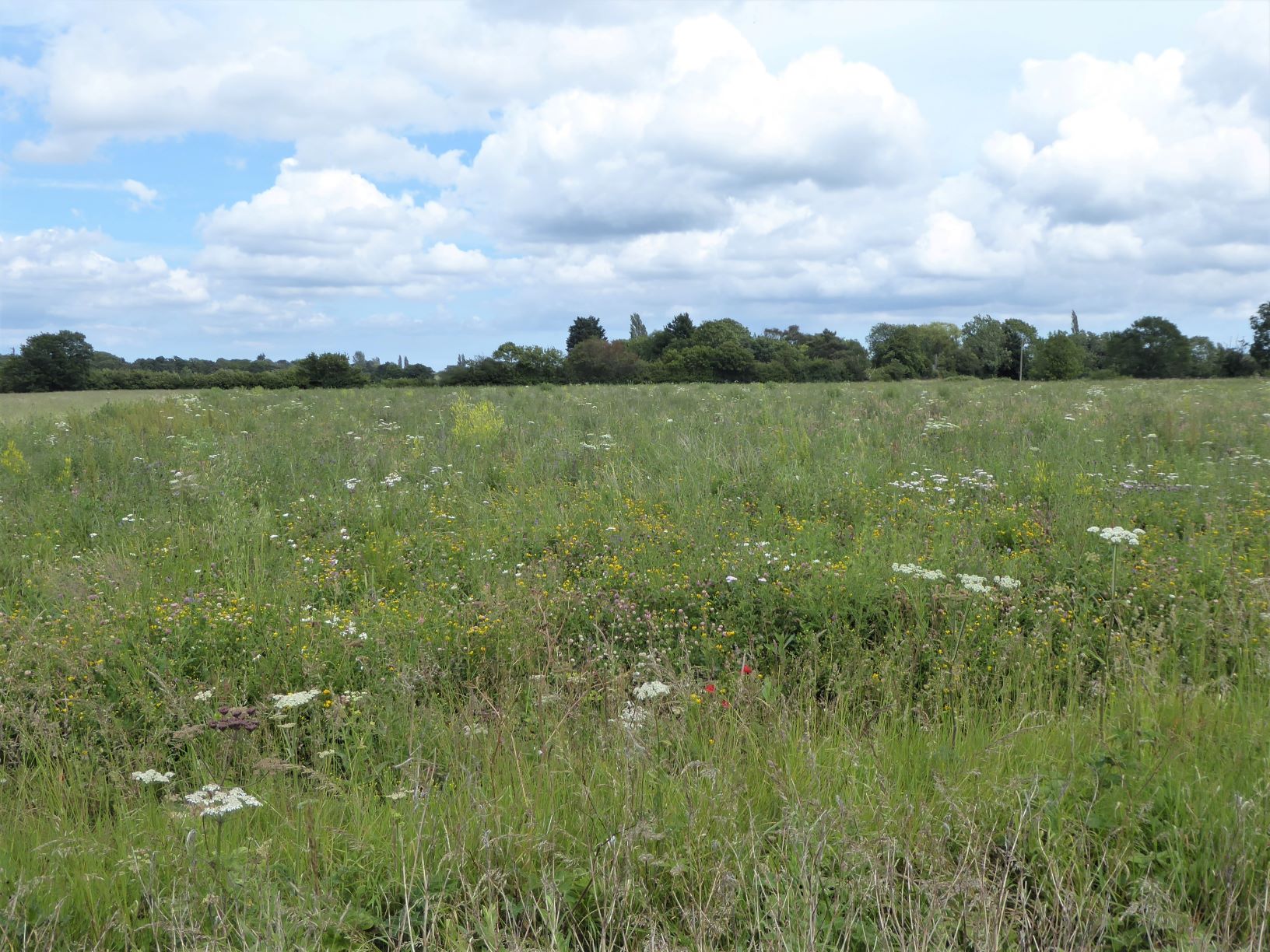
A field full of wild flowers

Unfortunately I couldn’t get into the field because of a deep ditch around it.  I had to take my photos using the zoom on my camera.
P1060597wild flowers (2)
P1060600wild flowers (2)
P1060603wild flowers (2)

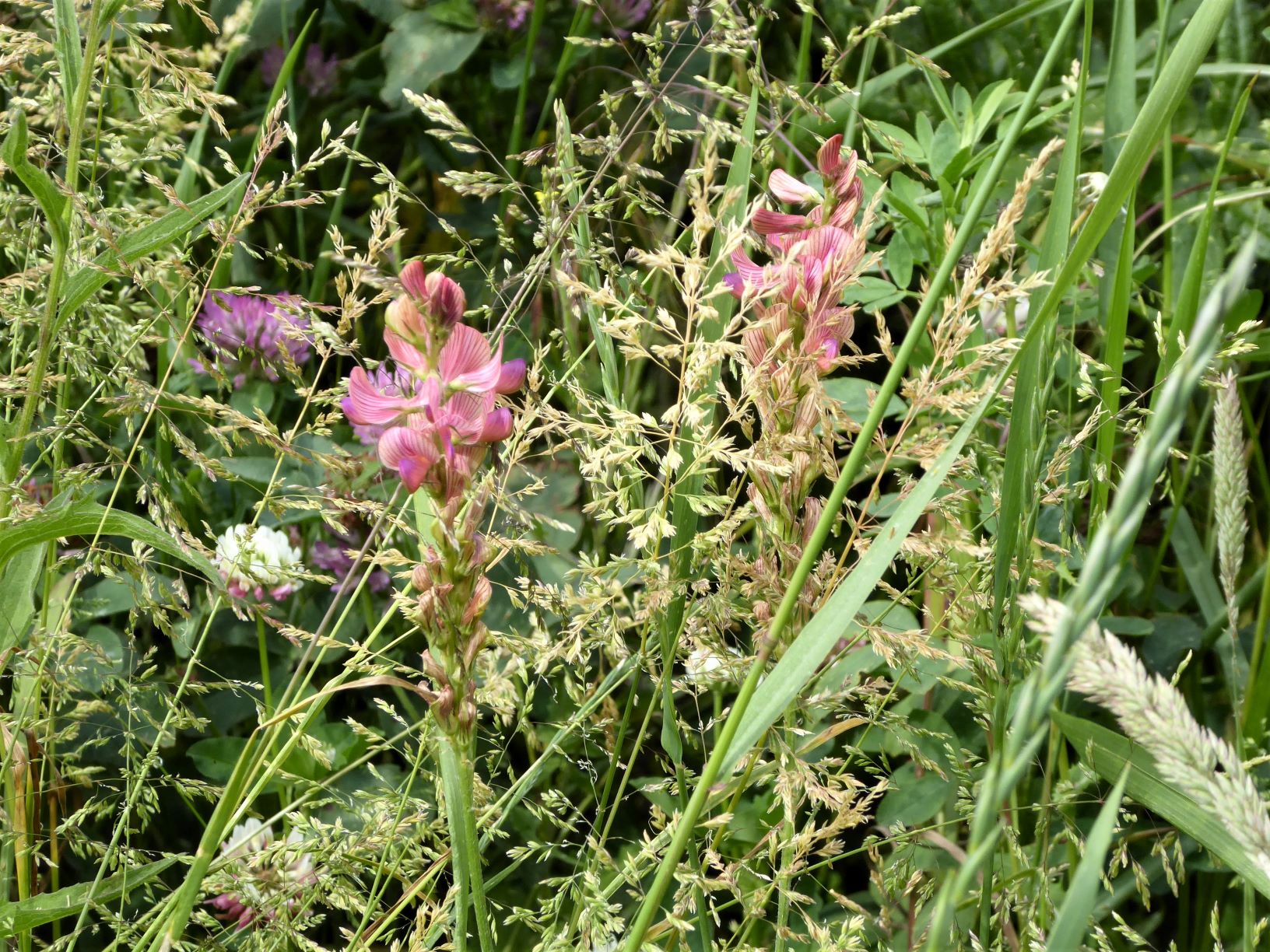
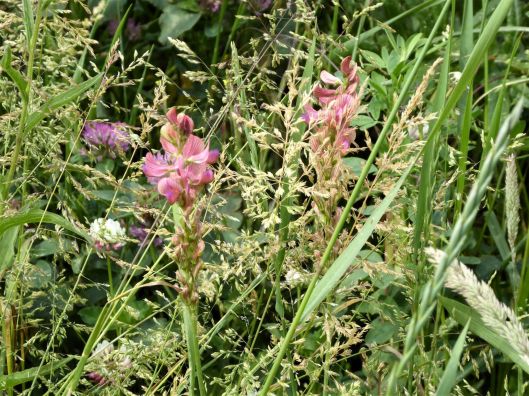
Sainfoin ( Onobrychis viciifolia)

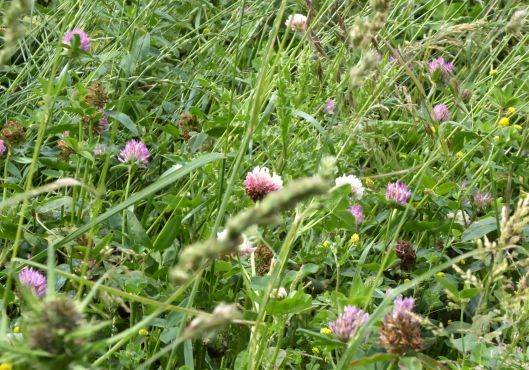
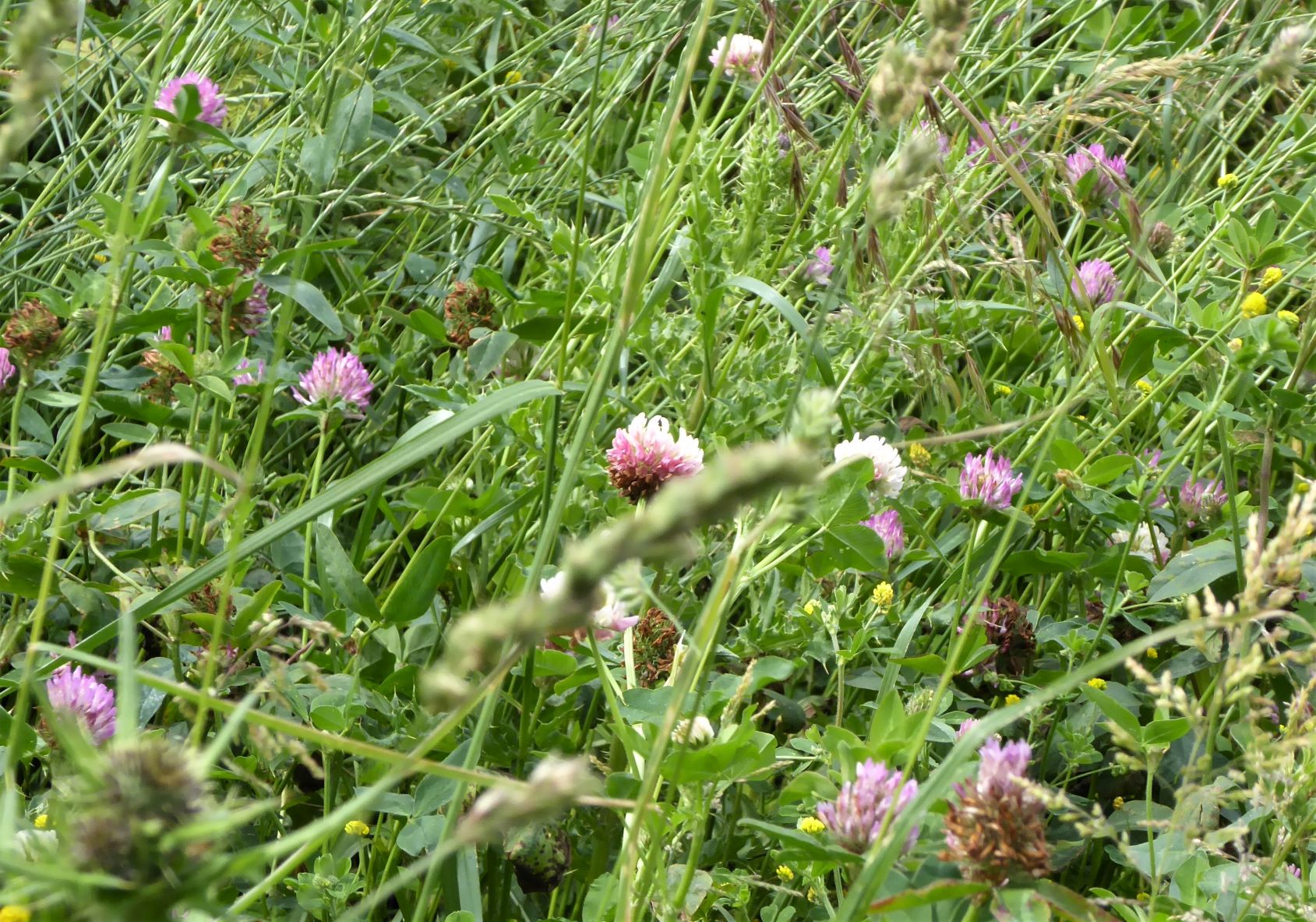
I think the pretty pink and white clover in the centre of the photo is Alsike Clover ( Trifolium hybridum)

I think the owner of this field has sown some wildflower seed mix here.  I have never seen so many different flowers all in one field before.  From what I hear from the stories of the elderly people I know at church, all the fields were covered in wild flowers like these when they were young.  Intensive agriculture was becoming the norm thirty or forty years ago: hedges were ripped out and everything was sprayed to kill off the wild flowers and most of the insects.  This was still being done when I moved to East Anglia in 1988 and the birds I heard regularly then and the quantities of moths, butterflies and other insects I used to see then are much reduced.  I especially noticed the difference when I returned to East Anglia in 2006 after our 18 months in Somerset.  Far fewer insects certainly.  However, we had got used to hearing and seeing Buzzards during that 18 months while in Somerset and I was greatly surprised and excited to see and hear a Buzzard in Suffolk for the first time in 2007.  They are well established here now.
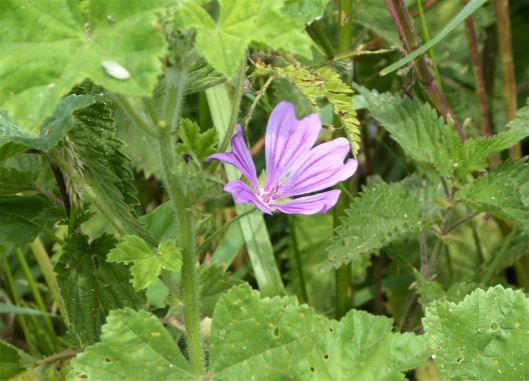
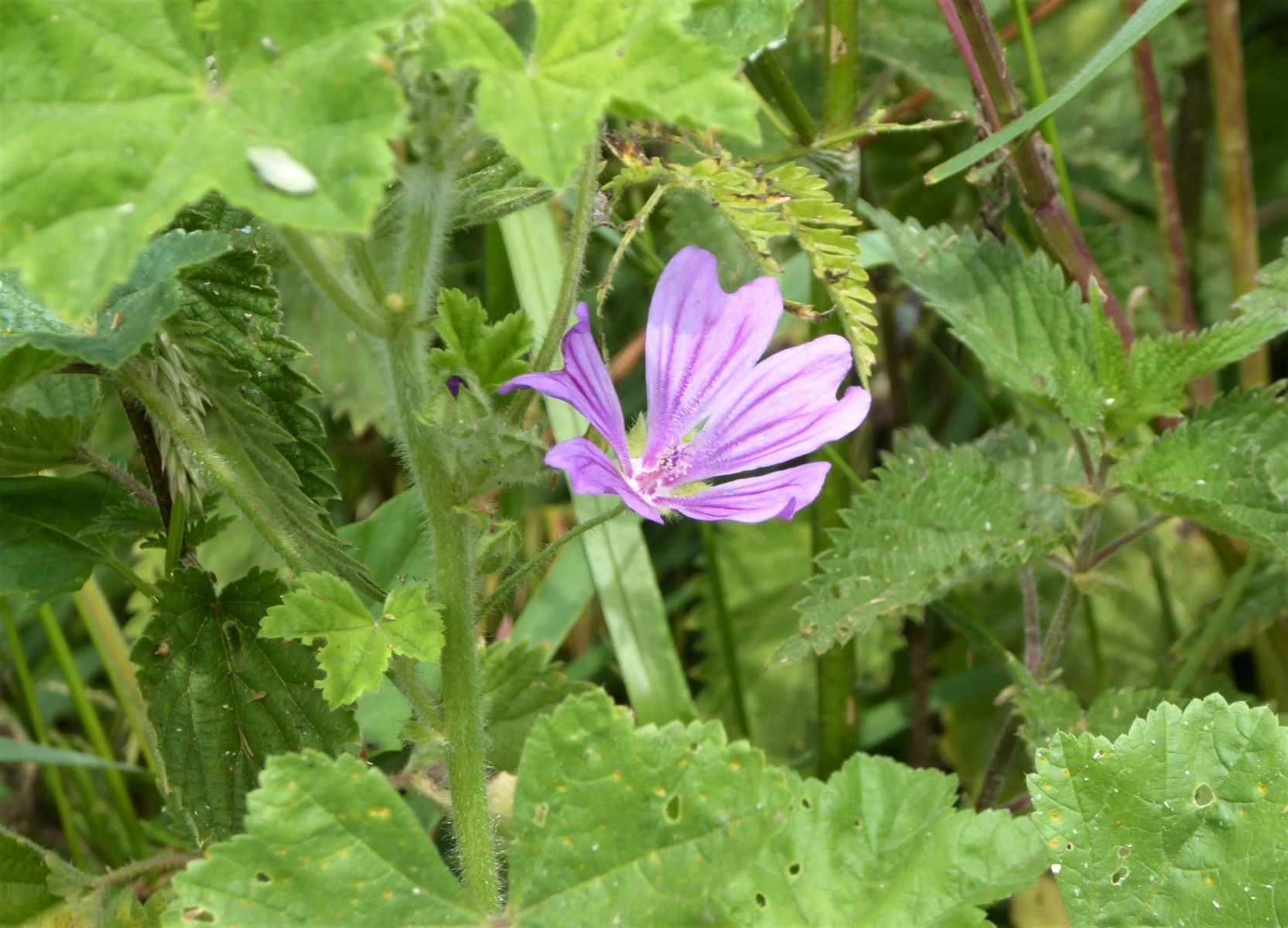
Common Mallow ( Malva sylvestris)  The Common Mallow is an ancient introduction to this country.  It seems to line all the lanes at this time of year.
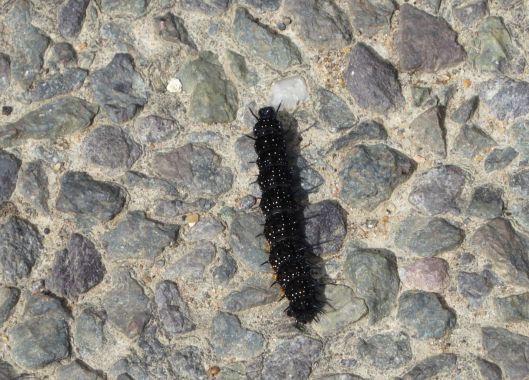
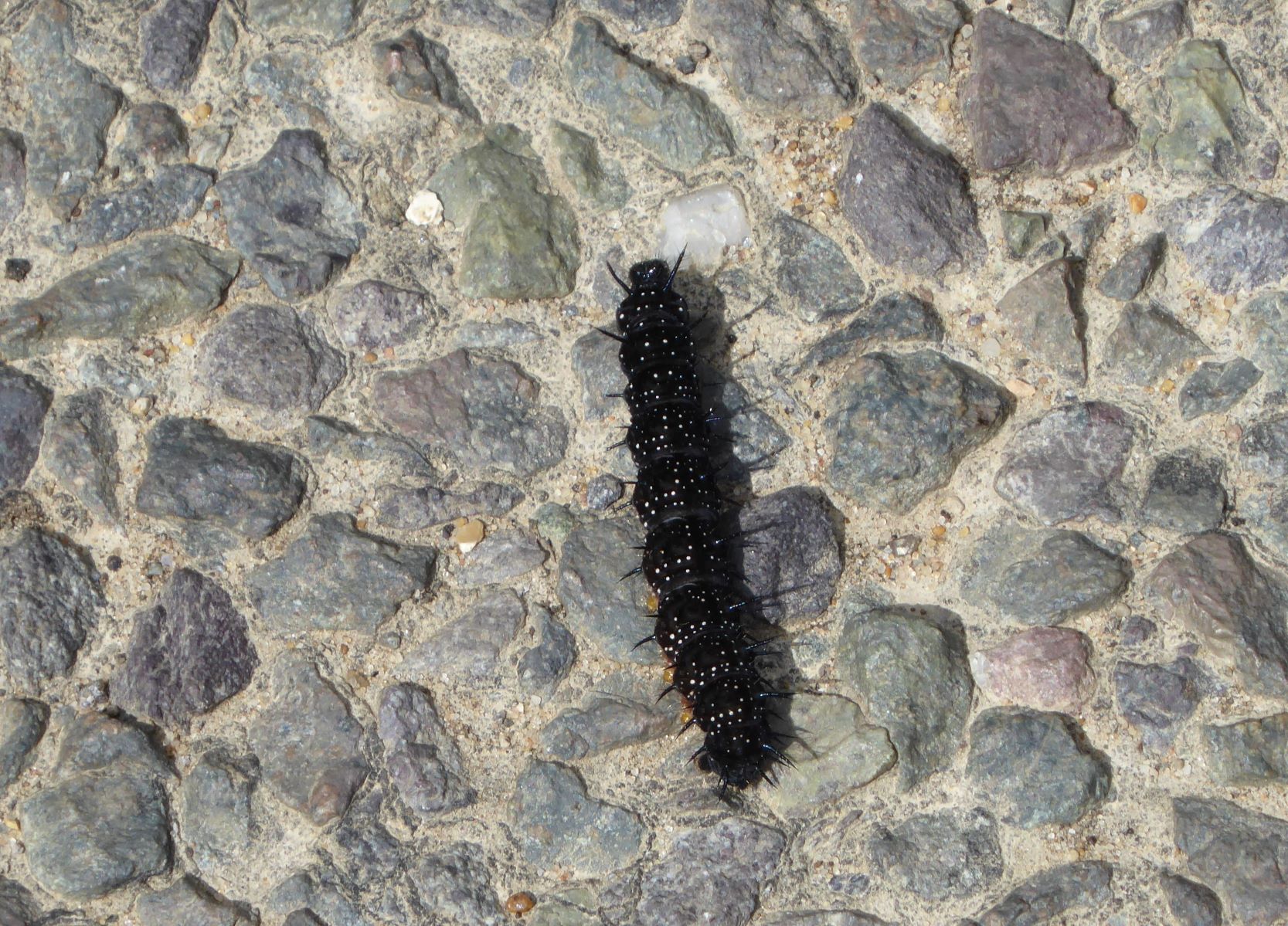
This is the rather handsome caterpillar of the Peacock butterfly . I found it crossing the lane as I was nearing home.

You will be glad to know we all got home safely having met no-one on our walk and only saw a lady driving her pony and trap and I think a couple of cars along the lane.You will be especially glad to know that this is the end of the post!
Share this:

  • Share on X (Opens in new window) X
  • Share on Reddit (Opens in new window) Reddit
  • Share on Pinterest (Opens in new window) Pinterest
  • Share on Facebook (Opens in new window) Facebook
  • Email a link to a friend (Opens in new window) Email
  • Share on Tumblr (Opens in new window) Tumblr
  • Print (Opens in new window) Print
  • Share on LinkedIn (Opens in new window) LinkedIn
Like Loading...

How I Spend My Days

16 Sat May 2020

Posted by Clare Pooley in Rural Diary

≈ 107 Comments

Tags

anxiety, Christian role-models, Covid-19, essays, lockdown, music, novels, on-line browsing, Poetry, reading, Suffolk, The Saints Benefice, theology, VOCES8, worship

This post, again, won’t be a normal one for me; not that I have been posting very often over the past few years so ‘normal’ is probably not the correct word to use, but that’s by-the-by.

Just like many people, I haven’t been able to concentrate, especially when it comes to reading the books I would normally choose to read.  As well as anxiety about the virus I have had a bad flare-up of my osteo-arthritis in my hands and feet which has meant I haven’t been able to do much housework or gardening, any sewing or knitting, typing or writing for any length of time, or walk far without pain.  (Fortunately, after over a month, the discomfort is now ebbing away.)  However, I have been doing a lot of thinking.  I have also been sitting with Elinor while she works at her university projects.  She suffers from chronic anxiety and this virus has made her unhappy and she too, has found concentration very difficult.  If I sit with her at the kitchen table she is more likely to get on with work than if she stays in her room where there are distractions aplenty and opportunities to slide into despondency.  She is also aware before I am when I start to drift off to sleep and she gives me a helpful nudge.   She has introduced me to many things during our companionable vigils in the kitchen and not all of them are to do with graphic design and graphic illustration – her degree subject.  Her on-line ‘research’ has led us down many winding paths, admittedly some more interesting to me than others.  We have found many Covid-19 articles as you have too, no doubt.

First, this article from Robin Hood’s Bay in North Yorkshire.  Please watch the video in the article.

https://www.theguardian.com/world/2020/apr/06/self-isolate-mystery-dalek-orders-humans-in-the-age-of-coronavirus

Norfolk takes things a little more seriously.

https://www.indy100.com/article/coronavirus-uk-lockdown-walk-social-distancing-norwich-9497306

If that was too gloomy then there is always this from Wolverhampton…

https://www.expressandstar.com/entertainment/wolverhampton-entertainment/2020/05/06/watch-wolverhampton-bin-men-go-viral-with-grease-performance/

If you think that too silly here is a ‘cute creature’ story.

https://www.bbc.co.uk/news/uk-england-york-north-yorkshire-52526589

We have also visited Horrible Histories many, many times.

My thinking has revolved around memories, as in my last post, and our strange predicament.  One poem has stuck in my mind.

http://www.bbc.co.uk/poetryseason/poems/the_lady_of_shalott.shtml

I think all of us who are especially vulnerable will find our situation similar to that of the Lady of Shalott.

I have been listening to music.  I have been reading poetry and short stories, essays and children’s books.  Everything that doesn’t need me to concentrate for too long.  I was rather pleased with my choice of Lent reading this year.  The first book I read was ‘Simply Good News’ by Tom Wright.  I started it before the pandemic got going and even though my reading slowed down I was able to finish it and read my second book, ‘Luminaries: Twenty Lives That Illuminate the Christian Way’ by Rowan Williams, before Lent finished.  Tom Wright’s book explains why the Christian faith is ‘good news’ and shows that many Christians over the centuries have lost sight of this.  It is an exceptionally easy book to read and explains our faith, or what it ought to be, very clearly.  Rowan William’s book is an excellent read with twenty short essays on different people from St Paul to St Oscar Romero who are inspirational role-models.  I see that this book has been chosen by the Bishop of Ipswich and St Edmundsbury as recommended reading for this month.

I read and enjoyed Margery Allingham’s ‘Flowers for the Judge’.   Allingham’s plots are better in some of her books than in others.  However; I don’t read her novels for the plot but for the atmosphere she creates and her excellent descriptions of London in the 30’s and 40’s and 50’s, of her characters, their mannerisms and names, of the weather and how it affects towns, country and people, of the countryside, especially the East Anglican countryside.

I am currently reading ‘A Literary Pilgrim in England’ by Edward Thomas the war poet.  This is a book of essays by Thomas about many of England’s (and Scotland’s) most famous writers.  The book is over a century old and was published in 1917, the year of Thomas’ death; he was killed while fighting in the Battle of Arras.  He talks about the influence ‘place’ had on all these writers and divides the book into areas.  For example, ‘The West Country’ has pieces on Herrick, Coleridge and W H Hudson; ‘The East Coast and Midlands’ features Cowper, George Crabbe, John Clare, Fitzgerald, George Borrow, Tennyson and Swinburne.  I am enjoying it very much being a devotee of Edward Thomas’ writing.

Our rector, Leon has been working hard to keep us together and in touch as a community of worshippers who cannot worship together in the same place and whose churches are locked.  Apparently, worshipping together in church will be one of the last things we will be permitted to do once the lockdown eases.  Singing is the main problem as this forces globules supposedly full of virus out of our lungs just as much as coughing and sneezing does.  Even if we decide not to sing hymns there will be other considerations that would probably make going to church difficult.  Leon puts a short talk on YouTube each Sunday and has also begun midweek services from one of our churches.  For the past couple of weeks some of us have been having a Zoom chat for 45 minutes at the usual Sunday service time.

May you all keep safe and well.

The Lord is my shepherd; I shall not want.

He maketh me to lie down in green pastures: he leadeth me beside the still waters.

He restoreth my soul: he leadeth me in the paths of righteousness for his name’s sake.

Yea, though I walk through the valley of the shadow of death, I will fear no evil: for thou art with me; thy rod and thy staff they comfort me.

Thou preparest a table before me in the presence of mine enemies: thou anointest my head with oil; my cup runneth over.

Surely goodness and mercy shall follow me all the days of my life: and I will dwell in the house of the Lord for ever.

Psalm 23


Share this:

  • Share on X (Opens in new window) X
  • Share on Reddit (Opens in new window) Reddit
  • Share on Pinterest (Opens in new window) Pinterest
  • Share on Facebook (Opens in new window) Facebook
  • Email a link to a friend (Opens in new window) Email
  • Share on Tumblr (Opens in new window) Tumblr
  • Print (Opens in new window) Print
  • Share on LinkedIn (Opens in new window) LinkedIn
Like Loading...

An Update

29 Sat Feb 2020

Posted by Clare Pooley in Arts and Crafts, family, Rural Diary, weather

≈ 52 Comments

Tags

erosion, Humphries Weaving, Kent Ambulance Service, news, Suffolk, The Easternmost House

This will be a strange post with links and no photographs.  I have accumulated a collection of links and titbits of news and thought I would share a few of them with you.

Well over a year ago I wrote a post that included, among many other things, some news about my niece, Natalie.  Natalie works for a firm of specialist silk weavers in Sudbury, Suffolk and she does some extremely interesting work and has a few very important clients indeed.  My brother shared a link on Facebook yesterday and I thought you might be interested in some more details of Natalie’s work.

https://www.humphriesweaving.co.uk/125-national-trust-heritage-fabrics/?fbclid=IwAR1H0q5SP0qnxJMIVgbnw2ieaW8E8FZuuwSO4g2ZaW2EdJJ4EeGDRxUFBrc

ooooOOoooo

In January this year Richard and I took a walk and I posted about it.  In the post I mentioned a book called ‘The Easternmost House’ written by Juliet Blaxland.  The book tells of the trials and tribulations of living in a house on the edge of a cliff; among many other things.

Here is a further installment.

ooooOOoooo

My sister, Francesca is the Operations Manager for the Kent Ambulance Service and works very hard caring for her team of skilled paramedics and for the patients in their charge.  At present, testing for Covid-19 Corona Virus is an added pressure on an already over-stretched and under-paid profession.  Here is a short film about one of the call-outs her team had to deal with recently where a man went into cardiac arrest and was given 21 shocks and then clot-busting medication.

There you are!  A couple of good news items with a bad one sandwiched in the middle.

Share this:

  • Share on X (Opens in new window) X
  • Share on Reddit (Opens in new window) Reddit
  • Share on Pinterest (Opens in new window) Pinterest
  • Share on Facebook (Opens in new window) Facebook
  • Email a link to a friend (Opens in new window) Email
  • Share on Tumblr (Opens in new window) Tumblr
  • Print (Opens in new window) Print
  • Share on LinkedIn (Opens in new window) LinkedIn
Like Loading...

No Time to Stand and Stare

24 Mon Feb 2020

Posted by Clare Pooley in churches, family, Folk Traditions, Gardening, plants, Rural Diary, wild birds

≈ 87 Comments

Tags

busyness, cataract operation, crocus, Diary, driving, gardening, horse brasses, iris reticulata, medical appointments, muddy lanes, Plough Sunday, Plough Sunday service, pulmonaria, rosemary, Rumburgh Church, snowdrop, sparrowhawk, storm damage, Suffolk, the plough, wintertime, witch-hazel

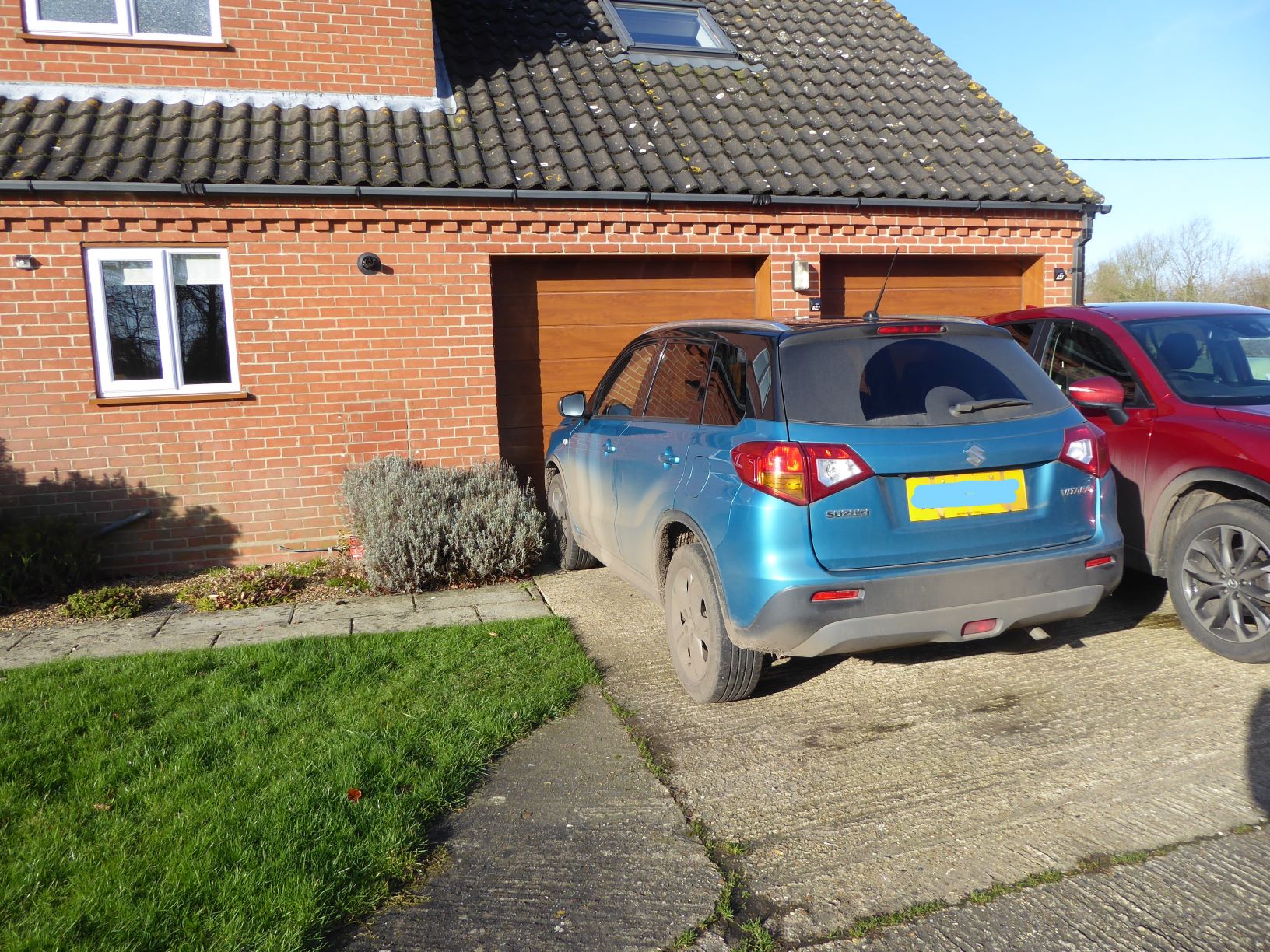
Both our cars are covered in mud all the time; they are in a worse state now than in the photo! Most of our lane is inches deep in sloppy mud and it is hardly worth our while to wash the cars.

This year has been crazily busy so far and there has been no time for even a short walk since the new year.  At last, I have managed to catch-up with all my blog reading, I’ve sorted out all my bank statements and receipts and have got rid of large amounts of paper.  I have even spent a little time in the garden weeding and tidying-up the flowerbeds; there has been very little cold weather and the weeds have grown and grown!

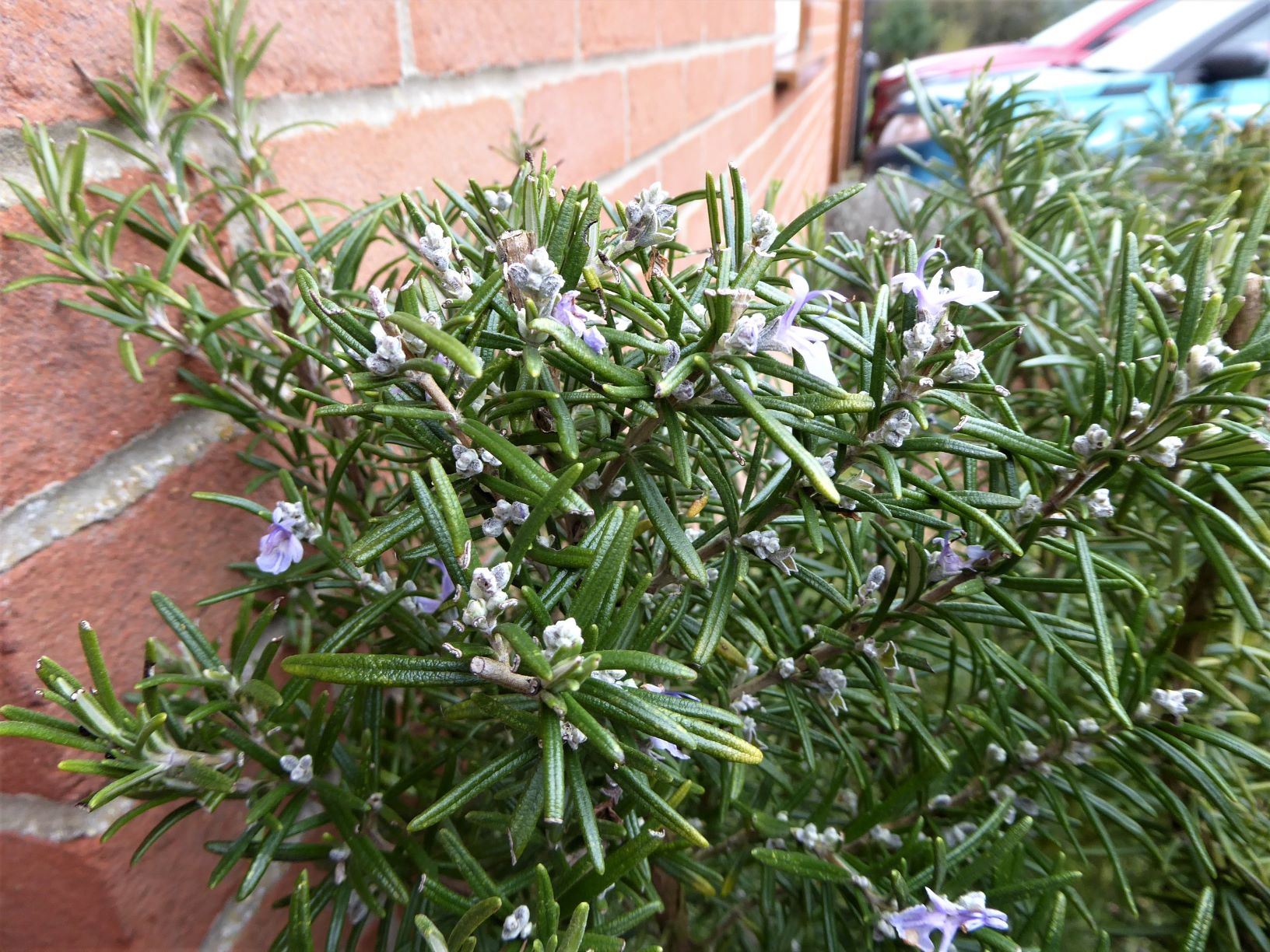
Rosemary ( Rosmarinus ‘Miss Jessup’s Upright’) in flower in January

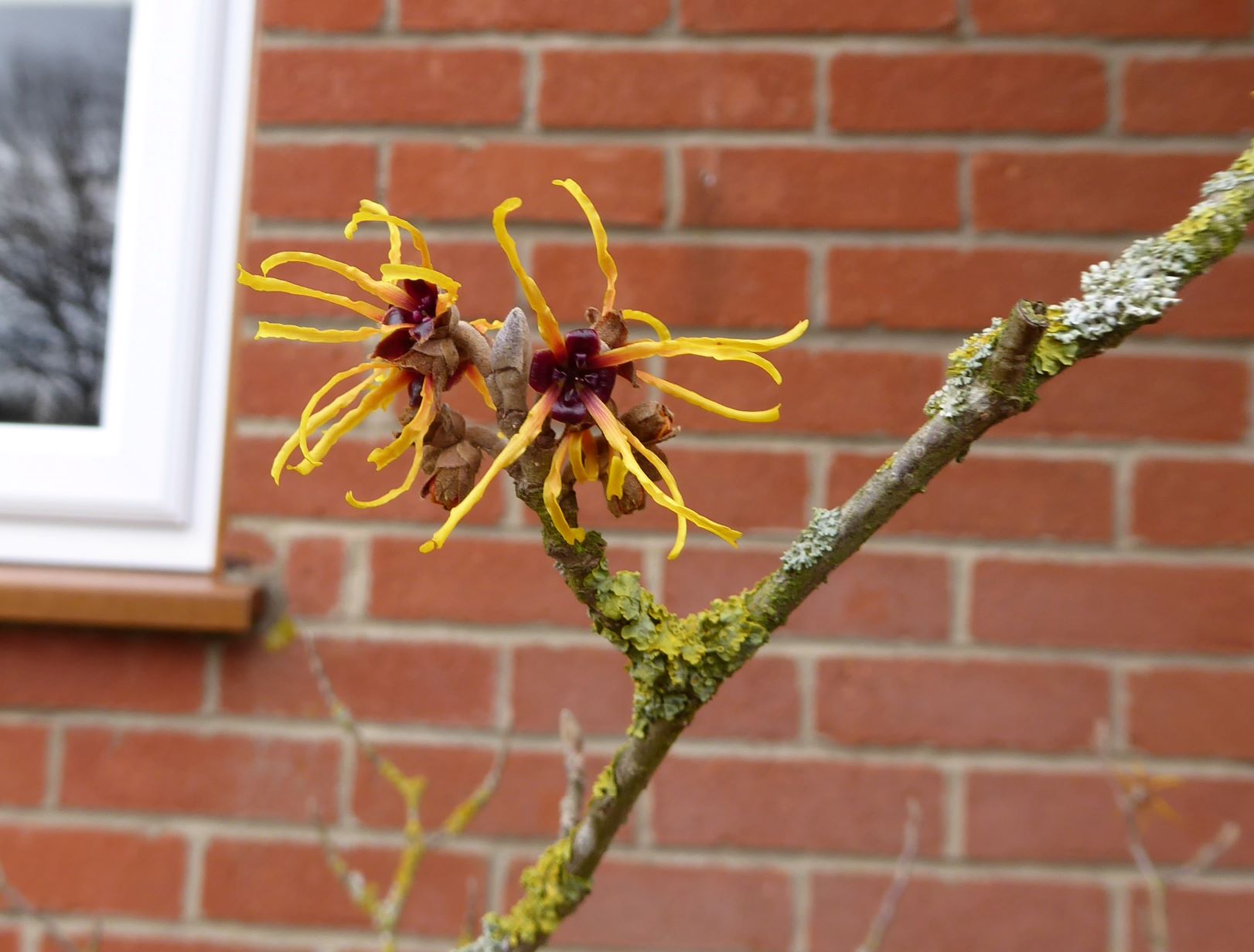
Witch Hazel; the stems covered in lichen.

Crocus
Crocus
Crocus
Crocus

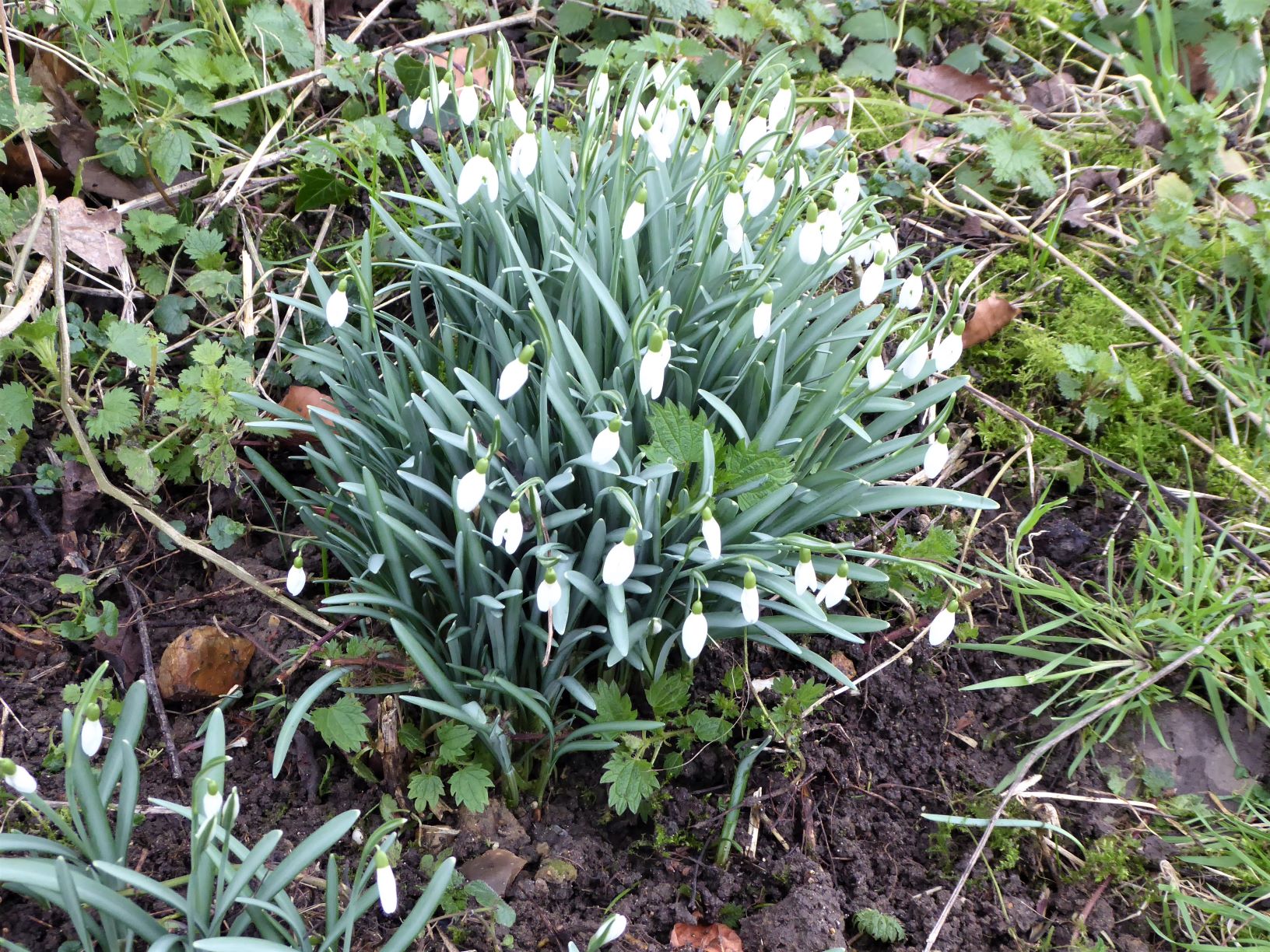
Snowdrops. These and the crocus above grow under the crabapple tree. It has got somewhat weedy there in recent years!

Iris reticulata
Iris reticulata
Iris reticulata
Iris reticulata

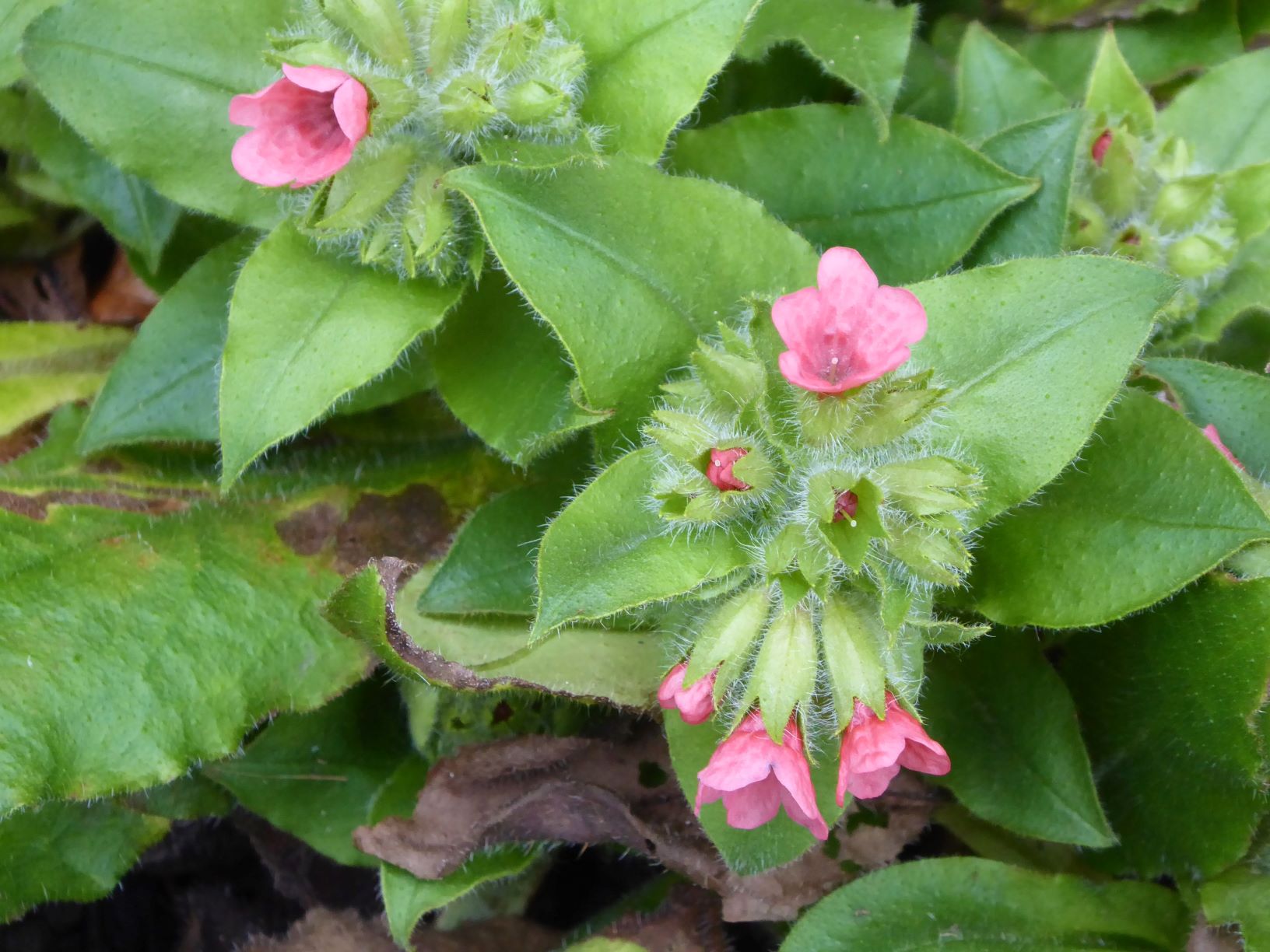
Pulmonaria

I have taken a Morning Prayer service at church and attended a meeting with others in our Benefice who take church services.

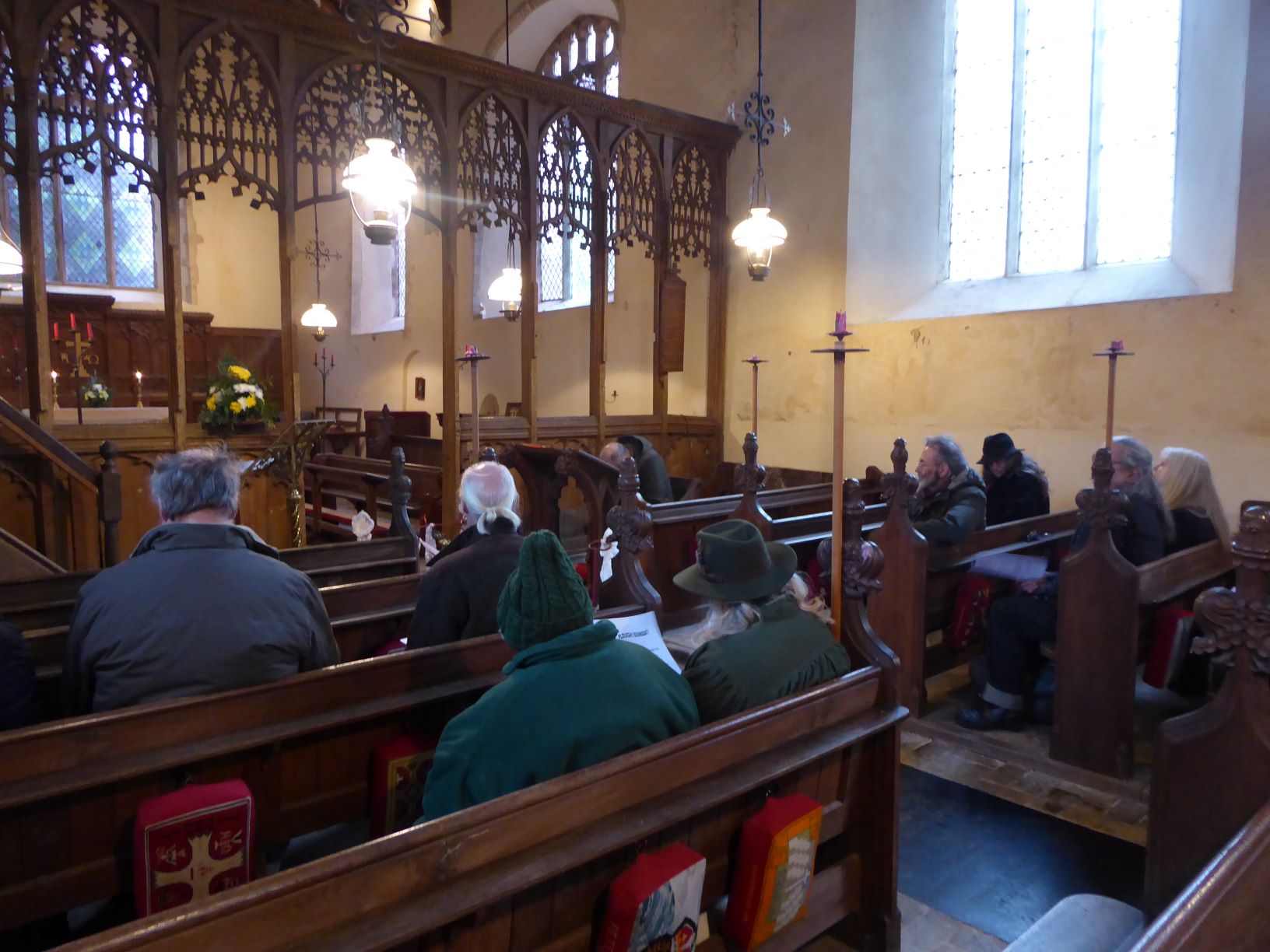
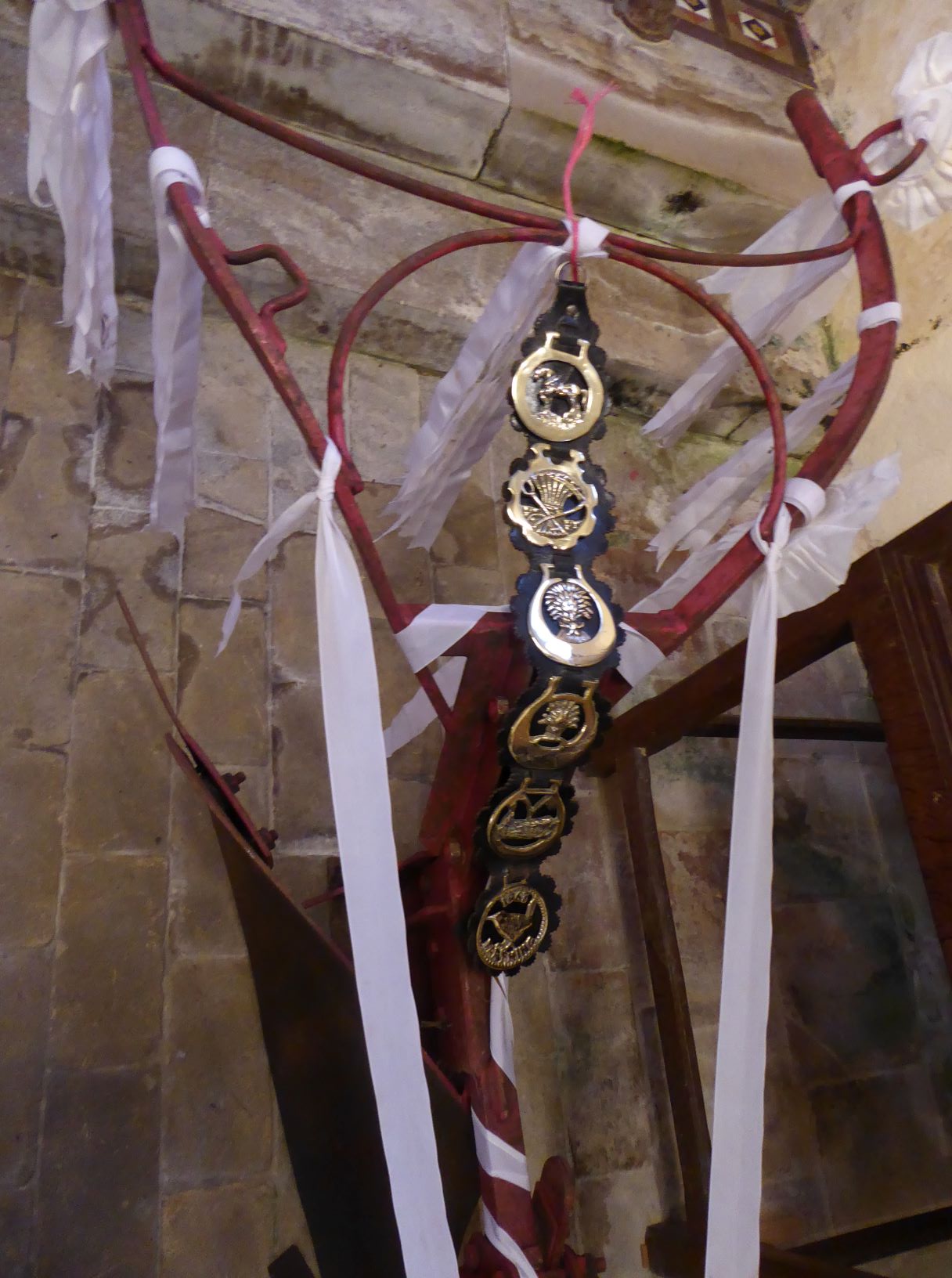
Plough Sunday Service 12th January. Richard took this service very nicely. Much of the congregation is made up of members of ‘Old Glory’ the Molly Men and their friends and supporters

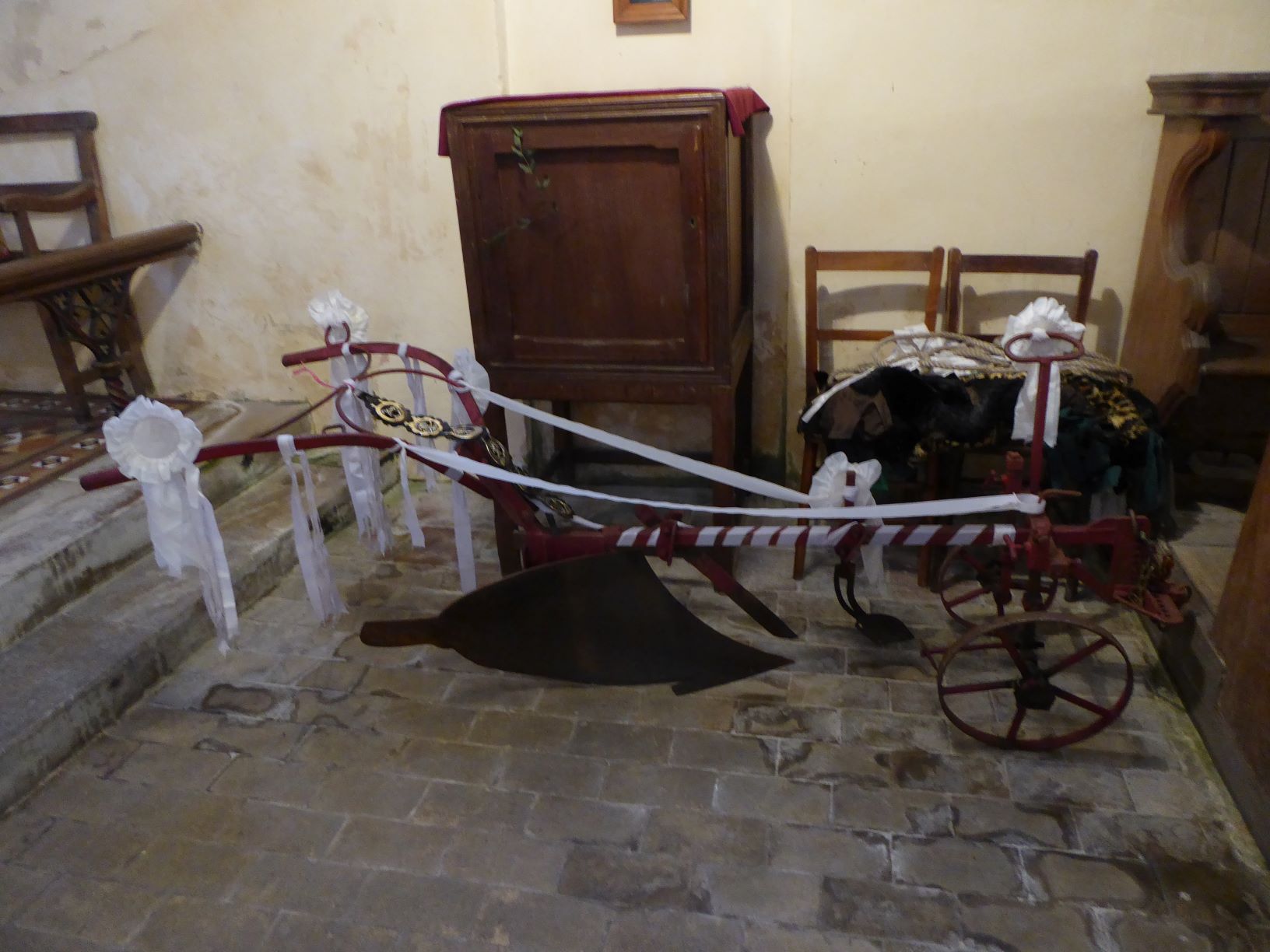
The decorated plough; the star of the Plough Sunday service.

Look at these beautiful horse brasses!

Most of my time has been spent in the car, taking Elinor to the station on her university days, taking Mum to her many hospital appointments, taking myself to hospital and doctor’s appointments, dental appointments, eye clinic appointments and grocery shopping trips.  Mum has had both her cataracts removed and such a load has been lifted from her and my shoulders!  She has so much more sight than we thought and the fear that she may not be able to look after herself and live alone as she wishes has receded for a while.  She is approaching her 90th birthday and though she tires easily and is somewhat twisted and stooping because of arthritis, she is still able to cook and look after herself.  Richard and I had to visit her the week before last to repair her hedge and fence, damaged by the first of our storms.  Mum hadn’t been able to do any gardening for some months because she couldn’t see, and the garden has become overgrown with brambles and nettles, thistles and other unwelcome weeds.  I had done a few jobs for her and so had Richard but the weeds had taken over and the fence that broke in the storm was covered in enormous brambles.

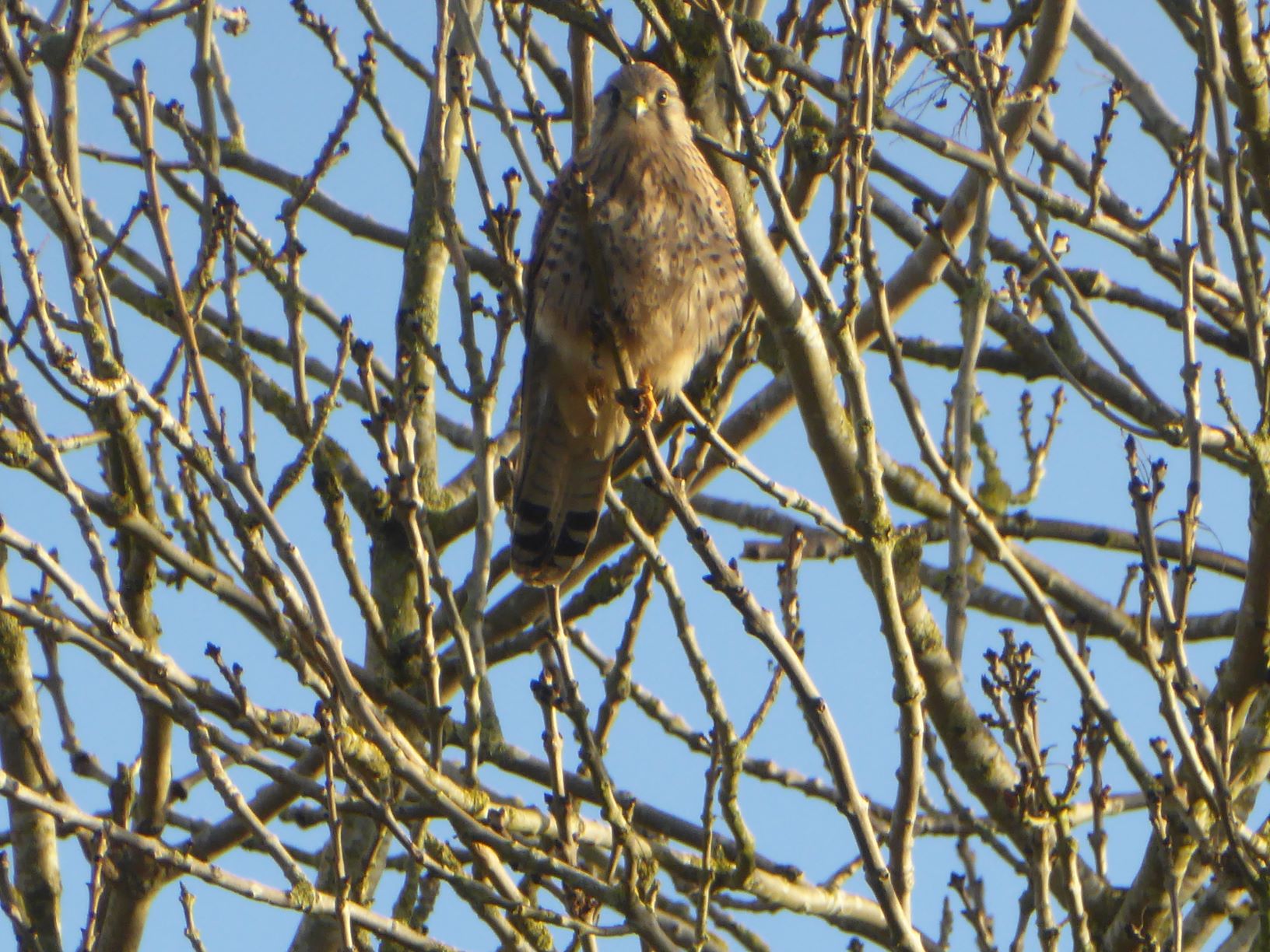
A rather beautiful female Sparrowhawk (Accipiter nisus ) who observed me taking her photo

This coming week I only have three appointments to keep and none for Mum except for taking her to church on Ash Wednesday.  I’m at the hospital all day on Tuesday having eye pressure tests, I have a hygienist appointment at the dentist on Wednesday and a hair appointment in Norwich on Thursday.  Housework has been a bit hit-and-miss lately and I hope to be able to catch-up with all my chores at home very soon.

This is just a short post to let you know what has been happening.  My next post will probably be about one of our days out last year, or even the year before that!  I have plenty of old photos but hardly any new ones!
Share this:

  • Share on X (Opens in new window) X
  • Share on Reddit (Opens in new window) Reddit
  • Share on Pinterest (Opens in new window) Pinterest
  • Share on Facebook (Opens in new window) Facebook
  • Email a link to a friend (Opens in new window) Email
  • Share on Tumblr (Opens in new window) Tumblr
  • Print (Opens in new window) Print
  • Share on LinkedIn (Opens in new window) LinkedIn
Like Loading...

January Music

18 Sat Jan 2020

Posted by Clare Pooley in music, Rural Diary, Uncategorized

≈ 84 Comments

Tags

music, music therapy

I find listening to music such a comfort!  It soothes and calms me, it invigorates and excites me, I couldn’t be without it!
I have spent hours this week driving myself, my mother and my daughter to appointments in Norwich.  I am tired and recovering from a head-cold and a migraine and would like to write a post but haven’t the energy or the time.

Here are some pieces of music inspired by the month, the season and or the weather.  Some are long pieces and some are short; some are classical pieces and some are not.  I hope you enjoy listening to them.

Nova Scotia January – Waltz from Cape Breton played by Helicon.

Winter from The Seasons by Antonio Vivaldi

The Skater’s Waltz by Émile Waldteufel

The Snow is Dancing No. 4 from Children’s Corner by Claude Debussy

Winterlust, Polka schnell by Josef Strauss

Der Schneemann by Erich Korngold

Lieutenant Kijé Suite by Prokofiev

Snowbound by Genesis

January by Kristina Train

White Winter Hymnal by Fleet Foxes

And to finish, an excerpt from the first Pink Panther film from 1963 set mainly in the ski resort of Cortina D’Amprezzo.

Did you spot all the stars?

Happy listening!

Share this:

  • Share on X (Opens in new window) X
  • Share on Reddit (Opens in new window) Reddit
  • Share on Pinterest (Opens in new window) Pinterest
  • Share on Facebook (Opens in new window) Facebook
  • Email a link to a friend (Opens in new window) Email
  • Share on Tumblr (Opens in new window) Tumblr
  • Print (Opens in new window) Print
  • Share on LinkedIn (Opens in new window) LinkedIn
Like Loading...

A New Year’s Walk at Dunwich

06 Mon Jan 2020

Posted by Clare Pooley in Historic Buildings, Rural Diary, walking, woodland

≈ 60 Comments

Tags

Alexanders, conservation, Dunwich, Dunwich Greyfriars Trust, erosion, fungus, Greyfriars Monastery, Greyfriars Wood, Holly, ruins, stinking iris, Suffolk, sycamore, trees, walking

I hope you all had a merry Christmas and that you will have a blessed and healthy new year.  I apologise if I haven’t visited your sites/blogs recently but I will endeavour to do so very soon.

I would like to thank all my kind followers, readers and visitors for continuing to support me despite very few posts during the past couple of years.  I am just embarking on my 7th year as a WordPress blogger, which amazes me and dismays me at the same time.  What on earth have I achieved in those six years since January 2014?  Not much, I think!


ooooOOoooo


My daughter Alice and her husband Phil came to stay with us this Christmas and Alice brought her cat Mona with her as well.  Mum came for lunch on both Christmas Day and Boxing Day so our house was nicely full of family.  I took Mum to Midnight Mass at Eye church on Christmas Eve getting back home at 1.15 am.  Next morning I went to our church at Rumburgh and helped Richard get it ready as it was our turn to hold the Christmas morning Communion service this year.  I also stayed for the service and helped tidy up afterwards.  I had put the turkey in the oven to roast before leaving for church and by the time I got home again it was time to take it out.  Alice had prepared all the vegetables for me while I was out so I had no trouble getting on with the meal on my return.  Boxing Day was easier as I didn’t have to go out in the morning but I had just as much food to cook.  By the time we had finished lunch and I had made us tea and coffee I was ready for a rest.  Richard did a wonderful job clearing the table and doing all the washing-up and dishwasher loading and unloading on both days!  Phil went back home on Friday 27th but Alice and Mona stayed on until the following Monday which was lovely!  I was so happy having both my daughters with me this Christmas!  We all went out for lunch in Halesworth on Saturday and then drove to the seaside at Southwold.  We walked the whole length of the promenade and back again and then to the end of the pier and back before returning to the car and going home.  It was very busy with other walkers, chilly and breezy, fine and dry and we were glad of the walk.  I took no photographs.

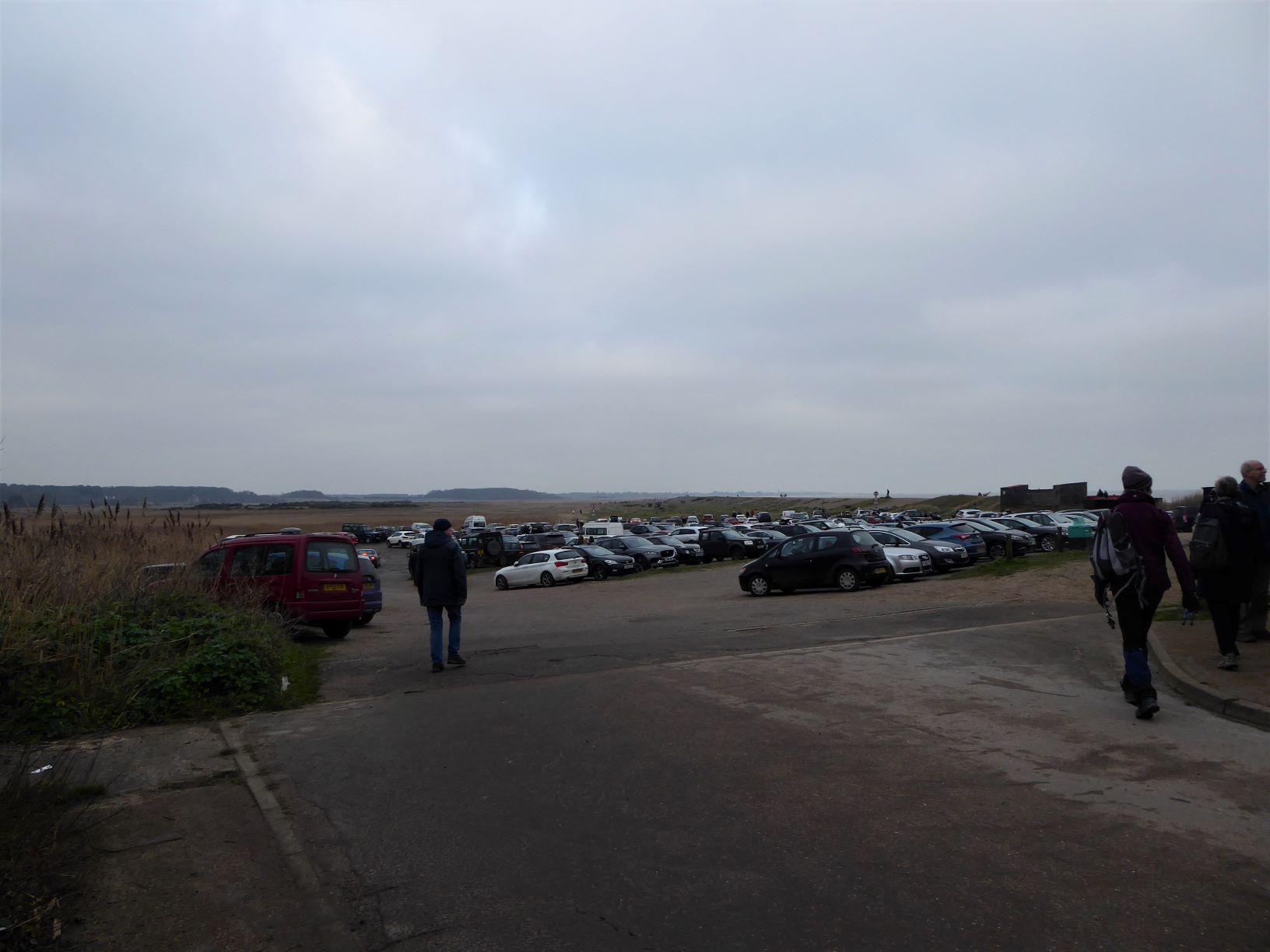
I spent most of Monday and Tuesday shopping for Mum and us, doing the washing and putting the things back into the spare room that had been removed to make room for our guests.  Richard and I both felt we needed to get out of the house again but wanted to walk somewhere different.  On New Year’s Day we decided that Dunwich Heath would be a good place to go and thought that it would have less mud and puddles to wade through than most walks.  However, when we got there the crowds were so great that there was nowhere to park and a queue had formed so we turned round and drove to the beach car park.  We found a space, though that car park was very full too.

Here it is on our return from our walk.

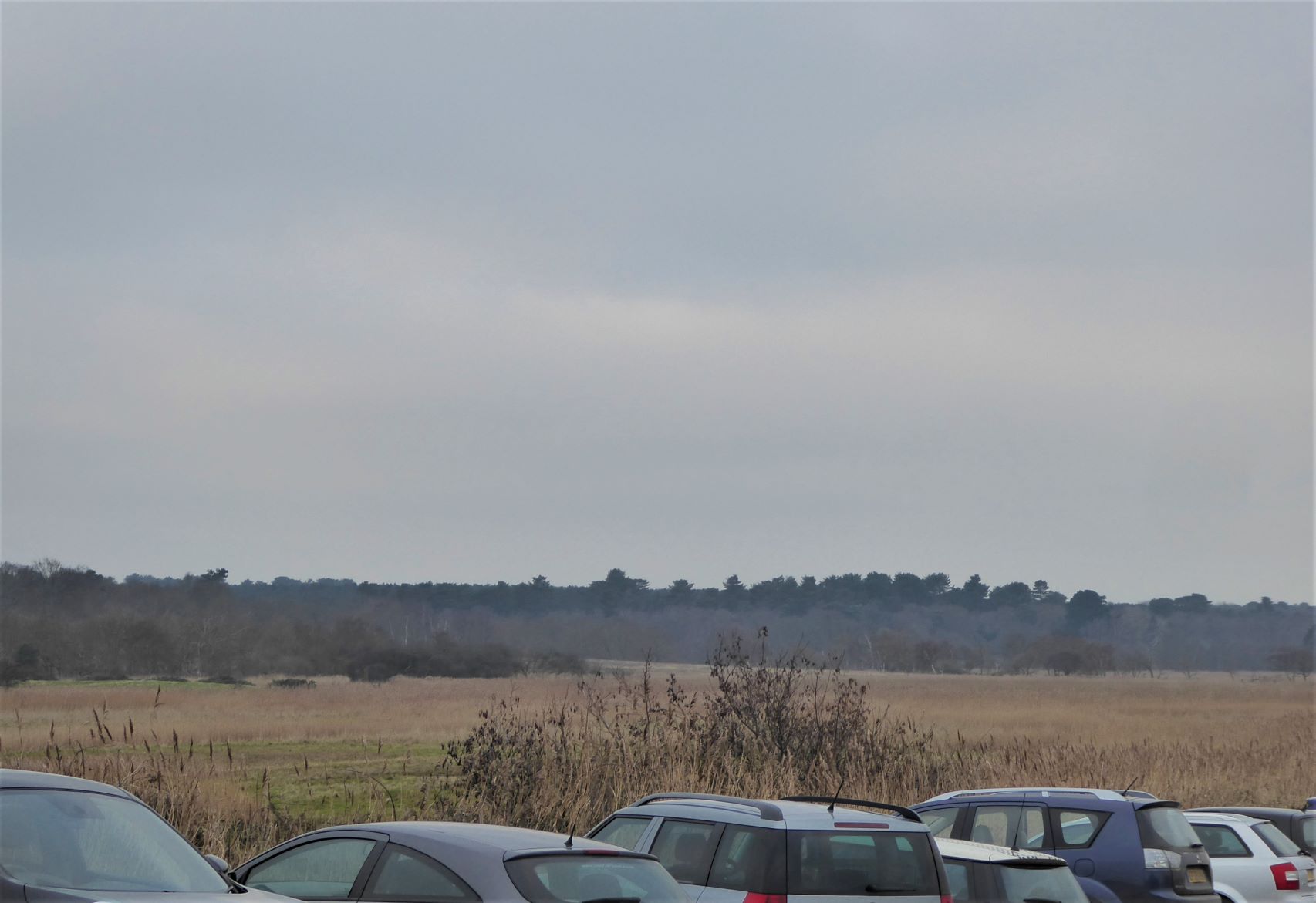
Here is a view of Dingle Marshes over the tops of parked cars.

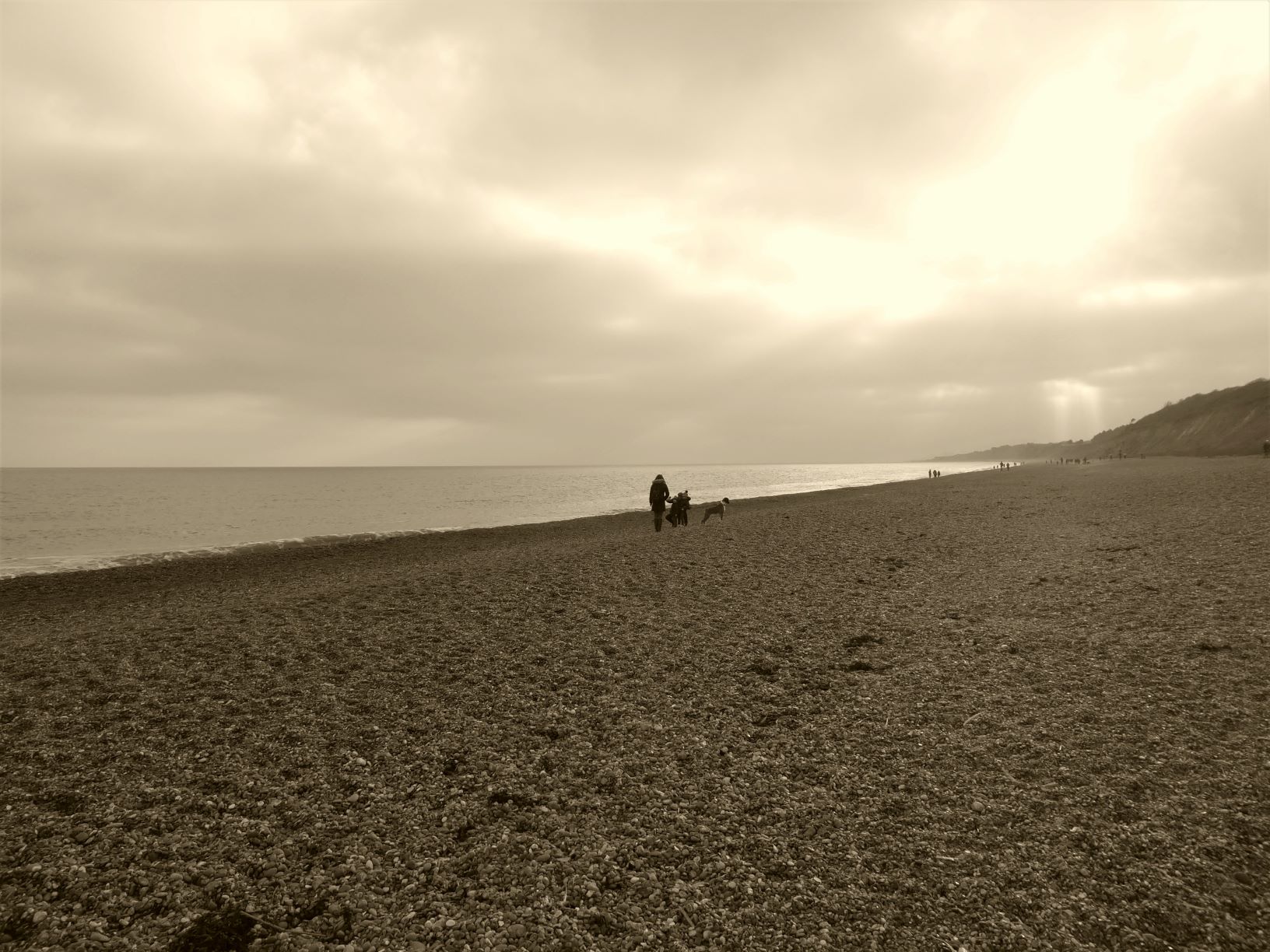
We started off by walking down to the beach to look at the sea.  The beach was quite busy with walkers and dogs and the wind off the sea was biting.  We didn’t stay long.

A sepia view of Dunwich beach.

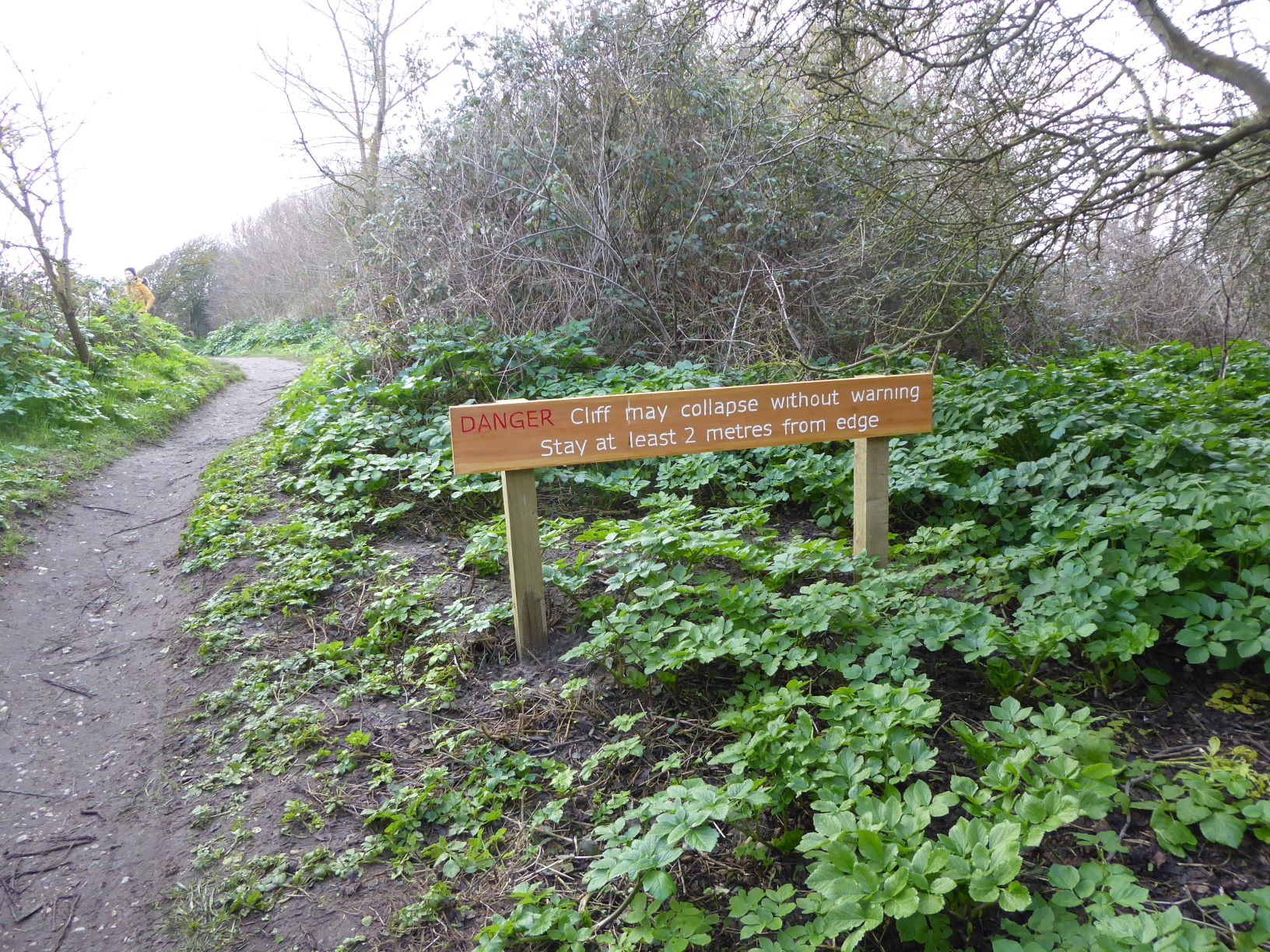
We left the beach and walked up towards the main part of Dunwich village.  We turned off the lane and took a footpath that climbed up through Greyfriars Wood.  At the top of the incline the path then went along the edge of the cliff.

The disconcerting sign.

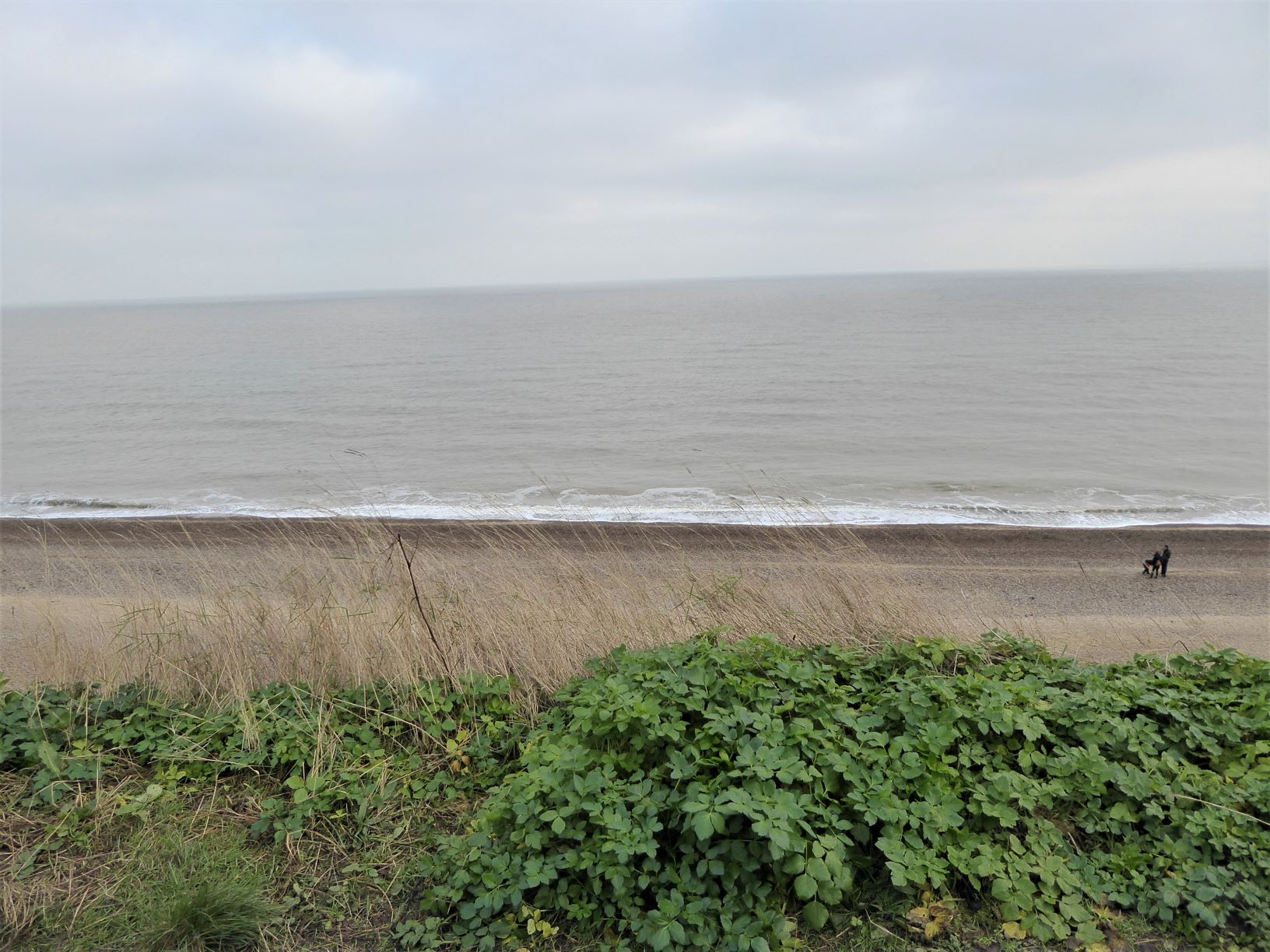
Most of the East Anglian coastline is eroding fairly quickly.  After every storm we expect to find that large chunks of the cliff have broken off and fallen onto the beach.  Our friend Cordelia’s daughter has written a book about what it is like to live in a house on the edge of a cliff in Suffolk.  The book is called ‘The Easternmost House’ and is available in paperback and on Kindle.

Here is a view from the path. See how close the edge of the cliff is!

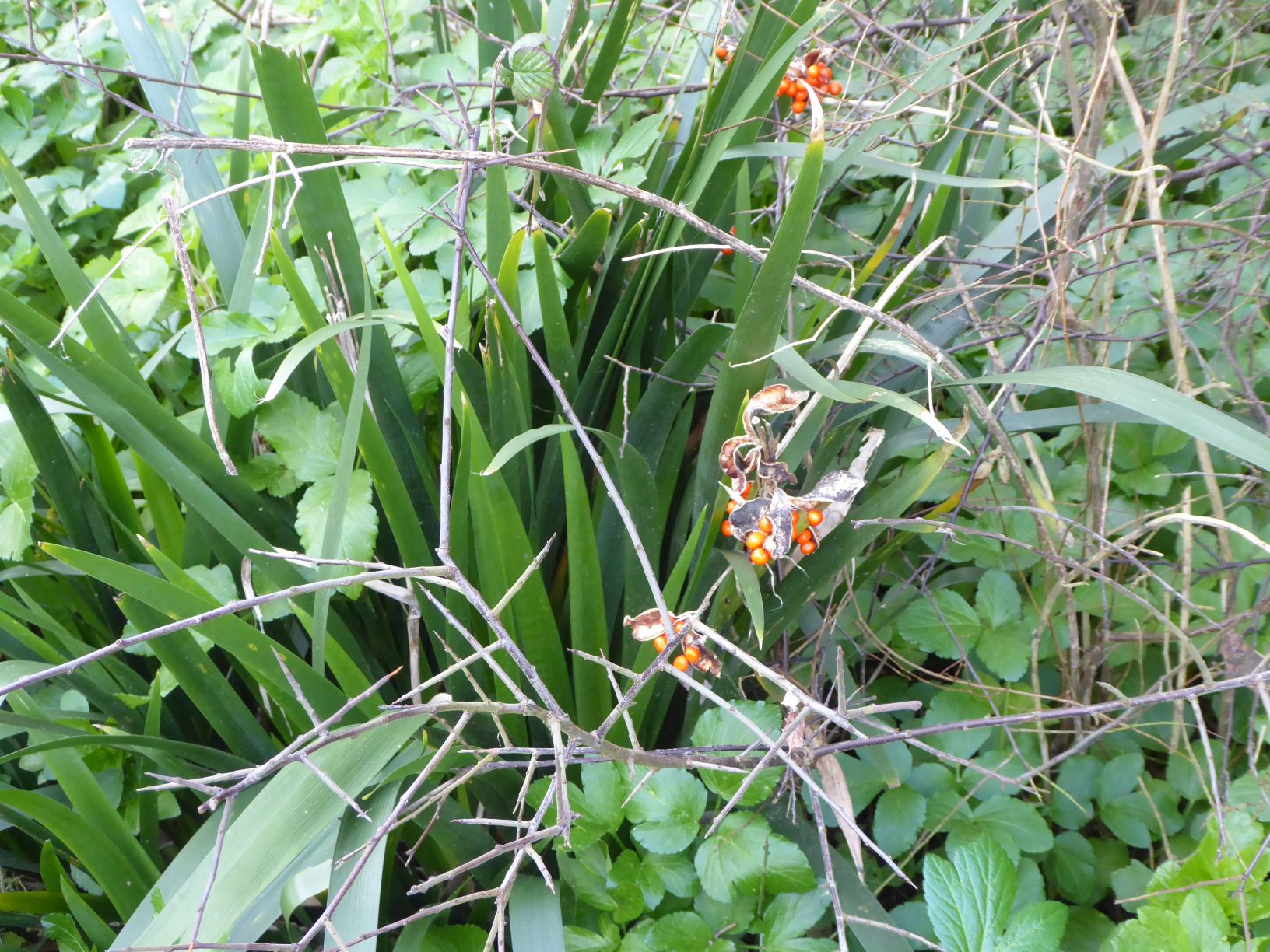
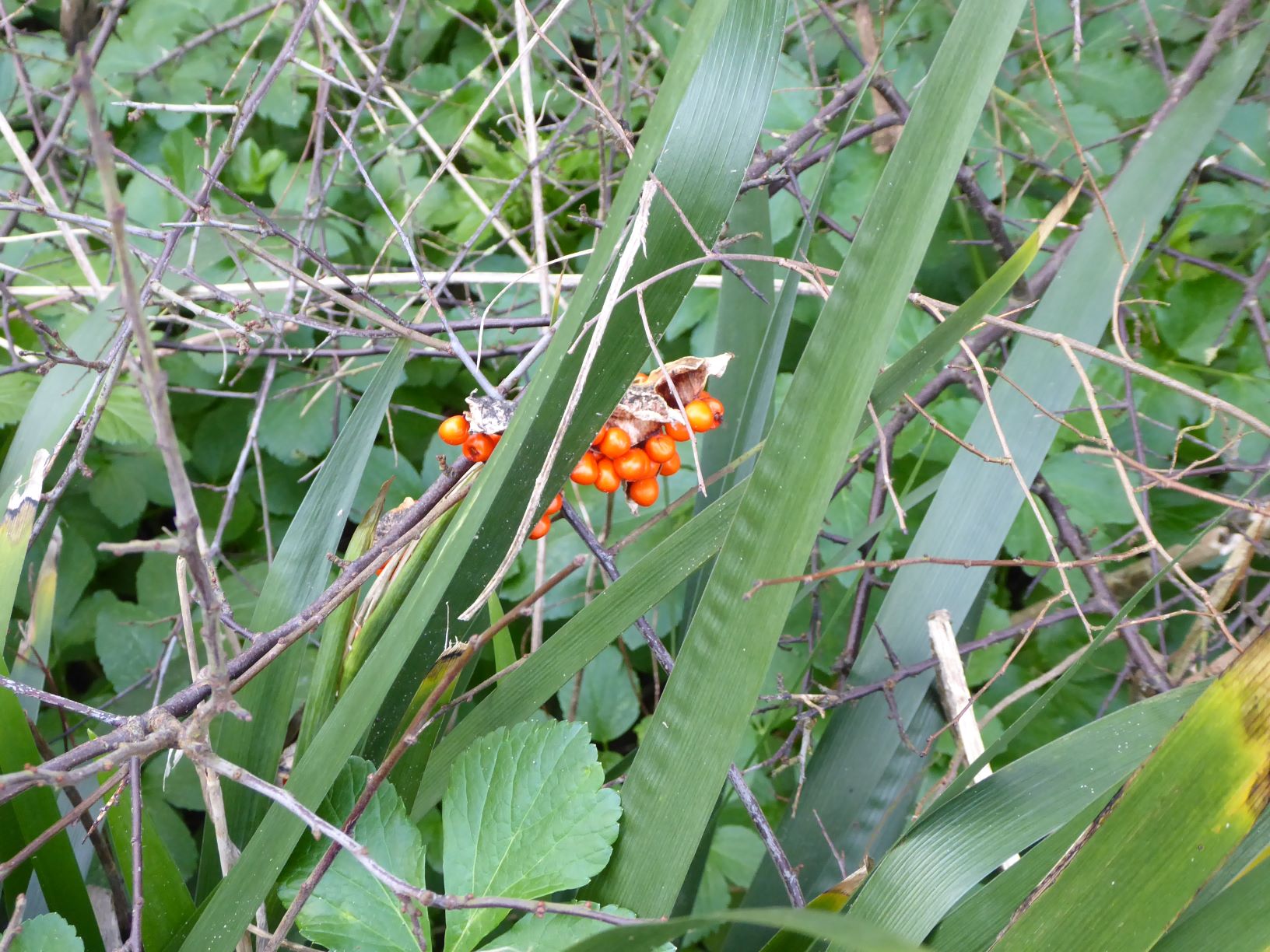
I always like to see what plants are growing wherever I walk, as you know. This is Stinking Iris (Iris foetidissima )

This plant has many names; Roast-beef Plant, Gladdon or Gladwyn, Bloody Bones, Blue Devil, Dragon Flower, Dagger Flower are a few of them.  If the leaves are rubbed they give off an odour like stale, raw beef.  The flowers are pale mauve/purple, sometimes with some yellow colour as well and are veined with darker lines.  It comes into its own in the autumn and winter when the seed pods burst open and reveal these glorious orange seeds.  The leaves are evergreen, typical iris leaves.  The name Gladdon or Gladwyn comes from the Old English word for a sword.

Beautiful orange seeds!

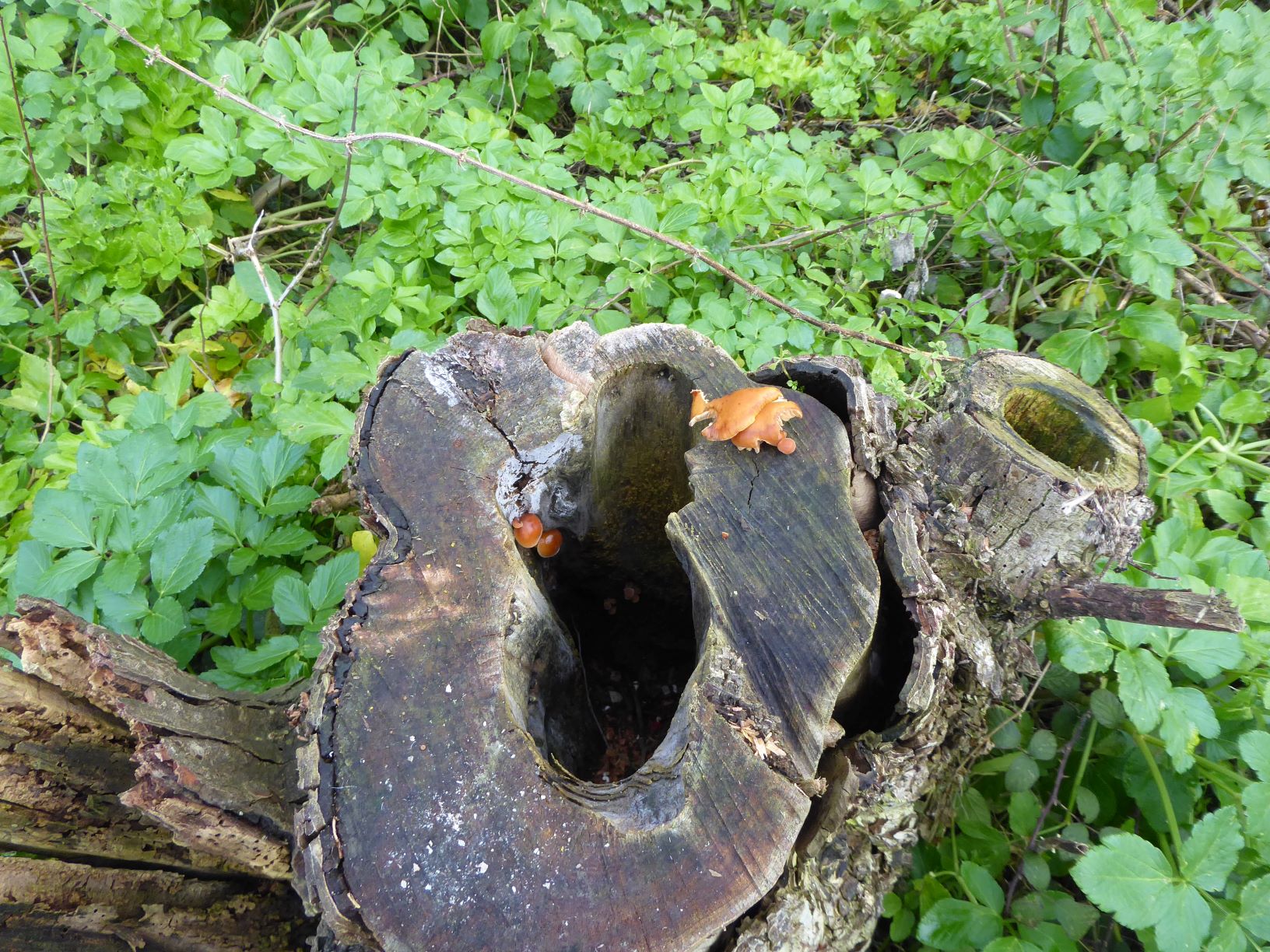
Further along the path at the edge of the wood I saw this rotting tree-stump with toadstools on it.

Woods near the coast are very rare as trees do not usually fare well in salt-laden air and suffer in the wind and storms.  This mixed woodland was planted in the eighteenth century by the family who owned the village at that time.  The Dunwich Greyfriars Trust which manages the wood today say that only Sycamore trees (Acer pseudoplatanus) are hardy enough to grow on the side of the wood nearest the cliff edge and that there are no young trees in the wood.  They are trying to overcome the latter by fencing off areas where large trees have fallen and open glades have appeared.  The fences prevent deer from destroying all the seedlings and saplings that will appear in the sunlight and it is to be hoped that the wood will begin to regenerate.

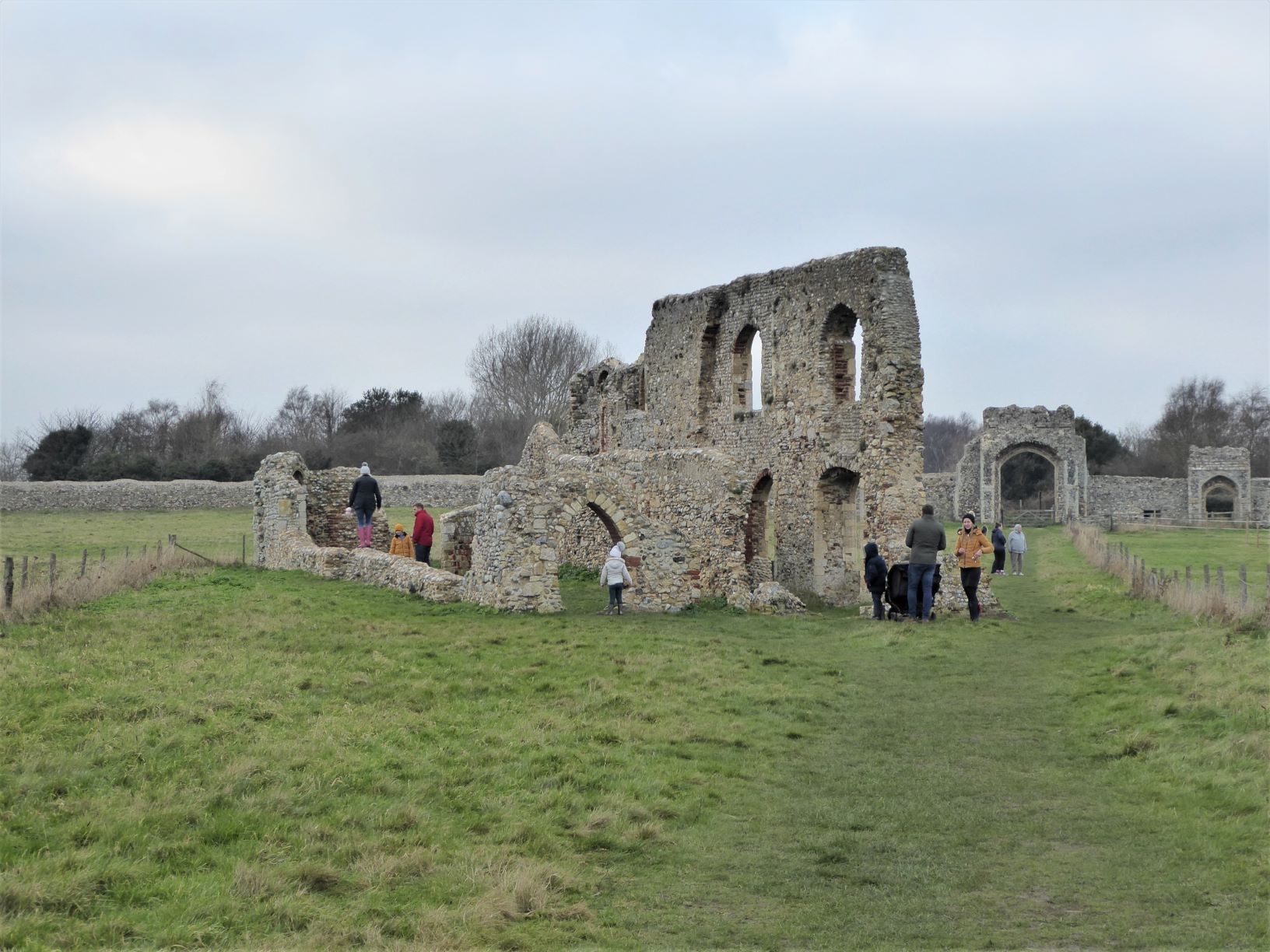
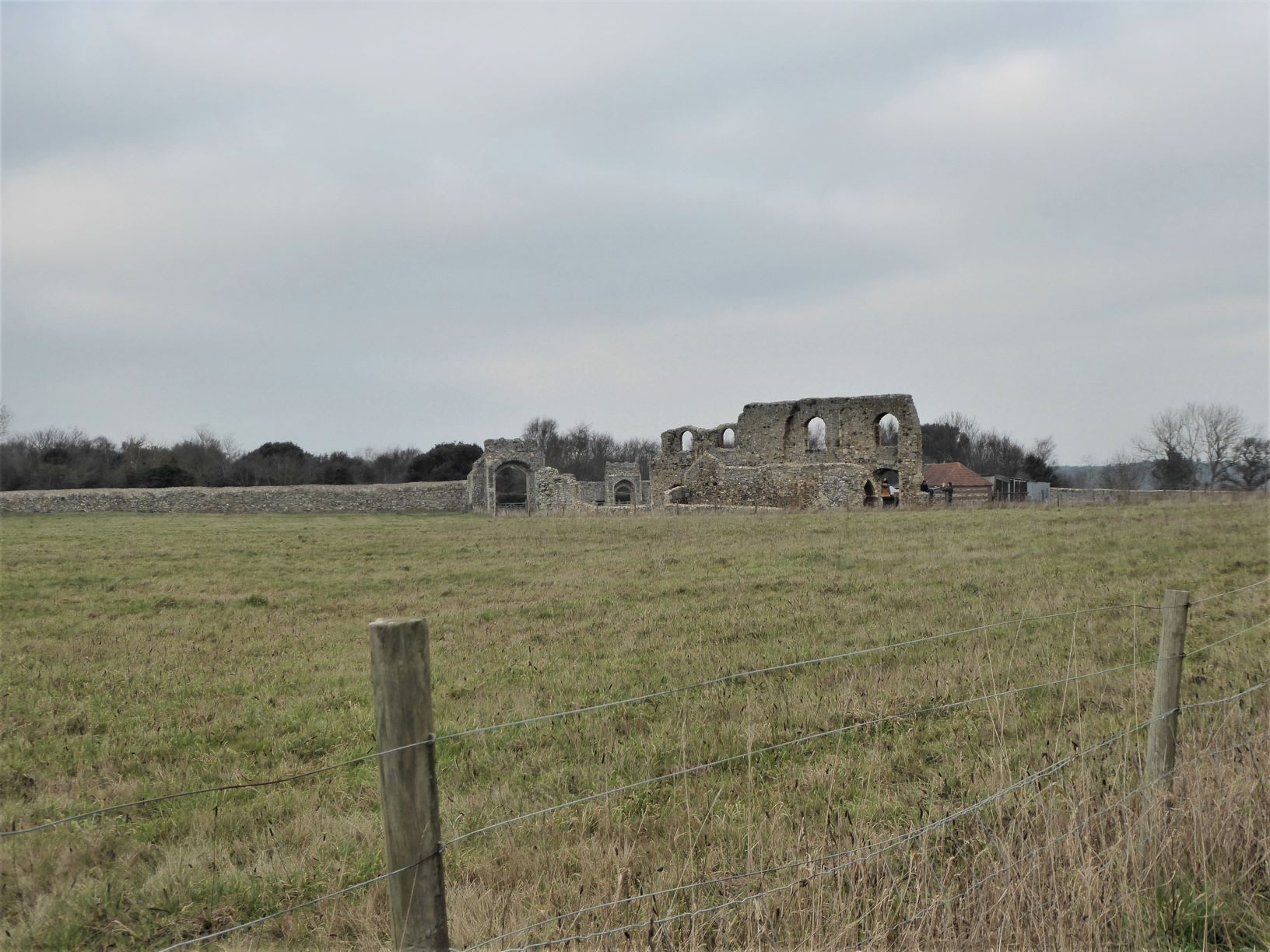
These are the ruins of the Greyfriars Monastery.

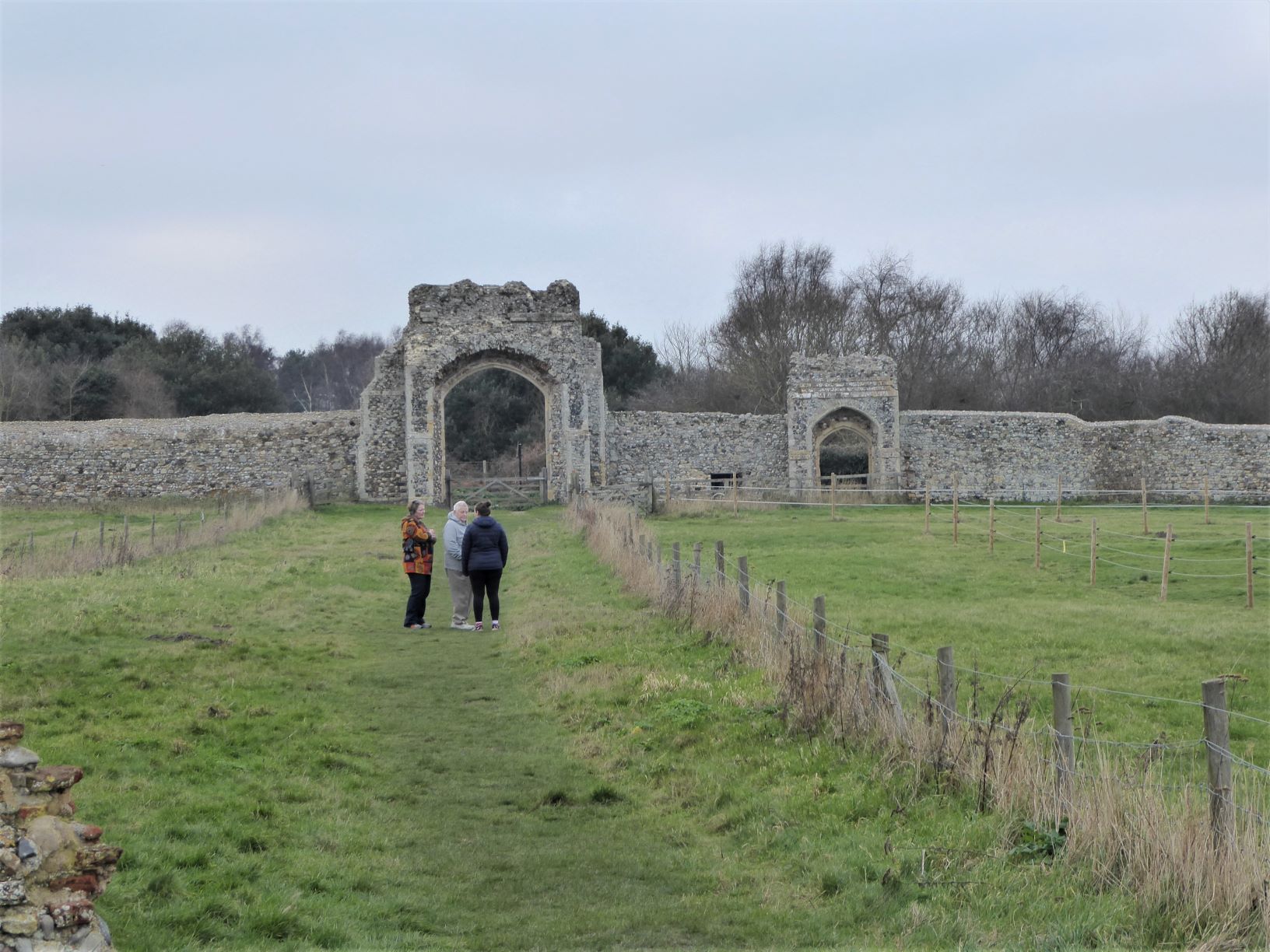
All that is left of the 13th/14th century monastery are these ruins, thought to be the refectory at the southern end of the complex.  The cloisters, with accommodation for monks and visitors, and an enormous church were further to the north and were all destroyed during the Dissolution of the Monasteries.  The nave and chancel of the church together were about 58 metres long and up to 17 metres wide (190 feet 3.5 ins x 55 feet 9 ins).  There is a perimeter wall around the site of the monastery which was built sometime after the main buildings were constructed and has been repaired and rebuilt many times in the intervening years.  There were three gates into the complex; two which still stand on the western side allowed access to the main road that ran into and away from the medieval town of Dunwich.  The third, now lost to the sea gave access directly into the town with its large port which was also lost centuries ago.

The western gates

This slideshow requires JavaScript.

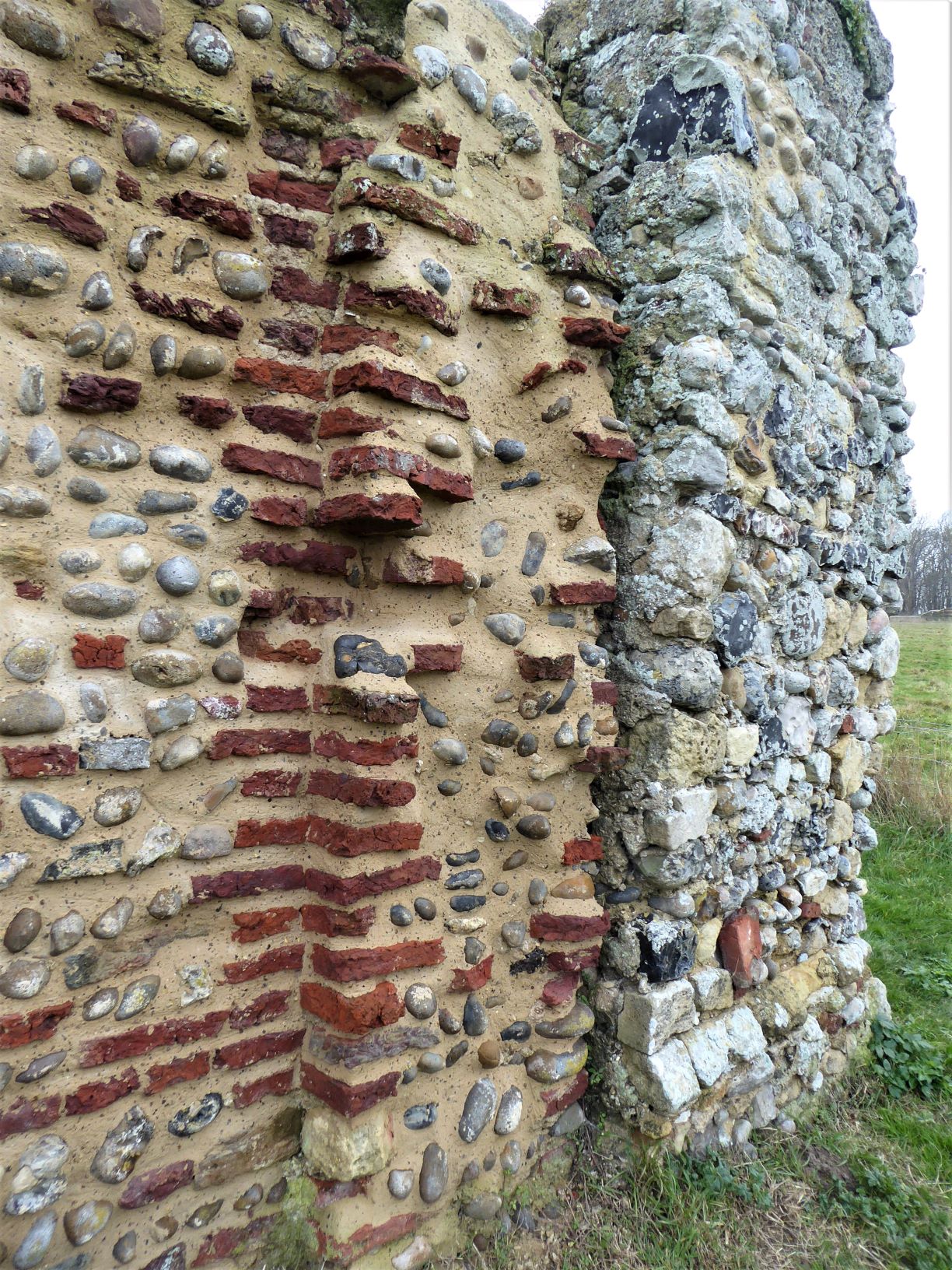
It is always interesting to see how these old buildings are constructed and with what materials.

The Dunwich Greyfriars Trust work hard conserving what they can of these ruins.  They have capped off most of the walls to prevent rain and frost damage.  If you look carefully at one of the photos in the slideshow you will see a sign asking visitors not to climb on the ruins. You can also see in my other photos how much notice the visitors take of the sign!

Greyfriars ruins

Part of the complex showing the perimeter wall

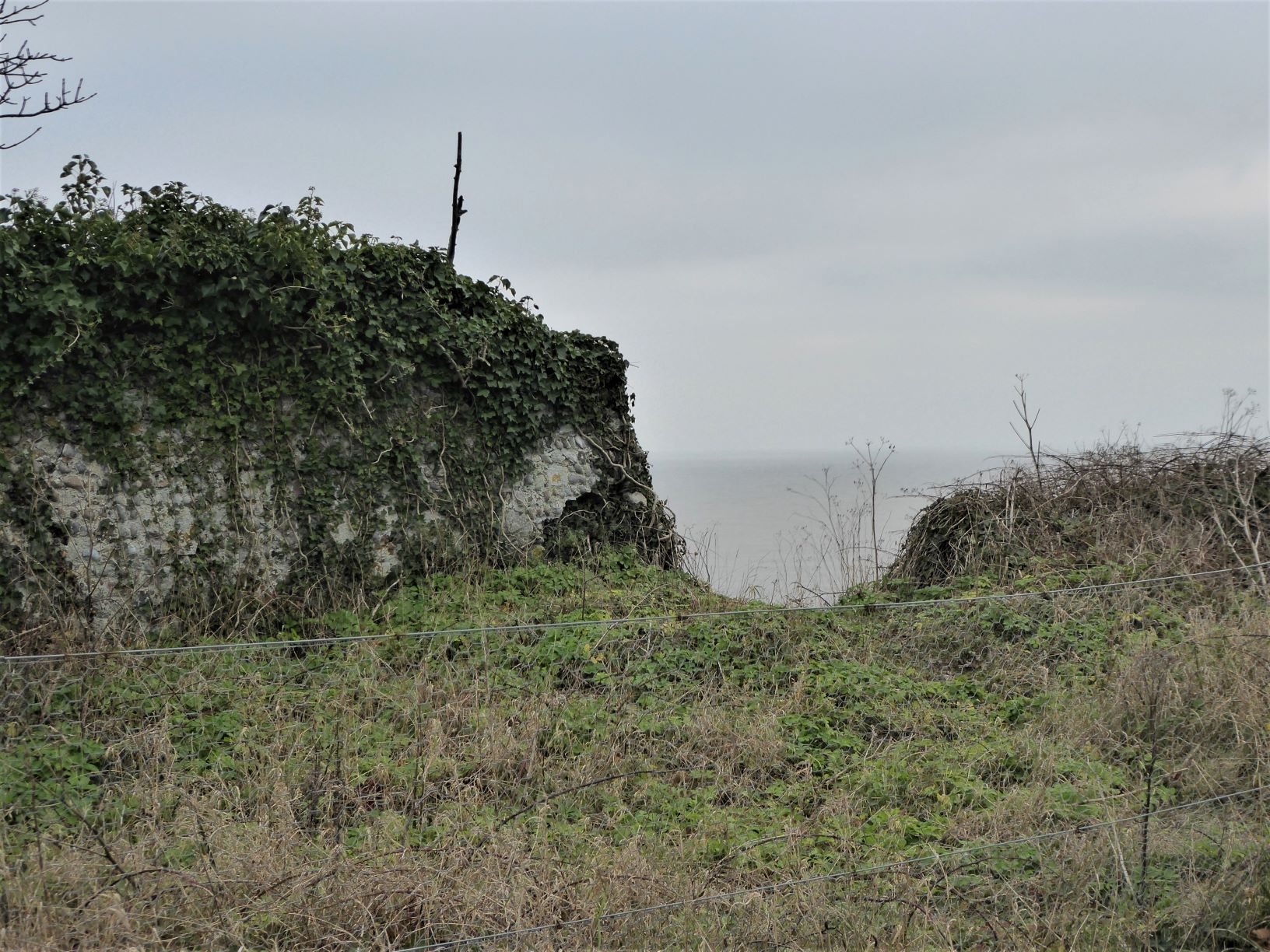
The perimeter wall comes to an end here at the cliff edge. Much of this part of the wall is original 14th/15th century work and hasn’t been rebuilt.  Eventually the whole monastery complex will end up in the sea.

We re-entered the wood near to the cliff edge

The sad but beautiful trunk of a long-dead tree

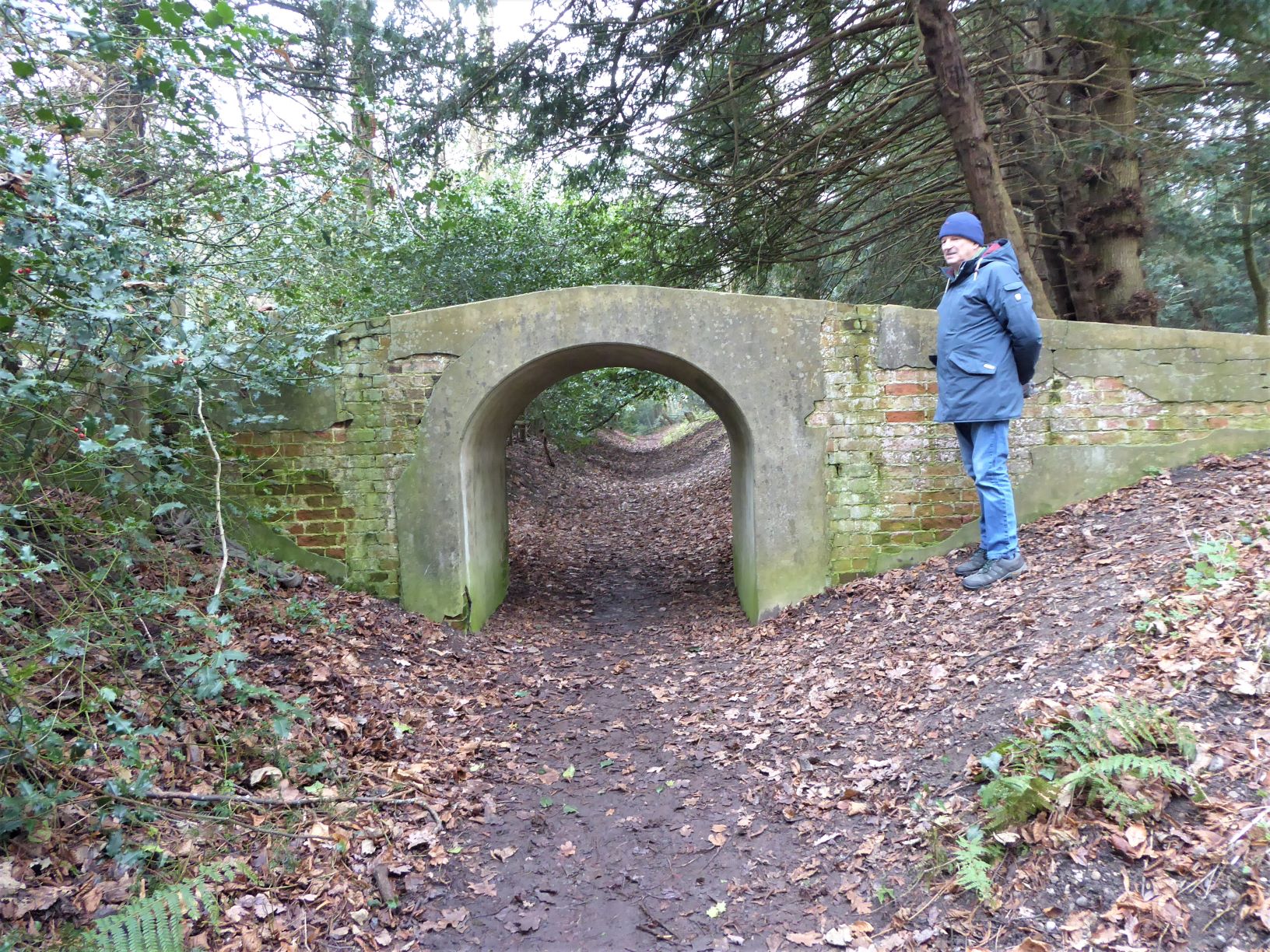
We found a little bridge, built fairly recently.

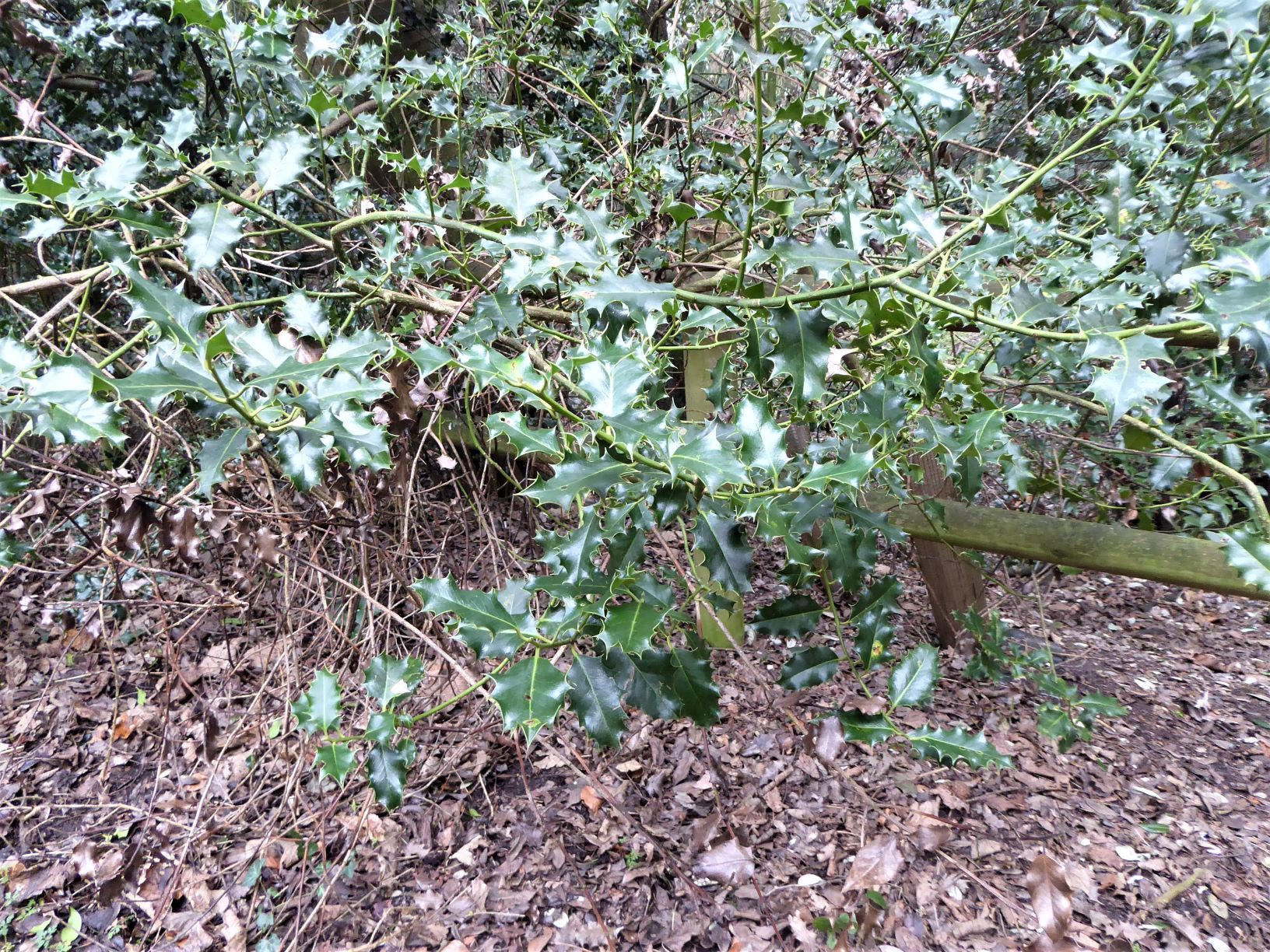
There is a lot of Holly (Ilex aquifolium) in the wood

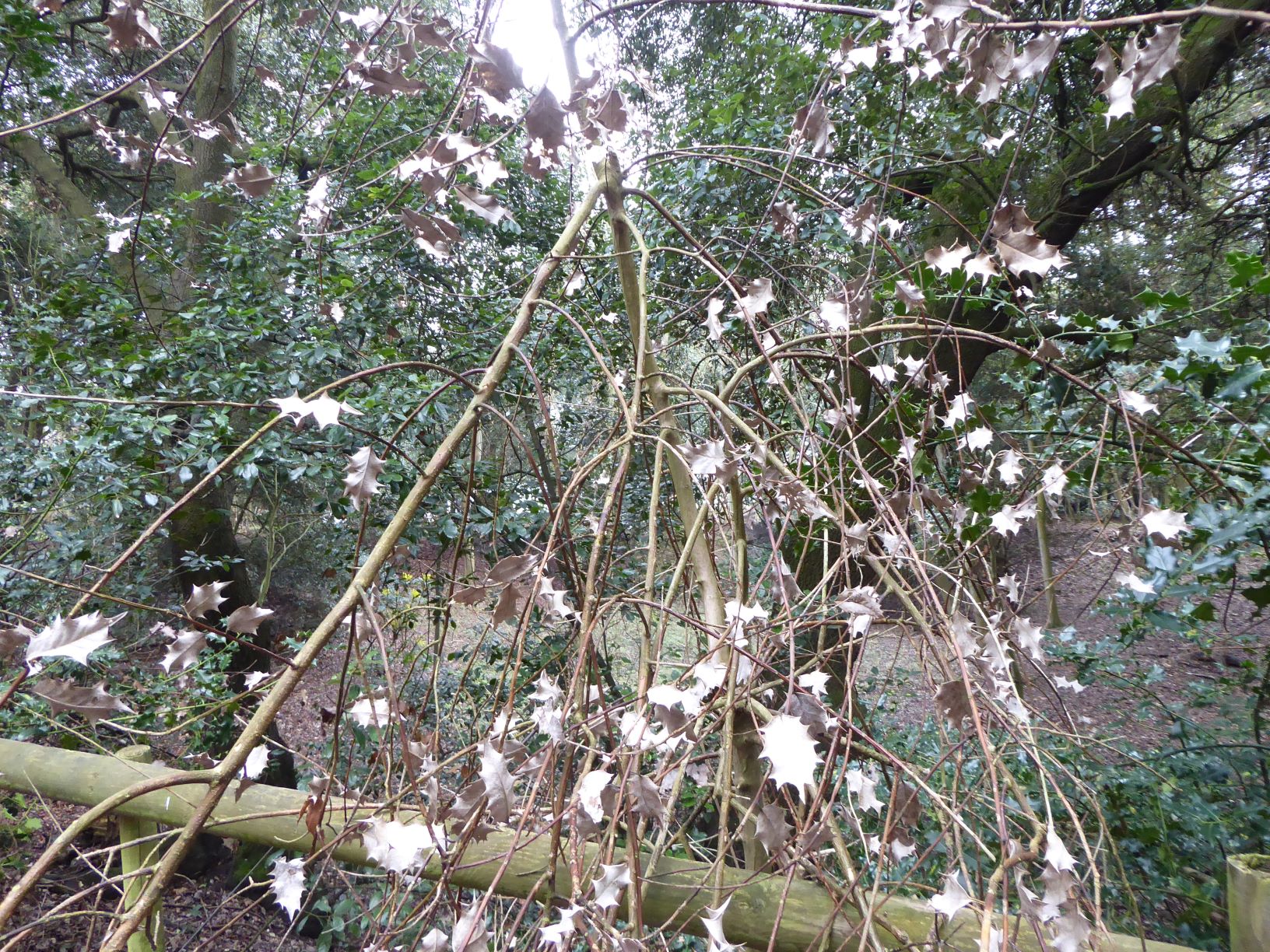
The leaves on this dead holly branch were shining like bronze.

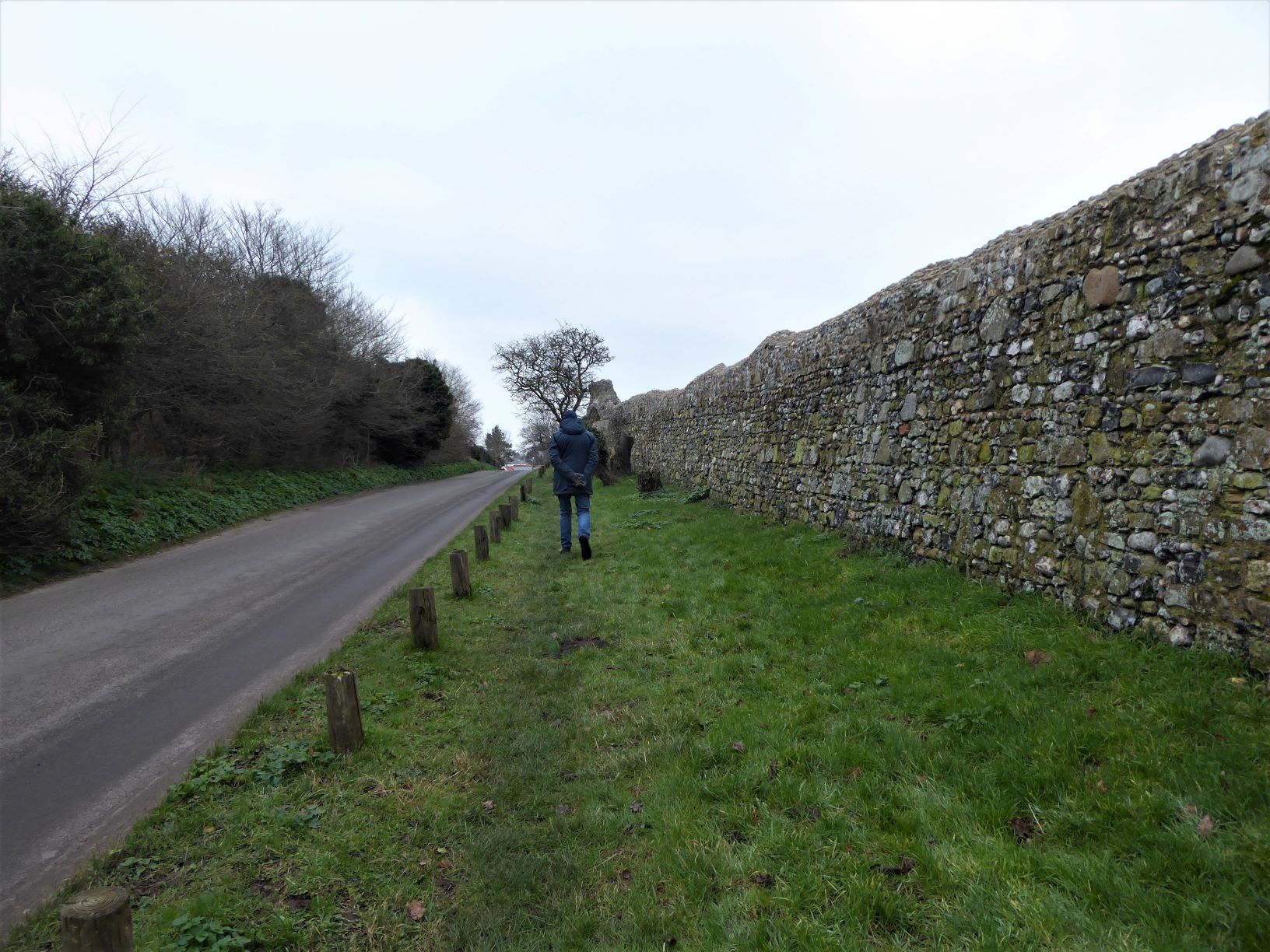
We emerged onto the road next to the perimeter wall

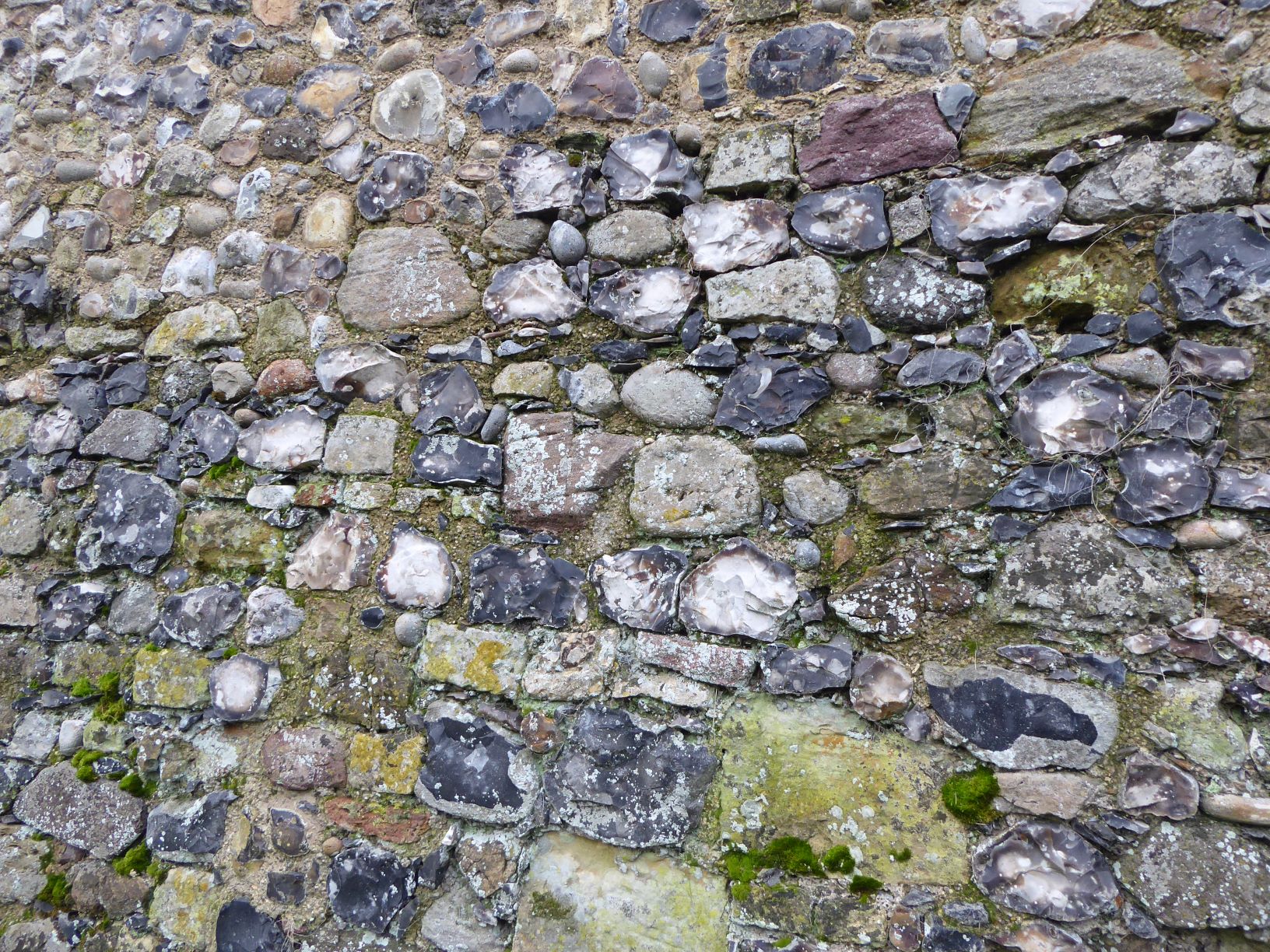
An interesting mixture of flint, beach pebbles and pieces of stone recycled from elsewhere

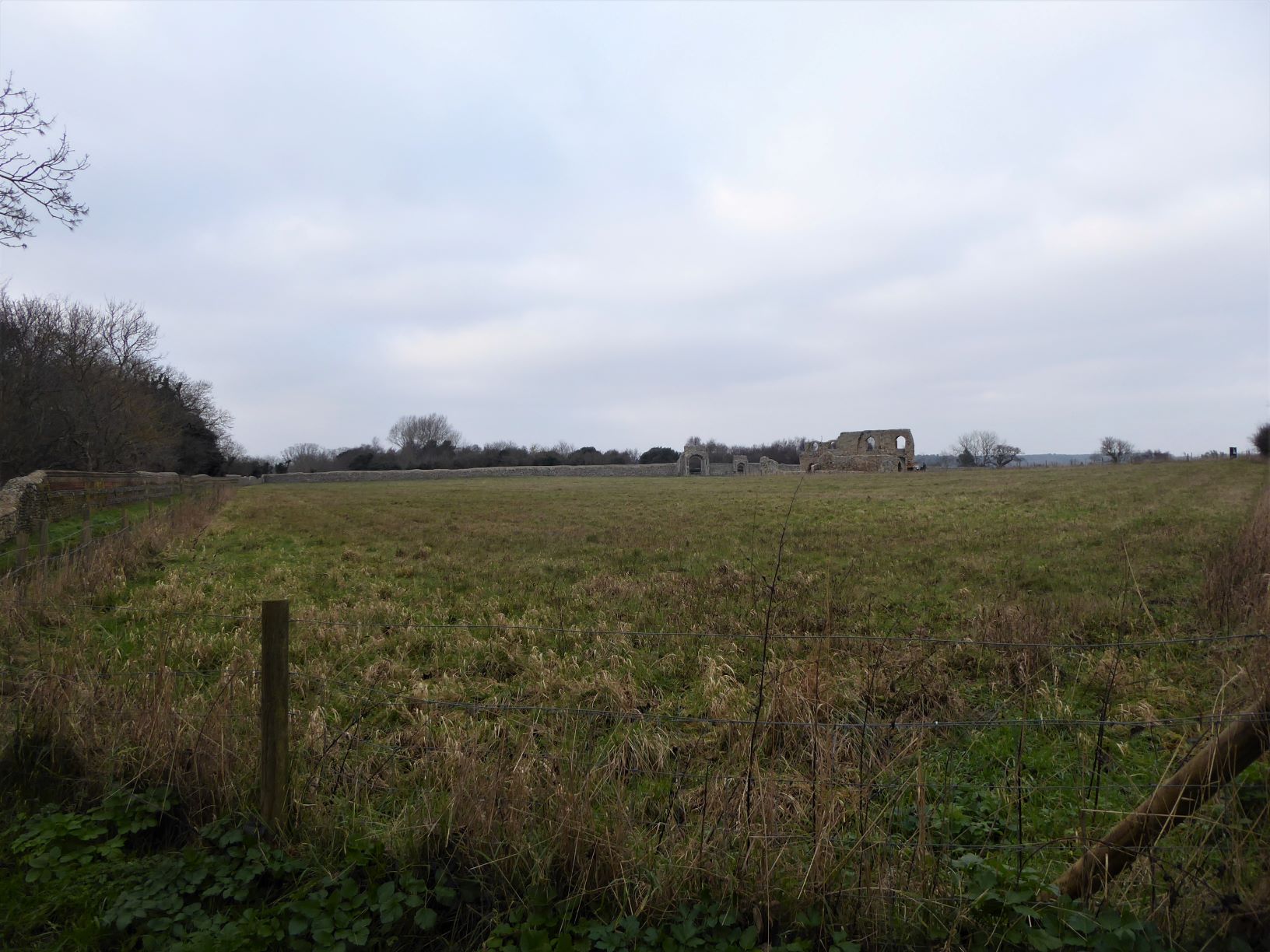
We stood in the main gateway and looked across the area that had once been monastery land. A pony now keeps the grass in order.

The smaller west gate as seen from the road

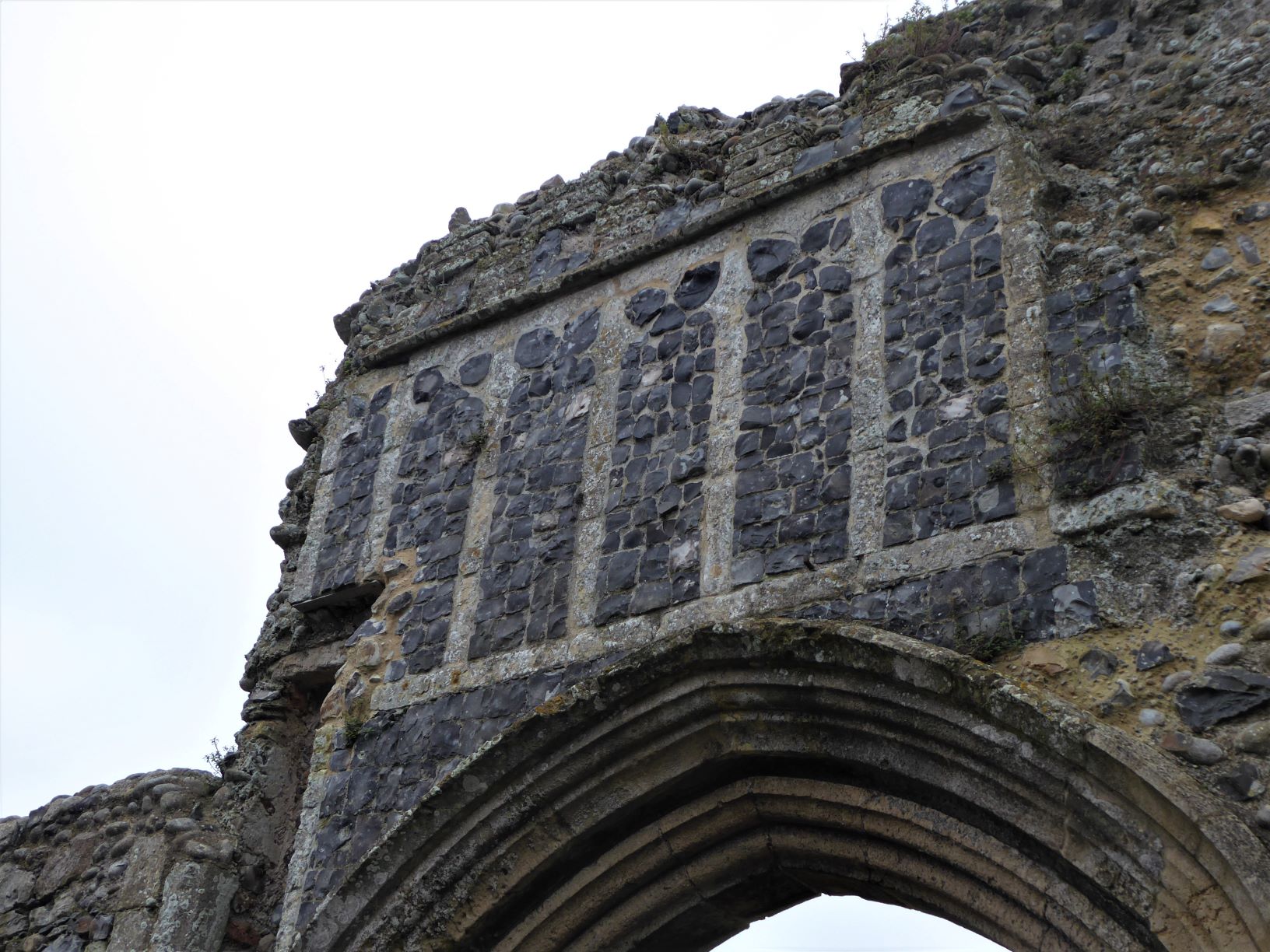
A very nice example of flushwork over the gateway

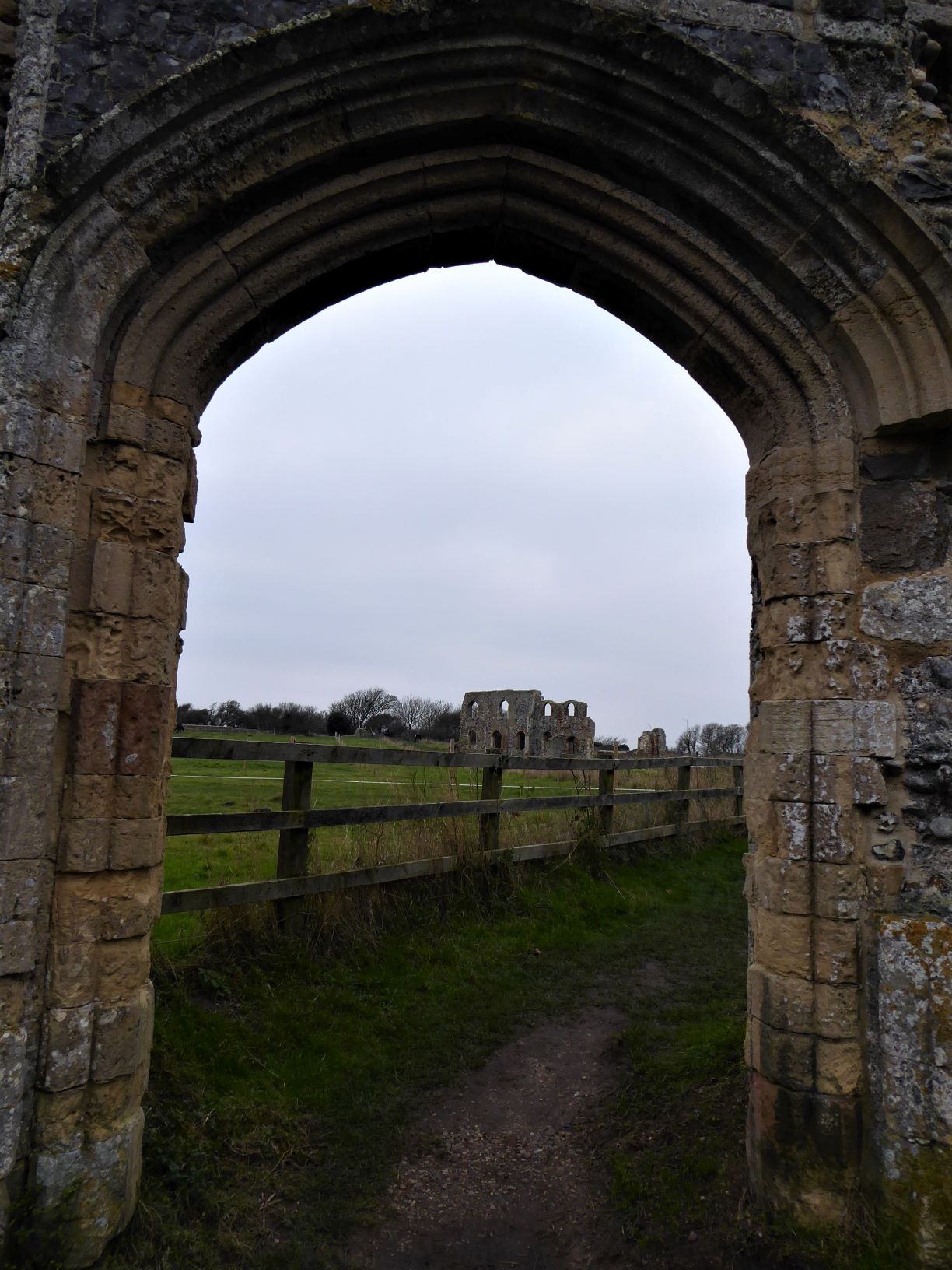
In the gateway

You may have noticed how green everything is. This is Alexanders (Smyrnium olusatrum)

This plant is an ancient introduction, probably at the time of the Roman occupation.  Its unusual name refers to its Macedonian origin, Alexander the Great’s birthplace.  It is wholly edible and the name Smyrnium is from the Greek word for myrrh and refers to its myrrh-like taste.The leaves can be made into a white sauce or used as a herb.  The young stems can be cooked and eaten like asparagus, the flowerbuds may be used in salads and the roots cooked as a substitute for parsnips.  I read that an old Irish recipe lists alexanders, watercress and nettles as ingredients for ‘Lenten pottage’.  In the 17th century its black seeds were sold in apothecaries’ shops as Macedonian parsley seeds and Nicholas Culpeper the herbalist listed many uses for it including the power to cure not only flatulence but snakebite too!  Until recently Alexanders was only to be found in the south and east of Britain and close to the milder coast.  However, I have noticed its spread inland and northwards of late.

The Greyfriars Trust have been trying to manage the spread of Alexanders in the wood.  It grows so densely it prevents seeds from germinating and smothers other plants.  We have had a mild winter so far with some frosts that have melted by midday and no snow as yet.  We have had lots of rain and so many plants have continued growing through the autumn and winter and plants, like Alexanders that died after flowering in the early summer have new plants growing from seed already.

This is the lane that passes along next to the monastery wall and enters what is left of the ‘town’ of Dunwich.

This is near where we first entered the wood at the beginning of our walk. You see how Alexanders is spreading everywhere.

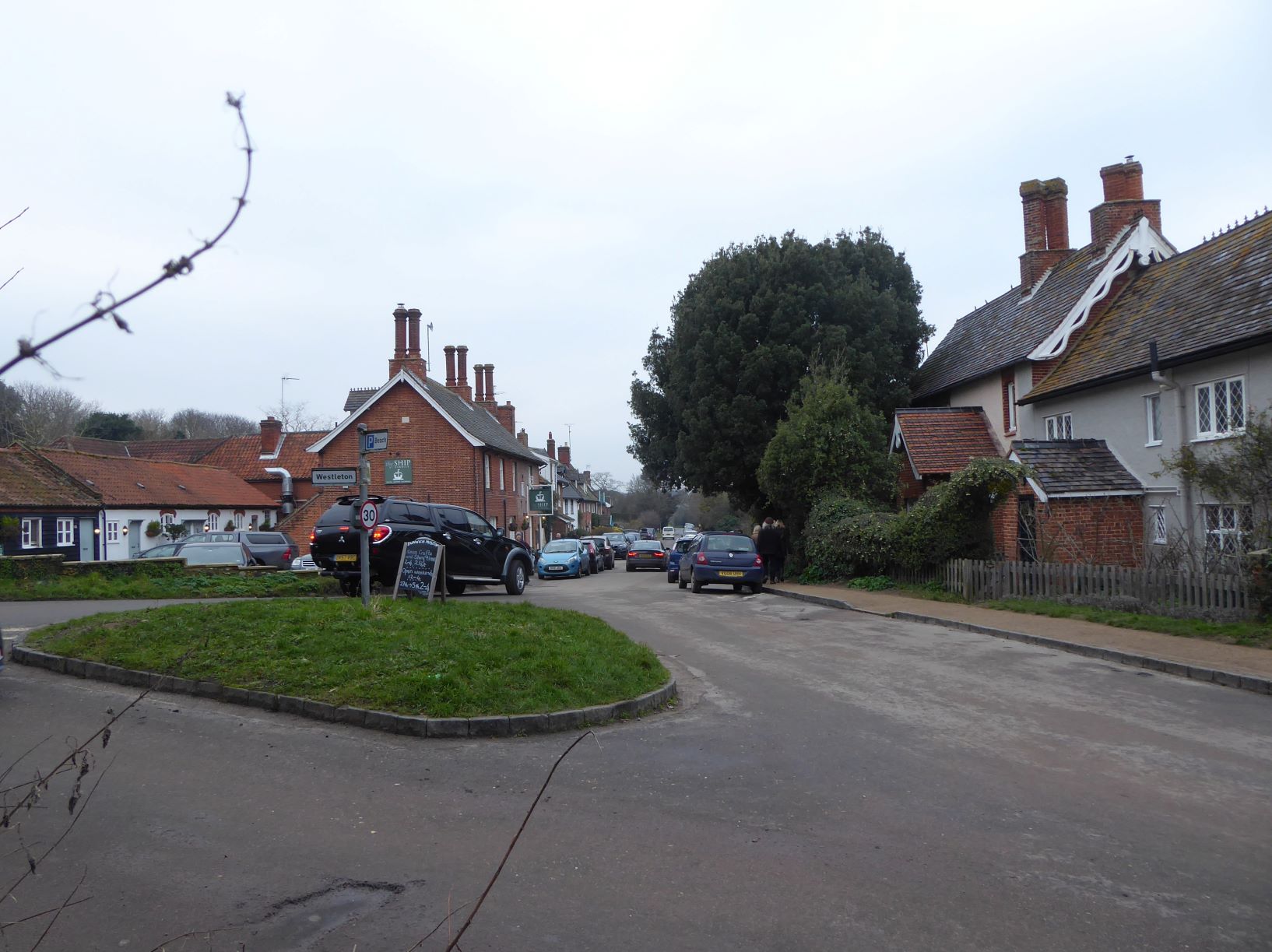
Dunwich village.  Lots of cars parked in the road and many of the cars’ passengers are probably in the ‘The Ship’, the inn with the tall chimneys just beyond the black car.

I am indebted to the excellent website belonging to the Dunwich Greyfriars Trust for much of the information in this post.  My other reference books have been the Reader’s Digest Field Guide to the Wild Flowers of Britain, Reader’s Digest Field Guide to the Trees and Shrubs of Britain, Culpeper’s Colour Herbal published by W Foulsham and Company Limited, Collins Complete Guide to British Wild Flowers, Collins Complete Guide to British Trees, Flora Brittanica by Richard Mabey, Vickery’s Folk Flora and Harrap’s Wild Flowers.  The photographs are all my own.

Share this:

  • Share on X (Opens in new window) X
  • Share on Reddit (Opens in new window) Reddit
  • Share on Pinterest (Opens in new window) Pinterest
  • Share on Facebook (Opens in new window) Facebook
  • Email a link to a friend (Opens in new window) Email
  • Share on Tumblr (Opens in new window) Tumblr
  • Print (Opens in new window) Print
  • Share on LinkedIn (Opens in new window) LinkedIn
Like Loading...

Our Church

05 Thu Dec 2019

Posted by Clare Pooley in churches, Rural Diary

≈ 100 Comments

Tags

new priest, repairs, Rumburgh, St Michael and St Felix Priory Church, The Saints Benefice

Quite a lot of our time is taken up with the church.  Not just attending services, fund raising, going to meetings and social occasions, but dealing with the crumbling fabric of the church building.

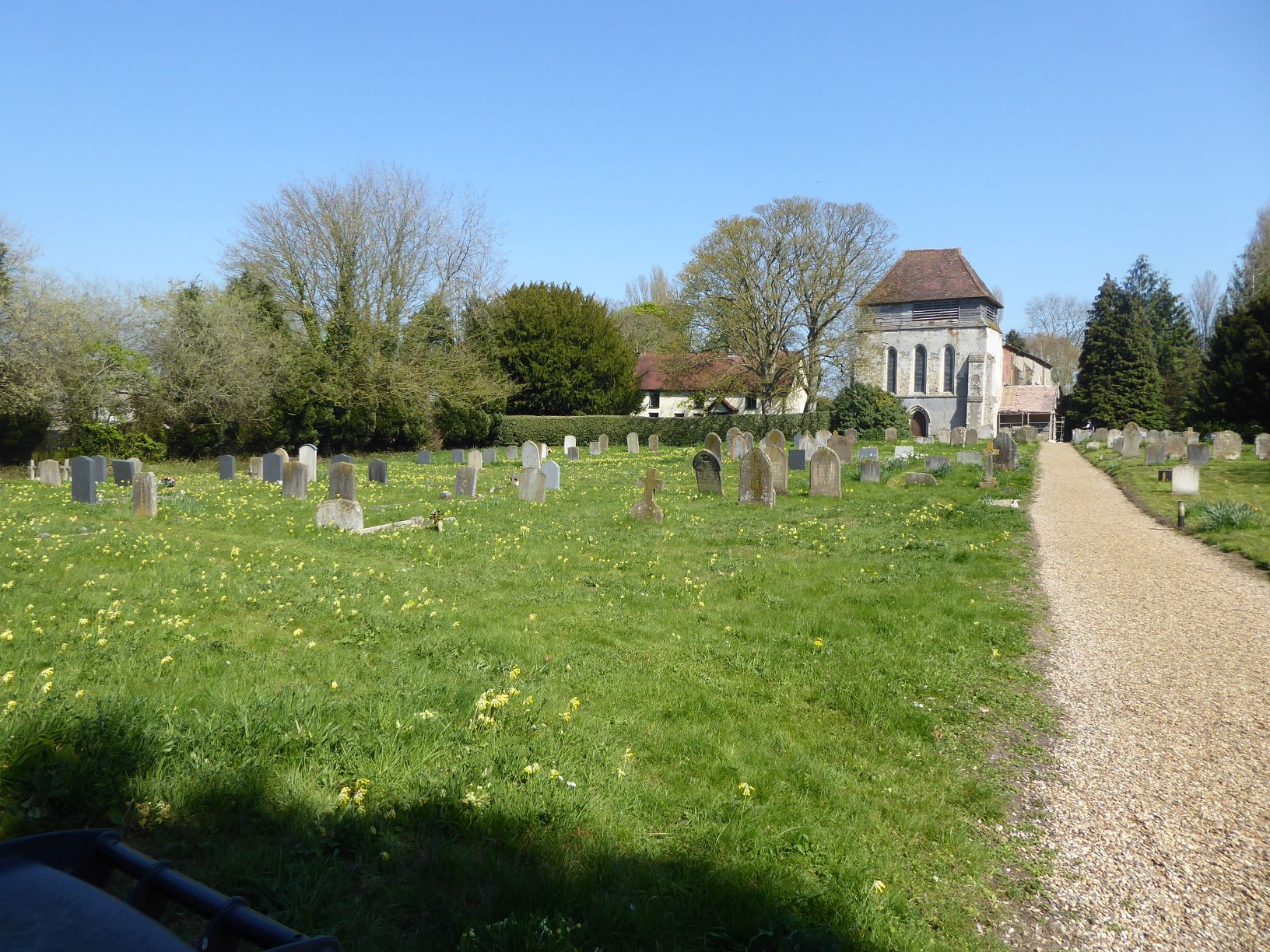
A beautiful spring day with the churchyard full of cowslips

St Michael and St Felix priory church in Rumburgh

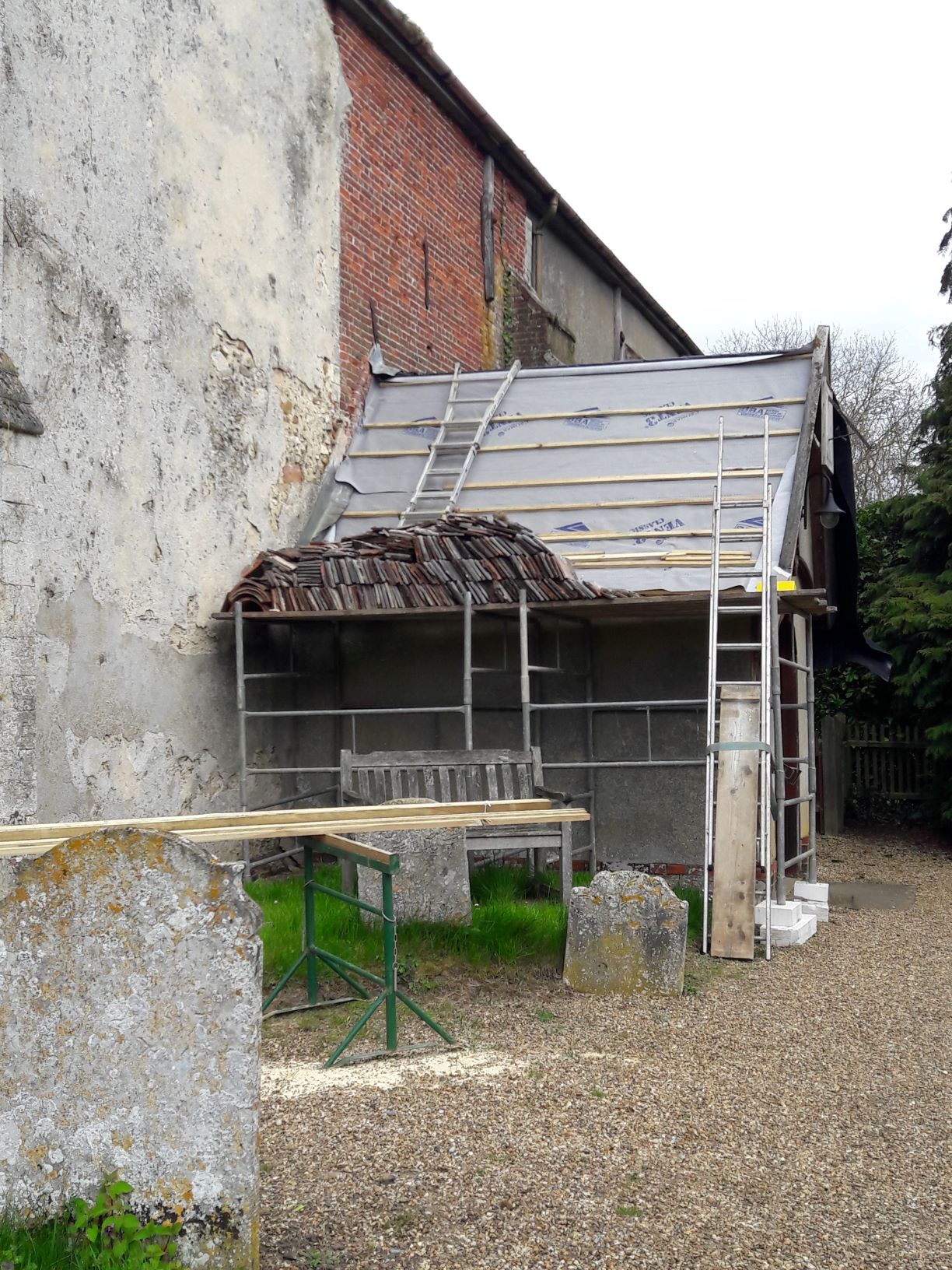
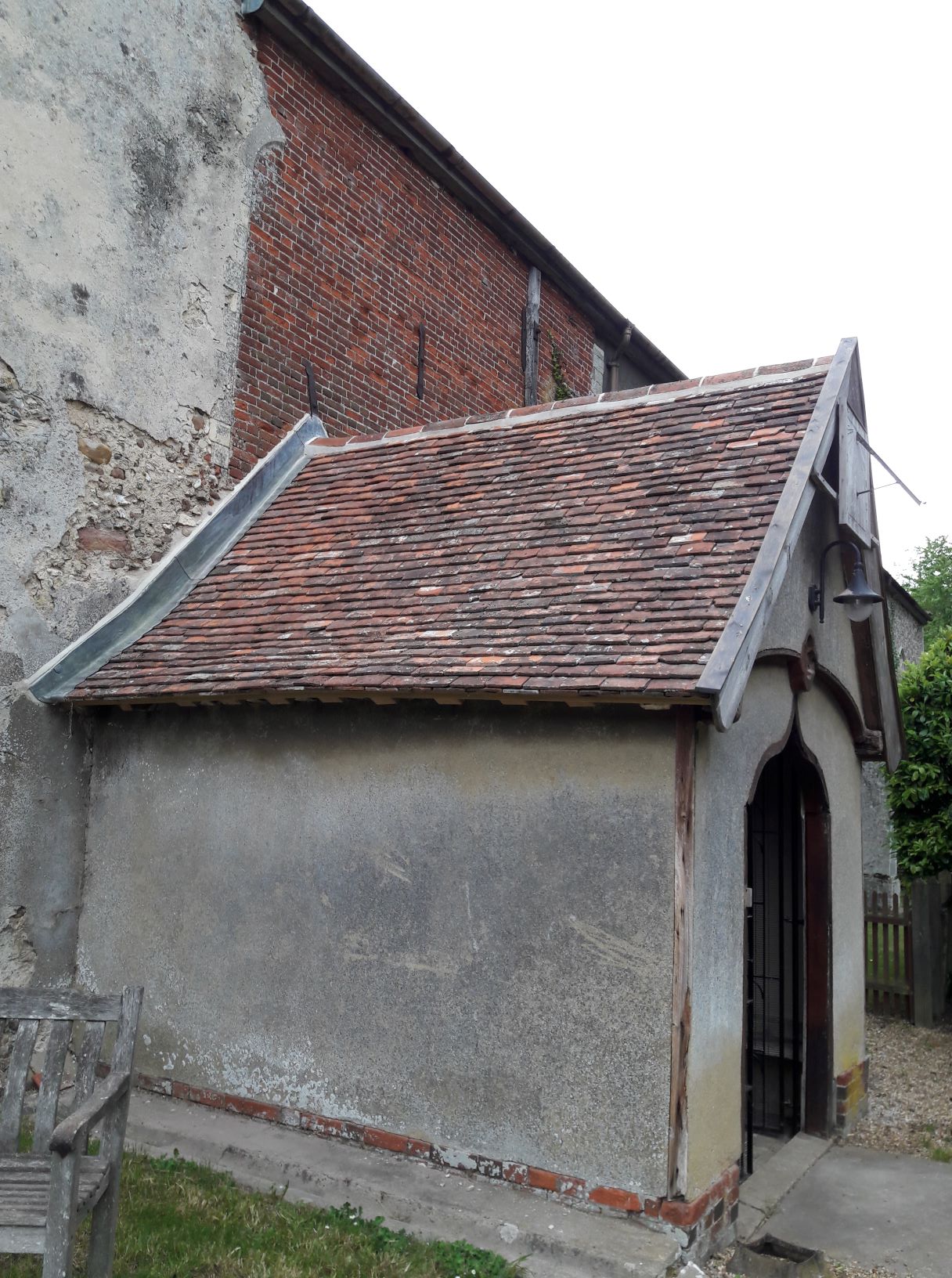
Here is the church that Richard and I belong to in the benefice of The Saints in NE Suffolk.  This photo was taken in the middle of April this year and work had just begun to restore the porch roof which was in great danger of falling down.  It takes such a long time to instigate any repairs to the ancient churches in our benefice, I am always worried in case the church collapses into ruins before we have firstly, raised enough funds for the task, then filled in all the endless forms and lastly, all the numerous visits from the authorities have taken place.  Our church is old.  It had its beginnings nearly one thousand years ago, though most of the church was built in the 13th century.

The porch

Quite a lot of rotting timber was removed from the roof.

We are waiting for the inside to dry out now that the roof is watertight.

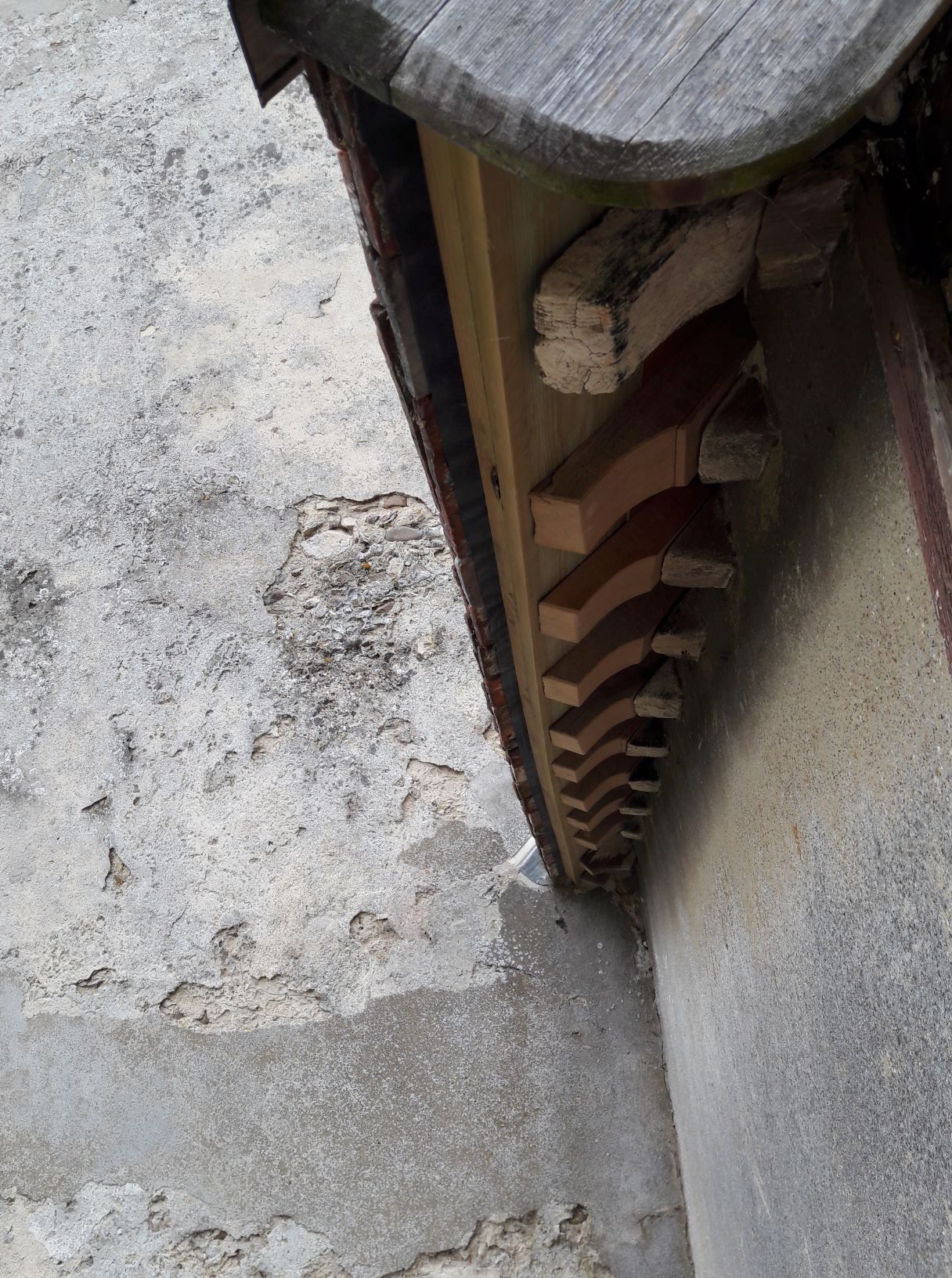
The builder’s excellent work under the eaves.

The opposite side needed just as much work.

The finished porch

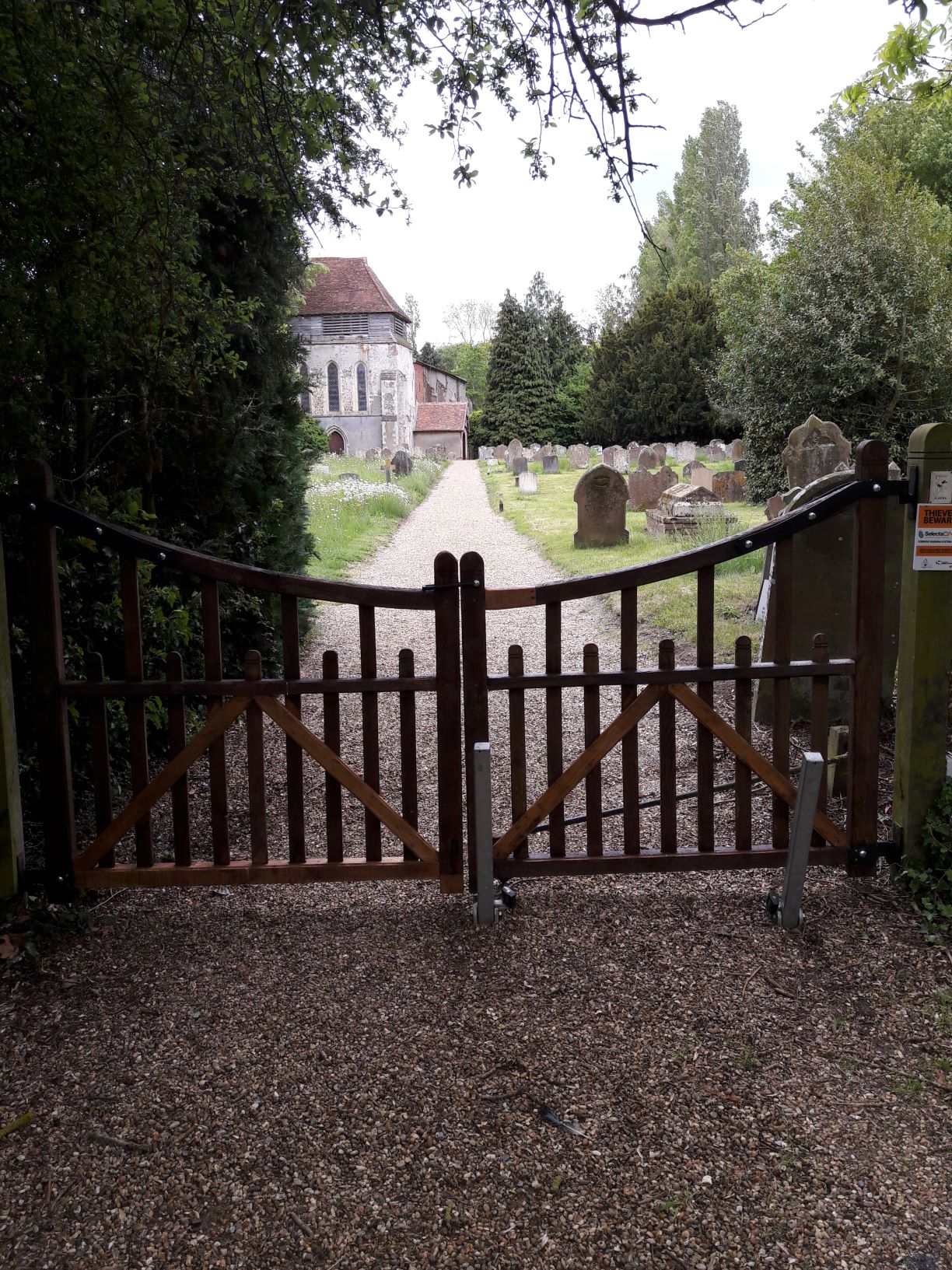
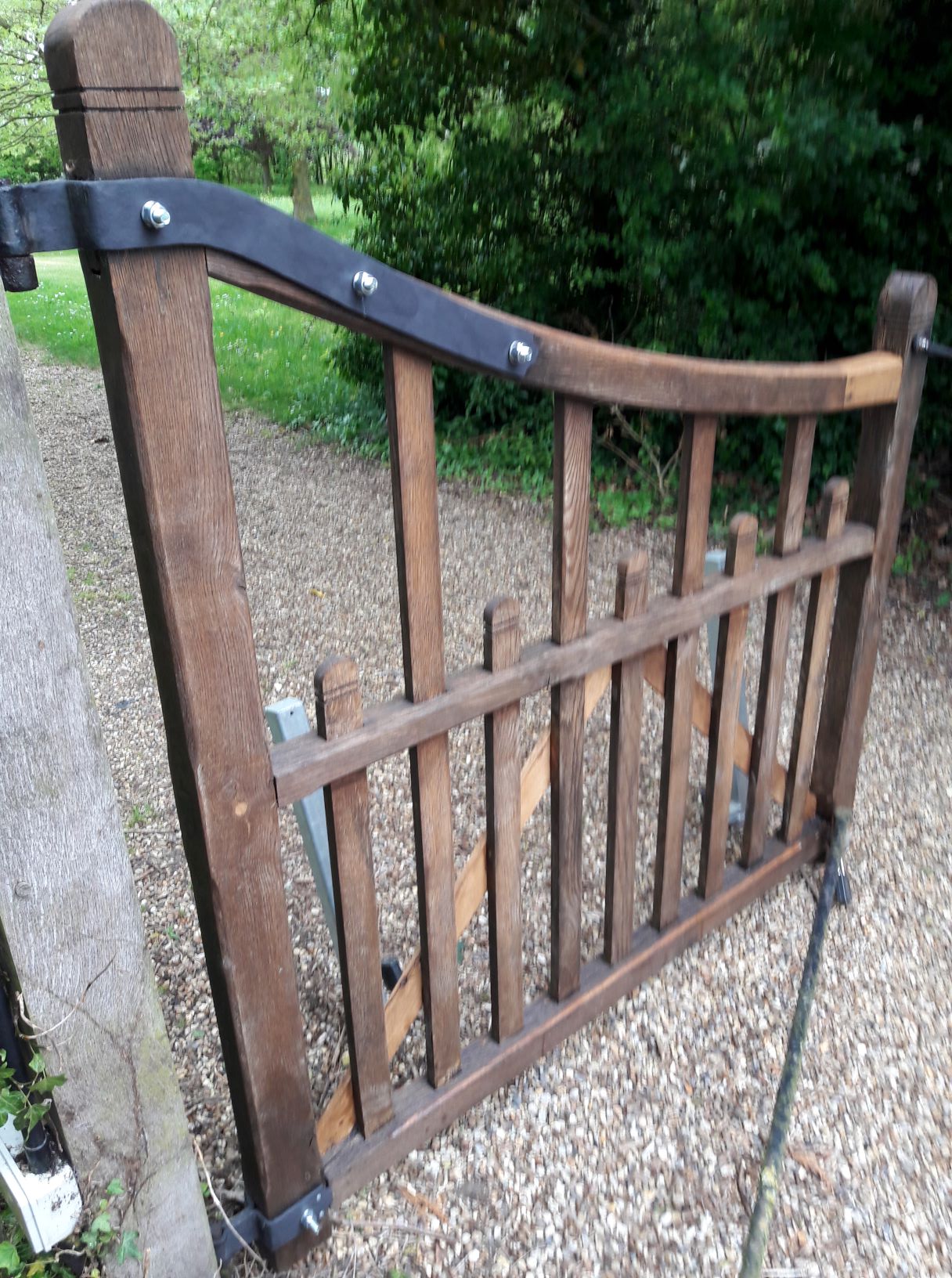
The gate also needed repairing.

This photo was taken towards the end of May this year.  The metal bars sticking up in front of the gate are an attempt to stop thieves driving up to the church to steal parts of the building.  We can unlock the bars when necessary.

Gate one….

…and gate two.

You can see how well these gates have been repaired, all the rotten wood removed and new parts inserted.  We could not afford to have new gates made.

We have had some problems with damage and vandalism in the church this year.  We keep our church open and unlocked so that it is accessible and available to all who may need to visit and use it for prayer or for peaceful meditation.  Fire extinguishers have been set off in the church, mud smeared over the furniture and other minor damage has been done.  On occasion we have had to lock the church overnight and sometimes during the day.  This is the first time in living memory that Rumburgh has had to deal with this problem.

In August of 2017 I published this post in which I spoke about the retirement of our vicar, Richard.  From that moment on we had to run ourselves, all eleven parish churches in our benefice.  We have had to organise our services and make sure there were priests available for communion services, for funerals, for baptisms and for weddings.  We couldn’t have done this without the organisational skills of Maurice, our Elder (who has just retired) and without the kindness of a team of retired priests and the hard work of our one Reader, Lynda.  Many of us were roped in to take Morning and Evening Prayer services, Harvest Festivals and Carol Services, Richard and me included.  We still had our PCC meetings to attend, repairs to our ancient churches to arrange, fund raising for said repairs as well as trying to find our Parish Share each year. At the same time we had many discussions about the future and whether we would be able to get a new priest at all.  All eleven churches provided a wish list; what we wanted in our new priest.

This collection of eleven different pictures of an ideal vicar was read by the Rural Dean, his Assistant Rural Dean and by the Archdeacon who sent them back to us with lots of red pen all over them and a few ‘see me’s.  Eventually we produced a booklet describing our benefice and all the churches within it.  We stated what we thought our new priest ought to be like and asked potential vicars to come and live with us.  We were told at first that we probably wouldn’t get a full-time vicar but the Archdeacon then said he thought that as we don’t have a ‘mother church’ (we are all small churches in small villages; no town church with a larger congregation) and the benefice though sparsely populated is large in area, we needed a full-time priest, or at least two part-time priests.  The Archdeacon got his way and we advertised for two part-time ‘house-for-duty’ priests.  The priest would be provided with a house in exchange for working in the benefice.  The Archdeacon, the Rural Dean and his assistant also all took turns in taking services in our benefice during the interregnum.  The Archdeacon played the organ at the services he took, so we didn’t need to find an organist or arrange a karaoke machine for the hymns.  Sadly, the Archdeacon who wasn’t in the best of health and was just about to retire early, became very ill and then died a few weeks ago.  He lived long enough to see that we managed to get one of our two house-for-duty priests who was licensed on the 5th of September this year.

Leon was born and grew up in this benefice and is the son of a farmer and his wife who live in Ilketshall St Margaret.  Leon’s mum is the Church Warden at Ilketshall St Margaret church.  Leon has been a priest for some years, maybe nearly twenty years, as I remember him at home before he went off to college about a year after Elinor was born.  He is married with two young children.  He originally wanted to give up the priesthood completely and return home to help run his parents’ farm, full time.  But he changed his mind and took the part-time job as our priest and works with his parents on the farm for the rest of the week.  He now finds himself doing two jobs which ideally need to be done by two people working full-time.  We are still wanting another part-time priest so a lot of the duties we carried out during the interregnum we are still doing now.  I took Morning Prayer two weeks ago and Richard and I took the Harvest Festival service together.

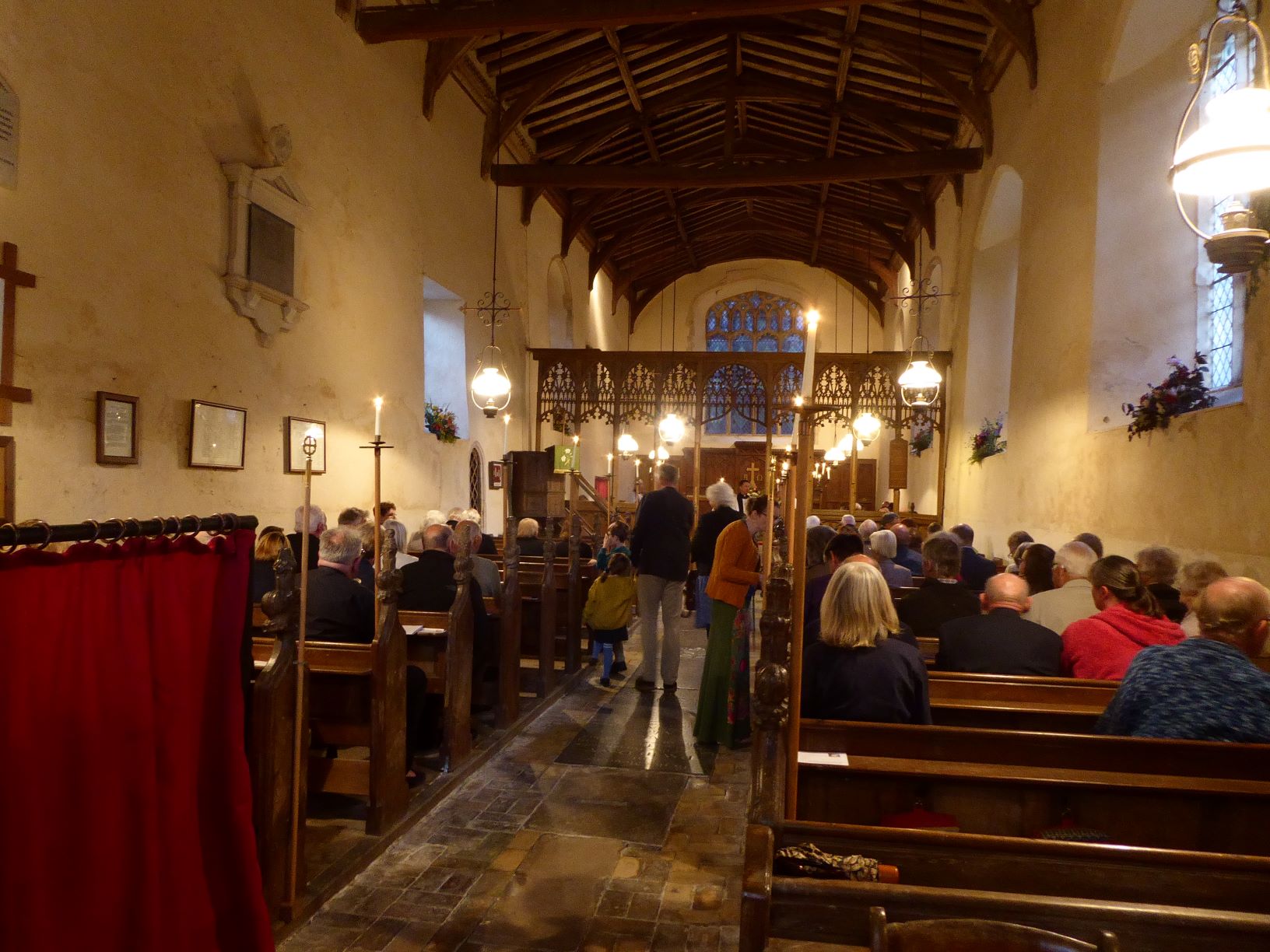
Rumburgh church filling up with people ready for Leon’s licensing service.

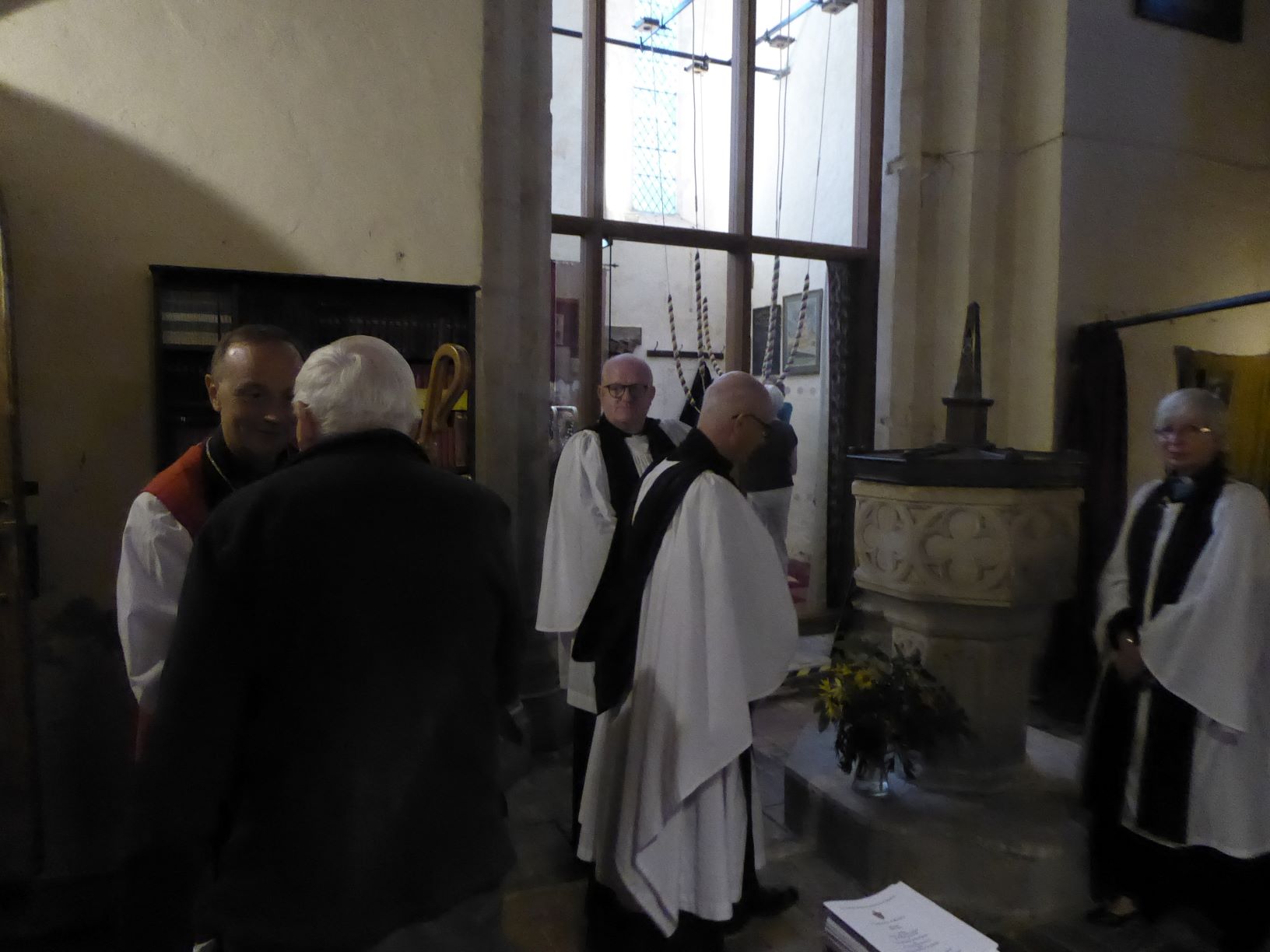
The clergy congregate at the back of the church before the service. The Bishop is the one with the red over his shoulder on the left of the photo.  He is talking to Maurice.

Unfortunately I became too busy to take any more photos at the service, which went very well.  Afterwards we all went to the village hall for food and drink.  We had all provided one savoury and one sweet item of food and had delivered them to the village hall before the service.

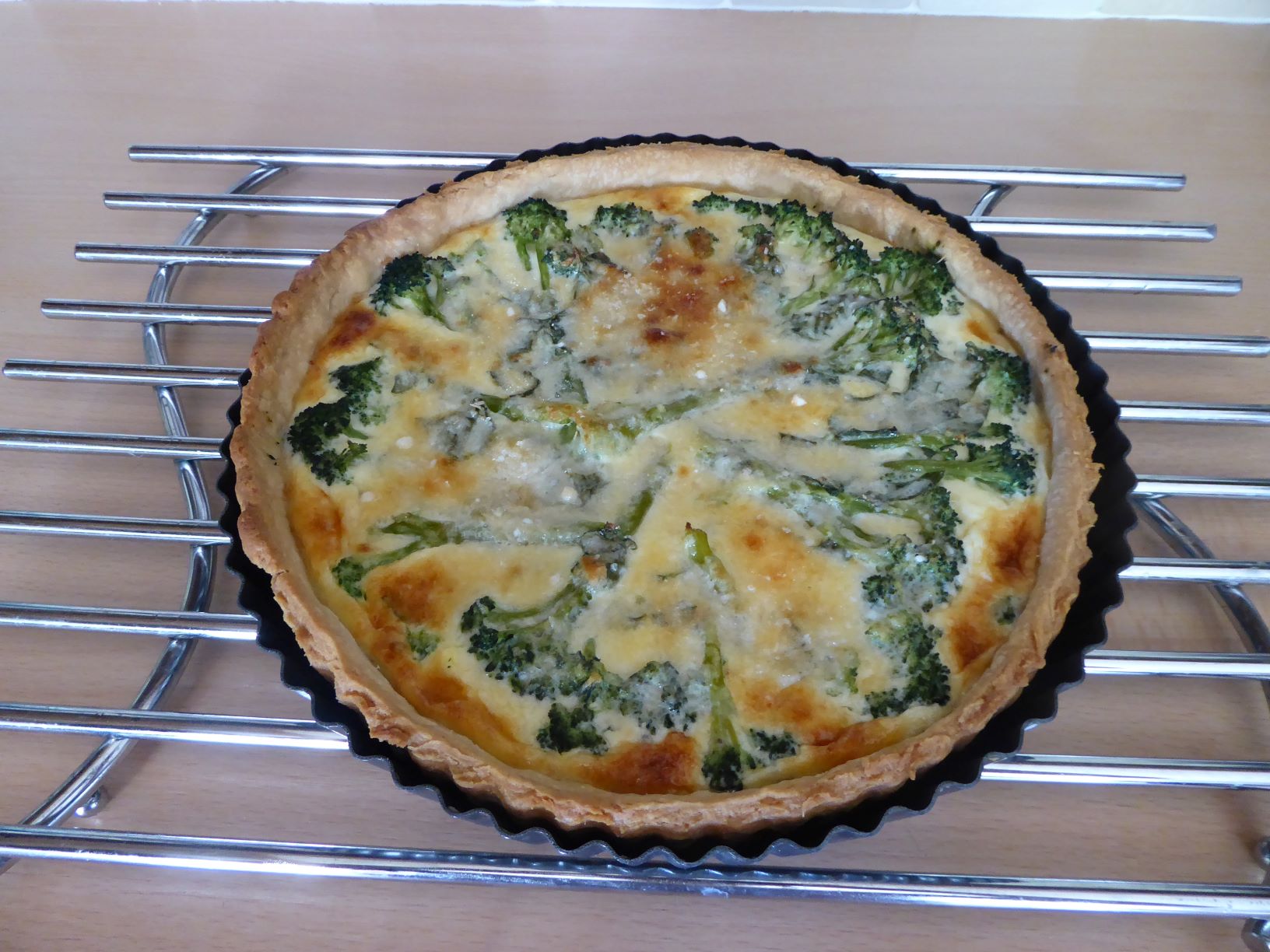
Here is the cheese and broccoli quiche I made.

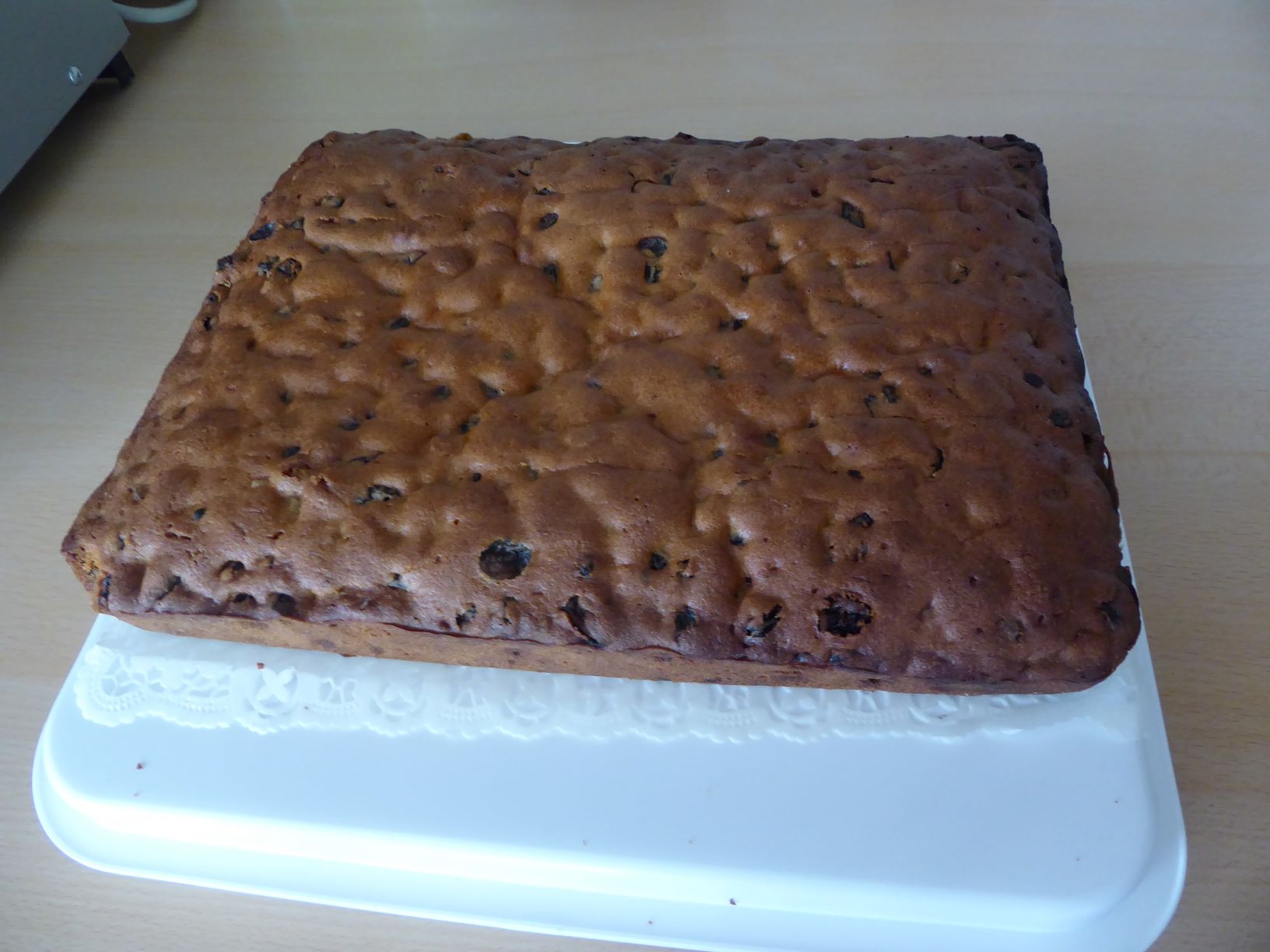
Mum cooked a tray-bake fruit cake for me to take.

It is good to have a priest in the benefice again.  The PCC meetings and the benefice meetings continue and we are now planning our Christmas services.

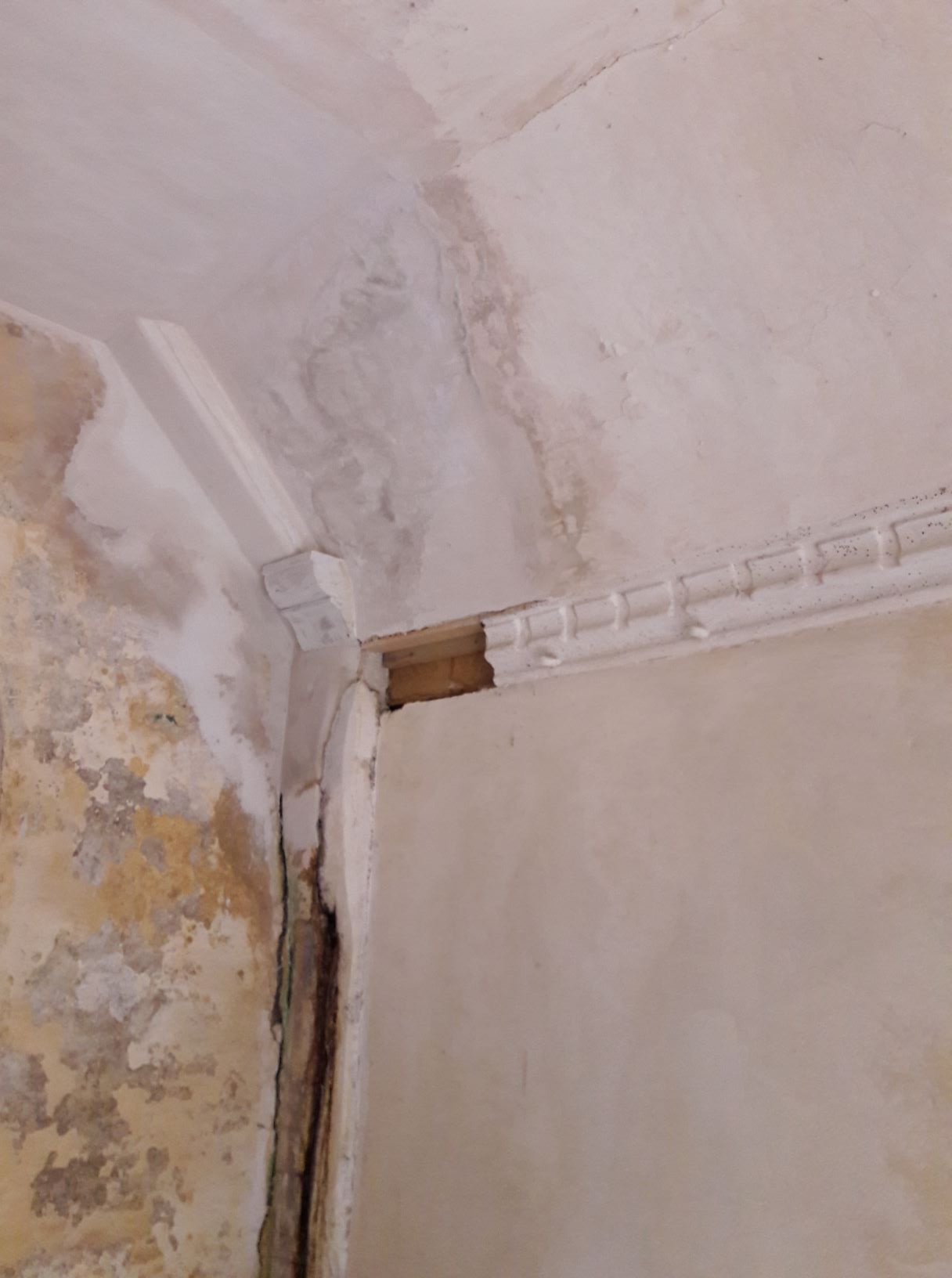
Richard and John (another member of our PCC) have been working very hard for  months to get major repairs done at our church.  At the beginning of this year I showed you, in a post, some photographs of large cracks that had appeared in the east wall of the church.  These cracks have become larger and pieces of masonry are falling down inside the building.  Builders have been approached but very few are willing to do the work or, if willing at first, then had to back out because of the length of time it took for the authorities to give us the go-ahead.  A visit was made to the church by a group of people who were very concerned at the state of the church and wished to help but insisted that the gutters should be repaired first before the cracks in the wall are tackled.  The gutters definitely need replacing/repairing as the walls are so damp inside the church they are green.  The visitors said they would give us a grant to get the work done.  A local retired builder who has worked in many of our churches was approached to do the work.  He agreed, but last week the poor man became ill and can no longer help us.  We have to start looking for another builder and the time is running out.  To claim the grant the work has to be done by February.

We must support Richard and John in their work, say our prayers and trust that something will turn up!

As an antidote to all this frustration, here is a festive song.


Share this:

  • Share on X (Opens in new window) X
  • Share on Reddit (Opens in new window) Reddit
  • Share on Pinterest (Opens in new window) Pinterest
  • Share on Facebook (Opens in new window) Facebook
  • Email a link to a friend (Opens in new window) Email
  • Share on Tumblr (Opens in new window) Tumblr
  • Print (Opens in new window) Print
  • Share on LinkedIn (Opens in new window) LinkedIn
Like Loading...

Wildlife in the Garden

23 Wed Oct 2019

Posted by Clare Pooley in Insects, reptiles and amphibians, Rural Diary, wild birds

≈ 113 Comments

Tags

azure damselfly, common toad, four-spotted chaser dragonfly, grass snake skin, green-veined white butterfly, holly blue butterfly, ivy, ivy mining bee, jay feather, lunar yellow underwing, Mallard, mint moth, painted lady butterfly, pheasant feathers, red admiral butterfly, rosemary beetle, Small Tortoiseshell butterfly, speckled wood butterfly, starling, Suffolk

I have a small number of wildlife photographs taken during late spring and through the summer.  This post will feature them.

Four-spotted Chaser, a male (I think!)(Libellula quadrimaculata )

These amber and black-coloured dragonflies fly during late spring and early summer and fortunately for me and my camera, they take regular rests on plants round the edge of the pond from where they watch for prey and/or mates.  Males are very territorial and aggressive.

Female Azure Damselfly (Coenagrion puella )

I spent some time trying to decide whether this was an Azure or a Variable Damselfly.  The photo isn’t clear enough for me to be sure.  I decided to post the photo on the Damsel and Dragonfly Facebook site and see what the experts thought.  The first person thought it was an Azure and the second thought it was a Variable!  Fortunately a third person plumped for the Azure so that is what it will have to be.

Male Azure Damselfly ( Coenagrion puella)

The males are much brighter than the females.

Male Mallard (Anas platyrhynchos )

When I took this photo at the beginning of summer I was upset to see how little water was in the pond.  At that time of year there ought to have been at least two or three more feet of water there.  I was not to know how bad it would get by the end of the summer when most of the pond had become dry.

Rosemary Beetle (Chrysolina americana ) on rosemary

Rosemary beetle on sage

I have been finding these attractive beetles on my rosemary, lavender and sage plants for the past couple of years.  They are a non-native invasive species of beetle related to the Colorado Beetle.  They do a fair amount of damage to plants if left unchecked and can kill young plants.  Because of our recent mild winters they are active throughout the year.  Here is a link to the RHS website which describes the beetle.

Speckled Wood butterfly (Parage aegeria )

I apologize for the poor photo of this pretty butterfly.  This was the closest I got to one all summer!  They are difficult to see in the dappled light of a woodland ride where they like to live.  They feed mainly on honeydew in the treetops.

Green-veined White butterfly (Peiris napi )

I saw a number of these white butterflies this year.  I read that the green-veined white prefers to lay its eggs on wild members of the cabbage family ( watercress, garlic mustard etc.) rather than on plants in our vegetable gardens.  This one appears to be laying eggs on my aubretia, which is also a member of the cabbage family!

Painted Lady
Painted Lady
Painted Lady
Painted Lady

The Painted Lady butterfly( Vanessa cardui) has had a very good year here and almost the whole country has seen numbers of them. They cannot survive our winters so new butterflies arrive each spring by immigration from southern Europe.  The caterpillars feed mainly on thistles and sometimes mallows.

Red Admiral
Red Admiral
Red Admiral
Red Admiral

Red Admirals (Vanessa atalanta ) are increasingly able to survive our winters by hibernation.  The majority arrive here in the spring from Europe and then subsequent generations fly and breed until the first frosts.  The caterpillars feed on stinging nettles.

Small Tortoiseshell butterfly (Aglais urticae )

The one and only small tortoiseshell I was able to photograph.  I haven’t seen many this year.  The butterflies hibernate as adults in hollow trees and buildings and the caterpillars feed on stinging nettles.  As good a reason as any to keep a few nettles in the corner of the garden.

A rather battered Holly Blue butterfly (Celastrina argiolus ) on Escallonia

I saw quite a few holly blues this year which probably means they will be scarce again next year.  The caterpillars are often attacked by two species of parasitic wasp that sometimes wipe out whole colonies of holly blue.  The male and female butterflies’ underside of their wings looks alike so I can’t say which this is.  It refused to open its wings all the time I was watching it and then flew off at speed the moment my attention wavered!

I would recommend Escallonia as a favourite with bees and butterflies.  I also saw a Green Hairstreak butterfly on it this summer but I didn’t have my camera to hand.

Mint Moth ( Pyrausta aurata) on lavender

At least, I believe this might be a Mint Moth.  It appears to have two golden spots on its forewings which is what one looks for.

Lunar Yellow Underwing (Noctua orbona )

You may think it strange that I have chosen to include a photo of a dead moth.  I expect it is.  This poor thing managed to get itself trapped in the house while we were away on holiday and I found it in the garden room.  These moths are quite uncommon and I am pleased that they are present in our garden.

Ivy (Hedera helix ) hedge

I parked my car up against this hedge in Bungay a couple of weeks ago and stopped to admire all the wonderful flowers all over it.  I then realized it was covered in bees.

Ivy flowers

Ivy Mining Bee ( Colletes hederae)

Ivy Mining Bee

These bees dash about all over the place and never stay for more than a few seconds on any one flower.  I was very fortunate to get the photos I did.  I couldn’t stay long as I had shopping to do and the owner of the red car (see the first photo) returned to her vehicle and was eyeing me suspiciously.

Common Toad (Bufo bufo)

I looked up from my lunch one day in June and saw this young toad marching across the grass in front of the kitchen window.  My phone doesn’t take good photos and I couldn’t crop the shot without it becoming pixelated.  You can see the toad has long legs with which it covers quite a lot of ground at some speed.  Toads don’t jump and hop very often.

See how parched the grass was at the beginning of the summer!  Things didn’t improve much until quite recently.  We have had large quantities of rain in the last few weeks and the grass is growing again!

Grass Snake (Natrix natrix ) skin on the grass round our large pond

We often see grass snakes in our garden but this year this is the closest I got to one.  They are Britain’s longest snake at one metre in length, occasionally longer. They are variable in colour and pattern being either green, olive-green, brown or grey.  They have a yellow to orange-red collar just behind their head and have regular black markings along their sides (or not, as the case may be!) They are very good swimmers.

Starling
Starling
Starling
Starling

Both these photographs of starlings (Sturnus vulgaris ) were taken by Elinor when she was on a trip to the North Norfolk coast this autumn.  I love these garrulous birds and enjoy listening to their twittering and whistling.  These birds in the photos are resplendent in their speckled winter plumage and have black bills.  The feathers become less speckled and  more iridescent green and purple through the winter and the bills turn a beautiful lemon-yellow in spring. They are excellent mimics and will copy other bird’s songs and calls and any other noises they find interesting.  In the early seventies we had one in the road where I grew up that did a good impersonation of a Trimphone.  Is impersonation the right word?  Again, there was a starling that lived next to the primary school that Elinor attended when we lived in Somerset that had a call that sounded just like little girls screaming in the playground.

A Jay (Garrulus glandarius ) feather

I think this feather is so beautiful!  Richard found it in the garden.

Pheasant feathers
Pheasant feathers
Pheasant feathers
Pheasant feathers

From these slightly blurred photos it is difficult to see the iridescence of the feathers, the maroon, amber and dark brown shades that make these pheasant ( Phasianus colchicus) feathers so lovely.  I found them all together in a heap in the garden.  I assume that this pheasant had been fighting and had had these scraped from his breast.  Pheasants don’t like fighting at all and will get out of it if they can.  If disturbed in the middle of their posturing both combatants will sidle away hoping, I’m sure, they won’t be followed.


Share this:

  • Share on X (Opens in new window) X
  • Share on Reddit (Opens in new window) Reddit
  • Share on Pinterest (Opens in new window) Pinterest
  • Share on Facebook (Opens in new window) Facebook
  • Email a link to a friend (Opens in new window) Email
  • Share on Tumblr (Opens in new window) Tumblr
  • Print (Opens in new window) Print
  • Share on LinkedIn (Opens in new window) LinkedIn
Like Loading...

Vikings!

25 Wed Sep 2019

Posted by Clare Pooley in Days out, Rural Diary

≈ 90 Comments

Tags

artifacts, Castle Museum Norwich, Viking, Viking exhibition

From the fury of the Northmen O Lord deliver us!

Elinor and I went to an exhibition at the Castle Museum in Norwich during May this year.  The subject of the exhibition was ‘The Vikings’ and the items displayed were objects discovered mainly in Britain.  There were treasures on loan from the British Museum in London and from The Yorkshire Museum in York as well as things found here in East Anglia.  East Anglia was part of the Danelaw in the 9th Century.

The first exhibits we looked at were items found from when the Vikings first invaded Britain; things they had brought with them on their journey across the North Sea.  We saw some of the weapons used by them and also by the Anglo Saxons in their battles for land and supremacy.  We then saw artefacts made and used by the Viking settlers once they had made their home here.  They were wonderful traders, with routes across the Irish Sea to Ireland, up to the Arctic Circle, across the Atlantic to America and all over Europe and into Asia, Russia, Turkey and India.  They brought some of the goods they found abroad, home to Britain.  The exhibition also showed how the Vikings assimilated some of the fashions and crafting techniques they found here in Britain and eventually became British themselves. If you wish to read further details of the Viking invasion of Britain this is a fairly good account.

I know I have included too many photos here!  I am sorry for the poor quality of several of them – I had a lot of trouble with reflections off the glass cases.

The Gilling Sword – made from iron and silver with an ornate silver gilt handle.  Probably owned by a powerful Saxon earl in the service of Northumbrian King Oswiu.

The York Helmet – made from iron and brass by Anglo-Saxon craftsmen.  It has a beautifully decorated nosepiece and there is a Latin inscription across the top which dedicates the helmet to God.

An Iron Axehead with arm and neck rings. The rings were symbols of Viking status, power and wealth. These would often be given as gifts to reward followers and faithful retainers.

A double-edged Sword, which would have been used by one of the wealthiest Vikings. Also, rivets from a clinker-built ship, an iron axe head, an iron spear head, an iron shield boss and a gold arm ring.

This is a re-used Christian cross showing a warrior with a female hostage.

There were a number of information boards in the exhibition and a large area was taken up as an activity room for children.  A recording of a man and a woman talking quietly together in Old Norse with the sound of wind blowing and seagulls crying in the background was playing all the time we were there.  I found this extremely atmospheric and not at all irritating.

The Ormside Bowl – made in AD 750, the outer skin produced AD 850-900. It is decorated with religious scenes, the work of monks in a Northumbrian monastery. It was discovered in the grave of a Viking man and it had been transformed into a drinking cup.

A bone plaque made by a Viking in the image of a Viking.

This is a rare find, there not being many likenesses of Vikings especially ones done by themselves.  The only written accounts of them are made by others.

The object on the left is an iron rangel or rattle which may have been used during ceremonies. On the right are two Islamic coins (probably traded for fur and slaves), four silver pennies and some ‘hacksilver’; part of some beautiful silver jewellery. The Vikings traded with bullion and goods and didn’t use coins at first. They would cut up (hack) any treasure or jewellery they had and use it as payment for goods.

Leather shoe with a toggle found in York – This is of turnshoe construction. The leather is cut to shape, moulded and stitched together and then turned inside-out so the seams are on the inside. A method used in Scandinavia and Britain.

A silver neckring from Russia. These became very popular with well-to-do Viking ladies and sources record that men would have had to collect and melt down 10,000 silver coins to obtain enough silver to have one of these made!

A carved walrus-tooth gaming piece owned by a merchant who travelled along the trade routes from Norway to Ireland. This piece (a knight) is part of a complete chess set probably made in Norway and found in the Western Isles of Scotland.

When this set was made the Western Isles were part of the Kingdom of Norway.  The set includes kings, queens, bishops, knights and warriors.  The warriors are carved as berserkers, fierce men described in sagas as biting their shields in frenzy before battle.  Scary!

Here is Elinor in the model of a viking boat.

P1050160Elinor (2)
P1050159Elinor (2)

At the time of our visit, Elinor was doing research for her final project in her Level Three Art and Design course at college.  She produced a graphic story book and her character’s clothes and belongings were loosely based on Celtic, Saxon and Viking designs.

A seal made from walrus ivory depicts a man called Sharrus who worked as a tax and toll collector in York during the 12th century. Sharrus (the name can be seen on the perimeter of the seal) is the Latin form of his name, Snaresnorri, meaning ‘shrewd’.

A balance and sets of weights. This is a portable balance and would have been the property of a Viking trader dealing in bullion. This method had long been replaced in England by the use of coins. There were still other areas where commodities were traded directly without the use of silver.

This image of two men carved on a gritstone cross comes from York. One man carries a sword and the other a horn and they are grasping hands in greeting. Another very rare image of Viking people, this cross would have been commissioned and financed by them as a public demonstration of their status and Christian piety.

These two discs are fairly small and the detailed work on them is extremely fine. They are both pendants and would have been worn by a wealthy pagan woman.

A comb case

Deer antler blank (unused antler) and roughouts (pieces of horn used to try out designs before including them in the finished article) with a finished comb and cases.

A phyllite whetstone and a gold finger ring. These belonged to a wealthy woman called Egwen who lived in Scotland. The ring is dedicated to St Peter and that saint may also be the image shown on the whetstone.

Torc from the Bedale Hoard

A tiny gold socketed terminal made from gold sheet and decorated with filigree wire depicting an animal’s head. It is probably the terminal of a pointer or aestel.

This object is a similar shape, though much smaller, to the Alfred Jewel which is believed to be an aestel.

Socketed object made of gilded copper alloy in the 8th/9th century. Probably another aestel.

Two silver pennies of King Aethelred of East Anglia. These are immensely important as only seven coins of this obscure king have been found. They show that after Edmund was killed he was succeeded by another East Anglian ruler not recorded in any historical documents.

A collection of strap ends (decorated metal ornament added to the end of straps) made from silver and niello, a copper alloy tulip mount and a silver (gilt?) disc brooch

Three coins, part of the Bishopshill hoard l. to r. Silver of Aethelred II; Silver of Cnut; Silver of Harthacnut.

A whalebone handle

The following are photographs of several hoards that have been discovered all over Britain.

This slideshow requires JavaScript.

I hope you enjoyed seeing some of these wonderful things.

I am very grateful to the curators of the Norwich Castle Museum for this exhibition and for all the information they imparted.

Share this:

  • Share on X (Opens in new window) X
  • Share on Reddit (Opens in new window) Reddit
  • Share on Pinterest (Opens in new window) Pinterest
  • Share on Facebook (Opens in new window) Facebook
  • Email a link to a friend (Opens in new window) Email
  • Share on Tumblr (Opens in new window) Tumblr
  • Print (Opens in new window) Print
  • Share on LinkedIn (Opens in new window) LinkedIn
Like Loading...

May Flowers

27 Tue Aug 2019

Posted by Clare Pooley in Gardening, plants, Rural Diary, trees, wild flowers

≈ 107 Comments

Tags

Astrantia, Californian lilac, Clematis, cowslip hybrid, euphorbia, flowers, garden, glaucous sedge, Goat Willow, gooseberry, Hawthorn, horse chestnut, iris, plants, Ribwort Plantain, rose, scabious, Spindle, Suffolk, thrift, Thyme-leaved Speedwell, trees, Welsh onion

Let me take you back in time…again….

A selection of photos of plants and flowers seen in May, this year.  Please click on any of these images to enlarge them.

A flowerbed on the south side of the house

The temperatures began to improve during May and the leaves on the fig tree (on the right of the photo) began to come out.  The perennial plants also put on a lot of growth and flowers appeared.

Iris

Astrantia

Astrantia have interesting flowers

Thrift

Scabious

The Montana clematis continued to produce plenty of highly scented flowers from where it grows on the trellis next to the garden shed.

‘Canary Bird’ rose

Such a lovely yellow rose!

When we had the garden room built last year I had to move many of my plants out of the way. They ended up here on the edge of one of the vegetable beds.

These are wonderful pale lilac iris. I failed to get a decent photo of them.

Another attempt to catch the beauty of this iridescent flower.

A couple of days later more iris had appeared in the bed near the house.

I might move this iris away from the purple and blue ones in the autumn. It is an interesting colour but is a little overwhelmed by its neighbours.

It was a good year for iris.

Euphorbia. This is a small perennial sub-shrub with interesting colours in its leaves and bracts.

All around our garden are hybrids, like this one, between the wild cowslip and garden polyanthas and primulas.  This plant decided to grow in a gravelly area next to a drain and one of the water butts.

Richard has a Californian Lilac in his shrubbery. It was glorious this year!  The bees loved it and I think there are a few in this photo.

Gooseberry. If you look carefully you will see many tiny gooseberries. Unfortunately we didn’t protect the bush from the birds and we got no berries at all. One day they were all there and the next they weren’t. We have never needed to cover the bush before.

The welsh onion in the herb garden went crazy this year!

As well as the plants I have in flower and vegetable beds, there are the wild ones that I love to find.

Thyme-leaved Speedwell (Veronica serpyllifolia )

This is a minute-flowered speedwell I find in the lawn and in the grass path round the pond.  It forms patches of flowers as the stems lie flat along the ground and send out roots from nodes.  The flower stems are upright.

Hawthorn
Hawthorn
Hawthorn
Hawthorn
Hawthorn
Hawthorn
Hawthorn
Hawthorn
Hawthorn
Hawthorn

Country people think it very bad luck to bring hawthorn blossom indoors and woe betide you if you destroy a hawthorn!

Goat Willow ( Salix caprea) with its fluffy seeds.

The wood of the Goat Willow is very soft and used to be made into clothes pegs, rake teeth and hatchet handles.

Horse Chestnut ( Aesculus hippocastanum) blossom

Horse Chestnuts were introduced to Britain from the Balkans in the 16th century.  ‘Conkers’ weren’t played with the fruit of the tree until the 18th century. Before that, the game was played with cobnuts from Hazel trees or with snail shells.  The name ‘conkers’ derives from ‘conqueror’.

Sedge

I am not very good at identifying sedges, reeds, rushes and grasses but I think this might be Glaucous Sedge (Carex flacca).

Ribwort Plantain ( Plantago lanceolata)

I wonder if children still play the old games with Ribwort.  In one of the games, the stalk is held between the thumb and forefinger and the bottom of the stalk is wrapped round the flower-head in a loop.  When the loop is tugged sharply the flower-head is ‘fired’ and often travels a long way.  I read that a form of ‘conkers’ can be played with Ribwort by keeping the flowerhead on its long stem and using it to attempt to knock a rival’s flower-head off.  A couple of local names for Ribwort are ‘fighting cocks’ and ‘kemps’ from the Anglo-Saxon ‘cempa‘ meaning ‘a warrior’.

Spindle (Euonymous europaeus )

The wood of spindle is very hard and dense and pale coloured and from ancient times was used for making spindles.  The wood is also known as skewerwood and pegwood and also makes high quality charcoal.  The tree has an unpleasant smell if bruised and the fruit is an emetic.  In olden days, the leaves and seeds were powdered and this powder was dusted onto the skin of children and animals to drive away lice.

With apologies for the length of this post.

Share this:

  • Share on X (Opens in new window) X
  • Share on Reddit (Opens in new window) Reddit
  • Share on Pinterest (Opens in new window) Pinterest
  • Share on Facebook (Opens in new window) Facebook
  • Email a link to a friend (Opens in new window) Email
  • Share on Tumblr (Opens in new window) Tumblr
  • Print (Opens in new window) Print
  • Share on LinkedIn (Opens in new window) LinkedIn
Like Loading...
← Older posts
Newer posts →
Follow A Suffolk Lane on WordPress.com

Enter your email address to follow this blog and receive notifications of new posts by email.

Join 700 other subscribers.

Unknown's avatar

I talk about what it's like living in a quiet part of Suffolk. I am a wife, mother and daughter, a practising Christian and love the natural world that surrounds me. I enjoy my life - most of the time!

My Posts

Jun 2026
M T W T F S S
1234567
891011121314
15161718192021
22232425262728
2930  
« May    

Pages

  • About my Blog
  • GDPR (General Data Protection Regulations) and This Site
  • My Life in a Suffolk Lane

Archives

Blogs I Follow

Unknown's avatar
Unknown's avatar
Unknown's avatar
Unknown's avatar
Unknown's avatar
Unknown's avatar
Unknown's avatar
Unknown's avatar
Unknown's avatar
Unknown's avatar
Unknown's avatar
Unknown's avatar
Unknown's avatar
Unknown's avatar
Unknown's avatar
Unknown's avatar
Unknown's avatar
Unknown's avatar
Unknown's avatar
  • Unknown's avatar
  • Unknown's avatar
  • Unknown's avatar
  • bowlandclimber's avatar
  • Unknown's avatar
  • Unknown's avatar
  • Unknown's avatar
  • Unknown's avatar
  • Unknown's avatar
  • Unknown's avatar
  • TravelingTortuga's avatar
  • Matthew Paul's avatar
  • Unknown's avatar
  • The Ancient Eavesdropper's avatar
  • Unknown's avatar
  • Lynette d'Arty-Cross's avatar
  • burndettandres's avatar
  • Unknown's avatar
  • Unknown's avatar
  • علي الجازع's avatar
  • glorious78aec7b204's avatar
  • Unknown's avatar
  • Unknown's avatar
  • Amin Academy's avatar
  • Unknown's avatar
  • Unknown's avatar
  • Chinyere Okoli-Azzalarab's avatar
  • Unknown's avatar
  • Unknown's avatar
  • Unknown's avatar
  • Unknown's avatar
  • Noémi's avatar
  • Unknown's avatar
  • Unknown's avatar
  • Schnippelboy's avatar
  • gederedita's avatar
  • womanseyeview's avatar
  • Unknown's avatar
  • Unknown's avatar
  • Tony Self's avatar
  • Unknown's avatar
  • Rosebrantsen's avatar
  • Unknown's avatar
  • Unknown's avatar
  • Unknown's avatar
  • Unknown's avatar
  • Unknown's avatar
  • thebikinggardener's avatar
  • Unknown's avatar
  • Unknown's avatar

amphibians architecture art Arts and Crafts churches cooking Days out domestic animals family fish Folk Traditions Gardening Historic Buildings holidays Insects Landscaping literature music Norwich plants Rural Diary seashore theatre trees Uncategorized walking weather wild animals wild birds wild flowers

Tags

architecture autumn birds blackbird blackthorn Bungay butterfly church clouds common knapweed cow parsley crocus daffodils Diary dogwood family field maple flowers fungus garden gardening geese greylags ground-ivy Halesworth Hawthorn heather holiday Holly Holy Week horse chestnut Hoverfly insects ivy Lake District Lent lesser celandine lichen Lords and Ladies Mallard mallards Minsmere moorhen moss music Norwich Peak District pheasant plants pond ponds primrose primroses Rain rooks Rumburgh Rumburgh Church sheep Sheffield snow snowdrops Southwold spring Suffolk Suffolk Wildlife Trust sunset the Beck trees viburnum bodnantense walking weather wild cherry wild flowers winter-flowering honeysuckle witch-hazel

Meta

  • Create account
  • Log in
  • Entries feed
  • Comments feed
  • WordPress.com

Goodreads

Blog at WordPress.com.

Book Jotter

Reviews, news, features and all things books for passionate readers

Country Life Blog -

A blog about life in the country in the past and present

Matthew Paul: Poetry & Stuff

Poetry and what-not

Schnippelboy

Ein Tagebuch unserer Alltagsküche-Leicht zum Nachkochen

TAMARA JARE

Tamara Jare Contemporary Figurative Art – Bold Colors, Resilient Souls

A Taste of Freedom

Documenting a Dream

Country Ways

Rambling Journeys in Britain, Countryside Matters and campaigning for the Right to Roam

The Strawberry Post

Here to Entertain, Educate & Inspire!

a north east ohio garden

an ongoing experiment in the dirt, 35 plus years

naturechirp

Celebrating God's creatures, birds and plants...

Sophie Neville

Writer

Going Batty in Wales

Developing a more sustainable lifestyle in SW Wales

Our Lake District Escapades

Exploring the Lake District and beyond

Short Walks Long Paths

Wandering trails around the coast of Wales

The Biking Gardener

An English persons experience of living and gardening in Ireland

Nan's Farm

A Journal Of Everyday Life

Walk the Old Ways

Rambling Journeys in Britain with John Bainbridge. Fighting for the Right to Roam. Campaigning to Protect Our Countryside.

Writer Side UP!

Waking the Writer Side...and keeping it "Up!"

Meggie's Adventures

Travel, thank you notes and other stories

amusicalifeonplanetearth

Music and the Thoughts It Can Inspire

lovefoundation.co.uk

Traveling Tortuga

Simply Living Well

Pakenham Water Mill

Historic watermill in the beautiful Suffolk countryside

Take It Easy

Retired, not expired: words from the after(work)life. And music. Lots of music!

Secret Diary Of A Church Of England Vicar's Wife

thanksfortheadventureorg.wordpress.com/

The Beat Goes On

#TBGO

Frank Pleszak's Blogs

Twitter: @frankpleszak @PolishIICorps

John Bainbridge Writer

Indie Writer and Publisher

roughwighting

Life in a flash - a bi-weekly storytelling blog

Walking the Old Ways

Rambling in the British Countryside

CapKane

thoughts on social realities

SkyeEnt

Jottings from Skye

jodie richelle

embracing my inner homemaker

Skizzenbuch/Blog

Just another WordPress.com weblog

Have Bag, Will Travel

The Call of the Pen

Flash Fiction, Book Reviews, Devotionals and other things.

John's Postcards

Art in Nature

You dream, I photographe it !

Smile! You’re in Barnier World......

theinfill

the things that come to hand

Dr. Mary Ann Niemczura

Author of "A Past Worth Telling"

Provincial Woman

The Pink Wheelbarrow

Luanne Castle: Poetry and Other Words (and cats!)

Poetry, Other Words, and Cats

The Family Kalamazoo

A genealogical site devoted to the history of the DeKorn and Zuidweg families of Kalamazoo and the Mulder family of Caledonia

everythingchild

The Book Owl

Canberra's Green Spaces

Paul Harley Photographer

  • Subscribe Subscribed
    • A Suffolk Lane
    • Join 700 other subscribers.
    • Already have a WordPress.com account? Log in now.
    • A Suffolk Lane
    • Subscribe Subscribed
    • Sign up
    • Log in
    • Report this content
    • View site in Reader
    • Manage subscriptions
    • Collapse this bar

Loading Comments...

    Privacy & Cookies: This site uses cookies. By continuing to use this website, you agree to their use.
    To find out more, including how to control cookies, see here: Cookie Policy
    %d