• About my Blog
  • GDPR (General Data Protection Regulations) and This Site
  • My Life in a Suffolk Lane

A Suffolk Lane

~ A diary of my life in rural north Suffolk.

A Suffolk Lane

Category Archives: Rural Diary

My life in rural Suffolk. The wildlife around my home, the weather that affects what I do, my family and the people I meet.

Avian Visitors

28 Mon May 2018

Posted by Clare Pooley in Rural Diary, wild birds

≈ 116 Comments

Tags

Barnacle geese, birdsong, Blue Tit, Fieldfares, Firecrest, Garden birds, goslings, greylags, mallards, moorhens, nesting, Redwings, song thrush, Springtime, starlings, Suffolk, Swallows, Tufted Ducks

We have had some warm periods of weather at last, after a long, cold spring.  Spring flowers have rushed to bloom and set seed before summer arrives and the trees have clothed themselves in delicate green leaves.

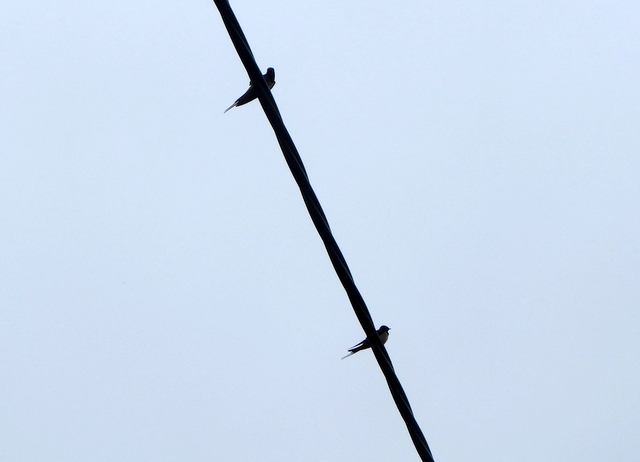
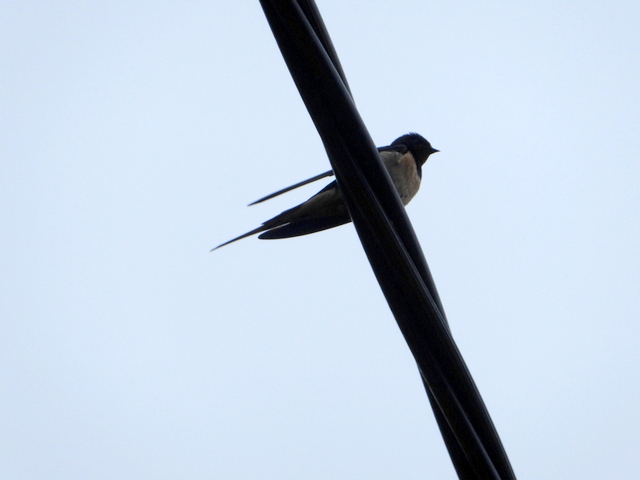
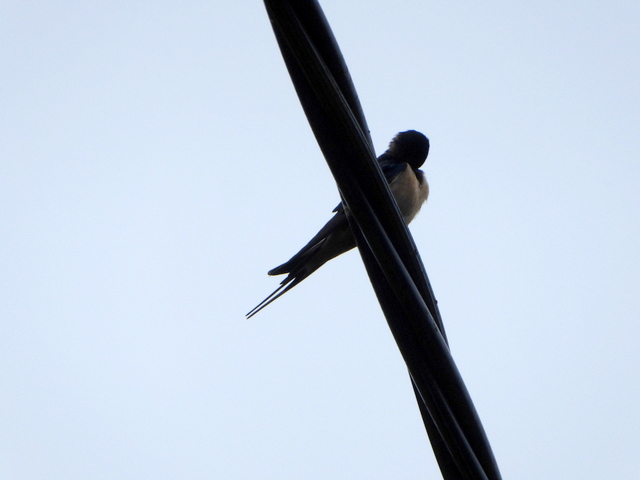
Any warm days we had in early spring were quickly followed by much cooler and wetter weather and the returning birds were confused, I am sure.  I saw a couple of vanguard male Swallows (Hirundo rustica) at the beginning of April but the ensuing wet and windy weather must have sent them back south because I didn’t see them again until mid May!

Two Swallows on the electric cable above our garden in April

Swallow number 1

Swallow number 2

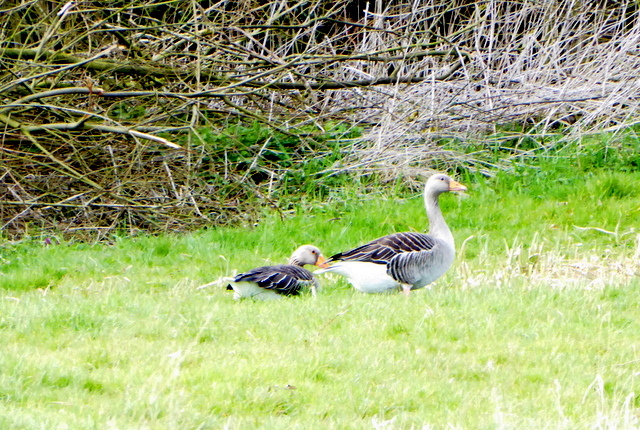
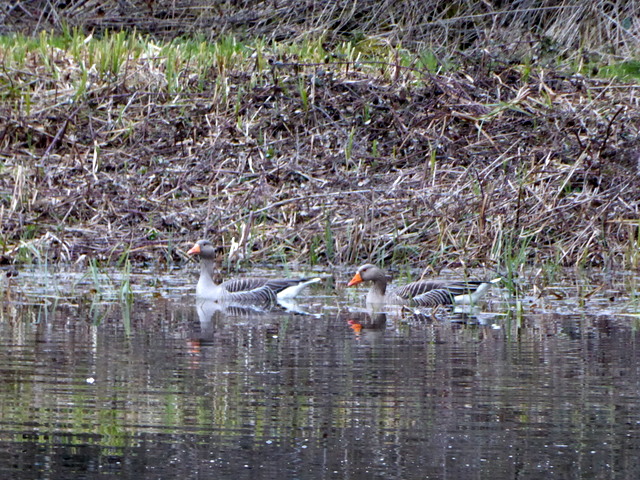
We are pleased to say that the Greylags (Anser anser) did arrive in our garden, a little later than usual and spent a couple of hours a day inspecting the place…..

Greylag male and female

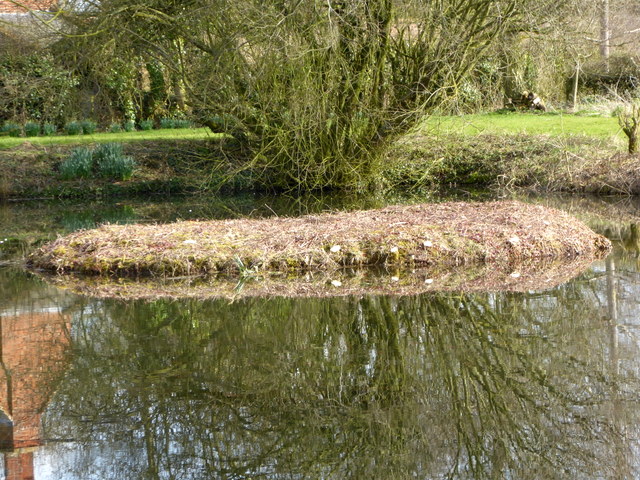
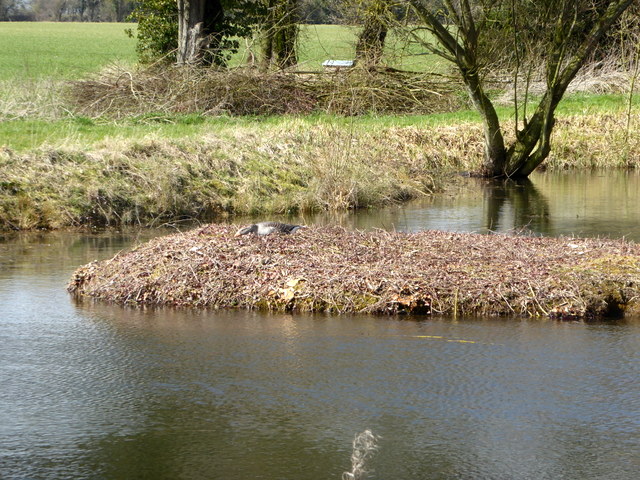
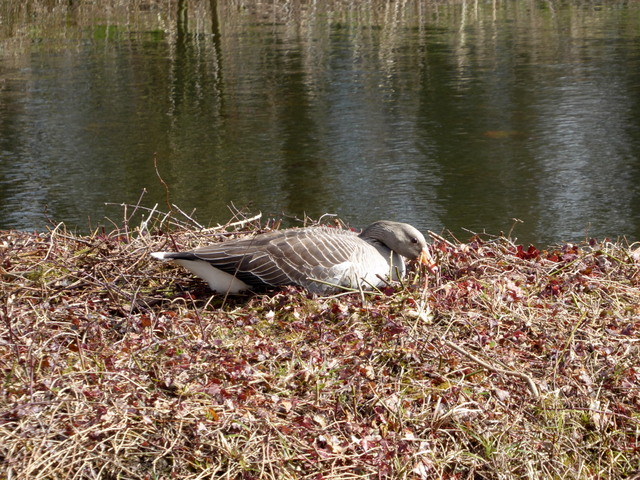
…..until they were ready to set up home here for the duration.  A nest was built on the island and the female began to sit on her eggs at the end of March.

The geese taking up residence.

The island

The goose on her nest. She lowers her head to become less noticeable.

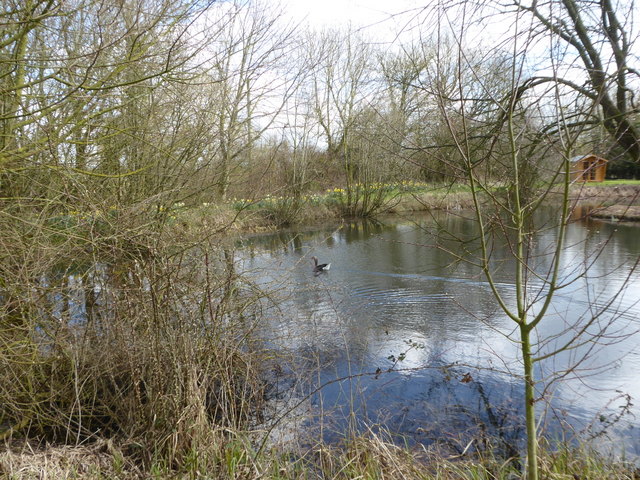
The gander patrols the water…..

….but often went off elsewhere to eat and meet his friends, though was within calling range.

The goose sat and sat and sat, only leaving the nest for a couple of minutes in the morning and evening to snatch a quick bite to eat.

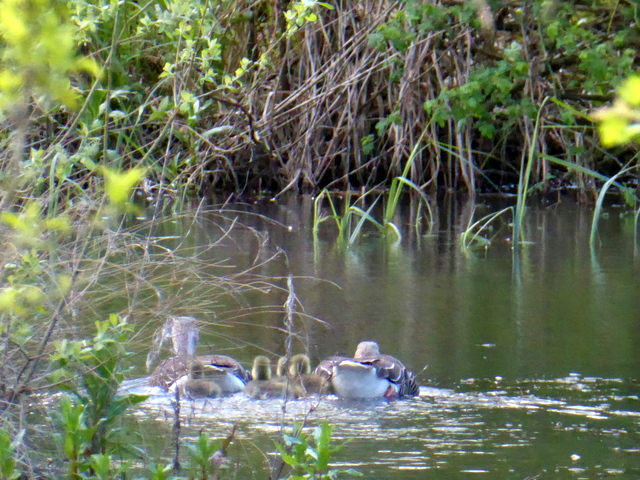
Eventually, right at the end of April the goslings hatched.  There are four of them but I have had great difficulty photographing them.

Retreating Greylag family

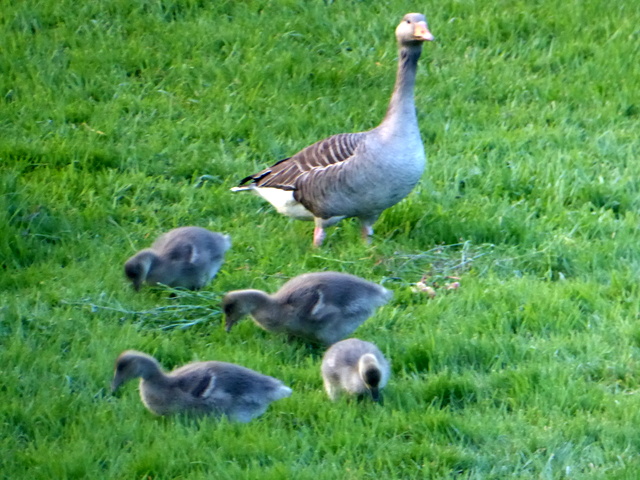
As the goslings have grown the parents have become a little more relaxed but still beat a hasty retreat if anyone gets too close.

Gander on the lookout

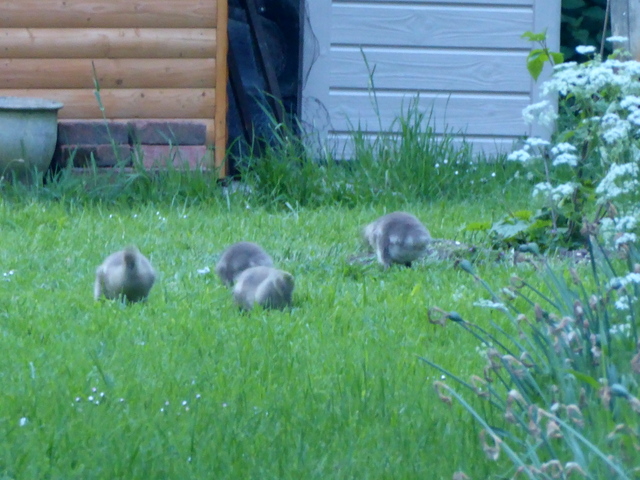
Four fat babies eating our grass

These photos were taken at dusk and with my zoom at full stretch!  The goslings are on the move all the time and it is very difficult to get them in focus.

This photo was taken a few days later from Elinor’s bedroom window

I managed to get the whole family in this one!

While the goose was still sitting on her nest we had some surprise and unexpected visitors in the garden.

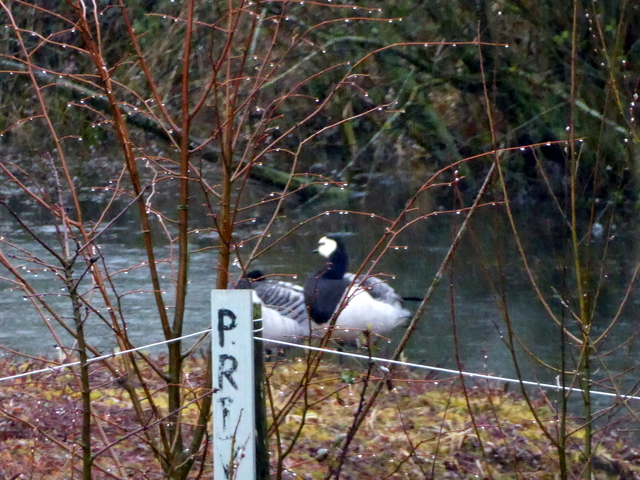
Barnacle Geese! (Branta leucopsis)   They had the cheek to land on the Greylags’ island while the goose was on her nest!

They appeared to want to set up home there too.

Richard saw them visit a few days later when the Greylag goose decided she didn’t want them there any longer.  She called her mate who arrived very quickly and saw them off.  These photos were taken from Elinor’s bedroom window again.

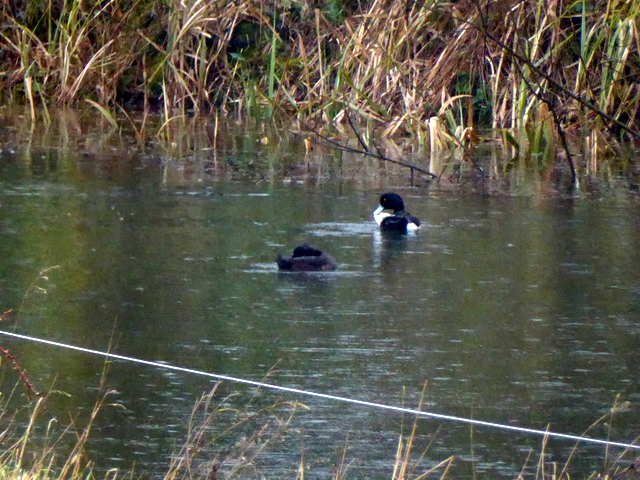
The pond has also had many visits from Tufted Ducks (Aythya fuligula).  There have often been two pairs of them swimming together.

Male and female Tufted Ducks

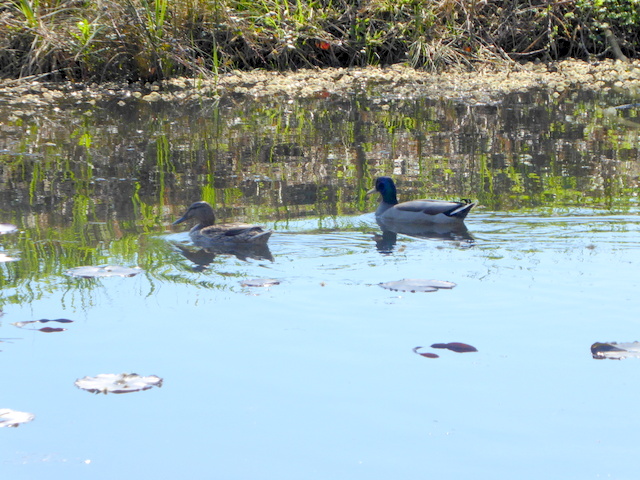
Mallard (Anas platyrhynchos) male and female

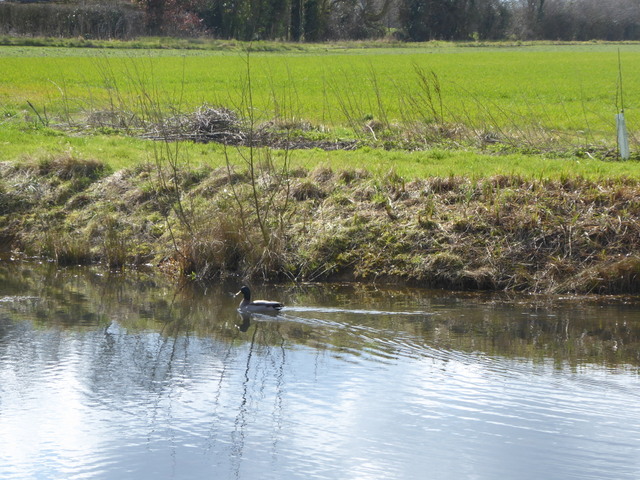
Mallard drake

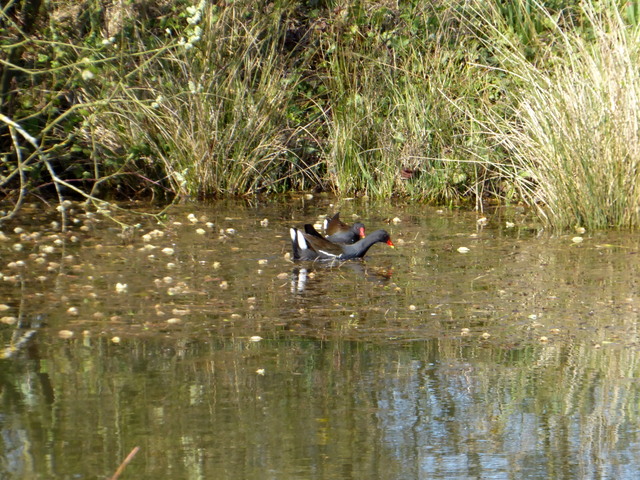
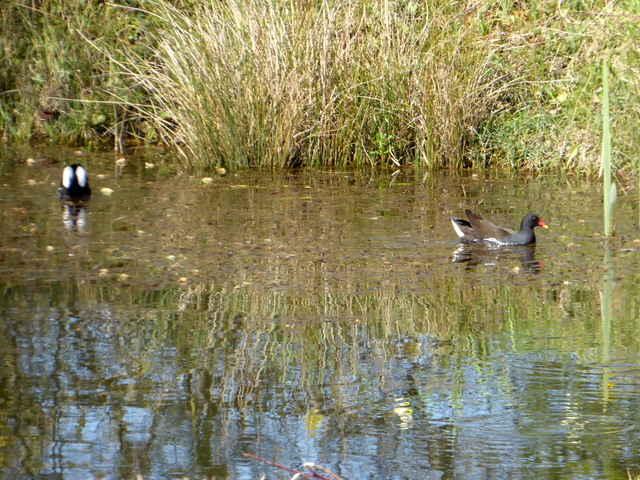
A pair of Moorhens (Gallinula chloropus)

The Moorhens again; one displaying its white feathers under its tail.

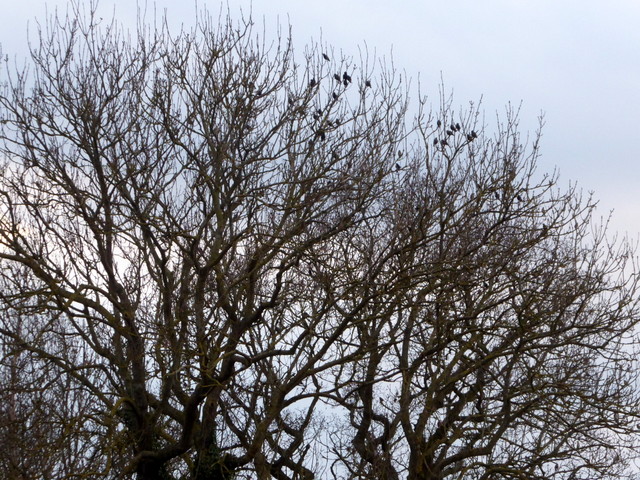
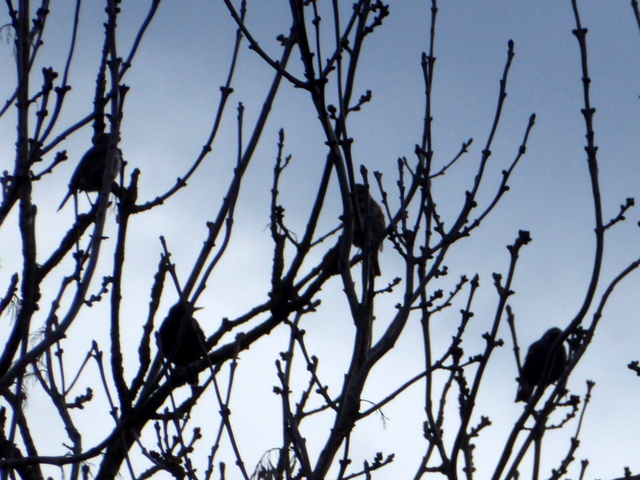
Before the leaves appeared on the Ash tree we had frequent flocks of Starlings visit in the evening

Starlings (Sturnus vulgaris)

We also had Fieldfares (Turdus pilaris) and Redwings (Turdus iliacus) congregate in that same tree before they flew north and east to their breeding grounds.

Once the winter birds had left, Spring decided it ought to do some catching up.  Flowers appeared, summer birds arrived despite the cool temperatures and I took this rather shaky video of our pond, mainly to record the birdsong (and the lambs!)

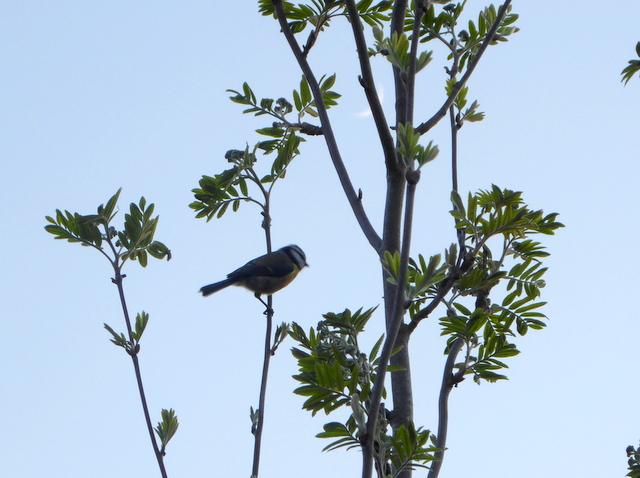
I managed to photograph a Blue Tit (Parus caeruleus) in our Rowan tree.

Blue Tit. There is also a crescent moon behind the tree

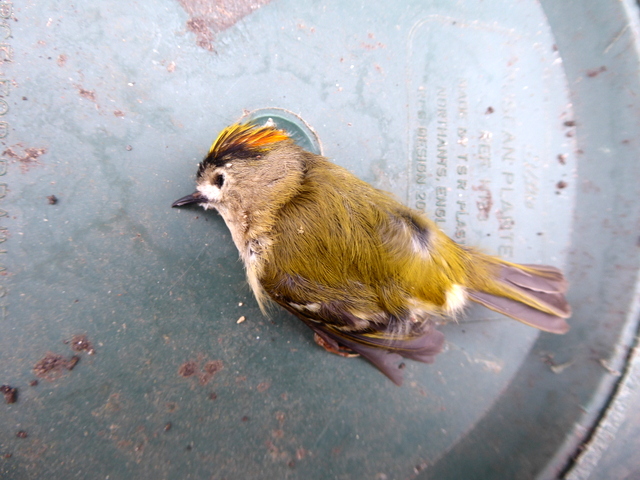
The next photo is a bit sad.  Sad in one sense that it shows a dead bird and sad in another that I am strange enough to want to photograph a dead bird!  I apologise to anyone who is upset at seeing these photos which were taken to record the presence of the bird in the area.  I buried the bird as soon as I had finished looking at it.

A Firecrest (Regulus ignicapillus).

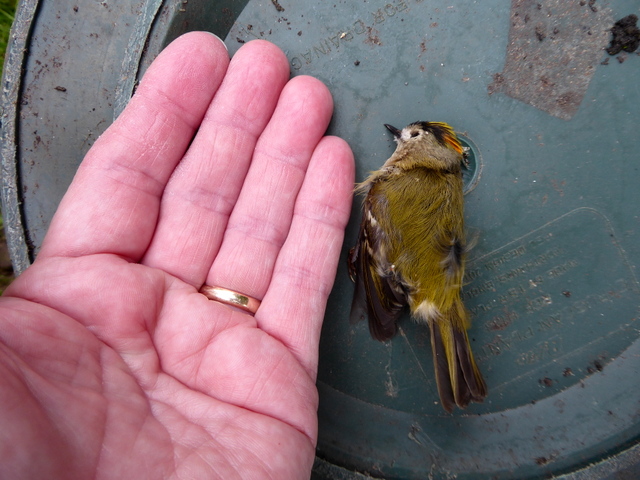
I found this poor bird in the flowerbed under one of our windows and I assume it had flown into the glass and killed itself.

It is a tiny bird as you can see when compared with my hand.

Here is a link with information about Firecrests

We get Goldcrests in our garden but this is the first time I have seen a Firecrest here and am sorry that it had died.  It proves though, that there are probably other Firecrests about so I must be more observant.

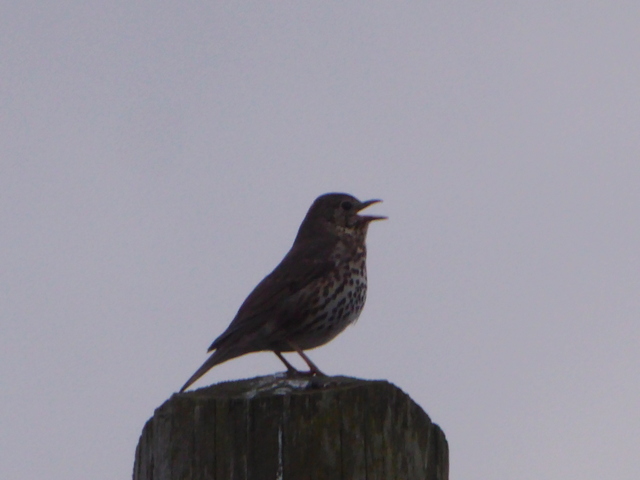
A Song Thrush (Turdus philomelos) singing at dusk

I also made another poor video of this lovely bird singing.  I had to balance on one leg while peering round the corner of our house to make the video which is my excuse for the poor quality.  The video is dedicated to Richard Sutton of A Listening Heart blog who lamented in a recent post that he hadn’t heard a Song Thrush for a while.  Please do visit Richard’s blog.  He writes beautifully about the countryside where he lives and about poets and writers too.


Share this:

  • Share on X (Opens in new window) X
  • Share on Reddit (Opens in new window) Reddit
  • Share on Pinterest (Opens in new window) Pinterest
  • Share on Facebook (Opens in new window) Facebook
  • Email a link to a friend (Opens in new window) Email
  • Share on Tumblr (Opens in new window) Tumblr
  • Print (Opens in new window) Print
  • Share on Pocket (Opens in new window) Pocket
  • Share on LinkedIn (Opens in new window) LinkedIn
Like Loading...

2017 Revisited

12 Thu Apr 2018

Posted by Clare Pooley in Arts and Crafts, churches, Rural Diary

≈ 90 Comments

Tags

Bungay, Churches Conservation Trust, gargoyles, grotesques, H Rider Haggard, John Barber Scott, Priory Church of Saint Mary, Suffolk

As I mentioned in a previous post, I am writing a series of posts about a few places I visited last year but hadn’t the time then, to feature in my blog.

ooooOOoooo
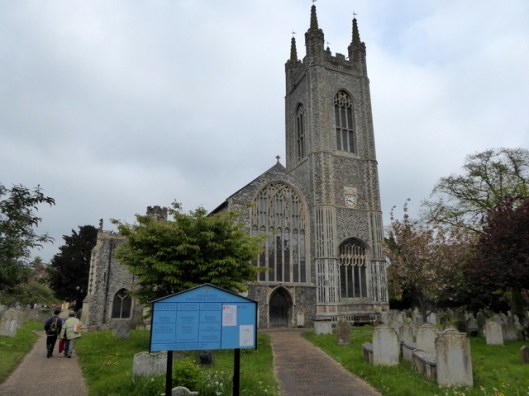
The Priory Church of Saint Mary, Bungay, Suffolk

Last spring I went to see an exhibition of ancient and modern needlework and textiles at St. Mary’s Priory Church in Bungay.  The exhibition was called ‘A Stitch in Time’ and the leaflet I was given as I entered the church stated that it “… offer(ed) the visitor the opportunity to explore Bungay through the textiles that have been left as legacies of its past and … (admire) textiles that, it is hoped, will become heirlooms for future generations”.

Star of Bethlehem
Star of Bethlehem
Star of Bethlehem
Star of Bethlehem

Star of Bethlehem (Ornithogalum umbellatum) were in flower in the churchyard.

I enjoyed the exhibition exceedingly but photography was not allowed because many of the exhibits were extremely old and precious and all were unique and beautiful.  I spent some time admiring the needlework and also watching as some of the members of the ‘Sew on Sunday’ group worked on their current projects.
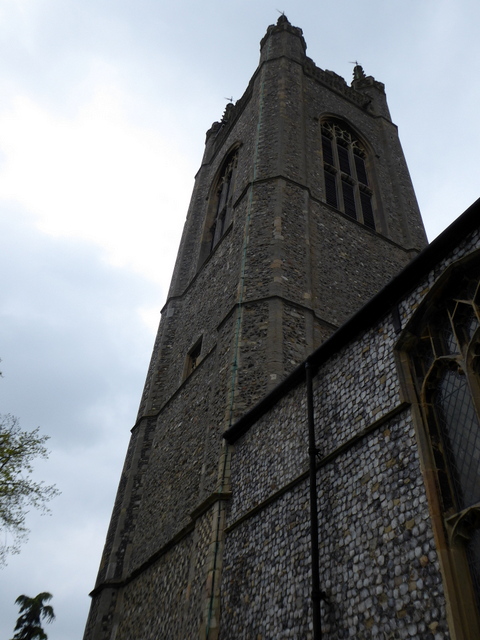
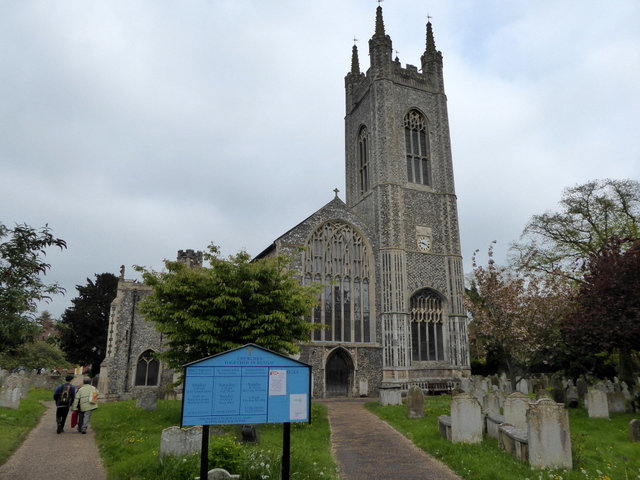
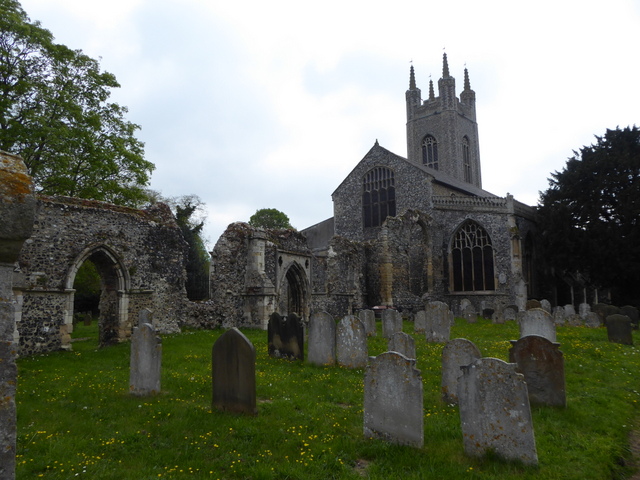
St. Mary’s Church tower

St. Mary’s Church began its life as part of a Benedictine Priory, its Parochial Nave, which was founded in the 12th century (about 1160) byGundreda wife of Roger de Glanville.  The nuns who resided in the priory were skilled needlewomen and made beautifully embroidered wall-hangings, altar cloths and other textiles used in church and chapel.  They probably also made embroidered vestments for the clergy.   The leaflet told me that after the Reformation in 1536 the Priory was closed and according to the parish accounts and local wills, “some of the church embroideries and vestments were cut up and made into elaborate theatrical costumes for the plays forming part of the annual Ale-Games in the churchyards during the Whitsun period!”  Don’t ask me about Ale-Games, because I can’t tell you a thing about them!  On display were some exquisite vestments and other church textiles.  Local churches, the Community of All Hallows and the Museum in Bungay had contributed some items for display, as had a number of local people.
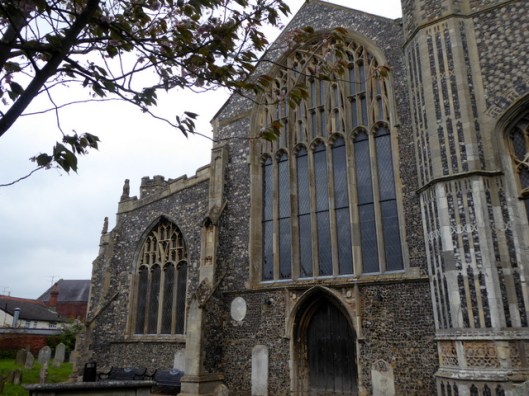
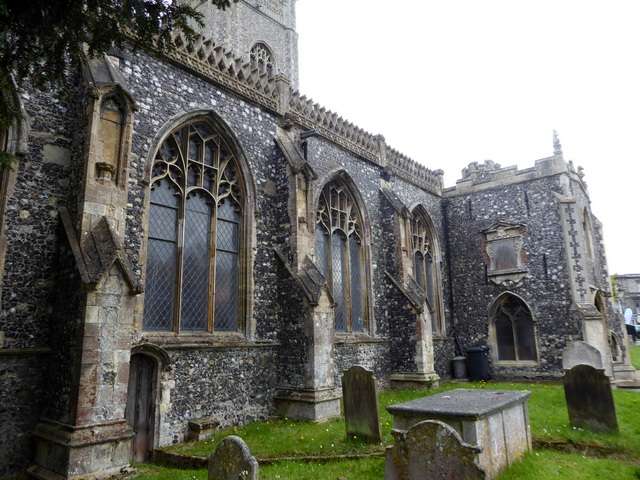
St. Mary’s Church, built in the 15th century

Also on display were some needlework samplers dating from  the late 17th century.  These were made by the female ancestors of John Barber Scott (1792 – 1862) who was a wealthy local gentleman, diarist, philanthropist and Town Reeve.

I particularly enjoyed the display of work by the All Hallows Embroidery School which used to be part of the Community of All Hallows in Ditchingham.
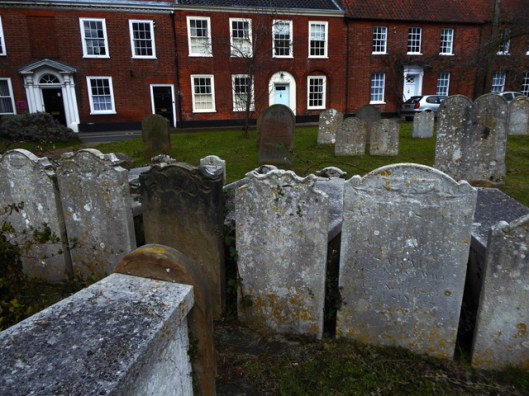
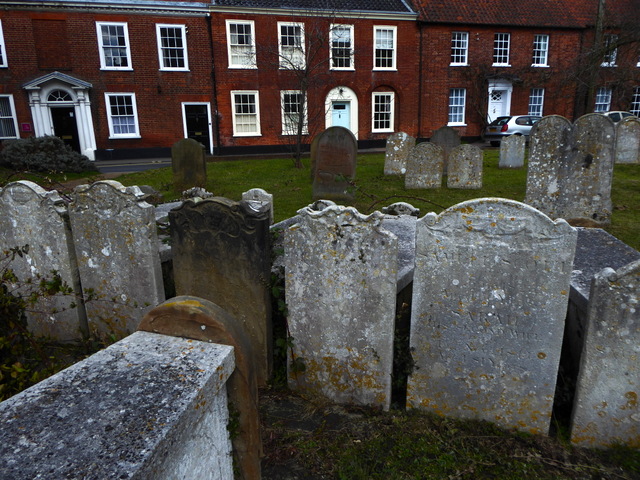
The Barber Scott memorials and grave stones in the churchyard

I returned to the church a week later once the exhibition had finished, and took some more photographs of the church, inside and out.  This church is now redundant and is cared for by the Churches Conservation Trust.
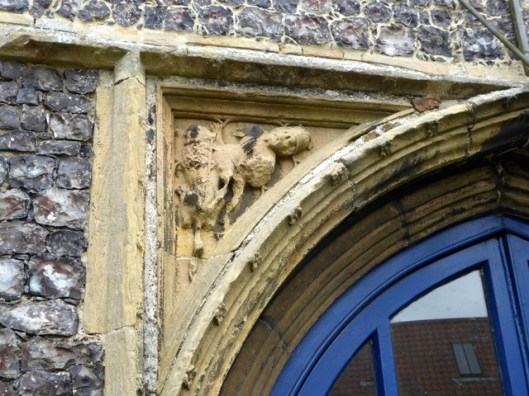
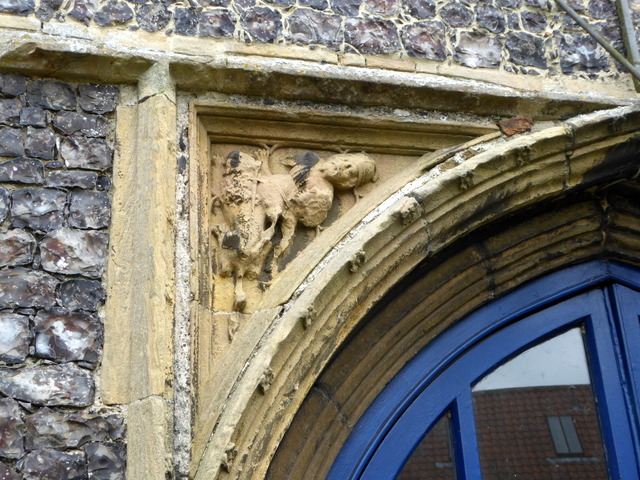
Carving over north door.  A knight and a lion.
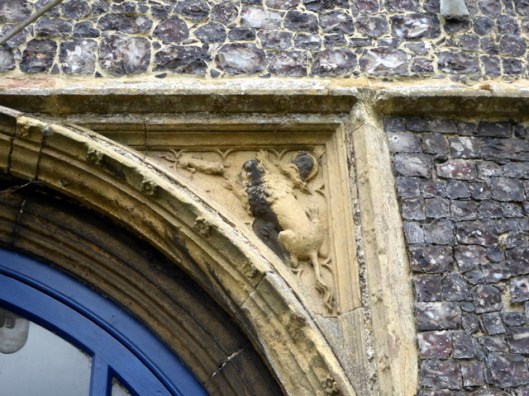
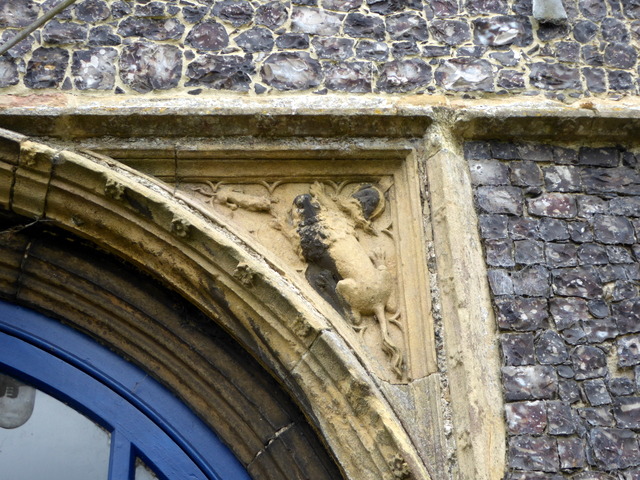
Carving over north door.  A lion and a mouse.  There is also a man’s head to the right of the lion.
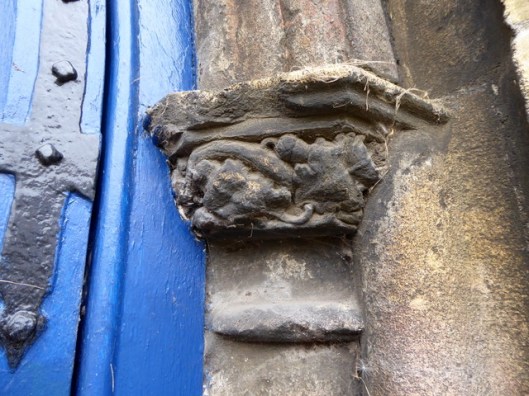
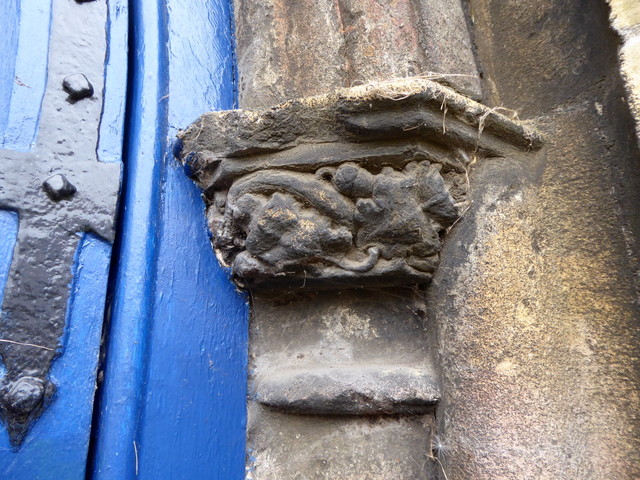
An arch-stop with oak leaves and acorns
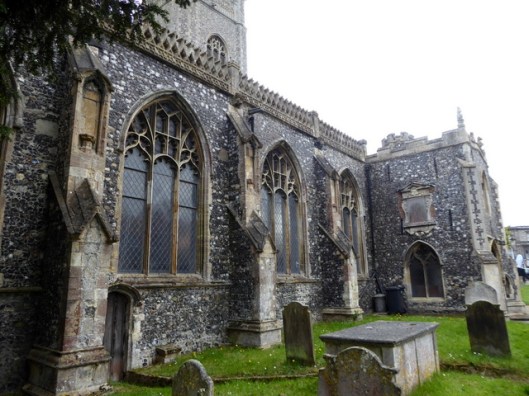
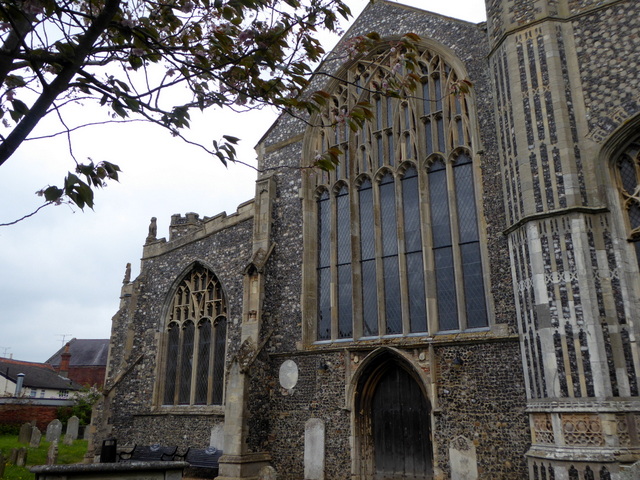
The north wall of the church.

I enjoy looking out for grotesques and gargoyles on churches.

Dog grotesque on north side of the church
What looks like a pig with a crown and long hair on north side of the church
Man with a toothache on north side of the church
Grotesque on north side of the church
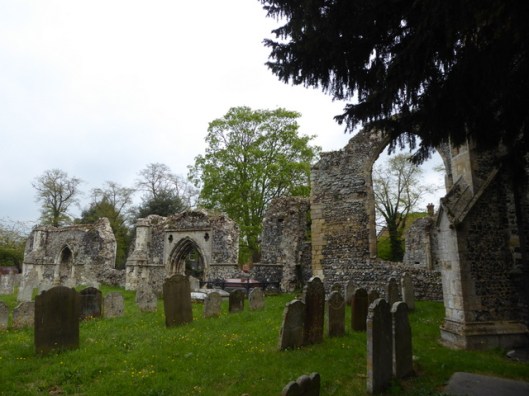

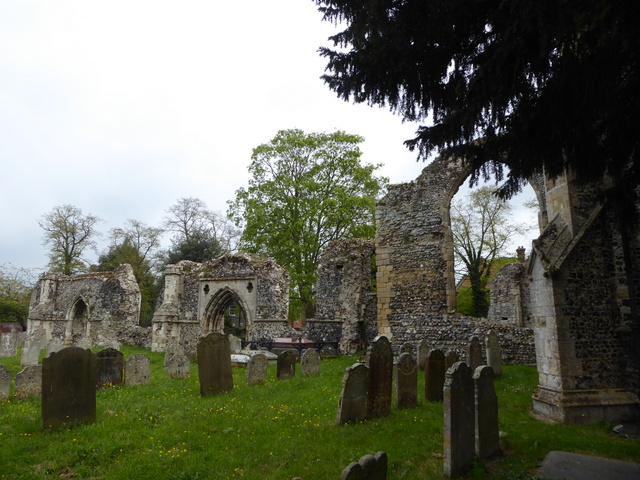
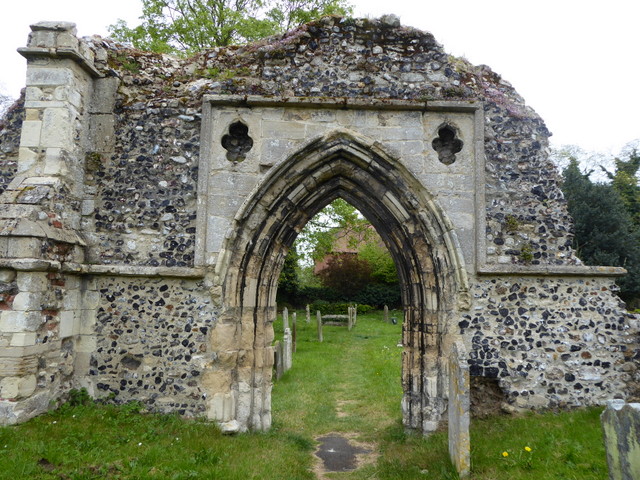
These are the ruins of the 13th and 14th century priory buildings at the east end of the church
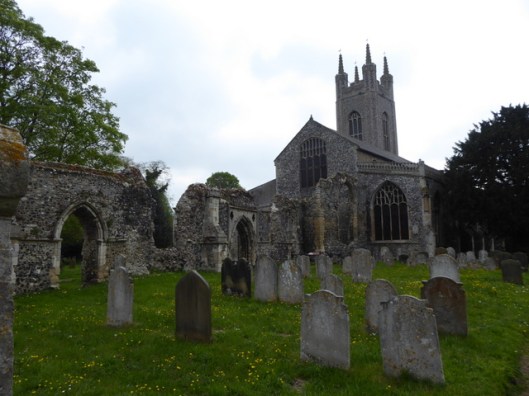
Priory ruins
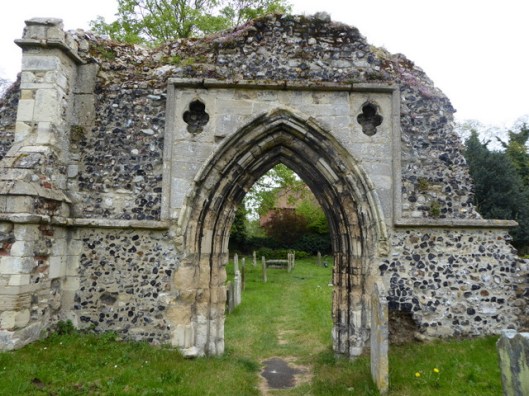
Priory ruins
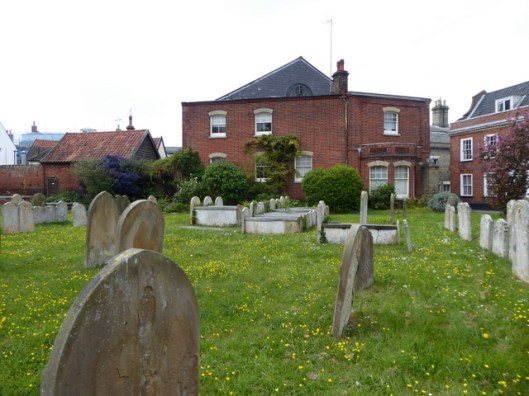
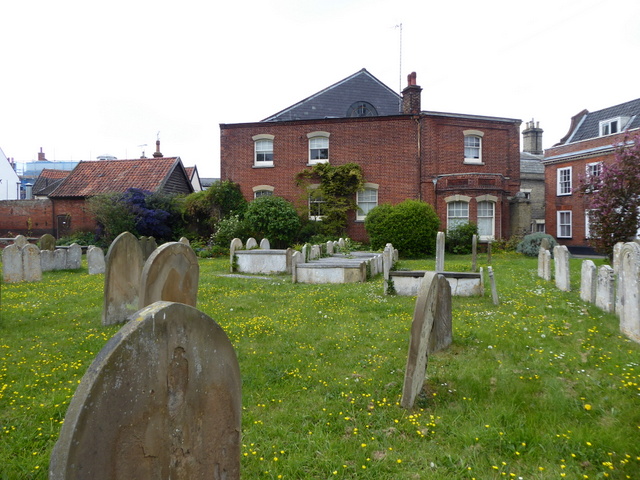
Churchyard with the Barber Scott graves in the middle distance

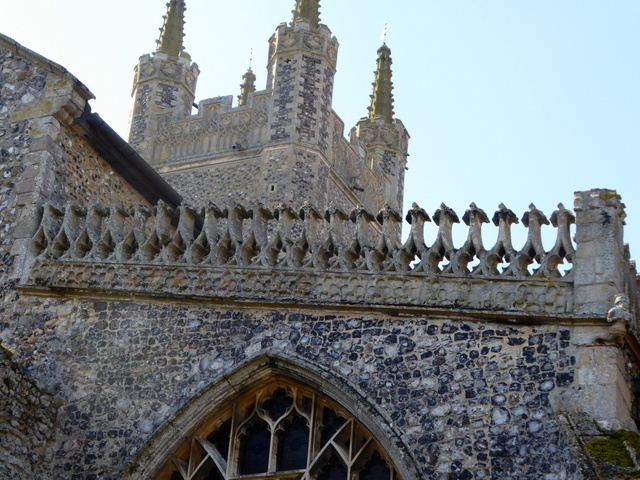
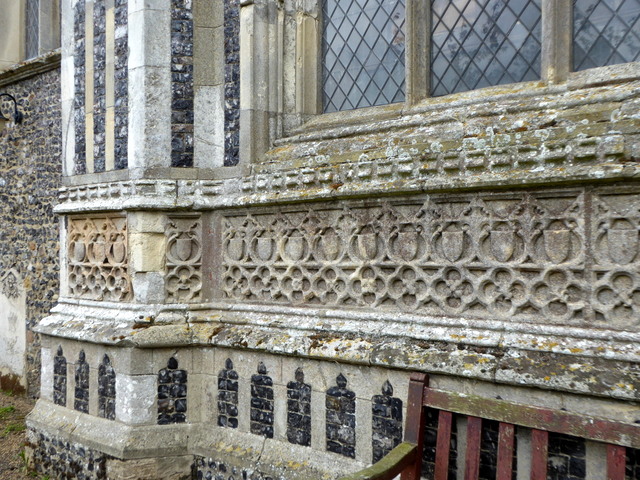
Look at the beautiful open-work cresting on the top of the north aisle! What skilled masons they were to have carved this!
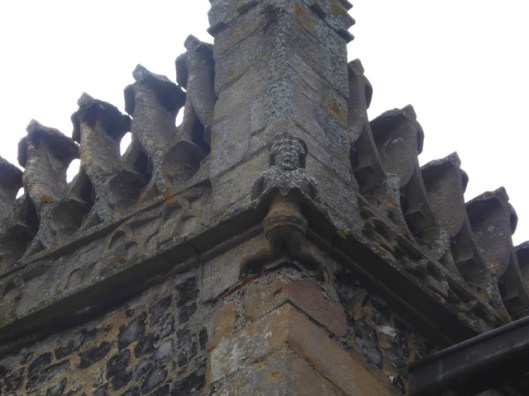
I love this tiny figure of a knock-kneed kneeling knight in armour!
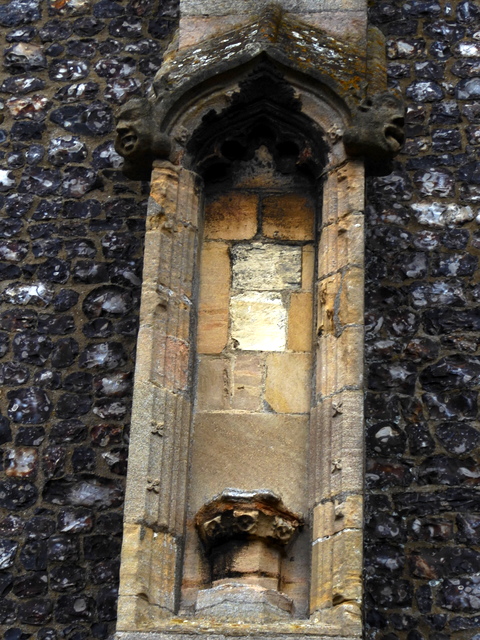
These niches on the buttresses would have contained figures of saints which were probably destroyed when the priory was dissolved.
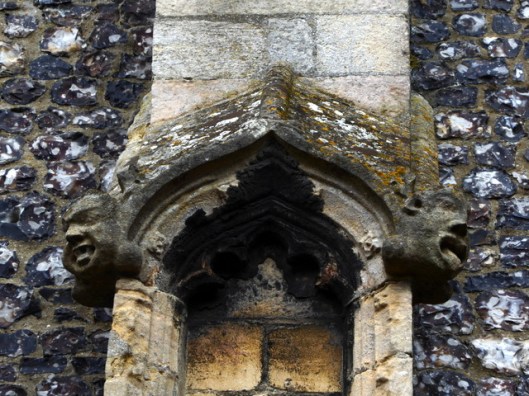
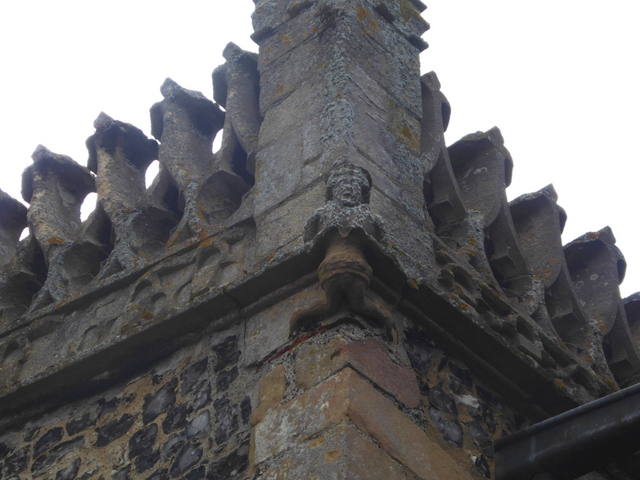
More grotesque faces!
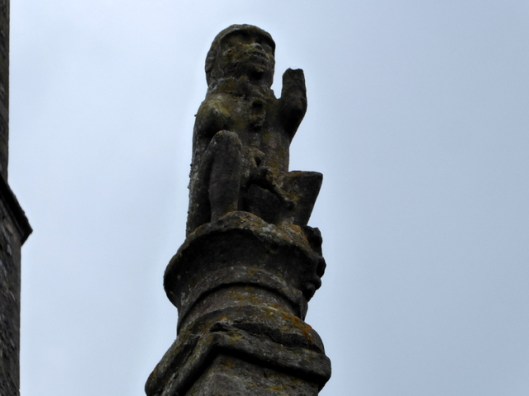
A chained begging monkey
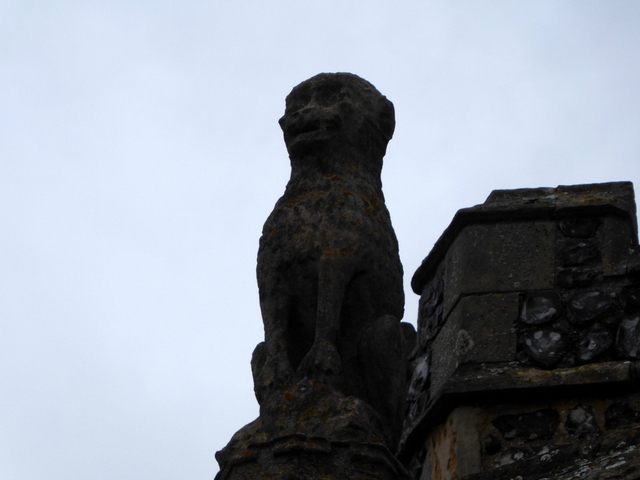
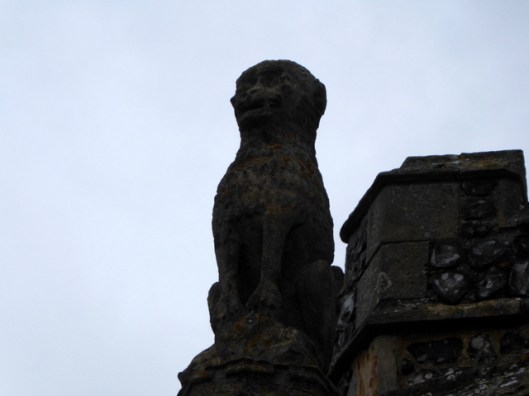
A hound with folded paws
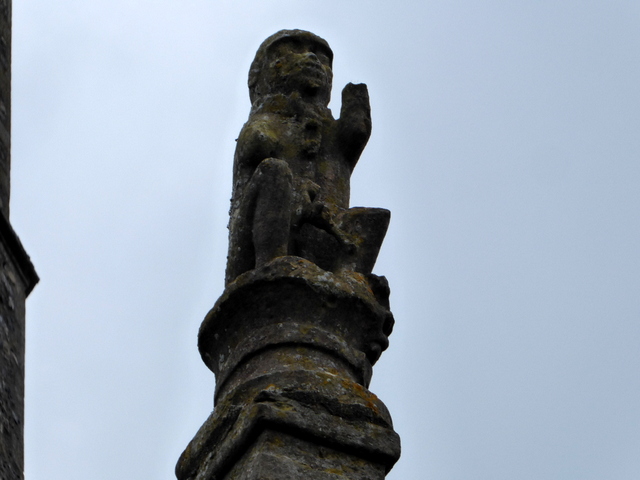
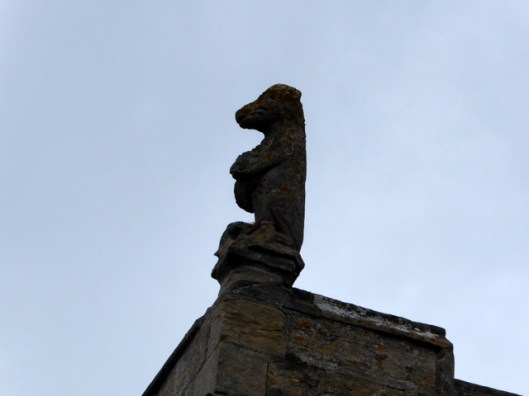
I’m not sure what this creature is!
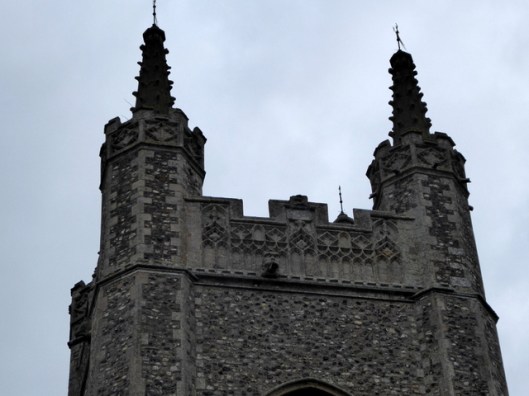
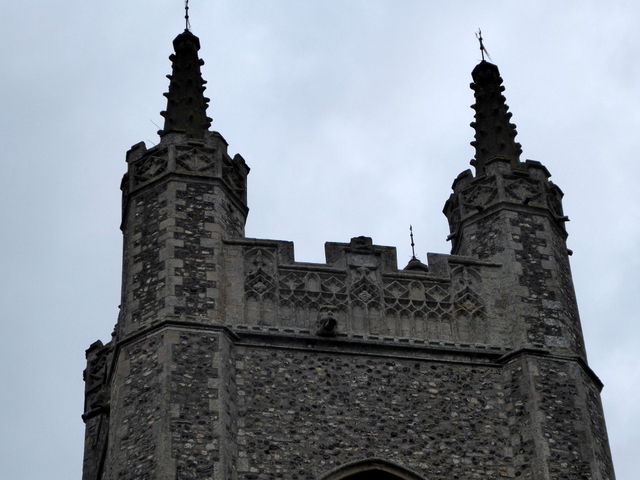
I like the pinnacles on top of the tower. More fine carving here too.
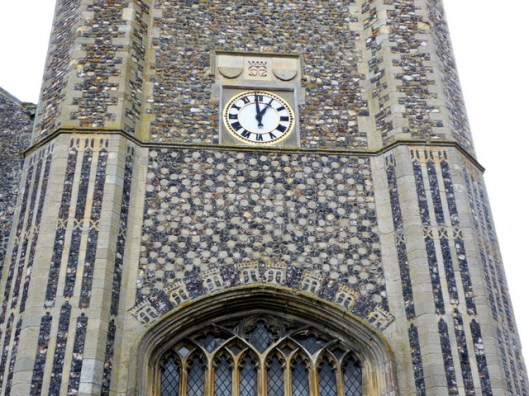
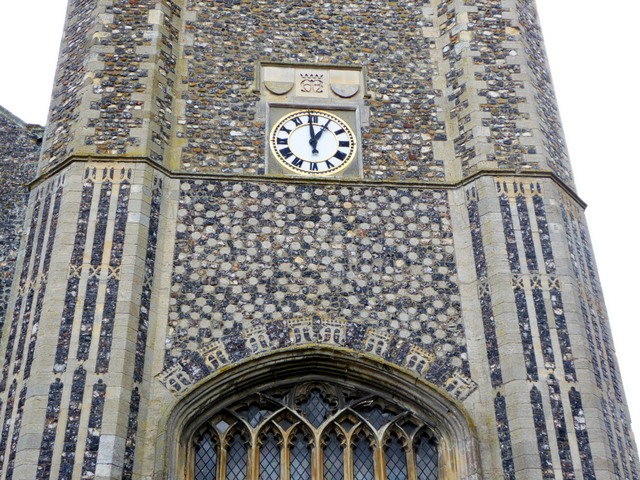
Carving and flushwork on the West Front

Note the crowned ‘M’s above the West window.  The emblem incorporates all the letters of the name ‘Maria’.
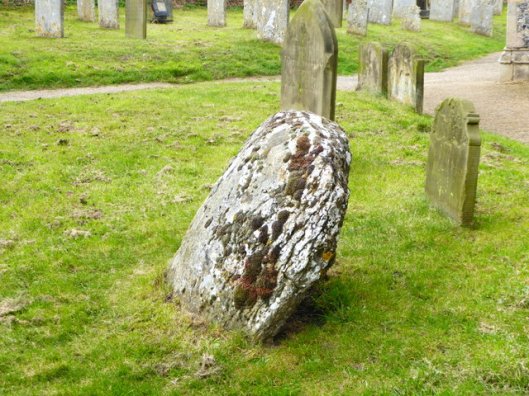
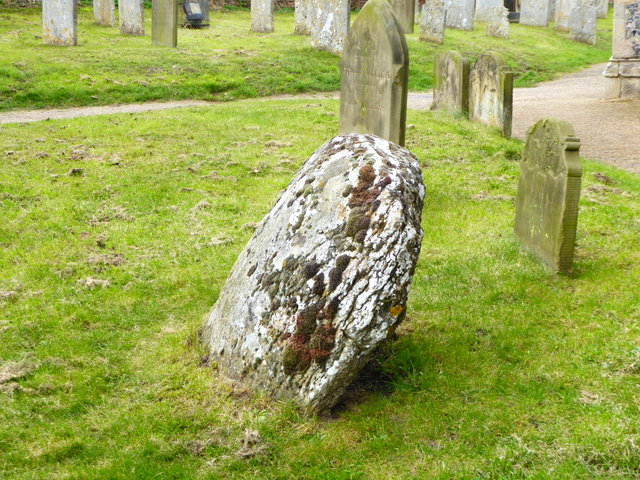
Opposite the West Door is this stone known as ‘The Druid’s Stone’ which has probably been there since the Ice Age.

The inside of the church is less interesting than the outside.  Damage was done to the church in the Bungay Great Fire of 1688 when most of the roof timbers were destroyed and again during the Second World War when most of the glass was lost.

This slideshow requires JavaScript.

The slideshow above is of the windows and the stained glass in the church, most of which had to be replaced after the Second World War.
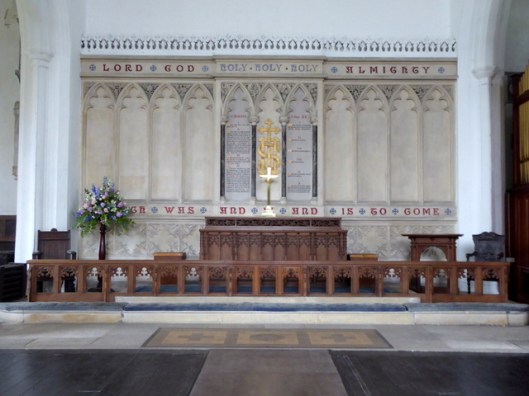
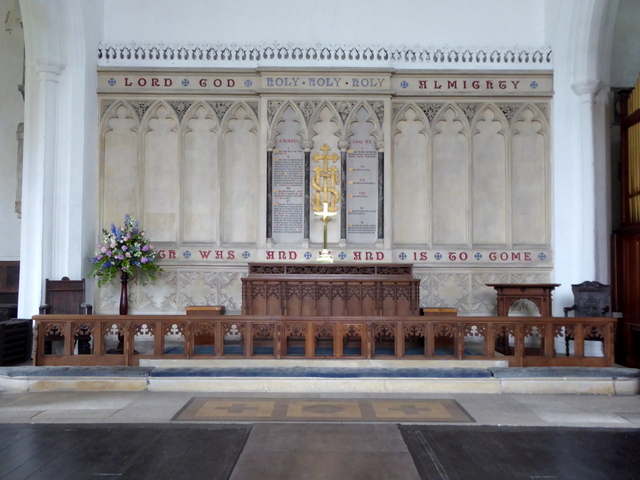
The High Altar
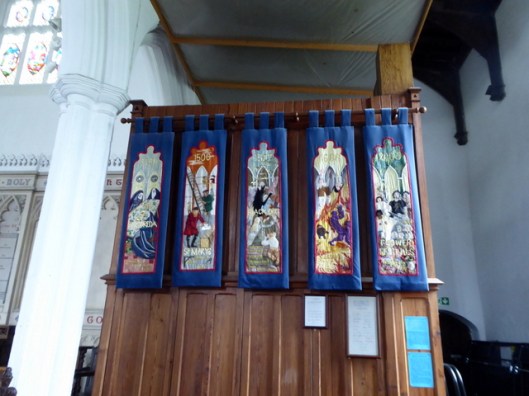
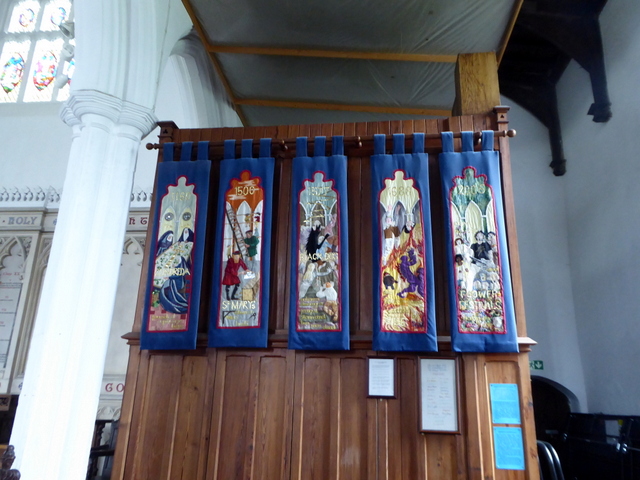
Some of the modern needlework that adorns the church
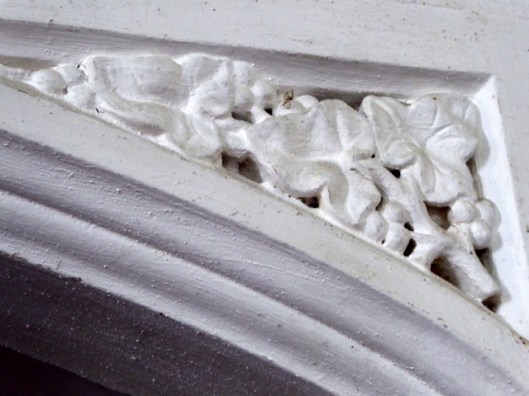
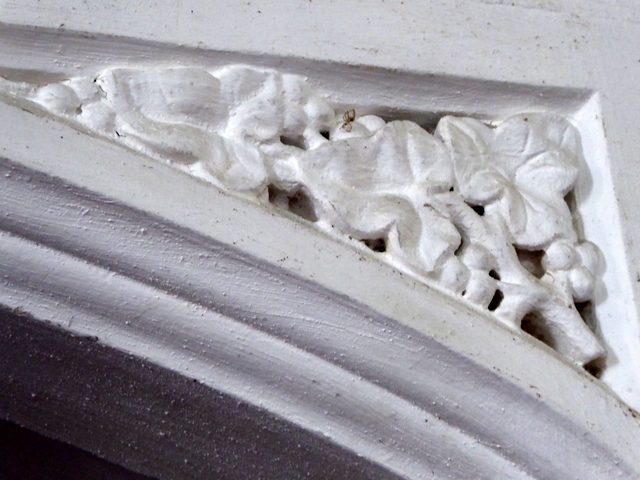
Carved ivy
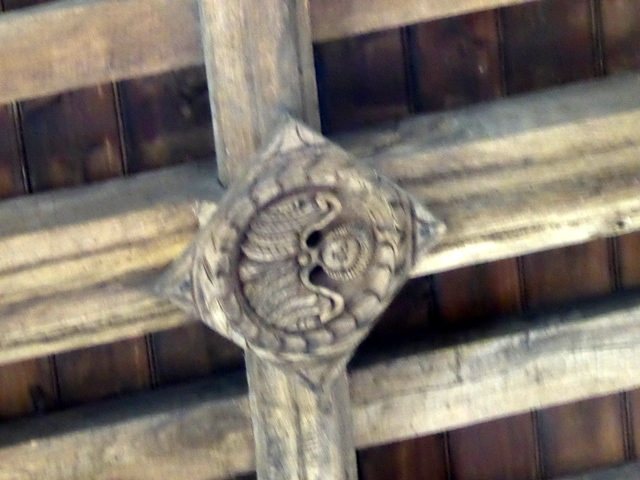
One of the bosses in the roof. I apologise for it being out of focus.

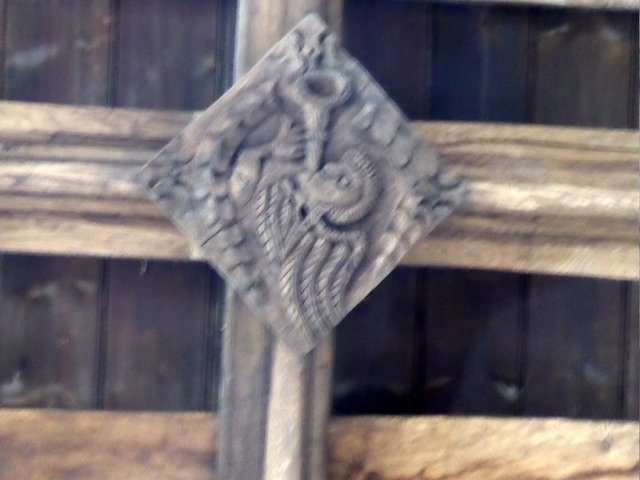
Some of the original 15th century woodwork was saved.  I have no idea if this might be one of the older carvings.  Most of the roof dates from the restoration after the fire which was completed in 1699.
Another blurred boss

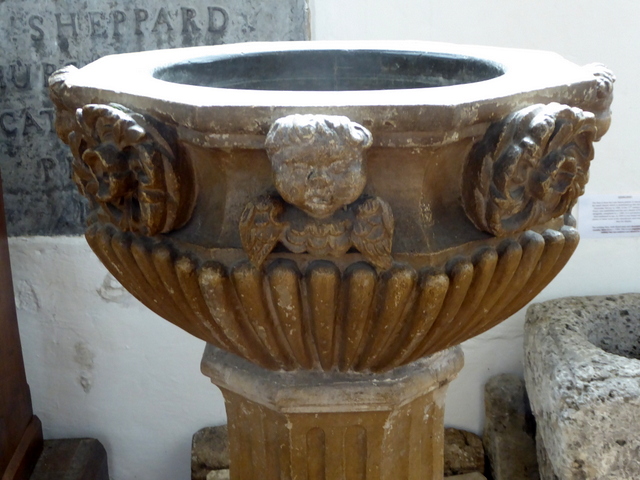
The font is 18th century and decorated with cherubs and roses.

Behind and to the right of the font is a stone bowl thought to be part of a Saxon or Norman font which was found near the Staithe in the town.
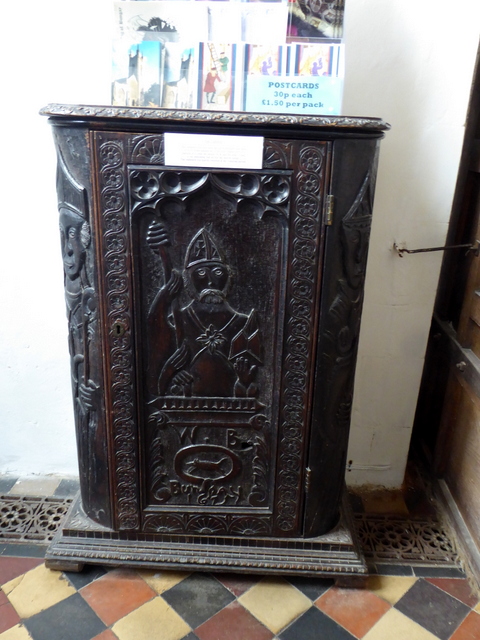
This is a dole cupboard where bread and other scraps of food were placed for the poor to collect.

The cupboard was restored in the 19th century but it is dated 1675.  Or, it may be a fake and made in the 19th century.  Who knows!  There is a rebus on the lower front of the cupboard; a large Q with a rat inside it (Curate) and his initials.  There are also mitred bishops being pulled downwards by hands.  Hmmm!  Bishops can’t have been rated very highly here!
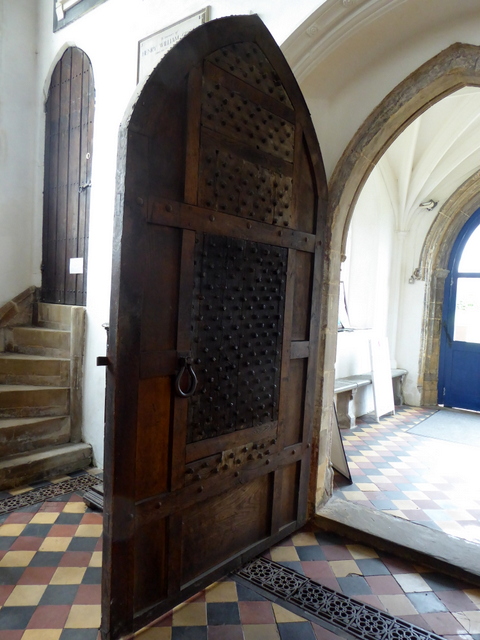
I like the studded door.

The studded panels came from a 16th century house in the town.
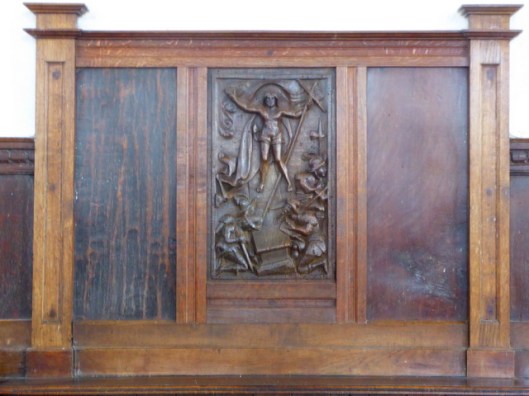
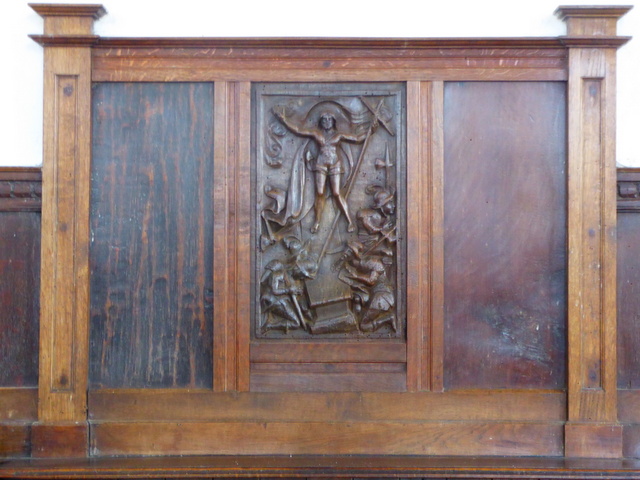
The War Memorial Chapel in the church has this 17th century Flemish carving of the Resurrection as the central panel of the reredos.  

This beautiful carving was the gift of Sir H Rider Haggard  of ‘King Solomon’s Mines’ and ‘She’ fame, who lived in Ditchingham House nearby.

Thank you very much for taking the time to read this long post!
Share this:

  • Share on X (Opens in new window) X
  • Share on Reddit (Opens in new window) Reddit
  • Share on Pinterest (Opens in new window) Pinterest
  • Share on Facebook (Opens in new window) Facebook
  • Email a link to a friend (Opens in new window) Email
  • Share on Tumblr (Opens in new window) Tumblr
  • Print (Opens in new window) Print
  • Share on Pocket (Opens in new window) Pocket
  • Share on LinkedIn (Opens in new window) LinkedIn
Like Loading...

Snowbound

02 Fri Mar 2018

Posted by Clare Pooley in Rural Diary, weather

≈ 100 Comments

Tags

hazel catkins, icicles, lichen, snow, Suffolk, witch-hazel

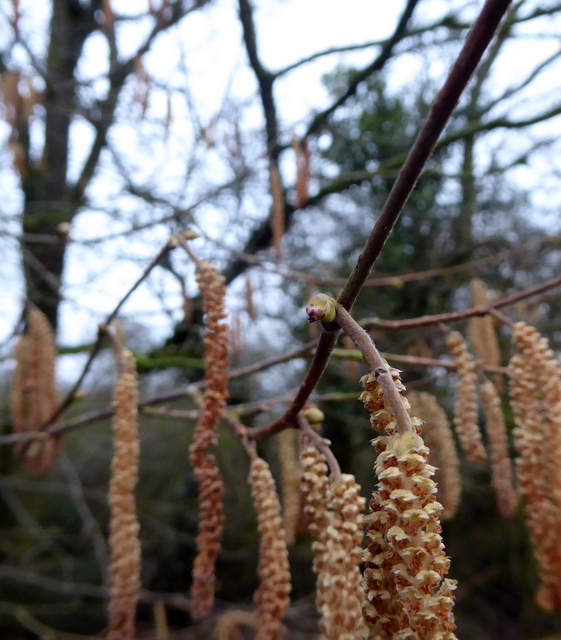
Hazel catkins (Corylus avellana)

With the bad weather keeping us indoors I find I have had time to catch up with reading my e-mails and my friends’ posts and to write another one of my own.

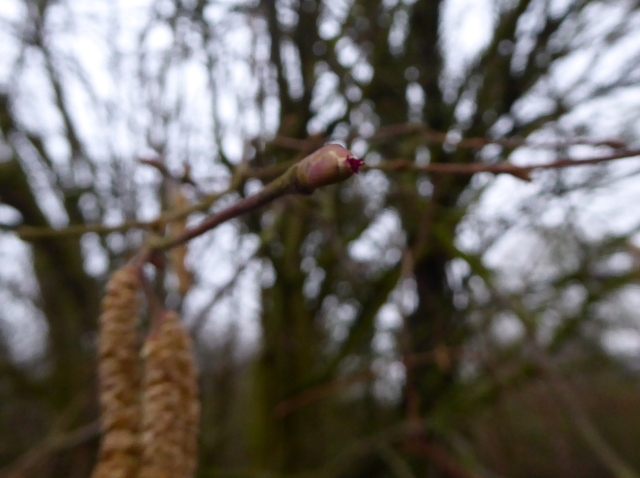
Before the snow arrived I made another attempt at photographing our hazel catkins and found a few female flowers as well.

Hazel catkins

My current camera is not at all good at close-ups or macro shots and so this is the best I can do.

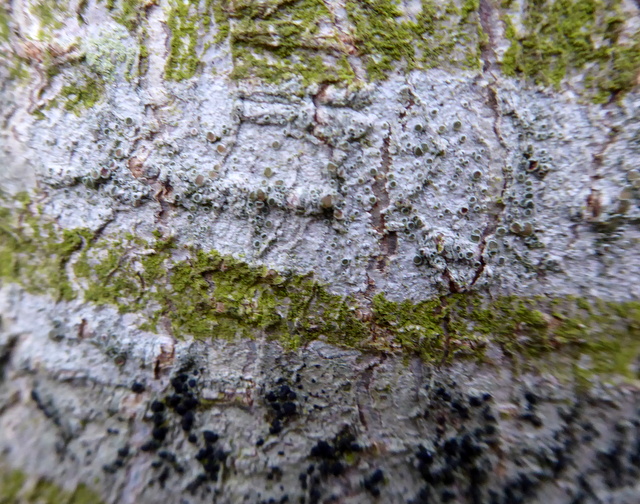
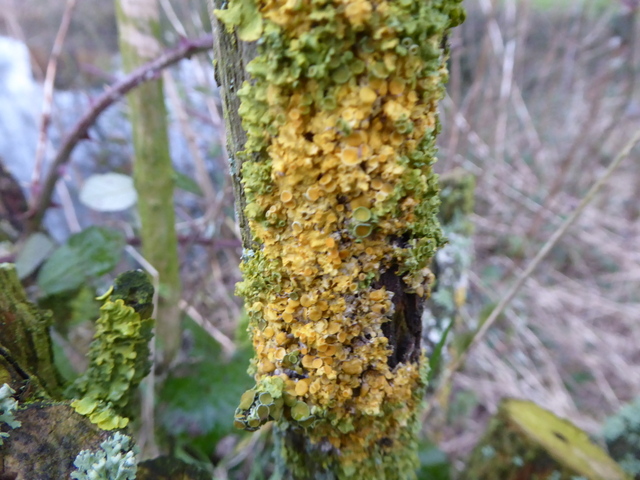
Another attempt at the lichen on the Horse-chestnut tree

I think I am going to have to give this up!

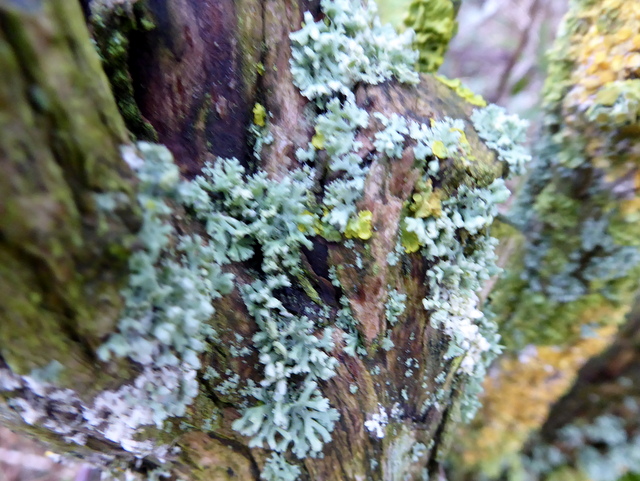
I rather like these lichens but again, they are not in focus.

Yet more blurred lichen!

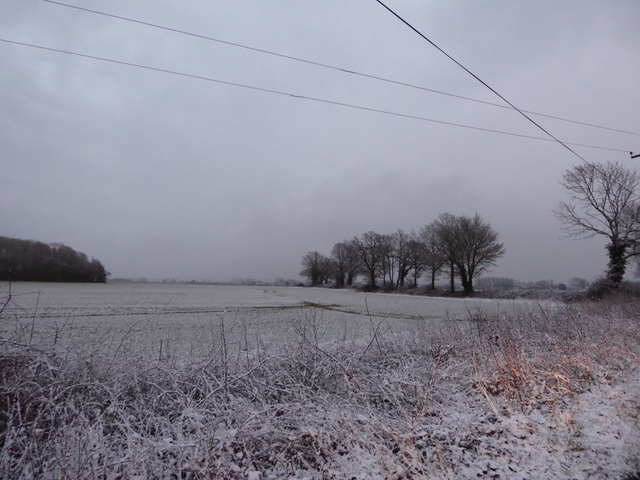
On Monday we had snow showers all day.  Stronger spells of sunshine at midday melted all that had fallen on the driveway and paths but didn’t shift the snow on the flowerbeds and grass.  Richard took Elinor to Norwich for her acupuncture appointment and found that there had been no snow there at all.  The fountain outside the hotel where Elinor has her acupuncture was spectacularly frozen.

Frozen fountain

I had a very quick walk round the house to see that all was well.  It was much too cold to go any further.

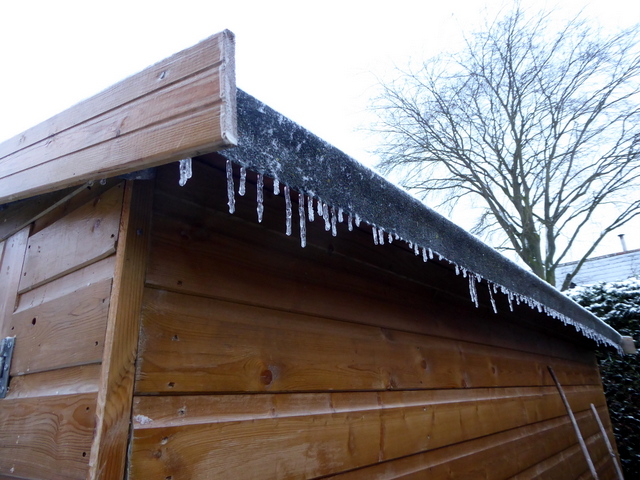
I liked these mini icicles on the tool-shed

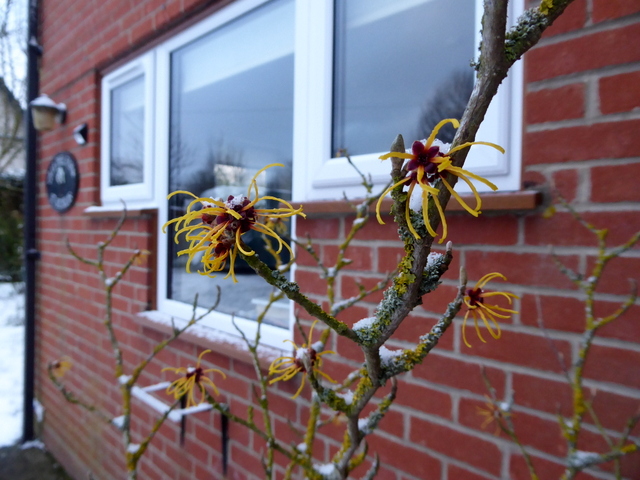
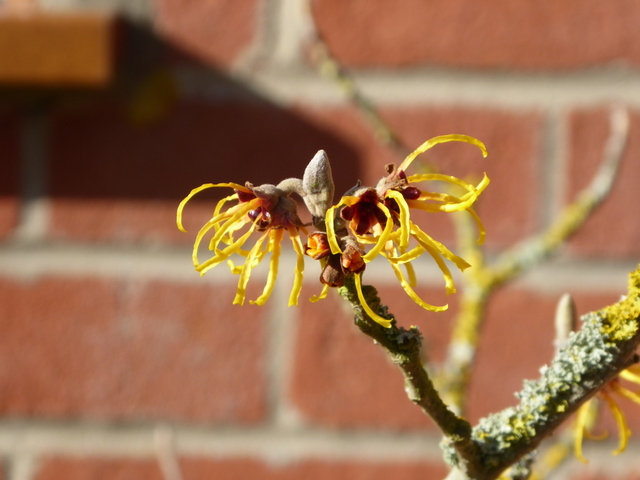
Witch-hazel flowers dusted by snow

This was their swan-song; they are now shrivelled and frozen.

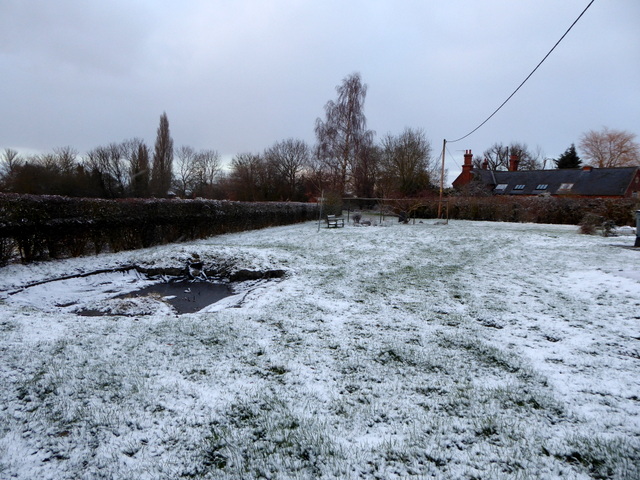
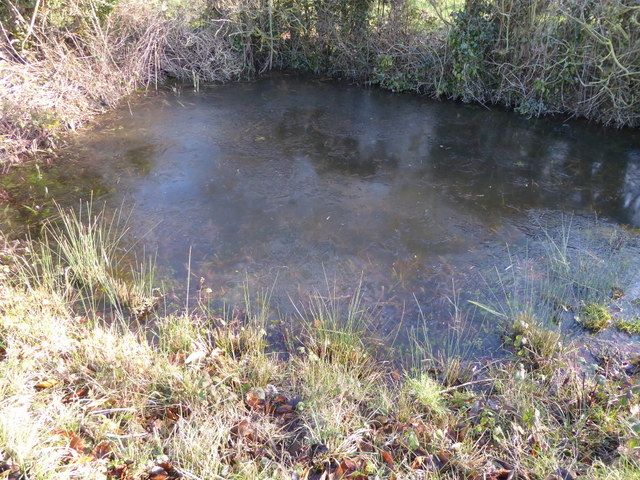
I looked down the garden. The small pond was completely frozen.

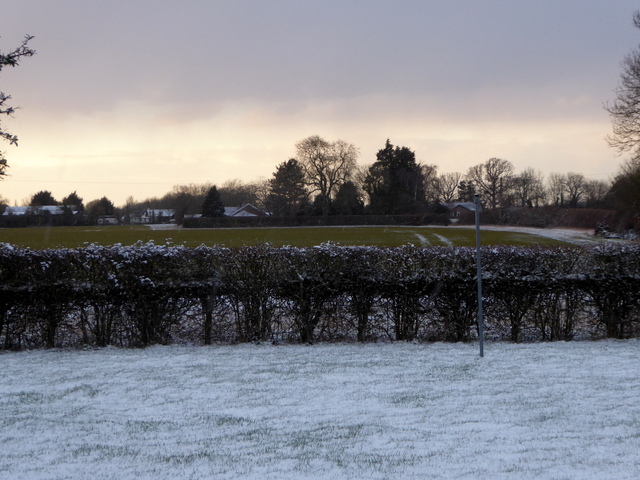
I looked over the hedge to the field beyond.

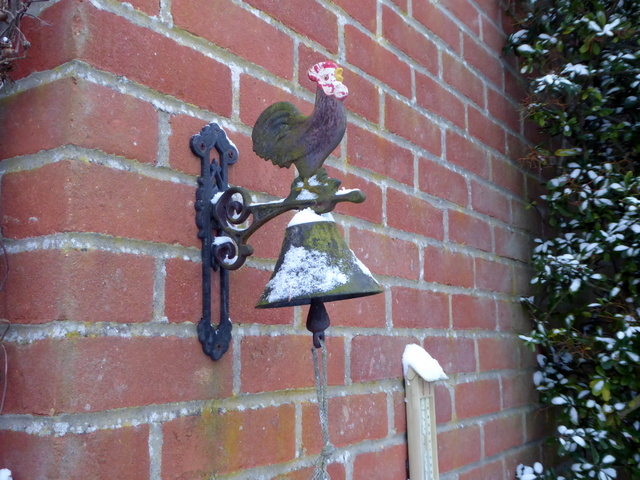
I was chilled now so I made my way back to the front door passing the bell on the way.

Poor cockerel! He’s looking a little worse for wear!

We had a lot of snow on Tuesday night and on Wednesday morning I had to phone my mother to cancel our usual shopping trip.  She was fine and had all she needed for the time being but gave me a short list of things she would like fairly soon.

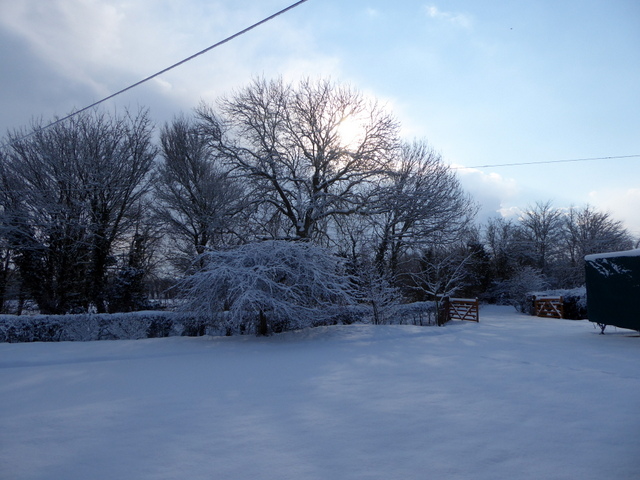
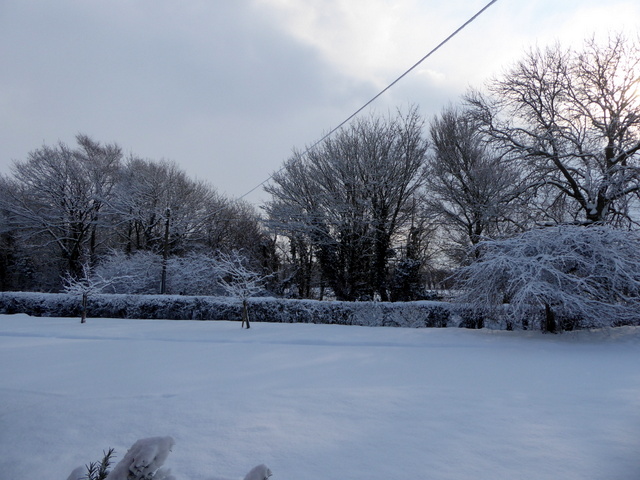
There had been no wind overnight and snow was heaped on telephone wires and windowsills and every tiny branch and twig.

You can see our new gates at the end of the drive in this photo. Richard was able to paint them last week.

In the photo you can see the dangling cable that provides us with our broadband!

We have stayed at home while the winds have picked up and blown most of the snow from the trees and caused deep drifts everywhere.  The roads to the other villages and our local towns are all blocked.  The depth of the snow in the garden has reduced, not from melting but by being scoured away.  We are hoping that we will be able to get to town later this morning before the next snow arrives.  We need to buy supplies and collect medication for me and for Mum.  Our gas delivery hasn’t arrived and we have nearly run out.  I don’t fancy a few days without central heating!  We have turned the thermostat down and the water heater off to conserve power.

The joys of living in the countryside!

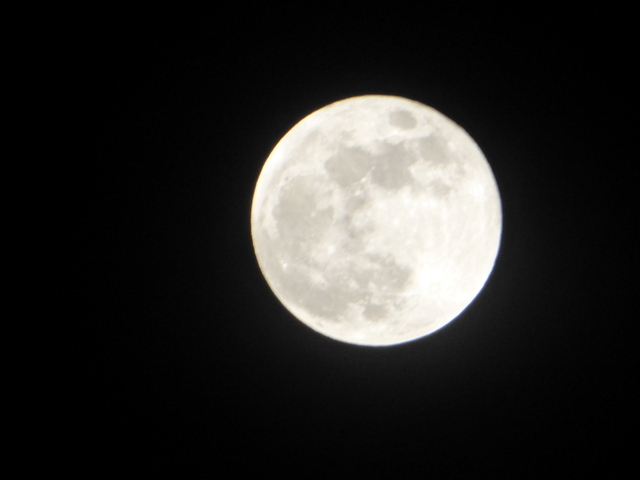
My music selection today is ‘Song to the Moon’ from Dvorak’s opera Rusalka sung by (I believe) Lucia Popp.  I chose this because we have a full moon today.

Thanks for visiting!

Share this:

  • Share on X (Opens in new window) X
  • Share on Reddit (Opens in new window) Reddit
  • Share on Pinterest (Opens in new window) Pinterest
  • Share on Facebook (Opens in new window) Facebook
  • Email a link to a friend (Opens in new window) Email
  • Share on Tumblr (Opens in new window) Tumblr
  • Print (Opens in new window) Print
  • Share on Pocket (Opens in new window) Pocket
  • Share on LinkedIn (Opens in new window) LinkedIn
Like Loading...

A Walk Round the Garden

21 Wed Feb 2018

Posted by Clare Pooley in Rural Diary

≈ 85 Comments

Tags

bee hive, bee orchids, cornelian cherry, crocus, discs of ice, February, garden, hazel catkins, ice, ivy, Jelly Ear fungus, landscaping, lichens, moss, pond, scrub clearance, seedheads, snowdrops, Suffolk, tree surgery, Viburnum, wild cherry, willow, witch-hazel

We had a bright but chilly day recently, so I took the opportunity to photograph a few interesting things I saw on a stroll round our garden.

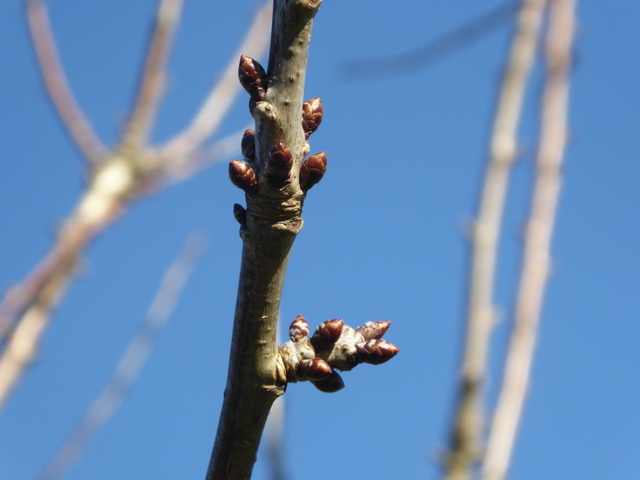
Wild Cherry (Prunus avium)

We have two wild cherry trees and I noticed the buds beginning to swell on this one.

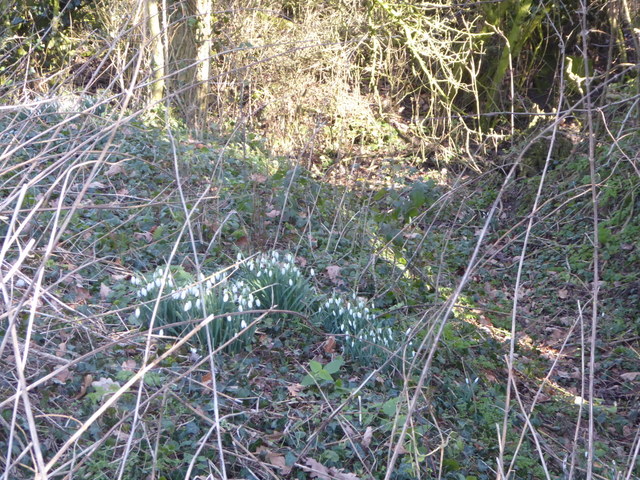
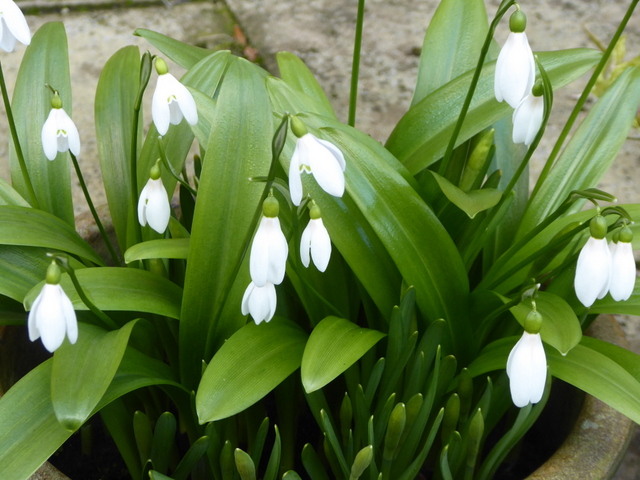
Snowdrops (Galanthus nivalis)

There is a rough patch of land beyond our compost heaps, in-between us and one of our neighbours which has patches of snowdrops.

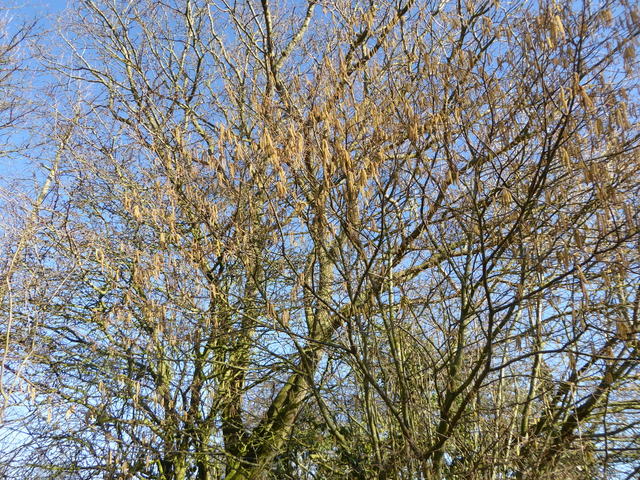
Hazel catkins (Corylus avellana)

The catkins were blowing about in the strong breeze and I gave up trying to focus on them.  The female flowers were just beginning to show as well but again, my camera wouldn’t take a clear picture of them.

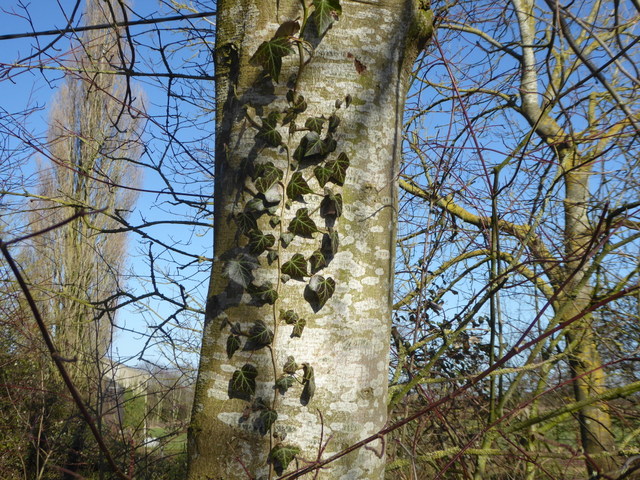
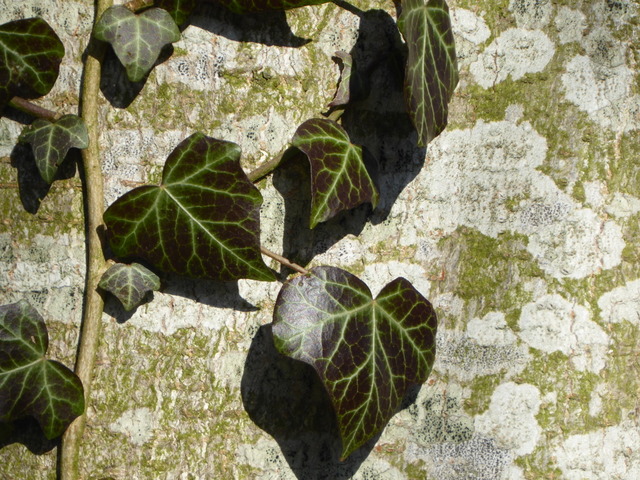
I liked the look of the Ivy (Hedera helix) growing up this Horse Chestnut (Aesculus Hippocastenaceae ) tree trunk

I like the colours on the ivy leaves and the pattern of the veins.

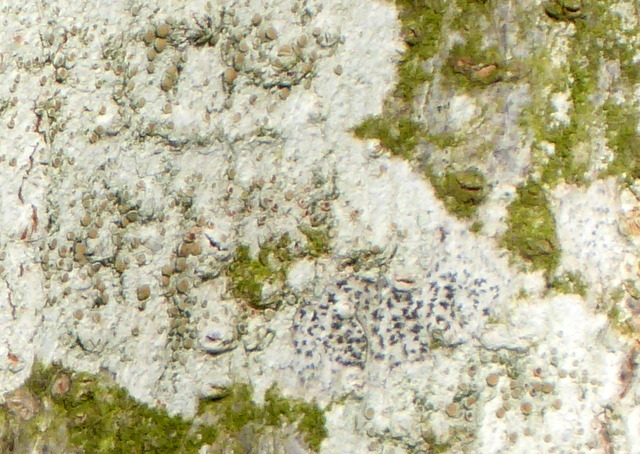
As you might be able to see, there are any number of lichens growing on this tree trunk.  I couldn’t get a clear shot of any of them so I copied the photograph above and then cropped it.  The result wasn’t too bad though not good enough to identify the lichens.  This was only a very small area of the original photo.

Lichens and green algae on a tree trunk

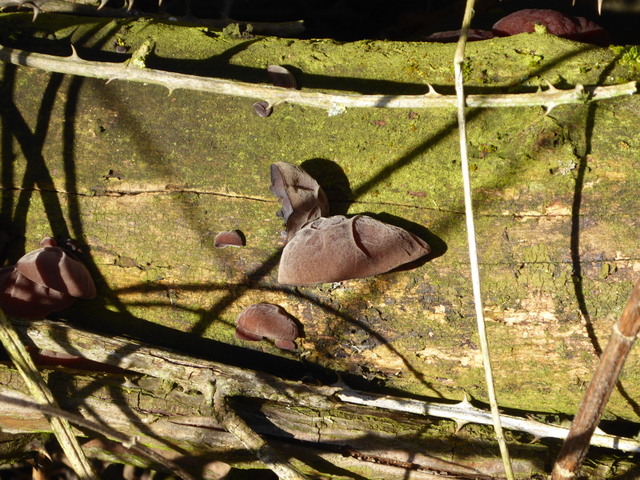
Jelly Ear fungus ( Auricularia auricula-judae)

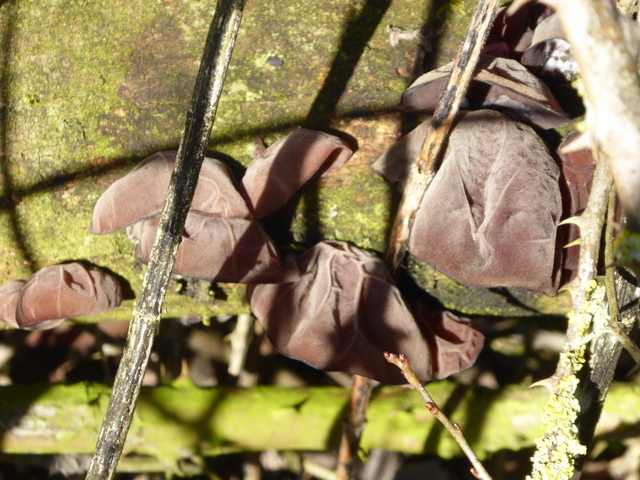
A few dead trees have been blown down in recent storms and I found this fungus growing on one of them.

More fungus.

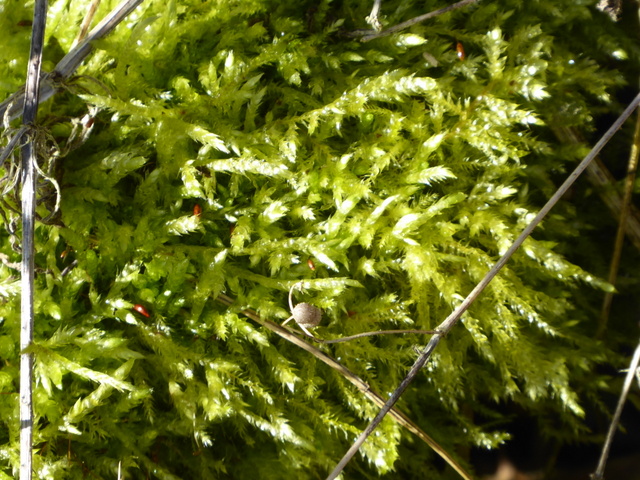
This moss was shining in the bright sunlight

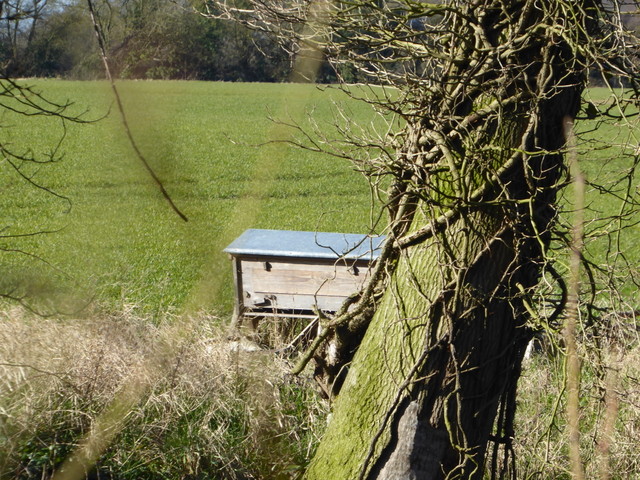
One of our neighbours has started keeping bees.

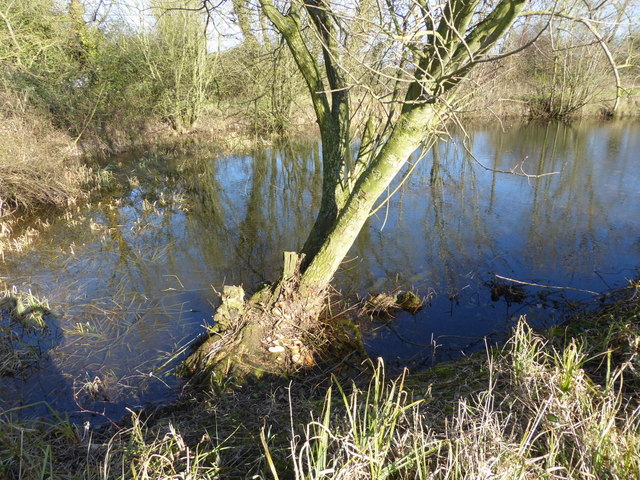
Just after Christmas we had a landscape gardener come and cut back this willow which had grown lots of suckers and had spread too much.

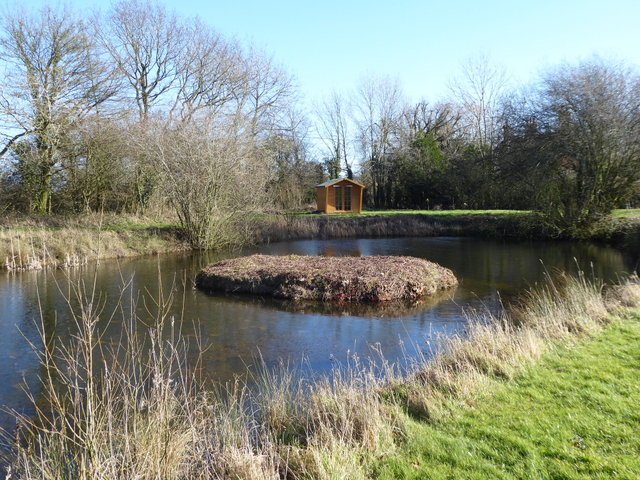
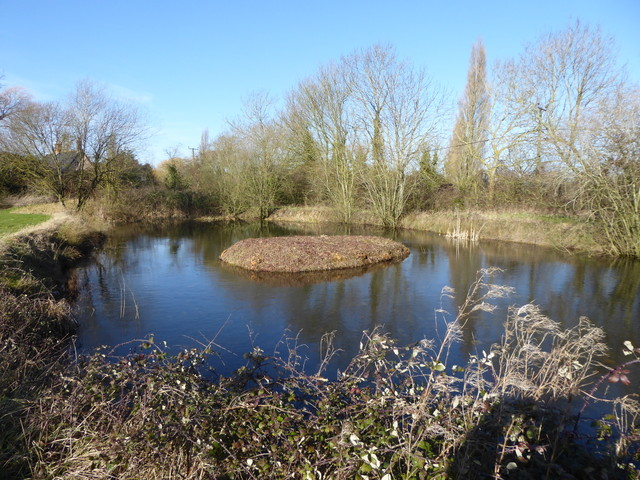
The little island in the pond was given a haircut too.

This is the island where the Greylags have always nested.  Last year the nest was abandoned after it was attacked by something.  We had hoped that by clearing the island the geese would have better visibility and would have earlier warning of danger from otter or mink.  They have usually visited by mid February but there has been no sign of them yet this year.  After a very wet winter the pond has re-filled and the reeds that were threatening to take over have been swamped.  They will survive under water so we will have to dig them out eventually if we wish to retain the pond as it is.

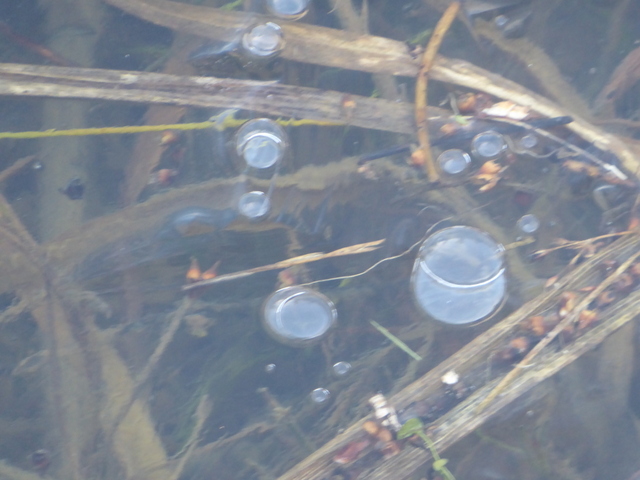
Discs of ice

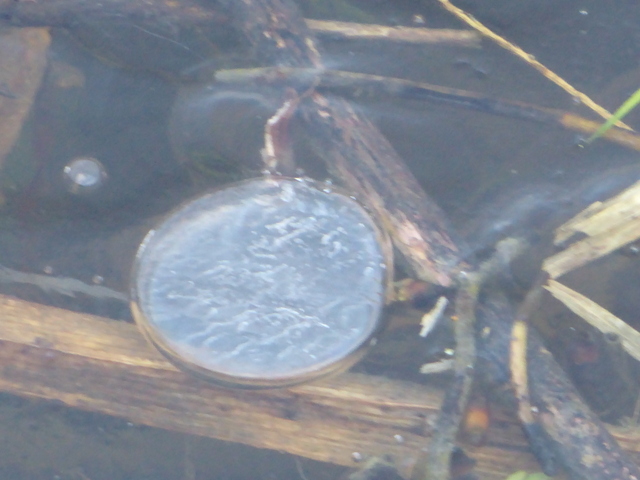
The pond had been frozen but the sun had melted most of the ice.  Just these tiny discs of ice remained.  Out of focus again, I’m afraid.

Ice disc  

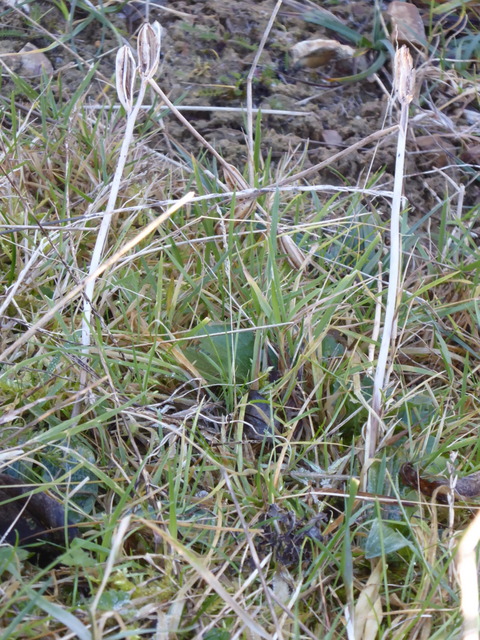
These papery seedheads belong to the Bee Orchids (Ophrys apifera) that grow in our garden.

I was pleased to see the green rosettes of new leaves at the base of the old flower stalks.

Another view of the pond. Richard has been working hard clearing most of the brambles and other scrub plants from around the pond during the last week. The dead grass and brambles in the foreground of this photo are no longer there!

Our corner pond still has plenty of ice on it.

Not many days before this photo was taken I had seen newts swimming in this pond.   The water is cleaner here than in the other larger pond as there is no chemical run-off from the agricultural fields.

The Witch-hazel I have growing in a tub near the front door is blooming.

As are the crocus…..

Yellow crocus
Yellow crocus
Yellow crocus
Yellow crocus

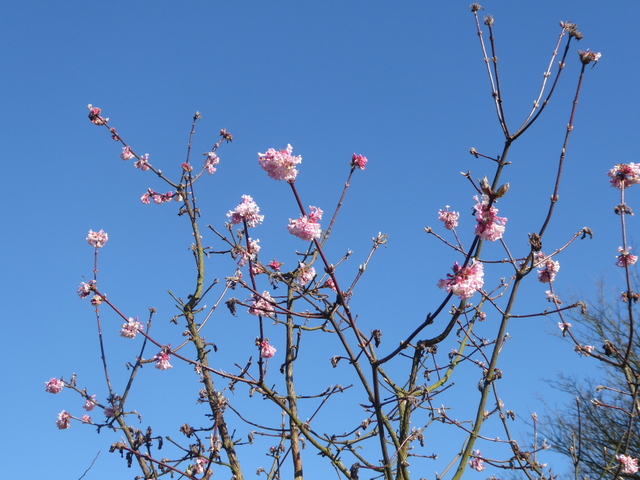
The pink Viburnum flowers look good against a blue sky. They smell wonderful too!

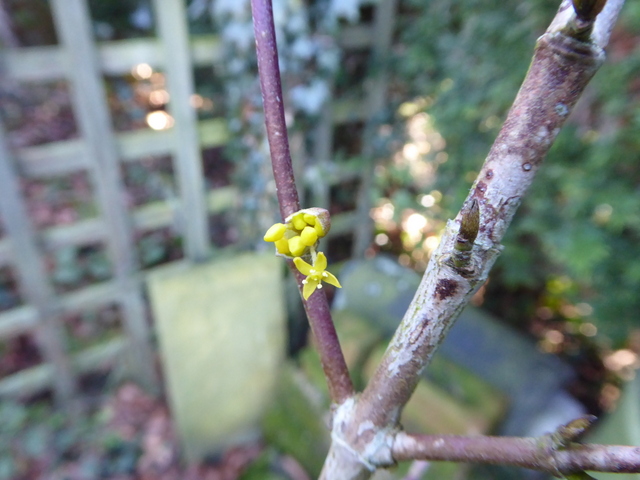
Cornelian Cherry ( Cornus mas)

This tree is awaiting the right time to plant it out into the garden – it is in a large pot.  Meanwhile, it has decided to flower in a small way!

We have been told to expect some more cold weather during the next week or two so many of these flowers will suffer, no doubt.

I leave you with a favourite song from Enzo Enzo – ‘Juste Quelqu’un De Bien’.

Thanks for visiting!

Share this:

  • Share on X (Opens in new window) X
  • Share on Reddit (Opens in new window) Reddit
  • Share on Pinterest (Opens in new window) Pinterest
  • Share on Facebook (Opens in new window) Facebook
  • Email a link to a friend (Opens in new window) Email
  • Share on Tumblr (Opens in new window) Tumblr
  • Print (Opens in new window) Print
  • Share on Pocket (Opens in new window) Pocket
  • Share on LinkedIn (Opens in new window) LinkedIn
Like Loading...

January Walks

12 Mon Feb 2018

Posted by Clare Pooley in Rural Diary, walking

≈ 64 Comments

Tags

birds, cattle, clouds, fallen trees, landscapes, lapwing, Minsmere Nature Reserve, primrose, seascape, shoveler, storm damage, Suffolk, super blue moon, tank traps, walking, weather

The day after the storm that cut off our electricity, Richard and I decided to take a short walk to see what damage the wind had caused.

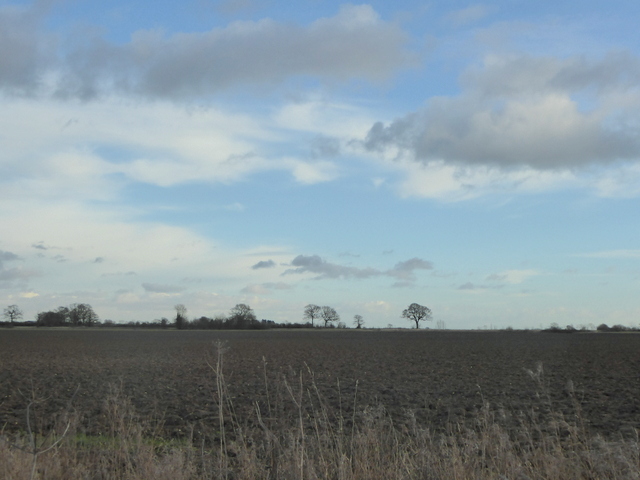
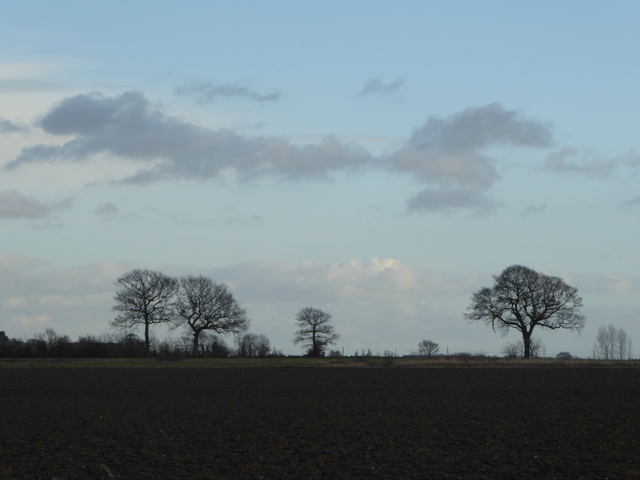
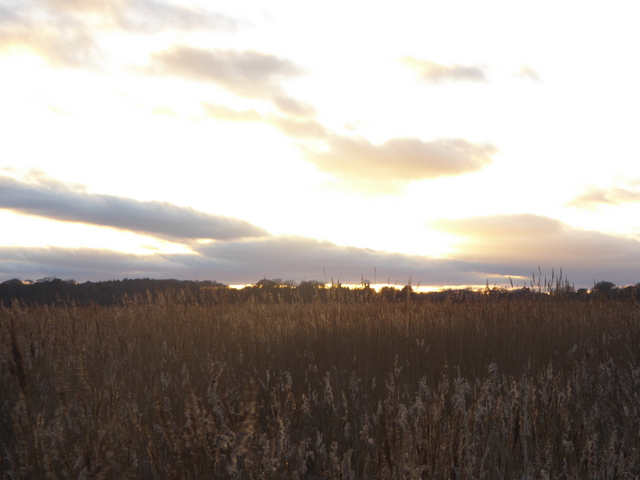
We liked the colours in the sky and the faded earth.

I looked closer at the trees on the horizon.

The wind was still blowing quite strongly and it was cold but we enjoyed being out in the fresh air.

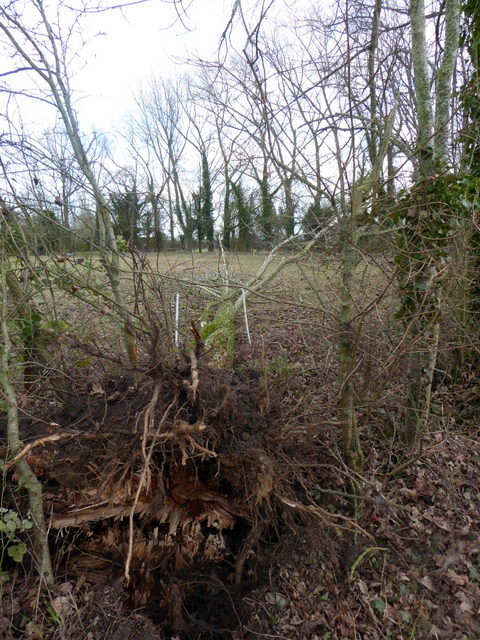
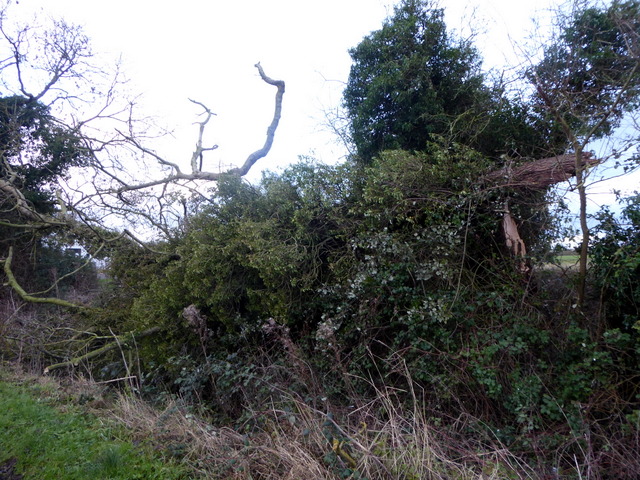
Our first fallen tree

This tree had been part of a hedge round a field.  It looks as though it had been dead for a while before it was felled by the storm.  The tree had snapped at ground level.  Dead trees can be very useful as host to so many other organisms; providing food and shelter for many creatures.  They are left in hedges until either the wind knocks them over or until the landowner thinks they are becoming a danger to people passing by on roads or paths.

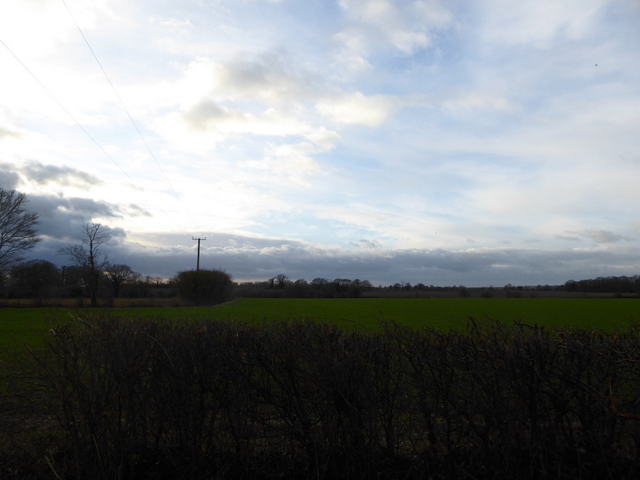
A view across the fields

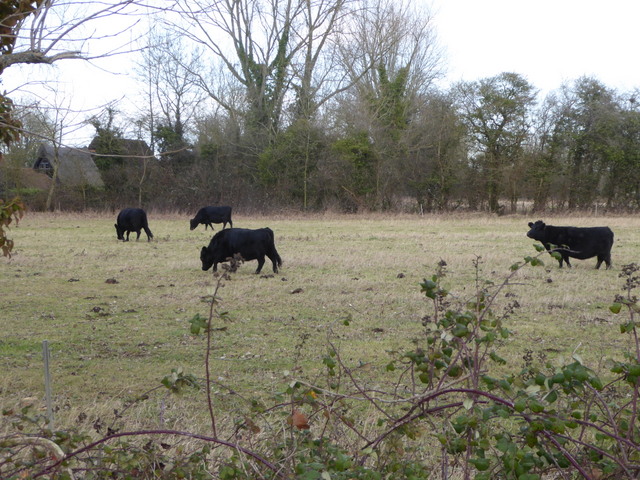
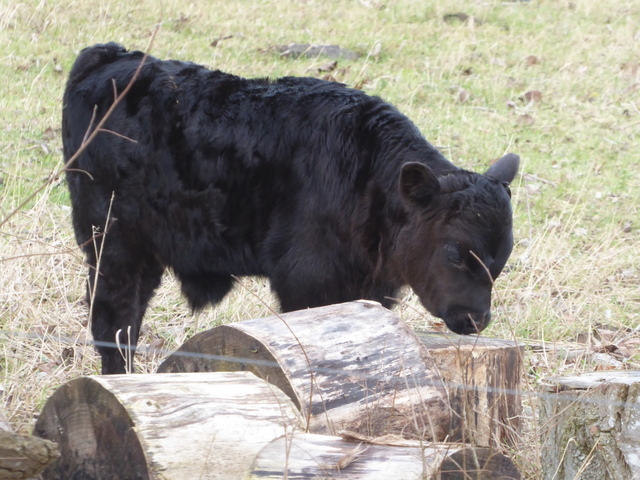
A field full of pregnant cows….

and new-born calves.  These look like Aberdeen Angus to me.

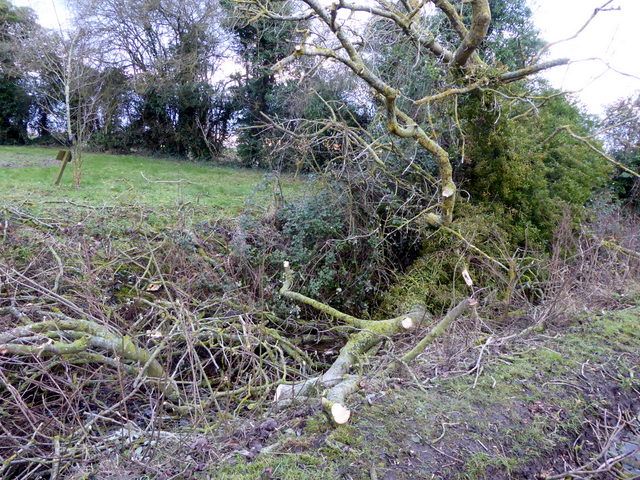
Another fallen tree

This one could have been dead already, as well.  The trunk had snapped three feet up from the ground and the tree was covered in ivy.  Ivy (Hedera helix) is usually no problem on a healthy tree but it can smother weak trees and the ivy here would have caused a lot of resistance to the gale-force winds.

This fallen tree had already had someone working on it.

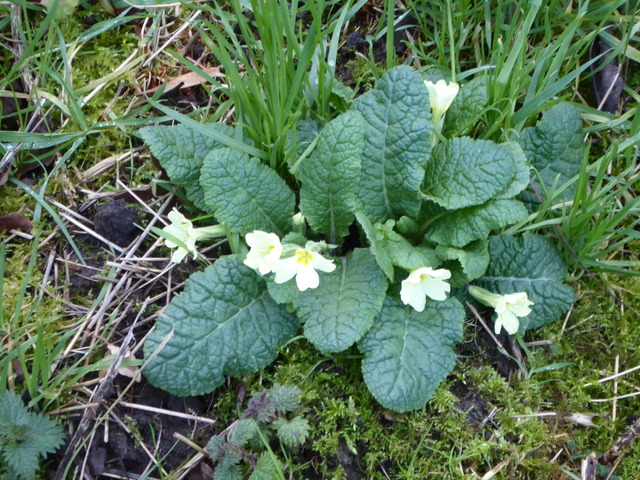
We found some primroses (Primula vulgaris) flowering in the verge on the other side of our front hedge as we got back home.

A week later we drove to Minsmere Nature Reserve owned by the RSPB (Royal Society for the Protection of Birds).  We decided to walk out towards the sea.

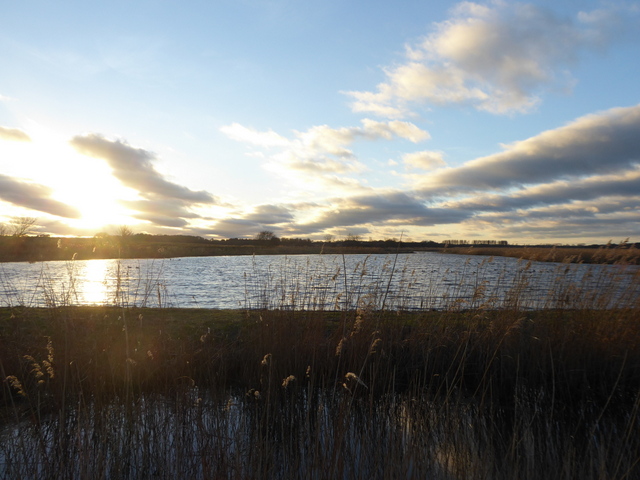
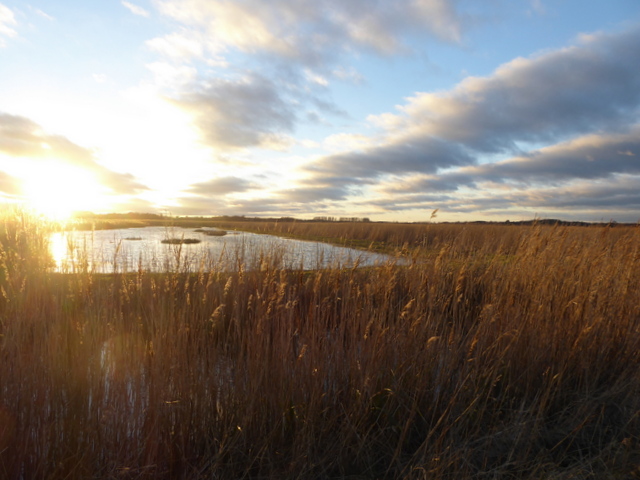
Large expanse of marshland covered in reeds

Looking north from the end of the path as it reaches the beach. The little white buildings on the horizon on the right of the photo are the old coastguards’ cottages at Dunwich.

Richard and Elinor sitting in the sun

A closer look at the coastguards’ cottages and a glimpse of the sea.

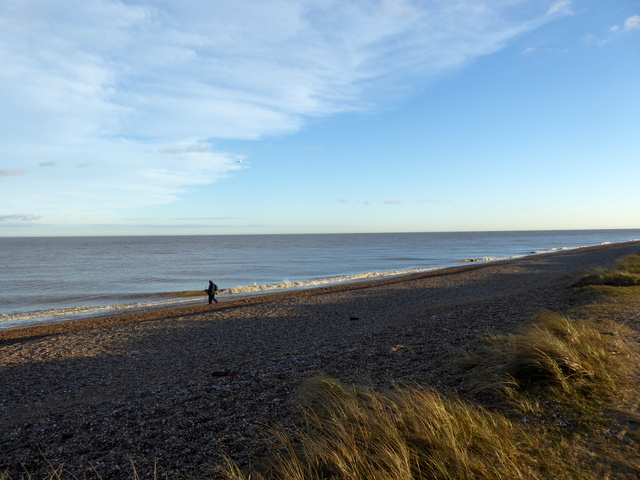
Looking out to sea

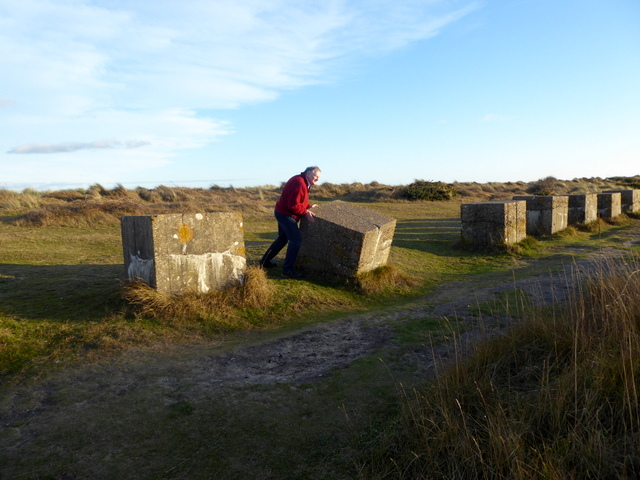
Richard ‘shifting’ one of the WW2 tank traps that have been left in a line along the coast.

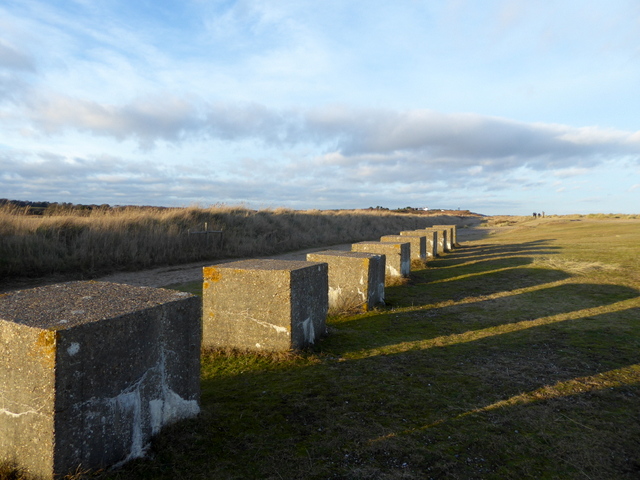
Tank traps

Here is a link which describes the anti-tank cubes at Walberswick – a village a few miles to the north of Minsmere.

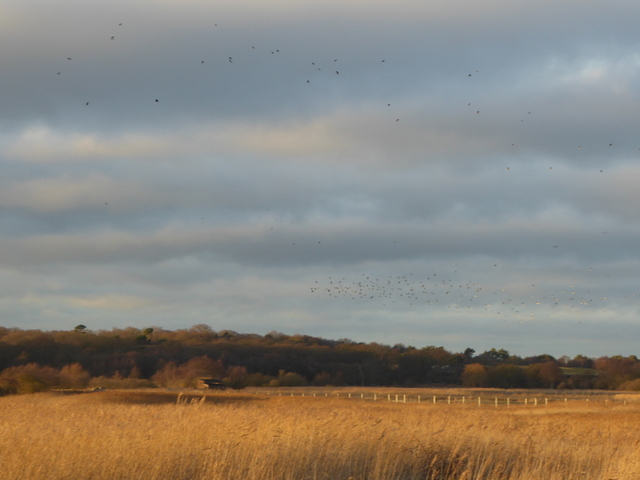
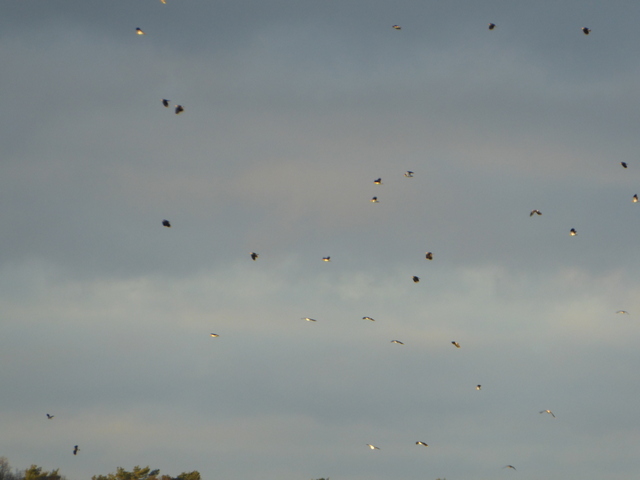
If you look carefully you might be able to see the large flock of Lapwings we saw flying over the marsh

An unsuccessful close-up of the Lapwings (Vanellus vanellus)

Sunset over the Scrape

We liked the cloud formation here.  Stratocumulus undulatus, we have been told.

Sunset

Sunset

Sunset

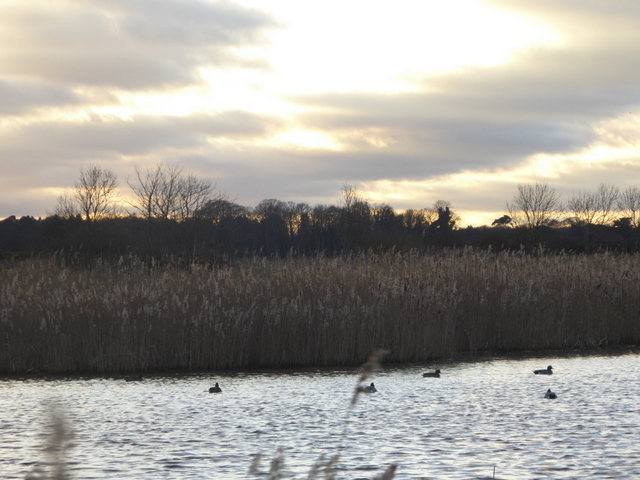
A slideshow showing some of the birds we saw on the Scrape


This slideshow requires JavaScript.

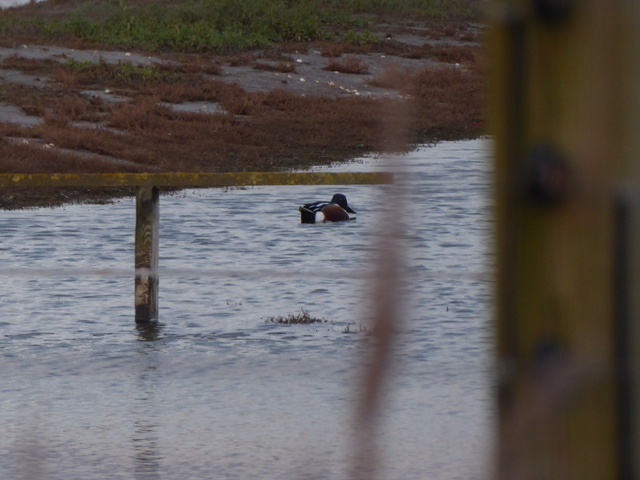
A Shoveler (Anas clypeata)

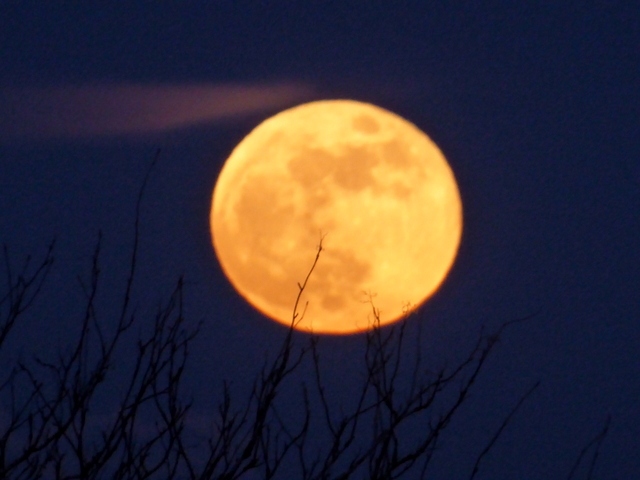
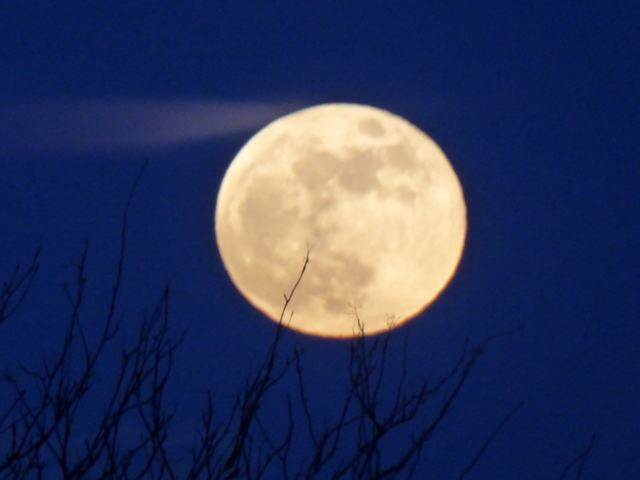
Here are some photos I took of the super, blue moon at the end of January

They are not as clear as I would have liked as I wasn’t using a tripod or our better camera.  I include the blurred first one mainly for the beautiful colour of the moon as it rose.

Thanks for visiting!

Share this:

  • Share on X (Opens in new window) X
  • Share on Reddit (Opens in new window) Reddit
  • Share on Pinterest (Opens in new window) Pinterest
  • Share on Facebook (Opens in new window) Facebook
  • Email a link to a friend (Opens in new window) Email
  • Share on Tumblr (Opens in new window) Tumblr
  • Print (Opens in new window) Print
  • Share on Pocket (Opens in new window) Pocket
  • Share on LinkedIn (Opens in new window) LinkedIn
Like Loading...

This and That

11 Sun Feb 2018

Posted by Clare Pooley in Rural Diary

≈ 57 Comments

Tags

'The Company', art, Deer, Diary, drama, gardening, health, home improvements, Jane Austen, London, moles, Rain, Sense and Sensibility, snow, snowdrops, Suffolk, the Gospel of Mark, violets, weather, wildlife

This will be a post full of bits and pieces of news; just a catch-up post on the things we have been up to during the past month or so.  I apologise for the length of the post – feel free to skip past as much as you like!

Snowdrops and a few daffodil buds in a pot

We began January with heavy rain, as I mentioned in a former post, but the high waters gradually receded despite lots more rain during the month and we are now left with a few waterlogged fields, lots of full ditches and ponds and plenty of mud.  A storm in the middle of the month left us without power for fifteen and a half hours but we suffered no damage to our house and out-buildings for which we are very thankful. We have had a little sunshine, some mild, wet and windy weather and a few colder spells too.  Very changeable weather.  This week has been cold with some snow showers.  The following photos were taken on Tuesday at sunset on our way home from Norwich.

This slideshow requires JavaScript.

A dusting of snow

My mother had another fault on her phone-line and we spent some few days trying to get it repaired – again.

Elinor’s lap-top developed a fault and had to be repaired.  She doesn’t like to be without it as she finds her phone inadequate for some of the things she likes to do on-line.  She borrowed my lap-top.

We now have Super-Fast Broadband – except it isn’t really super-fast but faster than it was, which is quite satisfactory.  The downside is we have a new thick cable attached to the house right next to our bedroom window which loops over our front garden to the pole in the lane.  We think it is dangling just a little too much and in the summer when it expands it may be low enough to snag the roofs of delivery vans.  Trying to get someone back to deal with this may prove difficult.

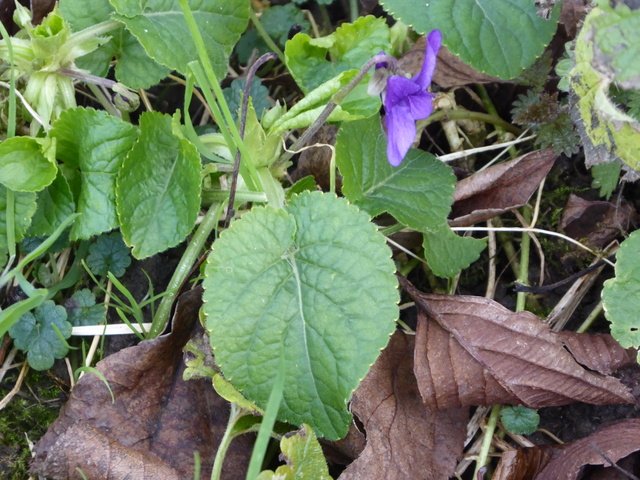
Sweet violet

We have had some gates fitted at the end of our driveway, which look fine.

We are arranging for the old conservatory (which we cannot use) to be knocked down and a new one put in its place.  This will be a very messy job and will take a few weeks to get done but we hope when it’s finished we will have a room which we will be able to use all year round.  One which isn’t too cold in winter, too hot in summer, doesn’t leak when it rains or drip condensation when it’s cold.  I need to move quite a few plants away from the flowerbed outside the conservatory and find a place to keep them while the work proceeds.  We will also need to find somewhere to store all the furniture in the living room for the duration!

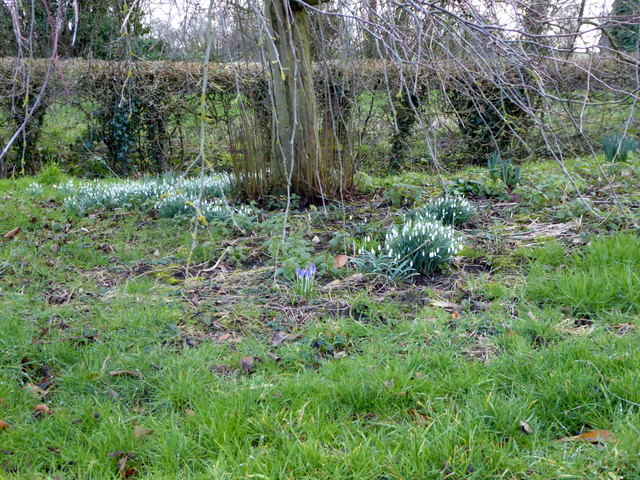
Snowdrops and early crocuses under a crabapple tree

We have all had the usual visits to the dentist, doctor and hospital.  I was particularly pleased with my appointment at the Rheumatology Clinic.  I have been in remission for some while and my blood-test results have been good.  Because of this, I have been told I can stop taking one of my tablets.  I have been taking this one for eighteen years and it is thought I don’t need it any more.  It is also a tablet that can cause irreparable damage to the eyes and the longer it is taken the more likely it is that damage will occur.  I wonder how long I would have been left taking this medication if my blood-test results hadn’t been so good?  So far, after over three weeks without them I have noticed no return of pain and I feel fine!   If I remain in remission for another year I have been told I may be able to reduce the dosage of the medication I inject myself with each week.  I would love to be able to do that!
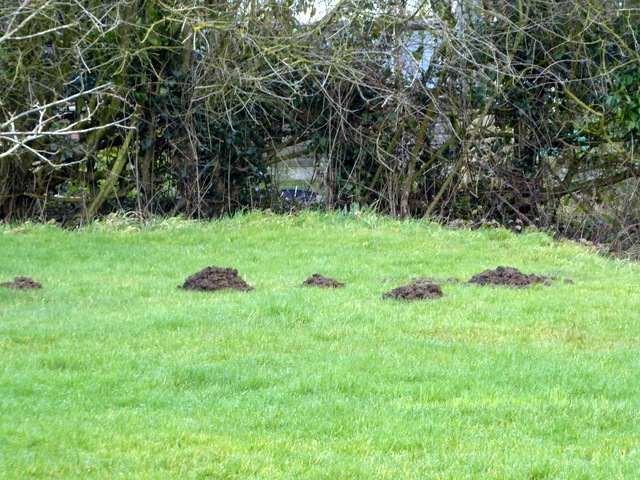
Molehills in the garden

Gardening can be quite difficult in the countryside as we humans are not the only ones who like flowers and shrubs.  Most of our visiting wildlife love them too – as food.  My favourite miniature iris started blooming at the end of January but the deer found them and have eaten all the flowers. A few of my other plants have been pruned severely by the deer and pecked by the pheasants.  The only answer is to cover everything with chicken wire which isn’t attractive and it’s such a bother to have to remove it each time I wish to work on a flowerbed and then remember to put it back again afterwards!  Despite my grumbling, I do feel lucky to live here and to be able to see all the wild creatures that visit us.  Gardening on a plot surrounded by fields is different from gardening in a town or village.  It is impossible to keep wildlife, including weeds like brambles, nettles and thistles, out of the garden.  We have to be more relaxed in our attitude but it is hard not to be disappointed when a flower that is looked forward to for eleven months is eaten before it blooms!  Before Christmas I was looking out of the window at dawn and saw a family of Muntjac deer in the garden a few metres away from me.  A female, a male and a tiny spotted-backed fawn about the size of a large cat.  The baby kept racing about and bouncing on all four legs at once.  As soon as it got near enough to her, the female proceeded to wash him which he tolerated for a while and then ran off again!
We all spent a day in London on the 25th January but I took no photographs.  It was a day for visiting bookshops as a treat for Elinor; she had recently celebrated her 21st birthday.  We had lunch in an Italian restaurant in Shaftesbury Avenue and when we had had enough of books we wandered down through Trafalgar Square to the Embankment to see how many monuments and statues we could see before catching the tube from Embankment Station back to Liverpool Street Station.  We were very fortunate with the weather which though cold, was dry and sunny.  All our trains ran to time and we had a wonderful day.

Richard and I have taken a short walk near home recently and all three of us have been to Minsmere for a walk.  I will post about these later.

Richard and I went with friends to see a one-man performance of St Mark’s Gospel in Wangford Church last Saturday evening.  The church was freezing cold, probably because it had had extensive building work done to it and the people from the village had only just finished the clean up that afternoon!  The performance was absolutely brilliant!  St Mark’s Gospel is the shortest of the gospels and was written at speed.  It is said that Mark recorded Jesus’ life using Saint Peter’s recollections of Him. It was performed by Ian Birkinshaw who was the narrator but he also acted all the characters in the gospel.  He had minimal props and costume accessories and I was very impressed by the way he used them.  For example, he was wearing a keffiyeh which one minute was round his neck, then with a little folding looked like a child in his arms and then a baby which he held over his shoulder.  Ian Birkinshaw’s performance conveyed the excitement about Jesus that is evident in the Gospel and his energetic recital which lasted over two hours was very impressive.  I cannot recommend this performance highly enough.  Here is his wordpress site.

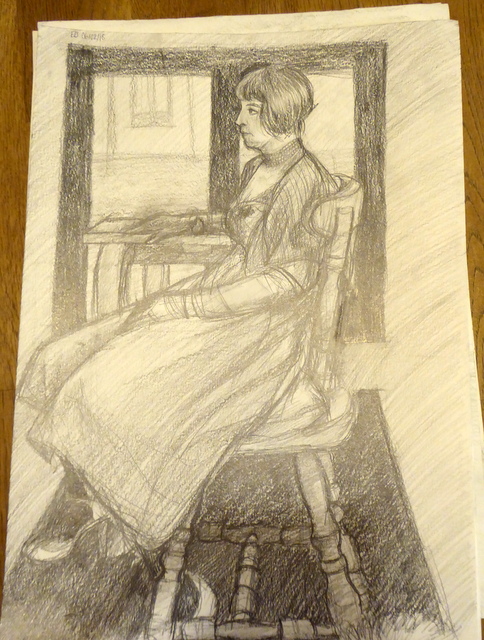
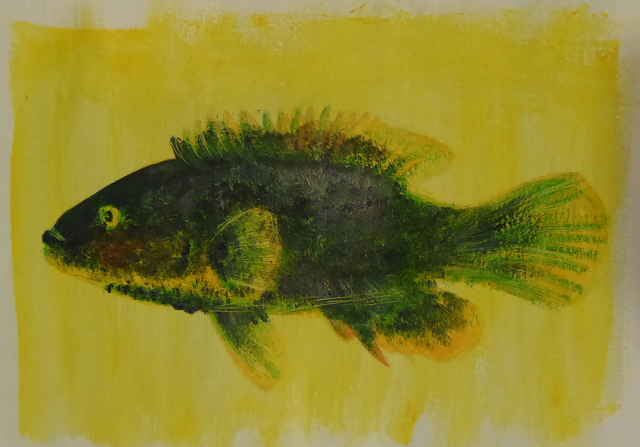
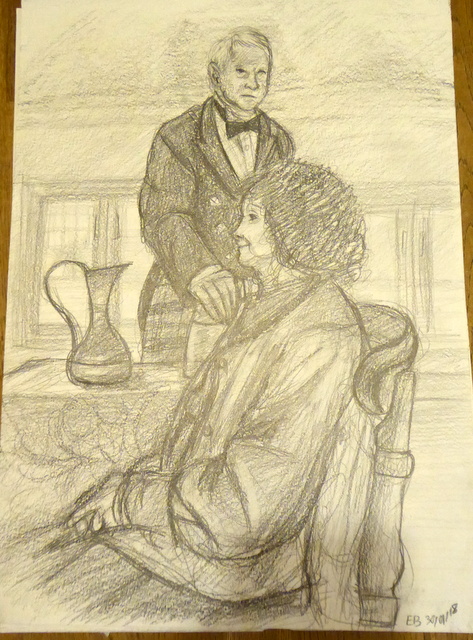
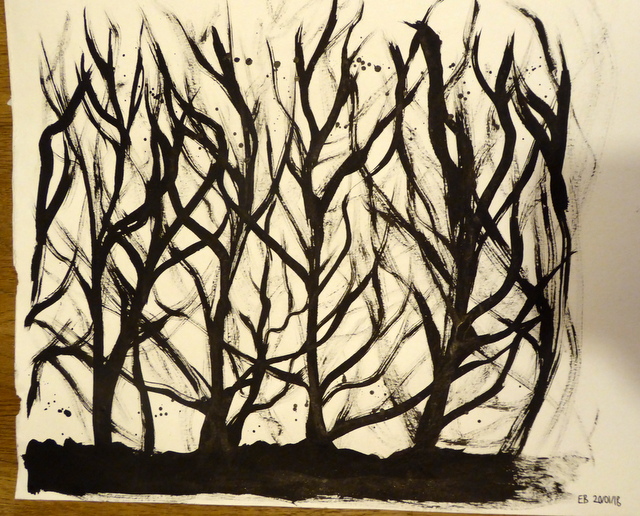
As I have mentioned recently, Elinor, my younger daughter has been attending art classes in Norwich since September and has been enjoying them.  She has shown great improvement in her work and has become much more confident; she is managing her anxiety a little better.  She had been very disappointed last year when she failed to get onto a course which would have given her a qualification which she needs to get into art college.  She applied to a different college to have an interview for the same course and this time she was successful.  She will be starting college in September but instead of Norwich her new college is in Great Yarmouth on the coast.

Here are four examples of the work she has been producing recently.  Each of these pieces were completed in two and a half hours.

Portrait 

Painting

Portrait

Painted with twigs

My elder daughter, Alice belongs to a couple of drama groups in Sheffield where she lives and works.  Next week, one of the groups – The Company – will be staging a dramatisation of Jane Austen’s ‘Sense and Sensibility’.   Alice is playing the part of Mrs. Palmer.  The drama group has produced a few vignettes to celebrate St Valentine’s Day and the opening of the play next Wednesday.  I think you may be amused by the following, in which Mr and Mrs Palmer have been asked questions about their relationship.  Alice tells me that they were given the questions and were asked to improvise the answers in character.

The Company have posted a  number of these on their Facebook page and they are all amusing.  I particularly enjoyed Edward Ferrars’ contribution!
If any of you are in Sheffield next week I would heartily recommend you going along to see the play at the University of Sheffield’s Drama Studio in Glossop Road.  The performances are at 7.30pm Wednesday to Saturday.  Tickets can be bought on-line on the link I have provided or on the door.

Thanks for visiting!

Share this:

  • Share on X (Opens in new window) X
  • Share on Reddit (Opens in new window) Reddit
  • Share on Pinterest (Opens in new window) Pinterest
  • Share on Facebook (Opens in new window) Facebook
  • Email a link to a friend (Opens in new window) Email
  • Share on Tumblr (Opens in new window) Tumblr
  • Print (Opens in new window) Print
  • Share on Pocket (Opens in new window) Pocket
  • Share on LinkedIn (Opens in new window) LinkedIn
Like Loading...

2017 Revisited

17 Wed Jan 2018

Posted by Clare Pooley in Days out, Norwich, Rural Diary

≈ 90 Comments

Tags

crossbow, Doll's House Exhibition, Iceni artifacts, needlework, Norfolk, Norwich, Norwich Castle Museum and Art Gallery, stained glass, teapots

As I have mentioned before, we didn’t manage to do as much walking and we didn’t visit as many places as usual last year and, for the same reasons, I also didn’t write very many posts.  I have photos from the few excursions we did make and some pictures of interesting things I saw that I haven’t posted yet, so I thought I would put together some retrospective posts whenever I have spare time.

This is the first of a series of posts.

ooooOOoooo

Last spring, Elinor was asked to write about an exhibition she had visited.  Unfortunately, she hadn’t visited one for some time so we looked about us to see if there was anything on locally that appealed to her.  We were pleased to see that at the Castle Museum in Norwich there was an exhibition of doll’s houses – so that’s where we went.

The exhibits were difficult to photograph because of the lighting and the reflections from the glass cases.  Here is a slideshow of photos of some of the houses.

This slideshow requires JavaScript.

Elinor stayed in the exhibition hall to sketch a few of the houses and make some notes while I wandered round the rest of the museum.  I spent some time in the art gallery where they have a fine collection of paintings and drawings by local artists: Gainsborough, Constable, Crome, Munnings, Seago and others.  I took no photographs there nor in the natural history section where there are a number of dioramas featuring lots of stuffed birds and animals mainly collected during the 19th century.  I don’t like stuffed birds and animals.

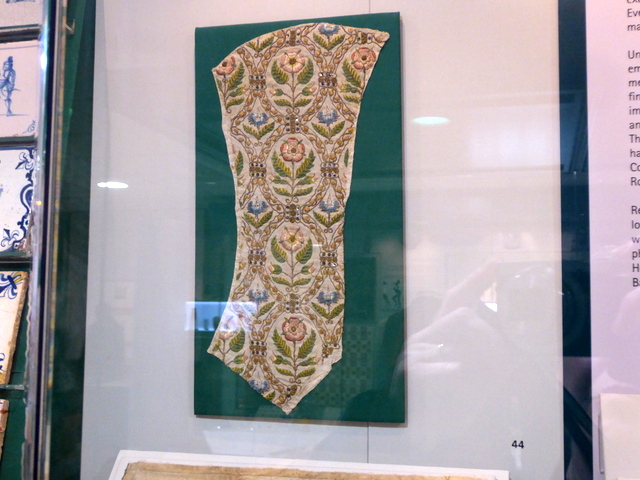
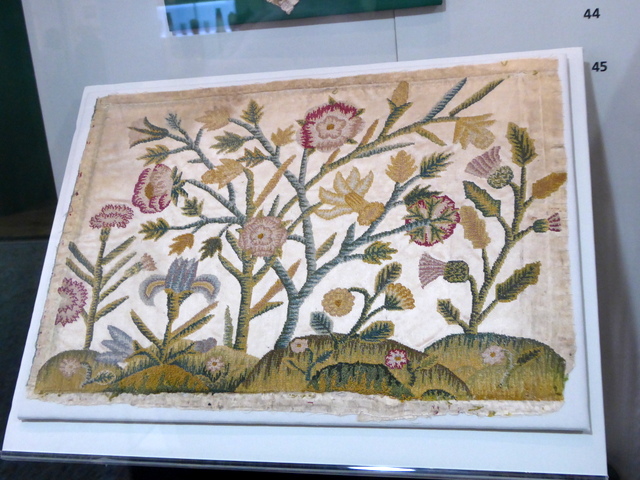
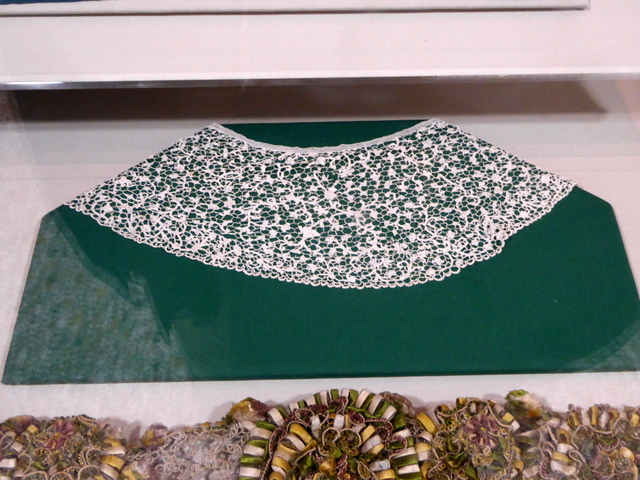
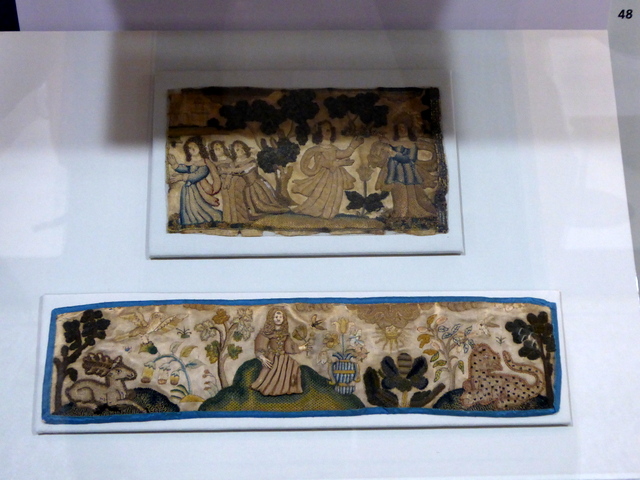
The museum has a collection of antique clothes and costumes which I enjoy seeing and also pieces of needlework and embroidery.

Here are some examples of Jacobean needlework and also a lovely lace collar.

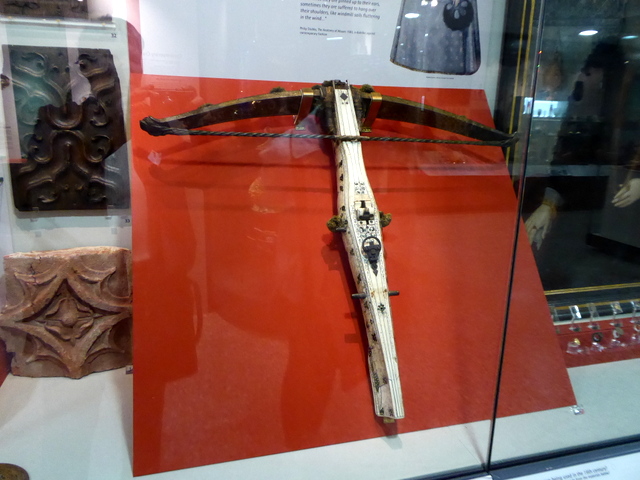
I took a photograph of a splendid crossbow.

The museum has a large collection of teapots.  Here are some of them.

This slideshow requires JavaScript.

I wandered through the Boudica and the Romans gallery and took some photos of a few of the artifacts that have been discovered.

This slideshow requires JavaScript.

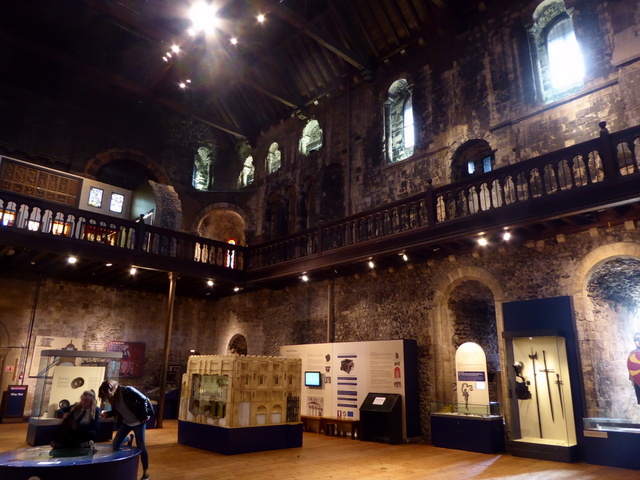
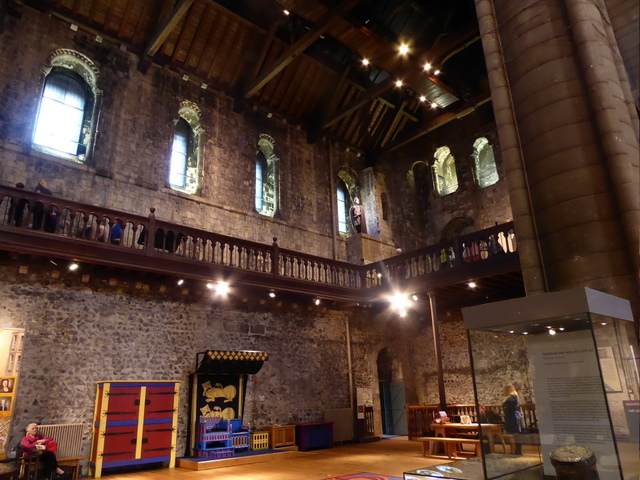
There are a few display cabinets in the large central area in the castle keep.

Castle keep

Castle keep

P1010823Museum
P1010824Museum
P1010825Museum
P1010826Museum

I like these examples of medieval stained glass.   Top left shows winter pruning, top right is a feast, bottom left shows a gardener hurrying indoors out of a spring rain or hail shower, bottom right shows a man harvesting bunches of grapes.

I had to go back to meet Elinor then before I’d finished the whole tour of the museum.  We returned a few weeks later with Richard so he could also see the exhibition and for Elinor to check on a few details.  We all enjoyed the exhibition very much.

Thanks for visiting!


Share this:

  • Share on X (Opens in new window) X
  • Share on Reddit (Opens in new window) Reddit
  • Share on Pinterest (Opens in new window) Pinterest
  • Share on Facebook (Opens in new window) Facebook
  • Email a link to a friend (Opens in new window) Email
  • Share on Tumblr (Opens in new window) Tumblr
  • Print (Opens in new window) Print
  • Share on Pocket (Opens in new window) Pocket
  • Share on LinkedIn (Opens in new window) LinkedIn
Like Loading...

Homersfield

04 Thu Jan 2018

Posted by Clare Pooley in Rural Diary, Villages

≈ 85 Comments

Tags

Homersfield, Homersfield church, Mark Goldsworthy, Millennium Sculpture, Sir Robert Alexander Shafto Adair, St Mary's church, Suffolk, Waveney River, Waveney Valley, Waveney Valley Line

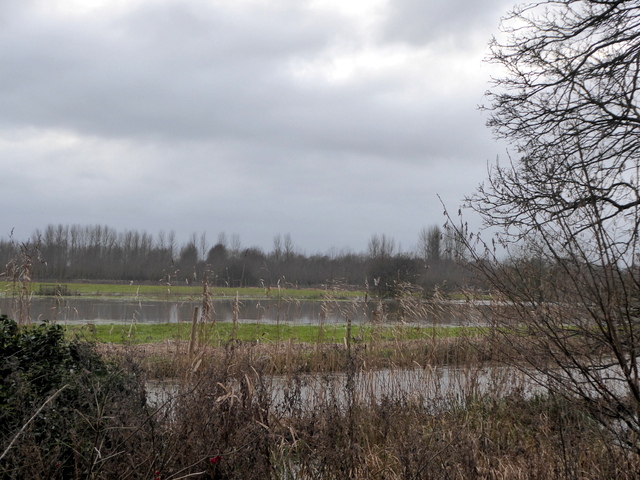
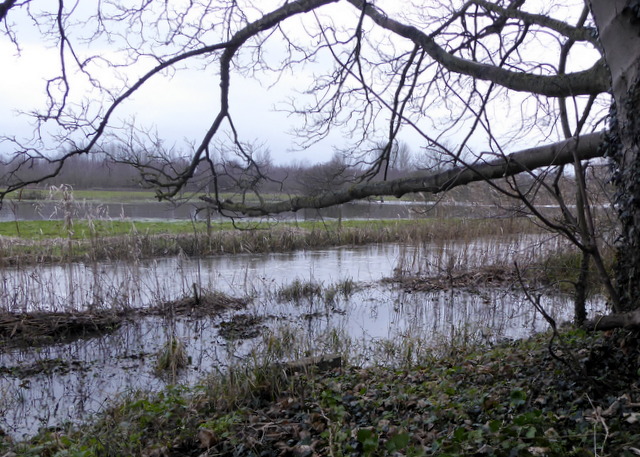
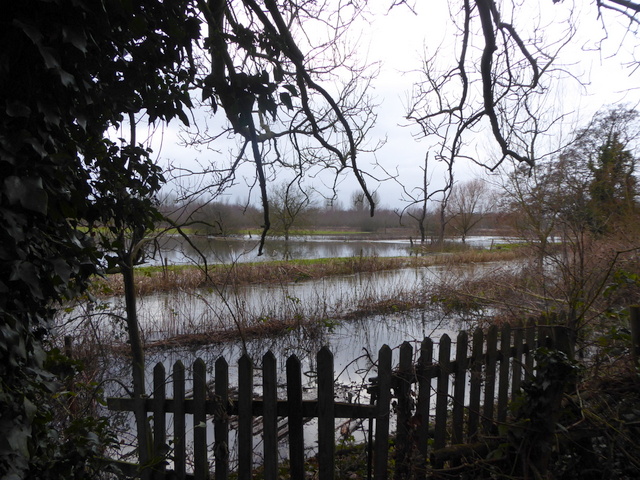
For the past few days I have been looking at flood water and driving through deep puddles on the roads but until Monday had been unable to take any pictures of what I’d seen.  On Monday afternoon I decided I’d take a five minute drive to Homersfield, walk round the village and see the flooded watermeadows.

The day was very grey and gloomy but apart from a short shower of rain I managed to stay dry for most of the time I was out.

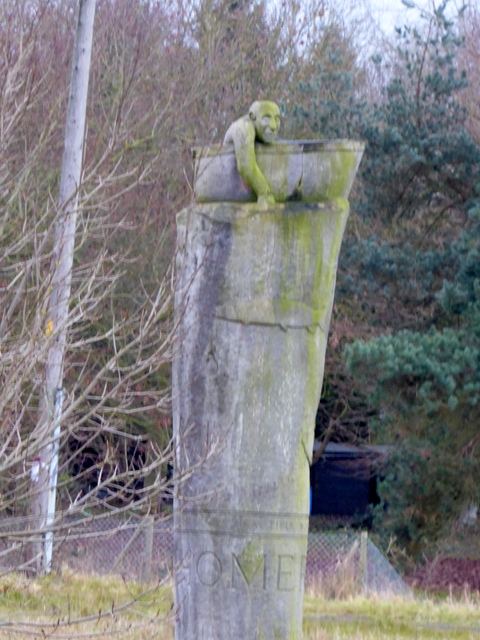
The Millennium Sculpture.  (Not a clear photograph as the light was very bad).

I parked my car on the edge of the village near to the totem pole-like millennium sculpture carved from wood by local artist Mark Goldsworthy.  At the top of the sculpture is a man in a small boat and below him, water with different species of fish swimming in it.  Near the base are the words  ‘I dreamed of a beautiful woman who carried me away’ and below those words the name of the village is carved in capitals.  The sculpture has been signed by the artist.  I believe the beautiful woman referred to is the River Waveney which flows past the village and forms the border between the counties of Suffolk and Norfolk.

Fish on the sculpture
The man in the boat
The man in the boat
The man in the boat
The man in the boat
An eel
An eel
More fish
More fish

Looking northwards over the river to Norfolk

I walked through the village to the further side where the road starts to rise away from the river on its way to the village of St Cross.  From here I could look out over the water meadows.

Waveney River valley

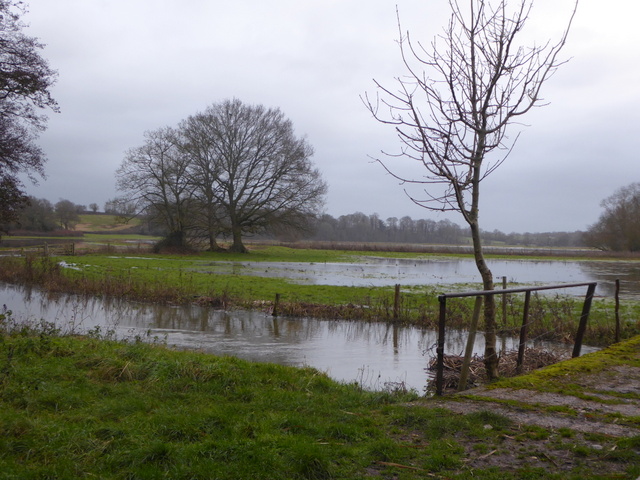
A soggy scene!

The water level had gone down a little during the last twenty-four hours but the fields were still inundated.

The nearer channel is the old mill race cut to provide water for the water mill in the village.  The mill was demolished some time ago.

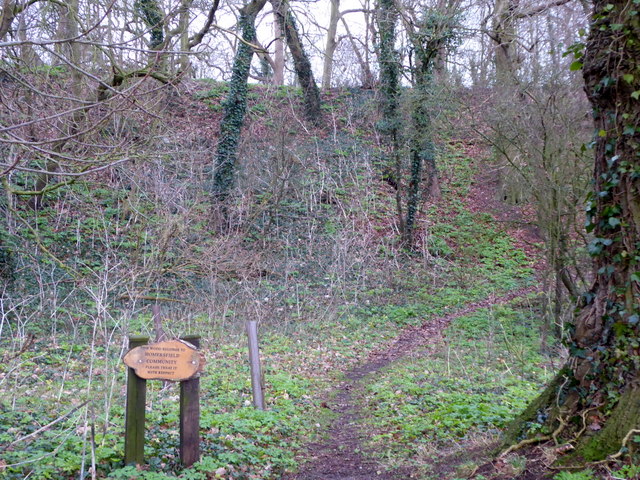
On the other side of the lane is one of the entrances to the Community Wood.

Community Wood

Homersfield Church and churchyard are at the top of the bluff.

The two photos above were taken last February.

Homersfield Bridge

This bridge is one of the oldest surviving concrete bridges in Britain and was constructed in 1869 at the request of Sir Robert Alexander Shafto Adair, Baronet of the Flixton Estate.   Here is a link to a description of the bridge and its history.

View from the bridge

This slideshow requires JavaScript.

Looking across the river to the Norfolk side where the old Homersfield railway station had been.

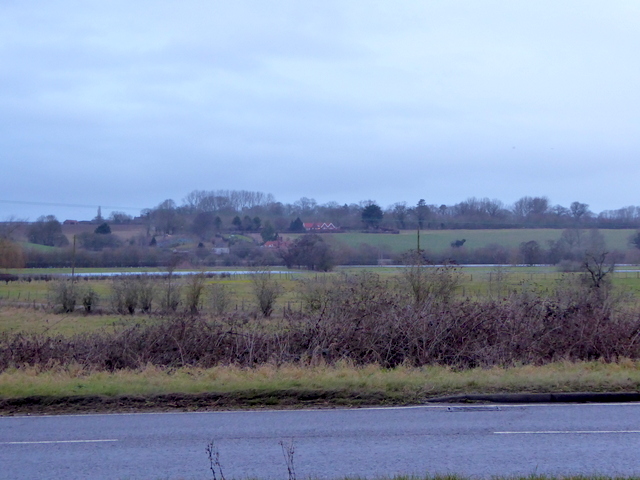
A number of seagulls were floating on the water.  The buildings just beyond the far bank, line the A143 road which was built in the early 1980’s along the former route of The Waveney Valley Line.  This was a rail branch line which ran from Tivetshall in Norfolk to Beccles in Suffolk but was closed in 1966 and the track removed soon afterwards.  The red-coloured building on the right of the picture is a garage which I think used to be an engine shed.

Here I am standing on the Norfolk side of the river looking towards Suffolk.

After having viewed the river from all points I walked back through the village.  It is a pretty place with lots of attractive cottages.  As it was getting late I only took a few more photos.

The path from the old Homersfield Bridge back into the village

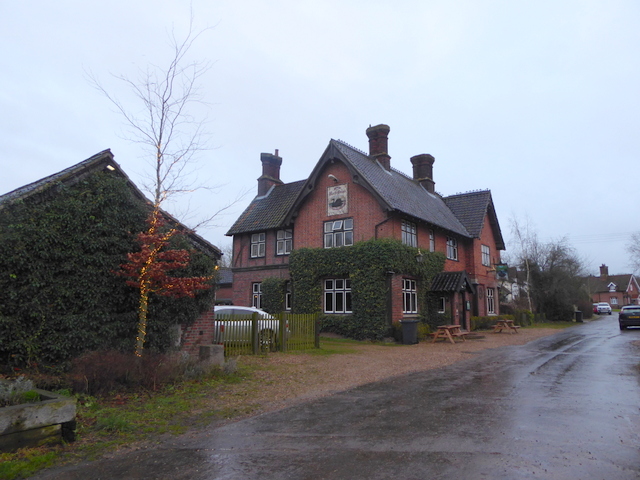
The village pub, The Black Swan

The childrens’ play area on the green.

We used to bring Elinor here when she was very small!

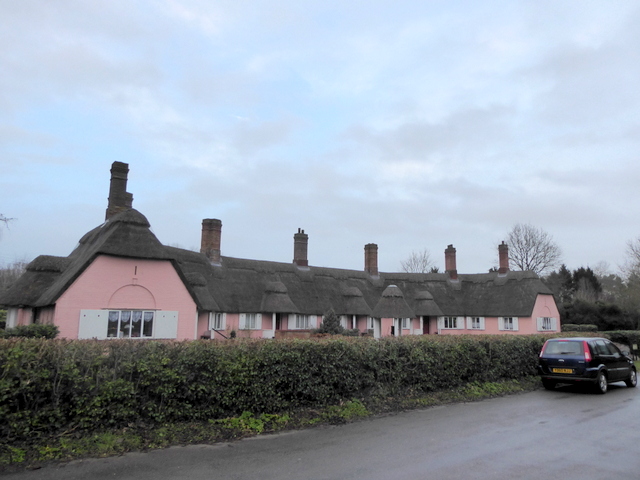
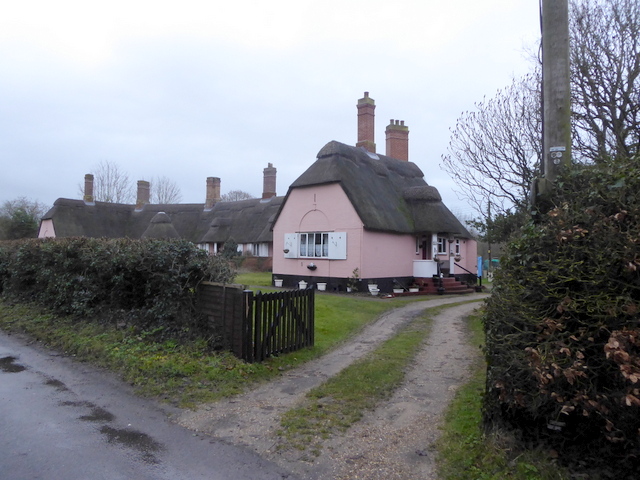
Barnfield Cottages

These pretty thatched cottages were built in 1925 to house elderly workers on the Flixton Estate.

Thanks for visiting!

Share this:

  • Share on X (Opens in new window) X
  • Share on Reddit (Opens in new window) Reddit
  • Share on Pinterest (Opens in new window) Pinterest
  • Share on Facebook (Opens in new window) Facebook
  • Email a link to a friend (Opens in new window) Email
  • Share on Tumblr (Opens in new window) Tumblr
  • Print (Opens in new window) Print
  • Share on Pocket (Opens in new window) Pocket
  • Share on LinkedIn (Opens in new window) LinkedIn
Like Loading...

Happy New Year!

01 Mon Jan 2018

Posted by Clare Pooley in Rural Diary

≈ 67 Comments

Tags

candlelight, carol service, Christmas, garden, greylag, midnight mass, New Year, snow, Suffolk

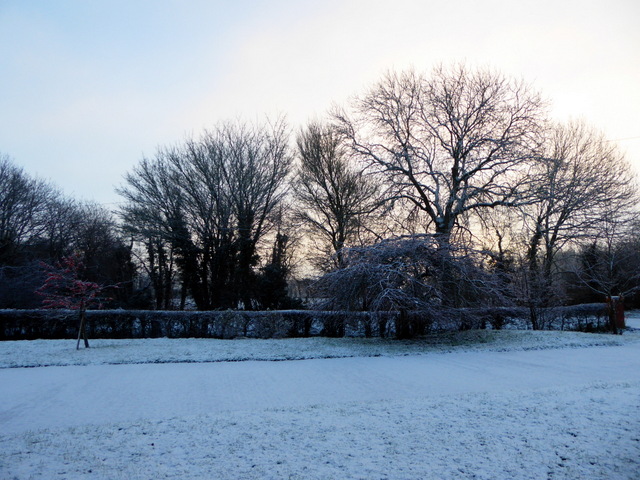
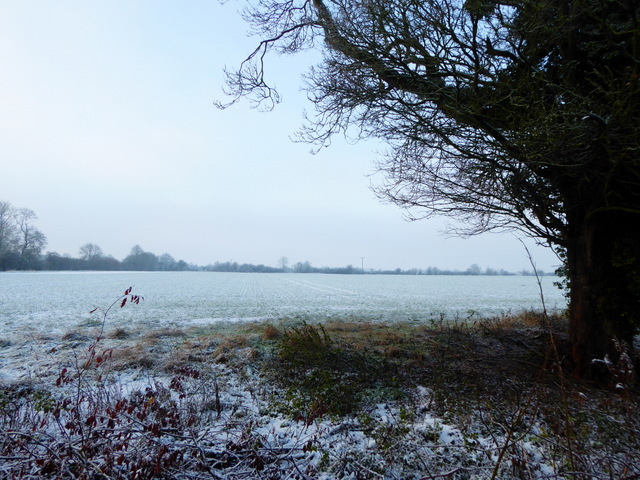
Taken at dawn on 12th December

We had a few days of cold and snow in mid-December but the year ended with much milder temperatures, wind and lots of rain.  All our local rivers have burst their banks and everywhere is wet and muddy.

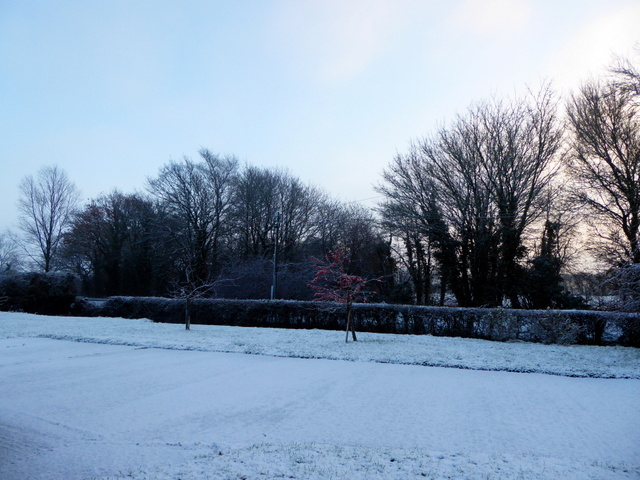
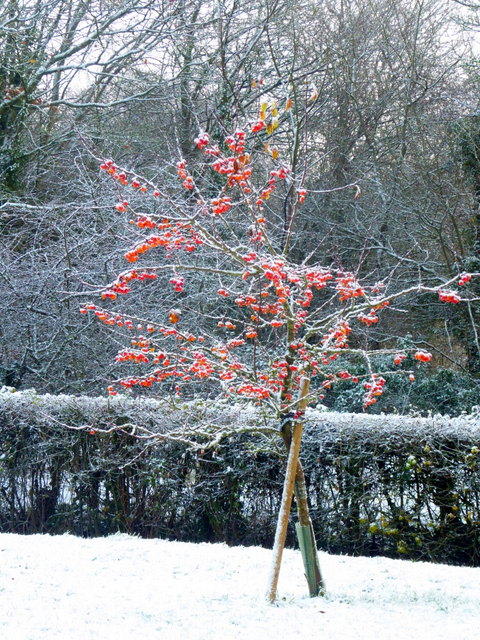
‘Evereste’ crabapple tree in the snow

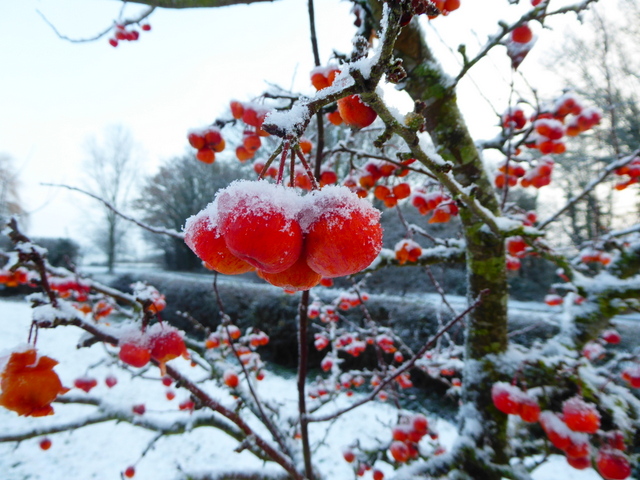
Crabapples

Once the apples had been frosted it took no time at all for the blackbirds to eat all the fruit on the tree!  The deer helped themselves to the apples on the lower branches.

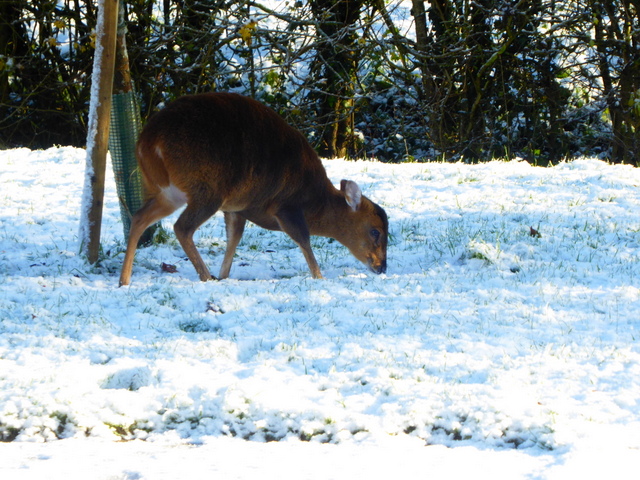
Female Muntjac deer

2nd Sunday in Advent

We had a Sunday service at our church at Rumburgh on 10th December.  The day started with heavy rain but as we got the church ready for the service the rain turned first to sleet and then to snow.  The Archdeacon arrived to take our service, his cloak covered in snow.  He preached and played the organ too but sadly, not many of our mainly elderly congregation turned up.

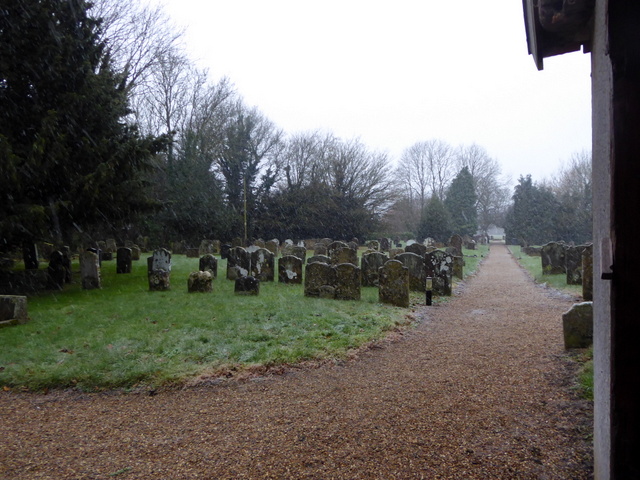
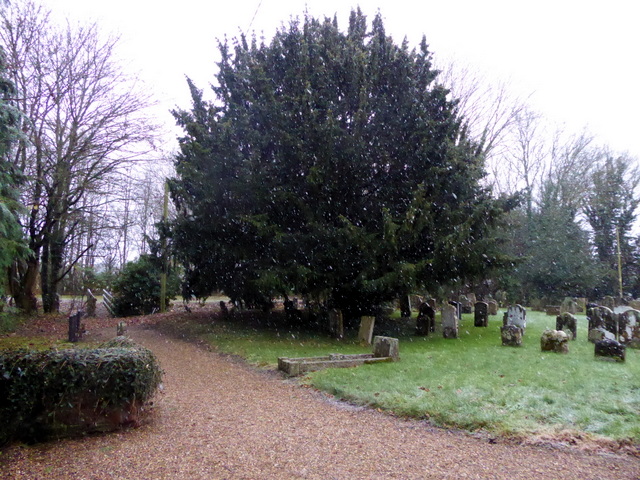
A snowy churchyard

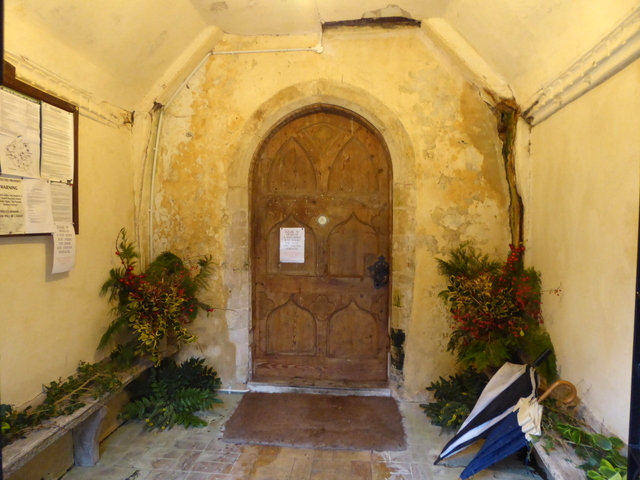
Our damp, but festive church porch

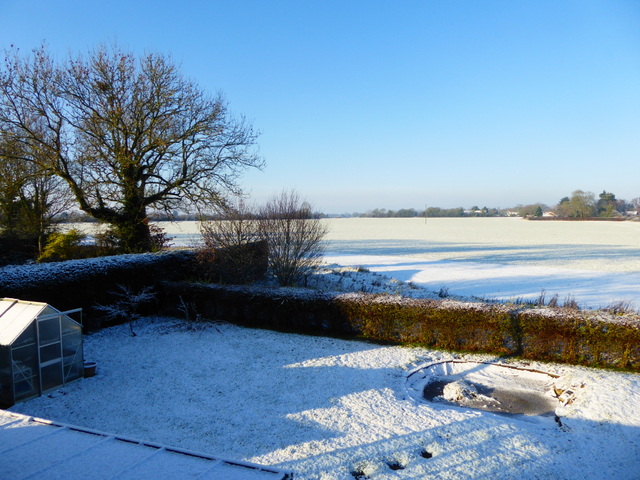
Snow covers a multitude of sins and our garden looked almost picturesque!

The view from our front door

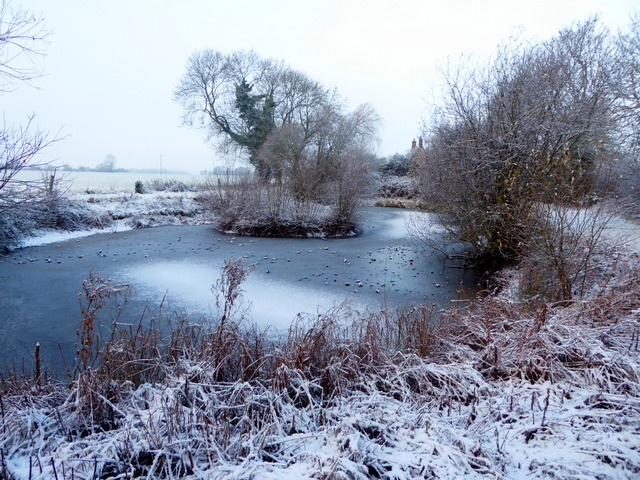
Our larger pond. This was before the rain added a number of inches to its depth

We have also had all the willow saplings and brambles on the little island cut down since this photograph was taken.  The greylags should find it easier to make their nest there in the spring.

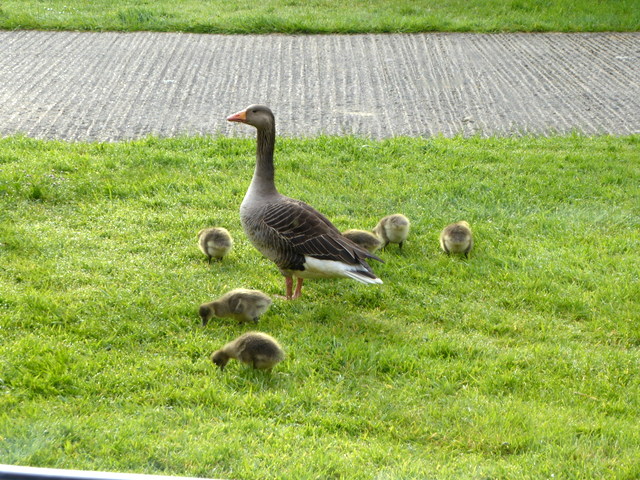
Here is a female greylag with her goslings in our garden a couple of years ago

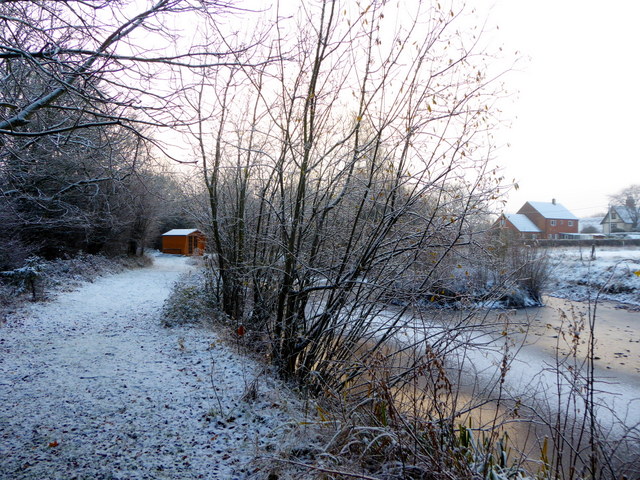
The path round the pond

Looking across the field from our garden

After the sun had risen I took this picture from an upstairs window

We haven’t had much snow in the last couple of years and we don’t know if we will get any more this winter either.  This might be all we get!

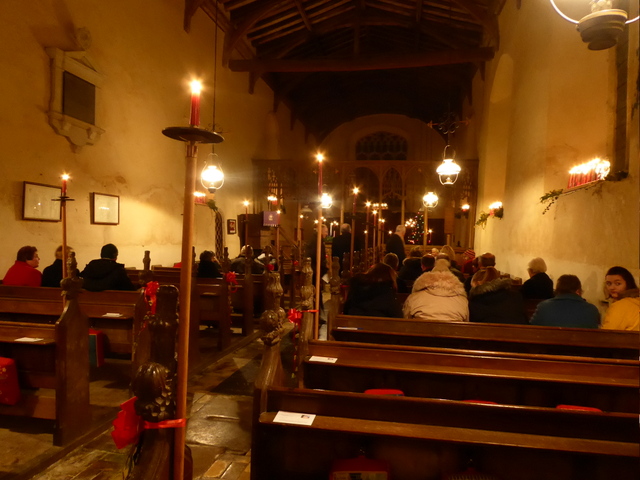
We held a carol service at our church on 20th December.

I took this photo a while before the service began.

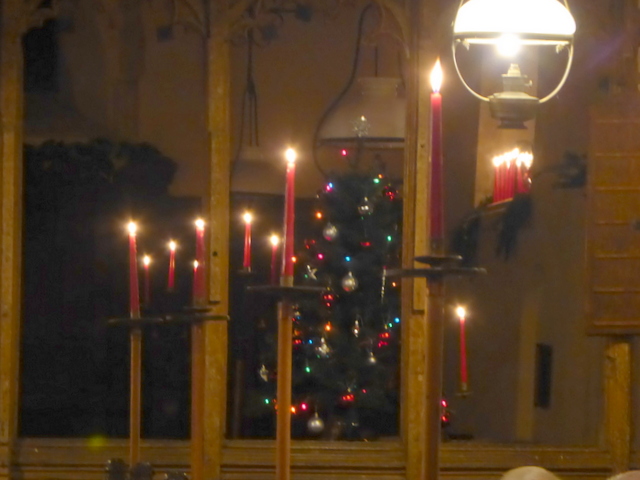
Our Christmas tree at church

The service was taken by Maurice our hard-working Elder who has taken on most of the admin duties for the benefice since we have been vicarless.  We heard the Christmas story in some readings from the Bible and we also listened to a few seasonal poems.  We sang lots of carols and then ate sausage rolls, cheese straws, cake and mince pies and drank sherry or fruit juice.

Kneeler at church
Kneeler at church
Kneeler at church
Kneeler at church


Richard, Elinor and I went to Midnight Mass at South Elmham St Peter’s church on Christmas Eve and we spent a peaceful Christmas at home, my mother visiting us for lunch and for the afternoon on Christmas Day and for an evening buffet meal on Boxing Day.

Christmas tree decorations

  Alice stayed in Sheffield for Christmas but came to visit us for a couple of days, arriving on the 28th December.  It was lovely to have her with us!

I took this photo with my phone on Boxing Day during our walk in the late afternoon

We don’t party on New Year’s Eve but stay at home quietly.  I had taken my mother to her church in the morning while Richard went to Ilketshall St John’s church in our benefice.  The roads were all awash but the rain held off for most of the day.  Richard, Elinor and I went to Southwold in the afternoon to walk by the sea.  We parked by the pier and walked along the front to the far end of the town where we bought some chips.  We walked back to the car as it got dark and came home again.  A pleasing end to the year.  No photos from Southwold as I left my camera at home.

Happy New Year, everyone!

Share this:

  • Share on X (Opens in new window) X
  • Share on Reddit (Opens in new window) Reddit
  • Share on Pinterest (Opens in new window) Pinterest
  • Share on Facebook (Opens in new window) Facebook
  • Email a link to a friend (Opens in new window) Email
  • Share on Tumblr (Opens in new window) Tumblr
  • Print (Opens in new window) Print
  • Share on Pocket (Opens in new window) Pocket
  • Share on LinkedIn (Opens in new window) LinkedIn
Like Loading...

A Walk in the Woods

15 Fri Dec 2017

Posted by Clare Pooley in Rural Diary, walking

≈ 99 Comments

Tags

Deadman's Covert, estuary, gorse, Holly, pine woods, puffball fungus, River Blyth, Suffolk, Walberswick Nature Reserve, walking

We were all in need of some fresh air and exercise, so Richard, Elinor and I drove to Walberswick Woods last Friday afternoon.  The woods are part of the larger Walberswick Nature Reserve which is jointly managed by Natural England, the RSPB and Suffolk Wildlife Trust.

Richard in Walberswick Woods

The day was cold; the temperature was just above freezing but the strong northerly wind made it very bitter indeed.  It was just after 2 pm and the sun was shining but it was so low in the sky we walked in shadow for most of the time.

Elinor in Walberswick Woods

The low sun shining through the pine trees.

The bracken fronds had died and were a soft silvery-fawn colour.

We found some fungi amongst the fallen leaves.

Halfway round this short walk we saw the marshes through the trees.

The River Blyth flows through the marshes and is tidal here.

To our left up a short rise, a tall stand of pine trees kept us in shadow

This part of the wood is known as Deadman’s Covert.  A covert is usually a piece of overgrown woodland (a thicket) that game (pheasants, partridge, deer) or foxes can hide in.

and to our right was the Blyth estuary and the marshes and a keen wind blowing.

We found a Holly tree with a few berries left.

We found a number of Puffball Fungi

Not much left of this one!

These trees snapped off half way up their trunks show how windy it can be here

The light shining through the seedheads of the Common Reeds as they danced in the wind.

Away from the marsh it was brighter and less windy. We admired the snakeskin bark of this tree.

The path through the wood

The sun shot beams of light through the trees

The straight ride through the wood. A ride is a path through woods for riding horses on.

The sun was getting even lower in the sky

Only the tops of these trees were lit now

I had wanted to collect pine cones to use as Christmas decorations but they were all so small after our dry year. You can see a couple on this branch.

The gorse was in flower. ‘When gorse is out of bloom, kissing’s out of fashion’. Gorse is never out of bloom!

Our walk over, we drove to my mother’s house to see how she was as she had been without a land-line phone all week because of a fault.  She had her fire alight and we had a lovely hot cup of tea with her.

Thanks for visiting!

Share this:

  • Share on X (Opens in new window) X
  • Share on Reddit (Opens in new window) Reddit
  • Share on Pinterest (Opens in new window) Pinterest
  • Share on Facebook (Opens in new window) Facebook
  • Email a link to a friend (Opens in new window) Email
  • Share on Tumblr (Opens in new window) Tumblr
  • Print (Opens in new window) Print
  • Share on Pocket (Opens in new window) Pocket
  • Share on LinkedIn (Opens in new window) LinkedIn
Like Loading...
← Older posts
Newer posts →
Follow A Suffolk Lane on WordPress.com

Enter your email address to follow this blog and receive notifications of new posts by email.

Join 715 other subscribers.

Unknown's avatar

I talk about what it's like living in a quiet part of Suffolk. I am a wife, mother and daughter, a practising Christian and love the natural world that surrounds me. I enjoy my life - most of the time!

My Posts

Jan 2026
M T W T F S S
 1234
567891011
12131415161718
19202122232425
262728293031  
« Dec    

Pages

  • About my Blog
  • GDPR (General Data Protection Regulations) and This Site
  • My Life in a Suffolk Lane

Archives

Blogs I Follow

Unknown's avatar
Unknown's avatar
Unknown's avatar
Unknown's avatar
Unknown's avatar
Unknown's avatar
Unknown's avatar
Unknown's avatar
Unknown's avatar
Unknown's avatar
Unknown's avatar
Unknown's avatar
Unknown's avatar
Unknown's avatar
Unknown's avatar
Unknown's avatar
Unknown's avatar
Unknown's avatar
Unknown's avatar

Posts I Like

  • Unknown's avatar
  • Unknown's avatar
  • Unknown's avatar
  • Secret Diary of A Country Vicar's Wife's avatar
  • Jack Ronald Cotner's avatar
  • Sarah curran's avatar
  • The Introverted Bookworm's avatar
  • sherijkennedyriverside's avatar
  • Unknown's avatar
  • Unknown's avatar
  • Unknown's avatar
  • Wayne Wolfson's avatar
  • Unknown's avatar
  • mitchteemley's avatar
  • Pilgrim's Pondering Ministry's avatar
  • Stephen G. Hipperson's avatar
  • Dad's avatar
  • Unknown's avatar
  • Unknown's avatar
  • bitaboutbritain's avatar
  • Unknown's avatar
  • Unknown's avatar
  • Unknown's avatar
  • Unknown's avatar
  • Matthew Paul's avatar
  • Unknown's avatar
  • Unknown's avatar
  • Unknown's avatar
  • Unknown's avatar
  • John’s Postcards's avatar
  • Unknown's avatar
  • Unknown's avatar
  • santable's avatar
  • Unknown's avatar
  • T Ibara Photo's avatar
  • gederedita's avatar
  • Unknown's avatar
  • (Kitty) Cat Strawberry - Meow!'s avatar
  • Yeah, Another Blogger's avatar
  • Unknown's avatar
  • Unknown's avatar
  • Martha's avatar
  • martzkvi's avatar
  • sopantooth's avatar
  • Unknown's avatar
  • Unknown's avatar
  • M T McGuire's avatar
  • Unknown's avatar
  • Unknown's avatar
  • Unknown's avatar

amphibians architecture art Arts and Crafts churches cooking Days out domestic animals family fish Folk Traditions Gardening Historic Buildings holidays Insects Landscaping literature music Norwich plants Rural Diary seashore theatre trees Uncategorized walking weather wild animals wild birds wild flowers

Tags

architecture autumn birds blackbird blackthorn Bungay butterfly church clouds common knapweed cow parsley crocus daffodils Diary dogwood family field maple flowers fungus garden gardening geese greylags ground-ivy Halesworth Hawthorn heather holiday Holly Holy Week horse chestnut Hoverfly insects ivy Lake District Lent lesser celandine lichen Lords and Ladies Mallard mallards Minsmere moorhen moss music Norwich Peak District pheasant plants pond ponds primrose primroses Rain rooks Rumburgh Rumburgh Church sheep Sheffield snow snowdrops Southwold spring Suffolk Suffolk Wildlife Trust sunset the Beck trees viburnum bodnantense walking weather wild cherry wild flowers winter-flowering honeysuckle witch-hazel

Meta

  • Create account
  • Log in
  • Entries feed
  • Comments feed
  • WordPress.com

Goodreads

Blog at WordPress.com.

Book Jotter

Reviews, news, features and all things books for passionate readers

Country Life Blog -

A blog about life in the country in the past and present

Matthew Paul: Poetry & Stuff

Poetry and what-not

Schnippelboy

Ein Tagebuch unserer Alltagsküche-Leicht zum Nachkochen

TAMARA JARE

TAMARA JARE Tamara Jare: Contemporary Figurative Painting Oil on Canvas Artist Art Studio

A Taste of Freedom

Documenting a Dream

Country Ways

Rambling Journeys in Britain, Countryside Matters and campaigning for the Right to Roam

The Strawberry Post

Here to Entertain, Educate & Inspire!

a north east ohio garden

an ongoing experiment in the dirt, 35 plus years

naturechirp

Celebrating God's creatures, birds and plants...

Sophie Neville

Writer

Going Batty in Wales

Developing a more sustainable lifestyle in SW Wales

Our Lake District Escapades

Exploring the Lake District and beyond

Short Walks Long Paths

Wandering trails around the coast of Wales

The Biking Gardener

An English persons experience of living and gardening in Ireland

Nan's Farm

A Journal Of Everyday Life

Walk the Old Ways

Rambling Journeys in Britain with John Bainbridge. Fighting for the Right to Roam. Campaigning to Protect Our Countryside.

Writer Side UP!

Waking the Writer Side...and keeping it "Up!"

Meggie's Adventures

Travel, thank you notes and other stories

amusicalifeonplanetearth

Music and the Thoughts It Can Inspire

lovefoundation.co.uk

Traveling Tortuga

Simply Living Well

Pakenham Water Mill

Historic watermill in the beautiful Suffolk countryside

Take It Easy

Retired, not expired: words from the after(work)life. And music. Lots of music!

Secret Diary Of A Country Vicar's Wife

By Olive Oyl

thanksfortheadventureorg.wordpress.com/

The Beat Goes On

#TBGO

Frank Pleszak's Blogs

Twitter: @frankpleszak @PolishIICorps

John Bainbridge Writer

Indie Writer and Publisher

roughwighting

Life in a flash - a bi-weekly storytelling blog

Walking the Old Ways

Rambling in the British Countryside

CapKane

thoughts on social realities

SkyeEnt

Jottings from Skye

jodie richelle

embracing my inner homemaker

Skizzenbuch/Blog

Just another WordPress.com weblog

Have Bag, Will Travel

The Call of the Pen

Flash Fiction, Book Reviews, Devotionals and other things.

John's Postcards

Art in Nature

You dream, I photographe it !

Smile! You’re in Barnier World......

theinfill

the things that come to hand

Dr. Mary Ann Niemczura

Author of "A Past Worth Telling"

Provincial Woman

The Pink Wheelbarrow

Luanne Castle: Poetry and Other Words (and cats!)

Poetry, Other Words, and Cats

The Family Kalamazoo

A genealogical site devoted to the history of the DeKorn and Zuidweg families of Kalamazoo and the Mulder family of Caledonia

everythingchild

The Book Owl

Canberra's Green Spaces

Paul Harley Photographer

  • Subscribe Subscribed
    • A Suffolk Lane
    • Join 715 other subscribers.
    • Already have a WordPress.com account? Log in now.
    • A Suffolk Lane
    • Subscribe Subscribed
    • Sign up
    • Log in
    • Report this content
    • View site in Reader
    • Manage subscriptions
    • Collapse this bar
 

Loading Comments...
 

    Privacy & Cookies: This site uses cookies. By continuing to use this website, you agree to their use.
    To find out more, including how to control cookies, see here: Cookie Policy
    %d