• About my Blog
  • GDPR (General Data Protection Regulations) and This Site
  • My Life in a Suffolk Lane

A Suffolk Lane

~ A diary of my life in rural north Suffolk.

A Suffolk Lane

Category Archives: walking

A Visit to Captain’s Wood – 4th May 2015

29 Fri May 2015

Posted by Clare Pooley in plants, Rural Diary, trees, walking

≈ 24 Comments

Tags

Alexanders, bluebells, Captain's Wood, Climbing Corydalis, coppice, foxglove, Suffolk, Suffolk Wildlife Trust, veteran Oaks, wild cherry, wood sorrel, woods

Captain’s Wood is owned by Suffolk Wildlife Trust and is found next to the village of Sudbourne which lies south of where we live, about 40 minutes drive away.  The morning had been beautiful and bright but by early afternoon the skies were beginning to cloud over and by the time we got to the wood the sun wasn’t shining much at all.

This was the first time we had visited the wood.  We had heard that the bluebells there were wonderful and hoped that we would see some.  We parked the car in a small car-park a few hundred metres from the entrance to the wood and walked down the lane towards it.
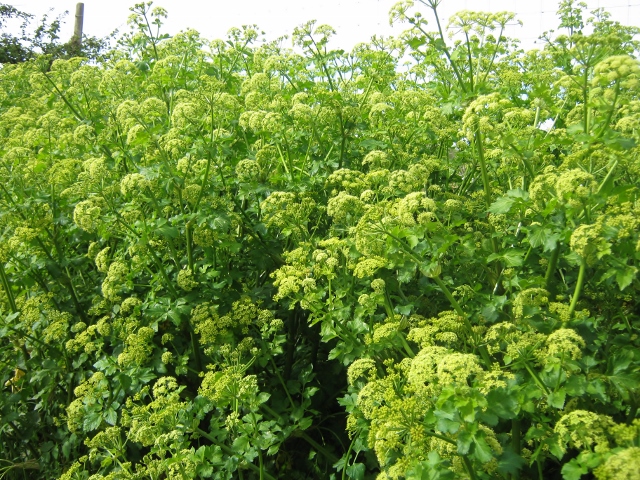
IMG_4571Alexanders (640x480)

Both sides of the lane were covered in Alexanders (Smyrnium olusatrum) which had been in full sun all the morning and as a consequence were giving off a perfume redolent of rotting spinach!
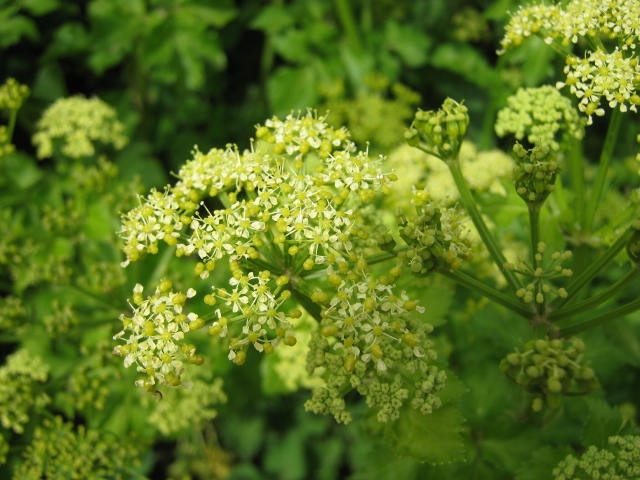
IMG_4572 (640x480)

Alexanders is a very attractive umbellifer and until recently has only been found within a few miles of the coast. I am not sure why, but in the last couple of years it has spread very quickly further inland and I have seen it in Norwich this spring for the first time.

I remember including it in one of my posts last year but can’t remember which so I’ll repeat what I said then.  The name Alexanders refers to its origins as a herb of Macedonia (Alexander the Great’s country of birth). Its black seeds were sold in the 17th century under the name of Macedonian Parsley and Nicholas Culpeper the herbalist noted that among other things, Alexanders could cure not only flatulence but snake bite!  The whole of the plant is edible and the generic name Smyrnium refers to its myrrh-like taste.

We walked along a short entrance path between gardens towards the wood.
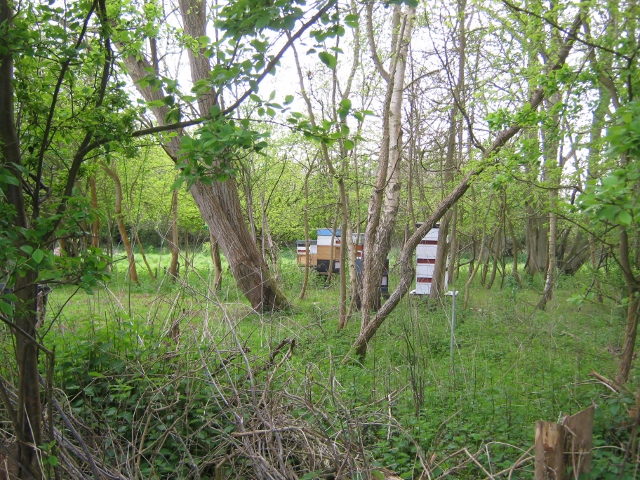
IMG_4573Bee hives (640x480)

Bee hives in someone’s garden

The first part of the wood we walked through didn’t really look like a wood.

IMG_4574Captain's Wood (640x480)
IMG_4575Captain's Wood (640x480)

This is newly acquired land consisting of 17 acres of small fields, scrub and a little area of woodland in-between the village and Captain’s Wood proper.  This land has not been farmed for many years and was largely left fallow.  Part of the land stays wet for most of the year and apparently has Marsh Orchids and other wetland plants growing there.
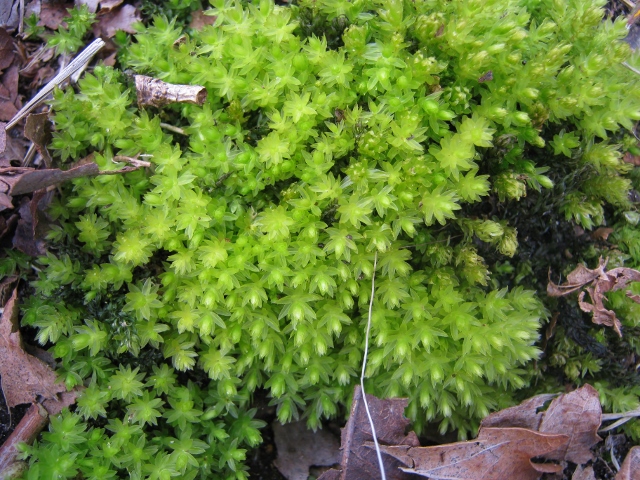
IMG_4576Moss (640x480)

On entering the wood I saw this beautiful moss.
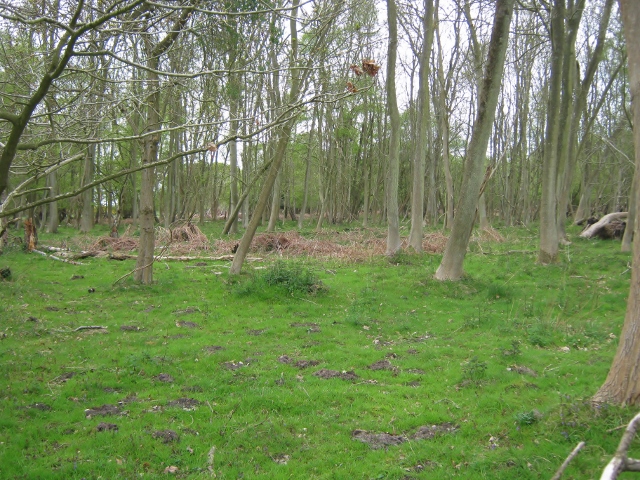
IMG_4577Captain's Wood (640x480)

Most of the wood looks like this.

Captain’s Wood consists of mainly open woodland with Oak and Birch.  There is a large stand of Hazel, clumps of mature Scots Pine and lines of planted Sweet Chestnut.  Herds of deer roam at large through the wood and seven different types of bat live here.
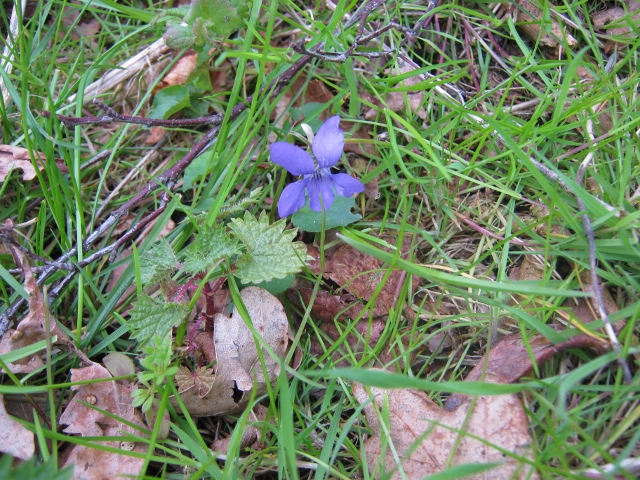
IMG_4578Violet (640x480)

There were a few Violets on the woodland floor. I didn’t check to see which violet this was but I think it may be Sweet Violet (Viola odorata)
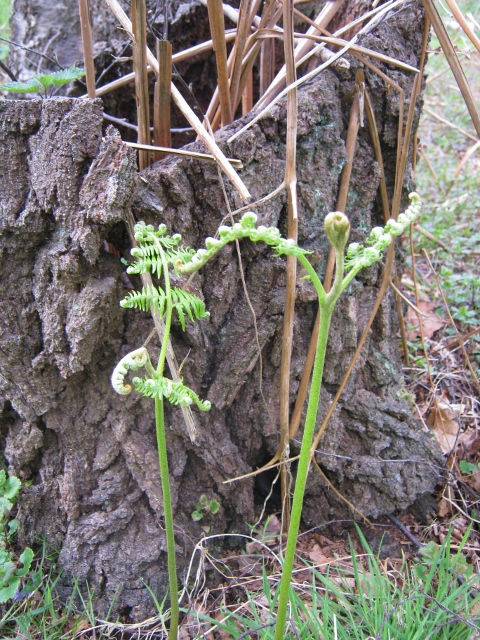
IMG_4579New bracken (480x640)

New bracken.

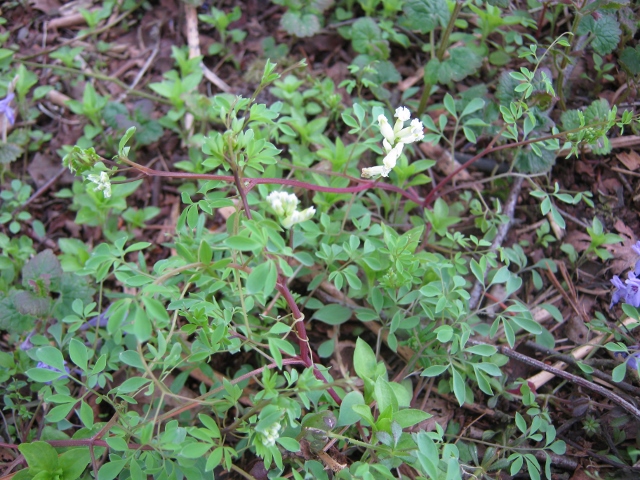
IMG_4580Climbing Corydalis (640x480)

Climbing Corydalis (Ceratocapnos claviculata)

Bartholomew of Glanville was an English friar living in the 13th century.  He wrote an encyclopaedia of natural history and in it he said that, despite its ‘horrible savour’, the roots of this plant could be made into a potion for dispelling melancholy.  Later on Climbing Corydalis became known as a cure for intestinal diseases.  This plant, along with fumitories, has flowers that resemble clovers and vetches though with fewer petals.  The flower’s peculiar shape has been likened to the head of a crested lark; hence the name ‘corydalis’.
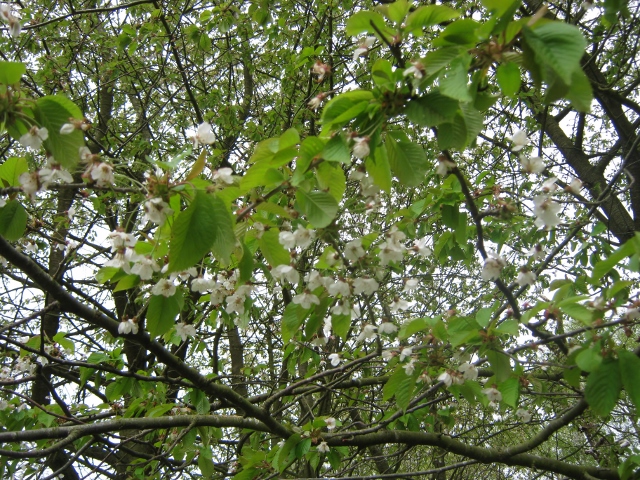
IMG_4581Wild Cherry (640x480)

Wild Cherry (Prunus avium)

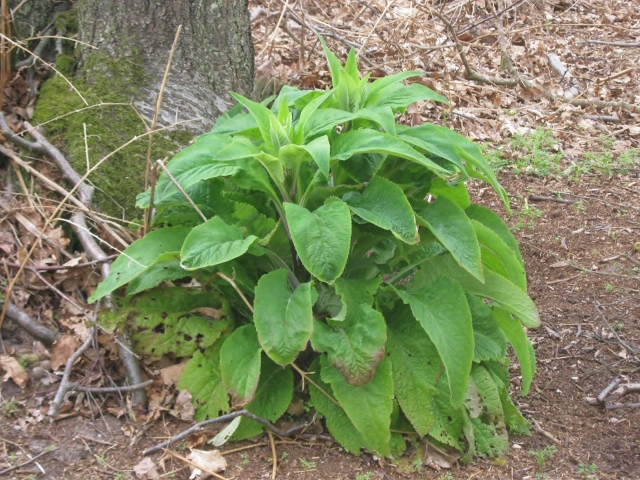
IMG_4585Foxglove (640x480)

The Foxgloves (Digitalis purpurea) were growing well.
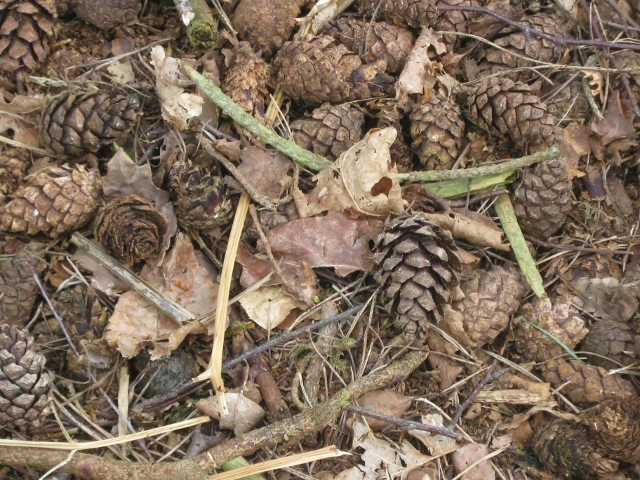
IMG_4586Woodland floor (640x480)

Woodland floor under the pine trees.

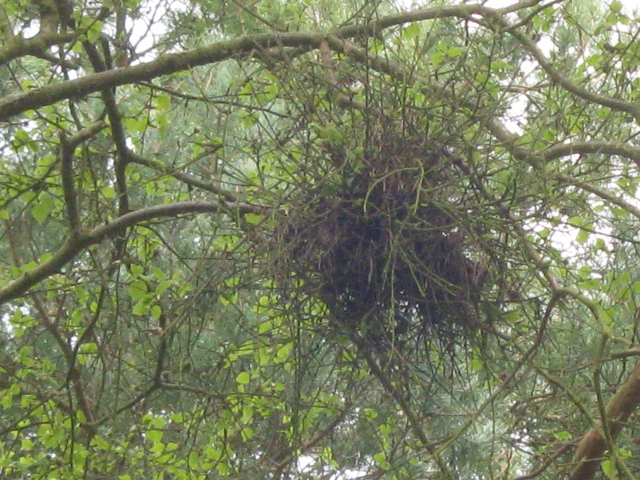
IMG_4588Witch's broom (640x480)

A ‘Witch’s Broom’ in a Birch tree.

These ‘Witch’s Brooms’ are caused by a type of parasitic fungus which induces galls in its host.

Bracket fungus
Bracket fungus
Bracket fungus
Bracket fungus
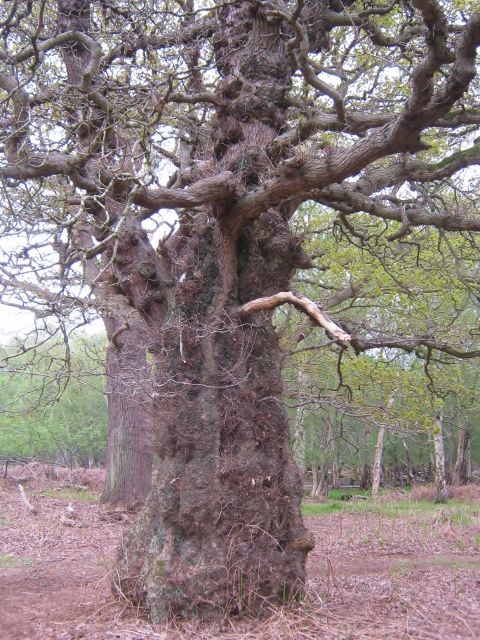
IMG_4591Oak tree (480x640)

One of the veteran Oak trees in the wood.
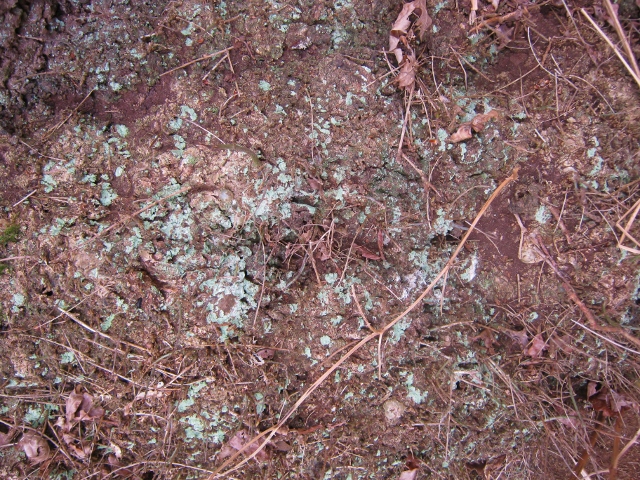
IMG_4592Lichen-covered trunk (640x480)

A close-up of the lichen-covered trunk of the Oak tree. A lot of the bark has disappeared and it no longer looks like a tree trunk anymore.

These veteran trees support many different species of fungi and invertebrates that are dependent on the slowly rotting heartwood of the tree.  Most notable is the Oak Polypore fungus which is known from only six other sites in Britain.  The Oak Polypore fruits for only a very short time in the summer.
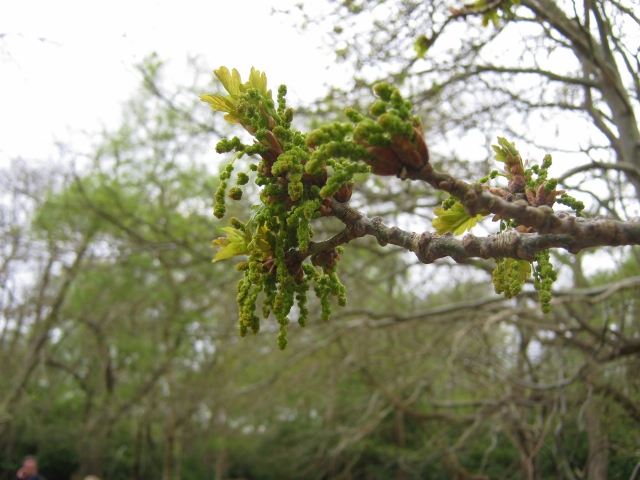
IMG_4623Oak (640x480)

New Oak leaves and flowers

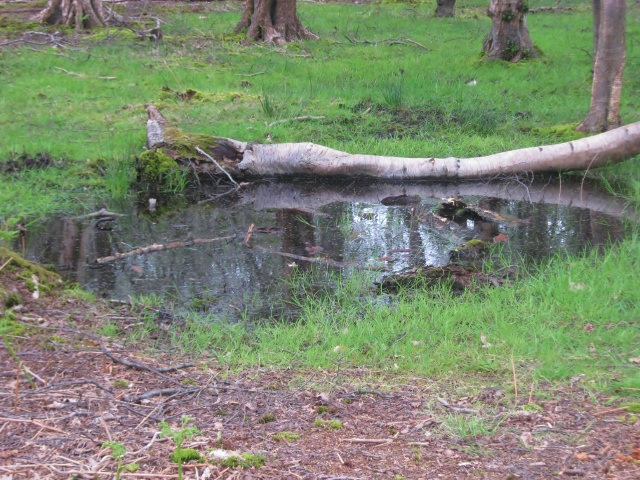
IMG_4593Pond (640x480)

One of the several ponds in the wood

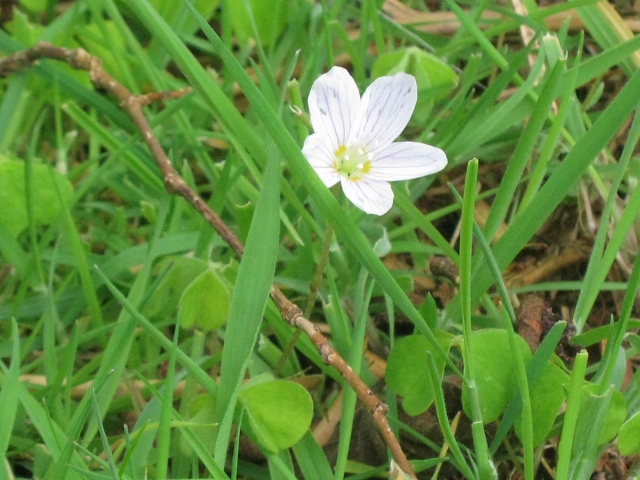
IMG_4608Wood Sorrel (640x480)

Wood Sorrel (Oxalis acetosella). A flower which indicates ancient, undisturbed woodland and hedges. The petals are white or pink with lilac veins.
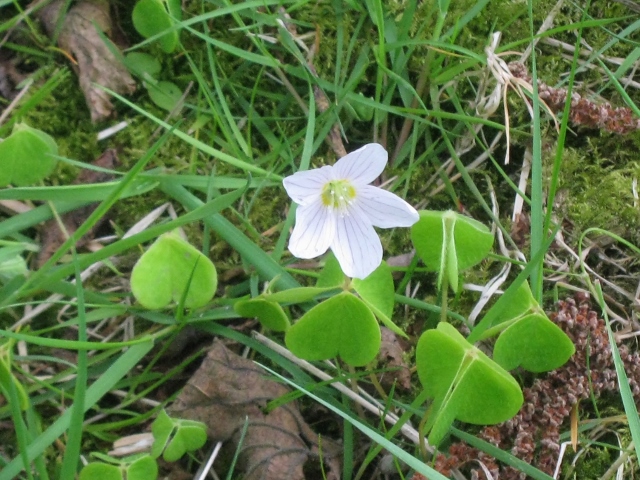
IMG_4610Wood Sorrel (640x480)

Wood Sorrel

IMG_4626Beech (480x640)

A Beech tree (Fagus sylvatica) coming into leaf
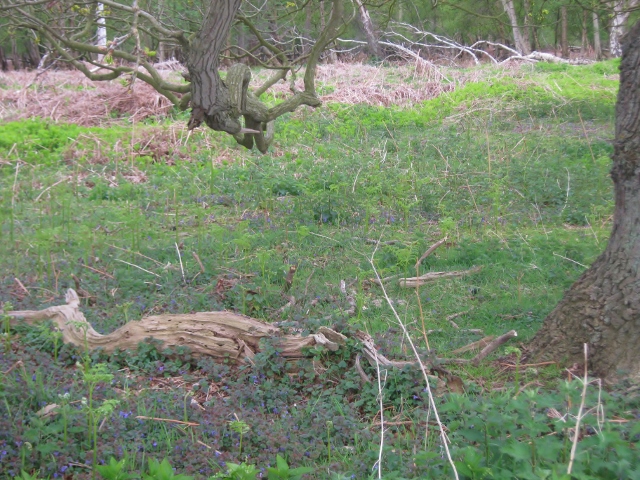
IMG_4597Green river of Dog's Mercury (640x480)

This bright green, running like a river through the woods is Dog’s Mercury(Mercurialis perennis)
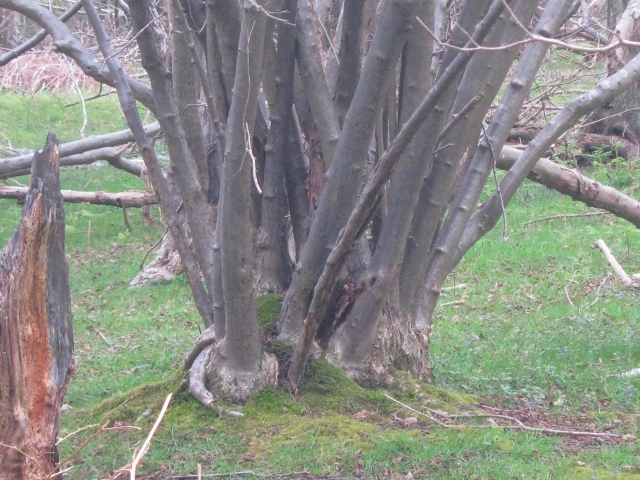
IMG_4611A  coppiced tree (640x480)

A coppice stool. The wood from the coppice is harvested every few years. New shoots are protected from deer and then left to grow until they are ready to be cut again.

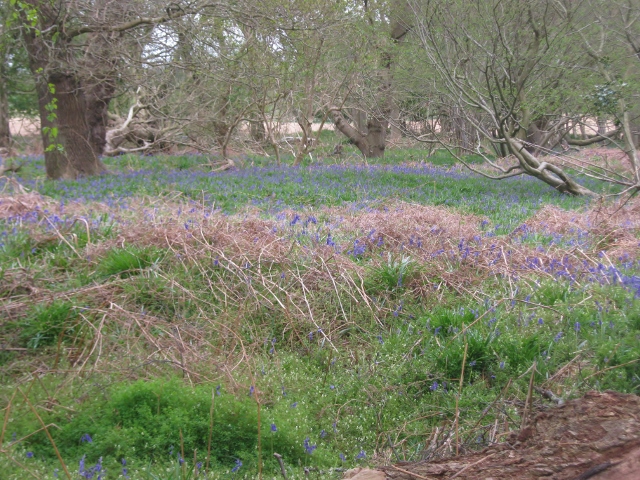
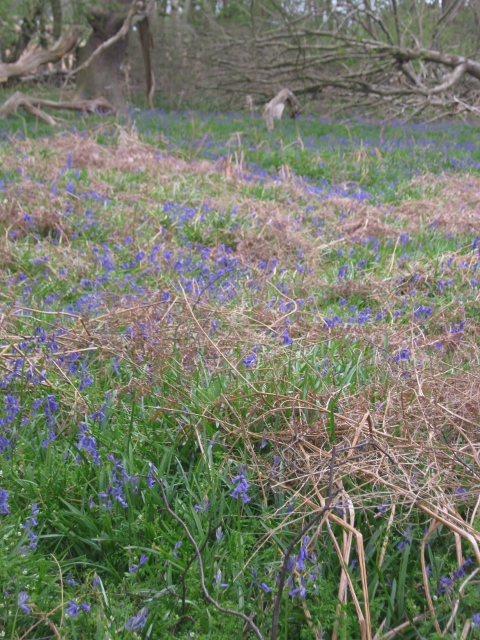
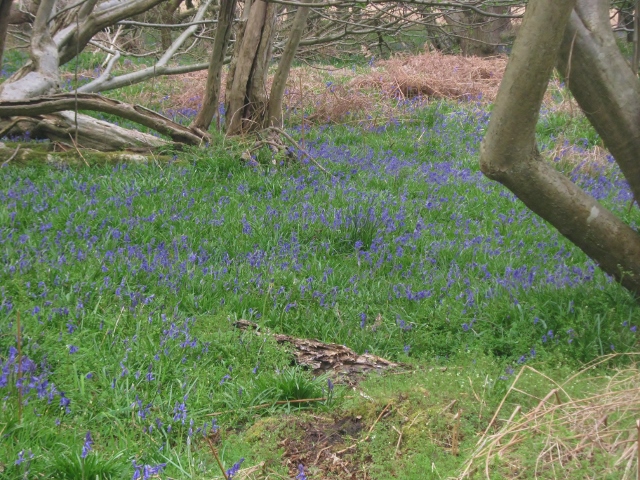
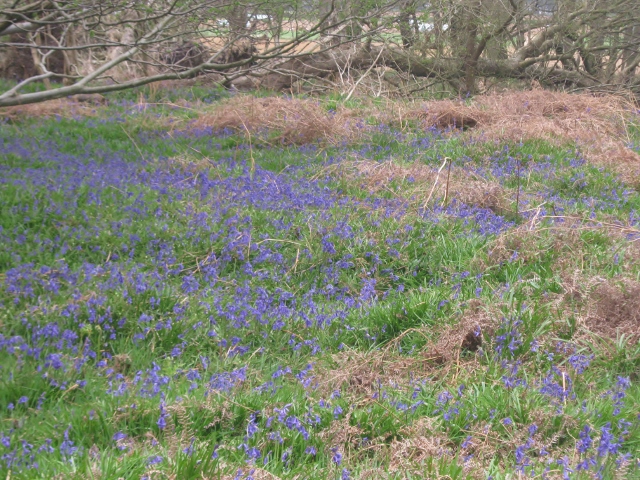
At last we reached the part of the wood where the bluebells were, but found we were just a little too early to see them at their best.
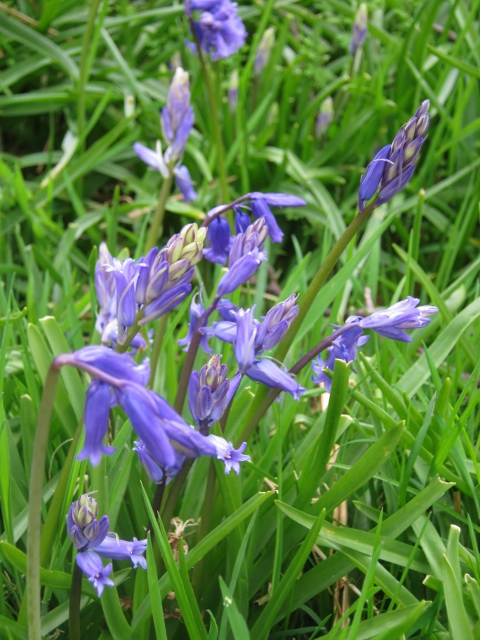
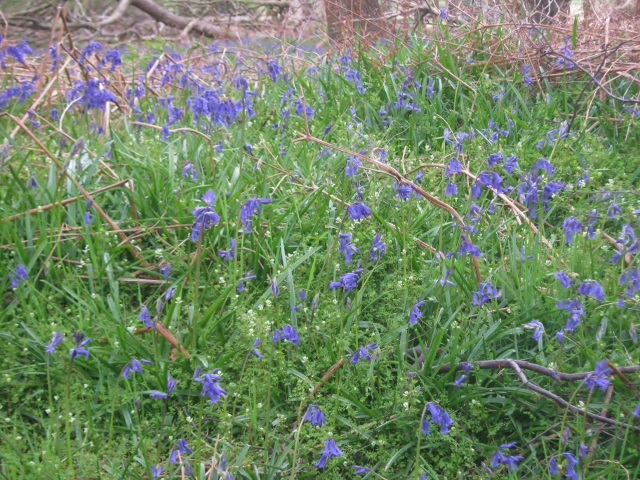
IMG_4604Bluebells (480x640)

Bluebells (Hyacinthoides non-scripta)
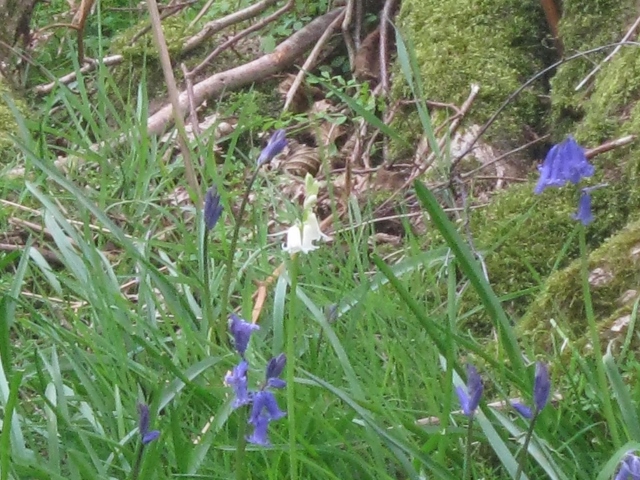
IMG_4612White Bluebell (640x480)

There were a number of white bluebells.
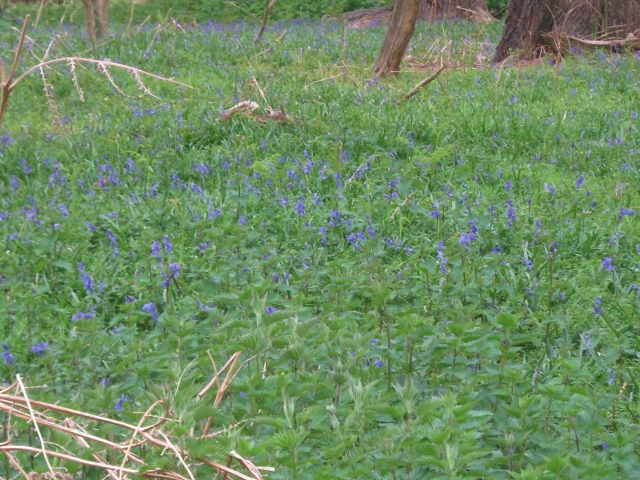
IMG_4594Bluebells (640x480)

Bluebell potential was good….

IMG_4599Bluebells (640x480) (2) IMG_4600Bluebells (640x480) IMG_4601Bluebells (480x640) IMG_4605Bluebells (640x480) IMG_4606Bluebells (640x480)

….but if we had visited a week later it would have looked heavenly.   Unfortunately, a week later we were doing other things.

We got back to the car and discovered we had a puncture.  Richard tried to change the tyre himself but we were unable to get the tyre off.  We had to call a rescue company and after just under an hour’s wait the mechanic arrived.  He managed to remove the tyre by sitting on the ground and kicking it with his left then right boot alternately.

Captain’s Wood is somewhere we would visit again.  It has plenty of plants and a variety of trees.  The walk through the wood would be pleasurable at any time of the year.

Thank-you for visiting!
Share this:

  • Share on X (Opens in new window) X
  • Share on Reddit (Opens in new window) Reddit
  • Share on Pinterest (Opens in new window) Pinterest
  • Share on Facebook (Opens in new window) Facebook
  • Email a link to a friend (Opens in new window) Email
  • Share on Tumblr (Opens in new window) Tumblr
  • Print (Opens in new window) Print
  • Share on LinkedIn (Opens in new window) LinkedIn
Like Loading...

A Walk to St Peter’s Church 12th April 2015

09 Sat May 2015

Posted by Clare Pooley in churches, plants, Rural Diary, Uncategorized, walking

≈ 41 Comments

Tags

architecture, churches, St Peter South Elmham, Suffolk, walking

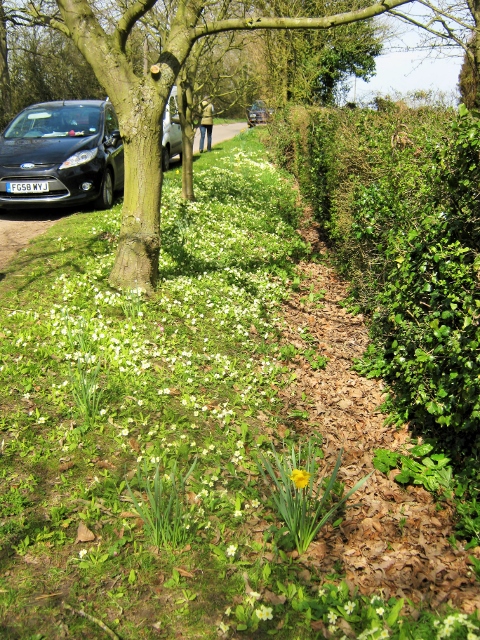
IMG_4351Primrose bank outside St Peters (480x640)

Primrose bank outside St Peter’s church

I am indebted to our Rector the Rev. Richard Thornburgh for the use of his Notes on the church of St Peter South Elmham.  A leaflet we bought when we visited the church.

Richard and I went to church at St Peter South Elmham on the 12th April.  It was a lovely spring day and the primroses on the bank outside the church were glorious!  We decided that, as it was such a nice day, we would walk back to the church in the afternoon and try to get there across the fields instead of along the lanes.  We had travelled there by car in the morning.

We set off on the same route across the fields that we usually use and were pleased to see that the ground was dry and virtually mud free.

Dried grasses

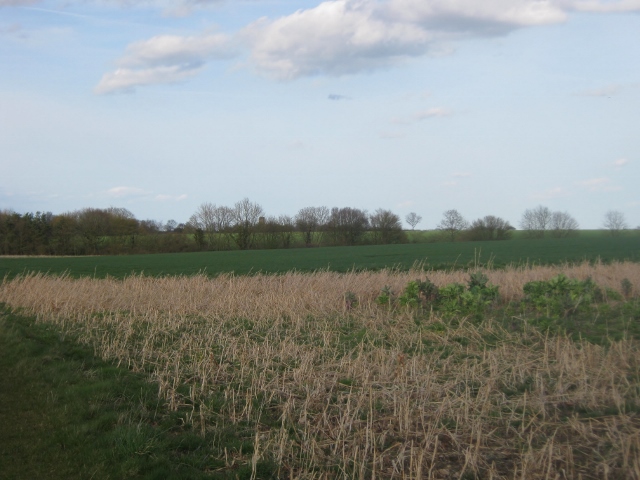
Dried grass in the field.

St Peters church across the fields

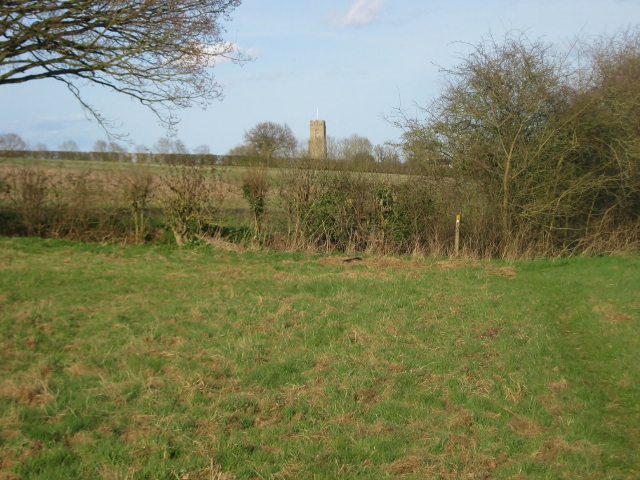
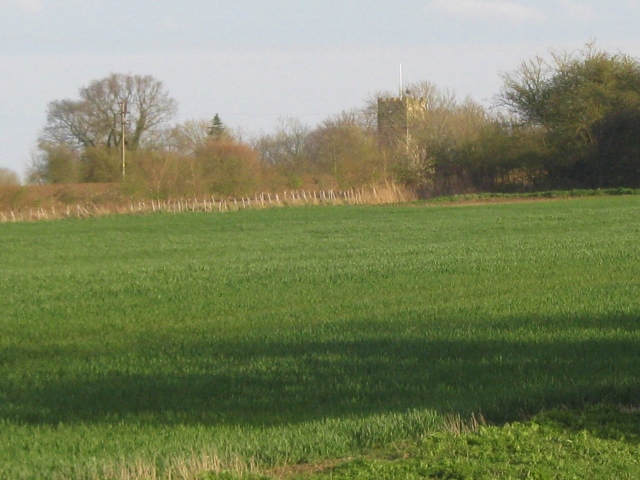
Our goal; St Peters church across the fields.  You can just see it behind the trees on the horizon.

IMG_4360Strange sign (480x640)

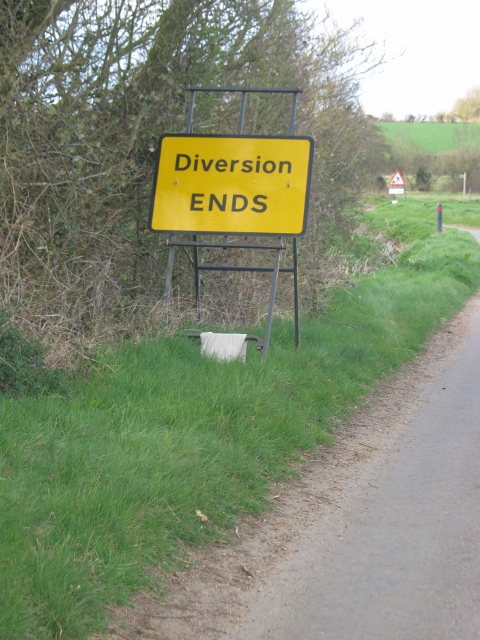
We have been having to put up with almost continuous road repairs to our lanes for the past two or three months. The repairs are desperately needed but the long diversions to get past them have been very inconvenient. This was a strange place for this sign to be. It was half way along a very narrow lane with no other lanes turning off it. It would have confused a stranger!

Richard walking across the field

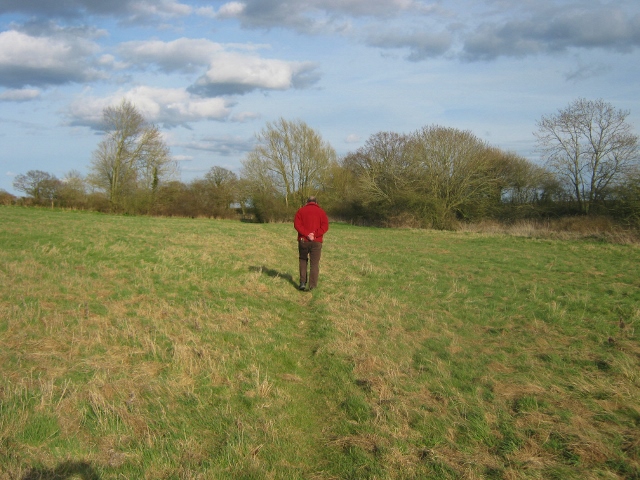
Richard walking across the field at the valley bottom. The paths are so clearly marked in the fields. So many people have used these paths over the centuries that the ground is indented and the grass grows differently.

The Beck and blackthorn blossom

The Beck, our local stream, at the corner of the field; with blackthorn blossom.

St Peters church

Another view of St Peters church

IMG_4364In the Beck (640x480)

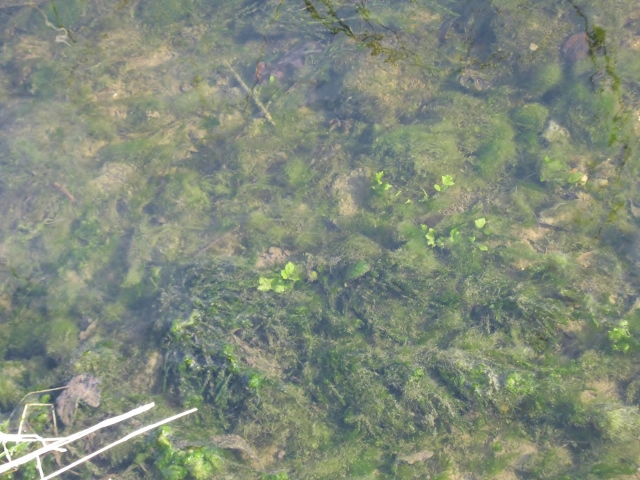
The water in the Beck was beautifully clear.

IMG_4365Horses (640x480)

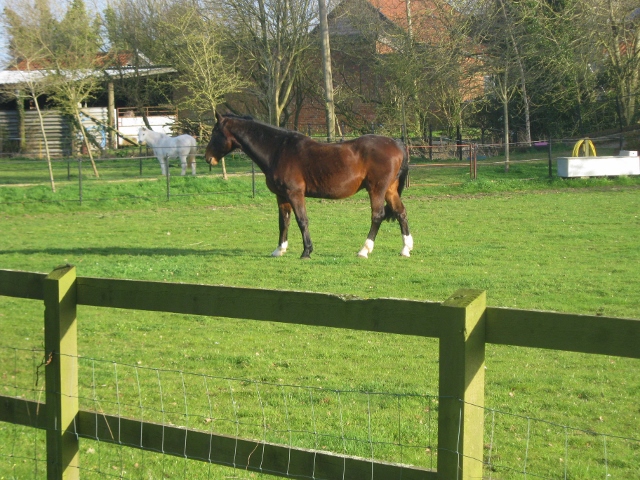
Such a beautiful glossy horse in a field we walked past.

IMG_4367Bridge (640x480)

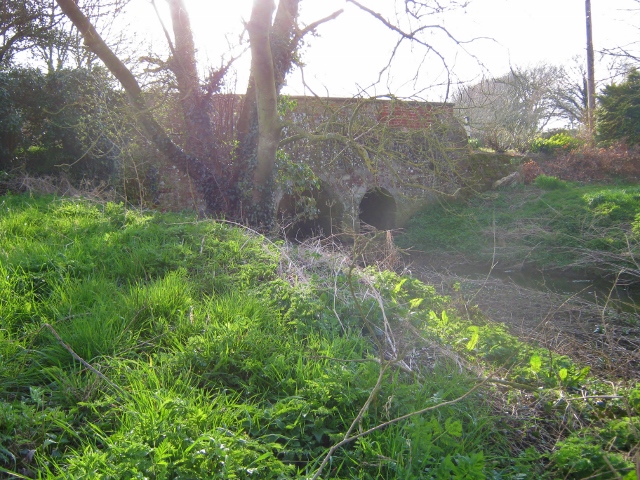
This bridge over the Beck at the bottom of the hill in St Peter’s village has been rebuilt many times.  You can just about see the couple of patches of red brick.

St Michaels church

St Michael’s church in the village of St Michael can be seen from the bottom of the hill in St Peter’s village. Almost all our village churches in ‘The Saints’ are within very short distances of each other.

Up the hill to St Peters church

The view up the hill to St Peters church

Down the hill from the church

Looking back down the hill from the church to where the bridge is.

IMG_4372Churchyard (480x640)

St Peter’s churchyard

IMG_4393Preaching cross (480x640)

This is believed to be the base and part of the Preaching Cross which once stood at the nearby road junction.

Porch

The 14th century porch which has very worn carved faces (headstops) on the outer arch. Richard is inside reading notices on the notice-board.  The door into the church from inside the porch, that Richard is standing in front of, is much older than the porch.  It is early Norman – late 11th or 12th century.

IMG_4391Stoup (640x480)

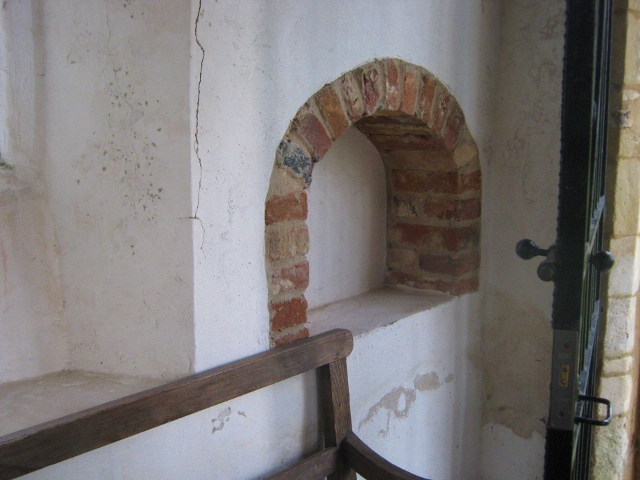
The stoup recess inside the porch. This would have contained a bowl of Holy Water.

IMG_4374Window in the tower (2) (597x640)

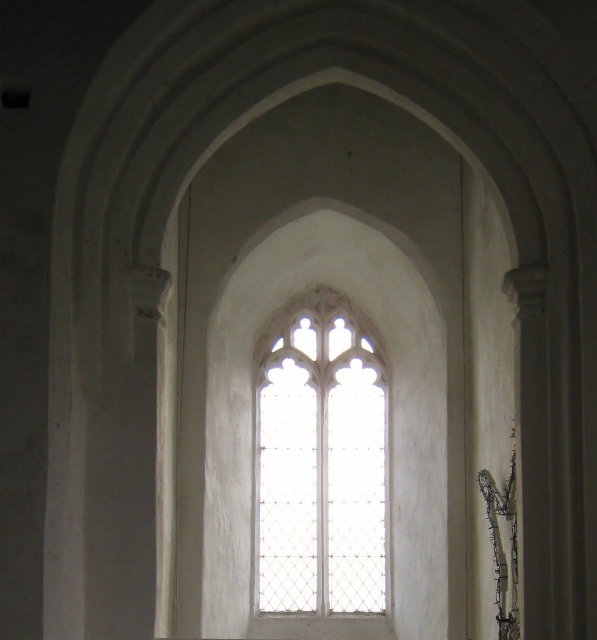
The window in the tower.

Rood screen and chancel

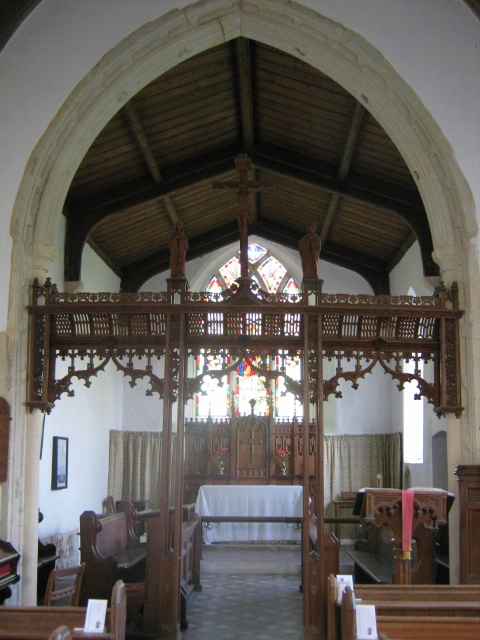
The beautifully carved Rood screen and the chancel.

I was sorry not to be able to get a better photo of the Rood screen as it is quite lovely.  I would have had to light the church properly so that the sunlight from the windows wasn’t causing the Rood Screen to be in silhouette.   The screen isn’t all that old.  It was presented to the church by the Adair family from Flixton Hall in 1923.

You can see the socket holes in the arch above the screen into which the original screen and tympanum were fitted.  The originals were probably destroyed during the time of the Commonwealth.

Roof timbers

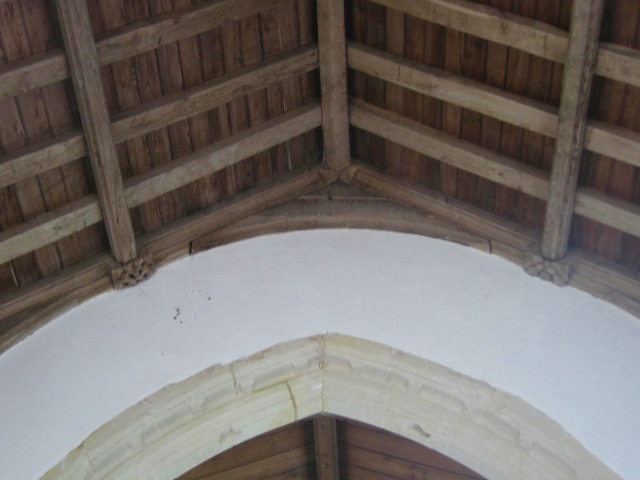
The nave has a beautiful timber roof.

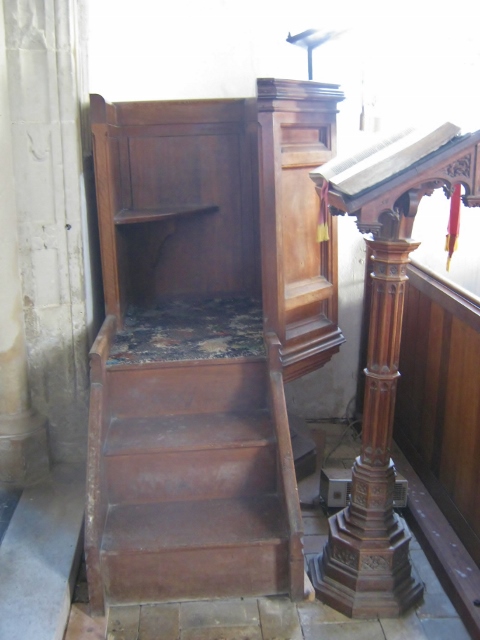
IMG_4379Pulpit (480x640)

18th century pulpit.

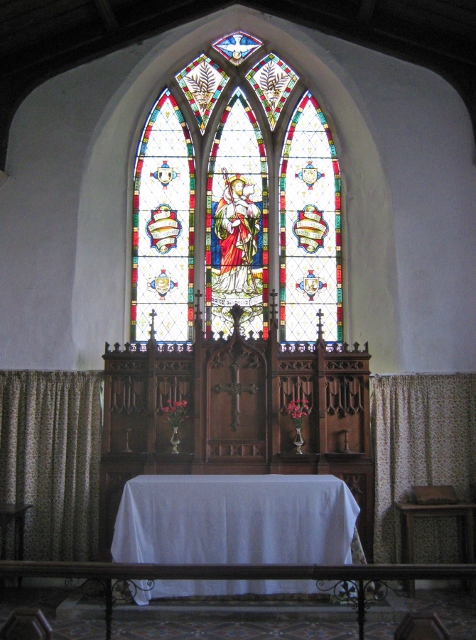
IMG_4380Altar and East Window (476x640)

The altar, the modern oak reredos behind the altar and the east window.

Carving in stone and wood
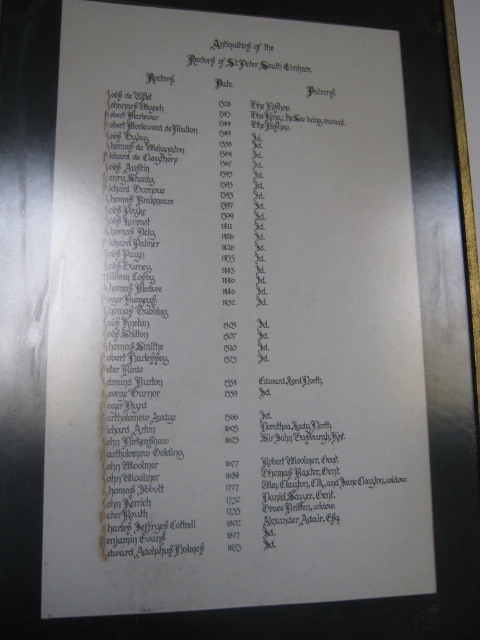
IMG_4381List of Rectors (480x640)

A list of the names of all the Rectors of St Peter’s church from the 14th century to the 19th century and their patrons.

The harmonium
The harmonium
Ancient door
Ancient door
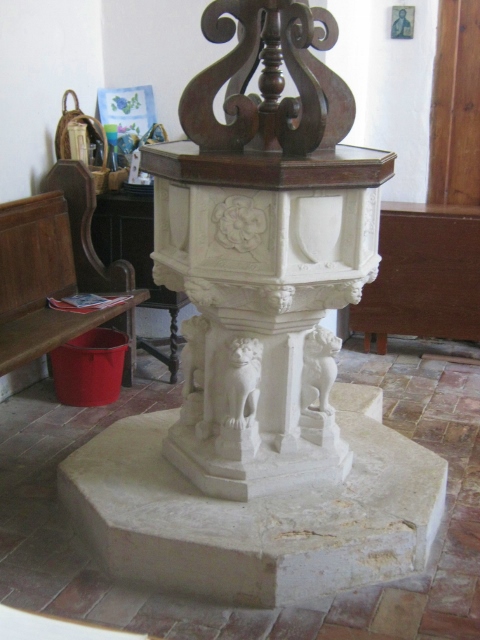
IMG_4388Font (480x640)

This is the 15th century font with a typically East Anglican lion design. There are four lions round the shaft and angel faces with crossed hands above them. Above the angels are Tudor rose designs and blank shields. The font cover is 17th century work. Please ignore the decorative red bucket under the pew! I didn’t notice it when I took the photo.

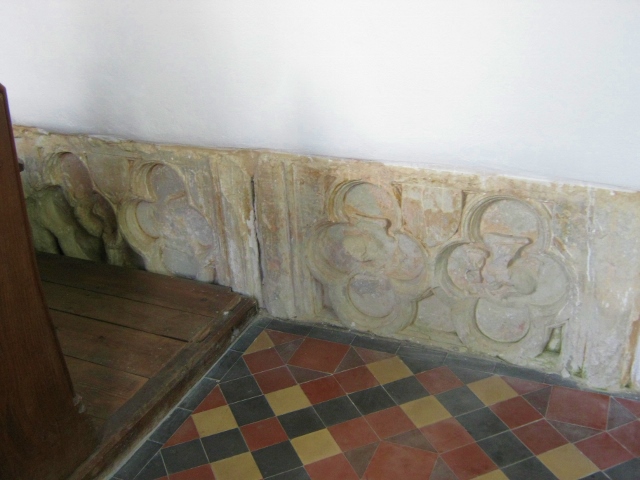
IMG_4387Tomb panels (640x480)

Part of tomb panel

There used to be a Lady Chapel, built in the late 14th or 15th century, on the north side of the church.  In the chapel, John Tasburgh Esq. and his wife Margery, owners of the land on which the church was built, were buried.  The tomb panel pictured above (one of two) is all that is left of their tombs, and therefore all that’s left of the Lady Chapel which was desecrated during the Commonwealth years.  By 1830 the chapel was in a terribly dilapidated state, the tombs had been dismantled and the panels used as the base for the new north wall.  The panels extend for about another foot below ground level.  The last of the chapel was demolished in the 1840’s.


This slideshow requires JavaScript.


South side of the church
The tower
The tower
The east window
The east window

By the time we left the church it had become very windy and we really struggled in our walk home.

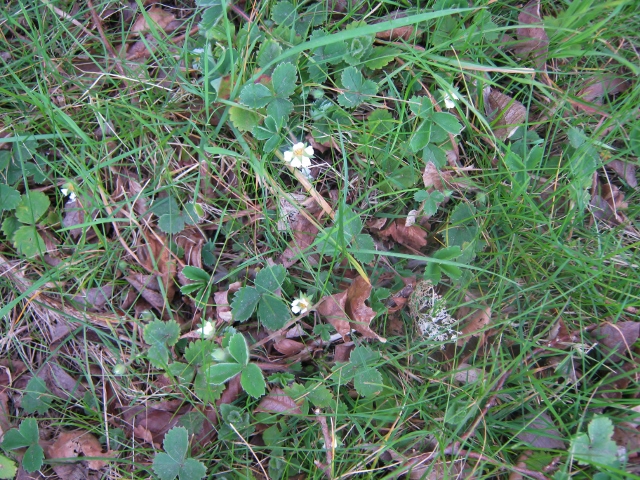
IMG_4396Barren strawberries (640x480)

I thought at first I had found some wild strawberries, but on closer inspection I realised that this is a Barren Strawberry plant.

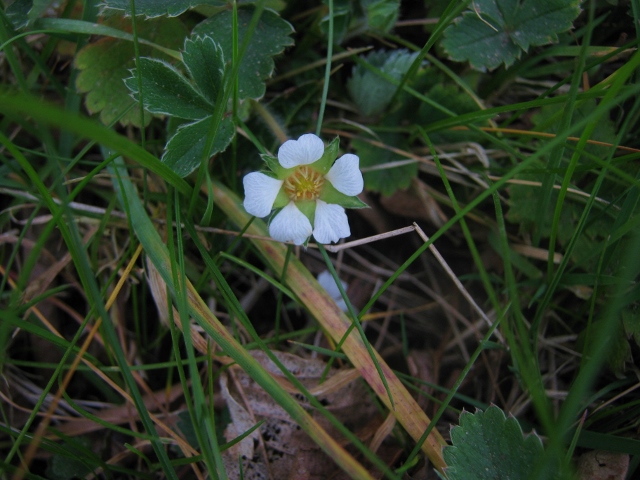
IMG_4397Barren strawberry flower (640x480)

Barren Strawberry (Potentilla sterilis)

The petals of the Barren Strawberry are widely spaced and the fruits are dry and papery.  The terminal tooth of the end leaflet ( the plant is trifoliate like a strawberry plant) is shorter than the adjacent ones.

This slideshow requires JavaScript.

The sky was beautiful.

Thanks for visiting!


Share this:

  • Share on X (Opens in new window) X
  • Share on Reddit (Opens in new window) Reddit
  • Share on Pinterest (Opens in new window) Pinterest
  • Share on Facebook (Opens in new window) Facebook
  • Email a link to a friend (Opens in new window) Email
  • Share on Tumblr (Opens in new window) Tumblr
  • Print (Opens in new window) Print
  • Share on LinkedIn (Opens in new window) LinkedIn
Like Loading...

Dunwich Heath – August 31st 2014

07 Thu May 2015

Posted by Clare Pooley in plants, Rural Diary, Uncategorized, walking

≈ 47 Comments

Tags

bell-heather, coastguard cottages, coastline, Dunwich Heath, dwarf gorse, erosion, gorse, heather, heathland, ling, marram, National Trust, sandlings, Sea Kale, shingle beach, Suffolk

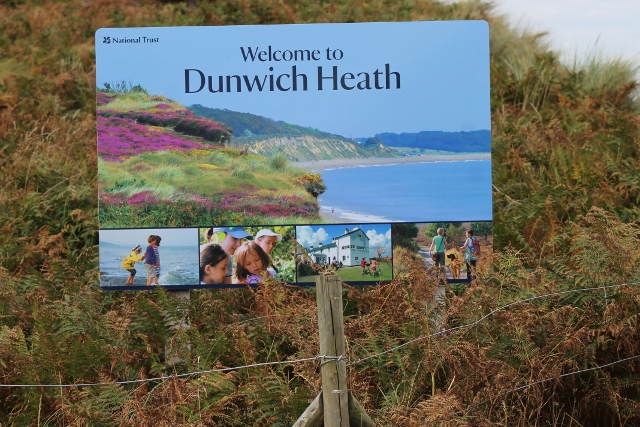
057Dunwich Heath sign (640x427)

Richard, Elinor and I took a trip to Dunwich Heath at the end of August last year.  We wanted to go somewhere different to our usual places but didn’t want to make a long journey.

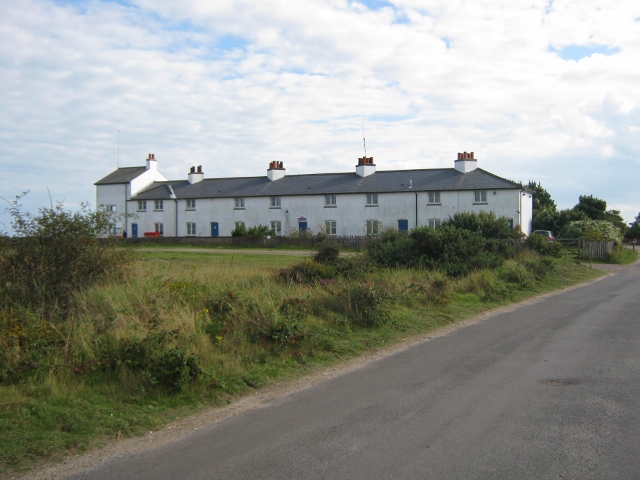
040Coastguards cottages (640x480)

The old coastguard cottages. The National Trust tearoom is situated in the end cottage.  The other cottages are rented out as holiday homes.

The County of Suffolk has six topographical regions each with its own distinct landscape features.  I live in High Suffolk with its boulder-clay soil but just a couple of miles to the East of us the soil changes and becomes sand and gravel.  This gravelly area is called The Sandlings and Dunwich Heath (part of the Sandlings) is right on the coast.  To quote the National Trust description of the area –

‘Dunwich Heath is where the Sandlings meets the sea.  It is 87 hectares (215 acres) of heather, gorse, grassland, woodland and crumbling sandy cliffs, as well as a mile of shifting sand and shingle beach.  The Sandlings landscape was created by early farmers thousands of years ago.  The sandy, free-draining soils became dominated by heather as farmers cleared the trees and introduced sheep to graze the land.

Within the Sandlings, only at Dunwich does the heathland extend to the cliff top – a rare example of coastal lowland heath.’

060Beach (640x384)

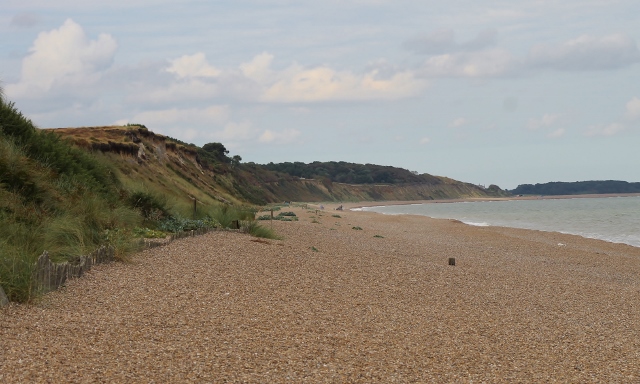
The shingle beach and cliffs

Late summer and early autumn is the best time to visit heathland as that is the time the heather is in flower.

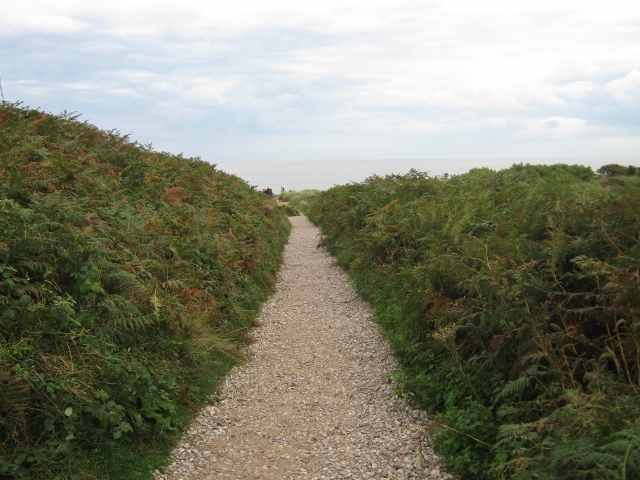
005Path at Dunwich Heath (640x480)

We parked the car and walked to the beach first, as the seaside is Elinor’s favourite place to be.

007Heather, gorse and bracken (640x480)

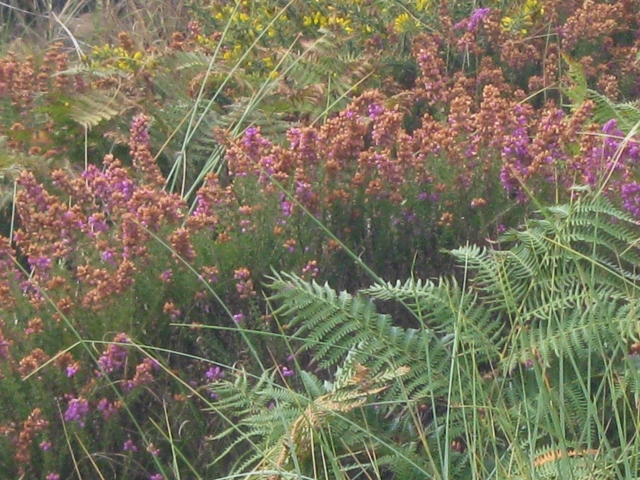
Heather, gorse and bracken by the side of the path.  This heather is going to seed; I love the orange colour of the seed capsules.

009Sea Kale (640x480)

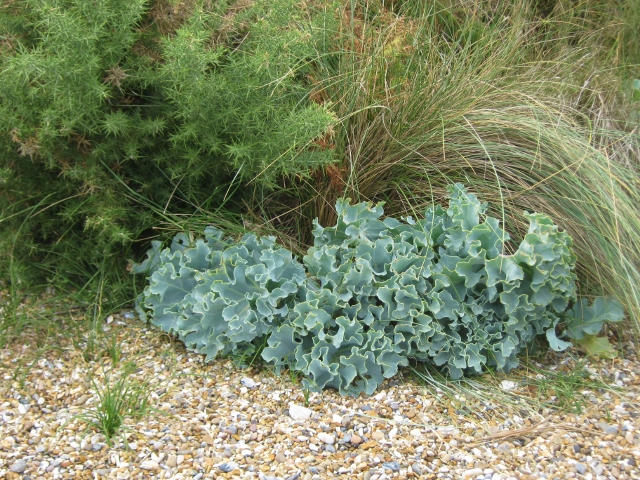
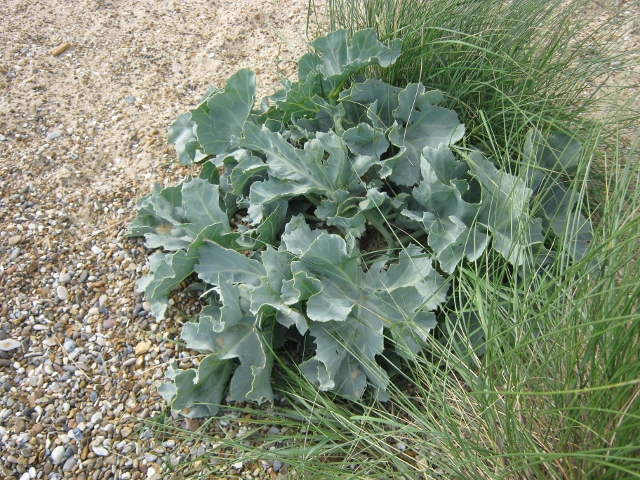
We found Sea Kale (Crambe maritima) as usual, with Marram grass (Ammophila arenaria) and Gorse behind it

012Heather on the shoreline (640x480)

Heather on the shoreline

010Dunwich cliffs (480x640)

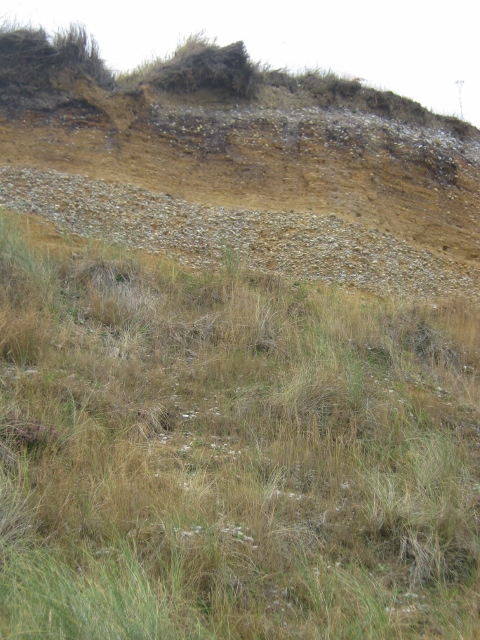
You can see here what the cliffs are made of – sand and gravel in layers. It is no wonder they are crumbling away.

The sands are known as ‘crags’.  The southern sandling crags are the oldest – a shelly ‘Coralline Crag’ which was deposited in warm tropical conditions about 3.5 million years ago forms an island and is surrounded by a sea of ‘Red Crag’ which is also full of fossilised shells.  The northern crag known as ‘Norwich Crag’ is younger and is less than 2 million years old.  Dunwich Heath is part of the ‘Norwich Crag’.

I have found three Belemnite fossils in my garden.  Perhaps some gravel containing these fossils was brought to the area when the house was built or perhaps the land where we live is the border between the clay soil and the sandy soil.

011Dunwich cliffs (640x480)

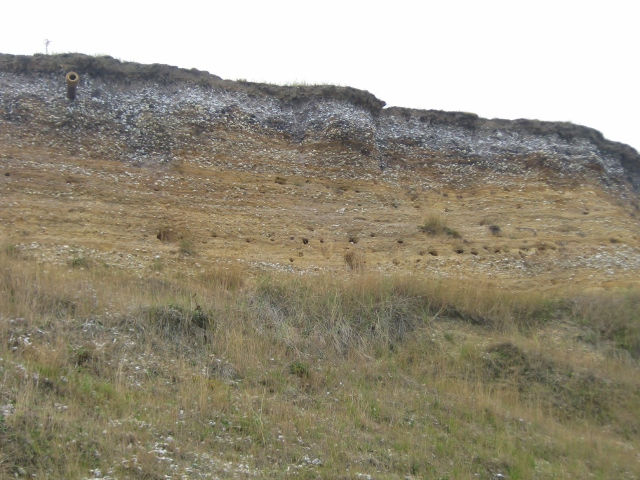
The little holes are probably Sand Martin (Riparia riparia) nestholes. The pipe sticking out at the top left of the picture is probably a land drain.

014Dunwich cliffs (640x480)

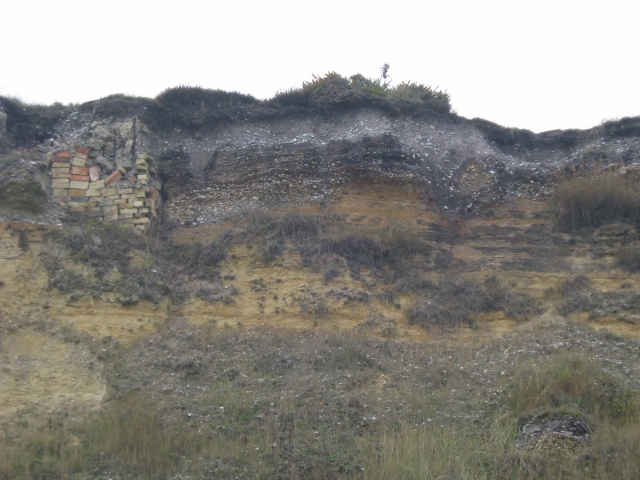
Dunwich has disappeared into the sea at a rate of about 400 metres in 400 years. Houses and other buildings are still lost regularly. I don’t know what the structure at the top left of the picture is, or was!

020Southwold (640x480)

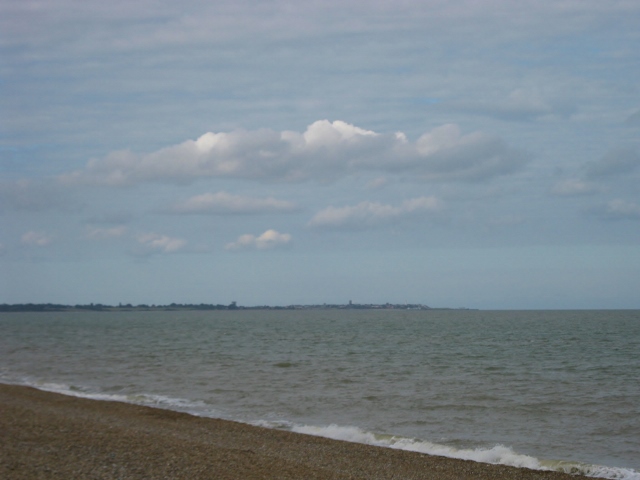
We could see the town of Southwold to the north.

024Dunwich Heath (640x480)

There is a large expanse of grassland here.

Richard and I left Elinor on the beach and went for a walk.

029Dunwich Heath (640x480)

There were plenty of flowers and grasses to see. Further away across the water meadows and marshes are the two nuclear energy plants at Sizewell.

Parasol fungus (Macrolepiota procera) about 2' tall!
Parasol fungus (Macrolepiota procera) about 2′ tall!
Honeysuckle - not native
Honeysuckle – not native
Common Ragwort - Senecio jacobaea
Common Ragwort – Senecio jacobaea
White Campion - Silene latifolia
White Campion – Silene latifolia
033Dunwich Heath - heather (640x480)

This is the sight we had come to see. The beautiful heath in flower.

This slideshow requires JavaScript.

035Heather (640x480)

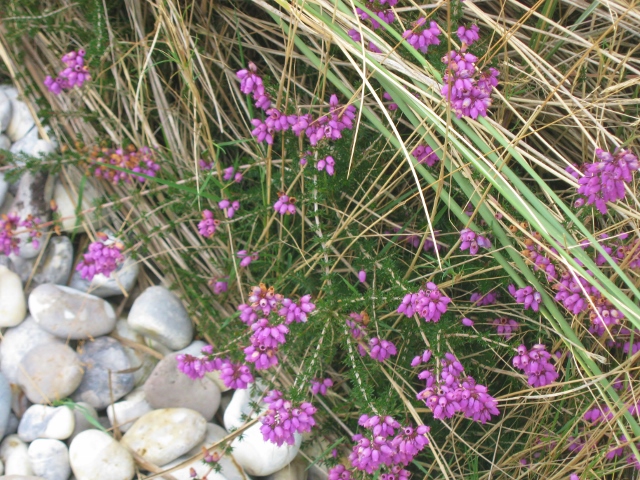
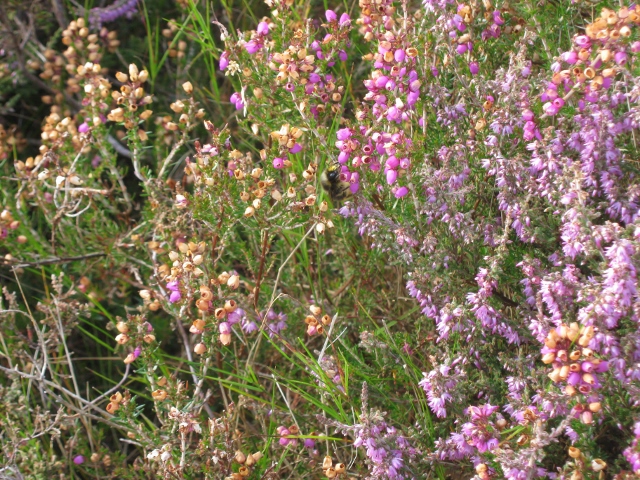
Heather (Calluna vulgaris) also known as Ling.

036Bell heather (640x480)

Bell Heather(Erica cinerea) – (the larger flowers)

037Dwarf Gorse (640x480)

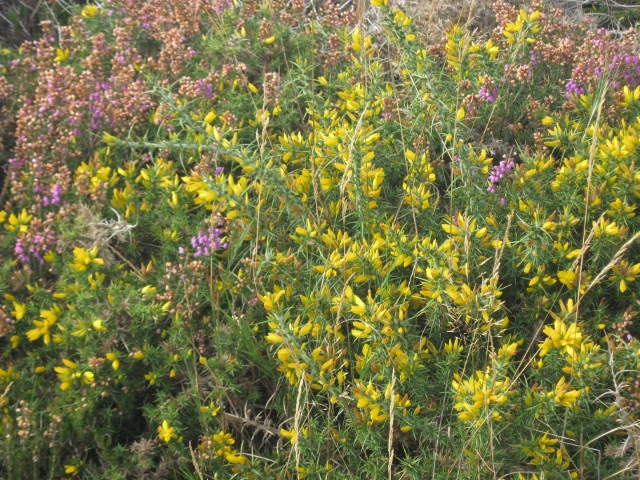
Dwarf Gorse (Ulex minor)  There are plenty of Gorse (Ulex europaeus) bushes on the heath as well.

I heard and then saw a Dartford Warbler (Sylvia undata) on the top of a Gorse bush, but he was too far away to photograph.

043Plaque on cliff top (640x480)

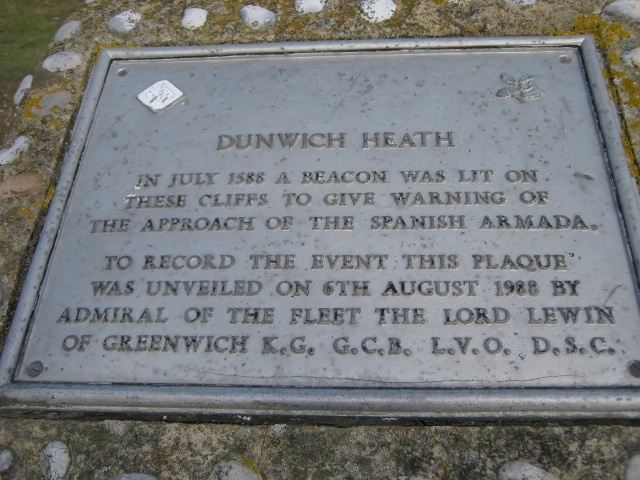
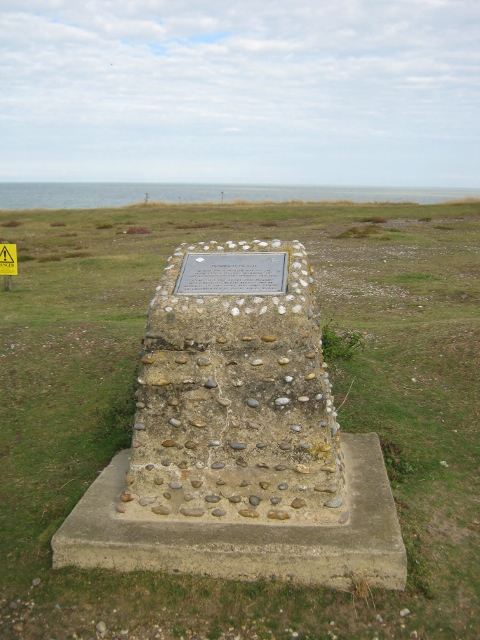
A plaque on the cliff-top

044Plaque (480x640)

The plaque

050Clouds (640x441)

Clouds

053Beach (640x425)

The beach

This next photograph really makes me laugh!

055Me and Elinor (640x427)

Look at Elinor’s expression! Goodness knows what I must have been wittering on about.

‘Oh wad some power the giftie gie us / To see oursel’s as others see us! / It wad frae monie a blunder free us, / And foolish notion.’  Robert Burns

059Border Force ship at sea (640x422)

A Border Force ship patrolling the coast. The modern coastguards.

072Sea watch shelter (640x427)

A sea-watch shelter. Looking at the water can be interesting and calming in itself but often ships, boats and other craft can be seen as well as sea-birds and mammals such as dolphins and seals.

We ended our visit with a cake each and a drink of choice at the tea-room.

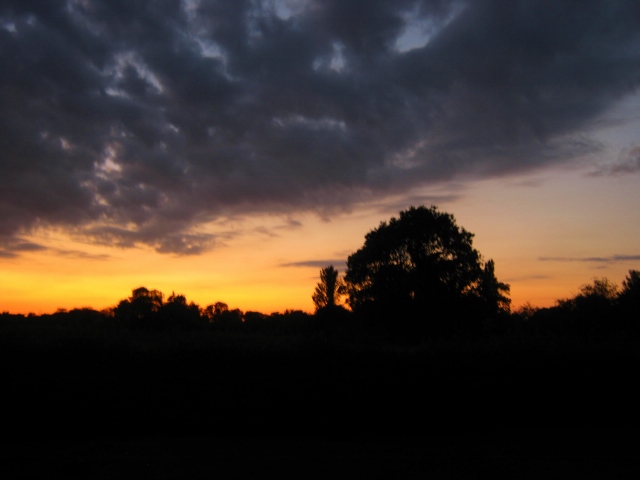
081Sunset (640x480)

A dramatic sunset when we got home.


Thank-you for visiting!

Share this:

  • Share on X (Opens in new window) X
  • Share on Reddit (Opens in new window) Reddit
  • Share on Pinterest (Opens in new window) Pinterest
  • Share on Facebook (Opens in new window) Facebook
  • Email a link to a friend (Opens in new window) Email
  • Share on Tumblr (Opens in new window) Tumblr
  • Print (Opens in new window) Print
  • Share on LinkedIn (Opens in new window) LinkedIn
Like Loading...

Minsmere – Summer 2014

05 Thu Mar 2015

Posted by Clare Pooley in domestic animals, plants, Rural Diary, trees, Uncategorized, walking, wild animals, wild birds

≈ 28 Comments

Tags

Avocet, beach, Blackthorn sloes, chickweed, Common Reed, common restharrow, Common Sandpiper, Highland Cattle, Konik pony, Lesser Burdock, Lesser Centaury, Marsh Sow-thistle, Marsh-mallow, Michaelmas Daisy, Minsmere, Red Deer, Rosebay Willowherb, RSPB, Sea Kale, silverweed, Spoonbill, Stonecrop, Tansy, Wild Teasel

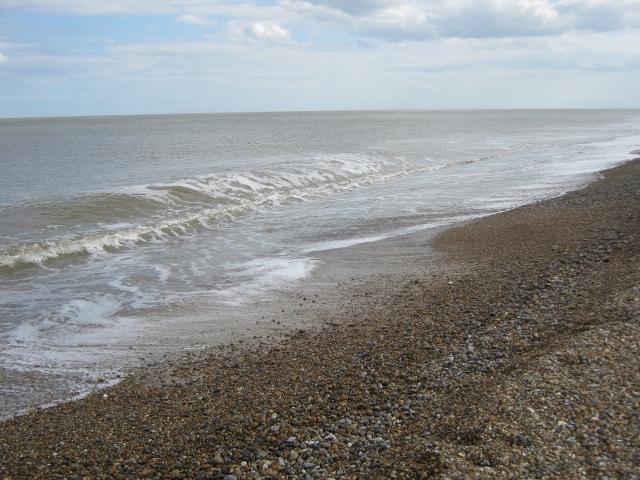
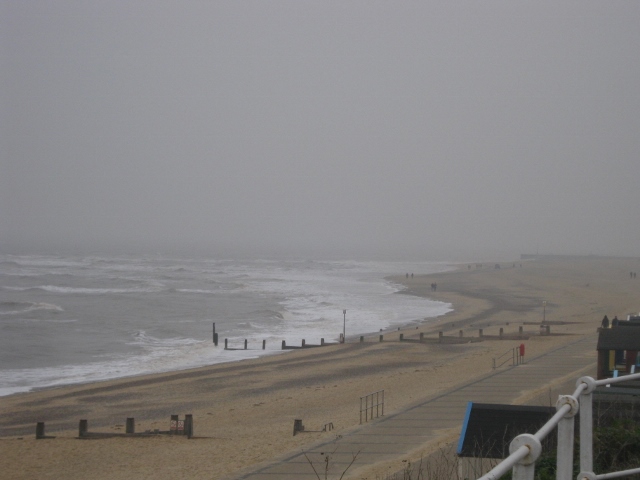
017The sea (640x480)

The beach at Minsmere. I never tire of photographing waves rolling in to the shore.

This is another catch-up post featuring some photos I took last year.  Richard, Elinor and I visited the RSPB (Royal Society for the Protection of Birds) reserve at Minsmere on the Suffolk coast last August on Richard’s birthday.  We are fairly frequent visitors as it is only a few miles drive from our home.  It is a large reserve and has many different types of habitat – woodland, heathland, shoreline, lagoons and creeks.  Not only does it have many, many species of bird there but it is home to all sorts of other wildlife – insects, mammals, reptiles, amphibians and plants.  Quite often we hardly see any birds at all depending on the time of year and where we decide to walk.  We don’t often go into the hides but on this occasion we did go into one briefly.

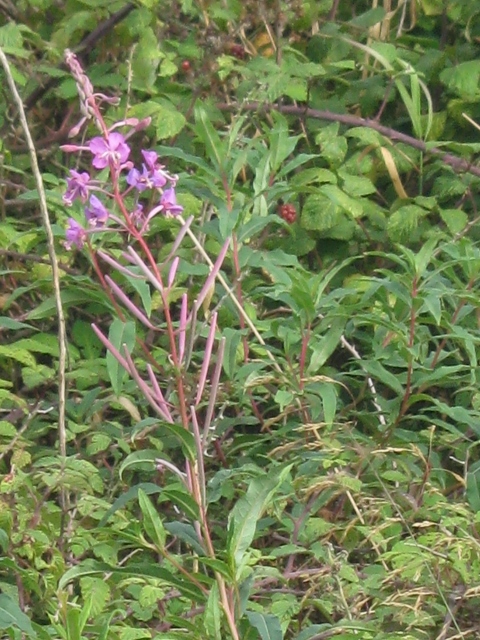
003Rosebay Willowherb (480x640)

Rosebay Willowherb (Chamerion angustifolium), a common enough plant, but at the time this was the first one I’d seen that year.

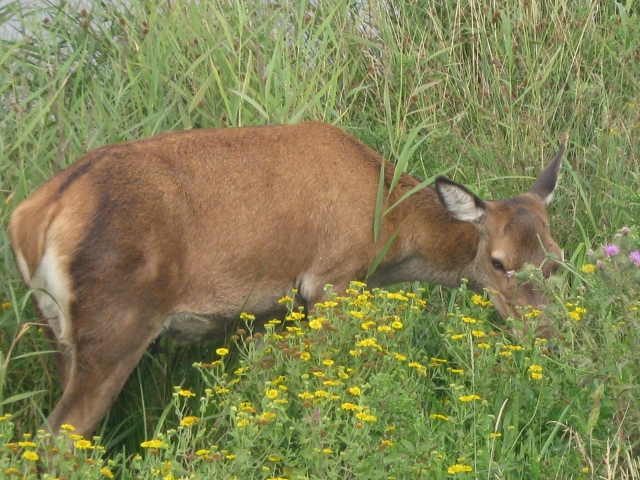
005Red deer (640x480)

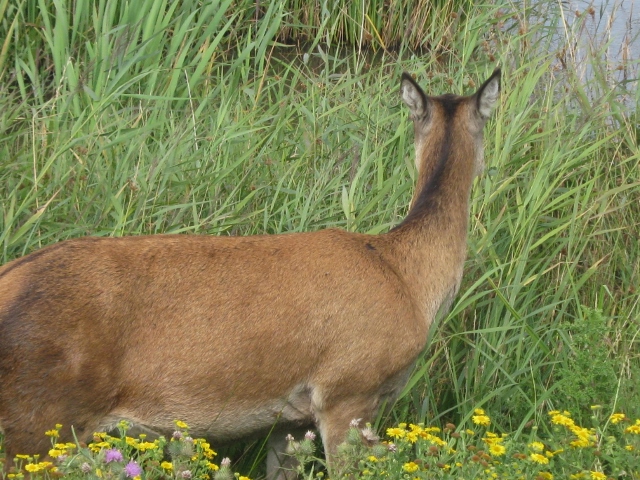
Red Deer (Cervus elaphus). This photograph is not cropped and was taken from the causeway path through the wetland going in the direction of the sea. The deer, though wild, was oblivious to the group of admiring humans taking pictures of it while it ate some tasty vegetation. The deer know they are safe here and feel free to go wherever they want.

006Red deer (640x480)

I love the dark edges to their ears and the dark line down their necks.

009Red deer (640x480)

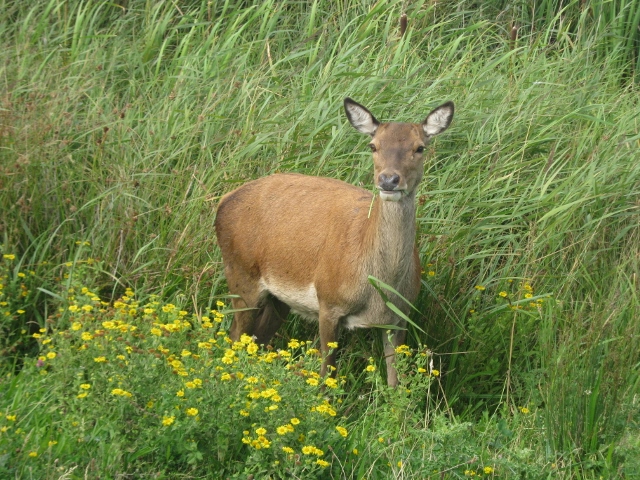
She has such a lovely face! The females are much smaller than the males and are 160 – 210 cm / 63 – 83″ long (not including the tail) and weigh about 120 -170 kg / 260 – 370 lbs.

021Driftwood (640x480)

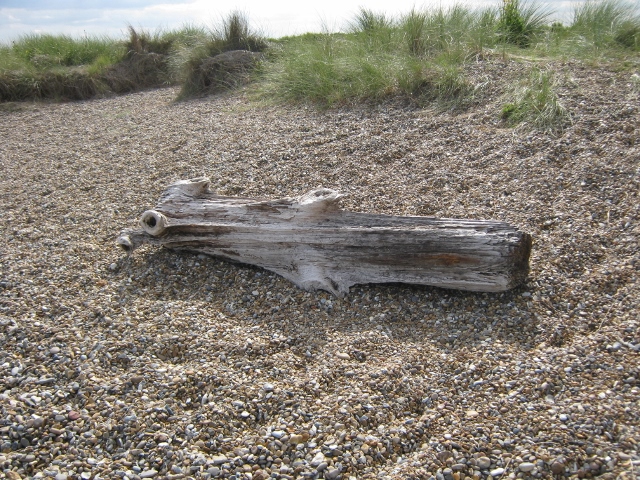
Driftwood on the beach

019Richard and Elinor (640x480)

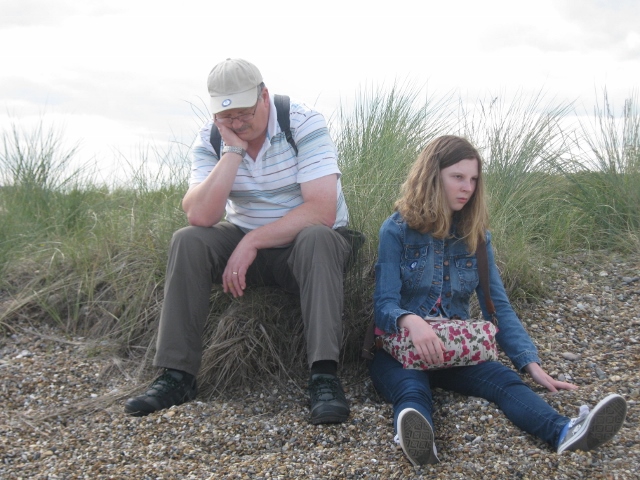
Don’t be fooled! They were enjoying themselves really!

022Sea Kale (640x480)

Sea Kale (Crambe maritima)

023Plants on sand dune (640x479)

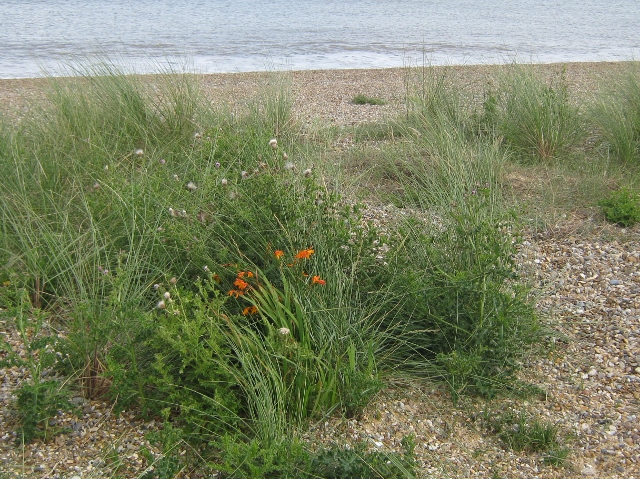
A variety of plants grow on the sand dunes or shingle dunes as they should be called here!

037Lesser centaury (640x480)

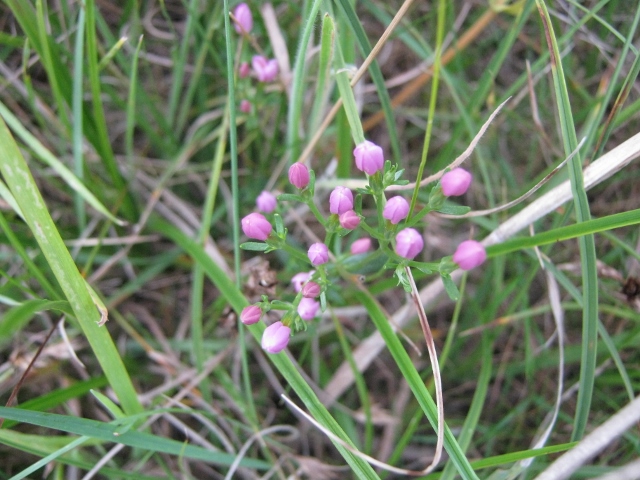
Lesser Centaury (Centaurium pulchellum). Unfortunately I didn’t manage to find any with the flowers open.

033Common Sandpiper (640x480)

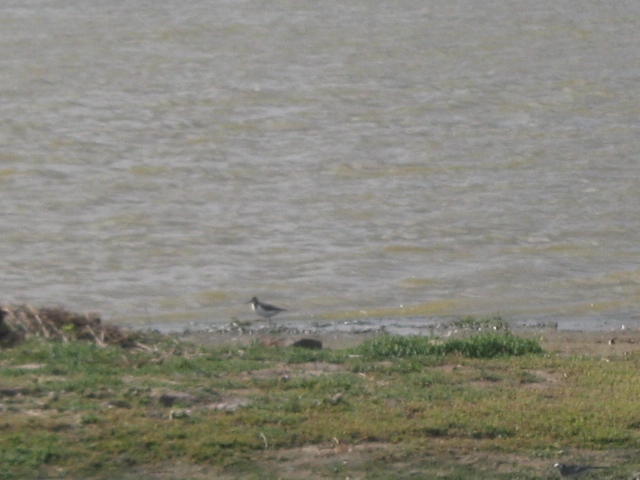
I’m afraid you’ll have to take my word for it that this is a Common Sandpiper (Actitis hypoleucos) My camera wouldn’t zoom any closer.

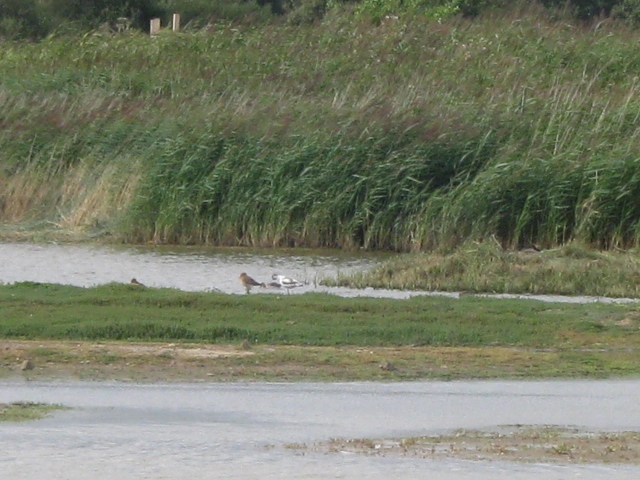
035Duck and Avocet (640x480)

An unidentified duck and an Avocet (Recurvirostra avosetta)

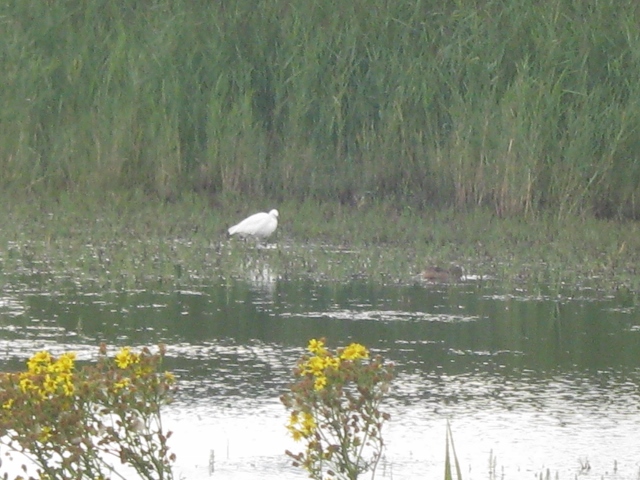
053Spoonbill (640x480)

A Spoonbill (Platalea leucorodia)


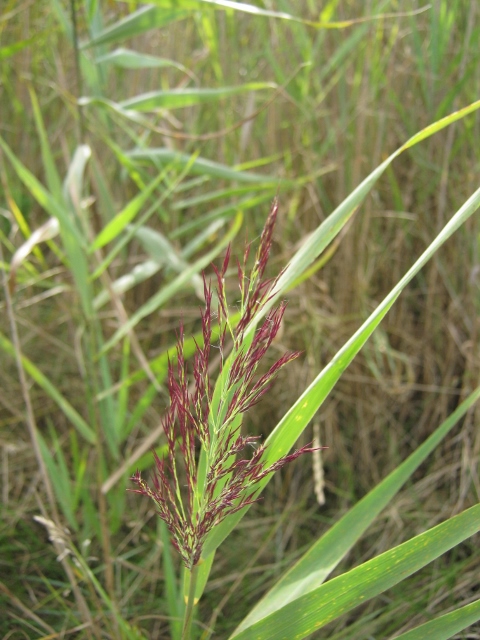
038Reed (480x640)

Common Reed (Phragmites australis)

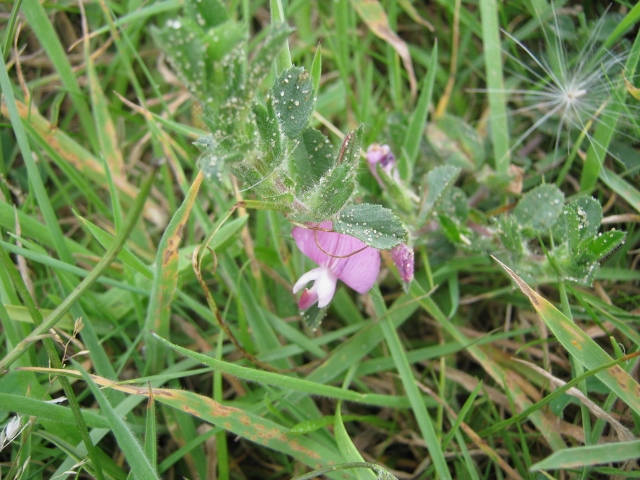
039Common Restharrow (640x480)

Common Restharrow (Ononis repens) The sticky leaves are covered in grains of sand.

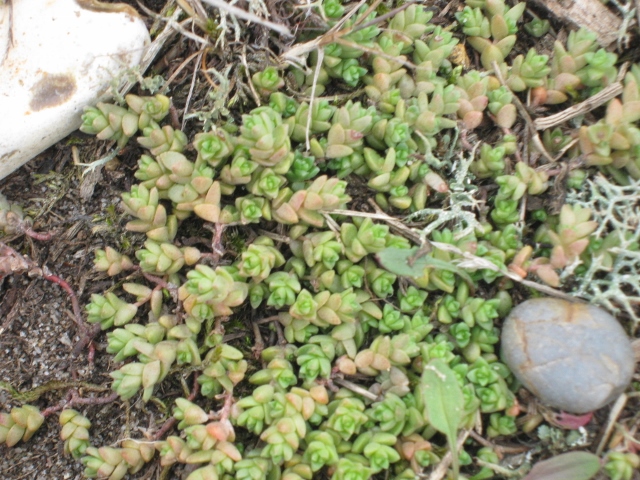
040Stonecrop (640x480)

Stonecrop (Sedum). I am not sure which Stonecrop this one is.

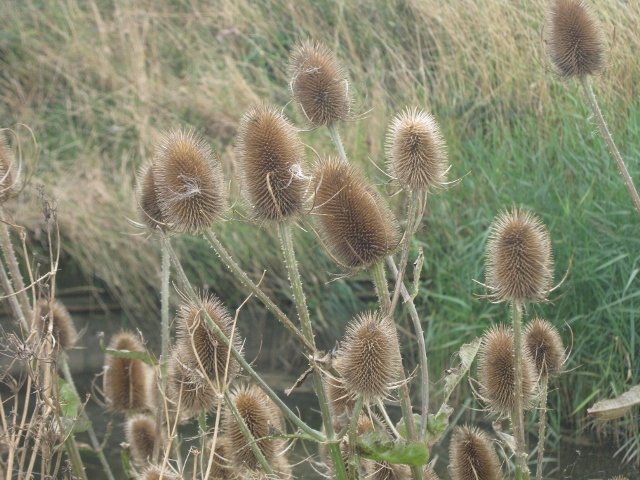
041Teasels (640x480)

Wild Teasel (Dipsacus fullonum) seedheads

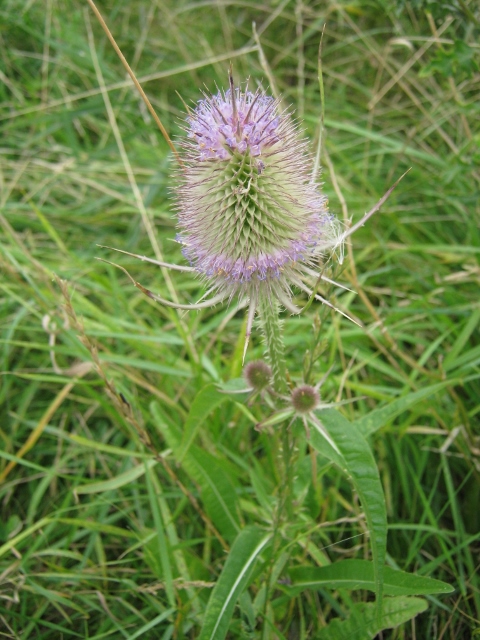
044Teasel flower (480x640)

I managed to find a Teasel still in flower – just!

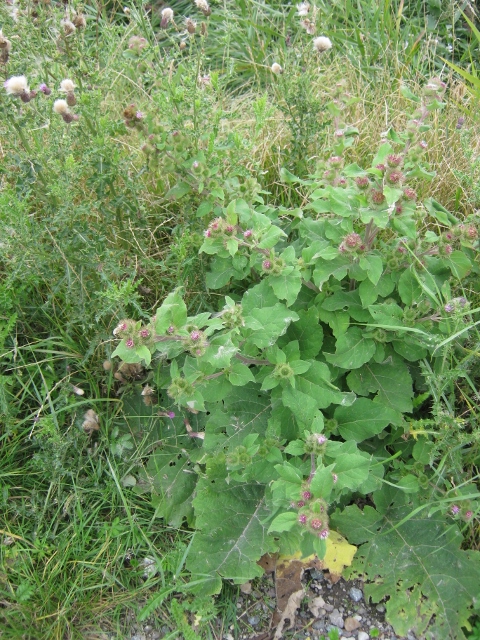
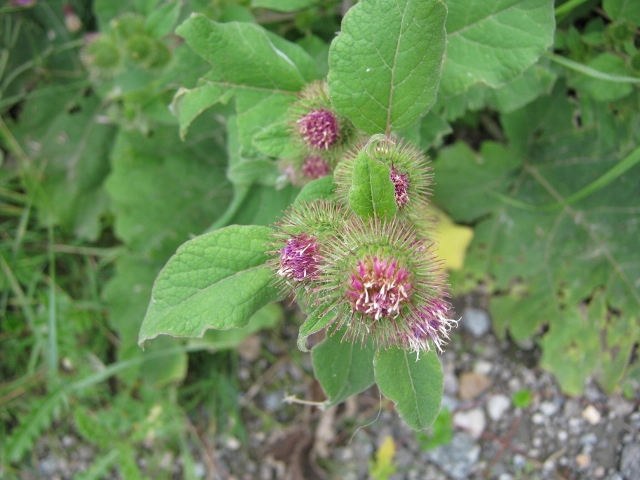
042Lesser Burdock (640x480)

Lesser Burdock (Arctium minus)

043Burdock flowers (640x480)

Lesser Burdock flowers – the pink-purple florets grow out from between the spiny bracts.

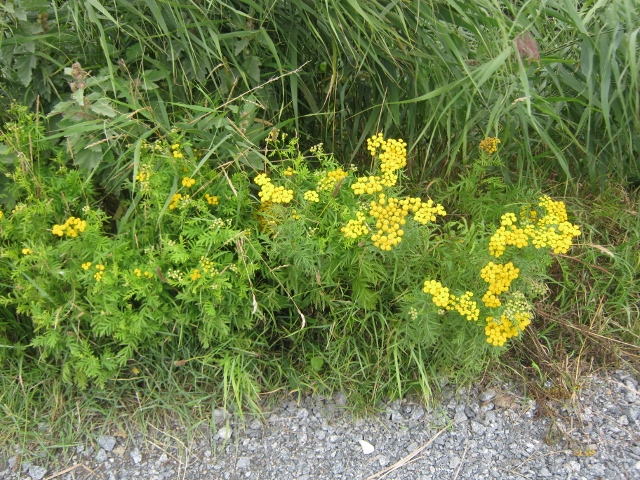
045Tansy (640x480)

Tansy (Tanacetum vulgare)

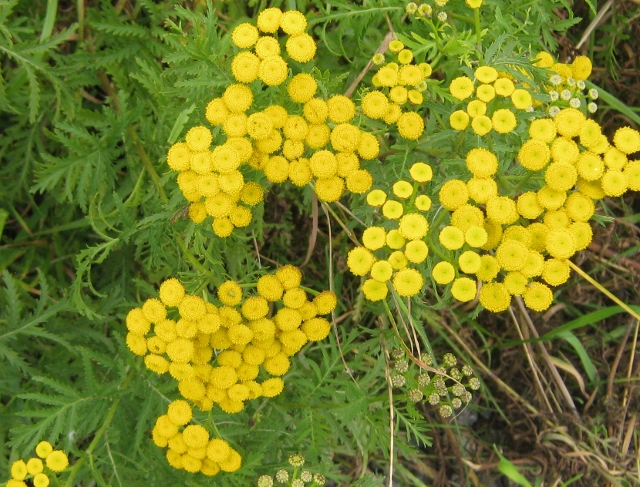
046Tansy (640x487)

Little yellow buttons!


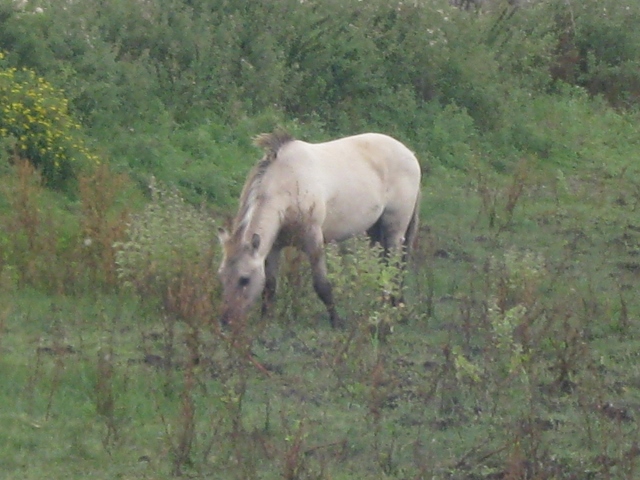
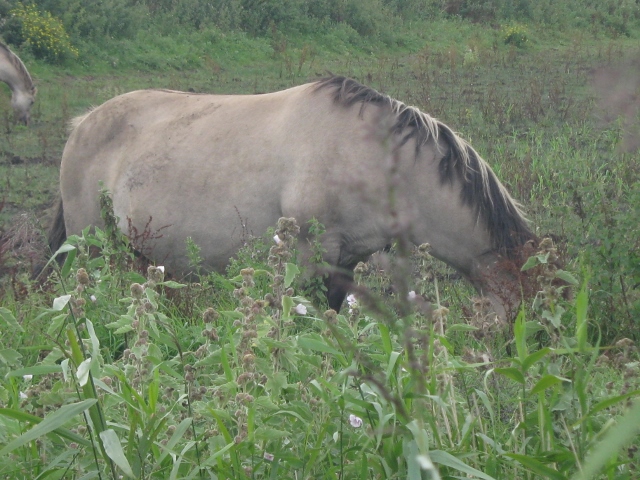
047Konik pony (640x480)

Konik ponies – primitive ponies from Poland – are used by the RSPB as they are very hardy, thrive on rough grazing and tolerate wet conditions.

048Konik pony (640x480)

I couldn’t get a shot of the pony’s face –

049Konik pony (640x480)

– no matter how I tried!


050Elinor and Richard (640x480)

I am always getting left behind!

051Elinor and Richard (640x480)

And this is what happens when I catch up!

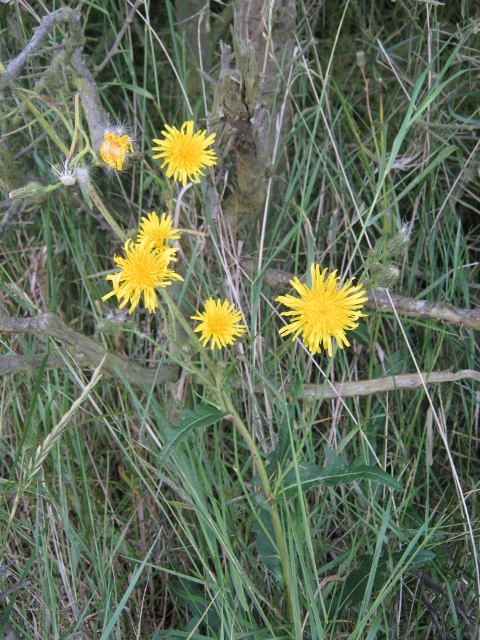
054Marsh Sow-thistle (480x640)

Marsh Sow-thistle (Sonchus palustris)

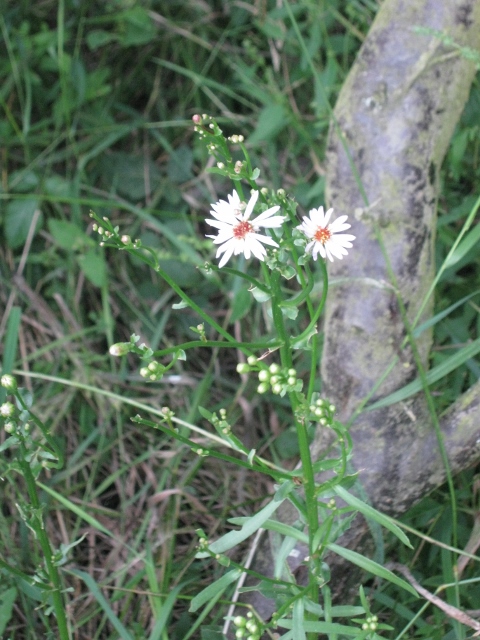
055Michaelmas daisy (480x640)

I believe this is Michaelmas Daisy rather than Sea Aster, unfortunately

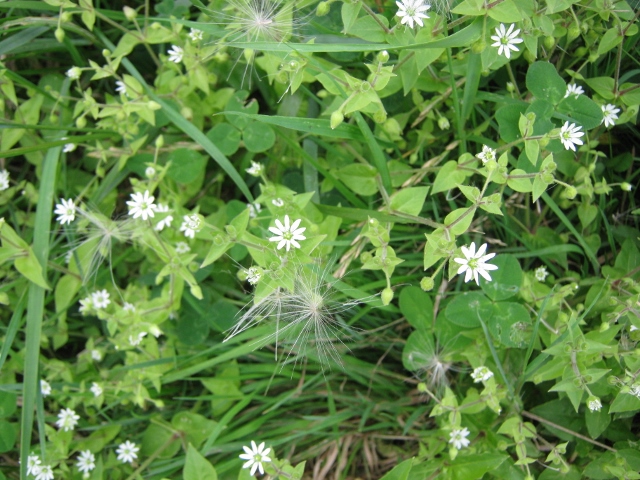
058Chickweed (640x480)

Chickweed (Stellaria media)

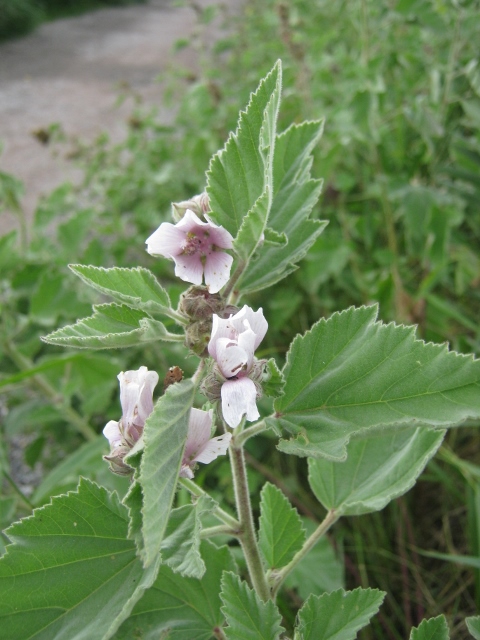
059Marsh Mallow (480x640)

Marsh-mallow (Althaea officinalis)

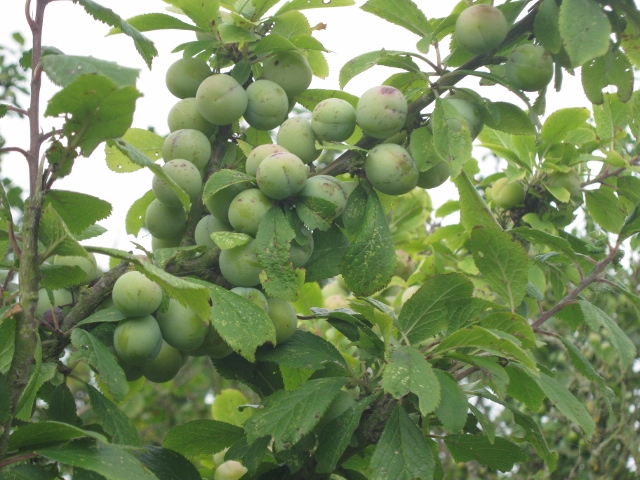
060Sloes (640x480)

Ripening sloes on the Blackthorn trees (Prunus spinosa)

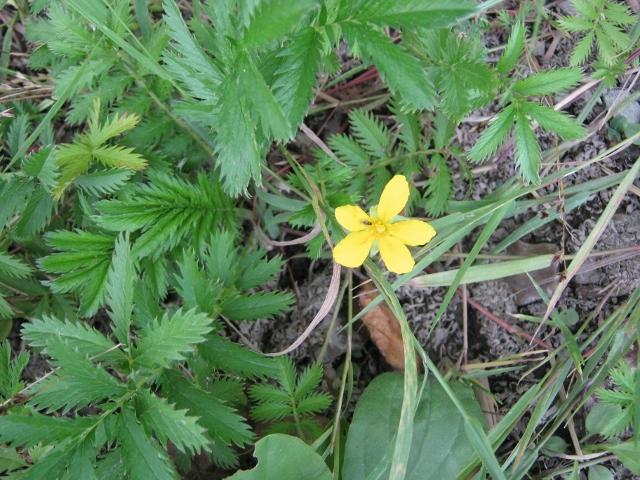
062Silverweed (640x480)

Silverweed (Potentilla anserina) so called because the leaves are covered in silvery, silky hairs that catch the light and shine like silver.

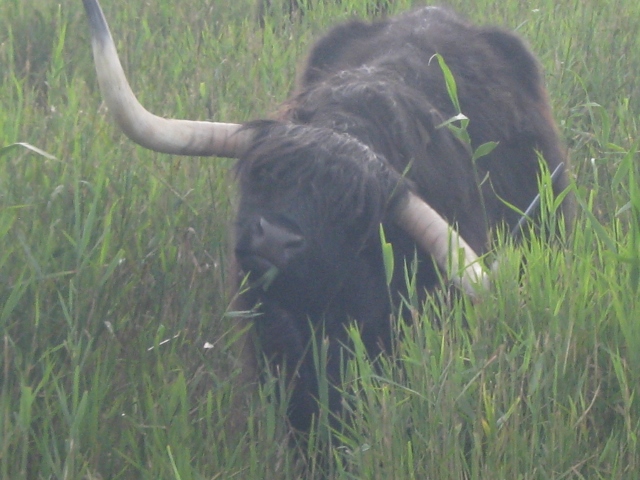
061Highland Cattle (640x480)

The RSPB also use black Highland cattle to graze the marshes


We will no doubt be visiting the reserve again very soon.  I read that they have discovered some Common Bird’s-nest fungi there recently and I would like to see it.

Share this:

  • Share on X (Opens in new window) X
  • Share on Reddit (Opens in new window) Reddit
  • Share on Pinterest (Opens in new window) Pinterest
  • Share on Facebook (Opens in new window) Facebook
  • Email a link to a friend (Opens in new window) Email
  • Share on Tumblr (Opens in new window) Tumblr
  • Print (Opens in new window) Print
  • Share on LinkedIn (Opens in new window) LinkedIn
Like Loading...

A Trip to the Seaside

16 Mon Feb 2015

Posted by Clare Pooley in plants, Rural Diary, walking, weather, wild birds

≈ 26 Comments

Tags

architecture, beach huts, coast, lighthouse, pier, Punch and Judy, Sailor's Reading Room, seaside, Southwold, Suffolk

IMG_4045 (640x480)

Southwold beach

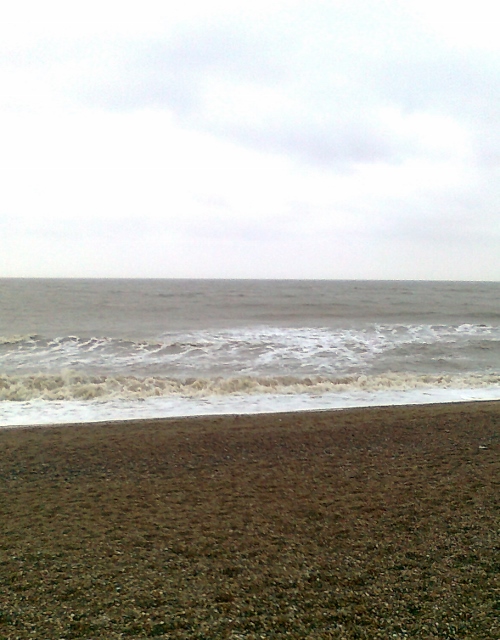
Maybe this wasn’t a good day for a frolic in the sea!

I have had a heavy head cold since last Wednesday and on Sunday Richard thought a trip to the sea was in order.  We had mist first thing in the morning and on the way to church with my mother the sun was trying to break through.  We thought it would be fine when we got out of church but sadly it wasn’t.  The mist had risen slightly but cloud had descended and the rest of the day was very gloomy indeed.  The temperature was about 7 degrees centigrade but when we got to the coast the strong on-shore breeze made us feel very cold and our ears started to ache.

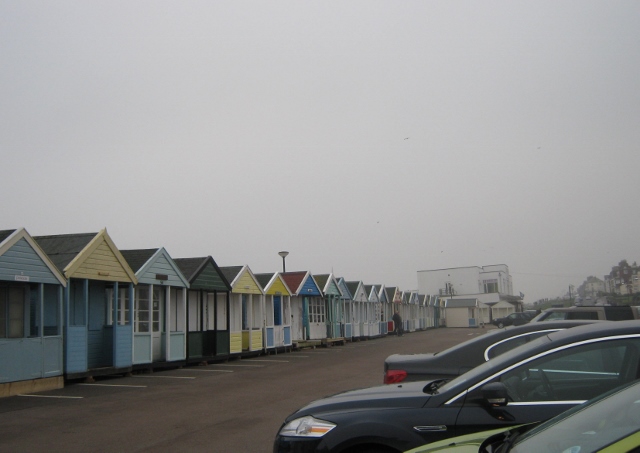
IMG_4031Beach huts in the car park (640x453)

The car-park by the pier

During the winter months, owners of these beach huts get them lifted up from down by the beach to here, in the car-park, where there is less chance they will get battered by storms.  Those that can’t afford to move their huts have to hope that we don’t have too many high tides and gale force winds.  You may wonder why the owners would want to pay to have what looks like a shed moved to the car-park.  You may be surprised to hear that last year one of these huts went on the market for £100,000 and it was thought that it might have sold for more than that.  For this price you get a painted hut with no electricity or running water but in a ‘prime location’.  You also get a 30 year lease from the council but you have to pay non-domestic annual rates and other charges.  Last year the rates were £720.

IMG_4029Southwold (640x480)

The view looking inland from the car-park.  Buss Creek.

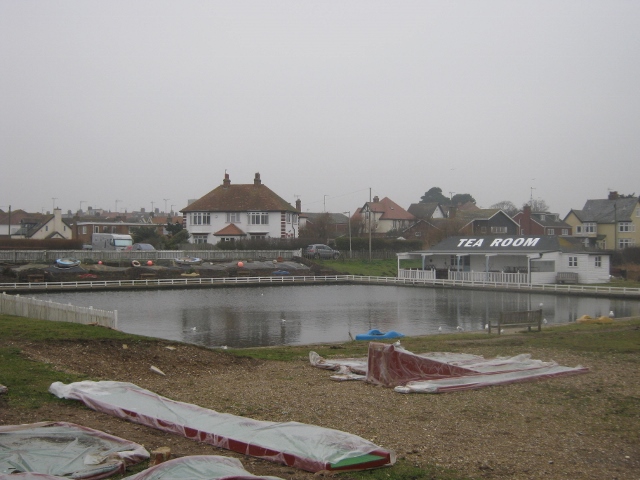
IMG_4030Boating lake (640x480)

The boating lake

The seagulls appreciate the calm waters here.  Seaside resorts are a little sad in the winter-time I think.  I like the sadness.

There is only one road in and out of Southwold which is almost an island, bordered by the North Sea to the east, the River Blyth and Southwold harbour to the south-west and Buss Creek to the north.

IMG_4033Punch and Judy (640x480)

A Punch and Judy performance on the sea front

IMG_4034Southwold (640x480)
IMG_4035Southwold (640x480)
IMG_4038Southwold (640x480)

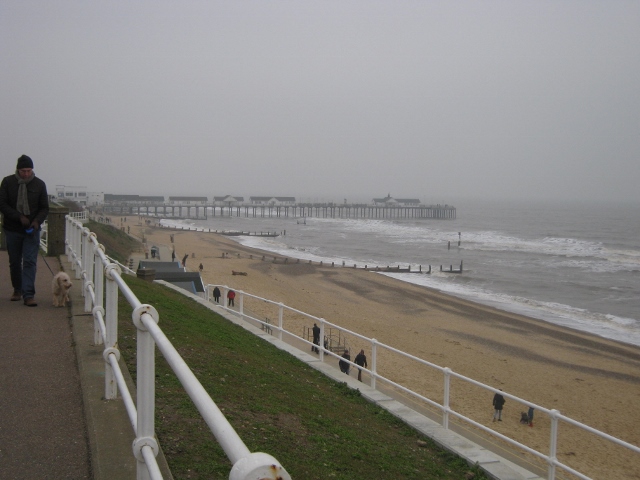
A few views of the sea.  I expect you wish you had been with us!

IMG_4039Southwold pier (640x480)

Southwold pier

The pier was built right at the end of the 19th century and was approximately 810 feet long with a T junction at the end to make a landing stage for ‘Belle’, the steamer bringing holiday makers to the town.  The T junction was swept away in a great storm in 1934 and was only replaced in 2001.  The pier was further damaged in 1955 and 1979 and had to be closed to the public in 1998.  Restoration started in 1999 and it is now an award-winning pier with a pavillion, restaurant, bar and amusements.  When we were in Southwold on Sunday we could hear a saxophonist playing from the pier.  We didn’t venture onto it because of the wind-chill.

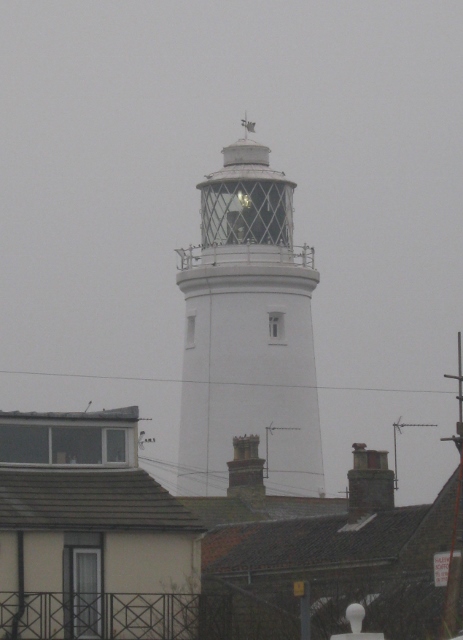
IMG_4036Southwold lighthouse (463x640)

Southwold lighthouse

The whitewashed tower of the lighthouse can be seen from afar but is very difficult to find when you walk round the town with its narrow winding streets.  It is 101 feet tall and commenced operation in 1890.  It was originally illuminated by paraffin but was converted to electricity in 1938.

IMG_4040Cannons on the green (640x480)

A couple of small cannon near the sea front.

Southwold does in fact own six 18 pound cannons which were given to the town by the Royal Armouries as protection for the town and to shipping from pirate raids in the 18th century.  We didn’t get as far as Gun Hill on Sunday.

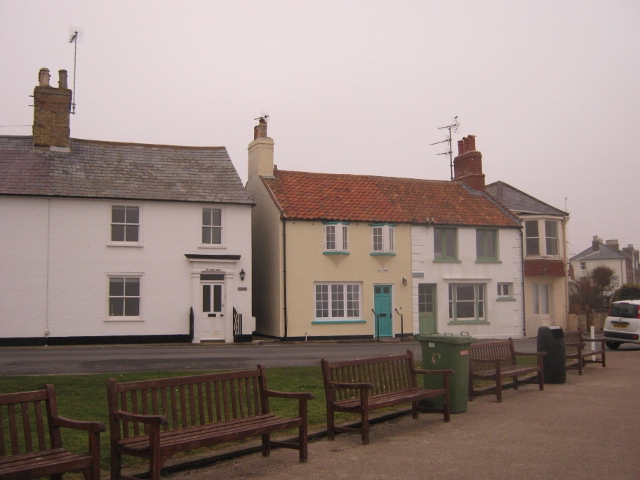
IMG_4041Cottages (640x480)

Southwold cottages

There are many second homes and holiday cottages in the town which most of the year stand empty.  Local people can’t afford to live in these tiny cottages.

IMG_4044House (640x471)
IMG_4046 (640x480)

A couple of grander houses.

IMG_4042E and R in Southwold (640x480)

Richard and Elinor walking in Southwold

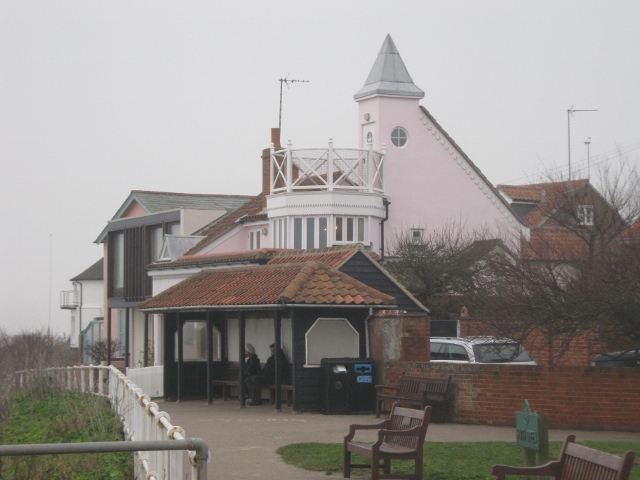
IMG_4047Southwold architecture (640x480)

Richard and Elinor in the shelter and behind it some examples of the interesting architecture to be found in the town.

I am often reminded of ‘Mary Poppins’ by P L Travers looking at the platform above the shelter and think that Admiral Boom would find it ideal for firing his cannon from.  ‘The Ghost and Mrs Muir’ comes to mind when I look at one of those grander houses I showed above.

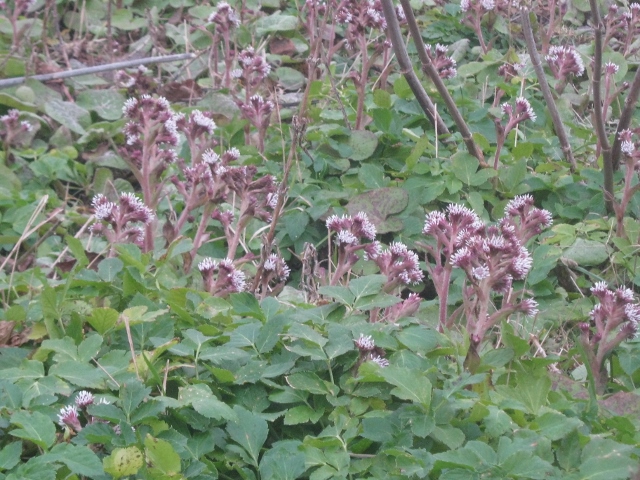
IMG_4049Winter heliotrope (640x480)

More Winter Heliotrope (Petasites fragrans) with some new leaves of Alexanders (Smyrnium olusatrum) in front

I joined Richard and Elinor in the shelter for a while and just in front of us on the grass slope that descended to the beach was this large patch of Heliotrope.  It really shouldn’t be there and shows how invasive it is.  Since seeing the Heliotrope last Sunday that I included in my post ‘Weekend’ I have seen this plant everywhere.  It does have a wonderful scent though and in spite of my cold I could smell the vanilla perfume very well.

IMG_4051Pied Wagtail (640x480)

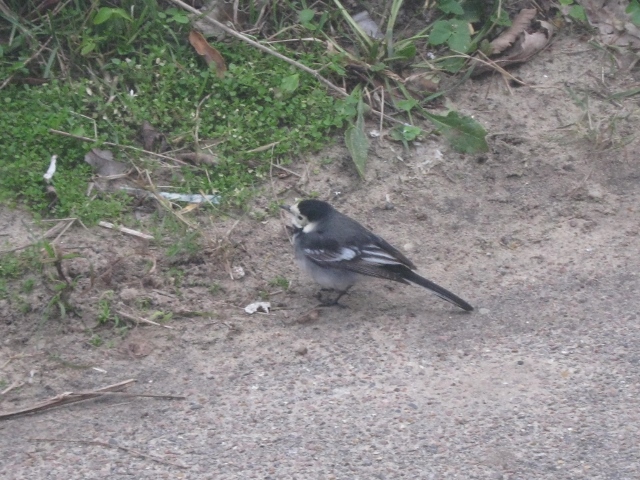
A chilly little Pied Wagtail (Motacilla alba) was walking about near our feet.

IMG_4043Sailor's reading room (480x640)

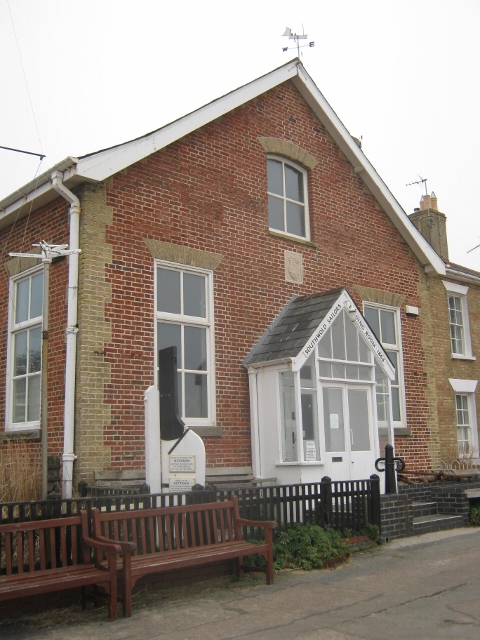
The Sailor’s Reading Room

This was built in 1864 in memory of Captain Charles Rayley RN a naval officer who served at the time of the Battle of Trafalgar and who died in 1863.  Its purpose was as a refuge for fishermen and mariners when not out at sea and it was hoped it would keep them out of the pubs and would encourage them in Christian ideals.  The Reading Room still provides daily papers and a place to read them and continues to be a social base for local fishermen, lifeboatmen and coastguards.  It is now a Registered Charity and contains a museum with exhibits showing the town’s seafaring past.

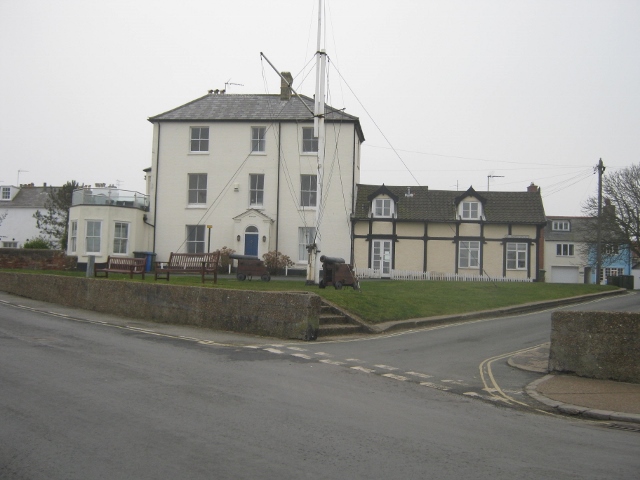
IMG_4048East Green (640x480)

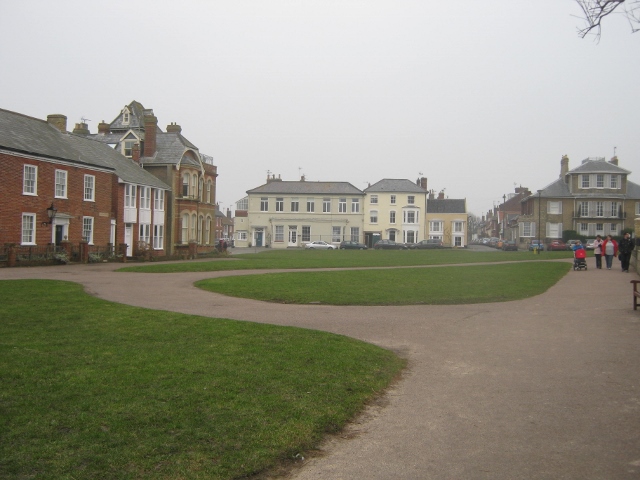
East Green

In 1659 there was a devastating fire in the town and most of the buildings were lost and many people were made homeless and destitute.  In the rebuilding of the town, it was decided to incorporate a number of greens as fire breaks.  This is East Green.

Some of you may remember a film made for TV in 1987 by Michael Palin called ‘East of Ipswich’ which was based on his own memories of seaside holidays in the 50’s.  It was filmed in Southwold.

Best wishes to you all!

Share this:

  • Share on X (Opens in new window) X
  • Share on Reddit (Opens in new window) Reddit
  • Share on Pinterest (Opens in new window) Pinterest
  • Share on Facebook (Opens in new window) Facebook
  • Email a link to a friend (Opens in new window) Email
  • Share on Tumblr (Opens in new window) Tumblr
  • Print (Opens in new window) Print
  • Share on LinkedIn (Opens in new window) LinkedIn
Like Loading...

Weekend

11 Wed Feb 2015

Posted by Clare Pooley in churches, domestic animals, Insects, plants, trees, Uncategorized, walking, weather

≈ 33 Comments

Tags

Celandines, clouds, daffodils, Dog's Mercury, dogwood, farmland, Jacob sheep, lichen, Lords and Ladies, primroses, snowdrops, St Margaret's church, Suffolk, sunset, walking, Winter Heliotrope

IMG_3980Bullocks (640x480)

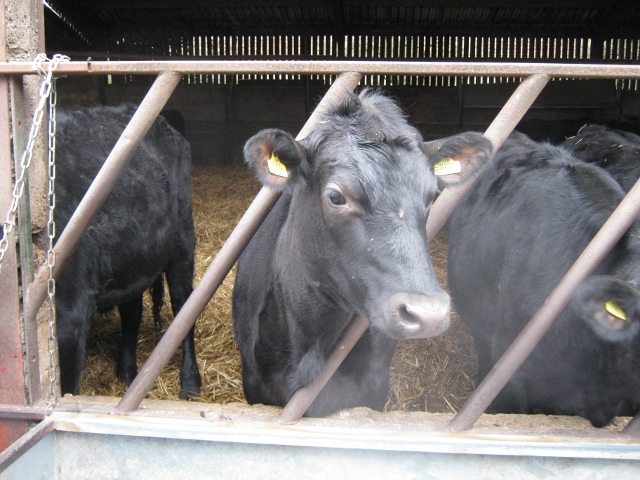
Calves in the cow shed at our friends’ farm.  The blurring is caused by the calves’ steamy breath.

On Saturday, Richard and I went to the church coffee morning held this month at our friends’ farm instead of at the Rector’s house.  Our Rector had his heart surgery last week, and will be off work for some time while he recovers.  We wish him a speedy return to full health.  As usual we listened to all the gossip and news.  I bought some delicious home-made Bakewell bars which we ate later that day and Richard won a tin of sweets in the raffle.

Saturday was cloudy and chilly but there was no frost and the birds were singing lustily.  I heard the chaffinch’s spring song for the first time this year.

Sunday was a much brighter day.  The church service was held at our church in Rumburgh so Richard and I got there early to get things ready.  The church didn’t need much tidying as I had helped another lady to clean it thoroughly on Friday and there had been a wedding on Saturday afternoon after which Richard had tidied up again.

After lunch we went out for a walk.  We decided against driving somewhere and also thought it better not to walk across the fields as everywhere is waterlogged.  We took our usual circuit of a couple of miles, walking along the lanes.  I have photographed this walk so many times now, so I will just show you a few of the new and/or interesting things I saw.

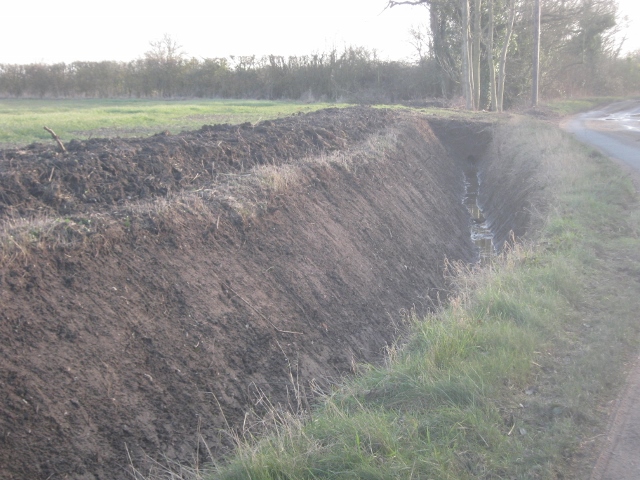
IMG_3982Ditch newly chased out (640x480)

A part of the ditch in our lane has recently been chased out. Regular ditch maintenance is necessary to ensure proper field drainage and to stop flooding on the roads.

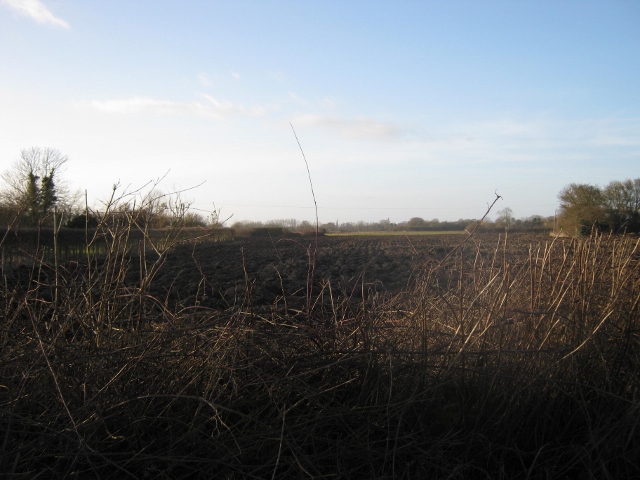
IMG_3983Newly ploughed field (640x480)

This field has been newly ploughed. For years probably, it has been rough grass with heaps of old rusty farm implements alongside the hedge.

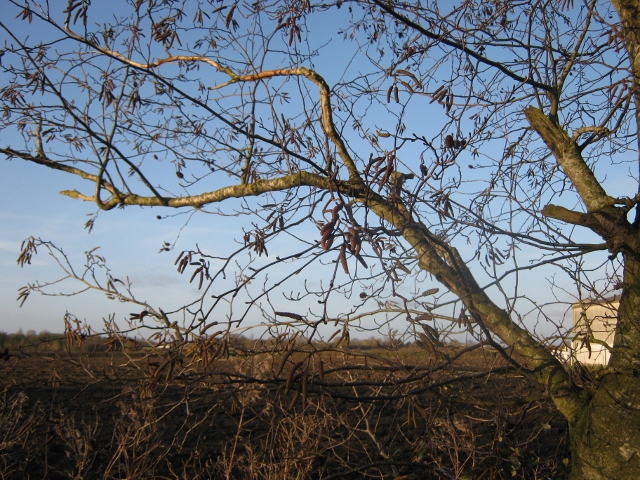
IMG_3985Italian alder tree (640x480)

Italian Alder tree (Alnus cordata)  There is a row of these trees along the roadside.

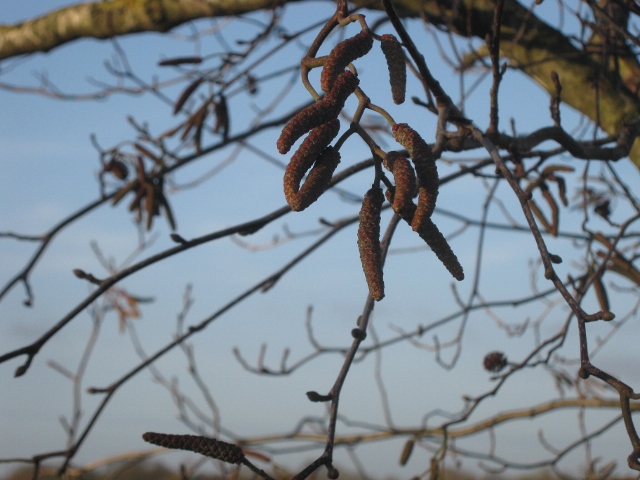
IMG_3986Italian Alder catkins (640x480)

Italian Alder catkins

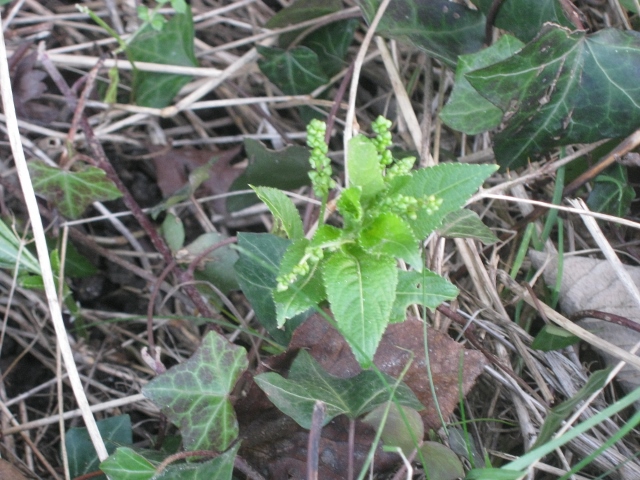
IMG_3988Dog's Mercury (640x480)

I found that Dog’s Mercury (Mercurialis perennis) was already starting to flower.

This plant is found in woodland often forming carpets, also under hedges and in other shady places.  It has a fetid smell and is poisonous, being a member of the spurge family (Euphorbiaceae).  Male and female flowers are found on separate plants and are small and yellow in spikes.  It is pollinated by midges.

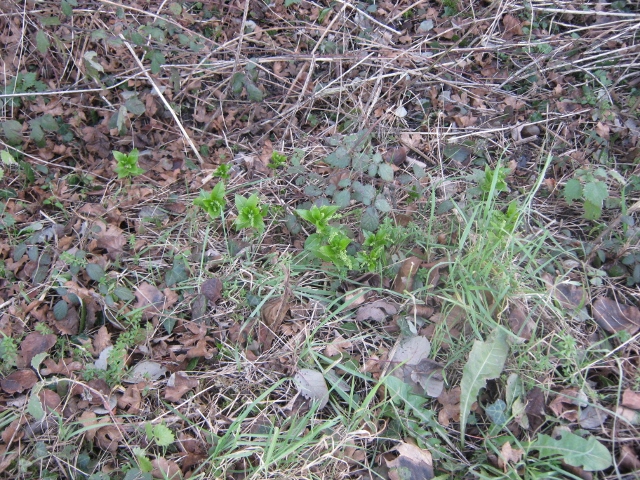
IMG_3989Dog's Mercury (640x480)

Bright green Dog’s Mercury.

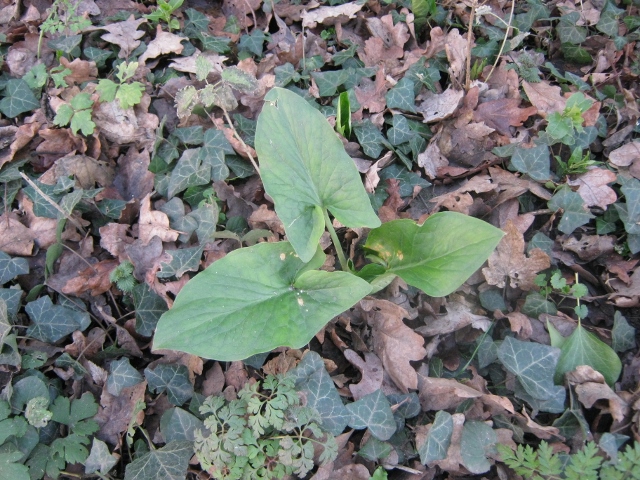
IMG_3992Lords and Ladies (640x480)

Lords-and-ladies (Arum maculatum)

Another woodland and hedgerow plant.  I was surprised that these leaves were matte green – they are usually glossy.  Another plant that smells of decay when in flower, the berries are poisonous and the roots have a high starch content.  In Elizabethan times the roots were gathered to make starch for stiffening the high pleated linen ruffs that were then in fashion.

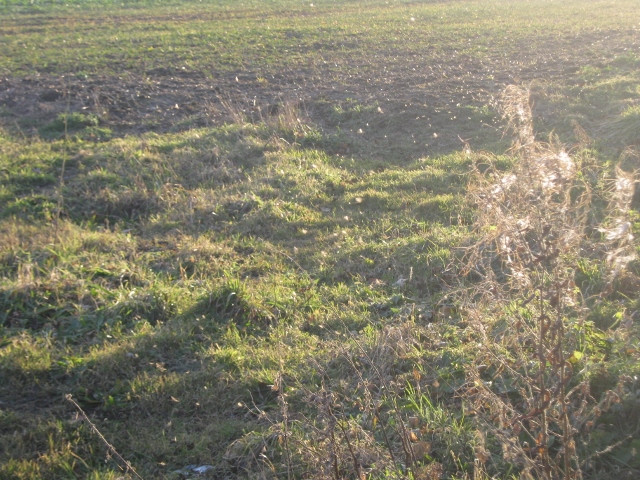
IMG_3995Flies in the sunshine (640x480)

The white spots in the photo are midges or Winter Gnats flying in the sunshine.

IMG_3996Lichen-covered dead tree (640x480)

This dead tree at the end of a hedge and at the entrance to a field is covered in lichen. The bark of the tree has started to fall off taking the lichen with it.


IMG_3997Clouds and shadows (640x480)

Our long shadows and that of the hedge behind us can be seen on the field as I took a photo of the beautiful cloud patterns

IMG_3998Clouds (640x480)

The clouds.

IMG_3999Dogwood (640x480)

The Dogwood (Cornus sanguinea) twigs were blazing in the low sunlight.

IMG_4001Hollow tree (480x640)

A hollow tree. In spite of its hollow trunk and all the ivy growing up it the tree, an oak I think, is still alive.

IMG_4002Jacob Sheep (640x480)

Jacob sheep. They will be having their lambs soon.


IMG_4003Winter Heliotrope (640x480)

Winter Heliotrope (Petasites fragrans) growing along the roadside verge near someones house. The flowers are vanilla-scented and the plant spreads quite quickly preferring damp and shady places. It is a naturalised garden plant.

IMG_4005Snowdrops (640x480)

Snowdrops (Galanthus nivalis) in the churchyard

IMG_4006Primroses (640x480)

Primroses too! (Primula vulgaris)

IMG_4007St Margaret's church porch (640x466)

St Margaret’s church porch has an upstairs room.


IMG_4010Lichen on gravestone (640x480)

White lichen on a gravestone

IMG_4011Daffodil bud (480x640)

A daffodil bud in the sheltered churchyard.


IMG_4016Celandines (640x480)

Celandines (Ranunculus ficaria) flowering on the roadside verge.  I was so surprised to see these as they don’t usually appear until March.  They were everywhere I looked, though as the sun was setting they were closing up for the night.  I should have got there an hour earlier.

IMG_4017Sunset (640x440)

Sunset.


We got home as the sun sank below the horizon.

This week Elinor is taking her mock GCSE exams.  She has already taken Psychology and English.  Maths is on Wednesday and Thursday and Art is all day on Friday.  She is coping very well indeed though she is exhausted already with the strain of it all.

Richard stays away from home only one night this week; Wednesday night is spent in Gloucestershire.  On Friday he goes back to the specialist to find out more about the lesion/tumour on his pituitary gland and what is to be done about it.

I am disappointed at not being able to go to Sheffield  to see Alice perform in ‘Emma’ especially as she is taking the leading role.  I would really have loved to see her and support her but the performances are at the same time as Elinor’s exams and Richard’s hospital visit.  I also don’t have much money to spare for train travel and hotel rooms after Christmas and Elinor’s birthday in January.

My mother is fine.  She went to the eye specialist on the 30th December and had to return the next day for an injection to stop a bleed in her eye.  We went back last week for a check-up and fortunately all is well again.  The next appointment is in mid March.  My brother has filed for divorce and is in the process of selling his house.  He is moving to Suffolk to be near us and Mum and especially his daughter and has got a transfer to work in the open prison in Suffolk and continue his teaching.  My sister is working hard as always as a paramedic practitioner. She got her degree and will be getting her certificate at a ceremony in May.  My mother-in-law is out of hospital and in a nursing home.  This is a temporary arrangement as she hasn’t yet been assessed but we all know that she won’t be able to go back home.  She has a weak heart, breast cancer, problems with her thyroid and has lost all her mobility.  All so sad.  She understands the situation and is making the best of it; such a sensible woman.

IMG_4018Sunset (480x640)


Share this:

  • Share on X (Opens in new window) X
  • Share on Reddit (Opens in new window) Reddit
  • Share on Pinterest (Opens in new window) Pinterest
  • Share on Facebook (Opens in new window) Facebook
  • Email a link to a friend (Opens in new window) Email
  • Share on Tumblr (Opens in new window) Tumblr
  • Print (Opens in new window) Print
  • Share on LinkedIn (Opens in new window) LinkedIn
Like Loading...

Peak District Holiday 1st to 9th July. Days 7 to 9.

09 Mon Feb 2015

Posted by Clare Pooley in domestic animals, plants, Rural Diary, trees, Uncategorized, walking

≈ 26 Comments

Tags

Peak District, The Roaches, Tittesworth Water, walking

As we were nearing the end of our holiday and the weather looked as though it would stay fine, Richard and I decided it would be a good idea to do another walk while we had the chance.  We had made a list of the walks we wanted to do before we came on holiday and we had already walked in Back Forest and up Hen Cloud.  Our third choice was a walk we had never tried before – along the top of the Roaches.  Our book of local walks suggested a circular walk starting at Tittesworth Water, walking across farmland up to where we usually park our car for our Hen Cloud walk and then up from there to the Roaches.   After descending from the rocks at the far end we would be able to follow paths and lanes back to where we left our car at the reservoir.  Richard made us some sandwiches, I washed up and packed our rucksacks and we set out about 11 o’clock.

001Tittesworth reservoir (640x480)

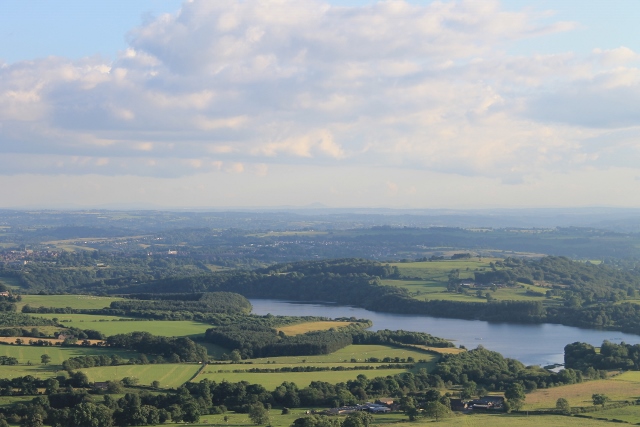
Tittesworth Reservoir

Tittesworth reservoir is a very short drive from our camp.  We had been there before but only for a short visit about seven years ago.  It has a visitor centre and people are welcome to walk all round the water and watch the many different types of wildfowl that live there.  Boating is also a popular activity on the water.

We walked from the car-park to Meerbrook, a village next to the water.

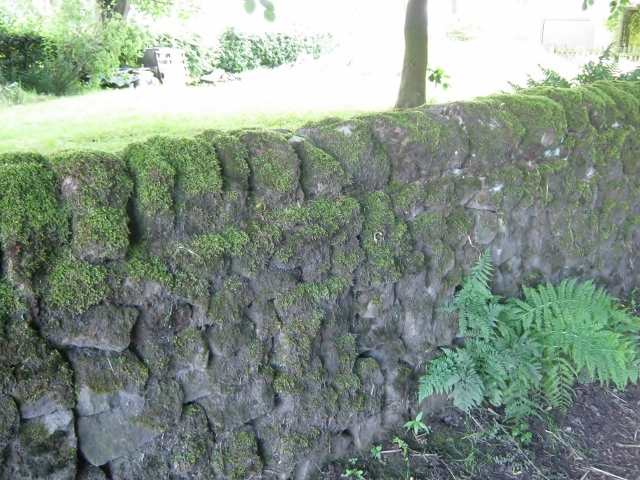
009Mossy wall (640x480)

I liked this mossy wall which surrounded someone’s garden.

I didn’t take many photos during the first half of the walk as it became quite hard-going shortly after we left the village.  The paths were very overgrown or we sunk into deep mud.  The local farmer hadn’t kept the ways clear and so it was difficult to follow the directions set out in our guide.

010Honesty (640x480)

Honesty (Lunaria annua)  A garden escapee that has naturalised all over the country.

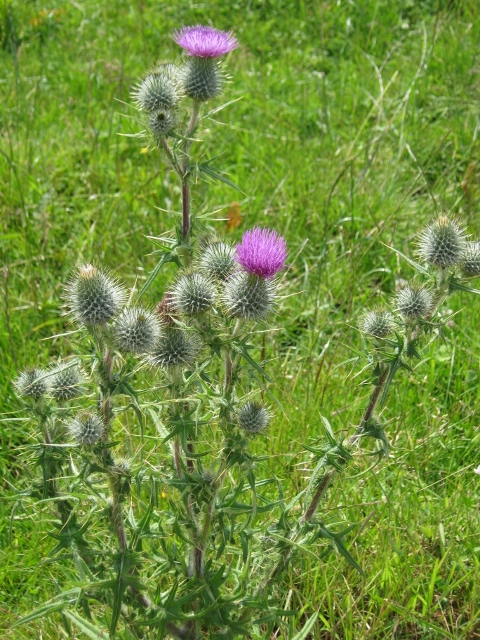
012Thistle (480x640)

Spear Thistle (Cirsium vulgare)

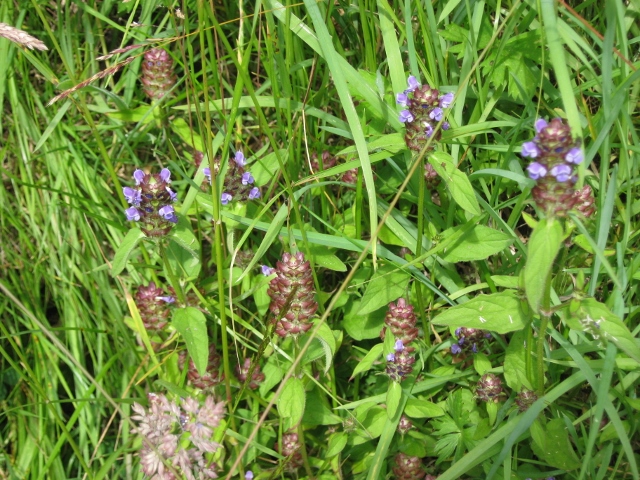
013Self Heal (640x480)

Selfheal (Prunella vulgaris)

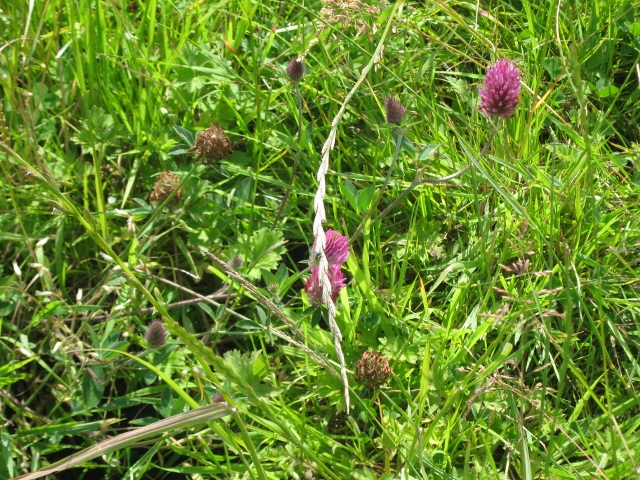
014Red Clover (640x480)

Red Clover (Trifolium pratense)

We found a man tying up a gate with binder twine and asked if we could use the gate to get to the path we needed.  He said we could use the gate and then commented on the humidity of the day – nothing else.  We walked on and found the way blocked by an electric fence which we had to crawl under – not easy for those like us who are past the first flush of youth.  Getting up again is much more difficult than getting down on the ground.  Why hadn’t the farmer/farm worker said anything about this to us?  It amused him, no doubt.  We had to pass through a farm yard next.

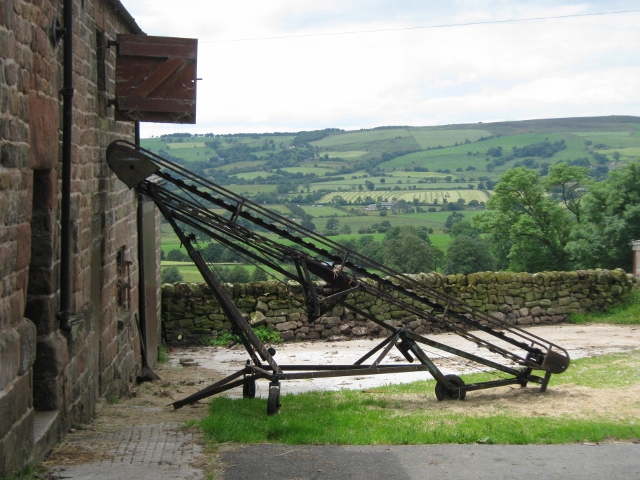
015Conveyor (640x480)

This old conveyor-belt caught my eye…..

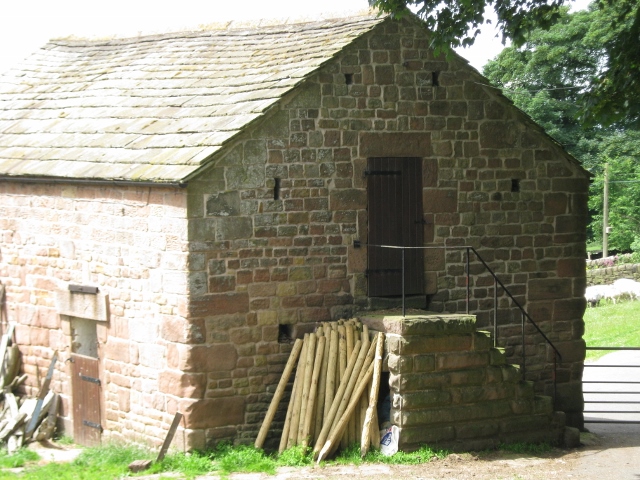
016Barn (640x480)

and I liked the barn.

We then lost the path at the corner of a field and had to scrabble about for a while til we found what we hoped was the right way.  We were discussing what our options were when, to our great surprise a man’s head popped over the wall above us and asked if he could help.  It is a very strange thing to think that you are in the middle of nowhere and then find that a man is hanging out his washing in his garden right next to you!  He was very helpful and we were on our way again.  By this time we were very hot and tired as the way had been difficult and uphill all the way.  Richard was getting annoyed and I had a great urge to laugh!

We had just entered the bottom of a steep field when we saw a muck spreader arrive and start its smelly work on the opposite side of the same field.  It was a race against time for us to get to the top of the field before the tractor had worked its way over to our side.  We knew that the driver would not have stopped his work just for us.  Fortunately we just managed it in time but we were so tired!  The main reason for this walk was to climb the Roaches and we hadn’t reached them yet.  We had thought the walk across the fields would have been a pleasant preliminary but we had sadly been mistaken!

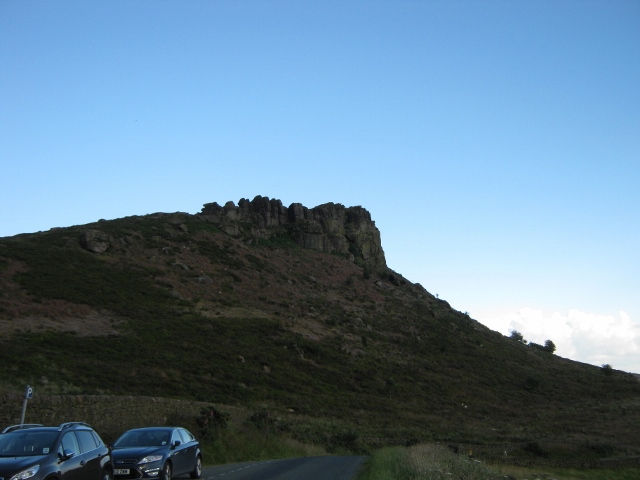
We were now at the base of Hen Cloud and decided that we would stop for a short while and have our lunch after which we turned and walked towards the Roaches.  They, with Hen Cloud and Ramshaw Rocks, form a gritstone escarpment which marks the south-western edge of the Peaks.  The Roaches consist of two edges – a Lower and an Upper Tier.

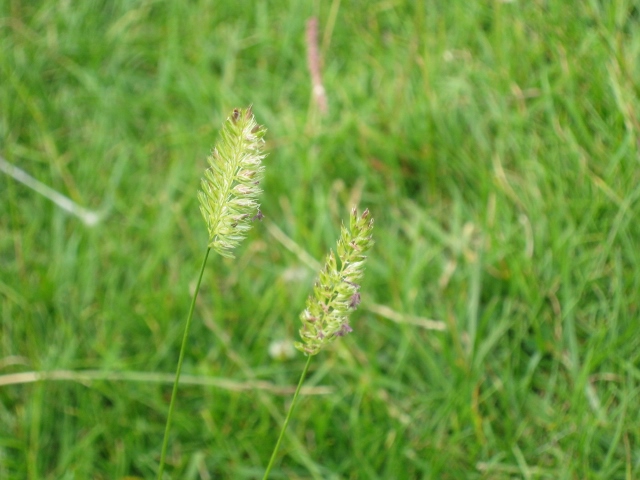
018Crested Dog's-tail (640x480)

Crested Dog’s-tail (Cynosurus cristatus)

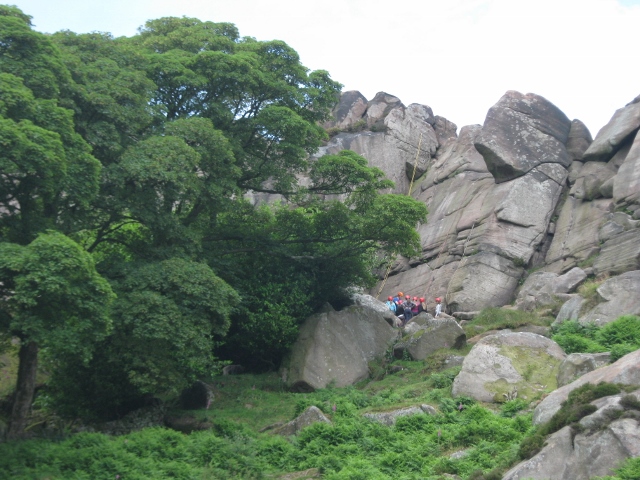
020Climbers (640x480)

The Roaches are very popular with climbers.

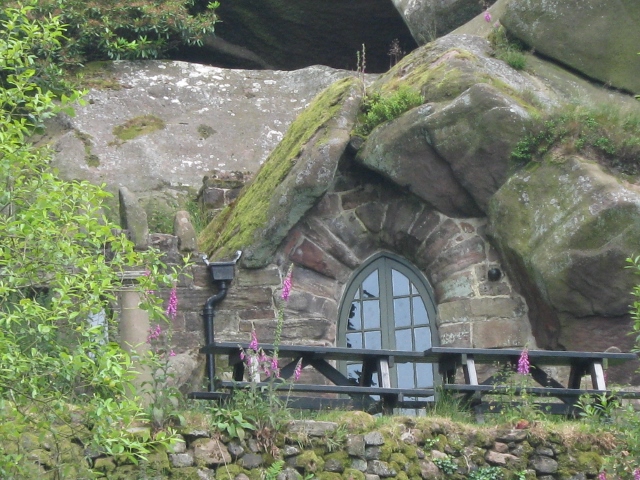
021Lodge in hillside (640x480)

This is Rock Cottage which is built into the rocks of the Lower Tier. It was formerly a gamekeeper’s cottage but is now a climbing hut.

022R at top of steps (480x640)

A set of rock steps connect the Lower and Upper Tier. Richard is at the top.

023Looking down through trees (480x640)
024View through trees (640x480)
025View up through trees (480x640)

The views through the trees from the top of the steps looking down and then upwards were very fine.

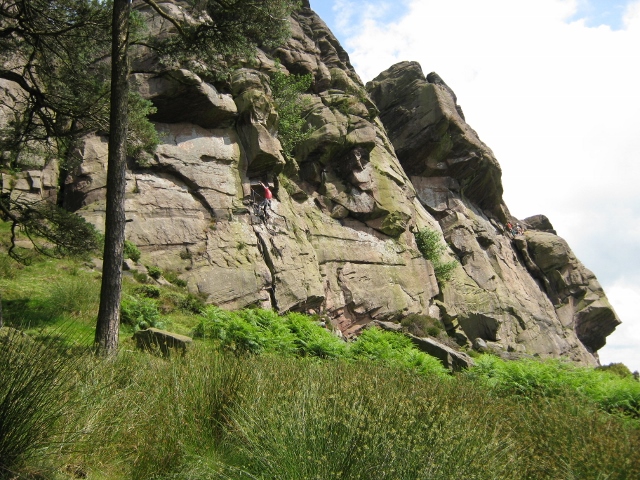
026Climber (640x480)

There were climbers everywhere.

These edges provide some of the best gritstone climbing in the country with famous classic routes such as ‘Valkyrie’, ‘The Sloth’ and ‘The Swan’.

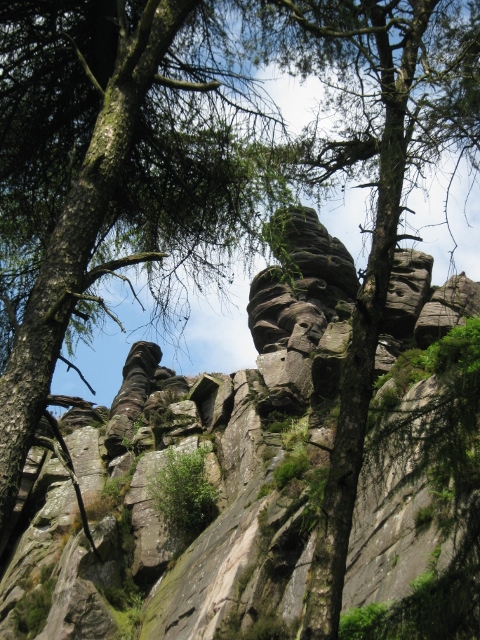
027Strange rocks (480x640)

These strange rocks have been weathered by the elements.

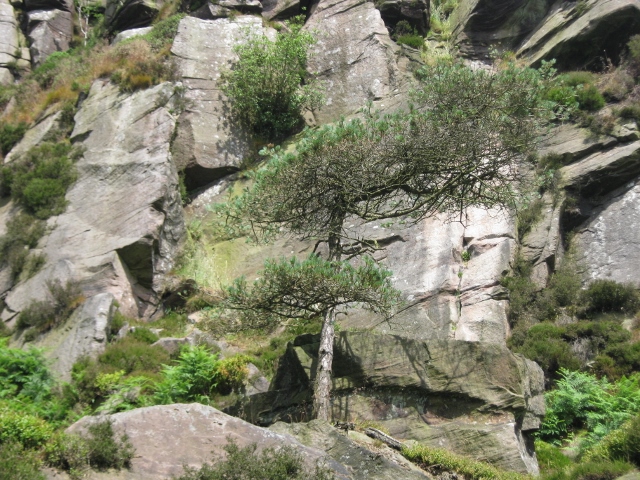
029Pine tree (640x480)

The pine tree is growing out from a crack in the rocks.

031View (640x480)
032Rock (640x480)
033Rocks (640x480)
034View (640x480)

There was something of interest to look at whichever way we turned.  Please click on the images to enlarge them.

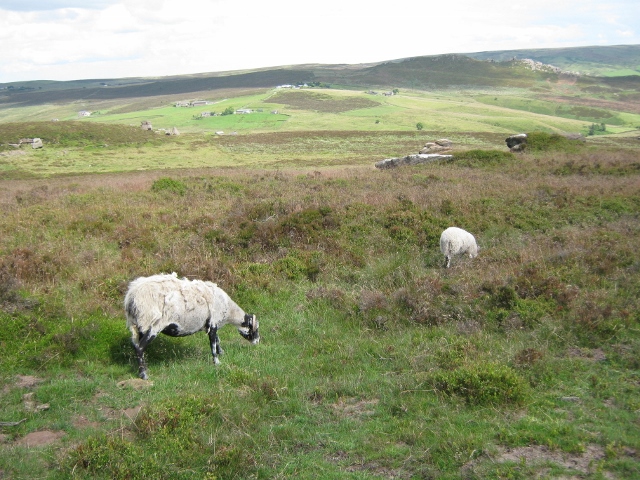
035Sheep (640x480)

Sheep are never far away in the Peaks.

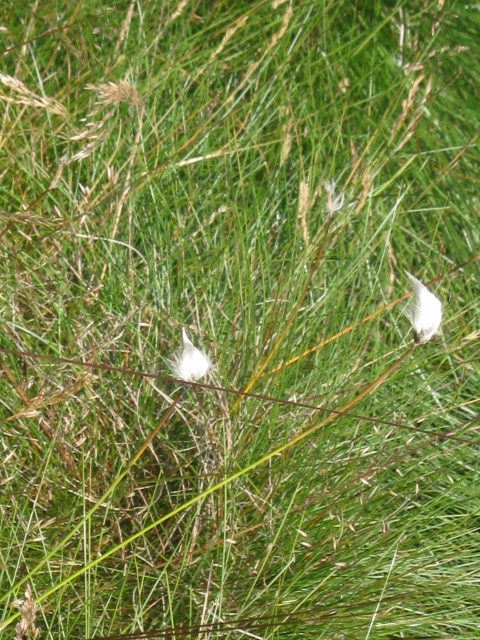
036Cotton grass (480x640)

I was surprised to see what I believe is Common Cottongrass (Eriophorum angustifolium) flowering this late in the season.  It could be Hare’s-tail Cottongrass (Eriophorum vaginatum).  Either way, their flowering time is usually April to May.

Tittesworth water away below us
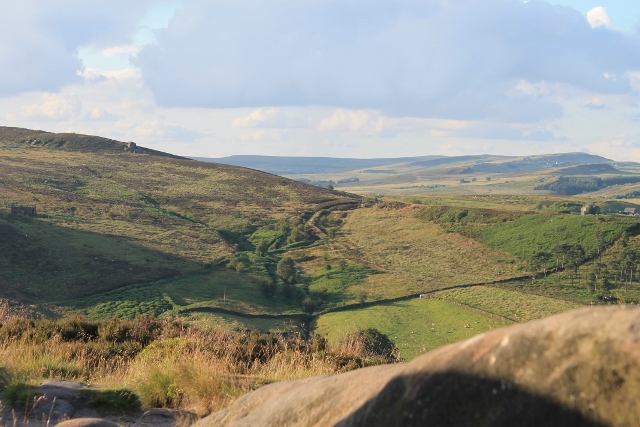
A view of another escarpment in the distance


041Doxey Pool (640x480)
040Doxey Pool (640x480)

Doxey Pool is on the top of the Roaches.  According to legend it is inhabited by a water spirit or mermaid known by some as Jenny Greenteeth.  The pool is said to be bottomless and connected by an underground passage to another Mere or lake which also contains a water spirit.  Doxey Pool is situated many hundreds of feet above any known spring.  We didn’t see anything ‘unexplained’ while we were there!

View from the path
View from the path
Richard is far ahead as usual
052Rock (640x480)
053Rock (640x480)
055Rock (640x480)

A selection of rocks.

056Heather (640x480)

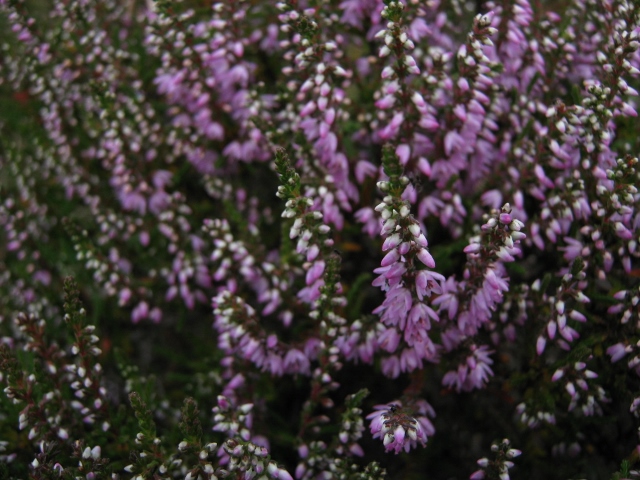
Heather (Calluna vulgaris)

057R at trig point (480x640)

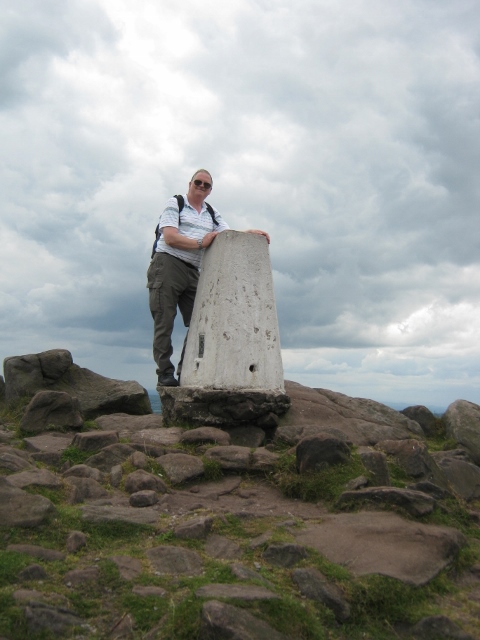
Richard standing at the trig point

058Trig number (640x480)

The bench mark. Triangulation stations have now largely been superseded by digital mapping and aerial photography but many are kept because of their usefulness to hill walkers and because many people are so fond of them.

061View and rocks (640x480)
062Rocks (640x480)
063Rocks (640x480)

Yet more rocks!

064Sheep (640x480)

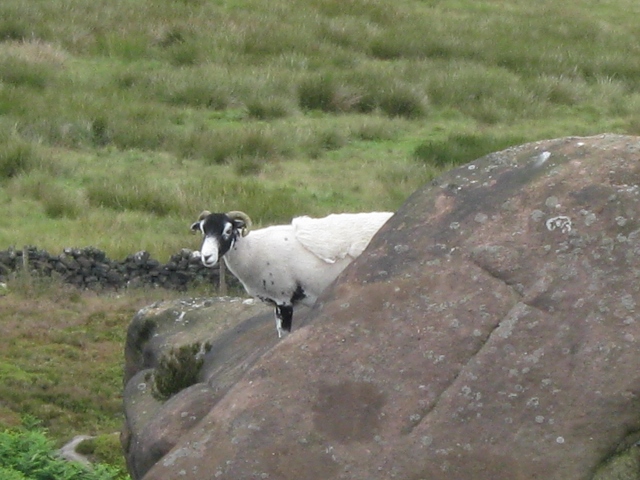
Hello! says the sheep.

065Cattle grid (640x480)

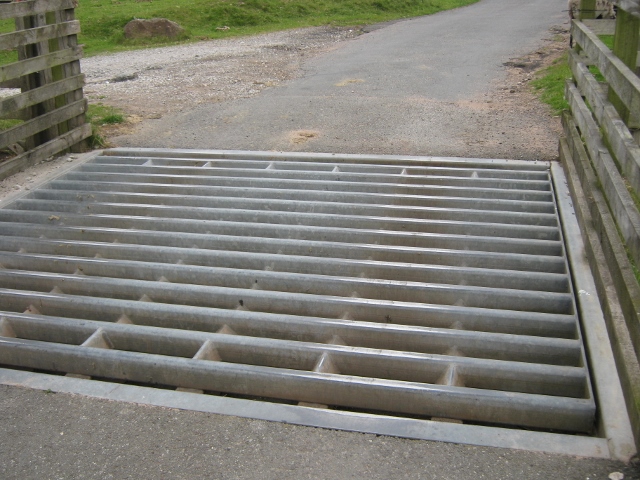
This is a cattle-grid (for those of you who don’t know). They enable traffic to use roads through farmland but stop the cattle from escaping from their pasture.

We left the Roaches and started to descend down through moorland and meadows.

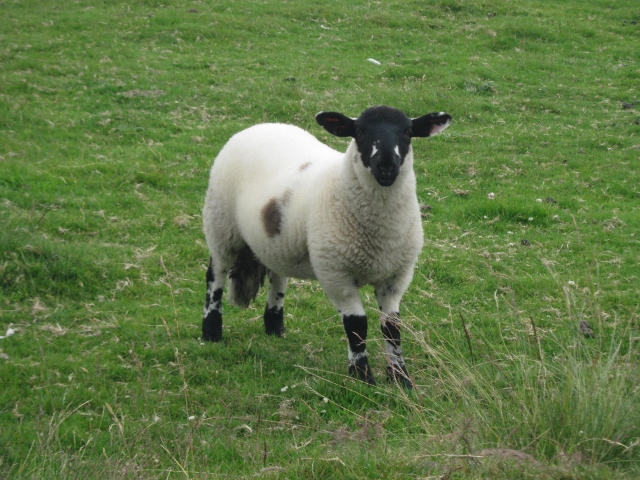
067Lamb (640x480)

We met a very friendly lamb.

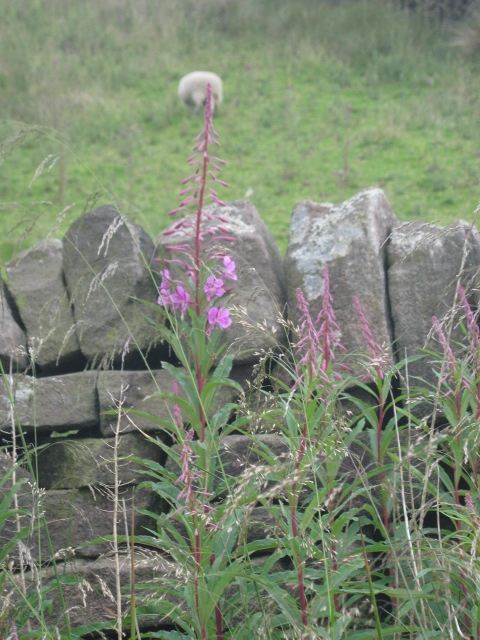
068Rosebay Willowherb (480x640)

Rosebay Willowherb (Chamerion angustifolium)

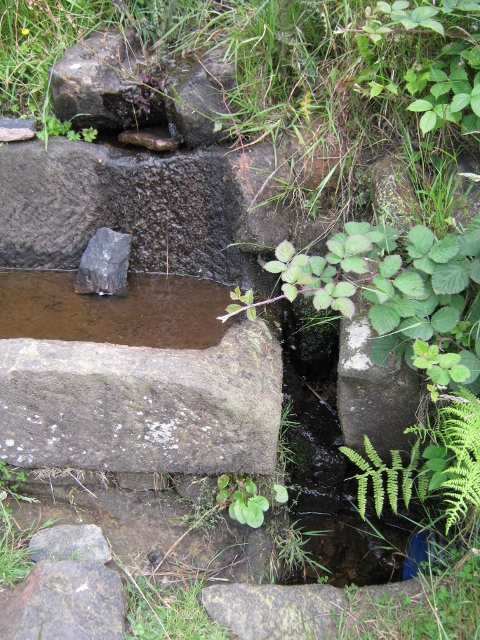
069Water trough (480x640)

These drinking troughs that use spring water or little rivulets remind me of the picture of the spring bubbling out of the hillside in ‘Mrs Tiggywinkle’ by Beatrix Potter


070Grass (640x480)
071Grass (640x480)
072Grass (640x480)

I am not sure what this grass is and any suggestions would be much appreciated.  It may be False Oat-grass (Arrhenatherum elatius)  I apologise for the poor photos.

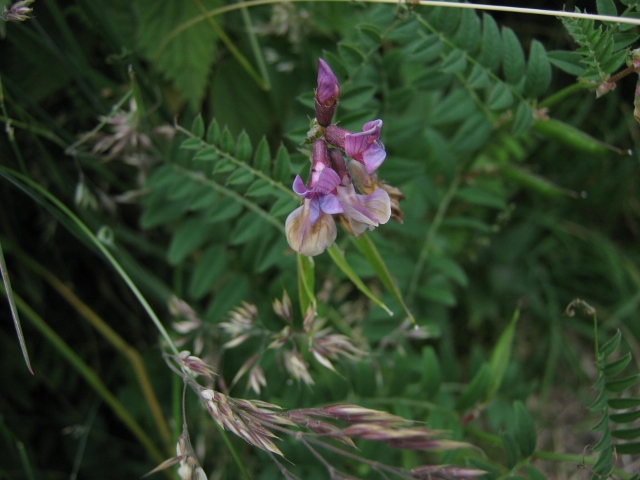
073Vetch (640x480)

Some pretty vetch flowers. Probably Bush Vetch (Vicia sepium) 

074Calves (640x480)

We walked past a field full of bullock calves. I can’t resist them!

075Calves (640x480)

They are so curious and playful ….

076Calf (640x480)

and have such lovely faces!


079White flowers (640x480)
078White flowers leaves (640x480)

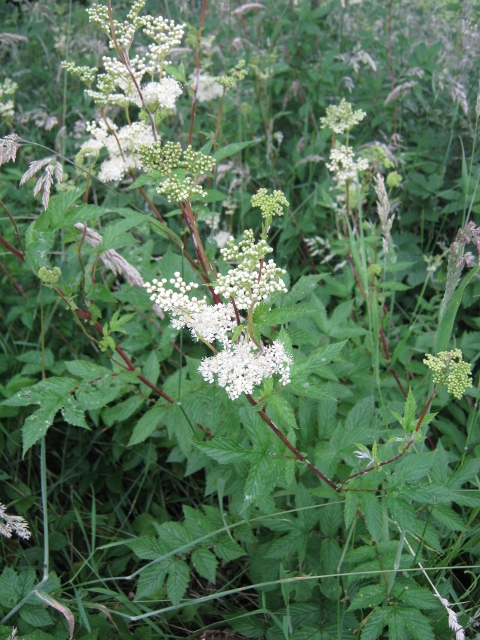
I don’t know what this plant is either.  I tried to take photos of its flowers – pink-tinged white umbellifers – but none of them came out.  The stems are purple and hairy and the leaves are quite distinctive.  I thought at first it might be Cow Bane but that and Hemlock are hairless.

080Holly hedge (640x480)

A Holly hedge (Ilex aquifolium)

082Meadowsweet (480x640)

Meadowsweet (Filipendula ulmaria)

We soon found our way back to the reservoir and then returned to our caravan.  The following day was our last day and we had hoped to spend it sitting, reading and relaxing.  Fate and farmers decided otherwise.  The muck-spreading fever had taken hold and the field next to us was being fertilized.  We couldn’t stay where we were so we returned to Tittesworth Water and walked around there and had some lunch.  We amused ourselves for a while by watching some boys being taught how to row.  There were about six boys to a boat and the group that we enjoyed watching most consisted of a couple of lads who did all the work and the rest just made a lot of noise.  The two who actually did the rowing were on the same side of the boat so they went round in circles.  In the end they had to be towed ashore.

The next day we got ready to leave but before returning home we drove to the station to collect Elinor who had been staying with Alice.  They both seemed to have had a good time together but both were very tired and needed sleep.  Our journey home was fortunately uneventful.


Share this:

  • Share on X (Opens in new window) X
  • Share on Reddit (Opens in new window) Reddit
  • Share on Pinterest (Opens in new window) Pinterest
  • Share on Facebook (Opens in new window) Facebook
  • Email a link to a friend (Opens in new window) Email
  • Share on Tumblr (Opens in new window) Tumblr
  • Print (Opens in new window) Print
  • Share on LinkedIn (Opens in new window) LinkedIn
Like Loading...

Peak District Holiday 1st to 9th July. Day 6.

09 Fri Jan 2015

Posted by Clare Pooley in Rural Diary, Uncategorized, walking

≈ 18 Comments

Tags

Hen Cloud, rocks, The Roaches, Tittesworth Water, walking

048View (640x427)

Tittesworth Reservoir  

After a very pleasant afternoon spent in Manchester with my mother-in-law, Richard and I returned to our caravan near Leek via the ‘Cat and Fiddle’ pass.  This is a road that crosses the Peaks from Macclesfield to Buxton with the Cat and Fiddle pub at the summit at an altitude of 1690 feet.  This has often been voted Britain’s most dangerous road as it has drystone walls along it and has many sharp and sometimes blind bends.  It is a favourite road with motorcyclists.  Richard drove carefully and we enjoyed glorious views across the Cheshire plains and over the moors.  No photographs I’m afraid.

We had a quick meal and after a short rain shower passed over us we decided to go out for an evening walk.  Our favourite short walk is up Hen Cloud and this is what we decided to do that evening.

002View from road HC (640x480)

The shower disappearing over the hill

The hill is a short drive from our camp-site – we can get there in less than ten minutes.

004HenCloud (640x480)

This is Hen Cloud seen from where we parked our car.

006Ascent (640x480)

The most strenuous part of the walk is the steep ascent up the side of a field from the road which always leaves us a little breathless.

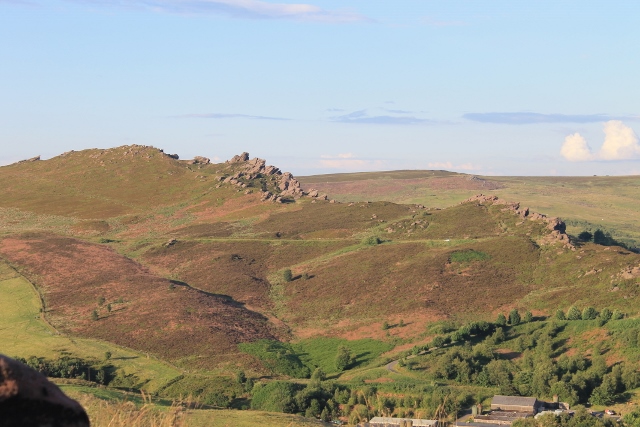
007The Roaches (640x480)

At the top of the field is a gate on the right leading to the path up Hen Cloud.  If we look left we see The Roaches.  The word ‘Roaches’ derives from the French word roches – rocks.

013View (640x480)

This is what The Roaches look like when we have ascended Hen Cloud a little.

014Tittesworth Res (480x640)

A view of Tittesworth Reservoir (or Tittesworth Water as it is now called) from near the top of Hen Cloud

016Path (640x480)

As you can see the path is fairly easy and goes through heather and cotton grass.

020Tittesworth Res (640x480)

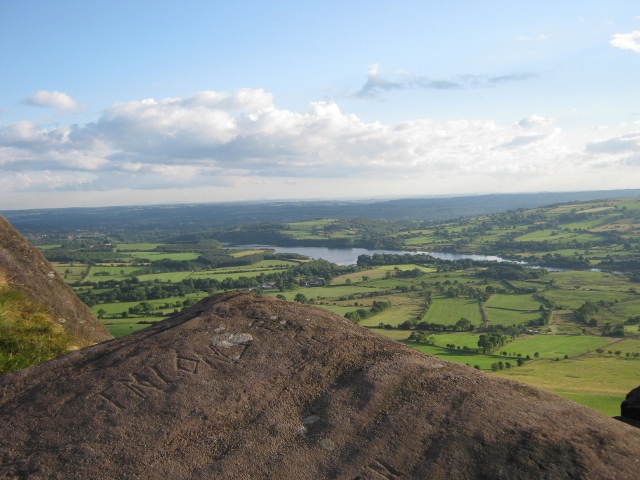
Tittesworth Water from the top of Hen Cloud. Why do some people feel it necessary to cut their names and messages into rocks and trees?

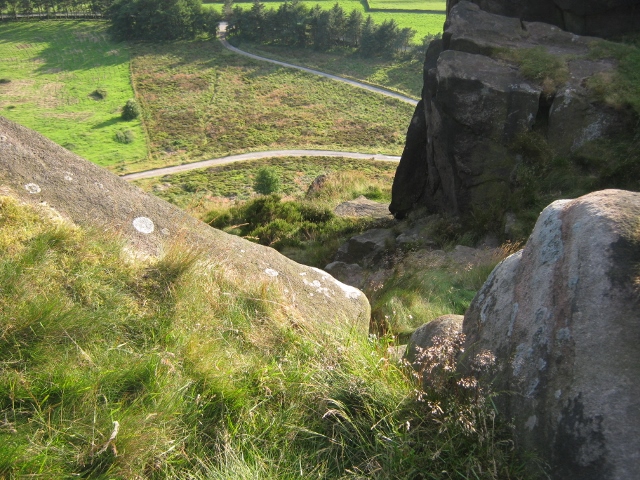
021Drop to road (640x480)

Looking through a gap in the rock we see the steep drop to the road below.

033Roaches (640x427)

Another view of the Roaches. It has only taken us half an hour to get up here and we are old and infirm – well – nearly!

035View (640x427)

A different view from the top of Hen Cloud

037View (640x427)

And another!

045View (640x427)

Tittesworth Water again

046View (640x427)

These rocks are on the edge of the escarpment

047View camp (640x427)

On the other side of the line of trees below us was a camp full of teenage girls. You wouldn’t believe the noise of incessant chatter that floated up to us on the still evening air! Or perhaps you would, if you have anything to do with teenage girls!

052Rocks (640x427)

A close-up of one of the rocks. This, I believe, is Gritstone which erodes easily. It is a coarse type of Sandstone.

055Plants (640x427)

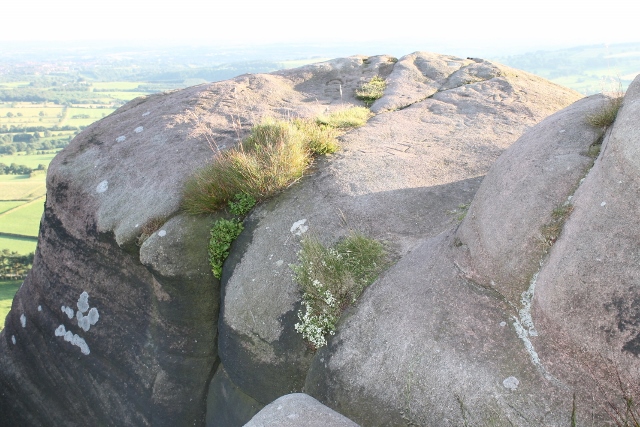
Grasses and flowers living in the cracks in the rocks.  A few lichens there too.

056Rocks (640x427)

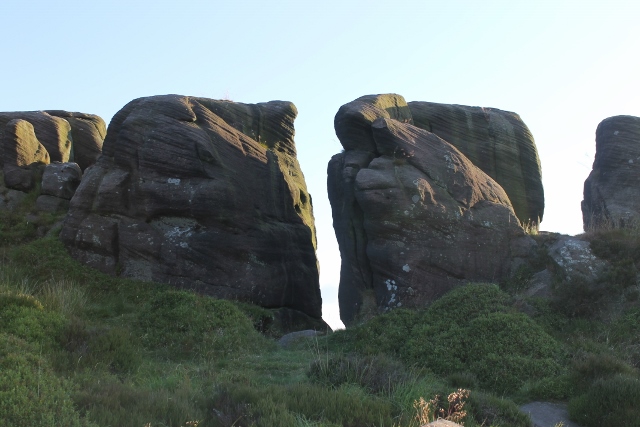
Strange rock shapes

057Rocks (640x427)

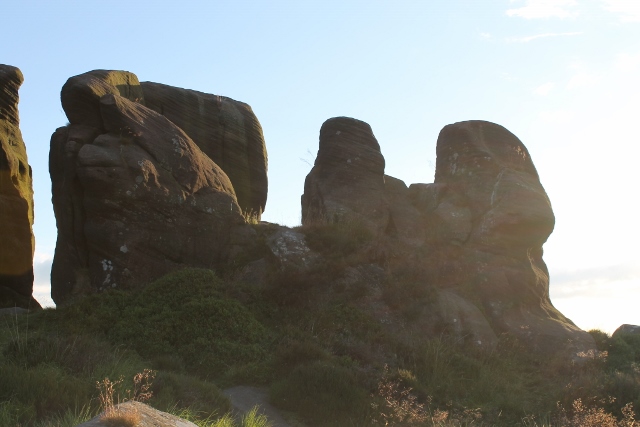
And more strange rocks.

We are always a little sad to leave the top of Hen Cloud.


Share this:

  • Share on X (Opens in new window) X
  • Share on Reddit (Opens in new window) Reddit
  • Share on Pinterest (Opens in new window) Pinterest
  • Share on Facebook (Opens in new window) Facebook
  • Email a link to a friend (Opens in new window) Email
  • Share on Tumblr (Opens in new window) Tumblr
  • Print (Opens in new window) Print
  • Share on LinkedIn (Opens in new window) LinkedIn
Like Loading...

Two Short Walks

03 Sat Jan 2015

Posted by Clare Pooley in Rural Diary, walking

≈ 25 Comments

Tags

Bridge Street Bungay, Bungay, Dunwich, Dunwich beach, walking

After three days of glorious blue sky and sunshine, the sun not powerful enough to melt the thick frost and ice in shady places, we woke yesterday morning, the first of the new year, to gloom and cloud and increasing wind.  Richard and I had hoped to go to Minsmere with Elinor, walk round the bird reserve and have lunch in the café.  However, after her late night seeing in the new year Elinor didn’t get up til midday by which time it was too late to get there for lunch.  We decided we would try to get to Minsmere at the weekend and drove to Dunwich and had a short walk there instead.

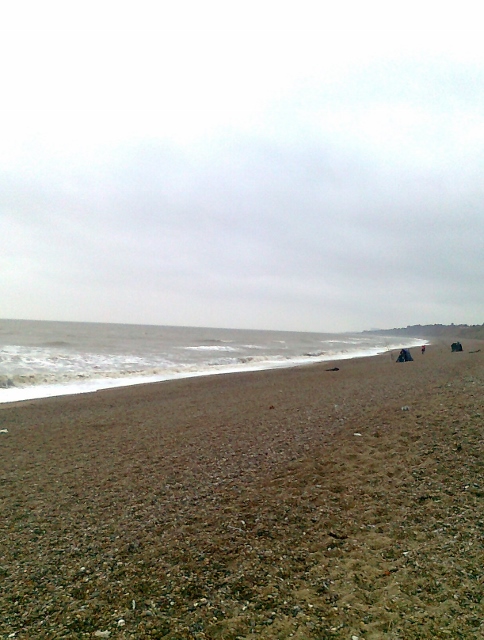
001Dunwich beach (2) (500x640)

Rough sea at Dunwich beach

No matter what the weather, there are always at least two tents belonging to sea fishermen on this beach.  I only had my phone with me so these photos aren’t too good.

002Dunwich beach (2) (484x640)

We found it difficult walking on the beach because of the strong, cold wind and Elinor who hasn’t been very well recently decided to return to the warmth of the car.

004Dunwich beach (2) (640x507)

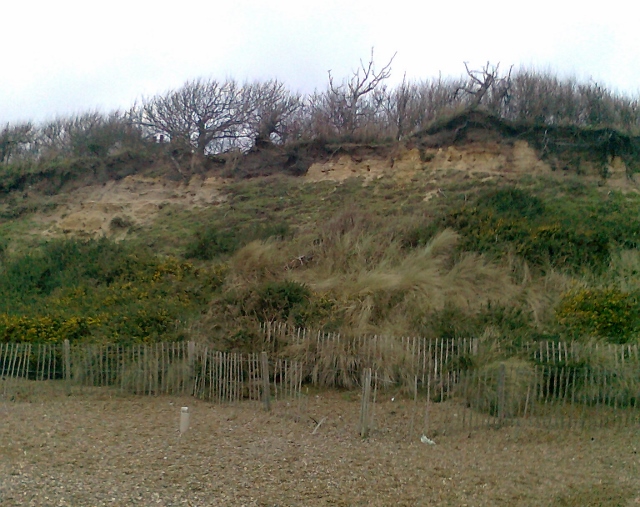
The coast here is being eroded away very quickly and there are frequent land-slips.

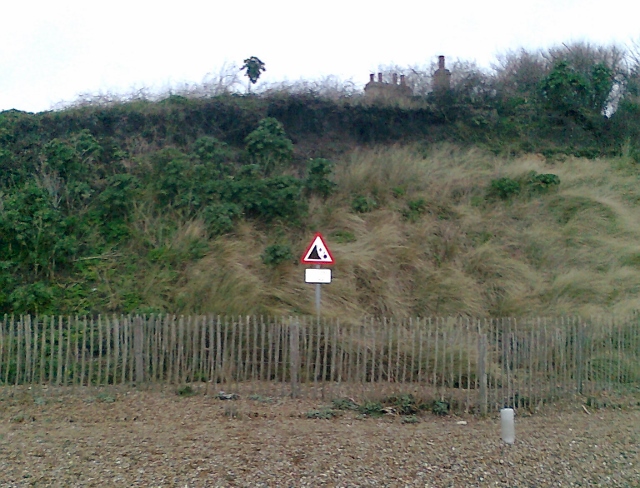
005Dunwich beach (2) (640x488)

I am glad I don’t live in the house whose chimneys you can see at the top of the picture.

Dunwich, in the 13th century was a port city equal in size to London (as it was then).  It had six churches, two monasteries and its own mint.  In 1286 a storm washed away many houses into the sea and this was followed by three further storm surges in quick succession until almost all of Dunwich was lost to the sea with only a tiny fragment of the city remaining.  There is a legend that the church bells can still be heard tolling beneath the waves on quiet days.  The port and river mouth became silted up and the trade went away.  The storm surge we had in December 2013 caused a lot of damage all along this coast and many people are still in danger of losing their homes.

Archaeologists have been working in recent years to map the sea floor across the entire area of the town.  A lot of ruins have been discovered and stones with lime mortar attached dating back to the early medieval times.  This is the largest medieval underwater site in Europe.

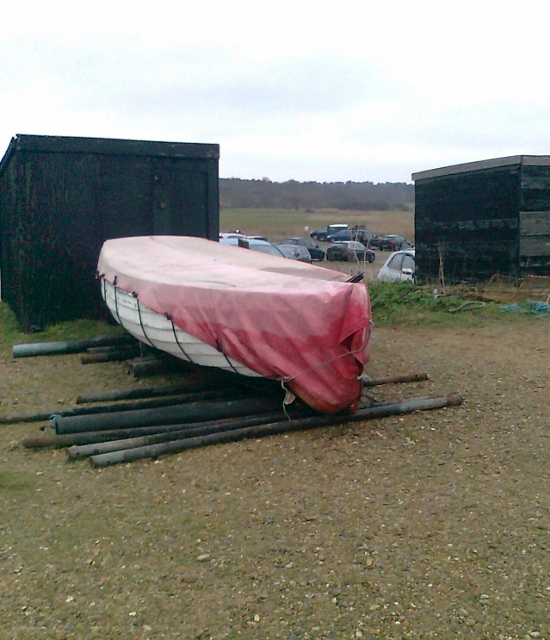
007Dunwich beach (2) (550x640)

The huts contain winching gear to help pull the boats back up the beach.

008Dunwich beach (480x640)

The ‘must-have’ gear of a fisherman

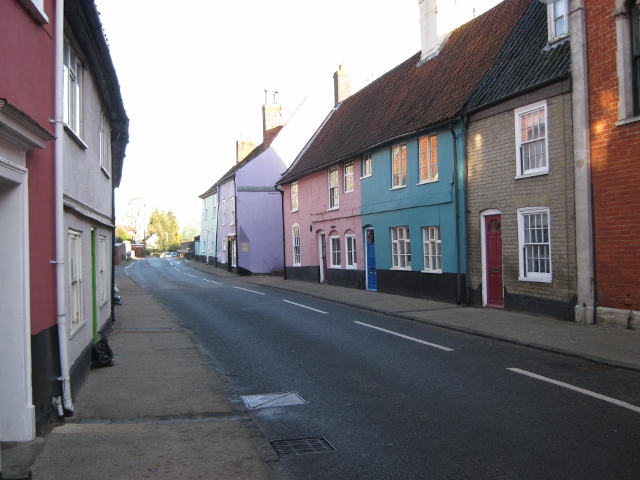
About ten days before Christmas I went shopping in Bungay and, as it was a nice day and I wasn’t in a hurry I decided to walk down Bridge Street to the river and see how high the water was.

001Bridge Street (640x480)

The colourful houses in Bridge Street.

002Bridge Street (640x480)

Looking back up the street towards the Buttercross in the Market Place

003Bridge Street (640x480)

More colourful houses

004Bridge Street (640x480)

And yet more!

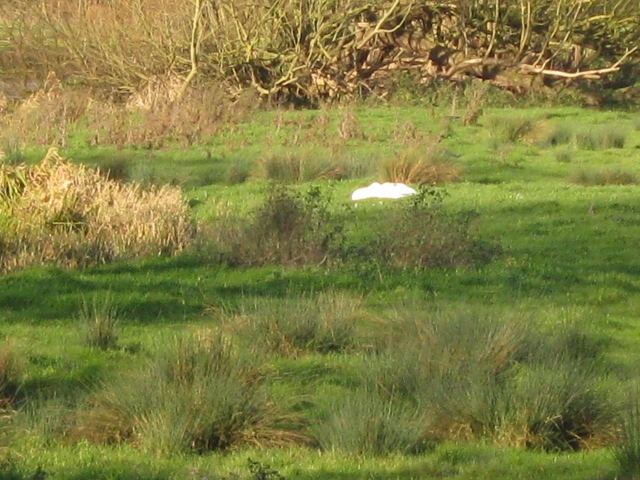
005Swans (640x480)

The white heap is two Mute Swans. I didn’t have my camera with the zoom lens and this is the best I could do.

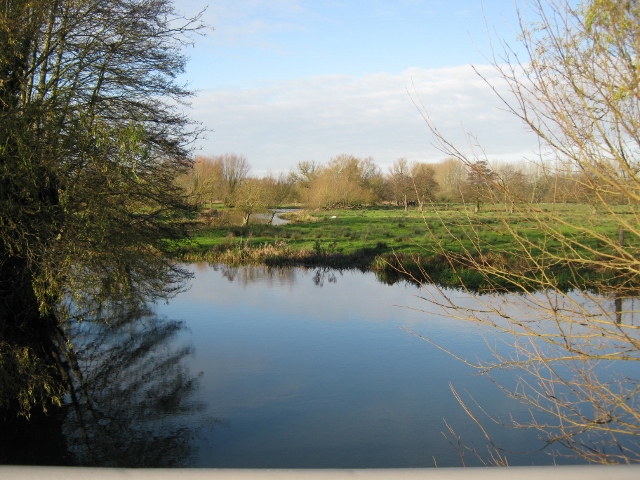
006River Waveney (640x480)

The River Waveney seen from the bridge.

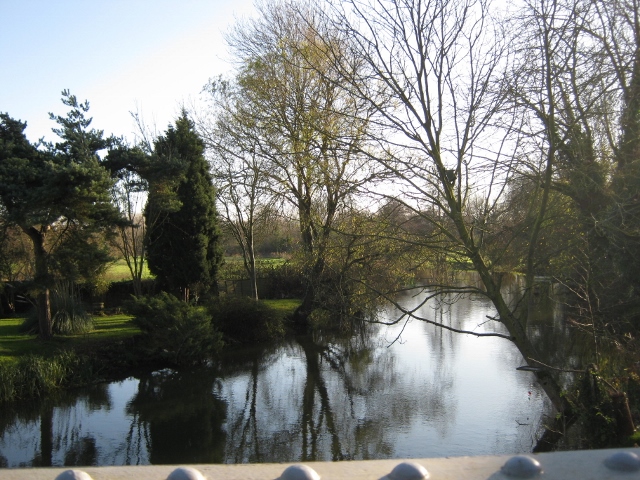
007River Waveney (640x480)

Looking at the River Waveney from the other side of the bridge.

If you would like to hear more about Bridge Street please click here to listen to local historians and residents talk about the area.  Turn up the volume on your phone/computer.  In the recording you will hear about Nursey’s the sheepskin shop.  Unfortunately, since this recording was made the shop has had to close as they couldn’t find a buyer.


I hope you enjoy listening to this audio tour.

Happy New Year to all my readers!


Share this:

  • Share on X (Opens in new window) X
  • Share on Reddit (Opens in new window) Reddit
  • Share on Pinterest (Opens in new window) Pinterest
  • Share on Facebook (Opens in new window) Facebook
  • Email a link to a friend (Opens in new window) Email
  • Share on Tumblr (Opens in new window) Tumblr
  • Print (Opens in new window) Print
  • Share on LinkedIn (Opens in new window) LinkedIn
Like Loading...

Boxing Day Walk

30 Tue Dec 2014

Posted by Clare Pooley in Rural Diary, trees, walking

≈ 21 Comments

Tags

fields, oak trees, walking, winter

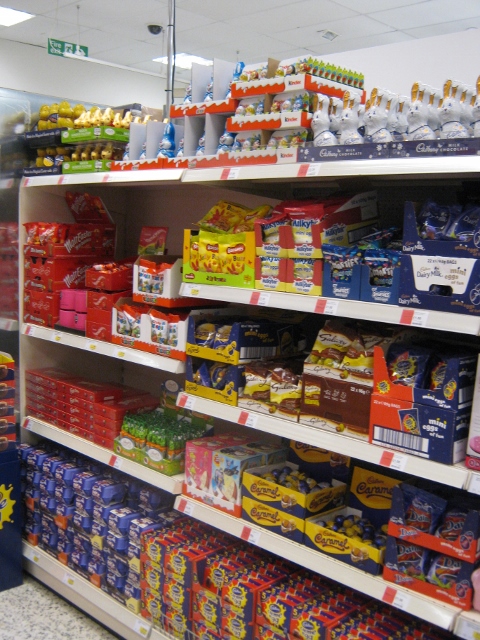
002Easter chocolate display (480x640)

On the fifth day of Christmas my true love sent to me, a display of Easter chocolate at the supermarket.

Despite the cold and cloud Richard and I had a very pleasant walk on Boxing Day.  We had no wish to drive anywhere so we had our usual amble across the fields.

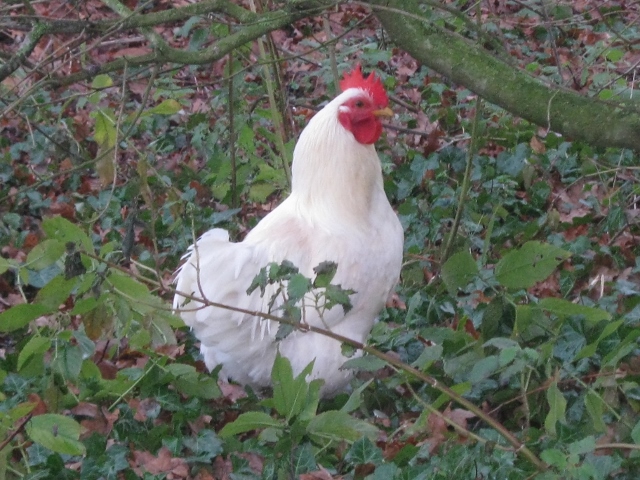
001Hen (640x480)

One of next-door’s chickens searching for grubs in the leaf litter of the road-side

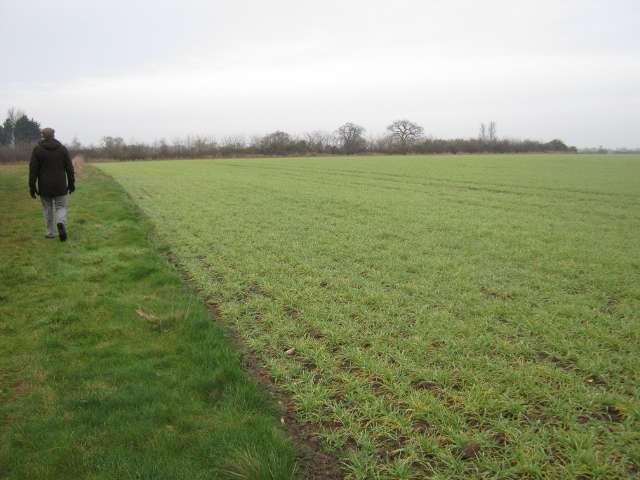
002Field walk (640x480)

Richard walking along the edge of a field of wheat or barley.

003Trees (640x480)

I love the look of leafless trees. These are English Oaks

004Millet (480x640)

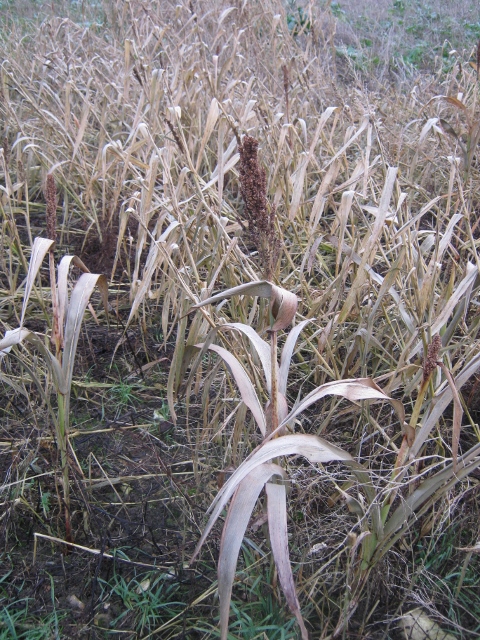
Millet

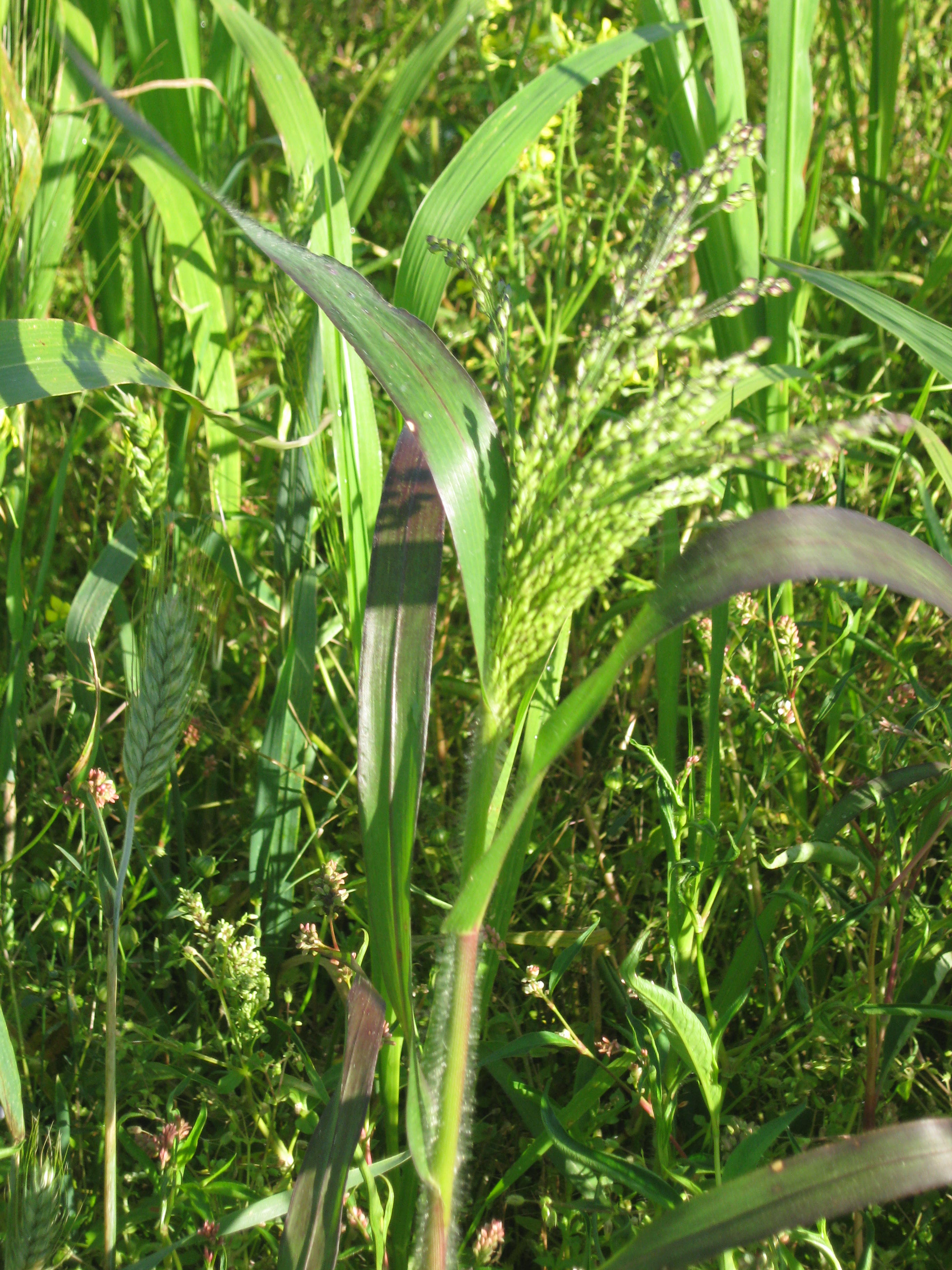
Many of you will remember the walk I had along this path in the summer when I found this plant in flower and didn’t recognise it as millet.  I have Allen of nhgardensolutions to thank for the identification and also Rachel from coulddoworse.me for explaining links to me (though because of my ineptitude and through no fault of Rachel’s, I have still had a lot of difficulty and a lot of help from family in getting them to work!).  Allen’s posts are full of the small but beautiful things he sees on his trails in New Hampshire and he has taught me to slow down even further and look yet more closely at the natural world around me.  Rachel’s posts are packed with anecdotes about her life in London, her lovely family and the walks she takes through the city streets and parks.  She cooks and crochets and reads and gardens and is so inspiring!
028millet

This is what the millet looked like in the summer

013Millet field (640x480)

015Millet field (480x640)

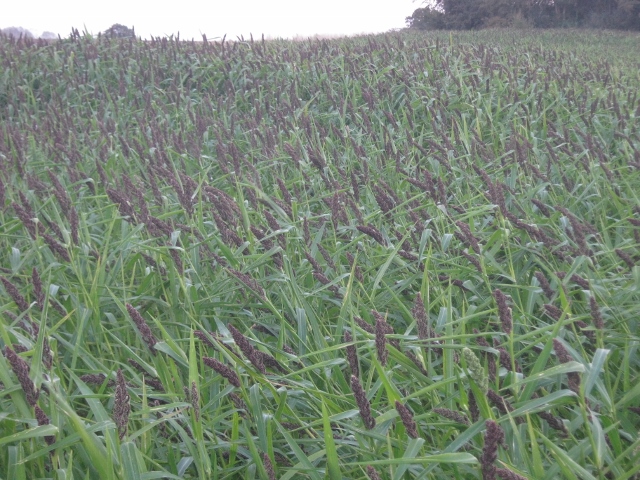
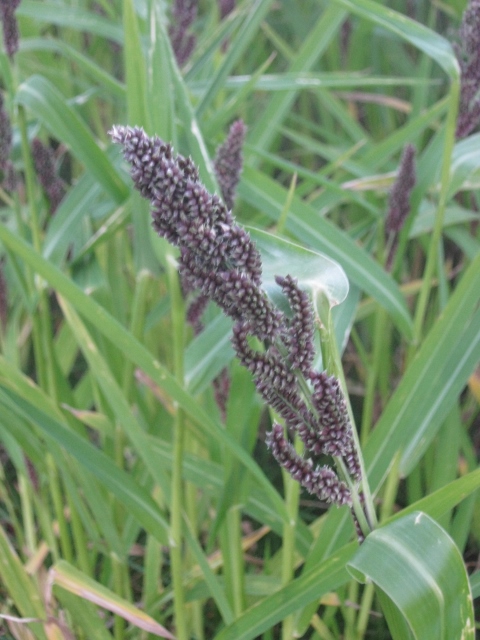
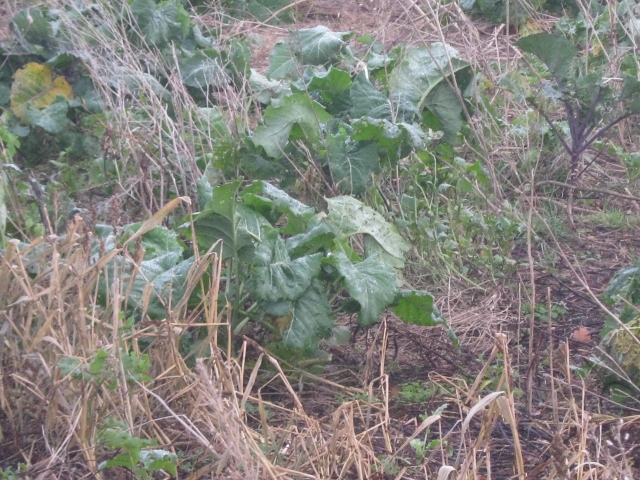
…and these two photos show what it looked like in October when Richard, Elinor and I went for a walk after Richard had got home from work.  One of the last evening walks we took before the clocks went back.  We thought it would be harvested for seed but from the look of the field on Boxing Day it had just been left to dry and die.  A puzzle.

005Sugar beet (640x480)

We also saw a few sugar beet plants in amongst the dead grass

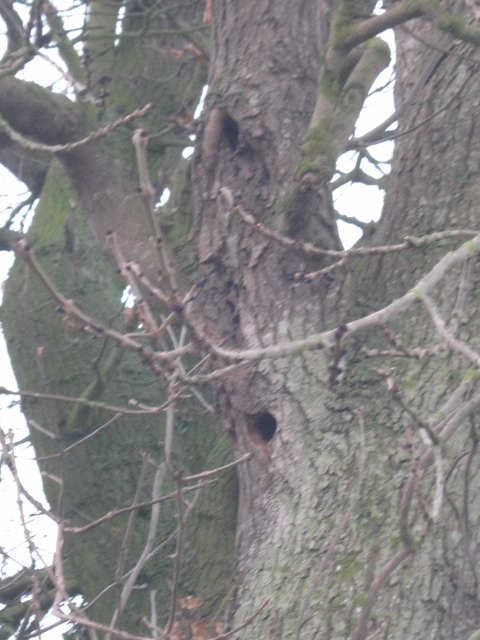
006Holes in trees (480x640)

and holes that we weren’t able to see when the leaves were on the trees.

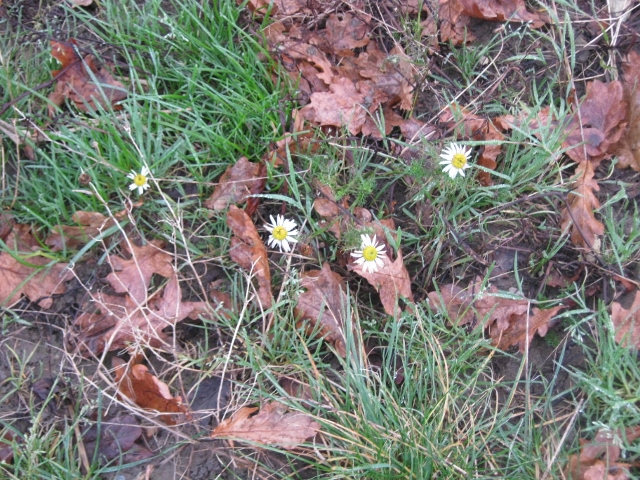
007Mayweed (640x480)

A few tough Mayweed flowers that are struggling on even through a few frosts

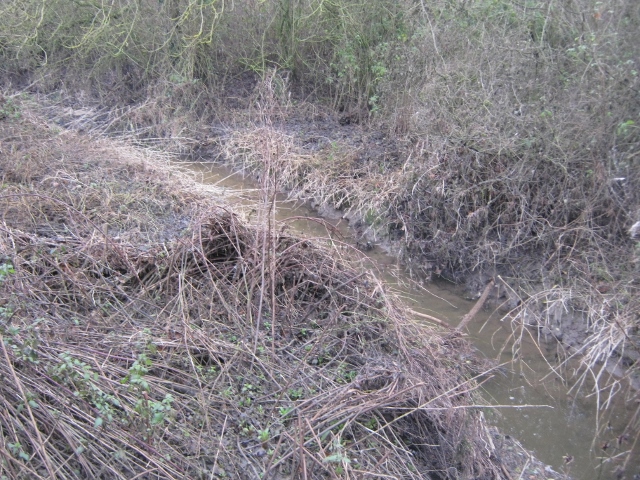
008The Beck (640x480)

The Beck was low but showed signs of when it had been very high a short time ago. It rose again on Boxing Day night and flooded the road at the Washes for a short while.

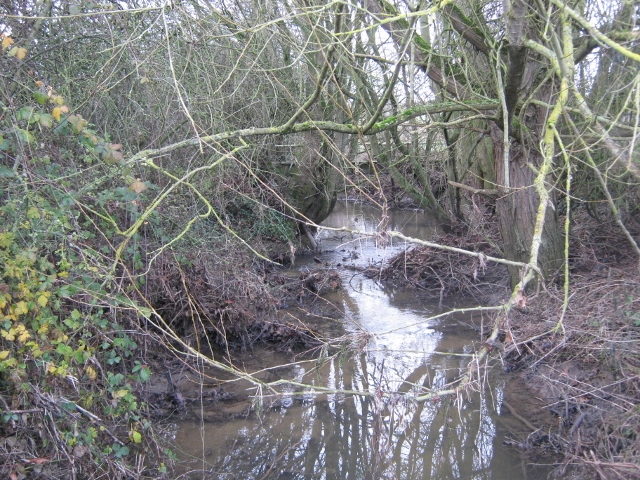
009The Beck (640x480)

This little stream looks so much nicer in the spring and summer.

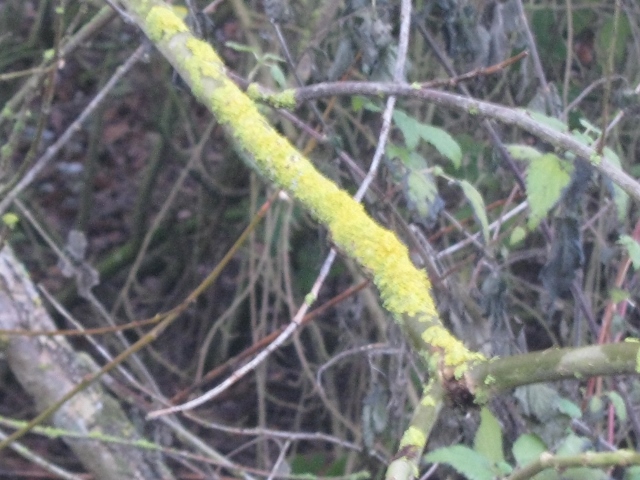
011Lichen on branch (640x480)

We saw lichen on branches…

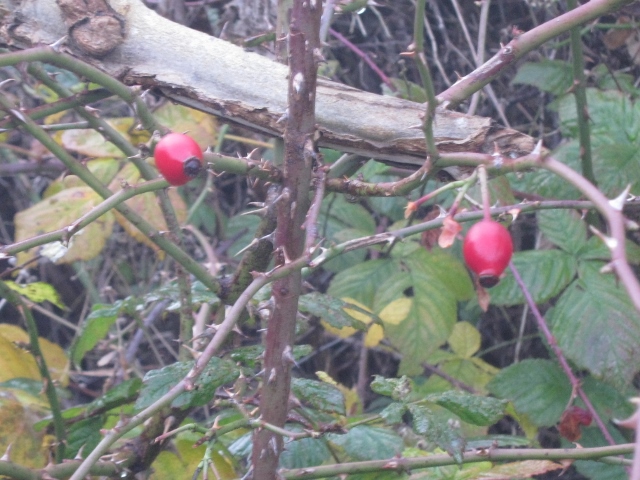
012Rosehips (640x480)

…and a few rosehips.

017Oak (640x480)
015Oak (640x480)
016Oak (640x480)
English Oak
English Oak

These pictures are of my favourite ancient oak tree seen over the hedge from the lane.  I went into the field it stands in and took a photo of the whole tree as well.

026Oak (640x480)
013Oak (640x480)
014Oak (480x640)

These are three more oaks we saw on our walk.

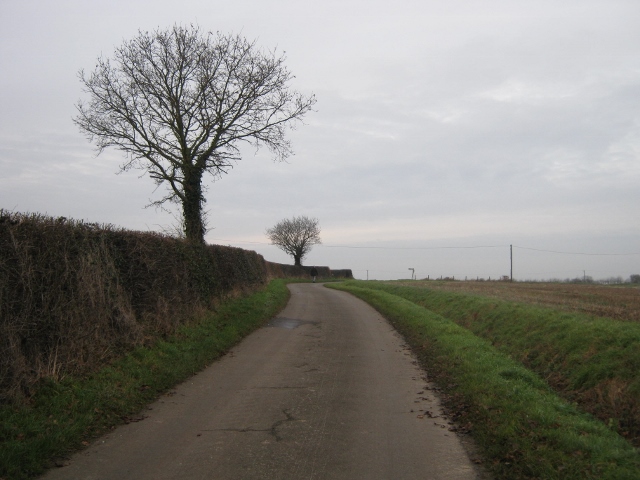
019Lane (640x480)

The lane with Richard in the distance showing how far I had lagged behind him

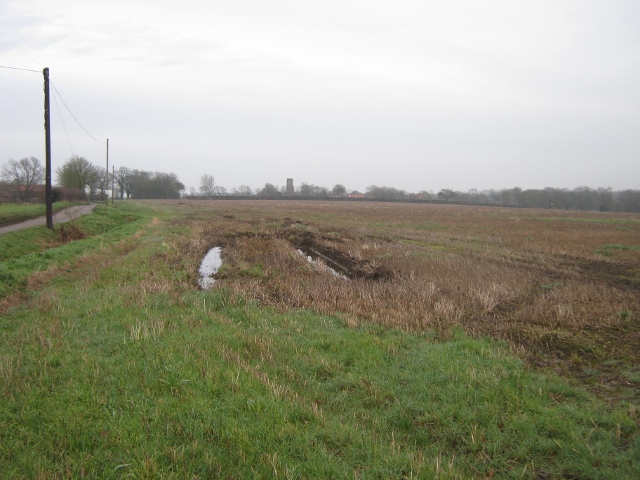
020Wet field (640x480)

A wet and poorly drained field at the top of the lane. It looks like some heavy vehicle sunk into the soil here.

021View (640x480)

Looking back in the direction we had come

022View (640x480)

Looking towards Flixton where we had been to church on Christmas Eve. There is a wood there on a slight rise in the land.

023New green leaves (640x480)

We saw these new green leaves – the plants have become very confused as the temperature swings from freezing to 10 degrees C or more and then back down to freezing again.

027Lane (640x480)

The Washes don’t often dry out in the winter.

That photograph reminded me of one I took when we last walked this way in October.

023Lane (640x480)

The sun had set but there was such beautiful silver light in the sky and this was reflected in the shallow puddles on the road

028Field (640x480)

A typical early winter scene. The field is full of dead thistles

030Alder cones (640x480)

These are Common Alder cones, the female catkins. I tried very hard to photograph the male catkins but I couldn’t get the camera to focus on them.


Share this:

  • Share on X (Opens in new window) X
  • Share on Reddit (Opens in new window) Reddit
  • Share on Pinterest (Opens in new window) Pinterest
  • Share on Facebook (Opens in new window) Facebook
  • Email a link to a friend (Opens in new window) Email
  • Share on Tumblr (Opens in new window) Tumblr
  • Print (Opens in new window) Print
  • Share on LinkedIn (Opens in new window) LinkedIn
Like Loading...
← Older posts
Newer posts →
Follow A Suffolk Lane on WordPress.com

Enter your email address to follow this blog and receive notifications of new posts by email.

Join 718 other subscribers.

Unknown's avatar

I talk about what it's like living in a quiet part of Suffolk. I am a wife, mother and daughter, a practising Christian and love the natural world that surrounds me. I enjoy my life - most of the time!
My Posts

Mar 2026
M T W T F S S
 1
2345678
9101112131415
16171819202122
23242526272829
3031  
« Feb    

Pages

  • About my Blog
  • GDPR (General Data Protection Regulations) and This Site
  • My Life in a Suffolk Lane

Archives

Blogs I Follow

Unknown's avatar
Unknown's avatar
Unknown's avatar
Unknown's avatar
Unknown's avatar
Unknown's avatar
Unknown's avatar
Unknown's avatar
Unknown's avatar
Unknown's avatar
Unknown's avatar
Unknown's avatar
Unknown's avatar
Unknown's avatar
Unknown's avatar
Unknown's avatar
Unknown's avatar
Unknown's avatar
Unknown's avatar

Posts I Like

  • aho's avatar
  • Unknown's avatar
  • Unknown's avatar
  • Secret Diary of A Country Vicar's Wife's avatar
  • Unknown's avatar
  • Julian Summerhayes's avatar
  • Unknown's avatar
  • Unknown's avatar
  • Unknown's avatar
  • Unknown's avatar
  • sopantooth's avatar
  • Unknown's avatar
  • womanseyeview's avatar
  • Unknown's avatar
  • Unknown's avatar
  • Talkmore's avatar
  • thesimlux's avatar
  • Unknown's avatar
  • علي الجازع's avatar
  • Unknown's avatar
  • Unknown's avatar
  • Unknown's avatar
  • Unknown's avatar
  • Unknown's avatar
  • Unknown's avatar
  • Unknown's avatar
  • JAM's avatar
  • Unknown's avatar
  • Matthew Paul's avatar
  • Unknown's avatar
  • Nita Panicker's avatar
  • Unknown's avatar
  • mitchteemley's avatar
  • Unknown's avatar
  • Unknown's avatar
  • Unknown's avatar
  • Unknown's avatar
  • Unknown's avatar
  • Unknown's avatar
  • Limentinus's avatar
  • Unknown's avatar
  • Wayne Wolfson's avatar
  • Unknown's avatar
  • John’s Postcards's avatar
  • Pilgrim's Pondering Ministry's avatar
  • Unknown's avatar
  • sherijkennedyriverside's avatar
  • jonathonbhoyt's avatar
  • martzkvi's avatar
  • Kathleen's avatar

amphibians architecture art Arts and Crafts churches cooking Days out domestic animals family fish Folk Traditions Gardening Historic Buildings holidays Insects Landscaping literature music Norwich plants Rural Diary seashore theatre trees Uncategorized walking weather wild animals wild birds wild flowers

Tags

architecture autumn birds blackbird blackthorn Bungay butterfly church clouds common knapweed cow parsley crocus daffodils Diary dogwood family field maple flowers fungus garden gardening geese greylags ground-ivy Halesworth Hawthorn heather holiday Holly Holy Week horse chestnut Hoverfly insects ivy Lake District Lent lesser celandine lichen Lords and Ladies Mallard mallards Minsmere moorhen moss music Norwich Peak District pheasant plants pond ponds primrose primroses Rain rooks Rumburgh Rumburgh Church sheep Sheffield snow snowdrops Southwold spring Suffolk Suffolk Wildlife Trust sunset the Beck trees viburnum bodnantense walking weather wild cherry wild flowers winter-flowering honeysuckle witch-hazel

Meta

  • Create account
  • Log in
  • Entries feed
  • Comments feed
  • WordPress.com

Goodreads

Blog at WordPress.com.

Book Jotter

Reviews, news, features and all things books for passionate readers

Country Life Blog -

A blog about life in the country in the past and present

Matthew Paul: Poetry & Stuff

Poetry and what-not

Schnippelboy

Ein Tagebuch unserer Alltagsküche-Leicht zum Nachkochen

TAMARA JARE

Tamara Jare Contemporary Figurative Art – Bold Colors, Resilient Souls

A Taste of Freedom

Documenting a Dream

Country Ways

Rambling Journeys in Britain, Countryside Matters and campaigning for the Right to Roam

The Strawberry Post

Here to Entertain, Educate & Inspire!
a north east ohio garden

an ongoing experiment in the dirt, 35 plus years

naturechirp

Celebrating God's creatures, birds and plants...

Sophie Neville

Writer

Going Batty in Wales

Developing a more sustainable lifestyle in SW Wales

Our Lake District Escapades

Exploring the Lake District and beyond

Short Walks Long Paths

Wandering trails around the coast of Wales

The Biking Gardener

An English persons experience of living and gardening in Ireland

Nan's Farm

A Journal Of Everyday Life

Walk the Old Ways

Rambling Journeys in Britain with John Bainbridge. Fighting for the Right to Roam. Campaigning to Protect Our Countryside.

Writer Side UP!

Waking the Writer Side...and keeping it "Up!"

Meggie's Adventures

Travel, thank you notes and other stories

amusicalifeonplanetearth

Music and the Thoughts It Can Inspire

lovefoundation.co.uk

Traveling Tortuga

Simply Living Well

Pakenham Water Mill

Historic watermill in the beautiful Suffolk countryside

Take It Easy

Retired, not expired: words from the after(work)life. And music. Lots of music!

Secret Diary Of A Country Vicar's Wife

By Olive Oyl

thanksfortheadventureorg.wordpress.com/

The Beat Goes On

#TBGO

Frank Pleszak's Blogs

Twitter: @frankpleszak @PolishIICorps

John Bainbridge Writer

Indie Writer and Publisher

roughwighting

Life in a flash - a bi-weekly storytelling blog

Walking the Old Ways

Rambling in the British Countryside

CapKane

thoughts on social realities

SkyeEnt

Jottings from Skye

jodie richelle

embracing my inner homemaker

Skizzenbuch/Blog

Just another WordPress.com weblog

Have Bag, Will Travel

The Call of the Pen

Flash Fiction, Book Reviews, Devotionals and other things.

John's Postcards

Art in Nature

You dream, I photographe it !

Smile! You’re in Barnier World......

theinfill

the things that come to hand

Dr. Mary Ann Niemczura

Author of "A Past Worth Telling"

Provincial Woman

The Pink Wheelbarrow

Luanne Castle: Poetry and Other Words (and cats!)

Poetry, Other Words, and Cats

The Family Kalamazoo

A genealogical site devoted to the history of the DeKorn and Zuidweg families of Kalamazoo and the Mulder family of Caledonia

everythingchild

The Book Owl

Canberra's Green Spaces

Paul Harley Photographer

  • Subscribe Subscribed
    • A Suffolk Lane
    • Join 718 other subscribers.
    • Already have a WordPress.com account? Log in now.
    • A Suffolk Lane
    • Subscribe Subscribed
    • Sign up
    • Log in
    • Report this content
    • View site in Reader
    • Manage subscriptions
    • Collapse this bar
 

Loading Comments...
 

    Privacy & Cookies: This site uses cookies. By continuing to use this website, you agree to their use.
    To find out more, including how to control cookies, see here: Cookie Policy
    %d