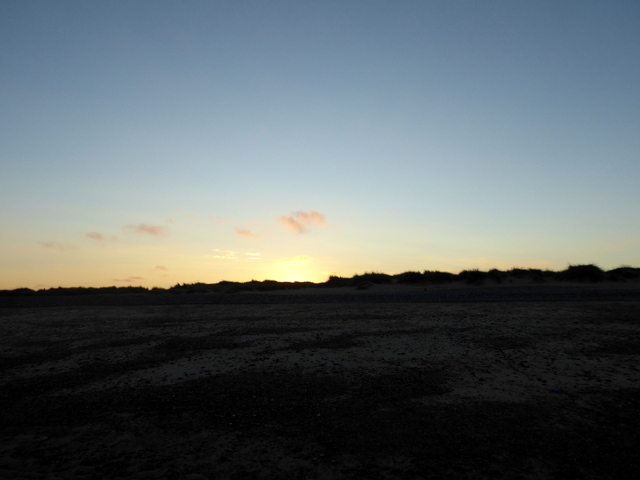
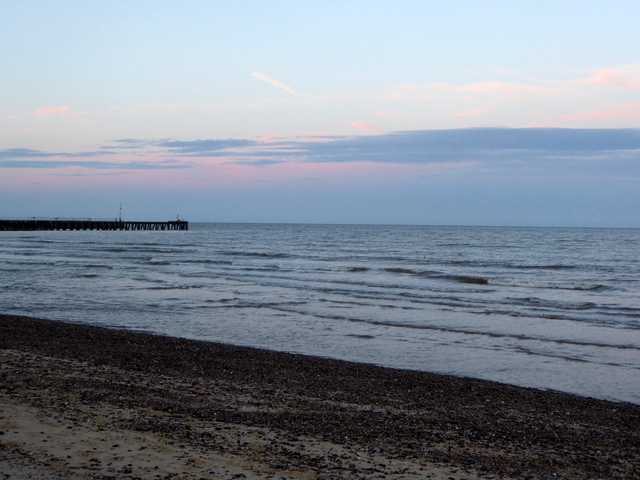
After a busy day last Friday and a hot, sunny day too, we thought it might be nice to go to the coast for a little while. We knew that it would be extremely crowded for most of the day so we left it until after we had eaten our evening meal and set off just before 8.00 pm.
We decided that we’d visit Walberswick as we hadn’t been there for some time and parked the car in the car-park there at about 8.30 pm.
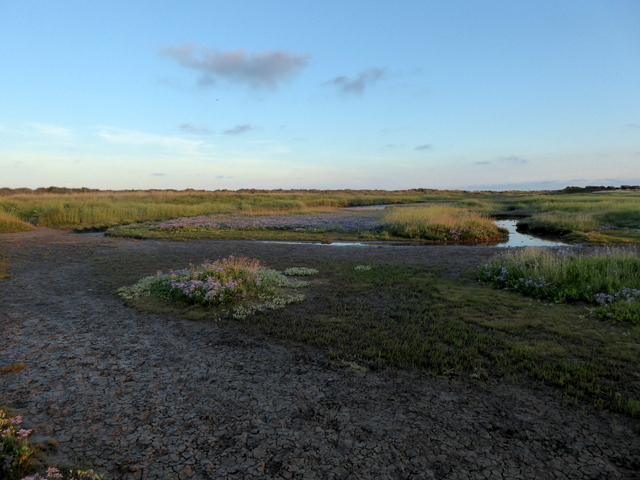
Walberswick. With its creeks, mudflats, sand-dunes and varied flora it is a favourite place of mine to visit.
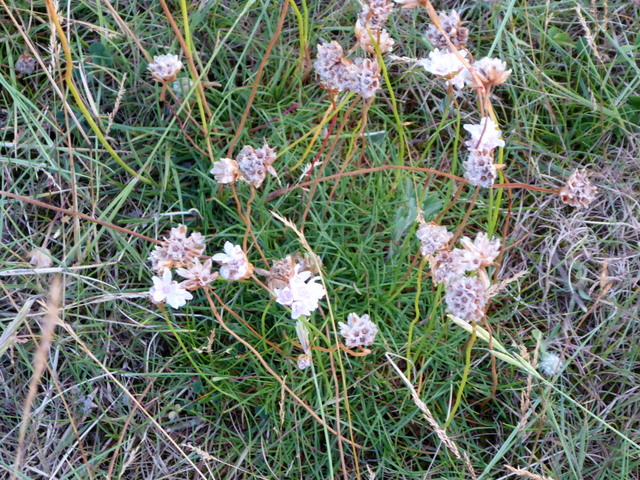
The mass of mauve flowers you can see in the photo above are Sea Lavender.
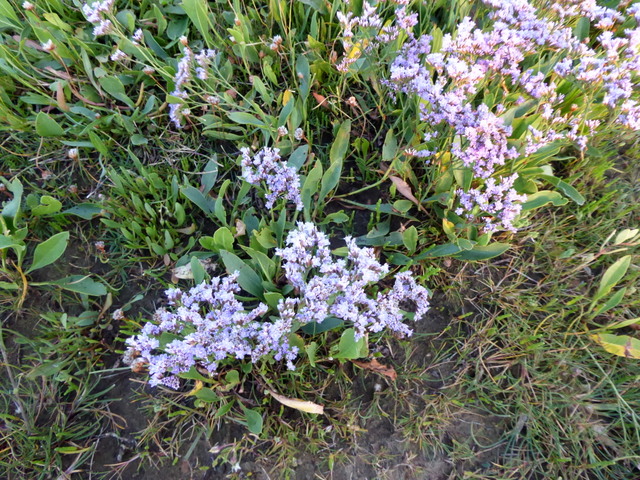
Common Sea-lavender (Limonium vulgare)
I couldn’t get a clear picture of these flowers – mainly because I couldn’t get down low enough! Sea-lavender (no relation of true Lavender) is related to the cultivated Statices – everlasting flowers. Many people pick these flowers illegally to make dried flower arrangements. Strangely, the drier the ground in which it grows, the taller it gets. This plant grows in great masses on the North Norfolk coast and I would love to see it there again.
There wasn’t much Thrift or Sea Pink (Armeria maritima) left – mainly seedheads. Thrift is a relative of Common Sea-lavender.
There was a lot of rather scrappy Hare’s-foot Clover (Trifolium arvense)…
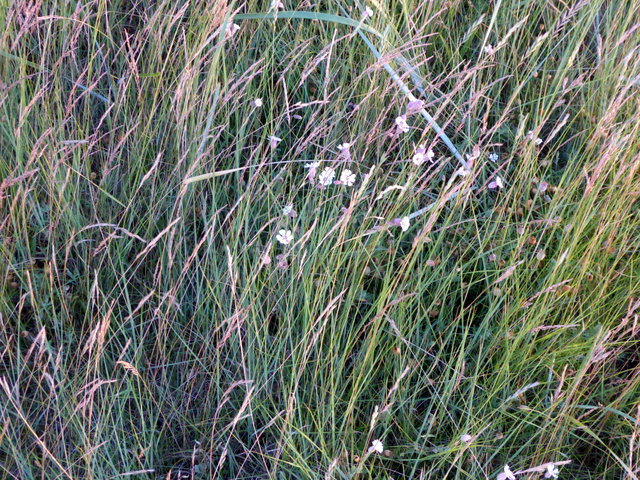
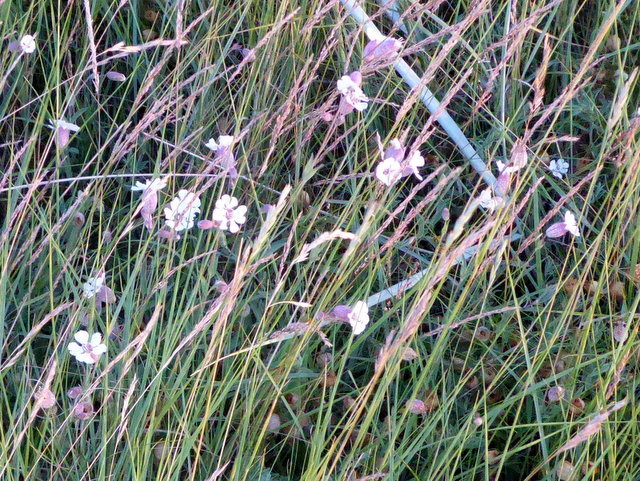
…and a small amount of Sea Campion (Silene uniflora)
I cropped the photo I took.
The calyx (the area behind the petals) is swollen, like Bladder Campion is and is similarly patterned with red veins. The petals are larger and thicker than other types of Campion and usually overlap each other.
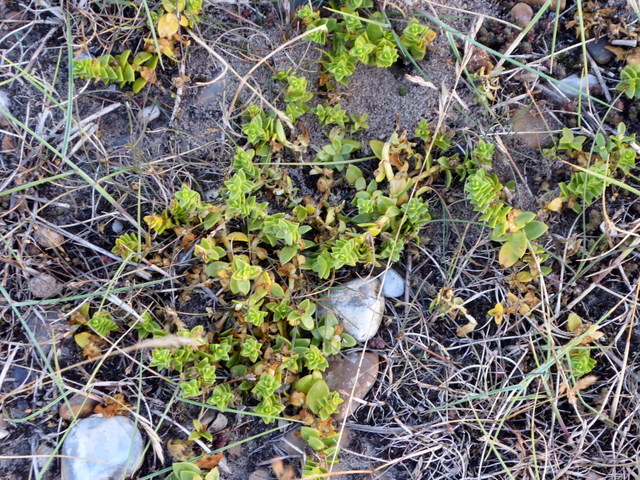
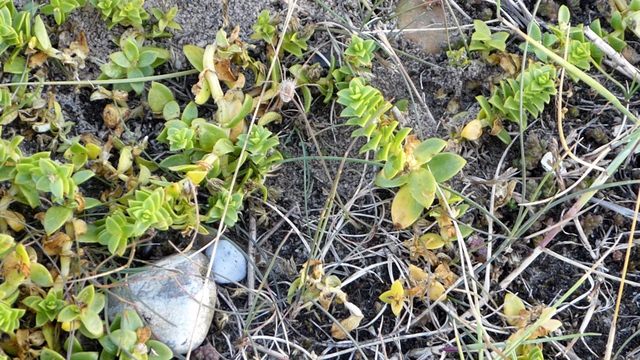
Sea Sandwort (Honckenya peploides). I like the way this plant grows. It reminds me of children’s building toys.
In Richard Mabey’s ‘Flora Britannica’ he says ‘… (Sea Sandwort) is one of the earliest colonisers of sand-dunes and shingle, and remarkable for its sprawling concertinas of geometrically stacked leaves’. It is able to keep growing upwards so if ever it is inundated with sand or mud it can survive. As with many seashore plants it is succulent and edible.
More Sea Sandwort, this time with a Harvestman or Harvest Spider. Can you see it? They are not true spiders but are related to them. They have one-piece bodies and no silk-glands so can’t spin webs.
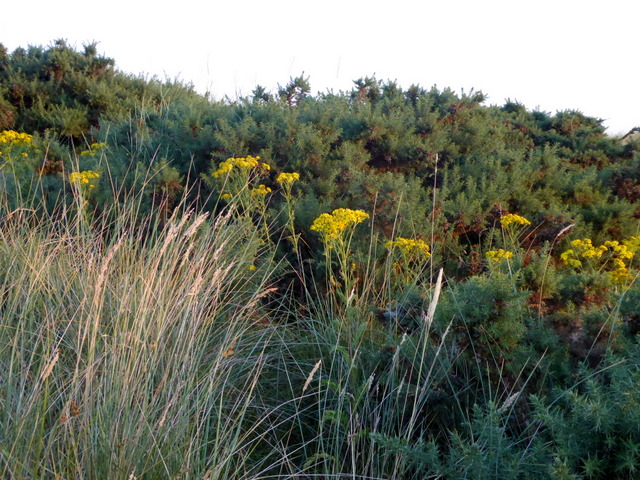
Common Ragwort (Senecio jacobaea) in flower and Gorse bushes (Ulex europaeus)
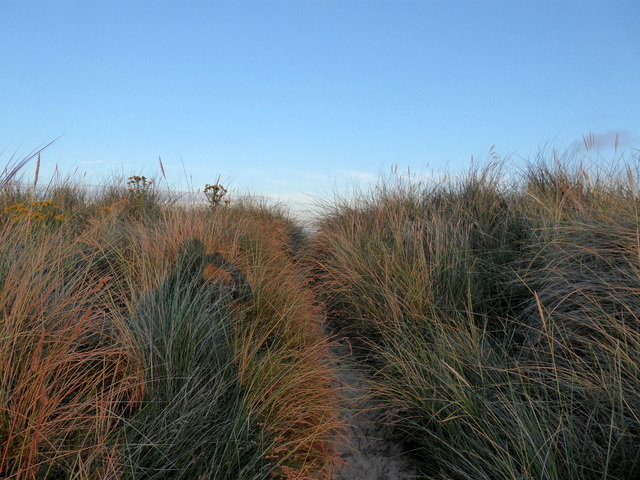
The dunes and my shadow!
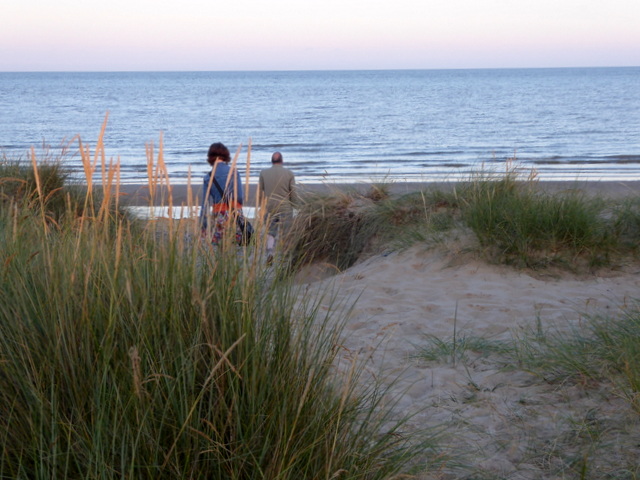
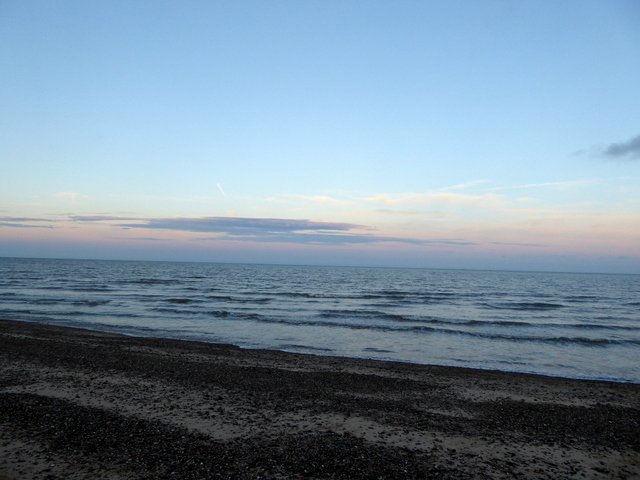
Richard and Elinor beat me to the sea. The cool northerly breeze was so refreshing.
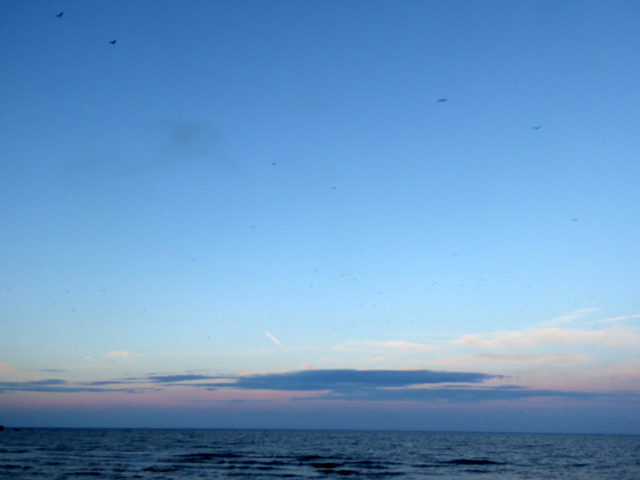
Seagulls were making their way out to wherever it is they go for the night…
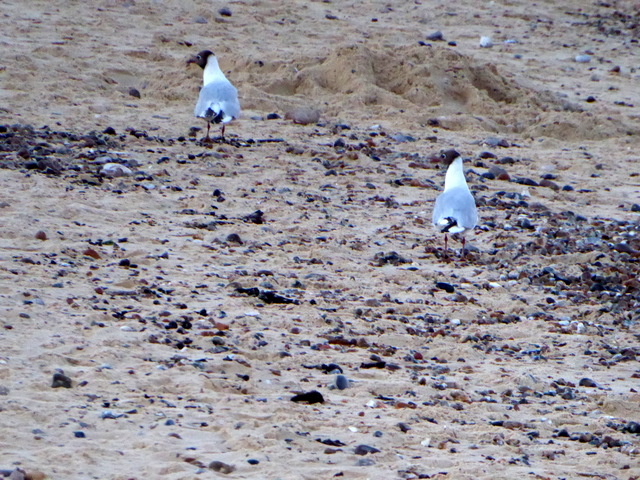
…except these two Black-headed Gulls (Larus ridibundus) who seemed to be doing some synchronised beach-combing.
One last look at the sea…
We made our way back to the dunes where I found a couple more plants to photograph.
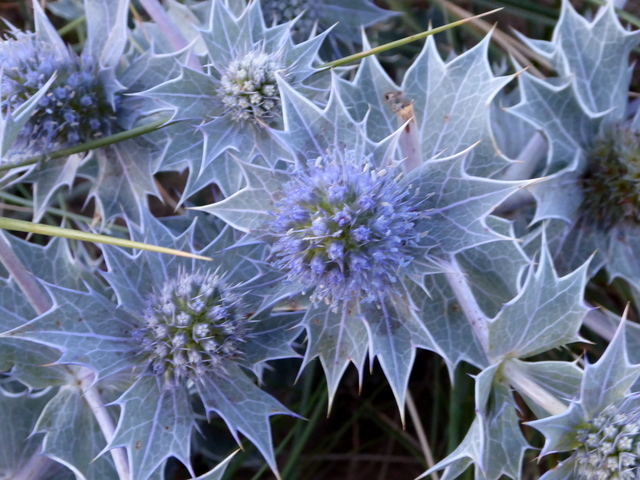
Sea-holly (Eryngium maritimum)
A most beautiful plant!
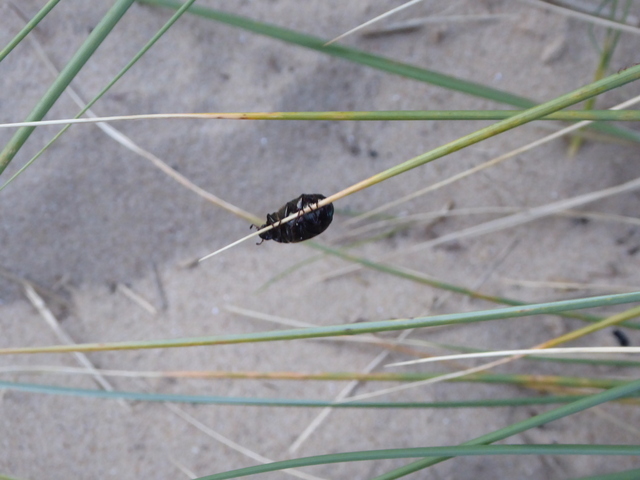
A cute little bug hoping I leave him alone!
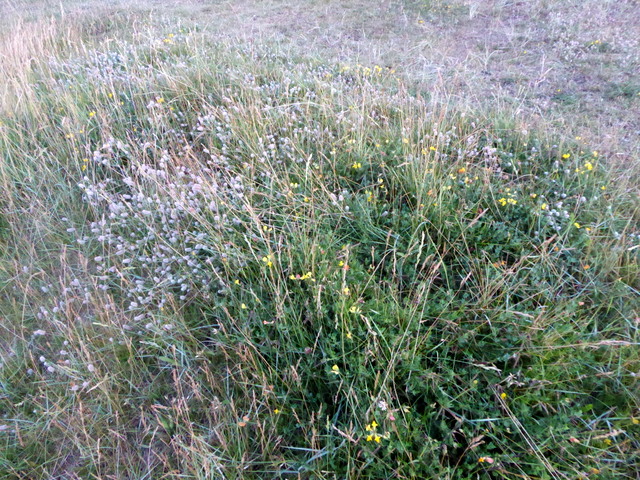
Vetch and Hare’s-foot Clover
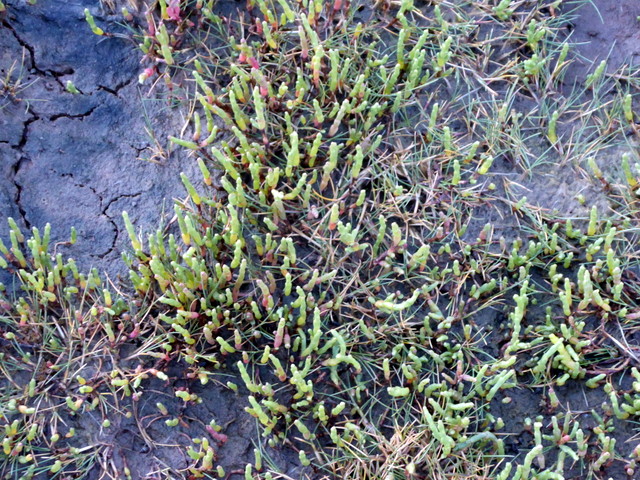
Perennial Glasswort (Sarcocornia perennis)
Another name for Glasswort is Samphire and like Common Glasswort (an annual plant which is also called Samphire) it can be eaten lightly boiled or pickled in spiced vinegar.
For many hundreds of years Glasswort was used in the manufacture of glass. The succulent stems were gathered at low tide, dried and burned in heaps. The crude ash which is high in soda was then fused with sand to make a poor quality glass. Saltworts were also used for this purpose.
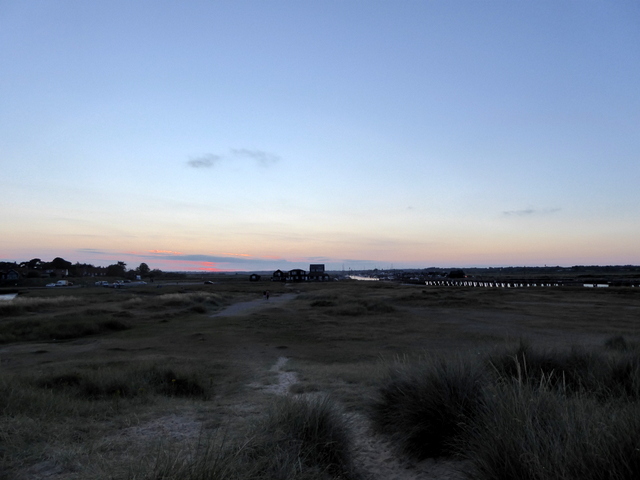
View inland with the R. Blyth on the right
We had enjoyed our hour on the beach and went home cool and relaxed.
We arrived back home last Wednesday after spending eight days in the Schwarzwald (Black Forest). It was probably the hottest day of the year so far and we spent it travelling by train up from Triberg, Germany to Ebbsfleet in Kent (England) where we had left our car. We set off from the hotel at 6.30 am European time and got home just after 7.00 pm British time (one hour behind Europe). The car thermometer said it was 32C (89.5F) when we set off from Kent and it peaked at 34C (93F) near the tunnel at the Dartford Crossing (under the Thames). As we drove home up through Essex and Suffolk we watched large black clouds to the west edging ever nearer and we hoped we’d be able to get home before the storm got to us. We did. It was still 32C as we unpacked the car, opened all the windows and doors in the house and wandered round the garden for a while looking at the long grass and the drooping plants. While I put the kettle on and made a cup of tea Richard telephoned the Chinese restaurant in Halesworth and ordered a take-away meal. He was just about to set off when the storm broke. It was the most violent one I’ve seen for many years with continuous thunder and bolts of lightening coming down vertically and travelling horizontally across the sky. The rain was very heavy indeed. Elinor and I sat on the stairs together as she gets quite frightened during thunderstorms and Richard went off to collect our evening meal. The storm gradually abated and the sky cleared but still Richard hadn’t come back and I began to worry about him. I found his phone which he had left behind so I couldn’t get in touch to find out where he was. I was considering getting in the car and going to look for him when I was relieved to see him driving up to the house. He had had a hair-raising journey and when he had got to Halesworth he found that the Chinese restaurant had a power-cut and couldn’t give us a meal. They had tried to phone him on his mobile to let him know, but of course he had left it at home. The town’s Thoroughfare was flooded with a foot of water and people were out trying to sweep the water away from the shop doors. Water was coming up through the drains and the town river was in full spate. Richard didn’t lose his head and knew he had a mission to accomplish so went to the other Chinese restaurant at the top of the town which hadn’t lost it’s power and ordered our meal from them instead.
When the rain stopped I went outside to enjoy the fresh, cooler air and took some photographs of the strange clouds.
This slideshow requires JavaScript.
The following day I resumed my dutiful-daughter job and took Mum out to do her shopping. We had bought double her usual amount of shopping just before we’d gone away and we had made sure she had enough of her medication to last as well. While we were on our holiday she had been taken to church by my brother on the Sunday and he had cooked lunch for her at his house, so she had plenty to tell me.
When I got home again I got on with the washing and started to tidy the garden. Richard and I called in to see our next-door-neighbours who had been kind enough to water the plants in the greenhouse and to put our rubbish bins out for collection while we were away. We are very fortunate to have such thoughtful and generous neighbours.
The next day I continued with house and garden work.
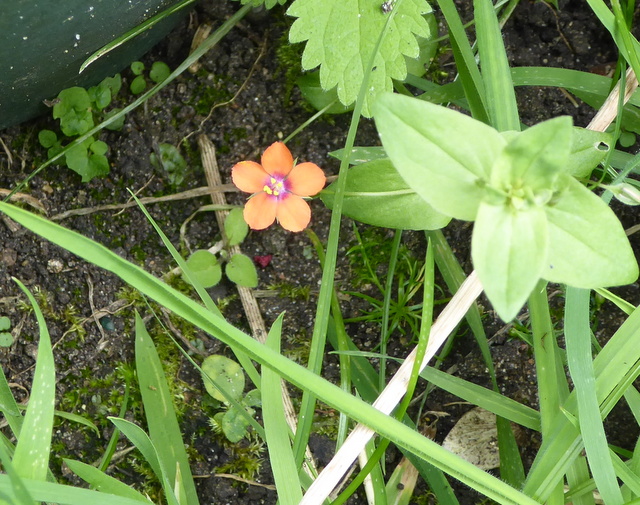
Scarlet Pimpernel (Anagallis arvensis ssp.arvensis) found behind the greenhouse
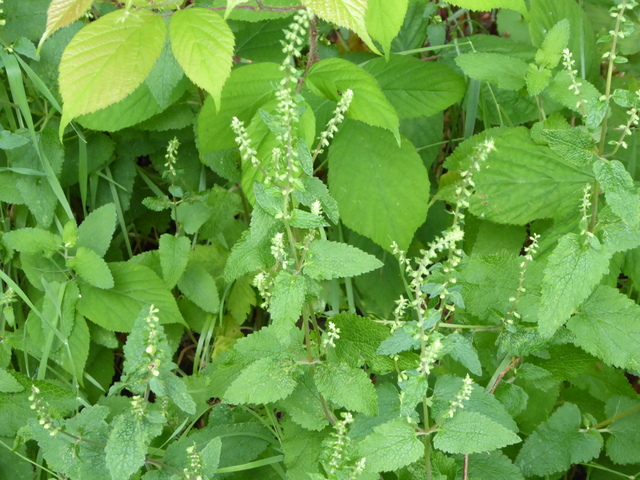
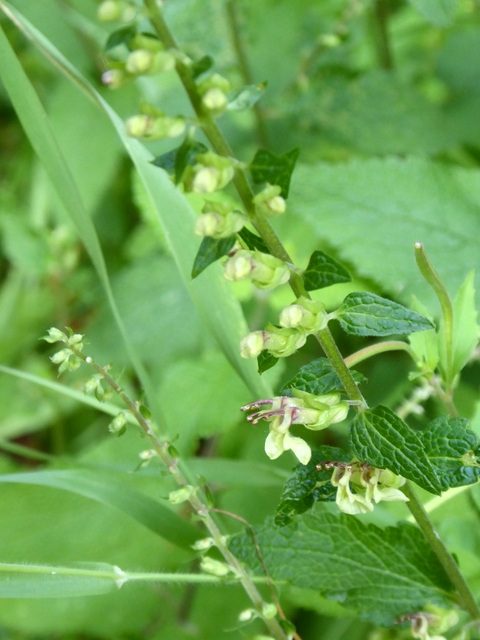
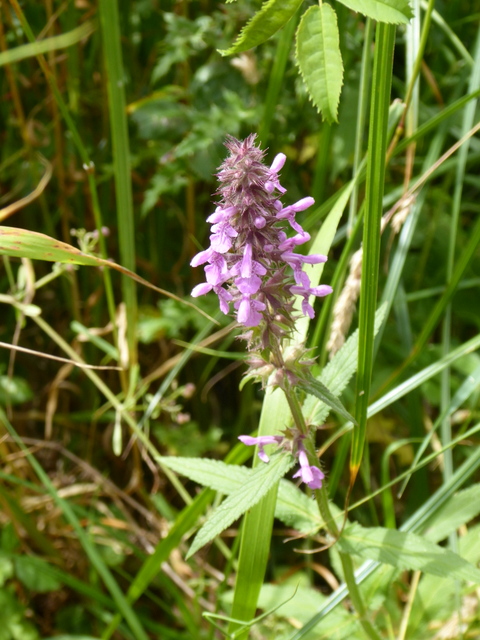
Marsh Woundwort (Stachys palustris) found growing on the bank of the big pond.
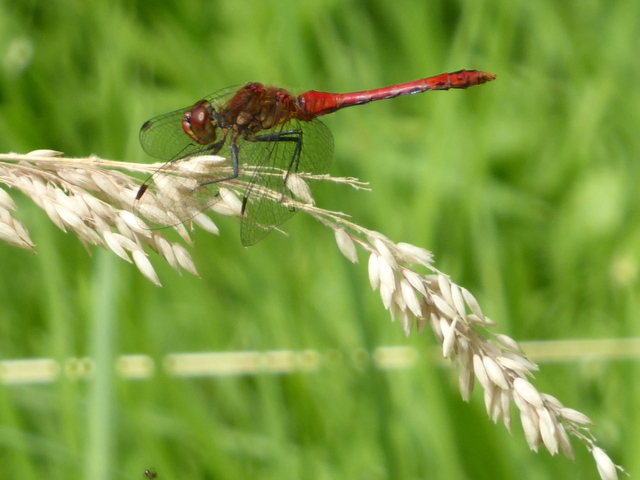
I think this may be a male Common Darter (Sympetrum striolatum) though it could be a male Ruddy Darter (Sympetrum sanguineum)
A Spear Thistle (Cirsium vulgare) in flower near the big pond
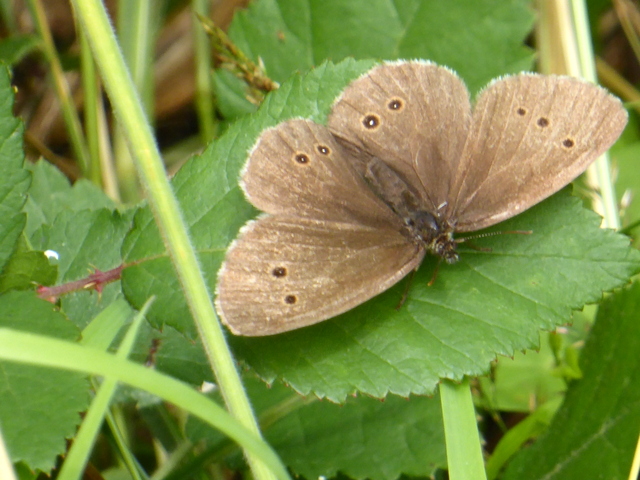
A rather old and tired Ringlet butterfly (Aphantopus hyperantus)
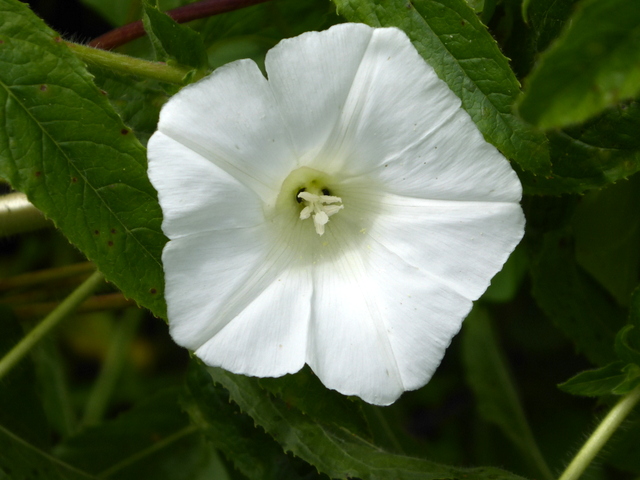
Hedge Bindweed (Calystegia sepium) in flower in the area between our garden and the field at the back of the house.
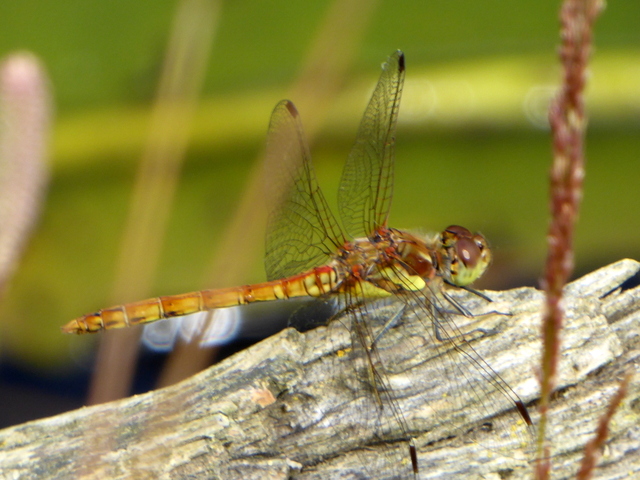
I believe this may be a female Common Darter (Sympetrum striolatum)
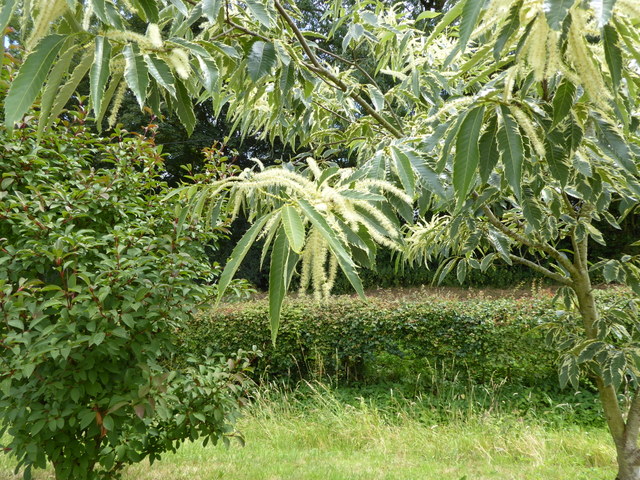
Our Variegated Sweet Chestnut (Castanea sativa variegatum) in flower
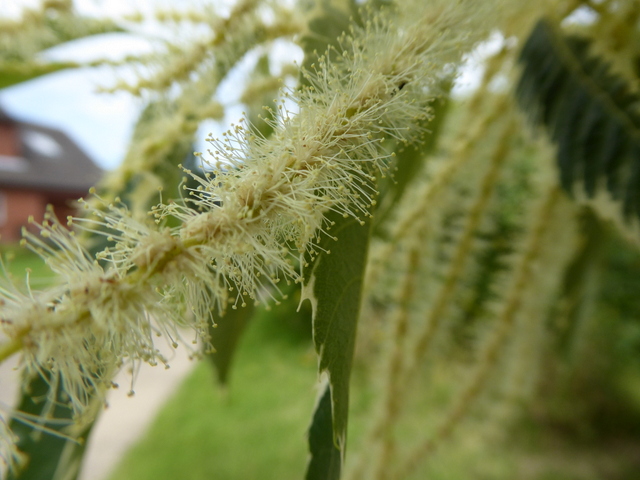
Sweet Chestnut flowers
I walked down the lane with Elinor to post birthday cards to my niece Natalie (my brother’s daughter) who had her 31st birthday on the 23rd of July and cards to Alice my elder daughter who had her 31st birthday on the 24th of July. Natalie is exactly 23 hours older than Alice.
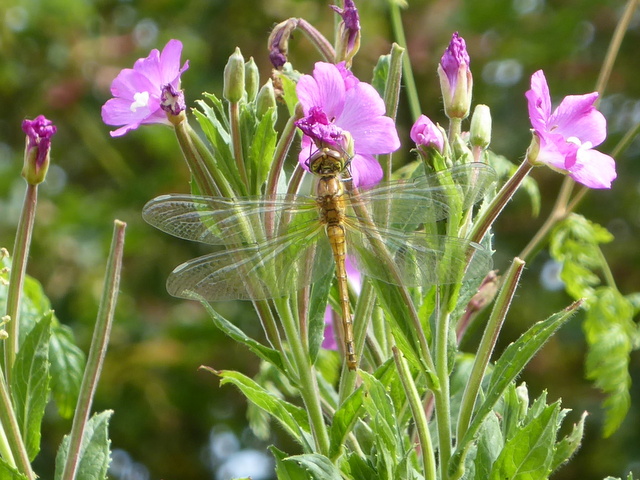
This is a teneral, or newly emerged dragonfly as you can see by the pale colouring and very shiny wings. I don’t know which dragonfly it is, unfortunately. It is perched on a Great Willowherb (Epilobium hirsutum) growing in the ditch at the side of the lane.
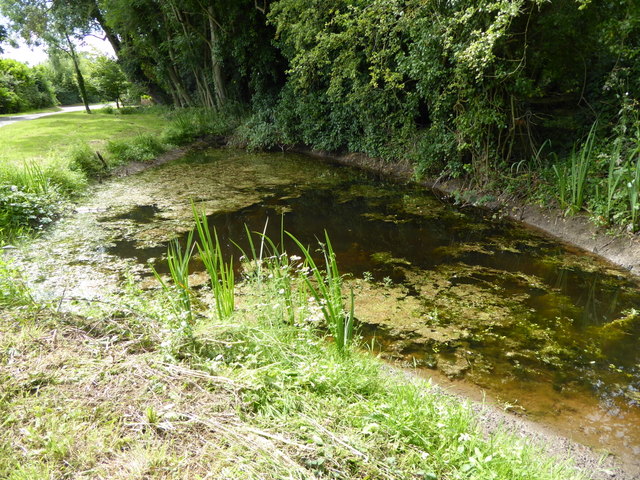
The new pond at the side of the lane which was dug during the winter.
Richard spoke to the man who lives on the opposite side of the lane to the pond and who was responsible for digging it. Apparently, many years ago there was a pond there which was wide enough and deep enough to enable the horses to be led to drink while still attached to their carts. It was filled in when horses were no longer needed on the farm but it has now been re-instated and I am very pleased. The pond is already full of interesting plants and insects which have found their way there on their own.
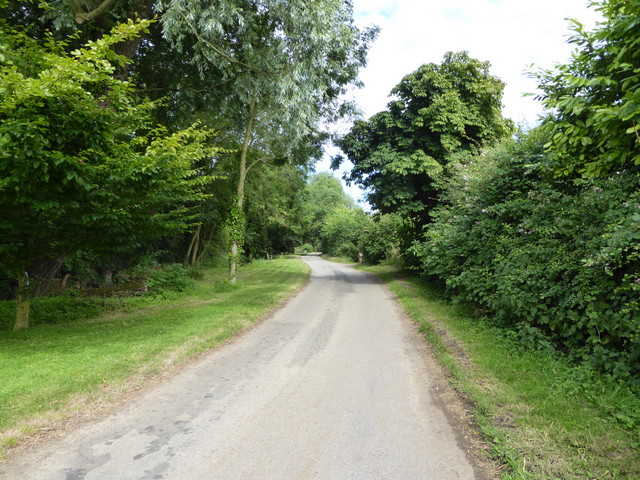
Our lane. I am standing next to the pond (on my left) and looking back in the direction from which we had come.
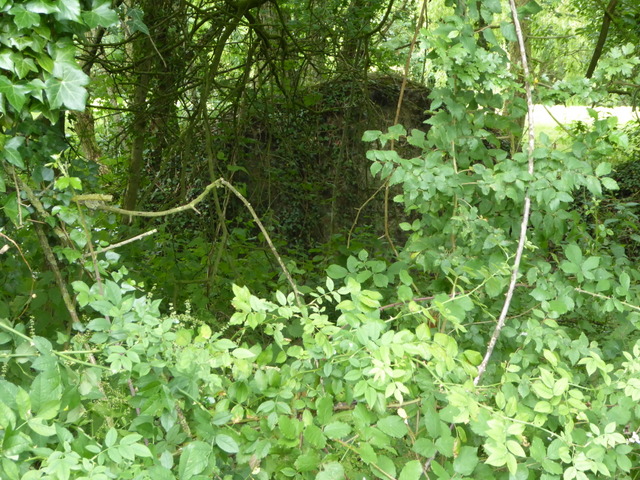
Looking over the hedge into the garden of Church Farm I noticed this piece of wall covered in ivy. I wonder if it is part of the old church of St Nicholas demolished many hundreds of years ago.
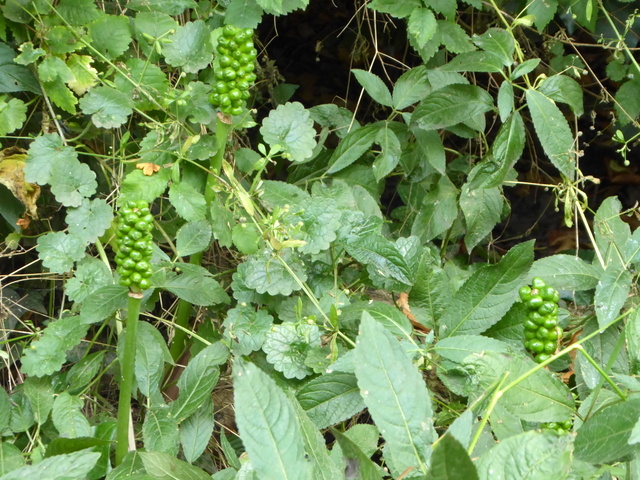
Lots of unripe Lords and Ladies berries (Arum maculatum)
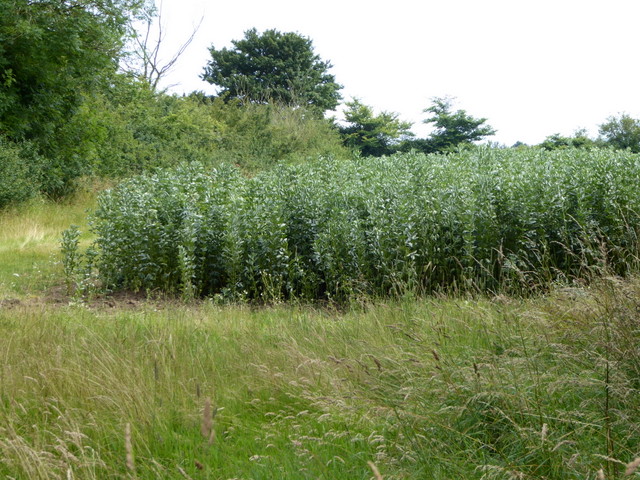
A field full of Field or Broad Beans.
Another pond at the side of the lane. This one has become rather overgrown. It has fish in it and I once saw a couple sitting at the side of the road with rods trying to catch fish.
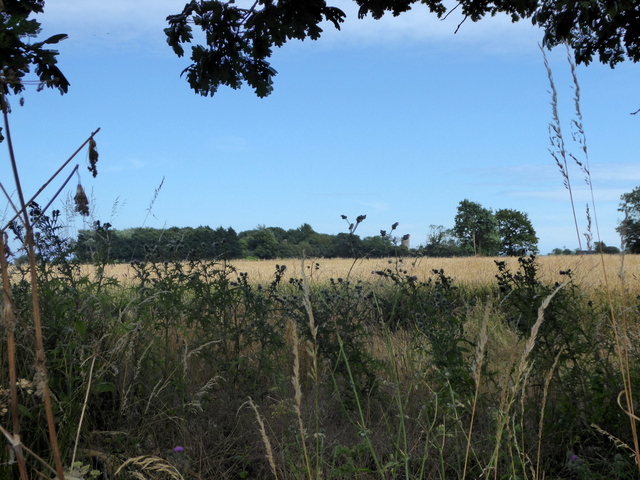
View across the fields towards All Saints church which can just be seen to the right of centre on the horizon. It is slightly obscured by a thistle flower!
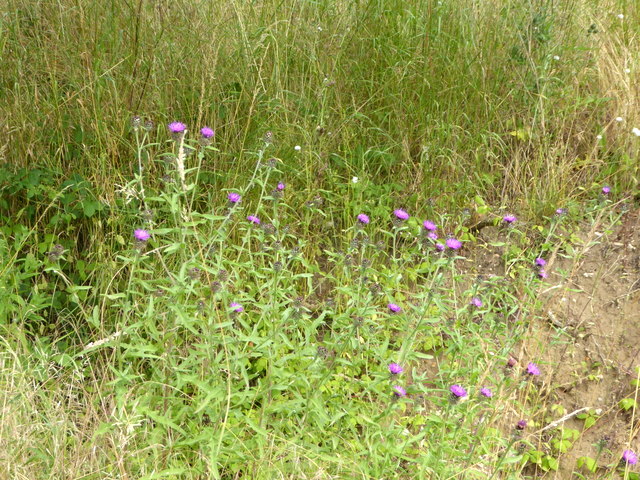
Common Knapweed (Centaurea nigra)
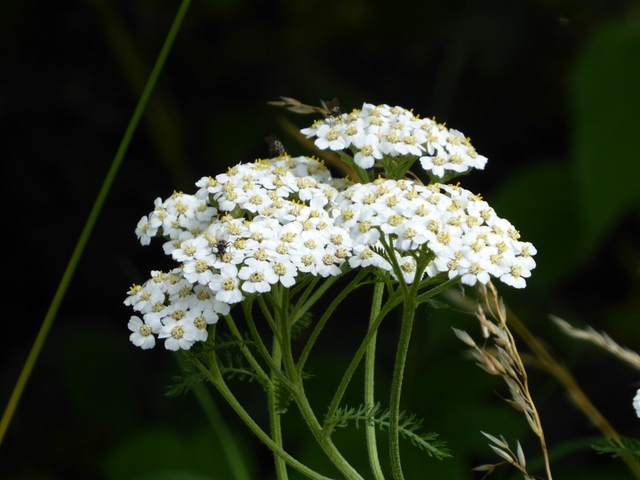
Yarrow (Achillea millefolium)
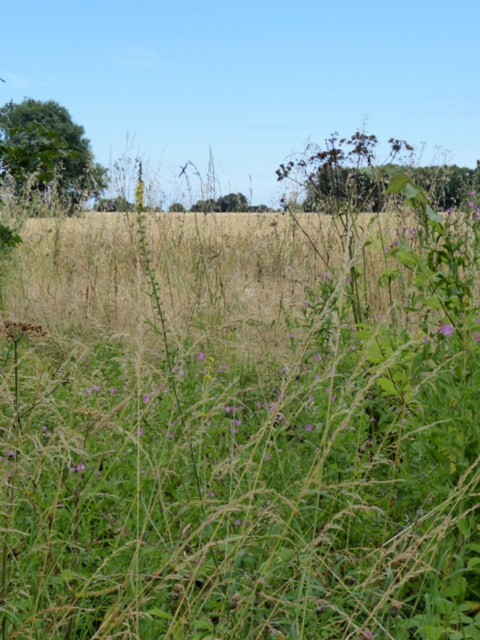
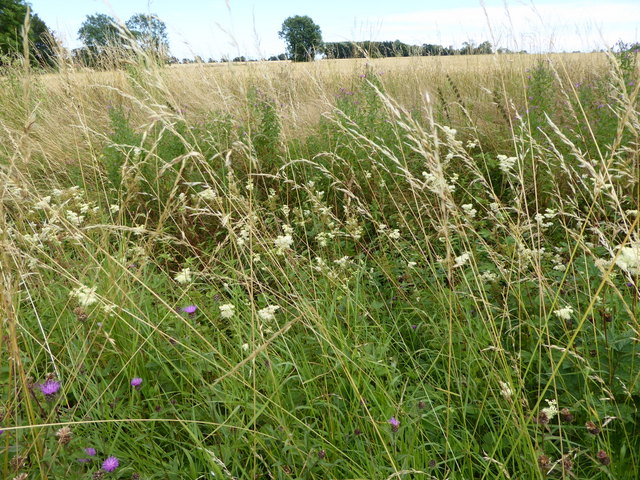
Wild flowers at the side of the lane.
Agrimony (Agrimonia eupatoria)
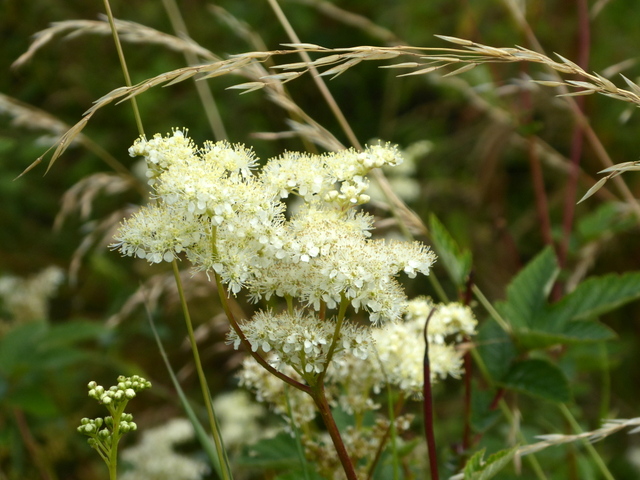
Meadowsweet (Filipendula ulmaria)
Meadowsweet has a beautiful almond-blossom-like fragrance.
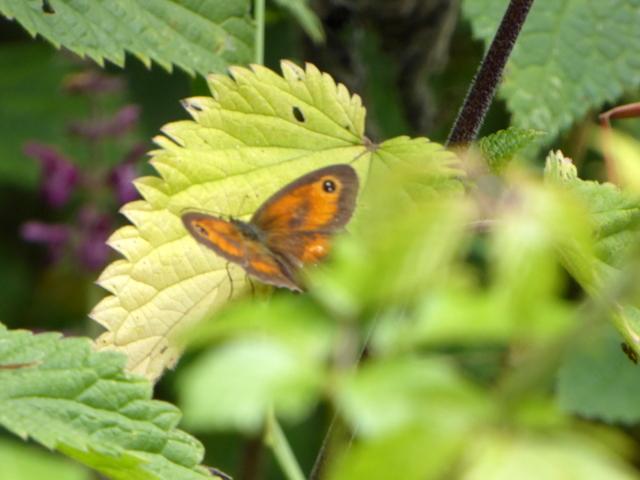
A poor photo of a male Gatekeeper butterfly (Pyronia tithonus)
These were all the things I saw at the side of the lane on a short 20 minute walk to post cards.
Here now is my musical choice – the Petite Symphonie in B flat for nine wind instruments by Charles Gounod, composed in 1888. It lasts about 20 minutes and is of four movements. I love the lyricism of French 19th century music and I like this recording of the piece very much. It is a piece of music I used to play and it brings back such good memories to me when I hear it.
I’ve been lost for words at times since Friday morning, and those who know me well will know that is possibly the best thing that has come out of the referendum if you were a remain voter.
I am shocked by the result, deeply saddened that neither the remain or leave campaign seem to have had a plan for what they would do in the event of a narrow leave vote, upset by the finger pointing and accusations made towards individuals who voted as their heads and hearts led them, and utterly appalled by the racist attacks and abuse that have been reported.
I’m white, British, middle-class, middle-aged and I’m not a racist. Anyone who lives in this country is welcome to live near me, to work with me, to build community with me. I don’t care which football team, which religion or which political party you support. But discriminating…
I love bluebells, as you no doubt have realised by now, and I don’t think I am alone in my love of these flowers. There is a scene in the film ‘Howard’s End’ that has one of the main characters walking through a bluebell wood – I find it very moving.
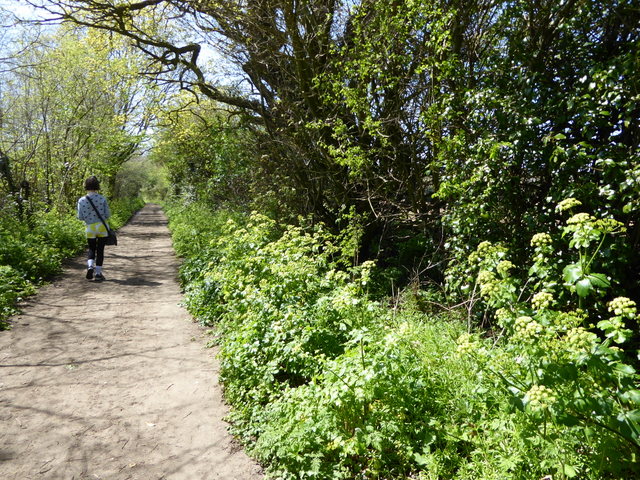
We try to visit a bluebell wood each Spring and this year we re-visited Reydon Wood on a beautiful Thursday afternoon in early May.
Elinor walking down the path towards the wood.
Last year we mistimed our visits, with one visit a little too early and another a little too late. This visit was ‘just right’.
The trees were just beginning to put on their beautiful spring clothes.
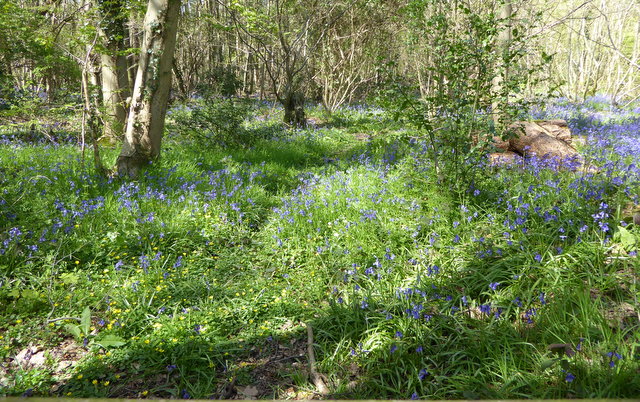
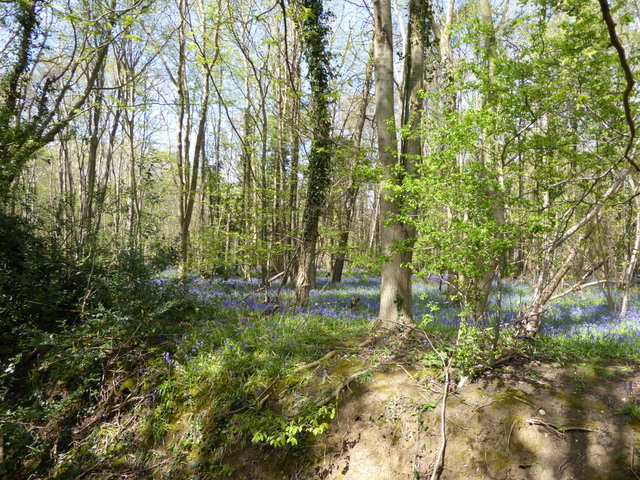
I peeped through the bars of a gate from the path and saw my first bluebells (Hyacinthoides non-scripta).
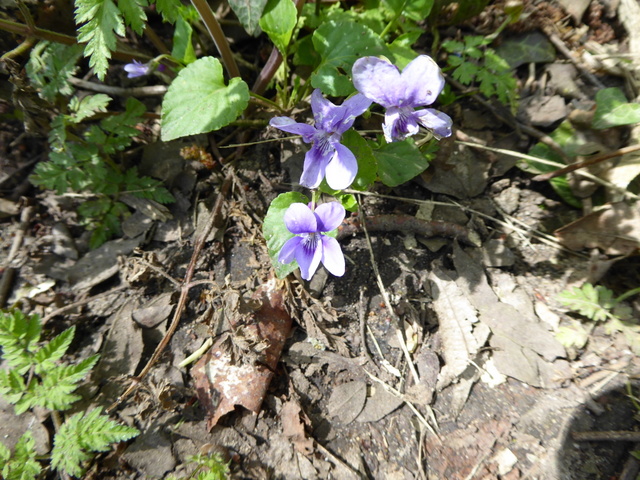
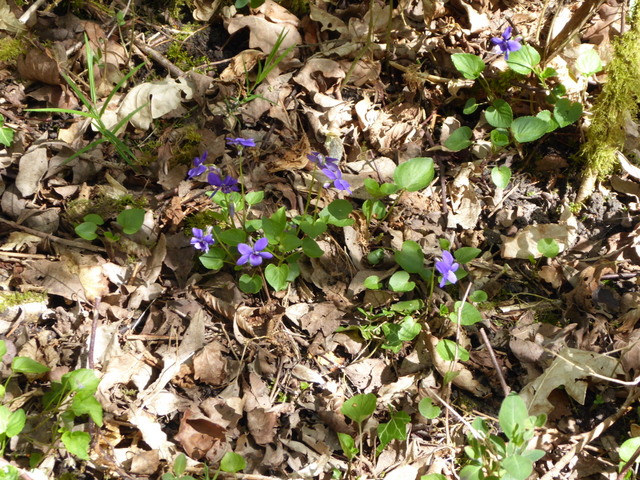
Sweet Violets (Viola odorata) were growing at the side of the path, as were Alexanders (Smyrnium olusatrum) and Greater Stitchwort (Stellaria holostea) but my photos of them were over-exposed.
There is a very deep ditch between the path and the wood (you can see the far bank of the ditch at the bottom of the photo)
The ditch was originally dug many centuries ago in an attempt to keep deer out of this coppiced wood. The bottom of the ditch may have had heaps of brush-wood in it as well as water to make crossing it more difficult.
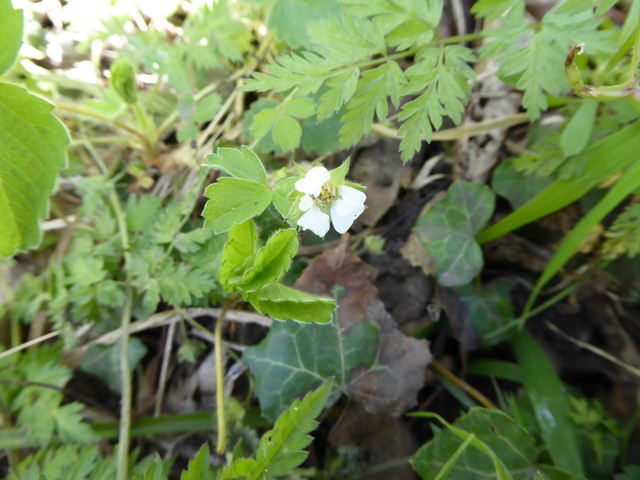
This is a Wild Strawberry flower (Fragaria vesca) – not a good photo I’m afraid.
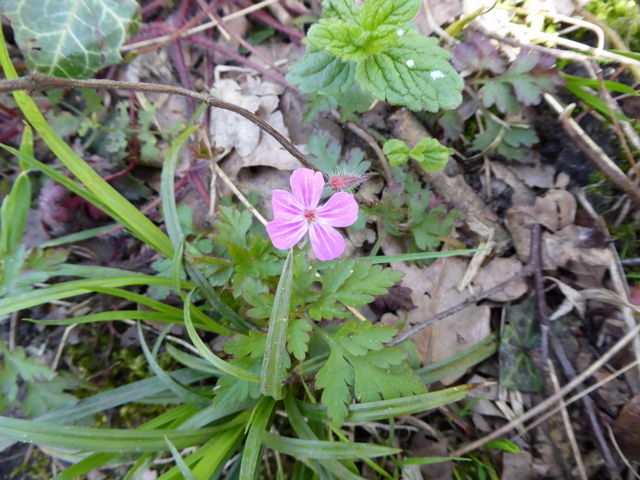
Herb-Robert (Geranium robertianum)
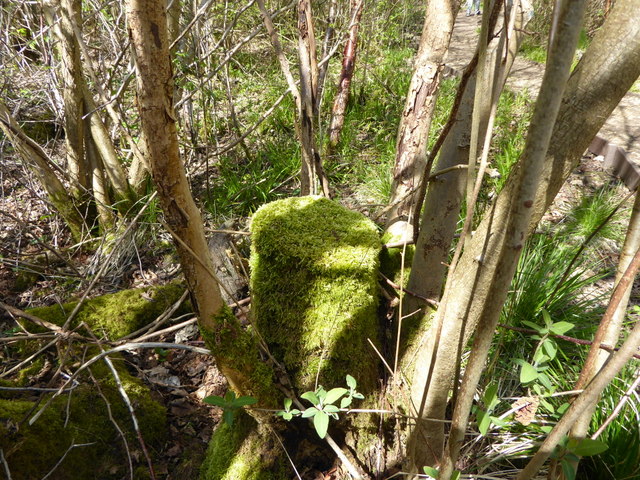
A mossy tree-stump
More Sweet Violets
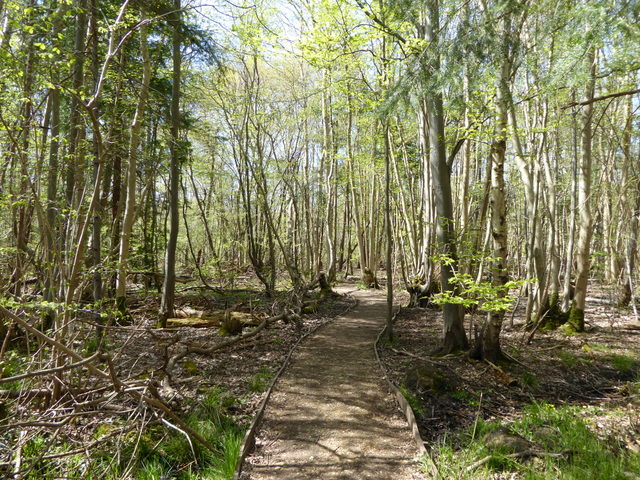
The path through the woods
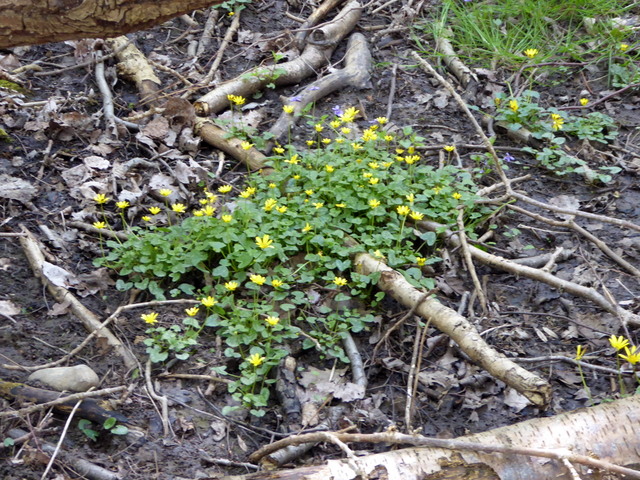
Lesser Celandines (Ranunculus ficaria)
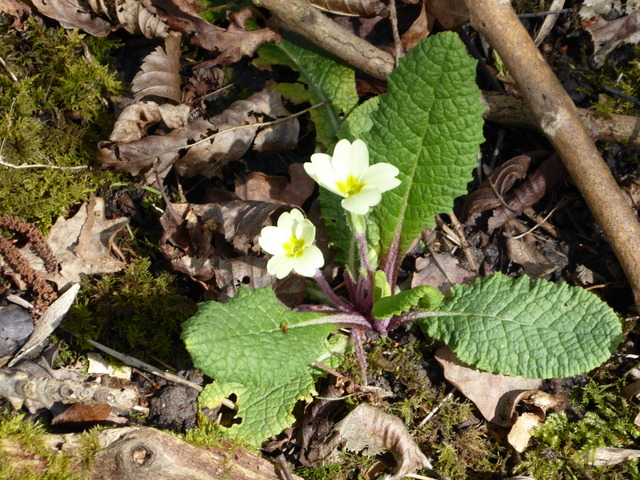
Primroses (Primula vulgaris)
Both Celandines and Primroses had already flowered and gone to seed in the lanes near to my home, but the woods are darker, cooler places and the plants flower later and last longer.
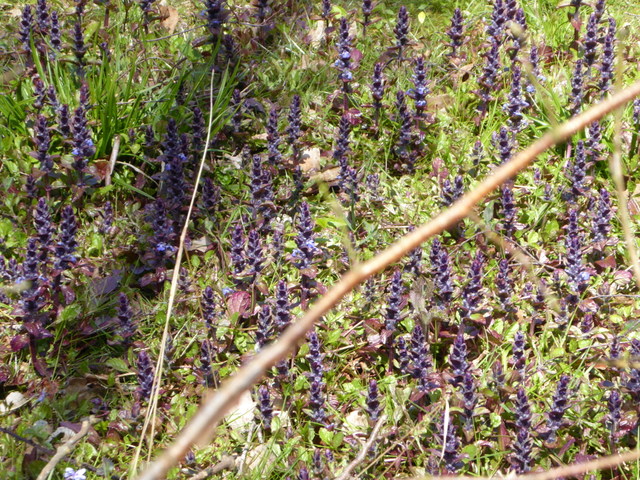
Bugle (Ajuga reptans) flower spikes
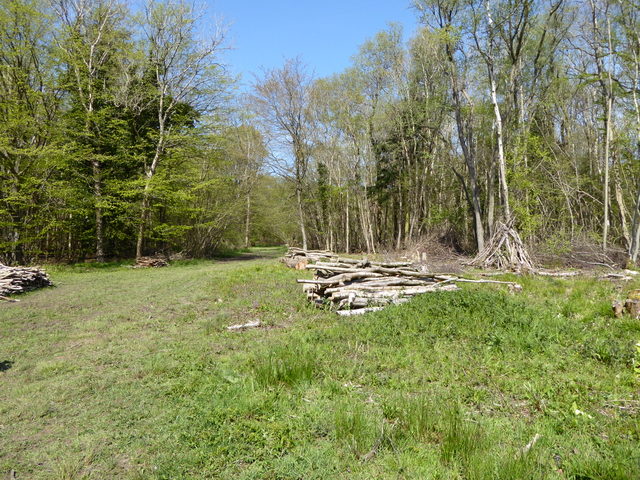
An open ride in the wood with stacks of the harvested timber.
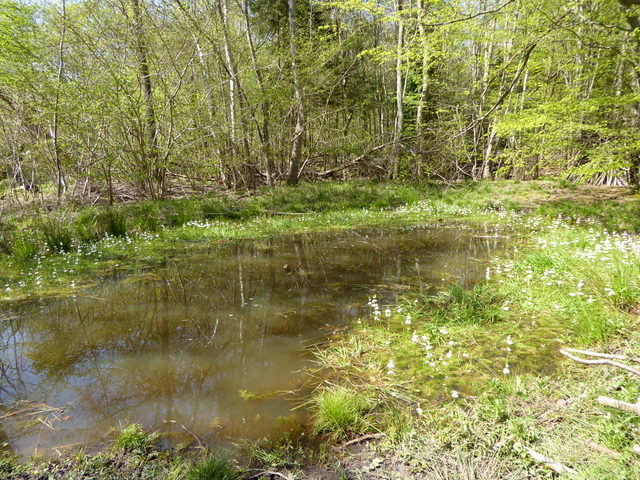
The pond in the wood
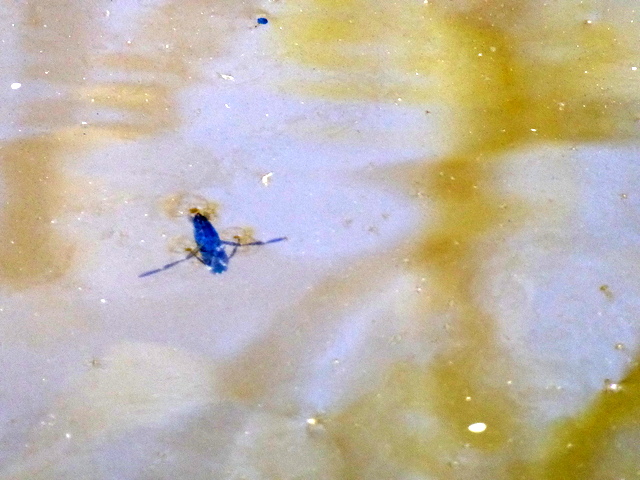
A Common Backswimmer (Nononecta glauca)
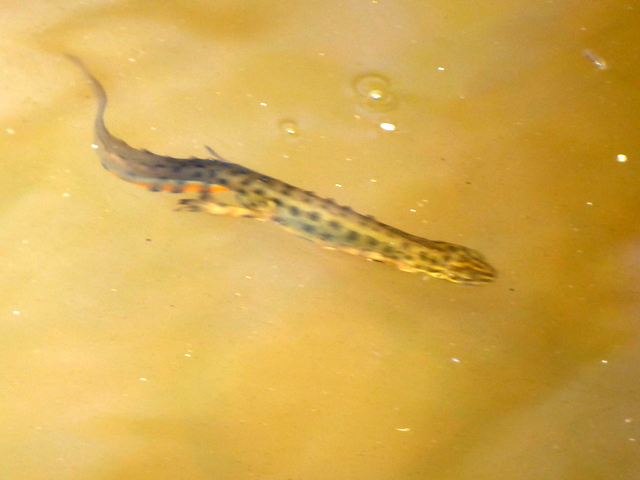
This might be a female Great Crested Newt (Triturus cristatus)
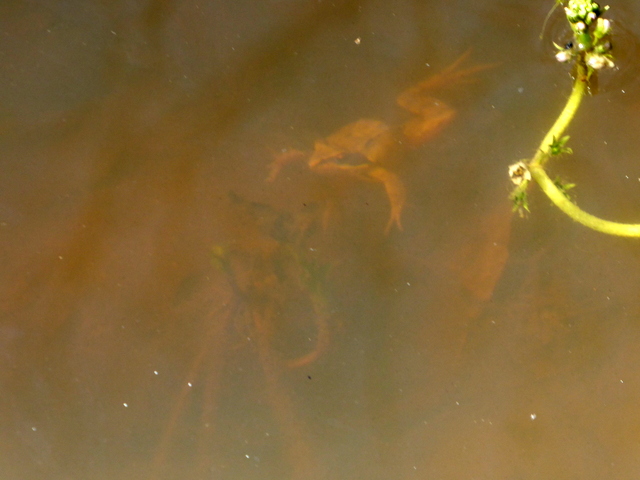
A Common Frog (Rana temporaria)
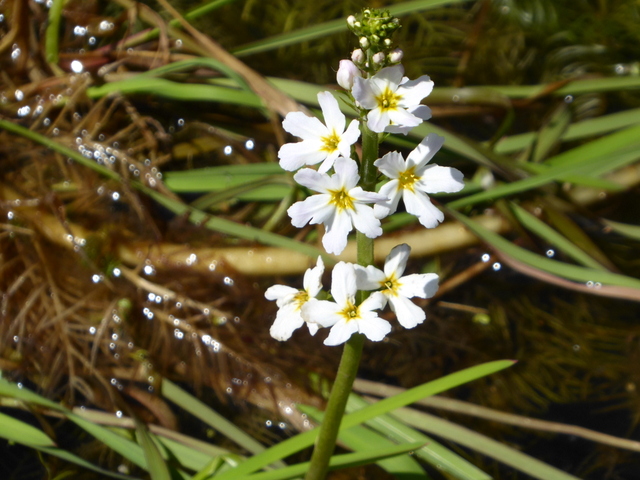
Water-violet (Hottonia palustris)
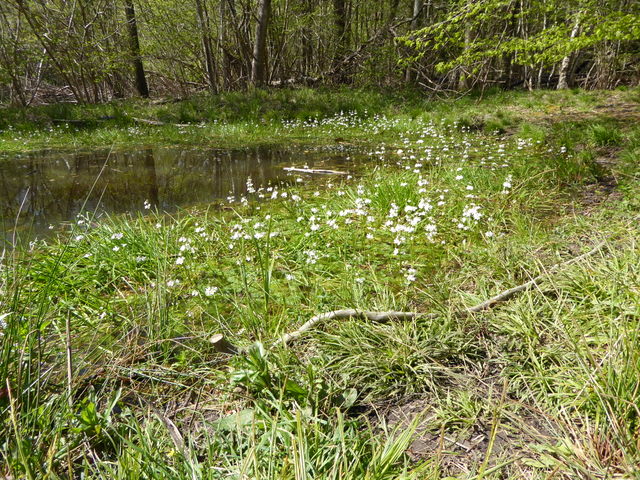
There are a mass of these Water-violets round the pond
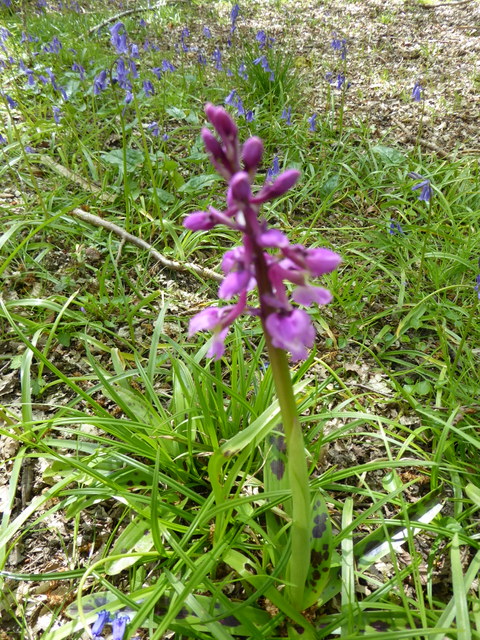
Early Purple Orchid (Orchis mascula) Unfortunately not in focus, though you can clearly see its spotted leaves.
A large coppice stool
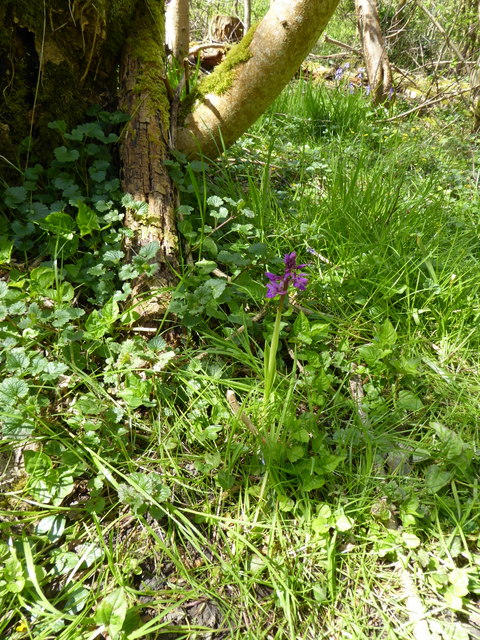
Another Early Purple Orchid
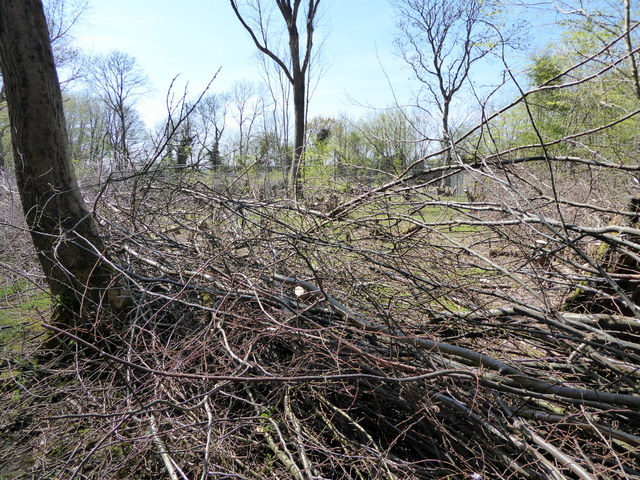
Large amounts of brushwood have been stacked around an area that has been newly coppiced in an effort to keep the deer (and people, I expect) away from the new shoots growing from the stools.
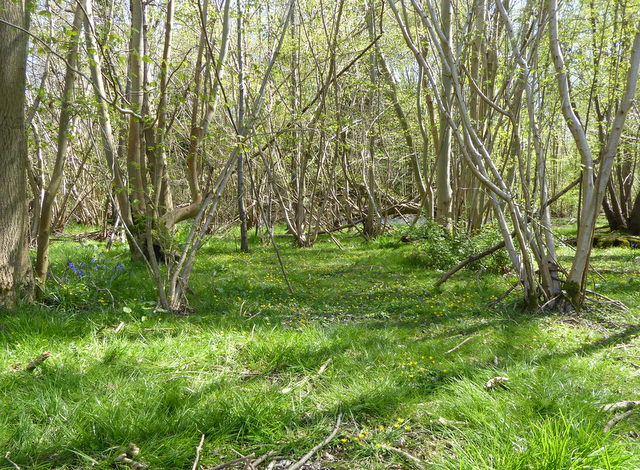
This is a typical view of a coppiced wood
Here is a gallery of photos of the bluebells in Reydon Wood.
This slideshow requires JavaScript.
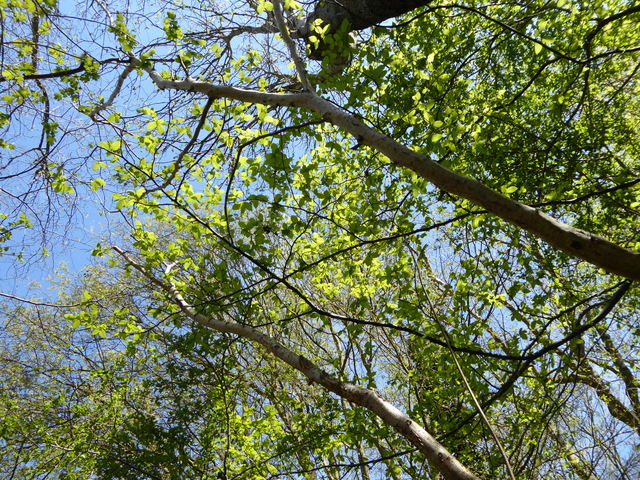
I love to look up at the sky through the new leaves
This post includes the better photos I took at home during the first half of May.
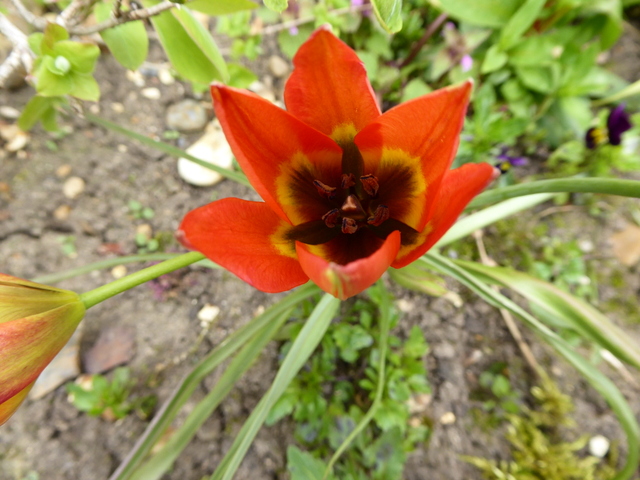
I have a few miniature scented Tulips. I have no idea what they are called or even when I got them though I think they are about 18 years old. I had a selection of red, orange and yellow ones but all that’s left are the red ones.
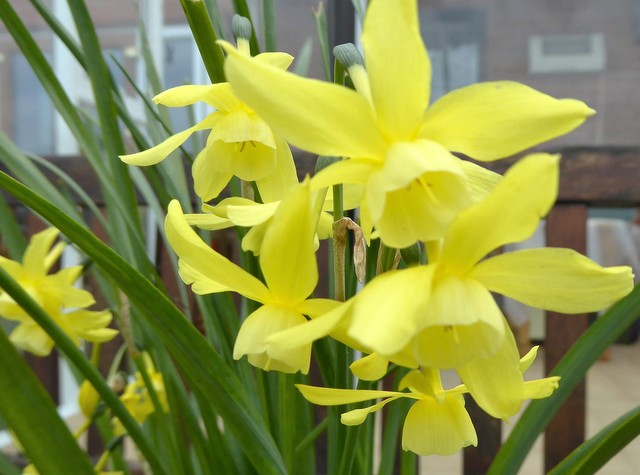
These jonquils are tiny and the flowers bob about on their narrow stems like yellow butterflies. Each flower is only about 2 inches across.
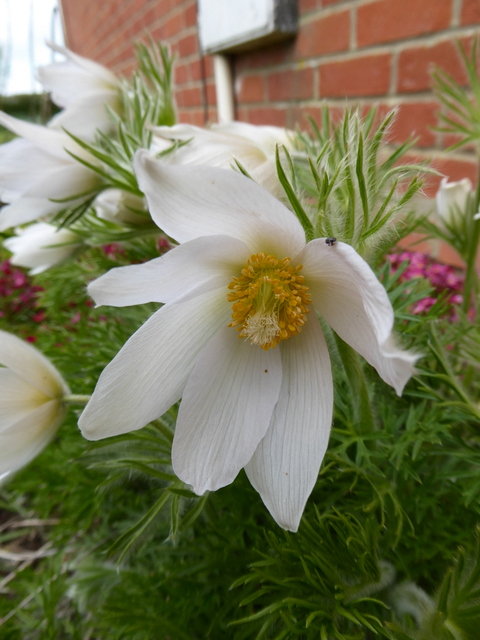
The Pasque flowers (Pulsatilla vulgaris ‘Alba’ )in my garden came out well after Easter this year. Not only was Easter early but the weather was cold and the flowers sensibly stayed as buds until the time was right.
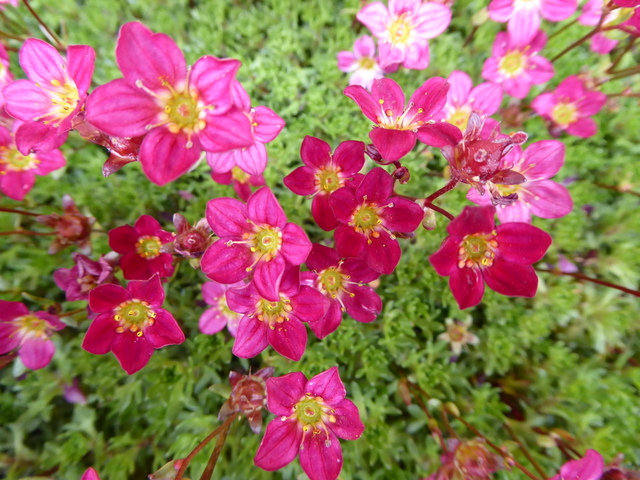
I love this pretty pink Saxifrage!
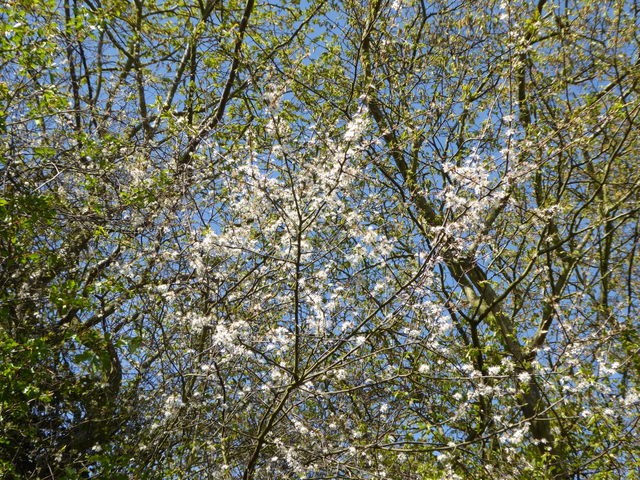
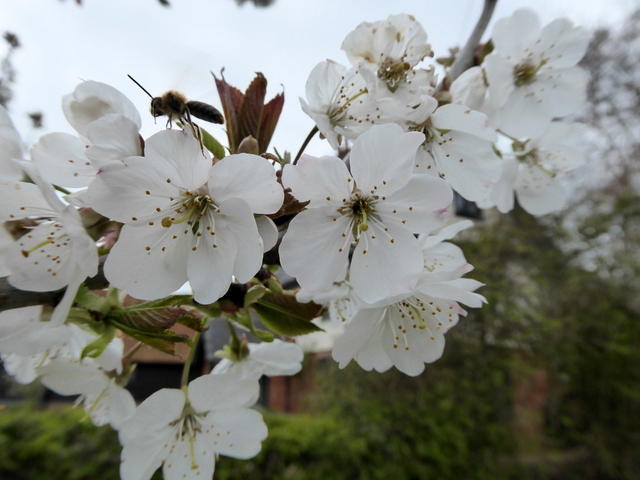
Wild Cherry blossom (Prunus avium) with a visiting bee
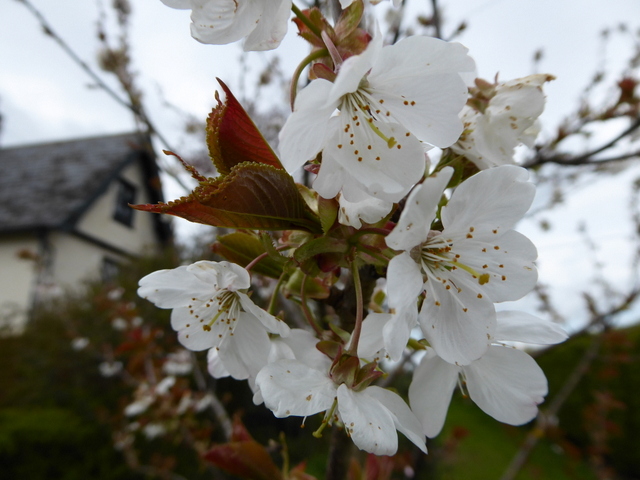
Wild Cherry blossom. I like the green-bronze colour of the new leaves.
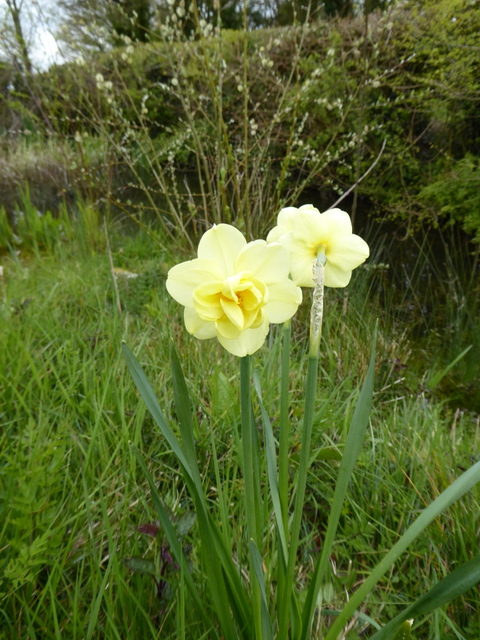
Pale yellow double Narcissus
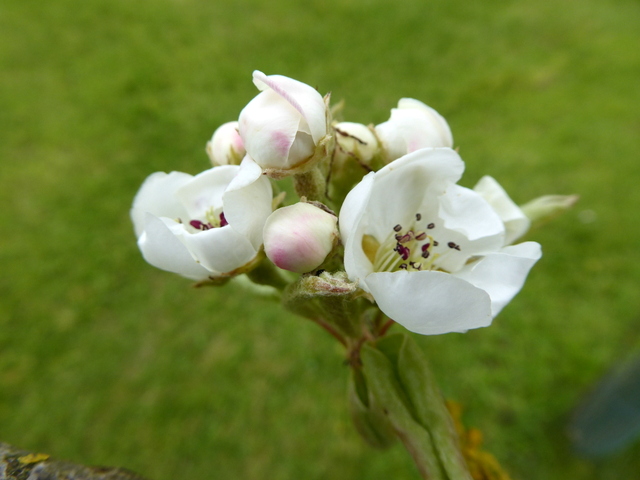
Pear ‘Concorde’ blossom. This pear is supposed to be a dessert pear but by the time it is soft enough to eat it is already rotting in the centre. Perhaps our climate isn’t suitable for it? We harvest the pears before they have started to soften and we cook them or we prepare them for the freezer.
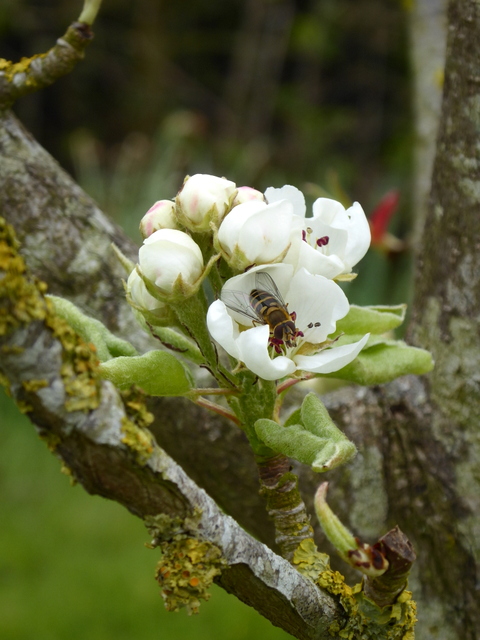
Pear blossom with a visiting Hoverfly. The lichen is doing quite well too with its orange fruiting bodies.
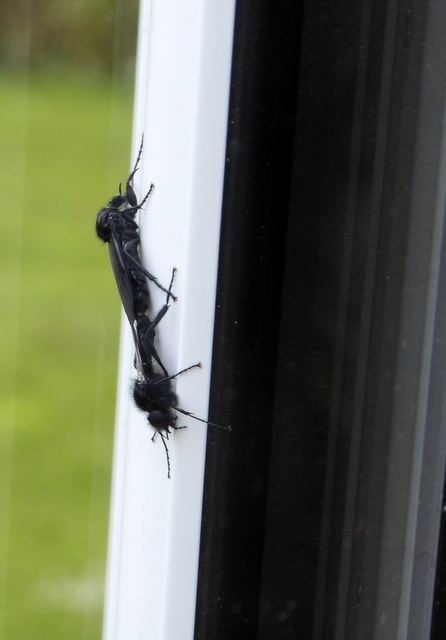
These are St. Mark’s-flies (Bibio marci) doing what flies do in the spring. The female is the upper fly and she has smoky-grey wings and a small head. The lower fly is the male and he has silvery wings and a larger head. Both sexes have spines on their front legs at the tip of the tibia. You can just see this on the female’s front leg. These flies fly weakly and slowly and dangle their legs as though the effort of flying is almost too much for them. They are called St. Mark’s-flies because they usually appear on or around St. Mark’s day which is April 25th. This photo was taken on 2nd May – it was a cold spring!
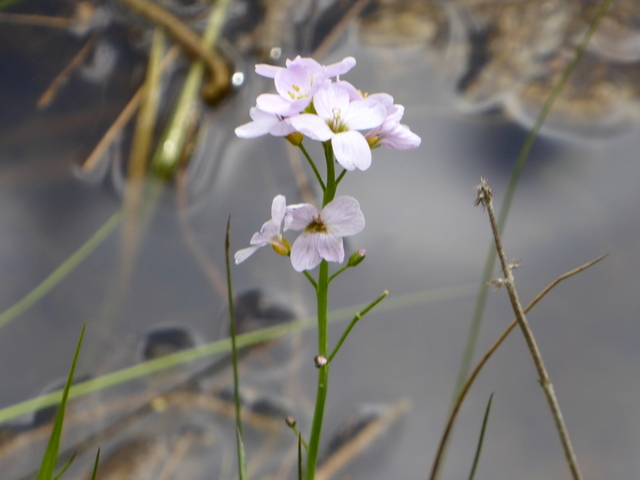
Lady’s-smock or Cuckooflower (Cardamine pratensis) – a member of the cabbage family
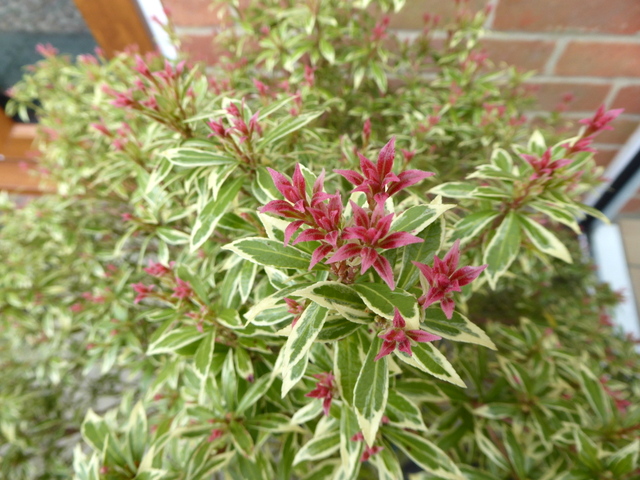
New leaves on my variegated Pieris ‘Forest Flame’
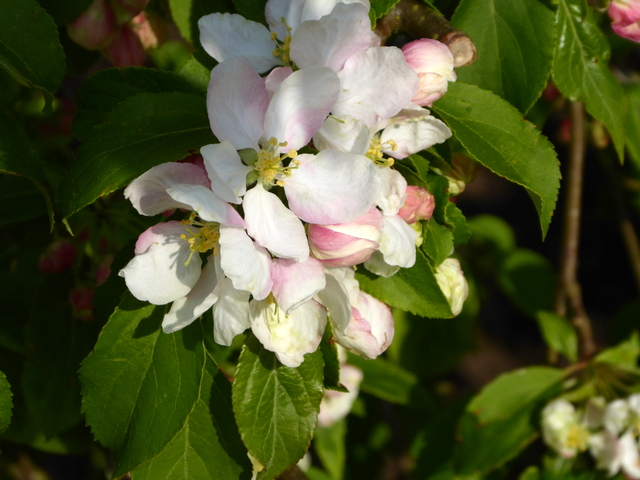
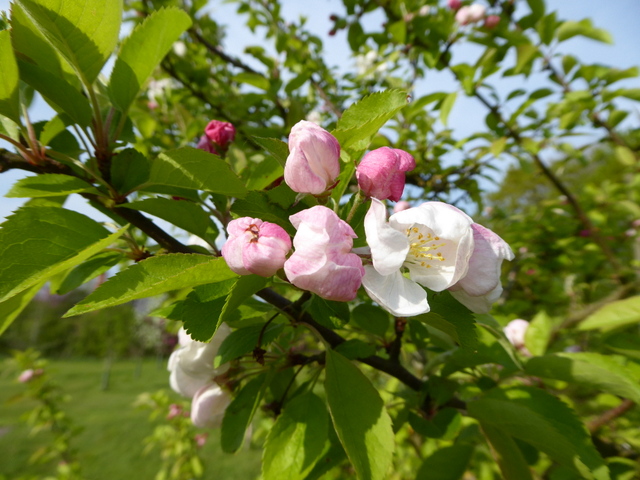
Crabapple species blossom. Standing under this weeping tree I am almost over-powered by the scent of roses and the buzzing of bees.
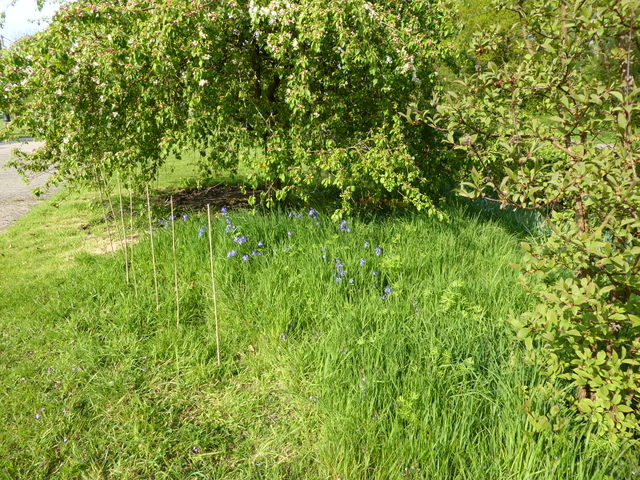
These are the English Bluebells (Hyacinthoides non-scripta) I am trying to establish next to the weeping crabapple. I have put canes alongside them to remind us not to mow them until the seeds have set and the leaves have died. I am also hoping that the canes will stop the deer from trampling the plants.
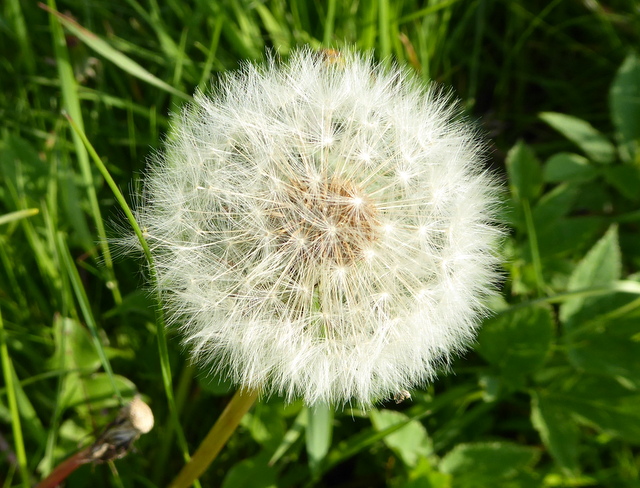
A beautiful Common Dandelion ‘clock’ (Taraxacum officinale agg.)
Crabapple ‘Evereste’ blossom
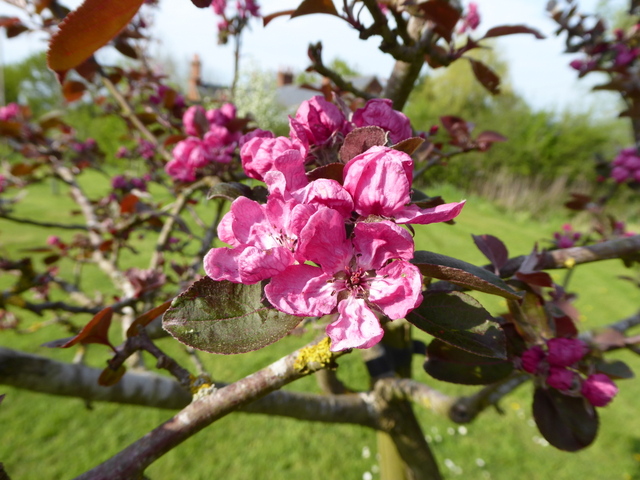
Crabapple ‘Harry Baker’ blossom
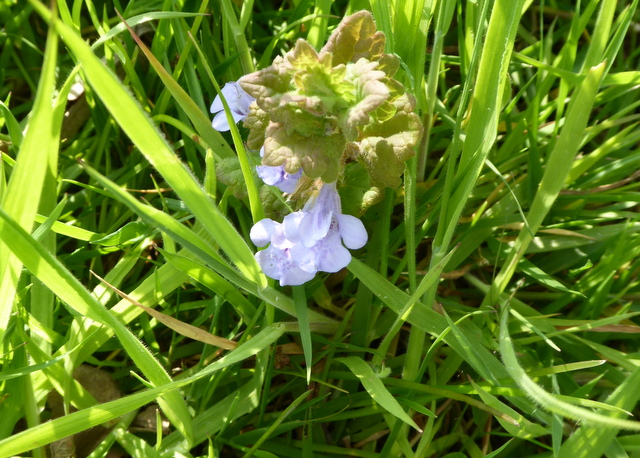
Ground-ivy (Glechoma hederacea)
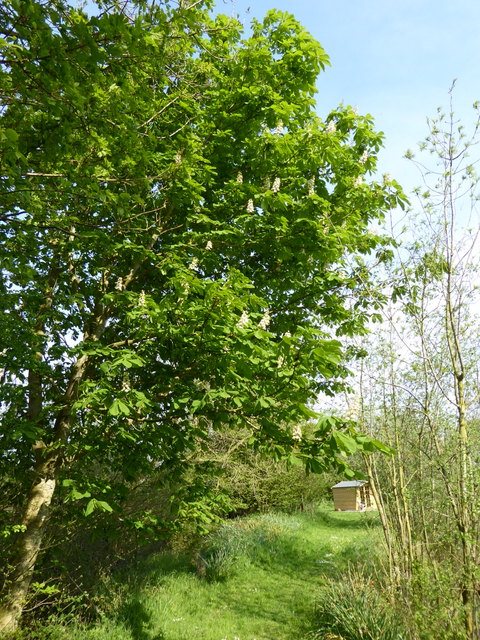
The Horse-chestnut tree (Aesculus hippocastanum) with its flower ‘candles’
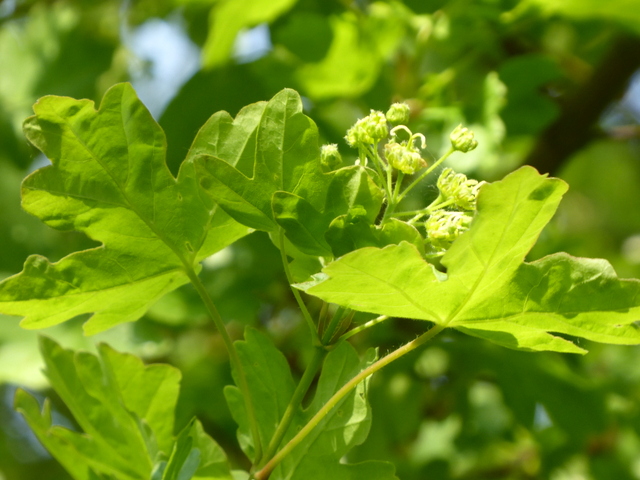
Field Maple flowers (Acer campastre)
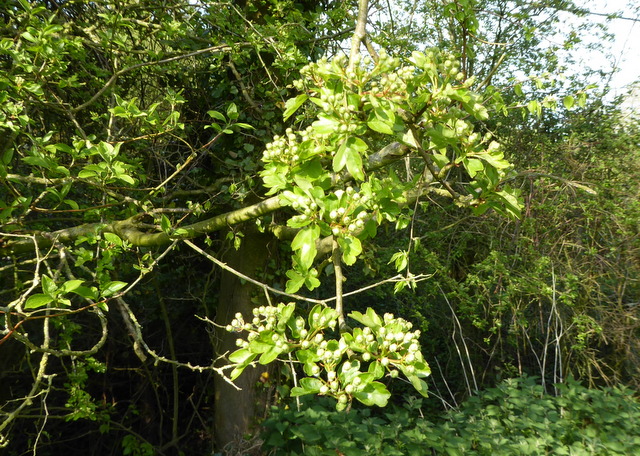
Common Hawthorn flower buds (Crataegus monogyna)
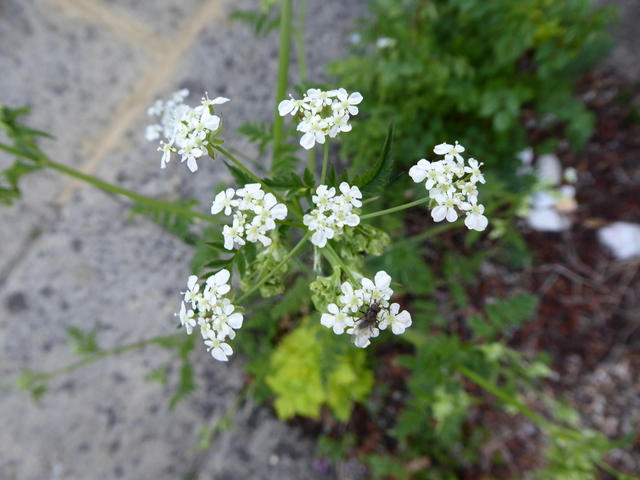
Cow Parsley (Anthriscus sylvestris) (or as it is called here in Suffolk, Sheep’s Parsley) with a fly. I am very fond of Cow Parsley and the sight of masses of it in flower along the lanes makes me happy.
Here is another song that features a wonderful trombone solo and a fantastic brass riff too! This is a very old recording and it is also an uncommon arrangement for this song.
Last Sunday we were thinking about the celebrations of the Queen’s 90th birthday, and also looking at 2 passages from the Bible- one in Luke chapter 7 verse 36- 8:3 and the other in Galatians 2:15-21. As well as this I wanted to respond to some questions I’d been asked about the referendum, but without telling people which box to tick… so this is what I ended up writing. If you prefer to listen, go here.
In the days since last Sunday I’ve been reading and thinking more, and have concluded that I’m going to write a post about which way I’m choosing to vote and how I’ve come to that conclusion… hopefully that will be up tomorrow.
So, last weekend:
Very often when we look at someone else’s position in life, we see their rights and privileges, but when we look to our own lives, we see…
There have been a couple of incidents in this part of Suffolk recently which have brought us notoriety. The first was a hit-and-run death in Bungay’s Bridge Street (see here) and the second is a possible double murder in nearby Weybread (see here) so it is very satisfying to know that there is some good local news to be had. The Women’s Tour of Britain starts on Wednesday 15th of June and the first stage is to be here in East Anglia.
If you click on the above map profile you will see a number of place names that feature in my posts – my house is situated somewhere under the bottom right hand corner of the Homersfield label! You will see from the map that most of the area lies only a few metres above sea-level and that there are very few main roads and very few railway lines. We are wondering how we will get Elinor into college in Norwich on Wednesday morning!
ooOOoo
This weekend Britain has been celebrating the Queen’s official 90th birthday with lots of parties and concerts. As is usual at this time the Queen attends the Trooping of the Colour and this is always accompanied by a fly-past. There is always a rehearsal of this on the Tuesday before and the planes fly over my house. I had forgotten about it until I heard a roaring above my head and then rushed to find my camera! The results are not that good but here is a link to a former post with better pictures.
I just caught these before they disappeared out of sight
I wasn’t well-placed to get good pictures of these planes…
…or these!
My brother posted on Facebook that the actual flypast for Trooping of the Colour flew over his house yesterday morning. He lives south-east of us in Suffolk.
ooOOoo
Richard has been visiting his brother in Manchester this week and arrived back home yesterday. He had had lunch with an old friend on Thursday and had seen lots of people wearing ‘AC/DC’ tee-shirts, all off to a concert at the Etihad Stadium – the home of Manchester City Football Club. I mentioned that I had seen AC/DC live at a day’s festival in 1979 at Wembley Stadium but that they weren’t a favourite group of mine. I then tried to remember who else was on the bill – but was only sure of The Stranglers. The clearest memory of the day was trying to avoid being hit by gallon jugs of cider or beer being thrown into the air by some of the boys. Richard then googled ‘Stranglers concert 1979’ and he came up with this!
I had entirely forgotten I had seen The Who! And Nils Lofgren! Reading this link I was surprised to see I had watched all these acts for £8 and that a gallon of rough cider had cost £4! If anyone is at all interested there are a number of poor quality videos on Youtube of the concert on 18th August 1979. You won’t be able to see 20-year-old me in the crowd of 80,000 you will be disappointed to know! On the video below you can see snippets of all four acts.
ooOOoo
For some months I have been following a lovely blog written by Kate Young called The Little Library Café. Those of you who read The Guardian newspaper will probably know about her. She is a young Australian woman who now lives in England and who combines her love of literature with her love of cooking and re-creates the food she has read about in her favourite books. She is bringing out her first cookery book in October 2017. Here is a link to The Little Library Café. Here is a link to one of her excellent posts. Here is a link to her Guardian site. I really hope you enjoy her posts as much as I do, which is a lot – and I don’t enjoy cooking at all!
ooOOoo
And now for my musical choice!
I like this gentle song called ‘Winter Garden’. Listen out for the sweet trombone playing towards the end of the track.
I have taken a number of photographs over the last few weeks but haven’t had the time to write any posts. Here are a few of the better pictures from April and earlier.
Red Deer (Cervus elaphus)
Back in January I was driving home from shopping when I saw this small group of five Red Deer making their way across a field towards the road. I had to slow down and then stop because I could see that they were not only made nervous by my car but their usual path was blocked by a fire someone had lit to get rid of brushwood. They eventually managed to cross the lane a little further along and then carried on their way. I took a photo of them through the car window and this is the result – heavily cropped. I had thought that I had missed them and it was only when I eventually looked carefully at the shot on my computer a few weeks ago I realised that they were there!
The Pheasant (Phasianus colchicus) family wandering through the garden at the beginning of April.
This is such an untidy photo with the recycling bin out by the roadside and my former car in the way too. This is another photo taken through glass (the kitchen window this time – you can see a reflection in the bottom left corner of the picture). We haven’t seen the pheasants for a while now so I presume the females are busy on their nests.
We had a storm with heavy rain and then the sun came out. It all looked so bright and fresh, so I stood at the front door and took three photos, to the left, straight ahead and to the right.
A few days later I stood at the end of the drive and took this photo of the ditch that runs along the edge of the garden. We have daffodils growing all along its length. The lane runs parallel with the front of our property. You can also see my new car in this picture.
Pussy Willow / Goat Willow (Salix caprea)
Goat Willow in flower
Cowslips (Primula veris)
A stormy sky. A photo of our house (and the house next door) taken standing next to our big pond and looking across the corner of the field.
The summerhouse
A Green Woodpecker (Picus viridis) looking for ants in the lawn
I was quite pleased with this photo as it showed all the different colours of its feathers, even the black and white spotted feathers under the wings. This is a female adult as the moustachial feathers are all black. The male has a crimson centre to the stripe.
A male Blackbird (Turdus merula) was also on the lawn looking for food.
White Dead-nettle (Lamium album)
Wild Cherry blossom (Prunus avium)
The first Bluebell (Hyacinthoides non-scripta) flower in our garden this spring
There is nothing quite like the scent of Bluebells. They are wild hyacinths but don’t have the cloying scent of the garden variety. There is a sweet freshness that lifts the spirits and is irrevocably linked, to my mind, with birdsong, sunshine after rain and hope.
Greengage blossom (Prunus domestica ssp. italica). I hope we have some fruit this year.
Some of the Cowslips in our garden are orange and red.
Pendunculate / English Oak (Quercus robur). New leaves and flowers (catkins) appear at the same time.
Marsh-marigold (Caltha palustris). I found it impossible to photograph this bright yellow flower well.
More Marsh-marigold
New Horse-chestnut leaves and flower buds (Aesculus hippocastanum)
Beautiful new English Elm leaves (Ulmus procera). We have a number of small Elm trees in our garden. Sadly they will only live for a few years before they succumb to Dutch Elm disease.
Lords and Ladies / Jack-in-the-pulpit / Cuckoo pint (Arum maculatum). This plant has many names. Its arrowhead-shaped leaves are often dark spotted.
Snowy Mespil (Amelanchier canadensis) blossom
Blackthorn blossom (Prunus spinosa). This poor photo is the only image of this year’s blossom I managed to get.
A rainbow behind the trees
All these photos were taken in April and in my garden, except the first one.
I find I haven’t made a music selection for a while so this post’s choice is ‘Let’s Work Together’ by Canned Heat. Excellent lyrics, great tune and the best tempo ever!
Those of you who have followed my blog for a year or more will know that we are visited in the springtime by Greylags (Anser anser). These are wild (though the books say ‘feral’) geese who arrive in February and spend the first month or so wandering about the garden and the adjoining fields eating the grass (and the farmer’s barley and wheat) and generally making themselves at home. Large family groups often stay a few hours with us before flying off somewhere else. By the end of March nesting is their priority and fewer Greylags visit and when they do they stay for longer, looking for likely nesting sites or trying to take over the prime site on the island.
Greylags on the pond in March this year
Until four years ago the same pair of geese nested on the little island on our big pond and the last time they nested they produced seven goslings. They stayed with us until the young geese had learnt to fly which was great fun to watch. We were sorry to see them go but we got our garden back which was a relief. And what a mess they left behind!
Greylags and Mallards under the bird-table. Photo taken in 2014
The following year there was a week of fighting between ganders and at the end of it I believe the parents were eventually ousted from the nesting site on the island. Other geese nested there, and on the edge of the pond, but no goslings hatched, or if they did they didn’t survive for long. We had a couple of years of no goslings and then last year, the pair who have taken over the island had six goslings and I was able to photograph them. The parents decided to take them off elsewhere after a few days so we didn’t see how they faired.
Greylags and their goslings last year
This year the goose began sitting a little later than usual, probably because of our cold spring and I am pleased to say that two weeks ago she successfully hatched ten goslings and they have all survived so far.
I took this photo when the goslings were just a few hours old
Greylags appear to pair for life and the gander is very protective of his goose and stays near her all the time she is incubating her eggs. She leaves her nest twice a day to feed and the gander stands next to her while she eats very quickly. He is also an extremely protective parent and guards his offspring and protects them from predators – and gardeners with wheelbarrows and anyone wanting to walk round the garden!
Goslings
The goslings after a week
The family group
Photo taken from the kitchen window a few days ago. The goslings have more than doubled in size and their wings are growing
The goose in front followed by ten goslings (the tenth is obscured by a leaf) and the gander is bringing up the rear.
I have filmed them (very badly!) and I finish this post with a video of them. I used my new camera and I haven’t quite mastered filming yet! For the second and third clips I should have zoomed in much closer and the first clip of them swimming has a lot of background noise for which I apologise. As soon as I began filming some farm machinery started up. I continued filming as I might not have had another chance and I have reduced the volume considerably on the video. Living in the country is not as peaceful as you might imagine! I will try to make another and better video of them soon.
I belong to the Suffolk Wildlife Trust, one of the 47 Wildlife Trusts in the UK and recently, while looking through their list of upcoming events I spotted a guided walk round Fox Fritillary Meadow in Framsden. It was recommended that I book a place, not because of limited space but so I could be contacted if there weren’t enough flowers in bloom to make my visit worthwhile. I was very pleased when Alice phoned me shortly afterwards suggesting she stay with us that weekend.
He says of fritillaries … ‘Every April and May, from time immemorial, they show themselves in my orchard to remind me of what I have come to think of as their native land – Framsden, in Suffolk.’
He remembers his youthful visits to the meadow …
It is there, at the long pasture in the dell, which is covered with these speckled, bell-shaped, vaguely sinister blooms – the British species of genus Fritillaria liliaceae. It was an hour’s bike-ride from my house, and a proper pilgrimage for a member of the Wild Flower Society. And Mrs Fox, tall, elderly and generous, standing at the gate to welcome us where snake’s heads grew.
For 50 weeks her long meadow was no more than two acres of dank grass, with a lush drainage ditch severing it; but when the fritillaries came, it turned into the Plains of Enna when Persephone set foot in them. There they were – hundreds, thousands of them, some a papery white, but most a muted purple colour with the reptilian markings that gave them their nickname. Nightingales sang over them. There was a cold wind blowing, as well as these mysterious spring flowers.
It would have been a Saturday afternoon when Mrs Fox was at home. There were so many of them that we never knew where to tread, and when we left she would give us little fritillary bouquets. This was the time when country people believed that the more you picked the more they grew – a policy that rioted when it came to bluebells.
Fritillaries were so called by the Romans after their dice box, or shaker, which was one of the few personal belongings that a soldier carried around. This, and a chequer-board. ‘And they crucified him, and parted his garments, casting lots, that it might be fulfilled which was spoken by the prophet, They parted my garments among them and upon my vesture did they cast lots’.
I have a rather beautiful book (sent to all members in 2011 to celebrate the Suffolk Wildlife Trust’s 50th anniversary) which includes a photograph of the meadow and a little about its history. In it I am told that the meadow was sprayed in 1957 with a broad-leaved selective herbicide, as the owner hoped to benefit the fritillaries by killing all the other plants. The fritillaries survived because they are members of the narrow-leaved lily family. Cowslips, cuckooflower and ragged-Robin are slowly returning but compared with other meadows where fritillaries are found this meadow is less diverse. The Trust acquired the meadow in 1977 when the farm was sold, as Queenie Fox the owner wanted to be sure the fritillaries would be safeguarded.
The field we crossed on our way to the fritillary meadow.
The morning of Saturday the 23rd April was cold and breezy with many heavy hail showers. The Trust hadn’t contacted me so we assumed the open day was going ahead. By lunchtime the showers were dying out and when we set off on the 45 minute journey the sun was shining – but it was still cold!
The entrance to the meadow.
We found the site easily and joined others eager to see these strange flowers. At first, on entering the meadow through the gate, we didn’t see where the flowers were but a few steps further on and the mass of blooms became obvious to us. We carefully picked our way through the flowers, sometimes crouching down to admire them more fully, but all the while the further we walked the more flowers there were to see. The tributary of the River Deben which Blythe mentions as bisecting the field is still there but sadly, we heard no nightingales.
This slideshow requires JavaScript.
When we had had our fill of fritillaries we left for home, stopping off at Saxtead Green to admire the Post Mill there.
Saxtead Post Mill – now owned and run by English Heritage
Richard and the Post Mill
Saxtead Post Mill
Some Lady’s-smock or Cuckooflower (Cardamine pratensis) that was growing on the green by the mill.