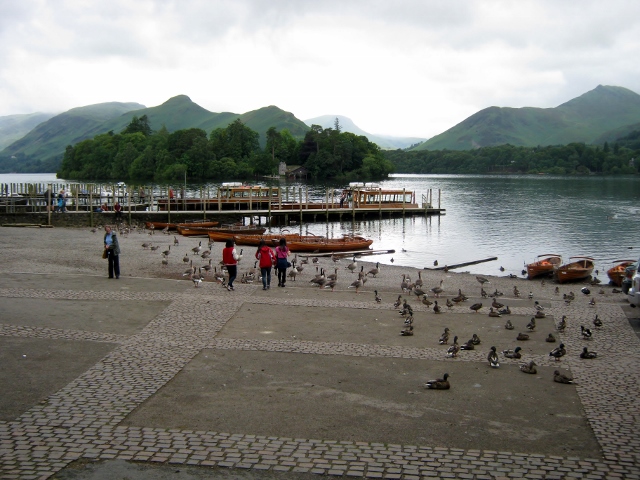
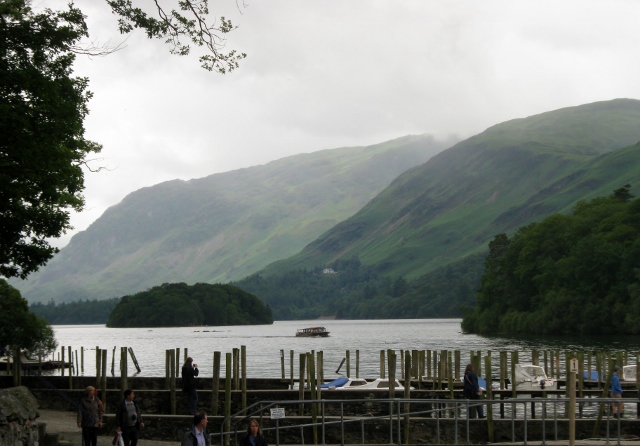
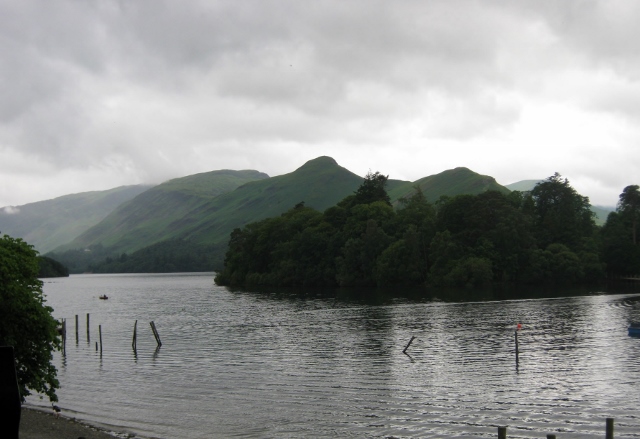
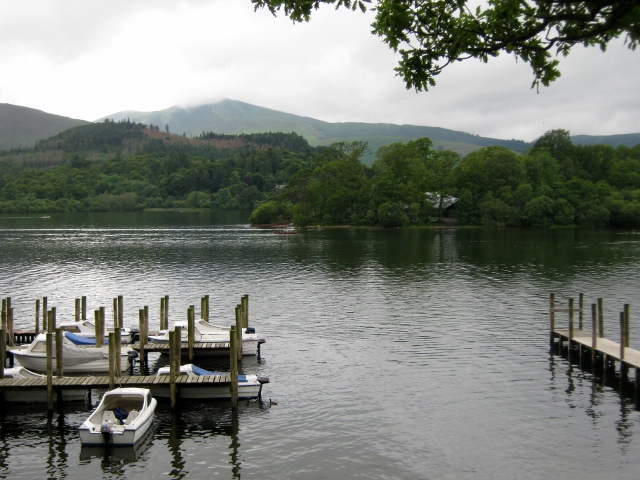
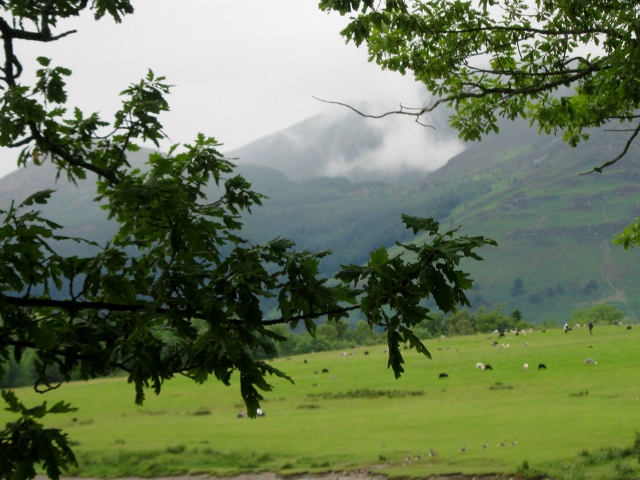
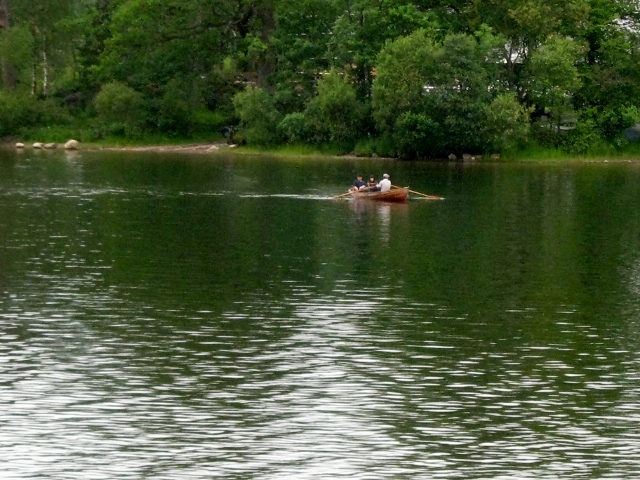
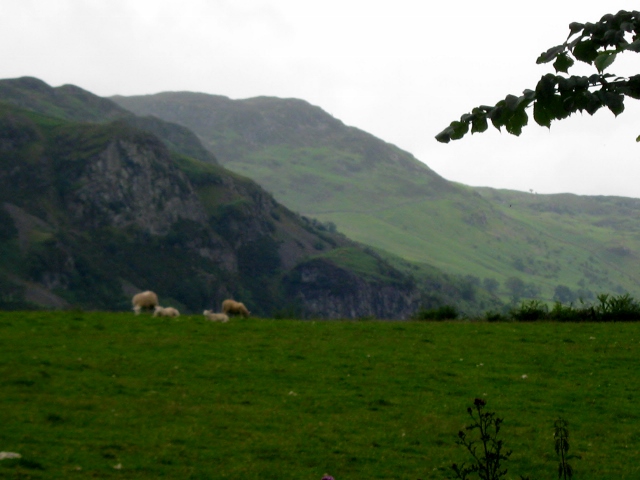
Castlerigg Stone Circle

Tags

, , ,

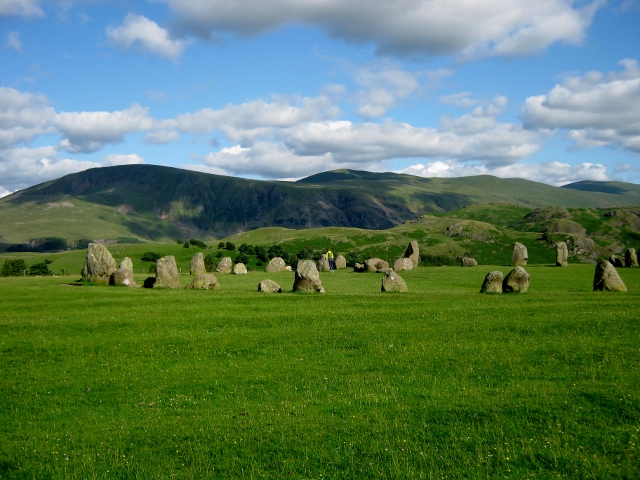
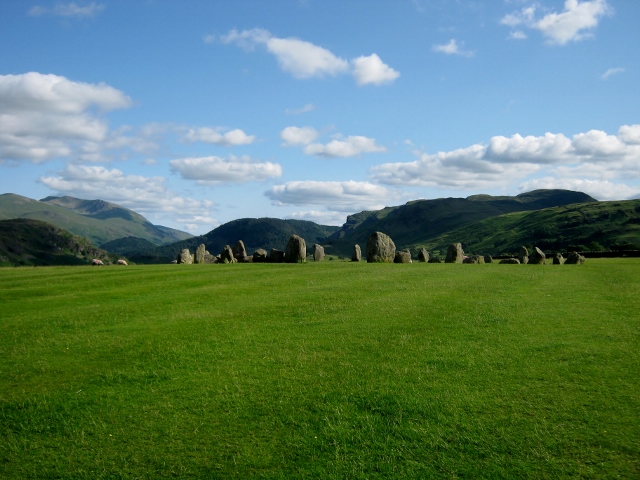
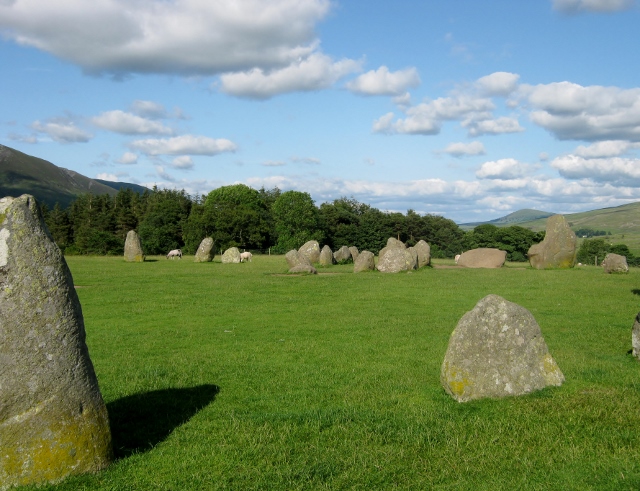
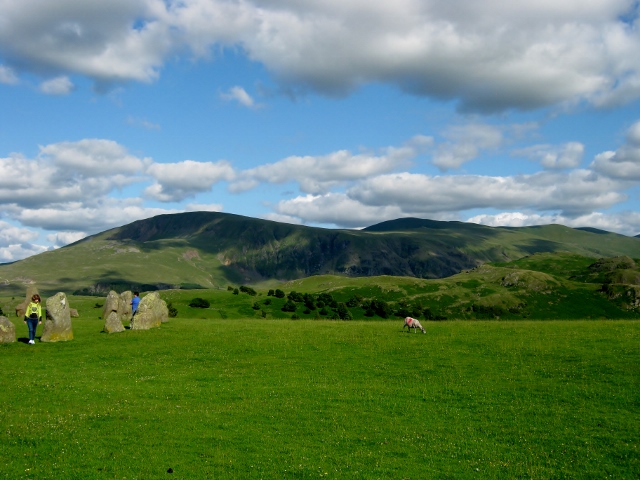
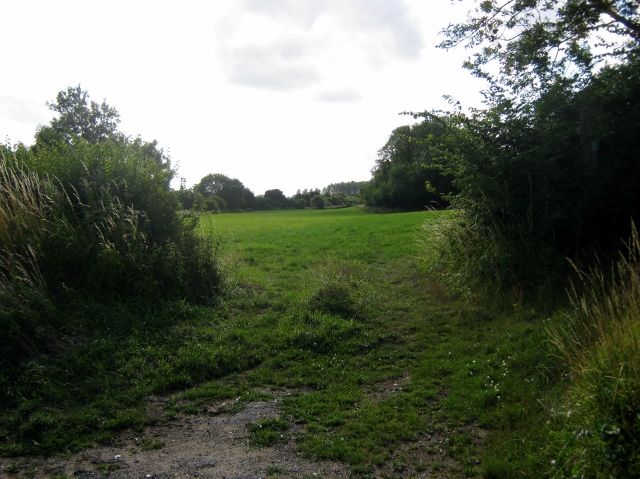
The afternoon was still so fine after our trip round Derwentwater that we thought we wouldn’t waste it but would go to see Castlerigg Stone Circle on our way back to our holiday cottage.

IMG_5117Castlerigg Stone Circle (640x480)

Castlerigg Stone Circle

The stone circle is on the flat top of a hill about 700m above sea level and is encircled by a ring of higher fells.

IMG_5116Castlerigg Stone Circle (640x480)

It is thought the circle is about 4500 years old and was constructed at the beginning of the later Neolithic Period.

The circle was probably constructed by early farming communities who practised transhumance farming i.e. they spent the winter on low fertile land near the coast or in the Eden valley and then moved to upland grazing in the central fells in the summer.  It is thought the circle was a meeting place for the communities arriving from the coast to the East and those from the Eden valley in the West before they then travelled on to the summer pastures and also to the axe-making area in the Langdales.

IMG_5123Castlerigg Stone Circle (640x491)

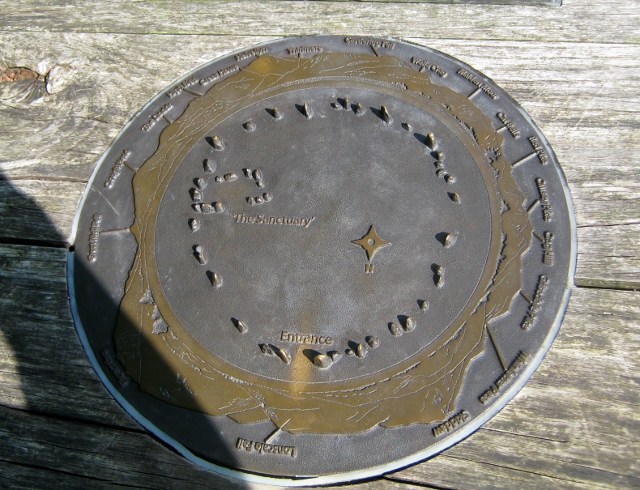
The circle consists of 38 stones in the outer circle and ten more that make up a rectangular enclosure inside the circle

Castlerigg is an early example of a stone circle and isn’t perfectly round – it is ovoid, one side somewhat flattened.

IMG_5114Model of Castlerigg Stone Circle (640x490)

A relief model of the circle

The tallest stone is 2.3m high and the circle is approximately 38m in diameter.  The circle is important in terms of megalithic astronomy and geometry and the construction contains astronomical alignments.

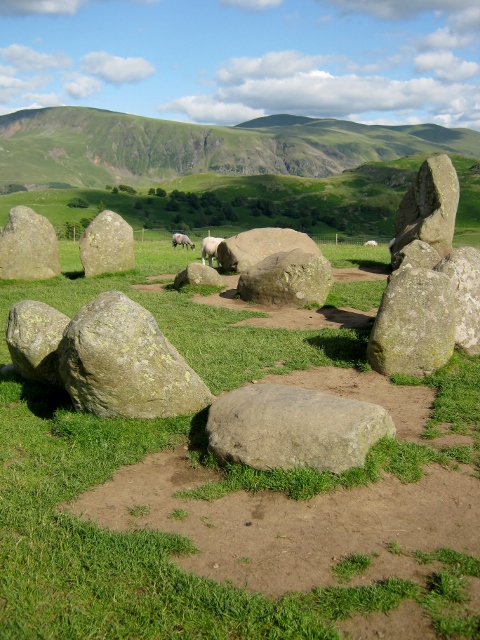
IMG_5126Castlerigg Stone Circle (480x640)

The rectangular enclosure or ‘sanctuary’

We thought the whole place quite special and the setting, breath-taking.

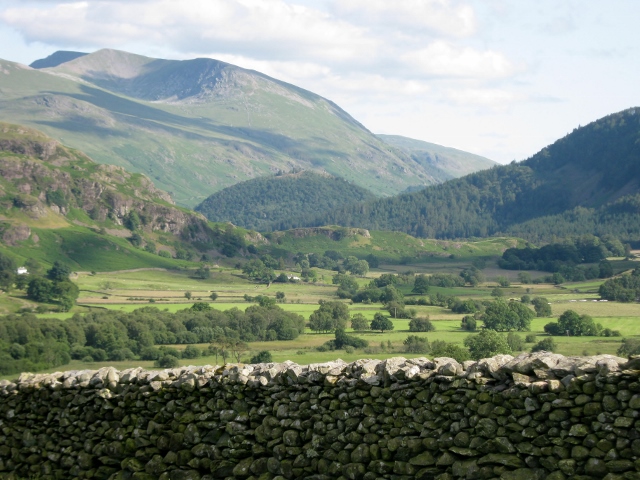
IMG_5133View from Castlerigg (640x480)

View over the wall into the surrounding valley

IMG_5122Castlerigg Stone Circle (640x480)

Sheep are used to graze the grass


This slideshow requires JavaScript.

Thanks for visiting!

Derwentwater and Ashness Bridge

Tags

, , , , , ,

For our wedding in 1994 we were given a gift of place mats and coasters by one of Richard’s friends.  The mats were decorated with paintings of Lake District attractions – Beatrix Potter’s cottage, The Bridge House at Ambleside and so on.  One of the pictures was a really attractive painting of Ashness Bridge, and for some time we had no idea where it could be found.  Before we left home we decided that as we were staying near Derwentwater, we ought to include it on one of our trips.

The day was bright and sunny and as it was St Swithin’s Day we hoped it would stay dry.  We thought we would take the ferry round Derwentwater from Keswick to Ashness Gate, the stop nearest to Ashness Bridge and then walk up to the bridge.

IMG_5090Derwentwater (640x473)

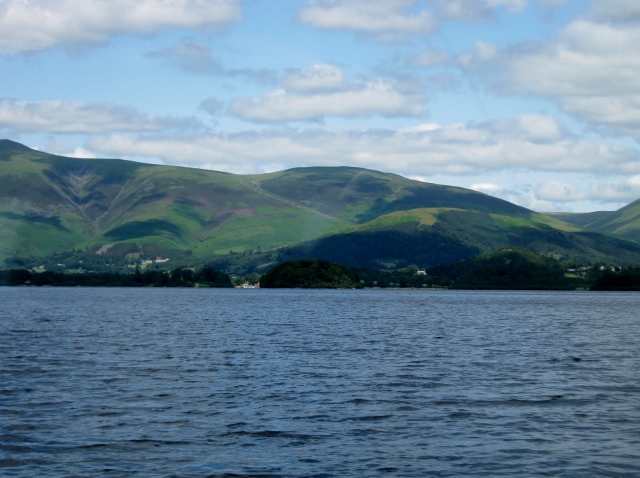
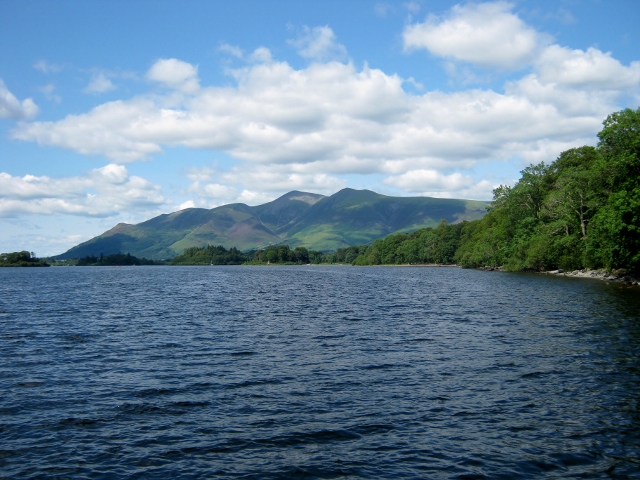
The views of the surrounding hills look wonderful from the boat

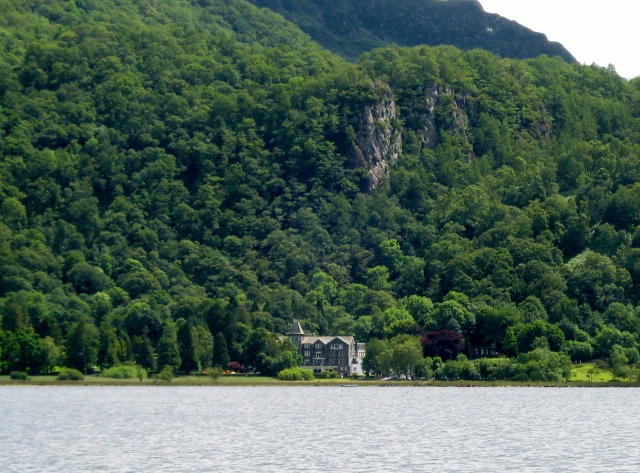
The woodlands here are mainly of oak.  These ‘Atlantic Oakwoods’ are an example of temperate rainforest.

IMG_5091Derwentwater (640x478)

I love looking at cloud shadows sliding over the hills

The ferry was crowded with walkers and other tourists like us, so it wasn’t too easy to take photos.

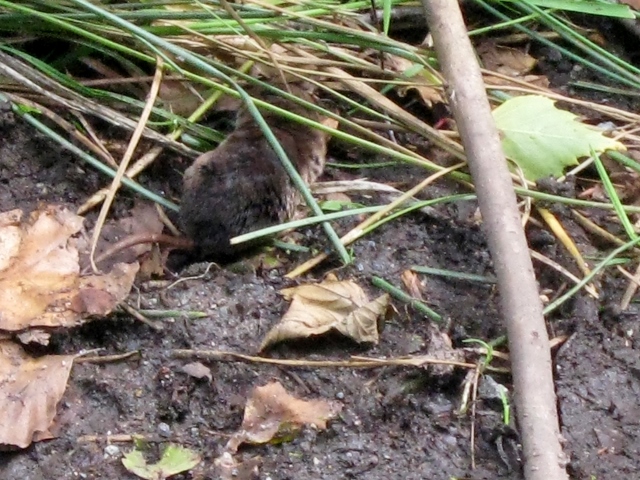
We got off the boat and began the steep walk up the lane to the bridge.  I saw a shrew running about at the side of the road and tried to take its picture but it wouldn’t show its face with the long snout.

IMG_5093Shrew (640x480)

Shy shrew

I saw a few wildflowers by the roadside.

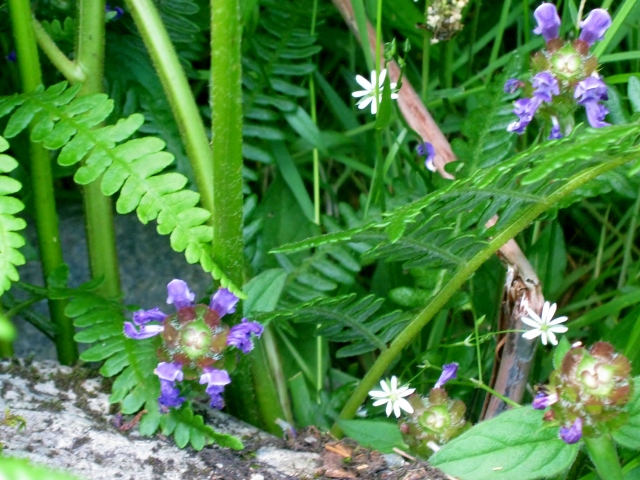
IMG_5094Self-heal and Lesser Stitchwort (640x480)

Self-heal (purple) (Prunella vulgaris) and Lesser Stitchwort (white) (Stellaria graminea) with Bracken (Pteridium aquilinum) also known as Brake Fern

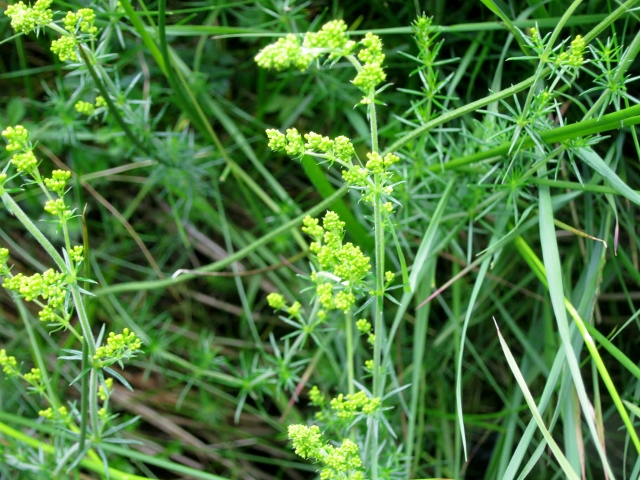
IMG_5096Lady's Bedstraw (640x480)

Lady’s Bedstraw (Galium verum)

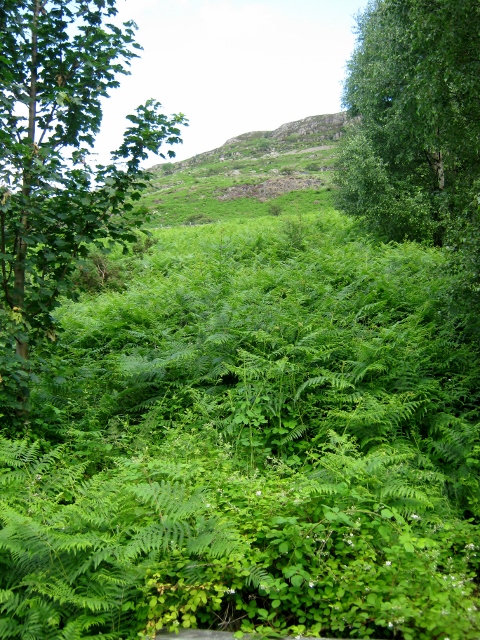
IMG_5097View up fell at Ashness (480x640)

Looking up the hill from the path

After quite a long steep climb we left the road and carried on up a pathway and eventually got to the bridge.  It is a very popular attraction and again, trying to get a picture of the bridge without lots of people in the way was hard.

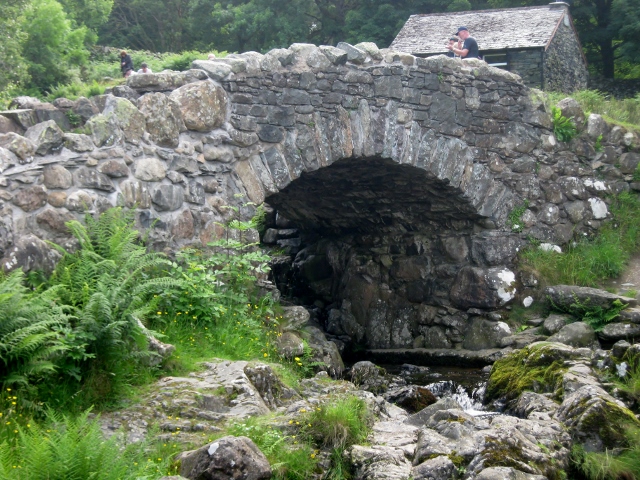
IMG_5099Ashness Bridge (640x480)

Ashness Bridge

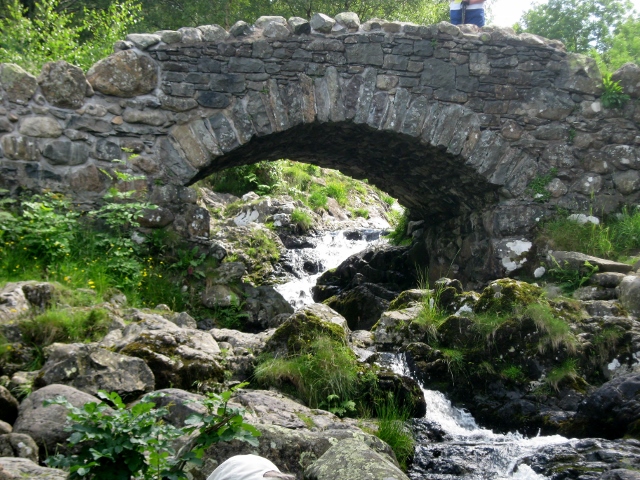
This is an old pack-horse bridge which enables the road to cross Barrow Beck, the stream that joins Derwentwater at the foot of the hill.

IMG_5105Ashness Bridge (640x480)

These old bridges are beautiful as well as being very useful. The skill of the bridge builder is apparent from this photo – each stone being placed so carefully, one next to the other.

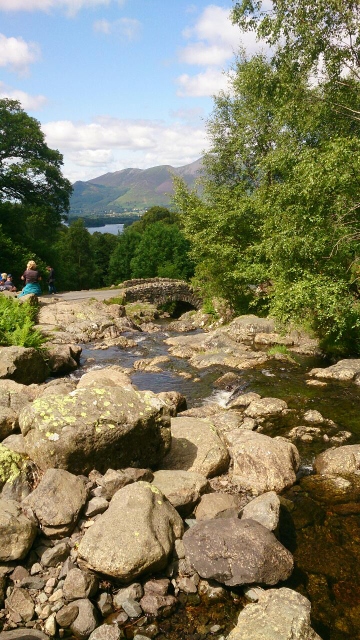
DSC_0538 (360x640)

Richard took this photo from further upstream. Derwentwater can be seen in the distance

IMG_5100Wild Thyme (640x480)

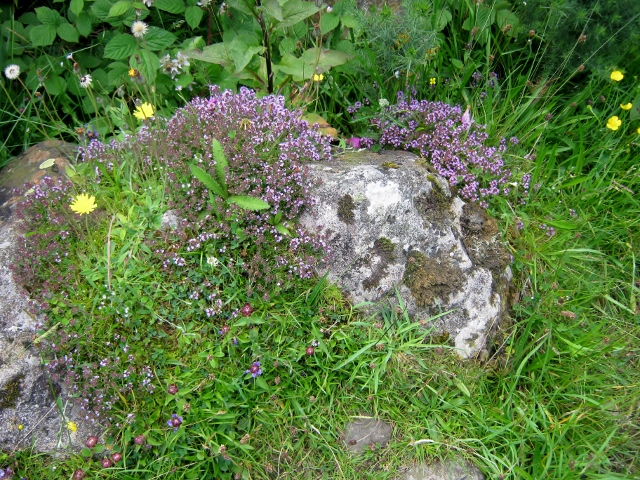
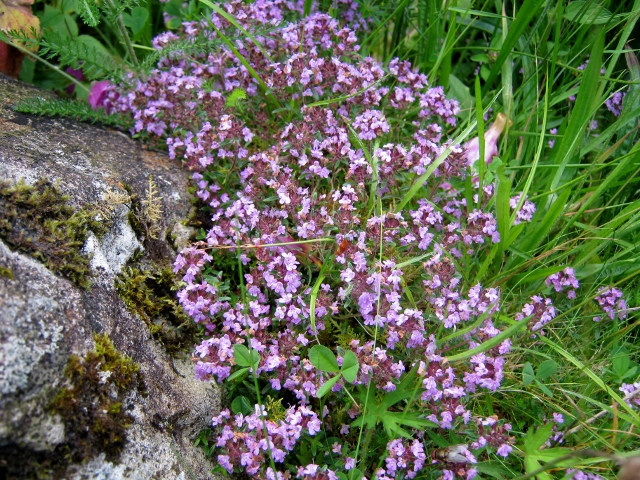
I found some Wild Thyme (Thymus serpyllum) growing by the stream

IMG_5101Wild Thyme (640x480)

It’s scent was wonderful!

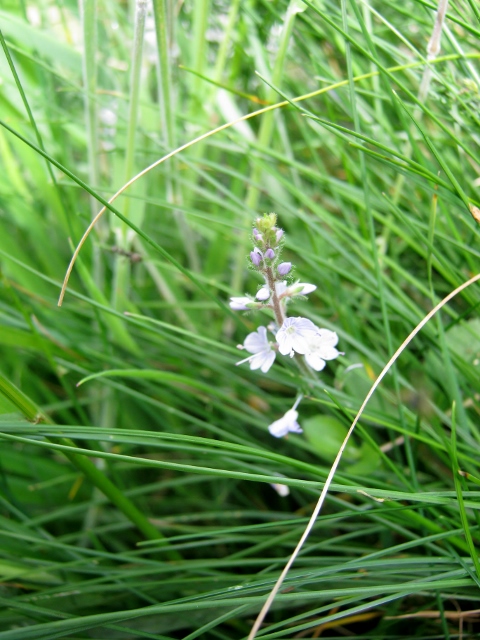
IMG_5110Blue Water-speedwell (480x640)

I also found some Blue Water-speedwell (Veronica anagallis-aquatica)

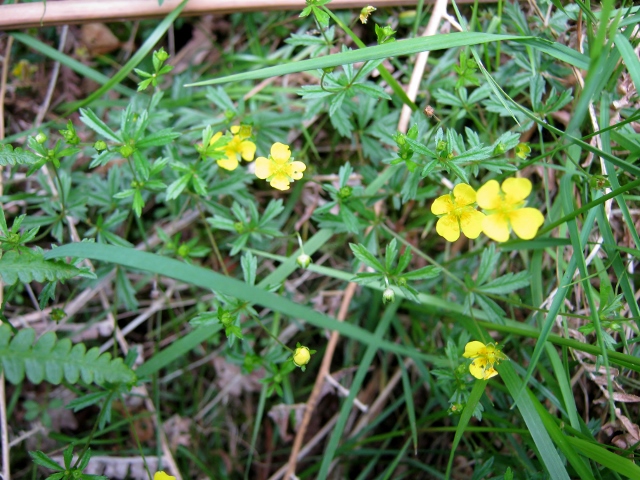
IMG_5112Tormentil (640x480)

Tormentil (Potentilla erecta)

We walked back down the hill and caught the ferry back to Keswick.

IMG_5113Derwentwater (640x480)

Derwentwater with Skiddaw in the background.

Thanks for visiting!

The Cumbrian Coast

Tags

, , , , , , , , , ,

We thought we might go to the coast as the weather was fine on the Tuesday of our holiday.  We by-passed Keswick and took the road to Maryport, a town on the coast.  Our road followed the western shore of Bassenthwaite Lake and then through the town of Cockermouth.  We drove to Maryport and then up the coast road to Silloth.  This map will show you the Lake District area, its main towns and will also show how close to Scotland it is.

IMG_5077Silloth (640x476)

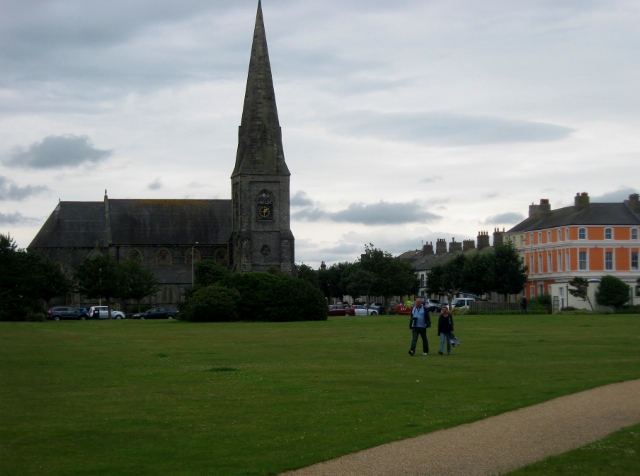
Silloth church from the Green

We wandered round Silloth; it was very quiet and there wasn’t too much to see though it has some attractive buildings and the roads are wide and straight.  The area between the main road and the coast line had been made into a park some while ago and I read that it has recently had lottery funding to add to its amenities and refurbish existing ones.

IMG_5078Silloth (640x480)

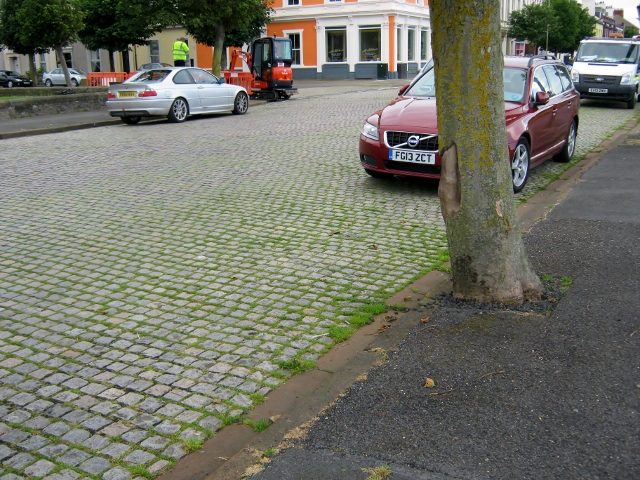
You can tell how quiet it is by the grass growing in-between the cobbles

IMG_5072Solway Firth (640x474)

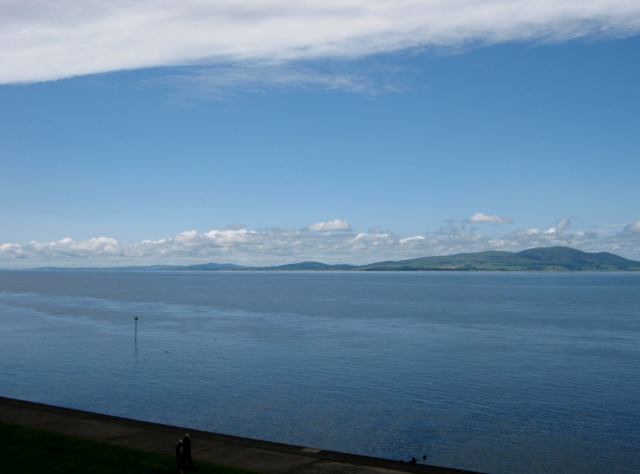
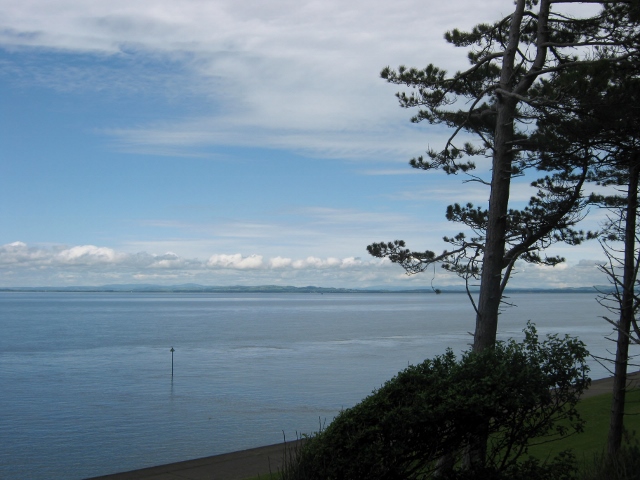
Looking north-west across the Solway Firth

We walked across the green towards the sea and climbed up to the Pagoda which is a shelter with a wonderful view.  It looked like the sun was shining in Scotland.

IMG_5073Solway Firth (640x480)

Looking north-east across the Solway Firth

Standing there, I was reminded of the lovely pictures I had seen taken from the opposite side of the Firth.  I was looking towards the land of the  ‘Tootlepedals’.  This is one of my favourite blogs; a daily insight into what it’s like to live in the Scottish Borders.  Interesting, funny and full of fabulous photos;  Mr T likes alliteration!

IMG_5074Hare Bells (640x480)

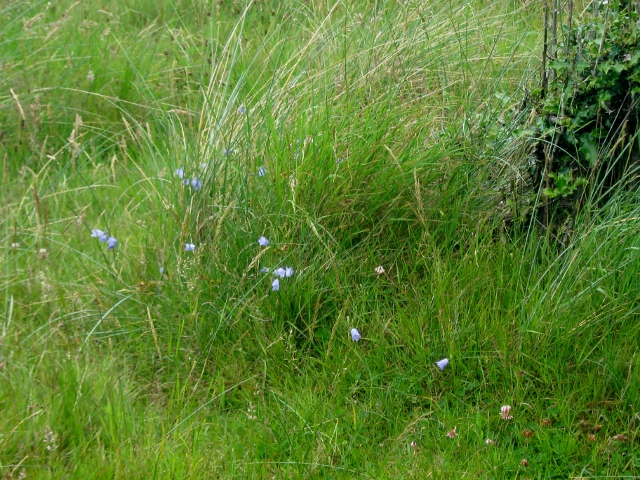
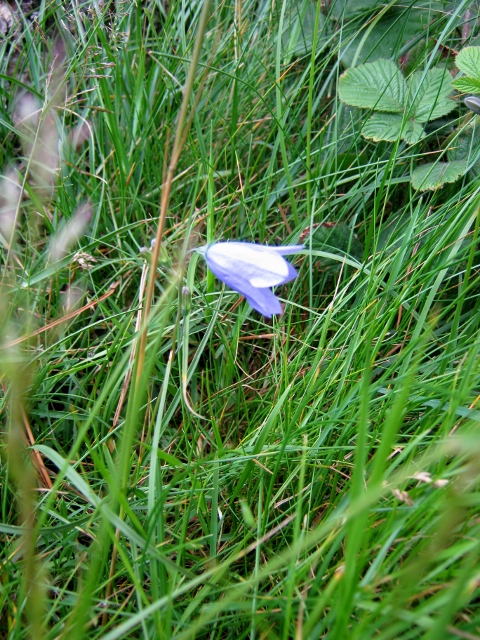
I found some Harebells (Campanula rotundifolia) on the slope up to the Pagoda

IMG_5075Hare Bell (480x640)

They are delicate, azure-blue bells.

IMG_5076Hare Bell (495x640)

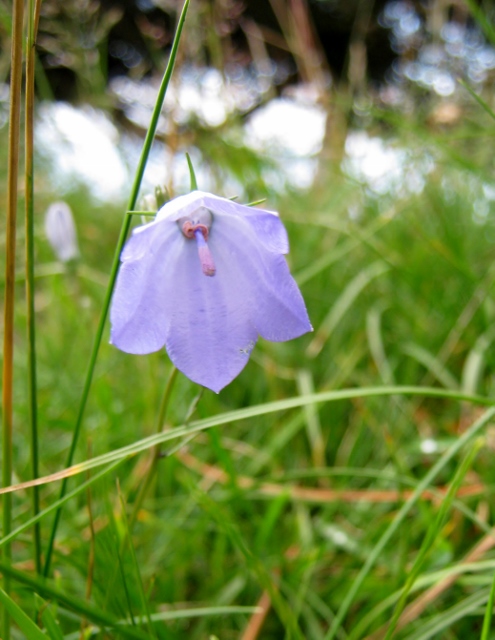
I even managed to photograph inside the flower bell

We decided to return to Cockermouth and have some lunch.

IMG_5079R Cocker (640x480)

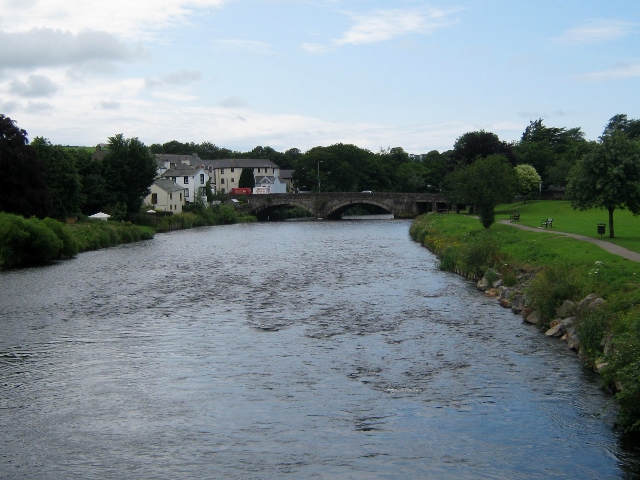
The River Derwent

Three famous men were born in or near Cockermouth and all were born within a few years of each other.  The first was Fletcher Christian (Mutiny on the Bounty) who was born a mile from Cockermouth in Eaglesfield in 1764.  The second was John Dalton, a brilliant scientist and the originator of the Atomic Theory.  He also was born in Eaglesfield in 1766.  The third was William Wordsworth, born in Cockermouth in 1770.

IMG_5080R Derwent (640x480)

The River Derwent looking upstream.  The River Cocker joins the Derwent here and in the photo is coming in from the right.

In November 2009 both rivers broke their banks and the town was severely flooded.  The army was called in and assisted the townsfolk for three days until the water began to recede.  Most of the shops, pubs and restaurants in the town centre were wrecked and there was much destruction elsewhere.

IMG_5081Whinlatter (640x480)

Whinlatter Forest with views of the fells

On our way home we drove a different route over the pass at Whinlatter.  We called in at the forest visitor-centre and took a short walk in the forest.  As it is Forestry Commission land and the trees are non-native, there was not much wildlife to be seen.

IMG_5088Hoverfly on Crested Dog's-tail (640x480)

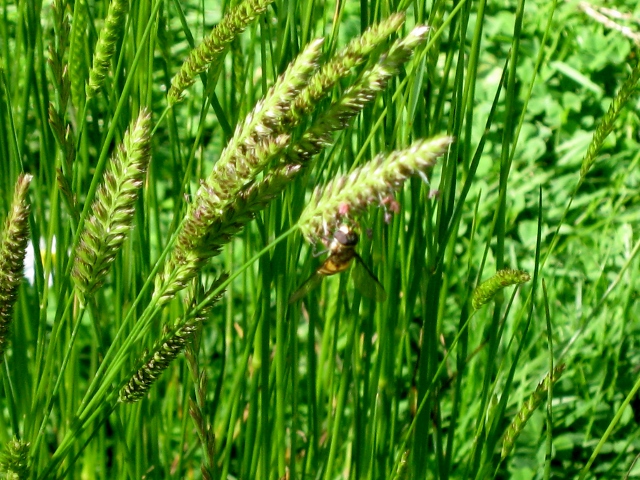
A hoverfly on Crested Dog’s-tail (Cynosurus cristatus)

IMG_5082Fir cones (640x480)

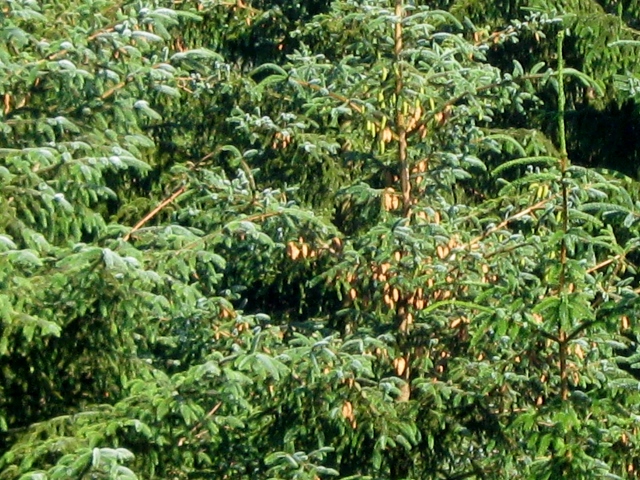
A good crop of cones

IMG_5083Perennial Rye-grass (480x640)

Perennial Rye-grass (Lolium perenne)

Thank’s for visiting!

A Little Bit of This and a Little Bit of That

Tags

, , , , , , , , , , , , , , ,

I haven’t published a diary post lately so this is a short resumé of my activities over the past month or so.

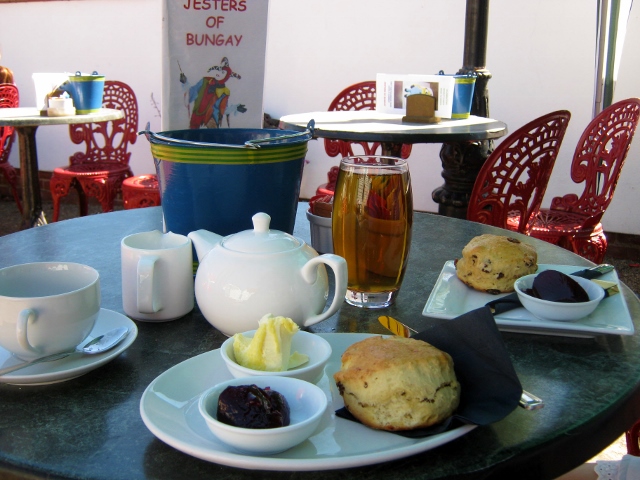
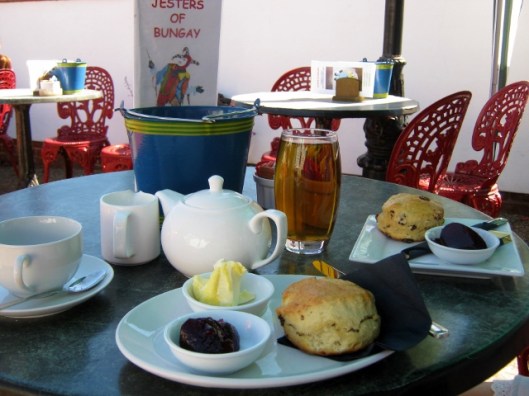
To start things off I have a photo of a cream tea that Elinor and I enjoyed while out shopping in Bungay before our holiday.
IMG_4905Cream tea (640x480)

A very brightly-coloured café called ‘Jesters’ at the entrance to Bungay castle. We were going to walk round what is left of the castle when I remembered in time that I had only allowed myself an hour’s parking . The cream and jam scones were yummy!

Elinor and I went by train to Sheffield on the 2nd of July to visit my elder daughter, Alice.  The day was hot and the journey quite uncomfortable as the carriage we were in on the train from Norwich to Sheffield had faulty air-conditioning.  The ticket collector handed out bottles of water to anyone who wanted some.  We had noticed large quantities of water bottles in the waiting room at Diss Station as well, with a notice saying any customer could help themselves to water if they needed it.

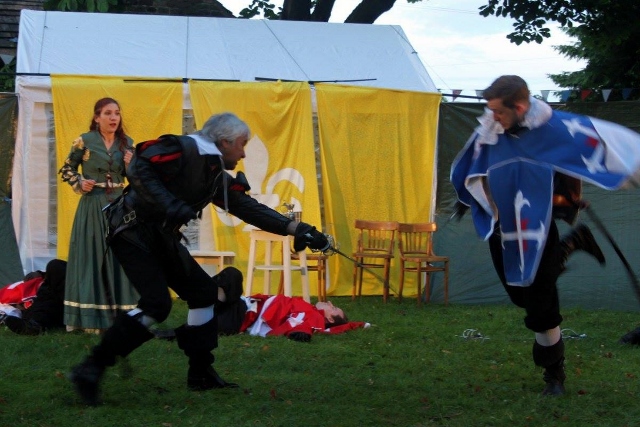
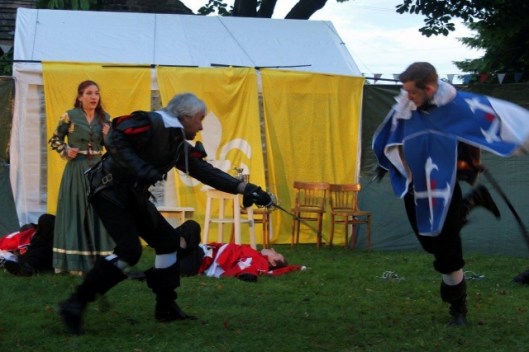
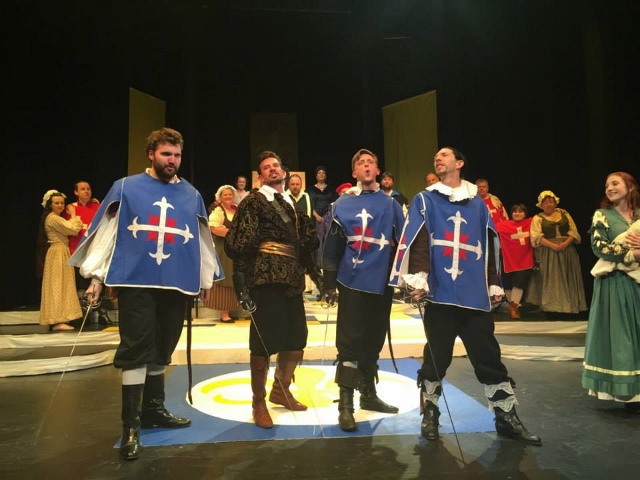
We were travelling to Sheffield in order to watch Alice perform in ‘The Man in the Iron Mask’ by Alexandre Dumas.  We then stayed the night with her in her single room.  It was snug to say the least, but lovely to be all together again.

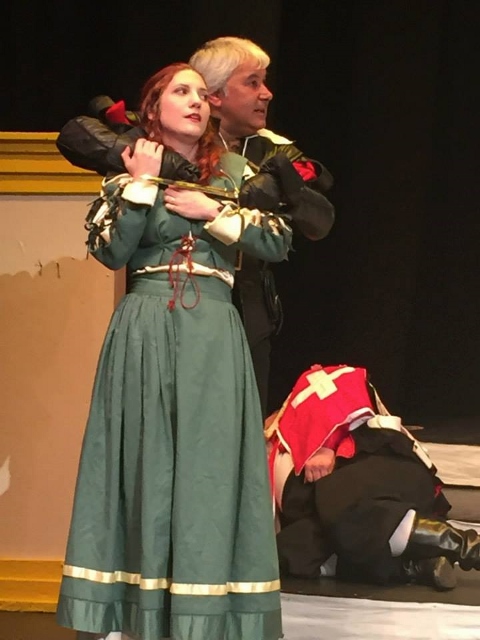
These are some photos of her that I have ‘borrowed’ from her drama group’s Facebook page.
11258095_10204761757547885_1220536374365931542_o (640x427)

Alice (in the green dress) played the part of Constance, D’Artagnan’s wife. She is watching D’Artagnan (on the right) fighting his foe.

The man on the left is an expert in weapons and fighting and has an armoury at his home.  He taught all the cast how to fence and fight.  It all looked very real.
11665579_10155721644210524_7162535900042599508_n (480x640)

I thought Alice did very well especially as she had to wear a costume which gave her a terrible rash for which she needed medical treatment.

11200774_10155721643400524_4718516296672381910_n (640x480)

‘All for one and one for all!’

11741103_10204761762748015_1710620135797317354_o (427x640)

Dumas will be spinning in his grave at their version of his very sad and doom-laden book. It was a brilliant, funny, well-acted and well-choreographed play with a happy ending.

As we were waiting for our train back home the next morning I saw and heard the piano in the concourse being played.  The piano is there for anyone’s use at any time.

IMG_4906Pianist on Sheffield station (640x477)

This young man played well.

Unluckily for me and Elinor, the carriage we were in on our return journey also had no air-conditioning.  This time there was no free water but we were able to leave the carriage at Nottingham (I think) and get into another carriage with AC that they had attached to the train.

The following week was busy with preparations for our holiday.  Elinor’s laptop stopped working and had to be taken in for repair.  She worried that it might not be repaired in time for her to use on holiday.  She used my lap-top all week.  We were able to collect her’s on Friday :).  I shopped with Mum on Tuesday and made sure she’d be alright for food and other necessaries while we were away.  My friend Heather came to lunch on Wednesday and we had an enjoyable time chatting about friends and family.  She gave me a book – Janet Marsh’s ‘Nature Diary’.  Such a thoughtful present.  I had an appointment at Norfolk and Norwich Hospital for a rheumatoid arthritis check-up on Friday – the day before going away.

We were surprised to find on our return from holiday on the 18th July that the field of barley behind our house had still not been harvested.  The weather at home had been warm and quite dry while we had dripped and shivered on holiday.  We did get a superb sunset to welcome us back.

We had another busy week catching up on household and gardening chores and I had two weeks’ worth of washing and ironing to do.  On the Monday I had to take Mum to the hospital for her regular eye check which went very well.  I collected her shopping list as I would be doing her shopping for her that week.  When I got home I started to make a loaf of bread and discovered I hadn’t enough yeast so had to go out again.  I bought some other groceries as well as the yeast and was on my way home when I got a flat tyre.  I managed to get the car into the town central carpark and got the spare tyre out but couldn’t work out how to remove the jack from the car!  Shameful!  I’m also not strong enough to take the wheel off anyway so had to phone Richard who had just sat down with a drink.  While I was waiting for Richard to come and rescue me I got two offers of help from kind gentlemen who saw my pancake-flat tyre.  The age of chivalry is not dead!  The tyre had a rip in it and a couple of nails too.

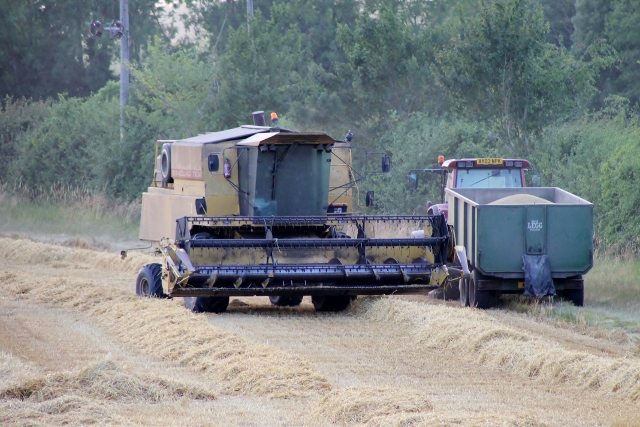
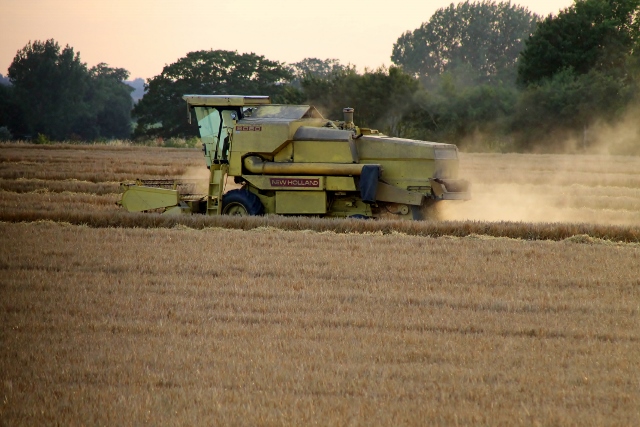
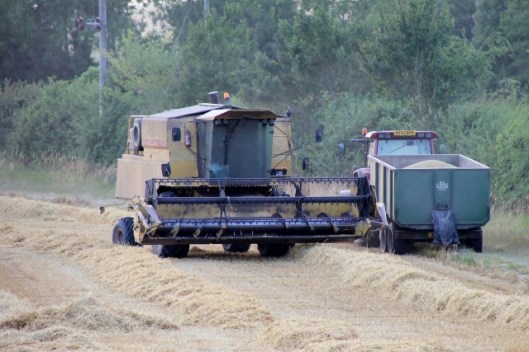
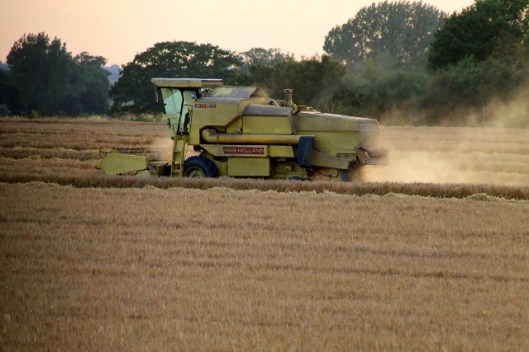
The next day they began harvesting the barley field.
IMG_2392Barley harvest (640x427)

This combine had just off-loaded its grain into the waiting tractor trailer.
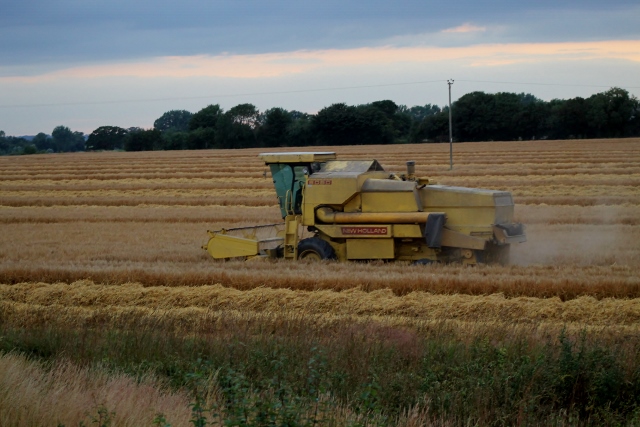
IMG_2394Barley harvest (640x427)

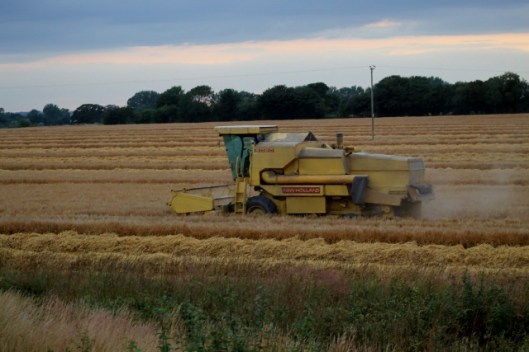
The harvesting wasn’t started until late in the day and continued until quite late in the evening.

The countryside at harvest-time is a very noisy, dusty, dirty place to be.  It proves at this time of year to be very industrial.  Our houses and cars get covered in a thick pall of dust and bits of straw.  We all start wheezing and coughing and anyone with allergies or asthma has problems with their health.  There is a constant roaring and whining of engines as the combines trawl up and down the fields all day and most of the night too and the tractors with full trailers of grain are driven at break-neck speed along our narrow lanes to the silos and barns at the farms.  Woe betide anyone or any creature who gets in their way!
IMG_2395Barley harvest (640x427)

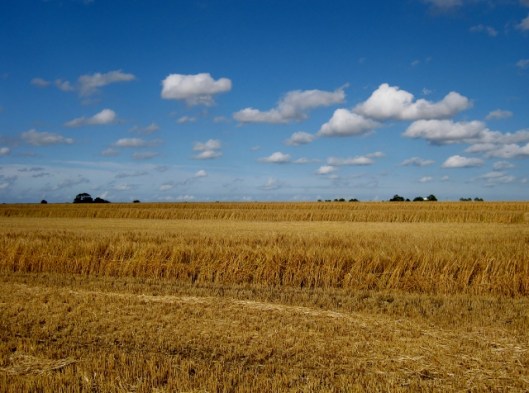
The barley field was only half finished that evening and the combine went off to another field to work on that. Both fields were left with strips of uncut grain.

I am not sure why they left both fields like this.  Bad weather was forecast and duly arrived a couple of days later.  Perhaps less damage is caused by wind and rain when the crop is in strips.
IMG_5290View across field (640x476)

This is a photo of the other field our local farmer cut in strips. We took this picture while on a walk nearly two weeks ago.  The fields were both finished last week – almost a month since they had begun.

This was the first walk we had taken from home in months.

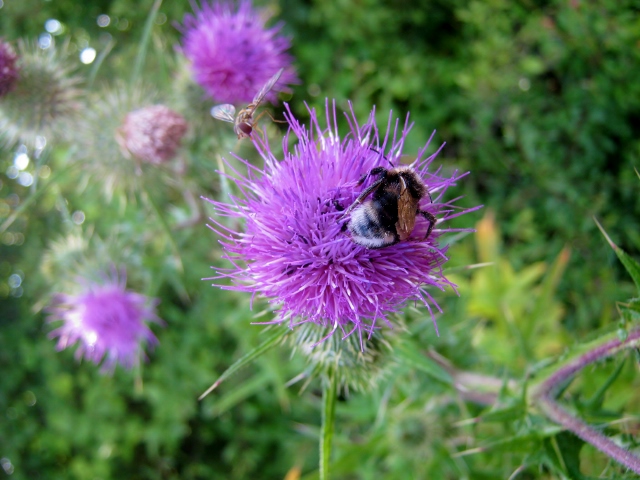
IMG_5294Bee and hoverfly on Spear Thistle (640x480)

A bee and a hoverfly enjoying the nectar of a Spear Thistle (Cirsium vulgare)
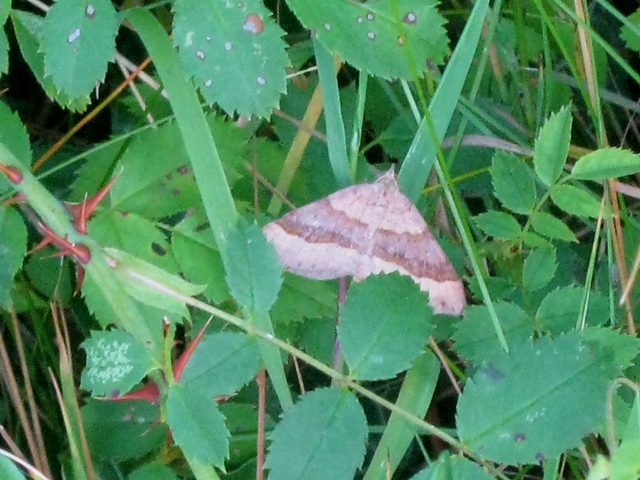
IMG_5295Moth Shaded Broad Bar perhaps (640x480)

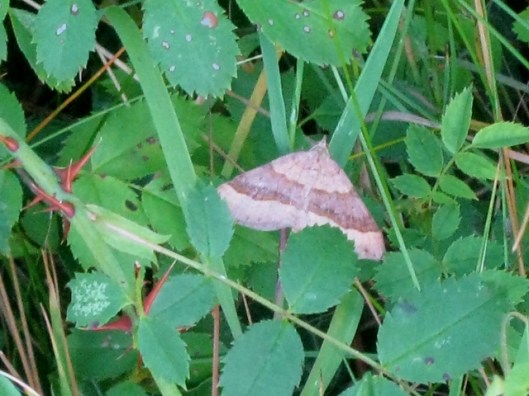
I disturbed this moth as I walked through the long grass. I think it may be a Shaded Broad Bar moth (Scotopteryx chenopodiata)
IMG_5297Common Fleabane (640x480)

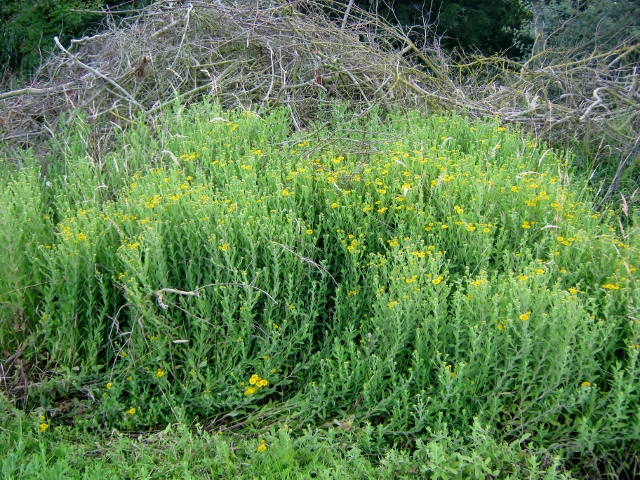
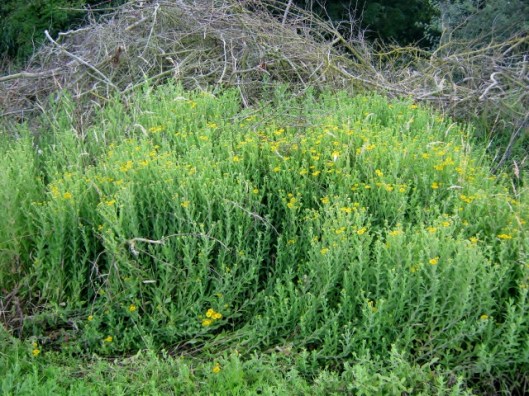
I remembered seeing a large patch of Common Fleabane (Pulicaria dysenterica) in the corner of a field last year. It was still there though a large heap of prunings had been left there earlier in the year
IMG_5296Common Fleabane with pollen beetles (640x480)

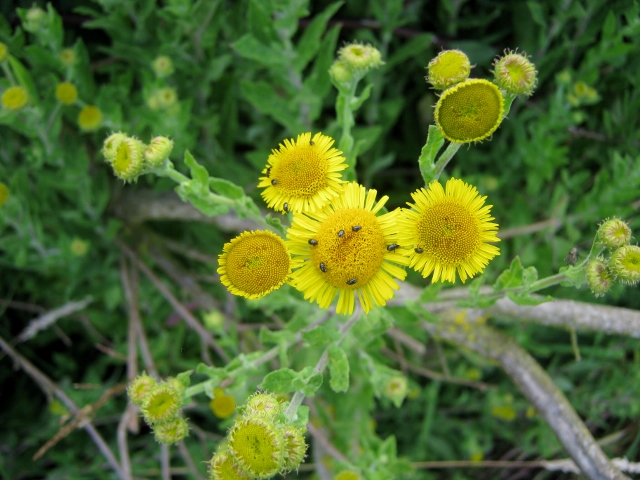
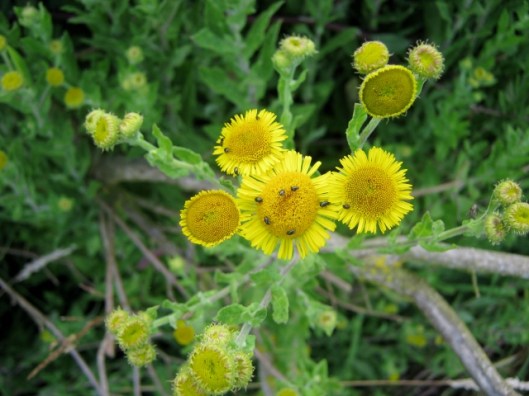
Fleabane with Pollen Beetles (Meligethes aeneus)
IMG_5298Field Maple (640x480)

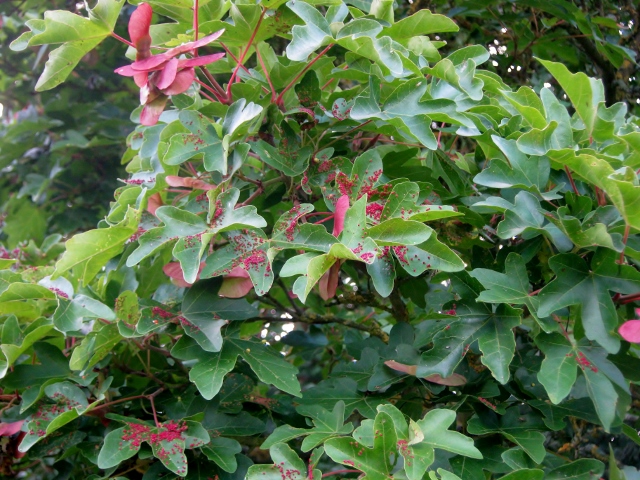
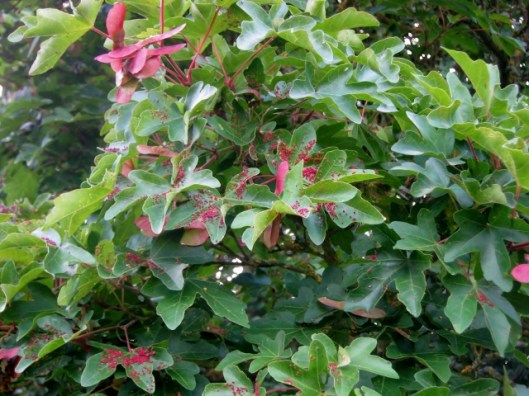
The Field Maple(Acer campestre) was looking bright, not only with its new ruby-coloured winged-fruits and leaf stalks but also with the crimson galls on many of its leaves. These galls are small red pustules probably produced by the mite Aceria myriadium.
IMG_5300New oak leaves (640x480)

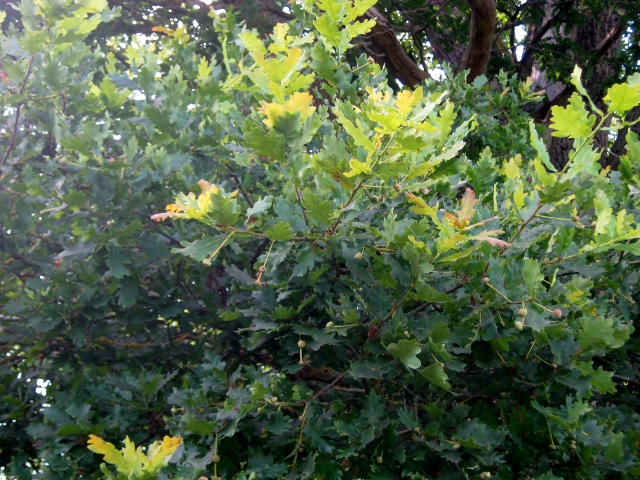
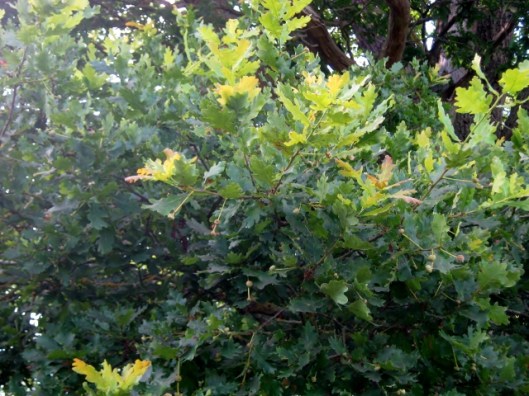
New Pedunculate (or English) Oak leaves (Quercus robur) shining in the afternoon sun. There are also tiny acorns on long stalks to be seen.
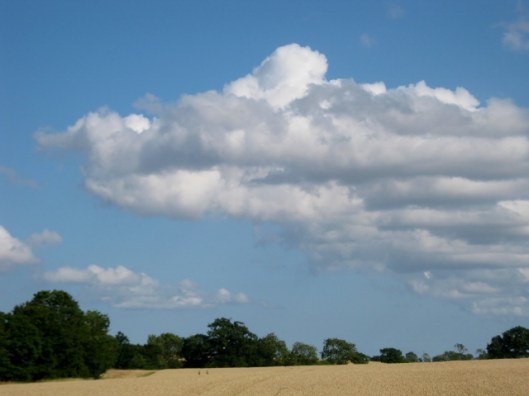
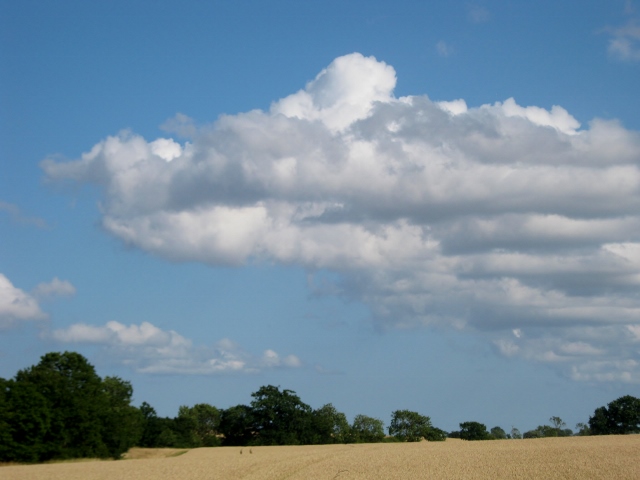
IMG_5303Clouds (640x480)

Interesting cloud formation.

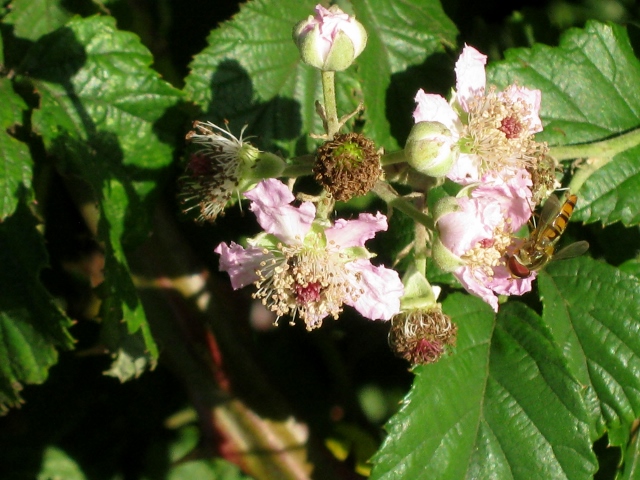
IMG_5307Hoverfly on bramble flowers (640x480)

A hoverfly on Bramble (Rubus fruticosus agg. ) flowers
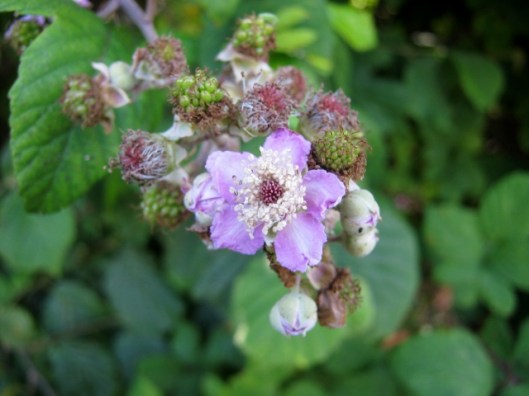
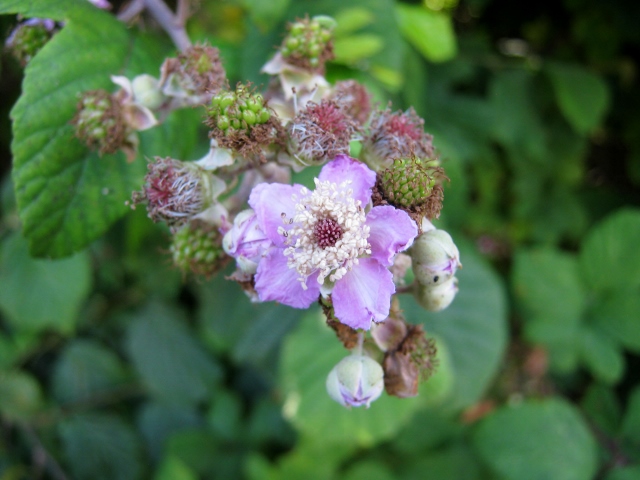
IMG_5309Bramble (640x480)

Bramble flowers are very attractive and blackberries go so well in pies and crumbles!
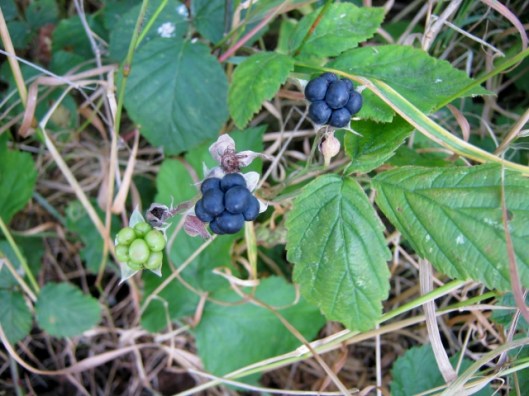
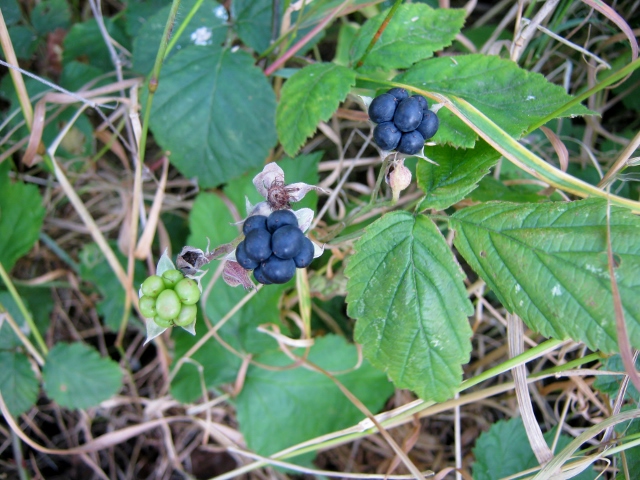
IMG_5308Dewberry (640x480)

I saw my first Dewberry (Rubus caesius) last year and was worried I wouldn’t find one this year because of all the hedging and ditching that was done in the spring. I eventually found a small plant under a hedge.
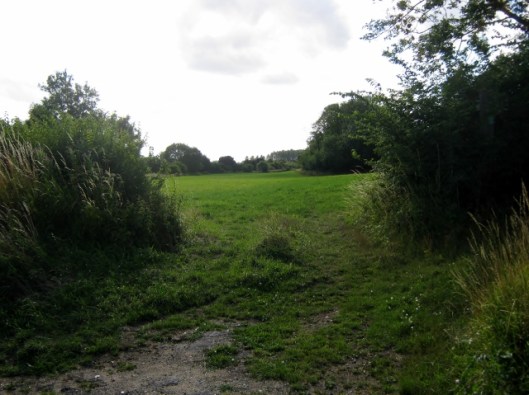
IMG_5310Field view (640x479)

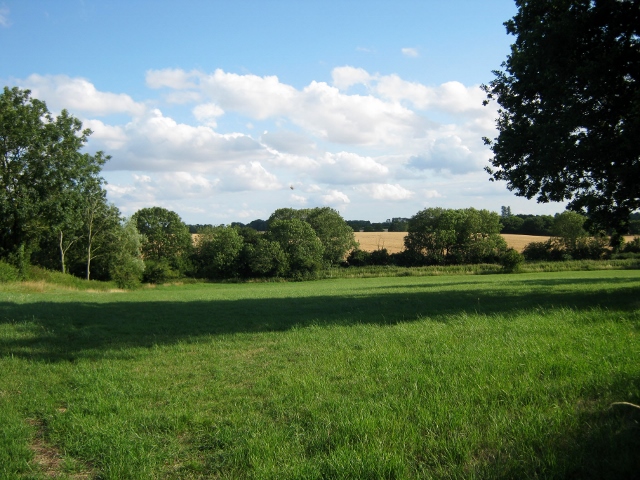
Richard and I like this view across a field
IMG_5312Field view photo-bombed by fly (640x480)

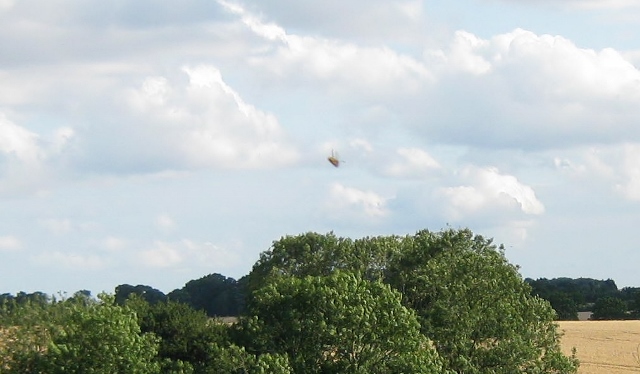
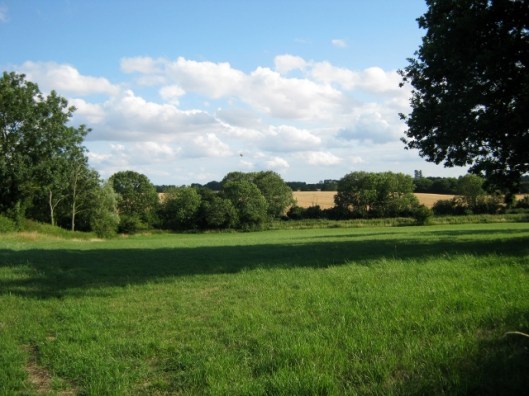
This is another view we like and I’m sure my regular readers recognise it.

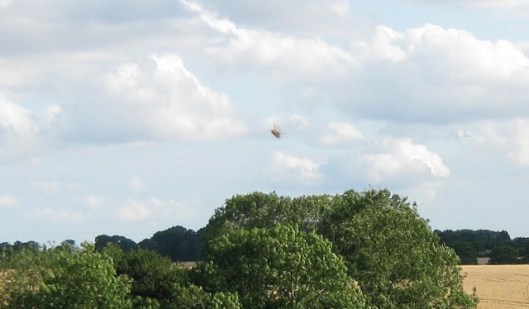
When I checked my photos on my return home I was dismayed to see the spot just above the trees at the centre of the photo.  However, when I cropped the photo…
IMG_5312Field view photo-bombed by fly (2) (640x374)

Cheeky!

…I realised a bee had photobombed my picture!
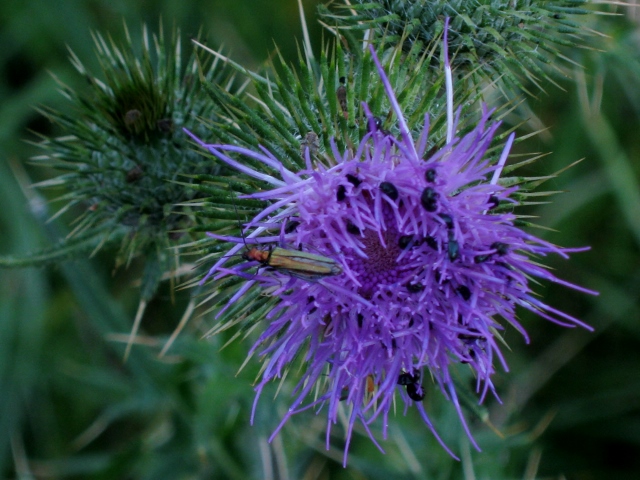
IMG_5317Oedemeridae beetle perhaps Ischnomera sanguinicollis (640x480)

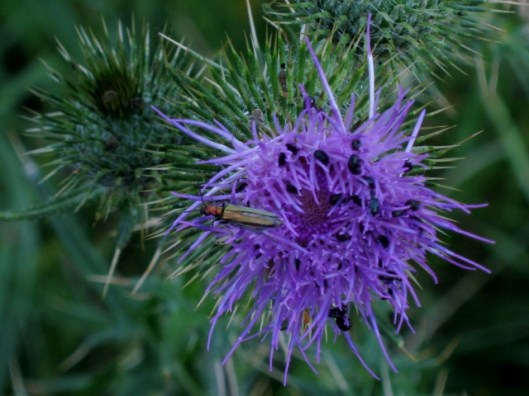
An Oedemeridae beetle, perhaps Ischnomera sanguinicollis on a Spear Thistle flower with lots more Pollen Beetles.
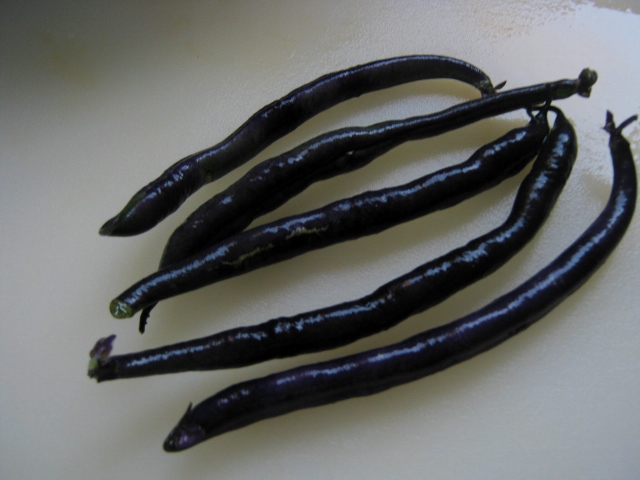
IMG_5322Purple beans (640x480)

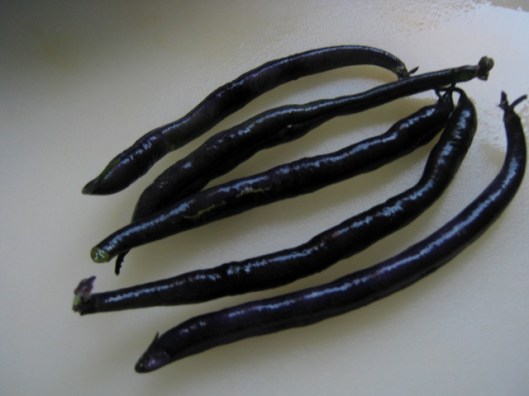
We have had our first harvest of purple beans.

These beans sadly lose their purple colour when cooked and end up a rather dull green.  They taste very nice and they have appreciated growing in the cooler summer.
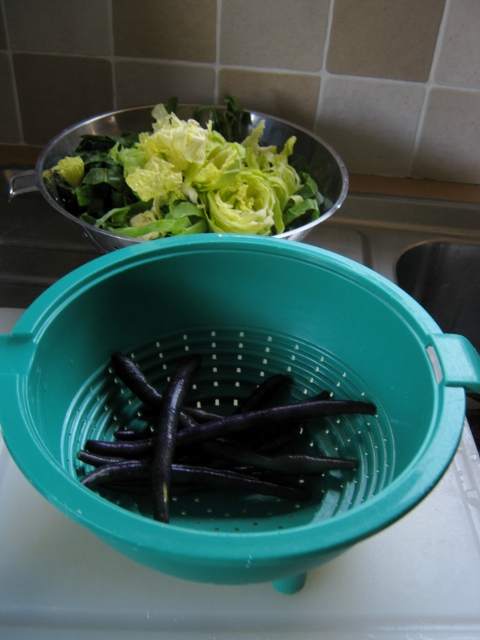
IMG_5321Purple beans and spring greens (480x640)

French beans are so quick and easy to prepare and taste wonderful straight from the garden.

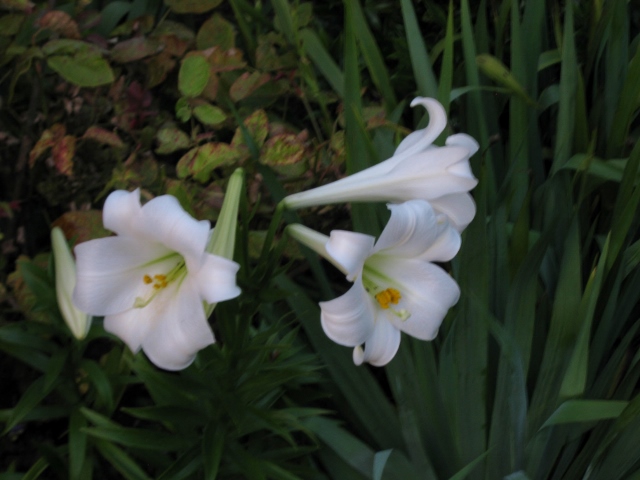
IMG_5330White lilies (640x480)

My white lilies (Lilium longiflorum) are flowering in the garden. This photo was taken at dusk.
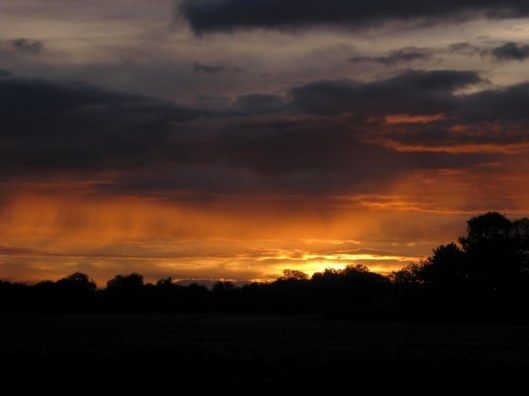
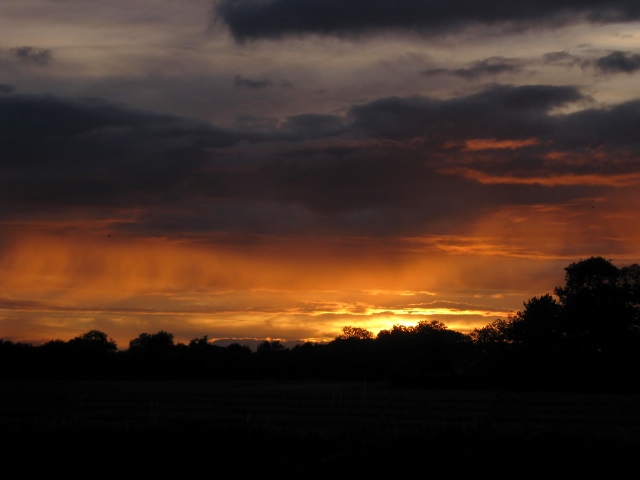
IMG_5323Rain at sunset (640x480)

Another sunset – this time with an added rain shower

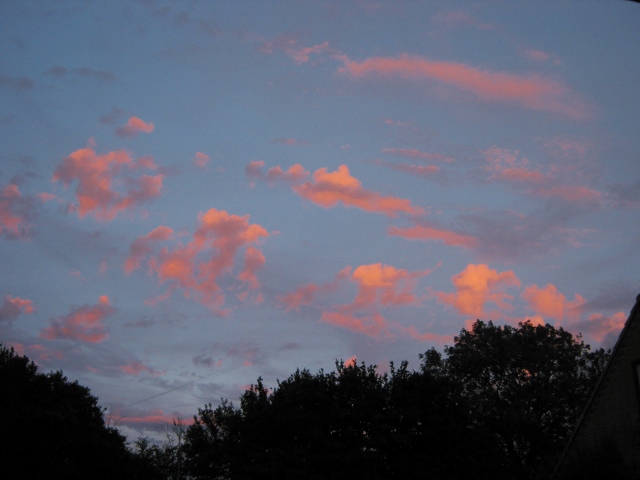
The rain soon cleared away and as I turned back toward the house I saw the sky to the East was lovely too.
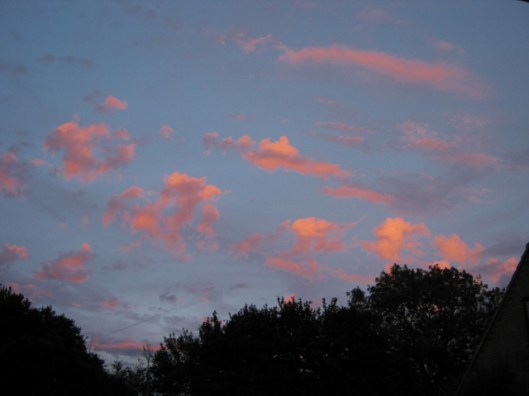
IMG_5335Pink clouds at sunset (640x480)

Pretty pink clouds!

Thanks for visiting!
 

Keswick and an Evening Walk

Tags

, , , , , ,

Our second day in the Lakes was cooler and rainier than the first.  Again, we left it until after midday before we left our cottage and this time went to the nearest town – Keswick.

Fortunately, the rain left off for the first part of the afternoon so walking round the town was fine.

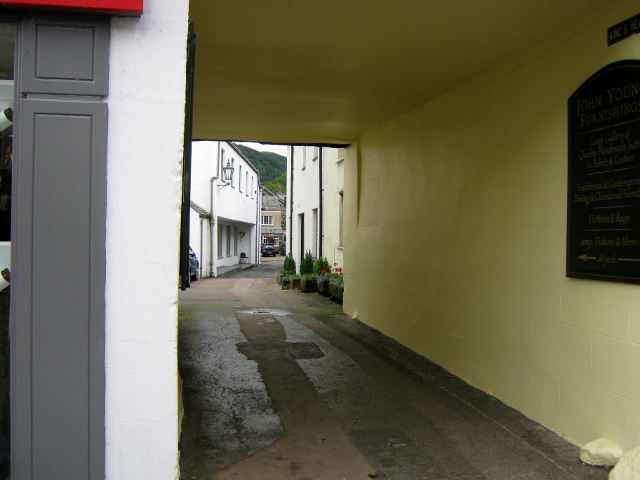
IMG_5041Alleyway in Keswick (640x480)

An interesting alleyway in Keswick

I had never been to this town before and Richard hadn’t visited for many years.  I loved it!  It has lots of interesting shops and plenty going on but it isn’t as packed with tourists as Ambleside is.

We bought gifts from the shop below for my mother and our next-door neighbour (who watered our tomatoes) and also a jar of marmalade as Elinor wanted some. My blogging friend Rachel, formerly of ‘Could Do Worse’ visits the Lakes every year and when I saw this shop I thought of her.

IMG_5042Chocolate shop in Keswick (640x480)

The Chocolate Shop

Here is what Rachel had to say about it last year.  She did three or four great posts from the Lakes last year and you’ll find them just before and just after the post I’ve given you a link to.  She has recently started a new blog called The Patch Out Back – do give her a visit.

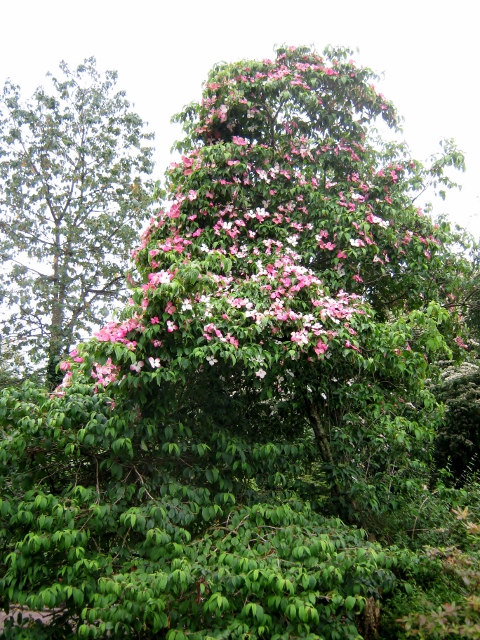
IMG_5043Tree in park (480x640)

A pretty tree in the park.

After wandering round for a while, and Elinor sampling some of the best chips she had ever tasted from The Old Keswickian, we agreed we’d like to see the lake.  To get to Derwent Water from the centre of the town you walk through an underpass and alongside part of the town park which is where I took the above photo.

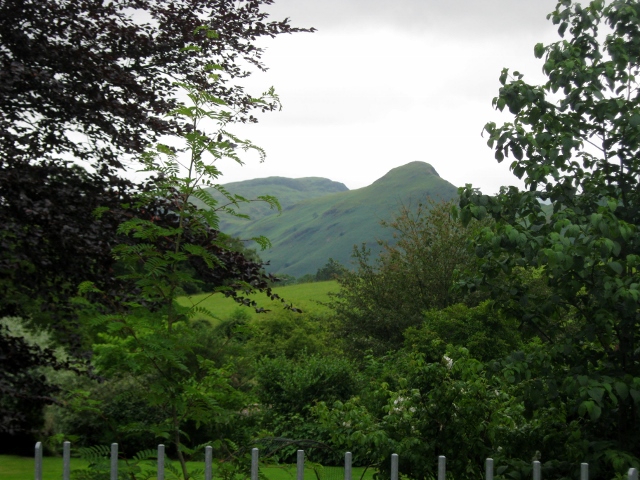
IMG_5044View of fells from Keswick (640x480)

From the path we could see the fells that surround the town

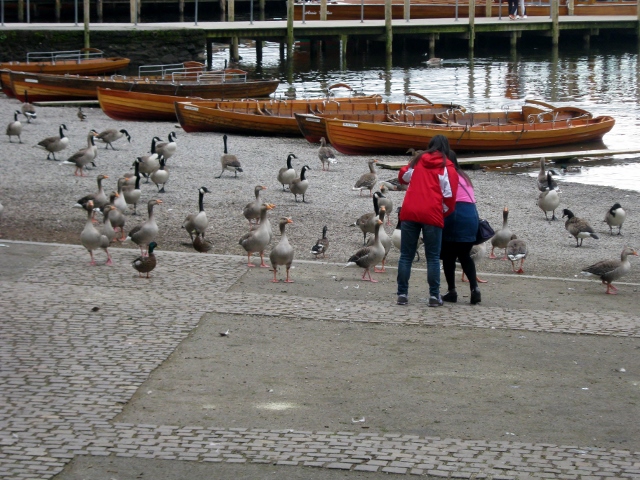
IMG_5045Geese at lakeside (640x480)

Lots of very friendly Greylags and Canada Geese wait to be fed by anyone foolhardy enough to buy packets of goose-food from the shop.

IMG_5046Derwent water (640x480)

This is Derwent Water

IMG_5047Derwentwater (640x446)

Derwent Water

IMG_5049Derwentwater (640x439)

As you can see, it was a very cloudy day.

IMG_5050Derwentwater (640x480)

The lake has four islands on it and one of them is just opposite the ferry landing stage near where we were standing.

IMG_5051Fells by Derwentwater (640x480)

The clouds began to drift lower and we knew it would rain again soon.

IMG_5053Derwentwater (640x480)

It was nice to watch people rowing on the lake

IMG_5056Fells next to Derwentwater (640x480)

Fells near the lake

IMG_5057Woman with Poodle (640x480)

We found this lady and her Poodle most amusing.

She got to the shore-side and took the dog’s lead off and replaced it with a long rope.  The dog was very excited and was barking loudly and shrilly.  It galloped into the water and splashed about, snapping at the water (I can’t imagine how many pints of lake water it drank).  The woman was having to hold very tight on the end of the rope especially when the dog saw a large flotilla of geese come into view.

IMG_5058Poodle with geese (640x480)

The geese remained out of reach, to the poodle’s disappointment.

IMG_5055Common Vetch (480x640)

I saw some attractive Bush Vetch (Vicia sepium) near the lake.

As it started to rain again we made our way back to the car and then drove back to the cottage.

After our evening meal, Richard and I went for a walk down the lane our cottage was in.

IMG_5059Greater Bird's-foot Trefoil (640x480)

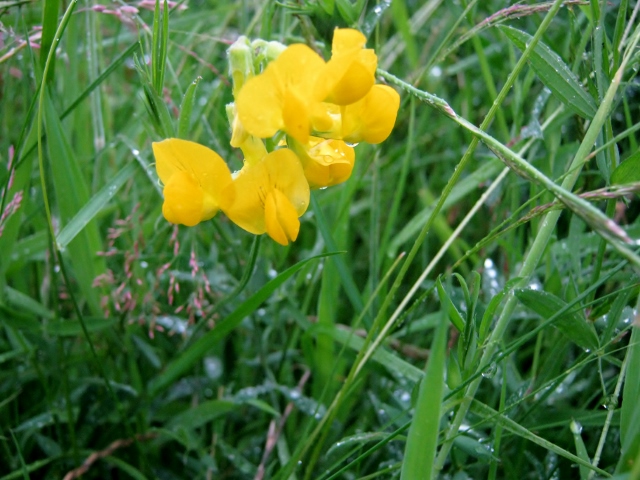
The first plant I saw was Greater Bird’s-foot Trefoil (Lotus pedunculatus)

IMG_5060Low cloud (640x480)

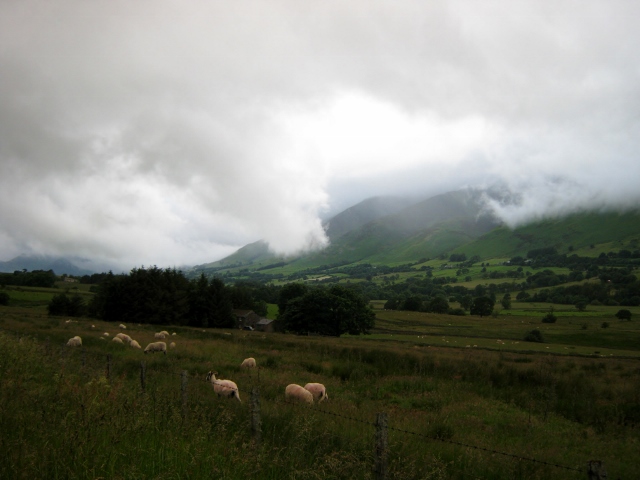
The cloud was low and everything was very wet but the fine rain soon stopped.

IMG_5061Spear Thistle (640x480)

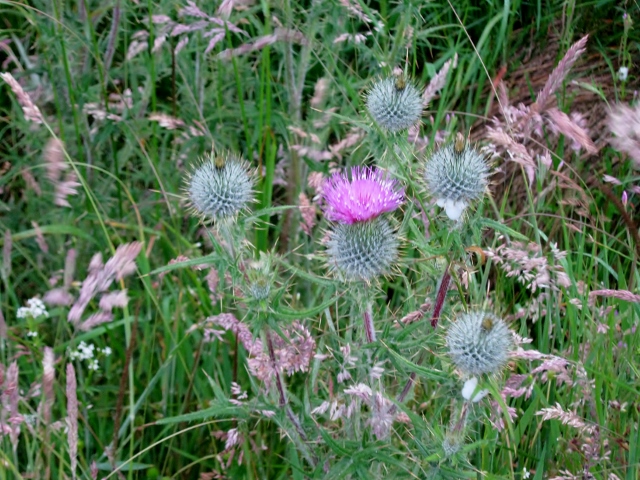
Spear Thistle (Cirsium vulgare) was everywhere – (as it is here at home)

IMG_5063Marsh and Spear Thistle (480x640)

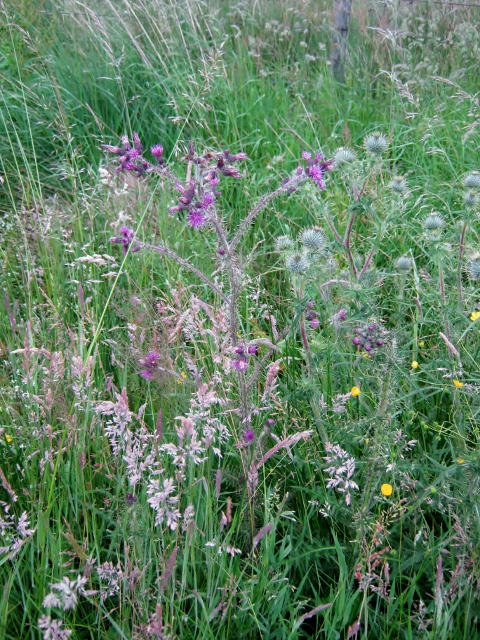
Marsh Thistle (Cirsium palustre) has smaller flower-heads and they are grouped together at the end of the stems. (A Spear Thistle is behind it)

IMG_5065Heath Bedstraw (640x480)

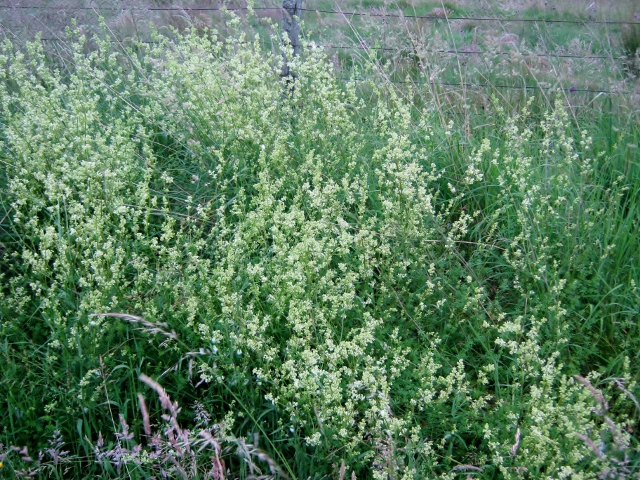
Masses of Heath Bedstraw (Galium saxatile)

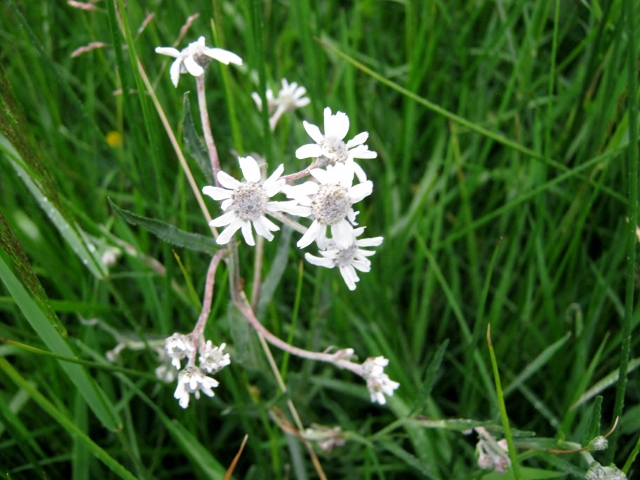
IMG_5069Sneezewort (640x480)

Sneezewort (Achillea ptarmica)

Sneezewort’s name ptarmica comes from the Greek word ptarmos which, surprisingly, means ‘sneezing’.  The plant looks grey and in the bad light that evening the flowers seemed almost luminous.  The upper stems are downy and the flower-heads are made up of white ray florets and greenish-white disc florets (though in this photo they look grey).  The leaves, which are hot to the taste, used to be used in salads.  In the Middle Ages Sneezewort was used to alleviate toothache.  Sufferers held the roots in their mouths which helped the toothache by ‘evacuating the rheum’ according to Nicholas Culpeper.  I can’t imagine how sneezing would help anyone with bad toothache!  Culpeper recommends sneezewort for people with stuffy heads.  The powder of the herb was ‘stuffed up the nose..’ which caused sneezing and ‘cleanses the head’.  Explosive!

IMG_5070Low Cloud (640x480)

More low cloud

We walked almost to the end of the lane but as it was getting quite dark we turned round, retraced our steps and returned to our cottage.

Thanks for visiting!


July (mainly) in Suffolk

Tags

, , , , , , , , , , , , , ,

This post is made up of photos of things I’ve seen in my garden during the last month.  The first few shots were taken during the last two days in June (I did say ‘mainly’!), when the weather suddenly got much warmer and the sun appeared.  Summer arrived and we all felt much better!

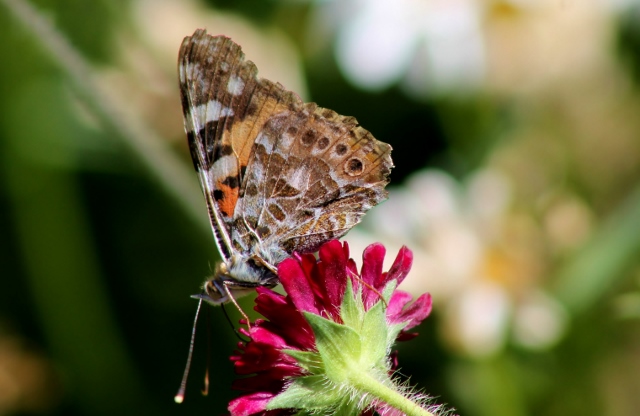
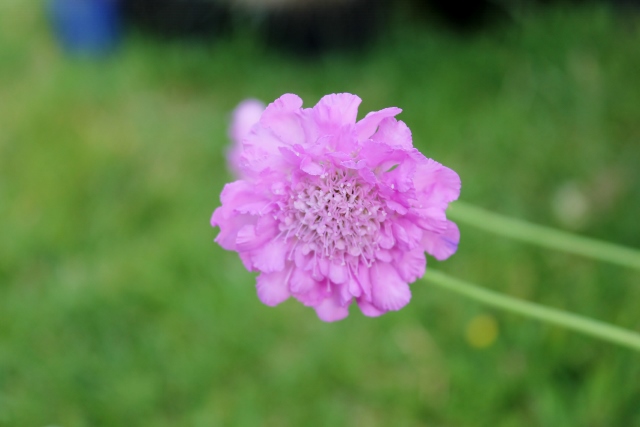
IMG_2329Painted Lady on scabious (2) (640x416)

Painted Lady butterfly (Vanessa cardui) on a scabious flower

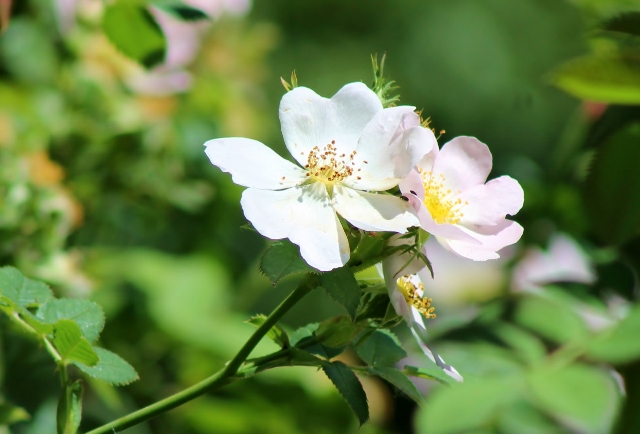
IMG_2333Dog Rose (2) (640x434)

Dog Rose flowers (Rosa canina) next to the big pond

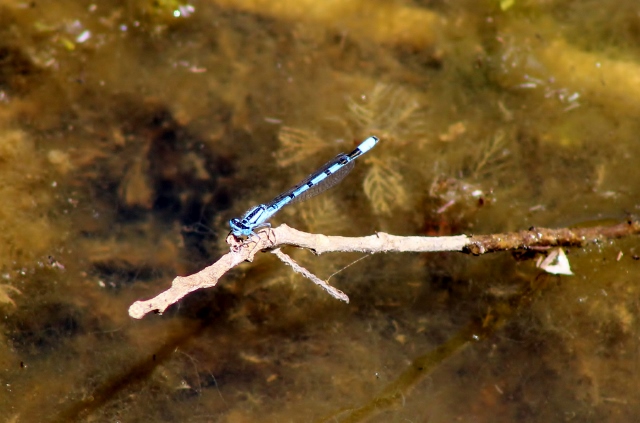
IMG_2335Common Blue Damselfly (640x423)

Male Common Blue damselfly (Enallagma cyathigerum)

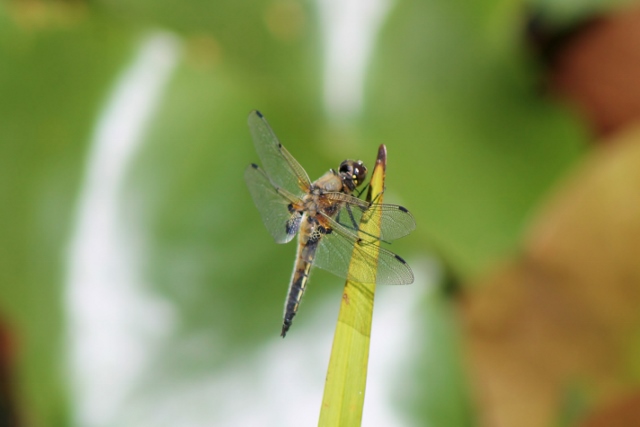
IMG_2341Four-spotted chaser (640x427)

Four-spotted Chaser dragonfly (Libellula quadrimaculata)

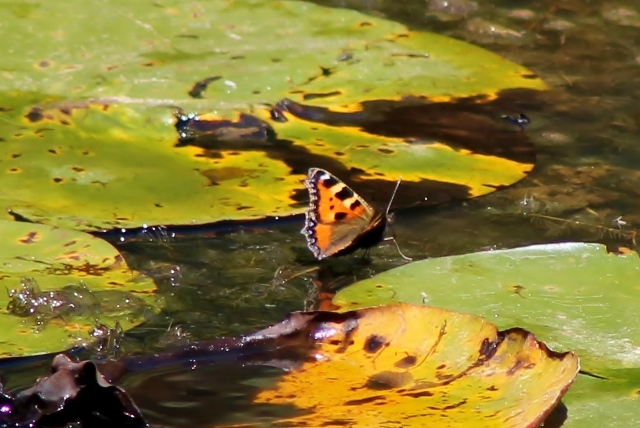
IMG_2340Small Tortoiseshell on pond (2) (640x428)

Small Tortoiseshell butterfly (Aglais urticae) on big pond

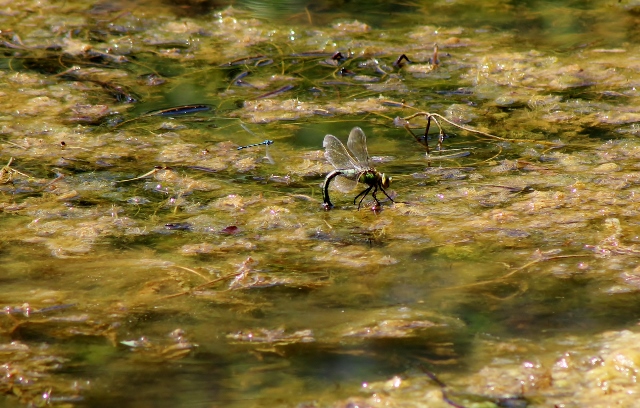
IMG_2348Female Emperor Dragonfly (640x408)

Female Emperor dragonfly (Anax imperator) laying eggs on the big pond

We have Ground Elder in our garden.  I wish we didn’t but there is little chance of us ever getting rid of it here so we will have to try to weaken it and stop it from spreading further.  It is in the ditch between us and the school house next door and also in the ditches at the front of the house and under the hedge.  It is trying to spread into the lawn at the front but we strim and mow as much as possible and try to stop it from flowering.  We often fail in this.

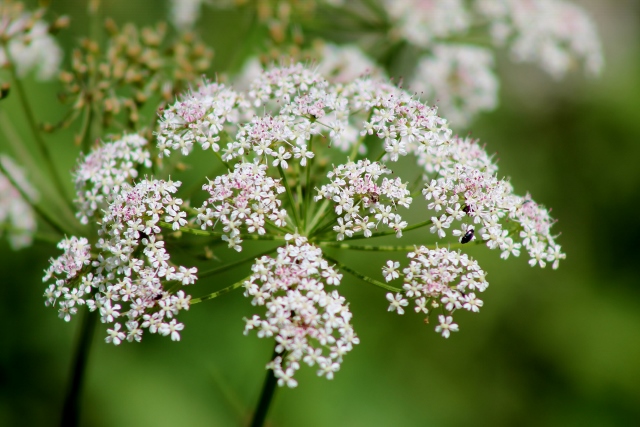
IMG_2350Ground Elder (640x427)

Ground Elder flower! As you see it is a pretty umbellifer with slightly pink buds.

I eradicated it from a former garden by digging it out over a period of a few years.  It was in a flower bed so therefore easier to deal with.

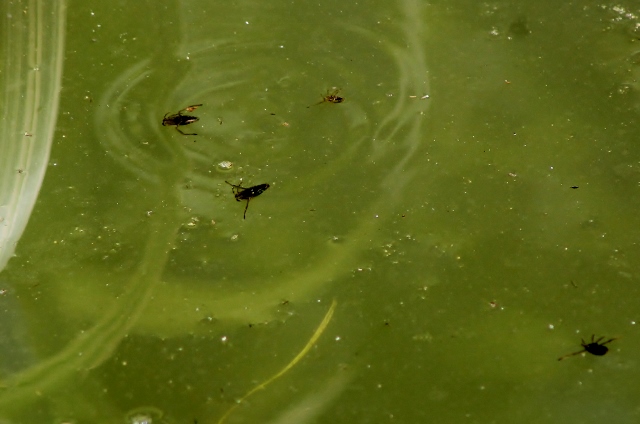
IMG_2351 (2).jpgCommon Backswimmers (640x424)

Common Backswimmers (Notonecta glauca) in the front pond. This pond completely dried up while we were away on holiday but is starting to fill again because of the torrents of rain we’ve had during the past week or two.

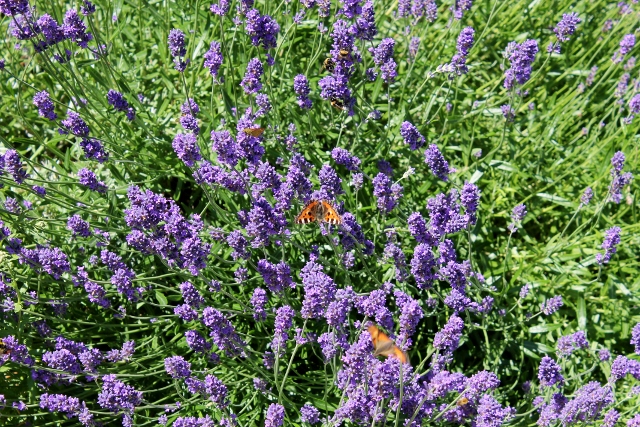
IMG_2359Insects on lavender (640x427)

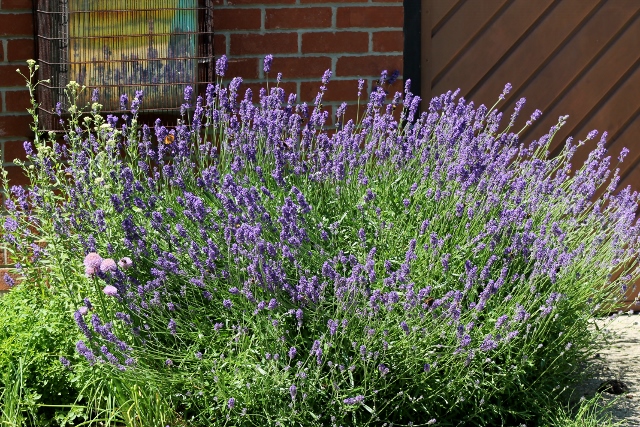
Insects on Lavender ‘Hidcote’. There haven’t been as many insects this year as last, but the lavender attracted quite few while it flowered. It is a fabulous insect magnet!

IMG_2354Lavender (640x427)

Lavender growing at the front of our house

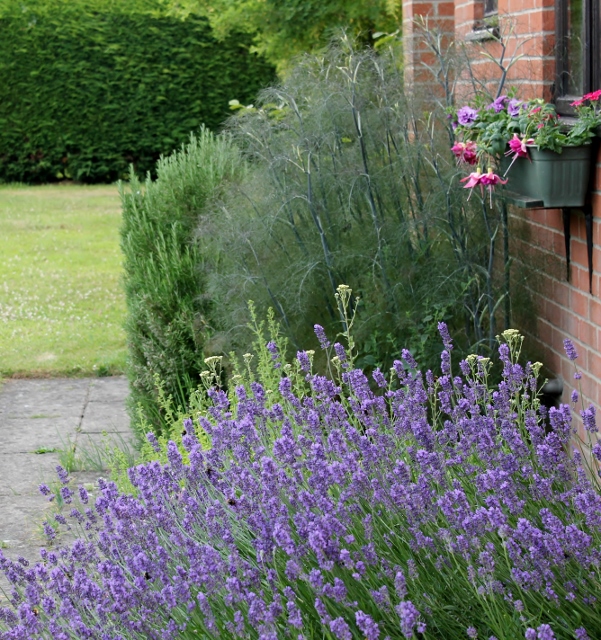
IMG_2373Herb garden (601x640)

My herb garden

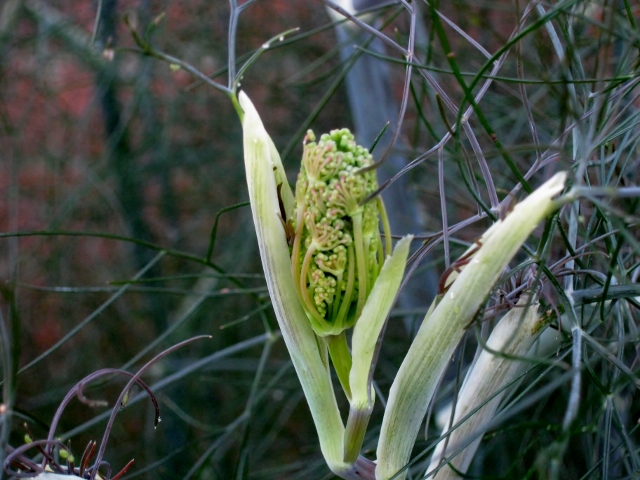
IMG_4908Bronze Fennel flower bud (640x480)

Bronze Fennel flower bud. When we returned form our week away all the leaves on the fennel had died and the flowers were drooping. I watered the herbs and then the rains and cool weather returned; the fennel is still alive (it has an enormous tap root) but no leaves at all for now. The flowers are fine and are being enjoyed by wasps and hoverflies.  A neighbour came in to water the plants in the greenhouse while we were away (tomatoes mainly) but we couldn’t expect him to water all our plants – that would be asking much too much!

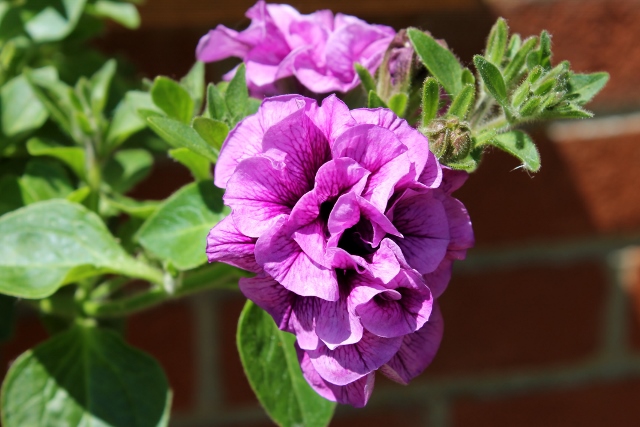
IMG_2355Tumbelina Petunia (640x427)

A pretty Tumbelina Petunia in the window box.  It has a lovely gentle scent.

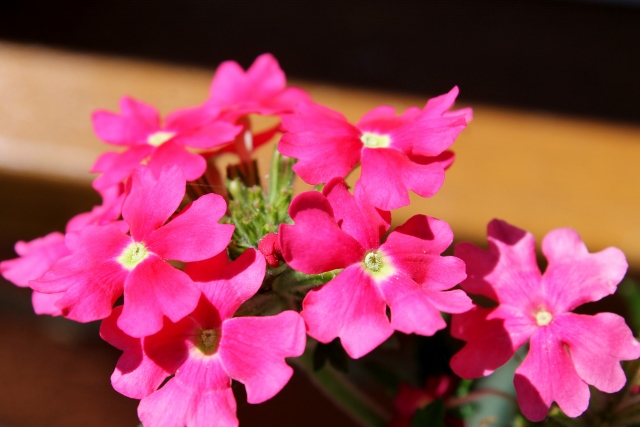
IMG_2356Verbena (640x427)

A very bright pink Verbena in the window box with the petunia. The hoverflies love it very much. I wish it was scented.

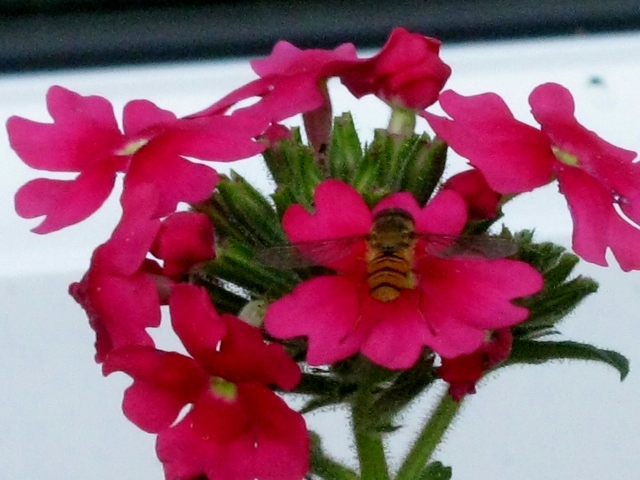
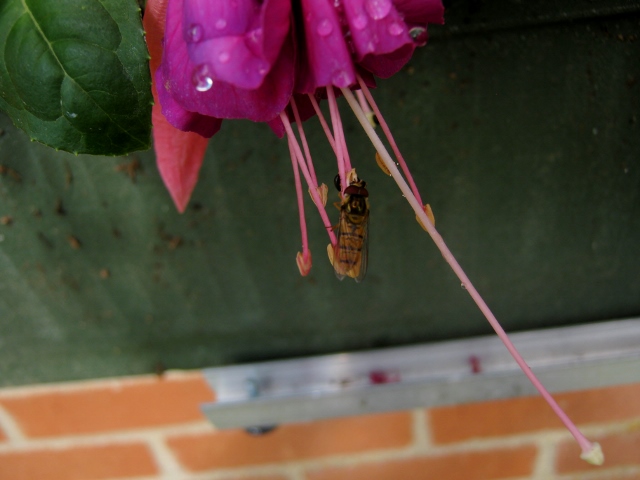
IMG_4917Hoverfly Episyrphus balteatus on verbena (640x480)

Hoverfly Episyrphus balteatus (I think!) on verbena

IMG_4926Hoverfly on Fuchsia (640x480)

A hoverfly on the Fuschia that is also in the window box. This photo was taken after we had begun to have rain at last after a long dry spell.

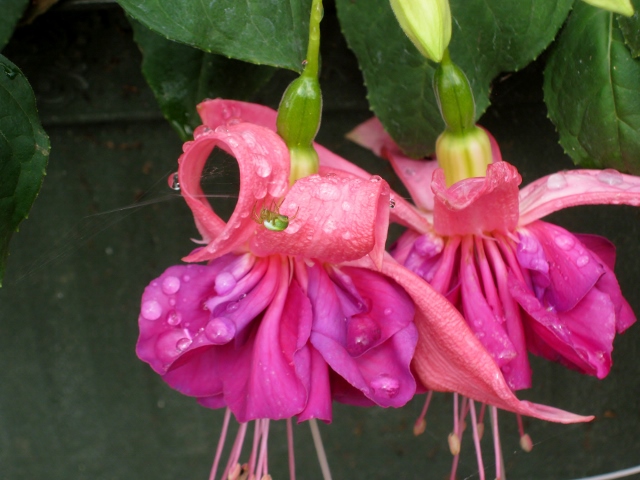
IMG_4923Spider on fuchsia (640x480)

A beautiful, tiny green spider on the fuschia. I think this is a Green Orb-weaver (Araniella curcurbitina).

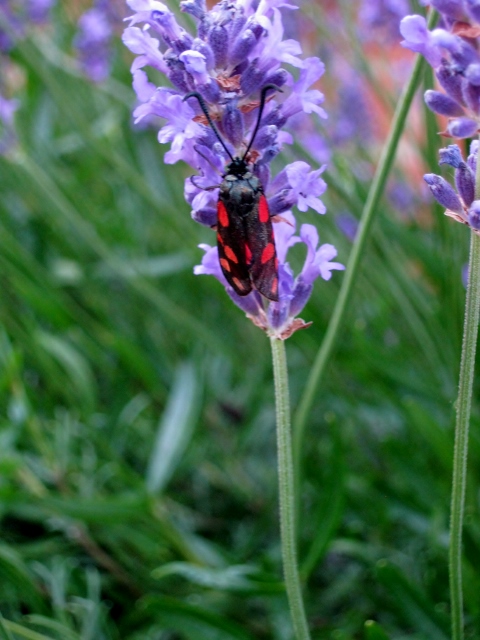
IMG_4915Six-spot Burnet (480x640)

A Six-spot Burnet moth (Zygaena filipendulae) on lavender

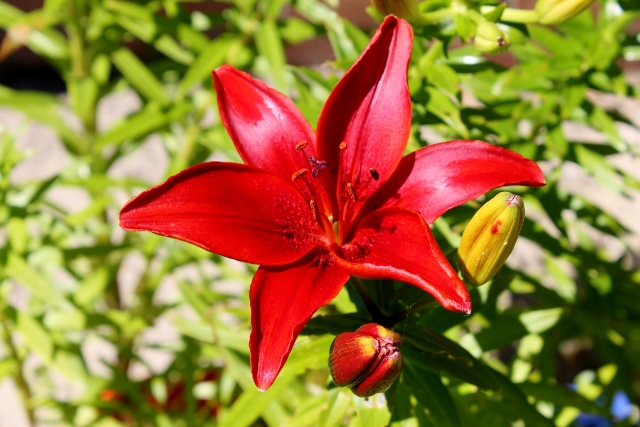
IMG_2358Lily (640x427)

One of my unscented Asian lilies.

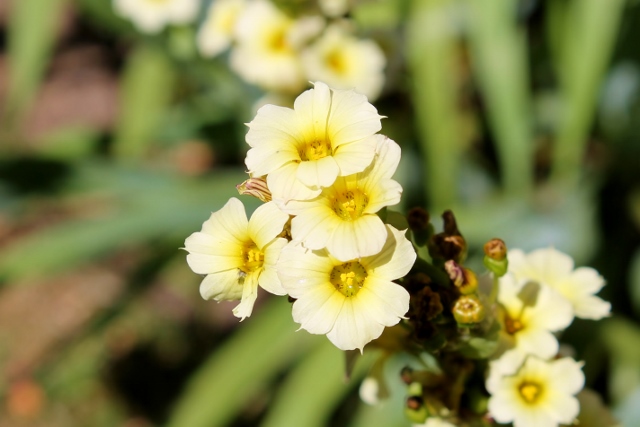
IMG_2369Sisyrinchium striatum (2) (640x427)

Sisyrinchium striatum. These put on a good show this year. Many years ago I had these growing in my garden and loved them as they seemed to go with all the flowers in the border. We moved to Somerset for 18 months and then moved here in 2006. Three years ago I found a seedling sisyrinchium in the garden which appeared from nowhere.  I potted it up and grew it on; it flowered the following year and I let it go to seed. I sprinkled the seed on my border and last year I found lots of plants growing which flowered beautifully this year. Free flowers!

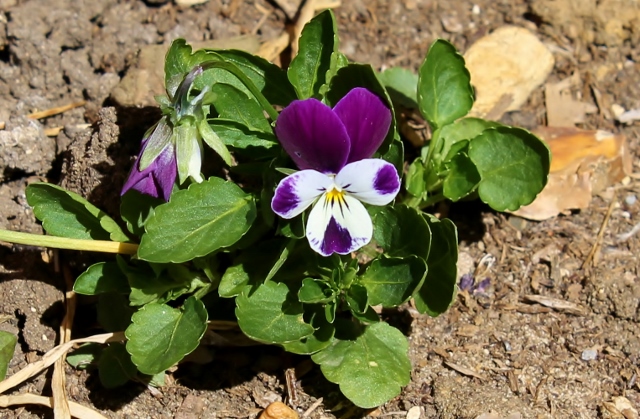
IMG_2370Viola (2) (640x419)

A pretty Viola. These seed themselves all over the garden.

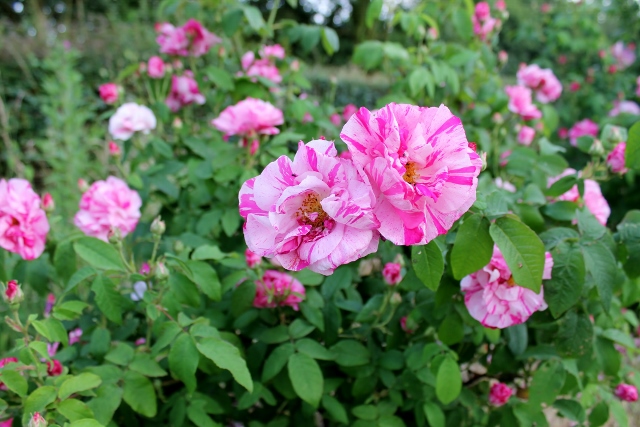
IMG_2376Rosa Mundi (640x427)

I have two Rosa Mundi bushes ( a gift from Richard) and they both flowered well this year. It is sad that they have such a short flowering period but it is worth having them for their pretty, painted petals.

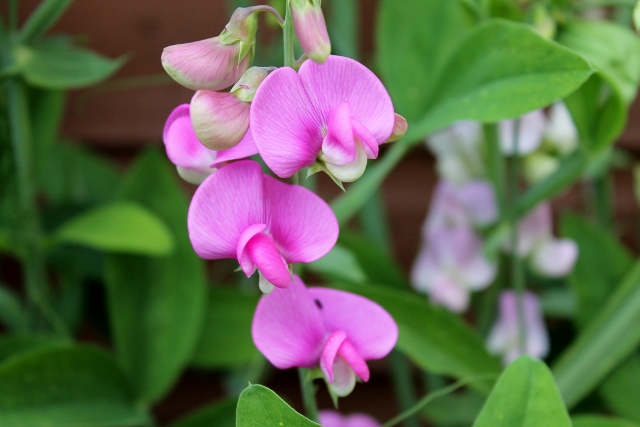
IMG_2378Perennial Sweet Pea (640x427)

Perennial Sweet Pea

IMG_2379Scabious (640x427)

Scabious flower

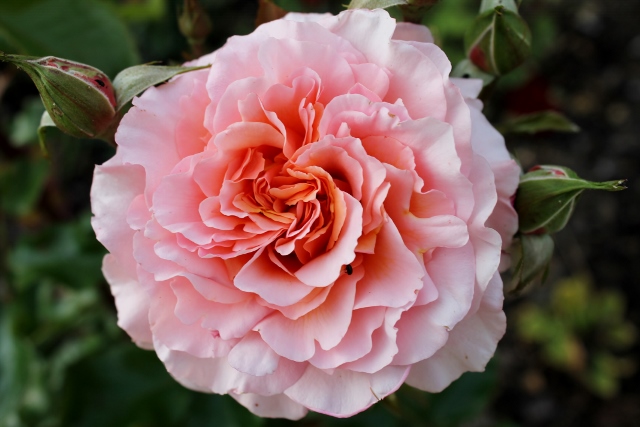
IMG_2382Rose (640x427)

A pretty rose from Richard’s border

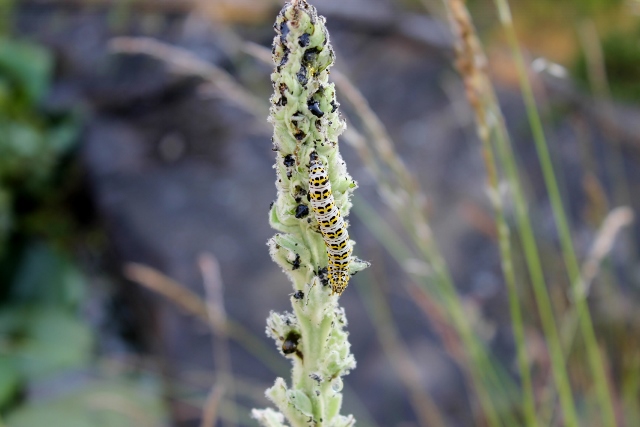
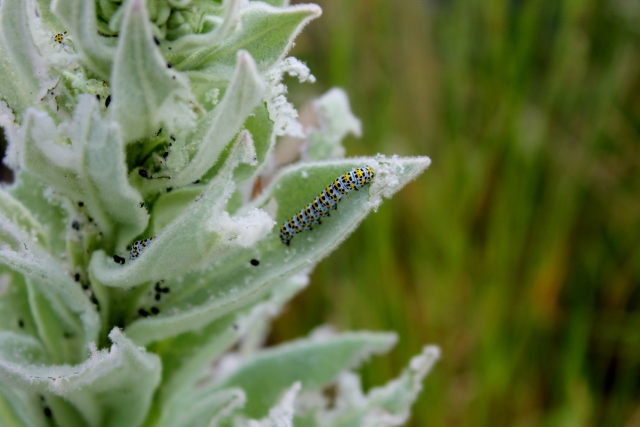
In a former post I posted a photo of a mullein flower infested with Mullein moth caterpillars.  Here is another photo taken a week or so later when the grubs were much bigger.

IMG_2380Mullein (640x427)

Mullein Moth caterpillar (Shargacucullia verbasci) on what was left of a Mullein flower spike

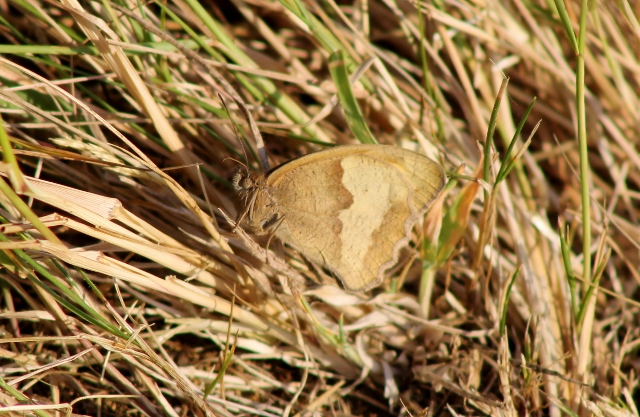
IMG_2386 (2)Meadow Brown (640x417)

A Meadow Brown butterfly (Maniola jurtina). Wonderful camouflage!

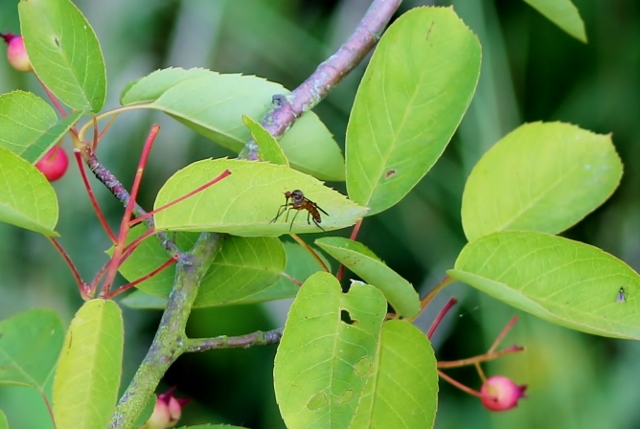
IMG_2387Fly on Amelanchier (2) (640x429)

A fly on the Amelanchier tree. I cannot identify this one properly though it looks a little like Empis digramma, a fly which hunts other flies in long grass and other lush vegetation and spears them with its proboscis.

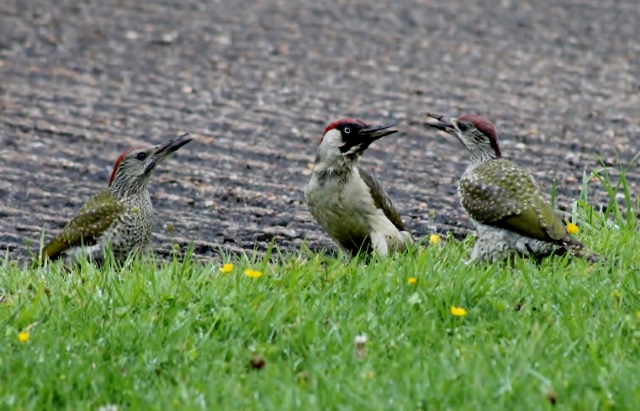
IMG_2404Adult and fledgling Green Woodpeckers (2) (640x411)

I took this photo of the Green Woodpecker (Picus viridis) and its 2 fledglings this evening. The adult was trying to teach its young how to find ant’s eggs.

This last photo wasn’t taken in my garden but in the grounds of the Norfolk and Norwich Hospital where I had to go for a check-up on the day before we went on holiday.  I didn’t know what else to do with it!

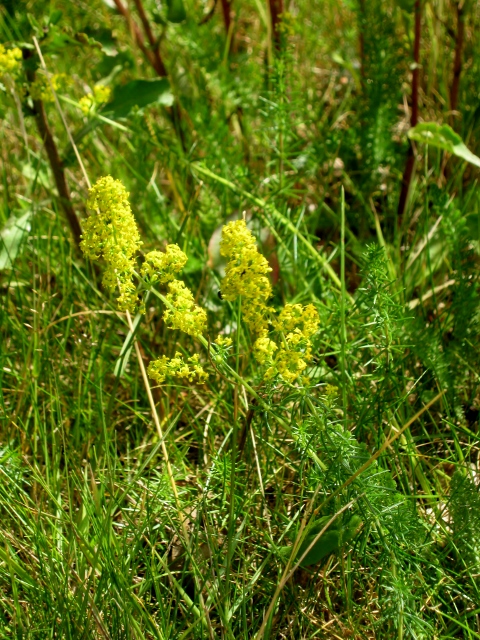
IMG_4929Lady's Bedstraw (480x640)

Lady’s Bedstraw (Galium verum)

Thank’s for visiting!


Aira Force – Lake District Holiday

Tags

, , , , , , , , , , , , , ,

We had a slow start to our first day in the Lake District.  We were tired after our long journey of the day before and the weather wasn’t good enough that morning to tempt us out early.  By midday however, the rain had stopped and the clouds had lifted and we thought we would have a short excursion to Ullswater and look at Aira Force.

Ullswater is the second largest lake in the Lake District and last Easter we took a boat trip on it.  I wrote about our Lakes holiday last year but unfortunately that post has gone missing.  I have been sent copies of my missing posts by my friend Heather (thank-you Heather!) but haven’t yet copied them back into my blog.  (Unfortunately, all your wonderful comments have gone for good 😦 ).

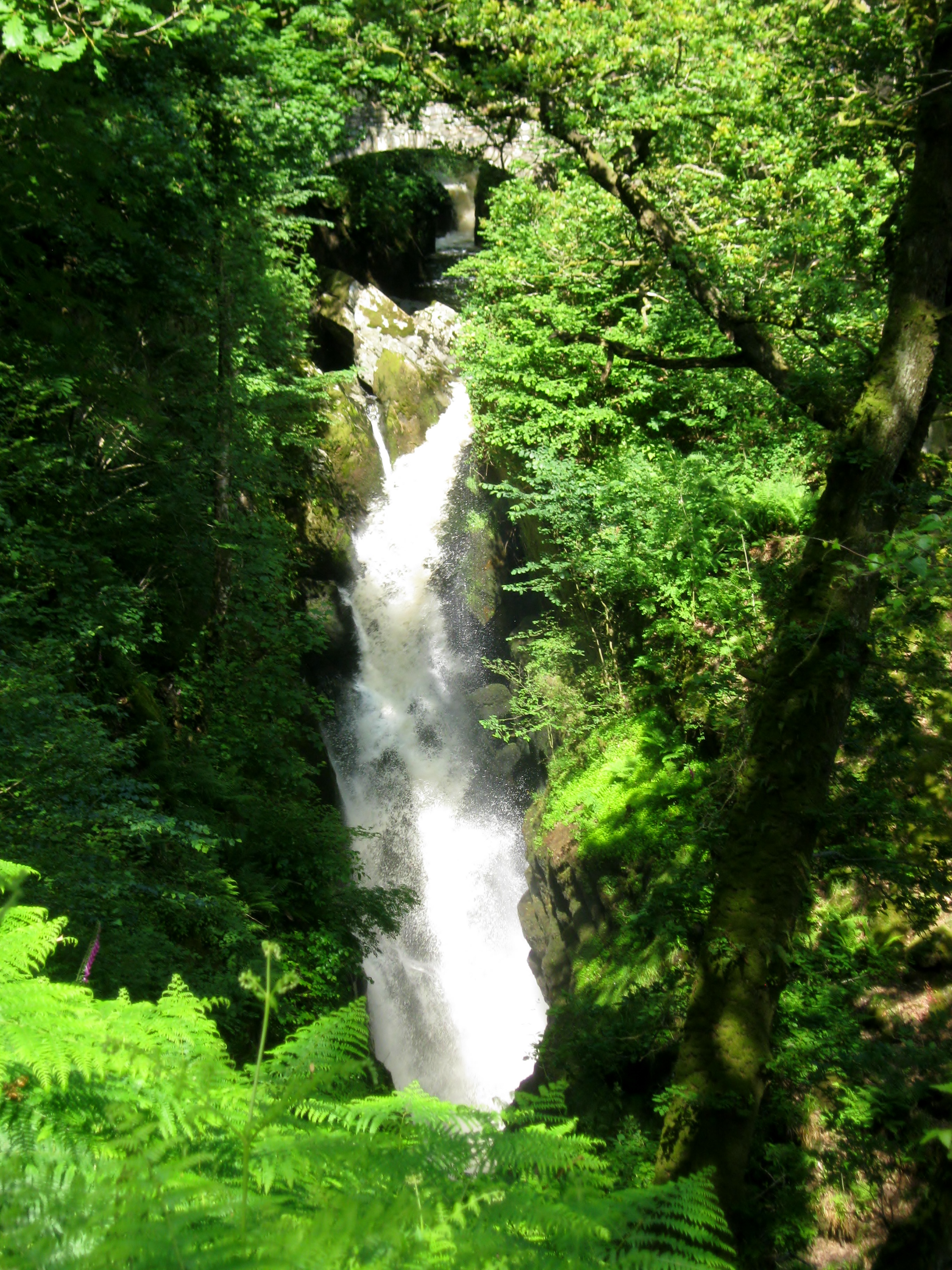
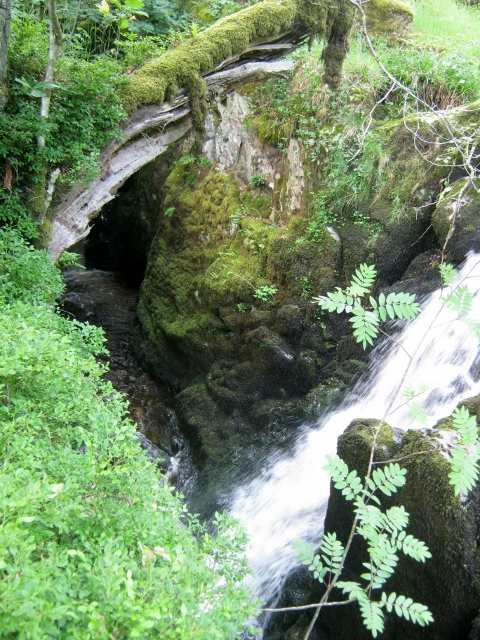
Aira Force is a waterfall situated in woodland on the northern shore of the lake and is now in the care of the National Trust.

After a short drive we found the National Trust car park and then started to walk up through woodland towards the force.

IMG_4934Aira Force (640x480)

Not easy to see, but this is the Aira Beck as it flows through woodland at the bottom of the hill. It will shortly enter the lake.

IMG_4935At Aira Force (480x640)

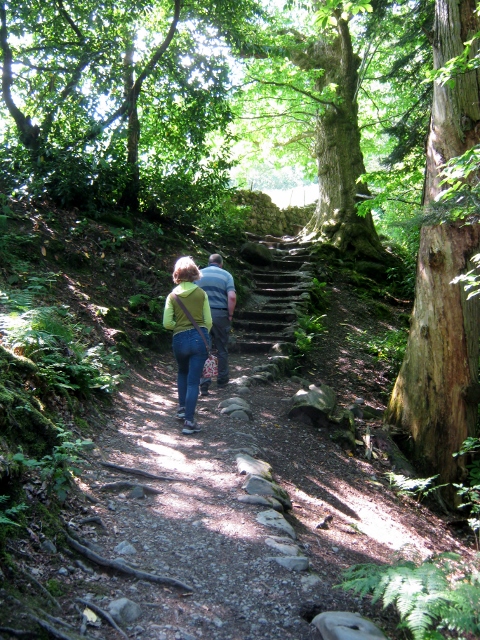
Richard and Elinor walking ahead of me up the path.

This area was once owned by the Howard family who still live in Greystoke Castle near by.  In the 18th century they renovated an old hunting lodge (a former pele tower) and created a sporting estate around it.  They landscaped the area around the force, planting over half a million native and non-native trees.  They made paths and bridges through the woodland and used the place as a pleasure garden.

IMG_5007The path (480x640)

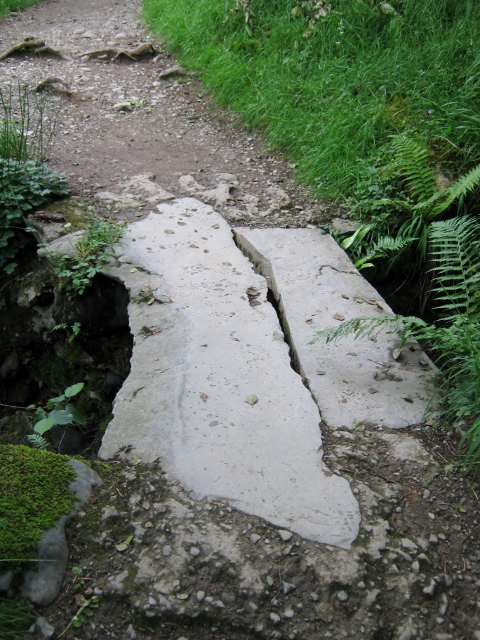
Stone slabs used as a bridge across a streamlet

IMG_4974Aira Force (480x640)

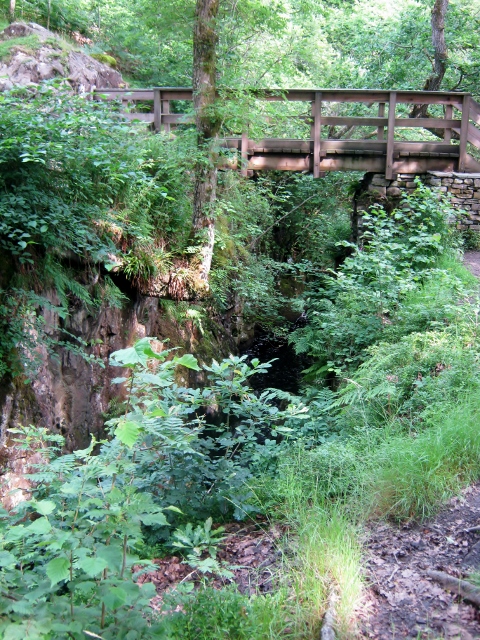
Wooden bridge over a narrow chasm

IMG_5017Aira Force (480x640)

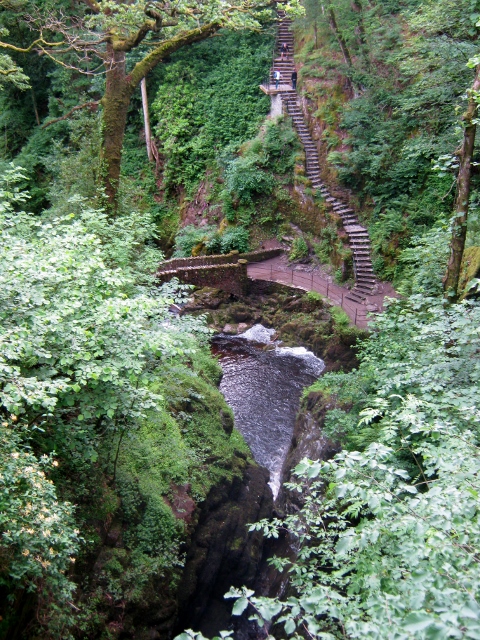
Steps and viewing platforms. We didn’t go down the steps as Elinor finds them difficult to manage.

IMG_4936Aira Force

Typically for me, the one shot I wanted to come out clearly, clearly hasn’t! I haven’t down-sized this one in an effort to make it look a little better. I only had my little camera with me and the sunlight was causing such a glare too. That’s probably enough excuses.

The main force drops about 70′ from below a footbridge.

IMG_4942Aira Force (480x640)

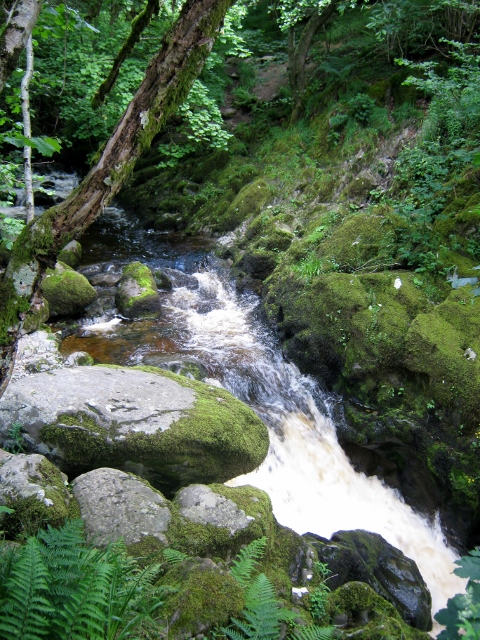
Further up in the woods are smaller cascades.

IMG_4943Aira Force (640x480)

The sound of the falling and rushing water was glorious.

IMG_4953Aira Force (640x480)

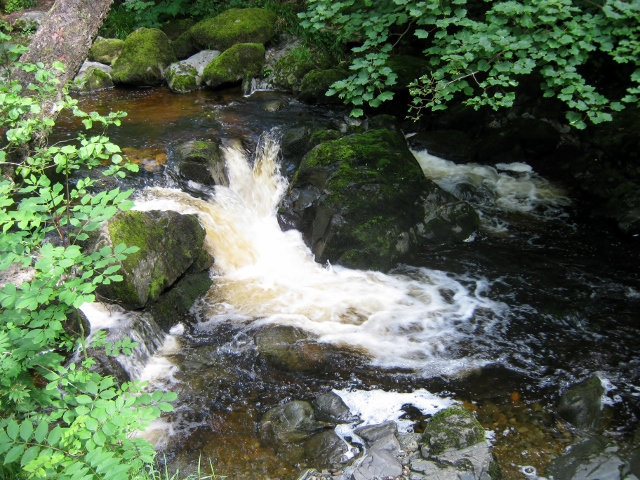
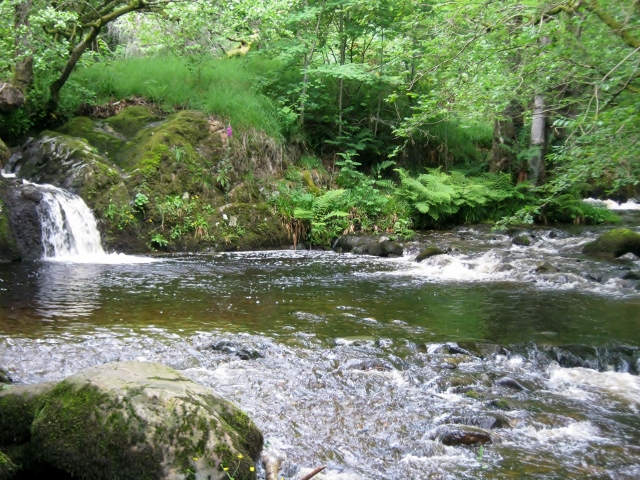
This pool was good to sit next to.

IMG_4952Aira Force (640x480)

IMG_4958Aira Force (640x480)

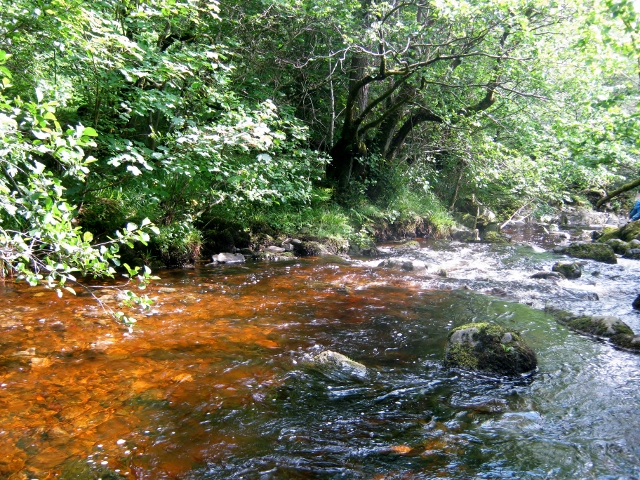
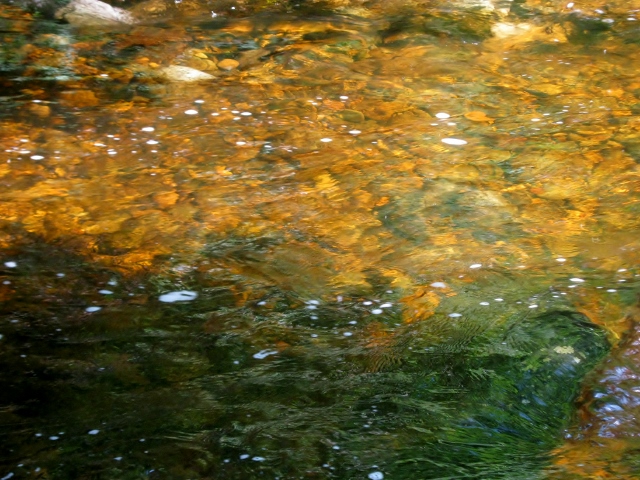
The water is amber-coloured.

IMG_4955Elinor sketching (480x640)

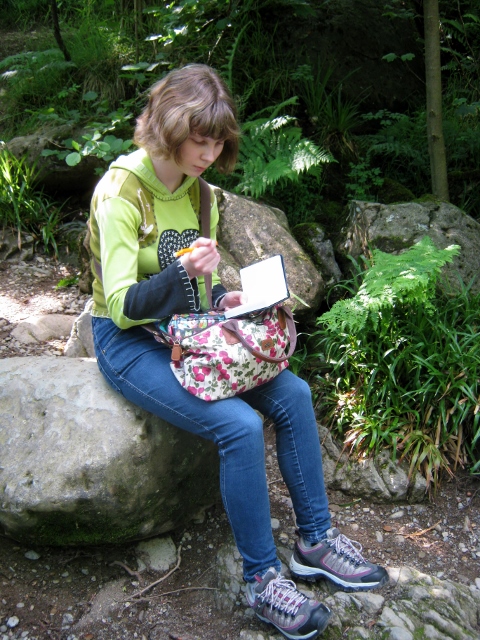
Elinor did some sketching while we were there.

IMG_4983Aira Force (640x480)

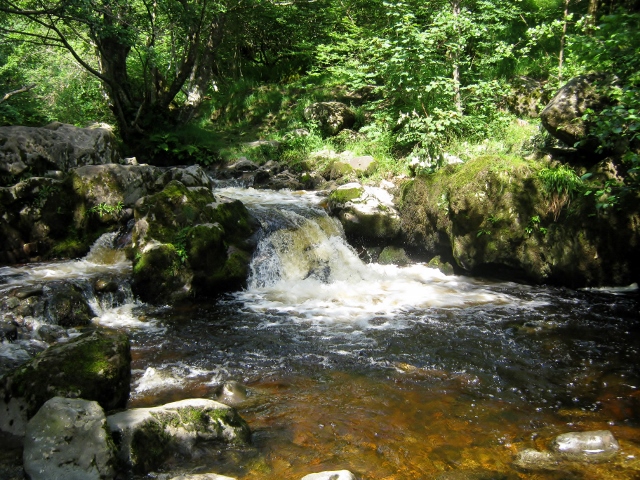
This was my favourite place along the beck

IMG_4973Aira Force (480x640)

There was thick moss everywhere….

…and liverwort too.

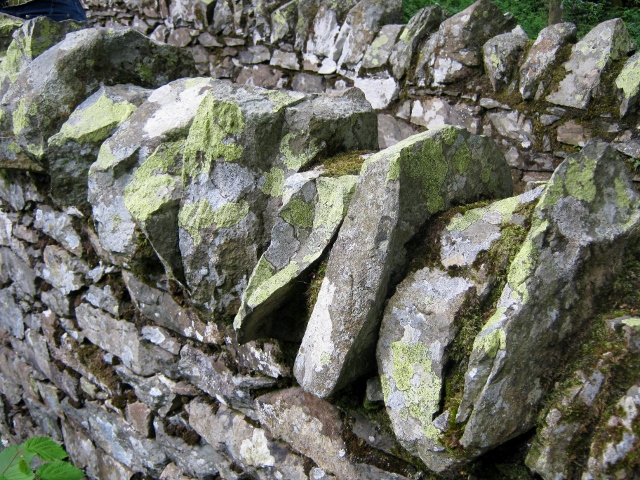
IMG_5012Stone parapet (640x480)

A stone parapet to a bridge was covered in lichen.

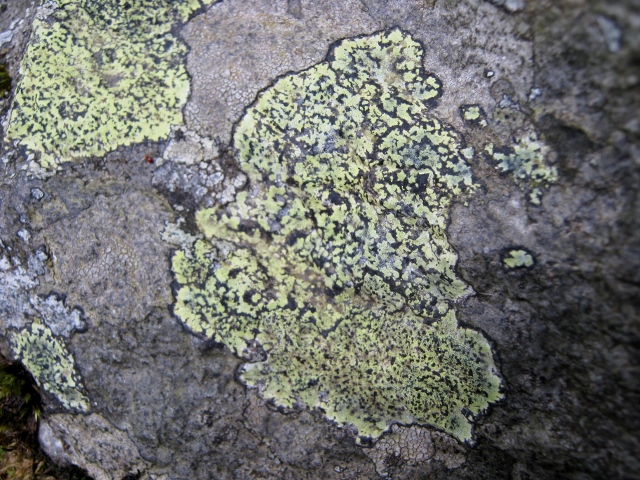
IMG_5011Map Lichen perhaps (640x480)

I think this may be Map Lichen (Rhizocarpon geographicum).

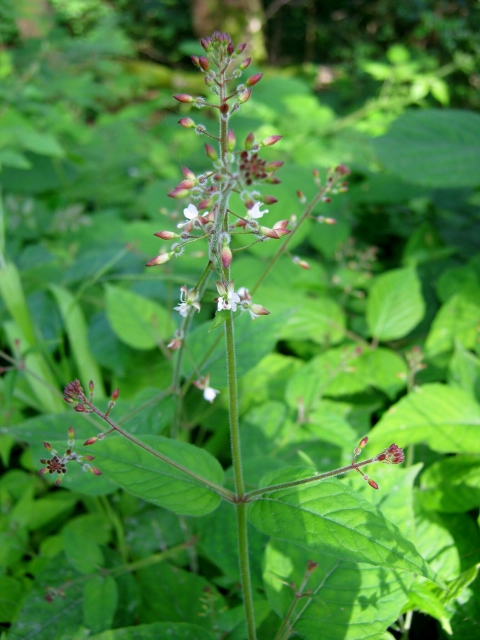
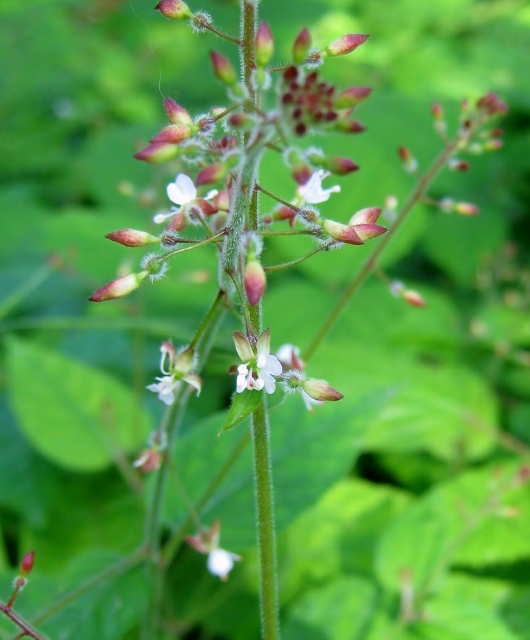
IMG_4937Enchanter's Nightshade (480x640)

Enchanter’s Nightshade (Circaea lutetiana) grew everywhere.

IMG_4937Enchanter's Nightshade (2) (530x640)

It has tiny flowers which produce burs once pollinated.

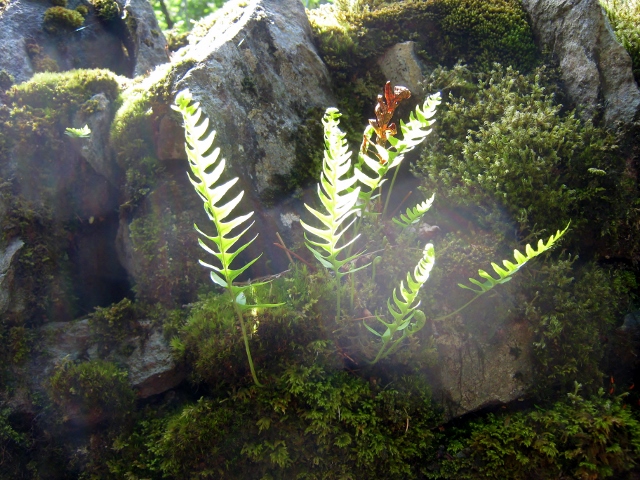
IMG_4944Bracken (640x480)

Bracken and ferns were growing alongside our path. I like the way the sunlight caught this fern.

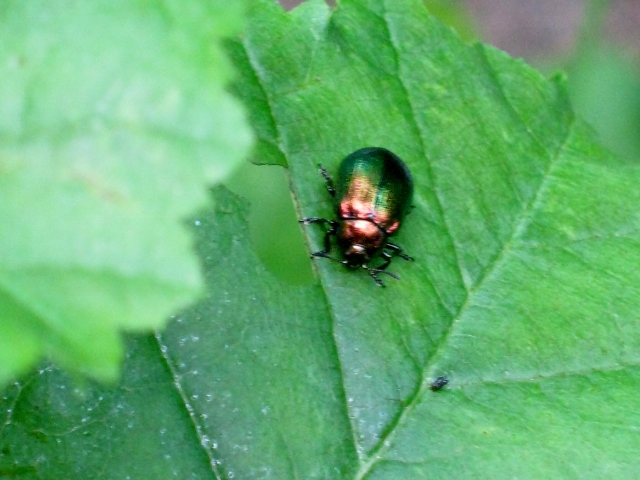
IMG_4960Chrysolina beetle (640x480)

A Chrysolina beetle of some sort.

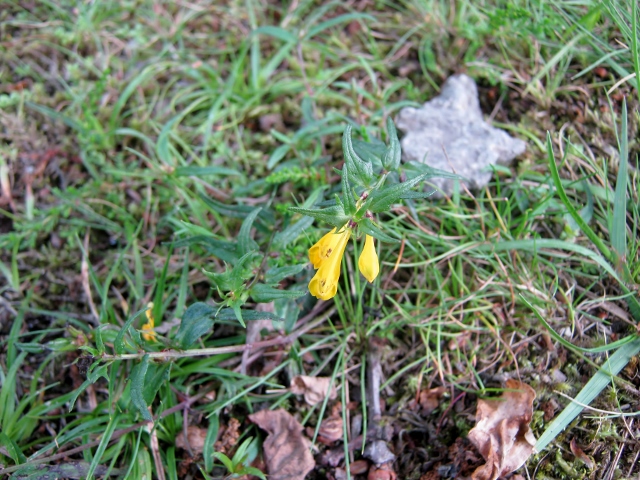
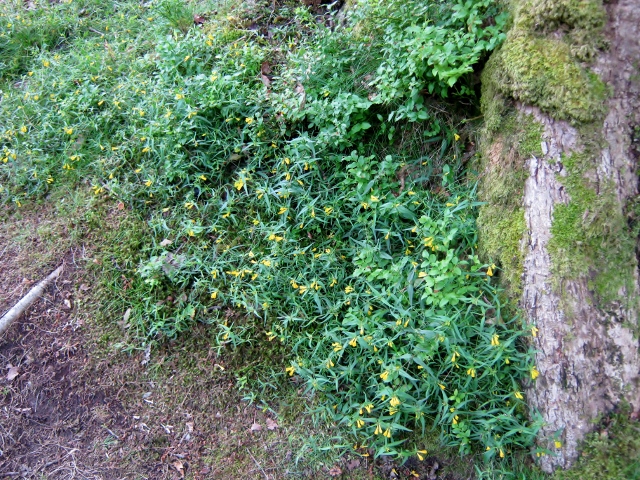
IMG_4970Common Cow-wheat (640x480)

A flower I had never seen before – Common Cow-wheat (Melampyrum pratense)

IMG_4972Common Cow-wheat (640x480)

There was rather a lot of it!

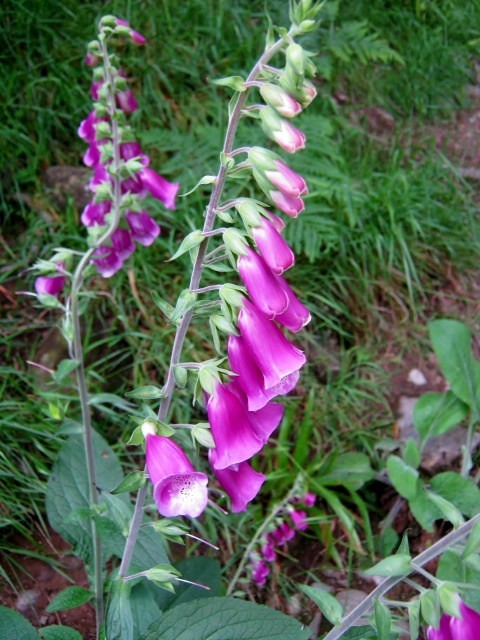
IMG_4980Foxgloves (480x640)

Foxgloves (Digitalis purpurea)

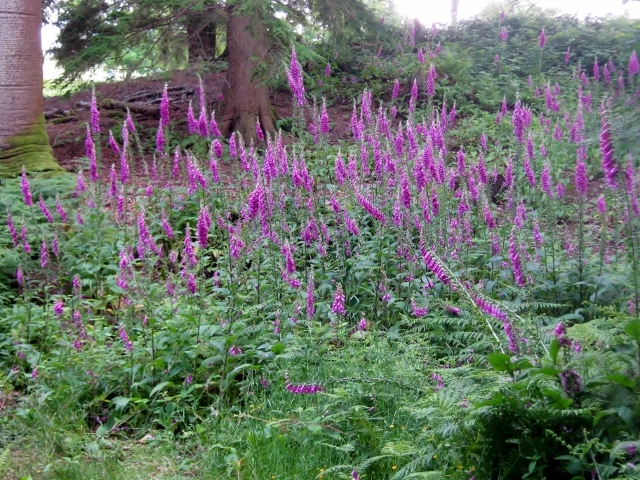
IMG_5028Foxgloves (640x480)

A bank of foxgloves

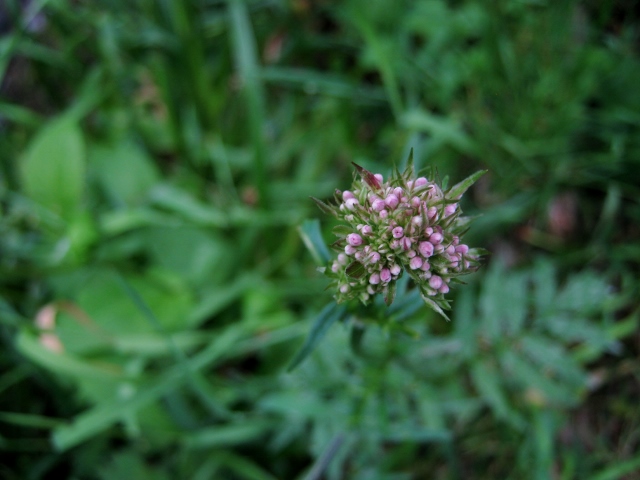
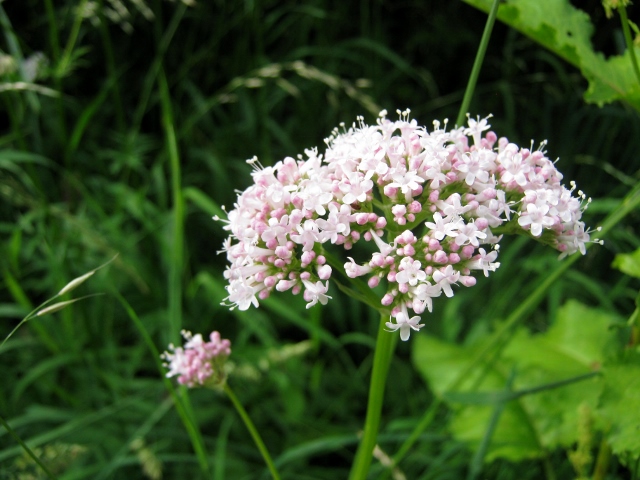
IMG_4986Common Valerian (640x480)

Common Valerian in bud (Valeriana officinalis)

IMG_5038Common Valerian (640x480)

Common Valerian in flower

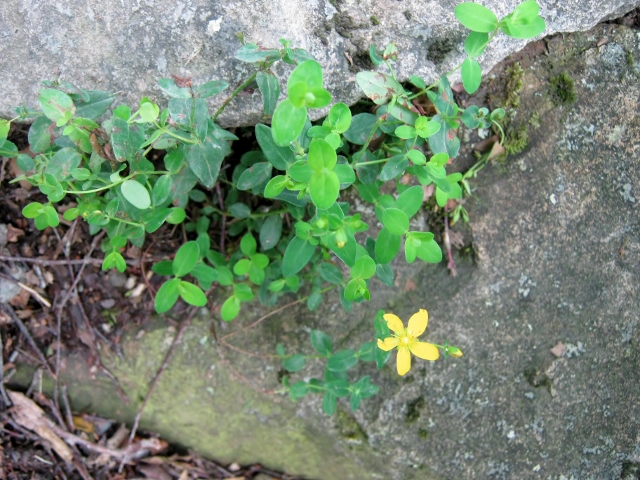
IMG_4998St John's-wort (640x480)

I thought this might be Trailing St John’s-wort (Hypericum humifusum) but the ID description tells me the leaves should have translucent dots and I didn’t see any dots.

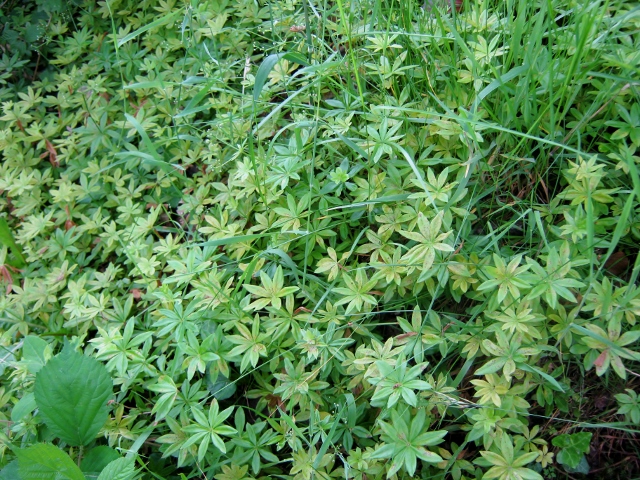
IMG_5018Woodruff perhaps (640x480)

I think these are Woodruff leaves (Galium odoratum)

I saw so many different plants and flowers, grasses and sedges, many of which I have included in posts from home so haven’t included them here, but some I still have no idea what they are despite researching for some time.

IMG_4968Unknown (640x480)

This plant for example! (The tri-foliate leaf near my hand was not part of the plant).

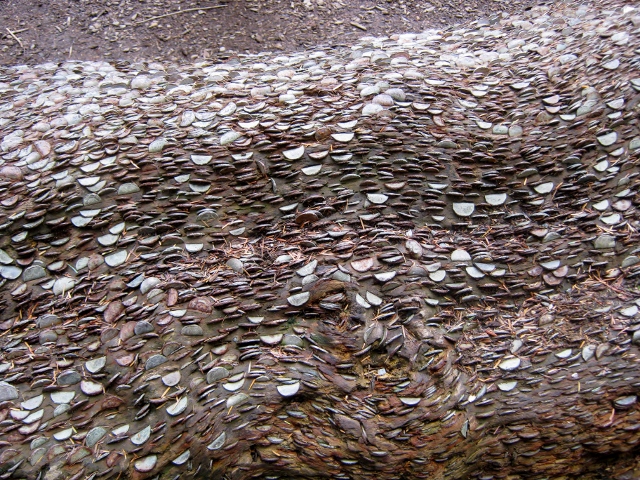
IMG_5022Coins in log (640x480)

On our way back from the waterfall we found this fallen log covered in coins.

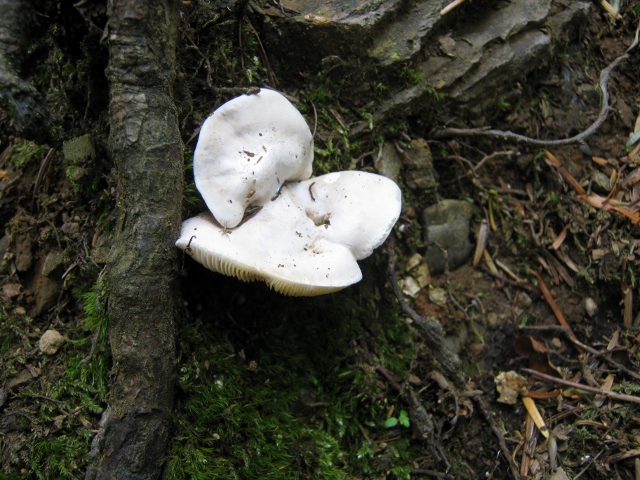
This is a ‘Wish Tree’.  People hammer coins into it with a stone from the site and hope that their wish comes true.  We didn’t have any wishes and anyway, I was more interested in the fungi growing on the log.

This slideshow requires JavaScript.

I saw another fungus growing at the base of a tree.

IMG_5021Fungus (640x480)

If anyone can suggest what this or any of the other fungi are I would be very grateful.

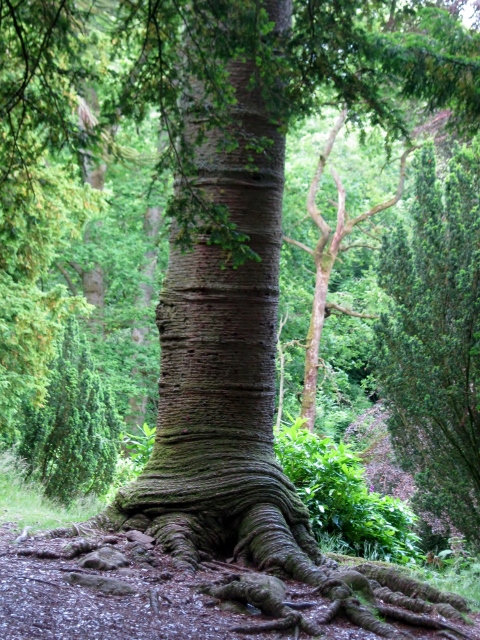
Near to the car park we found the Arboretum that the Howard family had planted in 1846.  They planted over 200 specimen conifers (firs, pines, spruces and cedars) from all over the world.  Apparently there is a Sitka Spruce (Picea sitchensis) that is now 118′ tall though I didn’t see it.  What I did see was a Monkey Puzzle tree (Araucaria araucana) that looked like it’s bark was sliding down like a baggy sock.

IMG_5029Monkey Puzzle tree (480x640)

I used to see Monkey Puzzles all over the place where I grew up. Trees that had been planted in the 19th century in parks and gardens were fully mature when I was a girl in the 60’s and 70’s. I don’t ever remember looking at them closely so I don’t know if this is what all their trunks look like.

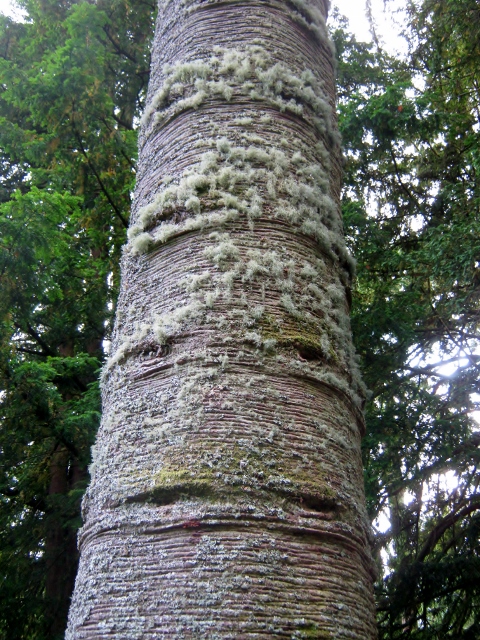
IMG_5031Moss and lichen on Monkey Puzzle (480x640)

Moss and lichen were growing on one side of the trunk.

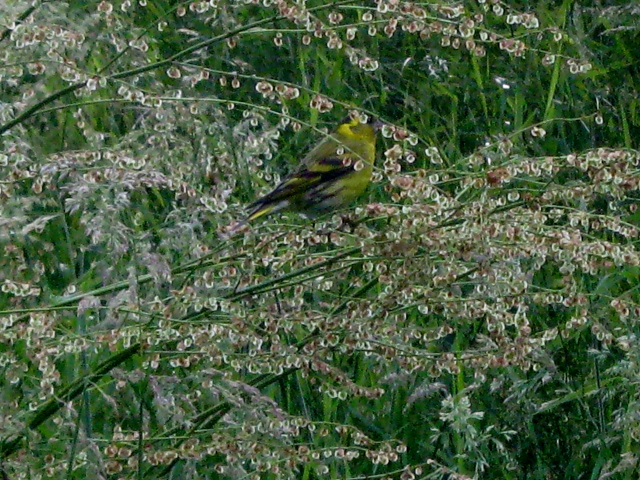
IMG_5033Siskin (640x480)

I saw a Siskin (Carduelis spinus) hiding in a plant I was wanting to get closer to but didn’t because of the Siskin!

I took a couple of pictures of the fells as we returned to the car.

IMG_5034Ullswater (640x480)

Ullswater in the distance.

IMG_5035Fells near Ullswater (640x480)

I would love to be able to walk up one of these before I get too old!

Thanks for visiting!
Wyken Hall Gardens

Tags

, , ,

IMG_4848Wyken Hall (640x480)

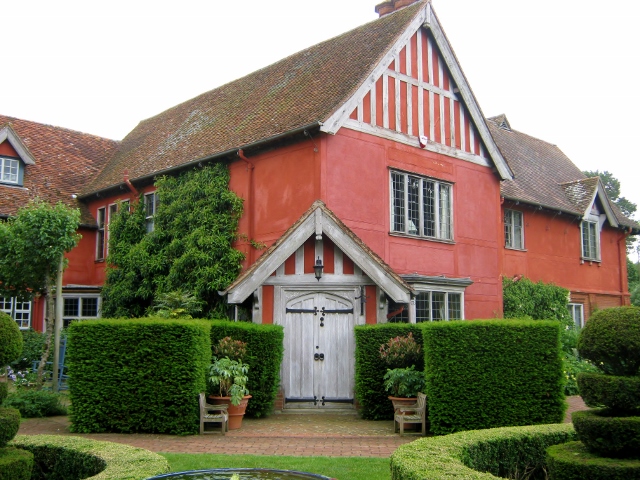
Wyken Hall

On 19th June Richard, Elinor and I visited Wyken Hall Gardens in Suffolk.  This visit was to celebrate our 21st wedding anniversary of the day before.  We never buy each other gifts on our anniversary unless there is something we both would like to have for the house or the garden, for example.  We usually plan an outing to a place we’d like to see or we go out for a meal.  This year we decided on a trip to Wyken Hall Gardens.

IMG_4835Wyken Hall (640x480)

Wyken Hall

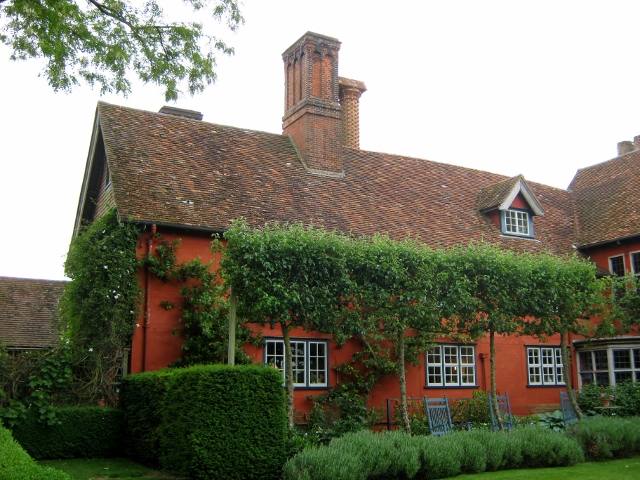
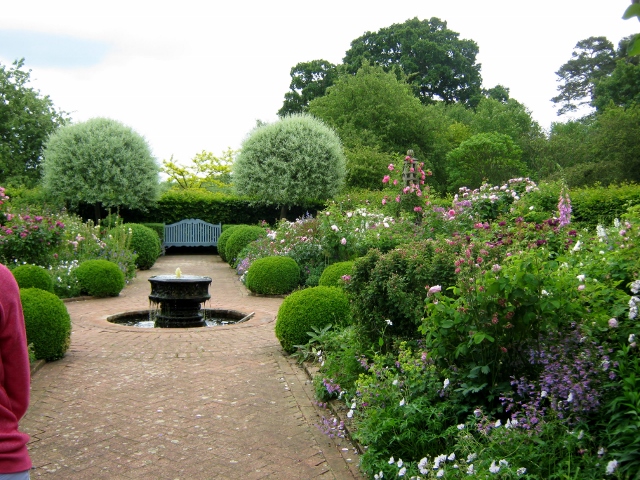
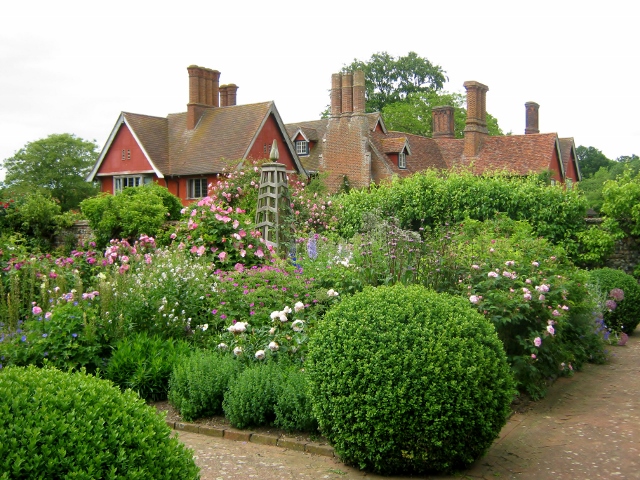
Wyken Hall is an Elizabethan manor house owned by Sir Kenneth and Lady Carla Carlisle.  The house itself isn’t open to the public but the 4 acre gardens are.  The house dates from 1570 with additions being made to it in 1630 and 1680 and then major works were carried out in 1920.

IMG_4833Wyken Hall (640x480)

Lady Carlisle comes from the USA and she designed this area to look like a southern veranda. She brought 5 rocking chairs over from Mississippi and then the row of Spartan apple trees were espaliered high so as not to obscure the view from the house.

The Royal Horticultural Society (RHS) says it is one of the best modern private gardens in the country.

IMG_4852Wyken Hall garden (640x480)

The Rose Garden

Lord Carlisle began work on the garden in the late 70’s and created the Rose Garden, the Winter Garden and the other garden rooms near the house.  More work was done after his marriage in 1986.

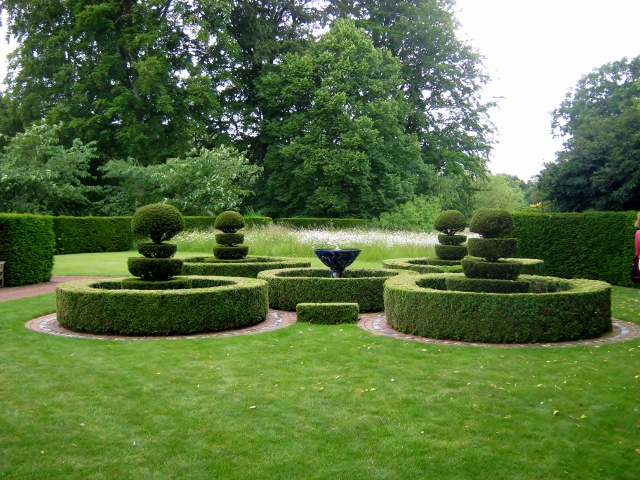
IMG_4832Quincunx Wyken Hall (640x480)

The Quincunx – five equal interlocking circles – inspired by a design for a herb garden by Gertrude Jekyll.

New gardens are continually being created.

IMG_4860WykenHall garden (640x480)

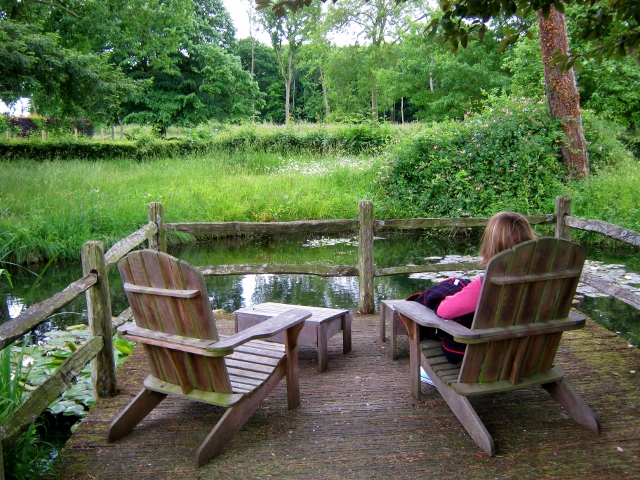
The new garden pond with oak pier. The owners hope that soon the chestnut fencing will be covered with white wisteria.

When Lord Carlisle began work on the garden it already had a structure of flint walls and many fine old trees.  Hornbeam and yew hedges divide the garden into its different rooms.  There is a copper-beech maze and a nuttery; a herb garden, a knot garden and an ‘edible’ garden; wildflower meadows and a traditional English kitchen garden.   Many of the old-style gardens complement the Elizabethan house.

IMG_4863Wyken Hall (640x480)

View of the house from the Rose Garden

As well as the garden, the Carlisles own Wyken Wood, which is ancient woodland, a large modern farm and a 7 acre vineyard.  A large medieval barn has been converted into a country store (which sells exclusive goods) a restaurant and café.  As well as different wines they also produce ale from their own barley.

IMG_4837Wyken Hall garden (640x479)

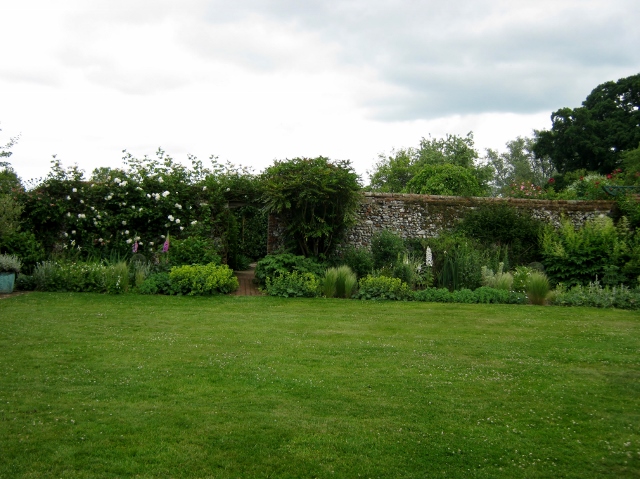
A flower border sheltered by a flint wall in which there is an inviting archway to gardens beyond.

IMG_4846Wyken Hall garden (480x640)

Steps cut into the turf (foreground) and the path through the winter garden

IMG_4841Bellini Bus Stop (480x640)

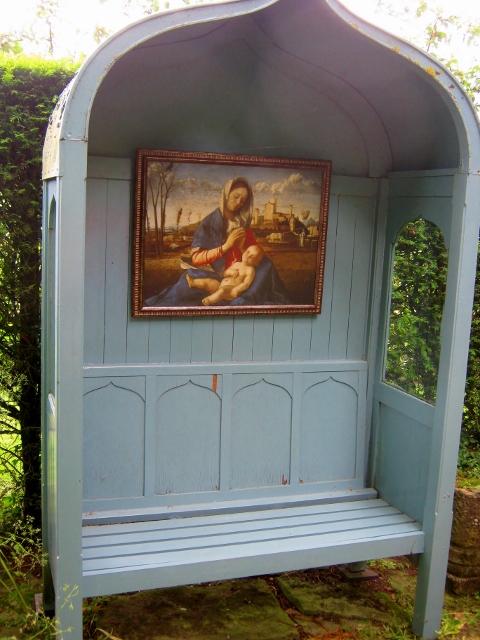
The ‘Bellini Bus Stop’ – a covered seat in the winter garden

IMG_4858Wyken Hall garden (480x640)

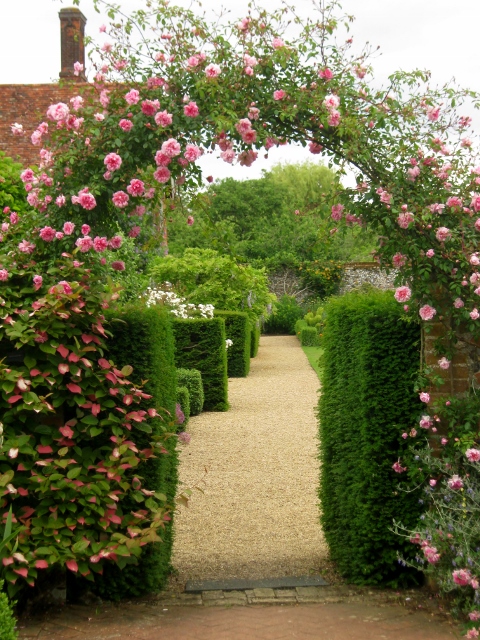
A very pretty arch with an interesting variety of plants round it.

IMG_4873Wyken Hall garden (640x480)

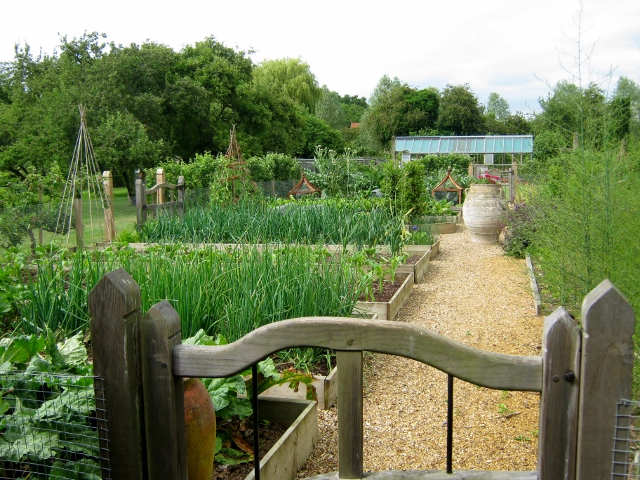
The kitchen garden

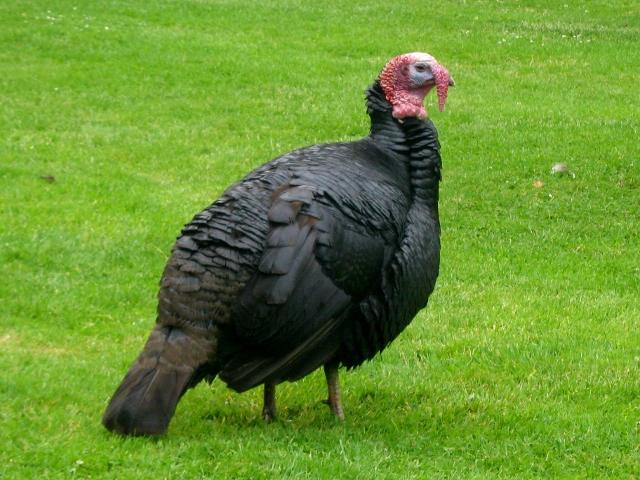
IMG_4881Turkey (640x480)

A supercilious-looking turkey

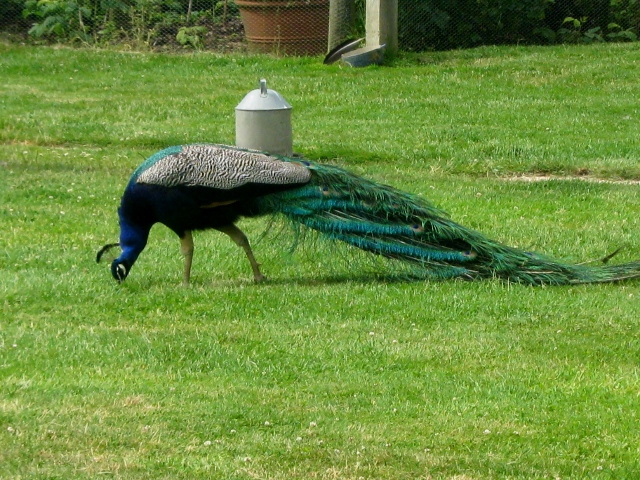
IMG_4874Wyken Hall garden (640x480)

A peacock

This slideshow requires JavaScript.

A slideshow of photos of some of the lovely plants and flowers we saw.

This slideshow requires JavaScript.

A slideshow of the plants in the Red Hot Border.

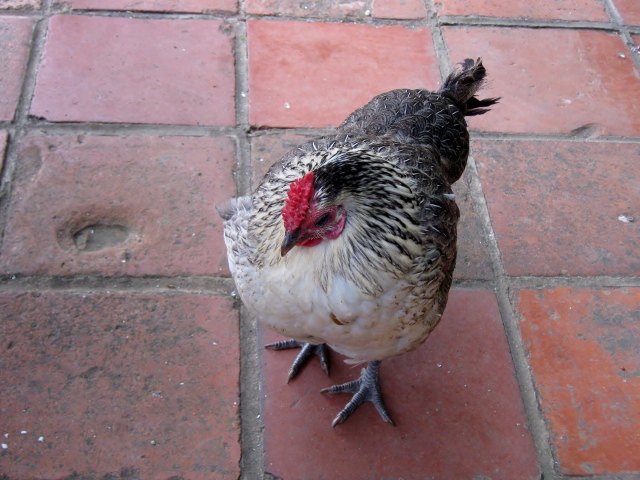
IMG_4890Hen (640x480)

This little hen came and stood under our table outside the café and begged for crumbs. She was given quite a lot of Elinor’s expensive scone!

We had a very enjoyable afternoon at a most beautiful and immaculate garden.

Thanks for visiting!
Lake District in the Summer

Tags

, , ,

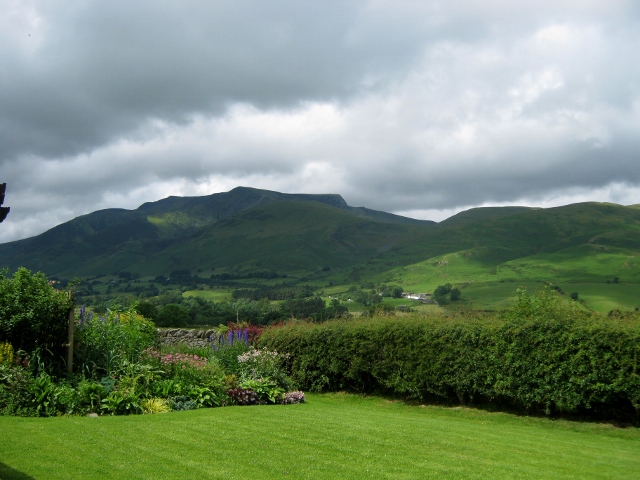
We have just returned from a week’s holiday in the Lake District.  (For those people who don’t know, it is an area situated in Cumbria in NW England).  It took us nearly six hours to drive there but that included a twenty minute stop to eat lunch.  We hired a cottage to stay in for the week which was well appointed and quite comfortable though I would have preferred it if it had been a detached cottage with its own garden.  The weather wasn’t too bad either.  We had some rain and some wind but we also had a couple of completely dry days and some sunshine too.  It wasn’t very warm and I was glad I brought two pullovers and two cardigans with me.  On a few occasions I wore all four at the same time over a shirt.  I feel the cold!  If I had been at home I would have warmed myself by doing some housework or gardening but I was on holiday and wanted to read my book!

IMG_4931View from kitchen window (640x480)

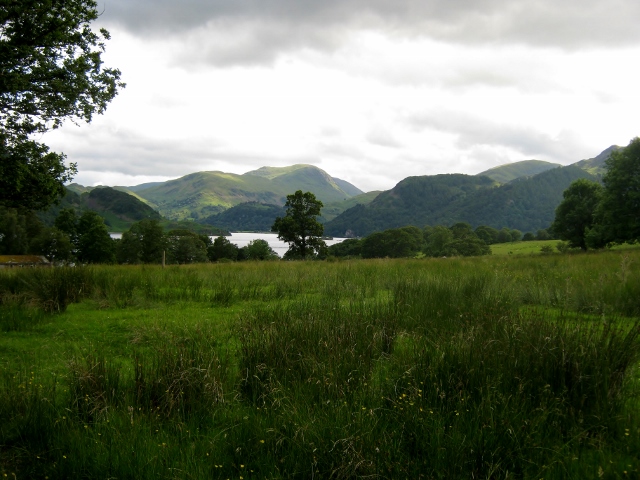
This is the view we saw from the kitchen window on the day we arrived.

Fortunately, the next day was much brighter.  After some early rain the clouds lifted and we saw the top of the fells.

IMG_4933Saddleback or Blencathra (640x480)

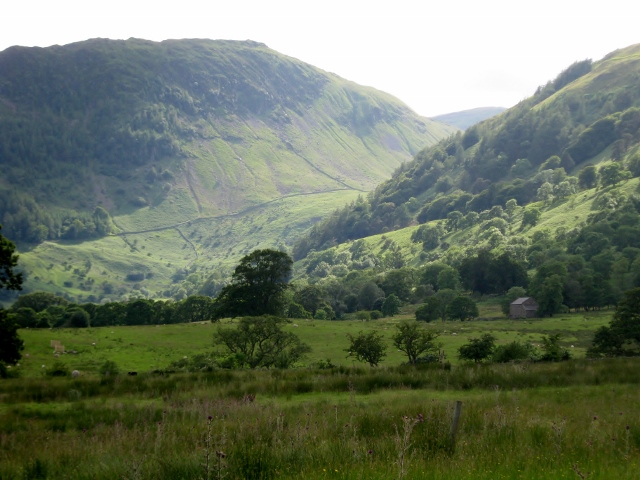
This is Blencathra or Saddleback

I have been reading a book about the Lake District (‘The English Lakes – A History’ by Ian Thompson)  while we’ve been away and have been boring Richard with quotes from it.  Richard knows the Lakes quite well and has walked up many of the hills so it has been a little like ‘teaching my grandmother to suck eggs’.

The hills are made of rocks thrown up by volcanic explosions 450 million years ago which were then ‘humped and crumpled into shape’ by tectonic movements 400 million years ago.  They were then carved by glaciers in the ice age 13,000 years ago making the hills look like a miniature version of the Alps.  The fells often seem larger than they are as many of them start from valleys close to sea level – Blencathra’s summit is 845 metres above sea level for example.

The local name for these hills/mountains is ‘fells’ – a word deriving from the Norse word ‘fjall’.  The name ‘Blencathra’ is said to come from the Celtic words ‘Blain’ and ‘Cadeir’ which means ‘hill of the chair’.

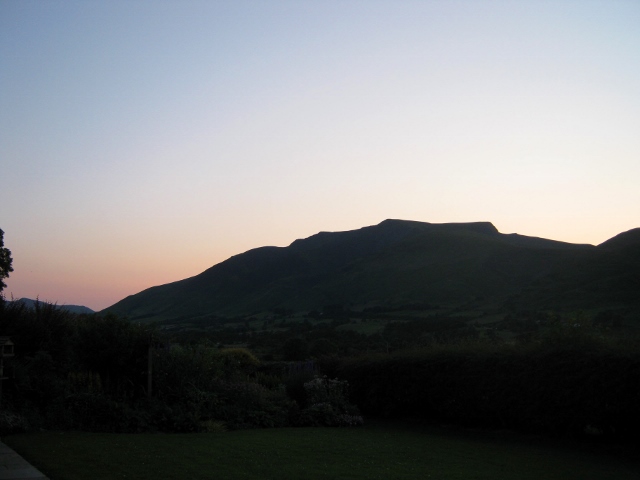
IMG_5137SSunset behind Blencathra (640x480)

Blencathra at sunset.

The previous three times we stayed in the Lake District we stayed near Kendal in the south-east but this trip we were in the north of the region near Keswick and were able to see a lot of different places.

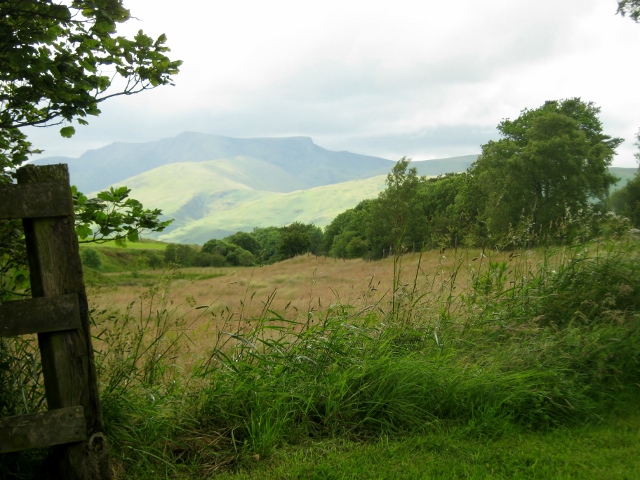
IMG_5260Fell view (640x480)

Another picture of Blencathra seen from the car while we waited for workmen to finish re-surfacing the road.

I will be showing you a few of the places we visited in subsequent posts.

Thank-you for visiting!
Quiet Sunday

Tags

, , , , , , , , , , , ,


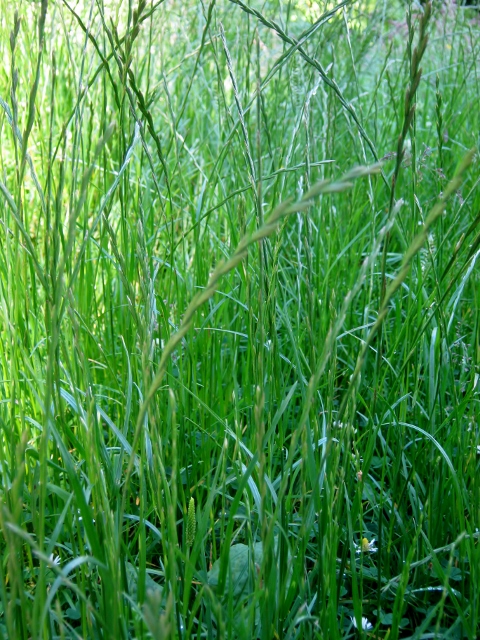
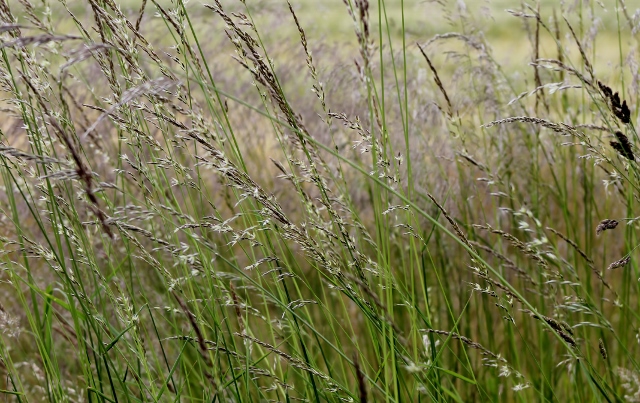
IMG_2312Grasses (640x403)

Grasses growing round the edge of the field behind our house.

I have been doing a lot of gardening recently.  Not the gentle-dead-heading, touch-of-light-weeding type of gardening but lots of digging – which always involves extracting large flint boulders from clay soil, lots of watering – carrying heavy watering cans round our large garden and lots of grass-cutting – I do most of this with shears.  We have a large area of grass which is planted up with spring bulbs.  There are a few trees planted there as well and the ground is very uneven.  I think that it was originally a spoil heap from when the house was built; it also slopes quite steeply down to the ditch at the front of the house.  We leave cutting the grass until the bulb leaves have died back which means it is left until June by which time it is looking quite unkempt.  The ground is much too uneven for the tractor mower and because of the trees it is a very difficult area for Richard to do (he is 6′ 3″ tall).  I am a foot shorter in height than he is, so I do this part of the garden.  I can’t use the strimmer as it is too heavy for me so I cut the 3′ high grass with shears.  We bought a scythe but somehow we can’t get it to sharpen.  I like using shears as I can see what I am doing and I don’t cut the wrong things down as I might if I could use the strimmer.  A strimmer makes such a mess; shears are tidy.  Once I have cut the grass to a manageable length I then rake it up into a number of enormous heaps and then transport it to the other end of the garden in a wheelbarrow and put it on the grass heap.  I then use the electric mower and cut the grass even shorter.

IMG_4893Field of barley (640x480)

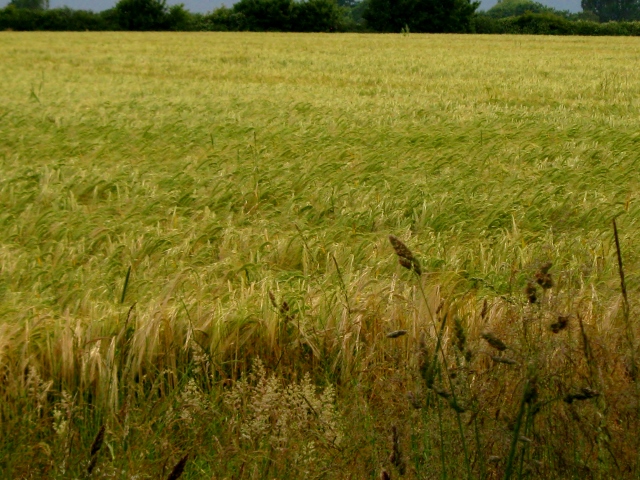
The field of barley behind our house.

As  a result of this work I am extremely achy and stiff but I have developed some good muscles in my arms and shoulders!  I was glad we had a little rain on Sunday so I excused myself from working outside.  I read my book, talked with my husband and daughter and generally had a relaxing day.
IMG_4891View across pond to field (640x480)

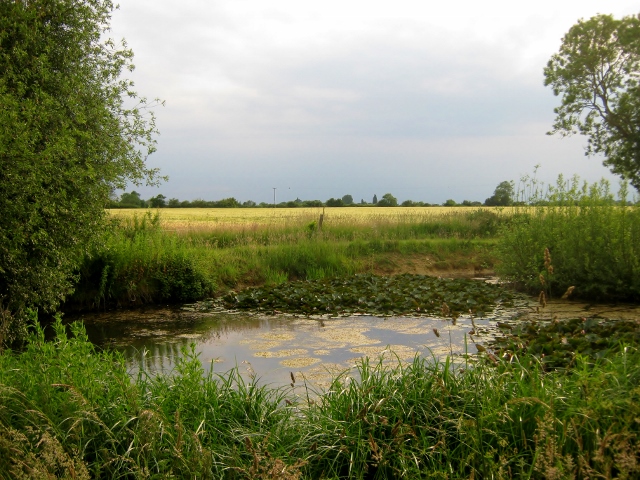
View across the pond to the field beyond.

We had an Evening Prayer service at St Michael and St Felix Church in Rumburgh where Richard is one of the church wardens.  We left home at 5.45 pm to make sure the church was tidy and ready for the service.  There had been a big wedding there on Saturday so the church is full of beautiful flowers.

IMG_4895Rood screen (640x479)

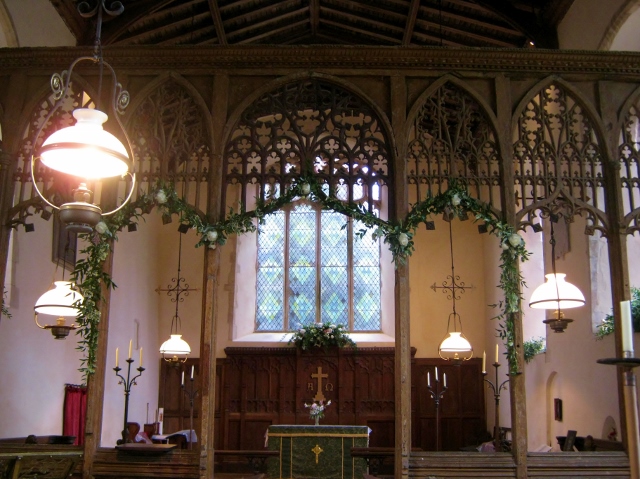
The decorated Rood Screen. This is very pretty but it would be better if people didn’t decorate it as the screen is hundreds of years old and falling apart.

IMG_4897Pew ends (480x640)

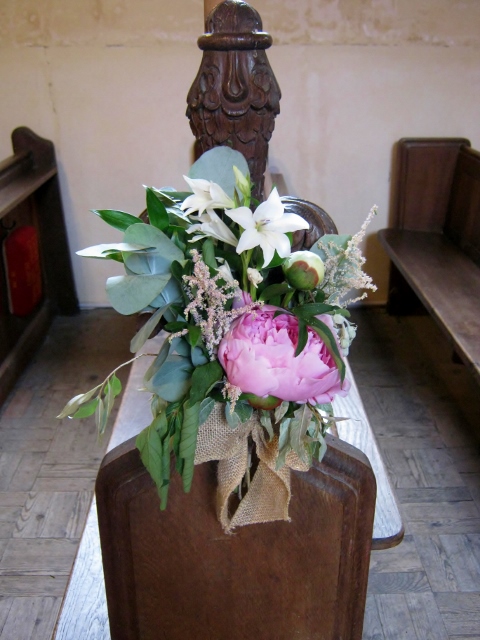
Posies on the pew ends. I think the top of the poppyhead (the carved pew end) looks like a clown with a bowler hat.

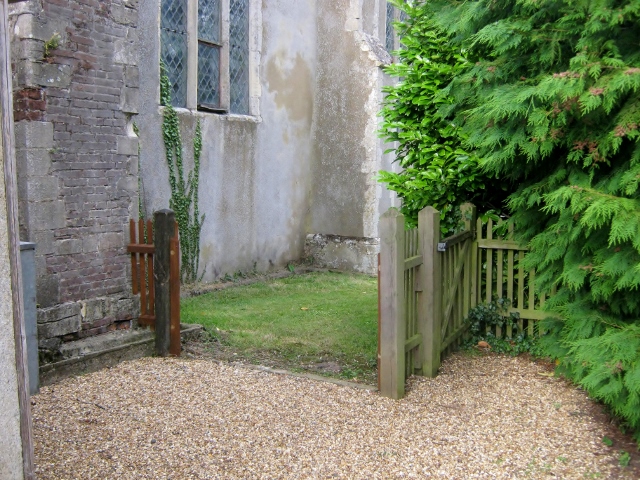
The path has been regravelled and the fence panel at the side of the church has been repaired.

IMG_4904Side of church (640x480)

Fresh gravel and new fence panel.

The bride’s family live at the farm which surrounds the church and the church is in their back garden.  I have never walked all round my church because that would mean walking through someone else’s property.  However, it is so nice to have kind people who decorate our church and repair our fence and path because their daughter wanted to get married in the church!
Our evening service was taken by Maurice and we concentrated on the Trinity.  It was a pleasant, peaceful and thoughtful service.

I’ll use the rest of the post to show you a few more things I’ve seen on my travels and in the garden recently.

IMG_2323Damaged Great Mullein (640x427)

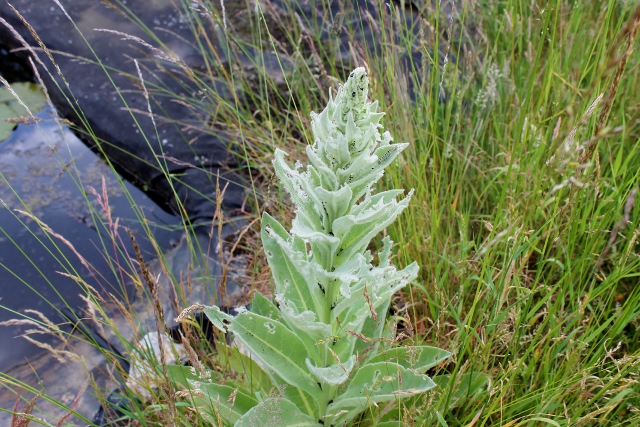
This is a Great Mullein (Verbascum thapsus) and I noticed the other day that it was looking a little ragged.

IMG_2324Mullein Moth larva (640x427)

This is one of the culprits – a Mullein Moth larva (Shargacucullia verbasci). The plant was covered in the caterpillars which will probably eat most of the plant and leave a blackened stump.

I had noticed that a few of my plants and tree seedlings had been damaged and on Sunday I found a few of the caterpillars that were responsible.

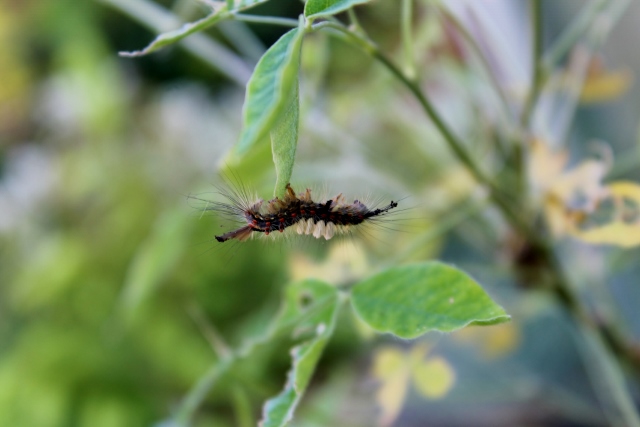
IMG_2327The Vapourer larva (640x427)

This is a Vapourer Moth larva (Orgyia antiqua), and it is eating a Laburnum seedling.

The Vapourer is often found in towns and often defoliates street trees.  I’ve never seen it in our garden before – perhaps they found their way here on a plant from the garden centre in town.  Vapourers are tussock moths which are all rather hairy.  The Vapourer female moth doesn’t have functional wings and will stay close to her cocoon after hatching out.  The Vapourer larva, along with other members of the Tussock Moth family, has tufts or tussocks of often colourful hairs (the Vapourer’s are yellow).  The hairs on adults and larva are usually barbed which makes them unpleasant and painful to handle.

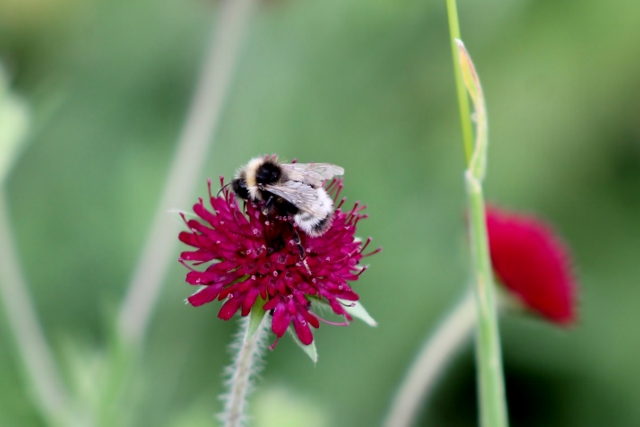
IMG_2313Bee on scabious (640x427)

A bee on a scabious flower.

I am not very good at identifying bees.  I never seem to notice or photograph the key feature mentioned in the ID guide.  The bee above could be a cuckoo bee.

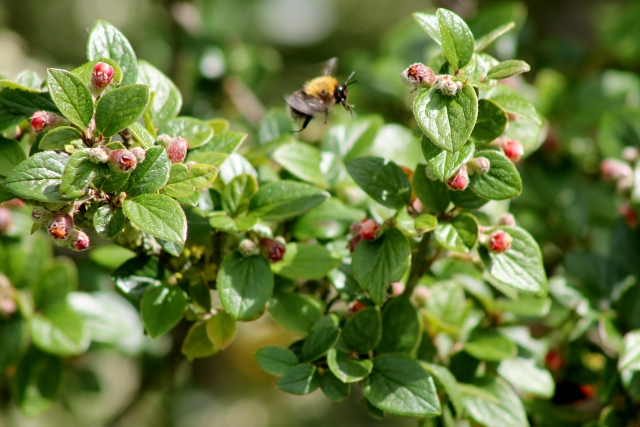
I try to grow as many plants as possible that are liked by bees and other insects.

IMG_2320Bee on Cotoneaster (640x427)

Bee on Cotoneaster.

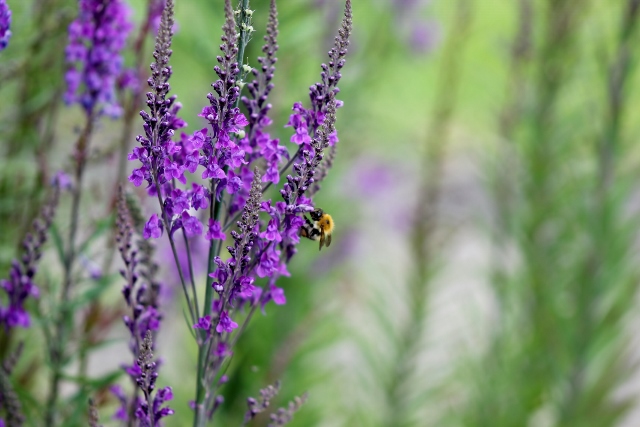
IMG_2321Bee on Purple Toadflax (640x427)

Bee on Purple Toadflax.

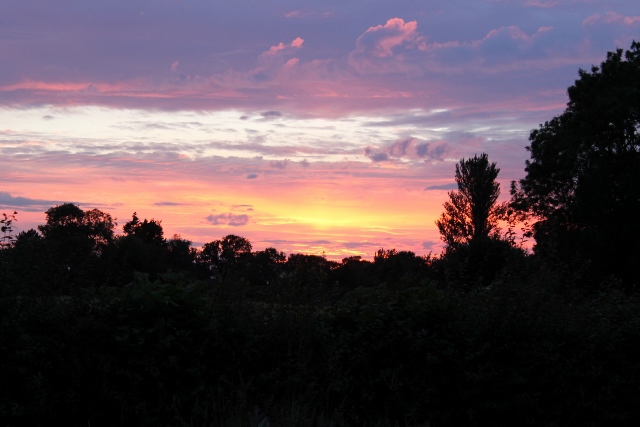
IMG_2304Sunset (640x427)

A rather lovely sunset I saw last week.

Lastly, I have another video to share with you but it isn’t the video that’s important just the soundtrack.  I would like you to ignore the video!  It’s rubbish!  I was taking photos in the garden next to the pond, when the Turtle Dove started singing.  I switched the camera to film so I could record the song and vaguely pointed the camera in the direction of the pond.  The video is very shaky as I didn’t have a tripod with me.  I only managed to record a very short part of the song.  It is quite a quiet purring sound and the other birds in the garden were singing very loudly!

Thanks for visiting!