• About my Blog
  • GDPR (General Data Protection Regulations) and This Site
  • My Life in a Suffolk Lane

A Suffolk Lane

~ A diary of my life in rural north Suffolk.

A Suffolk Lane

Tag Archives: holiday

Holiday in Brittany: August 1999. Part 3

19 Wed Nov 2025

Posted by Clare Pooley in Brittany, family, Rural Diary

≈ 43 Comments

Tags

Brittany, family, holiday

After nearly a year of not posting anything on my blog I have decided, at last, that I ought to do something about it.  It has been a difficult year in many ways but especially because my siblings, my husband, daughters and I have been dealing with my mother’s death and the associated tasks of sorting out all her belongings and trying to sell her house.  I may go into that in more detail in another post.  As going out and taking photos has not been a priority recently I haven’t many adventures to relate so I have decided to carry on with my record of our holiday in Brittany when our daughters were very much younger than they are now.  Please see here https://asuffolklane.com/2024/03/12/holiday-in-brittany-august-1999/ and here https://asuffolklane.com/2024/03/24/holiday-in-brittany-august-1999-part-2/ to remind yourselves of the holiday so far.

ooOOoo

Tuesday 24th August

When we woke the rain had stopped but everything was very wet.  Richard drove to Lanvénégen and bought croissants, pains aux chocolat and two long, thin pains aux campagne for our breakfast.

We had an early lunch at Le Grand Pont on the R. Ellé outside Le Faouët.  The inn is next to the chapel of Ste Barbe and became quite busy just after we arrived.  Alice had wanted to visit the Witchcraft Museum (I don’t believe this exists any more) but as the key had to be obtained from the staff in the inn and they were so busy we didn’t go in, to Alice’s disappointment.

We then drove to Pont Scorff Zoo which Elinor really enjoyed.  We all got very hot and tired as we were not expecting the zoo to be so large or for the weather to get so warm.

We returned to the gîte via Les Roche du Diable so that Alice could take photos for her school art-work.  Elinor fell off the low garden wall when we got back.  We then ate our evening meal of ham and cheese and finished the bread.

We all admired the beautiful full moon Richard pointed out to us before going to bed.

Wednesday 25th August

Richard went out to get croissants and bread for us again this morning.  It really is so pleasant eating breakfast all together – and such a nice breakfast too!  We didn’t want to do much today as we had been in the car such a lot over the past few days.  We sat in the sun and read and then Richard took Elinor for a walk to see the geese and the horses.  We ate bread and paté for lunch and Breton Cake for pudding.

At about 3.30pm we went into Le Faouët to do a supermarket shop and to get more postcards.  Richard cooked us risotto for tea.  The owls were very noisy after dark.  Alice drank a couple of small glasses of red wine tonight and got a bit merry.  She swung on the swing and lay on the grass outside for a while.  She then came back into the house, did some wiping up while I washed the dishes and then went off to listen to her music in her room.  When Richard and I decided to go to bed about 11.30pm we realised we hadn’t seen or heard Alice for some time. She had fallen asleep in her clothes and needed a bit of help in finding her pyjamas and getting comfortable.  No more wine for Alice for a while !

Thursday 26th August

We all woke later than usual this morning so we decided to bath Elinor and wash her hair after breakfast.  Unfortunately, the bathroom stool broke decanting Richard onto the floor – more bruises added to the earlier ones!  Wood glue added to shopping list.

We set off for Quimperlé just after midday and drove along a winding hilly road through little villages.  We parked the car near the river in the centre of the town and went to the tourist office to get a town plan.  As we were all hungry (when weren’t we hungry on this holiday?!) and as restaurants and cafés in Brittany only serve food between 12.00 midday and 2.00pm we went off in search of somewhere to eat.  We decided on a pizzeria; its entrance was a covered bridge over the river.  The food was very good but Elinor didn’t eat much.
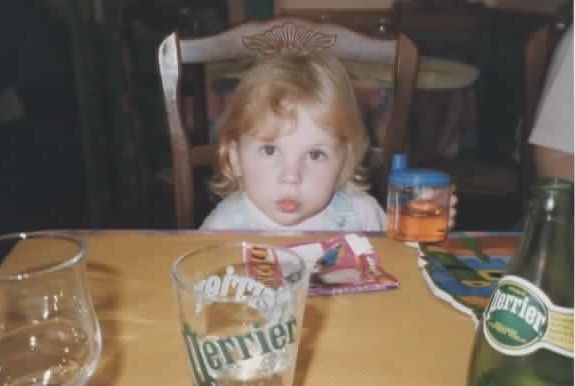
Elinor with her drink and Pingu comic.
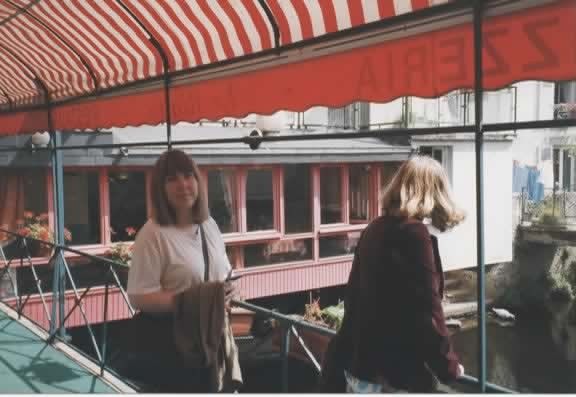
Alice and me on the bridge to the pizzeria.

After lunch we walked round the town going first to the Haute-Ville.  On the way, Alice went into a shop to buy post cards and a diary.  The shop keeper gave her two chewy sweets!  We found a large, well laid-out square, Place St Michel, where Richard posted my postcards for me. We visited L’Église Notre-Dame-de-L’Assomption which had a charcuterie stuck onto the east wall!
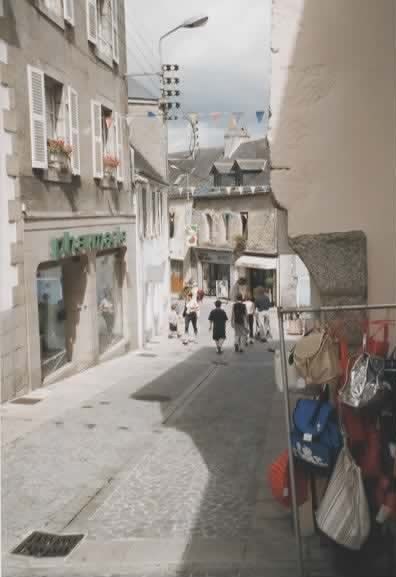
The road up to the upper town.
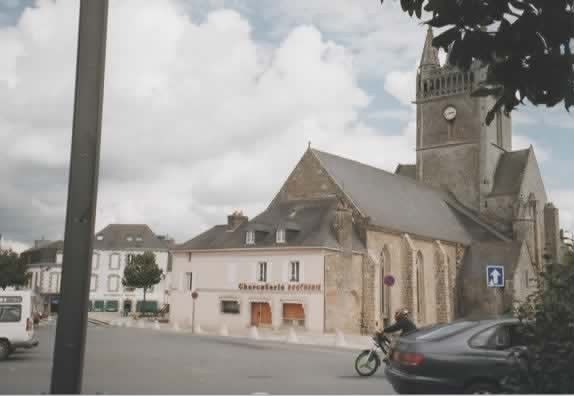
Church with charcuterie.

We then walked down the hill to the river again and the Bas-Ville.  We crossed the river by the Pont Fleurie, a very pretty ancient bridge.  We saw a tiled fish hall and then went to a park on the banks of the Ellé for a rest.  Alice’s feet were suffering as she was wearing high heels.  We walked back to the car via the Rue Dom-Maurice which has beautiful 16th century half-timbered houses.
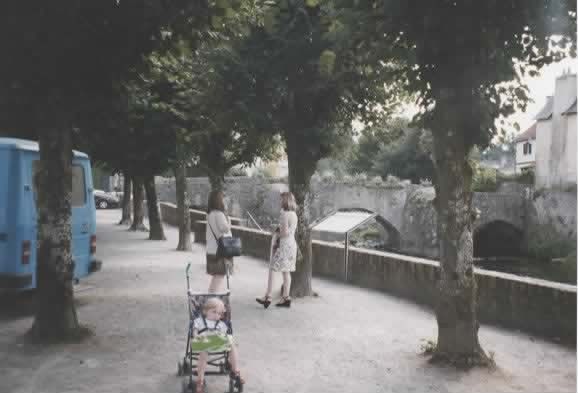
Elinor in push-chair, Alice and me next to the river. The old bridge in the distance.
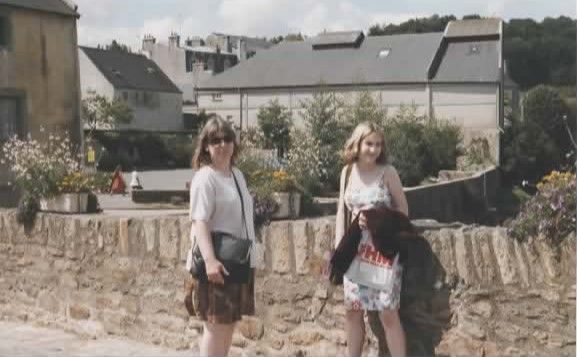
Alice and me on the bridge.
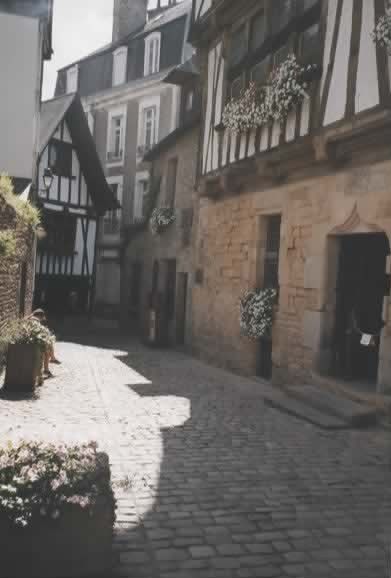
Timberframed houses.

We drove back to the gite via Querrien, a pretty village we had driven through on Tuesday.  We parked in the square by the church and Richard and I got out to look around.  This was a very well-kept village with a mayor’s office, a small supermarket and a number of other little shops  – two boulangeries! – and a library.  We looked at a restaurant but they hadn’t put up their menu or price-list yet and then went to buy bread and pastries.  We decided that if we lived in France this is where we’d live.

We had another bread and cheese tea which we all enjoy and Elinor went happily to bed at about 9.00pm.  Richard told me what a lovely, still evening it was so we went out for ten minutes or so listening to the owls, the crickets and the horses.  When the farm dog barked we noticed what a wonderful echo there was.


More next time!


Share this:

  • Share on X (Opens in new window) X
  • Share on Reddit (Opens in new window) Reddit
  • Share on Pinterest (Opens in new window) Pinterest
  • Share on Facebook (Opens in new window) Facebook
  • Email a link to a friend (Opens in new window) Email
  • Share on Tumblr (Opens in new window) Tumblr
  • Print (Opens in new window) Print
  • Share on Pocket (Opens in new window) Pocket
  • Share on LinkedIn (Opens in new window) LinkedIn
Like Loading...

Holiday in Brittany: August 1999

12 Tue Mar 2024

Posted by Clare Pooley in France, holidays, Rural Diary

≈ 39 Comments

Tags

Brittany, family, ferry crossing, France, gîte, holiday, Le Faouët, wedding

During a lull in the first year of the pandemic we managed to get our loft re-insulated.  We cleared the area of all our stored boxes and bags and also disposed of a large amount things we no longer needed as well as spare tiles and other decorating material left there by the previous owner. The firm we employed to do the insulation were extremely efficient, did the job quickly and neatly and cleared away all the old insulation material. We are very pleased with the results as it keeps the house cooler in summer and warmer in winter.

All the time we had lived in this house (we moved here in 2006) I had know that a number of boxes of mine were up in the loft but had never quite felt ready to get someone to help me bring them down so I could sort them out.  Therefore, I was very pleased to find my collection of knitting and sewing patterns and a few large cardboard boxes of papers, letters and other miscellaneous odds and ends.  I went through all of these things and disposed of what needed to go.  One or two plastic crates of papers went back up into the loft but all my knitting patterns stayed where I can find them and a couple of things that I thought might be useful were also kept down in the house.  One of those things was a paper bag containing short diaries from two holidays we had had in Brittany with a collection of maps and mementoes.  When I read much-missed Susan’s wonderful posts on her travels round Europe I began to think I ought to make a scrapbook of all my holiday memories.  Of course, I still haven’t got round to doing it but I also thought I might copy out my holiday diaries into this blog and scan some of the photos I took at the time.  The two holidays were in 1999 and 2002 when our daughters were very young and so were we (well, relatively young).

I will begin with our holiday in 1999 and present it in short(ish) installments.  I will also annotate it at times to make the meaning a little clearer.  Annotations are in brackets.  In late August 1999 I was nearly 41 years of age, Richard had just had his 46th birthday, Alice had had her 14th birthday in July and Elinor was 2 and a half years old.  At that time we were living in a cottage in Rumburgh just over two miles away from the house we are living in now.  Remember too, that in 1999 most people didn’t have mobile phones and digital cameras.  At the time, our cameras were the old-fashioned sort with film casettes/reels that needed to be developed by a professional. We didn’t take that many pictures!

                                                                o o O O o o

Friday 20th August 1999

Richard packed everything into the car, I took William (the cat) to the cattery and to our great surprise we managed to set off in good time in the middle of the afternoon.  We were off on our first ever holiday to Brittany and would be staying in a gîte, travelling by car and crossing the English Channel by ferry.

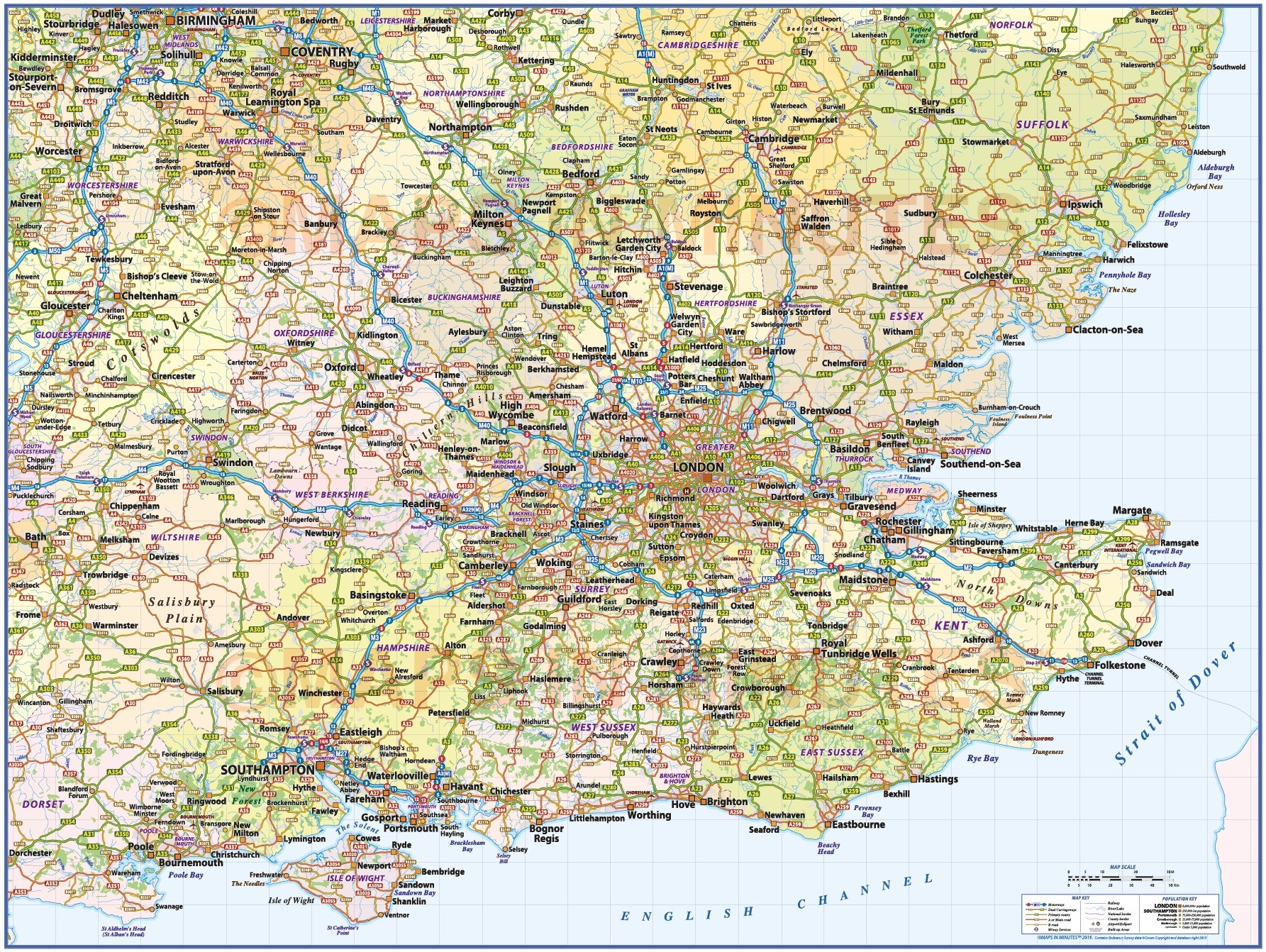
Thanks to atlasdigitalmaps.com. This map shows the south-east of England.  If you look at the top right of the map and you have excellent eyesight you’ll see the towns of Southwold on the coast and Halesworth a few miles inland. Rumburgh is about four miles north-west of Halesworth.  Portsmouth is at the bottom of the map, just left of centre and north of the Isle of Wight.

We had to travel a circuitous route to Portsmouth to avoid accidents and delays on the M25 (the infamous London orbital motorway).  (Going by the most direct route the distance to Portsmouth from home is about 200 miles and on a good day would take just under four hours).  We stopped in Surrey for tea (meal and drink) and then the last leg of the journey to Portsmouth was fairly short and trouble-free.  We found the ferry port easily and after an hour’s wait we boarded the ferry.  However, through not reading our ticket thoroughly enough and not knowing the layout of the ship we had clambered up to Deck 8 before realising our cabin was on Deck 2!  Richard and I left Alice with the six or seven bags on Deck 8 and went to find our cabin.  We had also realised we had left Elinor’s changing bag in the car and had to ask permission to go back to Deck 3 to fetch it.  We took Elinor with us as she cried loudly when left with Alice.  Eventually, everyone was together in our cabin with all our luggage and the ferry had set sail.  We went up to a self-service restaurant and we all had a drink.  Alice then decided she wanted to see a film so we left her at a cinema and Elinor and I went back to our cabin to get ready for bed.  Richard accompanied us there and then went off to have a drink in a bar.  Apparently, the bar was very lively with a band playing and then a magician.  Both Alice and Richard arrived back at the cabin within minutes of each other at about 11.30pm and were soon in bed.  The cabin was small but well laid out with a tiny WC and shower-room attached and we all had enough room.  It was an inside cabin, was air-conditioned and lit by electric light so one quickly lost perception of time.  I became a little claustrophobic and wheezy (I have asthma) and had some trouble getting comfortable.  However, being in a cabin was much better than having to get Elinor and Alice to sleep in one of the lounges as others had to do.  Elinor woke for about an hour during the night as her nose started running and she was sneezing.  (Elinor didn’t manage to sleep through the night until she was three years old.  The first time she did it and we had had our first undisturbed night in years we thought she had died!)  I woke again at 5.00am and got dressed at 5.30.  Richard woke and dressed at 6.00 and then we woke Alice and Elinor at about 6.30 as we were to dock at 7.00 am.  Elinor was a bit upset at being woken so early but soon calmed down when I gave her a Pingu comic.

Saturday 21st August 1999

We found the car and packed everyone and everything into it quickly and waited for permission to leave the boat.  It was wonderful to see the bright sunlight flooding into the car deck as the doors were opened.

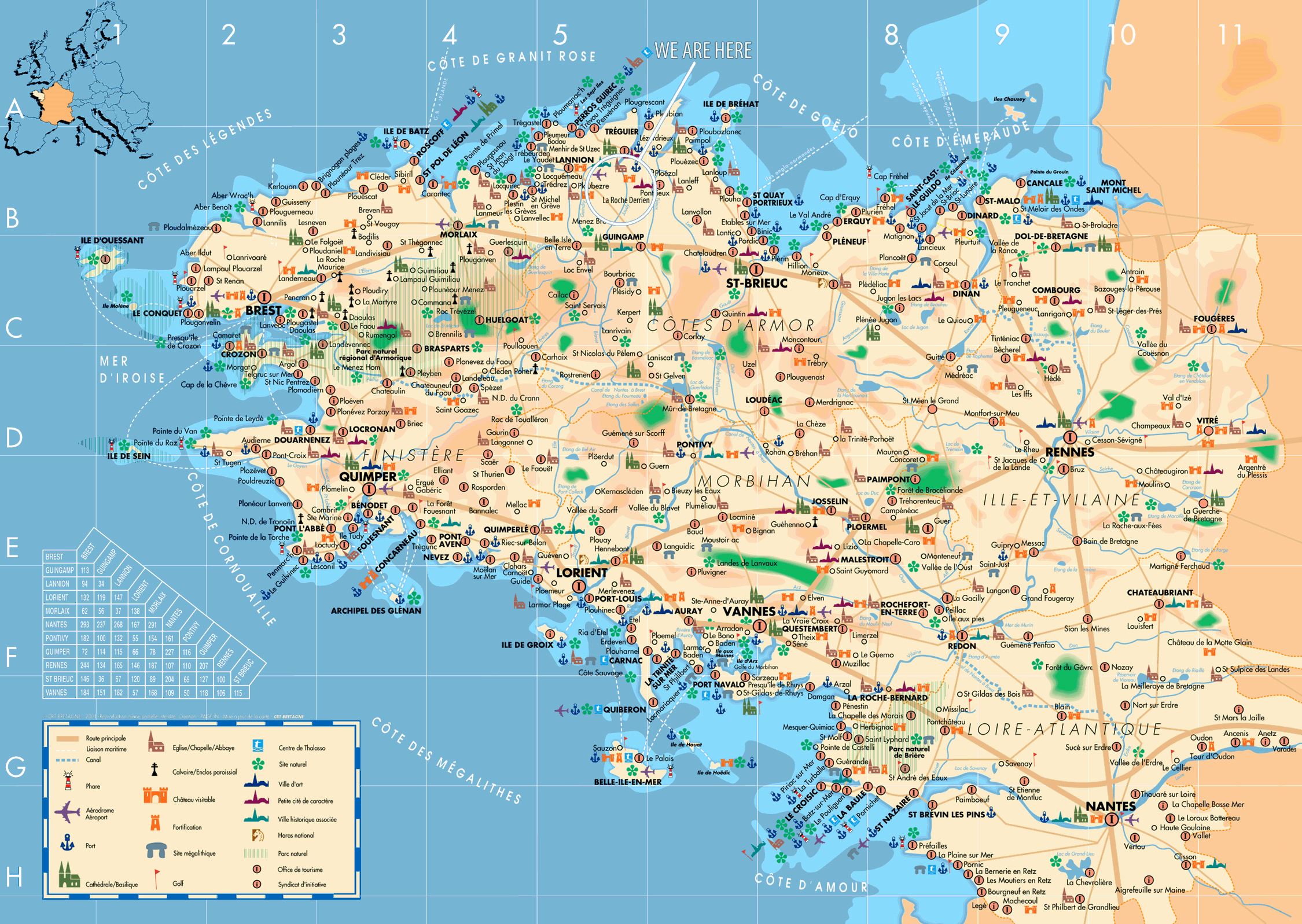
Thanks to orangesmile.com for the map. This is a map of Brittany and St Malo is at the top right of the map. Le Faouët is at D5.

We eventually drove out onto St. Malo docks and then followed the ‘tout directions’ sign posts out of the town.  Somewhere near Dinan Richard stopped for more diesel and we then continued past Lamballe, St. Brieuc, Quintin, Corlay and Rostrenen.  By 10.30 we had arrived at the small town of Glomel, all very hungry and needing a break.  We parked the car and were getting Elinor out and into her pushchair when we realised that a wedding was about to take place.  Cars arrived with little pale blue net bows tied to their aerials or windscreen wipers.  Guests were walking about in their best clothes and with blue ribbon corsages on their lapels.  We walked up through the town to a café where we ordered drinks; orange juice for Alice and coffees for Richard and me.  Elinor had her own drink with her.  We heard car horns hooting and looked down the road to see the bride arriving in an old Citroën.  We heard bagpipe and reed pipe music playing as she was led into a building for the civil ceremony.  Richard went off to a boulangerie and bought pains aux raisins and pains aux chocolat which we were able to eat outside the café (which wasn’t serving food at that moment).  We were sitting opposite the church and we saw more guests beginning to arrive.  A large 4×4 Mitsubishi pulled up with two besom broomsticks tied to the back and a grotesque blow-up woman sitting in a pushchair tied to the roof.   When the civil ceremony finished the bride, groom and wedding party were led up the main street in a procession to the church by two men, one playing a talabard (the reedpipe) and the other playing the bagpipes (a binioù).  We left after they had entered the church at 11.00.  (I wish that one of us had taken a photo or two but our cameras were packed away in the car and those of you who have had children know how preoccupied with them one can be especially when they are away from home).  As we drove out Richard pointed out the large stand for photographs which had been erected outside the church.

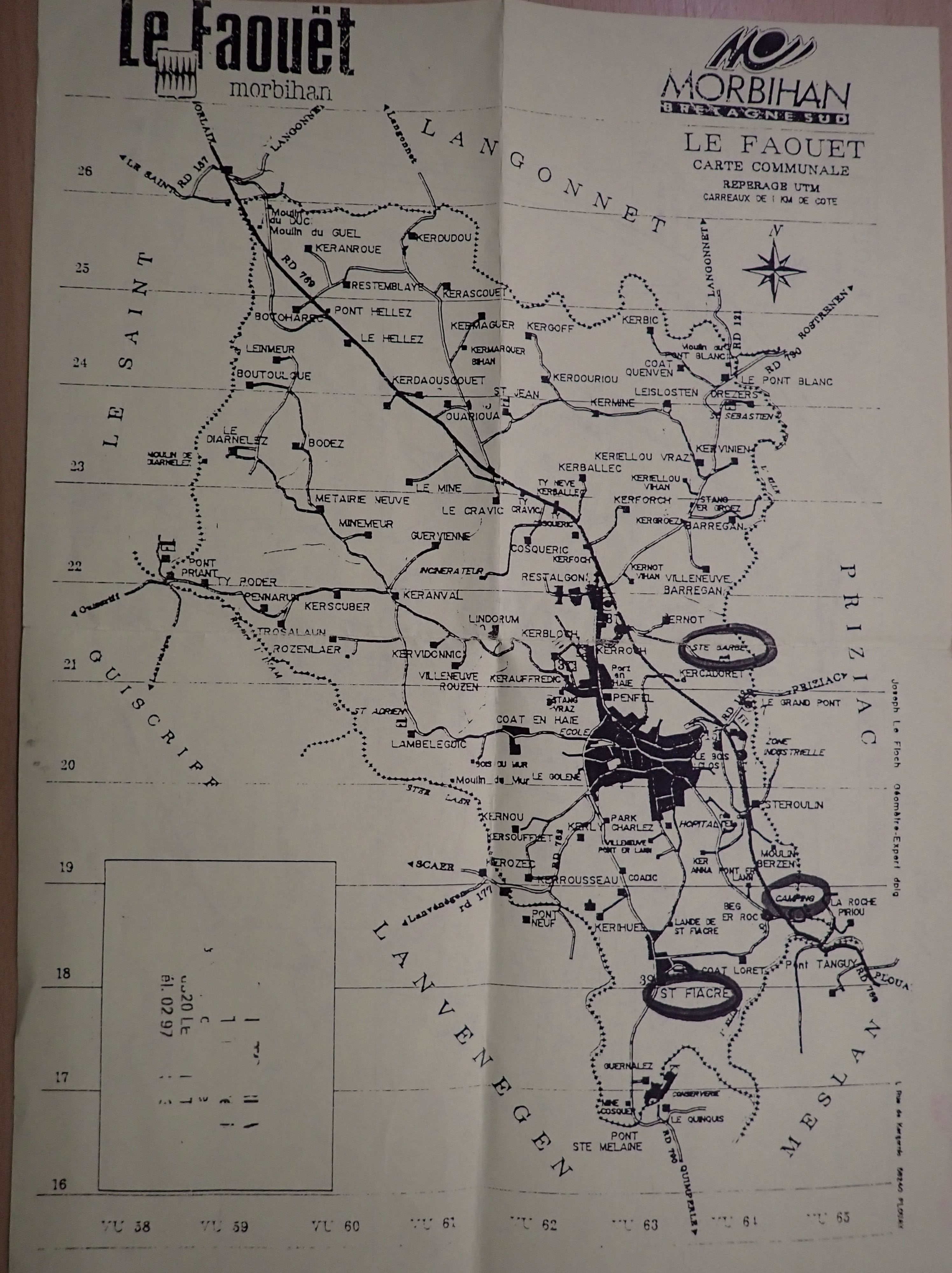
Map of Le Faouët in the Morbihan district of Bretagne Sud (south Brittany). This map shows the town and it’s surrounding villages.

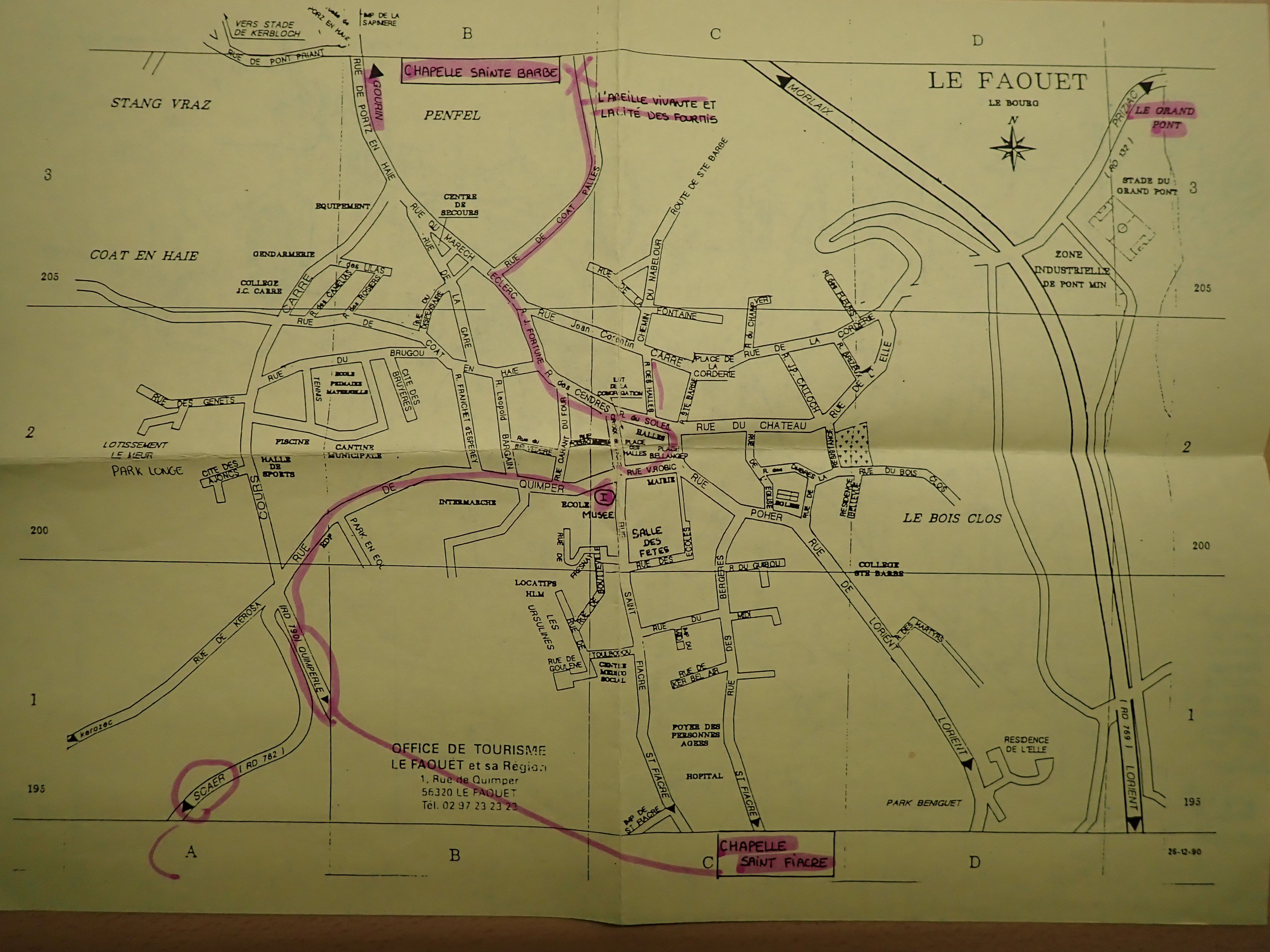
Street map of the town. The tourist office kindly marked the route we needed to take.

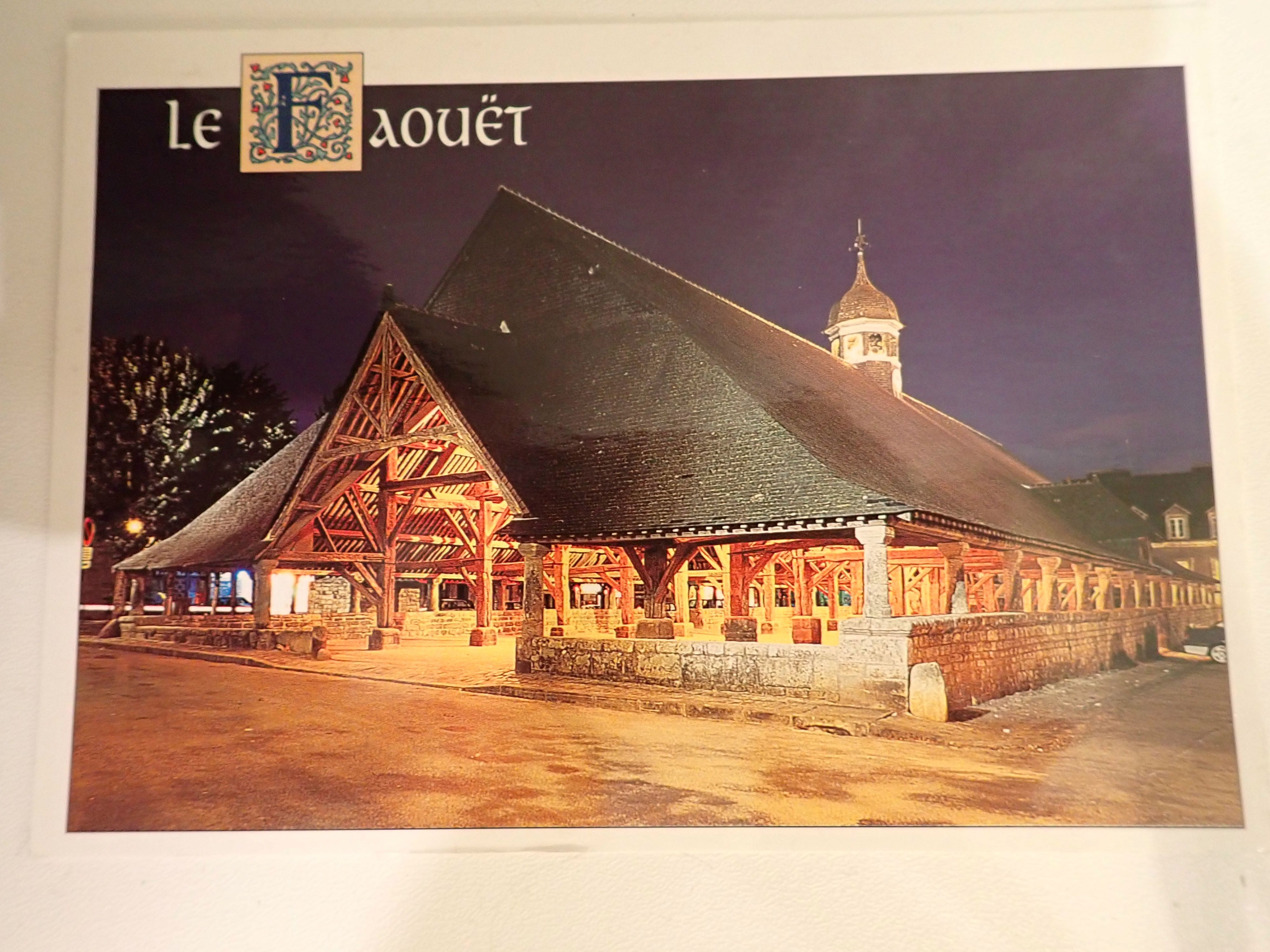
A postcard picture of the Halle.

We arrived in Le Fauoët about half an hour later and parked in the main square.  The large 16th century Halle had a market in it but we didn’t go in. We went to a café and had more drinks and then walked round the town and looked for somewhere to eat.  However, everywhere was very full so we decided we’d go to the supermarket and buy everything we’d need for the next few days and go on to Lanvénégen where we would be staying and try to eat at the café there.  We called in at the tourist office and got a lot of local information and the directions out of the town to Lanvénégen. 

Unfortunately, the café in Lanvénégen was closed until the 5th September so we drove on to St. Thurien, noting where the gîte was, and then on to Bannalec not finding anywhere open for lunch.  We had yet more drinks in Bannalec and then agreed to go to the gîte and risk arriving too early.  In fact it was gone 3.45 pm by the time we arrived at the Manoir des Lescreant.  Annie and Erick were very welcoming and we met their little daughter Emma too.  We unpacked the car and ate some bread and cheese.  We discovered that we had bought fermented milk by mistake – this is a very runny, cheesey, live yogurt – no good for Elinor or cups of coffee or tea!  Richard and I went back to the supermarket and got some sterilised milk (no fresh milk available in Brittany’s shops at that time) and more food for the evening meal.

At last, we settled down for the evening, the only excitement being the horses escaping from their field and finding their way onto the field outside our gîte.  Elinor settled down for the night surprisingly quickly and we all slept quite well.

More next time….!

Share this:

  • Share on X (Opens in new window) X
  • Share on Reddit (Opens in new window) Reddit
  • Share on Pinterest (Opens in new window) Pinterest
  • Share on Facebook (Opens in new window) Facebook
  • Email a link to a friend (Opens in new window) Email
  • Share on Tumblr (Opens in new window) Tumblr
  • Print (Opens in new window) Print
  • Share on Pocket (Opens in new window) Pocket
  • Share on LinkedIn (Opens in new window) LinkedIn
Like Loading...

A Walk in the Black Forest

02 Fri Sep 2016

Posted by Clare Pooley in holidays, Insects, plants, walking, wild flowers

≈ 46 Comments

Tags

bedstraw, berries, bilberry, Black Forest, brimstone butterfly, butterfly, cat's-ear, Common Bird's-foot Trefoil, Common Cow-wheat, Common Earthball, common knapweed, Dame's-violet, forest, foxglove, holiday, Lesser Stitchwort, Loosestrife, Lysimachia, Male Fern, moth, Polypody, Scarlet Tiger moth, Small Balsam, Speedwell, St John's-wort, trees, Triberg, views, walking

Our week’s holiday was coming to an end and we wanted to take a walk in the beautiful countryside around the town of Triberg.  The hotel thoughtfully provided maps and suggestions for walks so we chose one and adapted it for our use.  Neither Richard nor I are as fit or as young as we used to be and Elinor cannot walk very far because of her scoliosis so we decided on a half-circuit of the town in the woods.  We went in the direction of the railway station and took a steep path up between houses towards the forest.

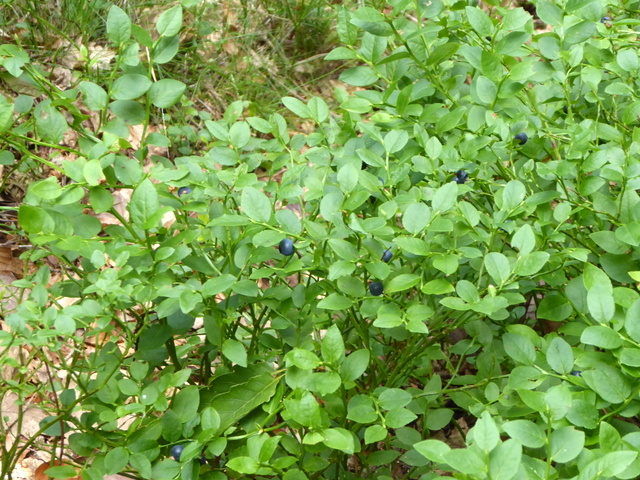
P1000813Bilberries

Bilberries (Vaccinium myrtillus)

We were soon high enough to be able to look down on the town which was very busy with Sunday visitors and many motorbikes.  I think Richard told us this part of the walk was called the Bilberry Wood and there were certainly many bilberries growing at the side of the path.

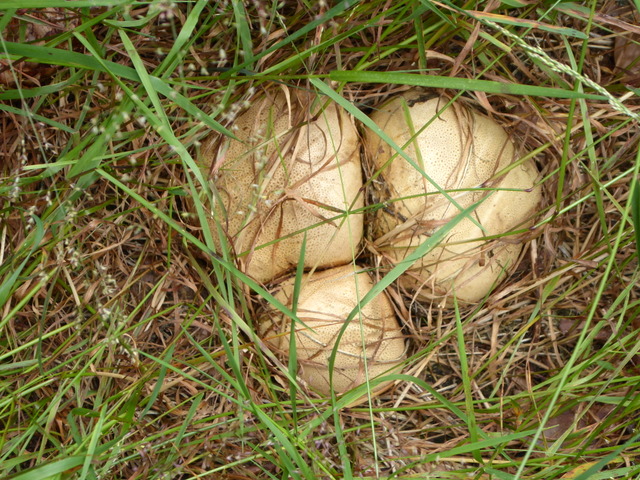
P1000814Common Earthball phps

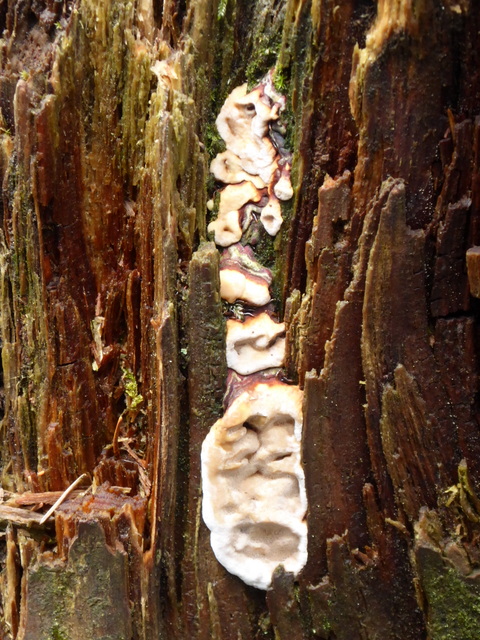
There was plenty of fungus too. I think this may be Common Earthball (Scleroderma citrinum)

We soon climbed a little further into the forest and left the town behind and no longer heard the traffic.

P1000815woodland
P1000816Woodland

The forest became denser but there was never any difficulty following the path which was beautifully maintained.  I began to see many different plants; some I recognised and some I didn’t.  If anyone can help me with the names of these plants I will be very grateful.

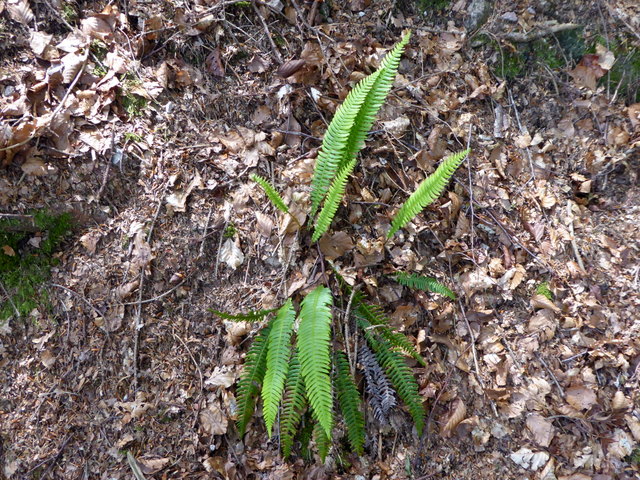
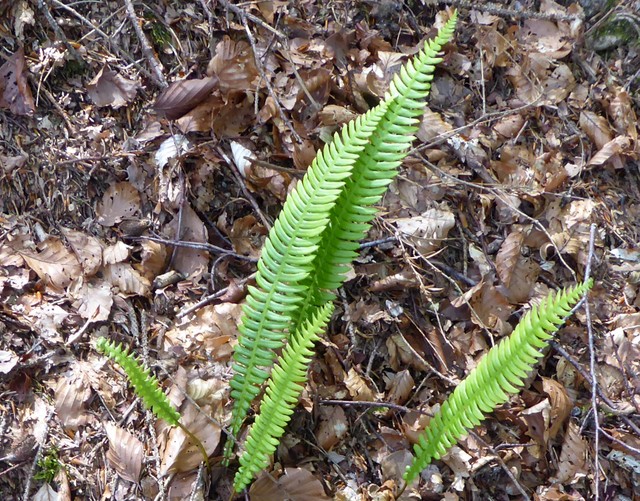
P1000817Polypody

Polypody (Polypodium vulgare) – a true fern. When walking with my family I always get left behind because I like to take photos of plants and fungi. I don’t have the time to take the detailed shots I would like in order to identify my finds in case I am left too far behind!

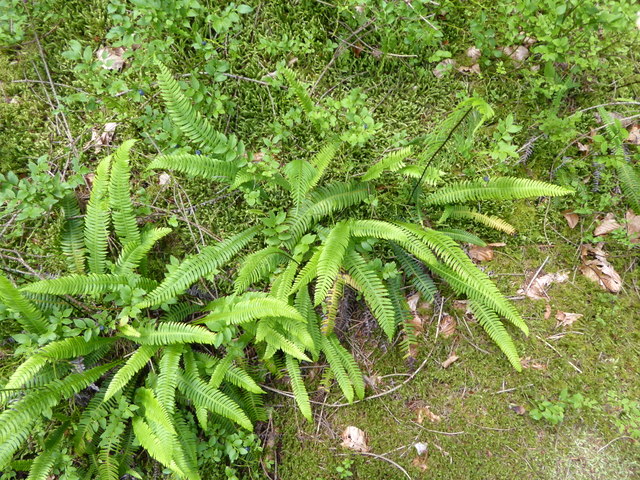
P1000832Polypody

More Polypody

I love the chunkiness of Polypody so I cropped one of the photos above to look at it in more detail.

P1000817Polypody - Copy (2)

Polypody

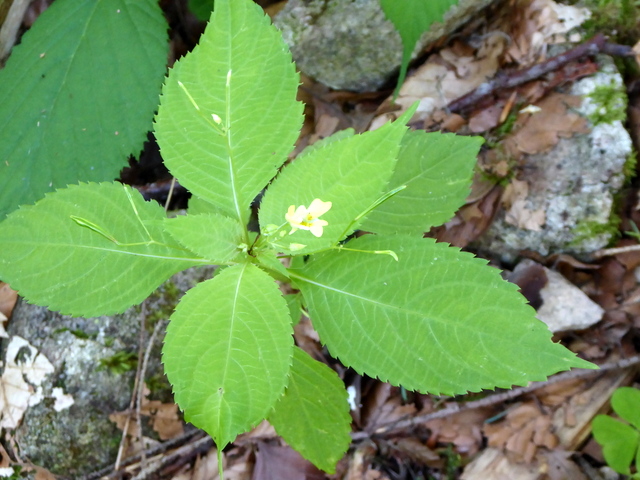
P1000818Small Balsam phps

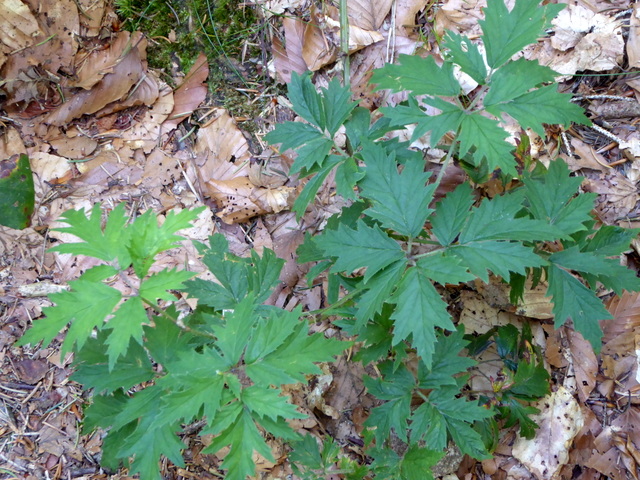
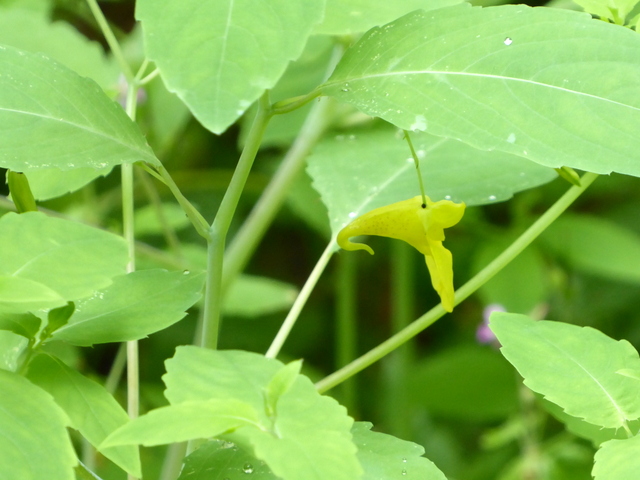
I think this might be Small Balsam (Impatiens parviflora)

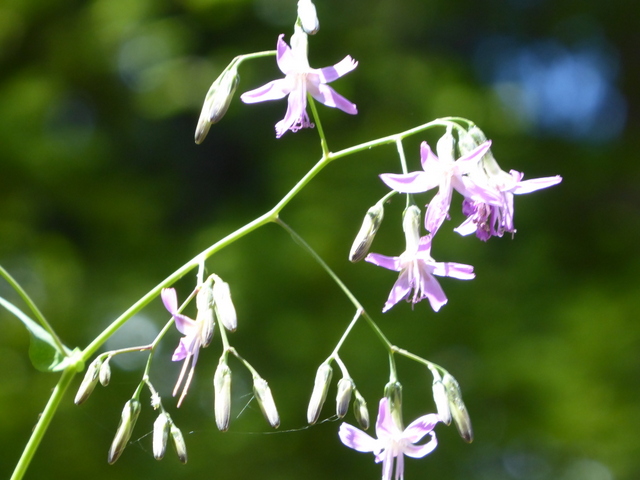
P1000823Unknown

Unknown flower

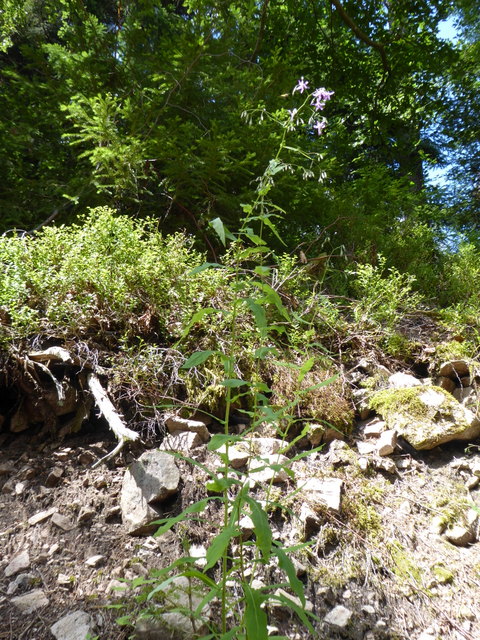
P1000824Unknown

It’s very tall!

P1000820Unknown

Interesting leaves

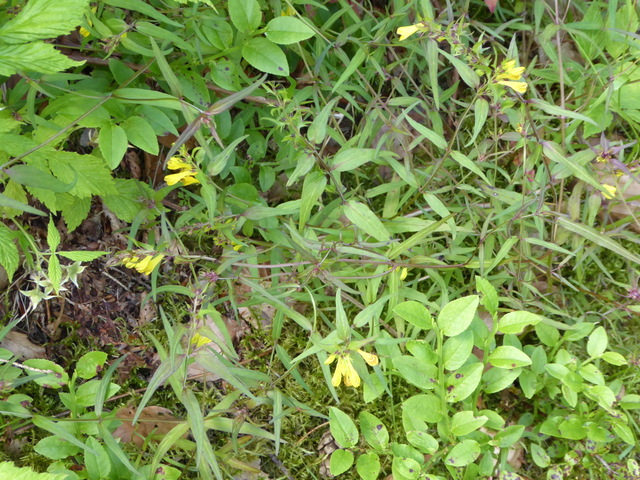
P1000827Cow-wheat

Common Cow-wheat (Melampyrum pratense)

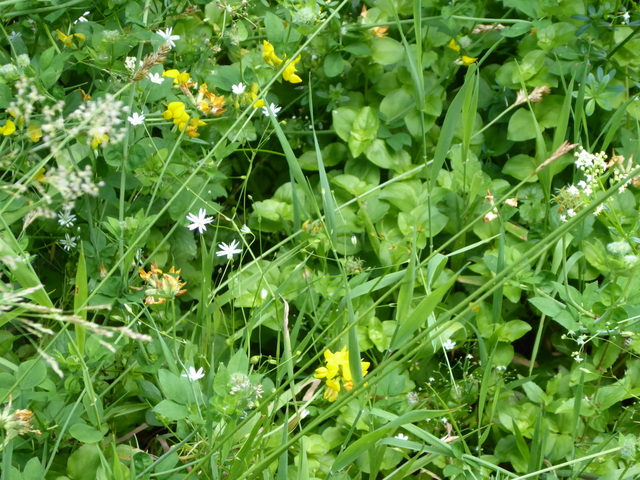
P1000850Wild flowers

Wild flowers including a Bedstraw, Common Bird’s-foot Trefoil (Lotus corniculatus) and Lesser Stitchwort (Stellaria graminea).

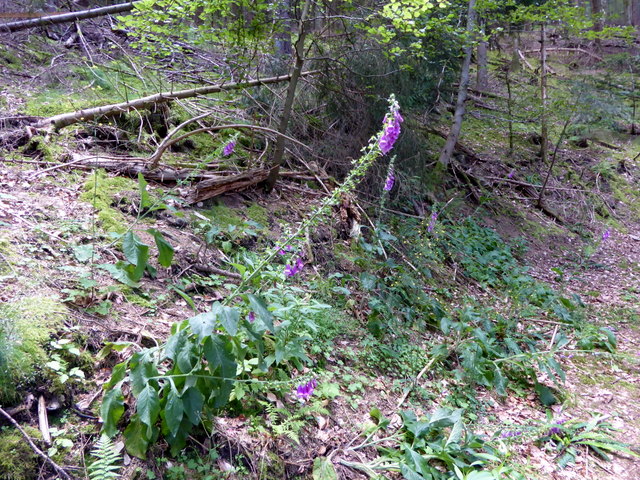
P1000834Foxglove

Foxglove (Digitalis purpurea)

Speedwell
Speedwell
Speedwell
Speedwell
P1000837Royal Fern phps

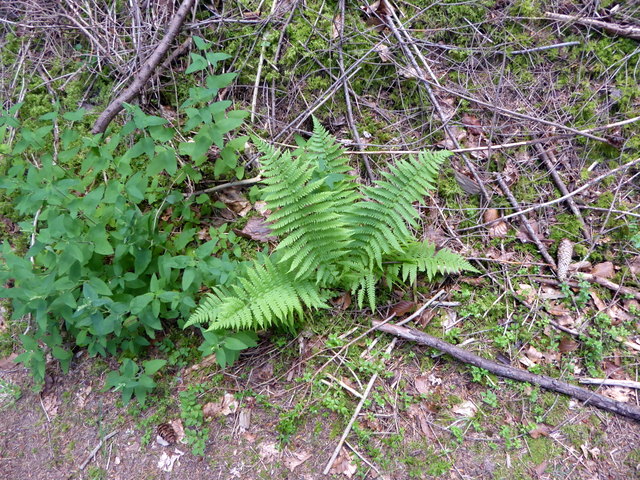
This may be Male Fern (Dryopteris filix-mas)

P1000857

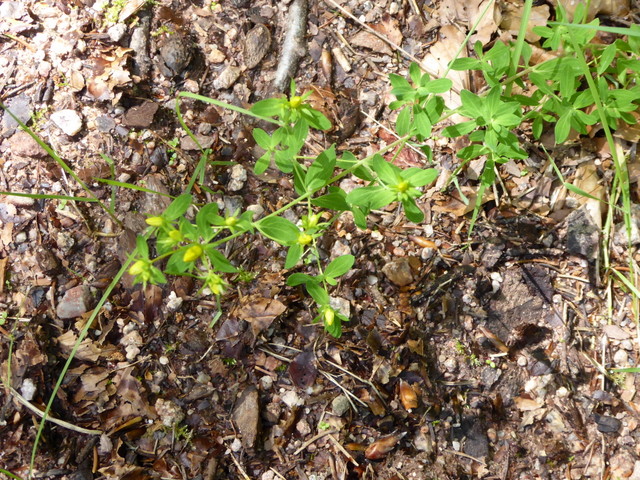
St John’s-wort; I don’t know which of the many St John’s-worts it is.

P1000855Cat's-ear

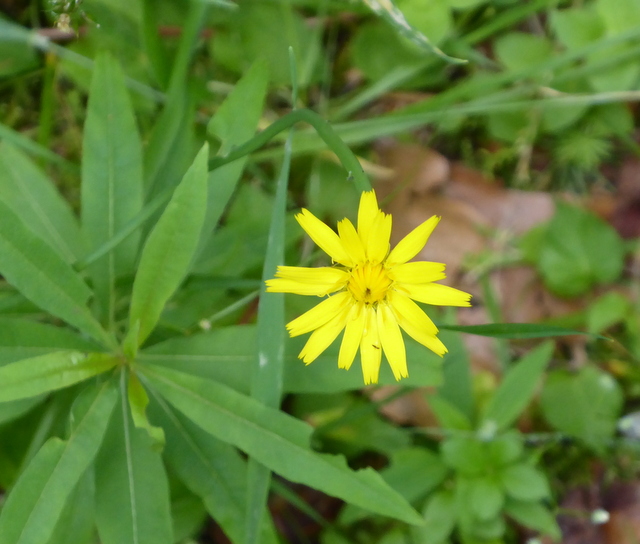
Cat’s-ear (Hypochaeris radicata)

P1000868Lysimachia

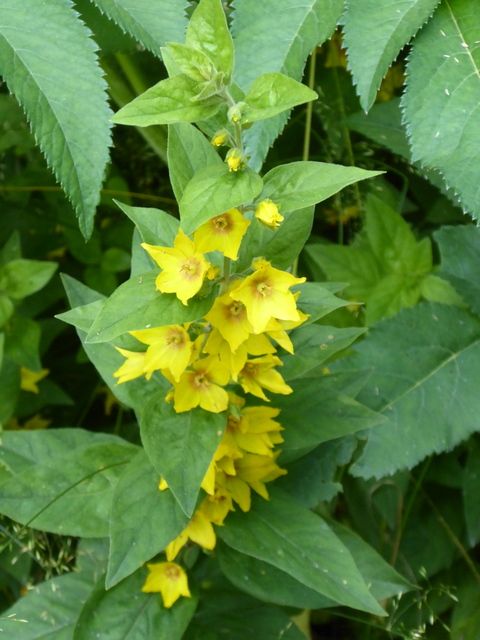
Loosestrife (Lysimachia punctata)

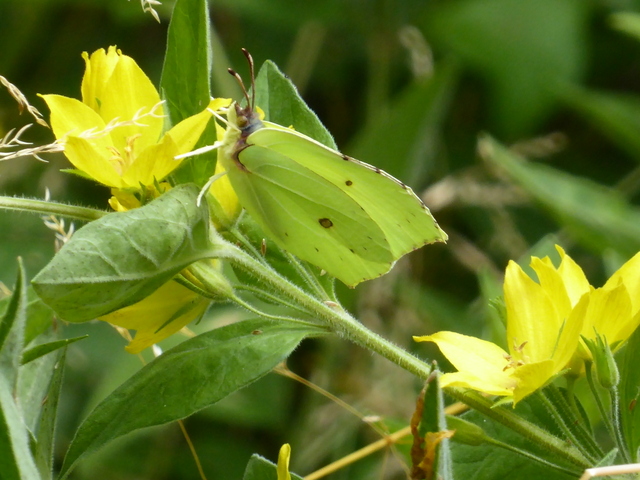
I managed to photograph a butterfly….

P1000866Lysimachia

A Brimstone butterfly (Gonepteryx rhamni) on Lysimachia

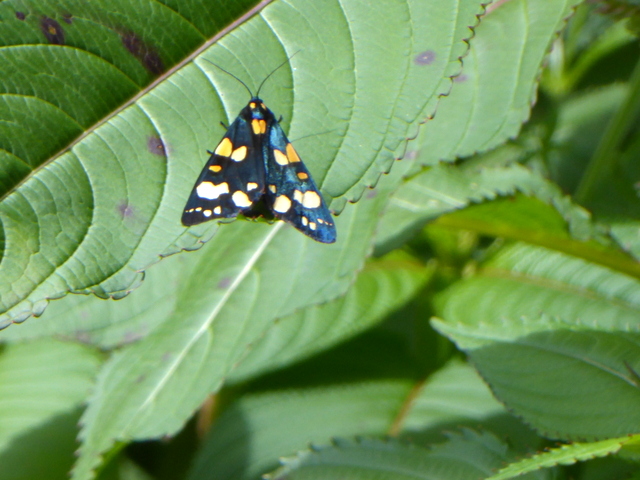
…and a moth.

P1000864ScarletTiger Moth

A Scarlet Tiger Moth (Callimorpha dominula). When flying I could see its underwings which were bright scarlet.

The views as we walked were marvellous.

This slideshow requires JavaScript.

Berries
Berries
Dame's-violet (Hesperis matronalis)
Dame’s-violet (Hesperis matronalis)
Unknown yellow flower
Common Knapweed ( Centaurea nigra)

The path eventually returned us to the town near to the waterfall.

My music selection today is ‘A Walk in the Black Forest’ which was so popular on the radio when I was a little girl.

I am hoping that Elinor will provide the last of my Black Forest posts.

Thanks for visiting!


Share this:

  • Share on X (Opens in new window) X
  • Share on Reddit (Opens in new window) Reddit
  • Share on Pinterest (Opens in new window) Pinterest
  • Share on Facebook (Opens in new window) Facebook
  • Email a link to a friend (Opens in new window) Email
  • Share on Tumblr (Opens in new window) Tumblr
  • Print (Opens in new window) Print
  • Share on Pocket (Opens in new window) Pocket
  • Share on LinkedIn (Opens in new window) LinkedIn
Like Loading...

A Little Sight-seeing in the Black Forest

13 Sat Aug 2016

Posted by Clare Pooley in Days out, holidays, Rural Diary

≈ 55 Comments

Tags

architecture, Black Forest, Black Forest Museum, cake shops, Furtwanger, Germany, holiday, Maria in der Tanne, Pilgrimage Church, Schonwald

We thought we would go and see what other nearby towns and villages were like so we travelled to Furtwanger on the bus.  We took our Visitor Card with us and didn’t have to pay any bus-fare.

View from the bus
View from the bus
View from the bus
View from the bus
View of a typical Black Forest house taken from the bus

The weather was still cloudy and very cool that morning so after a brief wander through the town we found a café and had a hot drink (or in Elinor’s case, an apple juice) and yet more cake.

Richard's cake
Richard’s cake
Elinor's cake
Elinor’s cake
My cake
My cake
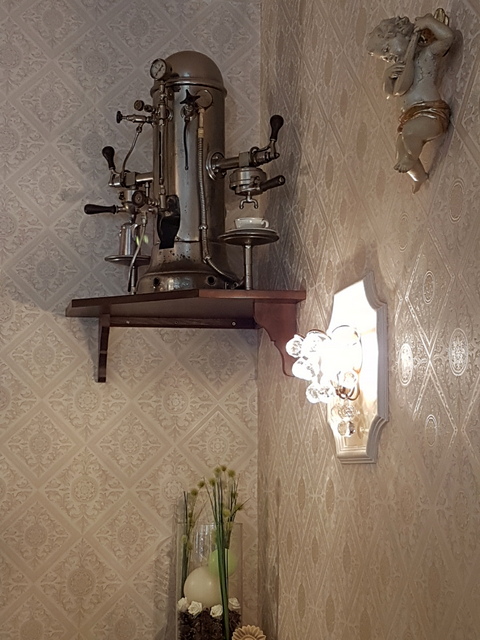
20160715_130911

We admired this beautiful vintage coffee machine

Fortified by our meal we sallied out again and found that the weather had improved and the sun was coming out.  We discovered a little more of the town.

P1000782Furtwanger town hall

The Town Hall

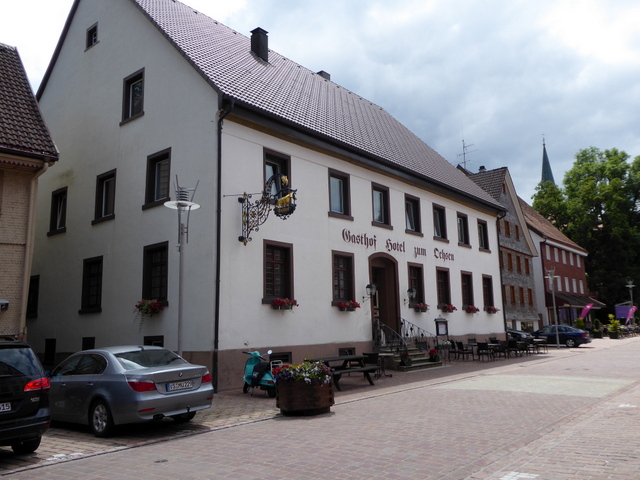
P1000783Gasthof hotel

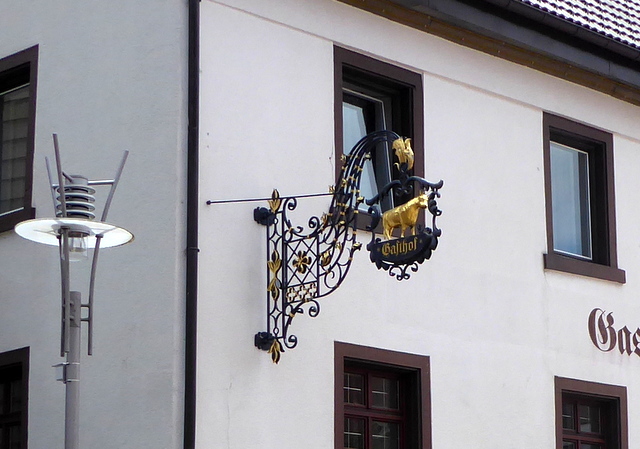
A Guest house and hotel with an ornate sign outside

P1000783Gasthof hotel-001

The sign

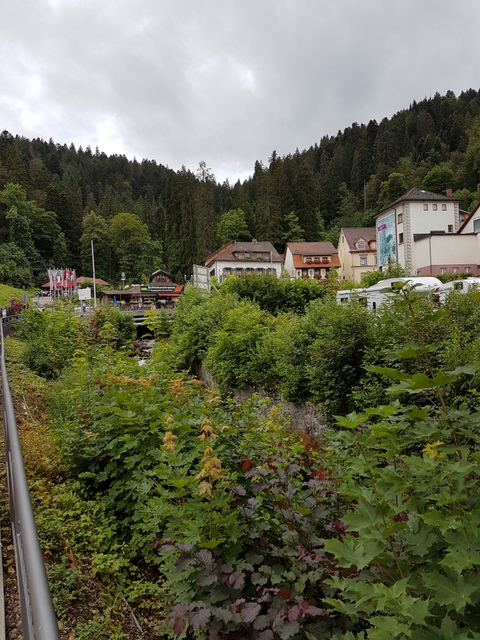
P1000785Furtwanger

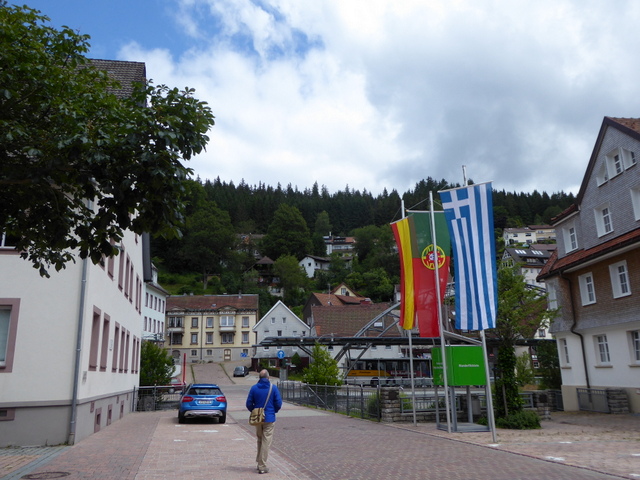
Furtwanger : the bus station is just beyond the banners

P1000786Furtwanger

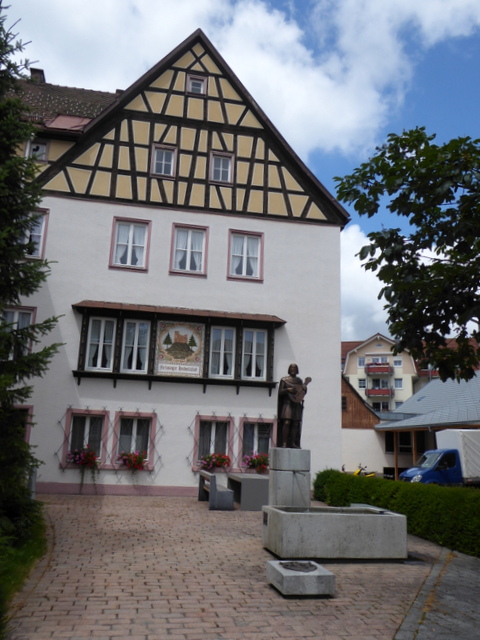
An attractive house.

P1000787Furtwanger

The town river

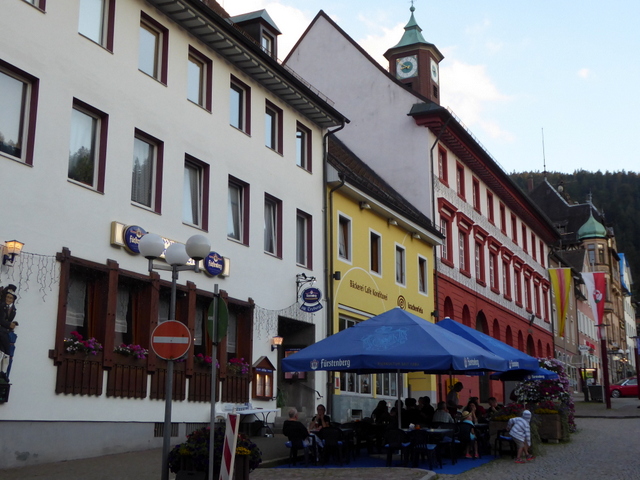
The following day we thought we would visit another village on the bus but before doing so we would look at a couple of places in Triberg.  The Black Forest Museum was very interesting and was situated in the old Trade Hall.

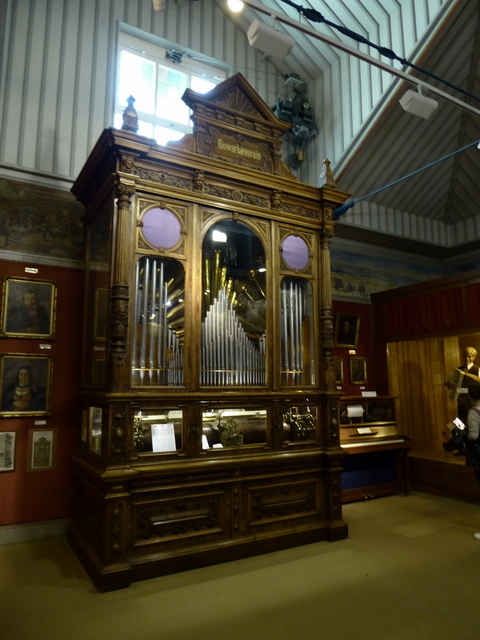
There were musical instruments ….

P1000788Museum

An orchestrion

..and another orchestrion!

There were displays of Black Forest Costumes….

P1000789Museum
P1000790Museum
P1000791Museum

….and lots of clocks!

P1000796Museum
P1000797Museum
P1000798Museum

There was even a rather old and dangerous-looking bob-sleigh!

P1000799Museum

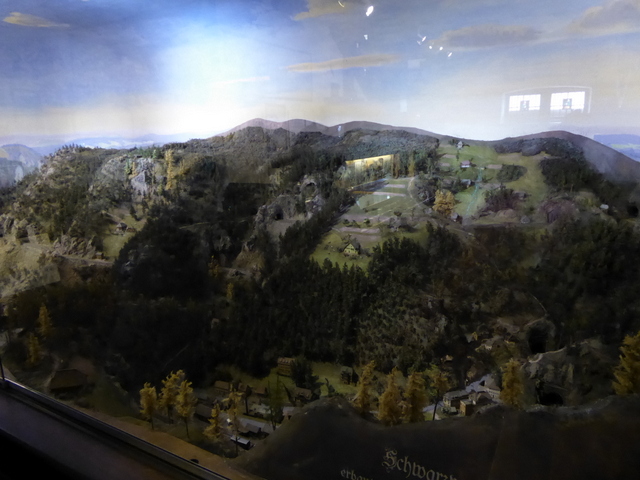
There were exhibits from the local straw-braiding industry and the local glass industry.  A large room was full of information about the Black Forest Railway constructed in the 19th century which has two innovative terminal loops with 39 tunnels that overcame the altitude differences – there is nearly 600 metres difference in height between a couple of the towns.  There was a diorama made in the 1950s that shows this double loop in great detail.

P1000800Museum

Diorama of the Black Forest Railways many tunnels

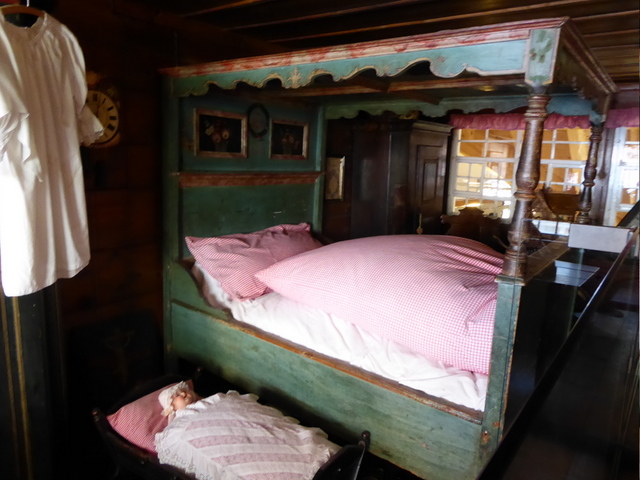
There were reconstructions of workshops and rooms in houses with authentic furniture and tools.

P1000795Museum

A beautiful bed!

We had a wonderful time in the museum!

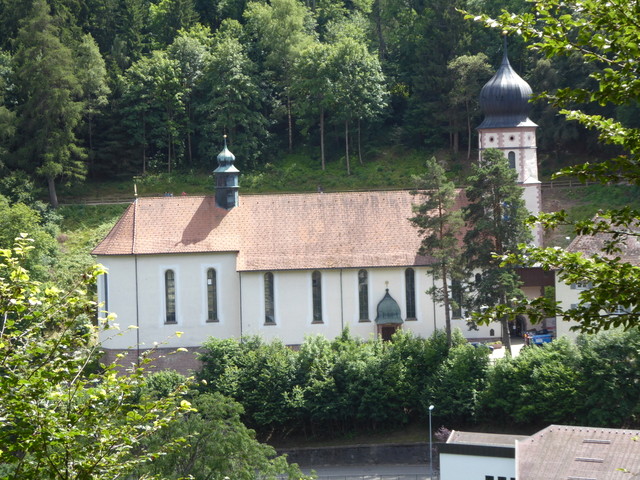
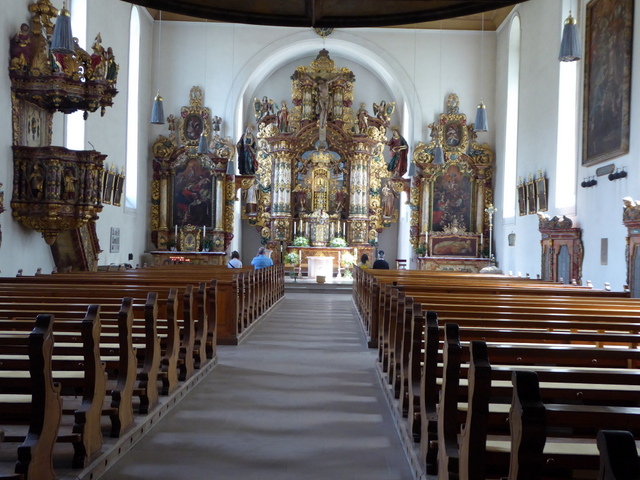
We then visited the Pilgrimage Church of Maria in der Tanne (Mary in the Forest).  Many years ago, so legend has it, a girl was cured of an eye disease when she bathed it in the spring water nearby.  The following year a man was cured of leprosy by washing in the spring water.  He was grateful and placed a figure of the Virgin Mary in a niche in a fir tree.  The place was forgotten about for about a hundred years until three soldiers rediscovered it after having heard some beautiful singing and followed the sound to the fir tree.  The spring and fir tree became a place of pilgrimage and the church was built in the 18th century.

P1000878Pilgrimage church

Maria in der Tanne

P1000803Pilgrimage church

The nave leading up to the enormous and ornate altar

P1000807Pilgrimage church

The altar

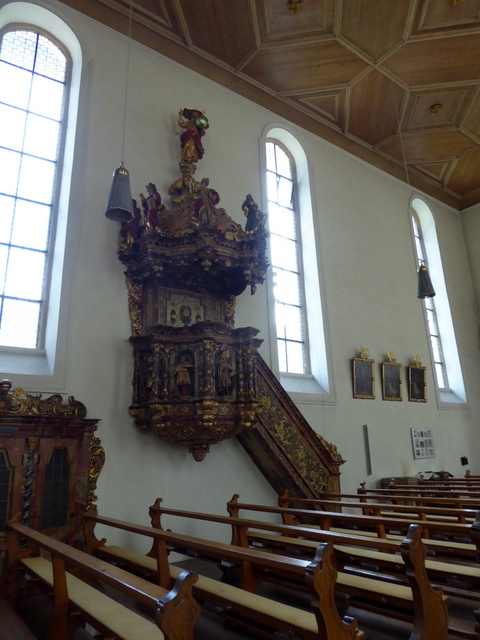
P1000804Pilgrimage church

The pulpit

P1000806Pilgrimage church

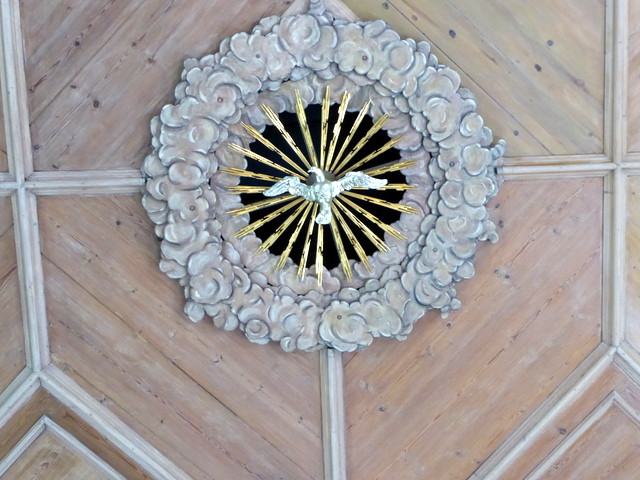
A detail of the ceiling decoration

P1000808Pilgrimage church

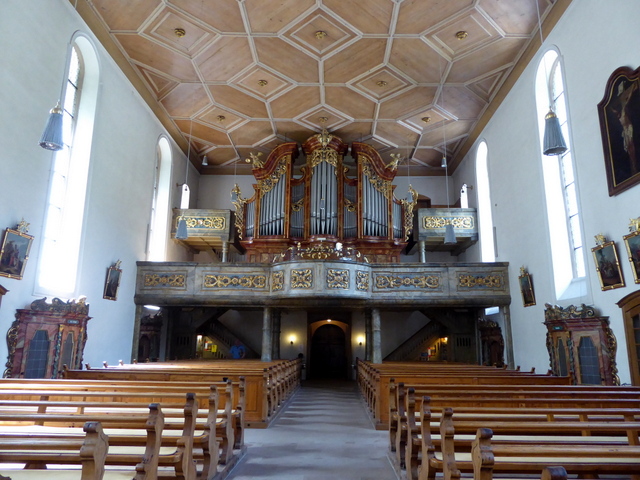
Looking back down the Nave towards the gallery and the organ

We then caught the bus to Schonwald, a pretty village where we had hoped to have some lunch.  Unfortunately, we got there too late.  We had some coffee and a short walk instead.

View from the bus
View from the bus
View from the bus
View from the bus
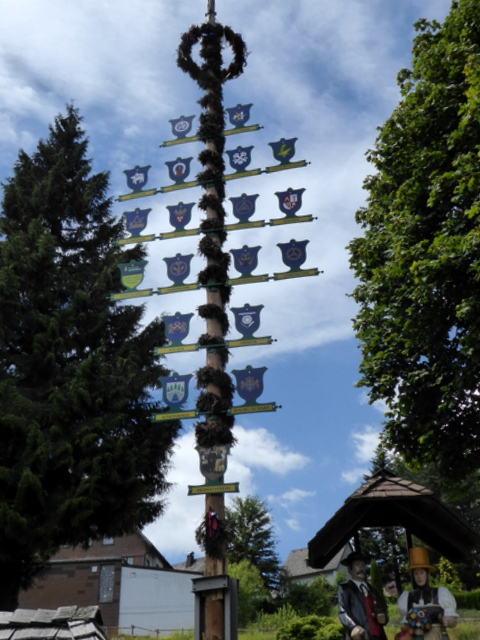
P1000810Schonwald Trades

This has symbols of all the trades on it.

We returned to Triberg and to our hotel for a rest before our evening meal.

Thanks for visiting!

Share this:

  • Share on X (Opens in new window) X
  • Share on Reddit (Opens in new window) Reddit
  • Share on Pinterest (Opens in new window) Pinterest
  • Share on Facebook (Opens in new window) Facebook
  • Email a link to a friend (Opens in new window) Email
  • Share on Tumblr (Opens in new window) Tumblr
  • Print (Opens in new window) Print
  • Share on Pocket (Opens in new window) Pocket
  • Share on LinkedIn (Opens in new window) LinkedIn
Like Loading...

Black Forest Holiday – Part 2

08 Mon Aug 2016

Posted by Clare Pooley in family, holidays, walking

≈ 57 Comments

Tags

birds, Black Forest, Ernest Hemingway, fungi, holiday, lichen, memorials, moss, Nutcracker, Otto von Bismarck, red squirrels, Triberg, waterfall, wildflowers

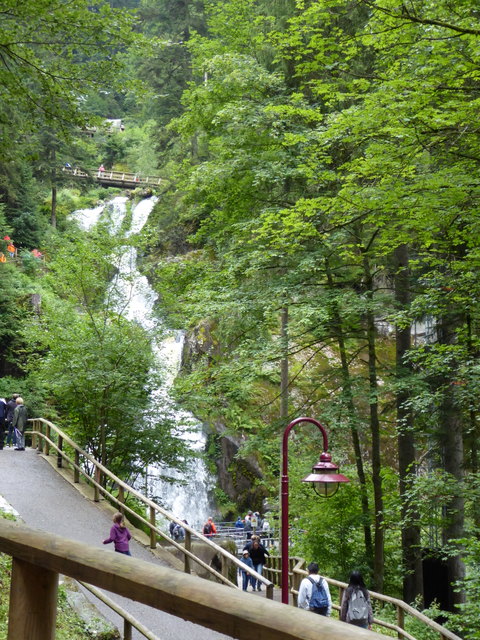
On our second full day on holiday we thought we would go and see the Triberg waterfall which we were informed is the highest waterfall in Germany.  (In fact, it isn’t as Rothbach Waterfall in Bavaria is the highest with a single, vertical drop of 470 metres.)  We had a short walk through the town to the nature park entrance where we were able to get free entry by using the guest-card that the hotel had given us on our arrival.

P1000741Waterfall

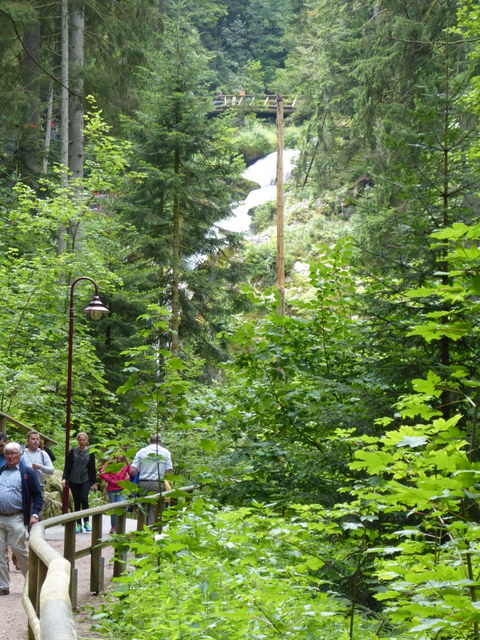
Just a few minutes walk brought us to the waterfall.

P1000743Waterfall

The waterfall is a series of seven cascades falling 160 metres into the valley.

P1000744Waterfall

The waterfall can be heard in the town.

The paths and bridges have been carefully designed to enable everyone to see the falls clearly.

This slideshow requires JavaScript.

I didn’t just photograph the waterfall.  There were plenty of plants that interested me, some I recognised and others I still cannot put a name to.

P1000740Touch-me-not Balsam

Touch-me-not Balsam (Impatiens noli-tangere)

P1000742Fungus

Fungus

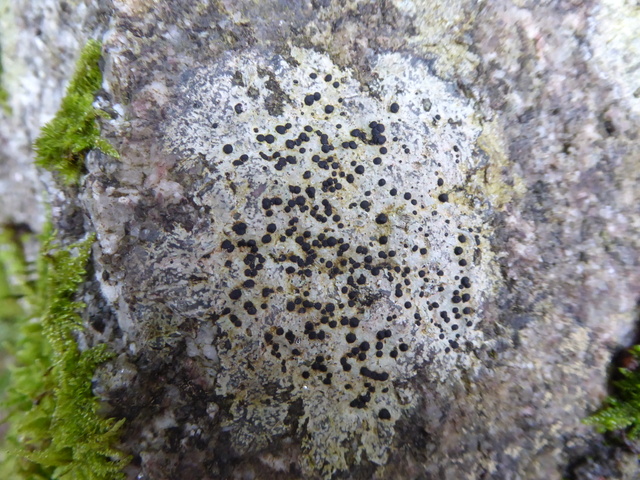
P1000745Lichen

Lichen

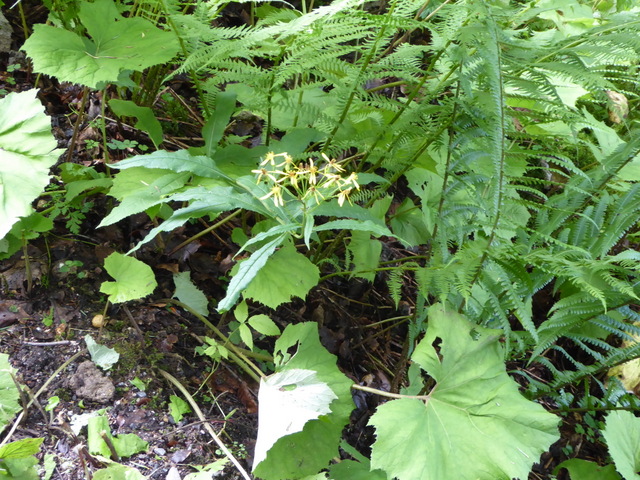
P1000751Yellow flower

Unidentified yellow flower

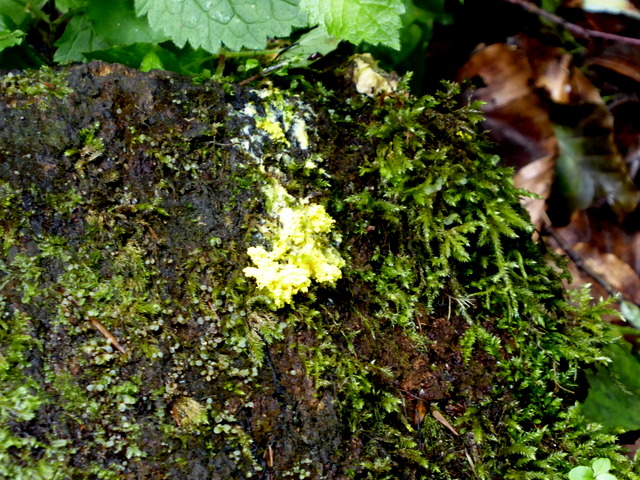
P1000754Slime mould

Slime mould

Moss
Moss
More moss
More moss
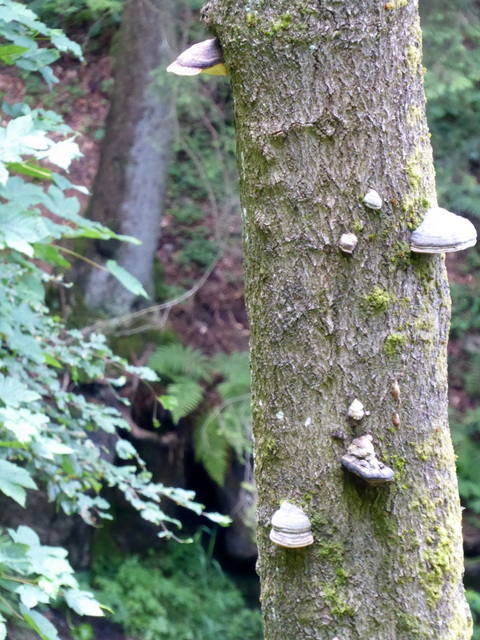
P1000764Hoof fungus

Hoof fungus (Fomes fomentarius) ?

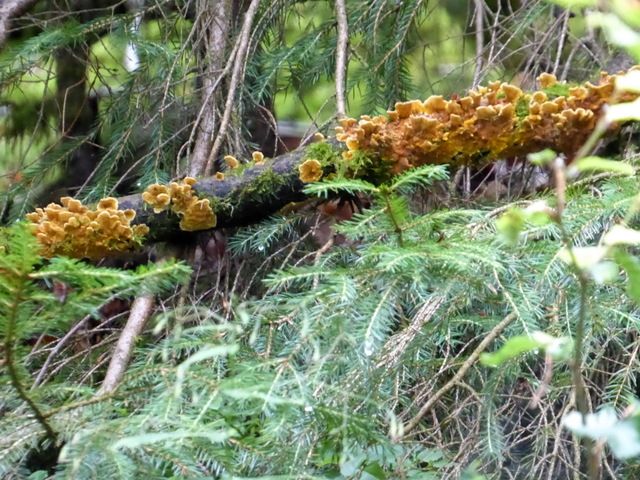
P1000765Fungus

Orange-coloured fungus.

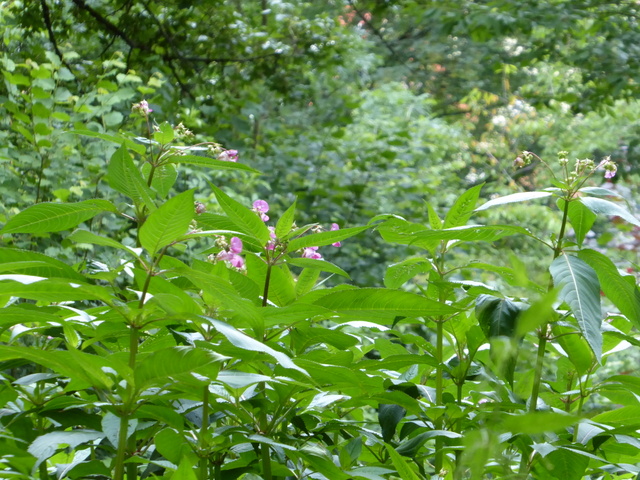
P1000778Indian Balsam

Indian Balsam (Impatiens glandulifera)

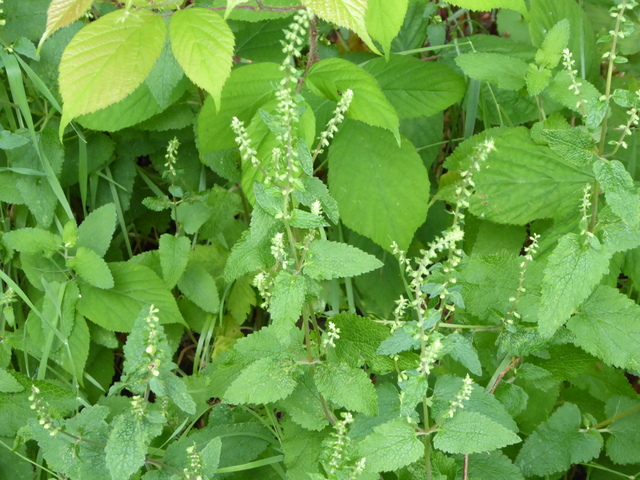
P1000779Figwort phps

Wood Sage (Teucrium scorodonia)

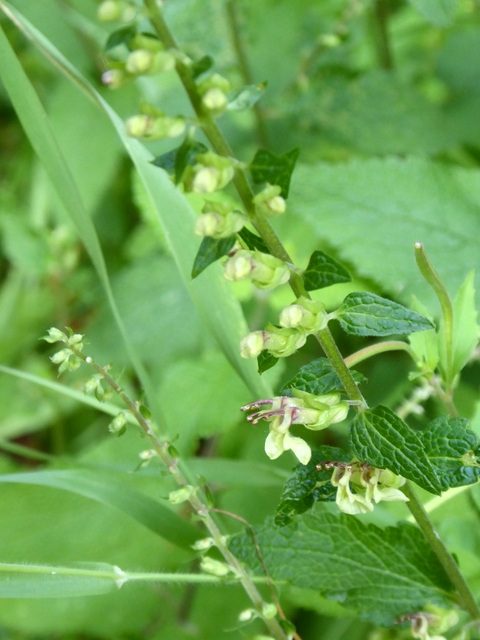
P1000780Figwort phps

Wood Sage flower spike

We also saw glimpses of Red Squirrels, which are not rare in Germany, but they were too quick for me and I was unable to photograph one.

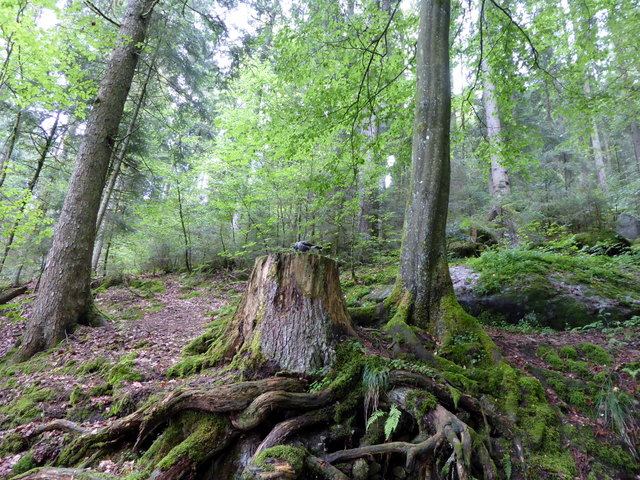
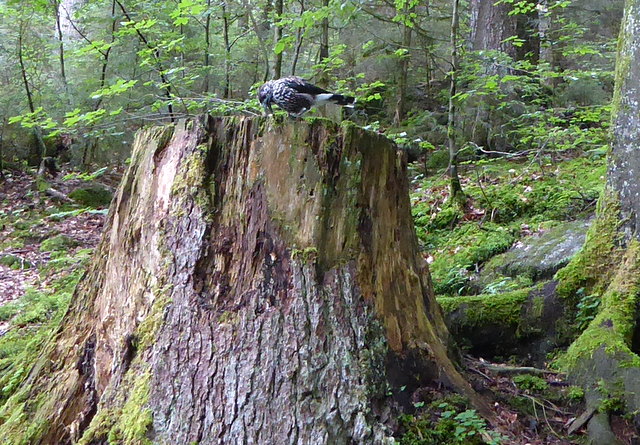
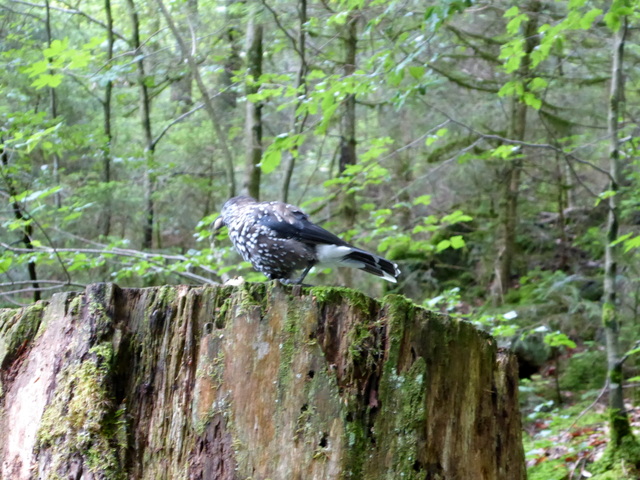
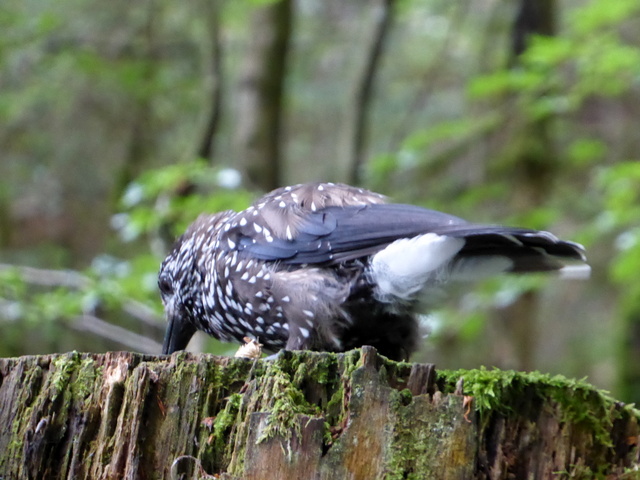
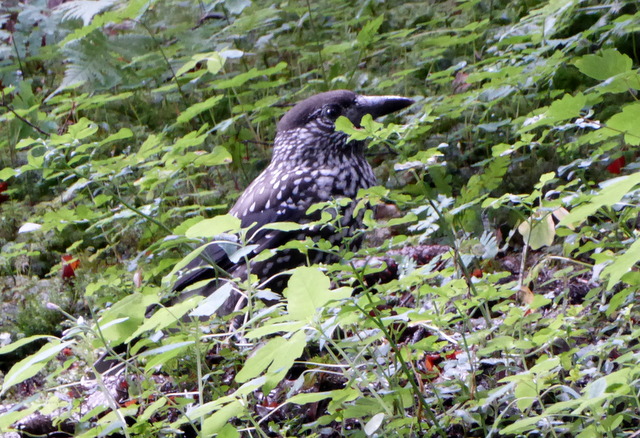
I was very pleased that I managed to photograph a Nutcracker, a bird from the crow family.  They are one of the smallest crows at 12.5 inches long, even smaller than a Jackdaw, and they were moving about quickly in the undergrowth feeding newly fledged young.

P1000767Nutcracker

Nutcracker (Nucifraga caryocatactes) on a tree-stump

P1000767Nutcracker - Copy

This is the above photo which has been cropped

P1000768Nutcracker

Nutcracker

P1000769Nutcracker

Nutcracker

P1000771Nutcracker

Nutcracker

Only one of those photos was cropped though I had to use the zoom on my camera to its fullest extent for the rest!

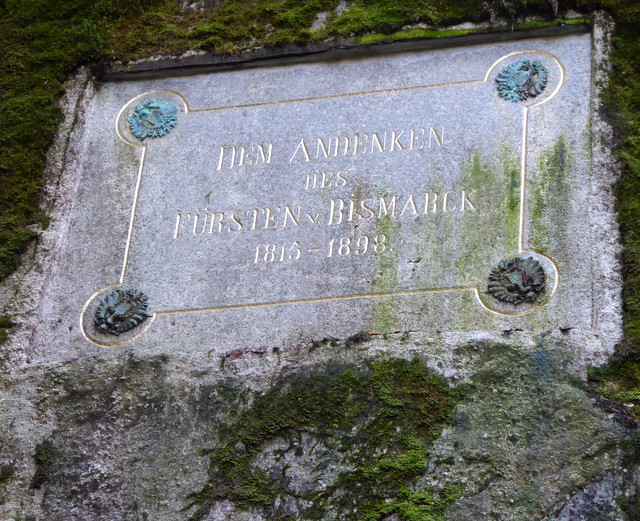
There were a few commemorative plaques placed on the rock face; this one is for Otto von Bismarck.

P1000758Bismark plaque

Bismarck commemoration

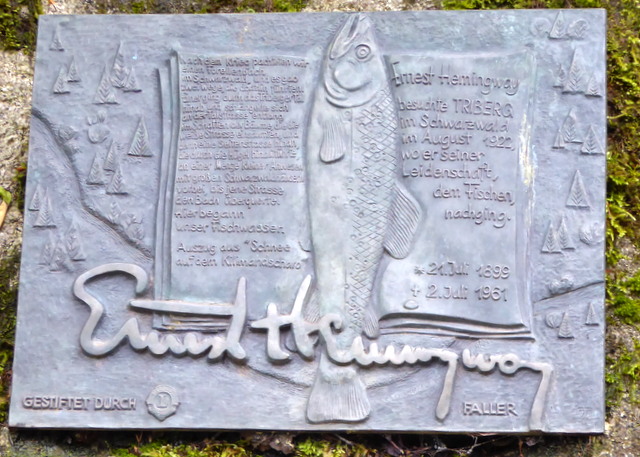
This one is for Ernest Hemingway

P1000749Hemingway plaque

On the right are his dates of birth and death under a note saying that Ernest Hemingway visited Triberg in the Black Forest in August 1922 where he indulged in his passion for fishing. There is a quote from ‘The Snows of Kilimanjaro’ on the left where he talks about a trout-fishing trip to Triberg.

We enjoyed our walk through the forest and before returning to our hotel, indulged in some more coffee and cake!

Thanks for visiting!

Share this:

  • Share on X (Opens in new window) X
  • Share on Reddit (Opens in new window) Reddit
  • Share on Pinterest (Opens in new window) Pinterest
  • Share on Facebook (Opens in new window) Facebook
  • Email a link to a friend (Opens in new window) Email
  • Share on Tumblr (Opens in new window) Tumblr
  • Print (Opens in new window) Print
  • Share on Pocket (Opens in new window) Pocket
  • Share on LinkedIn (Opens in new window) LinkedIn
Like Loading...

A Holiday in the Black Forest

04 Thu Aug 2016

Posted by Clare Pooley in family, holidays, Rural Diary

≈ 51 Comments

Tags

Black Forest railway, Bollenhutte, Brussels, Caffee und Kuchen, cake shops, Cologne, cuckoo-clock shops, Deutsche Bahn, Ebbsfleet, Eurostar, holiday, ICE trains, Liege-Guillemins station, luggage, Luggagemule, Offenburg, packing, Parkhotel Wehrle, River Gutach, trains, travelling, Triberg

We recently had an eight-day holiday in the Black Forest in Germany.  Richard organised the whole trip on his own, booking the hotel independently and then contacting Deutsche Bahn who recommended a route for us to take.  We enjoy travelling by train!  On previous trips we have used couchettes or sleeping cars but Elinor said that she’d rather we didn’t do that again so we managed to get the whole journey done in one day, setting off from home at 4.30 am and getting to the hotel just before 9.00 pm (8.00 pm British time) the same day.

We drove to Ebbsfleet in Kent where we left the car and went through passport control and customs before boarding the Eurostar.

P1000736Ebbsfleet

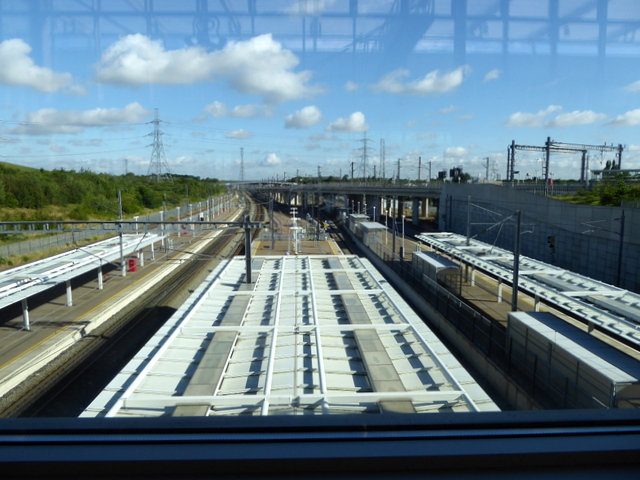
The view from the waiting area at Ebbsfleet

P1000737Ebbsfleet

Richard and Elinor eager to board the train!

Modern high-speed trains are usually very pleasant to travel on.  The seats are comfortable, there is no jolting or bumping and there is hardly any engine noise.  We seem to slide through the countryside at 140 mph almost as though we are hovering above the ground rather than fixed on tracks.  The only downside is travelling through tunnels which make my ears pop and not being able to see the scenery at times because of sound barriers built next to the line near towns and villages.  The tunnel under the English Channel only takes 20 minutes to go through and the train is travelling at a mere 80 mph.  This rate of travel is still very surprising to me; I have always journeyed by train and my first train trip to the Continent when I was 14 years old began at Victoria Station in London.  That first leg from London to Dover took about an hour and 40 minutes.  We went through customs and then boarded a ferry to Ostend in Belgium.  The sea journey took three or four hours and we then caught a large train to Paris.  It was very exciting!  Everything looked and smelt so different.  I remember setting off from London about midday and eventually getting to Paris that evening where we ran from one station to another dodging the crazy traffic and quickly finding something to eat before we boarded the sleeper to Munich.

But back to our recent journey – the Eurostar took just over two hours to get to Brussels where we had a couple of hours wait for our next connection to Cologne.

P1000738Brussels

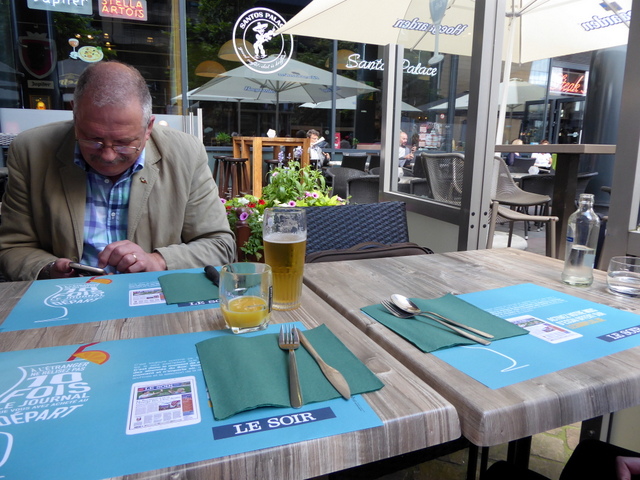
Here we are having some lunch at a café near the station in Brussels.  Richard is just posting a photo of his beer on Facebook……

20160712_123028

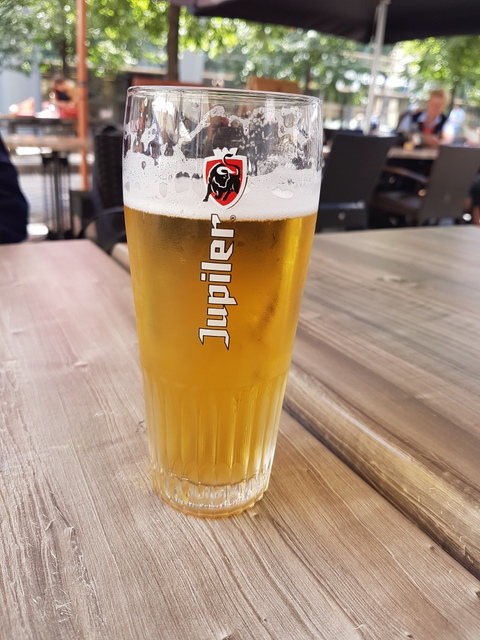
Jupiler Belgian Pils

20160712_123201

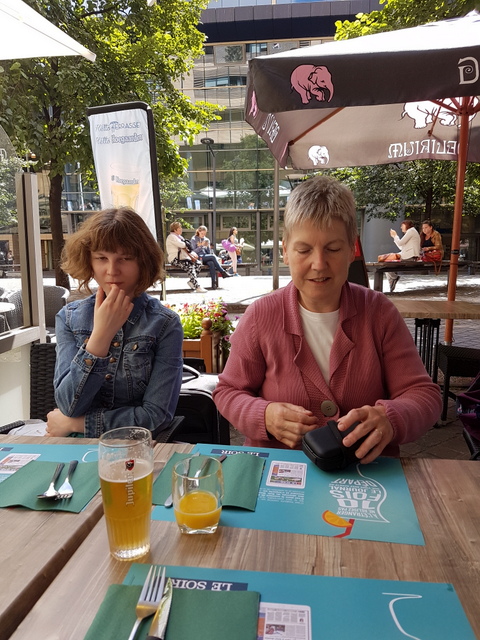
….and taking a picture of me and Elinor. I see that I am looking very tired which is not surprising as I had only had two hours sleep the night before!

It was so pleasant to be out in the sunshine and the lunch was exceedingly good.  What I found sad was the sight of armoured cars and armed soldiers and police everywhere.  With all the terrible attacks all over Europe it is not to be wondered at but I find it very upsetting all the same.

Our next train arrived on time and we were soon on our way to Cologne.

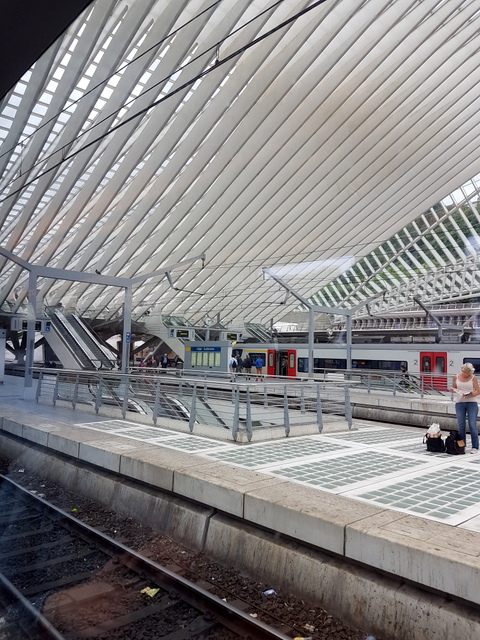
20160712_151329

This is the station at Liege-Guillemins – the first stop on the way to Cologne. It is a beautiful building; Richard was able to take this photo through the window while we were there.

The last time we passed through Liege, work had begun recently to up-grade the tracks for high-speed trains.  I don’t remember seeing this station then.  Catalan architect Santiago Calatrava designed the building and it really is superb.

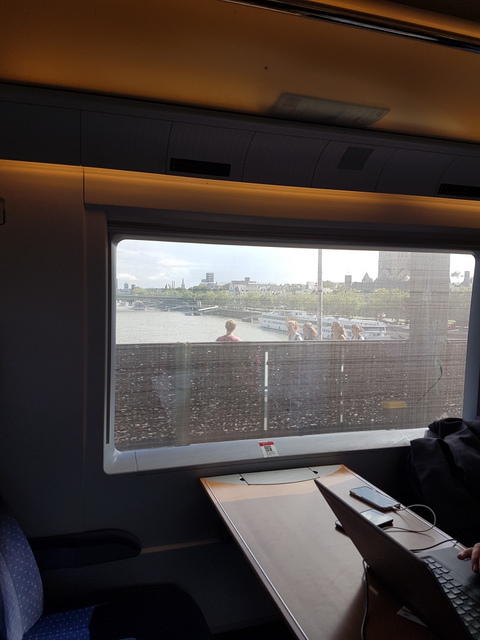
20160712_165919

I think this might be us arriving at Cologne. Richard took this view of the River Rhine through the train window.

We had a 40 minute stop in Cologne where we dashed about looking for food as we would be arriving too late at our hotel for a meal.  Our next high-speed train took us to the small town of Offenburg where we needed to buy more water as we had forgotten this in Cologne.  Luckily, there was a drinks dispenser on the platform and we bought two bottles of ice-cold mineral water.  By this time the fine weather had disappeared and it was raining hard and quite chilly.

Our last train was a double-decker local train to Triberg which travelled through very scenic countryside, though by this time it was very gloomy and wet and after 8.00 in the evening.  We had arranged with the hotel for a taxi to pick us up at the station and as soon as we got off the train we were halloo-ed by the driver who was over on the opposite platform.

He drove us quickly to our hotel where we booked in and found that our other suitcases had already arrived and were waiting in our rooms.  We had decided to use a company called ‘Luggage Mule’ to help get all our belongings on holiday.  Lugging heavy suitcases on and off trains is a back-breaking business and as we usually need a large case for our medication alone we thought having someone else do the lifting was a good idea.  The cases were collected six days before our holiday started and I found packing this far in advance quite tricky.  Inevitably, there were things I wished I’d included and hadn’t and things I wished I hadn’t included but had!  We were amused by the list of things that we were forbidden to pack.  As you will see from the list, we had to leave our sink behind!  We still managed to find more things we couldn’t do without for eight days to fill two smaller suitcases that we carried with us on the journey (see the second photo above)!  Three washbags, cosmetics, medication for three people with chronic illnesses, Elinor’s books and drawing materials, her laptop and my notebook PC, shoes we had forgotten to pack earlier, coats etc made us look like a normal family going away for a week.

Our rooms in the hotel were comfortable and spacious and we slept well after our long day.  The following morning we enjoyed a delicious buffet breakfast and then had a short wander round Triberg, the town where we were staying.

View from our window
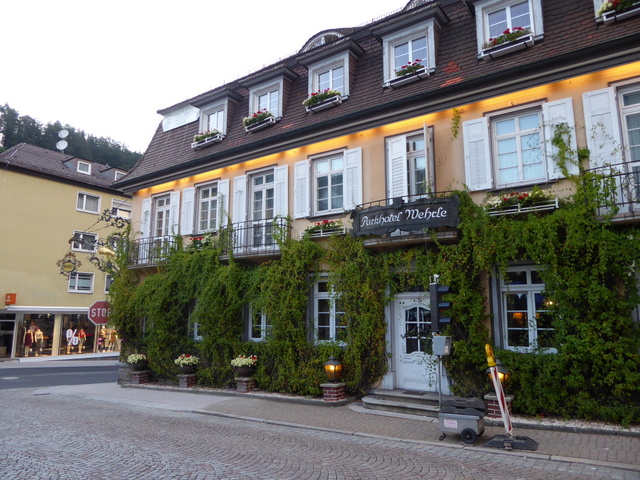
P1000882Our hotel

Our hotel. I took this photo the last evening we were there.

P1000883Our hotel

Another wing of the hotel is on the left of the photo.  Ernest Hemingway stayed in this hotel when he visited the Black Forest.

It wasn’t a warm day and there was a mixture of sunshine and showers but we saw that it was a pretty place though very busy with tourists like us.

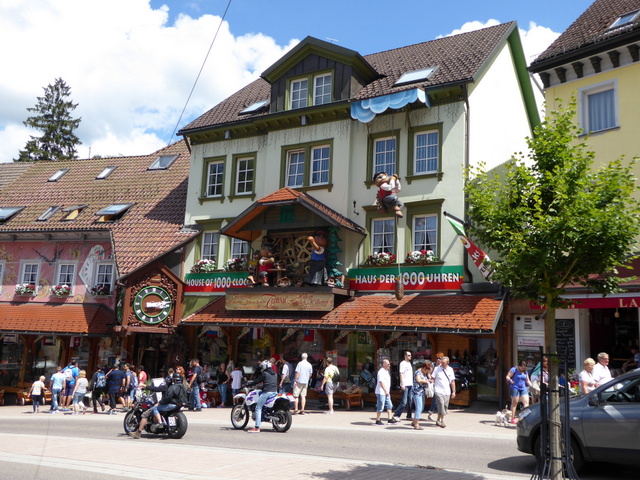
P1000880Clock shop

This is one of many cuckoo-clock shops in the town – I took the photo near the end of our holiday when the weather had improved.

As you see from the picture we had arrived in the land of large teddy bears.  Two worked unceasingly at their clock-making and another abseiled up and down the outside of the shop all day.

20160713_115519

The top of the town with the River Gutach in amongst the trees at the bottom of the photo.

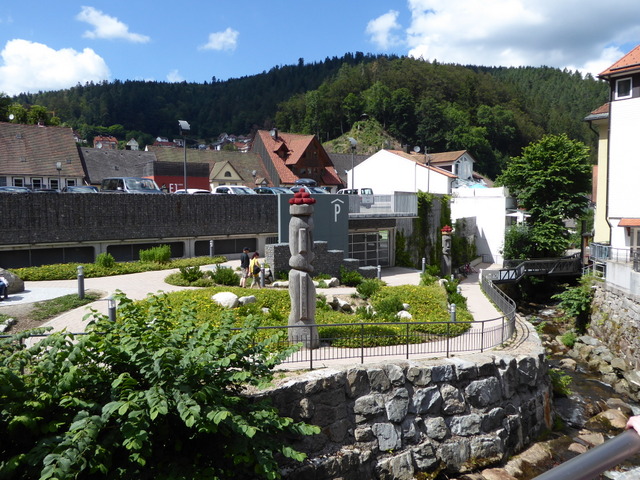
P1000881Park

This is a little garden in the centre of the town. There are two large carved figures here that look like Easter Island statues with red balls on their heads.

I believe these statues represent Triberger women in their distinctive national costume and their Bollenhutte (hats with pompoms).

Photo taken from Google images

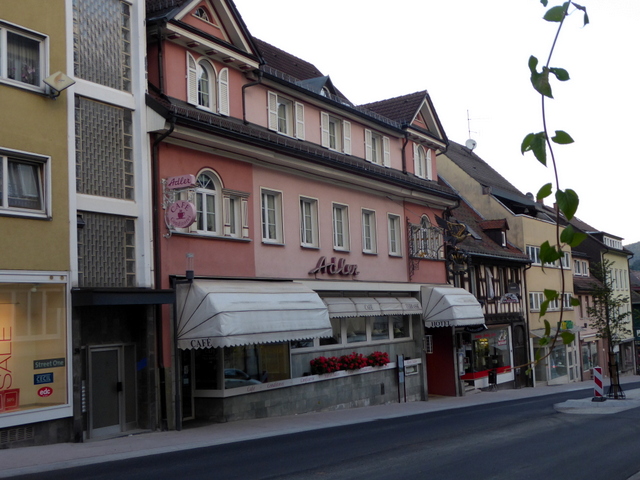
After our walk about the town we returned to the hotel for a few hours to rest and then at about 4 o’clock we went out for ‘Kaffee und Kuchen’ (coffee and cakes)  Our breakfast had been so satisfying that we hadn’t needed lunch but by mid-afternoon we were in need of a little something to eat.  The cake shop opposite the hotel served the most delicious cakes!

P1000884Cake shop

Café Adler – the cake shop

In the evening we went out for a meal at a restaurant close to the hotel.  For the time we were in Germany we tried to eat local Black Forest food for every meal.  It was all very good indeed though I found there weren’t as many vegetables as I am used to in these dishes which were mainly meat with potatoes or arborio rice or noodles.

P1000885A favourite restaurant

One of our favourite places to eat

In the next post I will describe what we did while in Germany.

Thanks for visiting!

Share this:

  • Share on X (Opens in new window) X
  • Share on Reddit (Opens in new window) Reddit
  • Share on Pinterest (Opens in new window) Pinterest
  • Share on Facebook (Opens in new window) Facebook
  • Email a link to a friend (Opens in new window) Email
  • Share on Tumblr (Opens in new window) Tumblr
  • Print (Opens in new window) Print
  • Share on Pocket (Opens in new window) Pocket
  • Share on LinkedIn (Opens in new window) LinkedIn
Like Loading...

The Cumbrian Coast

12 Wed Aug 2015

Posted by Clare Pooley in Days out, plants, Rural Diary

≈ 27 Comments

Tags

coastline, Cockermouth, Crested Dog's-tail, holiday, Lake District, Perennial Rye-grass, R Cocker, R Derwent, Silloth, Solway Firth, Whinlatter Forest

We thought we might go to the coast as the weather was fine on the Tuesday of our holiday.  We by-passed Keswick and took the road to Maryport, a town on the coast.  Our road followed the western shore of Bassenthwaite Lake and then through the town of Cockermouth.  We drove to Maryport and then up the coast road to Silloth.  This map will show you the Lake District area, its main towns and will also show how close to Scotland it is.

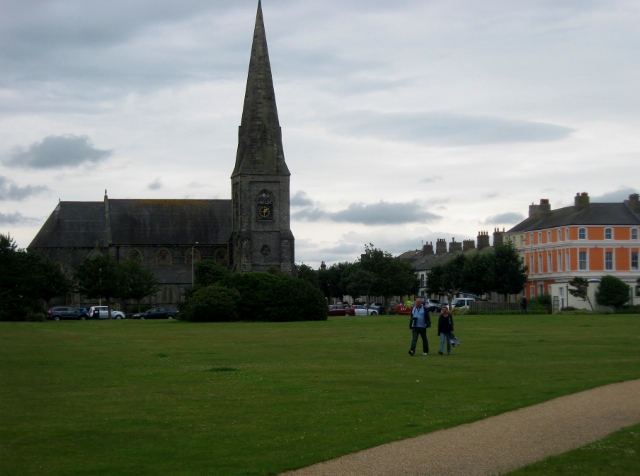
IMG_5077Silloth (640x476)

Silloth church from the Green

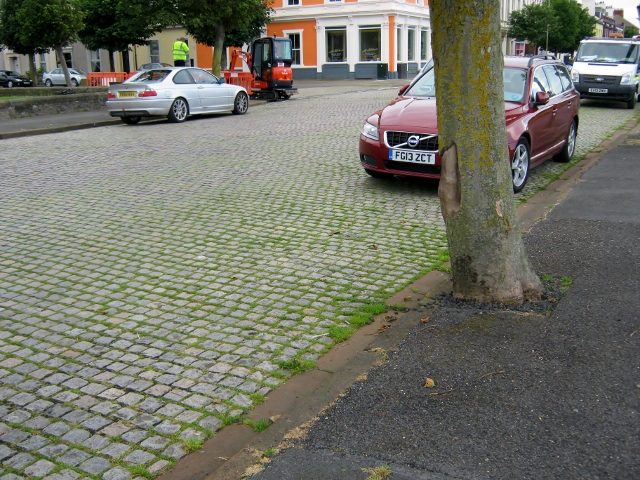
We wandered round Silloth; it was very quiet and there wasn’t too much to see though it has some attractive buildings and the roads are wide and straight.  The area between the main road and the coast line had been made into a park some while ago and I read that it has recently had lottery funding to add to its amenities and refurbish existing ones.

IMG_5078Silloth (640x480)

You can tell how quiet it is by the grass growing in-between the cobbles

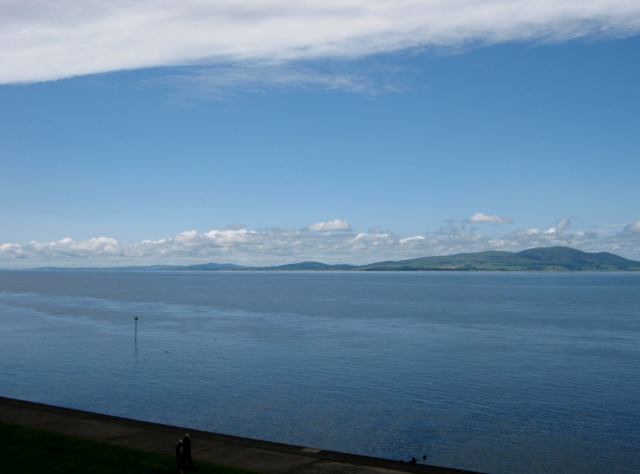
IMG_5072Solway Firth (640x474)

Looking north-west across the Solway Firth

We walked across the green towards the sea and climbed up to the Pagoda which is a shelter with a wonderful view.  It looked like the sun was shining in Scotland.

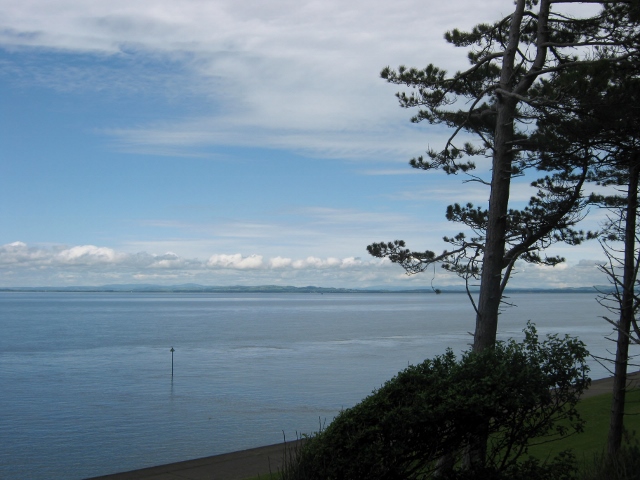
IMG_5073Solway Firth (640x480)

Looking north-east across the Solway Firth

Standing there, I was reminded of the lovely pictures I had seen taken from the opposite side of the Firth.  I was looking towards the land of the  ‘Tootlepedals’.  This is one of my favourite blogs; a daily insight into what it’s like to live in the Scottish Borders.  Interesting, funny and full of fabulous photos;  Mr T likes alliteration!

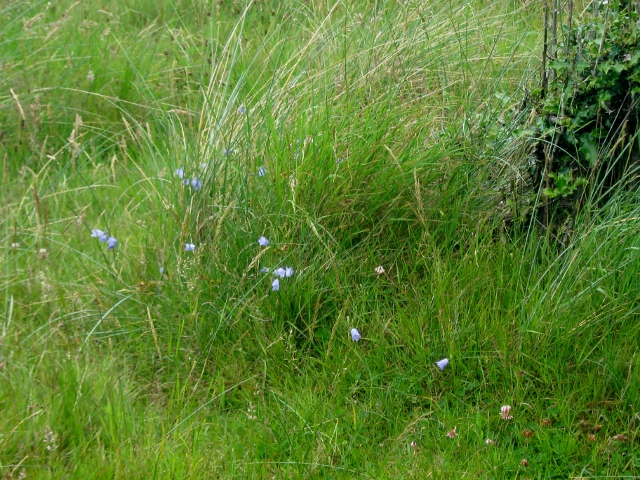
IMG_5074Hare Bells (640x480)

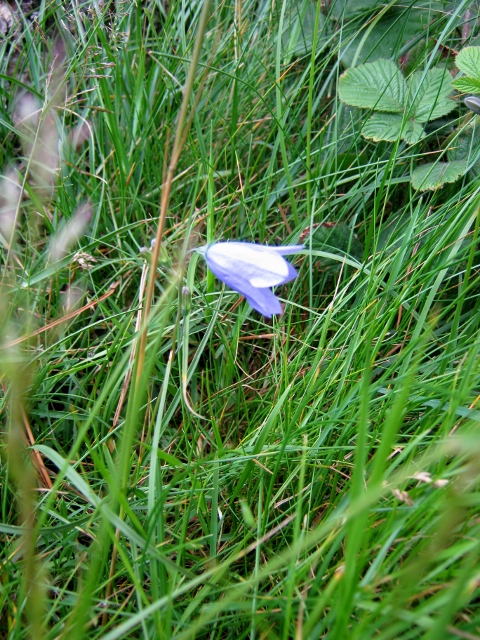
I found some Harebells (Campanula rotundifolia) on the slope up to the Pagoda

IMG_5075Hare Bell (480x640)

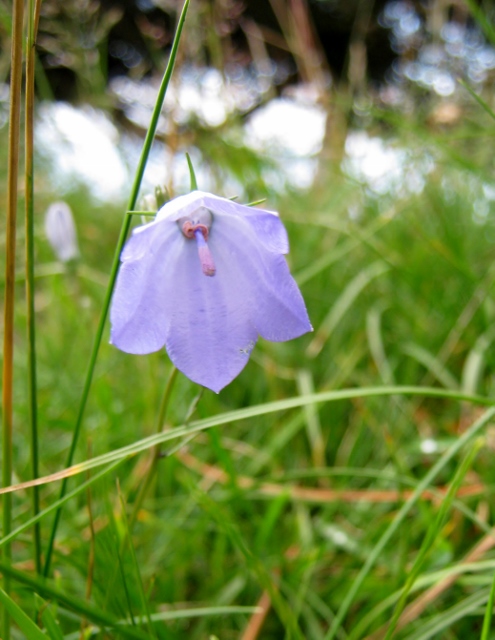
They are delicate, azure-blue bells.

IMG_5076Hare Bell (495x640)

I even managed to photograph inside the flower bell

We decided to return to Cockermouth and have some lunch.

IMG_5079R Cocker (640x480)

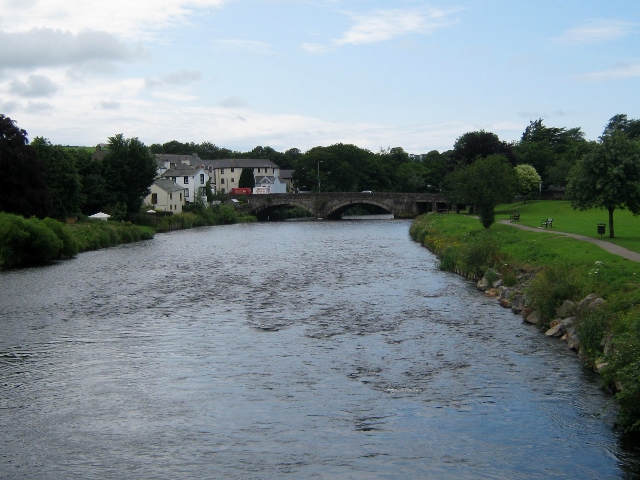
The River Derwent

Three famous men were born in or near Cockermouth and all were born within a few years of each other.  The first was Fletcher Christian (Mutiny on the Bounty) who was born a mile from Cockermouth in Eaglesfield in 1764.  The second was John Dalton, a brilliant scientist and the originator of the Atomic Theory.  He also was born in Eaglesfield in 1766.  The third was William Wordsworth, born in Cockermouth in 1770.

IMG_5080R Derwent (640x480)

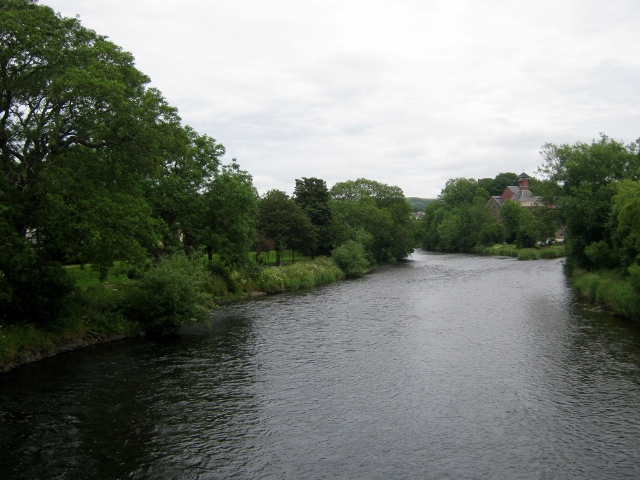
The River Derwent looking upstream.  The River Cocker joins the Derwent here and in the photo is coming in from the right.

In November 2009 both rivers broke their banks and the town was severely flooded.  The army was called in and assisted the townsfolk for three days until the water began to recede.  Most of the shops, pubs and restaurants in the town centre were wrecked and there was much destruction elsewhere.

IMG_5081Whinlatter (640x480)

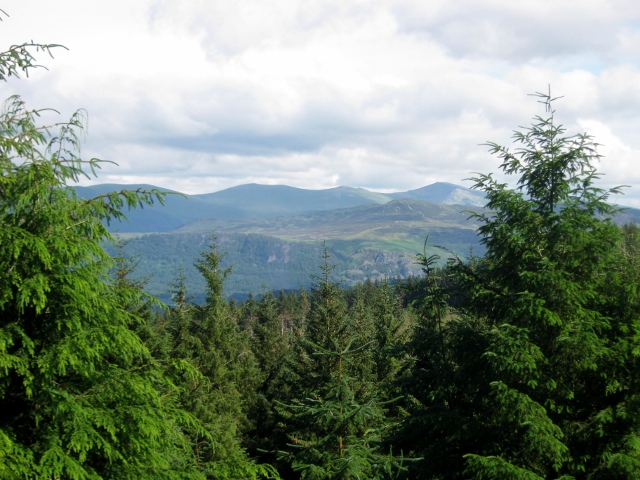
Whinlatter Forest with views of the fells

On our way home we drove a different route over the pass at Whinlatter.  We called in at the forest visitor-centre and took a short walk in the forest.  As it is Forestry Commission land and the trees are non-native, there was not much wildlife to be seen.

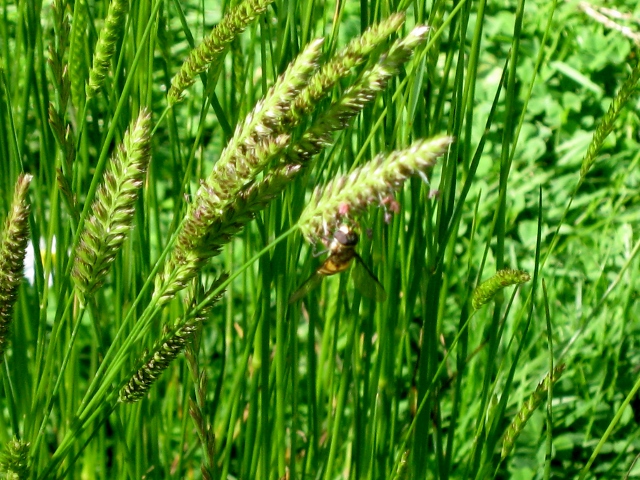
IMG_5088Hoverfly on Crested Dog's-tail (640x480)

A hoverfly on Crested Dog’s-tail (Cynosurus cristatus)

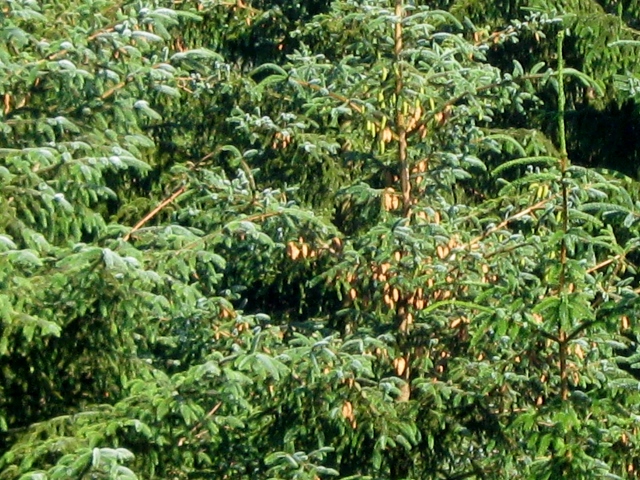
IMG_5082Fir cones (640x480)

A good crop of cones

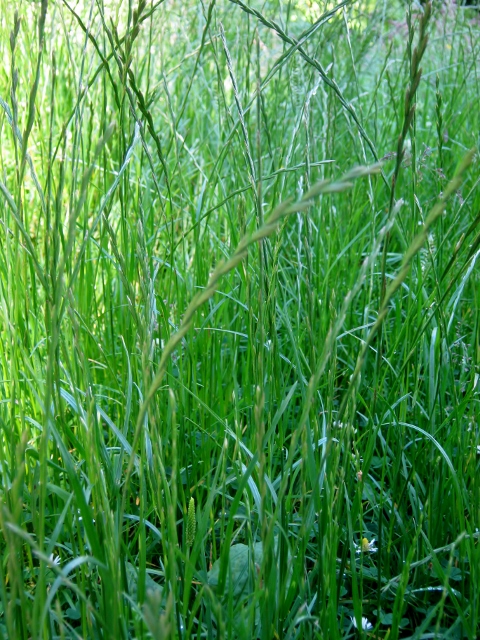
IMG_5083Perennial Rye-grass (480x640)

Perennial Rye-grass (Lolium perenne)

Thank’s for visiting!

Share this:

  • Share on X (Opens in new window) X
  • Share on Reddit (Opens in new window) Reddit
  • Share on Pinterest (Opens in new window) Pinterest
  • Share on Facebook (Opens in new window) Facebook
  • Email a link to a friend (Opens in new window) Email
  • Share on Tumblr (Opens in new window) Tumblr
  • Print (Opens in new window) Print
  • Share on Pocket (Opens in new window) Pocket
  • Share on LinkedIn (Opens in new window) LinkedIn
Like Loading...

Keswick and an Evening Walk

03 Mon Aug 2015

Posted by Clare Pooley in Days out, plants, Rural Diary, walking, weather, wild birds

≈ 33 Comments

Tags

clouds, Derwent Water, flowers, geese, holiday, Keswick, Lake District

Our second day in the Lakes was cooler and rainier than the first.  Again, we left it until after midday before we left our cottage and this time went to the nearest town – Keswick.

Fortunately, the rain left off for the first part of the afternoon so walking round the town was fine.

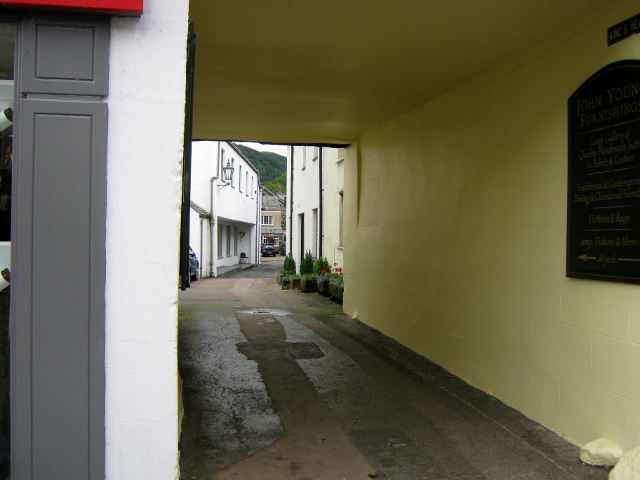
IMG_5041Alleyway in Keswick (640x480)

An interesting alleyway in Keswick

I had never been to this town before and Richard hadn’t visited for many years.  I loved it!  It has lots of interesting shops and plenty going on but it isn’t as packed with tourists as Ambleside is.

We bought gifts from the shop below for my mother and our next-door neighbour (who watered our tomatoes) and also a jar of marmalade as Elinor wanted some. My blogging friend Rachel, formerly of ‘Could Do Worse’ visits the Lakes every year and when I saw this shop I thought of her.

IMG_5042Chocolate shop in Keswick (640x480)

The Chocolate Shop

Here is what Rachel had to say about it last year.  She did three or four great posts from the Lakes last year and you’ll find them just before and just after the post I’ve given you a link to.  She has recently started a new blog called The Patch Out Back – do give her a visit.

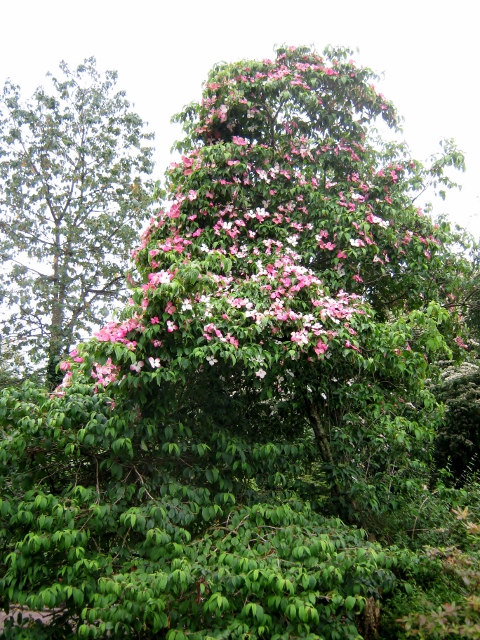
IMG_5043Tree in park (480x640)

A pretty tree in the park.

After wandering round for a while, and Elinor sampling some of the best chips she had ever tasted from The Old Keswickian, we agreed we’d like to see the lake.  To get to Derwent Water from the centre of the town you walk through an underpass and alongside part of the town park which is where I took the above photo.

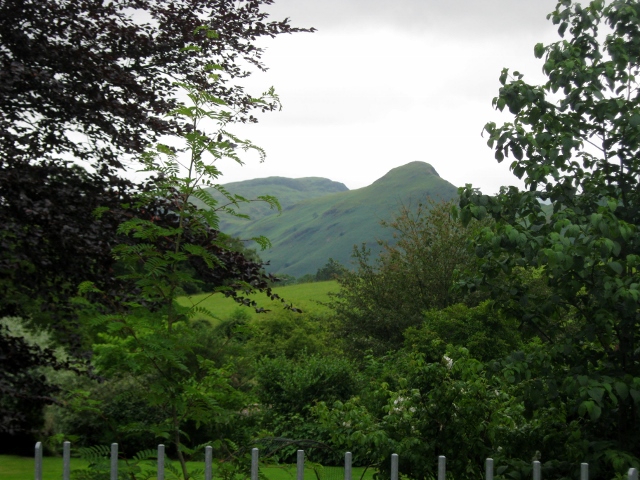
IMG_5044View of fells from Keswick (640x480)

From the path we could see the fells that surround the town

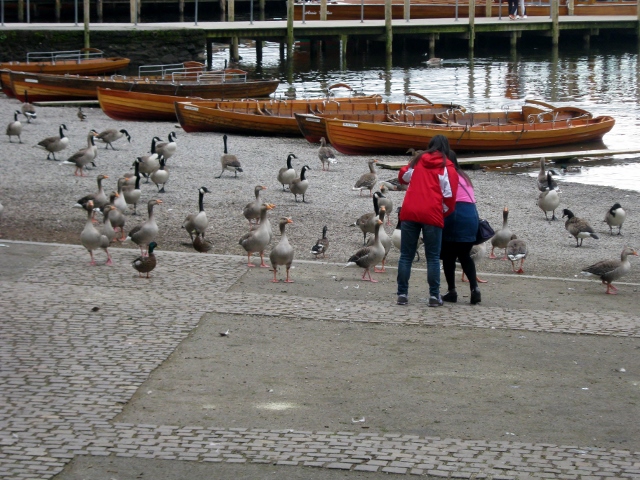
IMG_5045Geese at lakeside (640x480)

Lots of very friendly Greylags and Canada Geese wait to be fed by anyone foolhardy enough to buy packets of goose-food from the shop.

IMG_5046Derwent water (640x480)

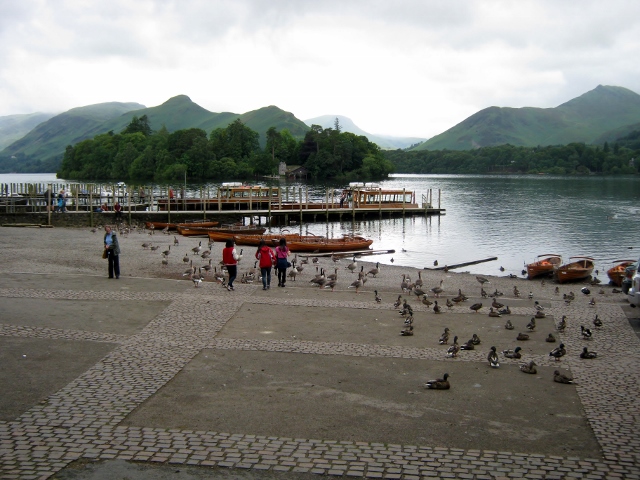
This is Derwent Water

IMG_5047Derwentwater (640x446)

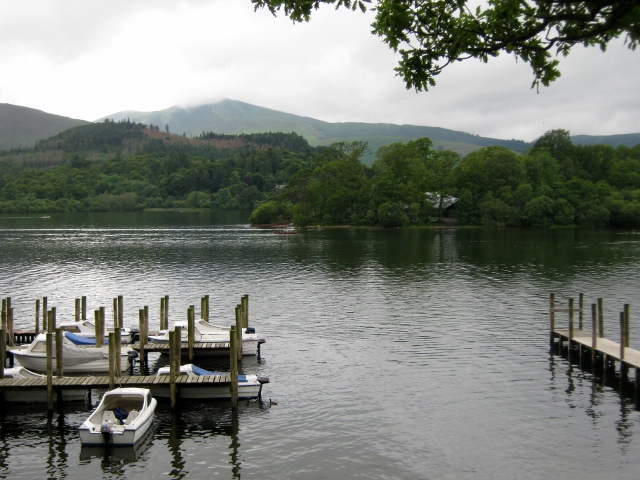
Derwent Water

IMG_5049Derwentwater (640x439)

As you can see, it was a very cloudy day.

IMG_5050Derwentwater (640x480)

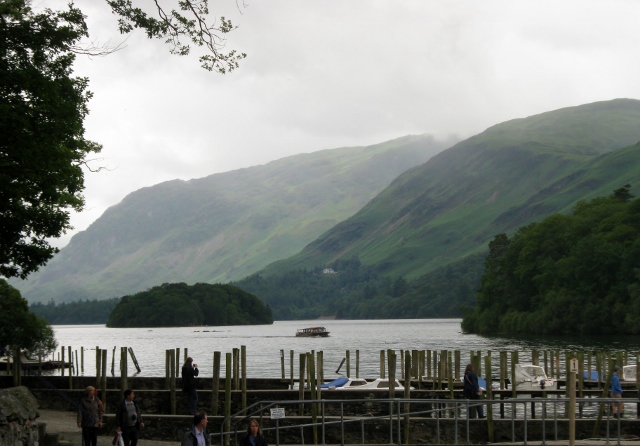
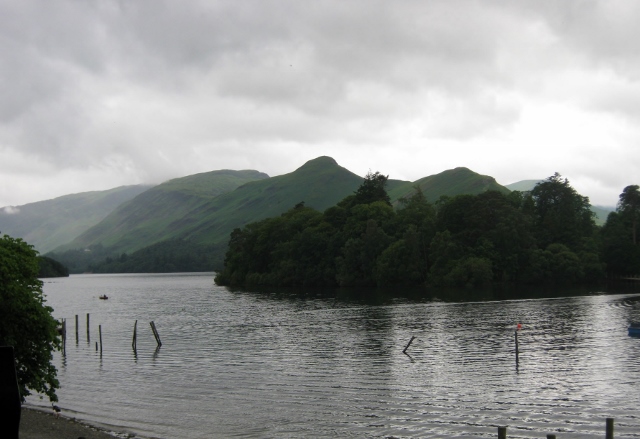
The lake has four islands on it and one of them is just opposite the ferry landing stage near where we were standing.

IMG_5051Fells by Derwentwater (640x480)

The clouds began to drift lower and we knew it would rain again soon.

IMG_5053Derwentwater (640x480)

It was nice to watch people rowing on the lake

IMG_5056Fells next to Derwentwater (640x480)

Fells near the lake

IMG_5057Woman with Poodle (640x480)

We found this lady and her Poodle most amusing.

She got to the shore-side and took the dog’s lead off and replaced it with a long rope.  The dog was very excited and was barking loudly and shrilly.  It galloped into the water and splashed about, snapping at the water (I can’t imagine how many pints of lake water it drank).  The woman was having to hold very tight on the end of the rope especially when the dog saw a large flotilla of geese come into view.

IMG_5058Poodle with geese (640x480)

The geese remained out of reach, to the poodle’s disappointment.

IMG_5055Common Vetch (480x640)

I saw some attractive Bush Vetch (Vicia sepium) near the lake.

As it started to rain again we made our way back to the car and then drove back to the cottage.

After our evening meal, Richard and I went for a walk down the lane our cottage was in.

IMG_5059Greater Bird's-foot Trefoil (640x480)

The first plant I saw was Greater Bird’s-foot Trefoil (Lotus pedunculatus)

IMG_5060Low cloud (640x480)

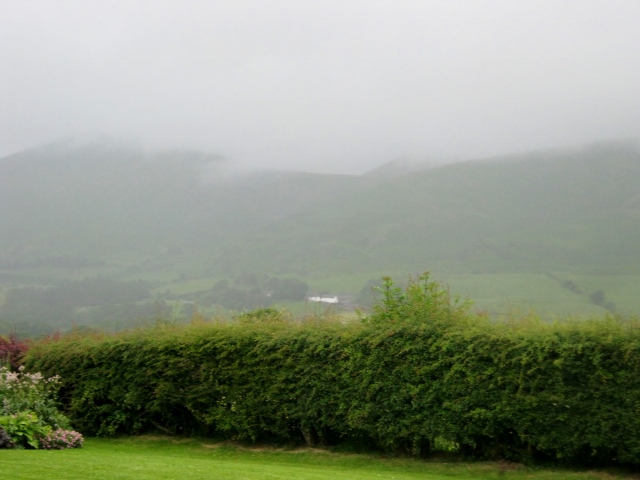
The cloud was low and everything was very wet but the fine rain soon stopped.

IMG_5061Spear Thistle (640x480)

Spear Thistle (Cirsium vulgare) was everywhere – (as it is here at home)

IMG_5063Marsh and Spear Thistle (480x640)

Marsh Thistle (Cirsium palustre) has smaller flower-heads and they are grouped together at the end of the stems. (A Spear Thistle is behind it)

IMG_5065Heath Bedstraw (640x480)

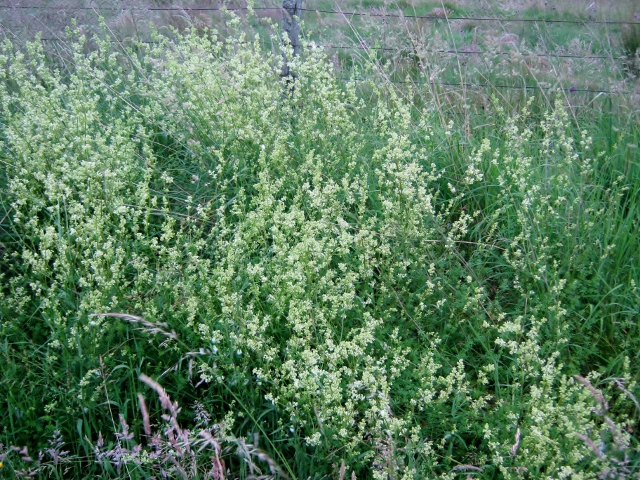
Masses of Heath Bedstraw (Galium saxatile)

IMG_5069Sneezewort (640x480)

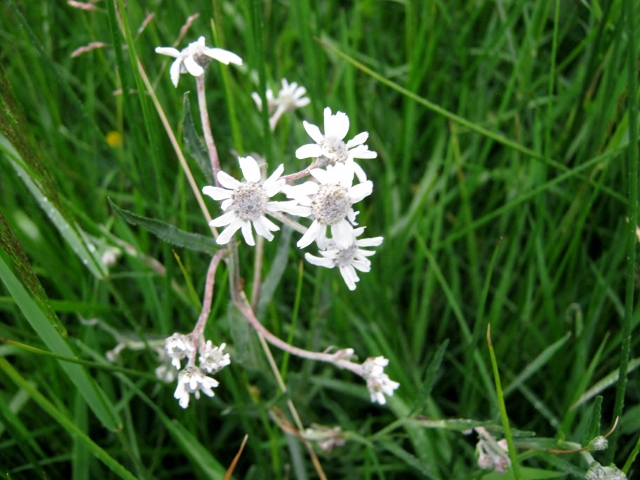
Sneezewort (Achillea ptarmica)

Sneezewort’s name ptarmica comes from the Greek word ptarmos which, surprisingly, means ‘sneezing’.  The plant looks grey and in the bad light that evening the flowers seemed almost luminous.  The upper stems are downy and the flower-heads are made up of white ray florets and greenish-white disc florets (though in this photo they look grey).  The leaves, which are hot to the taste, used to be used in salads.  In the Middle Ages Sneezewort was used to alleviate toothache.  Sufferers held the roots in their mouths which helped the toothache by ‘evacuating the rheum’ according to Nicholas Culpeper.  I can’t imagine how sneezing would help anyone with bad toothache!  Culpeper recommends sneezewort for people with stuffy heads.  The powder of the herb was ‘stuffed up the nose..’ which caused sneezing and ‘cleanses the head’.  Explosive!

IMG_5070Low Cloud (640x480)

More low cloud

We walked almost to the end of the lane but as it was getting quite dark we turned round, retraced our steps and returned to our cottage.

Thanks for visiting!


Share this:

  • Share on X (Opens in new window) X
  • Share on Reddit (Opens in new window) Reddit
  • Share on Pinterest (Opens in new window) Pinterest
  • Share on Facebook (Opens in new window) Facebook
  • Email a link to a friend (Opens in new window) Email
  • Share on Tumblr (Opens in new window) Tumblr
  • Print (Opens in new window) Print
  • Share on Pocket (Opens in new window) Pocket
  • Share on LinkedIn (Opens in new window) LinkedIn
Like Loading...

Lake District in the Summer

18 Sat Jul 2015

Posted by Clare Pooley in Rural Diary

≈ 33 Comments

Tags

Blencathra, holiday, Lake District, Saddleback

We have just returned from a week’s holiday in the Lake District.  (For those people who don’t know, it is an area situated in Cumbria in NW England).  It took us nearly six hours to drive there but that included a twenty minute stop to eat lunch.  We hired a cottage to stay in for the week which was well appointed and quite comfortable though I would have preferred it if it had been a detached cottage with its own garden.  The weather wasn’t too bad either.  We had some rain and some wind but we also had a couple of completely dry days and some sunshine too.  It wasn’t very warm and I was glad I brought two pullovers and two cardigans with me.  On a few occasions I wore all four at the same time over a shirt.  I feel the cold!  If I had been at home I would have warmed myself by doing some housework or gardening but I was on holiday and wanted to read my book!

IMG_4931View from kitchen window (640x480)

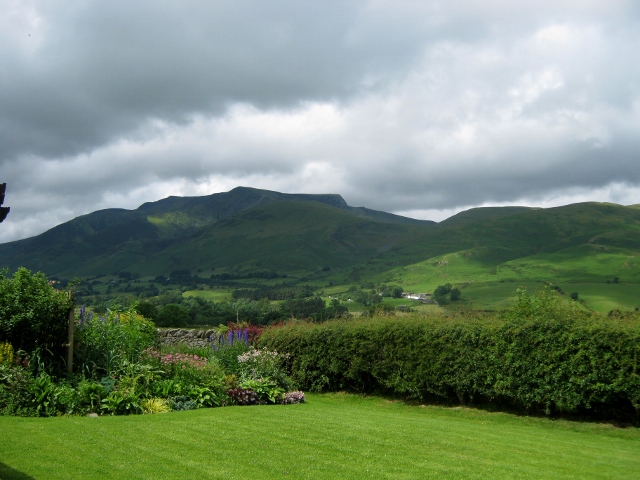
This is the view we saw from the kitchen window on the day we arrived.

Fortunately, the next day was much brighter.  After some early rain the clouds lifted and we saw the top of the fells.

IMG_4933Saddleback or Blencathra (640x480)

This is Blencathra or Saddleback

I have been reading a book about the Lake District (‘The English Lakes – A History’ by Ian Thompson)  while we’ve been away and have been boring Richard with quotes from it.  Richard knows the Lakes quite well and has walked up many of the hills so it has been a little like ‘teaching my grandmother to suck eggs’.

The hills are made of rocks thrown up by volcanic explosions 450 million years ago which were then ‘humped and crumpled into shape’ by tectonic movements 400 million years ago.  They were then carved by glaciers in the ice age 13,000 years ago making the hills look like a miniature version of the Alps.  The fells often seem larger than they are as many of them start from valleys close to sea level – Blencathra’s summit is 845 metres above sea level for example.

The local name for these hills/mountains is ‘fells’ – a word deriving from the Norse word ‘fjall’.  The name ‘Blencathra’ is said to come from the Celtic words ‘Blain’ and ‘Cadeir’ which means ‘hill of the chair’.

IMG_5137SSunset behind Blencathra (640x480)

Blencathra at sunset.

The previous three times we stayed in the Lake District we stayed near Kendal in the south-east but this trip we were in the north of the region near Keswick and were able to see a lot of different places.

IMG_5260Fell view (640x480)

Another picture of Blencathra seen from the car while we waited for workmen to finish re-surfacing the road.

I will be showing you a few of the places we visited in subsequent posts.

Thank-you for visiting!

Share this:

  • Share on X (Opens in new window) X
  • Share on Reddit (Opens in new window) Reddit
  • Share on Pinterest (Opens in new window) Pinterest
  • Share on Facebook (Opens in new window) Facebook
  • Email a link to a friend (Opens in new window) Email
  • Share on Tumblr (Opens in new window) Tumblr
  • Print (Opens in new window) Print
  • Share on Pocket (Opens in new window) Pocket
  • Share on LinkedIn (Opens in new window) LinkedIn
Like Loading...

Peak District Holiday 1st to 9th July. Days 1 and 2.

28 Mon Jul 2014

Posted by Clare Pooley in Rural Diary, Uncategorized

≈ 8 Comments

Tags

Buxton, camping, caravanning, Chinley, Duke of Devonshire, Flash, holiday, Huntingdon, Pavilion, Pavilion Gardens, Peak District National Park, River Great Ouse, River Wye, Roman, scout camps, Sheffield, spa town, Staffordshire Moorland, Stffordshire, Testament of Youth, The Crescent, Vera Brittain, war memorial, warm springs

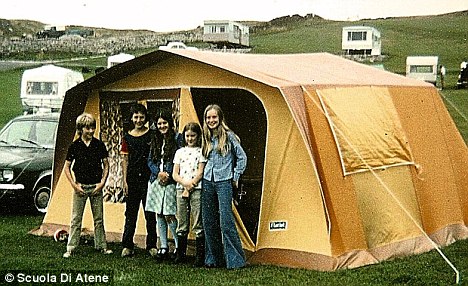
When I was young and living at home with my parents, our summer holidays were camping holidays spent in the UK.  I became fairly well travelled in England, Scotland and Wales.  We never went to Northern Ireland because not only was the cost of the cross-channel ferry prohibitive and the journey was too far for the five of us travelling in a small car from Kent, but Northern Ireland was not a safe place to go during the 1960s and 70s.

article-0-0AAD44A5000005DC-450_468x286

This is not my family but we had a tent very much like this one

 Not only did we go on family camping holidays but we also went on scout camps because my father was a Scout Master for many years.  I didn’t like scout camps as I was very shy and a little frightened of all the big, noisy boys but my younger brother and sister loved them and wanted to join in all the fun and were upset when they weren’t allowed.  Mum was in charge of the first aid.

Ireland 004

This is an image I got by googling. Scout camps were just like this.

R’s family holidays were in bed and breakfast hotels as his mother refused to go camping, having had enough of it in the Girl Guides.  He was a Scout and enjoyed going off on scout camps and grew to love the hills, mountains, moors and rivers in the North of England.  He eventually became a Scout Leader himself with his own scout troop.

I had camped a couple of times since leaving home and before marrying Richard so we did consider getting a tent.  Eventually, after holidaying in rented cottages for a couple of years we decided to get a caravan instead.  Our daughter E had just been born and we thought a caravan holiday would be easier to cope with than camping.  Camping and caravanning holidays have their drawbacks but we have always enjoyed the freedom they bring.

R and I have just bought a new caravan.  Our two previous ones had been second-hand and this is our first brand new one.  We are very pleased with it and hope to be able to go away in it very often.  That is not to say that we won’t be going to hotels and holiday cottages again, we will, especially as E hates caravanning now she is older.

I find getting ready for holidays quite exhausting.  Having a new van made things a little easier as we didn’t need to clean and service it, but making sure the house and garden are left clean and tidy before we go, making sure Mum has everything she needs for the time we are away and trying to remember to pack all we need for the holiday was tiring enough.

MargeSimpson1

 I decided to stop feeding the birds just before we left.  While I had been in Sheffield during the week before, something had killed one of the three ducklings that were living in the garden.  Also, a couple of days before we left, I was admiring a little bird looking for insects in the window box outside my kitchen window, when a kestrel plummeted out of the sky and caught it just in front of me.  I felt that the feeders were making the birds I wished to feed more vulnerable to birds of prey and also to the cats in the neighbourhood.  I had been having a lot of trouble from the local squirrels too.  They had wrecked a few feeders and had been eating so much of the bird food as well.  They had become very bold and one had tried to attack me when I attempted to shoo it away from the ground feeder.  I wished to discourage this and a period of no food might be good for all concerned.

We all set off in good time on the morning of the 1st July but at Huntingdon we got stuck in a traffic jam for an hour and a quarter because of an over-turned lorry.

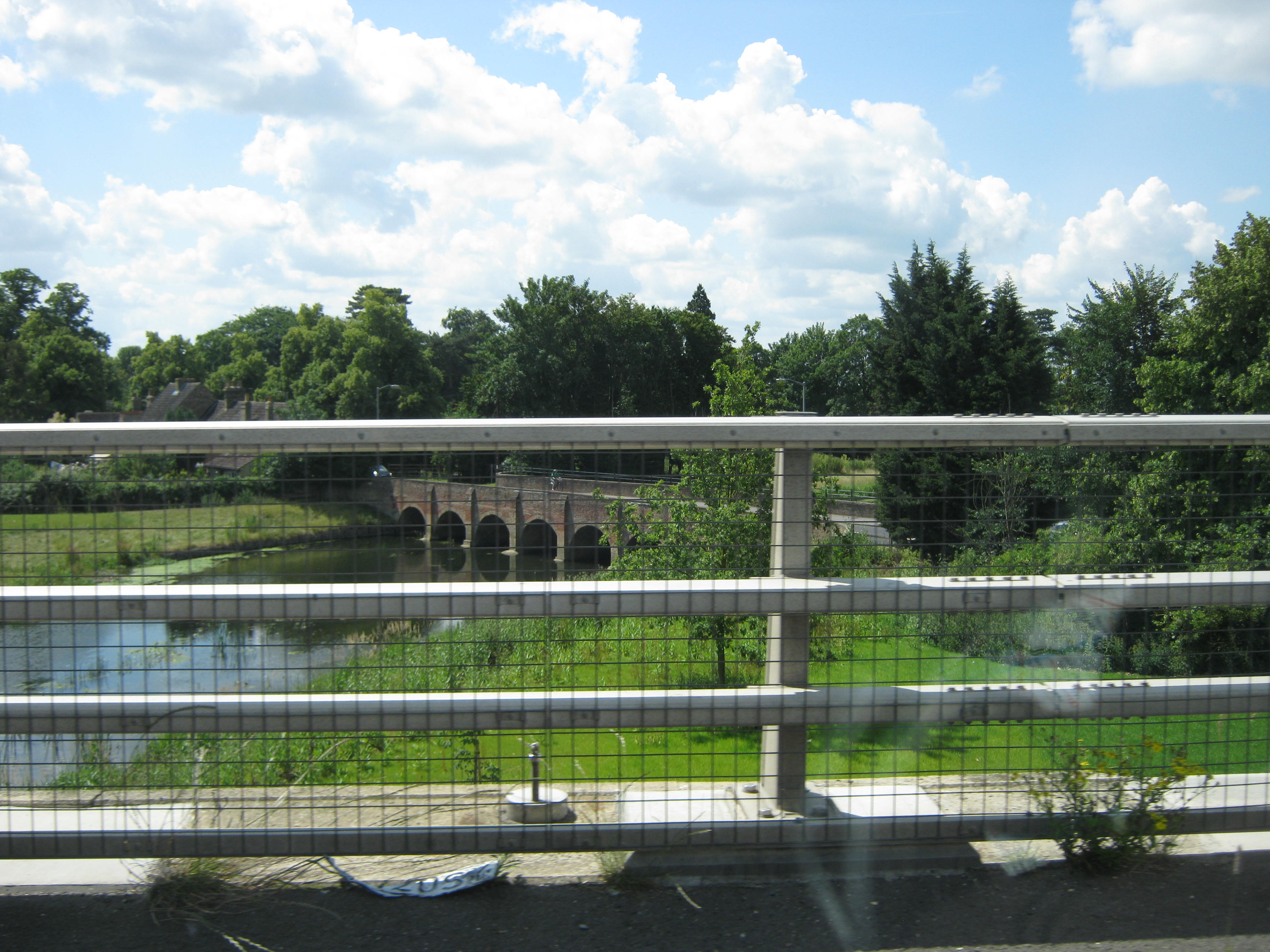
008View from A14 at Huntingdon 009View from A14 at Huntingdon

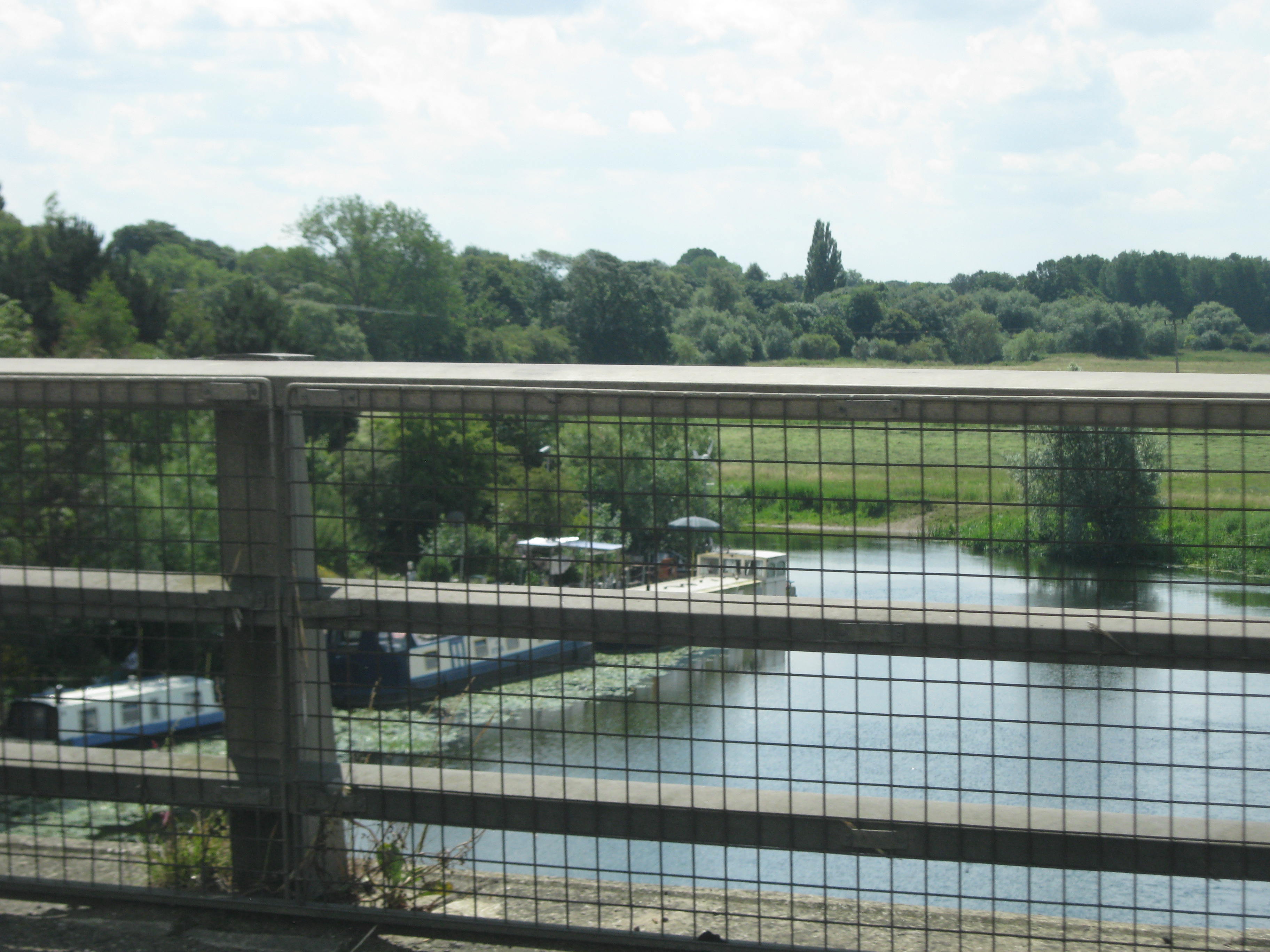
This is the view from the car while we were on the stationary A14.  The river is the Great Ouse.  We were sent on another diversion to avoid another accident involving a lorry when we were only half an hour away from our destination so the journey was very long and tedious.  For the last few years we have stayed in the Staffordshire Moorlands right on the edge of the Peak District National Park.  The site is at Blackshaw Moor, just to the north of the town of Leek.

   A had kindly offered to look after E for the week, so as soon as we had found our caravan site and pitched the caravan we set off again to the nearest railway station on the line to Sheffield.  While E and I and her enormous, weighty suitcase took the train to Sheffield, R found a supermarket and bought supplies for the week.  He then waited and waited for my return.  I meanwhile, got to Sheffield and we found A waiting for us at the station.  I handed over E, the suitcase and a quantity of money and then found them something to eat.  I decided to get myself a sandwich as the next train back to Chinley, the station where R was waiting, didn’t go for another hour.  I eventually got back to R just after 9p.m.  We drove the 25 or so miles back to our caravan, unpacked the car, collected the water and plugged the electric cable in and our holiday had begun. 

The following day, after a very leisurely breakfast and a restful morning, we put the awning to the caravan up.  The awning (a tent-like porch attached to the caravan) is not a large one but we find it useful for hanging coats and towels and keeping shoes and rucksacks etc.  We sometimes sit out there and we have used the awning for dining in the past when all four of us were together or when we have had visitors.

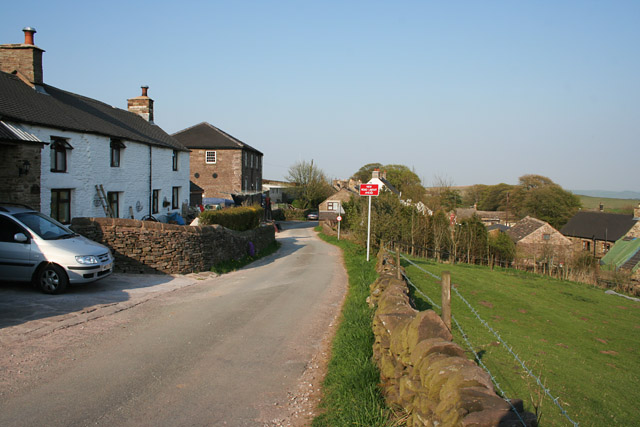
That afternoon we visited Buxton, about half an hour’s drive away across beautiful moorland.  The views from the road are outstanding especially on a fine day.  One of the villages we pass on the road is called Flash which is reputedly the highest village in the Peak District.  It is 461m /1514′ above sea level and is often snowbound in the winter.  it was once a hideout for footpads, highwaymen and counterfeiters and prize fights took place there even after it was made illegal.

168064_5536242d

The village of Flash, courtesy of google images

Buxton is the highest town of its size in England at 300m/984′ above sea level and has been occupied continuously since Roman times.

Buxton Thermal Baths

Buxton Thermal Baths – google image

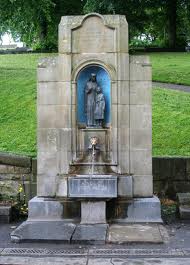
The Romans were attracted by the warm springs which emerge near the River Wye and are a constant 28 degrees C.  They built baths here and these springs have been very important to the town ever since.  The spring at St Ann’s Well was probably a place of pilgrimage since the Middle Ages and by Tudor times it had been established as a spa.

download

St Ann’s Well – google image

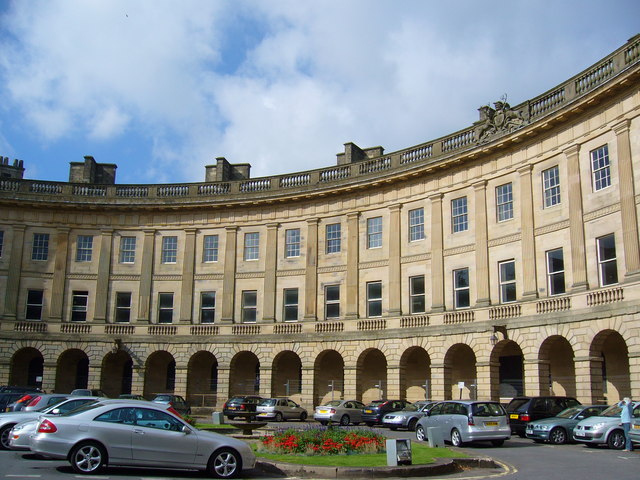
The great period of Buxton as a spa began when the 5th Duke of Devonshire started the construction of the Crescent in 1780.  The building took ten years to build and cost £38000, a fabulous sum in those days.  It was sited alongside the site of St Ann’s Well.  From then until the 20th century many fine buildings and hotels were constructed in Buxton.  In 1851-53 a new set of thermal baths were built and in 1863 the railway arrived in the town which made the spa much more accessible.  The Opera House and the Pavilion Gardens were built.  Vera Brittain, who wrote ‘Testament of Youth’, her book about her life during the First World War, grew up in Buxton.  The main industry of the town from the 19th century to the present day is limestone quarrying.  The spa declined in popularity after the Second World War but since the 1980’s when the Opera House was re-opened the town has started to come alive again.  The annual Opera Festival was established and the University of Derby moved into the former Devonshire Royal Hospital building.  There is work going on now to re-open the spa and the Crescent.  For the past couple of times we have visited the town we haven’t been able to see the Crescent because of the hoardings in front of it. 

The_Crescent,_Buxton_-_geograph.org.uk_-_556851

This is what the Crescent looked like the last time we saw it – google image

The reason why there are so many google images in this post is because we forgot to take our cameras out with us.  R was able to take a couple of pictures with his phone and these I will include now.

Buxton1

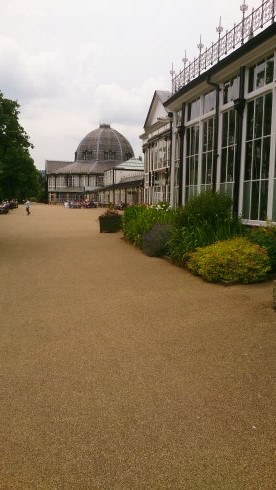
The Pavilion

We did some shopping for things R couldn’t get the night before and then walked up to the Pavilion, looked at the plants in the glasshouse and had coffee/tea in the café.  We walked about the Gardens and then walked back down to the town past the War Memorial.

Buxton3

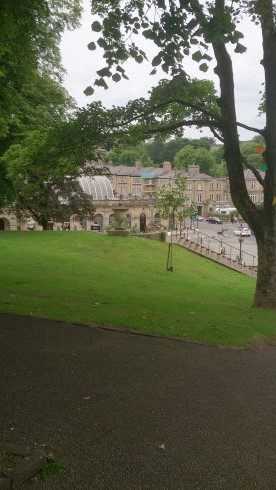
View of Buxton from the War Memorial

The day, which had started bright and breezy, became cloudy and very humid during the afternoon.  We returned to our caravan and rested for the rest of the day as we were still very tired from our exertions of the day before.

Share this:

  • Share on X (Opens in new window) X
  • Share on Reddit (Opens in new window) Reddit
  • Share on Pinterest (Opens in new window) Pinterest
  • Share on Facebook (Opens in new window) Facebook
  • Email a link to a friend (Opens in new window) Email
  • Share on Tumblr (Opens in new window) Tumblr
  • Print (Opens in new window) Print
  • Share on Pocket (Opens in new window) Pocket
  • Share on LinkedIn (Opens in new window) LinkedIn
Like Loading...
Follow A Suffolk Lane on WordPress.com

Enter your email address to follow this blog and receive notifications of new posts by email.

Join 715 other subscribers.

Unknown's avatar

I talk about what it's like living in a quiet part of Suffolk. I am a wife, mother and daughter, a practising Christian and love the natural world that surrounds me. I enjoy my life - most of the time!

My Posts

Jan 2026
M T W T F S S
 1234
567891011
12131415161718
19202122232425
262728293031  
« Dec    

Pages

  • About my Blog
  • GDPR (General Data Protection Regulations) and This Site
  • My Life in a Suffolk Lane

Archives

Blogs I Follow

Unknown's avatar
Unknown's avatar
Unknown's avatar
Unknown's avatar
Unknown's avatar
Unknown's avatar
Unknown's avatar
Unknown's avatar
Unknown's avatar
Unknown's avatar
Unknown's avatar
Unknown's avatar
Unknown's avatar
Unknown's avatar
Unknown's avatar
Unknown's avatar
Unknown's avatar
Unknown's avatar
Unknown's avatar

Posts I Like

  • Unknown's avatar
  • Julian Summerhayes's avatar
  • Unknown's avatar
  • Unknown's avatar
  • Unknown's avatar
  • Unknown's avatar
  • Carolina Cuisine Network's avatar
  • Unknown's avatar
  • Matthew Paul's avatar
  • Unknown's avatar
  • Ari's avatar
  • clivebennett796's avatar
  • DoF@theinfill's avatar
  • Talkmore's avatar
  • Unknown's avatar
  • Unknown's avatar
  • Unknown's avatar
  • Unknown's avatar
  • Unknown's avatar
  • Unknown's avatar
  • John’s Postcards's avatar
  • Annika Perry's avatar
  • Jack Ronald Cotner's avatar
  • Unknown's avatar
  • Unknown's avatar
  • Unknown's avatar
  • JAM's avatar
  • The Introverted Bookworm's avatar
  • Unknown's avatar
  • Unknown's avatar
  • East of Elveden's avatar
  • Maikhel's avatar
  • Unknown's avatar
  • Unknown's avatar
  • Unknown's avatar
  • Unknown's avatar
  • santable's avatar
  • Unknown's avatar
  • Unknown's avatar
  • Unknown's avatar
  • Mélodie's avatar
  • quietsolopursuits's avatar
  • sherijkennedyriverside's avatar
  • Unknown's avatar
  • Unknown's avatar
  • Unknown's avatar
  • Unknown's avatar
  • CJ's avatar
  • Andrea Stephenson's avatar
  • Unknown's avatar

amphibians architecture art Arts and Crafts churches cooking Days out domestic animals family fish Folk Traditions Gardening Historic Buildings holidays Insects Landscaping literature music Norwich plants Rural Diary seashore theatre trees Uncategorized walking weather wild animals wild birds wild flowers

Tags

architecture autumn birds blackbird blackthorn Bungay butterfly church clouds common knapweed cow parsley crocus daffodils Diary dogwood family field maple flowers fungus garden gardening geese greylags ground-ivy Halesworth Hawthorn heather holiday Holly Holy Week horse chestnut Hoverfly insects ivy Lake District Lent lesser celandine lichen Lords and Ladies Mallard mallards Minsmere moorhen moss music Norwich Peak District pheasant plants pond ponds primrose primroses Rain rooks Rumburgh Rumburgh Church sheep Sheffield snow snowdrops Southwold spring Suffolk Suffolk Wildlife Trust sunset the Beck trees viburnum bodnantense walking weather wild cherry wild flowers winter-flowering honeysuckle witch-hazel

Meta

  • Create account
  • Log in
  • Entries feed
  • Comments feed
  • WordPress.com

Goodreads

Blog at WordPress.com.

Book Jotter

Reviews, news, features and all things books for passionate readers

Country Life Blog -

A blog about life in the country in the past and present

Matthew Paul: Poetry & Stuff

Poetry and what-not

Schnippelboy

Ein Tagebuch unserer Alltagsküche-Leicht zum Nachkochen

TAMARA JARE

Tamara Jare Contemporary Figurative Art – Bold Colors, Resilient Souls

A Taste of Freedom

Documenting a Dream

Country Ways

Rambling Journeys in Britain, Countryside Matters and campaigning for the Right to Roam

The Strawberry Post

Here to Entertain, Educate & Inspire!
a north east ohio garden

an ongoing experiment in the dirt, 35 plus years

naturechirp

Celebrating God's creatures, birds and plants...

Sophie Neville

Writer

Going Batty in Wales

Developing a more sustainable lifestyle in SW Wales

Our Lake District Escapades

Exploring the Lake District and beyond

Short Walks Long Paths

Wandering trails around the coast of Wales

The Biking Gardener

An English persons experience of living and gardening in Ireland

Nan's Farm

A Journal Of Everyday Life

Walk the Old Ways

Rambling Journeys in Britain with John Bainbridge. Fighting for the Right to Roam. Campaigning to Protect Our Countryside.

Writer Side UP!

Waking the Writer Side...and keeping it "Up!"

Meggie's Adventures

Travel, thank you notes and other stories

amusicalifeonplanetearth

Music and the Thoughts It Can Inspire

lovefoundation.co.uk

Traveling Tortuga

Simply Living Well

Pakenham Water Mill

Historic watermill in the beautiful Suffolk countryside

Take It Easy

Retired, not expired: words from the after(work)life. And music. Lots of music!

Secret Diary Of A Country Vicar's Wife

By Olive Oyl

thanksfortheadventureorg.wordpress.com/

The Beat Goes On

#TBGO

Frank Pleszak's Blogs

Twitter: @frankpleszak @PolishIICorps

John Bainbridge Writer

Indie Writer and Publisher

roughwighting

Life in a flash - a bi-weekly storytelling blog

Walking the Old Ways

Rambling in the British Countryside

CapKane

thoughts on social realities

SkyeEnt

Jottings from Skye

jodie richelle

embracing my inner homemaker

Skizzenbuch/Blog

Just another WordPress.com weblog

Have Bag, Will Travel

The Call of the Pen

Flash Fiction, Book Reviews, Devotionals and other things.

John's Postcards

Art in Nature

You dream, I photographe it !

Smile! You’re in Barnier World......
theinfill

the things that come to hand

Dr. Mary Ann Niemczura

Author of "A Past Worth Telling"

Provincial Woman

The Pink Wheelbarrow

Luanne Castle: Poetry and Other Words (and cats!)

Poetry, Other Words, and Cats

The Family Kalamazoo

A genealogical site devoted to the history of the DeKorn and Zuidweg families of Kalamazoo and the Mulder family of Caledonia

everythingchild

The Book Owl

Canberra's Green Spaces

Paul Harley Photographer

  • Subscribe Subscribed
    • A Suffolk Lane
    • Join 715 other subscribers.
    • Already have a WordPress.com account? Log in now.
    • A Suffolk Lane
    • Subscribe Subscribed
    • Sign up
    • Log in
    • Report this content
    • View site in Reader
    • Manage subscriptions
    • Collapse this bar
 

Loading Comments...
 

    Privacy & Cookies: This site uses cookies. By continuing to use this website, you agree to their use.
    To find out more, including how to control cookies, see here: Cookie Policy
    %d