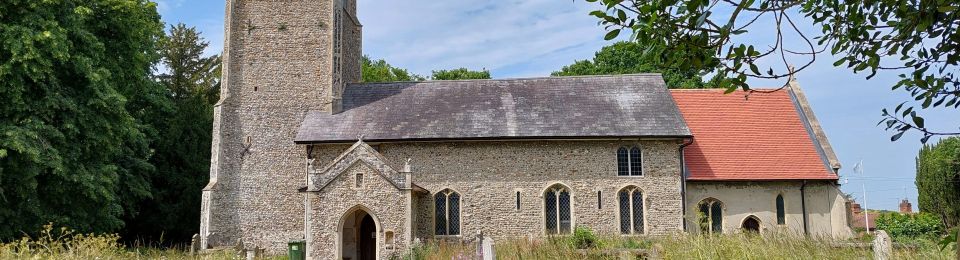
It is strange how one can live for years near to places of beauty or interest but never get around to visiting them. There always seem to be other things to do and of course these places will always be there, won’t they? And we will always be able to get to them whenever we like – yes? Elinor and I decided to visit one on a very warm afternoon in June this year.
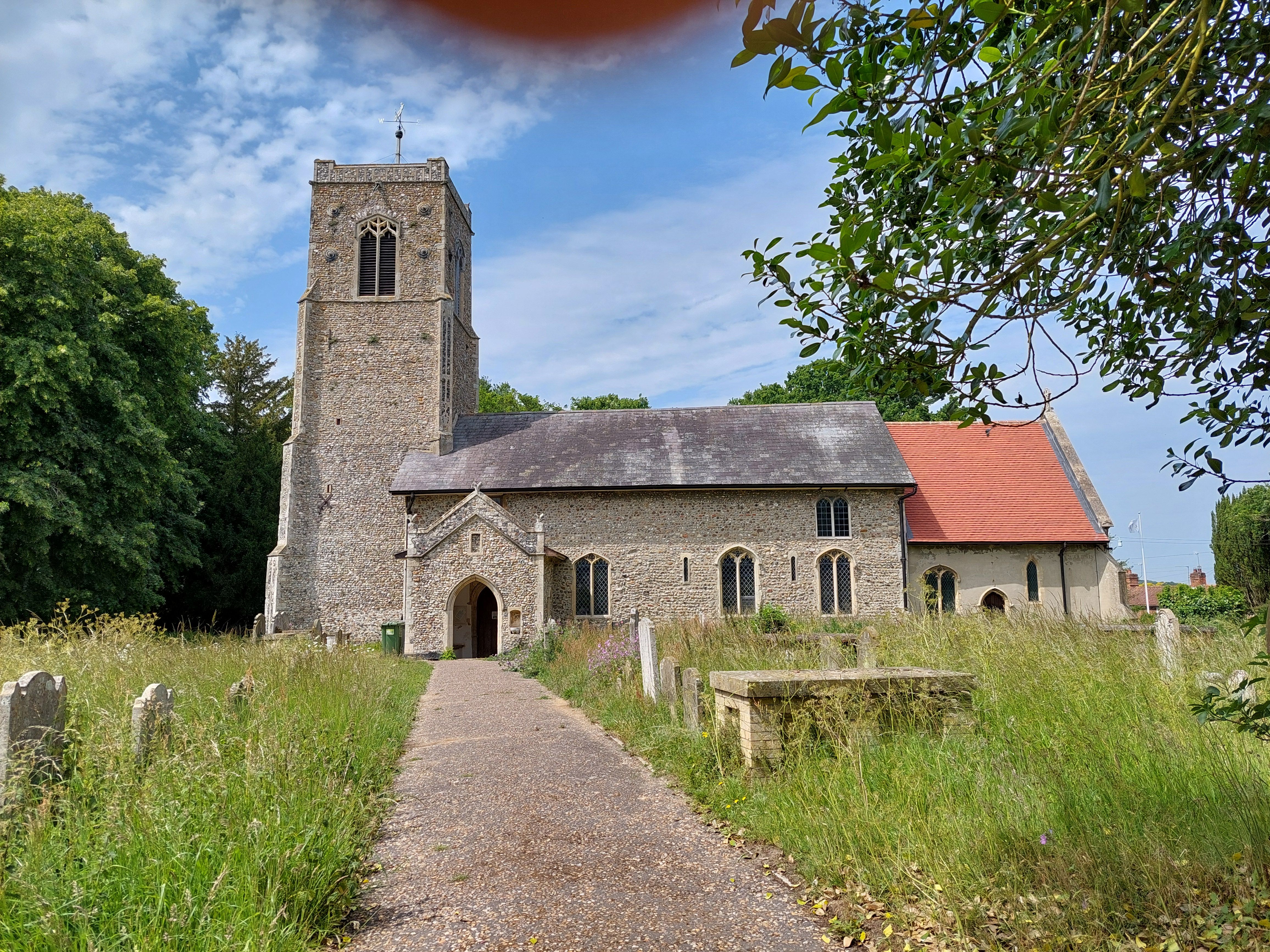
Wenhaston church
Wenhaston is about ten miles from where we live, is fairly near to Southwold on the coast, and is surrounded by farms and heathland. Not too far away is Bulcamp, the site of a battle in the year 654 between the Anglian King Anna and the Mercian King Penda. Anna and a couple of his sons were killed during the battle. A workhouse was built at Bulcamp in 1764 which then became a fever hospital and has now been converted into apartments. A little bleak and isolated for my liking. There is a nice pub in Wenhaston and I think the choir I belonged to years ago performed a concert or two in the village hall. I also had to take Alice to Wenhaston once a week for guitar lessons for a while.
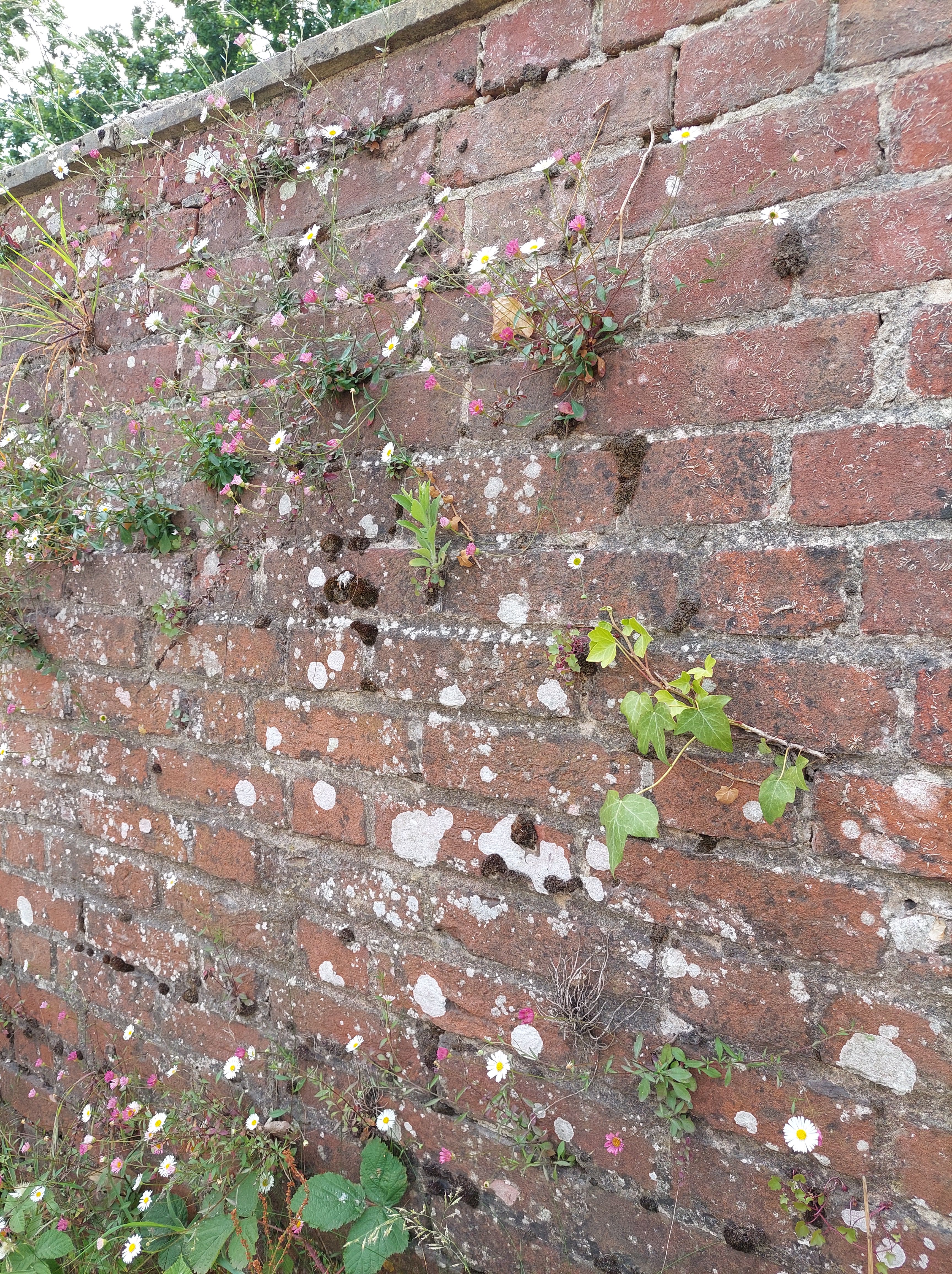
Plants on the churchyard wall
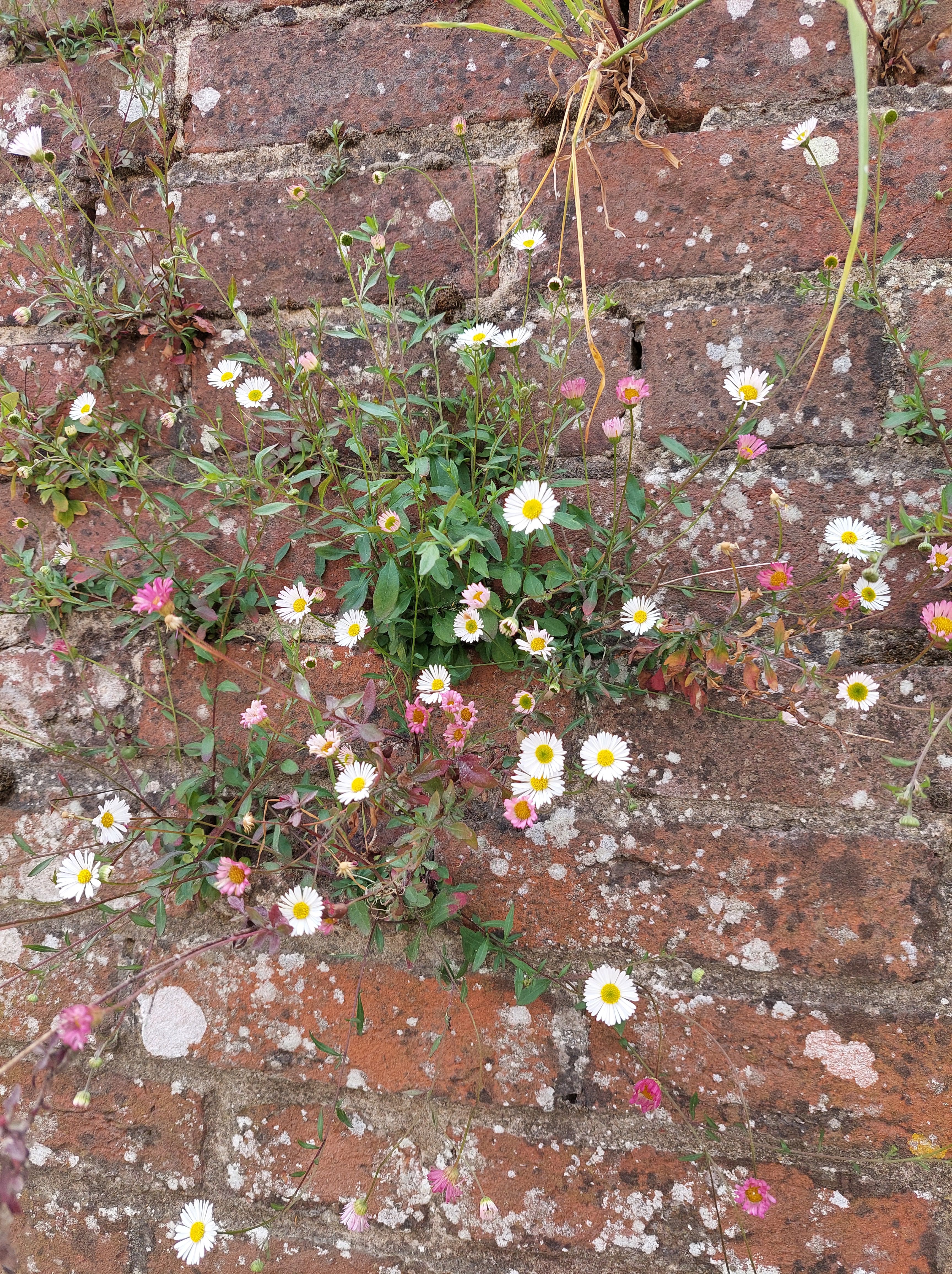
Mexican fleabane
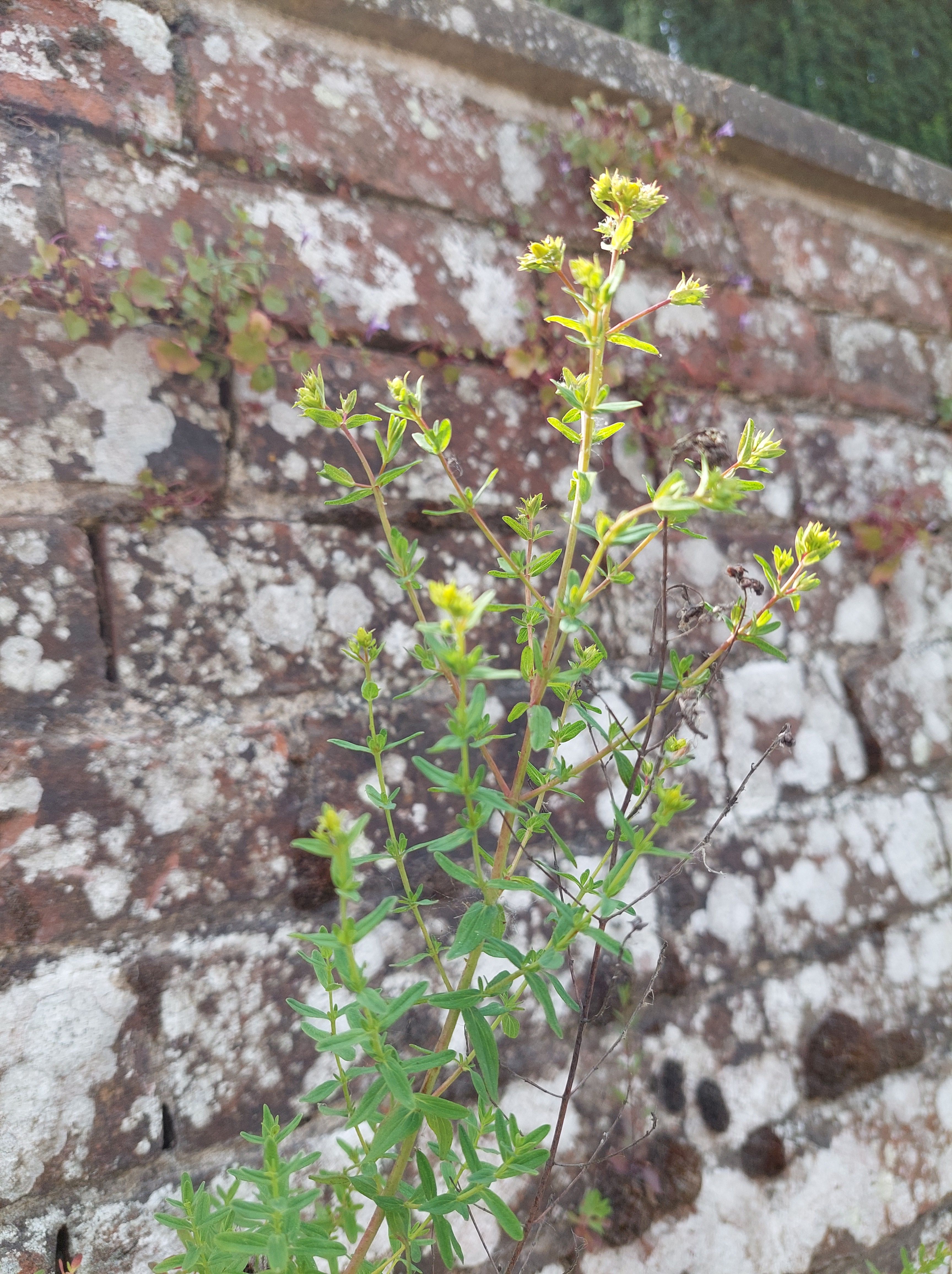
Perforate St John’s-wort
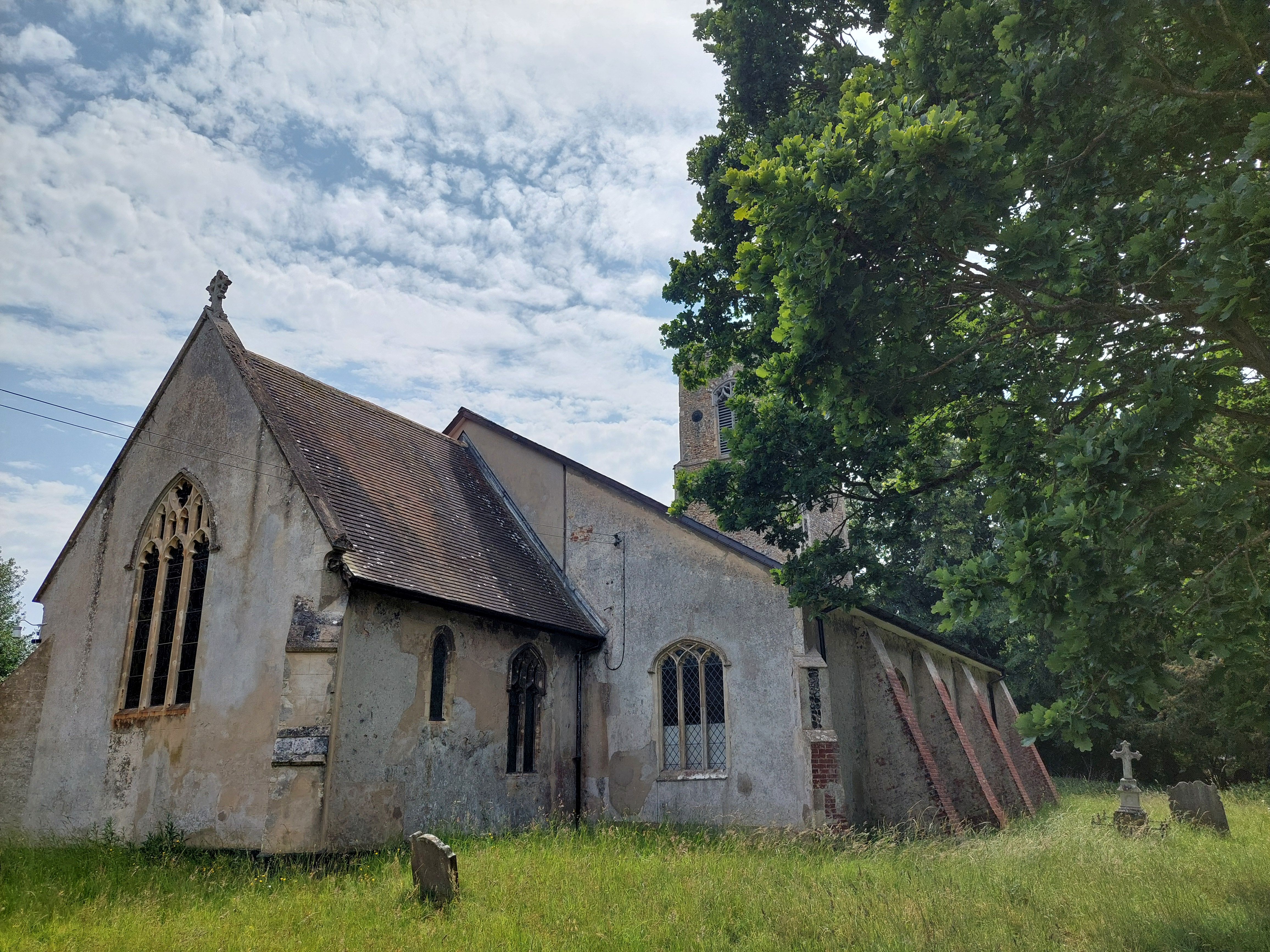
Wenhaston church
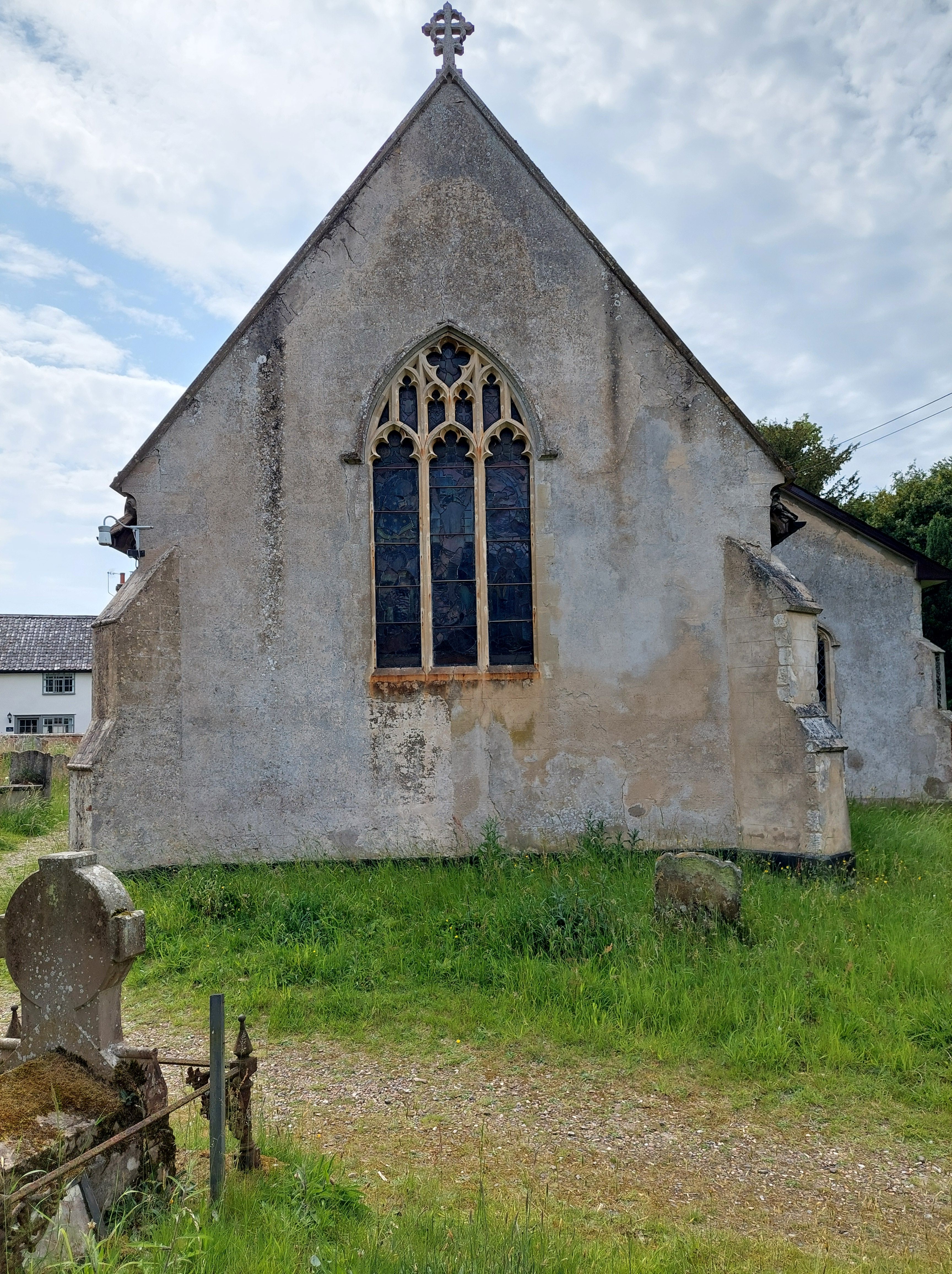
Wenhaston church
Elinor and I had come to see the church which is situated in the middle of the village. It is referred to in the Domesday Book and part of it is of Saxon origin. For many years it was looked after by Blythburgh Priory but like lots of churches in this country it suffered much during the reign of Edward VI and also during the Commonwealth of England under Oliver Cromwell. William Dowsing‘s men visited in 1643 and according to the Wenhaston church guide book ‘did a lot of damage, breaking the stained glass, taking down the carved angels from the roof, removing the organ and the font cover, destroying the altar, hacking the pulpit about and much else besides’. What they didn’t find was the Doom which the people of the parish had covered with whitewash many years earlier during Edward’s reign when he had demanded the destruction of all roods and the abolition of paintings and pictures in church. For three centuries and more it stayed undiscovered and forgotten on the rood beam, whitewashed and painted over with passages from the Bible.
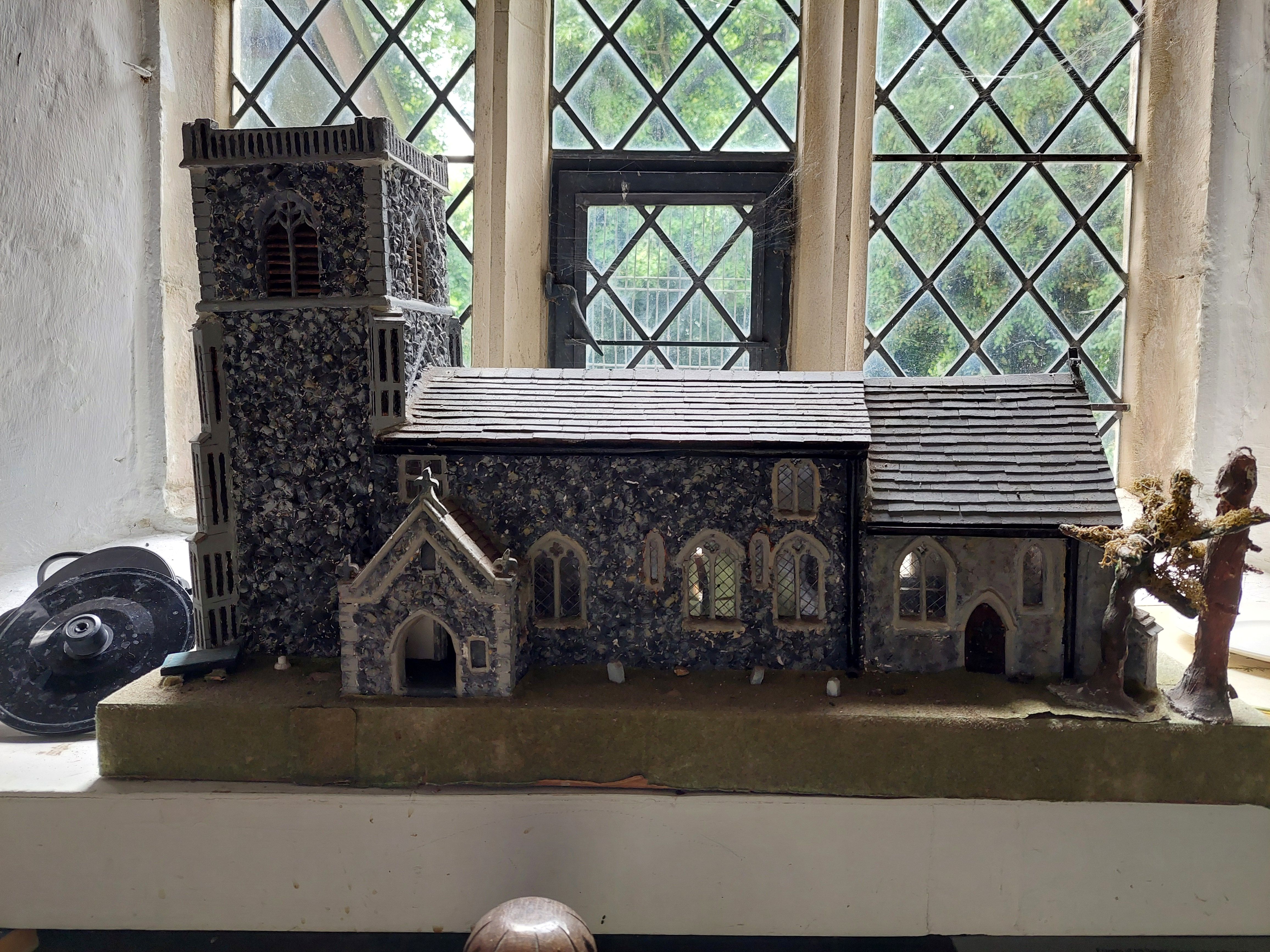
Scale model of the church on a windowsill
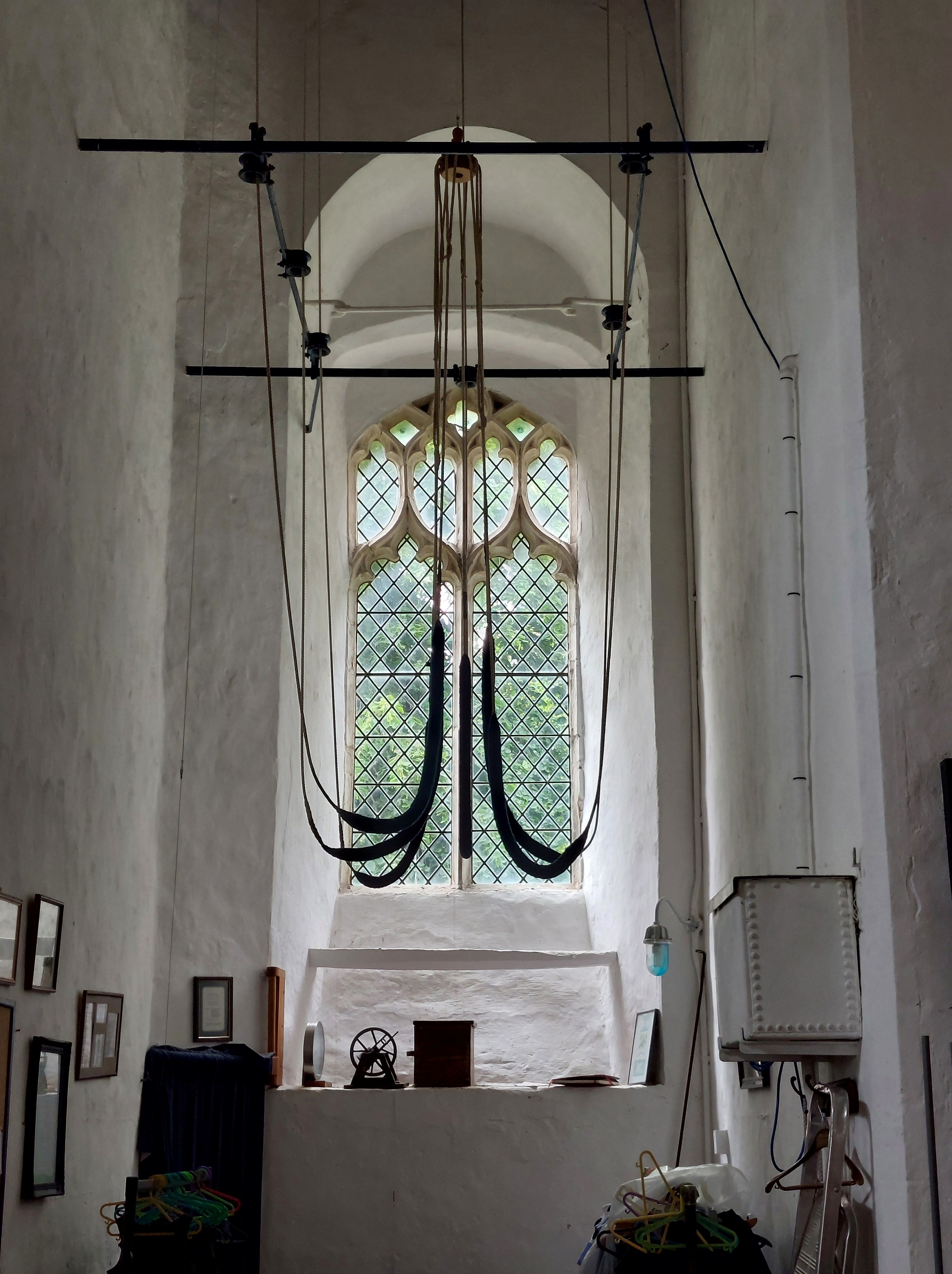
The bell-tower with the ropes lifted high, out of the reach of the hoi-polloi. There are six bells, two of which are medieval and probably came from Blythburgh Priory.
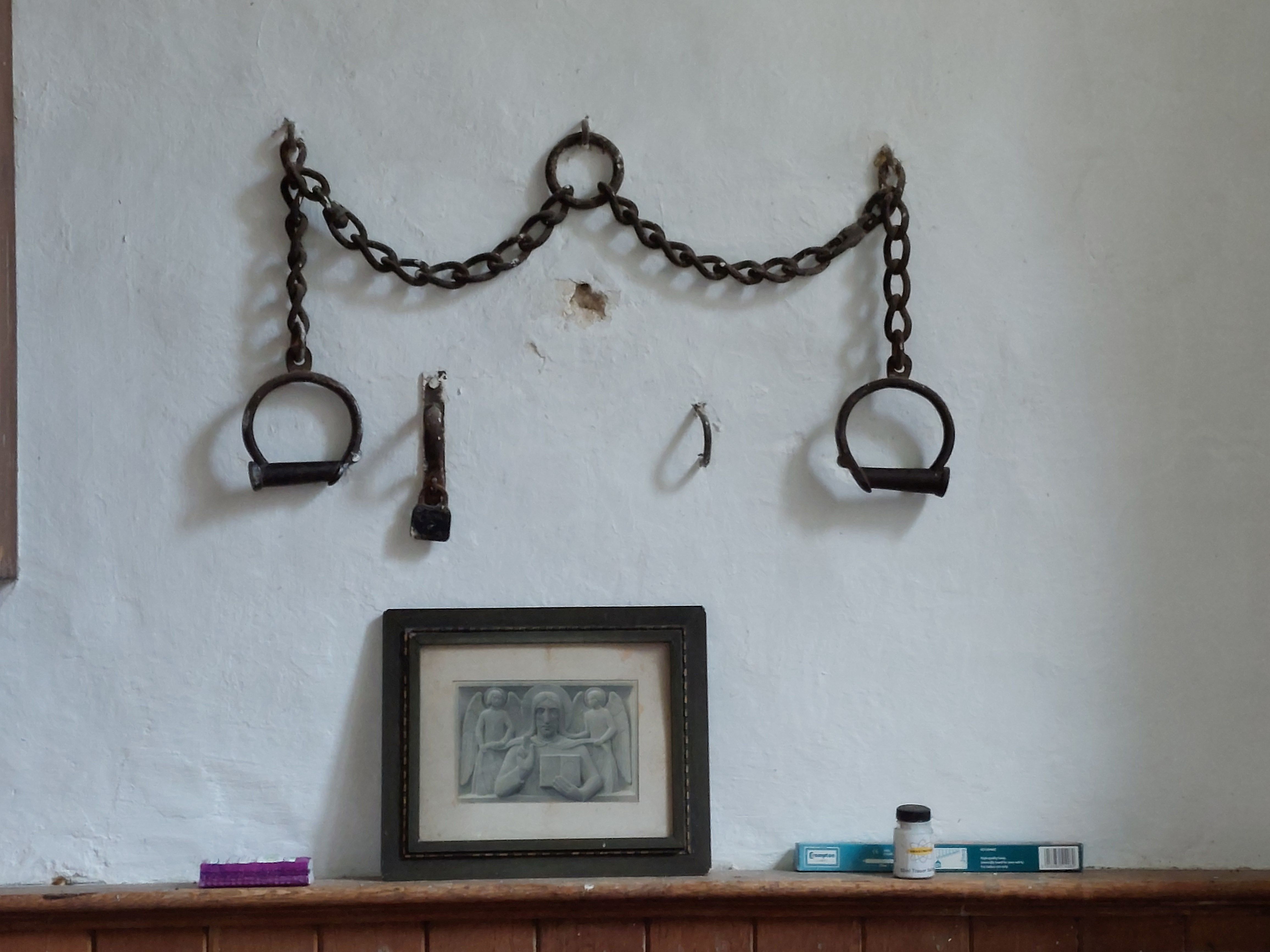
Here are the local Constable’s manacles for the stocks hanging up in the vestry. Redundant now of course, and there is no local constable any more either. I think that is a truncheon hanging there too!
In 1892 the East end of the church was rebuilt. During the dismantling of the roof the rood beam was discovered intact and to still have its original paint and gilding. The whitewashed Doom was removed plank by plank and thrown out into the churchyard for later destruction. Fortunately, it rained heavily during that night and in the morning the painting underneath was beginning to emerge from under the whitewash. The whole Doom was cleaned and experts were called in to assess its provenance. The Doom was put on display and people paid to see it; the proceeds of which helped to pay for the rebuilding of the roof and the church was then able to get even more repairs done. The new chancel arch was too narrow for the Doom to be replaced in its old position so for a while it was put on the West wall of the church where there was a gallery. The gallery was removed in 1927 so that the Doom could be seen more easily and sometime later the Doom was placed where it is now on the North wall.
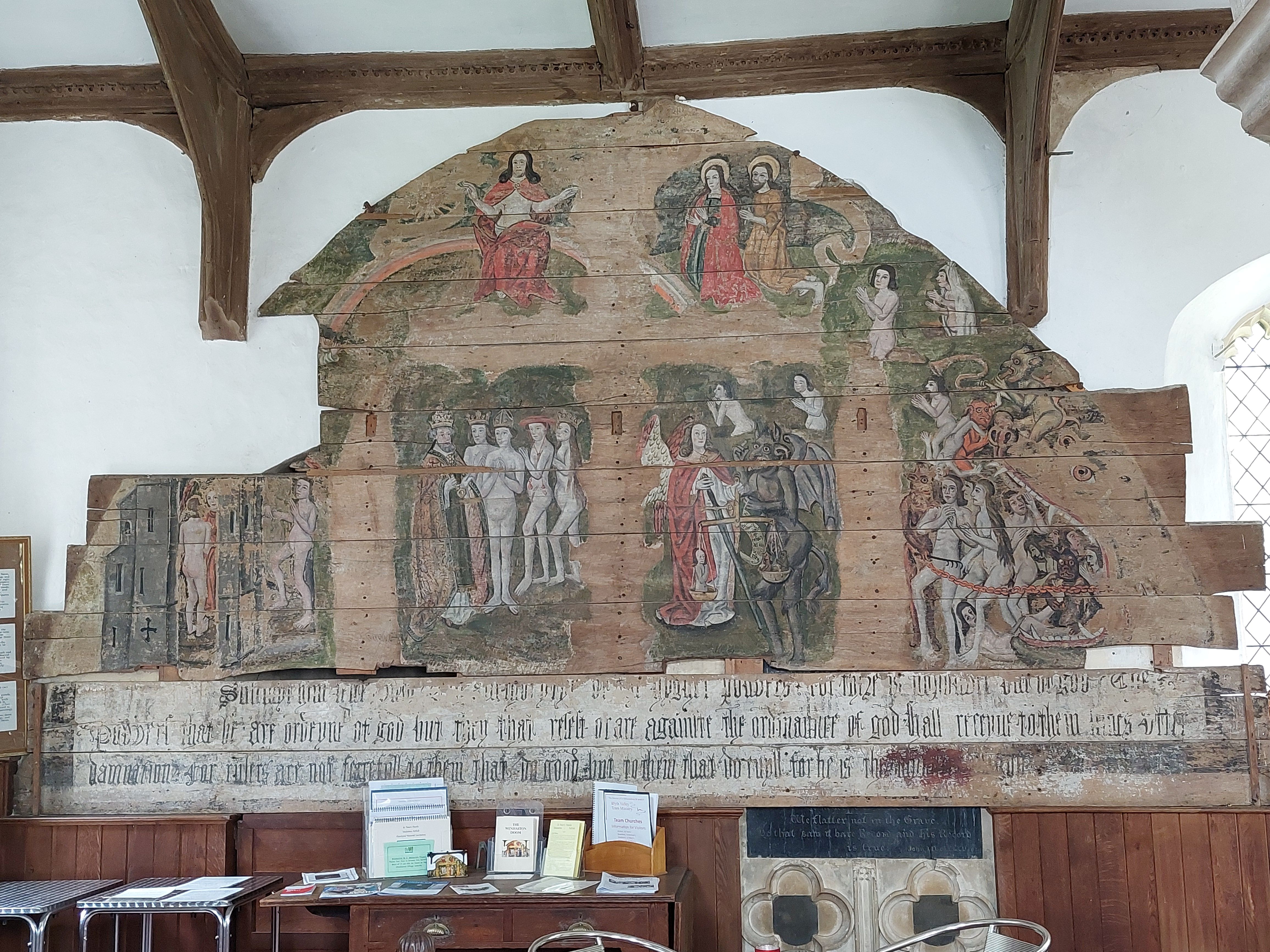
The Doom
The Doom is a representation of the Last Judgement. It was probably painted in about 1520 or just before then, the date partly based on the style of the Virgin Mary’s bodice as depicted in the Doom. The villagers had started saving for the work to be done during the 1480’s. Dooms were usually placed on the chancel arch which separates the Nave where the common people worship – the Church Militant – and the Chancel, where the priests lead the worship – the Church Triumphant. A rood screen was often placed at the chancel arch, which added to the seclusion of the chancel, and the sculpted or carved figures of Our Lord on the Cross with the Virgin Mary on one side and St John the Baptist on the other were placed on the top of the rood beam. In this church the figures of the rood were attached to the Doom. The figures have long since disappeared but their position and shape can be seen by the blank spaces on the Doom painting.
At the top of the Doom on the left is God as Christ seated on a rainbow and displaying His wounds. At the top on the right are the Virgin Mary and St John the Baptist kneeling in prayer. (Sadly my photograph of these two latter figures wasn’t good enough to show here).
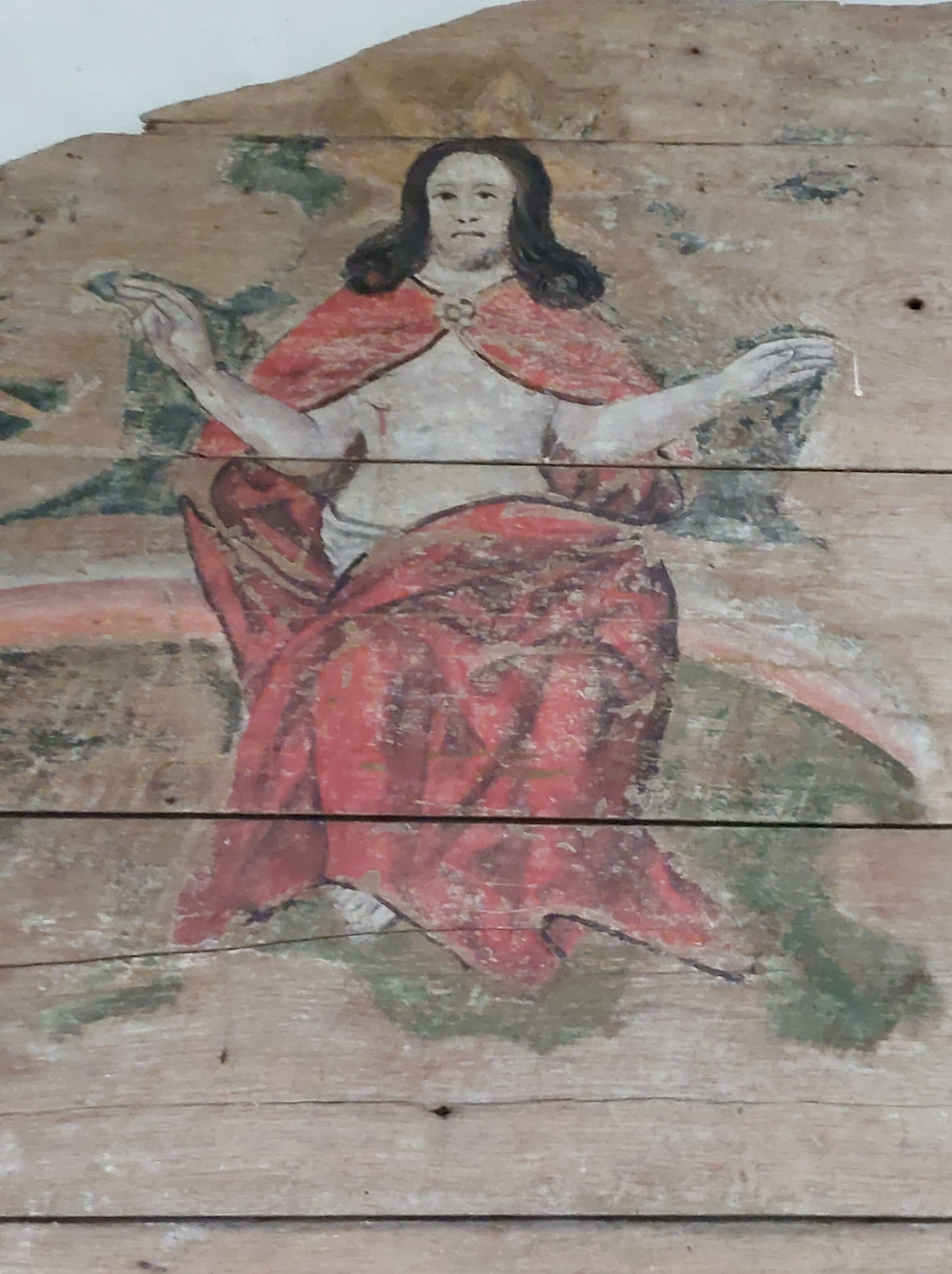
This is God appearing as Christ, the Son of Man
Beneath the figures of the Virgin and St John is the Archangel Michael with the Devil. The early Church adapted many pagan customs and ideas to Christian purposes in order to ease the transition from the pagan life to that of being a Christian. One such custom was the idea of a messenger from Heaven and therefore the attributes of the Roman god Mercury were assumed by the Archangel Michael who became the guide of the dead. Mercury weighed souls in classical mythology so now Michael holds the scales in his left hand. His right hand holds his sword and he wears a circlet surmounted by a cross on his head. The circlet at the time was very fashionable in Northern European and also English art. You can see resurrected souls behind Michael and the Devil wending their way towards St Peter. The dead have arisen as naked as they were when they were created and all aged about 33, the age at which Christ was thought to have died.
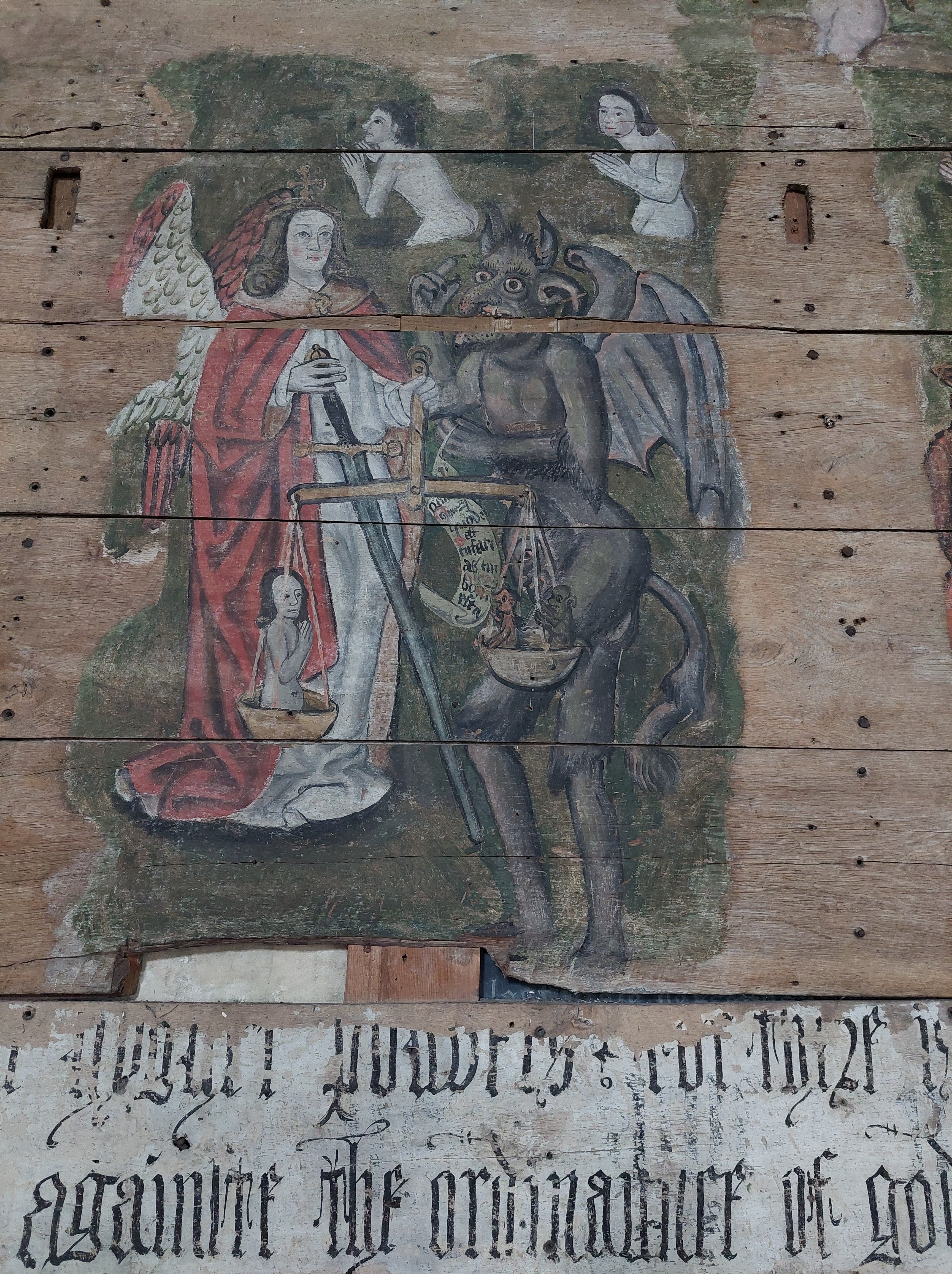
The Archangel Michael and the Devil
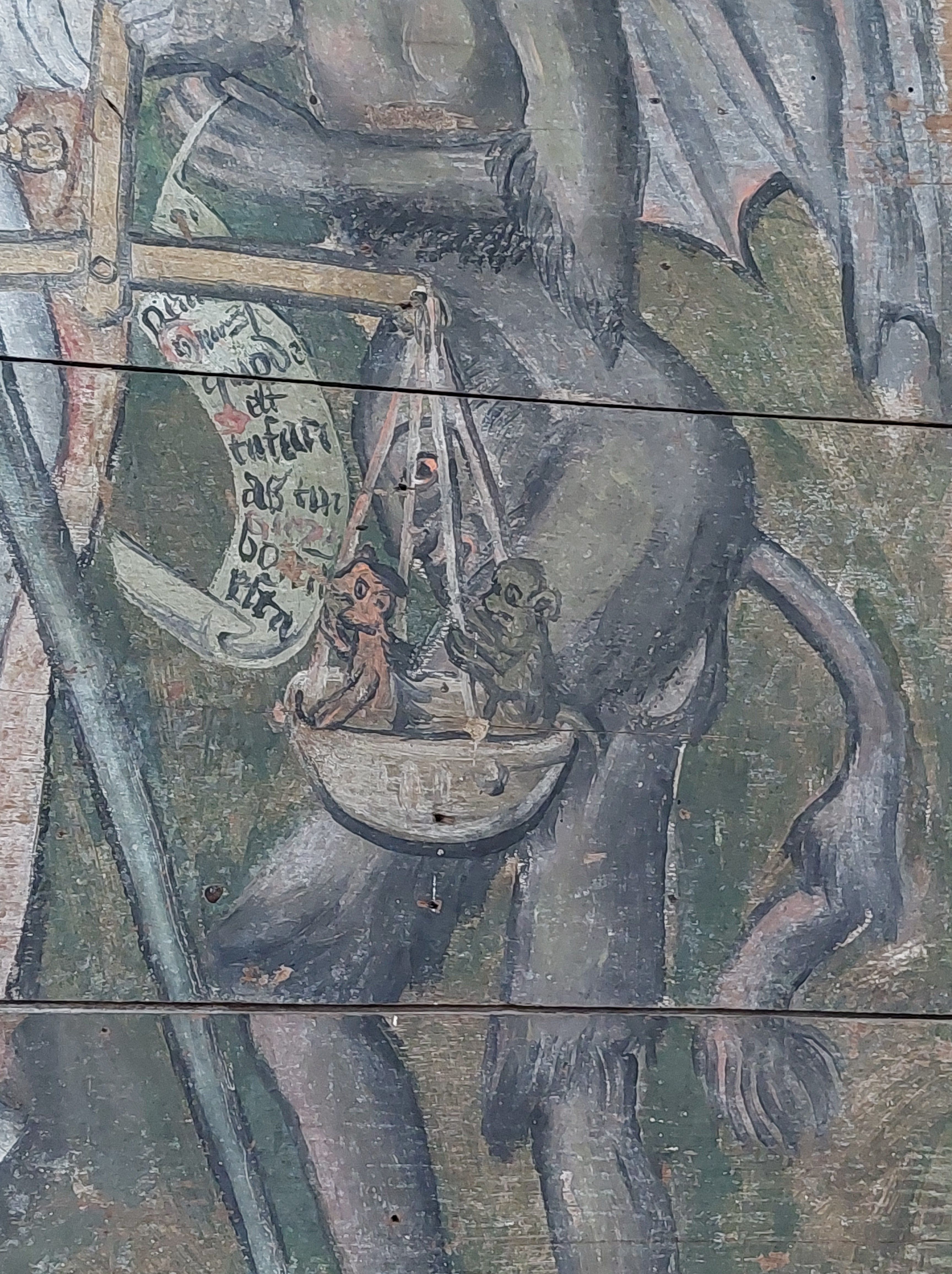
The Devil is wearing ragged sleeves and trousers which, according to the guide book, suggests the outfit worn by the Devil when the Wenhaston actors visited the seaside village of Walberswick in the late 15th century. The Walberswick churchwardens described the entertainment as the ‘Wenhaston game’. There is a second face painted on the Devil’s belly. This is an artistic convention often seen in late medieval painting which suggests that the Devil’s soul had been put at the service of his lower appetite and he was no better than a brute. The Latin text says ‘N(unc) quo deest tu facias tabo amnesta – now for what is lacking may you give pardon for sin’. This is for the benefit of these two (rather cute) little souls in the upper pan of the scales as they are weighed against the single pure soul in the lower pan.
Beneath the image of Christ are the resurrected souls appearing above ground and their headgear – crowns, tiaras and mitres – have been included to show their station in life. Usually, the rich and powerful are seen mixing with ordinary mortals in Dooms to show equality on Judgement Day but in the Wenhaston Doom they are set apart for some reason. Meeting them is St Peter in his papal tiara representing The Church which alone had the power to admit men and women to eternal life through the Sacraments.
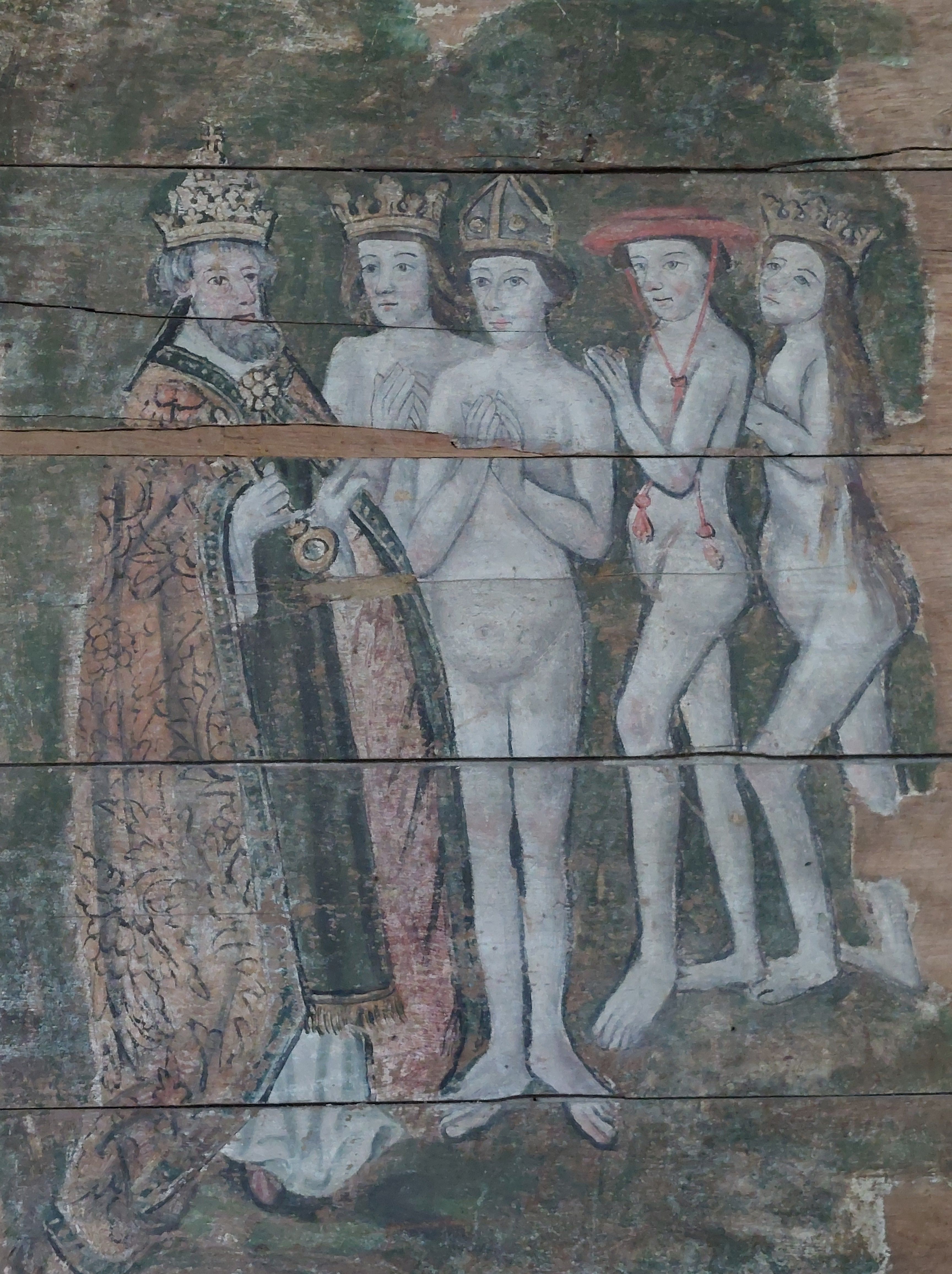
St Peter and the Resurrected.
The sheep and the goats have been separated and the sheep are admitted to the heavenly Mansions. This is shown on the far left of the Doom.
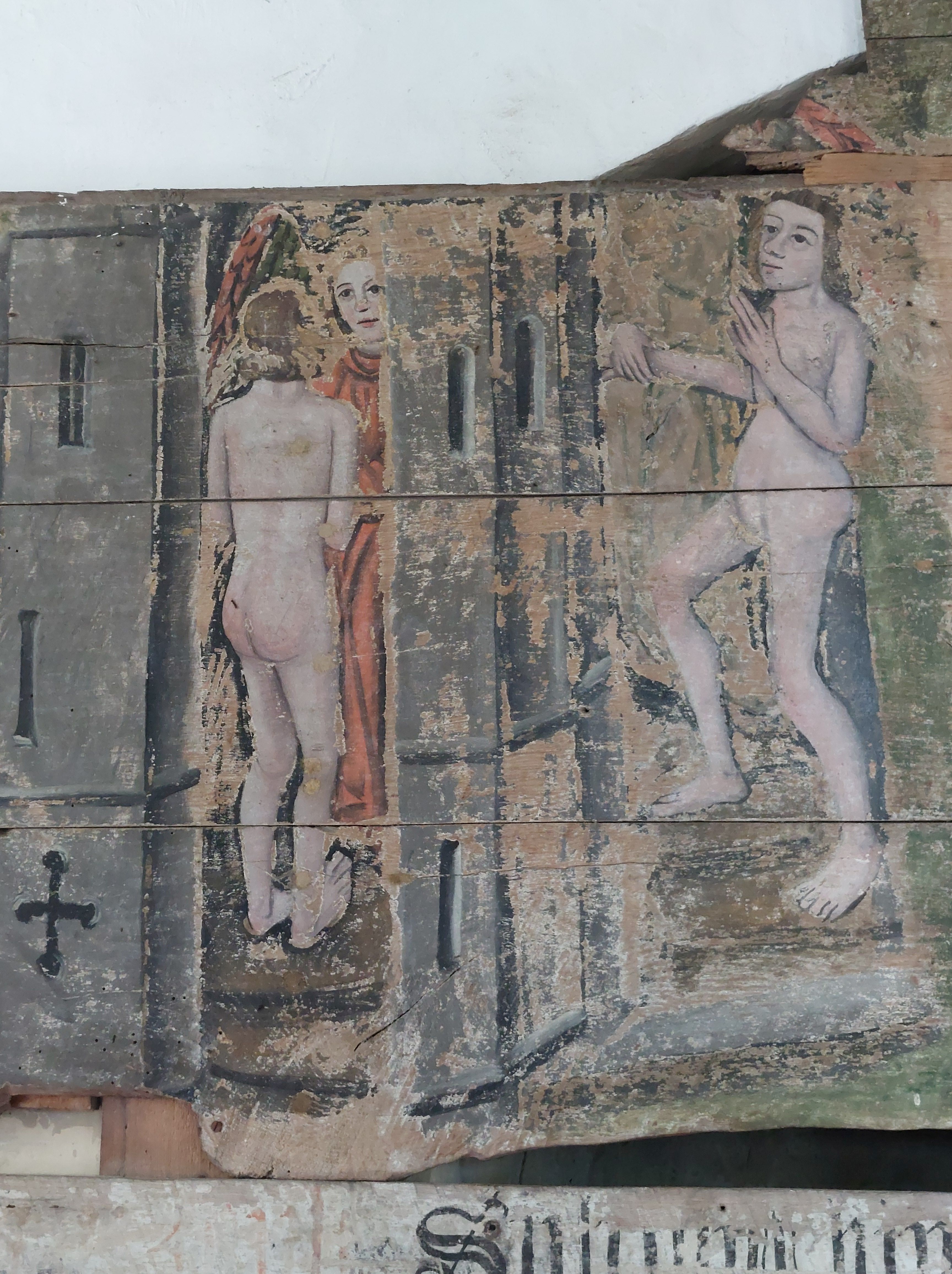
‘Do come in and make yourselves at home!’
The goats however, have only the eternal fires and gnashing of teeth to look forward to. On the far right of the Doom little devils gather up the accursed and cast them into the jaws of Hell which are depicted here as the gaping, toothed mouth of a fish. Leviathan, a huge aquatic creature is often mentioned in Hebrew poetry and this led to commentators and artists seeing Satan as Leviathan. In the picture there is also a person still wearing their shroud, a swine’s snout, a devil blowing on a ram’s horn (the last trump?), the damned encircled by red-hot chains and the Seven Deadly Sins are represented, one of them carrying a female figure upside-down.
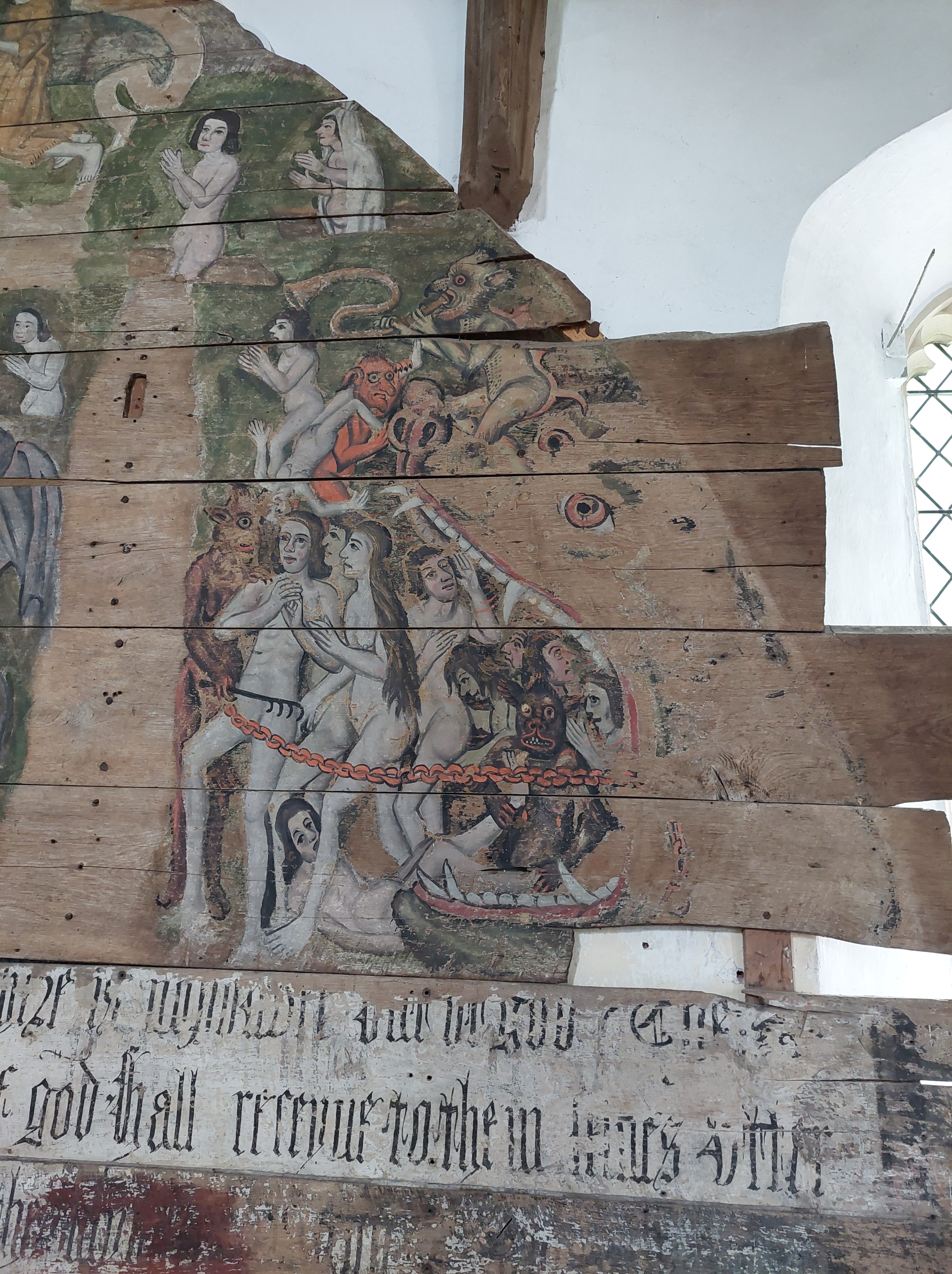
The text underneath the Doom is probably Elizabethan and is from an unknown version of the English Bible. Romans 13 vv 1-4
“Let every soule submit him selfe unto the authorytye of the hygher powers for there is no power but of God the Powers that be are ordyend of God, but they that rest or are againste the ordinaunce of God shall recyve to them selves utter damnacion. For rulers are not fearfull to them that do good but to them that do evyll for he is the mynister of God”.
I am greatly indebted to the excellent guide book I bought at the church for the explanation of the Doom’s symbolism.

Elinor in her red hat contemplating the Doom. The wooden panelling you can see beyond her under the windows are the repurposed box pews.
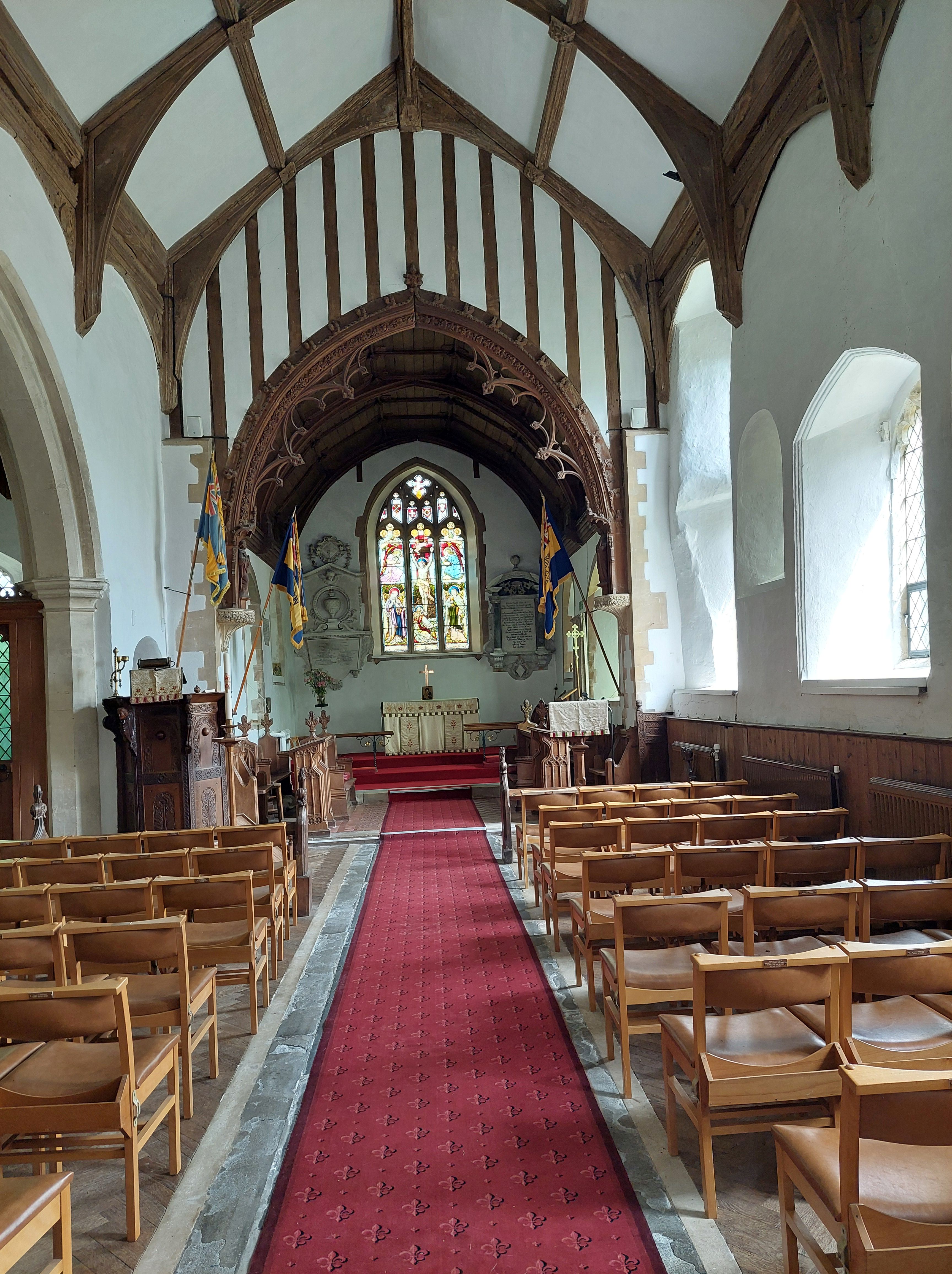
The interior of the church looking Eastward towards the altar
-
- The Jacobean pulpit
-
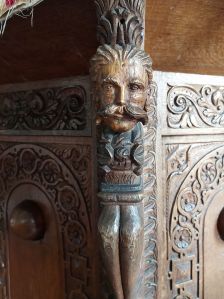
- Face carved on pulpit
-
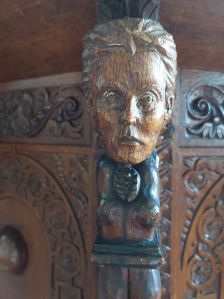
- face carved on pulpit
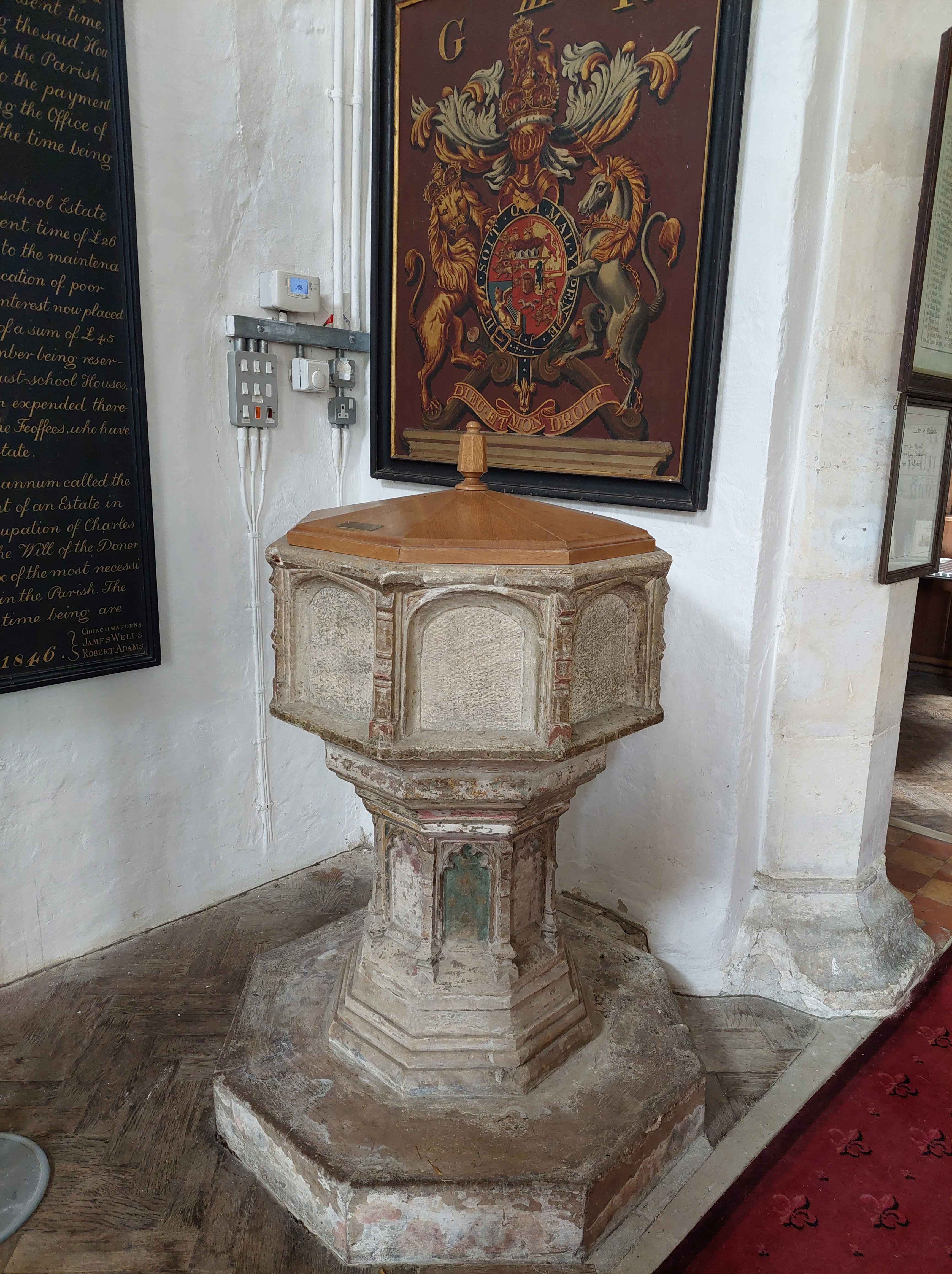
The Font – a Seven Sacrament font but unfortunately the reliefs that had been in the arched panels were erased in the 19th century. Behind the font is the George III Royal Arms
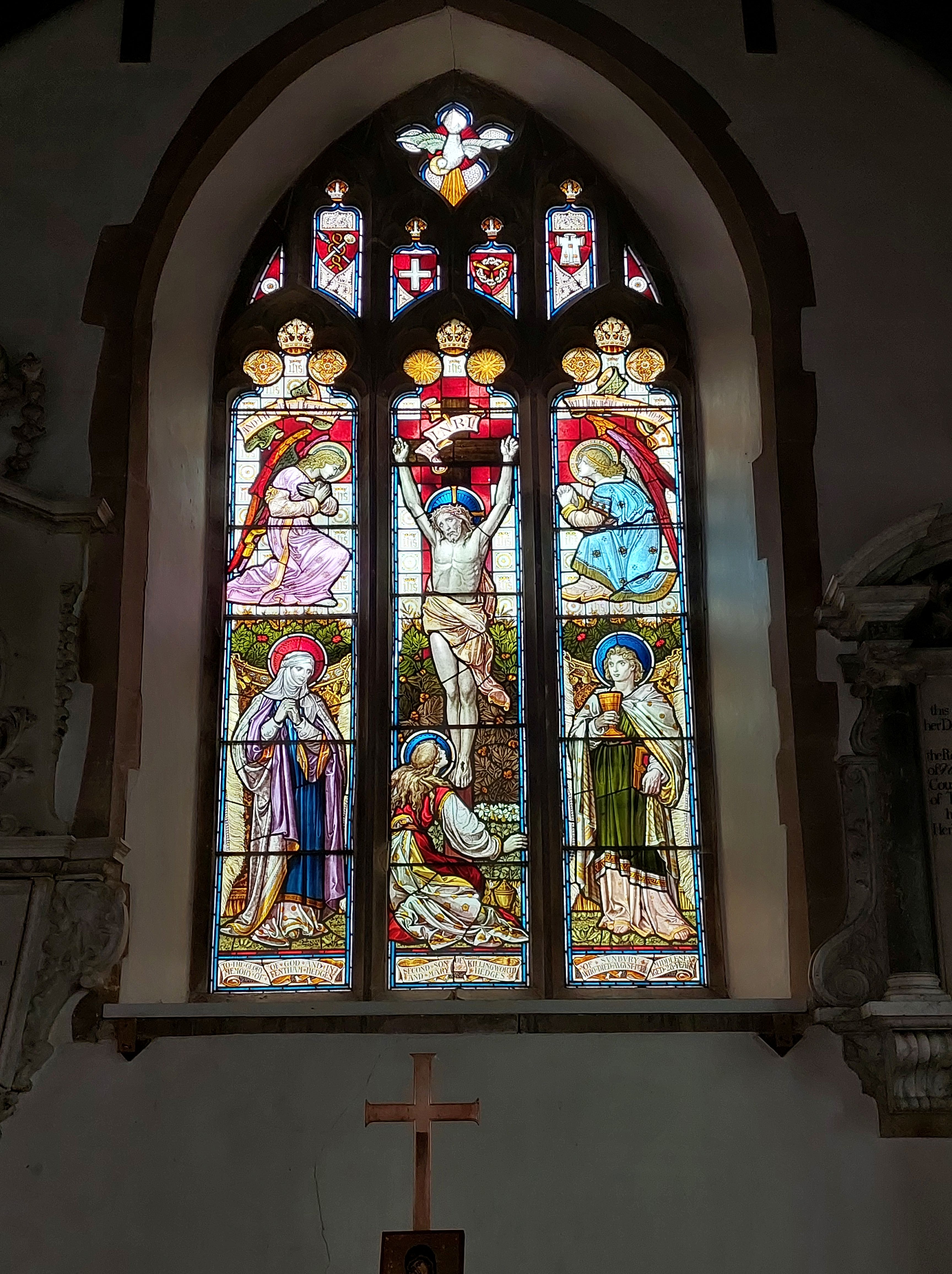
The East window
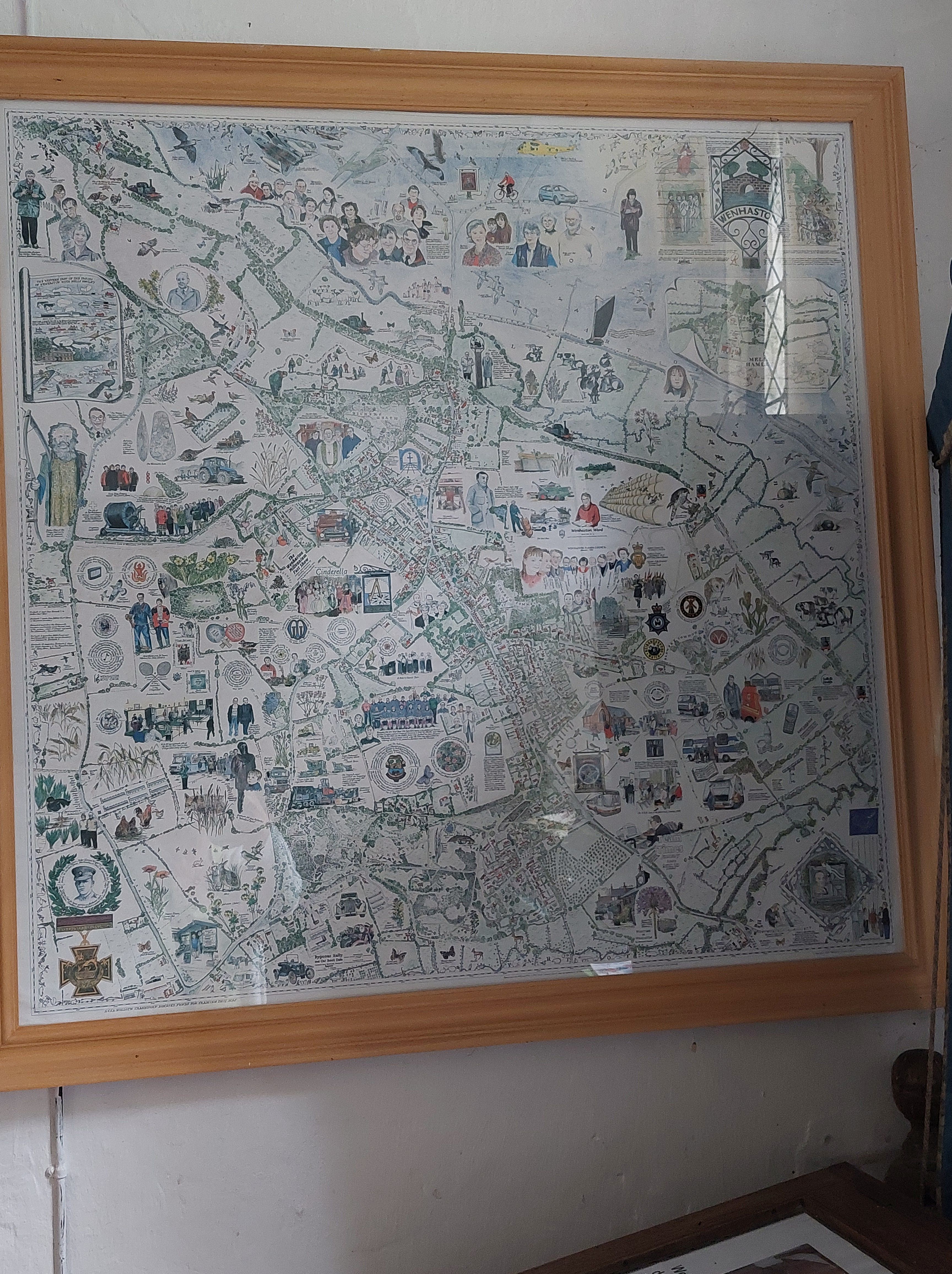
A map of the parish
Above is a gallery of all the windows in the church and below is the door.
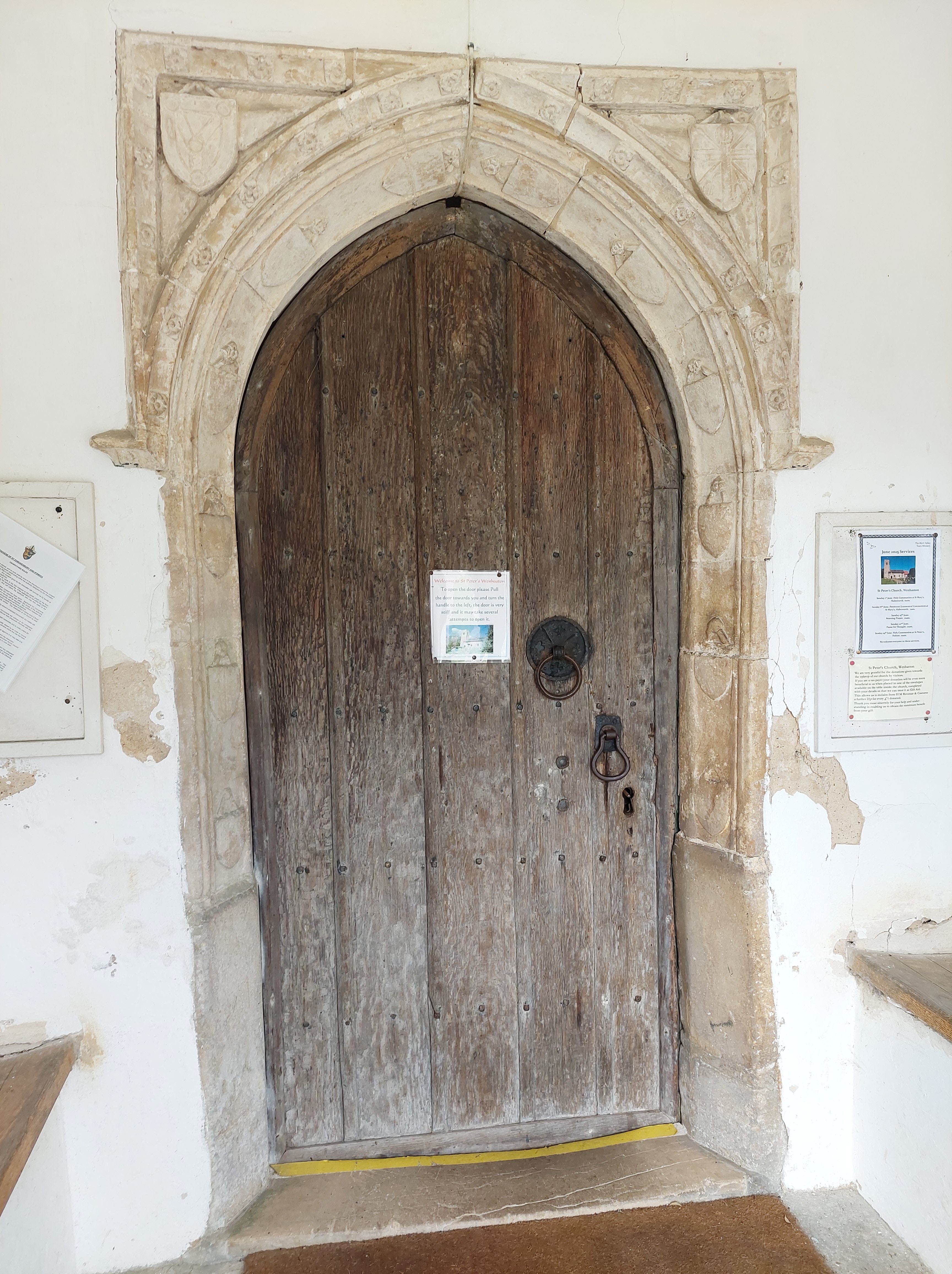
The outside of the South door, the main entrance to the church. The door retains the medieval sanctuary knocker.

A cupboard with a catch
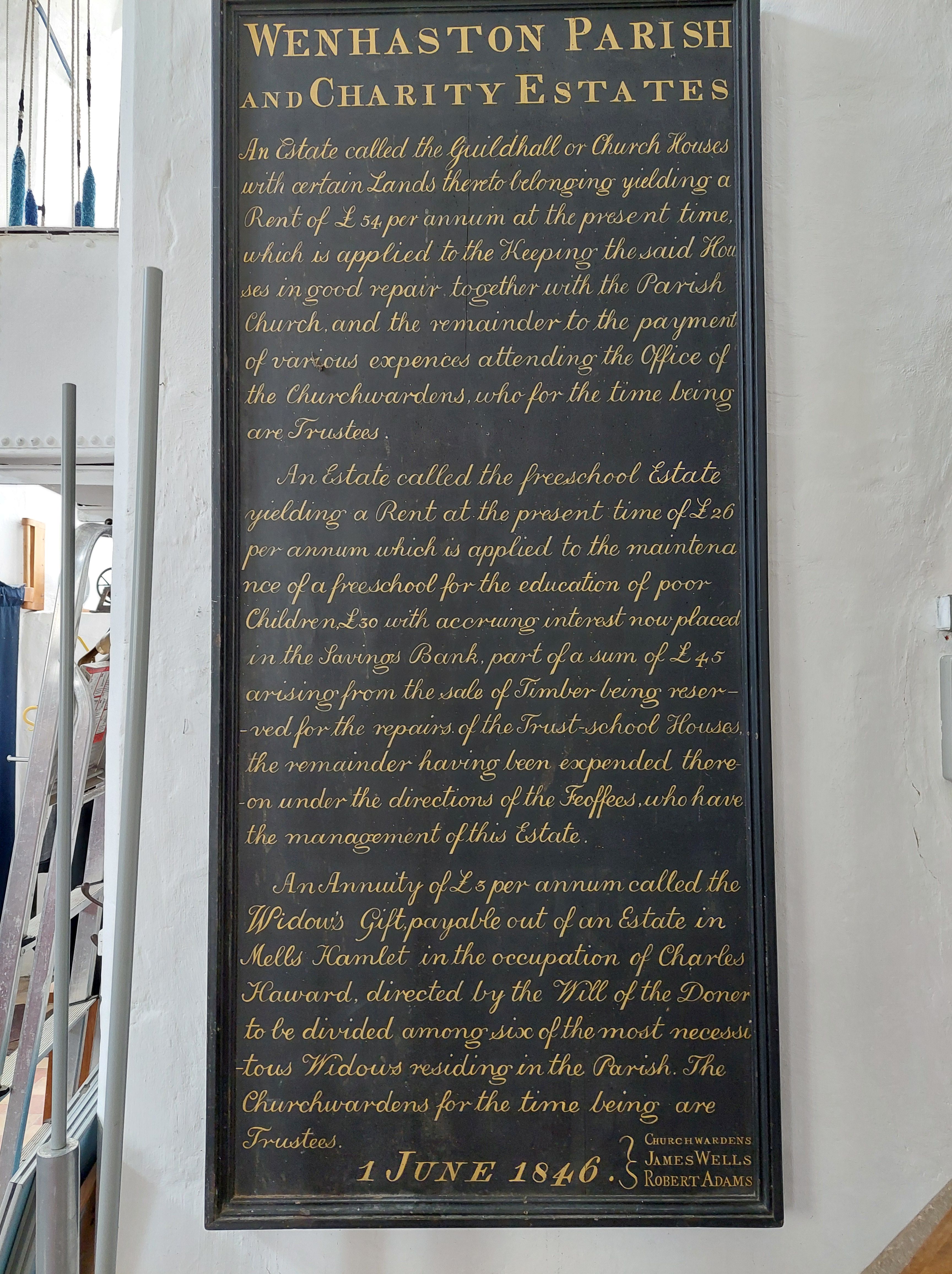
The Charity Board
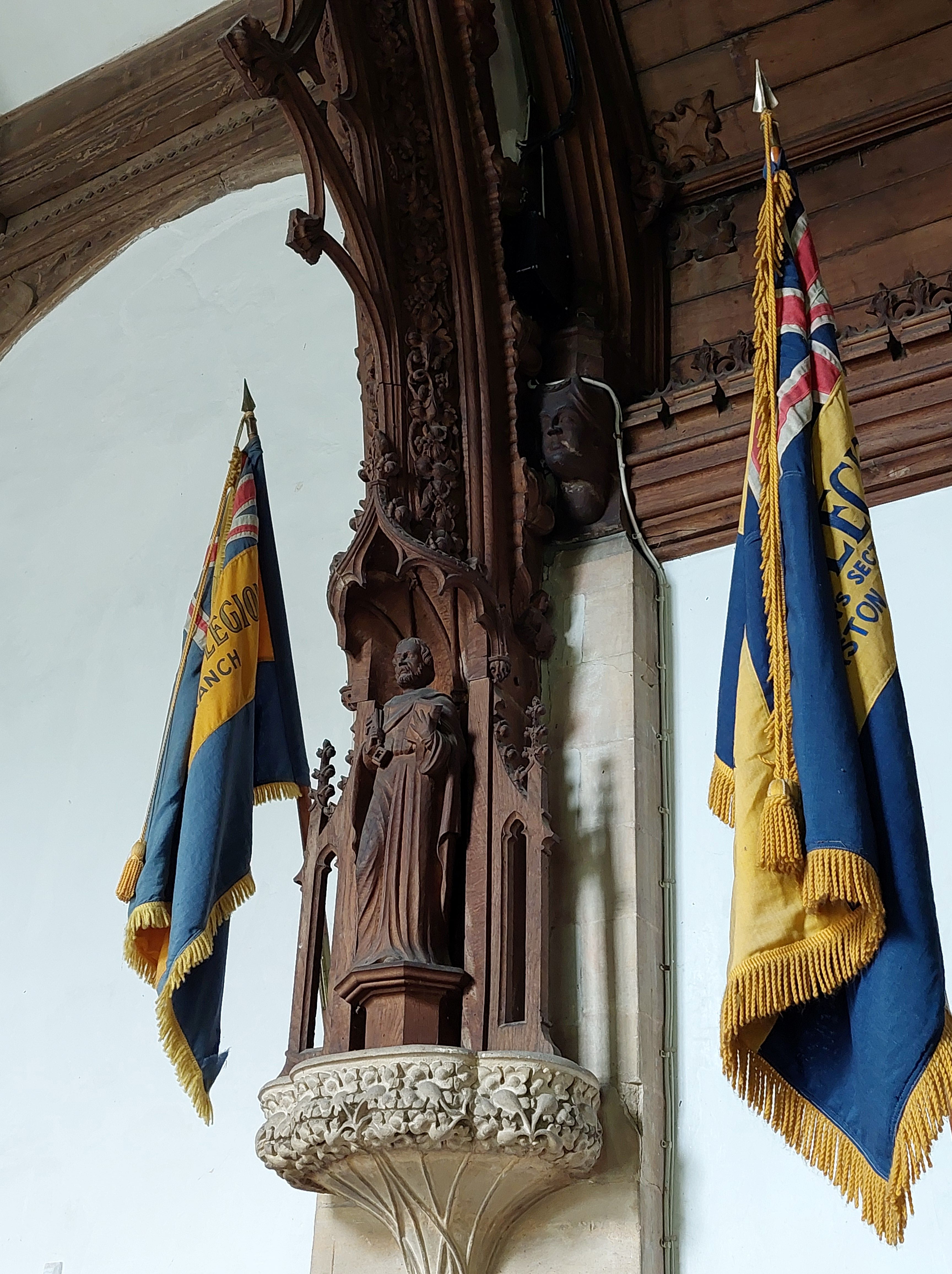
Part of the new chancel arch from 1892
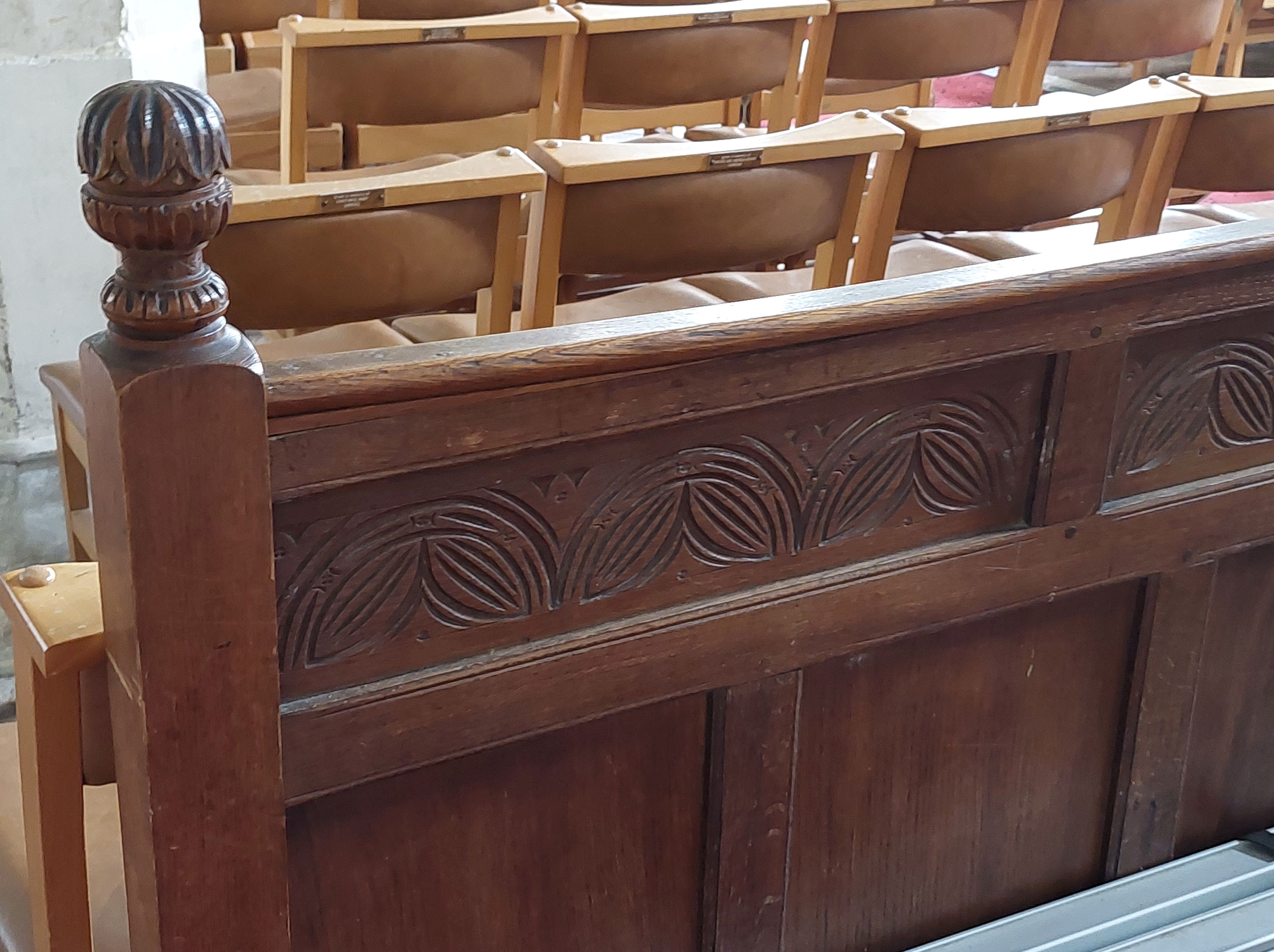
More carved panelling from the box pews.
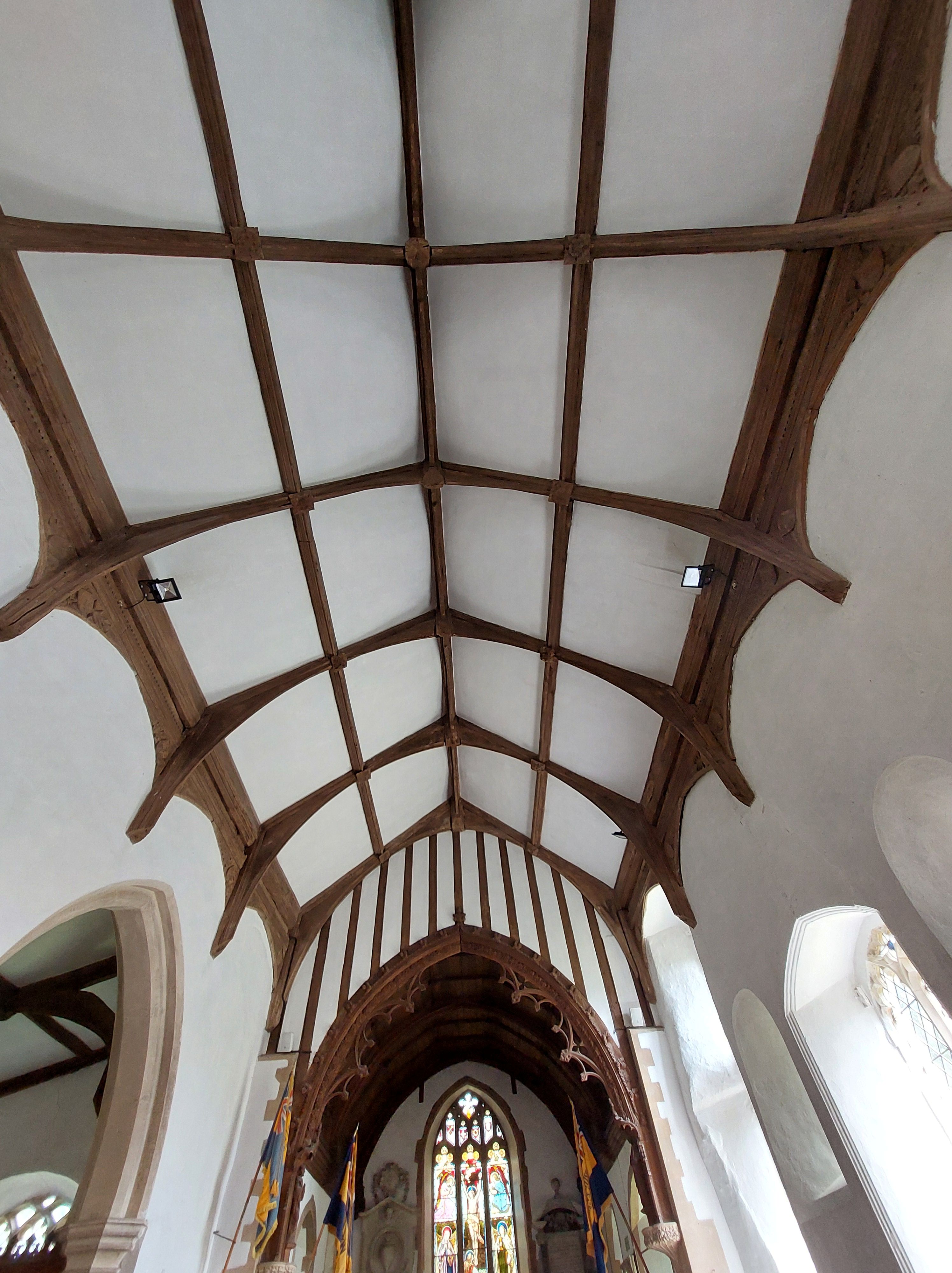
The Nave roof
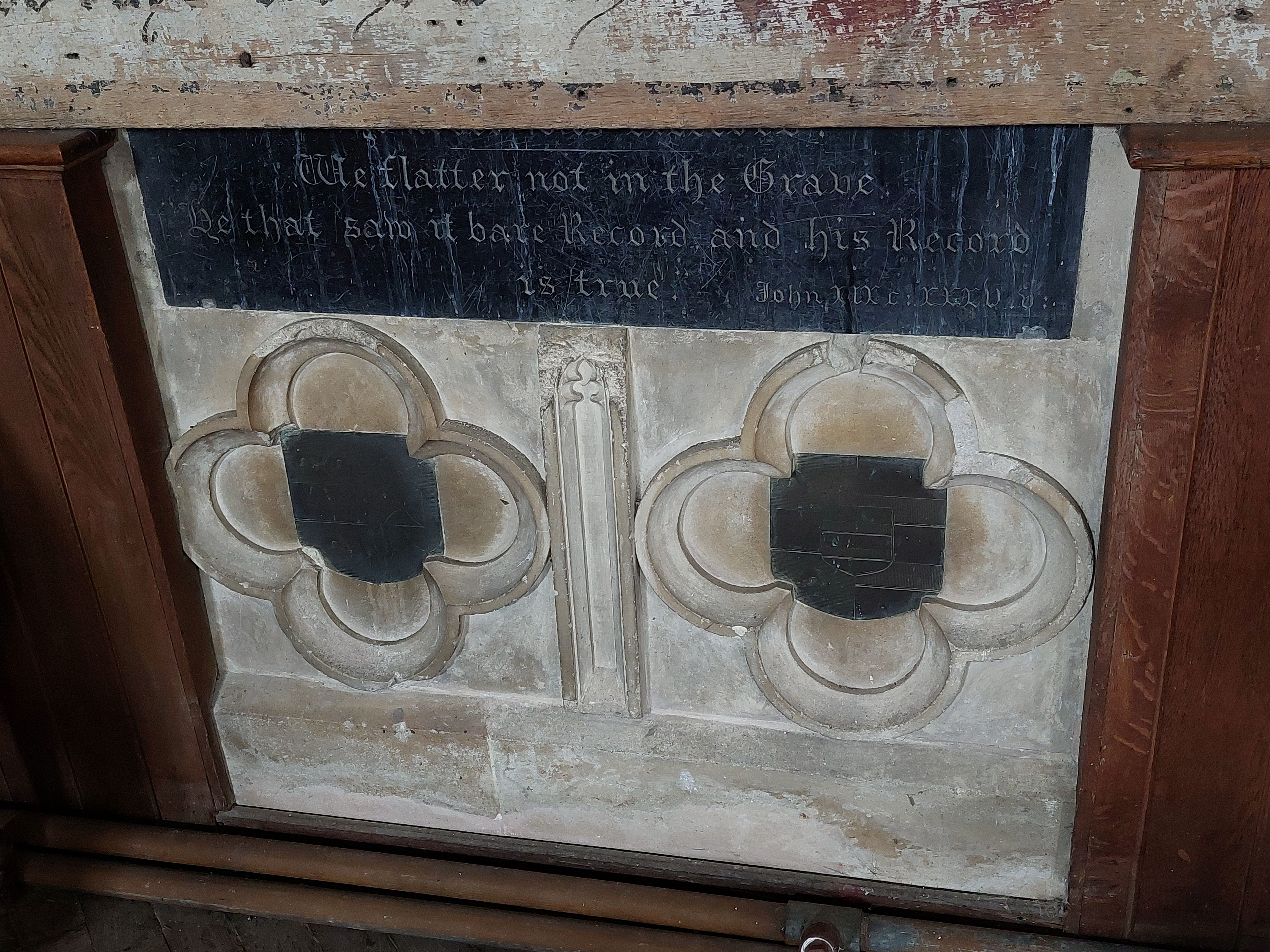
Part of a memorial to Reverend J Leman who died in Bath.
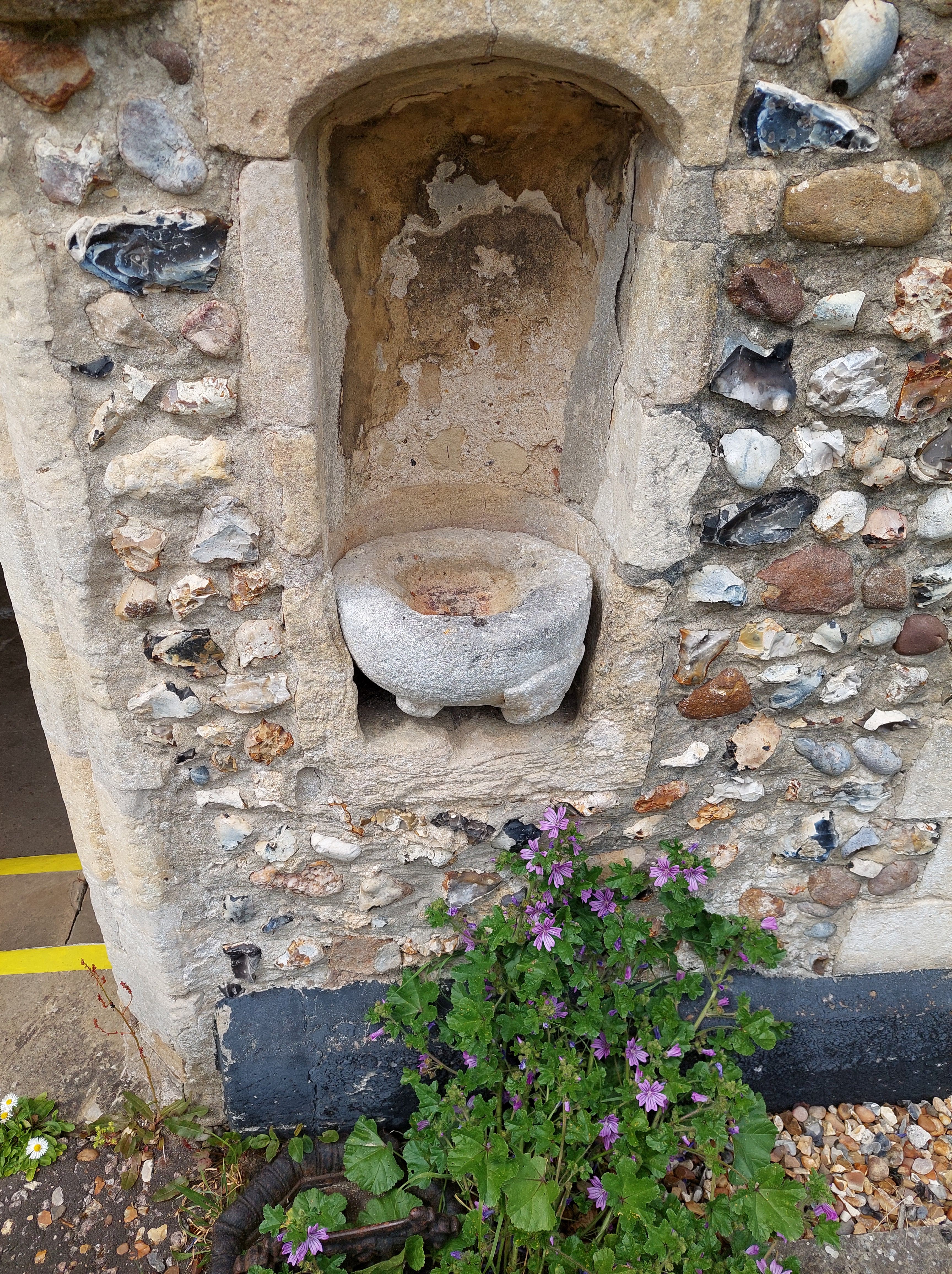
Medieval Holy water stoup on the outside of the church next to the door


Apologies for the length of this post.
Discover more from A Suffolk Lane
Subscribe to get the latest posts sent to your email.


Please don’t apologise for your post’s length. It was fascinating. It must have been wonderful to sit in front of it, guidebook in hand, and work it all out.
LikeLiked by 2 people
Thank you! It was quite astonishing to see it in front of us as soon as we entered the door.
LikeLiked by 1 person
It’s not long. In fact, I was sorry to come to the end. I do like a good Doom, and like you, kept meaning to visit. Always a case of “next time” when we were down seeing family. I’m now realising I have to do things now, as there may be no “next” time. According to the internet that quote is probably from the Tyndale Bible. Turbulent times – not only for churches but for translators of Bibles. Good to see you back.
LikeLiked by 2 people
Yes! I know that now or never feeling. Thank you for such a kind comment Simon and for the Tyndale Bible suggestion.
LikeLiked by 1 person
No problem. Good to see you back in print! 🙂
LikeLiked by 1 person
Thank you for this very thorough blog post about a very special place, Clare.
LikeLiked by 1 person
And thank you, Will for such a kind comment ☺️
LikeLike
Amazing church. Thanks for showing us around.
LikeLiked by 1 person
Thank you very much John. I wondered why it had taken me so long to visit it!
LikeLiked by 1 person
A fascinating trip back in time, with wonderful photos to illustrate history. I’ve missed these!
LikeLiked by 1 person
Thank you so much, Clive! I have definitely missed writing these posts.
LikeLiked by 1 person
Hopefully you’ll soon be fully back in the swing and treating us to more 👍
LikeLiked by 1 person
No need to apologise – given all the work you have put in it is only right for us to read this fascinating history and analysis of a treasure determined to survive – and it was a delight
LikeLiked by 1 person
Thank you very much, Derrick; you are very kind. You are quite right about it being determined to survive!
LikeLiked by 1 person
This has been a fascinating read!
LikeLiked by 1 person
Thank you very much, Anne.
LikeLike
Really enjoyed that. Lovely to see the Doom too. Such an age since I’ve been down that way.
LikeLiked by 1 person
Thank you so much, John. Richard and I keep wondering why we haven’t been to your neck of the woods for so long!
LikeLiked by 1 person
Bit rainy at the moment!
LikeLiked by 1 person
Of course!😆
LikeLiked by 1 person
What an astonishing little church. The paintings on wood in particuar took my eye. If that church were in a tourist hot-spot, there would be queues snaking down the street to get in!
LikeLiked by 1 person
It is a little gem! So full of wonders and obviously loved by the people of the village. Thank you, Margaret.
LikeLiked by 1 person
Of course they love it! And have it all to themselves …
LikeLiked by 1 person
That was really informative and well written. I really enjoyed it. Thanks so much Clare xxx
LikeLiked by 1 person
Thank you, Genessa and it’s so nice to see you here! Coincidentally, I was thinking of you this afternoon and planned to message you this evening. Xxx
LikeLike
What a great post, Clare. I’m so glad the Doom was saved.
LikeLiked by 1 person
Thank you, Sue. Yes, sheer luck!
LikeLiked by 1 person
What a place, Clare!! I wouldn’t say the post was too long – very thorough and fascinating! I had to look up Doom, of course, and how beautiful it is. Of course Cromwell would have smashed it. The parishioners were brave to try to save it – they’d had enough!
There’s so much of interest there, and you really imparted it all. I liked the carving of the mustachioed man; the other guy’s face looks familiar – probably looks like some celebrity or other. 😀 I really enjoyed this.
LikeLiked by 1 person
Thank you so much Lisa! When you think how long the people had spent saving up for the Doom to be created for them they would have wanted to keep it safe.
LikeLike
What an interesting church! Thank you for sharing it.
LikeLiked by 1 person
Thank you so much! I now wonder why it took me so long to get around to visiting it 😏
LikeLiked by 1 person
I know that feeling!
LikeLiked by 1 person
The history is fascinating, Clare! I appreciate the educational post.
LikeLiked by 1 person
Thank you Lavinia. Religious and political turmoil is not a new thing! 😏
LikeLiked by 1 person
🙂
LikeLiked by 1 person
Lovely to read!!
You should collate them all and publish as one line book!! Love Heather
LikeLiked by 1 person
Thank you Heather! I will consider that carefully xxx
LikeLike
What a fascinating piece of history, and so close to your home, Clare. I love your photos of all the different details with clear explanations. The Doom is really amazing, and what luck that rain helped to expose it again. Thank you for taking so much time to write such an interesting post.
LikeLiked by 1 person
And thank you, Jolandi for your thoughtful comment. There was so much of chance and luck involved in the story of this Doom.
LikeLike
That was amazing. I could spend days and days exploring such a place, just letting its great age seep into me. I don’t know if I ever told you but my family lived in Ribchester in Lancashire at least as far back as the 1500s, so this post kind of hit close to home. I love seeing how they might have lived.
And to top it all off, flowers in December!
Thank you Clare. I hope your eye checkup went well.
LikeLiked by 1 person
Thank you so much Allen. The church at Wenhaston is truly a fascinating place. I think you have mentioned that your family originated from Lancashire which is a beautiful county. And yes, flowers; we must have flowers!
My check-up went well and they have discovered that the eye-drops are not working as well as they should. I have to have laser eye-surgery in a couple of weeks time. If that doesn’t work I will need more eye-drops!
LikeLiked by 1 person
It sounds as if you’re on the same glaucoma path that I was on. I had laser treatments in both eyes twice, and then surgery became the only option left. I have Pseudoexfoliation glaucoma, which is where “the accumulation of abnormal fibrillar material in the anterior segment leads to elevated intraocular pressure.” Simplified, this basically means that higher than normal amounts of proteins plug up the eye’s natural “drain holes” so the pressure increases. Surgery opens new drain holes. For me it has worked great. No matter what kind of Glaucoma you have I’m sure they’ll be able to help you as well. They can do amazing things these days!
LikeLiked by 1 person
I am really sorry it has taken me so long to reply, Allen but I accidently locked myself out of my blog on Christmas Eve and I have just sorted it out this evening. My laser eye surgery went well as far as anyone can tell and I go back in April for more tests. We will see how it goes. I am so pleased your surgery has been a success! What a relief!
LikeLiked by 1 person
No problems Clare. I’ve never heard of anyone doing that.
I’m glad the laser treatment went well. Mine did too but for some reason they didn’t last. I hope yours do!
LikeLiked by 1 person
Clare, I enjoyed my history lesson about Wenhaston Doom. Well done and lovely post. Happy 4th Advent and Christmas. oxox
LikeLiked by 1 person
Hi Mary Ann, I am so sorry it has taken me so long to respond to your kind comment. I accidentally locked myself out of my own blog on Christmas Eve and have just managed to get myself reinstated this evening! xoxo
LikeLiked by 1 person
Clare, no problem. Things happen. Glad you are now back on board. Enjoy the journey through life! oxox
LikeLiked by 1 person
Have a great week!
LikeLiked by 1 person
Pingback: Influencers, Doom and Renewable Energy | quercuscommunity