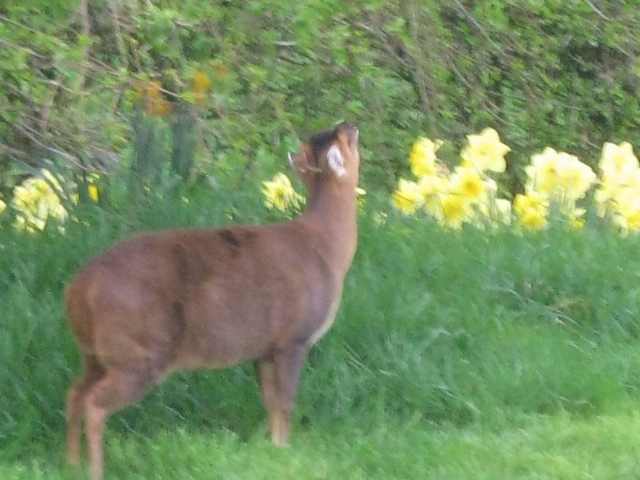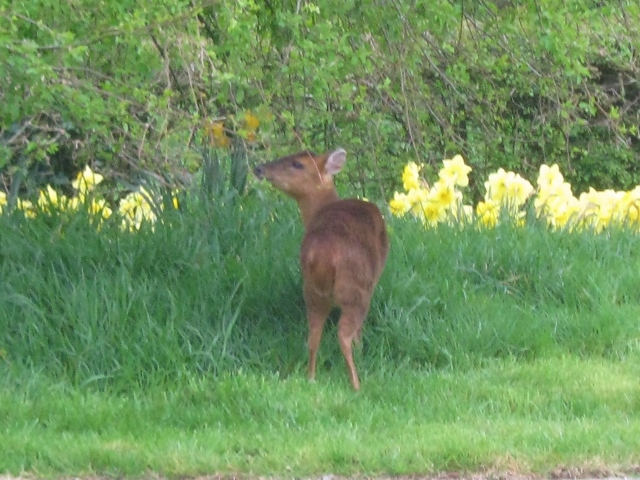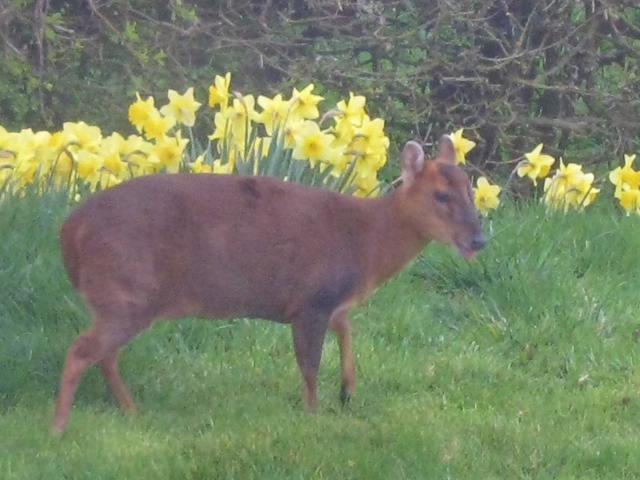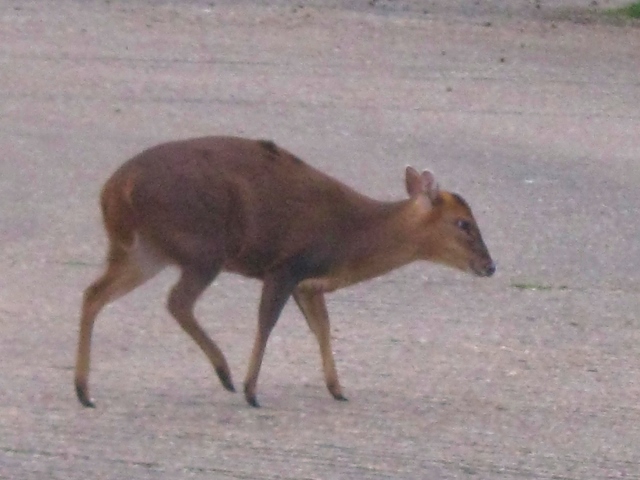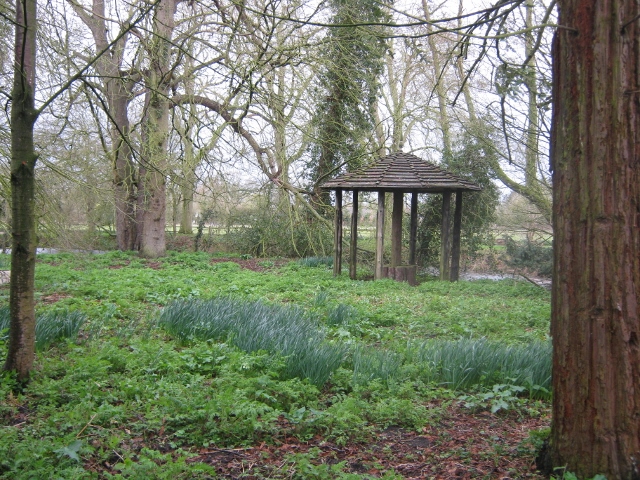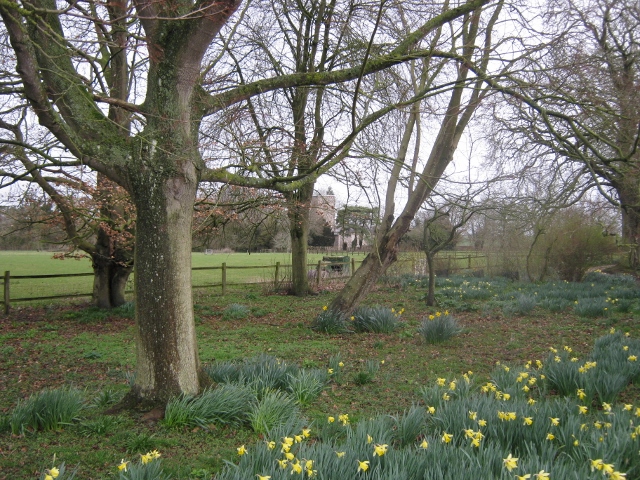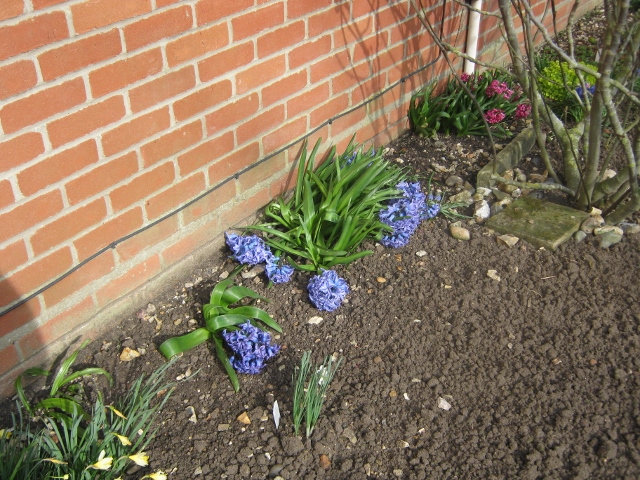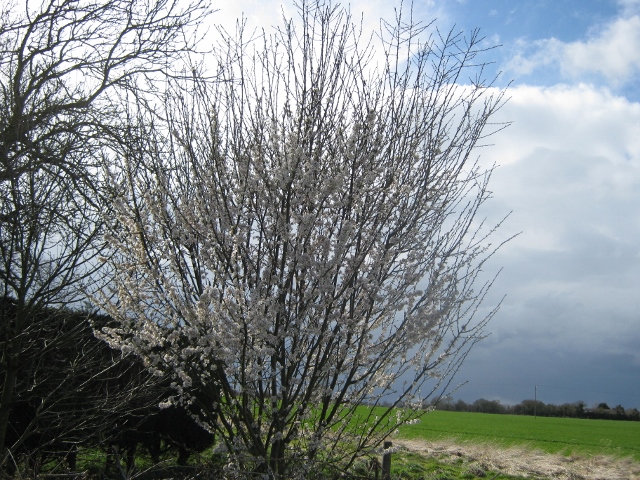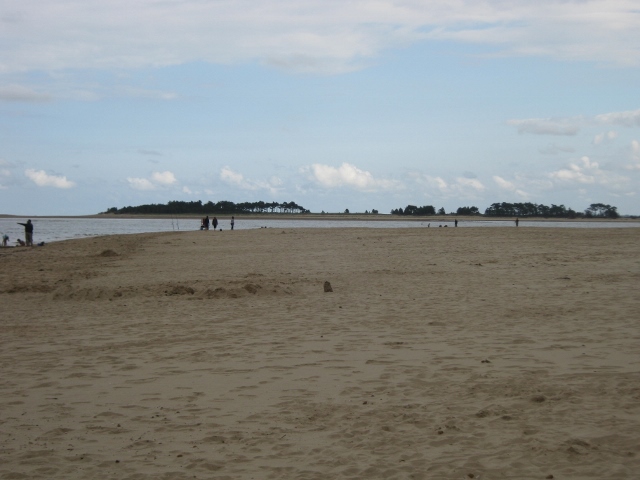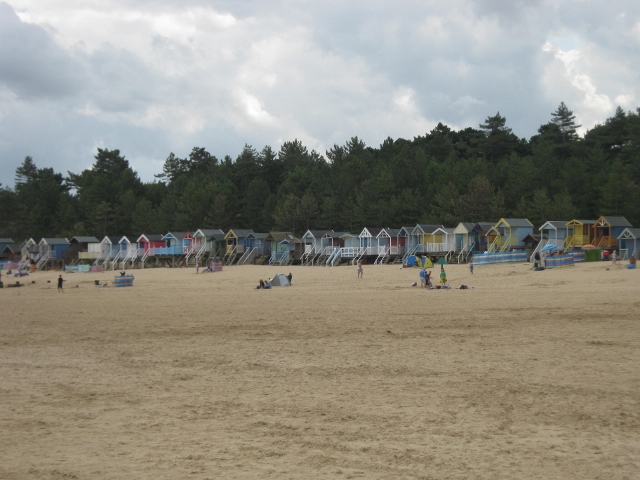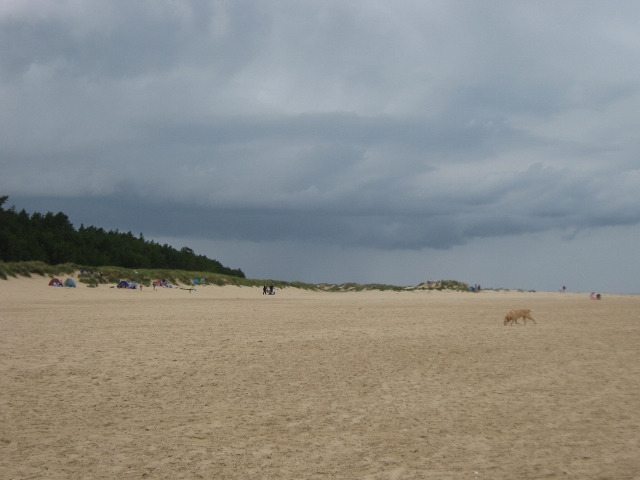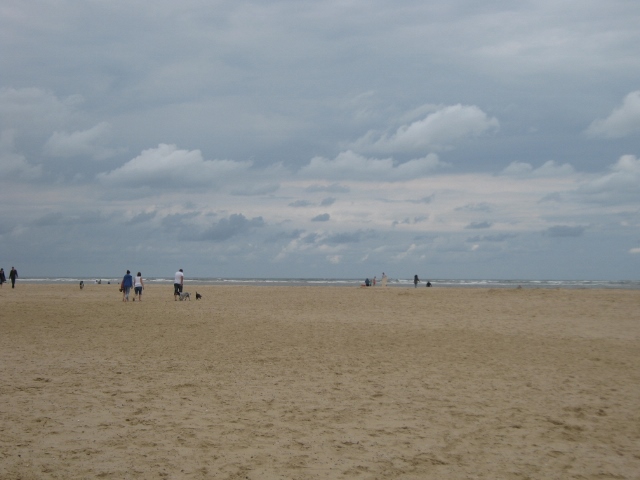
Dunwich Heath – August 31st 2014

Tags

, , , , , , , , , , , , , , ,

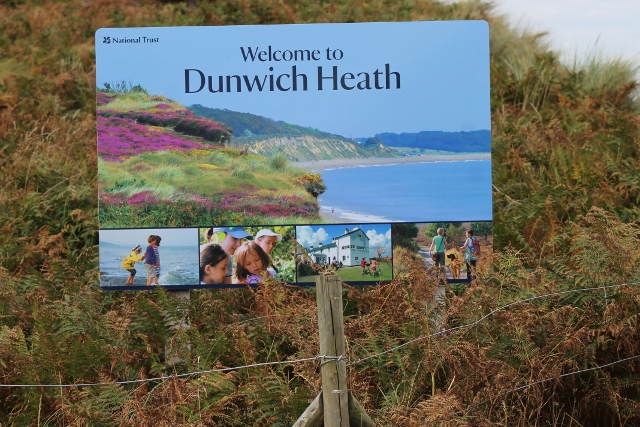
057Dunwich Heath sign (640x427)

Richard, Elinor and I took a trip to Dunwich Heath at the end of August last year.  We wanted to go somewhere different to our usual places but didn’t want to make a long journey.
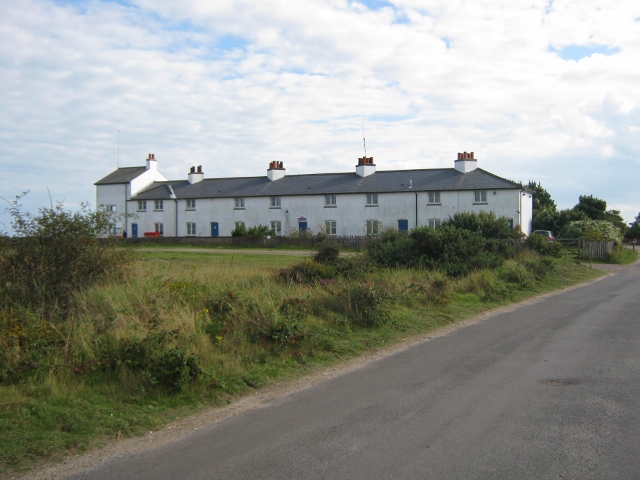
040Coastguards cottages (640x480)

The old coastguard cottages. The National Trust tearoom is situated in the end cottage.  The other cottages are rented out as holiday homes.

The County of Suffolk has six topographical regions each with its own distinct landscape features.  I live in High Suffolk with its boulder-clay soil but just a couple of miles to the East of us the soil changes and becomes sand and gravel.  This gravelly area is called The Sandlings and Dunwich Heath (part of the Sandlings) is right on the coast.  To quote the National Trust description of the area –

‘Dunwich Heath is where the Sandlings meets the sea.  It is 87 hectares (215 acres) of heather, gorse, grassland, woodland and crumbling sandy cliffs, as well as a mile of shifting sand and shingle beach.  The Sandlings landscape was created by early farmers thousands of years ago.  The sandy, free-draining soils became dominated by heather as farmers cleared the trees and introduced sheep to graze the land.

Within the Sandlings, only at Dunwich does the heathland extend to the cliff top – a rare example of coastal lowland heath.’
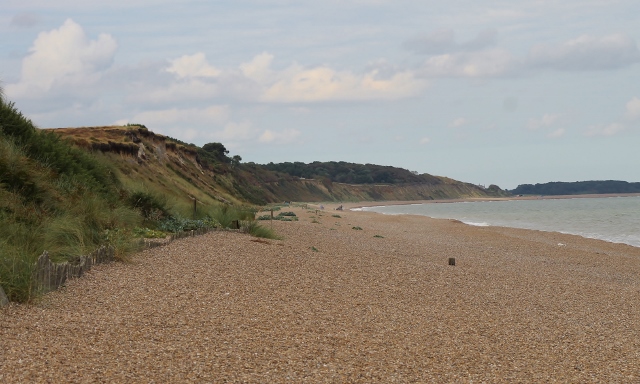
060Beach (640x384)

The shingle beach and cliffs

Late summer and early autumn is the best time to visit heathland as that is the time the heather is in flower.
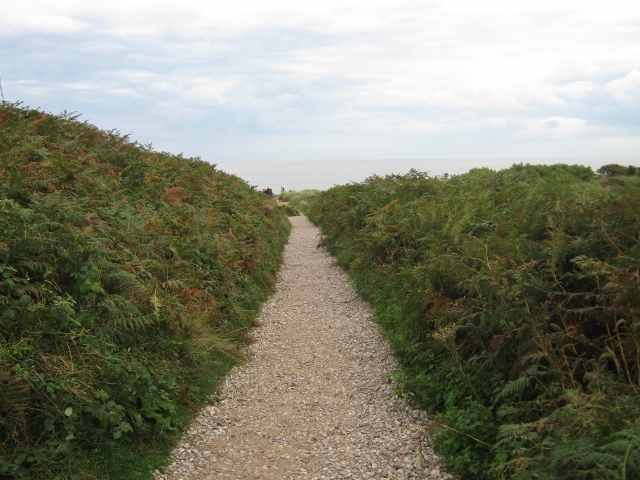
005Path at Dunwich Heath (640x480)

We parked the car and walked to the beach first, as the seaside is Elinor’s favourite place to be.
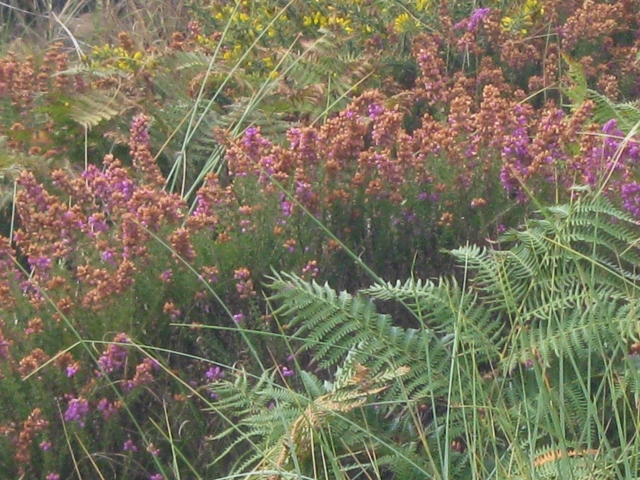
007Heather, gorse and bracken (640x480)

Heather, gorse and bracken by the side of the path.  This heather is going to seed; I love the orange colour of the seed capsules.
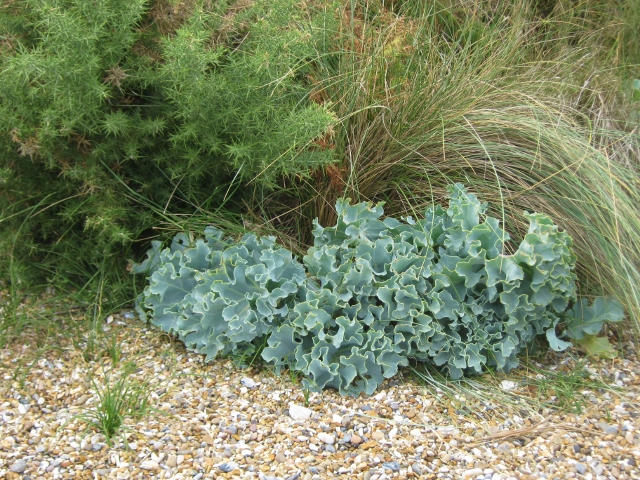
009Sea Kale (640x480)

We found Sea Kale (Crambe maritima) as usual, with Marram grass (Ammophila arenaria) and Gorse behind it
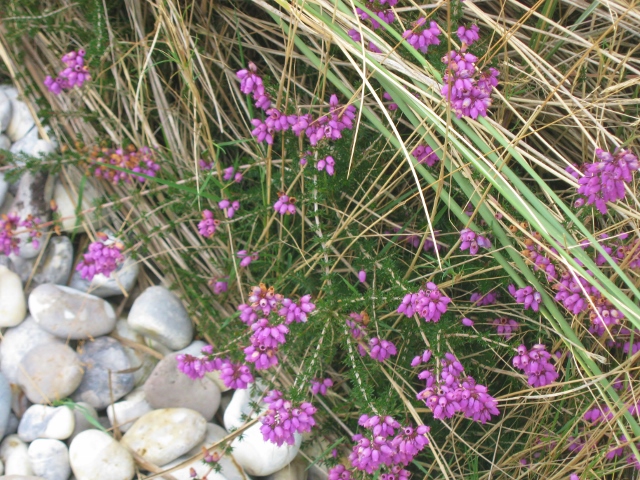
012Heather on the shoreline (640x480)

Heather on the shoreline

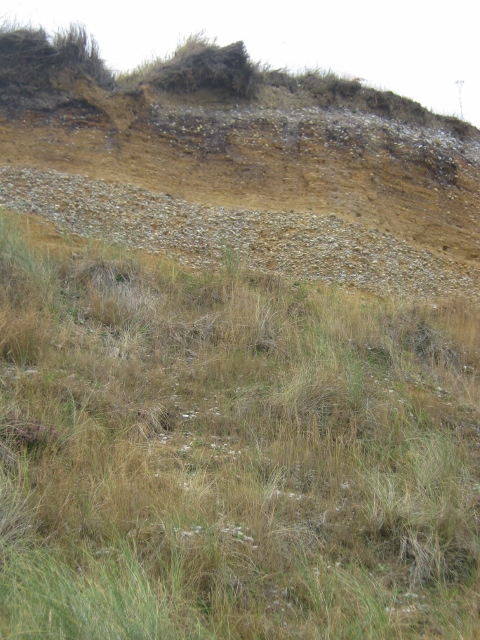
010Dunwich cliffs (480x640)

You can see here what the cliffs are made of – sand and gravel in layers. It is no wonder they are crumbling away.

The sands are known as ‘crags’.  The southern sandling crags are the oldest – a shelly ‘Coralline Crag’ which was deposited in warm tropical conditions about 3.5 million years ago forms an island and is surrounded by a sea of ‘Red Crag’ which is also full of fossilised shells.  The northern crag known as ‘Norwich Crag’ is younger and is less than 2 million years old.  Dunwich Heath is part of the ‘Norwich Crag’.

I have found three Belemnite fossils in my garden.  Perhaps some gravel containing these fossils was brought to the area when the house was built or perhaps the land where we live is the border between the clay soil and the sandy soil.
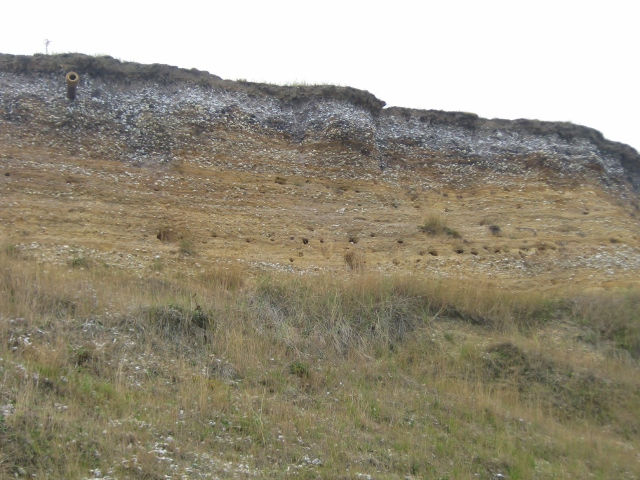
011Dunwich cliffs (640x480)

The little holes are probably Sand Martin (Riparia riparia) nestholes. The pipe sticking out at the top left of the picture is probably a land drain.
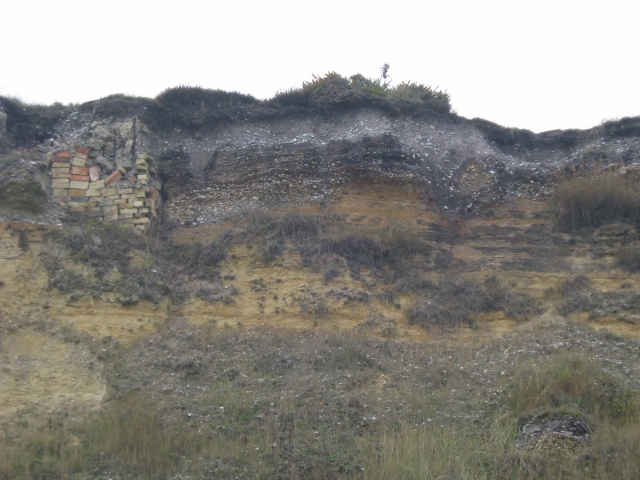
014Dunwich cliffs (640x480)

Dunwich has disappeared into the sea at a rate of about 400 metres in 400 years. Houses and other buildings are still lost regularly. I don’t know what the structure at the top left of the picture is, or was!
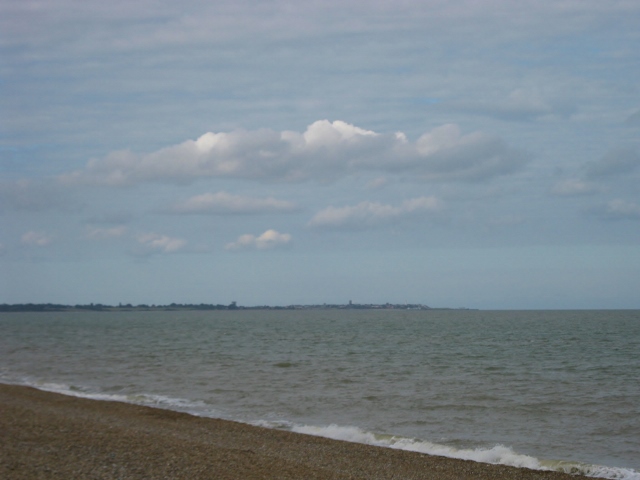
020Southwold (640x480)

We could see the town of Southwold to the north.
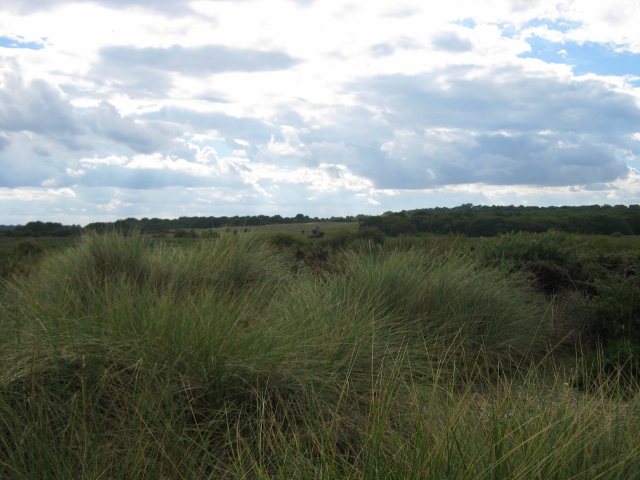
024Dunwich Heath (640x480)

There is a large expanse of grassland here.

Richard and I left Elinor on the beach and went for a walk.
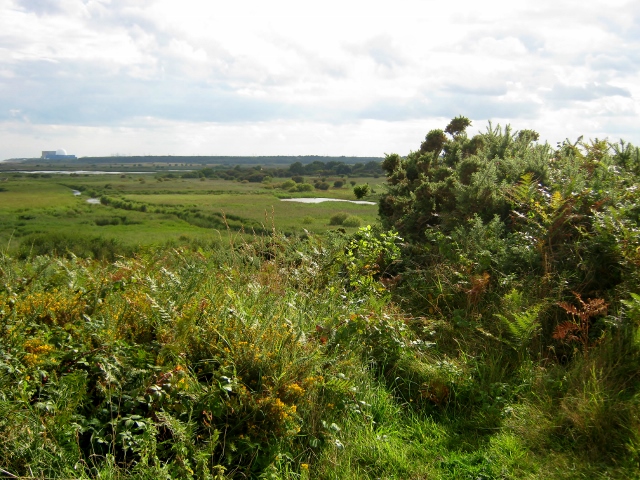
029Dunwich Heath (640x480)

There were plenty of flowers and grasses to see. Further away across the water meadows and marshes are the two nuclear energy plants at Sizewell.

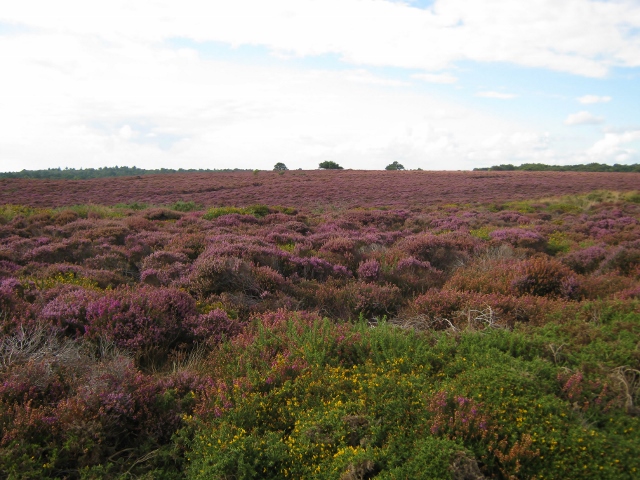
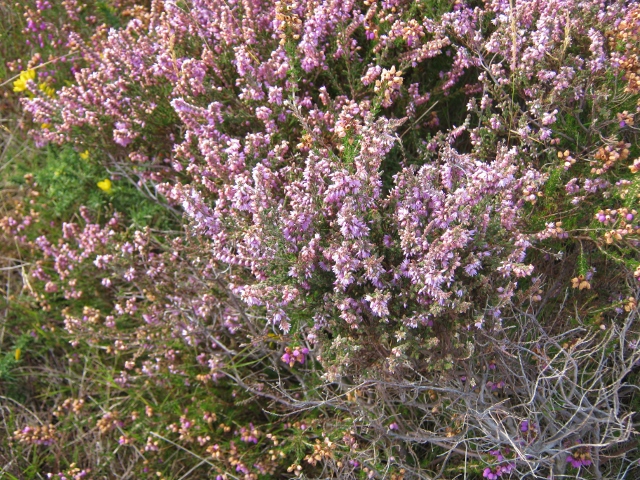
033Dunwich Heath - heather (640x480)

This is the sight we had come to see. The beautiful heath in flower.
This slideshow requires JavaScript.

035Heather (640x480)

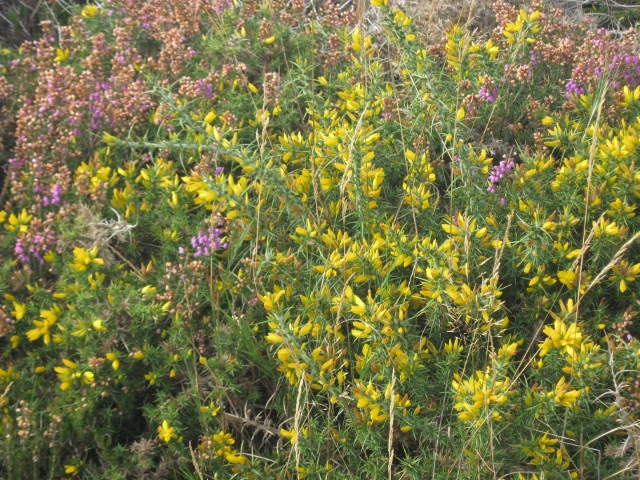
Heather (Calluna vulgaris) also known as Ling.
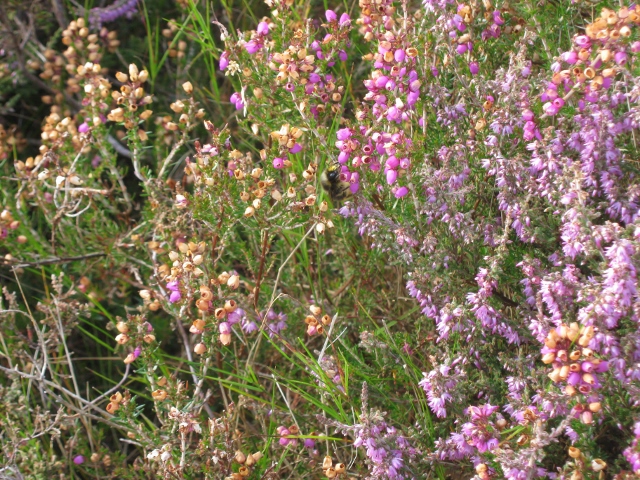
036Bell heather (640x480)

Bell Heather(Erica cinerea) – (the larger flowers)
037Dwarf Gorse (640x480)

Dwarf Gorse (Ulex minor)  There are plenty of Gorse (Ulex europaeus) bushes on the heath as well.

I heard and then saw a Dartford Warbler (Sylvia undata) on the top of a Gorse bush, but he was too far away to photograph.
043Plaque on cliff top (640x480)

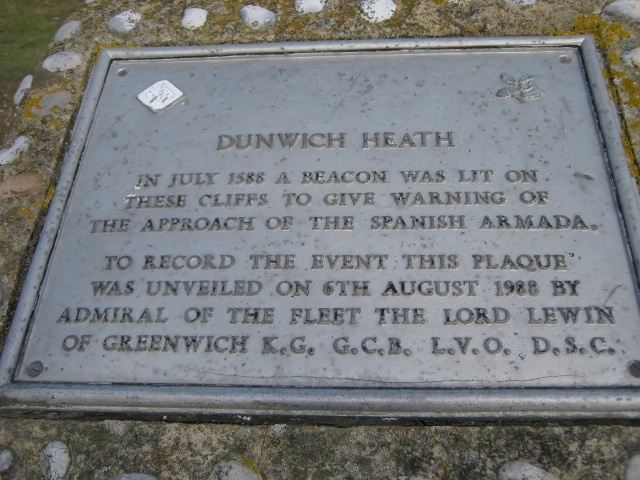
A plaque on the cliff-top

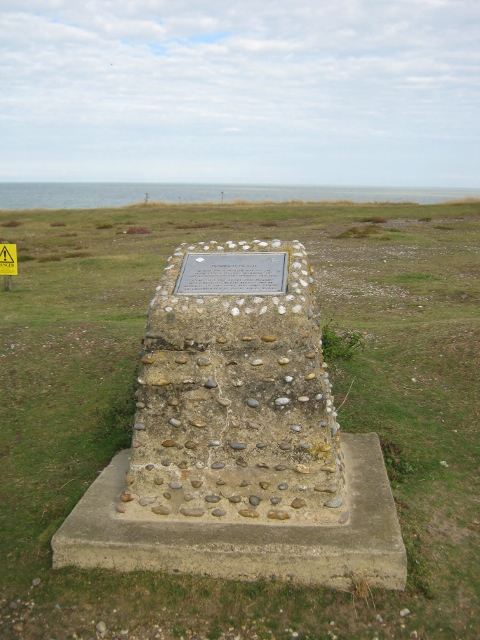
044Plaque (480x640)

The plaque

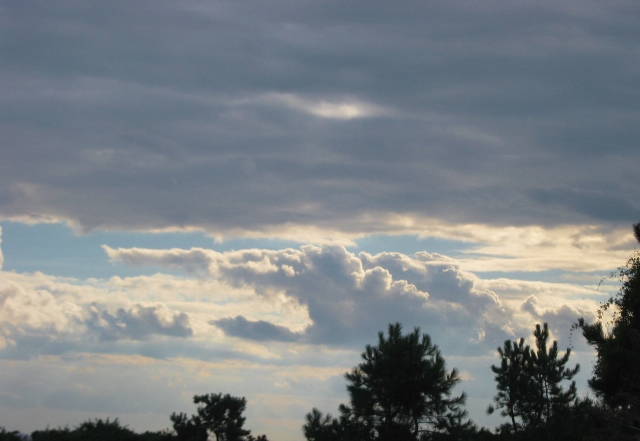
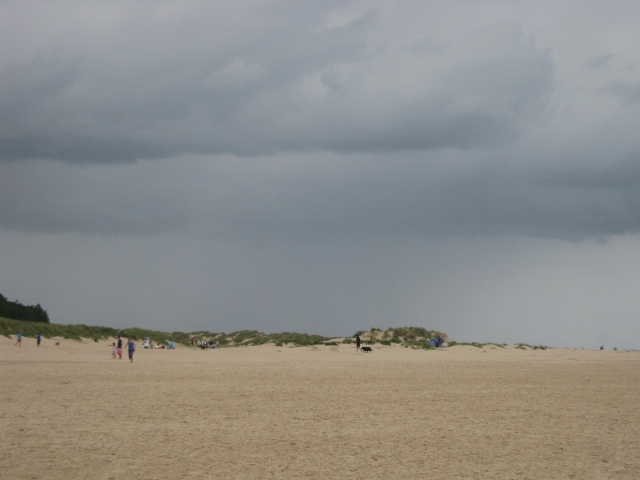
050Clouds (640x441)

Clouds

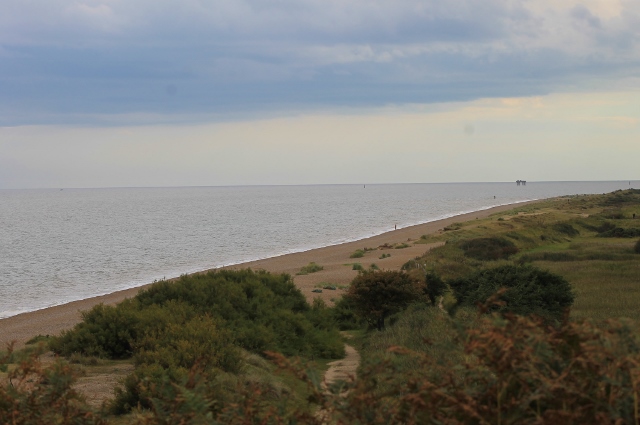
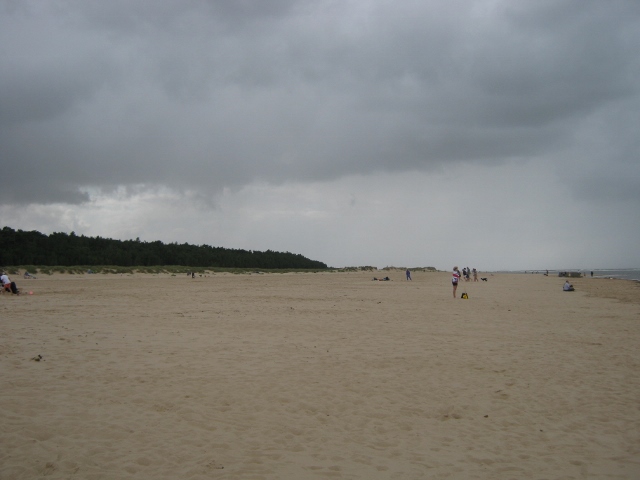
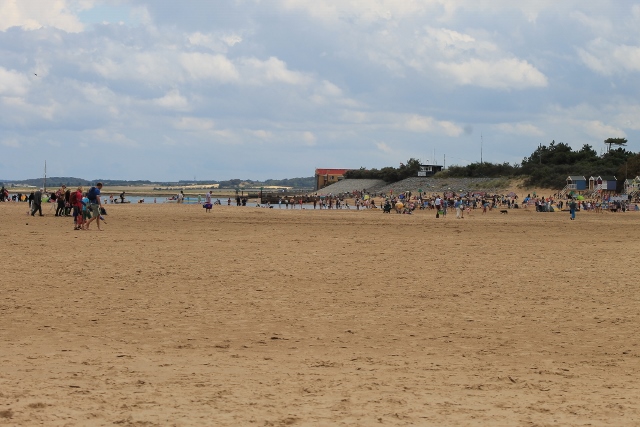
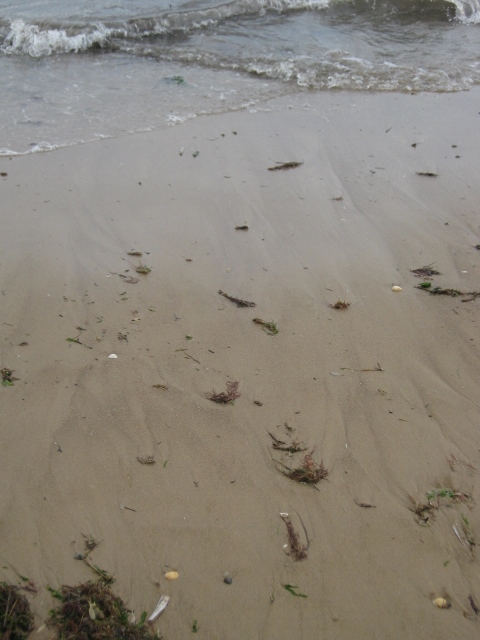
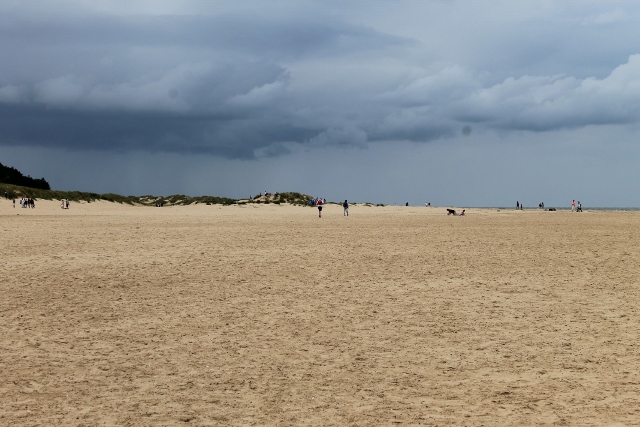
053Beach (640x425)

The beach

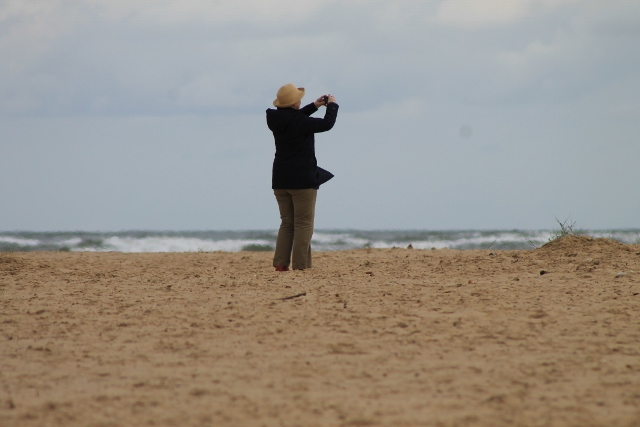
This next photograph really makes me laugh!
055Me and Elinor (640x427)

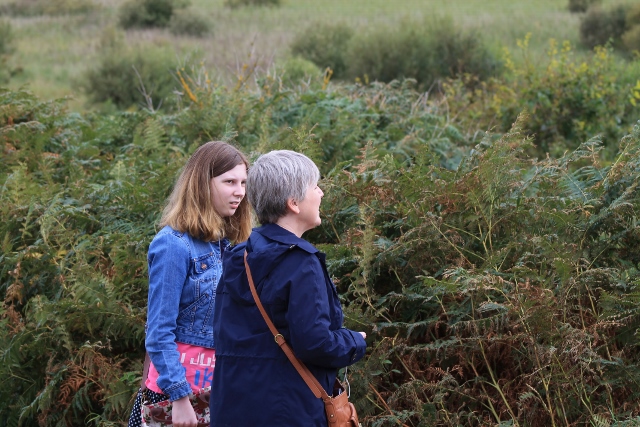
Look at Elinor’s expression! Goodness knows what I must have been wittering on about.

‘Oh wad some power the giftie gie us / To see oursel’s as others see us! / It wad frae monie a blunder free us, / And foolish notion.’  Robert Burns

059Border Force ship at sea (640x422)

A Border Force ship patrolling the coast. The modern coastguards.
072Sea watch shelter (640x427)

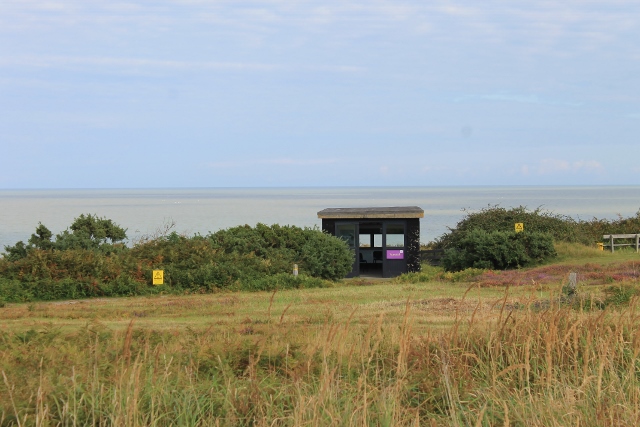
A sea-watch shelter. Looking at the water can be interesting and calming in itself but often ships, boats and other craft can be seen as well as sea-birds and mammals such as dolphins and seals.

We ended our visit with a cake each and a drink of choice at the tea-room.
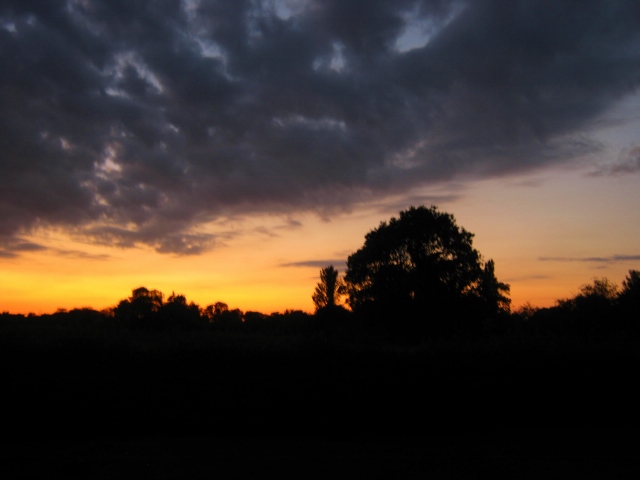
081Sunset (640x480)

A dramatic sunset when we got home.


Thank-you for visiting!
May Day

Tags

, , , , , , , ,

This is a post of photographs taken yesterday.  They need no explaining!

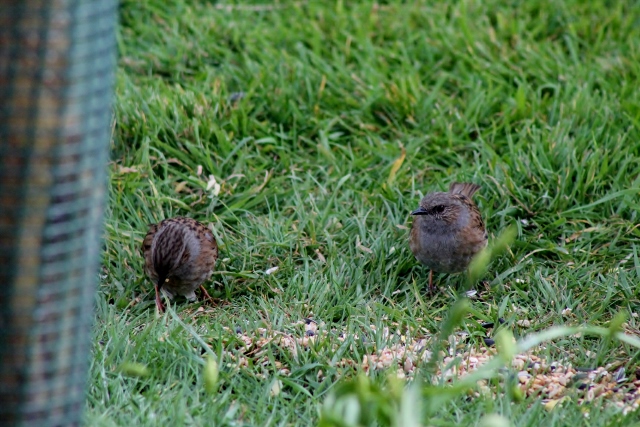
IMG_2083Dunnocks (640x427)

Two Dunnock adults (Prunella modularis)

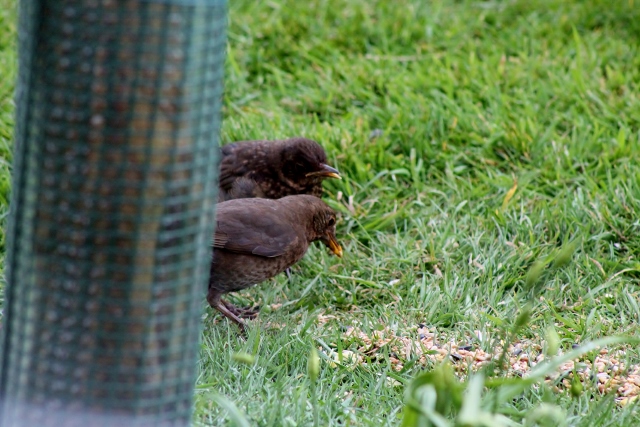
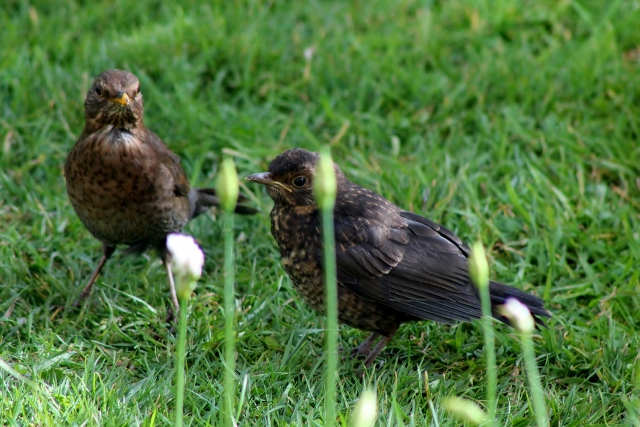
IMG_2079Blackbirds (640x427)

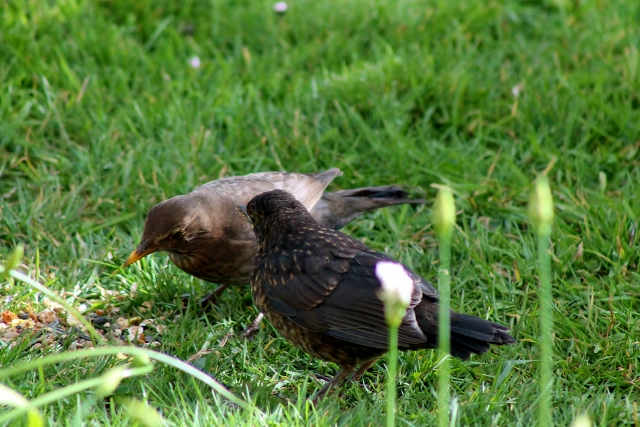
Blackbird hen (nearest) and chick (Turdus merula)

IMG_2080Blackbirds (640x427)

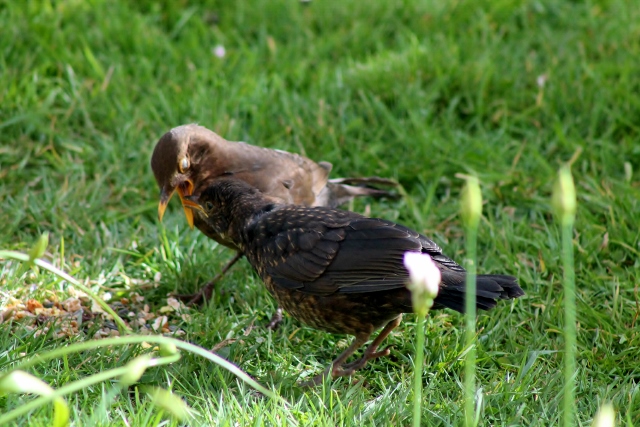
Blackbird hen and chick

IMG_2081Blackbirds (640x427)

Blackbird hen and chick

IMG_2082Blackbirds (640x427)

Blackbird hen and chick

IMG_4537Blackbirds (640x480)

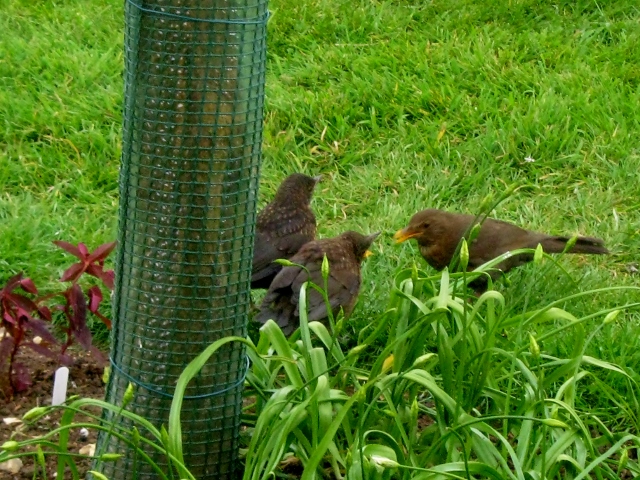
Blackbird hen and two chicks

IMG_4538Blackbirds (640x480)

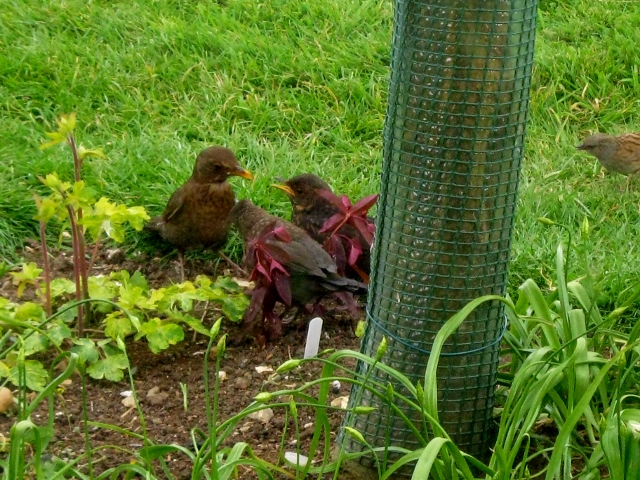
Blackbird hen and two chicks

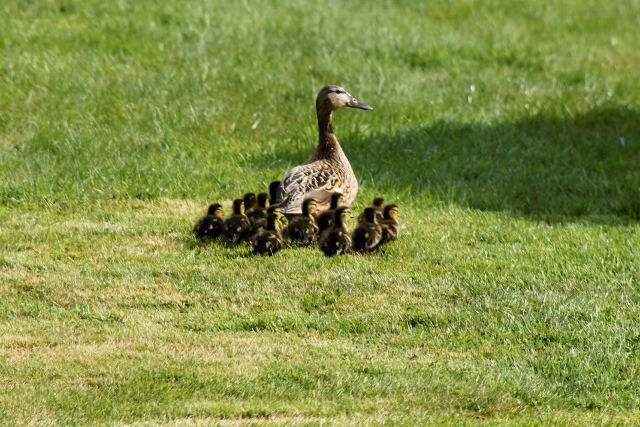
IMG_2069Mallards (640x427)

Mallard (Anas platyrhynchos) duck and ducklings

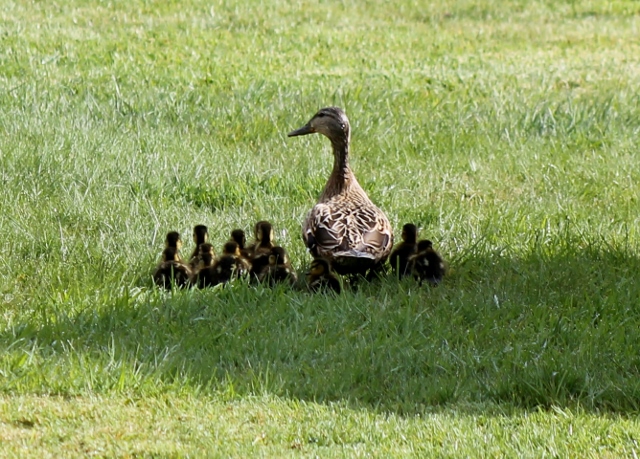
IMG_2070Mallards (640x459)

Mallard duck and ducklings

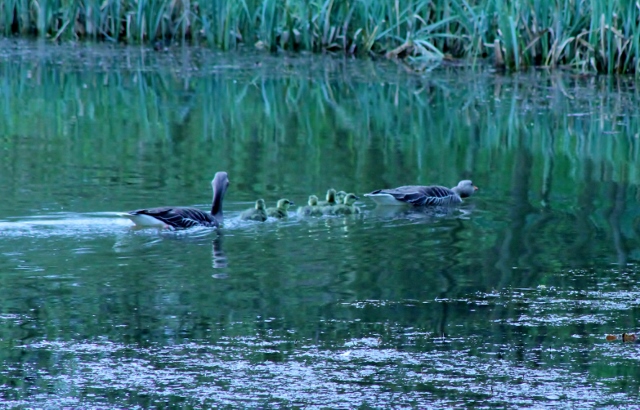
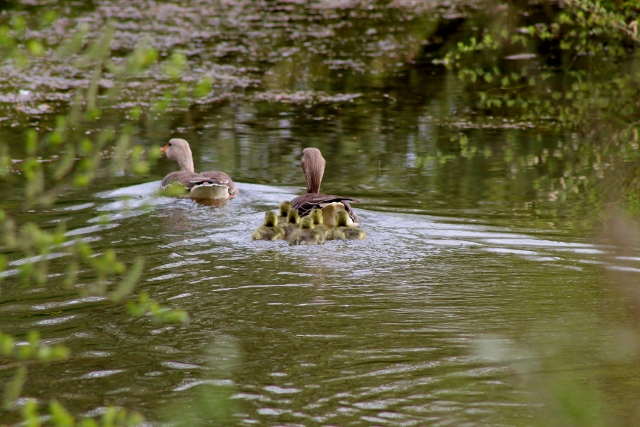
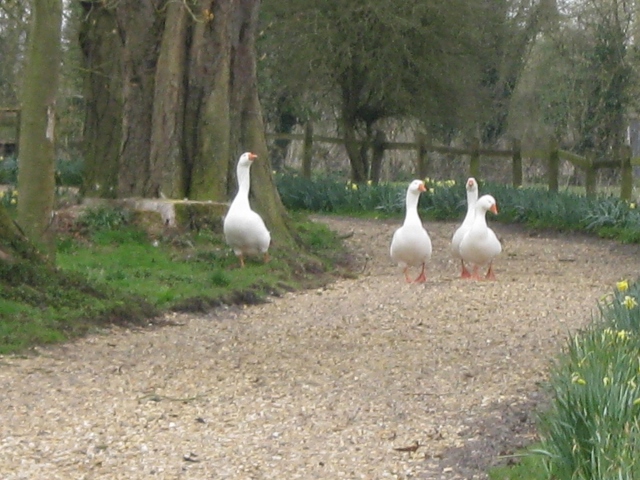
IMG_2072Greylags (2) (640x410)

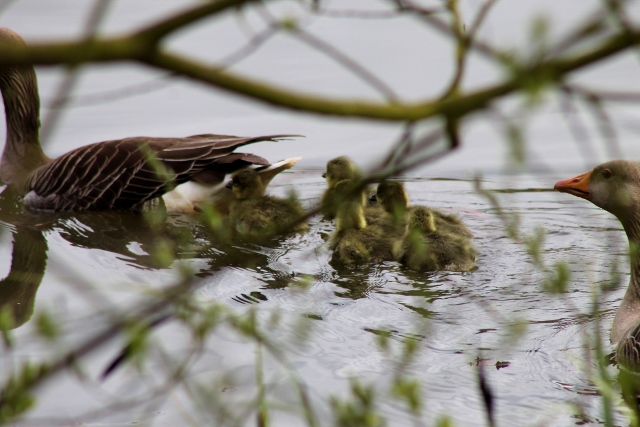
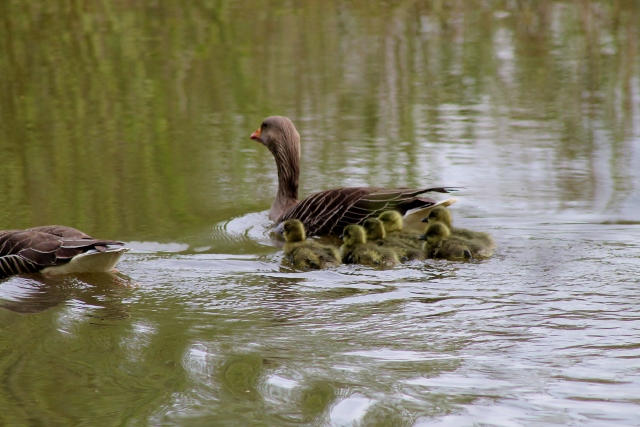
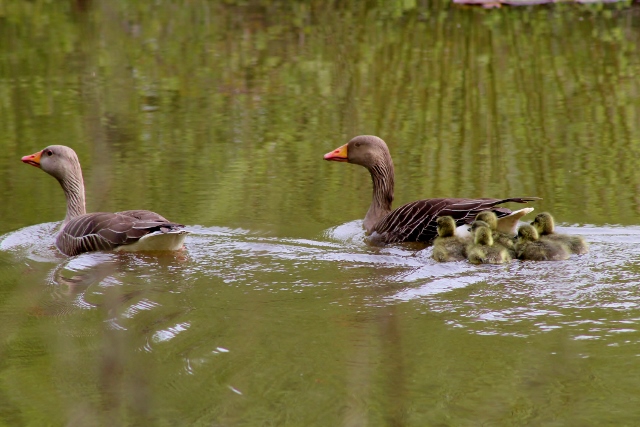
Greylag (Anser anser) goose (in front), gander (rear) and goslings

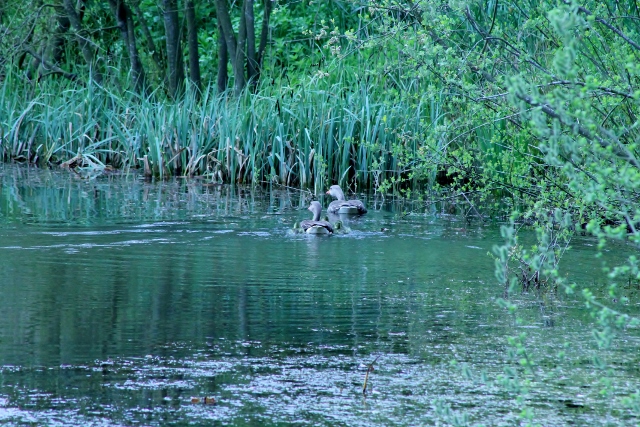
IMG_2073Greylags (640x427)

Greylags

IMG_2074Greylags (640x427)

Greylags

IMG_2075Greylags (640x427)

Greylags

IMG_2076Greylags (640x427)

Greylags

IMG_2077Greylags (640x427)

Greylags

IMG_2078Greylags (640x427)

Greylags

Thank-you for visiting!

Yet More Things!

Tags

, , , , , , , , , , , , , , , , , , ,

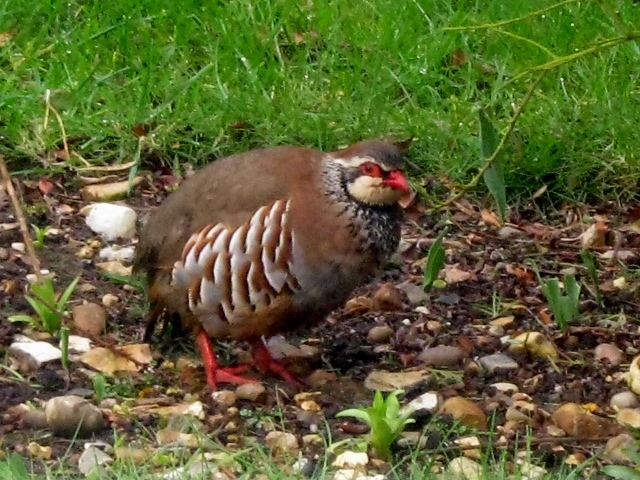
IMG_4329French Partridge (640x480)

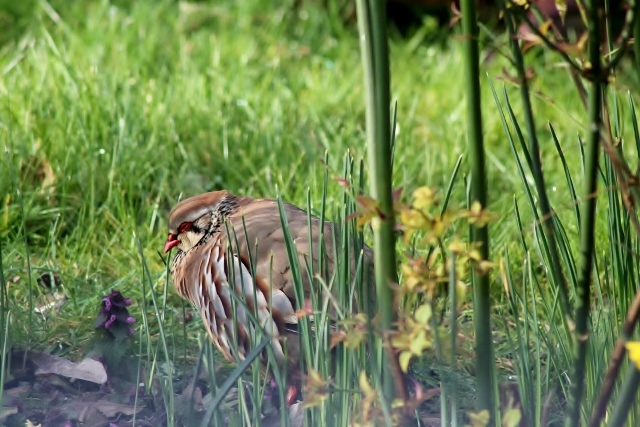
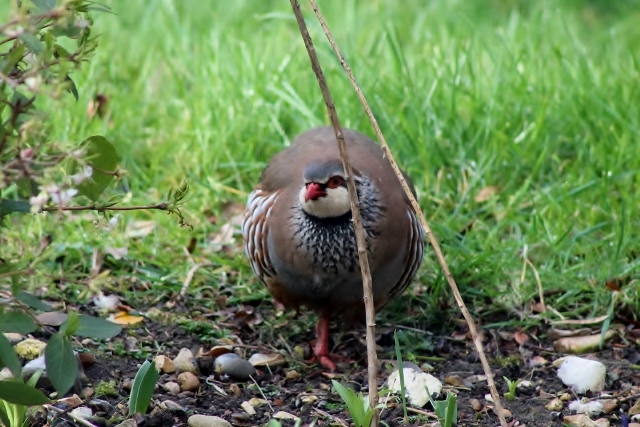
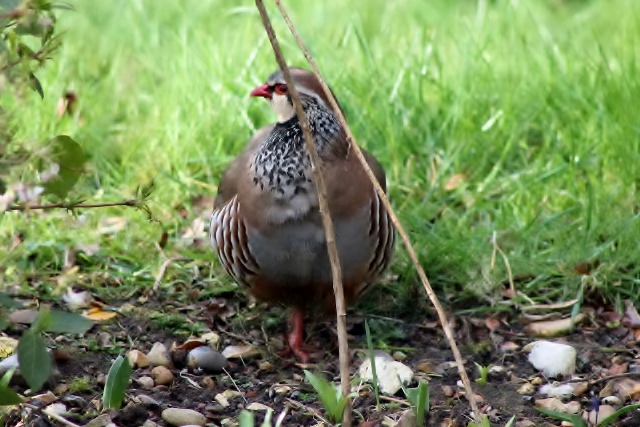
I was surprised to see two Red-legged Partridges (Alectoris rufa) in my garden one morning as I opened the kitchen blinds.

IMG_2008French Partridge (640x427)

This one had obviously had a bad night.

IMG_2010French Partridge (640x427)

Please ignore the weedy flowerbed – I have since tidied it up.

IMG_2011French Partridge (640x427)

Shortly after I took this photo they both flew away.

IMG_2056Euonymus (640x427)

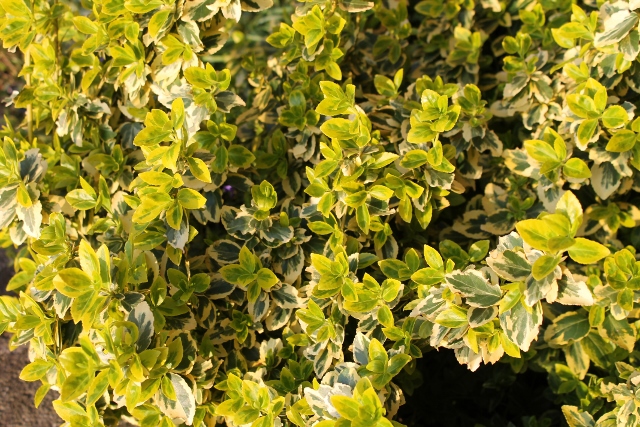
The variagated Euonymus is looking bright with new leaves.

IMG_2057Pieris (640x427)

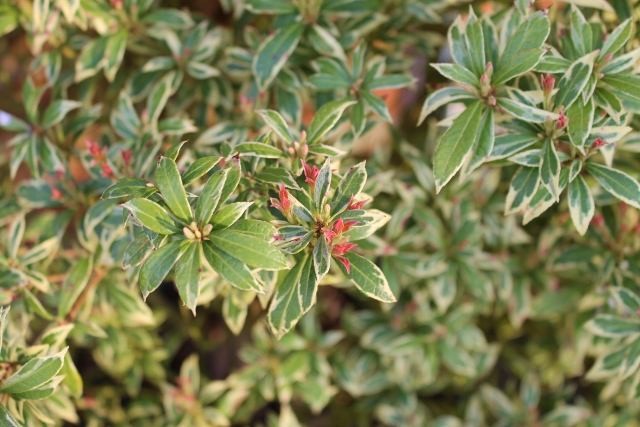
The Pieris ‘Forest Fire’ has tiny new pink leaves

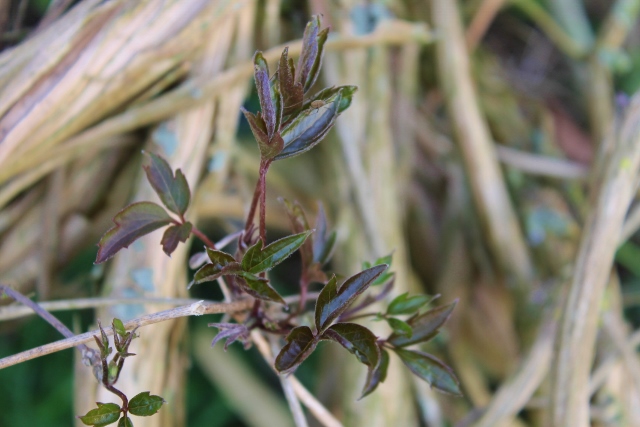
IMG_2066Clematis (640x427)

The Clematis montana ‘Rubens’ I cut back a few weeks ago is showing me that it won’t be beaten.

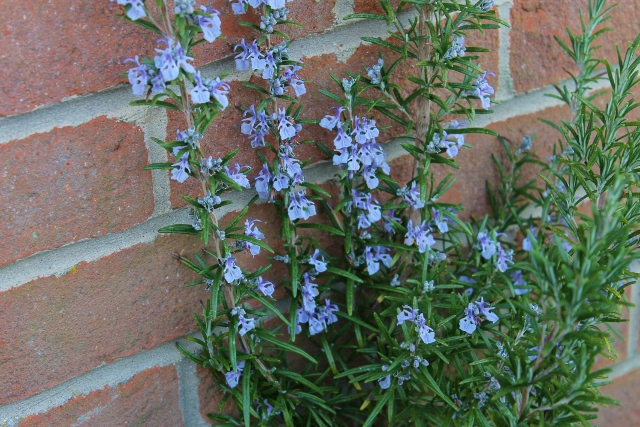
IMG_2068Rosemary (640x427)

The Rosemary is still flowering beautifully

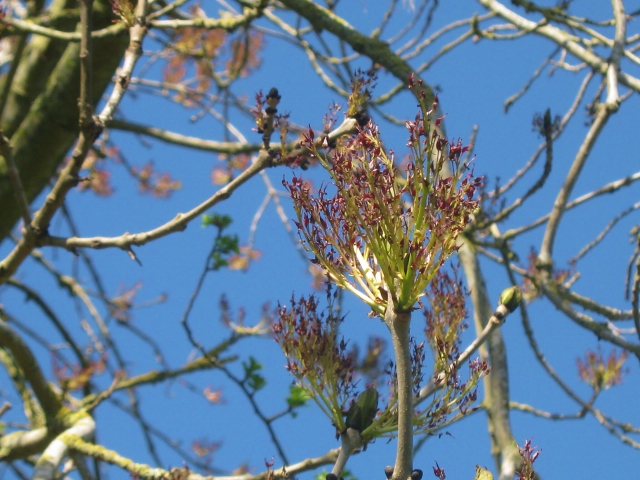
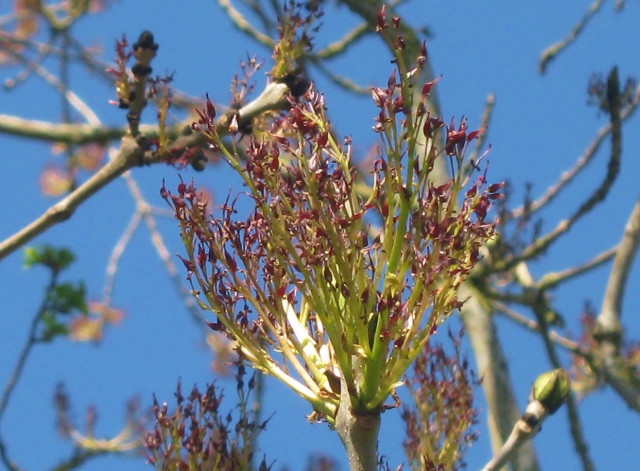
IMG_4441Ash flowers (640x480)

The Ash trees (Fraxinus excelsior) are flowering.

IMG_4441Ash flowers (2) (640x471)

The flowers are very small and a warm purple colour. Ash trees have separate male and female flowers, mainly on separate trees but there are a few trees that have both male and female flowers but on separate branches! The trees around us are all females and produce thousands of Ash ‘keys’, winged seeds that hang from the trees in bunches in the autumn. My mother has plenty of Ash trees near her house but all hers are males – so no ‘keys’.

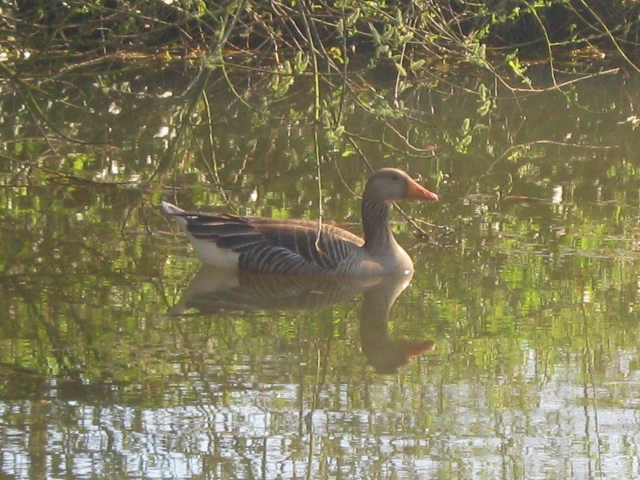
IMG_4444Greylag (640x480)

A reflective Greylag!

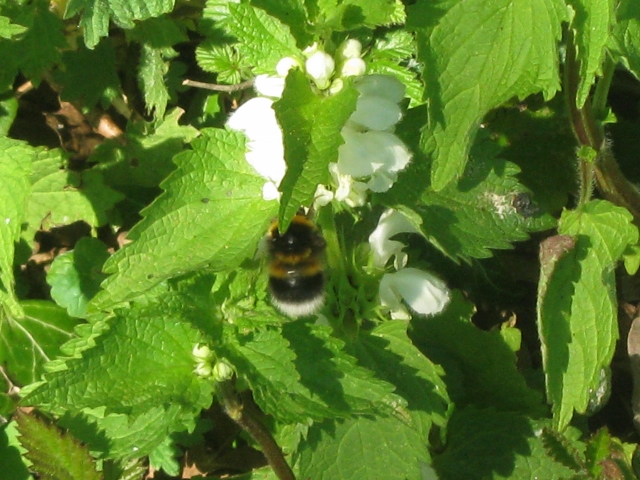
IMG_4449Bumblebee on White Dead-nettle (640x480)

A bumblebee on White Dead-nettle (Lamium album)

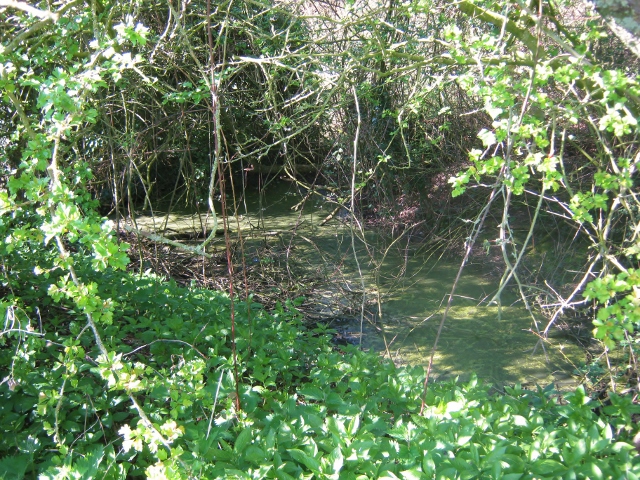
IMG_4454The ditch (640x480)

A very over-grown corner of our garden. This ditch doesn’t belong to us but is part of the common land between our garden and the road. I expect that no-one will take responsibility for looking after this but if there is a problem with it in the future we will no doubt be asked to deal with it!

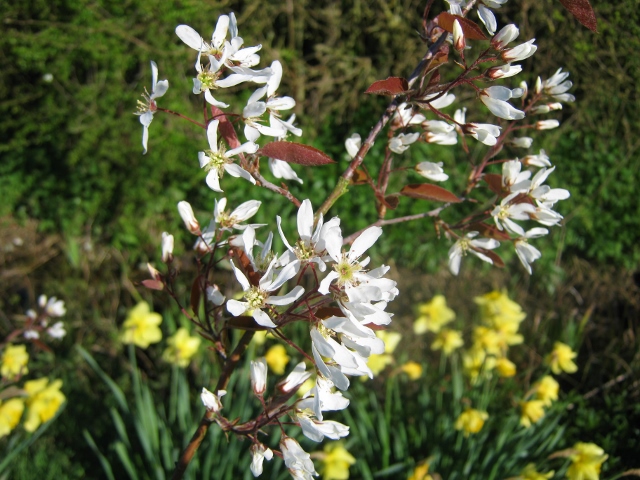
IMG_4458Amelanchier (640x480)

The Amelanchier is blossoming.

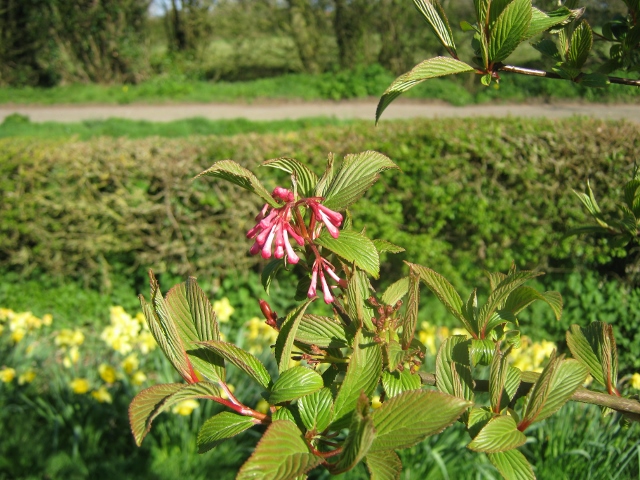
IMG_4459Viburnum (640x480)

The Viburnum bodnantense produces dark pink flowers in the spring and pale pink or white flowers during the winter

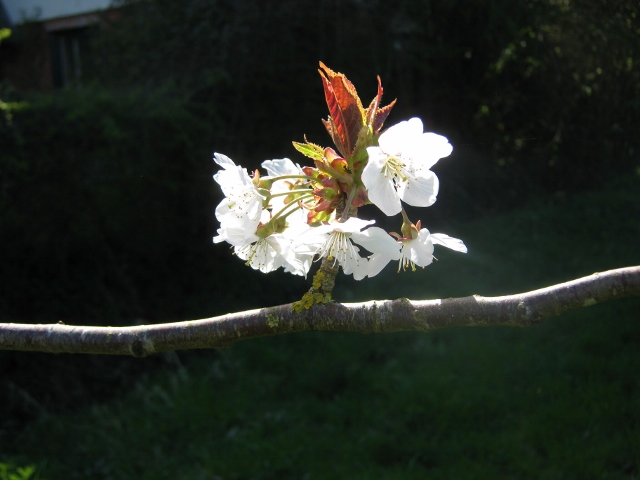
IMG_4460Wild Cherry (640x480)

Wild Cherry blossom (Prunus avium)

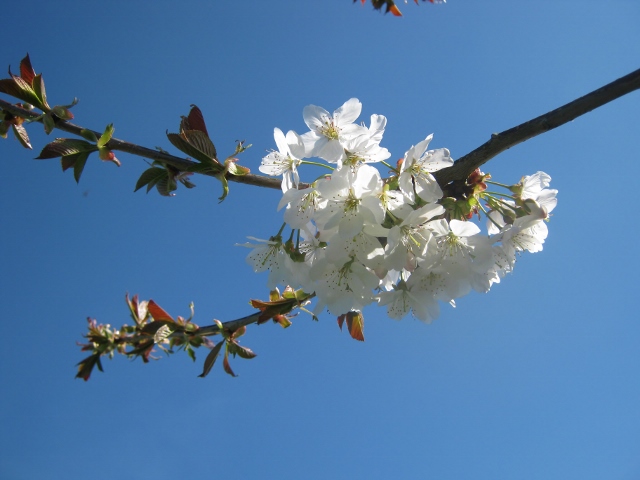
IMG_4461Wild Cherry (640x480)

Wild Cherry

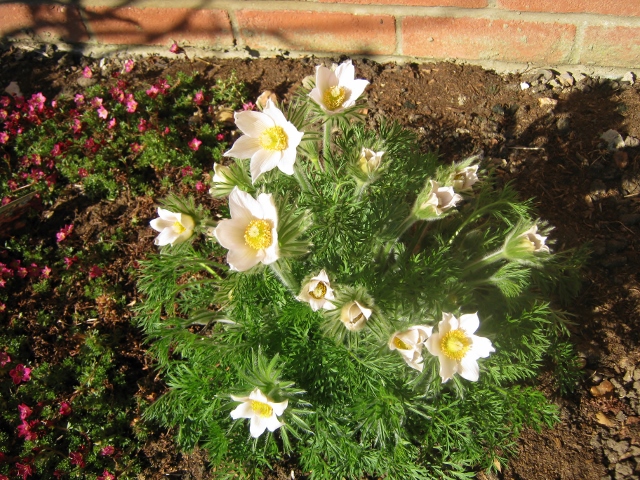
IMG_4462Pasque Flower (640x480)

Pasque Flower (Pulsatilla vulgaris)

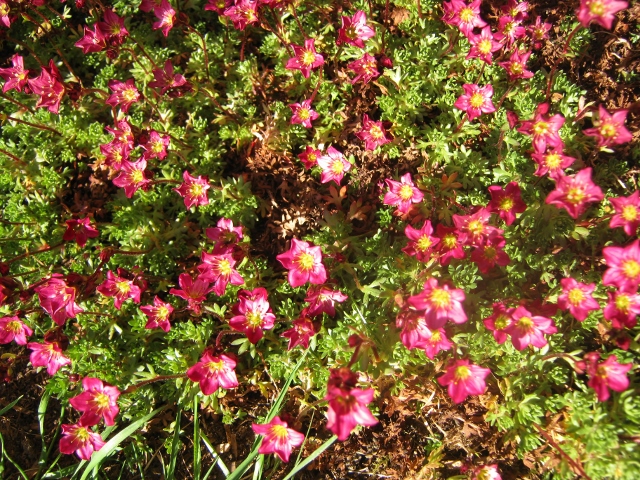
IMG_4463Saxifrage (640x480) (2)

Red Saxifrage

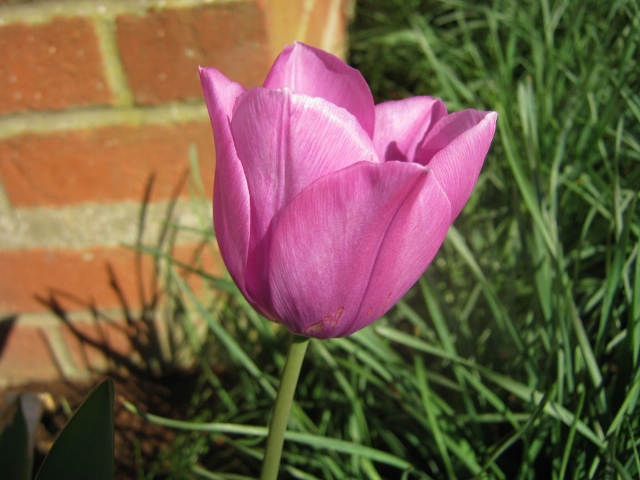
IMG_4467Tulip (640x480)

A soft pink Tulip

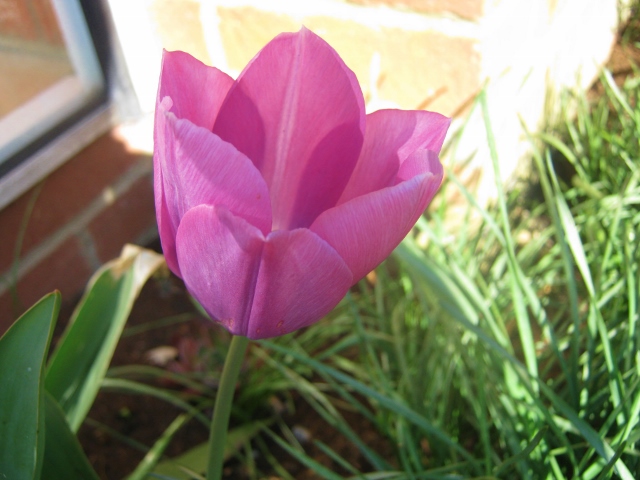
IMG_4466Tulip (640x480)

It looks so different depending on the angle from which I photograph it

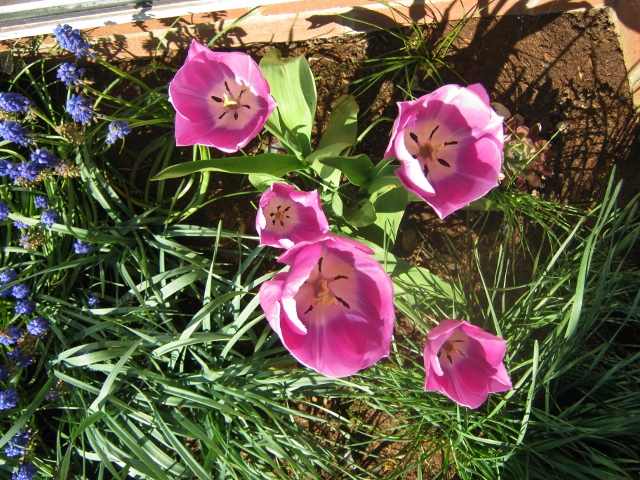
IMG_4465Tulips (640x480)

Tulips

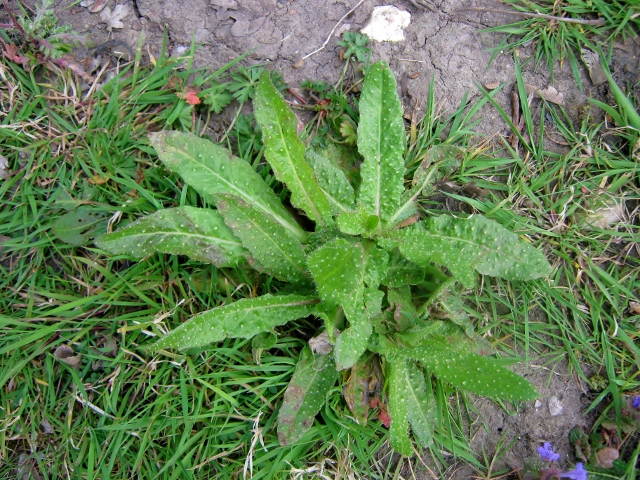
IMG_4470Bristly Oxtongue (640x480)

The new leaves of Bristly Ox-tongue (Picris echioides).  Another member of the Daisy family.

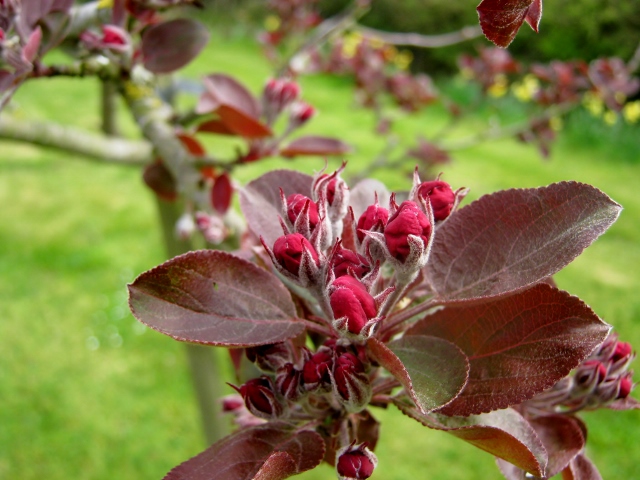
IMG_4476Crabapple 'Harry Baker' (640x480)

Crabapple ‘Harry Baker’ flower buds

I had an on-line conversation with a member of the WordPress team a week or so ago and asked about my missing posts.  The person who dealt with my enquiry was extremely helpful but was unable to retrieve them.  He would have been able to retrieve three old posts I had deleted on purpose but was unable to find the ones that had disappeared!  Fortunately, a very dear friend who is an e-mail follower has been saving my posts and has sent all the missing ones to me.  When I have the time I may post a page with them on for anyones information.

Thank-you for visiting!

A Few More Things.

Tags

, , , , , , , , , , , , , , , , , , ,

In between racing about in my car to Norwich and Mum’s house, the doctor’s surgery and the hospital, shopping trips to Harleston, Halesworth, Bungay and Diss, I have been able to take my camera with me as I walk round the garden, filling all the bird feeders.  I haven’t had time for any gardening for about ten days and I miss it!  The weather here has continued bright and dry with frosty, misty mornings and warmish days (as long as you are out of the chilly NE wind).  Today has been much warmer with a change of wind direction but according to the forecast, this will not last.  Rain and cold are set to return by the end of the weekend.

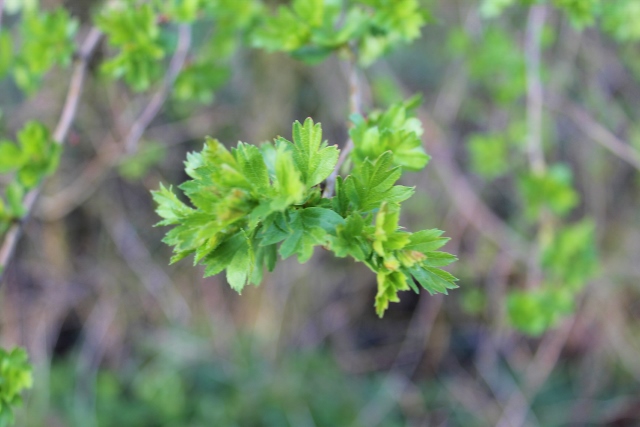
IMG_2026Hawthorn (640x427)

Hawthorn leaves. We have two types of Hawthorn in our garden hedges, Common Hawthorn (Crataegus monogyna) and Midland Hawthorn (Crataegus laevigata). This is probably Midland Hawthorn or maybe a hybrid between the two.

IMG_2027Daisy (640x427)

A Daisy (Bellis perennis). I love its simplicity.

IMG_2029Elder (640x427)

The Elder leaves (Sambucus nigra) are now almost fully out and have lost the pink tinge they had. They are matte mid-green leaves.  Last year we had the best elder blossom I’d seen for many years.

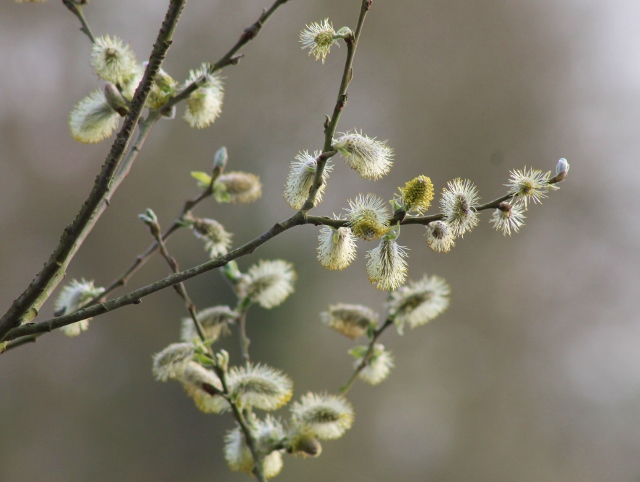
IMG_2035Pussy Willow (640x482)

Goat Willow or Sallow catkins (Salix caprea). Male and female catkins are on separate trees and appear before the leaves. Sallows are a food plant for many different types of moth. The catkins are known as ‘Pussy Willow’ when they first appear as they look and feel like silky cats paws.

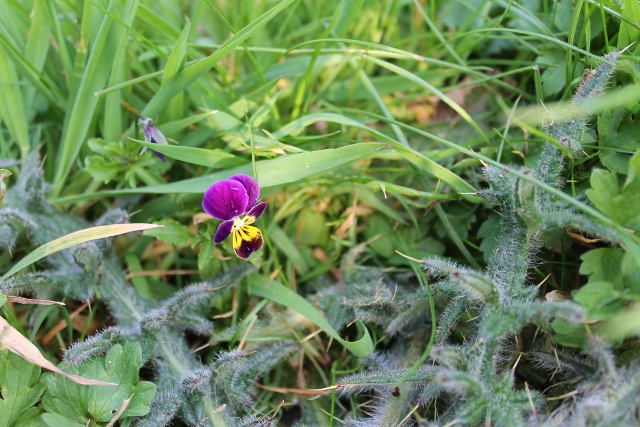
IMG_2038Heartsease (640x427)

I found a Heartsease or Wild Pansy (Viola tricolor) plant on the path round the big pond. Next to it there is also the first rosette of Spear Thistle leaves (Cirsium vulgare).

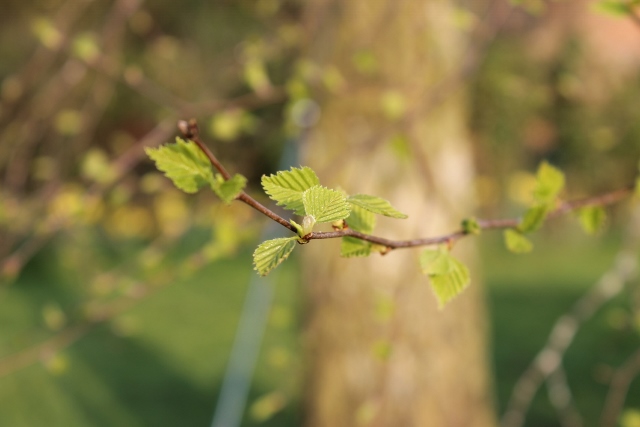
IMG_2044Birch (640x427)

Silver Birch leaves (Betula pendula)

IMG_2046 (640x427)

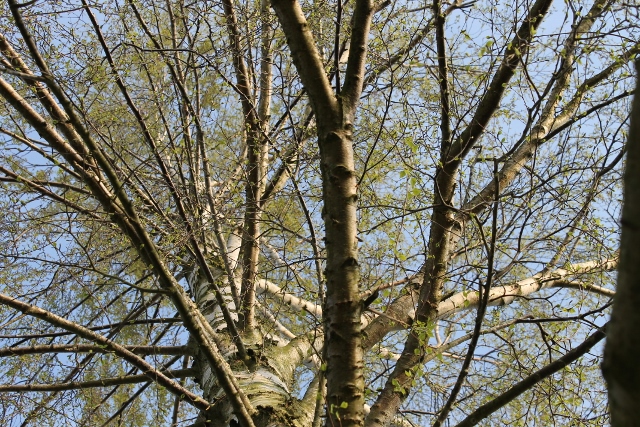
I love standing underneath our tree and looking up. Silver Birches eventually grow to be about 26 metres tall. I don’t think ours has quite got there yet.

IMG_2048Bluetit (640x427)

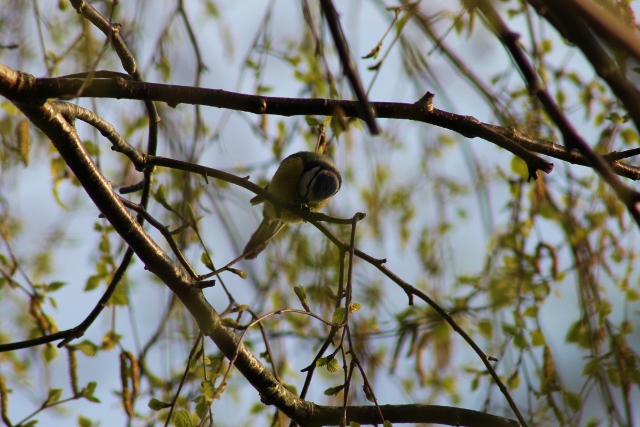
This Bluetit (Parus caeruleus) sitting in the Birch tree looks a little strange. It has a black sunflower seed in its beak.

IMG_2049Bluetit (640x427)

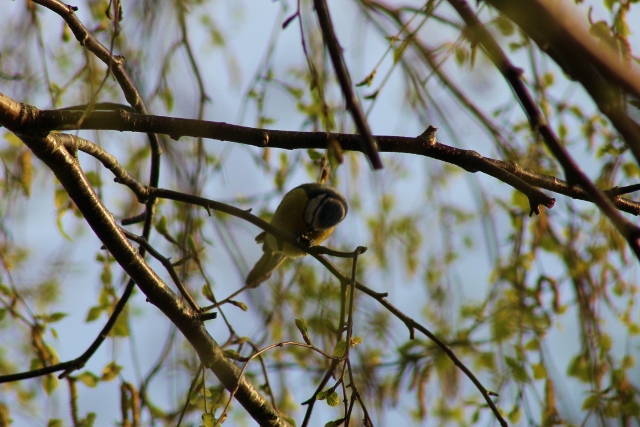
It spent some time taking the seedcase off…

IMG_2050Bluetit (640x427)

…and eating the seed within.

IMG_2055Geese (640x427)

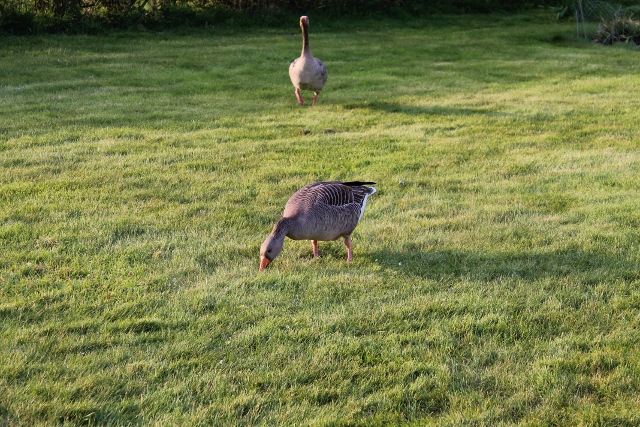
The Greylags (Anser anser) have been amusing me a lot lately. The geese are much calmer than the ganders. The goose here is up close eating some food I put out for it. The gander is further away and hissing at me.

IMG_4468Greylag (640x480)

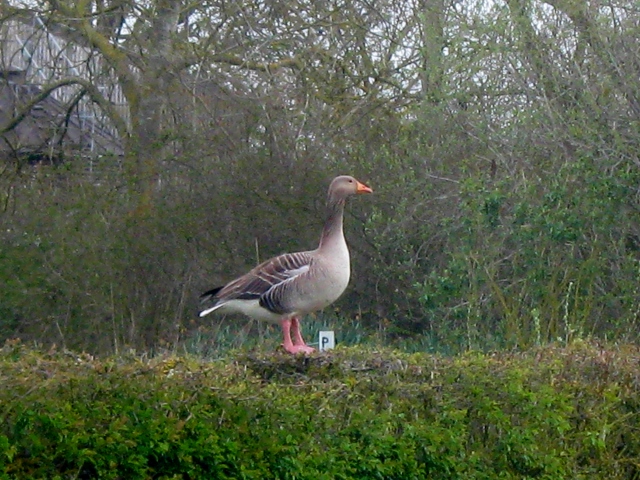
This one I found the other morning standing on top of the hedge.

IMG_2043Goose (640x427)

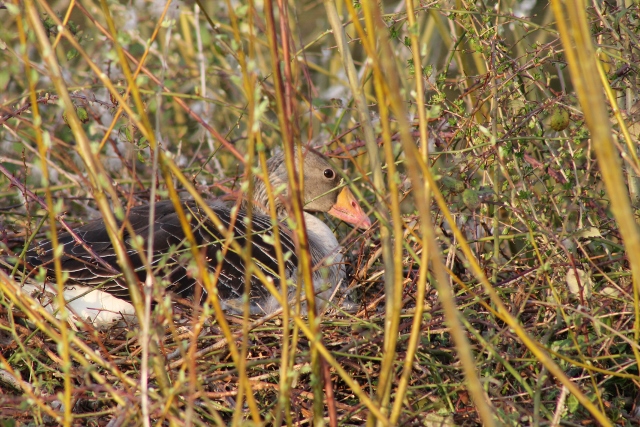
The original goose on her nest on the island…

IMG_4469Greylags nesting (640x480)

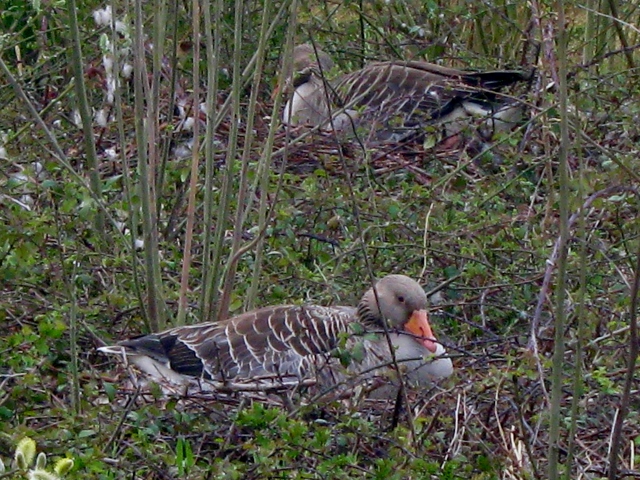
…was joined last weekend by another goose (nearest to us).

IMG_4472Goose nest (640x480)

A third goose has made her nest on the edge of the pond. I surprised her and she surprised me when I walked round the pond yesterday. I am not sure how successful this nest will be as it is quite vulnerable to fox predation.

IMG_4474Dandelion (640x480)

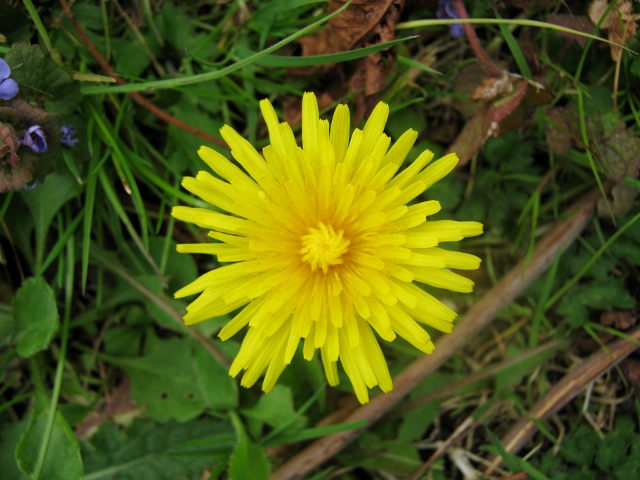
A Common Dandelion (Taraxacum officinale)

IMG_4477Daffodils (480x640)

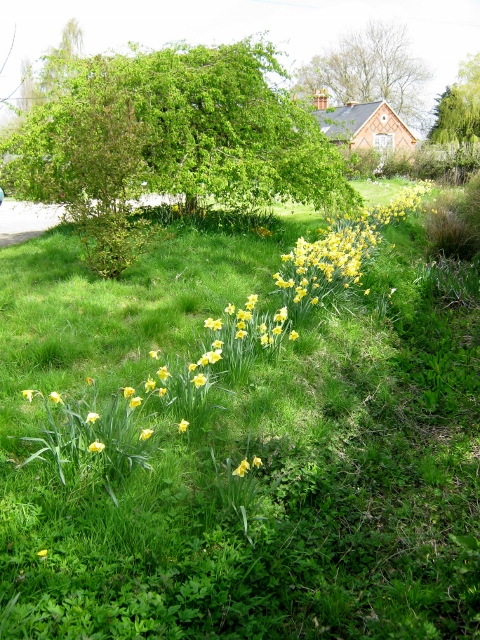
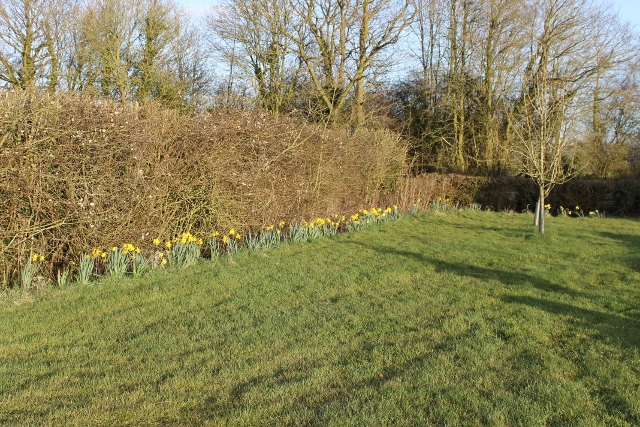
Daffodils along the ditch at the front of the house

IMG_2051Daffodil (640x427)

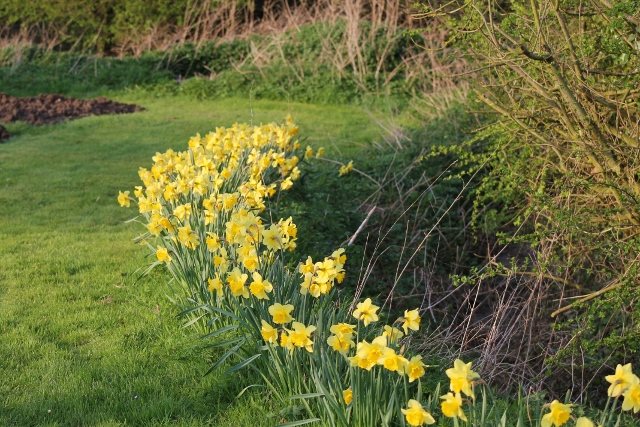
Daffodils at the top of the ditch between us and the old School House.

IMG_2052Rhubarb (640x427)

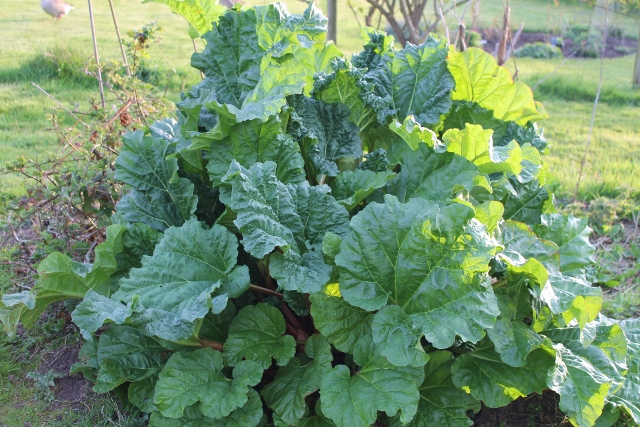
Our Rhubarb (Rheum x hybridum ‘Timperley Early’) looking majestic.

IMG_2067Shrub rose (640x427)

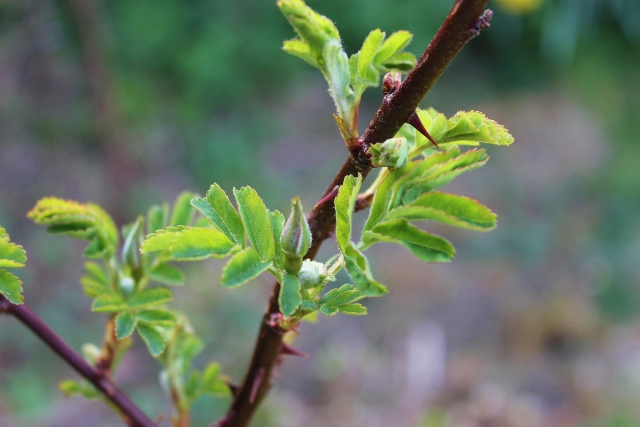
A very early flowering near-species rose has buds on it. (Rosa xanthina  ‘Canary Bird’)

IMG_2065Aubretia (640x427)

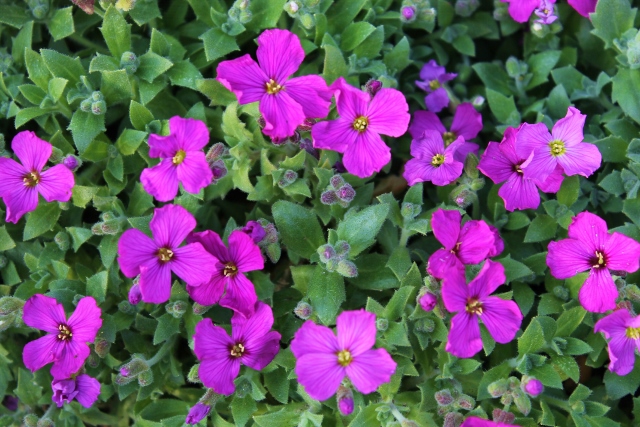
Aubretia

This slideshow requires JavaScript.

IMG_4403Snail trail (480x640)

Richard pointed out this snail trail up the side of the house!

IMG_4404Deer (640x513)

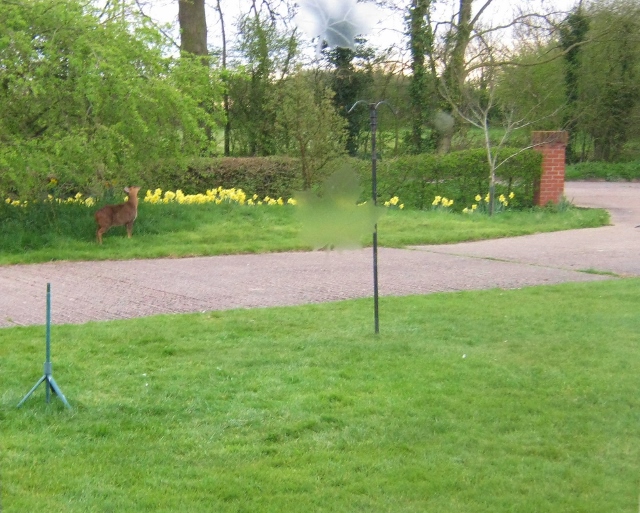
I saw this Muntjac deer doe very early the other morning. It was eating the crabapple tree! The leaf shapes on the window are meant to stop birds crashing into the glass but aren’t very successful. I usually have to pull the window-blind down to stop them!

IMG_4405Deer (640x480)

Very blurred photo! You can see how stocky/thickset these deer are and also the white in their ears.

IMG_4406Deer (640x480)

The does don’t have antlers but have a dark triangular patch on their foreheads.

IMG_4408Deer (640x480)

I think I see her tongue sticking out as she chews a mouthful of leafy twig.

IMG_4409Deer (640x480)

I had great trouble trying to focus on the deer. The camera wanted to focus on the window glass of the double-glazing or the daffodils behind the deer.

IMG_4416The new mower (640x480)

Richard on his new tractor-mower. The old one wasn’t working too well so we part-exchanged it for a newer, better model. It has a mulching facility which will be good to use in the summer.

I must share some good news I heard today.  My daughter Alice has been told she has her PhD.  She is now Doctor Alice!  I  am so proud of her.

Thank-you for visiting!
A Few Things I’ve Seen in my Garden.

Tags

, , , , , , , , , , , , , , , , , , , , , , , , , , ,

IMG_1999Mallard drakes (2) (640x439)

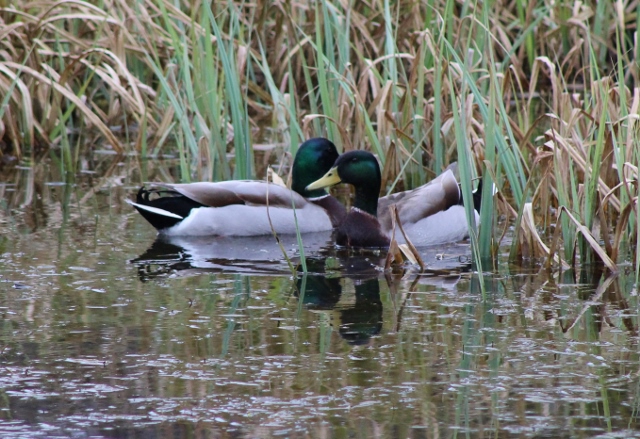
Two very handsome Mallard drakes (Anas platyrhynchos).

IMG_2001Ground-ivy (640x427)

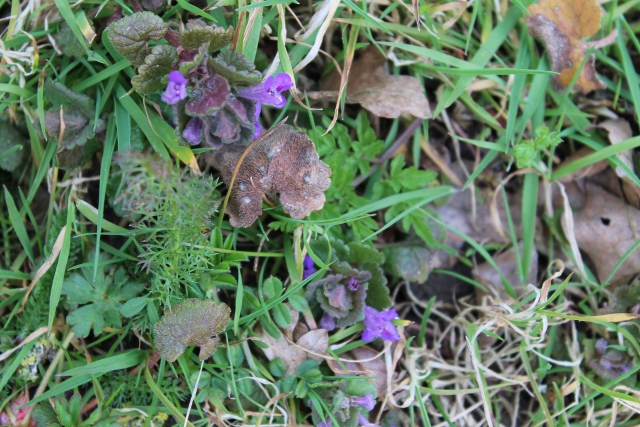
Ground-ivy (Glechoma hederacea). Many of the newer leaves are purple and the plant has a slightly unpleasant minty scent.

IMG_2002Primroses (640x427)

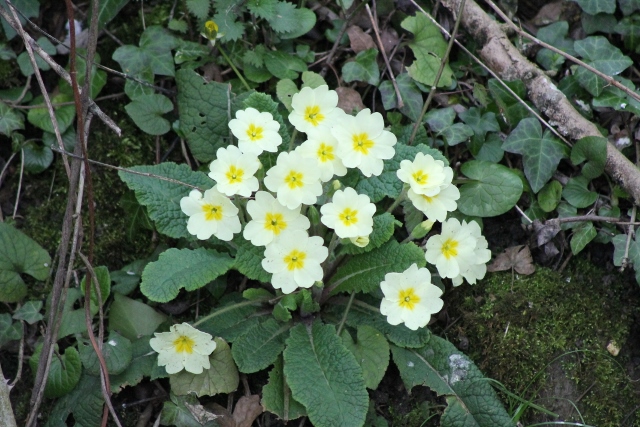
As I have mentioned before, when we moved to this house there were no Primroses (Primula vulgaris) in the garden at all. We now have a few plants here and there on the banks of our ditches.

IMG_2003Cowslips (640x427)

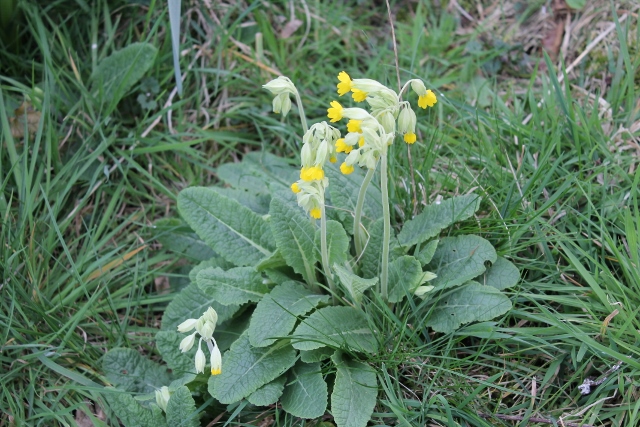
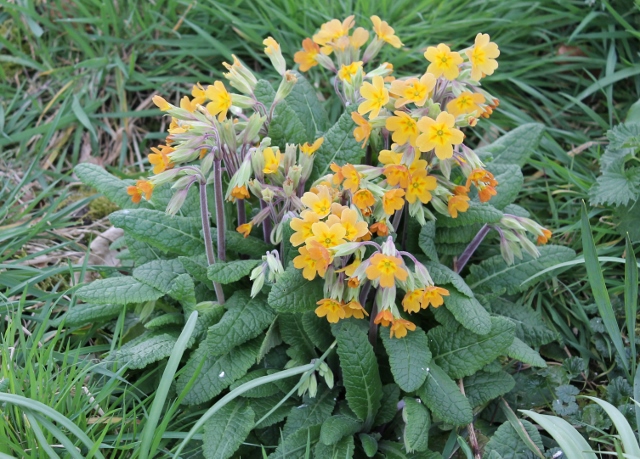
The Cowslips (Primula veris) are beginning to bloom. We have always had plenty of these!

IMG_2004Primula hybrid (2) (640x459)

A primula hybrid that arrived unbidden about three years ago. I rather like it.

The house next door to us is the former village school.  I am not sure when it closed but a friend of ours from church used to attend it during the 1940’s.  Where our house and garden is now, there was a meadow full of wild flowers and our friend walked across it every day to collect the milk for the school from the farm next door.  These wild flowers we have in our garden are all that’s left of the hundreds that used to be here up to about 50 or 60 years ago.  I hope that we can hang on to these few and perhaps, by not using chemicals, encourage them to spread.

IMG_2005Sweet violet (640x427)

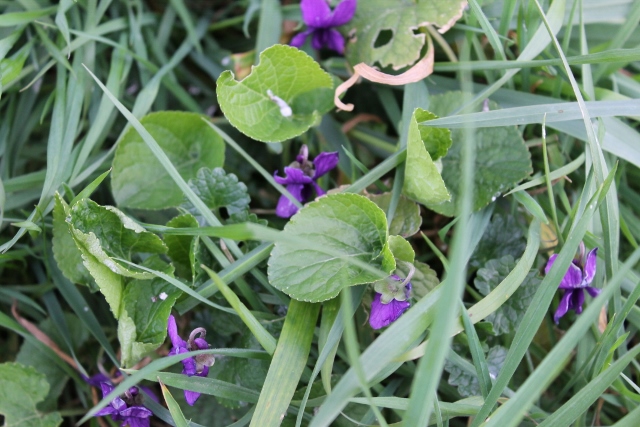
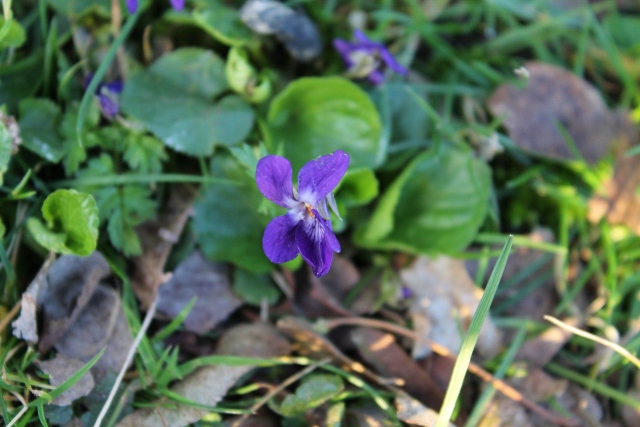
Sweet Violet (Viola odorata)

IMG_4348Parcel box with nest (640x480)

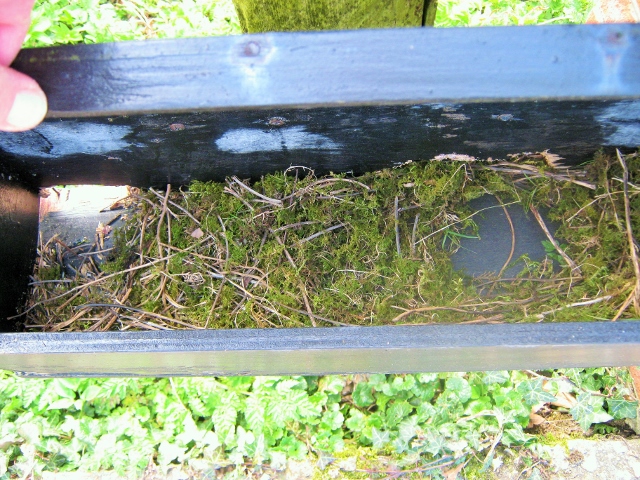
This is our parcels and newspaper box at the end of our drive. We noticed during the winter that it was starting to rot and needed replacing. It appears that we weren’t the only ones to notice the state the box was in. I opened it the other day to find something had made a hole in the back of it ( you can see where the light is shining through just below my thumb as I lift the lid). The next day I found this straw and moss had been put in there. Richard saw a Great Tit (Parus major) flying away from the box so I suspect this is a Great Tit’s nest. I carefully peeped into it a day or so later and found the whole box stuffed full of moss and we can also see lots of straw sticking out from where the box sides are coming away from the base. We have tied up the box and put a ‘not in use’ sign on it and we now await the happy arrival of baby Great Tits.

I knew that Tits nested in holes and I also was aware that Willow Tits excavated their own holes but I hadn’t realised that Great Tits also excavated holes to nest in.

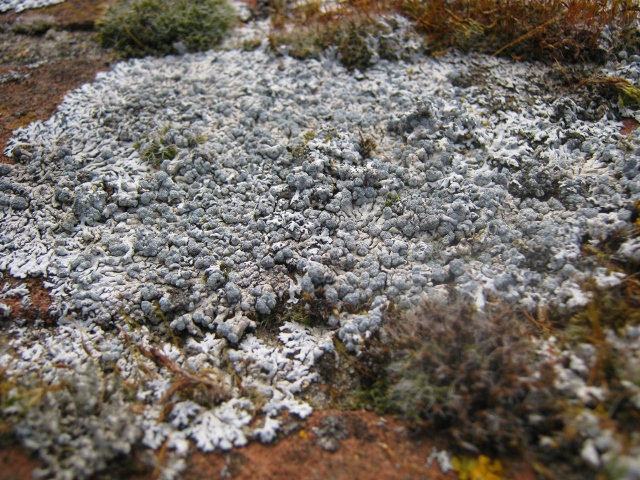
Lichen and moss-covered wall

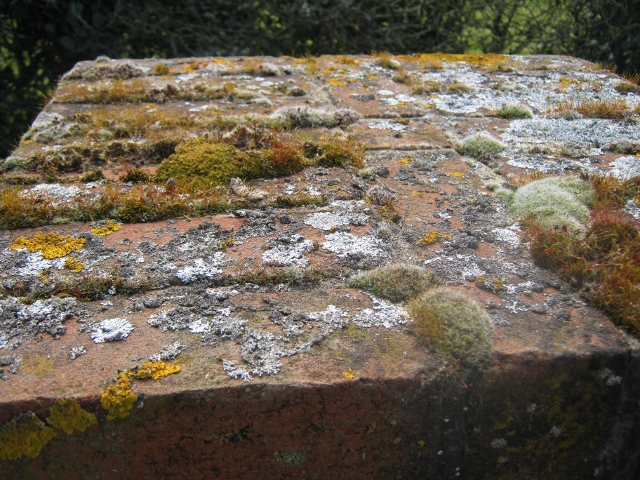
The top of the brick gate-post at the end of our drive is covered in moss and lichen but because we haven’t had much rain recently, it isn’t looking as good as usual. Birds have been collecting the moss for their nests too.

Lichen on top of wall

This is a close-up of one of the lichens.

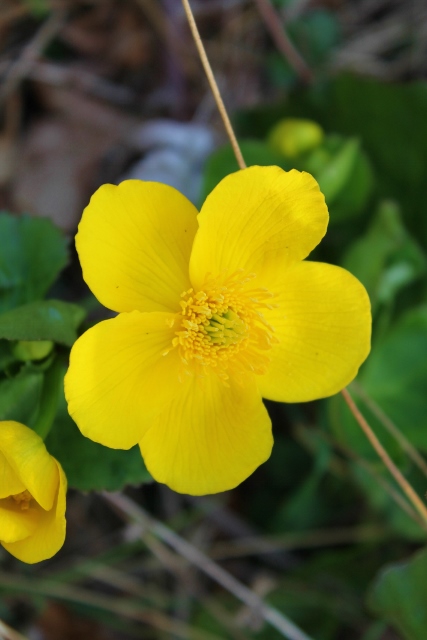
IMG_2016Marsh Marigold (640x427)

The Marsh-marigold or King Cup (Caltha palustris) is flowering in the pond.

IMG_2017Marsh Marigold (427x640)

I love its shiny yellow petals.

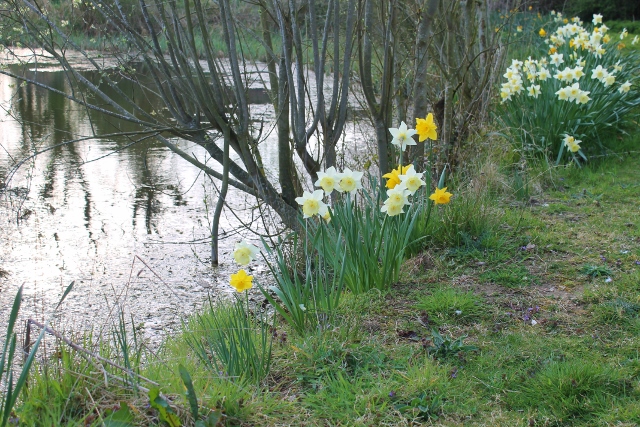
IMG_2024Daffodils (640x427)

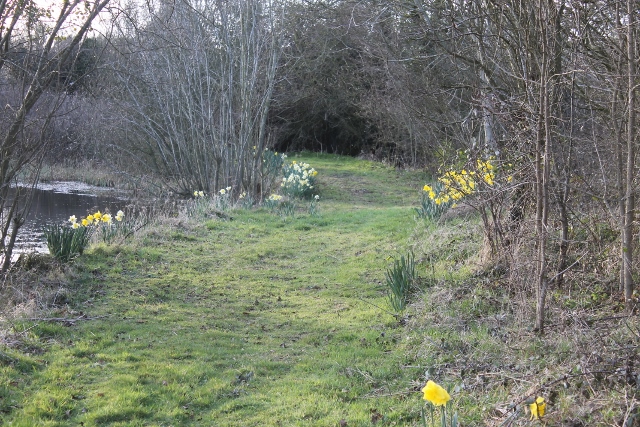
I took this photo of the daffodils round the pond over a week ago and I am glad I did. On Tuesday and Wednesday of last week we had very warm weather (24 degrees C on Wednesday!) and the daffodils that had come out earliest began to wilt.

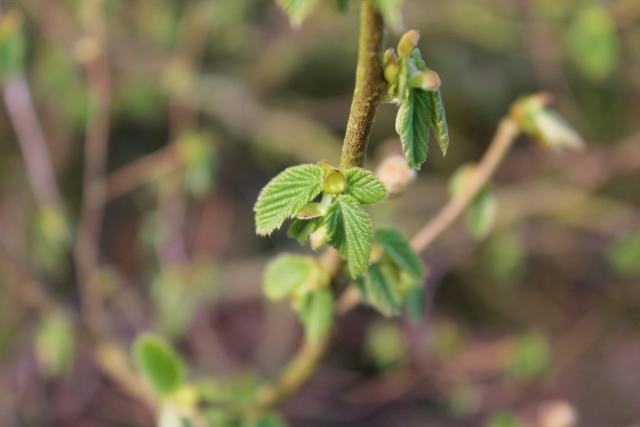
IMG_2019Hazel (640x427)

Earlier this year I posted pictures of these Hazel (Corylus avellana) bud galls. I went to look at them again last week and noticed tiny flies sitting on all of the galls. I wonder if these flies had hatched out of the galls.

IMG_2021Hazel (640x427)

New Hazel leaves

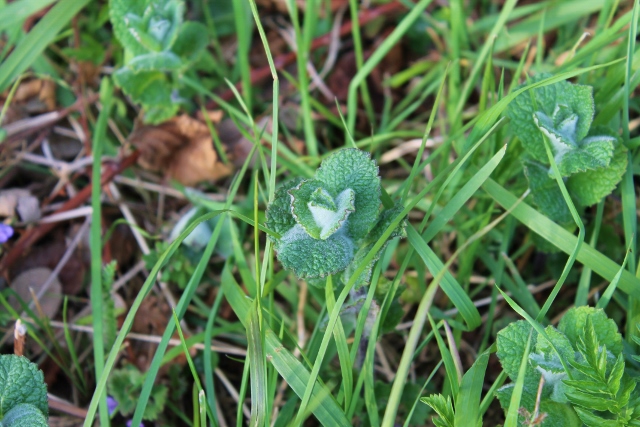
IMG_2022Mint (640x427)

Water Mint (Mentha aquatica). The new shoots are growing round and in the big pond.

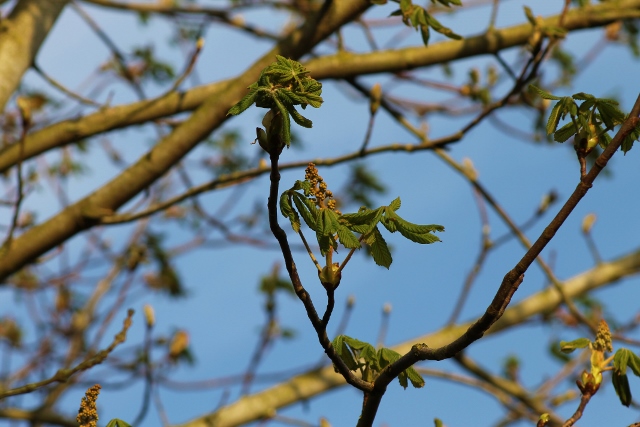
IMG_2025Horse Chestnut (640x427)

Horse-chestnut (Aesculus hippocastanum). This photo was taken about a week ago.

IMG_2030Horse Chestnut (640x427)

This photo of our Horse-chestnut tree was taken on the same day. These leaves are higher and get more sunlight. I was pleased to see that the flower panicles (candles) were growing nicely.

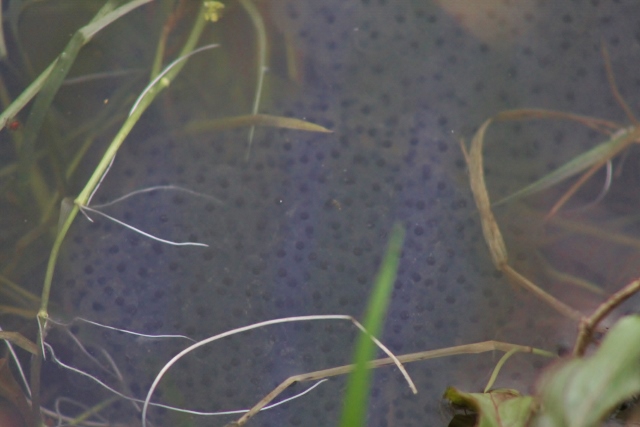
IMG_1997Frogspawn (640x427)

I saw the frogs spawning but unfortunately didn’t have my camera with me. I took this photo of the spawn later in the day. This is the first time I have found frogspawn in our pond and was surprised at how late in the year it was. We have a windswept, exposed garden which may account for it.

IMG_1998Frogspawn (640x427)

There were lots of eggs and I was glad that the fish that live in the pond hadn’t come out of hibernation yet.

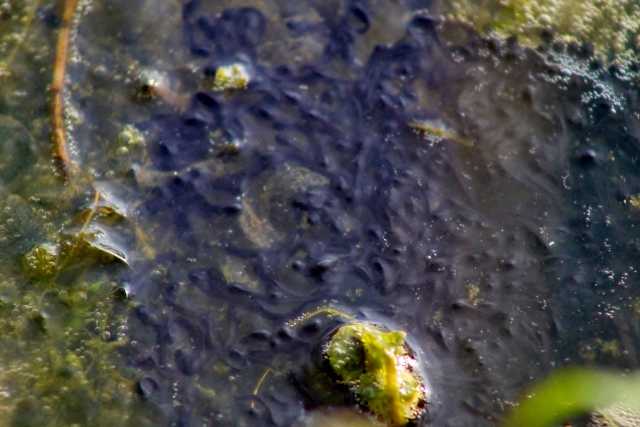
IMG_2032Tadpoles (640x427)

I took this picture a week later as the tadpoles were hatching out. The fish still hadn’t woken up!

Two days after this the tadpoles had dispersed but I had also seen the fish swimming in the pond and leaping to catch flies.  They were probably feasting on tadpoles too.

I found a dead fish on the path round the pond again – I found one last year that had been caught by the Heron who had been disturbed by one of us.  I don’t know what had caught this year’s fish as there was no stab mark on it.  It is interesting to see the workings of the food-chain.  We are part of it as we get bitten by the flies that the fish eat!

Thank-you for visiting!
Primroses

Tags

, , , , , ,

IMG_4326Primroses (640x480)

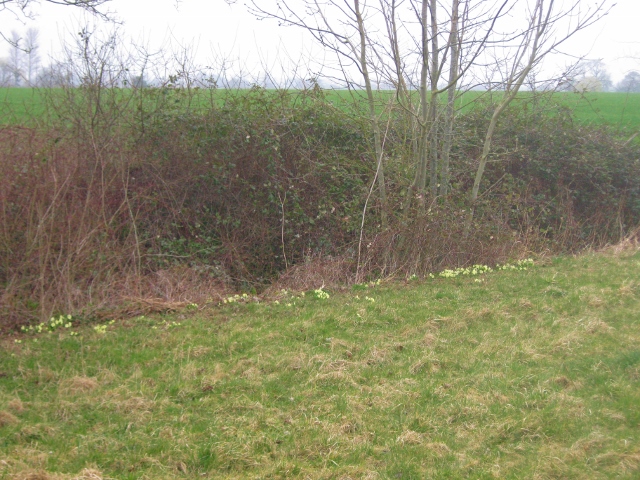
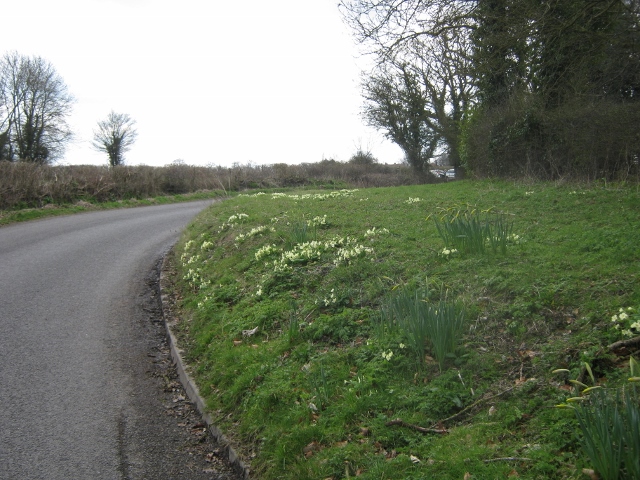
Primroses (Primula vulgaris) along the edge of the ditch at the side of the road.  I saw these on Good Friday after we had been to church and then to the Rector’s house to enjoy Hot Cross Buns.

The primroses this year are so abundant.  They are everywhere!

IMG_4327Primroses (640x480)

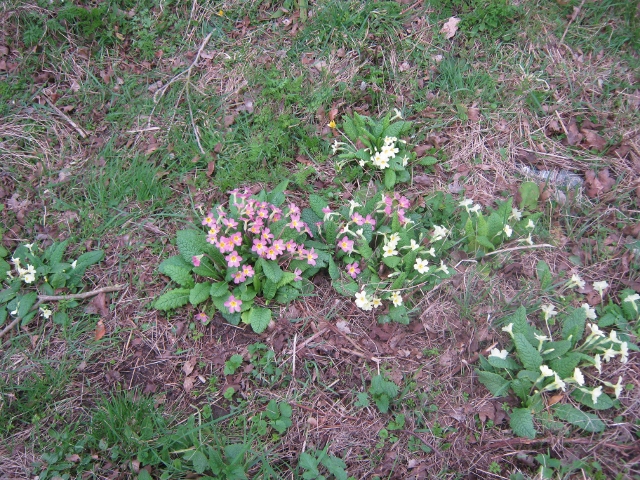
Richard pointed these out to me. He had noticed them while he was cycling to church on Good Friday morning to strip the altar.  After we got home we walked down the lane towards Rumburgh.

I am not sure if these pink primroses are the naturally occurring pink primroses or if they have spread from a garden.  Primroses and cowslips hybridise very easily but as these ones are some way from the nearest house I hope that they are naturally pink.  I have seen a number of pink ones on my travels this spring.

IMG_4328Primroses (640x480)

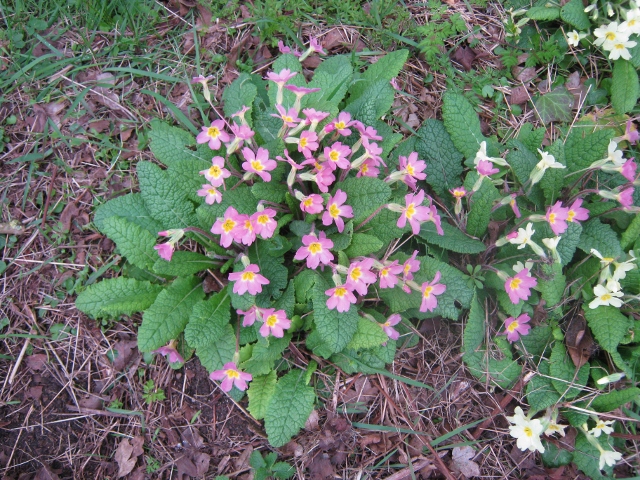
Here is a close-up of them.

IMG_4333Primroses (640x480)

These are the primroses on the bank by St Margaret South Elmham church. I took the photo on our way home after the Easter morning service.

IMG_4334Primroses (640x480)

They do look very pretty in large groups.

I think all the wild flowers have benefited from two milder winters and lots of rainfall.  We had no time during last summer when it became too dry for the grass to grow.

IMG_4335Primroses and celandines (640x480)

A couple of lesser celandines (Ranunculus ficaria) are with these primroses.

IMG_4336Cowslips (640x480)

Some early cowslips (Primula veris) just coming out.

IMG_4337Red Dead-nettle (640x480)

A patch of rather stunted red dead-nettle (Lamium purpureum)

IMG_4340Early Dog-violet (640x480)

Early Dog-violet (Viola reichenbachiana) was growing under the hedgerow.

IMG_4338Cordelia's geese (640x480)

As we walked past Cordelia’s house we saw her geese walking down the drive.

IMG_4339Cordelia's geese (640x480)

They are free to roam wherever they wish to go.

IMG_4342Primroses, celandines and daffodils (640x480)

The grass was starred with golden celandines. A few daffodils have been planted here too. More primroses at the edge of the ditch.

IMG_4345Celandines (640x480)

Just a few celandines with what looks like Great Willowherb (Epilobium hirsutum) leaf rosettes, a few Common (Stinging) Nettles (Urtica dioica) and Cow Parsley (Anthriscus sylvestris) shoots too.

IMG_4344Our house (640x480)

We went into the field and looked towards our house.

IMG_4343Our house (640x470)

Here it is.

IMG_4346Primroses (640x480)

A last photo of primroses. On the other side of the hedge are Jacob sheep with their lambs. I tried to photograph them but the hedge was so thick I couldn’t get the camera to stop focusing on the hedge instead of the lambs!


I hope you have enjoyed the flowers!

Before I publish this I must ask for your advice.  I have been looking back at posts I published last April and have noticed that at least one has disappeared.  I have not erased it myself, in fact I hadn’t looked at these posts since I published them.  I have no idea when it/they disappeared.  I remember a post about a trip to Covehithe – I still have the photos in my Media Library.  Has this happened to anyone else?  I don’t suppose there is any chance of my retrieving them; they are of no real value but I would like to know if there is anything I can do to get them back.  I have mentioned this on the WordPress Forum but I have had no response.


Daffodil Day

Tags

, , ,

IMG_4307Daffodil Day (640x480)

The garden with the bridge over the water

Every year a friend from church holds a Daffodil Day in her garden in aid of her church.  We get to walk round her wonderful garden full of spring flowers and also partake of refreshments provided by her and her colleagues.  There are stalls selling plants and cakes and other produce and also raffles and a tombola.

IMG_4303The Old Rectory (640x453)

A wet and windy afternoon

This year’s Daffodil Day wasn’t as successful as usual because of the awful weather on Sunday.  There were frequent heavy showers often merging into more prolonged rain.  The wind was very blustery and many people were put off from attending.  Towards the end of the afternoon there was even a thunder-storm!

IMG_4304Daffodil Day (640x480)

Not as many flowers as usual because of the cold weather 

Richard and I arrived in the early afternoon and parked our car in one of the less muddy places.  We enjoyed a hot drink and a cake while sitting under the awning.  We bought a couple of small cakes and a pot of raspberry jam.  We took part in the tombola and bought two plants.

IMG_4306Daffodil Day (640x480)

I love this yew hedge!

IMG_4308Daffodil Day (480x640)

It has an inviting archway.

IMG_4309Daffodil Day (640x480)

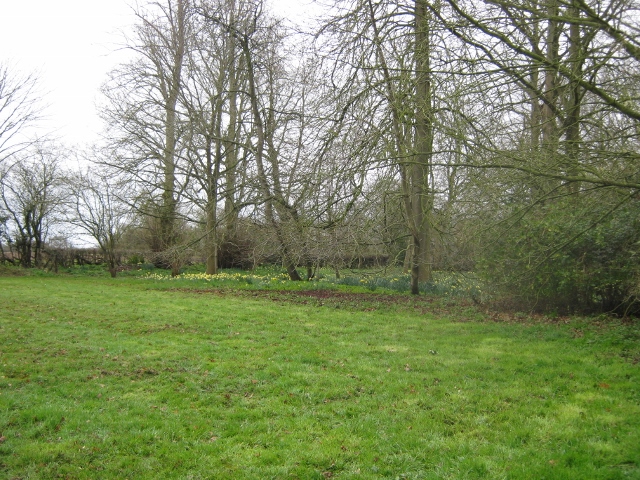
The many trees are under-planted with daffodils and other spring bulbs.  There are primroses and snowdrops and violets and many other pretty flowers.

IMG_4310Daffodil Day (480x640)

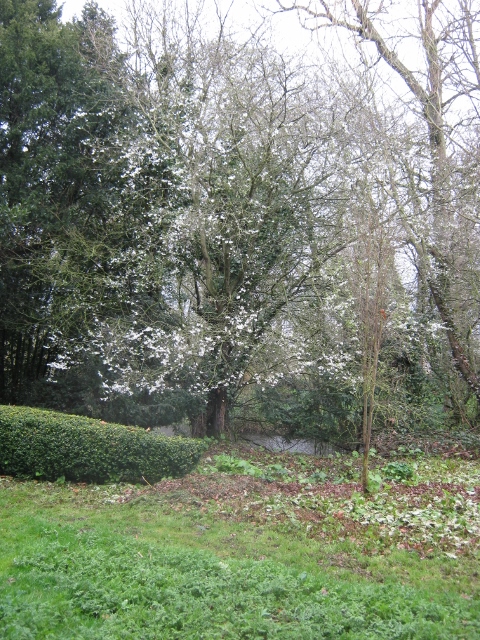
A tree just starting to blossom

IMG_4312Daffodil Day (640x480)

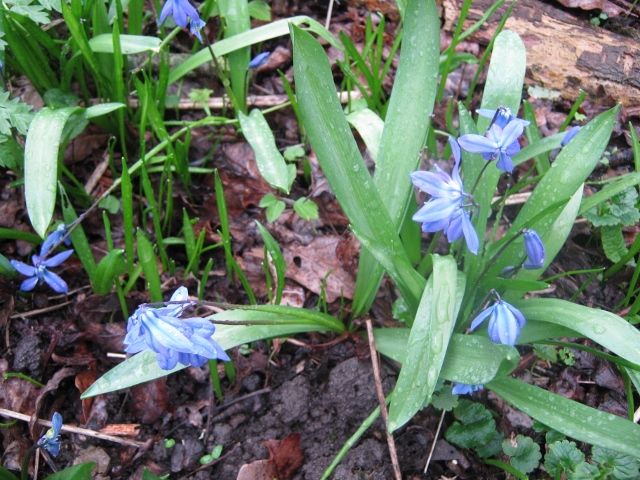
Scillas

IMG_4313Daffodil Day (640x480)

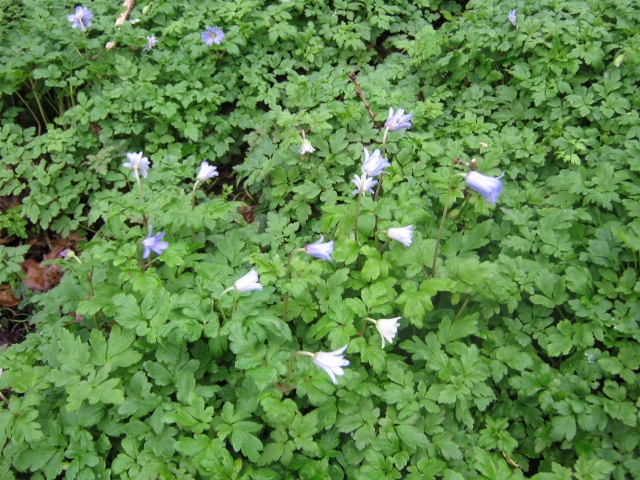
Anemones

IMG_4314Daffodil Day (640x480)

The summer-house 

IMG_4317Daffodil Day (640x480)

View of St Margaret’s church through the trees

This post is dedicated to wonderful people like Cordelia who work so hard all the time to raise funds for good causes with often very little return.

Out Like a Lion!

Tags

, , , , , , , , , , , , , , ,

In my post at the beginning of the month I wondered if March would go out like a lamb because it had come in like a lion.  Well – no – the month is going out as it came in, with gales!

IMG_4322Hyacinths (640x480)

I have just been outside and found my poor Hyacinths have been flattened!  These are Hyacinthus Delft Blue.

IMG_4318Blackthorn (640x480)

The Blackthorn tree (Prunus spinosa), just coming into flower, has been battered.

IMG_4320Blackthorn blossom (640x480)

The flowers are being ripped off the trees by the wind.

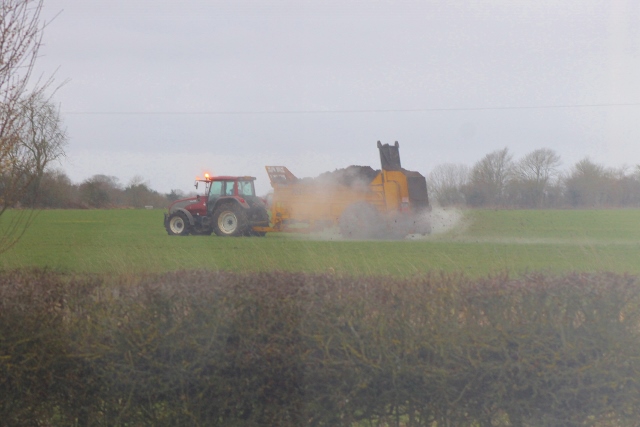
Ten days ago the local farmer began muck-spreading and we have only just got rid of the smell!

IMG_1976Muck spreading (640x427)

More countryside joys!

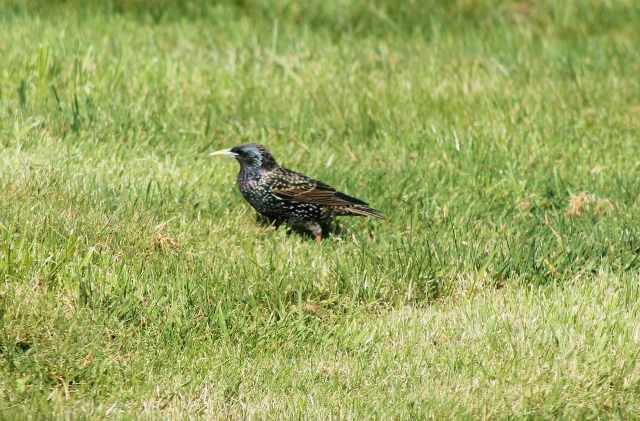
IMG_1978Starling (640x421)

We have had a small flock of Starlings (Sturnus vulgaris) visiting our garden during the past week.

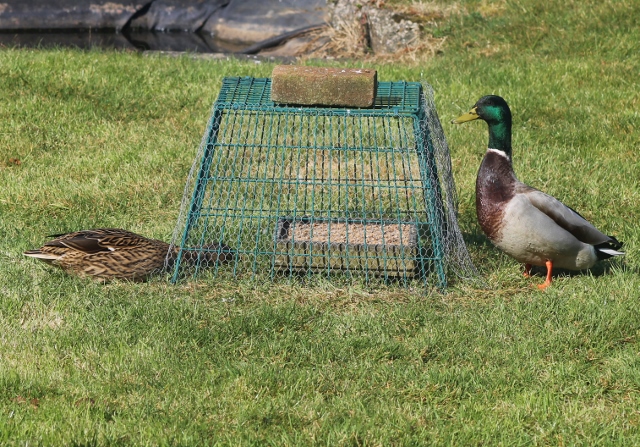
IMG_1980Mallards (640x447)

Despite my having put the ground feeder in a cage with extra chicken wire on two sides of it, the Mallards (Anas platyrhynchos) seem determined to get to the bird seed.

IMG_1984Daffodils (640x427)

The daffodils are coming out nicely around the garden.

IMG_1986Path round the pond (640x427)

The path round the pond is beginning to green up nicely.

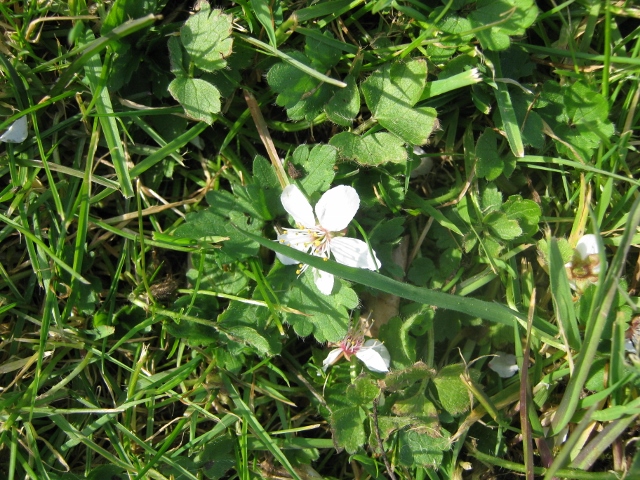
IMG_1987Early Dog-violets (640x427)

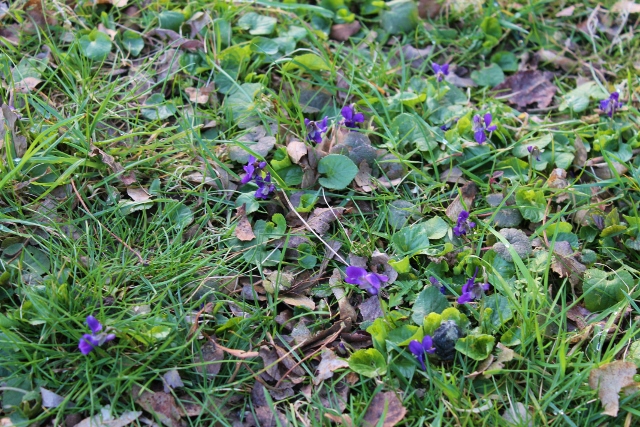
The Early Dog-violets (Viola reichenbachiana) that grow in the grass-path round the pond are looking very pretty.

IMG_1988Early Dog-violet (640x427)

Early Dog-violet (Viola reichenbachiana)

IMG_1985Primroses (640x427)

The Primroses (Primula vulgaris) in the ditch are looking fine too. When we first came to live here there weren’t any primroses at all, only cowslips. These have appeared in the last couple of years.

IMG_1994Geese (640x427)

The Greylag geese (Anser anser) often come up close to the house to see what food there is for them to eat.

IMG_1992Goose nest (640x427)

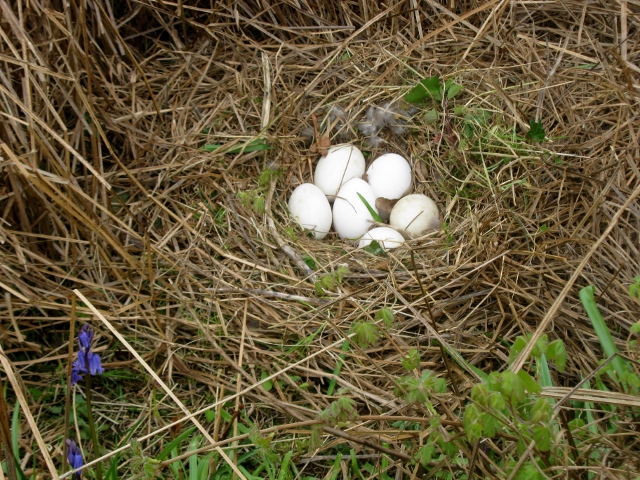
I took advantage of their absence and had a look at the nest which has a few eggs in it. This was taken before the goose had finished laying her eggs and started sitting on the nest.

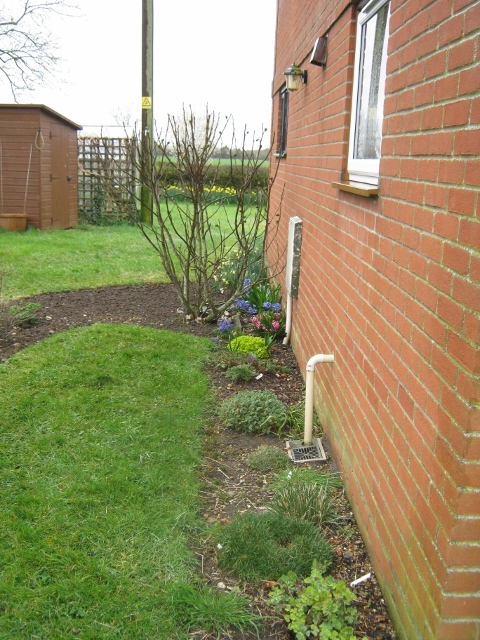
IMG_4296Garden (640x480)

This is the garden on the south side of the house. Work in progress: I have cleared the beds of weeds and other unwanted seedlings and will cover them with soil-improver next.

The central grass path will be kept (there is a flowerbed just out of shot on the left) and I want to position a couple of arches over it and train roses and clematis up them.

IMG_4297Garden (480x640)

This narrow area of grass is difficult to mow and will eventually be removed and replaced with a gravel bed and stepping-stones to give access to the windows, electricity meter and the drain.

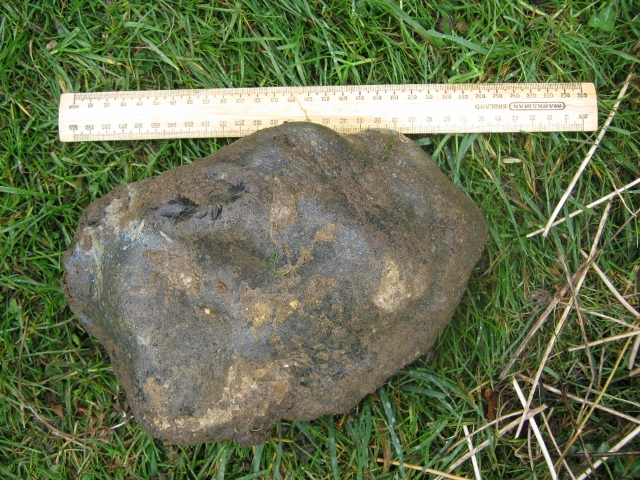
The soil here is very poor; full of stones and builder’s rubble.  I am constantly finding very large flints just under the surface.  People in days gone by used to think that stones grew and I can understand why they might think that.

IMG_4298Flint boulder (640x480)

This is a flint boulder I dug up last week – the ruler is a 30 cm one.

IMG_4321Flint boulder (640x480)

I put a pot with a primula in next to the boulder to give you an idea of the size.


These Scillas are flowering in the flowerbed on the left of the grass path.  I have yet to weed here!


Thanks for visiting!
Wells-Next-the-Sea

Tags

, , , , , ,

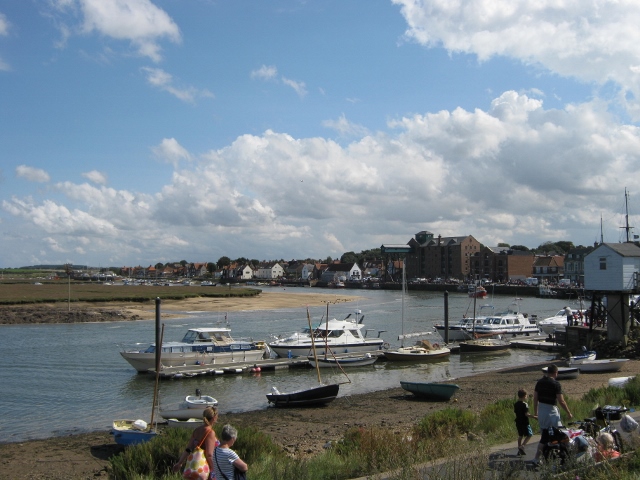
012Wells-next-the-sea (640x480)

Wells-Next-the-Sea


Last summer we visited the seaside town of Wells-Next-the-Sea in north Norfolk.  It is a very attractive little town with plenty of narrow, winding lanes, pretty cottages, interesting shops and a lovely wide green surrounded by elegant Georgian houses.  The place is very dear to me as I spent many holidays here as a girl.  It gets very crowded nowadays during the high-season and there is nowhere to park if you arrive after mid-morning.

Unfortunately, we set off rather late and stopped in Fakenham on the way to have lunch.

010Fakenham Church (480x640)

Fakenham is a pleasant market town in Norfolk

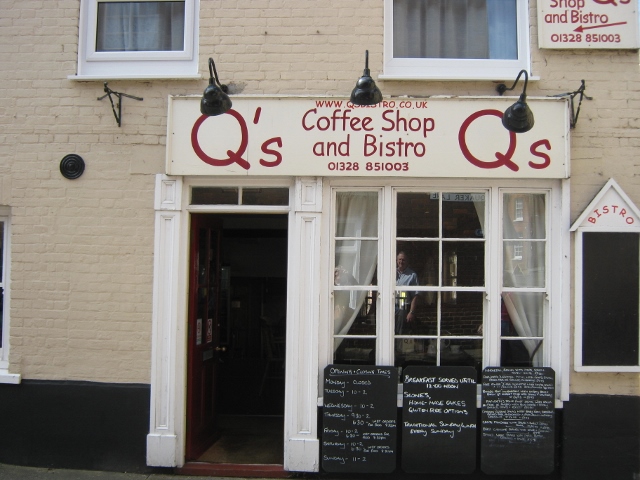
009Q's Coffee Shop and Bistro, Fakenham (640x480)

The place where we had our lunch.


Wells has a harbour but the beach is a mile away from the town and is reached by a narrow road and paths. There is a high bank next to the road which was built about 150 years ago to consolidate the channel that connects the sea to the harbour and also, I presume, to act as a sea defence.  The paths are on the sea-wall.  During the summer months there is also a narrow-gauge railway that shuttles holiday-makers to and from the beach.

013Wells (640x480)

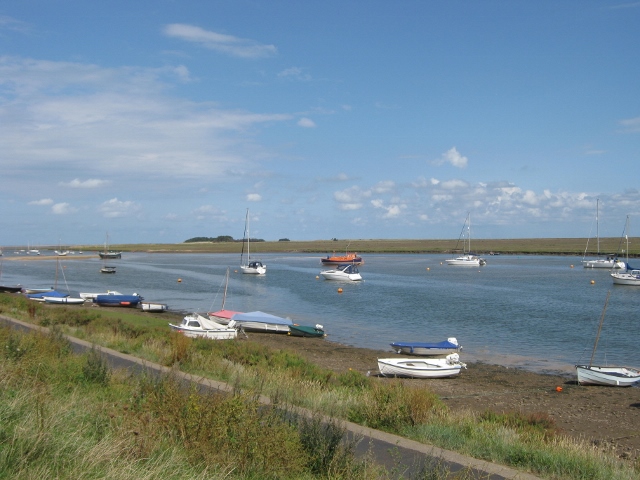
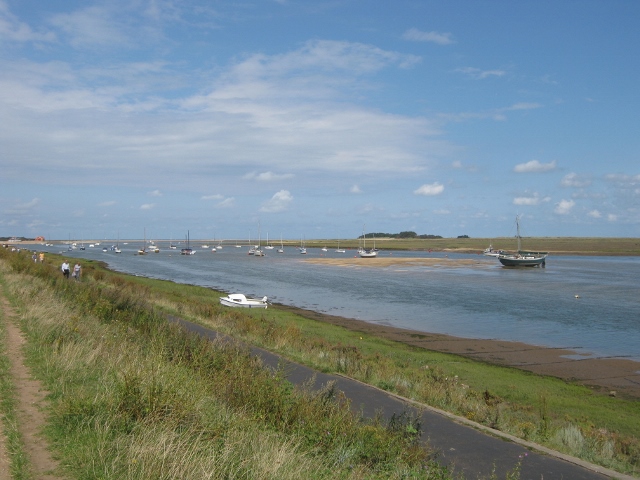
View from the top of the bank, across the tidal waterway (called ‘The Run’ I believe) that connects the harbour with the open sea, to the mudflats and saltmarsh beyond.


We decided to forego the delights of the town and so drove along the road to the beach car-park at Pinewoods.  We found nowhere to park (of course!) so left Alice and Elinor there with our belongings and drove back to the town where there was an overflow car-park next to the playing field.  We thought we might return to the beach on the little train but we had just missed one and there was a long wait for the next.  We walked along the sea wall in the strong sunshine.  It was very warm work.

014Wells (640x480)

Looking towards the sea in the distance

015Viper's Bugloss (480x640)

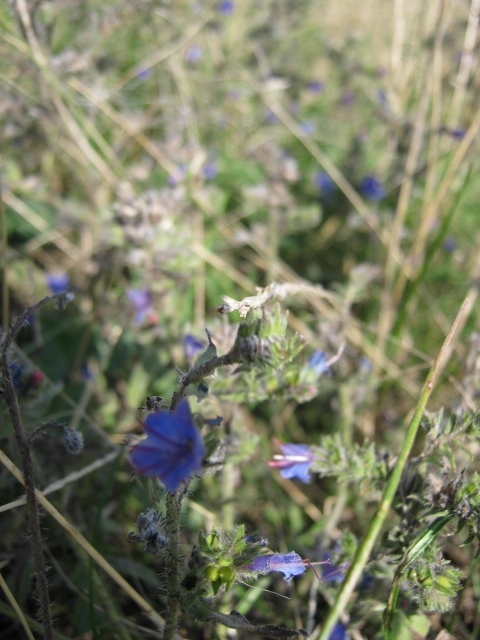
A poor photograph of Viper’s-bugloss (Echium vulgare) that was growing at the side of the path


We found the girls and shared out the bags and chairs and started to walk through the pine woods to the beach.  I remember playing in these woods with my brother and sister over forty years ago when it was wilder and there were fewer designated paths through the dunes.  Red squirrels were still to be found there in the early 70’s but they were under great threat and had died out by the mid 1970’s I believe.  Sadly, I never saw a live red squirrel only a dead one.  At intervals along the path there are steep slopes and steps up to the top of the dunes from where you suddenly see miles of sandy beach and the sea in the distance.

021Wells beach (640x480)

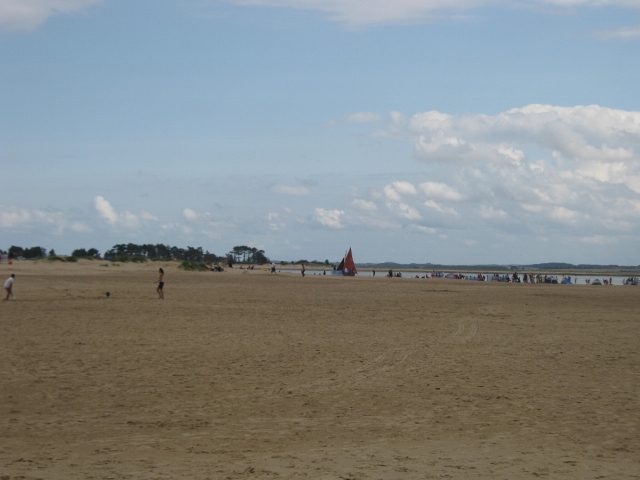
A lovely sandy beach where one can find pretty shells and where jelly-fish swim in the shallow warm-water inlets

029Beach and pines (640x480)

I love to see the pine trees so close to the sea.


We walked some way across the sand in the direction of the sea.  The tide goes out for miles here but when it turns, it rolls in very quickly and many people get stranded on sandbanks every year by not heeding the tide and not listening out for the warning siren.

019Beach huts (640x480)

The beach huts here are on stilts

020Beach huts (640x480)

More beach huts


As seems to be what happens to us whenever we visit this beach, no sooner had we settled ourselves on the sand when the wind picked up and large clouds appeared.  I was glad of my hat and coat.

017Wells beach (640x480)

What is known as ‘an interesting sky’.

018Wells beach (640x480)

A bit of cloudy sky didn’t put people off their relentless march towards the distant sea.

022Rain & beach (640x480)

It’s okay! That raincloud isn’t coming this way!
034Beach (640x480)

066Wells beach (640x427)

It looks quite nice over there.

People began to make their way back towards the woods.

074Me (640x427)

This is me! I was glad of the hat and coat.

024Yacht with windmills (640x480)

A yacht going out to sea. Notice the off-shore windmills in the distance. These days it is rare to find a place where you can look out to sea and not see windmills.

023The sea (640x480)

The sea was getting rougher

025Fisherman (640x480)

There are always fishermen on the beach

The visibility was getting worse.

028Buoy (640x480)

A buoy

030Wet sand (480x640)

Wet sand

073Wells beach (640x427)

When we saw this we reluctantly started back towards the pinewoods.

It began raining just as we reached the woods and rained very heavily while we walked under the trees.  It stopped eventually and we walked back along the sea wall to the car.


The Royal Arcade, Norwich

Tags

, , , , , ,


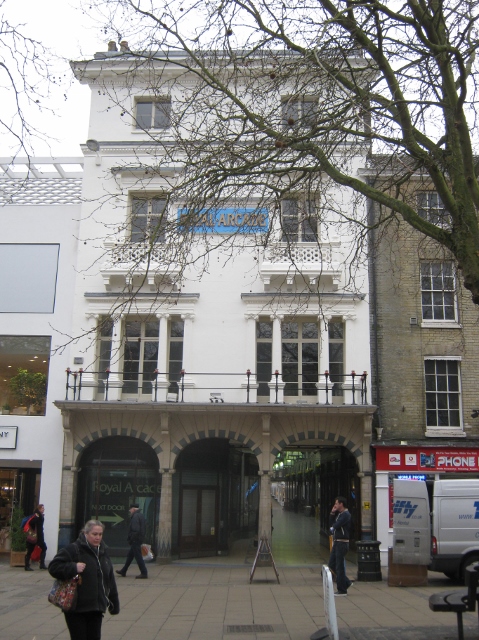
IMG_4196Entrance to Royal Arcade (479x640)

The main entrance to the Royal Arcade

This is another of my Norwich posts and this time I am just going to focus on one place, The Royal Arcade.  I usually visit it at some stage during all my walks round the city.  I have gathered together a number of pictures that I have taken at different times and have spot-lighted this very interesting and beautiful place.   Many people use and see it but don’t look at it.

IMG_4197Entrance to Royal Arcade (640x477)

This front has just undergone some renovation and is freshly painted.

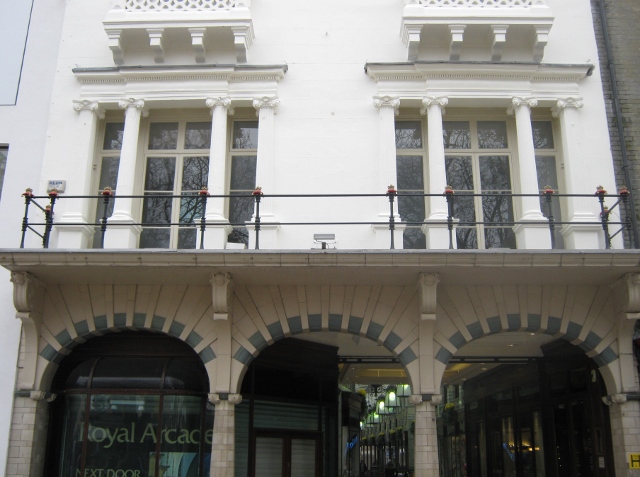
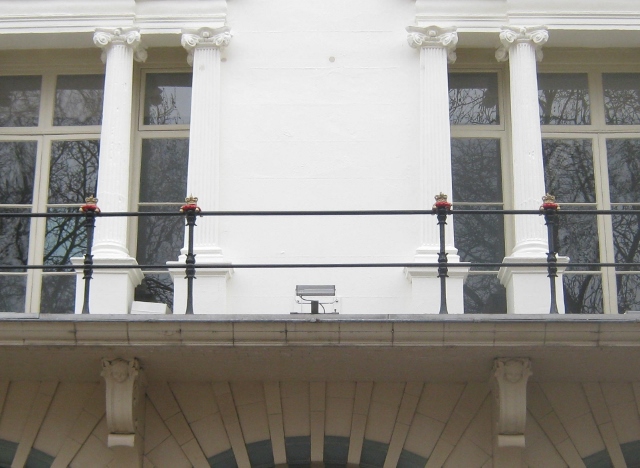
IMG_4197Entrance to Royal Arcade (2) (640x468)

I cropped the former photo to show some of the details – the carving on the pillars in front of the windows, the tiles under the canopy and the tiny little crowns on top of the railing.

The first building to occupy this site from at least the 15th century was the ‘Angel Inn’.  As well as being somewhere to eat and drink and spend the night the inn was also a place where one could be entertained.  It hosted travelling shows and ‘spectacles’ – in 1685 a pair of elephants could be seen here.  In the 1830’s it was the Headquarters of the Norwich Whigs (the fore-runners of the Liberal party) where there was once such a vicious brawl between the Whigs and their political rivals the Tories that the Mayor had to read the Riot Act and call in the militia.

The Angel was re-named and became the ‘Royal Hotel’ which occupied this site for about fifty years before moving to a newer building elsewhere.  Joseph Stannard rebuilt the entrance when it became the ‘Royal Hotel’ in 1846 and this facade remained when the Royal Arcade was constructed in 1899.

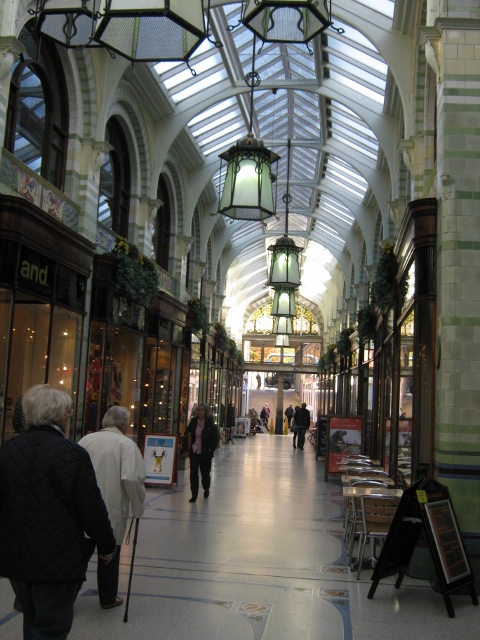
016Royal Arcade (480x640)

Inside the Arcade.

The Arcade was built where the hotel stables and yard had been and followed the shape of the yard.  It isn’t obvious when walking through the Arcade but from this angle you can see that the Arcade isn’t straight but bends slightly.

When it was first constructed it housed 24 bow-fronted shops, a pub and a clubroom.

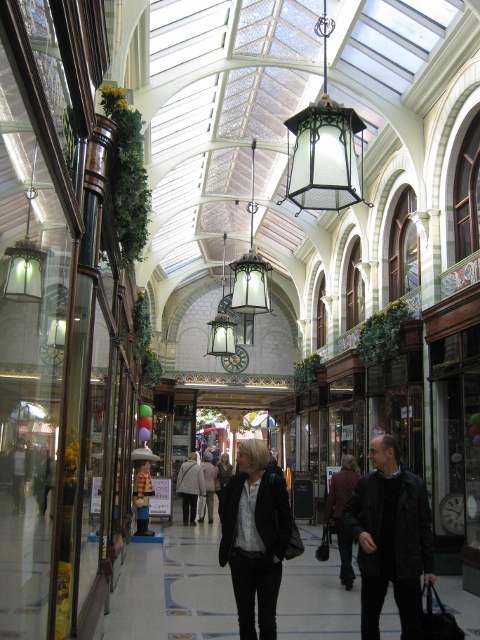
015Royal Arcade (480x640)

This photo is looking towards the main entrance 

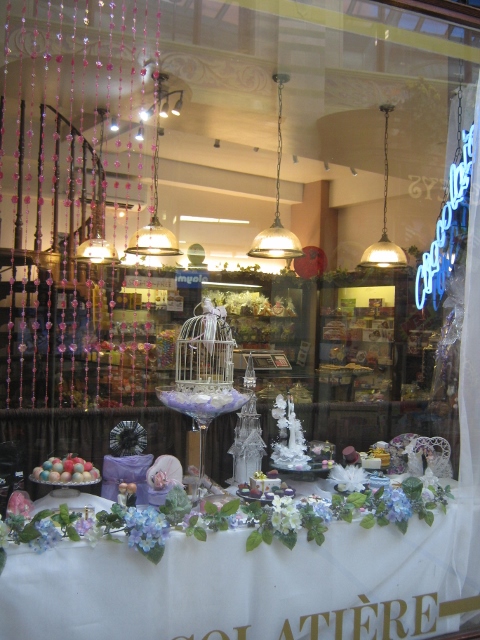
018Confectioner's shop (480x640)

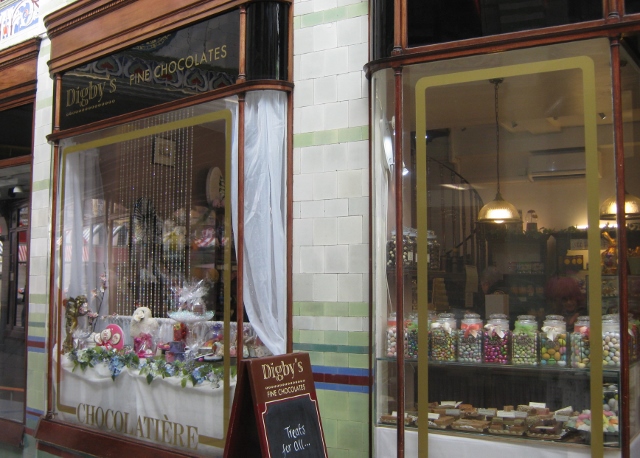
This is a marvellous chocolatiere and confectioner’s shop in the Arcade.

IMG_4222Digby's Chocolate Shop (640x458)

The windows are always dressed so beautifully

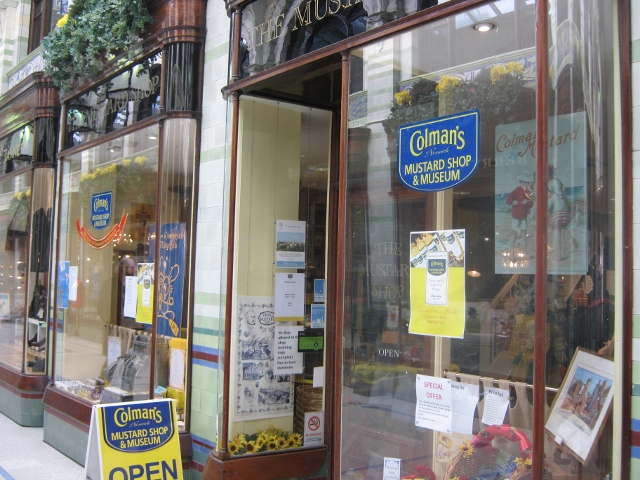
IMG_4224The Mustard Shop (640x480)

The Mustard Shop and Museum. Colman’s Mustard has been part of Norwich life for a long time and is quite an institution.  J. Colman began manufacturing mustard 200 years ago.

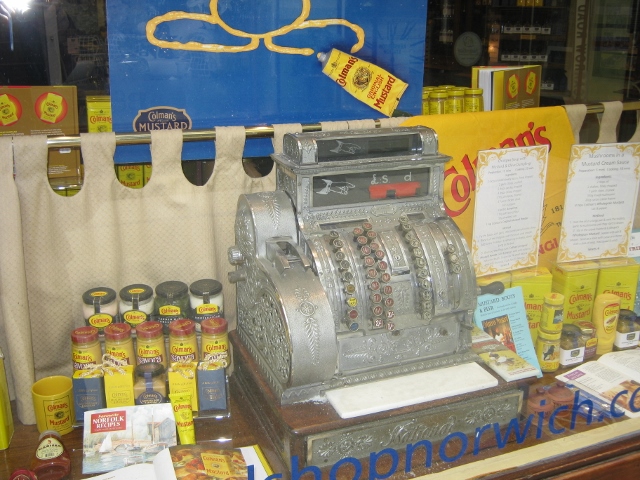
IMG_4221Old cash till in the Mustard Shop (640x480)

A beautiful old cash-till in the window.

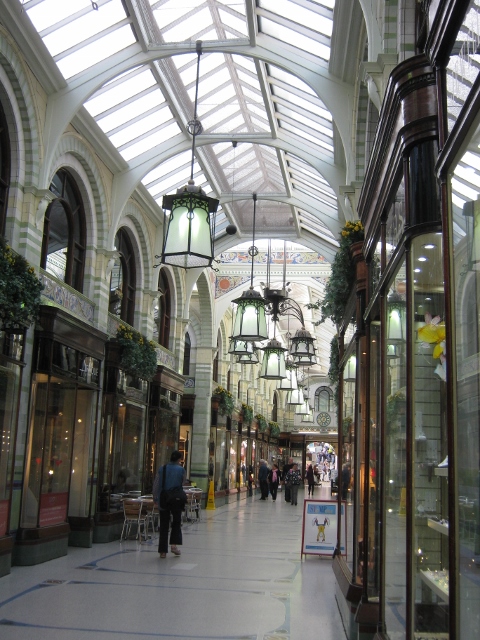
025Royal Arcade (480x640)

A longer view of the interior.

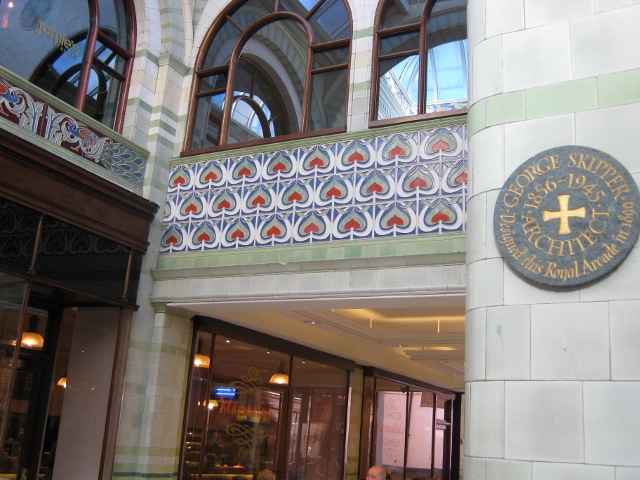
The Royal Arcade is a 247′ long covered avenue and was designed and built by Dereham-born architect, George Skipper.  It is a perfect example of Art Nouveau style.

017Royal Arcade (640x480)

This photo shows a plaque commemorating the architect and some of the wonderful decorative tiles that line the first floor.

The designs are typically Art Nouveau and are inspired by nature and femininity – floral shapes and peacocks.  The tiles were designed by WJ Neatby (who also produced tiles for Harrod’s Food Hall (Harrods is a large and famous department store in London)).  The tiles were manufactured by Doulton.

019Royal Arcade (480x640)

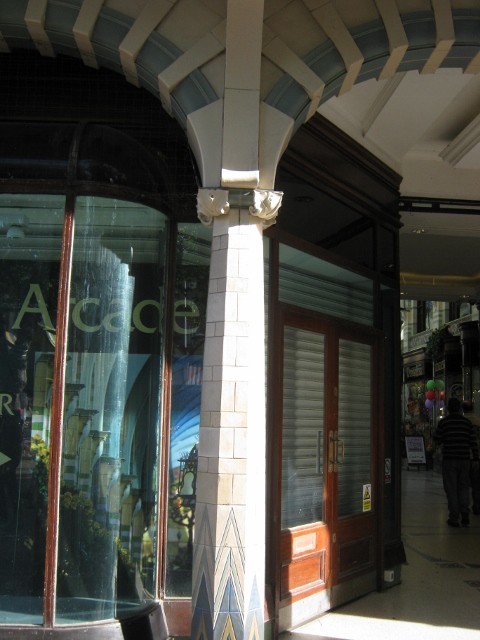
One of the pillars at the main entrance

023Royal Arcade (480x640)

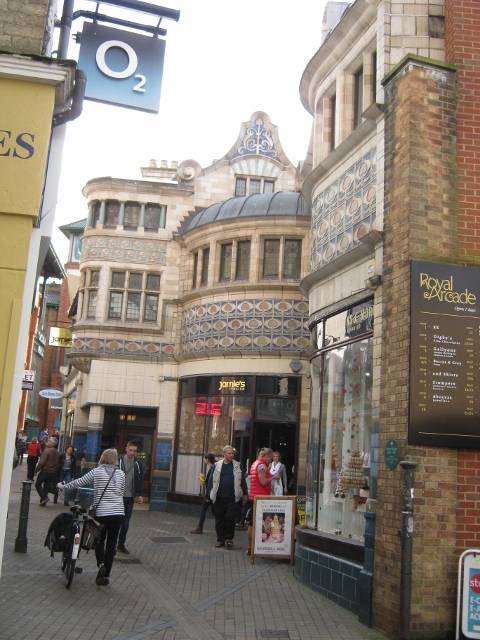
Another entrance to the Arcade.

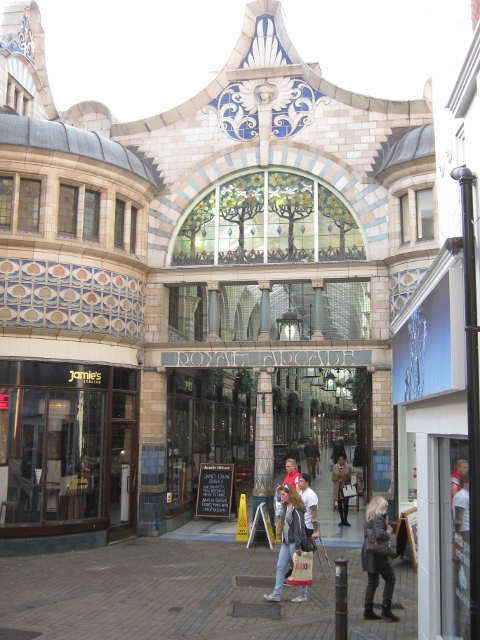
024Royal Arcade (480x640)

Here is that same entrance showing the lovely stained glass semi-circular window and the decorations on the outside of the Arcade.

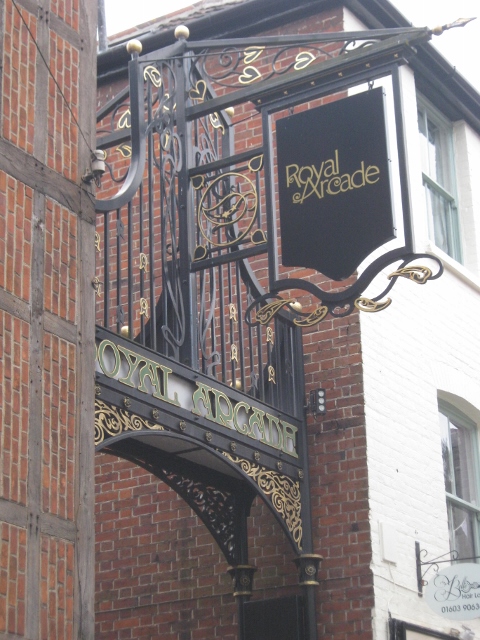
IMG_4199Royal Arcade sign (480x640)

This sign is over yet another entrance to the Arcade


This wrought-iron work along with other examples in the Arcade, the floor tiles and the beautiful lamps were added later during restoration in the 1980’s.  They are happily in keeping with the rest of the building.

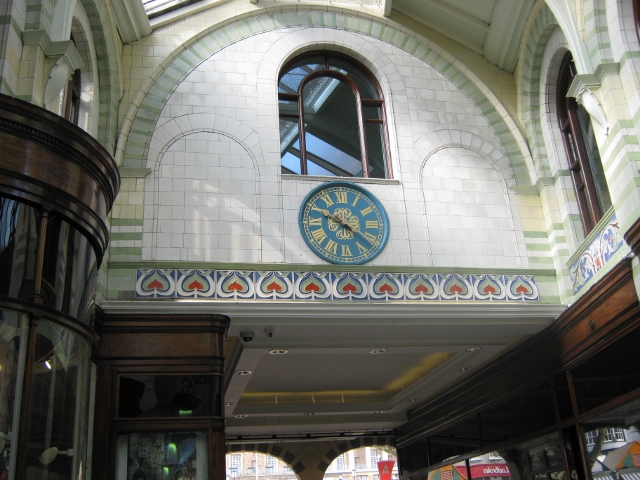
IMG_4223Royal Arcade (640x480)

A very pretty clock.

I hope you have enjoyed your visit to the Royal Arcade.