• About my Blog
  • GDPR (General Data Protection Regulations) and This Site
  • My Life in a Suffolk Lane

A Suffolk Lane

~ A diary of my life in rural north Suffolk.

A Suffolk Lane

Tag Archives: Suffolk

In My Garden Again

28 Wed Sep 2016

Posted by Clare Pooley in Gardening, Insects, music, plants, Rural Diary, trees, wild animals, wild flowers

≈ 75 Comments

Tags

bird's nest, Brown Hare, Brown Hawker dragonfly, comma butterfly, Common Fleabane, Common Hawthorn berries, cooking apples, Crabapples, Creeping Thistle, Fish-hook Cactus, garden, hogweed, Hornet, Hoverfly, leveret, mole hill, moonrise, pears, speckled wood butterfly, Suffolk, sunset, Sweet Pepper, Water Mint, Zinnia

This is another collection of things I’ve seen in my garden or near my home during the past month.  The weather until a few days ago has been wonderful!  Warm, sometimes very hot, mainly dry and sunny; it has been a lovely late summer.
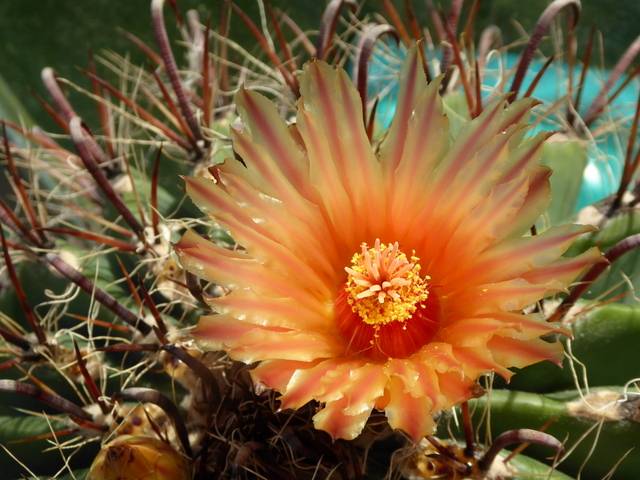
p1010238fish-hook-cactus

Flower on Richard’s Fish-hook Cactus (Ferocactus wislizeni)

This cactus nearly flowered for the first time two years ago but the warm, sunny weather didn’t last long enough and the buds shrivelled.  Last year was too dull and cool so no buds formed at all.  This year however, one of the three buds opened and stayed open for three days.
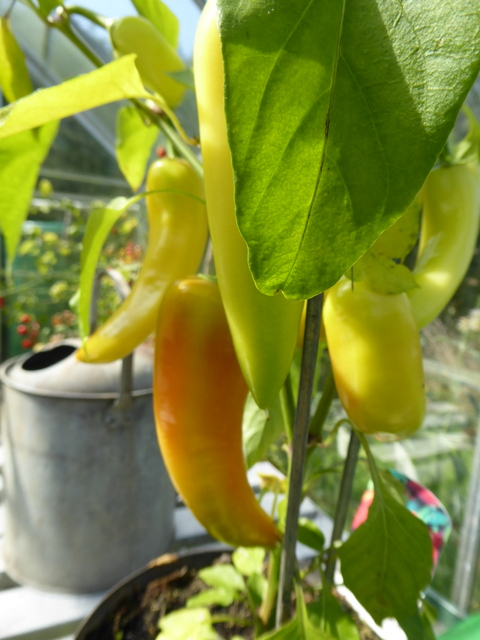
p1010239sweet-peppers

Sweet pepper ‘Sweet Banana’

Richard is growing sweet peppers this year and this is a photo of them when they were just starting to turn red.  Unfortunately, the camera focused on the leaf not the pepper.
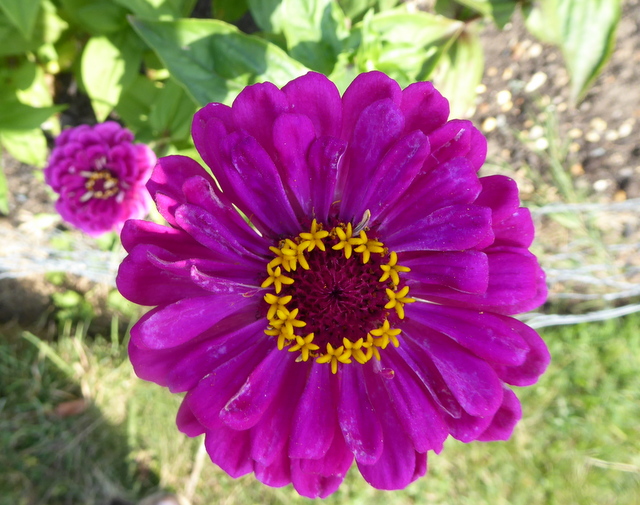
p1010240zinnia

Zinnia flower

p1010241zinnia-001

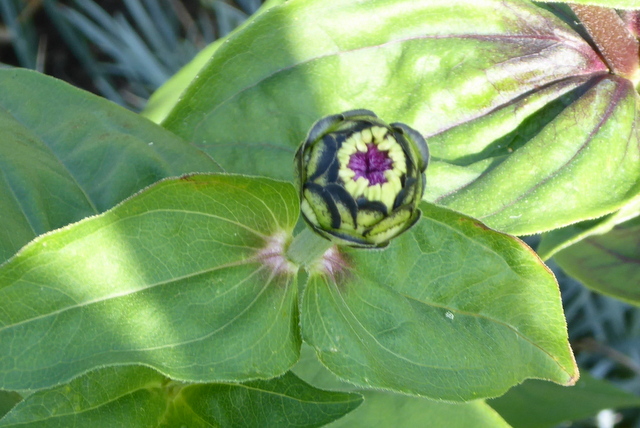
Zinnia flower-bud

Richard bought a tray of Zinnia flowers from the garden centre.  They took their time to get established but eventually they got going and have been so bright and cheerful for the past month.
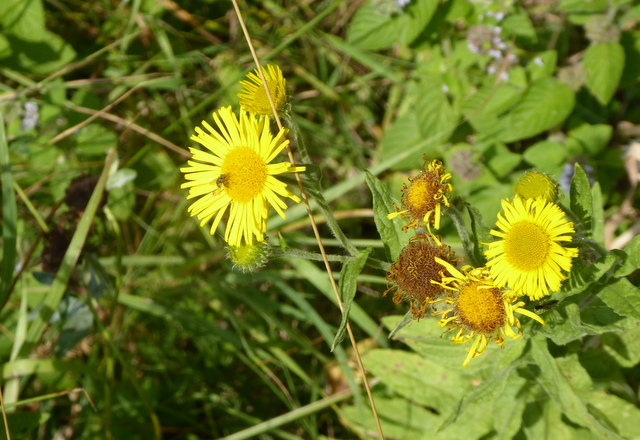
p1010245fleabane

Common Fleabane (Pulicaria dysenteria) has been everywhere I’ve looked this summer but this poor shot is the only photo of it I’ve taken.

For centuries, the leaves of Fleabane were hung in bunches from ceilings or dried and burnt as a fumigant to repel fleas.  Richard Mabey in his ‘Flora Britannica’ says the plant is a relative of the species which supplies the insecticide ‘pyrethrum’.
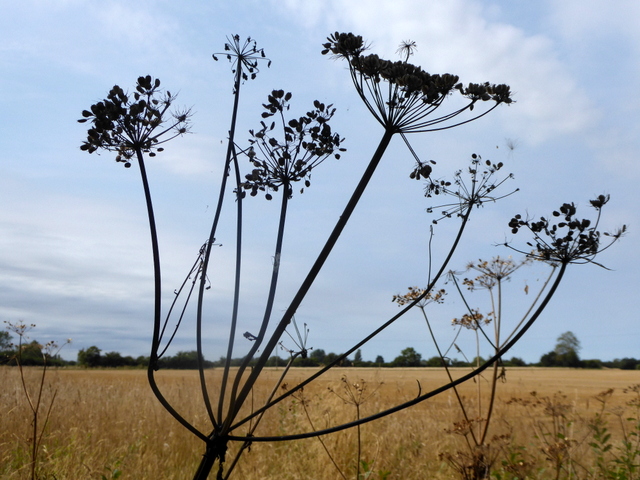
p1010250hogweed

Hogweed (Heracleum sphondylium) seed-heads
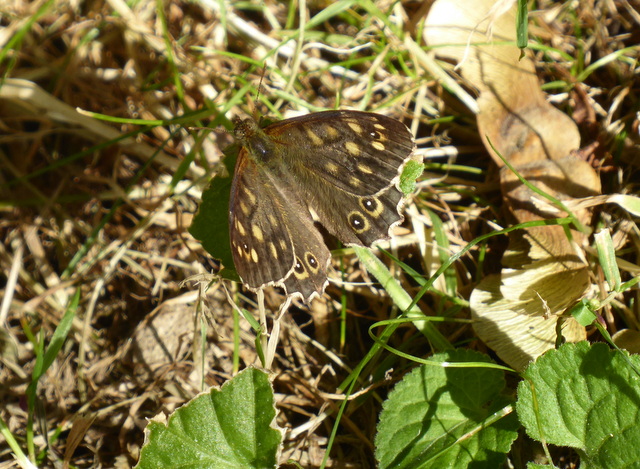
p1010246speckled-wood

Speckled Wood butterfly (Pararge aegeria)

This is a woodland butterfly and its markings make it difficult to spot in dappled shade.
p1010253comma

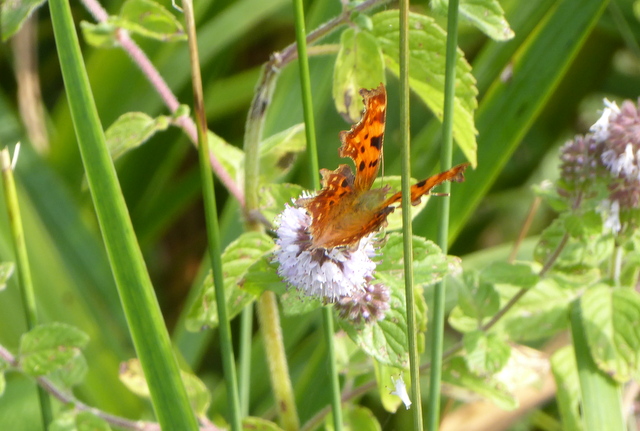
A Comma butterfly (Polygonia c-album) on Water Mint (Mentha aquatica)
p1010248hoverfly-on-creeping-thistle

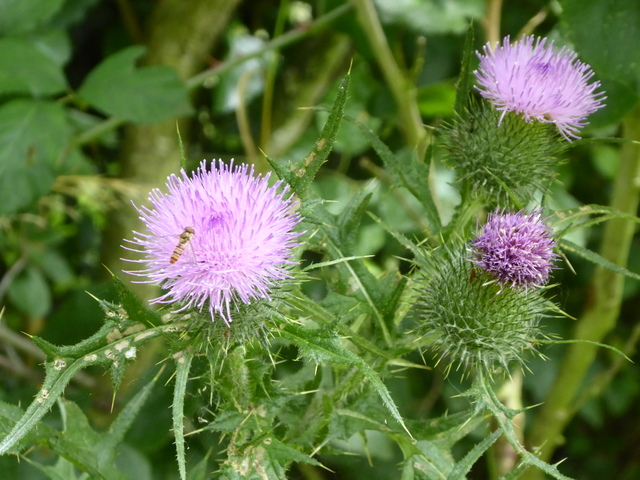
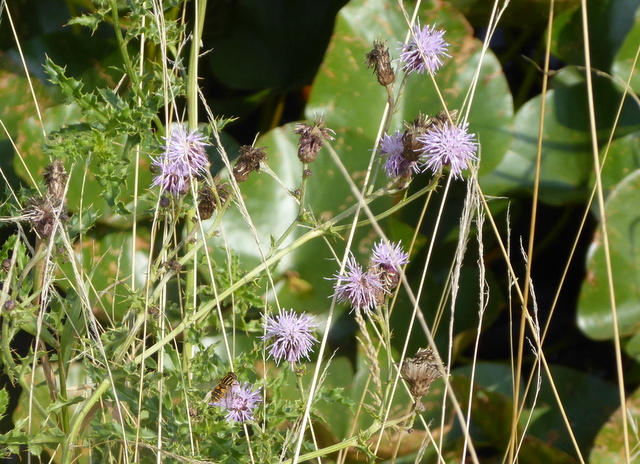
Creeping Thistle (Cirsium arvense) with a Hoverfly (Helophilus pendulus) on the lowest flowerhead
p1010296crabapples

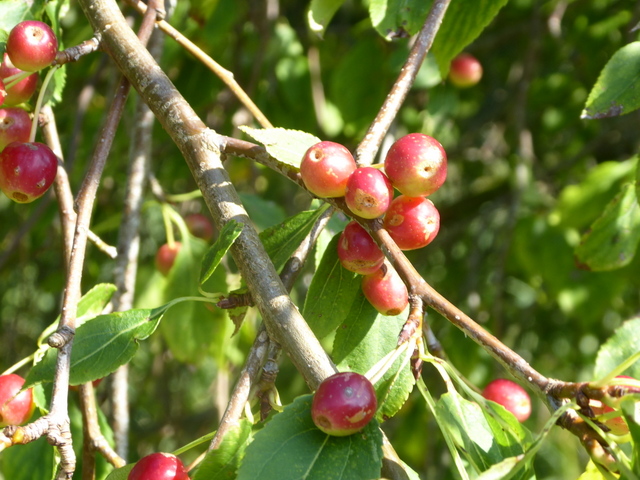
The crabapples on our species crabapple tree look like cherries. Woodpigeons are very fond of them.
p1010298biffin

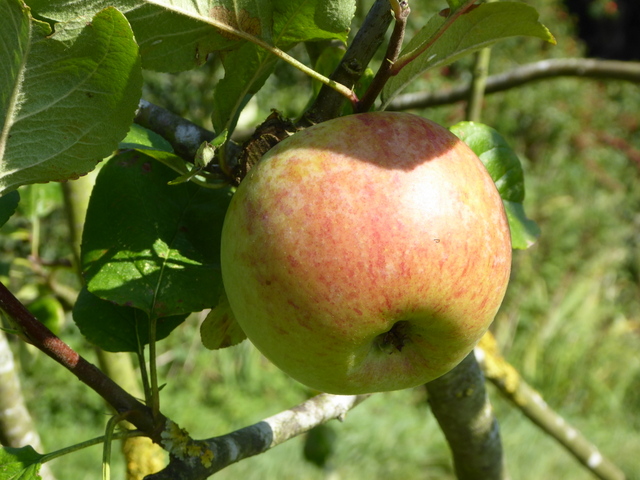
We don’t have many apples this year. This one looks very good – a cooking apple.
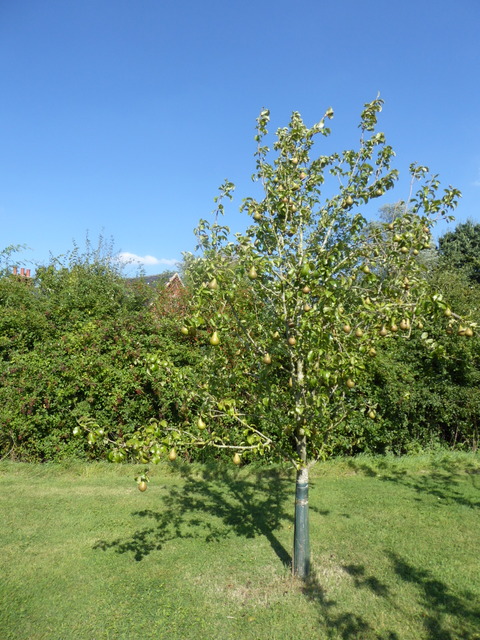
p1010301concord

We have what looks like a good crop of pears but sadly many of the fruits are rotting on the tree.
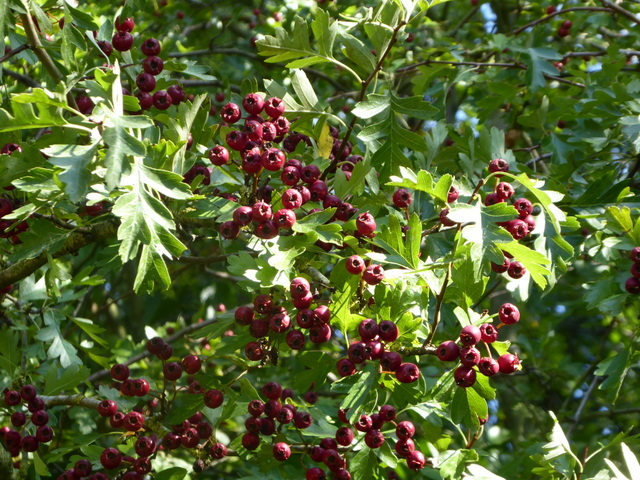
p1010304haws

Common Hawthorn berries, known as Haws. (Crataegus monogyna)

The Hawthorns are full of fruit; some people say this means we are to have a hard winter.  I think it means we had good pollination in the spring.
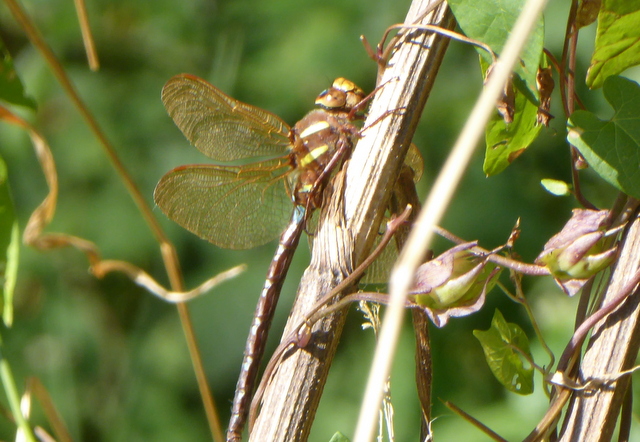
p1010305brown-hawker

A female Brown Hawker dragonfly (Aeshna grandis)

I took this photo in a hurry as Brown Hawkers are such restless dragonflies and only perch for a few seconds.  I love their amber wings!
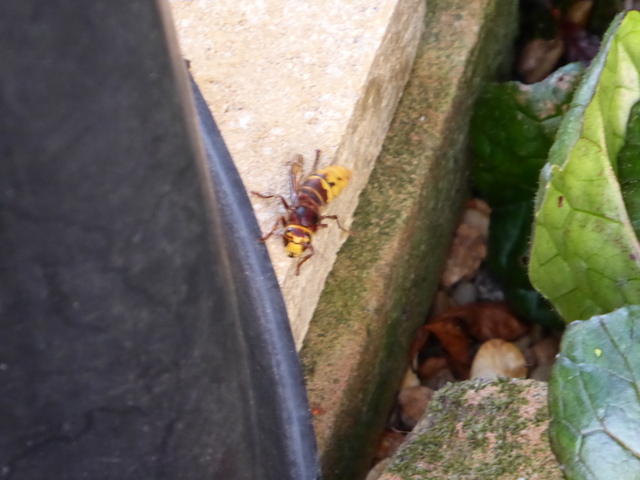
p1010324hornet

Another poor photo, this time of a Hornet (Vespa crabro)

We have had a Hornets’ nest under the tiles of the garage roof this summer.  They are busy insects and carry on flying until well after sunset, unlike wasps who retire early.  We have also got a wasps’ nest under the house roof tiles near our bedroom window.  I could hear them chewing and munching away through the night when they were first constructing the nest in the early summer.
p1010330mole

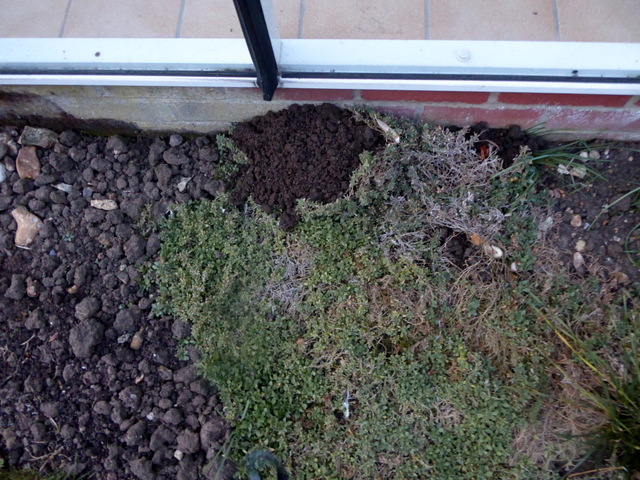
This is a mole hill that appeared in the rather dry border next to the conservatory. The hill got bigger the following day and many spring bulbs were uprooted.

We haven’t had much rain during the past month and the moles are searching for worms.  The worms congregate where there is moisture i.e. in flower-beds (if they are watered) or next to paths or buildings where water runs off into the soil.
p1010326sunset

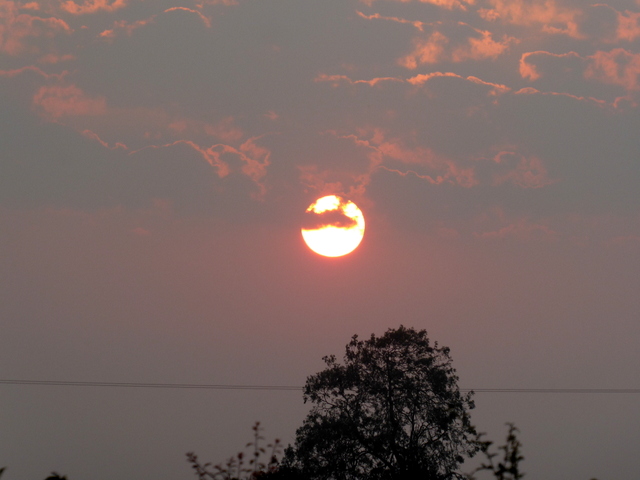
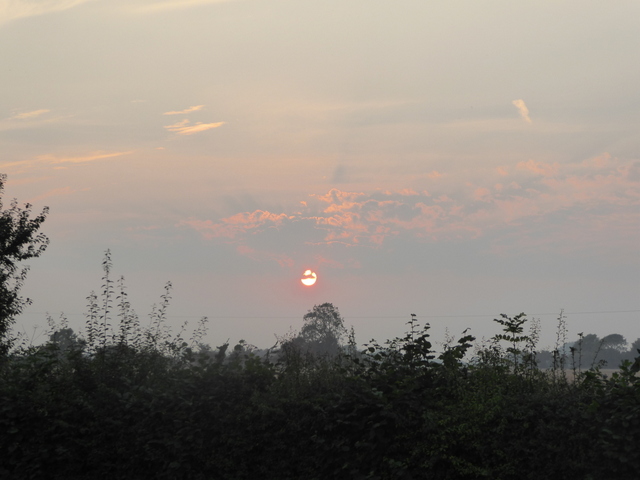
Sunset

p1010327sunset

Sunset

p1010328sunset

Sunset

p1010329sunset

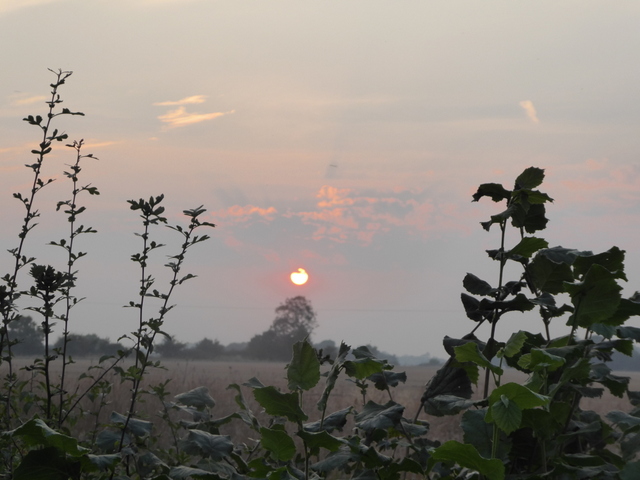
Sunset with mist

And shortly afterwards on the same evening…..
p1010332moon

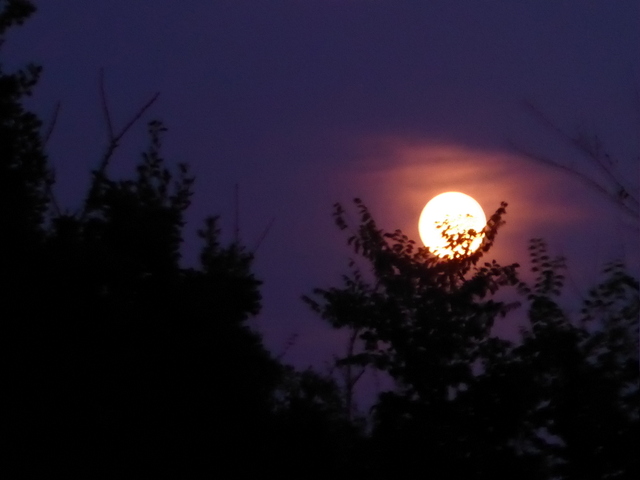
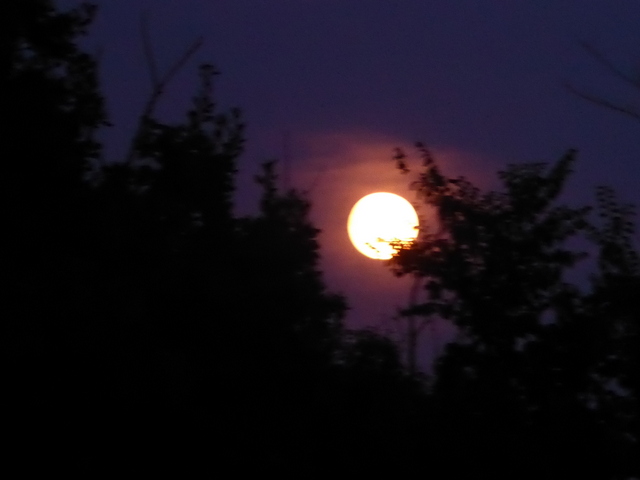
Moonrise

p1010333moon

Moonrise

We were pleased to welcome a new visitor to our garden; a Leveret, a young Brown Hare (Lepus europaeus)

This slideshow requires JavaScript.

We first noticed it when it was very close to our kitchen window so you see part of the window frame in my photos!  It then moved a little further away and was easier to photograph.

The best time of day to see hares is early morning or at dusk, as during the day they rest in grass, scrubland or in a ploughed furrow.  They crouch low against the ground with their ears laid flat and are well camouflaged.  If they are disturbed they are capable of running very fast – 35 mph/56kph – and run with their black-topped tail held downwards.  They have large staring eyes, large black-tipped ears and powerful hind legs; they are shy and alert creatures.  They typically live in open country, preferring not to live in direct contact with grazing animals and they are unlikely to be found in hayfields.  They eat a wide selection of grasses and plants of open country as well as crops of cereal, clover, alfalfa, beets and potatoes.  In winter a hare will dig for green plants under the snow and will eat buds and bark from bushes and trees, including fruit trees.  They have suffered in areas of intensive farming and where herbicides are regularly used.  Pesticides contaminate their food and may kill leverets.

In March and April hares can be seen leaping and chasing about which gives rise to the saying ‘mad, March Hares’.   They often stand up on their hind legs and box each other; this may be two males vying for social dominance or, as is now thought more likely, a female (Jill) rebuffing a male (Jack).   Leverets are born in the open with a full coat of fur and with their eyes open.  They are born in litters of about three and the mother moves them immediately to another safe place which makes it more difficult for predators to find them.  Each leveret is placed in a ‘form’ – a depression made in long grass – on its own where it lies low waiting for visits from its mother.  This behaviour is very like that of deer.

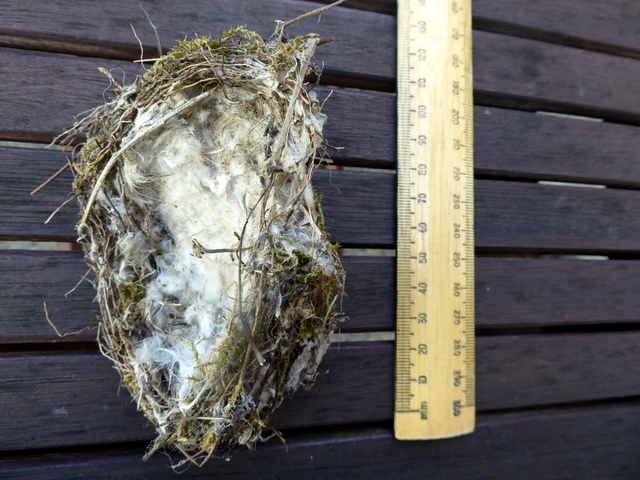
While watering my green beans the other day I noticed some tiny white eggshells lying on the ground and wondered where they could have come from.  Richard looked into the branches of the Laburnum tree above us and saw a tiny nest that I hadn’t been able to see – (I am quite a lot shorter than he is).  It was a windy day and the pieces of shell must have been dislodged by the breeze.  A week later I found the nest on the ground and here is my photograph of it.
p1010346-nest

I do not know what bird built this nest.

As you can see from the photo it is only 11 cm long and about 6 cm wide.  It is made of tiny twigs, grasses, leaves and moss all woven together and is lined with sheep’s wool and white feathers.

And finally, here is my music selection for this post.

Thanks for visiting!
Share this:

  • Share on X (Opens in new window) X
  • Share on Reddit (Opens in new window) Reddit
  • Share on Pinterest (Opens in new window) Pinterest
  • Share on Facebook (Opens in new window) Facebook
  • Email a link to a friend (Opens in new window) Email
  • Share on Tumblr (Opens in new window) Tumblr
  • Print (Opens in new window) Print
  • Share on LinkedIn (Opens in new window) LinkedIn
Like Loading...

In My Garden

18 Sun Sep 2016

Posted by Clare Pooley in Gardening, Insects, plants, Rural Diary, wild flowers

≈ 62 Comments

Tags

Astrantia, Bittersweet, black bryony, Black Spleenwort, blue-tailed damselfly, butterflies, comma, common blue damselfly, Damselfly, Dragonfly, Essex skipper, Field Bindweed, flowers, fruit tree, garden, gatekeeper, Gladiolus, greengage, hedge bindweed, Hyssop, insects, Jacob's Ladder, Lilium longiflorum, peacock butterfly, perennial sow-thistle, Pheasant Berry, plants, rowan, ruddy darter, runner beans, spleenwort, Stargazer Lily, Suffolk, sunset, Swiss Chard, trees, vegetables, wheat, wild flowers, Woody Nightshade

This post is made up of photos of flowers, insects and other things of interest that I saw in my garden during the last couple of weeks of July and the first fortnight in August.  We spent that time catching up with jobs around the house and doing a lot of gardening as the weather was quite good.

It has not been a good year for insects here; an extremely bad one for butterflies in fact, possibly due to the cool, wet spring and early summer we had.  The flowers and plants had a slow start but once the warm weather arrived in mid July they soon caught up.

P1000970Darter

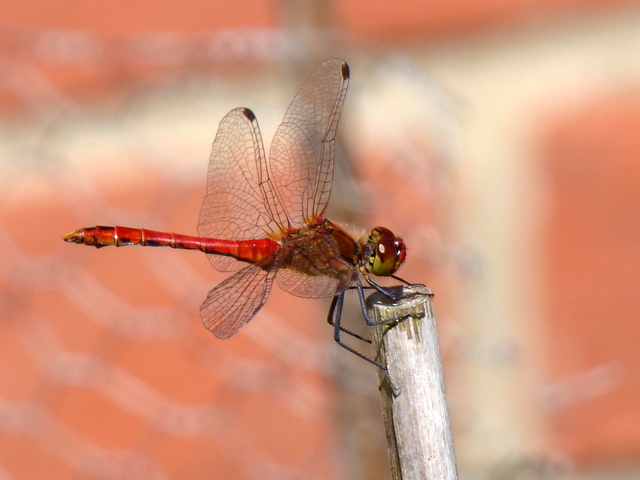
A male Ruddy Darter (Sympetrum sanguineum)

We still had plenty of these small dragonflies in our garden until recently but in July they had just started flying.  They don’t just fly near water but find perches all over the garden from which they ‘dart’ to catch passing prey.  In this photo the dragonfly is on the top of a cane in my flower-border and was happy to let me get very close to him.  Ruddy Darters are the only red dragonflies with totally black legs – they also have a small patch of yellow at the base of the wings.  There are black lines on the upper side of the second- and third-to last segments of the abdomen.  The upper half of the eyes are red-brown and the lower half are green.  The frons (the front of the ‘face’) is red.

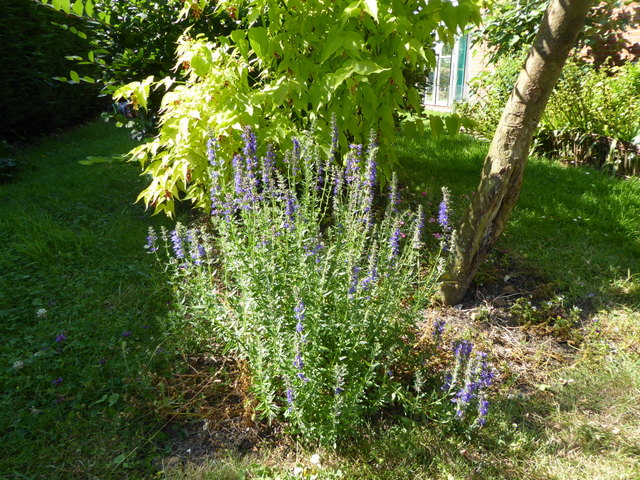
P1000974Hyssop

Hyssop (Hyssopus officinalis)

I bought this herb late last summer; it survived the winter very well and has flowered beautifully this year.  It is very popular with the bees and smells good too.

P1000975Swiss Chard

Swiss Chard ‘Bright Lights’ (Beta vulgaris subsp. cicla var. flavescens)

I grew Swiss Chard from seed this year for the first time, mainly because my mother likes it and hasn’t been able to get it for a few of years.  I gave her a few plants and then put some plants into a couple of gaps in my flower-border.  They look beautiful, especially with the sun shining through the colourful stems.  I can’t say the vegetable when eaten has been very popular.  The leaves are like spinach, quickly reducing in size and becoming soft; the stems which I put into the hot water a minute or so before the leaves, have a lovely texture and a very mild taste.  They can be steamed successfully too.  I think it is the mildness that doesn’t appeal – or perhaps the spinach-like leaves.  We love greens in this family and get through large amounts of cabbage, spring-greens, brussels sprouts and broccoli, all of which have fairly powerful flavours.  Perhaps Swiss Chard is too refined for us?

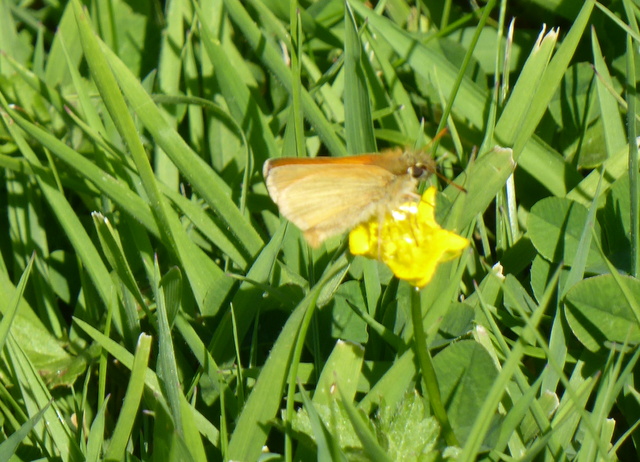
P1000976Skipper

A poor photo of an Essex Skipper butterfly (Thymelicus lineola) sitting on a buttercup flower.

I include this just to prove to myself that we did get a number of skippers in the garden in the summer.  The Essex Skipper is very similar to the Small Skipper but the antennal tip instead of being golden is black underneath, which can just be seen in my photo.

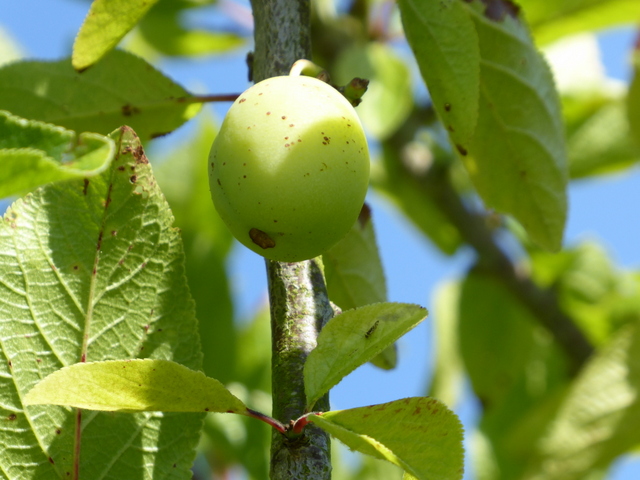
P1000978Greengage

A Greengage (Prunus domestica ssp. italica var. Claudiana)

We bought a young Greengage tree nearly three years ago and this year we got two fruits on it.  We didn’t manage to eat either of them because one or other of our animal, bird or insect visitors got there first.

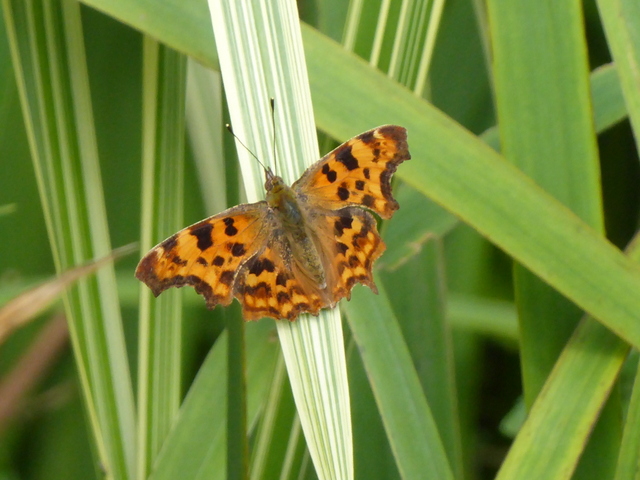
P1000981Comma

A Comma butterfly (Polygonia c-album)

The name ‘Comma’ refers to a white comma mark on the underside of the wings.

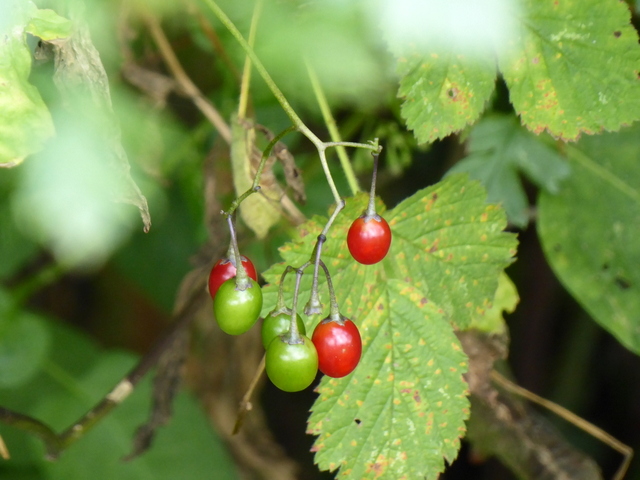
P1000984Woody Nightshade berries

Woody Nightshade/Bittersweet berries (Solanum dulcamara)

This has got everywhere in the garden this year!  I have found it growing in amongst the herbs, up through the Pyracantha and it has taken over the two Cotoneasters that grow next to our gas-tank.  (We are not on mains gas here so have a large butane gas tank near the house).  Bittersweet berries are beautiful and are at their most attractive at this stage when some are still green and they are plump and shiny.

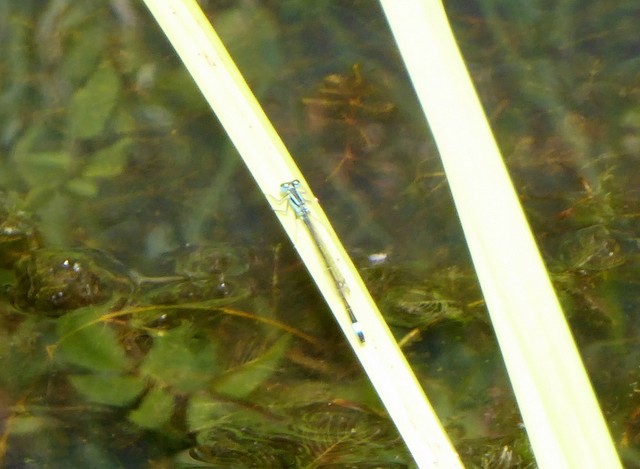
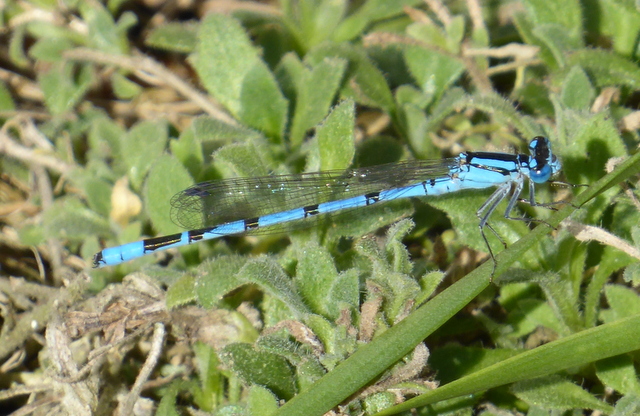
P1000985Blue-tailed Damselfly perhaps

Another poor photograph showing what I believe to be a female Blue-tailed Damselfly (Ischnura elegans)

Another photo that is proof to me that we had these damselflies flying round the pond this summer.

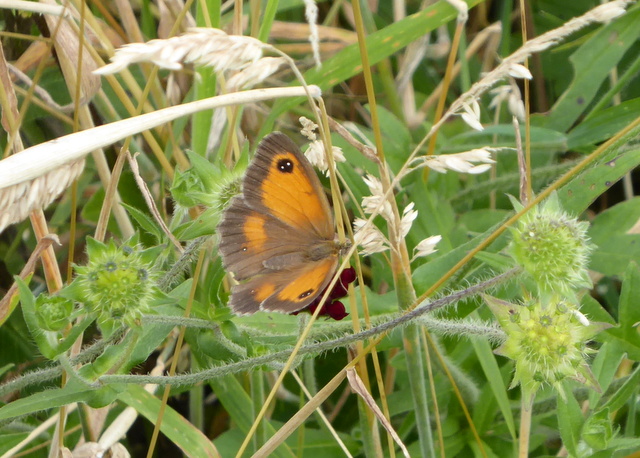
P1000990F Gatekeeper-001

Female Gatekeeper butterfly (Pyronia tithonus)

Male Gatekeepers are territorial and patrol an area of hedgerow often in corners of fields or near gates trying to deter other insects from entering their domains.  The males are smaller and a brighter orange than the females and have a dark patch of scent glands on the fore-wing.

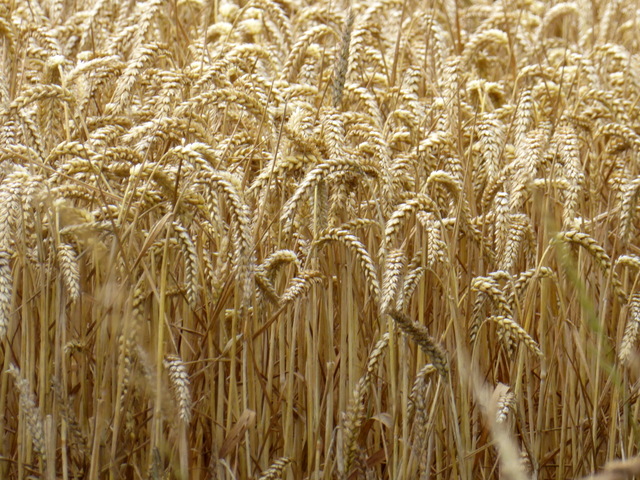
P1000986Ripe wheat

Ripe Wheat (Triticum spp.)

I couldn’t resist taking a photo of the wheat in the field behind our house just before it was harvested this year.

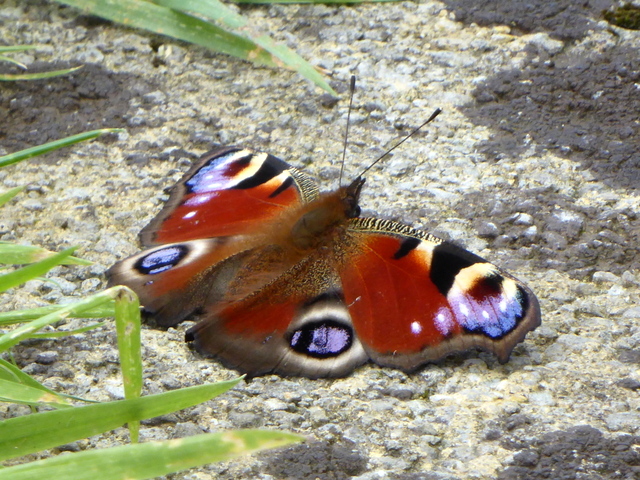
P1000998Peacock butterfly

Peacock butterfly (Inachis io)

This slightly battered Peacock was sunning itself on the path.  They are very hairy-bodied insects and the colours and markings on the wings are beautiful.  I noticed for the first time the lovely tiger-stripe yellow and black ‘shoulders’ on the fore-wing.

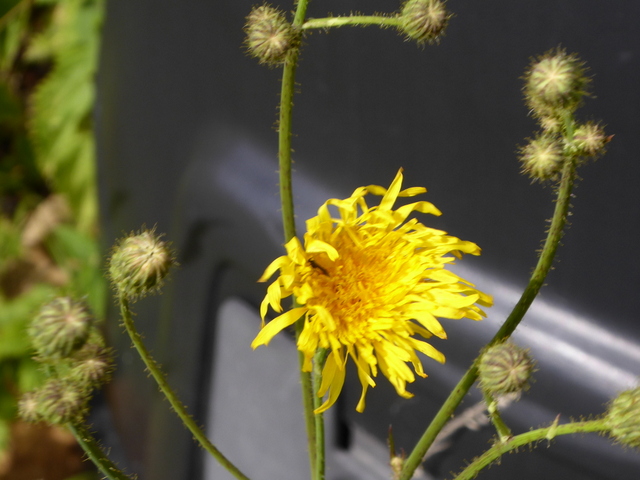
P1010003Perennial Sow-thistle

Perennial Sow-thistle (Sonchus arvensis) This one I discovered growing next to our compost bin.

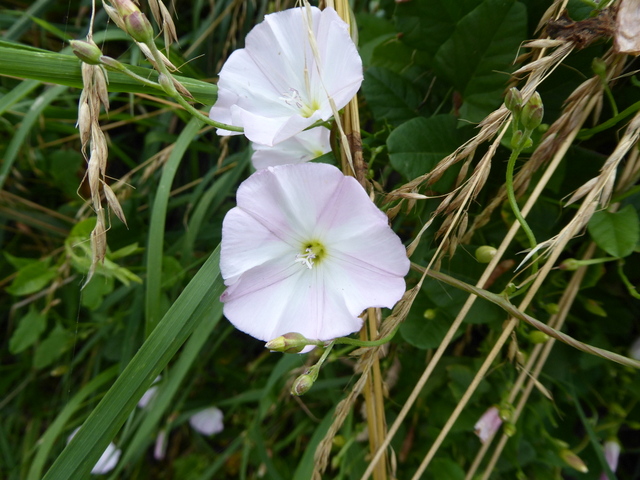
P1010007Field Bindweed

Field Bindweed (Convolvulus arvensis)

The flowers this year are only lightly marked with pink.  They are usually much brighter.

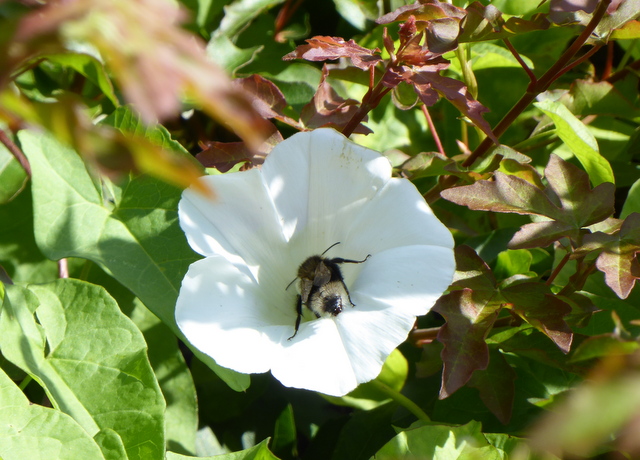
p1010009bumble-bee-hedge-bindweed

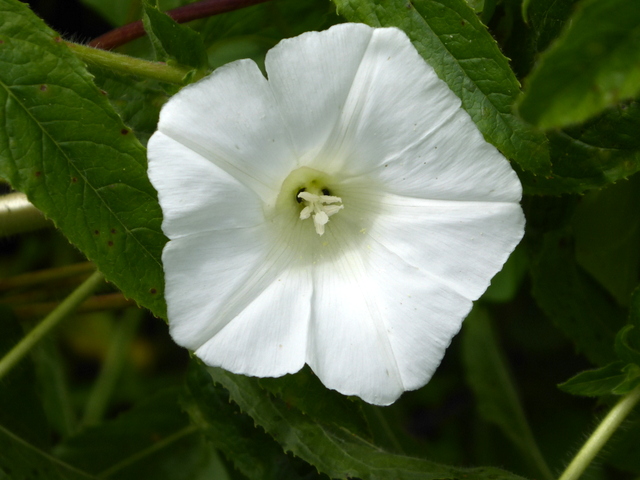
We are lucky (?) to have both Field Bindweed, as in the former photo, and Hedge Bindweed (Calystegia sepium) as here, in our garden. This one was being visited by a bumble bee.

p1010010rowan-berries

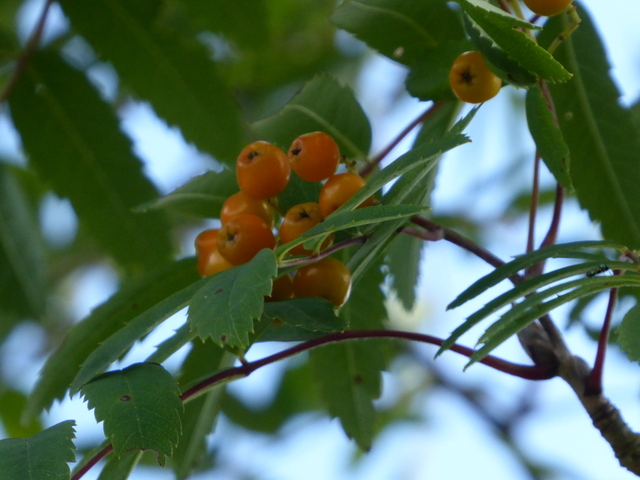
Our young Rowan or Mountain Ash tree (Sorbus aucuparia) had many flowers in the early summer and produced some berries this year. The berries in the photo are not quite ripe yet.  They were eaten by something very quickly once they were red and ripe.

p1010011pheasantberry-flowers

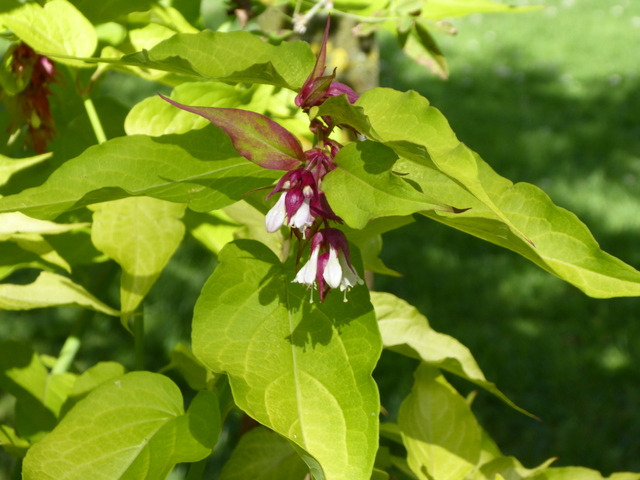
Pheasant Berry (Leycesteria formosa)

I have a pale-leaved Pheasant Berry bush and it has done very well this year, having had enough rain-water at the beginning of the season.  The birds usually enjoy the berries but I’m not sure if the wasps will have left them any!

p1010012lily

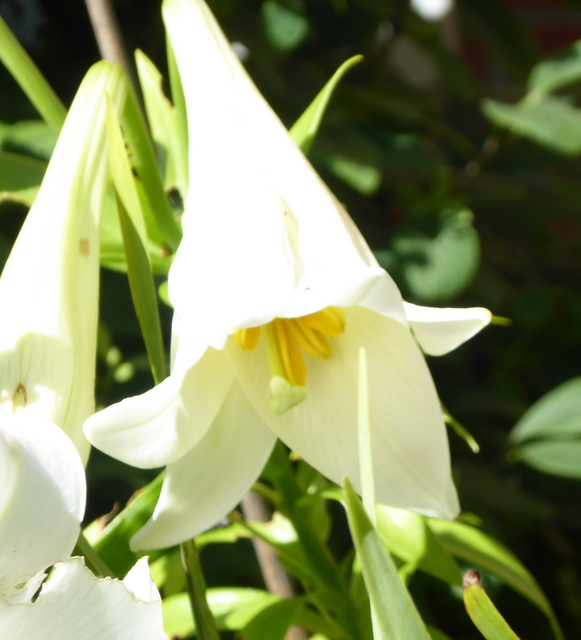
Lilium longiflorum

The white Longiflorum lilies did a little better this year.  I still had some trouble with non-native Red Lily Beetles but the cool wet June meant the flowers were taller and stronger and the beetles didn’t appear until later in the season when the weather improved.  I was as vigilant as I could be, going out checking for beetles at least twice a day and squashing them when I found them.  Unfortunately, nothing could be done while I was away from home so when I returned I soon discovered the horrible grubs eating the plants.  I removed as many as I could and discovered that spraying them regularly with soap was very effective.

p1010014runner-beans

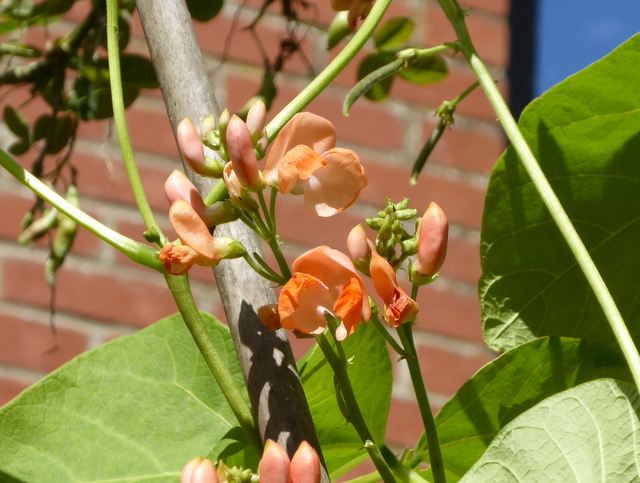
Runner Beans (Phaseolus coccineus) ‘Celebration’

I grew runner beans this year and gave my mother six plants and planted the rest in a gap in my flower border.  They grew up through a laburnum tree and did quite well.  I started them fairly late so they didn’t begin flowering til after mid-summer but the beans develop very quickly and these ones are so sweet and hardly have any ‘strings’.   I love the orange flowers.

p1010015runner-beans-and-jacobs-ladder

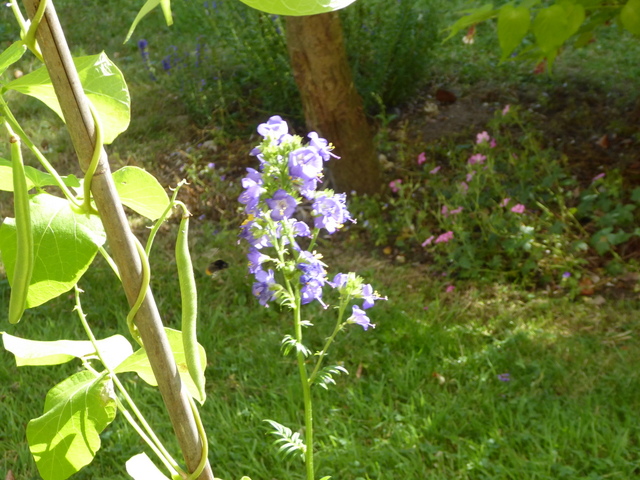
The beans with a Jacob’s Ladder (Polemonium caeruleum) flower-spike and a bumble bee flying towards the Jacob’s Ladder.

p1010016

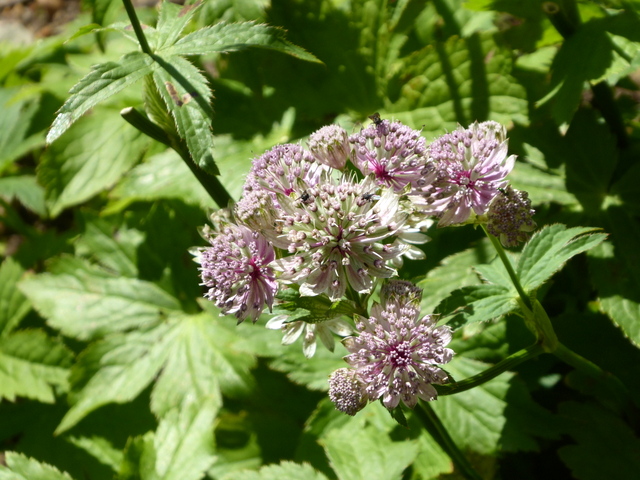
The Astrantia, also known as Masterwort, has done well this year.

p1010018common-blue-damselfly

A male Common Blue Damselfly (Enallagma cyathigerum)

p1010028lilies

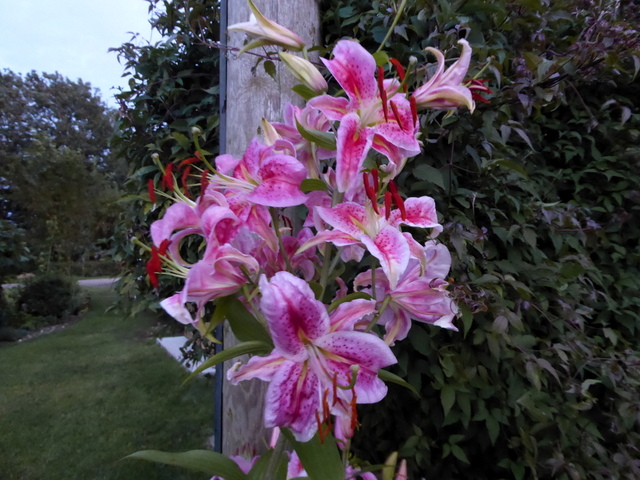
This photo of my lilies (Lilium ‘Stargazer’) was taken well after sunset and without a flash.

I wanted to see if there was enough ambient light to take a successful photo of these luminous lilies.

p1010030gladiolus

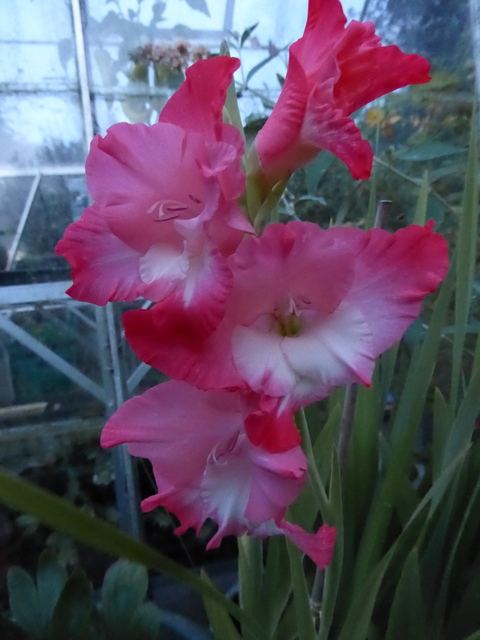
I then took this photo of a Gladiolus next to the greenhouse

p1010021black-spleenwort

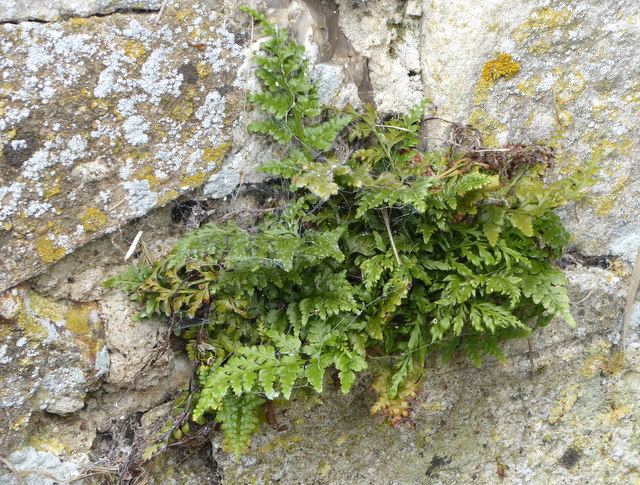
On a church cleaning visit to our church at Rumburgh I noticed this Black Spleenwort (Asplenium adiantum-nigra) growing on the wall.

This plant is mainly found in the west of the country so I was surprised to see it here, almost as far east as one can get.  It loves alkaline soil and here it is growing in the mortar.  A month later and it had gone – removed I presume, in case it caused yet more damage to our poor crumbling church building.

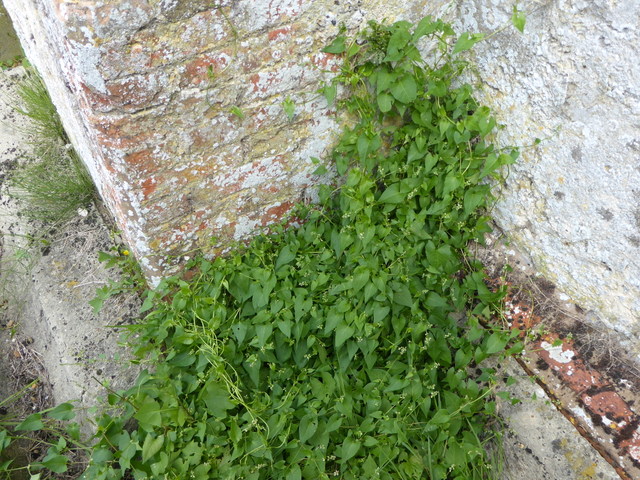
p1010022black-bryony

Just below the spleenwort was this patch of Black Bryony (Tamus communis)

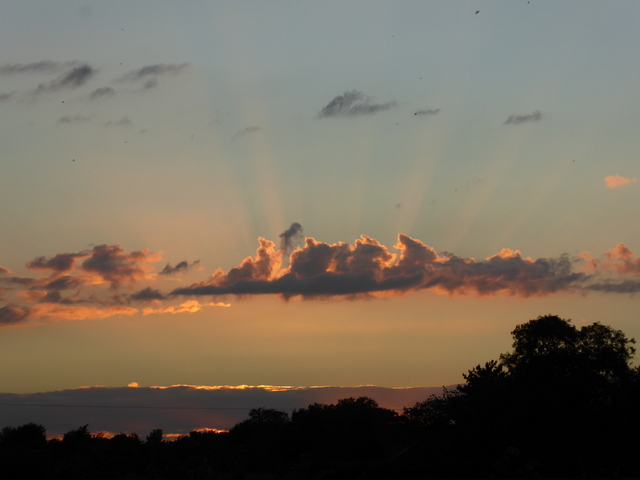
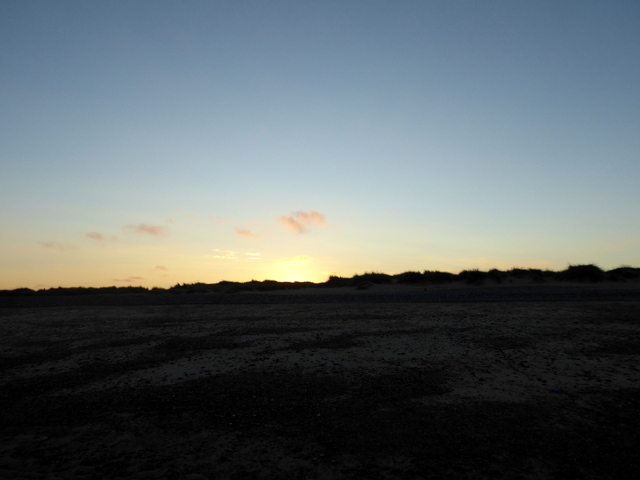
A sunset seen from the back of the house.

p1010020sunset

My music selection today is ‘The Arrival of the Queen of Sheba’ by Handel.

Thanks for visiting!

Share this:

  • Share on X (Opens in new window) X
  • Share on Reddit (Opens in new window) Reddit
  • Share on Pinterest (Opens in new window) Pinterest
  • Share on Facebook (Opens in new window) Facebook
  • Email a link to a friend (Opens in new window) Email
  • Share on Tumblr (Opens in new window) Tumblr
  • Print (Opens in new window) Print
  • Share on LinkedIn (Opens in new window) LinkedIn
Like Loading...

Seaside at Sunset

29 Fri Jul 2016

Posted by Clare Pooley in music, plants, Rural Diary, seashore

≈ 55 Comments

Tags

Black-headed Seagull, common ragwort, Common Sea Lavender, gorse, hare's-foot clover, harvestman, mudflats, oil, Perennial Glasswort, plants, sand dunes, sea, sea campion, Sea Sandwort, Sea-holly, seashore, Suffolk, sunset, thrift, Walberswick

After a busy day last Friday and a hot, sunny day too, we thought it might be nice to go to the coast for a little while.  We knew that it would be extremely crowded for most of the day so we left it until after we had eaten our evening meal and set off just before 8.00 pm.

We decided that we’d visit Walberswick as we hadn’t been there for some time and parked the car in the car-park there at about 8.30 pm.

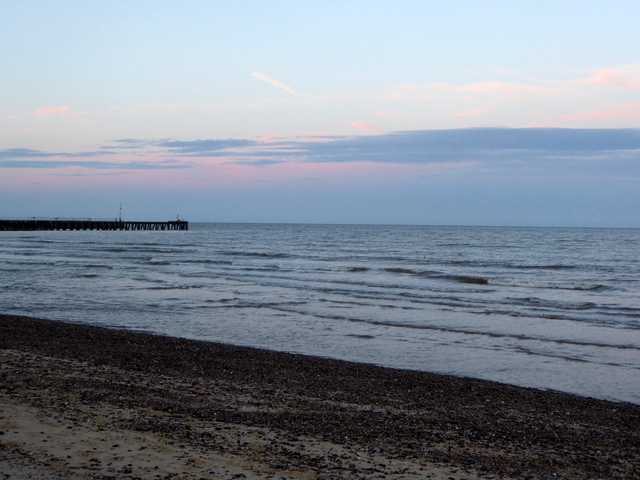
P1000941Walberswick

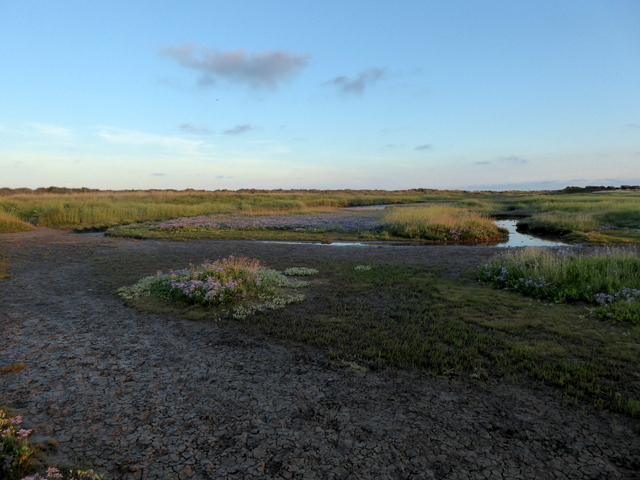
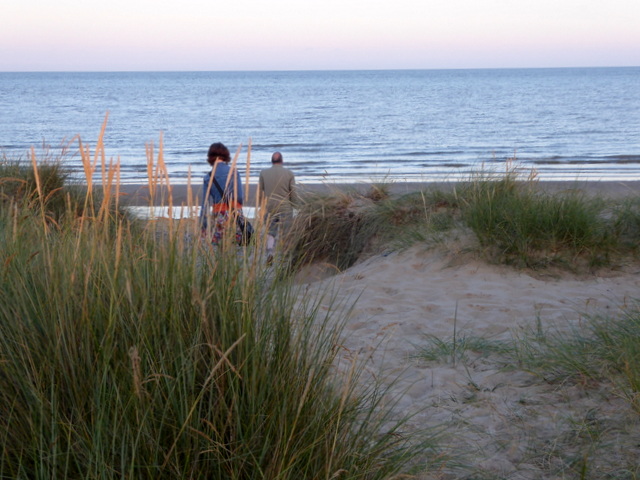
Walberswick. With its creeks, mudflats, sand-dunes and varied flora it is a favourite place of mine to visit.

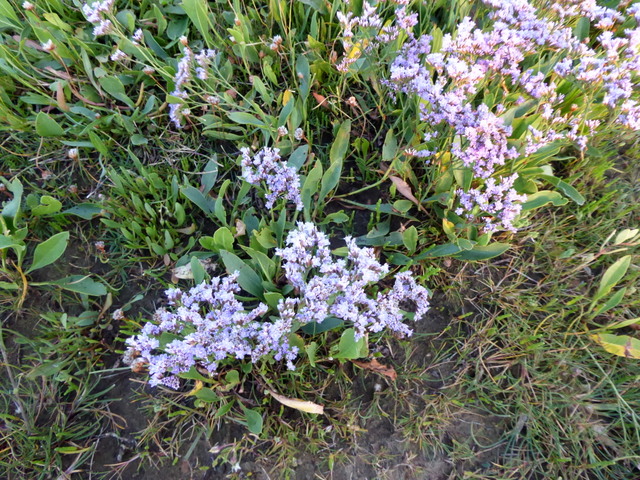
The mass of mauve flowers you can see in the photo above are Sea Lavender.

P1000940Common Sea-lavender

Common Sea-lavender (Limonium vulgare)

I couldn’t get a clear picture of these flowers – mainly because I couldn’t get down low enough!  Sea-lavender (no relation of true Lavender) is related to the cultivated Statices – everlasting flowers.  Many people pick these flowers illegally to make dried flower arrangements.  Strangely, the drier the ground in which it grows, the taller it gets.  This plant grows in great masses on the North Norfolk coast and I would love to see it there again.

P1000944Thrift

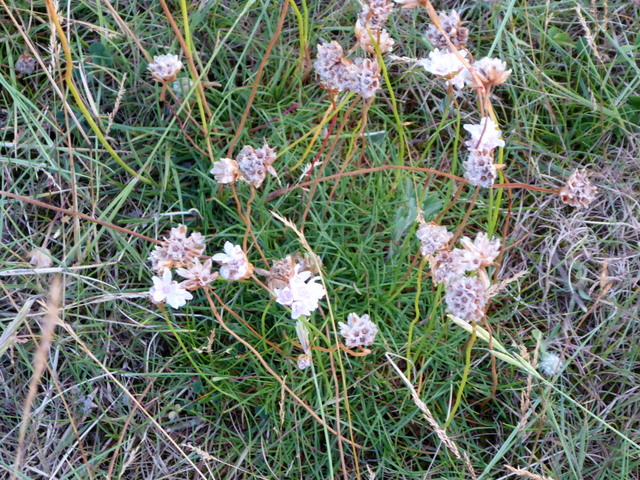
There wasn’t much Thrift or Sea Pink (Armeria maritima) left – mainly seedheads. Thrift is a relative of Common Sea-lavender.

P1000942Hare's-foot Clover

There was a lot of rather scrappy Hare’s-foot Clover (Trifolium arvense)…

P1000943Sea Campion

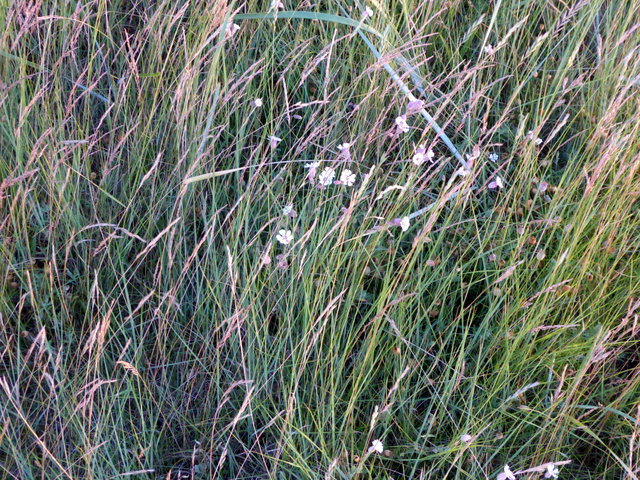
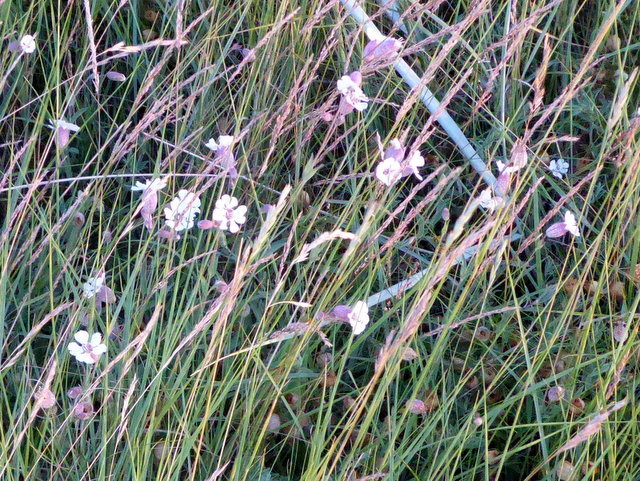
…and a small amount of Sea Campion (Silene uniflora)

I cropped the photo I took.

P1000943Sea Campion-002

The calyx (the area behind the petals) is swollen, like Bladder Campion is and is similarly patterned with red veins. The petals are larger and thicker than other types of Campion and usually overlap each other.

P1000947Sea Sandwort

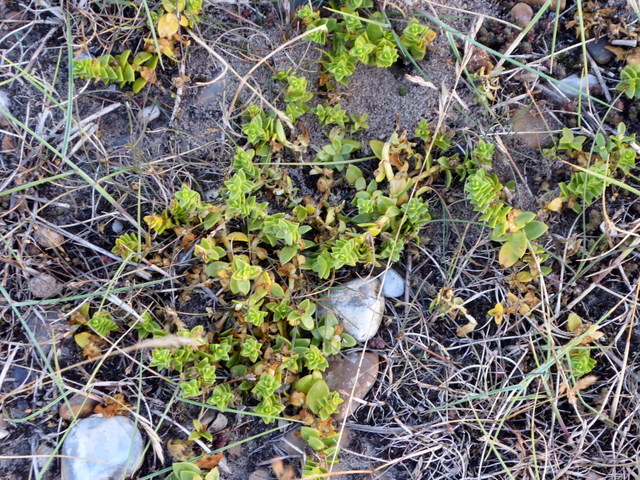
Sea Sandwort (Honckenya peploides).  I like the way this plant grows. It reminds me of children’s building toys.

In Richard Mabey’s ‘Flora Britannica’ he says ‘… (Sea Sandwort) is one of the earliest colonisers of sand-dunes and shingle, and remarkable for its sprawling concertinas of geometrically stacked leaves’.  It is able to keep growing upwards so if ever it is inundated with sand or mud it can survive.  As with many seashore plants it is succulent and edible.

P1000945Harvestman and Sea Sandwort

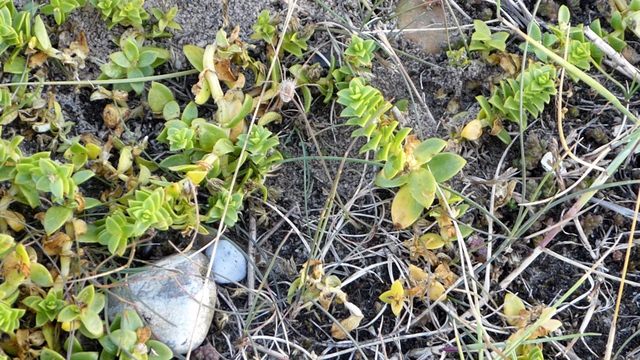
More Sea Sandwort, this time with a Harvestman or Harvest Spider. Can you see it? They are not true spiders but are related to them. They have one-piece bodies and no silk-glands so can’t spin webs.

P1000948Common Ragwort

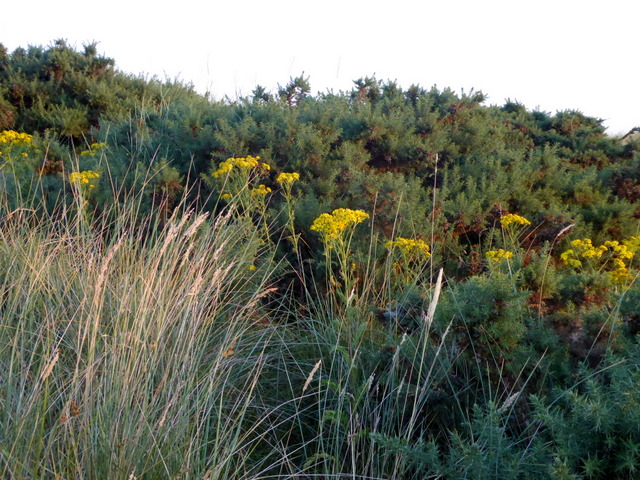
Common Ragwort (Senecio jacobaea) in flower and Gorse bushes (Ulex europaeus)

P1000949Dunes

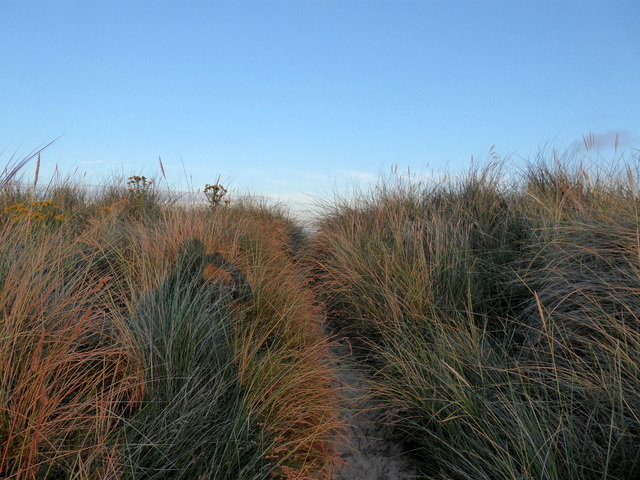
The dunes and my shadow!

P1000950Dunes

Richard and Elinor beat me to the sea. The cool northerly breeze was so refreshing.

P1000951Walberswick

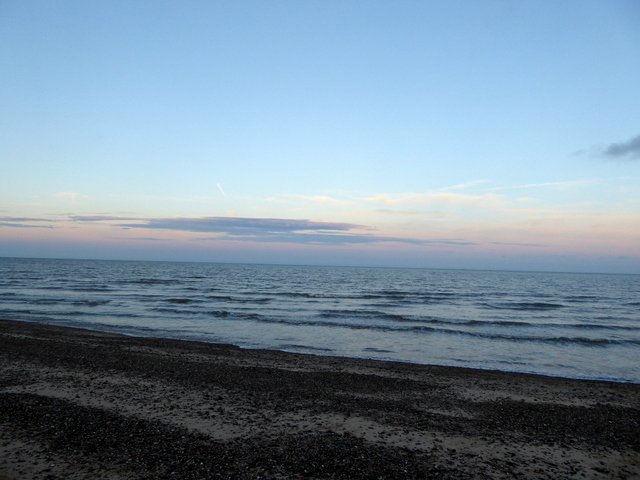
The sea and sky were beautiful

P1000952Sunset

The sun was just setting behind us

Lumps of oil
Lumps of oil
More oil
More oil

I was sorry to see this oil on the beach.  This is evidence that tankers have been flushing out their tanks illegally in N W European waters .

P1000955Sunset

The sunset progressed.

P1000957Sea

The view out to sea still looked good.

P1000958Seagulls

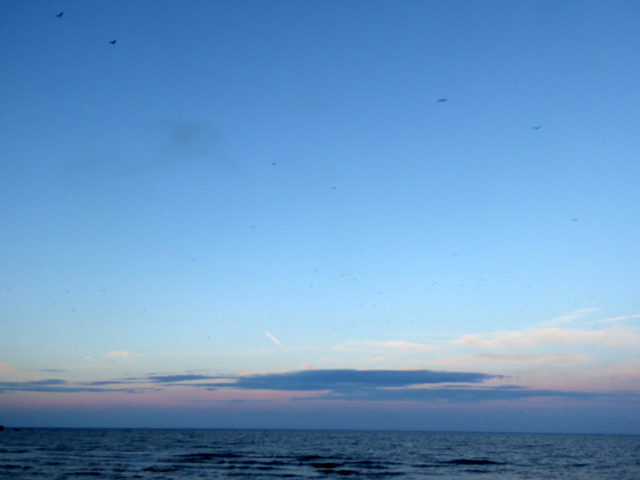
Seagulls were making their way out to wherever it is they go for the night…

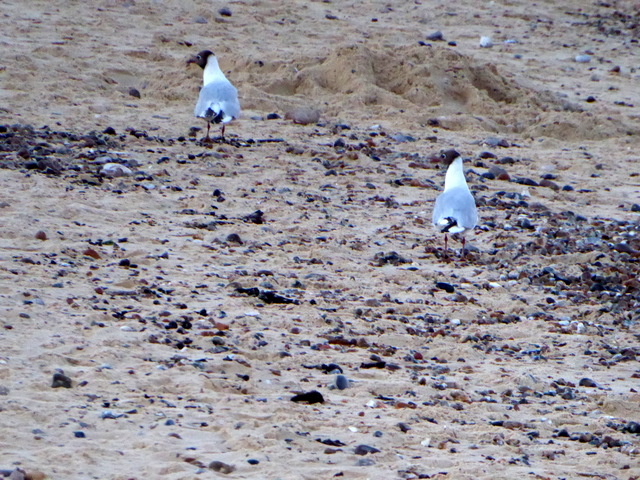
P1000959Black-headed Seagulls

…except these two Black-headed Gulls (Larus ridibundus) who seemed to be doing some synchronised beach-combing.

P1000960Sea

One last look at the sea…

We made our way back to the dunes where I found a couple more plants to photograph.

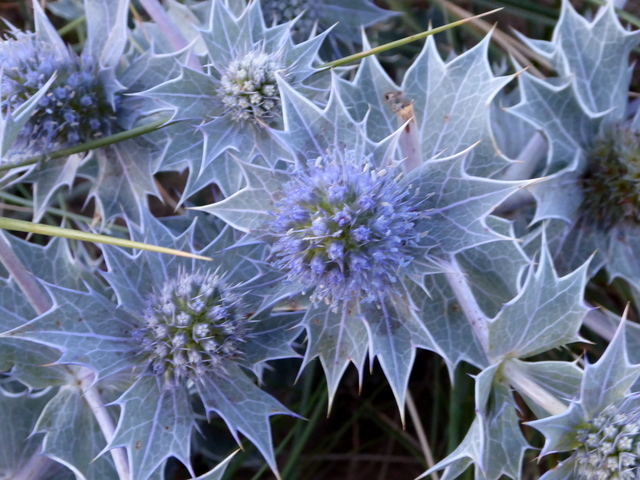
P1000961Sea-holly

Sea-holly (Eryngium maritimum)

P1000962Sea-holly

A most beautiful plant!

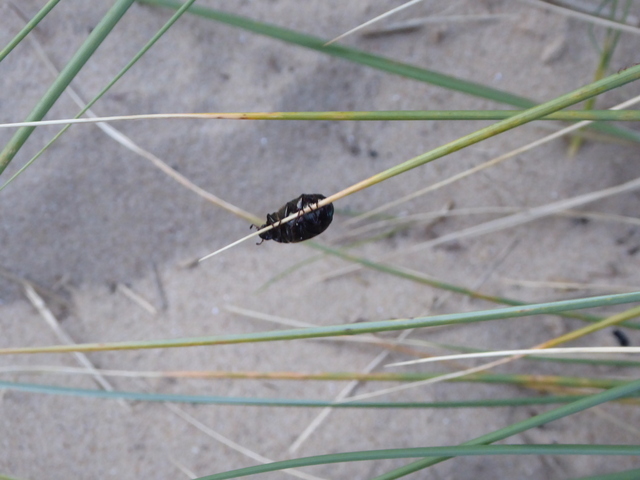
P1000965Bug

A cute little bug hoping I leave him alone!

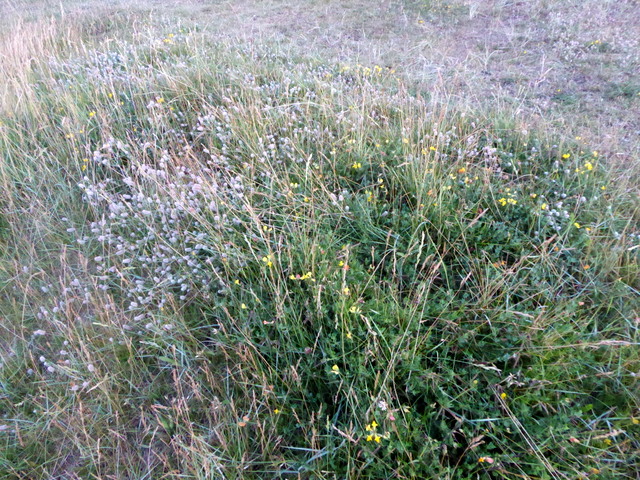
P1000966Vetch & Hare's-foot Clover

Vetch and Hare’s-foot Clover

P1000967Perennial Glasswort

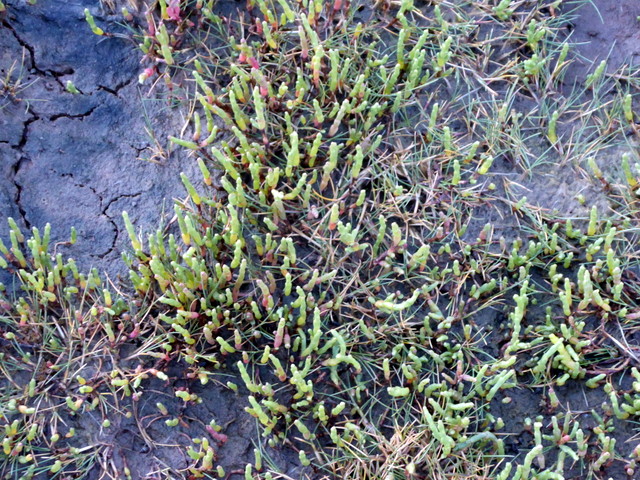
Perennial Glasswort (Sarcocornia perennis)

Another name for Glasswort is Samphire and like Common Glasswort (an annual plant which is also called Samphire) it can be eaten lightly boiled or pickled in spiced vinegar.

For many hundreds of years Glasswort was used in the manufacture of glass.  The succulent stems were gathered at low tide, dried and burned in heaps.  The crude ash which is high in soda was then fused with sand to make a poor quality glass.  Saltworts were also used for this purpose.

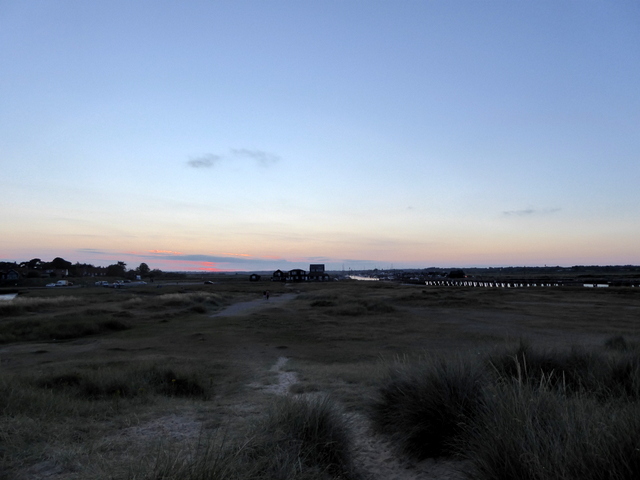
View inland with the R. Blyth on the right

View inland with the R. Blyth on the right

We had enjoyed our hour on the beach and went home cool and relaxed.

Thanks for visiting!

Share this:

  • Share on X (Opens in new window) X
  • Share on Reddit (Opens in new window) Reddit
  • Share on Pinterest (Opens in new window) Pinterest
  • Share on Facebook (Opens in new window) Facebook
  • Email a link to a friend (Opens in new window) Email
  • Share on Tumblr (Opens in new window) Tumblr
  • Print (Opens in new window) Print
  • Share on LinkedIn (Opens in new window) LinkedIn
Like Loading...

Home from Abroad

27 Wed Jul 2016

Posted by Clare Pooley in family, Insects, music, plants, Rural Diary, trees, wild flowers

≈ 57 Comments

Tags

agrimony, butterflies, clouds, common darter, common knapweed, Diary, dragonflies, Field Beans, gatekeeper, Great Willowherb, hedge bindweed, lane, Lords and Ladies, Marsh Woundwort, Meadowsweet, ponds, ringlet, ruddy darter, scarlet pimpernel, spear thistle, Suffolk, Sweet Chestnut, thunderstorm, wild flowers, yarrow

We arrived back home last Wednesday after spending eight days in the Schwarzwald (Black Forest).  It was probably the hottest day of the year so far and we spent it travelling by train up from Triberg, Germany to Ebbsfleet in Kent (England) where we had left our car.  We set off from the hotel at 6.30 am European time and got home just after 7.00 pm British time (one hour behind Europe).  The car thermometer said it was 32C (89.5F) when we set off from Kent and it peaked at 34C (93F) near the tunnel at the Dartford Crossing (under the Thames).  As we drove home up through Essex and Suffolk we watched large black clouds to the west edging ever nearer and we hoped we’d be able to get home before the storm got to us.  We did.  It was still 32C as we unpacked the car, opened all the windows and doors in the house and wandered round the garden for a while looking at the long grass and the drooping plants.  While I put the kettle on and made a cup of tea Richard telephoned the Chinese restaurant in Halesworth and ordered a take-away meal.  He was just about to set off when the storm broke.  It was the most violent one I’ve seen for many years with continuous thunder and bolts of lightening coming down vertically and travelling horizontally across the sky.  The rain was very heavy indeed.  Elinor and I sat on the stairs together as she gets quite frightened during thunderstorms and Richard went off to collect our evening meal.  The storm gradually abated and the sky cleared but still Richard hadn’t come back and I began to worry about him.  I found his phone which he had left behind so I couldn’t get in touch to find out where he was.  I was considering getting in the car and going to look for him when I was relieved to see him driving up to the house.  He had had a hair-raising journey and when he had got to Halesworth he found that the Chinese restaurant had a power-cut and couldn’t give us a meal.  They had tried to phone him on his mobile to let him know, but of course he had left it at home.  The town’s Thoroughfare was flooded with a foot of water and people were out trying to sweep the water away from the shop doors.  Water was coming up through the drains and the town river was in full spate.  Richard didn’t lose his head and knew he had a mission to accomplish so went to the other Chinese restaurant at the top of the town which hadn’t lost it’s power and ordered our meal from them instead.

When the rain stopped I went outside to enjoy the fresh, cooler air and took some photographs of the strange clouds.

This slideshow requires JavaScript.

The following day I resumed my dutiful-daughter job and took Mum out to do her shopping.  We had bought double her usual amount of shopping just before we’d gone away and we had made sure she had enough of her medication to last as well.  While we were on our holiday she had been taken to church by my brother on the Sunday and he had cooked lunch for her at his house, so she had plenty to tell me.

When I got home again I got on with the washing and started to tidy the garden.  Richard and I called in to see our next-door-neighbours who had been kind enough to water the plants in the greenhouse and to put our rubbish bins out for collection while we were away.  We are very fortunate to have such thoughtful and generous neighbours.

The next day I continued with house and garden work.

P1000897Scarlet Pimpernel

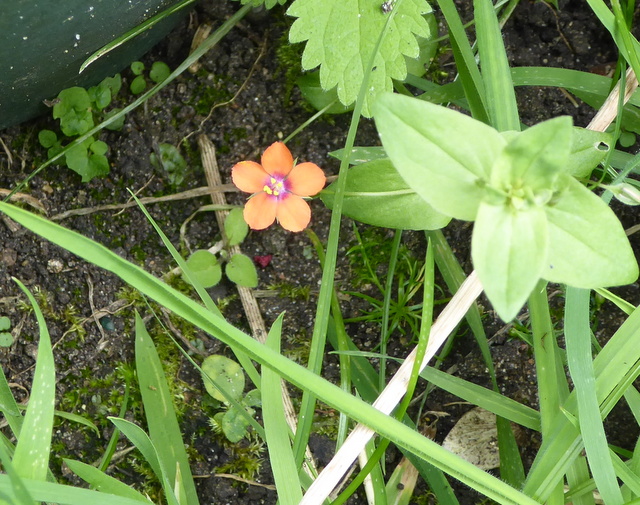
Scarlet Pimpernel (Anagallis arvensis ssp.arvensis) found behind the greenhouse

P1000899Marsh Woundwort

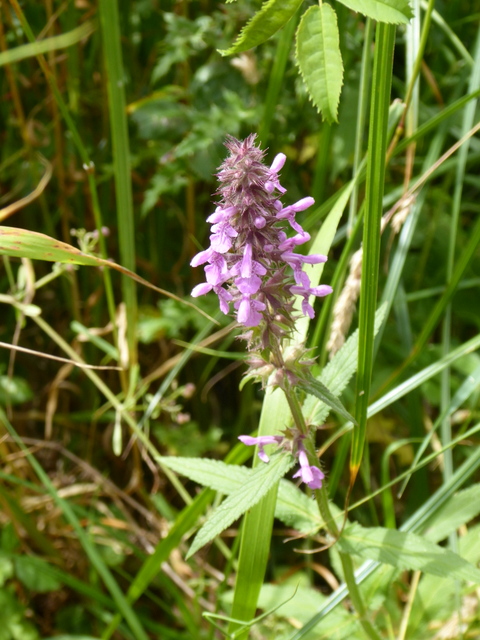
Marsh Woundwort (Stachys palustris) found growing on the bank of the big pond.

P1000900Common Darter

I think this may be a male Common Darter (Sympetrum striolatum) though it could be a male Ruddy Darter (Sympetrum sanguineum)

P1000902Spear Thistle

A Spear Thistle (Cirsium vulgare) in flower near the big pond

P1000905Ringlet

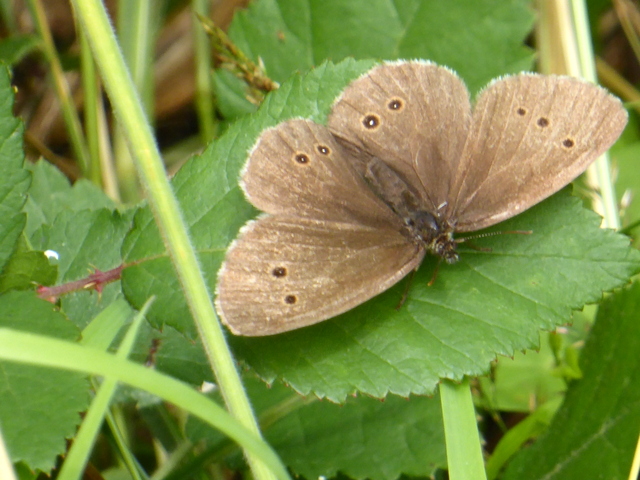
A rather old and tired Ringlet butterfly (Aphantopus hyperantus)

P1000908Hedge Bindweed

Hedge Bindweed (Calystegia sepium) in flower in the area between our garden and the field at the back of the house.

P1000910Common Darter

I believe this may be a female Common Darter (Sympetrum striolatum)

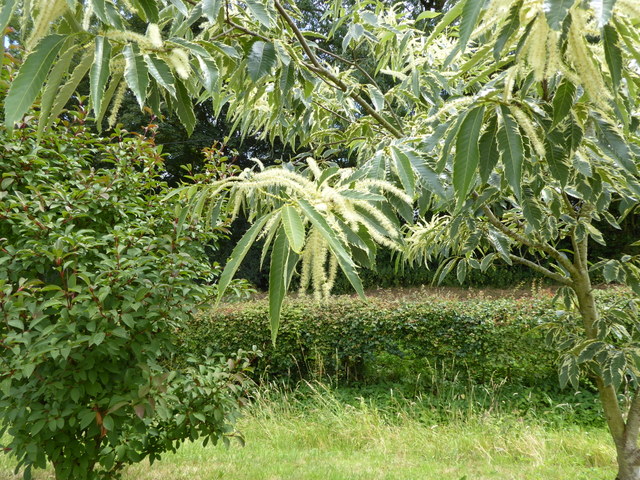
P1000914Sweet Chestnut

Our Variegated Sweet Chestnut (Castanea sativa variegatum) in flower

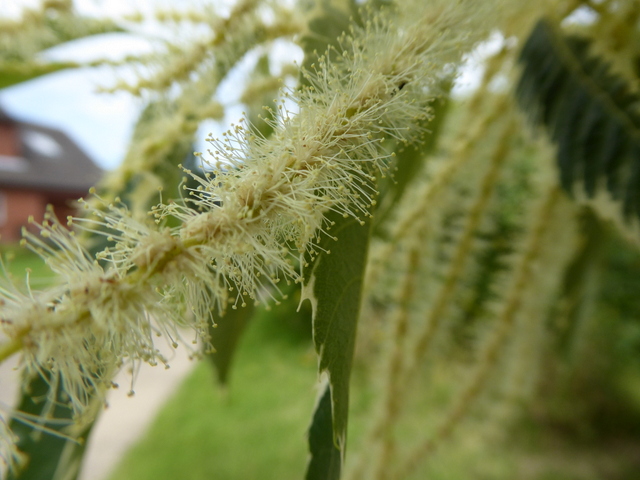
P1000915Sweet Chestnut

Sweet Chestnut flowers

I walked down the lane with Elinor to post birthday cards to my niece Natalie (my brother’s daughter) who had her 31st birthday on the 23rd of July and cards to Alice my elder daughter who had her 31st birthday on the 24th of July.  Natalie is exactly 23 hours older than Alice.

P1000916Darter

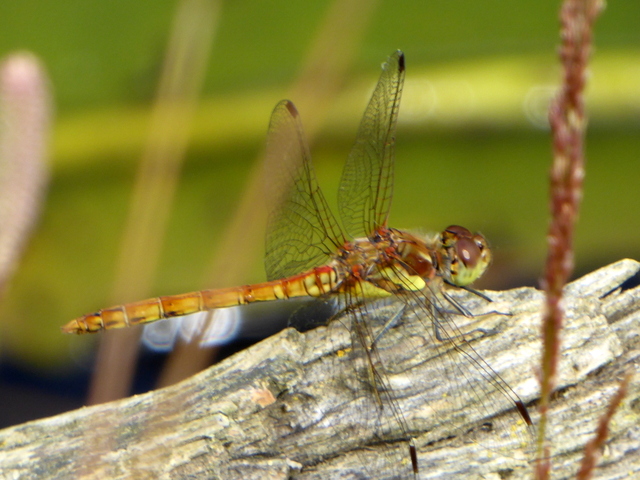
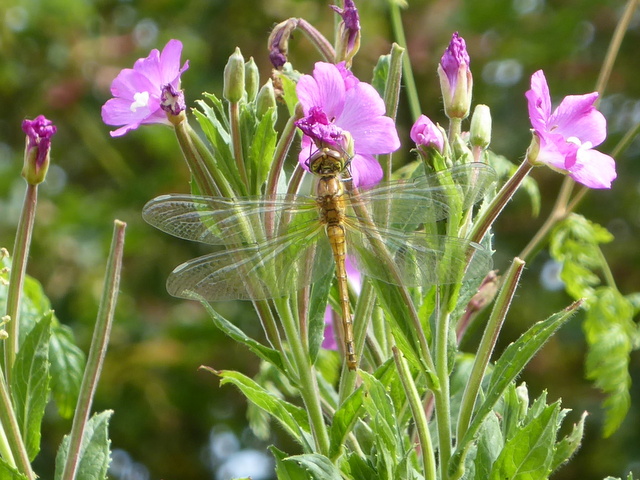
This is a teneral, or newly emerged dragonfly as you can see by the pale colouring and very shiny wings. I don’t know which dragonfly it is, unfortunately. It is perched on a Great Willowherb (Epilobium hirsutum) growing in the ditch at the side of the lane.

P1000917Pond

The new pond at the side of the lane which was dug during the winter.

Richard spoke to the man who lives on the opposite side of the lane to the pond and who was responsible for digging it.  Apparently, many years ago there was a pond there which was wide enough and deep enough to enable the horses to be led to drink while still attached to their carts.  It was filled in when horses were no longer needed on the farm but it has now been re-instated and I am very pleased.  The pond is already full of interesting plants and insects which have found their way there on their own.

P1000921Lane

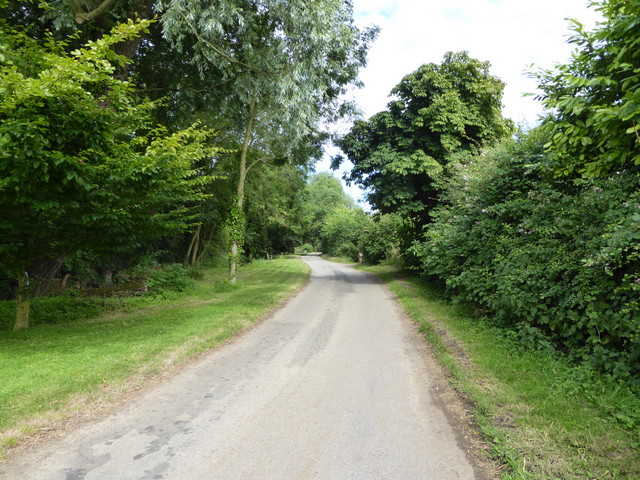
Our lane. I am standing next to the pond (on my left) and looking back in the direction from which we had come.

P1000922Perhaps wall of demolished St N church

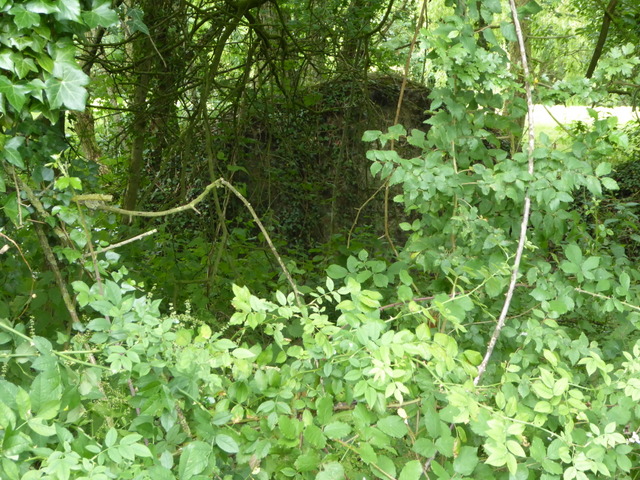
Looking over the hedge into the garden of Church Farm I noticed this piece of wall covered in ivy. I wonder if it is part of the old church of St Nicholas demolished many hundreds of years ago.

P1000923Lords and Ladies

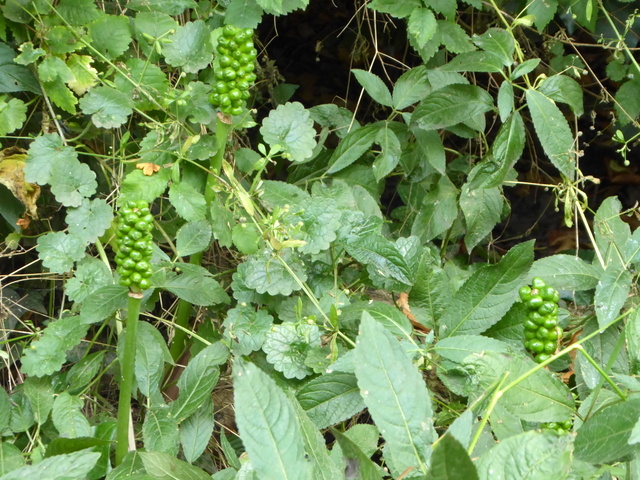
Lots of unripe Lords and Ladies berries (Arum maculatum)

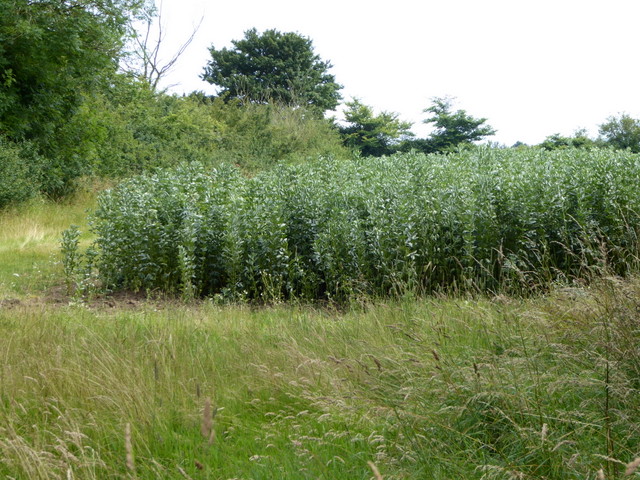
P1000924Field beans

A field full of Field or Broad Beans.

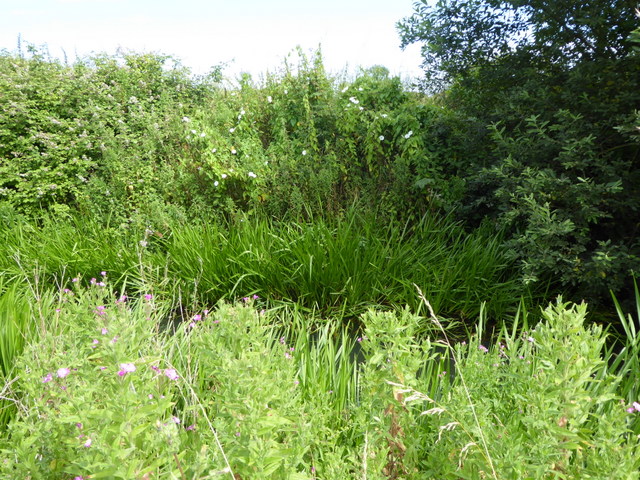
P1000925Pond

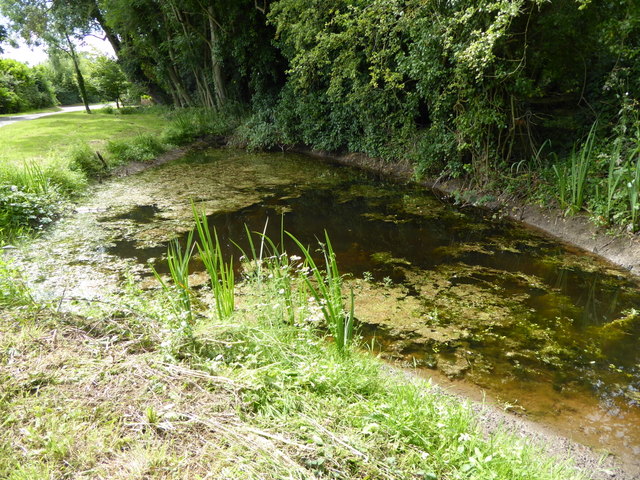
Another pond at the side of the lane. This one has become rather overgrown. It has fish in it and I once saw a couple sitting at the side of the road with rods trying to catch fish.

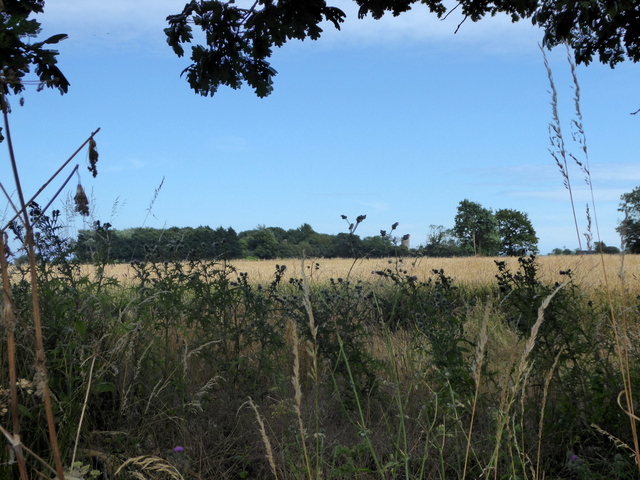
P1000926View

View across the fields towards All Saints church which can just be seen to the right of centre on the horizon. It is slightly obscured by a thistle flower!

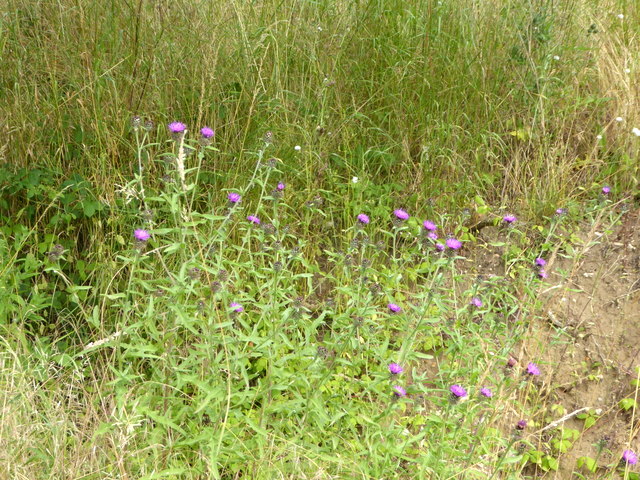
P1000928Common Knapweed

Common Knapweed (Centaurea nigra)

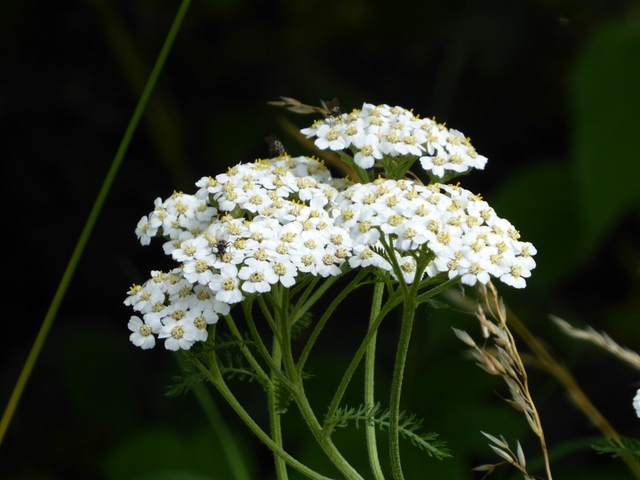
P1000932Yarrow

Yarrow (Achillea millefolium)

P1000930Wild flowers-001

Wild flowers at the side of the lane.

P1000931Agrimony-001

Agrimony (Agrimonia eupatoria)

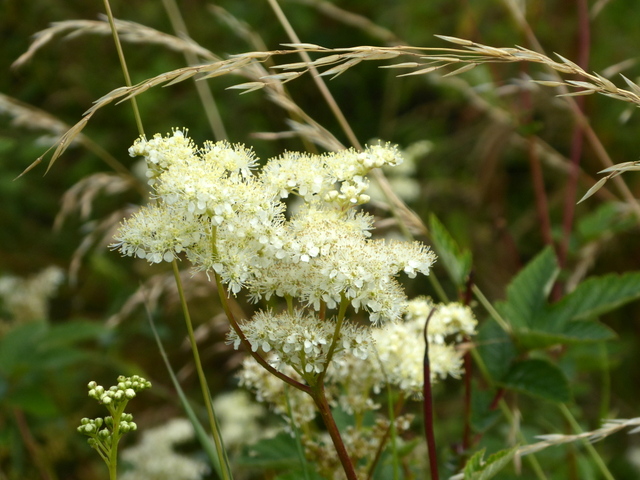
P1000934Meadowsweet

Meadowsweet (Filipendula ulmaria)

P1000935Meadowsweet

Meadowsweet has a beautiful almond-blossom-like fragrance.

P1000939Gatekeeper

A poor photo of a male Gatekeeper butterfly (Pyronia tithonus)

These were all the things I saw at the side of the lane on a short 20 minute walk to post cards.

Here now is my musical choice – the Petite Symphonie in B flat for nine wind instruments by Charles Gounod, composed in 1888.  It lasts about 20 minutes and is of four movements.  I love the lyricism of French 19th century music and I like this recording of the piece very much.  It is a piece of music I used to play and it brings back such good memories to me when I hear it.

Thanks for visiting!
Share this:

  • Share on X (Opens in new window) X
  • Share on Reddit (Opens in new window) Reddit
  • Share on Pinterest (Opens in new window) Pinterest
  • Share on Facebook (Opens in new window) Facebook
  • Email a link to a friend (Opens in new window) Email
  • Share on Tumblr (Opens in new window) Tumblr
  • Print (Opens in new window) Print
  • Share on LinkedIn (Opens in new window) LinkedIn
Like Loading...

Bluebells

24 Fri Jun 2016

Posted by Clare Pooley in amphibians, Days out, Insects, plants, Rural Diary, trees, wild flowers

≈ 47 Comments

Tags

blackthorn, bluebells, Bugle, common backswimmer, Common Frog, coppice, early purple orchids, great crested newt, Herb-Robert, Lesser Celandines, primroses, Reydon Wood, Suffolk, Suffolk Wildlife Trust, sweet violets, walking, water-violet, wild strawberry, wildflowers

I love bluebells, as you no doubt have realised by now, and I don’t think I am alone in my love of these flowers.  There is a scene in the film ‘Howard’s End’ that has one of the main characters walking through a bluebell wood – I find it very moving.

We try to visit a bluebell wood each Spring and this year we re-visited Reydon Wood on a beautiful Thursday afternoon in early May.

P1000109Reydon Wood

Elinor walking down the path towards the wood.

Last year we mistimed our visits, with one visit a little too early and another a little too late.  This visit was ‘just right’.

P1000107Reydon

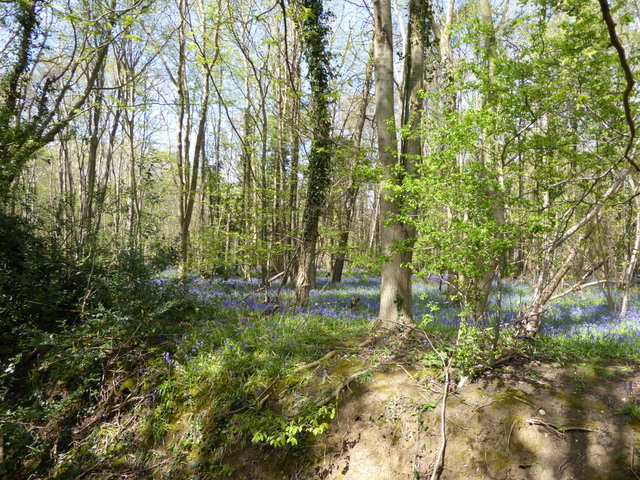
The trees were just beginning to put on their beautiful spring clothes.

P1000114Reydon wood-001

I peeped through the bars of a gate from the path and saw my first bluebells (Hyacinthoides non-scripta).

P1000115Violets

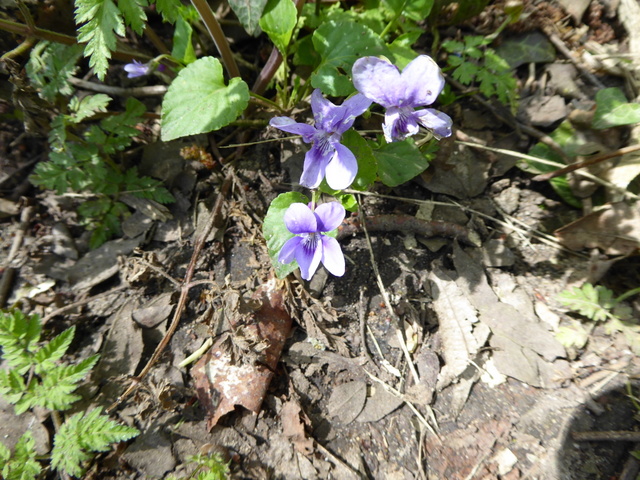
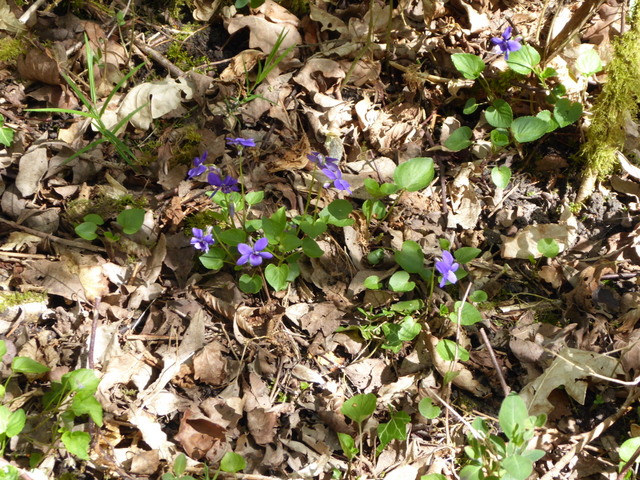
Sweet Violets (Viola odorata) were growing at the side of the path, as were Alexanders (Smyrnium olusatrum) and Greater Stitchwort (Stellaria holostea) but my photos of them were over-exposed.

P1000116Reydon wood

There is a very deep ditch between the path and the wood (you can see the far bank of the ditch at the bottom of the photo)

The ditch was originally dug many centuries ago in an attempt to keep deer out of this coppiced wood.  The bottom of the ditch may have had heaps of brush-wood in it as well as water to make crossing it more difficult.

P1000117Strawberry

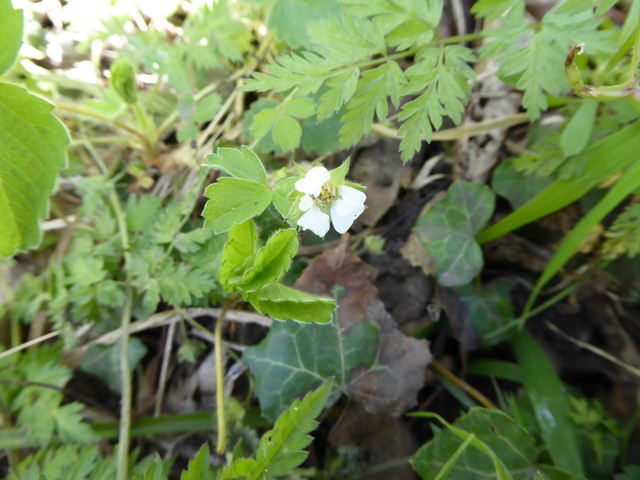
This is a Wild Strawberry flower (Fragaria vesca) – not a good photo I’m afraid.

P1000119Herb robert

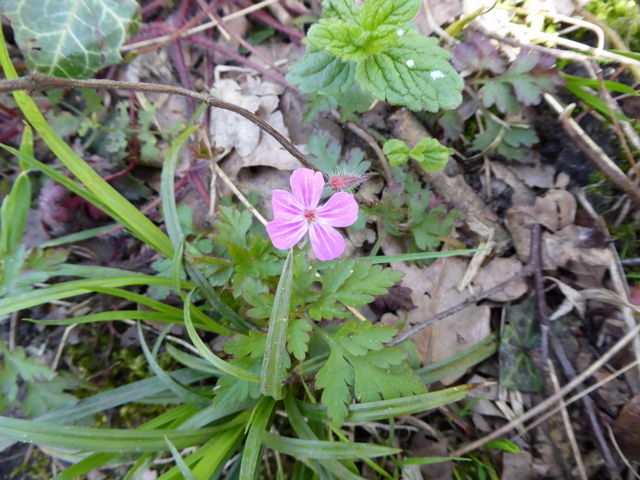
Herb-Robert (Geranium robertianum)

P1000121Reydon wood

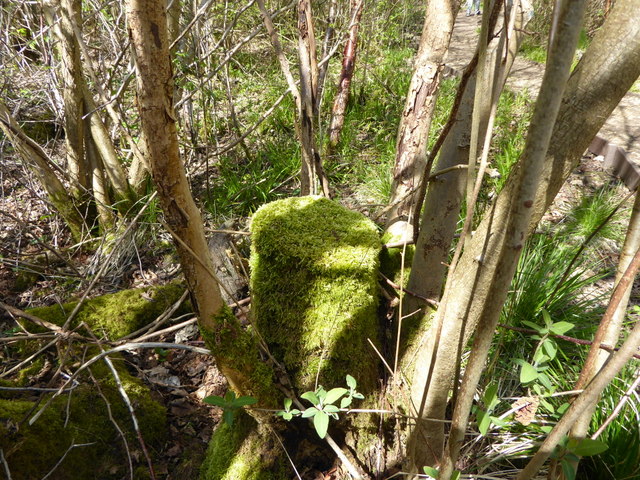
A mossy tree-stump

P1000122Reydon wood

More Sweet Violets

P1000123Reydon wood

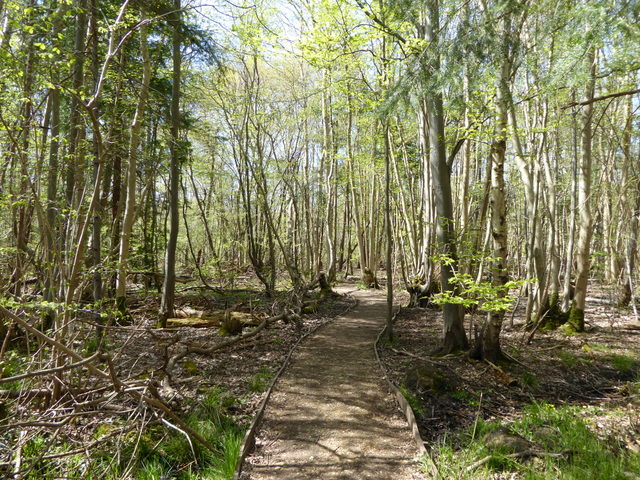
The path through the woods

P1000124Celandines

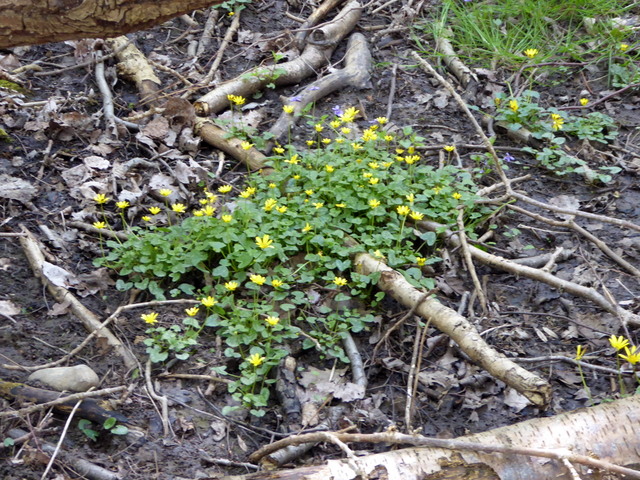
Lesser Celandines (Ranunculus ficaria)

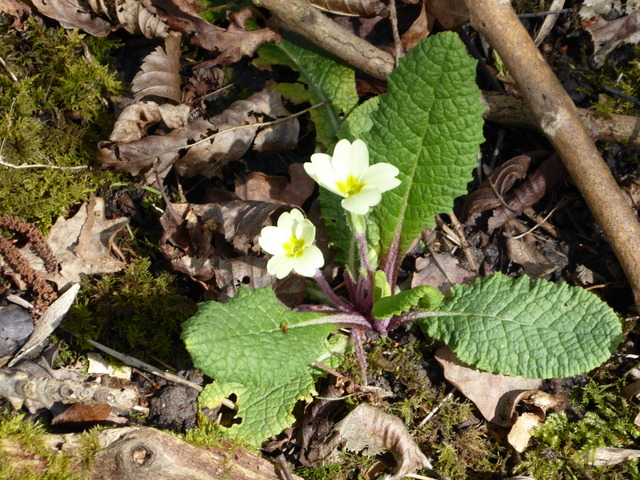
P1000125Primroses

Primroses (Primula vulgaris)

Both Celandines and Primroses had already flowered and gone to seed in the lanes near to my home, but the woods are darker, cooler places and the plants flower later and last longer.

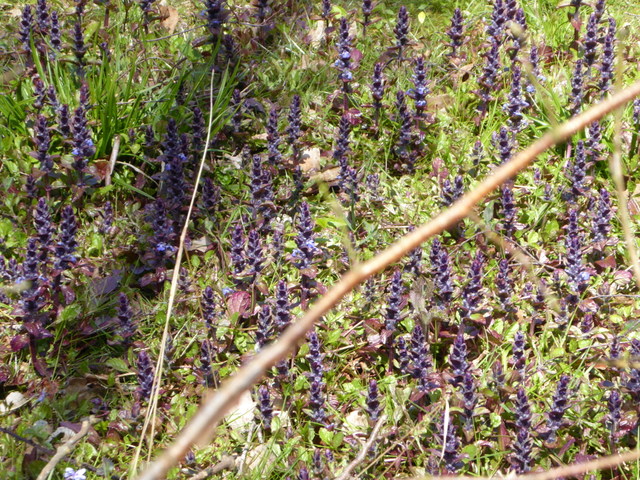
P1000126Bugle

Bugle (Ajuga reptans) flower spikes

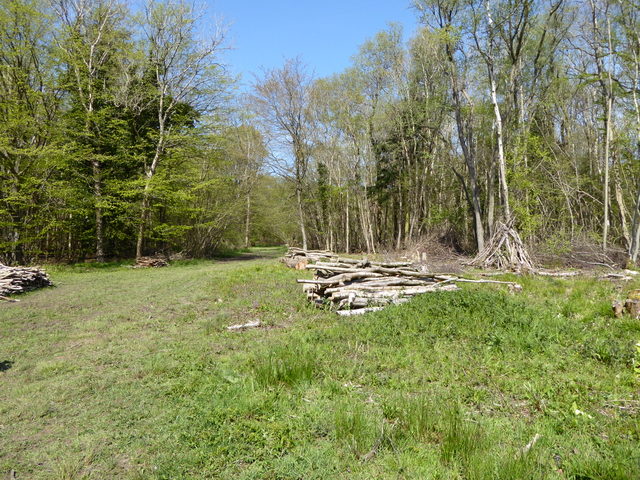
P1000127Reydon wood

An open ride in the wood with stacks of the harvested timber.

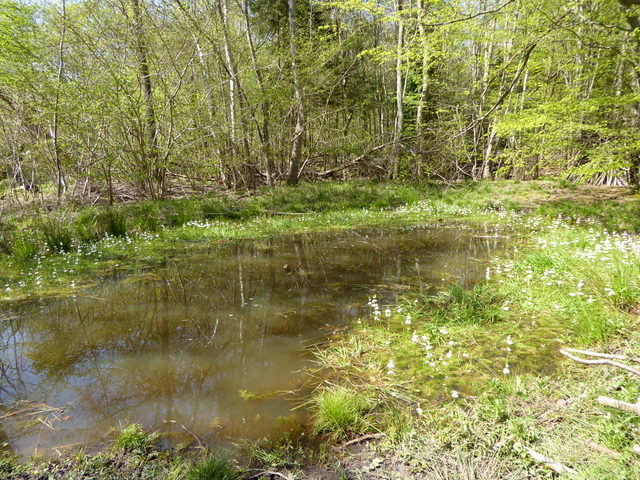
P1000128Reydon wood

The pond in the wood

P1000130Common backswimmer

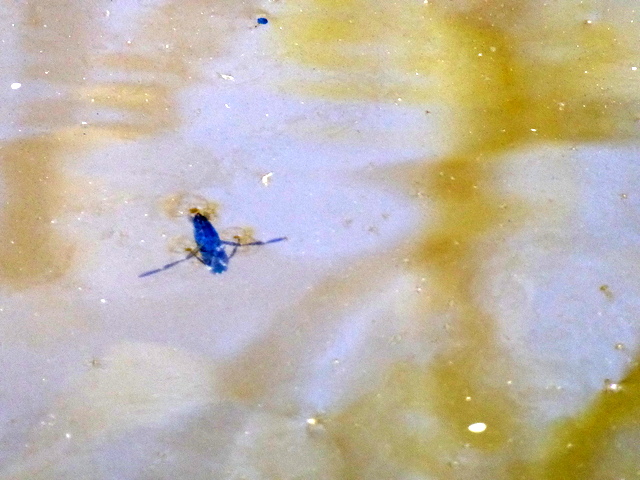
A Common Backswimmer (Nononecta glauca)

P1000131Female Great Crested Newt perhaps

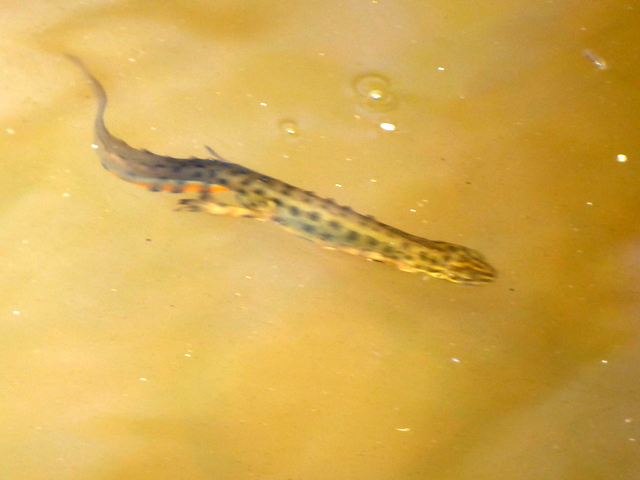
This might be a female Great Crested Newt (Triturus cristatus)

P1000132Frog

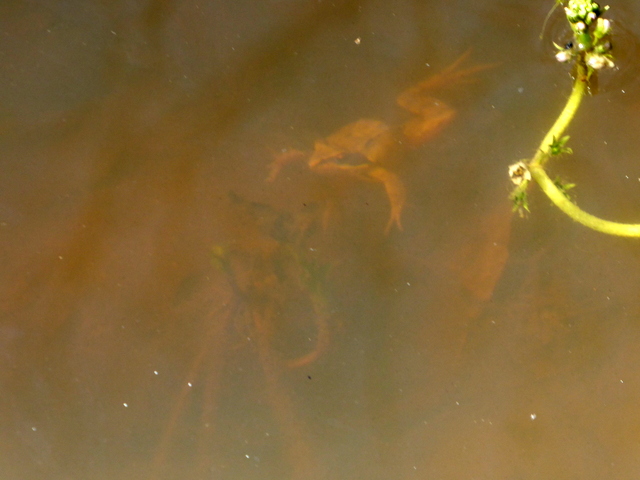
A Common Frog (Rana temporaria)

P1000134Water-violet

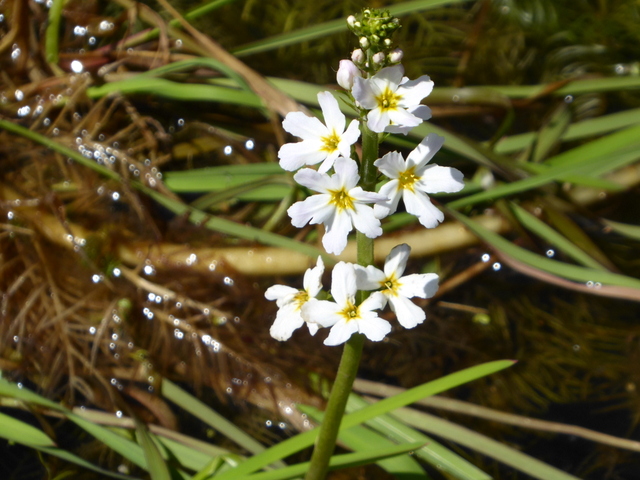
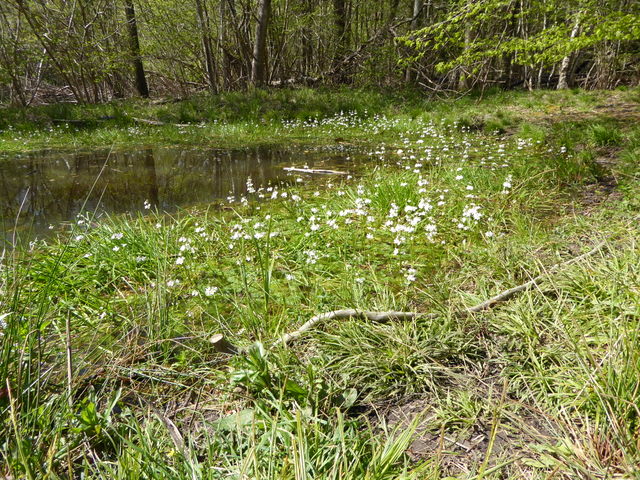
Water-violet (Hottonia palustris)

P1000135Reydon wood

There are a mass of these Water-violets round the pond

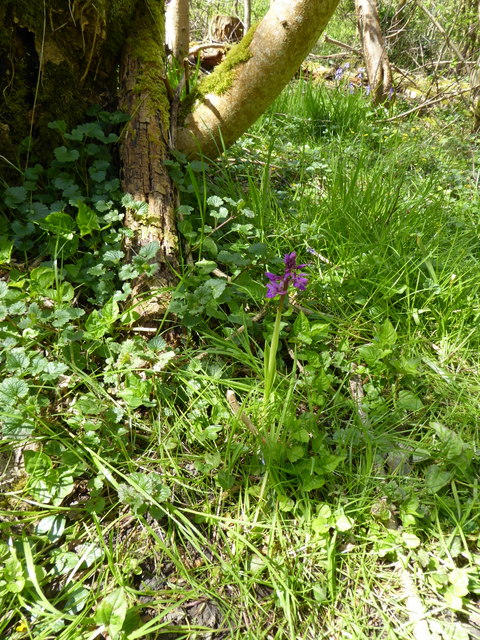
P1000139Early purple orchid

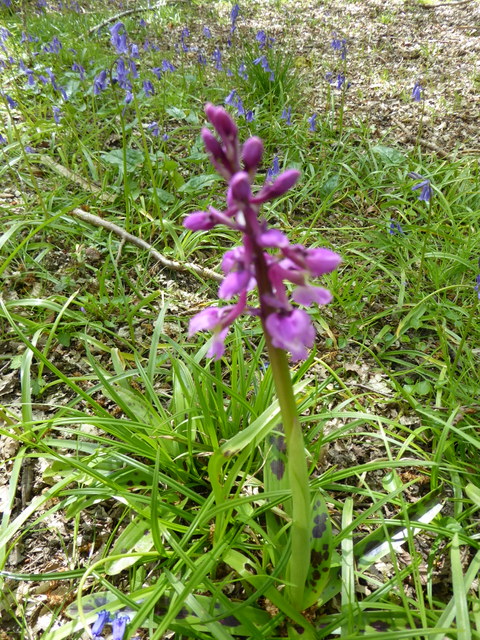
Early Purple Orchid (Orchis mascula)  Unfortunately not in focus, though you can clearly see its spotted leaves.

P1000140Reydon wood

A large coppice stool

P1000141Reydon wood

Another Early Purple Orchid

P1000142Reydon wood

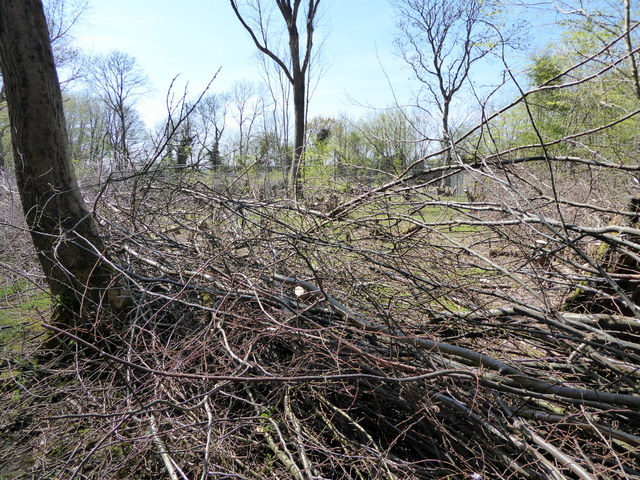
Large amounts of brushwood have been stacked around an area that has been newly coppiced in an effort to keep the deer (and people, I expect) away from the new shoots growing from the stools.

P1000143Reydon wood

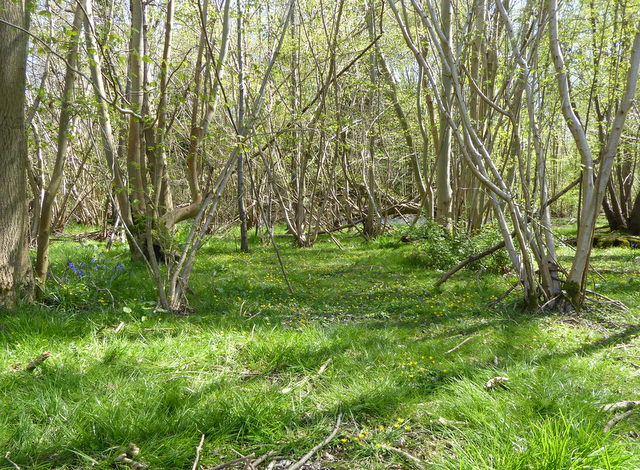
This is a typical view of a coppiced wood

Here is a gallery of photos of the bluebells in Reydon Wood.

This slideshow requires JavaScript.

P1000163Reydon wood

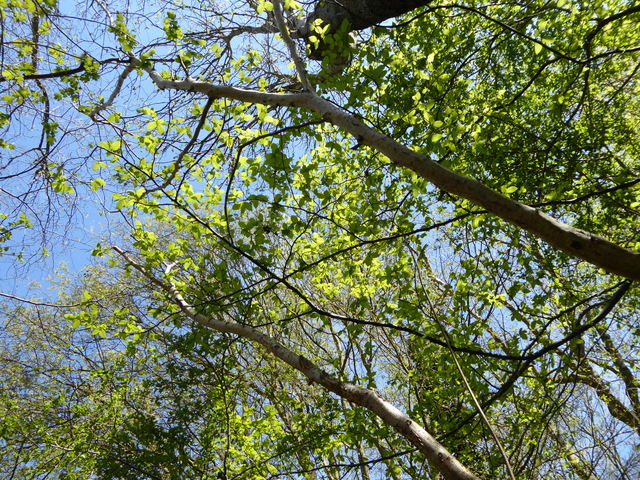
I love to look up at the sky through the new leaves

P1000170Blackthorn

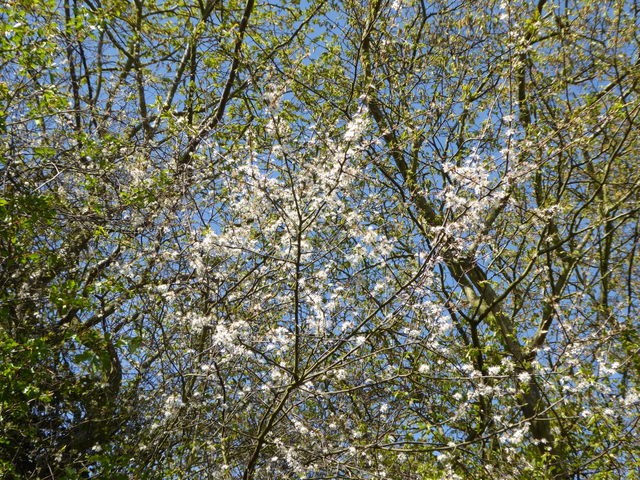
Blackthorn blossom (Prunus spinosa)

Thanks for visiting!


Share this:

  • Share on X (Opens in new window) X
  • Share on Reddit (Opens in new window) Reddit
  • Share on Pinterest (Opens in new window) Pinterest
  • Share on Facebook (Opens in new window) Facebook
  • Email a link to a friend (Opens in new window) Email
  • Share on Tumblr (Opens in new window) Tumblr
  • Print (Opens in new window) Print
  • Share on LinkedIn (Opens in new window) LinkedIn
Like Loading...

This and That – Part 2

16 Thu Jun 2016

Posted by Clare Pooley in Gardening, Insects, music, plants, Rural Diary, trees

≈ 44 Comments

Tags

Bee, blossom, cow parsley, Crabapples, dandelion, field maple, flowers, gardens, ground-ivy, Hawthorn, horse chestnut, Hoverfly, insects, jonquils, Lady's Smock, Maytime, miniature Tulip, narcissus, pasque flower, Pear, pieris, saxifrage, shrubs, St Mark's fly, Suffolk, trees, wild cherry

This post includes the better photos I took at home during the first half of May.

P1000073Miniature Tulip

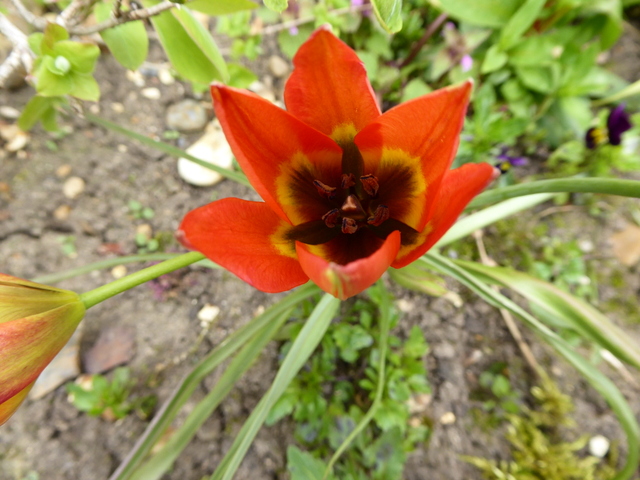
I have a few miniature scented Tulips. I have no idea what they are called or even when I got them though I think they are about 18 years old. I had a selection of red, orange and yellow ones but all that’s left are the red ones.

P1000071Jonquils-001

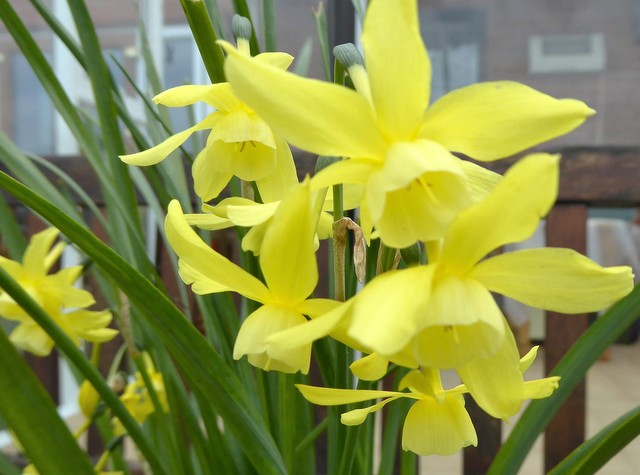
These jonquils are tiny and the flowers bob about on their narrow stems like yellow butterflies. Each flower is only about 2 inches across.

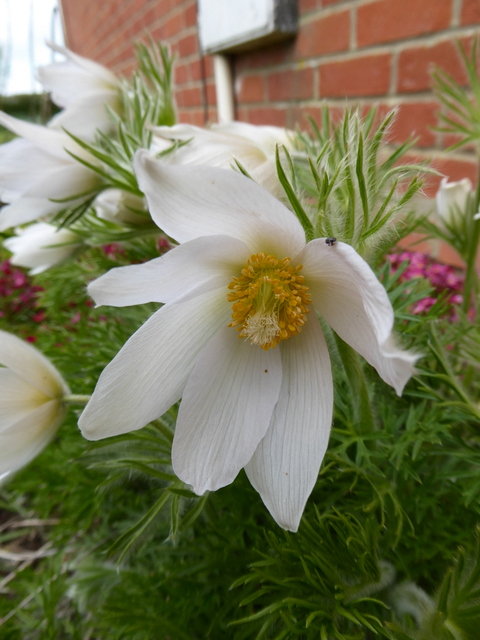
P1000074Pasque flower

The Pasque flowers (Pulsatilla vulgaris ‘Alba’ )in my garden came out well after Easter this year. Not only was Easter early but the weather was cold and the flowers sensibly stayed as buds until the time was right.

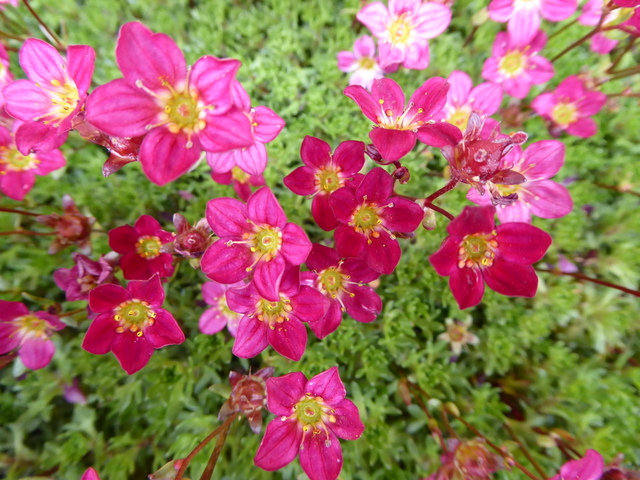
P1000075Saxifrage

I love this pretty pink Saxifrage!

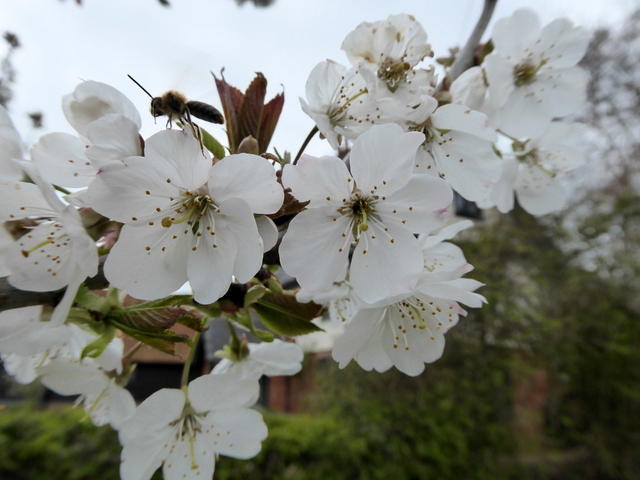
P1000077Wild cherry

Wild Cherry blossom (Prunus avium) with a visiting bee

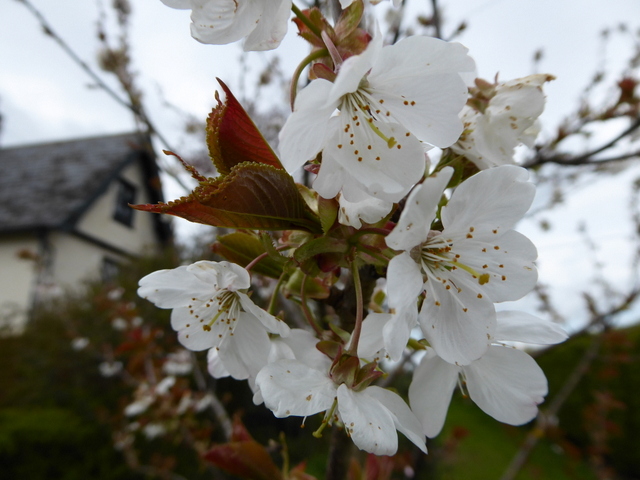
P1000076Wild cherry

Wild Cherry blossom. I like the green-bronze colour of the new leaves.

P1000080Narcissus

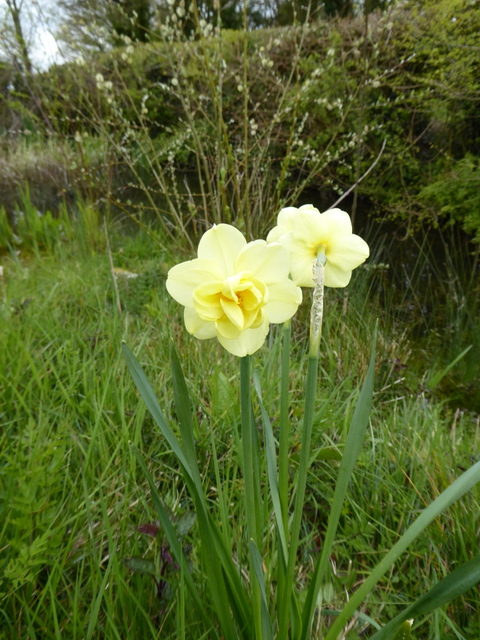
Pale yellow double Narcissus

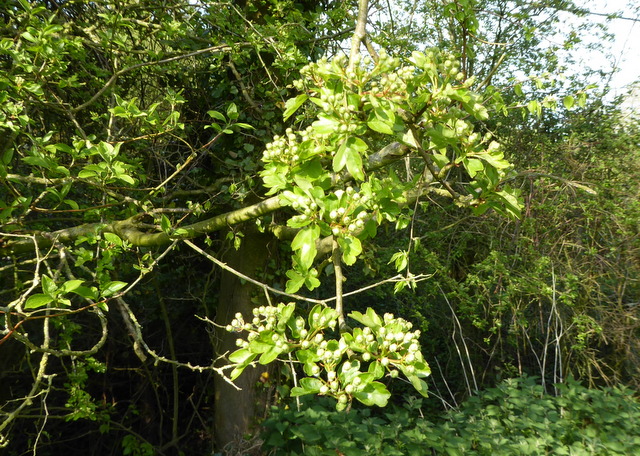
P1000081Pear

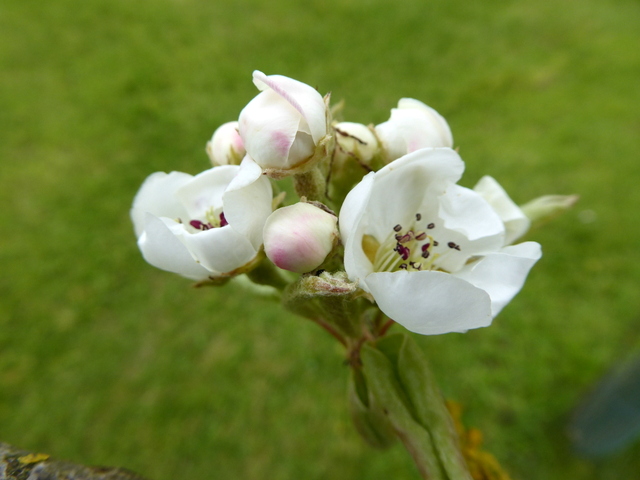
Pear ‘Concorde’ blossom.  This pear is supposed to be a dessert pear but by the time it is soft enough to eat it is already rotting in the centre.  Perhaps our climate isn’t suitable for it?  We harvest the pears before they have started to soften and we cook them or we prepare them for the freezer.

P1000082Pear

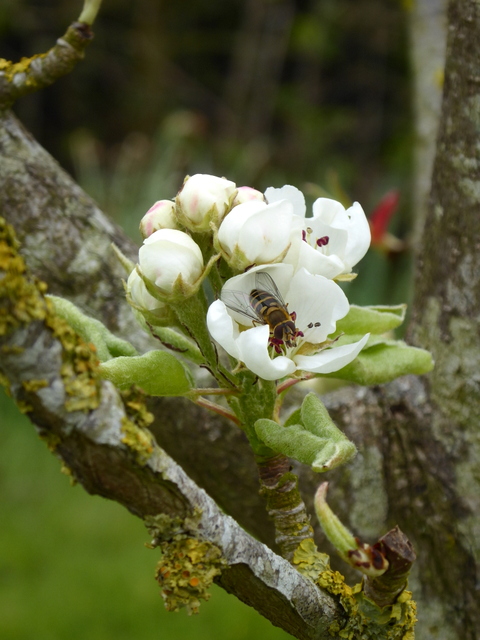
Pear blossom with a visiting Hoverfly.  The lichen is doing quite well too with its orange fruiting bodies.

P1000096St Mark's flies-001

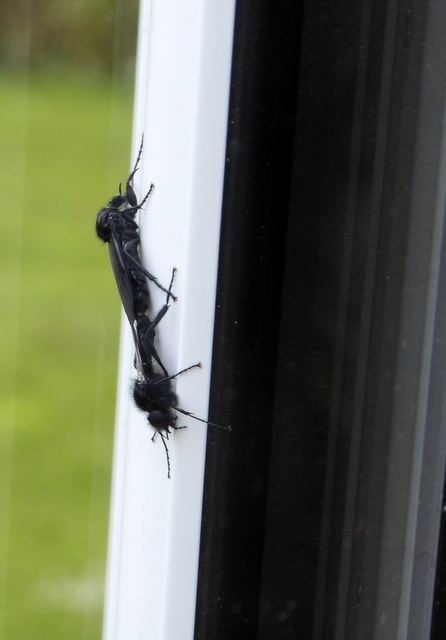
These are St. Mark’s-flies (Bibio marci) doing what flies do in the spring. The female is the upper fly and she has smoky-grey wings and a small head. The lower fly is the male and he has silvery wings and a larger head. Both sexes have spines on their front legs at the tip of the tibia. You can just see this on the female’s front leg. These flies fly weakly and slowly and dangle their legs as though the effort of flying is almost too much for them. They are called St. Mark’s-flies because they usually appear on or around St. Mark’s day which is April 25th.  This photo was taken on 2nd May – it was a cold spring!

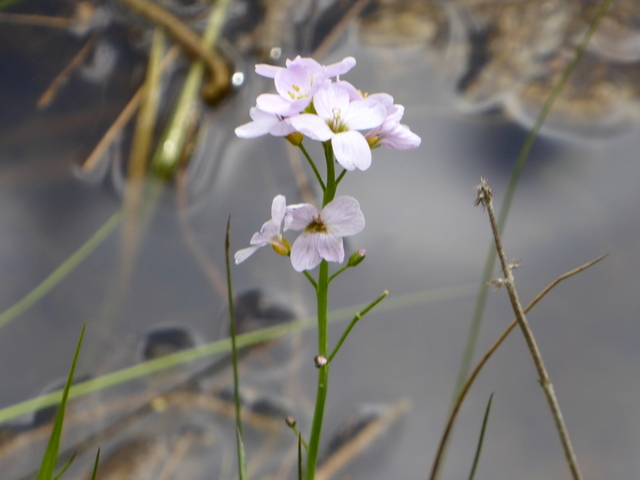
P1000104Lady's smock

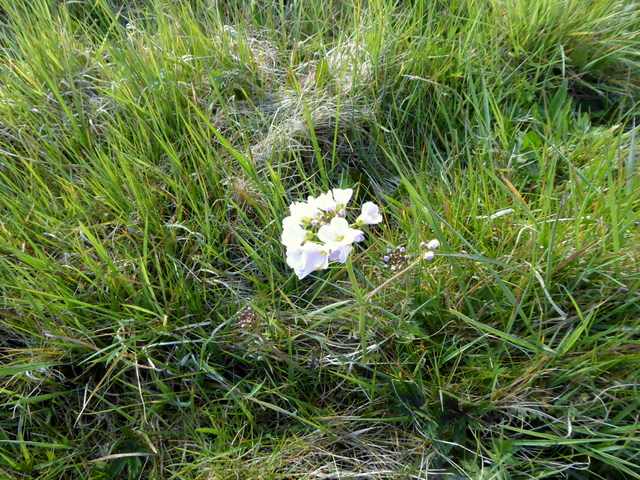
Lady’s-smock or Cuckooflower (Cardamine pratensis) – a member of the cabbage family

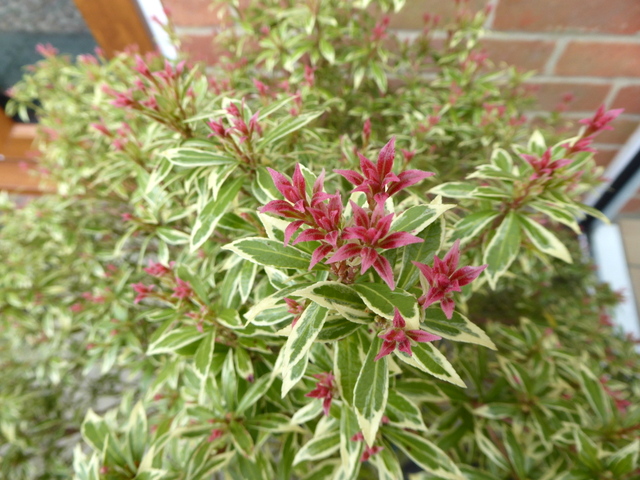
P1000106Pieris

New leaves on my variegated Pieris ‘Forest Flame’

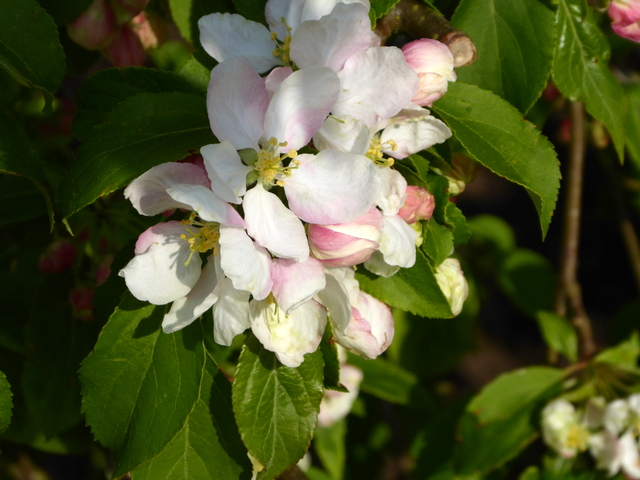
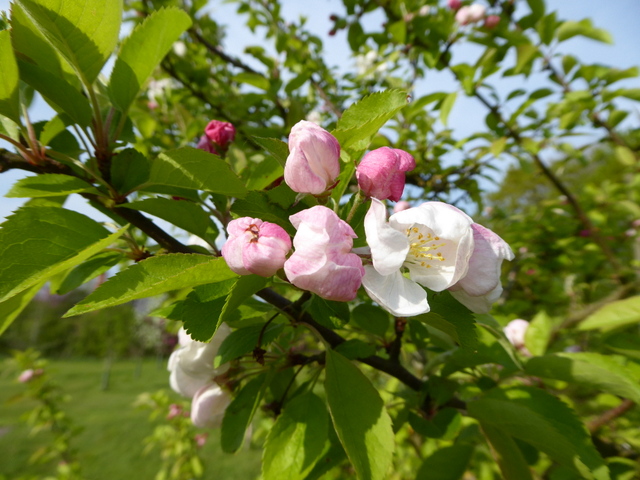
P1000182Crabapple s. blossom

Crabapple species blossom. Standing under this weeping tree I am almost over-powered by the scent of roses and the buzzing of bees.

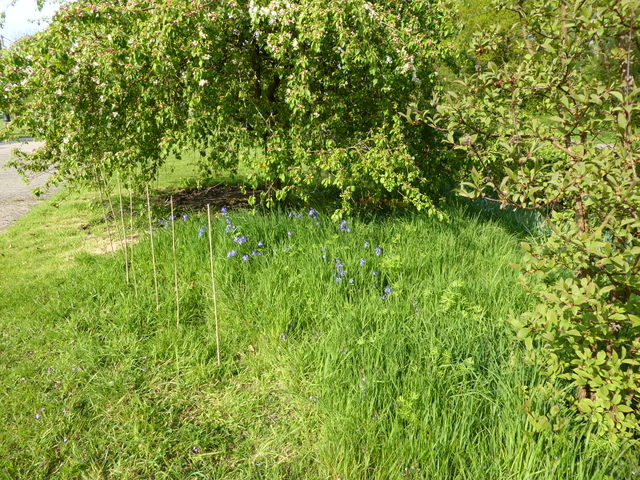
P1000183Bluebells

These are the English Bluebells (Hyacinthoides non-scripta) I am trying to establish next to the weeping crabapple. I have put canes alongside them to remind us not to mow them until the seeds have set and the leaves have died. I am also hoping that the canes will stop the deer from trampling the plants.

P1000185Dandelion

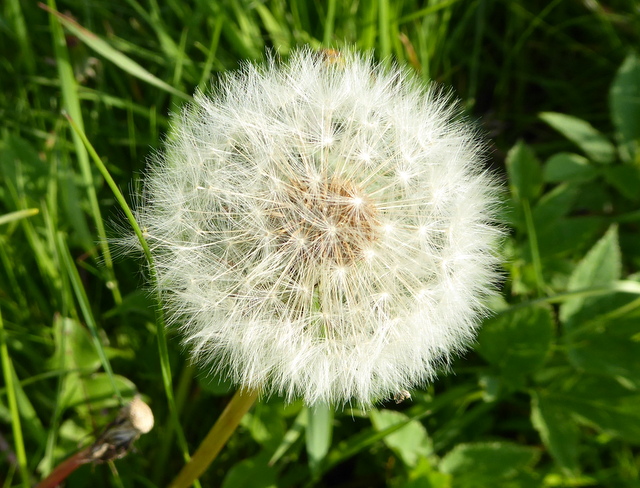
A beautiful Common Dandelion ‘clock’ (Taraxacum officinale agg.)

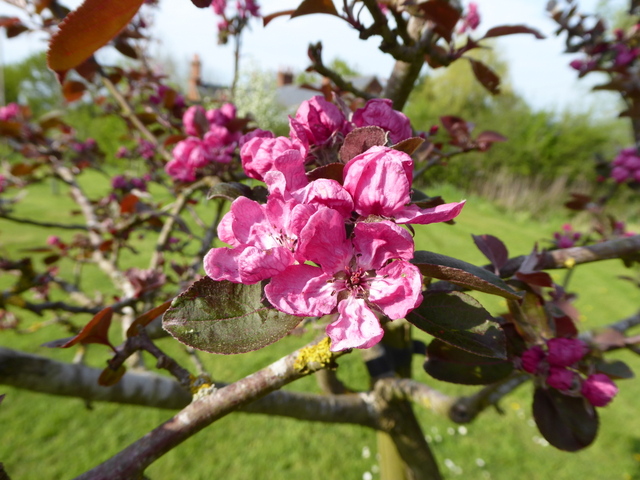
P1000187Crabapple 'Evereste' blossom

Crabapple ‘Evereste’ blossom

P1000189Crabapple 'Harry Baker' blossom

Crabapple ‘Harry Baker’ blossom

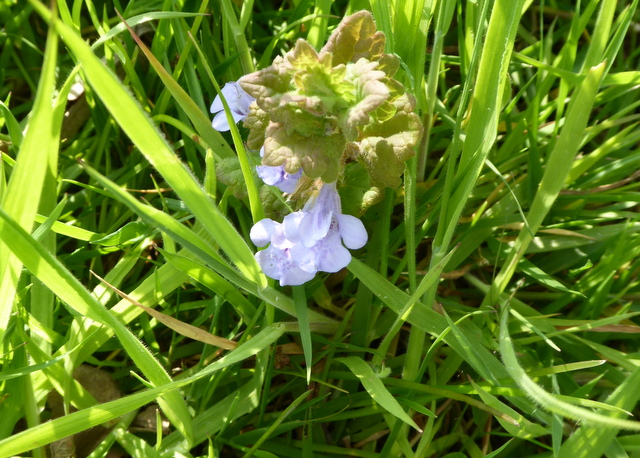
P1000191Ground ivy

Ground-ivy (Glechoma hederacea)

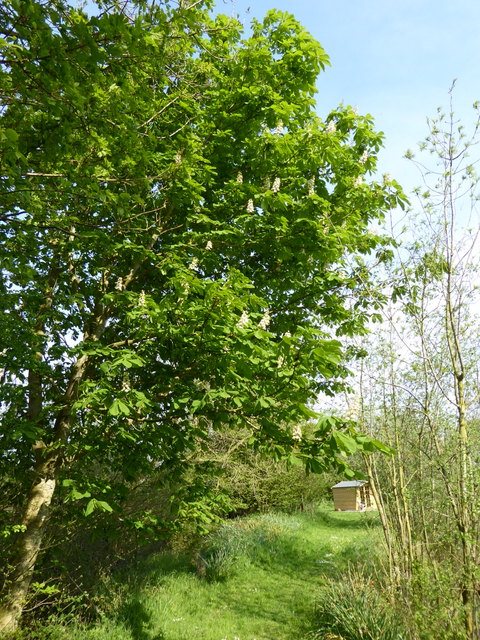
P1000195Horse chestnut

The Horse-chestnut tree (Aesculus hippocastanum) with its flower ‘candles’

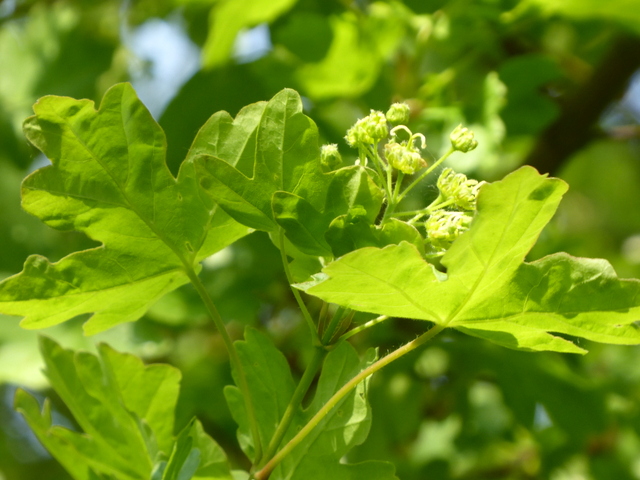
P1000197Field maple

Field Maple flowers (Acer campastre)

P1000199Hawthorn

Common Hawthorn flower buds (Crataegus monogyna)

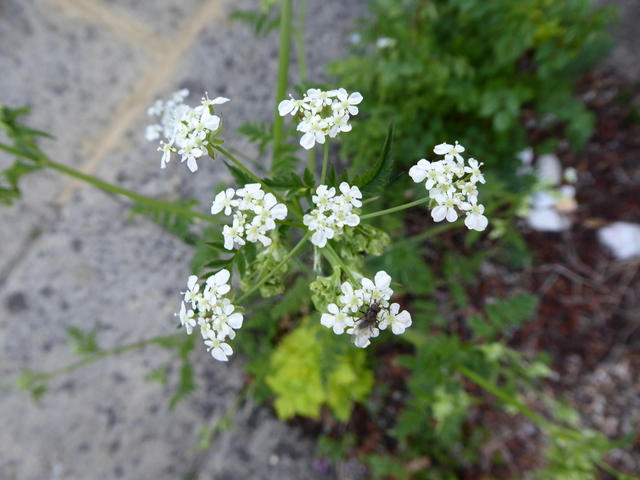
P1000201Cow parsley

Cow Parsley (Anthriscus sylvestris) (or as it is called here in Suffolk, Sheep’s Parsley) with a fly.  I am very fond of Cow Parsley and the sight of masses of it in flower along the lanes makes me happy.

Here is another song that features a wonderful trombone solo and a fantastic brass riff too!  This is a very old recording and it is also an uncommon arrangement for this song.

Thanks for visiting!
Share this:

  • Share on X (Opens in new window) X
  • Share on Reddit (Opens in new window) Reddit
  • Share on Pinterest (Opens in new window) Pinterest
  • Share on Facebook (Opens in new window) Facebook
  • Email a link to a friend (Opens in new window) Email
  • Share on Tumblr (Opens in new window) Tumblr
  • Print (Opens in new window) Print
  • Share on LinkedIn (Opens in new window) LinkedIn
Like Loading...

This and That – Part 1

03 Fri Jun 2016

Posted by Clare Pooley in Gardening, music, plants, Rural Diary, trees, weather, wild birds

≈ 70 Comments

Tags

amelanchier, blackbird, blackthorn, bluebell, countryside, cowslip, daffodils, English Elm, English Oak, garden, Goat Willow, green woodpecker, greengage, horse chestnut, Lords and Ladies, Marxh-marigold, pheasant, photography, rainbow, Red Deer, shrubs, Snowy Mespil, Suffolk, trees, white dead-nettle, wild cherry, wild flowers

I have taken a number of photographs over the last few weeks but haven’t had the time to write any posts.   Here are a few of the better pictures from April and earlier.

DSCN0205Red deer

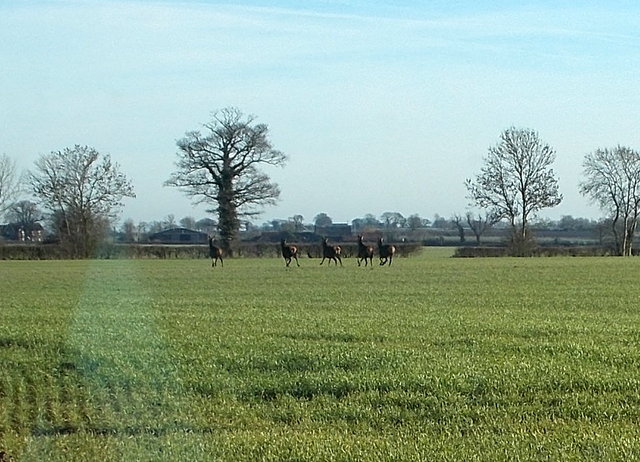
Red Deer (Cervus elaphus)

Back in January I was driving home from shopping when I saw this small group of five Red Deer making their way across a field towards the road.  I had to slow down and then stop because I could see that they were not only made nervous by my car but their usual path was blocked by a fire someone had lit to get rid of brushwood.  They eventually managed to cross the lane a little further along and then carried on their way.  I took a photo of them through the car window and this is the result – heavily cropped.  I had thought that I had missed them and it was only when I eventually looked carefully at the shot on my computer a few weeks ago I realised that they were there!

DSCN0330Pheasants

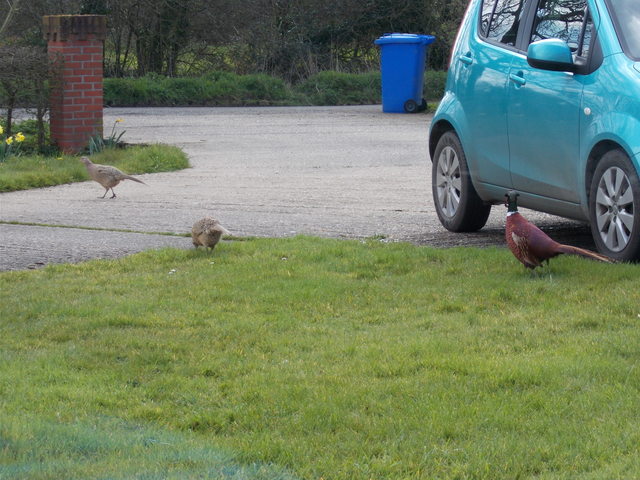
The Pheasant (Phasianus colchicus) family wandering through the garden at the beginning of April.

This is such an untidy photo with the recycling bin out by the roadside and my former car in the way too.  This is another photo taken through glass (the kitchen window this time – you can see a reflection in the bottom left corner of the picture).  We haven’t seen the pheasants for a while now so I presume the females are busy on their nests.

DSCN0342Garden after a storm
DSCN0341Garden after a storm
DSCN0340Garden after a storm

We had a storm with heavy rain and then the sun came out.  It all looked so bright and fresh, so I stood at the front door and took three photos, to the left, straight ahead and to the right.

DSCN0344Daffodils in the garden

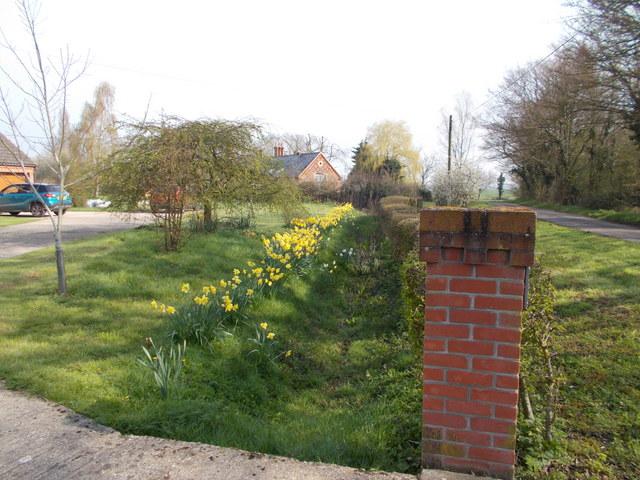
A few days later I stood at the end of the drive and took this photo of the ditch that runs along the edge of the garden. We have daffodils growing all along its length. The lane runs parallel with the front of our property. You can also see my new car in this picture.

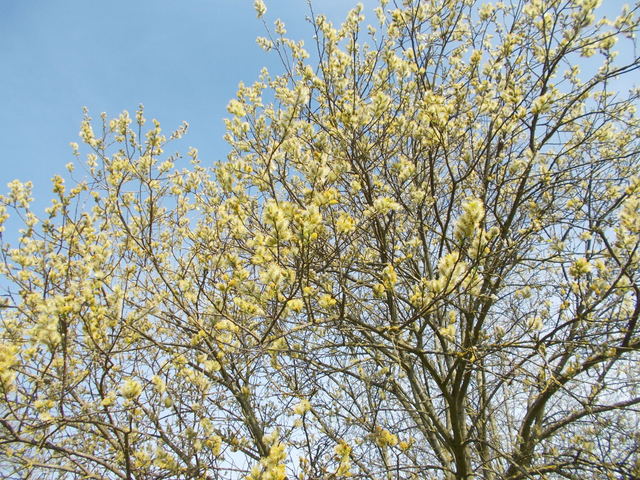
DSCN0346Pussy willow

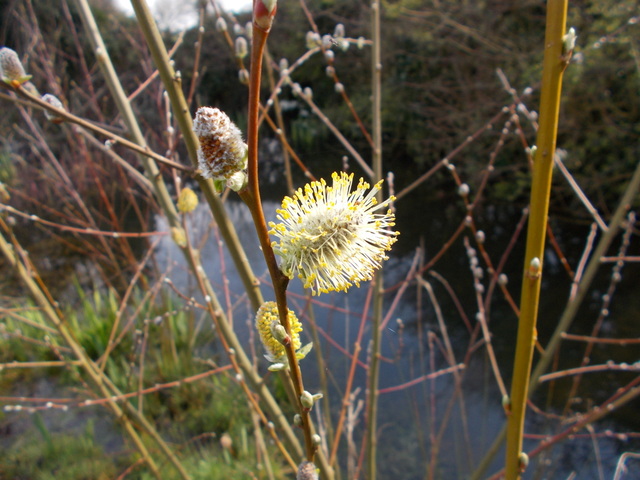
Pussy Willow / Goat Willow (Salix caprea)

DSCN0355Goat willow

Goat Willow in flower

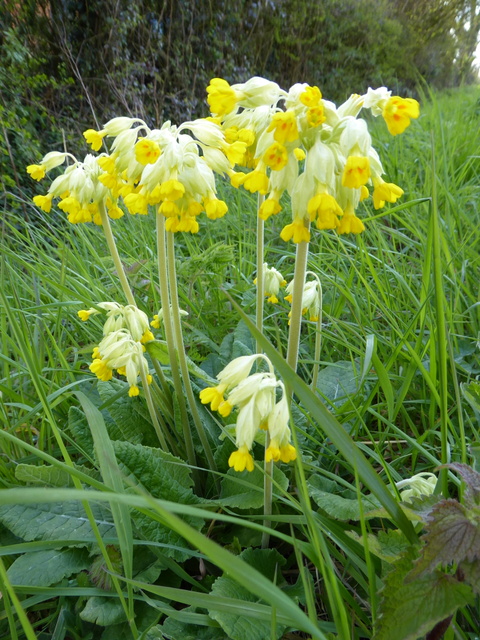
P1000039Cowslip

Cowslips (Primula veris)

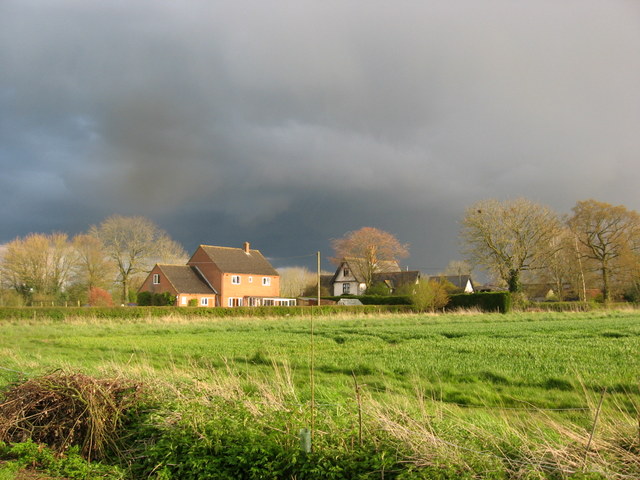
IMG_1434Stormy sky

A stormy sky. A photo of our house (and the house next door) taken standing next to our big pond and looking across the corner of the field.

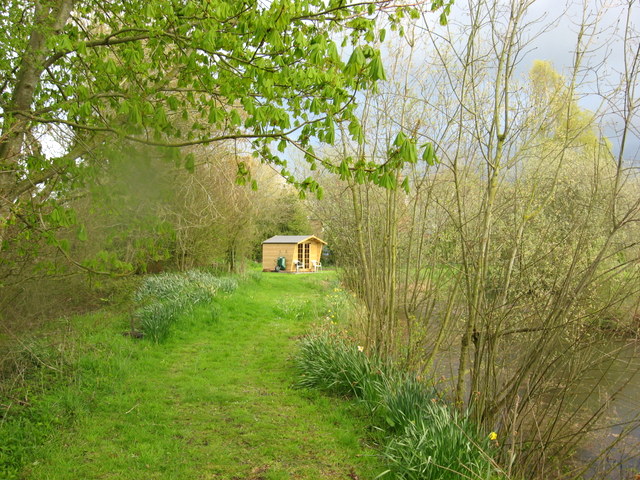
IMG_1435Summerhouse

The summerhouse

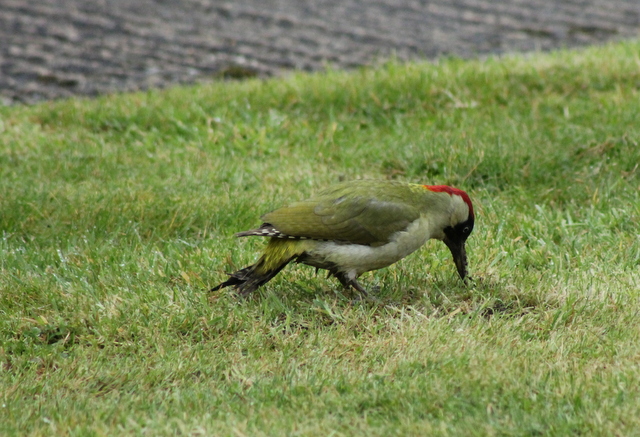
IMG_2741Green Woodpecker

A Green Woodpecker (Picus viridis) looking for ants in the lawn

I was quite pleased with this photo as it showed all the different colours of its feathers, even the black and white spotted feathers under the wings.  This is a female adult as the moustachial feathers are all black.  The male has a crimson centre to the stripe.

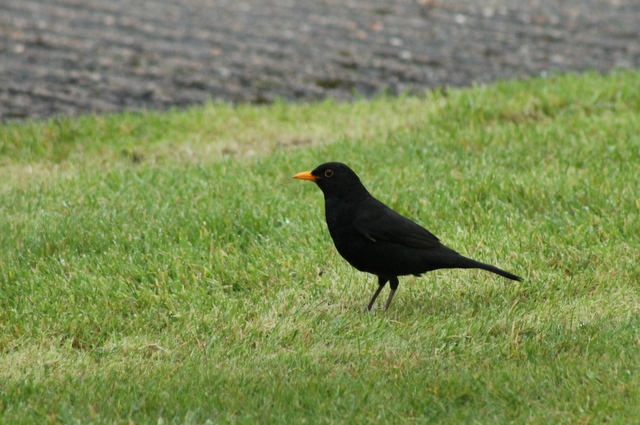
IMG_2744Blackbird

A male Blackbird (Turdus merula) was also on the lawn looking for food.

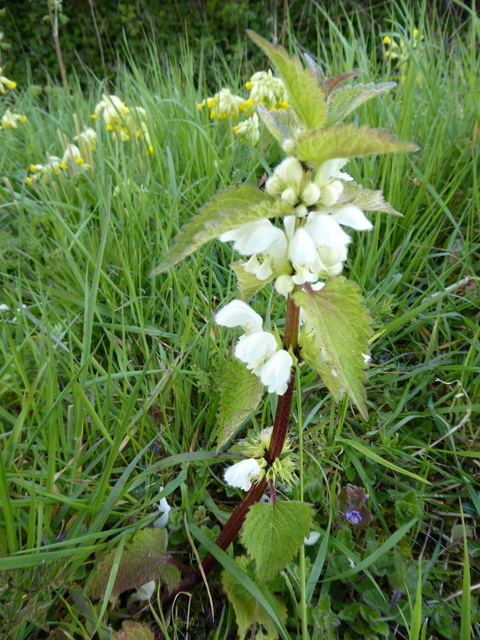
P1000038White deadnettle

White Dead-nettle (Lamium album)

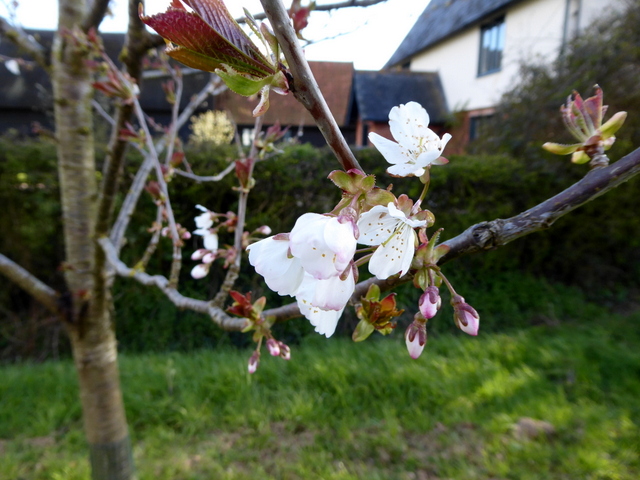
P1000040Wild cherry

Wild Cherry blossom (Prunus avium)

P1000041Bluebell

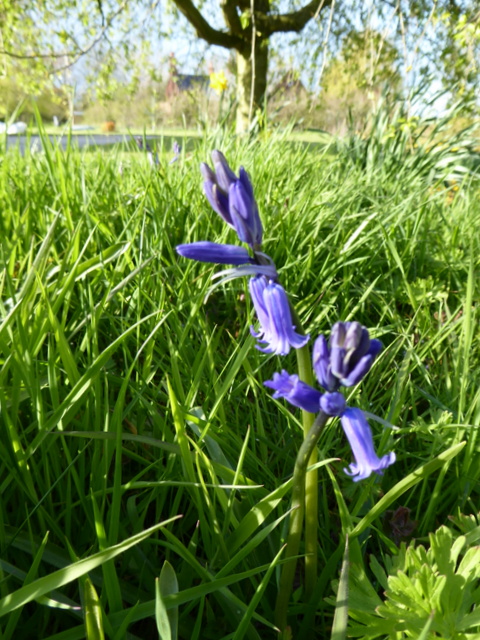
The first Bluebell (Hyacinthoides non-scripta) flower in our garden this spring

There is nothing quite like the scent of Bluebells.  They are wild hyacinths but don’t have the cloying scent of the garden variety.  There is a sweet freshness that lifts the spirits and is irrevocably linked, to my mind, with birdsong, sunshine after rain and hope.

P1000043Greengage

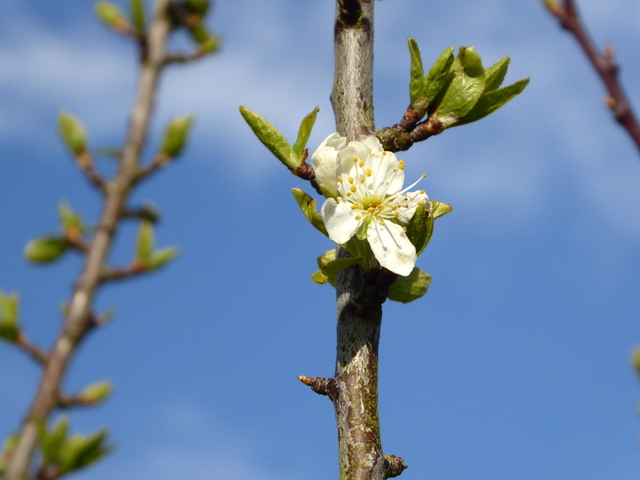
Greengage blossom (Prunus domestica ssp. italica). I hope we have some fruit this year.

P1000044Cowslip

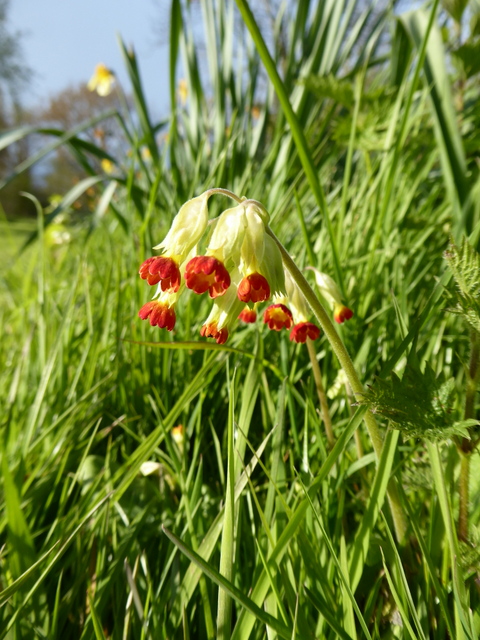
Some of the Cowslips in our garden are orange and red.

P1000047Oak

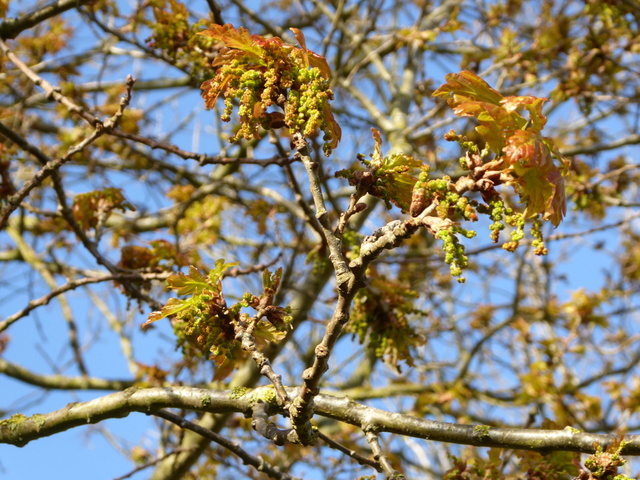
Pendunculate / English Oak (Quercus robur). New leaves and flowers (catkins) appear at the same time.

P1000048Marsh marigold

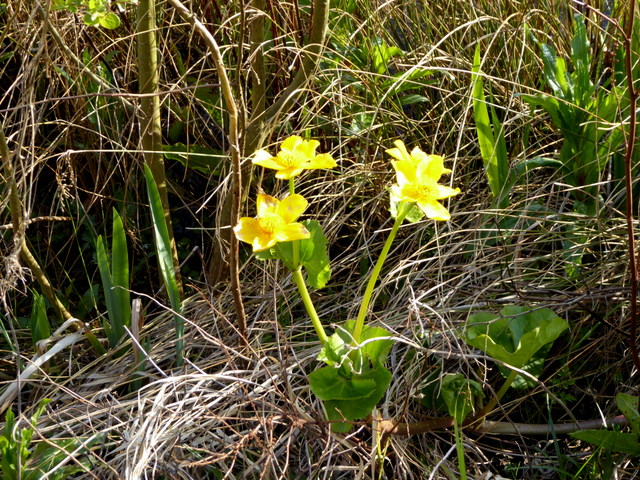
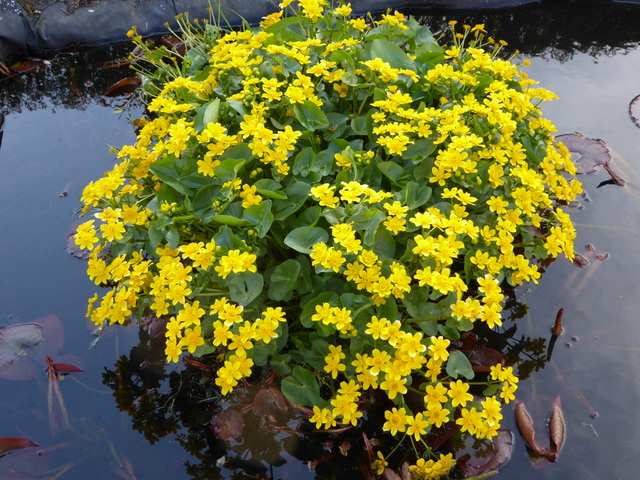
Marsh-marigold (Caltha palustris). I found it impossible to photograph this bright yellow flower well.

P1000059Marsh marigold

More Marsh-marigold

P1000051Horse chestnut

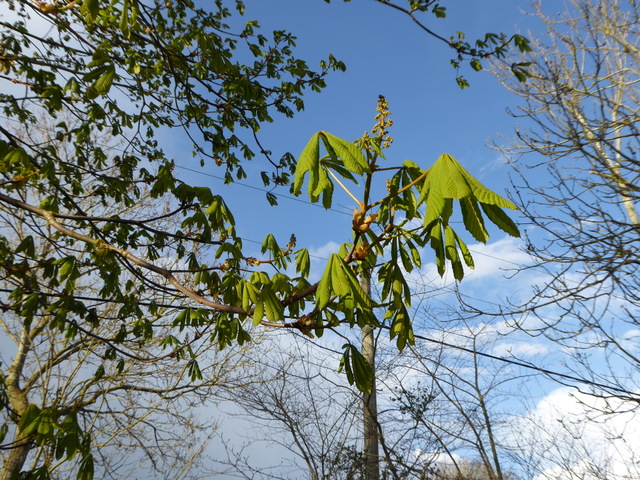
New Horse-chestnut leaves and flower buds (Aesculus hippocastanum)

P1000053Elm

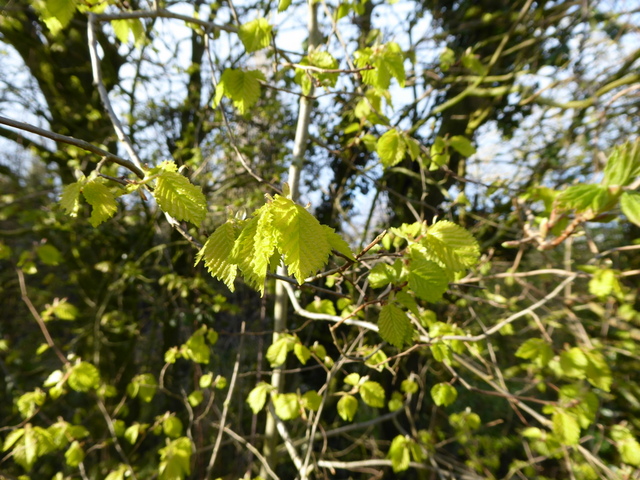
Beautiful new English Elm leaves (Ulmus procera). We have a number of small Elm trees in our garden. Sadly they will only live for a few years before they succumb to Dutch Elm disease.

P1000061Lords and ladies

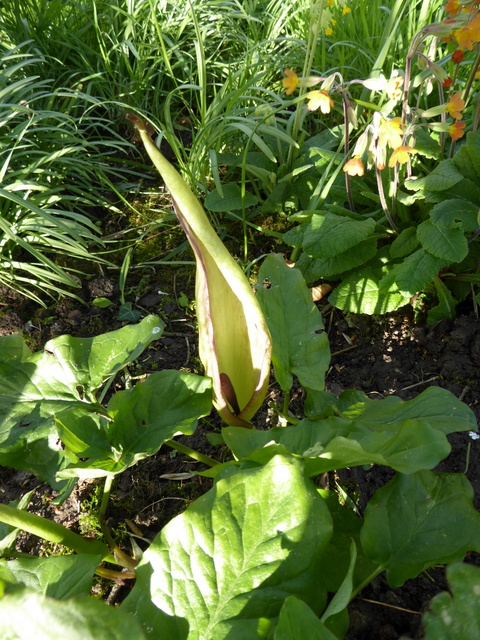
Lords and Ladies / Jack-in-the-pulpit / Cuckoo pint (Arum maculatum).  This plant has many names.   Its arrowhead-shaped leaves are often dark spotted.

P1000063Amelanchier

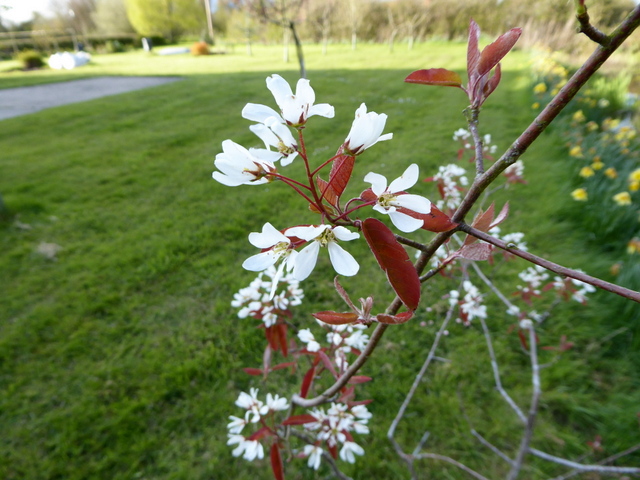
Snowy Mespil (Amelanchier canadensis) blossom

P1000065Blackthorn

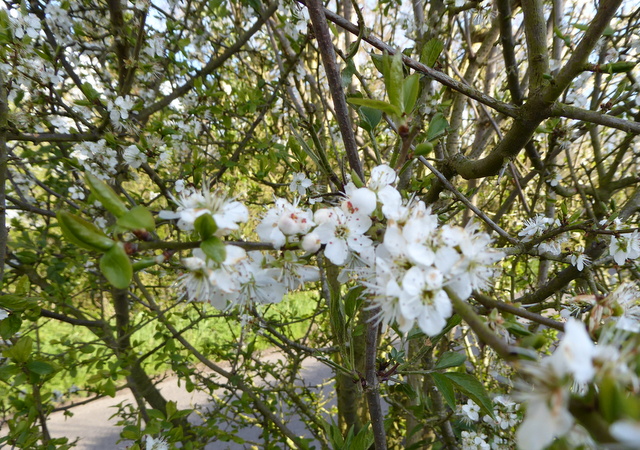
Blackthorn blossom (Prunus spinosa). This poor photo is the only image of this year’s blossom I managed to get.

P1000067Rainbow

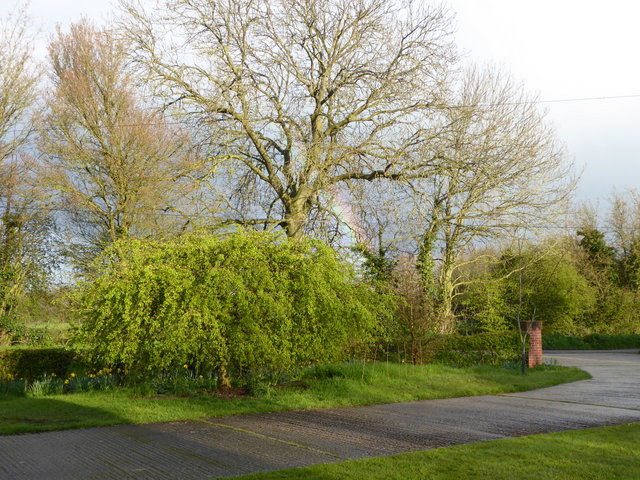
A rainbow behind the trees

All these photos were taken in April and in my garden, except the first one.

I find I haven’t made a music selection for a while so this post’s choice is ‘Let’s Work Together’ by Canned Heat.  Excellent lyrics, great tune and the best tempo ever!

Thanks for visiting!
Share this:

  • Share on X (Opens in new window) X
  • Share on Reddit (Opens in new window) Reddit
  • Share on Pinterest (Opens in new window) Pinterest
  • Share on Facebook (Opens in new window) Facebook
  • Email a link to a friend (Opens in new window) Email
  • Share on Tumblr (Opens in new window) Tumblr
  • Print (Opens in new window) Print
  • Share on LinkedIn (Opens in new window) LinkedIn
Like Loading...

Fox Fritillary Meadow

26 Tue Apr 2016

Posted by Clare Pooley in Days out, literature, plants, Rural Diary

≈ 54 Comments

Tags

Fox Fritillary Meadow, Framsden, fritillaries, In the Artist's Garden, meadow, Post Mill, Ronald Blythe, Saxtead Green, Suffolk, Suffolk Wildlife Trust, wild flowers

I belong to the Suffolk Wildlife Trust, one of the 47 Wildlife Trusts in the UK and recently, while looking through their list of upcoming events I spotted a guided walk round Fox Fritillary Meadow in Framsden.  It was recommended that I book a place, not because of limited space but so I could be contacted if there weren’t enough flowers in bloom to make my visit worthwhile.  I was very pleased when Alice phoned me shortly afterwards suggesting she stay with us that weekend.

A few days after making the reservation I was happy to find a mention of the meadow in the book I was currently reading;  ‘In the Artist’s Garden’ by Ronald Blythe.

He says of fritillaries … ‘Every April and May, from time immemorial, they show themselves in my orchard to remind me of what I have come to think of as their native land – Framsden, in Suffolk.’

He remembers his youthful visits to the meadow …

It is there, at the long pasture in the dell, which is covered with these speckled, bell-shaped, vaguely sinister blooms – the British species of genus Fritillaria liliaceae.  It was an hour’s bike-ride from my house, and a proper pilgrimage for a member of the Wild Flower Society.  And Mrs Fox, tall, elderly and generous, standing at the gate to welcome us where snake’s heads grew.

For 50 weeks her long meadow was no more than two acres of dank grass, with a lush drainage ditch severing it; but when the fritillaries came, it turned into the Plains of Enna when Persephone set foot in them.  There they were – hundreds, thousands of them, some a papery white, but most a muted purple colour with the reptilian markings that gave them their nickname.  Nightingales sang over them.  There was a cold wind blowing, as well as these mysterious spring flowers.

It would have been a Saturday afternoon when Mrs Fox was at home.  There were so many of them that we never knew where to tread, and when we left she would give us little fritillary bouquets.  This was the time when country people believed that the more you picked the more they grew – a policy that rioted when it came to bluebells.

Fritillaries were so called by the Romans after their dice box, or shaker, which was one of the few personal belongings that a soldier carried around.  This, and a chequer-board. ‘And they crucified him, and parted his garments, casting lots, that it might be fulfilled which was spoken by the prophet, They parted my garments among them and upon my vesture did they cast lots’.

I have a rather beautiful book (sent to all members in 2011 to celebrate the Suffolk Wildlife Trust’s 50th anniversary) which includes a photograph of the meadow and a little about its history.  In it I am told that the meadow was sprayed in 1957 with a broad-leaved selective herbicide, as the owner hoped to benefit the fritillaries by killing all the other plants.  The fritillaries survived because they are members of the narrow-leaved lily family.  Cowslips, cuckooflower and ragged-Robin are slowly returning but compared with other meadows where fritillaries are found this meadow is less diverse.  The Trust acquired the meadow in 1977 when the farm was sold, as Queenie Fox the owner wanted to be sure the fritillaries would be safeguarded.

P1000010Fox fritillary Meadow

The field we crossed on our way to the fritillary meadow.

The morning of Saturday the 23rd April was cold and breezy with many heavy hail showers.  The Trust hadn’t contacted me so we assumed the open day was going ahead.  By lunchtime the showers were dying out and when we set off on the 45 minute journey the sun was shining – but it was still cold!

P1000011Fox Fritillary Meadow

The entrance to the meadow.

We found the site easily and joined others eager to see these strange flowers.  At first, on entering the meadow through the gate, we didn’t see where the flowers were but a few steps further on and the mass of blooms became obvious to us.  We carefully picked our way through the flowers, sometimes crouching down to admire them more fully, but all the while the further we walked the more flowers there were to see.  The tributary of the River Deben which Blythe mentions as bisecting the field is still there but sadly, we heard no nightingales.

This slideshow requires JavaScript.

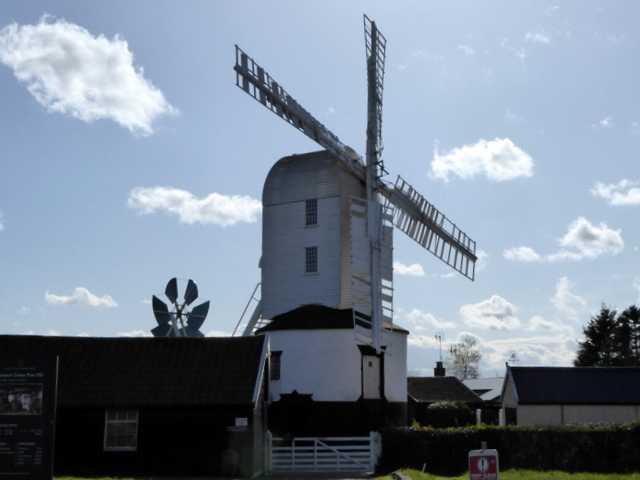
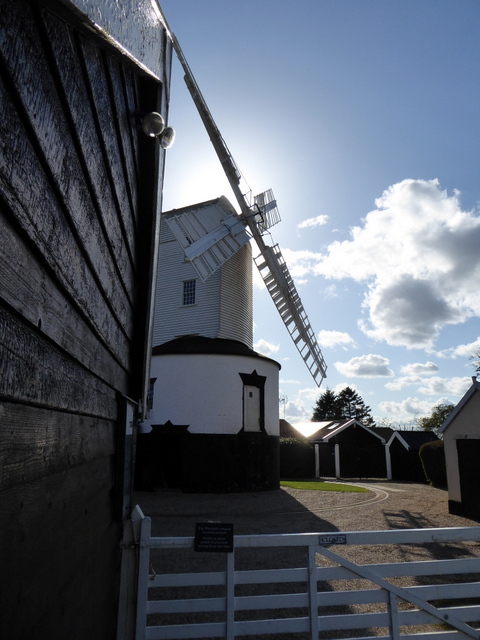
When we had had our fill of fritillaries we left for home, stopping off at Saxtead Green to admire the Post Mill there.

P1000033Saxtead Post Mill

Saxtead Post Mill – now owned and run by English Heritage


P1000034Saxtead Post Mill

Richard and the Post Mill


P1000035Saxtead Post Mill

Saxtead Post Mill


P1000036Ladies' Smock

Some Lady’s-smock or Cuckooflower (Cardamine pratensis) that was growing on the green by the mill.

Thank’s for visiting!

Share this:

  • Share on X (Opens in new window) X
  • Share on Reddit (Opens in new window) Reddit
  • Share on Pinterest (Opens in new window) Pinterest
  • Share on Facebook (Opens in new window) Facebook
  • Email a link to a friend (Opens in new window) Email
  • Share on Tumblr (Opens in new window) Tumblr
  • Print (Opens in new window) Print
  • Share on LinkedIn (Opens in new window) LinkedIn
Like Loading...

November

26 Thu Nov 2015

Posted by Clare Pooley in churches, family, Gardening, music, plants, Rural Diary, theatre, weather

≈ 47 Comments

Tags

Autumn plants, berries, church going, Diary, Don Pasquale by Donizetti, family, flowers, garden work, Glyndebourne Touring Company, house repairs, leaf colour, Open Space Theatre Company, snow, St Michael and All Saints and St Felix church, Suffolk, Uncle Vanya by Chekhov, weather

Red Christmas Cactus
Salmon Christmas Cactus

My point-and-shoot camera stopped working and we didn’t think there was much point in taking it to be repaired.  A replacement probably costs what the repair would have cost – if it could have been repaired – so we ordered a replacement which arrived yesterday. Richard kindly said I could borrow his small camera while we waited for the replacement, but I never used it.  There haven’t been many opportunities for photography during the past week and the camera only took a couple of days to arrive.

IMG_2500Acer

Acer leaves at the beginning of November

After a chilly week or so in October, the weather this month has been fairly warm for the time of year.  We have also had a fair amount of rain.  I have managed to do a little garden-tidying, though as usual, not as much as I need to do or as I would have liked!  There may be a few more days this year when I can finish off the work so I am not too worried.  We had a couple of storms with high winds last week which ripped most of the leaves from the trees and Saturday was cold with wintry showers.

Mahonia this November
Mahonia flowers
Mahonia flowers

We had a gardener/landscaper and his assistant come to do a few jobs that Richard needed help with.  Almost all our hedges have been cut and tidied by them and the front ditch has been strimmed.  The hedges between us and our neighbours on either side of us have been left for now and will be done at a later date.  Both of those hedges (like the front one) are on the far side of deep ditches which are fast filling with very cold water and are difficult to do.

Copper Beech at the beginning of November
Copper Beech in the sun in the middle of the month

Another job the gardener did was to dismantle our old summerhouse and extend the concrete pad on which it stood.  When I say ‘dismantle’ I use the word quite loosely as all he did was lean on it and it fell down.  With the winds that blew last week it probably would have fallen down without anyone’s help.  Richard is still deciding which summerhouse to buy to replace the old one.  We will be able to keep a few things in it that are needed for that end of the garden and Richard will be able to use it as a little home-from-home – a place to escape the hurly-burly of life in the house – a ‘shed’ with a view (of our big pond).  I am sure a comfy chair and coffee-making apparatus will be making their way down the garden and the bell on the wall of the house will be put to good use when summoning him for meals!

Spindle berries beginning to split
Spindle berries
Spindle berries

We got a couple of quotes from local replacement-window firms and have made our choice.  The work to replace almost all the windows in the house, both garage doors and the back door and window in the garage will be done in January.  I just know the weather will be freezing cold when the work’s done and I will have a miserable time of it!  However, it will be worth it in the end as the house will eventually be considerably warmer and our heating bills will be much reduced.

IMG_2508Path round pond

The path round our big pond earlier this month while we still had some leaves on the trees

IMG_2521Reed

A new reed that has appeared next to our large pond this year

Richard spent a couple of days staying with an old friend in Manchester a few weeks ago.  His friend had to retire early through ill health (heart attack) but is much better now and is enjoying not going to work.  Richard came home after a very pleasant break much happier about his own retirement.

IMG_2524Fungus

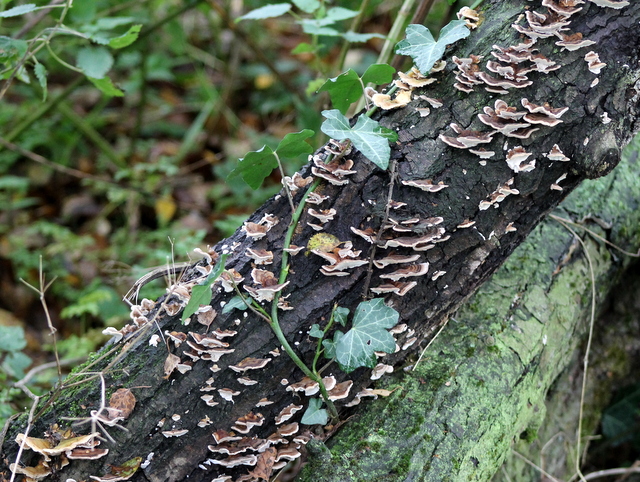
Lots of little bracket fungi found on a dead branch

Richard and I went to the Rectory coffee morning at the beginning of the month and enjoyed seeing all our friends from church.  We came home with cakes, pains aux raisins, marmalade and a book – no prizes in the raffle this time.  This month we also went to the Remembrance Sunday service at St James’ church which was quite moving.  Representatives from all the villages in the benefice read out the names of all the people who lost their lives in some of the wars we have taken part in – the two World Wars as well as the Korean and the Boer Wars.  The American airmen who lost their lives during WW2 and who were stationed at Flixton airfield were also mentioned.

IMG_2514Crabapple

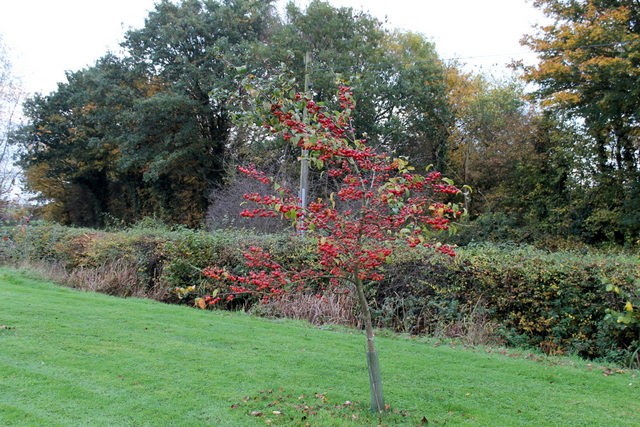
Crabapple ‘Evereste’ covered in fruit . This photo also shows part of the front hedge and ditch before we had them both trimmed and tidied.

Alice came home the Saturday before last and stayed until the following Tuesday.  This was only the second time she has been able to visit this year but we hope to see her at Christmas as well which will be fun!  Mum came to lunch that Sunday and she enjoyed chatting with Alice and catching up with her news.

DSCN0011

The church of St Michael and All Angels

DSCN0007

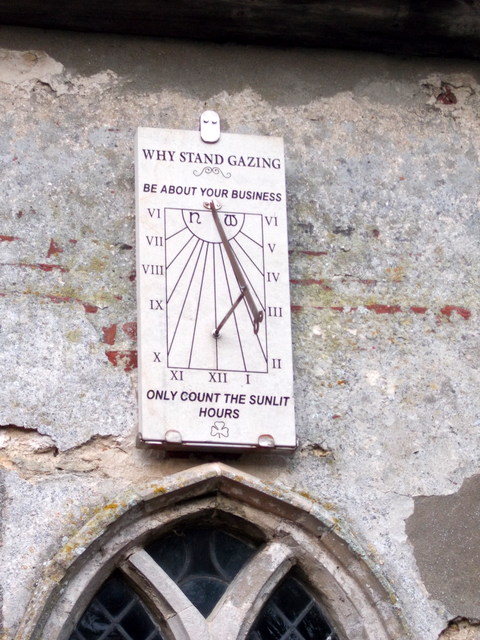
The sundial on St Michael’s wall

DSCN0010

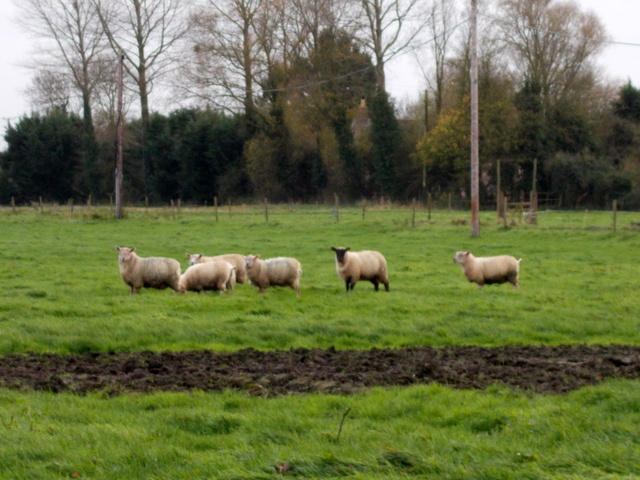
Some of the sheep in the field next to the church.

(The three photos above were all taken with my new camera.  I think I will need to adjust the settings to get clearer pictures.)

Richard and I had been to the 9.30 Morning Prayer service at St Michael’s church the Sunday before last. Maurice, one of our Benefice Elders, took the service and spoke about St Edmund, Suffolk’s Patron Saint whose feast day is the 20th of November.  I had been due to take Mum to her church that day but couldn’t because of lunch-cooking duties.  Instead, I arranged to take Mum to church this Sunday just gone.  It was very icy with snow still on the ground in the morning and we assumed that it would be as bad at Mum’s house and at Eye; Richard said he would drive us in his 4×4.  Unfortunately for Richard, the further inland we got the less snow there was and he found that he needn’t have driven me and Mum after all!  He had to sit through a High Church service at Eye church with bells, incense and a procession to boot, because he had been gallant.  Richard doesn’t like High Church services – his Methodist upbringing revolts against them.  I was brought up going to High Church services and I can worship anywhere really, but do prefer my own local church with my friends and Richard by my side.  I think I’ll be left to drive Mum to church on my own as usual in future, whatever the weather!

These next photos were taken by Richard on his phone on Sunday morning.

View of the garden from the conservatory
The greenhouse seen from the conservatory
The garden on the south side of the house from the conservatory

I went out for the evening twice last week.  On Tuesday evening I took Mum to a performance of the opera ‘Don Pasquale’ by Donizetti.  It was performed by the Glyndebourne Touring Company at the Theatre Royal in Norwich.  We loved it very much indeed.  The singing, the costumes, the orchestra and the stage set were fabulous.  A really enjoyable evening out only spoiled by a gale blowing and making driving and walking difficult – Mum was nearly blown over a couple of times and I had to hold onto her tightly.  Clouds of leaves were swirling about in front of the car and bits of tree were falling onto the road all about us.  As I drove along I was aware of loose branches swinging to and fro just above the car and hoped I could get out of the way before they fell.  Fortunately I got my mother and myself safely to Norwich and then back home again.

IMG_2512Rosehips

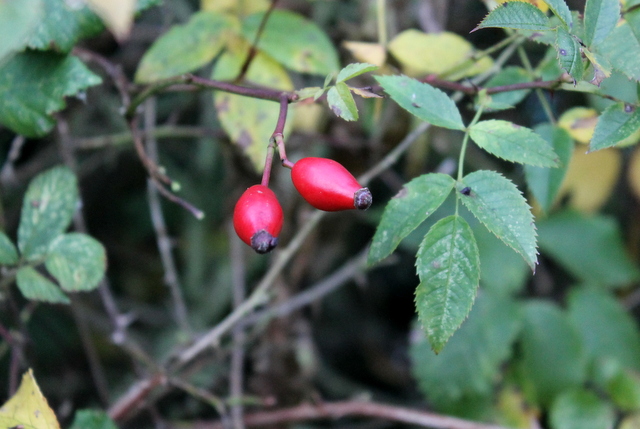
Wild Rosehips in the hedge.

On Saturday night Richard and I went to see ‘Uncle Vanya’ by Chekhov performed by the Open Space Theatre Company at The Cut in Halesworth.  We both enjoyed the play very much which was acted and directed well.  On leaving the theatre we found it had started snowing and as Richard had left his hat in the car he got quite wet and cold on our brisk walk to the carpark.  The snow was falling heavily as we left the town and Richard found it very difficult keeping to the road once we left the street-lights behind.  Most of our lanes have deep ditches running along next to them and there is always the risk of driving into a ditch in the dark.  We were glad to get home again and into the warm.  The snow didn’t last long and by morning most of the roads and paths were mainly clear but icy.

All photos in this post were taken either in our house or in the garden except for the ones of St Michael’s church.

My musical choice is performed by Emeli Sandé and Jules Holland.

Thanks for visiting!
 

Share this:

  • Share on X (Opens in new window) X
  • Share on Reddit (Opens in new window) Reddit
  • Share on Pinterest (Opens in new window) Pinterest
  • Share on Facebook (Opens in new window) Facebook
  • Email a link to a friend (Opens in new window) Email
  • Share on Tumblr (Opens in new window) Tumblr
  • Print (Opens in new window) Print
  • Share on LinkedIn (Opens in new window) LinkedIn
Like Loading...

An Autumn Walk at Minsmere.

29 Thu Oct 2015

Posted by Clare Pooley in Days out, plants, Rural Diary, trees, walking

≈ 30 Comments

Tags

autumn, fungus, lichen, Minsmere, plants, ponds, RSPB reserve, Suffolk, trees, walking

We took advantage of a dry but cloudy afternoon earlier this week to walk through the woods at Minsmere.  To those of you who don’t know, Minsmere is an RSPB (Royal Society for the Protection of Birds) wildlife reserve situated on the coast in Suffolk.  We didn’t see many birds, though as the afternoon wore on and the crowds of visitors began to leave we began to hear more birdsong.

IMG_5857Sand martin burrows

The cliff behind the visitor centre with Sand Martin (Delichon urbica) burrows. I’m not sure what the larger holes are – probably rabbit burrows.

We went first to the ponds behind the visitor centre to see if there was any sign of the Bird’s-nest fungus that was discovered there last year.  I looked but didn’t see any though that doesn’t mean it wasn’t there!  I did see some lichen on the decking.

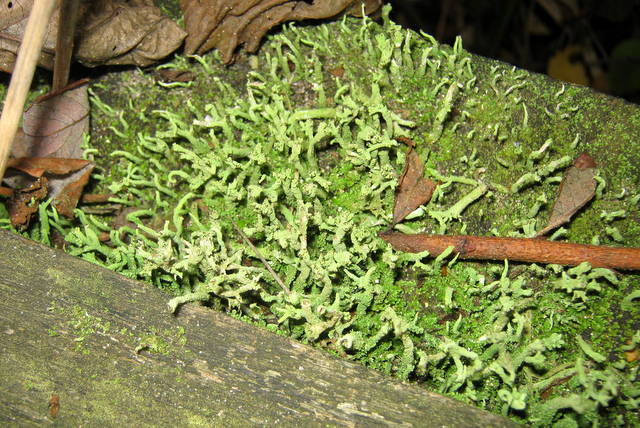
IMG_5852Cladonia  Lichen

One of the Cladonia lichens

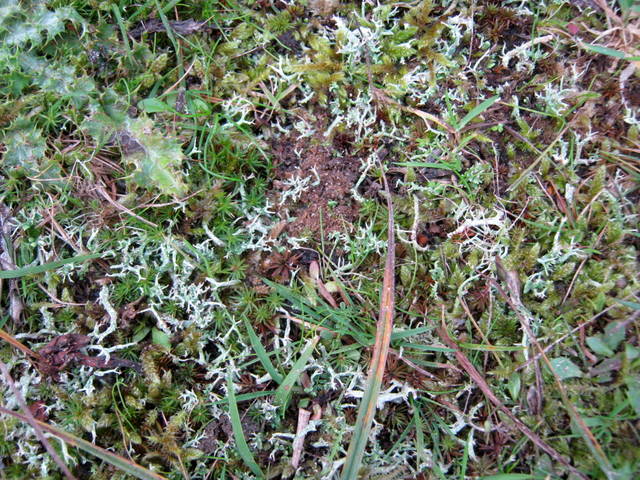
IMG_5855Lichen

More lichen was growing on the ground amongst the sparse grass and moss.

We saw lots of fungi on our walk but because of the low light many of my photographs didn’t come out very well and had to be erased.

IMG_5854Fungus

Fungus

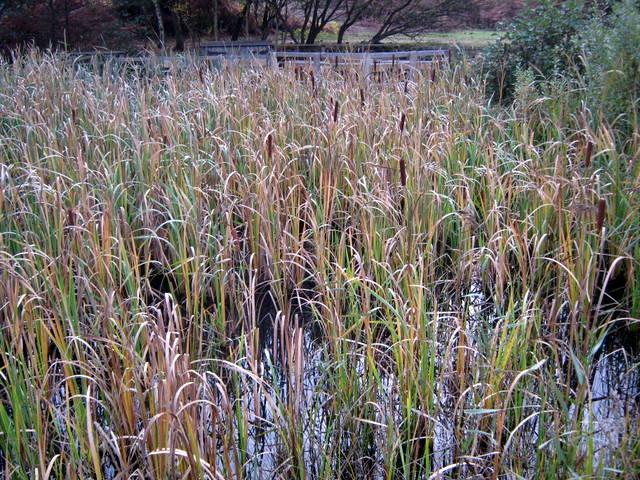
IMG_5856Reeds

Reeds in the pond near the visitor centre – mainly Great Reedmace/ Bulrush (Typha latifolia)

IMG_5858Chestnut tree

A bright Sweet Chestnut tree (Castanea sativa)

This slideshow requires JavaScript.

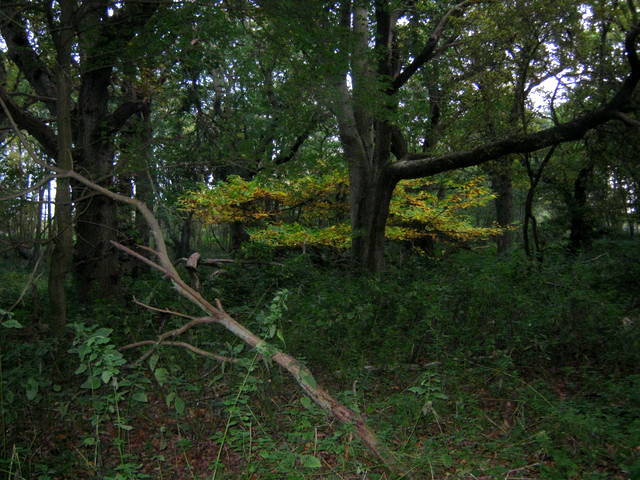
IMG_5871The wood

A little pale sunshine filtered down through the trees

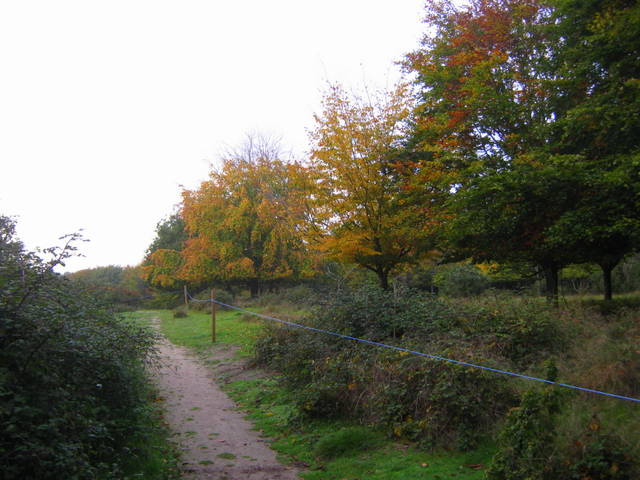
IMG_5874Path at Minsmere

I believe the section they have roped off here is where the Adders (Vipera berus) live.

This slideshow requires JavaScript.

IMG_5869Bramble flowers

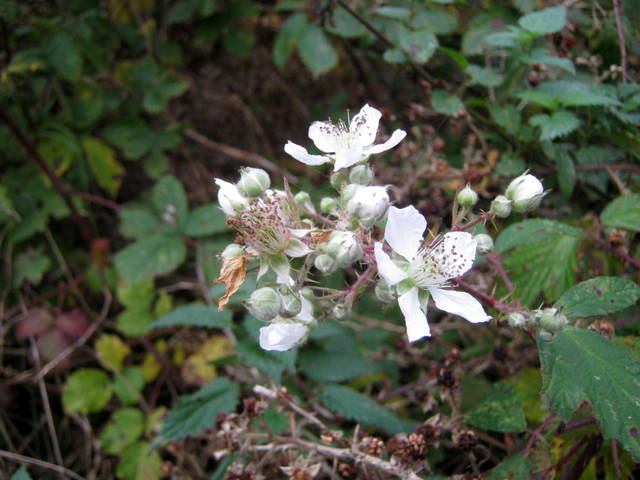
We saw plenty of Bramble flowers (Rubus fruticosus agg.)

IMG_5876The wood

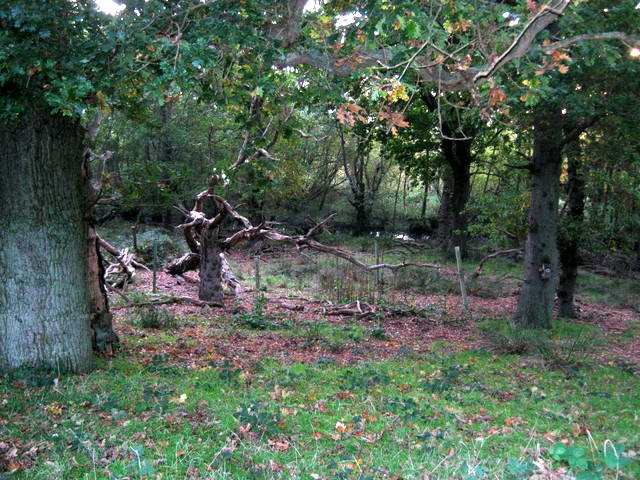
There was dead wood everywhere

IMG_5877Richard and Elinor

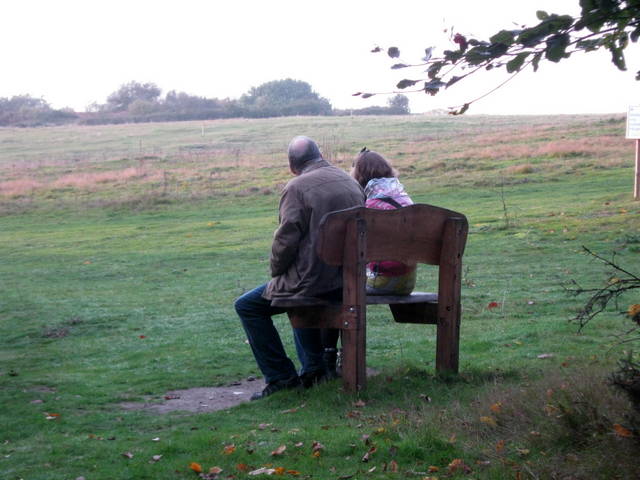
Richard and Elinor watching the rabbits on Warren Hill

IMG_5878Warren Hill

Lots of rabbits live here. The birds of prey appreciate this!

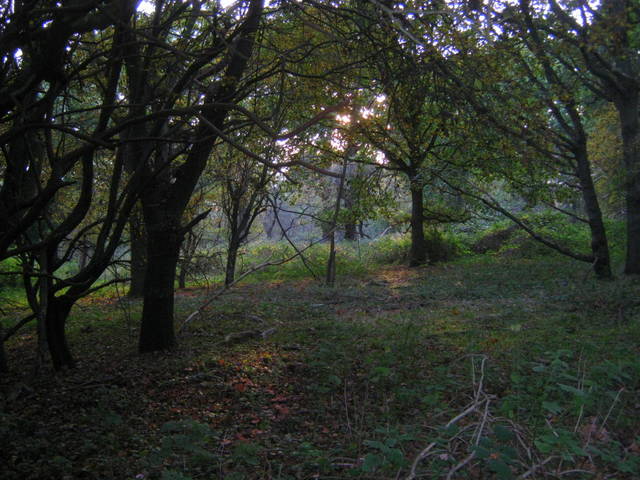
IMG_5879Sun through trees

We saw more of the sun as we neared sunset

IMG_5880Minsmere

Sun on the reeds and rushes

IMG_5882Minsmere

Minsmere at sunset

IMG_5883The wood

Edge of the wood

IMG_5886Minsmere

Sunset

IMG_5895The wood
IMG_5896The wood
IMG_5897Perhaps Lesser Water-parsnip

I think this may be Lesser Water-parsnip (Berula erecta) but I am probably wrong.

IMG_5898Lesser Water-parsnip

Here it is again showing its leaves

IMG_5900Pond

One of the many ponds

IMG_5901Fern

A fern

IMG_5903Holm oak

Holm or Evergreen Oak (Quercus ilex)

IMG_5905The wood
IMG_5907The wood
IMG_5909Minsmere

The bracken has turned such a rich colour

IMG_5910The wood

More dead wood

IMG_5914The wood

More colourful bracken

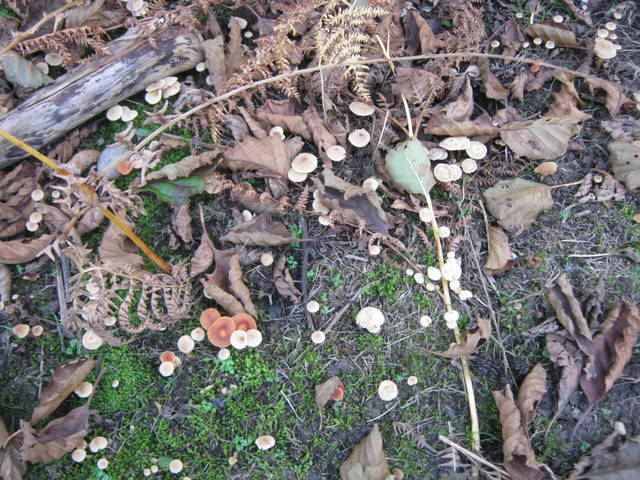
IMG_5915Fungus

The last fungus we saw – in the carpark!

Thanks for visiting!
Share this:

  • Share on X (Opens in new window) X
  • Share on Reddit (Opens in new window) Reddit
  • Share on Pinterest (Opens in new window) Pinterest
  • Share on Facebook (Opens in new window) Facebook
  • Email a link to a friend (Opens in new window) Email
  • Share on Tumblr (Opens in new window) Tumblr
  • Print (Opens in new window) Print
  • Share on LinkedIn (Opens in new window) LinkedIn
Like Loading...
← Older posts
Newer posts →
Follow A Suffolk Lane on WordPress.com

Enter your email address to follow this blog and receive notifications of new posts by email.

Join 697 other subscribers.

Unknown's avatar

I talk about what it's like living in a quiet part of Suffolk. I am a wife, mother and daughter, a practising Christian and love the natural world that surrounds me. I enjoy my life - most of the time!
My Posts

Jul 2026
M T W T F S S
 12345
6789101112
13141516171819
20212223242526
2728293031  
« May    

Pages

  • About my Blog
  • GDPR (General Data Protection Regulations) and This Site
  • My Life in a Suffolk Lane

Archives

Blogs I Follow

Unknown's avatar
Unknown's avatar
Unknown's avatar
Unknown's avatar
Unknown's avatar
Unknown's avatar
Unknown's avatar
Unknown's avatar
Unknown's avatar
Unknown's avatar
Unknown's avatar
Unknown's avatar
Unknown's avatar
Unknown's avatar
Unknown's avatar
Unknown's avatar
Unknown's avatar
Unknown's avatar
Unknown's avatar
  • Tony Self's avatar
  • Unknown's avatar
  • Unknown's avatar
  • bowlandclimber's avatar
  • Unknown's avatar
  • Unknown's avatar
  • Unknown's avatar
  • Unknown's avatar
  • Unknown's avatar
  • Unknown's avatar
  • Unknown's avatar
  • Unknown's avatar
  • Unknown's avatar
  • Unknown's avatar
  • Unknown's avatar
  • clivebennett796's avatar
  • The Ancient Eavesdropper's avatar
  • Unknown's avatar
  • Unknown's avatar
  • glorious78aec7b204's avatar
  • Unknown's avatar
  • Unknown's avatar
  • Unknown's avatar
  • Unknown's avatar
  • Unknown's avatar
  • TravelingTortuga's avatar
  • Resa's avatar
  • SueW's avatar
  • Unknown's avatar
  • Unknown's avatar
  • burndettandres's avatar
  • michaelthefirsts's avatar
  • Noémi's avatar
  • Andrea Stephenson's avatar
  • Schnippelboy's avatar
  • Unknown's avatar
  • Secret Diary of A Church Of England Vicar's Wife's avatar
  • Unknown's avatar
  • Unknown's avatar
  • jonathonbhoyt's avatar
  • Unknown's avatar
  • sherijkennedyriverside's avatar
  • Unknown's avatar
  • Unknown's avatar
  • santable's avatar
  • Unknown's avatar
  • Stanley Maruda's avatar
  • John Bainbridge's avatar
  • Talkmore's avatar
  • Unknown's avatar

amphibians architecture art Arts and Crafts churches cooking Days out domestic animals family fish Folk Traditions France Gardening Historic Buildings holidays Insects Landscaping music Norwich plants Rural Diary seashore theatre trees Uncategorized walking weather wild animals wild birds wild flowers

Tags

architecture autumn birds blackbird blackthorn Bungay butterfly church clouds common knapweed cow parsley crocus daffodils Diary dogwood family field maple flowers fungus garden gardening geese greylags ground-ivy Halesworth Hawthorn heather holiday Holly Holy Week horse chestnut Hoverfly insects ivy Lake District Lent lesser celandine lichen Lords and Ladies Mallard mallards Minsmere moorhen moss music Norwich Peak District pheasant plants pond ponds primrose primroses Rain rooks Rumburgh Rumburgh Church sheep Sheffield snow snowdrops Southwold spring Suffolk Suffolk Wildlife Trust sunset the Beck trees viburnum bodnantense walking weather wild cherry wild flowers winter-flowering honeysuckle witch-hazel

Meta

  • Create account
  • Log in
  • Entries feed
  • Comments feed
  • WordPress.com

Goodreads

Blog at WordPress.com.

Book Jotter

Reviews, news, features and all things books for passionate readers

Country Life Blog -

A blog about life in the country in the past and present

Matthew Paul: Poetry & Stuff

Poetry and what-not

Schnippelboy

Ein Tagebuch unserer Alltagsküche-Leicht zum Nachkochen

TAMARA JARE

Tamara Jare Contemporary Figurative Art – Bold Colors, Resilient Souls

A Taste of Freedom

Documenting a Dream

Country Ways

Rambling Journeys in Britain, Countryside Matters and campaigning for the Right to Roam

The Strawberry Post

Here to Entertain, Educate & Inspire!
a north east ohio garden

an ongoing experiment in the dirt, 35 plus years

naturechirp

Celebrating God's creatures, birds and plants...

Sophie Neville

Writer

Going Batty in Wales

Developing a more sustainable lifestyle in SW Wales

Our Lake District Escapades

Exploring the Lake District and beyond

Short Walks Long Paths

Wandering trails around the coast of Wales

The Biking Gardener

An English persons experience of living and gardening in Ireland

Nan's Farm

A Journal Of Everyday Life

Walk the Old Ways

Rambling Journeys in Britain with John Bainbridge. Fighting for the Right to Roam. Campaigning to Protect Our Countryside.

Writer Side UP!

Waking the Writer Side...and keeping it "Up!"

Meggie's Adventures

Travel, thank you notes and other stories

amusicalifeonplanetearth

Music and the Thoughts It Can Inspire

lovefoundation.co.uk

Traveling Tortuga

Simply Living Well

Pakenham Water Mill

Historic watermill in the beautiful Suffolk countryside

Take It Easy

Retired, not expired: words from the after(work)life. And music. Lots of music!

Secret Diary Of A Church Of England Vicar's Wife

thanksfortheadventureorg.wordpress.com/

The Beat Goes On

#TBGO

Frank Pleszak's Blogs

Twitter: @frankpleszak @PolishIICorps

John Bainbridge Writer

Indie Writer and Publisher

roughwighting

Life in a flash - a bi-weekly storytelling blog

Walking the Old Ways

Rambling in the British Countryside

CapKane

thoughts on social realities

SkyeEnt

Jottings from Skye

jodie richelle

embracing my inner homemaker

Skizzenbuch/Blog

Just another WordPress.com weblog

Have Bag, Will Travel

The Call of the Pen

Flash Fiction, Book Reviews, Devotionals and other things.

John's Postcards

Art in Nature

You dream, I photographe it !

Smile! You’re in Barnier World......

theinfill

the things that come to hand

Dr. Mary Ann Niemczura

Author of "A Past Worth Telling"

Provincial Woman

The Pink Wheelbarrow

Luanne Castle: Poetry and Other Words (and cats!)

Poetry, Other Words, and Cats

The Family Kalamazoo

A genealogical site devoted to the history of the DeKorn and Zuidweg families of Kalamazoo and the Mulder family of Caledonia

everythingchild

The Book Owl

Canberra's Green Spaces

Paul Harley Photographer

  • Subscribe Subscribed
    • A Suffolk Lane
    • Join 697 other subscribers.
    • Already have a WordPress.com account? Log in now.
    • A Suffolk Lane
    • Subscribe Subscribed
    • Sign up
    • Log in
    • Report this content
    • View site in Reader
    • Manage subscriptions
    • Collapse this bar
Loading Comments...
    Privacy & Cookies: This site uses cookies. By continuing to use this website, you agree to their use.
    To find out more, including how to control cookies, see here: Cookie Policy
    %d