Tags
birds, bracken, Dunwich Heath, heathland, kittiwakes, Lowestoft, plants, scones, seashore, Sizewell, Suffolk
Richard, Elinor and I went to Dunwich Heath on Tuesday afternoon. We had originally thought about going in the late morning and having some lunch in the National Trust café there. However, it became too hot and the thought of wandering about on the beach with the sun beating down on us and no shelter and us beginning to look like characters in one of those survival films (you know what I mean – crawling on all fours, blistered parched lips, savouring the last drips from an empty water-bottle, vultures circling overhead etc. – replace vultures with seagulls) prompted us to leave at 3.00pm.
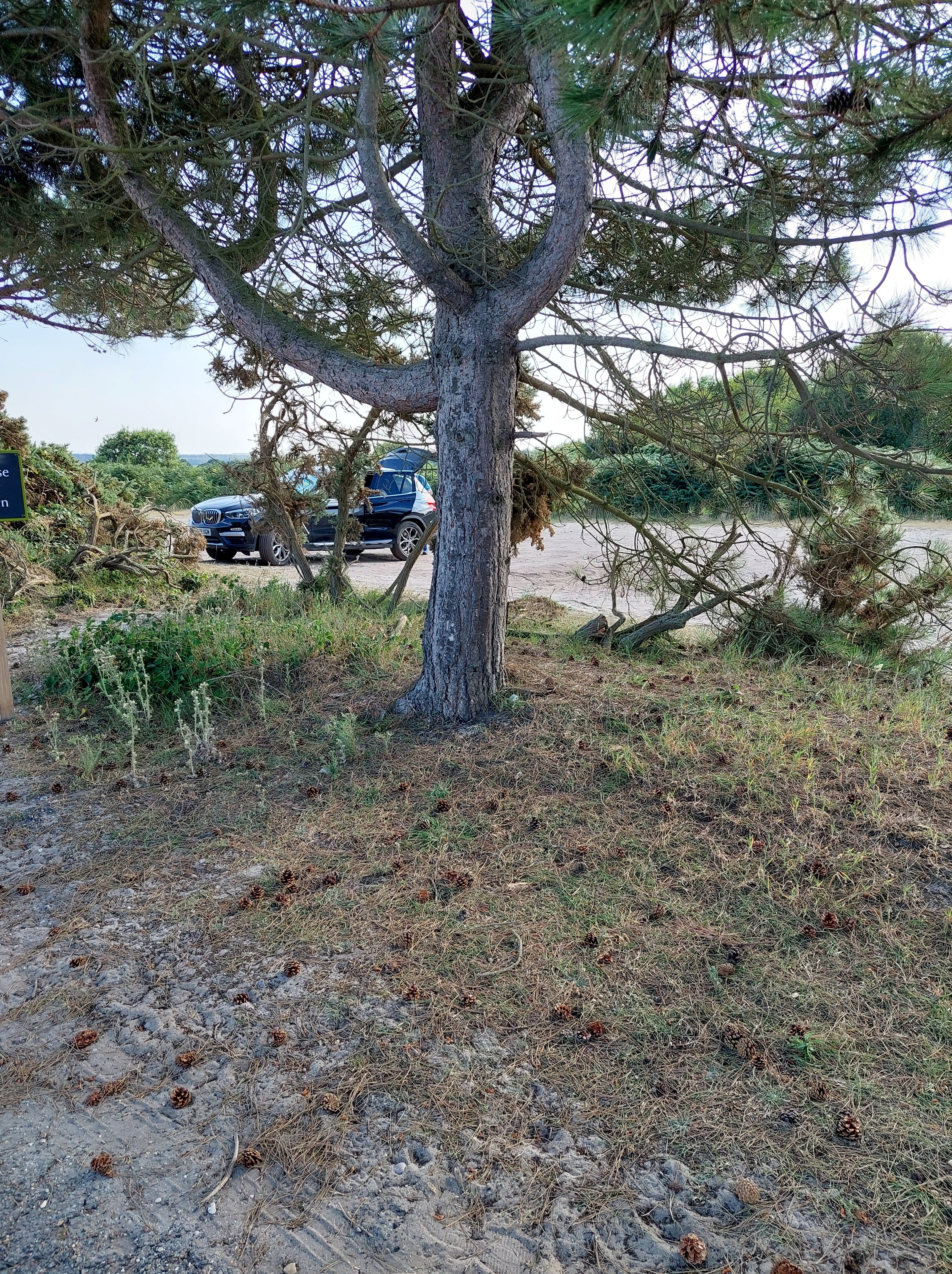
Our car in the carpark
The carpark was pleasantly uncrowded; I took my NT membership card to the office to get our free parking ticket and while Richard went back to the car to fetch Elinor and reassure her that the café was still open, I had a chat with the volunteer on duty and found out he had recently moved to Saxmundham and had a friend who had recently moved to Rumburgh; I also got a recommendation for a restaurant in Southwold. I think he was a little bored and needed to talk.
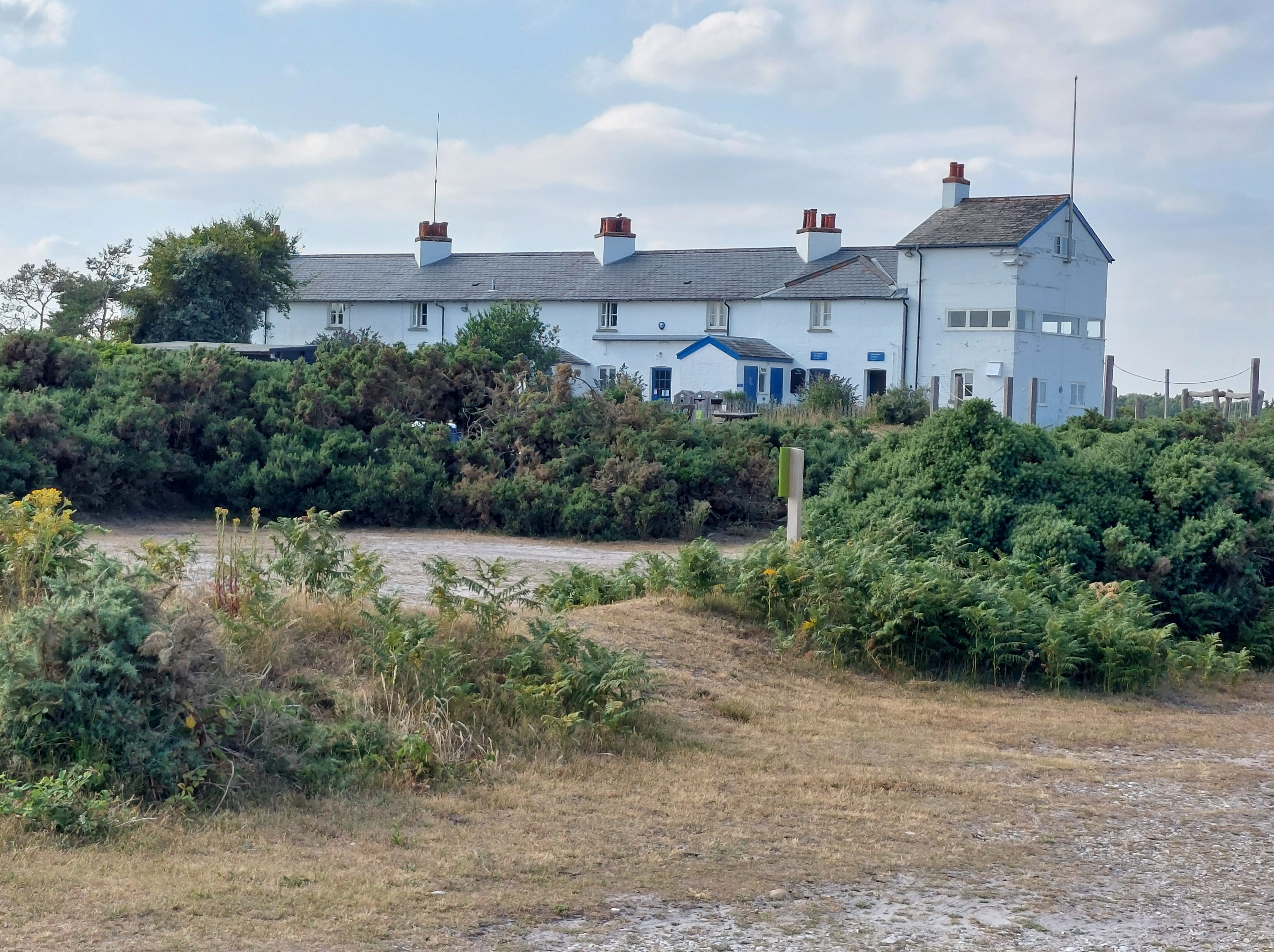
The former coastguard cottages now house the National Trust café and other offices as well as holiday accomodation for visitors.
We went into the café and all had a scone with jam. Richard and I had clotted cream with ours but Elinor didn’t. Richard and I had a pot of tea between us but Elinor didn’t as she doesn’t drink tea or coffee. She had wanted a fruit juice but they only had water or fizzy drinks. She, like me, doesn’t like fizzy drinks and she had brought a bottle of water with her. I quickly walked past the shelves of second-hand books on our way out. I must not be tempted into buying yet more books!
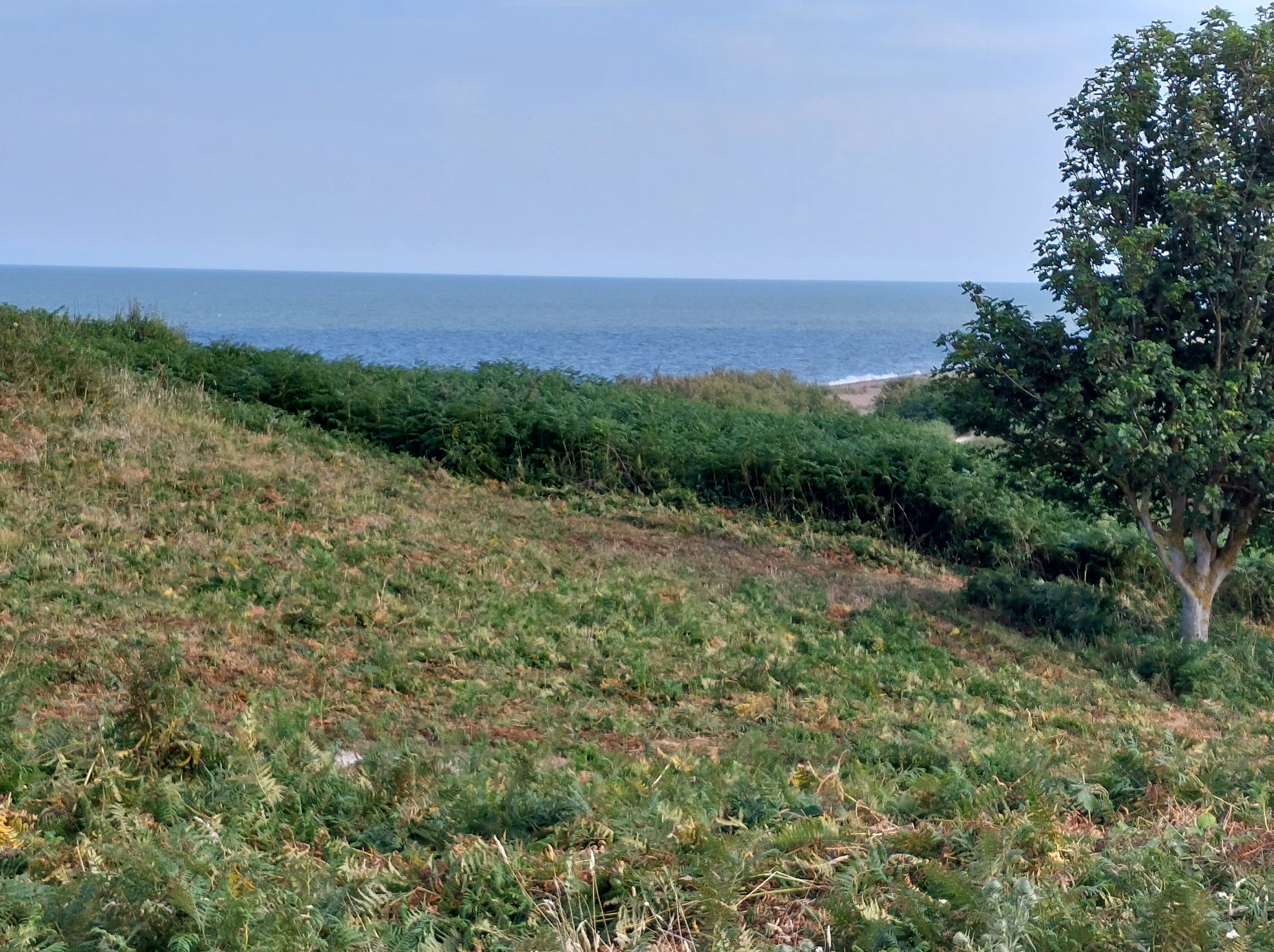
Walking down to the sea
We made our way to the path down through the heathland to the sea. Everything was looking a little dry but there was this wonderful smell of hot bracken (Pteridium aquilinum) which took me back to childhood camping holidays. Admittedly, we didn’t often smell hot bracken then, it was usually wet bracken but that has a lovely smell too. Quoting from Richard Mabey’s ‘Flora Britannica’ “…for those who have lived in brackeny places, its sharp almond scent and the first splashes of yellow on its fronds in autumn can evoke powerful feelings”. All this in spite of it being toxic if eaten and its spores being carcinogenic! Also, I’m not sure that I think of almonds when I smell bracken.
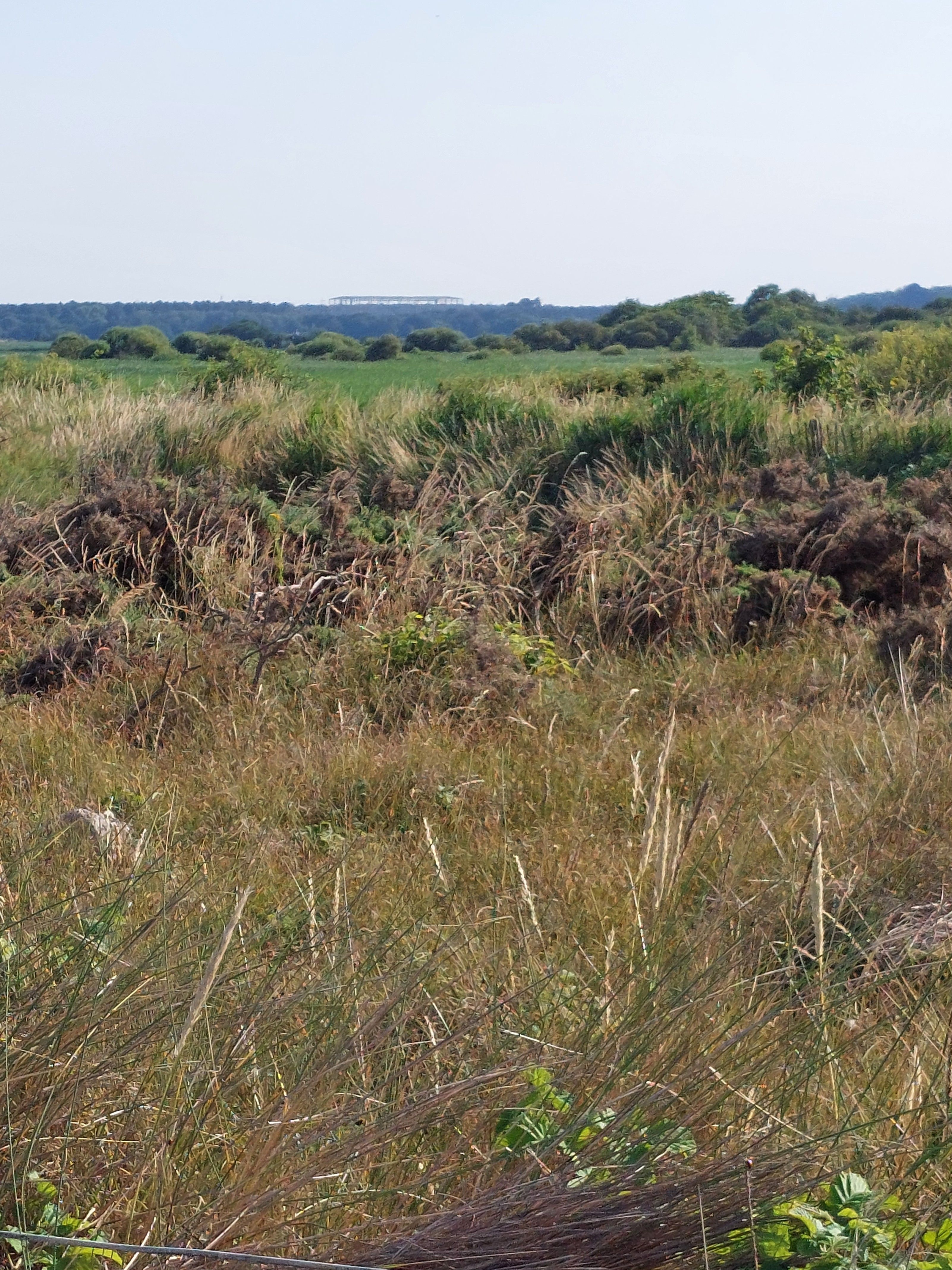
I think that the structure on the horizon is part of one of the two new solar farms being constructed in this area.
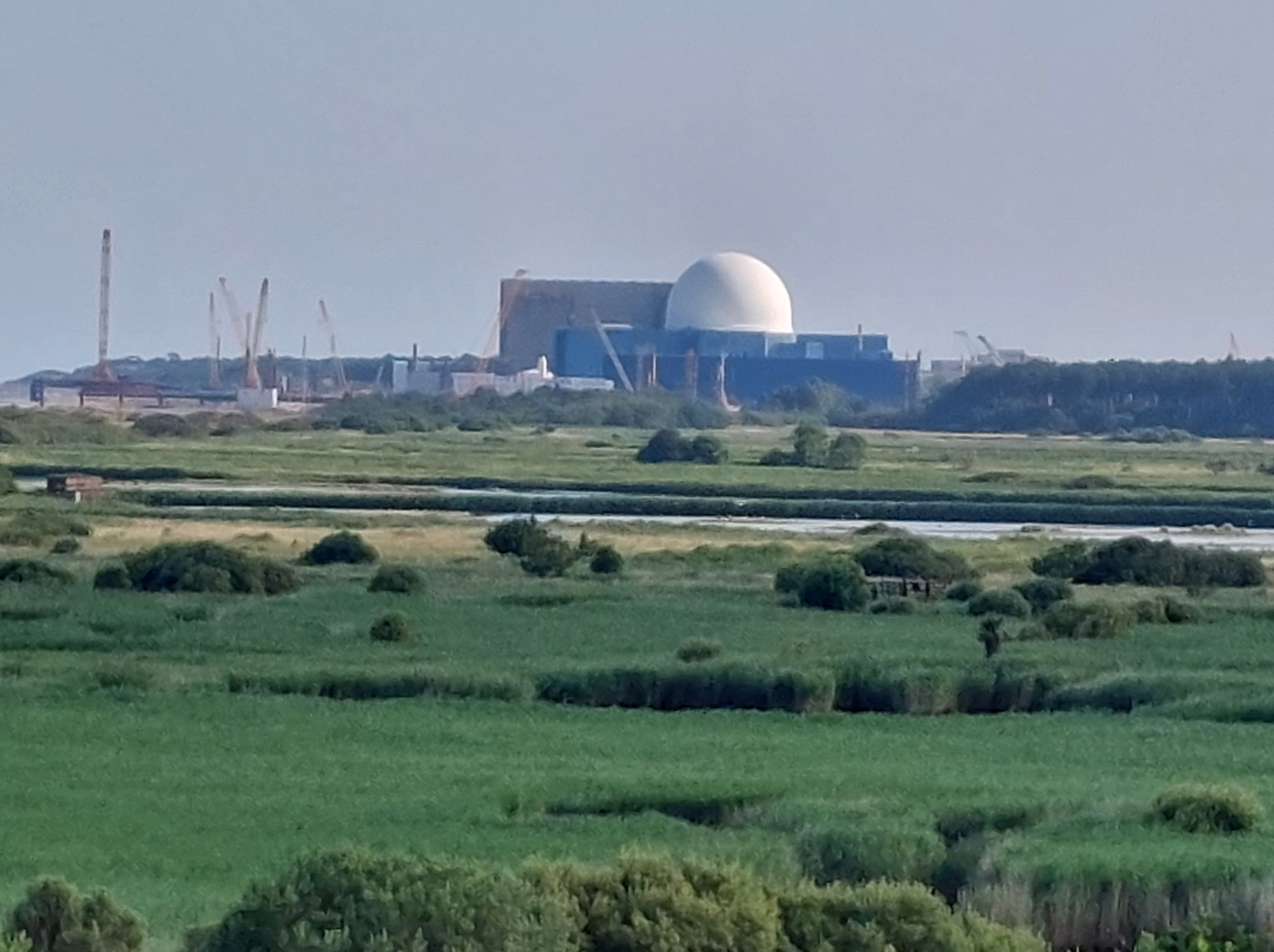
A few miles to the east of the solar farms and nearer to the sea is Sizewell.
The concrete block at the rear is what is left of Sizewell A nuclear power station, which is slowly being dismantled. The white dome is Sizewell B nuclear power station which is still going strong after 30 years. The evidence of work going on nearest to us is the construction of Sizewell C. This construction (as well as the construction of the solar farms) has upset a lot of people and the mess to the countryside and disruption to traffic on the A12 (the main A road through the area) is to be seen and experienced to be believed. However, as well as bringing sorely-needed employment to the area and a reliable source of electricity eventually (I won’t go into the pros and cons of nuclear power here), the long-awaited improvements to the A12 and the by-passing of villages who have suffered very heavy traffic through their centres for decades is almost complete. This was part of the deal with tthe nuclear power company. There has also been work on a railway branchline. There are other issues involved but I won’t go into these at present.
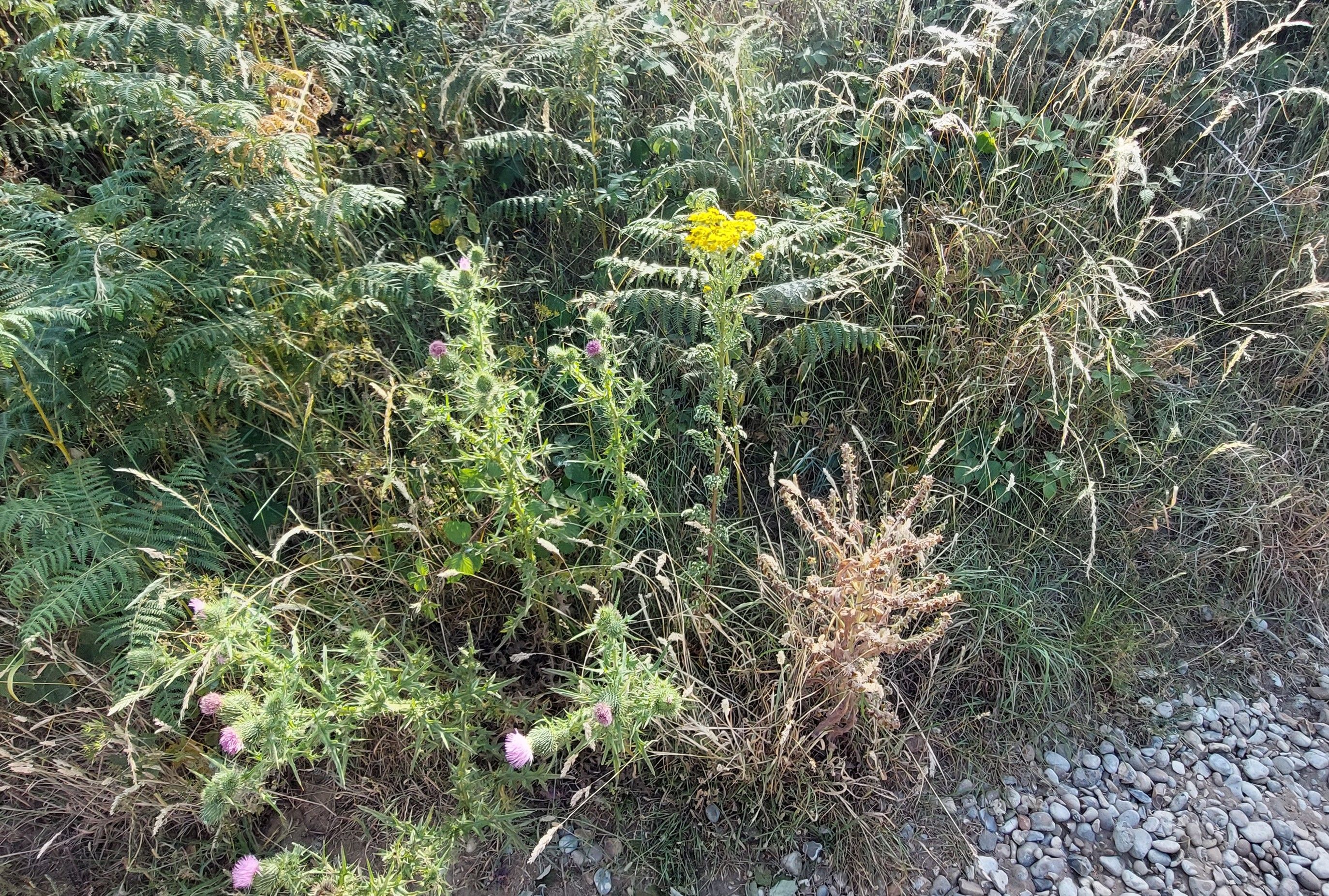
Not a very good photo of some Common ragwort(Senecio jacobaea ) and a Spear thistle (Cirsium vulgare )
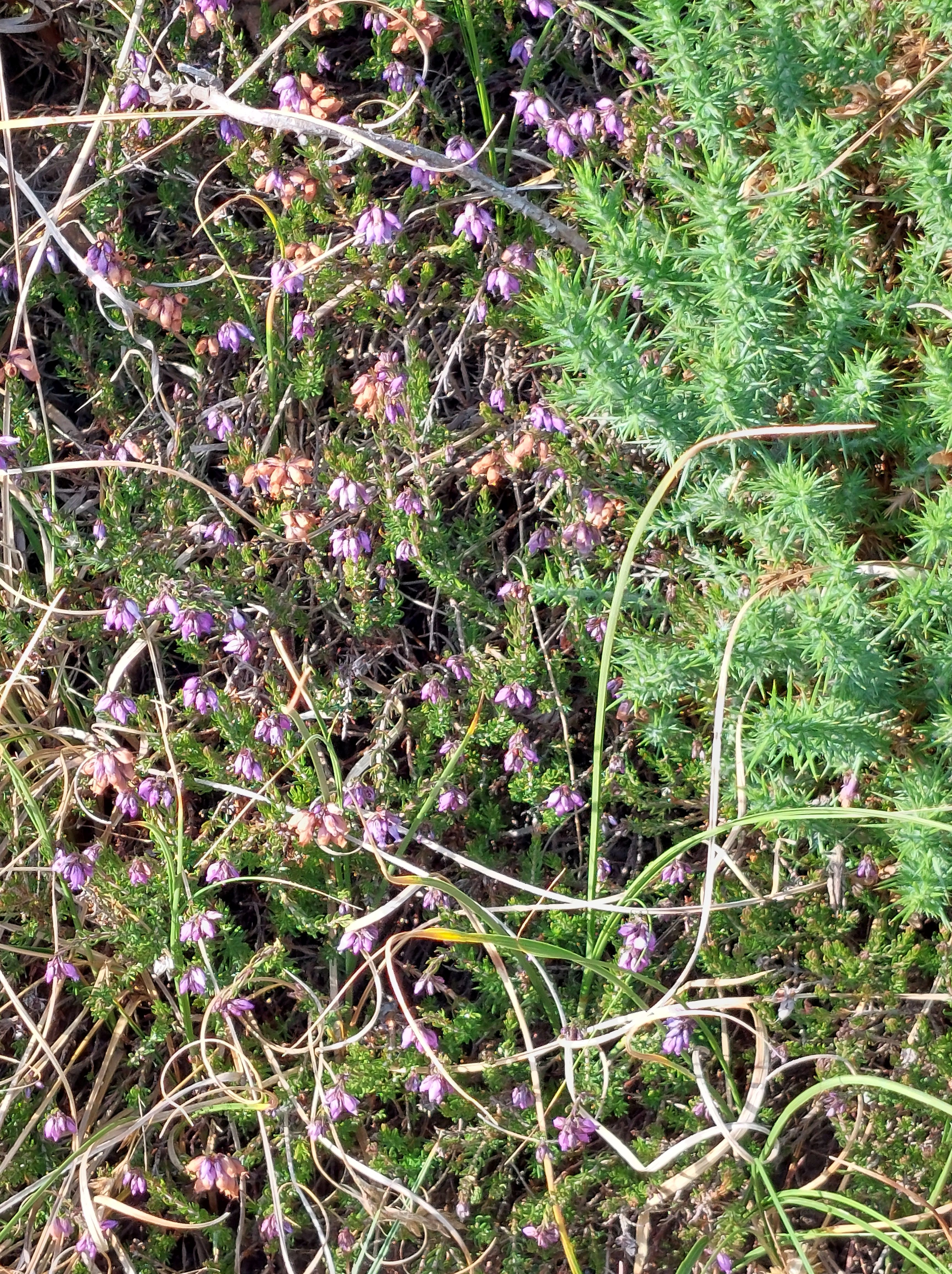
Some Bell heather (Erica cinerea) and Gorse prickles (Ulex europaeus)
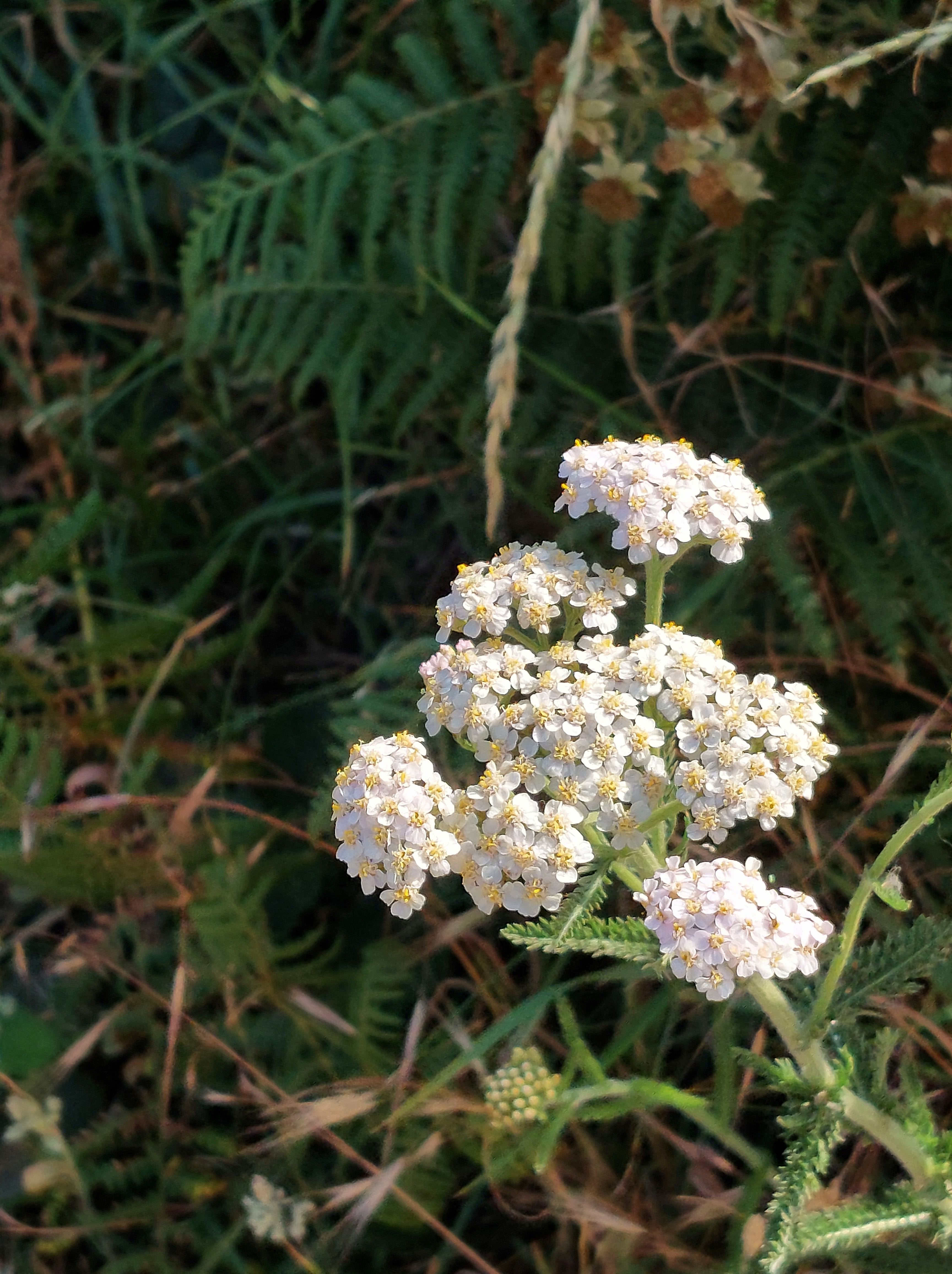
Yarrow (Achillea millefolium)
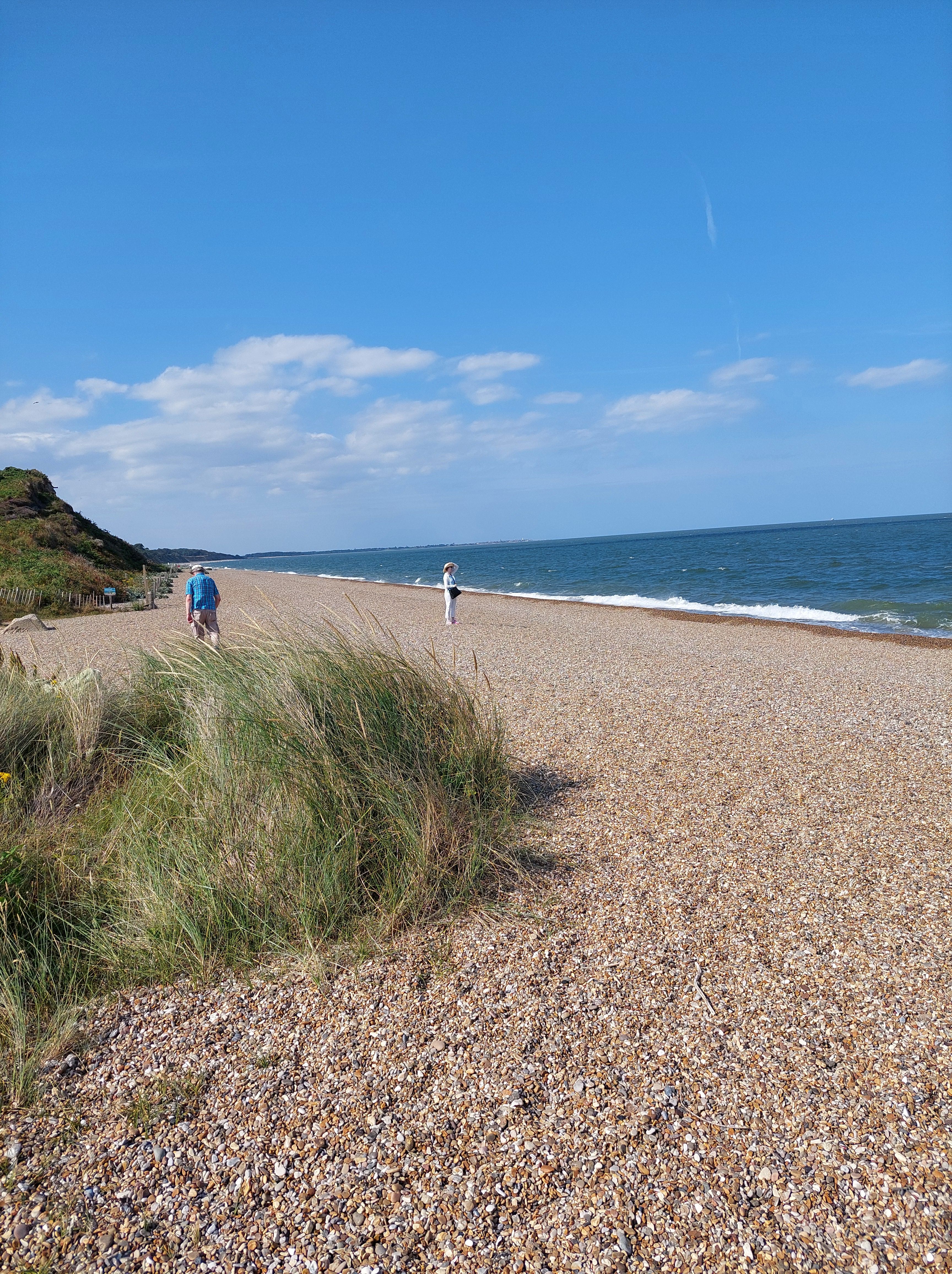
Here we are on the beach. How wonderful the cool breeze was!
Every time we visit the seaside we look out for ‘a literal seal’. To explain: we were at Southwold a couple of years ago on a blustery afternoon and we heard an excited small boy shouting to his parents that he had seen ‘a literal seal’. And there the seal was; just a couple of metres off-shore, bobbing about on the heavy swell and holding an enormous fish between its flippers which it was eating with relish.
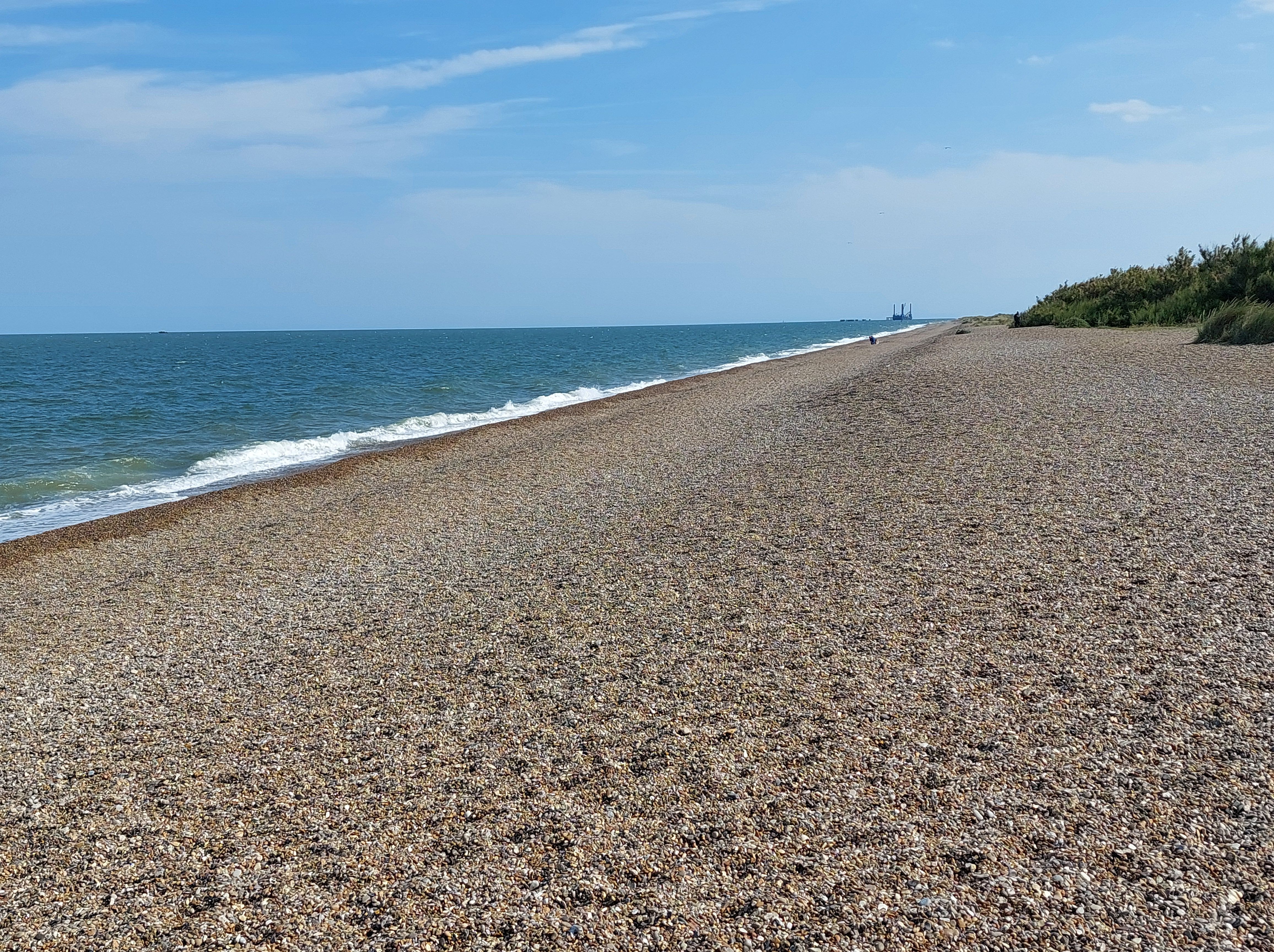
Dunwich beach. In the distance you may be able to see an object in the water with three spikes. Not Neptune’s trident, but the place where work is being done to build a desalination tank and other facilities for Sizewell C. Once the work has been done there will be no evidence of anything on the surface.
I hope you enjoyed this quick video of the sea.
We watched what we believe were terns flying over the sea, every now and then dipping into the water to catch something and flying on again.

This strange-looking thing is a kittiwake nest platform.
We have a colony of Kittiwakes (Rissa tridactyla) in Suffolk.They arrived in Lowestoft some time ago and began nesting on buildings in the harbour area. They then moved into the town and to the Lowestoft peoples’ delight (hah!) they began nesting on roofs and window-sills. Conservationists are trying to encourage the birds to move out of the town into permanent accomodation out at sea. I’m not sure how well this is going.
If you had a kittiwake nesting on your bedroom window-sill this is what you would hear from 3.30-4.00am until sunset (after 9.00pm) every day, all day, until the chicks are fledged. Not to mention the mess and the smell!
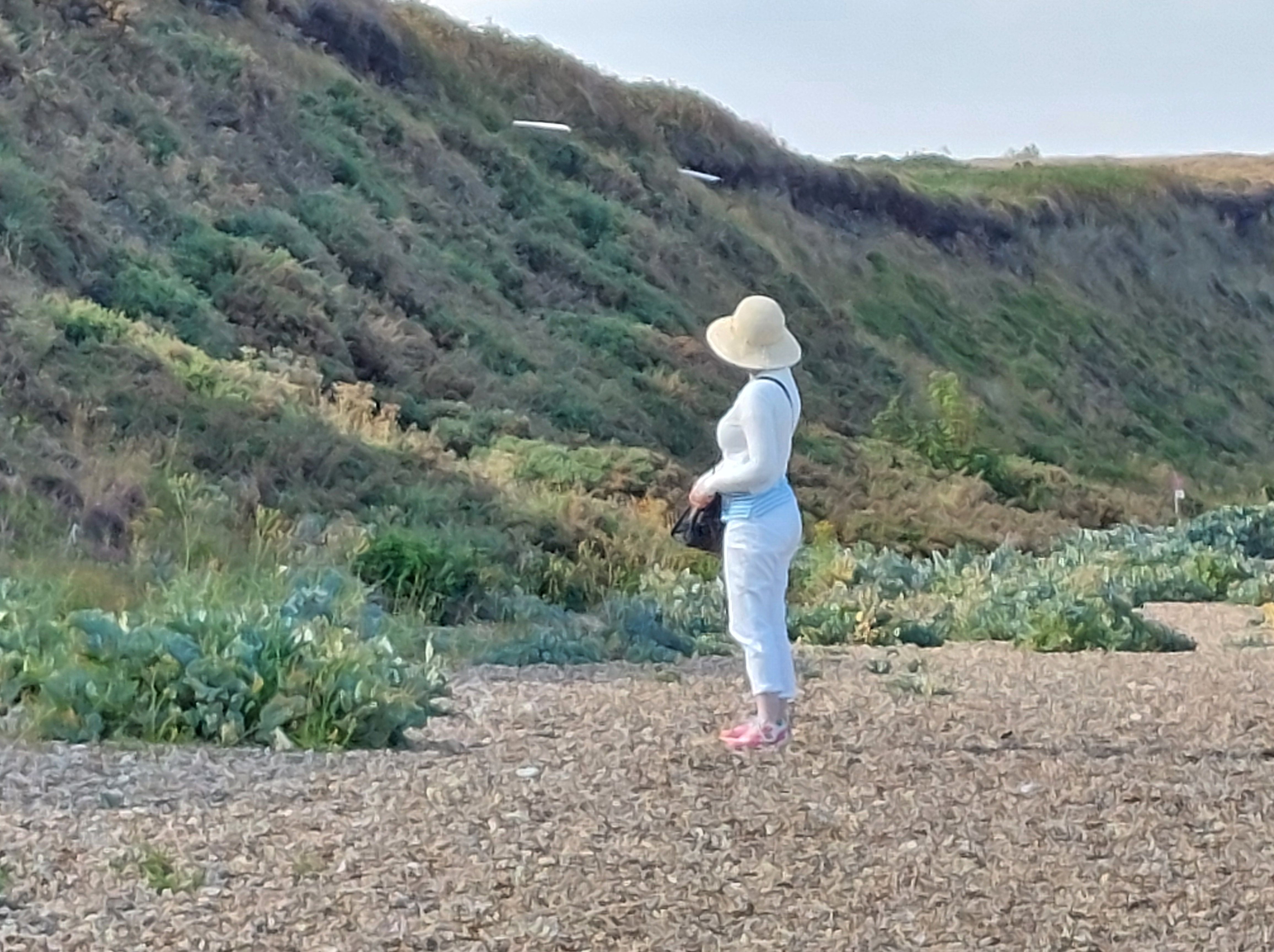
Elinor
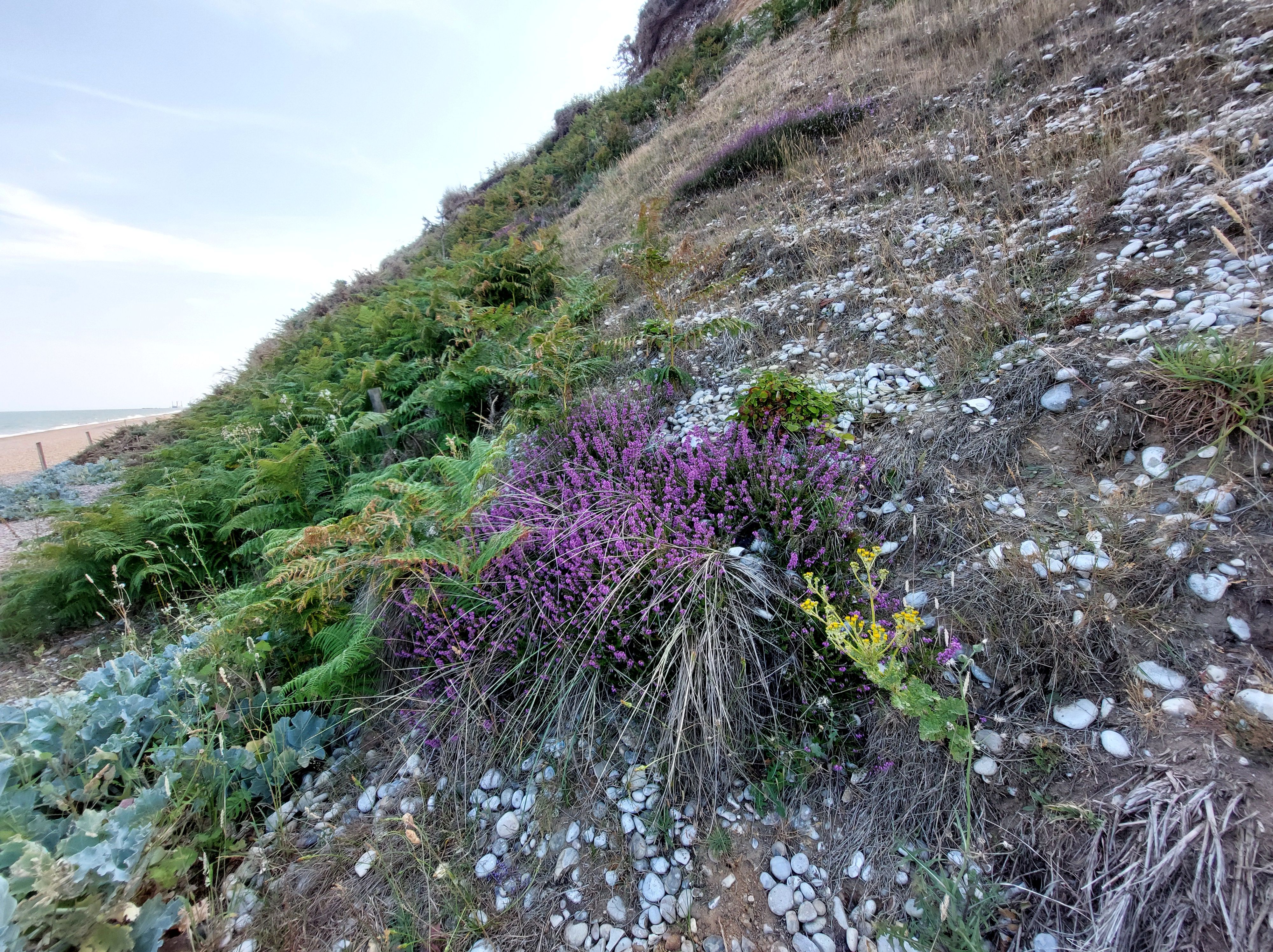
Beach flora: bracken, ragwort, heather and sea kale
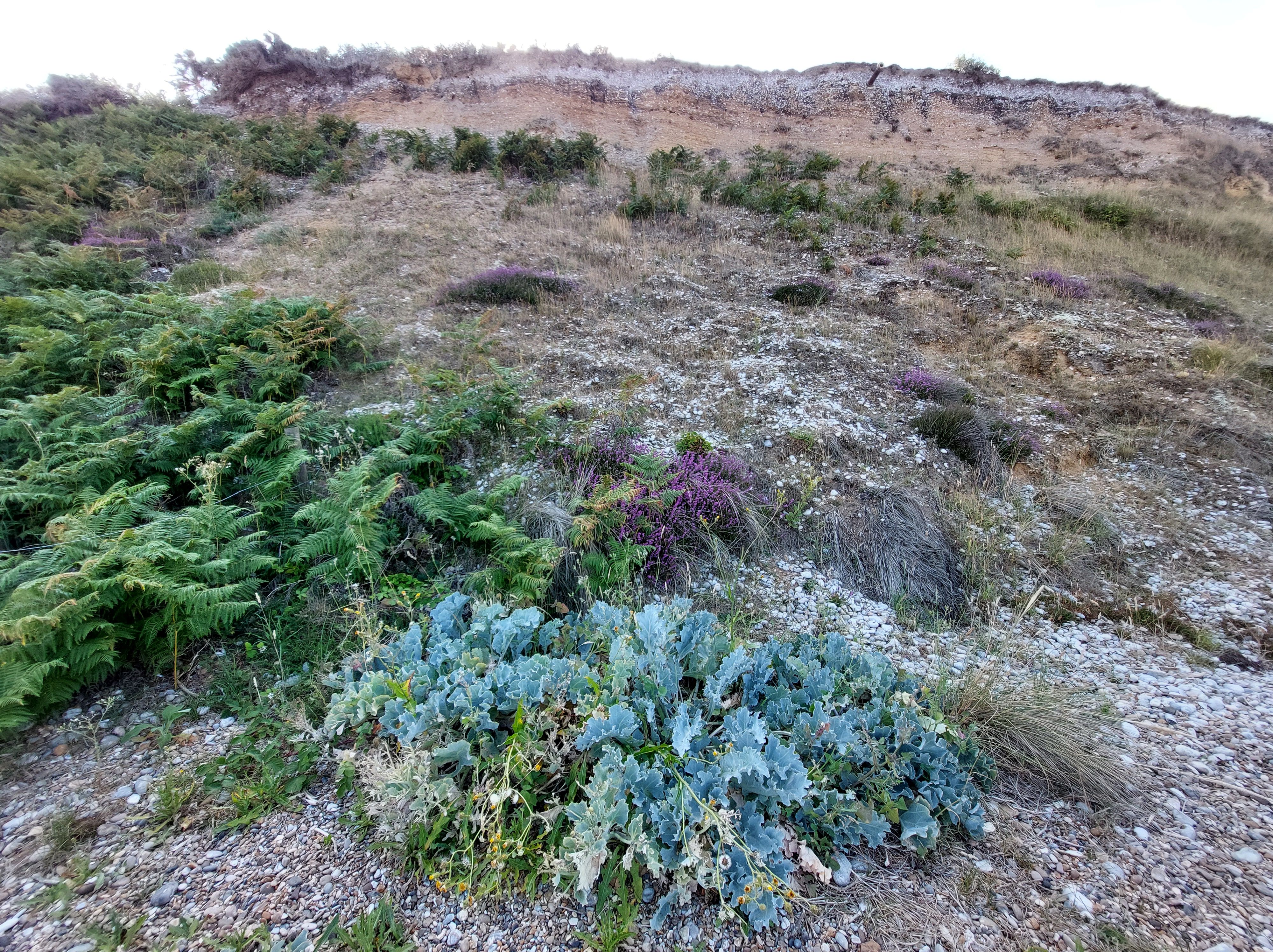
Looking up to the top of the cliff where there are Sand martin (Riparia riparia) nests.
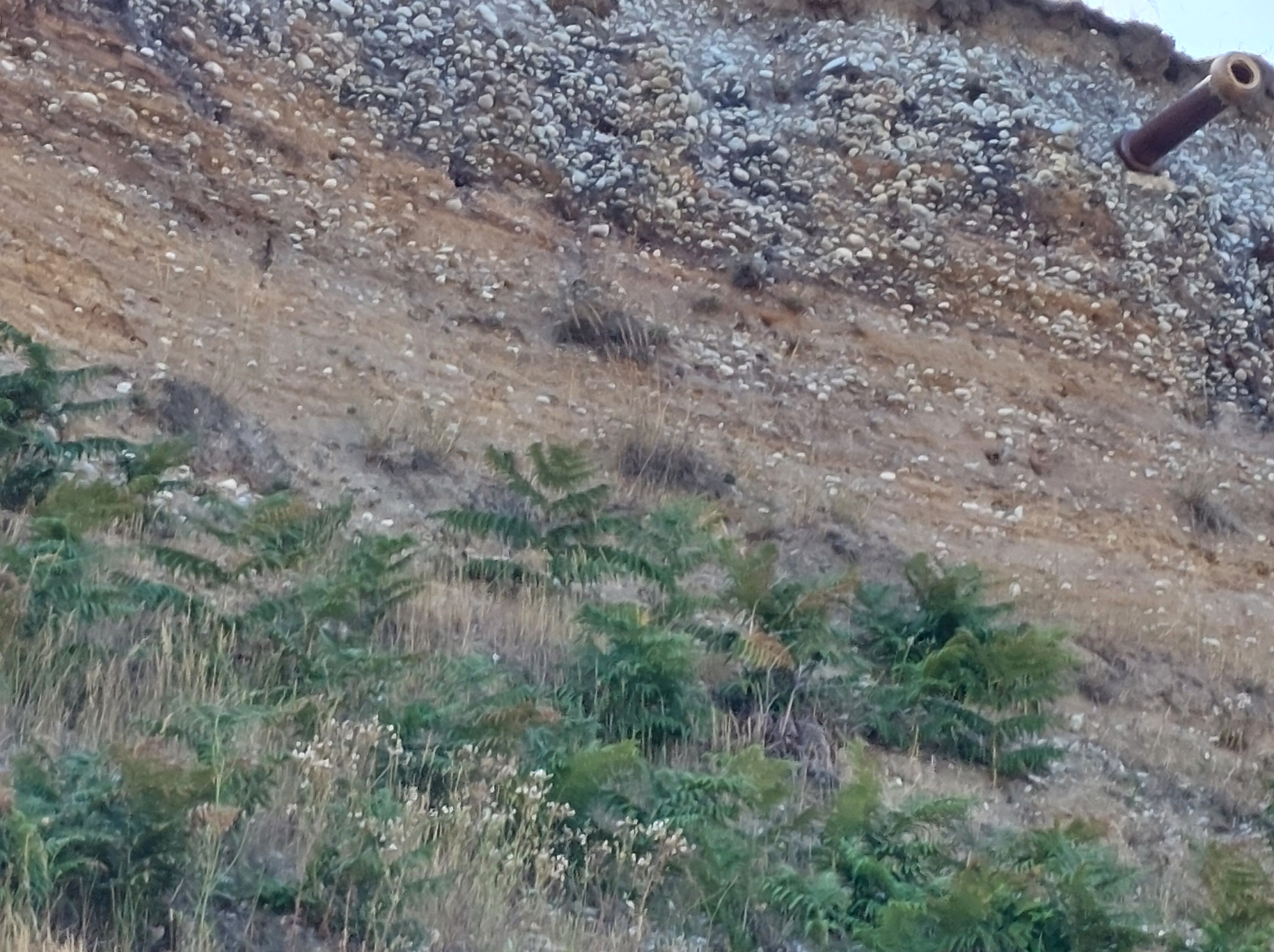
Here I was trying to zoom in on the nests with my phone. All you can see clearly though, is the layer of pebbles above the sand and a drainage pipe projecting from the cliff face.
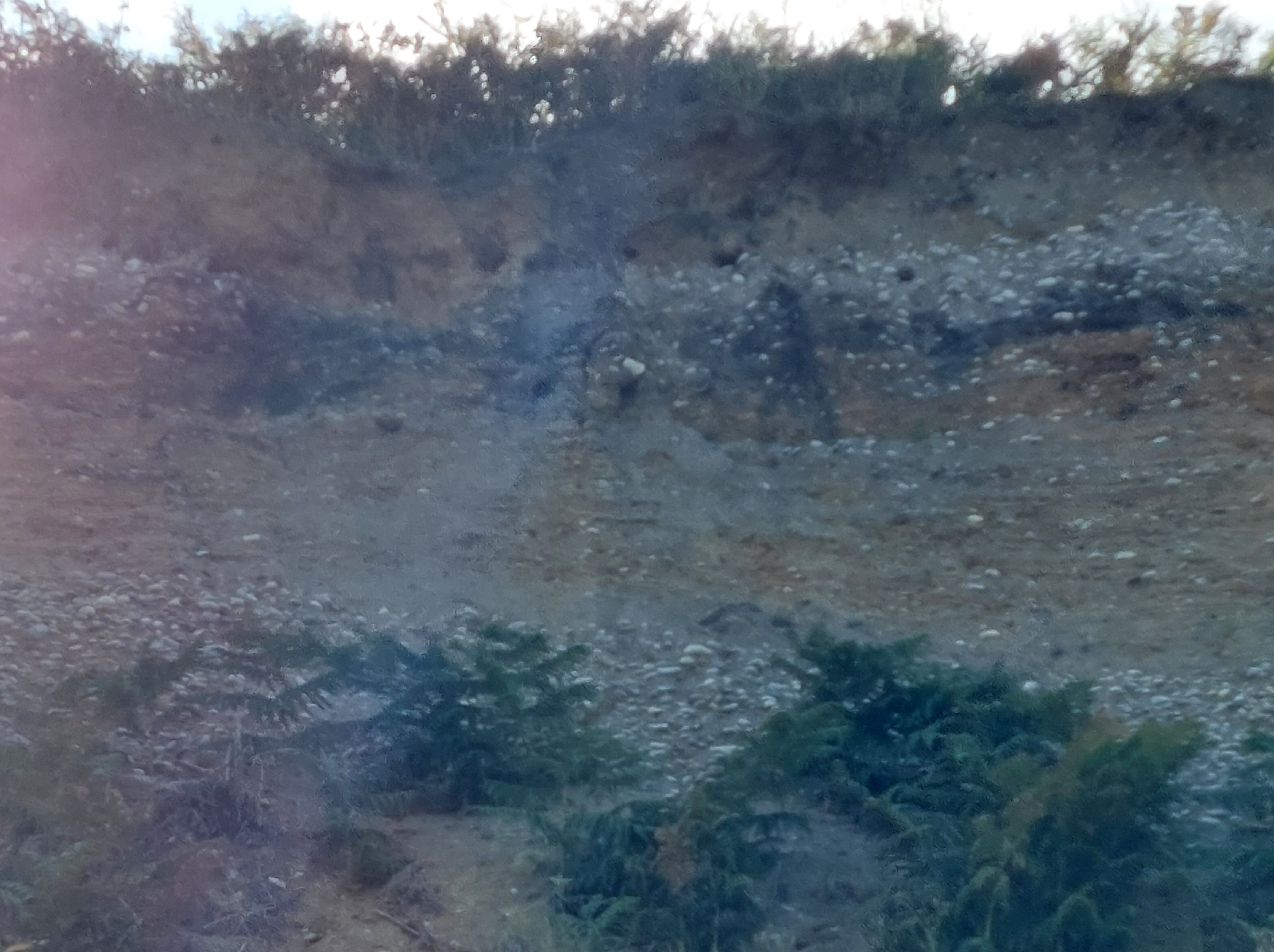
This is another partial failure. I had a problem with the sun which was on a level with the top of the cliff though it is possible to see a few of the holes in which the birds nest.
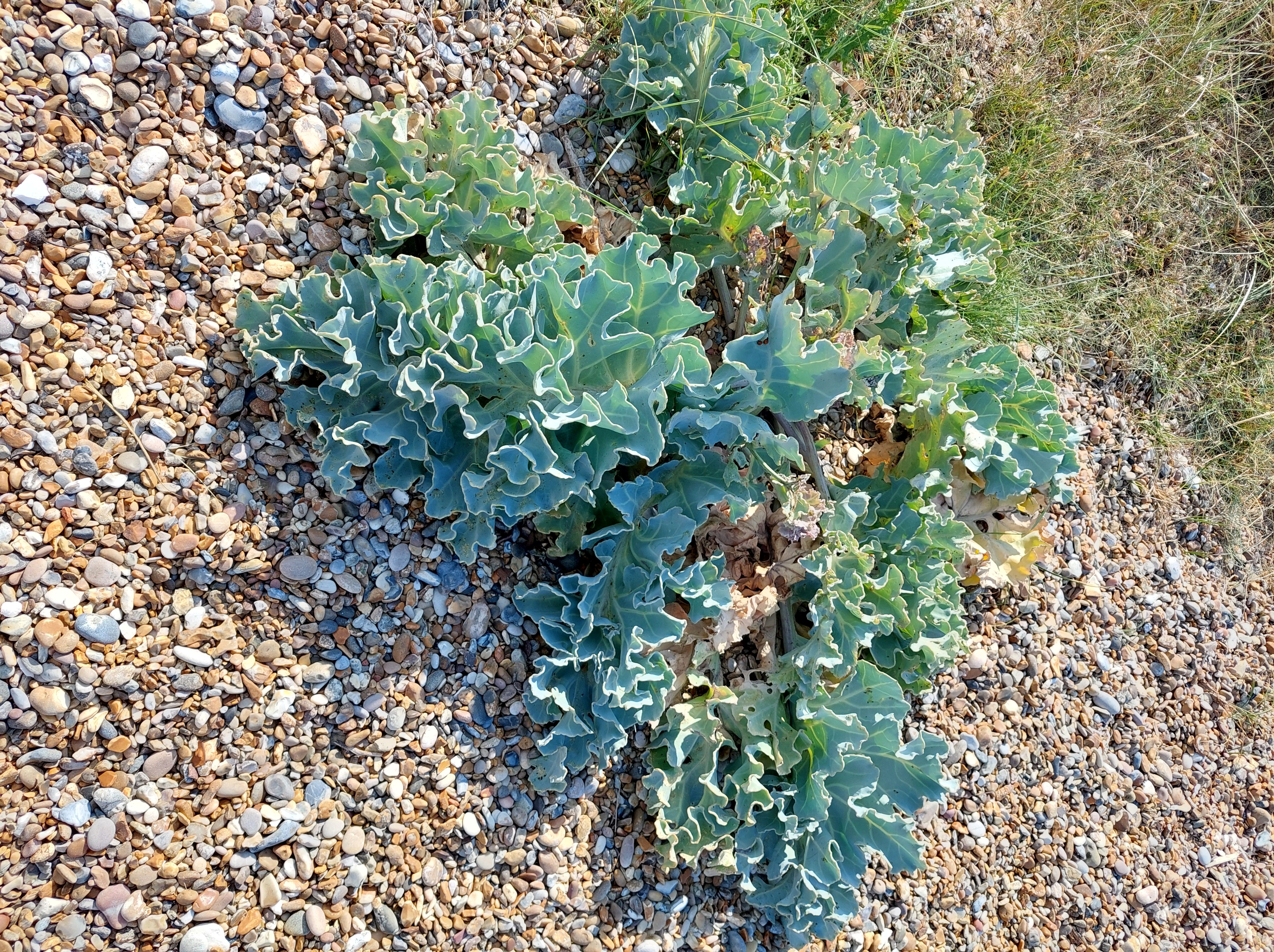
Sea kale (Crambe maritime)
Other areas fenced off at the foot of the cliff were to help the sea kale and other shingle plants establish themselves on the beach without people walking over them. I think it absolutely amazing that plants can happily grow and thrive in a heap of pebbles and some sand. A gardener spends so long enriching soil to nurture his/her precious vegetables and flowers, and here is a relative of a cabbage growing in shingle.
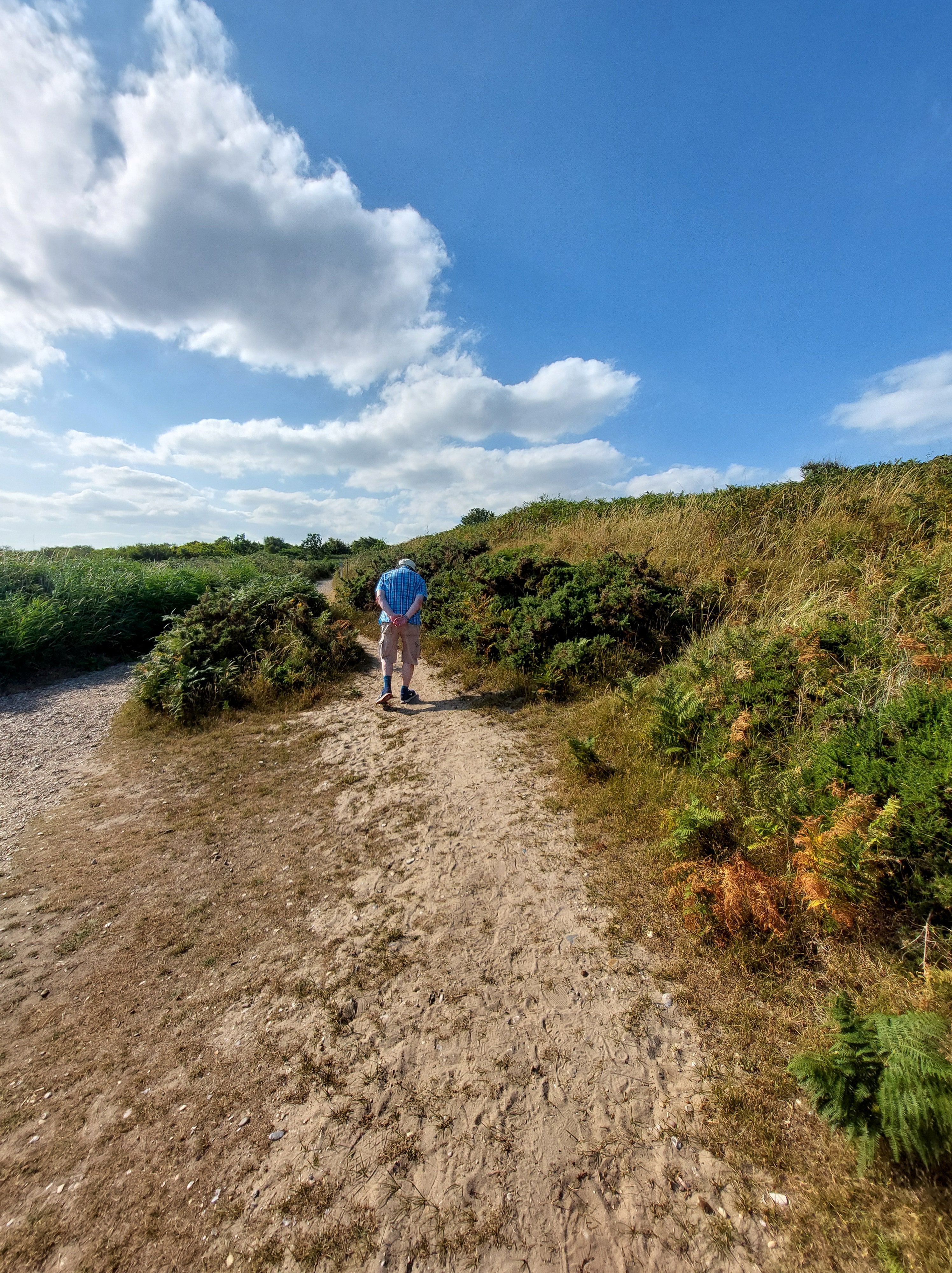
Here is Richard wending his way back up the path towards the carpark.
When we got back up to the car I went off for a couple of minutes on my own to look at the heathland further away from the coast.
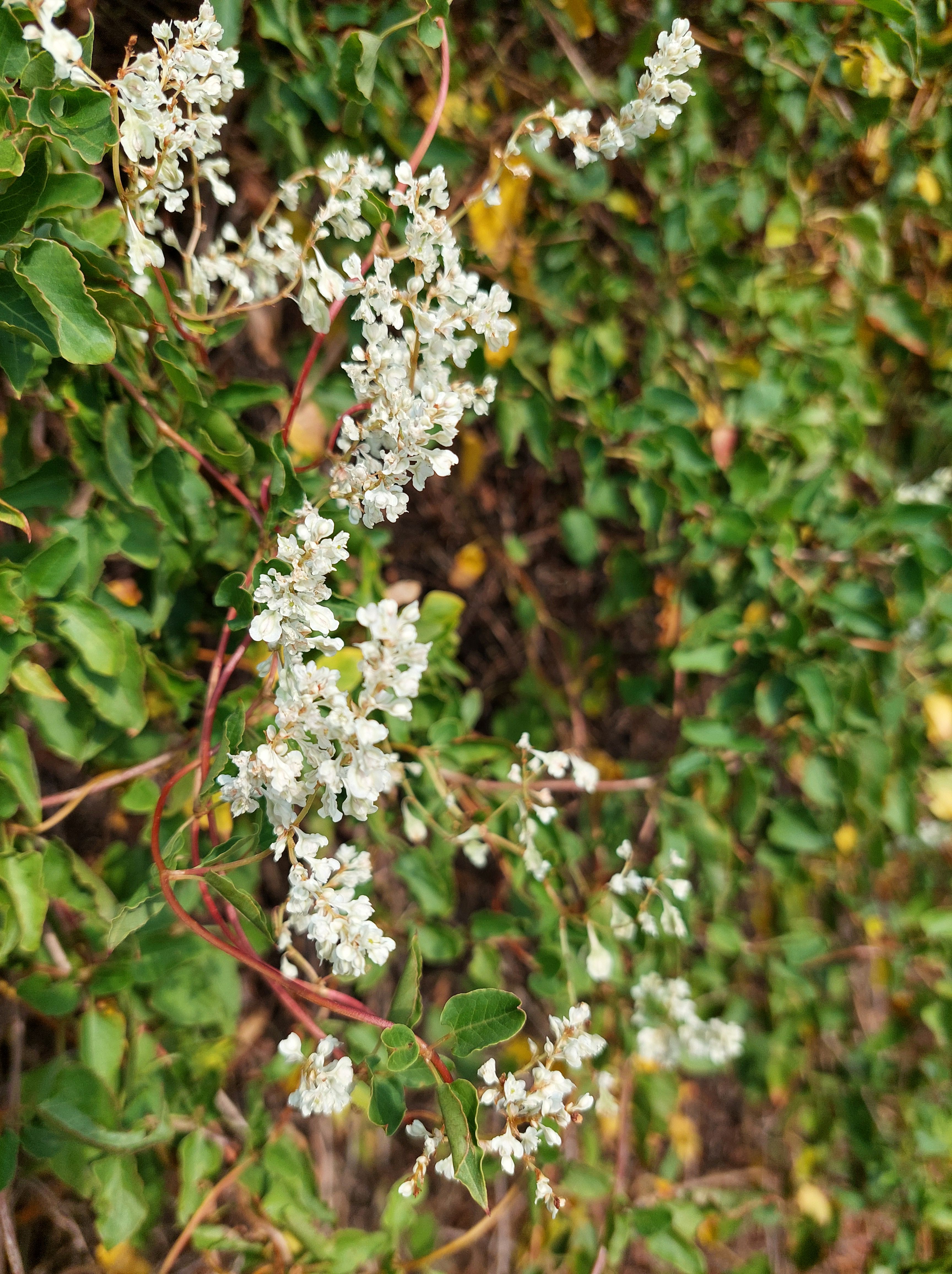
Somebody who once lived in the coastguards cottages must have planted this vine. It looks like a Russian vine (Fallopia baldschuanica ) a ‘mile-a-minute vine though the leaves are not quite the heart-shape that they should be if that is so.
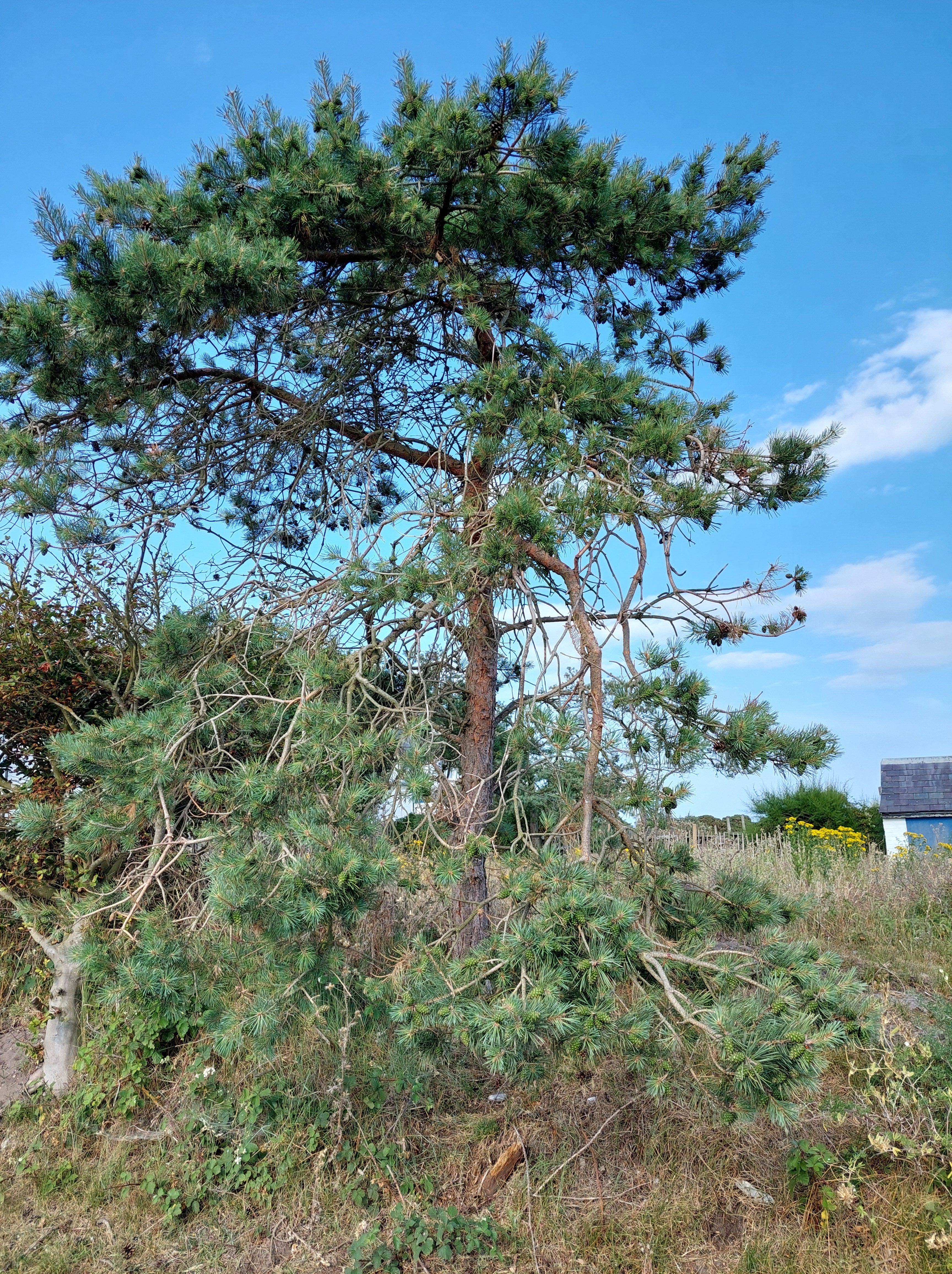
A rather stunted pine tree. Probably a Scots pine (Pinus sylvestris)
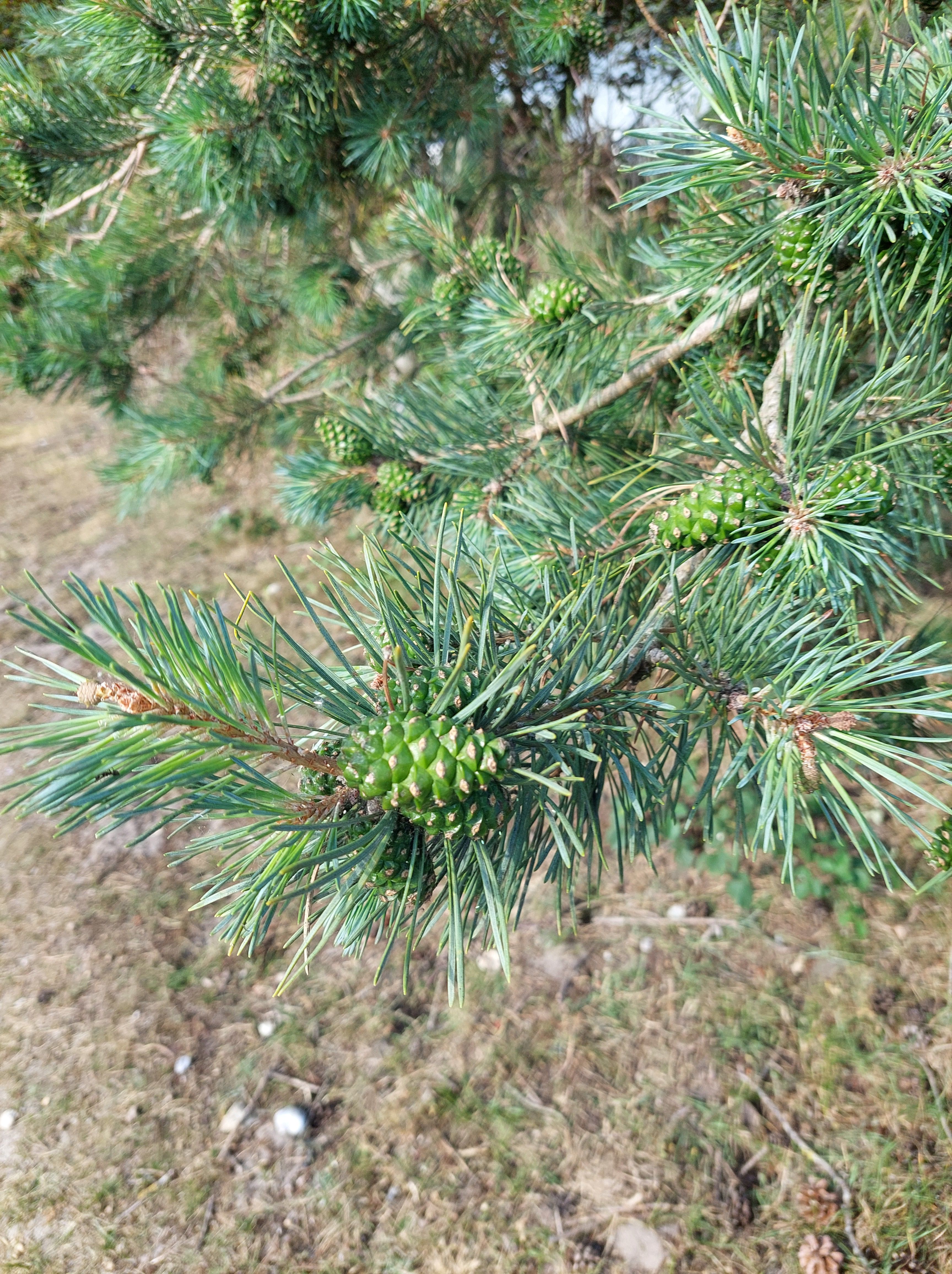
Here are its new cones.
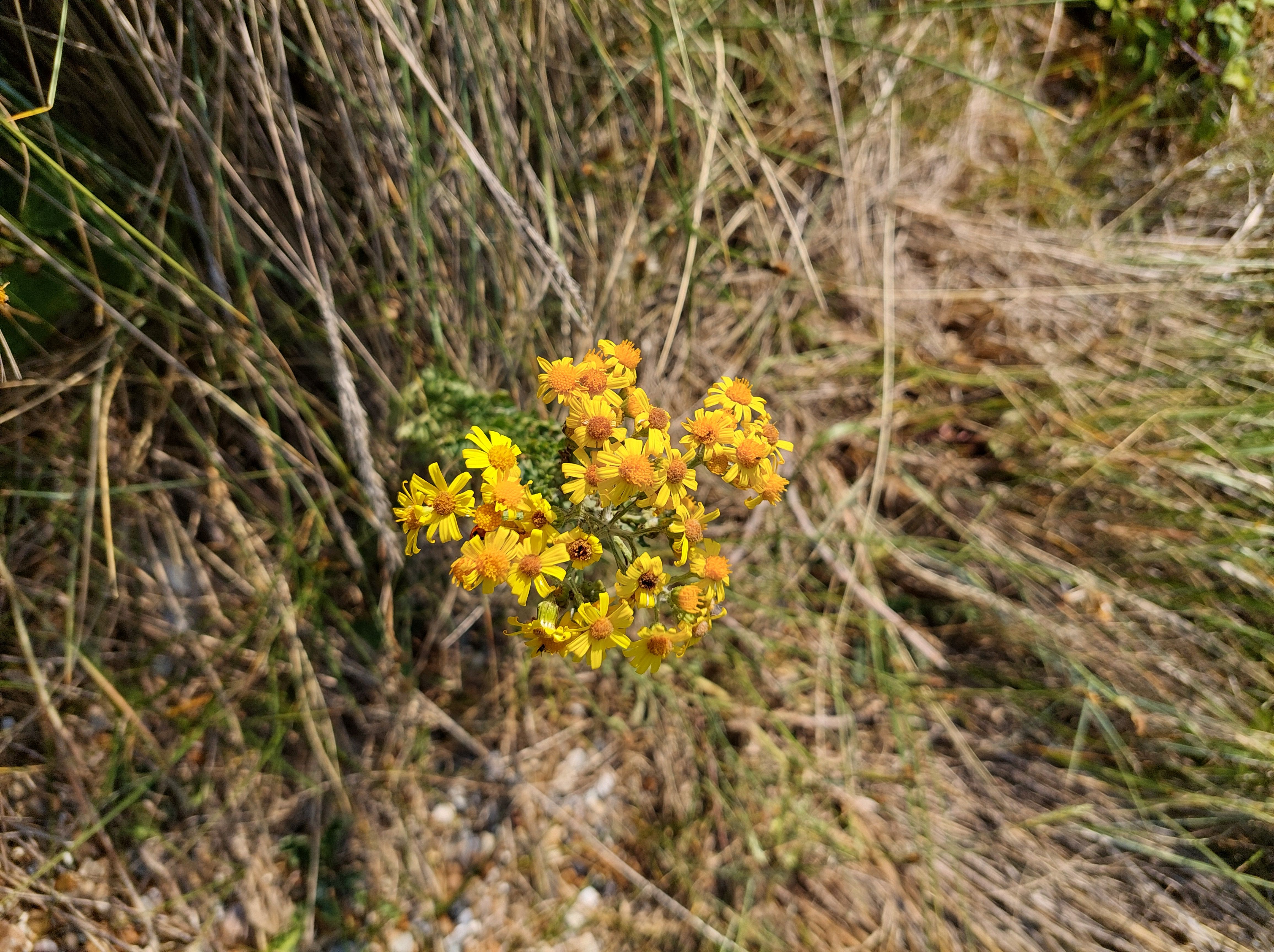
A much better picture of ragwort flowers.
There were ladybirds everywhere on the heath and on the beach. I was a little wary of them as they tend to bite in hot weather.
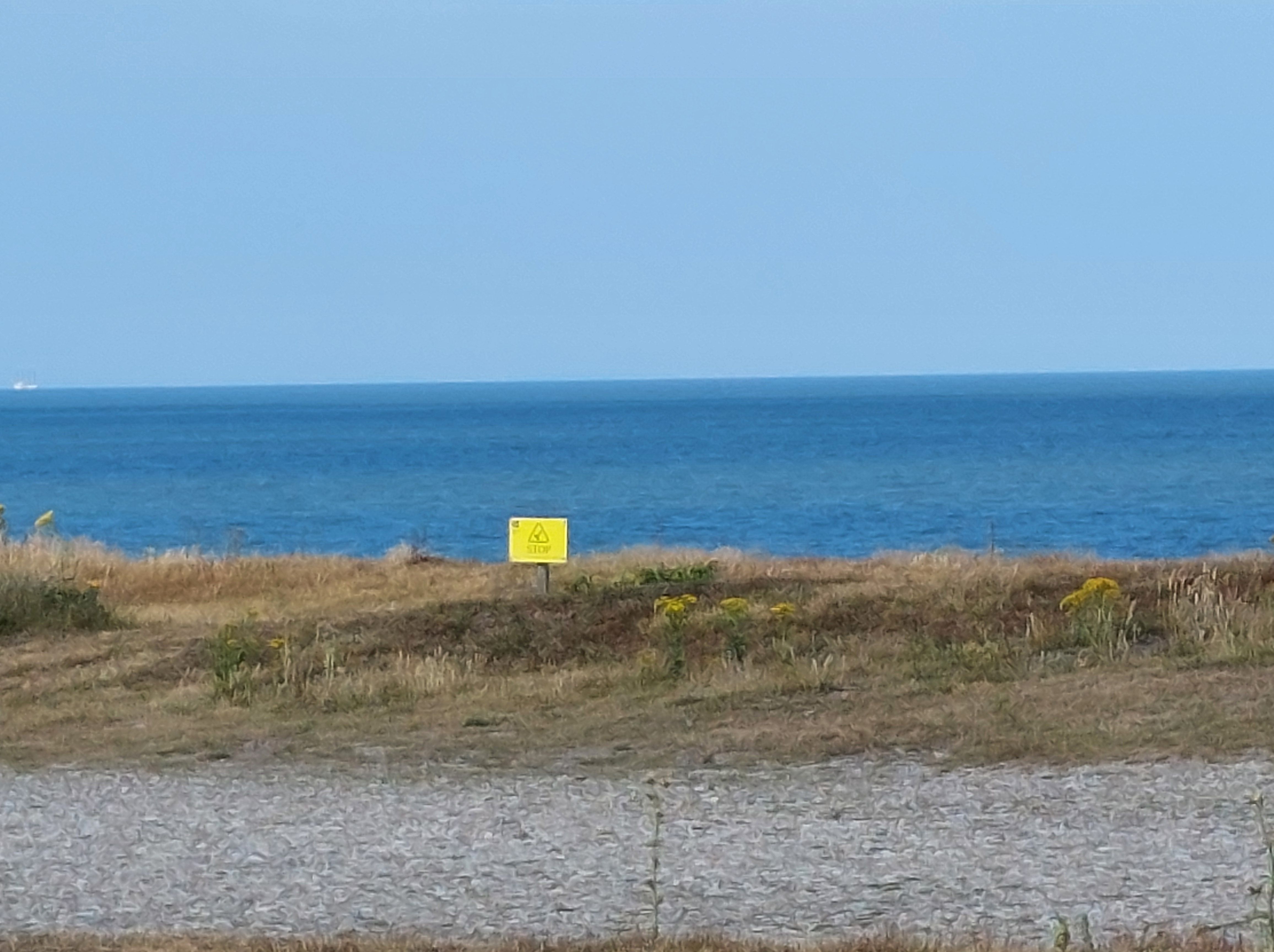
The National Trust like to put signs up everywhere. This one warns of the danger of falling off the cliff and/or the crumbling cliff.
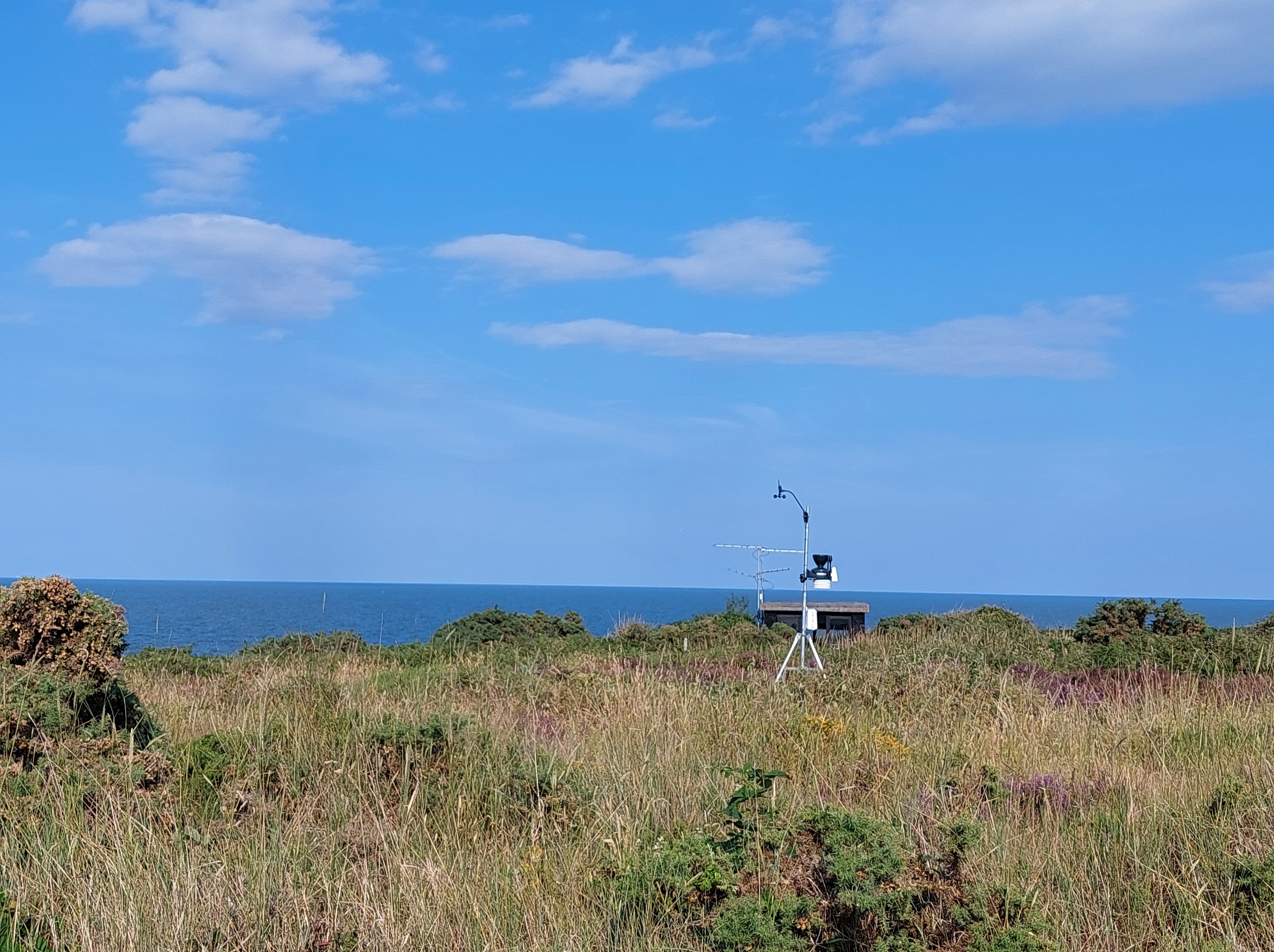
A weather station.
I will leave you with a last look at the heath.
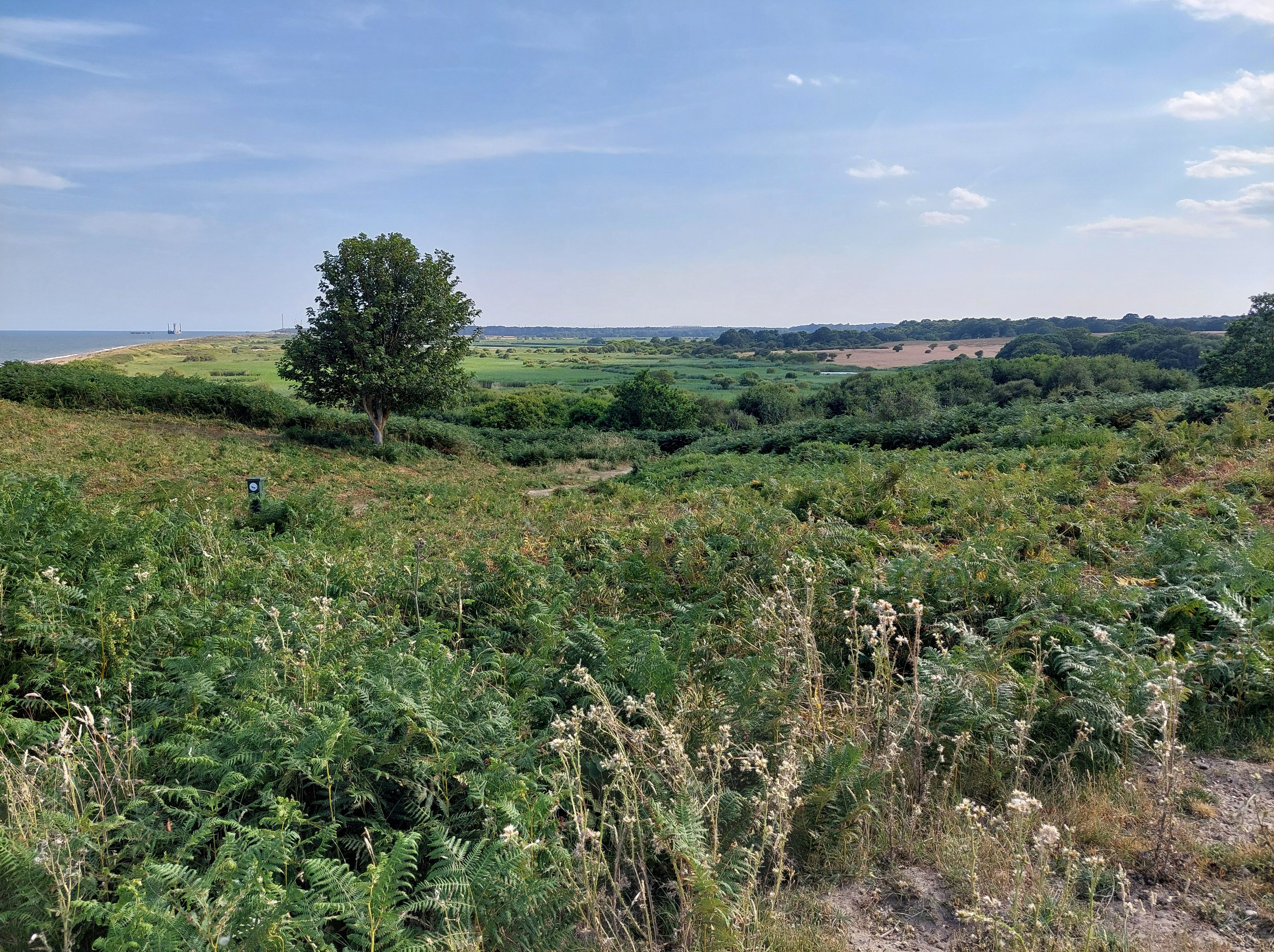
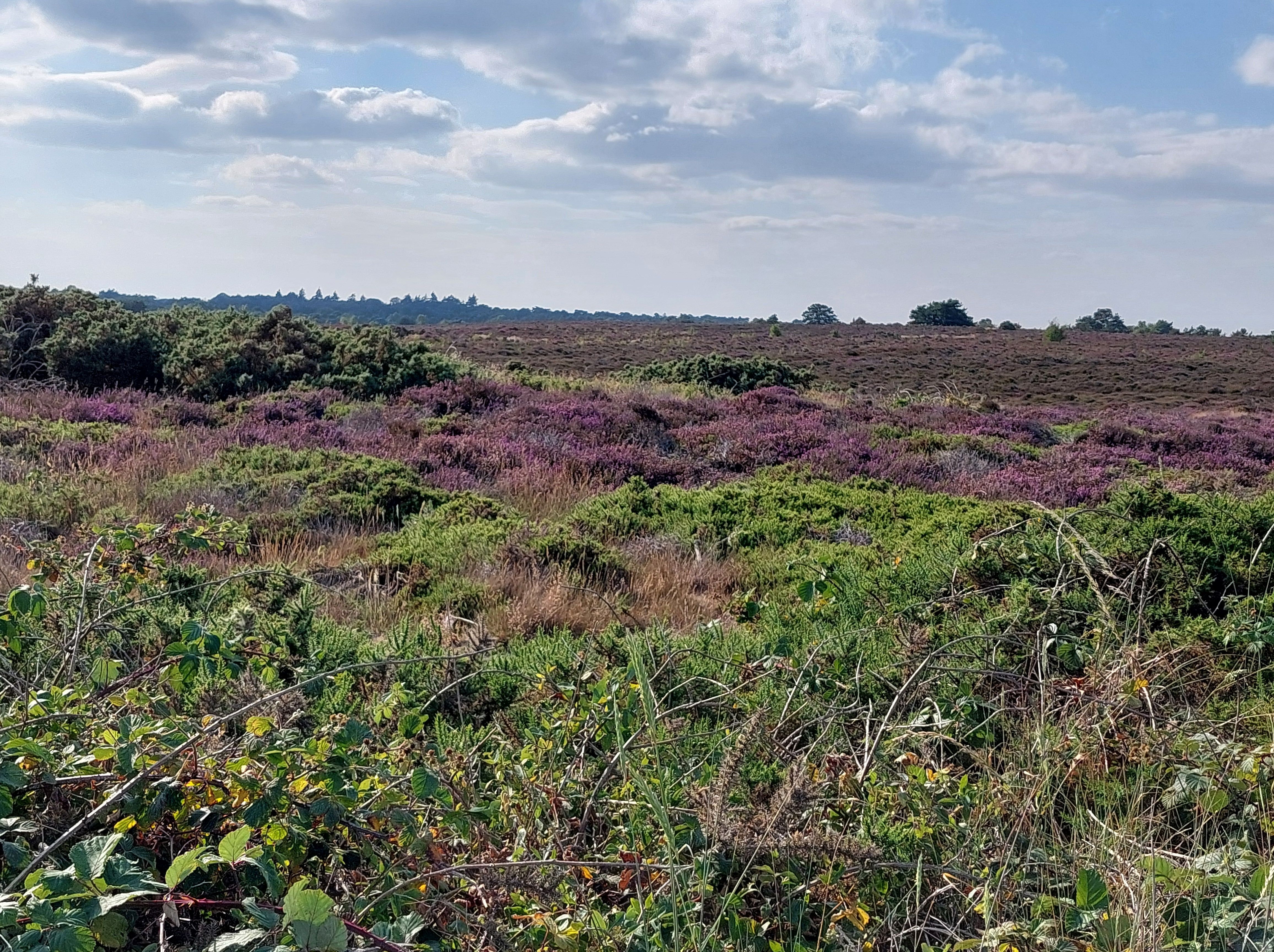
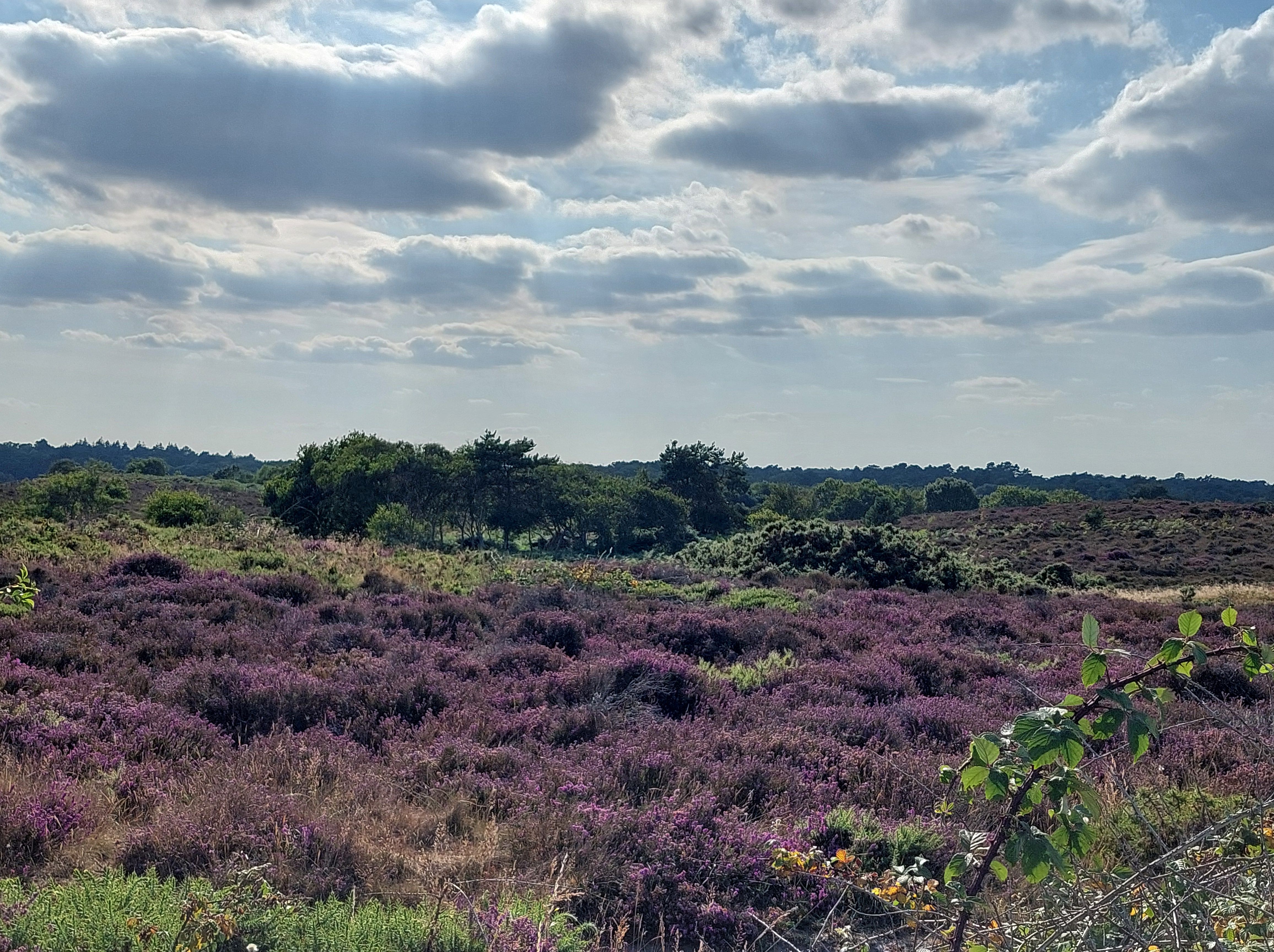
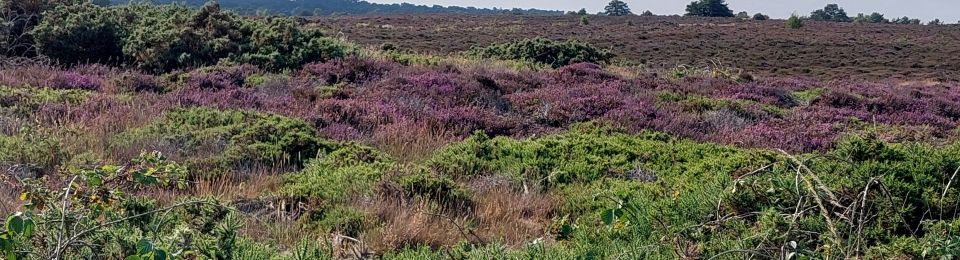
The heather was looking good and was at its peak. Bell heather comes into flower a little earlier than the other heaths and Common heather (Calluna vulgaris), also known as Ling.
Discover more from A Suffolk Lane
Subscribe to get the latest posts sent to your email.


Sounds like you had a lovely time, and you took some great photos to remind you of your day out.
LikeLiked by 1 person
Thank you very much, Clive. The cool breeze was very welcome and calming
LikeLiked by 1 person
I’m sure it was! It all looked very peaceful there, and I enjoyed your account of the day.
LikeLiked by 1 person
3pm seems a sensible time to me. After incinerating the top opf my head and ears at the recent wedding on No1 son, I am now aware that Methotrexate can cause sensitivity to the sun – so I am blaming that rather than my stupidity.
Lovely to have atrip round the Suffolk coas, even if only by proxy. I didn’t know they had Kittiwakes in Suffolk. I have seen big colonies in Dunbar and Scarborough and am always grateful not to live near one.
LikeLiked by 1 person
Oh yes! I used to have a lot of trouble with sun sensitivity when I was taking the tablets and for months afterwards my skin was so itchy. I had to get some salve from the GP to ease it. I don’t have any trouble now for some reason.
I was first aware of the Kittiwakes a few years ago and couldn’t believe what I was hearing. Those calls seem so out of place when you’re walking past Boots and M&S up the high street. Elinor has a friend who comes from Lowestoft and who now lives in Finland and she and all her family absolutely loathe the kittiwakes and would do anything to get rid of them.
LikeLiked by 1 person
It’s a call you can soon get fed up with. I’m going to have to take hat wearing more seriously.
LikeLiked by 1 person
I’m afraid so. My husband gets very burnt on his head and ears and has found that Malibu Clear Hair and Scalp Protection Sprays are very good and non- greasy. He orders his on-line.
LikeLiked by 1 person
I will look into that. The greasiness can be very irritating.
LikeLiked by 1 person
This looks like an excellent family day out. And the Suffolk coast looks the perfect place to have such a jaunt.
LikeLiked by 1 person
Thank you very much, Margaret. It was a blissful experience after the heat and oppression at home.
LikeLiked by 1 person
Pebble beaches are a challenge to walk on. After a hot day a beach visit is so refreshing.
LikeLiked by 1 person
Thank you very much, Suzanne. Yes, I get so tired just walking a short distance on a stony beach. We often go to the beach later in the day; it’s cooler and not so crowded especially during the school summer holidays.
LikeLiked by 1 person
An excellent outing. Thank you for taking us with you.
LikeLiked by 1 person
And thank you very much too, Tom.
LikeLike
What a lovely outing! I have enjoyed looking at your photographs, Clare.
LikeLiked by 1 person
Thank you very much, Anne.
LikeLike
I am pleased you experienced a more temperate period than your original paragraph feared. The trip was well presented in prose and photographs. I smiled at the ‘literal seal’. I would, like Elinor, have taken a cold drink
LikeLiked by 1 person
Thank you so much, Derrick. We were so grateful for the cool fresh air at the coast. We have also had a pleasantly cooler and cloudy day today; a welcome respite from the heat.
LikeLiked by 1 person
Thank you for the virtual tour of Dunwich Heath. Clare. Though I was not on the tour physically with you three, I have learned about the fauna and flora, the Nuclear Power Stations and more.
While I was reading through the post, some place names such as Lowestoft caught my attention. It occurred to me that I have been a regular visitor to your region Suffolk’s newspaper website titled EADT (East Anglian Digital Times). No wonder the déjà vu.
I am amazed by the shingle plants too for their tenacity. They are well adapted for the hostile growing environment. Transplanted to rich soil and easier conditions, they might not do as well.
May I ask whether the kittiwake nest platform in one of the photos is artificial or built by the birds themselves?
Mind the heatwave. I read in EADT today that both the farmers and the A-road in Suffolk have been severely impacted by the brutal weather.
Stay cool, Clare.
LikeLiked by 1 person
Thank you so much, Shengliver. I was so surprised to read that you read our local newspaper! We have had a much cooler and cloudy day today which was such a relief. Regarding the kittiwake platform; it is a man-made structure and quite large and it is hoped that the birds find it and like it.
LikeLiked by 1 person
Sadly people will sue for anything! The NT have no choice but to tell us the gound is rough !!!
LikeLiked by 1 person
Oh, I know why they do it and I can’t blame them. I just noticed how many notices there were on the beach as well as up on the heath. Thank you, Heather. I hope you are well xx
LikeLike
That was a very enjoyable meander for landlocked me!
LikeLiked by 1 person
Thank you very much, Matthew
LikeLiked by 1 person
Oh, how right you are about walking around in the heat – ugh! Some people seem impervious to it, though. And I love your imagination – the survival film drama. All true! Who needs it?
The kittiwake is such a pretty bird – too bad it doesn’t seem well-liked. It looks like a gull of a sort.
I like the photo of Richard going back to the parking lot – something about it. These sorts of days are necessary. Thanks for the ocean clip! Very nice. 🙂
LikeLiked by 1 person
Thank you very much, Lisa. The Kittiwake is a very pretty bird with such a sweet expression (if birds can be said to have an expression!) They are gulls and spend most of their time when not breeding out at sea in mid-ocean. A very tough life.
LikeLike
The sound of the waves are always so soothing. Not to mention welcoming sea breezes when it is hot. Sounds like you had a lovely outing, Clare.
LikeLiked by 1 person
Thank you so much, Jolandi and apologies for replying so late. We had been hoping to return to the heath in the next few days but that won’t be happening for some time now. The heath fire will mean a very long wait until the heath is open to visitors again.
LikeLiked by 1 person